EP2573081A1 - Prophylactic and/or therapeutic agent for non-alcoholic steatohepatitis - Google Patents
Prophylactic and/or therapeutic agent for non-alcoholic steatohepatitis Download PDFInfo
- Publication number
- EP2573081A1 EP2573081A1 EP11783277A EP11783277A EP2573081A1 EP 2573081 A1 EP2573081 A1 EP 2573081A1 EP 11783277 A EP11783277 A EP 11783277A EP 11783277 A EP11783277 A EP 11783277A EP 2573081 A1 EP2573081 A1 EP 2573081A1
- Authority
- EP
- European Patent Office
- Prior art keywords
- liver
- nash
- mice
- compound
- acid
- Prior art date
- Legal status (The legal status is an assumption and is not a legal conclusion. Google has not performed a legal analysis and makes no representation as to the accuracy of the status listed.)
- Granted
Links
Images



Classifications
-
- C—CHEMISTRY; METALLURGY
- C07—ORGANIC CHEMISTRY
- C07D—HETEROCYCLIC COMPOUNDS
- C07D401/00—Heterocyclic compounds containing two or more hetero rings, having nitrogen atoms as the only ring hetero atoms, at least one ring being a six-membered ring with only one nitrogen atom
- C07D401/02—Heterocyclic compounds containing two or more hetero rings, having nitrogen atoms as the only ring hetero atoms, at least one ring being a six-membered ring with only one nitrogen atom containing two hetero rings
- C07D401/12—Heterocyclic compounds containing two or more hetero rings, having nitrogen atoms as the only ring hetero atoms, at least one ring being a six-membered ring with only one nitrogen atom containing two hetero rings linked by a chain containing hetero atoms as chain links
-
- A—HUMAN NECESSITIES
- A61—MEDICAL OR VETERINARY SCIENCE; HYGIENE
- A61K—PREPARATIONS FOR MEDICAL, DENTAL OR TOILETRY PURPOSES
- A61K31/00—Medicinal preparations containing organic active ingredients
- A61K31/33—Heterocyclic compounds
- A61K31/395—Heterocyclic compounds having nitrogen as a ring hetero atom, e.g. guanethidine or rifamycins
- A61K31/495—Heterocyclic compounds having nitrogen as a ring hetero atom, e.g. guanethidine or rifamycins having six-membered rings with two or more nitrogen atoms as the only ring heteroatoms, e.g. piperazine or tetrazines
- A61K31/496—Non-condensed piperazines containing further heterocyclic rings, e.g. rifampin, thiothixene or sparfloxacin
-
- A—HUMAN NECESSITIES
- A61—MEDICAL OR VETERINARY SCIENCE; HYGIENE
- A61P—SPECIFIC THERAPEUTIC ACTIVITY OF CHEMICAL COMPOUNDS OR MEDICINAL PREPARATIONS
- A61P1/00—Drugs for disorders of the alimentary tract or the digestive system
- A61P1/16—Drugs for disorders of the alimentary tract or the digestive system for liver or gallbladder disorders, e.g. hepatoprotective agents, cholagogues, litholytics
-
- A—HUMAN NECESSITIES
- A61—MEDICAL OR VETERINARY SCIENCE; HYGIENE
- A61P—SPECIFIC THERAPEUTIC ACTIVITY OF CHEMICAL COMPOUNDS OR MEDICINAL PREPARATIONS
- A61P43/00—Drugs for specific purposes, not provided for in groups A61P1/00-A61P41/00
Definitions
- the present invention relates to a prophylactic and/or therapeutic agent for non-alcoholic steatohepatitis.
- Metabolic syndrome is defined as a state having two or more of hyperglycemia, hypertension, and dyslipidemia in addition to visceral obesity. It progresses arteriosclerosis and increases the risk of development of myocardial infarction, cerebral infarction or the like.
- Non-alcoholic fatty liver disease (hereinafter may be referred to as "NAFLD”) is fatty hepatic disorder which is not due to drinking or clear pathogenesis (e.g., virus and autoimmunity). Recently, it is recognized as a phenotype in the liver of metabolic syndrome. Other various pathogenesis impairing fat or mitochondrial metabolism has been reported. NAFLD is further classified into simple steatosis which has a relatively benign prognosis and is caused only by fatty deposition in hepatocytes and nonalcoholic steatohepatitis (hereinafter may be referred to as "NASH”) which may result in fibrosis of hepatic tissues, liver cirrhosis, and hepatoma (Non-patent document 1).
- pathogenesis e.g., virus and autoimmunity
- Non-patent document 2 As the developmental mechanism of NASH, the "two-hit theory" (Day et al.) is widely known (Non-patent document 2). That is, an imbalance between caloric intake and expenditure and storage of lipid in hepatocytes due to metabolic disorder based on insulin resistance are involved in the formation process of the fatty liver (1st hit). As the 2nd hit, an increase of oxidative stress due to energy metabolic load and an activation of the innate immune system accompanied thereby play an important role in the progression of fatty liver to NASH. Further, TNF- ⁇ , a typical inflammatory cytokine is known to worsen the condition of NASH.
- an antioxidant such as vitamin E is used alone or in combination with vitamin C.
- fibrates e.g., fenofibrate and bezafibrate
- an angiotensin II type 1 receptor antagonist ARB
- fibrates or statins are expected from the viewpoint of their anti-inflammatory activities.
- Patent document 1 describes that a compound represented by the following formula (1), a salt thereof, or a solvate of the same:
- ACAT cholesterol acyltransferase
- ACAT cholesterol acyltransferase
- ASO arteriosclerosis obliterans
- Patent document 2 describes a 2-[4-[2-(benzimidazol-2-ylthio)ethyl]piperazin-1-yl]-N-[2,4 -bis(methylthio)-6-methyl-3-pyridyl]acetamide represented by the following formula (2), a salt thereof, or a solvate of the same:
- An objective of the present invention is to provide a novel prophylactic and/or therapeutic agent for non-alcoholic steatohepatitis (NASH) which is useful for prevention and treatment of NASH.
- NASH non-alcoholic steatohepatitis
- NASH non-alcoholic steatohepatitis
- the present invention provides a prophylactic and/or therapeutic agent for non-alcoholic steatohepatitis which contains, as an active ingredient, 2-[4-[2-(benzimidazol-2-ylthio)ethyllpiperazin-1-yl]-N-[2,4 -bis(methylthio)-6-methyl-3-pyridyl]acetamide, an acid-addition salt thereof, or a solvate of the same.
- the present invention provides a reducing agent for cholesterol in the liver which contains, as an active ingredient, 2-[4-[2-(benzimidazol-2-ylthio)ethyl]piperazin-1-yl]-N-[2,4 -bis(methylthio)-6-methyl-3-pyridyl]acetamide, an acid-addition salt thereof, or a solvate of the same.
- the present invention provides a reducing agent for triglyceride in the liver which contains, as an active ingredient, 2-[4-[2-(benzimidazol-2-ylthio)ethyl]piperazin-1-yl]-N-[2,4 -bis(methylthio)-6-methyl-3-pyridyl]acetamide, an acid-addition salt thereof, or a solvate of the same.
- the present invention provides an inhibiting agent for TNF- ⁇ expression in the liver which contains, as an active ingredient, 2-[4-[2-(benzimidazol-2-ylthio)ethyl]piperazin-1-yl]-N-[2,4 -bis(methylthio)-6-methyl-3-pyridyl]acetamide, an acid-addition salt thereof, or a solvate of the same.
- the present invention provides a reducing agent for macrophage in the liver which contains, as an active ingredient, 2-[4-[2-(benzimidazol-2-ylthio)ethyllpiperazin-1-yl]-N-[2,4 -bis(methylthio)-6-methyl-3-pyridyl]acetamide, an acid-addition salt thereof, or a solvate of the same.
- the present invention provides a prophylactic and/or therapeutic method for non-alcoholic steatohepatitis in which an effective amount of 2-[4-[2-(benzimidazol-2-ylthio)ethyl]piperazin-1-yl]-N-[2,4 -bis(methylthio)-6-methyl-3-pyridyl]acetamide, an acid-addition salt thereof, or a solvate of the same is administered to needy patients.
- the present invention provides the use of 2-[4-[2-(benzimidazol-2-ylthio)ethyl]piperazin-1-yl]-N-[2,4 -bis(methylthio)-6-methyl-3-pyridyl]acetamide, an acid-addition salt thereof, or a solvate of the same to produce a prophylactic and/or therapeutic agent for non-alcoholic steatohepatitis.
- the present invention provides a novel prophylactic and/or therapeutic agent for non-alcoholic steatohepatitis (NASH).
- NASH non-alcoholic steatohepatitis
- the number of patients with NASH is expected to increase worldwide in future, and it is desired to establish a method of treating NASH.
- the present invention provides a novel prophylactic and/or therapeutic agent for non-alcoholic steatohepatitis (NASH) which does not affect the plasma lipid, has a direct effect on the liver, specifically reduces the levels of cholesterol and triglyceride in the liver, significantly inhibits TNF- ⁇ expression in the liver, and significantly reduces the level of macrophages in the liver.
- NASH non-alcoholic steatohepatitis
- 2-[4-[2-(benzimidazol-2-ylthio)ethyl]piperazin-1-yl]-N-[2,4-bis(methylthio)-6-methyl-3-pyridyl]acetamide, an acid-addition salt thereof, or a solvate of the same to be used in the present invention can be produced by, for example, a method described in WO 1998/054153 , WO 2005/020996 , WO 2004/076441 , or the like. These canbe formulated in accordance with the methods described in these references.
- the acid which forms the acid-addition salt of the present invention is not particularly limited as long as it is a pharmaceutically acceptable acid.
- examples thereof include an inorganic acid such as sulfuric acid, hydrochloric acid, nitric acid, phosphoric acid, and hydrobromic acid; and an organic acid such as acetic acid, lactic acid, succinic acid, tartaric acid, malic acid, maleic acid, citric acid, fumaric acid, methanesulfonic acid, and p-toluenesulfonic acid; and the like.
- the acid is preferably an inorganic acid, more preferably hydrochloric acid.
- solvate of the present invention examples include hydrates and alcoholates (e.g., ethanol solvates). Preferable examples thereof include hydrates.
- 2-[4-[2-(benzimidazol-2-ylthio)ethyl]piperazin-1-yl]-N-[2,4-bis(methylthio)-6-methyl-3-pyridyl]acetamide, an acid-addition salt thereof, or a solvate of the same in the present invention is preferably monohydrochloride of 2-[4-[2-(benzimidazol-2-ylthio)ethyl]piperazin-1-yl]-N-[2,4 -bis(methylthio)-6-methyl-3-pyridyl]acetamide.
- non-alcoholic steatohepatitis NASH
- TNF- ⁇ inflammatory cytokine TNF- ⁇
- the significant decrease in the levels of TC and TG in the liver in a dose not significantly affecting the levels of TC and TG in the blood plasma shows that the active ingredient of the present invention has a direct activity to the liver, which differs from the conventionally reported activity. It can be demonstrated that the effect is based on the activity which has been found out for the first time by the present invention.
- 2-[4-[2-(benzimidazol-2-ylthio)ethyl]piperazin-1-yl]-N-[2,4 -bis(methylthio)-6-methyl-3-pyridyl]acetamide, an acid-addition salt thereof, or a solvate of the same is effective as a prophylactic and/or therapeutic agent for non-alcoholic steatohepatitis in mammals including humans.
- the present invention contains, as an active ingredient, 2-[4-[2-(benzimidazol-2-ylthio)ethyl]piperazin-1-yl]-N-[2,4 -bis(methylthio)-6-methyl-3-pyridyl]acetamide, an acid-addition salt thereof, or a solvate of the same.
- the active ingredient of the present invention is useful not only as a prophylactic and/or therapeutic agent for non-alcoholic steatohepatitis in mammals including humans but also as a prophylactic and/or therapeutic agent for non-alcoholic fatty liver disease (NAFLD) in mammals including humans as shown in the following Examples.
- the active ingredient of the present invention is useful as a reducing agent for cholesterol in the liver, a reducing agent for triglyceride in the liver, an inhibiting agent for TNF- ⁇ expression in the liver, and a reducing agent for macrophage in the liver in mammals including humans.
- the medicine of the present invention can be independently formulated into a dosage form such as a tablet, capsule, granule, powder, lotion, ointment, injection, or suppository. Alternatively, it can be formulated into such a form using a carrier such as a pharmaceutically acceptable solvent, excipient, binder, or diluent. These formulations can be produced by a known method.
- the drug when producing a formulation for oral administration, can be produced by formulating with an appropriate combination of a solvent such as Tragacanth gum, Arabia gum, sucrose esters, lecithin, olive oil, soybean oil, and PEG400; an excipient such as starch, mannitol, and lactose; a binder such as carboxymethylcellulose sodium and hydroxypropylcellulose; a disintegrator such as crystalline cellulose and carboxymethyl-cellulose calcium; a lubricant such as talc and magnesium stearate; a flow improver such as light anhydrous silicic acid; and a diluent such as corn starch.
- a solvent such as Tragacanth gum, Arabia gum, sucrose esters, lecithin, olive oil, soybean oil, and PEG400
- an excipient such as starch, mannitol, and lactose
- a binder such as carboxymethylcellulose sodium and hydroxypropylcellulose
- a disintegrator such as crystalline
- the medicine of the present invention is orally or parenterally administered.
- the dosage of the medicine of the present invention varies depending on the weight, age, sex, and conditions of patients.
- the dosage amount of 2-[4-[2-(benzimidazol-2-ylthio)ethyl ⁇ piperazin-1-yl]-N-[2,4 -bis(methylthio)-6-methyl-3-pyridyl]acetamide is from 0.01 to 1000 mg per day, preferably from 0.1 to 200 mg per day, in 1 to 3 divided doses.
- mice Male LDL receptor-knockout mice (B6.12957-Ldlr ⁇ tm1Her>/J, Jackson Laboratories) were used for the experiment. The mice aged around 8 weeks were allowed to freely intake Teklad Custom Research Diet (TD.88137, manufactured by Harlan Teklad) as a Western diet for 12 weeks to cause them to develop NASH.
- Teklad Custom Research Diet TD.88137, manufactured by Harlan Teklad
- mice were separated into a control group (hydrochloride added purified water) and a compound A (3 mg/kg, as free form) administered group so that there is no difference in the weights between the groups.
- the dose was calculated by 10 mL/kg weight. Hydrochloride added purified water and each drug solution were orally administered to the control group and the compound A administered group, respectively, at an interval of at least 6 hours, once in the morning and once in the afternoon. The mice aged around 8 weeks were fed with the Western diet, and the drug solution was administered at the same time. The dosing period was 12 weeks.
- mice were fasted overnight.
- the blood was collected from the abdominal portion of vena cava under anesthesia with pentobarbital sodium (50 mg/kg) and the plasma was fractionated.
- the liver was extracted and frozen for preservation. A part of the liver was frozen in ISOGEN (NIPPON GENE, CO., LTD.) and preserved to analyze the gene expression.
- Total cholesterol (TC) and triglyceride (TG) in the plasma were measured using Cholesterol E Test Wako and Triglyceride E Test Wako (both manufactured by Wako Pure Chemical Industries, Ltd.), respectively. Measurement of liver lipid was performed in the following manner.
- Chloroform and methanol (at a ratio of 2:1) were added to the frozen and preserved liver, which was homogenized, and the resultant mixture was allowed to stand at 4°C longer than overnight, followed by filtration. A part of the filtrate was fractionated, followed by evaporation and drying. The resultant product was dissolved in isopropanol. TC and TG concentrations were measured using Cholesterol E-Test Wako and Triglyceride E-Test Wako, respectively. Liver gene expression analysis was performed by extracting RNA from the liver and measuring expression levels of TNF- ⁇ genes and CD11c genes in adhesion molecules belonging to an integrin family of macrophages by realtime RT-PCR.
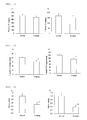
- the compound A (3 mg/kg) administered group had no significant effect on TC and TG in the plasma as shown in FIG. 1 .
- the group exhibited a significant decrease in TC and TG in the liver ( FIG. 2 ) and significant decreases in inflammatory cytokine TNF- ⁇ expression in the liver and macrophage CD11c ( FIG. 3 ).
- the compound had a direct effect on the liver and reduced the levels of cholesterol and triglyceride in the liver.
- Murine NASH-hepatoma models (brand name: C57BL/6 N-NASH mice) developed in Stelic Institute & Co. (See Japanese Patent Application Laid-Open (JP-A) No. 2009-178143 ) are provided by Charles River Laboratories Japan, Inc.
- the murine models develop NASH by initiation of insulin resistance and feeding with a high fat diet.
- the murine models show changes which histologically reflect the conditions of human NASH.
- the fatty liver before 6 weeks old
- liver cirrhosis after 10 weeks old
- liver cancer after 16 weeks old).
- mice Male C57BL/6N-NASH mice (Charles River Laboratories Japan, Inc.) were used for the experiment. Streptozotocin was administered to the mice aged 1 to 2 days and they were fed with a high fat diet (D12492, Research Diet) from 4 weeks old. The mice were purchased at 6 weeks old and continuously fed with the same high fat diet (hereinafter, the mice are referred to as "C57BL/6N-NASH mice”). As a normal control group, normal mice (C57BL/6N, 6 weeks old, Charles River Laboratories Japan, Inc.) were purchased at the same time and they were fed with an ordinary diet (CE-2, CLEA Japan, Inc.) (hereinafter referred to as "normal mice”).
- CE-2 CLEA Japan, Inc.
- mice were used for a control group and a compound A (100 mg/kg) administered group. The number of mice in each group was six. As normal mice (control group), 6 normal mice (C57BL/6N mice) were used.
- the compound A and feeds were mixed to feed the mice.
- C57BL/6N-NASH mice with NASH aged 7 weeks were fed with the feed mixture.
- the dosing period was 5 weeks.
- mice After the end of administration, the mice were fasted for 4 hours.
- the blood was collected from the abdominal portion of vena cava under anesthesia, and the plasma was fractionated.
- the liver was extracted. A part of the liver was frozen for preservation, and the other part was embedded in paraffin in a usual manner.
- Plasma lipid and plasma ALT levels were measured using an autoanalyzer (Labospect003, Hitachi, Ltd.). Measurement of liver lipid was performed in the following manner. That is, chloroform and methanol (at a ratio of 2:1) were added to a part of the frozen and preserved liver, which was homogenized, and the resultant mixture was allowed to stand at 4°C overnight, followed by filtration.
- the compound A had no effect on the plasma lipid.
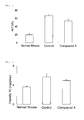
- the plasma ALT level as an indicator of liver damage in the murine NASH-hepatoma model control group was high as compared with that in the normal mouse group.
- the plasma ALT level in the compound A (100 mg/kg) administered group was reduced ( FIG. 4 ).
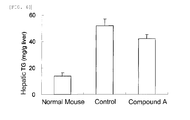
- the hepatic TC and TG levels in the murine NASH-hepatoma model control group were high as compared with that in the normal mouse group.
- the plasma ALT level in the compound A administered group was reduced ( FIGS.5 and 6 ).
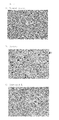
- the compound A inhibited the development of lipid-droplet deposition, i.e., characteristic conditions of NASH (indicated by arrows in FIG.
- Rodent models fed with methionine-choline deficient diet are widely used as NASH models (See Hebbard L, George J.:Animal models of nonalcoholic fatty liver disease Nat Rev Gastroenterol Hepatol. 2011 Jan; 8 (1) :35-44. Epub 2010 Nov 30 .).
- models of KK-A y mice are known to cause marked steatohepatitis and fibrosis (See Okumura K., Ikejima K., Kon K. , Abe W. , Yamashina S., Enomoto N. , Takei Y. and Sato N.
- mice are excellent models to examine the drug effect on NASH.
- KK-A y mice Male KK-A y mice (KK-A y /TaJcl mice, 12 weeks old, were purchased from CLEA Japan, Inc.) were used for the experiment. The mice were fed with the MCD diet for 7 weeks to cause NASH.
- mice were separated into a control group, a compound A (30 mg/kg) administered group, and a compound A (200 mg/kg) administered group.
- the drug and feeds were mixed to feed the mice.
- the dosing period was 7 weeks.
- the compound A and feeds were mixed to feed the mice.
- the mice was fed with the MCD diet, and fed with the feed mixture at the same time.
- the compound A had no effect on the plasma lipid.
- the compound A (200 mg/kg) significantly reduced the plasma ALT level as an indicator of liver damage (See FIG. 8 ).
- the compound A inhibited the development of lipid-droplet deposition and fibrosis in the liver, i.e., characteristic conditions of NASH (See FIGS. 11 and 12 ). In other words, even if the dose of the compound A of the present invention was in a range that did not affect the plasma lipid, the compound had a direct effect on the liver and reduced cholesterol and triglyceride levels in the liver.
Landscapes
- Chemical & Material Sciences (AREA)
- Health & Medical Sciences (AREA)
- Organic Chemistry (AREA)
- General Health & Medical Sciences (AREA)
- Public Health (AREA)
- Veterinary Medicine (AREA)
- Medicinal Chemistry (AREA)
- Animal Behavior & Ethology (AREA)
- Life Sciences & Earth Sciences (AREA)
- Pharmacology & Pharmacy (AREA)
- Epidemiology (AREA)
- Bioinformatics & Cheminformatics (AREA)
- Nuclear Medicine, Radiotherapy & Molecular Imaging (AREA)
- Engineering & Computer Science (AREA)
- Chemical Kinetics & Catalysis (AREA)
- General Chemical & Material Sciences (AREA)
- Gastroenterology & Hepatology (AREA)
- Pharmaceuticals Containing Other Organic And Inorganic Compounds (AREA)
- Plural Heterocyclic Compounds (AREA)
Abstract
2-[4-[2-(benzimidazol-2-ylthio)ethyl]piperazin-1-yl]-N-[2,4 -bis(methylthio)-6-methyl-3-pyridyl]acetamide, an acid-addition salt thereof, or a solvate of the same.
Description
- The present invention relates to a prophylactic and/or therapeutic agent for non-alcoholic steatohepatitis.
- Attention has been paid to metabolic syndrome as the concept of so-called lifestyle-related diseases such as
type 2 diabetes mellitus. Metabolic syndrome is defined as a state having two or more of hyperglycemia, hypertension, and dyslipidemia in addition to visceral obesity. It progresses arteriosclerosis and increases the risk of development of myocardial infarction, cerebral infarction or the like. - Non-alcoholic fatty liver disease (hereinafter may be referred to as "NAFLD") is fatty hepatic disorder which is not due to drinking or clear pathogenesis (e.g., virus and autoimmunity). Recently, it is recognized as a phenotype in the liver of metabolic syndrome. Other various pathogenesis impairing fat or mitochondrial metabolism has been reported. NAFLD is further classified into simple steatosis which has a relatively benign prognosis and is caused only by fatty deposition in hepatocytes and nonalcoholic steatohepatitis (hereinafter may be referred to as "NASH") which may result in fibrosis of hepatic tissues, liver cirrhosis, and hepatoma (Non-patent document 1).
- As the developmental mechanism of NASH, the "two-hit theory" (Day et al.) is widely known (Non-patent document 2). That is, an imbalance between caloric intake and expenditure and storage of lipid in hepatocytes due to metabolic disorder based on insulin resistance are involved in the formation process of the fatty liver (1st hit). As the 2nd hit, an increase of oxidative stress due to energy metabolic load and an activation of the innate immune system accompanied thereby play an important role in the progression of fatty liver to NASH. Further, TNF-α, a typical inflammatory cytokine is known to worsen the condition of NASH. According to a report of study of the level of TNF-α expression in the hepatic tissues, as compared with obese patients (including simple fatty liver) except for those with NASH, the level of TNF-α expression in patients with NASH is significantly increased. Further, among the NASH patients, the level of TNF-α expression in those with liver fibrosis is significantly increased as compared with those without liver fibrosis. Thus, it has been reported that a strong correlation among TNF-α secreted by macrophages or activated T lymphocytes mainly infiltrated in hepatic tissues, necroinflammatory activity, and fibrosis is shown in the patients with NASH (Non-patent document 3).
Further, it has been reported that an abnormal increase in macrophages is observed in the liver in NASH model mice (Non-patent document 4). - The therapy of NASH is, in principle, an improvement in lifestyle based on the diet and exercise therapy for lifestyle-related diseases such as obesity, diabetes, dyslipidemia, and hypertension. However, it is actually difficult to improve the lifestyle and thus drug therapy targeting insulin resistance, oxidative stress, lipid metabolism abnormality, or hypertension which is considered to be an important factor for the progression of NASH is provided. As a therapeutic drug, an insulin resistance-improving drug such as thiazolidine derivatives (e.g., pioglitazone and rosiglitazone), which are ligands of nuclear receptor PPARγ associated with the potentiation of insulin sensitivity or a biguanide drug (e.g., metformin), i.e., an insulin resistance-improving drug is used. Further, an antioxidant such as vitamin E is used alone or in combination with vitamin C. Furthermore, as a therapeutic agent for lipid metabolism abnormality, fibrates (e.g., fenofibrate and bezafibrate) which is a PPARα agonist and a statin formulation, probucol, or the like is expected. As a therapeutic agent for hypertension, an angiotensin II type 1 receptor antagonist (ARB) is expected. Particularly, fibrates or statins are expected from the viewpoint of their anti-inflammatory activities. However, there are few reports on studies with a high evidence level, and a highly recommended method of treating NASH has not been established. The number of individuals affected with metabolic syndrome is increasing worldwide. Accordingly, the number of the patients with NASH is expected to increase, and it is desired to establish a method of treating NASH (Non-patent documents 1 and 5).
- On the other hand, Patent document 1 describes that a compound represented by the following formula (1), a salt thereof, or a solvate of the same:
-

- has an acyl coenzyme A: cholesterol acyltransferase (ACAT) -inhibiting activity, can be used as an ACAT inhibitor, intracellular cholesterol transport inhibitor, blood cholesterol-lowering agent, or macrophage foaming inhibitor, and is useful as a therapeutic agent for a disease such as hyperlipemia, arteriosclerosis, cervical and cerebral arteriosclerosis, cerebrovascular disorder, ischemic heart disease, coronary arteriosclerosis, nephrosclerosis, arteriosclerotic nephrosclerosis, arteriocapillary sclerosis nephrosclerosis, malignant nephrosclerosis, ischemic bowel disease, acute mesenteric vascular occlusion, chronic intestinal angina, ischemic colitis, aortic aneurysm, and arteriosclerosis obliterans (ASO). Further,
Patent document 2 describes a
2-[4-[2-(benzimidazol-2-ylthio)ethyl]piperazin-1-yl]-N-[2,4 -bis(methylthio)-6-methyl-3-pyridyl]acetamide represented by the following formula (2), a salt thereof, or a solvate of the same: -

- stabilizes an unstable and rupturable lipid-rich plaque which is a lesion of atherosclerosis, and is useful for prophylaxis of thrombus formation caused by the rupture of the lipid-rich plaque, prevention and/or treatment of acute coronary syndrome (ACS), prevention and/or treatment of acute myocardial infarction, prevention and/or treatment of unstable angitis, and prevention and/or treatment of peripheral arterial occlusive disease. However, the patent documents have neither description nor suggestion of the effects of these compounds on NASH.
-
- Patent Document 1:
WO 1998/054153 - Patent Document 2:
WO 2005/020996 -
- Non-Patent Document 1 : Nugent C et al ., Nat. Clin. Pract. Gastroenterol. Hepatol., 8, 432-41 (2007)
- Non-Patent Document 2: Day CP, et al, Gastroenterology, 114, 842-845 (1998)
- Non-Patent Document 3: Crespo J, etal., Hepatology, 34, 1158-63 (2001)
- Non-Patent Document 4: Kudo H, et al., Liver Int., 29, 988-996 (2009)
- Non-Patent Document 5: Hirofumi Uto, et al., The Medical Frontline 97, 1683-87 (2008)
- The number of individuals affected with metabolic syndrome is increasing worldwide. Further, the number of patients with NASH is expected to increase in future. However, as for a therapy for NASH, there are few reports on studies with a high evidence level. Currently, a highly recommended method of treating NASH has not been established.
An objective of the present invention is to provide a novel prophylactic and/or therapeutic agent for non-alcoholic steatohepatitis (NASH) which is useful for prevention and treatment of NASH. - In order to find a compound useful for prevention and treatment of non-alcoholic steatohepatitis (NASH), the present inventors have investigated the compound useful for prevention and treatment of NASH using LDL receptor-knockout mice, i.e., model animals with NASH. As a result, it has been unexpectedly found that
2-[4-[2-(benzimidazol-2-ylthio)ethyllpiperazin-1-yl]-N-[2,4 -bis(methylthio)-6-methyl-3-pyridyl]acetamide or a salt thereof does not affect the plasma lipid, has a direct effect on the liver, specifically reduces the levels of cholesterol and triglyceride in the liver, and inhibits the development of fatty liver and hepatic inflammation, i.e., characteristic conditions of NASH and thus have completed the present invention. - That is, the present invention provides a prophylactic and/or therapeutic agent for non-alcoholic steatohepatitis which contains, as an active ingredient, 2-[4-[2-(benzimidazol-2-ylthio)ethyllpiperazin-1-yl]-N-[2,4 -bis(methylthio)-6-methyl-3-pyridyl]acetamide, an acid-addition salt thereof, or a solvate of the same.
- Further, the present invention provides a reducing agent for cholesterol in the liver which contains, as an active ingredient,
2-[4-[2-(benzimidazol-2-ylthio)ethyl]piperazin-1-yl]-N-[2,4 -bis(methylthio)-6-methyl-3-pyridyl]acetamide, an acid-addition salt thereof, or a solvate of the same. - Further, the present invention provides a reducing agent for triglyceride in the liver which contains, as an active ingredient,
2-[4-[2-(benzimidazol-2-ylthio)ethyl]piperazin-1-yl]-N-[2,4 -bis(methylthio)-6-methyl-3-pyridyl]acetamide, an acid-addition salt thereof, or a solvate of the same. - Further, the present invention provides an inhibiting agent for TNF-α expression in the liver which contains, as an active ingredient,
2-[4-[2-(benzimidazol-2-ylthio)ethyl]piperazin-1-yl]-N-[2,4 -bis(methylthio)-6-methyl-3-pyridyl]acetamide, an acid-addition salt thereof, or a solvate of the same. - Further, the present invention provides a reducing agent for macrophage in the liver which contains, as an active ingredient,
2-[4-[2-(benzimidazol-2-ylthio)ethyllpiperazin-1-yl]-N-[2,4 -bis(methylthio)-6-methyl-3-pyridyl]acetamide, an acid-addition salt thereof, or a solvate of the same. - Further, the present invention provides a prophylactic and/or therapeutic method for non-alcoholic steatohepatitis in which an effective amount of
2-[4-[2-(benzimidazol-2-ylthio)ethyl]piperazin-1-yl]-N-[2,4 -bis(methylthio)-6-methyl-3-pyridyl]acetamide, an acid-addition salt thereof, or a solvate of the same is administered to needy patients. - Further, the present invention provides the use of 2-[4-[2-(benzimidazol-2-ylthio)ethyl]piperazin-1-yl]-N-[2,4 -bis(methylthio)-6-methyl-3-pyridyl]acetamide, an acid-addition salt thereof, or a solvate of the same to produce a prophylactic and/or therapeutic agent for non-alcoholic steatohepatitis.
- The present invention provides a novel prophylactic and/or therapeutic agent for non-alcoholic steatohepatitis (NASH).
There are few reports of a therapeutic agent for non-alcoholic steatohepatitis (NASH) with a high evidence level, and a highly recommended method of treating NASH has not been established. The number of patients with NASH is expected to increase worldwide in future, and it is desired to establish a method of treating NASH. The present invention provides a novel prophylactic and/or therapeutic agent for non-alcoholic steatohepatitis (NASH) which does not affect the plasma lipid, has a direct effect on the liver, specifically reduces the levels of cholesterol and triglyceride in the liver, significantly inhibits TNF-α expression in the liver, and significantly reduces the level of macrophages in the liver. -
-
FIG. 1 is a view showing total cholesterol (TC) in the plasma (FIG. 1A ) and triglyceride (TG) in the plasma (FIG. 1B ) when the compound A (3 mg/kg) of the present invention was administered in Example 1. -
FIG. 2 is a view showing total cholesterol (TC) in the liver (FIG. 2A ) and triglyceride (TG) in the liver (FIG. 2B ) when the compound A (3 mg/kg) of the present invention was administered in Example 1. -
FIG. 3 is a view showing the gene expression level of inflammatory M1 macrophage marker (CD11c) in the liver (FIG. 3A ) and the gene expression level of inflammatory cytokine (TNF-α) in the liver (FIG. 3B ) when the compound A (3 mg/kg) of the present invention was administered in Example 1. -
FIG. 4 shows plasma ALT levels in a normal mouse group, a C57BL/6N-NASH mouse control group, and a group in which the compound A is administered to C57BL/6N-NASH mice. -
FIG. 5 shows the TC content in the liver of a normal mouse group, a C57BL/6N-NASH mouse control group, and a group in which the compound A is administered to C57BL/6N-NASH mice. -
FIG. 6 shows the TG content in the liver of a normal mouse group, a C57BL/6N-NASH mouse control group, and a group in which the compound A is administered to C57BL/6N-NASH mice. -
FIG. 7 shows the photographic results of respective liver tissues (HE-stained) of a normal mouse group, a C57BL/6N-NASH mouse control group, and a group in which the compound A is administered to C57BL/6N-NASH mice. The original is a color picture. Arrows (→) inFIG. 7 show lipid droplets. -
FIG. 8 shows plasma ALT levels in an MCD-fed KKAy mouse control group and a group in which the compound A is administered to MCD-fed KKAy mice. -
FIG. 9 shows the TC content in the liver of an MCD-fed KKAy mouse control group and a group in which the compound A is administered to MCD-fed KKAy mice. -
FIG. 10 shows the TG content in the liver of an MCD-fed KKAy mouse control group and a group in which the compound A is administered to MCD-fed KKAy mice. -
FIG. 11 shows the photographic results of liver tissues (HE-stained) of an MCD-fed KKAy mouse control group and a group in which the compound A is administered to MCD-fed KKAy mice. The original is a color picture. -
FIG. 12 shows the photographic results of liver tissues (Azan-stained) of an MCD-fed KKAy mouse control group and a group in which the compound A is administered to MCD-fed KKAy mice. The original is a color picture. - 2-[4-[2-(benzimidazol-2-ylthio)ethyl]piperazin-1-yl]-N-[2,4-bis(methylthio)-6-methyl-3-pyridyl]acetamide, an acid-addition salt thereof, or a solvate of the same to be used in the present invention can be produced by, for example, a method described in
WO 1998/054153 ,WO 2005/020996 ,WO 2004/076441 , or the like. These canbe formulated in accordance with the methods described in these references. - The acid which forms the acid-addition salt of the present invention is not particularly limited as long as it is a pharmaceutically acceptable acid. Examples thereof include an inorganic acid such as sulfuric acid, hydrochloric acid, nitric acid, phosphoric acid, and hydrobromic acid; and an organic acid such as acetic acid, lactic acid, succinic acid, tartaric acid, malic acid, maleic acid, citric acid, fumaric acid, methanesulfonic acid, and p-toluenesulfonic acid; and the like. The acid is preferably an inorganic acid, more preferably hydrochloric acid.
- Examples of the solvate of the present invention include hydrates and alcoholates (e.g., ethanol solvates). Preferable examples thereof include hydrates.
- 2-[4-[2-(benzimidazol-2-ylthio)ethyl]piperazin-1-yl]-N-[2,4-bis(methylthio)-6-methyl-3-pyridyl]acetamide, an acid-addition salt thereof, or a solvate of the same in the present invention is preferably monohydrochloride of 2-[4-[2-(benzimidazol-2-ylthio)ethyl]piperazin-1-yl]-N-[2,4 -bis(methylthio)-6-methyl-3-pyridyl]acetamide.
- As for non-alcoholic steatohepatitis (NASH), it is known that not only the levels of TC and TG in the liver is increased but also the expression level of inflammatory cytokine TNF-α in the liver is increased (See Non-patent document 3), and further the level of macrophages in the liver is increased (See Non-patent document 4).
As described in the following Examples, when 2-[4-[2-(benzimidazol-2-ylthio)ethyllpiperazin-1-yl]-N-[2,4 -bis(methylthio)-6-methyl-3-pyridyl]acetamide, an acid-addition salt thereof, or a solvate of the same in the present invention was administered in a dose not significantly affecting the levels of TC and TG in the blood plasma to male LDL receptor-knockout mice, i.e., model animals with NASH, the levels of TC and TG in the liver were significantly decreased, and further the expression level of inflammatory cytokine TNF-α in the liver and the level of macrophage CD11c were significantly decreased. Particularly, the significant decrease in the levels of TC and TG in the liver in a dose not significantly affecting the levels of TC and TG in the blood plasma (SeeFIGS. 1 and 2 ) shows that the active ingredient of the present invention has a direct activity to the liver, which differs from the conventionally reported activity. It can be demonstrated that the effect is based on the activity which has been found out for the first time by the present invention.
Therefore,
2-[4-[2-(benzimidazol-2-ylthio)ethyl]piperazin-1-yl]-N-[2,4 -bis(methylthio)-6-methyl-3-pyridyl]acetamide, an acid-addition salt thereof, or a solvate of the same is effective as a prophylactic and/or therapeutic agent for non-alcoholic steatohepatitis in mammals including humans. - The present invention contains, as an active ingredient, 2-[4-[2-(benzimidazol-2-ylthio)ethyl]piperazin-1-yl]-N-[2,4 -bis(methylthio)-6-methyl-3-pyridyl]acetamide, an acid-addition salt thereof, or a solvate of the same. The active ingredient of the present invention is useful not only as a prophylactic and/or therapeutic agent for non-alcoholic steatohepatitis in mammals including humans but also as a prophylactic and/or therapeutic agent for non-alcoholic fatty liver disease (NAFLD) in mammals including humans as shown in the following Examples.
As described in the following Examples, the active ingredient of the present invention is useful as a reducing agent for cholesterol in the liver, a reducing agent for triglyceride in the liver, an inhibiting agent for TNF-α expression in the liver, and a reducing agent for macrophage in the liver in mammals including humans. - The medicine of the present invention can be independently formulated into a dosage form such as a tablet, capsule, granule, powder, lotion, ointment, injection, or suppository. Alternatively, it can be formulated into such a form using a carrier such as a pharmaceutically acceptable solvent, excipient, binder, or diluent. These formulations can be produced by a known method. For example, when producing a formulation for oral administration, the drug can be produced by formulating with an appropriate combination of a solvent such as Tragacanth gum, Arabia gum, sucrose esters, lecithin, olive oil, soybean oil, and PEG400; an excipient such as starch, mannitol, and lactose; a binder such as carboxymethylcellulose sodium and hydroxypropylcellulose; a disintegrator such as crystalline cellulose and carboxymethyl-cellulose calcium; a lubricant such as talc and magnesium stearate; a flow improver such as light anhydrous silicic acid; and a diluent such as corn starch.
- The medicine of the present invention is orally or parenterally administered. The dosage of the medicine of the present invention varies depending on the weight, age, sex, and conditions of patients. In the case of normal adults, the dosage amount of
2-[4-[2-(benzimidazol-2-ylthio)ethyl}piperazin-1-yl]-N-[2,4 -bis(methylthio)-6-methyl-3-pyridyl]acetamide is from 0.01 to 1000 mg per day, preferably from 0.1 to 200 mg per day, in 1 to 3 divided doses. - Hereinafter, the present invention will be more specifically described with reference to the Examples. However, the present invention is not limited to these Examples.
- An effect in LDL receptor-knockout mice fed with the Western diet which were known to develop fatty liver and hepatic inflammation, i.e., characteristic conditions of NASH (Yoshimatsu M. et al. Int J Exp Pathol., 85(6), 335-43 (2004)) was examined. In the present test, monohydrochloride of 2-[4-[2-(benzimidazol-2-ylthio)ethyl]piperazin-1-yl]-N-[2,4 -bis(methylthio)-6-methyl-3-pyridyl]acetamide (hereinafter referred to as "compound A") was used.
- Male LDL receptor-knockout mice
(B6.12957-Ldlr<tm1Her>/J, Jackson Laboratories) were used for the experiment. The mice aged around 8 weeks were allowed to freely intake Teklad Custom Research Diet (TD.88137, manufactured by Harlan Teklad) as a Western diet for 12 weeks to cause them to develop NASH. - The mice were separated into a control group (hydrochloride added purified water) and a compound A (3 mg/kg, as free form) administered group so that there is no difference in the weights between the groups.
- The dose was calculated by 10 mL/kg weight.
Hydrochloride added purified water and each drug solution were orally administered to the control group and the compound A administered group, respectively, at an interval of at least 6 hours, once in the morning and once in the afternoon. The mice aged around 8 weeks were fed with the Western diet, and the drug solution was administered at the same time. The dosing period was 12 weeks. - After the end of administration, the mice were fasted overnight. The blood was collected from the abdominal portion of vena cava under anesthesia with pentobarbital sodium (50 mg/kg) and the plasma was fractionated. After collecting the blood, the liver was extracted and frozen for preservation. A part of the liver was frozen in ISOGEN (NIPPON GENE, CO., LTD.) and preserved to analyze the gene expression.
Total cholesterol (TC) and triglyceride (TG) in the plasma were measured using Cholesterol E Test Wako and Triglyceride E Test Wako (both manufactured by Wako Pure Chemical Industries, Ltd.), respectively. Measurement of liver lipid was performed in the following manner. Chloroform and methanol (at a ratio of 2:1) were added to the frozen and preserved liver, which was homogenized, and the resultant mixture was allowed to stand at 4°C longer than overnight, followed by filtration. A part of the filtrate was fractionated, followed by evaporation and drying. The resultant product was dissolved in isopropanol. TC and TG concentrations were measured using Cholesterol E-Test Wako and Triglyceride E-Test Wako, respectively.
Liver gene expression analysis was performed by extracting RNA from the liver and measuring expression levels of TNF-α genes and CD11c genes in adhesion molecules belonging to an integrin family of macrophages by realtime RT-PCR. The liver was homogenized in ISOGEN to extract RNA according to the instruction manual. The concentration of RNA was measured using a spectrophotometer (ND-1000, NanoDrop Technologies, Inc.). Reverse transcription of mRNA from total RNA was performed using High Capacity cDNA Reverse Transcription Kit (Applied Biosystems) to synthesize cDNA. Gene expression analysis was performed by an intercalator method using SYBR green I or a method using Taqman Probe. Realtime RT-PCR was performed using 7900HT Fast Real-Time PCR System (Applied Biosystems) . β-actin was used as an internal standard. After correction with β-actin, the expression levels of respective genes were compared with one another. The sequences of the used primers and probes are as follows: - β-actin:
- forward (5'-AGCCATGTACGTAGCCATCCA-3'),
- reverse (5'-TCACCGGAGTCCATCACAATG-3'),
- probe (VIC5'-TGTCCCTGTATGCCTCTGGTCGTACCAC-3'TAMRA),
- CD11c:
- forward (5'-CTGGATAGCCTTTCTTCTGCTG-3'),
- reverse (5'-GCACACTGTGTCCGAACTC-3'),
- TNF-α:
- forward (5'-CATCTTCTCAAAATTCGAGTGACAA-3'),
- reverse (5'-TGGGAGTAGACAAGGTACAACCC-3').
- The statistical work was performed using the Windows (registered trademark) version of the SAS Preclinical Package (SAS Institute Japan Inc.).
- The compound A (3 mg/kg) administered group had no significant effect on TC and TG in the plasma as shown in
FIG. 1 . However, the group exhibited a significant decrease in TC and TG in the liver (FIG. 2 ) and significant decreases in inflammatory cytokine TNF-α expression in the liver and macrophage CD11c (FIG. 3 ). In other words, even if the dose of the compound A of the present invention was in a range that did not affect the plasma lipid, the compound had a direct effect on the liver and reduced the levels of cholesterol and triglyceride in the liver. Further, it inhibited the development of fatty liver and hepatic inflammation, i.e., characteristic conditions of NASH. This showed that the compound A of the present invention was useful as a prophylactic/therapeutic agent for NASH. - Murine NASH-hepatoma models (brand name: C57BL/6 N-NASH mice) developed in Stelic Institute & Co. (See Japanese Patent Application Laid-Open (JP-A) No.
2009-178143 - Then, the effect of the compound A was examined using murine NASH-hepatoma models with a more serious condition than the knockout mice used in Example 1.
- Male C57BL/6N-NASH mice (Charles River Laboratories Japan, Inc.) were used for the experiment. Streptozotocin was administered to the mice aged 1 to 2 days and they were fed with a high fat diet (D12492, Research Diet) from 4 weeks old. The mice were purchased at 6 weeks old and continuously fed with the same high fat diet (hereinafter, the mice are referred to as "C57BL/6N-NASH mice"). As a normal control group, normal mice (C57BL/6N, 6 weeks old, Charles River Laboratories Japan, Inc.) were purchased at the same time and they were fed with an ordinary diet (CE-2, CLEA Japan, Inc.) (hereinafter referred to as "normal mice").
- C57BL/6N-NASH mice were used for a control group and a compound A (100 mg/kg) administered group. The number of mice in each group was six. As normal mice (control group), 6 normal mice (C57BL/6N mice) were used.
- The compound A and feeds were mixed to feed the mice. C57BL/6N-NASH mice with NASH aged 7 weeks were fed with the feed mixture. The dosing period was 5 weeks.
- After the end of administration, the mice were fasted for 4 hours. The blood was collected from the abdominal portion of vena cava under anesthesia, and the plasma was fractionated. After collecting the blood, the liver was extracted. A part of the liver was frozen for preservation, and the other part was embedded in paraffin in a usual manner. Plasma lipid and plasma ALT levels were measured using an autoanalyzer (Labospect003, Hitachi, Ltd.). Measurement of liver lipid was performed in the following manner. That is, chloroform and methanol (at a ratio of 2:1) were added to a part of the frozen and preserved liver, which was homogenized, and the resultant mixture was allowed to stand at 4°C overnight, followed by filtration. A part of the filtrate was fractionated, followed by evaporation and drying. The resultant product was dissolved in isopropanol. The concentrations of total cholesterol (TC) and triglyceride (TG) were measured using Cholesterol E-Test Wako and Triglyceride E-Test Wako, respectively. Further, paraffin sections and HE-stained specimens were produced to observe liver tissues.
- These results are shown in
FIGS. 4 to 7 . - The compound A had no effect on the plasma lipid. The plasma ALT level as an indicator of liver damage in the murine NASH-hepatoma model control group was high as compared with that in the normal mouse group. However, the plasma ALT level in the compound A (100 mg/kg) administered group was reduced (
FIG. 4 ). The hepatic TC and TG levels in the murine NASH-hepatoma model control group were high as compared with that in the normal mouse group. However, the plasma ALT level in the compound A administered group was reduced (FIGS.5 and6 ). Further, the compound A inhibited the development of lipid-droplet deposition, i.e., characteristic conditions of NASH (indicated by arrows inFIG. 7 ), which was observed in a control group of murine NASH-hepatoma models (FIG. 7 ). In other words, even if the administration of the compound A of the present invention was started after NASH development, the compound A in a range that did not affect the plasma lipid had a direct effect on the liver and reduced the levels of cholesterol and triglyceride in the liver. Further, it was not only reduced the plasma ALT level as an indicator of liver damage, but also inhibited the development of fatty liver, i.e., characteristic conditions of NASH. This showed that the compound A of the present invention was useful as a therapeutic agent for NASH. - Rodent models fed with methionine-choline deficient diet (MCD diet) are widely used as NASH models (See Hebbard L, George J.:Animal models of nonalcoholic fatty liver disease Nat Rev Gastroenterol Hepatol. 2011 Jan; 8 (1) :35-44. Epub 2010 Nov 30.). Among them, models of KK-Ay mice are known to cause marked steatohepatitis and fibrosis (See Okumura K., Ikejima K., Kon K. , Abe W. , Yamashina S., Enomoto N. , Takei Y. and Sato N. (2006) Exacerbation of dietary steatohepatitis and fibrosis in obese, diabetic KK-Ay mice Hepatology Research 2006 36:3 (217-228)). It is considered that the mice are excellent models to examine the drug effect on NASH.
- Then, an effect of the compound A on the present model was examined.
- Male KK-Ay mice (KK-Ay/TaJcl mice, 12 weeks old, were purchased from CLEA Japan, Inc.) were used for the experiment. The mice were fed with the MCD diet for 7 weeks to cause NASH.
- The mice were separated into a control group, a compound A (30 mg/kg) administered group, and a compound A (200 mg/kg) administered group. The drug and feeds were mixed to feed the mice. The dosing period was 7 weeks.
- The compound A and feeds were mixed to feed the mice. The mice was fed with the MCD diet, and fed with the feed mixture at the same time.
- The methods were performed, in the same manner as in the case of the murine NASH-hepatoma models described in Example 2. In addition to the HE-stained specimens for observing liver tissues, Azan-stained specimens were also prepared.
- These results are shown in
FIGS. 8 to 12 .
The compound A had no effect on the plasma lipid. The compound A (200 mg/kg) significantly reduced the plasma ALT level as an indicator of liver damage (SeeFIG. 8 ). The compound A significantly reduced the hepatic TC and TG levels (SeeFIGS. 9 and10 ). Further, the compound A inhibited the development of lipid-droplet deposition and fibrosis in the liver, i.e., characteristic conditions of NASH (SeeFIGS. 11 and12 ). In other words, even if the dose of the compound A of the present invention was in a range that did not affect the plasma lipid, the compound had a direct effect on the liver and reduced cholesterol and triglyceride levels in the liver. Further, it was not only reduced the plasma ALT level as an indicator of liver damage but also inhibited the development of fatty liver and fibrosis in the liver, i.e., characteristic conditions of NASH. This showed that the compound A of the present invention was useful as a prophylactic/therapeutic agent for NASH. - In the present invention, it has been found out that 2-[4-[2-(benzimidazol-2-ylthio)ethyl]piperazin-1-yl]-N-[2,4 -bis(methylthio)-6-methyl-3-pyridyl]acetamide, an acid-addition salt thereof, or a solvate of the same has a hepatic selective total cholesterol-reducing effect, a triglyceride-reducing effect, an inhibiting effect for inflammatory cytokine expression in the liver, and an inflammatory macrophage-reducing effect for the first time. There is provided a low-molecular weight prophylactic and/or therapeutic agent for non-alcoholic steatohepatitis. Since the present invention can be used as a crude material, it is useful in pharmaceutical industries and has industrial applicability.
Claims (6)
- A prophylactic and/or therapeutic agent for non-alcoholic steatohepatitis, as an active ingredient, comprising
2-[4-[2-(benzimidazol-2-ylthio)ethyl]piperazin-1-yl]-N-[2,4 -bis(methylthio)-6-methyl-3-pyridyl]acetamide, an acid-addition salt thereof, or a solvate of the same. - The prophylactic and/or therapeutic agent according to claim 1, wherein
2-[4-[2-(benzimidazol-2-ylthio)ethyl]piperazin-1-yl]-N-[2,4 -bis(methylthio)-6-methyl-3-pyridyl]acetamide, an acid-addition salt thereof, or a solvate of the same is monohydrochloride of
2-[4-[2-(benzimidazol-2-ylthio)ethyl]piperazin-1-yl]-N-[2,4 -bis(methylthio)-6-methyl-3-pyridyl]acetamide. - A cholesterol-reducing agent in a liver, comprising the compound according to claim 1 or 2, as an active ingredient.
- A triglyceride-reducing agent in a liver, comprising the compound according to claim 1 or 2, as an active ingredient.
- A TNF-α expression-inhibiting agent in a liver, comprising the compound according to claim 1 or 2, as an active ingredient.
- A macrophage-reducing agent in a liver which, comprising the compound according to claim 1 or 2, as an active ingredient.
Applications Claiming Priority (2)
| Application Number | Priority Date | Filing Date | Title |
|---|---|---|---|
| JP2010115751 | 2010-05-19 | ||
| PCT/JP2011/002758 WO2011145340A1 (en) | 2010-05-19 | 2011-05-18 | Prophylactic and/or therapeutic agent for non-alcoholic steatohepatitis |
Publications (3)
| Publication Number | Publication Date |
|---|---|
| EP2573081A1 true EP2573081A1 (en) | 2013-03-27 |
| EP2573081A4 EP2573081A4 (en) | 2014-04-02 |
| EP2573081B1 EP2573081B1 (en) | 2017-07-12 |
Family
ID=44991458
Family Applications (1)
| Application Number | Title | Priority Date | Filing Date |
|---|---|---|---|
| EP11783277.4A Not-in-force EP2573081B1 (en) | 2010-05-19 | 2011-05-18 | Prophylactic and/or therapeutic agent for non-alcoholic steatohepatitis |
Country Status (7)
| Country | Link |
|---|---|
| US (2) | US20130066075A1 (en) |
| EP (1) | EP2573081B1 (en) |
| JP (1) | JP5800368B2 (en) |
| KR (1) | KR20130113921A (en) |
| CN (1) | CN102892760B (en) |
| CA (1) | CA2798735A1 (en) |
| WO (1) | WO2011145340A1 (en) |
Cited By (2)
| Publication number | Priority date | Publication date | Assignee | Title |
|---|---|---|---|---|
| EP3020401A4 (en) * | 2013-07-10 | 2017-02-15 | Kowa Company, Ltd. | Drug for treatment of nonalcoholic fatty liver disease |
| US11324743B2 (en) | 2016-08-04 | 2022-05-10 | Metabolys | Treatment for the non alcoholic steatohepatitis and fibrosis |
Families Citing this family (3)
| Publication number | Priority date | Publication date | Assignee | Title |
|---|---|---|---|---|
| JP5571650B2 (en) * | 2011-12-27 | 2014-08-13 | 農業生産法人株式会社 熱帯資源植物研究所 | Drugs for non-alcoholic fatty liver disease and / or non-alcoholic steatohepatitis |
| US20140274979A1 (en) * | 2013-03-13 | 2014-09-18 | Golden Biotechnology Corporation | Method for the treatment of fatty liver disease |
| TW201613936A (en) | 2014-06-20 | 2016-04-16 | Gilead Sciences Inc | Crystalline forms of(2R,5S,13aR)-8-hydroxy-7,9-dioxo-n-(2,4,6-trifluorobenzyl)-2,3,4,5,7,9,13,13a-octahydro-2,5-methanopyrido[1',2':4,5]pyrazino[2,1-b][1,3]oxazepine-10-carboxamide |
Family Cites Families (9)
| Publication number | Priority date | Publication date | Assignee | Title |
|---|---|---|---|---|
| US6969711B2 (en) * | 1997-05-26 | 2005-11-29 | Kowa Company, Ltd. | Cyclic diamine compounds and medicine containing the same |
| HUP0002294A3 (en) * | 1997-05-26 | 2001-10-29 | Kowa Co | Cyclic diamine compounds and medicines containing the same |
| MY140618A (en) | 2003-02-28 | 2009-12-31 | Kowa Co | Method for preparing acid addition salts of polyacidic basic compounds |
| KR20060111898A (en) * | 2003-08-29 | 2006-10-30 | 교와 가부시키가이샤 | How to stabilize lipid-rich plaques and prevent rupture |
| KR20100014267A (en) * | 2006-11-13 | 2010-02-10 | 가부시키가이샤 소세이 | Acat inhibitors and their use in the prevention or treatment of fibrosis |
| WO2008091863A1 (en) * | 2007-01-23 | 2008-07-31 | Kalypsys, Inc. | Sulfonyl-substituted bicyclic compounds as ppar modulators for the treatment of non-alcoholic steatohepatitis |
| HRP20130590T1 (en) * | 2007-11-30 | 2013-08-31 | The Regents Of The University Of California | Methods of treating non-alcoholic steatohepatitis (nash) using cysteamine products |
| JP2009178143A (en) | 2008-02-01 | 2009-08-13 | Stelic Institute Of Regenerative Medicine | Steatohepatitis-liver cancer model animal |
| WO2010042292A1 (en) * | 2008-10-08 | 2010-04-15 | Trustees Of Dartmouth College | Method for selectively inhibiting the activity of acat1 in the treatment of alzheimer's disease |
-
2011
- 2011-05-18 CN CN201180024816.2A patent/CN102892760B/en not_active Expired - Fee Related
- 2011-05-18 WO PCT/JP2011/002758 patent/WO2011145340A1/en not_active Ceased
- 2011-05-18 JP JP2012515756A patent/JP5800368B2/en not_active Expired - Fee Related
- 2011-05-18 KR KR1020127030400A patent/KR20130113921A/en not_active Abandoned
- 2011-05-18 CA CA2798735A patent/CA2798735A1/en not_active Abandoned
- 2011-05-18 US US13/697,836 patent/US20130066075A1/en not_active Abandoned
- 2011-05-18 EP EP11783277.4A patent/EP2573081B1/en not_active Not-in-force
-
2014
- 2014-01-23 US US14/162,181 patent/US20140221390A1/en not_active Abandoned
Cited By (2)
| Publication number | Priority date | Publication date | Assignee | Title |
|---|---|---|---|---|
| EP3020401A4 (en) * | 2013-07-10 | 2017-02-15 | Kowa Company, Ltd. | Drug for treatment of nonalcoholic fatty liver disease |
| US11324743B2 (en) | 2016-08-04 | 2022-05-10 | Metabolys | Treatment for the non alcoholic steatohepatitis and fibrosis |
Also Published As
| Publication number | Publication date |
|---|---|
| KR20130113921A (en) | 2013-10-16 |
| CA2798735A1 (en) | 2011-11-24 |
| EP2573081B1 (en) | 2017-07-12 |
| JP5800368B2 (en) | 2015-10-28 |
| WO2011145340A1 (en) | 2011-11-24 |
| CN102892760A (en) | 2013-01-23 |
| CN102892760B (en) | 2014-05-07 |
| JPWO2011145340A1 (en) | 2013-07-22 |
| US20140221390A1 (en) | 2014-08-07 |
| EP2573081A4 (en) | 2014-04-02 |
| US20130066075A1 (en) | 2013-03-14 |
Similar Documents
| Publication | Publication Date | Title |
|---|---|---|
| KR102034703B1 (en) | Drug for treatment of nonalcoholic fatty liver disease | |
| US20180015069A1 (en) | Enhancing autophagy or increasing longevity by administration of urolithins or precursors thereof | |
| JP2018188478A (en) | Methods for treating liver disease | |
| JP2018016647A (en) | New method | |
| EP2573081B1 (en) | Prophylactic and/or therapeutic agent for non-alcoholic steatohepatitis | |
| KR20180124123A (en) | Medicament obtained by combination of FXR agonist and ARB | |
| CN105477636B (en) | Use avermectin and its method of derivatives for treatment metabolic disease | |
| JP2021522247A (en) | Use of neutrophil elastase inhibitors in liver disease | |
| EP2236137B1 (en) | Pharmaceutical composition for treatment of fatty liver diseases | |
| JP2013249256A (en) | Fat liver disease therapeutic agent | |
| HK40073361A (en) | Drug for treatment of nonalcoholic fatty liver disease | |
| WO2024023696A1 (en) | Dosing regimen for a nlrp3 inhibitor | |
| JP2021534141A (en) | A remedy for alcohol use disorders | |
| WO2011161964A1 (en) | Agent for improving insulin resistance with acat inhibitor as active component | |
| WO2005117853A1 (en) | Therapeutic agent for hyperlipemia and therapeutic agent for diabetes |
Legal Events
| Date | Code | Title | Description |
|---|---|---|---|
| PUAI | Public reference made under article 153(3) epc to a published international application that has entered the european phase |
Free format text: ORIGINAL CODE: 0009012 |
|
| 17P | Request for examination filed |
Effective date: 20121120 |
|
| AK | Designated contracting states |
Kind code of ref document: A1 Designated state(s): AL AT BE BG CH CY CZ DE DK EE ES FI FR GB GR HR HU IE IS IT LI LT LU LV MC MK MT NL NO PL PT RO RS SE SI SK SM TR |
|
| DAX | Request for extension of the european patent (deleted) | ||
| A4 | Supplementary search report drawn up and despatched |
Effective date: 20140228 |
|
| RIC1 | Information provided on ipc code assigned before grant |
Ipc: A61K 31/496 20060101AFI20140224BHEP Ipc: A61P 1/16 20060101ALI20140224BHEP Ipc: A61P 43/00 20060101ALI20140224BHEP |
|
| REG | Reference to a national code |
Ref country code: DE Ref legal event code: R079 Ref document number: 602011039541 Country of ref document: DE Free format text: PREVIOUS MAIN CLASS: C07D0401120000 Ipc: A61K0031496000 |
|
| GRAP | Despatch of communication of intention to grant a patent |
Free format text: ORIGINAL CODE: EPIDOSNIGR1 |
|
| RIC1 | Information provided on ipc code assigned before grant |
Ipc: A61P 1/16 20060101ALI20170118BHEP Ipc: A61K 31/496 20060101AFI20170118BHEP Ipc: A61P 43/00 20060101ALI20170118BHEP |
|
| INTG | Intention to grant announced |
Effective date: 20170207 |
|
| GRAS | Grant fee paid |
Free format text: ORIGINAL CODE: EPIDOSNIGR3 |
|
| GRAA | (expected) grant |
Free format text: ORIGINAL CODE: 0009210 |
|
| AK | Designated contracting states |
Kind code of ref document: B1 Designated state(s): AL AT BE BG CH CY CZ DE DK EE ES FI FR GB GR HR HU IE IS IT LI LT LU LV MC MK MT NL NO PL PT RO RS SE SI SK SM TR |
|
| REG | Reference to a national code |
Ref country code: GB Ref legal event code: FG4D |
|
| REG | Reference to a national code |
Ref country code: CH Ref legal event code: EP |
|
| REG | Reference to a national code |
Ref country code: AT Ref legal event code: REF Ref document number: 907708 Country of ref document: AT Kind code of ref document: T Effective date: 20170715 |
|
| REG | Reference to a national code |
Ref country code: IE Ref legal event code: FG4D |
|
| REG | Reference to a national code |
Ref country code: DE Ref legal event code: R096 Ref document number: 602011039541 Country of ref document: DE |
|
| REG | Reference to a national code |
Ref country code: NL Ref legal event code: MP Effective date: 20170712 |
|
| REG | Reference to a national code |
Ref country code: LT Ref legal event code: MG4D |
|
| REG | Reference to a national code |
Ref country code: AT Ref legal event code: MK05 Ref document number: 907708 Country of ref document: AT Kind code of ref document: T Effective date: 20170712 |
|
| PG25 | Lapsed in a contracting state [announced via postgrant information from national office to epo] |
Ref country code: HR Free format text: LAPSE BECAUSE OF FAILURE TO SUBMIT A TRANSLATION OF THE DESCRIPTION OR TO PAY THE FEE WITHIN THE PRESCRIBED TIME-LIMIT Effective date: 20170712 Ref country code: NO Free format text: LAPSE BECAUSE OF FAILURE TO SUBMIT A TRANSLATION OF THE DESCRIPTION OR TO PAY THE FEE WITHIN THE PRESCRIBED TIME-LIMIT Effective date: 20171012 Ref country code: SE Free format text: LAPSE BECAUSE OF FAILURE TO SUBMIT A TRANSLATION OF THE DESCRIPTION OR TO PAY THE FEE WITHIN THE PRESCRIBED TIME-LIMIT Effective date: 20170712 Ref country code: FI Free format text: LAPSE BECAUSE OF FAILURE TO SUBMIT A TRANSLATION OF THE DESCRIPTION OR TO PAY THE FEE WITHIN THE PRESCRIBED TIME-LIMIT Effective date: 20170712 Ref country code: NL Free format text: LAPSE BECAUSE OF FAILURE TO SUBMIT A TRANSLATION OF THE DESCRIPTION OR TO PAY THE FEE WITHIN THE PRESCRIBED TIME-LIMIT Effective date: 20170712 Ref country code: AT Free format text: LAPSE BECAUSE OF FAILURE TO SUBMIT A TRANSLATION OF THE DESCRIPTION OR TO PAY THE FEE WITHIN THE PRESCRIBED TIME-LIMIT Effective date: 20170712 Ref country code: LT Free format text: LAPSE BECAUSE OF FAILURE TO SUBMIT A TRANSLATION OF THE DESCRIPTION OR TO PAY THE FEE WITHIN THE PRESCRIBED TIME-LIMIT Effective date: 20170712 |
|
| PG25 | Lapsed in a contracting state [announced via postgrant information from national office to epo] |
Ref country code: GR Free format text: LAPSE BECAUSE OF FAILURE TO SUBMIT A TRANSLATION OF THE DESCRIPTION OR TO PAY THE FEE WITHIN THE PRESCRIBED TIME-LIMIT Effective date: 20171013 Ref country code: ES Free format text: LAPSE BECAUSE OF FAILURE TO SUBMIT A TRANSLATION OF THE DESCRIPTION OR TO PAY THE FEE WITHIN THE PRESCRIBED TIME-LIMIT Effective date: 20170712 Ref country code: IS Free format text: LAPSE BECAUSE OF FAILURE TO SUBMIT A TRANSLATION OF THE DESCRIPTION OR TO PAY THE FEE WITHIN THE PRESCRIBED TIME-LIMIT Effective date: 20171112 Ref country code: BG Free format text: LAPSE BECAUSE OF FAILURE TO SUBMIT A TRANSLATION OF THE DESCRIPTION OR TO PAY THE FEE WITHIN THE PRESCRIBED TIME-LIMIT Effective date: 20171012 Ref country code: PL Free format text: LAPSE BECAUSE OF FAILURE TO SUBMIT A TRANSLATION OF THE DESCRIPTION OR TO PAY THE FEE WITHIN THE PRESCRIBED TIME-LIMIT Effective date: 20170712 Ref country code: RS Free format text: LAPSE BECAUSE OF FAILURE TO SUBMIT A TRANSLATION OF THE DESCRIPTION OR TO PAY THE FEE WITHIN THE PRESCRIBED TIME-LIMIT Effective date: 20170712 Ref country code: LV Free format text: LAPSE BECAUSE OF FAILURE TO SUBMIT A TRANSLATION OF THE DESCRIPTION OR TO PAY THE FEE WITHIN THE PRESCRIBED TIME-LIMIT Effective date: 20170712 |
|
| REG | Reference to a national code |
Ref country code: DE Ref legal event code: R097 Ref document number: 602011039541 Country of ref document: DE |
|
| PG25 | Lapsed in a contracting state [announced via postgrant information from national office to epo] |
Ref country code: DK Free format text: LAPSE BECAUSE OF FAILURE TO SUBMIT A TRANSLATION OF THE DESCRIPTION OR TO PAY THE FEE WITHIN THE PRESCRIBED TIME-LIMIT Effective date: 20170712 Ref country code: RO Free format text: LAPSE BECAUSE OF FAILURE TO SUBMIT A TRANSLATION OF THE DESCRIPTION OR TO PAY THE FEE WITHIN THE PRESCRIBED TIME-LIMIT Effective date: 20170712 Ref country code: CZ Free format text: LAPSE BECAUSE OF FAILURE TO SUBMIT A TRANSLATION OF THE DESCRIPTION OR TO PAY THE FEE WITHIN THE PRESCRIBED TIME-LIMIT Effective date: 20170712 |
|
| REG | Reference to a national code |
Ref country code: FR Ref legal event code: PLFP Year of fee payment: 8 |
|
| PLBE | No opposition filed within time limit |
Free format text: ORIGINAL CODE: 0009261 |
|
| STAA | Information on the status of an ep patent application or granted ep patent |
Free format text: STATUS: NO OPPOSITION FILED WITHIN TIME LIMIT |
|
| PG25 | Lapsed in a contracting state [announced via postgrant information from national office to epo] |
Ref country code: SM Free format text: LAPSE BECAUSE OF FAILURE TO SUBMIT A TRANSLATION OF THE DESCRIPTION OR TO PAY THE FEE WITHIN THE PRESCRIBED TIME-LIMIT Effective date: 20170712 Ref country code: IT Free format text: LAPSE BECAUSE OF FAILURE TO SUBMIT A TRANSLATION OF THE DESCRIPTION OR TO PAY THE FEE WITHIN THE PRESCRIBED TIME-LIMIT Effective date: 20170712 Ref country code: EE Free format text: LAPSE BECAUSE OF FAILURE TO SUBMIT A TRANSLATION OF THE DESCRIPTION OR TO PAY THE FEE WITHIN THE PRESCRIBED TIME-LIMIT Effective date: 20170712 Ref country code: SK Free format text: LAPSE BECAUSE OF FAILURE TO SUBMIT A TRANSLATION OF THE DESCRIPTION OR TO PAY THE FEE WITHIN THE PRESCRIBED TIME-LIMIT Effective date: 20170712 |
|
| 26N | No opposition filed |
Effective date: 20180413 |
|
| PG25 | Lapsed in a contracting state [announced via postgrant information from national office to epo] |
Ref country code: SI Free format text: LAPSE BECAUSE OF FAILURE TO SUBMIT A TRANSLATION OF THE DESCRIPTION OR TO PAY THE FEE WITHIN THE PRESCRIBED TIME-LIMIT Effective date: 20170712 |
|
| REG | Reference to a national code |
Ref country code: CH Ref legal event code: PL |
|
| REG | Reference to a national code |
Ref country code: BE Ref legal event code: MM Effective date: 20180531 |
|
| PG25 | Lapsed in a contracting state [announced via postgrant information from national office to epo] |
Ref country code: MC Free format text: LAPSE BECAUSE OF FAILURE TO SUBMIT A TRANSLATION OF THE DESCRIPTION OR TO PAY THE FEE WITHIN THE PRESCRIBED TIME-LIMIT Effective date: 20170712 |
|
| REG | Reference to a national code |
Ref country code: IE Ref legal event code: MM4A |
|
| PG25 | Lapsed in a contracting state [announced via postgrant information from national office to epo] |
Ref country code: LI Free format text: LAPSE BECAUSE OF NON-PAYMENT OF DUE FEES Effective date: 20180531 Ref country code: CH Free format text: LAPSE BECAUSE OF NON-PAYMENT OF DUE FEES Effective date: 20180531 |
|
| PG25 | Lapsed in a contracting state [announced via postgrant information from national office to epo] |
Ref country code: LU Free format text: LAPSE BECAUSE OF NON-PAYMENT OF DUE FEES Effective date: 20180518 |
|
| PG25 | Lapsed in a contracting state [announced via postgrant information from national office to epo] |
Ref country code: IE Free format text: LAPSE BECAUSE OF NON-PAYMENT OF DUE FEES Effective date: 20180518 |
|
| PG25 | Lapsed in a contracting state [announced via postgrant information from national office to epo] |
Ref country code: BE Free format text: LAPSE BECAUSE OF NON-PAYMENT OF DUE FEES Effective date: 20180531 |
|
| PGFP | Annual fee paid to national office [announced via postgrant information from national office to epo] |
Ref country code: DE Payment date: 20190508 Year of fee payment: 9 |
|
| PGFP | Annual fee paid to national office [announced via postgrant information from national office to epo] |
Ref country code: FR Payment date: 20190410 Year of fee payment: 9 |
|
| PGFP | Annual fee paid to national office [announced via postgrant information from national office to epo] |
Ref country code: GB Payment date: 20190515 Year of fee payment: 9 |
|
| PG25 | Lapsed in a contracting state [announced via postgrant information from national office to epo] |
Ref country code: MT Free format text: LAPSE BECAUSE OF NON-PAYMENT OF DUE FEES Effective date: 20180518 |
|
| PG25 | Lapsed in a contracting state [announced via postgrant information from national office to epo] |
Ref country code: TR Free format text: LAPSE BECAUSE OF FAILURE TO SUBMIT A TRANSLATION OF THE DESCRIPTION OR TO PAY THE FEE WITHIN THE PRESCRIBED TIME-LIMIT Effective date: 20170712 |
|
| PG25 | Lapsed in a contracting state [announced via postgrant information from national office to epo] |
Ref country code: HU Free format text: LAPSE BECAUSE OF FAILURE TO SUBMIT A TRANSLATION OF THE DESCRIPTION OR TO PAY THE FEE WITHIN THE PRESCRIBED TIME-LIMIT; INVALID AB INITIO Effective date: 20110518 Ref country code: PT Free format text: LAPSE BECAUSE OF FAILURE TO SUBMIT A TRANSLATION OF THE DESCRIPTION OR TO PAY THE FEE WITHIN THE PRESCRIBED TIME-LIMIT Effective date: 20170712 |
|
| PG25 | Lapsed in a contracting state [announced via postgrant information from national office to epo] |
Ref country code: MK Free format text: LAPSE BECAUSE OF NON-PAYMENT OF DUE FEES Effective date: 20170712 Ref country code: CY Free format text: LAPSE BECAUSE OF FAILURE TO SUBMIT A TRANSLATION OF THE DESCRIPTION OR TO PAY THE FEE WITHIN THE PRESCRIBED TIME-LIMIT Effective date: 20170712 |
|
| PG25 | Lapsed in a contracting state [announced via postgrant information from national office to epo] |
Ref country code: AL Free format text: LAPSE BECAUSE OF FAILURE TO SUBMIT A TRANSLATION OF THE DESCRIPTION OR TO PAY THE FEE WITHIN THE PRESCRIBED TIME-LIMIT Effective date: 20170712 |
|
| REG | Reference to a national code |
Ref country code: DE Ref legal event code: R119 Ref document number: 602011039541 Country of ref document: DE |
|
| GBPC | Gb: european patent ceased through non-payment of renewal fee |
Effective date: 20200518 |
|
| PG25 | Lapsed in a contracting state [announced via postgrant information from national office to epo] |
Ref country code: FR Free format text: LAPSE BECAUSE OF NON-PAYMENT OF DUE FEES Effective date: 20200531 Ref country code: GB Free format text: LAPSE BECAUSE OF NON-PAYMENT OF DUE FEES Effective date: 20200518 |
|
| PG25 | Lapsed in a contracting state [announced via postgrant information from national office to epo] |
Ref country code: DE Free format text: LAPSE BECAUSE OF NON-PAYMENT OF DUE FEES Effective date: 20201201 |