EP2573078B1 - Acrylamide compounds and use thereof for inhibiting apoptosis - Google Patents
Acrylamide compounds and use thereof for inhibiting apoptosis Download PDFInfo
- Publication number
- EP2573078B1 EP2573078B1 EP10851188.2A EP10851188A EP2573078B1 EP 2573078 B1 EP2573078 B1 EP 2573078B1 EP 10851188 A EP10851188 A EP 10851188A EP 2573078 B1 EP2573078 B1 EP 2573078B1
- Authority
- EP
- European Patent Office
- Prior art keywords
- compound
- apoptosis
- thienyl
- pharmaceutically acceptable
- alkyl
- Prior art date
- Legal status (The legal status is an assumption and is not a legal conclusion. Google has not performed a legal analysis and makes no representation as to the accuracy of the status listed.)
- Not-in-force
Links
- 0 CC(NC(*)NC(C=C*)=O)N(*)* Chemical compound CC(NC(*)NC(C=C*)=O)N(*)* 0.000 description 2
- SXRICHSRNRZDPK-XTEAPGJRSA-N CC(C(/C=C/c1ccc[s]1)=O)=N Chemical compound CC(C(/C=C/c1ccc[s]1)=O)=N SXRICHSRNRZDPK-XTEAPGJRSA-N 0.000 description 1
- UAEPNZWRGJTJPN-UHFFFAOYSA-N CC1CCCCC1 Chemical compound CC1CCCCC1 UAEPNZWRGJTJPN-UHFFFAOYSA-N 0.000 description 1
Classifications
-
- A—HUMAN NECESSITIES
- A61—MEDICAL OR VETERINARY SCIENCE; HYGIENE
- A61K—PREPARATIONS FOR MEDICAL, DENTAL OR TOILETRY PURPOSES
- A61K31/00—Medicinal preparations containing organic active ingredients
- A61K31/16—Amides, e.g. hydroxamic acids
- A61K31/18—Sulfonamides
-
- A—HUMAN NECESSITIES
- A61—MEDICAL OR VETERINARY SCIENCE; HYGIENE
- A61K—PREPARATIONS FOR MEDICAL, DENTAL OR TOILETRY PURPOSES
- A61K31/00—Medicinal preparations containing organic active ingredients
- A61K31/16—Amides, e.g. hydroxamic acids
- A61K31/17—Amides, e.g. hydroxamic acids having the group >N—C(O)—N< or >N—C(S)—N<, e.g. urea, thiourea, carmustine
-
- A—HUMAN NECESSITIES
- A61—MEDICAL OR VETERINARY SCIENCE; HYGIENE
- A61K—PREPARATIONS FOR MEDICAL, DENTAL OR TOILETRY PURPOSES
- A61K31/00—Medicinal preparations containing organic active ingredients
- A61K31/33—Heterocyclic compounds
- A61K31/38—Heterocyclic compounds having sulfur as a ring hetero atom
- A61K31/381—Heterocyclic compounds having sulfur as a ring hetero atom having five-membered rings
-
- A—HUMAN NECESSITIES
- A61—MEDICAL OR VETERINARY SCIENCE; HYGIENE
- A61K—PREPARATIONS FOR MEDICAL, DENTAL OR TOILETRY PURPOSES
- A61K31/00—Medicinal preparations containing organic active ingredients
- A61K31/33—Heterocyclic compounds
- A61K31/395—Heterocyclic compounds having nitrogen as a ring hetero atom, e.g. guanethidine or rifamycins
- A61K31/435—Heterocyclic compounds having nitrogen as a ring hetero atom, e.g. guanethidine or rifamycins having six-membered rings with one nitrogen as the only ring hetero atom
-
- A—HUMAN NECESSITIES
- A61—MEDICAL OR VETERINARY SCIENCE; HYGIENE
- A61K—PREPARATIONS FOR MEDICAL, DENTAL OR TOILETRY PURPOSES
- A61K31/00—Medicinal preparations containing organic active ingredients
- A61K31/33—Heterocyclic compounds
- A61K31/395—Heterocyclic compounds having nitrogen as a ring hetero atom, e.g. guanethidine or rifamycins
- A61K31/435—Heterocyclic compounds having nitrogen as a ring hetero atom, e.g. guanethidine or rifamycins having six-membered rings with one nitrogen as the only ring hetero atom
- A61K31/44—Non condensed pyridines; Hydrogenated derivatives thereof
- A61K31/445—Non condensed piperidines, e.g. piperocaine
- A61K31/4453—Non condensed piperidines, e.g. piperocaine only substituted in position 1, e.g. propipocaine, diperodon
-
- A—HUMAN NECESSITIES
- A61—MEDICAL OR VETERINARY SCIENCE; HYGIENE
- A61K—PREPARATIONS FOR MEDICAL, DENTAL OR TOILETRY PURPOSES
- A61K31/00—Medicinal preparations containing organic active ingredients
- A61K31/33—Heterocyclic compounds
- A61K31/395—Heterocyclic compounds having nitrogen as a ring hetero atom, e.g. guanethidine or rifamycins
- A61K31/435—Heterocyclic compounds having nitrogen as a ring hetero atom, e.g. guanethidine or rifamycins having six-membered rings with one nitrogen as the only ring hetero atom
- A61K31/47—Quinolines; Isoquinolines
- A61K31/4709—Non-condensed quinolines and containing further heterocyclic rings
-
- A—HUMAN NECESSITIES
- A61—MEDICAL OR VETERINARY SCIENCE; HYGIENE
- A61K—PREPARATIONS FOR MEDICAL, DENTAL OR TOILETRY PURPOSES
- A61K31/00—Medicinal preparations containing organic active ingredients
- A61K31/33—Heterocyclic compounds
- A61K31/395—Heterocyclic compounds having nitrogen as a ring hetero atom, e.g. guanethidine or rifamycins
- A61K31/495—Heterocyclic compounds having nitrogen as a ring hetero atom, e.g. guanethidine or rifamycins having six-membered rings with two or more nitrogen atoms as the only ring heteroatoms, e.g. piperazine or tetrazines
- A61K31/496—Non-condensed piperazines containing further heterocyclic rings, e.g. rifampin, thiothixene or sparfloxacin
-
- A—HUMAN NECESSITIES
- A61—MEDICAL OR VETERINARY SCIENCE; HYGIENE
- A61K—PREPARATIONS FOR MEDICAL, DENTAL OR TOILETRY PURPOSES
- A61K31/00—Medicinal preparations containing organic active ingredients
- A61K31/33—Heterocyclic compounds
- A61K31/395—Heterocyclic compounds having nitrogen as a ring hetero atom, e.g. guanethidine or rifamycins
- A61K31/535—Heterocyclic compounds having nitrogen as a ring hetero atom, e.g. guanethidine or rifamycins having six-membered rings with at least one nitrogen and one oxygen as the ring hetero atoms, e.g. 1,2-oxazines
- A61K31/5375—1,4-Oxazines, e.g. morpholine
-
- A—HUMAN NECESSITIES
- A61—MEDICAL OR VETERINARY SCIENCE; HYGIENE
- A61K—PREPARATIONS FOR MEDICAL, DENTAL OR TOILETRY PURPOSES
- A61K31/00—Medicinal preparations containing organic active ingredients
- A61K31/33—Heterocyclic compounds
- A61K31/395—Heterocyclic compounds having nitrogen as a ring hetero atom, e.g. guanethidine or rifamycins
- A61K31/535—Heterocyclic compounds having nitrogen as a ring hetero atom, e.g. guanethidine or rifamycins having six-membered rings with at least one nitrogen and one oxygen as the ring hetero atoms, e.g. 1,2-oxazines
- A61K31/5375—1,4-Oxazines, e.g. morpholine
- A61K31/5377—1,4-Oxazines, e.g. morpholine not condensed and containing further heterocyclic rings, e.g. timolol
-
- A—HUMAN NECESSITIES
- A61—MEDICAL OR VETERINARY SCIENCE; HYGIENE
- A61P—SPECIFIC THERAPEUTIC ACTIVITY OF CHEMICAL COMPOUNDS OR MEDICINAL PREPARATIONS
- A61P43/00—Drugs for specific purposes, not provided for in groups A61P1/00-A61P41/00
-
- A—HUMAN NECESSITIES
- A61—MEDICAL OR VETERINARY SCIENCE; HYGIENE
- A61P—SPECIFIC THERAPEUTIC ACTIVITY OF CHEMICAL COMPOUNDS OR MEDICINAL PREPARATIONS
- A61P9/00—Drugs for disorders of the cardiovascular system
-
- C—CHEMISTRY; METALLURGY
- C07—ORGANIC CHEMISTRY
- C07C—ACYCLIC OR CARBOCYCLIC COMPOUNDS
- C07C335/00—Thioureas, i.e. compounds containing any of the groups, the nitrogen atoms not being part of nitro or nitroso groups
- C07C335/04—Derivatives of thiourea
- C07C335/06—Derivatives of thiourea having nitrogen atoms of thiourea groups bound to acyclic carbon atoms
- C07C335/10—Derivatives of thiourea having nitrogen atoms of thiourea groups bound to acyclic carbon atoms of an unsaturated carbon skeleton
- C07C335/12—Derivatives of thiourea having nitrogen atoms of thiourea groups bound to acyclic carbon atoms of an unsaturated carbon skeleton the carbon skeleton containing six-membered aromatic rings
-
- C—CHEMISTRY; METALLURGY
- C07—ORGANIC CHEMISTRY
- C07D—HETEROCYCLIC COMPOUNDS
- C07D295/00—Heterocyclic compounds containing polymethylene-imine rings with at least five ring members, 3-azabicyclo [3.2.2] nonane, piperazine, morpholine or thiomorpholine rings, having only hydrogen atoms directly attached to the ring carbon atoms
- C07D295/16—Heterocyclic compounds containing polymethylene-imine rings with at least five ring members, 3-azabicyclo [3.2.2] nonane, piperazine, morpholine or thiomorpholine rings, having only hydrogen atoms directly attached to the ring carbon atoms acylated on ring nitrogen atoms
- C07D295/18—Heterocyclic compounds containing polymethylene-imine rings with at least five ring members, 3-azabicyclo [3.2.2] nonane, piperazine, morpholine or thiomorpholine rings, having only hydrogen atoms directly attached to the ring carbon atoms acylated on ring nitrogen atoms by radicals derived from carboxylic acids, or sulfur or nitrogen analogues thereof
- C07D295/194—Radicals derived from thio- or thiono carboxylic acids
-
- C—CHEMISTRY; METALLURGY
- C07—ORGANIC CHEMISTRY
- C07D—HETEROCYCLIC COMPOUNDS
- C07D295/00—Heterocyclic compounds containing polymethylene-imine rings with at least five ring members, 3-azabicyclo [3.2.2] nonane, piperazine, morpholine or thiomorpholine rings, having only hydrogen atoms directly attached to the ring carbon atoms
- C07D295/16—Heterocyclic compounds containing polymethylene-imine rings with at least five ring members, 3-azabicyclo [3.2.2] nonane, piperazine, morpholine or thiomorpholine rings, having only hydrogen atoms directly attached to the ring carbon atoms acylated on ring nitrogen atoms
- C07D295/20—Heterocyclic compounds containing polymethylene-imine rings with at least five ring members, 3-azabicyclo [3.2.2] nonane, piperazine, morpholine or thiomorpholine rings, having only hydrogen atoms directly attached to the ring carbon atoms acylated on ring nitrogen atoms by radicals derived from carbonic acid, or sulfur or nitrogen analogues thereof
- C07D295/21—Radicals derived from sulfur analogues of carbonic acid
-
- C—CHEMISTRY; METALLURGY
- C07—ORGANIC CHEMISTRY
- C07D—HETEROCYCLIC COMPOUNDS
- C07D333/00—Heterocyclic compounds containing five-membered rings having one sulfur atom as the only ring hetero atom
- C07D333/02—Heterocyclic compounds containing five-membered rings having one sulfur atom as the only ring hetero atom not condensed with other rings
- C07D333/04—Heterocyclic compounds containing five-membered rings having one sulfur atom as the only ring hetero atom not condensed with other rings not substituted on the ring sulphur atom
- C07D333/06—Heterocyclic compounds containing five-membered rings having one sulfur atom as the only ring hetero atom not condensed with other rings not substituted on the ring sulphur atom with only hydrogen atoms, hydrocarbon or substituted hydrocarbon radicals, directly attached to the ring carbon atoms
- C07D333/24—Radicals substituted by carbon atoms having three bonds to hetero atoms with at the most one bond to halogen, e.g. ester or nitrile radicals
-
- C—CHEMISTRY; METALLURGY
- C07—ORGANIC CHEMISTRY
- C07D—HETEROCYCLIC COMPOUNDS
- C07D409/00—Heterocyclic compounds containing two or more hetero rings, at least one ring having sulfur atoms as the only ring hetero atoms
- C07D409/02—Heterocyclic compounds containing two or more hetero rings, at least one ring having sulfur atoms as the only ring hetero atoms containing two hetero rings
- C07D409/12—Heterocyclic compounds containing two or more hetero rings, at least one ring having sulfur atoms as the only ring hetero atoms containing two hetero rings linked by a chain containing hetero atoms as chain links
Definitions
- the present invention relates to the field of medical chemistry. Specifically, the present invention relates to an acrylamide compound and a pharmaceutical composition thereof. The present invention further relates to a urea compound and a pharmaceutical composition thereof for use in anti-apoptosis, prophylaxis or treatment of a disease or disorder associated with apoptosis, especially for protecting myocardial cells and for prophylaxis or treatment of a disease or disorder associated with apoptosis of myocardial cells.
- Apoptosis usually refers to programmed cell death of body cells occurred via the regulation of intracellular genes and products thereof during development process or under the action of some factors. Apoptosis commonly exists in biosphere under both physiological state and pathological state. It plays important roles in embryo development and morphogenesis, stability of normal cells in tissues, defense and immune reaction of body, cell damage caused by diseases or poisoning, ageing, generation and development of tumors, and is one of the hottest spots in biomedical research.
- Some researches show that the occurrence of many serious diseases relates to the over apoptosis of cells, for example, the reduction of CD4 + T cells during the development of ADIS; the cell death mediated by cytotoxic T cell during transplant rejection reaction; the apoptosis of myocardial cells and nerve cells of ischemia and reperfusion injury; nervous system degradation diseases (such as Alzheimer disease, Parkinson's disease, etc.); apoptosis caused by exposure to ionizing radiation in many tissues.
- cardiomyocytes apoptosis closely associates with the occurrence, development and prognosis of many heart diseases. It is found in the research about cardiomyocytes apoptosis that the infarct of cardiac muscle is not equivalent to myocardial necrosis, and apoptosis is one of mechanisms of myocardial infarction, and is the main manner of myocardial death of early infarction and myocardial death caused by ischemia/reperfusion, and the apoptosis of cardiomyocytes in large amount at this time aggravates myocardial damage.
- Nepomniashchikh et al found in the observation of ultrastructure of hunger myocardial atrophy that the synthesis of cardiomyocytes structural protein decreased, and the cell number decreased but was not accompanied with a proportional decrease of cell nucleus, an thus preliminarily proposed that hunger myocardial atrophy was caused by apoptosis.
- Gottlieb and Kawano et al obtained direct evidences of cardiomyocytes apoptosis by using electron microscope in combination with DNA gel electrophoresis, in which the former disclosed reperfusion injury induced rabbit cardiomyocytes apoptosis, and the latter confirmed that myocarditis patients had concomitant cardiomyocytes apoptosis.
- Tanaka et al also confirmed the existence of apoptosis of cardiomyocytes in suckling mice. With the progress of methodology and research of apoptosis, pathological functions of cardiomyocytes apoptosis have been found in many heart diseases.
- SHR spontaneously hypertensive rat
- Apoptosis has recoverability in some extents, and the apoptosis in myocardial infarction and ischemia/reperfusion has its own features and regular patterns, so that the features may be used for prevention and reduction of apoptosis and may provide enlightenments for clinical prophylaxis of ischemia/reperfusion injury; during the process of reperfusion, the apoptosis occurred in contraction band region (around infarction site) is induced by some precipitating factors, so that the inhibition factors of apoptosis such as drugs may be used for preventing apoptosis and treating corresponding diseases caused by apoptosis.
- the present inventors find for a long time and by massive experimental researches that a kind of acrylamide compound that has functions for anti-apoptosis and protecting myocardial cells, and can be useful for prophylaxis or treatment of diseases or disorders associated with cardiomyocyte apoptosis. Specifically,
- the first aspect of the present invention relates to a compound of Formula I, pharmaceutically acceptable salt or solvate thereof.
- the preferably selected is a compound of Formula (I), pharmaceutically acceptable salt and solvate, wherein:
- the compound of Formula (I) and related compounds, pharmaceutically acceptable salt and solvate thereof are particularly selected from the following compounds:
- the compound of Formula (I) of the present invention can be prepared by the following method:
- the compound of the present invention is synthesized by using 2-thiophene carboxaldehyde as initial raw material, acting with malonic acid in pyridine as solvent in the presence of piperidine as catalyst to generate Compound 2, then reacting with thionyl chloride to prepare an acyl chloride, a concentrated ammonia water dropwise added to obtain Compound 3, refluxing 3 with trichloroacetaldehyde hydrate in toluene to obtain Compound 4, then chloridizing and reacting with potassium thiocyanate to obtain isothiocyanate 5, finally refluxing with 8-aminoquinoline to obtain Compound 6.
- Another aspect of the present invention relates to a pharmaceutical composition, comprising a compound of Formula (I), or an isomer, salt and solvate thereof, a pharmaceutically acceptable carrier, excipient or a diluent.
- the present invention further relates to use of the compound of Formula (I) or an isomer, pharmaceutically acceptable salt and solvate thereof according to the first aspect of the present invention for the manufacture of a medicament for anti-apoptosis, or preventing or treating a disease or disorder associated with apoptosis.
- the present invention further relates to a use of the compound of Formula (I) or an isomer, pharmaceutically acceptable salt and solvate thereof according to the first aspect of the present invention for the manufacture of a medicament for protecting cardiomyocytes and preventing or treating a disease or disorder associated with cardiomyocyte apoptosis.
- the disease or disorder associated with apoptosis comprises: cardiovascular diseases, nerve degenerative diseases, multiple sclerosis, viral infections, etc.
- the disease or disorder associated with cardiomyocyte apoptosis includes but is not limited to: (i) hunger myocardial atrophy, (ii) myocarditis, (iii) heart failure, (iv) myocardial damage caused by primary hypertension, (v) myocardial damage caused by early stage of acute myocardial infarction, (vi) myocardial damage caused by acute myocardial infarction reperfusion, (vii) pathological changes of cardiomyocytes caused by heart transplantation, or (viii) displastic mycocardiosis; or cardiomyocytes apoptosis caused by anoxia, or sclerosis in cardiovascular system.
- heterocyclic ring includes but is not limited to: pyridine, pyrrole, furan, thiophene, pyrazole, imidazole, thiazole, oxazole, isoxazole, indole, benzofuran, benzimidazole, carbazole, pyridazine, pyrimidine, pyrazine, quinoline, isoquinoline, purine, phenothiazine, and phenazine.
- the compound of Formula I has a chiral center.
- a single enantiomer of the compound of Formula I can be prepared by using reactants present in single enantiomer form in all possible steps, or prepared by performing reaction in the presence of an reagent or catalyst in single enantiomer form, or prepared by resolution of a mixture of stereoisomers via conventional methods.
- Some preferable methods comprises resolution using microorganisms, resolution and chiral acid such as any usable acid for example mandelic acid, camphor sulfonic acid, tartaric acid, lactic acid, etc.
- diastereomer salt or resolution and chiral base such as bracine, cinchona alkaloid or derivatives thereof form diastereomer salt.
- resolution and chiral base such as bracine, cinchona alkaloid or derivatives thereof form diastereomer salt.
- the compound of the present invention can also be used in form of its pharmaceutically acceptable salt or solvate.
- the physiologically acceptable salts of the compound of Formula I include conventional salts formed with pharmaceutically acceptable inorganic acid or organic acid or inorganic base or organic base and acid addition salt of quaternary ammonium.
- suitable acid salts include salts of hydrochloric acid, hydrobromic acid, sulfuric acid, phosphoric acid, nitric acid, perchloric acid, fumaric acid, acetic acid, propionic acid, succinic acid, hydroxyacetic acid, formic acid, lactic acid, maleic acid, tartaric acid, citric acid, pamoic acid, malonic acid, hydroxymaleic acid, phenylacetic acid, glutamic acid, benzoic acid, salicylic acid, fumaric acid, toluene sulfonic acid, methylsulfonic acid, naphthalene-2-sulfonic acid, benzene sulfonic acid, hydroxynaphthoic acid, hydroiodic acid, malic acid, steroic, tannic acid, etc.
- alkali salts include salts of sodium, lithium, potassium, magnesium, aluminum, calcium, zinc, N,N'-dibenzylethylenediamine, chloroprocaine, choline, diethanolamine, ethylenediamine, N-methylglucosamine, and procaine.
- the compounds of the present invention as mentioned thereafter include the compound of Formula I and a pharmaceutically acceptable salt and solvate thereof.
- Another aspect of the present invention relates to a pharmaceutical composition
- a pharmaceutical composition comprising a racemic or optical isomer of the compound of the present invention, and at least one pharmaceutically acceptable carrier, and being useful in in vivo treatment and having biocompatibility.
- the pharmaceutical composition can be processed into various forms for different administration routes.
- the compound of the present invention can also be processed into various pharmaceutically acceptable salts.
- the pharmaceutical composition of the present invention comprises an effective amount of the compound of Formula I of the present invention or a pharmaceutically acceptable salt or hydrate thereof and one or more suitable pharmaceutically acceptable carriers.
- the pharmaceutically acceptable carriers comprise but are not limited to: ion exchangers, alumina, aluminum stearate, lecithin, serum protein such as human albumin, buffering substance such as phosphate, glycerol, sorbic acid, potassium sorbate, mixture of partial glycerides of saturated plant fatty acids, water, salts or electrolytes, such as protamine sulfate, disodium hydrogen phosphate, potassium hydrogen phosphate, sodium chloride, zinc salt, colloid silica, magnesium trisilicate, polyvinylpyrrolidone, cellulose substances, polyethylene glycol, sodium carboxymethylcellulose, polyacrylates, beeswax, and lanolin.
- composition of the compound of the present invention can be administered by any of the following manners: oral administration, spray inhalation, rectal administration, nasal administration, bucca administration, local administration, parenteral administration, such as subcutaneous, intravenous, intramuscular, intraperitoneal, intrathecal, intraventricular, intrasternal, intracranial injection or perfusion, or administration with aid of an explanted reservoir, preferably oral administration, intraperitoneal or intravenous administration.
- the compound of the present invention can be processed in any acceptable forms for oral administration, including but not being limited to tablets, capsules, water solutions or water suspensions.
- the tablets use a carrier generally comprising lactose and maize starch, additionally comprising a lubricant such as magnesium stearate.
- the capsules use a diluent generally comprising lactose and dry maize starch.
- the water suspensions usually use a mixture of an active component and suitable emulsifying agent and suspending agent. If necessary, the above oral dosage forms can further comprise some sweetening agents, flavoring agents or coloring agents.
- the compound of the present invention can be processed into different dosage forms for local administration according to different affected surfaces or organs, which are illustrated as follows:
- the compound of the present invention can be processed in suitable dosage forms such as ointments, lotions or creams, wherein the active component is suspended or dissolved in one or more carriers.
- the carriers usable in ointments include but are not limited to: mineral oil, liquid paraffin, white Vaseline, propylene glycol, polyethylene oxide, polypropylene oxide, emulsified wax and water; the carriers usable in lotions or creams comprise but are not limited to: mineral oil, sorbitan monostearate, Tween 60, hexadecane ester wax, hexadecylene aromatic alcohol, 2-octyldodecanol, benzyl alcohol and water.
- the compound of the present invention can further be administered in dosage form of sterile injections, including water or oil suspensions for sterile injection, or sterile injection solutions.
- sterile injections including water or oil suspensions for sterile injection, or sterile injection solutions.
- the usable carriers and solvents include water, Ringer's solution and isotonic sodium chloride solution.
- sterile nonvolatile oil can also be used as solvent or suspending medium, such as monoglyceride or diglyceride.
- the dose and usage method of the compound of the present invention depend on many factors, including age, body weight, gender, natural health status, nutritional status, activity of compound, administration time, metabolic rate, severity of disease and subjective judgment of diagnostic doctor.
- the present invention provides a kind of acrylamide compounds, and demonstrates it has functions of anti-apoptosis and cells-protecting, and thus provides a new approach for treatment of diseases or disorders caused by apoptosis, especially for treatment of diseases or disorders caused by cardiomyocyte apoptosis.
- the (2E)-3-(2-thienyl)acrylic acid was dissolved in 10ml of anhydrous dichloromethane, added with a catalytically amount of DMF, added dropwise with 1.5ml of oxalyl chloride under ice-water bath, after adding dropwise, heated to room temperature, stirred for 2 h, the reaction solution was added dropwise into 0°C 10ml concentrated ammonia water, stirred for 30min, the layers were separated, the dichloromethane layer was taken, evaporated to remove solvent and obtain white needle crystal (2E)-3-(2-thienyl)acrylamide 0.7g.
- Example 1 was added to 5ml of water to form a suspension, added with 0.5ml of 50% NaOH aqueous solution, stirred for 10min, added with 0.54ml of iodomethane, reacted at room temperature for 2 h, extracted with ethyl ether, washed with saturated saline, dried with anhydrous magnesium sulfate, evaporated to remove solvent to obtain white solid (2E)-3-(2-thienyl)-N-[1-(8-quinolylamino) methylthiomethenylamino-2,2,2-trichloroethyl]-2-acrylamide 1.30g.
- the isolation and culture of cardiomyocytes were performed by referring to the differential adhesion method ( Kreider, A. Messing, H. Doan, S.U. Kim, R.P. Lisak and D.E. Pleasure, Enrichment of Schwann cell cultures from neonatal rat sciatic nerve by differential adhesion, Brain Res 2 (1981), pp. 433-444 ).
- the isolated primary culture of cardiomyocytes was inoculated in an amount of 10 4 cells per well to a 96-well plate, and the volume of each well was 100 ⁇ l (marginal wells were filled with sterile PBS). After being cultivated in 5% CO 2 and 37°C incubator for 4d, they were added with the compound of Formula I at different concentrations (0.3 ⁇ M, 1 ⁇ M, 3 ⁇ M, 10 ⁇ M, 30 ⁇ M, 100 ⁇ M), 3 double-wells were set for each concentration, at the same time, zero setting wells (culture medium, MTT, DMSO), and control wells (culture medium, DMSO) were also set.
- Table 1 Effects of the compound at different concentrations on survival rate of the cardiomyocytes as tested by the MTT method.
- Examples 4-11 and 14 are Reference Examples.
- Group Inhibition rate (%) of cardiomyocytes Control group 100 Compound of Example 4 300 ⁇ M 5.55 ⁇ 2.29 Compound of Example 5 300 ⁇ M 0.76 ⁇ 4.04 Compound of Example 6 300 ⁇ M 5.54 ⁇ 3.61 Compound of Example 7 300 ⁇ M 1.32 ⁇ 3.42 Compound of Example 8 300 ⁇ M 6.82 ⁇ 1.21 Compound of Example 9 300 ⁇ M 5.30 ⁇ 0.95 Compound of Example 10 300 ⁇ M 3.24 ⁇ 1.70 Compound of Example 11 300 ⁇ M 7.62 ⁇ 5.77 Compound of Example 12 300 ⁇ M 10.44 ⁇ 5.66 Compound of Example 13 300 ⁇ M 1.66 ⁇ 2.70 Compound of Example 14 300 ⁇ M 8.34 ⁇ 5.78
- Cardiomyocytes were subjected to the primary culture for 4 days according to the above method, and then added with thapsigargin (TG) to induce apoptosis.
- the compound of the present invention was added for pretreatment 30min before inducing apoptosis.
- the cells were randomly divided into 5 groups: (1) solvent control group (DMSO); (2) TG intervening group (0.4uM); (3) TG (0.4uM) + compound intervening group (0.3uM); (4) TG (0.4uM) + compound intervening group (1uM); (5) TG (0.4uM) + compound intervening group (3uM).
- TG was formulated with DMSO, the mother liquid was of 4mM; and the compound of the present invention was formulated with DMSO, and the mother liquid was of 150mM.
- the cell survival rate was measured according to the above MTT method, so as to test the protection effects of the compound of the present invention on the TG-induced cardiomyocytes apoptosis, and the results are shown in Table 2.
- Table 2 Effects of the compound at different concentrations on TG-induced cardiomyocytes apoptosis as tested by the MTT method. Examples 5-7 are Reference Examples.
- Cardiomyocyte was obtained by primary culture according to Example 18, cell density 10 4 /mL, each wall was added with 100 ⁇ L of suspension of the cells. The cells were incubated at 37°C, 5% CO 2 environment for 96 h (replacing solution once per 48h). After primary culture for 4 days, cell apoptosis was induced by placing in an anoxia incubator, the compounds of the present invention at different concentrations were added for pretreatment 30 min before inducing cell apoptosis, then placed in 37°C, 5%CO 2 -95%N 2 incubator and cultured for 15.5h. It was 30 min before the compound incubation finished, 50 ⁇ L of culture medium, 50 ⁇ L of Mitotracker/Hoechst solution, were added, and the cells were then continuously cultured at 37°C, 5% CO 2 -95%N 2 for 30min.
- wash Buffer 1 ⁇ penetrating membrane solution (100uL/well) was added, incubated at room temperature for 15min.
- the penetrating membrane solution was sucked out, each well was washed once with 100 ⁇ L/well of 1 ⁇ Wash Buffer.
- the Wash Buffer was sucked out, each well was added with 50 ⁇ L of Alexa Fluor 488 Phalloidin Solution, incubated at room temperature in dark for 30min.
- the Alexa Fluor 488 Phalloidin solution was sucked out, washed with 1 ⁇ Wash Buffer for three times, and the solution of the last time was kept in the well.
- the edge of plate was covered with sealing membrane (for prevention of drying), and assayed with HCS Reader.
- the plate was preserved at 4°C environment temperature.
- the extent of cardiomyocyte apoptosis was finally detected by fluorescence staining method. The results are shown in Table 3, Table 4 and Table 5.
- This analysis method is a high connotation screening analytical method. It is a method for detecting apoptosis newly developed in recent years, which uses specific fluorescence staining to perform multiplicity of apoptosis.
- Three parameters relevant to apoptosis process were mainly analyzed, including karyomorphology change, mitochondrial swelling and/or mitochondrial transmembrane potential, F-actin content.
- HCS Reader can observe morphology of nucleus by Hoechst staining, and can compare quantitatively nucleus area and nucleus strength. The decrease in mitochondrial transmembrane potential and the increase of mitochondrial volume are generally accepted as early markers of apoptosis, and can be quantitated by mitochondrial tracer MitoTracker® Red
- Example 1 refers to Reference Example 1.
- Table 3 Test results of nucleus area. Examples 1, 5 and 6 are Reference Examples. Group Nucleus area (%) Control group 113.86 ⁇ 3.06 Anoxia group 98.26 ⁇ 1.00 Compound of Example 1 10 ⁇ M group 112.61 ⁇ 7.78 Compound of Example 5 0.3 ⁇ M group 120.23 ⁇ 5.49 Compound of Example 6 1 ⁇ M group 100.00 ⁇ 4.63 Compound of Example 12 10 ⁇ M group 102.93 ⁇ 5.12
- Table 4 Test results of mitochondrial transmembrane potential: Group Mitochondrial transmembrane potential Control group 100 ⁇ 1 Anoxia group 96.04 ⁇ 3.61 Compound of Example 1 10 ⁇ M group 112.68 ⁇ 1.46 Compound of Example 5 0.3 ⁇ M group 117.76 ⁇ 1.87 Compound of Example 6 1 ⁇ M group 112.92 ⁇ 0.82 Compound of Example 12 10 ⁇ M group 133.11 ⁇ 6.30 Compound of Example 13 3 ⁇ M group 116.41 ⁇ 0.64 Tale 5: Test results of light flux.
Landscapes
- Health & Medical Sciences (AREA)
- Chemical & Material Sciences (AREA)
- Organic Chemistry (AREA)
- Medicinal Chemistry (AREA)
- Pharmacology & Pharmacy (AREA)
- Life Sciences & Earth Sciences (AREA)
- Animal Behavior & Ethology (AREA)
- General Health & Medical Sciences (AREA)
- Public Health (AREA)
- Veterinary Medicine (AREA)
- Epidemiology (AREA)
- Engineering & Computer Science (AREA)
- Chemical Kinetics & Catalysis (AREA)
- General Chemical & Material Sciences (AREA)
- Nuclear Medicine, Radiotherapy & Molecular Imaging (AREA)
- Bioinformatics & Cheminformatics (AREA)
- Cardiology (AREA)
- Heart & Thoracic Surgery (AREA)
- Pharmaceuticals Containing Other Organic And Inorganic Compounds (AREA)
- Plural Heterocyclic Compounds (AREA)
Description
- The present invention relates to the field of medical chemistry. Specifically, the present invention relates to an acrylamide compound and a pharmaceutical composition thereof. The present invention further relates to a urea compound and a pharmaceutical composition thereof for use in anti-apoptosis, prophylaxis or treatment of a disease or disorder associated with apoptosis, especially for protecting myocardial cells and for prophylaxis or treatment of a disease or disorder associated with apoptosis of myocardial cells.
- Apoptosis usually refers to programmed cell death of body cells occurred via the regulation of intracellular genes and products thereof during development process or under the action of some factors. Apoptosis commonly exists in biosphere under both physiological state and pathological state. It plays important roles in embryo development and morphogenesis, stability of normal cells in tissues, defense and immune reaction of body, cell damage caused by diseases or poisoning, ageing, generation and development of tumors, and is one of the hottest spots in biomedical research.
- Some researches show that the occurrence of many serious diseases relates to the over apoptosis of cells, for example, the reduction of CD4+ T cells during the development of ADIS; the cell death mediated by cytotoxic T cell during transplant rejection reaction; the apoptosis of myocardial cells and nerve cells of ischemia and reperfusion injury; nervous system degradation diseases (such as Alzheimer disease, Parkinson's disease, etc.); apoptosis caused by exposure to ionizing radiation in many tissues.
- Some evidences have indicated that cardiomyocytes apoptosis closely associates with the occurrence, development and prognosis of many heart diseases. It is found in the research about cardiomyocytes apoptosis that the infarct of cardiac muscle is not equivalent to myocardial necrosis, and apoptosis is one of mechanisms of myocardial infarction, and is the main manner of myocardial death of early infarction and myocardial death caused by ischemia/reperfusion, and the apoptosis of cardiomyocytes in large amount at this time aggravates myocardial damage. In 1989, Nepomniashchikh et al found in the observation of ultrastructure of hunger myocardial atrophy that the synthesis of cardiomyocytes structural protein decreased, and the cell number decreased but was not accompanied with a proportional decrease of cell nucleus, an thus preliminarily proposed that hunger myocardial atrophy was caused by apoptosis. In 1994, Gottlieb and Kawano et al obtained direct evidences of cardiomyocytes apoptosis by using electron microscope in combination with DNA gel electrophoresis, in which the former disclosed reperfusion injury induced rabbit cardiomyocytes apoptosis, and the latter confirmed that myocarditis patients had concomitant cardiomyocytes apoptosis. Tanaka et al also confirmed the existence of apoptosis of cardiomyocytes in suckling mice. With the progress of methodology and research of apoptosis, pathological functions of cardiomyocytes apoptosis have been found in many heart diseases. Some researches indicate the heart injury in spontaneously hypertensive rat (SHR) is relevant to apoptosis; the conversion from cardiac pachynsis to heart failure in advanced stage is caused by cardiomyocytes apoptosis; acute myocardial infarction also induces apoptosis in early stage of infarction and reperfusion injury, except necrosis; cardiomyocytes apoptosis is also found in transplanted heart and right ventricular maldevelopment myocardial diseases, and anoxia also induces cardiomyocytes apoptosis.
- Apoptosis has recoverability in some extents, and the apoptosis in myocardial infarction and ischemia/reperfusion has its own features and regular patterns, so that the features may be used for prevention and reduction of apoptosis and may provide enlightenments for clinical prophylaxis of ischemia/reperfusion injury; during the process of reperfusion, the apoptosis occurred in contraction band region (around infarction site) is induced by some precipitating factors, so that the inhibition factors of apoptosis such as drugs may be used for preventing apoptosis and treating corresponding diseases caused by apoptosis.
- However, there are few kinds and numbers of drugs so far that can be clinically used for anti-apoptosis and protecting cells, and their selectivity and targeting property are not satisfied, and therefore it is of great significance to continuously develop new, safe and effective drugs for anti-apoptosis and protecting cells, and especially drugs with a novel mechanism of action.
- Compounds for use in the treatment of diseases related to apoptosis are disclosed in Bioorg. Med. Chem. Lett. 15 (2005) 3849-3852 and
WO 2010/011898 . - In order to develop a novel, safe and effective drug for anti-apoptosis and protecting cells, the present inventors find for a long time and by massive experimental researches that a kind of acrylamide compound that has functions for anti-apoptosis and protecting myocardial cells, and can be useful for prophylaxis or treatment of diseases or disorders associated with cardiomyocyte apoptosis. Specifically,
- The first aspect of the present invention relates to a compound of Formula I, pharmaceutically acceptable salt or solvate thereof.

- A represents =S or -SR4;
- X represents F, Cl, Br or I;
- R1 represents thienyl or substituted thienyl, wherein said thienyl is unsubstituted or substituted with 1-3 (e.g., 1, 2, or 3) substituents selected from: halogens, nitro, hydroxyl, amino, cyano, C1-C6 alkyl, C1-C6 alkoxy, and C1-C6 halogenated alkyl, and wherein said alkyl, alkoxy and halogenated alkyl can be optionally substituted with hydroxy, -O-(C1-C4)-alkyl, oxo, amino, -NH-(C1-C4)-alkyl, or -N-[(C1-C6)-alkyl]2, or said alkyl, alkoxy and halogenated alkyl can be optionally interrupted by -O-, -S-, -NH-, -COO-;
- R2 and R3 are attached together to form a nitrogen-containing heterocyclic group;
- R4 represents C1-C6 alkyl.
- Preferably selected is a compound of Formula (I), pharmaceutically acceptable salt and solvate thereof, wherein:
- R4 represents methyl, ethyl, propyl, isopropyl, butyl, pentyl.
- In particular, the preferably selected is a compound of Formula (I), pharmaceutically acceptable salt and solvate, wherein:
- A represents =S or -SR4;
- R1 represents 2-thienyl or 3-thienyl;
- R2 and R3 are attached together to form a piperidine ring, morpholine ring or N-methyl piperazine ring;
- R4 represents methyl or ethyl, and X represents Cl.
- The compound of Formula (I) and related compounds, pharmaceutically acceptable salt and solvate thereof are particularly selected from the following compounds:
- (1) (2E)-3-(2-thienyl)-N-[1-(8-quinolylamino)thioformylamino-2,2,2-trichloroethyl]-2-acrylamide;
- (2) (2E)-3-(3-thienyl)-N-[1-(8-quinolylamino)thioformylamino-2,2,2-trichloroethyl]-2-acrylamide;
- (3) (2E)-3-(2-thienyl)-N-[1-(4-tolylamino)thioformylamino-2,2,2-trichloroethyl]-2-acrylamide;
- (4) (2E)-3-(2-thienyl)-N-[1-(2-methoxyanilino)thioformylamino-2,2,2-trichloroethyl]-2-acrylamide;
- (5) (2E)-3-(2-thienyl)-N-(1-benzylaminothioformylamino-2,2,2-trichloroethyl)-2-acrylamide;
- (6) (2E)-3-(2-thienyl)-N-(1-cyclohexylaminothioformylamino-2,2,2-trichloroethyl)-2-acrylamide;
- (7) (2E)-3-(2-thienyl)-N-[1-isopropylaminothioformylamino-2,2,2-trichloroethyl]-2-acrylamide;
- (8) (2E)-3-(2-thienyl)-N-[1-(2-fluoroanilino)thioformylamino-2,2,2-trichloroethyl]-2-acrylamide;
- (9) (2E)-3-(2-thienyl)-N-[1-(3-isopropoxypropylamino)thioformyl amino-2,2,2-trichloroethyl]-2-acrylamide;
- (10) (2E)-3-(2-thienyl)-N-[1-(2-methoxyformylanilino)thioformyl amino-2,2,2-trichloroethyl]-2-acrylamide;
- (11) (2E)-3-(2-thienyl)-N-(1-cycloheptylaminothioformylamino-2,2,2-trichloroethyl)-2-acrylamide;
- (12) (2E)-3-(2-thienyl)-N-[1-(1-morpholinyl)thioformylamino-2,2,2-trichloroethyl]-2-acrylamide;
- (13) (2E)-3-(2-thienyl)-N-[1-(4-methylpiperazinyl)thioformyl amino-2,2,2-trichloroethyl]-2-acrylamide;
- (14) (2E)-3-(2-thienyl)-N-[1-(8-quinolylamino)methylthio methenylamino-2,2,2-trichloroethyl]-2-acrylamide;
- (15) (2E)-3-phenyl-[1-(1-morpholinyl)thioformylamino-2,2,2-trichloroethyl]-2-acrylamide;
- (16) (2E)-3-phenyl-[1-(1-piperidyl)thioformylamino-2,2,2-trichloroethyl]-2-acrylamide;
- (17) (2E)-3-phenyl-[1-(3-methoxybenzyl)thioformylamino-2,2,2-trichloroethyl]-2-acrylamide.
- The compound of Formula (I) of the present invention can be prepared by the following method:

- By taking Compound 6 as example, the compound of the present invention is synthesized by using 2-thiophene carboxaldehyde as initial raw material, acting with malonic acid in pyridine as solvent in the presence of piperidine as catalyst to generate Compound 2, then reacting with thionyl chloride to prepare an acyl chloride, a concentrated ammonia water dropwise added to obtain Compound 3, refluxing 3 with trichloroacetaldehyde hydrate in toluene to obtain Compound 4, then chloridizing and reacting with potassium thiocyanate to obtain isothiocyanate 5, finally refluxing with 8-aminoquinoline to obtain Compound 6.
- Another aspect of the present invention relates to a pharmaceutical composition, comprising a compound of Formula (I), or an isomer, salt and solvate thereof, a pharmaceutically acceptable carrier, excipient or a diluent.
- The present invention further relates to use of the compound of Formula (I) or an isomer, pharmaceutically acceptable salt and solvate thereof according to the first aspect of the present invention for the manufacture of a medicament for anti-apoptosis, or preventing or treating a disease or disorder associated with apoptosis.
- The present invention further relates to a use of the compound of Formula (I) or an isomer, pharmaceutically acceptable salt and solvate thereof according to the first aspect of the present invention for the manufacture of a medicament for protecting cardiomyocytes and preventing or treating a disease or disorder associated with cardiomyocyte apoptosis.
- The disease or disorder associated with apoptosis according to the present invention comprises: cardiovascular diseases, nerve degenerative diseases, multiple sclerosis, viral infections, etc.
- The disease or disorder associated with cardiomyocyte apoptosis according to the present invention includes but is not limited to: (i) hunger myocardial atrophy, (ii) myocarditis, (iii) heart failure, (iv) myocardial damage caused by primary hypertension, (v) myocardial damage caused by early stage of acute myocardial infarction, (vi) myocardial damage caused by acute myocardial infarction reperfusion, (vii) pathological changes of cardiomyocytes caused by heart transplantation, or (viii) displastic mycocardiosis; or cardiomyocytes apoptosis caused by anoxia, or sclerosis in cardiovascular system.
- According to the present invention, the term "heterocyclic ring" includes but is not limited to: pyridine, pyrrole, furan, thiophene, pyrazole, imidazole, thiazole, oxazole, isoxazole, indole, benzofuran, benzimidazole, carbazole, pyridazine, pyrimidine, pyrazine, quinoline, isoquinoline, purine, phenothiazine, and phenazine.
- Those skilled in the art would appreciate that the compound of Formula I has a chiral center. When a single enantiomer of the compound of Formula I is required, it can be prepared by using reactants present in single enantiomer form in all possible steps, or prepared by performing reaction in the presence of an reagent or catalyst in single enantiomer form, or prepared by resolution of a mixture of stereoisomers via conventional methods. Some preferable methods comprises resolution using microorganisms, resolution and chiral acid such as any usable acid for example mandelic acid, camphor sulfonic acid, tartaric acid, lactic acid, etc. form diastereomer salt, or resolution and chiral base such as bracine, cinchona alkaloid or derivatives thereof form diastereomer salt. The commonly used methods can be seen in "Enantiomers, Racemates and Resolution" as edited by Jaques et al (Wiley Interscience, 1981).
- Those skilled in the art should appreciate that the compound of the present invention can also be used in form of its pharmaceutically acceptable salt or solvate. The physiologically acceptable salts of the compound of Formula I include conventional salts formed with pharmaceutically acceptable inorganic acid or organic acid or inorganic base or organic base and acid addition salt of quaternary ammonium. More specific examples of suitable acid salts include salts of hydrochloric acid, hydrobromic acid, sulfuric acid, phosphoric acid, nitric acid, perchloric acid, fumaric acid, acetic acid, propionic acid, succinic acid, hydroxyacetic acid, formic acid, lactic acid, maleic acid, tartaric acid, citric acid, pamoic acid, malonic acid, hydroxymaleic acid, phenylacetic acid, glutamic acid, benzoic acid, salicylic acid, fumaric acid, toluene sulfonic acid, methylsulfonic acid, naphthalene-2-sulfonic acid, benzene sulfonic acid, hydroxynaphthoic acid, hydroiodic acid, malic acid, steroic, tannic acid, etc. As for other acids, such as oxalic acid, although they per se are not pharmaceutically acceptable, they can be used for prepare salts as intermediates to obtain the compound of the present invention and pharmaceutically acceptable salts thereof. More specific suitable alkali salts include salts of sodium, lithium, potassium, magnesium, aluminum, calcium, zinc, N,N'-dibenzylethylenediamine, chloroprocaine, choline, diethanolamine, ethylenediamine, N-methylglucosamine, and procaine. The compounds of the present invention as mentioned thereafter include the compound of Formula I and a pharmaceutically acceptable salt and solvate thereof.
- Another aspect of the present invention relates to a pharmaceutical composition comprising a racemic or optical isomer of the compound of the present invention, and at least one pharmaceutically acceptable carrier, and being useful in in vivo treatment and having biocompatibility. The pharmaceutical composition can be processed into various forms for different administration routes. The compound of the present invention can also be processed into various pharmaceutically acceptable salts.
- The pharmaceutical composition of the present invention comprises an effective amount of the compound of Formula I of the present invention or a pharmaceutically acceptable salt or hydrate thereof and one or more suitable pharmaceutically acceptable carriers. The pharmaceutically acceptable carriers comprise but are not limited to: ion exchangers, alumina, aluminum stearate, lecithin, serum protein such as human albumin, buffering substance such as phosphate, glycerol, sorbic acid, potassium sorbate, mixture of partial glycerides of saturated plant fatty acids, water, salts or electrolytes, such as protamine sulfate, disodium hydrogen phosphate, potassium hydrogen phosphate, sodium chloride, zinc salt, colloid silica, magnesium trisilicate, polyvinylpyrrolidone, cellulose substances, polyethylene glycol, sodium carboxymethylcellulose, polyacrylates, beeswax, and lanolin.
- The pharmaceutical composition of the compound of the present invention can be administered by any of the following manners: oral administration, spray inhalation, rectal administration, nasal administration, bucca administration, local administration, parenteral administration, such as subcutaneous, intravenous, intramuscular, intraperitoneal, intrathecal, intraventricular, intrasternal, intracranial injection or perfusion, or administration with aid of an explanted reservoir, preferably oral administration, intraperitoneal or intravenous administration.
- For oral administration, the compound of the present invention can be processed in any acceptable forms for oral administration, including but not being limited to tablets, capsules, water solutions or water suspensions. The tablets use a carrier generally comprising lactose and maize starch, additionally comprising a lubricant such as magnesium stearate. The capsules use a diluent generally comprising lactose and dry maize starch. The water suspensions usually use a mixture of an active component and suitable emulsifying agent and suspending agent. If necessary, the above oral dosage forms can further comprise some sweetening agents, flavoring agents or coloring agents.
- For local administration, especially in treatment of neurogenic disease of a readily accessible affected surface or organ such as eye, skin or inferior part of intestinal tract by local external application, the compound of the present invention can be processed into different dosage forms for local administration according to different affected surfaces or organs, which are illustrated as follows:
- For local administration to eyes, the compound of the present invention can be processed in a dosage form of micronized suspension or solution, in which the used carrier is isotonic sterile saline with a certain pH, wherein a preservative such as chlorobenzylalkanol salt can be added or not be added. For the eye use, the compound can be processed into ointment form, such as Vaseline ointment.
- For local administration to skin, the compound of the present invention can be processed in suitable dosage forms such as ointments, lotions or creams, wherein the active component is suspended or dissolved in one or more carriers. The carriers usable in ointments include but are not limited to: mineral oil, liquid paraffin, white Vaseline, propylene glycol, polyethylene oxide, polypropylene oxide, emulsified wax and water; the carriers usable in lotions or creams comprise but are not limited to: mineral oil, sorbitan monostearate, Tween 60, hexadecane ester wax, hexadecylene aromatic alcohol, 2-octyldodecanol, benzyl alcohol and water.
- The compound of the present invention can further be administered in dosage form of sterile injections, including water or oil suspensions for sterile injection, or sterile injection solutions. The usable carriers and solvents include water, Ringer's solution and isotonic sodium chloride solution. In addition, sterile nonvolatile oil can also be used as solvent or suspending medium, such as monoglyceride or diglyceride.
- It should be further pointed out that the dose and usage method of the compound of the present invention depend on many factors, including age, body weight, gender, natural health status, nutritional status, activity of compound, administration time, metabolic rate, severity of disease and subjective judgment of diagnostic doctor.
- The present invention provides a kind of acrylamide compounds, and demonstrates it has functions of anti-apoptosis and cells-protecting, and thus provides a new approach for treatment of diseases or disorders caused by apoptosis, especially for treatment of diseases or disorders caused by cardiomyocyte apoptosis.
- The embodiments of the present invention are illustrated as follows in combination with examples and reference examples.
- However, those skilled in the art would understand that the following examples are merely to illustrate the present invention and should not be deemed as restriction of the present invention. The examples which specific conditions are not given are performed according to conventional conditions or conditions suggested by manufacturers. The reagents or instruments which manufacturers are not given are all conventional products commercially available from markets.
- The melting points of compounds were measured by RY-1 melting point instrument, and thermometers were not calibrated. Mass spectrums were measured by Micromass ZabSpec high resolution mass spectrometer (resolution: 1000). 1H NMR was measured by JNM-ECA-400 superconducting NMR meter, working frequency: 1H NMR 400MHz, 13C NMR 100MHz.
-
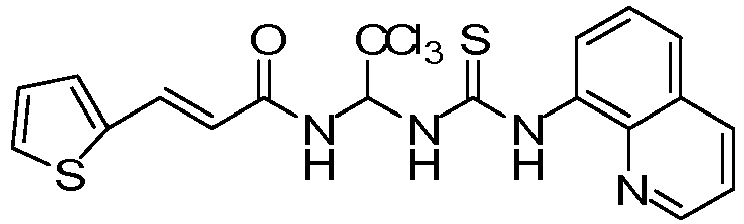
- 1.12 g of 2-thiophene carboxaldehyde and 3.12 g of malonic acid were dissolved in 15 ml of pyridine, added with a catalytically effective amount of piperidine, reacted at 80°C for 6 h, the reaction solution was poured into 20 ml of water, regulated with 10% NaOH aqueous solution to reach PH 12, extracted with ethyl acetate, the water layer was taken and regulated with 2N hydrochloric acid to reach PH3, a large amount of yellow solid (2E)-3-(2-thienyl)acrylic acid was precipitated, filtered and washed with water to obtain 1.12 g. The (2E)-3-(2-thienyl)acrylic acid was dissolved in 10ml of anhydrous dichloromethane, added with a catalytically amount of DMF, added dropwise with 1.5ml of oxalyl chloride under ice-water bath, after adding dropwise, heated to room temperature, stirred for 2 h, the reaction solution was added dropwise into 0°C 10ml concentrated ammonia water, stirred for 30min, the layers were separated, the dichloromethane layer was taken, evaporated to remove solvent and obtain white needle crystal (2E)-3-(2-thienyl)acrylamide 0.7g. It together with 1.20 g of trichloroacetaldehyde hydrate was added to 30ml of toluene, refluxed at 110°C for 8 h, cooled to room temperature to precipitate a large amount of yellow lamellar crystal (2E)-3-(2-thienyl)-N-(1-hydroxy-2,2,2-trichloroethyl)acrylamide 1.20g. It was dissolved in 20ml anhydrous THF, added with DMF for catalysis, added dropwise with SOCl2 1.2ml at room temperature, heated to 60°C and reacted for 2 h. After solvent was evaporated, it was dissolved in anhydrous acetone, added with 0.3g of KSCN, stirred and reacted at 40°C for 2 h, filtered with diatomite, the filtrate was eluted with developing solvent system of petroleum ether : ethyl acetate = 20:1, to obtain yellow needle crystal (2E)-3-(2-thienyl)-N-(1-isothiocyano-2,2,2-trichloroethyl)acrylamide 0.81g. It was dissolved in 10ml of THF, added with 0.30g of 8-aminoquinoline, heated to 60°C and reacted for 2 h, cooled to room temperature to precipitate a large amount of white flocculent solid (2E)-3-(2-thienyl)-N-[1-(8-quinolylamino)thioformylamino-2,2,2-trichloroethyl]-2-acrylamide, which was recrystallized with THF to obtain a pure product of 0.92g. 1H-NMR(400MHz,DMSO-d6)δ6.63-6.67(d,1H); δ7.12-7.14(q,1H); δ7.42-7.43(d,1H); δ7.53-7.73(m, 6H); δ8.42-8.44(dd,1H); δ8.95-9.03(m,3H); δ9.54-9.56(d,1H); δ11.03(s,1H). MS(TOF) 487.0 (M+).
- (2E)-3-(3-thienyl)-N-[1-(8-quinolylamino)thioformyl amino-2,2,2-trichloroethyl]-2-acrylamide

- The method of Reference Example 1 was used, in which 2-thiophene carboxaldehyde was replaced with 3-thiophene carboxaldehyde, to obtain yellow solid 0.60g. 1H-NMR(400MHz,DMSO-d 6)δ6.67-6.71 (d,1H); δ7.35-7.36(d,1H); δ7.54-7.72(m,6H); δ7.87-7.88(d,1H); δ8.42-8.44(dd,1H); δ8.96-9.03(m,3H); δ9.54-9.56(d,1H); δ11.05(s,1H). MS(TOF) 487.0 (M+).
- (2E)-3-(2-thienyl)-N-[1-(4-tolylamino)thioformyl amino-2,2,2-trichloroethyl]-2-acrylamide

- The method of Reference Example 1 was used, in which 8-aminoquinoline was replaced with 4-methylaniline, to obtain yellow solid 60mg. 1H-NMR(400MHz,DMSO-d 6)δ2.28(s,3H); δ6.47-6.51 (d,1H); δ7.13-7.18(m,3H); δ7.36-7.45(m,4H); δ7.66-7.72(m,2H); δ8.03(,1H); δ8.96-8.98 (d,1 H); δ10.21(s,1H). MS(TOF) 450.0 (M+).
- (2E)-3-(2-thienyl)-N-[1-(2-methoxyanilino) thioformylamino-2,2,2-trichloroethyl]-2-acrylamide

- The method of Reference Example 1 was used, in which 8-aminoquinoline was replaced with 2-methoxyaniline, to obtain yellow solid 0.23g. 1H-NMR(400MHz,DMSO-d 6)δ3.83(s,3H); δ6.52-6.56(d,1H); δ6.90-7.14(m,4H); δ7.41-7.45(m,2H); δ7.65-7.72(m,2H); δ7.90-7.92(d,1H); δ8.48(s,1H); δ9.00-9.02(d,1H); δ9.80(s,1H). MS(TOF) 464.0 (M+).
- (2E)-3-(2-thienyl)-N-(1-benzylaminothioformyl amino-2,2,2-trichloroethyl)-2-acrylamide

- The method of Reference Example 1 was used, in which 8-aminoquinoline was replaced with benzylamine, to obtain yellow solid 0.12g. 1H-NMR(400MHz,DMSO-d 6)δ4.68-4.69(d,2H); δ6.52-6.56(d,1H); δ6.52-6.56(d,1H); δ7.11-7.14(dd,1H); δ7.31-7.43(m,7H); δ7.64-7.71(m,2H); δ8.00-8.03(d,1H); δ8.61-8.63(t,1H); δ8.94-8.96(d,1H). MS(TOF) 447.9 (M+).
- (2E)-3-(2-thienyl)-N-(1-cyclohexylaminothio formylamino-2,2,2-trichloroethyl)-2-acrylamide

- The method of Reference Example 1 was used, in which 8-aminoquinoline was replaced with cyclohexylamine, to obtain yellow solid 0.22g. 1H-NMR(400MHz,DMSO-d 6) δ1.14-1.31(m,5H); δ1.51-1.64(m,3H); δ1.88(n,2H); δ3.97-3.99(,1H); δ6.51-6.55(d,1H); δ7.12-7.14(dd,1H); δ7.30-7.43(m,2H); δ7.65-7.83(m,3H); δ8.17-8.19(d,1H); δ8.91-8.93(d,1H). MS(TOF) 440.0 (M+).
- (2E)-3-(2-thienyl)-N-[1-isopropylamino thioformylamino -2,2,2-trichloroethyl]-2-acrylamide

- The method of Reference Example 1 was used, in which 8-aminoquinoline was replaced with isopropylamine, to obtain yellow solid 0.29g. 1H-NMR(400MHz,DMSO-d 6) δ1.11-1.13(m,6H); δ4.21-4.24(dd,1H); δ6.51-6.55(d,1H); δ7.12-7.14(dd,1H); δ7.30-7.43(m,2H); δ7.65-7.76(m,3H); δ8.15-8.17(d,1H); δ8.91-8.93(d,1H). MS(TOF) 401.9 (M+).
- (2E)-3-(2-thienyl)-N-[1-(2-fluoroanilino)thioformyl amino-2,2,2 -trichloroethyl]-2-acrylamide
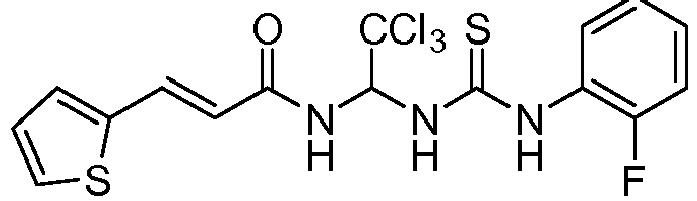
- The method of Reference Example 1 was used, in which 8-aminoquinoline was replaced with 2-fluoroaniline, to obtain yellow solid 0.30g. 1H-NMR(400MHz,DMSO-d 6)δ6.52-6.56(d,1H); δ7.12-7.29(m,4H); δ7.39-7.45(m,2H); δ7.66-7.73(m,2H); δ7.86-7.90(t,1H); δ8.52-8.54(d,1H); δ904-9.06(d,1H). MS(TOF) 453.0 (M+).
- (2E)-3-(2-thienyl)-N-[1-(3-isopropoxypropylamino) thioformyl amino-2,2,2-trichloroethyl]-2-acrylamide

- The method of Reference Example 1 was used, in which 8-aminoquinoline was replaced with 3-isopropoxy n-propylamine, to obtain yellow solid 0.20g. 1H-NMR(400MHz,DMSO-d 6)δ1.06-1.08(d,6H); δ1.68-1.71(t,2H); δ3.31-3.51(m,4H); δ6.52-6.55(d,1H); δ7.11-7.13(dd,1H); δ7.31-7.43(m,2H); δ7.64-7.70(m,2H); δ7.86-7.88(d,1H); δ8.20-8.22(t,1H); δ8.88-8.90(d,1H). MS(TOF) 458.0 (M+).
- (2E)-3-(2-thienyl)-N-[1-(2-methoxyformylanilino) thioformyl amino-2,2,2-trichloroethyl]-2-acrylamide

- The method of Reference Example 1 was used, in which 8-aminoquinoline was replaced with 2-methoxyformylaniline, to obtain purple white solid 0.36g. 1H-NMR(400MHz,DMSO-d 6)δ3.79-3.80(s,3H); δ6.59-6.62(d,1H); δ7.12-7.14(dd,1H); δ7.28-7.32(m,1H); δ7.42-7.46(m,2H); δ7.55-7.59(m,1H); δ7.65-7.72(m,2H); δ7.77-7.79(d,1H)δ7.84-7.86(dd,1H); δ8.88-9.01(m,2H). MS(TOF) 492.0 (M+).
- (2E)-3-(2-thienyl)-N-(1-cycloheptylaminothioformyl amino-2,2,2 -trichloroethyl)-2-acrylamide

- The method of Reference Example 1 was used, in which 8-aminoquinoline was replaced with cycloheptylamine, to obtain white solid 0.18g. 1H-NMR(400MHz,DMSO-d 6)δ1.43-1.53(m,11H); δ1.87-1.90(m,2H); δ4.19(s,1H); δ6.51-6.55(d,1H); δ7.11-7.13(dd,1H); δ7.30-7.35(t,1H); δ7.42(d,1H); δ7.64-7.78(m,3H); δ8.20-8.22(d,1H); δ8.87-8.90(d,2H). MS(TOF) 453.0 (M+).
-

- The method of Reference Example 1 was used, in which 8-aminoquinoline was replaced with morpholine, to obtain white solid 0.15g. 1H-NMR(400MHz,DMSO-d 6)δ3.61-3.64(m,4H); δ3.83(m,4H); δ6.78-6.82(d,1H); δ7.40-7.45(m,3H); δ7.52-7.45(m,4H); δ7.89-7.91 (d,1 H); δ8.34-8.36(d,1H). MS(TOF)421.9(M+).
-

- The method of Reference Example 1 was used, in which 8-aminoquinoline was replaced with N-methylpiperazine, to obtain white solid 0.17g. 1H-NMR(400MHz,DMSO-d 6)δ2.18(s,3H); δ2.31-2.40(m,4H); δ3.78-3.83(m,4H); δ6.76-6.80(d,1H); δ7.41-7.45(m,3H); δ7.52-7.60(m,2H); δ7.65-7.67(m,2H); δ7.83-7.85(d,1H); δ8.32-8.35(d,1H). MS(TOF) 435.3 (M+).
- (2E)-3-(2-thienyl)-N-[1-(8-quinolylamino) methylthiomethenyl amino-2,2,2-trichloroethyl]-2-acrylamide

- The method of Reference Example 1 was used, (2E)-3-(2-thienyl)-N-[1-(8-quinolylamino)thioformylamino-2,2,2-trichloroethyl]-2-acrylamide 2.0g of Reference
- Example 1 was added to 5ml of water to form a suspension, added with 0.5ml of 50% NaOH aqueous solution, stirred for 10min, added with 0.54ml of iodomethane, reacted at room temperature for 2 h, extracted with ethyl ether, washed with saturated saline, dried with anhydrous magnesium sulfate, evaporated to remove solvent to obtain white solid (2E)-3-(2-thienyl)-N-[1-(8-quinolylamino) methylthiomethenylamino-2,2,2-trichloroethyl]-2-acrylamide 1.30g. 1H-NMR(400MHz,DMSO-d 6)δ2.79(s,3H); δ6.26-6.28(d,1H); δ6.86-6.90(d,1H); δ7.40-7.43(m,3H); δ7.53-7.64(m,6H); δ8.43-8.45(dd,1H); δ8.92-8.97(m,3H); δ9.59(s,1H). MS(TOF) 501.1 (M+).
-

- The method of Reference Example 1 was used, in which 2-thiophene carboxaldehyde was replaced with benzaldehyde, 8-aminoquinoline was replaced with morpholine, to obtain white solid 0.19g. 1H-NMR(400MHz,DMSO-d 6)δ3.61-3.64(m,4H); δ3.79-3.83(m,4H); δ6.78-6.82(d,1H); δ7.41-7.46(m,3H); δ7.52-7.61(m,2H); δ7.64-7.67(dd,1H); δ7.89-7.91(d,1H); δ8.34-8.36(d,1H). MS(TOF) 422.7 (M+).
- (2E)-3-phenyl-[1-(1-piperidylthioformylamino)- 2,2,2-trichloro ethyl]-2-acrylamide

- The method of Reference Example 1 was used, in which 2-thiophene carboxaldehyde was replaced with benzaldehyde, 8-aminoquinoline was replaced with piperidine, to obtain white solid 0.15g. 1H-NMR(400MHz,DMSO-d 6)δ1.53-1.62(m,6H); δ3.81-3.82(t,4H); δ6.74-6.78(d,1H); δ7.41-7.46(m,3H); δ7.52-7.71(m,5H); δ8.36-8.38(d,1H); δ9.59(s,1H). MS(TOF) 420.7 (M+).
- (2E)-3-phenyl-[1-(3-methoxybenzyl) thioformylamino-2,2,2-trichloroethyl]-2-acrylamide

- The method of Reference Example 1 was used, in which 2-thiophene carboxaldehyde was replaced with benzaldehyde, 8-aminoquinoline was replaced with p-methoxybenzylamine, to obtain white solid 0.17g. 1H-NMR(400MHz,DMSO-d 6)δ3.72(s,3H); δ4.58-4.60(d,2H); δ6.77-6.81(d,1H); 6.90-6.92(d,2H); δ7.24-7.26(d,2H); δ7.36-7.46(m,4H); δ7.52-7.60(m,3H); δ7.96-7.98(d,1H); δ8.55(t,1H); δ8.97-8.99(d,1H). MS(TOF)472.8 (M+).
- The isolation and culture of cardiomyocytes were performed by referring to the differential adhesion method (Kreider, A. Messing, H. Doan, S.U. Kim, R.P. Lisak and D.E. Pleasure, Enrichment of Schwann cell cultures from neonatal rat sciatic nerve by differential adhesion, Brain Res 2 (1981), pp. 433-444). Wistar sucking mice newborn within 24h were used, sterilized at skin of ventrum with iodine tincture and ethanol, subjected to thoracotomy using scissors at subxiphoid median line with a deviation to left, heart was taken out after slant thoracotomy and placed in PBS precooled with ice; the heart was softly blown and beaten with 0.01 M PBS to remove blood cells and other tissues, then cut into pieces with 0.5mm3 size, washed with 0.01 M PBS repeatedly for 2-3 times; the pieces were placed in conical flask, added with 4ml of 0.125% pancretin, 1ml of 0.1% collagenase II (final concentrations separately being 0.1% and 0.02%), shaken in 37°C water bath for 10min, the supernatant was discarded; then 4ml of 0.125% pancretin and 1ml of 0.1% collagenase II again, shaken in 37°C water bath for digestion for 10min, the supernatant was sucked and transferred to a centrifuge tube, and the supernatant was added with DMEM containing 10% FBS to terminate digestion; the step of shaking and digestion in water bath was repeated for 3-4 times, until the tissue pieces were completely digested; the collected cell suspension was centrifuged under 1000rpm for 10 min, the supernatant was removed, then a culture medium was added for resuspension; the resuspended cells were inoculated in a cell culture flask, placed in CO2 incubator at 37°C for incubation for 1.5h, then the culture medium was sucked out, countered under microscope, then DMEM culture medium containing 10% FBS was used to adjust cell density, inoculated in an amount of 1x10⁴ to a 96-well plate, placed in 5% CO2 incubator at 37°C for 24 h, then half medium was replaced, a culture medium containing 0.1 % Brdu was supplementally added; then the medium was replaced once per 48h, and primary cardiomyocytes were obtained after 4 days of cultivation.
- The isolated primary culture of cardiomyocytes was inoculated in an amount of 104 cells per well to a 96-well plate, and the volume of each well was 100µl (marginal wells were filled with sterile PBS). After being cultivated in 5% CO2 and 37°C incubator for 4d, they were added with the compound of Formula I at different concentrations (0.3µM, 1µM, 3µM, 10µM, 30µM, 100µM), 3 double-wells were set for each concentration, at the same time, zero setting wells (culture medium, MTT, DMSO), and control wells (culture medium, DMSO) were also set. After continuous inoculation for 48h, each well was added with 20µlof MTT solution (5mg/ml, formulated with PBS (pH=7.4), i.e., 0.5% MTT), and the cultivation was continued for 4 h. After the end of cultivation, culture medium in wells was carefully sucked out. Each well was added with 150µl of DMSO, shaken at a low speed in a shaking table for 10min, so that the crystal was sufficiently dissolved. The optical density (OD) value of each well was measured at wavelength of 550nm by enzyme-linked immunoassay instrument, and each well was repeatedly measured for 5 times and the results were recorded. The results are shown in Table 1.
Table 1: Effects of the compound at different concentrations on survival rate of the cardiomyocytes as tested by the MTT method. Examples 4-11 and 14 are Reference Examples. Group Inhibition rate (%) of cardiomyocytes Control group 100 Compound of Example 4 300µM 5.55±2.29 Compound of Example 5 300µM 0.76±4.04 Compound of Example 6 300µM 5.54±3.61 Compound of Example 7 300µM 1.32±3.42 Compound of Example 8 300µM 6.82±1.21 Compound of Example 9 300µM 5.30±0.95 Compound of Example 10 300µM 3.24±1.70 Compound of Example 11 300µM 7.62±5.77 Compound of Example 12 300µM 10.44±5.66 Compound of Example 13 300µM 1.66±2.70 Compound of Example 14 300µM 8.34±5.78 - The results show that: the compound of Examples at a concentration within 300µM has no effect on survival rate of normal cardiomyocytes.
- Cardiomyocytes were subjected to the primary culture for 4 days according to the above method, and then added with thapsigargin (TG) to induce apoptosis. The compound of the present invention was added for pretreatment 30min before inducing apoptosis. The cells were randomly divided into 5 groups: (1) solvent control group (DMSO); (2) TG intervening group (0.4uM); (3) TG (0.4uM) + compound intervening group (0.3uM); (4) TG (0.4uM) + compound intervening group (1uM); (5) TG (0.4uM) + compound intervening group (3uM). TG was formulated with DMSO, the mother liquid was of 4mM; and the compound of the present invention was formulated with DMSO, and the mother liquid was of 150mM. The cell survival rate was measured according to the above MTT method, so as to test the protection effects of the compound of the present invention on the TG-induced cardiomyocytes apoptosis, and the results are shown in Table 2.
Table 2: Effects of the compound at different concentrations on TG-induced cardiomyocytes apoptosis as tested by the MTT method. Examples 5-7 are Reference Examples. Group Survival rate (%) of Cardiomyocyte Control group 100 TG intervening group 59±1.1 Compound of Example 5 0.3µM group 82±4 1µM group 76±8 3µM group 74±9 Compound of Example 6 1µM group 76±7 3µM group 70±6 10µM group 78±9 Compound of Example 7 1µM group 69±5 3µM group 70±8 10µM group 77±11 Compound of Example 12 0.3µM group 79±7 1µM group 80±9 3µM group 83±11 Compound of Example 13 0.3µM group 72±3 1µM group 71 ±3 3µM group 67±3 Notation: cell survival rate = 1 - cell inhibition rate - Test results: in comparison with the group merely added with TG, when TG and the compounds of Examples were added together, the cardiomyocyte survival rate was significantly elevated, which indicates that the compounds of Examples in Table 2 could significantly improve TG-induced apoptosis and have protection effects on cardiomyocytes.
-
- 1) 1× Wash Buffer: 20mL of 10× Wash Buffer was added to 180mL of ultrapure water, stored at 4°C for 7 days.
- 2) fixing solution: 7.3mL of 37% formaldehyde solution was added to 14.7 mL of 1× Wash Buffer, pre-heated before use to 37°C. This solution was prepared when using.
- 3) 1 x penetrating membrane solution: 4mL of 10x penetrating membrane solution was added to 36mL of ultrapure water, this application solution was stored at 4°C for 7 days.
- 4) Mitotracker/Hoechst solution (stored at -20°C): Mitotracker CMXROS was dissolved with 94µL of anhydrous DMSO to obtain 1mM solution, this solution could be preserved at -20°C under dry and dark condition for 6 months. In order to avoid multiple freeze-thaw cycles, it was subpackaged in an amount for single use. 5.5µL of 1 mM Mitotracker Red Solution and 11µL of Hoechst dye were added to cell culture medium, to obtain an application solution with a final volume of 5.5mL. This application solution should be prepared when using.
- 5) Alexa Fluor 488 Phalloidin solution: Alexa Fluor 488 Phalloidin was dissolved with 140µL of methanol to form a mother liquor, this solution could be preserved at -20°C under dry and dark condition for 12 months. 27.5µL of the Alexa Fluor 488 Phalloidin mother liquor was added to 5.5mL of 1 × Wash Buffer to prepare an application solution. This application solution should be prepared when using.
- Experimental method: Cardiomyocyte was obtained by primary culture according to Example 18, cell density 104/mL, each wall was added with 100µL of suspension of the cells. The cells were incubated at 37°C, 5% CO2 environment for 96 h (replacing solution once per 48h). After primary culture for 4 days, cell apoptosis was induced by placing in an anoxia incubator, the compounds of the present invention at different concentrations were added for pretreatment 30 min before inducing cell apoptosis, then placed in 37°C, 5%CO2-95%N2 incubator and cultured for 15.5h. It was 30 min before the compound incubation finished, 50µL of culture medium, 50µL of Mitotracker/Hoechst solution, were added, and the cells were then continuously cultured at 37°C, 5% CO2-95%N2 for 30min.
- Each well was directly added with 100µL of fixing solution, without sucking out the culture medium, incubated at room temperature in fume cupboard for 10min. The pre-heated fixing solution was very important for keeping cell integrity.
- The solution of each well was sucked out (the plate could be turned over), washed with 1× Wash Buffer (100µL/well) once. Carefulness was kept during operation and washing procedure to maintain cell adhesion and integrity. Good results could be obtained by slowly sucking and releasing liquid. Wash Buffer was sucked out, 1× penetrating membrane solution (100uL/well) was added, incubated at room temperature for 15min. The penetrating membrane solution was sucked out, each well was washed once with 100µL/well of 1 × Wash Buffer. The Wash Buffer was sucked out, each well was added with 50µL of Alexa Fluor 488 Phalloidin Solution, incubated at room temperature in dark for 30min. The Alexa Fluor 488 Phalloidin solution was sucked out, washed with 1 × Wash Buffer for three times, and the solution of the last time was kept in the well. The edge of plate was covered with sealing membrane (for prevention of drying), and assayed with HCS Reader. The plate was preserved at 4°C environment temperature. The extent of cardiomyocyte apoptosis was finally detected by fluorescence staining method. The results are shown in Table 3, Table 4 and Table 5.
- This analysis method is a high connotation screening analytical method. It is a method for detecting apoptosis newly developed in recent years, which uses specific fluorescence staining to perform multiplicity of apoptosis. Three parameters relevant to apoptosis process were mainly analyzed, including karyomorphology change, mitochondrial swelling and/or mitochondrial transmembrane potential, F-actin content. HCS Reader can observe morphology of nucleus by Hoechst staining, and can compare quantitatively nucleus area and nucleus strength. The decrease in mitochondrial transmembrane potential and the increase of mitochondrial volume are generally accepted as early markers of apoptosis, and can be quantitated by mitochondrial tracer MitoTracker® Red
- In Tables 3, 4 and 5, Example 1 refers to Reference Example 1.
Table 3: Test results of nucleus area. Examples 1, 5 and 6 are Reference Examples. Group Nucleus area (%) Control group 113.86±3.06 Anoxia group 98.26±1.00 Compound of Example 1 10µM group 112.61±7.78 Compound of Example 5 0.3µM group 120.23±5.49 Compound of Example 6 1 µM group 100.00±4.63 Compound of Example 12 10µM group 102.93±5.12 Table 4: Test results of mitochondrial transmembrane potential: Group Mitochondrial transmembrane potential Control group 100±1 Anoxia group 96.04±3.61 Compound of Example 1 10µM group 112.68±1.46 Compound of Example 5 0.3µM group 117.76±1.87 Compound of Example 6 1µM group 112.92±0.82 Compound of Example 12 10µM group 133.11±6.30 Compound of Example 13 3µM group 116.41±0.64 Tale 5: Test results of light flux: Group light flux Control group 1247.52±48.059 Anoxia group 1044.91±16.53 Compound of Example 1 10µM group 1201.92±29.95 Compound of Example 5 0.3µM group 1331.12±53.30 Compound of Example 6 1µM group 1077.08±55.63 - Test results: in comparison with the Anoxia group, after the compounds of the Examples were added, the nucleus area, mitochondrial transmembrane potential and light flux of cardiac muscle cells increased significantly, indicating the compounds of the Examples had significant effects of improving apoptosis induced by anoxia, and could protect cardiac muscle cells.
- Although the embodiments for carrying out the invention have been described in details, those skilled in the art would understand that according to the disclosed teachings, these details could be subjected to various modifications and replacements, and all of these alternations are covered by the protection scope of the present invention. The protection scope of the present invention is determined by the attached claims and any equivalents thereof.
Claims (9)
- A compound of Formula I, or pharmaceutically acceptable salt and solvate thereof,
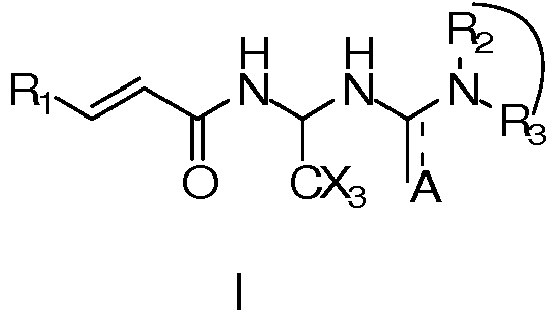 A represents =S or -SR4;X represents F, Cl, Br or I;R1 represents thienyl or substituted thienyl, wherein said thienyl is unsubstituted or substituted with 1-3 (e.g., 1, 2, or 3) substituents selected from: halogens, nitro, hydroxyl, amino, cyano, C1-C6 alkyl, C1-C6 alkoxy, and C1-C6 halogenated alkyl, and wherein said alkyl, alkoxy and halogenated alkyl can be optionally substituted with hydroxy, -O-(C1-C4)-alkyl, oxo, amino, -NH-(C1-C4)-alkyl, or -N-[(C1-C6)-alkyl]2, or said alkyl, alkoxy and halogenated alkyl can be optionally interrupted by -O-, -S-, -NH-, -COO-;R2 and R3 are attached together to form a nitrogen-containing heterocyclic group;R4 represents C1-C6 alkyl.
 - A compound of Formula I, or pharmaceutically acceptable salt and solvate thereof according to claim 1, wherein R4 represents methyl, ethyl, propyl, isopropyl, butyl, pentyl.
- A compound of Formula I, or pharmaceutically acceptable salt and solvate thereof according to claim 1, wherein:A represents =S or -SR4;X represents Cl;R1 represents 2-thienyl or 3-thienyl;R2 and R3 are attached together to form a piperidine ring, morpholine ring, N-methyl piperazine ring;R4 represents methyl, ethyl.
- The compounds having the following structures, or their pharmaceutically acceptable salts and solvates:(1) (2E)-3-(2-thienyl)-N-[1-(1-morpholinyl)thioformylamino-2,2,2-trichloroethyl]-2-acrylamide; or(2) (2E)-3-(2-thienyl)-N-[1-(4-methylpiperazinyl) thioformylamino-2,2,2-trichloroethyl]-2-acrylamide.
- A pharmaceutical composition comprising a compound or pharmaceutically acceptable salt and solvate thereof according to any one of claims 1-4, and a pharmaceutically acceptable carrier, excipient or diluent.
- Use of the compound or pharmaceutically acceptable salt and solvate thereof according to any one of claims 1-4 in manufacture of a medicament for anti-apoptosis, or preventing or treating a disease or disorder associated with apoptosis selected from cardiovascular diseases, nerve degenerative diseases, multiple sclerosis, viral infections.
- Use of the compound or pharmaceutically acceptable salt and solvate thereof according to any one of claims 1-4 in manufacture of a medicament for protecting cardiomyocyte, or preventing or treating a disease or disorder associated with cardiomyocyte apoptosis selected from hunger myocardial atrophy, myocarditis, heart failure, myocardial damage caused by primary hypertension, myocardial damage caused by early stage of acute myocardial infarction, myocardial damage caused by acute myocardial infarction reperfusion, pathological changes of cardiomyocytes caused by heart transplantation, or displastic myocarditis; or cardiomyocytes apoptosis caused by anoxia, or sclerosis in cardiovascular system.
- A compound or pharmaceutically acceptable salt and solvate thereof according to any one of claims 1-4 for use in combating apoptosis, or preventing or treating a disease or disorder associated with apoptosis selected from cardiovascular diseases, nerve degenerative diseases, multiple sclerosis, viral infections.
- A compound or pharmaceutically acceptable salt and solvate thereof according to any one of claims 1-4 for use in protecting cardiomyocyte, or preventing or treating a disease or disorder associated with cardiomyocyte apoptosisselected from hunger myocardial atrophy, myocarditis, heart failure, myocardial damage caused by primary hypertension, myocardial damage caused by early stage of acute myocardial infarction, myocardial damage caused by acute myocardial infarction reperfusion, pathological changes of cardiomyocytes caused by heart transplantation, or displastic myocarditis; or cardiomyocytes apoptosis caused by anoxia, or sclerosis in cardiovascular system.
Applications Claiming Priority (1)
| Application Number | Priority Date | Filing Date | Title |
|---|---|---|---|
| PCT/CN2010/000687 WO2011140681A1 (en) | 2010-05-14 | 2010-05-14 | Acrylamide compounds and use thereof for inhibiting apoptosis |
Publications (3)
| Publication Number | Publication Date |
|---|---|
| EP2573078A1 EP2573078A1 (en) | 2013-03-27 |
| EP2573078A4 EP2573078A4 (en) | 2013-11-20 |
| EP2573078B1 true EP2573078B1 (en) | 2016-11-02 |
Family
ID=44913823
Family Applications (1)
| Application Number | Title | Priority Date | Filing Date |
|---|---|---|---|
| EP10851188.2A Not-in-force EP2573078B1 (en) | 2010-05-14 | 2010-05-14 | Acrylamide compounds and use thereof for inhibiting apoptosis |
Country Status (3)
| Country | Link |
|---|---|
| US (2) | US9199978B2 (en) |
| EP (1) | EP2573078B1 (en) |
| WO (1) | WO2011140681A1 (en) |
Families Citing this family (1)
| Publication number | Priority date | Publication date | Assignee | Title |
|---|---|---|---|---|
| US10216975B1 (en) | 2018-02-23 | 2019-02-26 | Shenzhen GOODIX Technology Co., Ltd. | Optical imaging via imaging lens and imaging pinhole in under-screen optical sensor module for on-screen fingerprint sensing in devices having organic light emitting diode (OLED) screens or other screens |
Family Cites Families (4)
| Publication number | Priority date | Publication date | Assignee | Title |
|---|---|---|---|---|
| WO1999055693A2 (en) * | 1998-04-28 | 1999-11-04 | Novartis Ag | N-heteroaryl-substituted pyridine derivatives and their use as herbicides |
| US6946474B2 (en) * | 2000-09-14 | 2005-09-20 | Merck & Co., Inc. | Nitrogen-containing compounds and their use as glycine transport inhibitors |
| WO2007101710A1 (en) * | 2006-03-09 | 2007-09-13 | Cenix Bioscience Gmbh | Use of inhibitors of scavenger receptor class proteins for the treatment of infectious diseases |
| WO2010011898A1 (en) | 2008-07-25 | 2010-01-28 | Indiana University Research Technology Corporation | Method for treatment of bone diseases and fractures |
-
2010
- 2010-05-14 US US13/697,810 patent/US9199978B2/en not_active Expired - Fee Related
- 2010-05-14 EP EP10851188.2A patent/EP2573078B1/en not_active Not-in-force
- 2010-05-14 WO PCT/CN2010/000687 patent/WO2011140681A1/en not_active Ceased
-
2015
- 2015-10-26 US US14/922,963 patent/US9439881B2/en not_active Expired - Fee Related
Also Published As
| Publication number | Publication date |
|---|---|
| US9199978B2 (en) | 2015-12-01 |
| US20160038445A1 (en) | 2016-02-11 |
| EP2573078A1 (en) | 2013-03-27 |
| EP2573078A4 (en) | 2013-11-20 |
| US9439881B2 (en) | 2016-09-13 |
| WO2011140681A1 (en) | 2011-11-17 |
| US20130158022A1 (en) | 2013-06-20 |
Similar Documents
| Publication | Publication Date | Title |
|---|---|---|
| JP7676355B2 (en) | Beta-adrenergic agonists and methods of use thereof | |
| US7470787B2 (en) | Isoquinoline compounds | |
| WO2017215464A1 (en) | Trans-indoline cyclopropylamine chemical compound, and method for preparation, pharmaceutical composition, and use thereof | |
| JP2010168387A (en) | Quinoline derivative and quinazoline derivative inhibiting autophosphorylation of macrophage colony stimulating factor receptor | |
| JP2016185947A (en) | IRE-1α INHIBITORS | |
| CN102241673B (en) | Acrylamide compounds and medicinal uses thereof | |
| EP2570403B1 (en) | Urea compounds and use thereof for inhibiting apoptosis | |
| WO2021188949A1 (en) | 3-diarylmethylenes and uses thereof | |
| EP2280940A1 (en) | Novel n-(2-amino-phenyl)-acrylamides | |
| JPS62267250A (en) | Antiarrhythmic | |
| US9439881B2 (en) | Acrylamide compounds and use thereof for inhibiting apoptosis | |
| EP3315495A1 (en) | N,n' -diarylurea, n,n' -diarylthiourea and n,n' -diarylguanidino compounds for use in treatment and prevention of inflammatory disease | |
| US8884007B2 (en) | Hexenone compounds and medical use thereof | |
| CN102241627B (en) | Carbamide compound and its medicinal usage | |
| JP2010526133A (en) | 3,4-dihydroquinazoline derivatives | |
| CN113387909B (en) | Medical uses of 2,3-epoxysuccinyl derivatives | |
| US9139543B2 (en) | Thiazole compounds and uses thereof | |
| JP2018524340A (en) | Thiazide amide derivatives and their use | |
| US20160096837A1 (en) | Substituted 1,2,3,4-tetrahydropyrido[3,4-e] pyrrolo[1,2-a]pyrimidines as kinase inhibitors |
Legal Events
| Date | Code | Title | Description |
|---|---|---|---|
| PUAI | Public reference made under article 153(3) epc to a published international application that has entered the european phase |
Free format text: ORIGINAL CODE: 0009012 |
|
| 17P | Request for examination filed |
Effective date: 20121214 |
|
| AK | Designated contracting states |
Kind code of ref document: A1 Designated state(s): AL AT BE BG CH CY CZ DE DK EE ES FI FR GB GR HR HU IE IS IT LI LT LU LV MC MK MT NL NO PL PT RO SE SI SK SM TR |
|
| DAX | Request for extension of the european patent (deleted) | ||
| A4 | Supplementary search report drawn up and despatched |
Effective date: 20131017 |
|
| RIC1 | Information provided on ipc code assigned before grant |
Ipc: A61P 9/00 20060101ALI20131011BHEP Ipc: A61K 31/435 20060101ALI20131011BHEP Ipc: C07D 295/21 20060101ALI20131011BHEP Ipc: A61K 31/496 20060101ALI20131011BHEP Ipc: A61P 43/00 20060101ALI20131011BHEP Ipc: A61K 31/381 20060101ALI20131011BHEP Ipc: A61K 31/5377 20060101ALI20131011BHEP Ipc: C07C 335/12 20060101ALI20131011BHEP Ipc: C07D 333/10 20060101ALI20131011BHEP Ipc: C07D 409/12 20060101ALI20131011BHEP Ipc: C07D 333/04 20060101AFI20131011BHEP Ipc: A61K 31/4709 20060101ALI20131011BHEP Ipc: A61K 31/17 20060101ALI20131011BHEP |
|
| 17Q | First examination report despatched |
Effective date: 20140702 |
|
| GRAP | Despatch of communication of intention to grant a patent |
Free format text: ORIGINAL CODE: EPIDOSNIGR1 |
|
| INTG | Intention to grant announced |
Effective date: 20151222 |
|
| GRAP | Despatch of communication of intention to grant a patent |
Free format text: ORIGINAL CODE: EPIDOSNIGR1 |
|
| INTG | Intention to grant announced |
Effective date: 20160520 |
|
| GRAS | Grant fee paid |
Free format text: ORIGINAL CODE: EPIDOSNIGR3 |
|
| GRAA | (expected) grant |
Free format text: ORIGINAL CODE: 0009210 |
|
| AK | Designated contracting states |
Kind code of ref document: B1 Designated state(s): AL AT BE BG CH CY CZ DE DK EE ES FI FR GB GR HR HU IE IS IT LI LT LU LV MC MK MT NL NO PL PT RO SE SI SK SM TR |
|
| REG | Reference to a national code |
Ref country code: GB Ref legal event code: FG4D |
|
| REG | Reference to a national code |
Ref country code: AT Ref legal event code: REF Ref document number: 841717 Country of ref document: AT Kind code of ref document: T Effective date: 20161115 Ref country code: CH Ref legal event code: EP |
|
| REG | Reference to a national code |
Ref country code: IE Ref legal event code: FG4D |
|
| REG | Reference to a national code |
Ref country code: DE Ref legal event code: R096 Ref document number: 602010037747 Country of ref document: DE |
|
| PG25 | Lapsed in a contracting state [announced via postgrant information from national office to epo] |
Ref country code: LV Free format text: LAPSE BECAUSE OF FAILURE TO SUBMIT A TRANSLATION OF THE DESCRIPTION OR TO PAY THE FEE WITHIN THE PRESCRIBED TIME-LIMIT Effective date: 20161102 |
|
| REG | Reference to a national code |
Ref country code: NL Ref legal event code: MP Effective date: 20161102 |
|
| REG | Reference to a national code |
Ref country code: LT Ref legal event code: MG4D |
|
| REG | Reference to a national code |
Ref country code: AT Ref legal event code: MK05 Ref document number: 841717 Country of ref document: AT Kind code of ref document: T Effective date: 20161102 |
|
| PG25 | Lapsed in a contracting state [announced via postgrant information from national office to epo] |
Ref country code: GR Free format text: LAPSE BECAUSE OF FAILURE TO SUBMIT A TRANSLATION OF THE DESCRIPTION OR TO PAY THE FEE WITHIN THE PRESCRIBED TIME-LIMIT Effective date: 20170203 Ref country code: NL Free format text: LAPSE BECAUSE OF FAILURE TO SUBMIT A TRANSLATION OF THE DESCRIPTION OR TO PAY THE FEE WITHIN THE PRESCRIBED TIME-LIMIT Effective date: 20161102 Ref country code: NO Free format text: LAPSE BECAUSE OF FAILURE TO SUBMIT A TRANSLATION OF THE DESCRIPTION OR TO PAY THE FEE WITHIN THE PRESCRIBED TIME-LIMIT Effective date: 20170202 Ref country code: SE Free format text: LAPSE BECAUSE OF FAILURE TO SUBMIT A TRANSLATION OF THE DESCRIPTION OR TO PAY THE FEE WITHIN THE PRESCRIBED TIME-LIMIT Effective date: 20161102 Ref country code: LT Free format text: LAPSE BECAUSE OF FAILURE TO SUBMIT A TRANSLATION OF THE DESCRIPTION OR TO PAY THE FEE WITHIN THE PRESCRIBED TIME-LIMIT Effective date: 20161102 |
|
| REG | Reference to a national code |
Ref country code: FR Ref legal event code: PLFP Year of fee payment: 8 |
|
| PG25 | Lapsed in a contracting state [announced via postgrant information from national office to epo] |
Ref country code: AT Free format text: LAPSE BECAUSE OF FAILURE TO SUBMIT A TRANSLATION OF THE DESCRIPTION OR TO PAY THE FEE WITHIN THE PRESCRIBED TIME-LIMIT Effective date: 20161102 Ref country code: IS Free format text: LAPSE BECAUSE OF FAILURE TO SUBMIT A TRANSLATION OF THE DESCRIPTION OR TO PAY THE FEE WITHIN THE PRESCRIBED TIME-LIMIT Effective date: 20170302 Ref country code: ES Free format text: LAPSE BECAUSE OF FAILURE TO SUBMIT A TRANSLATION OF THE DESCRIPTION OR TO PAY THE FEE WITHIN THE PRESCRIBED TIME-LIMIT Effective date: 20161102 Ref country code: PL Free format text: LAPSE BECAUSE OF FAILURE TO SUBMIT A TRANSLATION OF THE DESCRIPTION OR TO PAY THE FEE WITHIN THE PRESCRIBED TIME-LIMIT Effective date: 20161102 Ref country code: FI Free format text: LAPSE BECAUSE OF FAILURE TO SUBMIT A TRANSLATION OF THE DESCRIPTION OR TO PAY THE FEE WITHIN THE PRESCRIBED TIME-LIMIT Effective date: 20161102 Ref country code: HR Free format text: LAPSE BECAUSE OF FAILURE TO SUBMIT A TRANSLATION OF THE DESCRIPTION OR TO PAY THE FEE WITHIN THE PRESCRIBED TIME-LIMIT Effective date: 20161102 Ref country code: PT Free format text: LAPSE BECAUSE OF FAILURE TO SUBMIT A TRANSLATION OF THE DESCRIPTION OR TO PAY THE FEE WITHIN THE PRESCRIBED TIME-LIMIT Effective date: 20170302 |
|
| PG25 | Lapsed in a contracting state [announced via postgrant information from national office to epo] |
Ref country code: CZ Free format text: LAPSE BECAUSE OF FAILURE TO SUBMIT A TRANSLATION OF THE DESCRIPTION OR TO PAY THE FEE WITHIN THE PRESCRIBED TIME-LIMIT Effective date: 20161102 Ref country code: SK Free format text: LAPSE BECAUSE OF FAILURE TO SUBMIT A TRANSLATION OF THE DESCRIPTION OR TO PAY THE FEE WITHIN THE PRESCRIBED TIME-LIMIT Effective date: 20161102 Ref country code: RO Free format text: LAPSE BECAUSE OF FAILURE TO SUBMIT A TRANSLATION OF THE DESCRIPTION OR TO PAY THE FEE WITHIN THE PRESCRIBED TIME-LIMIT Effective date: 20161102 Ref country code: EE Free format text: LAPSE BECAUSE OF FAILURE TO SUBMIT A TRANSLATION OF THE DESCRIPTION OR TO PAY THE FEE WITHIN THE PRESCRIBED TIME-LIMIT Effective date: 20161102 Ref country code: DK Free format text: LAPSE BECAUSE OF FAILURE TO SUBMIT A TRANSLATION OF THE DESCRIPTION OR TO PAY THE FEE WITHIN THE PRESCRIBED TIME-LIMIT Effective date: 20161102 |
|
| REG | Reference to a national code |
Ref country code: DE Ref legal event code: R097 Ref document number: 602010037747 Country of ref document: DE |
|
| PG25 | Lapsed in a contracting state [announced via postgrant information from national office to epo] |
Ref country code: BG Free format text: LAPSE BECAUSE OF FAILURE TO SUBMIT A TRANSLATION OF THE DESCRIPTION OR TO PAY THE FEE WITHIN THE PRESCRIBED TIME-LIMIT Effective date: 20170202 Ref country code: BE Free format text: LAPSE BECAUSE OF FAILURE TO SUBMIT A TRANSLATION OF THE DESCRIPTION OR TO PAY THE FEE WITHIN THE PRESCRIBED TIME-LIMIT Effective date: 20161102 Ref country code: SM Free format text: LAPSE BECAUSE OF FAILURE TO SUBMIT A TRANSLATION OF THE DESCRIPTION OR TO PAY THE FEE WITHIN THE PRESCRIBED TIME-LIMIT Effective date: 20161102 Ref country code: LU Free format text: LAPSE BECAUSE OF NON-PAYMENT OF DUE FEES Effective date: 20170531 Ref country code: IT Free format text: LAPSE BECAUSE OF FAILURE TO SUBMIT A TRANSLATION OF THE DESCRIPTION OR TO PAY THE FEE WITHIN THE PRESCRIBED TIME-LIMIT Effective date: 20161102 |
|
| PLBE | No opposition filed within time limit |
Free format text: ORIGINAL CODE: 0009261 |
|
| STAA | Information on the status of an ep patent application or granted ep patent |
Free format text: STATUS: NO OPPOSITION FILED WITHIN TIME LIMIT |
|
| 26N | No opposition filed |
Effective date: 20170803 |
|
| PG25 | Lapsed in a contracting state [announced via postgrant information from national office to epo] |
Ref country code: SI Free format text: LAPSE BECAUSE OF FAILURE TO SUBMIT A TRANSLATION OF THE DESCRIPTION OR TO PAY THE FEE WITHIN THE PRESCRIBED TIME-LIMIT Effective date: 20161102 |
|
| REG | Reference to a national code |
Ref country code: CH Ref legal event code: PL |
|
| PG25 | Lapsed in a contracting state [announced via postgrant information from national office to epo] |
Ref country code: MC Free format text: LAPSE BECAUSE OF FAILURE TO SUBMIT A TRANSLATION OF THE DESCRIPTION OR TO PAY THE FEE WITHIN THE PRESCRIBED TIME-LIMIT Effective date: 20161102 |
|
| REG | Reference to a national code |
Ref country code: IE Ref legal event code: MM4A |
|
| PG25 | Lapsed in a contracting state [announced via postgrant information from national office to epo] |
Ref country code: CH Free format text: LAPSE BECAUSE OF NON-PAYMENT OF DUE FEES Effective date: 20170531 Ref country code: LI Free format text: LAPSE BECAUSE OF NON-PAYMENT OF DUE FEES Effective date: 20170531 |
|
| PG25 | Lapsed in a contracting state [announced via postgrant information from national office to epo] |
Ref country code: LU Free format text: LAPSE BECAUSE OF NON-PAYMENT OF DUE FEES Effective date: 20170514 |
|
| PG25 | Lapsed in a contracting state [announced via postgrant information from national office to epo] |
Ref country code: IE Free format text: LAPSE BECAUSE OF NON-PAYMENT OF DUE FEES Effective date: 20170514 |
|
| REG | Reference to a national code |
Ref country code: FR Ref legal event code: PLFP Year of fee payment: 9 |
|
| PG25 | Lapsed in a contracting state [announced via postgrant information from national office to epo] |
Ref country code: MT Free format text: LAPSE BECAUSE OF NON-PAYMENT OF DUE FEES Effective date: 20170514 |
|
| PG25 | Lapsed in a contracting state [announced via postgrant information from national office to epo] |
Ref country code: HU Free format text: LAPSE BECAUSE OF FAILURE TO SUBMIT A TRANSLATION OF THE DESCRIPTION OR TO PAY THE FEE WITHIN THE PRESCRIBED TIME-LIMIT; INVALID AB INITIO Effective date: 20100514 |
|
| PG25 | Lapsed in a contracting state [announced via postgrant information from national office to epo] |
Ref country code: CY Free format text: LAPSE BECAUSE OF NON-PAYMENT OF DUE FEES Effective date: 20161102 |
|
| PG25 | Lapsed in a contracting state [announced via postgrant information from national office to epo] |
Ref country code: MK Free format text: LAPSE BECAUSE OF FAILURE TO SUBMIT A TRANSLATION OF THE DESCRIPTION OR TO PAY THE FEE WITHIN THE PRESCRIBED TIME-LIMIT Effective date: 20161102 |
|
| PG25 | Lapsed in a contracting state [announced via postgrant information from national office to epo] |
Ref country code: TR Free format text: LAPSE BECAUSE OF FAILURE TO SUBMIT A TRANSLATION OF THE DESCRIPTION OR TO PAY THE FEE WITHIN THE PRESCRIBED TIME-LIMIT Effective date: 20161102 |
|
| PG25 | Lapsed in a contracting state [announced via postgrant information from national office to epo] |
Ref country code: AL Free format text: LAPSE BECAUSE OF FAILURE TO SUBMIT A TRANSLATION OF THE DESCRIPTION OR TO PAY THE FEE WITHIN THE PRESCRIBED TIME-LIMIT Effective date: 20161102 |
|
| PGFP | Annual fee paid to national office [announced via postgrant information from national office to epo] |
Ref country code: GB Payment date: 20220428 Year of fee payment: 13 Ref country code: FR Payment date: 20220525 Year of fee payment: 13 Ref country code: DE Payment date: 20220427 Year of fee payment: 13 |
|
| REG | Reference to a national code |
Ref country code: DE Ref legal event code: R119 Ref document number: 602010037747 Country of ref document: DE |
|
| GBPC | Gb: european patent ceased through non-payment of renewal fee |
Effective date: 20230514 |
|
| PG25 | Lapsed in a contracting state [announced via postgrant information from national office to epo] |
Ref country code: DE Free format text: LAPSE BECAUSE OF NON-PAYMENT OF DUE FEES Effective date: 20231201 Ref country code: GB Free format text: LAPSE BECAUSE OF NON-PAYMENT OF DUE FEES Effective date: 20230514 |
|
| PG25 | Lapsed in a contracting state [announced via postgrant information from national office to epo] |
Ref country code: FR Free format text: LAPSE BECAUSE OF NON-PAYMENT OF DUE FEES Effective date: 20230531 |