EP2571322A1 - Radio base station and mobile communication method - Google Patents
Radio base station and mobile communication method Download PDFInfo
- Publication number
- EP2571322A1 EP2571322A1 EP11780715A EP11780715A EP2571322A1 EP 2571322 A1 EP2571322 A1 EP 2571322A1 EP 11780715 A EP11780715 A EP 11780715A EP 11780715 A EP11780715 A EP 11780715A EP 2571322 A1 EP2571322 A1 EP 2571322A1
- Authority
- EP
- European Patent Office
- Prior art keywords
- cell
- base station
- communications
- radio base
- radio quality
- Prior art date
- Legal status (The legal status is an assumption and is not a legal conclusion. Google has not performed a legal analysis and makes no representation as to the accuracy of the status listed.)
- Withdrawn
Links
Images



Classifications
-
- H—ELECTRICITY
- H04—ELECTRIC COMMUNICATION TECHNIQUE
- H04W—WIRELESS COMMUNICATION NETWORKS
- H04W48/00—Access restriction; Network selection; Access point selection
- H04W48/02—Access restriction performed under specific conditions
-
- H—ELECTRICITY
- H04—ELECTRIC COMMUNICATION TECHNIQUE
- H04L—TRANSMISSION OF DIGITAL INFORMATION, e.g. TELEGRAPHIC COMMUNICATION
- H04L5/00—Arrangements affording multiple use of the transmission path
- H04L5/0001—Arrangements for dividing the transmission path
- H04L5/0003—Two-dimensional division
- H04L5/0005—Time-frequency
- H04L5/0007—Time-frequency the frequencies being orthogonal, e.g. OFDM(A) or DMT
- H04L5/001—Time-frequency the frequencies being orthogonal, e.g. OFDM(A) or DMT the frequencies being arranged in component carriers
-
- H—ELECTRICITY
- H04—ELECTRIC COMMUNICATION TECHNIQUE
- H04L—TRANSMISSION OF DIGITAL INFORMATION, e.g. TELEGRAPHIC COMMUNICATION
- H04L5/00—Arrangements affording multiple use of the transmission path
- H04L5/003—Arrangements for allocating sub-channels of the transmission path
- H04L5/0037—Inter-user or inter-terminal allocation
-
- H—ELECTRICITY
- H04—ELECTRIC COMMUNICATION TECHNIQUE
- H04W—WIRELESS COMMUNICATION NETWORKS
- H04W36/00—Hand-off or reselection arrangements
- H04W36/24—Reselection being triggered by specific parameters
- H04W36/30—Reselection being triggered by specific parameters by measured or perceived connection quality data
- H04W36/302—Reselection being triggered by specific parameters by measured or perceived connection quality data due to low signal strength
-
- H—ELECTRICITY
- H04—ELECTRIC COMMUNICATION TECHNIQUE
- H04W—WIRELESS COMMUNICATION NETWORKS
- H04W36/00—Hand-off or reselection arrangements
- H04W36/08—Reselecting an access point
-
- H—ELECTRICITY
- H04—ELECTRIC COMMUNICATION TECHNIQUE
- H04W—WIRELESS COMMUNICATION NETWORKS
- H04W72/00—Local resource management
- H04W72/04—Wireless resource allocation
- H04W72/044—Wireless resource allocation based on the type of the allocated resource
- H04W72/0453—Resources in frequency domain, e.g. a carrier in FDMA
-
- H—ELECTRICITY
- H04—ELECTRIC COMMUNICATION TECHNIQUE
- H04W—WIRELESS COMMUNICATION NETWORKS
- H04W72/00—Local resource management
- H04W72/50—Allocation or scheduling criteria for wireless resources
- H04W72/54—Allocation or scheduling criteria for wireless resources based on quality criteria
- H04W72/542—Allocation or scheduling criteria for wireless resources based on quality criteria using measured or perceived quality
Definitions
- the present invention relates to a radio base station and a mobile communication method.
- the Long Term Evolution (LTE) scheme is a succeeding communication scheme of the Wideband Code Division Multiplexing Access (WCDMA) scheme, the High-Speed Downlink Packet Access (HSDPA) scheme, the High-Speed Uplink Packet Access (HSUPA) scheme, and the like.
- WCDMA Wideband Code Division Multiplexing Access
- HSDPA High-Speed Downlink Packet Access
- HSUPA High-Speed Uplink Packet Access
- Non-Patent Document 1 The requirements of the LTE-Advanced scheme are described in Non-Patent Document 1.
- CA Carrier aggregation
- CC Component Carrier
- a mobile station UE User Equipment
- Handover In a mobile communication system including multiple cells, a mobile station UE (User Equipment) is configured to continue communications by switching cells when moving from one cell to another cell. Such cell switching is referred to as "handover.”
- a mobile communication system is configured that a mobile station performs handover to a neighboring cell when the radio quality of a signal from the neighboring cell becomes higher than the radio quality of a signal from a serving cell.
- the received power of a signal is used as the above radio quality of the signal. More specifically, the received power of the signal is the received power of a downlink reference signal (RSRP: Reference Signal Received Power) sent from the neighboring cell or serving cell, for example (see Non-Patent Document 2 TS36.214, V8.7.0 for the definition of RSRP).
- RSRP Reference Signal Received Power
- the radio quality of a downlink reference signal (RSRQ: Reference Signal Received Quality), the SIR (RS-SIR) of a downlink reference signal, CQI (Channel Quality Indicator), CSI (Channel State Information), or the like is used as the aforementioned radio quality of the signal in some cases.
- RSRQ Reference Signal Received Quality
- RS-SIR SIR
- CQI Channel Quality Indicator
- CSI Channel State Information
- the received power of the signal (RSRP) is used as the radio quality of the signal.
- a mobile station UE measures the received powers of signals from a serving cell and a neighboring cell in step S1.
- the mobile station UE may perform cell search to detect an undetected neighboring cell.
- the cell search and the measurement of the ratio qualities (received powers) of the serving cell and the neighboring cell in this process may be collectively referred to as Measurement.
- step S2 the mobile station UE judges whether or not the received power of the signal from the neighboring cell satisfies the following (Equation 1):
- the mobile station UE When judging that the above (Equation 1) is satisfied, the mobile station UE notifies a network of "Measurement Report (Event A3) " for reporting the result of the above measurement.
- the mobile station UE measures the received powers of signals from the serving cell (cell A) and a neighboring cell (cell B) which is a measurement object, and judges whether or not to send a notification of the above measurement result, by using "hysteresis [dB]” and “TTT (Time To Trigger) [ms]” which are informed in advance.
- the mobile station UE judges that the notification of the above measurement result (Measurement report) should be sent, if the received power (received quality) of the signal from the cell B is kept higher than the received power (received quality) of the signal from the cell A, by "hysteresis" or more, continuously for the predetermined time period "TTT" or longer.
- the "hysteresis” is a value set to avoid frequent handover from the serving cell to a neighboring cell at the cell boundary, and may take either of a positive value and a negative value. In general, a negative value is set as the "hysteresis.”
- the network determines that the mobile station UE should perform handover to the cell related to the received "Measurement Report (Event A3)" in step S3.
- Equation 1 may take another form such as the following (Equation 2).
- Equation 2 both the hysteresis and offset work as hysteresis:
- the mobile station UE performs for each CC the foregoing steps of measuring the received powers of signals from the serving cell and the neighboring cell, and sending Measurement report.
- a mobile station UE using as a PCC (Primary Component Carrier) with a carrier frequency F1 used in a cell #21C adds as a SCC (Secondary Component Carrier) a carrier frequency F2 used in a cell #22B.
- PCC Primary Component Carrier
- SCC Secondary Component Carrier
- the mobile station UE needs to increase the transmission power in the cell #22B in order that radio waves can reach a radio base station eNB#2.
- an objective of the present invention is to provide a radio base station and a mobile communication method which are capable of performing CA communications in consideration of influence of interference with a neighboring radio base station.
- a first feature of the present invention is a radio base station capable of performing communications with a mobile station by using a primary carrier and one or more secondary carriers which are different in carrier frequency from the primary carrier, the radio base station including: a controller unit configured to determine a primary carrier and secondary carriers to be used in the communications; and a receiver unit configured to receive a measurement report from the mobile station that has detected a cell having a higher radio quality than a predetermined threshold for a predetermined time period or longer, or a cell in a carrier other than the primary carrier, the cell having a higher radio quality than a value obtained by subtracting a predetermined value from the radio quality of a cell during communication on the primary carrier, the measurement report containing the radio quality of the detected cell, wherein if the cell having the highest radio quality in a measurement object carrier is not under the control of the radio base station, the controller unit avoids use of the cell having the highest radio quality in communications on the secondary carriers.
- a second feature of the present invention is a radio base station capable of performing communications with a mobile station by using a primary carrier and one or more secondary carriers which are different in carrier frequency from the primary carrier, the radio base station including: a controller unit configured to determine a primary carrier and secondary carriers to be used in the communications; and a receiver unit configured to receive a measurement report from the mobile station that has detected a cell in a certain secondary carrier, the cell having a higher radio quality than the radio quality of a cell during communications by a predetermined offset value or more for a predetermined time period or longer, the measurement report containing the radio quality of the detected cell, wherein if the cell having the highest radio quality in a measurement object carrier is not under the control of the radio base station, the controller unit removes the secondary carrier from the communications.
- a third feature of the present invention is a mobile communication method for operating communications between a mobile station and a radio base station by using a primary carrier and one or more secondary carriers which are different in carrier frequency from the primary carrier, the method including the steps of: sending a measurement report to the radio base station from the mobile station when the mobile station detects a cell having a higher radio quality than a predetermined threshold for a predetermined time period or longer, or a cell in a carrier other than the primary carrier, the cell having a higher radio quality than a value obtained by subtracting a predetermined value from the radio quality of the cell during communications on the primary carrier, the measurement report containing the radio quality of the detected cell; and if the cell having the highest radio quality in a measurement object carrier is not under the control of the radio base station, causing the radio base station to avoid use of the cell having the highest radio quality in the communications.
- a fourth feature of the present invention is a mobile communication method for operating communications between a mobile station and a radio base station by using a primary carrier and one or more secondary carriers which are different in carrier frequency from the primary carrier, the method including the steps of: sending a measurement report to the radio base station from the mobile station when the mobile station detects a cell in a certain secondary carrier, the cell having a higher radio quality than the radio quality of the cell during communications by a preset offset value or more for a predetermined time period or longer, the measurement report containing the radio quality of the detected cell; and if the cell having the highest radio quality in a measurement object carrier is not under the control of the radio base station, causing the radio base station to remove the secondary carrier from the communications.
- a radio base station and a mobile communication method which are capable of performing CA communications in consideration of the influence of interference with a neighboring radio base station can be provided.
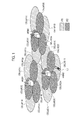
- the mobile communication system is a mobile communication system in the LTE-Advanced scheme, and includes a radio base station eNB#1, a radio base station eNB#2 and a radio base station eNB#3 as shown in Fig. 1 .
- a cell #11A, a cell #11B, a cell #11C, a cell #12A, a cell #12B, and a cell #12C under the control of the radio base station eNB#1
- a cell #21A, a cell #21B, a cell #21C, a cell #22A, a cell #22B, and a cell #22C under the control of the radio base station eNB#2
- a cell #31A, a cell #31B, a cell #31C, a cell #32A, a cell #32B, and a cell #32C under the control of the radio base station eNB#3.
- the cell #11A, the cell #11B, the cell #11C, the cell #21A, the cell #21B, the cell #21C, the cell #31A, the cell #31B and the cell #31C each use a carrier frequency F1.
- the cell #12A, the cell #12B, the cell #12C, the cell #22A, the cell #22B, the cell #22C, the cell #32A, the cell #32B and the cell #32C each use a carrier frequency F2.
- a mobile station UE and the radio base stations eNB#1 to eNB#3 are configured to be capable of performing CA communications with each other by using a cell configured with a primary carrier (PCC) and one or more cells configured with one or more secondary carriers (SCCs) which are different in carrier frequency from the PCC.
- PCC primary carrier
- SCCs secondary carriers
- the mobile station UE is configured to be able to perform CA communications using, for example, CCs (5 MHz) in an 800 MHz band and CCs (5 MHz) in a 2 GHz band.
- radio base stations eNB#1 to eNB#3 are collectively referred to as a "radio base station eNB" if not otherwise specified, because the functions of the radio base stations eNB#1 to eNB#3 are basically the same.
- the mobile station UE can use only CCs under the control of one radio base station eNB when performing the CA communications.
- the radio base station eNB is configured to designate CCs to be used as the PCC and the SCCs in each mobile station UE.
- the mobile station UE is configured to measure the radio quality of each of cells in a measurement object CC designated in "Measurement Object" contained in "Measurement Configuration" sent from the radio base station eNB, at regular intervals.
- the mobile station UE is configured to send "Measurement Report" to the radio base station eNB if a reporting condition (for example, any of Event A1 to Event A5 specified by the 3GPP) designated in "Reporting Configuration" contained in "Measurement Configuration” sent from the radio base station eNB is satisfied.
- the "Measurement Report” contains a result of the above measurement (the ID of a cell that satisfies the above reporting condition among the cells in the measurement object CC, and the radio quality of the cell).
- the radio base station eNB includes a receiver unit 11, a CA controller unit 12, and a transmitter unit 13.
- the receiver unit 11 is configured to receive signals sent by each mobile station UE.
- the receiver unit 11 is configured to receive, for example, the aforementioned "Measurement Report" from the mobile station UE.
- the CA controller unit 12 is configured to determine the PCC and SCCs to be used for the CA communications in each mobile station UE.
- the CA controller unit 12 avoids use of the cell in the SCC communications.
- the CA controller unit 12 removes the CC from the SCCs.
- the transmitter unit 13 is configured to send signals to each mobile station UE.
- the transmitter unit 13 is configured to send each mobile station UE "RRC Reconfiguration" instructing a change of the PCC or SCC to be used in CA communications, an addition of a SCC, or a removal of a SCC.
- the mobile station UE performs measurement for each of cells in the measurement object CC. If the mobile station UE detects a cell having a higher radio quality than a predetermined threshold for a period of TTT (Time To Trigger) or longer as shown in Fig. 4 , or a cell configured with a CC other than the PCC and having a higher radio quality than a value obtained by subtracting a predetermined value from the radio quality of the cell (serving cell) during the PCC communications in step S1001, the mobile station UE sends the radio base station eNB#2 "Measurement Report" containing the ID and the radio quality of the detected cell in step S1002.
- the predetermined value may be either of a positive value and a negative value.
- the radio base station eNB#2 judges whether or not to add, as a SCC for the CA communications, the cell contained in the "Measurement Report" and having the highest radio quality in the measurement object CC.
- the radio base station eNB#2 judges that the cell having the highest radio quality should be used in the SCC communications, and sends the mobile station UE "RRC Reconfiguration" indicating the judgment result in step S1004.
- the radio base station eNB#2 judges that the cell having the highest radio quality should not be used in the SCC communications.
- the mobile station UE performs measurement of each of cells in the SCCs. If the mobile station UE detects a cell in any of the SCCs, the cell having a higher radio quality than the radio quality of the cell during communications by a predetermined offset value or more for a period of TTT (Time To Trigger) or longer in step S2001, as shown in Fig. 6 , the mobile station UE sends the radio base station eNB#2 "Measurement Report" containing the ID and the radio quality of the detected cell in step S2002.
- TTT Time To Trigger
- step S2003 the radio base station eNB#2 judges whether or not to remove the above SCC based on the received "Measurement Report.”
- the radio base station eNB#2 judges that the above cell during communications should be changed to the cell having the highest radio quality, and sends the mobile station UE "RRC Reconfiguration" indicating the judgment result in step S2004.
- the radio base station eNB#2 judges that the SCC should be removed, and sends the mobile station UE "RRC Reconfiguration" indicating the judgment result in step S2004.
- the radio base station eNB determines a change, addition and removal of a cell to be used for SCC communications on the basis of the radio qualities measured by the mobile station UE in the measurement object CC.
- CA communications can be operated while curbing the influence of interference with a neighboring radio base station eNB.
- a first feature of the embodiment is a radio base station eNB capable of performing CA communications with a mobile station by using a PCC (primary carrier) and one or more SCCs (secondary carriers) which are different in carrier frequency from the PCC.
- the radio base station eNB includes a CA controller unit 12 configured to determine a PCC and SCCs to be used for the CA communications, and a receiver unit 11 configured to receive "Measurement Report (a measurement report) " from the mobile station UE that has detected a cell having a higher radio quality than a predetermined threshold for a period of TTT (predetermined time period) or longer, or a cell configured with a carrier other than the PCC and having a higher radio quality than a value obtained by subtracting a predetermined value from the radio quality of the cell (serving cell) during PCC communications, the "Measurement Report" containing the radio quality of the detected cell (and the ID of the cell). If the cell having the highest radio quality in the measurement object CC is not under the control of the
- a second feature of the embodiment is a radio base station eNB capable of performing CA communications with a mobile station by using a PCC and one or more SCCs.
- the radio base station eNB includes a CA controller unit 12 configured to determine a PCC and SCCs to be used for the CA communications, and a receiver unit 11 configured to receive "Measurement Report" from the mobile station UE that has detected a cell in a certain SCC, the cell having a higher radio quality than the radio quality of the cell (serving cell) during communications by a predetermined offset value or more for a period of TTT or longer, the "Measurement Report" containing the radio quality of the detected cell (and the ID of the cell) . If the cell having the highest radio quality in the measurement object CC is not under the control of the radio base station eNB, the CA controller unit 12 removes the above SCC from the CA communications.
- a third feature of the embodiment is a mobile communication method for performing CA communications between a mobile station UE and a radio base station eNB by using a PCC and one or more SCCs, the method including the steps in which: the mobile station UE sends "Measurement Report" to the radio base station eNB when the mobile station UE detects a cell having a higher radio quality than a predetermined threshold for a period of TTT or longer, or a cell in a carrier other than the PCC, the cell having a higher radio quality than a value obtained by subtracting a predetermined value from the radio quality of the cell (serving cell) during PCC communications, the "Measurement Report" containing the radio quality of the detected cell (and the ID of the cell); and if the cell having the highest radio quality in a measurement object CC is not under the control of the radio base station eNB, the radio base station eNB avoids use of the cell having the highest radio quality for SCC communications in the CA communications.
- a fourth feature of the embodiment is a mobile communication method for performing CA communications between a mobile station UE and a radio base station eNB by using a PCC and one or more SCCs, the method including the steps in which: the mobile station UE sends "Measurement Report" to the radio base station eNB when the mobile station UE detects a cell in a certain SCC, the cell having a higher radio quality than the radio quality of the cell (serving cell) during communications by a predetermined offset value or more for a period of TTT or longer, the "Measurement Report" containing the radio quality of the detected cell (and the ID of the cell) ; and If the cell having the highest radio quality in a measurement object CC is not under the control of the radio base station eNB, the radio base station eNB removes the above SCC from the CA communications.
- radio base stations eNB and the mobile stations UE may be implemented by hardware, may be implemented by a software module run by a processor, or may be implemented by a combination of the two.
- the software module may be installed in a storage medium in any format such as a RAM (Random Access Memory), a flash memory, a ROM (Read Only Memory), a EPROM (Erasable Programmable ROM), a EEPROM (Electronically Erasable and Programmable ROM), a register, a hard disk drive, a removable disk or a CD-ROM.
- RAM Random Access Memory
- flash memory a ROM (Read Only Memory)
- EPROM Erasable Programmable ROM
- EEPROM Electrically Erasable and Programmable ROM
- register a hard disk drive, a removable disk or a CD-ROM.
- Such storage medium is connected to the processor so that the processor can read and write information from and to the storage medium.
- the storage medium may be integrated with the processor.
- the storage medium and the processor may be mounted in an ASIC.
- the ASIC may be provided in the radio base station eNB and the mobile station UE.
- the storage medium and the processor may be provided as discrete components in the radio base station eNB and the mobile station UE.
- a radio base station and a mobile communication method can be provided which are capable of performing CA communications in consideration of the influence of interference with a neighboring radio base station as described above.
Landscapes
- Engineering & Computer Science (AREA)
- Signal Processing (AREA)
- Computer Networks & Wireless Communication (AREA)
- Computer Security & Cryptography (AREA)
- Mobile Radio Communication Systems (AREA)
Abstract
A radio base station eNB according to the present invention includes a CA controller unit 12 configured to determine a PCC and SCCs to be used for CA communications, and a receiver unit 11 configured to receive "Measurement Report" from a mobile station UE having detected a cell having a higher radio quality in a certain SCC than a predetermined threshold for a period of TTT or longer, the "Measurement Report" containing the radio quality of the detected cell. If the cell having the highest radio quality in a measurement object CC is not under the control of the radio station eNB, the CA controller unit 12 avoids use of the cell having the highest radio quality for SCC communications in the CA communications.
Description
- The present invention relates to a radio base station and a mobile communication method.
- The Long Term Evolution (LTE) scheme is a succeeding communication scheme of the Wideband Code Division Multiplexing Access (WCDMA) scheme, the High-Speed Downlink Packet Access (HSDPA) scheme, the High-Speed Uplink Packet Access (HSUPA) scheme, and the like. The 3GPP that is a WCDMA standardization organization has developed the LTE scheme and created the specifications of the LTE scheme.
- In addition, the 3GPP is currently developing the LTE-Advanced scheme as a succeeding communication scheme of the LTE scheme. The requirements of the LTE-Advanced scheme are described in
Non-Patent Document 1. - In the LTE-Advanced scheme, the implementation of "Carrier aggregation (CA)" communications has been agreed as one of the requirements.
- If the "CA communications" are implemented, mobile stations each can receive downlink signals by using multiple carriers at the same time, and can transmit uplink signals by using multiple carriers at the same time. Each carrier used in the operation of the carrier aggregation is referred to as a Component Carrier (CC).
- In a mobile communication system including multiple cells, a mobile station UE (User Equipment) is configured to continue communications by switching cells when moving from one cell to another cell. Such cell switching is referred to as "handover."
- In general, a mobile communication system is configured that a mobile station performs handover to a neighboring cell when the radio quality of a signal from the neighboring cell becomes higher than the radio quality of a signal from a serving cell.
- In this respect, for example, the received power of a signal is used as the above radio quality of the signal. More specifically, the received power of the signal is the received power of a downlink reference signal (RSRP: Reference Signal Received Power) sent from the neighboring cell or serving cell, for example (see Non-Patent
Document 2 TS36.214, V8.7.0 for the definition of RSRP). - Instead of the RSRP, the radio quality of a downlink reference signal (RSRQ: Reference Signal Received Quality), the SIR (RS-SIR) of a downlink reference signal, CQI (Channel Quality Indicator), CSI (Channel State Information), or the like is used as the aforementioned radio quality of the signal in some cases.
- With reference to
Fig. 7 andFig. 8 , specific explanation is provided for one example of such handover procedure. In the following explanation, the received power of the signal (RSRP) is used as the radio quality of the signal. - As shown in
Fig. 7 , a mobile station UE measures the received powers of signals from a serving cell and a neighboring cell in step S1. In addition, in parallel with the measurement, the mobile station UE may perform cell search to detect an undetected neighboring cell. The cell search and the measurement of the ratio qualities (received powers) of the serving cell and the neighboring cell in this process may be collectively referred to as Measurement. - In step S2, the mobile station UE judges whether or not the received power of the signal from the neighboring cell satisfies the following (Equation 1):
- Received Power of Signal from Neighboring cell + Hysteresis > Received Power of Signal from Serving cell ... (Equation 1).
- When judging that the above (Equation 1) is satisfied, the mobile station UE notifies a network of "Measurement Report (Event A3) " for reporting the result of the above measurement.
- Specifically, as shown in
Fig. 8 , the mobile station UE measures the received powers of signals from the serving cell (cell A) and a neighboring cell (cell B) which is a measurement object, and judges whether or not to send a notification of the above measurement result, by using "hysteresis [dB]" and "TTT (Time To Trigger) [ms]" which are informed in advance. - Specifically, in
Fig. 8 , the mobile station UE judges that the notification of the above measurement result (Measurement report) should be sent, if the received power (received quality) of the signal from the cell B is kept higher than the received power (received quality) of the signal from the cell A, by "hysteresis" or more, continuously for the predetermined time period "TTT" or longer. - Here, the "hysteresis" is a value set to avoid frequent handover from the serving cell to a neighboring cell at the cell boundary, and may take either of a positive value and a negative value. In general, a negative value is set as the "hysteresis."
- Then, upon receipt of the notification of the event A3, the network determines that the mobile station UE should perform handover to the cell related to the received "Measurement Report (Event A3)" in step S3.
- Here, (Equation 1) may take another form such as the following (Equation 2). In the case of (Equation 2), both the hysteresis and offset work as hysteresis:
- Received Power of Signal from Neighboring Cell - Hysteresis > Received Power of Signal from Serving Cell + Offset ... (Equation 2).
- In the general operation of the CA communications, the mobile station UE performs for each CC the foregoing steps of measuring the received powers of signals from the serving cell and the neighboring cell, and sending Measurement report.
-
- Non-Patent Document 1: 3GPP TS36.913 (V8.0.1)
- Non-Patent Document 2: 3GPP TS36.214 V8.7.0 (2009-09)
- Here, let's consider a case where, in a mobile communication system in the LTE-Advanced scheme having a structure as illustrated in
Fig. 9 , a mobile station UE using as a PCC (Primary Component Carrier) with a carrier frequency F1 used in acell # 21C adds as a SCC (Secondary Component Carrier) a carrier frequency F2 used in acell # 22B. - In this case, if the radio quality of the cell "22B in the mobile station UE is not very good, the mobile station UE needs to increase the transmission power in the
cell # 22B in order that radio waves can reach a radio base station eNB#2. - Instead, even though the transmission power is fixed, there is a
cell # 32A using the same carrier frequency F2 and receiving the larger received power from the mobile station UE than thecell # 22B with which the mobile station UE is to perform communications, in some cases. - In either of the cases, there is a problem the radio base station eNB#3 neighboring the radio base station eNB#2 receives large interference.
- For this reason, the present invention has been made with a view to solving the above problem. Accordingly, an objective of the present invention is to provide a radio base station and a mobile communication method which are capable of performing CA communications in consideration of influence of interference with a neighboring radio base station.
- A first feature of the present invention is a radio base station capable of performing communications with a mobile station by using a primary carrier and one or more secondary carriers which are different in carrier frequency from the primary carrier, the radio base station including: a controller unit configured to determine a primary carrier and secondary carriers to be used in the communications; and a receiver unit configured to receive a measurement report from the mobile station that has detected a cell having a higher radio quality than a predetermined threshold for a predetermined time period or longer, or a cell in a carrier other than the primary carrier, the cell having a higher radio quality than a value obtained by subtracting a predetermined value from the radio quality of a cell during communication on the primary carrier, the measurement report containing the radio quality of the detected cell, wherein if the cell having the highest radio quality in a measurement object carrier is not under the control of the radio base station, the controller unit avoids use of the cell having the highest radio quality in communications on the secondary carriers.
- A second feature of the present invention is a radio base station capable of performing communications with a mobile station by using a primary carrier and one or more secondary carriers which are different in carrier frequency from the primary carrier, the radio base station including: a controller unit configured to determine a primary carrier and secondary carriers to be used in the communications; and a receiver unit configured to receive a measurement report from the mobile station that has detected a cell in a certain secondary carrier, the cell having a higher radio quality than the radio quality of a cell during communications by a predetermined offset value or more for a predetermined time period or longer, the measurement report containing the radio quality of the detected cell, wherein if the cell having the highest radio quality in a measurement object carrier is not under the control of the radio base station, the controller unit removes the secondary carrier from the communications.
- A third feature of the present invention is a mobile communication method for operating communications between a mobile station and a radio base station by using a primary carrier and one or more secondary carriers which are different in carrier frequency from the primary carrier, the method including the steps of: sending a measurement report to the radio base station from the mobile station when the mobile station detects a cell having a higher radio quality than a predetermined threshold for a predetermined time period or longer, or a cell in a carrier other than the primary carrier, the cell having a higher radio quality than a value obtained by subtracting a predetermined value from the radio quality of the cell during communications on the primary carrier, the measurement report containing the radio quality of the detected cell; and if the cell having the highest radio quality in a measurement object carrier is not under the control of the radio base station, causing the radio base station to avoid use of the cell having the highest radio quality in the communications.
- A fourth feature of the present invention is a mobile communication method for operating communications between a mobile station and a radio base station by using a primary carrier and one or more secondary carriers which are different in carrier frequency from the primary carrier, the method including the steps of: sending a measurement report to the radio base station from the mobile station when the mobile station detects a cell in a certain secondary carrier, the cell having a higher radio quality than the radio quality of the cell during communications by a preset offset value or more for a predetermined time period or longer, the measurement report containing the radio quality of the detected cell; and if the cell having the highest radio quality in a measurement object carrier is not under the control of the radio base station, causing the radio base station to remove the secondary carrier from the communications.
- As described above According to the present invention, a radio base station and a mobile communication method which are capable of performing CA communications in consideration of the influence of interference with a neighboring radio base station can be provided.
-
- [
Fig. 1] Fig. 1 is an entire configuration diagram of a mobile communication system according to a first embodiment of the present invention. - [
Fig. 2] Fig. 2 is a functional block diagram of a radio base station according to the first embodiment of the present invention. - [
Fig. 3] Fig. 3 is a sequence diagram illustrating an operation of the mobile communication system according to the first embodiment of the present invention. - [
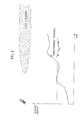
Fig. 4] Fig. 4 is a diagram for explaining an operation of the mobile communication system according to the first embodiment of the present invention. - [
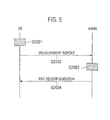
Fig. 5] Fig. 5 is a sequence diagram illustrating an operation of the mobile communication system according to the first embodiment of the present invention. - [
Fig. 6] Fig. 6 is a diagram for explaining an operation of the mobile communication system according to the first embodiment of the present invention. - [
Fig. 7] Fig. 7 is a diagram for explaining a conventional mobile communication system. - [
Fig. 8] Fig. 8 is a diagram for explaining a conventional mobile communication system. - [
Fig. 9] Fig. 9 is a diagram for explaining a conventional mobile communication system. - With reference to
Fig. 1 to Fig. 6 , description is provided for a mobile communication system according to a first embodiment of the present invention. - The mobile communication system according to this embodiment is a mobile communication system in the LTE-Advanced scheme, and includes a radio base station eNB#1, a radio base station eNB#2 and a radio base station eNB#3 as shown in
Fig. 1 . - As shown in
Fig. 1 , there are arranged acell # 11A, acell # 11B, acell # 11C, acell # 12A, acell # 12B, and acell # 12C under the control of the radio basestation eNB# 1, there are arranged acell # 21A, acell # 21B, acell # 21C, acell # 22A, acell # 22B, and acell # 22C under the control of the radio basestation eNB# 2, and there are arranged acell # 31A, acell # 31B, acell # 31C, acell # 32A, acell # 32B, and acell # 32C under the control of the radio basestation eNB# 3. - Here, the
cell # 11A, thecell # 11B, thecell # 11C, thecell # 21A, thecell # 21B, thecell # 21C, thecell # 31A, thecell # 31B and thecell # 31C each use a carrier frequency F1. - Similarly, the
cell # 12A, thecell # 12B, thecell # 12C, thecell # 22A, thecell # 22B, thecell # 22C, thecell # 32A, thecell # 32B and thecell # 32C each use a carrier frequency F2. - In this mobile communication system, a mobile station UE and the radio base
stations eNB# 1 toeNB# 3 are configured to be capable of performing CA communications with each other by using a cell configured with a primary carrier (PCC) and one or more cells configured with one or more secondary carriers (SCCs) which are different in carrier frequency from the PCC. - For example, the mobile station UE is configured to be able to perform CA communications using, for example, CCs (5 MHz) in an 800 MHz band and CCs (5 MHz) in a 2 GHz band.
- Hereinafter, the radio base
stations eNB# 1 toeNB# 3 are collectively referred to as a "radio base station eNB" if not otherwise specified, because the functions of the radio basestations eNB# 1 toeNB# 3 are basically the same. - In addition, the mobile station UE can use only CCs under the control of one radio base station eNB when performing the CA communications.
- Note that, in the CA communications, the radio base station eNB is configured to designate CCs to be used as the PCC and the SCCs in each mobile station UE.
- Moreover, the mobile station UE is configured to measure the radio quality of each of cells in a measurement object CC designated in "Measurement Object" contained in "Measurement Configuration" sent from the radio base station eNB, at regular intervals.
- Then, the mobile station UE is configured to send "Measurement Report" to the radio base station eNB if a reporting condition (for example, any of Event A1 to Event A5 specified by the 3GPP) designated in "Reporting Configuration" contained in "Measurement Configuration" sent from the radio base station eNB is satisfied. The "Measurement Report" contains a result of the above measurement (the ID of a cell that satisfies the above reporting condition among the cells in the measurement object CC, and the radio quality of the cell).
- As shown in
Fig. 2 , the radio base station eNB includes areceiver unit 11, aCA controller unit 12, and atransmitter unit 13. - The
receiver unit 11 is configured to receive signals sent by each mobile station UE. Thereceiver unit 11 is configured to receive, for example, the aforementioned "Measurement Report" from the mobile station UE. - The
CA controller unit 12 is configured to determine the PCC and SCCs to be used for the CA communications in each mobile station UE. - For example, if a cell contained in the received "Measurement Report" and having the highest radio quality in the measurement object CC is not under the control of the radio base station eNB, and if the CC used in the cell is not used as a SCC in the CA communications, the
CA controller unit 12 avoids use of the cell in the SCC communications. - In addition, if a cell contained in the received "Measurement Report" and having the highest radio quality in the measurement object CC is not under the control of the radio base station eNB, and if the CC used in the cell is currently used as a SCC in the CA communications, the
CA controller unit 12 removes the CC from the SCCs. - The
transmitter unit 13 is configured to send signals to each mobile station UE. For example, thetransmitter unit 13 is configured to send each mobile station UE "RRC Reconfiguration" instructing a change of the PCC or SCC to be used in CA communications, an addition of a SCC, or a removal of a SCC. - Hereinafter, operations of the mobile communication system according to the first embodiment of the present invention are described with reference to
Fig. 3 to Fig. 6 . This description is based on the assumption that the mobile station UE performs communications through thecell # 21B under the control of the radio basestation eNB# 2 as shown inFig. 1 . - Firstly, a first operation of the mobile communication system according to the first embodiment of the present invention is described with reference to
Fig. 3 andFig. 4 . - The mobile station UE performs measurement for each of cells in the measurement object CC. If the mobile station UE detects a cell having a higher radio quality than a predetermined threshold for a period of TTT (Time To Trigger) or longer as shown in
Fig. 4 , or a cell configured with a CC other than the PCC and having a higher radio quality than a value obtained by subtracting a predetermined value from the radio quality of the cell (serving cell) during the PCC communications in step S1001, the mobile station UE sends the radio basestation eNB# 2 "Measurement Report" containing the ID and the radio quality of the detected cell in step S1002. Here, the predetermined value may be either of a positive value and a negative value. In step S1003, the radio basestation eNB# 2 judges whether or not to add, as a SCC for the CA communications, the cell contained in the "Measurement Report" and having the highest radio quality in the measurement object CC. - Here, if the cell having the highest radio quality is under the control of the radio base
station eNB# 2, the radio basestation eNB# 2 judges that the cell having the highest radio quality should be used in the SCC communications, and sends the mobile station UE "RRC Reconfiguration" indicating the judgment result in step S1004. - On the other hand, if the cell having the highest radio quality is not under the control of the radio base
station eNB# 2, the radio basestation eNB# 2 judges that the cell having the highest radio quality should not be used in the SCC communications. - This is because CA communications using CCs under the control of different radio base stations eNB cannot be performed in the LTE-Advanced scheme.
- Secondly, a second operation of the mobile communication system according to the first embodiment of the present invention is described with reference to
Fig. 5 andFig. 6 . - The mobile station UE performs measurement of each of cells in the SCCs. If the mobile station UE detects a cell in any of the SCCs, the cell having a higher radio quality than the radio quality of the cell during communications by a predetermined offset value or more for a period of TTT (Time To Trigger) or longer in step S2001, as shown in
Fig. 6 , the mobile station UE sends the radio basestation eNB# 2 "Measurement Report" containing the ID and the radio quality of the detected cell in step S2002. - In step S2003, the radio base
station eNB# 2 judges whether or not to remove the above SCC based on the received "Measurement Report." - Here, if the cell contained in the received "Measurement Report" and having the highest radio quality in the SCC is under the control of the radio base
station eNB# 2, the radio basestation eNB# 2 judges that the above cell during communications should be changed to the cell having the highest radio quality, and sends the mobile station UE "RRC Reconfiguration" indicating the judgment result in step S2004. - On the other hand, if the cell having the highest radio quality is not under the control of the radio base
station eNB# 2, the radio basestation eNB# 2 judges that the SCC should be removed, and sends the mobile station UE "RRC Reconfiguration" indicating the judgment result in step S2004. - In the mobile communication system according to the first embodiment of the present invention, the radio base station eNB determines a change, addition and removal of a cell to be used for SCC communications on the basis of the radio qualities measured by the mobile station UE in the measurement object CC. Thus, CA communications can be operated while curbing the influence of interference with a neighboring radio base station eNB.
- The features of the aforementioned embodiment may be expressed as follows.
- A first feature of the embodiment is a radio base station eNB capable of performing CA communications with a mobile station by using a PCC (primary carrier) and one or more SCCs (secondary carriers) which are different in carrier frequency from the PCC. The radio base station eNB includes a
CA controller unit 12 configured to determine a PCC and SCCs to be used for the CA communications, and areceiver unit 11 configured to receive "Measurement Report (a measurement report) " from the mobile station UE that has detected a cell having a higher radio quality than a predetermined threshold for a period of TTT (predetermined time period) or longer, or a cell configured with a carrier other than the PCC and having a higher radio quality than a value obtained by subtracting a predetermined value from the radio quality of the cell (serving cell) during PCC communications, the "Measurement Report" containing the radio quality of the detected cell (and the ID of the cell). If the cell having the highest radio quality in the measurement object CC is not under the control of the radio base station eNB, theCA controller unit 12 avoids use of the cell having the highest radio quality for SCC communications in the CA communications. - A second feature of the embodiment is a radio base station eNB capable of performing CA communications with a mobile station by using a PCC and one or more SCCs. The radio base station eNB includes a
CA controller unit 12 configured to determine a PCC and SCCs to be used for the CA communications, and areceiver unit 11 configured to receive "Measurement Report" from the mobile station UE that has detected a cell in a certain SCC, the cell having a higher radio quality than the radio quality of the cell (serving cell) during communications by a predetermined offset value or more for a period of TTT or longer, the "Measurement Report" containing the radio quality of the detected cell (and the ID of the cell) . If the cell having the highest radio quality in the measurement object CC is not under the control of the radio base station eNB, theCA controller unit 12 removes the above SCC from the CA communications. - A third feature of the embodiment is a mobile communication method for performing CA communications between a mobile station UE and a radio base station eNB by using a PCC and one or more SCCs, the method including the steps in which: the mobile station UE sends "Measurement Report" to the radio base station eNB when the mobile station UE detects a cell having a higher radio quality than a predetermined threshold for a period of TTT or longer, or a cell in a carrier other than the PCC, the cell having a higher radio quality than a value obtained by subtracting a predetermined value from the radio quality of the cell (serving cell) during PCC communications, the "Measurement Report" containing the radio quality of the detected cell (and the ID of the cell); and if the cell having the highest radio quality in a measurement object CC is not under the control of the radio base station eNB, the radio base station eNB avoids use of the cell having the highest radio quality for SCC communications in the CA communications.
- A fourth feature of the embodiment is a mobile communication method for performing CA communications between a mobile station UE and a radio base station eNB by using a PCC and one or more SCCs, the method including the steps in which: the mobile station UE sends "Measurement Report" to the radio base station eNB when the mobile station UE detects a cell in a certain SCC, the cell having a higher radio quality than the radio quality of the cell (serving cell) during communications by a predetermined offset value or more for a period of TTT or longer, the "Measurement Report" containing the radio quality of the detected cell (and the ID of the cell) ; and If the cell having the highest radio quality in a measurement object CC is not under the control of the radio base station eNB, the radio base station eNB removes the above SCC from the CA communications.
- It should be noted that the aforementioned operations of the radio base stations eNB and the mobile stations UE may be implemented by hardware, may be implemented by a software module run by a processor, or may be implemented by a combination of the two.
- The software module may be installed in a storage medium in any format such as a RAM (Random Access Memory), a flash memory, a ROM (Read Only Memory), a EPROM (Erasable Programmable ROM), a EEPROM (Electronically Erasable and Programmable ROM), a register, a hard disk drive, a removable disk or a CD-ROM.
- Such storage medium is connected to the processor so that the processor can read and write information from and to the storage medium. Instead, the storage medium may be integrated with the processor. Also, the storage medium and the processor may be mounted in an ASIC. The ASIC may be provided in the radio base station eNB and the mobile station UE. Alternatively, the storage medium and the processor may be provided as discrete components in the radio base station eNB and the mobile station UE.
- Hereinabove, the present invention has been described in detail by using the aforementioned embodiments. However, it is apparent to those skilled in the art that the present invention should not be limited to the embodiments described in this description. The present invention can be implemented as modified or altered embodiments without departing from the spirit and scope of the present invention. Hence, this description provided herein is only for illustrative purposes and is not intended to impose any limitation on the present invention.
- According to the present invention, a radio base station and a mobile communication method can be provided which are capable of performing CA communications in consideration of the influence of interference with a neighboring radio base station as described above.
-
- UE
- mobile station
- eNB
- radio base station
- 11
- receiver unit
- 12
- CA controller unit
- 13
- transmitter unit
Claims (4)
- A radio base station capable of performing communications with a mobile station by using a primary carrier and one or more secondary carriers which are different in carrier frequency from the primary carrier, the radio base station comprising:a controller unit configured to determine a primary carrier and secondary carriers to be used in the communications; anda receiver unit configured to receive a measurement report from the mobile station that has detected a cell having a higher radio quality than a predetermined threshold for a predetermined time period or longer, or a cell in a carrier other than the primary carrier, the cell having a higher radio quality than a value obtained by subtracting a predetermined value from the radio quality of a cell during communication on the primary carrier, the measurement report containing the radio quality of the detected cell, whereinif the cell having the highest radio quality in a measurement object carrier is not under the control of the radio base station, the controller unit avoids use of the cell having the highest radio quality in communications on the secondary carriers.
- A radio base station capable of performing communications with a mobile station by using a primary carrier and one or more secondary carriers which are different in carrier frequency from the primary carrier, the radio base station comprising:a controller unit configured to determine a primary carrier and secondary carriers to be used in the communications; anda receiver unit configured to receive a measurement report from the mobile station that has detected a cell in a certain secondary carrier, the cell having a higher radio quality than the radio quality of a cell during communications by a predetermined offset value or more for a predetermined time period or longer, the measurement report containing the radio quality of the detected cell, whereinif the cell having the highest radio quality in a measurement object carrier is not under the control of the radio base station, the controller unit removes the secondary carrier from the communications.
- A mobile communication method for operating communications between a mobile station and a radio base station by using a primary carrier and one or more secondary carriers which are different in carrier frequency from the primary carrier, the method comprising the steps of:sending a measurement report to the radio base station from the mobile station when the mobile station detects a cell having a higher radio quality than a predetermined threshold for a predetermined time period or longer, or a cell in a carrier other than the primary carrier, the cell having a higher radio quality than a value obtained by subtracting a predetermined value from the radio quality of the cell during communications on the primary carrier, the measurement report containing the radio quality of the detected cell; andif the cell having the highest radio quality in a measurement obj ect carrier is not under the control of the radio base station, causing the radio base station to avoid use of the cell having the highest radio quality in the communications.
- A mobile communication method for operating communications between a mobile station and a radio base station by using a primary carrier and one or more secondary carriers which are different in carrier frequency from the primary carrier, the method comprising the steps of:sending a measurement report to the radio base station from the mobile station when the mobile station detects a cell in a certain secondary carrier, the cell having a higher radio quality than the radio quality of the cell during communications by a preset offset value or more for a predetermined time period or longer, the measurement report containing the radio quality of the detected cell; andif the cell having the highest radio quality in a measurement object carrier is not under the control of the radio base station, causing the radio base station to remove the secondary carrier from the communications.
Applications Claiming Priority (2)
| Application Number | Priority Date | Filing Date | Title |
|---|---|---|---|
| JP2010111562A JP5123985B2 (en) | 2010-05-13 | 2010-05-13 | Radio base station and mobile communication method |
| PCT/JP2011/061067 WO2011142459A1 (en) | 2010-05-13 | 2011-05-13 | Radio base station and mobile communication method |
Publications (1)
| Publication Number | Publication Date |
|---|---|
| EP2571322A1 true EP2571322A1 (en) | 2013-03-20 |
Family
ID=44914510
Family Applications (1)
| Application Number | Title | Priority Date | Filing Date |
|---|---|---|---|
| EP11780715A Withdrawn EP2571322A1 (en) | 2010-05-13 | 2011-05-13 | Radio base station and mobile communication method |
Country Status (5)
| Country | Link |
|---|---|
| US (1) | US8824969B2 (en) |
| EP (1) | EP2571322A1 (en) |
| JP (1) | JP5123985B2 (en) |
| CN (1) | CN102893687A (en) |
| WO (1) | WO2011142459A1 (en) |
Cited By (1)
| Publication number | Priority date | Publication date | Assignee | Title |
|---|---|---|---|---|
| CN105191423A (en) * | 2013-05-09 | 2015-12-23 | 株式会社Ntt都科摩 | Wireless base stations, user terminals and wireless communication method |
Families Citing this family (16)
| Publication number | Priority date | Publication date | Assignee | Title |
|---|---|---|---|---|
| US20130040692A1 (en) * | 2011-08-11 | 2013-02-14 | Mediatek, Inc. | Method of Heterogeneous Network Mobility |
| WO2014031689A1 (en) | 2012-08-24 | 2014-02-27 | Oceus Networks Inc. | Mobile cellular networks |
| WO2014031597A1 (en) | 2012-08-24 | 2014-02-27 | Oceus Networks Inc. | Mobile cellular networks |
| JP5619104B2 (en) * | 2012-10-05 | 2014-11-05 | 株式会社Nttドコモ | Wireless communication system, wireless base station, user apparatus, and wireless communication method |
| US9318799B2 (en) * | 2013-03-29 | 2016-04-19 | Broadcom Corporation | Wireless communication apparatus and method for controlling antenna radiation patterns based on fading conditions |
| WO2014179235A1 (en) | 2013-04-29 | 2014-11-06 | Oceus Networks Inc. | Mobile cellular network backhaul |
| US9973959B2 (en) | 2014-04-16 | 2018-05-15 | Telefonaktiebolaget L M Ericsson (Publ) | Method and apparatus for controlling cell aggregation |
| WO2015176934A1 (en) | 2014-05-19 | 2015-11-26 | Telefonaktiebolaget L M Ericsson (Publ) | Technique for aggregating radio resources |
| EP3146665B1 (en) * | 2014-05-19 | 2017-07-19 | Telefonaktiebolaget LM Ericsson (publ) | Technique for selecting radio resources |
| WO2017029067A1 (en) * | 2015-08-14 | 2017-02-23 | Sony Corporation | Devices and methods for stopping cqi measurements according to battery level or ue mobility in a multicarrier system |
| US10873891B2 (en) | 2016-07-06 | 2020-12-22 | Oceus Networks, Llc | Secure network rollover |
| US9686238B1 (en) | 2016-07-07 | 2017-06-20 | Oceus Networks Inc. | Secure network enrollment |
| US9924427B2 (en) | 2016-07-07 | 2018-03-20 | Oceus Networks Inc. | Network backhaul access |
| US10172078B2 (en) | 2017-03-31 | 2019-01-01 | Oceus Networks Inc. | Targeted user equipment-base station communication link |
| US11246031B2 (en) | 2018-08-15 | 2022-02-08 | Oceus Networks, Llc | Disguising UE communications in a cellular network |
| CN114599103A (en) * | 2022-05-07 | 2022-06-07 | 深圳小米通讯技术有限公司 | Data transmission method, device, electronic device and storage medium |
Family Cites Families (13)
| Publication number | Priority date | Publication date | Assignee | Title |
|---|---|---|---|---|
| GB2328840A (en) * | 1997-08-29 | 1999-03-03 | Northern Telecom Ltd | Means of increasing capacity in cellular radio (mobile and fixed) systems |
| JP3407671B2 (en) * | 1998-06-01 | 2003-05-19 | 三菱電機株式会社 | Wireless communication system and base station thereof |
| JP2001238251A (en) * | 2000-02-23 | 2001-08-31 | Nec Corp | Adjacent carrier frequency interference avoidance method for cellular system, mobile station, and base station controller |
| US6928287B2 (en) * | 2002-06-28 | 2005-08-09 | Arraycomm, Inc. | Efficient broadcast channel structure and use for spatial diversity communications |
| JP4185385B2 (en) * | 2003-03-06 | 2008-11-26 | 松下電器産業株式会社 | Wireless transmission device, base station device, and wireless transmission method |
| CN100375561C (en) * | 2004-09-13 | 2008-03-12 | 大唐移动通信设备有限公司 | Method for distributing radio resource in multiple carrier time-division duplex mobile communication system |
| EP1879411B1 (en) * | 2005-04-14 | 2013-05-29 | Ntt Docomo, Inc. | Base station, mobile communication system, and mobile communication control method |
| CN101491132B (en) * | 2006-07-13 | 2011-06-08 | 日本电气株式会社 | Cellular system, its carrier allocation method, base station, and mobile station |
| JP5093671B2 (en) * | 2008-03-31 | 2012-12-12 | 独立行政法人情報通信研究機構 | Communication network system, network communication method, and communication management device |
| US9084119B2 (en) * | 2009-01-07 | 2015-07-14 | Qualcomm Incorporated | Carrier reuse in a multicarrier wireless communication environment |
| US8521173B2 (en) * | 2009-06-03 | 2013-08-27 | Nec Laboratories America, Inc. | Methods and systems for dynamic and configuration based fractional frequency reuse for uneven load distributions |
| US8824396B2 (en) * | 2009-06-15 | 2014-09-02 | Nokia Siemens Networks Oy | Overhead reduction for multi-carrier transmission systems |
| US9596631B2 (en) * | 2009-06-22 | 2017-03-14 | Sun Patent Trust | Communication terminal |
-
2010
- 2010-05-13 JP JP2010111562A patent/JP5123985B2/en not_active Expired - Fee Related
-
2011
- 2011-05-13 WO PCT/JP2011/061067 patent/WO2011142459A1/en not_active Ceased
- 2011-05-13 CN CN2011800237670A patent/CN102893687A/en active Pending
- 2011-05-13 EP EP11780715A patent/EP2571322A1/en not_active Withdrawn
- 2011-05-13 US US13/697,536 patent/US8824969B2/en not_active Expired - Fee Related
Non-Patent Citations (1)
| Title |
|---|
| See references of WO2011142459A1 * |
Cited By (1)
| Publication number | Priority date | Publication date | Assignee | Title |
|---|---|---|---|---|
| CN105191423A (en) * | 2013-05-09 | 2015-12-23 | 株式会社Ntt都科摩 | Wireless base stations, user terminals and wireless communication method |
Also Published As
| Publication number | Publication date |
|---|---|
| WO2011142459A1 (en) | 2011-11-17 |
| US8824969B2 (en) | 2014-09-02 |
| JP2011244026A (en) | 2011-12-01 |
| JP5123985B2 (en) | 2013-01-23 |
| US20130102322A1 (en) | 2013-04-25 |
| CN102893687A (en) | 2013-01-23 |
Similar Documents
| Publication | Publication Date | Title |
|---|---|---|
| US8824969B2 (en) | Radio base station and mobile communication method | |
| US9497676B2 (en) | User equipment and measurement method | |
| KR102342787B1 (en) | Rrm measurement and reporting for license assisted access | |
| EP2638735B1 (en) | Method and devices for configuring measurement gap pattern in a communication system | |
| AU2011236892B2 (en) | Radio base station, mobile station, and communication control method | |
| CA2835158C (en) | User equipment and mobile communication method | |
| NZ613257B2 (en) | User equipment and measurement method |
Legal Events
| Date | Code | Title | Description |
|---|---|---|---|
| PUAI | Public reference made under article 153(3) epc to a published international application that has entered the european phase |
Free format text: ORIGINAL CODE: 0009012 |
|
| 17P | Request for examination filed |
Effective date: 20121204 |
|
| AK | Designated contracting states |
Kind code of ref document: A1 Designated state(s): AL AT BE BG CH CY CZ DE DK EE ES FI FR GB GR HR HU IE IS IT LI LT LU LV MC MK MT NL NO PL PT RO RS SE SI SK SM TR |
|
| DAX | Request for extension of the european patent (deleted) | ||
| STAA | Information on the status of an ep patent application or granted ep patent |
Free format text: STATUS: THE APPLICATION HAS BEEN WITHDRAWN |
|
| 18W | Application withdrawn |
Effective date: 20141107 |