EP2570934A1 - A method for generating a plurality of electronic messages and associated equipment - Google Patents
A method for generating a plurality of electronic messages and associated equipment Download PDFInfo
- Publication number
- EP2570934A1 EP2570934A1 EP12184717A EP12184717A EP2570934A1 EP 2570934 A1 EP2570934 A1 EP 2570934A1 EP 12184717 A EP12184717 A EP 12184717A EP 12184717 A EP12184717 A EP 12184717A EP 2570934 A1 EP2570934 A1 EP 2570934A1
- Authority
- EP
- European Patent Office
- Prior art keywords
- contacts
- user
- vocabulary
- vocabularies
- sets
- Prior art date
- Legal status (The legal status is an assumption and is not a legal conclusion. Google has not performed a legal analysis and makes no representation as to the accuracy of the status listed.)
- Withdrawn
Links
Images




Classifications
-
- H—ELECTRICITY
- H04—ELECTRIC COMMUNICATION TECHNIQUE
- H04L—TRANSMISSION OF DIGITAL INFORMATION, e.g. TELEGRAPHIC COMMUNICATION
- H04L51/00—User-to-user messaging in packet-switching networks, transmitted according to store-and-forward or real-time protocols, e.g. e-mail
- H04L51/06—Message adaptation to terminal or network requirements
- H04L51/063—Content adaptation, e.g. replacement of unsuitable content
-
- G—PHYSICS
- G06—COMPUTING OR CALCULATING; COUNTING
- G06F—ELECTRIC DIGITAL DATA PROCESSING
- G06F40/00—Handling natural language data
- G06F40/10—Text processing
- G06F40/12—Use of codes for handling textual entities
- G06F40/151—Transformation
-
- G—PHYSICS
- G06—COMPUTING OR CALCULATING; COUNTING
- G06F—ELECTRIC DIGITAL DATA PROCESSING
- G06F40/00—Handling natural language data
- G06F40/20—Natural language analysis
- G06F40/237—Lexical tools
- G06F40/247—Thesauruses; Synonyms
-
- G—PHYSICS
- G06—COMPUTING OR CALCULATING; COUNTING
- G06F—ELECTRIC DIGITAL DATA PROCESSING
- G06F40/00—Handling natural language data
- G06F40/20—Natural language analysis
- G06F40/253—Grammatical analysis; Style critique
-
- G—PHYSICS
- G06—COMPUTING OR CALCULATING; COUNTING
- G06Q—INFORMATION AND COMMUNICATION TECHNOLOGY [ICT] SPECIALLY ADAPTED FOR ADMINISTRATIVE, COMMERCIAL, FINANCIAL, MANAGERIAL OR SUPERVISORY PURPOSES; SYSTEMS OR METHODS SPECIALLY ADAPTED FOR ADMINISTRATIVE, COMMERCIAL, FINANCIAL, MANAGERIAL OR SUPERVISORY PURPOSES, NOT OTHERWISE PROVIDED FOR
- G06Q10/00—Administration; Management
- G06Q10/10—Office automation; Time management
- G06Q10/107—Computer-aided management of electronic mailing [e-mailing]
-
- G—PHYSICS
- G06—COMPUTING OR CALCULATING; COUNTING
- G06Q—INFORMATION AND COMMUNICATION TECHNOLOGY [ICT] SPECIALLY ADAPTED FOR ADMINISTRATIVE, COMMERCIAL, FINANCIAL, MANAGERIAL OR SUPERVISORY PURPOSES; SYSTEMS OR METHODS SPECIALLY ADAPTED FOR ADMINISTRATIVE, COMMERCIAL, FINANCIAL, MANAGERIAL OR SUPERVISORY PURPOSES, NOT OTHERWISE PROVIDED FOR
- G06Q10/00—Administration; Management
- G06Q10/40—Business processes related to social networking or social networking services
Definitions
- the embodiments of the present invention relate to the domain of communication networks, and more specifically, mass communications on those networks' platforms.
- Platinum refers to the set of applications that make it possible to bring a set of users into communication, such as, for example, electronic messaging, instant messaging, and social networks.
- Mass communications correspond to communications that come from one person or user and are intended for a plurality of people or users.
- the platforms make it possible to send a message to a plurality of contacts and therefore to carry out mass communications.
- the sender sends a single message to all of his or her contacts, as is the case when posting a message on a social network wall with the understanding that the style being used might not correspond to some of the recipient contacts, or the sender sends a plurality of messages to a limited number of contacts while adopting the various messages' styles based on who the recipients are, which may be long and tedious and limit the benefit of mass communication.
- the embodiments of the present invention relate to a method for generating a plurality of electronic messages intended to be sent to a plurality of contacts of a user of at least one platform within a communication network, said method comprising the following steps:
- the method further comprises the step in which:
- the at least two sets of contacts are defined by the user.
- the at least two sets of contacts are defined by data extracted from the user's profiles and/or his or her contacts.
- the at least two sets of contacts are defined based on the semantic analysis of the messages exchanged between the user and his or her plurality of contacts.
- the at least two linguistic styles associated with said at least two sets of contacts are defined based on the semantic analysis of the messages exchanged between the user and his or her plurality of contacts.
- the method further comprises a step in which the step of establishing at least two vocabulary synonym lists associated with said at least two different linguistic styles is carried out based on the semantic analysis of the messages exchanged between the user and his or her plurality of contacts, and comprises the following substeps:
- the embodiments of the present invention also pertain to a server for generating at least two synonymous vocabulary lists associated with at least two linguistic styles corresponding to at least two sets of a contacts of a user of at least one platform within a communication network, said server comprising a database for saving the at least two vocabulary lists and at least one processing means for:
- the server further comprises at least one means of processing for:
- the embodiments of the present invention relates to a method for generating a plurality of electronic message is intended to be sent to a plurality of a contacts of a user of at least one platform within a communication network.
- FIG 1 depicts the various steps of one embodiment of the present invention.
- the first step 101 pertains to the semantic analysis of messages exchanged between the user and his or her plurality of contacts. This semantic analysis makes it possible to detect, extract, and determine the meaning of the vocabularies used within the exchanged messages. These vocabularies are both words and expressions, such as "good morning” or "how are you?". This analysis is conducted by a dedicated application installed, for example, on a server of the platform.
- the second step 102 pertains to the defining of at least two sets or groups of contacts.
- the social relationships that link the user U and his or her contacts Ci may be varied.
- the contacts are grouped by sets of contacts based on the social relationship that they have with the user.
- the various sets may, for example, correspond to a set of close friends E1, a set of coworkers E2, and a set of distant friends E3 as depicted in Figure 3 .
- the sets may also be defined only based on the language used between the user and the contacts, so that the types of social links within a single set might be different but will correspond to a single linguistic style.
- a definition of the sets may be carried out by an analysis of the profiles, for example if the profiles of the user U and a contact indicate that they went to the same university at the same time, the contact C1 may be classified in a set of distant friends, then the analysis of the messages exchanged between the user U and the contact C1 may cause the contact C1 to be placed in a set of close friends, then the user U may again move the contact C1 into a set of distant friends.
- the contact lists that correspond to the different sets are saved in a database assigned to the platform.
- the set of close friends E1 may be associated with a style S1 corresponding to a familiar language
- the set of coworkers E2 associated with a style S2 corresponding to a polite language
- the set of distant friends E3 associated with a style S3 corresponding to an everyday language.
- the fourth step 104 corresponds to the establishing of vocabulary lists corresponding to each style.
- These lists may comprise vocabularies taken from another application, for example an online dictionary, or taken from the semantic analysis of step 101 conducted on the messages exchanged between the user U and his or her contacts Ci and are saved in a database of the platform.
- a vocabulary is extracted from a message by semantic analysis, it is determined whether that vocabulary is already saved in a vocabulary list of the database. If this is the case, the next extracted vocabulary is processed, and if that vocabulary is not saved in a list, the synonyms of that vocabulary that correspond to the linguistic style of the other vocabulary lists are determined, and the extracted vocabulary and the determined synonyms are saved in the corresponding vocabulary lists in the database.
- Semantic lists of synonymous vocabularies are thereby constructed. Additionally, the vocabularies may be classified into categories such as, for example, the vocabularies corresponding to the header, the salutations, the body, or the signature of a message. Thus, with each new exchange of messages between the user and his or her contacts, the vocabulary lists are enriched.
- the fifth step 105 pertains to the detection of vocabularies corresponding to vocabularies of a list saved in the database when the user composes an electronic message, known here as an initial electronic message, intended for at least two contacts belonging to at least two distinct sets of contacts.
- an application linked to the platform compares the vocabularies that are used within the initial message with the vocabularies saved in the vocabulary lists.
- the embodiments of the present invention pertain not only to e-mails composed by the user, but also pre-existing messages, for example one received by the user, then redirect to the user's contacts or automatic messages created by software or an application. In such a case, the detection of vocabularies that correspond to vocabularies of a list saved in the database is done when sending the pre-existing message.
- the sixth step 106 pertains to the generating, by a dedicated application of the platform, of at least two electronic messages corresponding to the two linguistic styles intended for the contacts of said at least two distinct sets of contacts by replacing the vocabulary detected in step 105 with a synonymous vocabulary taken from a saved list.
- the message's style may be adapted by the dedicated application based on the linguistic style associated with the message's recipient contacts.
- said pre-existing message is not sent and at least two electronic messages are generated based on said pre-existing message.
- the seventh step 107 pertains to the proofreading by the user U of the generated messages.
- the messages generated in step 106 are displayed on the terminal of the user U so that the user can proofread and potentially correct the text of the generated messages manually.
- the eighth step 108 pertains to the delivery of at least two electronic messages corresponding to the two linguistic styles to the corresponding contacts of said at least two distinct sets of contacts. This step may, for example, be triggered by approval from the user, for example, by clicking on a predetermined button at the end of step 107.
- each set of contacts receives a message whose vocabulary is adapted to the social relationship that exists or to the language generally used in this set of contacts.
- the semantic analysis of the step 101 and the establishing of the vocabulary lists of step 104 further comprise the determining of the general subject of a conversation, for example the mood of a contact or his or her opinion on a film and the classification, within the saved lists, of the vocabulary used based on the conversation's general subject.
- the choice of synonymous vocabularies to generate at least two electronic messages corresponding to two linguistic styles is carried out by taking into account the general subject of the initial electronic message, for example, if the initial electronic message pertains to a soccer game and the vocabularies synonymous with the initial message's vocabulary are associated with a general subject that corresponds to soccer or sporting events, then this is the synonymous vocabulary that will preferentially be used to generate the electronic messages.
- Figure 4 shows the details of some steps of establishing lists of synonyms with two sets of contacts E1 and E3.
- the conversations 1 of the set E1 and the conversations 3 of the set E3 are semantically analyzed during step 101 so as to determine the general subject of conversations and extract vocabularies.
- the vocabularies, for example ⁇ and ⁇ associated with the respective conversations 1 and 3 are then classified and saved in databases B1 and B2 respectively associated with sets E1 and E3, then associations are carried out between the different synonymous vocabularies to associate with each vocabulary a list of synonyms SN, for example, the lists SN( ⁇ ) and SN( ⁇ ) each comprising the vocabulary o.
- step 106 the user U uses the vocabulary o n his or her initial electronic message and the general subject of the initial electronic message corresponds to the general subject with which ⁇ and ⁇ are associated, then the vocabulary o is replaced by the vocabulary ⁇ within the generated electronic message intended for the set E1 and by the vocabulary ⁇ within the generated electronic message intended for the set E3.
- a first message M1 is a message sent to the contact Jean Dupont who is a close friend (corresponding to the set E1) of the user U who is sending the message and whose subject corresponds to last night's game.
- the writing of this message causes the extraction of the vocabulary list L1 associated with a style S1.
- a second message M2 is a message sent to the contact Patrick Martin who is a coworker (corresponding to the set E3) of the user U who is sending a message and whose subject corresponds to an opinion about a movie.
- the extracting of vocabularies from that message leads to the establishing of the vocabulary list L2 associated with a style S3.
- the vocabularies extracted from the lists L1 and L2 are then associated with the synonymous or near-synonymous vocabularies of a general list LG of a database as depicted in Figure 6 .
- the general list LG comprises, for example, the vocabularies taken from a dictionary as well as the vocabularies extracted from preceding messages exchanged by the user U. This thereby makes it possible to establish a database with the various equivalencies between vocabularies, such as, for example:
- brackets correspond to the style associated with the vocabulary; here, S1 corresponds to a familiar style, SG to a general style, and S3 to a polite style. Later, when the user U writes a message, corresponding to an initial message MI to all of his or her contacts, two messages M1 and M2, respectively intended for the sets E1 and E3 are then generated by editing the vocabularies of the initial message as described in Figure 7 .
- the application that makes it possible to generate messages may also adapt formal and familiar forms depending on the style.
- the message's language may also be taken into account, for example, if the context speaks English, the message may be translated, with the translation taking into account the set in which the contact is located in order to adapt the style of the message translated into English, for example by using "slang" vocabulary if it is a close friend.
- the two messages are displayed on the user's screen so that that user can proofread them and potentially edit them.
- the user then triggers the sending of the message M1 to the contacts of the set E1 and the sending of the message M2 to the contacts of the set E3.
- the embodiments of the present invention therefore make it possible, during a mass communication to contacts belonging to different sets corresponding to different linguistic styles, to generate, based on a single initial message, a plurality of messages adapted to the plurality of sets of contacts.
- this enables the user to save time when writing to all of his or her contacts while guaranteeing that the style used will not offend the various contacts.
Landscapes
- Engineering & Computer Science (AREA)
- Theoretical Computer Science (AREA)
- Business, Economics & Management (AREA)
- Physics & Mathematics (AREA)
- General Physics & Mathematics (AREA)
- Artificial Intelligence (AREA)
- Computational Linguistics (AREA)
- General Health & Medical Sciences (AREA)
- General Engineering & Computer Science (AREA)
- Human Resources & Organizations (AREA)
- Audiology, Speech & Language Pathology (AREA)
- Health & Medical Sciences (AREA)
- Strategic Management (AREA)
- Entrepreneurship & Innovation (AREA)
- Computer Networks & Wireless Communication (AREA)
- Data Mining & Analysis (AREA)
- Signal Processing (AREA)
- Computer Hardware Design (AREA)
- Economics (AREA)
- Marketing (AREA)
- Operations Research (AREA)
- Quality & Reliability (AREA)
- Tourism & Hospitality (AREA)
- General Business, Economics & Management (AREA)
- Information Transfer Between Computers (AREA)
Abstract
- at least two sets of user contacts are defined within a database,
- at least two different linguistic styles are associated with said two sets of contacts,
- at least two vocabulary synonym lists, associated with said at least two different linguistic styles, are established, and are saved in the database, during the composing or sending by the user, of an initial electronic message intended for at least two contacts belonging to at least two distinct sets of contacts,
- the vocabulary of said initial electronic message which corresponds to the vocabulary of a saved list is detected,
- at least two electronic messages corresponding to two linguistic styles intended for the contacts of said at least two distinct sets of contacts by replacing the initial electronic message's detected vocabulary with a synonymous vocabulary taken from a saved list.
Description
- The embodiments of the present invention relate to the domain of communication networks, and more specifically, mass communications on those networks' platforms.
- "Platform" refers to the set of applications that make it possible to bring a set of users into communication, such as, for example, electronic messaging, instant messaging, and social networks.
- Mass communications correspond to communications that come from one person or user and are intended for a plurality of people or users.
- Thus, the platforms make it possible to send a message to a plurality of contacts and therefore to carry out mass communications.
- However, during a mass communication, all of the recipient contacts of the message receive the same message, regardless of the social relationship that exists between the message's sender and the various recipient contacts.
- It happens that some contacts may correspond to coworkers while others may correspond to the user's friends or family members.
- However, the sender generally does not address all of these contacts in the same way.
- Nonetheless, within the context of mass communications, it is difficult if not impossible to adapt a message's style based on the social relationship established with the target of the communication.
- This is because either the sender sends a single message to all of his or her contacts, as is the case when posting a message on a social network wall with the understanding that the style being used might not correspond to some of the recipient contacts, or the sender sends a plurality of messages to a limited number of contacts while adopting the various messages' styles based on who the recipients are, which may be long and tedious and limit the benefit of mass communication.
- It therefore appears necessary to propose a method that would make it possible to overcome the aforementioned drawbacks of the state of the art and to optimize mass communications on communication networks' platforms.
- Thus, the embodiments of the present invention relate to a method for generating a plurality of electronic messages intended to be sent to a plurality of contacts of a user of at least one platform within a communication network, said method comprising the following steps:
- at least two sets of user contacts are defined within a database,
- at least two different linguistic styles are associated with said two sets of contacts,
- at least two vocabulary synonym lists, associated with said at least two different linguistic styles, are established, and are saved in the database, during the composing or sending by the user, of an initial electronic message intended for at least two contacts belonging to at least two distinct sets of contacts,
- the vocabulary of said initial electronic message which corresponds to the vocabulary of a saved list is detected,
- at least two electronic messages corresponding to two linguistic styles intended for the contacts of said at least two distinct sets of contacts by replacing the initial electronic message's detected vocabulary with a synonymous vocabulary taken from a saved list.
- According to another embodiment of the present invention, the method further comprises the step in which:
- the semantics of the messages exchanged between the user and his or her plurality of contacts are analyzed using a dedicated application.
- According to an additional embodiment of the present invention, the at least two sets of contacts are defined by the user.
- According to an additional embodiment of the present invention, the at least two sets of contacts are defined by data extracted from the user's profiles and/or his or her contacts.
- According to another embodiment of the present invention, the at least two sets of contacts are defined based on the semantic analysis of the messages exchanged between the user and his or her plurality of contacts.
- According to an additional embodiment of the present invention, the at least two linguistic styles associated with said at least two sets of contacts are defined based on the semantic analysis of the messages exchanged between the user and his or her plurality of contacts.
- According to an additional embodiment of the present invention, the method further comprises a step in which the step of establishing at least two vocabulary synonym lists associated with said at least two different linguistic styles is carried out based on the semantic analysis of the messages exchanged between the user and his or her plurality of contacts, and comprises the following substeps:
- the vocabularies are extracted based on the semantic analysis of the exchanged messages,
- from the extracted vocabularies, the vocabularies which are not saved within a list are selected,
- using a dedicated application, the synonymous vocabularies of the selected vocabularies are determined that correspond to the linguistic type of at least one other saved list,
- the detected and determined synonymous vocabularies are saved in the corresponding vocabulary lists.
- The embodiments of the present invention also pertain to a server for generating at least two synonymous vocabulary lists associated with at least two linguistic styles corresponding to at least two sets of a contacts of a user of at least one platform within a communication network, said server comprising a database for saving the at least two vocabulary lists and at least one processing means for:
- analyzing the semantics of the messages exchanged between the user and his or her plurality of contacts,
- extracting the vocabularies of the exchange messages based on a semantic analysis,
associating the extracted vocabularies with a linguistic style, - determining whether the vocabularies are already saved in a vocabulary list of the database's,
- determining at least one synonym from the extracted vocabularies that corresponds to another linguistic style of a list,
- saving the extracted and determined vocabularies in the corresponding vocabulary lists.
- According to another embodiment of the present invention, the server further comprises at least one means of processing for:
- extracting data from the user's profiles and/or those of his or her contacts,
- using the extracted data to define the at least two sets of contacts that correspond to at least two linguistic styles.
- The embodiments of the present invention also pertain to a communication terminal of a user of at least one platform within a communication network connected to a server and comprising at least one means of processing for:
- detecting, whenever the user composes or sends an initial electronic message intended for at least two contacts who belong to at least two distinct sets of contacts, the vocabularies of said initial electronic message that correspond to vocabularies of a safe vocabulary list within a database,
- generating at least two electronic messages that correspond to the two linguistic styles intended for the contacts of said at least two distinct sets of contacts, replacing the initial electronic message's detected vocabulary with a synonymous vocabulary taken from a list saved in the database.
- Other characteristics and benefits of the invention will become apparent from the following description, given with reference to the attached drawings, which by way of a non-limiting example depict one possible embodiment.
- In these drawings:
-
Figure 1 depicts a block diagram of the various steps of the embodiments of the present invention; -
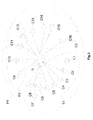
Figure 2 depicts a diagram of a communication platform's user and a plurality of the user's contacts; -
Figure 3 depicts a diagram of one example of a grouping of the user's contacts into three sets; -
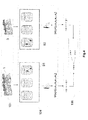
Figure 4 depicts a diagram of the establishment of synonymous vocabulary lists; -
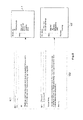
Figure 5 depicts an example of extracting vocabularies from two messages sent to two contacts from two distinct sets; -
Figure 6 depicts a diagram of an association of extracted vocabularies with synonymous vocabularies from a saved list; -
Figure 7 depicts a diagram of two messages generated based on an initial message; - In the following description, generally:
- The term "platform" of the communication network corresponds to a social network, email service, or instant messaging service of a communication network such as the Internet, such that messages or texts exchanged between a user of a platform and a contact of the user comprise instant messages, emails, and comments posted on a wall, etc.;
- The term "vocabulary" corresponds to a word or a phrase comprising multiple words;
- The embodiments of the present invention relates to a method for generating a plurality of electronic message is intended to be sent to a plurality of a contacts of a user of at least one platform within a communication network.
-
Figure 1 depicts the various steps of one embodiment of the present invention. - The
first step 101 pertains to the semantic analysis of messages exchanged between the user and his or her plurality of contacts. This semantic analysis makes it possible to detect, extract, and determine the meaning of the vocabularies used within the exchanged messages. These vocabularies are both words and expressions, such as "good morning" or "how are you?". This analysis is conducted by a dedicated application installed, for example, on a server of the platform. - The
second step 102 pertains to the defining of at least two sets or groups of contacts. -
Figure 2 schematically depicts a user U and his or her plurality of contacts Ci where i=1, 2, 3....for a given platform P1, such as a social network. The social relationships that link the user U and his or her contacts Ci may be varied. - Thus, in
step 102, the contacts are grouped by sets of contacts based on the social relationship that they have with the user. The various sets may, for example, correspond to a set of close friends E1, a set of coworkers E2, and a set of distant friends E3 as depicted inFigure 3 . However, the sets may also be defined only based on the language used between the user and the contacts, so that the types of social links within a single set might be different but will correspond to a single linguistic style. - The sets or groups of contacts Ei where i=1, 2, 3...may be defined by the user U, by the analysis of messages exchanged between the user U and his or her contacts Ci during the
step 101, by the analysis of the user's U profiles and those of his or her contacts, or by a combination of the aforementioned means. For example, a definition of the sets may be carried out by an analysis of the profiles, for example if the profiles of the user U and a contact indicate that they went to the same university at the same time, the contact C1 may be classified in a set of distant friends, then the analysis of the messages exchanged between the user U and the contact C1 may cause the contact C1 to be placed in a set of close friends, then the user U may again move the contact C1 into a set of distant friends. The contact lists that correspond to the different sets are saved in a database assigned to the platform. - The
third step 103 pertains to the associating of a linguistic style Si where i=1, 2, 3...with the sets of contacts Ei defined instep 102. For example, the set of close friends E1 may be associated with a style S1 corresponding to a familiar language, the set of coworkers E2 associated with a style S2 corresponding to a polite language, and the set of distant friends E3 associated with a style S3 corresponding to an everyday language. Nonetheless, the styles Si where i=1, 2, 3... associated with the sets do not necessarily correspond to a predefined linguistic type but simply correspond to the vocabularies used by that set's contacts. - The
fourth step 104 corresponds to the establishing of vocabulary lists corresponding to each style. These lists may comprise vocabularies taken from another application, for example an online dictionary, or taken from the semantic analysis ofstep 101 conducted on the messages exchanged between the user U and his or her contacts Ci and are saved in a database of the platform. Thus, whenever a vocabulary is extracted from a message by semantic analysis, it is determined whether that vocabulary is already saved in a vocabulary list of the database. If this is the case, the next extracted vocabulary is processed, and if that vocabulary is not saved in a list, the synonyms of that vocabulary that correspond to the linguistic style of the other vocabulary lists are determined, and the extracted vocabulary and the determined synonyms are saved in the corresponding vocabulary lists in the database. Semantic lists of synonymous vocabularies are thereby constructed. Additionally, the vocabularies may be classified into categories such as, for example, the vocabularies corresponding to the header, the salutations, the body, or the signature of a message. Thus, with each new exchange of messages between the user and his or her contacts, the vocabulary lists are enriched. - The
fifth step 105 pertains to the detection of vocabularies corresponding to vocabularies of a list saved in the database when the user composes an electronic message, known here as an initial electronic message, intended for at least two contacts belonging to at least two distinct sets of contacts. To do so, an application linked to the platform compares the vocabularies that are used within the initial message with the vocabularies saved in the vocabulary lists. Additionally, the embodiments of the present invention pertain not only to e-mails composed by the user, but also pre-existing messages, for example one received by the user, then redirect to the user's contacts or automatic messages created by software or an application. In such a case, the detection of vocabularies that correspond to vocabularies of a list saved in the database is done when sending the pre-existing message. - The
sixth step 106 pertains to the generating, by a dedicated application of the platform, of at least two electronic messages corresponding to the two linguistic styles intended for the contacts of said at least two distinct sets of contacts by replacing the vocabulary detected instep 105 with a synonymous vocabulary taken from a saved list. Additionally, the message's style may be adapted by the dedicated application based on the linguistic style associated with the message's recipient contacts. Likewise, in the case of a pre-existing message, said pre-existing message is not sent and at least two electronic messages are generated based on said pre-existing message. - The
seventh step 107 pertains to the proofreading by the user U of the generated messages. Thus, the messages generated instep 106 are displayed on the terminal of the user U so that the user can proofread and potentially correct the text of the generated messages manually. - The eighth step 108 pertains to the delivery of at least two electronic messages corresponding to the two linguistic styles to the corresponding contacts of said at least two distinct sets of contacts. This step may, for example, be triggered by approval from the user, for example, by clicking on a predetermined button at the end of
step 107. Thus, each set of contacts receives a message whose vocabulary is adapted to the social relationship that exists or to the language generally used in this set of contacts. - According to one embodiment of the present invention, the semantic analysis of the
step 101 and the establishing of the vocabulary lists ofstep 104 further comprise the determining of the general subject of a conversation, for example the mood of a contact or his or her opinion on a film and the classification, within the saved lists, of the vocabulary used based on the conversation's general subject. This way, some vocabularies are associated with a particular context and when messages are generated duringstep 106, the choice of synonymous vocabularies to generate at least two electronic messages corresponding to two linguistic styles is carried out by taking into account the general subject of the initial electronic message, for example, if the initial electronic message pertains to a soccer game and the vocabularies synonymous with the initial message's vocabulary are associated with a general subject that corresponds to soccer or sporting events, then this is the synonymous vocabulary that will preferentially be used to generate the electronic messages. -
Figure 4 shows the details of some steps of establishing lists of synonyms with two sets of contacts E1 and E3.
The conversations 1 of the set E1 and theconversations 3 of the set E3 are semantically analyzed duringstep 101 so as to determine the general subject of conversations and extract vocabularies.
The vocabularies, for example α and γ associated with therespective conversations 1 and 3 are then classified and saved in databases B1 and B2 respectively associated with sets E1 and E3, then associations are carried out between the different synonymous vocabularies to associate with each vocabulary a list of synonyms SN, for example, the lists SN(α) and SN(γ) each comprising the vocabulary o. - Thus, if during
step 106, the user U uses the vocabulary o n his or her initial electronic message and the general subject of the initial electronic message corresponds to the general subject with which α and γ are associated, then the vocabulary o is replaced by the vocabulary α within the generated electronic message intended for the set E1 and by the vocabulary γ within the generated electronic message intended for the set E3. - In order to better understand the details of the embodiment of the present invention, an example will now be described based on the messages in
Figure 5 .
A first message M1 is a message sent to the contact Jean Dupont who is a close friend (corresponding to the set E1) of the user U who is sending the message and whose subject corresponds to last night's game. The writing of this message causes the extraction of the vocabulary list L1 associated with a style S1.
A second message M2 is a message sent to the contact Patrick Martin who is a coworker (corresponding to the set E3) of the user U who is sending a message and whose subject corresponds to an opinion about a movie. The extracting of vocabularies from that message leads to the establishing of the vocabulary list L2 associated with a style S3.
The vocabularies extracted from the lists L1 and L2 are then associated with the synonymous or near-synonymous vocabularies of a general list LG of a database as depicted inFigure 6 . The general list LG comprises, for example, the vocabularies taken from a dictionary as well as the vocabularies extracted from preceding messages exchanged by the user U.
This thereby makes it possible to establish a database with the various equivalencies between vocabularies, such as, for example: - Hello [S1]↔Good morning [SG]↔My dear friend [S3]
- What's up [S1]↔How's it going? [SG]↔How are you? [S3]
- The references between brackets correspond to the style associated with the vocabulary; here, S1 corresponds to a familiar style, SG to a general style, and S3 to a polite style.
Later, when the user U writes a message, corresponding to an initial message MI to all of his or her contacts, two messages M1 and M2, respectively intended for the sets E1 and E3 are then generated by editing the vocabularies of the initial message as described inFigure 7 . - Furthermore, the application that makes it possible to generate messages may also adapt formal and familiar forms depending on the style.
- According to one embodiment, the message's language may also be taken into account, for example, if the context speaks English, the message may be translated, with the translation taking into account the set in which the contact is located in order to adapt the style of the message translated into English, for example by using "slang" vocabulary if it is a close friend.
- Once the two messages have been generated, they are displayed on the user's screen so that that user can proofread them and potentially edit them. The user then triggers the sending of the message M1 to the contacts of the set E1 and the sending of the message M2 to the contacts of the set E3.
- The embodiments of the present invention therefore make it possible, during a mass communication to contacts belonging to different sets corresponding to different linguistic styles, to generate, based on a single initial message, a plurality of messages adapted to the plurality of sets of contacts. Thus, this enables the user to save time when writing to all of his or her contacts while guaranteeing that the style used will not offend the various contacts.
Claims (10)
- A method for generating a plurality of electronic message is intended to be sent to a plurality of contacts of a user of at least one platform within a communication network, said method comprising the following steps:- at least two sets of user contacts are defined within a database,- at least two different linguistic styles are associated with said two sets of contacts,- at least two vocabulary synonym lists, associated with said at least two different linguistic styles, are established, and are saved in the database, during the composing or sending by the user, of an initial electronic message intended for at least two contacts belonging to at least two distinct sets of contacts,- the vocabulary of said initial electronic message which corresponds to the vocabulary of a saved list is detected,- at least two electronic messages corresponding to two linguistic styles intended for the contacts of said at least two distinct sets of contacts by replacing the initial electronic message's detected vocabulary with a synonymous vocabulary taken from a saved list.
- A method according to one of the preceding claims, further comprising a step in which:- the semantics of the messages exchanged between the user and his or her plurality of contacts are analyzed using a dedicated application.
- A method according to claim 1 or 2, wherein the at least two sets of contacts are defined by the user.
- A method according to one of the preceding claims, wherein the at least two sets of contacts are defined by data extracted from the profiles of the user and/or his or her contacts.
- A method according to one of the claims 2 to 4, wherein the at least two sets of contacts are defined based on the semantic analysis of the messages exchanged between the user and his or her plurality of contacts.
- A method according to one of the preceding claims, wherein the at least two linguistic styles associated with said at least two sets of contacts are defined based on the semantic analysis of the messages exchanged between the user and his or her plurality of contacts.
- A method according to one of the claims, further comprising the step in which the step of establishing at least two synonymous vocabulary lists associated with said at least two different linguistic styles is carried out based on the semantic analysis of the messages exchanged between the user and his or her plurality of contacts, and comprises the following substeps:- the vocabularies are extracted based on the semantic analysis of the exchanged messages,- from the extracted vocabularies, the vocabularies which are not saved within a list are selected,- using a dedicated application, the synonymous vocabularies of the selected vocabularies are determined that correspond to the linguistic type of at least one other saved list,- the detected and determined synonymous vocabularies are saved in the corresponding vocabulary lists.
- A server for generating at least two synonymous vocabulary lists associated with at least two linguistic styles corresponding to at least two sets of contacts of a user of at least one platform within a communication network, said server comprising a database for saving the at least two vocabulary lists and at least one means of processing for:- analyzing the semantics of the messages exchanged between the user and his or her plurality of contacts,- extracting the vocabularies of the exchange messages based on a semantic analysis,
associating the extracted vocabularies with a linguistic style,- determining whether the vocabularies are already saved in a vocabulary list of the database's,- determining at least one synonym from the extracted vocabularies that corresponds to another linguistic style of a list,- saving the extracted and determined vocabularies in the corresponding vocabulary lists. - A server according to claim 8, comprising at least one processing means for:- extracting data from the user's profiles and/or those of his or her contacts,- using the extracted data to define the at least two sets of contacts that correspond to at least two linguistic styles.
- A communication terminal of a user of at least one platform within a communication network connected to a server according to claim 8 or 9 and comprising at least one means of processing for:- detecting, whenever the user composes or sends an initial electronic message intended for at least two contacts who belong to at least two distinct sets of contacts, the vocabularies of said initial electronic message that correspond to vocabularies of a safe vocabulary list within a database,- generating at least two electronic messages that correspond to the two linguistic styles intended for the contacts of said at least two distinct sets of contacts, replacing the initial electronic message's detected vocabulary with a synonymous vocabulary taken from a list saved in the database.
Applications Claiming Priority (1)
| Application Number | Priority Date | Filing Date | Title |
|---|---|---|---|
| FR1102818A FR2980289A1 (en) | 2011-09-16 | 2011-09-16 | METHOD FOR GENERATING A PLURALITY OF ELECTRONIC MESSAGES AND EQUIPMENT THEREFOR |
Publications (1)
| Publication Number | Publication Date |
|---|---|
| EP2570934A1 true EP2570934A1 (en) | 2013-03-20 |
Family
ID=46826385
Family Applications (1)
| Application Number | Title | Priority Date | Filing Date |
|---|---|---|---|
| EP12184717A Withdrawn EP2570934A1 (en) | 2011-09-16 | 2012-09-17 | A method for generating a plurality of electronic messages and associated equipment |
Country Status (2)
| Country | Link |
|---|---|
| EP (1) | EP2570934A1 (en) |
| FR (1) | FR2980289A1 (en) |
Cited By (2)
| Publication number | Priority date | Publication date | Assignee | Title |
|---|---|---|---|---|
| CN105374356A (en) * | 2014-08-29 | 2016-03-02 | 株式会社理光 | Speech recognition method, speech assessment method, speech recognition system, and speech assessment system |
| CN108052601A (en) * | 2017-12-12 | 2018-05-18 | 福建中金在线信息科技有限公司 | Database building method, device and terminal |
Citations (2)
| Publication number | Priority date | Publication date | Assignee | Title |
|---|---|---|---|---|
| US20020103870A1 (en) * | 2001-01-26 | 2002-08-01 | Fujitsu Limited | Computer program and method for sending recipient-oriented electronic mail messages |
| WO2006026165A1 (en) * | 2004-08-31 | 2006-03-09 | Motorola, Inc. | System and process for transforming a style of a message |
-
2011
- 2011-09-16 FR FR1102818A patent/FR2980289A1/en not_active Withdrawn
-
2012
- 2012-09-17 EP EP12184717A patent/EP2570934A1/en not_active Withdrawn
Patent Citations (2)
| Publication number | Priority date | Publication date | Assignee | Title |
|---|---|---|---|---|
| US20020103870A1 (en) * | 2001-01-26 | 2002-08-01 | Fujitsu Limited | Computer program and method for sending recipient-oriented electronic mail messages |
| WO2006026165A1 (en) * | 2004-08-31 | 2006-03-09 | Motorola, Inc. | System and process for transforming a style of a message |
Non-Patent Citations (3)
| Title |
|---|
| BENNY EVANGELISTA: "Facebook to make list sorting automatic", SAN FRANCISCO CHRONICLE, 14 September 2011 (2011-09-14), San Francisco, CA, USA, XP055027952, Retrieved from the Internet <URL:http://www.sfgate.com/cgi-bin/article.cgi?f=/c/a/2011/09/14/BUTB1L3V02.DTL&type=printable> [retrieved on 20120523] * |
| PHILIP BRAMSEN ET AL: "Extracting social power relationships from natural language", PROCEEDING HLT '11 PROCEEDINGS OF THE 49TH ANNUAL MEETING OF THE ASSOCIATION FOR COMPUTATIONAL LINGUISTICS: HUMAN LANGUAGE TECHNOLOGIES, 19 June 2011 (2011-06-19), Portland, Oregon, USA, pages 773 - 782, XP055027954, ISBN: 978-1-93-243287-9 * |
| PHILLIP EDMONDS: "Semantic Representations Of Near-Synonyms For Automatic Lexical Choice", PHD THESIS, 1 January 1999 (1999-01-01), University of Toronto, Canada, XP055027947, Retrieved from the Internet <URL:http://citeseerx.ist.psu.edu/viewdoc/summary?doi=10.1.1.45.9477> [retrieved on 20120523] * |
Cited By (2)
| Publication number | Priority date | Publication date | Assignee | Title |
|---|---|---|---|---|
| CN105374356A (en) * | 2014-08-29 | 2016-03-02 | 株式会社理光 | Speech recognition method, speech assessment method, speech recognition system, and speech assessment system |
| CN108052601A (en) * | 2017-12-12 | 2018-05-18 | 福建中金在线信息科技有限公司 | Database building method, device and terminal |
Also Published As
| Publication number | Publication date |
|---|---|
| FR2980289A1 (en) | 2013-03-22 |
Similar Documents
| Publication | Publication Date | Title |
|---|---|---|
| US9760542B1 (en) | Providing context-sensitive writing assistance | |
| US8645430B2 (en) | Self-adjusting email subject and email subject history | |
| KR100918599B1 (en) | Method and apparatus for identifying potential recipients | |
| JP6484236B2 (en) | Online speech translation method and apparatus | |
| KR101716905B1 (en) | Method for calculating entity similarities | |
| US20260122454A1 (en) | Systems and methods for personalizing messages based on a recipient relationship | |
| US20170124064A1 (en) | Reply information recommendation method and apparatus | |
| US10200329B2 (en) | Method and device for detecting abnormal message based on account attribute and storage medium | |
| NZ725675A (en) | Systems and methods for multi-user multi-lingual communications | |
| US20100223335A1 (en) | Dynamically Managing Online Communication Groups | |
| EP2924967A1 (en) | Detecting events for use in an automated call center environment | |
| CN104508604A (en) | Generating string predictions using contexts | |
| CN105450853B (en) | A kind of method, device and mobile terminal preventing chat message and mistaking | |
| CN101534261A (en) | A method, device and system of recognizing spam information | |
| EP3667586A1 (en) | Electronic communication system with drafting assistant and method of using same | |
| US20190163333A1 (en) | Profile picture management tool on social media platform | |
| US20150161216A1 (en) | Anti-trending | |
| Aisyah | An analysis of slang words used in social media | |
| EP2570934A1 (en) | A method for generating a plurality of electronic messages and associated equipment | |
| US20200059447A1 (en) | Method and System for E-mail Recipient Verification | |
| Thelwall | Heart and soul: Sentiment strength detection in the social web with sentistrength1 | |
| CN111934930B (en) | Mail contact person recommending method and device, electronic equipment and storage medium | |
| Akbari | A preliminary linguistic analysis of Romanized Persian SMS messages | |
| JP2016197292A (en) | Emotion identification method, emotion identification device, and program | |
| JP5469736B1 (en) | Program and information processing apparatus |
Legal Events
| Date | Code | Title | Description |
|---|---|---|---|
| PUAI | Public reference made under article 153(3) epc to a published international application that has entered the european phase |
Free format text: ORIGINAL CODE: 0009012 |
|
| AK | Designated contracting states |
Kind code of ref document: A1 Designated state(s): AL AT BE BG CH CY CZ DE DK EE ES FI FR GB GR HR HU IE IS IT LI LT LU LV MC MK MT NL NO PL PT RO RS SE SI SK SM TR |
|
| AX | Request for extension of the european patent |
Extension state: BA ME |
|
| 111Z | Information provided on other rights and legal means of execution |
Free format text: AL AT BE BG CH CY CZ DE DK EE ES FI FR GB GR HR HU IE IS IT LI LT LU LV MC MK MT NL NO PL PT RO RS SE SI SK SM TR Effective date: 20130410 |
|
| STAA | Information on the status of an ep patent application or granted ep patent |
Free format text: STATUS: THE APPLICATION IS DEEMED TO BE WITHDRAWN |
|
| 18D | Application deemed to be withdrawn |
Effective date: 20130921 |