EP2570631A2 - Gas turbine inlet fogging system and method for inlet fogging control - Google Patents
Gas turbine inlet fogging system and method for inlet fogging control Download PDFInfo
- Publication number
- EP2570631A2 EP2570631A2 EP20120184194 EP12184194A EP2570631A2 EP 2570631 A2 EP2570631 A2 EP 2570631A2 EP 20120184194 EP20120184194 EP 20120184194 EP 12184194 A EP12184194 A EP 12184194A EP 2570631 A2 EP2570631 A2 EP 2570631A2
- Authority
- EP
- European Patent Office
- Prior art keywords
- fogging
- inlet air
- inlet
- droplets
- measurement system
- Prior art date
- Legal status (The legal status is an assumption and is not a legal conclusion. Google has not performed a legal analysis and makes no representation as to the accuracy of the status listed.)
- Granted
Links
- 238000000034 method Methods 0.000 title claims description 15
- 238000005259 measurement Methods 0.000 claims abstract description 33
- 238000004891 communication Methods 0.000 claims abstract description 16
- XLYOFNOQVPJJNP-UHFFFAOYSA-N water Substances O XLYOFNOQVPJJNP-UHFFFAOYSA-N 0.000 claims description 33
- 238000000917 particle-image velocimetry Methods 0.000 claims description 18
- 238000000041 tunable diode laser absorption spectroscopy Methods 0.000 claims description 17
- 239000007789 gas Substances 0.000 description 16
- 239000012071 phase Substances 0.000 description 8
- 238000003384 imaging method Methods 0.000 description 7
- 238000001816 cooling Methods 0.000 description 5
- 239000000523 sample Substances 0.000 description 5
- 238000012937 correction Methods 0.000 description 4
- 239000000567 combustion gas Substances 0.000 description 3
- 239000007788 liquid Substances 0.000 description 3
- 239000000203 mixture Substances 0.000 description 3
- 230000003287 optical effect Effects 0.000 description 3
- 239000012808 vapor phase Substances 0.000 description 3
- 238000013461 design Methods 0.000 description 2
- 238000001514 detection method Methods 0.000 description 2
- 239000000446 fuel Substances 0.000 description 2
- 239000007791 liquid phase Substances 0.000 description 2
- VNWKTOKETHGBQD-UHFFFAOYSA-N methane Chemical compound C VNWKTOKETHGBQD-UHFFFAOYSA-N 0.000 description 2
- 239000002245 particle Substances 0.000 description 2
- 230000008569 process Effects 0.000 description 2
- 230000007704 transition Effects 0.000 description 2
- 238000011144 upstream manufacturing Methods 0.000 description 2
- 238000012935 Averaging Methods 0.000 description 1
- 230000005856 abnormality Effects 0.000 description 1
- 238000010521 absorption reaction Methods 0.000 description 1
- 230000005540 biological transmission Effects 0.000 description 1
- 238000002485 combustion reaction Methods 0.000 description 1
- 230000006835 compression Effects 0.000 description 1
- 238000007906 compression Methods 0.000 description 1
- 230000007547 defect Effects 0.000 description 1
- 230000003628 erosive effect Effects 0.000 description 1
- 239000000835 fiber Substances 0.000 description 1
- 230000007257 malfunction Effects 0.000 description 1
- 238000012986 modification Methods 0.000 description 1
- 230000004048 modification Effects 0.000 description 1
- 239000003345 natural gas Substances 0.000 description 1
- 238000005457 optimization Methods 0.000 description 1
- 230000001737 promoting effect Effects 0.000 description 1
- 230000035484 reaction time Effects 0.000 description 1
- 230000004044 response Effects 0.000 description 1
- 238000012552 review Methods 0.000 description 1
- 230000003584 silencer Effects 0.000 description 1
- 239000007921 spray Substances 0.000 description 1
Images


Classifications
-
- F—MECHANICAL ENGINEERING; LIGHTING; HEATING; WEAPONS; BLASTING
- F02—COMBUSTION ENGINES; HOT-GAS OR COMBUSTION-PRODUCT ENGINE PLANTS
- F02C—GAS-TURBINE PLANTS; AIR INTAKES FOR JET-PROPULSION PLANTS; CONTROLLING FUEL SUPPLY IN AIR-BREATHING JET-PROPULSION PLANTS
- F02C7/00—Features, components parts, details or accessories, not provided for in, or of interest apart form groups F02C1/00 - F02C6/00; Air intakes for jet-propulsion plants
- F02C7/04—Air intakes for gas-turbine plants or jet-propulsion plants
-
- F—MECHANICAL ENGINEERING; LIGHTING; HEATING; WEAPONS; BLASTING
- F02—COMBUSTION ENGINES; HOT-GAS OR COMBUSTION-PRODUCT ENGINE PLANTS
- F02C—GAS-TURBINE PLANTS; AIR INTAKES FOR JET-PROPULSION PLANTS; CONTROLLING FUEL SUPPLY IN AIR-BREATHING JET-PROPULSION PLANTS
- F02C7/00—Features, components parts, details or accessories, not provided for in, or of interest apart form groups F02C1/00 - F02C6/00; Air intakes for jet-propulsion plants
- F02C7/12—Cooling of plants
- F02C7/14—Cooling of plants of fluids in the plant, e.g. lubricant or fuel
- F02C7/141—Cooling of plants of fluids in the plant, e.g. lubricant or fuel of working fluid
- F02C7/143—Cooling of plants of fluids in the plant, e.g. lubricant or fuel of working fluid before or between the compressor stages
- F02C7/1435—Cooling of plants of fluids in the plant, e.g. lubricant or fuel of working fluid before or between the compressor stages by water injection
-
- F—MECHANICAL ENGINEERING; LIGHTING; HEATING; WEAPONS; BLASTING
- F05—INDEXING SCHEMES RELATING TO ENGINES OR PUMPS IN VARIOUS SUBCLASSES OF CLASSES F01-F04
- F05D—INDEXING SCHEME FOR ASPECTS RELATING TO NON-POSITIVE-DISPLACEMENT MACHINES OR ENGINES, GAS-TURBINES OR JET-PROPULSION PLANTS
- F05D2270/00—Control
- F05D2270/01—Purpose of the control system
- F05D2270/16—Purpose of the control system to control water or steam injection
-
- F—MECHANICAL ENGINEERING; LIGHTING; HEATING; WEAPONS; BLASTING
- F05—INDEXING SCHEMES RELATING TO ENGINES OR PUMPS IN VARIOUS SUBCLASSES OF CLASSES F01-F04
- F05D—INDEXING SCHEME FOR ASPECTS RELATING TO NON-POSITIVE-DISPLACEMENT MACHINES OR ENGINES, GAS-TURBINES OR JET-PROPULSION PLANTS
- F05D2270/00—Control
- F05D2270/80—Devices generating input signals, e.g. transducers, sensors, cameras or strain gauges
- F05D2270/804—Optical devices
-
- F—MECHANICAL ENGINEERING; LIGHTING; HEATING; WEAPONS; BLASTING
- F05—INDEXING SCHEMES RELATING TO ENGINES OR PUMPS IN VARIOUS SUBCLASSES OF CLASSES F01-F04
- F05D—INDEXING SCHEME FOR ASPECTS RELATING TO NON-POSITIVE-DISPLACEMENT MACHINES OR ENGINES, GAS-TURBINES OR JET-PROPULSION PLANTS
- F05D2270/00—Control
- F05D2270/80—Devices generating input signals, e.g. transducers, sensors, cameras or strain gauges
- F05D2270/804—Optical devices
- F05D2270/8041—Cameras
-
- F—MECHANICAL ENGINEERING; LIGHTING; HEATING; WEAPONS; BLASTING
- F05—INDEXING SCHEMES RELATING TO ENGINES OR PUMPS IN VARIOUS SUBCLASSES OF CLASSES F01-F04
- F05D—INDEXING SCHEME FOR ASPECTS RELATING TO NON-POSITIVE-DISPLACEMENT MACHINES OR ENGINES, GAS-TURBINES OR JET-PROPULSION PLANTS
- F05D2270/00—Control
- F05D2270/80—Devices generating input signals, e.g. transducers, sensors, cameras or strain gauges
- F05D2270/806—Sonars
Definitions
- the present application and the resultant patent relate generally to gas turbine engines and more particularly relate to systems and methods for inlet fogging control using multiple optical sensing techniques with continuous feedback for inlet cooling.
- One method of increasing the power output of a gas turbine engine is by cooling the inlet air before compressing it in the compressor. Such cooling causes the air to have a higher density so as to create a higher mass flow rate into the compressor. The higher mass flow rate of the air in a compressor allows more air to be compressed so as to allow the gas turbine engine to produce more power. Additionally, cooling the inlet air temperature increases the overall efficiency of the gas turbine engine.
- fogging systems may be used about a compressor inlet section so as to provide a stream of water droplets to cool the incoming flow of air.
- the fogging system generally may be controlled by the humidity of the incoming flow of air.
- humility sensors and temperature sensors may be positioned about the compressor inlet so as to measure the humidity of the incoming flow. Based on the readings of the humidity and temperature, the fogging system may calculate how much water can be evaporated and may inject such an amount into the flow of air.
- Drawbacks with such a fogging system include the facts that not all of the water evaporates, that there may be insufficient residence time for the water to evaporate, that the water droplets tend to agglomerate, and that these water droplets may form projectiles that can hit the compressor blades so as to cause pitting and other types of damage. Localized temperature depressions also may cause water to drop out of the airstream and cause erosion.
- an improved control system for an inlet fogging system or other type of inlet air cooling system for use with a gas turbine engine Preferably such a system, based on real time measurements, can control the size of the water droplets and the amount of water injected in the incoming flow of air so as to avoid damage to the compressor blades while promoting overall turbine efficiency and power output.
- the present application thus provides an inlet air fogging system for a gas turbine engine.
- the inlet air fogging system may include a fogging nozzle array and a fogging control system in communication with the fogging nozzle array.
- the fogging control system may include a droplet size measurement system and a humidity level measurement system.
- the present application further provides a method of operating an inlet air fogging system with a number of droplets therein.
- the method may include the steps of determining a humidity level in the number of droplets, calculating a moisture fraction level from the humidity level, comparing the calculated moisture fraction level to a desired moisture fraction level, determining a size distribution of the number of droplets, comparing the determined size distribution to a desired size distribution, and changing the size of the droplets if the calculated moisture fraction level is greater than the desired moisture fraction level and if the determined size distribution is greater than the desired size distribution.
- the present application provides an inlet air fogging system for a gas turbine engine.
- the inlet air fogging system may include a fogging nozzle array and a fogging control system in communication with the fogging nozzle array.
- the fogging control system may include a particle imaging velocimetry system or a phase doppler anemometry system and a tunable diode laser absorption spectroscopy system.
- Fig. 1 shows an inlet air fogging system 100 as may be described herein.
- the inlet air fogging system may be used with a gas turbine engine 110.
- the gas turbine engine 110 may include a compressor 120.
- the compressor 120 compresses an incoming flow of air 130.
- the compressor 120 delivers the compressed flow of air 130 to a combustor 140.
- the combustor 140 mixes the compressed flow of air 130 with a compressed flow of fuel 150 and ignites the mixture to create a flow of combustion gases 160.
- the flow of combustion gases 160 is delivered in turn to a turbine 170.
- the flow of combustion gases 160 drives the turbine 170 so as to produce mechanical work.
- the turbine 170 may drive the compressor 120 via a shaft 180 and an external load 190 such as a generator and the like.
- a load sensor 175 may determine the load on the turbine 170.
- the gas turbine engine 110 may use natural gas, various types of syngas, and other types of fuels.
- the gas turbine engine 110 may be any one of a number of different gas turbine engines offered by General Electric Company of Schenectady, New York and the like. Other components and other configurations may be used herein.
- the inlet air fogging system 100 may include a weatherhood 200 mounted on an inlet filter house 210 with the incoming flow of air 130 passing therethrough.
- the weatherhood 200 may prevent weather elements such as rain, snow, and the like from entering therein.
- the weatherhood 200 and the inlet filter house 210 may be largely of conventional design.
- the flow of air 130 then may flow through a transition piece 220 and an inlet duct 230.
- a silencer section 240 also may be used herein.
- the flow of air 130 then may pass through an inlet plenum 250 and into the compressor 120 for compression and combustion as described above.
- a bellmouth 260 may be positioned about the compressor 120.
- Other components and other configurations may be used herein.
- the inlet fogging system 100 also may include a fogging nozzle array 270.
- the fogging nozzle array 270 may have any number of nozzles 275 therein.
- the nozzles 275 may have any size, shape, or orientation.
- the fogging nozzle array 270 may be positioned about the inlet filter house 210 and the transition piece 220 or elsewhere.
- the fogging nozzle array 270 may be in communication with a flow of water 280 positioned on a water skid 290 or other type of water source.
- a weather station 310 may be positioned about the inlet filter house 210, the water skid 290, or elsewhere.
- the weather station 310 may be used to determine local ambient weather conditions, including temperature, humidity, and other parameters as desired. Other components and other configurations may be used herein.
- the inlet air fogging system 100 also may include a fogging control system 320.
- the fogging control system 320 may include a controller 330.
- the controller 330 may be programmed with various control algorithms and other types of software to operate and regulate the inlet air fogging system 100 and the gas turbine engine 110. Multiple controllers 330 with specific tasks also may be used herein.
- the controller 330 may be in communication with the water skid 290 to control the flow rate of the flow of water 280 that may be delivered to the fogging nozzle array 270.
- the controller 330 also may be in communication with the load sensor 175, the weather station 310, and other type of inputs. Many different types of operating parameters may be accommodated herein. Other configurations and other components may be used herein.
- the fogging control system 320 also may be in communication with a droplet size measurement system 340 to determine the size of the droplets 300 in the flow of air 130.
- the droplet size measuring system 340 may be positioned about the inlet plenum 250 or the bellmouth 260 upstream of the compressor 120. As is described below, different types of droplet size measurement systems 340 may be used herein.
- the droplet size measurement system 340 may be a large area particle imaging velocimetry ("PIV") system 350.
- the PIV system 350 may use a laser 360 and a camera 370 or other type of optical detection device.
- the laser 360 may be a pulsed laser sheet with a fan out beam.
- the camera 370 may be a high speed imaging camera such as a charged coupled device (“CCD”) camera.
- CCD charged coupled device
- the operation of the laser 360 and the camera 370 are coordinated. For example, if a pair of laser pulses illuminates the focal plane of the camera 370, the corresponding images may be used to calculate the size and velocity of the droplets 300 in the frame.
- the controller 330 may locate the droplets 300 in the image, calculate their sizes, and create a size distribution curve.
- Averaging this size distribution curve for several frames may provide an estimate of the actual droplet size distribution.
- the controller 330 also can calculate the distance of droplet motion and hence the spray velocity may be estimated by dividing the distance by the time difference between frames.
- Other components and other configurations may be used herein.
- the droplet size measurement system 340 may include a phase doppler anemometry ("PDA") system 370.
- PDA phase doppler anemometry
- the PDA system 380 may use a pair of the lasers 360 and a pair of the cameras 370 or other types of optical devices.
- a pair of laser beams of the lasers 360 creates an interference pattern in a region of interest.
- the droplets 300 flowing through the region will scatter the light from regions of constructive interference.
- the cameras 370 then record the spatial scattering pattern.
- the doppler shift of the scattered light may be a measure of the particle velocity and the relative phase differences between the cameras 370 is a measure of the particle size.
- Other components and other configurations may be used herein.
- both the PIV system 350 and the PDA system 380 provide detection in a localized region, overall distribution may be estimated by repeatedly carrying out measurements over extended periods. Multiple region measurements also may be made by deploying multiple systems. Other components and other configurations may be used herein.
- the fogging control system 320 also may be in communication with a humidity level measurement system 390.
- the humidity level measurement system 390 may be positioned about the inlet plenum 340 or the bellmouth 260 upstream of the compressor 120.
- the humidity level measurement system 390 may be based upon a tunable diode laser absorption spectroscopy ("TDLAS") system 400 as is shown in Fig. 4 .
- the TDLAS system 400 may include a pair of tunable diode lasers, a first laser 410 and a second laser 420. The first and the second lasers 410, 420 may use different laser wavelengths.
- the first laser wavelength (e.g., about 945 nm) may be used to measure the contents of the water vapor phase while the second wavelength (e.g., about 1516 nm) may be used to measure the liquid water phase in the incoming droplets 300.
- Other wavelengths may be used herein. The two laser wavelengths thus probe absorption peaks of water vapor and liquid water.
- the lasers 410, 420 may be fiber coupled in a coupler 430 (50:50) and then multiplexed via a multiplexer 440 into an upper beam 450 and a lower beam 460.
- the upper beam 450 may be coupled to an upper port 470 about the inlet plenum 350 or the bellmouth 260 or elsewhere while the lower beam 460 may be coupled to a lower port 480.
- the upper beam 450 may be received by an upper splitter 490 while the lower beam 460 may be received by a lower splitter 500.
- the splitters 490, 500 both may be in communication with a pair of detectors.
- the upper splitter 490 may be in communication with an upper first wavelength detector 510 and an upper second wavelength detector 520 while the lower splitter 500 may be in communication with a lower first wavelength detector 530 and a lower second wavelength detector 540.
- Other components and other configurations may be used herein.
- the intensity dip in the laser powers, after transmission through the droplets 300, may be used to calculate the line-of-site average concentration of the corresponding absorbing species.
- the upper beam 450 may measure the molecular density of water in the vapor phase while the lower beam 460 measures the molecular density of water in the liquid phase.
- the controller 330 Using measured temperature and pressure values from the weather station 310, the controller 330 thus may calculate the moisture fraction of the droplets 300 in the incoming airstream 130.
- Other components and other configurations may be used herein.
- the controller 330 of the fogging control system 320 thus may use the data received from the droplet size measurement system 340 and the humidity level measurement system 390 in a feedback loop to control the droplets via the water skid 290.
- the droplet size distribution can be controlled through the pressure of the water skid 290.
- the saturation level may depend more on the water flow rate, residence time of the droplets in the inlet duct 230, droplet sizes, and any nozzle blockage or malfunction.
- Fig. 5 shows an example of a feedback loop as may be used herein.
- the fogging control system 320 may continually measure the droplet sizes and humidity levels. As soon as an abnormality is determined, the fogging control system 320 can automatically adjust the control parameters to bring the inlet air fogging system 100 back into the desired operating range. The time taken for the system 320 to adjust may depend on the response time of the measurements, on the average time for the measurements, and on the reaction time of the controller 330. The fogging control system 320 thus provides quick and reliable control over the fogging process on an ongoing basis.
- the controller 330 reads the input value for the desired moisture fraction level (H).
- the controller 330 reads the inputted value for the desired maximum droplet size (D).
- the controller 330 reads the inputted acceptable out of compliance time (T).
- the controller 330 turns on the fogging nozzle array 270 with precalibrated parameters.
- the controller 330 receives the moisture fraction level (y') from the TDLAS system 400 and the droplet size distribution from the PIV system 350.
- the controller 330 calculates the moisture fraction from the PIV data and compares this data with the TDLAS data to calculate corrected values of the droplet sizes. This correction step logic will be described in more detail below.
- the controller 330 calculates the maximum droplet size (d) from the corrected size distribution.
- the controller 330 determines if the determined moisture fraction level (y') is less than the desired moisture fraction level (H) and whether the calculated maximum droplet size (d) is less than the desired maximum droplet size (D). If so, the controller 330 returns to step 590 and resets the system timer to zero.
- step 640 the controller 330 determines if the system time (t) is more than the acceptable out of time compliance (T). If so, the controller 330 shuts down the fogging system 100 so as to check for system defects. If not, the controller 330 advances to step 650 so as to tune overall system parameters based upon the error signals for the calculated moisture fraction (h) and the calculated maximum droplet size (d). The system then returns to step 600 and the loop is continued. Other types of control logic may be used.
- the fogging control system 320 can use the moisture fraction values measured in the TDLAS system 400 to correct the droplet size distribution obtained from the PIV system 350/PDA system 380 as referenced in step 610 above.
- the PIV images also can be used to estimate the moisture fraction.
- the total volume may be multiplied by the water density so as to give the total mass of the water droplets and hence the total number of water molecules in the imaging volume.
- the TDLAS system 400 may calculate the moisture fraction as described above.
- the specific volume of the mix phase may be used to calculate the moisture fraction.
- the controller 330 may compare the moisture fraction value from the PIV system 350 with that determined by the TDLAS system 400. Because the TDLAS system 400 is based upon laser sensing techniques, the TDLAS results are expected to be more accurate than imaging techniques such as the PIV system 350. As such, the correction will enable more accurate droplet size measurements and hence enhance the accuracy of the control loop. Errors in the PIV system 350 may be caused by out of focus droplets and/or scattering due to droplets in the imaging path.
- Fig. 6 shows a flow chart explaining the correction step 610.
- the controller receives the moisture fraction from the PIV system 350.
- the controller 330 receives the average moisture fraction from the TDLAS system 400.
- the controller determines the difference between the results of the PIV system 350 and the TDLAS system 400.
- the controller 330 determines if the difference is greater than zero (0). If not, the controller 330 reports the moisture fraction at step 700. If so, the controller 330 adjusts the sample mean so to keep the population mean as a constant.
- This step involves the substeps of finding out the sample size for the distribution maximum at step 720, calculating the mean moisture fraction from the sample mean at step 730, and increasing the mean moisture fraction from the sample mean at step 740.
- Other types of control logic may be used herein.
- the inlet air fogging system 100 thus provides control and optimization of the fogging process.
- the fogging control system 320 uses the droplet size measurement system 340 and the humidity level measurement system 390 in a continuous feedback loop to provide quick and reliable control.
Landscapes
- Engineering & Computer Science (AREA)
- Chemical & Material Sciences (AREA)
- Combustion & Propulsion (AREA)
- Mechanical Engineering (AREA)
- General Engineering & Computer Science (AREA)
- Investigating Or Analysing Materials By Optical Means (AREA)
- Measuring Volume Flow (AREA)
- Testing Of Engines (AREA)
Abstract
Description
- The present application and the resultant patent relate generally to gas turbine engines and more particularly relate to systems and methods for inlet fogging control using multiple optical sensing techniques with continuous feedback for inlet cooling.
- Various strategies are known for increasing the amount of power that a gas turbine engine may be able to produce. One method of increasing the power output of a gas turbine engine is by cooling the inlet air before compressing it in the compressor. Such cooling causes the air to have a higher density so as to create a higher mass flow rate into the compressor. The higher mass flow rate of the air in a compressor allows more air to be compressed so as to allow the gas turbine engine to produce more power. Additionally, cooling the inlet air temperature increases the overall efficiency of the gas turbine engine.
- Given such, fogging systems may be used about a compressor inlet section so as to provide a stream of water droplets to cool the incoming flow of air. The fogging system generally may be controlled by the humidity of the incoming flow of air. For example, humility sensors and temperature sensors may be positioned about the compressor inlet so as to measure the humidity of the incoming flow. Based on the readings of the humidity and temperature, the fogging system may calculate how much water can be evaporated and may inject such an amount into the flow of air. Drawbacks with such a fogging system, however, include the facts that not all of the water evaporates, that there may be insufficient residence time for the water to evaporate, that the water droplets tend to agglomerate, and that these water droplets may form projectiles that can hit the compressor blades so as to cause pitting and other types of damage. Localized temperature depressions also may cause water to drop out of the airstream and cause erosion.
- There is thus a desire for an improved control system for an inlet fogging system or other type of inlet air cooling system for use with a gas turbine engine. Preferably such a system, based on real time measurements, can control the size of the water droplets and the amount of water injected in the incoming flow of air so as to avoid damage to the compressor blades while promoting overall turbine efficiency and power output.
- The present application thus provides an inlet air fogging system for a gas turbine engine. The inlet air fogging system may include a fogging nozzle array and a fogging control system in communication with the fogging nozzle array. The fogging control system may include a droplet size measurement system and a humidity level measurement system.
- The present application further provides a method of operating an inlet air fogging system with a number of droplets therein. The method may include the steps of determining a humidity level in the number of droplets, calculating a moisture fraction level from the humidity level, comparing the calculated moisture fraction level to a desired moisture fraction level, determining a size distribution of the number of droplets, comparing the determined size distribution to a desired size distribution, and changing the size of the droplets if the calculated moisture fraction level is greater than the desired moisture fraction level and if the determined size distribution is greater than the desired size distribution.
- The present application provides an inlet air fogging system for a gas turbine engine. The inlet air fogging system may include a fogging nozzle array and a fogging control system in communication with the fogging nozzle array. The fogging control system may include a particle imaging velocimetry system or a phase doppler anemometry system and a tunable diode laser absorption spectroscopy system.
- These and other features and improvements of the present application will become apparent to one of ordinary skill in the art upon review of the following detailed description when taken in conjunction with the several drawings and the appended claims.
-
-
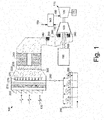
Fig. 1 is a schematic view of a gas turbine engine with a fogging system and a fogging control system as may be described herein. -
Fig. 2 is a schematic view of the fogging control system ofFig. 1 . -
Fig. 3 is a schematic view of a particle imaging velocimetry system and/or a phase doppler anemometry system as may be used in the fogging control system ofFig. 2 . -
Fig. 4 is a perspective view of a tunable diode laser absorption spectroscopy system for use in the fogging control system ofFig. 2 . -
Fig. 5 is a flowchart showing the feedback logic of the fogging control system. -
Fig. 6 is a flowchart showing the correction logic of the fogging control system. - Referring now to the drawings, in which like numerals refer to like elements throughout the several views,
Fig. 1 shows an inletair fogging system 100 as may be described herein. The inlet air fogging system may be used with agas turbine engine 110. Thegas turbine engine 110 may include acompressor 120. Thecompressor 120 compresses an incoming flow ofair 130. Thecompressor 120 delivers the compressed flow ofair 130 to acombustor 140. Thecombustor 140 mixes the compressed flow ofair 130 with a compressed flow offuel 150 and ignites the mixture to create a flow ofcombustion gases 160. The flow ofcombustion gases 160 is delivered in turn to aturbine 170. The flow ofcombustion gases 160 drives theturbine 170 so as to produce mechanical work. Theturbine 170 may drive thecompressor 120 via ashaft 180 and anexternal load 190 such as a generator and the like. Aload sensor 175 may determine the load on theturbine 170. Thegas turbine engine 110 may use natural gas, various types of syngas, and other types of fuels. Thegas turbine engine 110 may be any one of a number of different gas turbine engines offered by General Electric Company of Schenectady, New York and the like. Other components and other configurations may be used herein. - The inlet
air fogging system 100 may include aweatherhood 200 mounted on aninlet filter house 210 with the incoming flow ofair 130 passing therethrough. Theweatherhood 200 may prevent weather elements such as rain, snow, and the like from entering therein. Theweatherhood 200 and theinlet filter house 210 may be largely of conventional design. The flow ofair 130 then may flow through atransition piece 220 and aninlet duct 230. Asilencer section 240 also may be used herein. The flow ofair 130 then may pass through aninlet plenum 250 and into thecompressor 120 for compression and combustion as described above. Abellmouth 260 may be positioned about thecompressor 120. Other components and other configurations may be used herein. - The
inlet fogging system 100 also may include afogging nozzle array 270. Thefogging nozzle array 270 may have any number ofnozzles 275 therein. Thenozzles 275 may have any size, shape, or orientation. Thefogging nozzle array 270 may be positioned about theinlet filter house 210 and thetransition piece 220 or elsewhere. Thefogging nozzle array 270 may be in communication with a flow ofwater 280 positioned on a water skid 290 or other type of water source. Aweather station 310 may be positioned about theinlet filter house 210, the water skid 290, or elsewhere. Theweather station 310 may be used to determine local ambient weather conditions, including temperature, humidity, and other parameters as desired. Other components and other configurations may be used herein. - As is shown in
Fig. 2 , the inletair fogging system 100 also may include afogging control system 320. Thefogging control system 320 may include acontroller 330. Thecontroller 330 may be programmed with various control algorithms and other types of software to operate and regulate the inletair fogging system 100 and thegas turbine engine 110.Multiple controllers 330 with specific tasks also may be used herein. Thecontroller 330 may be in communication with thewater skid 290 to control the flow rate of the flow ofwater 280 that may be delivered to thefogging nozzle array 270. Thecontroller 330 also may be in communication with theload sensor 175, theweather station 310, and other type of inputs. Many different types of operating parameters may be accommodated herein. Other configurations and other components may be used herein. - The
fogging control system 320 also may be in communication with a dropletsize measurement system 340 to determine the size of thedroplets 300 in the flow ofair 130. As is shown inFig. 3 , the dropletsize measuring system 340 may be positioned about theinlet plenum 250 or thebellmouth 260 upstream of thecompressor 120. As is described below, different types of dropletsize measurement systems 340 may be used herein. - The droplet
size measurement system 340 may be a large area particle imaging velocimetry ("PIV") system 350. Generally described, the PIV system 350 may use alaser 360 and acamera 370 or other type of optical detection device. Thelaser 360 may be a pulsed laser sheet with a fan out beam. Thecamera 370 may be a high speed imaging camera such as a charged coupled device ("CCD") camera. The operation of thelaser 360 and thecamera 370 are coordinated. For example, if a pair of laser pulses illuminates the focal plane of thecamera 370, the corresponding images may be used to calculate the size and velocity of thedroplets 300 in the frame. Thecontroller 330 may locate thedroplets 300 in the image, calculate their sizes, and create a size distribution curve. Averaging this size distribution curve for several frames may provide an estimate of the actual droplet size distribution. Thecontroller 330 also can calculate the distance of droplet motion and hence the spray velocity may be estimated by dividing the distance by the time difference between frames. Other components and other configurations may be used herein. - Alternatively, or in addition to, the droplet
size measurement system 340 may include a phase doppler anemometry ("PDA")system 370. Generally described, the PDA system 380 may use a pair of thelasers 360 and a pair of thecameras 370 or other types of optical devices. A pair of laser beams of thelasers 360 creates an interference pattern in a region of interest. Thedroplets 300 flowing through the region will scatter the light from regions of constructive interference. Thecameras 370 then record the spatial scattering pattern. The doppler shift of the scattered light may be a measure of the particle velocity and the relative phase differences between thecameras 370 is a measure of the particle size. Other components and other configurations may be used herein. - Although both the PIV system 350 and the PDA system 380 provide detection in a localized region, overall distribution may be estimated by repeatedly carrying out measurements over extended periods. Multiple region measurements also may be made by deploying multiple systems. Other components and other configurations may be used herein.
- The
fogging control system 320 also may be in communication with a humiditylevel measurement system 390. The humiditylevel measurement system 390 may be positioned about theinlet plenum 340 or thebellmouth 260 upstream of thecompressor 120. The humiditylevel measurement system 390 may be based upon a tunable diode laser absorption spectroscopy ("TDLAS")system 400 as is shown inFig. 4 . TheTDLAS system 400 may include a pair of tunable diode lasers, afirst laser 410 and asecond laser 420. The first and thesecond lasers incoming droplets 300. Other wavelengths may be used herein. The two laser wavelengths thus probe absorption peaks of water vapor and liquid water. - Generally described, the
lasers multiplexer 440 into anupper beam 450 and alower beam 460. Theupper beam 450 may be coupled to anupper port 470 about the inlet plenum 350 or thebellmouth 260 or elsewhere while thelower beam 460 may be coupled to alower port 480. Theupper beam 450 may be received by anupper splitter 490 while thelower beam 460 may be received by alower splitter 500. Thesplitters upper splitter 490 may be in communication with an upperfirst wavelength detector 510 and an uppersecond wavelength detector 520 while thelower splitter 500 may be in communication with a lowerfirst wavelength detector 530 and a lowersecond wavelength detector 540. Other components and other configurations may be used herein. - The intensity dip in the laser powers, after transmission through the
droplets 300, may be used to calculate the line-of-site average concentration of the corresponding absorbing species. Specifically, theupper beam 450 may measure the molecular density of water in the vapor phase while thelower beam 460 measures the molecular density of water in the liquid phase. Using measured temperature and pressure values from theweather station 310, thecontroller 330 thus may calculate the moisture fraction of thedroplets 300 in theincoming airstream 130. Other components and other configurations may be used herein. - Referring again to
Fig. 2 , thecontroller 330 of thefogging control system 320 thus may use the data received from the dropletsize measurement system 340 and the humiditylevel measurement system 390 in a feedback loop to control the droplets via thewater skid 290. Specifically, based upon the droplet size measurement data from the PIV system 350 and/or the PDA system 380 and the humidity level measurement data from theTDLAS system 400 for given nozzle design, the droplet size distribution can be controlled through the pressure of thewater skid 290. By contrast, the saturation level may depend more on the water flow rate, residence time of the droplets in theinlet duct 230, droplet sizes, and any nozzle blockage or malfunction. -
Fig. 5 shows an example of a feedback loop as may be used herein. Specifically, thefogging control system 320 may continually measure the droplet sizes and humidity levels. As soon as an abnormality is determined, thefogging control system 320 can automatically adjust the control parameters to bring the inletair fogging system 100 back into the desired operating range. The time taken for thesystem 320 to adjust may depend on the response time of the measurements, on the average time for the measurements, and on the reaction time of thecontroller 330. Thefogging control system 320 thus provides quick and reliable control over the fogging process on an ongoing basis. - At
step 550, thecontroller 330 reads the input value for the desired moisture fraction level (H). Atstep 560, thecontroller 330 reads the inputted value for the desired maximum droplet size (D). Atstep 570, thecontroller 330 reads the inputted acceptable out of compliance time (T). Atstep 580, thecontroller 330 turns on thefogging nozzle array 270 with precalibrated parameters. Atstep 590, thecontroller 330 sets the timer to zero (t=0). Atstep 600, thecontroller 330 receives the moisture fraction level (y') from theTDLAS system 400 and the droplet size distribution from the PIV system 350. Atstep 610, thecontroller 330 calculates the moisture fraction from the PIV data and compares this data with the TDLAS data to calculate corrected values of the droplet sizes. This correction step logic will be described in more detail below. Atstep 620, thecontroller 330 calculates the maximum droplet size (d) from the corrected size distribution. Atstep 630, thecontroller 330 determines if the determined moisture fraction level (y') is less than the desired moisture fraction level (H) and whether the calculated maximum droplet size (d) is less than the desired maximum droplet size (D). If so, thecontroller 330 returns to step 590 and resets the system timer to zero. If not, thecontroller 330 continues to step 640 in which thecontroller 330 determines if the system time (t) is more than the acceptable out of time compliance (T). If so, thecontroller 330 shuts down thefogging system 100 so as to check for system defects. If not, thecontroller 330 advances to step 650 so as to tune overall system parameters based upon the error signals for the calculated moisture fraction (h) and the calculated maximum droplet size (d). The system then returns to step 600 and the loop is continued. Other types of control logic may be used. - The
fogging control system 320 can use the moisture fraction values measured in theTDLAS system 400 to correct the droplet size distribution obtained from the PIV system 350/PDA system 380 as referenced instep 610 above. Specifically, the PIV images also can be used to estimate the moisture fraction. The imaging volume can be estimated from the laser sheet width and the camera imaging area. Based upon current temperature and pressures, the total number of water molecules in the imaging volume may be estimated. The total volume occupied by liquid water droplets may be calculated based upon the droplet diameters and the number of droplets from the image. The diameter of the droplet may be determined as follows for a single wavelength:
- Likewise, the volume of a droplet may be calculated as follows:

- The total volume may be multiplied by the water density so as to give the total mass of the water droplets and hence the total number of water molecules in the imaging volume. The moisture fraction thus may be calculated as follows:

- Similarly, the moisture fraction may be determined for multiple wavelengths as follows:

- Likewise, the
TDLAS system 400 may calculate the moisture fraction as described above. Specifically, molecular density may be determined as follows:
- While the specific volume of the mix phase may be determined as follows:

- The specific volume of the mix phase may be used to calculate the moisture fraction. The specific volume of the liquid and vapor phases thus may be calculated using thermodynamic tables:

- The
controller 330 then may compare the moisture fraction value from the PIV system 350 with that determined by theTDLAS system 400. Because theTDLAS system 400 is based upon laser sensing techniques, the TDLAS results are expected to be more accurate than imaging techniques such as the PIV system 350. As such, the correction will enable more accurate droplet size measurements and hence enhance the accuracy of the control loop. Errors in the PIV system 350 may be caused by out of focus droplets and/or scattering due to droplets in the imaging path. - Given such,
Fig. 6 shows a flow chart explaining thecorrection step 610. Atstep 660, the controller receives the moisture fraction from the PIV system 350. Atstep 670, thecontroller 330 receives the average moisture fraction from theTDLAS system 400. Atstep 680, the controller determines the difference between the results of the PIV system 350 and theTDLAS system 400. Atstep 690, thecontroller 330 determines if the difference is greater than zero (0). If not, thecontroller 330 reports the moisture fraction atstep 700. If so, thecontroller 330 adjusts the sample mean so to keep the population mean as a constant. This step involves the substeps of finding out the sample size for the distribution maximum atstep 720, calculating the mean moisture fraction from the sample mean atstep 730, and increasing the mean moisture fraction from the sample mean atstep 740. Other types of control logic may be used herein. - The inlet
air fogging system 100 thus provides control and optimization of the fogging process. Specifically, thefogging control system 320 uses the dropletsize measurement system 340 and the humiditylevel measurement system 390 in a continuous feedback loop to provide quick and reliable control. - It should be apparent that the foregoing relates only to certain embodiments of the present application. Numerous changes and modifications may be made herein by one of ordinary skill in the art without departing from the scope of the invention as defined by the following claims and the equivalents thereof.
- Various aspects and embodiments of the invention are indicated int eh following clauses:
- 1. A method of operating an inlet air fogging system with a number of droplets therein, comprising:
- determining a humidity level in the number of droplets;
- calculating a moisture fraction level from the humidity level;
- comparing the calculated moisture fraction level to a desired moisture fraction level;
- determining a size distribution of the number of droplets;
- comparing the determined size distribution to a desired size distribution; and
- changing the size of the droplets if the calculated moisture fraction level is greater than the desired moisture fraction level and if the determined size distribution is greater than the desired size distribution.
- 2. The method of
clause 1, wherein the step of changing the size of the droplets comprises changing a water pressure in a water skid. - 3. The method of
clause 1, further comprising the step of calculating the moisture fraction level from the determined size distribution. - 4. The method of clause 3, further comprising the step of comparing the moisture fraction level calculated from the humidity level to the moisture fraction level calculated from the determined size distribution.
- 5. The method of clause 4, further comprising the step of correcting the moisture fraction level calculated from the determined size distribution if the moisture fraction level calculated from the determined size distribution varies from the moisture fraction level calculated from the humidity level.
- 6. An inlet air fogging system for a gas turbine engine, comprising:
- a fogging nozzle array; and
- a fogging control system in communication with the fogging nozzle array;
- the fogging control system comprising a particle imaging velocimetry system or a phase doppler anemometry system and a tunable diode laser absorption spectroscopy system.
Claims (15)
- An inlet air fogging system (100) for a gas turbine engine (10), comprising:a fogging nozzle array (270); anda fogging control system (320) in communication with the fogging nozzle array (270);the fogging control system (320) comprising a droplet size measurement system (340) and a humidity level measurement system (390).
- The inlet air fogging system (100) of claim 1, further comprising an inlet plenum (250) and a bellmouth (260) and wherein the droplet size measurement system (340) is positioned about the inlet plenum (250) or the bellmouth (260).
- The inlet air fogging system (100) of either of claim 1 or 2, further comprising an inlet plenum (250) and a bellmouth (260) and wherein the humidity level measurement system (390) is positioned about the inlet plenum (250) or the bellmouth (260).
- The inlet air fogging system (100) of any preceding claim, further comprising a weather station (310) and wherein the weather station (310) is in communication with the fogging control system (320).
- The inlet air fogging system (100) of any preceding claim, further comprising a load sensor (175) and wherein the load sensor (175) is in communication with the fogging control system (320).
- The inlet air fogging system (100) of any preceding claim, wherein the droplet size measurement system (340) comprises one or more lasers (360) and one or more cameras (370).
- The inlet air fogging system (100) of any preceding claim, wherein the droplet size measurement system (340) comprises a particle imaging velocimetry system (350).
- The inlet air fogging system (100) of any preceding claim, wherein the droplet size measurement system (340) comprises a phase doppler anemometry system (380).
- The inlet air fogging system (100) of any preceding claim, wherein the humidity level measurement system (390) comprises a tunable diode laser absorption spectroscopy system (400).
- The inlet air fogging system (100) of any preceding claim, wherein the humidity level measurement system (390) comprises a first laser (410) of a first wavelength and a second laser (420) of a second wavelength.
- The inlet air fogging system (100) of claim 10, wherein the humidity level measurement system (390) comprises a pair of first wavelength detectors (510, 530) and a pair of second wavelength detectors (520, 540).
- The inlet air fogging system (100) of any preceding claim, further comprising a water skid (290) and wherein the water skid (290) is in communication with the fogging nozzle array (270) and the fogging control system (320).
- The inlet air fogging system (100) of any preceding claim, wherein in the fogging control system (320) comprises a controller (330) to control the size of the droplets (300) in the fogging nozzle array (270).
- The inlet air fogging system (100) of any preceding claim, wherein the fogging nozzle array (270) is positioned about an inlet filter house (210).
- A method of operating an inlet air fogging system (100) with a number of droplets (300) therein, comprising:determining a humidity level in the number of droplets (300);calculating a moisture fraction level from the humidity level;comparing the calculated moisture fraction level to a desired moisture fraction level;determining a size distribution of the number of droplets (300);comparing the determined size distribution to a desired size distribution; andchanging the size of the droplets (300) if the calculated moisture fraction level is greater than the desired moisture fraction level and if the determined size distribution is greater than the desired size distribution.
Applications Claiming Priority (1)
| Application Number | Priority Date | Filing Date | Title |
|---|---|---|---|
| US13/232,002 US9091206B2 (en) | 2011-09-14 | 2011-09-14 | Systems and methods for inlet fogging control |
Publications (3)
| Publication Number | Publication Date |
|---|---|
| EP2570631A2 true EP2570631A2 (en) | 2013-03-20 |
| EP2570631A3 EP2570631A3 (en) | 2014-04-16 |
| EP2570631B1 EP2570631B1 (en) | 2019-03-27 |
Family
ID=46939574
Family Applications (1)
| Application Number | Title | Priority Date | Filing Date |
|---|---|---|---|
| EP12184194.4A Not-in-force EP2570631B1 (en) | 2011-09-14 | 2012-09-13 | Gas turbine inlet fogging system |
Country Status (4)
| Country | Link |
|---|---|
| US (1) | US9091206B2 (en) |
| EP (1) | EP2570631B1 (en) |
| JP (1) | JP6244086B2 (en) |
| CN (1) | CN102996250B (en) |
Cited By (3)
| Publication number | Priority date | Publication date | Assignee | Title |
|---|---|---|---|---|
| US9492780B2 (en) | 2014-01-16 | 2016-11-15 | Bha Altair, Llc | Gas turbine inlet gas phase contaminant removal |
| EP3258069A1 (en) * | 2016-06-06 | 2017-12-20 | Rolls-Royce plc | Condensation irradiation system |
| US10502136B2 (en) | 2014-10-06 | 2019-12-10 | Bha Altair, Llc | Filtration system for use in a gas turbine engine assembly and method of assembling thereof |
Families Citing this family (8)
| Publication number | Priority date | Publication date | Assignee | Title |
|---|---|---|---|---|
| US9885290B2 (en) * | 2014-06-30 | 2018-02-06 | General Electric Company | Erosion suppression system and method in an exhaust gas recirculation gas turbine system |
| US10557413B1 (en) * | 2014-11-26 | 2020-02-11 | Caldwell Tanks, Inc. | Systems and methods for controlling liquid flow to a turbine fogging array |
| US20170292534A1 (en) * | 2016-04-12 | 2017-10-12 | General Electric Company | Moisture detection system for gas turbine inlet |
| US10392117B2 (en) * | 2016-09-23 | 2019-08-27 | General Electric Company | Icing condition detection using instantaneous humidity sensing |
| WO2019204394A2 (en) | 2018-04-17 | 2019-10-24 | Kayara Sammy | Wind-funneling for gas turbines |
| KR200491183Y1 (en) * | 2018-12-19 | 2020-02-28 | 주식회사 한국가스기술공사 | Test apparatus for turbine flowmeter |
| US11808205B2 (en) * | 2021-02-23 | 2023-11-07 | Stellar Energy Americas, Inc. | Turbine inlet air cooling systems with condensate water recovery |
| CN113062799B (en) * | 2021-05-10 | 2023-10-31 | 国家电投集团郑州燃气发电有限公司 | Humidification and emission reduction device of gas turbine and control method thereof |
Family Cites Families (23)
| Publication number | Priority date | Publication date | Assignee | Title |
|---|---|---|---|---|
| US4641524A (en) * | 1985-08-15 | 1987-02-10 | Kms Fusion, Inc. | Optical humidity sensor |
| US5278626A (en) * | 1991-09-05 | 1994-01-11 | Amherst Process Instruments, Inc. | Non-volatile residue system for monitoring impurities in a liquid |
| JPH1172029A (en) * | 1997-06-30 | 1999-03-16 | Hitachi Ltd | Gas turbine with power increase mechanism by water spray |
| SG104914A1 (en) * | 1997-06-30 | 2004-07-30 | Hitachi Ltd | Gas turbine |
| US6250064B1 (en) * | 1999-05-07 | 2001-06-26 | General Electric Co. | Gas turbine inlet air integrated water saturation and supersaturation system and related process |
| US20060169800A1 (en) * | 1999-06-11 | 2006-08-03 | Aradigm Corporation | Aerosol created by directed flow of fluids and devices and methods for producing same |
| AU2002342497A1 (en) * | 2002-06-13 | 2003-12-31 | Alstom Technology Ltd | Method for operating a gas turbine installation, and gas turbine installation |
| WO2004025102A1 (en) | 2002-09-12 | 2004-03-25 | Optiguide Controlled Humidity Ltd. | A gas turbine fogging system and methods for its control and trouble detection |
| DE10333208A1 (en) * | 2003-07-22 | 2005-03-31 | Alstom Technology Ltd | Method for operating an air-breathing engine |
| US7188475B2 (en) * | 2003-12-18 | 2007-03-13 | Honeywell International, Inc. | Starting and controlling speed of a two spool gas turbine engine |
| JP4328269B2 (en) * | 2004-07-28 | 2009-09-09 | 株式会社日立製作所 | Gas turbine equipment |
| US7483767B2 (en) * | 2004-10-14 | 2009-01-27 | The George Washington University | Feedback mechanism for smart nozzles and nebulizers |
| JP4568800B2 (en) * | 2004-12-17 | 2010-10-27 | 国立大学法人埼玉大学 | Droplet state measuring apparatus and camera calibration method in the apparatus |
| US7381954B2 (en) | 2005-09-29 | 2008-06-03 | General Electric Company | Apparatus and method for measuring steam quality |
| US7345280B2 (en) | 2005-09-29 | 2008-03-18 | General Electric Company | Measurement of steam quality using multiple broadband lasers |
| EP1840354B1 (en) * | 2006-03-28 | 2017-11-29 | Ansaldo Energia IP UK Limited | Method for operating a gas turbine plant and gas turbine plant for carrying out the method |
| US7712301B1 (en) * | 2006-09-11 | 2010-05-11 | Gas Turbine Efficiency Sweden Ab | System and method for augmenting turbine power output |
| US8206097B2 (en) * | 2006-12-21 | 2012-06-26 | Mitsubishi Heavy Industries, Ltd. | Compressor |
| US7630835B2 (en) * | 2007-10-31 | 2009-12-08 | Honeywell International Inc. | Terahertz sensor to measure humidity and water vapor |
| EP2172766A1 (en) * | 2008-10-03 | 2010-04-07 | ASML Netherlands B.V. | Lithographic apparatus and humidity measurement system |
| US20100326083A1 (en) | 2009-06-26 | 2010-12-30 | Robert Bland | Spray system, power augmentation system for engine containing spray system and method of humidifying air |
| JP5364957B2 (en) * | 2009-08-21 | 2013-12-11 | 独立行政法人産業技術総合研究所 | Trace moisture generator and standard gas generator |
| US9016293B2 (en) * | 2009-08-21 | 2015-04-28 | Gas Turbine Efficiency Sweden Ab | Staged compressor water wash system |
-
2011
- 2011-09-14 US US13/232,002 patent/US9091206B2/en not_active Expired - Fee Related
-
2012
- 2012-09-10 JP JP2012198054A patent/JP6244086B2/en not_active Expired - Fee Related
- 2012-09-13 EP EP12184194.4A patent/EP2570631B1/en not_active Not-in-force
- 2012-09-14 CN CN201210339799.8A patent/CN102996250B/en not_active Expired - Fee Related
Non-Patent Citations (1)
| Title |
|---|
| None |
Cited By (4)
| Publication number | Priority date | Publication date | Assignee | Title |
|---|---|---|---|---|
| US9492780B2 (en) | 2014-01-16 | 2016-11-15 | Bha Altair, Llc | Gas turbine inlet gas phase contaminant removal |
| US10502136B2 (en) | 2014-10-06 | 2019-12-10 | Bha Altair, Llc | Filtration system for use in a gas turbine engine assembly and method of assembling thereof |
| EP3258069A1 (en) * | 2016-06-06 | 2017-12-20 | Rolls-Royce plc | Condensation irradiation system |
| US10513946B2 (en) | 2016-06-06 | 2019-12-24 | Rolls-Royce Plc | Condensation irradiation system |
Also Published As
| Publication number | Publication date |
|---|---|
| CN102996250A (en) | 2013-03-27 |
| US20130061597A1 (en) | 2013-03-14 |
| JP6244086B2 (en) | 2017-12-06 |
| EP2570631B1 (en) | 2019-03-27 |
| EP2570631A3 (en) | 2014-04-16 |
| US9091206B2 (en) | 2015-07-28 |
| CN102996250B (en) | 2016-03-23 |
| JP2013060947A (en) | 2013-04-04 |
Similar Documents
| Publication | Publication Date | Title |
|---|---|---|
| EP2570631B1 (en) | Gas turbine inlet fogging system | |
| McManus et al. | Pulsed quantum cascade laser instrument with compact design for rapid, high sensitivity measurements of trace gases in air | |
| Goldenstein et al. | Scanned-wavelength-modulation spectroscopy near 2.5 μm for H2O and temperature in a hydrocarbon-fueled scramjet combustor | |
| Li et al. | Simultaneous measurements of multiple flow parameters for scramjet characterization using tunable diode-laser sensors | |
| JP5259568B2 (en) | System and method for direct non-intrusive measurement of corrected air flow | |
| Wienhold et al. | TRISTAR-A tracer in-situ TDLAS for atmospheric research | |
| JP2000074830A (en) | High-speed measuring method and measuring system for temperature, concentration and chemical species by use of semiconductor laser spectroscopy | |
| Dierks et al. | Quantification of methane gas leakages using remote sensing and sensor data fusion | |
| US20130057856A1 (en) | Fluid composition analysis mechanism, calorific value measurement device, power plant and fluid composition analysis method | |
| BRPI1104878A2 (en) | intelligent real-time radiation thermometry system, method for thermal measurement of a turbine component and thermometry processing system for a turbine component | |
| Christou et al. | Influence of an oscillating airflow on the prefilming airblast atomization process | |
| Busa et al. | Direct measurement of combustion efficiency of a dual-mode scramjet via TDLAT and SPIV | |
| US10094771B2 (en) | Device and method for determining the concentration of at least one gas in a sample gas stream by means of infrared absorption spectroscopy | |
| US8764414B2 (en) | System for detecting contaminants in an intake flow of a compressor | |
| US20140202130A1 (en) | Multi-color pyrometry imaging system and method of operating the same | |
| GB2480701A (en) | Method and apparatus for optically measuring wind velocity | |
| US7310950B2 (en) | Inlet airflow cooling control for a power generating system | |
| Jung et al. | Area-based velocimetry using TDLAS for low-speed flow | |
| Ober et al. | Experimental investigation on aerodynamic behavior of a compressor cascade in droplet laden flow | |
| JP2012167635A (en) | Exhaust gas recirculation apparatus and internal combustion engine system | |
| Palaghita et al. | Control of temperature nonuniformity based on line-of-sight absorption | |
| CN118583813B (en) | A pollution source monitoring system and method | |
| Palaghita et al. | Pattern factor sensing and control based on diode laser absorption | |
| Clingenpeel et al. | Wall-Cooling Effect on Boundary-Layer Instability Growth and Transition in the AFRL Mach-6 Ludwieg Tube | |
| Camou et al. | Laser absorption measurements of CO at elevated pressures behind reflected shock waves |
Legal Events
| Date | Code | Title | Description |
|---|---|---|---|
| PUAI | Public reference made under article 153(3) epc to a published international application that has entered the european phase |
Free format text: ORIGINAL CODE: 0009012 |
|
| AK | Designated contracting states |
Kind code of ref document: A2 Designated state(s): AL AT BE BG CH CY CZ DE DK EE ES FI FR GB GR HR HU IE IS IT LI LT LU LV MC MK MT NL NO PL PT RO RS SE SI SK SM TR |
|
| AX | Request for extension of the european patent |
Extension state: BA ME |
|
| PUAL | Search report despatched |
Free format text: ORIGINAL CODE: 0009013 |
|
| AK | Designated contracting states |
Kind code of ref document: A3 Designated state(s): AL AT BE BG CH CY CZ DE DK EE ES FI FR GB GR HR HU IE IS IT LI LT LU LV MC MK MT NL NO PL PT RO RS SE SI SK SM TR |
|
| AX | Request for extension of the european patent |
Extension state: BA ME |
|
| RIC1 | Information provided on ipc code assigned before grant |
Ipc: F02C 7/143 20060101AFI20140307BHEP Ipc: F02C 7/04 20060101ALI20140307BHEP |
|
| 17P | Request for examination filed |
Effective date: 20141016 |
|
| RBV | Designated contracting states (corrected) |
Designated state(s): AL AT BE BG CH CY CZ DE DK EE ES FI FR GB GR HR HU IE IS IT LI LT LU LV MC MK MT NL NO PL PT RO RS SE SI SK SM TR |
|
| STAA | Information on the status of an ep patent application or granted ep patent |
Free format text: STATUS: EXAMINATION IS IN PROGRESS |
|
| 17Q | First examination report despatched |
Effective date: 20170313 |
|
| GRAP | Despatch of communication of intention to grant a patent |
Free format text: ORIGINAL CODE: EPIDOSNIGR1 |
|
| STAA | Information on the status of an ep patent application or granted ep patent |
Free format text: STATUS: GRANT OF PATENT IS INTENDED |
|
| INTG | Intention to grant announced |
Effective date: 20181123 |
|
| GRAS | Grant fee paid |
Free format text: ORIGINAL CODE: EPIDOSNIGR3 |
|
| GRAA | (expected) grant |
Free format text: ORIGINAL CODE: 0009210 |
|
| STAA | Information on the status of an ep patent application or granted ep patent |
Free format text: STATUS: THE PATENT HAS BEEN GRANTED |
|
| AK | Designated contracting states |
Kind code of ref document: B1 Designated state(s): AL AT BE BG CH CY CZ DE DK EE ES FI FR GB GR HR HU IE IS IT LI LT LU LV MC MK MT NL NO PL PT RO RS SE SI SK SM TR |
|
| REG | Reference to a national code |
Ref country code: GB Ref legal event code: FG4D |
|
| REG | Reference to a national code |
Ref country code: CH Ref legal event code: EP |
|
| REG | Reference to a national code |
Ref country code: AT Ref legal event code: REF Ref document number: 1113370 Country of ref document: AT Kind code of ref document: T Effective date: 20190415 |
|
| REG | Reference to a national code |
Ref country code: IE Ref legal event code: FG4D |
|
| REG | Reference to a national code |
Ref country code: DE Ref legal event code: R096 Ref document number: 602012058222 Country of ref document: DE |
|
| PG25 | Lapsed in a contracting state [announced via postgrant information from national office to epo] |
Ref country code: FI Free format text: LAPSE BECAUSE OF FAILURE TO SUBMIT A TRANSLATION OF THE DESCRIPTION OR TO PAY THE FEE WITHIN THE PRESCRIBED TIME-LIMIT Effective date: 20190327 Ref country code: LT Free format text: LAPSE BECAUSE OF FAILURE TO SUBMIT A TRANSLATION OF THE DESCRIPTION OR TO PAY THE FEE WITHIN THE PRESCRIBED TIME-LIMIT Effective date: 20190327 Ref country code: SE Free format text: LAPSE BECAUSE OF FAILURE TO SUBMIT A TRANSLATION OF THE DESCRIPTION OR TO PAY THE FEE WITHIN THE PRESCRIBED TIME-LIMIT Effective date: 20190327 Ref country code: NO Free format text: LAPSE BECAUSE OF FAILURE TO SUBMIT A TRANSLATION OF THE DESCRIPTION OR TO PAY THE FEE WITHIN THE PRESCRIBED TIME-LIMIT Effective date: 20190627 |
|
| REG | Reference to a national code |
Ref country code: NL Ref legal event code: MP Effective date: 20190327 |
|
| PG25 | Lapsed in a contracting state [announced via postgrant information from national office to epo] |
Ref country code: NL Free format text: LAPSE BECAUSE OF FAILURE TO SUBMIT A TRANSLATION OF THE DESCRIPTION OR TO PAY THE FEE WITHIN THE PRESCRIBED TIME-LIMIT Effective date: 20190327 Ref country code: HR Free format text: LAPSE BECAUSE OF FAILURE TO SUBMIT A TRANSLATION OF THE DESCRIPTION OR TO PAY THE FEE WITHIN THE PRESCRIBED TIME-LIMIT Effective date: 20190327 Ref country code: RS Free format text: LAPSE BECAUSE OF FAILURE TO SUBMIT A TRANSLATION OF THE DESCRIPTION OR TO PAY THE FEE WITHIN THE PRESCRIBED TIME-LIMIT Effective date: 20190327 Ref country code: GR Free format text: LAPSE BECAUSE OF FAILURE TO SUBMIT A TRANSLATION OF THE DESCRIPTION OR TO PAY THE FEE WITHIN THE PRESCRIBED TIME-LIMIT Effective date: 20190628 Ref country code: LV Free format text: LAPSE BECAUSE OF FAILURE TO SUBMIT A TRANSLATION OF THE DESCRIPTION OR TO PAY THE FEE WITHIN THE PRESCRIBED TIME-LIMIT Effective date: 20190327 Ref country code: BG Free format text: LAPSE BECAUSE OF FAILURE TO SUBMIT A TRANSLATION OF THE DESCRIPTION OR TO PAY THE FEE WITHIN THE PRESCRIBED TIME-LIMIT Effective date: 20190627 |
|
| REG | Reference to a national code |
Ref country code: AT Ref legal event code: MK05 Ref document number: 1113370 Country of ref document: AT Kind code of ref document: T Effective date: 20190327 |
|
| PG25 | Lapsed in a contracting state [announced via postgrant information from national office to epo] |
Ref country code: EE Free format text: LAPSE BECAUSE OF FAILURE TO SUBMIT A TRANSLATION OF THE DESCRIPTION OR TO PAY THE FEE WITHIN THE PRESCRIBED TIME-LIMIT Effective date: 20190327 Ref country code: ES Free format text: LAPSE BECAUSE OF FAILURE TO SUBMIT A TRANSLATION OF THE DESCRIPTION OR TO PAY THE FEE WITHIN THE PRESCRIBED TIME-LIMIT Effective date: 20190327 Ref country code: CZ Free format text: LAPSE BECAUSE OF FAILURE TO SUBMIT A TRANSLATION OF THE DESCRIPTION OR TO PAY THE FEE WITHIN THE PRESCRIBED TIME-LIMIT Effective date: 20190327 Ref country code: RO Free format text: LAPSE BECAUSE OF FAILURE TO SUBMIT A TRANSLATION OF THE DESCRIPTION OR TO PAY THE FEE WITHIN THE PRESCRIBED TIME-LIMIT Effective date: 20190327 Ref country code: SK Free format text: LAPSE BECAUSE OF FAILURE TO SUBMIT A TRANSLATION OF THE DESCRIPTION OR TO PAY THE FEE WITHIN THE PRESCRIBED TIME-LIMIT Effective date: 20190327 Ref country code: PT Free format text: LAPSE BECAUSE OF FAILURE TO SUBMIT A TRANSLATION OF THE DESCRIPTION OR TO PAY THE FEE WITHIN THE PRESCRIBED TIME-LIMIT Effective date: 20190727 Ref country code: AL Free format text: LAPSE BECAUSE OF FAILURE TO SUBMIT A TRANSLATION OF THE DESCRIPTION OR TO PAY THE FEE WITHIN THE PRESCRIBED TIME-LIMIT Effective date: 20190327 Ref country code: IT Free format text: LAPSE BECAUSE OF FAILURE TO SUBMIT A TRANSLATION OF THE DESCRIPTION OR TO PAY THE FEE WITHIN THE PRESCRIBED TIME-LIMIT Effective date: 20190327 |
|
| PG25 | Lapsed in a contracting state [announced via postgrant information from national office to epo] |
Ref country code: PL Free format text: LAPSE BECAUSE OF FAILURE TO SUBMIT A TRANSLATION OF THE DESCRIPTION OR TO PAY THE FEE WITHIN THE PRESCRIBED TIME-LIMIT Effective date: 20190327 Ref country code: SM Free format text: LAPSE BECAUSE OF FAILURE TO SUBMIT A TRANSLATION OF THE DESCRIPTION OR TO PAY THE FEE WITHIN THE PRESCRIBED TIME-LIMIT Effective date: 20190327 |
|
| PG25 | Lapsed in a contracting state [announced via postgrant information from national office to epo] |
Ref country code: AT Free format text: LAPSE BECAUSE OF FAILURE TO SUBMIT A TRANSLATION OF THE DESCRIPTION OR TO PAY THE FEE WITHIN THE PRESCRIBED TIME-LIMIT Effective date: 20190327 Ref country code: IS Free format text: LAPSE BECAUSE OF FAILURE TO SUBMIT A TRANSLATION OF THE DESCRIPTION OR TO PAY THE FEE WITHIN THE PRESCRIBED TIME-LIMIT Effective date: 20190727 |
|
| REG | Reference to a national code |
Ref country code: DE Ref legal event code: R097 Ref document number: 602012058222 Country of ref document: DE |
|
| PG25 | Lapsed in a contracting state [announced via postgrant information from national office to epo] |
Ref country code: DK Free format text: LAPSE BECAUSE OF FAILURE TO SUBMIT A TRANSLATION OF THE DESCRIPTION OR TO PAY THE FEE WITHIN THE PRESCRIBED TIME-LIMIT Effective date: 20190327 |
|
| PLBE | No opposition filed within time limit |
Free format text: ORIGINAL CODE: 0009261 |
|
| STAA | Information on the status of an ep patent application or granted ep patent |
Free format text: STATUS: NO OPPOSITION FILED WITHIN TIME LIMIT |
|
| PG25 | Lapsed in a contracting state [announced via postgrant information from national office to epo] |
Ref country code: SI Free format text: LAPSE BECAUSE OF FAILURE TO SUBMIT A TRANSLATION OF THE DESCRIPTION OR TO PAY THE FEE WITHIN THE PRESCRIBED TIME-LIMIT Effective date: 20190327 |
|
| 26N | No opposition filed |
Effective date: 20200103 |
|
| PG25 | Lapsed in a contracting state [announced via postgrant information from national office to epo] |
Ref country code: TR Free format text: LAPSE BECAUSE OF FAILURE TO SUBMIT A TRANSLATION OF THE DESCRIPTION OR TO PAY THE FEE WITHIN THE PRESCRIBED TIME-LIMIT Effective date: 20190327 |
|
| REG | Reference to a national code |
Ref country code: DE Ref legal event code: R119 Ref document number: 602012058222 Country of ref document: DE |
|
| PG25 | Lapsed in a contracting state [announced via postgrant information from national office to epo] |
Ref country code: MC Free format text: LAPSE BECAUSE OF FAILURE TO SUBMIT A TRANSLATION OF THE DESCRIPTION OR TO PAY THE FEE WITHIN THE PRESCRIBED TIME-LIMIT Effective date: 20190327 |
|
| REG | Reference to a national code |
Ref country code: CH Ref legal event code: PL |
|
| PG25 | Lapsed in a contracting state [announced via postgrant information from national office to epo] |
Ref country code: LI Free format text: LAPSE BECAUSE OF NON-PAYMENT OF DUE FEES Effective date: 20190930 Ref country code: LU Free format text: LAPSE BECAUSE OF NON-PAYMENT OF DUE FEES Effective date: 20190913 Ref country code: CH Free format text: LAPSE BECAUSE OF NON-PAYMENT OF DUE FEES Effective date: 20190930 Ref country code: DE Free format text: LAPSE BECAUSE OF NON-PAYMENT OF DUE FEES Effective date: 20200401 Ref country code: IE Free format text: LAPSE BECAUSE OF NON-PAYMENT OF DUE FEES Effective date: 20190913 |
|
| REG | Reference to a national code |
Ref country code: BE Ref legal event code: MM Effective date: 20190930 |
|
| PG25 | Lapsed in a contracting state [announced via postgrant information from national office to epo] |
Ref country code: BE Free format text: LAPSE BECAUSE OF NON-PAYMENT OF DUE FEES Effective date: 20190930 |
|
| GBPC | Gb: european patent ceased through non-payment of renewal fee |
Effective date: 20190913 |
|
| PG25 | Lapsed in a contracting state [announced via postgrant information from national office to epo] |
Ref country code: FR Free format text: LAPSE BECAUSE OF NON-PAYMENT OF DUE FEES Effective date: 20190930 Ref country code: GB Free format text: LAPSE BECAUSE OF NON-PAYMENT OF DUE FEES Effective date: 20190913 |
|
| PG25 | Lapsed in a contracting state [announced via postgrant information from national office to epo] |
Ref country code: CY Free format text: LAPSE BECAUSE OF FAILURE TO SUBMIT A TRANSLATION OF THE DESCRIPTION OR TO PAY THE FEE WITHIN THE PRESCRIBED TIME-LIMIT Effective date: 20190327 |
|
| PG25 | Lapsed in a contracting state [announced via postgrant information from national office to epo] |
Ref country code: HU Free format text: LAPSE BECAUSE OF FAILURE TO SUBMIT A TRANSLATION OF THE DESCRIPTION OR TO PAY THE FEE WITHIN THE PRESCRIBED TIME-LIMIT; INVALID AB INITIO Effective date: 20120913 Ref country code: MT Free format text: LAPSE BECAUSE OF FAILURE TO SUBMIT A TRANSLATION OF THE DESCRIPTION OR TO PAY THE FEE WITHIN THE PRESCRIBED TIME-LIMIT Effective date: 20190327 |
|
| PG25 | Lapsed in a contracting state [announced via postgrant information from national office to epo] |
Ref country code: MK Free format text: LAPSE BECAUSE OF FAILURE TO SUBMIT A TRANSLATION OF THE DESCRIPTION OR TO PAY THE FEE WITHIN THE PRESCRIBED TIME-LIMIT Effective date: 20190327 |