EP2569263B1 - A thionation process and a thionating agent - Google Patents
A thionation process and a thionating agent Download PDFInfo
- Publication number
- EP2569263B1 EP2569263B1 EP12702531.0A EP12702531A EP2569263B1 EP 2569263 B1 EP2569263 B1 EP 2569263B1 EP 12702531 A EP12702531 A EP 12702531A EP 2569263 B1 EP2569263 B1 EP 2569263B1
- Authority
- EP
- European Patent Office
- Prior art keywords
- group
- compound
- reaction
- process according
- thionating agent
- Prior art date
- Legal status (The legal status is an assumption and is not a legal conclusion. Google has not performed a legal analysis and makes no representation as to the accuracy of the status listed.)
- Active
Links
- KNCYXPMJDCCGSJ-UHFFFAOYSA-N O=C(CCC1)NC1=O Chemical compound O=C(CCC1)NC1=O KNCYXPMJDCCGSJ-UHFFFAOYSA-N 0.000 description 2
- JYGFTBXVXVMTGB-UHFFFAOYSA-N O=C1Nc2ccccc2C1 Chemical compound O=C1Nc2ccccc2C1 JYGFTBXVXVMTGB-UHFFFAOYSA-N 0.000 description 2
- RWQNBRDOKXIBIV-UHFFFAOYSA-N CC(C(N1)=O)=CNC1=O Chemical compound CC(C(N1)=O)=CNC1=O RWQNBRDOKXIBIV-UHFFFAOYSA-N 0.000 description 1
- NPYQVGIAZWLWAH-UHFFFAOYSA-N CC(NC(C1CC(OC)=O)=O)=C1C(OC)=O Chemical compound CC(NC(C1CC(OC)=O)=O)=C1C(OC)=O NPYQVGIAZWLWAH-UHFFFAOYSA-N 0.000 description 1
- QIOZLISABUUKJY-UHFFFAOYSA-N NC(c1ccccc1)=S Chemical compound NC(c1ccccc1)=S QIOZLISABUUKJY-UHFFFAOYSA-N 0.000 description 1
- JXMIIUZBDWKSBK-UHFFFAOYSA-N Nc1cccc2c1Nc(cccc1)c1C2=O Chemical compound Nc1cccc2c1Nc(cccc1)c1C2=O JXMIIUZBDWKSBK-UHFFFAOYSA-N 0.000 description 1
- FDGQSTZJBFJUBT-UHFFFAOYSA-N O=C1NC=Nc2c1nc[nH]2 Chemical compound O=C1NC=Nc2c1nc[nH]2 FDGQSTZJBFJUBT-UHFFFAOYSA-N 0.000 description 1
- ABJFBJGGLJVMAQ-UHFFFAOYSA-N O=C1Nc(cccc2)c2NC1=O Chemical compound O=C1Nc(cccc2)c2NC1=O ABJFBJGGLJVMAQ-UHFFFAOYSA-N 0.000 description 1
- MARYDOMJDFATPK-UHFFFAOYSA-N OC1=CC=CNC1=S Chemical compound OC1=CC=CNC1=S MARYDOMJDFATPK-UHFFFAOYSA-N 0.000 description 1
- ICJTYWLQSDUPRA-UHFFFAOYSA-N S=C(CCC1)NC1=S Chemical compound S=C(CCC1)NC1=S ICJTYWLQSDUPRA-UHFFFAOYSA-N 0.000 description 1
- WZZNXLLUTNONRL-UHFFFAOYSA-N S=C(CN1)NCC1=S Chemical compound S=C(CN1)NCC1=S WZZNXLLUTNONRL-UHFFFAOYSA-N 0.000 description 1
- GCVHYGRJLCAOGI-UHFFFAOYSA-N S=C1NCCCC1 Chemical compound S=C1NCCCC1 GCVHYGRJLCAOGI-UHFFFAOYSA-N 0.000 description 1
- DFGFADQMPKWBEV-UHFFFAOYSA-N S=C1c2ccccc2Nc2c1c(cccc1)c1[nH]2 Chemical compound S=C1c2ccccc2Nc2c1c(cccc1)c1[nH]2 DFGFADQMPKWBEV-UHFFFAOYSA-N 0.000 description 1
- YFBUDXNMBTUSOC-UHFFFAOYSA-N SC1=Nc2ccccc2NC1=S Chemical compound SC1=Nc2ccccc2NC1=S YFBUDXNMBTUSOC-UHFFFAOYSA-N 0.000 description 1
- JUJWROOIHBZHMG-UHFFFAOYSA-O c1cc[nH+]cc1 Chemical compound c1cc[nH+]cc1 JUJWROOIHBZHMG-UHFFFAOYSA-O 0.000 description 1
Images

Classifications
-
- C—CHEMISTRY; METALLURGY
- C07—ORGANIC CHEMISTRY
- C07F—ACYCLIC, CARBOCYCLIC OR HETEROCYCLIC COMPOUNDS CONTAINING ELEMENTS OTHER THAN CARBON, HYDROGEN, HALOGEN, OXYGEN, NITROGEN, SULFUR, SELENIUM OR TELLURIUM
- C07F9/00—Compounds containing elements of Groups 5 or 15 of the Periodic Table
- C07F9/02—Phosphorus compounds
- C07F9/547—Heterocyclic compounds, e.g. containing phosphorus as a ring hetero atom
- C07F9/553—Heterocyclic compounds, e.g. containing phosphorus as a ring hetero atom having one nitrogen atom as the only ring hetero atom
- C07F9/576—Six-membered rings
- C07F9/58—Pyridine rings
-
- C—CHEMISTRY; METALLURGY
- C07—ORGANIC CHEMISTRY
- C07B—GENERAL METHODS OF ORGANIC CHEMISTRY; APPARATUS THEREFOR
- C07B45/00—Formation or introduction of functional groups containing sulfur
-
- C—CHEMISTRY; METALLURGY
- C07—ORGANIC CHEMISTRY
- C07C—ACYCLIC OR CARBOCYCLIC COMPOUNDS
- C07C327/00—Thiocarboxylic acids
- C07C327/38—Amides of thiocarboxylic acids
- C07C327/40—Amides of thiocarboxylic acids having carbon atoms of thiocarboxamide groups bound to hydrogen atoms or to acyclic carbon atoms
- C07C327/44—Amides of thiocarboxylic acids having carbon atoms of thiocarboxamide groups bound to hydrogen atoms or to acyclic carbon atoms to carbon atoms of an unsaturated carbon skeleton
-
- C—CHEMISTRY; METALLURGY
- C01—INORGANIC CHEMISTRY
- C01B—NON-METALLIC ELEMENTS; COMPOUNDS THEREOF; METALLOIDS OR COMPOUNDS THEREOF NOT COVERED BY SUBCLASS C01C
- C01B25/00—Phosphorus; Compounds thereof
- C01B25/14—Sulfur, selenium, or tellurium compounds of phosphorus
-
- C—CHEMISTRY; METALLURGY
- C07—ORGANIC CHEMISTRY
- C07B—GENERAL METHODS OF ORGANIC CHEMISTRY; APPARATUS THEREFOR
- C07B45/00—Formation or introduction of functional groups containing sulfur
- C07B45/04—Formation or introduction of functional groups containing sulfur of sulfonyl or sulfinyl groups
-
- C—CHEMISTRY; METALLURGY
- C07—ORGANIC CHEMISTRY
- C07C—ACYCLIC OR CARBOCYCLIC COMPOUNDS
- C07C325/00—Thioaldehydes; Thioketones; Thioquinones; Oxides thereof
- C07C325/02—Thioketones; Oxides thereof
-
- C—CHEMISTRY; METALLURGY
- C07—ORGANIC CHEMISTRY
- C07C—ACYCLIC OR CARBOCYCLIC COMPOUNDS
- C07C327/00—Thiocarboxylic acids
- C07C327/38—Amides of thiocarboxylic acids
- C07C327/48—Amides of thiocarboxylic acids having carbon atoms of thiocarboxamide groups bound to carbon atoms of six-membered aromatic rings
-
- C—CHEMISTRY; METALLURGY
- C07—ORGANIC CHEMISTRY
- C07D—HETEROCYCLIC COMPOUNDS
- C07D207/00—Heterocyclic compounds containing five-membered rings not condensed with other rings, with one nitrogen atom as the only ring hetero atom
- C07D207/02—Heterocyclic compounds containing five-membered rings not condensed with other rings, with one nitrogen atom as the only ring hetero atom with only hydrogen or carbon atoms directly attached to the ring nitrogen atom
- C07D207/18—Heterocyclic compounds containing five-membered rings not condensed with other rings, with one nitrogen atom as the only ring hetero atom with only hydrogen or carbon atoms directly attached to the ring nitrogen atom having one double bond between ring members or between a ring member and a non-ring member
- C07D207/22—Heterocyclic compounds containing five-membered rings not condensed with other rings, with one nitrogen atom as the only ring hetero atom with only hydrogen or carbon atoms directly attached to the ring nitrogen atom having one double bond between ring members or between a ring member and a non-ring member with hetero atoms or with carbon atoms having three bonds to hetero atoms with at the most one bond to halogen, e.g. ester or nitrile radicals, directly attached to ring carbon atoms
- C07D207/24—Oxygen or sulfur atoms
-
- C—CHEMISTRY; METALLURGY
- C07—ORGANIC CHEMISTRY
- C07D—HETEROCYCLIC COMPOUNDS
- C07D207/00—Heterocyclic compounds containing five-membered rings not condensed with other rings, with one nitrogen atom as the only ring hetero atom
- C07D207/02—Heterocyclic compounds containing five-membered rings not condensed with other rings, with one nitrogen atom as the only ring hetero atom with only hydrogen or carbon atoms directly attached to the ring nitrogen atom
- C07D207/30—Heterocyclic compounds containing five-membered rings not condensed with other rings, with one nitrogen atom as the only ring hetero atom with only hydrogen or carbon atoms directly attached to the ring nitrogen atom having two double bonds between ring members or between ring members and non-ring members
- C07D207/34—Heterocyclic compounds containing five-membered rings not condensed with other rings, with one nitrogen atom as the only ring hetero atom with only hydrogen or carbon atoms directly attached to the ring nitrogen atom having two double bonds between ring members or between ring members and non-ring members with hetero atoms or with carbon atoms having three bonds to hetero atoms with at the most one bond to halogen, e.g. ester or nitrile radicals, directly attached to ring carbon atoms
- C07D207/36—Oxygen or sulfur atoms
- C07D207/40—2,5-Pyrrolidine-diones
- C07D207/416—2,5-Pyrrolidine-diones with hetero atoms or with carbon atoms having three bonds to hetero atoms with at the most one bond to halogen, e.g. ester or nitrile radicals, directly attached to other ring carbon atoms
-
- C—CHEMISTRY; METALLURGY
- C07—ORGANIC CHEMISTRY
- C07D—HETEROCYCLIC COMPOUNDS
- C07D209/00—Heterocyclic compounds containing five-membered rings, condensed with other rings, with one nitrogen atom as the only ring hetero atom
- C07D209/02—Heterocyclic compounds containing five-membered rings, condensed with other rings, with one nitrogen atom as the only ring hetero atom condensed with one carbocyclic ring
- C07D209/04—Indoles; Hydrogenated indoles
- C07D209/08—Indoles; Hydrogenated indoles with only hydrogen atoms or radicals containing only hydrogen and carbon atoms, directly attached to carbon atoms of the hetero ring
-
- C—CHEMISTRY; METALLURGY
- C07—ORGANIC CHEMISTRY
- C07D—HETEROCYCLIC COMPOUNDS
- C07D209/00—Heterocyclic compounds containing five-membered rings, condensed with other rings, with one nitrogen atom as the only ring hetero atom
- C07D209/02—Heterocyclic compounds containing five-membered rings, condensed with other rings, with one nitrogen atom as the only ring hetero atom condensed with one carbocyclic ring
- C07D209/04—Indoles; Hydrogenated indoles
- C07D209/30—Indoles; Hydrogenated indoles with hetero atoms or with carbon atoms having three bonds to hetero atoms with at the most one bond to halogen, directly attached to carbon atoms of the hetero ring
-
- C—CHEMISTRY; METALLURGY
- C07—ORGANIC CHEMISTRY
- C07D—HETEROCYCLIC COMPOUNDS
- C07D209/00—Heterocyclic compounds containing five-membered rings, condensed with other rings, with one nitrogen atom as the only ring hetero atom
- C07D209/02—Heterocyclic compounds containing five-membered rings, condensed with other rings, with one nitrogen atom as the only ring hetero atom condensed with one carbocyclic ring
- C07D209/04—Indoles; Hydrogenated indoles
- C07D209/30—Indoles; Hydrogenated indoles with hetero atoms or with carbon atoms having three bonds to hetero atoms with at the most one bond to halogen, directly attached to carbon atoms of the hetero ring
- C07D209/32—Oxygen atoms
- C07D209/34—Oxygen atoms in position 2
-
- C—CHEMISTRY; METALLURGY
- C07—ORGANIC CHEMISTRY
- C07D—HETEROCYCLIC COMPOUNDS
- C07D209/00—Heterocyclic compounds containing five-membered rings, condensed with other rings, with one nitrogen atom as the only ring hetero atom
- C07D209/02—Heterocyclic compounds containing five-membered rings, condensed with other rings, with one nitrogen atom as the only ring hetero atom condensed with one carbocyclic ring
- C07D209/04—Indoles; Hydrogenated indoles
- C07D209/30—Indoles; Hydrogenated indoles with hetero atoms or with carbon atoms having three bonds to hetero atoms with at the most one bond to halogen, directly attached to carbon atoms of the hetero ring
- C07D209/42—Carbon atoms having three bonds to hetero atoms with at the most one bond to halogen, e.g. ester or nitrile radicals
-
- C—CHEMISTRY; METALLURGY
- C07—ORGANIC CHEMISTRY
- C07D—HETEROCYCLIC COMPOUNDS
- C07D209/00—Heterocyclic compounds containing five-membered rings, condensed with other rings, with one nitrogen atom as the only ring hetero atom
- C07D209/56—Ring systems containing three or more rings
- C07D209/80—[b, c]- or [b, d]-condensed
- C07D209/82—Carbazoles; Hydrogenated carbazoles
- C07D209/88—Carbazoles; Hydrogenated carbazoles with hetero atoms or with carbon atoms having three bonds to hetero atoms with at the most one bond to halogen, e.g. ester or nitrile radicals, directly attached to carbon atoms of the ring system
-
- C—CHEMISTRY; METALLURGY
- C07—ORGANIC CHEMISTRY
- C07D—HETEROCYCLIC COMPOUNDS
- C07D211/00—Heterocyclic compounds containing hydrogenated pyridine rings, not condensed with other rings
- C07D211/04—Heterocyclic compounds containing hydrogenated pyridine rings, not condensed with other rings with only hydrogen or carbon atoms directly attached to the ring nitrogen atom
- C07D211/68—Heterocyclic compounds containing hydrogenated pyridine rings, not condensed with other rings with only hydrogen or carbon atoms directly attached to the ring nitrogen atom having one double bond between ring members or between a ring member and a non-ring member
- C07D211/72—Heterocyclic compounds containing hydrogenated pyridine rings, not condensed with other rings with only hydrogen or carbon atoms directly attached to the ring nitrogen atom having one double bond between ring members or between a ring member and a non-ring member with hetero atoms or with carbon atoms having three bonds to hetero atoms, with at the most one bond to halogen, directly attached to ring carbon atoms
-
- C—CHEMISTRY; METALLURGY
- C07—ORGANIC CHEMISTRY
- C07D—HETEROCYCLIC COMPOUNDS
- C07D211/00—Heterocyclic compounds containing hydrogenated pyridine rings, not condensed with other rings
- C07D211/04—Heterocyclic compounds containing hydrogenated pyridine rings, not condensed with other rings with only hydrogen or carbon atoms directly attached to the ring nitrogen atom
- C07D211/80—Heterocyclic compounds containing hydrogenated pyridine rings, not condensed with other rings with only hydrogen or carbon atoms directly attached to the ring nitrogen atom having two double bonds between ring members or between ring members and non-ring members
- C07D211/84—Heterocyclic compounds containing hydrogenated pyridine rings, not condensed with other rings with only hydrogen or carbon atoms directly attached to the ring nitrogen atom having two double bonds between ring members or between ring members and non-ring members with hetero atoms or with carbon atoms having three bonds to hetero atoms, with at the most one bond to halogen directly attached to ring carbon atoms
-
- C—CHEMISTRY; METALLURGY
- C07—ORGANIC CHEMISTRY
- C07D—HETEROCYCLIC COMPOUNDS
- C07D211/00—Heterocyclic compounds containing hydrogenated pyridine rings, not condensed with other rings
- C07D211/04—Heterocyclic compounds containing hydrogenated pyridine rings, not condensed with other rings with only hydrogen or carbon atoms directly attached to the ring nitrogen atom
- C07D211/80—Heterocyclic compounds containing hydrogenated pyridine rings, not condensed with other rings with only hydrogen or carbon atoms directly attached to the ring nitrogen atom having two double bonds between ring members or between ring members and non-ring members
- C07D211/84—Heterocyclic compounds containing hydrogenated pyridine rings, not condensed with other rings with only hydrogen or carbon atoms directly attached to the ring nitrogen atom having two double bonds between ring members or between ring members and non-ring members with hetero atoms or with carbon atoms having three bonds to hetero atoms, with at the most one bond to halogen directly attached to ring carbon atoms
- C07D211/86—Oxygen atoms
- C07D211/88—Oxygen atoms attached in positions 2 and 6, e.g. glutarimide
-
- C—CHEMISTRY; METALLURGY
- C07—ORGANIC CHEMISTRY
- C07D—HETEROCYCLIC COMPOUNDS
- C07D213/00—Heterocyclic compounds containing six-membered rings, not condensed with other rings, with one nitrogen atom as the only ring hetero atom and three or more double bonds between ring members or between ring members and non-ring members
- C07D213/02—Heterocyclic compounds containing six-membered rings, not condensed with other rings, with one nitrogen atom as the only ring hetero atom and three or more double bonds between ring members or between ring members and non-ring members having three double bonds between ring members or between ring members and non-ring members
- C07D213/04—Heterocyclic compounds containing six-membered rings, not condensed with other rings, with one nitrogen atom as the only ring hetero atom and three or more double bonds between ring members or between ring members and non-ring members having three double bonds between ring members or between ring members and non-ring members having no bond between the ring nitrogen atom and a non-ring member or having only hydrogen or carbon atoms directly attached to the ring nitrogen atom
- C07D213/06—Heterocyclic compounds containing six-membered rings, not condensed with other rings, with one nitrogen atom as the only ring hetero atom and three or more double bonds between ring members or between ring members and non-ring members having three double bonds between ring members or between ring members and non-ring members having no bond between the ring nitrogen atom and a non-ring member or having only hydrogen or carbon atoms directly attached to the ring nitrogen atom containing only hydrogen and carbon atoms in addition to the ring nitrogen atom
-
- C—CHEMISTRY; METALLURGY
- C07—ORGANIC CHEMISTRY
- C07D—HETEROCYCLIC COMPOUNDS
- C07D213/00—Heterocyclic compounds containing six-membered rings, not condensed with other rings, with one nitrogen atom as the only ring hetero atom and three or more double bonds between ring members or between ring members and non-ring members
- C07D213/02—Heterocyclic compounds containing six-membered rings, not condensed with other rings, with one nitrogen atom as the only ring hetero atom and three or more double bonds between ring members or between ring members and non-ring members having three double bonds between ring members or between ring members and non-ring members
- C07D213/04—Heterocyclic compounds containing six-membered rings, not condensed with other rings, with one nitrogen atom as the only ring hetero atom and three or more double bonds between ring members or between ring members and non-ring members having three double bonds between ring members or between ring members and non-ring members having no bond between the ring nitrogen atom and a non-ring member or having only hydrogen or carbon atoms directly attached to the ring nitrogen atom
- C07D213/60—Heterocyclic compounds containing six-membered rings, not condensed with other rings, with one nitrogen atom as the only ring hetero atom and three or more double bonds between ring members or between ring members and non-ring members having three double bonds between ring members or between ring members and non-ring members having no bond between the ring nitrogen atom and a non-ring member or having only hydrogen or carbon atoms directly attached to the ring nitrogen atom with hetero atoms or with carbon atoms having three bonds to hetero atoms with at the most one bond to halogen, e.g. ester or nitrile radicals, directly attached to ring carbon atoms
- C07D213/62—Oxygen or sulfur atoms
- C07D213/63—One oxygen atom
-
- C—CHEMISTRY; METALLURGY
- C07—ORGANIC CHEMISTRY
- C07D—HETEROCYCLIC COMPOUNDS
- C07D213/00—Heterocyclic compounds containing six-membered rings, not condensed with other rings, with one nitrogen atom as the only ring hetero atom and three or more double bonds between ring members or between ring members and non-ring members
- C07D213/02—Heterocyclic compounds containing six-membered rings, not condensed with other rings, with one nitrogen atom as the only ring hetero atom and three or more double bonds between ring members or between ring members and non-ring members having three double bonds between ring members or between ring members and non-ring members
- C07D213/04—Heterocyclic compounds containing six-membered rings, not condensed with other rings, with one nitrogen atom as the only ring hetero atom and three or more double bonds between ring members or between ring members and non-ring members having three double bonds between ring members or between ring members and non-ring members having no bond between the ring nitrogen atom and a non-ring member or having only hydrogen or carbon atoms directly attached to the ring nitrogen atom
- C07D213/60—Heterocyclic compounds containing six-membered rings, not condensed with other rings, with one nitrogen atom as the only ring hetero atom and three or more double bonds between ring members or between ring members and non-ring members having three double bonds between ring members or between ring members and non-ring members having no bond between the ring nitrogen atom and a non-ring member or having only hydrogen or carbon atoms directly attached to the ring nitrogen atom with hetero atoms or with carbon atoms having three bonds to hetero atoms with at the most one bond to halogen, e.g. ester or nitrile radicals, directly attached to ring carbon atoms
- C07D213/62—Oxygen or sulfur atoms
- C07D213/70—Sulfur atoms
-
- C—CHEMISTRY; METALLURGY
- C07—ORGANIC CHEMISTRY
- C07D—HETEROCYCLIC COMPOUNDS
- C07D213/00—Heterocyclic compounds containing six-membered rings, not condensed with other rings, with one nitrogen atom as the only ring hetero atom and three or more double bonds between ring members or between ring members and non-ring members
- C07D213/02—Heterocyclic compounds containing six-membered rings, not condensed with other rings, with one nitrogen atom as the only ring hetero atom and three or more double bonds between ring members or between ring members and non-ring members having three double bonds between ring members or between ring members and non-ring members
- C07D213/04—Heterocyclic compounds containing six-membered rings, not condensed with other rings, with one nitrogen atom as the only ring hetero atom and three or more double bonds between ring members or between ring members and non-ring members having three double bonds between ring members or between ring members and non-ring members having no bond between the ring nitrogen atom and a non-ring member or having only hydrogen or carbon atoms directly attached to the ring nitrogen atom
- C07D213/60—Heterocyclic compounds containing six-membered rings, not condensed with other rings, with one nitrogen atom as the only ring hetero atom and three or more double bonds between ring members or between ring members and non-ring members having three double bonds between ring members or between ring members and non-ring members having no bond between the ring nitrogen atom and a non-ring member or having only hydrogen or carbon atoms directly attached to the ring nitrogen atom with hetero atoms or with carbon atoms having three bonds to hetero atoms with at the most one bond to halogen, e.g. ester or nitrile radicals, directly attached to ring carbon atoms
- C07D213/78—Carbon atoms having three bonds to hetero atoms, with at the most one bond to halogen, e.g. ester or nitrile radicals
- C07D213/83—Thioacids; Thioesters; Thioamides; Thioimides
-
- C—CHEMISTRY; METALLURGY
- C07—ORGANIC CHEMISTRY
- C07D—HETEROCYCLIC COMPOUNDS
- C07D215/00—Heterocyclic compounds containing quinoline or hydrogenated quinoline ring systems
- C07D215/02—Heterocyclic compounds containing quinoline or hydrogenated quinoline ring systems having no bond between the ring nitrogen atom and a non-ring member or having only hydrogen atoms or carbon atoms directly attached to the ring nitrogen atom
- C07D215/16—Heterocyclic compounds containing quinoline or hydrogenated quinoline ring systems having no bond between the ring nitrogen atom and a non-ring member or having only hydrogen atoms or carbon atoms directly attached to the ring nitrogen atom with hetero atoms or with carbon atoms having three bonds to hetero atoms with at the most one bond to halogen, e.g. ester or nitrile radicals, directly attached to ring carbon atoms
- C07D215/36—Sulfur atoms
-
- C—CHEMISTRY; METALLURGY
- C07—ORGANIC CHEMISTRY
- C07D—HETEROCYCLIC COMPOUNDS
- C07D219/00—Heterocyclic compounds containing acridine or hydrogenated acridine ring systems
- C07D219/04—Heterocyclic compounds containing acridine or hydrogenated acridine ring systems with hetero atoms or with carbon atoms having three bonds to hetero atoms with at the most one bond to halogen, e.g. ester or nitrile radicals, directly attached to carbon atoms of the ring system
-
- C—CHEMISTRY; METALLURGY
- C07—ORGANIC CHEMISTRY
- C07D—HETEROCYCLIC COMPOUNDS
- C07D219/00—Heterocyclic compounds containing acridine or hydrogenated acridine ring systems
- C07D219/04—Heterocyclic compounds containing acridine or hydrogenated acridine ring systems with hetero atoms or with carbon atoms having three bonds to hetero atoms with at the most one bond to halogen, e.g. ester or nitrile radicals, directly attached to carbon atoms of the ring system
- C07D219/08—Nitrogen atoms
-
- C—CHEMISTRY; METALLURGY
- C07—ORGANIC CHEMISTRY
- C07D—HETEROCYCLIC COMPOUNDS
- C07D223/00—Heterocyclic compounds containing seven-membered rings having one nitrogen atom as the only ring hetero atom
- C07D223/02—Heterocyclic compounds containing seven-membered rings having one nitrogen atom as the only ring hetero atom not condensed with other rings
- C07D223/06—Heterocyclic compounds containing seven-membered rings having one nitrogen atom as the only ring hetero atom not condensed with other rings with hetero atoms or with carbon atoms having three bonds to hetero atoms with at the most one bond to halogen, e.g. ester or nitrile radicals, directly attached to ring carbon atoms
-
- C—CHEMISTRY; METALLURGY
- C07—ORGANIC CHEMISTRY
- C07D—HETEROCYCLIC COMPOUNDS
- C07D239/00—Heterocyclic compounds containing 1,3-diazine or hydrogenated 1,3-diazine rings
- C07D239/02—Heterocyclic compounds containing 1,3-diazine or hydrogenated 1,3-diazine rings not condensed with other rings
- C07D239/24—Heterocyclic compounds containing 1,3-diazine or hydrogenated 1,3-diazine rings not condensed with other rings having three or more double bonds between ring members or between ring members and non-ring members
- C07D239/28—Heterocyclic compounds containing 1,3-diazine or hydrogenated 1,3-diazine rings not condensed with other rings having three or more double bonds between ring members or between ring members and non-ring members with hetero atoms or with carbon atoms having three bonds to hetero atoms with at the most one bond to halogen, directly attached to ring carbon atoms
- C07D239/46—Two or more oxygen, sulphur or nitrogen atoms
- C07D239/58—Two sulfur atoms
-
- C—CHEMISTRY; METALLURGY
- C07—ORGANIC CHEMISTRY
- C07D—HETEROCYCLIC COMPOUNDS
- C07D239/00—Heterocyclic compounds containing 1,3-diazine or hydrogenated 1,3-diazine rings
- C07D239/70—Heterocyclic compounds containing 1,3-diazine or hydrogenated 1,3-diazine rings condensed with carbocyclic rings or ring systems
-
- C—CHEMISTRY; METALLURGY
- C07—ORGANIC CHEMISTRY
- C07D—HETEROCYCLIC COMPOUNDS
- C07D239/00—Heterocyclic compounds containing 1,3-diazine or hydrogenated 1,3-diazine rings
- C07D239/70—Heterocyclic compounds containing 1,3-diazine or hydrogenated 1,3-diazine rings condensed with carbocyclic rings or ring systems
- C07D239/72—Quinazolines; Hydrogenated quinazolines
- C07D239/86—Quinazolines; Hydrogenated quinazolines with hetero atoms directly attached in position 4
- C07D239/93—Sulfur atoms
-
- C—CHEMISTRY; METALLURGY
- C07—ORGANIC CHEMISTRY
- C07D—HETEROCYCLIC COMPOUNDS
- C07D241/00—Heterocyclic compounds containing 1,4-diazine or hydrogenated 1,4-diazine rings
- C07D241/02—Heterocyclic compounds containing 1,4-diazine or hydrogenated 1,4-diazine rings not condensed with other rings
- C07D241/06—Heterocyclic compounds containing 1,4-diazine or hydrogenated 1,4-diazine rings not condensed with other rings having one or two double bonds between ring members or between ring members and non-ring members
- C07D241/08—Heterocyclic compounds containing 1,4-diazine or hydrogenated 1,4-diazine rings not condensed with other rings having one or two double bonds between ring members or between ring members and non-ring members with oxygen atoms directly attached to ring carbon atoms
-
- C—CHEMISTRY; METALLURGY
- C07—ORGANIC CHEMISTRY
- C07D—HETEROCYCLIC COMPOUNDS
- C07D241/00—Heterocyclic compounds containing 1,4-diazine or hydrogenated 1,4-diazine rings
- C07D241/36—Heterocyclic compounds containing 1,4-diazine or hydrogenated 1,4-diazine rings condensed with carbocyclic rings or ring systems
- C07D241/38—Heterocyclic compounds containing 1,4-diazine or hydrogenated 1,4-diazine rings condensed with carbocyclic rings or ring systems with only hydrogen or carbon atoms directly attached to the ring nitrogen atoms
- C07D241/40—Benzopyrazines
- C07D241/44—Benzopyrazines with hetero atoms or with carbon atoms having three bonds to hetero atoms with at the most one bond to halogen, e.g. ester or nitrile radicals, directly attached to carbon atoms of the hetero ring
-
- C—CHEMISTRY; METALLURGY
- C07—ORGANIC CHEMISTRY
- C07D—HETEROCYCLIC COMPOUNDS
- C07D243/00—Heterocyclic compounds containing seven-membered rings having two nitrogen atoms as the only ring hetero atoms
- C07D243/06—Heterocyclic compounds containing seven-membered rings having two nitrogen atoms as the only ring hetero atoms having the nitrogen atoms in positions 1 and 4
- C07D243/10—Heterocyclic compounds containing seven-membered rings having two nitrogen atoms as the only ring hetero atoms having the nitrogen atoms in positions 1 and 4 condensed with carbocyclic rings or ring systems
- C07D243/14—1,4-Benzodiazepines; Hydrogenated 1,4-benzodiazepines
-
- C—CHEMISTRY; METALLURGY
- C07—ORGANIC CHEMISTRY
- C07D—HETEROCYCLIC COMPOUNDS
- C07D243/00—Heterocyclic compounds containing seven-membered rings having two nitrogen atoms as the only ring hetero atoms
- C07D243/06—Heterocyclic compounds containing seven-membered rings having two nitrogen atoms as the only ring hetero atoms having the nitrogen atoms in positions 1 and 4
- C07D243/10—Heterocyclic compounds containing seven-membered rings having two nitrogen atoms as the only ring hetero atoms having the nitrogen atoms in positions 1 and 4 condensed with carbocyclic rings or ring systems
- C07D243/14—1,4-Benzodiazepines; Hydrogenated 1,4-benzodiazepines
- C07D243/16—1,4-Benzodiazepines; Hydrogenated 1,4-benzodiazepines substituted in position 5 by aryl radicals
- C07D243/18—1,4-Benzodiazepines; Hydrogenated 1,4-benzodiazepines substituted in position 5 by aryl radicals substituted in position 2 by nitrogen, oxygen or sulfur atoms
- C07D243/22—Sulfur atoms
-
- C—CHEMISTRY; METALLURGY
- C07—ORGANIC CHEMISTRY
- C07D—HETEROCYCLIC COMPOUNDS
- C07D245/00—Heterocyclic compounds containing rings of more than seven members having two nitrogen atoms as the only ring hetero atoms
- C07D245/04—Heterocyclic compounds containing rings of more than seven members having two nitrogen atoms as the only ring hetero atoms condensed with carbocyclic rings or ring systems
-
- C—CHEMISTRY; METALLURGY
- C07—ORGANIC CHEMISTRY
- C07D—HETEROCYCLIC COMPOUNDS
- C07D309/00—Heterocyclic compounds containing six-membered rings having one oxygen atom as the only ring hetero atom, not condensed with other rings
- C07D309/34—Heterocyclic compounds containing six-membered rings having one oxygen atom as the only ring hetero atom, not condensed with other rings having three or more double bonds between ring members or between ring members and non-ring members
- C07D309/36—Heterocyclic compounds containing six-membered rings having one oxygen atom as the only ring hetero atom, not condensed with other rings having three or more double bonds between ring members or between ring members and non-ring members with oxygen atoms directly attached to ring carbon atoms
-
- C—CHEMISTRY; METALLURGY
- C07—ORGANIC CHEMISTRY
- C07D—HETEROCYCLIC COMPOUNDS
- C07D311/00—Heterocyclic compounds containing six-membered rings having one oxygen atom as the only hetero atom, condensed with other rings
- C07D311/02—Heterocyclic compounds containing six-membered rings having one oxygen atom as the only hetero atom, condensed with other rings ortho- or peri-condensed with carbocyclic rings or ring systems
- C07D311/78—Ring systems having three or more relevant rings
- C07D311/80—Dibenzopyrans; Hydrogenated dibenzopyrans
- C07D311/82—Xanthenes
- C07D311/84—Xanthenes with hetero atoms or with carbon atoms having three bonds to hetero atoms with at the most one bond to halogen, e.g. ester or nitrile radicals, directly attached in position 9
-
- C—CHEMISTRY; METALLURGY
- C07—ORGANIC CHEMISTRY
- C07D—HETEROCYCLIC COMPOUNDS
- C07D341/00—Heterocyclic compounds containing rings having three or more sulfur atoms as the only ring hetero atoms
-
- C—CHEMISTRY; METALLURGY
- C07—ORGANIC CHEMISTRY
- C07D—HETEROCYCLIC COMPOUNDS
- C07D471/00—Heterocyclic compounds containing nitrogen atoms as the only ring hetero atoms in the condensed system, at least one ring being a six-membered ring with one nitrogen atom, not provided for by groups C07D451/00 - C07D463/00
- C07D471/02—Heterocyclic compounds containing nitrogen atoms as the only ring hetero atoms in the condensed system, at least one ring being a six-membered ring with one nitrogen atom, not provided for by groups C07D451/00 - C07D463/00 in which the condensed system contains two hetero rings
- C07D471/04—Ortho-condensed systems
-
- C—CHEMISTRY; METALLURGY
- C07—ORGANIC CHEMISTRY
- C07D—HETEROCYCLIC COMPOUNDS
- C07D473/00—Heterocyclic compounds containing purine ring systems
- C07D473/26—Heterocyclic compounds containing purine ring systems with an oxygen, sulphur, or nitrogen atom directly attached in position 2 or 6, but not in both
- C07D473/36—Sulfur atom
-
- C—CHEMISTRY; METALLURGY
- C07—ORGANIC CHEMISTRY
- C07D—HETEROCYCLIC COMPOUNDS
- C07D487/00—Heterocyclic compounds containing nitrogen atoms as the only ring hetero atoms in the condensed system, not provided for by groups C07D451/00 - C07D477/00
- C07D487/02—Heterocyclic compounds containing nitrogen atoms as the only ring hetero atoms in the condensed system, not provided for by groups C07D451/00 - C07D477/00 in which the condensed system contains two hetero rings
- C07D487/04—Ortho-condensed systems
Definitions
- LR Lawesson's reagent
- LR was introduced in 1968 for transformations in organic chemistry and was used with a considerable number of reactants, such as amides and ketones, which were thionated in fair yields.
- reactants such as amides and ketones
- LR hexamethylphosphoramide
- HMPA hexamethylphosphoramide
- the present inventors have determined the crystal structure of P 2 S 5 ⁇ 2 C 5 H 5 N by X-ray analysis, the details of which are given in the Experimental Section.
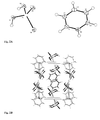
- An Ortep representation of the molecular structure of the compound is shown in Figure 1 .
- the molecules are linked together via several van der Waals interactions.
- the strongest van der Waals contact (C-H...S) links the molecules together into and infinite chain along the c-axis.
- the packing coefficient (percent filled van der Waals space in the unit-cell) is 67.7 %, indicating an efficient molecular framework in the solid state.
- the molecular packing is facilitated by the aromatic ⁇ stacking.
- the distance between the planes of two adjacent aromatic moieties is approximately 3.5 ⁇ .
- the present invention provides the use of a thionating agent consisting of crystalline P 2 S 5 ⁇ 2 C 5 H 5 N.
- this agent is storable for long period of times and moreover is free from impurities inherent in the conventional thionating agent because these impurities (from P 4 S 10 ) are removed via the pyridine mother liquor.
- the improved purity will result in cleaner thionation products and more facile work-up procedures.
- a particular advantage is the fact that the thionating agent can be transferred to solvents such as acetonitrile and dimethylsulfone.
- the zwitterionic crystalline compound has fair solubility in hot acetonitrile and a good solubility in hot pyridine. It also has a good solubility in cyclic sulfones or in lower alkyl sulfones, such as dimethylsulfone.
- the thionating agent and the compound to be thionated are allowed to react in a liquid solvent medium for the compound and for the thionating agent.
- the thionating agent is used dissolved in a liquid solvent medium.
- the thionating agent is used as a melt, mixed with the compound to be thionated.
- the thionating agent is heated to its melting temperature (167-169 °C) and the compound to be thionated is mixed with the thionating agent before, after or during heating.
- the solvent medium should be selected from aprotic solvents.
- the liquid solvent medium is an organic solvent that is liquid at room temperature and that may be heated to a suitable reaction temperature, e.g. a temperature of 60-200 °C, e.g. 60-100 °C, such as acetonitrile that is a liquid at room temperature (melting point -42 °C) and has a boiling temperature of 82 °C.
- a suitable reaction temperature e.g. a temperature of 60-200 °C, e.g. 60-100 °C, such as acetonitrile that is a liquid at room temperature (melting point -42 °C) and has a boiling temperature of 82 °C.
- the crystalline P 2 S 5 ⁇ 2 C 5 H 5 N and the compound to be thionated are both dissolved in the organic solvent, which optionally is heated e.g. to reflux.
- the crystalline P 2 S 5 ⁇ 2 C 5 H 5 N is admixed with the solvent medium, at a temperature below the melting point of the solvent medium and of the crystalline P 2 S 5 ⁇ 2 C 5 H 5 N and the mixture is heated in order to obtain a liquid solution containing P 2 S 5 ⁇ 2 C 5 H 5 N dissolved in the liquid solvent medium.
- the compound to be thionated may be admixed with the other components of the reaction mixture at any point of the process, e.g. before or after melting and/or dissolution.
- the melting temperature of dimethylsulfone is 107-109°C.
- crystalline P 2 S 5 ⁇ 2C 5 H 5 N and solid dimethylsulfone may be mixed at e.g. room temperature and heated to a temperature of at least about 109°C, at which time a solution of P 2 S 5 ⁇ 2 C 5 H 5 N in liquid dimethylsulfone is obtained.
- the thionation of the oxo group containing compound may be performed.
- An advantageous feature of P 2 S 5 ⁇ 2 C 5 H 5 N is its thermal stability, which allows for performing the thionating reaction at temperatures well over 100 °C, e.g. at a temperature of 100-200 °C, or 115-180 °C, or at a temperature of 150-175 °C, in particular at a temperature of 165-175 °C, although also lower temperatures may be used, e.g. 60-100 °C.
- the reaction is performed at the boiling temperature of the liquid solvent medium.
- P 2 S 5 ⁇ 2 C 5 H 5 N quickly undergoes extensive degradation.
- a protic solvent such as a lower alcohol, e.g. methanol or ethanol
- P 2 S 5 ⁇ 2 C 5 H 5 N quickly undergoes extensive degradation.
- addition of water to a hot solution/suspension of P 2 S 5 ⁇ 2 C 5 H 5 N in acetonitrile will quickly result in a clear solution of a salt of pyridine and phosphorothioic acid, viz. pyridinium dihydrogenmonothiophosphate, of formula
- This salt is readily soluble in water and its ready formation and high solubility can be advantageously used during work-up of the thionated reaction product of the invention, e.g. thioamides.
- thionated reaction product of the invention e.g. thioamides.
- four equivalents of an amide are heated with 1.1 equivalents of crystalline P 2 S 5 ⁇ 2 C 5 H 5 N in dry acetonitrile and in connection with the work-up any remaining thionating agent is readily removed by addition of water.
- P 2 S 5 ⁇ 2 C 5 H 5 N will also decompose when treated with alcohols; e.g. treatment of P 2 S 5 ⁇ 2 C 5 H 5 N with ethanol gives pyridinium O,O-diethyldithiophosphonate, of formula
- one advantage of the present invention is that the desired thionated product is easily separated from any remaining thionating agent P 2 S 5 ⁇ 2 C 5 H 5 N by treatment with a protic solvent, such as water or a lower alcohol, e.g. ethanol.
- a protic solvent such as water or a lower alcohol, e.g. ethanol.
- the salt resulting from decomposition of any remaining P 2 S 5 ⁇ 2 C 5 H 5 N will be easily separated from the thionated compound, e.g. by extraction with an aqueous solution or with water.
- a protic solvent such as water
- the precipitation of the thionated reaction product which may then be separated from the aqueous phase, e.g. by a simple filtration. Further purification of the reaction product may optionally be performed, e.g. by recrystallization.
- the group (I) is present in an amide function, -C(O)-N ⁇ , e.g. in a compound wherein R e.g. may be selected from C1-C12 hydrocarbyls, and R' and R" may be independently selected from H and C1-C12 hydrocarbyls, or wherein R and R' and/or R'and R" may be joined to each other to form, together with the amide carbon and/or nitrogen to which they are attached, a mono- or polycyclic ring, e.g. a mono- or polycyclic 5-20 membered ring optionally containing one or several additional heteroatoms, e.g. one or several heteroatoms selected from O, N and S, which ring may be saturated or unsaturated and aromatic or non-aromatic.
- R e.g. may be selected from C1-C12 hydrocarbyls
- R' and R" may be independently selected from H and C1-C12 hydrocarbyls, or wherein R and R'
- the compound is a peptide, an oligopeptide or a polypeptide, e.g. a peptide comprising from 1 to 10 groups (I) in the backbone, or from 1 to 5 oxo groups (I).
- the group (I) is present in a ketone function, such as in a compound wherein R and R' e.g. may be independently selected from H and C1-C12 hydrocarbyls, or may be joined to each other to form, together with the ketone carbon, a mono- or polycyclic ring, e.g. a mono- or polycyclic 5-20 membered ring optionally containing one or several heteroatoms, e.g. one or several heteroatoms selected from O, N and S, which ring may be saturated or unsaturated and aromatic or non-aromatic.
- R and R' e.g. may be independently selected from H and C1-C12 hydrocarbyls, or may be joined to each other to form, together with the ketone carbon, a mono- or polycyclic ring, e.g. a mono- or polycyclic 5-20 membered ring optionally containing one or several heteroatoms, e.g. one or several heteroatoms selected from O, N and
- the groups R, R' and R" may optionally and independently be substituted by one or more substituents, e.g. one or more further oxo groups or one or more other functional groups.
- Such electron donating group e.g. may be a group having a lone electron pair, capable of raising the electron density of the keto group by delocalization of said electron pair through one or several double bonds situated between the EDG and the keto group.
- the electron density of the keto group also may be raised by inductive effects.
- the crystalline P 2 S 5 ⁇ 2 C 5 H 5 N preferably is admixed at a molar ratio to the group (I) to be transformed of 1 mole P 2 S 5 ⁇ 2 C 5 H 5 N per 1-4 moles of group (I), e.g. 1 mole P 2 S 5 ⁇ 2 C 5 H 5 N per 2-4 moles of group (I), in particular 1 mole P 2 S 5 ⁇ 2 C 5 H 5 N per 3-4 moles of group (I). Therefore, in case the compound contains more than one group (I) to be transformed into a group (II), the molar ratio of P 2 S 5 ⁇ 2 C 5 H 5 N to compound will be correspondingly higher.
- the crystalline P 2 S 5 ⁇ 2 C 5 H 5 N preferably is admixed at a molar ratio with the compound to be thionated of 1 mole P 2 S 5 ⁇ 2 C 5 H 5 N per 0.5-2 moles of the compound, e.g. 1 mole P 2 S 5 ⁇ 2 C 5 H 5 N per 1-2 moles of the compound, or 1 mole P 2 S 5 ⁇ 2 C 5 H 5 N per 1.5-2 moles of the compound.
- the molar ratio between P 2 S 5 ⁇ 2 C 5 H 5 N and the compound may be from n/4 to n, or from n/4 to n/2, e.g. from n/4 to n/3.
- P 2 S 5 ⁇ 2 C 5 H 5 N as a thionating agent is its selectivity.
- carboxylic ester functions generally do not react with P 2 S 5 ⁇ 2 C 5 H 5 N, and therefore, the present invention also provides a method of selectively thionating e.g. an amide or keto function in a compound also comprising a carboxylic ester function.
- Tetraphosphorus decasulfide (P 4 S 10 , 44.5 g, 0.1 mol) was added in portions to dry pyridine (560 mL) at 80 °C using stirring equipment. After a period of reflux (1h) a clear yellow solution was obtained, which deposited light-yellow crystals when the solution was allowed to cool. After 2h the crystals were collected, washed with dry acetonitrile and finally transferred to an exsiccator (containing a beaker with conc.
- the crystalline P 2 S 5 ⁇ 2 C 5 H 5 N (3.80 g, 10 mmol) was heated at reflux temperature in acetonitrile (35 mL) containing water (1.0 mL). The clear solution (obtained within 3 min) was concentrated and the product allowed to crystallize, 3.15 g, (79%).
- the 3,3'-diindolyl-2,2'-tetrasulfide 25 (3.58 g, 10 mmol was dissolved in THF, 50 mL and added to a mixture of NaBH 4 (1.50 g, 40 mmol) in THF (75 mL). Evolution of gases containing H 2 S ensued and the reaction mixture was stirred for 3 h at 40-45 °C under a blanket of argon.
- This air-sensitive solution containing the dianion 26 was not stored but directly transformed by operations described below.
- a solution obtained by reductive cleavage of the tetrasulfide 25 was, after addition of water (50 mL), stirred for 24 h in contact with air.
- the yellow solid formed was collected and crystallized from acetonitrile-DMF 4:1 yielding 2.20 g (77%) of a solid still containing DMF, which was removed by drying under reduced pressure, mp >227-228 °C.
- Oxindole (1.33 g, 10 mmol) and crystalline P 2 S 5 ⁇ 2 C 5 H 5 N (1.52 g, 4 mmol) were warmed with dimethylsulfone (4.0 g) and then heated at 160 °C for 5 min. The melt was allowed to cool and then heated with water. The solid formed was crystallized from acetonitrile-DMF 4:1 yielding 1.37 g (92 %) mp > 227-228 °C. This material was identical with that obtained via reductive cleavage of the tetrasulfide 25 .
- the diester 33a (2.13g, 10 mmol) and crystalline P 2 S 5 ⁇ 2 C 5 H 5 N (1.14g, 4 mmol) were heated at reflux temperature in acetonitrile (50 mL) for 1h. After concentration to 25 mL, water was added and the solid formed collected and crystallized from 2-propanol, 1.85g (81%) mp.
- the advantages of the thionating agent of the invention over LR are primarily that the inventive thionating agent is easier to prepare, odourless (when sufficiently pure) and that the thionated products are very pure.
- formation of nitriles from primary amides never was a problem. This type of side reaction can sometimes be problematic when the thionating agent LR is used 7,8 .
- Thionation of the exemplified ketones with P 2 S 5 ⁇ 2 C 5 H 5 N worked well (Table 2, entries 3 and 4).
- keto derivatives 20a and 21a could be converted to 20b and 21b , respectively, when the thionating agent of the invention is used in hot pyridine or as a melt or even better - when heated together with dimethylsulfone (Table 1, entry 20 and Table 3, entry 3).
- trimer 29 of the unstable primary product 30
- trimer 29 was indeed the product when benzaldehyde was reacted with the thionating agent of the invention in dimethylsulfone.
- Ester carbonyl groups are generally not attacked by P 2 S 5 ⁇ 2 C 5 H 5 N as can be exemplified by thionation (Table 3, entry 10) of the monoacetate of kojic acid ( 31 ) which selectively gave the thione 32 (Table 1, entry 17).
- Thionation of the diester 33a offered another example, namely the pyrrole-2-thiol derivative 34b
- reaction conditions e.g. in view of the functional groups that may be present in the compound to be thionated.
- the reaction may be performed under normal ambient atmosphere or under an inert atmosphere of e.g. argon or nitrogen.
- suitable reaction conditions e.g. in view of the functional groups that may be present in the compound to be thionated.
- the reaction may be performed under normal ambient atmosphere or under an inert atmosphere of e.g. argon or nitrogen.
- Other parameters that may be optimized or varied are e.g. the solvent medium, the reaction temperature and the reaction time and all such modifications and variations are contemplated to be within the scope of the present invention.
Landscapes
- Chemical & Material Sciences (AREA)
- Organic Chemistry (AREA)
- Health & Medical Sciences (AREA)
- Life Sciences & Earth Sciences (AREA)
- Biochemistry (AREA)
- General Health & Medical Sciences (AREA)
- Molecular Biology (AREA)
- Inorganic Chemistry (AREA)
- Plural Heterocyclic Compounds (AREA)
- Organic Low-Molecular-Weight Compounds And Preparation Thereof (AREA)
- Nitrogen Condensed Heterocyclic Rings (AREA)
- Pyridine Compounds (AREA)
- Pharmaceuticals Containing Other Organic And Inorganic Compounds (AREA)
- Other In-Based Heterocyclic Compounds (AREA)
- Pyrrole Compounds (AREA)
- Indole Compounds (AREA)
- Quinoline Compounds (AREA)
- Hydrogenated Pyridines (AREA)
- Pyrane Compounds (AREA)
- Detergent Compositions (AREA)
- Heterocyclic Carbon Compounds Containing A Hetero Ring Having Oxygen Or Sulfur (AREA)
- Lubricants (AREA)
- Thiazole And Isothizaole Compounds (AREA)
- Agricultural Chemicals And Associated Chemicals (AREA)
Abstract
Description
- The present invention relates to a thionation process. More specifically, the invention relates to a process for transforming an oxo group (>C=O) in a compound into a thio group (>C=S) or a tautomeric form of said thio group.
- In 1951, Klingsberg 1 et al described the use of P4S10 dissolved in pyridine as a thionating agent. Pyridine and P4S10 react readily to form a zwitter-ionic, non-smelling compound, the composition of which, P2S5·2 C5H5N, was studied as early as 1967-1968 by German inorganic chemists 2,3 who obtained evidence for its structure by 31P NMR data 4 as well as by comparison with related molecules.
- In spite of the teachings of Klingsberg et al., the predominantly used agent in the reaction of thionation of compounds containing an oxo group has been the so-called Lawesson's reagent (IUPAC name: 2,4-bis(4-methoxyphenyl)-1,3,2,4-dithiadiphosphetane-2,4-dithione), herein below referred to as LR. LR was introduced in 1968 for transformations in organic chemistry and was used with a considerable number of reactants, such as amides and ketones, which were thionated in fair yields. However, LR as a thionating agent suffers from a number of drawbacks. For example, its thermal stability is mediocre; it has even been reported that LR starts to decompose above 110 °C 5,6 . Further, LR has a generally low solubility, which quite often has necessitated the use of hexamethylphosphoramide (HMPA) as a solvent. HMPA is suspected of being carcinogenic to humans and its use is prohibited in many countries. Additional drawbacks with LR are the strong, unpleasant smell of the compound in itself and the fact that during a reaction, there tends to be formation of foul-smelling side-products that are difficult to separate from the desired reaction products (column chromatography is often required).
- It appears that there still remains a need for an improved process for the thionation of an oxo group-containing compound as well as an improved thionating agent for use in such process.
- According to a first aspect there is provided a process for transforming a group >C=O (I) in a compound into a group >C=S (II) or a tautomeric form of group (II), in a reaction giving a thionated reaction product, by use of crystalline P2S5·2 C5H5N as a thionating agent, said thionating agent having been separated from the pyridine mother liquor wherein it was prepared.
-
-
Figure 1 shows (A) the molecular structure and (B) the crystal structure of P2S5·2 C5H5N. -
Figure 2 shows (A) the molecular structure and (B) the crystal structure of pyridinium dihydrogenmonothiophosphate. - The present inventors have determined the crystal structure of P2S5·2 C5H5N by X-ray analysis, the details of which are given in the Experimental Section. An Ortep representation of the molecular structure of the compound is shown in
Figure 1 . The molecules are linked together via several van der Waals interactions. The strongest van der Waals contact (C-H...S) links the molecules together into and infinite chain along the c-axis. The packing coefficient (percent filled van der Waals space in the unit-cell) is 67.7 %, indicating an efficient molecular framework in the solid state. The molecular packing is facilitated by the aromatic π stacking. The distance between the planes of two adjacent aromatic moieties is approximately 3.5 Å. - As mentioned herein above, the present invention provides the use of a thionating agent consisting of crystalline P2S5·2 C5H5N. Very advantageously, this agent is storable for long period of times and moreover is free from impurities inherent in the conventional thionating agent because these impurities (from P4S10) are removed via the pyridine mother liquor.
- The improved purity will result in cleaner thionation products and more facile work-up procedures. A particular advantage is the fact that the thionating agent can be transferred to solvents such as acetonitrile and dimethylsulfone.
- Indeed, the zwitterionic crystalline compound has fair solubility in hot acetonitrile and a good solubility in hot pyridine. It also has a good solubility in cyclic sulfones or in lower alkyl sulfones, such as dimethylsulfone.
- In one embodiment of the process of the invention, the thionating agent and the compound to be thionated are allowed to react in a liquid solvent medium for the compound and for the thionating agent. In other words, the thionating agent is used dissolved in a liquid solvent medium.
- In one embodiment of the process of the invention, the thionating agent is used as a melt, mixed with the compound to be thionated. In this embodiment, the thionating agent is heated to its melting temperature (167-169 °C) and the compound to be thionated is mixed with the thionating agent before, after or during heating.
- The solvent medium should be selected from aprotic solvents. In one embodiment, the liquid solvent medium is an organic solvent that is liquid at room temperature and that may be heated to a suitable reaction temperature, e.g. a temperature of 60-200 °C, e.g. 60-100 °C, such as acetonitrile that is a liquid at room temperature (melting point -42 °C) and has a boiling temperature of 82 °C. In this case, the crystalline P2S5·2 C5H5N and the compound to be thionated are both dissolved in the organic solvent, which optionally is heated e.g. to reflux.
- In one embodiment, the crystalline P2S5·2 C5H5N is admixed with the solvent medium, at a temperature below the melting point of the solvent medium and of the crystalline P2S5·2 C5H5N and the mixture is heated in order to obtain a liquid solution containing P2S5·2 C5H5N dissolved in the liquid solvent medium.
- The compound to be thionated may be admixed with the other components of the reaction mixture at any point of the process, e.g. before or after melting and/or dissolution.
- For example, the melting temperature of dimethylsulfone is 107-109°C. In case melted dimethylsulfone is used as a liquid solvent medium for the reaction, crystalline P2S5·2C5H5N and solid dimethylsulfone may be mixed at e.g. room temperature and heated to a temperature of at least about 109°C, at which time a solution of P2S5·2 C5H5N in liquid dimethylsulfone is obtained. In this reaction medium, the thionation of the oxo group containing compound may be performed.
- An advantageous feature of P2S5·2 C5H5N is its thermal stability, which allows for performing the thionating reaction at temperatures well over 100 °C, e.g. at a temperature of 100-200 °C, or 115-180 °C, or at a temperature of 150-175 °C, in particular at a temperature of 165-175 °C, although also lower temperatures may be used, e.g. 60-100 °C. In some embodiments, the reaction is performed at the boiling temperature of the liquid solvent medium.
- It is at present not clear if it is P2S5·2 C5H5N per se that, after dissolution in the liquid solvent medium, thionates the compound, or whether the reaction proceeds via dissociation to some other intermediary, reactive species. For the purpose of the present invention, however, the precise mechanism of the reaction is not essential, and by indication that the dissolved P2S5·2 C5H5N is allowed to react with the dissolved compound it is intended to include a reaction proceeding by any possible intermediary leading to the desired thionated product.
- In the presence of water or a protic solvent, such as a lower alcohol, e.g. methanol or ethanol, P2S5·2 C5H5N quickly undergoes extensive degradation. For example, addition of water to a hot solution/suspension of P2S5·2 C5H5N in acetonitrile will quickly result in a clear solution of a salt of pyridine and phosphorothioic acid, viz. pyridinium dihydrogenmonothiophosphate, of formula

- This salt is readily soluble in water and its ready formation and high solubility can be advantageously used during work-up of the thionated reaction product of the invention, e.g. thioamides. Thus, in a typical reaction of the invention, four equivalents of an amide are heated with 1.1 equivalents of crystalline P2S5·2 C5H5N in dry acetonitrile and in connection with the work-up any remaining thionating agent is readily removed by addition of water.
- P2S5·2 C5H5N will also decompose when treated with alcohols; e.g. treatment of P2S5·2 C5H5N with ethanol gives pyridinium O,O-diethyldithiophosphonate, of formula

- Thus, one advantage of the present invention is that the desired thionated product is easily separated from any remaining thionating agent P2S5·2 C5H5N by treatment with a protic solvent, such as water or a lower alcohol, e.g. ethanol.
- Therefore, in one embodiment of the invention, there is provided a process for transforming a group >C=O (I) in a compound into a group >C=S (II) or a tautomeric form of group (II) by bringing the compound into contact with P2S5·2 C5H5N so as to obtain a thionated reaction product; comprising admixing crystalline P2S5·2 C5H5N with said compound in a liquid solvent medium for the compound and for the crystalline P2S5·2 C5H5N, so as to obtain a liquid solution of the compound and P2S5·2 C5H5N. and allowing the P2S5·2 C5H5N and compound to react with each other in the solution, followed by adding a protic solvent to the solution.
- After addition of a protic solvent to the solution, the salt resulting from decomposition of any remaining P2S5·2 C5H5N will be easily separated from the thionated compound, e.g. by extraction with an aqueous solution or with water. In some embodiments, addition of a protic solvent, such as water, will result in the precipitation of the thionated reaction product, which may then be separated from the aqueous phase, e.g. by a simple filtration. Further purification of the reaction product may optionally be performed, e.g. by recrystallization.
- The group >C=O (I) to be transformed into a group >C=S (II) may be present e.g. in a ketone or an amide functional group and may be present in a compound comprising one or several functional groups, in which case a selective thionation may be achievable, as will be shown in the Examples herein below.
- In one embodiment, the group (I) is present in an amide function, -C(O)-N<, e.g. in a compound

- In one embodiment, the compound is a peptide, an oligopeptide or a polypeptide, e.g. a peptide comprising from 1 to 10 groups (I) in the backbone, or from 1 to 5 oxo groups (I).
- In one embodiment, the group (I) is present in a ketone function, such as in a compound

- The groups R, R' and R" may optionally and independently be substituted by one or more substituents, e.g. one or more further oxo groups or one or more other functional groups.
- When the group (I) is present in a ketone function, there preferably should be at least one electron donating group present in the compound, resulting in an increased electron density of the group (I). Such electron donating group (EDG) e.g. may be a group having a lone electron pair, capable of raising the electron density of the keto group by delocalization of said electron pair through one or several double bonds situated between the EDG and the keto group. The electron density of the keto group also may be raised by inductive effects.
- The product of the thionating reaction of the invention is a thionated compound comprising a group >C=S (II) or a tautomer thereof, e.g. a group >C=C(SH)-.
- The crystalline P2S5·2 C5H5N preferably is admixed at a molar ratio to the group (I) to be transformed of 1 mole P2S5·2 C5H5N per 1-4 moles of group (I), e.g. 1 mole P2S5·2 C5H5N per 2-4 moles of group (I), in particular 1 mole P2S5·2 C5H5N per 3-4 moles of group (I). Therefore, in case the compound contains more than one group (I) to be transformed into a group (II), the molar ratio of P2S5·2 C5H5N to compound will be correspondingly higher. For example, in case the compound contains 2 groups (I) to be transformed into 2 groups (II), the crystalline P2S5·2 C5H5N preferably is admixed at a molar ratio with the compound to be thionated of 1 mole P2S5·2 C5H5N per 0.5-2 moles of the compound, e.g. 1 mole P2S5·2 C5H5N per 1-2 moles of the compound, or 1 mole P2S5·2 C5H5N per 1.5-2 moles of the compound.
- Generally, for a compound containing n functions selected from e.g. ketone functions and amide functions, e.g. n amide functions, the molar ratio between P2S5·2 C5H5N and the compound may be from n/4 to n, or from n/4 to n/2, e.g. from n/4 to n/3.
- An advantageous feature of P2S5·2 C5H5N as a thionating agent is its selectivity. Thus, for example carboxylic ester functions generally do not react with P2S5·2 C5H5N, and therefore, the present invention also provides a method of selectively thionating e.g. an amide or keto function in a compound also comprising a carboxylic ester function.
- The invention will be further described in the following, non-limiting examples.
- Tetraphosphorus decasulfide (P4S10, 44.5 g, 0.1 mol) was added in portions to dry pyridine (560 mL) at 80 °C using stirring equipment. After a period of reflux (1h) a clear yellow solution was obtained, which deposited light-yellow crystals when the solution was allowed to cool. After 2h the crystals were collected, washed with dry acetonitrile and finally transferred to an exsiccator (containing a beaker with conc. sulfuric acid) to remove any excess of pyridine, yield 62.3 g (84%), mp: 167-169 °C, IR νmax: 3088, 3040, 1608, 1451, 1197, 1044, 723, 668 cm-1; cf.
Fig.1 . - The crystalline P2S5·2 C5H5N (3.80 g, 10 mmol) was heated at reflux temperature in acetonitrile (35 mL) containing water (1.0 mL). The clear solution (obtained within 3 min) was concentrated and the product allowed to crystallize, 3.15 g, (79%). The crystals were suitable for X-ray crystallography, mp: 110-120 °C, decomp., with evolution of H2S; 1H NMR (300 MHz, DMSO-d 6) δ 7.51 (m, 2H, 3-H), 7.95 (dd, 1H, 4-H), 8.63 (d, 2H, 2-H), 9.7 (br s, 3H); 13C NMR (75.5 MHz, DMSO-d 6) δ 124.7 (d), 138.5 (d), 147.8 (d); cf.
Fig.2 . - The crystalline P2S5·2 C5H5N (1.0 g) was heated at reflux in ethanol (5 mL) for 5 min, the clear solution was evaporated to give an oil which soon solidified (100%).
IR νmax: 2976, 2891, 1630, 1600, 1526, 1479, 1383, 1020, 920, 748, 681 cm-1 1H NMR (300 MHz, DMSO-d 6) δ 1.08 (t, J = 7.1 Hz, 6H), 3.79 (m, 4H), 8.09 (m, 2H), 8.62 (m, 1H), 8.97 (m, 2H); 13C NMR (75.5 MHz, DMSO-d 6) δ 16.1 (q, 3JC-P = 8.8 Hz), 59.8 (t, 2JC-P = 7.1 Hz), 127.2 (d), 142.5 (d), 146.0 (d). - To a MeCN-solution (200 mL) of 2,3-dihydro-1H-benzo[e]pyrrolo[1,2-a][1,4]diazepine-5,11(10H,11aH)-dione (4.0 g, 20 mmol) crystalline P2S5·2 C5H5N (2.3 g, 6 mmol), was added and heated to 60 °C for 3 h during which time a yellow precipitate was formed. The reaction mixture was allowed to stand at room temperature overnight in order to precipitate fully. The product was vacuum-filtered and washed with a little cold MeCN to give the title compound (3.9 g, 85 %) as a pale-yellow solid, mp 268-270 °C; [α]D 23 +971° (c 0.16, MeOH); Ir νmax: 3170, 2979, 1616, 1602, 1477, 1374, 1271, 1141, 831, 813, 752 cm-1;
1H NMR (300 MHz, DMSO-d 6) δ 1.89-1.94 (m, 1H), 1.99-2.16 (m, 2H), 2.84-2.94 (m, 1H), 3.40-3.50 (m, 1H), 3.53-3.60 (m, 1H), 4.27 (d, J=6.11 Hz, 1H), 7.22-7.27 (m, 1H), 7.30-7.37 (m, 1H), 7.55-7.60 (m, 1H), 7.80-7.85 (m, 1H), 12.46 (br s, 1H); 13C NMR (75.5 MHz, DMSO-d 6) δ 22.7(t), 29.0 (t), 46.8 (t), 59.8 (d), 121.8 (d), 125.7 (d), 127.8 (s), 130.2 (d), 132.2 (d),136.5 (s),164.2 (s), 201.9 (s). - Glycine (1.50 g, 20 mmol), crystalline P2S5·2 C5H5N (9.12g, 28 mmol) and dimethylsulfone (8.0 g) were heated at 165-170 °C for 1h whereupon the reaction mixture (after cooling) was treated with boiling water for 30 min. The brownish solid obtained was recrystallized from ethanol/DMF, 1.85 g (63 %) mp 284 °C; 1H NMR (300 MHz, DMSO-d 6) δ 4.19 (s), 10.7 (s); 13C NMR (75.5 MHz, DMSO-d 6) δ 54.4 (q), 191.9 (s).
- 2,5-Piperazinedione (2.28 g, 20 mmol) and crystalline P2S5·2 C5H5N (2.28 g, 8 mmol) were heated at reflux in acetonitrile (50 mL) for 2h, when the mixture was concentrated and water was added. The solid formed was collected after a stirring period of 1h, 2.63 g (90 %). Melting point and NMR data are identical to data reported above for 2,5-piperazinedithione from glycine (Table 2, entry 1).
- The above 2,5-piperazinedithione (1.46 g, 10 mmol) was heated at reflux temperature in acetic anhydride (20 mL) for 2h, whereupon the reaction mixture was concentrated and treated with diisopropyl ether, 2.06 g (93 %), mp 190-192 °C; 1H NMR (300 MHz, DMSO-d 6) δ 2.17 (s, 6H), 2.45 (s, 6H), 6.99 (s, 2H); 13C NMR (75.5 MHz, DMSO-d 6) δ 22.2 (q), 29.4 (q), 117.0 (s), 131.6 (d), 166.3 (s), 193.7 (s); Elemental analysis calcd for C12H14N2O4S2, C, 45.75; H, 4.48; N, 8.88. Found C, 45.90; H, 4.32; N, 8.71.
- The 3,3'-diindolyl-2,2'-tetrasulfide 25, (3.58 g, 10 mmol was dissolved in THF, 50 mL and added to a mixture of NaBH4 (1.50 g, 40 mmol) in THF (75 mL). Evolution of gases containing H2S ensued and the reaction mixture was stirred for 3 h at 40-45 °C under a blanket of argon. This air-sensitive solution containing the dianion 26 was not stored but directly transformed by operations described below.
- Dimethyl sulfate (1.51 g, 12 mmol) dissolved in MeOH (15 mL) was added dropwise to a solution obtained by reductive cleavage of the tetrasulfide 25 (5 mmol) at 25 °C. After a period (1h) of stirring the solution was evaporated and treated with water. The crude solid was crystallized from MeOH-water to yield a yellow solid (0.45 g, 57%) mp 184-186 °C; 1H NMR (300 MHz, DMSO-d 6) δ 2.44 (s, 6H), 6.95-6.99 (m, 2H), 7.10-7.22 (m, 4H), 7.36-7.45 (m, 2H), 11.55 (s, 2H); 13C NMR (75.5 MHz, DMSO-d 6) δ 18.0 (q), 110.8 (s), 110.9 (d), 119.0 (d), 119.2 (d), 121.5 (d), 128.0 (s), 129.1 (s), 137.0 (s).
- A solution obtained by reductive cleavage of the tetrasulfide 25 was, after addition of water (50 mL), stirred for 24 h in contact with air. The yellow solid formed was collected and crystallized from acetonitrile-DMF 4:1 yielding 2.20 g (77%) of a solid still containing DMF, which was removed by drying under reduced pressure, mp >227-228 °C.
1H NMR (300 MHz, DMSO-d 6) δ 7.04-7.08 (m, 1H), 7.28-7.31 (m, 2H), 7.33-7.51 (m, 1H), 12.16 (s, 1H): 13C NMR (75.5 MHz, DMSO-d 6) δ 136.3 (s), 127.0 (s), 124.9 (s), 124.6 (d), 120.3 (d), 120.2 (d), 119.3 (s), 112.2 (d). - Oxindole (1.33 g, 10 mmol) and crystalline P2S5·2 C5H5N (1.52 g, 4 mmol) were warmed with dimethylsulfone (4.0 g) and then heated at 160 °C for 5 min. The melt was allowed to cool and then heated with water. The solid formed was crystallized from acetonitrile-DMF 4:1 yielding 1.37 g (92 %) mp > 227-228 °C. This material was identical with that obtained via reductive cleavage of the tetrasulfide 25.
- The solution obtained from reductive cleavage of the tetrasulfide 25 was acidified with AcOH which resulted in quick formation of the title compound as a yellow precipitate, 2.52 g (85 %). Which was recrystallized from acetonitrile, mp 180 °C decomp. This molecule is sensitive towards aerial oxidation.
1H NMR (300 MHz, DMSO-d 6) δ 4.66 (s, 2H), 6.85-6.91 (m, 4H), 6.96-6.98 (m, 2H), 7.07-7.13 (m, 2H), 13.06 (s, 2H); 13C NMR (75.5 MHz, DMSO-d 6) δ 60.8 (d), 110.4 (d), 123.0 (d), 123.4 (d), 128.6 (d), 130.2 (s), 144.2 (s), 204.3 (s). Elemental analysis calcd for C16 H12N2S2; C, 64.60, H, 4.08, N, 9.43 Found C, 64.26, H, 3.99, N, 9.31. - The diester 33a (2.13g, 10 mmol) and crystalline P2S5·2 C5H5N (1.14g, 4 mmol) were heated at reflux temperature in acetonitrile (50 mL) for 1h. After concentration to 25 mL, water was added and the solid formed collected and crystallized from 2-propanol, 1.85g (81%) mp. 185-187 °C, IR νmax: 3273, 2954, 1742, 1724, 1707, 1681, 1562, 1440, 1341, 1269, 1200, 1173, 1117, 1080, 1003, 782 cm-1, 1H NMR (300 MHz, DMSO-d 6) δ 2.43 (s, 3H, CH3), 3.17 (s, 1H, SH), 3.49 (s, 3H, OCH3), 3.64 (s, 3H, OCH3), 11.90 (s, 1H, NH); 13C NMR (75.5 MHz, DMSO-d 6) δ 13.4 (q), 30.6 (d), 50.4 (q), 51.4 (q), 111.2 (s), 117.1 (s), 126.9 (s), 139.9 (s), 164.4 (s), 171.1 (s) Elemental analysis calcd for C10 H13NO4S; C, 49.37, H, 5.38, N 5.75 Found C, 49.25, H, 5.46, N, 5.61.
- 3-(1H-indol-3-yl)-3,3'-biindolin-2-one (728 mg, 2 mmol), crystalline P2S5·2 C5H5N (228 mg, 0.6 mmol) and dimethylsulfone (3.05 g) were heated (165-170 °C) for 20 min. The melt was allowed to cool and then heated in water for 10 min. The solid formed was collected, 766 mg (94 %), mp >260 °C. 1H NMR (300 MHz, DMSO-d 6) δ 7.09-7.15 (m, 2H), 7.18-7.20 (m, 5H), 7.24-7.30 (m, 7H), 13.00 (s, 1H); 13C NMR (75.5 MHz, DMSO-d 6) δ 72.7 (s), 111.2 (d), 124.4 (d), 126.5 (d), 127.5 (d), 128.6 (s), 128.7 (s), 129.0 (d), 129.1 (d), 129.1 (d), 139.2 (s), 143.0 (s), 143.5 (s), 145.3 (s, 2C), 208.4 (s). Elemental analysis calcd for C24H17N3S; C, 75.96, H, 4.51, N, 11.07; Found C, 76.10, H, 4.46, N, 11.00.
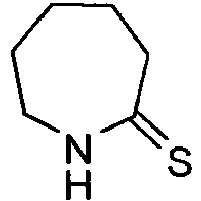
- The outcome of a number of thionation reactions according to the invention, using crystalline P2S5·2 C5H5N dissolved in hot acetonitrile, are listed in Table 1. In the exemplified reactions, the ratio of crystalline P2S5·2 C5H5N to the compound to be thionated was 1.1:4. In some cases direct comparisons with LR have been made. For instance ε-caprolactam and P2S5·2 C5H5N gave the corresponding thioamide within 5 min, but LR thionates even faster. Actually, a suspension of LR in hot acetonitrile can be titrated by addition of ε-caprolactam. The advantages of the thionating agent of the invention over LR are primarily that the inventive thionating agent is easier to prepare, odourless (when sufficiently pure) and that the thionated products are very pure. In the Examples described herein, formation of nitriles from primary amides never was a problem. This type of side reaction can sometimes be problematic when the thionating agent LR is used 7,8 . Thionation of the exemplified ketones with P2S5·2 C5H5N worked well (Table 2, entries 3 and 4). The keto derivatives 20a and 21a could be converted to 20b and 21b, respectively, when the thionating agent of the invention is used in hot pyridine or as a melt or even better - when heated together with dimethylsulfone (Table 1,
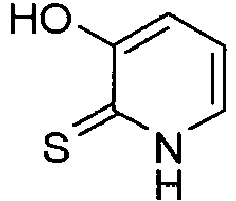
entry 20 and Table 3, entry 3). - Whereas thionation of 3,3-dimethyloxindole (entry 7, Table 1) gave an excellent yield, the parent compound, oxindole (entry 6, Table 1) gave unacceptably low yields (~10 %). Here, formation of complexes of low solubility seems to be the cause of the problems. Synthesis of 3,3-diindolylindoline-2-thione also failed but could be effected with dimethylsulfone as solvent (see Table 3). Thionation of 3-hydroxy-2-pyridone worked well without complications to give the interesting class of 3-hydroxy-2-(1H)-pyridinethione, which for several types of metal complexes (e.g. Zn2+) have been reported to show some promise against diabetes mellitus.
- In cases where more than one carbonyl group is present in the starting materials selectivity could be achieved. Thus the monothionated molecules (Table 1, entries 12, 16 and 17) could be obtained in good yields. Thionation of piperidine-2,6-dione gave the monothionated product in hot acetonitrile whereas with an excess of the thionating agent in hot pyridine the fully thionated product could be obtained.
Table 1. Thionation of amides with the inventive thionating agent in hot MeCN. Entry Amide Thioamide Yield (%) Mp ° c 1 

98 114-116 2 

98 115-116 3 
99 105.5-106.5 4 

85 117 5 

88 147-148 6 

Low yield cf Table 3, entry 13144-145 7 

94 106-107 8 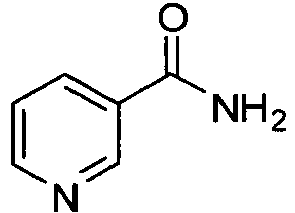

90 195 9 

82 164-165 10 

96 99-100 11 

92 a 110 a. 12 

85 130-132 13 

90 92-93 14 

72 127-128 15 
65 141 16 

63 277-280 17 

87 268-270 18 

89 210-212 (decomp.) 19 

81 185-187 34a 34b 20 
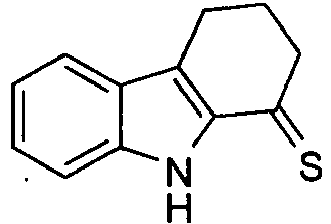
79 232 21a 21b a isolated product contained two rotamers - Thionation of Gly-Gly as well as piperazine-2,5-dione both gave good yields of the expected dithionated product (Table 2,
entries 1 and 2). To further characterise the rather insoluble product, it was acetylated in hot acetic anhydride, which yielded the tetraacetylated product 35 which readily gave nice NMR spectra.Table 2. Thionation with the inventive thionating agent in hot pyridine Entry Amide/ketone Thioamide/thione Yield (%) Mp ° c 1 

78 a 285 2 

90 285 3 

82 120-121 18a 19a 4 

74 200-202 18b 19b 5 

96 297-298 6 

93 >260 7 

90 105-106 8 

83 298-300 9 

77 192-194 a obtained from DMF-H2O - Thionations at quite high temperatures (165-175 °C) could be effected with e.g. P2S5·2 C5H5N dissolved in dimethylsulfone (mp 107-109 °C, bp 238 °C). The results of some exemplifying reactions of the invention are listed in Table 3. In one case (Table 3, entry 6) the product was partially converted to the highly
insoluble disulfide 22. Similar observations have been reported e.g. Stoyanov 9 and Hino et al 10 . The latter workers found that a number of 3-substituted indole-2-thiones readily could be oxidized to the corresponding disulfides. Formation of oxidative products could be avoided by running the reactions under argon. - Benzaldehyde has been thionated many times in the past 11-16 and the product has invariably been isolated as the trimer (29) of the unstable primary product 30, and the trimer 29, was indeed the product when benzaldehyde was reacted with the thionating agent of the invention in dimethylsulfone.

- Ester carbonyl groups are generally not attacked by P2S5·2 C5H5N as can be exemplified by thionation (Table 3, entry 10) of the monoacetate of kojic acid (31) which selectively gave the thione 32 (Table 1, entry 17). Thionation of the diester 33a offered another example, namely the pyrrole-2-thiol derivative 34b


- The starting material existed completely (NMR evidence) as the tautomer 33a, whereas the product existed completely as the thiol tautomer 34b. But more importantly the two ester functions were intact.
- Due to low solubility and high melting point, 2,5-piperazinedithione (Table 3, entry 12) was difficult to characterize, therefore the readily soluble tetraacetate 35 was prepared.
Table 3. Thionation in dimethylsulfone with the inventive thionating agent at 165-175 °C Entry Carbonyl compound Thiocarbonyl compound Yield (%) Mp ° c 1 

90 274-276 2 

78 155 3 
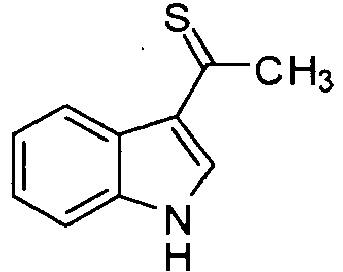
53 144-145 20a 20b 4 

76 243-245 5 

95 335-337 6 

96 >260 7 
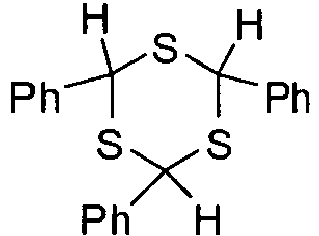
62 228 8 

78 280-282 9 

94 >260 10 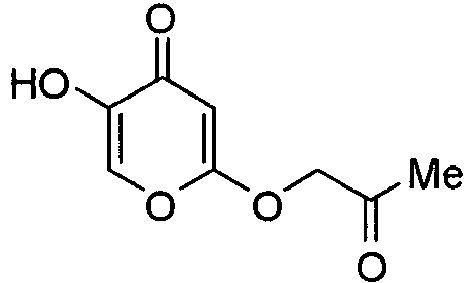

56 114-115 11 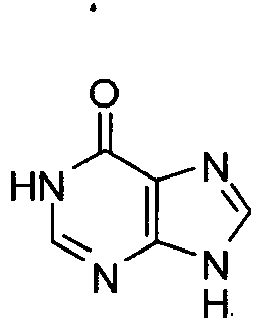

85 >260 12 

92a >284 13 

92b 144-145 a starting from glycine
b experiment run under argon - In the light of the above general description and with further guidance from the illustrating Examples, the person of ordinary skill in the art will be well capable of practicing the invention within the full scope of the claims, using routine experimentation if necessary to select suitable reaction conditions, e.g. in view of the functional groups that may be present in the compound to be thionated. For example, the reaction may be performed under normal ambient atmosphere or under an inert atmosphere of e.g. argon or nitrogen. Other parameters that may be optimized or varied are e.g. the solvent medium, the reaction temperature and the reaction time and all such modifications and variations are contemplated to be within the scope of the present invention.
-
- (1) Klingsberg, E.; Papa, D. J. Am. Chem. Soc. 1951, 73, 4988-4989.
- (2) Meisel, M.; Grunze, H. Z. Anorg. Allg. Chemie, 1967, 360, 277-283.
- (3) Fluck, E.; Binder, H. Z. Anorg. Allg. Chemie 1967, 354, 113-129.
- (4) Brunel, E.; Monzur, J.; Retuert, J. J. Chem. Res (M) 1981, 3437-3445.
- (5) Jesberger, M.; Davis, T. P.; Berner, L. Synthesis 2003, 1929-1958.
-
(6)
- a) Ozturk, T.; Erdal, E.; Olcay, M. Chem. Rev. 2007, 107, 5210-5278.
- b) Ozturk, T.; Erdal, E.; Olcay, M. Chem. Rev. 2010, 110, 3419-3478.
- (7) Scheibye, S.; Shabana, R.; Lawesson, S. O.; Römming, C. Tetrahedron 1982, 38, 993-1001.
- (8) Ley, S. V.; Leach, A. G.; Storer, R. I. J. Chem. Soc., .
- (9) Stoyanov, S.; Petkov, I.; Antonov, L.; T. Stoyanova; Karagiannidis, P.; Aslanidis, P. Can. J. Chem. 1990, 68, 1482-1489.
- (10) Hino, T.; Suzuki, T.; Nakagawa, M. Chem. Pharm. .
- (11) Baumann, E.; From, E. Ber. 1889, 22, 2600-2609.
- (12) Stanfield, J. A.; Reynolds, L. B. J. Am. Chem. Soc. 1952, 74, 2878-2880.
- (13) Böttcher, B.; Bauer, F. Liebigs Ann. Chem. 1951, 574, 218-226.
- (14) Takikawa, Y.; Shimoda, K.; Makabe, T.; Takizawa, S. Chem. Lett. 1983, 1503-1506.
- (15) Sekido, K.; Hirokawa, S. Acta. Cryst. C41 1985, 379-400.
- (16) Bonini, B. F.; Mazzanti, G.; Zani, P.; Maccagani, G.; Foresti, E. J. Chem. Soc., .
Claims (11)
- A process for transforming a group >C=O (I) in a compound into a group >C=S (II) or into a tautomeric form of group (II) in a reaction giving a thionated reaction product, by use of crystalline P2S5·2 C5H5N as a thionating agent, said thionating agent having been separated from the pyridine mother liquor wherein it was prepared.
- A process according to claim 1, wherein the thionating agent and the compound are allowed to react with each other in a liquid solvent medium for the compound and for the thionating agent.
- The process according to claim 1 or claim 2, wherein the liquid solvent medium comprises pyridine, a C1-C3 alkylnitrile, a cyclic sulfone and/or a C1-C3 dialkylsulfone.
- The process according to any one of the claims 1-3, wherein the liquid solvent medium comprises pyridine, sulfolane, dimethyl sulfone and/or acetonitrile.
- The process according to any one of the claims 1-4, wherein the reaction is performed at a temperature of 60°C to 180°C.
- The process according to claim 5, wherein the reaction is performed at temperature of 115°C to 175°C.
- The process according to any one of the claims 1-6, wherein the compound comprises a group (I) that is present in an amide function.
- The process according to any one of the claims 1-7, wherein the compound comprises a group (I) that is present in a ketone function.
- The process according to any one of the claims 1-8, wherein the thionating agent is used at a molar ratio to the group (I) to be transformed of 1 mole P2S5·2 C5H5N per 1-4 moles of group (I).
- The process according to any one of the claims 1-9, comprising separating the thionated reaction product from the reaction.
- The process according to claim 10, wherein water is added to the reaction and the thionated reaction product is separated as a solid material, by precipitation or cyystallization.
Priority Applications (7)
| Application Number | Priority Date | Filing Date | Title |
|---|---|---|---|
| DK13175186.9T DK2650274T3 (en) | 2011-02-04 | 2012-02-03 | Thionylation process and a thionylating agent |
| MEP-2014-13A ME01570B (en) | 2011-02-04 | 2012-02-03 | A thionation process and a thionating agent |
| EP12702531.0A EP2569263B1 (en) | 2011-02-04 | 2012-02-03 | A thionation process and a thionating agent |
| EP13175186.9A EP2650274B1 (en) | 2011-02-04 | 2012-02-03 | A thionation process and a thionating agent |
| SI201230020T SI2569263T1 (en) | 2011-02-04 | 2012-02-03 | A thionation process and a thionating agent |
| PL12702531T PL2569263T3 (en) | 2011-02-04 | 2012-02-03 | A thionation process and a thionating agent |
| CY20141100108T CY1115067T1 (en) | 2011-02-04 | 2014-02-12 | METHOD OF SULFURATION AND SULFURING AGENT |
Applications Claiming Priority (4)
| Application Number | Priority Date | Filing Date | Title |
|---|---|---|---|
| US201161439522P | 2011-02-04 | 2011-02-04 | |
| EP11153421A EP2484655A1 (en) | 2011-02-04 | 2011-02-04 | A thionation process and a thionating agent |
| EP12702531.0A EP2569263B1 (en) | 2011-02-04 | 2012-02-03 | A thionation process and a thionating agent |
| PCT/EP2012/051864 WO2012104415A1 (en) | 2011-02-04 | 2012-02-03 | A thionation process and a thionating agent |
Related Child Applications (2)
| Application Number | Title | Priority Date | Filing Date |
|---|---|---|---|
| EP13175186.9A Division EP2650274B1 (en) | 2011-02-04 | 2012-02-03 | A thionation process and a thionating agent |
| EP13175186.9 Division-Into | 2013-07-04 |
Publications (2)
| Publication Number | Publication Date |
|---|---|
| EP2569263A1 EP2569263A1 (en) | 2013-03-20 |
| EP2569263B1 true EP2569263B1 (en) | 2013-11-13 |
Family
ID=44117211
Family Applications (3)
| Application Number | Title | Priority Date | Filing Date |
|---|---|---|---|
| EP11153421A Withdrawn EP2484655A1 (en) | 2011-02-04 | 2011-02-04 | A thionation process and a thionating agent |
| EP13175186.9A Active EP2650274B1 (en) | 2011-02-04 | 2012-02-03 | A thionation process and a thionating agent |
| EP12702531.0A Active EP2569263B1 (en) | 2011-02-04 | 2012-02-03 | A thionation process and a thionating agent |
Family Applications Before (2)
| Application Number | Title | Priority Date | Filing Date |
|---|---|---|---|
| EP11153421A Withdrawn EP2484655A1 (en) | 2011-02-04 | 2011-02-04 | A thionation process and a thionating agent |
| EP13175186.9A Active EP2650274B1 (en) | 2011-02-04 | 2012-02-03 | A thionation process and a thionating agent |
Country Status (21)
| Country | Link |
|---|---|
| US (2) | US9221855B2 (en) |
| EP (3) | EP2484655A1 (en) |
| JP (1) | JP5989674B2 (en) |
| KR (1) | KR101978703B1 (en) |
| CN (2) | CN104829405A (en) |
| AU (1) | AU2012213417B2 (en) |
| BR (1) | BR112013019821B1 (en) |
| CA (1) | CA2825257C (en) |
| CY (1) | CY1115067T1 (en) |
| DK (2) | DK2569263T3 (en) |
| ES (2) | ES2445024T3 (en) |
| HR (1) | HRP20140124T1 (en) |
| HU (1) | HUE044332T2 (en) |
| ME (1) | ME01570B (en) |
| PL (1) | PL2569263T3 (en) |
| PT (1) | PT2569263E (en) |
| RS (1) | RS53186B (en) |
| RU (1) | RU2605412C2 (en) |
| SI (1) | SI2569263T1 (en) |
| SM (1) | SMT201400054B (en) |
| WO (1) | WO2012104415A1 (en) |
Families Citing this family (8)
| Publication number | Priority date | Publication date | Assignee | Title |
|---|---|---|---|---|
| WO2013171334A1 (en) | 2012-05-18 | 2013-11-21 | Vironova Ab | Methanethione compounds having antiviral activity |
| EP2778158A1 (en) * | 2013-03-14 | 2014-09-17 | Advanced Technology Materials, Inc. | Sulfolane mixtures as ambient aprotic polar solvents |
| CN103641834B (en) * | 2013-12-12 | 2015-12-09 | 沈阳药科大学 | Pyrrolobenzodiazepine compounds and their preparation methods and applications |
| CN105884740B (en) * | 2016-05-16 | 2017-12-12 | 山东师范大学 | One kind detects hypochlorous fluorescence probe and its preparation method and application |
| EP3497102B1 (en) | 2016-08-15 | 2022-12-07 | Bayer CropScience Aktiengesellschaft | Condensed bicyclic heterocycle derivatives as pesticides |
| WO2023083465A1 (en) | 2021-11-12 | 2023-05-19 | Vironova Thionation Ab | A stable formulation of p2s5·2c5h5n |
| US20250270370A1 (en) | 2024-02-27 | 2025-08-28 | Helsingin Yliopisto | Polymers with thioamide repeating units |
| CN119259277B (en) * | 2024-11-26 | 2026-04-03 | 昆明理工大学 | Application of a nitrogen heterocyclic thion compound |
Family Cites Families (7)
| Publication number | Priority date | Publication date | Assignee | Title |
|---|---|---|---|---|
| US2932674A (en) * | 1959-03-11 | 1960-04-12 | Eastman Kodak Co | Preparation of symmetrical conjugated compounds |
| JPS5695164A (en) * | 1979-12-28 | 1981-08-01 | Kumiai Chem Ind Co Ltd | Thiobenzoic acid anilide derivative, its preparation, and fungicide comprising it |
| DE3006865A1 (en) * | 1980-02-23 | 1981-09-10 | Hoechst Ag, 6000 Frankfurt | HETERO-IMINO-PROSTACYCLINE |
| DE3100083A1 (en) * | 1981-01-03 | 1982-08-05 | Hoechst Ag, 6000 Frankfurt | "11-DESOXY-HETERO-IMINO-PROSTACYCLINE, METHOD FOR THE PRODUCTION THEREOF AND THEIR USE AS A MEDICINAL PRODUCT" |
| US4757084A (en) * | 1984-02-29 | 1988-07-12 | Merck & Co., Inc. | 2,5-diaryl tetrahydrothiophenes and analogs thereof as PAF-antagonists |
| DE10024938A1 (en) * | 2000-05-19 | 2001-11-22 | Bayer Ag | New substituted iminoazine derivatives useful as herbicides, especially for weed control in crops |
| UY31685A (en) * | 2008-03-04 | 2009-11-10 | Smithkline Beecham Corp | ANTIVIRAL COMPOUNDS, COMPOSITIONS AND METHODS TO USE THEM |
-
2011
- 2011-02-04 EP EP11153421A patent/EP2484655A1/en not_active Withdrawn
-
2012
- 2012-02-03 CN CN201510090821.3A patent/CN104829405A/en active Pending
- 2012-02-03 PL PL12702531T patent/PL2569263T3/en unknown
- 2012-02-03 PT PT127025310T patent/PT2569263E/en unknown
- 2012-02-03 AU AU2012213417A patent/AU2012213417B2/en not_active Ceased
- 2012-02-03 CN CN201280002402.4A patent/CN103153917B/en not_active Expired - Fee Related
- 2012-02-03 US US13/807,104 patent/US9221855B2/en active Active
- 2012-02-03 RS RS20140055A patent/RS53186B/en unknown
- 2012-02-03 ME MEP-2014-13A patent/ME01570B/en unknown
- 2012-02-03 DK DK12702531.0T patent/DK2569263T3/en active
- 2012-02-03 ES ES12702531.0T patent/ES2445024T3/en active Active
- 2012-02-03 WO PCT/EP2012/051864 patent/WO2012104415A1/en not_active Ceased
- 2012-02-03 BR BR112013019821-4A patent/BR112013019821B1/en not_active IP Right Cessation
- 2012-02-03 RU RU2013140771/04A patent/RU2605412C2/en active
- 2012-02-03 JP JP2013552218A patent/JP5989674B2/en not_active Expired - Fee Related
- 2012-02-03 DK DK13175186.9T patent/DK2650274T3/en active
- 2012-02-03 KR KR1020137023442A patent/KR101978703B1/en not_active Expired - Fee Related
- 2012-02-03 EP EP13175186.9A patent/EP2650274B1/en active Active
- 2012-02-03 HR HRP20140124AT patent/HRP20140124T1/en unknown
- 2012-02-03 CA CA2825257A patent/CA2825257C/en active Active
- 2012-02-03 EP EP12702531.0A patent/EP2569263B1/en active Active
- 2012-02-03 HU HUE13175186 patent/HUE044332T2/en unknown
- 2012-02-03 SI SI201230020T patent/SI2569263T1/en unknown
- 2012-02-03 ES ES13175186T patent/ES2737680T3/en active Active
-
2013
- 2013-07-08 US US13/936,423 patent/US9115158B2/en active Active
-
2014
- 2014-02-12 CY CY20141100108T patent/CY1115067T1/en unknown
- 2014-04-22 SM SM201400054T patent/SMT201400054B/en unknown
Also Published As
Similar Documents
| Publication | Publication Date | Title |
|---|---|---|
| EP2650274B1 (en) | A thionation process and a thionating agent | |
| IL239222A (en) | Processes for the preparation of 4-amino-3-halo-6-(substituted)picolinates and 4-amino-5-fluoro-3-halo-6-(substituted)picolinates | |
| Baudy et al. | Reaction of N-substituted thioamides with gem-dicyano epoxides: a new synthetic route to anhydro-4-hydroxythiazolium hydroxides | |
| SU667137A3 (en) | Method of producing derivatives of 6-phenyl-s-triazolo/4,3-a/pyrido/2,3-f/-1,4-diazepines | |
| HK1183474B (en) | A thionation process and a thionating agent | |
| HK1189381A (en) | A thionation process and a thionating agent | |
| HK1189381B (en) | A thionation process and a thionating agent | |
| JPH01500522A (en) | 2,3-diaminoacrylonitrile derivative | |
| Levkovskaya et al. | Synthesis of (3-indolylsulfanyl) alkanecarboxylic acids | |
| Elgemeie et al. | Activated nitriles in heterocyclic synthesis: A novel synthetic route to furyl-and thienyl-substituted pyridine derivatives | |
| Stachel et al. | Synthesis and reactions of new dithiolopyrroles | |
| MÜLLER et al. | β-Cyanoethylation of Phenoxazine and 7H-Benzo [c] phenothiazine | |
| IT202100020609A1 (en) | METHOD OF PREPARATION OF AGENT SUITABLE FOR THE TREATMENT OF ANEMIA | |
| Stachel et al. | Metal Complexes of Functionalized Sulfur‐Containing Ligands. Part XIX: Synthesis and Reactions of New Pyrroloisothiazoles | |
| IT202100020591A1 (en) | PREPARATION OF AN INTERMEDIATE OF AN AGENT FOR THE TREATMENT OF ANEMIA | |
| Grivas et al. | Novel rearrangement of methyl 2-mercapto-benzoate oxygen. far. sulfur migration of the methyl group | |
| Olesen et al. | Pyridazines with heteroatom substituents in position 3 and 5. 2. Regioselective introduction of mercapto groups in pyridazines | |
| CN113004174A (en) | Preparation of alkyl 2- (alkylcarbamoyl) hydrazine-1-carboxylates or their corresponding urazole salts | |
| EP0357792A1 (en) | Process for preparing pyridine-2,3-dicarboxylic acid compounds | |
| CN110804010A (en) | Synthetic method of isatin derivatives | |
| Dotsenko et al. | Diversity-oriented Cascade Synthesis of Pyrido [2', 3': 4, 5] thieno [2, 3-b] pyridine Derivatives | |
| JPS63112580A (en) | Tetrahydropyrido(2,3-d)pyrimidine derivative | |
| PL218006B1 (en) | Process for the preparation of sulphides and N-alkylimide sulphides | |
| HUP0301207A2 (en) | Novel process for the preparation of pyrazolopyrimidinones |
Legal Events
| Date | Code | Title | Description |
|---|---|---|---|
| PUAI | Public reference made under article 153(3) epc to a published international application that has entered the european phase |
Free format text: ORIGINAL CODE: 0009012 |
|
| 17P | Request for examination filed |
Effective date: 20121214 |
|
| AK | Designated contracting states |
Kind code of ref document: A1 Designated state(s): AL AT BE BG CH CY CZ DE DK EE ES FI FR GB GR HR HU IE IS IT LI LT LU LV MC MK MT NL NO PL PT RO RS SE SI SK SM TR |
|
| AX | Request for extension of the european patent |
Extension state: BA ME |
|
| GRAP | Despatch of communication of intention to grant a patent |
Free format text: ORIGINAL CODE: EPIDOSNIGR1 |
|
| GRAS | Grant fee paid |
Free format text: ORIGINAL CODE: EPIDOSNIGR3 |
|
| INTG | Intention to grant announced |
Effective date: 20130913 |
|
| GRAA | (expected) grant |
Free format text: ORIGINAL CODE: 0009210 |
|
| AK | Designated contracting states |
Kind code of ref document: B1 Designated state(s): AL AT BE BG CH CY CZ DE DK EE ES FI FR GB GR HR HU IE IS IT LI LT LU LV MC MK MT NL NO PL PT RO RS SE SI SK SM TR |
|
| AX | Request for extension of the european patent |
Extension state: BA ME |
|
| REG | Reference to a national code |
Ref country code: GB Ref legal event code: FG4D |
|
| REG | Reference to a national code |
Ref country code: CH Ref legal event code: EP |
|
| BECH | Be: change of holder |
Owner name: VIRONOVA THIONATION A.B. Effective date: 20131113 |
|
| REG | Reference to a national code |
Ref country code: AT Ref legal event code: REF Ref document number: 640523 Country of ref document: AT Kind code of ref document: T Effective date: 20131215 |
|
| REG | Reference to a national code |
Ref country code: IE Ref legal event code: FG4D |
|
| REG | Reference to a national code |
Ref country code: HK Ref legal event code: DE Ref document number: 1183474 Country of ref document: HK |
|
| REG | Reference to a national code |
Ref country code: DE Ref legal event code: R096 Ref document number: 602012000515 Country of ref document: DE Effective date: 20140109 |
|
| REG | Reference to a national code |
Ref country code: PT Ref legal event code: SC4A Free format text: AVAILABILITY OF NATIONAL TRANSLATION Effective date: 20140127 |
|
| REG | Reference to a national code |
Ref country code: HR Ref legal event code: TUEP Ref document number: P20140124 Country of ref document: HR Ref country code: PT Ref legal event code: PC4A Owner name: VIRONOVA THIONATION AB, SE Effective date: 20140129 |
|
| REG | Reference to a national code |
Ref country code: DK Ref legal event code: T3 Effective date: 20140204 |
|
| RAP2 | Party data changed (patent owner data changed or rights of a patent transferred) |
Owner name: VIRONOVA THIONATION AB |
|
| REG | Reference to a national code |
Ref country code: RO Ref legal event code: EPE |
|
| REG | Reference to a national code |
Ref country code: NL Ref legal event code: T3 |
|
| REG | Reference to a national code |
Ref country code: SE Ref legal event code: TRGR |
|
| REG | Reference to a national code |
Ref country code: ES Ref legal event code: FG2A Ref document number: 2445024 Country of ref document: ES Kind code of ref document: T3 Effective date: 20140227 |
|
| REG | Reference to a national code |
Ref country code: HR Ref legal event code: T1PR Ref document number: P20140124 Country of ref document: HR |
|
| REG | Reference to a national code |
Ref country code: NO Ref legal event code: T2 Effective date: 20131113 |
|
| REG | Reference to a national code |
Ref country code: EE Ref legal event code: FG4A Ref document number: E008903 Country of ref document: EE Effective date: 20140205 |
|
| REG | Reference to a national code |
Ref country code: NL Ref legal event code: SD Effective date: 20140410 |
|
| REG | Reference to a national code |
Ref country code: GR Ref legal event code: EP Ref document number: 20140400251 Country of ref document: GR Effective date: 20140317 |
|
| REG | Reference to a national code |
Ref country code: PL Ref legal event code: T3 |
|
| REG | Reference to a national code |
Ref country code: GB Ref legal event code: 732E Free format text: REGISTERED BETWEEN 20140410 AND 20140416 |
|
| REG | Reference to a national code |
Ref country code: AT Ref legal event code: PC Ref document number: 640523 Country of ref document: AT Kind code of ref document: T Owner name: VIRONOVA THIONATION AB, SE Effective date: 20140321 |
|
| REG | Reference to a national code |
Ref country code: SK Ref legal event code: T3 Ref document number: E 15989 Country of ref document: SK |
|
| REG | Reference to a national code |
Ref country code: DE Ref legal event code: R081 Ref document number: 602012000515 Country of ref document: DE Owner name: VIRONOVA THIONATION AB, SE Free format text: FORMER OWNER: VIRONOVA AB, STOCKHOLM, SE Effective date: 20140514 |
|
| REG | Reference to a national code |
Ref country code: HK Ref legal event code: GR Ref document number: 1183474 Country of ref document: HK |
|
| REG | Reference to a national code |
Ref country code: DE Ref legal event code: R097 Ref document number: 602012000515 Country of ref document: DE |
|
| PLBE | No opposition filed within time limit |
Free format text: ORIGINAL CODE: 0009261 |
|
| STAA | Information on the status of an ep patent application or granted ep patent |
Free format text: STATUS: NO OPPOSITION FILED WITHIN TIME LIMIT |
|
| 26N | No opposition filed |
Effective date: 20140814 |
|
| REG | Reference to a national code |
Ref country code: DE Ref legal event code: R097 Ref document number: 602012000515 Country of ref document: DE Effective date: 20140814 |
|
| REG | Reference to a national code |
Ref country code: HU Ref legal event code: AG4A Ref document number: E020880 Country of ref document: HU |
|
| REG | Reference to a national code |
Ref country code: FR Ref legal event code: PLFP Year of fee payment: 5 |
|
| REG | Reference to a national code |
Ref country code: FR Ref legal event code: PLFP Year of fee payment: 6 |
|
| REG | Reference to a national code |
Ref country code: FR Ref legal event code: PLFP Year of fee payment: 7 |
|
| REG | Reference to a national code |
Ref country code: HR Ref legal event code: ODRP Ref document number: P20140124 Country of ref document: HR Payment date: 20190111 Year of fee payment: 8 |
|
| REG | Reference to a national code |
Ref country code: HR Ref legal event code: ODRP Ref document number: P20140124 Country of ref document: HR Payment date: 20200107 Year of fee payment: 9 |
|
| REG | Reference to a national code |
Ref country code: HR Ref legal event code: ODRP Ref document number: P20140124 Country of ref document: HR Payment date: 20210107 Year of fee payment: 10 |
|
| PGFP | Annual fee paid to national office [announced via postgrant information from national office to epo] |
Ref country code: MC Payment date: 20210219 Year of fee payment: 10 Ref country code: LU Payment date: 20210217 Year of fee payment: 10 Ref country code: LT Payment date: 20210121 Year of fee payment: 10 Ref country code: SM Payment date: 20210204 Year of fee payment: 10 Ref country code: PT Payment date: 20210113 Year of fee payment: 10 Ref country code: RO Payment date: 20210114 Year of fee payment: 10 Ref country code: GR Payment date: 20210218 Year of fee payment: 10 Ref country code: CZ Payment date: 20210105 Year of fee payment: 10 Ref country code: EE Payment date: 20210226 Year of fee payment: 10 Ref country code: CY Payment date: 20210111 Year of fee payment: 10 |
|
| PGFP | Annual fee paid to national office [announced via postgrant information from national office to epo] |
Ref country code: AT Payment date: 20210218 Year of fee payment: 10 Ref country code: TR Payment date: 20210121 Year of fee payment: 10 Ref country code: RS Payment date: 20210106 Year of fee payment: 10 Ref country code: SI Payment date: 20210108 Year of fee payment: 10 Ref country code: LV Payment date: 20210216 Year of fee payment: 10 Ref country code: IS Payment date: 20210218 Year of fee payment: 10 |
|
| PGFP | Annual fee paid to national office [announced via postgrant information from national office to epo] |
Ref country code: MT Payment date: 20210204 Year of fee payment: 10 Ref country code: SK Payment date: 20210105 Year of fee payment: 10 Ref country code: HR Payment date: 20210107 Year of fee payment: 10 |
|
| PGFP | Annual fee paid to national office [announced via postgrant information from national office to epo] |
Ref country code: MK Payment date: 20210108 Year of fee payment: 10 |
|
| PGFP | Annual fee paid to national office [announced via postgrant information from national office to epo] |
Ref country code: AL Payment date: 20210201 Year of fee payment: 10 |
|
| REG | Reference to a national code |
Ref country code: LT Ref legal event code: MM4D Effective date: 20220203 |
|
| REG | Reference to a national code |
Ref country code: HR Ref legal event code: PBON Ref document number: P20140124 Country of ref document: HR Effective date: 20220203 |
|
| REG | Reference to a national code |
Ref country code: EE Ref legal event code: MM4A Ref document number: E008903 Country of ref document: EE Effective date: 20220228 |
|
| REG | Reference to a national code |
Ref country code: SK Ref legal event code: MM4A Ref document number: E 15989 Country of ref document: SK Effective date: 20220203 |
|
| PG25 | Lapsed in a contracting state [announced via postgrant information from national office to epo] |
Ref country code: MC Free format text: LAPSE BECAUSE OF NON-PAYMENT OF DUE FEES Effective date: 20220228 |
|
| REG | Reference to a national code |
Ref country code: AT Ref legal event code: MM01 Ref document number: 640523 Country of ref document: AT Kind code of ref document: T Effective date: 20220203 |
|
| PG25 | Lapsed in a contracting state [announced via postgrant information from national office to epo] |
Ref country code: SM Free format text: LAPSE BECAUSE OF NON-PAYMENT OF DUE FEES Effective date: 20220909 Ref country code: SK Free format text: LAPSE BECAUSE OF NON-PAYMENT OF DUE FEES Effective date: 20220203 Ref country code: RO Free format text: LAPSE BECAUSE OF NON-PAYMENT OF DUE FEES Effective date: 20220203 Ref country code: PT Free format text: LAPSE BECAUSE OF NON-PAYMENT OF DUE FEES Effective date: 20220803 Ref country code: LU Free format text: LAPSE BECAUSE OF NON-PAYMENT OF DUE FEES Effective date: 20220203 Ref country code: LT Free format text: LAPSE BECAUSE OF NON-PAYMENT OF DUE FEES Effective date: 20220203 Ref country code: HR Free format text: LAPSE BECAUSE OF NON-PAYMENT OF DUE FEES Effective date: 20220203 Ref country code: GR Free format text: LAPSE BECAUSE OF NON-PAYMENT OF DUE FEES Effective date: 20220905 Ref country code: EE Free format text: LAPSE BECAUSE OF NON-PAYMENT OF DUE FEES Effective date: 20220228 Ref country code: CZ Free format text: LAPSE BECAUSE OF NON-PAYMENT OF DUE FEES Effective date: 20220203 Ref country code: CY Free format text: LAPSE BECAUSE OF NON-PAYMENT OF DUE FEES Effective date: 20220203 Ref country code: AT Free format text: LAPSE BECAUSE OF NON-PAYMENT OF DUE FEES Effective date: 20220203 |
|
| PG25 | Lapsed in a contracting state [announced via postgrant information from national office to epo] |
Ref country code: SI Free format text: LAPSE BECAUSE OF NON-PAYMENT OF DUE FEES Effective date: 20220204 Ref country code: RS Free format text: LAPSE BECAUSE OF NON-PAYMENT OF DUE FEES Effective date: 20220203 Ref country code: LV Free format text: LAPSE BECAUSE OF NON-PAYMENT OF DUE FEES Effective date: 20220203 |
|
| REG | Reference to a national code |
Ref country code: SI Ref legal event code: KO00 Effective date: 20221013 |
|
| PGFP | Annual fee paid to national office [announced via postgrant information from national office to epo] |
Ref country code: NL Payment date: 20230215 Year of fee payment: 12 |
|
| PGFP | Annual fee paid to national office [announced via postgrant information from national office to epo] |
Ref country code: NO Payment date: 20230221 Year of fee payment: 12 Ref country code: IE Payment date: 20230216 Year of fee payment: 12 Ref country code: FR Payment date: 20230215 Year of fee payment: 12 Ref country code: FI Payment date: 20230228 Year of fee payment: 12 Ref country code: ES Payment date: 20230316 Year of fee payment: 12 Ref country code: DK Payment date: 20230215 Year of fee payment: 12 Ref country code: CH Payment date: 20230307 Year of fee payment: 12 Ref country code: BG Payment date: 20230228 Year of fee payment: 12 |
|
| PGFP | Annual fee paid to national office [announced via postgrant information from national office to epo] |
Ref country code: SE Payment date: 20230216 Year of fee payment: 12 Ref country code: PL Payment date: 20230103 Year of fee payment: 12 Ref country code: IT Payment date: 20230216 Year of fee payment: 12 Ref country code: HU Payment date: 20230113 Year of fee payment: 12 Ref country code: GB Payment date: 20230216 Year of fee payment: 12 Ref country code: DE Payment date: 20230217 Year of fee payment: 12 Ref country code: BE Payment date: 20230215 Year of fee payment: 12 |
|
| P01 | Opt-out of the competence of the unified patent court (upc) registered |
Effective date: 20230524 |
|
| PG25 | Lapsed in a contracting state [announced via postgrant information from national office to epo] |
Ref country code: MT Free format text: LAPSE BECAUSE OF NON-PAYMENT OF DUE FEES Effective date: 20220302 |
|
| REG | Reference to a national code |
Ref country code: DE Ref legal event code: R119 Ref document number: 602012000515 Country of ref document: DE |
|
| REG | Reference to a national code |
Ref country code: DK Ref legal event code: EBP Effective date: 20240229 |
|
| PG25 | Lapsed in a contracting state [announced via postgrant information from national office to epo] |
Ref country code: TR Free format text: LAPSE BECAUSE OF NON-PAYMENT OF DUE FEES Effective date: 20220203 |
|
| REG | Reference to a national code |
Ref country code: CH Ref legal event code: PL |
|
| REG | Reference to a national code |
Ref country code: SE Ref legal event code: EUG |
|
| PG25 | Lapsed in a contracting state [announced via postgrant information from national office to epo] |
Ref country code: BG Free format text: LAPSE BECAUSE OF NON-PAYMENT OF DUE FEES Effective date: 20240203 |
|
| REG | Reference to a national code |
Ref country code: NL Ref legal event code: MM Effective date: 20240301 |
|
| PG25 | Lapsed in a contracting state [announced via postgrant information from national office to epo] |
Ref country code: FI Free format text: LAPSE BECAUSE OF NON-PAYMENT OF DUE FEES Effective date: 20240203 |
|
| PG25 | Lapsed in a contracting state [announced via postgrant information from national office to epo] |
Ref country code: CH Free format text: LAPSE BECAUSE OF NON-PAYMENT OF DUE FEES Effective date: 20240229 |
|
| GBPC | Gb: european patent ceased through non-payment of renewal fee |
Effective date: 20240203 |
|
| PG25 | Lapsed in a contracting state [announced via postgrant information from national office to epo] |
Ref country code: HU Free format text: LAPSE BECAUSE OF NON-PAYMENT OF DUE FEES Effective date: 20240204 |
|
| PG25 | Lapsed in a contracting state [announced via postgrant information from national office to epo] |
Ref country code: NO Free format text: LAPSE BECAUSE OF NON-PAYMENT OF DUE FEES Effective date: 20240229 Ref country code: HU Free format text: LAPSE BECAUSE OF NON-PAYMENT OF DUE FEES Effective date: 20240204 Ref country code: FI Free format text: LAPSE BECAUSE OF NON-PAYMENT OF DUE FEES Effective date: 20240203 Ref country code: CH Free format text: LAPSE BECAUSE OF NON-PAYMENT OF DUE FEES Effective date: 20240229 Ref country code: BG Free format text: LAPSE BECAUSE OF NON-PAYMENT OF DUE FEES Effective date: 20240203 |
|
| PG25 | Lapsed in a contracting state [announced via postgrant information from national office to epo] |
Ref country code: NL Free format text: LAPSE BECAUSE OF NON-PAYMENT OF DUE FEES Effective date: 20240301 |
|
| PG25 | Lapsed in a contracting state [announced via postgrant information from national office to epo] |
Ref country code: NL Free format text: LAPSE BECAUSE OF NON-PAYMENT OF DUE FEES Effective date: 20240301 |
|
| REG | Reference to a national code |
Ref country code: BE Ref legal event code: MM Effective date: 20240229 |
|
| PG25 | Lapsed in a contracting state [announced via postgrant information from national office to epo] |
Ref country code: DE Free format text: LAPSE BECAUSE OF NON-PAYMENT OF DUE FEES Effective date: 20240903 |
|
| PG25 | Lapsed in a contracting state [announced via postgrant information from national office to epo] |
Ref country code: DK Free format text: LAPSE BECAUSE OF NON-PAYMENT OF DUE FEES Effective date: 20240229 |
|
| PG25 | Lapsed in a contracting state [announced via postgrant information from national office to epo] |
Ref country code: BE Free format text: LAPSE BECAUSE OF NON-PAYMENT OF DUE FEES Effective date: 20240229 |
|
| PG25 | Lapsed in a contracting state [announced via postgrant information from national office to epo] |
Ref country code: GB Free format text: LAPSE BECAUSE OF NON-PAYMENT OF DUE FEES Effective date: 20240203 |
|
| PG25 | Lapsed in a contracting state [announced via postgrant information from national office to epo] |
Ref country code: FR Free format text: LAPSE BECAUSE OF NON-PAYMENT OF DUE FEES Effective date: 20240229 |
|
| PG25 | Lapsed in a contracting state [announced via postgrant information from national office to epo] |
Ref country code: IE Free format text: LAPSE BECAUSE OF NON-PAYMENT OF DUE FEES Effective date: 20240203 |
|
| PG25 | Lapsed in a contracting state [announced via postgrant information from national office to epo] |
Ref country code: IE Free format text: LAPSE BECAUSE OF NON-PAYMENT OF DUE FEES Effective date: 20240203 Ref country code: GB Free format text: LAPSE BECAUSE OF NON-PAYMENT OF DUE FEES Effective date: 20240203 Ref country code: FR Free format text: LAPSE BECAUSE OF NON-PAYMENT OF DUE FEES Effective date: 20240229 Ref country code: DK Free format text: LAPSE BECAUSE OF NON-PAYMENT OF DUE FEES Effective date: 20240229 Ref country code: DE Free format text: LAPSE BECAUSE OF NON-PAYMENT OF DUE FEES Effective date: 20240903 Ref country code: BE Free format text: LAPSE BECAUSE OF NON-PAYMENT OF DUE FEES Effective date: 20240229 |
|
| PG25 | Lapsed in a contracting state [announced via postgrant information from national office to epo] |
Ref country code: IT Free format text: LAPSE BECAUSE OF NON-PAYMENT OF DUE FEES Effective date: 20240203 |
|
| REG | Reference to a national code |
Ref country code: ES Ref legal event code: FD2A Effective date: 20250326 |
|
| PG25 | Lapsed in a contracting state [announced via postgrant information from national office to epo] |
Ref country code: ES Free format text: LAPSE BECAUSE OF NON-PAYMENT OF DUE FEES Effective date: 20240204 |
|
| PG25 | Lapsed in a contracting state [announced via postgrant information from national office to epo] |
Ref country code: PL Free format text: LAPSE BECAUSE OF NON-PAYMENT OF DUE FEES Effective date: 20240203 |
|
| PG25 | Lapsed in a contracting state [announced via postgrant information from national office to epo] |
Ref country code: SE Free format text: LAPSE BECAUSE OF NON-PAYMENT OF DUE FEES Effective date: 20240204 |
|
| PG25 | Lapsed in a contracting state [announced via postgrant information from national office to epo] |
Ref country code: IS Free format text: LAPSE BECAUSE OF NON-PAYMENT OF DUE FEES Effective date: 20220906 |