EP2568763B1 - Full-duplex wireless voice broadcasting system with channel-changing and interference-resistance - Google Patents
Full-duplex wireless voice broadcasting system with channel-changing and interference-resistance Download PDFInfo
- Publication number
- EP2568763B1 EP2568763B1 EP11180483.7A EP11180483A EP2568763B1 EP 2568763 B1 EP2568763 B1 EP 2568763B1 EP 11180483 A EP11180483 A EP 11180483A EP 2568763 B1 EP2568763 B1 EP 2568763B1
- Authority
- EP
- European Patent Office
- Prior art keywords
- voice
- package
- registration
- checking whether
- local network
- Prior art date
- Legal status (The legal status is an assumption and is not a legal conclusion. Google has not performed a legal analysis and makes no representation as to the accuracy of the status listed.)
- Active
Links
Images




Classifications
-
- H—ELECTRICITY
- H04—ELECTRIC COMMUNICATION TECHNIQUE
- H04W—WIRELESS COMMUNICATION NETWORKS
- H04W84/00—Network topologies
- H04W84/18—Self-organising networks, e.g. ad-hoc networks or sensor networks
-
- H—ELECTRICITY
- H04—ELECTRIC COMMUNICATION TECHNIQUE
- H04M—TELEPHONIC COMMUNICATION
- H04M1/00—Substation equipment, e.g. for use by subscribers
- H04M1/72—Mobile telephones; Cordless telephones, i.e. devices for establishing wireless links to base stations without route selection
- H04M1/724—User interfaces specially adapted for cordless or mobile telephones
- H04M1/72403—User interfaces specially adapted for cordless or mobile telephones with means for local support of applications that increase the functionality
- H04M1/72409—User interfaces specially adapted for cordless or mobile telephones with means for local support of applications that increase the functionality by interfacing with external accessories
- H04M1/72412—User interfaces specially adapted for cordless or mobile telephones with means for local support of applications that increase the functionality by interfacing with external accessories using two-way short-range wireless interfaces
-
- Y—GENERAL TAGGING OF NEW TECHNOLOGICAL DEVELOPMENTS; GENERAL TAGGING OF CROSS-SECTIONAL TECHNOLOGIES SPANNING OVER SEVERAL SECTIONS OF THE IPC; TECHNICAL SUBJECTS COVERED BY FORMER USPC CROSS-REFERENCE ART COLLECTIONS [XRACs] AND DIGESTS
- Y02—TECHNOLOGIES OR APPLICATIONS FOR MITIGATION OR ADAPTATION AGAINST CLIMATE CHANGE
- Y02D—CLIMATE CHANGE MITIGATION TECHNOLOGIES IN INFORMATION AND COMMUNICATION TECHNOLOGIES [ICT], I.E. INFORMATION AND COMMUNICATION TECHNOLOGIES AIMING AT THE REDUCTION OF THEIR OWN ENERGY USE
- Y02D30/00—Reducing energy consumption in communication networks
- Y02D30/70—Reducing energy consumption in communication networks in wireless communication networks
Definitions
- the present disclosure relates to a wireless voice system more particularly, relates to achieving full-duplex (two-way) voice communication by using at least one receiving device with good mobility to be used as an emergency caller to an emitting device and relates to having advantages in interference resistance, energy saving, short-distance emergency calling, and calling for help.
- Voice broadcasting is already known for example from EP 1 261 176 A1 , EP 1 519 522 A2 , CN 101 500 323 A and the article " Delivering high quality, secure speech communicating through low data rate 802.15.4 WPAM" by Lee Yong Hua et al.(Telecommunications and Malaysia international conference on communications, 2007. ICT-MICC 2007. IEEE International conference on, IEEE, Piscataway, NJ, USA, 14 May 2007, pages 758-763, XP031228694, ISBN: 978-1-4244-1093-4 ).
- the state of the art has the disadvantage that there is either no registration and check-in process or such processes are difficult to perform.
- the main purpose of the present disclosure is to achieve full-duplex (two-way) voice communication by using at least one receiving device with good mobility to be used as an emergency caller to an emitting device; and is to have advantages in interference resistance, energy saving, short-distance emergency calling and calling for help.
- the present disclosure is a full-duplex wireless voice broadcasting system with channel-changing and interference-resistance, comprising an emitting device and at least one receiving device, where the emitting device comprises a first voice sampling/reconstructing unit; a first local network unit connected with the first voice sampling/reconstructing unit; and an first operation unit connected with the first local network unit; the emitting device periodically emits data packages and the data packages contain data selected from a group consisting of voice data and non-voice data; the receiving device comprises a second voice sampling / reconstructing unit; a second local network unit connected with the second voice sampling/reconstructing unit; and a second operation unit connected with the second local network unit; after being connected with the emitting device, the receiving device receives the data packages and a standby status is maintained between the emitting device and the receiving device; the emitting device performs a method comprising steps of (a) booting and resetting the emitting device; (b) staying in an idle status; (c) checking whether an uploaded package is received; (d)
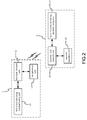
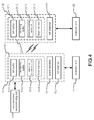
- FIG.1 to FIG.10 are a perspective view showing a preferred embodiment according to the present disclosure; a view showing a structure of the present disclosure; a block view showing the present disclosure; a view showing an operation unit; a view showing a method for operating an emitting device; a view showing a method for operating a receiving device; a view showing a time sequence; a view showing a voice package; a view showing a channel-changing; and a view showing transferring of voice signals.
- the present disclosure is a full-duplex wireless voice broadcasting system with channel-changing and interference-resistance, comprising an emitting device 1 and at least one receiving device 2.
- the emitting device 1 comprises a first voice sampling/reconstructing unit 11; a first local network unit 12, connected with the first voice sampling/reconstructing unit 11; and an first operation unit 13 connected with the first local network unit 12, where the emitting device 1 periodically emits data packages containing voice data or non-voice data.
- the first voice sampling/reconstructing unit 11 and the first local network unit 12 are mutually connected through a serial peripheral interface (SPI);
- the first local network unit 12 comprises a first ZigBee module 121; a power amplifier 122 connected with the first ZigBee module 121; and a first radio frequency (RF) antenna 123 connected with the power amplifier 122;
- the first ZigBee module 121 comprises a first SPI buffer 1211, a transferring buffer 1212, a transferring package voice unit 1213 and a first flash memory 1214;
- the first SPI buffer 1211, the transferring buffer 1212 and the transferring package voice unit 1213 are used as buffer and package mechanisms for voice data;
- the first operation unit 13 comprises a first indicating light 131, a talk/mute button 132, a first voice indicator 133, a first power supply unit 134, a first microphone connecting port 135 and a first earphone connecting port 136.
- the receiving device 2 comprises a second voice sampling/reconstructing unit 21 ; a second local network unit 22 connected with the second voice sampling / reconstructing unit 21; and a second operation unit 23 connected with the second local network unit 22.
- the second voice sampling/reconstructing unit 21 and the second local network unit 22 are mutually connected through an SPI;
- the second local network unit 22 comprises a second ZigBee module 221 ; and a second RF antenna 222 connected with the ZigBee module 221;
- the second ZigBee module 221 comprises a second SPI buffer 2211, a receiving buffer 2212, a receiving package voice unit 2213 and a second flash memory 2214;
- the second SPI buffer 2211, the receiving buffer 2212 and the receiving package voice unit 2213 are used as buffer and package mechanisms for voice data;
- the second operation unit 23 comprises a second indicating light 231, a function key 232, a second voice indicator 233, a second power supply unit 234, a second microphone connecting port 235, a second earphone
- the receiving device 2 uses the second ZigBee module 221 and the second RF antenna 222 of the second local network unit 22 to be coordinated with the first ZigBee module 121 and the first RF antenna 122 of the first network unit 12 of the emitting device 1 for building a connection. After building the connection, the receiving device 2 receives the data packages containing voice or non-voice data, and a standby status is maintained between the emitting device 1 and the receiving device 2.
- the emitting device 1 performs a method comprising the following steps:
- the receiving device 2 performs a method comprising the following steps:
- the emitting device 1 and the receiving device 2 are used for processing mechanisms of registering, checking in, controlling and automatic channel-changing:
- the emitting device 1 sends a package every 5ms.
- a good deal of time as 3.176ms is left for handling the package.
- the emitting device 1 spends 4860 microseconds ( ⁇ s) for a package.
- the package can be a 17 bytes downloaded message or a 57 bytes downloaded voice; or, a 33 or 73 bytes package for replying a registration request.
- the receiving device 2 After the receiving device 2 which is demanded by the emitting device 1 to reply transferring quality receives the downloaded package from the emitting device 1, the receiving device 2 immediately sends the transferring quality package.
- the receiving device 2 only sends the registration or check-in package at the end of a cycle. Because the registration package is longer, the time left is not so leisure for sending the registration (or check-in) package if the time occupied by the transferring-quality package is counted in. Therefore, the registration package does not contain the transferring-quality package. If the downloaded package is a reply package from the emitting device 1 to a registration request, the receiving device 2 for registration or check-in can send packages right after the reply package; or else, the receiving device 2 has to wait about 960 ⁇ s for sending packages after receiving the reply package.
- the packages transferred between the emitting device 1 and the receiving devices 2 are downloaded packages and uploaded packages.
- a voice package includes 6 bytes PHY header, 2 bytes FCF, 1 byte DSN, 2 bytes Destination PANID, 2 bytes Destination Address, n bytes voice data, 2 bytes error check code and 2 bytes reserved system command.
- source PANID and Source Address are omitted. If the package is a broadcasting package, Destination Address will be filled in with 0xFFFF.
- the MSDU package (excluding the 6 bytes PHY header) is increased from 11 bytes to 51 bytes for an amount of 40 bytes.
- FIG.9 a channel-changing mechanism is shown. Sniffer monitors a frequency channel each time only. Hence, status for channel-changing is recorded.
- Two receiving devices 2 at 0x0605 and 0x0001 are on-line. The receiving device 2 at 0x0605 is shut down and then the receiving device 2 at 0x000 is shut down. As shown in the figure, after shutting shown 0x0605, 0x0605 does not sends receiving quality any more. Because 0x0001 still sends receiving quality 0x6C, system does not change frequency channel and Sniffer still sees package.
- the frequency channel is changed and Sniffer no more sees package until 1755.198ms later.
- the emitting device 1 keeps changing the frequency channel with an interval about 110ms between two frequency channels, the total time of intervals for 15 frequency channels is 1650ms.
- about 5ms of time is spent for waiting. The total time is summed up to about 1725ms, which is quite close to 1755.198ms.
- FIG.10 a wave of 1 kHz and 0.5V is used. Therein, good voice transference is shown with a delay time below 10ms, which is under control as expected.
- the present disclosure is a full-duplex wireless voice broadcasting system with channel-changing and interference-resistance.
- the system can change frequency channel automatically and is interference-resistant to noise occurred on voice broadcasting.
- the full-duplex voice communication function of the present disclosure makes the emitting device 1 capable of one-way amplifying or broadcasting and makes the receiving device 2 become pager for emergency.
- the present disclosure can become a calling system, a teaching system, a touring guide system, an emergency system, etc. to be used in domestic life, in school or even in army.
- the present disclosure is a full-duplex wireless voice broadcasting system with channel-changing and interference-resistance, where full-duplex (two-way) voice communication is achieved; the present disclosure has at least one receiving device with good mobility to be used as an emergency caller to an emitting device of the present disclosure; and the present disclosure has advantages in interference resistance, energy saving, short-distance emergency calling, and calling for help.
Landscapes
- Engineering & Computer Science (AREA)
- Computer Networks & Wireless Communication (AREA)
- Signal Processing (AREA)
- Mobile Radio Communication Systems (AREA)
Description
- The present disclosure relates to a wireless voice system more particularly, relates to achieving full-duplex (two-way) voice communication by using at least one receiving device with good mobility to be used as an emergency caller to an emitting device and relates to having advantages in interference resistance, energy saving, short-distance emergency calling, and calling for help.
- In the market, most microphones, amplifiers and speakers are one-way devices and require wires. Even the wireless microphones (or speakers) may be interfered by noise. Microphones used may be replaced quite often. Places for positioning the microphones may be ever changing. These may cause inconveniences. Not to mention the batteries of the microphones may need to be replaced once in a while. This may also increase the financial burden. Hence, the prior arts do not fulfill all users' requests on actual use.
- Voice broadcasting is already known for example from
EP 1 261 176 A1EP 1 519 522 A2 ,CN 101 500 323 A and the article "Delivering high quality, secure speech communicating through low data rate 802.15.4 WPAM" by Lee Yong Hua et al.(Telecommunications and Malaysia international conference on communications, 2007. ICT-MICC 2007. IEEE International conference on, IEEE, Piscataway, NJ, USA, 14 May 2007, pages 758-763, XP031228694, ISBN: 978-1-4244-1093-4). However, the state of the art has the disadvantage that there is either no registration and check-in process or such processes are difficult to perform. Thus, starting from the prior art it is the object of the present application to provide an apparatus for voice broadcasting which simplifies the registration and check-in process. - The above mentioned object is solved by the full-duplex wireless voice broadcasting system according to
claim 1 and the method according to claims 8 and 9. Advantageous improvements of the system are described by dependent claims. - The main purpose of the present disclosure is to achieve full-duplex (two-way) voice communication by using at least one receiving device with good mobility to be used as an emergency caller to an emitting device; and is to have advantages in interference resistance, energy saving, short-distance emergency calling and calling for help.
- To achieve the above purpose, the present disclosure is a full-duplex wireless voice broadcasting system with channel-changing and interference-resistance, comprising an emitting device and at least one receiving device, where the emitting device comprises a first voice sampling/reconstructing unit; a first local network unit connected with the first voice sampling/reconstructing unit; and an first operation unit connected with the first local network unit; the emitting device periodically emits data packages and the data packages contain data selected from a group consisting of voice data and non-voice data; the receiving device comprises a second voice sampling / reconstructing unit; a second local network unit connected with the second voice sampling/reconstructing unit; and a second operation unit connected with the second local network unit; after being connected with the emitting device, the receiving device receives the data packages and a standby status is maintained between the emitting device and the receiving device; the emitting device performs a method comprising steps of (a) booting and resetting the emitting device; (b) staying in an idle status; (c) checking whether an uploaded package is received; (d) if the uploaded package is not received, processing steps of (d1) reading data in the first flash memory; (d2) setting a quality feedback code; (d3) packaging data; and (d4) transferring a downloaded package and then going to step (b); (e) if the uploaded package is received, unpacking the uploaded package; (f) through a voice data receiving buffer, processing voice reconstruction; (g) checking whether a connection exists; (h) if the connection exists, checking whether an alarm parameter exists; (i) if the connection does not exist, setting a wireless channel parameter and then checking whether the alarm parameter exists; (j) if the alarm parameter exists, starting a light and a voice alarm and checking whether a registration parameter and a check-in parameter exist; (k) if the alarm parameter does not exist, directly checking whether the registration parameter and the check-in parameter exist; (I) if the registration parameter and the check-in parameter do not exist, reading parameters of the emitting device and then going to step (d1); (m) if the registration parameter and the check-in parameter exist, setting the registration parameter; (n) writing buffer data into the first flash memory; (o) reading parameters of the emitting device and then going to step (d1); and (p) on voice-sampling, processing steps of (p1) directly taking a voice sample; (p2) transferring the voice sample to a data register; (p3) checking whether a transferring buffer is full; (p4) if the transferring buffer is full, reading the parameters of the emitting device and then going to step (d1); and (p5) if the transferring buffer is not full, going to step (p1); and the receiving device performs a method comprising steps of (a) booting and resetting the receiving device; (b) checking whether a registration is required; (c) if the registration is not required, processing steps of (c1) pushing a registration key; and (c2) checking whether the registration key is pushed more than one second; (d) if the registration key is not pushed more than one second, pushing the registration key more than one second again; (e) if the registration key is pushed more than one second, checking whether a downloaded package is received; (f) if the downloaded package is received, processing steps of (f1) transferring a registration package; and (f2) checking whether the registration is successful; (g) if the registration is not successful, going to step (c1); (h) if the registration is successful, processing steps of (h1) staying in an idle status; and (h2) checking whether an alarm is required; (i) if the alarm is required, starting the alarm and checking whether a transferring buffer is full; (j) if the alarm is not required, directly checking whether the transferring buffer is full; (k) if the transferring buffer is full, processing steps of (k1) reading parameters of the receiving device; (k2) packaging data; and (k3) transferring an uploaded package; (I) if the transferring buffer is not full, checking whether a downloaded package is received; (m) if the downloaded package is not received, going to step (h1); (n) if the downloaded package is received, checking whether a frequency channel needs to be changed; (o) if the frequency channel needs to be changed, processing steps of (o1) changing the frequency channel to a new frequency channel; (o2) processing voice reconstruction through a voice data receiving buffer; and (o3) staying in an idle status; (p) if the frequency channel does not need to be changed, processing step (o2) and step (o3); (q) if the downloaded package is not received in step (e), checking whether a channel table needs to be replaced; (r) if the channel table does not need to be replaced, changing frequency channel and then going to step (e); (s) if the channel table needs to be replaced, going to step (c1); (t) if a registration is required in step (b), checking whether a downloaded package is received; (u) if the downloaded package is received, unpacking package and processing step (o2) and step (o3); (v) if the downloaded package is not received, processing steps of (v1) pushing a function key for check-in; and (v2) checking whether a button is pushed; (w) if a button is not pushed, pushing a button again; (x) if a button is pushed, uploading a check-in package; (y) checking whether a downloaded package is received; (z) if the downloaded package is received, unpacking package and processing step (o2) and step (o3); (aa) if the downloaded package is not received, going to step (c1); and (ab) on voice-sampling, processing steps of (ab1) taking a voice sample; and (ab2) transferring data of the voice sample to a data register and processing step (k2) and step (k3). Accordingly, a novel full-duplex wireless voice broadcasting system with channel-changing and interference-resistance is obtained.
- The present disclosure will be better understood from the following detailed description of the preferred embodiment according to the present disclosure, taken in conjunction with the accompanying drawings, in which
- FIG.1
- is the perspective view showing the preferred embodiment according to the present disclosure;
- FIG.2
- is the view showing the structure of the present disclosure;
- FIG.3
- is the block view showing the present disclosure;
- FIG.4
- is the view showing the operation unit;
- FIG.5
- is the view showing the method for operating the emitting device;
- FIG.6
- is the view showing the method for operating the receiving device;
- FIG.7
- is the view showing the time sequence;
- FIG.8
- is the view showing the voice package;
- FIG.9
- is the view showing the channel-changing; and
- FIG.10
- is the view showing the transferring of the voice signals.
- The following description of the preferred embodiment is provided to understand the features and the structures of the present disclosure.
- Please refer to
FIG.1 to FIG.10 , which are a perspective view showing a preferred embodiment according to the present disclosure; a view showing a structure of the present disclosure; a block view showing the present disclosure; a view showing an operation unit; a view showing a method for operating an emitting device; a view showing a method for operating a receiving device; a view showing a time sequence; a view showing a voice package; a view showing a channel-changing; and a view showing transferring of voice signals. As shown in the figures, the present disclosure is a full-duplex wireless voice broadcasting system with channel-changing and interference-resistance, comprising anemitting device 1 and at least onereceiving device 2. - The
emitting device 1 comprises a first voice sampling/reconstructingunit 11; a firstlocal network unit 12, connected with the first voice sampling/reconstructingunit 11; and anfirst operation unit 13 connected with the firstlocal network unit 12, where theemitting device 1 periodically emits data packages containing voice data or non-voice data. Therein, the first voice sampling/reconstructingunit 11 and the firstlocal network unit 12 are mutually connected through a serial peripheral interface (SPI); the firstlocal network unit 12 comprises a first ZigBeemodule 121; apower amplifier 122 connected with the first ZigBeemodule 121; and a first radio frequency (RF)antenna 123 connected with thepower amplifier 122; the first ZigBeemodule 121 comprises afirst SPI buffer 1211, atransferring buffer 1212, a transferringpackage voice unit 1213 and afirst flash memory 1214; thefirst SPI buffer 1211, thetransferring buffer 1212 and the transferringpackage voice unit 1213 are used as buffer and package mechanisms for voice data; and, thefirst operation unit 13 comprises a first indicatinglight 131, a talk/mute button 132, afirst voice indicator 133, a firstpower supply unit 134, a firstmicrophone connecting port 135 and a firstearphone connecting port 136. - The
receiving device 2 comprises a second voice sampling/reconstructingunit 21 ; a secondlocal network unit 22 connected with the second voice sampling / reconstructingunit 21; and asecond operation unit 23 connected with the secondlocal network unit 22. Therein, the second voice sampling/reconstructingunit 21 and the secondlocal network unit 22 are mutually connected through an SPI; the secondlocal network unit 22 comprises a second ZigBeemodule 221 ; and asecond RF antenna 222 connected with the ZigBeemodule 221; the second ZigBeemodule 221 comprises asecond SPI buffer 2211, areceiving buffer 2212, a receivingpackage voice unit 2213 and asecond flash memory 2214; thesecond SPI buffer 2211, thereceiving buffer 2212 and the receivingpackage voice unit 2213 are used as buffer and package mechanisms for voice data; and, thesecond operation unit 23 comprises a second indicatinglight 231, afunction key 232, asecond voice indicator 233, a secondpower supply unit 234, a secondmicrophone connecting port 235, a secondearphone connecting port 236 and aregistration key 237. Thereceiving device 2 uses the second ZigBeemodule 221 and thesecond RF antenna 222 of the secondlocal network unit 22 to be coordinated with the first ZigBeemodule 121 and thefirst RF antenna 122 of thefirst network unit 12 of theemitting device 1 for building a connection. After building the connection, thereceiving device 2 receives the data packages containing voice or non-voice data, and a standby status is maintained between theemitting device 1 and thereceiving device 2. - The
emitting device 1 performs a method comprising the following steps: - (a) The emitting device is booted and reset 301.
- (b) The emitting device stays in an
idle status 302. - (c) It is checked whether an uploaded package is received 303.
- (d) If the uploaded package is not received, the following steps are processed:
- (d1) Data in the first flash memory is read 304;
- (d2) A quality feedback code is set 305;
- (d3) Data is packaged 306.
- (d4) A downloaded package is transferred 307 and then go to step (b).
- (e) If the uploaded package is received, the uploaded package is unpacked 308.
- (f) Through a voice
data receiving buffer 309, voice reconstruction is processed 310. - (g) It is checked whether a connection exists 311.
- (h) If the connection exists, it is checked whether an alarm parameter exists 312.
- (i) If the connection does not exist, a wireless channel parameter is set 313 and then it is checked whether the alarm parameter exists 312.
- (j) If the alarm parameter exists, a light and a voice alarm are started 314 and it is checked whether a registration parameter and a check-in parameter exist 315.
- (k) If the alarm parameter does not exist, it is checked directly whether the registration parameter and the check-in parameter exist 315.
- (l) If the registration parameter and the check-in parameter do not exist, parameters of the emitting device are read 316 and then go to step (d1).
- (m) If the registration parameter and the check-in parameter exist, the registration parameter is set 317.
- (n) Buffer data is written into the
first flash memory 318. - (o) Parameters of the emitting device are read 316 and then go to step (d1).
- (p) On voice-sampling, the following steps are processed:
- (p1) A voice sample is directly taken 319.
- (p2) The voice sample is transferred to a
data register 320. - (p3) It is checked whether a transferring buffer is full 321.
- (p4) If the transferring buffer is full, the parameters of the emitting device are read 316 and then go to step (d1).
- (p5) If the transferring buffer is not full, go to step (p1).
- The receiving
device 2 performs a method comprising the following steps: - (a) The receiving device is booted and reset 401.
- (b) It is checked whether a registration is required 402.
- (c) If the registration is not required, the following steps are processed:
- (c1) a registration key is pushed 403; and
- (c2) It is checked whether the registration key is pushed more than one second 404.
- (d) If the registration key is not pushed more than one second, the registration key is pushed more than one second again.
- (e) If the registration key is pushed more than one second, it is checked whether a downloaded package is received 405.
- (f) If the downloaded package is received, the following steps are processed:
- (f1) A registration package is transferred 406.
- (f2) It is checked whether the registration is successful 407.
- (g) If the registration is not successful, go to step (c1).
- (h) If the registration is successful, the following steps are processed:
- (h1) The receiving device stays in an
idle status 408. - (h2) It is checked whether an alarm is required 409.
- (h1) The receiving device stays in an
- (i) If the alarm is required, the alarm is started 410 and it is checked whether a transferring buffer is full 411.
- (j) If the alarm is not required, it is checked whether the transferring buffer is full 411.
- (k) If the transferring buffer is full, the following steps are processed:
- (k1) Parameters of the receiving device are read 412.
- (k2) Data is packaged 413.
- (k3) An uploaded package is transferred 414.
- (I) If the transferring buffer is not full, it is checked whether a downloaded package is received 415.
- (m) If the downloaded package is not received, go to step (h1).
- (n) If the downloaded package is received, it is checked whether a frequency channel needs to be changed 416.
- (o) If the frequency channel needs to be changed, the following steps are processed:
- (o1) The frequency channel is changed to a
new frequency channel 417. - (o2) Voice reconstruction is processed 419 through a voice
data receiving buffer 418. - (o3) The receiving device is staying in an
idle status 420.
- (o1) The frequency channel is changed to a
- (p) If the frequency channel does not need to be changed, step (o2) and step (o3) are processed.
- (q) If the downloaded package is not received in step (e), it is checked whether a channel table needs to be replaced 421.
- (r) If the channel table does not need to be replaced, frequency channel is changed 422 and then go to step (e).
- (s) If the channel table needs to be replaced, go to step (c1).
- (t) If a registration is required in step (b), it is checked whether a downloaded package is received 423.
- (u) If the downloaded package is received, package is unpacked 424 and step (o2) and step (o3) are processed.
- (v) If the downloaded package is not received, the following steps are processed:
- (v1) A function key is pushed for check-in 425.
- (v2) It is checked whether a button is pushed 426.
- (w) If a button is not pushed, a button is pushed again.
- (x) If a button is pushed, a check-in package is uploaded 427.
- (y) It is checked whether a downloaded package is received 428.
- (z) If the downloaded package is received, the package is unpacked 424 and step (o2) and step (o3) are processed.
- (aa) If the downloaded package is not received, go to step (c1).
- (ab) On voice-sampling, the following steps are processed:
- (ab1) A voice sample is taken 429.
- (ab2) Data of the voice sample are transferred to a
data register 430 and step (k2) and step (k3) are processed.
- On using the present disclosure, the emitting
device 1 and the receivingdevice 2 are used for processing mechanisms of registering, checking in, controlling and automatic channel-changing: - (A) The receiving
device 2 has to be registered at the emittingdevice 1 to receive data from the emittingdevice 1. The registration process is as follows:- 1. The
registration key 237 of the receivingdevice 2 is pushed more than one second. - 2. The first indicating
light 131 of the emittingdevice 1 flashes. - 3. The second indicating
light 231 of the receivingdevice 2 flashes. - 4. The
function key 232 of the receivingdevice 2 is pushed for confirmation. - 5. After the registration is successful, the first and second indicating
lights device 1 and the receivingdevice 2 are turned off.
device 1 and the receivingdevice 2 will return to the original status with the first and second indicatinglights device 1 and the receivingdevice 2 turned off. Once the registration is finished, no more registration is required except for another device. - 1. The
- (B) The receiving
device 2 has to check-in after booting for receiving data. The check-in process is as follows:- 1. After being booted, the emitting
device 1 calls out each of the registeredreceiving devices 2 individually. After every booted receivingdevice 2 replies, the check-in process is finished automatically. Then, each connection between the emittingdevice 1 and the receivingdevice 2 is broken and the second indicating light 231 is turned off. - 2. If the receiving
device 2 is booted after the emittingdevice 1 calls out the receivingdevices 2 in step (1), the second indicating light 231 is turned on for showing no connection. At the moment, thefunction key 232 has to be pushed to finish the check-in process so that the second indicating light 231 will be turned off.
- 1. After being booted, the emitting
- (C) For controlling, the following process is done: Every emitting
device 1 may have 255receiving devices 2 at most. For saving repeated registrations, the receivingdevices 2 use their original numbers obtained from the previous registrations. After the numbers (say 255 numbers) are all used, if a new registration application is received, a number selected from a list of numbers for the unchecked-inreceiving devices 2 is used. If all receivingdevices 2 are checked-in, a temporary number will be used for all new registration applications. If a receivingdevice 2 using the temporary number is rebooted, the receivingdevice 2 has to register again to get a number. If aregistered receiving device 2 finds its number is used by other receivingdevice 2 on checking-in, the second indicating light 231 is turned on for showing an unregistered status and the registration has to be done again. - (D) Concerning channel-changing (shown in
FIG.7 ), the emittingdevice 1 demands the checked-inreceiving devices 2 to report receiving qualities one by one. If all of the receiving qualities are not good, the emittingdevice 1 sends a channel-changing notice and then the frequency channel is changed to a next one on a channel table. After the frequency channel is changed, wait for 110 milliseconds (ms). If the receivingdevice 2 receives the channel-changing notice, the receivingdevice 2 changes its frequency channel accordingly. When the receivingdevice 2 does not receive the channel-changing notice continuously for 2 times, the frequency channel of the receivingdevice 2 is started to be changed between the original frequency channel and the next frequency channel; and, after 110ms, every frequency channel is started to be scanned continuously at a speed of 6.4ms per frequency channel until receiving the channel-changing notice from the emittingdevice 1. Since time required for scanning 16 channels is 102.4ms, time to wait after changing the frequency channel has to be at least 110ms. The emittingdevice 1 has a randomly chosen channel table when it is used at he first time. Hence, in theory, there are 16! (=1x2x3x4...x16) kinds of tables; and chance for two same tables obtained by the emittingdevice 1 is (1/16!)=4.8×10-14. After the channel table of the emittingdevice 1 is obtained, the channel table is automatically saved in thefirst flash memory 1214 and will never be changed except by outer force. Whenever areceiving device 2 applies a registration request to the emittingdevice 1, the emittingdevice 1 sends the channel table to the receivingdevice 2 in the reply to the request. Therefore, when any interference happens, frequency channel can be rapidly changed. Besides, the channel table obtained on registration for the receivingdevice 2 will only change on processing the registration again. - Regarding the time sequence (shown in
FIG.7 ), the emittingdevice 1 sends a package every 5ms. The package contains 57 bytes with a transferring time (57 bytes) × (8 bits/sec) / 250kbps = 1824us. Hence, after the receivingdevice 2 receives the package, a good deal of time as 3.176ms is left for handling the package. - Averagely, the emitting
device 1 spends 4860 microseconds (µs) for a package. The package can be a 17 bytes downloaded message or a 57 bytes downloaded voice; or, a 33 or 73 bytes package for replying a registration request. After thereceiving device 2 which is demanded by the emittingdevice 1 to reply transferring quality receives the downloaded package from the emittingdevice 1, the receivingdevice 2 immediately sends the transferring quality package. - The receiving
device 2 only sends the registration or check-in package at the end of a cycle. Because the registration package is longer, the time left is not so leisure for sending the registration (or check-in) package if the time occupied by the transferring-quality package is counted in. Therefore, the registration package does not contain the transferring-quality package. If the downloaded package is a reply package from the emittingdevice 1 to a registration request, the receivingdevice 2 for registration or check-in can send packages right after the reply package; or else, the receivingdevice 2 has to wait about 960µs for sending packages after receiving the reply package. - The packages transferred between the emitting
device 1 and the receivingdevices 2 are downloaded packages and uploaded packages. - A downloaded package has the following format:
6 2 1 2 2 1 1 0/1.6 0/40 2 PHY Header FCF DSN PANID Address Command RegNo Channel Seq. Voice Data FCS
FCF=0x80;
DSN: sequence number of the package;
PANID: network number;
Address: number of the assigned device;
RegNo: registration number for replying or assigning;
Channel Seq.: channel table; and
Command: command for the downloaded package, having the following format:1 Voice Register Change channel (reserve) (reserve) (reserve) (reserve) - An uploaded package has the following format:
6 2 1 2 2 1 2 PHY Header FCF RegNo PAND Address Command FCS
FCF=0x81;
RegNo: registration number;
Address: sequence number of the device; and
Command: command for the downloaded package, having the following format:0 Transferring quality Registration request Registration confirmation Check in (reserve) (reserve) (reserve) - According to the data package format regulated in IEEE 802.15.4, a voice package includes 6 bytes PHY header, 2 bytes FCF, 1 byte DSN, 2 bytes Destination PANID, 2 bytes Destination Address, n bytes voice data, 2 bytes error check code and 2 bytes reserved system command. Therein, because the source of the package is PAN Coordinator, Source PANID and Source Address are omitted. If the package is a broadcasting package, Destination Address will be filled in with 0xFFFF.
- In
FIG.8 , the packages before and after pushing the talk/mute button 132 of the emittingdevice 1 are shown. The MSDU package (excluding the 6 bytes PHY header) is increased from 11 bytes to 51 bytes for an amount of 40 bytes. - In
FIG.9 , a channel-changing mechanism is shown. Sniffer monitors a frequency channel each time only. Hence, status for channel-changing is recorded. Two receivingdevices 2 at 0x0605 and 0x0001 are on-line. The receivingdevice 2 at 0x0605 is shut down and then the receivingdevice 2 at 0x000 is shut down. As shown in the figure, after shutting shown 0x0605, 0x0605 does not sends receiving quality any more. Because 0x0001 still sends receiving quality 0x6C, system does not change frequency channel and Sniffer still sees package. However, when 0x0001 is shut down too, the emittingdevice 1 no more receives any reply and, later on, the emittingdevice 1 sends an channel-changing notice (Command = 0x90). Thus, the frequency channel is changed and Sniffer no more sees package until 1755.198ms later. Because the emittingdevice 1 keeps changing the frequency channel with an interval about 110ms between two frequency channels, the total time of intervals for 15 frequency channels is 1650ms. In addition, after receiving the channel-changing notice, about 5ms of time is spent for waiting. The total time is summed up to about 1725ms, which is quite close to 1755.198ms. - In
FIG.10 , a wave of 1 kHz and 0.5V is used. Therein, good voice transference is shown with a delay time below 10ms, which is under control as expected. - The present disclosure is a full-duplex wireless voice broadcasting system with channel-changing and interference-resistance. The system can change frequency channel automatically and is interference-resistant to noise occurred on voice broadcasting. The full-duplex voice communication function of the present disclosure makes the
emitting device 1 capable of one-way amplifying or broadcasting and makes the receivingdevice 2 become pager for emergency. Hence, the present disclosure can become a calling system, a teaching system, a touring guide system, an emergency system, etc. to be used in domestic life, in school or even in army. - To sum up, the present disclosure is a full-duplex wireless voice broadcasting system with channel-changing and interference-resistance, where full-duplex (two-way) voice communication is achieved; the present disclosure has at least one receiving device with good mobility to be used as an emergency caller to an emitting device of the present disclosure; and the present disclosure has advantages in interference resistance, energy saving, short-distance emergency calling, and calling for help.
- The preferred embodiment herein disclosed is not intended to unnecessarily limit the scope of the disclosure. Therefore, simple modifications or variations belonging to the equivalent of the scope of the claims and the instructions disclosed herein for a patent are all within the scope of the present disclosure.
Claims (9)
- A full-duplex wireless voice broadcasting system comprising:an emitting device (1), said emitting device (1) comprising:wherein said emitting device (1) is configured to periodically emit data packages and said data packages contain data selected from a group consisting of voice data and non-voice data; the system further comprising at least one receiving device (2), said receiving device (2) comprising:a first voice sampling/reconstructing unit (11);a first local network unit (12), said first local network unit (12) being connected with said first voice sampling/reconstructing unit (11), said first local network unit (12) comprisinga ZigBee module (121);a power amplifier (122), said power amplifier (122) being connected with said ZigBee module (121) of the first local network unit (12); anda radio frequency (RF) antenna (123), said RF antenna (123) of the first local network unit (12) being connected with said power amplifier (122); anda first operation unit (13) comprising a first indicating light (131), said first operation unit (13) being connected with said first local network unit (12),a second voice sampling/reconstructing unit (21);a second local network unit (22), said second local network unit (22) being connected with said second voice sampling/reconstructing unit (21), said second local network unit (22) comprisinga ZigBee module (221); anda RF antenna (222), said RF antenna (222) of the second local network unit (22) being connected with said ZigBee module (221) of the second local network unit (22); anda second operation unit (23) comprising a registration key (237) for initiating a registration process, a second indicating light (231) and a function key (232) for confirming the registration process and for finishing a manual check-in process, which is performed if the receiving device is booted after the emitting device is booted, said second operation unit (23) being connected with said second local network unit (22),wherein the first indicating light (131) and the second indicating light (231) are configured to flash during the registration process,
wherein the second indicating light (231) is configured to turn on when the function key (237) has to be pressed in order to finish the manual check-in process, wherein, after being connected with said emitting device (1), said receiving device (2) receives said data packages; and a standby status is maintained between said emitting device (1) and said receiving device (2), and
wherein the emitting device is configured to demand the checked-in receiving device to report receiving qualities, to send a channel changing notice to the receiving device, if the receiving qualities are not good because of interference, and to change the frequency channel according to a channel table and the receiving device is configured to change the frequency channel after receipt of the channel changing notice. - The system according to claim 1, wherein said first voice sampling/reconstructing unit (11) and said first local network unit (12) are mutually connected through a serial peripheral interface (SPI).
- The system according to claim 1, wherein said ZigBee module (121) of the first local network unit (12) comprisesa SPI buffer (1211);a transferring buffer (1212);a transferring package voice unit (1213); anda flash memory (1214).
- The system according to claim 1, wherein said first operation unit (13) comprisesa talk/mute button (132);a first and second voice indicator (133);a power supply unit (134);a microphone connecting port (135); anda earphone connecting port (136).
- The system according to claim 1, wherein said second voice sampling/reconstructing unit (21) and said second local network unit (22) are mutually connected through an SPI.
- The system according to claim 1, wherein said ZigBee module (221) of the second local network (22) comprisesa SPI buffer (2211);a receiving buffer (2212);a receiving package voice unit (2213); anda flash memory (2214).
- The system according to claim 1, wherein said second operation unit (23) comprisesa voice indicator (233);a power supply unit (234);a microphone connecting port (235); anda earphone connecting port (236).
- A method for full-duplex wireless voice broadcasting according to which an emitting device (1) of a full-duplex wireless voice broadcasting system according to claim 1 performs the steps of:(a) booting and resetting said emitting device (301);(b) staying in an idle status (302);(c) checking whether an uploaded package is received (303);(d) if said uploaded package is not received, processing steps of:(d1) reading data in said flash memory of the first localnetwork unit (12) (304);(d2) setting a quality feedback code (305);(d3) packaging data (306); and(d4) transferring a downloaded package (307) andthen going to step (b);(e) if said uploaded package is received, unpacking said uploaded package (308);(f) through a voice data receiving buffer (309), processing voice reconstruction (310);(g) checking whether a connection exists (311);(h) if said connection exists, checking whether an alarm parameter exists (312);(i) if said connection does not exist, setting a wireless channel parameter (313) and then checking whether said alarm parameter exists (312);(j) if said alarm parameter exists, starting a light and a voice alarm (314) and checking whether a registration parameter and a check-in parameter exist (315);(k) if said alarm parameter does not exist, directly checking whether said registration parameter and said check-in parameter exist (315);(l) if said registration parameter and said check-in parameter do not exist, reading parameters of said emitting device (316) and then going to step (d1);(m) if said registration parameter and said check-in parameter exist, setting said registration parameter (317);(n) writing buffer data into said flash memory of the first local network unit (12) (318);(o) reading parameters of said emitting device (316) and then going to step (d1); and(p) on voice-sampling, processing steps of:(p1) directly taking a voice sample (319);(p2) transferring said voice sample to a data register (320);(p3) checking whether a transferring buffer is full (321);(p4) if said transferring buffer is full, reading saidparameters of said emitting device (316) and thengoing to step (d1); and(p5) if said transferring buffer is not full, going to step(p1).
- A method for full-duplex wireless voice broadcasting according to which a receiving device (1) of a full-duplex wireless voice broadcasting system according to claim 1 performs the steps of:(a) booting and resetting said receiving device (401);(b) checking whether a registration is required (402);(c) if said registration is not required, processing steps of:(c1) pushing a registration key (403); and(c2) checking whether said registration key is pushed more than one second (404);(d) if said registration key is not pushed more than one second, pushing said registration key more than one second again;(e) if said registration key is pushed more than one second, checking whether a downloaded package is received (405);(f) if said downloaded package is received, processing steps of:(f1) transferring a registration package (406); and(f2) checking whether said registration is successful (407);(g) if said registration is not successful, going to step (c1);(h) if said registration is successful, processing steps of:(h1) staying in an idle status (408); and(h2) checking whether an alarm is required (409);(i) if said alarm is required, starting said alarm (410) and checking whether a transferring buffer is full (411);(j) if said alarm is not required, directly checking whether said transferring buffer is full (411);(k) if said transferring buffer is full, processing steps of:(k1) reading parameters of said receiving device (412);(k2) packaging data (413); and(k3) transferring an uploaded package (414);(l) if said transferring buffer is not full, checking whether a downloaded package is received (415);(m) if said downloaded package is not received, going to step (h1);(n) if said downloaded package is received, checking whether a frequency channel needs to be changed (416);(o) if said frequency channel needs to be changed, processing steps of:(o1) changing said frequency channel to a newfrequency channel (417);(o2) processing voice reconstruction (419) through avoice data receiving buffer (418); and(o3) staying in an idle status (420);(p) if said frequency channel does not need to be changed, processing step (o2) and step (o3);(q) if said downloaded package is not received in step (e), checking whether a channel table needs to be replaced (421);(r) if said channel table does not need to be replaced, changing frequency channel (422) and then going to step (e);(s) if said channel table needs to be replaced, going to step (c1);(t) if a registration is required in step (b), checking whether a downloaded package is received (423);(u) if said downloaded package is received, unpacking package (424) and processing step (o2) and step (o3);(v) if said downloaded package is not received, processing steps of:(v1) pushing a function key for check-in (425); and(v2) checking whether a button is pushed (426);(w) if a button is not pushed, pushing a button again;(x) if a button is pushed, uploading a check-in package (427);(y) checking whether a downloaded package is received (428);(z) if said downloaded package is received, unpacking package (424) and processing step (o2) and step (o3);(aa) if said downloaded package is not received, going to step (c1); and(ab) on voice-sampling, processing steps of:(ab1) taking voice sample (429); and(ab2) transferring data of said voice sample to a data register (430) and processing step (k2) and step (k3).
Priority Applications (1)
| Application Number | Priority Date | Filing Date | Title |
|---|---|---|---|
| EP11180483.7A EP2568763B1 (en) | 2011-09-07 | 2011-09-07 | Full-duplex wireless voice broadcasting system with channel-changing and interference-resistance |
Applications Claiming Priority (1)
| Application Number | Priority Date | Filing Date | Title |
|---|---|---|---|
| EP11180483.7A EP2568763B1 (en) | 2011-09-07 | 2011-09-07 | Full-duplex wireless voice broadcasting system with channel-changing and interference-resistance |
Publications (2)
| Publication Number | Publication Date |
|---|---|
| EP2568763A1 EP2568763A1 (en) | 2013-03-13 |
| EP2568763B1 true EP2568763B1 (en) | 2016-07-20 |
Family
ID=44772766
Family Applications (1)
| Application Number | Title | Priority Date | Filing Date |
|---|---|---|---|
| EP11180483.7A Active EP2568763B1 (en) | 2011-09-07 | 2011-09-07 | Full-duplex wireless voice broadcasting system with channel-changing and interference-resistance |
Country Status (1)
| Country | Link |
|---|---|
| EP (1) | EP2568763B1 (en) |
Citations (4)
| Publication number | Priority date | Publication date | Assignee | Title |
|---|---|---|---|---|
| US20050153666A1 (en) * | 2004-01-14 | 2005-07-14 | Nguy Samuel E.H. | Initiator device capable of two-way half-duplex communication with multiple recipient devices |
| US20080080703A1 (en) * | 2006-06-07 | 2008-04-03 | Penning Randall J | Telephone station incorporating wirless handset and cradle feature |
| US20080242229A1 (en) * | 2007-03-28 | 2008-10-02 | Agere Systems, Inc. | Wireless Earphone |
| CN101697635A (en) * | 2009-09-16 | 2010-04-21 | 重庆大学 | Access method and control method of cognitive wireless MESH network |
Family Cites Families (5)
| Publication number | Priority date | Publication date | Assignee | Title |
|---|---|---|---|---|
| JPH07235981A (en) * | 1993-12-28 | 1995-09-05 | Casio Comput Co Ltd | Cordless telephone system and extension method for cordless telephone system |
| JP2002344378A (en) * | 2001-05-21 | 2002-11-29 | Pioneer Electronic Corp | Radio communication terminal |
| KR100555674B1 (en) * | 2003-09-23 | 2006-03-03 | 삼성전자주식회사 | Wireless communication method for voice communication in wireless personal area network |
| ATE545302T1 (en) * | 2008-06-30 | 2012-02-15 | Telecom Italia Spa | SYSTEM AND METHOD FOR AUTOMATICALLY SWITCHING THE CONNECTION OF A WIRELESS INTERFACE |
| CN101500323A (en) * | 2009-03-17 | 2009-08-05 | 西安科技大学 | Short range wireless voice communication method based on ZigBee protocol |
-
2011
- 2011-09-07 EP EP11180483.7A patent/EP2568763B1/en active Active
Patent Citations (4)
| Publication number | Priority date | Publication date | Assignee | Title |
|---|---|---|---|---|
| US20050153666A1 (en) * | 2004-01-14 | 2005-07-14 | Nguy Samuel E.H. | Initiator device capable of two-way half-duplex communication with multiple recipient devices |
| US20080080703A1 (en) * | 2006-06-07 | 2008-04-03 | Penning Randall J | Telephone station incorporating wirless handset and cradle feature |
| US20080242229A1 (en) * | 2007-03-28 | 2008-10-02 | Agere Systems, Inc. | Wireless Earphone |
| CN101697635A (en) * | 2009-09-16 | 2010-04-21 | 重庆大学 | Access method and control method of cognitive wireless MESH network |
Also Published As
| Publication number | Publication date |
|---|---|
| EP2568763A1 (en) | 2013-03-13 |
Similar Documents
| Publication | Publication Date | Title |
|---|---|---|
| US8542614B2 (en) | Full-duplex wireless voice broadcasting apparatus with channel-changing and interference-resistance | |
| CN102149049B (en) | Trunked service implementation method in digital trunking communication system and trunked user terminal | |
| CN101233786B (en) | Communication system for wireless audio devices | |
| EP3231244B1 (en) | Traffic advertisement in neighbor aware network (nan) data path | |
| EP2221980B1 (en) | Method for implementing radiophone based conference call and dynamic grouping | |
| KR101687881B1 (en) | Data transfer using the bluetooth low energy standard | |
| KR101644150B1 (en) | Updating method and apparatus of sleep mode operation | |
| CN102215458B (en) | Digital cluster communication system based on long term evolution technology as well as base station and terminal | |
| US20060193269A1 (en) | Communication of conversation between terminasl over a radio link | |
| US20040219925A1 (en) | Image data transfer over a dispatch voice channel | |
| EP2797290B1 (en) | Data frame transmission method and device | |
| CN102047742A (en) | Method and apparatus for multiplexing different traffic types based on a common communication session | |
| US10951387B2 (en) | Systems and methods for self-formation and self-management of full-duplex communication networks | |
| US20080125037A1 (en) | Method and system for routing of FM data to a bluetooth A2DP link | |
| CN102340870B (en) | Communication terminal, method for receiving data and computer program product | |
| US20110188490A1 (en) | Method and apparatus for data transmission | |
| EP2568763A1 (en) | Full-duplex wireless voice broadcasting apparatus with channel-changing and interference-resistance | |
| CN101106779B (en) | A method of digital communication | |
| US12532251B2 (en) | Channel scan in multiple service periods | |
| TW202431869A (en) | A communication method and apparatus | |
| JP3911358B2 (en) | Base station power saving method | |
| WO2020029080A1 (en) | Network switching method, network node, chip and communication system | |
| CN114979900A (en) | Wireless earphone and audio sharing method | |
| US12580645B2 (en) | End of burst indication | |
| WO2020029074A1 (en) | Wireless communication method, communication device, chip, and communication system |
Legal Events
| Date | Code | Title | Description |
|---|---|---|---|
| PUAI | Public reference made under article 153(3) epc to a published international application that has entered the european phase |
Free format text: ORIGINAL CODE: 0009012 |
|
| 17P | Request for examination filed |
Effective date: 20110913 |
|
| AK | Designated contracting states |
Kind code of ref document: A1 Designated state(s): AL AT BE BG CH CY CZ DE DK EE ES FI FR GB GR HR HU IE IS IT LI LT LU LV MC MK MT NL NO PL PT RO RS SE SI SK SM TR |
|
| AX | Request for extension of the european patent |
Extension state: BA ME |
|
| 17Q | First examination report despatched |
Effective date: 20130507 |
|
| RAP1 | Party data changed (applicant data changed or rights of an application transferred) |
Owner name: NATIONAL CHUNG-SHAN INSTITUTE OF SCIENCE AND TECHN |
|
| GRAP | Despatch of communication of intention to grant a patent |
Free format text: ORIGINAL CODE: EPIDOSNIGR1 |
|
| RIC1 | Information provided on ipc code assigned before grant |
Ipc: H04M 1/725 20060101ALN20160113BHEP Ipc: H04W 84/18 20090101AFI20160113BHEP |
|
| INTG | Intention to grant announced |
Effective date: 20160205 |
|
| GRAS | Grant fee paid |
Free format text: ORIGINAL CODE: EPIDOSNIGR3 |
|
| GRAA | (expected) grant |
Free format text: ORIGINAL CODE: 0009210 |
|
| AK | Designated contracting states |
Kind code of ref document: B1 Designated state(s): AL AT BE BG CH CY CZ DE DK EE ES FI FR GB GR HR HU IE IS IT LI LT LU LV MC MK MT NL NO PL PT RO RS SE SI SK SM TR |
|
| REG | Reference to a national code |
Ref country code: GB Ref legal event code: FG4D |
|
| REG | Reference to a national code |
Ref country code: CH Ref legal event code: EP |
|
| REG | Reference to a national code |
Ref country code: IE Ref legal event code: FG4D |
|
| REG | Reference to a national code |
Ref country code: AT Ref legal event code: REF Ref document number: 814978 Country of ref document: AT Kind code of ref document: T Effective date: 20160815 |
|
| REG | Reference to a national code |
Ref country code: DE Ref legal event code: R096 Ref document number: 602011028279 Country of ref document: DE |
|
| REG | Reference to a national code |
Ref country code: LT Ref legal event code: MG4D Ref country code: FR Ref legal event code: PLFP Year of fee payment: 6 |
|
| REG | Reference to a national code |
Ref country code: NL Ref legal event code: MP Effective date: 20160720 |
|
| REG | Reference to a national code |
Ref country code: AT Ref legal event code: MK05 Ref document number: 814978 Country of ref document: AT Kind code of ref document: T Effective date: 20160720 |
|
| PG25 | Lapsed in a contracting state [announced via postgrant information from national office to epo] |
Ref country code: IS Free format text: LAPSE BECAUSE OF FAILURE TO SUBMIT A TRANSLATION OF THE DESCRIPTION OR TO PAY THE FEE WITHIN THE PRESCRIBED TIME-LIMIT Effective date: 20161120 Ref country code: NO Free format text: LAPSE BECAUSE OF FAILURE TO SUBMIT A TRANSLATION OF THE DESCRIPTION OR TO PAY THE FEE WITHIN THE PRESCRIBED TIME-LIMIT Effective date: 20161020 Ref country code: HR Free format text: LAPSE BECAUSE OF FAILURE TO SUBMIT A TRANSLATION OF THE DESCRIPTION OR TO PAY THE FEE WITHIN THE PRESCRIBED TIME-LIMIT Effective date: 20160720 Ref country code: NL Free format text: LAPSE BECAUSE OF FAILURE TO SUBMIT A TRANSLATION OF THE DESCRIPTION OR TO PAY THE FEE WITHIN THE PRESCRIBED TIME-LIMIT Effective date: 20160720 Ref country code: FI Free format text: LAPSE BECAUSE OF FAILURE TO SUBMIT A TRANSLATION OF THE DESCRIPTION OR TO PAY THE FEE WITHIN THE PRESCRIBED TIME-LIMIT Effective date: 20160720 Ref country code: LT Free format text: LAPSE BECAUSE OF FAILURE TO SUBMIT A TRANSLATION OF THE DESCRIPTION OR TO PAY THE FEE WITHIN THE PRESCRIBED TIME-LIMIT Effective date: 20160720 Ref country code: RS Free format text: LAPSE BECAUSE OF FAILURE TO SUBMIT A TRANSLATION OF THE DESCRIPTION OR TO PAY THE FEE WITHIN THE PRESCRIBED TIME-LIMIT Effective date: 20160720 Ref country code: IT Free format text: LAPSE BECAUSE OF FAILURE TO SUBMIT A TRANSLATION OF THE DESCRIPTION OR TO PAY THE FEE WITHIN THE PRESCRIBED TIME-LIMIT Effective date: 20160720 |
|
| PG25 | Lapsed in a contracting state [announced via postgrant information from national office to epo] |
Ref country code: AT Free format text: LAPSE BECAUSE OF FAILURE TO SUBMIT A TRANSLATION OF THE DESCRIPTION OR TO PAY THE FEE WITHIN THE PRESCRIBED TIME-LIMIT Effective date: 20160720 Ref country code: LV Free format text: LAPSE BECAUSE OF FAILURE TO SUBMIT A TRANSLATION OF THE DESCRIPTION OR TO PAY THE FEE WITHIN THE PRESCRIBED TIME-LIMIT Effective date: 20160720 Ref country code: BE Free format text: LAPSE BECAUSE OF NON-PAYMENT OF DUE FEES Effective date: 20160720 Ref country code: GR Free format text: LAPSE BECAUSE OF FAILURE TO SUBMIT A TRANSLATION OF THE DESCRIPTION OR TO PAY THE FEE WITHIN THE PRESCRIBED TIME-LIMIT Effective date: 20161021 Ref country code: PT Free format text: LAPSE BECAUSE OF FAILURE TO SUBMIT A TRANSLATION OF THE DESCRIPTION OR TO PAY THE FEE WITHIN THE PRESCRIBED TIME-LIMIT Effective date: 20161121 Ref country code: SE Free format text: LAPSE BECAUSE OF FAILURE TO SUBMIT A TRANSLATION OF THE DESCRIPTION OR TO PAY THE FEE WITHIN THE PRESCRIBED TIME-LIMIT Effective date: 20160720 Ref country code: ES Free format text: LAPSE BECAUSE OF FAILURE TO SUBMIT A TRANSLATION OF THE DESCRIPTION OR TO PAY THE FEE WITHIN THE PRESCRIBED TIME-LIMIT Effective date: 20160720 Ref country code: PL Free format text: LAPSE BECAUSE OF FAILURE TO SUBMIT A TRANSLATION OF THE DESCRIPTION OR TO PAY THE FEE WITHIN THE PRESCRIBED TIME-LIMIT Effective date: 20160720 |
|
| REG | Reference to a national code |
Ref country code: DE Ref legal event code: R097 Ref document number: 602011028279 Country of ref document: DE |
|
| PG25 | Lapsed in a contracting state [announced via postgrant information from national office to epo] |
Ref country code: MC Free format text: LAPSE BECAUSE OF FAILURE TO SUBMIT A TRANSLATION OF THE DESCRIPTION OR TO PAY THE FEE WITHIN THE PRESCRIBED TIME-LIMIT Effective date: 20160720 Ref country code: EE Free format text: LAPSE BECAUSE OF FAILURE TO SUBMIT A TRANSLATION OF THE DESCRIPTION OR TO PAY THE FEE WITHIN THE PRESCRIBED TIME-LIMIT Effective date: 20160720 Ref country code: RO Free format text: LAPSE BECAUSE OF FAILURE TO SUBMIT A TRANSLATION OF THE DESCRIPTION OR TO PAY THE FEE WITHIN THE PRESCRIBED TIME-LIMIT Effective date: 20160720 |
|
| REG | Reference to a national code |
Ref country code: CH Ref legal event code: PL |
|
| REG | Reference to a national code |
Ref country code: FR Ref legal event code: PLFP Year of fee payment: 7 |
|
| PLBE | No opposition filed within time limit |
Free format text: ORIGINAL CODE: 0009261 |
|
| STAA | Information on the status of an ep patent application or granted ep patent |
Free format text: STATUS: NO OPPOSITION FILED WITHIN TIME LIMIT |
|
| PG25 | Lapsed in a contracting state [announced via postgrant information from national office to epo] |
Ref country code: SK Free format text: LAPSE BECAUSE OF FAILURE TO SUBMIT A TRANSLATION OF THE DESCRIPTION OR TO PAY THE FEE WITHIN THE PRESCRIBED TIME-LIMIT Effective date: 20160720 Ref country code: SM Free format text: LAPSE BECAUSE OF FAILURE TO SUBMIT A TRANSLATION OF THE DESCRIPTION OR TO PAY THE FEE WITHIN THE PRESCRIBED TIME-LIMIT Effective date: 20160720 Ref country code: BG Free format text: LAPSE BECAUSE OF FAILURE TO SUBMIT A TRANSLATION OF THE DESCRIPTION OR TO PAY THE FEE WITHIN THE PRESCRIBED TIME-LIMIT Effective date: 20161020 Ref country code: DK Free format text: LAPSE BECAUSE OF FAILURE TO SUBMIT A TRANSLATION OF THE DESCRIPTION OR TO PAY THE FEE WITHIN THE PRESCRIBED TIME-LIMIT Effective date: 20160720 Ref country code: CZ Free format text: LAPSE BECAUSE OF FAILURE TO SUBMIT A TRANSLATION OF THE DESCRIPTION OR TO PAY THE FEE WITHIN THE PRESCRIBED TIME-LIMIT Effective date: 20160720 |
|
| 26N | No opposition filed |
Effective date: 20170421 |
|
| GBPC | Gb: european patent ceased through non-payment of renewal fee |
Effective date: 20161020 |
|
| REG | Reference to a national code |
Ref country code: IE Ref legal event code: MM4A |
|
| PG25 | Lapsed in a contracting state [announced via postgrant information from national office to epo] |
Ref country code: LI Free format text: LAPSE BECAUSE OF NON-PAYMENT OF DUE FEES Effective date: 20160930 Ref country code: IE Free format text: LAPSE BECAUSE OF NON-PAYMENT OF DUE FEES Effective date: 20160907 Ref country code: GB Free format text: LAPSE BECAUSE OF NON-PAYMENT OF DUE FEES Effective date: 20161020 Ref country code: CH Free format text: LAPSE BECAUSE OF NON-PAYMENT OF DUE FEES Effective date: 20160930 |
|
| PG25 | Lapsed in a contracting state [announced via postgrant information from national office to epo] |
Ref country code: LU Free format text: LAPSE BECAUSE OF NON-PAYMENT OF DUE FEES Effective date: 20160907 Ref country code: SI Free format text: LAPSE BECAUSE OF FAILURE TO SUBMIT A TRANSLATION OF THE DESCRIPTION OR TO PAY THE FEE WITHIN THE PRESCRIBED TIME-LIMIT Effective date: 20160720 |
|
| PG25 | Lapsed in a contracting state [announced via postgrant information from national office to epo] |
Ref country code: CY Free format text: LAPSE BECAUSE OF FAILURE TO SUBMIT A TRANSLATION OF THE DESCRIPTION OR TO PAY THE FEE WITHIN THE PRESCRIBED TIME-LIMIT Effective date: 20160720 Ref country code: HU Free format text: LAPSE BECAUSE OF FAILURE TO SUBMIT A TRANSLATION OF THE DESCRIPTION OR TO PAY THE FEE WITHIN THE PRESCRIBED TIME-LIMIT; INVALID AB INITIO Effective date: 20110907 |
|
| PG25 | Lapsed in a contracting state [announced via postgrant information from national office to epo] |
Ref country code: TR Free format text: LAPSE BECAUSE OF FAILURE TO SUBMIT A TRANSLATION OF THE DESCRIPTION OR TO PAY THE FEE WITHIN THE PRESCRIBED TIME-LIMIT Effective date: 20160720 Ref country code: MK Free format text: LAPSE BECAUSE OF FAILURE TO SUBMIT A TRANSLATION OF THE DESCRIPTION OR TO PAY THE FEE WITHIN THE PRESCRIBED TIME-LIMIT Effective date: 20160720 Ref country code: MT Free format text: LAPSE BECAUSE OF NON-PAYMENT OF DUE FEES Effective date: 20160930 |
|
| REG | Reference to a national code |
Ref country code: FR Ref legal event code: PLFP Year of fee payment: 8 |
|
| PG25 | Lapsed in a contracting state [announced via postgrant information from national office to epo] |
Ref country code: AL Free format text: LAPSE BECAUSE OF FAILURE TO SUBMIT A TRANSLATION OF THE DESCRIPTION OR TO PAY THE FEE WITHIN THE PRESCRIBED TIME-LIMIT Effective date: 20160720 |
|
| PGFP | Annual fee paid to national office [announced via postgrant information from national office to epo] |
Ref country code: FR Payment date: 20250602 Year of fee payment: 15 |
|
| PGFP | Annual fee paid to national office [announced via postgrant information from national office to epo] |
Ref country code: DE Payment date: 20250605 Year of fee payment: 15 |