EP2568646A1 - Method and apparatus for reporting channel state information (csi) based on physical uplink shared channel (pusch) - Google Patents
Method and apparatus for reporting channel state information (csi) based on physical uplink shared channel (pusch) Download PDFInfo
- Publication number
- EP2568646A1 EP2568646A1 EP11777173A EP11777173A EP2568646A1 EP 2568646 A1 EP2568646 A1 EP 2568646A1 EP 11777173 A EP11777173 A EP 11777173A EP 11777173 A EP11777173 A EP 11777173A EP 2568646 A1 EP2568646 A1 EP 2568646A1
- Authority
- EP
- European Patent Office
- Prior art keywords
- csi
- pmi
- bands
- entire bandwidth
- obtaining
- Prior art date
- Legal status (The legal status is an assumption and is not a legal conclusion. Google has not performed a legal analysis and makes no representation as to the accuracy of the status listed.)
- Withdrawn
Links
- 238000000034 method Methods 0.000 title claims abstract description 25
- 230000011664 signaling Effects 0.000 claims abstract description 23
- 238000004422 calculation algorithm Methods 0.000 claims description 14
- 239000011159 matrix material Substances 0.000 claims description 11
- 101150071746 Pbsn gene Proteins 0.000 claims 1
- 230000007774 longterm Effects 0.000 abstract description 17
- 230000008713 feedback mechanism Effects 0.000 abstract description 2
- 230000009977 dual effect Effects 0.000 description 10
- 230000007246 mechanism Effects 0.000 description 10
- 238000004590 computer program Methods 0.000 description 7
- 238000010586 diagram Methods 0.000 description 7
- 230000008569 process Effects 0.000 description 6
- 230000006870 function Effects 0.000 description 5
- 238000012986 modification Methods 0.000 description 5
- 230000004048 modification Effects 0.000 description 5
- 230000005540 biological transmission Effects 0.000 description 3
- 230000003044 adaptive effect Effects 0.000 description 2
- 230000015572 biosynthetic process Effects 0.000 description 2
- 238000004891 communication Methods 0.000 description 2
- 238000003786 synthesis reaction Methods 0.000 description 2
- 229920006934 PMI Polymers 0.000 description 1
- 230000008901 benefit Effects 0.000 description 1
- 238000004364 calculation method Methods 0.000 description 1
- 238000009826 distribution Methods 0.000 description 1
- 230000000694 effects Effects 0.000 description 1
- 230000002708 enhancing effect Effects 0.000 description 1
- 238000004519 manufacturing process Methods 0.000 description 1
- 230000003287 optical effect Effects 0.000 description 1
- 238000001228 spectrum Methods 0.000 description 1
- 238000003860 storage Methods 0.000 description 1
Images
Classifications
-
- H—ELECTRICITY
- H04—ELECTRIC COMMUNICATION TECHNIQUE
- H04L—TRANSMISSION OF DIGITAL INFORMATION, e.g. TELEGRAPHIC COMMUNICATION
- H04L1/00—Arrangements for detecting or preventing errors in the information received
- H04L1/0001—Systems modifying transmission characteristics according to link quality, e.g. power backoff
- H04L1/0023—Systems modifying transmission characteristics according to link quality, e.g. power backoff characterised by the signalling
- H04L1/0026—Transmission of channel quality indication
-
- H—ELECTRICITY
- H04—ELECTRIC COMMUNICATION TECHNIQUE
- H04B—TRANSMISSION
- H04B7/00—Radio transmission systems, i.e. using radiation field
- H04B7/02—Diversity systems; Multi-antenna system, i.e. transmission or reception using multiple antennas
- H04B7/04—Diversity systems; Multi-antenna system, i.e. transmission or reception using multiple antennas using two or more spaced independent antennas
- H04B7/06—Diversity systems; Multi-antenna system, i.e. transmission or reception using multiple antennas using two or more spaced independent antennas at the transmitting station
- H04B7/0613—Diversity systems; Multi-antenna system, i.e. transmission or reception using multiple antennas using two or more spaced independent antennas at the transmitting station using simultaneous transmission
- H04B7/0615—Diversity systems; Multi-antenna system, i.e. transmission or reception using multiple antennas using two or more spaced independent antennas at the transmitting station using simultaneous transmission of weighted versions of same signal
- H04B7/0619—Diversity systems; Multi-antenna system, i.e. transmission or reception using multiple antennas using two or more spaced independent antennas at the transmitting station using simultaneous transmission of weighted versions of same signal using feedback from receiving side
- H04B7/0621—Feedback content
- H04B7/0632—Channel quality parameters, e.g. channel quality indicator [CQI]
-
- H—ELECTRICITY
- H04—ELECTRIC COMMUNICATION TECHNIQUE
- H04B—TRANSMISSION
- H04B7/00—Radio transmission systems, i.e. using radiation field
- H04B7/02—Diversity systems; Multi-antenna system, i.e. transmission or reception using multiple antennas
- H04B7/04—Diversity systems; Multi-antenna system, i.e. transmission or reception using multiple antennas using two or more spaced independent antennas
- H04B7/06—Diversity systems; Multi-antenna system, i.e. transmission or reception using multiple antennas using two or more spaced independent antennas at the transmitting station
- H04B7/0613—Diversity systems; Multi-antenna system, i.e. transmission or reception using multiple antennas using two or more spaced independent antennas at the transmitting station using simultaneous transmission
- H04B7/0615—Diversity systems; Multi-antenna system, i.e. transmission or reception using multiple antennas using two or more spaced independent antennas at the transmitting station using simultaneous transmission of weighted versions of same signal
- H04B7/0619—Diversity systems; Multi-antenna system, i.e. transmission or reception using multiple antennas using two or more spaced independent antennas at the transmitting station using simultaneous transmission of weighted versions of same signal using feedback from receiving side
- H04B7/0621—Feedback content
- H04B7/0634—Antenna weights or vector/matrix coefficients
-
- H—ELECTRICITY
- H04—ELECTRIC COMMUNICATION TECHNIQUE
- H04B—TRANSMISSION
- H04B7/00—Radio transmission systems, i.e. using radiation field
- H04B7/02—Diversity systems; Multi-antenna system, i.e. transmission or reception using multiple antennas
- H04B7/04—Diversity systems; Multi-antenna system, i.e. transmission or reception using multiple antennas using two or more spaced independent antennas
- H04B7/06—Diversity systems; Multi-antenna system, i.e. transmission or reception using multiple antennas using two or more spaced independent antennas at the transmitting station
- H04B7/0613—Diversity systems; Multi-antenna system, i.e. transmission or reception using multiple antennas using two or more spaced independent antennas at the transmitting station using simultaneous transmission
- H04B7/0615—Diversity systems; Multi-antenna system, i.e. transmission or reception using multiple antennas using two or more spaced independent antennas at the transmitting station using simultaneous transmission of weighted versions of same signal
- H04B7/0619—Diversity systems; Multi-antenna system, i.e. transmission or reception using multiple antennas using two or more spaced independent antennas at the transmitting station using simultaneous transmission of weighted versions of same signal using feedback from receiving side
- H04B7/0636—Feedback format
- H04B7/0639—Using selective indices, e.g. of a codebook, e.g. pre-distortion matrix index [PMI] or for beam selection
-
- H—ELECTRICITY
- H04—ELECTRIC COMMUNICATION TECHNIQUE
- H04L—TRANSMISSION OF DIGITAL INFORMATION, e.g. TELEGRAPHIC COMMUNICATION
- H04L1/00—Arrangements for detecting or preventing errors in the information received
- H04L1/0001—Systems modifying transmission characteristics according to link quality, e.g. power backoff
- H04L1/0023—Systems modifying transmission characteristics according to link quality, e.g. power backoff characterised by the signalling
- H04L1/0027—Scheduling of signalling, e.g. occurrence thereof
-
- H—ELECTRICITY
- H04—ELECTRIC COMMUNICATION TECHNIQUE
- H04L—TRANSMISSION OF DIGITAL INFORMATION, e.g. TELEGRAPHIC COMMUNICATION
- H04L1/00—Arrangements for detecting or preventing errors in the information received
- H04L1/0001—Systems modifying transmission characteristics according to link quality, e.g. power backoff
- H04L1/0023—Systems modifying transmission characteristics according to link quality, e.g. power backoff characterised by the signalling
- H04L1/0028—Formatting
-
- H—ELECTRICITY
- H04—ELECTRIC COMMUNICATION TECHNIQUE
- H04L—TRANSMISSION OF DIGITAL INFORMATION, e.g. TELEGRAPHIC COMMUNICATION
- H04L1/00—Arrangements for detecting or preventing errors in the information received
- H04L1/0001—Systems modifying transmission characteristics according to link quality, e.g. power backoff
- H04L1/0023—Systems modifying transmission characteristics according to link quality, e.g. power backoff characterised by the signalling
- H04L1/0028—Formatting
- H04L1/0031—Multiple signaling transmission
-
- H—ELECTRICITY
- H04—ELECTRIC COMMUNICATION TECHNIQUE
- H04L—TRANSMISSION OF DIGITAL INFORMATION, e.g. TELEGRAPHIC COMMUNICATION
- H04L5/00—Arrangements affording multiple use of the transmission path
- H04L5/003—Arrangements for allocating sub-channels of the transmission path
- H04L5/0053—Allocation of signalling, i.e. of overhead other than pilot signals
- H04L5/0057—Physical resource allocation for CQI
-
- H—ELECTRICITY
- H04—ELECTRIC COMMUNICATION TECHNIQUE
- H04L—TRANSMISSION OF DIGITAL INFORMATION, e.g. TELEGRAPHIC COMMUNICATION
- H04L5/00—Arrangements affording multiple use of the transmission path
- H04L5/0091—Signalling for the administration of the divided path, e.g. signalling of configuration information
-
- H—ELECTRICITY
- H04—ELECTRIC COMMUNICATION TECHNIQUE
- H04B—TRANSMISSION
- H04B7/00—Radio transmission systems, i.e. using radiation field
- H04B7/02—Diversity systems; Multi-antenna system, i.e. transmission or reception using multiple antennas
- H04B7/04—Diversity systems; Multi-antenna system, i.e. transmission or reception using multiple antennas using two or more spaced independent antennas
- H04B7/06—Diversity systems; Multi-antenna system, i.e. transmission or reception using multiple antennas using two or more spaced independent antennas at the transmitting station
- H04B7/0613—Diversity systems; Multi-antenna system, i.e. transmission or reception using multiple antennas using two or more spaced independent antennas at the transmitting station using simultaneous transmission
- H04B7/0615—Diversity systems; Multi-antenna system, i.e. transmission or reception using multiple antennas using two or more spaced independent antennas at the transmitting station using simultaneous transmission of weighted versions of same signal
- H04B7/0619—Diversity systems; Multi-antenna system, i.e. transmission or reception using multiple antennas using two or more spaced independent antennas at the transmitting station using simultaneous transmission of weighted versions of same signal using feedback from receiving side
- H04B7/0636—Feedback format
- H04B7/0643—Feedback on request
-
- H—ELECTRICITY
- H04—ELECTRIC COMMUNICATION TECHNIQUE
- H04L—TRANSMISSION OF DIGITAL INFORMATION, e.g. TELEGRAPHIC COMMUNICATION
- H04L25/00—Baseband systems
- H04L25/02—Details ; arrangements for supplying electrical power along data transmission lines
- H04L25/03—Shaping networks in transmitter or receiver, e.g. adaptive shaping networks
- H04L25/03006—Arrangements for removing intersymbol interference
- H04L2025/0335—Arrangements for removing intersymbol interference characterised by the type of transmission
- H04L2025/03426—Arrangements for removing intersymbol interference characterised by the type of transmission transmission using multiple-input and multiple-output channels
-
- H—ELECTRICITY
- H04—ELECTRIC COMMUNICATION TECHNIQUE
- H04L—TRANSMISSION OF DIGITAL INFORMATION, e.g. TELEGRAPHIC COMMUNICATION
- H04L25/00—Baseband systems
- H04L25/02—Details ; arrangements for supplying electrical power along data transmission lines
- H04L25/03—Shaping networks in transmitter or receiver, e.g. adaptive shaping networks
- H04L25/03006—Arrangements for removing intersymbol interference
- H04L25/03343—Arrangements at the transmitter end
-
- H—ELECTRICITY
- H04—ELECTRIC COMMUNICATION TECHNIQUE
- H04L—TRANSMISSION OF DIGITAL INFORMATION, e.g. TELEGRAPHIC COMMUNICATION
- H04L5/00—Arrangements affording multiple use of the transmission path
- H04L5/003—Arrangements for allocating sub-channels of the transmission path
- H04L5/0053—Allocation of signalling, i.e. of overhead other than pilot signals
Definitions
- the present invention relates to the field of communications and particularly to a method and apparatus for reporting CSI on a PUSCH.
- the base station side can obtain Channel State Information (CSI), then it can optimize a modulation scheme, an encoding rate and a spatial distribution characteristic of signal power of a transmitted downlink signal to match the transmitted downlink signal with a channel propagation characteristic to thereby achieve the effects of enhancing the reliability of receiving the signal and of lowering the complexity requirement on a receiving algorithm, and particularly in a multi-user application scenario, the base station side can make a scheduling decision according to its obtained CSI to thereby improve the spectrum efficiency of the system and avoid inter-cell interference.
- CSI Channel State Information
- an evolved Node B can obtain CSI of a downlink channel according to channel reciprocity or a feedback from a User Equipment (UE), where a codebook-based implicit CSI feedback method is adopted for all of several general transmission modes of a Physical Downlink Shared Channel (PDSCH).
- UE User Equipment
- the UE measures the downlink channel based upon a Cell-specific Reference Signal (CRS) and reports a Rank Indicator (RI) (which can be supported in the downlink to characterize the number of data streams) and a PMI to the eNB according to its own receiving process algorithm. Further, the UE is required to report Channel Quality Information (CQI) of each codeword, where the UE shall calculate the CQI on the assumption that a locally recommended RI/PMI is adopted by the eNB.
- CRS Cell-specific Reference Signal
- RI Rank Indicator
- CQI Channel Quality Information
- the UE can be configured at an upper layer to report CSI periodically on a Physical Uplink Control Channel (PUCCH) and/or report CSI non-periodically on a Physical Uplink Shared Channel (PUSCH).
- PUCCH Physical Uplink Control Channel
- PUSCH Physical Uplink Shared Channel
- Table 1 there are five PUSCH reporting modes for the PUSCH, and the UE adopts a PUSCH reporting mode configured semi-statically in network-side upper-layer signaling.
- Each PUSCH reporting mode corresponds to one or more PUSCH report types (i.e., CQI/PMI feedback types), and the UE creates corresponding CSI of a PUSCH report type corresponding to the PUSCH reporting mode specified at the network side, where the so-called CSI can be one or any combination of an RI, a PMI and CQI.
- PUSCH report types i.e., CQI/PMI feedback types
- the existing PUSCH reporting mechanism in the LTE Rel-8/9 is designed for a single-codebook structure and focused on a single-user application scenario, and the PUSCH reporting mechanism will be further optimized in the Rel-10 (established for the LTE-A) to better support a multi-user scenario.
- a dual codebook-based PUSCH reporting mechanism is adopted, and in this mechanism, CSI is divided into relatively stable long-term/wideband CSI and short-term/frequency-selective CSI with relatively highly time/frequency-selectivity, and a UE can quantize the two types of CSI with the use of two codebooks on a PUSCH in different feedback cycles.
- the existing single codebook-based CSI report mechanism does not distinguish between long-term/wideband CSI and short-term/frequency-selective CSI and thus is not suitable for the dual codebook-based PUSCH reporting mechanism specified in the Rel-10. Consequently it is desired to provide a new PUSCH reporting mechanism to report accurately long-term/wideband CSI and short-term/frequency-selective CSI.
- Embodiments of the invention provide a method and apparatus for reporting CSI on a PUSCH to report accurately CSI based upon dual codebooks.
- a method for reporting channel state information on an physical uplink shared channel includes:
- the CSI reporting mode configuration signaling carries at least a specified reporting mode identifier
- An apparatus for reporting channel state information on an physical uplink shared channel includes:
- a first communicating unit configured to receive CSI reporting mode configuration signaling transmitted from the network side, wherein the CSI reporting mode configuration signaling carries at least a specified reporting mode identifier
- a processing unit configured to create first CSI for the entire bandwidth of a system according to a report type corresponding to the reporting mode identifier, to divide the entire bandwidth of the system into at least two subsets of bands and to create second CSI for a specified subset of bands according to the report type corresponding to the reporting mode identifier;
- a second communicating unit configured to transmit the first CSI and the second CSI to the network side upon reception of report instruction signaling transmitted from the network side.
- three new reporting modes are added on a PUSCH to support a two-level feedback scheme for dual codebooks, and in the new reporting modes, original report information is redefined as short-term/frequency-selective CSI, and in addition to this, report information characterizing long-term/wideband CSI is further added, and the newly added report information of long-term/wideband CSI can be combined with the original report information of short-term/frequency-selective CSI so that a UE can report CSI taking both long-term/wideband CSI and short-term/frequency-selective CSI into account and further perform a two-level feedback mechanism for dual codebooks on a PUSCH, and also since the reported long-term/wideband CSI and short-term/frequency-selective CSI includes a PMI-1 for a long term/wideband and corresponding CQI and a PMI-2 for a short term/frequency-selectivity and corresponding CQI, SU/MU-MIMO (S
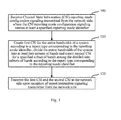
- Fig. 1 is a flow chart of a method for a UE to report CSI on a PUSCH according to an embodiment of the invention.
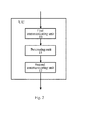
- Fig. 2 is a schematic functional diagram of the structure of a UE according to an embodiment of the invention.
- a mechanism of reporting CSI on a PUSCH which is applicable to a pre-coding process with the use of two levels of codebooks.
- a UE can report long-term/wideband CSI (including a PMI and/or corresponding CQI information) to the network side (e.g., an eNB) on a PUSCH and reports short-term/frequency-selective CSI (including a PMI and/or corresponding CQI information) of a specified subset of bands to the network side on a PUSCH.
- a UE in an embodiment of the invention reports CSI on a PUSCH in a specific flow as follows.
- An operation 100 is to receive Channel State Information (CSI) reporting mode configuration signaling transmitted from the network side, where the CSI reporting mode configuration signaling carries at least a specified reporting mode identifier (i.e., a reporting mode identifier corresponding to a reporting mode to be adopted).
- CSI Channel State Information
- An operation 110 is to create first CSI for the entire bandwidth of a system according to a report type corresponding to the reporting mode identifier, to divide the entire bandwidth of the system into at least two subsets of bands and to create second CSI for a specified subset of bands among the divided-into subsets of bands according to the report type corresponding to the reporting mode identifier.
- the first CSI and the second CSI respectively includes one or any combination of a Rank Indicator (RI), a Pre-coding Matrix Indicator (PMI) and Channel Quality Information (CQI).
- RI Rank Indicator
- PMI Pre-coding Matrix Indicator
- CQI Channel Quality Information
- a Rel-8/9 UE can be configured to use the original modes 1-2, 2-0, 2-2, 3-0 and 3-1, and a Rel-10 UE can be configured to use a new reporting mode.
- Report information reflecting long-term/wideband CSI and report information reflecting short-term/frequency-selective CSI shall be contained in the new reporting mode.
- Table 2 there are given three new PUSCH reporting modes, denoted modes 1-3, 2-3 and 3-3 respectively. In order to support the two-level feedback scheme for dual codebooks, at least one of the three new reporting modes shall be introduced.
- the specified reporting mode identifier can be any of the modes 1-3, 2-3 and 3-3.
- the so-called specified subset of bands can be all or a part (e.g., a preset number M of subsets of bands) of the divided-into subsets of bands.
- the subset of bands can be specified in a preset order; or the subset of bands can be specified as reported from the UE by indicating the number of the subset of bands in signaling.
- Each of the subsets of bands includes several Physical Resource Blocks (PRBs), several sub-bands and/or several bandwidth parts.
- PRBs Physical Resource Blocks
- An operation 120 is to transmit the first CSI and the second CSI to the network side upon reception of report instruction signaling transmitted from the network side.
- the first CSI and the second CSI is transmitted concurrently to the network side.
- any of the three new PUSCH reporting modes can be adopted to perform the operation 110, and they will be introduction in details below:
- the UE obtains a PMI-1 for the entire bandwidth of the system as the first CSI according to a channel characteristic of the entire bandwidth of the system and its own receiving algorithm.
- W 1 is a 4 ⁇ 1 vector
- W 1 represents the arrival direction of a downlink signal
- the UE obtains a PMI-2 for each of the subsets of bands (there may be one or more PMIs-2 for each of the subsets of bands) as the second CSI according to a channel characteristic of the subset of bands and the receiving algorithm of the UE itself.
- the UE can select W-2 from a level-2 codebook according to an equivalent channel H ⁇ W-1 into which a downlink channel matrix and W-1 are synthesized so that a transmission signal can have a better signal quality after passing a synthesis channel H ⁇ W-1 ⁇ W-2 and undergoing a receiving process of the UE, and where the index in the level-1 codebook corresponding to W-2 is the PMI-2.
- the same principle will apply to similar operations in the following embodiments, and a repeated description thereof will be omitted.
- Corresponding parameters will be defined alike in the following formulas, and a repeated description thereof will be omitted.
- the UE obtains a PMI-1 for the entire bandwidth of the system as the first CSI according to a channel characteristic of the entire bandwidth of the system and its own receiving algorithm;
- the UE selects M subsets of bands and obtains a PMI-2 for the M subsets of bands (there may be one or more PMIs-2 for each of the M subset of bands) as the second CSI according to channel characteristics over the M subsets of bands and its own receiving algorithm; and
- the first CQI and the second CQI by reporting the CQI of the first codeword and the difference between the CQI of each other codeword than the first codeword and the CQI of the first codeword so as to save a feedback overhead.
- the UE obtains a PMI-1 for the entire bandwidth of the system as the first CSI according to a channel characteristic of the entire bandwidth of the system and its own receiving algorithm;
- the UE obtains a PMI-2 for each of the subsets of bands as the second CSI according to a channel characteristic of the subset of band and the receiving algorithm of the UE itself;
- the first CQI and the second CQI by reporting the CQI of the first codeword and the difference between the CQI of each other codeword than the first codeword and the CQI of the first codeword so as to save a feedback overhead.
- CQI (a, b, c) represents an assumed channel rank 'a' of the UE
- the function G () represents a function to synthesize two levels of PMIs into a pre-coding matrix.
- an apparatus for reporting CSI on a PUSCH since the apparatus addresses the problem under a similar principle to the method of a UE to report CSI on a PUSCH, reference can be made to the implementation of the method for an implementation of the apparatus, and a repeated description thereof will be omitted here.
- an apparatus for reporting CSI on a PUSCH in an embodiment of the invention includes a first communicating unit 10, a processing unit 11 and a second processing unit 12.
- the first communicating unit 10 is configured to receive CSI reporting mode configuration signaling transmitted from the network side, where the CSI reporting mode configuration signaling carries at least a specified reporting mode identifier;
- the processing unit 11 is configured to create first CSI for the entire bandwidth of a system according to a report type corresponding to the reporting mode identifier received by the first communicating unit 10, to divide the entire bandwidth of the system into at least two subsets of bands and to create second CSI for a specified subset of bands among the divided-into subsets of bands according to the report type corresponding to the reporting mode identifier; and
- the second communicating unit 12 is configured to transmit the first CSI and the second CSI to the network side upon reception of report instruction signaling transmitted from the network side.
- the embodiments of the invention can be embodied as a method, a system or a computer program product. Therefore the invention can be embodied in the form of an all-hardware embodiment, an all-software embodiment or an embodiment of software and hardware in combination. Furthermore the invention can be embodied in the form of a computer program product embodied in one or more computer useable storage mediums (including but not limited to a disk memory, a CD-ROM, an optical memory, etc.) in which computer useable program codes are contained.
- a computer useable storage mediums including but not limited to a disk memory, a CD-ROM, an optical memory, etc.
- These computer program instructions can also be stored into a computer readable memory capable of directing the computer or the other programmable data processing device to operate in a specific manner so that the instructions stored in the computer readable memory create an article of manufacture including instruction means which perform the functions specified in the flow(s) of the flow chart and/or the block(s) of the block diagram.
- These computer program instructions can also be loaded onto the computer or the other programmable data processing device so that a series of operational steps are performed on the computer or the other programmable data processing device to create a computer implemented process so that the instructions executed on the computer or the other programmable device provide steps for performing the functions specified in the flow(s) of the flow chart and/or the block(s) of the block diagram.
- three new reporting modes are added over a PUSCH to support a two-level feedback scheme for dual codebooks, and in the new reporting modes, original report information is redefined as short-term/frequency-selective CSI, and in addition to this, report information characterizing long-term/wideband CSI is further added, and the newly added report information of long-term/wideband CSI can be combined with the original report information of short-term/frequency-selective CSI (the combination is reflected in calculation of CQI, that is, CQI shall be calculated taking a PMI-1 and a PMI-2 into account), so that a UE can report CSI taking both long-term/wideband CSI and short-term/frequency-selective CSI into account and further perform the two-level feedback scheme for dual codebooks on a PUSCH, and also since the reported long-term/wideband CSI and short-term/frequency-selective CSI includes a PMI-1 for a long term/wideband and corresponding C
Landscapes
- Engineering & Computer Science (AREA)
- Signal Processing (AREA)
- Computer Networks & Wireless Communication (AREA)
- Quality & Reliability (AREA)
- Physics & Mathematics (AREA)
- Mathematical Physics (AREA)
- Mobile Radio Communication Systems (AREA)
Abstract
Description
- This application claims the benefit of Chinese Patent Application No.
201010172043.X - The present invention relates to the field of communications and particularly to a method and apparatus for reporting CSI on a PUSCH.
- In a point-to-point communication system, if the base station side can obtain Channel State Information (CSI), then it can optimize a modulation scheme, an encoding rate and a spatial distribution characteristic of signal power of a transmitted downlink signal to match the transmitted downlink signal with a channel propagation characteristic to thereby achieve the effects of enhancing the reliability of receiving the signal and of lowering the complexity requirement on a receiving algorithm, and particularly in a multi-user application scenario, the base station side can make a scheduling decision according to its obtained CSI to thereby improve the spectrum efficiency of the system and avoid inter-cell interference.
- As currently specified in the Long-Term Evolution (LTE) Rel-8/9, an evolved Node B (eNB) can obtain CSI of a downlink channel according to channel reciprocity or a feedback from a User Equipment (UE), where a codebook-based implicit CSI feedback method is adopted for all of several general transmission modes of a Physical Downlink Shared Channel (PDSCH). In the foregoing protocol, it is specified that in Pre-coding Matrix Indicator (PMI) reporting modes of the transmission modes 4, 5, 6 and 8, the UE measures the downlink channel based upon a Cell-specific Reference Signal (CRS) and reports a Rank Indicator (RI) (which can be supported in the downlink to characterize the number of data streams) and a PMI to the eNB according to its own receiving process algorithm. Further, the UE is required to report Channel Quality Information (CQI) of each codeword, where the UE shall calculate the CQI on the assumption that a locally recommended RI/PMI is adopted by the eNB.
- As specified in the LTE Rel-8/9, the UE can be configured at an upper layer to report CSI periodically on a Physical Uplink Control Channel (PUCCH) and/or report CSI non-periodically on a Physical Uplink Shared Channel (PUSCH). Referring to Table 1, there are five PUSCH reporting modes for the PUSCH, and the UE adopts a PUSCH reporting mode configured semi-statically in network-side upper-layer signaling. Each PUSCH reporting mode corresponds to one or more PUSCH report types (i.e., CQI/PMI feedback types), and the UE creates corresponding CSI of a PUSCH report type corresponding to the PUSCH reporting mode specified at the network side, where the so-called CSI can be one or any combination of an RI, a PMI and CQI.

- However the existing PUSCH reporting mechanism in the LTE Rel-8/9 is designed for a single-codebook structure and focused on a single-user application scenario, and the PUSCH reporting mechanism will be further optimized in the Rel-10 (established for the LTE-A) to better support a multi-user scenario. As currently already established in the Rel-10, a dual codebook-based PUSCH reporting mechanism is adopted, and in this mechanism, CSI is divided into relatively stable long-term/wideband CSI and short-term/frequency-selective CSI with relatively highly time/frequency-selectivity, and a UE can quantize the two types of CSI with the use of two codebooks on a PUSCH in different feedback cycles.
- However the existing single codebook-based CSI report mechanism does not distinguish between long-term/wideband CSI and short-term/frequency-selective CSI and thus is not suitable for the dual codebook-based PUSCH reporting mechanism specified in the Rel-10. Consequently it is desired to provide a new PUSCH reporting mechanism to report accurately long-term/wideband CSI and short-term/frequency-selective CSI.
- Embodiments of the invention provide a method and apparatus for reporting CSI on a PUSCH to report accurately CSI based upon dual codebooks.
- Specific technical solutions according to the embodiments of the invention are as follows.
- A method for reporting channel state information on an physical uplink shared channel includes:
- receiving CSI reporting mode configuration signaling transmitted from the network side, wherein the CSI reporting mode configuration signaling carries at least a specified reporting mode identifier;
- creating first CSI for the entire bandwidth of a system according to a report type corresponding to the reporting mode identifier;
- dividing the entire bandwidth of the system into at least two subsets of bands and creating second CSI for a specified subset of bands according to the report type corresponding to the reporting mode identifier; and
- transmitting the first CSI and the second CSI to the network side upon reception of report instruction signaling transmitted from the network side.
- An apparatus for reporting channel state information on an physical uplink shared channel includes:
- a first communicating unit configured to receive CSI reporting mode configuration signaling transmitted from the network side, wherein the CSI reporting mode configuration signaling carries at least a specified reporting mode identifier;
- a processing unit configured to create first CSI for the entire bandwidth of a system according to a report type corresponding to the reporting mode identifier, to divide the entire bandwidth of the system into at least two subsets of bands and to create second CSI for a specified subset of bands according to the report type corresponding to the reporting mode identifier; and
- a second communicating unit configured to transmit the first CSI and the second CSI to the network side upon reception of report instruction signaling transmitted from the network side.
- In the embodiments of the invention, three new reporting modes are added on a PUSCH to support a two-level feedback scheme for dual codebooks, and in the new reporting modes, original report information is redefined as short-term/frequency-selective CSI, and in addition to this, report information characterizing long-term/wideband CSI is further added, and the newly added report information of long-term/wideband CSI can be combined with the original report information of short-term/frequency-selective CSI so that a UE can report CSI taking both long-term/wideband CSI and short-term/frequency-selective CSI into account and further perform a two-level feedback mechanism for dual codebooks on a PUSCH, and also since the reported long-term/wideband CSI and short-term/frequency-selective CSI includes a PMI-1 for a long term/wideband and corresponding CQI and a PMI-2 for a short term/frequency-selectivity and corresponding CQI, SU/MU-MIMO (Single-User MIMO and Multi-User MIMO switching) operations and corresponding Adaptive Modulating and Encoding (AMC) processes can be facilitated.
-
Fig. 1 is a flow chart of a method for a UE to report CSI on a PUSCH according to an embodiment of the invention; and -
Fig. 2 is a schematic functional diagram of the structure of a UE according to an embodiment of the invention. - Referring to the relevant specification of the Rel-10, in order to report CSI accurately based upon dual codebooks, it is proposed in embodiments of the invention a mechanism of reporting CSI on a PUSCH, which is applicable to a pre-coding process with the use of two levels of codebooks. In this mechanism, a UE can report long-term/wideband CSI (including a PMI and/or corresponding CQI information) to the network side (e.g., an eNB) on a PUSCH and reports short-term/frequency-selective CSI (including a PMI and/or corresponding CQI information) of a specified subset of bands to the network side on a PUSCH.
- Preferred embodiments of the invention will be detailed below with reference to the drawings.
- Referring to
Fig. 1 , a UE in an embodiment of the invention reports CSI on a PUSCH in a specific flow as follows. - An
operation 100 is to receive Channel State Information (CSI) reporting mode configuration signaling transmitted from the network side, where the CSI reporting mode configuration signaling carries at least a specified reporting mode identifier (i.e., a reporting mode identifier corresponding to a reporting mode to be adopted). - An
operation 110 is to create first CSI for the entire bandwidth of a system according to a report type corresponding to the reporting mode identifier, to divide the entire bandwidth of the system into at least two subsets of bands and to create second CSI for a specified subset of bands among the divided-into subsets of bands according to the report type corresponding to the reporting mode identifier. - Preferably the first CSI and the second CSI respectively includes one or any combination of a Rank Indicator (RI), a Pre-coding Matrix Indicator (PMI) and Channel Quality Information (CQI).
- Under the foregoing principle, since none of the existing PUSCH reporting modes supports a two-level feedback scheme for dual codebooks, it is proposed in an embodiment of the invention the introduction of one or more new reporting modes to the existing PUSCH reporting modes. At an upper layer, a Rel-8/9 UE can be configured to use the original modes 1-2, 2-0, 2-2, 3-0 and 3-1, and a Rel-10 UE can be configured to use a new reporting mode. Report information reflecting long-term/wideband CSI and report information reflecting short-term/frequency-selective CSI shall be contained in the new reporting mode. Referring to Table 2, there are given three new PUSCH reporting modes, denoted modes 1-3, 2-3 and 3-3 respectively. In order to support the two-level feedback scheme for dual codebooks, at least one of the three new reporting modes shall be introduced.
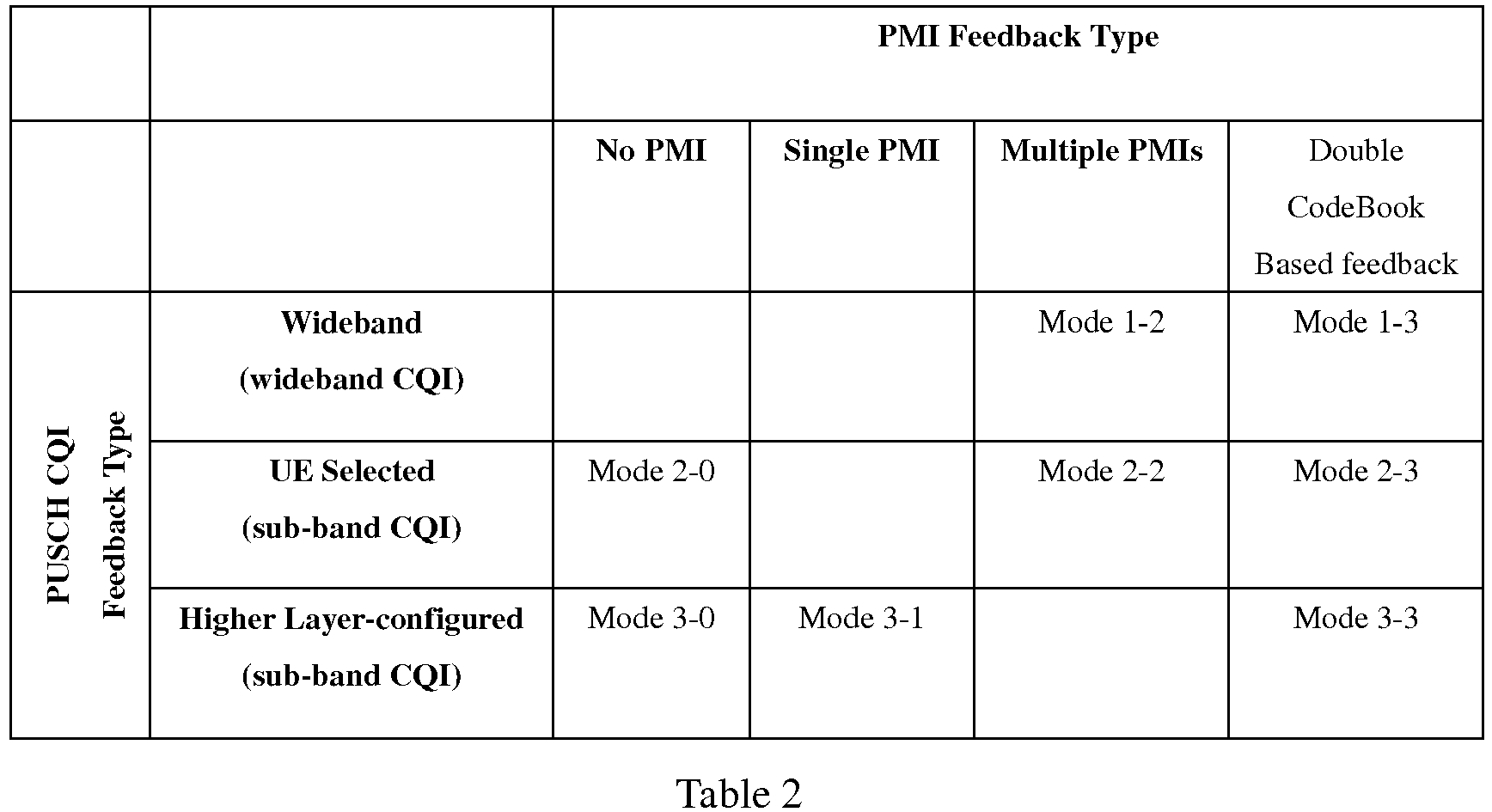
- Based upon the foregoing report mechanism, referring to Table 2, the specified reporting mode identifier can be any of the modes 1-3, 2-3 and 3-3.
- In the present embodiment, the so-called specified subset of bands can be all or a part (e.g., a preset number M of subsets of bands) of the divided-into subsets of bands. In an implementation, the subset of bands can be specified in a preset order; or the subset of bands can be specified as reported from the UE by indicating the number of the subset of bands in signaling. Each of the subsets of bands includes several Physical Resource Blocks (PRBs), several sub-bands and/or several bandwidth parts.
- An
operation 120 is to transmit the first CSI and the second CSI to the network side upon reception of report instruction signaling transmitted from the network side. - Preferably the first CSI and the second CSI is transmitted concurrently to the network side.
- Based upon the foregoing embodiment, any of the three new PUSCH reporting modes can be adopted to perform the
operation 110, and they will be introduction in details below: - 1) In the PUSCH reporting mode 1-3:
- The UE obtains a PMI-1 for the entire bandwidth of the system as the first CSI according to a channel characteristic of the entire bandwidth of the system and its own receiving algorithm. For example, assumed a level-1 codebook is structured as

- The UE obtains a PMI-2 for each of the subsets of bands (there may be one or more PMIs-2 for each of the subsets of bands) as the second CSI according to a channel characteristic of the subset of bands and the receiving algorithm of the UE itself. For example, the UE can select W-2 from a level-2 codebook according to an equivalent channel H×W-1 into which a downlink channel matrix and W-1 are synthesized so that a transmission signal can have a better signal quality after passing a synthesis channel H×W-1×W-2 and undergoing a receiving process of the UE, and where the index in the level-1 codebook corresponding to W-2 is the PMI-2. The same principle will apply to similar operations in the following embodiments, and a repeated description thereof will be omitted.
- The UE obtains first CQI of each codeword over the entire bandwidth of the system as the first CSI according to a downlink channel characteristic and the reported PMI-1 and PMI-2 so that the first CQI = CQI (RI, PMI-1, PMI-2), where the UE shall calculate the first CQI by combining the PMIs-2 corresponding to the respective sub-sets of bands respectively with the PMI-1 into a pre-coding matrix. Corresponding parameters will be defined alike in the following formulas, and a repeated description thereof will be omitted.
- All the foregoing PMI-1, PMI-2 and first CQI are calculated on the assumption of a downlink channel rank = RI.
- 2) In the PUSCH reporting mode 2-3:
- The UE obtains a PMI-1 for the entire bandwidth of the system as the first CSI according to a channel characteristic of the entire bandwidth of the system and its own receiving algorithm;
- The UE selects M subsets of bands and obtains a PMI-2 for the M subsets of bands (there may be one or more PMIs-2 for each of the M subset of bands) as the second CSI according to channel characteristics over the M subsets of bands and its own receiving algorithm; and
- The UE obtains first CQI of each codeword over the entire bandwidth of the system as the first CSI according to a downlink channel characteristic and the reported PMI-1 so that the first CQI = CQI (RIx, PMI-1, PMI-2x), where RIx represents a certain number below or equal to RT (RT represents a rank threshold) and can be fixed or be selected under a certain rule, and PMI-2x represents a RT×RIX-dimension pre-coding matrix and can be selected from a codebook under a certain rule or be fixed.
- The UE obtains second CQI of each codeword over the M subsets of bands as the second CSI according to the downlink channel characteristic and the reported PMI-1 and PMI-2 so that the second CQI = CQI (RI, PMI-1, PMI-2).
- Furthermore, it is preferable to report the first CQI and the second CQI by reporting the CQI of the first codeword and the difference between the CQI of each other codeword than the first codeword and the CQI of the first codeword so as to save a feedback overhead.
- All the foregoing PMI-1, PMI-2 and CQI are calculated on the assumption of a downlink channel rank = RI.
- 3) In the PUSCH reporting mode 3-3:
- The UE obtains a PMI-1 for the entire bandwidth of the system as the first CSI according to a channel characteristic of the entire bandwidth of the system and its own receiving algorithm;
- The UE obtains a PMI-2 for each of the subsets of bands as the second CSI according to a channel characteristic of the subset of band and the receiving algorithm of the UE itself;
- The UE obtains first CQI of each codeword over the entire bandwidth of the system as the first CSI according to a downlink channel characteristic and the reported PMI-1 and PMI-2 so that the first CQI = CQI (RI, PMI-1, PMI-2); and
- The UE obtains second CQI of each codeword over each of the subsets of bands as the second CSI according to the downlink channel characteristic and the reported PMI-1 and PMI-2 so that the second CQI = CQI (RI, PMI-1, PMI-2).
- Furthermore, it is preferable to report the first CQI and the second CQI by reporting the CQI of the first codeword and the difference between the CQI of each other codeword than the first codeword and the CQI of the first codeword so as to save a feedback overhead.
- In the foregoing three reporting modes, CQI (a, b, c) represents an assumed channel rank 'a' of the UE, the eNB uses the synthesis pre-coding matrix PM = G(PMI-1, PMI-2) corresponding to PMI-1 = b and PMI-2 = c, and the function G () represents a function to synthesize two levels of PMIs into a pre-coding matrix.
- Based upon the same inventive idea, there is provided in an embodiment of the invention an apparatus for reporting CSI on a PUSCH, and since the apparatus addresses the problem under a similar principle to the method of a UE to report CSI on a PUSCH, reference can be made to the implementation of the method for an implementation of the apparatus, and a repeated description thereof will be omitted here.
- Referring to
Fig. 2 , an apparatus for reporting CSI on a PUSCH (e.g., a UE) in an embodiment of the invention includes a first communicatingunit 10, aprocessing unit 11 and asecond processing unit 12. - The first communicating
unit 10 is configured to receive CSI reporting mode configuration signaling transmitted from the network side, where the CSI reporting mode configuration signaling carries at least a specified reporting mode identifier; - The
processing unit 11 is configured to create first CSI for the entire bandwidth of a system according to a report type corresponding to the reporting mode identifier received by the first communicatingunit 10, to divide the entire bandwidth of the system into at least two subsets of bands and to create second CSI for a specified subset of bands among the divided-into subsets of bands according to the report type corresponding to the reporting mode identifier; and - The second communicating
unit 12 is configured to transmit the first CSI and the second CSI to the network side upon reception of report instruction signaling transmitted from the network side. - Those skilled in the art shall appreciate that the embodiments of the invention can be embodied as a method, a system or a computer program product. Therefore the invention can be embodied in the form of an all-hardware embodiment, an all-software embodiment or an embodiment of software and hardware in combination. Furthermore the invention can be embodied in the form of a computer program product embodied in one or more computer useable storage mediums (including but not limited to a disk memory, a CD-ROM, an optical memory, etc.) in which computer useable program codes are contained.
- The invention has been described in a flow chart and/or a block diagram of the method, the device (system) and the computer program product according to the embodiments of the invention. It shall be appreciated that respective flows and/or blocks in the flow chart and/or the block diagram and combinations of the flows and/or the blocks in the flow chart and/or the block diagram can be embodied in computer program instructions. These computer program instructions can be loaded onto a general-purpose computer, a specific-purpose computer, an embedded processor or a processor of another programmable data processing device to produce a machine so that the instructions executed on the computer or the processor of the other programmable data processing device create means for performing the functions specified in the flow(s) of the flow chart and/or the block(s) of the block diagram.
- These computer program instructions can also be stored into a computer readable memory capable of directing the computer or the other programmable data processing device to operate in a specific manner so that the instructions stored in the computer readable memory create an article of manufacture including instruction means which perform the functions specified in the flow(s) of the flow chart and/or the block(s) of the block diagram.
- These computer program instructions can also be loaded onto the computer or the other programmable data processing device so that a series of operational steps are performed on the computer or the other programmable data processing device to create a computer implemented process so that the instructions executed on the computer or the other programmable device provide steps for performing the functions specified in the flow(s) of the flow chart and/or the block(s) of the block diagram.
- Although the preferred embodiments of the invention have been described, those skilled in the art benefiting from the underlying inventive concept can make additional modifications and variations to these embodiments. Therefore the appended claims are intended to be construed as encompassing the preferred embodiments and all the modifications and variations coming into the scope of the invention.
- In the embodiments of the invention, three new reporting modes are added over a PUSCH to support a two-level feedback scheme for dual codebooks, and in the new reporting modes, original report information is redefined as short-term/frequency-selective CSI, and in addition to this, report information characterizing long-term/wideband CSI is further added, and the newly added report information of long-term/wideband CSI can be combined with the original report information of short-term/frequency-selective CSI (the combination is reflected in calculation of CQI, that is, CQI shall be calculated taking a PMI-1 and a PMI-2 into account), so that a UE can report CSI taking both long-term/wideband CSI and short-term/frequency-selective CSI into account and further perform the two-level feedback scheme for dual codebooks on a PUSCH, and also since the reported long-term/wideband CSI and short-term/frequency-selective CSI includes a PMI-1 for a long term/wideband and corresponding CQI and a PMI-2 for a short term/frequency-selectivity and corresponding CQI, SU/MU-MIMO operations and corresponding adaptive modulating and encoding processes can be facilitated.
- Evidently those skilled in the art can make various modifications and variations to the invention without departing from the scope of the invention. Thus the invention is also intended to encompass these modifications and variations thereto so long as the modifications and variations come into the scope of the claims appended to the invention and their equivalents.
Claims (11)
- A method for reporting channel state information on a physical uplink shared channel, comprising:receiving Channel State Information, CSI, reporting mode configuration signaling transmitted from a network side, wherein the CSI reporting mode configuration signaling carries at least a specified reporting mode identifier;creating first CSI for entire bandwidth of a system according to a report type corresponding to the reporting mode identifier, dividing the entire bandwidth of the system into at least two subsets of bands and creating second CSI for a specified subset of bands among divided-into subsets of bands according to the report type corresponding to the reporting mode identifier; andtransmitting the first CSI and the second CSI to the network side upon reception of report instruction signaling transmitted from the network side.
- The method according to claim 1, wherein the subsets of bands comprise at least two Physical Resource Blocks, PRBs, at least two sub-bands or at least two bandwidth parts.
- The method according to claim 1 or 2, wherein the first CSI and the second CSI respectively comprises one or any combination of a Rank Indicator, RI, a Pre-coding Matrix Indicator, PMI, and Channel Quality Information, CQI.
- The method according to claim 3, wherein the first CSI is created and the second CSI is created by:obtaining a first PMI for the entire bandwidth of the system according to a channel characteristic of the entire bandwidth of the system;obtaining a second PMI for each of the subsets of bands according to a channel characteristic of the subset of bands; andobtaining first CQI of each codeword over the entire bandwidth of the system according to a downlink channel characteristic and the first PMI and second PMI.
- The method according to claim 3, wherein the first CSI is created and the second CSI is created by:obtaining a first PMI for the entire bandwidth of the system according to a channel characteristic of the entire bandwidth of the system and a local receiving algorithm;obtaining a second PMI for a part of the subsets of bands according to channel characteristics of the part of the subsets of bands and the local receiving algorithm;obtaining first CQI of each codeword over the entire bandwidth of the system according to a downlink channel characteristic and the first PMI; andobtaining second CQI of each codeword over the part of the subsets of bands according to the downlink channel characteristic and the first PMI and second PMI.
- The method according to claim 3, wherein the first CSI is created and the second CSI is created by:obtaining a first PMI for the entire bandwidth of the system according to a channel characteristic of the entire bandwidth of the system and a local receiving algorithm;obtaining a second PMI for each of the subsets of bands according to a channel characteristic of the subset of bands and the local receiving algorithm;obtaining first CQI of each codeword over the entire bandwidth of the system according to a downlink channel characteristic and the first PMI and second PMI; andobtaining second CQI of each codeword over the each of the subsets of bands according to the downlink channel characteristic and the first PMI and second PMI.
- An apparatus for reporting channel state information on a physical uplink shared channel, comprising:a first communicating unit configured to receive Channel State Information, CSI, reporting mode configuration signaling transmitted from a network side, wherein the CSI reporting mode configuration signaling carries at least a specified reporting mode identifier;a processing unit configured to create first CSI for entire bandwidth of a system according to a report type corresponding to the reporting mode identifier, to divide the entire bandwidth of the system into at least two subsets of bands and to create second CSI for a specified subset of bands among divided-into subsets of bands according to the report type corresponding to the reporting mode identifier; anda second communicating unit configured to transmit the first CSI and the second CSI to the network side upon reception of report instruction signaling transmitted from the network side.
- The apparatus according to claim 7, wherein the processing unit is configured:to create the first CSI for the entire bandwidth of the system according to the report type corresponding to the reporting mode identifier and to create the second CSI for the specified subset of bands according to the report type corresponding to the reporting mode identifier by obtaining a first Pre-coding Matrix Indicator, PMI, for the entire bandwidth of the system according to a channel characteristic of the entire bandwidth of the system, obtaining a second PMI for each of the subsets of bands according to a channel characteristic of the subset of bands and a local receiving algorithm and obtaining first Channel Quality Information, CQI, of each codeword over the entire bandwidth of the system according to a downlink channel characteristic and the first PMI and second PMI.
- The apparatus according to claim 7, wherein the processing unit is configured:to create the first CSI for the entire bandwidth of the system according to the report type corresponding to the reporting mode identifier and to create the second CSI for the specified subset of bands according to the report type corresponding to the reporting mode identifier by obtaining a first Pre-coding Matrix Indicator, PMI, for the entire bandwidth of the system according to a channel characteristic of the entire bandwidth of the system and a local receiving algorithm, obtaining a second PMI for a part of the subsets of bands according to channel characteristics of the part of the subsets of bands, obtaining first Channel Quality Information, CQI, of each codeword over the entire bandwidth of the system according to a downlink channel characteristic and the first PMI and obtaining second CQI of each codeword over the part of the subsets of bands according to the downlink channel characteristic and the first PMI and second PMI.
- The apparatus according to claim 7, wherein the processing unit is configured:to create the first CSI for the entire bandwidth of the system according to the report type corresponding to the reporting mode identifier and to create the second CSI for the specified subset of bands according to the report type corresponding to the reporting mode identifier by obtaining a first Pre-coding Matrix Indicator, PMI, for the entire bandwidth of the system according to a channel characteristic of the entire bandwidth of the system, obtaining a second PMI for each of the subsets of bands according to a channel characteristic of the subset of bands, obtaining first Chanel Quality Information, CQI, of each codeword over the entire bandwidth of the system according to a downlink channel characteristic and the first PMI and second PMI and obtaining second CQI of each codeword over the each of the subsets of bands according to the downlink channel characteristic and the first PMI and second PMI.
- A user equipment, comprising the apparatus for reporting channel state information on a physical uplink shared channel according to any one of claims 7 to 10.
Applications Claiming Priority (2)
| Application Number | Priority Date | Filing Date | Title |
|---|---|---|---|
| CN201010172043.XA CN102237984B (en) | 2010-05-07 | 2010-05-07 | A method and device for reporting CSI based on PUSCH |
| PCT/CN2011/073717 WO2011137752A1 (en) | 2010-05-07 | 2011-05-06 | Method and apparatus for reporting channel state information (csi) based on physical uplink shared channel (pusch) |
Publications (2)
| Publication Number | Publication Date |
|---|---|
| EP2568646A1 true EP2568646A1 (en) | 2013-03-13 |
| EP2568646A4 EP2568646A4 (en) | 2014-04-02 |
Family
ID=44888248
Family Applications (1)
| Application Number | Title | Priority Date | Filing Date |
|---|---|---|---|
| EP11777173.3A Withdrawn EP2568646A4 (en) | 2010-05-07 | 2011-05-06 | Method and apparatus for reporting channel state information (csi) based on physical uplink shared channel (pusch) |
Country Status (4)
| Country | Link |
|---|---|
| US (1) | US8982721B2 (en) |
| EP (1) | EP2568646A4 (en) |
| CN (1) | CN102237984B (en) |
| WO (1) | WO2011137752A1 (en) |
Cited By (8)
| Publication number | Priority date | Publication date | Assignee | Title |
|---|---|---|---|---|
| WO2013169184A3 (en) * | 2012-05-11 | 2014-01-30 | Telefonaktiebolaget L M Ericsson (Publ) | Scheduling a user equipment in a communication system |
| WO2014040771A1 (en) * | 2012-09-11 | 2014-03-20 | Telefonaktiebolaget Lm Ericsson (Publ) | Finding channel state information with reduced codebook in a multi-antenna wireless communication system |
| US9048908B2 (en) | 2012-09-11 | 2015-06-02 | Telefonaktiebolaget L M Ericsson (Publ) | Finding channel state information with reduced codebook in a multi-antenna wireless communication system |
| US9130619B2 (en) | 2012-09-11 | 2015-09-08 | Telefonaktiebolaget L M Ericsson (Publ) | Finding channel state information with reduced codebook in a multi-antenna wireless communication system |
| EP2710758A4 (en) * | 2012-05-11 | 2015-10-21 | Panasonic Ip Corp America | METHOD FOR SIGNALING CSI COMPONENTS, USER EQUIPMENT, AND EVOLVED BUDGET |
| WO2015167182A1 (en) * | 2014-04-28 | 2015-11-05 | Samsung Electronics Co., Ltd. | Method and apparatus for reporting channel state information |
| EP3518446A4 (en) * | 2016-09-30 | 2019-08-21 | Huawei Technologies Co., Ltd. | METHOD, APPARATUS AND SYSTEM FOR REPORTING CHANNEL QUALITY INFORMATION |
| WO2020254858A1 (en) * | 2019-06-19 | 2020-12-24 | Telefonaktiebolaget Lm Ericsson (Publ) | Adaptive csi reporting and prb bundling in aas |
Families Citing this family (28)
| Publication number | Priority date | Publication date | Assignee | Title |
|---|---|---|---|---|
| WO2011162520A2 (en) * | 2010-06-22 | 2011-12-29 | 엘지전자 주식회사 | Method and apparatus for transmitting channel state information |
| EP2557839A1 (en) * | 2011-08-12 | 2013-02-13 | Panasonic Corporation | Channel quality information reporting in protected subframes |
| CN102754498B (en) * | 2012-03-01 | 2016-09-07 | 华为技术有限公司 | Wireless communications method, subscriber equipment, base station and system |
| WO2013170420A1 (en) * | 2012-05-14 | 2013-11-21 | 华为技术有限公司 | Channel state information reporting method, terminal, and base station |
| GB2509912B (en) * | 2013-01-16 | 2018-08-15 | Sony Corp | Telecommunications Apparatus and Methods |
| CN103944667B (en) * | 2013-01-18 | 2018-01-30 | 上海诺基亚贝尔股份有限公司 | The method and apparatus of quantized channel status information |
| US9281881B2 (en) * | 2013-02-12 | 2016-03-08 | Texas Instruments Incorporated | 4TX codebook enhancement in LTE |
| JP2016523039A (en) * | 2013-05-10 | 2016-08-04 | 富士通株式会社 | Information feedback method, user apparatus, and base station |
| JP6328750B2 (en) | 2013-06-05 | 2018-05-23 | エルジー エレクトロニクス インコーポレイティド | Method and apparatus for transmitting channel state information in a wireless communication system |
| KR102160008B1 (en) * | 2013-06-17 | 2020-09-25 | 삼성전자 주식회사 | Method and apparatus for transmitting and receiving channerl state information |
| US9231740B2 (en) * | 2013-07-12 | 2016-01-05 | Intel Corporation | Transmitter noise in system budget |
| US9894675B2 (en) | 2013-09-19 | 2018-02-13 | Blackberry Limited | Method and device for wireless network coexistence |
| KR102285852B1 (en) | 2013-12-17 | 2021-08-05 | 삼성전자 주식회사 | Method and apparatus for communication in full dimension mimo mobile communication system |
| CN110351869B (en) * | 2013-12-31 | 2023-06-06 | 华为技术有限公司 | Method and device for measuring channel state information |
| CN105379372B (en) | 2014-02-14 | 2019-11-29 | 华为技术有限公司 | Base station, mobile station and its method |
| WO2015165005A1 (en) * | 2014-04-28 | 2015-11-05 | 华为技术有限公司 | Multi-antenna data transmission method, base station, user equipment and system |
| WO2016056824A1 (en) * | 2014-10-06 | 2016-04-14 | 엘지전자 주식회사 | Method and apparatus for measuring channel in wireless communication system |
| EP3249993A4 (en) * | 2015-01-23 | 2018-03-07 | Samsung Electronics Co., Ltd. | Method and device for supporting data communication in wireless communication system |
| CN108352925A (en) | 2015-11-20 | 2018-07-31 | 华为技术有限公司 | It is a kind of transmission or receiving channel state information CSI method, terminal and base station |
| CN107241760A (en) * | 2016-03-28 | 2017-10-10 | 北京信威通信技术股份有限公司 | Reporting source of channel state information processing method and processing device |
| US11178646B2 (en) * | 2016-04-19 | 2021-11-16 | Qualcomm Incorporated | Beam reference signal based narrowband channel measurement and CQI reporting |
| CN107707285B (en) * | 2016-08-05 | 2021-04-09 | 华为技术有限公司 | Transmission method, reception method and device of channel state information |
| WO2018056877A1 (en) * | 2016-09-23 | 2018-03-29 | Telefonaktiebolaget Lm Ericsson (Publ) | Method and apparatus for providing channel state information status by a transceiver |
| CN108631846B (en) * | 2017-03-24 | 2024-03-19 | 中兴通讯股份有限公司 | Information transmission, processing methods and devices, network side equipment, terminals |
| CN109391316B (en) * | 2017-08-11 | 2020-06-02 | 维沃移动通信有限公司 | Method and device for processing frequency band status |
| KR102131428B1 (en) * | 2017-09-29 | 2020-07-08 | 엘지전자 주식회사 | Method and apparatus for reporting channel state information in a wireless communication system |
| WO2019128576A1 (en) * | 2017-12-29 | 2019-07-04 | 电信科学技术研究院有限公司 | Channel state information transmission method, communication device, and apparatus |
| CN115088224B (en) | 2020-02-14 | 2024-06-25 | 华为技术有限公司 | A channel state information feedback method and communication device |
Family Cites Families (5)
| Publication number | Priority date | Publication date | Assignee | Title |
|---|---|---|---|---|
| KR100510549B1 (en) * | 2003-09-26 | 2005-08-26 | 삼성전자주식회사 | Channel state measurement apparatus providing for detecting and suppressing of co-channel interference in digital video broadcasting receiver and method therefor |
| US8086242B2 (en) * | 2007-03-21 | 2011-12-27 | Broadcom Corporation | Method and system for adaptive allocation of feedback resources for CQI and transmit pre-coding |
| KR101478362B1 (en) * | 2007-08-10 | 2015-01-28 | 엘지전자 주식회사 | Method of transmitting feedback data in a multi-antenna system |
| US8625450B2 (en) * | 2010-04-05 | 2014-01-07 | Nokia Corporation | Channel state information feedback for enhanced downlink multiple input—multiple output operation |
| US8743992B2 (en) * | 2010-04-06 | 2014-06-03 | Nokia Corporation | Codebook design and structure for multi-granular feedback |
-
2010
- 2010-05-07 CN CN201010172043.XA patent/CN102237984B/en active Active
-
2011
- 2011-05-06 WO PCT/CN2011/073717 patent/WO2011137752A1/en not_active Ceased
- 2011-05-06 US US13/638,586 patent/US8982721B2/en active Active
- 2011-05-06 EP EP11777173.3A patent/EP2568646A4/en not_active Withdrawn
Non-Patent Citations (3)
| Title |
|---|
| NORTEL: "Enhanced CQI/PMI feedback mode to improve closed-loop MIMO performance", 3GPP DRAFT; R1-091926 (NORTEL-EHANCED-CQIPMI-FB), 3RD GENERATION PARTNERSHIP PROJECT (3GPP), MOBILE COMPETENCE CENTRE ; 650, ROUTE DES LUCIOLES ; F-06921 SOPHIA-ANTIPOLIS CEDEX ; FRANCE, no. San Francisco, US; 20090624, 24 June 2009 (2009-06-24), XP050350818, [retrieved on 2009-06-24] * |
| SAMSUNG: "Views on the feedback framework for Rel. 10", 3GPP DRAFT; R1-103026 FEEDBACK FRAMEWORK_REV1, 3RD GENERATION PARTNERSHIP PROJECT (3GPP), MOBILE COMPETENCE CENTRE ; 650, ROUTE DES LUCIOLES ; F-06921 SOPHIA-ANTIPOLIS CEDEX ; FRANCE, vol. RAN WG1, no. Montreal, Canada; 20100510 - 20100514, 6 May 2010 (2010-05-06), XP050598362, [retrieved on 2010-05-06] * |
| See also references of WO2011137752A1 * |
Cited By (14)
| Publication number | Priority date | Publication date | Assignee | Title |
|---|---|---|---|---|
| EP2710758A4 (en) * | 2012-05-11 | 2015-10-21 | Panasonic Ip Corp America | METHOD FOR SIGNALING CSI COMPONENTS, USER EQUIPMENT, AND EVOLVED BUDGET |
| US9713165B2 (en) | 2012-05-11 | 2017-07-18 | Telefonaktiebolaget Lm Ericsson (Publ) | Scheduling a user equipment in a communication system |
| WO2013169184A3 (en) * | 2012-05-11 | 2014-01-30 | Telefonaktiebolaget L M Ericsson (Publ) | Scheduling a user equipment in a communication system |
| US9231684B2 (en) | 2012-09-11 | 2016-01-05 | Telefonaktiebolaget L M Ericsson (Publ) | Finding channel state information with reduced codebook in a multi-antenna wireless communication system |
| US9130619B2 (en) | 2012-09-11 | 2015-09-08 | Telefonaktiebolaget L M Ericsson (Publ) | Finding channel state information with reduced codebook in a multi-antenna wireless communication system |
| US9048908B2 (en) | 2012-09-11 | 2015-06-02 | Telefonaktiebolaget L M Ericsson (Publ) | Finding channel state information with reduced codebook in a multi-antenna wireless communication system |
| WO2014040771A1 (en) * | 2012-09-11 | 2014-03-20 | Telefonaktiebolaget Lm Ericsson (Publ) | Finding channel state information with reduced codebook in a multi-antenna wireless communication system |
| US9537551B2 (en) | 2013-01-23 | 2017-01-03 | Telefonaktiebolaget L M Ericsson (Publ) | Finding channel state information with reduced codebook in a multi-antenna wireless communication system |
| WO2015167182A1 (en) * | 2014-04-28 | 2015-11-05 | Samsung Electronics Co., Ltd. | Method and apparatus for reporting channel state information |
| US10848999B2 (en) | 2014-04-28 | 2020-11-24 | Samsung Electronics Co., Ltd | Method and apparatus for reporting channel state information |
| EP3518446A4 (en) * | 2016-09-30 | 2019-08-21 | Huawei Technologies Co., Ltd. | METHOD, APPARATUS AND SYSTEM FOR REPORTING CHANNEL QUALITY INFORMATION |
| US11128363B2 (en) | 2016-09-30 | 2021-09-21 | Huawei Technologies Co., Ltd. | Channel quality information reporting method, apparatus, and system |
| WO2020254858A1 (en) * | 2019-06-19 | 2020-12-24 | Telefonaktiebolaget Lm Ericsson (Publ) | Adaptive csi reporting and prb bundling in aas |
| US12119909B2 (en) | 2019-06-19 | 2024-10-15 | Telefonaktiebolaget Lm Ericsson (Publ) | Adaptive CSI reporting and PRB bundling in AAS |
Also Published As
| Publication number | Publication date |
|---|---|
| EP2568646A4 (en) | 2014-04-02 |
| US8982721B2 (en) | 2015-03-17 |
| CN102237984A (en) | 2011-11-09 |
| US20130044624A1 (en) | 2013-02-21 |
| CN102237984B (en) | 2014-02-12 |
| WO2011137752A1 (en) | 2011-11-10 |
Similar Documents
| Publication | Publication Date | Title |
|---|---|---|
| US8982721B2 (en) | Method and apparatus for reporting channel state information (CSI) based on physical uplink shared channel (PUSCH) | |
| US11811702B2 (en) | System and method for flexible channel state information-reference signal transmission | |
| KR102577742B1 (en) | Method and apparatus for transmitting and receiving uplink control information | |
| KR102931612B1 (en) | Method and device for interference measurement in wireless communication systems | |
| US10587324B2 (en) | CSI reporting for a set of CSI-RS resources | |
| KR102382603B1 (en) | Method and apparatus for obtaining downlink and uplink channel state information | |
| JP6704618B2 (en) | Data transmission method, signaling transmission method, apparatus, and system | |
| US11956765B2 (en) | UE RX beam switching during UE beam training | |
| KR101506673B1 (en) | Method for reporting channel state information and device thereof | |
| CN102237958B (en) | Method and device for reporting CSI (Channel State Information) based on PUCCH (Physical Uplink Control Channel) | |
| US10893430B2 (en) | Method and apparatus for transmitting channel state information | |
| KR102587760B1 (en) | Method and device for uplink MIMO | |
| CN112956145A (en) | Method and apparatus for channel and interference measurement and reporting | |
| CN102237968B (en) | Channel state information transmission method and device | |
| EP2890023A1 (en) | Method, system and device for feeding back and receiving pmi | |
| KR20170132221A (en) | Method and apparatus for codebook design and signaling | |
| US8897272B2 (en) | Radio communication system channel state information feedback method and device | |
| KR20180017006A (en) | Apparatus and method for reporting channel state information | |
| US20180184318A1 (en) | Method and device for reporting channel quality information | |
| JP2016021757A (en) | Channel state information feedback method and terminal apparatus | |
| CN102244565B (en) | Method and device for generating channel information feedback and precoding matrix |
Legal Events
| Date | Code | Title | Description |
|---|---|---|---|
| PUAI | Public reference made under article 153(3) epc to a published international application that has entered the european phase |
Free format text: ORIGINAL CODE: 0009012 |
|
| 17P | Request for examination filed |
Effective date: 20120921 |
|
| AK | Designated contracting states |
Kind code of ref document: A1 Designated state(s): AL AT BE BG CH CY CZ DE DK EE ES FI FR GB GR HR HU IE IS IT LI LT LU LV MC MK MT NL NO PL PT RO RS SE SI SK SM TR |
|
| DAX | Request for extension of the european patent (deleted) | ||
| A4 | Supplementary search report drawn up and despatched |
Effective date: 20140303 |
|
| RIC1 | Information provided on ipc code assigned before grant |
Ipc: H04L 1/00 20060101ALI20140225BHEP Ipc: H04L 1/16 20060101AFI20140225BHEP Ipc: H04L 5/00 20060101ALI20140225BHEP Ipc: H04L 25/03 20060101ALI20140225BHEP Ipc: H04B 7/06 20060101ALI20140225BHEP |
|
| 17Q | First examination report despatched |
Effective date: 20151125 |
|
| STAA | Information on the status of an ep patent application or granted ep patent |
Free format text: STATUS: THE APPLICATION IS DEEMED TO BE WITHDRAWN |
|
| 18D | Application deemed to be withdrawn |
Effective date: 20160406 |