EP2566851B1 - Combretastatin analogs for use in the treatment of cancer - Google Patents
Combretastatin analogs for use in the treatment of cancer Download PDFInfo
- Publication number
- EP2566851B1 EP2566851B1 EP11723014.4A EP11723014A EP2566851B1 EP 2566851 B1 EP2566851 B1 EP 2566851B1 EP 11723014 A EP11723014 A EP 11723014A EP 2566851 B1 EP2566851 B1 EP 2566851B1
- Authority
- EP
- European Patent Office
- Prior art keywords
- compound
- mmol
- cancer
- methyl
- alkyl
- Prior art date
- Legal status (The legal status is an assumption and is not a legal conclusion. Google has not performed a legal analysis and makes no representation as to the accuracy of the status listed.)
- Not-in-force
Links
- 206010028980 Neoplasm Diseases 0.000 title claims description 78
- 201000011510 cancer Diseases 0.000 title claims description 38
- 238000011282 treatment Methods 0.000 title description 44
- 150000004814 combretastatins Chemical class 0.000 title 1
- 229910052739 hydrogen Inorganic materials 0.000 claims description 365
- 150000001875 compounds Chemical class 0.000 claims description 226
- 125000004178 (C1-C4) alkyl group Chemical group 0.000 claims description 60
- 125000002496 methyl group Chemical group [H]C([H])([H])* 0.000 claims description 36
- 229910052736 halogen Inorganic materials 0.000 claims description 33
- 150000002367 halogens Chemical group 0.000 claims description 31
- 239000008194 pharmaceutical composition Substances 0.000 claims description 30
- 239000003814 drug Substances 0.000 claims description 22
- 150000003839 salts Chemical class 0.000 claims description 21
- HVXBOLULGPECHP-WAYWQWQTSA-N Combretastatin A4 Chemical compound C1=C(O)C(OC)=CC=C1\C=C/C1=CC(OC)=C(OC)C(OC)=C1 HVXBOLULGPECHP-WAYWQWQTSA-N 0.000 claims description 19
- 229960005537 combretastatin A-4 Drugs 0.000 claims description 19
- HVXBOLULGPECHP-UHFFFAOYSA-N combretastatin A4 Natural products C1=C(O)C(OC)=CC=C1C=CC1=CC(OC)=C(OC)C(OC)=C1 HVXBOLULGPECHP-UHFFFAOYSA-N 0.000 claims description 19
- DQLATGHUWYMOKM-UHFFFAOYSA-L cisplatin Chemical compound N[Pt](N)(Cl)Cl DQLATGHUWYMOKM-UHFFFAOYSA-L 0.000 claims description 16
- 239000002246 antineoplastic agent Substances 0.000 claims description 15
- 229910052760 oxygen Inorganic materials 0.000 claims description 15
- 229940041181 antineoplastic drug Drugs 0.000 claims description 13
- 229910052757 nitrogen Inorganic materials 0.000 claims description 13
- 229940079593 drug Drugs 0.000 claims description 12
- 208000016691 refractory malignant neoplasm Diseases 0.000 claims description 12
- 229960004316 cisplatin Drugs 0.000 claims description 10
- 239000012453 solvate Substances 0.000 claims description 10
- 125000002023 trifluoromethyl group Chemical group FC(F)(F)* 0.000 claims description 8
- 125000004093 cyano group Chemical group *C#N 0.000 claims description 7
- 208000032839 leukemia Diseases 0.000 claims description 7
- 201000001441 melanoma Diseases 0.000 claims description 7
- 239000000546 pharmaceutical excipient Substances 0.000 claims description 7
- 206010033128 Ovarian cancer Diseases 0.000 claims description 6
- 239000001257 hydrogen Substances 0.000 claims description 6
- 238000001959 radiotherapy Methods 0.000 claims description 6
- 206010006187 Breast cancer Diseases 0.000 claims description 4
- 229940127089 cytotoxic agent Drugs 0.000 claims description 4
- 239000002254 cytotoxic agent Substances 0.000 claims description 4
- 208000014829 head and neck neoplasm Diseases 0.000 claims description 4
- LABPYYIGRXUQMR-UHFFFAOYSA-N 5-[5-(3-chloro-1-methylindol-5-yl)-1-methylimidazol-4-yl]-2,3-dimethoxyaniline Chemical compound NC1=C(OC)C(OC)=CC(C2=C(N(C)C=N2)C=2C=C3C(Cl)=CN(C)C3=CC=2)=C1 LABPYYIGRXUQMR-UHFFFAOYSA-N 0.000 claims description 3
- QSACANVYULLBLR-UHFFFAOYSA-N 5-[5-(3-chloro-4,5-dimethoxyphenyl)-3-methylimidazol-4-yl]-2-methoxyaniline Chemical compound C1=C(N)C(OC)=CC=C1C1=C(C=2C=C(OC)C(OC)=C(Cl)C=2)N=CN1C QSACANVYULLBLR-UHFFFAOYSA-N 0.000 claims description 3
- 208000026310 Breast neoplasm Diseases 0.000 claims description 3
- 206010038389 Renal cancer Diseases 0.000 claims description 3
- 208000020816 lung neoplasm Diseases 0.000 claims description 3
- 229910052717 sulfur Inorganic materials 0.000 claims description 3
- LUTCXBRNSZNUFH-UHFFFAOYSA-N 4-(3-bromo-4,5-dimethoxyphenyl)-5-(4-ethoxy-3-fluorophenyl)-1-methylimidazole Chemical compound C1=C(F)C(OCC)=CC=C1C1=C(C=2C=C(OC)C(OC)=C(Br)C=2)N=CN1C LUTCXBRNSZNUFH-UHFFFAOYSA-N 0.000 claims description 2
- BIIKCKLSCPXHPJ-UHFFFAOYSA-N 4-(3-chloro-4,5-dimethoxyphenyl)-5-(4-ethoxy-3-fluorophenyl)-1-methylimidazole Chemical compound C1=C(F)C(OCC)=CC=C1C1=C(C=2C=C(OC)C(OC)=C(Cl)C=2)N=CN1C BIIKCKLSCPXHPJ-UHFFFAOYSA-N 0.000 claims description 2
- TWUNHKXHSLNOJI-UHFFFAOYSA-N 5-[5-(3-bromo-4,5-dimethoxyphenyl)-3-methylimidazol-4-yl]-2-ethoxyaniline Chemical compound C1=C(N)C(OCC)=CC=C1C1=C(C=2C=C(OC)C(OC)=C(Br)C=2)N=CN1C TWUNHKXHSLNOJI-UHFFFAOYSA-N 0.000 claims description 2
- DONOIWAHYJWKLA-UHFFFAOYSA-N 5-[5-(3-bromo-4,5-dimethoxyphenyl)-3-methylimidazol-4-yl]-2-methoxyaniline Chemical compound C1=C(N)C(OC)=CC=C1C1=C(C=2C=C(OC)C(OC)=C(Br)C=2)N=CN1C DONOIWAHYJWKLA-UHFFFAOYSA-N 0.000 claims description 2
- VROPQTCJJDWJLG-UHFFFAOYSA-N 5-[5-(3-chloro-4,5-dimethoxyphenyl)-3-methylimidazol-4-yl]-2-ethoxyaniline Chemical compound C1=C(N)C(OCC)=CC=C1C1=C(C=2C=C(OC)C(OC)=C(Cl)C=2)N=CN1C VROPQTCJJDWJLG-UHFFFAOYSA-N 0.000 claims description 2
- 206010005003 Bladder cancer Diseases 0.000 claims description 2
- 208000003174 Brain Neoplasms Diseases 0.000 claims description 2
- 206010017993 Gastrointestinal neoplasms Diseases 0.000 claims description 2
- 208000008839 Kidney Neoplasms Diseases 0.000 claims description 2
- 206010058467 Lung neoplasm malignant Diseases 0.000 claims description 2
- 206010025323 Lymphomas Diseases 0.000 claims description 2
- 206010029260 Neuroblastoma Diseases 0.000 claims description 2
- 206010061535 Ovarian neoplasm Diseases 0.000 claims description 2
- 206010061902 Pancreatic neoplasm Diseases 0.000 claims description 2
- 208000007097 Urinary Bladder Neoplasms Diseases 0.000 claims description 2
- 208000008385 Urogenital Neoplasms Diseases 0.000 claims description 2
- 230000001028 anti-proliverative effect Effects 0.000 claims description 2
- 239000000824 cytostatic agent Substances 0.000 claims description 2
- 201000010982 kidney cancer Diseases 0.000 claims description 2
- 201000005202 lung cancer Diseases 0.000 claims description 2
- 208000015486 malignant pancreatic neoplasm Diseases 0.000 claims description 2
- 208000026037 malignant tumor of neck Diseases 0.000 claims description 2
- 208000008443 pancreatic carcinoma Diseases 0.000 claims description 2
- 201000005112 urinary bladder cancer Diseases 0.000 claims description 2
- 150000002431 hydrogen Chemical group 0.000 claims 2
- MJHVJPLOUFVGKT-UHFFFAOYSA-N 3-chloro-5-[5-(3-chloro-4,5-dimethoxyphenyl)-3-methylimidazol-4-yl]-1-methylindole Chemical compound ClC1=C(OC)C(OC)=CC(C2=C(N(C)C=N2)C=2C=C3C(Cl)=CN(C)C3=CC=2)=C1 MJHVJPLOUFVGKT-UHFFFAOYSA-N 0.000 claims 1
- QGDHSIGYEOYQPR-UHFFFAOYSA-N 5-[5-(3-bromo-4,5-dimethoxyphenyl)-3-methylimidazol-4-yl]-3-chloro-1-methylindole Chemical compound BrC1=C(OC)C(OC)=CC(C2=C(N(C)C=N2)C=2C=C3C(Cl)=CN(C)C3=CC=2)=C1 QGDHSIGYEOYQPR-UHFFFAOYSA-N 0.000 claims 1
- XEKOWRVHYACXOJ-UHFFFAOYSA-N Ethyl acetate Chemical compound CCOC(C)=O XEKOWRVHYACXOJ-UHFFFAOYSA-N 0.000 description 168
- OKKJLVBELUTLKV-UHFFFAOYSA-N Methanol Chemical compound OC OKKJLVBELUTLKV-UHFFFAOYSA-N 0.000 description 150
- LFQSCWFLJHTTHZ-UHFFFAOYSA-N Ethanol Chemical compound CCO LFQSCWFLJHTTHZ-UHFFFAOYSA-N 0.000 description 141
- HEDRZPFGACZZDS-MICDWDOJSA-N Trichloro(2H)methane Chemical compound [2H]C(Cl)(Cl)Cl HEDRZPFGACZZDS-MICDWDOJSA-N 0.000 description 106
- 210000004027 cell Anatomy 0.000 description 92
- IAZDPXIOMUYVGZ-WFGJKAKNSA-N Dimethyl sulfoxide Chemical compound [2H]C([2H])([2H])S(=O)C([2H])([2H])[2H] IAZDPXIOMUYVGZ-WFGJKAKNSA-N 0.000 description 72
- YMWUJEATGCHHMB-UHFFFAOYSA-N Dichloromethane Chemical compound ClCCl YMWUJEATGCHHMB-UHFFFAOYSA-N 0.000 description 71
- RAXXELZNTBOGNW-UHFFFAOYSA-N imidazole Substances C1=CNC=N1 RAXXELZNTBOGNW-UHFFFAOYSA-N 0.000 description 54
- 125000000956 methoxy group Chemical group [H]C([H])([H])O* 0.000 description 51
- VLKZOEOYAKHREP-UHFFFAOYSA-N n-Hexane Chemical compound CCCCCC VLKZOEOYAKHREP-UHFFFAOYSA-N 0.000 description 49
- 238000001644 13C nuclear magnetic resonance spectroscopy Methods 0.000 description 48
- 238000005160 1H NMR spectroscopy Methods 0.000 description 48
- QTBSBXVTEAMEQO-UHFFFAOYSA-N Acetic acid Chemical compound CC(O)=O QTBSBXVTEAMEQO-UHFFFAOYSA-N 0.000 description 46
- VEXZGXHMUGYJMC-UHFFFAOYSA-N Hydrochloric acid Chemical compound Cl VEXZGXHMUGYJMC-UHFFFAOYSA-N 0.000 description 43
- 208000037265 diseases, disorders, signs and symptoms Diseases 0.000 description 43
- 239000000203 mixture Substances 0.000 description 43
- BWHMMNNQKKPAPP-UHFFFAOYSA-L potassium carbonate Chemical compound [K+].[K+].[O-]C([O-])=O BWHMMNNQKKPAPP-UHFFFAOYSA-L 0.000 description 42
- 239000007787 solid Substances 0.000 description 39
- 150000001412 amines Chemical class 0.000 description 38
- XLYOFNOQVPJJNP-UHFFFAOYSA-N water Substances O XLYOFNOQVPJJNP-UHFFFAOYSA-N 0.000 description 36
- -1 phosphate ester Chemical class 0.000 description 34
- 239000002904 solvent Substances 0.000 description 32
- IJKVHSBPTUYDLN-UHFFFAOYSA-N dihydroxy(oxo)silane Chemical compound O[Si](O)=O IJKVHSBPTUYDLN-UHFFFAOYSA-N 0.000 description 31
- 239000011541 reaction mixture Substances 0.000 description 31
- 238000004440 column chromatography Methods 0.000 description 30
- 125000001309 chloro group Chemical group Cl* 0.000 description 27
- RYHBNJHYFVUHQT-UHFFFAOYSA-N 1,4-Dioxane Chemical compound C1COCCO1 RYHBNJHYFVUHQT-UHFFFAOYSA-N 0.000 description 26
- 230000000694 effects Effects 0.000 description 25
- 239000000243 solution Substances 0.000 description 25
- 238000012360 testing method Methods 0.000 description 25
- 201000010099 disease Diseases 0.000 description 22
- AXHRGVJWDJDYPO-UHFFFAOYSA-N 2-bromo-1h-imidazole Chemical compound BrC1=NC=CN1 AXHRGVJWDJDYPO-UHFFFAOYSA-N 0.000 description 21
- 239000007832 Na2SO4 Substances 0.000 description 21
- PMZURENOXWZQFD-UHFFFAOYSA-L Sodium Sulfate Chemical compound [Na+].[Na+].[O-]S([O-])(=O)=O PMZURENOXWZQFD-UHFFFAOYSA-L 0.000 description 21
- 229910000027 potassium carbonate Inorganic materials 0.000 description 21
- 229910052938 sodium sulfate Inorganic materials 0.000 description 21
- 238000003756 stirring Methods 0.000 description 21
- BAVYZALUXZFZLV-UHFFFAOYSA-N Methylamine Chemical compound NC BAVYZALUXZFZLV-UHFFFAOYSA-N 0.000 description 20
- WYURNTSHIVDZCO-UHFFFAOYSA-N Tetrahydrofuran Chemical compound C1CCOC1 WYURNTSHIVDZCO-UHFFFAOYSA-N 0.000 description 20
- 208000035475 disorder Diseases 0.000 description 20
- TZYWCYJVHRLUCT-VABKMULXSA-N N-benzyloxycarbonyl-L-leucyl-L-leucyl-L-leucinal Chemical compound CC(C)C[C@@H](C=O)NC(=O)[C@H](CC(C)C)NC(=O)[C@H](CC(C)C)NC(=O)OCC1=CC=CC=C1 TZYWCYJVHRLUCT-VABKMULXSA-N 0.000 description 19
- 229940002612 prodrug Drugs 0.000 description 19
- 239000000651 prodrug Substances 0.000 description 19
- XTHFKEDIFFGKHM-UHFFFAOYSA-N Dimethoxyethane Chemical compound COCCOC XTHFKEDIFFGKHM-UHFFFAOYSA-N 0.000 description 18
- 210000004881 tumor cell Anatomy 0.000 description 18
- 230000015572 biosynthetic process Effects 0.000 description 17
- 238000001816 cooling Methods 0.000 description 17
- UIIMBOGNXHQVGW-UHFFFAOYSA-M Sodium bicarbonate Chemical compound [Na+].OC([O-])=O UIIMBOGNXHQVGW-UHFFFAOYSA-M 0.000 description 16
- SSOLNOMRVKKSON-UHFFFAOYSA-N proguanil Chemical class CC(C)\N=C(/N)N=C(N)NC1=CC=C(Cl)C=C1 SSOLNOMRVKKSON-UHFFFAOYSA-N 0.000 description 16
- 241000699670 Mus sp. Species 0.000 description 15
- 238000003556 assay Methods 0.000 description 15
- 230000002792 vascular Effects 0.000 description 15
- 230000037396 body weight Effects 0.000 description 14
- 239000012267 brine Substances 0.000 description 14
- HPALAKNZSZLMCH-UHFFFAOYSA-M sodium;chloride;hydrate Chemical compound O.[Na+].[Cl-] HPALAKNZSZLMCH-UHFFFAOYSA-M 0.000 description 14
- 208000034176 Neoplasms, Germ Cell and Embryonal Diseases 0.000 description 13
- 230000001472 cytotoxic effect Effects 0.000 description 13
- 230000003013 cytotoxicity Effects 0.000 description 13
- 231100000135 cytotoxicity Toxicity 0.000 description 13
- 238000011534 incubation Methods 0.000 description 13
- 239000000843 powder Substances 0.000 description 13
- 230000002265 prevention Effects 0.000 description 13
- ZHNUHDYFZUAESO-UHFFFAOYSA-N Formamide Chemical compound NC=O ZHNUHDYFZUAESO-UHFFFAOYSA-N 0.000 description 12
- 208000021309 Germ cell tumor Diseases 0.000 description 12
- ZMANZCXQSJIPKH-UHFFFAOYSA-N Triethylamine Chemical compound CCN(CC)CC ZMANZCXQSJIPKH-UHFFFAOYSA-N 0.000 description 12
- 150000002916 oxazoles Chemical class 0.000 description 12
- 239000002953 phosphate buffered saline Substances 0.000 description 12
- 238000003786 synthesis reaction Methods 0.000 description 12
- KAFZOLYKKCWUBI-HPMAGDRPSA-N (2s)-2-[[(2s)-2-[[(2s)-1-[(2s)-3-amino-2-[[(2s)-2-[[(2s)-2-(3-cyclohexylpropanoylamino)-4-methylpentanoyl]amino]-5-methylhexanoyl]amino]propanoyl]pyrrolidine-2-carbonyl]amino]-5-(diaminomethylideneamino)pentanoyl]amino]butanediamide Chemical compound N([C@@H](CC(C)C)C(=O)N[C@@H](CCC(C)C)C(=O)N[C@@H](CN)C(=O)N1[C@@H](CCC1)C(=O)N[C@@H](CCCN=C(N)N)C(=O)N[C@@H](CC(N)=O)C(N)=O)C(=O)CCC1CCCCC1 KAFZOLYKKCWUBI-HPMAGDRPSA-N 0.000 description 11
- 229920000858 Cyclodextrin Polymers 0.000 description 11
- 238000001727 in vivo Methods 0.000 description 11
- 238000000034 method Methods 0.000 description 11
- 239000000126 substance Substances 0.000 description 11
- 239000012230 colorless oil Substances 0.000 description 10
- 239000000706 filtrate Substances 0.000 description 10
- 150000002466 imines Chemical class 0.000 description 10
- XHXFXVLFKHQFAL-UHFFFAOYSA-N phosphoryl trichloride Chemical compound ClP(Cl)(Cl)=O XHXFXVLFKHQFAL-UHFFFAOYSA-N 0.000 description 10
- 239000003642 reactive oxygen metabolite Substances 0.000 description 10
- 239000000725 suspension Substances 0.000 description 10
- 206010009944 Colon cancer Diseases 0.000 description 9
- DNIAPMSPPWPWGF-UHFFFAOYSA-N Propylene glycol Chemical compound CC(O)CO DNIAPMSPPWPWGF-UHFFFAOYSA-N 0.000 description 9
- 231100000433 cytotoxic Toxicity 0.000 description 9
- 239000000543 intermediate Substances 0.000 description 9
- JPXMTWWFLBLUCD-UHFFFAOYSA-N nitro blue tetrazolium(2+) Chemical compound COC1=CC(C=2C=C(OC)C(=CC=2)[N+]=2N(N=C(N=2)C=2C=CC=CC=2)C=2C=CC(=CC=2)[N+]([O-])=O)=CC=C1[N+]1=NC(C=2C=CC=CC=2)=NN1C1=CC=C([N+]([O-])=O)C=C1 JPXMTWWFLBLUCD-UHFFFAOYSA-N 0.000 description 9
- 239000003921 oil Substances 0.000 description 9
- 235000019198 oils Nutrition 0.000 description 9
- 230000004044 response Effects 0.000 description 9
- 210000005166 vasculature Anatomy 0.000 description 9
- 241001465754 Metazoa Species 0.000 description 8
- 229910019142 PO4 Inorganic materials 0.000 description 8
- KDLHZDBZIXYQEI-UHFFFAOYSA-N Palladium Chemical compound [Pd] KDLHZDBZIXYQEI-UHFFFAOYSA-N 0.000 description 8
- 238000009472 formulation Methods 0.000 description 8
- 230000001976 improved effect Effects 0.000 description 8
- 238000000338 in vitro Methods 0.000 description 8
- 239000010452 phosphate Substances 0.000 description 8
- 229910000030 sodium bicarbonate Inorganic materials 0.000 description 8
- 230000001173 tumoral effect Effects 0.000 description 8
- 238000004458 analytical method Methods 0.000 description 7
- 239000002552 dosage form Substances 0.000 description 7
- 125000001495 ethyl group Chemical group [H]C([H])([H])C([H])([H])* 0.000 description 7
- 125000002887 hydroxy group Chemical group [H]O* 0.000 description 7
- 150000002460 imidazoles Chemical class 0.000 description 7
- 230000005764 inhibitory process Effects 0.000 description 7
- 239000012074 organic phase Substances 0.000 description 7
- 150000003013 phosphoric acid derivatives Chemical class 0.000 description 7
- 238000007920 subcutaneous administration Methods 0.000 description 7
- 208000024891 symptom Diseases 0.000 description 7
- 238000010626 work up procedure Methods 0.000 description 7
- LJIOTBMDLVHTBO-CUYJMHBOSA-N (2s)-2-amino-n-[(1r,2r)-1-cyano-2-[4-[4-(4-methylpiperazin-1-yl)sulfonylphenyl]phenyl]cyclopropyl]butanamide Chemical compound CC[C@H](N)C(=O)N[C@]1(C#N)C[C@@H]1C1=CC=C(C=2C=CC(=CC=2)S(=O)(=O)N2CCN(C)CC2)C=C1 LJIOTBMDLVHTBO-CUYJMHBOSA-N 0.000 description 6
- XAVWWMTUTHZYPP-UHFFFAOYSA-N 1-chloro-5-[isocyano-(4-methylphenyl)sulfonylmethyl]-2,3-dimethoxybenzene Chemical compound ClC1=C(OC)C(OC)=CC(C([N+]#[C-])S(=O)(=O)C=2C=CC(C)=CC=2)=C1 XAVWWMTUTHZYPP-UHFFFAOYSA-N 0.000 description 6
- WEVYAHXRMPXWCK-UHFFFAOYSA-N Acetonitrile Chemical compound CC#N WEVYAHXRMPXWCK-UHFFFAOYSA-N 0.000 description 6
- IAZDPXIOMUYVGZ-UHFFFAOYSA-N Dimethylsulphoxide Chemical compound CS(C)=O IAZDPXIOMUYVGZ-UHFFFAOYSA-N 0.000 description 6
- 239000001116 FEMA 4028 Substances 0.000 description 6
- 208000032843 Hemorrhage Diseases 0.000 description 6
- 241000699666 Mus <mouse, genus> Species 0.000 description 6
- 102000004243 Tubulin Human genes 0.000 description 6
- 108090000704 Tubulin Proteins 0.000 description 6
- 230000000340 anti-metabolite Effects 0.000 description 6
- 230000000259 anti-tumor effect Effects 0.000 description 6
- 229940100197 antimetabolite Drugs 0.000 description 6
- 239000002256 antimetabolite Substances 0.000 description 6
- 229960004853 betadex Drugs 0.000 description 6
- 238000009835 boiling Methods 0.000 description 6
- 238000002474 experimental method Methods 0.000 description 6
- 238000007912 intraperitoneal administration Methods 0.000 description 6
- 229940043355 kinase inhibitor Drugs 0.000 description 6
- 210000003470 mitochondria Anatomy 0.000 description 6
- 210000001700 mitochondrial membrane Anatomy 0.000 description 6
- 239000012071 phase Substances 0.000 description 6
- 239000003757 phosphotransferase inhibitor Substances 0.000 description 6
- MIOPJNTWMNEORI-GMSGAONNSA-N (S)-camphorsulfonic acid Chemical compound C1C[C@@]2(CS(O)(=O)=O)C(=O)C[C@@H]1C2(C)C MIOPJNTWMNEORI-GMSGAONNSA-N 0.000 description 5
- GCHIHFFIHOBRDM-UHFFFAOYSA-N 1-bromo-5-[isocyano-(4-methylphenyl)sulfonylmethyl]-2,3-dimethoxybenzene Chemical compound BrC1=C(OC)C(OC)=CC(C([N+]#[C-])S(=O)(=O)C=2C=CC(C)=CC=2)=C1 GCHIHFFIHOBRDM-UHFFFAOYSA-N 0.000 description 5
- MQLACMBJVPINKE-UHFFFAOYSA-N 10-[(3-hydroxy-4-methoxyphenyl)methylidene]anthracen-9-one Chemical compound C1=C(O)C(OC)=CC=C1C=C1C2=CC=CC=C2C(=O)C2=CC=CC=C21 MQLACMBJVPINKE-UHFFFAOYSA-N 0.000 description 5
- 229940125907 SJ995973 Drugs 0.000 description 5
- 230000002137 anti-vascular effect Effects 0.000 description 5
- 230000006907 apoptotic process Effects 0.000 description 5
- 208000029742 colonic neoplasm Diseases 0.000 description 5
- 238000004040 coloring Methods 0.000 description 5
- 238000002784 cytotoxicity assay Methods 0.000 description 5
- 239000012458 free base Substances 0.000 description 5
- 125000004435 hydrogen atom Chemical group [H]* 0.000 description 5
- 239000002609 medium Substances 0.000 description 5
- WGNHWXBNHSHTEL-UHFFFAOYSA-N n-[(3,4-dimethoxy-5-nitrophenyl)-(4-methylphenyl)sulfonylmethyl]formamide Chemical compound [O-][N+](=O)C1=C(OC)C(OC)=CC(C(NC=O)S(=O)(=O)C=2C=CC(C)=CC=2)=C1 WGNHWXBNHSHTEL-UHFFFAOYSA-N 0.000 description 5
- XZMHJYWMCRQSSI-UHFFFAOYSA-N n-[5-[2-(3-acetylanilino)-1,3-thiazol-4-yl]-4-methyl-1,3-thiazol-2-yl]benzamide Chemical compound CC(=O)C1=CC=CC(NC=2SC=C(N=2)C2=C(N=C(NC(=O)C=3C=CC=CC=3)S2)C)=C1 XZMHJYWMCRQSSI-UHFFFAOYSA-N 0.000 description 5
- 239000002674 ointment Substances 0.000 description 5
- 230000000144 pharmacologic effect Effects 0.000 description 5
- 230000009467 reduction Effects 0.000 description 5
- 239000003826 tablet Substances 0.000 description 5
- 238000002560 therapeutic procedure Methods 0.000 description 5
- 210000001519 tissue Anatomy 0.000 description 5
- CFOAUYCPAUGDFF-UHFFFAOYSA-N tosmic Chemical class CC1=CC=C(S(=O)(=O)C[N+]#[C-])C=C1 CFOAUYCPAUGDFF-UHFFFAOYSA-N 0.000 description 5
- JNRPUPDHCVYDML-UHFFFAOYSA-N 3-chloro-1-methylindole-5-carbaldehyde Chemical compound O=CC1=CC=C2N(C)C=C(Cl)C2=C1 JNRPUPDHCVYDML-UHFFFAOYSA-N 0.000 description 4
- GVSMQKKMAYLKMM-UHFFFAOYSA-N 3-chloro-1h-indole Chemical compound C1=CC=C2C(Cl)=CNC2=C1 GVSMQKKMAYLKMM-UHFFFAOYSA-N 0.000 description 4
- SOQCZBSZZLWDGU-UHFFFAOYSA-N 3-fluoro-4-methoxybenzaldehyde Chemical compound COC1=CC=C(C=O)C=C1F SOQCZBSZZLWDGU-UHFFFAOYSA-N 0.000 description 4
- FXJVNINSOKCNJP-UHFFFAOYSA-N 4-methylbenzenesulfinic acid Chemical compound CC1=CC=C(S(O)=O)C=C1 FXJVNINSOKCNJP-UHFFFAOYSA-N 0.000 description 4
- PAYRUJLWNCNPSJ-UHFFFAOYSA-N Aniline Chemical compound NC1=CC=CC=C1 PAYRUJLWNCNPSJ-UHFFFAOYSA-N 0.000 description 4
- 108091003079 Bovine Serum Albumin Proteins 0.000 description 4
- AOJJSUZBOXZQNB-TZSSRYMLSA-N Doxorubicin Chemical compound O([C@H]1C[C@@](O)(CC=2C(O)=C3C(=O)C=4C=CC=C(C=4C(=O)C3=C(O)C=21)OC)C(=O)CO)[C@H]1C[C@H](N)[C@H](O)[C@H](C)O1 AOJJSUZBOXZQNB-TZSSRYMLSA-N 0.000 description 4
- 241000287828 Gallus gallus Species 0.000 description 4
- GUBGYTABKSRVRQ-QKKXKWKRSA-N Lactose Natural products OC[C@H]1O[C@@H](O[C@H]2[C@H](O)[C@@H](O)C(O)O[C@@H]2CO)[C@H](O)[C@@H](O)[C@H]1O GUBGYTABKSRVRQ-QKKXKWKRSA-N 0.000 description 4
- 229910019213 POCl3 Inorganic materials 0.000 description 4
- JGSARLDLIJGVTE-MBNYWOFBSA-N Penicillin G Chemical compound N([C@H]1[C@H]2SC([C@@H](N2C1=O)C(O)=O)(C)C)C(=O)CC1=CC=CC=C1 JGSARLDLIJGVTE-MBNYWOFBSA-N 0.000 description 4
- 206010070308 Refractory cancer Diseases 0.000 description 4
- VYPSYNLAJGMNEJ-UHFFFAOYSA-N Silicium dioxide Chemical compound O=[Si]=O VYPSYNLAJGMNEJ-UHFFFAOYSA-N 0.000 description 4
- 125000004423 acyloxy group Chemical group 0.000 description 4
- 125000003277 amino group Chemical group 0.000 description 4
- VZTDIZULWFCMLS-UHFFFAOYSA-N ammonium formate Chemical compound [NH4+].[O-]C=O VZTDIZULWFCMLS-UHFFFAOYSA-N 0.000 description 4
- 230000001772 anti-angiogenic effect Effects 0.000 description 4
- 230000009977 dual effect Effects 0.000 description 4
- 239000012894 fetal calf serum Substances 0.000 description 4
- 150000003840 hydrochlorides Chemical class 0.000 description 4
- 239000005457 ice water Substances 0.000 description 4
- 229960004961 mechlorethamine Drugs 0.000 description 4
- HAWPXGHAZFHHAD-UHFFFAOYSA-N mechlorethamine Chemical class ClCCN(C)CCCl HAWPXGHAZFHHAD-UHFFFAOYSA-N 0.000 description 4
- 230000001575 pathological effect Effects 0.000 description 4
- 229920001223 polyethylene glycol Polymers 0.000 description 4
- 239000002244 precipitate Substances 0.000 description 4
- 238000002360 preparation method Methods 0.000 description 4
- 239000000047 product Substances 0.000 description 4
- 230000002685 pulmonary effect Effects 0.000 description 4
- 230000005855 radiation Effects 0.000 description 4
- BOLDJAUMGUJJKM-LSDHHAIUSA-N renifolin D Natural products CC(=C)[C@@H]1Cc2c(O)c(O)ccc2[C@H]1CC(=O)c3ccc(O)cc3O BOLDJAUMGUJJKM-LSDHHAIUSA-N 0.000 description 4
- 229920006395 saturated elastomer Polymers 0.000 description 4
- 229940124597 therapeutic agent Drugs 0.000 description 4
- 230000001052 transient effect Effects 0.000 description 4
- ASQOQJYHIYYTEJ-GBESFXJTSA-N (1r,7s,9as)-7-decyl-2,3,4,6,7,8,9,9a-octahydro-1h-quinolizin-1-ol Chemical compound O[C@@H]1CCCN2C[C@@H](CCCCCCCCCC)CC[C@H]21 ASQOQJYHIYYTEJ-GBESFXJTSA-N 0.000 description 3
- SHAHPWSYJFYMRX-GDLCADMTSA-N (2S)-2-(4-{[(1R,2S)-2-hydroxycyclopentyl]methyl}phenyl)propanoic acid Chemical compound C1=CC([C@@H](C(O)=O)C)=CC=C1C[C@@H]1[C@@H](O)CCC1 SHAHPWSYJFYMRX-GDLCADMTSA-N 0.000 description 3
- MCTWTZJPVLRJOU-UHFFFAOYSA-N 1-methyl-1H-imidazole Chemical class CN1C=CN=C1 MCTWTZJPVLRJOU-UHFFFAOYSA-N 0.000 description 3
- IOOMXAQUNPWDLL-UHFFFAOYSA-N 2-[6-(diethylamino)-3-(diethyliminiumyl)-3h-xanthen-9-yl]-5-sulfobenzene-1-sulfonate Chemical compound C=12C=CC(=[N+](CC)CC)C=C2OC2=CC(N(CC)CC)=CC=C2C=1C1=CC=C(S(O)(=O)=O)C=C1S([O-])(=O)=O IOOMXAQUNPWDLL-UHFFFAOYSA-N 0.000 description 3
- ICVODPFGWCUVJC-UHFFFAOYSA-N 3-bromo-4,5-dimethoxybenzaldehyde Chemical compound COC1=CC(C=O)=CC(Br)=C1OC ICVODPFGWCUVJC-UHFFFAOYSA-N 0.000 description 3
- BGNGWHSBYQYVRX-UHFFFAOYSA-N 4-(dimethylamino)benzaldehyde Chemical compound CN(C)C1=CC=C(C=O)C=C1 BGNGWHSBYQYVRX-UHFFFAOYSA-N 0.000 description 3
- RPJKVMCCDKVUJN-UHFFFAOYSA-N 4-ethoxy-3-nitrobenzaldehyde Chemical group CCOC1=CC=C(C=O)C=C1[N+]([O-])=O RPJKVMCCDKVUJN-UHFFFAOYSA-N 0.000 description 3
- YTCRQCGRYCKYNO-UHFFFAOYSA-N 4-methoxy-3-nitrobenzaldehyde Chemical compound COC1=CC=C(C=O)C=C1[N+]([O-])=O YTCRQCGRYCKYNO-UHFFFAOYSA-N 0.000 description 3
- WVDDGKGOMKODPV-UHFFFAOYSA-N Benzyl alcohol Chemical compound OCC1=CC=CC=C1 WVDDGKGOMKODPV-UHFFFAOYSA-N 0.000 description 3
- LYCAIKOWRPUZTN-UHFFFAOYSA-N Ethylene glycol Chemical compound OCCO LYCAIKOWRPUZTN-UHFFFAOYSA-N 0.000 description 3
- HSWVJQBEXRKOBZ-QGZVFWFLSA-N FC1=C(OC2CCN(CC2)C=2N=C3C(=NC=2N[C@H]2COCC2)CN(CC3)C(C)=O)C=CC(=C1)F Chemical compound FC1=C(OC2CCN(CC2)C=2N=C3C(=NC=2N[C@H]2COCC2)CN(CC3)C(C)=O)C=CC(=C1)F HSWVJQBEXRKOBZ-QGZVFWFLSA-N 0.000 description 3
- 229920002153 Hydroxypropyl cellulose Polymers 0.000 description 3
- 231100000002 MTT assay Toxicity 0.000 description 3
- 238000000134 MTT assay Methods 0.000 description 3
- 241000124008 Mammalia Species 0.000 description 3
- NWIBSHFKIJFRCO-WUDYKRTCSA-N Mytomycin Chemical compound C1N2C(C(C(C)=C(N)C3=O)=O)=C3[C@@H](COC(N)=O)[C@@]2(OC)[C@@H]2[C@H]1N2 NWIBSHFKIJFRCO-WUDYKRTCSA-N 0.000 description 3
- HSHXDCVZWHOWCS-UHFFFAOYSA-N N'-hexadecylthiophene-2-carbohydrazide Chemical compound CCCCCCCCCCCCCCCCNNC(=O)c1cccs1 HSHXDCVZWHOWCS-UHFFFAOYSA-N 0.000 description 3
- 229930012538 Paclitaxel Natural products 0.000 description 3
- 229920002472 Starch Polymers 0.000 description 3
- PJANXHGTPQOBST-VAWYXSNFSA-N Stilbene Natural products C=1C=CC=CC=1/C=C/C1=CC=CC=C1 PJANXHGTPQOBST-VAWYXSNFSA-N 0.000 description 3
- 238000012288 TUNEL assay Methods 0.000 description 3
- 238000002835 absorbance Methods 0.000 description 3
- 239000002253 acid Substances 0.000 description 3
- 230000009471 action Effects 0.000 description 3
- 125000000217 alkyl group Chemical group 0.000 description 3
- 150000001408 amides Chemical class 0.000 description 3
- 230000002927 anti-mitotic effect Effects 0.000 description 3
- 239000003972 antineoplastic antibiotic Substances 0.000 description 3
- 230000001640 apoptogenic effect Effects 0.000 description 3
- 238000010533 azeotropic distillation Methods 0.000 description 3
- 239000002585 base Substances 0.000 description 3
- 239000011230 binding agent Substances 0.000 description 3
- 210000004204 blood vessel Anatomy 0.000 description 3
- 125000004432 carbon atom Chemical group C* 0.000 description 3
- 230000010261 cell growth Effects 0.000 description 3
- 239000006285 cell suspension Substances 0.000 description 3
- 208000019065 cervical carcinoma Diseases 0.000 description 3
- 238000006243 chemical reaction Methods 0.000 description 3
- 201000010897 colon adenocarcinoma Diseases 0.000 description 3
- 239000006071 cream Substances 0.000 description 3
- 238000001514 detection method Methods 0.000 description 3
- ZBCBWPMODOFKDW-UHFFFAOYSA-N diethanolamine Chemical class OCCNCCO ZBCBWPMODOFKDW-UHFFFAOYSA-N 0.000 description 3
- 239000000839 emulsion Substances 0.000 description 3
- 229940080345 gamma-cyclodextrin Drugs 0.000 description 3
- 239000007903 gelatin capsule Substances 0.000 description 3
- 239000008187 granular material Substances 0.000 description 3
- 230000012010 growth Effects 0.000 description 3
- 125000005843 halogen group Chemical group 0.000 description 3
- 235000010977 hydroxypropyl cellulose Nutrition 0.000 description 3
- 239000001863 hydroxypropyl cellulose Substances 0.000 description 3
- 235000010979 hydroxypropyl methyl cellulose Nutrition 0.000 description 3
- 239000001866 hydroxypropyl methyl cellulose Substances 0.000 description 3
- 229920003088 hydroxypropyl methyl cellulose Polymers 0.000 description 3
- 238000003384 imaging method Methods 0.000 description 3
- 230000005917 in vivo anti-tumor Effects 0.000 description 3
- 239000003112 inhibitor Substances 0.000 description 3
- 239000007924 injection Substances 0.000 description 3
- 238000002347 injection Methods 0.000 description 3
- 238000006317 isomerization reaction Methods 0.000 description 3
- 238000002372 labelling Methods 0.000 description 3
- 108010082117 matrigel Proteins 0.000 description 3
- VMGAPWLDMVPYIA-HIDZBRGKSA-N n'-amino-n-iminomethanimidamide Chemical compound N\N=C\N=N VMGAPWLDMVPYIA-HIDZBRGKSA-N 0.000 description 3
- 239000013642 negative control Substances 0.000 description 3
- 238000011580 nude mouse model Methods 0.000 description 3
- 229960001592 paclitaxel Drugs 0.000 description 3
- 238000007911 parenteral administration Methods 0.000 description 3
- 235000019271 petrolatum Nutrition 0.000 description 3
- NBIIXXVUZAFLBC-UHFFFAOYSA-K phosphate Chemical compound [O-]P([O-])([O-])=O NBIIXXVUZAFLBC-UHFFFAOYSA-K 0.000 description 3
- 238000006116 polymerization reaction Methods 0.000 description 3
- 238000005057 refrigeration Methods 0.000 description 3
- RWWYLEGWBNMMLJ-YSOARWBDSA-N remdesivir Chemical compound NC1=NC=NN2C1=CC=C2[C@]1([C@@H]([C@@H]([C@H](O1)CO[P@](=O)(OC1=CC=CC=C1)N[C@H](C(=O)OCC(CC)CC)C)O)O)C#N RWWYLEGWBNMMLJ-YSOARWBDSA-N 0.000 description 3
- 229960004641 rituximab Drugs 0.000 description 3
- 231100000161 signs of toxicity Toxicity 0.000 description 3
- 239000008107 starch Substances 0.000 description 3
- 229940032147 starch Drugs 0.000 description 3
- 235000019698 starch Nutrition 0.000 description 3
- RCINICONZNJXQF-MZXODVADSA-N taxol Chemical compound O([C@@H]1[C@@]2(C[C@@H](C(C)=C(C2(C)C)[C@H](C([C@]2(C)[C@@H](O)C[C@H]3OC[C@]3([C@H]21)OC(C)=O)=O)OC(=O)C)OC(=O)[C@H](O)[C@@H](NC(=O)C=1C=CC=CC=1)C=1C=CC=CC=1)O)C(=O)C1=CC=CC=C1 RCINICONZNJXQF-MZXODVADSA-N 0.000 description 3
- 230000000699 topical effect Effects 0.000 description 3
- WJUFSDZVCOTFON-UHFFFAOYSA-N veratraldehyde Chemical compound COC1=CC=C(C=O)C=C1OC WJUFSDZVCOTFON-UHFFFAOYSA-N 0.000 description 3
- 238000005406 washing Methods 0.000 description 3
- DIXMBHMNEHPFCX-MCMMXHMISA-N (2r)-2-[5-[6-amino-5-[(1r)-1-[5-fluoro-2-(triazol-2-yl)phenyl]ethoxy]pyridin-3-yl]-4-methyl-1,3-thiazol-2-yl]propane-1,2-diol Chemical compound O([C@H](C)C=1C(=CC=C(F)C=1)N1N=CC=N1)C(C(=NC=1)N)=CC=1C=1SC([C@](C)(O)CO)=NC=1C DIXMBHMNEHPFCX-MCMMXHMISA-N 0.000 description 2
- UXKLQDCALAWFIU-VKNDCNMPSA-N (6r,7r)-1-[(4s,5r)-4-acetyloxy-5-methyl-3-methylidene-6-phenylhexyl]-4,7-dihydroxy-6-tetradecoxy-2,8-dioxabicyclo[3.2.1]octane-3,4,5-tricarboxylic acid Chemical compound C([C@@H](C)[C@H](OC(C)=O)C(=C)CCC12[C@H](O)[C@H](C(O2)(C(O)=O)C(O)(C(O1)C(O)=O)C(O)=O)OCCCCCCCCCCCCCC)C1=CC=CC=C1 UXKLQDCALAWFIU-VKNDCNMPSA-N 0.000 description 2
- VGNCBRNRHXEODV-XXVHXNRLSA-N (6r,7r)-1-[(4s,5r)-4-acetyloxy-5-methyl-3-methylidene-6-phenylhexyl]-6-dodecoxy-4,7-dihydroxy-2,8-dioxabicyclo[3.2.1]octane-3,4,5-tricarboxylic acid Chemical compound C([C@@H](C)[C@H](OC(C)=O)C(=C)CCC12[C@H](O)[C@H](C(O2)(C(O)=O)C(O)(C(O1)C(O)=O)C(O)=O)OCCCCCCCCCCCC)C1=CC=CC=C1 VGNCBRNRHXEODV-XXVHXNRLSA-N 0.000 description 2
- WEEMDRWIKYCTQM-UHFFFAOYSA-N 2,6-dimethoxybenzenecarbothioamide Chemical compound COC1=CC=CC(OC)=C1C(N)=S WEEMDRWIKYCTQM-UHFFFAOYSA-N 0.000 description 2
- HZAXFHJVJLSVMW-UHFFFAOYSA-N 2-Aminoethan-1-ol Chemical compound NCCO HZAXFHJVJLSVMW-UHFFFAOYSA-N 0.000 description 2
- KLSHZDPXXKAHIJ-UHFFFAOYSA-N 3-bromo-4-hydroxy-5-methoxybenzaldehyde Chemical compound COC1=CC(C=O)=CC(Br)=C1O KLSHZDPXXKAHIJ-UHFFFAOYSA-N 0.000 description 2
- XDCOYBQVEVSNNB-UHFFFAOYSA-N 4-[(7-naphthalen-2-yl-1-benzothiophen-2-yl)methylamino]butanoic acid Chemical compound OC(=O)CCCNCc1cc2cccc(-c3ccc4ccccc4c3)c2s1 XDCOYBQVEVSNNB-UHFFFAOYSA-N 0.000 description 2
- QCQCHGYLTSGIGX-GHXANHINSA-N 4-[[(3ar,5ar,5br,7ar,9s,11ar,11br,13as)-5a,5b,8,8,11a-pentamethyl-3a-[(5-methylpyridine-3-carbonyl)amino]-2-oxo-1-propan-2-yl-4,5,6,7,7a,9,10,11,11b,12,13,13a-dodecahydro-3h-cyclopenta[a]chrysen-9-yl]oxy]-2,2-dimethyl-4-oxobutanoic acid Chemical compound N([C@@]12CC[C@@]3(C)[C@]4(C)CC[C@H]5C(C)(C)[C@@H](OC(=O)CC(C)(C)C(O)=O)CC[C@]5(C)[C@H]4CC[C@@H]3C1=C(C(C2)=O)C(C)C)C(=O)C1=CN=CC(C)=C1 QCQCHGYLTSGIGX-GHXANHINSA-N 0.000 description 2
- QSYSVOBKEQYYJN-UHFFFAOYSA-N 4-ethoxy-3-fluorobenzaldehyde Chemical compound CCOC1=CC=C(C=O)C=C1F QSYSVOBKEQYYJN-UHFFFAOYSA-N 0.000 description 2
- XLFIEUNCYRAUJS-UHFFFAOYSA-N 5-[5-(3-chloro-4,5-dimethoxyphenyl)-3-methylimidazol-4-yl]-2-methoxyaniline;dihydrochloride Chemical compound Cl.Cl.C1=C(N)C(OC)=CC=C1C1=C(C=2C=C(OC)C(OC)=C(Cl)C=2)N=CN1C XLFIEUNCYRAUJS-UHFFFAOYSA-N 0.000 description 2
- ZEHYRTJBFMZHCY-UHFFFAOYSA-N 5-nitrovanillin Chemical compound COC1=CC(C=O)=CC([N+]([O-])=O)=C1O ZEHYRTJBFMZHCY-UHFFFAOYSA-N 0.000 description 2
- KDCGOANMDULRCW-UHFFFAOYSA-N 7H-purine Chemical compound N1=CNC2=NC=NC2=C1 KDCGOANMDULRCW-UHFFFAOYSA-N 0.000 description 2
- UFMQJYHLIUACCG-UHFFFAOYSA-N 8-nitroindolo[2,1-b]quinazoline-6,12-dione Chemical compound C1=CC=C2C(=O)N3C4=CC=C([N+](=O)[O-])C=C4C(=O)C3=NC2=C1 UFMQJYHLIUACCG-UHFFFAOYSA-N 0.000 description 2
- 229920001450 Alpha-Cyclodextrin Polymers 0.000 description 2
- APKFDSVGJQXUKY-KKGHZKTASA-N Amphotericin-B Natural products O[C@H]1[C@@H](N)[C@H](O)[C@@H](C)O[C@H]1O[C@H]1C=CC=CC=CC=CC=CC=CC=C[C@H](C)[C@@H](O)[C@@H](C)[C@H](C)OC(=O)C[C@H](O)C[C@H](O)CC[C@@H](O)[C@H](O)C[C@H](O)C[C@](O)(C[C@H](O)[C@H]2C(O)=O)O[C@H]2C1 APKFDSVGJQXUKY-KKGHZKTASA-N 0.000 description 2
- VTYYLEPIZMXCLO-UHFFFAOYSA-L Calcium carbonate Chemical compound [Ca+2].[O-]C([O-])=O VTYYLEPIZMXCLO-UHFFFAOYSA-L 0.000 description 2
- 241000282472 Canis lupus familiaris Species 0.000 description 2
- 241000282693 Cercopithecidae Species 0.000 description 2
- 206010008342 Cervix carcinoma Diseases 0.000 description 2
- 102100033215 DNA nucleotidylexotransferase Human genes 0.000 description 2
- 229940123780 DNA topoisomerase I inhibitor Drugs 0.000 description 2
- 229940124087 DNA topoisomerase II inhibitor Drugs 0.000 description 2
- 108010092160 Dactinomycin Proteins 0.000 description 2
- AHCYMLUZIRLXAA-SHYZEUOFSA-N Deoxyuridine 5'-triphosphate Chemical compound O1[C@H](COP(O)(=O)OP(O)(=O)OP(O)(O)=O)[C@@H](O)C[C@@H]1N1C(=O)NC(=O)C=C1 AHCYMLUZIRLXAA-SHYZEUOFSA-N 0.000 description 2
- 102000001301 EGF receptor Human genes 0.000 description 2
- 108060006698 EGF receptor Proteins 0.000 description 2
- 238000002965 ELISA Methods 0.000 description 2
- 241000283073 Equus caballus Species 0.000 description 2
- 241000282326 Felis catus Species 0.000 description 2
- WSFSSNUMVMOOMR-UHFFFAOYSA-N Formaldehyde Chemical compound O=C WSFSSNUMVMOOMR-UHFFFAOYSA-N 0.000 description 2
- 208000032320 Germ cell tumor of testis Diseases 0.000 description 2
- PEDCQBHIVMGVHV-UHFFFAOYSA-N Glycerine Chemical compound OCC(O)CO PEDCQBHIVMGVHV-UHFFFAOYSA-N 0.000 description 2
- DHMQDGOQFOQNFH-UHFFFAOYSA-N Glycine Chemical compound NCC(O)=O DHMQDGOQFOQNFH-UHFFFAOYSA-N 0.000 description 2
- OAKJQQAXSVQMHS-UHFFFAOYSA-N Hydrazine Chemical compound NN OAKJQQAXSVQMHS-UHFFFAOYSA-N 0.000 description 2
- DGAQECJNVWCQMB-PUAWFVPOSA-M Ilexoside XXIX Chemical compound C[C@@H]1CC[C@@]2(CC[C@@]3(C(=CC[C@H]4[C@]3(CC[C@@H]5[C@@]4(CC[C@@H](C5(C)C)OS(=O)(=O)[O-])C)C)[C@@H]2[C@]1(C)O)C)C(=O)O[C@H]6[C@@H]([C@H]([C@@H]([C@H](O6)CO)O)O)O.[Na+] DGAQECJNVWCQMB-PUAWFVPOSA-M 0.000 description 2
- 102000008394 Immunoglobulin Fragments Human genes 0.000 description 2
- 108010021625 Immunoglobulin Fragments Proteins 0.000 description 2
- JRNVZBWKYDBUCA-UHFFFAOYSA-N N-chlorosuccinimide Chemical compound ClN1C(=O)CCC1=O JRNVZBWKYDBUCA-UHFFFAOYSA-N 0.000 description 2
- TZCCKCLHNUSAMQ-DUGSHLAESA-N NC(=O)C[C@H](NC(=O)[C@H](CCCNC(=N)N)NC(=O)[C@@H]1CCCN1C(=O)[C@H](CCCNC(=N)N)NC(=O)[C@H](Cc2ccc(F)cc2)NC(=O)[C@H](Cc3c[nH]c4ccccc34)NC(=O)Cc5cccs5)C(=O)N Chemical compound NC(=O)C[C@H](NC(=O)[C@H](CCCNC(=N)N)NC(=O)[C@@H]1CCCN1C(=O)[C@H](CCCNC(=N)N)NC(=O)[C@H](Cc2ccc(F)cc2)NC(=O)[C@H](Cc3c[nH]c4ccccc34)NC(=O)Cc5cccs5)C(=O)N TZCCKCLHNUSAMQ-DUGSHLAESA-N 0.000 description 2
- 238000005481 NMR spectroscopy Methods 0.000 description 2
- 235000019502 Orange oil Nutrition 0.000 description 2
- 239000004264 Petrolatum Substances 0.000 description 2
- 102000009516 Protein Serine-Threonine Kinases Human genes 0.000 description 2
- 108010009341 Protein Serine-Threonine Kinases Proteins 0.000 description 2
- 241000700159 Rattus Species 0.000 description 2
- FAPWRFPIFSIZLT-UHFFFAOYSA-M Sodium chloride Chemical compound [Na+].[Cl-] FAPWRFPIFSIZLT-UHFFFAOYSA-M 0.000 description 2
- DBMJMQXJHONAFJ-UHFFFAOYSA-M Sodium laurylsulphate Chemical compound [Na+].CCCCCCCCCCCCOS([O-])(=O)=O DBMJMQXJHONAFJ-UHFFFAOYSA-M 0.000 description 2
- 102000046283 TNF-Related Apoptosis-Inducing Ligand Human genes 0.000 description 2
- NKANXQFJJICGDU-QPLCGJKRSA-N Tamoxifen Chemical compound C=1C=CC=CC=1C(/CC)=C(C=1C=CC(OCCN(C)C)=CC=1)/C1=CC=CC=C1 NKANXQFJJICGDU-QPLCGJKRSA-N 0.000 description 2
- 239000000365 Topoisomerase I Inhibitor Substances 0.000 description 2
- 239000000317 Topoisomerase II Inhibitor Substances 0.000 description 2
- 101710097160 Tumor necrosis factor ligand superfamily member 10 Proteins 0.000 description 2
- 108091008605 VEGF receptors Proteins 0.000 description 2
- 102000009484 Vascular Endothelial Growth Factor Receptors Human genes 0.000 description 2
- JXLYSJRDGCGARV-WWYNWVTFSA-N Vinblastine Natural products O=C(O[C@H]1[C@](O)(C(=O)OC)[C@@H]2N(C)c3c(cc(c(OC)c3)[C@]3(C(=O)OC)c4[nH]c5c(c4CCN4C[C@](O)(CC)C[C@H](C3)C4)cccc5)[C@@]32[C@H]2[C@@]1(CC)C=CCN2CC3)C JXLYSJRDGCGARV-WWYNWVTFSA-N 0.000 description 2
- CSCPPACGZOOCGX-WFGJKAKNSA-N acetone d6 Chemical compound [2H]C([2H])([2H])C(=O)C([2H])([2H])[2H] CSCPPACGZOOCGX-WFGJKAKNSA-N 0.000 description 2
- RJURFGZVJUQBHK-UHFFFAOYSA-N actinomycin D Natural products CC1OC(=O)C(C(C)C)N(C)C(=O)CN(C)C(=O)C2CCCN2C(=O)C(C(C)C)NC(=O)C1NC(=O)C1=C(N)C(=O)C(C)=C2OC(C(C)=CC=C3C(=O)NC4C(=O)NC(C(N5CCCC5C(=O)N(C)CC(=O)N(C)C(C(C)C)C(=O)OC4C)=O)C(C)C)=C3N=C21 RJURFGZVJUQBHK-UHFFFAOYSA-N 0.000 description 2
- 230000001464 adherent effect Effects 0.000 description 2
- 239000000443 aerosol Substances 0.000 description 2
- 229940100198 alkylating agent Drugs 0.000 description 2
- 239000002168 alkylating agent Substances 0.000 description 2
- 229940043377 alpha-cyclodextrin Drugs 0.000 description 2
- 229960000473 altretamine Drugs 0.000 description 2
- 229940024606 amino acid Drugs 0.000 description 2
- APKFDSVGJQXUKY-INPOYWNPSA-N amphotericin B Chemical compound O[C@H]1[C@@H](N)[C@H](O)[C@@H](C)O[C@H]1O[C@H]1/C=C/C=C/C=C/C=C/C=C/C=C/C=C/[C@H](C)[C@@H](O)[C@@H](C)[C@H](C)OC(=O)C[C@H](O)C[C@H](O)CC[C@@H](O)[C@H](O)C[C@H](O)C[C@](O)(C[C@H](O)[C@H]2C(O)=O)O[C@H]2C1 APKFDSVGJQXUKY-INPOYWNPSA-N 0.000 description 2
- 229960003942 amphotericin b Drugs 0.000 description 2
- 229960001220 amsacrine Drugs 0.000 description 2
- XCPGHVQEEXUHNC-UHFFFAOYSA-N amsacrine Chemical compound COC1=CC(NS(C)(=O)=O)=CC=C1NC1=C(C=CC=C2)C2=NC2=CC=CC=C12 XCPGHVQEEXUHNC-UHFFFAOYSA-N 0.000 description 2
- 230000001093 anti-cancer Effects 0.000 description 2
- 238000009175 antibody therapy Methods 0.000 description 2
- 239000003080 antimitotic agent Substances 0.000 description 2
- 238000013459 approach Methods 0.000 description 2
- 239000007864 aqueous solution Substances 0.000 description 2
- VSRXQHXAPYXROS-UHFFFAOYSA-N azanide;cyclobutane-1,1-dicarboxylic acid;platinum(2+) Chemical compound [NH2-].[NH2-].[Pt+2].OC(=O)C1(C(O)=O)CCC1 VSRXQHXAPYXROS-UHFFFAOYSA-N 0.000 description 2
- 230000008901 benefit Effects 0.000 description 2
- 210000000481 breast Anatomy 0.000 description 2
- 201000008275 breast carcinoma Diseases 0.000 description 2
- OSVHLUXLWQLPIY-KBAYOESNSA-N butyl 2-[(6aR,9R,10aR)-1-hydroxy-9-(hydroxymethyl)-6,6-dimethyl-6a,7,8,9,10,10a-hexahydrobenzo[c]chromen-3-yl]-2-methylpropanoate Chemical compound C(CCC)OC(C(C)(C)C1=CC(=C2[C@H]3[C@H](C(OC2=C1)(C)C)CC[C@H](C3)CO)O)=O OSVHLUXLWQLPIY-KBAYOESNSA-N 0.000 description 2
- 239000002775 capsule Substances 0.000 description 2
- 229910052799 carbon Inorganic materials 0.000 description 2
- 229960004562 carboplatin Drugs 0.000 description 2
- 150000001768 cations Chemical class 0.000 description 2
- 230000004663 cell proliferation Effects 0.000 description 2
- 210000003679 cervix uteri Anatomy 0.000 description 2
- 239000003153 chemical reaction reagent Substances 0.000 description 2
- 239000003795 chemical substances by application Substances 0.000 description 2
- 238000002512 chemotherapy Methods 0.000 description 2
- 210000001072 colon Anatomy 0.000 description 2
- 239000003086 colorant Substances 0.000 description 2
- 229940126136 compound 5i Drugs 0.000 description 2
- 238000011262 co‐therapy Methods 0.000 description 2
- 238000002425 crystallisation Methods 0.000 description 2
- 230000008025 crystallization Effects 0.000 description 2
- 238000009109 curative therapy Methods 0.000 description 2
- 239000003085 diluting agent Substances 0.000 description 2
- 238000010790 dilution Methods 0.000 description 2
- 239000012895 dilution Substances 0.000 description 2
- LOKCTEFSRHRXRJ-UHFFFAOYSA-I dipotassium trisodium dihydrogen phosphate hydrogen phosphate dichloride Chemical compound P(=O)(O)(O)[O-].[K+].P(=O)(O)([O-])[O-].[Na+].[Na+].[Cl-].[K+].[Cl-].[Na+] LOKCTEFSRHRXRJ-UHFFFAOYSA-I 0.000 description 2
- 239000007884 disintegrant Substances 0.000 description 2
- 101150042537 dld1 gene Proteins 0.000 description 2
- 239000003534 dna topoisomerase inhibitor Substances 0.000 description 2
- 229960004679 doxorubicin Drugs 0.000 description 2
- 229940112141 dry powder inhaler Drugs 0.000 description 2
- 239000000975 dye Substances 0.000 description 2
- 235000013601 eggs Nutrition 0.000 description 2
- 238000010828 elution Methods 0.000 description 2
- 210000002257 embryonic structure Anatomy 0.000 description 2
- HESCAJZNRMSMJG-HGYUPSKWSA-N epothilone A Natural products O=C1[C@H](C)[C@H](O)[C@H](C)CCC[C@H]2O[C@H]2C[C@@H](/C(=C\c2nc(C)sc2)/C)OC(=O)C[C@H](O)C1(C)C HESCAJZNRMSMJG-HGYUPSKWSA-N 0.000 description 2
- 230000005284 excitation Effects 0.000 description 2
- 230000002349 favourable effect Effects 0.000 description 2
- 210000002950 fibroblast Anatomy 0.000 description 2
- 239000000945 filler Substances 0.000 description 2
- 239000000796 flavoring agent Substances 0.000 description 2
- MHMNJMPURVTYEJ-UHFFFAOYSA-N fluorescein-5-isothiocyanate Chemical compound O1C(=O)C2=CC(N=C=S)=CC=C2C21C1=CC=C(O)C=C1OC1=CC(O)=CC=C21 MHMNJMPURVTYEJ-UHFFFAOYSA-N 0.000 description 2
- 239000007850 fluorescent dye Substances 0.000 description 2
- 239000000499 gel Substances 0.000 description 2
- 230000009036 growth inhibition Effects 0.000 description 2
- UUVWYPNAQBNQJQ-UHFFFAOYSA-N hexamethylmelamine Chemical compound CN(C)C1=NC(N(C)C)=NC(N(C)C)=N1 UUVWYPNAQBNQJQ-UHFFFAOYSA-N 0.000 description 2
- 238000001802 infusion Methods 0.000 description 2
- 238000001361 intraarterial administration Methods 0.000 description 2
- 238000007918 intramuscular administration Methods 0.000 description 2
- 230000002601 intratumoral effect Effects 0.000 description 2
- 238000001990 intravenous administration Methods 0.000 description 2
- ZRKSVHFXTRFQFL-UHFFFAOYSA-N isocyanomethane Chemical compound C[N+]#[C-] ZRKSVHFXTRFQFL-UHFFFAOYSA-N 0.000 description 2
- FABUFPQFXZVHFB-CFWQTKTJSA-N ixabepilone Chemical compound C/C([C@@H]1C[C@@H]2O[C@]2(C)CCC[C@@H]([C@@H]([C@H](C)C(=O)C(C)(C)[C@H](O)CC(=O)N1)O)C)=C\C1=CSC(C)=N1 FABUFPQFXZVHFB-CFWQTKTJSA-N 0.000 description 2
- 229960002014 ixabepilone Drugs 0.000 description 2
- 239000008101 lactose Substances 0.000 description 2
- ATHLLZUXVPNPAW-UHFFFAOYSA-N lamellarin d Chemical compound C1=C(O)C(OC)=CC(C2=C3C4=CC(OC)=C(O)C=C4C=CN3C3=C2C=2C=C(OC)C(O)=CC=2OC3=O)=C1 ATHLLZUXVPNPAW-UHFFFAOYSA-N 0.000 description 2
- 239000006210 lotion Substances 0.000 description 2
- 239000000314 lubricant Substances 0.000 description 2
- HQKMJHAJHXVSDF-UHFFFAOYSA-L magnesium stearate Chemical compound [Mg+2].CCCCCCCCCCCCCCCCCC([O-])=O.CCCCCCCCCCCCCCCCCC([O-])=O HQKMJHAJHXVSDF-UHFFFAOYSA-L 0.000 description 2
- 210000001161 mammalian embryo Anatomy 0.000 description 2
- 230000001404 mediated effect Effects 0.000 description 2
- GLVAUDGFNGKCSF-UHFFFAOYSA-N mercaptopurine Chemical compound S=C1NC=NC2=C1NC=N2 GLVAUDGFNGKCSF-UHFFFAOYSA-N 0.000 description 2
- 239000002480 mineral oil Substances 0.000 description 2
- 235000010446 mineral oil Nutrition 0.000 description 2
- 230000006676 mitochondrial damage Effects 0.000 description 2
- 229960004857 mitomycin Drugs 0.000 description 2
- 230000036457 multidrug resistance Effects 0.000 description 2
- 229930014626 natural product Natural products 0.000 description 2
- OSTGTTZJOCZWJG-UHFFFAOYSA-N nitrosourea Chemical compound NC(=O)N=NO OSTGTTZJOCZWJG-UHFFFAOYSA-N 0.000 description 2
- 238000013392 nude mouse xenograft model Methods 0.000 description 2
- 230000003287 optical effect Effects 0.000 description 2
- 239000010502 orange oil Substances 0.000 description 2
- 239000008188 pellet Substances 0.000 description 2
- 229940056360 penicillin g Drugs 0.000 description 2
- 230000002688 persistence Effects 0.000 description 2
- 229940066842 petrolatum Drugs 0.000 description 2
- 238000000554 physical therapy Methods 0.000 description 2
- 239000002504 physiological saline solution Substances 0.000 description 2
- 229910052697 platinum Inorganic materials 0.000 description 2
- BASFCYQUMIYNBI-UHFFFAOYSA-N platinum Substances [Pt] BASFCYQUMIYNBI-UHFFFAOYSA-N 0.000 description 2
- 239000001267 polyvinylpyrrolidone Substances 0.000 description 2
- 229920000036 polyvinylpyrrolidone Polymers 0.000 description 2
- 235000013855 polyvinylpyrrolidone Nutrition 0.000 description 2
- 239000003755 preservative agent Substances 0.000 description 2
- 230000002062 proliferating effect Effects 0.000 description 2
- 208000023958 prostate neoplasm Diseases 0.000 description 2
- 230000005588 protonation Effects 0.000 description 2
- 150000003230 pyrimidines Chemical class 0.000 description 2
- 102000005962 receptors Human genes 0.000 description 2
- 108020003175 receptors Proteins 0.000 description 2
- 206010039073 rheumatoid arthritis Diseases 0.000 description 2
- 238000000926 separation method Methods 0.000 description 2
- 239000011734 sodium Substances 0.000 description 2
- 229910052708 sodium Inorganic materials 0.000 description 2
- 239000011780 sodium chloride Substances 0.000 description 2
- 239000001509 sodium citrate Substances 0.000 description 2
- NLJMYIDDQXHKNR-UHFFFAOYSA-K sodium citrate Chemical compound O.O.[Na+].[Na+].[Na+].[O-]C(=O)CC(O)(CC([O-])=O)C([O-])=O NLJMYIDDQXHKNR-UHFFFAOYSA-K 0.000 description 2
- 235000019333 sodium laurylsulphate Nutrition 0.000 description 2
- DAEPDZWVDSPTHF-UHFFFAOYSA-M sodium pyruvate Chemical compound [Na+].CC(=O)C([O-])=O DAEPDZWVDSPTHF-UHFFFAOYSA-M 0.000 description 2
- 239000008137 solubility enhancer Substances 0.000 description 2
- 238000001228 spectrum Methods 0.000 description 2
- 230000006641 stabilisation Effects 0.000 description 2
- 238000011105 stabilization Methods 0.000 description 2
- 230000000087 stabilizing effect Effects 0.000 description 2
- PJANXHGTPQOBST-UHFFFAOYSA-N stilbene Chemical compound C=1C=CC=CC=1C=CC1=CC=CC=C1 PJANXHGTPQOBST-UHFFFAOYSA-N 0.000 description 2
- 235000021286 stilbenes Nutrition 0.000 description 2
- 229960002385 streptomycin sulfate Drugs 0.000 description 2
- 125000001424 substituent group Chemical group 0.000 description 2
- 239000000829 suppository Substances 0.000 description 2
- 229960001674 tegafur Drugs 0.000 description 2
- WFWLQNSHRPWKFK-ZCFIWIBFSA-N tegafur Chemical compound O=C1NC(=O)C(F)=CN1[C@@H]1OCCC1 WFWLQNSHRPWKFK-ZCFIWIBFSA-N 0.000 description 2
- 208000002918 testicular germ cell tumor Diseases 0.000 description 2
- YLQBMQCUIZJEEH-UHFFFAOYSA-N tetrahydrofuran Natural products C=1C=COC=1 YLQBMQCUIZJEEH-UHFFFAOYSA-N 0.000 description 2
- JGVWCANSWKRBCS-UHFFFAOYSA-N tetramethylrhodamine thiocyanate Chemical compound [Cl-].C=12C=CC(N(C)C)=CC2=[O+]C2=CC(N(C)C)=CC=C2C=1C1=CC=C(SC#N)C=C1C(O)=O JGVWCANSWKRBCS-UHFFFAOYSA-N 0.000 description 2
- WYWHKKSPHMUBEB-UHFFFAOYSA-N tioguanine Chemical compound N1C(N)=NC(=S)C2=C1N=CN2 WYWHKKSPHMUBEB-UHFFFAOYSA-N 0.000 description 2
- 229940044693 topoisomerase inhibitor Drugs 0.000 description 2
- 231100000440 toxicity profile Toxicity 0.000 description 2
- VZCYOOQTPOCHFL-UHFFFAOYSA-N trans-butenedioic acid Natural products OC(=O)C=CC(O)=O VZCYOOQTPOCHFL-UHFFFAOYSA-N 0.000 description 2
- GETQZCLCWQTVFV-UHFFFAOYSA-N trimethylamine Chemical compound CN(C)C GETQZCLCWQTVFV-UHFFFAOYSA-N 0.000 description 2
- 229940121358 tyrosine kinase inhibitor Drugs 0.000 description 2
- 239000005483 tyrosine kinase inhibitor Substances 0.000 description 2
- 229940124676 vascular endothelial growth factor receptor Drugs 0.000 description 2
- 239000003981 vehicle Substances 0.000 description 2
- 229960003048 vinblastine Drugs 0.000 description 2
- JXLYSJRDGCGARV-XQKSVPLYSA-N vincaleukoblastine Chemical compound C([C@@H](C[C@]1(C(=O)OC)C=2C(=CC3=C([C@]45[C@H]([C@@]([C@H](OC(C)=O)[C@]6(CC)C=CCN([C@H]56)CC4)(O)C(=O)OC)N3C)C=2)OC)C[C@@](C2)(O)CC)N2CCC2=C1NC1=CC=CC=C21 JXLYSJRDGCGARV-XQKSVPLYSA-N 0.000 description 2
- FCCNKYGSMOSYPV-DEDISHTHSA-N (-)-Epothilone E Natural products O=C1[C@H](C)[C@H](O)[C@@H](C)CCC[C@H]2O[C@H]2C[C@@H](/C(=C\c2nc(CO)sc2)/C)OC(=O)C[C@H](O)C1(C)C FCCNKYGSMOSYPV-DEDISHTHSA-N 0.000 description 1
- UKIMCRYGLFQEOE-RLHMMOOASA-N (-)-Epothilone F Natural products O=C1[C@H](C)[C@H](O)[C@@H](C)CCC[C@@]2(C)O[C@H]2C[C@@H](/C(=C\c2nc(CO)sc2)/C)OC(=O)C[C@H](O)C1(C)C UKIMCRYGLFQEOE-RLHMMOOASA-N 0.000 description 1
- NNJPGOLRFBJNIW-HNNXBMFYSA-N (-)-demecolcine Chemical compound C1=C(OC)C(=O)C=C2[C@@H](NC)CCC3=CC(OC)=C(OC)C(OC)=C3C2=C1 NNJPGOLRFBJNIW-HNNXBMFYSA-N 0.000 description 1
- YZOUYRAONFXZSI-SBHWVFSVSA-N (1S,3R,5R,6R,8R,10R,11R,13R,15R,16R,18R,20R,21R,23R,25R,26R,28R,30R,31S,33R,35R,36R,37S,38R,39S,40R,41S,42R,43S,44R,45S,46R,47S,48R,49S)-5,10,15,20,25,30,35-heptakis(hydroxymethyl)-37,39,40,41,42,43,44,45,46,47,48,49-dodecamethoxy-2,4,7,9,12,14,17,19,22,24,27,29,32,34-tetradecaoxaoctacyclo[31.2.2.23,6.28,11.213,16.218,21.223,26.228,31]nonatetracontane-36,38-diol Chemical compound O([C@@H]([C@H]([C@@H]1OC)OC)O[C@H]2[C@@H](O)[C@@H]([C@@H](O[C@@H]3[C@@H](CO)O[C@@H]([C@H]([C@@H]3O)OC)O[C@@H]3[C@@H](CO)O[C@@H]([C@H]([C@@H]3OC)OC)O[C@@H]3[C@@H](CO)O[C@@H]([C@H]([C@@H]3OC)OC)O[C@@H]3[C@@H](CO)O[C@@H]([C@H]([C@@H]3OC)OC)O3)O[C@@H]2CO)OC)[C@H](CO)[C@H]1O[C@@H]1[C@@H](OC)[C@H](OC)[C@H]3[C@@H](CO)O1 YZOUYRAONFXZSI-SBHWVFSVSA-N 0.000 description 1
- PCWPQSDFNIFUPO-VDQKLNDWSA-N (1S,3R,5R,6S,8R,10R,11S,13R,15R,16S,18R,20R,21S,23R,25R,26S,28R,30R,31S,33R,35R,36R,37S,38R,39S,40R,41S,42R,43S,44R,45S,46R,47S,48R,49S)-37,39,41,43,45,47,49-heptakis(2-hydroxyethoxy)-5,10,15,20,25,30,35-heptakis(hydroxymethyl)-2,4,7,9,12,14,17,19,22,24,27,29,32,34-tetradecaoxaoctacyclo[31.2.2.23,6.28,11.213,16.218,21.223,26.228,31]nonatetracontane-36,38,40,42,44,46,48-heptol Chemical compound OCCO[C@H]1[C@H](O)[C@@H]2O[C@H]3O[C@H](CO)[C@@H](O[C@H]4O[C@H](CO)[C@@H](O[C@H]5O[C@H](CO)[C@@H](O[C@H]6O[C@H](CO)[C@@H](O[C@H]7O[C@H](CO)[C@@H](O[C@H]8O[C@H](CO)[C@@H](O[C@H]1O[C@@H]2CO)[C@@H](O)[C@@H]8OCCO)[C@@H](O)[C@@H]7OCCO)[C@@H](O)[C@@H]6OCCO)[C@@H](O)[C@@H]5OCCO)[C@@H](O)[C@@H]4OCCO)[C@@H](O)[C@@H]3OCCO PCWPQSDFNIFUPO-VDQKLNDWSA-N 0.000 description 1
- FANCTJAFZSYTIS-IQUVVAJASA-N (1r,3s,5z)-5-[(2e)-2-[(1r,3as,7ar)-7a-methyl-1-[(2r)-4-(phenylsulfonimidoyl)butan-2-yl]-2,3,3a,5,6,7-hexahydro-1h-inden-4-ylidene]ethylidene]-4-methylidenecyclohexane-1,3-diol Chemical compound C([C@@H](C)[C@@H]1[C@]2(CCCC(/[C@@H]2CC1)=C\C=C\1C([C@@H](O)C[C@H](O)C/1)=C)C)CS(=N)(=O)C1=CC=CC=C1 FANCTJAFZSYTIS-IQUVVAJASA-N 0.000 description 1
- MTCFGRXMJLQNBG-REOHCLBHSA-N (2S)-2-Amino-3-hydroxypropansäure Chemical compound OC[C@H](N)C(O)=O MTCFGRXMJLQNBG-REOHCLBHSA-N 0.000 description 1
- HPJGEESDHAUUQR-SKGSPYGFSA-N (2s)-2-[[(2s)-5-(diaminomethylideneamino)-2-[[(2s)-1-[(2s)-5-(diaminomethylideneamino)-2-[[(2s)-2-[[(2s)-3-naphthalen-2-yl-2-(3-pyridin-3-ylpropanoylamino)propanoyl]amino]-3-phenylpropanoyl]amino]pentanoyl]pyrrolidine-2-carbonyl]amino]pentanoyl]amino]buta Chemical compound NC(=O)C[C@@H](C(N)=O)NC(=O)[C@H](CCCN=C(N)N)NC(=O)[C@@H]1CCCN1C(=O)[C@H](CCCN=C(N)N)NC(=O)[C@@H](NC(=O)[C@H](CC=1C=C2C=CC=CC2=CC=1)NC(=O)CCC=1C=NC=CC=1)CC1=CC=CC=C1 HPJGEESDHAUUQR-SKGSPYGFSA-N 0.000 description 1
- VEEGZPWAAPPXRB-BJMVGYQFSA-N (3e)-3-(1h-imidazol-5-ylmethylidene)-1h-indol-2-one Chemical compound O=C1NC2=CC=CC=C2\C1=C/C1=CN=CN1 VEEGZPWAAPPXRB-BJMVGYQFSA-N 0.000 description 1
- FOLCUFKJHSQMEL-BIXPGCQOSA-N (4-butylcyclohexyl) N-[(2S)-4-methyl-1-oxo-1-[[(2S)-1-oxo-3-[(3S)-2-oxopyrrolidin-3-yl]propan-2-yl]amino]pentan-2-yl]carbamate Chemical compound CCCCC1CCC(CC1)OC(=O)N[C@@H](CC(C)C)C(=O)N[C@@H](C[C@@H]2CCNC2=O)C=O FOLCUFKJHSQMEL-BIXPGCQOSA-N 0.000 description 1
- VUDZSIYXZUYWSC-DBRKOABJSA-N (4r)-1-[(2r,4r,5r)-3,3-difluoro-4-hydroxy-5-(hydroxymethyl)oxolan-2-yl]-4-hydroxy-1,3-diazinan-2-one Chemical compound FC1(F)[C@H](O)[C@@H](CO)O[C@H]1N1C(=O)N[C@H](O)CC1 VUDZSIYXZUYWSC-DBRKOABJSA-N 0.000 description 1
- FRJJJAKBRKABFA-TYFAACHXSA-N (4r,6s)-6-[(e)-2-[6-chloro-4-(4-fluorophenyl)-2-propan-2-ylquinolin-3-yl]ethenyl]-4-hydroxyoxan-2-one Chemical compound C(\[C@H]1OC(=O)C[C@H](O)C1)=C/C=1C(C(C)C)=NC2=CC=C(Cl)C=C2C=1C1=CC=C(F)C=C1 FRJJJAKBRKABFA-TYFAACHXSA-N 0.000 description 1
- FPVKHBSQESCIEP-UHFFFAOYSA-N (8S)-3-(2-deoxy-beta-D-erythro-pentofuranosyl)-3,6,7,8-tetrahydroimidazo[4,5-d][1,3]diazepin-8-ol Natural products C1C(O)C(CO)OC1N1C(NC=NCC2O)=C2N=C1 FPVKHBSQESCIEP-UHFFFAOYSA-N 0.000 description 1
- FDKXTQMXEQVLRF-ZHACJKMWSA-N (E)-dacarbazine Chemical compound CN(C)\N=N\c1[nH]cnc1C(N)=O FDKXTQMXEQVLRF-ZHACJKMWSA-N 0.000 description 1
- IGVKWAAPMVVTFX-BUHFOSPRSA-N (e)-octadec-5-en-7,9-diynoic acid Chemical compound CCCCCCCCC#CC#C\C=C\CCCC(O)=O IGVKWAAPMVVTFX-BUHFOSPRSA-N 0.000 description 1
- CITHEXJVPOWHKC-UUWRZZSWSA-N 1,2-di-O-myristoyl-sn-glycero-3-phosphocholine Chemical compound CCCCCCCCCCCCCC(=O)OC[C@H](COP([O-])(=O)OCC[N+](C)(C)C)OC(=O)CCCCCCCCCCCCC CITHEXJVPOWHKC-UUWRZZSWSA-N 0.000 description 1
- KILNVBDSWZSGLL-KXQOOQHDSA-N 1,2-dihexadecanoyl-sn-glycero-3-phosphocholine Chemical compound CCCCCCCCCCCCCCCC(=O)OC[C@H](COP([O-])(=O)OCC[N+](C)(C)C)OC(=O)CCCCCCCCCCCCCCC KILNVBDSWZSGLL-KXQOOQHDSA-N 0.000 description 1
- 150000005206 1,2-dihydroxybenzenes Chemical class 0.000 description 1
- NRJAVPSFFCBXDT-HUESYALOSA-N 1,2-distearoyl-sn-glycero-3-phosphocholine Chemical compound CCCCCCCCCCCCCCCCCC(=O)OC[C@H](COP([O-])(=O)OCC[N+](C)(C)C)OC(=O)CCCCCCCCCCCCCCCCC NRJAVPSFFCBXDT-HUESYALOSA-N 0.000 description 1
- HJTAZXHBEBIQQX-UHFFFAOYSA-N 1,5-bis(chloromethyl)naphthalene Chemical compound C1=CC=C2C(CCl)=CC=CC2=C1CCl HJTAZXHBEBIQQX-UHFFFAOYSA-N 0.000 description 1
- OKMWKBLSFKFYGZ-UHFFFAOYSA-N 1-behenoylglycerol Chemical compound CCCCCCCCCCCCCCCCCCCCCC(=O)OCC(O)CO OKMWKBLSFKFYGZ-UHFFFAOYSA-N 0.000 description 1
- XIVDZBIBWGQOTI-UHFFFAOYSA-N 1-methylindole-5-carbaldehyde Chemical compound O=CC1=CC=C2N(C)C=CC2=C1 XIVDZBIBWGQOTI-UHFFFAOYSA-N 0.000 description 1
- IIZPXYDJLKNOIY-JXPKJXOSSA-N 1-palmitoyl-2-arachidonoyl-sn-glycero-3-phosphocholine Chemical compound CCCCCCCCCCCCCCCC(=O)OC[C@H](COP([O-])(=O)OCC[N+](C)(C)C)OC(=O)CCC\C=C/C\C=C/C\C=C/C\C=C/CCCCC IIZPXYDJLKNOIY-JXPKJXOSSA-N 0.000 description 1
- JGMXNNSYEFOBHQ-OWOJBTEDSA-N 2-[(e)-4-morpholin-4-ylbut-2-enyl]-1,1-dioxothieno[3,2-e]thiazine-6-sulfonamide Chemical compound O=S1(=O)C=2SC(S(=O)(=O)N)=CC=2C=CN1C\C=C\CN1CCOCC1 JGMXNNSYEFOBHQ-OWOJBTEDSA-N 0.000 description 1
- ZWDVQMVZZYIAHO-UHFFFAOYSA-N 2-fluorobenzaldehyde Chemical compound FC1=CC=CC=C1C=O ZWDVQMVZZYIAHO-UHFFFAOYSA-N 0.000 description 1
- DILXLMRYFWFBGR-UHFFFAOYSA-N 2-formylbenzene-1,4-disulfonic acid Chemical compound OS(=O)(=O)C1=CC=C(S(O)(=O)=O)C(C=O)=C1 DILXLMRYFWFBGR-UHFFFAOYSA-N 0.000 description 1
- BSKHPKMHTQYZBB-UHFFFAOYSA-N 2-methylpyridine Chemical class CC1=CC=CC=N1 BSKHPKMHTQYZBB-UHFFFAOYSA-N 0.000 description 1
- 229940080296 2-naphthalenesulfonate Drugs 0.000 description 1
- LEACJMVNYZDSKR-UHFFFAOYSA-N 2-octyldodecan-1-ol Chemical compound CCCCCCCCCCC(CO)CCCCCCCC LEACJMVNYZDSKR-UHFFFAOYSA-N 0.000 description 1
- NDMPLJNOPCLANR-UHFFFAOYSA-N 3,4-dihydroxy-15-(4-hydroxy-18-methoxycarbonyl-5,18-seco-ibogamin-18-yl)-16-methoxy-1-methyl-6,7-didehydro-aspidospermidine-3-carboxylic acid methyl ester Natural products C1C(CC)(O)CC(CC2(C(=O)OC)C=3C(=CC4=C(C56C(C(C(O)C7(CC)C=CCN(C67)CC5)(O)C(=O)OC)N4C)C=3)OC)CN1CCC1=C2NC2=CC=CC=C12 NDMPLJNOPCLANR-UHFFFAOYSA-N 0.000 description 1
- NOUWQZZKSKEHCI-UHFFFAOYSA-N 3,4-dimethoxy-5-nitrobenzaldehyde Chemical compound COC1=CC(C=O)=CC([N+]([O-])=O)=C1OC NOUWQZZKSKEHCI-UHFFFAOYSA-N 0.000 description 1
- CAGHJINSPMGDKT-UHFFFAOYSA-N 3,5-dibromo-4-methoxybenzaldehyde Chemical compound COC1=C(Br)C=C(C=O)C=C1Br CAGHJINSPMGDKT-UHFFFAOYSA-N 0.000 description 1
- KDZWGCFOYVWUNT-UHFFFAOYSA-N 3,5-diiodo-4-methoxybenzaldehyde Chemical compound COC1=C(I)C=C(C=O)C=C1I KDZWGCFOYVWUNT-UHFFFAOYSA-N 0.000 description 1
- AZKSAVLVSZKNRD-UHFFFAOYSA-M 3-(4,5-dimethylthiazol-2-yl)-2,5-diphenyltetrazolium bromide Chemical compound [Br-].S1C(C)=C(C)N=C1[N+]1=NC(C=2C=CC=CC=2)=NN1C1=CC=CC=C1 AZKSAVLVSZKNRD-UHFFFAOYSA-M 0.000 description 1
- UZFPOOOQHWICKY-UHFFFAOYSA-N 3-[13-[1-[1-[8,12-bis(2-carboxyethyl)-17-(1-hydroxyethyl)-3,7,13,18-tetramethyl-21,24-dihydroporphyrin-2-yl]ethoxy]ethyl]-18-(2-carboxyethyl)-8-(1-hydroxyethyl)-3,7,12,17-tetramethyl-22,23-dihydroporphyrin-2-yl]propanoic acid Chemical compound N1C(C=C2C(=C(CCC(O)=O)C(C=C3C(=C(C)C(C=C4N5)=N3)CCC(O)=O)=N2)C)=C(C)C(C(C)O)=C1C=C5C(C)=C4C(C)OC(C)C1=C(N2)C=C(N3)C(C)=C(C(O)C)C3=CC(C(C)=C3CCC(O)=O)=NC3=CC(C(CCC(O)=O)=C3C)=NC3=CC2=C1C UZFPOOOQHWICKY-UHFFFAOYSA-N 0.000 description 1
- CDOUZKKFHVEKRI-UHFFFAOYSA-N 3-bromo-n-[(prop-2-enoylamino)methyl]propanamide Chemical compound BrCCC(=O)NCNC(=O)C=C CDOUZKKFHVEKRI-UHFFFAOYSA-N 0.000 description 1
- AMZCHEDPEAQEMC-UHFFFAOYSA-N 3-chloro-4,5-dimethoxybenzaldehyde Chemical compound COC1=CC(C=O)=CC(Cl)=C1OC AMZCHEDPEAQEMC-UHFFFAOYSA-N 0.000 description 1
- ONIVKFDMLVBDRK-UHFFFAOYSA-N 3-chloro-4-hydroxy-5-methoxybenzaldehyde Chemical compound COC1=CC(C=O)=CC(Cl)=C1O ONIVKFDMLVBDRK-UHFFFAOYSA-N 0.000 description 1
- MWDVCHRYCKXEBY-LBPRGKRZSA-N 3-chloro-n-[2-oxo-2-[[(1s)-1-phenylethyl]amino]ethyl]benzamide Chemical compound N([C@@H](C)C=1C=CC=CC=1)C(=O)CNC(=O)C1=CC=CC(Cl)=C1 MWDVCHRYCKXEBY-LBPRGKRZSA-N 0.000 description 1
- ZRPLANDPDWYOMZ-UHFFFAOYSA-N 3-cyclopentylpropionic acid Chemical compound OC(=O)CCC1CCCC1 ZRPLANDPDWYOMZ-UHFFFAOYSA-N 0.000 description 1
- FWBHETKCLVMNFS-UHFFFAOYSA-N 4',6-Diamino-2-phenylindol Chemical compound C1=CC(C(=N)N)=CC=C1C1=CC2=CC=C(C(N)=N)C=C2N1 FWBHETKCLVMNFS-UHFFFAOYSA-N 0.000 description 1
- AOJJSUZBOXZQNB-VTZDEGQISA-N 4'-epidoxorubicin Chemical compound O([C@H]1C[C@@](O)(CC=2C(O)=C3C(=O)C=4C=CC=C(C=4C(=O)C3=C(O)C=21)OC)C(=O)CO)[C@H]1C[C@H](N)[C@@H](O)[C@H](C)O1 AOJJSUZBOXZQNB-VTZDEGQISA-N 0.000 description 1
- OAORKFSQHWQQKV-UHFFFAOYSA-N 4-(3-chloro-4,5-dimethoxyphenyl)-5-(4-methoxy-3-nitrophenyl)-1-methylimidazole Chemical compound C1=C([N+]([O-])=O)C(OC)=CC=C1C1=C(C=2C=C(OC)C(OC)=C(Cl)C=2)N=CN1C OAORKFSQHWQQKV-UHFFFAOYSA-N 0.000 description 1
- ILUSBJDVXKZYEP-UHFFFAOYSA-N 4-(aminomethyl)oxan-4-ol;hydrochloride Chemical compound Cl.NCC1(O)CCOCC1 ILUSBJDVXKZYEP-UHFFFAOYSA-N 0.000 description 1
- XXJWYDDUDKYVKI-UHFFFAOYSA-N 4-[(4-fluoro-2-methyl-1H-indol-5-yl)oxy]-6-methoxy-7-[3-(1-pyrrolidinyl)propoxy]quinazoline Chemical compound COC1=CC2=C(OC=3C(=C4C=C(C)NC4=CC=3)F)N=CN=C2C=C1OCCCN1CCCC1 XXJWYDDUDKYVKI-UHFFFAOYSA-N 0.000 description 1
- TVZGACDUOSZQKY-LBPRGKRZSA-N 4-aminofolic acid Chemical compound C1=NC2=NC(N)=NC(N)=C2N=C1CNC1=CC=C(C(=O)N[C@@H](CCC(O)=O)C(O)=O)C=C1 TVZGACDUOSZQKY-LBPRGKRZSA-N 0.000 description 1
- VQVQZFHUXRSRBZ-UHFFFAOYSA-N 4-methoxy-3-phenylmethoxybenzaldehyde Chemical compound COC1=CC=C(C=O)C=C1OCC1=CC=CC=C1 VQVQZFHUXRSRBZ-UHFFFAOYSA-N 0.000 description 1
- XWGCWVMSHRMITF-UHFFFAOYSA-N 5-(3,5-diiodo-4-methoxyphenyl)-4-(3-fluoro-4-methoxyphenyl)-1-methylimidazole Chemical compound C1=C(F)C(OC)=CC=C1C1=C(C=2C=C(I)C(OC)=C(I)C=2)N(C)C=N1 XWGCWVMSHRMITF-UHFFFAOYSA-N 0.000 description 1
- VMZOPGFJGGQILV-UHFFFAOYSA-N 5-(3-bromo-4,5-dimethoxyphenyl)-4-(3-fluoro-4-methoxyphenyl)-1-methylimidazole Chemical compound C1=C(F)C(OC)=CC=C1C1=C(C=2C=C(OC)C(OC)=C(Br)C=2)N(C)C=N1 VMZOPGFJGGQILV-UHFFFAOYSA-N 0.000 description 1
- LGZKGOGODCLQHG-CYBMUJFWSA-N 5-[(2r)-2-hydroxy-2-(3,4,5-trimethoxyphenyl)ethyl]-2-methoxyphenol Chemical compound C1=C(O)C(OC)=CC=C1C[C@@H](O)C1=CC(OC)=C(OC)C(OC)=C1 LGZKGOGODCLQHG-CYBMUJFWSA-N 0.000 description 1
- IDPUKCWIGUEADI-UHFFFAOYSA-N 5-[bis(2-chloroethyl)amino]uracil Chemical compound ClCCN(CCCl)C1=CNC(=O)NC1=O IDPUKCWIGUEADI-UHFFFAOYSA-N 0.000 description 1
- XAUDJQYHKZQPEU-KVQBGUIXSA-N 5-aza-2'-deoxycytidine Chemical compound O=C1N=C(N)N=CN1[C@@H]1O[C@H](CO)[C@@H](O)C1 XAUDJQYHKZQPEU-KVQBGUIXSA-N 0.000 description 1
- ZCUBDPMTAFOQEI-UHFFFAOYSA-N 5-chloro-1-methylindole-3-carbaldehyde Chemical compound ClC1=CC=C2N(C)C=C(C=O)C2=C1 ZCUBDPMTAFOQEI-UHFFFAOYSA-N 0.000 description 1
- STQGQHZAVUOBTE-UHFFFAOYSA-N 7-Cyan-hept-2t-en-4,6-diinsaeure Natural products C1=2C(O)=C3C(=O)C=4C(OC)=CC=CC=4C(=O)C3=C(O)C=2CC(O)(C(C)=O)CC1OC1CC(N)C(O)C(C)O1 STQGQHZAVUOBTE-UHFFFAOYSA-N 0.000 description 1
- LYHRBIAPWZFXBG-UHFFFAOYSA-N 7h-imidazo[4,5-e]tetrazine Chemical class N1=NNC2=NC=NC2=N1 LYHRBIAPWZFXBG-UHFFFAOYSA-N 0.000 description 1
- LDIOUQIXNSSOGU-UHFFFAOYSA-N 8-(3-pentylamino)-2-methyl-3-(2-chloro-4-methoxyphenyl)-6,7-dihydro-5h-cyclopenta[d]pyrazolo[1,5-a]pyrimidine Chemical compound CC1=NN2C(NC(CC)CC)=C3CCCC3=NC2=C1C1=CC=C(OC)C=C1Cl LDIOUQIXNSSOGU-UHFFFAOYSA-N 0.000 description 1
- HBAQYPYDRFILMT-UHFFFAOYSA-N 8-[3-(1-cyclopropylpyrazol-4-yl)-1H-pyrazolo[4,3-d]pyrimidin-5-yl]-3-methyl-3,8-diazabicyclo[3.2.1]octan-2-one Chemical class C1(CC1)N1N=CC(=C1)C1=NNC2=C1N=C(N=C2)N1C2C(N(CC1CC2)C)=O HBAQYPYDRFILMT-UHFFFAOYSA-N 0.000 description 1
- ZGXJTSGNIOSYLO-UHFFFAOYSA-N 88755TAZ87 Chemical compound NCC(=O)CCC(O)=O ZGXJTSGNIOSYLO-UHFFFAOYSA-N 0.000 description 1
- SHGAZHPCJJPHSC-ZVCIMWCZSA-N 9-cis-retinoic acid Chemical compound OC(=O)/C=C(\C)/C=C/C=C(/C)\C=C\C1=C(C)CCCC1(C)C SHGAZHPCJJPHSC-ZVCIMWCZSA-N 0.000 description 1
- QTBSBXVTEAMEQO-UHFFFAOYSA-M Acetate Chemical compound CC([O-])=O QTBSBXVTEAMEQO-UHFFFAOYSA-M 0.000 description 1
- GUBGYTABKSRVRQ-XLOQQCSPSA-N Alpha-Lactose Chemical compound O[C@@H]1[C@@H](O)[C@@H](O)[C@@H](CO)O[C@H]1O[C@@H]1[C@@H](CO)O[C@H](O)[C@H](O)[C@H]1O GUBGYTABKSRVRQ-XLOQQCSPSA-N 0.000 description 1
- 102000004400 Aminopeptidases Human genes 0.000 description 1
- 108090000915 Aminopeptidases Proteins 0.000 description 1
- 229940122815 Aromatase inhibitor Drugs 0.000 description 1
- NOWKCMXCCJGMRR-UHFFFAOYSA-N Aziridine Chemical compound C1CN1 NOWKCMXCCJGMRR-UHFFFAOYSA-N 0.000 description 1
- MLDQJTXFUGDVEO-UHFFFAOYSA-N BAY-43-9006 Chemical compound C1=NC(C(=O)NC)=CC(OC=2C=CC(NC(=O)NC=3C=C(C(Cl)=CC=3)C(F)(F)F)=CC=2)=C1 MLDQJTXFUGDVEO-UHFFFAOYSA-N 0.000 description 1
- 108010006654 Bleomycin Proteins 0.000 description 1
- 241000283690 Bos taurus Species 0.000 description 1
- 102100022595 Broad substrate specificity ATP-binding cassette transporter ABCG2 Human genes 0.000 description 1
- COVZYZSDYWQREU-UHFFFAOYSA-N Busulfan Chemical compound CS(=O)(=O)OCCCCOS(C)(=O)=O COVZYZSDYWQREU-UHFFFAOYSA-N 0.000 description 1
- FERIUCNNQQJTOY-UHFFFAOYSA-M Butyrate Chemical compound CCCC([O-])=O FERIUCNNQQJTOY-UHFFFAOYSA-M 0.000 description 1
- FERIUCNNQQJTOY-UHFFFAOYSA-N Butyric acid Natural products CCCC(O)=O FERIUCNNQQJTOY-UHFFFAOYSA-N 0.000 description 1
- VSEIDZLLWQQJGK-CHOZPQDDSA-N CCC1=C(C)C2=N\C\1=C/C1=C(C)C(C(O)=O)=C(N1)\C(CC(=O)N[C@@H](CC(O)=O)C(O)=O)=C1/N=C(/C=C3\N/C(=C\2)C(C=C)=C3C)[C@@H](C)[C@@H]1CCC(O)=O Chemical compound CCC1=C(C)C2=N\C\1=C/C1=C(C)C(C(O)=O)=C(N1)\C(CC(=O)N[C@@H](CC(O)=O)C(O)=O)=C1/N=C(/C=C3\N/C(=C\2)C(C=C)=C3C)[C@@H](C)[C@@H]1CCC(O)=O VSEIDZLLWQQJGK-CHOZPQDDSA-N 0.000 description 1
- FVLVBPDQNARYJU-XAHDHGMMSA-N C[C@H]1CCC(CC1)NC(=O)N(CCCl)N=O Chemical compound C[C@H]1CCC(CC1)NC(=O)N(CCCl)N=O FVLVBPDQNARYJU-XAHDHGMMSA-N 0.000 description 1
- 241000244203 Caenorhabditis elegans Species 0.000 description 1
- OYPRJOBELJOOCE-UHFFFAOYSA-N Calcium Chemical compound [Ca] OYPRJOBELJOOCE-UHFFFAOYSA-N 0.000 description 1
- KLWPJMFMVPTNCC-UHFFFAOYSA-N Camptothecin Natural products CCC1(O)C(=O)OCC2=C1C=C3C4Nc5ccccc5C=C4CN3C2=O KLWPJMFMVPTNCC-UHFFFAOYSA-N 0.000 description 1
- 241000282465 Canis Species 0.000 description 1
- GAGWJHPBXLXJQN-UORFTKCHSA-N Capecitabine Chemical compound C1=C(F)C(NC(=O)OCCCCC)=NC(=O)N1[C@H]1[C@H](O)[C@H](O)[C@@H](C)O1 GAGWJHPBXLXJQN-UORFTKCHSA-N 0.000 description 1
- GAGWJHPBXLXJQN-UHFFFAOYSA-N Capecitabine Natural products C1=C(F)C(NC(=O)OCCCCC)=NC(=O)N1C1C(O)C(O)C(C)O1 GAGWJHPBXLXJQN-UHFFFAOYSA-N 0.000 description 1
- SHHKQEUPHAENFK-UHFFFAOYSA-N Carboquone Chemical compound O=C1C(C)=C(N2CC2)C(=O)C(C(COC(N)=O)OC)=C1N1CC1 SHHKQEUPHAENFK-UHFFFAOYSA-N 0.000 description 1
- AOCCBINRVIKJHY-UHFFFAOYSA-N Carmofur Chemical compound CCCCCCNC(=O)N1C=C(F)C(=O)NC1=O AOCCBINRVIKJHY-UHFFFAOYSA-N 0.000 description 1
- DLGOEMSEDOSKAD-UHFFFAOYSA-N Carmustine Chemical compound ClCCNC(=O)N(N=O)CCCl DLGOEMSEDOSKAD-UHFFFAOYSA-N 0.000 description 1
- 102000004039 Caspase-9 Human genes 0.000 description 1
- 108090000566 Caspase-9 Proteins 0.000 description 1
- 241000700199 Cavia porcellus Species 0.000 description 1
- JWBOIMRXGHLCPP-UHFFFAOYSA-N Chloditan Chemical compound C=1C=CC=C(Cl)C=1C(C(Cl)Cl)C1=CC=C(Cl)C=C1 JWBOIMRXGHLCPP-UHFFFAOYSA-N 0.000 description 1
- VEXZGXHMUGYJMC-UHFFFAOYSA-M Chloride anion Chemical compound [Cl-] VEXZGXHMUGYJMC-UHFFFAOYSA-M 0.000 description 1
- KRKNYBCHXYNGOX-UHFFFAOYSA-K Citrate Chemical compound [O-]C(=O)CC(O)(CC([O-])=O)C([O-])=O KRKNYBCHXYNGOX-UHFFFAOYSA-K 0.000 description 1
- PTOAARAWEBMLNO-KVQBGUIXSA-N Cladribine Chemical compound C1=NC=2C(N)=NC(Cl)=NC=2N1[C@H]1C[C@H](O)[C@@H](CO)O1 PTOAARAWEBMLNO-KVQBGUIXSA-N 0.000 description 1
- 208000001333 Colorectal Neoplasms Diseases 0.000 description 1
- 241000699800 Cricetinae Species 0.000 description 1
- 229920002785 Croscarmellose sodium Polymers 0.000 description 1
- 108010037464 Cyclooxygenase 1 Proteins 0.000 description 1
- CMSMOCZEIVJLDB-UHFFFAOYSA-N Cyclophosphamide Chemical compound ClCCN(CCCl)P1(=O)NCCCO1 CMSMOCZEIVJLDB-UHFFFAOYSA-N 0.000 description 1
- UHDGCWIWMRVCDJ-CCXZUQQUSA-N Cytarabine Chemical compound O=C1N=C(N)C=CN1[C@H]1[C@@H](O)[C@H](O)[C@@H](CO)O1 UHDGCWIWMRVCDJ-CCXZUQQUSA-N 0.000 description 1
- 102000004127 Cytokines Human genes 0.000 description 1
- 108090000695 Cytokines Proteins 0.000 description 1
- ZBNZXTGUTAYRHI-UHFFFAOYSA-N Dasatinib Chemical compound C=1C(N2CCN(CCO)CC2)=NC(C)=NC=1NC(S1)=NC=C1C(=O)NC1=C(C)C=CC=C1Cl ZBNZXTGUTAYRHI-UHFFFAOYSA-N 0.000 description 1
- NNJPGOLRFBJNIW-UHFFFAOYSA-N Demecolcine Natural products C1=C(OC)C(=O)C=C2C(NC)CCC3=CC(OC)=C(OC)C(OC)=C3C2=C1 NNJPGOLRFBJNIW-UHFFFAOYSA-N 0.000 description 1
- XBPCUCUWBYBCDP-UHFFFAOYSA-N Dicyclohexylamine Chemical compound C1CCCCC1NC1CCCCC1 XBPCUCUWBYBCDP-UHFFFAOYSA-N 0.000 description 1
- 241000289427 Didelphidae Species 0.000 description 1
- QXNVGIXVLWOKEQ-UHFFFAOYSA-N Disodium Chemical compound [Na][Na] QXNVGIXVLWOKEQ-UHFFFAOYSA-N 0.000 description 1
- 241000255581 Drosophila <fruit fly, genus> Species 0.000 description 1
- 206010059866 Drug resistance Diseases 0.000 description 1
- 239000006144 Dulbecco’s modified Eagle's medium Substances 0.000 description 1
- KCXVZYZYPLLWCC-UHFFFAOYSA-N EDTA Chemical compound OC(=O)CN(CC(O)=O)CCN(CC(O)=O)CC(O)=O KCXVZYZYPLLWCC-UHFFFAOYSA-N 0.000 description 1
- XXPXYPLPSDPERN-UHFFFAOYSA-N Ecteinascidin 743 Natural products COc1cc2C(NCCc2cc1O)C(=O)OCC3N4C(O)C5Cc6cc(C)c(OC)c(O)c6C(C4C(S)c7c(OC(=O)C)c(C)c8OCOc8c37)N5C XXPXYPLPSDPERN-UHFFFAOYSA-N 0.000 description 1
- SAMRUMKYXPVKPA-VFKOLLTISA-N Enocitabine Chemical compound O=C1N=C(NC(=O)CCCCCCCCCCCCCCCCCCCCC)C=CN1[C@H]1[C@@H](O)[C@H](O)[C@@H](CO)O1 SAMRUMKYXPVKPA-VFKOLLTISA-N 0.000 description 1
- 102000004190 Enzymes Human genes 0.000 description 1
- 108090000790 Enzymes Proteins 0.000 description 1
- HTIJFSOGRVMCQR-UHFFFAOYSA-N Epirubicin Natural products COc1cccc2C(=O)c3c(O)c4CC(O)(CC(OC5CC(N)C(=O)C(C)O5)c4c(O)c3C(=O)c12)C(=O)CO HTIJFSOGRVMCQR-UHFFFAOYSA-N 0.000 description 1
- QXRSDHAAWVKZLJ-OXZHEXMSSA-N Epothilone B Natural products O=C1[C@H](C)[C@H](O)[C@@H](C)CCC[C@@]2(C)O[C@H]2C[C@@H](/C(=C\c2nc(C)sc2)/C)OC(=O)C[C@H](O)C1(C)C QXRSDHAAWVKZLJ-OXZHEXMSSA-N 0.000 description 1
- BEFZAMRWPCMWFJ-JRBBLYSQSA-N Epothilone C Natural products O=C1[C@H](C)[C@@H](O)[C@@H](C)CCC/C=C\C[C@@H](/C(=C\c2nc(C)sc2)/C)OC(=O)C[C@H](O)C1(C)C BEFZAMRWPCMWFJ-JRBBLYSQSA-N 0.000 description 1
- XOZIUKBZLSUILX-SDMHVBBESA-N Epothilone D Natural products O=C1[C@H](C)[C@@H](O)[C@@H](C)CCC/C(/C)=C/C[C@@H](/C(=C\c2nc(C)sc2)/C)OC(=O)C[C@H](O)C1(C)C XOZIUKBZLSUILX-SDMHVBBESA-N 0.000 description 1
- UKIMCRYGLFQEOE-UHFFFAOYSA-N Epothilone F Natural products O1C(=O)CC(O)C(C)(C)C(=O)C(C)C(O)C(C)CCCC2(C)OC2CC1C(C)=CC1=CSC(CO)=N1 UKIMCRYGLFQEOE-UHFFFAOYSA-N 0.000 description 1
- PIICEJLVQHRZGT-UHFFFAOYSA-N Ethylenediamine Chemical class NCCN PIICEJLVQHRZGT-UHFFFAOYSA-N 0.000 description 1
- 241000282324 Felis Species 0.000 description 1
- 102000018233 Fibroblast Growth Factor Human genes 0.000 description 1
- 108050007372 Fibroblast Growth Factor Proteins 0.000 description 1
- GHASVSINZRGABV-UHFFFAOYSA-N Fluorouracil Chemical compound FC1=CNC(=O)NC1=O GHASVSINZRGABV-UHFFFAOYSA-N 0.000 description 1
- 238000005033 Fourier transform infrared spectroscopy Methods 0.000 description 1
- 108010010803 Gelatin Proteins 0.000 description 1
- WQZGKKKJIJFFOK-GASJEMHNSA-N Glucose Natural products OC[C@H]1OC(O)[C@H](O)[C@@H](O)[C@@H]1O WQZGKKKJIJFFOK-GASJEMHNSA-N 0.000 description 1
- 239000004471 Glycine Substances 0.000 description 1
- 239000000579 Gonadotropin-Releasing Hormone Substances 0.000 description 1
- 241000282575 Gorilla Species 0.000 description 1
- 108010043121 Green Fluorescent Proteins Proteins 0.000 description 1
- 239000004705 High-molecular-weight polyethylene Substances 0.000 description 1
- 101000823298 Homo sapiens Broad substrate specificity ATP-binding cassette transporter ABCG2 Proteins 0.000 description 1
- 101000801643 Homo sapiens Retinal-specific phospholipid-transporting ATPase ABCA4 Proteins 0.000 description 1
- CPELXLSAUQHCOX-UHFFFAOYSA-N Hydrogen bromide Chemical compound Br CPELXLSAUQHCOX-UHFFFAOYSA-N 0.000 description 1
- 241000282620 Hylobates sp. Species 0.000 description 1
- XDXDZDZNSLXDNA-TZNDIEGXSA-N Idarubicin Chemical compound C1[C@H](N)[C@H](O)[C@H](C)O[C@H]1O[C@@H]1C2=C(O)C(C(=O)C3=CC=CC=C3C3=O)=C3C(O)=C2C[C@@](O)(C(C)=O)C1 XDXDZDZNSLXDNA-TZNDIEGXSA-N 0.000 description 1
- XDXDZDZNSLXDNA-UHFFFAOYSA-N Idarubicin Natural products C1C(N)C(O)C(C)OC1OC1C2=C(O)C(C(=O)C3=CC=CC=C3C3=O)=C3C(O)=C2CC(O)(C(C)=O)C1 XDXDZDZNSLXDNA-UHFFFAOYSA-N 0.000 description 1
- CKLJMWTZIZZHCS-REOHCLBHSA-N L-aspartic acid Chemical compound OC(=O)[C@@H](N)CC(O)=O CKLJMWTZIZZHCS-REOHCLBHSA-N 0.000 description 1
- KDXKERNSBIXSRK-YFKPBYRVSA-N L-lysine Chemical class NCCCC[C@H](N)C(O)=O KDXKERNSBIXSRK-YFKPBYRVSA-N 0.000 description 1
- FFEARJCKVFRZRR-BYPYZUCNSA-N L-methionine Chemical compound CSCC[C@H](N)C(O)=O FFEARJCKVFRZRR-BYPYZUCNSA-N 0.000 description 1
- FBOZXECLQNJBKD-ZDUSSCGKSA-N L-methotrexate Chemical compound C=1N=C2N=C(N)N=C(N)C2=NC=1CN(C)C1=CC=C(C(=O)N[C@@H](CCC(O)=O)C(O)=O)C=C1 FBOZXECLQNJBKD-ZDUSSCGKSA-N 0.000 description 1
- FEWJPZIEWOKRBE-JCYAYHJZSA-L L-tartrate(2-) Chemical compound [O-]C(=O)[C@H](O)[C@@H](O)C([O-])=O FEWJPZIEWOKRBE-JCYAYHJZSA-L 0.000 description 1
- AYFVYJQAPQTCCC-GBXIJSLDSA-N L-threonine Chemical compound C[C@@H](O)[C@H](N)C(O)=O AYFVYJQAPQTCCC-GBXIJSLDSA-N 0.000 description 1
- 239000005517 L01XE01 - Imatinib Substances 0.000 description 1
- 239000005411 L01XE02 - Gefitinib Substances 0.000 description 1
- 239000005551 L01XE03 - Erlotinib Substances 0.000 description 1
- 239000002147 L01XE04 - Sunitinib Substances 0.000 description 1
- 239000005511 L01XE05 - Sorafenib Substances 0.000 description 1
- 239000002067 L01XE06 - Dasatinib Substances 0.000 description 1
- 239000002136 L01XE07 - Lapatinib Substances 0.000 description 1
- 239000005536 L01XE08 - Nilotinib Substances 0.000 description 1
- 239000002118 L01XE12 - Vandetanib Substances 0.000 description 1
- 239000002145 L01XE14 - Bosutinib Substances 0.000 description 1
- UIARLYUEJFELEN-LROUJFHJSA-N LSM-1231 Chemical compound C12=C3N4C5=CC=CC=C5C3=C3C(=O)NCC3=C2C2=CC=CC=C2N1[C@]1(C)[C@](CO)(O)C[C@H]4O1 UIARLYUEJFELEN-LROUJFHJSA-N 0.000 description 1
- JVTAAEKCZFNVCJ-UHFFFAOYSA-M Lactate Chemical compound CC(O)C([O-])=O JVTAAEKCZFNVCJ-UHFFFAOYSA-M 0.000 description 1
- XNRVGTHNYCNCFF-UHFFFAOYSA-N Lapatinib ditosylate monohydrate Chemical compound O.CC1=CC=C(S(O)(=O)=O)C=C1.CC1=CC=C(S(O)(=O)=O)C=C1.O1C(CNCCS(=O)(=O)C)=CC=C1C1=CC=C(N=CN=C2NC=3C=C(Cl)C(OCC=4C=C(F)C=CC=4)=CC=3)C2=C1 XNRVGTHNYCNCFF-UHFFFAOYSA-N 0.000 description 1
- 235000010643 Leucaena leucocephala Nutrition 0.000 description 1
- 240000007472 Leucaena leucocephala Species 0.000 description 1
- GQYIWUVLTXOXAJ-UHFFFAOYSA-N Lomustine Chemical compound ClCCN(N=O)C(=O)NC1CCCCC1 GQYIWUVLTXOXAJ-UHFFFAOYSA-N 0.000 description 1
- 208000028018 Lymphocytic leukaemia Diseases 0.000 description 1
- 240000003183 Manihot esculenta Species 0.000 description 1
- 235000016735 Manihot esculenta subsp esculenta Nutrition 0.000 description 1
- 206010027476 Metastases Diseases 0.000 description 1
- AFVFQIVMOAPDHO-UHFFFAOYSA-N Methanesulfonic acid Chemical compound CS(O)(=O)=O AFVFQIVMOAPDHO-UHFFFAOYSA-N 0.000 description 1
- 229920000168 Microcrystalline cellulose Polymers 0.000 description 1
- 102000029749 Microtubule Human genes 0.000 description 1
- 108091022875 Microtubule Proteins 0.000 description 1
- VFKZTMPDYBFSTM-KVTDHHQDSA-N Mitobronitol Chemical compound BrC[C@@H](O)[C@@H](O)[C@H](O)[C@H](O)CBr VFKZTMPDYBFSTM-KVTDHHQDSA-N 0.000 description 1
- 229930192392 Mitomycin Natural products 0.000 description 1
- 241001529936 Murinae Species 0.000 description 1
- 241000204031 Mycoplasma Species 0.000 description 1
- WHNWPMSKXPGLAX-UHFFFAOYSA-N N-Vinyl-2-pyrrolidone Chemical compound C=CN1CCCC1=O WHNWPMSKXPGLAX-UHFFFAOYSA-N 0.000 description 1
- ZDZOTLJHXYCWBA-VCVYQWHSSA-N N-debenzoyl-N-(tert-butoxycarbonyl)-10-deacetyltaxol Chemical compound O([C@H]1[C@H]2[C@@](C([C@H](O)C3=C(C)[C@@H](OC(=O)[C@H](O)[C@@H](NC(=O)OC(C)(C)C)C=4C=CC=CC=4)C[C@]1(O)C3(C)C)=O)(C)[C@@H](O)C[C@H]1OC[C@]12OC(=O)C)C(=O)C1=CC=CC=C1 ZDZOTLJHXYCWBA-VCVYQWHSSA-N 0.000 description 1
- MBBZMMPHUWSWHV-BDVNFPICSA-N N-methylglucamine Chemical class CNC[C@H](O)[C@@H](O)[C@H](O)[C@H](O)CO MBBZMMPHUWSWHV-BDVNFPICSA-N 0.000 description 1
- LYPFDBRUNKHDGX-SOGSVHMOSA-N N1C2=CC=C1\C(=C1\C=CC(=N1)\C(=C1\C=C/C(/N1)=C(/C1=N/C(/CC1)=C2/C1=CC(O)=CC=C1)C1=CC(O)=CC=C1)\C1=CC(O)=CC=C1)C1=CC(O)=CC=C1 Chemical compound N1C2=CC=C1\C(=C1\C=CC(=N1)\C(=C1\C=C/C(/N1)=C(/C1=N/C(/CC1)=C2/C1=CC(O)=CC=C1)C1=CC(O)=CC=C1)\C1=CC(O)=CC=C1)C1=CC(O)=CC=C1 LYPFDBRUNKHDGX-SOGSVHMOSA-N 0.000 description 1
- 241000244206 Nematoda Species 0.000 description 1
- PVNIIMVLHYAWGP-UHFFFAOYSA-N Niacin Chemical compound OC(=O)C1=CC=CN=C1 PVNIIMVLHYAWGP-UHFFFAOYSA-N 0.000 description 1
- AKQOBHZKBDHWQI-BZEFIUHZSA-N O[C@H]1C[C@@H](CCC1)N1C(C2(C3=C1N=C(N=C3)NC1=CC=C(C=C1)S(=O)(=O)NC([2H])([2H])[2H])CC2)=O Chemical compound O[C@H]1C[C@@H](CCC1)N1C(C2(C3=C1N=C(N=C3)NC1=CC=C(C=C1)S(=O)(=O)NC([2H])([2H])[2H])CC2)=O AKQOBHZKBDHWQI-BZEFIUHZSA-N 0.000 description 1
- 241000283973 Oryctolagus cuniculus Species 0.000 description 1
- MUBZPKHOEPUJKR-UHFFFAOYSA-N Oxalic acid Chemical compound OC(=O)C(O)=O MUBZPKHOEPUJKR-UHFFFAOYSA-N 0.000 description 1
- 108091008606 PDGF receptors Proteins 0.000 description 1
- 229940116355 PI3 kinase inhibitor Drugs 0.000 description 1
- 241000282577 Pan troglodytes Species 0.000 description 1
- 241001504519 Papio ursinus Species 0.000 description 1
- 241001494479 Pecora Species 0.000 description 1
- NBIIXXVUZAFLBC-UHFFFAOYSA-L Phosphate ion(2-) Chemical compound OP([O-])([O-])=O NBIIXXVUZAFLBC-UHFFFAOYSA-L 0.000 description 1
- KMSKQZKKOZQFFG-HSUXVGOQSA-N Pirarubicin Chemical compound O([C@H]1[C@@H](N)C[C@@H](O[C@H]1C)O[C@H]1C[C@@](O)(CC=2C(O)=C3C(=O)C=4C=CC=C(C=4C(=O)C3=C(O)C=21)OC)C(=O)CO)[C@H]1CCCCO1 KMSKQZKKOZQFFG-HSUXVGOQSA-N 0.000 description 1
- 102000011653 Platelet-Derived Growth Factor Receptors Human genes 0.000 description 1
- 239000002202 Polyethylene glycol Substances 0.000 description 1
- 229920001214 Polysorbate 60 Polymers 0.000 description 1
- ZLMJMSJWJFRBEC-UHFFFAOYSA-N Potassium Chemical compound [K] ZLMJMSJWJFRBEC-UHFFFAOYSA-N 0.000 description 1
- HFVNWDWLWUCIHC-GUPDPFMOSA-N Prednimustine Chemical compound O=C([C@@]1(O)CC[C@H]2[C@H]3[C@@H]([C@]4(C=CC(=O)C=C4CC3)C)[C@@H](O)C[C@@]21C)COC(=O)CCCC1=CC=C(N(CCCl)CCCl)C=C1 HFVNWDWLWUCIHC-GUPDPFMOSA-N 0.000 description 1
- 241000288906 Primates Species 0.000 description 1
- XBDQKXXYIPTUBI-UHFFFAOYSA-M Propionate Chemical compound CCC([O-])=O XBDQKXXYIPTUBI-UHFFFAOYSA-M 0.000 description 1
- 102100038277 Prostaglandin G/H synthase 1 Human genes 0.000 description 1
- 229940124158 Protease/peptidase inhibitor Drugs 0.000 description 1
- 229940079156 Proteasome inhibitor Drugs 0.000 description 1
- 102000004022 Protein-Tyrosine Kinases Human genes 0.000 description 1
- 108090000412 Protein-Tyrosine Kinases Proteins 0.000 description 1
- 239000012980 RPMI-1640 medium Substances 0.000 description 1
- AHHFEZNOXOZZQA-ZEBDFXRSSA-N Ranimustine Chemical compound CO[C@H]1O[C@H](CNC(=O)N(CCCl)N=O)[C@@H](O)[C@H](O)[C@H]1O AHHFEZNOXOZZQA-ZEBDFXRSSA-N 0.000 description 1
- 102100033617 Retinal-specific phospholipid-transporting ATPase ABCA4 Human genes 0.000 description 1
- 241000283984 Rodentia Species 0.000 description 1
- MTCFGRXMJLQNBG-UHFFFAOYSA-N Serine Natural products OCC(N)C(O)=O MTCFGRXMJLQNBG-UHFFFAOYSA-N 0.000 description 1
- 244000061456 Solanum tuberosum Species 0.000 description 1
- 235000002595 Solanum tuberosum Nutrition 0.000 description 1
- 102000004584 Somatomedin Receptors Human genes 0.000 description 1
- 108010017622 Somatomedin Receptors Proteins 0.000 description 1
- HVUMOYIDDBPOLL-XWVZOOPGSA-N Sorbitan monostearate Chemical compound CCCCCCCCCCCCCCCCCC(=O)OC[C@@H](O)[C@H]1OC[C@H](O)[C@H]1O HVUMOYIDDBPOLL-XWVZOOPGSA-N 0.000 description 1
- 101000857870 Squalus acanthias Gonadoliberin Proteins 0.000 description 1
- 235000021355 Stearic acid Nutrition 0.000 description 1
- 208000005718 Stomach Neoplasms Diseases 0.000 description 1
- 241000187747 Streptomyces Species 0.000 description 1
- 229930006000 Sucrose Natural products 0.000 description 1
- CZMRCDWAGMRECN-UGDNZRGBSA-N Sucrose Chemical compound O[C@H]1[C@H](O)[C@@H](CO)O[C@@]1(CO)O[C@@H]1[C@H](O)[C@@H](O)[C@H](O)[C@@H](CO)O1 CZMRCDWAGMRECN-UGDNZRGBSA-N 0.000 description 1
- QAOWNCQODCNURD-UHFFFAOYSA-L Sulfate Chemical compound [O-]S([O-])(=O)=O QAOWNCQODCNURD-UHFFFAOYSA-L 0.000 description 1
- 241000282898 Sus scrofa Species 0.000 description 1
- NAVMQTYZDKMPEU-UHFFFAOYSA-N Targretin Chemical compound CC1=CC(C(CCC2(C)C)(C)C)=C2C=C1C(=C)C1=CC=C(C(O)=O)C=C1 NAVMQTYZDKMPEU-UHFFFAOYSA-N 0.000 description 1
- 229940123237 Taxane Drugs 0.000 description 1
- BPEGJWRSRHCHSN-UHFFFAOYSA-N Temozolomide Chemical compound O=C1N(C)N=NC2=C(C(N)=O)N=CN21 BPEGJWRSRHCHSN-UHFFFAOYSA-N 0.000 description 1
- 241000255588 Tephritidae Species 0.000 description 1
- 208000024313 Testicular Neoplasms Diseases 0.000 description 1
- 206010057644 Testis cancer Diseases 0.000 description 1
- FOCVUCIESVLUNU-UHFFFAOYSA-N Thiotepa Chemical compound C1CN1P(N1CC1)(=S)N1CC1 FOCVUCIESVLUNU-UHFFFAOYSA-N 0.000 description 1
- 239000004473 Threonine Substances 0.000 description 1
- AYFVYJQAPQTCCC-UHFFFAOYSA-N Threonine Natural products CC(O)C(N)C(O)=O AYFVYJQAPQTCCC-UHFFFAOYSA-N 0.000 description 1
- IVTVGDXNLFLDRM-HNNXBMFYSA-N Tomudex Chemical compound C=1C=C2NC(C)=NC(=O)C2=CC=1CN(C)C1=CC=C(C(=O)N[C@@H](CCC(O)=O)C(O)=O)S1 IVTVGDXNLFLDRM-HNNXBMFYSA-N 0.000 description 1
- YCPOZVAOBBQLRI-WDSKDSINSA-N Treosulfan Chemical compound CS(=O)(=O)OC[C@H](O)[C@@H](O)COS(C)(=O)=O YCPOZVAOBBQLRI-WDSKDSINSA-N 0.000 description 1
- GSEJCLTVZPLZKY-UHFFFAOYSA-N Triethanolamine Chemical compound OCCN(CCO)CCO GSEJCLTVZPLZKY-UHFFFAOYSA-N 0.000 description 1
- UMILHIMHKXVDGH-UHFFFAOYSA-N Triethylene glycol diglycidyl ether Chemical compound C1OC1COCCOCCOCCOCC1CO1 UMILHIMHKXVDGH-UHFFFAOYSA-N 0.000 description 1
- OKJPEAGHQZHRQV-UHFFFAOYSA-N Triiodomethane Natural products IC(I)I OKJPEAGHQZHRQV-UHFFFAOYSA-N 0.000 description 1
- 239000007983 Tris buffer Substances 0.000 description 1
- 239000013504 Triton X-100 Substances 0.000 description 1
- 229920004890 Triton X-100 Polymers 0.000 description 1
- 102000004142 Trypsin Human genes 0.000 description 1
- 108090000631 Trypsin Proteins 0.000 description 1
- 241000251539 Vertebrata <Metazoa> Species 0.000 description 1
- 229940122803 Vinca alkaloid Drugs 0.000 description 1
- 240000008042 Zea mays Species 0.000 description 1
- 235000005824 Zea mays ssp. parviglumis Nutrition 0.000 description 1
- 235000002017 Zea mays subsp mays Nutrition 0.000 description 1
- GSOXMQLWUDQTNT-WAYWQWQTSA-N [3-methoxy-2-phosphonooxy-6-[(z)-2-(3,4,5-trimethoxyphenyl)ethenyl]phenyl] dihydrogen phosphate Chemical compound OP(=O)(O)OC1=C(OP(O)(O)=O)C(OC)=CC=C1\C=C/C1=CC(OC)=C(OC)C(OC)=C1 GSOXMQLWUDQTNT-WAYWQWQTSA-N 0.000 description 1
- JVFGXECLSQXABC-UHFFFAOYSA-N ac1l3obq Chemical compound O1C(C(C2O)O)C(COCC(C)O)OC2OC(C(C2O)O)C(COCC(C)O)OC2OC(C(C2O)O)C(COCC(C)O)OC2OC(C(C2O)O)C(COCC(C)O)OC2OC(C(C2O)O)C(COCC(C)O)OC2OC(C(O)C2O)C(COCC(O)C)OC2OC(C(C2O)O)C(COCC(C)O)OC2OC2C(O)C(O)C1OC2COCC(C)O JVFGXECLSQXABC-UHFFFAOYSA-N 0.000 description 1
- DPXJVFZANSGRMM-UHFFFAOYSA-N acetic acid;2,3,4,5,6-pentahydroxyhexanal;sodium Chemical compound [Na].CC(O)=O.OCC(O)C(O)C(O)C(O)C=O DPXJVFZANSGRMM-UHFFFAOYSA-N 0.000 description 1
- 150000008065 acid anhydrides Chemical class 0.000 description 1
- 230000002378 acidificating effect Effects 0.000 description 1
- USZYSDMBJDPRIF-SVEJIMAYSA-N aclacinomycin A Chemical compound O([C@H]1[C@@H](O)C[C@@H](O[C@H]1C)O[C@H]1[C@H](C[C@@H](O[C@H]1C)O[C@H]1C[C@]([C@@H](C2=CC=3C(=O)C4=CC=CC(O)=C4C(=O)C=3C(O)=C21)C(=O)OC)(O)CC)N(C)C)[C@H]1CCC(=O)[C@H](C)O1 USZYSDMBJDPRIF-SVEJIMAYSA-N 0.000 description 1
- 229960004176 aclarubicin Drugs 0.000 description 1
- 229930183665 actinomycin Natural products 0.000 description 1
- RJURFGZVJUQBHK-IIXSONLDSA-N actinomycin D Chemical compound C[C@H]1OC(=O)[C@H](C(C)C)N(C)C(=O)CN(C)C(=O)[C@@H]2CCCN2C(=O)[C@@H](C(C)C)NC(=O)[C@H]1NC(=O)C1=C(N)C(=O)C(C)=C2OC(C(C)=CC=C3C(=O)N[C@@H]4C(=O)N[C@@H](C(N5CCC[C@H]5C(=O)N(C)CC(=O)N(C)[C@@H](C(C)C)C(=O)O[C@@H]4C)=O)C(C)C)=C3N=C21 RJURFGZVJUQBHK-IIXSONLDSA-N 0.000 description 1
- 230000004913 activation Effects 0.000 description 1
- 239000004480 active ingredient Substances 0.000 description 1
- 125000002015 acyclic group Chemical group 0.000 description 1
- 150000001266 acyl halides Chemical class 0.000 description 1
- 239000003470 adrenal cortex hormone Substances 0.000 description 1
- 239000000556 agonist Substances 0.000 description 1
- 210000004712 air sac Anatomy 0.000 description 1
- 150000001299 aldehydes Chemical class 0.000 description 1
- 229960000548 alemtuzumab Drugs 0.000 description 1
- 125000001931 aliphatic group Chemical group 0.000 description 1
- 229960001445 alitretinoin Drugs 0.000 description 1
- 229910052783 alkali metal Inorganic materials 0.000 description 1
- 229910052784 alkaline earth metal Inorganic materials 0.000 description 1
- 229930013930 alkaloid Natural products 0.000 description 1
- 150000003797 alkaloid derivatives Chemical class 0.000 description 1
- 150000008052 alkyl sulfonates Chemical class 0.000 description 1
- 230000029936 alkylation Effects 0.000 description 1
- 238000005804 alkylation reaction Methods 0.000 description 1
- SHGAZHPCJJPHSC-YCNIQYBTSA-N all-trans-retinoic acid Chemical compound OC(=O)\C=C(/C)\C=C\C=C(/C)\C=C\C1=C(C)CCCC1(C)C SHGAZHPCJJPHSC-YCNIQYBTSA-N 0.000 description 1
- 229950010817 alvocidib Drugs 0.000 description 1
- BIIVYFLTOXDAOV-YVEFUNNKSA-N alvocidib Chemical compound O[C@@H]1CN(C)CC[C@@H]1C1=C(O)C=C(O)C2=C1OC(C=1C(=CC=CC=1)Cl)=CC2=O BIIVYFLTOXDAOV-YVEFUNNKSA-N 0.000 description 1
- 229960002749 aminolevulinic acid Drugs 0.000 description 1
- 229960003896 aminopterin Drugs 0.000 description 1
- 150000003863 ammonium salts Chemical class 0.000 description 1
- 229960002550 amrubicin Drugs 0.000 description 1
- VJZITPJGSQKZMX-XDPRQOKASA-N amrubicin Chemical compound O([C@H]1C[C@](CC2=C(O)C=3C(=O)C4=CC=CC=C4C(=O)C=3C(O)=C21)(N)C(=O)C)[C@H]1C[C@H](O)[C@H](O)CO1 VJZITPJGSQKZMX-XDPRQOKASA-N 0.000 description 1
- 229960001694 anagrelide Drugs 0.000 description 1
- OTBXOEAOVRKTNQ-UHFFFAOYSA-N anagrelide Chemical compound N1=C2NC(=O)CN2CC2=C(Cl)C(Cl)=CC=C21 OTBXOEAOVRKTNQ-UHFFFAOYSA-N 0.000 description 1
- 239000003098 androgen Substances 0.000 description 1
- 239000004037 angiogenesis inhibitor Substances 0.000 description 1
- 229940121369 angiogenesis inhibitor Drugs 0.000 description 1
- 231100000031 angiotoxic Toxicity 0.000 description 1
- 230000002283 angiotoxic effect Effects 0.000 description 1
- 150000008064 anhydrides Chemical class 0.000 description 1
- RGHILYZRVFRRNK-UHFFFAOYSA-N anthracene-1,2-dione Chemical compound C1=CC=C2C=C(C(C(=O)C=C3)=O)C3=CC2=C1 RGHILYZRVFRRNK-UHFFFAOYSA-N 0.000 description 1
- 229940045799 anthracyclines and related substance Drugs 0.000 description 1
- 230000002280 anti-androgenic effect Effects 0.000 description 1
- 229940046836 anti-estrogen Drugs 0.000 description 1
- 230000001833 anti-estrogenic effect Effects 0.000 description 1
- 239000000051 antiandrogen Substances 0.000 description 1
- 229940034982 antineoplastic agent Drugs 0.000 description 1
- 229940045988 antineoplastic drug protein kinase inhibitors Drugs 0.000 description 1
- 239000003963 antioxidant agent Substances 0.000 description 1
- 235000006708 antioxidants Nutrition 0.000 description 1
- 208000034615 apoptosis-related disease Diseases 0.000 description 1
- 239000008346 aqueous phase Substances 0.000 description 1
- 239000007900 aqueous suspension Substances 0.000 description 1
- 150000001483 arginine derivatives Chemical class 0.000 description 1
- 239000003886 aromatase inhibitor Substances 0.000 description 1
- 125000006615 aromatic heterocyclic group Chemical group 0.000 description 1
- 150000004945 aromatic hydrocarbons Chemical group 0.000 description 1
- GOLCXWYRSKYTSP-UHFFFAOYSA-N arsenic trioxide Inorganic materials O1[As]2O[As]1O2 GOLCXWYRSKYTSP-UHFFFAOYSA-N 0.000 description 1
- 229960002594 arsenic trioxide Drugs 0.000 description 1
- 125000003118 aryl group Chemical group 0.000 description 1
- 230000001174 ascending effect Effects 0.000 description 1
- 125000003289 ascorbyl group Chemical class [H]O[C@@]([H])(C([H])([H])O*)[C@@]1([H])OC(=O)C(O*)=C1O* 0.000 description 1
- 229940009098 aspartate Drugs 0.000 description 1
- 238000003149 assay kit Methods 0.000 description 1
- 239000012298 atmosphere Substances 0.000 description 1
- 125000004429 atom Chemical group 0.000 description 1
- MOTJMGVDPWRKOC-QPVYNBJUSA-N atrasentan Chemical compound C1([C@H]2[C@@H]([C@H](CN2CC(=O)N(CCCC)CCCC)C=2C=C3OCOC3=CC=2)C(O)=O)=CC=C(OC)C=C1 MOTJMGVDPWRKOC-QPVYNBJUSA-N 0.000 description 1
- 229950010993 atrasentan Drugs 0.000 description 1
- 229960003005 axitinib Drugs 0.000 description 1
- RITAVMQDGBJQJZ-FMIVXFBMSA-N axitinib Chemical compound CNC(=O)C1=CC=CC=C1SC1=CC=C(C(\C=C\C=2N=CC=CC=2)=NN2)C2=C1 RITAVMQDGBJQJZ-FMIVXFBMSA-N 0.000 description 1
- KLNFSAOEKUDMFA-UHFFFAOYSA-N azanide;2-hydroxyacetic acid;platinum(2+) Chemical compound [NH2-].[NH2-].[Pt+2].OCC(O)=O KLNFSAOEKUDMFA-UHFFFAOYSA-N 0.000 description 1
- 229960002170 azathioprine Drugs 0.000 description 1
- LMEKQMALGUDUQG-UHFFFAOYSA-N azathioprine Chemical compound CN1C=NC([N+]([O-])=O)=C1SC1=NC=NC2=C1NC=N2 LMEKQMALGUDUQG-UHFFFAOYSA-N 0.000 description 1
- LNHWXBUNXOXMRL-VWLOTQADSA-N belotecan Chemical compound C1=CC=C2C(CCNC(C)C)=C(CN3C4=CC5=C(C3=O)COC(=O)[C@]5(O)CC)C4=NC2=C1 LNHWXBUNXOXMRL-VWLOTQADSA-N 0.000 description 1
- 229950011276 belotecan Drugs 0.000 description 1
- 229960002707 bendamustine Drugs 0.000 description 1
- YTKUWDBFDASYHO-UHFFFAOYSA-N bendamustine Chemical compound ClCCN(CCCl)C1=CC=C2N(C)C(CCCC(O)=O)=NC2=C1 YTKUWDBFDASYHO-UHFFFAOYSA-N 0.000 description 1
- UPABQMWFWCMOFV-UHFFFAOYSA-N benethamine Chemical class C=1C=CC=CC=1CNCCC1=CC=CC=C1 UPABQMWFWCMOFV-UHFFFAOYSA-N 0.000 description 1
- 229940077388 benzenesulfonate Drugs 0.000 description 1
- SRSXLGNVWSONIS-UHFFFAOYSA-M benzenesulfonate Chemical compound [O-]S(=O)(=O)C1=CC=CC=C1 SRSXLGNVWSONIS-UHFFFAOYSA-M 0.000 description 1
- 229940050390 benzoate Drugs 0.000 description 1
- WPYMKLBDIGXBTP-UHFFFAOYSA-N benzoic acid Chemical compound OC(=O)C1=CC=CC=C1 WPYMKLBDIGXBTP-UHFFFAOYSA-N 0.000 description 1
- 235000019445 benzyl alcohol Nutrition 0.000 description 1
- QSRFYFHZPSGRQX-UHFFFAOYSA-N benzyl(tributyl)azanium Chemical class CCCC[N+](CCCC)(CCCC)CC1=CC=CC=C1 QSRFYFHZPSGRQX-UHFFFAOYSA-N 0.000 description 1
- VBQDSLGFSUGBBE-UHFFFAOYSA-N benzyl(triethyl)azanium Chemical class CC[N+](CC)(CC)CC1=CC=CC=C1 VBQDSLGFSUGBBE-UHFFFAOYSA-N 0.000 description 1
- YOUGRGFIHBUKRS-UHFFFAOYSA-N benzyl(trimethyl)azanium Chemical class C[N+](C)(C)CC1=CC=CC=C1 YOUGRGFIHBUKRS-UHFFFAOYSA-N 0.000 description 1
- WQZGKKKJIJFFOK-VFUOTHLCSA-N beta-D-glucose Chemical compound OC[C@H]1O[C@@H](O)[C@H](O)[C@@H](O)[C@@H]1O WQZGKKKJIJFFOK-VFUOTHLCSA-N 0.000 description 1
- 229960000397 bevacizumab Drugs 0.000 description 1
- 229960002938 bexarotene Drugs 0.000 description 1
- 230000000975 bioactive effect Effects 0.000 description 1
- 238000004166 bioassay Methods 0.000 description 1
- 239000012620 biological material Substances 0.000 description 1
- 125000005340 bisphosphate group Chemical group 0.000 description 1
- 229960001561 bleomycin Drugs 0.000 description 1
- OYVAGSVQBOHSSS-UAPAGMARSA-O bleomycin A2 Chemical compound N([C@H](C(=O)N[C@H](C)[C@@H](O)[C@H](C)C(=O)N[C@@H]([C@H](O)C)C(=O)NCCC=1SC=C(N=1)C=1SC=C(N=1)C(=O)NCCC[S+](C)C)[C@@H](O[C@H]1[C@H]([C@@H](O)[C@H](O)[C@H](CO)O1)O[C@@H]1[C@H]([C@@H](OC(N)=O)[C@H](O)[C@@H](CO)O1)O)C=1N=CNC=1)C(=O)C1=NC([C@H](CC(N)=O)NC[C@H](N)C(N)=O)=NC(N)=C1C OYVAGSVQBOHSSS-UAPAGMARSA-O 0.000 description 1
- 210000004369 blood Anatomy 0.000 description 1
- 239000008280 blood Substances 0.000 description 1
- 229960001467 bortezomib Drugs 0.000 description 1
- GXJABQQUPOEUTA-RDJZCZTQSA-N bortezomib Chemical compound C([C@@H](C(=O)N[C@@H](CC(C)C)B(O)O)NC(=O)C=1N=CC=NC=1)C1=CC=CC=C1 GXJABQQUPOEUTA-RDJZCZTQSA-N 0.000 description 1
- UBPYILGKFZZVDX-UHFFFAOYSA-N bosutinib Chemical compound C1=C(Cl)C(OC)=CC(NC=2C3=CC(OC)=C(OCCCN4CCN(C)CC4)C=C3N=CC=2C#N)=C1Cl UBPYILGKFZZVDX-UHFFFAOYSA-N 0.000 description 1
- 229960003736 bosutinib Drugs 0.000 description 1
- 201000008274 breast adenocarcinoma Diseases 0.000 description 1
- 229960002092 busulfan Drugs 0.000 description 1
- 125000000484 butyl group Chemical group [H]C([*])([H])C([H])([H])C([H])([H])C([H])([H])[H] 0.000 description 1
- 239000011575 calcium Substances 0.000 description 1
- 229910052791 calcium Inorganic materials 0.000 description 1
- 229910000019 calcium carbonate Inorganic materials 0.000 description 1
- XAAHAAMILDNBPS-UHFFFAOYSA-L calcium hydrogenphosphate dihydrate Chemical compound O.O.[Ca+2].OP([O-])([O-])=O XAAHAAMILDNBPS-UHFFFAOYSA-L 0.000 description 1
- MIOPJNTWMNEORI-UHFFFAOYSA-N camphorsulfonic acid Chemical class C1CC2(CS(O)(=O)=O)C(=O)CC1C2(C)C MIOPJNTWMNEORI-UHFFFAOYSA-N 0.000 description 1
- 229940127093 camptothecin Drugs 0.000 description 1
- VSJKWCGYPAHWDS-FQEVSTJZSA-N camptothecin Chemical compound C1=CC=C2C=C(CN3C4=CC5=C(C3=O)COC(=O)[C@]5(O)CC)C4=NC2=C1 VSJKWCGYPAHWDS-FQEVSTJZSA-N 0.000 description 1
- 229960004117 capecitabine Drugs 0.000 description 1
- 150000005323 carbonate salts Chemical class 0.000 description 1
- BVKZGUZCCUSVTD-UHFFFAOYSA-N carbonic acid Chemical class OC(O)=O BVKZGUZCCUSVTD-UHFFFAOYSA-N 0.000 description 1
- 229960002115 carboquone Drugs 0.000 description 1
- 125000002843 carboxylic acid group Chemical group 0.000 description 1
- 229940082638 cardiac stimulant phosphodiesterase inhibitors Drugs 0.000 description 1
- 229960003261 carmofur Drugs 0.000 description 1
- 229960005243 carmustine Drugs 0.000 description 1
- 239000000969 carrier Substances 0.000 description 1
- 230000015556 catabolic process Effects 0.000 description 1
- YCIMNLLNPGFGHC-UHFFFAOYSA-N catechol Chemical group OC1=CC=CC=C1O YCIMNLLNPGFGHC-UHFFFAOYSA-N 0.000 description 1
- 229960002412 cediranib Drugs 0.000 description 1
- 229960000590 celecoxib Drugs 0.000 description 1
- RZEKVGVHFLEQIL-UHFFFAOYSA-N celecoxib Chemical compound C1=CC(C)=CC=C1C1=CC(C(F)(F)F)=NN1C1=CC=C(S(N)(=O)=O)C=C1 RZEKVGVHFLEQIL-UHFFFAOYSA-N 0.000 description 1
- 230000030833 cell death Effects 0.000 description 1
- 238000000006 cell growth inhibition assay Methods 0.000 description 1
- 230000001413 cellular effect Effects 0.000 description 1
- 230000004637 cellular stress Effects 0.000 description 1
- 235000010980 cellulose Nutrition 0.000 description 1
- 229920002678 cellulose Polymers 0.000 description 1
- 239000001913 cellulose Substances 0.000 description 1
- 238000005119 centrifugation Methods 0.000 description 1
- YMNCVRSYJBNGLD-KURKYZTESA-N cephalotaxine Chemical compound C([C@@]12C=C([C@H]([C@H]2C2=C3)O)OC)CCN1CCC2=CC1=C3OCO1 YMNCVRSYJBNGLD-KURKYZTESA-N 0.000 description 1
- 229960005395 cetuximab Drugs 0.000 description 1
- 230000035572 chemosensitivity Effects 0.000 description 1
- 230000000973 chemotherapeutic effect Effects 0.000 description 1
- 230000001055 chewing effect Effects 0.000 description 1
- 238000010568 chiral column chromatography Methods 0.000 description 1
- 229960004630 chlorambucil Drugs 0.000 description 1
- JCKYGMPEJWAADB-UHFFFAOYSA-N chlorambucil Chemical compound OC(=O)CCCC1=CC=C(N(CCCl)CCCl)C=C1 JCKYGMPEJWAADB-UHFFFAOYSA-N 0.000 description 1
- 238000004587 chromatography analysis Methods 0.000 description 1
- 229940001468 citrate Drugs 0.000 description 1
- 229960002436 cladribine Drugs 0.000 description 1
- WDDPHFBMKLOVOX-AYQXTPAHSA-N clofarabine Chemical compound C1=NC=2C(N)=NC(Cl)=NC=2N1[C@@H]1O[C@H](CO)[C@@H](O)[C@@H]1F WDDPHFBMKLOVOX-AYQXTPAHSA-N 0.000 description 1
- 229960000928 clofarabine Drugs 0.000 description 1
- 238000004737 colorimetric analysis Methods 0.000 description 1
- 238000007398 colorimetric assay Methods 0.000 description 1
- 238000002648 combination therapy Methods 0.000 description 1
- LGZKGOGODCLQHG-UHFFFAOYSA-N combretastatin Natural products C1=C(O)C(OC)=CC=C1CC(O)C1=CC(OC)=C(OC)C(OC)=C1 LGZKGOGODCLQHG-UHFFFAOYSA-N 0.000 description 1
- 229960005527 combretastatin A-4 phosphate Drugs 0.000 description 1
- WDOGQTQEKVLZIJ-WAYWQWQTSA-N combretastatin a-4 phosphate Chemical compound C1=C(OP(O)(O)=O)C(OC)=CC=C1\C=C/C1=CC(OC)=C(OC)C(OC)=C1 WDOGQTQEKVLZIJ-WAYWQWQTSA-N 0.000 description 1
- 229940127108 compound 5g Drugs 0.000 description 1
- 239000000039 congener Substances 0.000 description 1
- 238000011109 contamination Methods 0.000 description 1
- 238000013270 controlled release Methods 0.000 description 1
- 238000007796 conventional method Methods 0.000 description 1
- 229920001577 copolymer Polymers 0.000 description 1
- 235000005822 corn Nutrition 0.000 description 1
- 229960001681 croscarmellose sodium Drugs 0.000 description 1
- 235000010947 crosslinked sodium carboxy methyl cellulose Nutrition 0.000 description 1
- 239000012043 crude product Substances 0.000 description 1
- 230000001186 cumulative effect Effects 0.000 description 1
- 230000001351 cycling effect Effects 0.000 description 1
- 229940097362 cyclodextrins Drugs 0.000 description 1
- 239000003260 cyclooxygenase 1 inhibitor Substances 0.000 description 1
- 239000003255 cyclooxygenase 2 inhibitor Substances 0.000 description 1
- 229960004397 cyclophosphamide Drugs 0.000 description 1
- 229960000684 cytarabine Drugs 0.000 description 1
- 210000004292 cytoskeleton Anatomy 0.000 description 1
- 231100000263 cytotoxicity test Toxicity 0.000 description 1
- 229960003901 dacarbazine Drugs 0.000 description 1
- 229960000640 dactinomycin Drugs 0.000 description 1
- 229960002448 dasatinib Drugs 0.000 description 1
- 229960000975 daunorubicin Drugs 0.000 description 1
- STQGQHZAVUOBTE-VGBVRHCVSA-N daunorubicin Chemical compound O([C@H]1C[C@@](O)(CC=2C(O)=C3C(=O)C=4C=CC=C(C=4C(=O)C3=C(O)C=21)OC)C(C)=O)[C@H]1C[C@H](N)[C@H](O)[C@H](C)O1 STQGQHZAVUOBTE-VGBVRHCVSA-N 0.000 description 1
- 230000009849 deactivation Effects 0.000 description 1
- 230000034994 death Effects 0.000 description 1
- 229960003603 decitabine Drugs 0.000 description 1
- 238000006731 degradation reaction Methods 0.000 description 1
- 230000003111 delayed effect Effects 0.000 description 1
- 229960005052 demecolcine Drugs 0.000 description 1
- 239000007933 dermal patch Substances 0.000 description 1
- 238000013461 design Methods 0.000 description 1
- BEFZAMRWPCMWFJ-UHFFFAOYSA-N desoxyepothilone A Natural products O1C(=O)CC(O)C(C)(C)C(=O)C(C)C(O)C(C)CCCC=CCC1C(C)=CC1=CSC(C)=N1 BEFZAMRWPCMWFJ-UHFFFAOYSA-N 0.000 description 1
- XOZIUKBZLSUILX-UHFFFAOYSA-N desoxyepothilone B Natural products O1C(=O)CC(O)C(C)(C)C(=O)C(C)C(O)C(C)CCCC(C)=CCC1C(C)=CC1=CSC(C)=N1 XOZIUKBZLSUILX-UHFFFAOYSA-N 0.000 description 1
- 230000006866 deterioration Effects 0.000 description 1
- 238000011161 development Methods 0.000 description 1
- 238000003745 diagnosis Methods 0.000 description 1
- 235000019700 dicalcium phosphate Nutrition 0.000 description 1
- 229940095079 dicalcium phosphate anhydrous Drugs 0.000 description 1
- 235000005911 diet Nutrition 0.000 description 1
- 230000037213 diet Effects 0.000 description 1
- 229940043237 diethanolamine Drugs 0.000 description 1
- 230000003292 diminished effect Effects 0.000 description 1
- 229960003724 dimyristoylphosphatidylcholine Drugs 0.000 description 1
- 235000019329 dioctyl sodium sulphosuccinate Nutrition 0.000 description 1
- 230000008034 disappearance Effects 0.000 description 1
- 239000006185 dispersion Substances 0.000 description 1
- VSJKWCGYPAHWDS-UHFFFAOYSA-N dl-camptothecin Natural products C1=CC=C2C=C(CN3C4=CC5=C(C3=O)COC(=O)C5(O)CC)C4=NC2=C1 VSJKWCGYPAHWDS-UHFFFAOYSA-N 0.000 description 1
- 229960003668 docetaxel Drugs 0.000 description 1
- 231100000673 dose–response relationship Toxicity 0.000 description 1
- 239000000890 drug combination Substances 0.000 description 1
- 238000010410 dusting Methods 0.000 description 1
- 229960001776 edrecolomab Drugs 0.000 description 1
- BNFRJXLZYUTIII-UHFFFAOYSA-N efaproxiral Chemical compound CC1=CC(C)=CC(NC(=O)CC=2C=CC(OC(C)(C)C(O)=O)=CC=2)=C1 BNFRJXLZYUTIII-UHFFFAOYSA-N 0.000 description 1
- 229960000925 efaproxiral Drugs 0.000 description 1
- 239000007938 effervescent tablet Substances 0.000 description 1
- 238000000921 elemental analysis Methods 0.000 description 1
- BKJIXTWSNXCKJH-UHFFFAOYSA-N elesclomol Chemical compound C=1C=CC=CC=1C(=S)N(C)NC(=O)CC(=O)NN(C)C(=S)C1=CC=CC=C1 BKJIXTWSNXCKJH-UHFFFAOYSA-N 0.000 description 1
- 229950003247 elesclomol Drugs 0.000 description 1
- MGQRRMONVLMKJL-KWJIQSIXSA-N elsamitrucin Chemical compound O1[C@H](C)[C@H](O)[C@H](OC)[C@@H](N)[C@H]1O[C@@H]1[C@](O)(C)[C@@H](O)[C@@H](C)O[C@H]1OC1=CC=CC2=C(O)C(C(O3)=O)=C4C5=C3C=CC(C)=C5C(=O)OC4=C12 MGQRRMONVLMKJL-KWJIQSIXSA-N 0.000 description 1
- 229950002339 elsamitrucin Drugs 0.000 description 1
- 239000003995 emulsifying agent Substances 0.000 description 1
- 230000001804 emulsifying effect Effects 0.000 description 1
- 239000008387 emulsifying waxe Substances 0.000 description 1
- 229950011487 enocitabine Drugs 0.000 description 1
- 229960001904 epirubicin Drugs 0.000 description 1
- 229930013356 epothilone Natural products 0.000 description 1
- HESCAJZNRMSMJG-KKQRBIROSA-N epothilone A Chemical compound C/C([C@@H]1C[C@@H]2O[C@@H]2CCC[C@@H]([C@@H]([C@@H](C)C(=O)C(C)(C)[C@@H](O)CC(=O)O1)O)C)=C\C1=CSC(C)=N1 HESCAJZNRMSMJG-KKQRBIROSA-N 0.000 description 1
- QXRSDHAAWVKZLJ-PVYNADRNSA-N epothilone B Chemical compound C/C([C@@H]1C[C@@H]2O[C@]2(C)CCC[C@@H]([C@@H]([C@@H](C)C(=O)C(C)(C)[C@@H](O)CC(=O)O1)O)C)=C\C1=CSC(C)=N1 QXRSDHAAWVKZLJ-PVYNADRNSA-N 0.000 description 1
- 150000003885 epothilone B derivatives Chemical class 0.000 description 1
- BEFZAMRWPCMWFJ-QJKGZULSSA-N epothilone C Chemical compound O1C(=O)C[C@H](O)C(C)(C)C(=O)[C@H](C)[C@@H](O)[C@@H](C)CCC\C=C/C[C@H]1C(\C)=C\C1=CSC(C)=N1 BEFZAMRWPCMWFJ-QJKGZULSSA-N 0.000 description 1
- XOZIUKBZLSUILX-GIQCAXHBSA-N epothilone D Chemical compound O1C(=O)C[C@H](O)C(C)(C)C(=O)[C@H](C)[C@@H](O)[C@@H](C)CCC\C(C)=C/C[C@H]1C(\C)=C\C1=CSC(C)=N1 XOZIUKBZLSUILX-GIQCAXHBSA-N 0.000 description 1
- FCCNKYGSMOSYPV-UHFFFAOYSA-N epothilone E Natural products O1C(=O)CC(O)C(C)(C)C(=O)C(C)C(O)C(C)CCCC2OC2CC1C(C)=CC1=CSC(CO)=N1 FCCNKYGSMOSYPV-UHFFFAOYSA-N 0.000 description 1
- 150000003883 epothilone derivatives Chemical class 0.000 description 1
- FCCNKYGSMOSYPV-OKOHHBBGSA-N epothilone e Chemical compound C/C([C@@H]1C[C@@H]2O[C@@H]2CCC[C@@H]([C@@H]([C@@H](C)C(=O)C(C)(C)[C@@H](O)CC(=O)O1)O)C)=C\C1=CSC(CO)=N1 FCCNKYGSMOSYPV-OKOHHBBGSA-N 0.000 description 1
- UKIMCRYGLFQEOE-RGJAOAFDSA-N epothilone f Chemical compound C/C([C@@H]1C[C@@H]2O[C@]2(C)CCC[C@@H]([C@@H]([C@@H](C)C(=O)C(C)(C)[C@@H](O)CC(=O)O1)O)C)=C\C1=CSC(CO)=N1 UKIMCRYGLFQEOE-RGJAOAFDSA-N 0.000 description 1
- 229960001433 erlotinib Drugs 0.000 description 1
- AAKJLRGGTJKAMG-UHFFFAOYSA-N erlotinib Chemical compound C=12C=C(OCCOC)C(OCCOC)=CC2=NC=NC=1NC1=CC=CC(C#C)=C1 AAKJLRGGTJKAMG-UHFFFAOYSA-N 0.000 description 1
- HCZKYJDFEPMADG-UHFFFAOYSA-N erythro-nordihydroguaiaretic acid Natural products C=1C=C(O)C(O)=CC=1CC(C)C(C)CC1=CC=C(O)C(O)=C1 HCZKYJDFEPMADG-UHFFFAOYSA-N 0.000 description 1
- 229960001842 estramustine Drugs 0.000 description 1
- FRPJXPJMRWBBIH-RBRWEJTLSA-N estramustine Chemical compound ClCCN(CCCl)C(=O)OC1=CC=C2[C@H]3CC[C@](C)([C@H](CC4)O)[C@@H]4[C@@H]3CCC2=C1 FRPJXPJMRWBBIH-RBRWEJTLSA-N 0.000 description 1
- 229940011871 estrogen Drugs 0.000 description 1
- 239000000262 estrogen Substances 0.000 description 1
- 239000000328 estrogen antagonist Substances 0.000 description 1
- CCIVGXIOQKPBKL-UHFFFAOYSA-M ethanesulfonate Chemical compound CCS([O-])(=O)=O CCIVGXIOQKPBKL-UHFFFAOYSA-M 0.000 description 1
- 229940031098 ethanolamine Drugs 0.000 description 1
- HHFAWKCIHAUFRX-UHFFFAOYSA-N ethoxide Chemical compound CC[O-] HHFAWKCIHAUFRX-UHFFFAOYSA-N 0.000 description 1
- 229960005237 etoglucid Drugs 0.000 description 1
- VJJPUSNTGOMMGY-MRVIYFEKSA-N etoposide Chemical compound COC1=C(O)C(OC)=CC([C@@H]2C3=CC=4OCOC=4C=C3[C@@H](O[C@H]3[C@@H]([C@@H](O)[C@@H]4O[C@H](C)OC[C@H]4O3)O)[C@@H]3[C@@H]2C(OC3)=O)=C1 VJJPUSNTGOMMGY-MRVIYFEKSA-N 0.000 description 1
- 229960005420 etoposide Drugs 0.000 description 1
- LIQODXNTTZAGID-OCBXBXKTSA-N etoposide phosphate Chemical compound COC1=C(OP(O)(O)=O)C(OC)=CC([C@@H]2C3=CC=4OCOC=4C=C3[C@@H](O[C@H]3[C@@H]([C@@H](O)[C@@H]4O[C@H](C)OC[C@H]4O3)O)[C@@H]3[C@@H]2C(OC3)=O)=C1 LIQODXNTTZAGID-OCBXBXKTSA-N 0.000 description 1
- 229960000752 etoposide phosphate Drugs 0.000 description 1
- 230000029142 excretion Effects 0.000 description 1
- 229940126864 fibroblast growth factor Drugs 0.000 description 1
- 229960000961 floxuridine Drugs 0.000 description 1
- ODKNJVUHOIMIIZ-RRKCRQDMSA-N floxuridine Chemical compound C1[C@H](O)[C@@H](CO)O[C@H]1N1C(=O)NC(=O)C(F)=C1 ODKNJVUHOIMIIZ-RRKCRQDMSA-N 0.000 description 1
- 229960000390 fludarabine Drugs 0.000 description 1
- GIUYCYHIANZCFB-FJFJXFQQSA-N fludarabine phosphate Chemical compound C1=NC=2C(N)=NC(F)=NC=2N1[C@@H]1O[C@H](COP(O)(O)=O)[C@@H](O)[C@@H]1O GIUYCYHIANZCFB-FJFJXFQQSA-N 0.000 description 1
- 238000000799 fluorescence microscopy Methods 0.000 description 1
- 229960002949 fluorouracil Drugs 0.000 description 1
- 239000011888 foil Substances 0.000 description 1
- 150000002224 folic acids Chemical class 0.000 description 1
- 235000013355 food flavoring agent Nutrition 0.000 description 1
- 235000003599 food sweetener Nutrition 0.000 description 1
- 150000003948 formamides Chemical class 0.000 description 1
- 229960004783 fotemustine Drugs 0.000 description 1
- YAKWPXVTIGTRJH-UHFFFAOYSA-N fotemustine Chemical compound CCOP(=O)(OCC)C(C)NC(=O)N(CCCl)N=O YAKWPXVTIGTRJH-UHFFFAOYSA-N 0.000 description 1
- 238000001640 fractional crystallisation Methods 0.000 description 1
- 239000012634 fragment Substances 0.000 description 1
- 229940050411 fumarate Drugs 0.000 description 1
- VZCYOOQTPOCHFL-OWOJBTEDSA-L fumarate(2-) Chemical compound [O-]C(=O)\C=C\C([O-])=O VZCYOOQTPOCHFL-OWOJBTEDSA-L 0.000 description 1
- 125000000524 functional group Chemical group 0.000 description 1
- 206010017758 gastric cancer Diseases 0.000 description 1
- 230000002496 gastric effect Effects 0.000 description 1
- 229960002584 gefitinib Drugs 0.000 description 1
- XGALLCVXEZPNRQ-UHFFFAOYSA-N gefitinib Chemical compound C=12C=C(OCCCN3CCOCC3)C(OC)=CC2=NC=NC=1NC1=CC=C(F)C(Cl)=C1 XGALLCVXEZPNRQ-UHFFFAOYSA-N 0.000 description 1
- 239000008273 gelatin Substances 0.000 description 1
- 229920000159 gelatin Polymers 0.000 description 1
- 235000019322 gelatine Nutrition 0.000 description 1
- 235000011852 gelatine desserts Nutrition 0.000 description 1
- 229960005277 gemcitabine Drugs 0.000 description 1
- SDUQYLNIPVEERB-QPPQHZFASA-N gemcitabine Chemical compound O=C1N=C(N)C=CN1[C@H]1C(F)(F)[C@H](O)[C@@H](CO)O1 SDUQYLNIPVEERB-QPPQHZFASA-N 0.000 description 1
- 229960000578 gemtuzumab Drugs 0.000 description 1
- 230000002068 genetic effect Effects 0.000 description 1
- 201000003115 germ cell cancer Diseases 0.000 description 1
- 239000008103 glucose Substances 0.000 description 1
- 150000002306 glutamic acid derivatives Chemical class 0.000 description 1
- 235000011187 glycerol Nutrition 0.000 description 1
- 229940049654 glyceryl behenate Drugs 0.000 description 1
- XLXSAKCOAKORKW-AQJXLSMYSA-N gonadorelin Chemical compound C([C@@H](C(=O)NCC(=O)N[C@@H](CC(C)C)C(=O)N[C@@H](CCCNC(N)=N)C(=O)N1[C@@H](CCC1)C(=O)NCC(N)=O)NC(=O)[C@H](CO)NC(=O)[C@H](CC=1C2=CC=CC=C2NC=1)NC(=O)[C@H](CC=1N=CNC=1)NC(=O)[C@H]1NC(=O)CC1)C1=CC=C(O)C=C1 XLXSAKCOAKORKW-AQJXLSMYSA-N 0.000 description 1
- 229940035638 gonadotropin-releasing hormone Drugs 0.000 description 1
- 238000005469 granulation Methods 0.000 description 1
- 230000003179 granulation Effects 0.000 description 1
- 239000003102 growth factor Substances 0.000 description 1
- 150000004820 halides Chemical class 0.000 description 1
- 230000035876 healing Effects 0.000 description 1
- 230000036541 health Effects 0.000 description 1
- 238000010438 heat treatment Methods 0.000 description 1
- 206010073071 hepatocellular carcinoma Diseases 0.000 description 1
- 231100000844 hepatocellular carcinoma Toxicity 0.000 description 1
- MNWFXJYAOYHMED-UHFFFAOYSA-N heptanoic acid Chemical compound CCCCCCC(O)=O MNWFXJYAOYHMED-UHFFFAOYSA-N 0.000 description 1
- 229940022353 herceptin Drugs 0.000 description 1
- 150000002391 heterocyclic compounds Chemical class 0.000 description 1
- 125000000623 heterocyclic group Chemical group 0.000 description 1
- FUZZWVXGSFPDMH-UHFFFAOYSA-N hexanoic acid Chemical compound CCCCCC(O)=O FUZZWVXGSFPDMH-UHFFFAOYSA-N 0.000 description 1
- 229940121372 histone deacetylase inhibitor Drugs 0.000 description 1
- 239000003276 histone deacetylase inhibitor Substances 0.000 description 1
- 239000005556 hormone Substances 0.000 description 1
- 150000004677 hydrates Chemical class 0.000 description 1
- 150000002430 hydrocarbons Chemical group 0.000 description 1
- 239000000017 hydrogel Substances 0.000 description 1
- XMBWDFGMSWQBCA-UHFFFAOYSA-N hydrogen iodide Chemical compound I XMBWDFGMSWQBCA-UHFFFAOYSA-N 0.000 description 1
- 229940072106 hydroxystearate Drugs 0.000 description 1
- 230000003463 hyperproliferative effect Effects 0.000 description 1
- 229960000908 idarubicin Drugs 0.000 description 1
- 229960001101 ifosfamide Drugs 0.000 description 1
- HOMGKSMUEGBAAB-UHFFFAOYSA-N ifosfamide Chemical compound ClCCNP1(=O)OCCCN1CCCl HOMGKSMUEGBAAB-UHFFFAOYSA-N 0.000 description 1
- KTUFNOKKBVMGRW-UHFFFAOYSA-N imatinib Chemical compound C1CN(C)CCN1CC1=CC=C(C(=O)NC=2C=C(NC=3N=C(C=CN=3)C=3C=NC=CC=3)C(C)=CC=2)C=C1 KTUFNOKKBVMGRW-UHFFFAOYSA-N 0.000 description 1
- 229960002411 imatinib Drugs 0.000 description 1
- 125000002883 imidazolyl group Chemical group 0.000 description 1
- 239000007943 implant Substances 0.000 description 1
- 230000006872 improvement Effects 0.000 description 1
- 238000000099 in vitro assay Methods 0.000 description 1
- 238000005462 in vivo assay Methods 0.000 description 1
- 230000002779 inactivation Effects 0.000 description 1
- 230000006698 induction Effects 0.000 description 1
- 238000002329 infrared spectrum Methods 0.000 description 1
- 230000000977 initiatory effect Effects 0.000 description 1
- 229910052500 inorganic mineral Inorganic materials 0.000 description 1
- 238000007913 intrathecal administration Methods 0.000 description 1
- 230000009545 invasion Effects 0.000 description 1
- INQOMBQAUSQDDS-UHFFFAOYSA-N iodomethane Chemical compound IC INQOMBQAUSQDDS-UHFFFAOYSA-N 0.000 description 1
- 229960004768 irinotecan Drugs 0.000 description 1
- UWKQSNNFCGGAFS-XIFFEERXSA-N irinotecan Chemical compound C1=C2C(CC)=C3CN(C(C4=C([C@@](C(=O)OC4)(O)CC)C=4)=O)C=4C3=NC2=CC=C1OC(=O)N(CC1)CCC1N1CCCCC1 UWKQSNNFCGGAFS-XIFFEERXSA-N 0.000 description 1
- 229950005254 irofulven Drugs 0.000 description 1
- NICJCIQSJJKZAH-AWEZNQCLSA-N irofulven Chemical compound O=C([C@@]1(O)C)C2=CC(C)=C(CO)C2=C(C)C21CC2 NICJCIQSJJKZAH-AWEZNQCLSA-N 0.000 description 1
- SUMDYPCJJOFFON-UHFFFAOYSA-N isethionic acid Chemical compound OCCS(O)(=O)=O SUMDYPCJJOFFON-UHFFFAOYSA-N 0.000 description 1
- 125000000959 isobutyl group Chemical group [H]C([H])([H])C([H])(C([H])([H])[H])C([H])([H])* 0.000 description 1
- 125000001449 isopropyl group Chemical group [H]C([H])([H])C([H])(*)C([H])([H])[H] 0.000 description 1
- 150000002537 isoquinolines Chemical class 0.000 description 1
- 210000003292 kidney cell Anatomy 0.000 description 1
- 229960004891 lapatinib Drugs 0.000 description 1
- 229950005692 larotaxel Drugs 0.000 description 1
- SEFGUGYLLVNFIJ-QDRLFVHASA-N larotaxel dihydrate Chemical compound O.O.O([C@@H]1[C@@]2(C[C@@H](C(C)=C(C2(C)C)[C@H](C([C@@]23[C@H]1[C@@]1(CO[C@@H]1C[C@@H]2C3)OC(C)=O)=O)OC(=O)C)OC(=O)[C@H](O)[C@@H](NC(=O)OC(C)(C)C)C=1C=CC=CC=1)O)C(=O)C1=CC=CC=C1 SEFGUGYLLVNFIJ-QDRLFVHASA-N 0.000 description 1
- 150000002611 lead compounds Chemical class 0.000 description 1
- 235000010445 lecithin Nutrition 0.000 description 1
- 239000000787 lecithin Substances 0.000 description 1
- 229940067606 lecithin Drugs 0.000 description 1
- 229950001845 lestaurtinib Drugs 0.000 description 1
- 150000002632 lipids Chemical class 0.000 description 1
- 239000007788 liquid Substances 0.000 description 1
- 229940057995 liquid paraffin Drugs 0.000 description 1
- 229960002247 lomustine Drugs 0.000 description 1
- 229960003538 lonidamine Drugs 0.000 description 1
- WDRYRZXSPDWGEB-UHFFFAOYSA-N lonidamine Chemical compound C12=CC=CC=C2C(C(=O)O)=NN1CC1=CC=C(Cl)C=C1Cl WDRYRZXSPDWGEB-UHFFFAOYSA-N 0.000 description 1
- 231100000053 low toxicity Toxicity 0.000 description 1
- 239000007937 lozenge Substances 0.000 description 1
- FBQPGGIHOFZRGH-UHFFFAOYSA-N lucanthone Chemical compound S1C2=CC=CC=C2C(=O)C2=C1C(C)=CC=C2NCCN(CC)CC FBQPGGIHOFZRGH-UHFFFAOYSA-N 0.000 description 1
- 229950005239 lucanthone Drugs 0.000 description 1
- 210000004072 lung Anatomy 0.000 description 1
- 208000037841 lung tumor Diseases 0.000 description 1
- 208000003747 lymphoid leukemia Diseases 0.000 description 1
- 159000000003 magnesium salts Chemical class 0.000 description 1
- 235000019359 magnesium stearate Nutrition 0.000 description 1
- 229940049920 malate Drugs 0.000 description 1
- BJEPYKJPYRNKOW-UHFFFAOYSA-L malate(2-) Chemical compound [O-]C(=O)C(O)CC([O-])=O BJEPYKJPYRNKOW-UHFFFAOYSA-L 0.000 description 1
- VZCYOOQTPOCHFL-UPHRSURJSA-N maleic acid Chemical compound OC(=O)\C=C/C(O)=O VZCYOOQTPOCHFL-UPHRSURJSA-N 0.000 description 1
- 230000003211 malignant effect Effects 0.000 description 1
- UUVIQYKKKBJYJT-ZYUZMQFOSA-N mannosulfan Chemical compound CS(=O)(=O)OC[C@@H](OS(C)(=O)=O)[C@@H](O)[C@H](O)[C@H](OS(C)(=O)=O)COS(C)(=O)=O UUVIQYKKKBJYJT-ZYUZMQFOSA-N 0.000 description 1
- 229960000733 mannosulfan Drugs 0.000 description 1
- 241001515942 marmosets Species 0.000 description 1
- HCZKYJDFEPMADG-TXEJJXNPSA-N masoprocol Chemical compound C([C@H](C)[C@H](C)CC=1C=C(O)C(O)=CC=1)C1=CC=C(O)C(O)=C1 HCZKYJDFEPMADG-TXEJJXNPSA-N 0.000 description 1
- 229960003951 masoprocol Drugs 0.000 description 1
- 238000001819 mass spectrum Methods 0.000 description 1
- 238000005259 measurement Methods 0.000 description 1
- 230000007246 mechanism Effects 0.000 description 1
- 230000010534 mechanism of action Effects 0.000 description 1
- 229960001924 melphalan Drugs 0.000 description 1
- SGDBTWWWUNNDEQ-LBPRGKRZSA-N melphalan Chemical compound OC(=O)[C@@H](N)CC1=CC=C(N(CCCl)CCCl)C=C1 SGDBTWWWUNNDEQ-LBPRGKRZSA-N 0.000 description 1
- 238000002844 melting Methods 0.000 description 1
- 230000008018 melting Effects 0.000 description 1
- 229960001428 mercaptopurine Drugs 0.000 description 1
- 230000002503 metabolic effect Effects 0.000 description 1
- 230000037353 metabolic pathway Effects 0.000 description 1
- 230000009401 metastasis Effects 0.000 description 1
- 229930182817 methionine Natural products 0.000 description 1
- 229960000485 methotrexate Drugs 0.000 description 1
- NBTOZLQBSIZIKS-UHFFFAOYSA-N methoxide Chemical compound [O-]C NBTOZLQBSIZIKS-UHFFFAOYSA-N 0.000 description 1
- YUUAYBAIHCDHHD-UHFFFAOYSA-N methyl 5-aminolevulinate Chemical compound COC(=O)CCC(=O)CN YUUAYBAIHCDHHD-UHFFFAOYSA-N 0.000 description 1
- BGXZIBSLBRKDTP-UHFFFAOYSA-N methyl 9-(4-chloroanilino)-[1,3]thiazolo[5,4-f]quinazoline-2-carboximidate Chemical compound C12=C3SC(C(=N)OC)=NC3=CC=C2N=CN=C1NC1=CC=C(Cl)C=C1 BGXZIBSLBRKDTP-UHFFFAOYSA-N 0.000 description 1
- 229960005033 methyl aminolevulinate Drugs 0.000 description 1
- ZUZLIXGTXQBUDC-UHFFFAOYSA-N methyltrioctylammonium Chemical class CCCCCCCC[N+](C)(CCCCCCCC)CCCCCCCC ZUZLIXGTXQBUDC-UHFFFAOYSA-N 0.000 description 1
- 239000008108 microcrystalline cellulose Substances 0.000 description 1
- 229940016286 microcrystalline cellulose Drugs 0.000 description 1
- 235000019813 microcrystalline cellulose Nutrition 0.000 description 1
- 238000000386 microscopy Methods 0.000 description 1
- 210000004688 microtubule Anatomy 0.000 description 1
- 239000011707 mineral Substances 0.000 description 1
- 235000010755 mineral Nutrition 0.000 description 1
- 150000007522 mineralic acids Chemical class 0.000 description 1
- CFCUWKMKBJTWLW-BKHRDMLASA-N mithramycin Chemical compound O([C@@H]1C[C@@H](O[C@H](C)[C@H]1O)OC=1C=C2C=C3C[C@H]([C@@H](C(=O)C3=C(O)C2=C(O)C=1C)O[C@@H]1O[C@H](C)[C@@H](O)[C@H](O[C@@H]2O[C@H](C)[C@H](O)[C@H](O[C@@H]3O[C@H](C)[C@@H](O)[C@@](C)(O)C3)C2)C1)[C@H](OC)C(=O)[C@@H](O)[C@@H](C)O)[C@H]1C[C@@H](O)[C@H](O)[C@@H](C)O1 CFCUWKMKBJTWLW-BKHRDMLASA-N 0.000 description 1
- 229960005485 mitobronitol Drugs 0.000 description 1
- 229960003539 mitoguazone Drugs 0.000 description 1
- MXWHMTNPTTVWDM-NXOFHUPFSA-N mitoguazone Chemical compound NC(N)=N\N=C(/C)\C=N\N=C(N)N MXWHMTNPTTVWDM-NXOFHUPFSA-N 0.000 description 1
- 229960000350 mitotane Drugs 0.000 description 1
- 229960001156 mitoxantrone Drugs 0.000 description 1
- KKZJGLLVHKMTCM-UHFFFAOYSA-N mitoxantrone Chemical compound O=C1C2=C(O)C=CC(O)=C2C(=O)C2=C1C(NCCNCCO)=CC=C2NCCNCCO KKZJGLLVHKMTCM-UHFFFAOYSA-N 0.000 description 1
- 230000004048 modification Effects 0.000 description 1
- 238000012986 modification Methods 0.000 description 1
- 238000010172 mouse model Methods 0.000 description 1
- 208000025113 myeloid leukemia Diseases 0.000 description 1
- ACTNHJDHMQSOGL-UHFFFAOYSA-N n',n'-dibenzylethane-1,2-diamine Chemical class C=1C=CC=CC=1CN(CCN)CC1=CC=CC=C1 ACTNHJDHMQSOGL-UHFFFAOYSA-N 0.000 description 1
- FOMYLDWPLLFNPA-UHFFFAOYSA-N n-[(3-bromo-4,5-dimethoxyphenyl)-(4-methylphenyl)sulfonylmethyl]formamide Chemical compound BrC1=C(OC)C(OC)=CC(C(NC=O)S(=O)(=O)C=2C=CC(C)=CC=2)=C1 FOMYLDWPLLFNPA-UHFFFAOYSA-N 0.000 description 1
- IGBOBZMZZPADEI-UHFFFAOYSA-N n-[(3-chloro-4,5-dimethoxyphenyl)-(4-methylphenyl)sulfonylmethyl]formamide Chemical compound ClC1=C(OC)C(OC)=CC(C(NC=O)S(=O)(=O)C=2C=CC(C)=CC=2)=C1 IGBOBZMZZPADEI-UHFFFAOYSA-N 0.000 description 1
- RCSBCWXPGSPJNF-UHFFFAOYSA-N n-[4-[5-[3-chloro-4-(trifluoromethoxy)phenyl]-1,3,4-oxadiazol-2-yl]butyl]-4-(1,8-naphthyridin-2-yl)butanamide Chemical compound C1=C(Cl)C(OC(F)(F)F)=CC=C1C(O1)=NN=C1CCCCNC(=O)CCCC1=CC=C(C=CC=N2)C2=N1 RCSBCWXPGSPJNF-UHFFFAOYSA-N 0.000 description 1
- 125000004108 n-butyl group Chemical group [H]C([H])([H])C([H])([H])C([H])([H])C([H])([H])* 0.000 description 1
- HBEDNENASUYMPO-LJQANCHMSA-N n-hydroxy-4-[[(2r)-3-oxo-2-(thiophen-2-ylmethyl)-2,4-dihydroquinoxalin-1-yl]methyl]benzamide Chemical compound C1=CC(C(=O)NO)=CC=C1CN1C2=CC=CC=C2NC(=O)[C@H]1CC1=CC=CS1 HBEDNENASUYMPO-LJQANCHMSA-N 0.000 description 1
- 125000004123 n-propyl group Chemical group [H]C([H])([H])C([H])([H])C([H])([H])* 0.000 description 1
- KVBGVZZKJNLNJU-UHFFFAOYSA-M naphthalene-2-sulfonate Chemical compound C1=CC=CC2=CC(S(=O)(=O)[O-])=CC=C21 KVBGVZZKJNLNJU-UHFFFAOYSA-M 0.000 description 1
- 229950007221 nedaplatin Drugs 0.000 description 1
- 208000025440 neoplasm of neck Diseases 0.000 description 1
- 235000001968 nicotinic acid Nutrition 0.000 description 1
- 239000011664 nicotinic acid Substances 0.000 description 1
- HHZIURLSWUIHRB-UHFFFAOYSA-N nilotinib Chemical compound C1=NC(C)=CN1C1=CC(NC(=O)C=2C=C(NC=3N=C(C=CN=3)C=3C=NC=CC=3)C(C)=CC=2)=CC(C(F)(F)F)=C1 HHZIURLSWUIHRB-UHFFFAOYSA-N 0.000 description 1
- 229960001346 nilotinib Drugs 0.000 description 1
- 229960001420 nimustine Drugs 0.000 description 1
- VFEDRRNHLBGPNN-UHFFFAOYSA-N nimustine Chemical compound CC1=NC=C(CNC(=O)N(CCCl)N=O)C(N)=N1 VFEDRRNHLBGPNN-UHFFFAOYSA-N 0.000 description 1
- 150000002823 nitrates Chemical class 0.000 description 1
- 125000000449 nitro group Chemical group [O-][N+](*)=O 0.000 description 1
- 239000002736 nonionic surfactant Substances 0.000 description 1
- 239000002773 nucleotide Substances 0.000 description 1
- 125000003729 nucleotide group Chemical group 0.000 description 1
- 229960000435 oblimersen Drugs 0.000 description 1
- MIMNFCVQODTQDP-NDLVEFNKSA-N oblimersen Chemical compound O=C1NC(=O)C(C)=CN1[C@@H]1O[C@H](COP(S)(=O)O[C@@H]2[C@H](O[C@H](C2)N2C3=NC=NC(N)=C3N=C2)COP(O)(=S)O[C@@H]2[C@H](O[C@H](C2)N2C(N=C(N)C=C2)=O)COP(O)(=S)O[C@@H]2[C@H](O[C@H](C2)N2C(N=C(N)C=C2)=O)COP(O)(=S)O[C@@H]2[C@H](O[C@H](C2)N2C3=C(C(NC(N)=N3)=O)N=C2)COP(O)(=S)O[C@@H]2[C@H](O[C@H](C2)N2C(N=C(N)C=C2)=O)COP(O)(=S)O[C@@H]2[C@H](O[C@H](C2)N2C3=C(C(NC(N)=N3)=O)N=C2)COP(O)(=S)O[C@@H]2[C@H](O[C@H](C2)N2C(NC(=O)C(C)=C2)=O)COP(O)(=S)O[C@@H]2[C@H](O[C@H](C2)N2C3=C(C(NC(N)=N3)=O)N=C2)COP(O)(=S)O[C@@H]2[C@H](O[C@H](C2)N2C(N=C(N)C=C2)=O)COP(O)(=S)O[C@@H]2[C@H](O[C@H](C2)N2C3=C(C(NC(N)=N3)=O)N=C2)COP(O)(=S)O[C@@H]2[C@H](O[C@H](C2)N2C3=NC=NC(N)=C3N=C2)COP(O)(=S)O[C@@H]2[C@H](O[C@H](C2)N2C(N=C(N)C=C2)=O)COP(O)(=S)O[C@@H]2[C@H](O[C@H](C2)N2C(N=C(N)C=C2)=O)COP(O)(=S)O[C@@H]2[C@H](O[C@H](C2)N2C(N=C(N)C=C2)=O)COP(O)(=S)O[C@@H]2[C@H](O[C@H](C2)N2C(NC(=O)C(C)=C2)=O)COP(O)(=S)O[C@@H]2[C@H](O[C@H](C2)N2C(N=C(N)C=C2)=O)COP(O)(=S)O[C@@H]2[C@H](O[C@H](C2)N2C(NC(=O)C(C)=C2)=O)CO)[C@@H](O)C1 MIMNFCVQODTQDP-NDLVEFNKSA-N 0.000 description 1
- QIQXTHQIDYTFRH-UHFFFAOYSA-N octadecanoic acid Chemical compound CCCCCCCCCCCCCCCCCC(O)=O QIQXTHQIDYTFRH-UHFFFAOYSA-N 0.000 description 1
- OQCDKBAXFALNLD-UHFFFAOYSA-N octadecanoic acid Natural products CCCCCCCC(C)CCCCCCCCC(O)=O OQCDKBAXFALNLD-UHFFFAOYSA-N 0.000 description 1
- WWZKQHOCKIZLMA-UHFFFAOYSA-M octanoate Chemical compound CCCCCCCC([O-])=O WWZKQHOCKIZLMA-UHFFFAOYSA-M 0.000 description 1
- JRZJOMJEPLMPRA-UHFFFAOYSA-N olefin Natural products CCCCCCCC=C JRZJOMJEPLMPRA-UHFFFAOYSA-N 0.000 description 1
- 229940005619 omacetaxine Drugs 0.000 description 1
- 238000005457 optimization Methods 0.000 description 1
- 208000023983 oral cavity neoplasm Diseases 0.000 description 1
- 150000007524 organic acids Chemical class 0.000 description 1
- 239000003960 organic solvent Substances 0.000 description 1
- BWKDAMBGCPRVPI-ZQRPHVBESA-N ortataxel Chemical compound O([C@@H]1[C@]23OC(=O)O[C@H]2[C@@H](C(=C([C@@H](OC(C)=O)C(=O)[C@]2(C)[C@@H](O)C[C@H]4OC[C@]4([C@H]21)OC(C)=O)C3(C)C)C)OC(=O)[C@H](O)[C@@H](NC(=O)OC(C)(C)C)CC(C)C)C(=O)C1=CC=CC=C1 BWKDAMBGCPRVPI-ZQRPHVBESA-N 0.000 description 1
- 229950001094 ortataxel Drugs 0.000 description 1
- 229940039748 oxalate Drugs 0.000 description 1
- 229960001756 oxaliplatin Drugs 0.000 description 1
- DWAFYCQODLXJNR-BNTLRKBRSA-L oxaliplatin Chemical compound O1C(=O)C(=O)O[Pt]11N[C@@H]2CCCC[C@H]2N1 DWAFYCQODLXJNR-BNTLRKBRSA-L 0.000 description 1
- 238000002638 palliative care Methods 0.000 description 1
- 229960001972 panitumumab Drugs 0.000 description 1
- 229960005079 pemetrexed Drugs 0.000 description 1
- WBXPDJSOTKVWSJ-ZDUSSCGKSA-L pemetrexed(2-) Chemical compound C=1NC=2NC(N)=NC(=O)C=2C=1CCC1=CC=C(C(=O)N[C@@H](CCC([O-])=O)C([O-])=O)C=C1 WBXPDJSOTKVWSJ-ZDUSSCGKSA-L 0.000 description 1
- FPVKHBSQESCIEP-JQCXWYLXSA-N pentostatin Chemical compound C1[C@H](O)[C@@H](CO)O[C@H]1N1C(N=CNC[C@H]2O)=C2N=C1 FPVKHBSQESCIEP-JQCXWYLXSA-N 0.000 description 1
- 229960002340 pentostatin Drugs 0.000 description 1
- 239000000137 peptide hydrolase inhibitor Substances 0.000 description 1
- VLTRZXGMWDSKGL-UHFFFAOYSA-N perchloric acid Chemical class OCl(=O)(=O)=O VLTRZXGMWDSKGL-UHFFFAOYSA-N 0.000 description 1
- 230000002093 peripheral effect Effects 0.000 description 1
- 239000002935 phosphatidylinositol 3 kinase inhibitor Substances 0.000 description 1
- 239000002571 phosphodiesterase inhibitor Substances 0.000 description 1
- 229940067631 phospholipid Drugs 0.000 description 1
- 150000003904 phospholipids Chemical class 0.000 description 1
- 238000000053 physical method Methods 0.000 description 1
- 230000004962 physiological condition Effects 0.000 description 1
- 239000000049 pigment Substances 0.000 description 1
- 229960001221 pirarubicin Drugs 0.000 description 1
- 229960004403 pixantrone Drugs 0.000 description 1
- PEZPMAYDXJQYRV-UHFFFAOYSA-N pixantrone Chemical compound O=C1C2=CN=CC=C2C(=O)C2=C1C(NCCN)=CC=C2NCCN PEZPMAYDXJQYRV-UHFFFAOYSA-N 0.000 description 1
- 239000004033 plastic Substances 0.000 description 1
- 229920003023 plastic Polymers 0.000 description 1
- 229960003171 plicamycin Drugs 0.000 description 1
- 235000010482 polyoxyethylene sorbitan monooleate Nutrition 0.000 description 1
- 239000000244 polyoxyethylene sorbitan monooleate Substances 0.000 description 1
- 235000010989 polyoxyethylene sorbitan monostearate Nutrition 0.000 description 1
- 239000001818 polyoxyethylene sorbitan monostearate Substances 0.000 description 1
- 229940113124 polysorbate 60 Drugs 0.000 description 1
- 229940068968 polysorbate 80 Drugs 0.000 description 1
- 229920000053 polysorbate 80 Polymers 0.000 description 1
- 229960004293 porfimer sodium Drugs 0.000 description 1
- 239000011591 potassium Substances 0.000 description 1
- 229910052700 potassium Inorganic materials 0.000 description 1
- XAEFZNCEHLXOMS-UHFFFAOYSA-M potassium benzoate Chemical compound [K+].[O-]C(=O)C1=CC=CC=C1 XAEFZNCEHLXOMS-UHFFFAOYSA-M 0.000 description 1
- 159000000001 potassium salts Chemical class 0.000 description 1
- 229960004694 prednimustine Drugs 0.000 description 1
- 230000002335 preservative effect Effects 0.000 description 1
- 125000002924 primary amino group Chemical group [H]N([H])* 0.000 description 1
- MFDFERRIHVXMIY-UHFFFAOYSA-N procaine Chemical class CCN(CC)CCOC(=O)C1=CC=C(N)C=C1 MFDFERRIHVXMIY-UHFFFAOYSA-N 0.000 description 1
- CPTBDICYNRMXFX-UHFFFAOYSA-N procarbazine Chemical compound CNNCC1=CC=C(C(=O)NC(C)C)C=C1 CPTBDICYNRMXFX-UHFFFAOYSA-N 0.000 description 1
- 229960000624 procarbazine Drugs 0.000 description 1
- 230000002035 prolonged effect Effects 0.000 description 1
- 125000001436 propyl group Chemical group [H]C([*])([H])C([H])([H])C([H])([H])[H] 0.000 description 1
- 235000013772 propylene glycol Nutrition 0.000 description 1
- 239000002599 prostaglandin synthase inhibitor Substances 0.000 description 1
- 239000003207 proteasome inhibitor Substances 0.000 description 1
- 239000003909 protein kinase inhibitor Substances 0.000 description 1
- 102000004169 proteins and genes Human genes 0.000 description 1
- 108090000623 proteins and genes Proteins 0.000 description 1
- 238000000746 purification Methods 0.000 description 1
- 150000003212 purines Chemical class 0.000 description 1
- 150000003222 pyridines Chemical class 0.000 description 1
- 150000003242 quaternary ammonium salts Chemical class 0.000 description 1
- 150000003248 quinolines Chemical class 0.000 description 1
- 230000003439 radiotherapeutic effect Effects 0.000 description 1
- 229960004432 raltitrexed Drugs 0.000 description 1
- 229960002185 ranimustine Drugs 0.000 description 1
- 201000010174 renal carcinoma Diseases 0.000 description 1
- VHXNKPBCCMUMSW-FQEVSTJZSA-N rubitecan Chemical compound C1=CC([N+]([O-])=O)=C2C=C(CN3C4=CC5=C(C3=O)COC(=O)[C@]5(O)CC)C4=NC2=C1 VHXNKPBCCMUMSW-FQEVSTJZSA-N 0.000 description 1
- 229950009213 rubitecan Drugs 0.000 description 1
- YGSDEFSMJLZEOE-UHFFFAOYSA-M salicylate Chemical compound OC1=CC=CC=C1C([O-])=O YGSDEFSMJLZEOE-UHFFFAOYSA-M 0.000 description 1
- 229960001860 salicylate Drugs 0.000 description 1
- 238000005070 sampling Methods 0.000 description 1
- 229950006896 sapacitabine Drugs 0.000 description 1
- LBGFKUUHOPIEMA-PEARBKPGSA-N sapacitabine Chemical compound O=C1N=C(NC(=O)CCCCCCCCCCCCCCC)C=CN1[C@H]1[C@@H](C#N)[C@H](O)[C@@H](CO)O1 LBGFKUUHOPIEMA-PEARBKPGSA-N 0.000 description 1
- 229960005399 satraplatin Drugs 0.000 description 1
- 190014017285 satraplatin Chemical compound 0.000 description 1
- 125000002914 sec-butyl group Chemical group [H]C([H])([H])C([H])([H])C([H])(*)C([H])([H])[H] 0.000 description 1
- BTIHMVBBUGXLCJ-OAHLLOKOSA-N seliciclib Chemical compound C=12N=CN(C(C)C)C2=NC(N[C@@H](CO)CC)=NC=1NCC1=CC=CC=C1 BTIHMVBBUGXLCJ-OAHLLOKOSA-N 0.000 description 1
- 229950000055 seliciclib Drugs 0.000 description 1
- 229950003647 semaxanib Drugs 0.000 description 1
- WUWDLXZGHZSWQZ-WQLSENKSSA-N semaxanib Chemical compound N1C(C)=CC(C)=C1\C=C/1C2=CC=CC=C2NC\1=O WUWDLXZGHZSWQZ-WQLSENKSSA-N 0.000 description 1
- 229960003440 semustine Drugs 0.000 description 1
- 210000002966 serum Anatomy 0.000 description 1
- 230000009528 severe injury Effects 0.000 description 1
- 150000004760 silicates Chemical class 0.000 description 1
- 235000017557 sodium bicarbonate Nutrition 0.000 description 1
- 229940083575 sodium dodecyl sulfate Drugs 0.000 description 1
- 229940054269 sodium pyruvate Drugs 0.000 description 1
- 239000008109 sodium starch glycolate Substances 0.000 description 1
- 229940079832 sodium starch glycolate Drugs 0.000 description 1
- 229920003109 sodium starch glycolate Polymers 0.000 description 1
- 239000008247 solid mixture Substances 0.000 description 1
- 239000011877 solvent mixture Substances 0.000 description 1
- 238000003797 solvolysis reaction Methods 0.000 description 1
- 229940075620 somatostatin analogue Drugs 0.000 description 1
- 229960003787 sorafenib Drugs 0.000 description 1
- 235000011076 sorbitan monostearate Nutrition 0.000 description 1
- 239000001587 sorbitan monostearate Substances 0.000 description 1
- 229940035048 sorbitan monostearate Drugs 0.000 description 1
- 239000003381 stabilizer Substances 0.000 description 1
- 238000010186 staining Methods 0.000 description 1
- 238000012289 standard assay Methods 0.000 description 1
- 235000000891 standard diet Nutrition 0.000 description 1
- 239000007858 starting material Substances 0.000 description 1
- 239000008117 stearic acid Substances 0.000 description 1
- 150000001629 stilbenes Chemical class 0.000 description 1
- 201000011549 stomach cancer Diseases 0.000 description 1
- 229960001052 streptozocin Drugs 0.000 description 1
- ZSJLQEPLLKMAKR-GKHCUFPYSA-N streptozocin Chemical compound O=NN(C)C(=O)N[C@H]1[C@@H](O)O[C@H](CO)[C@@H](O)[C@@H]1O ZSJLQEPLLKMAKR-GKHCUFPYSA-N 0.000 description 1
- 239000005720 sucrose Substances 0.000 description 1
- 150000008054 sulfonate salts Chemical class 0.000 description 1
- 238000003210 sulforhodamine B staining Methods 0.000 description 1
- 229960001796 sunitinib Drugs 0.000 description 1
- WINHZLLDWRZWRT-ATVHPVEESA-N sunitinib Chemical compound CCN(CC)CCNC(=O)C1=C(C)NC(\C=C/2C3=CC(F)=CC=C3NC\2=O)=C1C WINHZLLDWRZWRT-ATVHPVEESA-N 0.000 description 1
- 239000000375 suspending agent Substances 0.000 description 1
- 239000003765 sweetening agent Substances 0.000 description 1
- 230000008961 swelling Effects 0.000 description 1
- 230000002195 synergetic effect Effects 0.000 description 1
- 239000011885 synergistic combination Substances 0.000 description 1
- 239000006188 syrup Substances 0.000 description 1
- 235000020357 syrup Nutrition 0.000 description 1
- 229950010924 talaporfin Drugs 0.000 description 1
- 239000000454 talc Substances 0.000 description 1
- 229910052623 talc Inorganic materials 0.000 description 1
- 229960001603 tamoxifen Drugs 0.000 description 1
- 229940095064 tartrate Drugs 0.000 description 1
- DKPFODGZWDEEBT-QFIAKTPHSA-N taxane Chemical class C([C@]1(C)CCC[C@@H](C)[C@H]1C1)C[C@H]2[C@H](C)CC[C@@H]1C2(C)C DKPFODGZWDEEBT-QFIAKTPHSA-N 0.000 description 1
- 229960002197 temoporfin Drugs 0.000 description 1
- 229960004964 temozolomide Drugs 0.000 description 1
- 229960001278 teniposide Drugs 0.000 description 1
- NRUKOCRGYNPUPR-QBPJDGROSA-N teniposide Chemical compound COC1=C(O)C(OC)=CC([C@@H]2C3=CC=4OCOC=4C=C3[C@@H](O[C@H]3[C@@H]([C@@H](O)[C@@H]4O[C@@H](OC[C@H]4O3)C=3SC=CC=3)O)[C@@H]3[C@@H]2C(OC3)=O)=C1 NRUKOCRGYNPUPR-QBPJDGROSA-N 0.000 description 1
- 125000000999 tert-butyl group Chemical group [H]C([H])([H])C(*)(C([H])([H])[H])C([H])([H])[H] 0.000 description 1
- MODVSQKJJIBWPZ-VLLPJHQWSA-N tesetaxel Chemical compound O([C@H]1[C@@H]2[C@]3(OC(C)=O)CO[C@@H]3CC[C@@]2(C)[C@H]2[C@@H](C3=C(C)[C@@H](OC(=O)[C@H](O)[C@@H](NC(=O)OC(C)(C)C)C=4C(=CC=CN=4)F)C[C@]1(O)C3(C)C)O[C@H](O2)CN(C)C)C(=O)C1=CC=CC=C1 MODVSQKJJIBWPZ-VLLPJHQWSA-N 0.000 description 1
- 229950009016 tesetaxel Drugs 0.000 description 1
- 201000003120 testicular cancer Diseases 0.000 description 1
- BPEWUONYVDABNZ-DZBHQSCQSA-N testolactone Chemical compound O=C1C=C[C@]2(C)[C@H]3CC[C@](C)(OC(=O)CC4)[C@@H]4[C@@H]3CCC2=C1 BPEWUONYVDABNZ-DZBHQSCQSA-N 0.000 description 1
- 229960005353 testolactone Drugs 0.000 description 1
- DZLFLBLQUQXARW-UHFFFAOYSA-N tetrabutylammonium Chemical class CCCC[N+](CCCC)(CCCC)CCCC DZLFLBLQUQXARW-UHFFFAOYSA-N 0.000 description 1
- MHXBHWLGRWOABW-UHFFFAOYSA-N tetradecyl octadecanoate Chemical compound CCCCCCCCCCCCCCCCCC(=O)OCCCCCCCCCCCCCC MHXBHWLGRWOABW-UHFFFAOYSA-N 0.000 description 1
- CBXCPBUEXACCNR-UHFFFAOYSA-N tetraethylammonium Chemical class CC[N+](CC)(CC)CC CBXCPBUEXACCNR-UHFFFAOYSA-N 0.000 description 1
- QEMXHQIAXOOASZ-UHFFFAOYSA-N tetramethylammonium Chemical class C[N+](C)(C)C QEMXHQIAXOOASZ-UHFFFAOYSA-N 0.000 description 1
- CZDYPVPMEAXLPK-UHFFFAOYSA-N tetramethylsilane Chemical compound C[Si](C)(C)C CZDYPVPMEAXLPK-UHFFFAOYSA-N 0.000 description 1
- 229960001196 thiotepa Drugs 0.000 description 1
- 229960003723 tiazofurine Drugs 0.000 description 1
- FVRDYQYEVDDKCR-DBRKOABJSA-N tiazofurine Chemical compound NC(=O)C1=CSC([C@H]2[C@@H]([C@H](O)[C@@H](CO)O2)O)=N1 FVRDYQYEVDDKCR-DBRKOABJSA-N 0.000 description 1
- 229960003087 tioguanine Drugs 0.000 description 1
- PLHJCIYEEKOWNM-HHHXNRCGSA-N tipifarnib Chemical compound CN1C=NC=C1[C@](N)(C=1C=C2C(C=3C=C(Cl)C=CC=3)=CC(=O)N(C)C2=CC=1)C1=CC=C(Cl)C=C1 PLHJCIYEEKOWNM-HHHXNRCGSA-N 0.000 description 1
- 229950009158 tipifarnib Drugs 0.000 description 1
- JOXIMZWYDAKGHI-UHFFFAOYSA-N toluene-4-sulfonic acid Chemical compound CC1=CC=C(S(O)(=O)=O)C=C1 JOXIMZWYDAKGHI-UHFFFAOYSA-N 0.000 description 1
- 238000011200 topical administration Methods 0.000 description 1
- 229960000303 topotecan Drugs 0.000 description 1
- UCFGDBYHRUNTLO-QHCPKHFHSA-N topotecan Chemical compound C1=C(O)C(CN(C)C)=C2C=C(CN3C4=CC5=C(C3=O)COC(=O)[C@]5(O)CC)C4=NC2=C1 UCFGDBYHRUNTLO-QHCPKHFHSA-N 0.000 description 1
- 229960005267 tositumomab Drugs 0.000 description 1
- PKVRCIRHQMSYJX-AIFWHQITSA-N trabectedin Chemical compound C([C@@]1(C(OC2)=O)NCCC3=C1C=C(C(=C3)O)OC)S[C@@H]1C3=C(OC(C)=O)C(C)=C4OCOC4=C3[C@H]2N2[C@@H](O)[C@H](CC=3C4=C(O)C(OC)=C(C)C=3)N(C)[C@H]4[C@@H]21 PKVRCIRHQMSYJX-AIFWHQITSA-N 0.000 description 1
- 229960000977 trabectedin Drugs 0.000 description 1
- 230000037317 transdermal delivery Effects 0.000 description 1
- 238000009901 transfer hydrogenation reaction Methods 0.000 description 1
- ODLHGICHYURWBS-LKONHMLTSA-N trappsol cyclo Chemical compound CC(O)COC[C@H]([C@H]([C@@H]([C@H]1O)O)O[C@H]2O[C@@H]([C@@H](O[C@H]3O[C@H](COCC(C)O)[C@H]([C@@H]([C@H]3O)O)O[C@H]3O[C@H](COCC(C)O)[C@H]([C@@H]([C@H]3O)O)O[C@H]3O[C@H](COCC(C)O)[C@H]([C@@H]([C@H]3O)O)O[C@H]3O[C@H](COCC(C)O)[C@H]([C@@H]([C@H]3O)O)O3)[C@H](O)[C@H]2O)COCC(O)C)O[C@@H]1O[C@H]1[C@H](O)[C@@H](O)[C@@H]3O[C@@H]1COCC(C)O ODLHGICHYURWBS-LKONHMLTSA-N 0.000 description 1
- 229960000575 trastuzumab Drugs 0.000 description 1
- 229960003181 treosulfan Drugs 0.000 description 1
- IUCJMVBFZDHPDX-UHFFFAOYSA-N tretamine Chemical compound C1CN1C1=NC(N2CC2)=NC(N2CC2)=N1 IUCJMVBFZDHPDX-UHFFFAOYSA-N 0.000 description 1
- 229950001353 tretamine Drugs 0.000 description 1
- 229960001727 tretinoin Drugs 0.000 description 1
- AYNNSCRYTDRFCP-UHFFFAOYSA-N triazene Chemical compound NN=N AYNNSCRYTDRFCP-UHFFFAOYSA-N 0.000 description 1
- 229960004560 triaziquone Drugs 0.000 description 1
- PXSOHRWMIRDKMP-UHFFFAOYSA-N triaziquone Chemical compound O=C1C(N2CC2)=C(N2CC2)C(=O)C=C1N1CC1 PXSOHRWMIRDKMP-UHFFFAOYSA-N 0.000 description 1
- 190014017283 triplatin tetranitrate Chemical compound 0.000 description 1
- 229950002860 triplatin tetranitrate Drugs 0.000 description 1
- 229960000875 trofosfamide Drugs 0.000 description 1
- UMKFEPPTGMDVMI-UHFFFAOYSA-N trofosfamide Chemical compound ClCCN(CCCl)P1(=O)OCCCN1CCCl UMKFEPPTGMDVMI-UHFFFAOYSA-N 0.000 description 1
- 229960004418 trolamine Drugs 0.000 description 1
- 239000012588 trypsin Substances 0.000 description 1
- 230000005747 tumor angiogenesis Effects 0.000 description 1
- 229960004224 tyloxapol Drugs 0.000 description 1
- 229920001664 tyloxapol Polymers 0.000 description 1
- MDYZKJNTKZIUSK-UHFFFAOYSA-N tyloxapol Chemical compound O=C.C1CO1.CC(C)(C)CC(C)(C)C1=CC=C(O)C=C1 MDYZKJNTKZIUSK-UHFFFAOYSA-N 0.000 description 1
- 150000004917 tyrosine kinase inhibitor derivatives Chemical class 0.000 description 1
- ZDPHROOEEOARMN-UHFFFAOYSA-N undecanoic acid Chemical compound CCCCCCCCCCC(O)=O ZDPHROOEEOARMN-UHFFFAOYSA-N 0.000 description 1
- 229960001055 uracil mustard Drugs 0.000 description 1
- NQPDZGIKBAWPEJ-UHFFFAOYSA-N valeric acid Chemical compound CCCCC(O)=O NQPDZGIKBAWPEJ-UHFFFAOYSA-N 0.000 description 1
- 229960000653 valrubicin Drugs 0.000 description 1
- ZOCKGBMQLCSHFP-KQRAQHLDSA-N valrubicin Chemical compound O([C@H]1C[C@](CC2=C(O)C=3C(=O)C4=CC=CC(OC)=C4C(=O)C=3C(O)=C21)(O)C(=O)COC(=O)CCCC)[C@H]1C[C@H](NC(=O)C(F)(F)F)[C@H](O)[C@H](C)O1 ZOCKGBMQLCSHFP-KQRAQHLDSA-N 0.000 description 1
- 229960000241 vandetanib Drugs 0.000 description 1
- UHTHHESEBZOYNR-UHFFFAOYSA-N vandetanib Chemical compound COC1=CC(C(/N=CN2)=N/C=3C(=CC(Br)=CC=3)F)=C2C=C1OCC1CCN(C)CC1 UHTHHESEBZOYNR-UHFFFAOYSA-N 0.000 description 1
- FGQOOHJZONJGDT-UHFFFAOYSA-N vanillin Natural products COC1=CC(O)=CC(C=O)=C1 FGQOOHJZONJGDT-UHFFFAOYSA-N 0.000 description 1
- MWOOGOJBHIARFG-UHFFFAOYSA-N vanillin Chemical compound COC1=CC(C=O)=CC=C1O MWOOGOJBHIARFG-UHFFFAOYSA-N 0.000 description 1
- 235000012141 vanillin Nutrition 0.000 description 1
- 229960003895 verteporfin Drugs 0.000 description 1
- ZQFGRJWRSLZCSQ-ZSFNYQMMSA-N verteporfin Chemical compound C=1C([C@@]2([C@H](C(=O)OC)C(=CC=C22)C(=O)OC)C)=NC2=CC(C(=C2C=C)C)=NC2=CC(C(=C2CCC(O)=O)C)=NC2=CC2=NC=1C(C)=C2CCC(=O)OC ZQFGRJWRSLZCSQ-ZSFNYQMMSA-N 0.000 description 1
- 229960004528 vincristine Drugs 0.000 description 1
- OGWKCGZFUXNPDA-XQKSVPLYSA-N vincristine Chemical compound C([N@]1C[C@@H](C[C@]2(C(=O)OC)C=3C(=CC4=C([C@]56[C@H]([C@@]([C@H](OC(C)=O)[C@]7(CC)C=CCN([C@H]67)CC5)(O)C(=O)OC)N4C=O)C=3)OC)C[C@@](C1)(O)CC)CC1=C2NC2=CC=CC=C12 OGWKCGZFUXNPDA-XQKSVPLYSA-N 0.000 description 1
- OGWKCGZFUXNPDA-UHFFFAOYSA-N vincristine Natural products C1C(CC)(O)CC(CC2(C(=O)OC)C=3C(=CC4=C(C56C(C(C(OC(C)=O)C7(CC)C=CCN(C67)CC5)(O)C(=O)OC)N4C=O)C=3)OC)CN1CCC1=C2NC2=CC=CC=C12 OGWKCGZFUXNPDA-UHFFFAOYSA-N 0.000 description 1
- HHJUWIANJFBDHT-KOTLKJBCSA-N vindesine Chemical compound C([N@]1C[C@@H](C[C@]2(C(=O)OC)C=3C(=CC4=C([C@]56[C@H]([C@@]([C@H](O)[C@]7(CC)C=CCN([C@H]67)CC5)(O)C(N)=O)N4C)C=3)OC)C[C@@](C1)(O)CC)CC1=C2NC2=CC=CC=C12 HHJUWIANJFBDHT-KOTLKJBCSA-N 0.000 description 1
- 229960004355 vindesine Drugs 0.000 description 1
- NMDYYWFGPIMTKO-HBVLKOHWSA-N vinflunine Chemical compound C([C@@](C1=C(C2=CC=CC=C2N1)C1)(C2=C(OC)C=C3N(C)[C@@H]4[C@@]5(C3=C2)CCN2CC=C[C@]([C@@H]52)([C@H]([C@]4(O)C(=O)OC)OC(C)=O)CC)C(=O)OC)[C@H]2C[C@@H](C(C)(F)F)CN1C2 NMDYYWFGPIMTKO-HBVLKOHWSA-N 0.000 description 1
- 229960000922 vinflunine Drugs 0.000 description 1
- GBABOYUKABKIAF-GHYRFKGUSA-N vinorelbine Chemical compound C1N(CC=2C3=CC=CC=C3NC=22)CC(CC)=C[C@H]1C[C@]2(C(=O)OC)C1=CC([C@]23[C@H]([C@]([C@H](OC(C)=O)[C@]4(CC)C=CCN([C@H]34)CC2)(O)C(=O)OC)N2C)=C2C=C1OC GBABOYUKABKIAF-GHYRFKGUSA-N 0.000 description 1
- 229960002066 vinorelbine Drugs 0.000 description 1
- 239000003039 volatile agent Substances 0.000 description 1
- WAEXFXRVDQXREF-UHFFFAOYSA-N vorinostat Chemical compound ONC(=O)CCCCCCC(=O)NC1=CC=CC=C1 WAEXFXRVDQXREF-UHFFFAOYSA-N 0.000 description 1
- 229960000237 vorinostat Drugs 0.000 description 1
- 230000003442 weekly effect Effects 0.000 description 1
- 239000003871 white petrolatum Substances 0.000 description 1
- 238000012447 xenograft mouse model Methods 0.000 description 1
- 229910052724 xenon Inorganic materials 0.000 description 1
- FHNFHKCVQCLJFQ-UHFFFAOYSA-N xenon atom Chemical compound [Xe] FHNFHKCVQCLJFQ-UHFFFAOYSA-N 0.000 description 1
- 229960000641 zorubicin Drugs 0.000 description 1
- FBTUMDXHSRTGRV-ALTNURHMSA-N zorubicin Chemical compound O([C@H]1C[C@@](O)(CC=2C(O)=C3C(=O)C=4C=CC=C(C=4C(=O)C3=C(O)C=21)OC)C(\C)=N\NC(=O)C=1C=CC=CC=1)[C@H]1C[C@H](N)[C@H](O)[C@H](C)O1 FBTUMDXHSRTGRV-ALTNURHMSA-N 0.000 description 1
Images
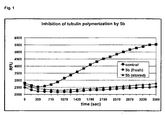


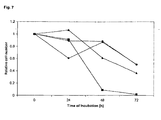
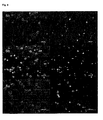


Classifications
-
- A—HUMAN NECESSITIES
- A61—MEDICAL OR VETERINARY SCIENCE; HYGIENE
- A61K—PREPARATIONS FOR MEDICAL, DENTAL OR TOILETRY PURPOSES
- A61K31/00—Medicinal preparations containing organic active ingredients
- A61K31/33—Heterocyclic compounds
- A61K31/395—Heterocyclic compounds having nitrogen as a ring hetero atom, e.g. guanethidine or rifamycins
- A61K31/41—Heterocyclic compounds having nitrogen as a ring hetero atom, e.g. guanethidine or rifamycins having five-membered rings with two or more ring hetero atoms, at least one of which being nitrogen, e.g. tetrazole
- A61K31/4164—1,3-Diazoles
-
- A—HUMAN NECESSITIES
- A61—MEDICAL OR VETERINARY SCIENCE; HYGIENE
- A61K—PREPARATIONS FOR MEDICAL, DENTAL OR TOILETRY PURPOSES
- A61K31/00—Medicinal preparations containing organic active ingredients
- A61K31/33—Heterocyclic compounds
- A61K31/395—Heterocyclic compounds having nitrogen as a ring hetero atom, e.g. guanethidine or rifamycins
- A61K31/41—Heterocyclic compounds having nitrogen as a ring hetero atom, e.g. guanethidine or rifamycins having five-membered rings with two or more ring hetero atoms, at least one of which being nitrogen, e.g. tetrazole
- A61K31/4164—1,3-Diazoles
- A61K31/4178—1,3-Diazoles not condensed 1,3-diazoles and containing further heterocyclic rings, e.g. pilocarpine, nitrofurantoin
-
- A—HUMAN NECESSITIES
- A61—MEDICAL OR VETERINARY SCIENCE; HYGIENE
- A61K—PREPARATIONS FOR MEDICAL, DENTAL OR TOILETRY PURPOSES
- A61K31/00—Medicinal preparations containing organic active ingredients
- A61K31/33—Heterocyclic compounds
- A61K31/395—Heterocyclic compounds having nitrogen as a ring hetero atom, e.g. guanethidine or rifamycins
- A61K31/41—Heterocyclic compounds having nitrogen as a ring hetero atom, e.g. guanethidine or rifamycins having five-membered rings with two or more ring hetero atoms, at least one of which being nitrogen, e.g. tetrazole
- A61K31/42—Oxazoles
-
- A—HUMAN NECESSITIES
- A61—MEDICAL OR VETERINARY SCIENCE; HYGIENE
- A61K—PREPARATIONS FOR MEDICAL, DENTAL OR TOILETRY PURPOSES
- A61K45/00—Medicinal preparations containing active ingredients not provided for in groups A61K31/00 - A61K41/00
- A61K45/06—Mixtures of active ingredients without chemical characterisation, e.g. antiphlogistics and cardiaca
-
- A—HUMAN NECESSITIES
- A61—MEDICAL OR VETERINARY SCIENCE; HYGIENE
- A61N—ELECTROTHERAPY; MAGNETOTHERAPY; RADIATION THERAPY; ULTRASOUND THERAPY
- A61N5/00—Radiation therapy
- A61N5/10—X-ray therapy; Gamma-ray therapy; Particle-irradiation therapy
-
- A—HUMAN NECESSITIES
- A61—MEDICAL OR VETERINARY SCIENCE; HYGIENE
- A61P—SPECIFIC THERAPEUTIC ACTIVITY OF CHEMICAL COMPOUNDS OR MEDICINAL PREPARATIONS
- A61P35/00—Antineoplastic agents
-
- A—HUMAN NECESSITIES
- A61—MEDICAL OR VETERINARY SCIENCE; HYGIENE
- A61P—SPECIFIC THERAPEUTIC ACTIVITY OF CHEMICAL COMPOUNDS OR MEDICINAL PREPARATIONS
- A61P35/00—Antineoplastic agents
- A61P35/02—Antineoplastic agents specific for leukemia
-
- A—HUMAN NECESSITIES
- A61—MEDICAL OR VETERINARY SCIENCE; HYGIENE
- A61P—SPECIFIC THERAPEUTIC ACTIVITY OF CHEMICAL COMPOUNDS OR MEDICINAL PREPARATIONS
- A61P43/00—Drugs for specific purposes, not provided for in groups A61P1/00-A61P41/00
-
- C—CHEMISTRY; METALLURGY
- C07—ORGANIC CHEMISTRY
- C07D—HETEROCYCLIC COMPOUNDS
- C07D233/00—Heterocyclic compounds containing 1,3-diazole or hydrogenated 1,3-diazole rings, not condensed with other rings
- C07D233/54—Heterocyclic compounds containing 1,3-diazole or hydrogenated 1,3-diazole rings, not condensed with other rings having two double bonds between ring members or between ring members and non-ring members
- C07D233/56—Heterocyclic compounds containing 1,3-diazole or hydrogenated 1,3-diazole rings, not condensed with other rings having two double bonds between ring members or between ring members and non-ring members with only hydrogen atoms or radicals containing only hydrogen and carbon atoms, attached to ring carbon atoms
- C07D233/58—Heterocyclic compounds containing 1,3-diazole or hydrogenated 1,3-diazole rings, not condensed with other rings having two double bonds between ring members or between ring members and non-ring members with only hydrogen atoms or radicals containing only hydrogen and carbon atoms, attached to ring carbon atoms with only hydrogen atoms or radicals containing only hydrogen and carbon atoms, attached to ring nitrogen atoms
-
- C—CHEMISTRY; METALLURGY
- C07—ORGANIC CHEMISTRY
- C07D—HETEROCYCLIC COMPOUNDS
- C07D233/00—Heterocyclic compounds containing 1,3-diazole or hydrogenated 1,3-diazole rings, not condensed with other rings
- C07D233/54—Heterocyclic compounds containing 1,3-diazole or hydrogenated 1,3-diazole rings, not condensed with other rings having two double bonds between ring members or between ring members and non-ring members
- C07D233/64—Heterocyclic compounds containing 1,3-diazole or hydrogenated 1,3-diazole rings, not condensed with other rings having two double bonds between ring members or between ring members and non-ring members with substituted hydrocarbon radicals attached to ring carbon atoms, e.g. histidine
-
- C—CHEMISTRY; METALLURGY
- C07—ORGANIC CHEMISTRY
- C07D—HETEROCYCLIC COMPOUNDS
- C07D263/00—Heterocyclic compounds containing 1,3-oxazole or hydrogenated 1,3-oxazole rings
- C07D263/02—Heterocyclic compounds containing 1,3-oxazole or hydrogenated 1,3-oxazole rings not condensed with other rings
- C07D263/30—Heterocyclic compounds containing 1,3-oxazole or hydrogenated 1,3-oxazole rings not condensed with other rings having two or three double bonds between ring members or between ring members and non-ring members
- C07D263/32—Heterocyclic compounds containing 1,3-oxazole or hydrogenated 1,3-oxazole rings not condensed with other rings having two or three double bonds between ring members or between ring members and non-ring members with only hydrogen atoms, hydrocarbon or substituted hydrocarbon radicals, directly attached to ring carbon atoms
-
- C—CHEMISTRY; METALLURGY
- C07—ORGANIC CHEMISTRY
- C07D—HETEROCYCLIC COMPOUNDS
- C07D403/00—Heterocyclic compounds containing two or more hetero rings, having nitrogen atoms as the only ring hetero atoms, not provided for by group C07D401/00
- C07D403/02—Heterocyclic compounds containing two or more hetero rings, having nitrogen atoms as the only ring hetero atoms, not provided for by group C07D401/00 containing two hetero rings
- C07D403/04—Heterocyclic compounds containing two or more hetero rings, having nitrogen atoms as the only ring hetero atoms, not provided for by group C07D401/00 containing two hetero rings directly linked by a ring-member-to-ring-member bond
-
- C—CHEMISTRY; METALLURGY
- C07—ORGANIC CHEMISTRY
- C07D—HETEROCYCLIC COMPOUNDS
- C07D403/00—Heterocyclic compounds containing two or more hetero rings, having nitrogen atoms as the only ring hetero atoms, not provided for by group C07D401/00
- C07D403/02—Heterocyclic compounds containing two or more hetero rings, having nitrogen atoms as the only ring hetero atoms, not provided for by group C07D401/00 containing two hetero rings
- C07D403/10—Heterocyclic compounds containing two or more hetero rings, having nitrogen atoms as the only ring hetero atoms, not provided for by group C07D401/00 containing two hetero rings linked by a carbon chain containing aromatic rings
Definitions
- the present invention relates to specific analogs of combretastatin, in particular the compounds of formula (I) as defined herein, and pharmaceutical compositions comprising the compounds, as well as their medical use, in particular in the treatment or prevention of cancer, including multidrug-resistant cancer.
- the chemotherapy of cancer is generally limited by the high incidence of malignant tumors that display resistance to a range of chemical anti-tumor agents, either intrinsically or acquired upon repeated administration.
- chemical anti-tumor agents either intrinsically or acquired upon repeated administration.
- chemotherapeutical agents capable of overcoming this so-called multidrug resistance.
- An alternative therapy of such cases is not available, either.
- a water-soluble phosphate prodrug of the angiotoxic, naturally occurring lead compound combretastatin A-4 (CA-4) has already entered clinical phase II and III trials against various incurable cancer diseases.
- CA-4 and analogs thereof are strongly cytotoxic and selectively disrupt tumoral vasculature or prevent its neoformation (so-called antivascular or antiangiogenic effect, respectively). They also bind to tubulin and inhibit its polymerization thus impeding the cell proliferation (antimitotic effect). In combination, these effects lead to an inhibition of tumor cell proliferation and of the growth and spread of solid tumors (invasion, metastasis).
- CA-4 A drawback of CA-4 is its insufficient cytotoxicity which necessitates combination regimens with carboplatin or taxol in the therapy of solid tumors. Treatment with CA-4 alone often led to the persistence of peripheral cancer cells and hence to tumor relapses ( Tron et al., J. Med. Chem. 2006, 49, 3033-3044 ; Lippert, Bioorg. Med. Chem. 2007. 15, 605-615 ).
- the related C A-1 and its bisphosphate prodrug Ox4503 were also spectacularly efficacious in certain tumor models owing to their catechol moiety.
- Catechols are known to undergo redox cycling via quinoid intermediates thus mediating the generation of reactive oxygen species (ROS) and the alkylation of bionucleophiles ( Holwell et al., Anticancer Res. 2002, 22, 3933-40 ; Folkes et al., Chem. Res. Toxicol. 2007, 20, 1885-1894 ).
- ROS reactive oxygen species
- the compounds of formula (I), (II) or (III) as defined herein below have an improved efficacy against cancer, in particular against resistant tumor cells, and sufficient solubility in water or serum. They generally have a low toxicity which avoids cumulative dose restrictions and leads to improved tolerance. Furthermore, they have an improved chemical stability and thus reduced tendency to inactivation.
- the present invention relates to a compound of formula (I) or a pharmaceutically acceptable salt or solvate thereof.
- X is selected from O, S. N(H), or N(C 1-4 alkyl).
- X is selected from O or N(C 1-4 alkyl). More preferably, X is selected from O or N(CH 3 ).
- R 1 is selected from halogen, -CN, -CF 3 , -NH 2 , -NH(C 1-4 alkyl), or -N(C 1-4 alkyl)(C 1-4 alkyl).
- R 1 is selected from halogen (such as, e.g., -F, -Cl, or -Br), or -NH 2 . More preferably, R 1 is selected from -Cl, -Br, or -NH 2 . Most preferably, R 1 Is selected from -Cl or -Br.
- R 2 is selected from hydrogen, halogen, -CN, -CF 3 , -OH, -O(C 1-4 alkyl), -NH 2 , -NH(C 1-4 alkyl), or -N(C 1-4 alkyl)(C 1-4 alkyl).
- R 2 is selected from hydrogen, halogen (such as, e.g., -F, -Cl, or -Br), -OH, or -NH 2 . More preferably, R 2 is selected from -F, -OH. or -NH 2 .
- R 3 is selected from -OH, -O(C 1-4 alkyl), -SH, -S(C 1-4 alkyl), -NH 2 , -NH(C 1-4 alkyl), or - N(C 1-4 alkyl)(C 1-4 alkyl).
- R 3 is selected from -O(C 1-4 alkyl) or -N(C 1-4 alkyl)(C 1-4 alkyl). More preferably, R 3 is selected from -O-CH 3 , -O-CH 2 -CH 3 or -N(CH 3 ) 2 , particularly from -O-CH 3 or -N(CH 3 ) 2 .
- the compound of formula (I) may have the following structure: wherein the halogen may, e.g., be -F, -Cl, or -Br, and preferably is -Cl, and the other groups X and R 1 are as defined above.
- the halogen may, e.g., be -F, -Cl, or -Br, and preferably is -Cl, and the other groups X and R 1 are as defined above.
- R 2 is -NH 2 and R 3 is -O-CH 3 .
- X is O or N(CH 3 )
- R 1 is -NH 2 or halogen (such as, e.g., -F, -Cl, or -Br)
- R 2 is -NH 2
- R 3 is -O-CH 3 .
- a preferred compound of formula (I) is 1-methyl-5-(3-amino-4-methoxyphenyl)-4-(3-chloro-4,5-dimethoxyphenyl)-imidazole (also referred to as "5b" or "compound 5b ”) .
- Another preferred compound of formula (I) is 1-methyl-5-(3-amino-4-methoxyphenyl)-4-(3-bromo-4,5-dimethoxyphenyl)-imidazole (also referred to as “6b” or “compound 6b ").
- R 2 is -NH 2 and R 3 is -O-CH 2 -CH 3 .
- X is O or N(CH 3 )
- R 1 is -NH 2 or halogen (such as, e.g., -F, -Cl, or -Br)
- R 2 is - NH 2
- R 3 is -O-CH 2 -CH 3 .
- Particularly preferred compounds of formula (I) are, accordingly, 1-methyl-5-(3-amino-4-ethoxyphenyl)-4-(3-chloro-4,5-dimethoxyphenyl)-imidazole (i.e., 1-methyl-5-(3"-amino-4"-ethoxyphenyl)-4-(3'-chloro-4',5'-dimethoxyphenyl)-imidazole: also referred to as “5f” or “compound 5f”) and 1-methyl-5-(3-amino-4-ethoxyphenyl)-4-(3-bromo-4,5-dimethoxyphenyl)-imidazole (i.e., 1-methyl-5-(3"-amino-4"-ethoxyphenyl)-4-(3'-bromo-4',5'-dimethoxyphenyl)-imidazole; also referred to as "6f” or "compound 6f”).
- R 2 is -F and R 3 is -O-CH 3 or -O-CH 2 -CH 3 .
- X is O or N(CH 3 )
- R 1 is -NH 2 or halogen (such as, e.g.,-Cl, or -Br)
- R 2 is -F
- R 3 is -O-CH 3 or -O-CH 2 -CH 3 .
- preferred compounds of formula (I) are 1-methyl-4-(3-chloro-4,5-dimethoxyphenyl)-5-(3-fluoro-4-ethoxyphenyl)-imidazole (also referred to as “5g” or “compound 5g”) and 1-methyl-4-(3-bromo-4,5-dimethoxyphenyl)-5-(3-fluoro-4-ethoxyphenyl)-imidazole (also referred to as "6g” or “compound “6g”).
- the present invention further provides a compound of formula (II) or a pharmaceutically acceptable salt or solvate thereof.
- X 2 is selected from O. S. N(H), or N(C 1-4 alkyl).
- X 2 is selected from O or N(C 1-4 alkyl). More preferably, X 2 is selected from O or N(CH 3 ).
- R 21 is selected from halogen, -CN, -CF 3 , -NH 2 , -NH(C 1-4 alkyl), or -N(C 1-4 alkyl)(C 1-4 alkyl).
- R 21 is selected from halogen, (such as, e.g., -F, -Cl, or -Br), or -NH 2 . More preferably, R 21 is selected from -Cl, -Br, or -NH 2 . Most preferably, R 21 is selected from -Cl or -Br.
- R 22 is C 1-4 alkyl. Preferably. R 22 is C 2-4 alkyl. More preferably, R 22 is ethyl.
- halogen comprised in the compound of formula (II) is preferably selected from - F, -Cl, or -Br, and more preferably the "halogen” is -Cl.
- Preferred compounds of formula (II) are 1-methyl-4-(3-amino-4,5-dimethoxyphenyl)-5-(N-methyl-3-chloroindol-5-yl)-imidazole, 1-methyl-4-(3'-chloro-4',5'-dimethoxyphenyl)-5-(N-methyl-3"-chloroindol-5"-yl)-imidazole, and 1-methyl-4-(3'-bromo-4',5'-dimethoxyphenyl)-5-(N-methyl-3"-chloroindol-5"-yl)-imidazole.
- a particularly preferred compound of formula (II) is 1-methyl-4-(3'-bromo-4',5'-dimethoxyphenyl)-5-(N-ethyl-3"-chloroindol-5"-yl)-imidazole (also referred to as “6h” or “compound 6h” ).
- the invention also provides a compound of formula (III) or a pharmaceutically acceptable salt or solvate thereof.
- X 3 is selected from O, S, N(H), or N(C 1-4 alkyl). Preferably, X 3 is selected from O or N(C 1-4 alkyl). More preferably. X 3 is selected from O or N(CH 3 ).
- R 31 Is selected from halogen (particularly -Cl, -Br or -I), -CN, -CF 3 , -NH 2 , -NH(C 1-4 alkyl), or -N(C 1-4 alkyl)(C 1-4 alkyl).
- R 31 is selected from -Cl, -Br, -I, or -NH 2 . More preferably, R 31 is selected from -Br, -I, or -NH 2 . Most preferably, R 31 is selected from -Br or -I.
- R 32 is selected from hydrogen, halogen, -CN, -CF 3 , -OH, -O(C 1-4 alkyl), -NH 2 , -NH(C 1-4 alkyl), or -N(C 1-4 alkyl)(C 1-4 alkyl).
- R 32 is selected from hydrogen, halogen (such as, e.g., -F, -Cl, or -Br), -OH, or -NH 2 . More preferably, R 32 is selected from -F, -OH, or -NH 2 . Most preferably, R 32 is -F.
- R 33 is selected from -OH, -O(C 1-4 alkyl), -SH, -SCC 1-4 alkyl), -NH 2 , -NH(C 1-4 alkyl), or - N(C 1-4 alkyl)(C 1-4 alkyl).
- R 33 is selected from -O(C 1-4 alkyl) or -N(C 1-4 alkyl)(C 1-4 alkyl). More preferably, R 33 is selected from -O-CH 3, -O-CH 2 -CH 3 or -N(CH 3 ) 2 . Most preferably, R 33 is selected from -O-CH 3 or -O-CH 2 CH 3 .
- the C 1-4 alkyl comprised in that group is preferably selected from methyl or ethyl.
- R 34 is selected from -OH, -O(C 1-4 alkyl). -SH. -S(C 1-4 alkyl), halogen (particularly -Cl, -Br or -I), -CN, -CF 3 , -NH 2 , -NH(C 1-4 alkyl), or -N(C 1-4 alkyl)(C 1-4 alkyl).
- R 34 is selected from -O(C 1-4 alkyl), -Cl, -Br, -I, or -NH 2 . More preferably, R 34 is selected from -O-CH 3 , -O-CH 2 -CH 3 , -Br, -I, or -NH 2 . Most preferably, R 34 is selected from -O-OCH 3 , -Br or - I.
- R 32 is -F and R 33 is -O-CH 3 .
- X 3 is N(CH 3 ).
- R 31 is -Br or -I
- R 33 is -O-CH 3
- R 34 is -O-CH 3 , -Br or -I.
- Particularly preferred compounds of formula (III) are the following compounds 9a, 9b and 9c:
- alkyl refers to a monovalent saturated aliphatic (i.e. non-aromatic) acyclic hydrocarbon group (i.e. a group consisting of carbon atoms and hydrogen atoms) which may be linear or branched and does not comprise any carbon-to-carbon double bond or any carbon-to-carbon triple bond.
- C 1-4 alkyl refers to methyl, ethyl, propyl (e.g., n-propyl or isopropyl), or butyl (e.g., n-butyl, isobutyl, tert-butyl, or sec-butyl).
- halogen refers to -F, -Cl, -Br, or -I, and in particular to -F, -Cl, or -Br.
- the present invention also relates to a pharmaceutical composition
- a pharmaceutical composition comprising a compound of formula (I), (II) or (III) as defined herein or a pharmaceutically acceptable salt or solvate thereof, in combination with a pharmaceutically acceptable excipient
- the compounds of formula (I), (II) or (III) are useful as medicaments.
- the present invention further relates to a compound of formula (I), (II) or (III) as defined herein, or a pharmaceutically acceptable salt or solvate thereof, or a pharmaceutical composition comprising any of the aforementioned entities in combination with a pharmaceutically acceptable excipient, for use in the treatment or prevention of cancer.
- a compound of formula (I), (II) or (III) as defined herein or a pharmaceutically acceptable salt or solvate thereof, or a pharmaceutical composition comprising any of the aforementioned entities in combination with a pharmaceutically acceptable excipient, for use in the treatment or prevention of cancer.
- the cancer to be treated or prevented with the compounds or the pharmaceutical compositions according to the present invention includes, for example, breast (mamma) cancer, genitourinary cancer (such as, e.g., prostate tumor, including a hormone-refractory prostate tumor, or germ cell cancer), lung cancer (such as, e.g., small cell or non-small cell lung tumor), gastrointestinal cancer (such as, e.g., hepatocellular carcinoma, colorectal tumor, colon cancer or gastric cancer), epidermoid cancer (such as, e.g., epidermoid head and/or neck tumor or mouth tumor), melanoma, ovarian cancer, pancreas cancer, neuroblastoma, head and/or neck cancer, bladder cancer, renal cancer, brain cancer, leukemia (such as, e.g., lymphocytic leukemia or myelogenous leukemia), or lymphoma.
- breast (mamma) cancer such as, e.g., prostate tumor, including
- the cancer to be treated or prevented with the compounds or the pharmaceutical compositions according to the invention is a multidrug-resistant cancer.
- the cancer to be treated may thus be a multidrug-resistant form of the above described cancers.
- the cancer to be treated or prevented with the compounds or the pharmaceutical compositions provided herein is resistant against combretastatin A-4 and/or cisplatin. Accordingly, in the present invention the treatment or prevention of combretastatin A-4 (CA-4)-refractory cancer or cisplatin-refractory cancer is particularly envisaged.
- the compounds according to the invention have been found to be surprisingly effective in the medical intervention of multidrug-resistant cancer and, in particular, of CA4-refractory cancer, which has been demonstrated in vitro and in vivo , including in a mouse xenograft model (cf. Example 3 and Figures 3 , 4 and 5 ).
- the new compounds exhibit a distinct cytotoxic, antiangiogenic/antivascular and antimitotic effect.
- their polar substituents render the new compounds very well soluble in water and so directly applicable without employment of a vehicle.
- These compounds can be administered by injection as solutions in physiological saline solution. Such solutions were shown to be stable for at least one month under ambient conditions without any noticeable loss of activity.
- the new compounds were found anti-tumor active causing a dramatic regression of the tumor xenografts.
- the strong antivascular effect selectively affecting the tumoral vasculature was unambiguously confirmed by visible hemorrhages of the tumoral tissue. No unwanted side effects were observed when the new compounds were applied at efficacious concentrations. This underscores their high tumor selectivity and their excellent tolerance in vivo.
- the attachment of special ring substituents at defined positions, as described herein for the compounds of formula (I), (II) and (III) results in enhanced anti-tumor activity, improved pharmacological properties as well as in superior tolerance in vivo and in the potential to overcome chemoresistance of tumors.
- the compounds of the invention have surprisingly been found to exhibit a synergistic effect resulting from the combination of a high cytotoxicity and a strong antivascular effect selectively affecting the tumoral vasculature, as also demonstrated in the Examples.
- R 1 in formula (I) The nature of the halogen substituent In R 1 in formula (I) is crucial for the selectivity of the compounds according to the invention and the magnitude of their bioactivity. Unlike its chloro congener 5b (structure shown in Example 4), the bromo imidazole 6b was vascular disrupting in tumor xenografts while leaving regular vasculature in chicken embryos (CAM assay) alone. The compounds of the invention are also characterized by an outstanding tumor-selective cytotoxicity and a strong induction of cancer cell apoptosis.
- the compounds of the invention including the compounds of formula (I), further have advantageous properties with respect to solubility in water and chemical stability In solution, as also demonstrated in Example 3 and Figures 1 and 2 .
- solubility of the compounds 5b , 6b and 8a according to the present invention in water exceeded a concentration of 10 mg/mL.
- these compounds are even more water-soluble than the potassium salt of combretastatin A-4-phosphate (about 5 mg/mL; Bedford et al., Bioorg. Med. Chem. Lett. 1996, 6, 157-160 ).
- the compounds of the invention Including the compounds of formula (I), are particularly suitable and effective as medicaments, including as medicaments in the treatment or prevention of cancer.
- the compounds of the present invention are particularly advantageous in respect of cytotoxicity, solubility in water, and chemical stability, as has been shown in the appended examples for the compound 5b according to the invention.
- compound 5b is highly cytotoxic in vitro and in vivo (likewise in CA-4- and cisplatin-resistant cell lines), shows an improved water solubility compared with CA-4-phosphate and can not isomerize to inactive trans -isomers like CA-4.
- Compound 5b is nevertheless well tolerated and selective in mouse xenografts.
- the compounds of the present invention can thus be administered without the need of prodrug forms, such as phosphate prodrug forms used for combretastatin-A4.
- TosMIC derivatives para-toluenesulfonylmethylisocyanides
- Scheme 1 para-toluenesulfonylmethylisocyanides
- Commercially available 5-chloro- or 5-bromovanillin 1a/b were reacted with iodomethane and potassium carbonate to give the veratraldehydes 2a/b which were converted to the tosylmethylformamides 3a/b by reaction with para-toluenesulfinic acid and formamide in the presence of camphorsulfonic acid.
- the halo-substituted TosMIC derivatives 4a/b are converted to the imidazoles 5/6 by reaction in dimethoxyethane/ethanol mixtures with aryl aldehydes or the imines generated from the latter (Scheme 2). Selective reduction of the nitro group with Zn/HCl affords the desired amines 5b or 6b , respectively.
- Treatment of the imidazoles 5a-d and 6b-d with 3 M HCl/dioxane yields the respective water-soluble hydrochlorides.
- the nitro-substituted compounds 7a-e are prepared similarly to the imidazoles 5/6 from the nitro-TosMIC derivative 4c and the corresponding aldehydes and imines (Scheme 3).
- the amines 8a-e are obtained by Pd-catalyzed transfer hydrogenation.
- the 3-chloroindole 7e is reduced with Zn/HCl to amine 8e .
- the compounds 8 can further be converted to water-soluble hydrochlorides.
- the compounds 5e-g and 6e-g are prepared as follows (Scheme 4). 4-Ethoxy-3-nitro/fluorobenzaldehyde is treated with MeNH 2 to give imine intermediates, which are reacted with the TosMIC reagents 4a / b under basic conditions to give the N-methyl imidazoles 5e,g and 6e,g.
- the preparation of the amines 5f and 6f is accomplished by reduction of 5e / 6e with Zn/HCl in THF. These compounds can be converted into the hydrochloride salts, e.g., by treatment with 3 M HCl/dioxane.
- the compounds of formula (I) can also be prepared in analogy to the synthesis routes described in Wang et al., J. Med. Chem. 2002, 45, 1697-1711 .
- the compounds of formula (II) or (III) can be prepared in accordance with or in analogy to the syntheses described above and/or in the Examples.
- the compounds of formula (III), in particular, can also be prepared according to the following general protocol.
- the compounds 9a-c are prepared as follows (Scheme 5). 3-Bromo-4,5-dimethoxy-benzaldehyde, 3,5-dibromo-4-methoxybenzaldehyde, and 3,5-diiodo-4-methoxybenz-aldehyde, respectively, are treated with MeNH 2 to give imine intermediates, which are reacted with the TosMIC reagent 4d under basic conditions to give the N-methyl imidazoles 9a-c . These compounds can be converted to the hydrochloride salts, e.g., by treatment with 3 M HCI/dioxane.
- the scope of the invention embraces all pharmaceutically acceptable salt forms of the compounds of the present invention, in particular the compounds of formula (I), (II) or (III), which may be formed, e.g., by protonation of an atom carrying an electron lone pair which is susceptible to protonation, such as an amino group, with an inorganic or organic acid, or as a salt of a carboxylic acid group with a physiologically acceptable cation as they are well known in the art.
- Exemplary base addition salts comprise, for example, alkali metal salts such as sodium or potassium salts; alkaline earth metal salts such as calcium or magnesium salts; ammonium salts; aliphatic amine salts such as trimethylamine, triethylamine, dicyclohexylamine, ethanolamine, diethanolamine, triethanolamine, procaine salts, meglumine salts, diethanol amine salts or ethylenediamine salts; aralkyl amine salts such as N,N-dibenzylethylenediamine salts, benethamine salts; heterocyclic aromatic amine salts such as pyridine salts, picoline salts, quinoline salts or isoquinoline salts: quaternary ammonium salts such as tetramethylammonium salts, tetraethylammonium salts, benzyltrimethylammonium salts, benzyltriethylammonium salts, benzyltributy
- Exemplary acid addition salts comprise, for example, mineral acid salts such as hydrochloride, hydrobromide, hydroiodide, sulfate, salts, nitrate salts, phosphate salts (such as, e.g., phosphate, hydrogenphosphate, or dihydrogenphosphate salts), carbonate salts, hydrogencarbonate salts or perchlorate salts; organic acid salts such as acetate, propionate, butyrate, pentanoate, hexanoate, heptanoate, octanoate, cyclopentanepropionate, undecanoate, lactate, maleate, oxalate, fumarate, tartrate, malate, citrate, nicotinate, benzoate, salicylate or ascorbate salts; sulfonate salts such as methanesulfonate, ethanesulfonate, 2-hydroxyethanesulfonate, benzenesulfon
- the scope of the Invention embraces solid forms of the compounds of formula (I), (II) or (III) in any solvated form, including e.g. solvates with water, for example hydrates, or with organic solvents such as, e.g., methanol, ethanol or acetonitrile, i.e. as a methanolate, ethanolate or acelonitrilate, respectively; or in the form of any polymorph.
- all stereoisomers of the compounds of formula (I), (II) or (III) are contemplated as part of the present Invention, either in admixture or in pure or substantially pure form.
- the scope of the compounds according to the invention embraces all the possible stereoisomers and their mixtures, It particularly embraces the racemic forms and the isolated optical isomers.
- the racemic forms can be resolved by physical methods, such as, e.g., fractional crystallization, separation or crystallization of diastereomeric derivatives or separation by chiral column chromatography.
- the individual optical isomers can be obtained from the racemates using conventional methods, such as, e.g., salt formation with an optically active add followed by crystallization.
- prodrugs of the compounds of formula (I), (II) or (III) i.e. derivatives which have chemically or metabolically cleavable groups and become, by solvolysis or under physiological conditions, the compounds of the present invention which are pharmaceutically active in vivo.
- Prodrugs of the compounds of formula (I), (II) or (III) may be formed in a conventional manner with a functional group of the compounds such as with an amino or a hydroxyl group.
- the prodrug derivative form often offers advantages of solubility, tissue compatibility or delayed release in a mammalian organism (see, Bundgaard, H., Design of Prodrugs, pp. 7-9, 21-24, Elsevier, Amsterdam 1985 ).
- an acyloxy derivative prepared by reacting the hydroxyl group with a suitable acylhalide or a suitable acid anhydride is exemplified as a prodrug.
- an amide derivative prepared by reacting the amino group with a suitable acid halide or a suitable mixed anhydride is exemplified as a prodrug.
- the compound of formula (I) may be used as a prodrug, wherein the prodrug is a compound of formula (I), in which one or more amino groups, if present, are in the form of an amide, such as e.g.
- a corresponding prodrug may be the compound of formula (I), in which the hydroxyl group which is R 2 (if applicable) and/or the hydroxyl group which is R 3 (if applicable) is in the form of a phosphate (i.e.
- the compounds described herein may be administered as compounds per se or may be formulated as medicaments.
- the medicaments/pharmaceutical compositions may optionally comprise one or more pharmaceutically acceptable excipients, such as carriers, diluents, fillers, disintegrants, lubricating agents, binders, colorants, pigments, stabilizers, preservatives, antioxidants, or solubility enhancers.
- the pharmaceutical compositions may comprise one or more solubility enhancers, such as, e.g., poly(ethylene glycol), Including poly(ethylene glycol) having a molecular weight in the range of about 200 to about 5,000 Da, ethylene glycol, propylene glycol, non-ionic surfactants, tyloxapol, polysorbate 80, macrogol-15-hydroxystearate, phospholipids, lecithin, dimyristoyl phosphatidylcholine, dipalmitoyl phosphatidylcholine, distearoyl phosphatidylcholine, cyclodextrins, hydroxyethyl- ⁇ -cyclodextrin, hydroxypropyl- ⁇ -cyclodextrin, hydroxyethyl- ⁇ -cyclodextrin, hydroxypropyl- ⁇ -cyclodextrin, dihydroxypropyl- ⁇ -cyclodextrin, glucosyl- ⁇ -cyclodextrin,
- compositions can be formulated by techniques known to the person skilled in the art, such as the techniques published in Remington's Pharmaceutical Sciences, 20th Editi on.
- the pharmaceutical compositions can be formulated as dosage forms for oral, parenteral, such as intramuscular, intravenous, intraperitoneal, subcutaneous, intradermal, intraarterial, rectal, nasal, topical, aerosol or vaginal administration.
- Dosage forms for oral administration include coated and uncoated tablets, soft gelatin capsules, hard gelatin capsules, lozenges, troches, solutions, emulsions, suspensions, syrups, elixirs, powders and granules for reconstitution, dispersible powders and granules, medicated gums, chewing tablets and effervescent tablets.
- Dosage forms for parenteral administration include solutions, emulsions, suspensions, dispersions and powders and granules for reconstitution. Emulsions are a preferred dosage form for parenteral administration.
- Dosage forms for rectal and vaginal administration include suppositories and ovule.
- Dosage forms for nasal administration can be administered via inhalation and insufflation, for example by a metered inhaler.
- Dosage forms for topical administration include creams, gels, ointments, salves, patches and transdermal delivery systems.
- the compounds of formula (I), (II) or (III) or the above described pharmaceutical compositions comprising a compound of formula (I), (II) or (III) may be administered to a subject by any convenient route of administration, whether systemically/peripherally or at the site of desired action, including but not limited to one or more of: oral (e.g. as a tablet, capsule, or as an ingestible solution), topical (e.g., transdermal, intranasal, ocular, buccal, and sublingual), parenteral (e.g., using injection techniques or infusion techniques, and including, for example, by injection, e.g.
- oral e.g. as a tablet, capsule, or as an ingestible solution
- topical e.g., transdermal, intranasal, ocular, buccal, and sublingual
- parenteral e.g., using injection techniques or infusion techniques, and including, for example, by injection, e.g.
- implant of a depot for example, subcutaneously or intramuscularly
- pulmonary e.g., by inhalation or insufflation therapy using, e.g., an aerosol, e.g. through mouth or nose
- the compounds or the pharmaceutical compositions may be administered orally or by inhalation. It is particularly preferred that the compounds of the present invention are administered by pulmonary administration, in particular by inhalation, in the form of dry powder formulations as described e.g. in more detail herein below.
- the compounds or pharmaceutical compositions are administered parenterally, then examples of such administration include one or more of: intravenously, intraarterially, intraperitoneally, intrathecally, intraventricularly, intraurethrally, intrasternally, intracranially, intramuscularly or subcutaneously administering the compounds pharmaceutical compositions, and/or by using infusion techniques.
- parenteral administration the compounds are best used in the form of a sterile aqueous solution which may contain other substances, for example, enough salts or glucose to make the solution isotonic with blood.
- the aqueous solutions should be suitably buffered (preferably to a pH of from 3 to 9), if necessary.
- the preparation of suitable parenteral formulations under sterile conditions is readily accomplished by standard pharmaceutical techniques well known to those skilled in the art.
- the compounds or pharmaceutical compositions can also be administered orally in the form of tablets, capsules, ovules, elixirs, solutions or suspensions, which may contain flavoring or coloring agents, for immediate-, delayed-, modified-, sustained-, pulsed- or controlled-release applications.
- the tablets may contain excipients such as microcrystalline cellulose, lactose, sodium citrate, calcium carbonate, dibasic calcium phosphate and glycine, disintegrants such as starch (preferably corn, potato or tapioca starch), sodium starch glycolate, croscarmellose sodium and certain complex silicates, and granulation binders such as polyvinylpyrrolidone, hydroxypropylmethylcellulose (HPMC), hydroxypropylcellulose (HPC), sucrose, gelatin and acacia. Additionally, lubricating agents such as magnesium stearate, stearic acid, glyceryl behenate and talc may be included. Solid compositions of a similar type may also be employed as fillers in gelatin capsules.
- excipients such as microcrystalline cellulose, lactose, sodium citrate, calcium carbonate, dibasic calcium phosphate and glycine
- disintegrants such as starch (preferably corn, potato or tapioca starch), sodium starch glyco
- Preferred excipients in this regard include lactose, starch, a cellulose, milk sugar or high molecular weight polyethylene glycols.
- the agent may be combined with various sweetening or flavoring agents, coloring matter or dyes, with emulsifying and/or suspending agents and with diluents such as water, ethanol, propylene glycol and glycerin, and combinations thereof.
- the compounds or pharmaceutical compositions can be administered in the form of a suppository or pessary, or it may be applied topically in the form of a gel, hydrogel, lotion, solution, cream, ointment or dusting powder.
- the compounds of the present invention may also be dermally or transdermally administered, for example, by the use of a skin patch.
- the compounds or pharmaceutical compositions may also be administered by the pulmonary route, rectal routes, or the ocular route.
- they can be formulated as micronized suspensions in isotonic, pH adjusted, sterile saline, or, preferably, as solutions in isotonic, pH adjusted, sterile saline, optionally in combination with a preservative such as a benzylalkonium chloride.
- a preservative such as a benzylalkonium chloride.
- they may be formulated in an ointment such as petrolatum.
- dry powder formulations of the compounds of the present invention for pulmonary administration.
- the dry powder formulations of the compounds of the present invention may be delivered using any suitable dry powder inhaler (DPI), i.e., an inhaler device that utilizes the patient's inhaled breath as a vehicle to transport the dry powder drug to the lungs.
- DPI dry powder inhaler
- the compounds or pharmaceutical compositions can be formulated as a suitable ointment containing the active compound suspended or dissolved in, for example, a mixture with one or more of the following: mineral oil, liquid petrolatum, white petrolatum, propylene glycol, emulsifying wax and water.
- they can be formulated as a suitable lotion or cream, suspended or dissolved in, for example, a mixture of one or more of the following: mineral oil, sorbitan monostearate, a polyethylene glycol, liquid paraffin, polysorbate 60, cetyl esters wax, 2-octyldodecanol, benzyl alcohol and water.
- a physician will determine the actual dosage which will be most suitable for an individual subject.
- the specific dose level and frequency of dosage for any particular individual subject may be varied and will depend upon a variety of factors including the activity of the specific compound employed, the metabolic stability and length of action of that compound, the age, body weight, general health, sex, diet, mode and time of administration, rate of excretion, drug combination, the severity of the particular condition, and the individual subject undergoing therapy.
- a proposed, yet non-limiting dose of the compounds of the invention, including the compounds of formula (I), (II) or (III), for administration to a human (of approximately 70 kg body weight) may be 0.1 ⁇ g to 10 g, preferably 0.1 mg to 1 g, and more preferably about 200 mg or more (e.g., 200 to 300 mg or 200 to 500 mg), of the active ingredient per unit dose.
- the unit dose may be administered, for example, 1 to 4 times per week.
- the dose will depend on the route of administration. It will be appreciated that it may be necessary to make routine variations to the dosage depending on the age and weight of the patient/subject as well as the severity of the condition to be treated. The precise dose and route of administration will ultimately be at the discretion of the attendant physician or veterinarian.
- the compounds according to the present invention can be used in combination with other therapeutic agents.
- the dose of each compound may differ from that when the compound is used alone.
- the combination of a compound of this invention with (an) other drug(s) may comprise the administration of the drug(s) with the compound of the invention.
- Such an administration may comprise simultaneous/concomitant administration. However, sequential/separate administration is also envisaged.
- the second therapeutic agent to be administered in combination with the compound of the present invention is an anticancer drug.
- the anticancer drug to be administered in combination with the compound of the invention may be: a tumor angiogenesis inhibitor (for example, a protease inhibitor, an epidermal growth factor receptor kinase inhibitor, or a vascular endothelial growth factor receptor kinase inhibitor); a cytotoxic drug (for example, an antimetabolite, such as purine and pyrimidine analogue antimetabolites); an antimitotic agent (for example, a microtubule stabilizing drug or an antimitotic alkaloid); a platinum coordination complex; an anti-tumor antibiotic; an alkylating agent (for example, a nitrogen mustard or a nitrosourea); an endocrine agent (for example, an adrenocorticosteroid, an androgen, an anti-androgen, an estrogen, an anti-estrogen, an aromatase inhibitor, a gonadotropin-
- An alkylating agent which can be used as an anticancer drug in combination with a compound of the present invention may be, for example, a nitrogen mustard (such as cyclophosphamide, mechlorethamine (chlormethine), uramustine, melphalan, chlorambucil, ifosfamide, bendamustine, or trofosfamide), a nitrosourea (such as carmustine, streptozocin, fotemustine, lomustine, nimustine, prednimustine, ranimustine, or semustine), an alkyl sulfonate (such as busulfan, mannosulfan, or treosulfan), an aziridine (such as hexamethylmelamine (altretamine), triethylenemelamine, ThioTEPA (N,N'N'-triethylenethiophosphoramide), carboquone, or triaziquone), a hydrazine (such as procarbazine),
- a platinum coordination complex which can be used as an anticancer drug in combination with a compound of the present invention may be, for example, cisplatin, carboplatin, nedaplatin, oxaliplatin, satraplatin, or triplatin tetranitrate.
- a cytotoxic drug which can be used as an anticancer drug in combination with a compound of the present invention may be, for example, an antimetabolite, including folic acid analogue antimetabolites (such as aminopterin, methotrexate, pemetrexed, or raltitrexed), purine analogue antimetabolites (such as cladribine, clofarabine, fludarabine, 6-mercaptopurine (including its prodrug form azathioprine), pentostatin, or 6-thioguanine), and pyrimidine analogue antimetabolites (such as cytarabine, decitabine, 5-fluorouracil (including its prodrug forms capecitabine and tegafur), floxuridine, gemcitabine, enocitabine, or sapacitabine).
- folic acid analogue antimetabolites such as aminopterin, methotrexate, pemetrexed, or raltitrexed
- An antimitotic agent which can be used as an anticancer drug in combination with a compound of the present invention may be, for example, a taxane (such as docetaxel, larotaxel, ortataxel, paclitaxel/taxol, or tesetaxel), a Vinca alkaloid (such as vinblastine, vincristine, vinflunine, vindesine, or vinorelbine), an epothilone (such as epothilone A, epothilone B, epothilone C, epothilone D, epothilone E, or epothilone F) or an epothilone B analogue (such as ixabepilone/azaepothilone B).
- a taxane such as docetaxel, larotaxel, ortataxel, paclitaxel/taxol, or tesetaxel
- a Vinca alkaloid such as vinblastine
- An anti-tumor antibiotic which can be used as an anticancer drug in combination with a compound of the present invention may be, for example, an anthracycline (such as aclarubicin, daunorubicin, doxorubicin, epirubicin, idarubicin, amrubicin, pirarubicin, valrubicin, or zorubicin), an anthracenedione (such as mitoxantrone, or pixantrone) or an anti-tumor antibiotic isolated from Streptomyces (such as actinomycin (including actinomycin D), bleomycin, mitomycin (including mitomycin C), or plicamycin).
- an anthracycline such as aclarubicin, daunorubicin, doxorubicin, epirubicin, idarubicin, amrubicin, pirarubicin, valrubicin, or zorubicin
- a tyrosine kinase inhibitor which can be used as an anticancer drug in combination with a compound of the present invention may be, for example, axitinib, bosutinib, cediranib, dasatinib, erlotinib, gefitinib, imatinib, lapatinib, lestaurtinib, nilotinib, semaxanib, sorafenib, sunitinib, or vandetanib.
- a topoisomerase-inhibitor which can be used as an anticancer drug in combination with a compound of the present invention may be, for example, a topoisomerase I inhibitor (such as irinotecan, topotecan, camptothecin, belotecan, rubitecan, or lamellarin D) or a topoisomerase II inhibitor (such as amsacrine, etoposide, etoposide phosphate, teniposide, or doxorubicin).
- a topoisomerase I inhibitor such as irinotecan, topotecan, camptothecin, belotecan, rubitecan, or lamellarin D
- a topoisomerase II inhibitor such as amsacrine, etoposide, etoposide phosphate, teniposide, or doxorubicin.
- anticancer drugs may be used in combination with a compound of the present invention.
- the anticancer drugs may comprise biological or chemical molecules, like TNF-related apoptosis-inducing ligand (TRAIL), tamoxifen, amsacrine, bexarotene, estramustine, irofulven, trabectedin, cetuximab, panitumumab, tositumomab, alemtuzumab, bevacizumab, edrecolomab, gemtuzumab, alvocidib, seliciclib, aminolevulinic acid, methyl aminolevulinate, efaproxiral, porfimer sodium, talaporfin, temoporfin, verteporfin, alitretinoin, tretinoin, anagrelide, arsenic trioxide, atrasentan, bortezomib, carmofur, cele
- biological drugs like antibodies, antibody fragments, antibody constructs (for example, single-chain constructs), and/or modified antibodies (like CDR-grafted antibodies, humanized antibodies, "full humanized” antibodies, etc.) directed against cancer or tumor markers/factors/cytokines involved in proliferative diseases can be employed in co-therapy approaches with the compounds of the invention.
- biological molecules are anti-HER2 antibodies (e.g. trastuzumab, Herceptin ® ), anti-CD20 antibodies (e.g.
- Rituximab Rituxan ® , MabThera ® , Reditux ®
- anti-CD19/CD3 constructs see, e.g., EP-A-1 071 752
- anti-TNF antibodies see, e.g., Taylor et al., Antibody therapy for rheumatoid arthritis, Curr Opin Pharmacol, 2003, 3(3), 323-328 ).
- antibody fragments, antibody constructs and/or modified antibodies to be used in co-therapy approaches with the compounds of the invention can be found in: Taylor et al., Antibody therapy for rheumatoid arthritis, Curr Opin Pharmacol, 2003, 3(3), 323-328 ; or Roxana et al., Maedica, 2006, 1(1), 63-65 .
- the combinations referred to above may conveniently be presented for use in the form of a pharmaceutical formulation.
- the individual components of such combinations may be administered either sequentially or simultaneously/concomitantly in separate or combined pharmaceutical formulations by any convenient route.
- administration is sequential, either the present compound or the second therapeutic agent may be administered first.
- administration is simultaneous, the combination may be administered either in the same or different pharmaceutical composition.
- the two compounds When combined in the same formulation it will be appreciated that the two compounds must be stable and compatible with each other and the other components of the formulation.
- they may be provided in any convenient formulation, conveniently in such manner as are known for such compounds in the art.
- the compounds of the present invention are administered in combination with physical therapy, such as radiotherapy.
- Radiotherapy may commence before, after, or simultaneously with administration of the compounds.
- radiotherapy may commence 1 to 10 minutes. 1 to 10 hours or 24 to 72 hours after administration of the compounds.
- these time frames are not to be construed as limiting.
- the subject is exposed to radiation, preferably gamma radiation, whereby the radiation may be provided in a single dose or in multiple doses that are administered over several hours, days and/or weeks.
- Gamma radiation may be delivered according to standard radiotherapeutic protocols using standard dosages and regimens.
- the compounds of the present invention may be used to render cells, in particular undesired proliferative/hyperproliferative cells like cancer or tumor cells, more susceptible to such a physical therapy, e.g. radiotherapy.
- the present invention relates to a compounds of formula (I), (II) or (III) or a pharmaceutically acceptable salt or solvate thereof, or a pharmaceutical composition comprising any of the aforementioned entities in combination with a pharmaceutically acceptable excipient, for use in the treatment or prevention of cancer, whereby the compound or the pharmaceutical composition is to be administered in combination with an anti-proliferative drug, an anticancer drug, a cytostatic drug, a cytotoxic drug and/or radiotherapy.
- the subject or patient may be an animal, a vertebrate animal, a mammal, a rodent (e.g. a guinea pig, a hamster, a rat, a mouse), a murine (e.g. a mouse), a canine (e.g. a dog), a feline (e.g. a cat), an equine (e.g. a horse), a primate, a simian (e.g. a monkey or ape), a monkey (e.g. a marmoset, a baboon), an ape (e. g.
- a rodent e.g. a guinea pig, a hamster, a rat, a mouse
- a murine e.g. a mouse
- a canine e.g. a dog
- a feline e.g. a cat
- an equine e.g. a
- the subject/patient is a mammal. More preferably, the subject/patient is a human.
- Treatment of a disorder or disease as used herein, e.g., in the case of the treatment of cancer, is well known in the art.
- Treatment of a disorder or disease implies that a disorder or disease has been diagnosed in a patient/subject.
- a patient/subject suspected of suffering from a disorder or disease typically shows specific clinical and/or pathological symptoms which a skilled person can easily attribute to a specific pathological condition (i.e. make a diagnosis of a disorder or disease).
- Treatment of a disorder or disease may, for example, lead to a halt in the progression of the disorder or disease (e.g., no deterioration of symptoms) or a delay in the progression of the disorder or disease (in case the halt in progression is of a transient nature only).
- Treatment of a disorder or disease may also lead to a partial response (e.g., amelioration of symptoms) or complete response (e.g., disappearance of symptoms) of the subject/patient suffering from the disorder or disease.
- “Amelioration" of a disorder or disease may, for example, lead to a halt in the progression of the disorder or disease or a delay in the progression of the disorder or disease. Such a partial or complete response may be followed by a relapse. It is to be understood that a subject/patient may experience a broad range of responses to a treatment (e.g., the exemplary responses as described herein above).
- Treatment of a disorder or disease may, inter alia, comprise curative treatment (preferably leading to a complete response and eventually to healing of the disorder or disease) and palliative treatment (including symptomatic relief).
- prevention of a disorder or disease is well known in the art.
- a patient/subject suspected of being prone to suffer from a disorder or disease as defined herein may, in particular, benefit from a prevention of the disorder or disease.
- the subject/patient may have a susceptibility or predisposition for a disorder or disease, including but not limited to hereditary predisposition.
- Such a predisposition can be determined by standard assays, using, for example, genetic markers or phenotypic indicators.
- a disorder or disease to be prevented in accordance with the present invention has not been diagnosed or cannot be diagnosed in the patient/subject (for example, the patient/subject does not show any clinical or pathological symptoms).
- prevention comprises the use of compounds of the present invention before any clinical and/or pathological symptoms are diagnosed or determined or can be diagnosed or determined by the attending physician.
- Example 1 Synthesis of 1-methyl-5-(3-amino-4-methoxyphenyl)-4-(3-chloro-4,5-dimethoxyphenyl)-imidazole bis(hydrochloride) (5b x 2 HCl)
- compound 5c was prepared from 3-fluoro-4-methoxybenzaldehyde (65 mg, 0.42 mmol), 33% MeNH 2 /ethanol (260 ⁇ L, 2.10 mmol) and acetic acid (150 ⁇ L) in boiling ethanol (15 mL) giving the imine intermediate, which was treated with compound 4a (153 mg, 0.42 mmol), dissolved in DME (10 mL), and K 2 CO 3 (500 mg, 3.62 mmol). After workup, the residue was purified by column chromatography (silica gel 60).
- compound 5d was prepared from 4- N,N- dimethylaminobenzaldehyde (63 mg, 0.42 mmol), 33% MeNH 2 /ethanol (260 ⁇ L, 2.10 mmol) and acetic acid (150 ⁇ L) in boiling ethanol (15 mL) giving the imine intermediate, which was treated with compound 4a (153 mg, 0.42 mmol), dissolved in DME (10 mL), and K 2 CO 3 (500 mg, 3.62 mmol). After workup, the residue was purified by column chromatography (silica gel 60).
- compound 5i was obtained from the imine of N-methyl-3-chloroindol-5-carboxaldehyde (81 mg, 0.42 mmol), 33% MeNH 2 /ethanol (260 ⁇ L, 2.10 mmol) and acetic acid (150 ⁇ L) in boiling ethanol (15 mL), which was treated with 4a (153 mg, 0.42 mmol) and K 2 CO 3 (500 mg, 3.62 mmol).
- compound 6c was prepared from 3-fluoro-4-methoxybenzaldehyde (65 mg, 0.42 mmol), 33% MeNH 2 /ethanol (260 ⁇ L, 2.10 mmol) and acetic acid (150 ⁇ L) in boiling ethanol (15 mL) giving the imine intermediate, which was treated with compound 4b (172 mg, 0.42 mmol), dissolved in DME (10 mL), and K 2 CO 3 (500 mg, 3.62 mmol). After workup, the residue was purified by column chromatography (silica gel 60; elution with ethyl acetate to 5% methanol/ethyl acetate).
- compound 6d was prepared from 4- N,N- dimethylaminobenzaldehyde (63 mg, 0.42 mmol), 33% MeNH 2 /ethanol (260 ⁇ L, 2.10 mmol) and acetic acid (150 ⁇ L) in boiling ethanol (15 mL) giving the imine intermediate, which was treated with compound 4b (172 mg, 0.42 mmol), dissolved in DME (10 mL), and K 2 CO 3 (500 mg, 3.62 mmol). After workup, the residue was purified by column chromatography (silica gel 60).
- compound 6i was obtained from the imine of N -methyl-3-chloroindol-5-carboxaldehyde (81 mg, 0.42 mmol), 33% MeNH 2 /ethanol (260 ⁇ L, 2.10 mmol) and acetic acid (150 ⁇ L) in boiling ethanol (15 mL), which was treated with 4b (170 mg, 0.42 mmol) and K 2 CO 3 (500 mg, 3.62 mmol). After workup the residue was purified by column chromatography (silica gel 60).
- N-Methylindol-5-carbaldehyde 400 mg, 2.5 mmol was dissolved in dry acetonitrile (10 mL) and treated with N -chlorosuccinimide (400 mg, 3.02 mmol), whereupon the solution turned red.
- the reaction mixture was stirred at room temperature for 20 h. The solvent was removed in vacuum and the residue was purified by column chromatography (silica gel 60).
- tubulin Polymerization Assay Kit (Cytoskeleton, USA) according to manufacturer's instructions.
- the assay is fluorescence-based and tubulin polymerization was followed by measuring RFU (relative fluorescence units) on the SpectraFluorPlus (Tecan, Switzerland) using the following filters: excitation 360 nm, emission 465 nm.
- the cytotoxic activity of 5b was established by standard colorimetric tests (SRB- and MTT-assays) against various tumor cell lines of different entities.
- SRB cytotoxicity assay dose-response curves of the testicular germ cell tumor cell lines exposed to drug concentrations of 0.001-10 ⁇ M were established using the sulforhodamine-B (SRB) microculture colorimetric assay ( Papazisis et al. Optimization of the sulforhodamine B colorimetric assay. J. Immunol. Methods 1997, 208, 151-158 ) and performed as described in: Müller et al.
- mice were kept under pathogen-free conditions, fed on an autoclaved standard diet and given free access to sterilized water. Each of five mice were administered a 150 ⁇ L phosphate buffered saline suspension of 10 million 1411 HP cells into the left flank to generate subcutaneous xenograft tumors. After 4 weeks one group of two mice bearing 1411 HP xenografts with a volume of ca. 1 cm 3 were injected i.p. with a single dose of 30 mg/kg body weight of 5b or 6b, respectively. Two mice in the second group with xenografts of a volume of ca. 2.5 cm 3 were injected i.p. with 20 mg/kg body weight of 5b on two consecutive days. Tumor volumes were calculated by caliper measurement using the formula a 2 ⁇ b ⁇ 0.5 with a being the short and b the long dimension. Body weight was assessed twice weekly and daily while under therapy.
- mice bearing 1411 HP xenografts with a volume of about 1 cm 3 were treated with a single dose of 30 mg/kg body weight of 5b or 6b, in either case a strong intra-tumoral hemorrhage became visible yet after 24 h as a red-blue to brown coloring, as shown in Figure 5 for treatment with 5b. Also visible was a transient swelling of the tumors, eventually followed by regression and slow regrowth, as shown in Figure 4A . Both mice tolerated this treatment very well. A prolonged period of tumor shrinkage was achieved in the two mice bearing 1411 HP xenografts of about 2.5 cm 3 volume by administration of 20 mg/kg body weight of 5b on two consecutive days.
- the compounds of formula (I), such as, e.g., compound 5b or 6b, represent a class of effectives suitable for the treatment of multi-resistant tumors. Their hallmark is the synergistic combination of high cancer cell-specific cytotoxicity based upon a genuine mechanism, a tumor-selective vascular disrupting effect, favourable pharmacological properties, and excellent tolerance in vivo.
- the compounds 5f , 6b and 6f were further tested for vascular disrupting effect in the 1411 HP xenograft model, and the compounds 5b, 5f, 6b and 6f were additionally tested in a second tumor model of A2780 ovarian carcinoma xenografts, showing vascular disrupting activity of all compounds in both models ( Figure 11 ), which suggests a general activity of the compounds of the invention in well vascularized tumors.
- mice received a single dose of 40 mg/kg body weight of 5b, 6b or 6f, respectively. No signs of toxicity were observed. Then compounds 6b or 6f were given peroral as dual-dose application on two consecutive days in accordance to the i.p. treatment scheme used for the regression trials but with a 2-fold higher dose of 2x40mglkg body weight. This was well tolerated and induced only a transient and marginal loss of body weight in case of 6b whereas no signs of toxicity were observed for 6f. In addition 6f was administered as single dose of 60 mg/kg body weight and again was tolerated symptom-free. This demonstrates the outstanding toxicity profile of the compounds of the present invention when given peroral even at higher doses.
- the vascular disrupting effect was studied 24h after giving 60mg/kg body weight of compound 6b peroral. No signs of toxicity were observed. The vascular disrupting effect occurred to same extent as seen after i.p. application, as also shown in Figure 12 .
- Example 4 Cell growth inhibition assay in various human tumor cell lines
- the HL-60 cells were obtained from the German Collection of Biological Material (DSMZ), Braunschweig, Germany; the human 518A2 melanoma cells as well as the testicular germ cell tumor cell lines H12.1 and 1411 HP were cultured in the department of oncology and hematology, Medical Faculty of the Martin-Luther University, Halle, Germany; the KBV1/Vbl and the MCF-7/Topo cells were obtained from the Institute of Pharmacy of the University Regensburg, Germany; and the colon HT-29 cells from the University Hospital Er Weg, Germany.
- the HL-60 and the HT-29 cells were grown in RPMI-1640 medium supplemented with 10% fetal calf serum (FCS), 100 IU/mL penicillin G, 100 ⁇ g/mL streptomycin sulfate, 0.25 ⁇ g/mL amphotericin B and 250 ⁇ g/mL gentamycine (all from Gibco, Egenstein, Germany).
- FCS fetal calf serum
- penicillin G 100 IU/mL
- streptomycin sulfate 100 ⁇ g/mL streptomycin sulfate
- 0.25 ⁇ g/mL amphotericin B 0.25 ⁇ g/mL amphotericin B
- 250 ⁇ g/mL gentamycine all from Gibco, Egenstein, Germany.
- the 518A2 and the KB-V1/Vbl cells were cultured in Dulbecco's Modified Eagle Medium (D-MEM, Gibco) containing 10% FCS, 100 IU/mL penicillin G, 100 ⁇ g/mL streptomycin sulfate, 0,25 ⁇ g/mL amphotericin B and 250 ⁇ g/mL gentamycine.
- D-MEM Dulbecco's Modified Eagle Medium
- FCS Dulbecco's Modified Eagle Medium
- the MCF-7/Topo cells were grown in E-MEM medium (Sigma) supplemented with 2.2 g/L NaHCO3, 110 mg/L sodium pyruvate and 5% FCS.
- the cells were maintained in a moisture-saturated atmosphere (5% CO 2 ) at 37 °C in 75-mL culture flasks (Nunc, Wiesbaden, Germany). They were serially passaged following trypsinisation by 0.05% trypsin / 0.02% EDTA (PAA laboratories, Cölbe, Germany). Mycoplasma contamination was routinely monitored, and only mycoplasma-free cultures were used.
- MTT [3-(4,5-dimethylthiazol-2-yl)-2,5-diphenyltetrazolium bromide] (ABCR) was used to identify viable cells which reduce it to a violet formazan ( Mosmann, J. Immunol. Methods 1983, 65, 55-63 ).
- HL-60 leukemia cells (5 ⁇ 10 5 /mL), and cells (5 ⁇ 10 4 /mL) of 518A2 melanoma, HT-29 colon, KB-V1Nbl cervix and MCF-7/Topo breast carcinoma were seeded out in 96-well tissue culture plates and cultured for 24 h.
- microplates were swiftly turned to discard the medium before adding the solvent mixture.
- the microplates were gently shaken in the dark for 30 min and absorbance at 570 nm and 630 nm (background) was measured with an ELISA plate reader. All experiments were carried out in quadruplicate; the percentage of viable cells was calculated as the mean ⁇ SD with controls set to 100%.
- the halo-amino substituted imidazoles 5b and 6b were distinctly more cytotoxic than the known reference compound 25f at IC 50 concentrations in the single-digit nanomolar range, even in the combretastatin A-4 resistant HT-29 cells and the Pgp-overexpressing KB-V1 cells. Only in the MCF-7/Topo cells they were noticeably less active but still superior to the known imidazole 25f.
- diamino substituted oxazole 8a and its imidazole counterpart 8e were more cell line specific with greater efficacy than 25f and 5b/6b against both multidrug-resistant cells, i.e., KB-V1/Vbl (Pgp+) and MCF-7/Topo (BCRP+). This is a hint at potentially different or additional modes of action of these compounds.
- combretastatin A-4 shows lower cytotoxicities than compounds 5b and 6b in the multi-drug resistant HT-29 colon cancer cells. Hence, compounds 5b and 6b are able to overcome the drug resistance in these cancer cells in vitro.
- the compounds 5b, 6b, 5f and 6f as well as the reference compound 25f were furthermore subjected to an SRB-cytotoxicity assay in a panel of tumor cell lines (H12.1 germ cell tumor, 1411 HP germ cell tumor, A2780 ovarian carcinoma, HT29 colon carcinoma, DLD1 colon carcinoma, HCT8 colon carcinoma).
- tumor cell lines H12.1 germ cell tumor, 1411 HP germ cell tumor, A2780 ovarian carcinoma, HT29 colon carcinoma, DLD1 colon carcinoma, HCT8 colon carcinoma.
- the compounds 9a, 9b and 9c which are exemplary compounds of formula (III) according to the present invention, as well as the reference compound 25f were tested in a similar manner. As indicated in Table 1, compounds 9a , 9b and 9c showed a more pronounced and selective cytotoxic effect on tumor cells (L929 fibroblasts, KB-3-1 cervix carcinoma, and PC-3 prostata cancer) than on non-malign cells (PtK-2 opossum kidney cells and NHDF fibroblasts) as well as an improved effect (MIC) on HUVEC cells as compared to the reference compound 25f.
- tumor cells L929 fibroblasts, KB-3-1 cervix carcinoma, and PC-3 prostata cancer
- non-malign cells PtK-2 opossum kidney cells and NHDF fibroblasts
- MIC improved effect
- ROS reactive oxygen species
- HL-60 cells 0.5 ⁇ 10 6 /mL were plated in 96-well tissue culture plates, and test compounds were added after 24 h incubation at 37 °C to achieve a final concentration of 50 ⁇ M. Incubation (5% CO 2 , 95% humidity, 37°C) of cells following treatment with the test compounds was continued for 24 h. After removal of the cell medium by centrifugation, the cells in each well were resuspended in 100 ⁇ L 0.1% NBT, and the plates were placed in the incubator for 1 h. The reduced NBT was solubilized with 100 ⁇ l 2 M KOH and 130 ⁇ l DMSO for 30 min.
- the absorbance was measured for each well at 630 and 405 nm (background) using an ELISA plate reader.
- the adherent 518A2 cells (0.5-10 4 /mL) were seeded out in 96-well tissue culture plates after trypsinization and incubation for 24 h at 37 °C to allow attachment, then treated similarly, only that the medium was removed prior to incubation with NBT for 4 h. All experiments were carried out in quadruplicate.
- the weakly cytotoxic compound 25f led to a low ROS level, while, e.g., the highly cytotoxic compound 5b according to the invention afforded an ROS level of 4.4 %.
- TUNEL assays which allow the detection of apoptosis by labelling the 3'-OH ends of DNA fragments with fluorescein-tagged nucleotides
- the compounds 5b, 6b and 8a were found to induce death in HL-60 cells predominantly in an apoptotic way (about 60% after 16 h incubation with 10 ⁇ M drug).
- the extent of apoptosis-related mitochondrial damage in HL-60 cells was ascertained by means of the fluorescence dye JC-1 that detects changes in the mitochondrial membrane potential ( Desager et al., J. Cell. Biol. 1999, 144, 891-901 ).
- TdT-mediated dUTP Nick-End Labelling (TUNEL; Roche) assay described by Jobmann was used ( Jobmann, M. Apoptose bei configuredellen Herzmuskelformaten. Ph.D. Thesis, University Marburg, Germany 2002, 31 ).
- HL-60 cells were incubated with the test compounds for 16 h, aliquots of 3 x 10 6 cells were withdrawn and washed/centrifuged 3 times in 200 ⁇ L PBS. The cells were fixed for 10 min at room temperature by suspending in 200 ⁇ L of a freshly prepared solution of 2% formalin in PBS.
- the cells were washed three times with PBS and then analysed by fluorescence microscopy at an excitation wavelength of 450-500 nm. The percentage of apoptotic, TUNEL-positive, green-stained cells was counted and calculated for 300 cells and expressed as mean ⁇ S.D. of three independent experiments.
- Fertilized chicken eggs received from a nearby farm directly after laying have been incubated at a temperature of 36-38 °C and a relative humidity of 60%. During the growth the eggs have been held in an inclined position and turned from time to time in order to avoid an adherence to the shell. After four days each embryo was transferred into a cavity created by fixing a thin plastic foil on top of a cup and covered. This was done by opening the shell at the flat end where the air sac resides and letting the content slip out. There the growth continued for another 2-4 days until the first blood vessels became visible. Then 10 nmol of the substance to be tested (in 10 ⁇ L PBS with 1% DMF) have been applied directly on the embryonal vessels. As a reference PBS was used. Finally incubation continued for up to another three days ( Dugan et al., Anat. Rec. 1991, 229, 125-128 ; Fisher, Tested studies for laboratory teaching 1993, 5, 105-115 ).
- 35 ⁇ L of media : matrigel (1:1) were added into wells of a 96-well plate and incubated at 37 °C for 30 minutes.
- a trypsinized HUVEC cell suspension was set to 800.000 cells/mL.
- 25 ⁇ L of the compound stock were serially diluted with 25 ⁇ L of media.
- 25 ⁇ L of compound dilutions and 25 ⁇ L of cell suspension were added to the matrigel coated 96-well plate and the cells were incubated over night.
- methanol was used as in place of the compound dilutions.
- Compounds 6b and 8a showed pronounced inhibition of tube formation by HUVEC cells at very low concentrations (7.72 ng/mL), while compound 5b did not yield a correspondingly strong inhibition at this concentration, as also shown in Figure 14 .
- Compounds 6b and 8a were distinctly more active than the known compound 25f, which inhibits tube formation at a much higher concentration (130 ng/mL).
- Parameters > 50, organised in modules, e.g., MWCS-module using DAPI (W1), FITC (W2) and TRITC (W3) staining and filters.
- Image-based analysis total cells, (%) positive W2/W3, scoring profile 1-/12-/1-3/123. absolute number of cells appearing stained only at wavelengths 1 and 2 but not 3 (12-)
- Cell-based analysis total area (area of nuclei), stained area W1/W2/W3 (stained area for individual dyes), positive W2/W3 (absolute numbers of stained cells at each wavelength); average/integrated intensity W1/W2/W3 Reference compounds: 62 Cell lines: PtK2 (non-malignant), KB-3-1 cervix, A-498 kidney carcinoma
Landscapes
- Chemical & Material Sciences (AREA)
- Health & Medical Sciences (AREA)
- Organic Chemistry (AREA)
- Public Health (AREA)
- Veterinary Medicine (AREA)
- Life Sciences & Earth Sciences (AREA)
- Animal Behavior & Ethology (AREA)
- General Health & Medical Sciences (AREA)
- Medicinal Chemistry (AREA)
- Pharmacology & Pharmacy (AREA)
- Epidemiology (AREA)
- Nuclear Medicine, Radiotherapy & Molecular Imaging (AREA)
- Engineering & Computer Science (AREA)
- Chemical Kinetics & Catalysis (AREA)
- General Chemical & Material Sciences (AREA)
- Biomedical Technology (AREA)
- Radiology & Medical Imaging (AREA)
- Pathology (AREA)
- Bioinformatics & Cheminformatics (AREA)
- Hematology (AREA)
- Oncology (AREA)
- Pharmaceuticals Containing Other Organic And Inorganic Compounds (AREA)
- Heterocyclic Carbon Compounds Containing A Hetero Ring Having Nitrogen And Oxygen As The Only Ring Hetero Atoms (AREA)
- Plural Heterocyclic Compounds (AREA)
- Medicines That Contain Protein Lipid Enzymes And Other Medicines (AREA)
Description
- The present invention relates to specific analogs of combretastatin, in particular the compounds of formula (I) as defined herein, and pharmaceutical compositions comprising the compounds, as well as their medical use, in particular in the treatment or prevention of cancer, including multidrug-resistant cancer.
- The chemotherapy of cancer is generally limited by the high incidence of malignant tumors that display resistance to a range of chemical anti-tumor agents, either intrinsically or acquired upon repeated administration. Currently, there are no clinically established chemotherapeutical agents capable of overcoming this so-called multidrug resistance. An alternative therapy of such cases is not available, either.
- A water-soluble phosphate prodrug of the angiotoxic, naturally occurring lead compound combretastatin A-4 (CA-4) has already entered clinical phase II and III trials against various incurable cancer diseases.

- CA-4 and analogs thereof are strongly cytotoxic and selectively disrupt tumoral vasculature or prevent its neoformation (so-called antivascular or antiangiogenic effect, respectively). They also bind to tubulin and inhibit its polymerization thus impeding the cell proliferation (antimitotic effect). In combination, these effects lead to an inhibition of tumor cell proliferation and of the growth and spread of solid tumors (invasion, metastasis).
- A drawback of CA-4 is its insufficient cytotoxicity which necessitates combination regimens with carboplatin or taxol in the therapy of solid tumors. Treatment with CA-4 alone often led to the persistence of peripheral cancer cells and hence to tumor relapses (Tron et al., J. Med. Chem. 2006, 49, 3033-3044; Lippert, Bioorg. Med. Chem. 2007. 15, 605-615). The related CA-1 and its bisphosphate prodrug Ox4503 were also impressively efficacious in certain tumor models owing to their catechol moiety. Catechols are known to undergo redox cycling via quinoid intermediates thus mediating the generation of reactive oxygen species (ROS) and the alkylation of bionucleophiles (Holwell et al., Anticancer Res. 2002, 22, 3933-40; Folkes et al., Chem. Res. Toxicol. 2007, 20, 1885-1894).
- The problem of insufficient cytotoxicity of CA-4 in vivo was overcome by developing combretastatin A-1 diphosphate which has a direct Impact on cancer cells. However, like CA-4 this compound is prone to isomerization and thus deactivation. A preclinical study revealed that this isomerization can be precluded by replacing the olefin bridge by five-membered heterocycles such as oxazoles or Imidazoles (Wang et al., J. Med. Chem. 2002, 45, 1697-1711). The resulting products are characterized by an improved water solubility and applicability in vivo without the need of prodrug formulations. In another study CA-4 analogous 3-halostilbenes were shown to have an enhanced affinity for tubulin and a more selective profile of efficacy (Pettit et al., J. Nat. Prod. 2005, 68, 1450-1458). Similar compounds are furthermore disclosed in:
WO 0.1/09103 - Compounds resembling those prepared by Wang et al. or Pettit et al. fulfil only some rather than all of the requirements for optimum anti-tumor efficacy. Derivatives reminiscent of those described by Wang et al. feature favourable pharmacological properties yet diminished tubulin affinity and cytotoxicities (ca. 1/100 th of that of CA-4) that are insufficient to treat resistant tumors effectively. On the other hand, compounds with increased cytotoxicity showed unfavourable pharmacological properties and lacked antivascular efficacy and activity against resistant tumors. Among the 3-halocombretastatin-A derivatives disclosed by Pettit et al. there are some with distinct cytotoxic properties. However, owing to their stilbene nature and their lack of a stabilizing heterocyclic bridge, they tend to isomerize with loss of anticancer activity. In addition, their solubility in water and thus their applicability in vivo is rather limited unless converted into a phosphate ester. They were not amenable to tests with in vivo models. Moreover, the efficacy of the compounds described in Wang et al. and in Pettit et al. in the treatment of multi-resistant cancer and, in particular, in the treatment of CA-4-refractory cancer has not been examined.
- Hence, there is a strong demand for improved methods for the treatment or prevention of cancer, in particular multidrug-resistant cancer.
- The compounds of formula (I), (II) or (III) as defined herein below have an improved efficacy against cancer, in particular against resistant tumor cells, and sufficient solubility in water or serum. They generally have a low toxicity which avoids cumulative dose restrictions and leads to improved tolerance. Furthermore, they have an improved chemical stability and thus reduced tendency to inactivation.
- Accordingly, the present invention relates to a compound of formula (I)

- X is selected from O, S. N(H), or N(C1-4 alkyl). Preferably, X is selected from O or N(C1-4 alkyl). More preferably, X is selected from O or N(CH3).
- R1 is selected from halogen, -CN, -CF3, -NH2, -NH(C1-4 alkyl), or -N(C1-4 alkyl)(C1-4 alkyl). Preferably, R1 is selected from halogen (such as, e.g., -F, -Cl, or -Br), or -NH2. More preferably, R1 is selected from -Cl, -Br, or -NH2. Most preferably, R1 Is selected from -Cl or -Br.
- R2 is selected from hydrogen, halogen, -CN, -CF3, -OH, -O(C1-4 alkyl), -NH2, -NH(C1-4 alkyl), or -N(C1-4 alkyl)(C1-4 alkyl). Preferably, R2 is selected from hydrogen, halogen (such as, e.g., -F, -Cl, or -Br), -OH, or -NH2. More preferably, R2 is selected from -F, -OH. or -NH2.
- R3 is selected from -OH, -O(C1-4 alkyl), -SH, -S(C1-4 alkyl), -NH2, -NH(C1-4 alkyl), or - N(C1-4 alkyl)(C1-4 alkyl). Preferably, R3 is selected from -O(C1-4 alkyl) or -N(C1-4 alkyl)(C1-4 alkyl). More preferably, R3 is selected from -O-CH3, -O-CH2-CH3 or -N(CH3)2, particularly from -O-CH3 or -N(CH3)2.
- Alternatively, R2 and R3 jointly form a group -C(halogen)=CH-N(CH3)-, wherein the halogen is preferably selected from -F, -Cl, or -Br, and more preferably the halogen is -Cl. That is, R2 and R3 form a 5-membered ring together with the carbon atoms which they are attached to, wherein R2 and R3 together are a bivalent group -C(halogen)=CH-N(CH3)- or, preferably, a group -C(Cl)=CH-N(CH3)-.
- Accordingly, the compound of formula (I) may have the following structure:

- In a preferred embodiment, R2 is -NH2 and R3 is -O-CH3. In a further preferred embodiment, X is O or N(CH3), R1 is -NH2 or halogen (such as, e.g., -F, -Cl, or -Br), R2 is -NH2, and R3 is -O-CH3. Accordingly, a preferred compound of formula (I) is 1-methyl-5-(3-amino-4-methoxyphenyl)-4-(3-chloro-4,5-dimethoxyphenyl)-imidazole (also referred to as "5b" or "
compound 5b"). Another preferred compound of formula (I) is 1-methyl-5-(3-amino-4-methoxyphenyl)-4-(3-bromo-4,5-dimethoxyphenyl)-imidazole (also referred to as "6b" or "compound 6b"). - In another preferred embodiment, R2 is -NH2 and R3 is -O-CH2-CH3. In a further preferred embodiment, X is O or N(CH3), R1 is -NH2 or halogen (such as, e.g., -F, -Cl, or -Br), R2 is - NH2, and R3 is -O-CH2-CH3. Particularly preferred compounds of formula (I) are, accordingly, 1-methyl-5-(3-amino-4-ethoxyphenyl)-4-(3-chloro-4,5-dimethoxyphenyl)-imidazole (i.e., 1-methyl-5-(3"-amino-4"-ethoxyphenyl)-4-(3'-chloro-4',5'-dimethoxyphenyl)-imidazole: also referred to as "5f" or "
compound 5f") and 1-methyl-5-(3-amino-4-ethoxyphenyl)-4-(3-bromo-4,5-dimethoxyphenyl)-imidazole (i.e., 1-methyl-5-(3"-amino-4"-ethoxyphenyl)-4-(3'-bromo-4',5'-dimethoxyphenyl)-imidazole; also referred to as "6f" or "compound 6f"). - In another preferred embodiment, R2 is -F and R3 is -O-CH3 or -O-CH2-CH3. In a. further preferred embodiment, X is O or N(CH3), R1 is -NH2 or halogen (such as, e.g.,-Cl, or -Br), R2 is -F, and R3 is -O-CH3 or -O-CH2-CH3. Accordingly, preferred compounds of formula (I) are 1-methyl-4-(3-chloro-4,5-dimethoxyphenyl)-5-(3-fluoro-4-ethoxyphenyl)-imidazole (also referred to as "5g" or "compound 5g") and 1-methyl-4-(3-bromo-4,5-dimethoxyphenyl)-5-(3-fluoro-4-ethoxyphenyl)-imidazole (also referred to as "6g" or "compound "6g").
- Further preferred compounds of formula (I) are 1-methyl-4-(3-amino-4,5-dimethoxyphenyl)-5-(N-methyl-3-chloroindol-5-yl)-imidazole (i.e., 1-methyl-4-(3'-amino-4',5'-dimethoxyphenyl)-5-(N-methyl-3"-chloroindol-5"-yl)-imidazole; also referred to as "8e" or "
compound 8e"), 1-methyl-4-(3'-chloro-4',5'-dimethoxyphenyl)-5-(N-methyl-3"-chloroindol-5"-yl)-imidazole (also referred to as "5i" or "compound "5i"), and 1-methyl-4-(3'-bromo-4',5'-dimethoxyphenyl)-5-(N-methyl-3"-chloroindol-5"-yl)-imidazole (also referred to as "6i" or "compound 6i").
- The present invention further provides a compound of formula (II)

- X2 is selected from O. S. N(H), or N(C1-4 alkyl). Preferably, X2 is selected from O or N(C1-4 alkyl). More preferably, X2 is selected from O or N(CH3).
- R21 is selected from halogen, -CN, -CF3, -NH2, -NH(C1-4 alkyl), or -N(C1-4 alkyl)(C1-4 alkyl). Preferably, R21 is selected from halogen, (such as, e.g., -F, -Cl, or -Br), or -NH2. More preferably, R21 is selected from -Cl, -Br, or -NH2. Most preferably, R21 is selected from -Cl or -Br.
- R22 is C1-4 alkyl. Preferably. R22 is C2-4 alkyl. More preferably, R22 is ethyl.
- The group "halogen" comprised in the compound of formula (II) is preferably selected from - F, -Cl, or -Br, and more preferably the "halogen" is -Cl.
- Preferred compounds of formula (II) are 1-methyl-4-(3-amino-4,5-dimethoxyphenyl)-5-(N-methyl-3-chloroindol-5-yl)-imidazole, 1-methyl-4-(3'-chloro-4',5'-dimethoxyphenyl)-5-(N-methyl-3"-chloroindol-5"-yl)-imidazole, and 1-methyl-4-(3'-bromo-4',5'-dimethoxyphenyl)-5-(N-methyl-3"-chloroindol-5"-yl)-imidazole. A particularly preferred compound of formula (II) is 1-methyl-4-(3'-bromo-4',5'-dimethoxyphenyl)-5-(N-ethyl-3"-chloroindol-5"-yl)-imidazole (also referred to as "6h" or "compound 6h").

- The invention also provides a compound of formula (III)

- X3 is selected from O, S, N(H), or N(C1-4 alkyl). Preferably, X3 is selected from O or N(C1-4 alkyl). More preferably. X3 is selected from O or N(CH3).
- R31 Is selected from halogen (particularly -Cl, -Br or -I), -CN, -CF3, -NH2, -NH(C1-4 alkyl), or -N(C1-4 alkyl)(C1-4 alkyl). Preferably, R31 is selected from -Cl, -Br, -I, or -NH2. More preferably, R31 is selected from -Br, -I, or -NH2. Most preferably, R31 is selected from -Br or -I.
- R32 is selected from hydrogen, halogen, -CN, -CF3, -OH, -O(C1-4 alkyl), -NH2, -NH(C1-4 alkyl), or -N(C1-4 alkyl)(C1-4 alkyl). Preferably, R32 is selected from hydrogen, halogen (such as, e.g., -F, -Cl, or -Br), -OH, or -NH2. More preferably, R32 is selected from -F, -OH, or -NH2. Most preferably, R32 is -F.
- R33 is selected from -OH, -O(C1-4 alkyl), -SH, -SCC1-4 alkyl), -NH2, -NH(C1-4 alkyl), or - N(C1-4 alkyl)(C1-4 alkyl). Preferably, R33 is selected from -O(C1-4 alkyl) or -N(C1-4 alkyl)(C1-4 alkyl). More preferably, R33 is selected from -O-CH3, -O-CH2-CH3 or -N(CH3)2. Most preferably, R33 is selected from -O-CH3 or -O-CH2CH3.
- Alternatively, R32 and R33 jointly form a group -C(halogen)=CH-N(C1-4 alkyl)-. The C1-4 alkyl comprised in that group is preferably selected from methyl or ethyl. The halogen comprised in that group is preferably selected from -F, -Cl, or -Br, and more preferably the halogen is - Cl. That is, R32 and R33 form a 5-membered ring together with the carbon atoms which they are attached to, wherein R32 and R33 together are a bivalent group -C(halogen)=CH-N(C1-4 alkyl)-. It is particularly preferred that R32 and R33 jointly form a group -C(halogen)=CH-N(CH3)- or a group -C(halogen)=CH-N(CH2CH3)-, wherein in each case the halogen is preferably selected from -F, -Cl, or -Br, and more preferably the halogen Is -Cl.
- R34 is selected from -OH, -O(C1-4 alkyl). -SH. -S(C1-4 alkyl), halogen (particularly -Cl, -Br or -I), -CN, -CF3, -NH2, -NH(C1-4 alkyl), or -N(C1-4 alkyl)(C1-4 alkyl). Preferably, R34 is selected from -O(C1-4 alkyl), -Cl, -Br, -I, or -NH2. More preferably, R34 is selected from -O-CH3, -O-CH2-CH3, -Br, -I, or -NH2. Most preferably, R34 is selected from -O-OCH3, -Br or - I.
- In a preferred embodiment, R32 is -F and R33 is -O-CH3. In a further preferred embodiment, X3 is N(CH3). R31 is -Br or -I, R32 Is -F, R33 is -O-CH3, and R34 is -O-CH3, -Br or -I. Particularly preferred compounds of formula (III) are the following compounds 9a, 9b and 9c:

- As used herein, the term "alkyl" refers to a monovalent saturated aliphatic (i.e. non-aromatic) acyclic hydrocarbon group (i.e. a group consisting of carbon atoms and hydrogen atoms) which may be linear or branched and does not comprise any carbon-to-carbon double bond or any carbon-to-carbon triple bond. Accordingly, the term "C1-4 alkyl" refers to methyl, ethyl, propyl (e.g., n-propyl or isopropyl), or butyl (e.g., n-butyl, isobutyl, tert-butyl, or sec-butyl).
- As used herein, the term "halogen" refers to -F, -Cl, -Br, or -I, and in particular to -F, -Cl, or -Br.
- The present invention also relates to a pharmaceutical composition comprising a compound of formula (I), (II) or (III) as defined herein or a pharmaceutically acceptable salt or solvate thereof, in combination with a pharmaceutically acceptable excipient Accordingly, the compounds of formula (I), (II) or (III) are useful as medicaments.
- The present invention further relates to a compound of formula (I), (II) or (III) as defined herein, or a pharmaceutically acceptable salt or solvate thereof, or a pharmaceutical composition comprising any of the aforementioned entities in combination with a pharmaceutically acceptable excipient, for use in the treatment or prevention of cancer. The use of the above compound for the preparation of a medicament for the treatment or prevention of cancer is also within the scope of the invention.
- The cancer to be treated or prevented with the compounds or the pharmaceutical compositions according to the present invention includes, for example, breast (mamma) cancer, genitourinary cancer (such as, e.g., prostate tumor, including a hormone-refractory prostate tumor, or germ cell cancer), lung cancer (such as, e.g., small cell or non-small cell lung tumor), gastrointestinal cancer (such as, e.g., hepatocellular carcinoma, colorectal tumor, colon cancer or gastric cancer), epidermoid cancer (such as, e.g., epidermoid head and/or neck tumor or mouth tumor), melanoma, ovarian cancer, pancreas cancer, neuroblastoma, head and/or neck cancer, bladder cancer, renal cancer, brain cancer, leukemia (such as, e.g., lymphocytic leukemia or myelogenous leukemia), or lymphoma.
- It is particularly preferred that the cancer to be treated or prevented with the compounds or the pharmaceutical compositions according to the invention is a multidrug-resistant cancer. The cancer to be treated may thus be a multidrug-resistant form of the above described cancers. In a preferred embodiment of the present invention, the cancer to be treated or prevented with the compounds or the pharmaceutical compositions provided herein is resistant against combretastatin A-4 and/or cisplatin. Accordingly, in the present invention the treatment or prevention of combretastatin A-4 (CA-4)-refractory cancer or cisplatin-refractory cancer is particularly envisaged.
- The compounds according to the invention have been found to be surprisingly effective in the medical intervention of multidrug-resistant cancer and, in particular, of CA4-refractory cancer, which has been demonstrated in vitro and in vivo, including in a mouse xenograft model (cf. Example 3 and
Figures 3 ,4 and5 ). - It has been demonstrated that the new compounds exhibit a distinct cytotoxic, antiangiogenic/antivascular and antimitotic effect. In addition, the imidazole/oxazole bridge in the molecular structure of the new compounds gives rise to a stable cis-configuration of the C=C-double bond between the arene rings and thus to a high chemical and pharmacological stability. Any isomerization to a trans-stilbene with loss of anti-tumor activity is no longer possible. Moreover, their polar substituents render the new compounds very well soluble in water and so directly applicable without employment of a vehicle. These compounds can be administered by injection as solutions in physiological saline solution. Such solutions were shown to be stable for at least one month under ambient conditions without any noticeable loss of activity. In animal studies of a multi-resistant tumor model the new compounds were found anti-tumor active causing a dramatic regression of the tumor xenografts. The strong antivascular effect selectively affecting the tumoral vasculature was unambiguously confirmed by visible hemorrhages of the tumoral tissue. No unwanted side effects were observed when the new compounds were applied at efficacious concentrations. This underscores their high tumor selectivity and their excellent tolerance in vivo. Thus the attachment of special ring substituents at defined positions, as described herein for the compounds of formula (I), (II) and (III), results in enhanced anti-tumor activity, improved pharmacological properties as well as in superior tolerance in vivo and in the potential to overcome chemoresistance of tumors. Furthermore, the compounds of the invention have surprisingly been found to exhibit a synergistic effect resulting from the combination of a high cytotoxicity and a strong antivascular effect selectively affecting the tumoral vasculature, as also demonstrated in the Examples.
- The nature of the halogen substituent In R1 in formula (I) is crucial for the selectivity of the compounds according to the invention and the magnitude of their bioactivity. Unlike its
chloro congener 5b (structure shown in Example 4), thebromo imidazole 6b was vascular disrupting in tumor xenografts while leaving regular vasculature in chicken embryos (CAM assay) alone. The compounds of the invention are also characterized by an outstanding tumor-selective cytotoxicity and a strong induction of cancer cell apoptosis. - The compounds of the invention, including the compounds of formula (I), further have advantageous properties with respect to solubility in water and chemical stability In solution, as also demonstrated in Example 3 and
Figures 1 and2 . For example, the solubility of thecompounds - Thus, the compounds of the present invention are particularly advantageous in respect of cytotoxicity, solubility in water, and chemical stability, as has been shown in the appended examples for the
compound 5b according to the invention, Inparticular compound 5b is highly cytotoxic in vitro and in vivo (likewise in CA-4- and cisplatin-resistant cell lines), shows an improved water solubility compared with CA-4-phosphate and can not isomerize to inactive trans-isomers like CA-4.Compound 5b is nevertheless well tolerated and selective in mouse xenografts. The compounds of the present invention can thus be administered without the need of prodrug forms, such as phosphate prodrug forms used for combretastatin-A4. - For a person skilled in the field of synthetic chemistry, various ways for the preparation of the compounds of the present invention, including the compounds of formula (I), (II) or (III), will be readily apparent. For example, the compounds of formula (I) can be prepared according to the following general protocol.
- First, the respective para-toluenesulfonylmethylisocyanides (TosMIC derivatives) are prepared (Scheme 1). Commercially available 5-chloro- or 5-bromovanillin 1a/b were reacted with iodomethane and potassium carbonate to give the veratraldehydes 2a/b which were converted to the tosylmethylformamides 3a/b by reaction with para-toluenesulfinic acid and formamide in the presence of camphorsulfonic acid. In the same way, 5-nitrovanillin (1c) as obtained by reaction of vanillin with fuming nitric add In acetic add was methylated to give veratraldehyde 2c which was converted to formamide 3c. Subsequently, the
formamides 3 were dehydrated to the 3-substituted TosMIC-derivatives 4 by treatment with phosphorus oxychloride.

- The halo-substituted TosMIC derivatives 4a/b are converted to the
imidazoles 5/6 by reaction in dimethoxyethane/ethanol mixtures with aryl aldehydes or the imines generated from the latter (Scheme 2). Selective reduction of the nitro group with Zn/HCl affords the desiredamines 
- The nitro-substituted compounds 7a-e are prepared similarly to the
imidazoles 5/6 from the nitro-TosMIC derivative 4c and the corresponding aldehydes and imines (Scheme 3). Theamines 8a-e are obtained by Pd-catalyzed transfer hydrogenation. The 3-chloroindole 7e is reduced with Zn/HCl to amine 8e. Thecompounds 8 can further be converted to water-soluble hydrochlorides.
- The compounds 5e-g and 6e-g are prepared as follows (Scheme 4). 4-Ethoxy-3-nitro/fluorobenzaldehyde is treated with MeNH2 to give imine intermediates, which are reacted with the TosMIC reagents 4a/b under basic conditions to give the N-methyl imidazoles 5e,g and 6e,g. The preparation of the
amines 

- Furthermore, the compounds of formula (I) can also be prepared in analogy to the synthesis routes described in Wang et al., J. Med. Chem. 2002, 45, 1697-1711.
- The compounds of formula (II) or (III) can be prepared in accordance with or in analogy to the syntheses described above and/or in the Examples. The compounds of formula (III), in particular, can also be prepared according to the following general protocol.
- The compounds 9a-c are prepared as follows (Scheme 5). 3-Bromo-4,5-dimethoxy-benzaldehyde, 3,5-dibromo-4-methoxybenzaldehyde, and 3,5-diiodo-4-methoxybenz-aldehyde, respectively, are treated with MeNH2 to give imine intermediates, which are reacted with the TosMIC reagent 4d under basic conditions to give the N-methyl imidazoles 9a-c. These compounds can be converted to the hydrochloride salts, e.g., by treatment with 3 M HCI/dioxane.

- The scope of the invention embraces all pharmaceutically acceptable salt forms of the compounds of the present invention, in particular the compounds of formula (I), (II) or (III), which may be formed, e.g., by protonation of an atom carrying an electron lone pair which is susceptible to protonation, such as an amino group, with an inorganic or organic acid, or as a salt of a carboxylic acid group with a physiologically acceptable cation as they are well known in the art. Exemplary base addition salts comprise, for example, alkali metal salts such as sodium or potassium salts; alkaline earth metal salts such as calcium or magnesium salts; ammonium salts; aliphatic amine salts such as trimethylamine, triethylamine, dicyclohexylamine, ethanolamine, diethanolamine, triethanolamine, procaine salts, meglumine salts, diethanol amine salts or ethylenediamine salts; aralkyl amine salts such as N,N-dibenzylethylenediamine salts, benethamine salts; heterocyclic aromatic amine salts such as pyridine salts, picoline salts, quinoline salts or isoquinoline salts: quaternary ammonium salts such as tetramethylammonium salts, tetraethylammonium salts, benzyltrimethylammonium salts, benzyltriethylammonium salts, benzyltributylammonium salts, methyltrioctylammonium salts or tetrabutylammonium salts; and basic amino acid salts such as arginine salts or lysine salts. Exemplary acid addition salts comprise, for example, mineral acid salts such as hydrochloride, hydrobromide, hydroiodide, sulfate, salts, nitrate salts, phosphate salts (such as, e.g., phosphate, hydrogenphosphate, or dihydrogenphosphate salts), carbonate salts, hydrogencarbonate salts or perchlorate salts; organic acid salts such as acetate, propionate, butyrate, pentanoate, hexanoate, heptanoate, octanoate, cyclopentanepropionate, undecanoate, lactate, maleate, oxalate, fumarate, tartrate, malate, citrate, nicotinate, benzoate, salicylate or ascorbate salts; sulfonate salts such as methanesulfonate, ethanesulfonate, 2-hydroxyethanesulfonate, benzenesulfonate, p-toluenesuffonate (tosylate), 2-naphthalenesulfonate, 3-phenylsulfonate, or camphorsulfonate salts; and acidic amino acid salts such as aspartate or glutamate salts.
- Moreover, the scope of the Invention embraces solid forms of the compounds of formula (I), (II) or (III) in any solvated form, including e.g. solvates with water, for example hydrates, or with organic solvents such as, e.g., methanol, ethanol or acetonitrile, i.e. as a methanolate, ethanolate or acelonitrilate, respectively; or in the form of any polymorph.
- Furthermore, the formulas in the present application are intended to cover all possible stereoisomers, including enantiomers and diastereomers, of the indicated compounds.
- Thus, all stereoisomers of the compounds of formula (I), (II) or (III) are contemplated as part of the present Invention, either in admixture or in pure or substantially pure form. The scope of the compounds according to the invention embraces all the possible stereoisomers and their mixtures, It particularly embraces the racemic forms and the isolated optical isomers. The racemic forms can be resolved by physical methods, such as, e.g., fractional crystallization, separation or crystallization of diastereomeric derivatives or separation by chiral column chromatography. The individual optical isomers can be obtained from the racemates using conventional methods, such as, e.g., salt formation with an optically active add followed by crystallization.
- Also disclosed herein are pharmaceutically acceptable prodrugs of the compounds of formula (I), (II) or (III), i.e. derivatives which have chemically or metabolically cleavable groups and become, by solvolysis or under physiological conditions, the compounds of the present invention which are pharmaceutically active in vivo. Prodrugs of the compounds of formula (I), (II) or (III) may be formed in a conventional manner with a functional group of the compounds such as with an amino or a hydroxyl group. The prodrug derivative form often offers advantages of solubility, tissue compatibility or delayed release in a mammalian organism (see, Bundgaard, H., Design of Prodrugs, pp. 7-9, 21-24, Elsevier, Amsterdam 1985). When a compound employed in the present invention has a hydroxyl group, an acyloxy derivative prepared by reacting the hydroxyl group with a suitable acylhalide or a suitable acid anhydride is exemplified as a prodrug. An especially preferred acyloxy derivative as a prodrug is - OC(=O)-CH3, -OC(=O)-C2H5, -OC(=OH)-tert-Bu), -OC(=O)-C15H31, -OC(=O)-(m-COONa-Ph), -OC(=O)-CH2CH2COONa, -O(C=O)-CH(NH2)CH3 or -OC(=O)-CH2-N(CH3)2. When a compound employed in the present invention has an amino group, an amide derivative prepared by reacting the amino group with a suitable acid halide or a suitable mixed anhydride is exemplified as a prodrug. An especially preferred amide derivative as a prodrug is -NHC(=O)-(CH2)2OCH3 or -NHC(=O)-CH(NH2)CH3. Accordingly, the compound of formula (I) may be used as a prodrug, wherein the prodrug is a compound of formula (I), in which one or more amino groups, if present, are in the form of an amide, such as e.g. in the form of -NHC(=OHCH2)2OCH3 or -NHC(=O)CH(NH2)CH3, or in which one or more hydroxyl groups, if present, are in the form of an acyloxy, such as e.g. in the form of - OC(=O)-CH3, -OC(=O)-C2H5, -OC(=O)-(tert-Bu), -OC(=O)-C15H31, -OC(=O)-(m-COONa-Ph), -OC(=O)CH2CH2COONa, -O(C=O)-CH(NH2)CH3 or -OC(=O)-CH2-N(CH3)2, or in the form of a phosphate, i.e. in the form of -O-P(=O)(O-)2, or a phosphate salt (such as, e.g., the base addition salts described herein above). Thus, if R2 and/or R3 in the compound of formula (I) is -OH (i.e., hydroxyl), then a corresponding prodrug may be the compound of formula (I), in which the hydroxyl group which is R2 (if applicable) and/or the hydroxyl group which is R3 (if applicable) is in the form of a phosphate (i.e. in the form of -O-P(=O)(O-)2), a phosphate salt, or an acyloxy, preferably in the form of a phosphate or a phosphate salt (e.g., with sodium, potassium, or any of the cations referred to in respect of the base addition salts described herein above). A preferred prodrug of the compounds of the present invention is a compound of formula (I), in which R2 is -O-P(=O)(OH)2 or a salt thereof (e.g., a disodium or a dipotassium salt).
- The compounds described herein may be administered as compounds per se or may be formulated as medicaments. The medicaments/pharmaceutical compositions may optionally comprise one or more pharmaceutically acceptable excipients, such as carriers, diluents, fillers, disintegrants, lubricating agents, binders, colorants, pigments, stabilizers, preservatives, antioxidants, or solubility enhancers.
- In particular, the pharmaceutical compositions may comprise one or more solubility enhancers, such as, e.g., poly(ethylene glycol), Including poly(ethylene glycol) having a molecular weight in the range of about 200 to about 5,000 Da, ethylene glycol, propylene glycol, non-ionic surfactants, tyloxapol,
polysorbate 80, macrogol-15-hydroxystearate, phospholipids, lecithin, dimyristoyl phosphatidylcholine, dipalmitoyl phosphatidylcholine, distearoyl phosphatidylcholine, cyclodextrins, hydroxyethyl-β-cyclodextrin, hydroxypropyl-β-cyclodextrin, hydroxyethyl-γ-cyclodextrin, hydroxypropyl-γ-cyclodextrin, dihydroxypropyl-β-cyclodextrin, glucosyl-α-cyclodextrin, glucosyl-β-cyclodextrin, diglucosyl-β-cyclodextrin, maltosyl-α-cyclodextrin, maltosyl-β-cyclodextrin, maltosyl-γ-cyclodextrin, maltotriosyl-β-cyclodextrin, maltotriosyl-γ-cyclodextrin, dimaltosyl-β-cyclodextrin, methyl-β-cyclodextrin, carboxyalkyl thioethers, hydroxypropyl methylcellulose, hydroxypropylcellulose, polyvinylpyrrolidone, vinyl acetate copolymers, vinyl pyrrolidone, sodium lauryl sulfate, dioctyl sodium sulfosuccinate, or any combination thereof. - The pharmaceutical compositions can be formulated by techniques known to the person skilled in the art, such as the techniques published in Remington's Pharmaceutical Sciences, 20th Edition. The pharmaceutical compositions can be formulated as dosage forms for oral, parenteral, such as intramuscular, intravenous, intraperitoneal, subcutaneous, intradermal, intraarterial, rectal, nasal, topical, aerosol or vaginal administration. Dosage forms for oral administration include coated and uncoated tablets, soft gelatin capsules, hard gelatin capsules, lozenges, troches, solutions, emulsions, suspensions, syrups, elixirs, powders and granules for reconstitution, dispersible powders and granules, medicated gums, chewing tablets and effervescent tablets. Dosage forms for parenteral administration include solutions, emulsions, suspensions, dispersions and powders and granules for reconstitution. Emulsions are a preferred dosage form for parenteral administration. Dosage forms for rectal and vaginal administration include suppositories and ovule. Dosage forms for nasal administration can be administered via inhalation and insufflation, for example by a metered inhaler. Dosage forms for topical administration include creams, gels, ointments, salves, patches and transdermal delivery systems.
- The compounds of formula (I), (II) or (III) or the above described pharmaceutical compositions comprising a compound of formula (I), (II) or (III) may be administered to a subject by any convenient route of administration, whether systemically/peripherally or at the site of desired action, including but not limited to one or more of: oral (e.g. as a tablet, capsule, or as an ingestible solution), topical (e.g., transdermal, intranasal, ocular, buccal, and sublingual), parenteral (e.g., using injection techniques or infusion techniques, and including, for example, by injection, e.g. subcutaneous, intradermal, intramuscular, intravenous, intraarterial, intracardiac, intrathecal, intraspinal, intracapsular, subcapsular, intraorbital, intraperitoneal, intratracheal, subcuticular, intraarticular, subarachnoid, or intrastemal by, e.g., implant of a depot, for example, subcutaneously or intramuscularly), pulmonary (e.g., by inhalation or insufflation therapy using, e.g., an aerosol, e.g. through mouth or nose), gastrointestinal, intrauterine, intraocular, subcutaneous, ophthalmic (including intravitreal or intracameral), rectal, and vaginal. In particular, the compounds or the pharmaceutical compositions may be administered orally or by inhalation. It is particularly preferred that the compounds of the present invention are administered by pulmonary administration, in particular by inhalation, in the form of dry powder formulations as described e.g. in more detail herein below.
- If the compounds or pharmaceutical compositions are administered parenterally, then examples of such administration include one or more of: intravenously, intraarterially, intraperitoneally, intrathecally, intraventricularly, intraurethrally, intrasternally, intracranially, intramuscularly or subcutaneously administering the compounds pharmaceutical compositions, and/or by using infusion techniques. For parenteral administration, the compounds are best used in the form of a sterile aqueous solution which may contain other substances, for example, enough salts or glucose to make the solution isotonic with blood. The aqueous solutions should be suitably buffered (preferably to a pH of from 3 to 9), if necessary. The preparation of suitable parenteral formulations under sterile conditions is readily accomplished by standard pharmaceutical techniques well known to those skilled in the art.
- The compounds or pharmaceutical compositions can also be administered orally in the form of tablets, capsules, ovules, elixirs, solutions or suspensions, which may contain flavoring or coloring agents, for immediate-, delayed-, modified-, sustained-, pulsed- or controlled-release applications.
- The tablets may contain excipients such as microcrystalline cellulose, lactose, sodium citrate, calcium carbonate, dibasic calcium phosphate and glycine, disintegrants such as starch (preferably corn, potato or tapioca starch), sodium starch glycolate, croscarmellose sodium and certain complex silicates, and granulation binders such as polyvinylpyrrolidone, hydroxypropylmethylcellulose (HPMC), hydroxypropylcellulose (HPC), sucrose, gelatin and acacia. Additionally, lubricating agents such as magnesium stearate, stearic acid, glyceryl behenate and talc may be included. Solid compositions of a similar type may also be employed as fillers in gelatin capsules. Preferred excipients in this regard include lactose, starch, a cellulose, milk sugar or high molecular weight polyethylene glycols. For aqueous suspensions and/or elixirs, the agent may be combined with various sweetening or flavoring agents, coloring matter or dyes, with emulsifying and/or suspending agents and with diluents such as water, ethanol, propylene glycol and glycerin, and combinations thereof.
- Alternatively, the compounds or pharmaceutical compositions can be administered in the form of a suppository or pessary, or it may be applied topically in the form of a gel, hydrogel, lotion, solution, cream, ointment or dusting powder. The compounds of the present invention may also be dermally or transdermally administered, for example, by the use of a skin patch.
- The compounds or pharmaceutical compositions may also be administered by the pulmonary route, rectal routes, or the ocular route. For ophthalmic use, they can be formulated as micronized suspensions in isotonic, pH adjusted, sterile saline, or, preferably, as solutions in isotonic, pH adjusted, sterile saline, optionally in combination with a preservative such as a benzylalkonium chloride. Alternatively, they may be formulated in an ointment such as petrolatum.
- It is furthermore envisaged to prepare dry powder formulations of the compounds of the present invention for pulmonary administration. The dry powder formulations of the compounds of the present invention may be delivered using any suitable dry powder inhaler (DPI), i.e., an inhaler device that utilizes the patient's inhaled breath as a vehicle to transport the dry powder drug to the lungs.
- For topical application to the skin, the compounds or pharmaceutical compositions can be formulated as a suitable ointment containing the active compound suspended or dissolved in, for example, a mixture with one or more of the following: mineral oil, liquid petrolatum, white petrolatum, propylene glycol, emulsifying wax and water. Alternatively, they can be formulated as a suitable lotion or cream, suspended or dissolved in, for example, a mixture of one or more of the following: mineral oil, sorbitan monostearate, a polyethylene glycol, liquid paraffin,
polysorbate 60, cetyl esters wax, 2-octyldodecanol, benzyl alcohol and water. - Typically, a physician will determine the actual dosage which will be most suitable for an individual subject. The specific dose level and frequency of dosage for any particular individual subject may be varied and will depend upon a variety of factors including the activity of the specific compound employed, the metabolic stability and length of action of that compound, the age, body weight, general health, sex, diet, mode and time of administration, rate of excretion, drug combination, the severity of the particular condition, and the individual subject undergoing therapy.
- A proposed, yet non-limiting dose of the compounds of the invention, including the compounds of formula (I), (II) or (III), for administration to a human (of approximately 70 kg body weight) may be 0.1 µg to 10 g, preferably 0.1 mg to 1 g, and more preferably about 200 mg or more (e.g., 200 to 300 mg or 200 to 500 mg), of the active ingredient per unit dose. The unit dose may be administered, for example, 1 to 4 times per week. The dose will depend on the route of administration. It will be appreciated that it may be necessary to make routine variations to the dosage depending on the age and weight of the patient/subject as well as the severity of the condition to be treated. The precise dose and route of administration will ultimately be at the discretion of the attendant physician or veterinarian.
- In one embodiment, the compounds according to the present invention can be used in combination with other therapeutic agents. When the compound is used in combination with a second therapeutic agent active against the same disease, the dose of each compound may differ from that when the compound is used alone. The combination of a compound of this invention with (an) other drug(s) may comprise the administration of the drug(s) with the compound of the invention. Such an administration may comprise simultaneous/concomitant administration. However, sequential/separate administration is also envisaged.
- Preferably, the second therapeutic agent to be administered in combination with the compound of the present invention is an anticancer drug. The anticancer drug to be administered in combination with the compound of the invention may be: a tumor angiogenesis inhibitor (for example, a protease inhibitor, an epidermal growth factor receptor kinase inhibitor, or a vascular endothelial growth factor receptor kinase inhibitor); a cytotoxic drug (for example, an antimetabolite, such as purine and pyrimidine analogue antimetabolites); an antimitotic agent (for example, a microtubule stabilizing drug or an antimitotic alkaloid); a platinum coordination complex; an anti-tumor antibiotic; an alkylating agent (for example, a nitrogen mustard or a nitrosourea); an endocrine agent (for example, an adrenocorticosteroid, an androgen, an anti-androgen, an estrogen, an anti-estrogen, an aromatase inhibitor, a gonadotropin-releasing hormone agonist, or a somatostatin analogue); or a compound that targets an enzyme or receptor that is overexpressed and/or otherwise involved in a specific metabolic pathway that is misregulated in the tumor cell (for example, ATP and GTP phosphodiesterase inhibitors, histone deacetylase inhibitors, protein kinase inhibitors (such as serine, threonine and tyrosine kinase inhibitors (for example, Abelson protein tyrosine kinase)) and the various growth factors, their receptors and kinase inhibitors therefor (such as epidermal growth factor receptor kinase inhibitors, vascular endothelial growth factor receptor kinase inhibitors, fibroblast growth factor inhibitors, insulin-like growth factor receptor inhibitors and platelet-derived growth factor receptor kinase inhibitors)); methionine; aminopeptidase inhibitors; proteasome inhibitors; cyclooxygenase inhibitors (for example, cyclooxygenase-1 or cyclooxygenase-2 inhibitors); or topoisomerase inhibitors (for example, topoisomerase I inhibitors or topoisomerase II inhibitors).
- An alkylating agent which can be used as an anticancer drug in combination with a compound of the present invention may be, for example, a nitrogen mustard (such as cyclophosphamide, mechlorethamine (chlormethine), uramustine, melphalan, chlorambucil, ifosfamide, bendamustine, or trofosfamide), a nitrosourea (such as carmustine, streptozocin, fotemustine, lomustine, nimustine, prednimustine, ranimustine, or semustine), an alkyl sulfonate (such as busulfan, mannosulfan, or treosulfan), an aziridine (such as hexamethylmelamine (altretamine), triethylenemelamine, ThioTEPA (N,N'N'-triethylenethiophosphoramide), carboquone, or triaziquone), a hydrazine (such as procarbazine), a triazene (such as dacarbazine), or an imidazotetrazines (such as temozolomide).
- A platinum coordination complex which can be used as an anticancer drug in combination with a compound of the present invention may be, for example, cisplatin, carboplatin, nedaplatin, oxaliplatin, satraplatin, or triplatin tetranitrate.
- A cytotoxic drug which can be used as an anticancer drug in combination with a compound of the present invention may be, for example, an antimetabolite, including folic acid analogue antimetabolites (such as aminopterin, methotrexate, pemetrexed, or raltitrexed), purine analogue antimetabolites (such as cladribine, clofarabine, fludarabine, 6-mercaptopurine (including its prodrug form azathioprine), pentostatin, or 6-thioguanine), and pyrimidine analogue antimetabolites (such as cytarabine, decitabine, 5-fluorouracil (including its prodrug forms capecitabine and tegafur), floxuridine, gemcitabine, enocitabine, or sapacitabine).
- An antimitotic agent which can be used as an anticancer drug in combination with a compound of the present invention may be, for example, a taxane (such as docetaxel, larotaxel, ortataxel, paclitaxel/taxol, or tesetaxel), a Vinca alkaloid (such as vinblastine, vincristine, vinflunine, vindesine, or vinorelbine), an epothilone (such as epothilone A, epothilone B, epothilone C, epothilone D, epothilone E, or epothilone F) or an epothilone B analogue (such as ixabepilone/azaepothilone B).
- An anti-tumor antibiotic which can be used as an anticancer drug in combination with a compound of the present invention may be, for example, an anthracycline (such as aclarubicin, daunorubicin, doxorubicin, epirubicin, idarubicin, amrubicin, pirarubicin, valrubicin, or zorubicin), an anthracenedione (such as mitoxantrone, or pixantrone) or an anti-tumor antibiotic isolated from Streptomyces (such as actinomycin (including actinomycin D), bleomycin, mitomycin (including mitomycin C), or plicamycin).
- A tyrosine kinase inhibitor which can be used as an anticancer drug in combination with a compound of the present invention may be, for example, axitinib, bosutinib, cediranib, dasatinib, erlotinib, gefitinib, imatinib, lapatinib, lestaurtinib, nilotinib, semaxanib, sorafenib, sunitinib, or vandetanib.
- A topoisomerase-inhibitor which can be used as an anticancer drug in combination with a compound of the present invention may be, for example, a topoisomerase I inhibitor (such as irinotecan, topotecan, camptothecin, belotecan, rubitecan, or lamellarin D) or a topoisomerase II inhibitor (such as amsacrine, etoposide, etoposide phosphate, teniposide, or doxorubicin).
- Further anticancer drugs may be used in combination with a compound of the present invention. The anticancer drugs may comprise biological or chemical molecules, like TNF-related apoptosis-inducing ligand (TRAIL), tamoxifen, amsacrine, bexarotene, estramustine, irofulven, trabectedin, cetuximab, panitumumab, tositumomab, alemtuzumab, bevacizumab, edrecolomab, gemtuzumab, alvocidib, seliciclib, aminolevulinic acid, methyl aminolevulinate, efaproxiral, porfimer sodium, talaporfin, temoporfin, verteporfin, alitretinoin, tretinoin, anagrelide, arsenic trioxide, atrasentan, bortezomib, carmofur, celecoxib, demecolcine, elesclomol, elsamitrucin, etoglucid, lonidamine, lucanthone, masoprocol, mitobronitol, mitoguazone, mitotane, oblimersen, omacetaxine, sitimagene, ceradenovec, tegafur, testolactone, tiazofurine, tipifarnib, and vorinostat.
- Also biological drugs, like antibodies, antibody fragments, antibody constructs (for example, single-chain constructs), and/or modified antibodies (like CDR-grafted antibodies, humanized antibodies, "full humanized" antibodies, etc.) directed against cancer or tumor markers/factors/cytokines involved in proliferative diseases can be employed in co-therapy approaches with the compounds of the invention. Examples of such biological molecules are anti-HER2 antibodies (e.g. trastuzumab, Herceptin®), anti-CD20 antibodies (e.g. Rituximab, Rituxan®, MabThera®, Reditux®), anti-CD19/CD3 constructs (see, e.g.,
EP-A-1 071 752 ) and anti-TNF antibodies (see, e.g., Taylor et al., Antibody therapy for rheumatoid arthritis, Curr Opin Pharmacol, 2003, 3(3), 323-328). Further antibodies, antibody fragments, antibody constructs and/or modified antibodies to be used in co-therapy approaches with the compounds of the invention can be found in: Taylor et al., Antibody therapy for rheumatoid arthritis, Curr Opin Pharmacol, 2003, 3(3), 323-328; or Roxana et al., Maedica, 2006, 1(1), 63-65. - The combinations referred to above may conveniently be presented for use in the form of a pharmaceutical formulation. The individual components of such combinations may be administered either sequentially or simultaneously/concomitantly in separate or combined pharmaceutical formulations by any convenient route. When administration is sequential, either the present compound or the second therapeutic agent may be administered first. When administration is simultaneous, the combination may be administered either in the same or different pharmaceutical composition. When combined in the same formulation it will be appreciated that the two compounds must be stable and compatible with each other and the other components of the formulation. When formulated separately they may be provided in any convenient formulation, conveniently in such manner as are known for such compounds in the art.
- In another embodiment, the compounds of the present invention are administered in combination with physical therapy, such as radiotherapy. Radiotherapy may commence before, after, or simultaneously with administration of the compounds. For example, radiotherapy may commence 1 to 10 minutes. 1 to 10 hours or 24 to 72 hours after administration of the compounds. Yet, these time frames are not to be construed as limiting. The subject is exposed to radiation, preferably gamma radiation, whereby the radiation may be provided in a single dose or in multiple doses that are administered over several hours, days and/or weeks. Gamma radiation may be delivered according to standard radiotherapeutic protocols using standard dosages and regimens. Without being bound by theory, the compounds of the present invention may be used to render cells, in particular undesired proliferative/hyperproliferative cells like cancer or tumor cells, more susceptible to such a physical therapy, e.g. radiotherapy.
- Accordingly, the present invention relates to a compounds of formula (I), (II) or (III) or a pharmaceutically acceptable salt or solvate thereof, or a pharmaceutical composition comprising any of the aforementioned entities in combination with a pharmaceutically acceptable excipient, for use in the treatment or prevention of cancer, whereby the compound or the pharmaceutical composition is to be administered in combination with an anti-proliferative drug, an anticancer drug, a cytostatic drug, a cytotoxic drug and/or radiotherapy.
- Furthermore, it is particularly envisaged to use the combination therapy as described herein above for the treatment or prevention of multidrug-resistant cancer, including the specific multidrug-resistant cancers described above.
- The subject or patient, such as the subject in need of treatment or prevention, may be an animal, a vertebrate animal, a mammal, a rodent (e.g. a guinea pig, a hamster, a rat, a mouse), a murine (e.g. a mouse), a canine (e.g. a dog), a feline (e.g. a cat), an equine (e.g. a horse), a primate, a simian (e.g. a monkey or ape), a monkey (e.g. a marmoset, a baboon), an ape (e. g. gorilla, chimpanzee, orangutang, gibbon), or a human. The meaning of the terms "animal", "mammal", etc. is well known in the art and can, for example, be deduced from Wehner und Gehring (1995; Thieme Verlag). In the context of this invention, it is particularly envisaged that animals are to be treated which are economically, agronomically or scientifically important. Scientifically important organisms include, but are not limited to, mice, rats, rabbits, fruit flies like Drosophila melagonaster and nematodes like Caenorhabditis elegans. Non-limiting examples of agronomically important animals are sheep, cattle and pig, while, for example, cats and dogs may be considered as economically important animals. Preferably, the subject/patient is a mammal. More preferably, the subject/patient is a human.
- The term "treatment of a disorder or disease" as used herein, e.g., in the case of the treatment of cancer, is well known in the art. "Treatment of a disorder or disease" implies that a disorder or disease has been diagnosed in a patient/subject. A patient/subject suspected of suffering from a disorder or disease typically shows specific clinical and/or pathological symptoms which a skilled person can easily attribute to a specific pathological condition (i.e. make a diagnosis of a disorder or disease).
- "Treatment of a disorder or disease" may, for example, lead to a halt in the progression of the disorder or disease (e.g., no deterioration of symptoms) or a delay in the progression of the disorder or disease (in case the halt in progression is of a transient nature only). "Treatment of a disorder or disease" may also lead to a partial response (e.g., amelioration of symptoms) or complete response (e.g., disappearance of symptoms) of the subject/patient suffering from the disorder or disease. "Amelioration" of a disorder or disease may, for example, lead to a halt in the progression of the disorder or disease or a delay in the progression of the disorder or disease. Such a partial or complete response may be followed by a relapse. It is to be understood that a subject/patient may experience a broad range of responses to a treatment (e.g., the exemplary responses as described herein above).
- Treatment of a disorder or disease may, inter alia, comprise curative treatment (preferably leading to a complete response and eventually to healing of the disorder or disease) and palliative treatment (including symptomatic relief).
- Also the term "prevention of a disorder or disease" as used herein, e.g., in the case of the prevention of cancer, is well known in the art. For example, a patient/subject suspected of being prone to suffer from a disorder or disease as defined herein may, in particular, benefit from a prevention of the disorder or disease. The subject/patient may have a susceptibility or predisposition for a disorder or disease, including but not limited to hereditary predisposition. Such a predisposition can be determined by standard assays, using, for example, genetic markers or phenotypic indicators. It is to be understood that a disorder or disease to be prevented in accordance with the present invention has not been diagnosed or cannot be diagnosed in the patient/subject (for example, the patient/subject does not show any clinical or pathological symptoms). Thus, the term "prevention" comprises the use of compounds of the present invention before any clinical and/or pathological symptoms are diagnosed or determined or can be diagnosed or determined by the attending physician.
- In this specification, a number of documents including patent applications and manufacturer's manuals are cited. The disclosure of these documents, while not considered relevant for the patentability of this invention, is herewith incorporated by reference in its entirety. More specifically, all referenced documents are incorporated by reference to the same extent as if each individual document was specifically and individually indicated to be incorporated by reference.
- The invention is also illustrated by the following illustrative figures. The appended figures show:
-
Figure 1 : Inhibition of tubulin polymerization by 5b (freshly prepared solution vs solution having been stored for one month).Compound 5b effectively inhibits the polymerization of tubulin. No loss of activity is observed over time. (Test: Tubulin-Polymerization assay). -
Figure 2 : Cytotoxic activity of 5b (freshly prepared solution vs solution having been stored for one month). The persistence of efficacy is proof of the chemical stability of 5b when dissolved (Test: SRB-cytotoxicity assay). -
Figure 3 : Comparison of the in vitro cytotoxicities of 5b and cisplatin (A) or of 5b, 6b and cisplatin (B). Treatment with 5b or 6b results in a breach of the multi-drug resistance of 1411 HP cells (Test: SRB-cytotoxicity assay). -
Figure 4 : In vivo anti-tumor activity ofcompounds -
Figure 5 : Vascular disrupting effect of 5b. The distinct vascular disrupting effect selectively affecting the tumoral vasculature is apparent from hemorrhages leading to red-blue to brown coloring of the entire tumor (A: before treatment; B: 24 hours after start of treatment) (Test: subcutaneous tumor xenografts in a nude mouse model; mice were anesthesized for the imaging). -
Figure 6 : Cell growth inhibition byreference compound 25f and thecompounds -
Figure 7 : Cell growth inhibition by combretastatin A-4 at various concentrations (■: 100 µM; ▲: 1 µM; ●: 0.01 µM; ◆: 0.001 µM) in cells of human HT-29 colon adenocarcinoma, incubation for 24-72 h (x-axis). Y-axis shows number of viable cells relative to untreated controls as ascertained by the MTT assay. -
Figure 8 : Microscopic images of HL-60 cells tested in TUNEL assays after 16 h incubation with 10 µM of thecompound -
Figure 9 : Chicken embryos with surrounding blood vessels immediately after adding the test compounds CA-4 or 5b (left), after one day (middle) and after three days (right) are shown. The top row shows a negative control. Pictures are representative of at least two independent runs. -
Figure 10 : In vivo anti-tumor activity ofcompound 6b in mouse xenograft of multi-resistant germ cell tumor cell line 1411 HP. The tumor response following dual-dose application is shown. Arrows indicate the administration of test compound. -
Figure 11 : Vascular disrupting effect ofcompounds -
Figure 12 : Vascular disrupting effect in 1411 HP germ cell tumor xenograft after oral administration of 6b. The distinct vascular disrupting effect selectively affecting the tumoral vasculature is apparent from hemorrhages leading to red-blue to brown coloring of the entire tumor (day 0: before treatment; day 1: 24 hours after start of treatment) (Test: subcutaneous tumor xenografts in a nude mouse model; mice were anesthesized for the imaging). -
Figure 13 : Comparison of the in vitro cytotoxicities ofcompounds -
Figure 14 : Tube formation assay with HUVEC cells after treatment withcompound 8a (A), 6b (B) or 5b (C) at concentrations of 7.72 ng/mL or control (methanol) (D). -
Figure 15 : High-content analysis ofcompound 6b (denoted as "Brimamin (Schobert)") andcompound 8a (denoted as "Amoxamin_2 (Schobert)") in PtK-2 cells. - The invention will now be described by reference to the following examples which are merely illustrative and are not to be construed as a limitation of the scope of the present invention.
- Melting points were recorded on a GALLENKAMP apparatus and are uncorrected. IR spectra were recorded on a PERKIN-ELMER Spectrum One FT-IR spectrophotometer with ATR sampling unit. Nuclear magnetic resonance (NMR) spectra were recorded under conditions as indicated on a BRUKER Avance 300 spectrometer. Chemical shifts are given in parts per million (δ) downfield from tetramethyl silane as internal standard for 1H and 13C. Mass spectra were recorded using a VARIAN MAT 311 A (EI). Microanalyses were carried out with a PERKINELMER 2400 CHN elemental analyser. All tested compounds are > 95% pure by elemental analysis. For chromatography MERCK silica gel 60 (230-400 mesh) was used. All starting compounds were purchased from ALDRICH and used without further purification.
- 5-Chloroveratraldehyde (5.7 g, 23.4 mmol), para-toluenesulfinic acid (3.0 g, 19.3 mmol) and camphorsulfonic acid (110 mg, 0.47 mmol) were treated with formamide (10 mL). Upon heating to 65 °C the reaction mixture turned into a solution and after two hours the product began to precipitate. After stirring for 16 h the precipitate was filtered, washed with methanol and dried in vacuum.
- Yield: 4.57 g (11.92 mmol, 51%); colorless solid of mp 157-158 °C; νmax (ATR)/cm-1: 3190, 3107, 2947, 1690, 1593, 1576, 1484, 1470, 1423, 1403, 1308, 1283, 1250, 1215, 1143, 1121, 1078, 1053, 999, 860, 822, 788, 769, 659, 689; 1H-NMR (300 MHz, DMSO-d 6): δ 2.41 (3 H, s, CH3), 3.76 (3 H, s, O CH3), 3.79 (3 H, s, O CH3), 6.45 (1 H, d, 3 J 10.7 Hz, CH), 7.24 (1 H, d, 4 J 1.9 Hz, 2-H), 7.30 (1 H, d, 4 J 1.9 Hz, 6-H), 7.43 (1 H, d, 3 J 8.4 Hz, Tosyl-3-H/5-H), 7.72 (2 H, d, 3 J 8.4 Hz, Tosyl-2-H/6-H), 7.98 (1 H, s, HCONH), 9.74 (1 H, d, 3 J 10.7 Hz, NH); 13C-NMR (75.5 MHz, DMSO-d 6): δ 21.1 (CH3), 56.3 (5-OCH3), 60.3 (4-OCH3), 69.5 (CH), 113.5 (C-6), 122.4 (C-2), 126.7 (C-3), 127:1 (C-1), 129.2 (Tosyl-C-3/C-5), 129.6 (Tosyl-C-2/C-6), 133.2 (Tosyl-C-1), 144.9 (C-4), 145.4 (Tosyl-C-4), 153.1 (C-5), 160.2 (CO); m/z (%) 382 (4), 278 (6), 227 (89), 192 (76), 156 (57), 113 (55), 91 (100), 77 (67), 63 (92).
- Compound 3a (4.57 g, 11.92 mmol) was suspended in dry dimethoxyethane (100 mL) and cooled to -10°C. POCl3 (3.4 mL, 36.1 mmol) was added and a mixture of triethylamine (8.3 mL, 59.5 mmol) in dimethoxyethane (10 mL) was dropped slowly to the reaction mixture. After stirring for 2 h at -5 °C, the reaction mixture was poured into ice water. The aqueous phase was extracted with ethyl acetate, the organic phase was washed with saturated aqueous NaHCO3 and brine, dried over Na2SO4, filtered and concentrated in vacuum. Upon refrigeration (4°C) over night a yellow solid crystallized, which was collected and dried in vacuum.
- Yield: 2.48 g (6.79 mmol, 57%); yellow solid of mp 115 °C; νmax (ATR)/cm-1: 2920, 2136, 1593, 1577, 1492, 1452, 1423, 1325, 1294, 1276, 1238, 1199, 1137, 1082, 1053, 1002, 862, 826, 759, 705, 683; 1H-NMR (300 MHz, CDCl3): δ 2.45 (3 H, s, CH3), 3.79 (3 H, s, 5-OCH3), 3.87 (3 H, s, 4-OCH3), 5.49 (1 H, s, CH), 6.76 (1 H, d, 4J 2.1 Hz, 6-H), 6.88 (1 H, d, 4J 2.1 Hz, 2-H), 7.34 (2 H, d, 3J 8.5 Hz, Tosyl-3-H/5-H), 7.64 (2 H, d, 3J 8.5 Hz, Tosyl-2-H/6-H); 13C-NMR (75.5 MHz, CDCl3): δ 21.7 (CH3), 56.2 (5-OCH3). 60.8 (4-OCH3), 75.6 (CH), 110.8 (C-6), 122.2 (C-2), 122.6 (C-1), 128.6 (C-3), 129.9 (Tosyl-C-3/C-5), 130.0 (Tosyl-C-4), 130.4 (Tosyl-C-2/C-6), 146.9 (Tosyl-C-1), 147.4 (C-4), 153.8 (C-5), 166.6 (CN); m/z (%) 365 (2) [M+], 278 (7), 246 (10), 210 (100), 155 (23), 91 (54), 66 (20).
- A mixture of 4-methoxy-3-nitrobenzaldehyde (76 mg, 0.42 mmol) and 33% MeNH2/ethanol (260 µL, 2.10 mmol) in ethanol (15 mL) was treated with acetic acid (150 µL) and refluxed for 2 h. After cooling to room temperature, compound 4a (153 mg, 0.42 mmol) dissolved in dimethoxyethane (10 mL) and K2CO3 (500 mg, 3.62 mmol) was added and the reaction mixture was refluxed for another 3 h. The solvent was evaporated, the residue diluted with ethyl acetate, washed with water and brine, dried over Na2SO4, filtered and concentrated in vacuum. The residue was purified by column chromatography (silica gel 60).
- Yield: 110 mg (0.26 mmol, 62%); yellow oil; R f = 0.24 (ethyl acetate/methanol 95:5); νmax (ATR)/cm-1: 2939, 1623, 1600, 1566, 1524, 1505, 1483, 1461, 1396, 1342, 1325, 1263, 1230, 1189, 1167, 1112, 1086, 1047, 994, 889, 873, 863, 828, 816, 762, 737, 698, 675; 1H-NMR (300 MHz, CDCl3): δ 3.44 (3 H, s, NCH3), 3.64 (3 H, s, 5-OCH3), 3.75 (3 H, s, 4-OCH3), 3.95 (3 H, s, 4-OCH3), 6.9-7.0 (2 H, m, 2-H, 6-H), 7.15 (1 H, d, 3 J 8.7 Hz, 5-H), 7.45 (1 H, dd, 3 J 8.7 Hz, 4 J 2.2 Hz, 6-H), 7.50 (1 H, s, 2-H), 7.78 (1 H, d, 3 J 2.2 Hz, 2-H); 13C-NMR (75.5 MHz, CDCl3): δ 32.1 (NCH3), 55.7 (5-OCH3), 56.6 (4-OCH3). 60.5 (4-OCH3), 109.2 (C-6), 114.2 (C-5), 119.7 (C-2), 122.2 (C-1), 126.0 (C-3), 127.3 (C-2), 127.9 (C-5), 130.6 (C-1), 136.4 (C-6), 137.5 (C-4), 137.8 (C-2), 139.7 (C-3), 144.0 (C-4), 152.9 (C-4), 153.4 (C-5); m/z (%) 407 (42), 406 (46), 405 (87) [M+], 404 (77), 403 (100) [M+], 391 (23), 390 (71), 389 (62), 388 (87), 341 (58), 313 (58), 206 (33), 164 (26).
- Compound 5a (109 mg, 0.27 mmol) was dissolved in tetrahydrofuran (7.5 mL). Zn powder (107 mg, 1.36 mmol) was added followed by a mixture of conc. HCl (230 µL) in tetrahydrofuran (1 mL). After stirring for 15 min at room temperature the reaction mixture was poured into water and treated with aqueous NaHCO3 to adopt
pH 8. The water phase was extracted with ethyl acetate and the organic phase was dried over Na2SO4, filtered and the filtrate was concentrated in vacuum. The residue thus obtained was purified by column chromatography (silica gel crude 5b. This crude product was dissolved in dichloromethane (5 mL) and treated with 3M HCl/dioxane (1 mL). After stirring for 15 min the volatiles were removed and the oily residue was recrystallised from an ethanol/n-hexane mixture to leave the bis(hydrochloride) salt of 5b. - Yield: 42 mg (0.095 mmol, 40%); colorless solid of mp 180-183°C; UV (MeOH) λmax (ε) 255 (14940); νmax (ATR)/cm-1: 3009, 2781, 2578, 1635, 1552, 1517, 1497, 1445, 1409, 1304, 1271, 1147, 1113, 1047, 1025, 998, 830, 762, 739, 721; 1H-NMR (300 MHz, DMSO-d6): δ 3.63 (3 H, s, NMe), 3.69 (3 H, s, 5-OMe), 3.75 (3 H, s, 4-OMe), 3.92 (3 H, s, 4-OMe), 7.08 (1 H, d, 4 J 2.1 Hz, 6-H), 7.16 (1 H, d, 4 J 2.1 Hz, 2-H), 9.36 (1 H, s, 2-H); 13C-NMR (75.5 MHz, OMSO-d6): δ 33.9 (NMe), 56.1 (5-OMe), 56.2 (4-OMe), 60.4 (4-OMe), 110.7 (C-6), 112.4 (C-5), 117.6 (C-1), 119.6 (C-2), 123.6 (C-3), 127.3 (C-3), 127.6 (C-5), 129.7 (C-1), 135.7 (C-2), 145.0 (C-4), 153.5 (C-5); m/z (%) 375 (20) [M+], 374 (15), 373 (54) [M+], 358 (25), 296 (15), 252 (25), 237 (16), 70 (14), 61 (23), 43 (100).
- Analogously to the synthesis of 3a, compound 3b (4.78 g, 10.81 mmol, 56%) was obtained from 5-bromoveratraldehyde (5.67 g, 23.14 mmol), para-toluenesulfinic acid (3 g, 19.29 mmol), camphorsulfonic acid (110 mg, 0.47 mmol) and formamide (10 mL); colorless solid of mp 162-163 °C; νmax (ATR)/cm-1 3197, 3104, 2945, 1688, 1595, 1569, 1490, 1470, 1422, 1403, 1308, 1301, 1290, 1279, 1250, 1229, 1207, 1144, 1121, 1078, 1049, 998, 832, 769, 705, 688; 1H NMR (300 MHz, CDCl3) δ2.41 (3 H, s), 3.82 (6 H, s), 6.17 (1 H, s), 6.99 (1 H, d, J = 2.1 Hz), 7.17 (1 H, d, J = 2.1 Hz), 7.31 (1 H, d, J = 8.5 Hz), 7.67 (2 H, d, J = 8.5 Hz), 7.97 (1 H, s); 13C NMR (75.5 MHz, CDCl3) δ 21.9, 56.4, 61.0, 70.7, 113.3, 118.0, 125.9, 127.3, 129.9, 130.2, 133.1, 146.2, 147.9, 154.0, 161.3; m/z (EI) 274 (28), 273 (45), 272 (37), 271 (40), 242 (27), 192 (100), 156 (30), 92 (56), 91 (55), 65 (36).
- Analogously to the synthesis of 3a, compound 3c (2.63 g, 6.68 mmol, 35%) was obtained from 5-nitroveratraldehyde (4.85 g, 22.99 mmol), para-toluenesulfinic acid (2.96 g, 19.03 mmol), camphorsulfonic acid (110 mg, 0.47 mmol) and formamide (10 mL); colorless solid of mp 133 °C; νmax (ATR)/cm-1 3194, 2888, 1662, 1539, 1518, 1389, 1354, 1319, 1302, 1291, 1212, 1271, 1084, 1074, 1053, 991, 922, 858, 819; 1H NMR (300 MHz, CDCl3) δ2.41 (3 H, s), 3.87 (3 H, s), 3.95 (3 H, s), 6.33 (1 H, d, J = 10.6 Hz), 7.26 (1 H, d, J = 2.1 Hz), 7.31 (1 H, d, J = 8.5 Hz), 7.43 (1 H, d, J = 2.1 Hz), 7.70 (2 H, d, J = 8.5 Hz), 8.06 (1 H, s), 8.9-9.0 (1 H. m); 13C NMR (75.5 MHz, CDCl3) δ 21.7, 56.5, 62.0, 69.9, 116.4, 117.2, 125.8, 129.4, 130.1, 132.3, 143.9, 144.5, 146.1, 154.1, 160.3, m/z (EI) 196 (7), 155 (9), 91 (100), 65 (58).
- Compound 3b (4.75 g, 10.75 mmol) was suspended in dry DME (100 mL) and cooled to -10 °C. POCl3 (3.1 mL, 33.1 mol) was added and a mixture of Et3N (7.5 mL, 53.8 mmol) in DME (10 mL) was dropped slowly to the reaction mixture. After stirring for 2 h at -5 °C, the reaction mixture was poured into ice water. The water phase was extracted with ethyl acetate, the organic phase was washed with saturated aqueous NaHCO3 and brine, dried over Na2SO4, filtered and concentrated in vacuum. By refrigeration over night a brown solid crystallized from the residue, which was collected and dried in vacuum. Yield: 2.75 g (6.71 mmol, 62%); brown solid of mp 109-110 °C; νmax (ATR)/cm-1 2915, 2135, 1593, 1569, 1489, 1452, 1420, 1325, 1295, 1275, 1238, 1199, 1136, 1081, 1048, 1003, 862, 826, 759, 705, 670; 1H NMR (300 MHz, CDCl3) δ 2.47 (3 H, s), 3.81 (3 H, s), 3.86 (3 H, s), 5.46 (1 H, s), 6.81 (1 H, d, J = 2.2 Hz), 7.01 (1 H, d, J = 2.2. Hz), 7.35 (2 H, d, J = 8.3 Hz), 7.64 (2 H, d, J = 8.3 Hz); 13C NMR (75.5 MHz, CDCl3) δ 21.8, 56.2, 60.7, 75.5, 111.5, 117.8, 123.2, 125.0, 129.9, 130.0, 130.5, 146.9, 148.5, 153.6, 166.6; m/z (EI) 256 (52), 254 (45), 244 (78), 242 (100), 200 (30), 123 (48), 91 (31).
- Compound 3c (2.63 g, 6.68 mmol) was suspended in dry DME (100 mL) and cooled to -10 °C. POCl3 (3.78 mL, 40.4 mol) was added and a mixture of Et3N (7.5 mL, 66.6 mmol) in DME (10 mL) was dropped slowly to the reaction mixture. After stirring for 2 h at -5 °C, the reaction mixture was poured into ice water. The water phase was extracted with ethyl acetate, the organic phase was washed with saturated aqueous NaHCO3 and brine, dried over Na2SO4, filtered and concentrated in vacuum. By refrigeration over night a yellow solid crystallized from the residue, which was collected and dried in vacuum. Yield: 520 mg (1.51 mmol, 23%); yellow solid of mp 134 °C (dec.); νmax(ATR)/cm-1 2949, 2140, 1593, 1538, 1494, 1453, 1360, 1337, 1315, 1285, 1248, 1184, 1156, 1145, 1082, 1065, 988, 921, 819, 784, 701, 667; 1H NMR (300 MHz, CDCl3) δ 2.48 (3 H, s), 3.91 (3 H, s), 4.00 (3 H, s), 5.53 (1 H, s), 7.12 (1 H, d, J = 2.2 Hz), 7.18 (1 H, d, J = 2.2 Hz), 7.38 (2 H, d, J = 8.4 Hz), 7.67 (2 H, d, J = 8.4 Hz); 13C NMR (75.5 MHz, CDCl3) δ21.9, 56.7, 62.3, 75.3, 115.3, 116.3, 122.3, 129.7, 129.8, 130.4, 144.6, 144.8, 147.4, 154.4, 167.5; m/z (EI) 375 (6) [M+ - -1], 344 (12), 278 (23), 262 (22), 221 (100), 211 (47), 155 (32), 139 (38).
- Analogously to the synthesis of compound 5a,
compound 5c was prepared from 3-fluoro-4-methoxybenzaldehyde (65 mg, 0.42 mmol), 33% MeNH2/ethanol (260 µL, 2.10 mmol) and acetic acid (150 µL) in boiling ethanol (15 mL) giving the imine intermediate, which was treated with compound 4a (153 mg, 0.42 mmol), dissolved in DME (10 mL), and K2CO3 (500 mg, 3.62 mmol). After workup, the residue was purified by column chromatography (silica gel 60). Yield: 150 mg (0.38 mmol, 91%); colorless gum; R f = 0.27 (ethyl acetate/methanol 95:5);vmax (ATR)/cm -1 2937, 2837, 1601, 1553, 1512, 1487, 1462, 1419, 1301, 1067, 1233, 1166, 1131, 1046, 1022, 999, 896, 873, 829, 815, 761, 734, 719, 656; 1H NMR (300 MHz, CDCl3) δ3.39 (3 H, s), 3.61 (3 H, s), 3.75 (3 H, s), 3.87 (3 H, s), 6.9-7.0 (5 H, m), 7.45 (1 H, s); 13C NMR (75.5 MHz, CDCl3) δ31.9, 55.6, 56.1, 60.5, 109.0, 113.7, 118.0, 118.2, 119.4, 122.4, 122.5, 126.9, 127.5, 127.8, 131.0, 136.7, 137.2, 143.6, 148.0, 148.1. 150.5, 153.2. 153.8; m/z (EI) 379 (15), 378 (65) [M+], 377 (41), 376 (100) [M+], 363 (26), 361 (67). -
Compound 5c (150 mg, 0.38 mmol) was dissolved in DCM (5 mL) and treated with 3M HCl/dioxane (1 mL). After stirring for 15 min the solvent was removed and the oily residue was recrystallised from an DCM/n-hexane mixture giving the hydrochloride salt of 5c. Yield: 106 mg (0.25 mmol, 66%); colorless solid of mp 185-187 °C;UV (MeOH) λmax (e) 264 (10380); νmax (ATR)/cm-1 3387, 2941, 2840, 2605, 1623, 1553, 1523, 1498, 1464, 1456, 1422, 1303, 1272, 1232, 1134, 1117, 1048, 1019, 997, 872, 844, 817, 760; 1H NMR (300 MHz, DMSO-d6) δ3.63 (3 H, s), 3.70 (3 H, s), 3.75 (3 H, s), 3.92 (3 H, s), 7.02 (1 H, d, J = 2.1 Hz), 7.17 (1 H, d, J = 2.1 Hz), 7.2-7.3 (1 H, m), 7.39 (1 H, t, J = 17.2 Hz), 7.51 (1 H, dd, J = 12.0 Hz, J = 2.0 Hz), 9.29 (1 H, s); 13C NMR (75.5 MHz, DMSO-dδ): δ 33.8, 56.0, 56.2. 60.3, 110.8, 114.6, 117.9, 118.0, 118,3, 118.5, 119.6, 124.0, 127.2, 128.1. 128.5, 128.8, 135.8, 144.9, 148.7, 148.9, 149.8, 153.0, 153.5. - Analogously to the synthesis of compound 5a,
compound 5d was prepared from 4-N,N-dimethylaminobenzaldehyde (63 mg, 0.42 mmol), 33% MeNH2/ethanol (260 µL, 2.10 mmol) and acetic acid (150 µL) in boiling ethanol (15 mL) giving the imine intermediate, which was treated with compound 4a (153 mg, 0.42 mmol), dissolved in DME (10 mL), and K2CO3 (500 mg, 3.62 mmol). After workup, the residue was purified by column chromatography (silica gel 60). Yield: 140 mg (0.38 mmol, 91%); colorless oil; R f = 0.67 (ethyl acetate/methanol 95:5); νmax (ATR)/cm -1 2935, 2825, 1612, 1552, 1516, 1485, 1397, 1357, 1316, 1261, 1228, 1187, 1165, 1108, 1047, 1000, 944, 881, 857, 818, 762, 721, 660; 1H NMR (300 MHz, CDCl3) δ 2.96 (6 H, s), 3.39 (3 H, s), 3.59 (3 H, s), 3.76 (3 H, s), 6.72 (2 H, d, J = 8.9 Hz), 7.00 (1 H, d, J = 1.9 Hz), 7.11 (2 H, d, J = 8.9 Hz), 7.16 (1 H, d, J = 1.9 Hz), 7.46 (1 H, s); 13C NMR (75.5 MHz, CDCl3) δ31.8, 40.2, 55.5, 60.5. 108.8, 112.3, 116.8. 119.2, 127.7, 129.7, 131.3, 131.6, 135.9, 136.7, 143.2, 150.5. 153.0; m/z (EI) 373 (36) [M+], 371 (100) [M+], 356 (42), 281 (10), 72 (19), 59 (34). -
Compound 5d (140 mg, 0.38 mmol) was dissolved in DCM (5 mL) and treated with 3M HCl/dioxane (1 mL). After stirring for 10 min the solvent was evaporated and the residue crystallized from ethanol/n-hexane. Yield: 77 mg (0.17 mmol, 46%); colorless solid of mp 189-193 °C (dec.); UV (MeOH) λmax (ε) 265 (20800); νmax (ATR)/cm-1 3356, 3022, 2956, 2835, 2452, 1620, 1595, 1551, 1499, 1470, 1422, 1319, 1279, 1231, 1190, 1160, 1129, 1052, 1020, 989, 897, 859, 842, 756, 696; 1H NMR (300 MHz, DMSO-d6) δ3.00 (6 H, s), 3.62 (3 H, s), 3.69 (3 H, s), 3.74 (3 H, s), 6.98 (2 H, d, J = 8.8 Hz), 7.07 (1 H, d, J = 2.1 Hz), 7.21 (1 H, d, J = 2.1 Hz), 7.33 (2 H, d, J = 8.8 Hz), 9.37 (1 H, s); 13C NMR (75.5 MHz, DMSO-d6) δ33.9, 40.2, 56.1, 60.4, 107.8, 113.2, 119.5, 123.8, 127.0, 127.2, 130.8, 131.6, 135.4, 144.9, 150.8, 153.5. - A mixture of 4-ethoxy-3-nitrobenzaldehyde (82 mg, 0.42 mmol) and 33% MeNH2/ethanol (260 µL, 2.10 mmol) in ethanol (15 mL) was treated with AcOH (150 µL, 2.63 mmol) and refluxed for 2 h. After cooling down to room temperature, 4a (153 mg, 0.42 mmol) and K2CO3 (500 mg, 3.62 mmol) were added and the reaction mixture was refluxed for 5 h. The solvent was evaporated, the residue diluted with ethyl acetate, washed with water and brine, dried over Na2SO4, filtered and concentrated in vacuum. The residue was purified by column chromatography (
silica gel 60, ethyl acetate/methanol 9:1) giving the product as an orange oil. Yield: 170 mg (0.34 mmol, 81%); νmax (ATR)/cm-1: 2938, 1622, 1600, 1553, 1527, 1506, 1484, 1353, 1286, 1263, 1110, 1045, 998, 870, 829, 817, 762, 739, 656, 635; 1H NMR (300 MHz, CDCl3): 8 1.43 (3 H, t, 3 J 7.0 Hz, Me), 3.44 (3 H, s, NMe), 3.63 (3 H, s, 4'-OMe), 3.75 (3 H, s, 5'-OMe), 4.18 (2 H, q, 3 J 7.0 Hz, OCH2), 6.9-7.0 (2 H, m, 2'-H, 6'-H), 7.12 (1 H, d, 3 J 8.7 Hz, 5"-H), 7.41 (1 H, dd, 3J 8.7 Hz, 4 J 2.2 Hz, 6"-H), 7.49 (1 H, s, 2-H), 7.75 (1 H, d, 4 J 2.2 Hz, 2"-H); 13C NMR (75.5 MHz, CDCl3): δ 14.3 (Me), 32.1 (NMe), 55.7 (5'-OMe), 60.5 (4'-OMe), 65.5 (OCH2), 109.1 (C-6'), 115.0 (C-5"), 119.6 (C-2'), 121.9 (C-1"), 126.1 (C-5), 127.2 (C-6"), 127.9 (C-3'), 130.6 (C-1'), 136.2 (C-2"), 137.4 (C-4), 137.8 (C-2), 139.9 (C-3"). 143.9 (C-4'),152.2 (C-5'), 153.3 (C-4."); m/z (%) 419 (36) [M+], 417 (100) [M+], 402 (53). - Compound 5e (140 mg, 0.34 mmol) was dissolved in THF (7.5 mL). Zn powder (110 mg, 1.68 mmol) was added followed by a mixture of conc. HCl (243 µL) in THF (1 mL). After stirring for 15 min at room temperature the reaction mixture was poured onto water and basified with aqueous NaHCO3 to ca.
pH 8. The water phase was extracted with ethyl acetate and the organic phase was dried over Na2SO4, filtered and the filtrate was concentrated in vacuum. The residue was purified by column chromatography (silica gel - A mixture of 3-fluoro-4-ethoxybenzaldehyde (124 mg, 0.74 mmol) and 33% MeNH2/ethanol (460 µL, 3.76 mmol) in ethanol (15 mL) was treated with AcOH (260 µL, 4.63 mmol) and refluxed for 2 h. After cooling down to room temperature, 4a (270 mg, 0.74 mmol) and K2CO3 (500 mg, 3.62 mmol) were added and the reaction mixture was refluxed for 5 h. The solvent was evaporated, the residue diluted with ethyl acetate, washed with water, dried over Na2SO4, filtered and concentrated in vacuum. The residue was purified by column chromatography (
silica gel 60, ethyl acetate/methanol 95:5) giving the imidazole as a colorless oil. This oil was dissolved in DCM (5 mL) and treated with 3 M HCl in dioxane (1 mL). After stirring for 5 min the solvent was evaporated and the residue crystallised from DCM/n-hexane. Yield: 210 mg (0.49 mmol, 66%), colorless solid; νmax (ATR)/cm-1: 3391, 3166, 2946, 2841, 2727, 1627, 1554, 1523, 1499, 1477, 1423, 1395, 1302, 1269, 1230, 1193, 1136, 1117, 1050, 998, 888, 844, 814, 778, 753; 1H NMR (300 MHz, acetone-d6 ): δ 1.44 (3 H, t, 3 J 7.0 Hz), 3.75 (3 H, s), 3.77 (3 H, s), 3.88 (3 H, s), 4.25 (2 H, q, 3 J 7.0 Hz), 7.01 (1 H, d, 4 J 2.1 Hz), 7.35 (1 H, t, 3 J HF 18.0 Hz), 7.56 (1 H, dd, 3 J 11.7 Hz, 4 J 1.9 Hz), 9.71 (1 H, s); 13C NMR (75.5 MHz, acetone-d6 ): δ 15.0, 34.9, 57.1, 60.8, 65.7, 111.8, 113.8, 116.3, 119.2, 119.3, 119.6, 119.9, 120.6, 122.4, 124.4, 124.5, 128.6, 129.2, 130.1, 134.6, 136.6, 146.4, 149.8, 149.9, 151.7, 154.8, 155.0; m/z (%) 392 (37) [M+], 390 (100) [M+], 377 (21), 375 (65). - Analogously to the synthesis of 5a, compound 5i was obtained from the imine of N-methyl-3-chloroindol-5-carboxaldehyde (81 mg, 0.42 mmol), 33% MeNH2/ethanol (260 µL, 2.10 mmol) and acetic acid (150 µL) in boiling ethanol (15 mL), which was treated with 4a (153 mg, 0.42 mmol) and K2CO3 (500 mg, 3.62 mmol). Yield: 160 mg (0.39 mmol, 93%); colorless oil; R f = 0.62 (ethyl actetate/methanol 95:5); νmax (ATR)/cm-1: 2937, 2830, 1600, 1565, 1504, 1476, 1463, 1397, 1314, 1261, 1240, 1166, 1109, 1047, 999, 972, 907, 883, 856, 831, 803, 727, 700, 686, 656; 1H-NMR (300 MHz, CDCl3): δ 3.41 (3 H, s, 1-NMe), 3.52 (3 H, s, 5'-OMe), 3.75 (6 H, s, 1"-NMe, 4'-OMe), 7.02 (1 H, d, 4 J 2.0 Hz, 6'-H), 7.06 (1 H, s, 2"-H), 7.09 (1 H, d, 4 J 2.0 Hz, 2'-H), 7.14 (1 H, dd, 3 J 8.5 Hz, 4 J 1.5 Hz, 6"-H), 7.35 (1 H, d, 3 J 8.5 Hz, 7"-H), 7.52 (1 H, s, 2-H), 7.57 (1 H, d, 4 J 1.5 Hz, 4"-H); 13C-NMR (75.5 MHz, CDCl3): δ 32.0 (1-NMe), 33.0 (1"-NMe), 55.6 (5"-OMe), 60.5 (4'-OMe), 104.6 (C-3"), 109.0 (C-6'), 110.3 (C-7"), 119.4 (C-2'), 120.5 (C-4"), 121.5 (C-5"), 125.1 (C-6"), 126.0, 126.3 (C-2"), 127.7 (C-3'), 129.8 (C-5), 131.5 (C-1'), 135.7 (C-7a"), 136.3 (C-4), 136.9 (C-2), 143.5 (C-4'), 153.1 (C-5'); m/z (EI) 417 (72) [M+], 415 (100) [M+], 402 (43), 400 (55).
- Compound 5i (160 mg, 0.39 mmol) was dissolved in DCM (5 mL) and treated with 3M HCl/dioxane (1 mL). After stirring at room temperature for 10 min the solvent was evaporated in vacuum and the residue was recrystallised from DCM/n-hexane. Yield: 98 mg (0.20 mmol, 51%); colorless solid; mp. 198°C; UV (MeOH) λmax (ε) 230 (30800);νmax (ATR)/cm-1: 3392, 2941, 2845, 2602, 1622, 1565, 1542, 1493, 1464, 1456, 1318, 1239, 1115, 1046, 996, 971, 871, 852, 803; 1H-NMR (300 MHz, DMSO-d6 ): δ 3.61 (6 H, s, 1-NMe, 5'-OMe), 3.72 (3 H, s, 4'-OMe), 3.86 (3 H, s, 1"-NMe), 6.99 (1 H, d, 4 J 2.1 Hz, 6'-H), 7.20 (1 H, d, 4 J 2.1 Hz, 2'-H), 7.34 (1 H, dd, 3 J 9.4 Hz, 4 J 1.6 Hz, 6"-H), 7.7-7.8 (3 H, m, 2"-H, 4"-H, 7"-H), 9.32 (1 H, s, 2-H); 13C-NMR (75.5 MHz, DMSO-d6 ): δ 33.0 (1-NMe), 33.9 (1"-NMe), 56.0 (5"-OMe), 60.3 (4'-OMe), 102.7 (C-3"), 110.8 (C-6'), 111.8 (C-7"), 117.0 (C-5"), 119.5 (C-2'), 120.4 (C-4"), 124.1 (C-3a"), 124.5 (C-6"), 125.1 (C-7a"), 127.2 (C-3'), 127.9 (C-5), 128.3 (C-2"), 130.9 (C-1'), 135.6 (C-2), 136.0 (C-4), 144.8 (C-4'), 153.4 (C-5'); m/z (EI) 417 (100) [M+ - 2HCl], 415 (68) [M+ - 2HCl], 402 (66), 400 (96).
- A mixture of 4-methoxy-3-nitrobenzaldehyde (76 mg, 0.42 mmol) and 33% MeNH2/ethanol (260 µL, 2.10 mmol) in ethanol (15 mL) was treated with AcOH (150 µL) and refluxed for 2 h. After cooling down to room temperature, compound 4b (172 mg, 0.42 mmol) dissolved in DME (10 mL) and K2CO3 (500 mg, 3.62 mmol) was added and the reaction mixture was refluxed for 3 h. The solvent was evaporated, the residue diluted with ethyl acetate, washed with water and brine, dried over Na2SO4, filtered and concentrated in vacuum. The residue was purified by column chromatography (
silica gel 60; elution with ethyl acetate to 5% methanol/ethyl acetate). Yield: 100 mg (0.22 mmol, 52%); yellow oil; R f = 0.36 (ethyl acetate); νmax (ATR)/cm-1 2937, 2832, 1622, 1599, 1548, 1526, 1506, 1480, 1462, 1351, 1263, 1231, 1185, 1165, 1110, 1092, 1042, 998, 909, 889, 868, 824, 808, 760, 728; 1H NMR (300 MHz, CDCl3) δ 3.46 (3 H, s), 3.64 (3 H, s)), 3.75 (3 H, s), 3.97 (3 H, s), 6.97 (1 H, s), 7.12 (1 H, s), 7.16 (1 H, d, J = 8.7 Hz), 7.46 (1 H, d, J = 8.7 Hz), 7.51 (1 H, s), 7.80 (1 H, s); 13C NMR (75.5 MHz, CDCl3) δ 32.2, 55.7, 56.7, 60.4, 110.0, 114.2, 117.4, 122.2, 122.5, 126.1, 127.4, 131.2, 136.5, 137.5, 137.9, 139.7, 145.0, 152.9, 153.3; m/z (EI) 448 (100) [M+], 446 (97) [M+], 433 (37), 431 (41), 206 (27), 164 (23). - Analogously to 5b, compound 6a (100 mg, 0.22 mmol) was reduced by Zn powder (72 mg, 1.11 mmol) and conc. HCl (160 µL) in THF (8.5 mL). After workup the residue was purified by column chromatography (
silica gel 60; ethyl acetate/methanol 95:5). Yield: 83 mg (0.20 mmol, 91%); colorless solid of mp 166-169 °C; R f = 0.48 (ethyl acetate); UV (MeOH) λmax (ε) 274 (12760); νmax (ATR)/cm-1 3458, 3365, 3192, 2935, 2833, 1616, 1597, 1546, 1510, 1483, 1462, 1420, 1372, 1318, 1279, 1245, 1223, 1174, 1109, 1040, 1024, 997, 868, 804, 759, 658; 1H NMR (300 MHz, DMSO-d6) δ 3.41 (3 H, s), 3.57 (3 H, s), 3.67 (3 H, s), 3.82 (3 H, s), 4.91 (2 H, s), 6.55 (1 H, d, J = 8.2 Hz), 6.61 (1 H, s), 6.94 (1 H, d, J = 8.2 Hz), 7.09 (1 H, s), 7.26 (1 H, s), 7.71 (1 H, s); 13C NMR (75.5 MHz, DMSO-d6) δ 31.6, 55.4, 60.0, 109.4, 110.9, 115.3, 116.4, 118.2, 120.8, 122.2, 129.8, 132.7, 134.2, 138.3, 143.5, 146.7, 152.8; m/z (EI) 418 (100) [M+], 416 (96) [M+], 403 (78), 401 (85), 307 (17), 169 (22). -
Compound 6b (61 mg, 0.15 mmol) was dissolved in DCM and treated with 3M HCl/dioxane (1 mL). After stirring for 15 min at room temperature the solvent was removed and the residue recrystallized from an ethanol/n-hexane mixture. Yield: 72 mg (0.15 mmol, 100%); colorless solid of mp 198-200 °C; νmax (ATR)/cm-1 3011, 2801, 2567, 1633, 1549, 1515, 1494, 1446, 1405, 1305, 1272, 1145, 1113, 1041, 1022, 994, 867, 852, 829, 718; 1H NMR (300 MHz, DMSO-d6): δ 3.63 (3 H, s), 3.69 (3 H, s), 3.73 (3 H, s), 3.93 (3 H, s), 7.18 (1 H, d, J = 2.0 Hz), 7.22 (1 H, d, J = 2.0 Hz), 7.3-7.4 (3 H, m), 9.37 (1 H, s); 13C NMR (75.5 MHz, DMSO-d6) δ 33.9, 56.1, 60.2, 111.3, 112.5, 117.0, 117.6, 122.4, 124.2, 127.5, 129.6, 135.8, 146.0, 151.6, 153.3. - Analogously to the synthesis of 5a,
compound 6c was prepared from 3-fluoro-4-methoxybenzaldehyde (65 mg, 0.42 mmol), 33% MeNH2/ethanol (260 µL, 2.10 mmol) and acetic acid (150 µL) in boiling ethanol (15 mL) giving the imine intermediate, which was treated with compound 4b (172 mg, 0.42 mmol), dissolved in DME (10 mL), and K2CO3 (500 mg, 3.62 mmol). After workup, the residue was purified by column chromatography (silica gel 60; elution with ethyl acetate to 5% methanol/ethyl acetate). Yield: 135 mg (0.32 mmol, 76%); colorless gum; Rf = 0.67 (ethyl acetate); UV (MeOH) λmax (ε) 275 (12280); νmax (ATR)/cm-1 2934, 2832, 1598, 1548, 1511, 1483, 1462, 1418, 1300, 1265, 1233, 1214, 1166, 1131, 1109, 1041, 1022, 997, 895, 865, 816, 807, 760, 656; 1H NMR (300 MHz, CDCl3) δ 3.45 (3 H, s), 3.58 (3 H, m), 3.68 (3 H, s), 3.90 (3 H, s), 7.01 (1 H, s), 7.16 (1 H, s), 7.2-7.4 (3 H, m), 7.78 (1 H, s); 13C NMR (75.5 MHz, CDCl3) δ 31.8, 55.4, 56.1, 60.1, 109.6, 114.3, 116.5, 117.9, 118.2, 121.1, 122.3, 122.4, 127.5, 127.6, 127.7, 132.3, 135.2, 138.1, 143.8, 147.5, 147.7, 149.8, 153.0, 153.1; m/z (EI) 421 (51) [M+], 419 (49) [M+], 406 (23), 404 (22), 233 (11), 175 (31), 117 (75), 59 (100). -
Compound 6c (135 mg, 0.32 mmol) was dissolved in DCM (5 mL) and treated with 3M HCl/dioxane (1 mL). After stirring for 15 min the solvent was removed and the oily residue was recrystallised from an DCM/n-hexane mixture giving the hydrochloride salt. Yield: 91 mg (0.20 mmol, 63%); colorless solid of mp 103-106 °C (dec.); UV (MeOH) λmax (ε) 270 (11680); νmax(ATR)/cm-1 3413, 3012, 2936, 2841, 2626, 1625, 1547, 1523, 1493, 1463, 1421, 1304, 1271, 1234, 1203, 1134, 1116, 1041, 994, 869, 849, 818, 760; 1H NMR (300 MHz, DMSO-d6) δ 3.64 (3 H, s), 3.68 (3 H, s), 3.73 (3 H, s), 3.92 (3 H, s), 7.16 (1 H, d, J = 2.0 Hz), 7.19 (1 H, d, J = 2.0 Hz), 7.3-7.4 (1 H, m), 7.39 (1 H, t, J = 17.2 Hz), 7.51 (1 H, dd, J = 12.0 Hz, J = 2.0 Hz), 9.28 (1 H, s); 13C NMR (75.5 MHz, CDCl3) δ34.3, 56.5, 56.7, 60.7, 111.9, 115.1, 117.4, 118.3, 118.4, 118.8, 119.0, 123.0, 125.1, 128.6, 128.8, 129.3, 136.3, 146.4, 149.2, 149.3, 150.2, 153.5, 153.8. - Analogously to the synthesis of 5a,
compound 6d was prepared from 4-N,N-dimethylaminobenzaldehyde (63 mg, 0.42 mmol), 33% MeNH2/ethanol (260 µL, 2.10 mmol) and acetic acid (150 µL) in boiling ethanol (15 mL) giving the imine intermediate, which was treated with compound 4b (172 mg, 0.42 mmol), dissolved in DME (10 mL), and K2CO3 (500 mg, 3.62 mmol). After workup, the residue was purified by column chromatography (silica gel 60). Yield: 140 mg (0.34 mmol, 81%); colorless gum; R f = 0.65 (ethyl acetate/methanol 95:5); νmax (ATR)/cm-1 2933, 2828, 1612, 1546, 1515, 1481, 1462, 1357, 1314, 1258, 1228, 1187, 1164, 1108, 1039, 999, 944, 873, 859, 821, 806, 758, 738, 717, 659; 1H NMR (300 MHz, CDCl3) δ 2.94 (6 H, s), 3.39 (3 H, s), 3.56 (3 H, s), 3.74 (3 H, s), 6.72 (2 H, d, J = 8.9 Hz), 7.00 (1 H, d, J = 1.9 Hz), 7.10 (2 H, d, J = 8.9 Hz), 7.35 (1 H, d, J = 1.9 Hz), 7.46 (1 H, s); 13C NMR (75.5 MHz, CDCl3) δ 31.8, 40.2, 55.5, 60.3, 109.5, 112.3, 116.8, 117.2, 122.1, 129.7, 131.3, 132.3, 135.8, 136.7, 144.2, 150.5, 152.9; m/z (EI) 417 (54), 415 (68), 402 (28), 400 (26), 278 (54), 250 (58), 234 (63), 206 (83), 145 (84), 125 (87), 42 (100). -
Compound 6d (140 mg, 0.34 mmol) was dissolved in DCM and treated with 3M HCl/dioxane (1 mL). After stirring for 15 min at room temperature the solvent was removed and the residue recrystallized from an ethanol/n-hexane mixture. Yield: 68 mg (0.14 mmol, 41%); colorless solid of mp 189-193 °C (dec.); UV (MeOH) λmax (e) 265 (21220);νmax (ATR)/cm-1 3357, 2541, 2451, 1593, 1546, 1497, 1470, 1421, 1316, 1277, 1230, 1190, 1159, 1129, 1046, 987, 843; 1H NMR (300 MHz, DMSO-d6) δ 2.99 (6 H, s), 3.63 (3 H, s), 3.68 (3 H, s), 3.73 (3 H, s), 6.94 (2 H, d, J = 8.9 Hz), 7.21 (2 H, s), 7.32 (2 H, d, J = 8.9 Hz), 9.35 (1 H, s); 13C NMR (75.5 MHz, DMSO-d6) δ 33.9, 56.1, 60.2, 111.3, 112.9, 116.9, 122.3, 124.4, 126.9, 130.8, 131.5, 135.3, 145.9, 150.9, 153.3. - A mixture of 4-ethoxy-3-nitrobenzaldehyde (82 mg, 0.42 mmol) and 33% MeNH2/ethanol (260 µL, 2.10 mmol) in ethanol (15 mL) was treated with AcOH (150 µL, 2.63 mmol) and refluxed for 2 h. After cooling down to room temperature, 4b (172 mg, 0.42 mmol) and K2CO3 (500 mg, 3.62 mmol) were added and the reaction mixture was refluxed for 5 h. The solvent was evaporated, the residue diluted with ethyl acetate, washed with water and brine, dried over Na2SO4, filtered and concentrated in vacuum. The residue was purified by column chromatography (
silica gel 60, ethyl acetate/methanol 9:1) giving the product as an orange oil. Yield: 170 mg. (0.37 mmol, 88%); νmax (ATR)/cm-1: 2983, 2936, 1622, 1599, 1547, 1527, 1505, 1472, 1353, 1247, 1110, 1039, 997, 865, 808, 759, 739, 655, 634; 1H NMR (300 MHz, CDCl3): δ 1.41 (3 H, t, 3 J 7.0 Hz, Me), 3.42 (3 H, s, NMe), 3.60 (3 H, s, 4'-OMe), 3.72 (3 H, s, 5'-OMe), 4.16 (2 H, q, 3 J 7.0 Hz, OCH2), 6.92 (1 H, d, 4 J 2.0 Hz, 6'-H), 7.0-7.1 (2 H, m, 2'-H, 5"-H), 7.40 (1 H, dd, 3 J 8.7 Hz, 4 J 2.3 Hz, 6"-H), 7.47 (1 H, s, 2-H), 7.73 (1 H, d, 4 J 2.3 Hz, 2"-H); 13C NMR (75.5 MHz, CDCl3): δ 14.2 (Me), 32.1 (NMe), 55.6 (5'-OMe), 60.3 (4'-OMe), 65.5 (OCH2), 109.8 (C-6'), 115.0 (C-5"), 117.2 (C-3'), 121.8 (C-1"), 122.3 (C-2'), 126.1 (C-5), 127.1 (C-6"), 131.2 (C-1'), 136.2 (C-2"), 137.2 (C-4), 137.7 (C-2), 139.9 (C-3"), 144.8 (C-4'), 152.1 (C-5'), 153.1 (C-4"); m/z (%) 463 (99) [M+], 461 (100) [M+], 447 (46), 445 (45). - Compound 6e (170 mg, 0.37 mmol) was dissolved in THF (7.5 mL). Zn powder (120 mg, 1.83 mmol) was added followed by a mixture of conc. HCl (264 µL) in THF (1 mL). After stirring for 15 min at room temperature the reaction mixture was poured onto water and basified with aqueous NaHCO3 to ca.
pH 8. The water phase was extracted with ethyl acetate and the organic phase was dried over Na2SO4, filtered and the filtrate was concentrated in vacuum. The residue was purified by column chromatography (silica gel - A mixture of 3-fluoro-4-ethoxybenzaldehyde (71 mg, 0.42 mmol) and 33% MeNH2/ethanol (260 µL, 2.10 mmol) in ethanol (15 mL) was treated with AcOH (150 µL, 2.63 mmol) and refluxed for 2 h. After cooling down to room temperature, 4b (172 mg, 0.42 mmol) and K2CO3 (500 mg, 3.62 mmol) were added and the reaction mixture was refluxed for 5 h. The solvent was evaporated, the residue diluted with ethyl acetate, washed with water and brine, dried over Na2SO4, filtered and concentrated in vacuum. The residue was purified by column chromatography (
silica gel 60, ethyl acetate/methanol 9:1). The resulting colorless oil was dissolved in DCM (5 mL) and treated with 3M HCl/dioxane. The reaction mixture was stirred at room temperature for 10 min, and the solvent was evaporated. The residue was recrystallised from DCM/n-hexane. Yield: 160 mg (0.34 mmol, 81%); colorless solid of mp 90 °C; νmax (ATR)/cm-1: 3391, 3111, 2976, 2939, 2884, 2833, 2620, 1626, 1547, 1523, 1494, 1474, 1421, 1397, 1304, 1270, 1233, 1115, 1039, 995, 927, 885, 851, 809, 778, 756; 1H NMR (300 MHz, DMSO-d6 ): δ 1.37 (3 H, t, 3 J 6.9 Hz), 3.71 (3 H, s), 3.73 (3 H, s), 4.19 (2 H, q, 3 J 6.9 Hz), 7.14 (1 H, d, 4 J 2.0 Hz), 7.26 (1 H, d, 4 J 2.0 Hz), 7.2-7.3 (2 H, m), 7.37 (1 H, t, 3 J 17.1 Hz), 7.51 (1 H, dd, 3 J 11.9 Hz, 4 J 1.9 Hz), 9.37 (1 H, s); 13C NMR (75.5 MHz, DMSO-d6 ): δ 14.4, 33.9, 56.1, 60.2, 64.6, 111.5, 115.5, 116.9, 118.6, 122.5, 124.3, 128.2, 128.9, 135.7, 146.1, 148.2, 153.3; m/z (%) 436 (100) [M+], 434 (100) [M+], 421 (96), 419 (95), 340 (12), 36 (15). - Analogously to the synthesis of 5a, compound 6i was obtained from the imine of N-methyl-3-chloroindol-5-carboxaldehyde (81 mg, 0.42 mmol), 33% MeNH2/ethanol (260 µL, 2.10 mmol) and acetic acid (150 µL) in boiling ethanol (15 mL), which was treated with 4b (170 mg, 0.42 mmol) and K2CO3 (500 mg, 3.62 mmol). After workup the residue was purified by column chromatography (silica gel 60). Yield: 130 mg (0.28 mmol, 67%); colorless oil; R f = 0.63 (ethyl acetate/methanol 95:5); νmax (ATR)/cm-1: 3113, 2835, 2825, 1597, 1561, 1504, 1474, 1461, 1418, 1396, 1373, 1312, 1256, 1240, 1164, 1109, 1042, 997, 971, 907, 875, 854, 808, 728; 1H-NMR (300 MHz, CDCl3): δ 3.41 (3 H, s, 1-NMe), 3.48 (3 H, s, 5'-OMe), 3.73 (3 H, s, 4'-OMe), 3.75 (3 H, s, 1"-NMe), 7.01 (1 H, d, 4 J 1.9 Hz, 6'-H), 7.05 (1 H, s, 2"-H), 7.14 (1 H, dd, 3 J 8.6 Hz, 4 J 1.6 Hz, 6"-H), 7.30 (1 H, d, 4 J 1.9 Hz, 2'-H), 7.35 (1 H, d, 4 J 8.6 Hz, 7"-H), 7.52 (1 H, s, 2-H), 7.56 (1 H, d, 4 J 1.6 Hz, 4"-H); 13C-NMR (75.5 MHz, CDCl3): δ 32.0 (1-NMe), 33.0 (1"-NMe), 55.5 (5'-OMe), 60.4 (4'-OMe), 104.6 (C-3"), 109.7 (C-6'), 110.2 (C-7"), 117.2 (C-3'), 120.5 (C-4"), 121.4 (C-5"), 122.2 (C-2'), 125.1 (C-6"), 126.0 (C-3a"), 126.3 (C-2"), 129.8 (C-5), 132.1 (C-1'), 135.7 (C-7a"), 136.2 (C-4), 136.9 (C-2), 144.4 (C-4'), 152.9 (C-5'); m/z (EI) 461 (100) [M+], 459 (82) [M+], 446 (59), 444 (57).
- Compound 6i (130 mg, 0.28 mmol) was dissolved in DCM (5 mL) and treated with 3M HCl/dioxane (1 mL). After stirring atroom temperature for 15min the solvent was evaporated in vacuum and the residue was recrystallised from ethanol/n-hexane. Yield: 109 mg (0.20 mmol, 73%); colorless solid; mp. 146°C; UV (MeOH) λmax (ε) 230 (34040);νmax (ATR)/cm-1: 3392, 2941, 2591, 1622, 1592, 1544, 1490, 1464, 1406, 1317, 1263, 1239, 1146, 1115, 1042, 995, 973, 874, 853, 809; 1H-NMR (300 MHz, DMSO-d6 ): δ 3.61 (6 H, s, 1-NMe, 5'-OMe), 3.70 (3 H, s, 4'-OMe), 3.86 (3 H, s, 1"-NMe), 7.14 (1 H, d, 4 J 2.1 Hz, 6'-H), 7.26 (1 H, d, 4 J 2.1 Hz, 2'-H), 7.34 (1 H, dd, 3 J 8.5 Hz, 4 J 1.6 Hz, 6"-H), 7.7-7.8 (3 H, m, 2"-H, 4"-H, 7"-H), 9.36 (1 H, s, 2-H); 13C-NMR (75.5 MHz, DMSO-d6 ): δ 33.0 (1-NMe), 33.9 (1"-NMe), 56.0 (5'-OMe), 60.2 (4'-OMe), 102.7 (C-3"), 111.4 (C-6'), 111.8 (C-7"), 116.9 (C-5"), 117.0 (C-3'), 120.4 (C-4"), 122.3 (C-2'), 124.5 (C-6"), 124.7 (C-3a"), 125.1 (C-7a"), 127.7 (C-5), 128.3 (C-2"), 130.9 (C-1'), 135.5 (C-2), 136.0 (C-4), 145.9 (C-4'), 153.2 (C-5'); m/z (EI) 461 (100) [M+ - 2HCl], 459 (82) [M+ - 2HCl], 446 (59), 444 (57).
- Compound 4c (170 mg, 0.45 mmol), 4-methoxy-3-nitrobenzaldehyde (82 mg 0.74 mmol) and anhydrous K2CO3 (590 mg, 4.3 mmol) were dissolved in DME/methanol (1:3, 20 mL) and stirred for 2 h. The solution was concentrated in vacuum, taken up in ethyl acetate, washed with water and brine, dried over Na2SO4, filtered and the filtrate was concentrated in vacuum. The residue was purified by column chromatography (silica gel 60). Yield: 140 mg (0.35 mmol, 78%); yellow solid of mp 155 °C; R f = 0.30 (ethyl acetate/n-hexane 1:1); νmax (ATR)/cm-1 3147, 2945, 2846, 1625, 1564, 1522, 1482, 1456, 1441, 1342, 1278, 1267, 1256, 1184, 1162, 1126, 1111, 1058, 1005, 985, 849, 832; 1H NMR (300 MHz, CDCl3) δ 3.84 (3 H, s), 3.96 (3 H, s), 3.97 (3 H, s), 7.13 (1 H, d, J = 8.9 Hz), 7.38 (1 H, d, J = 2.0 Hz), 7.54 (1 H, d, J = 2.0 Hz), 7.74 (1 H, dd, J = 8.9 Hz, J = 2.3 Hz), 7.93 (1 H, s), 8.07 (1 H, d, J = 2.3 Hz); 13C NMR (75.5 MHz, CDCl3) δ 56.4, 56.7, 62.0, 114.1. 114.8, 120.4, 124.0, 127.3, 132.2, 132.9, 139.7, 142.7, 144.0, 144.9, 150.1, 153.2, 154.3; m/z (EI) 401 (34) [M+], 400 (100), 385 (12), 339 (7).
- Compound 4c (170 mg, 0.45 mmol), 4-N,N-dimethylaminobenzaldehyde (67 mg 0.45 mmol) and anhydrous K2CO3 (590 mg, 4.3 mmol) were dissolved in DME/methanol (1:3, 20 mL) and stirred for 2 h. The solution was concentrated in vacuum, taken up in ethyl acetate, washed with water and brine, dried over Na2SO4, filtered and the filtrate was concentrated in vacuum. The residue was purified by column chromatography (silica gel 60). Yield: 70 mg (0.19 mmol, 42%); yellow oil; R f = 0.30 (ethyl acetate/n-hexane 1:2); νmax (ATR)/cm-1 2941, 2886, 1611, 1532, 1518, 1445, 1352, 1264, 1230, 1190, 1167, 1104, 1053, 992, 944, 920, 870, 854, 818, 784, 771, 733, 697; 1H NMR (300 MHz, CDCl3) δ 2.99 (6 H, s), 3.84 (3 H, s), 3.97 (3 H, s), 6.69 (2 H, d, J = 9.1 Hz), 7.44 (2 H, d, J = 9.1 Hz), 7.48 (1 H, d, J = 2.0 Hz), 7.65 (1 H, d, J = 2.0 Hz), 7.86 (1 H, s); 13C NMR (75.5 MHz, CDCl3) δ 40.1, 56.4, 62.0, 111.9, 114.5, 114.8, 115.0, 128.2, 128.8, 130.1, 141.8, 145.0, 147.8, 149.1, 150.9, 153.9; m/z (EI) 369 (100) [M+], 308 (7), 132 (12).
- A mixture of 3-benzoxy-4-methoxybenzaldehyde (102 mg, 0.42 mmol) and 33% MeNH2/ethanol (260 µL, 2.10 mmol) in ethanol (15 mL) was treated with AcOH (150 µL, 2.63 mmol) and refluxed for 2 h. After cooling down to room temperature, compound 4c (158 mg, 0.42 mmol) dissolved in DME (5 mL) and K2CO3 (500 mg, 3.62 mmol) were added and the reaction mixture was refluxed for 3 h. The solvent was evaporated, the residue diluted with ethyl acetate, washed with water and brine, dried over Na2SO4, filtered and concentrated in vacuum. The residue was purified by column chromatography (silica gel 60). Yield: 130 mg (0.27 mmol, 64%); red oil; R f = 0.58 (ethyl acetate/methanol 95:5); νmax (ATR)/cm-1 2939, 2837, 1529, 1509, 1454, 1358, 1248, 1169, 1136, 1110, 1060, 1021, 993, 919, 858, 814, 764, 729, 696; 1H NMR (300 MHz, CDCl3) δ 3.25 (3 H, s), 3.61 (3 H, s), 3.86 (3 H, s), 3.89 (3 H, s), 5.09 (2 H, s), 6.74 (1 H, d, J = 2.0 Hz), 6.85 (1 H, dd, J = 8.2 Hz, J = 1.9 Hz), 6.95 (1 H, d, J = 1.9 Hz), 7.1-7.3 (6 H, m), 7.36 (1 H, d, J = 2.0 Hz), 7.45 (1 H, s); 13C NMR (75.5 MHz, CDCl3) δ 31.7, 55.8, 55.9, 61.7, 71.0, 112.1, 113.0, 113.4, 116.3, 121.6, 123.7, 127.0, 127.8, 128.4, 129.4, 130.9, 135.4, 136.4, 137.2, 140.5, 144.6, 148.2, 150.4, 153.3; m/z (EI) 475 (62), 458 (26), 384 (21), 337 (22), 91 (100), 65 (36).
- A mixture of 3-fluoro-4-methoxybenzaldehyde (77 mg, 0.42 mmol) and 33% MeNH2/ethanol (260 µL, 2.10 mmol) in ethanol (15 mL) was treated with AcOH (150 µL, 2.63 mmol) and refluxed for 2 h. After cooling down to room temperature, compound 4c (158 mg, 0.42 mmol) dissolved in DME (5 mL) and K2CO3 (500 mg, 3.62 mmol) were added and the reaction mixture was refluxed for 3 h. The solvent was evaporated, the residue diluted with ethyl acetate, washed with water and brine, dried over Na2SO4, filtered and concentrated in vacuum. The residue was purified by column chromatography (silica gel 60). Yield: 120 mg (0.31 mmol, 74%); red oil; R f = 0.45 (ethyl acetate/methanol 95:5); νmax (ATR)/cm-1 2941, 2841, 1530, 1511, 1462, 1357, 1300, 1267, 1238, 1131, 1110, 1021, 993, 920, 867, 855, 817, 761, 730, 657; 1H NMR (300 MHz, CDCl3) δ 3.43 (3 H, s), 3.69 (3 H, s), 3.86 (3 H, s), 3.89 (3 H, s), 7.0-7.1 (3 H, m), 7.29 (1 H, d, J = 2.0 Hz), 7.30 (1 H, d, J = 2.0 Hz), 7.50 (1 H, s); 13C NMR (75.5 MHz, CDCl3) δ 32.0, 56.0, 56.1, 61.8, 113.2, 113.7, 113.9, 117.9, 118.2, 121.9, 122.0, 126.9, 128.2, 130.7, 135.9, 137.5, 140.7, 144.7, 148.3, 148.5, 150.7, 153.5, 154.0; m/z (EI) 387 (100) [M+], 372 (34), 212 (20).
- N-Methylindol-5-carbaldehyde (400 mg, 2.5 mmol) was dissolved in dry acetonitrile (10 mL) and treated with N-chlorosuccinimide (400 mg, 3.02 mmol), whereupon the solution turned red. The reaction mixture was stirred at room temperature for 20 h. The solvent was removed in vacuum and the residue was purified by column chromatography (silica gel 60). Yield: 300 mg (1.55 mmol, 62%); colorless solid of mp 109 °C; R f = 0.27 (ethyl acetate/n-hexane 1:4);νmax (ATR)/cm-1 3103, 2845, 2751, 1680, 1602, 1454, 1414, 1362, 1343, 1274, 1238, 1196, 1160, 1134, 1111, 981, 894, 796, 717; 1H NMR (300 MHz, CDCl3) δ 3.75 (3 H, s), 7.07 (1 H, s), 7.32 (1 H, d, J = 8.6 Hz), 7.76 (1 H, dd, J = 8.6 Hz, J = 1.5 Hz), 8.07 (1 H, d, J = 1.5 Hz), 10.01 (1 H, s); 13C NMR (75.5 MHz, CDCl3) δ 32.9, 106.3, 109.9, 122.0, 123.3, 125.2, 126.9, 129.2, 138.5, 191.7; m/z (EI) 193 (100) [M+], 164 (57), 128 (43), 101 (48), 87 (28).
- A mixture of N-methyl-5-chloroindol-3-carbaldehyde (81 mg, 0.42 mmol) and 33% MeNH2/ethanol (260 µL, 2.10 mmol) in ethanol (15 mL) was treated with AcOH (150 µL, 2.63 mmol) and refluxed for 2 h. After cooling down to room temperature, compound 4c (170 mg, 0.43 mmol) and K2CO3 (500 mg, 3.62 mmol) were added and the reaction mixture was refluxed for 3 h. The solvent was evaporated, the residue diluted with ethyl acetate, washed with water and brine, dried over Na2SO4, filtered and concentrated in vacuum. The residue was purified by column chromatography (silica gel 60). Yield: 120 mg (0.28 mmol, 67%); red oil; Rf = 0.52 (ethyl acetate/methanol 95:5); νmax (ATR)/cm-1 3118, 2940, 2830, 1528, 1507, 1478, 1357, 1263, 1239, 1111, 1060, 993, 863, 804, 730; 1H NMR (300 MHz, CDCl3) δ 3.42 (3 H, s), 3.57 (3 H, s), 3.76 (3 H, s), 3.84 (3 H, s), 7.07 (1 H, s), 7.14 (1 H, dd, J = 8.5 Hz, J = 1.6 Hz), 7.3-7.4 (3 H, m), 7.54 (1 H, s), 7.55 (1 H, d, J = 1.6 Hz); 13C NMR (75.5 MHz, CDCl3) δ 32.0, 33.0, 55.9, 61.7, 104.6, 110.5, 113.0, 113.5, 120.4, 120.9, 124.8, 126.1, 126.5, 130.5, 131.2, 135.5, 135.8, 137.1, 140.4, 144.6, 153.3; m/z (EI) 428 (38) [M+], 426 (100) [M+], 411 (26).
- Compound 7a (120 mg, 0.30 mmol) was suspended in methanol (20 mL) and treated with ammonium formate (590 mg, 9.37 mmol) and Pd/C (5%, 180 mg). The suspension was refluxed for 2 h and after cooling to room temperature the mixture was filtered over celite, the filtrate was concentrated in vacuum and the residue was purified by column chromatography (silica gel 60). Yield: 70 mg (0.21 mmol, 70%); light brown solid of mp 63 °C; R f = 0.55 (ethyl acetate); UV (MeOH) λmax (ε) 285 (7720); νmax (ATR)/cm-1 3457, 3361, 2935, 2834, 1613, 1587, 1515, 1428, 1378, 1222, 1175, 1137, 1105, 999, 843, 802, 760; 1H NMR (300 MHz, CDCl3) δ 3.73 (3 H, s), 3.80 (3 H, s), 3.82 (3 H, s), 3.9-4.0 (4 H, broad s), 6.6-6.8 (3 H, m), 6.9-7.0 (2 H, m), 7.83 (1 H, s); 13C NMR (75.5 MHz, CDCl3) δ 55.4, 55.6, 59.8, 102.1, 108.2, 110.1, 113.2, 117.6, 121.5, 128.1, 133.2, 135.6, 136.1, 140.4, 145.7, 147.6, 148.9, 152.7; m/z (EI) 343 (45), 341 (66) [M+], 326 (46), 298 (22), 197 (63). 91 (100), 57 (75).
-
Compound 8a (60 mg, 0.18 mmol) was dissolved in DCM (5 mL) and treated with 3M HCl/dioxane (1 mL). The reaction mixture was stirred at room temperature for 15 min and the formed colorless precipitate was collected, washed with DCM and dried in vacuum. Yield: 28 mg (0.07 mmol, 39%); colorless solid of mp 227 °C; UV (MeOH) λmax (ε) 292 (11960); νmax (ATR)/cm-1 2837, 2553, 1633, 1567, 1518, 1495, 1376, 1270, 1142, 1102, 1052, 996, 934, 869, 839, 817, 760, 722; 1H NMR (300 MHz, DMSO-d6) δ 3.74 (3 H, s), 3.85 (3 H, s), 3.92 (3 H, s), 7.10 (1 H, s), 7.19 (1 H, s), 7.25 (1 H, d, J = 8.7 Hz), 7.4-7.5 (1 H, m), 7.56 (1 H, d, J = 2.1 Hz), 8.52 (1 H, s); 13C NMR (75.5 MHz, DMSO-d6) δ 55.9, 56.2, 60.7, 108.9, 112.6, 113.1, 120.2, 120.6, 124.8, 125.4, 127.5, 128.9, 132.4, 140.3, 144.3, 151.2, 151.6, 152.7; m/z (EI) 341 (100) [M+ - 2HCl], 376 (72), 298 (25), 255 (12), 212 (7), 184 (7), 135 (8), 78 (11), 65 (6). - Compound 7b (100 mg, 0.27 mmol) was suspended in methanol (20 mL) and treated with ammonium formate (590 mg, 9.37 mmol) and Pd/C (5%, 180 mg). The suspension was refluxed for 2 h and after cooling to room temperature the mixture was filtered over celite, the filtrate was concentrated in vacuum and the residue was purified by column chromatography (silica gel 60). Yield: 60 mg (0.18 mmol, 67%); colorless oil; R f = 0.77 (ethyl acetate/methanol 95:5); νmax (ATR)/cm-1 3427, 3295, 3189, 2927, 2820, 1617, 1583, 1523, 1512, 1445, 1426, 1382, 1363, 1327, 1278, 1227, 1190, 1146, 1105, 1057, 1005, 949, 842, 817; 1H NMR (300 MHz, CDCl3) δ 2.96 (6 H, s), 3.76 (3 H, s), 3.82 (3 H, s), 6.6-6.8 (4 H, m), 7.49 (2 H, d, J = 9.1 Hz), 7.82 (1 H, s); 13C NMR (75.5 MHz, CDCl3) δ 40.1, 55.7, 59.9, 102.0, 108.0, 111.8, 116,4, 128.0, 128.5, 132.2, 135.5, 140.4, 146.3, 148.6, 150.4, 152.8; m/z (EI) 339 (82) [M+], 324 (70), 296 (25), 253 (44), 159 (41), 148 (100), 133 (59), 119 (84), 78 (67), 42 (54).
-
Compound 8b (58 mg, 0.17 mmol) was dissolved in DCM (5 mL) and treated with 3M HCl/dioxane (1 mL). The reaction mixture was stirred at room temperature for 15 min, the solvent was removed and the formed colorless solid was recrystallized from DCM/n-hexane. Yield: 70 mg (0.17 mmol, 100%); yellow solid of mp 74 °C; UV (MeOH) λmax (ε) 327 (18200), 259 (16360); νmax (ATR)/cm-1 3382, 2941, 2840, 2548, 1572, 1541, 1512, 1496, 1418, 1378, 1276, 1251, 1104, 1062, 991, 935, 870, 850; 1H NMR (300 MHz, DMSO-d6) δ 2.99 (6 H, s), 3.74 (3 H, s), 3.87 (3 H, s), 6.9-7.1 (2 H, m), 7.22 (1 H, d, J = 1.9 Hz), 7.28 (1 H, d, J = 1.9 Hz), 7.49 (2 H, d, J = 8.9 Hz), 8.46 (1 H, s); 13C NMR (75.5 MHz, DMSO-d6) δ 40.7, 55.9, 61.0, 110.4, 113.8, 113.9, 126.7, 128.0, 128.2, 130.9, 141.0, 145.9, 149.4, 150.7, 152.6; m/z (EI) 339 (82) [M+ - 2HCl], 324 (70), 296 (25), 253 (44), 159 (41), 148 (100), 133 (59), 119 (84), 78 (67), 42 (54). - Compound 7c (120 mg, 0.31 mmol) was dissolved in methanol (20 mL) and treated with ammonium formate (590 mg, 9.37 mmol) and Pd/C (5%, 180 mg). The suspension was refluxed for 2 h and after cooling to room temperature the mixture was filtered over celite, the filtrate was concentrated in vacuum and the residue was purified by column chromatography giving 8c (
silica gel 60, ethyl acetate/methanol 95:5, Rf = 0.25).Compound 8c was dissolved in DCM (5 mL) and treated with 3M HCl/dioxane (1 mL). The reaction mixture was stirred at room temperature for 15 min. The solvent was removed and the residue freed from dioxane by repeated azeotropic distillation with DCM. The remaining solid was recrystallized from ethanol/n-hexane. Yield: 70 mg (0.16 mmol, 53%); colorless solid of mp 218 °C (dec.); UV (MeOH) λmax (ε) 275 (11300); νmax (ATR)/cm-1 3032, 2967, 2522, 1620, 1590, 1534, 1508, 1432, 1328, 1292, 1251, 1211, 1135, 1109, 1051, 1026, 992, 855, 813, 766; 1H NMR (300 MHz, DMSO-d6) δ 3.61 (3 H, s), 3.73 (3 H, s), 3.77 (3 H, s), 3.83 (3 H, s), 6.75 (1 H, d, 4 J 1.7 Hz), 6.8-7.0 (3 H, m), 7.09 (1 H, d, 3 J 8.5 Hz), 9.33 (1 H, s); 13C NMR (75.5 MHz, DMSO-d6): δ 33.9, 55.6, 55.9, 60.3, 109.5, 112.7, 117.5, 122.1, 122.8, 128.2, 129.9, 135.2, 147.1, 149.3, 152.6; m/z (EI) 356 (33), 355 (85) [M+ - 2HCl], 341 (42), 340 (100). - Compound 7d (120 mg, 0.31 mmol) was dissolved in methanol (20 mL) and treated with ammonium formate (590 mg, 9.37 mmol) and Pd/C (5%, 180 mg). The suspension was refluxed for 2 h and after cooling to room temperature the mixture was filtered over celite, the filtrate was concentrated in vacuum and the residue was purified by column chromatography (silica gel 60). Yield: 80 mg (0.25 mmol, 81%); colorless gum; Rf = 0.33 (ethyl acetate/methanol 95:5); νmax (ATR)/cm-1 3448, 3364, 2940, 2835, 1610, 1561, 1517, 1500, 1463, 1442, 1394, 1301, 1268, 1237, 1208, 1132, 1107, 1049, 1024, 1002, 892, 877, 848, 817, 761, 658; 1H NMR (300 MHz, CDCl3) δ 3.38 (3 H, s), 3.5-3.6 (2 H, broad s), 3.59 (3 H, s), 3.72 (3 H, s), 3.87 (3 H, s), 6.47 (1 H, d, J = 1.9 Hz), 6.48 (1 H, d, J = 1.9 Hz), 6.9-7.1 (3 H, m), 7.45 (1 H, s); 13C NMR (75.5 MHz, CDCl3) δ 31.9, 55.2, 56.1, 59.7, 100.1, 106.9, 113.5, 118.2, 118.4, 123.1, 123.2, 126.9, 127.0, 127.1, 130.3, 134.6, 137.0, 138.1, 140.0, 147.7, 147.9, 150.5, 152.4, 153.7; m/z (EI) 358 (57), 357 (93) [M+], 343 (75), 342 (100), 282 (47), 243 (51), 229 (50), 200 (42), 158 (34), 42 (72).
-
Compound 8d (80 mg, 0.25 mmol) was dissolved in DCM (5 mL) and treated with 3M HCl/dioxane (1 mL). The reaction mixture was stirred at room temperature for 15 min. The solvent was removed and the residue freed from dioxane by repeated azeotropic distillation with DCM. The remaining solid was recrystallized from ethanol/n-hexane. Yield: 90 mg (0.21 mmol, 84%); colorless solid of mp 214-217 °C; UV (MeOH) λmax (ε) 270 (11100); νmax (ATR)/cm-1 2969, 2323, 1625, 1555, 1526, 1494, 1473, 1422, 1341, 1305, 1278, 1242, 1178, 1131, 1112, 1061, 1025, 974, 858, 825, 763; 1H NMR (300 MHz, DMSO-d6) δ 3.63 (3 H, s), 3.77 (3 H, s), 3.78 (3 H, s), 3.92 (3 H, s), 6.66 (1 H, s), 7.05 (1 H, s), 7.2- 7.3 (1 H, m), 7.35 (1 H, t, J = 17.3 Hz), 7.47 (1 H, d, J = 12.0 Hz), 9.37 (1 H, s); 13C NMR (75.5 MHz, DMSO-d6) δ 34.0, 55.0, 56.2, 60.3, 111.4, 114.7, 117.6, 117.7, 118.2, 118.5, 122.6, 128.1, 128.5, 129.0, 135.4, 140.0, 148.7, 148.8, 149.8, 152.6, 153.0; m/z (EI) 358 (63), 357 (96) [M+ - 2HCl], 343 (79), 342 (100), 284 (37). - Compound 7e (120 mg, 0.28 mmol) was dissolved in THF (7.5 mL) and reduced by adding Zn powder (90 mg, 1.39 mmol) and conc. HCl (200 µL) in THF (1 mL). After workup the residue was purified by column chromatography (silica gel 60). Yield: 70 mg (0.18 mmol, 64%); colorless oil; R f = 0.44 (ethyl acetate/methanol 95:5); νmax (ATR)/
cm -1 3359, 3113, 2934, 2825, 1613, 1593, 1511, 1480, 1447, 1423, 1396, 1336, 1239, 1224, 1139, 1109, 1000. 974, 907, 864, 803, 726; 1H NMR (300 MHz, CDCl3) δ3.39 (3 H, s), 3.52 (3 H, s), 3.70 (3 H, s), 3.74 (3 H, s), 6.50 (1 H, d, J = 1.9 Hz), 6.58 (1 H, d, J = 1.9 Hz), 7.05 (1 H, s), 7.16 (1 H, dd, J = 8.5 Hz, J = 1.6 Hz), 7.32 (1 H, d, J = 8.5 Hz), 7.50 (1 H, s), 7.58 (1 H, d, J = 1.6 Hz); 13C NMR (75.5 MHz, CDCl3) δ32.0. 33.0, 55.3, 59.7, 101.0, 104.6, 106.8, 110.1, 120.6, 122.1. 125.5, 125.9, 126.1, 129.1, 130.8. 134.5, 135.6, 136.6, 137.6, 139.8, 152.4; m/z (EI) 398 (19) [M+], 396 (56) [M+], 383 (37), 381 (100), 321 (11), 282 (12), 42 (23). -
Compound 8e (70 mg, 0.18 mmol) was dissolved in DCM (5 mL) and treated with 3M HCl/dioxane (1 mL). The reaction mixture was stirred at room temperature for 15 min. The solvent was removed and the residue freed from dioxane by repeated azeotropic distillation with DCM. The remaining solid was recrystallized from ethanol/n-hexane. Yield: 62 mg (0.12 mmol, 68%); brown solid of mp >300 °C (dec.); UV (MeOH) λmax (ε) 224 (30100); νmax (ATR)/cm-1 3356, 2830, 2570, 1623, 1554, 1498, 1456, 1423, 1408, 1332, 1284, 1272, 1237, 1145, 1112, 1064, 991, 973, 857, 804; 1H NMR (300 MHz, DMSO-d6) δ3.61 (3 H, s), 3.63 (3 H, s), 3.73 (3 H, s), 3.89 (3 H, s), 6.52 (1 H, s), 6.79 (1 H, s), 7.30 (1 H, dd, J = 8.5 Hz, J = 1.6 Hz), 7.6-7.8 (3 H, m), 9.35 (1 H, s); 13C NMR (75.5 MHz, DMSO-d6) δ33.0, 34.0, 55.7, 60.0, 102.7, 111.7, 117.0, 120.3, 122.8, 124.6, 125.1, 128.0, 128.9, 130.4, 135.1, 136.0, 152.5; m/z (EI) 396 (42) [M+- 2HCl], 383 (45), 381 (78), 331 (21), 160 (100), 57 (59), 41 (65). - A mixture of 3-fluoro-4-methoxybenzaldehyde (3.9 g, 22.94 mmol), p-toluenesulfinic acid (3.0 g, 19.29 mmol), camphorsulfonic acid (110 mg) and formamide (10 mL) was stirred at 65 °C for 16 h. After cooling in an ice bath the mixture was treated with water and the resulting precipitate was separated, washed with a little methanol and dried in vacuum to leave the N-substituted formamide (1.9 g, 5.64 mmol, 30%). This compound was dissolved in dry DME (50 mL), cooled to -5 °C and treated with POCl3 (1.7 mL) and Et3N (4.15 mL). The reaction mixture was stirred at -5 °C for 2 h. The resulting suspension was poured on ice water and extracted with ethyl acetate. The organic phase was washed with aqueous NaHCO3 and brine, dried over Na2SO4, filtered and the filtrate was concentrated in vacuum. The residue thus obtained was purified by column chromatography (silica gel 60). Yield: 560 mg (1.76 mmol, 31%); R f = 0.41 (ethyl acetate/n-hexane, 1:2); brown solid of mp 86-90 °C (dec.);νmax (ATR)/cm-1 2947, 2845, 2134, 1620, 1595, 1518, 1441, 1324, 1304, 1273, 1225, 1148, 1126, 1082, 1018, 811, 761, 664; 1H NMR (300 MHz, CDCl3) δ2.46 (3 H, s), 3.90 (3 H, s), 5.50 (1 H, s), 6.05 (1 H, t, J HF = 16.8 Hz), 7.0-7.2 (2 H, m), 7.33 (2 H, d, J = 7.4 Hz), 7.63 (2 H, d, J = 7.4 Hz); 13C NMR (75.5 MHz, CDCl3) δ21.8, 56.3, 75.6, 113.1, 113.2, 116.1, 116.3, 118.8, 118.9, 124.9, 125.0, 129.9, 130.5, 146.8.149.7, 149.8, 150.3, 153.6, 166.3; m/z (EI) 344 (12) [M+], 319 (5), 278 (34), 246 (22), 164 (100), 155 (61), 139 (74), 102 (33), 91 (99), 65 (44).
- A mixture of 3-bromo-4,5-dimethoxybenzaldehyde (86 mg, 0.35 mmol) and 33% MeNH2/ethanol (220 µL, 1.78 mmol) in ethanol (15 mL) was treated with AcOH (125 µL, 2.19 mmol) and refluxed for 2 h. After cooling to room temperature, 4d (110 mg, 0.35 mmol) and K2CO3 (500 mg, 3.62 mmol) were added and the reaction mixture was refluxed for 5 h. The solvent was evaporated, the residue was diluted with ethyl acetate, washed with water, dried over Na2SO4, filtered and concentrated in vacuum. The residue was purified by column chromatography (
silica gel 60, ethyl acetate, R f = 0.38) to leave the imidazole as a colorless oil. This was dissolved in CH2Cl2 (5 mL) and treated with 3 M HCl in dioxane (1 mL). After stirring for 5 min the solvent was evaporated and the residue crystallized from CH2Cl2/hexane. Yield: 60 mg (37%); off-white solid of mp 85-86 °C;νmax (ATR)/cm-1 3011, 2940, 2841, 2605, 1627, 1590, 1552, 1520, 1499, 1464, 1443, 1421, 1400, 1307, 1275, 1239, 1208, 1181, 1147, 1136, 1105, 1023, 994, 894, 864, 809, 762, 730, 694; 1H NMR (300 MHz, DMSO-d6) δ3.65 (3 H, s), 3.82 (3 H, s), 3.83 (3 H, s), 3.84 (3 H, s), 7.1-7.4 (5 H, m), 9.23 (1 H, s); 13C NMR (75.5 MHz, DMSO-d6) δ33.9, 56.1, 56.5, 60.3, 114.3, 114.5, 114.8, 115.3, 117.2, 123.1, 123.9, 126.5, 127.8, 135.7, 147.1, 149.5, 152.7, 153.8; m/z (EI) 422 (92) [M+, free base], 420 (92) [M+], 407 (24), 405 (23). - A mixture of 3,5-dibromo-4-methoxybenzaidehyde (103 mg, 0.35 mmol) and 33% MeNH2/ethanol (220 µL, 1.78 mmol) in ethanol (15 mL) was treated with AcOH (125 µL, 2.19 mmol) and refluxed for 2 h. After cooling to room temperature, 4d (110 mg, 0.35 mmol) and K2CO3 (500 mg, 3.62 mmol) were added and the reaction mixture was refluxed for 5 h. The solvent was evaporated, the residue was diluted with ethyl acetate, washed with water, dried over Na2SO4, filtered and concentrated in vacuum. The residue was purified by column chromatography (
silica gel 60, ethyl acetate/methanol 9:1, R f = 0.6) giving the imidazole as a colorless oil. This oil was dissolved in CH2Cl2 (5 mL) and treated with 3 M HCl in dioxane (1 mL). After stirring for 5 min the solvent was evaporated and the residue was crystallized from CH2Cl2/hexane. Yield: 90 mg (51%); colorless solid of mp 125-130 °C;νmax (ATR)/cm-1 3380, 3123, 3011, 2940, 2841, 2610, 1628, 1585, 1551, 1522, 1494, 1463, 1442, 1411, 1307, 1278, 1258, 1208, 1163, 1137, 1106, 1021, 988, 877, 814, 754, 723; 1H NMR (300 MHz, DMSO-d6) δ3.65 (3 H, s), 3.84 (3 H, s), 3.89 (3 H, s), 7.0-7.1 (1 H, m), 7.23 (1 H, t, J HF = 17.7 Hz), 7.32 (1 H, dd, J = 12.5 Hz, 2.2 Hz), 7.86 (2 H, s), 9.19 (1 H, s); 13C NMR (75.5 MHz, DMSO-d6) δ 33.9, 56.1, 60.6, 114.3, 114.7, 115.0, 118.2, 124.1, 125.2, 126.2, 135.2, 136.1, 147.8, 149.5, 152.8, 154.9; m/z (EI) 472 (52) [M+, free base], 470 (100) [M+, free base], 468 (28) [M+, free base], 455 (19), 330 (19), 36 (40). - A mixture of 3,5-diodo-4-methoxybenzaldehyde (160 mg, 0.41 mmol) and 33% MeNH2/ethanol (260 µL, 2.10 mmol) in ethanol (15 mL) was treated with AcOH (150 µL, 2.63 mmol) and refluxed for 2 h. After cooling to room temperature, 4d (150 mg, 0.47 mmol) and K2CO3 (500 mg, 3.62 mmol) were added and the reaction mixture was refluxed for 5 h. The solvent was evaporated, the residue was diluted with ethyl acetate, washed with water, dried over Na2SO4, filtered and concentrated in vacuum. The residue was purified by column chromatography (
silica gel 60, ethyl acetate, R f = 0.48) affording the imidazole as a colorless oil. This oil was dissolved in CH2Cl2 (5 mL) and treated with 3 M HCl in dioxane (1 mL). After stirring for 5 min the solvent was evaporated and the residue crystallised from CH2Cl2/hexane. Yield: 60 mg (25%); off-white solid of mp 207-210 °C (dec.);νmax (ATR)/cm-1 3111, 3055, 3003, 2928, 2841, 2627, 1633, 1571, 1549, 1519, 1491, 1469, 1443, 1393, 1337, 1309, 1280, 1258, 1208, 1183, 1149, 1106, 1068, 1016, 991, 894, 875, 863, 814, 767, 741, 696; 1H NMR (300 MHz, DMSO-d6) δ 3.62 (3 H, s), 3.83 (3 H, s), 3.84 (3 H, s), 7.0-7.1 (1 H, m), 7.2-7.3 (2 H, m), 7.98 (2 H, s), 9.11 (1 H, s); 13C NMR (75.5 MHz, DMSO-d6) δ 34.4, 56.8, 60.9, 92.8, 114.9, 115.0, 115.2, 115.5, 124.4, 124.5, 126.6, 136.6, 142.3, 148.1, 150.0, 160.4; m/z (EI) 564 (100) [M+, free base], 549 (33). - 1-Methyl-5-(3-amino-4-methoxyphenyl)-4-(3-chloro-4,5-dimethoxyphenyl)-imidazole ("5b") as a representative compound of the present invention has been subjected to in vitro and in vivo assays, as described in the following.
- For the
biotests compound 5b was dissolved in physiological saline solution. Concentrations as high as 10 mM could be achieved thus demonstrating the good solubility. Customarily, in vivo applications to animals require only concentrations up to 3 mM. In order to check the chemical stability of such solutions of 5b they were stored for one month and subsequently used in in vitro tests alongside freshly prepared solutions of the same concentrations of 5b. - Analysis of tubulin polymerization was performed using the Tubulin Polymerization Assay Kit (Cytoskeleton, USA) according to manufacturer's instructions. The assay is fluorescence-based and tubulin polymerization was followed by measuring RFU (relative fluorescence units) on the SpectraFluorPlus (Tecan, Switzerland) using the following filters: excitation 360 nm, emission 465 nm.
- The cytotoxic activity of 5b was established by standard colorimetric tests (SRB- and MTT-assays) against various tumor cell lines of different entities. For the SRB cytotoxicity assay, dose-response curves of the testicular germ cell tumor cell lines exposed to drug concentrations of 0.001-10 µM were established using the sulforhodamine-B (SRB) microculture colorimetric assay (Papazisis et al. Optimization of the sulforhodamine B colorimetric assay. J. Immunol. Methods 1997, 208, 151-158) and performed as described in: Müller et al. Failure of activation of caspase-9 induces a higher threshold for apoptosis and cisplatin resistance in testicular cancer. Cancer Res. 2003, 63, 513-521. Briefly, cells were seeded into 96-well plates on
day 0, at cell densities previously determined to ensure exponential cell growth during the period of the experiment. Onday 1, cells were treated with the drugs dissolved in medium to give the appropriate concentrations for indicated times and the percentage of surviving cells relative to untreated controls was determined onday 5. - The assays for inhibition of the polymerization of tubulin and for the cytotoxicities revealed high, unattenuated activity and efficacy of 5b, as shown in
Figures 1 and2 . - Unlike cisplatin,
compound 5b showed similar in vitro activity against the two germ cell tumor cell lines H12.1 and 1411HP with IC50(96 h) = 30-50 nM, i.e., it overcame the chemoresistance of the 1411 HP cells (Figure 3A ). This suggests thatcompound 5b operates by a differential mechanism of action, initiating growth inhibition and cell death also in multi-drug resistant tumor cells. Comparable results can be obtained, e.g., withcompound 6b according to the invention (Figure 3B ). - In vivo antitumor activity and tolerability of
compounds - Prior to
testing compound 5b, healthy animals of this type were treated with an ascending range of doses of 5b in order to establish a toxicity profile. The compound was very well tolerated by the mice even at relatively high concentrations. Suitable dosages were then administered in further tests in a nude mouse xenograft model of a pair of germ cell tumor cell lines, the chemoresistant cell line 1411 HP and the chemosensitive cell line H12.1. These cell lines retain their individual in vitro chemosensitivities to cisplatin when grown as xenograft tumors and so may serve as a model of the clinical situation of resistance to chemotherapy (Mueller et al. Cancer Res. 2003 ; Mueller et al. Tumor Biol. 2006). While treatment of H12.1 xenograft bearing mice with cisplatin led to complete regressions, 1411 HP xenografts suffered only a transient growth inhibition followed by renewed tumor progress. - The tests were carried out as follows. The mice were kept under pathogen-free conditions, fed on an autoclaved standard diet and given free access to sterilized water. Each of five mice were administered a 150 µL phosphate buffered saline suspension of 10 million 1411 HP cells into the left flank to generate subcutaneous xenograft tumors. After 4 weeks one group of two mice bearing 1411 HP xenografts with a volume of ca. 1 cm3 were injected i.p. with a single dose of 30 mg/kg body weight of 5b or 6b, respectively. Two mice in the second group with xenografts of a volume of ca. 2.5 cm3 were injected i.p. with 20 mg/kg body weight of 5b on two consecutive days. Tumor volumes were calculated by caliper measurement using the formula a2 × b × 0.5 with a being the short and b the long dimension. Body weight was assessed twice weekly and daily while under therapy.
- After the two mice bearing 1411 HP xenografts with a volume of about 1 cm3 were treated with a single dose of 30 mg/kg body weight of 5b or 6b, in either case a strong intra-tumoral hemorrhage became visible yet after 24 h as a red-blue to brown coloring, as shown in
Figure 5 for treatment with 5b. Also visible was a transient swelling of the tumors, eventually followed by regression and slow regrowth, as shown inFigure 4A . Both mice tolerated this treatment very well. A prolonged period of tumor shrinkage was achieved in the two mice bearing 1411 HP xenografts of about 2.5 cm3 volume by administration of 20 mg/kg body weight of 5b on two consecutive days. The resulting dramatic tumor regressions, leading even to a stabilization in one case, are shown inFigures 4 B/C. The other xenograft regrew and was given two further double doses of 5b ondays 16/17 and 35/36. As shown inFigure 4C , regressions and prolonged periods of stabilization following each of the three applications were achieved. Notably, even the third course of treatment was well tolerated and the mouse had regained its original body weight by this time. These data demonstrate the great potential of thecompounds - In the mouse model anti-tumor activity of 5b thus became apparent by a dramatic regression of the resistant tumors (
Figure 4 ). The strong vascular disrupting effect selectively affecting the tumoral vasculature was demonstrated and visualized by a distinct intra-tumoral hemorrhage occurring 24 h after administration of thecompound 5b (Figure 5 ). In addition, a single dose application ofcompound 5b was sufficient to stabilize the tumor volume for about two weeks. - Furthermore, a tumor regression trial using dual-dose i. p. application of 2x20mg/kg body weight of
compound 6b in 1411 HP germ cell tumor xenograft showed high antitumor activity to a similar extent ascompound 5b, as also shown inFigure 10 . - From these findings it can be concluded that the compounds of formula (I), such as, e.g.,
compound - The
compounds compounds Figure 11 ), which suggests a general activity of the compounds of the invention in well vascularized tumors. -
Compounds addition 6f was administered as single dose of 60 mg/kg body weight and again was tolerated symptom-free. This demonstrates the outstanding toxicity profile of the compounds of the present invention when given peroral even at higher doses. - To prove whether the tumor targeted cytotoxic activity is also achieved after an oral administration of compounds of the invention, the vascular disrupting effect was studied 24h after giving 60mg/kg body weight of
compound 6b peroral. No signs of toxicity were observed. The vascular disrupting effect occurred to same extent as seen after i.p. application, as also shown inFigure 12 . - The effects of the
compounds reference compound 25f (Wang et al., J. Med. Chem. 2002, 45, 1697-1711) on cells of the following human tumor cell lines were evaluated: 518A2 melanoma, HL-60 leukemia, HT-29 colon carcinoma, KB-V1/Vbl cervical carcinoma, and MCF-7/Topo breast carcinoma.
- The HL-60 cells were obtained from the German Collection of Biological Material (DSMZ), Braunschweig, Germany; the human 518A2 melanoma cells as well as the testicular germ cell tumor cell lines H12.1 and 1411 HP were cultured in the department of oncology and hematology, Medical Faculty of the Martin-Luther University, Halle, Germany; the KBV1/Vbl and the MCF-7/Topo cells were obtained from the Institute of Pharmacy of the University Regensburg, Germany; and the colon HT-29 cells from the University Hospital Erlangen, Germany. The HL-60 and the HT-29 cells were grown in RPMI-1640 medium supplemented with 10% fetal calf serum (FCS), 100 IU/mL penicillin G, 100 µg/mL streptomycin sulfate, 0.25 µg/mL amphotericin B and 250 µg/mL gentamycine (all from Gibco, Egenstein, Germany). The 518A2 and the KB-V1/Vbl cells were cultured in Dulbecco's Modified Eagle Medium (D-MEM, Gibco) containing 10% FCS, 100 IU/mL penicillin G, 100 µg/mL streptomycin sulfate, 0,25 µg/mL amphotericin B and 250 µg/mL gentamycine. The MCF-7/Topo cells were grown in E-MEM medium (Sigma) supplemented with 2.2 g/L NaHCO3, 110 mg/L sodium pyruvate and 5% FCS. The cells were maintained in a moisture-saturated atmosphere (5% CO2) at 37 °C in 75-mL culture flasks (Nunc, Wiesbaden, Germany). They were serially passaged following trypsinisation by 0.05% trypsin / 0.02% EDTA (PAA laboratories, Cölbe, Germany). Mycoplasma contamination was routinely monitored, and only mycoplasma-free cultures were used.
- MTT [3-(4,5-dimethylthiazol-2-yl)-2,5-diphenyltetrazolium bromide] (ABCR) was used to identify viable cells which reduce it to a violet formazan (Mosmann, J. Immunol. Methods 1983, 65, 55-63). HL-60 leukemia cells (5×10⁵/mL), and cells (5×10⁴/mL) of 518A2 melanoma, HT-29 colon, KB-V1Nbl cervix and MCF-7/Topo breast carcinoma were seeded out in 96-well tissue culture plates and cultured for 24 h. Incubation (5% CO2, 95% humidity, 37°C) of the cells following treatment with the test compounds was continued for 24, 48 or 72 h. Blank and solvent controls were treated identically. MTT in phosphate buffered saline (5 mg/mL) was added to a final concentration of 0.05% (HL-60, 518A2) or 0.1% (HT-29, KB-V1/Vbl, MCF-7/Topo). After 2 h the formazan precipitate was dissolved in 10% sodium dodecylsulfate in DMSO containing 0.6% acetic acid in the case of the HL-60 cells. For the adherent 518A2, KB-V1/Vbl, MCF-7/Topo and HT-29 cells the microplates were swiftly turned to discard the medium before adding the solvent mixture. The microplates were gently shaken in the dark for 30 min and absorbance at 570 nm and 630 nm (background) was measured with an ELISA plate reader. All experiments were carried out in quadruplicate; the percentage of viable cells was calculated as the mean ± SD with controls set to 100%.
- As shown in
Figure 6A , the halo-amino substitutedimidazoles reference compound 25f at IC50 concentrations in the single-digit nanomolar range, even in the combretastatin A-4 resistant HT-29 cells and the Pgp-overexpressing KB-V1 cells. Only in the MCF-7/Topo cells they were noticeably less active but still superior to the knownimidazole 25f. - In contrast, the diamino substituted
oxazole 8a and itsimidazole counterpart 8e were more cell line specific with greater efficacy than 25f and 5b/6b against both multidrug-resistant cells, i.e., KB-V1/Vbl (Pgp+) and MCF-7/Topo (BCRP+). This is a hint at potentially different or additional modes of action of these compounds. - Moreover, as shown in
Figure 7 , combretastatin A-4 shows lower cytotoxicities thancompounds - The
compounds reference compound 25f (Wang et al.) were furthermore subjected to an SRB-cytotoxicity assay in a panel of tumor cell lines (H12.1 germ cell tumor, 1411 HP germ cell tumor, A2780 ovarian carcinoma, HT29 colon carcinoma, DLD1 colon carcinoma, HCT8 colon carcinoma). As shown inFigure 13 ,compounds compound 25f, and a further improvement of cytotoxicity was observed for thecompounds - The compounds 9a, 9b and 9c, which are exemplary compounds of formula (III) according to the present invention, as well as the
reference compound 25f were tested in a similar manner. As indicated in Table 1, compounds 9a, 9b and 9c showed a more pronounced and selective cytotoxic effect on tumor cells (L929 fibroblasts, KB-3-1 cervix carcinoma, and PC-3 prostata cancer) than on non-malign cells (PtK-2 opossum kidney cells and NHDF fibroblasts) as well as an improved effect (MIC) on HUVEC cells as compared to thereference compound 25f.
- The generation of reactive oxygen species (ROS) in tumor cells is a sign of cellular stress resulting in severe damage of cellular components such as DNA, lipids or proteins. The amount of ROS produced in HL-60 and in 518A2 cells treated with the
reference compound 25f or a compound according to the invention was assessed using the colorimetric nitroblue-tetrazolium (NBT) assay (Rook et al. J. Immunol. Methods 1985, 82, 161-167). The ROS generation (% NBT reduction) was determined from percent absorbance of formazan relative to untreated controls (1%) after 24 h exposure of 518A2 and HL-60 cells to 50 µM of the test compounds. - For the NBT assay, HL-60 cells (0.5·106/mL) were plated in 96-well tissue culture plates, and test compounds were added after 24 h incubation at 37 °C to achieve a final concentration of 50 µM. Incubation (5% CO2, 95% humidity, 37°C) of cells following treatment with the test compounds was continued for 24 h. After removal of the cell medium by centrifugation, the cells in each well were resuspended in 100 µL 0.1% NBT, and the plates were placed in the incubator for 1 h. The reduced NBT was solubilized with 100 µl 2 M KOH and 130 µl DMSO for 30 min. The absorbance was measured for each well at 630 and 405 nm (background) using an ELISA plate reader. The adherent 518A2 cells (0.5-104/mL) were seeded out in 96-well tissue culture plates after trypsinization and incubation for 24 h at 37 °C to allow attachment, then treated similarly, only that the medium was removed prior to incubation with NBT for 4 h. All experiments were carried out in quadruplicate.
- The following results were obtained, the indicated values representing means of four independent experiments ± standard deviation:
NBT Reduction [%] in 518A2 cells after 24 h NBT Reduction [%] in HL-60 cells after 24 h 25f 2.2 ± 0.4 1.5 ± 0.1 5b 1.8 ± 0.2 4.4 ± 0.6 5c 1.6 ± 0.1 4.8 ± 4.5 5d 2.4 ± 0.4 6.0 ± 0.9 6b 1.5 ± 0.2 3.8 ± 0.3 6c 1.4 ± 0.3 3.9 ± 0.1 6d 1.6 ± 0.3 6.7 ± 0.8 8a 1.5 ± 0.1 3.5 ± 0.4 8b 1.4 ± 0.3 3.3 ± 0.2 8c 1.1 ± 0.0 1.8 ± 0.3 8d 1.2 ± 0.1 1.4 ± 0.2 8e 1.6 ± 0.3 6.4 ± 0.3 - The weakly
cytotoxic compound 25f led to a low ROS level, while, e.g., the highlycytotoxic compound 5b according to the invention afforded an ROS level of 4.4 %. - The extent of apoptosis-related mitochondrial damage in 518A2 and HL-60 cells was ascertained by means of the fluorescence dye JC-1 that detects changes in the mitochondrial membrane potential (Desager et al. J. Cell. Biol. 1999, 144, 891-901).
- The ratio of red to green fluorescence relative to untreated controls (100%) after 72 h exposure of 518A2 and HL-60 cells to 5 µM of the test compounds (i.e., compounds according to the invention or
reference compound 25f) was determined with the Mitochondrial Membrane Detection Kit (Stratagene, La Jolla, CA, USA). Values represent means of four independent experiments ± standard deviation. - Changes in mitochondrial membrane potential were determined by the Mitochondrial Membrane Detection Kit (Stratagene, La Jolla, CA, USA) according to the manufacturer's procedure. 72 h following treatment with 5 µM of the test compounds, cell samples were centrifuged at 400 g for 5 min. The pellets were resuspended in 500 µL diluted JC-1 solution, incubated at 37 °C for 15 min (HL-60) and then centrifuged again for 5 min at 400 g. After washing, the pellets were resuspended in 100 µL PBS and transferred into the wells of a black 96-well plate. The red (λex = 585 nm, λem = 590 nm) and green (λex = 510 nm, λem = 527 nm) fluorescence intensities were measured and their ratio was calculated.
- Again, the impact of the test compounds was more diverse and specific in the HL-60 leukemia cells:
Intact mitochondria [%] in 518A2 cells after 72 h Intact mitochondria [%] in HL-60 cells after 72 h 25f 87 ± 7 74 ± 13 5b 80 ± 9 65 ± 9 5c 84 ± 6 55 ± 7 5d 80 ± 7 61 ± 13 6b 80 ± 9 66 ± 10 6c 89 ± 10 60 ± 15 6d 82 ± 7 63 ± 13 8a 85 ± 7 62 ± 9 8b 82 ± 8 62 ± 12 8c 94 ± 7 76 ± 19 8d 98 ± 15 90 ± 22 8e 77 ± 8 60 ± 15 - Here, only about 65% of the mitochondria were intact after incubation with the more
cytotoxic compound 5b, while treatment with 25f left more mitochondria unaffected (74%). - In TUNEL assays, which allow the detection of apoptosis by labelling the 3'-OH ends of DNA fragments with fluorescein-tagged nucleotides, the
compounds cytotoxic compounds 5b-d, 6b-d and 8a/e, while treatment withreference compound 25f left 74% of the mitochondria unaffected. Microscopic images of HL-60 cells tested in TUNEL assays after incubation with thecompound Figure 8 . - A modification of the TdT-mediated dUTP Nick-End Labelling (TUNEL; Roche) assay described by Jobmann was used (Jobmann, M. Apoptose bei strukturellen Herzmuskelerkrankungen. Ph.D. Thesis, University Marburg, Germany 2002, 31). HL-60 cells were incubated with the test compounds for 16 h, aliquots of 3 x 10⁶ cells were withdrawn and washed/centrifuged 3 times in 200 µL PBS. The cells were fixed for 10 min at room temperature by suspending in 200 µL of a freshly prepared solution of 2% formalin in PBS. After washing with 2 x 200 µL PBS, 10 µL of the cell suspension was applied onto a microscope slide and air-dried at room temperature. The cells were washed by covering with PBS for 5 min and treated for 2 min with a solution of 0.1% Triton X-100 in 0.1% sodium citrate on ice. After washing two times with PBS, 10 µL of the freshly prepared TUNEL reaction mixture, consisting of 1 µL TUNEL-Enzyme solution and 9 µL TUNEL-Label solution, was dropped on the cells which were then covered and incubated (5% CO2, 95% humidity) in the dark at 37 °C for 45 min. The cells were washed three times with PBS and then analysed by fluorescence microscopy at an excitation wavelength of 450-500 nm. The percentage of apoptotic, TUNEL-positive, green-stained cells was counted and calculated for 300 cells and expressed as mean ± S.D. of three independent experiments.
- Compounds of the present invention were tested for anti-angiogenic and vasculature disrupting properties using the CAM assay. In this test the vascular system of a fertilized chicken embryo is used as a model (Wilting et al., Anat. Embryol. 1991, 183, 259-271).
- Fertilized chicken eggs received from a nearby farm directly after laying have been incubated at a temperature of 36-38 °C and a relative humidity of 60%. During the growth the eggs have been held in an inclined position and turned from time to time in order to avoid an adherence to the shell. After four days each embryo was transferred into a cavity created by fixing a thin plastic foil on top of a cup and covered. This was done by opening the shell at the flat end where the air sac resides and letting the content slip out. There the growth continued for another 2-4 days until the first blood vessels became visible. Then 10 nmol of the substance to be tested (in 10 µL PBS with 1% DMF) have been applied directly on the embryonal vessels. As a reference PBS was used. Finally incubation continued for up to another three days (Dugan et al., Anat. Rec. 1991, 229, 125-128; Fisher, Tested studies for ).
- In
Figure 9 the effects of the compounds CA-4 (reference) and 5b on the development of embryonal blood vessels compared to a negative control (PBS) are shown. Like CA-4,compound 5b led to a dramatic vessel shrinkage within 24 h after treatment and to a complete degradation of the vascular system within three days. - The effect of the
compounds reference compound 25f (Wang et al., J. Med. Chem. 2002, 45, 1597-1711) on capillary tube formation in HUVEC cells on matrigel has been determined in order to further evaluate the anti-angiogenic properties of these compounds (the structures of the compounds employed are shown in Example 4). - 35 µL of media : matrigel (1:1) were added into wells of a 96-well plate and incubated at 37 °C for 30 minutes. A trypsinized HUVEC cell suspension was set to 800.000 cells/mL. In another 96-
well plate 25 µL of the compound stock were serially diluted with 25 µL of media. 25 µL of compound dilutions and 25 µL of cell suspension were added to the matrigel coated 96-well plate and the cells were incubated over night. As a negative control, methanol was used as in place of the compound dilutions. -
Compounds compound 5b did not yield a correspondingly strong inhibition at this concentration, as also shown inFigure 14 .Compounds compound 25f, which inhibits tube formation at a much higher concentration (130 ng/mL). - Automatic microscopy based cluster analyses (High-Content Analyses, HCA) of the
compounds compound 6b and to the known PI3-Kinase inhibitor LY294002 forcompound 8a. Results are shown inFigure 15 .Instrumentation: ImageXpress Micro (IXM) High-Speed Laser Autofocus Digital CCD-camera 300 Watt Xenon arc lamp Filter Sets: - DAPI - FITC - TRITC - Texas Red Nikon Objectives: - 4X Plan Apo, NA 0,20- 10X S Fluor, NA 0,50- 20X S Fluor, NA 0,75- 40X Plan Apo, NA 0,95- 60X Plan Fluor, NA 0,85Software: - MetaXpress - AcuityXpress - Parameters (dye-/antibody assays): > 50, organised in modules, e.g., MWCS-module using DAPI (W1), FITC (W2) and TRITC (W3) staining and filters.
- Image-based analysis: total cells, (%) positive W2/W3, scoring profile 1-/12-/1-3/123. absolute number of cells appearing stained only at
wavelengths Reference compounds: 62 Cell lines: PtK2 (non-malignant), KB-3-1 cervix, A-498 kidney carcinoma
Claims (15)
- A compound of formula (I)
 X is selected from O, S, N(H), or N(C1-4 alkyl);R1 is selected from halogen, -CN, -CF3, -NH2, -NH(C1-4 alkyl), or -N(C1-4 alkyl)(C1-4 alkyl);R2 is selected from hydrogen, halogen, -CN, -CF3, -OH, -O(C1-4 alkyl), -NH2, -NH(C1-4 alkyl), or -N(C1-4 alkyl)(C1-4 alkyl);R3 is selected from -OH, -O(C1-4 alkyl), -SH, -S(C1-4 alkyl), -NH2, -NH(C1-4 alkyl), or -N(C1-4 alkyl)(C1-4 alkyl);or, alternatively, R2 and R3 jointly form a group -C(halogen)=CH-N(CH3)-;or a pharmaceutically acceptable salt or solvate thereof.
 - The compound of claim 1, wherein R1 is selected from -Cl, -Br, or -NH2.
- The compound of claim 1 or 2, wherein R2 is selected from hydrogen, halogen, -OH, or -NH2.
- The compound of any of claims 1 to 3, wherein R3 is selected from -O-CH3, -O-CH2-CH3, or -N(CH3)2.
- The compound of any of claims 1 to 4, wherein R3 is selected from -O-CH3 or -N(CH3)2.
- The compound of claim 1 or 2, wherein R2 and R3 jointly form a group -C(Cl)=CH-N(CH3)-.
- The compound of any of claims 1 to 6, wherein X is selected from O and N(CH3).
- The compound of claim 1, wherein the compound is selected from 1-methyl-5-(3-amino-4-methoxyphenyl)-4-(3-chloro-4,5-dimethoxyphenyl)-imidazole, 1-methyl-5-(3-amino-4-methoxyphenyl)-4-(3-bromo-4,5-dimethoxyphenyl)-imidazole, 1-methyl-5-(3-amino-4-ethoxyphenyl)-4-(3-chloro-4,5-dimethoxyphenyl)-imidazole, 1-methyl-5-(3-amino-4-ethoxyphenyl)-4-(3-bromo-4,5-dimethoxyphenyl)-imidazole, 1-methyl-4-(3-chloro-4,5-dimethoxyphenyl)-5-(3-fluoro-4-ethoxyphenyl)-imidazole or 1-methyl-4-(3-bromo-4,5-dimethoxyphenyl)-5-(3-fluoro-4-ethoxyphenyl)-imidazole, or a pharmaceutically acceptable salt or solvate thereof.
- The compound of claim 1, wherein the compound is selected from 1-methyl-4-(3-amino-4,5-dimethoxyphenyl)-5-(N-methyl-3-chloroindol-5-yl)-imidazole, 1-methyl-4-(3-chloro-4,5-dimethoxyphenyl)-5-(N-methyl-3-chloroindol-5-yl)-imidazole or 1-methyl-4-(3-bromo-4,5-dimethoxyphenyl)-5-(N-methyl-3-chloroindol-5-yl)-imidazole, or a pharmaceutically acceptable salt or solvate thereof.
- A pharmaceutical composition comprising the compound of any of claims 1 to 9 and a pharmaceutically acceptable excipient.
- The compound of any of claims 1 to 9 or the pharmaceutical composition of claim 10 for use in treating or preventing cancer.
- The compound of any of claims 1 to 9 or the pharmaceutical composition of claim 10 for use in treating or preventing cancer, wherein the cancer is selected from breast cancer, genitourinary cancer, lung cancer, gastrointestinal cancer, epidermoid cancer, melanoma, ovarian cancer, pancreas cancer, neuroblastoma, head and/or neck cancer, bladder cancer, renal cancer, brain cancer, leukemia, or lymphoma.
- The compound or the pharmaceutical composition for use in treating or preventing cancer according to claim 11 or 12, wherein the cancer is a multidrug-resistant cancer.
- The compound or the pharmaceutical composition for use in treating or preventing cancer according to any of claims 11 to 13, wherein the cancer is resistant against combretastatin A-4 and/or cisplatin.
- The compound or the pharmaceutical composition for use in treating or preventing cancer according to any of claims 11 to 14, whereby the compound or the pharmaceutical composition is to be administered in combination with an antiproliferative drug, an anticancer drug, a cytostatic drug, a cytotoxic drug and/or radiotherapy.
Priority Applications (1)
| Application Number | Priority Date | Filing Date | Title |
|---|---|---|---|
| EP11723014.4A EP2566851B1 (en) | 2010-05-05 | 2011-05-05 | Combretastatin analogs for use in the treatment of cancer |
Applications Claiming Priority (3)
| Application Number | Priority Date | Filing Date | Title |
|---|---|---|---|
| EP10161990 | 2010-05-05 | ||
| EP11723014.4A EP2566851B1 (en) | 2010-05-05 | 2011-05-05 | Combretastatin analogs for use in the treatment of cancer |
| PCT/EP2011/057234 WO2011138409A1 (en) | 2010-05-05 | 2011-05-05 | Combretastatin analogs for use in the treatment of cancer |
Publications (2)
| Publication Number | Publication Date |
|---|---|
| EP2566851A1 EP2566851A1 (en) | 2013-03-13 |
| EP2566851B1 true EP2566851B1 (en) | 2015-01-14 |
Family
ID=42342714
Family Applications (1)
| Application Number | Title | Priority Date | Filing Date |
|---|---|---|---|
| EP11723014.4A Not-in-force EP2566851B1 (en) | 2010-05-05 | 2011-05-05 | Combretastatin analogs for use in the treatment of cancer |
Country Status (5)
| Country | Link |
|---|---|
| US (1) | US8980933B2 (en) |
| EP (1) | EP2566851B1 (en) |
| JP (1) | JP5636091B2 (en) |
| CN (1) | CN102985410B (en) |
| WO (1) | WO2011138409A1 (en) |
Families Citing this family (9)
| Publication number | Priority date | Publication date | Assignee | Title |
|---|---|---|---|---|
| CN102863388B (en) * | 2011-07-05 | 2015-04-29 | 南京圣和药业股份有限公司 | Tumor targeted drug Combretastatin A4 derivatives |
| US9944597B2 (en) | 2013-09-16 | 2018-04-17 | The Board Of Regents Of The University Of Texas System | Polysubstituted pyrroles having microtubule-disrupting, cytotoxic and antitumor activities and methods of use thereof |
| JP6783224B2 (en) | 2014-04-04 | 2020-11-11 | デル マー ファーマシューティカルズ | Use of dianehydrogalactitol and its analogs or derivatives to treat non-small cell lung cancer and ovarian cancer |
| EP2975029A1 (en) * | 2014-07-18 | 2016-01-20 | Charité - Universitätsmedizin Berlin | 4,5-diarylimidazole derivatives as HDAC inhibitors |
| PE20171789A1 (en) | 2015-03-02 | 2017-12-28 | Bristol Myers Squibb Co | INHIBITORS OF THE TRANSFORMATION GROWTH FACTOR BETA (TGF-BETA) |
| CN104817519B (en) * | 2015-05-11 | 2016-11-16 | 中国药科大学 | The derivant of one class CA-4, its preparation method and medical usage thereof |
| US12552763B2 (en) | 2017-02-02 | 2026-02-17 | Bioventures, Llc | Methods of protecting against neurodegeneration |
| EP3366303B1 (en) | 2017-02-28 | 2020-06-24 | Martin-Luther-Universität Halle-Wittenberg | Enhancing the targeted in vivo delivery of cellular therapies |
| CN108218855A (en) * | 2018-03-12 | 2018-06-29 | 桑文军 | A kind of novel tubulin inhibitor and its application in antitumor drug |
Family Cites Families (2)
| Publication number | Priority date | Publication date | Assignee | Title |
|---|---|---|---|---|
| KR100508289B1 (en) | 1998-04-21 | 2005-08-17 | 마이크로메트 에이지 | Cd19×cd3 specific polypeptides and uses thereof |
| US6201001B1 (en) | 1999-08-02 | 2001-03-13 | Abbott Laboratories | Imidazole antiproliferative agents |
-
2011
- 2011-05-05 JP JP2013508509A patent/JP5636091B2/en not_active Expired - Fee Related
- 2011-05-05 US US13/695,804 patent/US8980933B2/en not_active Expired - Fee Related
- 2011-05-05 WO PCT/EP2011/057234 patent/WO2011138409A1/en not_active Ceased
- 2011-05-05 EP EP11723014.4A patent/EP2566851B1/en not_active Not-in-force
- 2011-05-05 CN CN201180033235.5A patent/CN102985410B/en not_active Expired - Fee Related
Also Published As
| Publication number | Publication date |
|---|---|
| US20130137740A1 (en) | 2013-05-30 |
| WO2011138409A1 (en) | 2011-11-10 |
| CN102985410A (en) | 2013-03-20 |
| US8980933B2 (en) | 2015-03-17 |
| EP2566851A1 (en) | 2013-03-13 |
| CN102985410B (en) | 2015-05-27 |
| JP2013525470A (en) | 2013-06-20 |
| JP5636091B2 (en) | 2014-12-03 |
Similar Documents
| Publication | Publication Date | Title |
|---|---|---|
| US8980933B2 (en) | Combretastatin analogs for use in the treatment of cancer | |
| RU2599248C2 (en) | Lysin-specific demethylase-1 inhibitors and use thereof | |
| US10702518B2 (en) | TAF1 inhibitors for the therapy of cancer | |
| US11572379B2 (en) | Monomaleimide-functionalized platinum compounds for cancer therapy | |
| CN110087649A (en) | Tumour is improved to the sensibility of hormone antagonist and drug with Simvastatin and chemotherapeutics and heptamethine cyanine couplet | |
| CN102933557A (en) | Radioprotector compounds and methods | |
| KR20220008869A (en) | Anticancer Nuclear Hormone Receptor-Targeting Compounds | |
| US20130123367A1 (en) | Vinylogous chalcone derivatives and their medical use | |
| ES2736507T3 (en) | 2-Thioxo-imidazolidin-4-one substituted and spiro analogues thereof, active ingredient against cancer, pharmaceutical composition, medicinal preparation, method for treating prostate cancer | |
| US20150274742A1 (en) | Treating Brain Cancer using Agelastatin A (AA) and Analogues Thereof | |
| US20090069341A1 (en) | Inhibitors of hsp90 | |
| WO2016135138A1 (en) | Oxoquinoline derivatives as mth1 inhibitors for the therapy of cancer | |
| Bauer et al. | Interaction of HM30181 with P-glycoprotein at the murine blood–brain barrier assessed with positron emission tomography | |
| US10280156B2 (en) | Heteroaromatic chalcone derivatives and their medical use | |
| EP3634403B1 (en) | Phenyl-heterocycle-phenyl derivatives for use in the treatment or prevention of melanoma | |
| WO2016135140A1 (en) | 4-aminoquinazoline derivatives as mth1 inhibitors for the therapy of cancer | |
| WO2016135137A1 (en) | Substituted 4-(phenylamino)quinoline derivatives as mth1 inhibitors for the therapy of cancer | |
| CN106458821A (en) | BH4 antagonists and methods related thereto | |
| WO2016135139A1 (en) | 2,3-dihydrocyclopenta[b]quinoline derivatives as mth1 inhibitors for the therapy of cancer |
Legal Events
| Date | Code | Title | Description |
|---|---|---|---|
| PUAI | Public reference made under article 153(3) epc to a published international application that has entered the european phase |
Free format text: ORIGINAL CODE: 0009012 |
|
| 17P | Request for examination filed |
Effective date: 20121128 |
|
| AK | Designated contracting states |
Kind code of ref document: A1 Designated state(s): AL AT BE BG CH CY CZ DE DK EE ES FI FR GB GR HR HU IE IS IT LI LT LU LV MC MK MT NL NO PL PT RO RS SE SI SK SM TR |
|
| DAX | Request for extension of the european patent (deleted) | ||
| GRAP | Despatch of communication of intention to grant a patent |
Free format text: ORIGINAL CODE: EPIDOSNIGR1 |
|
| INTG | Intention to grant announced |
Effective date: 20140430 |
|
| GRAS | Grant fee paid |
Free format text: ORIGINAL CODE: EPIDOSNIGR3 |
|
| GRAP | Despatch of communication of intention to grant a patent |
Free format text: ORIGINAL CODE: EPIDOSNIGR1 |
|
| INTG | Intention to grant announced |
Effective date: 20141020 |
|
| GRAA | (expected) grant |
Free format text: ORIGINAL CODE: 0009210 |
|
| AK | Designated contracting states |
Kind code of ref document: B1 Designated state(s): AL AT BE BG CH CY CZ DE DK EE ES FI FR GB GR HR HU IE IS IT LI LT LU LV MC MK MT NL NO PL PT RO RS SE SI SK SM TR |
|
| REG | Reference to a national code |
Ref country code: GB Ref legal event code: FG4D |
|
| REG | Reference to a national code |
Ref country code: CH Ref legal event code: EP |
|
| REG | Reference to a national code |
Ref country code: IE Ref legal event code: FG4D |
|
| REG | Reference to a national code |
Ref country code: AT Ref legal event code: REF Ref document number: 706978 Country of ref document: AT Kind code of ref document: T Effective date: 20150215 |
|
| REG | Reference to a national code |
Ref country code: DE Ref legal event code: R096 Ref document number: 602011013144 Country of ref document: DE Effective date: 20150305 |
|
| REG | Reference to a national code |
Ref country code: CH Ref legal event code: NV Representative=s name: VOSSIUS AND PARTNER, CH |
|
| REG | Reference to a national code |
Ref country code: NL Ref legal event code: VDEP Effective date: 20150114 |
|
| REG | Reference to a national code |
Ref country code: AT Ref legal event code: MK05 Ref document number: 706978 Country of ref document: AT Kind code of ref document: T Effective date: 20150114 |
|
| REG | Reference to a national code |
Ref country code: LT Ref legal event code: MG4D |
|
| PG25 | Lapsed in a contracting state [announced via postgrant information from national office to epo] |
Ref country code: NO Free format text: LAPSE BECAUSE OF FAILURE TO SUBMIT A TRANSLATION OF THE DESCRIPTION OR TO PAY THE FEE WITHIN THE PRESCRIBED TIME-LIMIT Effective date: 20150414 Ref country code: SE Free format text: LAPSE BECAUSE OF FAILURE TO SUBMIT A TRANSLATION OF THE DESCRIPTION OR TO PAY THE FEE WITHIN THE PRESCRIBED TIME-LIMIT Effective date: 20150114 Ref country code: LT Free format text: LAPSE BECAUSE OF FAILURE TO SUBMIT A TRANSLATION OF THE DESCRIPTION OR TO PAY THE FEE WITHIN THE PRESCRIBED TIME-LIMIT Effective date: 20150114 Ref country code: FI Free format text: LAPSE BECAUSE OF FAILURE TO SUBMIT A TRANSLATION OF THE DESCRIPTION OR TO PAY THE FEE WITHIN THE PRESCRIBED TIME-LIMIT Effective date: 20150114 Ref country code: HR Free format text: LAPSE BECAUSE OF FAILURE TO SUBMIT A TRANSLATION OF THE DESCRIPTION OR TO PAY THE FEE WITHIN THE PRESCRIBED TIME-LIMIT Effective date: 20150114 Ref country code: BG Free format text: LAPSE BECAUSE OF FAILURE TO SUBMIT A TRANSLATION OF THE DESCRIPTION OR TO PAY THE FEE WITHIN THE PRESCRIBED TIME-LIMIT Effective date: 20150414 Ref country code: ES Free format text: LAPSE BECAUSE OF FAILURE TO SUBMIT A TRANSLATION OF THE DESCRIPTION OR TO PAY THE FEE WITHIN THE PRESCRIBED TIME-LIMIT Effective date: 20150114 |
|
| PG25 | Lapsed in a contracting state [announced via postgrant information from national office to epo] |
Ref country code: NL Free format text: LAPSE BECAUSE OF FAILURE TO SUBMIT A TRANSLATION OF THE DESCRIPTION OR TO PAY THE FEE WITHIN THE PRESCRIBED TIME-LIMIT Effective date: 20150114 Ref country code: IS Free format text: LAPSE BECAUSE OF FAILURE TO SUBMIT A TRANSLATION OF THE DESCRIPTION OR TO PAY THE FEE WITHIN THE PRESCRIBED TIME-LIMIT Effective date: 20150514 Ref country code: GR Free format text: LAPSE BECAUSE OF FAILURE TO SUBMIT A TRANSLATION OF THE DESCRIPTION OR TO PAY THE FEE WITHIN THE PRESCRIBED TIME-LIMIT Effective date: 20150415 Ref country code: AT Free format text: LAPSE BECAUSE OF FAILURE TO SUBMIT A TRANSLATION OF THE DESCRIPTION OR TO PAY THE FEE WITHIN THE PRESCRIBED TIME-LIMIT Effective date: 20150114 Ref country code: RS Free format text: LAPSE BECAUSE OF FAILURE TO SUBMIT A TRANSLATION OF THE DESCRIPTION OR TO PAY THE FEE WITHIN THE PRESCRIBED TIME-LIMIT Effective date: 20150114 Ref country code: LV Free format text: LAPSE BECAUSE OF FAILURE TO SUBMIT A TRANSLATION OF THE DESCRIPTION OR TO PAY THE FEE WITHIN THE PRESCRIBED TIME-LIMIT Effective date: 20150114 Ref country code: PL Free format text: LAPSE BECAUSE OF FAILURE TO SUBMIT A TRANSLATION OF THE DESCRIPTION OR TO PAY THE FEE WITHIN THE PRESCRIBED TIME-LIMIT Effective date: 20150114 |
|
| REG | Reference to a national code |
Ref country code: DE Ref legal event code: R097 Ref document number: 602011013144 Country of ref document: DE |
|
| PG25 | Lapsed in a contracting state [announced via postgrant information from national office to epo] |
Ref country code: SK Free format text: LAPSE BECAUSE OF FAILURE TO SUBMIT A TRANSLATION OF THE DESCRIPTION OR TO PAY THE FEE WITHIN THE PRESCRIBED TIME-LIMIT Effective date: 20150114 Ref country code: RO Free format text: LAPSE BECAUSE OF FAILURE TO SUBMIT A TRANSLATION OF THE DESCRIPTION OR TO PAY THE FEE WITHIN THE PRESCRIBED TIME-LIMIT Effective date: 20150114 Ref country code: DK Free format text: LAPSE BECAUSE OF FAILURE TO SUBMIT A TRANSLATION OF THE DESCRIPTION OR TO PAY THE FEE WITHIN THE PRESCRIBED TIME-LIMIT Effective date: 20150114 Ref country code: EE Free format text: LAPSE BECAUSE OF FAILURE TO SUBMIT A TRANSLATION OF THE DESCRIPTION OR TO PAY THE FEE WITHIN THE PRESCRIBED TIME-LIMIT Effective date: 20150114 Ref country code: CZ Free format text: LAPSE BECAUSE OF FAILURE TO SUBMIT A TRANSLATION OF THE DESCRIPTION OR TO PAY THE FEE WITHIN THE PRESCRIBED TIME-LIMIT Effective date: 20150114 |
|
| PLBE | No opposition filed within time limit |
Free format text: ORIGINAL CODE: 0009261 |
|
| STAA | Information on the status of an ep patent application or granted ep patent |
Free format text: STATUS: NO OPPOSITION FILED WITHIN TIME LIMIT |
|
| 26N | No opposition filed |
Effective date: 20151015 |
|
| PG25 | Lapsed in a contracting state [announced via postgrant information from national office to epo] |
Ref country code: IT Free format text: LAPSE BECAUSE OF FAILURE TO SUBMIT A TRANSLATION OF THE DESCRIPTION OR TO PAY THE FEE WITHIN THE PRESCRIBED TIME-LIMIT Effective date: 20150114 |
|
| PG25 | Lapsed in a contracting state [announced via postgrant information from national office to epo] |
Ref country code: LU Free format text: LAPSE BECAUSE OF FAILURE TO SUBMIT A TRANSLATION OF THE DESCRIPTION OR TO PAY THE FEE WITHIN THE PRESCRIBED TIME-LIMIT Effective date: 20150505 Ref country code: MC Free format text: LAPSE BECAUSE OF FAILURE TO SUBMIT A TRANSLATION OF THE DESCRIPTION OR TO PAY THE FEE WITHIN THE PRESCRIBED TIME-LIMIT Effective date: 20150114 |
|
| REG | Reference to a national code |
Ref country code: IE Ref legal event code: MM4A |
|
| PG25 | Lapsed in a contracting state [announced via postgrant information from national office to epo] |
Ref country code: SI Free format text: LAPSE BECAUSE OF FAILURE TO SUBMIT A TRANSLATION OF THE DESCRIPTION OR TO PAY THE FEE WITHIN THE PRESCRIBED TIME-LIMIT Effective date: 20150114 |
|
| PG25 | Lapsed in a contracting state [announced via postgrant information from national office to epo] |
Ref country code: IE Free format text: LAPSE BECAUSE OF NON-PAYMENT OF DUE FEES Effective date: 20150505 |
|
| PG25 | Lapsed in a contracting state [announced via postgrant information from national office to epo] |
Ref country code: BE Free format text: LAPSE BECAUSE OF FAILURE TO SUBMIT A TRANSLATION OF THE DESCRIPTION OR TO PAY THE FEE WITHIN THE PRESCRIBED TIME-LIMIT Effective date: 20150114 |
|
| REG | Reference to a national code |
Ref country code: FR Ref legal event code: PLFP Year of fee payment: 6 |
|
| REG | Reference to a national code |
Ref country code: CH Ref legal event code: PFA Owner name: MARTIN-LUTHER-UNIVERSITAET HALLE-WITTENBERG, DE Free format text: FORMER OWNER: MARTIN-LUTHER-UNIVERSITAET HALLE-WITTENBERG, DE |
|
| PG25 | Lapsed in a contracting state [announced via postgrant information from national office to epo] |
Ref country code: MT Free format text: LAPSE BECAUSE OF FAILURE TO SUBMIT A TRANSLATION OF THE DESCRIPTION OR TO PAY THE FEE WITHIN THE PRESCRIBED TIME-LIMIT Effective date: 20150114 |
|
| REG | Reference to a national code |
Ref country code: FR Ref legal event code: PLFP Year of fee payment: 7 |
|
| PG25 | Lapsed in a contracting state [announced via postgrant information from national office to epo] |
Ref country code: SM Free format text: LAPSE BECAUSE OF FAILURE TO SUBMIT A TRANSLATION OF THE DESCRIPTION OR TO PAY THE FEE WITHIN THE PRESCRIBED TIME-LIMIT Effective date: 20150114 Ref country code: HU Free format text: LAPSE BECAUSE OF FAILURE TO SUBMIT A TRANSLATION OF THE DESCRIPTION OR TO PAY THE FEE WITHIN THE PRESCRIBED TIME-LIMIT; INVALID AB INITIO Effective date: 20110505 |
|
| PG25 | Lapsed in a contracting state [announced via postgrant information from national office to epo] |
Ref country code: CY Free format text: LAPSE BECAUSE OF FAILURE TO SUBMIT A TRANSLATION OF THE DESCRIPTION OR TO PAY THE FEE WITHIN THE PRESCRIBED TIME-LIMIT Effective date: 20150114 |
|
| PG25 | Lapsed in a contracting state [announced via postgrant information from national office to epo] |
Ref country code: PT Free format text: LAPSE BECAUSE OF FAILURE TO SUBMIT A TRANSLATION OF THE DESCRIPTION OR TO PAY THE FEE WITHIN THE PRESCRIBED TIME-LIMIT Effective date: 20150514 |
|
| PG25 | Lapsed in a contracting state [announced via postgrant information from national office to epo] |
Ref country code: TR Free format text: LAPSE BECAUSE OF FAILURE TO SUBMIT A TRANSLATION OF THE DESCRIPTION OR TO PAY THE FEE WITHIN THE PRESCRIBED TIME-LIMIT Effective date: 20150114 |
|
| REG | Reference to a national code |
Ref country code: FR Ref legal event code: PLFP Year of fee payment: 8 |
|
| PG25 | Lapsed in a contracting state [announced via postgrant information from national office to epo] |
Ref country code: MK Free format text: LAPSE BECAUSE OF FAILURE TO SUBMIT A TRANSLATION OF THE DESCRIPTION OR TO PAY THE FEE WITHIN THE PRESCRIBED TIME-LIMIT Effective date: 20150114 |
|
| PG25 | Lapsed in a contracting state [announced via postgrant information from national office to epo] |
Ref country code: AL Free format text: LAPSE BECAUSE OF FAILURE TO SUBMIT A TRANSLATION OF THE DESCRIPTION OR TO PAY THE FEE WITHIN THE PRESCRIBED TIME-LIMIT Effective date: 20150114 |
|
| REG | Reference to a national code |
Ref country code: DE Ref legal event code: R119 Ref document number: 602011013144 Country of ref document: DE Ref country code: DE Ref legal event code: R409 Ref document number: 602011013144 Country of ref document: DE |
|
| PGFP | Annual fee paid to national office [announced via postgrant information from national office to epo] |
Ref country code: FR Payment date: 20210304 Year of fee payment: 11 |
|
| PGFP | Annual fee paid to national office [announced via postgrant information from national office to epo] |
Ref country code: DE Payment date: 20210531 Year of fee payment: 11 |
|
| PGFP | Annual fee paid to national office [announced via postgrant information from national office to epo] |
Ref country code: CH Payment date: 20210527 Year of fee payment: 11 Ref country code: GB Payment date: 20210525 Year of fee payment: 11 |
|
| REG | Reference to a national code |
Ref country code: DE Ref legal event code: R119 Ref document number: 602011013144 Country of ref document: DE |
|
| REG | Reference to a national code |
Ref country code: CH Ref legal event code: PL |
|
| GBPC | Gb: european patent ceased through non-payment of renewal fee |
Effective date: 20220505 |
|
| PG25 | Lapsed in a contracting state [announced via postgrant information from national office to epo] |
Ref country code: LI Free format text: LAPSE BECAUSE OF NON-PAYMENT OF DUE FEES Effective date: 20220531 Ref country code: CH Free format text: LAPSE BECAUSE OF NON-PAYMENT OF DUE FEES Effective date: 20220531 |
|
| PG25 | Lapsed in a contracting state [announced via postgrant information from national office to epo] |
Ref country code: FR Free format text: LAPSE BECAUSE OF NON-PAYMENT OF DUE FEES Effective date: 20220531 |
|
| PG25 | Lapsed in a contracting state [announced via postgrant information from national office to epo] |
Ref country code: GB Free format text: LAPSE BECAUSE OF NON-PAYMENT OF DUE FEES Effective date: 20220505 Ref country code: DE Free format text: LAPSE BECAUSE OF NON-PAYMENT OF DUE FEES Effective date: 20221201 |