EP2566265A1 - Method and apparatus for aperiodically transmitting sounding reference signal - Google Patents
Method and apparatus for aperiodically transmitting sounding reference signal Download PDFInfo
- Publication number
- EP2566265A1 EP2566265A1 EP10850486A EP10850486A EP2566265A1 EP 2566265 A1 EP2566265 A1 EP 2566265A1 EP 10850486 A EP10850486 A EP 10850486A EP 10850486 A EP10850486 A EP 10850486A EP 2566265 A1 EP2566265 A1 EP 2566265A1
- Authority
- EP
- European Patent Office
- Prior art keywords
- reference signal
- user equipment
- sounding reference
- transmitting
- layer signaling
- Prior art date
- Legal status (The legal status is an assumption and is not a legal conclusion. Google has not performed a legal analysis and makes no representation as to the accuracy of the status listed.)
- Withdrawn
Links
Images



Classifications
-
- H—ELECTRICITY
- H04—ELECTRIC COMMUNICATION TECHNIQUE
- H04L—TRANSMISSION OF DIGITAL INFORMATION, e.g. TELEGRAPHIC COMMUNICATION
- H04L5/00—Arrangements affording multiple use of the transmission path
- H04L5/003—Arrangements for allocating sub-channels of the transmission path
- H04L5/0048—Allocation of pilot signals, i.e. of signals known to the receiver
-
- H—ELECTRICITY
- H04—ELECTRIC COMMUNICATION TECHNIQUE
- H04L—TRANSMISSION OF DIGITAL INFORMATION, e.g. TELEGRAPHIC COMMUNICATION
- H04L5/00—Arrangements affording multiple use of the transmission path
- H04L5/0091—Signalling for the administration of the divided path, e.g. signalling of configuration information
- H04L5/0094—Indication of how sub-channels of the path are allocated
Definitions
- the present invention relates to the field of a wireless communication system, and in particular, to a method and apparatus for transmitting a Sounding Reference Signal (SRS) aperiodically in a wireless communication system.
- SRS Sounding Reference Signal
- a Reference Signal is utilized to perform data demodulation and channel sounding in an uplink of Single Carrier Frequency Division Multiple Access (SC-FDMA) for Long Term Evolution (LTE), for example.
- SC-FDMA Single Carrier Frequency Division Multiple Access
- LTE Long Term Evolution
- the functions of the uplink RS include channel estimation required for performing coherent demodulation, channel quality sounding for uplink scheduling, power control, timing estimation, arriving direction estimation for supporting downlink beam forming, and the like.
- the uplink RS in the LTE is mostly based on the Zadoff-Chu (ZC) sequence.
- ZC sequence is also called GCL (Generalized Chirp-Like) sequence.
- GCL Generalized Chirp-Like
- This sequence is a non-binary unit amplitude sequence, which meets CAZAC (Constant Amplitude Zero Autocorrelation) characteristic.
- the CAZAC sequence is a complex value signal in the form of e j ⁇ k .
- the ZC sequence with a length being a prime number of N ZC may be represented as:
- the ZC sequence has characteristics as follows.
- the ZC sequence has a constant amplitude, and still has a constant amplitude after DFT operation.
- the characteristic of constant amplitude limits the peak to average power ratio and the boundary and time flat interference on other users. Additionally, this characteristic simplifies the implementation when only the phase instead of the amplitude needs to be calculated and stored.
- the ZC sequence with any length has ideal cyclic autocorrelation, which means that the cyclic shift correlation is a ⁇ function.
- the uplink RS Due to the ideal characteristics of the ZC sequence, the uplink RS has excellent characteristics as follows. (1) The amplitude is constant in the frequency field, which is for performing same activation on all of the allocated sub-carriers in the unbiased channel estimation. (2) The value of low Cubic Measurement (CM) is relatively low in the time field. (3) The autocorrelation characteristic is excellent, which facilitates accurate channel estimation. (4) The cross correlation characteristic is excellent, thereby reducing the interference of the RS transmitted over the same resource from other cells.
- CM Cubic Measurement
- the uplink supports two kinds of RS.
- the first kind of RS is Demodulation RS (DMRS). This kind of RS mainly is used to perform channel estimation for uplink data transmission or signaling information transmission, and further to perform related detection.
- the second kind of RS is Sounding RS (SRS). This kind of RS mainly is used to perform channel quality measurement, thereby performing frequency selective scheduling for uplink.
- DMRS Demodulation RS
- SRS Sounding RS
- a subframe is of 14 symbols numbered 0, 1, 2, ..., 13, respectively.
- the SRS signal of the user can only be transmitted in the symbol No. 13.
- the DMRS signal of the user can only be transmitted in the symbols No. 3 and No. 10.
- the DMRS and SRS signals for uplink are time division multiplexed with data symbols.
- the DMRS for a specific User Equipment (UE) is of the same bandwidth as that of the Physical Uplink Shared Channel (PUSCH) or Physical Uplink Control Channel (PUSCH) transmitted by the UE, e.g. the PUSCH bandwidth in the whole cell bandwidth. Therefore, when the various bandwidths of the system are allocated to the various users (for FDMA), the DMRS for respective users are orthogonal to one another.
- PUSCH Physical Uplink Shared Channel
- PUSCH Physical Uplink Control Channel
- the SRS bandwidth for the user may be different from the bandwidth for data transmission.
- the SRS signal for the user is always transmitted over the last SC-FDMA symbol in the subframe, and the parameters of the SRS signal are notified by a high layer signaling.
- the UE transmits the SRS periodically over the last symbol in the subframe.
- the SRS signal is multiplexed through Frequency Division Multiplexing (FDM), Code Division Multiplexing (CDM), or Time Division Multiplexing (TDM).
- FDM Frequency Division Multiplexing
- CDM Code Division Multiplexing
- TDM Time Division Multiplexing
- the eNodeB in the LTE requires s single SRS transmission from the UE or configures the UE to transmit the SRS periodically until the end.
- the period may be 2, 5, 10, 20, 40, 80, 160, or 320 ms.
- the eNodeB may allocate the frequency resource with different bandwidth or the frequency resource with same bandwidth but with different location to the user for transmitting the SRS signal.
- the factors affecting the SRS bandwidth include the UE maximum power, the number of UEs supportable for detecting, and the detecting bandwidth required for benefit from uplink scheduling dependent on channel conditions.
- the eNodeB may also allocate the frequency resource with same bandwidth and with same location to different users. At this time, the different cyclic shift of the RS sequence may be used to implement the orthogonal sequence.
- the correlation between a ZC sequence and any cyclic shift of the same sequence is zero.
- different transmitters may use different cyclic time shifts of the same RS base sequence. As long as the cyclic shift is longer than the channel impulse response, the orthogonality may be maintained among the RSs.
- the transmission of the uplink signal of the user supports the mode of single antenna transmission or antenna selection transmission. Only a set of SRS resource is allocated to every user when the SRS resource is allocated.
- the UE in order to meet a higher uplink transmission rate index, it is required that the UE supports higher rank, e.g. rank1-rank4, of transmission on uplink.
- rank1-rank4 e.g. rank1-rank4
- the UE is equipped with a higher number of antennas. For example, two antennas are equipped to support transmission of up to rank2, or four antennas are equipped to support transmission of up to rank4.
- the methods for improving the capacity of the SRS may be classified into two basic aspects.
- the first aspect is to improve the available resource of the SRS, and the other aspect is to improve the usage of the current SRS resource.
- the parameters of the SRS signal are notified by a high layer signaling of the system, and then the SRS signal is activated and transmitted in a given period after the notification. This is a procedure for periodical transmission of the SRS signal. And, the deactivation of the SRS signal is notified by the high layer signaling of the system. Therefore, at present, the use of the SRS signal by the system, from the activation procedure to the deactivation procedure, has to be notified by the high layer signaling.
- the notification by the high layer signaling is a relatively slow procedure, and therefore the usage of the SRS resource of the system is relatively low.
- the present invention is directed to employ the SRS resource with high efficiency, so that the system can support more users.
- an object of the invention is to provide a method and apparatus for transmitting a sounding reference signal aperiodically in a wireless communication system, which can overcome the shortcomings and deficiencies in the prior art above to improve the use efficiency of the resource of the sounding reference signal of the system, so that the system can support more users.
- a method for transmitting a sounding reference signal aperiodically in a wireless communication system including: configuring parameters of the sounding reference signal for a channel to be sounded by a user equipment so as to allocate resources of the sounding reference signal to the user equipment; transmitting, through a high layer signaling, information containing the resources of the sounding reference signal allocated to the user equipment to the user equipment; and transmitting, through a low layer signaling, an activation signal to the user equipment so as to activate the user equipment to transmit the sounding reference signal.
- an apparatus for transmitting a sounding reference signal aperiodically in a wireless communication system including: a configuration means for configuring parameters of the sounding reference signal for a channel to be sounded by a user equipment so as to allocate resources of the sounding reference signal to the user equipment; a configuration signaling transmission means for transmitting, through a high layer signaling, information containing the resources of the sounding reference signal allocated to the user equipment to the user equipment; and an activation signaling transmission means for transmitting, through a low layer signaling, an activation signal to the user equipment so as to activate the user equipment to transmit the sounding reference signal.
- a wireless communication system including a base station and a user equipment, wherein the base station includes the apparatus for transmitting a sounding reference signal aperiodically as described above, and the user equipment includes a signaling reception means for receiving a high layer signaling and a low layer signaling from the base station.
- a computer program product for implementing the method for transmitting a sounding reference signal aperiodically in a wireless communication system above.
- a machine-readable storage medium on which computer program codes for implementing the method for transmitting a sounding reference signal aperiodically in a wireless communication system above is carried.
- the resources of the sounding reference signal are allocated to the user equipment through the high level signaling, and the user equipment is activated through the low level signaling to transmit the sounding reference signal.
- the activation signal is transmitted to the user equipment through the low level signaling with a relatively high speed of transmission, which can improve the use efficiency of the resource of the sounding reference signal of the system, so that the system can support more users.
- Figure 1 is a schematic diagram illustrating a subframe for transmitting an uplink sounding reference signal in the prior art
- Figure 2 is a schematic diagram illustrating an another subframe for transmitting an uplink sounding reference signal in the prior art
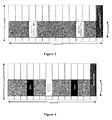
- Figure 3 is a schematic diagram illustrating a subframe for transmitting an uplink sounding reference signal according to an embodiment of the invention
- Figure 4 is a schematic diagram illustrating an another subframe for transmitting an uplink sounding reference signal according to the embodiment of the invention.
- Figure 5 is a flow chart illustrating a method for transmitting a sounding reference signal aperiodically in a wireless communication system according to the embodiment of the invention
- Figure 6 is a block diagram illustrating an apparatus for transmitting a sounding reference signal aperiodically in a wireless communication system according to the embodiment of the invention.
- Figure 7 is a block diagram illustrating a wireless communication system according to the embodiment of the invention.
- Figure 5 is a flow chart illustrating a method for transmitting a sounding reference signal aperiodically in a wireless communication system according to the embodiment of the invention.
- step S510 parameters of the sounding reference signal are configured for a channel to be sounded by a user equipment so as to allocate resources of the sounding reference signal to the user equipment.
- the parameters of the sounding reference signal which shall be configured may include frequency resource of the user equipment, code division resource of the user equipment, the number of times that the sounding reference signal being transmitted when the user equipment is activated, and a corresponding bit position of the user equipment in a low layer signaling for activating the user equipment to transmit the sounding reference signal.
- step S520 information containing the resources of the sounding reference signal allocated to the user equipment is transmitted to the user equipment through a high layer signaling.
- the high layer signaling for transmitting the information containing the resources of the sounding reference signal allocated to the user equipment to the user equipment may include a Radio Resource Control (RRC) signaling.
- RRC Radio Resource Control
- the high layer signaling such as the RRC signaling according to the embodiment of the invention is responsible for only notifying the user equipment of the resources of the allocated sounding reference signal without activating the user equipment to transmit the sounding reference signal, which is different from that in the prior art.
- step S530 an activation signal is transmitted to the user equipment through a low layer signaling so as to activate the user equipment to transmit the sounding reference signal.
- the low layer signaling for activating the user equipment to transmit the sounding reference signal may include PDCCH (Physical Downlink Control Channel) signaling.
- PDCCH Physical Downlink Control Channel
- the user equipment receives the low layer signaling such as the PDCCH signaling, the user equipment is activated, and starts to transmit the sounding reference signal in accordance with the information containing the resources of the sounding reference signal allocated to the user equipment transmitted through the high layer signaling such as the RRC signaling received in step S520.
- step S510 the parameters of the sounding reference signal have been configured for the channel to be sounded by the user equipment, in which the number of times that the sounding reference signal being transmitted when the user equipment is activated and a corresponding bit position of the user equipment in the low layer signaling such as the PDCCH signaling for activating the user equipment to transmit the sounding reference signal are included.
- the low layer signaling such as the PDCCH signaling for activating the user equipment to transmit the sounding reference signal may activate one user equipment at one time, or may activate a plurality of user equipments at one time. In a case that a plurality of user equipments are activated at one time, the plurality of user equipments correspond to different bit positions from each other in the low layer signaling such as the PDCCH signaling.
- the number of times that the sounding reference signal being transmitted when the user equipment is activated is preset, which may be one time, or may be a plurality of times.
- the user equipment automatically stops transmitting the sounding reference signal when the number of times that the sounding reference signal being transmitted when the user equipment is activated reaches a preset number. That is, deactivation of the sounding reference signal needs no additional signaling.
- Figure 3 is a schematic diagram illustrating a subframe for transmitting an uplink sounding reference signal according to an embodiment of the invention
- Figure 4 is a schematic diagram illustrating an another subframe for transmitting an uplink sounding reference signal according to the embodiment of the invention.
- the user equipment transmits the sounding reference signal by employing at least one of the last symbol in a subframe for transmitting the sounding reference signal periodically in the prior art, the third symbol in the subframe for transmitting a demodulation reference signal in the prior art, and the tenth symbol in the subframe for transmitting the demodulation reference signal in the prior art.
- the user equipment transmits the sounding reference signal by employing the sixth symbol in the subframe.
- the user equipment may transmit the sounding reference signal by employing one of the zeroth, first, second, fourth, fifth and sixth symbols in the subframe.
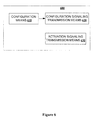
- Figure 6 is a block diagram illustrating an apparatus 600 for transmitting a sounding reference signal aperiodically in a wireless communication system according to the embodiment of the invention.
- the apparatus 600 includes a configuration means 610, a configuration signaling transmission means 620, and an activation signaling transmission means 630.
- the configuration means 610 is adapted to configure parameters of the sounding reference signal for a channel to be sounded by a user equipment so as to allocate resources of the sounding reference signal to the user equipment.
- the configuration signaling transmission means 620 is adapted to transmit, through a high layer signaling, information containing the resources of the sounding reference signal allocated to the user equipment to the user equipment.
- the activation signaling transmission means 630 is adapted to transmit, through a low layer signaling, an activation signal to the user equipment so as to activate the user equipment to transmit the sounding reference signal.
- FIG. 7 is a block diagram illustrating a wireless communication system 700 according to the embodiment of the invention.
- the wireless communication system 700 includes a base station 710 and a user equipment 720.
- the base station 710 includes the apparatus 600 for transmitting a sounding reference signal aperiodically in the wireless communication system as shown in Figure 6 , which includes a configuration means 610, a configuration signaling transmission means 620, and an activation signaling transmission means 630.
- the user equipment 720 includes a signaling reception means 721 for receiving a high layer signaling and a low layer signaling from the base station 710.
- the configuration means 610 in the apparatus 600 in the base station 710 configures parameters of the sounding reference signal for a channel to be sounded by the user equipment 720 so as to allocate resources of the sounding reference signal to the user equipment 720. Then, the configuration signaling transmission means 620 in the apparatus 600 in the base station 710 transmits, through a high layer signaling, information containing the resources of the sounding reference signal allocated to the user equipment 720 to the signaling reception means 721 in the user equipment 720.
- the activation signaling transmission means 630 in the apparatus 600 in the base station 710 transmits, through a low layer signaling, an activation signal to the signaling reception means 721 in the user equipment 720 so as to activate the user equipment 720 to transmit the sounding reference signal.
- the user equipment 720 After receiving the low layer signaling transmitted by the activation signaling transmission means 630, the user equipment 720 transmits the sounding reference signal to the base station 710 aperiodically via a signaling transmission means (not shown) in accordance with the received information on the resources of the sounding reference signal allocated to the user equipment 720 contained in the high layer signaling transmitted by the configuration signaling transmission means 620.
- the object of the invention can be implemented in a manner that the storage medium on which the computer executable program above is carried is provided directly or indirectly to a system or apparatus, a computer or a Central Processing Unit (CPU) of which reads out and executes the computer executable program.
- the implementation of the invention is not limited to a program as long as the system or apparatus has a function to execute the program, and the program can be in arbitrary forms such as an objective program, a program executed by an interpreter, a script program provided to an operating system, etc.
- the machine-readable storage medium mentioned above includes, but is not limited to, various memories and storage units, a semiconductor device, a disk unit such as an optic disk, a magnetic disk and a magneto-optic disk, and other medium suitable for storing information.
- the invention can also be implemented by connecting to a corresponding web site on the Internet through a computer, downloading and installing the computer executable program according to the invention into the computer, and then executing the program.
Landscapes
- Engineering & Computer Science (AREA)
- Signal Processing (AREA)
- Computer Networks & Wireless Communication (AREA)
- Mobile Radio Communication Systems (AREA)
Abstract
Description
- The present invention relates to the field of a wireless communication system, and in particular, to a method and apparatus for transmitting a Sounding Reference Signal (SRS) aperiodically in a wireless communication system.
- In the Fourth Generation (4G) mobile communication system, a Reference Signal (RS) is utilized to perform data demodulation and channel sounding in an uplink of Single Carrier Frequency Division Multiple Access (SC-FDMA) for Long Term Evolution (LTE), for example.
- The functions of the uplink RS include channel estimation required for performing coherent demodulation, channel quality sounding for uplink scheduling, power control, timing estimation, arriving direction estimation for supporting downlink beam forming, and the like.
- The uplink RS in the LTE is mostly based on the Zadoff-Chu (ZC) sequence. The ZC sequence is also called GCL (Generalized Chirp-Like) sequence. This sequence is a non-binary unit amplitude sequence, which meets CAZAC (Constant Amplitude Zero Autocorrelation) characteristic. The CAZAC sequence is a complex value signal in the form of ejα
k . The ZC sequence with a length being a prime number of NZC may be represented as: -

- where q ∈ {1,...,NZC -1} is the root index of the ZC sequence, and n = 0,1,..., NZC -1, l ∈ N .For simplicity, it is set that l = 0 in the LTE.
- The ZC sequence has characteristics as follows.
- 1. The ZC sequence has a constant amplitude, and still has a constant amplitude after DFT operation. The characteristic of constant amplitude limits the peak to average power ratio and the boundary and time flat interference on other users. Additionally, this characteristic simplifies the implementation when only the phase instead of the amplitude needs to be calculated and stored.
- 2. The ZC sequence with any length has ideal cyclic autocorrelation, which means that the cyclic shift correlation is a δ function.
- Due to the ideal characteristics of the ZC sequence, the uplink RS has excellent characteristics as follows. (1) The amplitude is constant in the frequency field, which is for performing same activation on all of the allocated sub-carriers in the unbiased channel estimation. (2) The value of low Cubic Measurement (CM) is relatively low in the time field. (3) The autocorrelation characteristic is excellent, which facilitates accurate channel estimation. (4) The cross correlation characteristic is excellent, thereby reducing the interference of the RS transmitted over the same resource from other cells.
- The uplink supports two kinds of RS. The first kind of RS is Demodulation RS (DMRS). This kind of RS mainly is used to perform channel estimation for uplink data transmission or signaling information transmission, and further to perform related detection. The second kind of RS is Sounding RS (SRS). This kind of RS mainly is used to perform channel quality measurement, thereby performing frequency selective scheduling for uplink.
- In the LTE system, as shown in
Figure 1 , a subframe is of 14 symbols numbered 0, 1, 2, ..., 13, respectively. In the Rel.8/9 system, the SRS signal of the user can only be transmitted in the symbol No. 13. In the Rel.8/9 system, the DMRS signal of the user can only be transmitted in the symbols No. 3 and No. 10. The DMRS and SRS signals for uplink are time division multiplexed with data symbols. The DMRS for a specific User Equipment (UE) is of the same bandwidth as that of the Physical Uplink Shared Channel (PUSCH) or Physical Uplink Control Channel (PUSCH) transmitted by the UE, e.g. the PUSCH bandwidth in the whole cell bandwidth. Therefore, when the various bandwidths of the system are allocated to the various users (for FDMA), the DMRS for respective users are orthogonal to one another. - The SRS bandwidth for the user may be different from the bandwidth for data transmission. The SRS signal for the user is always transmitted over the last SC-FDMA symbol in the subframe, and the parameters of the SRS signal are notified by a high layer signaling. In
Figure 1 , the UE transmits the SRS periodically over the last symbol in the subframe. InFigure 2 , the SRS signal is multiplexed through Frequency Division Multiplexing (FDM), Code Division Multiplexing (CDM), or Time Division Multiplexing (TDM). In the TDM, the eNodeB in the LTE requires s single SRS transmission from the UE or configures the UE to transmit the SRS periodically until the end. If a UE transmits the SRS periodically, the period may be 2, 5, 10, 20, 40, 80, 160, or 320 ms. In the FDM, the eNodeB may allocate the frequency resource with different bandwidth or the frequency resource with same bandwidth but with different location to the user for transmitting the SRS signal. The factors affecting the SRS bandwidth include the UE maximum power, the number of UEs supportable for detecting, and the detecting bandwidth required for benefit from uplink scheduling dependent on channel conditions. In the CDM, the eNodeB may also allocate the frequency resource with same bandwidth and with same location to different users. At this time, the different cyclic shift of the RS sequence may be used to implement the orthogonal sequence. That is, the correlation between a ZC sequence and any cyclic shift of the same sequence is zero. When the length of the channel impulse response is finite, different transmitters may use different cyclic time shifts of the same RS base sequence. As long as the cyclic shift is longer than the channel impulse response, the orthogonality may be maintained among the RSs. - Except for the TDM, FDM, and CDM above, there is no any other implementation for multiplexing of SRS resource in the current LET system.
- In the LTE system, the transmission of the uplink signal of the user supports the mode of single antenna transmission or antenna selection transmission. Only a set of SRS resource is allocated to every user when the SRS resource is allocated.
- In the LTE-Advanced system, in order to meet a higher uplink transmission rate index, it is required that the UE supports higher rank, e.g. rank1-rank4, of transmission on uplink. Thus, it is required that the UE is equipped with a higher number of antennas. For example, two antennas are equipped to support transmission of up to rank2, or four antennas are equipped to support transmission of up to rank4.
- When the UE is equipped with a higher number of antennas to thereby perform higher rank of transmission, more SRS resources need to be allocated so as to perform detection and estimation on the channel of each of the antennas.
- Therefore, additional methods should be adopted to further improve the capacity of the SRS.
- The methods for improving the capacity of the SRS may be classified into two basic aspects. The first aspect is to improve the available resource of the SRS, and the other aspect is to improve the usage of the current SRS resource.
- As described above, the parameters of the SRS signal are notified by a high layer signaling of the system, and then the SRS signal is activated and transmitted in a given period after the notification. This is a procedure for periodical transmission of the SRS signal. And, the deactivation of the SRS signal is notified by the high layer signaling of the system. Therefore, at present, the use of the SRS signal by the system, from the activation procedure to the deactivation procedure, has to be notified by the high layer signaling. The notification by the high layer signaling is a relatively slow procedure, and therefore the usage of the SRS resource of the system is relatively low.
- The present invention is directed to employ the SRS resource with high efficiency, so that the system can support more users.
- Hereinafter, there is provided a brief summary about the present invention in order to provide a basic understanding on certain aspects of the invention. However, it should be understood that this summary is not an exhaustive summary about the invention. It is not intended to determine critical portions or important portions of the invention, nor does it intend to limit the scope of the invention. The object thereof is only to propose some concepts with respect to the invention in a simplified form, thereby to be a prelude of the more detailed description given later.
- In light of above situations in the prior art, an object of the invention is to provide a method and apparatus for transmitting a sounding reference signal aperiodically in a wireless communication system, which can overcome the shortcomings and deficiencies in the prior art above to improve the use efficiency of the resource of the sounding reference signal of the system, so that the system can support more users.
- To achieve the above object, according to an aspect of the invention, there is provided a method for transmitting a sounding reference signal aperiodically in a wireless communication system including: configuring parameters of the sounding reference signal for a channel to be sounded by a user equipment so as to allocate resources of the sounding reference signal to the user equipment; transmitting, through a high layer signaling, information containing the resources of the sounding reference signal allocated to the user equipment to the user equipment; and transmitting, through a low layer signaling, an activation signal to the user equipment so as to activate the user equipment to transmit the sounding reference signal.
- According to another aspect of the invention, there is further provided an apparatus for transmitting a sounding reference signal aperiodically in a wireless communication system including: a configuration means for configuring parameters of the sounding reference signal for a channel to be sounded by a user equipment so as to allocate resources of the sounding reference signal to the user equipment; a configuration signaling transmission means for transmitting, through a high layer signaling, information containing the resources of the sounding reference signal allocated to the user equipment to the user equipment; and an activation signaling transmission means for transmitting, through a low layer signaling, an activation signal to the user equipment so as to activate the user equipment to transmit the sounding reference signal.
- According to another aspect of the invention, there is further provided a wireless communication system including a base station and a user equipment, wherein the base station includes the apparatus for transmitting a sounding reference signal aperiodically as described above, and the user equipment includes a signaling reception means for receiving a high layer signaling and a low layer signaling from the base station.
- According to another aspect of the invention, there is further provided a computer program product for implementing the method for transmitting a sounding reference signal aperiodically in a wireless communication system above.
- According to another aspect of the invention, there is further provided a machine-readable storage medium on which computer program codes for implementing the method for transmitting a sounding reference signal aperiodically in a wireless communication system above is carried.
- In the technical solution of the invention mentioned above, the resources of the sounding reference signal are allocated to the user equipment through the high level signaling, and the user equipment is activated through the low level signaling to transmit the sounding reference signal. Thus, the activation signal is transmitted to the user equipment through the low level signaling with a relatively high speed of transmission, which can improve the use efficiency of the resource of the sounding reference signal of the system, so that the system can support more users.
- The invention can be better understood by referring to the detailed description given hereinafter in combination with the accompany drawings in which identical or similar components are denoted by identical or similar reference numbers. The accompany drawings together with the detailed description below are included in the specification and form parts of the specification for further illustrating preferred embodiments of the invention and explaining principles and advantages of the invention by way of example. Wherein:
-
Figure 1 is a schematic diagram illustrating a subframe for transmitting an uplink sounding reference signal in the prior art; -
Figure 2 is a schematic diagram illustrating an another subframe for transmitting an uplink sounding reference signal in the prior art; -
Figure 3 is a schematic diagram illustrating a subframe for transmitting an uplink sounding reference signal according to an embodiment of the invention; -
Figure 4 is a schematic diagram illustrating an another subframe for transmitting an uplink sounding reference signal according to the embodiment of the invention; -
Figure 5 is a flow chart illustrating a method for transmitting a sounding reference signal aperiodically in a wireless communication system according to the embodiment of the invention; -
Figure 6 is a block diagram illustrating an apparatus for transmitting a sounding reference signal aperiodically in a wireless communication system according to the embodiment of the invention; and -
Figure 7 is a block diagram illustrating a wireless communication system according to the embodiment of the invention. - Those skilled in the art should understand that elements in the drawings are only shown for the purpose of simplicity and clarity, and are not necessarily drawn to scales. For example, sizes of certain elements in the drawings may be enlarged relative to other elements so that it is helpful to improve the understanding on the embodiments of the invention.
- Hereinafter, an exemplary embodiment of the invention will be described in combination with the drawings. For the purpose of clarity and simplicity, not all the features of the actual embodiment are described in the specification. However, it should be appreciated that it has to make a lot of decisions specific to the embodiments during a process for developing any such actual embodiments in order to achieve specific targets of developers, for example, complying with those restrictive conditions related to systems and operations, and these restrictive conditions may vary with different embodiments. Further, it should also be appreciated that although developing work may be very complex and time-consuming, such developing work is merely a routine task for those skilled in the art who benefit from the present disclosure.
- Herein, there is still one point needed to be illustrated that, for preventing unnecessary details from obscuring the invention, only the device structures and/or processing steps closely related to the scheme according to the invention are shown in the drawings, and other details having little to do with the invention are omitted.
- The method and apparatus for transmitting a sounding reference signal aperiodically in a wireless communication system according to the embodiment of the invention is described in detail with reference to the drawings in the following.
-
Figure 5 is a flow chart illustrating a method for transmitting a sounding reference signal aperiodically in a wireless communication system according to the embodiment of the invention. - As shown in
Figure 5 , firstly, in step S510, parameters of the sounding reference signal are configured for a channel to be sounded by a user equipment so as to allocate resources of the sounding reference signal to the user equipment. - According to the embodiment of the invention, the parameters of the sounding reference signal which shall be configured may include frequency resource of the user equipment, code division resource of the user equipment, the number of times that the sounding reference signal being transmitted when the user equipment is activated, and a corresponding bit position of the user equipment in a low layer signaling for activating the user equipment to transmit the sounding reference signal.
- Next, in step S520, information containing the resources of the sounding reference signal allocated to the user equipment is transmitted to the user equipment through a high layer signaling.
- According to the embodiment of the invention, the high layer signaling for transmitting the information containing the resources of the sounding reference signal allocated to the user equipment to the user equipment may include a Radio Resource Control (RRC) signaling. The high layer signaling such as the RRC signaling according to the embodiment of the invention is responsible for only notifying the user equipment of the resources of the allocated sounding reference signal without activating the user equipment to transmit the sounding reference signal, which is different from that in the prior art.
- At last, in step S530, an activation signal is transmitted to the user equipment through a low layer signaling so as to activate the user equipment to transmit the sounding reference signal.
- According to the embodiment of the invention, the low layer signaling for activating the user equipment to transmit the sounding reference signal may include PDCCH (Physical Downlink Control Channel) signaling. When the user equipment receives the low layer signaling such as the PDCCH signaling, the user equipment is activated, and starts to transmit the sounding reference signal in accordance with the information containing the resources of the sounding reference signal allocated to the user equipment transmitted through the high layer signaling such as the RRC signaling received in step S520.
- As described above, in step S510, the parameters of the sounding reference signal have been configured for the channel to be sounded by the user equipment, in which the number of times that the sounding reference signal being transmitted when the user equipment is activated and a corresponding bit position of the user equipment in the low layer signaling such as the PDCCH signaling for activating the user equipment to transmit the sounding reference signal are included.
- According to the embodiment of the invention, the low layer signaling such as the PDCCH signaling for activating the user equipment to transmit the sounding reference signal may activate one user equipment at one time, or may activate a plurality of user equipments at one time. In a case that a plurality of user equipments are activated at one time, the plurality of user equipments correspond to different bit positions from each other in the low layer signaling such as the PDCCH signaling.
- According to the embodiment of the invention, the number of times that the sounding reference signal being transmitted when the user equipment is activated is preset, which may be one time, or may be a plurality of times. According to the embodiment of the invention, the user equipment automatically stops transmitting the sounding reference signal when the number of times that the sounding reference signal being transmitted when the user equipment is activated reaches a preset number. That is, deactivation of the sounding reference signal needs no additional signaling.
- According to the embodiment of the invention, when the user equipment is activated to transmit the sounding reference signal, the user equipment may employ various resources to transmit the sounding reference signal, as shown in
Figures 3 and 4. Figure 3 is a schematic diagram illustrating a subframe for transmitting an uplink sounding reference signal according to an embodiment of the invention, andFigure 4 is a schematic diagram illustrating an another subframe for transmitting an uplink sounding reference signal according to the embodiment of the invention. InFigure 3 , the user equipment transmits the sounding reference signal by employing at least one of the last symbol in a subframe for transmitting the sounding reference signal periodically in the prior art, the third symbol in the subframe for transmitting a demodulation reference signal in the prior art, and the tenth symbol in the subframe for transmitting the demodulation reference signal in the prior art. Alternatively, inFigure 4 , the user equipment transmits the sounding reference signal by employing the sixth symbol in the subframe. In fact, according to the embodiment of the invention, the user equipment may transmit the sounding reference signal by employing one of the zeroth, first, second, fourth, fifth and sixth symbols in the subframe. - Hereinafter, an apparatus for transmitting a sounding reference signal aperiodically in a wireless communication system according to the embodiment of the invention is further described in detail in conjunction with the drawings.
Figure 6 is a block diagram illustrating anapparatus 600 for transmitting a sounding reference signal aperiodically in a wireless communication system according to the embodiment of the invention. - As shown in
Figure 6 , theapparatus 600 according to the embodiment of the invention includes a configuration means 610, a configuration signaling transmission means 620, and an activation signaling transmission means 630. - The configuration means 610 is adapted to configure parameters of the sounding reference signal for a channel to be sounded by a user equipment so as to allocate resources of the sounding reference signal to the user equipment.
- The configuration signaling transmission means 620 is adapted to transmit, through a high layer signaling, information containing the resources of the sounding reference signal allocated to the user equipment to the user equipment.
- The activation signaling transmission means 630 is adapted to transmit, through a low layer signaling, an activation signal to the user equipment so as to activate the user equipment to transmit the sounding reference signal.
- The various specific implementations of the respective means above in the
apparatus 600 have been described in detail previously, and therefore the explanations thereof will not be repeated herein. - The method and apparatus above of the invention may be used in a wireless communication system.
Figure 7 is a block diagram illustrating awireless communication system 700 according to the embodiment of the invention. - The
wireless communication system 700 includes abase station 710 and auser equipment 720. Thebase station 710 includes theapparatus 600 for transmitting a sounding reference signal aperiodically in the wireless communication system as shown inFigure 6 , which includes a configuration means 610, a configuration signaling transmission means 620, and an activation signaling transmission means 630. Theuser equipment 720 includes a signaling reception means 721 for receiving a high layer signaling and a low layer signaling from thebase station 710. - According to the embodiment of the invention, the configuration means 610 in the
apparatus 600 in thebase station 710 configures parameters of the sounding reference signal for a channel to be sounded by theuser equipment 720 so as to allocate resources of the sounding reference signal to theuser equipment 720. Then, the configuration signaling transmission means 620 in theapparatus 600 in thebase station 710 transmits, through a high layer signaling, information containing the resources of the sounding reference signal allocated to theuser equipment 720 to the signaling reception means 721 in theuser equipment 720. Next, the activation signaling transmission means 630 in theapparatus 600 in thebase station 710 transmits, through a low layer signaling, an activation signal to the signaling reception means 721 in theuser equipment 720 so as to activate theuser equipment 720 to transmit the sounding reference signal. - After receiving the low layer signaling transmitted by the activation signaling transmission means 630, the
user equipment 720 transmits the sounding reference signal to thebase station 710 aperiodically via a signaling transmission means (not shown) in accordance with the received information on the resources of the sounding reference signal allocated to theuser equipment 720 contained in the high layer signaling transmitted by the configuration signaling transmission means 620. - The various specific implementations of the respective apparatus or means above in the
wireless communication system 700 have also been described in detail previously, and therefore the explanations thereof will not be repeated herein. - Apparently, respective operating processes of the method above according to the invention can be implemented in a manner of a computer executable program stored on a machine-readable storage medium.
- And, the object of the invention can be implemented in a manner that the storage medium on which the computer executable program above is carried is provided directly or indirectly to a system or apparatus, a computer or a Central Processing Unit (CPU) of which reads out and executes the computer executable program. Here, the implementation of the invention is not limited to a program as long as the system or apparatus has a function to execute the program, and the program can be in arbitrary forms such as an objective program, a program executed by an interpreter, a script program provided to an operating system, etc.
- The machine-readable storage medium mentioned above includes, but is not limited to, various memories and storage units, a semiconductor device, a disk unit such as an optic disk, a magnetic disk and a magneto-optic disk, and other medium suitable for storing information.
- Additionally, the invention can also be implemented by connecting to a corresponding web site on the Internet through a computer, downloading and installing the computer executable program according to the invention into the computer, and then executing the program.
- In the apparatus and method of the invention, it is obvious that respective components or steps can be decomposed and/or recombined. Such decomposition and/or recombination should be considered as an equivalent solution of the invention. And, the steps performing a series of processing above can be performed in the describing order naturally, but this is not necessary. Some steps can be performed concurrently or independently with one another.
- Although the embodiment of the invention has been described in detail in combination with the drawings above, it should be understood that, the embodiment described above is only used to explain the invention and is not constructed as the limitation to the invention. For those skilled in the art, various modification and alternation can be made to the above embodiment without departing from the essential and scope of the invention. Therefore, the scope of the invention is only defined by the appended claims and the equivalents thereof.
Claims (13)
- A method for transmitting a sounding reference signal aperiodically in a wireless communication system, comprising:configuring parameters of the sounding reference signal for a channel to be sounded by a user equipment so as to allocate resources of the sounding reference signal to the user equipment;transmitting, through a high layer signaling, information containing the resources of the sounding reference signal allocated to the user equipment to the user equipment; andtransmitting, through a low layer signaling, an activation signal to the user equipment so as to activate the user equipment to transmit the sounding reference signal.
- The method according to claim 1, wherein the parameters of the sounding reference signal comprise frequency resource of the user equipment, code division resource of the user equipment, the number of times that the sounding reference signal being transmitted when the user equipment is activated and a corresponding bit position of the user equipment in the low layer signaling.
- The method according to claim 1, wherein the low layer signaling activates one or more user equipments at one time, and if a plurality of user equipments are activated, the plurality of user equipments correspond to different bit positions from each other in the low layer signaling.
- The method according to claim 1, wherein the user equipment automatically stops transmitting the sounding reference signal when the number of times that the sounding reference signal being transmitted when the user equipment is activated reaches a preset number.
- The method according to claim 1, wherein resources used for the user equipment to transmit the sounding reference signal comprise at least one of the following: the last symbol for transmitting the sounding reference signal periodically in a subframe; the third symbol for transmitting a demodulation reference signal in the subframe; the tenth symbol for transmitting the demodulation reference signal in the subframe; and one of the zeroth, first, second, fourth, fifth and sixth symbols in the subframe.
- An apparatus for transmitting a sounding reference signal aperiodically in a wireless communication system, comprising:a configuration means for configuring parameters of the sounding reference signal for a channel to be sounded by a user equipment so as to allocate resources of the sounding reference signal to the user equipment;a configuration signaling transmission means for transmitting, through a high layer signaling, information containing the resources of the sounding reference signal allocated to the user equipment to the user equipment; andan activation signaling transmission means for transmitting, through a low layer signaling, an activation signal to the user equipment so as to activate the user equipment to transmit the sounding reference signal.
- The apparatus according to claim 6, wherein the parameters of the sounding reference signal comprise frequency resource of the user equipment, code division resource of the user equipment, the number of times that the sounding reference signal being transmitted when the user equipment is activated and a corresponding bit position of the user equipment in the low layer signaling.
- The apparatus according to claim 6, wherein the low layer signaling activates one or more user equipments at one time, and if a plurality of user equipments are activated, the plurality of user equipments correspond to different bit positions from each other in the low layer signaling.
- The apparatus according to claim 6, wherein the user equipment automatically stops transmitting the sounding reference signal when the number of times that the sounding reference signal being transmitted when the user equipment is activated reaches a preset number.
- The apparatus according to claim 6, wherein the resources used for the user equipment to transmit the sounding reference signal comprise at least one of the following: the last symbol for transmitting the sounding reference signal periodically in a subframe; the third symbol for transmitting a demodulation reference signal in the subframe; the tenth symbol for transmitting the demodulation reference signal in the subframe; and one of the zeroth, first, second, fourth, fifth and sixth symbols in the subframe.
- A wireless communication system comprising a base station and a user equipment, wherein the base station comprises the apparatus for transmitting a sounding reference signal aperiodically according to any one of claims 6-10, and the user equipment comprises a signaling reception means for receiving a high layer signaling and a low layer signaling from the base station.
- A program product comprising a machine-readable instruction code stored therein, wherein the instruction code is capable of causing a computer to perform the method according to any one of claims 1-5 when read and executed by the computer.
- A machine-readable storage medium carrying the program product according to claim 12 thereon.
Applications Claiming Priority (1)
| Application Number | Priority Date | Filing Date | Title |
|---|---|---|---|
| PCT/CN2010/072324 WO2011134153A1 (en) | 2010-04-29 | 2010-04-29 | Method and apparatus for aperiodically transmitting sounding reference signal |
Publications (2)
| Publication Number | Publication Date |
|---|---|
| EP2566265A1 true EP2566265A1 (en) | 2013-03-06 |
| EP2566265A4 EP2566265A4 (en) | 2015-09-30 |
Family
ID=44860766
Family Applications (1)
| Application Number | Title | Priority Date | Filing Date |
|---|---|---|---|
| EP10850486.1A Withdrawn EP2566265A4 (en) | 2010-04-29 | 2010-04-29 | METHOD AND APPARATUS FOR PERIODIC TRANSMISSION OF SURFACE REFERENCE SIGNALS |
Country Status (7)
| Country | Link |
|---|---|
| US (1) | US9191168B2 (en) |
| EP (1) | EP2566265A4 (en) |
| JP (1) | JP5565522B2 (en) |
| KR (1) | KR101469337B1 (en) |
| CN (1) | CN102860103B (en) |
| CA (1) | CA2797249A1 (en) |
| WO (1) | WO2011134153A1 (en) |
Cited By (1)
| Publication number | Priority date | Publication date | Assignee | Title |
|---|---|---|---|---|
| CN114520713A (en) * | 2020-11-20 | 2022-05-20 | 上海华为技术有限公司 | Channel detection period configuration method, base station, equipment and medium |
Families Citing this family (8)
| Publication number | Priority date | Publication date | Assignee | Title |
|---|---|---|---|---|
| CN101827444B (en) * | 2010-03-31 | 2015-03-25 | 中兴通讯股份有限公司 | Signaling configuration system and method for measuring reference signal |
| US20180097664A1 (en) * | 2016-09-30 | 2018-04-05 | Mediatek Inc. | Method And Apparatus For Handling Aperiodic Reference Signal In Mobile Communications |
| US10154481B2 (en) * | 2016-11-15 | 2018-12-11 | Qualcomm Incorporated | Optimization of search space and sounding reference signal placement for improved decoding timeline |
| KR20190090869A (en) | 2017-02-14 | 2019-08-02 | 엘지전자 주식회사 | Method for receiving SRS configuration information and terminal for the same |
| US10979186B2 (en) * | 2017-05-01 | 2021-04-13 | Lg Electronics Inc. | Method of sounding a terminal in a wireless communication system and apparatus therefor |
| US10440500B2 (en) | 2017-11-30 | 2019-10-08 | Futurewei Technologies, Inc. | System and method for configuring and managing on-demand positioning reference signals |
| CN111755115A (en) * | 2020-06-24 | 2020-10-09 | 上海联影医疗科技有限公司 | Medical equipment control method and medical equipment control system |
| CN114448580A (en) * | 2020-10-31 | 2022-05-06 | 华为技术有限公司 | Communication method and device |
Family Cites Families (10)
| Publication number | Priority date | Publication date | Assignee | Title |
|---|---|---|---|---|
| CN101272608B (en) * | 2007-03-21 | 2012-07-25 | 华为技术有限公司 | Interception reference signal transmission method and device |
| CN101617489B (en) * | 2007-03-29 | 2013-11-06 | Lg电子株式会社 | Method for sending sounding reference signal in wireless communication system |
| KR101380558B1 (en) * | 2007-06-19 | 2014-04-02 | 엘지전자 주식회사 | Method of Transmitting Sounding Reference Signal |
| US8055301B2 (en) * | 2007-08-06 | 2011-11-08 | Mitsubishi Electric Research Laboratories, Inc. | Wireless networks incorporating implicit antenna selection based on received sounding reference signals |
| US8086272B2 (en) * | 2007-08-06 | 2011-12-27 | Mitsubishi Electric Research Laboratories, Inc. | Wireless networks incorporating antenna selection based on received sounding reference signals |
| CN101431370B (en) * | 2007-11-09 | 2012-08-08 | 华为技术有限公司 | Method, device and system for controlling working mode of high-speed downlink packet access system |
| US8295778B2 (en) * | 2008-01-11 | 2012-10-23 | Apple Inc. | Channel rank feedback in multiple-input multiple-output communication systems |
| US20140036859A1 (en) * | 2010-01-11 | 2014-02-06 | Texas Instruments Incorporated | Methods to Increase Sounding Capacity for LTE-Advanced Systems |
| KR101781854B1 (en) * | 2010-02-04 | 2017-09-26 | 엘지전자 주식회사 | Method and apparatus of transmitting sounding reference signal |
| KR101807874B1 (en) * | 2010-03-05 | 2017-12-12 | 엘지전자 주식회사 | Method and apparatus of transmitting aperiodic sounding reference signal in wireless communication system |
-
2010
- 2010-04-29 CA CA2797249A patent/CA2797249A1/en not_active Abandoned
- 2010-04-29 JP JP2013506438A patent/JP5565522B2/en not_active Expired - Fee Related
- 2010-04-29 WO PCT/CN2010/072324 patent/WO2011134153A1/en not_active Ceased
- 2010-04-29 EP EP10850486.1A patent/EP2566265A4/en not_active Withdrawn
- 2010-04-29 CN CN201080066432.2A patent/CN102860103B/en not_active Expired - Fee Related
- 2010-04-29 KR KR1020127028083A patent/KR101469337B1/en not_active Expired - Fee Related
-
2012
- 2012-10-23 US US13/658,100 patent/US9191168B2/en not_active Expired - Fee Related
Non-Patent Citations (1)
| Title |
|---|
| See references of WO2011134153A1 * |
Cited By (2)
| Publication number | Priority date | Publication date | Assignee | Title |
|---|---|---|---|---|
| CN114520713A (en) * | 2020-11-20 | 2022-05-20 | 上海华为技术有限公司 | Channel detection period configuration method, base station, equipment and medium |
| CN114520713B (en) * | 2020-11-20 | 2024-03-01 | 上海华为技术有限公司 | Channel detection period configuration method, base station, equipment and medium |
Also Published As
| Publication number | Publication date |
|---|---|
| KR101469337B1 (en) | 2014-12-04 |
| KR20130007636A (en) | 2013-01-18 |
| US9191168B2 (en) | 2015-11-17 |
| CN102860103B (en) | 2015-06-17 |
| CA2797249A1 (en) | 2011-11-03 |
| EP2566265A4 (en) | 2015-09-30 |
| US20130044716A1 (en) | 2013-02-21 |
| JP2013529424A (en) | 2013-07-18 |
| JP5565522B2 (en) | 2014-08-06 |
| WO2011134153A1 (en) | 2011-11-03 |
| CN102860103A (en) | 2013-01-02 |
Similar Documents
| Publication | Publication Date | Title |
|---|---|---|
| US9191168B2 (en) | Method and apparatus for aperiodically transmitting sounding reference signal | |
| US10484152B2 (en) | Method and apparatus for transmitting or receiving reference signal in beamforming communication system | |
| CN102075274B (en) | The collocation method of the multiple antennas parameter of a kind of measuring reference signals and device | |
| EP3522635B1 (en) | Data transmission method and device | |
| CN101931456B (en) | The sending method of measuring reference signals in a kind of GSM | |
| CN102694637B (en) | The sending method of measuring reference signals and device under tdd systems | |
| CN101795145B (en) | Sending method and system for measuring reference signals | |
| JP5549778B2 (en) | Uplink sounding reference signal transmission method, channel estimation method, mobile terminal, base station, and radio communication system | |
| US9509458B2 (en) | Transmission method and transmission device | |
| EP3499784A1 (en) | Methods and apparatus for sounding channel operation in millimeter wave communication systems | |
| US9258832B2 (en) | Method and device for transmitting data in wireless communication system | |
| EP3334080A1 (en) | Data transmission method and device | |
| US20150288550A1 (en) | Transmitter, receiver, transmission method, and reception method | |
| CN102939731A (en) | Method and apparatus for transmitting aperiodic sounding reference signal in wireless communication system | |
| US20200178092A1 (en) | Systems and methods for adaptive srs transmit antenna selection | |
| US20250175301A1 (en) | Rs sending method and apparatus, srs receiving method and apparatus, device, and medium | |
| KR20110031348A (en) | Base station apparatus and method | |
| US20190349166A1 (en) | Method and apparatus for transmitting a reference signal | |
| CN103312444A (en) | Method and device for sending and receiving instruction information | |
| EP4489322A1 (en) | Srs sending method and apparatus, srs receiving method and apparatus, device, medium, and product | |
| WO2018131375A1 (en) | Base station, synchronization signal transmission method, user terminal and cell search method | |
| US20130044717A1 (en) | Method for transmitting sounding reference signals and parameters thereof, base station and mobile station | |
| CN102055711A (en) | Method and apparatus for generating ranging preamble code in wireless communication system | |
| JP7135266B2 (en) | Communication method and system |
Legal Events
| Date | Code | Title | Description |
|---|---|---|---|
| PUAI | Public reference made under article 153(3) epc to a published international application that has entered the european phase |
Free format text: ORIGINAL CODE: 0009012 |
|
| 17P | Request for examination filed |
Effective date: 20121126 |
|
| AK | Designated contracting states |
Kind code of ref document: A1 Designated state(s): AT BE BG CH CY CZ DE DK EE ES FI FR GB GR HR HU IE IS IT LI LT LU LV MC MK MT NL NO PL PT RO SE SI SK SM TR |
|
| DAX | Request for extension of the european patent (deleted) | ||
| RA4 | Supplementary search report drawn up and despatched (corrected) |
Effective date: 20150827 |
|
| RIC1 | Information provided on ipc code assigned before grant |
Ipc: H04L 5/00 20060101AFI20150821BHEP |
|
| 17Q | First examination report despatched |
Effective date: 20170314 |
|
| GRAP | Despatch of communication of intention to grant a patent |
Free format text: ORIGINAL CODE: EPIDOSNIGR1 |
|
| RIC1 | Information provided on ipc code assigned before grant |
Ipc: H04L 5/00 20060101AFI20170929BHEP |
|
| INTG | Intention to grant announced |
Effective date: 20171017 |
|
| STAA | Information on the status of an ep patent application or granted ep patent |
Free format text: STATUS: THE APPLICATION IS DEEMED TO BE WITHDRAWN |
|
| 18D | Application deemed to be withdrawn |
Effective date: 20180228 |