EP2565243B1 - Self-lubricating surface coating composition for low friction or soft substrate applications - Google Patents
Self-lubricating surface coating composition for low friction or soft substrate applications Download PDFInfo
- Publication number
- EP2565243B1 EP2565243B1 EP12162105.6A EP12162105A EP2565243B1 EP 2565243 B1 EP2565243 B1 EP 2565243B1 EP 12162105 A EP12162105 A EP 12162105A EP 2565243 B1 EP2565243 B1 EP 2565243B1
- Authority
- EP
- European Patent Office
- Prior art keywords
- self
- coating composition
- surface coating
- mass
- lubricating surface
- Prior art date
- Legal status (The legal status is an assumption and is not a legal conclusion. Google has not performed a legal analysis and makes no representation as to the accuracy of the status listed.)
- Not-in-force
Links
- 239000008199 coating composition Substances 0.000 title claims description 230
- 239000000758 substrate Substances 0.000 title 1
- 239000000203 mixture Substances 0.000 claims description 103
- NIXOWILDQLNWCW-UHFFFAOYSA-M Acrylate Chemical compound [O-]C(=O)C=C NIXOWILDQLNWCW-UHFFFAOYSA-M 0.000 claims description 55
- 239000000945 filler Substances 0.000 claims description 54
- 229920001343 polytetrafluoroethylene Polymers 0.000 claims description 42
- 239000004810 polytetrafluoroethylene Substances 0.000 claims description 42
- 239000000314 lubricant Substances 0.000 claims description 31
- -1 acrylate compound Chemical class 0.000 claims description 27
- 239000000843 powder Substances 0.000 claims description 24
- 239000000835 fiber Substances 0.000 claims description 22
- 239000003999 initiator Substances 0.000 claims description 21
- XLOMVQKBTHCTTD-UHFFFAOYSA-N Zinc monoxide Chemical compound [Zn]=O XLOMVQKBTHCTTD-UHFFFAOYSA-N 0.000 claims description 18
- 238000000034 method Methods 0.000 claims description 15
- QUZSUMLPWDHKCJ-UHFFFAOYSA-N bisphenol A dimethacrylate Chemical class C1=CC(OC(=O)C(=C)C)=CC=C1C(C)(C)C1=CC=C(OC(=O)C(C)=C)C=C1 QUZSUMLPWDHKCJ-UHFFFAOYSA-N 0.000 claims description 14
- 239000002253 acid Substances 0.000 claims description 13
- 150000002148 esters Chemical class 0.000 claims description 12
- HWSSEYVMGDIFMH-UHFFFAOYSA-N 2-[2-[2-(2-methylprop-2-enoyloxy)ethoxy]ethoxy]ethyl 2-methylprop-2-enoate Chemical compound CC(=C)C(=O)OCCOCCOCCOC(=O)C(C)=C HWSSEYVMGDIFMH-UHFFFAOYSA-N 0.000 claims description 11
- GTELLNMUWNJXMQ-UHFFFAOYSA-N 2-ethyl-2-(hydroxymethyl)propane-1,3-diol;prop-2-enoic acid Chemical class OC(=O)C=C.OC(=O)C=C.OC(=O)C=C.CCC(CO)(CO)CO GTELLNMUWNJXMQ-UHFFFAOYSA-N 0.000 claims description 10
- FRIBMENBGGCKPD-UHFFFAOYSA-N 3-(2,3-dimethoxyphenyl)prop-2-enal Chemical compound COC1=CC=CC(C=CC=O)=C1OC FRIBMENBGGCKPD-UHFFFAOYSA-N 0.000 claims description 10
- VYPSYNLAJGMNEJ-UHFFFAOYSA-N Silicium dioxide Chemical group O=[Si]=O VYPSYNLAJGMNEJ-UHFFFAOYSA-N 0.000 claims description 10
- 244000144992 flock Species 0.000 claims description 10
- 229910021485 fumed silica Inorganic materials 0.000 claims description 10
- 239000003365 glass fiber Substances 0.000 claims description 10
- 229920000049 Carbon (fiber) Polymers 0.000 claims description 9
- 239000004917 carbon fiber Substances 0.000 claims description 9
- 238000004519 manufacturing process Methods 0.000 claims description 9
- VNWKTOKETHGBQD-UHFFFAOYSA-N methane Chemical compound C VNWKTOKETHGBQD-UHFFFAOYSA-N 0.000 claims description 9
- 239000011787 zinc oxide Substances 0.000 claims description 9
- OKTJSMMVPCPJKN-UHFFFAOYSA-N Carbon Chemical compound [C] OKTJSMMVPCPJKN-UHFFFAOYSA-N 0.000 claims description 7
- CWQXQMHSOZUFJS-UHFFFAOYSA-N molybdenum disulfide Chemical compound S=[Mo]=S CWQXQMHSOZUFJS-UHFFFAOYSA-N 0.000 claims description 7
- WFUGQJXVXHBTEM-UHFFFAOYSA-N 2-hydroperoxy-2-(2-hydroperoxybutan-2-ylperoxy)butane Chemical compound CCC(C)(OO)OOC(C)(CC)OO WFUGQJXVXHBTEM-UHFFFAOYSA-N 0.000 claims description 6
- 229910052582 BN Inorganic materials 0.000 claims description 6
- 239000004342 Benzoyl peroxide Substances 0.000 claims description 6
- OMPJBNCRMGITSC-UHFFFAOYSA-N Benzoylperoxide Chemical group C=1C=CC=CC=1C(=O)OOC(=O)C1=CC=CC=C1 OMPJBNCRMGITSC-UHFFFAOYSA-N 0.000 claims description 6
- PZNSFCLAULLKQX-UHFFFAOYSA-N Boron nitride Chemical compound N#B PZNSFCLAULLKQX-UHFFFAOYSA-N 0.000 claims description 6
- RYGMFSIKBFXOCR-UHFFFAOYSA-N Copper Chemical compound [Cu] RYGMFSIKBFXOCR-UHFFFAOYSA-N 0.000 claims description 6
- 235000019400 benzoyl peroxide Nutrition 0.000 claims description 6
- 229910044991 metal oxide Inorganic materials 0.000 claims description 6
- 229910052982 molybdenum disulfide Inorganic materials 0.000 claims description 6
- NRVFHZGBTDXOEY-UHFFFAOYSA-N 2-methylprop-2-enoic acid;zinc Chemical compound [Zn].CC(=C)C(O)=O NRVFHZGBTDXOEY-UHFFFAOYSA-N 0.000 claims description 5
- PIMBTRGLTHJJRV-UHFFFAOYSA-L zinc;2-methylprop-2-enoate Chemical compound [Zn+2].CC(=C)C([O-])=O.CC(=C)C([O-])=O PIMBTRGLTHJJRV-UHFFFAOYSA-L 0.000 claims description 5
- 229910052791 calcium Inorganic materials 0.000 claims description 3
- 239000011575 calcium Substances 0.000 claims description 3
- BRPQOXSCLDDYGP-UHFFFAOYSA-N calcium oxide Chemical compound [O-2].[Ca+2] BRPQOXSCLDDYGP-UHFFFAOYSA-N 0.000 claims description 3
- 239000000292 calcium oxide Substances 0.000 claims description 3
- ODINCKMPIJJUCX-UHFFFAOYSA-N calcium oxide Inorganic materials [Ca]=O ODINCKMPIJJUCX-UHFFFAOYSA-N 0.000 claims description 3
- 229910052725 zinc Inorganic materials 0.000 claims description 3
- 239000011701 zinc Substances 0.000 claims description 3
- 238000012360 testing method Methods 0.000 description 42
- 238000000576 coating method Methods 0.000 description 24
- 239000011248 coating agent Substances 0.000 description 23
- 238000000151 deposition Methods 0.000 description 11
- RTAQQCXQSZGOHL-UHFFFAOYSA-N Titanium Chemical compound [Ti] RTAQQCXQSZGOHL-UHFFFAOYSA-N 0.000 description 8
- 238000004140 cleaning Methods 0.000 description 8
- 239000010936 titanium Substances 0.000 description 8
- 229910052719 titanium Inorganic materials 0.000 description 8
- 150000001875 compounds Chemical class 0.000 description 7
- 230000010355 oscillation Effects 0.000 description 7
- 230000008021 deposition Effects 0.000 description 5
- 238000002156 mixing Methods 0.000 description 5
- 238000005422 blasting Methods 0.000 description 4
- 230000001050 lubricating effect Effects 0.000 description 4
- 235000017858 Laurus nobilis Nutrition 0.000 description 3
- 244000125380 Terminalia tomentosa Species 0.000 description 3
- 235000005212 Terminalia tomentosa Nutrition 0.000 description 3
- 238000005270 abrasive blasting Methods 0.000 description 3
- 238000005516 engineering process Methods 0.000 description 3
- 239000004519 grease Substances 0.000 description 3
- 238000002347 injection Methods 0.000 description 3
- 239000007924 injection Substances 0.000 description 3
- 239000000047 product Substances 0.000 description 3
- 238000009987 spinning Methods 0.000 description 3
- 238000003756 stirring Methods 0.000 description 3
- 229920004435 Aclon® Polymers 0.000 description 2
- 229910001069 Ti alloy Inorganic materials 0.000 description 2
- 238000010521 absorption reaction Methods 0.000 description 2
- 150000001252 acrylic acid derivatives Chemical class 0.000 description 2
- IDLFZVILOHSSID-OVLDLUHVSA-N corticotropin Chemical compound C([C@@H](C(=O)N[C@@H](CO)C(=O)N[C@@H](CCSC)C(=O)N[C@@H](CCC(O)=O)C(=O)N[C@@H](CC=1NC=NC=1)C(=O)N[C@@H](CC=1C=CC=CC=1)C(=O)N[C@@H](CCCNC(N)=N)C(=O)N[C@@H](CC=1C2=CC=CC=C2NC=1)C(=O)NCC(=O)N[C@@H](CCCCN)C(=O)N1[C@@H](CCC1)C(=O)N[C@@H](C(C)C)C(=O)NCC(=O)N[C@@H](CCCCN)C(=O)N[C@@H](CCCCN)C(=O)N[C@@H](CCCNC(N)=N)C(=O)N[C@@H](CCCNC(N)=N)C(=O)N1[C@@H](CCC1)C(=O)N[C@@H](C(C)C)C(=O)N[C@@H](CCCCN)C(=O)N[C@@H](C(C)C)C(=O)N[C@@H](CC=1C=CC(O)=CC=1)C(=O)N1[C@@H](CCC1)C(=O)N[C@@H](CC(N)=O)C(=O)NCC(=O)N[C@@H](C)C(=O)N[C@@H](CCC(O)=O)C(=O)N[C@@H](CC(O)=O)C(=O)N[C@@H](CCC(O)=O)C(=O)N[C@@H](CO)C(=O)N[C@@H](C)C(=O)N[C@@H](CCC(O)=O)C(=O)N[C@@H](C)C(=O)N[C@@H](CC=1C=CC=CC=1)C(=O)N1[C@@H](CCC1)C(=O)N[C@@H](CC(C)C)C(=O)N[C@@H](CCC(O)=O)C(=O)N[C@@H](CC=1C=CC=CC=1)C(O)=O)NC(=O)[C@@H](N)CO)C1=CC=C(O)C=C1 IDLFZVILOHSSID-OVLDLUHVSA-N 0.000 description 2
- 238000005336 cracking Methods 0.000 description 2
- 238000007598 dipping method Methods 0.000 description 2
- 239000012530 fluid Substances 0.000 description 2
- 239000000463 material Substances 0.000 description 2
- TWNQGVIAIRXVLR-UHFFFAOYSA-N oxo(oxoalumanyloxy)alumane Chemical compound O=[Al]O[Al]=O TWNQGVIAIRXVLR-UHFFFAOYSA-N 0.000 description 2
- 238000005507 spraying Methods 0.000 description 2
- 239000000126 substance Substances 0.000 description 2
- 0 *C(C(OCNOC(C(*)=C)=O)=O)=C Chemical compound *C(C(OCNOC(C(*)=C)=O)=O)=C 0.000 description 1
- 229910002016 Aerosil® 200 Inorganic materials 0.000 description 1
- 229910000838 Al alloy Inorganic materials 0.000 description 1
- 229910001369 Brass Inorganic materials 0.000 description 1
- 229910000906 Bronze Inorganic materials 0.000 description 1
- 229910001018 Cast iron Inorganic materials 0.000 description 1
- 229910000978 Pb alloy Inorganic materials 0.000 description 1
- BQCADISMDOOEFD-UHFFFAOYSA-N Silver Chemical compound [Ag] BQCADISMDOOEFD-UHFFFAOYSA-N 0.000 description 1
- 229910001128 Sn alloy Inorganic materials 0.000 description 1
- 229910000831 Steel Inorganic materials 0.000 description 1
- 239000010951 brass Substances 0.000 description 1
- 239000010974 bronze Substances 0.000 description 1
- 125000002843 carboxylic acid group Chemical group 0.000 description 1
- 239000000919 ceramic Substances 0.000 description 1
- 230000003749 cleanliness Effects 0.000 description 1
- KUNSUQLRTQLHQQ-UHFFFAOYSA-N copper tin Chemical compound [Cu].[Sn] KUNSUQLRTQLHQQ-UHFFFAOYSA-N 0.000 description 1
- 238000004132 cross linking Methods 0.000 description 1
- 238000005238 degreasing Methods 0.000 description 1
- 230000001419 dependent effect Effects 0.000 description 1
- 230000006866 deterioration Effects 0.000 description 1
- 125000004386 diacrylate group Chemical group 0.000 description 1
- MTHSVFCYNBDYFN-UHFFFAOYSA-N diethylene glycol Chemical compound OCCOCCO MTHSVFCYNBDYFN-UHFFFAOYSA-N 0.000 description 1
- 238000001035 drying Methods 0.000 description 1
- 239000000839 emulsion Substances 0.000 description 1
- 239000004744 fabric Substances 0.000 description 1
- 239000012467 final product Substances 0.000 description 1
- 229910002804 graphite Inorganic materials 0.000 description 1
- 239000010439 graphite Substances 0.000 description 1
- 238000013038 hand mixing Methods 0.000 description 1
- 125000002887 hydroxy group Chemical group [H]O* 0.000 description 1
- 230000006698 induction Effects 0.000 description 1
- 238000005259 measurement Methods 0.000 description 1
- QSHDDOUJBYECFT-UHFFFAOYSA-N mercury Chemical compound [Hg] QSHDDOUJBYECFT-UHFFFAOYSA-N 0.000 description 1
- 229910052753 mercury Inorganic materials 0.000 description 1
- 229910052751 metal Inorganic materials 0.000 description 1
- 239000002184 metal Substances 0.000 description 1
- 239000000178 monomer Substances 0.000 description 1
- URXNVXOMQQCBHS-UHFFFAOYSA-N naphthalene;sodium Chemical compound [Na].C1=CC=CC2=CC=CC=C21 URXNVXOMQQCBHS-UHFFFAOYSA-N 0.000 description 1
- 150000001451 organic peroxides Chemical class 0.000 description 1
- 238000005554 pickling Methods 0.000 description 1
- 230000003252 repetitive effect Effects 0.000 description 1
- 229920005989 resin Polymers 0.000 description 1
- 239000011347 resin Substances 0.000 description 1
- 239000005060 rubber Substances 0.000 description 1
- 150000003839 salts Chemical class 0.000 description 1
- 238000005488 sandblasting Methods 0.000 description 1
- HBMJWWWQQXIZIP-UHFFFAOYSA-N silicon carbide Chemical compound [Si+]#[C-] HBMJWWWQQXIZIP-UHFFFAOYSA-N 0.000 description 1
- 229910010271 silicon carbide Inorganic materials 0.000 description 1
- 229910052709 silver Inorganic materials 0.000 description 1
- 239000004332 silver Substances 0.000 description 1
- 239000002904 solvent Substances 0.000 description 1
- 239000010935 stainless steel Substances 0.000 description 1
- 229910001220 stainless steel Inorganic materials 0.000 description 1
- 230000003068 static effect Effects 0.000 description 1
- 239000010959 steel Substances 0.000 description 1
- 230000003746 surface roughness Effects 0.000 description 1
- 239000000725 suspension Substances 0.000 description 1
- 230000009974 thixotropic effect Effects 0.000 description 1
- XLYOFNOQVPJJNP-UHFFFAOYSA-N water Substances O XLYOFNOQVPJJNP-UHFFFAOYSA-N 0.000 description 1
Images



Classifications
-
- C—CHEMISTRY; METALLURGY
- C09—DYES; PAINTS; POLISHES; NATURAL RESINS; ADHESIVES; COMPOSITIONS NOT OTHERWISE PROVIDED FOR; APPLICATIONS OF MATERIALS NOT OTHERWISE PROVIDED FOR
- C09D—COATING COMPOSITIONS, e.g. PAINTS, VARNISHES OR LACQUERS; FILLING PASTES; CHEMICAL PAINT OR INK REMOVERS; INKS; CORRECTING FLUIDS; WOODSTAINS; PASTES OR SOLIDS FOR COLOURING OR PRINTING; USE OF MATERIALS THEREFOR
- C09D4/00—Coating compositions, e.g. paints, varnishes or lacquers, based on organic non-macromolecular compounds having at least one polymerisable carbon-to-carbon unsaturated bond ; Coating compositions, based on monomers of macromolecular compounds of groups C09D183/00 - C09D183/16
-
- C—CHEMISTRY; METALLURGY
- C09—DYES; PAINTS; POLISHES; NATURAL RESINS; ADHESIVES; COMPOSITIONS NOT OTHERWISE PROVIDED FOR; APPLICATIONS OF MATERIALS NOT OTHERWISE PROVIDED FOR
- C09D—COATING COMPOSITIONS, e.g. PAINTS, VARNISHES OR LACQUERS; FILLING PASTES; CHEMICAL PAINT OR INK REMOVERS; INKS; CORRECTING FLUIDS; WOODSTAINS; PASTES OR SOLIDS FOR COLOURING OR PRINTING; USE OF MATERIALS THEREFOR
- C09D133/00—Coating compositions based on homopolymers or copolymers of compounds having one or more unsaturated aliphatic radicals, each having only one carbon-to-carbon double bond, and at least one being terminated by only one carboxyl radical, or of salts, anhydrides, esters, amides, imides, or nitriles thereof; Coating compositions based on derivatives of such polymers
- C09D133/04—Homopolymers or copolymers of esters
- C09D133/06—Homopolymers or copolymers of esters of esters containing only carbon, hydrogen and oxygen, the oxygen atom being present only as part of the carboxyl radical
- C09D133/062—Copolymers with monomers not covered by C09D133/06
- C09D133/064—Copolymers with monomers not covered by C09D133/06 containing anhydride, COOH or COOM groups, with M being metal or onium-cation
-
- F—MECHANICAL ENGINEERING; LIGHTING; HEATING; WEAPONS; BLASTING
- F16—ENGINEERING ELEMENTS AND UNITS; GENERAL MEASURES FOR PRODUCING AND MAINTAINING EFFECTIVE FUNCTIONING OF MACHINES OR INSTALLATIONS; THERMAL INSULATION IN GENERAL
- F16C—SHAFTS; FLEXIBLE SHAFTS; ELEMENTS OR CRANKSHAFT MECHANISMS; ROTARY BODIES OTHER THAN GEARING ELEMENTS; BEARINGS
- F16C17/00—Sliding-contact bearings for exclusively rotary movement
- F16C17/02—Sliding-contact bearings for exclusively rotary movement for radial load only
-
- F—MECHANICAL ENGINEERING; LIGHTING; HEATING; WEAPONS; BLASTING
- F16—ENGINEERING ELEMENTS AND UNITS; GENERAL MEASURES FOR PRODUCING AND MAINTAINING EFFECTIVE FUNCTIONING OF MACHINES OR INSTALLATIONS; THERMAL INSULATION IN GENERAL
- F16C—SHAFTS; FLEXIBLE SHAFTS; ELEMENTS OR CRANKSHAFT MECHANISMS; ROTARY BODIES OTHER THAN GEARING ELEMENTS; BEARINGS
- F16C33/00—Parts of bearings; Special methods for making bearings or parts thereof
- F16C33/02—Parts of sliding-contact bearings
- F16C33/04—Brasses; Bushes; Linings
- F16C33/06—Sliding surface mainly made of metal
- F16C33/10—Construction relative to lubrication
- F16C33/1095—Construction relative to lubrication with solids as lubricant, e.g. dry coatings, powder
-
- F—MECHANICAL ENGINEERING; LIGHTING; HEATING; WEAPONS; BLASTING
- F16—ENGINEERING ELEMENTS AND UNITS; GENERAL MEASURES FOR PRODUCING AND MAINTAINING EFFECTIVE FUNCTIONING OF MACHINES OR INSTALLATIONS; THERMAL INSULATION IN GENERAL
- F16C—SHAFTS; FLEXIBLE SHAFTS; ELEMENTS OR CRANKSHAFT MECHANISMS; ROTARY BODIES OTHER THAN GEARING ELEMENTS; BEARINGS
- F16C33/00—Parts of bearings; Special methods for making bearings or parts thereof
- F16C33/02—Parts of sliding-contact bearings
- F16C33/04—Brasses; Bushes; Linings
- F16C33/20—Sliding surface consisting mainly of plastics
- F16C33/201—Composition of the plastic
-
- F—MECHANICAL ENGINEERING; LIGHTING; HEATING; WEAPONS; BLASTING
- F16—ENGINEERING ELEMENTS AND UNITS; GENERAL MEASURES FOR PRODUCING AND MAINTAINING EFFECTIVE FUNCTIONING OF MACHINES OR INSTALLATIONS; THERMAL INSULATION IN GENERAL
- F16C—SHAFTS; FLEXIBLE SHAFTS; ELEMENTS OR CRANKSHAFT MECHANISMS; ROTARY BODIES OTHER THAN GEARING ELEMENTS; BEARINGS
- F16C33/00—Parts of bearings; Special methods for making bearings or parts thereof
- F16C33/30—Parts of ball or roller bearings
- F16C33/66—Special parts or details in view of lubrication
- F16C33/6696—Special parts or details in view of lubrication with solids as lubricant, e.g. dry coatings, powder
-
- C—CHEMISTRY; METALLURGY
- C08—ORGANIC MACROMOLECULAR COMPOUNDS; THEIR PREPARATION OR CHEMICAL WORKING-UP; COMPOSITIONS BASED THEREON
- C08K—Use of inorganic or non-macromolecular organic substances as compounding ingredients
- C08K5/00—Use of organic ingredients
- C08K5/0091—Complexes with metal-heteroatom-bonds
-
- C—CHEMISTRY; METALLURGY
- C08—ORGANIC MACROMOLECULAR COMPOUNDS; THEIR PREPARATION OR CHEMICAL WORKING-UP; COMPOSITIONS BASED THEREON
- C08K—Use of inorganic or non-macromolecular organic substances as compounding ingredients
- C08K5/00—Use of organic ingredients
- C08K5/04—Oxygen-containing compounds
- C08K5/09—Carboxylic acids; Metal salts thereof; Anhydrides thereof
- C08K5/098—Metal salts of carboxylic acids
-
- C—CHEMISTRY; METALLURGY
- C08—ORGANIC MACROMOLECULAR COMPOUNDS; THEIR PREPARATION OR CHEMICAL WORKING-UP; COMPOSITIONS BASED THEREON
- C08K—Use of inorganic or non-macromolecular organic substances as compounding ingredients
- C08K5/00—Use of organic ingredients
- C08K5/04—Oxygen-containing compounds
- C08K5/10—Esters; Ether-esters
- C08K5/101—Esters; Ether-esters of monocarboxylic acids
- C08K5/103—Esters; Ether-esters of monocarboxylic acids with polyalcohols
-
- C—CHEMISTRY; METALLURGY
- C10—PETROLEUM, GAS OR COKE INDUSTRIES; TECHNICAL GASES CONTAINING CARBON MONOXIDE; FUELS; LUBRICANTS; PEAT
- C10M—LUBRICATING COMPOSITIONS; USE OF CHEMICAL SUBSTANCES EITHER ALONE OR AS LUBRICATING INGREDIENTS IN A LUBRICATING COMPOSITION
- C10M2201/00—Inorganic compounds or elements as ingredients in lubricant compositions
- C10M2201/10—Compounds containing silicon
- C10M2201/105—Silica
-
- C—CHEMISTRY; METALLURGY
- C10—PETROLEUM, GAS OR COKE INDUSTRIES; TECHNICAL GASES CONTAINING CARBON MONOXIDE; FUELS; LUBRICANTS; PEAT
- C10M—LUBRICATING COMPOSITIONS; USE OF CHEMICAL SUBSTANCES EITHER ALONE OR AS LUBRICATING INGREDIENTS IN A LUBRICATING COMPOSITION
- C10M2209/00—Organic macromolecular compounds containing oxygen as ingredients in lubricant compositions
- C10M2209/02—Macromolecular compounds obtained by reactions only involving carbon-to-carbon unsaturated bonds
- C10M2209/08—Macromolecular compounds obtained by reactions only involving carbon-to-carbon unsaturated bonds containing monomers having an unsaturated radical bound to a carboxyl radical, e.g. acrylate type
- C10M2209/084—Acrylate; Methacrylate
-
- C—CHEMISTRY; METALLURGY
- C10—PETROLEUM, GAS OR COKE INDUSTRIES; TECHNICAL GASES CONTAINING CARBON MONOXIDE; FUELS; LUBRICANTS; PEAT
- C10M—LUBRICATING COMPOSITIONS; USE OF CHEMICAL SUBSTANCES EITHER ALONE OR AS LUBRICATING INGREDIENTS IN A LUBRICATING COMPOSITION
- C10M2213/00—Organic macromolecular compounds containing halogen as ingredients in lubricant compositions
- C10M2213/06—Perfluoro polymers
- C10M2213/062—Polytetrafluoroethylene [PTFE]
-
- C—CHEMISTRY; METALLURGY
- C10—PETROLEUM, GAS OR COKE INDUSTRIES; TECHNICAL GASES CONTAINING CARBON MONOXIDE; FUELS; LUBRICANTS; PEAT
- C10M—LUBRICATING COMPOSITIONS; USE OF CHEMICAL SUBSTANCES EITHER ALONE OR AS LUBRICATING INGREDIENTS IN A LUBRICATING COMPOSITION
- C10M2229/00—Organic macromolecular compounds containing atoms of elements not provided for in groups C10M2205/00, C10M2209/00, C10M2213/00, C10M2217/00, C10M2221/00 or C10M2225/00 as ingredients in lubricant compositions
-
- C—CHEMISTRY; METALLURGY
- C10—PETROLEUM, GAS OR COKE INDUSTRIES; TECHNICAL GASES CONTAINING CARBON MONOXIDE; FUELS; LUBRICANTS; PEAT
- C10N—INDEXING SCHEME ASSOCIATED WITH SUBCLASS C10M RELATING TO LUBRICATING COMPOSITIONS
- C10N2010/00—Metal present as such or in compounds
- C10N2010/04—Groups 2 or 12
-
- C—CHEMISTRY; METALLURGY
- C10—PETROLEUM, GAS OR COKE INDUSTRIES; TECHNICAL GASES CONTAINING CARBON MONOXIDE; FUELS; LUBRICANTS; PEAT
- C10N—INDEXING SCHEME ASSOCIATED WITH SUBCLASS C10M RELATING TO LUBRICATING COMPOSITIONS
- C10N2040/00—Specified use or application for which the lubricating composition is intended
- C10N2040/02—Bearings
-
- C—CHEMISTRY; METALLURGY
- C10—PETROLEUM, GAS OR COKE INDUSTRIES; TECHNICAL GASES CONTAINING CARBON MONOXIDE; FUELS; LUBRICANTS; PEAT
- C10N—INDEXING SCHEME ASSOCIATED WITH SUBCLASS C10M RELATING TO LUBRICATING COMPOSITIONS
- C10N2050/00—Form in which the lubricant is applied to the material being lubricated
- C10N2050/14—Composite materials or sliding materials in which lubricants are integrally molded
-
- F—MECHANICAL ENGINEERING; LIGHTING; HEATING; WEAPONS; BLASTING
- F16—ENGINEERING ELEMENTS AND UNITS; GENERAL MEASURES FOR PRODUCING AND MAINTAINING EFFECTIVE FUNCTIONING OF MACHINES OR INSTALLATIONS; THERMAL INSULATION IN GENERAL
- F16C—SHAFTS; FLEXIBLE SHAFTS; ELEMENTS OR CRANKSHAFT MECHANISMS; ROTARY BODIES OTHER THAN GEARING ELEMENTS; BEARINGS
- F16C2208/00—Plastics; Synthetic resins, e.g. rubbers
- F16C2208/20—Thermoplastic resins
- F16C2208/72—Acrylics, e.g. polymethylmethacrylate [PMMA]
-
- F—MECHANICAL ENGINEERING; LIGHTING; HEATING; WEAPONS; BLASTING
- F16—ENGINEERING ELEMENTS AND UNITS; GENERAL MEASURES FOR PRODUCING AND MAINTAINING EFFECTIVE FUNCTIONING OF MACHINES OR INSTALLATIONS; THERMAL INSULATION IN GENERAL
- F16C—SHAFTS; FLEXIBLE SHAFTS; ELEMENTS OR CRANKSHAFT MECHANISMS; ROTARY BODIES OTHER THAN GEARING ELEMENTS; BEARINGS
- F16C23/00—Bearings for exclusively rotary movement adjustable for aligning or positioning
- F16C23/02—Sliding-contact bearings
- F16C23/04—Sliding-contact bearings self-adjusting
- F16C23/043—Sliding-contact bearings self-adjusting with spherical surfaces, e.g. spherical plain bearings
- F16C23/045—Sliding-contact bearings self-adjusting with spherical surfaces, e.g. spherical plain bearings for radial load mainly, e.g. radial spherical plain bearings
-
- Y—GENERAL TAGGING OF NEW TECHNOLOGICAL DEVELOPMENTS; GENERAL TAGGING OF CROSS-SECTIONAL TECHNOLOGIES SPANNING OVER SEVERAL SECTIONS OF THE IPC; TECHNICAL SUBJECTS COVERED BY FORMER USPC CROSS-REFERENCE ART COLLECTIONS [XRACs] AND DIGESTS
- Y02—TECHNOLOGIES OR APPLICATIONS FOR MITIGATION OR ADAPTATION AGAINST CLIMATE CHANGE
- Y02T—CLIMATE CHANGE MITIGATION TECHNOLOGIES RELATED TO TRANSPORTATION
- Y02T10/00—Road transport of goods or passengers
- Y02T10/80—Technologies aiming to reduce greenhouse gasses emissions common to all road transportation technologies
- Y02T10/86—Optimisation of rolling resistance, e.g. weight reduction
Definitions
- the present application relates to a self-lubricating surface coating composition and more particularly relates to a bearing that includes a surface with the self-lubricating surface coating composition deposited on at least a portion thereof.
- wear Deterioration through use or stress, often referred to as "wear,” occurs to surfaces, often metal, which are in sliding contact with one another. Pressure, high load weight and repetitive motion can accelerate the rate at which wear occurs.
- wear can lead to various problems that necessitate repair or replacement of the components. In some circumstances, wear experienced by the surfaces may necessitate replacement of the machinery itself.
- Coating compositions may also be referred to in the art as liner systems, self-lubricating surface coating compositions or lubricants.
- Known self-lubricating surface coating compositions include, but are not limited to rubber, ceramic, fabric, and resins with lubricant fillers such as polytetrafluoroethylene (PTFE), graphite, and a molybdenum sulfide.
- Self-lubricating surface coating compositions reduce the amount of wear and friction experienced by a surface that the coating is in contact with, and, as a result, contribute to the longevity and usefulness of the component that defines the surface.
- WO2009/135094 discloses self-lubricating compositions comprising a metallic composition based on the metallic acrylate of formula (1) comprising 20-50 mass % of a lubricant filler and a structural filler such as glass fibers, said lubricant filler is, amongst others, PTFE which may be in flock, fiber or powder form.
- self-lubricating surface coating compositions exhibit characteristics such as cracking and fluid absorption susceptibility, which detract from the usefulness of the coating.
- Many known self-lubricating surface coating compositions are not adaptable for use on all surfaces, such as surfaces on bearings. It has been found that even if a self-lubricating surface coating composition is useful on one bearing configuration or one size bearing, the same self-lubricating surface coating composition may not be useful on different bearing configurations or sizes. Accordingly, a self-lubricating surface coating composition adaptable to many surfaces and having less susceptibility to cracking and fluid absorption, while balancing the amount of wear and friction experienced by the surface and improving overall performance of the surface the coating composition is deposited on, is needed.
- a bearing including a surface and a self-lubricating surface coating composition deposited on the surface.
- the self-lubricating surface coating composition includes a curable acrylate composition comprising a metallic composition.
- a method of manufacturing a self-lubricating surface coating composition includes forming a curable acrylate composition comprising a metallic composition, wherein the metallic composition includes a metallic acrylate compound according to Formula I, above.
- the method also includes combining a lubricant filler, 30 mass% to 45 mass% PTFE fiber, based on the total mass of said metallic composition, and a thixotrope with the curable acrylate composition to form the self-lubricating surface coating composition; wherein said self-lubricating surface coating composition includes essentially no structural fillers such as glass fiber, carbon fiber, microwool fiber and combinations thereof.
- a self-lubricating surface coating composition includes a curable acrylate composition including a metallic composition, comprising a metallic acrylate compound according to Formula I, above.
- the self-lubricating surface coating composition also includes a lubricant filler such as polytetrafluoroethylene, copper powder, molybdenum disulfide, boron nitride powder, graphite powder or combinations thereof and 30 mass% to 45 mass% PTFE fiber, based on the total mass of said metallic composition; wherein said self-lubricating surface coating composition includes essentially no structural fillers such as glass fiber, carbon fiber, microwool fiber and combinations thereof.
- the self-lubricating surface coating composition further includes a thixotrope such as fumed silica, fine polytetrafluoroethylene powder or combinations thereof; and an initiator such as benzoyl peroxide, cumene hydroperoxide, methyl ethyl ketone peroxide, or combinations thereof.
- a thixotrope such as fumed silica, fine polytetrafluoroethylene powder or combinations thereof
- an initiator such as benzoyl peroxide, cumene hydroperoxide, methyl ethyl ketone peroxide, or combinations thereof.
- a self-lubricating coating composition includes a curable acrylate composition comprising a metallic composition including zinc monomethacrylate, zinc dimethacrylate and zinc oxide; ethoxylated bisphenol A dimethacrylate; trifunctional acid ester; triethylene glycol dimethacrylate; and ethoxylated trimethylolpropane triacrylate.
- the self-lubricating coating composition also includes a lubricant filler such as polytetrafluoroethylene, copper powder, molybdenum disulfide, boron nitride powder, graphite powder or combinations thereof and 30 mass% to 45 mass% PTFE fiber based on the total mass of said metallic composition; wherein said self-lubricating surface coating composition includes essentially no structural fillers such as glass fiber, carbon fiber, microwool fiber and combinations thereof.
- a lubricant filler such as polytetrafluoroethylene, copper powder, molybdenum disulfide, boron nitride powder, graphite powder or combinations thereof and 30 mass% to 45 mass% PTFE fiber based on the total mass of said metallic composition; wherein said self-lubricating surface coating composition includes essentially no structural fillers such as glass fiber, carbon fiber, microwool fiber and combinations thereof.
- the self-lubricating coating composition further includes a thixotrope such as fumed silica, fine polytetrafluoroethylene powder or combinations thereof; and an initiator such as benzoyl peroxide, cumene hydroperoxide, methyl ethyl ketone peroxide, or combinations thereof.
- a thixotrope such as fumed silica, fine polytetrafluoroethylene powder or combinations thereof
- an initiator such as benzoyl peroxide, cumene hydroperoxide, methyl ethyl ketone peroxide, or combinations thereof.
- a bearing generally designated by the reference number 10 includes at least one surface 20.
- the surface 20 may be formed from any suitable material, including, but not limited to, titanium, an alloy of titanium, an alloy of tin or lead, aluminum alloys, steel, stainless steel, brass, bronze, cast iron, or a thin layer of silver covered with a thin coating of a soft bearing material.
- the surface 20 is in movable contact with another surface (not shown), such as, but not limited to, a shaft.
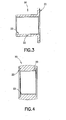
- Bearing 10 may be of any type or configuration, including, but not limited to plain journal bearings (shown in FIGS. 1 and 2 ), stud type or yoke type track rollers (generally shown in FIGS. 4 and 5 ), stud type or yoke type cam followers, sleeve bearings, flanged journal bearings (shown in FIG. 3 ), spherical plain bearings (shown in FIG. 6 ), ball bearings, bushings, slat bearings, roller bearings, and the like.
- plain journal bearings shown in FIGS. 1 and 2
- stud type or yoke type track rollers generally shown in FIGS. 4 and 5
- stud type or yoke type cam followers stud type or yoke type cam followers
- sleeve bearings shown in FIG. 3
- flanged journal bearings shown in FIG. 3
- spherical plain bearings shown in FIG. 6
- ball bearings ball bearings
- bushings slat
- At least one surface 20 has a self-lubricating surface coating composition 22 deposited on at least a portion thereof. Prior to deposition of the self-lubricating surface coating composition 22, surface 20 may be treated to achieve a desired surface finish. In one example, surface 20 is subjected to an abrasive blasting, which imposes a desired roughness on the surface. Abrasive blasting can be performed by any acceptable method and with any acceptable media such as grit-blasting, sand-blasting or bead-blasting. In one instance, grit-blasting is performed with 20 grit size aluminum oxide. However, it is contemplated that in other instances, different media and different size media, such as silicon carbide, may be utilized in the abrasive blasting.
- the surface can be cleaned to remove grease and foreign debris. Any method of cleaning that is effective to remove grease and foreign debris can be employed to clean surface 20. Methods of cleaning include, but are not limited to, alkaline cleaning, emulsion cleaning, solvent cleaning, vapor degreasing, acid cleaning, pickling, salt bath scaling, and the like. After surface 20 is cleaned, the surface may be allowed to dry prior to deposition of self-lubricating surface coating composition 22.
- Suitable methods for depositing self-lubricating surface coating composition 22 on surface 20 include, but are not limited to spraying, spinning, dipping, injection and any other method effective for depositing a coating on a surface.
- self-lubricating surface coating composition 22 may be cured by any method effective to cure a coating composition on a surface.
- Self-lubricating surface coating composition 22 may be subsequently machined to particularly desired measurements.
- Self-lubricating surface coating composition 22 is generally a coating that may be used in any application that may benefit from such a coating.
- Self-lubricating surface coating composition 22 includes a curable acrylate composition having a metallic composition that includes a metallic acrylate compound.
- self-lubricating surface coating composition 22 may also include a lubricant filler, and, depending on the application, other additional components, such as thixotropes and initiators.
- the curable acrylate composition utilized in the self-lubricating surface coating composition 22 may contain a variety of compounds, such as one or more curable acrylates and a metallic composition.
- the type and amount of compounds present in the curable acrylate composition may vary depending on what application self-lubricating surface coating composition 22 will be used for.
- the self-lubricating surface coating composition 22 includes from 3 mass % to 55 mass % of the curable acrylate composition, based on the total mass of the self-lubricating surface coating composition. In a specific example, the self-lubricating surface coating composition 22 includes from 4 mass % to 55 mass % of the curable acrylate composition, based on the total mass of the self-lubricating surface coating composition. In another example, the self-lubricating coating composition 22 includes from 5 mass % to 55 mass % of the curable acrylate composition, based on the total mass of the self-lubricating surface coating composition.
- the self-lubricating coating composition 22 includes from 10 mass % to 55 mass % of the curable acrylate composition, based on the total mass of self-lubricating surface coating composition. In a further example, the self-lubricating coating composition 22 includes from 15 mass % to 55 mass % of the curable acrylate composition, based on the total mass of self-lubricating surface coating composition. In yet a further example, the self-lubricating coating composition 22 includes from 20 mass % to 55 mass % of the curable acrylate composition, based on the total mass of self lubricating surface coating composition.
- the self-lubricating coating composition 22 includes from 25 mass % to 55 mass % of the curable acrylate composition, based on the total mass of self-lubricating surface coating composition. In yet a further example, the self-lubricating coating composition 22 includes from 30 mass % to 55 mass % of the curable acrylate composition, based on the total mass of self-lubricating surface coating composition. In yet another example, the self-lubricating coating composition 22 includes from 35 mass % to 55 mass % of the curable acrylate composition, based on the total mass of self-lubricating surface coating composition.
- the self-lubricating coating composition 22 includes from 40 mass % to 55 mass % of the curable acrylate composition, based on the total mass of self-lubricating surface coating composition. In another example, the self-lubricating coating composition 22 includes from 4 mass % to 35 mass % of the curable acrylate, of the curable acrylate composition, based on the total mass of self-lubricating surface coating composition. In a further example, self-lubricating coating composition 22 includes from 4 mass % to 45 mass % of the curable acrylate composition, based on the total mass of self-lubricating surface coating composition.
- the self-lubricating coating composition 22 includes from 4 mass % to 40 mass % of the curable acrylate composition, based on the total mass of self-lubricating surface coating composition. In yet a further example, self-lubricating coating composition 22 includes for example, from 4 mass % to 30 mass % of the curable acrylate composition, based on the total mass of self-lubricating surface coating composition. In a further example, the self-lubricating coating composition 22 includes from 4 mass % to 25 mass % of the curable acrylate composition, based on the total mass of self-lubricating surface coating composition. In another example, the self-lubricating coating composition 22 includes from 4 mass % to 20 mass % of the curable acrylate composition, based on the total mass of self-lubricating surface coating composition.
- the curable acrylate composition may include a metallic composition.
- the metallic composition may include a metallic acrylate compound.
- Use of the metallic acrylate compound in the self-lubricating surface coating composition 22 increases adhesion of the self-lubricating surface coating composition to surface 20, compared to prior art self-lubricating surface coating compositions.
- the metallic acrylate has a structure according to Formula I:
- the metallic composition in the curable acrylate composition may also include a metallic oxide.
- metallic oxides include but are not limited to zinc oxide and calcium oxide.
- the metallic composition includes zinc monomethacrylate and zinc dimethacrylate as the metallic acrylate compounds and zinc oxide as the metallic oxide compound.
- Zinc oxide is commercially available as SR709, sold by the Sartomer Company, Exton, PA.
- the self-lubricating surface coating composition 22 includes from 3 mass % to 10 mass % of the metallic composition based on the total mass of the self-lubricating surface coating composition. In another example, the self-lubricating surface coating composition 22 includes from 4 mass % to 8 mass % of the metallic composition, based on the total mass of the self-lubricating surface coating composition. In a further example, the self-lubricating surface coating composition 22 includes from 4 mass % to 5 mass % of the metallic composition, based on the total mass of the self-lubricating surface coating composition. In yet a further example, the self-lubricating surface coating composition 22 includes 4.54 mass % of the metallic composition, based on the total mass of the self-lubricating surface coating composition.
- the curable acrylate composition may also include ethoxylated bisphenol A dimethacrylate.
- the ethoxylated bisphenol A dimethacrylate may be a two (2) mole, four (4) mole, eight (8) mole or ten (10) mole monomer. In one example, four mole ethoxylated bisphenol A dimethacrylate is used and is commercially available as SR540, sold by the Sartomer Company, Exton, Pennsylvania.
- the self-lubricating coating composition 22 may include from 10 mass % to 20 mass % of the ethoxylated bisphenol A dimethacrylate, based on the total mass of the self-lubricating surface coating composition.
- the self-lubricating surface coating composition 22 includes from 12 mass % to 18 mass % of the ethoxylated bisphenol A dimethacrylate, based on the total mass of the self-lubricating surface coating composition.
- the self lubricating surface coating composition 22 includes from 10 mass % to 14 mass % of the ethoxylated bisphenol A dimethacrylate, based on the total mass of the self-lubricating surface coating composition.
- the self-lubricating surface coating composition 22 includes 13-79 mass % of the ethoxylated bisphenol A dimethacrylate, based on the total mass of the self-lubricating surface coating composition.
- the curable acrylate composition present in self-lubricating surface coating composition 22 may further include trifunctional acid ester, which is commercially available as CD9053, sold by the Sartomer Company, Exton, Pennsylvania.
- self-lubricating surface coating composition 22 includes from 3 mass % to 20 mass % of the trifunctional acid ester, based on the total mass of the self-lubricating surface coating composition.
- self-lubricating surface coating composition 22 includes from 3 mass % to 15 mass % of the trifunctional acid ester, based on the total mass of the self-lubricating surface coating composition.
- the self-lubricating surface coating composition 22 includes from 4 mass % to 10 mass % of the trifunctional acid ester, based on the total mass of the self-lubricating surface coating composition. In yet another example, self-lubricating surface coating composition 22 includes 4.54 mass % of the trifunctional acid ester, based on the total mass of the self-lubricating surface coating composition.
- the curable acrylate composition present in the self-lubricating surface coating composition 22 may also include triethylene glycol dimethacrylate, which is commercially available as SR205, sold by the Sartomer Company, Exton, Pennsylvania.
- the self-lubricating surface coating composition 22 may include from 10 mass % to 20 mass % of the triethylene glycol dimethacrylate, based on the total mass of the self-lubricating surface coating composition.
- the self-lubricating surface coating composition 22 includes from 12 mass % to 18 mass % of the triethylene glycol dimethacrylate, based on the total mass of the self-lubricating surface coating composition.
- the self-lubricating surface coating composition 22 includes from 10 mass % to 14 mass % of the triethylene glycol dimethacrylate, based on the total mass of the self-lubricating surface coating composition. In yet a further example, the self-lubricating surface coating composition 22 includes 13.79 mass % of the triethylene glycol dimethacrylate, based on the total mass of the self-lubricating surface coating composition.
- the curable acrylate composition present in the self-lubricating surface coating composition 22 may include ethoxylated trimethylolpropane triacrylate, which is commercially available as SR454, sold by the Sartomer Company, Exton, Pennsylvania.
- Self-lubricating surface coating composition 22 may include from 10 mass % to 20 mass % of the ethoxylated trimethylolpropane triacrylate, based on the total mass of the self-lubricating surface coating composition.
- the self-lubricating surface coating composition 22 includes from 12 mass % to 18 mass % of the ethoxylated trimethylolpropane triacrylate, based on the total mass of the self-lubricating surface coating composition.
- the self-lubricating surface coating composition 22 includes from 10 mass % to 14 mass % of the ethoxylated trimethylolpropane triacrylate, based on the total mass of the self-lubricating surface coating composition. In a further example, the self-lubricating surface coating composition 22 includes 13.79 mass % of ethoxylated trimethylolpropane triacrylate, based on the total mass of the self-lubricating surface coating composition.
- the self-lubricating surface coating composition 22 may also include a lubricant filler.
- Lubricant fillers are generally known in the art and include, but are not limited to: polytetrafluoroethylene (PTFE), copper powder, molybdenum disulfide, boron nitride powder, graphite powder and combinations thereof.
- the lubricant filler is polytetrafluoroethylene (PTFE).
- the PTFE may be treated with compounds containing hydroxyl or carboxylic acid groups, or a sodium naphthalene complex in glycol ether to enhance bonding with the curable acrylate composition.
- the PTFE may be used in either flock form, powder form or a combination thereof.
- PTFE is commercially available in untreated flock form from Toray Fluorofibers America, Decatur, Alabama, and is available in surface treated flock form as Aclon ® from Acton Technologies, Pittston, Pennsylvania.
- PTFE in powder form is commercially available as UF-8TA, sold by Laurel Products LLC, Elverson, Pennsylvania.
- the flock to powder mass ratio is between 3:1 to 8:1. In one example, the flock to powder mass ratio is 5:1.
- the mean flock length of the PTFE in flock form is between 0.020 cm (0.008 inches) and 0.038 cm (0.015 inches).
- the lubricant filler is added to the self-lubricating surface coating composition 22 in an amount that facilitates low friction properties of the self-lubricating surface coating composition.
- the self-lubricating surface coating composition 22 includes at least 20 mass % of the lubricant filler, based on the total mass of the self-lubricating surface coating composition.
- the self-lubricating surface coating composition 22 includes from 20 mass % to 50 mass % of the lubricant filler, based on the total mass of the self-lubricating surface coating composition.
- the self-lubricating surface coating composition 22 includes from 35 mass % to 55 mass % of the lubricant filler, based on the total mass of the self-lubricating surface coating composition.
- the amount of fillers used in self-lubricating surface coating composition 22 may be modified to increase or decrease the viscosity of the self-lubricating coating composition.
- the self-lubricating surface coating composition 22 should be thick enough to hold the fillers in suspension, but should also be thin enough to allow easy application to a surface.
- the total amount of filler in the self-lubricating surface coating composition 22 is at least 40 mass % based on the total mass of the self-lubricating surface coating composition.
- the total amount of filler(s) present in the self-lubricating surface coating composition 22 is between 40 mass % and 60 mass % based on the total mass of the self-lubricating surface coating composition.
- the viscosity of the self-lubricating surface coating composition 22 may also be altered by the addition of a thixotrope.
- Thixotropes are chemicals or compounds that increase the viscosity or thickness of a substance while allowing flow to occur under pressure. Thixotropes may aid in the handling of self-lubricating surface coating composition 22. Thixotropes are known in the art and include, but are not limited to fumed silica, fine PTFE powder and combinations thereof. Fumed silica is commercial available as Aerosil ® 200, sold by Evonik, Essen, Germany. Fine PTFE powder is commercially available as UF-8TA, sold by Laurel Products LLC, Elverson, Pennsylvania.
- the self-lubricating surface coating composition 22 includes both fumed silica and fine PTFE powder.
- fine PTFE powder When utilized in self-lubricating surface coating composition 22, it may act as both a thixotrope and a lubricant filler.
- the amount of thixotropes used in the self-lubricating surface coating composition 22 may vary depending on the viscosity and thixotropic properties of the self-lubricating surface coating composition.
- the self-lubricating surface coating composition 22 includes between 0.5 mass % and 12 mass % of one or more thixotropes, based on the total mass of the self-lubricating surface coating composition. In one example, the self-lubricating surface coating composition 22 includes between 4 mass % and 12 mass % of one or more thixotropes, based on the total mass of the self-lubricating surface coating composition. In another example, the self-lubricating surface coating composition 22 includes between 6 mass % and 11 mass % of one or more thixotropes, based on the total mass of the self-lubricating surface coating composition.
- the self-lubricating surface coating composition 22 may also include an initiator.
- the initiator adds crosslinking density to the self-lubricating surface coating composition 22 by facilitating a complete cure of the self-lubricating surface coating composition.
- Initiators are generally known in the art and include, but are not limited to, organic peroxide compositions. Specific examples of initiators include, but are not limited to benzoyl peroxide, cumene hydroperoxide, methyl ethyl ketone peroxide and combinations thereof. In one specific example of the self-lubricating surface coating composition 22, cumene hydroperoxide is used as the initiator, which is commercially available from Sigma Aldrich Corporation, St. Louis, Missouri.
- the self-lubricating surface coating composition 22 generally contains between 0.5 mass % and 3.0 mass % of an initiator based on the total mass of the self-lubricating surface coating composition. In one specific example, the self-lubricating surface coating composition 22 includes between 1 mass % and 1.5 mass percent % of an initiator based on the total mass of the self-lubricating surface coating composition.
- the self-lubricating surface coating composition 22 is suitable for use on surfaces which engage (e.g., slidingly engage) a bearing surface having a hardness of less than Rockwell 50 HRC to 30 HRC.
- the self-lubricating surface coating composition 22 can be used on a surface which engages a bearing component (e.g., a shaft, spherical ball or bearing race) manufactured from a titanium alloy having a Rockwell hardness of 34 HRC, such as but not limited to the bearing of Example 3, below.
- the self-lubricating surface coating composition 22 is suitable for applications which require coefficients of friction substantially less than the coefficients of friction of prior art lubricants.
- the self-lubricating surface coating composition 22 has a coefficient of static friction of 0.01 to 0.025 at room temperature and a dynamic coefficient of friction of 0.01 to 0.14, depending on load, temperature, velocity, surface roughness and cleanliness of the self-lubricating surface.
- the self-lubricating surface coating composition includes: 4 mass% to 10 mass% Trifunctional Acid Ester; 4 mass% to 5 mass% Metallic Arcylate Compound; 10 mass% to 14 mass% Triethylene glycol dimethacrylate; 10 mass% to 14 mass% Ethoxylated (3) trimethylolpropoane triacrylate; 10 mass% to 14 mass% Ethoxylated (4) bisphenol A dimethacrylate; 0.5 mass % to 3 mass % cumene hydroperoxide; 30 mass% to 45 mass% PTFE Fiber; 0.5 mass% to 3 mass% Fumed Silica; and 5 mass% to 15 mass% PTFE Powder.
- the self-lubricating surface coating composition 22 includes 35 mass% to 40 mass% PTFE Fiber. In one embodiment, the self-lubricating surface coating composition 22 includes 38 mass% to 39 mass% PTFE Fiber.
- Manufacture of the self-lubricating surface coating composition 22 may be done by any method acceptable to manufacture a surface coating composition.
- the method of manufacturing the self-lubricating surface coating composition 22 may involve combining the various components in the various quantities described above.
- the components of the self-lubricating surface coating composition 22 may be added, mixed or combined, in any order.
- any initiator utilized in the self-lubricating surface coating composition 22 is added just prior to the self-lubricating surface coating composition being deposited on a surface 20.
- the method of manufacturing the self-lubricating surface coating composition 22 may include combining the components that form the curable acrylate composition and then combining the curable acrylate composition with one or more of the lubricant filler(s), and the thixotrope(s). As noted above, combination of the components of the self-lubricating surface coating composition 22 with an initiator may be done just prior to deposition of the self-lubricating surface coating composition on a surface.
- the self-lubricating surface coating composition 22 is manufactured by combining components to form the curable acrylate composition.
- the curable acrylate composition is manufactured by combining a metallic composition, which includes a metallic acrylate compound, with one or more of ethoxylated bisphenol A dimethacrylate, trifunctional acid ester, and ethoxylated trimethylolpropane triacrylate.
- the components are combined by mixing until uniform. Mixing may be done by any known method or apparatus, including planetary mixers, hand mixing, stirring by a stir rod or stir bar, high shear mixer, or the like.
- the lubricant fillers and thixotropes are substantially dry prior to combining them with the curable acrylate composition.
- the fillers and thixotropes may be kept in an oven between 49 degrees Celsius (120°F) and 60 degrees Celsius (140°F) for at least one day prior to use, however any known method or apparatus for drying, such as vacuums and dessicants, may be utilized.
- an initiator Prior to depositing the self-lubricating surface coating composition 22 on surface 20, an initiator is combined with the mixture of fillers, thixotropes and curable acrylate composition. The mixture is combined until a uniform consistency is reached. The mixture is placed in a mixing vacuum chamber to remove air and decrease voids in the mixture and subsequent final product. The mixture remains in the vacuum chamber until substantially all of the air has been degassed from the composition. The amount of time the mixture remains in the vacuum will vary. For example, the mixture will remain in the vacuum between 5 minutes to 45 minutes. The vacuum is between 685.8 mmHg and 736.6 mmHg (27 and 29 inches of mercury inHg).
- the composition may be deposited on any surface, such as the surface 20 of bearing 10.
- the surface 20 may be prepared to obtain a desired finish and then cleaned to remove grease and foreign debris.
- the self-lubricating surface coating composition 22 may be deposited onto a surface by any generally accepted deposition method, including, but not limited to spraying, spinning, dipping, injection and any other methods acceptable for depositing a coating on a surface.
- the amount of the self-lubricating surface coating composition 22 deposited on a surface is dependent on the application the surface will be utilized in.
- the self-lubricating coating composition 22 is deposited on a surface in an amount sufficient to coat the surface to obtain a thickness of at least 0.0025 cm (0.001 inch), although more or less of the self-lubricating composition may be used if desired.
- the self-lubricating surface coating composition 22 may be cured. Curing can be accomplished by any acceptable method, including, but not limited to, heat with pressure, heat without pressure, spinning and curing via induction or hot air, and the like. In one example, the self-lubricating surface coating composition is cured by using heat and pressure, where the temperature is 121 degrees Celsius (250°F) and the pressure is greater than 413700 Pa (60 PSIG) for a time period sufficient to cure the self-lubricating surface coating composition. Cure time varies based on the method used to cure self-lubricating surface coating composition 22 as well as the geometry and shape of bearing 10 which the self-lubricating surface coating composition is deposited on. In one example, when curing is performed with heat and pressure, cure time is between twenty (20) minutes to sixty (60) minutes. After curing, the self-lubricating surface coating composition 22 may be machined to precise dimensions.
- Example 1 Manufacture of a self-lubricating surface coating composition
- a self-lubricating surface coating composition is manufactured by forming a curable acrylate composition by combining the components listed in Table 1 in a vessel: Table 1 Component Amount (Mass %) Trifunctional Acid Ester 1 4.54 Metallic Arcylate Compound 2 4.54 Triethylene glycol dimethacrylate 3 13.79 Ethoxylated (3) trimethylolpropoane triacrylate 4 13.79 Ethoxylated (4) bisphenol A dimethacrylate 5 13.79 1 CD9053, sold by the Sartomer Company , Exton , Pennsylvania. 2 Metallic Diacrylate, commercially available as SR709, sold by the Sartomer Company, Exton, Pennsylvania. 3 SR205, sold by the Sartomer Company, Exton, Pennsylvania. 4 SR454, sold by the Sartomer Company , Exton , Pennsylvania . 5 SR540 , sold by the Sartomer Company , Exton , Pennsylvania .
- the curable acrylate composition is combined with the lubricant fillers and thixotropes listed in Table 2.
- Table 2 Component Amount (Mass %) PTFE Fiber 6 38.98 Fumed Silica 8 1.54 PTFE Powder 9 7.70 6 Aclon ® , sold by Acton Technologies , Pittston , Pennsylvania 7 Microglass TM 9007D , sold by Fibertec, Inc . of Bridgewater , Massachusetts 8 Aerosif ® 200, sold by Evonik , Essen, German 9 UF-8T4 , sold by Laurel Products LLC , Elverson , Pennsylvania
- the lubricant fillers and thixotropes should be substantially dry prior to combination with the curable acrylate composition. To ensure dryness of the fillers and thixotropes, lubricant fillers and thixotropes may be kept in an oven at 49°C to 60°C (120°F to 140°F) for at least twenty-four (24) hours.
- the combination of curable acrylate composition, fillers and thixotropes, is combined with 1.33 mass % of cumene hydroperoxide as an initiator to form the self-lubricating surface coating composition.
- the self-lubricating surface coating composition is placed in a mixing vacuum chamber at between 685.8 mmHg and 736.6 mmHg (27 and 29 inHg) until all the air has been degassed from the composition.
- Example 2 Manufacture of a bearing with a self-lubricating surface coating composition
- Bearings having at least one surface with a self-lubricating surface coating composition deposited thereon are manufactured by preparing a self-lubricating surface coating composition in accordance with Example 1 and depositing it on a surface of a bearing as follows:
- Several flanged bushings of 2.54 cm (1") diameter bore are prepared for deposition of the self-lubricating surface coating composition by grit-blasting the surfaces of the bushings with 20 grit size aluminum oxide and then cleaning the surfaces by an alkaline cleaning method. After rinsing the bushings in an alkaline cleaner, the bushings are rinsed with water to remove remaining alkaline cleaner present on the bearing. The bushings are allowed to dry prior to deposition of the self-lubricating surface coating composition.
- the self lubricating surface coating composition of Example 1 is deposited on a surface of the bushings by injection into a mold containing the bushing.
- the bushings are placed in a cure vessel at 121°C (250°F) and at least at a pressure of 413700 Pa (60 psi) for approximately 30 minutes.
- the bushings are then placed in an oven at 177 °C (350°F) for one hour.
- the coating is then machined to obtain a final thickness of between 0.020 and 0.023 cm (0.008 and 0.009 inches).
- test bearing # 1 and test bearing #2 Two of the bearings tested (hereinafter referred to as "test bearing # 1 and test bearing #2") had 0.0254 cm (0.010 inch) thickness of the self-lubricating surface coating composition 22 (e.g., with no structural fillers) deposited on an inside surface of each of the bearings, in accordance with Examples 1 and 2.
- reference bearing #1 and reference bearing #2 having a 0.0254 cm (0.010 inch) thick coating meeting the criteria of SAE-AS81934 and containing from 15 mass percent to 50 mass percent structural fillers (e.g., glass fiber, carbon fiber, microwool fiber and combinations thereof) incorporated into the surface coating composition, were also subject to the oscillation test on a titanium test shaft having a Rockwell 34 HRC surface hardness. All of the test bearings and reference bearings were tested at a load of 7.2KSI at 5Hz while oscillating +/-6.7°.
- structural fillers e.g., glass fiber, carbon fiber, microwool fiber and combinations thereof
- test bearings #1 and #2 and the reference bearings #1 and #2 were each pressed into a housing and connected to a hydraulic cylinder coupled to a test rig, for applying load to the respective bearings.
- One of the titanium tests shafts was placed through each of the test bearings #1 and #2 and the reference bearings #1 and #2 thereby defining an area of engagement between each test shaft and the respective bearing.
- a support bearing was positioned on opposing ends of each of the shafts with the respective bearing positioned therebetween.
- the support bearings were mounted in a test rig to rotatably support the shaft for each test.
- a crank and rocker arm was coupled to the shaft to facilitate oscillation of the shaft relative to the respective bearings being tested.
- test bearings #1 and #2 demonstrated an average coating wear of 0.010 mm (0.0004 inches) at 400,000 cycles.
- the reference bearing #1 demonstrated an average coating wear of 0.0127 mm (0.0050 inches) at 240,000 cycles and the reference bearing #2 demonstrated an average coating wear of 0.198 mm (0.0078 inches) at 380,000 cycles.
- Table 3 Bearing Average Wear (in mm) of the coating Cycles Test Bearing # 1 0.010 400,000 Test Bearing # 2 0.010 400,000 Reference Bearing #1 0.013 240,000 Reference Bearing #2 0.198 380,000
- FIG. 7 a portion of the titanium test shaft upon which test bearing #1 was tested is designated by the numeral 40 and the area of engagement between the test bearing #1 and the test shaft 40 is designated by the numeral 42.
- a portion of the test shaft 40 of FIG. 7 is shown after oscillation testing of 400,000 cycles in the test rig. Isolated scoring 44 of less than 10 percent of the area of engagement 42 was observed after testing.
- FIG. 8 a portion of the titanium test shaft upon which reference bearing #1 was tested is designated by the numeral 50 and the area of engagement between the reference bearing #1 and the test shaft 50 is designated by the numeral 52.
- a portion of the test shaft 50 of FIG. 8 is shown after oscillation testing of 240,000 cycles in the test rig. Significant scoring 54 of 90 percent of the area of engagement 52 was observed after testing.
- test bearings #1 and #2 demonstrated superior performance (e.g., at least 400,000 cycles of operation with 0.010 mm (0.0004 inch) or less wear to the self-lubricating surface coating composition 22 and 10 percent or less scoring 44 on the area of engagement 42) compared to the reference bearings #1 and #2 (e.g., 0.013 mm (0.005 inch) wear to the coating at 240,000 cycles, 0.198 mm (0.0078 inch) wear to the coating at 380,000 cycles and scoring 54 on 90 percent or more of the engagement area 52).
- the test results were unexpected because the coating used with the reference bearings #1 and #2 contained a structural filler and the coating used with test bearings #1 and #2 contained no structural filler.
Landscapes
- Engineering & Computer Science (AREA)
- General Engineering & Computer Science (AREA)
- Mechanical Engineering (AREA)
- Chemical & Material Sciences (AREA)
- Life Sciences & Earth Sciences (AREA)
- Materials Engineering (AREA)
- Wood Science & Technology (AREA)
- Organic Chemistry (AREA)
- Lubricants (AREA)
- Sliding-Contact Bearings (AREA)
- Paints Or Removers (AREA)
- Manufacture Of Macromolecular Shaped Articles (AREA)
- Compositions Of Macromolecular Compounds (AREA)
- Polymerisation Methods In General (AREA)
- Graft Or Block Polymers (AREA)
- Addition Polymer Or Copolymer, Post-Treatments, Or Chemical Modifications (AREA)
Description
- The present application relates to a self-lubricating surface coating composition and more particularly relates to a bearing that includes a surface with the self-lubricating surface coating composition deposited on at least a portion thereof.
- Deterioration through use or stress, often referred to as "wear," occurs to surfaces, often metal, which are in sliding contact with one another. Pressure, high load weight and repetitive motion can accelerate the rate at which wear occurs. When components having surfaces in sliding contact with one another are employed in machinery, wear can lead to various problems that necessitate repair or replacement of the components. In some circumstances, wear experienced by the surfaces may necessitate replacement of the machinery itself.
- To reduce the amount of wear and to alleviate the necessity of frequent repair and replacement of components and/or machines, it is known to treat the surfaces of such components with coating compositions. Coating compositions may also be referred to in the art as liner systems, self-lubricating surface coating compositions or lubricants. Known self-lubricating surface coating compositions include, but are not limited to rubber, ceramic, fabric, and resins with lubricant fillers such as polytetrafluoroethylene (PTFE), graphite, and a molybdenum sulfide. Self-lubricating surface coating compositions reduce the amount of wear and friction experienced by a surface that the coating is in contact with, and, as a result, contribute to the longevity and usefulness of the component that defines the surface.
-
WO2009/135094 discloses self-lubricating compositions comprising a metallic composition based on the metallic acrylate of formula (1) comprising 20-50 mass % of a lubricant filler and a structural filler such as glass fibers, said lubricant filler is, amongst others, PTFE which may be in flock, fiber or powder form. - Despite recent improvements in coating composition technology, many self-lubricating surface coating compositions exhibit characteristics such as cracking and fluid absorption susceptibility, which detract from the usefulness of the coating. Many known self-lubricating surface coating compositions are not adaptable for use on all surfaces, such as surfaces on bearings. It has been found that even if a self-lubricating surface coating composition is useful on one bearing configuration or one size bearing, the same self-lubricating surface coating composition may not be useful on different bearing configurations or sizes. Accordingly, a self-lubricating surface coating composition adaptable to many surfaces and having less susceptibility to cracking and fluid absorption, while balancing the amount of wear and friction experienced by the surface and improving overall performance of the surface the coating composition is deposited on, is needed.
- According to aspects illustrated herein, there is provided a bearing including a surface and a self-lubricating surface coating composition deposited on the surface. The self-lubricating surface coating composition includes a curable acrylate composition comprising a metallic composition. The metallic composition includes a metallic acrylate compound according to Formula I:

M = Zn, Ca
Formula I; and 30 mass% to 45 mass% PTFE fiber based on the total mass of said metallic composition; wherein said self-lubricating surface coating composition includes essentially no structural fillers such as glass fiber, carbon fiber, microwool fiber and combinations thereof. - According to other aspects illustrated herein a method of manufacturing a self-lubricating surface coating composition, includes forming a curable acrylate composition comprising a metallic composition, wherein the metallic composition includes a metallic acrylate compound according to Formula I, above. The method also includes combining a lubricant filler, 30 mass% to 45 mass% PTFE fiber, based on the total mass of said metallic composition, and a thixotrope with the curable acrylate composition to form the self-lubricating surface coating composition; wherein said self-lubricating surface coating composition includes essentially no structural fillers such as glass fiber, carbon fiber, microwool fiber and combinations thereof.
- According to other aspects illustrated herein a self-lubricating surface coating composition includes a curable acrylate composition including a metallic composition, comprising a metallic acrylate compound according to Formula I, above. The self-lubricating surface coating composition also includes a lubricant filler such as polytetrafluoroethylene, copper powder, molybdenum disulfide, boron nitride powder, graphite powder or combinations thereof and 30 mass% to 45 mass% PTFE fiber, based on the total mass of said metallic composition; wherein said self-lubricating surface coating composition includes essentially no structural fillers such as glass fiber, carbon fiber, microwool fiber and combinations thereof. The self-lubricating surface coating composition further includes a thixotrope such as fumed silica, fine polytetrafluoroethylene powder or combinations thereof; and an initiator such as benzoyl peroxide, cumene hydroperoxide, methyl ethyl ketone peroxide, or combinations thereof.
- According to other aspects illustrated herein a self-lubricating coating composition includes a curable acrylate composition comprising a metallic composition including zinc monomethacrylate, zinc dimethacrylate and zinc oxide; ethoxylated bisphenol A dimethacrylate; trifunctional acid ester; triethylene glycol dimethacrylate; and ethoxylated trimethylolpropane triacrylate. The self-lubricating coating composition also includes a lubricant filler such as polytetrafluoroethylene, copper powder, molybdenum disulfide, boron nitride powder, graphite powder or combinations thereof and 30 mass% to 45 mass% PTFE fiber based on the total mass of said metallic composition; wherein said self-lubricating surface coating composition includes essentially no structural fillers such as glass fiber, carbon fiber, microwool fiber and combinations thereof.
- The self-lubricating coating composition further includes a thixotrope such as fumed silica, fine polytetrafluoroethylene powder or combinations thereof; and an initiator such as benzoyl peroxide, cumene hydroperoxide, methyl ethyl ketone peroxide, or combinations thereof.
- Referring now to the figures, which are exemplary embodiments, and wherein the like elements are numbered alike:
-
FIG. 1 is a perspective illustration of a plain journal bearing according to one embodiment disclosed herein; -
FIG. 2 is a cross-sectional view of a plain journal bearing according to one embodiment disclosed herein; -
FIG. 3 is a cross-sectional view of a flanged journal bearing according to one embodiment disclosed herein; -
FIG. 4 is a cross-sectional view of an inner ring of a track roller according to one embodiment disclosed herein; -
FIG. 5 is a cross-sectional view of an outer ring of a track roller according to one embodiment disclosed herein; -
FIG. 6 is a cross-sectional view of a spherical bearing according to one embodiment disclosed herein; -
FIG. 7 is a photograph of a portion of a titanium shaft of test bearing #1 of the oscillation tests of Example 3, after 400,000 test cycles; and -
FIG. 8 is a photograph of a portion of a titanium shaft of reference bearing #1 of the oscillation tests of Example 3, after 240,000 test cycles. - As shown in
FIGS. 1-6 a bearing generally designated by thereference number 10 includes at least onesurface 20. Thesurface 20 may be formed from any suitable material, including, but not limited to, titanium, an alloy of titanium, an alloy of tin or lead, aluminum alloys, steel, stainless steel, brass, bronze, cast iron, or a thin layer of silver covered with a thin coating of a soft bearing material. Thesurface 20 is in movable contact with another surface (not shown), such as, but not limited to, a shaft. - Bearing 10 may be of any type or configuration, including, but not limited to plain journal bearings (shown in
FIGS. 1 and 2 ), stud type or yoke type track rollers (generally shown inFIGS. 4 and5 ), stud type or yoke type cam followers, sleeve bearings, flanged journal bearings (shown inFIG. 3 ), spherical plain bearings (shown inFIG. 6 ), ball bearings, bushings, slat bearings, roller bearings, and the like. - At least one
surface 20 has a self-lubricatingsurface coating composition 22 deposited on at least a portion thereof. Prior to deposition of the self-lubricatingsurface coating composition 22,surface 20 may be treated to achieve a desired surface finish. In one example,surface 20 is subjected to an abrasive blasting, which imposes a desired roughness on the surface. Abrasive blasting can be performed by any acceptable method and with any acceptable media such as grit-blasting, sand-blasting or bead-blasting. In one instance, grit-blasting is performed with 20 grit size aluminum oxide. However, it is contemplated that in other instances, different media and different size media, such as silicon carbide, may be utilized in the abrasive blasting. - After achieving the desired surface finish on
surface 20, the surface can be cleaned to remove grease and foreign debris. Any method of cleaning that is effective to remove grease and foreign debris can be employed to cleansurface 20. Methods of cleaning include, but are not limited to, alkaline cleaning, emulsion cleaning, solvent cleaning, vapor degreasing, acid cleaning, pickling, salt bath scaling, and the like. Aftersurface 20 is cleaned, the surface may be allowed to dry prior to deposition of self-lubricatingsurface coating composition 22. - Suitable methods for depositing self-lubricating
surface coating composition 22 onsurface 20 include, but are not limited to spraying, spinning, dipping, injection and any other method effective for depositing a coating on a surface. Once deposited onsurface 20, self-lubricatingsurface coating composition 22 may be cured by any method effective to cure a coating composition on a surface. Self-lubricatingsurface coating composition 22 may be subsequently machined to particularly desired measurements. - Self-lubricating
surface coating composition 22 is generally a coating that may be used in any application that may benefit from such a coating. Self-lubricatingsurface coating composition 22 includes a curable acrylate composition having a metallic composition that includes a metallic acrylate compound. In addition to the curable acrylate composition, self-lubricatingsurface coating composition 22 may also include a lubricant filler, and, depending on the application, other additional components, such as thixotropes and initiators. - The curable acrylate composition utilized in the self-lubricating
surface coating composition 22 may contain a variety of compounds, such as one or more curable acrylates and a metallic composition. The type and amount of compounds present in the curable acrylate composition may vary depending on what application self-lubricatingsurface coating composition 22 will be used for. - In one embodiment, the self-lubricating
surface coating composition 22 includes from 3 mass % to 55 mass % of the curable acrylate composition, based on the total mass of the self-lubricating surface coating composition. In a specific example, the self-lubricatingsurface coating composition 22 includes from 4 mass % to 55 mass % of the curable acrylate composition, based on the total mass of the self-lubricating surface coating composition. In another example, the self-lubricatingcoating composition 22 includes from 5 mass % to 55 mass % of the curable acrylate composition, based on the total mass of the self-lubricating surface coating composition. In a further example, the self-lubricatingcoating composition 22 includes from 10 mass % to 55 mass % of the curable acrylate composition, based on the total mass of self-lubricating surface coating composition. In a further example, the self-lubricatingcoating composition 22 includes from 15 mass % to 55 mass % of the curable acrylate composition, based on the total mass of self-lubricating surface coating composition. In yet a further example, the self-lubricatingcoating composition 22 includes from 20 mass % to 55 mass % of the curable acrylate composition, based on the total mass of self lubricating surface coating composition. In another example, the self-lubricatingcoating composition 22 includes from 25 mass % to 55 mass % of the curable acrylate composition, based on the total mass of self-lubricating surface coating composition. In yet a further example, the self-lubricatingcoating composition 22 includes from 30 mass % to 55 mass % of the curable acrylate composition, based on the total mass of self-lubricating surface coating composition. In yet another example, the self-lubricatingcoating composition 22 includes from 35 mass % to 55 mass % of the curable acrylate composition, based on the total mass of self-lubricating surface coating composition. In another example, the self-lubricatingcoating composition 22 includes from 40 mass % to 55 mass % of the curable acrylate composition, based on the total mass of self-lubricating surface coating composition. In another example, the self-lubricatingcoating composition 22 includes from 4 mass % to 35 mass % of the curable acrylate, of the curable acrylate composition, based on the total mass of self-lubricating surface coating composition. In a further example, self-lubricatingcoating composition 22 includes from 4 mass % to 45 mass % of the curable acrylate composition, based on the total mass of self-lubricating surface coating composition. In yet a further example, the self-lubricatingcoating composition 22 includes from 4 mass % to 40 mass % of the curable acrylate composition, based on the total mass of self-lubricating surface coating composition. In yet a further example, self-lubricatingcoating composition 22 includes for example, from 4 mass % to 30 mass % of the curable acrylate composition, based on the total mass of self-lubricating surface coating composition. In a further example, the self-lubricatingcoating composition 22 includes from 4 mass % to 25 mass % of the curable acrylate composition, based on the total mass of self-lubricating surface coating composition. In another example, the self-lubricatingcoating composition 22 includes from 4 mass % to 20 mass % of the curable acrylate composition, based on the total mass of self-lubricating surface coating composition. - The curable acrylate composition may include a metallic composition. The metallic composition may include a metallic acrylate compound. Use of the metallic acrylate compound in the self-lubricating
surface coating composition 22 increases adhesion of the self-lubricating surface coating composition to surface 20, compared to prior art self-lubricating surface coating compositions. - Use of any known metallic acrylate compound is envisioned. However, in one specific example, the metallic acrylate has a structure according to Formula I:


- The metallic composition in the curable acrylate composition may also include a metallic oxide. Examples of metallic oxides include but are not limited to zinc oxide and calcium oxide.
- In one specific example, the metallic composition includes zinc monomethacrylate and zinc dimethacrylate as the metallic acrylate compounds and zinc oxide as the metallic oxide compound. Zinc oxide is commercially available as SR709, sold by the Sartomer Company, Exton, PA.
- The self-lubricating
surface coating composition 22 includes from 3 mass % to 10 mass % of the metallic composition based on the total mass of the self-lubricating surface coating composition. In another example, the self-lubricatingsurface coating composition 22 includes from 4 mass % to 8 mass % of the metallic composition, based on the total mass of the self-lubricating surface coating composition. In a further example, the self-lubricatingsurface coating composition 22 includes from 4 mass % to 5 mass % of the metallic composition, based on the total mass of the self-lubricating surface coating composition. In yet a further example, the self-lubricatingsurface coating composition 22 includes 4.54 mass % of the metallic composition, based on the total mass of the self-lubricating surface coating composition. - In addition to the metallic composition, the curable acrylate composition may also include ethoxylated bisphenol A dimethacrylate. The ethoxylated bisphenol A dimethacrylate may be a two (2) mole, four (4) mole, eight (8) mole or ten (10) mole monomer. In one example, four mole ethoxylated bisphenol A dimethacrylate is used and is commercially available as SR540, sold by the Sartomer Company, Exton, Pennsylvania.
- The self-lubricating
coating composition 22 may include from 10 mass % to 20 mass % of the ethoxylated bisphenol A dimethacrylate, based on the total mass of the self-lubricating surface coating composition. In a specific example, the self-lubricatingsurface coating composition 22 includes from 12 mass % to 18 mass % of the ethoxylated bisphenol A dimethacrylate, based on the total mass of the self-lubricating surface coating composition. In another example, the self lubricatingsurface coating composition 22 includes from 10 mass % to 14 mass % of the ethoxylated bisphenol A dimethacrylate, based on the total mass of the self-lubricating surface coating composition. In yet a further example, the self-lubricatingsurface coating composition 22 includes 13-79 mass % of the ethoxylated bisphenol A dimethacrylate, based on the total mass of the self-lubricating surface coating composition. - The curable acrylate composition present in self-lubricating
surface coating composition 22 may further include trifunctional acid ester, which is commercially available as CD9053, sold by the Sartomer Company, Exton, Pennsylvania. Generally, self-lubricatingsurface coating composition 22 includes from 3 mass % to 20 mass % of the trifunctional acid ester, based on the total mass of the self-lubricating surface coating composition. In a specific example, self-lubricatingsurface coating composition 22 includes from 3 mass % to 15 mass % of the trifunctional acid ester, based on the total mass of the self-lubricating surface coating composition. In another example, the self-lubricatingsurface coating composition 22 includes from 4 mass % to 10 mass % of the trifunctional acid ester, based on the total mass of the self-lubricating surface coating composition. In yet another example, self-lubricatingsurface coating composition 22 includes 4.54 mass % of the trifunctional acid ester, based on the total mass of the self-lubricating surface coating composition. - The curable acrylate composition present in the self-lubricating
surface coating composition 22 may also include triethylene glycol dimethacrylate, which is commercially available as SR205, sold by the Sartomer Company, Exton, Pennsylvania. The self-lubricatingsurface coating composition 22 may include from 10 mass % to 20 mass % of the triethylene glycol dimethacrylate, based on the total mass of the self-lubricating surface coating composition. In one example, the self-lubricatingsurface coating composition 22 includes from 12 mass % to 18 mass % of the triethylene glycol dimethacrylate, based on the total mass of the self-lubricating surface coating composition. In yet another example, the self-lubricatingsurface coating composition 22 includes from 10 mass % to 14 mass % of the triethylene glycol dimethacrylate, based on the total mass of the self-lubricating surface coating composition. In yet a further example, the self-lubricatingsurface coating composition 22 includes 13.79 mass % of the triethylene glycol dimethacrylate, based on the total mass of the self-lubricating surface coating composition. - Additionally, the curable acrylate composition present in the self-lubricating
surface coating composition 22 may include ethoxylated trimethylolpropane triacrylate, which is commercially available as SR454, sold by the Sartomer Company, Exton, Pennsylvania. Self-lubricatingsurface coating composition 22 may include from 10 mass % to 20 mass % of the ethoxylated trimethylolpropane triacrylate, based on the total mass of the self-lubricating surface coating composition. In one example, the self-lubricatingsurface coating composition 22 includes from 12 mass % to 18 mass % of the ethoxylated trimethylolpropane triacrylate, based on the total mass of the self-lubricating surface coating composition. In another example, the self-lubricatingsurface coating composition 22 includes from 10 mass % to 14 mass % of the ethoxylated trimethylolpropane triacrylate, based on the total mass of the self-lubricating surface coating composition. In a further example, the self-lubricatingsurface coating composition 22 includes 13.79 mass % of ethoxylated trimethylolpropane triacrylate, based on the total mass of the self-lubricating surface coating composition. - The self-lubricating
surface coating composition 22 may also include a lubricant filler. Lubricant fillers are generally known in the art and include, but are not limited to: polytetrafluoroethylene (PTFE), copper powder, molybdenum disulfide, boron nitride powder, graphite powder and combinations thereof. In one example of the self-lubricatingsurface coating composition 22, the lubricant filler is polytetrafluoroethylene (PTFE). The PTFE may be treated with compounds containing hydroxyl or carboxylic acid groups, or a sodium naphthalene complex in glycol ether to enhance bonding with the curable acrylate composition. - The PTFE may be used in either flock form, powder form or a combination thereof. PTFE is commercially available in untreated flock form from Toray Fluorofibers America, Decatur, Alabama, and is available in surface treated flock form as Aclon® from Acton Technologies, Pittston, Pennsylvania. PTFE in powder form is commercially available as UF-8TA, sold by Laurel Products LLC, Elverson, Pennsylvania. When a combination of flock and powder form is utilized, the flock to powder mass ratio is between 3:1 to 8:1. In one example, the flock to powder mass ratio is 5:1. The mean flock length of the PTFE in flock form is between 0.020 cm (0.008 inches) and 0.038 cm (0.015 inches).
- When utilized, the lubricant filler is added to the self-lubricating
surface coating composition 22 in an amount that facilitates low friction properties of the self-lubricating surface coating composition. In one embodiment, the self-lubricatingsurface coating composition 22 includes at least 20 mass % of the lubricant filler, based on the total mass of the self-lubricating surface coating composition. In one example, the self-lubricatingsurface coating composition 22 includes from 20 mass % to 50 mass % of the lubricant filler, based on the total mass of the self-lubricating surface coating composition. In another example, the self-lubricatingsurface coating composition 22 includes from 35 mass % to 55 mass % of the lubricant filler, based on the total mass of the self-lubricating surface coating composition. - The amount of fillers used in self-lubricating
surface coating composition 22 may be modified to increase or decrease the viscosity of the self-lubricating coating composition. The self-lubricatingsurface coating composition 22 should be thick enough to hold the fillers in suspension, but should also be thin enough to allow easy application to a surface. In general, the total amount of filler in the self-lubricatingsurface coating composition 22 is at least 40 mass % based on the total mass of the self-lubricating surface coating composition. In one example, the total amount of filler(s) present in the self-lubricatingsurface coating composition 22 is between 40 mass % and 60 mass % based on the total mass of the self-lubricating surface coating composition. - The viscosity of the self-lubricating
surface coating composition 22 may also be altered by the addition of a thixotrope. Thixotropes are chemicals or compounds that increase the viscosity or thickness of a substance while allowing flow to occur under pressure. Thixotropes may aid in the handling of self-lubricatingsurface coating composition 22. Thixotropes are known in the art and include, but are not limited to fumed silica, fine PTFE powder and combinations thereof. Fumed silica is commercial available as Aerosil® 200, sold by Evonik, Essen, Germany. Fine PTFE powder is commercially available as UF-8TA, sold by Laurel Products LLC, Elverson, Pennsylvania. In one example, the self-lubricatingsurface coating composition 22 includes both fumed silica and fine PTFE powder. When fine PTFE powder is utilized in self-lubricatingsurface coating composition 22, it may act as both a thixotrope and a lubricant filler. - The amount of thixotropes used in the self-lubricating
surface coating composition 22 may vary depending on the viscosity and thixotropic properties of the self-lubricating surface coating composition. The self-lubricatingsurface coating composition 22 includes between 0.5 mass % and 12 mass % of one or more thixotropes, based on the total mass of the self-lubricating surface coating composition. In one example, the self-lubricatingsurface coating composition 22 includes between 4 mass % and 12 mass % of one or more thixotropes, based on the total mass of the self-lubricating surface coating composition. In another example, the self-lubricatingsurface coating composition 22 includes between 6 mass % and 11 mass % of one or more thixotropes, based on the total mass of the self-lubricating surface coating composition. - The self-lubricating
surface coating composition 22 may also include an initiator. The initiator adds crosslinking density to the self-lubricatingsurface coating composition 22 by facilitating a complete cure of the self-lubricating surface coating composition. Initiators are generally known in the art and include, but are not limited to, organic peroxide compositions. Specific examples of initiators include, but are not limited to benzoyl peroxide, cumene hydroperoxide, methyl ethyl ketone peroxide and combinations thereof. In one specific example of the self-lubricatingsurface coating composition 22, cumene hydroperoxide is used as the initiator, which is commercially available from Sigma Aldrich Corporation, St. Louis, Missouri. - The addition of too much initiator can limit the pot life of the self-lubricating
surface coating composition 22. However, not enough initiator may lead to an incomplete cure of the self-lubricatingsurface coating composition 22. Accordingly, the self-lubricatingsurface coating composition 22 generally contains between 0.5 mass % and 3.0 mass % of an initiator based on the total mass of the self-lubricating surface coating composition. In one specific example, the self-lubricatingsurface coating composition 22 includes between 1 mass % and 1.5 mass percent % of an initiator based on the total mass of the self-lubricating surface coating composition. - In one embodiment, the self-lubricating
surface coating composition 22 is suitable for use on surfaces which engage (e.g., slidingly engage) a bearing surface having a hardness of less thanRockwell 50 HRC to 30 HRC. For example, the self-lubricatingsurface coating composition 22 can be used on a surface which engages a bearing component (e.g., a shaft, spherical ball or bearing race) manufactured from a titanium alloy having a Rockwell hardness of 34 HRC, such as but not limited to the bearing of Example 3, below. Use of the self-lubricatingsurface coating composition 22 on surfaces which engage a bearing surface having a hardness of less thanRockwell 50 HRC to 30 HRC, results in a bearing life (e.g., greater than 400,000 cycles) essentially equal to the life of a bearing having a surface hardness ofRockwell 50 HRC. - In one embodiment, the self-lubricating
surface coating composition 22 is suitable for applications which require coefficients of friction substantially less than the coefficients of friction of prior art lubricants. In one embodiment, the self-lubricatingsurface coating composition 22 has a coefficient of static friction of 0.01 to 0.025 at room temperature and a dynamic coefficient of friction of 0.01 to 0.14, depending on load, temperature, velocity, surface roughness and cleanliness of the self-lubricating surface. - The self-lubricating
surface coating composition 22, includes: 4 mass% to 10 mass% Trifunctional Acid Ester; 4 mass% to 5 mass% Metallic Arcylate Compound; 10 mass% to 14 mass% Triethylene glycol dimethacrylate; 10 mass% to 14 mass% Ethoxylated (3) trimethylolpropoane triacrylate; 10 mass% to 14 mass% Ethoxylated (4) bisphenol A dimethacrylate; 0.5 mass % to 3 mass % cumene hydroperoxide; 30 mass% to 45 mass% PTFE Fiber; 0.5 mass% to 3 mass% Fumed Silica; and 5 mass% to 15 mass% PTFE Powder. This particular composition is best suitable for bearings subject to low or medium loads, for example loads of 276 MPa (40,000 pounds per square inch) or less. In one embodiment, the self-lubricatingsurface coating composition 22 includes 35 mass% to 40 mass% PTFE Fiber. In one embodiment, the self-lubricatingsurface coating composition 22 includes 38 mass% to 39 mass% PTFE Fiber. - Manufacture of the self-lubricating
surface coating composition 22 may be done by any method acceptable to manufacture a surface coating composition. In general, the method of manufacturing the self-lubricatingsurface coating composition 22 may involve combining the various components in the various quantities described above. The components of the self-lubricatingsurface coating composition 22 may be added, mixed or combined, in any order. However, any initiator utilized in the self-lubricatingsurface coating composition 22 is added just prior to the self-lubricating surface coating composition being deposited on asurface 20. - The method of manufacturing the self-lubricating
surface coating composition 22 may include combining the components that form the curable acrylate composition and then combining the curable acrylate composition with one or more of the lubricant filler(s), and the thixotrope(s). As noted above, combination of the components of the self-lubricatingsurface coating composition 22 with an initiator may be done just prior to deposition of the self-lubricating surface coating composition on a surface. - In one example, the self-lubricating
surface coating composition 22 is manufactured by combining components to form the curable acrylate composition. For instance, the curable acrylate composition is manufactured by combining a metallic composition, which includes a metallic acrylate compound, with one or more of ethoxylated bisphenol A dimethacrylate, trifunctional acid ester, and ethoxylated trimethylolpropane triacrylate. - Additional components of the self-lubricating
surface coating composition 22, such as lubricant fillers and thixotropes, are combined with the components of the curable acrylate composition. The components are combined by mixing until uniform. Mixing may be done by any known method or apparatus, including planetary mixers, hand mixing, stirring by a stir rod or stir bar, high shear mixer, or the like. - The lubricant fillers and thixotropes are substantially dry prior to combining them with the curable acrylate composition. To ensure dryness, the fillers and thixotropes may be kept in an oven between 49 degrees Celsius (120°F) and 60 degrees Celsius (140°F) for at least one day prior to use, however any known method or apparatus for drying, such as vacuums and dessicants, may be utilized.
- Prior to depositing the self-lubricating
surface coating composition 22 onsurface 20, an initiator is combined with the mixture of fillers, thixotropes and curable acrylate composition. The mixture is combined until a uniform consistency is reached. The mixture is placed in a mixing vacuum chamber to remove air and decrease voids in the mixture and subsequent final product. The mixture remains in the vacuum chamber until substantially all of the air has been degassed from the composition. The amount of time the mixture remains in the vacuum will vary. For example, the mixture will remain in the vacuum between 5 minutes to 45 minutes. The vacuum is between 685.8 mmHg and 736.6 mmHg (27 and 29 inches of mercury inHg). - After mixing the components to manufacture the self-lubricating
surface coating composition 22, the composition may be deposited on any surface, such as thesurface 20 ofbearing 10. As previously mentioned, thesurface 20 may be prepared to obtain a desired finish and then cleaned to remove grease and foreign debris. The self-lubricatingsurface coating composition 22 may be deposited onto a surface by any generally accepted deposition method, including, but not limited to spraying, spinning, dipping, injection and any other methods acceptable for depositing a coating on a surface. - In general, the amount of the self-lubricating
surface coating composition 22 deposited on a surface is dependent on the application the surface will be utilized in. The self-lubricatingcoating composition 22 is deposited on a surface in an amount sufficient to coat the surface to obtain a thickness of at least 0.0025 cm (0.001 inch), although more or less of the self-lubricating composition may be used if desired. - Once deposited on a surface, such as
surface 20, the self-lubricatingsurface coating composition 22 may be cured. Curing can be accomplished by any acceptable method, including, but not limited to, heat with pressure, heat without pressure, spinning and curing via induction or hot air, and the like. In one example, the self-lubricating surface coating composition is cured by using heat and pressure, where the temperature is 121 degrees Celsius (250°F) and the pressure is greater than 413700 Pa (60 PSIG) for a time period sufficient to cure the self-lubricating surface coating composition. Cure time varies based on the method used to cure self-lubricatingsurface coating composition 22 as well as the geometry and shape of bearing 10 which the self-lubricating surface coating composition is deposited on. In one example, when curing is performed with heat and pressure, cure time is between twenty (20) minutes to sixty (60) minutes. After curing, the self-lubricatingsurface coating composition 22 may be machined to precise dimensions. - Unless otherwise noted, amounts are given in mass percent (mass %) and temperature is given in degrees Celsius (°C).
- A self-lubricating surface coating composition is manufactured by forming a curable acrylate composition by combining the components listed in Table 1 in a vessel:
Table 1 Component Amount (Mass %) Trifunctional Acid Ester1 4.54 Metallic Arcylate Compound2 4.54 Triethylene glycol dimethacrylate3 13.79 Ethoxylated (3) trimethylolpropoane triacrylate4 13.79 Ethoxylated (4) bisphenol A dimethacrylate5 13.79 1 CD9053, sold by the Sartomer Company, Exton, Pennsylvania.
2 Metallic Diacrylate, commercially available as SR709, sold by the Sartomer Company, Exton, Pennsylvania.
3 SR205, sold by the Sartomer Company, Exton, Pennsylvania.
4 SR454, sold by the Sartomer Company, Exton, Pennsylvania.
5 SR540, sold by the Sartomer Company, Exton, Pennsylvania. - In the same vessel, the curable acrylate composition is combined with the lubricant fillers and thixotropes listed in Table 2.
Table 2 Component Amount (Mass %) PTFE Fiber6 38.98 Fumed Silica8 1.54 PTFE Powder9 7.70 6 Aclon ®, sold by Acton Technologies, Pittston, Pennsylvania
7 Microglass ™ 9007D, sold by Fibertec, Inc. of Bridgewater, Massachusetts
8 Aerosif ® 200, sold by Evonik, Essen, German
9 UF-8T4, sold by Laurel Products LLC, Elverson, Pennsylvania - The lubricant fillers and thixotropes should be substantially dry prior to combination with the curable acrylate composition. To ensure dryness of the fillers and thixotropes, lubricant fillers and thixotropes may be kept in an oven at 49°C to 60°C (120°F to 140°F) for at least twenty-four (24) hours.
- The combination of curable acrylate composition, fillers and thixotropes, is combined with 1.33 mass % of cumene hydroperoxide as an initiator to form the self-lubricating surface coating composition. The self-lubricating surface coating composition is placed in a mixing vacuum chamber at between 685.8 mmHg and 736.6 mmHg (27 and 29 inHg) until all the air has been degassed from the composition.
- Bearings having at least one surface with a self-lubricating surface coating composition deposited thereon are manufactured by preparing a self-lubricating surface coating composition in accordance with Example 1 and depositing it on a surface of a bearing as follows:
- Several flanged bushings of 2.54 cm (1") diameter bore are prepared for deposition of the self-lubricating surface coating composition by grit-blasting the surfaces of the bushings with 20 grit size aluminum oxide and then cleaning the surfaces by an alkaline cleaning method. After rinsing the bushings in an alkaline cleaner, the bushings are rinsed with water to remove remaining alkaline cleaner present on the bearing. The bushings are allowed to dry prior to deposition of the self-lubricating surface coating composition.
- The self lubricating surface coating composition of Example 1 is deposited on a surface of the bushings by injection into a mold containing the bushing. The bushings are placed in a cure vessel at 121°C (250°F) and at least at a pressure of 413700 Pa (60 psi) for approximately 30 minutes. The bushings are then placed in an oven at 177 °C (350°F) for one hour. The coating is then machined to obtain a final thickness of between 0.020 and 0.023 cm (0.008 and 0.009 inches).
- Several plain bearings with a 2.54 cm (one inch) bore diameter and 1.27 cm (one half inch) length were subjected to an oscillation tests on titanium test shafts having a
Rockwell 34 HRC surface hardness. Two of the bearings tested (hereinafter referred to as "test bearing # 1 and test bearing #2") had 0.0254 cm (0.010 inch) thickness of the self-lubricating surface coating composition 22 (e.g., with no structural fillers) deposited on an inside surface of each of the bearings, in accordance with Examples 1 and 2. In addition, two reference bearings (hereinafter referred to as "reference bearing #1 and reference bearing #2"), having a 0.0254 cm (0.010 inch) thick coating meeting the criteria of SAE-AS81934 and containing from 15 mass percent to 50 mass percent structural fillers (e.g., glass fiber, carbon fiber, microwool fiber and combinations thereof) incorporated into the surface coating composition, were also subject to the oscillation test on a titanium test shaft having aRockwell 34 HRC surface hardness. All of the test bearings and reference bearings were tested at a load of 7.2KSI at 5Hz while oscillating +/-6.7°. In particular, the test bearings #1 and #2 and the reference bearings #1 and #2 were each pressed into a housing and connected to a hydraulic cylinder coupled to a test rig, for applying load to the respective bearings. One of the titanium tests shafts was placed through each of the test bearings #1 and #2 and the reference bearings #1 and #2 thereby defining an area of engagement between each test shaft and the respective bearing. A support bearing was positioned on opposing ends of each of the shafts with the respective bearing positioned therebetween. The support bearings were mounted in a test rig to rotatably support the shaft for each test. A crank and rocker arm was coupled to the shaft to facilitate oscillation of the shaft relative to the respective bearings being tested. - As shown in Table 3 the test bearings #1 and #2 demonstrated an average coating wear of 0.010 mm (0.0004 inches) at 400,000 cycles. However, the reference bearing #1 demonstrated an average coating wear of 0.0127 mm (0.0050 inches) at 240,000 cycles and the reference bearing #2 demonstrated an average coating wear of 0.198 mm (0.0078 inches) at 380,000 cycles.
Table 3 Bearing Average Wear (in mm) of the coating Cycles Test Bearing # 1 0.010 400,000 Test Bearing # 2 0.010 400,000 Reference Bearing #1 0.013 240,000 Reference Bearing #2 0.198 380,000 - Referring to
FIG. 7 a portion of the titanium test shaft upon which test bearing #1 was tested is designated by the numeral 40 and the area of engagement between the test bearing #1 and thetest shaft 40 is designated by the numeral 42. A portion of thetest shaft 40 ofFIG. 7 is shown after oscillation testing of 400,000 cycles in the test rig. Isolated scoring 44 of less than 10 percent of the area ofengagement 42 was observed after testing. - Referring to
FIG. 8 a portion of the titanium test shaft upon which reference bearing #1 was tested is designated by the numeral 50 and the area of engagement between the reference bearing #1 and thetest shaft 50 is designated by the numeral 52. A portion of thetest shaft 50 ofFIG. 8 is shown after oscillation testing of 240,000 cycles in the test rig. Significant scoring 54 of 90 percent of the area ofengagement 52 was observed after testing. - The test bearings #1 and #2 demonstrated superior performance (e.g., at least 400,000 cycles of operation with 0.010 mm (0.0004 inch) or less wear to the self-lubricating
surface coating composition engagement 42 and reduce the potential for achieving a desirable wear resistant film to transfer onto the shaft from the coating. Moreover, one skilled in the art would have recognized that self lubricating coatings with structural fillers provided acceptable wear performance (i.e., 400,000 cycles or greater with 0.010 mm (0.0004 inches) or less wear) on shafts having a surface hardness greater than 50 Rockwell HRC. Thus one skilled in the relevant art would expect such results to translate well to shafts having a surface hardness less than 50 Rockwell HRC at least because of the presence of the structural filler. However, the above described test results were opposite to that which one skilled in the relevant art would have expected. Thus, the superior test results of the test bearings #1 and #2 were unexpected and were contrary to expectations of those skilled in the relevant art.
Claims (28)
- A bearing comprising:a surface; anda self-lubricating surface coating composition deposited on said surface, said self-lubricating surface coating composition comprises a curable acrylate composition comprising a metallic composition, said metallic composition comprises a metallic acrylate compound according to Formula I:

M = Zn, Ca
Formula I; and30 mass% to 45 mass% PTFE fiber based on the total mass of said metallic composition;wherein said self-lubricating surface coating composition includes essentially no structural fillers such as glass fiber, carbon fiber, microwool fiber and combinations thereof. - A bearing according to claim 1, wherein said curable acrylate composition further comprises:ethoxylated bisphenol A dimethacrylate;trifunctional acid ester;triethylene glycol dimethacrylate; andethoxylated trimethylolpropane triacrylate.
- A bearing according to claim 1, wherein said self-lubricating surface coating composition comprises between 3 mass % to 55 mass % of said curable acrylate composition, based on the total mass of said self-lubricating surface coating composition.
- A bearing according to claim 1, wherein said metallic composition further comprises a metallic oxide selected from zinc oxide or calcium oxide.
- A bearing according to claim 4, wherein said metallic composition comprises:zinc monomethacrylate;zinc dimethacrylate; andzinc oxide.
- A bearing according to claim 1, wherein said self-lubricating surface coating composition further comprises a lubricant filler.
- A bearing according to claim 6, wherein said self-lubricating surface coating composition comprises at least 20 mass % of said lubricant filler, based on the total mass of said self-lubricating surface coating composition.
- A bearing according to claim 6, wherein said lubricant filler is selected from polytetrafluoroethylene, copper powder, molybdenum disulfide, boron nitride powder, graphite powder or combinations thereof.
- A bearing according to claim 8, wherein said lubricant filler is polytetrafluoroethylene.
- A bearing according to claim 9, wherein said polytetrafluoroethylene is in powder form, flock form, or combinations thereof.
- A bearing according to claim 1, wherein said self-lubricating surface coating composition further comprises a thixotrope.
- A bearing according to claim 11, wherein said thixotrope is selected from fumed silica, fine polytetrafluoroethylene powder or combinations thereof.
- A bearing according to claim 1, wherein said self-lubricating surface coating composition further comprises an initiator.
- A bearing according to claim 13, wherein said initiator is selected from benzoyl peroxide, cumene hydroperoxide, methyl ethyl ketone peroxide or combinations thereof.
- A bearing according to claim 14, wherein said initiator is cumene hydroperoxide.
- A bearing according to claim 1, wherein said self-lubricating surface coating composition deposited on said surface engages another surface of a component having a Rockwell hardness of less than 50 HRC to 30 HRC resulting in an increased life of the component essentially equal to a life of a component having a surface hardness of Rockwell 50 HRC.
- A method of manufacturing a self-lubricating surface coating composition, said method comprising:forming a curable acrylate composition comprising a metallic composition, wherein said metallic composition comprises a metallic acrylate compound according to Formula I:

M = Zn, Ca
Formula I; andcombining a lubricant filler and a thixotrope, including 30 mass% to 45 mass% PTFE fiber based on the total mass of said metallic composition, with said curable acrylate composition to form a self-lubricating surface coating composition; and wherein said self-lubricating surface coating composition includes essentially no structural fillers such as glass fiber, carbon fiber, microwool fiber and combinations thereof. - A self-lubricating surface coating composition comprising:a. a curable acrylate composition comprising:a metallic composition, comprising a metallic acrylate compound according to Formula I:
 b. a lubricant filler selected from polytetrafluoroethylene, copper powder, molybdenum disulfide, boron nitride powder, graphite powder or combinations thereof;c. 30 mass% to 45 mass% PTFE fiber based on the total mass of said metallic composition;d. a thixotrope selected from fumed silica, fine polytetrafluoroethylene powder or combinations thereof; ande. an initiator selected from benzoyl peroxide, cumene hydroperoxide, methyl ethyl ketone peroxide, or combinations thereof;
wherein said self-lubricating surface coating composition includes essentially no structural fillers such as glass fiber, carbon fiber, microwool fiber and combinations thereof. - A self-lubricating surface coating composition according to claim 18, wherein said curable acrylate composition further comprises at least one of exthoxylated bisphenol A dimethacrylate, trifunctional acid ester, triethylene glycol dimethacrylate, ethoxylated trimethylolpropane triacrylate, or combinations thereof.
- A self-lubricating surface coating composition according to claim 18, wherein said metallic composition further comprises a metallic oxide.
- A self-lubricating surface coating composition according to claim 20, wherein said metallic oxide is selected from zinc oxide or calcium oxide.
- A self-lubricating surface coating composition according to claim 21, wherein said metallic composition comprises:zinc monomethacrylate;zinc dimethacrylate; andzinc oxide.
- A self-lubricating surface coating composition according to claim 18, comprising between 3 mass % to 55 mass % of said curable acrylate composition, based on the total mass of said self-lubricating surface coating composition.
- A self-lubricating surface coating composition according to claim 18 comprising at least 20 mass % of said lubricant filler, based on the total mass of said self-lubricating surface coating composition.
- The self-lubricating surface coating composition according to claim 18 further comprising between 0.5 mass % and 12 mass % of the thixotrope.
- A self-lubricating surface coating composition comprising:a curable acrylate composition comprising: a metallic composition comprising zinc monomethacrylate, zinc dimethacrylate and zinc oxide; ethoxylated bisphenol A dimethacrylate; trifunctional acid ester; triethylene glycol dimethacrylate; and ethoxylated trimethylolpropane triacrylate;a lubricant filler selected from polytetrafluoroethylene, copper powder, molybdenum disulfide, boron nitride powder, graphite powder or combinations thereof;30 mass% to 45 mass% PTFE fiber based on the total mass of said metallic composition;a thixotrope selected from fumed silica, fine polytetrafluoroethylene powder or combinations thereof; andan initiator selected from benzoyl peroxide, cumene hydroperoxide, methyl ethyl ketone peroxide, or combinations thereof;wherein said self-lubricating surface coating composition includes essentially no structural fillers such as glass fiber, carbon fiber, microwool fiber and combinations thereof.
- The self-lubricating surface coating composition according to claim 26 further comprising between 0.5 mass % and 12 mass % of the thixotrope.
- The self-lubricating surface coating composition according to claim 11 further comprising between 0.5 mass % and 12 mass % of the thixotrope.
Applications Claiming Priority (1)
| Application Number | Priority Date | Filing Date | Title |
|---|---|---|---|
| US13/224,795 US8735481B2 (en) | 2008-05-01 | 2011-09-02 | Self-lubricating surface coating composition for low friction or soft substrate applications |
Publications (2)
| Publication Number | Publication Date |
|---|---|
| EP2565243A1 EP2565243A1 (en) | 2013-03-06 |
| EP2565243B1 true EP2565243B1 (en) | 2015-11-04 |
Family
ID=45932205
Family Applications (1)
| Application Number | Title | Priority Date | Filing Date |
|---|---|---|---|
| EP12162105.6A Not-in-force EP2565243B1 (en) | 2011-09-02 | 2012-03-29 | Self-lubricating surface coating composition for low friction or soft substrate applications |
Country Status (7)
| Country | Link |
|---|---|
| US (1) | US8735481B2 (en) |
| EP (1) | EP2565243B1 (en) |
| JP (1) | JP2014534380A (en) |
| CN (1) | CN102979824A (en) |
| BR (2) | BR122019021944B1 (en) |
| CA (1) | CA2846115A1 (en) |
| WO (1) | WO2013032547A1 (en) |
Families Citing this family (21)
| Publication number | Priority date | Publication date | Assignee | Title |
|---|---|---|---|---|
| US10023302B2 (en) | 2007-12-06 | 2018-07-17 | Roller Bearing Company Of America, Inc. | Actuation system for a lift assisting device and lined track rollers used therein |
| US9261132B2 (en) | 2009-04-24 | 2016-02-16 | Roller Bearing Company Of America, Inc. | Low friction bearing assembly and link apparatus |
| CN104245748B (en) * | 2012-04-26 | 2016-09-07 | 美蓓亚株式会社 | Ultra-violet solidified resin composition and slide unit and the manufacture method of slide unit |
| WO2014021958A1 (en) * | 2012-04-30 | 2014-02-06 | Roller Bearing Company Of America, Inc. | Hybrid bearing assembly with rolling elements and plain bearing |
| EP2964968B1 (en) * | 2013-03-06 | 2020-02-19 | Roller Bearing Company of America, Inc. | Linkage apparatus having a low profile asymmetrical head |
| KR20170016946A (en) | 2014-06-23 | 2017-02-14 | 사우쓰와이어 컴퍼니, 엘엘씨 | Uv-resistant superhydrophobic coating compositions |
| JP6120817B2 (en) * | 2014-09-11 | 2017-04-26 | ミネベアミツミ株式会社 | Ultraviolet curable resin composition, cured product thereof and sliding member |
| CN108699705A (en) * | 2015-12-29 | 2018-10-23 | 莫门蒂夫性能材料股份有限公司 | Boron nitride coating and its application method for intermetallic composite coating |
| US10718375B2 (en) * | 2016-05-16 | 2020-07-21 | Roller Bearing Company Of America, Inc. | Bearing system with self-lubrication features, seals, grooves and slots for maintenance-free operation |
| US11473626B2 (en) | 2016-05-16 | 2022-10-18 | Roller Bearing Company Of America, Inc. | Bearing system with self-lubrication features, seals, grooves and slots for maintenance-free operation |
| WO2017216064A1 (en) * | 2016-06-16 | 2017-12-21 | Saint-Gobain Performance Plastics Pampus Gmbh | Plain bearing assembly |
| US10495185B2 (en) | 2017-03-06 | 2019-12-03 | Fairfield Manufacturing Company, Inc. | Planetary wheel drive using bushings |
| US10066735B1 (en) | 2017-03-06 | 2018-09-04 | Fairfield Manufacturing Company, Inc. | Planetary wheel drive single wall lugged output carrier |
| CN108653889A (en) * | 2018-04-27 | 2018-10-16 | 苏州科技城医院 | Multifunctional endotracheal intubation |
| CN108644233A (en) * | 2018-04-28 | 2018-10-12 | 天津大学 | A kind of full working scope high abrasion sliding bearing and preparation method thereof |
| CN108591268A (en) * | 2018-04-28 | 2018-09-28 | 天津大学 | A kind of lightweight low-friction coefficient high abrasion sliding bearing and preparation method thereof |
| US10889727B1 (en) | 2018-06-14 | 2021-01-12 | Southwire Company, Llc | Electrical cable with improved installation and durability performance |
| US11353002B2 (en) | 2019-01-16 | 2022-06-07 | Roller Bearing Company Of America, Inc. | Multi segment wind turbine blade joint bushing |
| CN110206822B (en) * | 2019-05-09 | 2021-11-30 | 福建龙溪轴承(集团)股份有限公司 | Molding type self-lubricating shaft sleeve and preparation method thereof |
| EP4348069A1 (en) * | 2021-06-02 | 2024-04-10 | Hübner GmbH & Co. KG | Spherical bearing |
| CN115141443B (en) * | 2022-07-26 | 2023-04-07 | 中国科学院兰州化学物理研究所 | Self-lubricating material for aviation roller bearing and application thereof |
Family Cites Families (44)
| Publication number | Priority date | Publication date | Assignee | Title |
|---|---|---|---|---|
| US3806216A (en) | 1972-04-04 | 1974-04-23 | Kacarb Products Corp | Molded plastic bearing assembly |
| US3996143A (en) | 1972-04-04 | 1976-12-07 | Kamatics Corporation | Cured acrylate bearing member |
| US4048370A (en) | 1972-04-04 | 1977-09-13 | Kamatics Corporation | Shaped bearing member |
| US3929396A (en) | 1972-04-04 | 1975-12-30 | Kamatics Corp | Molded plastic bearing assembly |
| US4134842A (en) | 1972-10-11 | 1979-01-16 | Kamatics Corporation | Molded plastic bearing assembly |
| US4053665A (en) | 1975-08-04 | 1977-10-11 | Kamatics Corporation | Molded plastic bearing assembly |
| DE2712874A1 (en) | 1977-03-24 | 1978-09-28 | Roehm Gmbh | LUBRICANT OR SLIDING AGENT |
| US4180598A (en) | 1978-07-13 | 1979-12-25 | Rohm And Haas Company | Radiation-curable coating compositions and method of coating metal substrates therewith |
| US4269869A (en) | 1979-11-20 | 1981-05-26 | Showa Highpolymer Co., Ltd. | Method for improving surface properties of porous inorganic material by coating |
| US4842424A (en) | 1981-04-20 | 1989-06-27 | Kamatics Corporation | Self-aligning track roller |
| US5137374A (en) | 1981-04-20 | 1992-08-11 | Kamatics Corporation | Titanium bearing surface |
| US4717268A (en) | 1981-04-20 | 1988-01-05 | Kamatics Corporation | Bearing construction |
| US4473481A (en) | 1982-04-14 | 1984-09-25 | Kabushiki Kaisha Kobe Seiko Sho | Lubricant film for preventing galling of sliding metal surfaces |
| US4453988A (en) | 1983-01-12 | 1984-06-12 | Grow Group, Inc. | Coatings for rusted metallic surfaces |
| US5279864A (en) | 1984-09-13 | 1994-01-18 | Sumitomo Metal Industries, Ltd. | Radiation curable primer coating compositions |
| US4734333A (en) | 1986-01-23 | 1988-03-29 | Desoto, Inc. | Postformable ultraviolet curable coatings |
| WO1992007923A1 (en) | 1990-10-26 | 1992-05-14 | Virginia Polytechnic Institute And State University | Compositions for reducing wear on ceramic surfaces |
| US5716911A (en) | 1990-10-26 | 1998-02-10 | Virginia Tech Intellectual Property, Inc. | Method for reducing friction and wear of rubbing surfaces using anti-wear compounds in gaseous phase |
| JPH0823033B2 (en) | 1992-01-17 | 1996-03-06 | 大同メタル工業株式会社 | Composite sliding member |
| JP3378404B2 (en) | 1994-05-26 | 2003-02-17 | 株式会社荏原製作所 | Sliding material |
| CA2153009C (en) | 1994-07-07 | 2007-05-08 | Gary D. Grabaum | Constant velocity joint boot and method of making the same |
| NL9401234A (en) | 1994-07-27 | 1996-03-01 | Skf Ind Trading & Dev | Roller bearing with a low friction lining. |
| WO1996040849A1 (en) | 1995-06-07 | 1996-12-19 | Lee County Mosquito Control District | Lubricant compositions and methods |
| AU1383699A (en) * | 1997-11-06 | 1999-05-31 | Edgington Company, The | Coating composition |
| US6231931B1 (en) | 1998-03-02 | 2001-05-15 | John S. Blazey | Method of coating a substrate with a structural polymer overlay |
| US6090869A (en) | 1998-10-30 | 2000-07-18 | Turbine Controls, Inc. | Self-lubricating coating composition of epoxy resins, polytetrafluoroethylene, MoS2 and mica |
| US6180574B1 (en) * | 1998-12-16 | 2001-01-30 | Rexnord Corporation | Self-lubricating bearing and coating |
| US6485794B1 (en) | 1999-07-09 | 2002-11-26 | Ecolab Inc. | Beverage container and beverage conveyor lubricated with a coating that is thermally or radiation cured |
| US6905637B2 (en) | 2001-01-18 | 2005-06-14 | General Electric Company | Electrically conductive thermoset composition, method for the preparation thereof, and articles derived therefrom |
| CA2392990A1 (en) | 1999-12-06 | 2001-06-07 | Roy C. Krohn | Uv curable lubricant compositions |
| JP2002054637A (en) | 2000-03-30 | 2002-02-20 | Nsk Ltd | Rolling device |
| WO2001090230A1 (en) | 2000-05-26 | 2001-11-29 | Nkt Research A/S | Self-lubricating polymers |
| US6514574B1 (en) | 2000-06-29 | 2003-02-04 | Essilor International Compagnie Generale D'optique | Process for making an abrasion resistant coating onto an organic glass substrate |
| US6591970B2 (en) | 2000-12-13 | 2003-07-15 | Ecolab Inc. | Water-activatable conveyor lubricant and method for transporting articles on a conveyor system |
| US6432490B1 (en) | 2001-02-12 | 2002-08-13 | E. I. Du Pont De Nemours And Company | Process for coating substrates |
| EP1401901B1 (en) | 2001-05-29 | 2007-08-01 | Essilor International Compagnie Generale D'optique | Ophtalmic lens comprising an epoxy/acrylate based primer coating composition |
| US6844374B2 (en) | 2001-10-03 | 2005-01-18 | Lord Corporation | Enhanced scratch resistant coatings using inorganic fillers |
| US6685776B1 (en) | 2002-11-18 | 2004-02-03 | Emerson Power Transmission Manufacturing, L.P. | Bearing component masking unit |
| US7528189B2 (en) * | 2002-12-04 | 2009-05-05 | Blue Goo, Llc | Metal-acrylate curing agents |
| US7332227B2 (en) | 2003-03-14 | 2008-02-19 | Becton, Dickinson And Company | Non-volatile lubricant system for medical devices |
| JP2008512281A (en) | 2004-09-13 | 2008-04-24 | ダウ・コーニング・コーポレイション | Lithographic techniques using silicone molds |
| JP2007285346A (en) | 2006-04-13 | 2007-11-01 | Ntn Corp | Rolling bearing |
| US8202825B2 (en) * | 2006-09-06 | 2012-06-19 | Oiles Corporation | Solid lubricant and sliding member |
| CA2725433C (en) * | 2008-05-01 | 2013-09-24 | Roller Bearing Company Of America, Inc. | Self-lubricating surface coating composition |
-
2011
- 2011-09-02 US US13/224,795 patent/US8735481B2/en active Active
-
2012
- 2012-03-29 EP EP12162105.6A patent/EP2565243B1/en not_active Not-in-force
- 2012-05-16 BR BR122019021944-3A patent/BR122019021944B1/en active IP Right Grant
- 2012-05-16 BR BR112014004367-1A patent/BR112014004367B1/en not_active IP Right Cessation
- 2012-05-16 CA CA2846115A patent/CA2846115A1/en not_active Abandoned
- 2012-05-16 WO PCT/US2012/038059 patent/WO2013032547A1/en not_active Ceased
- 2012-05-16 JP JP2014528383A patent/JP2014534380A/en active Pending
- 2012-09-03 CN CN2012103226123A patent/CN102979824A/en active Pending
Also Published As
| Publication number | Publication date |
|---|---|
| WO2013032547A1 (en) | 2013-03-07 |
| US8735481B2 (en) | 2014-05-27 |
| CN102979824A (en) | 2013-03-20 |
| BR122019021944B1 (en) | 2021-06-22 |
| BR112014004367B1 (en) | 2021-06-22 |
| CA2846115A1 (en) | 2013-03-07 |
| US20120058923A1 (en) | 2012-03-08 |
| BR112014004367A2 (en) | 2017-03-21 |
| JP2014534380A (en) | 2014-12-18 |
| EP2565243A1 (en) | 2013-03-06 |
Similar Documents
| Publication | Publication Date | Title |
|---|---|---|
| US8735481B2 (en) | Self-lubricating surface coating composition for low friction or soft substrate applications | |
| EP2285884B1 (en) | Self-lubricating surface coating composition | |
| KR101580345B1 (en) | Bearings | |
| JP5001646B2 (en) | Plain bearing | |
| CN104379951B (en) | Plain bearing | |
| JP2003278757A (en) | Sliding bearing and its manufacturing method | |
| JP2004019758A (en) | Slide bearing | |
| US6090869A (en) | Self-lubricating coating composition of epoxy resins, polytetrafluoroethylene, MoS2 and mica | |
| JP4490119B2 (en) | Dry lubricating film forming composition | |
| JP2017219171A (en) | Rolling bearing, machine element and solid film formation method | |
| CN114087282A (en) | Antifriction and wear-resistant slewing bearing with bionic structure and preparation method thereof | |
| CN108386444A (en) | A kind of low speed formula self-lubricating high temperature rolling bearing and its manufacturing method | |
| CN118237587A (en) | A self-lubricating composite coating and its preparation method and application | |
| JP6994194B2 (en) | Plain bearing device and pump equipped with it | |
| CN100357412C (en) | Strengthen type solid lubricating agent with potassium phthalate cristal whisker | |
| JP7836775B2 (en) | Sliding member and method for manufacturing a sliding member | |
| US12601376B2 (en) | Rolling bearing and method of manufacturing same | |
| JP2007239867A (en) | Sliding bearing | |
| CN119500525A (en) | A method for improving the friction reduction and wear resistance of copper-based bearings | |
| JP2000073182A (en) | Wear-resistant members, their manufacturing methods and applications |
Legal Events
| Date | Code | Title | Description |
|---|---|---|---|
| PUAI | Public reference made under article 153(3) epc to a published international application that has entered the european phase |
Free format text: ORIGINAL CODE: 0009012 |
|
| AK | Designated contracting states |
Kind code of ref document: A1 Designated state(s): AL AT BE BG CH CY CZ DE DK EE ES FI FR GB GR HR HU IE IS IT LI LT LU LV MC MK MT NL NO PL PT RO RS SE SI SK SM TR |
|
| AX | Request for extension of the european patent |
Extension state: BA ME |
|
| 17P | Request for examination filed |
Effective date: 20131028 |
|
| RBV | Designated contracting states (corrected) |
Designated state(s): AL AT BE BG CH CY CZ DE DK EE ES FI FR GB GR HR HU IE IS IT LI LT LU LV MC MK MT NL NO PL PT RO RS SE SI SK SM TR |
|
| 17Q | First examination report despatched |
Effective date: 20131217 |
|
| GRAP | Despatch of communication of intention to grant a patent |
Free format text: ORIGINAL CODE: EPIDOSNIGR1 |
|
| INTG | Intention to grant announced |
Effective date: 20150622 |
|
| GRAS | Grant fee paid |
Free format text: ORIGINAL CODE: EPIDOSNIGR3 |
|
| GRAA | (expected) grant |
Free format text: ORIGINAL CODE: 0009210 |
|
| AK | Designated contracting states |
Kind code of ref document: B1 Designated state(s): AL AT BE BG CH CY CZ DE DK EE ES FI FR GB GR HR HU IE IS IT LI LT LU LV MC MK MT NL NO PL PT RO RS SE SI SK SM TR |
|
| REG | Reference to a national code |
Ref country code: GB Ref legal event code: FG4D |
|
| REG | Reference to a national code |
Ref country code: CH Ref legal event code: EP |
|
| REG | Reference to a national code |
Ref country code: AT Ref legal event code: REF Ref document number: 759180 Country of ref document: AT Kind code of ref document: T Effective date: 20151115 |
|
| REG | Reference to a national code |
Ref country code: IE Ref legal event code: FG4D |
|
| REG | Reference to a national code |
Ref country code: DE Ref legal event code: R096 Ref document number: 602012012077 Country of ref document: DE |
|
| REG | Reference to a national code |
Ref country code: NL Ref legal event code: MP Effective date: 20151104 |
|
| REG | Reference to a national code |
Ref country code: LT Ref legal event code: MG4D |
|
| REG | Reference to a national code |
Ref country code: AT Ref legal event code: MK05 Ref document number: 759180 Country of ref document: AT Kind code of ref document: T Effective date: 20151104 |
|
| PG25 | Lapsed in a contracting state [announced via postgrant information from national office to epo] |
Ref country code: NO Free format text: LAPSE BECAUSE OF FAILURE TO SUBMIT A TRANSLATION OF THE DESCRIPTION OR TO PAY THE FEE WITHIN THE PRESCRIBED TIME-LIMIT Effective date: 20160204 Ref country code: HR Free format text: LAPSE BECAUSE OF FAILURE TO SUBMIT A TRANSLATION OF THE DESCRIPTION OR TO PAY THE FEE WITHIN THE PRESCRIBED TIME-LIMIT Effective date: 20151104 Ref country code: LT Free format text: LAPSE BECAUSE OF FAILURE TO SUBMIT A TRANSLATION OF THE DESCRIPTION OR TO PAY THE FEE WITHIN THE PRESCRIBED TIME-LIMIT Effective date: 20151104 Ref country code: NL Free format text: LAPSE BECAUSE OF FAILURE TO SUBMIT A TRANSLATION OF THE DESCRIPTION OR TO PAY THE FEE WITHIN THE PRESCRIBED TIME-LIMIT Effective date: 20151104 Ref country code: IS Free format text: LAPSE BECAUSE OF FAILURE TO SUBMIT A TRANSLATION OF THE DESCRIPTION OR TO PAY THE FEE WITHIN THE PRESCRIBED TIME-LIMIT Effective date: 20160304 Ref country code: IT Free format text: LAPSE BECAUSE OF FAILURE TO SUBMIT A TRANSLATION OF THE DESCRIPTION OR TO PAY THE FEE WITHIN THE PRESCRIBED TIME-LIMIT Effective date: 20151104 Ref country code: ES Free format text: LAPSE BECAUSE OF FAILURE TO SUBMIT A TRANSLATION OF THE DESCRIPTION OR TO PAY THE FEE WITHIN THE PRESCRIBED TIME-LIMIT Effective date: 20151104 |
|
| PG25 | Lapsed in a contracting state [announced via postgrant information from national office to epo] |
Ref country code: FI Free format text: LAPSE BECAUSE OF FAILURE TO SUBMIT A TRANSLATION OF THE DESCRIPTION OR TO PAY THE FEE WITHIN THE PRESCRIBED TIME-LIMIT Effective date: 20151104 Ref country code: PL Free format text: LAPSE BECAUSE OF FAILURE TO SUBMIT A TRANSLATION OF THE DESCRIPTION OR TO PAY THE FEE WITHIN THE PRESCRIBED TIME-LIMIT Effective date: 20151104 Ref country code: SE Free format text: LAPSE BECAUSE OF FAILURE TO SUBMIT A TRANSLATION OF THE DESCRIPTION OR TO PAY THE FEE WITHIN THE PRESCRIBED TIME-LIMIT Effective date: 20151104 Ref country code: AT Free format text: LAPSE BECAUSE OF FAILURE TO SUBMIT A TRANSLATION OF THE DESCRIPTION OR TO PAY THE FEE WITHIN THE PRESCRIBED TIME-LIMIT Effective date: 20151104 Ref country code: PT Free format text: LAPSE BECAUSE OF FAILURE TO SUBMIT A TRANSLATION OF THE DESCRIPTION OR TO PAY THE FEE WITHIN THE PRESCRIBED TIME-LIMIT Effective date: 20160304 Ref country code: RS Free format text: LAPSE BECAUSE OF FAILURE TO SUBMIT A TRANSLATION OF THE DESCRIPTION OR TO PAY THE FEE WITHIN THE PRESCRIBED TIME-LIMIT Effective date: 20151104 Ref country code: GR Free format text: LAPSE BECAUSE OF FAILURE TO SUBMIT A TRANSLATION OF THE DESCRIPTION OR TO PAY THE FEE WITHIN THE PRESCRIBED TIME-LIMIT Effective date: 20160205 Ref country code: LV Free format text: LAPSE BECAUSE OF FAILURE TO SUBMIT A TRANSLATION OF THE DESCRIPTION OR TO PAY THE FEE WITHIN THE PRESCRIBED TIME-LIMIT Effective date: 20151104 |
|
| PG25 | Lapsed in a contracting state [announced via postgrant information from national office to epo] |
Ref country code: CZ Free format text: LAPSE BECAUSE OF FAILURE TO SUBMIT A TRANSLATION OF THE DESCRIPTION OR TO PAY THE FEE WITHIN THE PRESCRIBED TIME-LIMIT Effective date: 20151104 |
|
| REG | Reference to a national code |
Ref country code: DE Ref legal event code: R097 Ref document number: 602012012077 Country of ref document: DE |
|
| PG25 | Lapsed in a contracting state [announced via postgrant information from national office to epo] |
Ref country code: EE Free format text: LAPSE BECAUSE OF FAILURE TO SUBMIT A TRANSLATION OF THE DESCRIPTION OR TO PAY THE FEE WITHIN THE PRESCRIBED TIME-LIMIT Effective date: 20151104 Ref country code: DK Free format text: LAPSE BECAUSE OF FAILURE TO SUBMIT A TRANSLATION OF THE DESCRIPTION OR TO PAY THE FEE WITHIN THE PRESCRIBED TIME-LIMIT Effective date: 20151104 Ref country code: SK Free format text: LAPSE BECAUSE OF FAILURE TO SUBMIT A TRANSLATION OF THE DESCRIPTION OR TO PAY THE FEE WITHIN THE PRESCRIBED TIME-LIMIT Effective date: 20151104 Ref country code: RO Free format text: LAPSE BECAUSE OF FAILURE TO SUBMIT A TRANSLATION OF THE DESCRIPTION OR TO PAY THE FEE WITHIN THE PRESCRIBED TIME-LIMIT Effective date: 20151104 Ref country code: SM Free format text: LAPSE BECAUSE OF FAILURE TO SUBMIT A TRANSLATION OF THE DESCRIPTION OR TO PAY THE FEE WITHIN THE PRESCRIBED TIME-LIMIT Effective date: 20151104 Ref country code: BE Free format text: LAPSE BECAUSE OF NON-PAYMENT OF DUE FEES Effective date: 20160331 |
|
| PLBE | No opposition filed within time limit |
Free format text: ORIGINAL CODE: 0009261 |
|
| STAA | Information on the status of an ep patent application or granted ep patent |
Free format text: STATUS: NO OPPOSITION FILED WITHIN TIME LIMIT |
|
| 26N | No opposition filed |
Effective date: 20160805 |
|
| PG25 | Lapsed in a contracting state [announced via postgrant information from national office to epo] |
Ref country code: MC Free format text: LAPSE BECAUSE OF FAILURE TO SUBMIT A TRANSLATION OF THE DESCRIPTION OR TO PAY THE FEE WITHIN THE PRESCRIBED TIME-LIMIT Effective date: 20151104 Ref country code: LU Free format text: LAPSE BECAUSE OF FAILURE TO SUBMIT A TRANSLATION OF THE DESCRIPTION OR TO PAY THE FEE WITHIN THE PRESCRIBED TIME-LIMIT Effective date: 20160329 |
|
| REG | Reference to a national code |
Ref country code: CH Ref legal event code: PL |
|
| GBPC | Gb: european patent ceased through non-payment of renewal fee |
Effective date: 20160329 |
|
| PG25 | Lapsed in a contracting state [announced via postgrant information from national office to epo] |
Ref country code: SI Free format text: LAPSE BECAUSE OF FAILURE TO SUBMIT A TRANSLATION OF THE DESCRIPTION OR TO PAY THE FEE WITHIN THE PRESCRIBED TIME-LIMIT Effective date: 20151104 |
|
| REG | Reference to a national code |
Ref country code: IE Ref legal event code: MM4A |
|
| PG25 | Lapsed in a contracting state [announced via postgrant information from national office to epo] |
Ref country code: BE Free format text: LAPSE BECAUSE OF FAILURE TO SUBMIT A TRANSLATION OF THE DESCRIPTION OR TO PAY THE FEE WITHIN THE PRESCRIBED TIME-LIMIT Effective date: 20151104 |
|
| REG | Reference to a national code |
Ref country code: FR Ref legal event code: ST Effective date: 20161130 |
|
| PG25 | Lapsed in a contracting state [announced via postgrant information from national office to epo] |
Ref country code: IE Free format text: LAPSE BECAUSE OF NON-PAYMENT OF DUE FEES Effective date: 20160329 Ref country code: LI Free format text: LAPSE BECAUSE OF NON-PAYMENT OF DUE FEES Effective date: 20160331 Ref country code: GB Free format text: LAPSE BECAUSE OF NON-PAYMENT OF DUE FEES Effective date: 20160329 Ref country code: CH Free format text: LAPSE BECAUSE OF NON-PAYMENT OF DUE FEES Effective date: 20160331 Ref country code: FR Free format text: LAPSE BECAUSE OF NON-PAYMENT OF DUE FEES Effective date: 20160331 |
|
| PG25 | Lapsed in a contracting state [announced via postgrant information from national office to epo] |
Ref country code: MT Free format text: LAPSE BECAUSE OF FAILURE TO SUBMIT A TRANSLATION OF THE DESCRIPTION OR TO PAY THE FEE WITHIN THE PRESCRIBED TIME-LIMIT Effective date: 20151104 |
|
| PG25 | Lapsed in a contracting state [announced via postgrant information from national office to epo] |
Ref country code: CY Free format text: LAPSE BECAUSE OF FAILURE TO SUBMIT A TRANSLATION OF THE DESCRIPTION OR TO PAY THE FEE WITHIN THE PRESCRIBED TIME-LIMIT Effective date: 20151104 Ref country code: HU Free format text: LAPSE BECAUSE OF FAILURE TO SUBMIT A TRANSLATION OF THE DESCRIPTION OR TO PAY THE FEE WITHIN THE PRESCRIBED TIME-LIMIT; INVALID AB INITIO Effective date: 20120329 |
|
| PG25 | Lapsed in a contracting state [announced via postgrant information from national office to epo] |
Ref country code: MK Free format text: LAPSE BECAUSE OF FAILURE TO SUBMIT A TRANSLATION OF THE DESCRIPTION OR TO PAY THE FEE WITHIN THE PRESCRIBED TIME-LIMIT Effective date: 20151104 Ref country code: MT Free format text: LAPSE BECAUSE OF FAILURE TO SUBMIT A TRANSLATION OF THE DESCRIPTION OR TO PAY THE FEE WITHIN THE PRESCRIBED TIME-LIMIT Effective date: 20160331 Ref country code: TR Free format text: LAPSE BECAUSE OF FAILURE TO SUBMIT A TRANSLATION OF THE DESCRIPTION OR TO PAY THE FEE WITHIN THE PRESCRIBED TIME-LIMIT Effective date: 20151104 |
|
| PG25 | Lapsed in a contracting state [announced via postgrant information from national office to epo] |
Ref country code: BG Free format text: LAPSE BECAUSE OF FAILURE TO SUBMIT A TRANSLATION OF THE DESCRIPTION OR TO PAY THE FEE WITHIN THE PRESCRIBED TIME-LIMIT Effective date: 20151104 |
|
| PG25 | Lapsed in a contracting state [announced via postgrant information from national office to epo] |
Ref country code: AL Free format text: LAPSE BECAUSE OF FAILURE TO SUBMIT A TRANSLATION OF THE DESCRIPTION OR TO PAY THE FEE WITHIN THE PRESCRIBED TIME-LIMIT Effective date: 20151104 |
|
| PGFP | Annual fee paid to national office [announced via postgrant information from national office to epo] |
Ref country code: DE Payment date: 20230321 Year of fee payment: 12 |
|
| REG | Reference to a national code |
Ref country code: DE Ref legal event code: R119 Ref document number: 602012012077 Country of ref document: DE |
|
| PG25 | Lapsed in a contracting state [announced via postgrant information from national office to epo] |
Ref country code: DE Free format text: LAPSE BECAUSE OF NON-PAYMENT OF DUE FEES Effective date: 20241001 |
|
| PG25 | Lapsed in a contracting state [announced via postgrant information from national office to epo] |
Ref country code: DE Free format text: LAPSE BECAUSE OF NON-PAYMENT OF DUE FEES Effective date: 20241001 |