EP2565055A1 - Pneumatic tire with improved crown durability - Google Patents
Pneumatic tire with improved crown durability Download PDFInfo
- Publication number
- EP2565055A1 EP2565055A1 EP12181794A EP12181794A EP2565055A1 EP 2565055 A1 EP2565055 A1 EP 2565055A1 EP 12181794 A EP12181794 A EP 12181794A EP 12181794 A EP12181794 A EP 12181794A EP 2565055 A1 EP2565055 A1 EP 2565055A1
- Authority
- EP
- European Patent Office
- Prior art keywords
- belt layer
- belt
- cords
- degrees
- tire
- Prior art date
- Legal status (The legal status is an assumption and is not a legal conclusion. Google has not performed a legal analysis and makes no representation as to the accuracy of the status listed.)
- Granted
Links
- 230000007423 decrease Effects 0.000 claims description 2
- 238000010276 construction Methods 0.000 description 5
- 230000003014 reinforcing effect Effects 0.000 description 5
- 229910000831 Steel Inorganic materials 0.000 description 3
- 239000011324 bead Substances 0.000 description 3
- 239000010959 steel Substances 0.000 description 3
- 239000002699 waste material Substances 0.000 description 3
- 230000002787 reinforcement Effects 0.000 description 2
- 239000004677 Nylon Substances 0.000 description 1
- 239000004760 aramid Substances 0.000 description 1
- 229920003235 aromatic polyamide Polymers 0.000 description 1
- 230000009286 beneficial effect Effects 0.000 description 1
- 239000011248 coating agent Substances 0.000 description 1
- 238000000576 coating method Methods 0.000 description 1
- 230000001419 dependent effect Effects 0.000 description 1
- 229920001971 elastomer Polymers 0.000 description 1
- 239000000806 elastomer Substances 0.000 description 1
- 239000012530 fluid Substances 0.000 description 1
- 239000000463 material Substances 0.000 description 1
- 238000000034 method Methods 0.000 description 1
- 229920001778 nylon Polymers 0.000 description 1
- 229920000728 polyester Polymers 0.000 description 1
Images


Classifications
-
- B—PERFORMING OPERATIONS; TRANSPORTING
- B60—VEHICLES IN GENERAL
- B60C—VEHICLE TYRES; TYRE INFLATION; TYRE CHANGING; CONNECTING VALVES TO INFLATABLE ELASTIC BODIES IN GENERAL; DEVICES OR ARRANGEMENTS RELATED TO TYRES
- B60C9/00—Reinforcements or ply arrangement of pneumatic tyres
- B60C9/18—Structure or arrangement of belts or breakers, crown-reinforcing or cushioning layers
- B60C9/20—Structure or arrangement of belts or breakers, crown-reinforcing or cushioning layers built-up from rubberised plies each having all cords arranged substantially parallel
-
- B—PERFORMING OPERATIONS; TRANSPORTING
- B60—VEHICLES IN GENERAL
- B60C—VEHICLE TYRES; TYRE INFLATION; TYRE CHANGING; CONNECTING VALVES TO INFLATABLE ELASTIC BODIES IN GENERAL; DEVICES OR ARRANGEMENTS RELATED TO TYRES
- B60C9/00—Reinforcements or ply arrangement of pneumatic tyres
- B60C9/18—Structure or arrangement of belts or breakers, crown-reinforcing or cushioning layers
- B60C9/28—Structure or arrangement of belts or breakers, crown-reinforcing or cushioning layers characterised by the belt or breaker dimensions or curvature relative to carcass
-
- B—PERFORMING OPERATIONS; TRANSPORTING
- B60—VEHICLES IN GENERAL
- B60C—VEHICLE TYRES; TYRE INFLATION; TYRE CHANGING; CONNECTING VALVES TO INFLATABLE ELASTIC BODIES IN GENERAL; DEVICES OR ARRANGEMENTS RELATED TO TYRES
- B60C9/00—Reinforcements or ply arrangement of pneumatic tyres
- B60C9/18—Structure or arrangement of belts or breakers, crown-reinforcing or cushioning layers
-
- B—PERFORMING OPERATIONS; TRANSPORTING
- B60—VEHICLES IN GENERAL
- B60C—VEHICLE TYRES; TYRE INFLATION; TYRE CHANGING; CONNECTING VALVES TO INFLATABLE ELASTIC BODIES IN GENERAL; DEVICES OR ARRANGEMENTS RELATED TO TYRES
- B60C9/00—Reinforcements or ply arrangement of pneumatic tyres
- B60C9/18—Structure or arrangement of belts or breakers, crown-reinforcing or cushioning layers
- B60C9/20—Structure or arrangement of belts or breakers, crown-reinforcing or cushioning layers built-up from rubberised plies each having all cords arranged substantially parallel
- B60C9/2003—Structure or arrangement of belts or breakers, crown-reinforcing or cushioning layers built-up from rubberised plies each having all cords arranged substantially parallel characterised by the materials of the belt cords
- B60C9/2006—Structure or arrangement of belts or breakers, crown-reinforcing or cushioning layers built-up from rubberised plies each having all cords arranged substantially parallel characterised by the materials of the belt cords consisting of steel cord plies only
-
- B—PERFORMING OPERATIONS; TRANSPORTING
- B60—VEHICLES IN GENERAL
- B60C—VEHICLE TYRES; TYRE INFLATION; TYRE CHANGING; CONNECTING VALVES TO INFLATABLE ELASTIC BODIES IN GENERAL; DEVICES OR ARRANGEMENTS RELATED TO TYRES
- B60C9/00—Reinforcements or ply arrangement of pneumatic tyres
- B60C9/18—Structure or arrangement of belts or breakers, crown-reinforcing or cushioning layers
- B60C9/20—Structure or arrangement of belts or breakers, crown-reinforcing or cushioning layers built-up from rubberised plies each having all cords arranged substantially parallel
- B60C2009/2012—Structure or arrangement of belts or breakers, crown-reinforcing or cushioning layers built-up from rubberised plies each having all cords arranged substantially parallel with particular configuration of the belt cords in the respective belt layers
-
- B—PERFORMING OPERATIONS; TRANSPORTING
- B60—VEHICLES IN GENERAL
- B60C—VEHICLE TYRES; TYRE INFLATION; TYRE CHANGING; CONNECTING VALVES TO INFLATABLE ELASTIC BODIES IN GENERAL; DEVICES OR ARRANGEMENTS RELATED TO TYRES
- B60C9/00—Reinforcements or ply arrangement of pneumatic tyres
- B60C9/18—Structure or arrangement of belts or breakers, crown-reinforcing or cushioning layers
- B60C9/20—Structure or arrangement of belts or breakers, crown-reinforcing or cushioning layers built-up from rubberised plies each having all cords arranged substantially parallel
- B60C2009/2012—Structure or arrangement of belts or breakers, crown-reinforcing or cushioning layers built-up from rubberised plies each having all cords arranged substantially parallel with particular configuration of the belt cords in the respective belt layers
- B60C2009/2016—Structure or arrangement of belts or breakers, crown-reinforcing or cushioning layers built-up from rubberised plies each having all cords arranged substantially parallel with particular configuration of the belt cords in the respective belt layers comprising cords at an angle of 10 to 30 degrees to the circumferential direction
-
- B—PERFORMING OPERATIONS; TRANSPORTING
- B60—VEHICLES IN GENERAL
- B60C—VEHICLE TYRES; TYRE INFLATION; TYRE CHANGING; CONNECTING VALVES TO INFLATABLE ELASTIC BODIES IN GENERAL; DEVICES OR ARRANGEMENTS RELATED TO TYRES
- B60C9/00—Reinforcements or ply arrangement of pneumatic tyres
- B60C9/18—Structure or arrangement of belts or breakers, crown-reinforcing or cushioning layers
- B60C9/20—Structure or arrangement of belts or breakers, crown-reinforcing or cushioning layers built-up from rubberised plies each having all cords arranged substantially parallel
- B60C2009/2012—Structure or arrangement of belts or breakers, crown-reinforcing or cushioning layers built-up from rubberised plies each having all cords arranged substantially parallel with particular configuration of the belt cords in the respective belt layers
- B60C2009/2019—Structure or arrangement of belts or breakers, crown-reinforcing or cushioning layers built-up from rubberised plies each having all cords arranged substantially parallel with particular configuration of the belt cords in the respective belt layers comprising cords at an angle of 30 to 60 degrees to the circumferential direction
-
- B—PERFORMING OPERATIONS; TRANSPORTING
- B60—VEHICLES IN GENERAL
- B60C—VEHICLE TYRES; TYRE INFLATION; TYRE CHANGING; CONNECTING VALVES TO INFLATABLE ELASTIC BODIES IN GENERAL; DEVICES OR ARRANGEMENTS RELATED TO TYRES
- B60C2200/00—Tyres specially adapted for particular applications
- B60C2200/06—Tyres specially adapted for particular applications for heavy duty vehicles
-
- Y—GENERAL TAGGING OF NEW TECHNOLOGICAL DEVELOPMENTS; GENERAL TAGGING OF CROSS-SECTIONAL TECHNOLOGIES SPANNING OVER SEVERAL SECTIONS OF THE IPC; TECHNICAL SUBJECTS COVERED BY FORMER USPC CROSS-REFERENCE ART COLLECTIONS [XRACs] AND DIGESTS
- Y10—TECHNICAL SUBJECTS COVERED BY FORMER USPC
- Y10T—TECHNICAL SUBJECTS COVERED BY FORMER US CLASSIFICATION
- Y10T152/00—Resilient tires and wheels
- Y10T152/10—Tires, resilient
- Y10T152/10495—Pneumatic tire or inner tube
- Y10T152/10765—Characterized by belt or breaker structure
-
- Y—GENERAL TAGGING OF NEW TECHNOLOGICAL DEVELOPMENTS; GENERAL TAGGING OF CROSS-SECTIONAL TECHNOLOGIES SPANNING OVER SEVERAL SECTIONS OF THE IPC; TECHNICAL SUBJECTS COVERED BY FORMER USPC CROSS-REFERENCE ART COLLECTIONS [XRACs] AND DIGESTS
- Y10—TECHNICAL SUBJECTS COVERED BY FORMER USPC
- Y10T—TECHNICAL SUBJECTS COVERED BY FORMER US CLASSIFICATION
- Y10T152/00—Resilient tires and wheels
- Y10T152/10—Tires, resilient
- Y10T152/10495—Pneumatic tire or inner tube
- Y10T152/10765—Characterized by belt or breaker structure
- Y10T152/10792—Structure where each bias angle reinforcing cord ply has no opposingly angled ply
-
- Y—GENERAL TAGGING OF NEW TECHNOLOGICAL DEVELOPMENTS; GENERAL TAGGING OF CROSS-SECTIONAL TECHNOLOGIES SPANNING OVER SEVERAL SECTIONS OF THE IPC; TECHNICAL SUBJECTS COVERED BY FORMER USPC CROSS-REFERENCE ART COLLECTIONS [XRACs] AND DIGESTS
- Y10—TECHNICAL SUBJECTS COVERED BY FORMER USPC
- Y10T—TECHNICAL SUBJECTS COVERED BY FORMER US CLASSIFICATION
- Y10T152/00—Resilient tires and wheels
- Y10T152/10—Tires, resilient
- Y10T152/10495—Pneumatic tire or inner tube
- Y10T152/10765—Characterized by belt or breaker structure
- Y10T152/10801—Structure made up of two or more sets of plies wherein the reinforcing cords in one set lie in a different angular position relative to those in other sets
Definitions
- the present invention generally relates to pneumatic tires and, more specifically, to pneumatic tires for use on large commercial vehicles.
- Conventional pneumatic tires incorporate a belt package that includes multiple cut belt layers wrapped about the circumference of the tire.
- the cut belt layers in conventional pneumatic tires for use on such heavy vehicles are formed from a single type of belt wire and are narrower in width than the tire footprint.
- the width of the widest cut belt layer is less than 90% of the tire footprint.
- the belt layers are most typically stacked in layers with the cords being oriented equally, but oppositely directed between adjacent layers.
- US-B- 7,267,149 proposed a pneumatic tire for service on heavy vehicles having a belt package with widened belts.
- the tire included a belt reinforcing structure or belt package having multiple cut belts of which one of the cut belts has a width approximately equal to the tire footprint. Widening two of the cut belts and forming at least one of the widened cut belts from a lighter material serves to improve tire durability in the regions of the tire crown and shoulder without increasing the overall tire weight.
- One way to reduce tire heat buildup is to cut the weight of some of the belt layers as the width was increased as was accomplished in US-B- 7,267,149 . This is only feasible if the tire is made sufficiently strong for its required service application. A cool running, but inferior strength tire casing is not a workable solution. It is this dilemma that is most difficult and challenging to solve when designing tires for these heavy loaded commercial vehicles such as waste haulers and buses.
- the invention relates to a tire in accordance with claim 1.
- the invention may be directed to pneumatic tires for heavy vehicle service that include a carcass, a tread disposed radially outward of the carcass, a sidewall intersecting the tread at a shoulder, and a belt reinforcing structure positioned radially between the carcass and the tread.
- the belt reinforcing structure includes four belt layers, each layer reinforced by parallel cords the four belts characterized by their cord orientation and angles.
- a first radially inner belt layer, an adjacent second belt layer overlaying the first belt layer and a third belt layer overlaying the second belt layer are all oriented directionally extending right (R) relative to an equatorial center plane of the tire, a fourth radially outer belt layer overlaying the third belt layer has cords directionally extending left (L).
- the pneumatic tires of the invention containing these belt layers have improved crown durability and stiffness while maintaining the same overall tire weight.
- the first belt layer and the second belt layer may have the cords oriented angularly in the range of from 40 degrees to 65 degrees, alternatively of from 45 degrees to 55 degrees, relative to the equatorial plane.
- the third belt layer may have the cords oriented angularly in the range of from 16 degrees to 25 degrees, alternatively of from 18 degrees to 23 degrees, relative to the equatorial plane.
- the fourth belt layer may have cords oriented angularly in the range of from 16 degrees to 25 degrees, alternatively of from 18 degrees to 21 degrees, relative to the equatorial plane.
- the first belt layer may have the cords oriented angled at a larger angle than the cords of the second belt layer.
- the cord angle of the first belt layer may be 5 degrees greater or at least 5 degrees greater than the cord angle of the second belt layer.
- the cords of the first belt layer may be oriented 50 degrees and the cords of the second belt layer (24) may be oriented 45 degrees.
- the cords of the fourth belt layer may be oriented an angle greater than the cords of the third belt layer.
- the fourth belt layer may have the cords oriented 3 degrees greater or at least 3 degrees greater than the angle of cords of the third belt layer.
- the third belt may have the cords oriented at an angle of 19 degrees and/or the cords of the fourth belt layer may be angled 23 degrees.
- the axial width of the first belt layer, the second belt layer, the third belt layer and the fourth belt layer may decrease from the first belt layer to the fourth belt layer in such a way that the axial width of the second belt layer is smaller than the axial width of the first belt layer, the axial width of the third belt layer is smaller than the axial width of the second belt layer and the axial width of the fourth belt layer is smaller than the axial width of the third belt layer.
- the axial width of the first belt layer, the second belt layer, the third belt layer and the fourth belt layer may increase from the first belt layer to the fourth belt layer in such a way that the axial width of the second belt layer is wider than the axial width of the first belt layer, the axial width of the third belt layer is wider than the axial width of the second belt layer and the axial width of the fourth belt layer is wider than the axial width of the third belt layer.
- the axial width of the second belt layer may be not more than 10%, alternatively not more than 5%, different from the axial width of the second belt layer; and/or the axial width of the third belt layer may be not more than 10%, alternatively not more than 5%, different from the axial width of the fourth belt layer.
- the axial width of the second belt layer may be at least 5%, alternatively at least 10%, different from the width of the third belt layer.
- the tire is a tire for heavy vehicle service or a truck tire, such as a truck trailer tire, a truck drive tire, a truck steer tire or a super single truck tire.
- Axial and “axially” means the lines or directions that are parallel to the axis of rotation of the tire.
- Equatorial plane means the plane perpendicular to the tire's axis of rotation and passing through the center of its tread.
- a pneumatic tire 10 includes a carcass 12, a ground-engaging tread 14, a sidewall 16, and a shoulder 18 defined at the juncture between the sidewall 16 and the tread 14.
- the tread 14 has a ground contacting surface 27 and may comprise grooves 29.
- the tread 14 furnishes traction and tire 10 contains a fluid that supports the vehicle load.
- the tire carcass 12 has one or more carcass plies 7 extending from the bead 15 under the belt structure 20 to the opposite bead 15. Radially inward of the at least one ply 7 is an air impervious inner liner 8.
- Pneumatic tire 10 is understood to preferably have mirror symmetry for reflection about an equatorial plane EP bisecting tire 10 so that the following description is understood to apply to the full tire width.
- Pneumatic tire 10 has a footprint, as described hereinabove.
- a belt package 20 Arranged radially between the carcass 12 and the tread 14 is a belt package 20 that includes a plurality of, for example, four individual cut belt plies or layers 22, 24, 26, and 28.
- the cut belt layers 22, 24, 26, and 28 are preferably formed of polyester, nylon or aramid cord or monofilament steel cord reinforcement encased inside a corresponding elastomer coating.
- the cut belt layers 22, 24, 26, and 28 reinforce a crown 30 of the tire 10 and are preferably applied to the tire 10 as individual spliced sheets of cord reinforcement.
- a tread cushion 32 may be provided radially outward of the cut belt layers 22, 24, 26, and 28 for joining the tread 14 with the belt package 20.
- the green carcass 12, tread 14, sidewalls 16 and belt package 20 are united and then mounted in a curing mold for vulcanizing the tire 10.
- the pneumatic tire 10 has a belt reinforcing structure 20 positioned between the carcass 12 and the tread 14.
- the belt reinforcing structure 20 includes four belt layers, a radially inner first belt layer 22, a second belt layer 24 arranged adjacent to and radially outward from the first belt layer 22 and a third belt layer 26 overlaying and adjacent to the second belt layer 24 and a fourth belt layer 28 overlaying and radially outward of the third belt layer 26.
- each belt layer 22, 24, 26, 28 is reinforced with a plurality of parallel cords 32.
- the four layer belt structure 20 is characterized by having the first 22, second 24 and third 26 belt layers having cords directionally oriented relative to an equatorial center plane EP of the tire 10 extending to the right (R) whereas the fourth belt layer 28 has the cords extending to the left (L) to form a four layer stacked belt structure 20 of cords sequentially oriented RRRL.
- the first belt layer 22 and second belt layer 24 have the parallel cords oriented right (R) angularly in a range of 45 to 65 degrees relative to the equatorial plane.
- the third belt layer 26 has the cords oriented right (R) in a range of 16 to 25 degrees relative to the equatorial plane.
- the fourth belt layer 28 is oriented left (L) in a range 16 to 25 degrees relative to the equatorial plane 19.
- the first belt layer 22 has cords angled at a larger angle than the cords of the second belt layer 24.
- the cords of the first belt layer 22 preferably are 5 degrees right greater than the cords of the second belt layer 24.
- the first belt layer 22 cords are oriented at 50 degrees right (R) and the cords of the second belt layer 24 are oriented at 45 degrees right (R).
- the cords of the fourth belt layer 28 are oriented left (L) at an angle greater than the cords of the third belt layer 26 that are oriented to the right (R).
- the fourth belt layer 28 has the cords at least 3 degrees greater than the right (R) cord angles of the third belt layer 26.
- the third belt layer 26 has cords oriented right (R) at an angle of 19 degrees whereas the overlaying cords of the fourth belt layer 28 are angled at 23 degrees left (L).
- a prior art tire having a conventional belt structure having four belt layers oriented at RRLL had an internal tire cavity temperature of 121.5 degrees C and an interlaminate shear of 0.701.
- the prior art control tire had the four belt layers oriented from the radially inner through the radially outer at 55 degrees R, 18 degrees R, 18 degrees L and 18 degrees L respectively.
- Both the prior art control tire and the tire 10 of the invention had the cords of the first inner belt at 10 EPI (ends per 2.54 cm) and the remaining three belts at 14 EPI each.
- the cords 32 in the belts 24, 26 and 28 were UD14 cords which is a 3+3x.35 ST steel wire construction.
- the radially inner belt 22 used cords 32 made of US10 which is a 3+2x.35 ST steel wire construction.
- the inventive tire of the RRRL belt construction with 50 degrees R, 45 degrees R, 19 degrees R and 23 degrees L had a cavity temperature of 114.5 degrees C and an interlaminar shear rating of 0.285. This was a considerable difference and evidences far better operating performance at the belt edges.
- an alternative tire belt structure can be constructed wherein the RRRL belt layers 22, 24, 26, 28 of the preferred invention can be produced as a mirror image having a LLLR belt structure.
- This mirror image belt structure when made similar to that previously described using the same ranges of cord angles only oppositely oriented when assembled is expected to perform as well as the test tires made with a RRRL configuration. It is important to note that any mirror image of the construction is considered within the scope of the present invention. What is important is that the directionally same orientation of the first 22, second 24 and third belt 26 layers achieves a great assistance for the second belt layer 24 in the belt edge region such that the second belt layer 24 will achieve a cooler operating temperature than would otherwise be achieved.
Landscapes
- Engineering & Computer Science (AREA)
- Mechanical Engineering (AREA)
- Tires In General (AREA)
Abstract
Description
- The present invention generally relates to pneumatic tires and, more specifically, to pneumatic tires for use on large commercial vehicles.
- Pneumatic tires for severe service applications on heavy vehicles that operate at slow speeds, such as refuse trucks, construction trucks, buses and tankers, are prone to significant heat buildup in the tire crown area. The heat buildup reduces both belt edge durability and crown durability. Conventional pneumatic tires incorporate a belt package that includes multiple cut belt layers wrapped about the circumference of the tire. Typically, the cut belt layers in conventional pneumatic tires for use on such heavy vehicles are formed from a single type of belt wire and are narrower in width than the tire footprint. Conventionally, the width of the widest cut belt layer is less than 90% of the tire footprint. The belt layers are most typically stacked in layers with the cords being oriented equally, but oppositely directed between adjacent layers.
- To improve durability of such tires,
US-B- 7,267,149 proposed a pneumatic tire for service on heavy vehicles having a belt package with widened belts. The tire included a belt reinforcing structure or belt package having multiple cut belts of which one of the cut belts has a width approximately equal to the tire footprint. Widening two of the cut belts and forming at least one of the widened cut belts from a lighter material serves to improve tire durability in the regions of the tire crown and shoulder without increasing the overall tire weight. - In service applications like commercial bus tires, not only is the crown region subject to high temperatures, but also the bead area adjacent the hot brakes become overheated during use.
- Tires under exposure to heavy loads and constant stops for braking such as buses and waste haulers see extremely high service temperatures. These high temperatures reduce the life of the tires. One way to reduce tire heat buildup is to cut the weight of some of the belt layers as the width was increased as was accomplished in
US-B- 7,267,149 . This is only feasible if the tire is made sufficiently strong for its required service application. A cool running, but inferior strength tire casing is not a workable solution. It is this dilemma that is most difficult and challenging to solve when designing tires for these heavy loaded commercial vehicles such as waste haulers and buses. - For these and other reasons, it would be desirable to modify pneumatic tires for severe service applications on heavy vehicles so as to improve tire durability and stiffness without significantly increasing tire weight.
- The invention relates to a tire in accordance with claim 1.
- Dependent claims refer to preferred embodiments of the invention.
- In one aspect, the invention may be directed to pneumatic tires for heavy vehicle service that include a carcass, a tread disposed radially outward of the carcass, a sidewall intersecting the tread at a shoulder, and a belt reinforcing structure positioned radially between the carcass and the tread. The belt reinforcing structure includes four belt layers, each layer reinforced by parallel cords the four belts characterized by their cord orientation and angles. A first radially inner belt layer, an adjacent second belt layer overlaying the first belt layer and a third belt layer overlaying the second belt layer are all oriented directionally extending right (R) relative to an equatorial center plane of the tire, a fourth radially outer belt layer overlaying the third belt layer has cords directionally extending left (L). The pneumatic tires of the invention containing these belt layers have improved crown durability and stiffness while maintaining the same overall tire weight.
- In one aspect of the invention, the first belt layer and the second belt layer may have the cords oriented angularly in the range of from 40 degrees to 65 degrees, alternatively of from 45 degrees to 55 degrees, relative to the equatorial plane.
- In an other aspect of the invention, the third belt layer may have the cords oriented angularly in the range of from 16 degrees to 25 degrees, alternatively of from 18 degrees to 23 degrees, relative to the equatorial plane.
- In yet an other aspect of the invention, the fourth belt layer may have cords oriented angularly in the range of from 16 degrees to 25 degrees, alternatively of from 18 degrees to 21 degrees, relative to the equatorial plane.
- In yet an other aspect of the invention, the first belt layer may have the cords oriented angled at a larger angle than the cords of the second belt layer.
- In yet an other aspect of the invention, the cord angle of the first belt layer may be 5 degrees greater or at least 5 degrees greater than the cord angle of the second belt layer.
- In yet an other aspect of the invention, the cords of the first belt layer may be oriented 50 degrees and the cords of the second belt layer (24) may be oriented 45 degrees.
- In yet an other aspect of the invention, the cords of the fourth belt layer may be oriented an angle greater than the cords of the third belt layer.
- In yet an other aspect of the invention, the fourth belt layer may have the cords oriented 3 degrees greater or at least 3 degrees greater than the angle of cords of the third belt layer.
- In yet an other aspect of the invention, the third belt may have the cords oriented at an angle of 19 degrees and/or the cords of the fourth belt layer may be angled 23 degrees.
- In yet an other aspect of the invention, the axial width of the first belt layer, the second belt layer, the third belt layer and the fourth belt layer may decrease from the first belt layer to the fourth belt layer in such a way that the axial width of the second belt layer is smaller than the axial width of the first belt layer, the axial width of the third belt layer is smaller than the axial width of the second belt layer and the axial width of the fourth belt layer is smaller than the axial width of the third belt layer.
- In yet an other aspect of the invention, the axial width of the first belt layer, the second belt layer, the third belt layer and the fourth belt layer may increase from the first belt layer to the fourth belt layer in such a way that the axial width of the second belt layer is wider than the axial width of the first belt layer, the axial width of the third belt layer is wider than the axial width of the second belt layer and the axial width of the fourth belt layer is wider than the axial width of the third belt layer.
- In yet an other aspect of the invention, the axial width of the second belt layer may be not more than 10%, alternatively not more than 5%, different from the axial width of the second belt layer; and/or the axial width of the third belt layer may be not more than 10%, alternatively not more than 5%, different from the axial width of the fourth belt layer.
- In yet an other aspect of the invention, the axial width of the second belt layer may be at least 5%, alternatively at least 10%, different from the width of the third belt layer.
- In yet an other aspect of the invention, the tire is a tire for heavy vehicle service or a truck tire, such as a truck trailer tire, a truck drive tire, a truck steer tire or a super single truck tire.
- "Axial" and "axially" means the lines or directions that are parallel to the axis of rotation of the tire.
- "Equatorial plane (EP)" means the plane perpendicular to the tire's axis of rotation and passing through the center of its tread.
- The accompanying drawings, which are incorporated in and constitute a part of this specification, illustrate embodiments of the invention and, together with a general description of the invention given above, and the detailed description given below, serve to explain the invention.
-
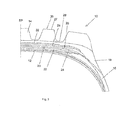
FIG. 1 is a cross-sectional view of a pneumatic tire in accordance with an embodiment of the invention. -
FIG. 2 is a plan view showing the four belt layers of the belt structure of the tire ofFigure 1 and the direction and orientation of the cord in each belt layer. -
FIG. 3 is an enlarged cross section of a shoulder portion of the tire ofFigure 1 showing the belt edges. -
FIG. 4 is a plan view similar toFigure 2 , but depicting an alternate embodiment tire belt structure made as a mirror image of the belt structure inFigure 2 . -
FIG. 5 is an exemplary cross section of any one of the belt layers. - With reference to the
Figures 1 and3 , apneumatic tire 10 includes acarcass 12, a ground-engaging tread 14, asidewall 16, and ashoulder 18 defined at the juncture between thesidewall 16 and thetread 14. Thetread 14 has aground contacting surface 27 and may comprisegrooves 29. When mounted on a vehicle, thetread 14 furnishes traction andtire 10 contains a fluid that supports the vehicle load. Thetire carcass 12 has one ormore carcass plies 7 extending from thebead 15 under thebelt structure 20 to theopposite bead 15. Radially inward of the at least oneply 7 is an air impervious inner liner 8.Pneumatic tire 10 is understood to preferably have mirror symmetry for reflection about an equatorial planeEP bisecting tire 10 so that the following description is understood to apply to the full tire width.Pneumatic tire 10 has a footprint, as described hereinabove. - Arranged radially between the
carcass 12 and thetread 14 is abelt package 20 that includes a plurality of, for example, four individual cut belt plies orlayers cut belt layers cut belt layers crown 30 of thetire 10 and are preferably applied to thetire 10 as individual spliced sheets of cord reinforcement. Atread cushion 32 may be provided radially outward of thecut belt layers tread 14 with thebelt package 20. In the tire making process, thegreen carcass 12,tread 14,sidewalls 16 andbelt package 20 are united and then mounted in a curing mold for vulcanizing thetire 10. - In a preferred embodiment of the invention, the
pneumatic tire 10 has abelt reinforcing structure 20 positioned between thecarcass 12 and thetread 14. Thebelt reinforcing structure 20 includes four belt layers, a radially innerfirst belt layer 22, asecond belt layer 24 arranged adjacent to and radially outward from thefirst belt layer 22 and athird belt layer 26 overlaying and adjacent to thesecond belt layer 24 and afourth belt layer 28 overlaying and radially outward of thethird belt layer 26. As shown inFigure 5 , eachbelt layer parallel cords 32. As shown inFigure 2 , the fourlayer belt structure 20 is characterized by having the first 22, second 24 and third 26 belt layers having cords directionally oriented relative to an equatorial center plane EP of thetire 10 extending to the right (R) whereas thefourth belt layer 28 has the cords extending to the left (L) to form a four layer stackedbelt structure 20 of cords sequentially oriented RRRL. In the preferred embodiment, thefirst belt layer 22 andsecond belt layer 24 have the parallel cords oriented right (R) angularly in a range of 45 to 65 degrees relative to the equatorial plane. Thethird belt layer 26 has the cords oriented right (R) in a range of 16 to 25 degrees relative to the equatorial plane. Thefourth belt layer 28 is oriented left (L) in arange 16 to 25 degrees relative to the equatorial plane 19. Preferably thefirst belt layer 22 has cords angled at a larger angle than the cords of thesecond belt layer 24. The cords of thefirst belt layer 22 preferably are 5 degrees right greater than the cords of thesecond belt layer 24. In the preferred embodiment, thefirst belt layer 22 cords are oriented at 50 degrees right (R) and the cords of thesecond belt layer 24 are oriented at 45 degrees right (R). The cords of thefourth belt layer 28 are oriented left (L) at an angle greater than the cords of thethird belt layer 26 that are oriented to the right (R). Thefourth belt layer 28 has the cords at least 3 degrees greater than the right (R) cord angles of thethird belt layer 26. Thethird belt layer 26 has cords oriented right (R) at an angle of 19 degrees whereas the overlaying cords of thefourth belt layer 28 are angled at 23 degrees left (L). - When this preferred embodiment tire was made in a size 315/80/22.5 radial pneumatic tire having the
belt structure 20 as described above it was determined that thesecond belt layer 24 operated much cooler than a prior art tire. This is believed to be caused by the combination of a RRRL belt structure wherein the underlyingfirst belt layer 22 and the overlyingthird belt layer 26 directionally oriented the same as thesecond belt layer 24 assists thesecond belt layer 24 particularly around the belt edges to maintain the cooler temperature than would otherwise be achieved by a conventional opposite orientation of adjacent cords within adjacent belt layers. This ability to achieve cooler temperatures in the belt edge region greatly improves the crown durability of the overall tire structure. It is important to understand that this structure as described herein in the size tire used for mixed service heavy loaded vehicles in mixed service applications such as waste haulers or buses is quite beneficial in that it assists the belt structure in maintaining its structural integrity due to the fact that it operates at a much cooler temperature than heretofore achieved. - In a test trial run a prior art tire having a conventional belt structure having four belt layers oriented at RRLL had an internal tire cavity temperature of 121.5 degrees C and an interlaminate shear of 0.701. The prior art control tire had the four belt layers oriented from the radially inner through the radially outer at 55 degrees R, 18 degrees R, 18 degrees L and 18 degrees L respectively. Both the prior art control tire and the
tire 10 of the invention had the cords of the first inner belt at 10 EPI (ends per 2.54 cm) and the remaining three belts at 14 EPI each. Thecords 32 in thebelts inner belt 22 usedcords 32 made of US10 which is a 3+2x.35 ST steel wire construction. The inventive tire of the RRRL belt construction with 50 degrees R, 45 degrees R, 19 degrees R and 23 degrees L had a cavity temperature of 114.5 degrees C and an interlaminar shear rating of 0.285. This was a considerable difference and evidences far better operating performance at the belt edges. - It is important to note with reference to
Figure 4 that an alternative tire belt structure can be constructed wherein the RRRL belt layers 22, 24, 26, 28 of the preferred invention can be produced as a mirror image having a LLLR belt structure. This mirror image belt structure when made similar to that previously described using the same ranges of cord angles only oppositely oriented when assembled is expected to perform as well as the test tires made with a RRRL configuration. It is important to note that any mirror image of the construction is considered within the scope of the present invention. What is important is that the directionally same orientation of the first 22, second 24 andthird belt 26 layers achieves a great assistance for thesecond belt layer 24 in the belt edge region such that thesecond belt layer 24 will achieve a cooler operating temperature than would otherwise be achieved.
Claims (15)
- A pneumatic tire comprising a carcass (12), a tread (14) disposed radially outward of the carcass (12), and a belt structure (20) positioned radially between the carcass (12) and the tread (14), the belt structure (20) including at least four belt layers (22, 24, 26, 28), a radially inner first belt layer (22), a second belt layer (24) arranged adjacent to and radially outward from the first belt layer (22), a third belt layer (26) arranged adjacent to and radially outward from the second belt layer (24), and a fourth belt layer (28) arranged adjacent to and radially outward from the third belt layer (26), each belt layer (22, 24, 26, 28) being reinforced with a plurality of parallel cords, wherein(i) the first, second and third belt layer (22, 24, 26) have the cords directionally oriented relative to an equatorial center plane (EP) of the tire (10) extending to the right (R) and the fourth belt layer (28) has the cords directionally oriented relative to the equatorial center plane (EP) of the tire (10) extending to the left (L) to form a four layer stacked belt structure of cords sequentially oriented RRRL; or(ii) the first, second and third belt layer (22, 24, 26) have the cords directionally oriented relative to an equatorial center plane (EP) of the tire (10) extending to the left (L) and the fourth belt layer (28) has the cords directionally oriented relative to the equatorial center plane (EP) of the tire (10) extending to the right (R) to form a four layer stacked belt structure of cords sequentially oriented LLLR.
- The pneumatic tire of claim 1 wherein the first belt layer (22) and the second belt layer (24) have the cords oriented angularly in the range of from 40 degrees to 65 degrees, alternatively of from 45 degrees to 55 degrees, relative to the equatorial plane (EP).
- The pneumatic tire of claim 1 or 2 wherein the third belt layer (26) has the cords oriented angularly in the range of from 16 degrees to 25 degrees, alternatively of from 18 degrees to 23 degrees, relative to the equatorial plane (EP).
- The pneumatic tire of claim 1, 2 or 3 wherein the fourth belt layer (28) has the cords oriented angularly in the range of from 16 degrees to 25 degrees, alternatively of from 18 degrees to 21 degrees, relative to the equatorial plane (EP).
- The pneumatic tire of at least one of the previous claims wherein the first belt layer (22) has the cords oriented angled at a larger angle than the cords of the second belt layer (24).
- The pneumatic tire of claim 5 wherein the cord angle of the first belt layer (22) is 5 degrees greater or at least 5 degrees greater than the cord angle of the second belt layer (24).
- The pneumatic tire of claim 5 wherein the cords of the first belt layer (22) are oriented 50 degrees and the cords of the second belt layer (24) are oriented 45 degrees.
- The pneumatic tire of at least one of the previous claims wherein the cords of the fourth belt layer (28) are oriented an angle greater than the cords of the third belt layer (26).
- The pneumatic tire of claim 8 wherein the fourth belt layer (28) has the cords oriented 3 degrees greater or at least 3 degrees greater than the angle of cords of the third belt layer (26).
- The pneumatic tire of at least one of the previous claims wherein the third belt (26) has the cords oriented at an angle of 19 degrees and/or wherein the cords of the fourth belt layer are angled 23 degrees.
- The pneumatic tire of at least one of the previous claims wherein the axial width of the first belt layer (22), the second belt layer (24), the third belt layer (26) and the fourth belt layer (28) decreases from the first belt layer (22) to the fourth belt layer (24) in such a way that the axial width of the second belt layer (24) is smaller than the axial width of the first belt layer (22), the axial width of the third belt layer (26) is smaller than the axial width of the second belt layer (24) and the axial width of the fourth belt layer (28) is smaller than the axial width of the third belt layer (26).
- The pneumatic tire of at least one of the previous claims 1 to 10 wherein the axial width of the first belt layer (22), the second belt layer (24), the third belt layer (26) and the fourth belt layer (28) increases from the first belt layer (22) to the fourth belt layer (24) in such a way that the axial width of the second belt layer (24) is wider than the axial width of the first belt layer (22), the axial width of the third belt layer (26) is wider than the axial width of the second belt layer (24) and the axial width of the fourth belt layer (28) is wider than the axial width of the third belt layer (26).
- The pneumatic tire of at least one of the previous claims, in particular of claim 11 or 12, wherein the axial width of the second belt layer (22) is not more than 10%, alternatively not more than 5%, different from the axial width of the second belt layer (24); and/or wherein the axial width of the third belt layer (26) is not more than 10%, alternatively not more than 5%, different from the axial width of the fourth belt layer (26).
- The pneumatic tire of at least one of the previous claims, in particular of claim 11, 12 or 13, wherein the axial width of the second belt layer (24) is at least 5%, alternatively at least 10%, different from the width of the third belt layer (26).
- The pneumatic tire of at least one of the previous claims wherein the tire is a tire for heavy vehicle service or a truck tire.
Applications Claiming Priority (1)
| Application Number | Priority Date | Filing Date | Title |
|---|---|---|---|
| US13/219,829 US8776854B2 (en) | 2011-08-29 | 2011-08-29 | Pneumatic tire with improved crown durability |
Publications (2)
| Publication Number | Publication Date |
|---|---|
| EP2565055A1 true EP2565055A1 (en) | 2013-03-06 |
| EP2565055B1 EP2565055B1 (en) | 2014-07-30 |
Family
ID=46939508
Family Applications (1)
| Application Number | Title | Priority Date | Filing Date |
|---|---|---|---|
| EP12181794.4A Not-in-force EP2565055B1 (en) | 2011-08-29 | 2012-08-24 | Pneumatic tire with improved crown durability |
Country Status (2)
| Country | Link |
|---|---|
| US (2) | US8776854B2 (en) |
| EP (1) | EP2565055B1 (en) |
Families Citing this family (3)
| Publication number | Priority date | Publication date | Assignee | Title |
|---|---|---|---|---|
| JP6720539B2 (en) * | 2016-01-13 | 2020-07-08 | 住友ゴム工業株式会社 | Pneumatic tire |
| US20210178820A1 (en) * | 2019-12-17 | 2021-06-17 | The Goodyear Tire & Rubber Company | Pneumatic tire |
| US20220185018A1 (en) * | 2020-12-14 | 2022-06-16 | The Goodyear Tire & Rubber Company | Truck tire |
Citations (4)
| Publication number | Priority date | Publication date | Assignee | Title |
|---|---|---|---|---|
| US6536496B1 (en) * | 1998-02-05 | 2003-03-25 | COMPAGNIE GéNéRALE DES ETABLISSEMENTS MICHELIN & CIE | Tire having crown reinforcement with profiled element and edging rubber |
| EP1547818A1 (en) * | 2003-12-22 | 2005-06-29 | The Goodyear Tire & Rubber Company | Pneumatic tire with improved crown durability |
| US20100269967A1 (en) * | 2009-04-28 | 2010-10-28 | Kiyoto Maruoka | Heavy duty radial tire |
| DE102010000181A1 (en) * | 2010-01-25 | 2011-07-28 | Continental Reifen Deutschland GmbH, 30165 | Radial-type pneumatic tire for e.g. lorry, has radially inner belt layer to which belt layer is attached, where angle enclosing cords in outer belt layer is larger around given degrees than angle enclosing cords in another outer belt layer |
Family Cites Families (17)
| Publication number | Priority date | Publication date | Assignee | Title |
|---|---|---|---|---|
| GB1219755A (en) * | 1967-06-16 | 1971-01-20 | Dunlop Co Ltd | Improvements in and relat to pneumatic tyres |
| US3685564A (en) | 1969-11-17 | 1972-08-22 | John C Smithkey Jr | Pneumatic tire |
| JPS5780908A (en) | 1980-11-06 | 1982-05-20 | Bridgestone Corp | Radial tire for running on rough ground |
| JPS5843803A (en) | 1981-09-11 | 1983-03-14 | Bridgestone Corp | Pneumatic radial tire for heavy load |
| JPS649002A (en) * | 1985-04-24 | 1989-01-12 | Sumitomo Rubber Ind | High performance (low profile radial) tire |
| JPH01141104A (en) * | 1987-11-27 | 1989-06-02 | Sumitomo Rubber Ind Ltd | Pneumatic radial type for heavy load |
| JP2581724B2 (en) | 1988-01-07 | 1997-02-12 | 株式会社ブリヂストン | Pneumatic radial tire |
| JPH03128702A (en) | 1989-07-24 | 1991-05-31 | Sumitomo Rubber Ind Ltd | Heavy duty tire |
| US5261475A (en) | 1990-12-18 | 1993-11-16 | Bridgestone Corporation | Off-the-road pneumatic steel radial tires |
| CA2080852A1 (en) | 1992-04-13 | 1993-10-14 | Pedro Yap | Truck tire with split overlay |
| JP3064108B2 (en) | 1992-07-24 | 2000-07-12 | 株式会社ブリヂストン | Radial tires for heavy loads |
| CA2156914C (en) | 1993-12-27 | 1999-01-05 | Kazuo Matsumaru | Steel cords and radial tire using same as reinforcing members |
| FR2730456A1 (en) * | 1995-02-13 | 1996-08-14 | Michelin & Cie | TOP FRAME FOR RADIAL TIRES |
| US5743975A (en) | 1995-03-24 | 1998-04-28 | The Goodyear Tire & Rubber Company | Radial medium truck tire with organic polymer reinforced top belt or breaker |
| JP4073081B2 (en) | 1998-05-08 | 2008-04-09 | 株式会社ブリヂストン | Pneumatic radial tire |
| US6223796B1 (en) | 1999-08-17 | 2001-05-01 | The Goodyear Tire & Rubber Company | Pneumatic tire having an outer layer of veneer covering the sidewall |
| US7404425B2 (en) | 2002-04-24 | 2008-07-29 | The Goodyear Tire & Rubber Company | Belt package for super single truck tires |
-
2011
- 2011-08-29 US US13/219,829 patent/US8776854B2/en not_active Expired - Fee Related
-
2012
- 2012-08-24 EP EP12181794.4A patent/EP2565055B1/en not_active Not-in-force
-
2014
- 2014-05-28 US US14/288,451 patent/US8869858B2/en not_active Expired - Fee Related
Patent Citations (5)
| Publication number | Priority date | Publication date | Assignee | Title |
|---|---|---|---|---|
| US6536496B1 (en) * | 1998-02-05 | 2003-03-25 | COMPAGNIE GéNéRALE DES ETABLISSEMENTS MICHELIN & CIE | Tire having crown reinforcement with profiled element and edging rubber |
| EP1547818A1 (en) * | 2003-12-22 | 2005-06-29 | The Goodyear Tire & Rubber Company | Pneumatic tire with improved crown durability |
| US7267149B2 (en) | 2003-12-22 | 2007-09-11 | The Goodyear Tire & Rubber Company | Pneumatic tire with improved crown durability |
| US20100269967A1 (en) * | 2009-04-28 | 2010-10-28 | Kiyoto Maruoka | Heavy duty radial tire |
| DE102010000181A1 (en) * | 2010-01-25 | 2011-07-28 | Continental Reifen Deutschland GmbH, 30165 | Radial-type pneumatic tire for e.g. lorry, has radially inner belt layer to which belt layer is attached, where angle enclosing cords in outer belt layer is larger around given degrees than angle enclosing cords in another outer belt layer |
Also Published As
| Publication number | Publication date |
|---|---|
| US20130048184A1 (en) | 2013-02-28 |
| US8776854B2 (en) | 2014-07-15 |
| US20140261950A1 (en) | 2014-09-18 |
| EP2565055B1 (en) | 2014-07-30 |
| US8869858B2 (en) | 2014-10-28 |
Similar Documents
| Publication | Publication Date | Title |
|---|---|---|
| US20090095397A1 (en) | Floating two-ply tire | |
| US7926533B2 (en) | Pneumatic tire with increased lower sidewall durability | |
| CN103813912A (en) | Pneumatic tire | |
| JPH0218105A (en) | Pneumatic tire | |
| JP7363937B2 (en) | Pneumatic tires for heavy loads | |
| US8783315B2 (en) | Pneumatic tire with belt layer, belt reinforcing layer, and pair of folded reinforcing layers | |
| CN101213086B (en) | Tyre for heavy vehicle | |
| US20080295943A1 (en) | Belt package for super single truck tires | |
| EP3501857B1 (en) | Pneumatic tire with a robust bead area structure | |
| US20100051163A1 (en) | Modular ply tire with overlapping plies | |
| EP2565055B1 (en) | Pneumatic tire with improved crown durability | |
| US20160129731A1 (en) | Pneumatic vehicle tire | |
| CN101351345B (en) | Heavy Duty Vehicle Tires | |
| EP2495111B1 (en) | Pneumatic tire, in particular low aspect ratio super single truck tire | |
| CN102137763B (en) | Tyre for heavy vehicles comprising, at least in each shoulder, at least two additional layers in the crown reinforcement | |
| US8037913B2 (en) | Pneumatic tire with single non-continuous carcass ply | |
| US7503363B2 (en) | Belt package for super single truck tires | |
| JPH06156022A (en) | Pneumatic radial tire | |
| EP3081396B1 (en) | A bidirectional monobelt construction for a pneumatic tire | |
| JP2010116065A (en) | Pneumatic tire | |
| EP2495112B1 (en) | Pneumatic tire, in particular low aspect ratio super single truck tire | |
| US20100051162A1 (en) | Modular two-ply tire with directional side plies | |
| US20110232819A1 (en) | Tire for Heavy Vehicles Comprising at Least Two Additional Layers in the Beads | |
| US7267149B2 (en) | Pneumatic tire with improved crown durability | |
| JP4646424B2 (en) | Pneumatic tire |
Legal Events
| Date | Code | Title | Description |
|---|---|---|---|
| PUAI | Public reference made under article 153(3) epc to a published international application that has entered the european phase |
Free format text: ORIGINAL CODE: 0009012 |
|
| AK | Designated contracting states |
Kind code of ref document: A1 Designated state(s): AL AT BE BG CH CY CZ DE DK EE ES FI FR GB GR HR HU IE IS IT LI LT LU LV MC MK MT NL NO PL PT RO RS SE SI SK SM TR |
|
| AX | Request for extension of the european patent |
Extension state: BA ME |
|
| 17P | Request for examination filed |
Effective date: 20130906 |
|
| RBV | Designated contracting states (corrected) |
Designated state(s): AL AT BE BG CH CY CZ DE DK EE ES FI FR GB GR HR HU IE IS IT LI LT LU LV MC MK MT NL NO PL PT RO RS SE SI SK SM TR |
|
| GRAP | Despatch of communication of intention to grant a patent |
Free format text: ORIGINAL CODE: EPIDOSNIGR1 |
|
| INTG | Intention to grant announced |
Effective date: 20140221 |
|
| GRAS | Grant fee paid |
Free format text: ORIGINAL CODE: EPIDOSNIGR3 |
|
| GRAA | (expected) grant |
Free format text: ORIGINAL CODE: 0009210 |
|
| AK | Designated contracting states |
Kind code of ref document: B1 Designated state(s): AL AT BE BG CH CY CZ DE DK EE ES FI FR GB GR HR HU IE IS IT LI LT LU LV MC MK MT NL NO PL PT RO RS SE SI SK SM TR |
|
| REG | Reference to a national code |
Ref country code: GB Ref legal event code: FG4D |
|
| REG | Reference to a national code |
Ref country code: CH Ref legal event code: EP |
|
| REG | Reference to a national code |
Ref country code: AT Ref legal event code: REF Ref document number: 679771 Country of ref document: AT Kind code of ref document: T Effective date: 20140815 |
|
| REG | Reference to a national code |
Ref country code: IE Ref legal event code: FG4D |
|
| REG | Reference to a national code |
Ref country code: DE Ref legal event code: R096 Ref document number: 602012002568 Country of ref document: DE Effective date: 20140911 |
|
| REG | Reference to a national code |
Ref country code: AT Ref legal event code: MK05 Ref document number: 679771 Country of ref document: AT Kind code of ref document: T Effective date: 20140730 |
|
| REG | Reference to a national code |
Ref country code: NL Ref legal event code: VDEP Effective date: 20140730 |
|
| REG | Reference to a national code |
Ref country code: LT Ref legal event code: MG4D |
|
| PG25 | Lapsed in a contracting state [announced via postgrant information from national office to epo] |
Ref country code: GR Free format text: LAPSE BECAUSE OF FAILURE TO SUBMIT A TRANSLATION OF THE DESCRIPTION OR TO PAY THE FEE WITHIN THE PRESCRIBED TIME-LIMIT Effective date: 20141031 Ref country code: BG Free format text: LAPSE BECAUSE OF FAILURE TO SUBMIT A TRANSLATION OF THE DESCRIPTION OR TO PAY THE FEE WITHIN THE PRESCRIBED TIME-LIMIT Effective date: 20141030 Ref country code: PT Free format text: LAPSE BECAUSE OF FAILURE TO SUBMIT A TRANSLATION OF THE DESCRIPTION OR TO PAY THE FEE WITHIN THE PRESCRIBED TIME-LIMIT Effective date: 20141202 Ref country code: SE Free format text: LAPSE BECAUSE OF FAILURE TO SUBMIT A TRANSLATION OF THE DESCRIPTION OR TO PAY THE FEE WITHIN THE PRESCRIBED TIME-LIMIT Effective date: 20140730 Ref country code: NO Free format text: LAPSE BECAUSE OF FAILURE TO SUBMIT A TRANSLATION OF THE DESCRIPTION OR TO PAY THE FEE WITHIN THE PRESCRIBED TIME-LIMIT Effective date: 20141030 Ref country code: ES Free format text: LAPSE BECAUSE OF FAILURE TO SUBMIT A TRANSLATION OF THE DESCRIPTION OR TO PAY THE FEE WITHIN THE PRESCRIBED TIME-LIMIT Effective date: 20140730 Ref country code: LT Free format text: LAPSE BECAUSE OF FAILURE TO SUBMIT A TRANSLATION OF THE DESCRIPTION OR TO PAY THE FEE WITHIN THE PRESCRIBED TIME-LIMIT Effective date: 20140730 Ref country code: FI Free format text: LAPSE BECAUSE OF FAILURE TO SUBMIT A TRANSLATION OF THE DESCRIPTION OR TO PAY THE FEE WITHIN THE PRESCRIBED TIME-LIMIT Effective date: 20140730 |
|
| PG25 | Lapsed in a contracting state [announced via postgrant information from national office to epo] |
Ref country code: HR Free format text: LAPSE BECAUSE OF FAILURE TO SUBMIT A TRANSLATION OF THE DESCRIPTION OR TO PAY THE FEE WITHIN THE PRESCRIBED TIME-LIMIT Effective date: 20140730 Ref country code: CY Free format text: LAPSE BECAUSE OF FAILURE TO SUBMIT A TRANSLATION OF THE DESCRIPTION OR TO PAY THE FEE WITHIN THE PRESCRIBED TIME-LIMIT Effective date: 20140730 Ref country code: NL Free format text: LAPSE BECAUSE OF FAILURE TO SUBMIT A TRANSLATION OF THE DESCRIPTION OR TO PAY THE FEE WITHIN THE PRESCRIBED TIME-LIMIT Effective date: 20140730 Ref country code: IS Free format text: LAPSE BECAUSE OF FAILURE TO SUBMIT A TRANSLATION OF THE DESCRIPTION OR TO PAY THE FEE WITHIN THE PRESCRIBED TIME-LIMIT Effective date: 20141130 Ref country code: PL Free format text: LAPSE BECAUSE OF FAILURE TO SUBMIT A TRANSLATION OF THE DESCRIPTION OR TO PAY THE FEE WITHIN THE PRESCRIBED TIME-LIMIT Effective date: 20140730 Ref country code: RS Free format text: LAPSE BECAUSE OF FAILURE TO SUBMIT A TRANSLATION OF THE DESCRIPTION OR TO PAY THE FEE WITHIN THE PRESCRIBED TIME-LIMIT Effective date: 20140730 Ref country code: LV Free format text: LAPSE BECAUSE OF FAILURE TO SUBMIT A TRANSLATION OF THE DESCRIPTION OR TO PAY THE FEE WITHIN THE PRESCRIBED TIME-LIMIT Effective date: 20140730 Ref country code: AT Free format text: LAPSE BECAUSE OF FAILURE TO SUBMIT A TRANSLATION OF THE DESCRIPTION OR TO PAY THE FEE WITHIN THE PRESCRIBED TIME-LIMIT Effective date: 20140730 |
|
| PG25 | Lapsed in a contracting state [announced via postgrant information from national office to epo] |
Ref country code: CZ Free format text: LAPSE BECAUSE OF FAILURE TO SUBMIT A TRANSLATION OF THE DESCRIPTION OR TO PAY THE FEE WITHIN THE PRESCRIBED TIME-LIMIT Effective date: 20140730 Ref country code: DK Free format text: LAPSE BECAUSE OF FAILURE TO SUBMIT A TRANSLATION OF THE DESCRIPTION OR TO PAY THE FEE WITHIN THE PRESCRIBED TIME-LIMIT Effective date: 20140730 Ref country code: SK Free format text: LAPSE BECAUSE OF FAILURE TO SUBMIT A TRANSLATION OF THE DESCRIPTION OR TO PAY THE FEE WITHIN THE PRESCRIBED TIME-LIMIT Effective date: 20140730 Ref country code: BE Free format text: LAPSE BECAUSE OF NON-PAYMENT OF DUE FEES Effective date: 20140831 Ref country code: MC Free format text: LAPSE BECAUSE OF FAILURE TO SUBMIT A TRANSLATION OF THE DESCRIPTION OR TO PAY THE FEE WITHIN THE PRESCRIBED TIME-LIMIT Effective date: 20140730 Ref country code: EE Free format text: LAPSE BECAUSE OF FAILURE TO SUBMIT A TRANSLATION OF THE DESCRIPTION OR TO PAY THE FEE WITHIN THE PRESCRIBED TIME-LIMIT Effective date: 20140730 Ref country code: RO Free format text: LAPSE BECAUSE OF FAILURE TO SUBMIT A TRANSLATION OF THE DESCRIPTION OR TO PAY THE FEE WITHIN THE PRESCRIBED TIME-LIMIT Effective date: 20140730 |
|
| REG | Reference to a national code |
Ref country code: DE Ref legal event code: R097 Ref document number: 602012002568 Country of ref document: DE |
|
| REG | Reference to a national code |
Ref country code: IE Ref legal event code: MM4A |
|
| PLBE | No opposition filed within time limit |
Free format text: ORIGINAL CODE: 0009261 |
|
| STAA | Information on the status of an ep patent application or granted ep patent |
Free format text: STATUS: NO OPPOSITION FILED WITHIN TIME LIMIT |
|
| 26N | No opposition filed |
Effective date: 20150504 |
|
| PG25 | Lapsed in a contracting state [announced via postgrant information from national office to epo] |
Ref country code: IE Free format text: LAPSE BECAUSE OF NON-PAYMENT OF DUE FEES Effective date: 20140824 |
|
| PG25 | Lapsed in a contracting state [announced via postgrant information from national office to epo] |
Ref country code: SI Free format text: LAPSE BECAUSE OF FAILURE TO SUBMIT A TRANSLATION OF THE DESCRIPTION OR TO PAY THE FEE WITHIN THE PRESCRIBED TIME-LIMIT Effective date: 20140730 |
|
| REG | Reference to a national code |
Ref country code: CH Ref legal event code: PL |
|
| PG25 | Lapsed in a contracting state [announced via postgrant information from national office to epo] |
Ref country code: CH Free format text: LAPSE BECAUSE OF NON-PAYMENT OF DUE FEES Effective date: 20150831 Ref country code: LI Free format text: LAPSE BECAUSE OF NON-PAYMENT OF DUE FEES Effective date: 20150831 |
|
| PG25 | Lapsed in a contracting state [announced via postgrant information from national office to epo] |
Ref country code: SM Free format text: LAPSE BECAUSE OF FAILURE TO SUBMIT A TRANSLATION OF THE DESCRIPTION OR TO PAY THE FEE WITHIN THE PRESCRIBED TIME-LIMIT Effective date: 20140730 |
|
| PG25 | Lapsed in a contracting state [announced via postgrant information from national office to epo] |
Ref country code: MT Free format text: LAPSE BECAUSE OF FAILURE TO SUBMIT A TRANSLATION OF THE DESCRIPTION OR TO PAY THE FEE WITHIN THE PRESCRIBED TIME-LIMIT Effective date: 20140730 |
|
| REG | Reference to a national code |
Ref country code: FR Ref legal event code: PLFP Year of fee payment: 5 |
|
| PG25 | Lapsed in a contracting state [announced via postgrant information from national office to epo] |
Ref country code: HU Free format text: LAPSE BECAUSE OF FAILURE TO SUBMIT A TRANSLATION OF THE DESCRIPTION OR TO PAY THE FEE WITHIN THE PRESCRIBED TIME-LIMIT; INVALID AB INITIO Effective date: 20120824 Ref country code: TR Free format text: LAPSE BECAUSE OF FAILURE TO SUBMIT A TRANSLATION OF THE DESCRIPTION OR TO PAY THE FEE WITHIN THE PRESCRIBED TIME-LIMIT Effective date: 20140730 Ref country code: LU Free format text: LAPSE BECAUSE OF NON-PAYMENT OF DUE FEES Effective date: 20140824 Ref country code: BE Free format text: LAPSE BECAUSE OF FAILURE TO SUBMIT A TRANSLATION OF THE DESCRIPTION OR TO PAY THE FEE WITHIN THE PRESCRIBED TIME-LIMIT Effective date: 20140730 |
|
| GBPC | Gb: european patent ceased through non-payment of renewal fee |
Effective date: 20160824 |
|
| REG | Reference to a national code |
Ref country code: FR Ref legal event code: PLFP Year of fee payment: 6 |
|
| PG25 | Lapsed in a contracting state [announced via postgrant information from national office to epo] |
Ref country code: GB Free format text: LAPSE BECAUSE OF NON-PAYMENT OF DUE FEES Effective date: 20160824 |
|
| PG25 | Lapsed in a contracting state [announced via postgrant information from national office to epo] |
Ref country code: MK Free format text: LAPSE BECAUSE OF FAILURE TO SUBMIT A TRANSLATION OF THE DESCRIPTION OR TO PAY THE FEE WITHIN THE PRESCRIBED TIME-LIMIT Effective date: 20140730 |
|
| REG | Reference to a national code |
Ref country code: FR Ref legal event code: PLFP Year of fee payment: 7 |
|
| PG25 | Lapsed in a contracting state [announced via postgrant information from national office to epo] |
Ref country code: AL Free format text: LAPSE BECAUSE OF FAILURE TO SUBMIT A TRANSLATION OF THE DESCRIPTION OR TO PAY THE FEE WITHIN THE PRESCRIBED TIME-LIMIT Effective date: 20140730 |
|
| PGFP | Annual fee paid to national office [announced via postgrant information from national office to epo] |
Ref country code: FR Payment date: 20200715 Year of fee payment: 9 Ref country code: DE Payment date: 20200812 Year of fee payment: 9 |
|
| PGFP | Annual fee paid to national office [announced via postgrant information from national office to epo] |
Ref country code: IT Payment date: 20200713 Year of fee payment: 9 |
|
| REG | Reference to a national code |
Ref country code: DE Ref legal event code: R119 Ref document number: 602012002568 Country of ref document: DE |
|
| PG25 | Lapsed in a contracting state [announced via postgrant information from national office to epo] |
Ref country code: IT Free format text: LAPSE BECAUSE OF NON-PAYMENT OF DUE FEES Effective date: 20210824 Ref country code: FR Free format text: LAPSE BECAUSE OF NON-PAYMENT OF DUE FEES Effective date: 20210831 Ref country code: DE Free format text: LAPSE BECAUSE OF NON-PAYMENT OF DUE FEES Effective date: 20220301 |