EP2563028A1 - Media procesing load sharing - Google Patents
Media procesing load sharing Download PDFInfo
- Publication number
- EP2563028A1 EP2563028A1 EP11178505A EP11178505A EP2563028A1 EP 2563028 A1 EP2563028 A1 EP 2563028A1 EP 11178505 A EP11178505 A EP 11178505A EP 11178505 A EP11178505 A EP 11178505A EP 2563028 A1 EP2563028 A1 EP 2563028A1
- Authority
- EP
- European Patent Office
- Prior art keywords
- terminal
- network element
- media
- capabilities
- media content
- Prior art date
- Legal status (The legal status is an assumption and is not a legal conclusion. Google has not performed a legal analysis and makes no representation as to the accuracy of the status listed.)
- Withdrawn
Links
Images


Classifications
-
- H—ELECTRICITY
- H04—ELECTRIC COMMUNICATION TECHNIQUE
- H04N—PICTORIAL COMMUNICATION, e.g. TELEVISION
- H04N21/00—Selective content distribution, e.g. interactive television or video on demand [VOD]
- H04N21/60—Network structure or processes for video distribution between server and client or between remote clients; Control signalling between clients, server and network components; Transmission of management data between server and client, e.g. sending from server to client commands for recording incoming content stream; Communication details between server and client
- H04N21/63—Control signaling related to video distribution between client, server and network components; Network processes for video distribution between server and clients or between remote clients, e.g. transmitting basic layer and enhancement layers over different transmission paths, setting up a peer-to-peer communication via Internet between remote STB's; Communication protocols; Addressing
- H04N21/633—Control signals issued by server directed to the network components or client
- H04N21/6332—Control signals issued by server directed to the network components or client directed to client
-
- G—PHYSICS
- G06—COMPUTING OR CALCULATING; COUNTING
- G06F—ELECTRIC DIGITAL DATA PROCESSING
- G06F9/00—Arrangements for program control, e.g. control units
- G06F9/06—Arrangements for program control, e.g. control units using stored programs, i.e. using an internal store of processing equipment to receive or retain programs
- G06F9/46—Multiprogramming arrangements
- G06F9/50—Allocation of resources, e.g. of the central processing unit [CPU]
- G06F9/5005—Allocation of resources, e.g. of the central processing unit [CPU] to service a request
- G06F9/5027—Allocation of resources, e.g. of the central processing unit [CPU] to service a request the resource being a machine, e.g. CPUs, Servers, Terminals
-
- H—ELECTRICITY
- H04—ELECTRIC COMMUNICATION TECHNIQUE
- H04L—TRANSMISSION OF DIGITAL INFORMATION, e.g. TELEGRAPHIC COMMUNICATION
- H04L65/00—Network arrangements, protocols or services for supporting real-time applications in data packet communication
- H04L65/1066—Session management
- H04L65/1101—Session protocols
- H04L65/1104—Session initiation protocol [SIP]
-
- H—ELECTRICITY
- H04—ELECTRIC COMMUNICATION TECHNIQUE
- H04L—TRANSMISSION OF DIGITAL INFORMATION, e.g. TELEGRAPHIC COMMUNICATION
- H04L65/00—Network arrangements, protocols or services for supporting real-time applications in data packet communication
- H04L65/40—Support for services or applications
- H04L65/403—Arrangements for multi-party communication, e.g. for conferences
- H04L65/4038—Arrangements for multi-party communication, e.g. for conferences with floor control
-
- H—ELECTRICITY
- H04—ELECTRIC COMMUNICATION TECHNIQUE
- H04L—TRANSMISSION OF DIGITAL INFORMATION, e.g. TELEGRAPHIC COMMUNICATION
- H04L65/00—Network arrangements, protocols or services for supporting real-time applications in data packet communication
- H04L65/80—Responding to QoS
-
- H—ELECTRICITY
- H04—ELECTRIC COMMUNICATION TECHNIQUE
- H04L—TRANSMISSION OF DIGITAL INFORMATION, e.g. TELEGRAPHIC COMMUNICATION
- H04L67/00—Network arrangements or protocols for supporting network services or applications
- H04L67/2866—Architectures; Arrangements
- H04L67/30—Profiles
- H04L67/303—Terminal profiles
-
- H—ELECTRICITY
- H04—ELECTRIC COMMUNICATION TECHNIQUE
- H04L—TRANSMISSION OF DIGITAL INFORMATION, e.g. TELEGRAPHIC COMMUNICATION
- H04L69/00—Network arrangements, protocols or services independent of the application payload and not provided for in the other groups of this subclass
- H04L69/24—Negotiation of communication capabilities
-
- H—ELECTRICITY
- H04—ELECTRIC COMMUNICATION TECHNIQUE
- H04N—PICTORIAL COMMUNICATION, e.g. TELEVISION
- H04N21/00—Selective content distribution, e.g. interactive television or video on demand [VOD]
- H04N21/20—Servers specifically adapted for the distribution of content, e.g. VOD servers; Operations thereof
- H04N21/23—Processing of content or additional data; Elementary server operations; Server middleware
- H04N21/234—Processing of video elementary streams, e.g. splicing of video streams or manipulating encoded video stream scene graphs
- H04N21/2343—Processing of video elementary streams, e.g. splicing of video streams or manipulating encoded video stream scene graphs involving reformatting operations of video signals for distribution or compliance with end-user requests or end-user device requirements
- H04N21/234363—Processing of video elementary streams, e.g. splicing of video streams or manipulating encoded video stream scene graphs involving reformatting operations of video signals for distribution or compliance with end-user requests or end-user device requirements by altering the spatial resolution, e.g. for clients with a lower screen resolution
-
- H—ELECTRICITY
- H04—ELECTRIC COMMUNICATION TECHNIQUE
- H04N—PICTORIAL COMMUNICATION, e.g. TELEVISION
- H04N21/00—Selective content distribution, e.g. interactive television or video on demand [VOD]
- H04N21/20—Servers specifically adapted for the distribution of content, e.g. VOD servers; Operations thereof
- H04N21/23—Processing of content or additional data; Elementary server operations; Server middleware
- H04N21/234—Processing of video elementary streams, e.g. splicing of video streams or manipulating encoded video stream scene graphs
- H04N21/2343—Processing of video elementary streams, e.g. splicing of video streams or manipulating encoded video stream scene graphs involving reformatting operations of video signals for distribution or compliance with end-user requests or end-user device requirements
- H04N21/234381—Processing of video elementary streams, e.g. splicing of video streams or manipulating encoded video stream scene graphs involving reformatting operations of video signals for distribution or compliance with end-user requests or end-user device requirements by altering the temporal resolution, e.g. decreasing the frame rate by frame skipping
-
- H—ELECTRICITY
- H04—ELECTRIC COMMUNICATION TECHNIQUE
- H04N—PICTORIAL COMMUNICATION, e.g. TELEVISION
- H04N21/00—Selective content distribution, e.g. interactive television or video on demand [VOD]
- H04N21/20—Servers specifically adapted for the distribution of content, e.g. VOD servers; Operations thereof
- H04N21/25—Management operations performed by the server for facilitating the content distribution or administrating data related to end-users or client devices, e.g. end-user or client device authentication, learning user preferences for recommending movies
- H04N21/258—Client or end-user data management, e.g. managing client capabilities, user preferences or demographics, processing of multiple end-users preferences to derive collaborative data
- H04N21/25808—Management of client data
- H04N21/25825—Management of client data involving client display capabilities, e.g. screen resolution of a mobile phone
-
- H—ELECTRICITY
- H04—ELECTRIC COMMUNICATION TECHNIQUE
- H04N—PICTORIAL COMMUNICATION, e.g. TELEVISION
- H04N21/00—Selective content distribution, e.g. interactive television or video on demand [VOD]
- H04N21/20—Servers specifically adapted for the distribution of content, e.g. VOD servers; Operations thereof
- H04N21/25—Management operations performed by the server for facilitating the content distribution or administrating data related to end-users or client devices, e.g. end-user or client device authentication, learning user preferences for recommending movies
- H04N21/258—Client or end-user data management, e.g. managing client capabilities, user preferences or demographics, processing of multiple end-users preferences to derive collaborative data
- H04N21/25808—Management of client data
- H04N21/25833—Management of client data involving client hardware characteristics, e.g. manufacturer, processing or storage capabilities
-
- H—ELECTRICITY
- H04—ELECTRIC COMMUNICATION TECHNIQUE
- H04N—PICTORIAL COMMUNICATION, e.g. TELEVISION
- H04N21/00—Selective content distribution, e.g. interactive television or video on demand [VOD]
- H04N21/40—Client devices specifically adapted for the reception of or interaction with content, e.g. set-top-box [STB]; Operations thereof
- H04N21/43—Processing of content or additional data, e.g. demultiplexing additional data from a digital video stream; Elementary client operations, e.g. monitoring of home network or synchronising decoder's clock; Client middleware
- H04N21/44—Processing of video elementary streams, e.g. splicing a video clip retrieved from local storage with an incoming video stream or rendering scenes according to encoded video stream scene graphs
- H04N21/4402—Processing of video elementary streams, e.g. splicing a video clip retrieved from local storage with an incoming video stream or rendering scenes according to encoded video stream scene graphs involving reformatting operations of video signals for household redistribution, storage or real-time display
- H04N21/440263—Processing of video elementary streams, e.g. splicing a video clip retrieved from local storage with an incoming video stream or rendering scenes according to encoded video stream scene graphs involving reformatting operations of video signals for household redistribution, storage or real-time display by altering the spatial resolution, e.g. for displaying on a connected PDA
-
- H—ELECTRICITY
- H04—ELECTRIC COMMUNICATION TECHNIQUE
- H04N—PICTORIAL COMMUNICATION, e.g. TELEVISION
- H04N21/00—Selective content distribution, e.g. interactive television or video on demand [VOD]
- H04N21/40—Client devices specifically adapted for the reception of or interaction with content, e.g. set-top-box [STB]; Operations thereof
- H04N21/43—Processing of content or additional data, e.g. demultiplexing additional data from a digital video stream; Elementary client operations, e.g. monitoring of home network or synchronising decoder's clock; Client middleware
- H04N21/44—Processing of video elementary streams, e.g. splicing a video clip retrieved from local storage with an incoming video stream or rendering scenes according to encoded video stream scene graphs
- H04N21/4402—Processing of video elementary streams, e.g. splicing a video clip retrieved from local storage with an incoming video stream or rendering scenes according to encoded video stream scene graphs involving reformatting operations of video signals for household redistribution, storage or real-time display
- H04N21/440281—Processing of video elementary streams, e.g. splicing a video clip retrieved from local storage with an incoming video stream or rendering scenes according to encoded video stream scene graphs involving reformatting operations of video signals for household redistribution, storage or real-time display by altering the temporal resolution, e.g. by frame skipping
-
- H—ELECTRICITY
- H04—ELECTRIC COMMUNICATION TECHNIQUE
- H04N—PICTORIAL COMMUNICATION, e.g. TELEVISION
- H04N21/00—Selective content distribution, e.g. interactive television or video on demand [VOD]
- H04N21/40—Client devices specifically adapted for the reception of or interaction with content, e.g. set-top-box [STB]; Operations thereof
- H04N21/45—Management operations performed by the client for facilitating the reception of or the interaction with the content or administrating data related to the end-user or to the client device itself, e.g. learning user preferences for recommending movies, resolving scheduling conflicts
- H04N21/4508—Management of client data or end-user data
- H04N21/4516—Management of client data or end-user data involving client characteristics, e.g. Set-Top-Box type, software version or amount of memory available
-
- H—ELECTRICITY
- H04—ELECTRIC COMMUNICATION TECHNIQUE
- H04N—PICTORIAL COMMUNICATION, e.g. TELEVISION
- H04N21/00—Selective content distribution, e.g. interactive television or video on demand [VOD]
- H04N21/60—Network structure or processes for video distribution between server and client or between remote clients; Control signalling between clients, server and network components; Transmission of management data between server and client, e.g. sending from server to client commands for recording incoming content stream; Communication details between server and client
- H04N21/63—Control signaling related to video distribution between client, server and network components; Network processes for video distribution between server and clients or between remote clients, e.g. transmitting basic layer and enhancement layers over different transmission paths, setting up a peer-to-peer communication via Internet between remote STB's; Communication protocols; Addressing
- H04N21/637—Control signals issued by the client directed to the server or network components
- H04N21/6377—Control signals issued by the client directed to the server or network components directed to server
-
- G—PHYSICS
- G06—COMPUTING OR CALCULATING; COUNTING
- G06F—ELECTRIC DIGITAL DATA PROCESSING
- G06F2209/00—Indexing scheme relating to G06F9/00
- G06F2209/50—Indexing scheme relating to G06F9/50
- G06F2209/509—Offload
-
- H—ELECTRICITY
- H04—ELECTRIC COMMUNICATION TECHNIQUE
- H04L—TRANSMISSION OF DIGITAL INFORMATION, e.g. TELEGRAPHIC COMMUNICATION
- H04L67/00—Network arrangements or protocols for supporting network services or applications
- H04L67/2866—Architectures; Arrangements
- H04L67/30—Profiles
- H04L67/306—User profiles
-
- H—ELECTRICITY
- H04—ELECTRIC COMMUNICATION TECHNIQUE
- H04N—PICTORIAL COMMUNICATION, e.g. TELEVISION
- H04N21/00—Selective content distribution, e.g. interactive television or video on demand [VOD]
- H04N21/20—Servers specifically adapted for the distribution of content, e.g. VOD servers; Operations thereof
- H04N21/23—Processing of content or additional data; Elementary server operations; Server middleware
- H04N21/231—Content storage operation, e.g. caching movies for short term storage, replicating data over plural servers, prioritizing data for deletion
- H04N21/23103—Content storage operation, e.g. caching movies for short term storage, replicating data over plural servers, prioritizing data for deletion using load balancing strategies, e.g. by placing or distributing content on different disks, different memories or different servers
Definitions
- the present invention pertains to content delivery to fixed and mobile user equipments connected to a communication network.
- Such media processing is generally performed in the network (media servers).
- the problem is that this media processing load is very demanding in resources, especially when, for example,
- An object of the present invention is to overcome the aforementioned problems, and offers other advantages over the prior art.
- Another object of the present invention is to reinforce networks to handle user equipments heterogeneity and content processing load.
- Another object of the present invention is to lighten the load on network equipments during media content delivery to user equipments.
- the present invention is directed to addressing the effects of one or more of the problems set forth above.
- the following presents a simplified summary of the invention in order to provide a basic understanding of some aspects of the invention. This summary is not an exhaustive overview of the invention. It is not intended to identify key of critical elements of the invention or to delineate the scope of the invention. Its sole purpose is to present some concepts in a simplified form as a prelude to the more detailed description that is discussed later.
- the present invention relates to a method for processing a media content about which a request is made by a terminal to a network element, said method comprising a negotiation phase of media processing load sharing between the network element and the terminal depending on the capabilities of the said terminal, said negotiation phase including
- the present invention further relates to a network element for processing a media content about which a request is made by a terminal, comprising means for offloading to the said terminal at least a media processing task to perform on the media content depending on the capabilities of the said terminal.
- the present invention further relates to a terminal comprising means configured to inform a network element about the capabilities of the said terminal to perform at least a media processing task on a media content about which it made a request to a network element.
- the present invention further relates to a computer program product adapted to perform the method cited above.
- the above method takes profit of terminals spare media processing capabilities.
- the terminal operates in a dynamic way in the above method, meaning that the operations off-loaded to user equipment are not determined in advance.
- a plurality of user equipments 11-14 connected to a communication network 1 comprising at least a network element 10 charged for providing media contents to terminals 11-14.
- the network 1 may be any combination of networks such as PSTN, mobile, IP, IPTV (Internet, local area network (LAN), a wide area network (WAN), Wifi, WiMAX, CDMA, or LTE for example).
- the network element 10 may be a Multipoint Control Unit (MCU) and/or a media server, a multimedia content server, a Web server, or, more generally, any communication unit - acting alone or in group ⁇ configured to deliver, in response to a request from a terminal 11-14, a media content.
- MCU Multipoint Control Unit
- media content is meant broadly and not restrictively to include any multimedia content such as real-time/ not real-time audio/video content, photo/picture or more generally any data that may need at least a media processing such as transcoding, mixing, compression/decompression, recording, recognition, or 3D graphics handling.
- terminals 11-14 As non-exhaustive examples of terminals 11-14, one can mention cellular phones, Smartphones, Personal Digital Assistants (PDA), computers, laptops, or HDTV. In particular, theses terminals 11-14 are ever evolving and are built with more and more elaborated, even oversized, capabilities, typically, in terms of
- the terminal 11-14 invokes a media content from the network element 10
- a negotiation is established between them in order to enable a dynamic split of the media processing load between them, depending on the terminal 11-14 capabilities.
- media processing load may be dynamically shared between the network element 10 and the terminal 11-14.
- media processing tasks relative to a certain media content requested by terminal 11 may be
- Dynamic sharing of media processing load between network element 10 and terminals 11-14 is made on the basis of a plurality of factors comprising
- terminals 11-14 capabilities are generally expressed in quantifiable metrics (instructions per second, battery level, available memory in bytes, software version, operating system release, user preferences in form of rules/policies for example), facilitating the dynamic split of media processing load between the network element 10 and the terminal 11.
- the sharing of media processing load between the network element 10 and the terminal 11 is achieved through an applicative-level negotiation (a communication protocol) comprising at least the following interactions:
- the terminal 11 does not necessarily discharge all the tasks that it declares able to handle. Offloaded tasks to terminal 11 may be all, some, or any of tasks which it is able to perform.
- this favors coordination between terminals in the case of a session including a plurality of terminals (a video conference for example).
- Figures 3-4 show two illustrative application scenarios of the above more general case.
- FIG. 3 illustrate a conference scenario wherein 4 end-users want to meet in video conference with contentious presence (tiled display, or mosaic), each one having its own personalized display (user profile):
- a conference scenario with layout sharing is considered. It is the same scenario as the above one, except that terminal 13 acts as a director or moderator: terminal 13 picture is not sent to others, and terminal 13 is in control of the video composition (flow included or not, plus layout) for all the participants. Then the following negotiation may take place:
- the network element 10 response is in the following form: "execute Tiled Display and transcode to H.264 (outgoing T1), and I (the Network element 10) take care of transcoding the flows of terminals 12 and 14 to H.264 and of transmitting the flow of terminal 11 and Tiled Display Description".
- the network element takes care of transcoding the flows of terminal 12 and 14 to H.264 and of transmitting Tiled display to terminal 12 and 14.
- the network response is "control and execute Tiled Display, and I (the Network element 10) take care of transcoding the flows of terminal 12 and 14 to H.264 and of transmitting already transcoded flow of terminal 11 by itself"
- Figure 4-5 are two illustrative diagrams showing an illustrative implementation of the negotiation sequence, on both terminal and network sides.
- the network element 10 receives a service call (step 50 in figure 5 ) from a terminal. Once it receives a service call, the network element checks (test 51) its dynamic media processing capability. In case of a positive check result, the network element sends (step 55 ) a task sharing offer to the terminal from which it receives (step 57 ) a sharing answer. Next, the network element computes (step 58 ) task answers from all terminals and acknowledges (step 59 ) task sharing and subsequently executes (step 60 ) sharing service. Otherwise, (i.e.
- step 52 all tasks are done (step 52 ) by the network element and assures (step 53 ) legacy service answer, resulting in a legacy service (step 54 ). It is to be noted that, when the network element receive (step 56 ) a task sharing refusal, from a terminal, as response to its task sharing offer (step 55 ), all tasks are done (step 52 ) by the network element leading to a legacy service (step 54 ).
- a receiving terminal requests media content from a media server by transmitting a content request and information about its own processing capabilities.
- the media server utilizes the terminal information and the required processing for the required media content in order to decide on offloading processing tasks to the receiving terminal.
- the communication exchange between the terminal and the network element is made by way of the network in a direct or indirect way (i.e. via a plurality of network nodes).
- tasks identification has to be common/standard between the network element 10 and terminals 11-14.
- the media processing task is not identified by the common/standard identification of tasks, it could be possible for the network element to directly send the code to execute on terminals.
- an analysis step precedes the processing load sharing negotiation: the network element sends to terminals some media processing code to execute (a predefined code), and would analyze the outcome of this execution to deduce terminal media processing capabilities and performances.
- This mechanism may also be used to trigger a new negotiation during the session.
Landscapes
- Engineering & Computer Science (AREA)
- Signal Processing (AREA)
- Multimedia (AREA)
- Databases & Information Systems (AREA)
- Computer Networks & Wireless Communication (AREA)
- Computer Security & Cryptography (AREA)
- Software Systems (AREA)
- Theoretical Computer Science (AREA)
- Computer Graphics (AREA)
- Physics & Mathematics (AREA)
- General Engineering & Computer Science (AREA)
- General Physics & Mathematics (AREA)
- General Business, Economics & Management (AREA)
- Business, Economics & Management (AREA)
- Two-Way Televisions, Distribution Of Moving Picture Or The Like (AREA)
- Information Transfer Between Computers (AREA)
Abstract
- an informing step of the network element (10) about the terminal (11-14) capabilities ;
- an offloading step to the terminal of at least a media processing task to perform on the media content depending on the terminal capabilities.
Description
- The present invention pertains to content delivery to fixed and mobile user equipments connected to a communication network.
- The rapid proliferation of communications network services has resulted in an increased heterogeneity in user equipments and connections used for information access. It has also led to a fast growth of network traffic load with diverse traffic characteristics and needs.
- In particular, with the increasing availability and use of media content over communications networks (VoD, video game, audio/video communication, IPTV, social media), delivering customized data to plethora of heterogeneous client devices require steadily increasing media processing. Such processing is mainly centered on media content adaptation to special needs of each individual user, and respectively his/her device, such as
- content preferences: screen layout, resolution for exemple;
- transcoding constraints: codec conversion, resizing, bit rate and frame rate conversion, lip-sync, 3D rendering, background and foreground manipulation, dynamic addition of graphic overlay, multi-view video, video interactive services for example; and
- device capabilities: video optimization according to terminal capabilities.
- Such media processing is generally performed in the network (media servers). The problem is that this media processing load is very demanding in resources, especially when, for example,
- each user connected to the system has his own media flow with highly customized display (no common media for several users) ;
- heavy processing is required (background extraction, 3D rendering for example).
- Such surcharge may lead to quality degradation.
- Obviously, increasing the network processing capabilities, by adding servers or new hardware processing capabilities (GPU, DSP for example) is not the best solution as it requires a significant cost, and therefore limits the economical interest or even endanger the viability of some applications and distort the economical model of such services.
- An object of the present invention is to overcome the aforementioned problems, and offers other advantages over the prior art.
- Another object of the present invention is to reinforce networks to handle user equipments heterogeneity and content processing load.
- Another object of the present invention is to lighten the load on network equipments during media content delivery to user equipments.
- The objects, advantages and other features of the present invention will become more apparent from the following disclosure and claims. The following non-restrictive description of preferred embodiments is given for the purpose of exemplification only with reference to the accompanying drawings in which:
-
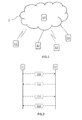
figure 1 illustrates the deployment context of the present invention; -
figure 2 is a block diagram illustrating one embodiment of a negotiation between a user equipment and a network element for content processing load sharing; -
figure 3 is a block diagram illustrating a deployment of one embodiment; -
figures 4-5 are two block diagrams illustrating an implementation of one embodiment on both terminal and network sides. - The present invention is directed to addressing the effects of one or more of the problems set forth above. The following presents a simplified summary of the invention in order to provide a basic understanding of some aspects of the invention. This summary is not an exhaustive overview of the invention. It is not intended to identify key of critical elements of the invention or to delineate the scope of the invention. Its sole purpose is to present some concepts in a simplified form as a prelude to the more detailed description that is discussed later.
- The present invention relates to a method for processing a media content about which a request is made by a terminal to a network element, said method comprising a negotiation phase of media processing load sharing between the network element and the terminal depending on the capabilities of the said terminal, said negotiation phase including
- an informing step of the network element about the terminal capabilities ;
- an offloading step to the terminal of at least a media processing task to perform on the media content depending on the terminal capabilities.
- The present invention further relates to a network element for processing a media content about which a request is made by a terminal, comprising means for offloading to the said terminal at least a media processing task to perform on the media content depending on the capabilities of the said terminal.
- The present invention further relates to a terminal comprising means configured to inform a network element about the capabilities of the said terminal to perform at least a media processing task on a media content about which it made a request to a network element.
- The present invention further relates to a computer program product adapted to perform the method cited above.
- Advantageously, the above method takes profit of terminals spare media processing capabilities.
- Advantageously, the terminal operates in a dynamic way in the above method, meaning that the operations off-loaded to user equipment are not determined in advance.
- While the invention is susceptible to various modification and alternative forms, specific embodiments thereof have been shown by way of example in the drawings. It should be understood, however, that the description herein of specific embodiments is not intended to limit the invention to the particular forms disclosed.
- It may of course be appreciated that in the development of any such actual embodiments, implementation-specific decisions should be made to achieve the developer's specific goal, such as compliance with system-related and business-related constraints. It will be appreciated that such a development effort might be time consuming but may nevertheless be a routine understanding for those or ordinary skill in the art having the benefit of this disclosure.
- With reference to
figure 1 , there is shown a plurality of user equipments 11-14 (herein designated "terminals") connected to acommunication network 1 comprising at least anetwork element 10 charged for providing media contents to terminals 11-14. Obviously, thenetwork 1 may be any combination of networks such as PSTN, mobile, IP, IPTV (Internet, local area network (LAN), a wide area network (WAN), Wifi, WiMAX, CDMA, or LTE for example). - The
network element 10 may be a Multipoint Control Unit (MCU) and/or a media server, a multimedia content server, a Web server, or, more generally, any communication unit - acting alone or in group ― configured to deliver, in response to a request from a terminal 11-14, a media content. By "media content" is meant broadly and not restrictively to include any multimedia content such as real-time/ not real-time audio/video content, photo/picture or more generally any data that may need at least a media processing such as transcoding, mixing, compression/decompression, recording, recognition, or 3D graphics handling. - As non-exhaustive examples of terminals 11-14, one can mention cellular phones, Smartphones, Personal Digital Assistants (PDA), computers, laptops, or HDTV. In particular, theses terminals 11-14 are ever evolving and are built with more and more elaborated, even oversized, capabilities, typically, in terms of
- onboard memory in all its types (for example, Random Access Memory, Read-Only Memory, cache memory, storage memory);
- processor (Central Processing Unit) performance (operating frequency, number of cores: dual-core, multi-core, multithreading for example) ;
- hardware and/or software performances (electronic components, algorithms, operating systems) ;
- graphic performances (graphics processing unit, color depth, screen size, resolution); and
- network access (various interfaces, resources (ports, bandwidth) for example).
- These capabilities are, generally, not fully utilized by processes running on the terminal 11-14 and are, therefore, available.
- In one embodiment, when the terminal 11-14 invokes a media content from the
network element 10, a negotiation is established between them in order to enable a dynamic split of the media processing load between them, depending on the terminal 11-14 capabilities. - In function of terminal 11-14 capabilities and processing tasks to be performed, media processing load may be dynamically shared between the
network element 10 and the terminal 11-14. As a result and depending onterminal 11 capabilities, media processing tasks relative to a certain media content requested byterminal 11 may be - partially executed by the
network element 10, remaining ones being executed byterminal 11 itself or by one or others terminal(s) 12-14 in interaction with terminal 11 (in the case of a call/video conference, an online video game for example); - totally taken in charge by the
network element 10; or - entirely taken in charge by the
terminal 11 itself. - Dynamic sharing of media processing load between
network element 10 and terminals 11-14 is made on the basis of a plurality of factors comprising - media content relevant information (content profile) such as coding format (e.g. H.264), required storage on user equipment, and required protocol (H.323, H.324, SIP for example); and
- terminal capabilities including
- o terminal relevant technical information (terminal profile) such as current available memory space, central unit processing characteristics, operating system, supported audio and video codecs; and
- o user preferences (user profile) which may include all user specific information like presentation preferences (screen layout for example), preferred quality degrees regarding the different media components (delay, resolution for example), user controllable policies for application adoption (preferences regarding access network, resources controlled by the user for example).
- Advantageously, terminals 11-14 capabilities are generally expressed in quantifiable metrics (instructions per second, battery level, available memory in bytes, software version, operating system release, user preferences in form of rules/policies for example), facilitating the dynamic split of media processing load between the
network element 10 and the terminal 11. - Referring now to
figure 2 , the sharing of media processing load between thenetwork element 10 and the terminal 11 is achieved through an applicative-level negotiation (a communication protocol) comprising at least the following interactions: - the terminal 11 sends to the network element 10 (
step 111 infigure 2 ) a request about a media content, such as- o display (streaming) a video content from a video sharing platform/social media-site, or display a video content of a participant in a one-toe-one video communication or more generally in a videoconference and insert the name thereof (resulting in an incoming flow to terminal 11) ;
- o upload a media content for a given destination, or record a video of me, extract the background, insert a new one and post it on a website (resulting in a outcoming flow from the terminal 11);
- o download a media content
- in function of the required processing for the requested media content, the
network element 10 enquires (step 112 infigure 2 ) which tasks the terminal 10 is willing/able to handle. In other words, thenetwork 1 enquires about the terminal 11 capabilities with respect to the tasks to be performed on the requested media content. To that end, thenetwork element 10- o checks media content(s) relevant information, such as : available flow(s) (only terminal 11 own flow, a plurality of flows in the case of a video conference for example), transcoding parameters (coding format, rate reduction for example), requirements to handle such flow(s) (bandwidth, software, hardware for example) ;
- o specifies the tasks to be performed on checked media content(s): background extraction, new background insertion, date and time insertion on screen, transcoding to H.264 for example.
- the terminal 11 checks which task(s) it can perform, depending on its current capabilities, and informs the
network element 10 thereabout (step 113 infigure 1 ). Namely, the terminal 11 notifies thenetwork element 10 something in the form of: "I can take care of background extraction, and date and time insertion on screen"; - the
network element 10- ○ acknowledges (
step 114 infigure 1 ) the terminal 11 response, and - ○ offload to terminal 11 the appropriate flow(s) and task(s) in the following illustrative way: "do the following task: background extraction. The
network element 10 takes care of the remaining tasks: new background insertion, date and time insertion on screen, transcoding to H.264". Accordingly, some tasks are to be executed by thenetwork element 10, while the remaining ones are to be achieved by thetarget terminal 11.
- ○ acknowledges (
- It is to be noted that the terminal 11 does not necessarily discharge all the tasks that it declares able to handle. Offloaded tasks to terminal 11 may be all, some, or any of tasks which it is able to perform. Advantageously, this favors coordination between terminals in the case of a session including a plurality of terminals (a video conference for example).
- Media content processing load negotiation between the terminal 11 and the
network element 10 may take place - as soon as a communication session including the terminal 11 and the
network element 10 is established; or - during a communication session: negotiation can start (or restart) at
step -
Figures 3-4 show two illustrative application scenarios of the above more general case. -
Figure 3 illustrate a conference scenario wherein 4 end-users want to meet in video conference with contentious presence (tiled display, or mosaic), each one having its own personalized display (user profile): - the
network element 10 informs each one of the participant terminals 11-14 (steps figure 3 ) about current flows and tasks to be performed respectively for each requested flow. In fact, thenetwork element 10 negotiates individually (steps figure 3 ) with each terminal 11-14 in order to spread the processing load over participant terminals - in function of their respective capabilities - and itself (i.e. the network element 10). As exemple one can mention, its interaction with terminal 11 (step 115 infigure 3 ):- o available flows: flow of terminal 11 (mandatory), individual or composed (optional) flows of terminals 12-14 ;
- o tasks to perform: Tilled Display Control (optional), insert participants name (optional), transcode flows of Terminals 11-14 or tiled to H.264 (optional).
-
Terminal 11 requests the display of only terminals 12-13 flows, while thenetwork element 10 controls the layout which will be executed by the terminal 11 (step 116 infigure 3 ). That is to say that the terminal 11 report to thenetwork element 10 its capabilities and that it wants to receive the flow ofterminal - o "I can take care of composed flows of
terminal terminal - o In response, the
network element 10 sends (step 117 infigure 3 ) the layout description in a Synchronized Multimedia Integration Language (SMIL) page which will be executed byterminal 11. Among tasks that can performed byterminal 11, one can mention: Tiled Display Control, and execution, participant name insertion, transcoding, Tiled to H.264.
- o "I can take care of composed flows of
- Terminal 12 (respectively, 14) has no capabilities, then all processing has to be controlled and executed by the network element 10 (no media processing to be performed by the terminal 12). In other words, the terminal 12 (respectively 14) apprises (
step 122 infigure 3 ) thenetwork element 10 about the following:- o "I want to receive flows of terminals 11-14 in a composed flow (obviously, is the
network element 10 who executes the composition for it), and I can take care of transcoding the composed flow to H.264" ; - o Therefore, the network element is in charge of transcoding the flow of
terminal 12 to H.264 and of sending to terminal 12 the composed flow with names (step 123 infigure 3 ).
- o "I want to receive flows of terminals 11-14 in a composed flow (obviously, is the
-
Terminal 13 is the most capable: it receives all individual flows and information. Layout is controlled by terminal 13 (for example, by the end-user), and executed byterminal 13. Then, the following negotiation may take place:- o Terminal 13 (
step 132 infigure 3 ): "I want to receive flows of terminals 11-14 with their names (the name of each participant is inserted below his picture), I can take care of Tiled Display Control and execution, of transcoding to H.264 (outgoing and incoming flow of terminal 11-14)"; - o The network element 10 (
step 133 infigure 3 ): "do the following: Tiled Display control and execution, transcode to H.264 (outgoing flow ofterminal 13, and incoming flow of terminal 14), and I (i.e. the network element 10) take care of transcoding the flow ofterminal 12 to H.264 and forward to you the already transcoded flow ofterminal 11 byterminal 11 itself".
- o Terminal 13 (
- At the end of the negotiation, the
network element 10 instructs (step 117 infigure 3 ) terminal 11 that it (the network element) will take care of one media processing task instead of terminal 11, since it is common to several terminal. - In another illustrative example, a conference scenario with layout sharing is considered. It is the same scenario as the above one, except that terminal 13 acts as a director or moderator: terminal 13 picture is not sent to others, and terminal 13 is in control of the video composition (flow included or not, plus layout) for all the participants. Then the following negotiation may take place:
- Terminal 11 :
- o Request: "I want to receive flow of terminals 12-14 and tiled display description",
- o Capabilities: "I can take care of Tiled Display (flows of terminals 11-14), and of transcoding to H.264 (outgoing
terminal 11 flow and incoming flows from terminals 12-14)
- Then, the
network element 10 response is in the following form: "execute Tiled Display and transcode to H.264 (outgoing T1), and I (the Network element 10) take care of transcoding the flows ofterminals terminal 11 and Tiled Display Description". - Terminal 12 (respectively terminal 14):
- o Request: "I want to receive: tiled Display (i.e. Network element makes the composition);
- o Capabilities: "I can take care of : transcode to H.264 (the One Tiled Display)
- In response, the network element takes care of transcoding the flows of
terminal terminal - Terminal 13:
- o Request : "I want to receive flows of
terminal - o Capabilities: "I can take care of Tiled Display Control and execution, and transcoding to H.264 (incoming flows from terminals 11-12 and 14) ;
- o Request : "I want to receive flows of
- The network response is "control and execute Tiled Display, and I (the Network element 10) take care of transcoding the flows of
terminal terminal 11 by itself" -
Figure 4-5 are two illustrative diagrams showing an illustrative implementation of the negotiation sequence, on both terminal and network sides. - Being already connected (step 100 in
figure 4 ), when the terminal 11 invokes media content via a service call (step 40 infigure 4 ), there is two possible suites: - a legacy service answer (
step 42 infigure 4 ), and therefore a legacy service (step 45figure 4 ) ; or - the
network element 10 makes a task sharing offer to the terminal 11 (step 41 infigure 4 ). Then, its dynamic media processing capability is checked (test 43 infigure 4 ). In case of a positive check result (i.e. the existence of a dynamic media processing capability), a task sharing answer is built (step 46 infigure 4 ), and subsequently communicated (step 47 infigure 4 ) to thenetwork element 10. Thenetwork element 10 acknowledges the task sharing (step 48) and consequently shares the service with the terminal 11 (step 49 infigure 4 ). If the terminal does not support dynamic media processing capability (test 43), the terminal refuses (step 44) task sharing, and hence benefits of legacy service (step 45). - From the network element side, from an idle state (step 200 in
figure 5 ), thenetwork element 10 receives a service call (step 50 infigure 5 ) from a terminal. Once it receives a service call, the network element checks (test 51) its dynamic media processing capability. In case of a positive check result, the network element sends (step 55) a task sharing offer to the terminal from which it receives (step 57) a sharing answer. Next, the network element computes (step 58) task answers from all terminals and acknowledges (step 59) task sharing and subsequently executes (step 60) sharing service. Otherwise, (i.e. the network element does not support dynamic media processing capability), all tasks are done (step 52) by the network element and assures (step 53) legacy service answer, resulting in a legacy service (step 54). It is to be noted that, when the network element receive (step 56) a task sharing refusal, from a terminal, as response to its task sharing offer (step 55), all tasks are done (step 52) by the network element leading to a legacy service (step 54). - In one embodiment, a receiving terminal requests media content from a media server by transmitting a content request and information about its own processing capabilities. The media server utilizes the terminal information and the required processing for the required media content in order to decide on offloading processing tasks to the receiving terminal.
- It is to be noted that the communication exchange between the terminal and the network element is made by way of the network in a direct or indirect way (i.e. via a plurality of network nodes).
- In one embodiment, tasks identification has to be common/standard between the
network element 10 and terminals 11-14. In fact, when the media processing task is not identified by the common/standard identification of tasks, it could be possible for the network element to directly send the code to execute on terminals. - In one embodiment, an analysis step precedes the processing load sharing negotiation: the network element sends to terminals some media processing code to execute (a predefined code), and would analyze the outcome of this execution to deduce terminal media processing capabilities and performances. This mechanism may also be used to trigger a new negotiation during the session.
- The deployment of the above described method is assured thanks to means, implemented on both sides (i.e. on
terminal 11 and on network element 10), configured to assure the above described negotiation on media processing load between the network element and the terminal. In particular, such means include - means, comprised within the network element, able to offload, to the terminal, at least a media processing task to perform on the media content according to the capabilities of the terminal ;
- means, comprised within the terminal 11, able to inform the
network element 10 about the capabilities of the saidterminal 11 to perform at least a media processing task on the media content about which it made a request to the network element. - Advantageously, the above described method
- makes use of available user equipment capabilities to enhance network efficiency;
- customizes media data delivery to terminals according to their capabilities;
- reduces the computational complexity of transcoding without loss of quality in the final displayed content;
- balances load handling between the network and terminals;
- establishes a dynamic negotiation phase on media processing load sharing;
- proposes a terminal capabilities-aware network taking advantage of available capabilities on terminals.
- While the invention has been described in terms of several embodiments and illustrative examples, those skilled in the art will recognize that the invention is not limited to the embodiments and examples described, but can be practiced with modification and alteration within the spirit and scope of the appended claims. The description is thus to be regarded as illustrative instead of limiting and the teachings of this disclosure may be applied to systems and methods which are similar but somewhat different than those which are discussed herein.
Claims (14)
- A method for processing a media content about which a request is made by a terminal (11-14) to a network element (10), said method comprising a negotiation phase of media processing load sharing between the network element (10) and the terminal (11-14) depending on the capabilities of the said terminal (11-14), said negotiation phase including- an informing step of the network element (10) about the terminal (11-14) capabilities ;- an offloading step to the terminal of at least a media processing task to perform on the media content depending on the terminal capabilities.
- The method of the preceding claim, wherein the terminal capabilities comprise user preferences.
- The method of any of the preceding claims, further comprising a deduction step of the terminal (11-14) capabilities from its execution of a predefined code.
- The method of any of the preceding claims, wherein the identification of media processing tasks to perform on the media content are common for the network element (10) and the terminal (11-14).
- The method of any of the preceding claims, wherein the request about the media content is an upload request.
- The method of any of the preceding claims from 1 to 4, wherein the request about the media content is a download request.
- The method of any of the preceding claims from 1 to 4, wherein the request about the media content is a real-time video communication request.
- The method of any of the preceding claims, wherein the media processing task comprises a transcoding task, a 3D rendering task, a background or foreground manipulation task, a graphic overlay task, a screen layout task, or a resizing task.
- A network element for processing a media content about which a request is made by a terminal (11-14), comprising means for offloading, to the said terminal, at least a media processing task to perform on the said media content depending on the capabilities of the said terminal (11-14).
- The network element of the preceding claim, wherein the network element (10) is a media server.
- The network element of the claim 9, wherein the network element (10) is a multipoint control unit.
- The network element of the claim 9, wherein the network element (10) is a multipoint control unit and a media server.
- A terminal (11-14) comprising means configured to inform a network element (10) about the capabilities of the said terminal to perform at least a media processing task on a media content about which it made a request to a network element (10).
- A computer program including instructions stored on a memory of a computer and/or a dedicated system, wherein said computer program is adapted to perform the method as claimed in preceding claims 1 to 8.
Priority Applications (1)
| Application Number | Priority Date | Filing Date | Title |
|---|---|---|---|
| EP11178505A EP2563028A1 (en) | 2011-08-23 | 2011-08-23 | Media procesing load sharing |
Applications Claiming Priority (1)
| Application Number | Priority Date | Filing Date | Title |
|---|---|---|---|
| EP11178505A EP2563028A1 (en) | 2011-08-23 | 2011-08-23 | Media procesing load sharing |
Publications (1)
| Publication Number | Publication Date |
|---|---|
| EP2563028A1 true EP2563028A1 (en) | 2013-02-27 |
Family
ID=44719287
Family Applications (1)
| Application Number | Title | Priority Date | Filing Date |
|---|---|---|---|
| EP11178505A Withdrawn EP2563028A1 (en) | 2011-08-23 | 2011-08-23 | Media procesing load sharing |
Country Status (1)
| Country | Link |
|---|---|
| EP (1) | EP2563028A1 (en) |
Cited By (1)
| Publication number | Priority date | Publication date | Assignee | Title |
|---|---|---|---|---|
| WO2016134345A1 (en) * | 2015-02-20 | 2016-08-25 | Harmonic, Inc. | Transcoding on-the-fly (totf) |
Citations (3)
| Publication number | Priority date | Publication date | Assignee | Title |
|---|---|---|---|---|
| US6385636B1 (en) * | 1997-07-30 | 2002-05-07 | International Business Machines Corporation | Distributed processing system and client node, server node and distributed processing method |
| JP2003058519A (en) * | 2001-08-09 | 2003-02-28 | Sharp Corp | DISTRIBUTED PROCESSING SYSTEM, SERVER DEVICE USED FOR THE SAME, METHOD THEREOF, COMPUTER PROGRAM AND RECORDING MEDIUM RECORDING THE PROGRAM |
| EP1973037A1 (en) * | 2005-12-28 | 2008-09-24 | International Business Machines Corporation | Load distribution in client server system |
-
2011
- 2011-08-23 EP EP11178505A patent/EP2563028A1/en not_active Withdrawn
Patent Citations (3)
| Publication number | Priority date | Publication date | Assignee | Title |
|---|---|---|---|---|
| US6385636B1 (en) * | 1997-07-30 | 2002-05-07 | International Business Machines Corporation | Distributed processing system and client node, server node and distributed processing method |
| JP2003058519A (en) * | 2001-08-09 | 2003-02-28 | Sharp Corp | DISTRIBUTED PROCESSING SYSTEM, SERVER DEVICE USED FOR THE SAME, METHOD THEREOF, COMPUTER PROGRAM AND RECORDING MEDIUM RECORDING THE PROGRAM |
| EP1973037A1 (en) * | 2005-12-28 | 2008-09-24 | International Business Machines Corporation | Load distribution in client server system |
Cited By (2)
| Publication number | Priority date | Publication date | Assignee | Title |
|---|---|---|---|---|
| WO2016134345A1 (en) * | 2015-02-20 | 2016-08-25 | Harmonic, Inc. | Transcoding on-the-fly (totf) |
| US10491911B2 (en) | 2015-02-20 | 2019-11-26 | Harmonic, Inc. | Transcoding on-the-fly (TOTF) |
Similar Documents
| Publication | Publication Date | Title |
|---|---|---|
| US20220239515A1 (en) | Collaboration system for a virtual session with multiple types of media streams | |
| US9300705B2 (en) | Methods and systems for interfacing heterogeneous endpoints and web-based media sources in a video conference | |
| EP2740265B1 (en) | System and method for adapting video communications | |
| US9900553B2 (en) | Multi-stream video switching with selective optimized composite | |
| US10129300B2 (en) | Communications methods, apparatus and systems for conserving media resource function resources | |
| US8966095B2 (en) | Negotiate multi-stream continuous presence | |
| US20190132194A1 (en) | Live media encoding failover system | |
| US20130215215A1 (en) | Cloud-based interoperability platform using a software-defined networking architecture | |
| US20130282820A1 (en) | Method and System for an Optimized Multimedia Communications System | |
| US10523730B2 (en) | Real-time transport protocol (RTP) media conference server routing engine | |
| EP3127285B1 (en) | Method and systems for optimizing bandwidth utilization in a multi-participant full mesh peer-to-peer video session | |
| EP4026345A1 (en) | Combining video streams in composite video stream with metadata | |
| US20150319205A1 (en) | Method for Transferring Media Stream and User Equipment | |
| US8984156B2 (en) | Multi-party mesh conferencing with stream processing | |
| US11405445B2 (en) | Content delivery control including selecting type of upscaling scheme, apparatus, method, program, and system therefor | |
| WO2014056071A1 (en) | System and method for optimizing a communication session between multiple terminals involving transcoding operations | |
| EP3059945A1 (en) | Method and system for video surveillance content adaptation, and central server and device | |
| WO2018059209A1 (en) | Multi-party video conference control method, apparatus and conference video server | |
| KR20080038251A (en) | Do not perform any synchronization on the multimedia streams with the device or signal to include a synchronization delay | |
| WO2021218653A1 (en) | Media resource transmission method, related apparatus and system | |
| US10567212B2 (en) | Processing data for transferring or mirroring a media stream | |
| US20120331510A1 (en) | Method, server and system for providing real-time video service in telecommunication network | |
| CN104580275A (en) | Cross-system data sharing method, auxiliary stream gateway, conference server and controller | |
| EP2884743A1 (en) | Process for managing the exchanges of video streams between users of a video conference service | |
| US9749421B2 (en) | Method and apparatus for enabling delivery of media content |
Legal Events
| Date | Code | Title | Description |
|---|---|---|---|
| PUAI | Public reference made under article 153(3) epc to a published international application that has entered the european phase |
Free format text: ORIGINAL CODE: 0009012 |
|
| AK | Designated contracting states |
Kind code of ref document: A1 Designated state(s): AL AT BE BG CH CY CZ DE DK EE ES FI FR GB GR HR HU IE IS IT LI LT LU LV MC MK MT NL NO PL PT RO RS SE SI SK SM TR |
|
| AX | Request for extension of the european patent |
Extension state: BA ME |
|
| 111Z | Information provided on other rights and legal means of execution |
Free format text: AL AT BE BG CH CY CZ DE DK EE ES FI FR GB GR HR HU IE IS IT LI LT LU LV MC MK MT NL NO PL PT RO RS SE SI SK SM TR Effective date: 20130410 |
|
| 17P | Request for examination filed |
Effective date: 20130827 |
|
| RBV | Designated contracting states (corrected) |
Designated state(s): AL AT BE BG CH CY CZ DE DK EE ES FI FR GB GR HR HU IE IS IT LI LT LU LV MC MK MT NL NO PL PT RO RS SE SI SK SM TR |
|
| RAP1 | Party data changed (applicant data changed or rights of an application transferred) |
Owner name: ALCATEL LUCENT |
|
| D11X | Information provided on other rights and legal means of execution (deleted) | ||
| STAA | Information on the status of an ep patent application or granted ep patent |
Free format text: STATUS: EXAMINATION IS IN PROGRESS |
|
| 17Q | First examination report despatched |
Effective date: 20170123 |
|
| RAP1 | Party data changed (applicant data changed or rights of an application transferred) |
Owner name: ALCATEL LUCENT |
|
| STAA | Information on the status of an ep patent application or granted ep patent |
Free format text: STATUS: THE APPLICATION IS DEEMED TO BE WITHDRAWN |
|
| 18D | Application deemed to be withdrawn |
Effective date: 20190301 |