EP2560441A1 - Wireless apparatus and method - Google Patents
Wireless apparatus and method Download PDFInfo
- Publication number
- EP2560441A1 EP2560441A1 EP12190061A EP12190061A EP2560441A1 EP 2560441 A1 EP2560441 A1 EP 2560441A1 EP 12190061 A EP12190061 A EP 12190061A EP 12190061 A EP12190061 A EP 12190061A EP 2560441 A1 EP2560441 A1 EP 2560441A1
- Authority
- EP
- European Patent Office
- Prior art keywords
- scrambling
- system information
- scrambling code
- decode
- cell
- Prior art date
- Legal status (The legal status is an assumption and is not a legal conclusion. Google has not performed a legal analysis and makes no representation as to the accuracy of the status listed.)
- Granted
Links
Images


Classifications
-
- H—ELECTRICITY
- H04—ELECTRIC COMMUNICATION TECHNIQUE
- H04W—WIRELESS COMMUNICATION NETWORKS
- H04W36/00—Hand-off or reselection arrangements
- H04W36/0005—Control or signalling for completing the hand-off
- H04W36/0055—Transmission or use of information for re-establishing the radio link
- H04W36/0061—Transmission or use of information for re-establishing the radio link of neighbour cell information
-
- H—ELECTRICITY
- H04—ELECTRIC COMMUNICATION TECHNIQUE
- H04L—TRANSMISSION OF DIGITAL INFORMATION, e.g. TELEGRAPHIC COMMUNICATION
- H04L25/00—Baseband systems
- H04L25/02—Details ; arrangements for supplying electrical power along data transmission lines
- H04L25/03—Shaping networks in transmitter or receiver, e.g. adaptive shaping networks
- H04L25/03828—Arrangements for spectral shaping; Arrangements for providing signals with specified spectral properties
- H04L25/03866—Arrangements for spectral shaping; Arrangements for providing signals with specified spectral properties using scrambling
-
- H—ELECTRICITY
- H04—ELECTRIC COMMUNICATION TECHNIQUE
- H04W—WIRELESS COMMUNICATION NETWORKS
- H04W48/00—Access restriction; Network selection; Access point selection
- H04W48/16—Discovering, processing access restriction or access information
-
- H—ELECTRICITY
- H04—ELECTRIC COMMUNICATION TECHNIQUE
- H04W—WIRELESS COMMUNICATION NETWORKS
- H04W52/00—Power management, e.g. Transmission Power Control [TPC] or power classes
- H04W52/02—Power saving arrangements
-
- Y—GENERAL TAGGING OF NEW TECHNOLOGICAL DEVELOPMENTS; GENERAL TAGGING OF CROSS-SECTIONAL TECHNOLOGIES SPANNING OVER SEVERAL SECTIONS OF THE IPC; TECHNICAL SUBJECTS COVERED BY FORMER USPC CROSS-REFERENCE ART COLLECTIONS [XRACs] AND DIGESTS
- Y02—TECHNOLOGIES OR APPLICATIONS FOR MITIGATION OR ADAPTATION AGAINST CLIMATE CHANGE
- Y02D—CLIMATE CHANGE MITIGATION TECHNOLOGIES IN INFORMATION AND COMMUNICATION TECHNOLOGIES [ICT], I.E. INFORMATION AND COMMUNICATION TECHNOLOGIES AIMING AT THE REDUCTION OF THEIR OWN ENERGY USE
- Y02D30/00—Reducing energy consumption in communication networks
- Y02D30/70—Reducing energy consumption in communication networks in wireless communication networks
Definitions
- the exemplary and non-limiting embodiments of this invention relate generally to wireless communication systems, methods, devices and computer programs. Specific embodiments relate to how user equipment/mobile terminals might limit the amount of system information they decode, particularly while in an idle or similar low-power state.
- some wireless systems For handover and reselection of mobile terminals/UEs from one cell/base station to another, some wireless systems have the UE maintain a list of neighbour cells, for which the UE measures the signal power it receives. Reporting on this RSCP to the serving cell allows the network to choose more intelligently when and to which cell to handover the UE.
- the idle mode is intended to conserve the UE's power supply but still the idle mode UE takes measurements of neighbour cells in order to facilitate handovers since the idle UE may still be moving and need handover.
- the idle UE takes its neighbour cell measurements and stores them temporarily, then reports its collected and logged measurement data en masse to the network at some predetermined time which is somewhat later than when the earliest logged measurements were taken. This allows the UE to avoid exiting the idle mode simply to report neighbour cell identities and signal strengths.
- the neighbour cell list NCL which the UE uses for this purpose may not be up to date for the current geographic location of the UE.
- the UE receives its NCL from its serving cell but, assuming mobility of the idle UE, there may be neighbour cells in the UE's locally stored NCL that are no longer viable neighbours, and there may also be viable neighbour cells that are not in the UE's NCL.
- the latter situation which may arise for example due to pico/micro cells (e.g. open or closed subscriber group cells) within a neighbour macro cell, may be handled in one of two ways.
- the UE may simply ignore cells that are not in its NCL, but this may lead to improper handovers and reselections to the wrong cell and/or at the wrong time.
- the UE may detect and take measurements on those cells not in its NCL whose RSCP is sufficiently strong and report them, leaving analysis of the most appropriate handover cell candidate to the network which is not power constrained.
- measuring cells not in a UE's NCL raises certain problems. Specifically, if a UE is to report cells other than those in its NCL, it must also identify in its measurement report the cell global identity from which the non-NCL measurements were taken. Most cell global identifiers IDs are readily available from system information SI broadcast by the cell itself, but, to get this cell ID, the UE would have to decode SI of the non-NCL cells, a task not necessary for mere signal strength measurements.
- Radio channel conditions might be changing to an extent that some macro neighbour cells are detected which are not in the UE's NCL. Highly dynamic radio channel conditions might also cause the RSCP seen by the same UE for the same cell to move over and under the signal strength threshold for taking a measurement, effectively appearing and disappearing from the UE's measurement "view".
- the UE would have to decode the same SI from the same cell each time the UE's RSCP for that cell went over the threshold and make duplicate log entries, as only after decoding SI for each time RSCP exceeds the threshold will the UE know that the cell has the same global identity as one previously logged.
- GB-A-2469857 discloses a serving network element, i.e. a base station or eNodeB, which receives transmit power information relating to at least one further serving network element from a wireless communication unit, and determines from the received transmit power information a likely class of the further serving network element to which the transmit power information relates.
- a method comprising determining that a wirelessly received signal is scrambled by a scrambling code that is not within a locally stored list of scrambling codes received from a serving network node; and applying a rule to determine from the scrambling code whether to decode broadcast system information that is transmitted by an access node using the scrambling code.
- apparatus comprising a processing system constructed and arranged to cause the apparatus to at least determine that a wirelessly received signal is scrambled by a scrambling code which is not within a locally stored list of scrambling codes received from a serving network node; and to apply a rule to determine from the scrambling code whether to decode broadcast system information that is transmitted by an access node using the scrambling code.
- the processing system may comprise at least one processor and at least one memory storing a computer program.
- a computer program in which the computer program comprises code for determining that a wirelessly received signal is scrambled by a scrambling code that is not within a locally stored list of scrambling codes received from a serving network node; and code for applying a rule to determine from the scrambling code whether to decode broadcast system information that is transmitted by an access node using the scrambling code.
- the computer program may be stored in a computer-readable memory.
- FIG. 1 illustrates an exemplary environment in which exemplary embodiments of the invention may be practised to advantage.
- the term "cell” is used interchangeably with the term “node B", the node B controlling the geographic bounds that defines the cell apart from neighbour cells.
- Cell shapes and borders at Figure 1 are idealised; in practice cell boundaries are generally not homogeneous and may take irregular shapes due to radio interference from structures or terrain and/or extended radio coverage from relay stations.
- a UE 10 which is under control of serving cell A. Assume that UE is moving toward cell G and is currently in an idle operational state and physically located near the border of cells A and G.
- the serving cell A previously sent to the UE (such as when the UE first handed over to cell A) a NCL which lists cells B, C, D, E, G and H, since each of those cells share a boundary with cell A.
- the UE has this NCL stored in its local memory and consults it for taking NCL measurements.
- the RSCP at the UE from cell C may be too weak for the UE to take and log measurements for its ANR measurement reports, but this alone is not a problem: the UTRAN will properly infer from the absence of a measurement for cell C in the UE's next measurement report that the UE's RSCP for cell C was below the measurement threshold.
- cell F is not in the UE's NCL and so the UE must identify the cell from which this strong RSCP originated.
- a micro-cell such as cell J. If cells A through H are considered traditional cellular (macro) cells, cell J may be a closed subscriber group CSG cell (e.g. home node B, university or corporate campus network), or some other micro/pico cell which may be organised on a temporary basis and under control of cell G (e.g. forming a heterogeneous network with cell G).
- CSG cell e.g. home node B, university or corporate campus network
- some other micro/pico cell which may be organised on a temporary basis and under control of cell G (e.g. forming a heterogeneous network with cell G).
- cell A may not be aware of cell J and so it is not in the NCL which cell A provides to its UEs, but the UE may be a member of the cell J CSG, meaning cell J may be a viable handover target.
- the UE utilises a cell's scrambling code to determine whether to decode that cell's SI for ANR measurement purposes.
- the UE will have one or more rules to apply for the case it comes across a signal from a cell not within its NCL, and that rule or rules instruct the UE to decode or not decode the SI of the non-NCL cell.
- the power savings at the UE are realised, regardless of whether or not the measurements taken on the non-NCL cell's signal strength are reported in the UE's ANR measurement report (assuming the scrambling code is such that the rule tells the UE to decode the SI of the non-NCL cell).
- the scrambling code as filter for SI decoding relies on the general principle that scrambling codes are typically allocated so as to avoid adjacent cells using the same codes.
- the UE can check the scrambling codes of cells in the NCL and also of non-NCL cells that the UE has previously decoded (and stored) to avoid multiple decodings of the SI of an alternately appearing and disappearing cell, a problem detailed above. In this case, the UE stores the SI from a previous decoding and need not decode the same SI again.
- the scrambling code may also be used as a first filter in a decision tree for whether or not to decode SI, so for example if the scrambling code is not in the NCL and has not yet been used by the UE to decode a non-NCL cell's SI, there may be a RSCP or other signal strength threshold, different from that used for the NCL cells, as a next filter for the UE to determine whether or not to decode the SI.
- the signal strength threshold for logging NCL cells is x dB
- this next filter might be implemented as a signal strength threshold of (x + y) dB for logging the non-NCL measurements for the UL report.
- a wireless network (node B 22 and RNC 24) is adapted for communication over a wireless link 21 with an apparatus, such as a mobile terminal or UE 20, via a network access node, such as a base or relay station or more specifically a node B 22.
- the network may include a network control element RNC 24, which provides connectivity with further networks (e.g. a publicly switched telephone network PSTN and/or a data communications network/Internet).
- the UE 20 includes processing means such as at least one data processor (DP) 20A, storing means such as at least one computer-readable memory (MEM) 20B storing at least one computer program (PROG) 20C, communicating means such as a transmitter TX 20D and a receiver RX 20E for bidirectional wireless communications with the node B 22 via one or more antennas 20F. Also stored in the MEM 20B at reference number 20G is the NCL which the UE 20 received from the node B 22, the logged data which the UE 20 measures and stores until transmitted in an ANR measurement report, and the rule or rules for deciding whether to decode the SI of a non-NDL cell as noted above and further detailed below.
- D data processor
- MEM computer-readable memory
- PROG computer program
- the node B 22 also includes processing means such as at least one data processor (DP) 22A, storing means such as at least one computer-readable memory (MEM) 22B storing at least one computer program (PROG) 22C, and communicating means such as a transmitter TX 22D and a receiver RX 22E for bidirectional wireless communications with the UE 20 via one or more antennas 22F.
- processing means such as at least one data processor (DP) 22A
- storing means such as at least one computer-readable memory (MEM) 22B storing at least one computer program (PROG) 22C
- communicating means such as a transmitter TX 22D and a receiver RX 22E for bidirectional wireless communications with the UE 20 via one or more antennas 22F.
- the RNC 24 includes processing means such as at least one data processor (DP) 24A, storing means such as at least one computer-readable memory (MEM) 24B storing at least one computer program (PROG) 24C, and communicating means such as a modem 24H for bidirectional wireless communications with the node B 22 via the data/control path 25. While not particularly illustrated for the UE 20 or node B 22, those devices are also assumed to include as part of their wireless communicating means a modem which may be inbuilt on an RF front end chip within those devices 20, 22 and which also carries the TX 20D/22D and the RX 20E/22E.
- DP data processor
- MEM computer-readable memory
- PROG computer program
- At least one of the PROGs 20C in the UE 20 is assumed to include program instructions that, when executed by the associated DP 20A, enable the device to operate in accordance with the exemplary embodiments of this invention, as will be discussed below in greater detail.
- the node B 22 and RNC 24 may also have software to implement certain aspects of these teachings for processing and analysing the ANR measurement reports it receives from the UE by knowing what rules the UE is using.
- the exemplary embodiments of this invention may be implemented at least in part by computer software stored on the MEM 20B, 22B which is executable by the DP 20A of the UE 20 and/or by the DP 22A of the node B 22, or by hardware, or by a combination of tangibly stored software and hardware (and tangibly stored firmware).
- Electronic devices implementing these aspects of the invention need not be the entire UE 20 or node B 22, but exemplary embodiments may be implemented by one or more components of same such as the above described tangibly stored software, hardware, firmware and DP, or a system-on-a-chip SOC or an application specific integrated circuit ASIC.
- the various embodiments of the UE 20 can include, but are not limited to: cellular telephones; and personal portable digital devices having wireless communication capabilities, including but not limited to laptop/palmtop/tablet computers, digital cameras and music devices, and Internet appliances.
- Various embodiments of the computer readable MEMs 20B and 22B include any data storage technology type which is suitable to the local technical environment, including but not limited to semiconductor based memory devices, magnetic memory devices and systems, optical memory devices and systems, fixed memory, removable memory, disc memory, flash memory, DRAM, SRAM, EEPROM and the like.
- Various embodiments of the DPs 20A and 22A include but are not limited to general purpose computers, special purpose computers, microprocessors, digital signal processors (DSPs) and multi-core processors.
- Blocks 302, 304 and 306 set the environment for the implementation at blocks 308 and 310 of using scrambling code in deciding whether or not to decode SI.
- the UE receives from the serving cell/node B a NCL which includes a listing of frequencies and scrambling codes or physical cell identities or BSIC for the neighbour cells in the NCL.
- the node B may send this to the UE 20 upon registration in the cell after a handover from another cell or upon registration after initial access via a random access channel RACH.
- the neighbour cells may or may not be the same radio access technology as the serving cell.
- the serving cell may be a UTRAN cell and various ones of the neighbour cells may be UTRAN, EUTRAN, GERAN, GSM or some other radio technology.
- the UE 20 measures all cells for which it is capable, to evaluate the need for reselection.
- CELL_FACH forward access channel
- CELL_PCH paging channel
- URA_PCH state user registration area
- All of these states are characterised by the UE performing autonomous reselections when it moves between cells, rather than handover under network control. Once the UE 20 has a DCH allocated to it, the UE is no longer in an idle or semi-idle operational state.
- the UE 20 While in the idle or semi-idle state, at block 306 the UE 20 scans through the list of frequencies in the NCL which is now locally stored in the UE's memory utilising all possible UTRA scrambling codes.
- the serving cell might send a list of scrambling codes which the UE 20 is NOT to check, which is termed herein an exclusionary list.
- the UE 20 at block 306 scans all the frequencies in the locally stored list utilising all possible UTRA scrambling codes except scrambling codes within that exclusionary list of scrambling codes received from a serving node.
- the UE 20 determines that a wirelessly received signal is scrambled by a scrambling code that is not within the locally stored NCL list of scrambling codes which was received from the serving cell/serving network node.
- the UE 20 applies a rule (which may in fact be one or more rules) to determine from the scrambling code whether to decode broadcast system information that is transmitted by an access node using the scrambling code.
- the term access node, which broadcasts the SI using the scrambling code, is used to distinguish from the serving cell/serving network node which sent the NCL of block 308.
- the access node may be a macro-cell base station, a home node B, or an access node for a CSG or pico/micro cell.
- Block 312 provides further actions which the UE 20 may take for the case that the determination of block 310 is to decode the broadcast system information.
- the UE 20 decodes the broadcast system information to determine an identity of the network cell that sent the wirelessly received signal, and sends an uplink measurement report which includes an indication of signal strength for the wirelessly received signal and the identity of the access node, or the UE 20 logs the decoded information to its memory for later reporting.
- Block 312 also provides for the UE to both log in the memory and send in the UL measurement report the signal strength indication and the identity.
- Block 314 gives one exemplary rule for block 306, namely the rule is that if the scrambling code is not within the locally stored list received from the serving node, do not decode the broadcast system information again if the scrambling code is locally stored from a previous instance of decoding the system information.
- Blocks 316 and 318 provide further details for implementing this rule. Specifically, the rule to not decode the broadcast system information again remains valid according to block 316 until there is a change in the serving cell, or at block 318 it remains valid until a fixed period of time elapses (e.g. until 10 minutes elapses from the first time SI for that non-serving cell was decoded).
- Block 320 gives another exemplary rule for block 306, namely the rule is that if the scrambling code is not within the locally stored list received from the serving node, do not attempt to decode the system information unless a measured signal strength for the wirelessly received signal is higher than a threshold.
- the threshold may be an absolute threshold or a threshold which depends on strength of a signal received from the serving node.
- the absolute threshold may be implemented such that the UE is not to attempt to decode SI if the cell CPICH Ec/Io or RSCP is some fixed measure (x dB) worse than an absolute threshold.
- x dB some fixed measure
- signal strength may by example be the cell CPICH Ec/Io (the ratio of received pilot energy, Ec, to total received energy or the total power spectral density, Io), and the measured RSCP may be some fixed measure (in dB) worse than that of the serving cell or less than some fixed measure better than that of the serving cell.
- CPICH Ec/Io the ratio of received pilot energy, Ec, to total received energy or the total power spectral density, Io
- the measured RSCP may be some fixed measure (in dB) worse than that of the serving cell or less than some fixed measure better than that of the serving cell.
- neighbour cells be decoded and logged by a different UE.
- neighbour relationship is most useful when the cell is better ranked according to reselection rules that may be based on thresholds relative to the serving cell.
- the threshold(s) noted at block 320 for decoding could be indicated by the UTRAN network as part of the ANR configuration (e.g. at block 302), it may be hard coded in specifications governing the procedure, or it may be left to UE implementation to decide the thresholds.
- the serving cell indicates a list or range of scrambling codes which it expects UEs not to log if they are detected. Both absolute thresholds, and thresholds relative to the current serving cell, can be considered in the exclusionary log listing.
- an exemplary practical embodiment is that the NCL which the UE receives from the serving cell has the scrambling codes and frequencies for those cells in the NCL, and the UE searches for all possible UTRA scrambling codes while it is in the idle mode.
- This non-NCL scrambling code search may be at a reduced rate compared to the search for cells listed in the NCL. The UE can conduct this reduced rate search on all the frequencies that are included in the NCL. If a cell is detected which is not among those in the NCL list, a decision is made on whether to decode SI blocks based on the scrambling code and the rules of which exemplary ones are detailed with respect to Figure 3 .
- One technical effect of these exemplary embodiments is that the UE battery life is extended.
- the operational cost is that there may in some cases be less information to the network in individual UE logs, but the above exemplary rules are targeted to minimise the impact of this. For example, the same scrambling code in a short time/same geographical area will likely only give duplicated information. This is also mitigated in that multiple UEs can be used for ANR.
- Figure 3 is a logic flow diagram which may be considered to illustrate the operation of a method, and a result of execution of a computer program stored in a computer readable memory, and a specific manner in which components of an electronic device are configured to cause that electronic device to operate.
- the various blocks shown in Figure 3 may also be considered as a plurality of coupled logic circuit elements constructed to carry out the associated function(s), or specific result of strings of computer program code stored in a memory.
- the integrated circuit, or circuits may comprise circuitry (as well as possibly firmware) for embodying at least one or more of a data processor or data processors, a digital signal processor or processors, baseband circuitry and radio frequency circuitry that are configurable so as to operate in accordance with the exemplary embodiments of this invention.
Landscapes
- Engineering & Computer Science (AREA)
- Computer Networks & Wireless Communication (AREA)
- Signal Processing (AREA)
- Computer Security & Cryptography (AREA)
- Physics & Mathematics (AREA)
- Spectroscopy & Molecular Physics (AREA)
- Power Engineering (AREA)
- Mobile Radio Communication Systems (AREA)
Abstract
Description
- The exemplary and non-limiting embodiments of this invention relate generally to wireless communication systems, methods, devices and computer programs. Specific embodiments relate to how user equipment/mobile terminals might limit the amount of system information they decode, particularly while in an idle or similar low-power state.
- The following abbreviations which may be found in the specification and/or the drawing figures are defined as follows:
- 3GPP
- Third Generation Partnership Project
- ANR
- automatic neighbour relations
- BSIC
- base transceiver station identity code
- CPICH
- common pilot channel
- DCH
- dedicated (physical) channel
- DL
- downlink (node B towards UE)
- EUTRAN
- Evolved UTRAN (LTE)
- LTE
- Long Term Evolution
- NCL
- neighbour cell list
- Node B
- base station
- RRC
- radio resource control
- RSCP
- received signal code power
- SI
- system information
- SON
- self optimising network
- TDD
- time division duplex
- UE
- user equipment
- UL
- uplink (UE towards node B)
- UTRAN
- Universal Terrestrial Radio Access Network
- For handover and reselection of mobile terminals/UEs from one cell/base station to another, some wireless systems have the UE maintain a list of neighbour cells, for which the UE measures the signal power it receives. Reporting on this RSCP to the serving cell allows the network to choose more intelligently when and to which cell to handover the UE.
- But the UE is mobile and so has a limited power supply. The idle mode is intended to conserve the UE's power supply but still the idle mode UE takes measurements of neighbour cells in order to facilitate handovers since the idle UE may still be moving and need handover. In some radio technologies, such as UTRAN, for example to facilitate operators to minimise drive tests, the idle UE takes its neighbour cell measurements and stores them temporarily, then reports its collected and logged measurement data en masse to the network at some predetermined time which is somewhat later than when the earliest logged measurements were taken. This allows the UE to avoid exiting the idle mode simply to report neighbour cell identities and signal strengths.
- A problem arises in that the neighbour cell list NCL which the UE uses for this purpose may not be up to date for the current geographic location of the UE. The UE receives its NCL from its serving cell but, assuming mobility of the idle UE, there may be neighbour cells in the UE's locally stored NCL that are no longer viable neighbours, and there may also be viable neighbour cells that are not in the UE's NCL. The latter situation, which may arise for example due to pico/micro cells (e.g. open or closed subscriber group cells) within a neighbour macro cell, may be handled in one of two ways. The UE may simply ignore cells that are not in its NCL, but this may lead to improper handovers and reselections to the wrong cell and/or at the wrong time. Alternatively, the UE may detect and take measurements on those cells not in its NCL whose RSCP is sufficiently strong and report them, leaving analysis of the most appropriate handover cell candidate to the network which is not power constrained.
- The trend in ongoing development of UTRAN systems (e.g. 3GPP TSG-RAN WG2 meeting #72) is to report cells that are not within the NCL, which for brevity is termed logged ANR in 3GPP. See for example document R2-106257 entitled Discussion on UMTS ANR non CELL_DCH based approach (log approach) by Huawei and HiSilicon; document R2-106442 entitled Method for ANR support in UTRAN by Ericsson and ST Ericsson; and document R2-106625 entitled Configuration and Reporting for MDT based ANR by Samsung (all at 3GPP TSG-RAN WG2 #72; Jacksonville, USA; 15-19 Nov 2010). Certain aspects of these proposals extend concepts employed for minimum drive time MDT measurements, by which selected UEs take periodic measurements which are reported to the network at some later UE transmit opportunity and which the network uses for routine network analysis and optimisation, distinct from directly managing the reporting UE.
- Considering the limited power of mobile terminals, measuring cells not in a UE's NCL raises certain problems. Specifically, if a UE is to report cells other than those in its NCL, it must also identify in its measurement report the cell global identity from which the non-NCL measurements were taken. Most cell global identifiers IDs are readily available from system information SI broadcast by the cell itself, but, to get this cell ID, the UE would have to decode SI of the non-NCL cells, a task not necessary for mere signal strength measurements.
- Over an extended period of idle time, this could be performed repeatedly which would result in a non-negligible drain on UE power reserves, reducing the maximum idle/standby time which many users consider as part of their mobile phone purchasing decision. Over a shorter period of time, it is reasonable that radio channel conditions might be changing to an extent that some macro neighbour cells are detected which are not in the UE's NCL. Highly dynamic radio channel conditions might also cause the RSCP seen by the same UE for the same cell to move over and under the signal strength threshold for taking a measurement, effectively appearing and disappearing from the UE's measurement "view". In this case, potentially the UE would have to decode the same SI from the same cell each time the UE's RSCP for that cell went over the threshold and make duplicate log entries, as only after decoding SI for each time RSCP exceeds the threshold will the UE know that the cell has the same global identity as one previously logged.
- Various exemplary embodiments detailed below address the above problems to various extents.
-
GB-A-2469857 - The document R2-102411 "Considerations on automatic neighbour relations for UTRA" by Nokia Corporation et al, 3GPP TSG-RAN WG2 Meeting #69bis, Beijing, China, 12 - 16 April, 2010 discloses a number of proposals for performing reselection-based ANR.
- According to a first aspect of the present invention, there is provided a method comprising determining that a wirelessly received signal is scrambled by a scrambling code that is not within a locally stored list of scrambling codes received from a serving network node; and applying a rule to determine from the scrambling code whether to decode broadcast system information that is transmitted by an access node using the scrambling code.
- According to a second aspect of the present invention, there is provided apparatus comprising a processing system constructed and arranged to cause the apparatus to at least determine that a wirelessly received signal is scrambled by a scrambling code which is not within a locally stored list of scrambling codes received from a serving network node; and to apply a rule to determine from the scrambling code whether to decode broadcast system information that is transmitted by an access node using the scrambling code.
- The processing system may comprise at least one processor and at least one memory storing a computer program.
- According to a third aspect of the present invention, there is provided a computer program, in which the computer program comprises code for determining that a wirelessly received signal is scrambled by a scrambling code that is not within a locally stored list of scrambling codes received from a serving network node; and code for applying a rule to determine from the scrambling code whether to decode broadcast system information that is transmitted by an access node using the scrambling code.
- The computer program may be stored in a computer-readable memory.
- These and other embodiments and aspects are detailed below with particularity. Further features and advantages of the invention will become apparent from the following description of preferred embodiments of the invention, given by way of example only, which is made with reference to the accompanying drawings.
-
-
Figure 1 shows a schematic diagram of contiguous macro cells and one pico cell, with a UE moving towards the pico cell while under control of one serving macro cell; -
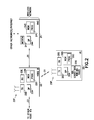
Figure 2 shows a simplified block diagram of the UE and a node B fromFigure 1 and also a higher network node, which are exemplary electronic devices suitable for use in practising the exemplary embodiments of this invention; and -
Figure 3 shows a schematic logic flow diagram that illustrates the operation of a method, and a result of execution of computer program instructions embodied on a computer readable memory, in accordance with the exemplary embodiments of this invention. - Consider
Figure 1 which illustrates an exemplary environment in which exemplary embodiments of the invention may be practised to advantage. For brevity the term "cell" is used interchangeably with the term "node B", the node B controlling the geographic bounds that defines the cell apart from neighbour cells. Cell shapes and borders atFigure 1 are idealised; in practice cell boundaries are generally not homogeneous and may take irregular shapes due to radio interference from structures or terrain and/or extended radio coverage from relay stations. There is shown a UE 10 which is under control of serving cell A. Assume that UE is moving toward cell G and is currently in an idle operational state and physically located near the border of cells A and G. The serving cell A previously sent to the UE (such as when the UE first handed over to cell A) a NCL which lists cells B, C, D, E, G and H, since each of those cells share a boundary with cell A. The UE has this NCL stored in its local memory and consults it for taking NCL measurements. - At its current location, the RSCP at the UE from cell C may be too weak for the UE to take and log measurements for its ANR measurement reports, but this alone is not a problem: the UTRAN will properly infer from the absence of a measurement for cell C in the UE's next measurement report that the UE's RSCP for cell C was below the measurement threshold.
- Problems noted in the background section above arise when for example radio conditions are quite good and the UE's RSCP for cell F exceed the measurement logging threshold. Cell F is not in the UE's NCL and so the UE must identify the cell from which this strong RSCP originated. Similar problems arise when there is a micro-cell such as cell J. If cells A through H are considered traditional cellular (macro) cells, cell J may be a closed subscriber group CSG cell (e.g. home node B, university or corporate campus network), or some other micro/pico cell which may be organised on a temporary basis and under control of cell G (e.g. forming a heterogeneous network with cell G). As cell J is a CSG or temporary, cell A may not be aware of cell J and so it is not in the NCL which cell A provides to its UEs, but the UE may be a member of the cell J CSG, meaning cell J may be a viable handover target.
- According to an exemplary embodiment of the invention, the UE utilises a cell's scrambling code to determine whether to decode that cell's SI for ANR measurement purposes. The UE will have one or more rules to apply for the case it comes across a signal from a cell not within its NCL, and that rule or rules instruct the UE to decode or not decode the SI of the non-NCL cell. At this point, the power savings at the UE are realised, regardless of whether or not the measurements taken on the non-NCL cell's signal strength are reported in the UE's ANR measurement report (assuming the scrambling code is such that the rule tells the UE to decode the SI of the non-NCL cell).
- That is, advantages of these teachings are still manifest even where the scrambling code and the rule(s) direct the UE to decode the SI but some other decision process has the UE refrain from including the non-NCL cell's measurements from being reported. More typically, it is expected in practice that where the UE decodes the SI, the measurements for that non-NCL cell will be reported.
- The scrambling code as filter for SI decoding relies on the general principle that scrambling codes are typically allocated so as to avoid adjacent cells using the same codes. Prior to decoding SI, the UE can check the scrambling codes of cells in the NCL and also of non-NCL cells that the UE has previously decoded (and stored) to avoid multiple decodings of the SI of an alternately appearing and disappearing cell, a problem detailed above. In this case, the UE stores the SI from a previous decoding and need not decode the same SI again. The scrambling code may also be used as a first filter in a decision tree for whether or not to decode SI, so for example if the scrambling code is not in the NCL and has not yet been used by the UE to decode a non-NCL cell's SI, there may be a RSCP or other signal strength threshold, different from that used for the NCL cells, as a next filter for the UE to determine whether or not to decode the SI. By way of example, if the signal strength threshold for logging NCL cells is x dB, this next filter might be implemented as a signal strength threshold of (x + y) dB for logging the non-NCL measurements for the UL report.
- The various embodiments summarised above are detailed further below with respect to
Figure 3 . Before detailing those exemplary embodiments, reference is made toFigure 2 for illustrating a simplified block diagram of various electronic devices and apparatus that are suitable for use in practising the exemplary embodiments of this invention. InFigure 2 , a wireless network (node B 22 and RNC 24) is adapted for communication over awireless link 21 with an apparatus, such as a mobile terminal orUE 20, via a network access node, such as a base or relay station or more specifically anode B 22. The network may include a networkcontrol element RNC 24, which provides connectivity with further networks (e.g. a publicly switched telephone network PSTN and/or a data communications network/Internet). - The
UE 20 includes processing means such as at least one data processor (DP) 20A, storing means such as at least one computer-readable memory (MEM) 20B storing at least one computer program (PROG) 20C, communicating means such as atransmitter TX 20D and areceiver RX 20E for bidirectional wireless communications with thenode B 22 via one ormore antennas 20F. Also stored in theMEM 20B atreference number 20G is the NCL which theUE 20 received from thenode B 22, the logged data which theUE 20 measures and stores until transmitted in an ANR measurement report, and the rule or rules for deciding whether to decode the SI of a non-NDL cell as noted above and further detailed below. - The
node B 22 also includes processing means such as at least one data processor (DP) 22A, storing means such as at least one computer-readable memory (MEM) 22B storing at least one computer program (PROG) 22C, and communicating means such as atransmitter TX 22D and areceiver RX 22E for bidirectional wireless communications with theUE 20 via one ormore antennas 22F. There is a data and/orcontrol path 25 coupling thenode B 22 with theRNC 24, and another data and/orcontrol path 23 coupling thenode B 22 to other node Bs/access nodes. - Similarly, the
RNC 24 includes processing means such as at least one data processor (DP) 24A, storing means such as at least one computer-readable memory (MEM) 24B storing at least one computer program (PROG) 24C, and communicating means such as amodem 24H for bidirectional wireless communications with thenode B 22 via the data/control path 25. While not particularly illustrated for theUE 20 ornode B 22, those devices are also assumed to include as part of their wireless communicating means a modem which may be inbuilt on an RF front end chip within thosedevices TX 20D/22D and theRX 20E/22E. - At least one of the
PROGs 20C in theUE 20 is assumed to include program instructions that, when executed by the associatedDP 20A, enable the device to operate in accordance with the exemplary embodiments of this invention, as will be discussed below in greater detail. Thenode B 22 andRNC 24 may also have software to implement certain aspects of these teachings for processing and analysing the ANR measurement reports it receives from the UE by knowing what rules the UE is using. In this regard, the exemplary embodiments of this invention may be implemented at least in part by computer software stored on theMEM DP 20A of theUE 20 and/or by theDP 22A of thenode B 22, or by hardware, or by a combination of tangibly stored software and hardware (and tangibly stored firmware). Electronic devices implementing these aspects of the invention need not be theentire UE 20 ornode B 22, but exemplary embodiments may be implemented by one or more components of same such as the above described tangibly stored software, hardware, firmware and DP, or a system-on-a-chip SOC or an application specific integrated circuit ASIC. - In general, the various embodiments of the
UE 20 can include, but are not limited to: cellular telephones; and personal portable digital devices having wireless communication capabilities, including but not limited to laptop/palmtop/tablet computers, digital cameras and music devices, and Internet appliances. - Various embodiments of the computer
readable MEMs DPs - Now are detailed with reference to
Figure 3 further particular exemplary embodiments from the perspective of theUE 20.Blocks blocks - At
block 302 the UE receives from the serving cell/node B a NCL which includes a listing of frequencies and scrambling codes or physical cell identities or BSIC for the neighbour cells in the NCL. By way of example, the node B may send this to theUE 20 upon registration in the cell after a handover from another cell or upon registration after initial access via a random access channel RACH. Note that the neighbour cells may or may not be the same radio access technology as the serving cell. By way of example, the serving cell may be a UTRAN cell and various ones of the neighbour cells may be UTRAN, EUTRAN, GERAN, GSM or some other radio technology. TheUE 20 measures all cells for which it is capable, to evaluate the need for reselection. - At
block 304 the UE is in an idle or semi-idle operational state. Specifics for the idle and semi-idle states are noted below for the UTRAN system, but other systems might use different names for idle and semi-idle states. Specifically, idle and semi-idle states in UTRAN include idle state as well as the CELL_FACH (forward access channel) state in which the UE continuously monitors the FACH on the DL; the CELL_PCH (paging channel) state in which the UE selects a PCH via an algorithm and uses its discontinuous reception cycle DRX to monitor it via a paging indicator channel PICH; and the URA_PCH state (URA = user registration area) which is similar to the CELL_PCH state except the network is aware of the UE's location to the level of the URA Registration area rather than to the level of the cell as in the CELL_PCH state. All of these states are characterised by the UE performing autonomous reselections when it moves between cells, rather than handover under network control. Once theUE 20 has a DCH allocated to it, the UE is no longer in an idle or semi-idle operational state. - While in the idle or semi-idle state, at
block 306 theUE 20 scans through the list of frequencies in the NCL which is now locally stored in the UE's memory utilising all possible UTRA scrambling codes. For reasons noted below, the serving cell might send a list of scrambling codes which theUE 20 is NOT to check, which is termed herein an exclusionary list. In this case, theUE 20 atblock 306 scans all the frequencies in the locally stored list utilising all possible UTRA scrambling codes except scrambling codes within that exclusionary list of scrambling codes received from a serving node. - At
block 308 theUE 20 determines that a wirelessly received signal is scrambled by a scrambling code that is not within the locally stored NCL list of scrambling codes which was received from the serving cell/serving network node. Atblock 310 theUE 20 applies a rule (which may in fact be one or more rules) to determine from the scrambling code whether to decode broadcast system information that is transmitted by an access node using the scrambling code. The term access node, which broadcasts the SI using the scrambling code, is used to distinguish from the serving cell/serving network node which sent the NCL ofblock 308. By non-limiting example, the access node may be a macro-cell base station, a home node B, or an access node for a CSG or pico/micro cell. Several such exemplary rules are detailed below atblocks - Block 312 provides further actions which the
UE 20 may take for the case that the determination ofblock 310 is to decode the broadcast system information. In this case, theUE 20 decodes the broadcast system information to determine an identity of the network cell that sent the wirelessly received signal, and sends an uplink measurement report which includes an indication of signal strength for the wirelessly received signal and the identity of the access node, or theUE 20 logs the decoded information to its memory for later reporting. Block 312 also provides for the UE to both log in the memory and send in the UL measurement report the signal strength indication and the identity. -
Block 314 gives one exemplary rule forblock 306, namely the rule is that if the scrambling code is not within the locally stored list received from the serving node, do not decode the broadcast system information again if the scrambling code is locally stored from a previous instance of decoding the system information.Blocks block 318 it remains valid until a fixed period of time elapses (e.g. until 10 minutes elapses from the first time SI for that non-serving cell was decoded). This rule assumes the scrambling codes have been properly planned and allocated in the area, and so it is also applicable for any micro/pico and macro target cell. In case there are unplanned networks (e.g. CSG/femto deployments such as cell J ofFigure 1 ), a different UE can give a report of a different CSG cell with the same scrambling code. The advantage of the fixed time period ofblock 318 is that different UEs can share the burden of ANR, and it is not necessary for one UE to provide all the information to the network. -
Block 320 gives another exemplary rule forblock 306, namely the rule is that if the scrambling code is not within the locally stored list received from the serving node, do not attempt to decode the system information unless a measured signal strength for the wirelessly received signal is higher than a threshold. In this case, the threshold may be an absolute threshold or a threshold which depends on strength of a signal received from the serving node. - The absolute threshold may be implemented such that the UE is not to attempt to decode SI if the cell CPICH Ec/Io or RSCP is some fixed measure (x dB) worse than an absolute threshold. When performing ANR this is valuable in order to optimise for connected mode neighbour lists used for handover, since the handover decision is often based on absolute thresholds. If absolute priority-based re-selection is used in the network, this can also be useful for determining neighbour lists for idle-mode operations also.
- For the relative signal strength threshold, signal strength may by example be the cell CPICH Ec/Io (the ratio of received pilot energy, Ec, to total received energy or the total power spectral density, Io), and the measured RSCP may be some fixed measure (in dB) worse than that of the serving cell or less than some fixed measure better than that of the serving cell. This is an efficient rule in that there might be no need for a neighbour relationship to be established with a weak cell (deliberate choice of the operator) and also decoding of the SI block has a higher potential of failing or taking an appreciably longer time (hence having a greater battery impact) than for more normal-strength neighbour cells. From the network's perspective, it is more beneficial that these neighbour cells be decoded and logged by a different UE. Especially when optimising for idle mode neighbour lists (which are used for cell reselection/handover), the neighbour relationship is most useful when the cell is better ranked according to reselection rules that may be based on thresholds relative to the serving cell.
- In various implementations, the threshold(s) noted at
block 320 for decoding could be indicated by the UTRAN network as part of the ANR configuration (e.g. at block 302), it may be hard coded in specifications governing the procedure, or it may be left to UE implementation to decide the thresholds. - It is important to note that sometimes detectable cells are deliberately omitted from an NCL by network operators, such as for example if physically neighbouring cells are in country/political border areas and belong to a different network operator. In this case, in an exemplary embodiment, the serving cell indicates a list or range of scrambling codes which it expects UEs not to log if they are detected. Both absolute thresholds, and thresholds relative to the current serving cell, can be considered in the exclusionary log listing.
- An exemplary practical embodiment is that the NCL which the UE receives from the serving cell has the scrambling codes and frequencies for those cells in the NCL, and the UE searches for all possible UTRA scrambling codes while it is in the idle mode. This non-NCL scrambling code search may be at a reduced rate compared to the search for cells listed in the NCL. The UE can conduct this reduced rate search on all the frequencies that are included in the NCL. If a cell is detected which is not among those in the NCL list, a decision is made on whether to decode SI blocks based on the scrambling code and the rules of which exemplary ones are detailed with respect to
Figure 3 . - One technical effect of these exemplary embodiments is that the UE battery life is extended. The operational cost is that there may in some cases be less information to the network in individual UE logs, but the above exemplary rules are targeted to minimise the impact of this. For example, the same scrambling code in a short time/same geographical area will likely only give duplicated information. This is also mitigated in that multiple UEs can be used for ANR.
-
Figure 3 is a logic flow diagram which may be considered to illustrate the operation of a method, and a result of execution of a computer program stored in a computer readable memory, and a specific manner in which components of an electronic device are configured to cause that electronic device to operate. The various blocks shown inFigure 3 may also be considered as a plurality of coupled logic circuit elements constructed to carry out the associated function(s), or specific result of strings of computer program code stored in a memory. - Such blocks and the functions they represent are non-limiting examples, and may be practised in various components such as integrated circuit chips and modules, and that the exemplary embodiments of this invention may be realised in an apparatus that is embodied as an integrated circuit. The integrated circuit, or circuits, may comprise circuitry (as well as possibly firmware) for embodying at least one or more of a data processor or data processors, a digital signal processor or processors, baseband circuitry and radio frequency circuitry that are configurable so as to operate in accordance with the exemplary embodiments of this invention.
- Various modifications and adaptations to the foregoing exemplary embodiments of this invention may become apparent to those skilled in the relevant arts in view of the foregoing description. While the exemplary embodiments have been described above in the context of the UTRAN system, it should be appreciated that the exemplary embodiments of this invention are not limited for use with only this one particular type of wireless communication system, and that they may be used to advantage in other wireless communication systems such as for example GERAN and GSM and others.
- Further, the various names used in the above description (e.g. NCL, names of the various idle states and channels, etc.) are not intended to be limiting in any respect, as different radio technologies may use different terms for similar concepts. Specific UTRAN terms are used to give a more concrete set of examples for explaining the inventive concepts presented herein. Some of the various features of the above non-limiting embodiments may be used to advantage without the corresponding use of other described features. The foregoing description should therefore be considered as merely illustrative of the principles, teachings and exemplary embodiments of this invention, and not in limitation thereof.
- The following numbered clauses on pages 17 to 21 of the present description correspond to the claims of European patent application no.
12700798.7 12700798.7 subsequent pages 22 to 24 of the specification which begin with the heading "CLAIMS". - 1. A method comprising:
- determining that a wirelessly received signal is scrambled by a scrambling code that is not within a list of scrambling codes received from a serving network node; and
- applying a rule to determine from the scrambling code whether to decode broadcast system information that is transmitted by an access node using the scrambling code.
- 2. A method according to claim 1, wherein for the case that the determination is to decode the broadcast system information, the method comprises:
- decoding the broadcast system information to determine an identity of the access node which sent the wirelessly received signal, and
- at least one of: storing in a memory and sending in an uplink measurement report an indication of signal strength for the wirelessly received signal and the identity of the access node.
- 3. A method according to claim 1 or claim 2, in which determining that the wirelessly received signal is scrambled by the scrambling code comprises scanning all frequencies in the locally stored list utilising all possible universal terrestrial radio access (UTRA) scrambling codes.
- 4. A method according to claim 1 or claim 2, in which determining that the wirelessly received signal is scrambled by the scrambling code comprises scanning all frequencies in the locally stored list utilising all possible universal terrestrial radio access (UTRA) scrambling codes except scrambling codes within an exclusionary list of scrambling codes received from the serving network node.
- 5. A method according to any of claims 1 to 4, in which the rule comprises:
- if the scrambling code is not within the locally stored list received from the serving network node, do not decode the broadcast system information again if the scrambling code is locally stored from a previous instance of decoding the system information.
- 6. A method according to claim 5, in which the rule to not decode the broadcast system information again remains valid until at least one of: a fixed period of time elapses and there is a change in the serving cell.
- 7. A method according to any of claims 1 to 6, in which the rule comprises:
- if the scrambling code is not within the locally stored list received from the serving network node, do not attempt to decode the system information unless a measured signal strength for the wirelessly received signal is higher than a threshold,
- in which the threshold is one of: absolute; and dependent on strength of a signal received from the serving network node.
- 8. A method according to any of claims 1 to 7, in which the method is executed by a user equipment.
- 9. Apparatus comprising a processing system constructed and arranged to cause the apparatus to at least:
- determine that a wirelessly received signal is scrambled by a scrambling code that is not within a locally stored list of scrambling codes received from a serving network node; and
- apply a rule to determine from the scrambling code whether to decode broadcast system information that is transmitted by an access node using the scrambling code.
- 10. Apparatus according to
claim 9, wherein for the case that the determination is to decode the broadcast system information, the processing system is constructed and arranged to cause the apparatus to at least:- decode the broadcast system information to determine an identity of the access node which sent the wirelessly received signal, and
- at least one of: store in the at least one memory and send in an uplink measurement report an indication of signal strength for the wirelessly received signal and the identity of the access node.
- 11. Apparatus according to
claim 9 or claim 10, in which the processing system is constructed and arranged to cause the apparatus to determine that the wirelessly received signal is scrambled by the scrambling code by causing the apparatus to scan all frequencies in the locally stored list utilising all possible universal terrestrial radio access (UTRA) scrambling codes. - 12. Apparatus according to
claim 9 or claim 10, in which the processing system is constructed and arranged to cause the apparatus to determine that the wirelessly received signal is scrambled by the scrambling code by causing the apparatus to scan all frequencies in the locally stored list utilising all possible universal terrestrial radio access (UTRA) scrambling codes except scrambling codes within an exclusionary list of scrambling codes received from the serving network node. - 13. Apparatus according to any of
claims 9 to 12, in which the rule comprises:- if the scrambling code is not within the locally stored list received from the serving network node, do not decode the broadcast system information again if the scrambling code is locally stored from a previous instance of decoding the system information.
- 14. Apparatus according to claim 13, in which the rule to not decode the broadcast system information again remains valid until at least one of a fixed period of time elapses and there is a change in the serving cell.
- 15. Apparatus according to any of
claims 9 to 14, in which the rule comprises:- if the scrambling code is not within the locally stored list received from the serving network node, do not attempt to decode the system information unless a measured signal strength for the wirelessly received signal is higher than a threshold,
- in which the threshold is one of: absolute; and dependent on strength of a signal received from the serving network node.
- 16. Apparatus according to any of
claims 9 to 15, in which the apparatus comprises a user equipment. - 17. A computer program comprising:
- code for determining that a wirelessly received signal is scrambled by a scrambling code that is not within a locally stored list of scrambling codes received from a serving network node; and
- code for applying a rule to determine from the scrambling code whether to decode broadcast system information that is transmitted by an access node using the scrambling code.
- 18. A computer program according to claim 17, wherein for the case that the determination is to decode the broadcast system information, the computer program comprises:
- code for decoding the broadcast system information to determine an identity of the access node which sent the wirelessly received signal, and
- code for at least one of storing in a computer readable memory and sending in an uplink measurement report an indication of signal strength for the wirelessly received signal and the identity of the access node.
- 19. A computer program according to claim 17 or claim 18, in which the rule comprises:
- if the scrambling code is not within the locally stored list received from the serving network node, do not decode the broadcast system information again if the scrambling code is locally stored from a previous instance of decoding the system information.
- 20. A computer program according to any of claims 17 to 19, in which the rule comprises:
- if the scrambling code is not within the locally stored list received from the serving network node, do not attempt to decode the system information unless a measured signal strength for the wirelessly received signal is higher than a threshold,
- in which the threshold is one of: absolute; and dependent on strength of a signal received from the serving network node.
Claims (8)
- A method comprising:determining (308) that a wirelessly received signal is scrambled by a scrambling code that is not within a list of scrambling codes received from a serving network node; andapplying (310) a rule to determine from the scrambling code whether to decode broadcast system information that is transmitted by an access node using the scrambling code;wherein determining that the wirelessly received signal is scrambled by the scrambling code comprises either (306) scanning all frequencies in the locally stored list utilising all possible universal terrestrial radio access (UTRA) scrambling codes or scanning all frequencies in the locally stored list utilising all possible universal terrestrial radio access (UTRA) scrambling codes except scrambling codes within an exclusionary list of scrambling codes received from the serving network node
- A method according to claim 1, wherein for the case that the determination is to decode the broadcast system information, the method comprises:decoding the broadcast system information to determine an identity of the access node which sent the wirelessly received signal, andat least one of: storing in a memory and sending in an uplink measurement report an indication of signal strength for the wirelessly received signal and the identity of the access node (312).
- A method according to claim 1 or claim 2, in which the method is executed by a user equipment.
- Apparatus comprising a processing system constructed and arranged to cause the apparatus to at least:determine (308) that a wirelessly received signal is scrambled by a scrambling code that is not within a locally stored list of scrambling codes received from a serving network node by either (306) scanning all frequencies in the locally stored list utilising all possible universal terrestrial radio access (UTRA) scrambling codes or scanning all frequencies in the locally stored list utilising all possible universal terrestrial radio access (UTRA) scrambling codes except scrambling codes within an exclusionary list of scrambling codes received from the serving network node; andapply (310) a rule to determine from the scrambling code whether to decode broadcast system information that is transmitted by an access node using the scrambling code.
- Apparatus according to claim 4, wherein for the case that the determination is to decode the broadcast system information, the processing system is constructed and arranged to cause the apparatus to at least:decode the broadcast system information to determine an identity of the access node which sent the wirelessly received signal, andat least one of: store in the at least one memory and send in an uplink measurement report an indication of signal strength for the wirelessly received signal and the identity of the access node (312).
- Apparatus according to claim 4 or claim 5, in which the apparatus comprises a user equipment.
- A computer program comprising:code for determining (308) that a wirelessly received signal is scrambled by a scrambling code that is not within a locally stored list of scrambling codes received from a serving network node by either (306) scanning all frequencies in the locally stored list utilising all possible universal terrestrial radio access (UTRA) scrambling codes or scanning all frequencies in the locally stored list utilising all possible universal terrestrial radio access (UTRA) scrambling codes except scrambling codes within an exclusionary list of scrambling codes received from the serving network node; andcode for applying a rule to determine from the scrambling code whether to decode broadcast system information that is transmitted by an access node using the scrambling code (310).
- A computer program according to claim 7, wherein for the case that the determination is to decode the broadcast system information, the computer program comprises:code for decoding the broadcast system information to determine an identity of the access node which sent the wirelessly received signal, andcode for at least one of storing in a computer readable memory and sending in an uplink measurement report an indication of signal strength for the wirelessly received signal and the identity of the access node (312).
Applications Claiming Priority (3)
| Application Number | Priority Date | Filing Date | Title |
|---|---|---|---|
| US12/986,430 US8400949B2 (en) | 2011-01-07 | 2011-01-07 | Limited system information decoding for automatic neighbor relations in mobile networks |
| GB1117036.2A GB2484787B (en) | 2011-01-07 | 2011-10-04 | Wireless apparatus and method |
| EP12700798A EP2491748B1 (en) | 2011-01-07 | 2012-01-06 | Wireless apparatus and method |
Related Parent Applications (2)
| Application Number | Title | Priority Date | Filing Date |
|---|---|---|---|
| EP12700798.7 Division | 2012-01-06 | ||
| EP12700798A Division EP2491748B1 (en) | 2011-01-07 | 2012-01-06 | Wireless apparatus and method |
Publications (2)
| Publication Number | Publication Date |
|---|---|
| EP2560441A1 true EP2560441A1 (en) | 2013-02-20 |
| EP2560441B1 EP2560441B1 (en) | 2014-12-17 |
Family
ID=45035072
Family Applications (2)
| Application Number | Title | Priority Date | Filing Date |
|---|---|---|---|
| EP12700798A Active EP2491748B1 (en) | 2011-01-07 | 2012-01-06 | Wireless apparatus and method |
| EP12190061.7A Not-in-force EP2560441B1 (en) | 2011-01-07 | 2012-01-06 | Wireless apparatus and method |
Family Applications Before (1)
| Application Number | Title | Priority Date | Filing Date |
|---|---|---|---|
| EP12700798A Active EP2491748B1 (en) | 2011-01-07 | 2012-01-06 | Wireless apparatus and method |
Country Status (6)
| Country | Link |
|---|---|
| US (1) | US8400949B2 (en) |
| EP (2) | EP2491748B1 (en) |
| JP (1) | JP2014505418A (en) |
| CN (1) | CN103299682A (en) |
| GB (2) | GB2484787B (en) |
| WO (1) | WO2012093175A1 (en) |
Families Citing this family (14)
| Publication number | Priority date | Publication date | Assignee | Title |
|---|---|---|---|---|
| US8400949B2 (en) * | 2011-01-07 | 2013-03-19 | Renesas Mobile Corporation | Limited system information decoding for automatic neighbor relations in mobile networks |
| US9125094B2 (en) * | 2011-01-24 | 2015-09-01 | Htc Corporation | Apparatuses and methods for reporting availability of measurement log |
| EP2704474B1 (en) * | 2011-04-27 | 2017-07-19 | LG Electronics Inc. | Method for logging and reporting heterogeneous network information in wireless communication system and device for supporting same |
| US8605668B2 (en) | 2011-04-28 | 2013-12-10 | Renesas Mobile Corporation | Common channel configuration for multipoint communications |
| KR20130028397A (en) | 2011-09-09 | 2013-03-19 | 삼성전자주식회사 | Apparatus and method for synchronizing and obtaining system information in wireless communication system |
| CN103797849A (en) * | 2011-09-12 | 2014-05-14 | 诺基亚公司 | Method and device for mobile terminal connection mode mobility |
| CN104054372A (en) * | 2011-11-04 | 2014-09-17 | 诺基亚通信公司 | ANR establishment resolution |
| US9544834B2 (en) * | 2011-12-21 | 2017-01-10 | Telefonaktiebolaget Lm Ericsson (Publ) | First RNC, a second RNC, a base station, an OAM node and methods therein for handling a reuse of a scrambling code in a cellular network |
| US9125126B2 (en) | 2012-03-14 | 2015-09-01 | Qualcomm Incorporated | Method and apparatus of measuring and reselecting cells |
| US8989736B2 (en) | 2012-08-01 | 2015-03-24 | Qualcomm Incorporated | Methods and apparatuses for determining reselection parameters for detected cells |
| US8897815B2 (en) * | 2012-09-11 | 2014-11-25 | Acer Incorporated | Method of operating user equipment for providing measurement report in UMTS |
| CN109644341B (en) * | 2016-07-01 | 2022-11-04 | 诺基亚技术有限公司 | Method, apparatus, communication device, radio access system and computer readable medium for communication |
| CN108924634A (en) * | 2018-07-19 | 2018-11-30 | 深圳国微视安科技有限公司 | A kind of TS stream method for quickly identifying and device |
| US12518016B2 (en) * | 2020-11-05 | 2026-01-06 | Felica Networks, Inc. | Information processing device, information processing method, mobile terminal, and information processing system |
Citations (3)
| Publication number | Priority date | Publication date | Assignee | Title |
|---|---|---|---|---|
| US20090191862A1 (en) * | 2008-01-25 | 2009-07-30 | Telefonaktiebolaget Lm Ericsson (Publ) | Inter-rat/ frequency automatic neighbor relation list management |
| US20090316595A1 (en) * | 2008-06-24 | 2009-12-24 | Samsung Electronics Co. Ltd. | Method and apparatus for identifying base station in wireless communication system |
| GB2469857A (en) * | 2009-04-29 | 2010-11-03 | Ip Access Ltd | Serving network element and method for establishing a neighbourcell link |
Family Cites Families (24)
| Publication number | Priority date | Publication date | Assignee | Title |
|---|---|---|---|---|
| US6067460A (en) | 1996-05-23 | 2000-05-23 | Nokia Mobile Phones Limited | Mobile station having enhanced standby mode |
| US5974320A (en) | 1997-05-21 | 1999-10-26 | Telefonaktiebolaget Lm Ericsson (Publ) | Providing a neighborhood zone within a mobile telecommunications network |
| EP1033830B1 (en) * | 1999-03-04 | 2002-11-13 | ICO Services Ltd. | Neighbouring cell list generation in a mobile satellite communication system |
| US6751460B2 (en) | 1999-12-07 | 2004-06-15 | Nokia Corporation | Methods and apparatus for performing cell reselection for supporting efficiently hierarchical cell structures |
| US7369534B2 (en) * | 2003-08-27 | 2008-05-06 | Qualcomm Incorporated | Reducing search time using known scrambling code offsets |
| KR100964684B1 (en) | 2003-09-29 | 2010-06-21 | 엘지전자 주식회사 | Broadcasting and multicast service providing method of mobile communication system |
| KR101154961B1 (en) | 2005-05-04 | 2012-06-18 | 엘지전자 주식회사 | Method of transmitting and receiving transmission power of radio channel and method of providing point-to-multipoint multimedia service |
| US8135405B2 (en) * | 2006-08-31 | 2012-03-13 | Qualcomm Incorporated | Efficient search for wireless networks while minimizing page loss |
| US8014342B2 (en) * | 2007-03-06 | 2011-09-06 | Telefonaktiebolaget L M Ericsson (Publ) | Data sharing among radio access technologies |
| CN101262630B (en) | 2007-03-09 | 2011-12-21 | 华为技术有限公司 | Receiving/transmission method and device for multimedia broadcast and multicast service |
| EP1973356B1 (en) | 2007-03-19 | 2019-05-08 | LG Electronics Inc. | Discontinuous reception operation for constant data rate service |
| EP2151138A1 (en) | 2007-04-30 | 2010-02-10 | InterDigital Technology Corporation | Cell reselection and handover with multimedia broadcast/multicast service |
| CN101690342A (en) * | 2007-06-19 | 2010-03-31 | 诺基亚公司 | Method and apparatus for providing a network search procedure |
| US20090047958A1 (en) * | 2007-08-16 | 2009-02-19 | Anna Pucar Rimhagen | Neighbor List Management for User Terminal |
| GB0721579D0 (en) | 2007-11-03 | 2007-12-12 | Vodafone Plc | Handover in telecommunications networks |
| JP2010118986A (en) * | 2008-11-14 | 2010-05-27 | Softbank Bb Corp | Small base station, setting method |
| CN101841868B (en) | 2009-03-16 | 2012-12-12 | 电信科学技术研究院 | Method, system and terminal for acquiring neighboring cell list |
| GB2472594B (en) * | 2009-08-11 | 2011-11-30 | Ubiquisys Ltd | Scrambling code selection |
| US8300587B2 (en) | 2009-08-17 | 2012-10-30 | Nokia Corporation | Initialization of reference signal scrambling |
| EP2316886B1 (en) | 2009-11-03 | 2013-01-09 | Agfa-Gevaert | Preparing and dispersing surface-modified colour pigments |
| US8706110B2 (en) | 2010-02-10 | 2014-04-22 | Apple Inc. | Methods for selecting cells in cellular telephone systems |
| WO2012072712A1 (en) * | 2010-11-30 | 2012-06-07 | Research In Motion Limited | Cell re-selection in a cellular telecommunications network |
| US8520782B2 (en) * | 2010-12-17 | 2013-08-27 | Telefonaktiebolaget L M Ericsson (Publ) | Receiver power reduction methods and apparatus |
| US8400949B2 (en) * | 2011-01-07 | 2013-03-19 | Renesas Mobile Corporation | Limited system information decoding for automatic neighbor relations in mobile networks |
-
2011
- 2011-01-07 US US12/986,430 patent/US8400949B2/en active Active
- 2011-10-04 GB GB1117036.2A patent/GB2484787B/en not_active Expired - Fee Related
- 2011-10-04 GB GB1211752.9A patent/GB2490058B/en not_active Expired - Fee Related
-
2012
- 2012-01-06 EP EP12700798A patent/EP2491748B1/en active Active
- 2012-01-06 CN CN201280004818XA patent/CN103299682A/en active Pending
- 2012-01-06 EP EP12190061.7A patent/EP2560441B1/en not_active Not-in-force
- 2012-01-06 JP JP2013547869A patent/JP2014505418A/en active Pending
- 2012-01-06 WO PCT/EP2012/050197 patent/WO2012093175A1/en not_active Ceased
Patent Citations (3)
| Publication number | Priority date | Publication date | Assignee | Title |
|---|---|---|---|---|
| US20090191862A1 (en) * | 2008-01-25 | 2009-07-30 | Telefonaktiebolaget Lm Ericsson (Publ) | Inter-rat/ frequency automatic neighbor relation list management |
| US20090316595A1 (en) * | 2008-06-24 | 2009-12-24 | Samsung Electronics Co. Ltd. | Method and apparatus for identifying base station in wireless communication system |
| GB2469857A (en) * | 2009-04-29 | 2010-11-03 | Ip Access Ltd | Serving network element and method for establishing a neighbourcell link |
Non-Patent Citations (4)
| Title |
|---|
| NOKIA CORPORATION ET AL: "Considerations on automatic neighbour relations for UTRA", 3GPP DRAFT; R2-102411 ANR, 3RD GENERATION PARTNERSHIP PROJECT (3GPP), MOBILE COMPETENCE CENTRE ; 650, ROUTE DES LUCIOLES ; F-06921 SOPHIA-ANTIPOLIS CEDEX ; FRANCE, vol. RAN WG2, no. Beijing, china; 20100412, 6 April 2010 (2010-04-06), XP050422672 * |
| NOKIA CORPORATION ET AL: "Further considerations on automatic neighbour relations for UTRA", 3GPP DRAFT; R2-103148 ANR, 3RD GENERATION PARTNERSHIP PROJECT (3GPP), MOBILE COMPETENCE CENTRE ; 650, ROUTE DES LUCIOLES ; F-06921 SOPHIA-ANTIPOLIS CEDEX ; FRANCE, vol. RAN WG2, no. Montreal, Canada; 20100510, 4 May 2010 (2010-05-04), XP050423270 * |
| NOKIA CORPORATION ET AL: "UE support for SON Automatic Neighbour Relation Function", 3GPP DRAFT; R2-080181 UE SUPPORT IN SON ANR, 3RD GENERATION PARTNERSHIP PROJECT (3GPP), MOBILE COMPETENCE CENTRE ; 650, ROUTE DES LUCIOLES ; F-06921 SOPHIA-ANTIPOLIS CEDEX ; FRANCE, vol. RAN WG2, no. Sevilla, Spain; 20080108, 8 January 2008 (2008-01-08), XP050138058 * |
| QUALCOMM EUROPE ET AL: "Inter-RAT/frequency Automatic Neighbour Relation Function", 3GPP DRAFT; R3-072117 INTER-RAT ANR V1, 3RD GENERATION PARTNERSHIP PROJECT (3GPP), MOBILE COMPETENCE CENTRE ; 650, ROUTE DES LUCIOLES ; F-06921 SOPHIA-ANTIPOLIS CEDEX ; FRANCE, vol. TSG GERAN, no. Vancouver; 20071030, 30 October 2007 (2007-10-30), XP050019355 * |
Also Published As
| Publication number | Publication date |
|---|---|
| WO2012093175A1 (en) | 2012-07-12 |
| JP2014505418A (en) | 2014-02-27 |
| US8400949B2 (en) | 2013-03-19 |
| GB2490058B (en) | 2013-03-06 |
| EP2560441B1 (en) | 2014-12-17 |
| CN103299682A (en) | 2013-09-11 |
| GB2484787A (en) | 2012-04-25 |
| GB2484787B (en) | 2012-10-31 |
| GB201117036D0 (en) | 2011-11-16 |
| US20120176918A1 (en) | 2012-07-12 |
| EP2491748B1 (en) | 2012-12-26 |
| GB201211752D0 (en) | 2012-08-15 |
| EP2491748A1 (en) | 2012-08-29 |
| GB2490058A (en) | 2012-10-17 |
Similar Documents
| Publication | Publication Date | Title |
|---|---|---|
| EP2491748B1 (en) | Wireless apparatus and method | |
| JP7279766B2 (en) | Wireless terminal, base station, and methods thereof | |
| US9794872B2 (en) | Method and system for minimizing power consumption of user equipment during cell detection | |
| US10567991B2 (en) | Measuring multiple carriers under discontinuous activity | |
| US9445315B2 (en) | Method and apparatus for cell reselections | |
| EP2673978B1 (en) | Priority measurement rules for channel measurement occasions | |
| JP5663661B2 (en) | Idle mode hybrid mobility procedure in heterogeneous networks | |
| US9843980B2 (en) | Method and apparatus for cell reselection | |
| RU2484601C2 (en) | Battery efficient method to search for preferred femtocell | |
| EP2941921B1 (en) | Re-establishment in hetnet robustness by use of overlay macro cell as re-establishment candidate | |
| US9756566B2 (en) | User equipment and method in a communications network | |
| US20140128074A1 (en) | Cell loading-based cell transition | |
| EP2512186A1 (en) | Method for inter-radio access technology cell reselection | |
| US9565611B2 (en) | Wireless device, network node and methods therein, computer programs and computer-readable mediums comprising the computer programs, for cell monitoring for cell reselection | |
| CN103716807A (en) | Method, apparatus and computer program for controlling a communications state of an apparatus | |
| US20100195618A1 (en) | Method of performing cell re-selection in a wireless communication system | |
| US20130252614A1 (en) | Methods for preferably camping on and staying in a cell belonging to a high data transmission throughput rat and communications apparatuses utilizing the same | |
| CN101541009A (en) | Method, device and system for optimizing neighbor cell list | |
| EP3105960B1 (en) | Wireless device and method for managing measurement of reference signals | |
| WO2013123637A1 (en) | Enhanced measurement for new carrier type | |
| KR20140031172A (en) | Wireless apparatus and method |
Legal Events
| Date | Code | Title | Description |
|---|---|---|---|
| PUAI | Public reference made under article 153(3) epc to a published international application that has entered the european phase |
Free format text: ORIGINAL CODE: 0009012 |
|
| 17P | Request for examination filed |
Effective date: 20121025 |
|
| AC | Divisional application: reference to earlier application |
Ref document number: 2491748 Country of ref document: EP Kind code of ref document: P |
|
| AK | Designated contracting states |
Kind code of ref document: A1 Designated state(s): AL AT BE BG CH CY CZ DE DK EE ES FI FR GB GR HR HU IE IS IT LI LT LU LV MC MK MT NL NO PL PT RO RS SE SI SK SM TR |
|
| 17Q | First examination report despatched |
Effective date: 20130130 |
|
| RBV | Designated contracting states (corrected) |
Designated state(s): AL AT BE BG CH CY CZ DE DK EE ES FI FR GB GR HR HU IE IS IT LI LT LU LV MC MK MT NL NO PL PT RO RS SE SI SK SM TR |
|
| GRAP | Despatch of communication of intention to grant a patent |
Free format text: ORIGINAL CODE: EPIDOSNIGR1 |
|
| INTG | Intention to grant announced |
Effective date: 20140709 |
|
| RAP1 | Party data changed (applicant data changed or rights of an application transferred) |
Owner name: BROADCOM CORPORATION |
|
| GRAS | Grant fee paid |
Free format text: ORIGINAL CODE: EPIDOSNIGR3 |
|
| GRAA | (expected) grant |
Free format text: ORIGINAL CODE: 0009210 |
|
| RBV | Designated contracting states (corrected) |
Designated state(s): AL AT BE BG CH CY CZ DE DK EE ES FI FR GR HR HU IE IS IT LI LT LU LV MC MK MT NL NO PL PT RO RS SE SI SK SM TR |
|
| AC | Divisional application: reference to earlier application |
Ref document number: 2491748 Country of ref document: EP Kind code of ref document: P |
|
| AK | Designated contracting states |
Kind code of ref document: B1 Designated state(s): AL AT BE BG CH CY CZ DE DK EE ES FI FR GR HR HU IE IS IT LI LT LU LV MC MK MT NL NO PL PT RO RS SE SI SK SM TR |
|
| REG | Reference to a national code |
Ref country code: CH Ref legal event code: EP |
|
| REG | Reference to a national code |
Ref country code: IE Ref legal event code: FG4D |
|
| REG | Reference to a national code |
Ref country code: AT Ref legal event code: REF Ref document number: 702604 Country of ref document: AT Kind code of ref document: T Effective date: 20150115 |
|
| REG | Reference to a national code |
Ref country code: DE Ref legal event code: R096 Ref document number: 602012004336 Country of ref document: DE Effective date: 20150212 |
|
| PG25 | Lapsed in a contracting state [announced via postgrant information from national office to epo] |
Ref country code: FI Free format text: LAPSE BECAUSE OF FAILURE TO SUBMIT A TRANSLATION OF THE DESCRIPTION OR TO PAY THE FEE WITHIN THE PRESCRIBED TIME-LIMIT Effective date: 20141217 Ref country code: NO Free format text: LAPSE BECAUSE OF FAILURE TO SUBMIT A TRANSLATION OF THE DESCRIPTION OR TO PAY THE FEE WITHIN THE PRESCRIBED TIME-LIMIT Effective date: 20150317 Ref country code: LT Free format text: LAPSE BECAUSE OF FAILURE TO SUBMIT A TRANSLATION OF THE DESCRIPTION OR TO PAY THE FEE WITHIN THE PRESCRIBED TIME-LIMIT Effective date: 20141217 |
|
| REG | Reference to a national code |
Ref country code: LT Ref legal event code: MG4D |
|
| PG25 | Lapsed in a contracting state [announced via postgrant information from national office to epo] |
Ref country code: HR Free format text: LAPSE BECAUSE OF FAILURE TO SUBMIT A TRANSLATION OF THE DESCRIPTION OR TO PAY THE FEE WITHIN THE PRESCRIBED TIME-LIMIT Effective date: 20141217 Ref country code: RS Free format text: LAPSE BECAUSE OF FAILURE TO SUBMIT A TRANSLATION OF THE DESCRIPTION OR TO PAY THE FEE WITHIN THE PRESCRIBED TIME-LIMIT Effective date: 20141217 Ref country code: SE Free format text: LAPSE BECAUSE OF FAILURE TO SUBMIT A TRANSLATION OF THE DESCRIPTION OR TO PAY THE FEE WITHIN THE PRESCRIBED TIME-LIMIT Effective date: 20141217 Ref country code: LV Free format text: LAPSE BECAUSE OF FAILURE TO SUBMIT A TRANSLATION OF THE DESCRIPTION OR TO PAY THE FEE WITHIN THE PRESCRIBED TIME-LIMIT Effective date: 20141217 Ref country code: GR Free format text: LAPSE BECAUSE OF FAILURE TO SUBMIT A TRANSLATION OF THE DESCRIPTION OR TO PAY THE FEE WITHIN THE PRESCRIBED TIME-LIMIT Effective date: 20150318 |
|
| REG | Reference to a national code |
Ref country code: AT Ref legal event code: MK05 Ref document number: 702604 Country of ref document: AT Kind code of ref document: T Effective date: 20141217 |
|
| PG25 | Lapsed in a contracting state [announced via postgrant information from national office to epo] |
Ref country code: NL Free format text: LAPSE BECAUSE OF FAILURE TO SUBMIT A TRANSLATION OF THE DESCRIPTION OR TO PAY THE FEE WITHIN THE PRESCRIBED TIME-LIMIT Effective date: 20141217 |
|
| PG25 | Lapsed in a contracting state [announced via postgrant information from national office to epo] |
Ref country code: RO Free format text: LAPSE BECAUSE OF FAILURE TO SUBMIT A TRANSLATION OF THE DESCRIPTION OR TO PAY THE FEE WITHIN THE PRESCRIBED TIME-LIMIT Effective date: 20141217 Ref country code: SK Free format text: LAPSE BECAUSE OF FAILURE TO SUBMIT A TRANSLATION OF THE DESCRIPTION OR TO PAY THE FEE WITHIN THE PRESCRIBED TIME-LIMIT Effective date: 20141217 Ref country code: ES Free format text: LAPSE BECAUSE OF FAILURE TO SUBMIT A TRANSLATION OF THE DESCRIPTION OR TO PAY THE FEE WITHIN THE PRESCRIBED TIME-LIMIT Effective date: 20141217 Ref country code: EE Free format text: LAPSE BECAUSE OF FAILURE TO SUBMIT A TRANSLATION OF THE DESCRIPTION OR TO PAY THE FEE WITHIN THE PRESCRIBED TIME-LIMIT Effective date: 20141217 Ref country code: CZ Free format text: LAPSE BECAUSE OF FAILURE TO SUBMIT A TRANSLATION OF THE DESCRIPTION OR TO PAY THE FEE WITHIN THE PRESCRIBED TIME-LIMIT Effective date: 20141217 |
|
| REG | Reference to a national code |
Ref country code: FR Ref legal event code: PLFP Year of fee payment: 4 |
|
| REG | Reference to a national code |
Ref country code: CH Ref legal event code: PL |
|
| PG25 | Lapsed in a contracting state [announced via postgrant information from national office to epo] |
Ref country code: LU Free format text: LAPSE BECAUSE OF FAILURE TO SUBMIT A TRANSLATION OF THE DESCRIPTION OR TO PAY THE FEE WITHIN THE PRESCRIBED TIME-LIMIT Effective date: 20150106 Ref country code: PL Free format text: LAPSE BECAUSE OF FAILURE TO SUBMIT A TRANSLATION OF THE DESCRIPTION OR TO PAY THE FEE WITHIN THE PRESCRIBED TIME-LIMIT Effective date: 20141217 Ref country code: AT Free format text: LAPSE BECAUSE OF FAILURE TO SUBMIT A TRANSLATION OF THE DESCRIPTION OR TO PAY THE FEE WITHIN THE PRESCRIBED TIME-LIMIT Effective date: 20141217 Ref country code: IS Free format text: LAPSE BECAUSE OF FAILURE TO SUBMIT A TRANSLATION OF THE DESCRIPTION OR TO PAY THE FEE WITHIN THE PRESCRIBED TIME-LIMIT Effective date: 20150417 |
|
| REG | Reference to a national code |
Ref country code: DE Ref legal event code: R097 Ref document number: 602012004336 Country of ref document: DE |
|
| PG25 | Lapsed in a contracting state [announced via postgrant information from national office to epo] |
Ref country code: MC Free format text: LAPSE BECAUSE OF FAILURE TO SUBMIT A TRANSLATION OF THE DESCRIPTION OR TO PAY THE FEE WITHIN THE PRESCRIBED TIME-LIMIT Effective date: 20141217 |
|
| PLBE | No opposition filed within time limit |
Free format text: ORIGINAL CODE: 0009261 |
|
| STAA | Information on the status of an ep patent application or granted ep patent |
Free format text: STATUS: NO OPPOSITION FILED WITHIN TIME LIMIT |
|
| PG25 | Lapsed in a contracting state [announced via postgrant information from national office to epo] |
Ref country code: LI Free format text: LAPSE BECAUSE OF NON-PAYMENT OF DUE FEES Effective date: 20150131 Ref country code: CH Free format text: LAPSE BECAUSE OF NON-PAYMENT OF DUE FEES Effective date: 20150131 Ref country code: DK Free format text: LAPSE BECAUSE OF FAILURE TO SUBMIT A TRANSLATION OF THE DESCRIPTION OR TO PAY THE FEE WITHIN THE PRESCRIBED TIME-LIMIT Effective date: 20141217 |
|
| REG | Reference to a national code |
Ref country code: IE Ref legal event code: MM4A |
|
| 26N | No opposition filed |
Effective date: 20150918 |
|
| PGFP | Annual fee paid to national office [announced via postgrant information from national office to epo] |
Ref country code: FR Payment date: 20150731 Year of fee payment: 4 |
|
| PG25 | Lapsed in a contracting state [announced via postgrant information from national office to epo] |
Ref country code: IT Free format text: LAPSE BECAUSE OF FAILURE TO SUBMIT A TRANSLATION OF THE DESCRIPTION OR TO PAY THE FEE WITHIN THE PRESCRIBED TIME-LIMIT Effective date: 20141217 |
|
| PG25 | Lapsed in a contracting state [announced via postgrant information from national office to epo] |
Ref country code: IE Free format text: LAPSE BECAUSE OF NON-PAYMENT OF DUE FEES Effective date: 20150106 |
|
| PG25 | Lapsed in a contracting state [announced via postgrant information from national office to epo] |
Ref country code: SI Free format text: LAPSE BECAUSE OF FAILURE TO SUBMIT A TRANSLATION OF THE DESCRIPTION OR TO PAY THE FEE WITHIN THE PRESCRIBED TIME-LIMIT Effective date: 20141217 |
|
| PG25 | Lapsed in a contracting state [announced via postgrant information from national office to epo] |
Ref country code: BE Free format text: LAPSE BECAUSE OF FAILURE TO SUBMIT A TRANSLATION OF THE DESCRIPTION OR TO PAY THE FEE WITHIN THE PRESCRIBED TIME-LIMIT Effective date: 20141217 |
|
| REG | Reference to a national code |
Ref country code: DE Ref legal event code: R082 Ref document number: 602012004336 Country of ref document: DE Representative=s name: BOSCH JEHLE PATENTANWALTSGESELLSCHAFT MBH, DE |
|
| PGFP | Annual fee paid to national office [announced via postgrant information from national office to epo] |
Ref country code: DE Payment date: 20160503 Year of fee payment: 5 |
|
| REG | Reference to a national code |
Ref country code: FR Ref legal event code: ST Effective date: 20160930 |
|
| PG25 | Lapsed in a contracting state [announced via postgrant information from national office to epo] |
Ref country code: FR Free format text: LAPSE BECAUSE OF NON-PAYMENT OF DUE FEES Effective date: 20160201 |
|
| PG25 | Lapsed in a contracting state [announced via postgrant information from national office to epo] |
Ref country code: MT Free format text: LAPSE BECAUSE OF FAILURE TO SUBMIT A TRANSLATION OF THE DESCRIPTION OR TO PAY THE FEE WITHIN THE PRESCRIBED TIME-LIMIT Effective date: 20141217 |
|
| PG25 | Lapsed in a contracting state [announced via postgrant information from national office to epo] |
Ref country code: SM Free format text: LAPSE BECAUSE OF FAILURE TO SUBMIT A TRANSLATION OF THE DESCRIPTION OR TO PAY THE FEE WITHIN THE PRESCRIBED TIME-LIMIT Effective date: 20141217 Ref country code: BG Free format text: LAPSE BECAUSE OF FAILURE TO SUBMIT A TRANSLATION OF THE DESCRIPTION OR TO PAY THE FEE WITHIN THE PRESCRIBED TIME-LIMIT Effective date: 20141217 Ref country code: HU Free format text: LAPSE BECAUSE OF FAILURE TO SUBMIT A TRANSLATION OF THE DESCRIPTION OR TO PAY THE FEE WITHIN THE PRESCRIBED TIME-LIMIT; INVALID AB INITIO Effective date: 20120106 |
|
| PG25 | Lapsed in a contracting state [announced via postgrant information from national office to epo] |
Ref country code: CY Free format text: LAPSE BECAUSE OF FAILURE TO SUBMIT A TRANSLATION OF THE DESCRIPTION OR TO PAY THE FEE WITHIN THE PRESCRIBED TIME-LIMIT Effective date: 20141217 |
|
| PG25 | Lapsed in a contracting state [announced via postgrant information from national office to epo] |
Ref country code: PT Free format text: LAPSE BECAUSE OF FAILURE TO SUBMIT A TRANSLATION OF THE DESCRIPTION OR TO PAY THE FEE WITHIN THE PRESCRIBED TIME-LIMIT Effective date: 20150417 |
|
| REG | Reference to a national code |
Ref country code: DE Ref legal event code: R119 Ref document number: 602012004336 Country of ref document: DE |
|
| PG25 | Lapsed in a contracting state [announced via postgrant information from national office to epo] |
Ref country code: TR Free format text: LAPSE BECAUSE OF FAILURE TO SUBMIT A TRANSLATION OF THE DESCRIPTION OR TO PAY THE FEE WITHIN THE PRESCRIBED TIME-LIMIT Effective date: 20141217 |
|
| PG25 | Lapsed in a contracting state [announced via postgrant information from national office to epo] |
Ref country code: DE Free format text: LAPSE BECAUSE OF NON-PAYMENT OF DUE FEES Effective date: 20170801 |
|
| PG25 | Lapsed in a contracting state [announced via postgrant information from national office to epo] |
Ref country code: MK Free format text: LAPSE BECAUSE OF FAILURE TO SUBMIT A TRANSLATION OF THE DESCRIPTION OR TO PAY THE FEE WITHIN THE PRESCRIBED TIME-LIMIT Effective date: 20141217 |
|
| PG25 | Lapsed in a contracting state [announced via postgrant information from national office to epo] |
Ref country code: AL Free format text: LAPSE BECAUSE OF FAILURE TO SUBMIT A TRANSLATION OF THE DESCRIPTION OR TO PAY THE FEE WITHIN THE PRESCRIBED TIME-LIMIT Effective date: 20141217 |