EP2560432A1 - Mobile communication system, control device and method - Google Patents
Mobile communication system, control device and method Download PDFInfo
- Publication number
- EP2560432A1 EP2560432A1 EP11768865A EP11768865A EP2560432A1 EP 2560432 A1 EP2560432 A1 EP 2560432A1 EP 11768865 A EP11768865 A EP 11768865A EP 11768865 A EP11768865 A EP 11768865A EP 2560432 A1 EP2560432 A1 EP 2560432A1
- Authority
- EP
- European Patent Office
- Prior art keywords
- controller
- timer value
- communication system
- usage condition
- mobile communication
- Prior art date
- Legal status (The legal status is an assumption and is not a legal conclusion. Google has not performed a legal analysis and makes no representation as to the accuracy of the status listed.)
- Withdrawn
Links
Images




Classifications
-
- H—ELECTRICITY
- H04—ELECTRIC COMMUNICATION TECHNIQUE
- H04W—WIRELESS COMMUNICATION NETWORKS
- H04W52/00—Power management, e.g. Transmission Power Control [TPC] or power classes
- H04W52/02—Power saving arrangements
- H04W52/0209—Power saving arrangements in terminal devices
- H04W52/0225—Power saving arrangements in terminal devices using monitoring of external events, e.g. the presence of a signal
- H04W52/0229—Power saving arrangements in terminal devices using monitoring of external events, e.g. the presence of a signal where the received signal is a wanted signal
- H04W52/0235—Power saving arrangements in terminal devices using monitoring of external events, e.g. the presence of a signal where the received signal is a wanted signal where the received signal is a power saving command
-
- H—ELECTRICITY
- H04—ELECTRIC COMMUNICATION TECHNIQUE
- H04W—WIRELESS COMMUNICATION NETWORKS
- H04W72/00—Local resource management
-
- H—ELECTRICITY
- H04—ELECTRIC COMMUNICATION TECHNIQUE
- H04W—WIRELESS COMMUNICATION NETWORKS
- H04W76/00—Connection management
- H04W76/20—Manipulation of established connections
- H04W76/27—Transitions between radio resource control [RRC] states
-
- Y—GENERAL TAGGING OF NEW TECHNOLOGICAL DEVELOPMENTS; GENERAL TAGGING OF CROSS-SECTIONAL TECHNOLOGIES SPANNING OVER SEVERAL SECTIONS OF THE IPC; TECHNICAL SUBJECTS COVERED BY FORMER USPC CROSS-REFERENCE ART COLLECTIONS [XRACs] AND DIGESTS
- Y02—TECHNOLOGIES OR APPLICATIONS FOR MITIGATION OR ADAPTATION AGAINST CLIMATE CHANGE
- Y02D—CLIMATE CHANGE MITIGATION TECHNOLOGIES IN INFORMATION AND COMMUNICATION TECHNOLOGIES [ICT], I.E. INFORMATION AND COMMUNICATION TECHNOLOGIES AIMING AT THE REDUCTION OF THEIR OWN ENERGY USE
- Y02D30/00—Reducing energy consumption in communication networks
- Y02D30/70—Reducing energy consumption in communication networks in wireless communication networks
Definitions
- the disclosed invention relates to a mobile communication system, a controller and a method.
- a mobile apparatus in a mobile communication system transitions to some power saving states (Battery Efficient states) after completion of transmission and reception of data signals in order to reduce battery power consumption.
- Operating states of the mobile apparatus are managed by a controller (for example, a radio network controller (RNC) in a W-CDMA system).
- RNC radio network controller
- the mobile apparatus changes the operating state, the mobile apparatus has to receive an indication for it from the controller.
- DCH dedicated channel
- the mobile apparatus After completion of transmission and reception in a dedicated channel (DCH), the mobile apparatus transmits a state transition request signal to request transition to a power saving state.
- the state transition request signal is referred to as an RRC SIGNALING CONNECTION RELEASE INDICATION.
- the mobile apparatus can transition to the power saving state by receiving an indication from the controller or a network (NW).
- the power saving state is an idle state, a PCH state (Cell_PCH/URA_PCH), a FACH (Forward Access Channel) state for use of a FACH and so on.
- a function to enable the mobile apparatus to transition to any of the power saving states after releasing the dedicated channel (DCH) to save battery energy in the mobile apparatus is called a Fast Dormancy function. See 3GPP TS25.331 v8.6.0 for the function, for example.
- the controller may or may not permit the state transition. Accordingly, it is desirable that the mobile apparatus transmits the state transition request signal immediately after completion of communication in order to transition to the power saving state rapidly and retransmits the state transition request signal rapidly if the already transmitted state transition request signal is rejected. In the case where the mobile apparatus transmits such signals frequently, however, it is necessary to reserve radio resources to transmit the signals as well as perform frequent operations in a base station and the controller. Such excessive and frequent transmissions of the state transition request signals by the mobile apparatus are not preferred from the viewpoint of network management and so on.
- One object of the disclosed invention is to determine an appropriate transmission frequency of transmitting the state transition request signals for causing a user equipment to transition to a power saving state after completion of transmission and reception of data signals.
- One aspect of the disclosed invention relates to a controller in a mobile communication system including a management unit configured to manage a resource usage condition in the mobile communication system and a determination unit configured to determine a timer value for determining a frequency of transmitting a state transition request signal for causing a user equipment to transition to a power saving state after completion of communication of a data signal depending on the resource usage condition, wherein the timer value determined by the determination unit is broadcast to the user equipment.
- FIG. 1 illustrates a mobile communication system according to one embodiment.
- the mobile communication system includes a mobile apparatus (UE) 10, base stations (BTS#1-4) 11-14, radio network controllers (RNCs) 15, 16 and a switching apparatus 17, which are connected as illustrated.
- UE mobile apparatus
- BTS#1-4 base stations
- RNCs radio network controllers
- the mobile apparatus (UE) ⁇ 10 is any apparatus wirelessly communicating with a base station.
- the mobile apparatus is used, although a fixed terminal may be used. More generally, any appropriate user equipment communicating with the base station may be used.
- the user equipment may be, but is not limited to, a cellular phone, an information terminal, a personal digital assistant, a handheld personal computer and so on.
- the mobile apparatus (UE) 10 can communicate in a dedicated channel (DCH) and also operate in a power saving state in accordance with an indication from a controller such as the RNC.
- the power saving state is an idle state, a PCH state (Cell_PCH/URA_PCH), a FACH state using a forward access channel (FACH) or others.
- the mobile apparatus (UE) 10 transitions to any of the power saving states depending on indications from the controller after releasing the dedicated channel (DCH) in order to save battery energy of the mobile apparatus.
- Each of the base stations (BTS#1-4) 11-14 transmits downlink radio signals and receives uplink radio signals over radio links to/from the mobile apparatuses (UE) 10 residing in respective cells. Further, the base stations (BTS#1-4) 11-14 transmit and receive downlink signals and uplink signals to/from the mobile apparatuses (UE) 10 under control by the radio network controller (RNC). Particularly in this embodiment, the base station receives a state transition request signal (RRC SIGNALING CONNECTION RELEASE INDICATION) from the mobile apparatus (UE) 10 and transmits it to the radio network controller (RNC). Then, the base station receives a state transition indication signal from the radio network controller (RNC) and transmits it to the mobile apparatus (UE) 10.
- RRC SIGNALING CONNECTION RELEASE INDICATION radio network controller
- the radio network controllers (RNCs) 15 and 16 are connected to one or more base stations over inter-device interfaces Iubs#1-4 and control radio communications of the mobile apparatuses 10.
- the radio network controllers (RNC) 15 and 16 are connected via an inter-device interface Iur and exchange data signals and control signals.
- the radio network controller (RNC) receives a state transition request signal from the mobile apparatus (UE) via the base stations.
- the radio network controller (RNC) determines to which state the mobile apparatus (UE) 10 is to transition and informs the mobile apparatus (UE) 10 of the determined state (via the base stations).
- the radio network controller determines a timer value for determining a transmission frequency of the mobile apparatus 10 transmitting the state transition request signals in a manner as stated below.
- the timer value is broadcast to the mobile apparatuses governed by the radio network controller (RNC).
- the switching apparatus 17 is connected to the radio network controller (RNC) 15 via an inter-device interface Iu.
- RNC radio network controller
- the illustrated radio network controller 16 is also connected to any switching apparatus, that switching apparatus may be the switching apparatus 17 as illustrated or any other non-illustrated switching apparatus.
- the switching apparatus 17 performs operations in a core network in the mobile communication system, for example, management of subscriber information, mobility management, control of incoming and outgoing calls, charge control and QoS control.
- the switching apparatus 17 may be an element serving as a Serving GPRS Support Node (SGSN), a Gateway GPRS Support Node (SGSN) and/or a Mobility Management Entity (MME).
- SGSN Serving GPRS Support Node
- SGSN Gateway GPRS Support Node
- MME Mobility Management Entity
- the mobile communication system may include an arbitrary number of mobile apparatuses (UEs) 10, an arbitrary number of base stations 11-14, an arbitrary number of radio network controllers (RNCs) 15, 16 and an arbitrary number of switching apparatuses 17.
- UEs mobile apparatuses
- RNCs radio network controllers
- the radio network controller (RNC) 15 includes a management unit 151 and a determination unit 152. Although the radio network controller 16 also has similar functional elements, they are omitted for illustrative clarification.
- the management unit 151 manages a resource usage condition in the mobile communication system.
- the resource usage condition may be represented by conditions as follows, for example, but is not limited to them.
- the usage condition of wired link resources can be represented by usage conditions or usage rates of the inter-device interfaces Iu, Iur and/or Iub.
- RNC radio network controller
- other apparatuses may be the base stations 11-13, the switching apparatus 17 and the radio network controller (RNC) 16 and may further include the base station 14.
- RNC radio network controller
- the congestion condition of the base stations 11-13 can be represented by a usage condition of radio resources used by the respective base stations 11-13.
- the congestion condition of the base stations 11-13 may be represented by the number of mobile apparatuses accessing the respective base stations 11-13, power usage conditions of the respective base stations and so on.
- the number of accessing mobile apparatuses can be represented by the number of used baseband cards (BB).
- the power usage condition can be represented by what proportion of the maximum transmit power available to the base stations is used and so on.
- a radio access restriction condition may be taken into account to determine the congestion condition of the base stations.
- the restriction condition can be represented by what percentage of radio accesses are currently restricted and so on.
- the congestion condition of the switching apparatus 17 can be represented by the number of users (the number of attaches) subjected to mobility management by the switching apparatus 17.
- the information can be obtained via the inter-device interface Iu.
- the congestion condition of the radio network controller (RNC) 16 can be represented by the number of users connected to the radio network controller (RNC) 16, a usage condition of the inter-device interface Iur and so on.
- the information can be obtained via the inter-device interface Iur.
- the congestion condition of the base station 14 can be also represented by the radio resource usage condition and can be also represented by the number of mobile apparatuses accessing the base station 14, a power usage condition of the base station and so on.
- the information can be obtained via the inter-device interfaces Iub and Iur.
- the radio access restriction condition may be taken into account to determine the congestion condition of the base station.
- the restriction condition can be represented by what percentage of the radio accesses are currently restricted.
- FIG. 2 illustrates an exemplary table for managing wired link resources and a FACH usage rate. This relates to the congestion condition of the radio network controller (RNC) 15.
- RNC radio network controller
- FIG. 3 illustrates exemplary tables for managing the congestion conditions of the switching apparatus 17, the radio network controller (RNC) 16 and the base stations 11-13. These relate to the congestion conditions of other apparatuses connected to the radio network controller (RNC) 15.
- RNC radio network controller
- the determination unit 152 in FIG. 1 determines a transmission frequency (a timer value for determining the transmission frequency) of the state transition request signal transmitted by a user equipment after completion of communication of data signals based on the resource usage condition managed by the management unit 151. As stated above, for the state transition request signal from the mobile apparatus 10, the determination unit 152 may or may not allow the mobile apparatus 10 to conduct the state transition. If the determination unit 152 does not allow the state transition, the destination state is not indicated. In this case, the mobile apparatus (UE) 10 can retransmit the state transition request signal after passage of a time period specified by the timer value to request availability determination of the state transition.
- the timer value is set to a greater or longer value (for example, five seconds), and otherwise (if more resources are unused), the timer value is set to a smaller or shorter value (for example, one second).
- the timer value may be determined in consideration of restriction conditions of individual cells as well as the magnitude of the amount of used resources. For example, if a predefined percentage or a higher percentage of radio accesses are restricted, for example, if 70% of radio accesses are restricted in a camped cell of the mobile apparatus (UE) 10, the timer value is set to a greater or longer value. On the other hand, if a lower percentage of radio accesses are restricted, the timer value is set to a smaller or shorter value.
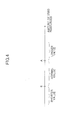
- the timer value may be set to different values (for example, 5 seconds, 3 seconds, 1 second and so on) depending on situations. In order to identify these values uniquely, multiple thresholds may be set. For example, the timer value may be set in a manner as illustrated in FIG. 4 . If the amount of used resources exceeds a first threshold A, the timer value is set to a value greater or longer than a normal value. If the amount of used resources is less than the first threshold A and are greater than or equal to a second threshold B, the timer value is set to the normal value. If the amount of used resources is less than the second threshold B, the timer value is set to a value smaller or shorter than the normal value. As one example, the greater value, the normal value and the smaller value may be set to five seconds, three seconds and one second, respectively. However, they may be set to any appropriate values.
- the "amount of used resources" serving as determination criteria for the determination unit 152 is determined based on one or more of the congestion conditions as illustrated in FIGS. 2-3 . For example, individual items of the number of users connected to the RNC 15, the usage rates of the inter-device interfaces Iub#1-3 and the FACH usage rate are compared with respective thresholds, and the timer value may be determined based on the comparison. For example, the timer value may be determined depending on whether any of the items exceeds the respective threshold.
- the timer value determined by the determination unit 152 is indicated to the mobile apparatus via the base station. This indication may be included in broadcast information from the base station, for example.
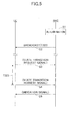
- FIG. 5 illustrates exemplary operations performed between the mobile apparatus (UE) 10 and the radio network controller (RNC) 15. Although these operations are conducted via the base station (BTS#1), the base station (BTS#1) is not illustrated for illustrative simplicity.
- the radio network controller determines the timer value for determining a transmission frequency of transmissions of the state transition request signals by a user equipment based on the resource usage condition. This determination is made by the determination unit 152.
- broadcast information is broadcast to the user equipments.
- This broadcast information includes the timer value determined at step S1.
- the mobile apparatus (UE) 10 transmits a state transition request signal to the radio network controller (RNC) 15 to transition to a power saving state.
- RRC radio network controller
- an upper application of the mobile apparatus (UE) 10 detects that there is no data to be communicated and notifies a RRC layer of it.
- the RRC layer transmits the state transition request signal.
- the mobile apparatus 10 further transmits the state transition request signal (step S4).
- the target state (a power saving state) determined by the radio network controller (RNC) is indicated by the radio network controller (RNC) 15 to the mobile apparatus (UE) 10 via the base station (BTS#1). Subsequently, the mobile apparatus (UE) 10 transitions to the power saving state indicated by the radio network controller (RNC) 15.
- the mobile apparatus 10 transitions an appropriate power saving state in accordance with the indication signal.
- the management unit 151 for managing the resource usage condition and the determination unit 152 for determining the target state are provided in the radio network controller (RNC), but this is not essential. These functional elements may be provided in another apparatus or entity.
- RNC radio network controller
- FIG. 6 illustrates that the management unit and the determination unit are provided in the switching apparatus 17.
- the switching apparatus 17 performs operations of the management unit 151 and the determination unit 152.
- FIG. 7 illustrates that the management unit and the determination unit are provided in the base station 11.
- the base station 11 performs operations of the management unit 151 and the determination unit 152.
- the embodiment as illustrated in FIG. 7 may be suitable for a system using a femto base station and an LTE (Long Term Evolution) based mobile communication system.
- LTE Long Term Evolution
- it is preferred that at least the determination unit 512 is provided in an upper apparatus of the base station from the viewpoint of setup of the same timer value for multiple cells.
- both the management unit and the determination unit are provided in the same functional entity (the switching apparatus, the radio network controller or the base station), but the management unit and the determination unit may be provided in separate functional elements. Further, the operations performed by the management unit may be conducted by two or more of the base station, the radio network controller and the switching apparatus. The operations performed by the determination unit may be conducted by two or more of the base station, the radio network controller and the switching apparatus.
- the transmission frequency (timer value) of the state transition request signals is determined based on determination of the congestion condition of network (NW) resources, the restriction condition, predefined usage rates of NW resources and so on in implementing the Fast Dormancy function for transitioning the mobile apparatus to power saving states.
- NW network
- the restriction condition predefined usage rates of NW resources and so on in implementing the Fast Dormancy function for transitioning the mobile apparatus to power saving states.
- the timer value variably, it is possible to utilize the NW resources efficiently and determine an appropriate one of the power saving states (UE Battery Efficient states) depending on the congestion condition of network apparatuses and the restriction condition, which can advantageously reduce battery power consumption of the mobile apparatus and shorten connection time under congestion environments.
- a mobile communication system upon receiving a predefined state transition request signal from a mobile apparatus, transition to a power saving state of less battery energy consumption is indicated.
- the timer value for controlling the transmission frequency of the state transition request signals is determined in accordance with the usage rate of managed NW resources and a predefined logic.
- the timer value for controlling the transmission frequency of the state transition request signals is determined in accordance with the predefined logic with reference to at least one of a resource usage rate of a controller receiving the state transition request signals from the mobile apparatus, resource usage rates of links between the controller and other apparatuses connected to the controller and usage rates of the other apparatuses.
- the resource condition management and the determination of the timer value may be made in a radio controller, a radio base station apparatus and/or a switching apparatus.
- a mobile communication system in response to receiving a predefined state transition request signal from a mobile apparatus, transition to a power saving state of less battery energy consumption is indicated.
- the timer value for controlling the transmission frequency of the state transition request signals is determined in accordance with the managed restriction condition and a predefined logic.
- the timer value for controlling the transmission frequency of the state transition request signals is determined in accordance with the predefined logic with reference to the restriction condition in a controller receiving the state transition request signals from the mobile apparatus.
- the resource condition management and the determination of the timer value may be made in a radio controller, a radio base station apparatus and/or a switching apparatus.
- the present invention has been described with reference to the specific embodiments, but the embodiments are simply illustrative and variations, modifications, alterations and substitutions could be contrived by those skilled in the art.
- the embodiments may be applied to any appropriate mobile communication system where a mobile apparatus can transition to any of multiple power saving states.
- the present invention may be applied to a W-CDMA system, a HSDPA/HSUPA W-CDMA system, an LTE system, an LTE-Advanced system, an IMT-Advanced system, a WiMAX system, a Wi-Fi system and so on.
- W-CDMA system a HSDPA/HSUPA W-CDMA system
- LTE system Long Term Evolution
- LTE-Advanced system Long Term Evolution-Advanced
- IMT-Advanced IMT-Advanced
- WiMAX Wi-Fi
- Wi-Fi Wi-Fi
Landscapes
- Engineering & Computer Science (AREA)
- Computer Networks & Wireless Communication (AREA)
- Signal Processing (AREA)
- Mobile Radio Communication Systems (AREA)
- Telephonic Communication Services (AREA)
Abstract
Description
- The disclosed invention relates to a mobile communication system, a controller and a method.
- A mobile apparatus in a mobile communication system transitions to some power saving states (Battery Efficient states) after completion of transmission and reception of data signals in order to reduce battery power consumption. Operating states of the mobile apparatus are managed by a controller (for example, a radio network controller (RNC) in a W-CDMA system). When the mobile apparatus changes the operating state, the mobile apparatus has to receive an indication for it from the controller. After completion of transmission and reception in a dedicated channel (DCH), the mobile apparatus transmits a state transition request signal to request transition to a power saving state. In the W-CDMA system, the state transition request signal is referred to as an RRC SIGNALING CONNECTION RELEASE INDICATION. The mobile apparatus can transition to the power saving state by receiving an indication from the controller or a network (NW). The power saving state is an idle state, a PCH state (Cell_PCH/URA_PCH), a FACH (Forward Access Channel) state for use of a FACH and so on. In the mobile communication system, a function to enable the mobile apparatus to transition to any of the power saving states after releasing the dedicated channel (DCH) to save battery energy in the mobile apparatus is called a Fast Dormancy function. See 3GPP TS25.331 v8.6.0 for the function, for example.
- There are cases where the controller may or may not permit the state transition. Accordingly, it is desirable that the mobile apparatus transmits the state transition request signal immediately after completion of communication in order to transition to the power saving state rapidly and retransmits the state transition request signal rapidly if the already transmitted state transition request signal is rejected. In the case where the mobile apparatus transmits such signals frequently, however, it is necessary to reserve radio resources to transmit the signals as well as perform frequent operations in a base station and the controller. Such excessive and frequent transmissions of the state transition request signals by the mobile apparatus are not preferred from the viewpoint of network management and so on.
- One object of the disclosed invention is to determine an appropriate transmission frequency of transmitting the state transition request signals for causing a user equipment to transition to a power saving state after completion of transmission and reception of data signals.
- One aspect of the disclosed invention relates to a controller in a mobile communication system including a management unit configured to manage a resource usage condition in the mobile communication system and a determination unit configured to determine a timer value for determining a frequency of transmitting a state transition request signal for causing a user equipment to transition to a power saving state after completion of communication of a data signal depending on the resource usage condition, wherein the timer value determined by the determination unit is broadcast to the user equipment.
- According to the disclosed invention, it is possible to determine an appropriate transmission frequency of transmitting the state transition request signals for causing a user equipment to transition to a power saving state after completion of transmission and reception of data signals.
-
-
FIG. 1 illustrates a system arrangement; -
FIG. 2 illustrates an exemplary table used to manage a resource usage condition; -
FIG. 3 illustrates exemplary tables used to manage a resource usage condition; -
FIG. 4 illustrates a relationship between amounts of used resources and timer values; -
FIG. 5 is a sequence diagram illustrating exemplary operations; -
FIG. 6 illustrates an exemplary variation; and -
FIG. 7 illustrates an exemplary variation. - Embodiments for carrying out the present invention are described below with reference to the drawings. Note that the same reference symbols are used for elements having the same functions throughout all the drawings for illustrating the embodiments and duplicated descriptions are omitted.
-
FIG. 1 illustrates a mobile communication system according to one embodiment. The mobile communication system includes a mobile apparatus (UE) 10, base stations (BTS#1-4) 11-14, radio network controllers (RNCs) 15, 16 and aswitching apparatus 17, which are connected as illustrated. - The mobile apparatus (UE) · 10 is any apparatus wirelessly communicating with a base station. For convenience of explanation, the mobile apparatus is used, although a fixed terminal may be used. More generally, any appropriate user equipment communicating with the base station may be used. The user equipment may be, but is not limited to, a cellular phone, an information terminal, a personal digital assistant, a handheld personal computer and so on. The mobile apparatus (UE) 10 can communicate in a dedicated channel (DCH) and also operate in a power saving state in accordance with an indication from a controller such as the RNC. The power saving state is an idle state, a PCH state (Cell_PCH/URA_PCH), a FACH state using a forward access channel (FACH) or others. The mobile apparatus (UE) 10 transitions to any of the power saving states depending on indications from the controller after releasing the dedicated channel (DCH) in order to save battery energy of the mobile apparatus.
- Each of the base stations (BTS#1-4) 11-14 transmits downlink radio signals and receives uplink radio signals over radio links to/from the mobile apparatuses (UE) 10 residing in respective cells. Further, the base stations (BTS#1-4) 11-14 transmit and receive downlink signals and uplink signals to/from the mobile apparatuses (UE) 10 under control by the radio network controller (RNC). Particularly in this embodiment, the base station receives a state transition request signal (RRC SIGNALING CONNECTION RELEASE INDICATION) from the mobile apparatus (UE) 10 and transmits it to the radio network controller (RNC). Then, the base station receives a state transition indication signal from the radio network controller (RNC) and transmits it to the mobile apparatus (UE) 10.
- The radio network controllers (RNCs) 15 and 16 are connected to one or more base stations over inter-device interfaces Iubs#1-4 and control radio communications of the
mobile apparatuses 10. The radio network controllers (RNC) 15 and 16 are connected via an inter-device interface Iur and exchange data signals and control signals. Particularly in this embodiment, the radio network controller (RNC) receives a state transition request signal from the mobile apparatus (UE) via the base stations. The radio network controller (RNC) determines to which state the mobile apparatus (UE) 10 is to transition and informs the mobile apparatus (UE) 10 of the determined state (via the base stations). The radio network controller (RNC) determines a timer value for determining a transmission frequency of themobile apparatus 10 transmitting the state transition request signals in a manner as stated below. The timer value is broadcast to the mobile apparatuses governed by the radio network controller (RNC). - The
switching apparatus 17 is connected to the radio network controller (RNC) 15 via an inter-device interface Iu. Although the illustratedradio network controller 16 is also connected to any switching apparatus, that switching apparatus may be theswitching apparatus 17 as illustrated or any other non-illustrated switching apparatus. Theswitching apparatus 17 performs operations in a core network in the mobile communication system, for example, management of subscriber information, mobility management, control of incoming and outgoing calls, charge control and QoS control. Thus, theswitching apparatus 17 may be an element serving as a Serving GPRS Support Node (SGSN), a Gateway GPRS Support Node (SGSN) and/or a Mobility Management Entity (MME). - Note that the mobile communication system may include an arbitrary number of mobile apparatuses (UEs) 10, an arbitrary number of base stations 11-14, an arbitrary number of radio network controllers (RNCs) 15, 16 and an arbitrary number of
switching apparatuses 17. - As illustrated in
FIG. 1 , the radio network controller (RNC) 15 includes amanagement unit 151 and adetermination unit 152. Although theradio network controller 16 also has similar functional elements, they are omitted for illustrative clarification. - The
management unit 151 manages a resource usage condition in the mobile communication system. The resource usage condition may be represented by conditions as follows, for example, but is not limited to them. - This can be represented by the number of users connected to the radio network controllers (RNCs) 15, a usage condition of wired link resources, a usage rate of a forward access channel (FACH) and so on. The usage condition of wired link resources can be represented by usage conditions or usage rates of the inter-device interfaces Iu, Iur and/or Iub.
- In the embodiment illustrated in
FIG. 1 , other apparatuses may be the base stations 11-13, the switchingapparatus 17 and the radio network controller (RNC) 16 and may further include thebase station 14. - The congestion condition of the base stations 11-13 can be represented by a usage condition of radio resources used by the respective base stations 11-13. For example, the congestion condition of the base stations 11-13 may be represented by the number of mobile apparatuses accessing the respective base stations 11-13, power usage conditions of the respective base stations and so on. For example, the number of accessing mobile apparatuses can be represented by the number of used baseband cards (BB). The power usage condition can be represented by what proportion of the maximum transmit power available to the base stations is used and so on. Further, a radio access restriction condition may be taken into account to determine the congestion condition of the base stations. The restriction condition can be represented by what percentage of radio accesses are currently restricted and so on.
- The congestion condition of the switching
apparatus 17 can be represented by the number of users (the number of attaches) subjected to mobility management by the switchingapparatus 17. The information can be obtained via the inter-device interface Iu. - The congestion condition of the radio network controller (RNC) 16 can be represented by the number of users connected to the radio network controller (RNC) 16, a usage condition of the inter-device interface Iur and so on. The information can be obtained via the inter-device interface Iur.
- Similar to the base stations 11-13, the congestion condition of the
base station 14 can be also represented by the radio resource usage condition and can be also represented by the number of mobile apparatuses accessing thebase station 14, a power usage condition of the base station and so on. The information can be obtained via the inter-device interfaces Iub and Iur. Further, the radio access restriction condition may be taken into account to determine the congestion condition of the base station. The restriction condition can be represented by what percentage of the radio accesses are currently restricted. -
FIG. 2 illustrates an exemplary table for managing wired link resources and a FACH usage rate. This relates to the congestion condition of the radio network controller (RNC) 15. -
FIG. 3 illustrates exemplary tables for managing the congestion conditions of the switchingapparatus 17, the radio network controller (RNC) 16 and the base stations 11-13. These relate to the congestion conditions of other apparatuses connected to the radio network controller (RNC) 15. - The
determination unit 152 inFIG. 1 determines a transmission frequency (a timer value for determining the transmission frequency) of the state transition request signal transmitted by a user equipment after completion of communication of data signals based on the resource usage condition managed by themanagement unit 151. As stated above, for the state transition request signal from themobile apparatus 10, thedetermination unit 152 may or may not allow themobile apparatus 10 to conduct the state transition. If thedetermination unit 152 does not allow the state transition, the destination state is not indicated. In this case, the mobile apparatus (UE) 10 can retransmit the state transition request signal after passage of a time period specified by the timer value to request availability determination of the state transition. - In general, if the amount of used resources is more than or equal to a predefined threshold (if less resources are unused), the timer value is set to a greater or longer value (for example, five seconds), and otherwise (if more resources are unused), the timer value is set to a smaller or shorter value (for example, one second). Also, the timer value may be determined in consideration of restriction conditions of individual cells as well as the magnitude of the amount of used resources. For example, if a predefined percentage or a higher percentage of radio accesses are restricted, for example, if 70% of radio accesses are restricted in a camped cell of the mobile apparatus (UE) 10, the timer value is set to a greater or longer value. On the other hand, if a lower percentage of radio accesses are restricted, the timer value is set to a smaller or shorter value.
- The timer value may be set to different values (for example, 5 seconds, 3 seconds, 1 second and so on) depending on situations. In order to identify these values uniquely, multiple thresholds may be set. For example, the timer value may be set in a manner as illustrated in
FIG. 4 . If the amount of used resources exceeds a first threshold A, the timer value is set to a value greater or longer than a normal value. If the amount of used resources is less than the first threshold A and are greater than or equal to a second threshold B, the timer value is set to the normal value. If the amount of used resources is less than the second threshold B, the timer value is set to a value smaller or shorter than the normal value. As one example, the greater value, the normal value and the smaller value may be set to five seconds, three seconds and one second, respectively. However, they may be set to any appropriate values. - The "amount of used resources" serving as determination criteria for the
determination unit 152 is determined based on one or more of the congestion conditions as illustrated inFIGS. 2-3 . For example, individual items of the number of users connected to theRNC 15, the usage rates of the inter-device interfaces Iub#1-3 and the FACH usage rate are compared with respective thresholds, and the timer value may be determined based on the comparison. For example, the timer value may be determined depending on whether any of the items exceeds the respective threshold. The timer value determined by thedetermination unit 152 is indicated to the mobile apparatus via the base station. This indication may be included in broadcast information from the base station, for example. -
FIG. 5 illustrates exemplary operations performed between the mobile apparatus (UE) 10 and the radio network controller (RNC) 15. Although these operations are conducted via the base station (BTS#1), the base station (BTS#1) is not illustrated for illustrative simplicity. - At step S1, the radio network controller (RNC) determines the timer value for determining a transmission frequency of transmissions of the state transition request signals by a user equipment based on the resource usage condition. This determination is made by the
determination unit 152. - At step S2, broadcast information is broadcast to the user equipments. This broadcast information includes the timer value determined at step S1.
- At step S3, upon completion of transmission and reception of data signals in a dedicated channel (DCH), the mobile apparatus (UE) 10 transmits a state transition request signal to the radio network controller (RNC) 15 to transition to a power saving state. For example, an upper application of the mobile apparatus (UE) 10 detects that there is no data to be communicated and notifies a RRC layer of it. In response to the notification, the RRC layer transmits the state transition request signal. Then, if the
mobile apparatus 10 has not received the corresponding state transition indication signal before passage of a time period specified by the timer value, themobile apparatus 10 further transmits the state transition request signal (step S4). - At step S5, the target state (a power saving state) determined by the radio network controller (RNC) is indicated by the radio network controller (RNC) 15 to the mobile apparatus (UE) 10 via the base station (BTS#1). Subsequently, the mobile apparatus (UE) 10 transitions to the power saving state indicated by the radio network controller (RNC) 15.
- On the other hand, if the
mobile apparatus 10 has received the corresponding state transition indication signal within a time period specified by the timer value after transmission of the state transition request signal, themobile apparatus 10 transitions an appropriate power saving state in accordance with the indication signal. - In the example illustrated in
FIG. 1 , themanagement unit 151 for managing the resource usage condition and thedetermination unit 152 for determining the target state are provided in the radio network controller (RNC), but this is not essential. These functional elements may be provided in another apparatus or entity. -
FIG. 6 illustrates that the management unit and the determination unit are provided in theswitching apparatus 17. In this case, the switchingapparatus 17 performs operations of themanagement unit 151 and thedetermination unit 152.FIG. 7 illustrates that the management unit and the determination unit are provided in thebase station 11. In this case, thebase station 11 performs operations of themanagement unit 151 and thedetermination unit 152. The embodiment as illustrated inFIG. 7 may be suitable for a system using a femto base station and an LTE (Long Term Evolution) based mobile communication system. It is preferred that at least thedetermination unit 152 is provided in the base station from the viewpoint of cell basis management of the timer value. On the other hand, it is preferred that at least the determination unit 512 is provided in an upper apparatus of the base station from the viewpoint of setup of the same timer value for multiple cells. - In the above examples, both the management unit and the determination unit are provided in the same functional entity (the switching apparatus, the radio network controller or the base station), but the management unit and the determination unit may be provided in separate functional elements. Further, the operations performed by the management unit may be conducted by two or more of the base station, the radio network controller and the switching apparatus. The operations performed by the determination unit may be conducted by two or more of the base station, the radio network controller and the switching apparatus.
- According to the above embodiments, the transmission frequency (timer value) of the state transition request signals is determined based on determination of the congestion condition of network (NW) resources, the restriction condition, predefined usage rates of NW resources and so on in implementing the Fast Dormancy function for transitioning the mobile apparatus to power saving states. As a result of controlling the timer value variably, it is possible to utilize the NW resources efficiently and determine an appropriate one of the power saving states (UE Battery Efficient states) depending on the congestion condition of network apparatuses and the restriction condition, which can advantageously reduce battery power consumption of the mobile apparatus and shorten connection time under congestion environments.
- In a mobile communication system according to one aspect of the disclosed invention, upon receiving a predefined state transition request signal from a mobile apparatus, transition to a power saving state of less battery energy consumption is indicated. The timer value for controlling the transmission frequency of the state transition request signals is determined in accordance with the usage rate of managed NW resources and a predefined logic. In this case, the timer value for controlling the transmission frequency of the state transition request signals is determined in accordance with the predefined logic with reference to at least one of a resource usage rate of a controller receiving the state transition request signals from the mobile apparatus, resource usage rates of links between the controller and other apparatuses connected to the controller and usage rates of the other apparatuses. The resource condition management and the determination of the timer value may be made in a radio controller, a radio base station apparatus and/or a switching apparatus.
- In a mobile communication system according to one aspect of the disclosed invention, in response to receiving a predefined state transition request signal from a mobile apparatus, transition to a power saving state of less battery energy consumption is indicated. The timer value for controlling the transmission frequency of the state transition request signals is determined in accordance with the managed restriction condition and a predefined logic. In this case, the timer value for controlling the transmission frequency of the state transition request signals is determined in accordance with the predefined logic with reference to the restriction condition in a controller receiving the state transition request signals from the mobile apparatus. The resource condition management and the determination of the timer value may be made in a radio controller, a radio base station apparatus and/or a switching apparatus.
- The present invention has been described with reference to the specific embodiments, but the embodiments are simply illustrative and variations, modifications, alterations and substitutions could be contrived by those skilled in the art. For example, the embodiments may be applied to any appropriate mobile communication system where a mobile apparatus can transition to any of multiple power saving states. For example, the present invention may be applied to a W-CDMA system, a HSDPA/HSUPA W-CDMA system, an LTE system, an LTE-Advanced system, an IMT-Advanced system, a WiMAX system, a Wi-Fi system and so on. In the above description, some specific numerical values are used for better understanding of the present invention. Unless specifically indicated, however, these numerical values are simply illustrative and any other suitable values may be used. Separation of the embodiments or items are not essential to the present invention, and two or more embodiments or items may be combined as needed. Alternatively, an item may be applied to another item (if not inconsistent). For convenience of explanation, apparatuses according to the embodiments have been described with reference to functional block diagrams, but these apparatuses may be implemented in hardware, software or combinations thereof. The software may be stored in any appropriate storage medium such as a RAM (Random Access Memory), a flash memory, a ROM (Read-Only Memory), an EPROM, an EEPROM, a register, a hard disk drive (HDD), a removable disk, a CD-ROM, a database and a server. The present invention is not limited to the above embodiments, and variations, modifications, alterations and substitutions can be made by those skilled in the art without deviating from the spirit of the present invention.
- This international patent application is based on Japanese Priority Application No.
2010-094305 filed on April 15, 2010 -
- 10: mobile apparatus (UE)
- 11-14: base station (BTS#1-4)
- 15, 16: radio network controller (RNC)
- 17: switching apparatus
- 151: management unit
- 152: determination unit
Claims (10)
- A controller in a mobile communication system, comprising:a management unit configured to manage a resource usage condition in the mobile communication system; anda determination unit configured to determine a timer value for determining a frequency of transmitting a state transition request signal for causing a user equipment to transition to a power saving state after completion of communication of a data signal depending on the resource usage condition,wherein the timer value determined by the determination unit is broadcast to the user equipment.
- The controller as claimed in claim 1, wherein the resource usage condition is represented by a usage condition of radio resources, a usage condition of wired link resources and/or a cell restriction condition.
- The controller as claimed in claim 1, wherein if the resource usage condition indicates that resources more than or equal to a first threshold are used in the mobile communication system, the determination unit sets the timer value to a value longer than a normal value.
- The controller as claimed in claim 3, wherein if the resource usage condition indicates that resources less than the first threshold and more than or equal to a second threshold are used in the mobile communication system, the determination unit sets the timer value to the normal value.
- The controller as claimed in claim 4, wherein if the resource usage condition indicates that resources less than the second threshold are used in the mobile communication system, the determination unit sets the timer value to a value shorter than the normal value.
- The controller as claimed in claim 1, wherein the controller is provided in a switching apparatus.
- The controller as claimed in claim 1, wherein the controller is provided in a radio network controller for controlling a base station.
- The controller as claimed in claim 1, wherein the controller is provided in a base station.
- A mobile communication system including at least a controller and a user equipment,
the controller comprising:a management unit configured to manage a resource usage condition in the mobile communication system; anda determination unit configured to determine a timer value for determining a frequency of transmitting a state transition request signal for causing the user equipment to transition to a power saving state after completion of communication of a data signal depending on the resource usage condition,wherein the timer value determined by the determination unit is broadcast to the user equipment. - A method in a mobile communication system, comprising:managing a resource usage condition in the mobile communication system; anddetermining a timer value for determining a frequency of transmitting a state transition request signal for causing a user equipment to transition to a power saving state after completion of communication of a data signal depending on the resource usage condition and indicating the determined timer value to the user equipment.
Applications Claiming Priority (2)
| Application Number | Priority Date | Filing Date | Title |
|---|---|---|---|
| JP2010094305A JP5053409B2 (en) | 2010-04-15 | 2010-04-15 | Mobile communication system, control device, and control method |
| PCT/JP2011/059109 WO2011129344A1 (en) | 2010-04-15 | 2011-04-12 | Mobile communication system, control device and method |
Publications (2)
| Publication Number | Publication Date |
|---|---|
| EP2560432A1 true EP2560432A1 (en) | 2013-02-20 |
| EP2560432A4 EP2560432A4 (en) | 2015-04-22 |
Family
ID=44798715
Family Applications (1)
| Application Number | Title | Priority Date | Filing Date |
|---|---|---|---|
| EP11768865.5A Withdrawn EP2560432A4 (en) | 2010-04-15 | 2011-04-12 | MOBILE COMMUNICATION SYSTEM, CONTROL DEVICE AND METHOD |
Country Status (4)
| Country | Link |
|---|---|
| US (1) | US8885566B2 (en) |
| EP (1) | EP2560432A4 (en) |
| JP (1) | JP5053409B2 (en) |
| WO (1) | WO2011129344A1 (en) |
Cited By (1)
| Publication number | Priority date | Publication date | Assignee | Title |
|---|---|---|---|---|
| WO2013184050A1 (en) * | 2012-06-05 | 2013-12-12 | Telefonaktiebolaget L M Ericsson (Publ) | Controlling fast dormancy |
Families Citing this family (9)
| Publication number | Priority date | Publication date | Assignee | Title |
|---|---|---|---|---|
| JP6067978B2 (en) * | 2012-03-14 | 2017-01-25 | 株式会社Nttドコモ | Mobile station and radio base station |
| JP5865740B2 (en) * | 2012-03-14 | 2016-02-17 | 株式会社Nttドコモ | Mobile station |
| JP5613194B2 (en) * | 2012-04-11 | 2014-10-22 | 株式会社Nttドコモ | State transition timer setting system, mobile communication system, and state transition timer setting method |
| WO2013176449A1 (en) * | 2012-05-21 | 2013-11-28 | 엘지전자 주식회사 | Power device, power control device, and operating method therefor |
| US9509469B2 (en) | 2013-04-04 | 2016-11-29 | Futurewei Technologies, Inc. | Device, network, and method for utilizing a downlink discovery reference signal |
| US9900872B2 (en) * | 2013-04-17 | 2018-02-20 | Futurewei Technologies, Inc. | Systems and methods for adaptive transmissions in wireless network |
| EP2869648B1 (en) | 2013-10-31 | 2020-07-08 | Alcatel Lucent | Responding to paging requests while waiting to request a connection to a wireless network |
| WO2016070437A1 (en) * | 2014-11-07 | 2016-05-12 | 华为技术有限公司 | State transition method, user equipment, and radio network controller |
| EP3596965A4 (en) * | 2017-03-15 | 2020-11-18 | Nokia Solutions and Networks Oy | BACK-OFF TIMER FOR NETWORK RECONNECTION |
Family Cites Families (6)
| Publication number | Priority date | Publication date | Assignee | Title |
|---|---|---|---|---|
| JP3485097B2 (en) * | 2001-03-13 | 2004-01-13 | 日本電気株式会社 | Adaptive retransmission request control method in mobile radio communication and adaptive retransmission request control device |
| GB2398968B (en) * | 2003-02-27 | 2005-07-27 | Motorola Inc | Reduction in signalling load in a wireless communication system |
| JP2007214711A (en) * | 2006-02-08 | 2007-08-23 | Nec Corp | Mobile communication system, mobile terminal, wireless network controller, and method for setting trigger of state transition for use therein |
| ES2353609T3 (en) * | 2006-05-17 | 2011-03-03 | Research In Motion Limited | METHOD AND SYSTEM FOR INDICATION OF SIGNALING CONNECTION RELEASE IN A UMTS NETWORK. |
| ATE553628T1 (en) * | 2007-11-13 | 2012-04-15 | Research In Motion Ltd | METHOD AND APPARATUS FOR STATUS/MODE TRANSITIONS |
| JP5145902B2 (en) * | 2007-11-27 | 2013-02-20 | 日本電気株式会社 | Radio base station apparatus and congestion control method |
-
2010
- 2010-04-15 JP JP2010094305A patent/JP5053409B2/en not_active Expired - Fee Related
-
2011
- 2011-04-12 EP EP11768865.5A patent/EP2560432A4/en not_active Withdrawn
- 2011-04-12 US US13/640,745 patent/US8885566B2/en not_active Expired - Fee Related
- 2011-04-12 WO PCT/JP2011/059109 patent/WO2011129344A1/en not_active Ceased
Cited By (3)
| Publication number | Priority date | Publication date | Assignee | Title |
|---|---|---|---|---|
| WO2013184050A1 (en) * | 2012-06-05 | 2013-12-12 | Telefonaktiebolaget L M Ericsson (Publ) | Controlling fast dormancy |
| EP2752069A4 (en) * | 2012-06-05 | 2015-12-02 | Ericsson Telefon Ab L M | Controlling fast dormancy |
| US9332550B2 (en) | 2012-06-05 | 2016-05-03 | Telefonaktiebolaget L M Ericsson (Publ) | Controlling fast dormancy |
Also Published As
| Publication number | Publication date |
|---|---|
| WO2011129344A1 (en) | 2011-10-20 |
| JP5053409B2 (en) | 2012-10-17 |
| EP2560432A4 (en) | 2015-04-22 |
| US20130028084A1 (en) | 2013-01-31 |
| JP2011228805A (en) | 2011-11-10 |
| US8885566B2 (en) | 2014-11-11 |
Similar Documents
| Publication | Publication Date | Title |
|---|---|---|
| US8885566B2 (en) | Mobile communication system, controller and method | |
| CN102448112B (en) | Method and communication device for processing congestion control based on access point name | |
| CN108966280B (en) | Mobile terminal and network load control method | |
| EP3661090B1 (en) | Command instruction method and device, and information interaction method and device | |
| US9485697B1 (en) | Systems and methods for improved data speeds for wireless devices | |
| US9999095B2 (en) | Method and apparatus for setting up/releasing radio resource control connection between evolved node B and user equipment in communication system | |
| EP2416605A1 (en) | Load sharing method, device and system thereof | |
| US20150005027A1 (en) | Method for uplink power control, network node and system | |
| US9144021B2 (en) | Mobile communication system, controller and method | |
| EP3138336B1 (en) | Communications via multiple access points | |
| WO2014101674A1 (en) | Load balancing method and network control node | |
| CN105684533A (en) | Responding to paging requests while waiting to request a connection to a wireless network | |
| CN106664651B (en) | Communication system with idle mode terminal equalization | |
| CN102740360B (en) | A kind of cell load control method and device | |
| CN107852619B (en) | Method and apparatus for adjusting energy loss of wireless network system | |
| US20140328239A1 (en) | Radio base station apparatus and transition control method | |
| CN107172635A (en) | The method and system of data transfer | |
| WO2014165374A2 (en) | Management of communications with multiple access points based on inter-access point communications | |
| US9742677B2 (en) | Methods and apparatus for managing communications network loading | |
| CN103812627B (en) | A kind of for sending the method for schedule information, device and base station | |
| CN101998631B (en) | Method, system and device of resource allocation | |
| US10454633B2 (en) | Method and apparatus for determining subframe configuration of cell cluster | |
| JP6786369B2 (en) | base station | |
| US20250175893A1 (en) | Communication control method | |
| CN106162772A (en) | A kind of method for dispatching user facility, device and system |
Legal Events
| Date | Code | Title | Description |
|---|---|---|---|
| PUAI | Public reference made under article 153(3) epc to a published international application that has entered the european phase |
Free format text: ORIGINAL CODE: 0009012 |
|
| 17P | Request for examination filed |
Effective date: 20121022 |
|
| AK | Designated contracting states |
Kind code of ref document: A1 Designated state(s): AL AT BE BG CH CY CZ DE DK EE ES FI FR GB GR HR HU IE IS IT LI LT LU LV MC MK MT NL NO PL PT RO RS SE SI SK SM TR |
|
| DAX | Request for extension of the european patent (deleted) | ||
| RA4 | Supplementary search report drawn up and despatched (corrected) |
Effective date: 20150319 |
|
| RIC1 | Information provided on ipc code assigned before grant |
Ipc: H04W 72/00 20090101ALN20150313BHEP Ipc: H04W 28/02 20090101ALI20150313BHEP Ipc: H04W 28/04 20090101AFI20150313BHEP Ipc: H04W 76/04 20090101ALN20150313BHEP Ipc: H04W 52/02 20090101ALI20150313BHEP |
|
| STAA | Information on the status of an ep patent application or granted ep patent |
Free format text: STATUS: THE APPLICATION HAS BEEN WITHDRAWN |
|
| 18W | Application withdrawn |
Effective date: 20151008 |