EP2559483A2 - Catalyst for a hydrogenation dewaxing process and method for manufacturing same - Google Patents
Catalyst for a hydrogenation dewaxing process and method for manufacturing same Download PDFInfo
- Publication number
- EP2559483A2 EP2559483A2 EP11769000A EP11769000A EP2559483A2 EP 2559483 A2 EP2559483 A2 EP 2559483A2 EP 11769000 A EP11769000 A EP 11769000A EP 11769000 A EP11769000 A EP 11769000A EP 2559483 A2 EP2559483 A2 EP 2559483A2
- Authority
- EP
- European Patent Office
- Prior art keywords
- catalyst
- zeolite
- group
- phase transition
- metals
- Prior art date
- Legal status (The legal status is an assumption and is not a legal conclusion. Google has not performed a legal analysis and makes no representation as to the accuracy of the status listed.)
- Granted
Links
Images

Classifications
-
- C—CHEMISTRY; METALLURGY
- C10—PETROLEUM, GAS OR COKE INDUSTRIES; TECHNICAL GASES CONTAINING CARBON MONOXIDE; FUELS; LUBRICANTS; PEAT
- C10G—CRACKING HYDROCARBON OILS; PRODUCTION OF LIQUID HYDROCARBON MIXTURES, e.g. BY DESTRUCTIVE HYDROGENATION, OLIGOMERISATION, POLYMERISATION; RECOVERY OF HYDROCARBON OILS FROM OIL-SHALE, OIL-SAND, OR GASES; REFINING MIXTURES MAINLY CONSISTING OF HYDROCARBONS; REFORMING OF NAPHTHA; MINERAL WAXES
- C10G47/00—Cracking of hydrocarbon oils, in the presence of hydrogen or hydrogen- generating compounds, to obtain lower boiling fractions
- C10G47/02—Cracking of hydrocarbon oils, in the presence of hydrogen or hydrogen- generating compounds, to obtain lower boiling fractions characterised by the catalyst used
- C10G47/10—Cracking of hydrocarbon oils, in the presence of hydrogen or hydrogen- generating compounds, to obtain lower boiling fractions characterised by the catalyst used with catalysts deposited on a carrier
- C10G47/12—Inorganic carriers
- C10G47/16—Crystalline alumino-silicate carriers
-
- B—PERFORMING OPERATIONS; TRANSPORTING
- B01—PHYSICAL OR CHEMICAL PROCESSES OR APPARATUS IN GENERAL
- B01J—CHEMICAL OR PHYSICAL PROCESSES, e.g. CATALYSIS OR COLLOID CHEMISTRY; THEIR RELEVANT APPARATUS
- B01J29/00—Catalysts comprising molecular sieves
- B01J29/04—Catalysts comprising molecular sieves having base-exchange properties, e.g. crystalline zeolites
- B01J29/06—Crystalline aluminosilicate zeolites; Isomorphous compounds thereof
- B01J29/70—Crystalline aluminosilicate zeolites; Isomorphous compounds thereof of types characterised by their specific structure not provided for in groups B01J29/08 - B01J29/65
- B01J29/72—Crystalline aluminosilicate zeolites; Isomorphous compounds thereof of types characterised by their specific structure not provided for in groups B01J29/08 - B01J29/65 containing iron group metals, noble metals or copper
-
- B—PERFORMING OPERATIONS; TRANSPORTING
- B01—PHYSICAL OR CHEMICAL PROCESSES OR APPARATUS IN GENERAL
- B01J—CHEMICAL OR PHYSICAL PROCESSES, e.g. CATALYSIS OR COLLOID CHEMISTRY; THEIR RELEVANT APPARATUS
- B01J29/00—Catalysts comprising molecular sieves
- B01J29/04—Catalysts comprising molecular sieves having base-exchange properties, e.g. crystalline zeolites
- B01J29/06—Crystalline aluminosilicate zeolites; Isomorphous compounds thereof
- B01J29/70—Crystalline aluminosilicate zeolites; Isomorphous compounds thereof of types characterised by their specific structure not provided for in groups B01J29/08 - B01J29/65
- B01J29/72—Crystalline aluminosilicate zeolites; Isomorphous compounds thereof of types characterised by their specific structure not provided for in groups B01J29/08 - B01J29/65 containing iron group metals, noble metals or copper
- B01J29/74—Noble metals
-
- B—PERFORMING OPERATIONS; TRANSPORTING
- B01—PHYSICAL OR CHEMICAL PROCESSES OR APPARATUS IN GENERAL
- B01J—CHEMICAL OR PHYSICAL PROCESSES, e.g. CATALYSIS OR COLLOID CHEMISTRY; THEIR RELEVANT APPARATUS
- B01J35/00—Catalysts, in general, characterised by their form or physical properties
- B01J35/60—Catalysts, in general, characterised by their form or physical properties characterised by their surface properties or porosity
- B01J35/61—Surface area
- B01J35/615—100-500 m2/g
-
- C—CHEMISTRY; METALLURGY
- C01—INORGANIC CHEMISTRY
- C01B—NON-METALLIC ELEMENTS; COMPOUNDS THEREOF; METALLOIDS OR COMPOUNDS THEREOF NOT COVERED BY SUBCLASS C01C
- C01B39/00—Compounds having molecular sieve and base-exchange properties, e.g. crystalline zeolites; Their preparation; After-treatment, e.g. ion-exchange or dealumination
- C01B39/02—Crystalline aluminosilicate zeolites; Isomorphous compounds thereof; Direct preparation thereof; Preparation thereof starting from a reaction mixture containing a crystalline zeolite of another type, or from preformed reactants; After-treatment thereof
- C01B39/46—Other types characterised by their X-ray diffraction pattern and their defined composition
- C01B39/48—Other types characterised by their X-ray diffraction pattern and their defined composition using at least one organic template directing agent
-
- C—CHEMISTRY; METALLURGY
- C07—ORGANIC CHEMISTRY
- C07C—ACYCLIC OR CARBOCYCLIC COMPOUNDS
- C07C5/00—Preparation of hydrocarbons from hydrocarbons containing the same number of carbon atoms
- C07C5/22—Preparation of hydrocarbons from hydrocarbons containing the same number of carbon atoms by isomerisation
- C07C5/27—Rearrangement of carbon atoms in the hydrocarbon skeleton
- C07C5/2767—Changing the number of side-chains
- C07C5/277—Catalytic processes
- C07C5/2775—Catalytic processes with crystalline alumino-silicates, e.g. molecular sieves
-
- C—CHEMISTRY; METALLURGY
- C10—PETROLEUM, GAS OR COKE INDUSTRIES; TECHNICAL GASES CONTAINING CARBON MONOXIDE; FUELS; LUBRICANTS; PEAT
- C10G—CRACKING HYDROCARBON OILS; PRODUCTION OF LIQUID HYDROCARBON MIXTURES, e.g. BY DESTRUCTIVE HYDROGENATION, OLIGOMERISATION, POLYMERISATION; RECOVERY OF HYDROCARBON OILS FROM OIL-SHALE, OIL-SAND, OR GASES; REFINING MIXTURES MAINLY CONSISTING OF HYDROCARBONS; REFORMING OF NAPHTHA; MINERAL WAXES
- C10G45/00—Refining of hydrocarbon oils using hydrogen or hydrogen-generating compounds
- C10G45/58—Refining of hydrocarbon oils using hydrogen or hydrogen-generating compounds to change the structural skeleton of some of the hydrocarbon content without cracking the other hydrocarbons present, e.g. lowering pour point; Selective hydrocracking of normal paraffins
- C10G45/60—Refining of hydrocarbon oils using hydrogen or hydrogen-generating compounds to change the structural skeleton of some of the hydrocarbon content without cracking the other hydrocarbons present, e.g. lowering pour point; Selective hydrocracking of normal paraffins characterised by the catalyst used
- C10G45/62—Refining of hydrocarbon oils using hydrogen or hydrogen-generating compounds to change the structural skeleton of some of the hydrocarbon content without cracking the other hydrocarbons present, e.g. lowering pour point; Selective hydrocracking of normal paraffins characterised by the catalyst used containing platinum group metals or compounds thereof
-
- C—CHEMISTRY; METALLURGY
- C10—PETROLEUM, GAS OR COKE INDUSTRIES; TECHNICAL GASES CONTAINING CARBON MONOXIDE; FUELS; LUBRICANTS; PEAT
- C10G—CRACKING HYDROCARBON OILS; PRODUCTION OF LIQUID HYDROCARBON MIXTURES, e.g. BY DESTRUCTIVE HYDROGENATION, OLIGOMERISATION, POLYMERISATION; RECOVERY OF HYDROCARBON OILS FROM OIL-SHALE, OIL-SAND, OR GASES; REFINING MIXTURES MAINLY CONSISTING OF HYDROCARBONS; REFORMING OF NAPHTHA; MINERAL WAXES
- C10G45/00—Refining of hydrocarbon oils using hydrogen or hydrogen-generating compounds
- C10G45/58—Refining of hydrocarbon oils using hydrogen or hydrogen-generating compounds to change the structural skeleton of some of the hydrocarbon content without cracking the other hydrocarbons present, e.g. lowering pour point; Selective hydrocracking of normal paraffins
- C10G45/60—Refining of hydrocarbon oils using hydrogen or hydrogen-generating compounds to change the structural skeleton of some of the hydrocarbon content without cracking the other hydrocarbons present, e.g. lowering pour point; Selective hydrocracking of normal paraffins characterised by the catalyst used
- C10G45/64—Refining of hydrocarbon oils using hydrogen or hydrogen-generating compounds to change the structural skeleton of some of the hydrocarbon content without cracking the other hydrocarbons present, e.g. lowering pour point; Selective hydrocracking of normal paraffins characterised by the catalyst used containing crystalline alumino-silicates, e.g. molecular sieves
-
- B—PERFORMING OPERATIONS; TRANSPORTING
- B01—PHYSICAL OR CHEMICAL PROCESSES OR APPARATUS IN GENERAL
- B01J—CHEMICAL OR PHYSICAL PROCESSES, e.g. CATALYSIS OR COLLOID CHEMISTRY; THEIR RELEVANT APPARATUS
- B01J2229/00—Aspects of molecular sieve catalysts not covered by B01J29/00
- B01J2229/10—After treatment, characterised by the effect to be obtained
- B01J2229/20—After treatment, characterised by the effect to be obtained to introduce other elements in the catalyst composition comprising the molecular sieve, but not specially in or on the molecular sieve itself
-
- B—PERFORMING OPERATIONS; TRANSPORTING
- B01—PHYSICAL OR CHEMICAL PROCESSES OR APPARATUS IN GENERAL
- B01J—CHEMICAL OR PHYSICAL PROCESSES, e.g. CATALYSIS OR COLLOID CHEMISTRY; THEIR RELEVANT APPARATUS
- B01J2229/00—Aspects of molecular sieve catalysts not covered by B01J29/00
- B01J2229/30—After treatment, characterised by the means used
- B01J2229/42—Addition of matrix or binder particles
-
- B—PERFORMING OPERATIONS; TRANSPORTING
- B01—PHYSICAL OR CHEMICAL PROCESSES OR APPARATUS IN GENERAL
- B01J—CHEMICAL OR PHYSICAL PROCESSES, e.g. CATALYSIS OR COLLOID CHEMISTRY; THEIR RELEVANT APPARATUS
- B01J2235/00—Indexing scheme associated with group B01J35/00, related to the analysis techniques used to determine the catalysts form or properties
- B01J2235/15—X-ray diffraction
-
- B—PERFORMING OPERATIONS; TRANSPORTING
- B01—PHYSICAL OR CHEMICAL PROCESSES OR APPARATUS IN GENERAL
- B01J—CHEMICAL OR PHYSICAL PROCESSES, e.g. CATALYSIS OR COLLOID CHEMISTRY; THEIR RELEVANT APPARATUS
- B01J35/00—Catalysts, in general, characterised by their form or physical properties
- B01J35/70—Catalysts, in general, characterised by their form or physical properties characterised by their crystalline properties, e.g. semi-crystalline
-
- C—CHEMISTRY; METALLURGY
- C07—ORGANIC CHEMISTRY
- C07C—ACYCLIC OR CARBOCYCLIC COMPOUNDS
- C07C2523/00—Catalysts comprising metals or metal oxides or hydroxides, not provided for in group C07C2521/00
- C07C2523/38—Catalysts comprising metals or metal oxides or hydroxides, not provided for in group C07C2521/00 of noble metals
- C07C2523/40—Catalysts comprising metals or metal oxides or hydroxides, not provided for in group C07C2521/00 of noble metals of the platinum group metals
- C07C2523/42—Platinum
-
- C—CHEMISTRY; METALLURGY
- C07—ORGANIC CHEMISTRY
- C07C—ACYCLIC OR CARBOCYCLIC COMPOUNDS
- C07C2523/00—Catalysts comprising metals or metal oxides or hydroxides, not provided for in group C07C2521/00
- C07C2523/38—Catalysts comprising metals or metal oxides or hydroxides, not provided for in group C07C2521/00 of noble metals
- C07C2523/40—Catalysts comprising metals or metal oxides or hydroxides, not provided for in group C07C2521/00 of noble metals of the platinum group metals
- C07C2523/44—Palladium
-
- C—CHEMISTRY; METALLURGY
- C07—ORGANIC CHEMISTRY
- C07C—ACYCLIC OR CARBOCYCLIC COMPOUNDS
- C07C2523/00—Catalysts comprising metals or metal oxides or hydroxides, not provided for in group C07C2521/00
- C07C2523/38—Catalysts comprising metals or metal oxides or hydroxides, not provided for in group C07C2521/00 of noble metals
- C07C2523/54—Catalysts comprising metals or metal oxides or hydroxides, not provided for in group C07C2521/00 of noble metals combined with metals, oxides or hydroxides provided for in groups C07C2523/02 - C07C2523/36
- C07C2523/56—Platinum group metals
- C07C2523/58—Platinum group metals with alkali- or alkaline earth metals or beryllium
-
- C—CHEMISTRY; METALLURGY
- C07—ORGANIC CHEMISTRY
- C07C—ACYCLIC OR CARBOCYCLIC COMPOUNDS
- C07C2529/00—Catalysts comprising molecular sieves
- C07C2529/04—Catalysts comprising molecular sieves having base-exchange properties, e.g. crystalline zeolites, pillared clays
- C07C2529/06—Crystalline aluminosilicate zeolites; Isomorphous compounds thereof
- C07C2529/70—Crystalline aluminosilicate zeolites; Isomorphous compounds thereof of types characterised by their specific structure not provided for in groups C07C2529/08 - C07C2529/65
- C07C2529/72—Crystalline aluminosilicate zeolites; Isomorphous compounds thereof of types characterised by their specific structure not provided for in groups C07C2529/08 - C07C2529/65 containing iron group metals, noble metals or copper
- C07C2529/74—Noble metals
-
- C—CHEMISTRY; METALLURGY
- C07—ORGANIC CHEMISTRY
- C07C—ACYCLIC OR CARBOCYCLIC COMPOUNDS
- C07C9/00—Aliphatic saturated hydrocarbons
- C07C9/22—Aliphatic saturated hydrocarbons with more than fifteen carbon atoms
-
- C—CHEMISTRY; METALLURGY
- C10—PETROLEUM, GAS OR COKE INDUSTRIES; TECHNICAL GASES CONTAINING CARBON MONOXIDE; FUELS; LUBRICANTS; PEAT
- C10G—CRACKING HYDROCARBON OILS; PRODUCTION OF LIQUID HYDROCARBON MIXTURES, e.g. BY DESTRUCTIVE HYDROGENATION, OLIGOMERISATION, POLYMERISATION; RECOVERY OF HYDROCARBON OILS FROM OIL-SHALE, OIL-SAND, OR GASES; REFINING MIXTURES MAINLY CONSISTING OF HYDROCARBONS; REFORMING OF NAPHTHA; MINERAL WAXES
- C10G2300/00—Aspects relating to hydrocarbon processing covered by groups C10G1/00 - C10G99/00
- C10G2300/40—Characteristics of the process deviating from typical ways of processing
- C10G2300/4018—Spatial velocity, e.g. LHSV, WHSV
-
- C—CHEMISTRY; METALLURGY
- C10—PETROLEUM, GAS OR COKE INDUSTRIES; TECHNICAL GASES CONTAINING CARBON MONOXIDE; FUELS; LUBRICANTS; PEAT
- C10G—CRACKING HYDROCARBON OILS; PRODUCTION OF LIQUID HYDROCARBON MIXTURES, e.g. BY DESTRUCTIVE HYDROGENATION, OLIGOMERISATION, POLYMERISATION; RECOVERY OF HYDROCARBON OILS FROM OIL-SHALE, OIL-SAND, OR GASES; REFINING MIXTURES MAINLY CONSISTING OF HYDROCARBONS; REFORMING OF NAPHTHA; MINERAL WAXES
- C10G2400/00—Products obtained by processes covered by groups C10G9/00 - C10G69/14
- C10G2400/02—Gasoline
-
- C—CHEMISTRY; METALLURGY
- C10—PETROLEUM, GAS OR COKE INDUSTRIES; TECHNICAL GASES CONTAINING CARBON MONOXIDE; FUELS; LUBRICANTS; PEAT
- C10G—CRACKING HYDROCARBON OILS; PRODUCTION OF LIQUID HYDROCARBON MIXTURES, e.g. BY DESTRUCTIVE HYDROGENATION, OLIGOMERISATION, POLYMERISATION; RECOVERY OF HYDROCARBON OILS FROM OIL-SHALE, OIL-SAND, OR GASES; REFINING MIXTURES MAINLY CONSISTING OF HYDROCARBONS; REFORMING OF NAPHTHA; MINERAL WAXES
- C10G2400/00—Products obtained by processes covered by groups C10G9/00 - C10G69/14
- C10G2400/04—Diesel oil
-
- C—CHEMISTRY; METALLURGY
- C10—PETROLEUM, GAS OR COKE INDUSTRIES; TECHNICAL GASES CONTAINING CARBON MONOXIDE; FUELS; LUBRICANTS; PEAT
- C10G—CRACKING HYDROCARBON OILS; PRODUCTION OF LIQUID HYDROCARBON MIXTURES, e.g. BY DESTRUCTIVE HYDROGENATION, OLIGOMERISATION, POLYMERISATION; RECOVERY OF HYDROCARBON OILS FROM OIL-SHALE, OIL-SAND, OR GASES; REFINING MIXTURES MAINLY CONSISTING OF HYDROCARBONS; REFORMING OF NAPHTHA; MINERAL WAXES
- C10G2400/00—Products obtained by processes covered by groups C10G9/00 - C10G69/14
- C10G2400/10—Lubricating oil
-
- Y—GENERAL TAGGING OF NEW TECHNOLOGICAL DEVELOPMENTS; GENERAL TAGGING OF CROSS-SECTIONAL TECHNOLOGIES SPANNING OVER SEVERAL SECTIONS OF THE IPC; TECHNICAL SUBJECTS COVERED BY FORMER USPC CROSS-REFERENCE ART COLLECTIONS [XRACs] AND DIGESTS
- Y02—TECHNOLOGIES OR APPLICATIONS FOR MITIGATION OR ADAPTATION AGAINST CLIMATE CHANGE
- Y02P—CLIMATE CHANGE MITIGATION TECHNOLOGIES IN THE PRODUCTION OR PROCESSING OF GOODS
- Y02P20/00—Technologies relating to chemical industry
- Y02P20/50—Improvements relating to the production of bulk chemicals
- Y02P20/52—Improvements relating to the production of bulk chemicals using catalysts, e.g. selective catalysts
Definitions
- the present invention relates to a metal-containing bifunctional catalyst for a hydrodewaxing process and a method of manufacturing the same, and, more particularly, to a catalyst for a hydrodewaxing process, which is characterized in that EU-2 zeolite, the degree of phase transition thereof being controlled, is used as a catalyst support having an acid site, and to a method of manufacturing the same.
- a C4 to C7 isomerized hydrocarbon can be applied to a process of manufacturing gasoline having a high octane number.
- the isomerization reaction of a C7 to C15 hydrocarbon can be practically used to manufacture high-grade diesel oil having a high cetane number and improved low-temperature cold flow properties.
- the isomerization reaction of a normal C15 or more paraffin is put to practical use in the process of producing a high-grade lubricant having a high viscosity index.
- hydroisomerization is used when hydroisomerization predominates over hydrocracking, whereas the term “hydrocracking” is used when hydrocracking predominates over hydroisomerization.
- hydrocracking is used when hydrocracking predominates over hydroisomerization.
- a bifunctional catalyst is composed of two kinds of active compositions of a metal site for hydrogenation and dehydrogenation and a acidic support for skeletal isomerization generating carbenium ions. Therefore, such a catalyst is referred to as a bifunctional catalyst.
- the metal composition used in the bifunctional catalyst may be at least one selected from group VI metals and group VIII metals. Particularly, precious metals having high hydrogenation and dehydrogenation activity, such as platinum (Pt), palladium (Pd) and the like, may be chiefly used as the metal composition.
- the support used in the bifunctional catalyst may be selected from various materials having an acidic site, such as silica-alumina, clay, zeolite and the like.
- zeolite can be advantageously used as an isomerization catalyst because it is structurally stable even under a severe reaction condition, has a large surface area and includes a number of acid sites.
- an object of the present invention is to provide a catalyst for a hydrodewaxing process, which has high selectivity to an isomerization reaction compared to conventional catalysts, and a method of manufacturing the catalyst.
- Another aspect of the present invention provides a catalyst for a hydrodewaxing process, including: an EU-2 zeolite support having an acid site, the phase transition index (T) thereof, represented by Formula 1 above, being 50 ⁇ T ⁇ 100, and the molar ratio of silica and alumina thereof being 1 to 200; and a metal composition for hydrogenation loaded in the EU-2 zeolite support, the metal including at least one selected from the group consisting of group VI metals and group VIII metals.
- T phase transition index
- the bifunctional catalyst according to the present invention in which EU-2 zeolite, the degree of phase transition thereof being controlled, is used as a support, exhibits improved selectivity to isomerization compared to conventional zeolite (ZSM-48, EU-2), and exhibits excellent performance even in the hydrodewaxing process. Therefore, the bifunctional catalyst can be used as a catalyst for a dewaxing process for producing a lubricant base oil. In addition, the bifunctional catalyst can be applied to a catalyst for manufacturing gasoline having a high octane number using an isomerization reaction of converting normal-paraffin into iso-paraffin using the bifunctional catalyst, and can be applied to a catalyst for improving the cold flow properties of diesel oil.
- the present invention provides a method of using EU-2 zeolite, the degree of phase transition thereof being controlled, as a support of a dewaxing catalyst having high selectivity to an isomerization reaction.
- Most of conventional isomerization catalysts have used pure zeolite such as ZSM-48, EU-2 or the like.
- the present invention it was found that the efficiency of an isomerization reaction can be more improved according to the degree of phase transition of the zeolite. Therefore, the present invention can provide a catalyst material which can be optimized as a support of an isomerization catalyst by controlling the degree of phase transition of the zeolite.
- the catalyst according to the present invention is characterized in that an EU-2 zeolite support, the degree of phase transition of which is controlled such that its phase transition index (T) is 50 ⁇ 100 based on the reference EU-2 phase transition index proposed by the present researchers, is loaded with a metal composition for hydrogenation.
- a zeolite material is prepared by mixing an organic template material with an aqueous alkali solution containing a silica raw material, an alumina raw material and the like and then hydrothermally synthesizing the mixture using a batch reactor such as an autoclave or the like.
- a batch reactor such as an autoclave or the like.
- the characteristics such as structure, purity, crystal size and the like of the zeolite material depend on several variables, such as relative concentration between raw materials such as silica, alumina, alkali or alkali-earth metals, water and the like, whether aging is conducted before hydrothermal synthesis, hydrothermal synthesis temperature, hydrothermal synthesis time, whether stirring is conducted during hydrothermal synthesis, and the like.
- pure zeolite having high crystallinity can be obtained only when a predetermined amount of time passes.
- hydrothermal synthesis is continuously conducted even after pure zeolite is created, the pure zeolite is gradually transformed into a more stable phase with the passage of time.
- EU-2 zeolite which is a kind of zeolite used in a dewaxing catalyst, can be converted into pure EU-2 zeolite having high crystallinity after a predetermined amount of time when controlling hydrothermal synthesis conditions, but is gradually transformed into a stable phase when hydrothermal synthesis is continuously conducted.
- the phase occurring in this way may be cristobalite, quartz or the like. In this case, two or more phases or only one phase may occur according to the composition of raw materials and the synthesis time.
- the present researchers found that, when EU-2 zeolites, the degree of phase transition of which are different from each other, were synthesized by controlling hydrothermal synthesis time under the same synthesis conditions, dewaxing catalysts were fabricated using these EU-2 zeolites and then the isomerization performances thereof were compared with each other, the isomerization performance of the phase-transited EU-2 zeolite such as cristobalite, quartz or the like was excellent compared to that of pure EU-2 zeolite.
- the present researchers found that, even when EU-2 zeolites were synthesized by changing the synthesis condition such as ratio of silica and aluminum or the like, the isomerization performance of the phase-transited EU-2 zeolite was excellent compared to that of pure EU-2 zeolite.
- the present invention is based on these findings.
- the purity of the zeolite material itself and whether the material created by the phase transition of the zeolite material exists are evaluated by X-ray diffraction (XRD) analysis.
- XRD X-ray diffraction
- the relative amounts of created materials may be compared by comparing the characteristic XRD peaks of the materials with each other.
- XRD analysis is usefully used to grasp the degree of phase transition of EU-2 zeolite because the XRD peaks of cristobalite, quartz or the like can be observed in addition to the XRD peaks of EU-2 zeolite.
- FIG. 1 shows the XRD peaks of the EU-2 zeolite obtained according to the following zeolite synthesis condition of Example 1.
- the XRD peaks (2 ⁇ ) of EU-2 zeolite appear at 21.0° and 23.0°
- the XRD peak of cristabalite appears at 22.0°
- the XRD peak of quartz appear at 26.5°. Therefore, it can be ascertained from FIG. 1 that EU-2 zeolite having high crystal purity is phase-transited into cristobalite and quartz with the passage of synthesis time, and that quartz is highly developed when synthesis time further increases.
- FIG. 2 shows the XRD peaks of the EU-2 zeolite obtained according to the following zeolite synthesis condition of Example 4. From FIG. 2 , similarly to FIG. 1 , it can be ascertained that pure EU-2 zeolite is converted into different phases with the increase of synthesis time. However, From FIG. 2 , differently from FIG. 1 , it can be ascertained that the phase transition of EU-2 zeolite into cristobalite is not observed, and the phase transition of EU-2 zeolite into quartz rapidly proceeds from the beginning. Therefore, it can be ascertained that the tendency and speed of phase transition can be somewhat changed depending on the change of synthesis conditions.
- the present researchers have attempted to numerically express the degree of phase transition of EU-2 zeolite and compare them. However, it was difficult to determine the degree of phase transition thereof because the degree of phase transition of a modified material was not able to be easily distinguished by XRD peaks when the content thereof is low, and because the sensitivity of materials to XRD is different with respect to each material. Therefore, the present researchers used thermogravimetric analysis (TGA) as a method of determining the degree of phase transition of EU-2 zeolite in combination with XRD analysis.
- TGA thermogravimetric analysis
- the generated EU-2 since the EU-2 before calcination after hydrothermal reaction (hereinafter referred to as "synthesized EU-2”) includes an organic template material, when it is heated to a high temperature using TGA, the organic template material is decomposed and removed, thus reducing the weight of the synthesized EU-2.
- the weight of zeolite crystals including a large amount of a template material is greatly reduced, and the weight of zeolite crystals including a small amount of a template material is slightly reduced. Meanwhile, it was found that the degree of phase transition of EU-2 can be quantified by TGA analysis as the phase transition of EU-2 proceeds.
- an EU-2 phase transition index is defined as follows.
- EU - 2 phase transition index ⁇ briefly , " T " 1 ) TGA weight reduction rate of the synthesized EU - 2 ⁇ sample 2 ) / TGA weight reduction rate of pure EU - 2 ⁇ reference sample 3 ) X 100
- the degree of phase transition of EU-2 zeolite can be quantitatively evaluated from the relative TGA weight reduction rate of EU-2 zeolite based on the EU-2 sample having the highest crystal purity, and thus the EU-2 phase transition index is defined as above. Meanwhile, it must be cautioned that phase transition indexes are not absolutely matched with each other because they are changed according to the synthesis condition although they decrease in proportion to synthesis time.
- the method of manufacturing a catalyst for an isomerization catalyst includes the steps of: mixing a template material with an aqueous alkali solution including a silica raw material and an alumina raw material; and hydrothermally synthesizing the mixture at a reaction temperature of 50 °C or more, preferably 50 ⁇ 250 °C, and more preferably 100 ⁇ 200 °C to obtain an EU-2 zeolite, the degree of phase transition of which is controlled such that the phase transition index (T) thereof is 50 ⁇ T ⁇ 100.
- the template material may be at least one selected from the group consisting of organic nitrogen-containing compounds, such as alkyl amines, tetramethyl ammonium compounds and di-quaternary ammonium compounds.
- the silica raw material may be at least one selected from the group consisting of silica sol, fumed silica, aerosil and tetraorthosilicate. Further, the silica material may be a silica sol such as Ludox HS-40 or Ludox AS-30.
- the alumina raw material may be at least one selected from the group consisting of sodium aluminate, aluminum nitrate, aluminum sulfate, AlCl 3 , Al(OH) 3 and Al(OCH 3 ) 3 .
- the hydrothermal synthesis may be performed in an alkaline state of pH of 9 or more, preferably pH of 12 or more.
- the time it takes to conduct the hydrothermal synthesis is related to reaction temperature or stirring conditions.
- the hydrothermal synthesis time may be 1 hour or more.
- the synthesis time can be controlled according to the phase transition index of the obtained EU-2 zeolite.
- the phase transition index (T) of EU-2 zeolite may be EU-2 zeolite, 50 ⁇ T ⁇ 100, preferably 60 ⁇ T ⁇ 100, and more preferably 60 ⁇ T ⁇ 98 as shown in FIG. 4 .
- an impurity such as cristobalite or quartz is not included in the EU-2 zeolite to such a degree that it does not influence the improvement of isomerization efficiency, or is excessively included in the EU-2 zeolite to such a degree that isomerization efficiency decreases.
- the method of manufacturing a catalyst for an isomerization catalyst may further include the step of washing and drying the phase transition-controlled EU-2 zeolite.
- the phase transition-controlled EU-2 zeolite support may be calcinated at a temperature of 500°C or more and then ion-exchanged with cations such as NH 4+ or the like.
- the molar ratio of silica and alumina in the phase transition-controlled EU-2 zeolite support may be 1 ⁇ 500, preferably 20 ⁇ 200.
- the BET surface area of the phase transition-controlled EU-2 zeolite support may be 100m 2 /gr or more.
- the method of manufacturing a catalyst for an isomerization catalyst may further include the steps of loading a active metal composition on the synthesized EU-2 zeolite support for hydrogenation, and drying and calcinating the resultant product.
- the catalyst manufactured using this method is a catalyst for an hydroisomerization reaction, in which an EU-2 zeolite support, the degree of phase transition of which is controlled such that its phase transition index (T) is 50 ⁇ 100 based on the reference EU-2 phase transition index proposed by the present researchers, is loaded with a metal composition for hydrogenation,
- T phase transition index
- the bifunctional catalyst according to the present invention is used as a catalyst for a hydrodewaxing process.
- an EU-2 zeolite support the degree of phase transition of which is controlled, may be used as a catalyst support having an acid site, and an oxide, such as alumina, silica or the like, may be used as a binder.
- the metal for hydrogenation may be at least one selected from the group consisting of group VI metals and group VIII metals.
- the metal for hydrogenation may be a precious metal such as platinum or palladium.
- the ion-exchanged EU-2 zeolitesupport In order to manufacture the catalyst for an isomerization reaction, the ion-exchanged EU-2 zeolitesupport, the phase transition of which is controlled, may be loaded with at least one selected from the group consisting of group VI metals and group VIII metals, and preferably, may be loaded with a precious metal such as platinum or palladium.
- the method of loading a metal - on an EU-2 zeolite support can be conducted using impregnation, ion exchange or the like.
- At least one selected from the group consisting of group I metals and group II metals may be added as a co-catalyst.
- group I metals and group II metals may include sodium, magnesium and calcium.
- the EU-2 zeolite support loaded with the metal is shaped, dried and then calcinated to manufacture the catalyst of the present invention.
- the calcination of the EU-2 zeolite support is generally carried out at 350 ⁇ 600 °C for 1 ⁇ 24 hours.
- drying, reduction, pre-sulfidation or the like may be required, and, if necessary, may be omitted or changed.
- the catalyst manufactured using this method can be used as a catalyst for a hydrodewaxing process under the reaction conditions of a temperature of 250 ⁇ 420 °C, a hydrogen partial pressure of 1 ⁇ 200 atm, a liquid hourly space velocity of 0.1 ⁇ 10 h -1 and a hydrogen treatment rate of 45 ⁇ 1780 m 3 /m 3 (250 ⁇ 10,000 scf/B).
- the general method of synthesizing EU-2 zeolite, used in the present invention may refer to the method disclosed in US 4,741,891 .
- the hydrothermally-synthesized EU-2 zeolite was ion-exchanged with NH 4+ using a 1N aqueous ammonium nitrate solution.
- the ion-exchanged EU-2 zeolite was mixed with psuedoboemite as a binder at a mixing ratio of 1:1.
- the mixture of the EU-2 zeolite and the binder was impregnated with an aqueous H 2 PtCl 6 solution such that the amount of the EU-2 zeolite was 0.6 wt% based on the content of Pt.
- the impregnated EU-2 zeolite was dried at 120°C for 3 hours, and then calcinated at 500 °C for 3 hours to manufacture a catalyst for an isomerization reaction.
- Another catalyst was manufactured in the same manner as above, except that the synthesis reaction time was changed to 4 days (96 hours).
- the material was a metal including EU-2 and cristobalite.
- the XRD patterns of the obtained material are shown in the synthesis reaction time (2 days, 4 days) of FIG. 1 .
- the synthesis reaction time was 2 days, it can be seen that the material is pure EU-2 zeolite having a specific peak.
- the synthesis reaction time was 4 days, it can be seen that EU-2 zeolite crystal is phase-transformed, thus observing the specific peaks of crystobalite and quartz.
- the reaction test of n-hexadecane was carried out using two kinds of the obtained catalyst for a hydroisomerization reaction.
- the test started after filling a fixed-bed reactor having an outer diameter of half an inch with the obtained catalyst for an isomerization reaction and then activating the catalyst at 260 °C for 1 hour or more.
- n-hexadecane was introduced into the reactor at a feed rate of 1 g/hr using a pump, reaction pressure was 30 atm, and hydrogen was introduced into the reactor at a flow rate of 650 cc/hr.
- the conversion ratio of n-hexadecane can be controlled by controlling reaction temperature, and both the selectivity of the catalyst to a cracking reaction and the selectivity of the catalyst to an isomerization reaction were changed according to the change in the conversion ratio of n-hexadecane.
- FIG. 3 The test results of the isomerization reaction of n-hexadecane using the two kinds of catalysts are shown in FIG. 3 . As shown in FIG. 3 , it can be ascertained that the selectivity to an isomerization reaction and the yield of iso-hexadecane of the catalyst manufactured using the phase-transformed EU-2 zeolite are improved compared to those of the catalyst manufactured using pure EU-2 zeolite.
- Example 2 was carried out in the same manner as in Example 1, except that the synthesis reaction time was changed.
- the phase transition index of the phase-transformed EU-2 zeolite and the maximum yield of the isomerization reaction product obtained in the reaction test of n-hexadecane using the catalyst manufactured using the same are shown in Table 2.
- the process of manufacturing the catalyst and the reaction test of n-hexadecane were carried out in the same manner as in Example 1.
- [Table 2] Synthesis reaction time (days) XRD peak EU-2 phase transition index (T) Maximum yield (%) 2 Pure EU-2 (Comp. Exp.) 100.0 81.6 4 Phase-transformed EU-2 (Exp. 1) 93.0 88.3 6 Phase-transformed EU-2 83.7 87.0 8 Phase-transformed EU-2 60.5 86.4 21 Phase-transformed EU-2 47.7 72.5
- the results of carrying out an isomerization reaction test using the EU-2 zeolite having the above phase transition index (T) as a support of a catalyst for an isomerization reaction are as follows.
- the phase transition index (T) is 60 ⁇ 100, preferably 60 ⁇ 98
- the yield of isomerization reaction becomes a maximum yield
- the phase transition index (T) decreases
- the yield of isomerization reaction slightly decreases with respect to the maximum yield.
- the phase transition index (T) (synthesis reaction time: 21 days) is 50 or less, the yield of isomerization reaction of the phase-transformed EU-2 zeolite decreases compared to the yield of the isomerization reaction of pure EU-2 zeolite.
- phase transition index of the obtained phase-transformed EU-2 zeolite material and the results of carrying out the reaction test of n-hexadecane using the catalyst manufactured using the same are shown in Table 3 below.
- the process of manufacturing the catalyst and the reaction test of n-hexadecane were carried out in the same manner as in Example 1.
- phase transition index of the obtained phase-transformed EU-2 zeolite material and the results of carrying out the reaction test of n-hexadecane using the catalyst manufactured using the same are shown in Table 4 below.
- the process of manufacturing the catalyst and the reaction test of n-hexadecane were carried out in the same manner as in Example 1.
- [Table 4] Synthesis reaction time (days) XRD peak EU-2 phase transition index (T) Maximum yield (%) 2 Pure EU-2 100.0 80.6 6 Phase-transformed EU-2 90.7 86.8
- a pilot test was carried out in order to ascertain the fact that the catalyst manufactured using the phase-transformed EU-2 zeolite obtained in Example 1 under the synthesis condition of a synthesis reaction time of 4 days as a catalyst support can be used to prepare a raw material of a lubricant using a hydrocarbon having a high boiling point.
- the manufactured catalyst accelerated the hydrodewaxing reaction of a feed having a pour point of 48°C under the reaction conditions of a temperature of 340 °C, a hydrogen partial pressure of 144 atm, a liquid hourly space velocity of 1h -1 and a hydrogen treatment rate of 550 m 3 /m 3 to obtain a 310+C product having an improved pour point of -14 °C.
- the catalyst suppresses a cracking reaction and increases its selectivity to an isomerization reaction, the yield loss caused by the cracking reaction was 9% or less.
- Table 5 The properties of the feed and product used in the pilot test are given in Table 5.
Landscapes
- Chemical & Material Sciences (AREA)
- Organic Chemistry (AREA)
- Chemical Kinetics & Catalysis (AREA)
- Crystallography & Structural Chemistry (AREA)
- Engineering & Computer Science (AREA)
- Oil, Petroleum & Natural Gas (AREA)
- Materials Engineering (AREA)
- General Chemical & Material Sciences (AREA)
- Life Sciences & Earth Sciences (AREA)
- Geology (AREA)
- General Life Sciences & Earth Sciences (AREA)
- Inorganic Chemistry (AREA)
- Catalysts (AREA)
- Low-Molecular Organic Synthesis Reactions Using Catalysts (AREA)
- Production Of Liquid Hydrocarbon Mixture For Refining Petroleum (AREA)
Abstract
Description
- The present invention relates to a metal-containing bifunctional catalyst for a hydrodewaxing process and a method of manufacturing the same, and, more particularly, to a catalyst for a hydrodewaxing process, which is characterized in that EU-2 zeolite, the degree of phase transition thereof being controlled, is used as a catalyst support having an acid site, and to a method of manufacturing the same.
- Recently, the hydroisomerization reaction of long-chain normal-paraffin has played an important part in an oil refining process. Long-chain normal-paraffin must be converted into iso-paraffin by a hydroisomerization reaction in order to improve cold flow properties at a low temperature and increase octane number. In particular, lately, the quality of a raw material has been deteriorated due to an increase in oil prices, whereas higher-quality fuel oil and lubricant products have been required due to the advancement of automobile engine technologies.
- According to an example of the isomerization reaction used in an oil refining process, a C4 to C7 isomerized hydrocarbon can be applied to a process of manufacturing gasoline having a high octane number. The isomerization reaction of a C7 to C15 hydrocarbon can be practically used to manufacture high-grade diesel oil having a high cetane number and improved low-temperature cold flow properties. Further, the isomerization reaction of a normal C15 or more paraffin is put to practical use in the process of producing a high-grade lubricant having a high viscosity index. Particularly, since a commonly-used lubricant or jet oil needs low pour point and melting point, a technology for converting wax components using an isomerization reaction is required in order to produce a high-quality lubricant or jet oil. High boiling point, high molecular weight normal paraffins serving to increase the pour point coagulate to form a wax, and this wax must be removed for improving cold flow properties of the hydrocarbon feedstocks. Therefore, this hydroisomerization reaction for removing wax is referred to as "dewaxing". In the dewaxing process, a hydroisomerization reaction is accompanied by a hydrocracking reaction. The term "hydroisomerization" is used when hydroisomerization predominates over hydrocracking, whereas the term "hydrocracking" is used when hydrocracking predominates over hydroisomerization. In this case, in order to maximize the yield of a product, it is advantageous for normal-paraffin to be converted by hydroisomerization, not by hydrocracking.
- It is reported that a hydroisomerization reaction is generally conducted with a bifunctional catalyst. A bifunctional catalyst is composed of two kinds of active compositions of a metal site for hydrogenation and dehydrogenation and a acidic support for skeletal isomerization generating carbenium ions. Therefore, such a catalyst is referred to as a bifunctional catalyst. The metal composition used in the bifunctional catalyst may be at least one selected from group VI metals and group VIII metals. Particularly, precious metals having high hydrogenation and dehydrogenation activity, such as platinum (Pt), palladium (Pd) and the like, may be chiefly used as the metal composition. The support used in the bifunctional catalyst may be selected from various materials having an acidic site, such as silica-alumina, clay, zeolite and the like. Particularly, zeolite can be advantageously used as an isomerization catalyst because it is structurally stable even under a severe reaction condition, has a large surface area and includes a number of acid sites.
- In order to produce a bifunctional catalyst for optimizing isomerization and controlling cracking, many researches and patents for improving the performance of a dewaxing catalyst using a zeolite material having excellent shape selectivity have been disclosed. Particularly, it was reported that, among various kinds of zeolite materials, each of the zeolite materials (ZSM-22, ZSM-23, EU-2, ZSM-48 and the like) having a one-dimensional pore structure are used as a support of a catalyst having high selectivity to isomerization. Further, it is disclosed in
US 7,482,300 that the selectivity of ZSM-48 to isomerization can be improved when the purity of the crystal structure of ZSM-48 becomes high. - Accordingly, an object of the present invention is to provide a catalyst for a hydrodewaxing process, which has high selectivity to an isomerization reaction compared to conventional catalysts, and a method of manufacturing the catalyst.
- In order to accomplish the above object, an aspect of the present invention provides a method of manufacturing a catalyst for a hydrodewaxing process, including the steps of: (a) preparing an EU-2 zeolite support, the degree of phase transition of which is controlled such that a phase transition index (T) thereof is 50 ≤ T <100; (b) metal loading on the EU-2 zeolite support for hydrogenation, the metal composition including at least one selected from the group consisting of group VI metals and group VIII metals; and (c) drying and calcinating the EU-2 zeolite support loaded with the metal composition , wherein <Formula 1> T = (TGA weight reduction rate of the synthesized EU-2 sample)/(TGA weight reduction rate of pure EU-2 reference sample) X 100 (here, the TGA weight reduction rate of the EU-2 sample is measured under the condition that the sample is heated from 120 °C to 550 °C at a heating rate of 2 °C/min and then maintained at 550 °C for 2 hours).
- Another aspect of the present invention provides a catalyst for a hydrodewaxing process, including: an EU-2 zeolite support having an acid site, the phase transition index (T) thereof, represented by Formula 1 above, being 50 ≤ T <100, and the molar ratio of silica and alumina thereof being 1 to 200; and a metal composition for hydrogenation loaded in the EU-2 zeolite support, the metal including at least one selected from the group consisting of group VI metals and group VIII metals.
- The bifunctional catalyst according to the present invention, in which EU-2 zeolite, the degree of phase transition thereof being controlled, is used as a support, exhibits improved selectivity to isomerization compared to conventional zeolite (ZSM-48, EU-2), and exhibits excellent performance even in the hydrodewaxing process. Therefore, the bifunctional catalyst can be used as a catalyst for a dewaxing process for producing a lubricant base oil. In addition, the bifunctional catalyst can be applied to a catalyst for manufacturing gasoline having a high octane number using an isomerization reaction of converting normal-paraffin into iso-paraffin using the bifunctional catalyst, and can be applied to a catalyst for improving the cold flow properties of diesel oil.
-
-
FIG. 1 is a view showing the X-ray diffraction (XRD) patterns of a hydrothermally-synthesized pure EU-2 zeolite material and an EU-2 zeolite material phase-transited with the passage of synthesis time. -
FIG. 2 is a view showing the X-ray diffraction (XRD) patterns of a hydrothermally-synthesized pure EU-2 zeolite material and an EU-2 zeolite material phase-transited with the passage of synthesis time. -
FIG. 3 is a graph showing the function of iso-C16 yield to n-C16 conversion ratio. -
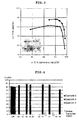
FIG. 4 is a graph showing the relationship of an isomerization yield to a phase transition index according to an embodiment of the present invention. - The above and other objects, features and advantages of the present invention will be more clearly understood from the following detailed description taken in conjunction with the accompanying drawings, and thus the technical idea of the present invention will be embodied by those skilled in the art. Further, in the description of the present invention, when it is determined that the detailed description of the related art would obscure the gist of the present invention, the description thereof will be omitted.
- Hereinafter, preferred embodiments of the present invention will be described in detail.
- The present invention provides a method of using EU-2 zeolite, the degree of phase transition thereof being controlled, as a support of a dewaxing catalyst having high selectivity to an isomerization reaction. Most of conventional isomerization catalysts have used pure zeolite such as ZSM-48, EU-2 or the like. However, in the present invention, it was found that the efficiency of an isomerization reaction can be more improved according to the degree of phase transition of the zeolite. Therefore, the present invention can provide a catalyst material which can be optimized as a support of an isomerization catalyst by controlling the degree of phase transition of the zeolite.
- The catalyst according to the present invention is characterized in that an EU-2 zeolite support, the degree of phase transition of which is controlled such that its phase transition index (T) is 50 ∼ 100 based on the reference EU-2 phase transition index proposed by the present researchers, is loaded with a metal composition for hydrogenation.
- Generally, a zeolite material is prepared by mixing an organic template material with an aqueous alkali solution containing a silica raw material, an alumina raw material and the like and then hydrothermally synthesizing the mixture using a batch reactor such as an autoclave or the like. In this case, the characteristics such as structure, purity, crystal size and the like of the zeolite material depend on several variables, such as relative concentration between raw materials such as silica, alumina, alkali or alkali-earth metals, water and the like, whether aging is conducted before hydrothermal synthesis, hydrothermal synthesis temperature, hydrothermal synthesis time, whether stirring is conducted during hydrothermal synthesis, and the like. Particularly, in the process of hydrothermal synthesis of zeolite, pure zeolite having high crystallinity can be obtained only when a predetermined amount of time passes. However, when hydrothermal synthesis is continuously conducted even after pure zeolite is created, the pure zeolite is gradually transformed into a more stable phase with the passage of time.
- EU-2 zeolite, which is a kind of zeolite used in a dewaxing catalyst, can be converted into pure EU-2 zeolite having high crystallinity after a predetermined amount of time when controlling hydrothermal synthesis conditions, but is gradually transformed into a stable phase when hydrothermal synthesis is continuously conducted. The phase occurring in this way may be cristobalite, quartz or the like. In this case, two or more phases or only one phase may occur according to the composition of raw materials and the synthesis time.
- The present researchers found that, when EU-2 zeolites, the degree of phase transition of which are different from each other, were synthesized by controlling hydrothermal synthesis time under the same synthesis conditions, dewaxing catalysts were fabricated using these EU-2 zeolites and then the isomerization performances thereof were compared with each other, the isomerization performance of the phase-transited EU-2 zeolite such as cristobalite, quartz or the like was excellent compared to that of pure EU-2 zeolite. Further, the present researchers found that, even when EU-2 zeolites were synthesized by changing the synthesis condition such as ratio of silica and aluminum or the like, the isomerization performance of the phase-transited EU-2 zeolite was excellent compared to that of pure EU-2 zeolite. The present invention is based on these findings.
- The purity of the zeolite material itself and whether the material created by the phase transition of the zeolite material exists are evaluated by X-ray diffraction (XRD) analysis. Here, the relative amounts of created materials may be compared by comparing the characteristic XRD peaks of the materials with each other. XRD analysis is usefully used to grasp the degree of phase transition of EU-2 zeolite because the XRD peaks of cristobalite, quartz or the like can be observed in addition to the XRD peaks of EU-2 zeolite.
-
FIG. 1 shows the XRD peaks of the EU-2 zeolite obtained according to the following zeolite synthesis condition of Example 1. InFIG. 1 , the XRD peaks (2θ) of EU-2 zeolite appear at 21.0° and 23.0°, the XRD peak of cristabalite appears at 22.0°, and the XRD peak of quartz appear at 26.5°. Therefore, it can be ascertained fromFIG. 1 that EU-2 zeolite having high crystal purity is phase-transited into cristobalite and quartz with the passage of synthesis time, and that quartz is highly developed when synthesis time further increases. -
FIG. 2 shows the XRD peaks of the EU-2 zeolite obtained according to the following zeolite synthesis condition of Example 4. FromFIG. 2 , similarly toFIG. 1 , it can be ascertained that pure EU-2 zeolite is converted into different phases with the increase of synthesis time. However, FromFIG. 2 , differently fromFIG. 1 , it can be ascertained that the phase transition of EU-2 zeolite into cristobalite is not observed, and the phase transition of EU-2 zeolite into quartz rapidly proceeds from the beginning. Therefore, it can be ascertained that the tendency and speed of phase transition can be somewhat changed depending on the change of synthesis conditions. - The present researchers have attempted to numerically express the degree of phase transition of EU-2 zeolite and compare them. However, it was difficult to determine the degree of phase transition thereof because the degree of phase transition of a modified material was not able to be easily distinguished by XRD peaks when the content thereof is low, and because the sensitivity of materials to XRD is different with respect to each material. Therefore, the present researchers used thermogravimetric analysis (TGA) as a method of determining the degree of phase transition of EU-2 zeolite in combination with XRD analysis. Since the EU-2 before calcination after hydrothermal reaction (hereinafter referred to as "synthesized EU-2") includes an organic template material, when it is heated to a high temperature using TGA, the organic template material is decomposed and removed, thus reducing the weight of the synthesized EU-2. Generally, in the TGA analysis of zeolite before calcination, the weight of zeolite crystals including a large amount of a template material is greatly reduced, and the weight of zeolite crystals including a small amount of a template material is slightly reduced. Meanwhile, it was found that the degree of phase transition of EU-2 can be quantified by TGA analysis as the phase transition of EU-2 proceeds. That is, a sample was obtained by synthesizing pure EU-2 zeolite having high crystal purity for 48 hours (2 days) and the relative weight reduction of the sample was grasped, thus quantitatively evaluating the degree of phase transition of EU-2 zeolite. Based on the evaluation thereof, an EU-2 phase transition index is defined as follows.

- 1) Index representing the degree of phase transition of a synthesized EU-2 sample according to the change of synthesis time under a predetermined EU-2 synthesis condition.
- 2) TGA analysis condition: TGA weight reduction rate of a synthesized EU-2 sample, which is measured under the condition that the sample is heated from 120°C to 550°C at a heating rate of 2 °C/min and then maintained at 550 °C for 2 hours.
- 3) TGA weight reduction rate of a pure EU-2 sample synthesized for 48 hours, which is measured in the same manner as 2) under a predetermined synthesis condition.
- In other words, it was found that, as a result of TGA analysis of EU-2 zeolites synthesized under the condition of synthesis time being different, the TGA weight reduction rate thereof decreases when the phase transition of EU-2 zeolite proceeds, that is, when the synthesis time thereof increases. The results of the TGA weight reduction rate of the obtained EU-2 zeolite according to synthesis time under the same synthesis condition are shown in Table 1 below. From
FIGS. 1 and 2 , it can be ascertained that the degree of phase transition of EU-2 zeolite, observed by XRD peak, corresponds to the degree of the TGA weight reduction rate thereof.[Table 1] Synthesis condition of FIG. 1 Synthesis condition of FIG. 2 Synthesis time (day) TGA weight reduction rate(%) EU-2 phase transition index (T) TGA weight reduction rate (%) EU-2 phase transition index (T) 2 8.6 100.0 8.6 100.0 4 8.0 93.0 8.5 98.8 6 7.2 83.7 7.8 90.7 8 5.2 60.5 4.8 55.8 21 4.1 47.7 - Therefore, from the fact that the TGA weight reduction rate of EU-2 zeolite decreases according to the degree of phase transition thereof, the degree of phase transition of EU-2 zeolite can be quantitatively evaluated from the relative TGA weight reduction rate of EU-2 zeolite based on the EU-2 sample having the highest crystal purity, and thus the EU-2 phase transition index is defined as above. Meanwhile, it must be cautioned that phase transition indexes are not absolutely matched with each other because they are changed according to the synthesis condition although they decrease in proportion to synthesis time.
- Accordingly, the method of manufacturing a catalyst for an isomerization catalyst includes the steps of: mixing a template material with an aqueous alkali solution including a silica raw material and an alumina raw material; and hydrothermally synthesizing the mixture at a reaction temperature of 50 °C or more, preferably 50 ∼ 250 °C, and more preferably 100 ∼ 200 °C to obtain an EU-2 zeolite, the degree of phase transition of which is controlled such that the phase transition index (T) thereof is 50 ≤ T <100.
- The template material may be at least one selected from the group consisting of organic nitrogen-containing compounds, such as alkyl amines, tetramethyl ammonium compounds and di-quaternary ammonium compounds. The silica raw material may be at least one selected from the group consisting of silica sol, fumed silica, aerosil and tetraorthosilicate. Further, the silica material may be a silica sol such as Ludox HS-40 or Ludox AS-30. The alumina raw material may be at least one selected from the group consisting of sodium aluminate, aluminum nitrate, aluminum sulfate, AlCl3, Al(OH)3 and Al(OCH3)3.
- The hydrothermal synthesis may be performed in an alkaline state of pH of 9 or more, preferably pH of 12 or more. The time it takes to conduct the hydrothermal synthesis is related to reaction temperature or stirring conditions. Preferably, the hydrothermal synthesis time may be 1 hour or more. The synthesis time can be controlled according to the phase transition index of the obtained EU-2 zeolite.
- The phase transition index (T) of EU-2 zeolite may be EU-2 zeolite, 50 ≤ T <100, preferably 60 ≤ T <100, and more preferably 60 ≤ T ≤ 98 as shown in
FIG. 4 . When the phase transition index (T) thereof is less than 50 or more than 100, an impurity such as cristobalite or quartz is not included in the EU-2 zeolite to such a degree that it does not influence the improvement of isomerization efficiency, or is excessively included in the EU-2 zeolite to such a degree that isomerization efficiency decreases. - In an embodiment of the present invention, the method of manufacturing a catalyst for an isomerization catalyst may further include the step of washing and drying the phase transition-controlled EU-2 zeolite.
- In order to provide an acid property to the phase transition-controlled EU-2 zeolite support, the phase transition-controlled EU-2 zeolite support may be calcinated at a temperature of 500°C or more and then ion-exchanged with cations such as NH4+ or the like.
- The molar ratio of silica and alumina in the phase transition-controlled EU-2 zeolite support may be 1 ∼ 500, preferably 20 ∼ 200. The BET surface area of the phase transition-controlled EU-2 zeolite support may be 100m2/gr or more.
- The method of manufacturing a catalyst for an isomerization catalyst may further include the steps of loading a active metal composition on the synthesized EU-2 zeolite support for hydrogenation, and drying and calcinating the resultant product. The catalyst manufactured using this method is a catalyst for an hydroisomerization reaction, in which an EU-2 zeolite support, the degree of phase transition of which is controlled such that its phase transition index (T) is 50 ∼ 100 based on the reference EU-2 phase transition index proposed by the present researchers, is loaded with a metal composition for hydrogenation, The bifunctional catalyst according to the present invention is used as a catalyst for a hydrodewaxing process.
- In the bifunctional catalyst according to the present invention, an EU-2 zeolite support, the degree of phase transition of which is controlled, may be used as a catalyst support having an acid site, and an oxide, such as alumina, silica or the like, may be used as a binder. The metal for hydrogenation may be at least one selected from the group consisting of group VI metals and group VIII metals. Preferably, the metal for hydrogenation may be a precious metal such as platinum or palladium.
- In order to manufacture the catalyst for an isomerization reaction, the ion-exchanged EU-2 zeolitesupport, the phase transition of which is controlled, may be loaded with at least one selected from the group consisting of group VI metals and group VIII metals, and preferably, may be loaded with a precious metal such as platinum or palladium. The method of loading a metal - on an EU-2 zeolite support can be conducted using impregnation, ion exchange or the like.
- In this case, in order to improve the selectivity of the catalyst to an isomerization reaction, at least one selected from the group consisting of group I metals and group II metals may be added as a co-catalyst. Examples of the group I metals and group II metals may include sodium, magnesium and calcium.
- Subsequently, the EU-2 zeolite support loaded with the metal is shaped, dried and then calcinated to manufacture the catalyst of the present invention. Here, the calcination of the EU-2 zeolite support is generally carried out at 350 ∼ 600 °C for 1 ∼ 24 hours.
- Meanwhile, in order to activate and pre-treat the catalyst, drying, reduction, pre-sulfidation or the like may be required, and, if necessary, may be omitted or changed.
- The catalyst manufactured using this method can be used as a catalyst for a hydrodewaxing process under the reaction conditions of a temperature of 250 ∼ 420 °C, a hydrogen partial pressure of 1 ∼ 200 atm, a liquid hourly space velocity of 0.1 ∼ 10 h-1 and a hydrogen treatment rate of 45∼1780 m3/m3 (250 ∼10,000 scf/B).
- Hereinafter, the present invention will be described in more detail with reference to the following examples. However, the scope of the present invention is not limited to these examples. The general method of synthesizing EU-2 zeolite, used in the present invention, may refer to the method disclosed in
US 4,741,891 . - 9.8 g of hexamethonium chloride as a template material, 2.8 g of sodium aluminate as an alumina raw material, 203.6 g of Ludox-HS40 as a silica raw material and 10.4 g of sodium hydroxide (NaOH) were dissolved in 292 g of DI water to form a mixed solution. Subsequently, the mixed solution was put into a hydrothermal reactor coated with Teflon, and then reacted at 165°C for 2 days (48 hours) to obtain a zeolite material. Subsequently, the zeolite material was sufficiently washed with distilled water, dried at 60 °C for 12 hours, and then calcinated at 550 °C for 5 hours. Here, the zeolite material obtained in this way is zeolite having only a pure EU-2 crystal structure, which was disclosed in the Patent document.
- The hydrothermally-synthesized EU-2 zeolite was ion-exchanged with NH4+ using a 1N aqueous ammonium nitrate solution. The ion-exchanged EU-2 zeolite was mixed with psuedoboemite as a binder at a mixing ratio of 1:1. Then, the mixture of the EU-2 zeolite and the binder was impregnated with an aqueous H2PtCl6 solution such that the amount of the EU-2 zeolite was 0.6 wt% based on the content of Pt. The impregnated EU-2 zeolite was dried at 120°C for 3 hours, and then calcinated at 500 °C for 3 hours to manufacture a catalyst for an isomerization reaction.
- Another catalyst was manufactured in the same manner as above, except that the synthesis reaction time was changed to 4 days (96 hours). In this case, as the result of XRD analysis of the material obtained in this process, the material was a metal including EU-2 and cristobalite.
- The XRD patterns of the obtained material are shown in the synthesis reaction time (2 days, 4 days) of
FIG. 1 . When the synthesis reaction time was 2 days, it can be seen that the material is pure EU-2 zeolite having a specific peak. When the synthesis reaction time was 4 days, it can be seen that EU-2 zeolite crystal is phase-transformed, thus observing the specific peaks of crystobalite and quartz. - The reaction test of n-hexadecane was carried out using two kinds of the obtained catalyst for a hydroisomerization reaction.
- The test started after filling a fixed-bed reactor having an outer diameter of half an inch with the obtained catalyst for an isomerization reaction and then activating the catalyst at 260 °C for 1 hour or more. In the test, n-hexadecane was introduced into the reactor at a feed rate of 1 g/hr using a pump, reaction pressure was 30 atm, and hydrogen was introduced into the reactor at a flow rate of 650 cc/hr. In this case, the conversion ratio of n-hexadecane can be controlled by controlling reaction temperature, and both the selectivity of the catalyst to a cracking reaction and the selectivity of the catalyst to an isomerization reaction were changed according to the change in the conversion ratio of n-hexadecane. In the test, the conversion ratio of n-hexadecane was changed according to the change of reaction temperature, and the selectivity of the catalyst to a cracking reaction and the selectivity of the catalyst to an isomerization reaction under the same conversion ratio were different according to the change of catalyst, so that the yields of iso-hexadecane, obtained by GC analysis, were different by different cataylsts. When the concentration of iso-hexadecane, among the reaction products obtained according to various reaction temperatures, was highest, this was defined by the maximum yield of isomerization reaction product using the catalyst.
- The test results of the isomerization reaction of n-hexadecane using the two kinds of catalysts are shown in
FIG. 3 . As shown inFIG. 3 , it can be ascertained that the selectivity to an isomerization reaction and the yield of iso-hexadecane of the catalyst manufactured using the phase-transformed EU-2 zeolite are improved compared to those of the catalyst manufactured using pure EU-2 zeolite. - Example 2 was carried out in the same manner as in Example 1, except that the synthesis reaction time was changed. The phase transition index of the phase-transformed EU-2 zeolite and the maximum yield of the isomerization reaction product obtained in the reaction test of n-hexadecane using the catalyst manufactured using the same are shown in Table 2. The process of manufacturing the catalyst and the reaction test of n-hexadecane were carried out in the same manner as in Example 1.
[Table 2] Synthesis reaction time (days) XRD peak EU-2 phase transition index (T) Maximum yield (%) 2 Pure EU-2 (Comp. Exp.) 100.0 81.6 4 Phase-transformed EU-2 (Exp. 1) 93.0 88.3 6 Phase-transformed EU-2 83.7 87.0 8 Phase-transformed EU-2 60.5 86.4 21 Phase-transformed EU-2 47.7 72.5 - The results of carrying out an isomerization reaction test using the EU-2 zeolite having the above phase transition index (T) as a support of a catalyst for an isomerization reaction are as follows. When the phase transition index (T) is 60 ∼ 100, preferably 60 ∼ 98, the yield of isomerization reaction becomes a maximum yield, and thereafter, as the phase transition index (T) decreases, the yield of isomerization reaction slightly decreases with respect to the maximum yield. Further, when the phase transition index (T) (synthesis reaction time: 21 days) is 50 or less, the yield of isomerization reaction of the phase-transformed EU-2 zeolite decreases compared to the yield of the isomerization reaction of pure EU-2 zeolite.
- 9.8 g of hexamethonium chloride as a template material, 2.35 g of sodium aluminate as an alumina raw material, 203.5 g of Ludox-HS40 as a silica raw material and 10.8 g of sodium hydroxide (NaOH) were dissolved in 292 g of DI water to form a mixed solution. Subsequently, the mixed solution was put into a hydrothermal reactor coated with Teflon, and then reacted under the same synthesis conditions as in Example 1 to obtain a phase-transformed EU-2 zeolite material. The phase transition index of the obtained phase-transformed EU-2 zeolite material and the results of carrying out the reaction test of n-hexadecane using the catalyst manufactured using the same are shown in Table 3 below. The process of manufacturing the catalyst and the reaction test of n-hexadecane were carried out in the same manner as in Example 1.
[Table 3] Synthesis reaction time (days) XRD peak EU-2 phase transition index (T) Maximum yield (%) 2 Pure EU-2 100.0 81.3 4 Phase-transformed EU-2 97.6 85.2 - As shown in Table 3 above, it can be ascertained that, when the phase-transformed EU-2 zeolite having a phase transition index (T) of 97.6 is used as a catalyst support of a catalyst for an isomerization reaction, the yield of the isomerization reaction of the phase-transformed EU-2 zeolite is improved compared to the yield of an isomerization reaction of pure EU-2 zeolite.
- 12.8 g of hexamethonium chloride as a template material, 4.95 g of sodium aluminate as an alumina raw material, 264.7 g of Ludox-HS40 as a silica raw material and 13.5 g of sodium hydroxide (NaOH) were dissolved in 260 g of DI water to form a mixed solution. Subsequently, the mixed solution was put into a hydrothermal reactor coated with Teflon, and then reacted under the same synthesis conditions as in Example 1 to obtain a phase-transformed EU-2 zeolite material. The phase transition index of the obtained phase-transformed EU-2 zeolite material and the results of carrying out the reaction test of n-hexadecane using the catalyst manufactured using the same are shown in Table 4 below. The process of manufacturing the catalyst and the reaction test of n-hexadecane were carried out in the same manner as in Example 1.
[Table 4] Synthesis reaction time (days) XRD peak EU-2 phase transition index (T) Maximum yield (%) 2 Pure EU-2 100.0 80.6 6 Phase-transformed EU-2 90.7 86.8 - As shown in Table 4 above, it can be ascertained that, when the phase-transformed EU-2 zeolite having a phase transition index (T) of 90.7 is used as a catalyst support of a catalyst for an isomerization reaction, the yield of the isomerization reaction of the phase-transformed EU-2 zeolite is improved compared to the yield of an isomerization reaction of pure EU-2 zeolite.
- A pilot test was carried out in order to ascertain the fact that the catalyst manufactured using the phase-transformed EU-2 zeolite obtained in Example 1 under the synthesis condition of a synthesis reaction time of 4 days as a catalyst support can be used to prepare a raw material of a lubricant using a hydrocarbon having a high boiling point.
- The manufactured catalyst accelerated the hydrodewaxing reaction of a feed having a pour point of 48°C under the reaction conditions of a temperature of 340 °C, a hydrogen partial pressure of 144 atm, a liquid hourly space velocity of 1h-1 and a hydrogen treatment rate of 550 m3/m3 to obtain a 310+C product having an improved pour point of -14 °C. In this case, since the catalyst suppresses a cracking reaction and increases its selectivity to an isomerization reaction, the yield loss caused by the cracking reaction was 9% or less. The properties of the feed and product used in the pilot test are given in Table 5.
[Table 5] Feed Product API 35.8 Specific gravity 0.8458 0.834 Distillation, D2887 10% 394.6 90% 451.0 Sulfur, wtppm 4.6 < 1.0 Nitrogen, wtppm 2.0 < 1.0 Kinematic viscosity@40 °C, cSt 35.1 35.88 Kinematic viscosity@100°C, cSt 6.543 6.429 Viscosity index 143 132 PP, °C 48 -14
Claims (12)
- A method of manufacturing a catalyst for a hydrodewaxing process, comprising the steps of:(a) preparing an EU-2 zeolite support, the degree of phase transition of which is controlled such that a phase transition index (T) thereof is 50 ≤ T <100;(b) loading a active metal composition on the EU-2 zeolite support for hydrogenation, the metal composition including at least one selected from the group consisting of group VI metals and group VIII metals; and(c) drying and calcinating the EU-2 zeolite support loaded with the metal composition,wherein T = (TGA weight reduction rate of the synthesized EU-2 sample)/(TGA weight reduction rate of pure EU-2 reference sample) X 100 (here, the TGA weight reduction rate of the EU-2 sample is measured under the condition that the sample is heated from 120°C to 550 °C at a heating rate of 2 °C/min and then maintained at 550 °C for 2 hours).
- The method of manufacturing a catalyst for a hydrodewaxing process according to claim 1, wherein the phase transition index (T) of the EU-2 zeolite support is 60 ≤ T <98.
- The method of manufacturing a catalyst for a hydrodewaxing process according to claim 1, wherein the step (a) comprises the steps of: (i) mixing a template material with an aqueous alkali solution including a silica raw material and an alumina raw material; (ii) reacting the mixture at a temperature of 50 ∼ 250 °C to obtain an EU-2 zeolite, the degree of phase transition of which is controlled such that the phase transition index (T) thereof is 50 ≤ T <100; and (iii) washing and drying the EU-2 zeolite.
- The method of manufacturing a catalyst for a hydrodewaxing process according to claim 3, wherein the template material is at least one selected from the group consisting of alkyl amines, tetramethyl ammonium compounds and di-quaternary ammonium compounds.
- The method of manufacturing a catalyst for a hydrodewaxing process according to claim 1 or 2, wherein the step (b) further comprises the step of adding at least one co-catalyst selected from the group consisting of group I metals and group II metals.
- The method of manufacturing a catalyst for a hydrodewaxing process according to claim 5, wherein each of the group I metals and group II metals is selected from sodium, magnesium and calcium.
- A catalyst for a hydrodewaxing process, comprising:an EU-2 zeolite support having an acid site, the phase transition index (T) thereof, represented by Formula 1 below, being 50 ≤ T <100, and the molar ratio of silica and alumina thereof being 20 to 200; anda metal composition for hydrogenation loaded in the EU-2 zeolite support, the metal composition including at least one selected from the group consisting of group VI metals and group VIII metals,wherein <Formula 1> T = (TGA weight reduction rate of the synthesized EU-2 sample)/(TGA weight reduction rate of pure EU-2 reference sample) X 100 (here, the TGA weight reduction rate of the EU-2 sample is measured under the condition that the sample is heated from 120 °C to 550°C at a heating rate of 2 °C/min and then maintained at 550 °C for 2 hours).
- The catalyst for a hydrodewaxing process according to claim 7, wherein the phase transition index (T) of the EU-2 zeolite support is 60 ≤ T <98.
- The catalyst for a hydrodewaxing process according to claim 7, wherein the metal composition is palladium or platinum.
- The catalyst for a hydrodewaxing process according to claim 7, further comprising at least one co-catalyst selected from the group consisting of group I metals and group II metals.
- The catalyst for a hydrodewaxing process according to claim 10, wherein each of the group I metals and group II metals is selected from sodium, magnesium and calcium.
- A hydrodewaxing method of a hydrocarbon raw material, wherein the hydrocarbon raw material is hydrodewaxed in the presence of the catalyst of claim 7 or 10 under the reaction conditions of a temperature of 250 ∼ 420 °C, a hydrogen partial pressure of 1 ∼ 200 atm, a liquid hourly space velocity of 0.1 ∼ 10 h-1 and a hydrogen treatment rate of 250 ∼ 10,000 scf/B.
Applications Claiming Priority (2)
| Application Number | Priority Date | Filing Date | Title |
|---|---|---|---|
| KR1020100034451A KR101354235B1 (en) | 2010-04-14 | 2010-04-14 | Catalyst for hydrodewaxing process and a method of preparing the same |
| PCT/KR2011/002054 WO2011129534A2 (en) | 2010-04-14 | 2011-03-25 | Catalyst for a hydrogenation dewaxing process and method for manufacturing same |
Publications (3)
| Publication Number | Publication Date |
|---|---|
| EP2559483A2 true EP2559483A2 (en) | 2013-02-20 |
| EP2559483A4 EP2559483A4 (en) | 2017-09-27 |
| EP2559483B1 EP2559483B1 (en) | 2020-05-27 |
Family
ID=44799119
Family Applications (1)
| Application Number | Title | Priority Date | Filing Date |
|---|---|---|---|
| EP11769000.8A Active EP2559483B1 (en) | 2010-04-14 | 2011-03-25 | Catalyst for a hydrogenation dewaxing process and method for manufacturing same |
Country Status (8)
| Country | Link |
|---|---|
| US (2) | US8772193B2 (en) |
| EP (1) | EP2559483B1 (en) |
| JP (1) | JP5689950B2 (en) |
| KR (1) | KR101354235B1 (en) |
| CN (1) | CN102905786B (en) |
| ES (1) | ES2813388T3 (en) |
| RU (1) | RU2527283C2 (en) |
| WO (1) | WO2011129534A2 (en) |
Cited By (2)
| Publication number | Priority date | Publication date | Assignee | Title |
|---|---|---|---|---|
| EP2862627A3 (en) * | 2013-10-18 | 2015-07-15 | SK Innovation Co., Ltd. | Activated EU-2 zeolite and use thereof in hydroisomerization processes |
| CN106994365A (en) * | 2016-01-26 | 2017-08-01 | 中国石油化工股份有限公司 | A kind of catalyst for hydrogenation de-waxing preparation method and catalyst obtained by this method and its application |
Families Citing this family (6)
| Publication number | Priority date | Publication date | Assignee | Title |
|---|---|---|---|---|
| US7650416B2 (en) | 2003-08-12 | 2010-01-19 | Riverbed Technology | Content delivery for client-server protocols with user affinities using connection end-point proxies |
| KR101354235B1 (en) | 2010-04-14 | 2014-02-13 | 에스케이이노베이션 주식회사 | Catalyst for hydrodewaxing process and a method of preparing the same |
| KR101692547B1 (en) * | 2016-04-26 | 2017-01-03 | 에스케이이노베이션 주식회사 | Process for reducing haze in heavy base oil and hydroisomerization catalyst system having reduced haze |
| WO2018004924A1 (en) * | 2016-06-29 | 2018-01-04 | Exxonmobil Research And Engineering Company | Production of low cloud point distillate fuels |
| CN112934251B (en) * | 2019-12-11 | 2023-06-06 | 中国科学院大连化学物理研究所 | A bifunctional catalyst for catalyzing the hydroisomerization of n-heptane and its preparation method |
| RU2734969C1 (en) * | 2020-01-24 | 2020-10-26 | Публичное акционерное общество "Нефтяная компания "Роснефть" (ПАО "НК "Роснефть") | Method of producing a catalyst for isodeparaffinization of diesel oil fractions |
Family Cites Families (28)
| Publication number | Priority date | Publication date | Assignee | Title |
|---|---|---|---|---|
| NZ197291A (en) | 1980-06-12 | 1984-10-19 | Ici Ltd | Zeolite eu-2,useful in catalytic processes,especially convversion of methanol to hydrocarbons |
| NZ204093A (en) * | 1982-05-18 | 1985-01-31 | Mobil Oil Corp | Simultaneous catalytic hydrocracking and hydrodewaxing of hydrocarbon oils using zeolite beta |
| US5128024A (en) * | 1982-05-18 | 1992-07-07 | Mobil Oil Corporation | Simultaneous catalytic hydrocracking and hydrodewaxing of hydrocarbon oils with zeolite beta |
| GB8610028D0 (en) * | 1986-04-24 | 1986-05-29 | British Petroleum Co Plc | Unsaturated hydrocarbons |
| SU1661145A1 (en) * | 1989-04-20 | 1991-07-07 | Институт Химии Силикатов Им.И.В.Гребенщикова | Method for ceolite eu-2 preparation |
| EP0404468B1 (en) | 1989-06-19 | 1995-12-06 | Seiko Epson Corporation | Timepiece |
| PL178305B1 (en) * | 1993-10-08 | 2000-04-28 | Akzo Nobel Nv | Hydrocracking and hydrodeparaffining method |
| MY125670A (en) * | 1995-06-13 | 2006-08-30 | Shell Int Research | Catalytic dewaxing process and catalyst composition |
| CN1073887C (en) * | 1997-08-08 | 2001-10-31 | 北京燕化石油化工股份有限公司化工二厂 | Catalyst for producing ethylbenzene by alkylation, its production method, new process for producing ethylbenzene by alkylation |
| ZA997664B (en) * | 1998-12-23 | 2001-06-14 | Inst Francais Du Petrole | Euo zeolite comprising crystals and aggregates of crystals with specific granulometrys and its use as a catalyst in the isomerisation of C8 aromatic compounds. |
| JP4860861B2 (en) * | 1999-07-26 | 2012-01-25 | シエル・インターナシヨネイル・リサーチ・マーチヤツピイ・ベー・ウイ | Method for producing a lubricating base oil |
| FR2805762B1 (en) * | 2000-03-02 | 2004-01-16 | Inst Francais Du Petrole | ZEOLITE ZSM-48 CATALYST AND METHOD FOR IMPROVING THE FLOW POINT OF PARAFFINIC LOADS |
| FR2818284B1 (en) * | 2000-12-15 | 2006-08-04 | Inst Francais Du Petrole | IMPROVED FLEXIBLE PROCESS FOR THE PRODUCTION OF OIL BASES AND MEDIUM DISTILLATES WITH CONVERSION-HYDROISOMERIZATION FOLLOWED BY CATALYTIC DEPARAFFINING |
| US6652735B2 (en) | 2001-04-26 | 2003-11-25 | Exxonmobil Research And Engineering Company | Process for isomerization dewaxing of hydrocarbon streams |
| DE10133175B4 (en) * | 2001-07-07 | 2006-04-20 | Korea Advanced Institute Of Science And Technology | Process for the preparation of metal-containing bi-functional catalysts for dewaxing |
| FR2852864B1 (en) * | 2003-03-24 | 2005-05-06 | Inst Francais Du Petrole | CATALYST COMPRISING AT LEAST ONE ZEOLITE SELECTED FROM ZBM-30, ZSM-48, EU-2 AND EU-11 AND AT LEAST ONE ZEOLITE Y AND METHOD OF HYDROCONVERSION OF HYDROCARBONATED LOADS USING SUCH A CATALYST |
| CN1597850A (en) * | 2003-09-15 | 2005-03-23 | 中国石油天然气股份有限公司 | Catalytic cracking catalyst for reducing gasoline sulfur content and preparation method thereof |
| TWI450762B (en) * | 2005-12-13 | 2014-09-01 | Exxonmobil Res & Eng Co | High activity zsm-48 and methods for dewaxing |
| US7482300B2 (en) | 2005-12-13 | 2009-01-27 | Exxonmobil Research And Engineering Company | High activity ZSM-48 and methods for dewaxing |
| US8030240B2 (en) * | 2007-12-28 | 2011-10-04 | Exxonmobil Research And Engineering Company | Multiple molecular sieve catalyst for sour service dewaxing |
| US8263517B2 (en) * | 2007-12-28 | 2012-09-11 | Exxonmobil Research And Engineering Company | Hydroprocessing catalysts with low surface area binders |
| US8263519B2 (en) * | 2007-12-28 | 2012-09-11 | Exxonmobil Research And Engineering Company | Sour service dewaxing catalyst without separate hydrogenation function |
| KR101528791B1 (en) * | 2008-02-08 | 2015-06-15 | 제이엑스 닛코닛세키에너지주식회사 | Hydroisomerization catalyst, process for producing the same, method of dewaxing hydrocarbon oil, and process for producing lube base oil |
| FR2932812B1 (en) * | 2008-06-24 | 2011-07-29 | Inst Francais Du Petrole | PROCESS FOR CONVERTING CHARGES FROM RENEWABLE SOURCES TO GOOD QUALITY GASOLINE FUEL BASES USING A ZEOLITHIC CATALYST WITHOUT INTERMEDIATE LIQUID GAS SEPARATION |
| FR2932811B1 (en) * | 2008-06-24 | 2010-09-03 | Inst Francais Du Petrole | METHOD FOR CONVERTING CHARGES FROM RENEWABLE SOURCES TO GOOD GAS FUEL BASES USING A ZEOLITHIC TYPE CATALYST |
| CN101348708B (en) * | 2008-09-17 | 2010-06-30 | 中国建筑材料科学研究总院 | Preparation method of organic-inorganic composite phase change material |
| KR101354235B1 (en) | 2010-04-14 | 2014-02-13 | 에스케이이노베이션 주식회사 | Catalyst for hydrodewaxing process and a method of preparing the same |
| KR101679426B1 (en) * | 2010-04-30 | 2016-11-25 | 에스케이이노베이션 주식회사 | A method of preparing high graded lube base oil using unconverted oil |
-
2010
- 2010-04-14 KR KR1020100034451A patent/KR101354235B1/en active Active
-
2011
- 2011-03-25 ES ES11769000T patent/ES2813388T3/en active Active
- 2011-03-25 WO PCT/KR2011/002054 patent/WO2011129534A2/en not_active Ceased
- 2011-03-25 JP JP2013504802A patent/JP5689950B2/en active Active
- 2011-03-25 US US13/640,788 patent/US8772193B2/en active Active
- 2011-03-25 EP EP11769000.8A patent/EP2559483B1/en active Active
- 2011-03-25 CN CN201180025628.1A patent/CN102905786B/en active Active
- 2011-03-25 RU RU2012143524/04A patent/RU2527283C2/en active
-
2014
- 2014-06-17 US US14/306,447 patent/US9518233B2/en active Active
Cited By (4)
| Publication number | Priority date | Publication date | Assignee | Title |
|---|---|---|---|---|
| EP2862627A3 (en) * | 2013-10-18 | 2015-07-15 | SK Innovation Co., Ltd. | Activated EU-2 zeolite and use thereof in hydroisomerization processes |
| US9687828B2 (en) | 2013-10-18 | 2017-06-27 | Sk Innovation Co., Ltd. | Activated EU-2 zeolite and use thereof |
| US9782760B2 (en) * | 2013-10-18 | 2017-10-10 | Sk Innovation Co., Ltd. | Method of preparing an activated EU-2 zeolite |
| CN106994365A (en) * | 2016-01-26 | 2017-08-01 | 中国石油化工股份有限公司 | A kind of catalyst for hydrogenation de-waxing preparation method and catalyst obtained by this method and its application |
Also Published As
| Publication number | Publication date |
|---|---|
| JP2013525093A (en) | 2013-06-20 |
| JP5689950B2 (en) | 2015-03-25 |
| ES2813388T3 (en) | 2021-03-23 |
| RU2527283C2 (en) | 2014-08-27 |
| US20130030231A1 (en) | 2013-01-31 |
| EP2559483A4 (en) | 2017-09-27 |
| WO2011129534A9 (en) | 2011-12-15 |
| EP2559483B1 (en) | 2020-05-27 |
| KR20110115010A (en) | 2011-10-20 |
| WO2011129534A3 (en) | 2012-02-02 |
| US8772193B2 (en) | 2014-07-08 |
| RU2012143524A (en) | 2014-05-20 |
| CN102905786B (en) | 2014-10-29 |
| WO2011129534A2 (en) | 2011-10-20 |
| US9518233B2 (en) | 2016-12-13 |
| US20140367310A1 (en) | 2014-12-18 |
| CN102905786A (en) | 2013-01-30 |
| KR101354235B1 (en) | 2014-02-13 |
Similar Documents
| Publication | Publication Date | Title |
|---|---|---|
| US9518233B2 (en) | Catalyst for a hydrodgenation dewaxing process and method for manufacturing same | |
| US9782760B2 (en) | Method of preparing an activated EU-2 zeolite | |
| CN101939102B (en) | Hydroisomerization catalyst, process for producing the same, method of dewaxing hydrocarbon oil, and process for producing lube base oi | |
| CN102333592B (en) | Hydrogenation isomerization catalyst, method for producing same, method for dewaxing hydrocarbon oil, and method for producing lubricant base oil | |
| EP1204723B1 (en) | Process for preparing a lubricating base oil | |
| US20070048214A1 (en) | Preparing small crystal ssz-32 and its use in a hydrocarbon conversion process | |
| JP2008512231A (en) | Zeolite and hydrogenation catalyst with high mesoporosity | |
| EP1733789A1 (en) | Hydrocracking catalyst and process for producing liquid hydrocarbon | |
| WO2011122446A1 (en) | Hydroisomerization catalyst, method for producing same, method for dewaxing hydrocarbon oil, method for producing hydrocarbon, and method for producing lubricant base oil | |
| EP1641899B1 (en) | Process for the preparation of middle distillates and lube bases starting from synthetic hydrocarbon feedstocks | |
| CN114929841A (en) | Use of a catalyst based on IZM-2 with a low alkali metal content for isomerizing paraffinic feedstocks into middle distillates | |
| JP2007533807A (en) | Naphthene ring opening method and catalyst | |
| EP2000203A1 (en) | Hydrocracking catalyst and process for producing fuel substrate | |
| JP2010155190A (en) | Hydrogenation isomerization catalyst, method for producing same, method for dewaxing hydrocarbon oil, and method for producing lubricant base oil | |
| JP6046776B2 (en) | Hydrocracking catalyst and fuel substrate production method | |
| EP1641561B1 (en) | Process for the hydrotreatment of hydrocarbons | |
| KR20230160395A (en) | Molecular Sieve SSZ-94, Catalyst, and Methods of Using the Same | |
| EP0321301A2 (en) | Catalyst (and its preparation) for wax hydroisomerization and hydrocracking to produce liquid hydrocarbon fuels | |
| AU761671B2 (en) | Rare earth metal ion exchanged ferrierite |
Legal Events
| Date | Code | Title | Description |
|---|---|---|---|
| PUAI | Public reference made under article 153(3) epc to a published international application that has entered the european phase |
Free format text: ORIGINAL CODE: 0009012 |
|
| 17P | Request for examination filed |
Effective date: 20121016 |
|
| AK | Designated contracting states |
Kind code of ref document: A2 Designated state(s): AL AT BE BG CH CY CZ DE DK EE ES FI FR GB GR HR HU IE IS IT LI LT LU LV MC MK MT NL NO PL PT RO RS SE SI SK SM TR |
|
| DAX | Request for extension of the european patent (deleted) | ||
| A4 | Supplementary search report drawn up and despatched |
Effective date: 20170825 |
|
| RIC1 | Information provided on ipc code assigned before grant |
Ipc: C10G 45/62 20060101ALN20170821BHEP Ipc: B01J 35/10 20060101ALI20170821BHEP Ipc: C10G 47/16 20060101ALN20170821BHEP Ipc: C07C 9/22 20060101ALN20170821BHEP Ipc: B01J 37/02 20060101ALI20170821BHEP Ipc: C01B 39/48 20060101ALN20170821BHEP Ipc: C10G 45/64 20060101ALN20170821BHEP Ipc: B01J 29/72 20060101AFI20170821BHEP Ipc: B01J 35/00 20060101ALI20170821BHEP Ipc: C07C 5/27 20060101ALN20170821BHEP Ipc: B01J 29/74 20060101ALI20170821BHEP Ipc: B01J 37/08 20060101ALI20170821BHEP Ipc: C10G 49/08 20060101ALN20170821BHEP |
|
| STAA | Information on the status of an ep patent application or granted ep patent |
Free format text: STATUS: EXAMINATION IS IN PROGRESS |
|
| 17Q | First examination report despatched |
Effective date: 20190919 |
|
| RIC1 | Information provided on ipc code assigned before grant |
Ipc: B01J 37/08 20060101ALI20200121BHEP Ipc: B01J 35/10 20060101ALI20200121BHEP Ipc: B01J 35/00 20060101ALI20200121BHEP Ipc: C01B 39/48 20060101ALN20200121BHEP Ipc: C10G 45/62 20060101ALN20200121BHEP Ipc: C07C 9/22 20060101ALN20200121BHEP Ipc: B01J 29/72 20060101AFI20200121BHEP Ipc: B01J 29/74 20060101ALI20200121BHEP Ipc: C10G 45/64 20060101ALN20200121BHEP Ipc: C07C 5/27 20060101ALN20200121BHEP Ipc: B01J 37/02 20060101ALI20200121BHEP Ipc: C10G 49/08 20060101ALN20200121BHEP Ipc: C10G 47/16 20060101ALN20200121BHEP |
|
| GRAP | Despatch of communication of intention to grant a patent |
Free format text: ORIGINAL CODE: EPIDOSNIGR1 |
|
| STAA | Information on the status of an ep patent application or granted ep patent |
Free format text: STATUS: GRANT OF PATENT IS INTENDED |
|
| RIC1 | Information provided on ipc code assigned before grant |
Ipc: B01J 35/00 20060101ALI20200204BHEP Ipc: C10G 49/08 20060101ALN20200204BHEP Ipc: C07C 5/27 20060101ALN20200204BHEP Ipc: C07C 9/22 20060101ALN20200204BHEP Ipc: B01J 37/08 20060101ALI20200204BHEP Ipc: C10G 47/16 20060101ALN20200204BHEP Ipc: C10G 45/62 20060101ALN20200204BHEP Ipc: C01B 39/48 20060101ALN20200204BHEP Ipc: B01J 37/02 20060101ALI20200204BHEP Ipc: C10G 45/64 20060101ALN20200204BHEP Ipc: B01J 35/10 20060101ALI20200204BHEP Ipc: B01J 29/72 20060101AFI20200204BHEP Ipc: B01J 29/74 20060101ALI20200204BHEP |
|
| INTG | Intention to grant announced |
Effective date: 20200309 |
|
| GRAS | Grant fee paid |
Free format text: ORIGINAL CODE: EPIDOSNIGR3 |
|
| GRAA | (expected) grant |
Free format text: ORIGINAL CODE: 0009210 |
|
| STAA | Information on the status of an ep patent application or granted ep patent |
Free format text: STATUS: THE PATENT HAS BEEN GRANTED |
|
| AK | Designated contracting states |
Kind code of ref document: B1 Designated state(s): AL AT BE BG CH CY CZ DE DK EE ES FI FR GB GR HR HU IE IS IT LI LT LU LV MC MK MT NL NO PL PT RO RS SE SI SK SM TR |
|
| REG | Reference to a national code |
Ref country code: GB Ref legal event code: FG4D |
|
| REG | Reference to a national code |
Ref country code: CH Ref legal event code: EP |
|
| REG | Reference to a national code |
Ref country code: AT Ref legal event code: REF Ref document number: 1273977 Country of ref document: AT Kind code of ref document: T Effective date: 20200615 |
|
| REG | Reference to a national code |
Ref country code: DE Ref legal event code: R096 Ref document number: 602011067041 Country of ref document: DE |
|
| REG | Reference to a national code |
Ref country code: NL Ref legal event code: FP |
|
| REG | Reference to a national code |
Ref country code: LT Ref legal event code: MG4D |
|
| PG25 | Lapsed in a contracting state [announced via postgrant information from national office to epo] |
Ref country code: SE Free format text: LAPSE BECAUSE OF FAILURE TO SUBMIT A TRANSLATION OF THE DESCRIPTION OR TO PAY THE FEE WITHIN THE PRESCRIBED TIME-LIMIT Effective date: 20200527 Ref country code: LT Free format text: LAPSE BECAUSE OF FAILURE TO SUBMIT A TRANSLATION OF THE DESCRIPTION OR TO PAY THE FEE WITHIN THE PRESCRIBED TIME-LIMIT Effective date: 20200527 Ref country code: GR Free format text: LAPSE BECAUSE OF FAILURE TO SUBMIT A TRANSLATION OF THE DESCRIPTION OR TO PAY THE FEE WITHIN THE PRESCRIBED TIME-LIMIT Effective date: 20200828 Ref country code: NO Free format text: LAPSE BECAUSE OF FAILURE TO SUBMIT A TRANSLATION OF THE DESCRIPTION OR TO PAY THE FEE WITHIN THE PRESCRIBED TIME-LIMIT Effective date: 20200827 Ref country code: IS Free format text: LAPSE BECAUSE OF FAILURE TO SUBMIT A TRANSLATION OF THE DESCRIPTION OR TO PAY THE FEE WITHIN THE PRESCRIBED TIME-LIMIT Effective date: 20200927 Ref country code: PT Free format text: LAPSE BECAUSE OF FAILURE TO SUBMIT A TRANSLATION OF THE DESCRIPTION OR TO PAY THE FEE WITHIN THE PRESCRIBED TIME-LIMIT Effective date: 20200928 Ref country code: FI Free format text: LAPSE BECAUSE OF FAILURE TO SUBMIT A TRANSLATION OF THE DESCRIPTION OR TO PAY THE FEE WITHIN THE PRESCRIBED TIME-LIMIT Effective date: 20200527 |
|
| PG25 | Lapsed in a contracting state [announced via postgrant information from national office to epo] |
Ref country code: RS Free format text: LAPSE BECAUSE OF FAILURE TO SUBMIT A TRANSLATION OF THE DESCRIPTION OR TO PAY THE FEE WITHIN THE PRESCRIBED TIME-LIMIT Effective date: 20200527 Ref country code: HR Free format text: LAPSE BECAUSE OF FAILURE TO SUBMIT A TRANSLATION OF THE DESCRIPTION OR TO PAY THE FEE WITHIN THE PRESCRIBED TIME-LIMIT Effective date: 20200527 Ref country code: LV Free format text: LAPSE BECAUSE OF FAILURE TO SUBMIT A TRANSLATION OF THE DESCRIPTION OR TO PAY THE FEE WITHIN THE PRESCRIBED TIME-LIMIT Effective date: 20200527 Ref country code: BG Free format text: LAPSE BECAUSE OF FAILURE TO SUBMIT A TRANSLATION OF THE DESCRIPTION OR TO PAY THE FEE WITHIN THE PRESCRIBED TIME-LIMIT Effective date: 20200827 |
|
| REG | Reference to a national code |
Ref country code: AT Ref legal event code: MK05 Ref document number: 1273977 Country of ref document: AT Kind code of ref document: T Effective date: 20200527 |
|
| PG25 | Lapsed in a contracting state [announced via postgrant information from national office to epo] |
Ref country code: AL Free format text: LAPSE BECAUSE OF FAILURE TO SUBMIT A TRANSLATION OF THE DESCRIPTION OR TO PAY THE FEE WITHIN THE PRESCRIBED TIME-LIMIT Effective date: 20200527 |
|
| PG25 | Lapsed in a contracting state [announced via postgrant information from national office to epo] |
Ref country code: IT Free format text: LAPSE BECAUSE OF FAILURE TO SUBMIT A TRANSLATION OF THE DESCRIPTION OR TO PAY THE FEE WITHIN THE PRESCRIBED TIME-LIMIT Effective date: 20200527 Ref country code: DK Free format text: LAPSE BECAUSE OF FAILURE TO SUBMIT A TRANSLATION OF THE DESCRIPTION OR TO PAY THE FEE WITHIN THE PRESCRIBED TIME-LIMIT Effective date: 20200527 Ref country code: AT Free format text: LAPSE BECAUSE OF FAILURE TO SUBMIT A TRANSLATION OF THE DESCRIPTION OR TO PAY THE FEE WITHIN THE PRESCRIBED TIME-LIMIT Effective date: 20200527 Ref country code: EE Free format text: LAPSE BECAUSE OF FAILURE TO SUBMIT A TRANSLATION OF THE DESCRIPTION OR TO PAY THE FEE WITHIN THE PRESCRIBED TIME-LIMIT Effective date: 20200527 Ref country code: SM Free format text: LAPSE BECAUSE OF FAILURE TO SUBMIT A TRANSLATION OF THE DESCRIPTION OR TO PAY THE FEE WITHIN THE PRESCRIBED TIME-LIMIT Effective date: 20200527 Ref country code: CZ Free format text: LAPSE BECAUSE OF FAILURE TO SUBMIT A TRANSLATION OF THE DESCRIPTION OR TO PAY THE FEE WITHIN THE PRESCRIBED TIME-LIMIT Effective date: 20200527 Ref country code: RO Free format text: LAPSE BECAUSE OF FAILURE TO SUBMIT A TRANSLATION OF THE DESCRIPTION OR TO PAY THE FEE WITHIN THE PRESCRIBED TIME-LIMIT Effective date: 20200527 |
|
| PG25 | Lapsed in a contracting state [announced via postgrant information from national office to epo] |
Ref country code: SK Free format text: LAPSE BECAUSE OF FAILURE TO SUBMIT A TRANSLATION OF THE DESCRIPTION OR TO PAY THE FEE WITHIN THE PRESCRIBED TIME-LIMIT Effective date: 20200527 Ref country code: PL Free format text: LAPSE BECAUSE OF FAILURE TO SUBMIT A TRANSLATION OF THE DESCRIPTION OR TO PAY THE FEE WITHIN THE PRESCRIBED TIME-LIMIT Effective date: 20200527 |
|
| REG | Reference to a national code |
Ref country code: DE Ref legal event code: R097 Ref document number: 602011067041 Country of ref document: DE |
|
| REG | Reference to a national code |
Ref country code: ES Ref legal event code: FG2A Ref document number: 2813388 Country of ref document: ES Kind code of ref document: T3 Effective date: 20210323 |
|
| PLBE | No opposition filed within time limit |
Free format text: ORIGINAL CODE: 0009261 |
|
| STAA | Information on the status of an ep patent application or granted ep patent |
Free format text: STATUS: NO OPPOSITION FILED WITHIN TIME LIMIT |
|
| 26N | No opposition filed |
Effective date: 20210302 |
|
| PG25 | Lapsed in a contracting state [announced via postgrant information from national office to epo] |
Ref country code: SI Free format text: LAPSE BECAUSE OF FAILURE TO SUBMIT A TRANSLATION OF THE DESCRIPTION OR TO PAY THE FEE WITHIN THE PRESCRIBED TIME-LIMIT Effective date: 20200527 |
|
| PG25 | Lapsed in a contracting state [announced via postgrant information from national office to epo] |
Ref country code: MC Free format text: LAPSE BECAUSE OF FAILURE TO SUBMIT A TRANSLATION OF THE DESCRIPTION OR TO PAY THE FEE WITHIN THE PRESCRIBED TIME-LIMIT Effective date: 20200527 |
|
| REG | Reference to a national code |
Ref country code: CH Ref legal event code: PL |
|
| REG | Reference to a national code |
Ref country code: BE Ref legal event code: MM Effective date: 20210331 |
|
| PG25 | Lapsed in a contracting state [announced via postgrant information from national office to epo] |
Ref country code: IE Free format text: LAPSE BECAUSE OF NON-PAYMENT OF DUE FEES Effective date: 20210325 Ref country code: LU Free format text: LAPSE BECAUSE OF NON-PAYMENT OF DUE FEES Effective date: 20210325 Ref country code: LI Free format text: LAPSE BECAUSE OF NON-PAYMENT OF DUE FEES Effective date: 20210331 Ref country code: CH Free format text: LAPSE BECAUSE OF NON-PAYMENT OF DUE FEES Effective date: 20210331 |
|
| PG25 | Lapsed in a contracting state [announced via postgrant information from national office to epo] |
Ref country code: BE Free format text: LAPSE BECAUSE OF NON-PAYMENT OF DUE FEES Effective date: 20210331 |
|
| PG25 | Lapsed in a contracting state [announced via postgrant information from national office to epo] |
Ref country code: HU Free format text: LAPSE BECAUSE OF FAILURE TO SUBMIT A TRANSLATION OF THE DESCRIPTION OR TO PAY THE FEE WITHIN THE PRESCRIBED TIME-LIMIT; INVALID AB INITIO Effective date: 20110325 Ref country code: CY Free format text: LAPSE BECAUSE OF FAILURE TO SUBMIT A TRANSLATION OF THE DESCRIPTION OR TO PAY THE FEE WITHIN THE PRESCRIBED TIME-LIMIT Effective date: 20200527 |
|
| P01 | Opt-out of the competence of the unified patent court (upc) registered |
Effective date: 20230622 |
|
| PG25 | Lapsed in a contracting state [announced via postgrant information from national office to epo] |
Ref country code: MK Free format text: LAPSE BECAUSE OF FAILURE TO SUBMIT A TRANSLATION OF THE DESCRIPTION OR TO PAY THE FEE WITHIN THE PRESCRIBED TIME-LIMIT Effective date: 20200527 |
|
| PG25 | Lapsed in a contracting state [announced via postgrant information from national office to epo] |
Ref country code: TR Free format text: LAPSE BECAUSE OF FAILURE TO SUBMIT A TRANSLATION OF THE DESCRIPTION OR TO PAY THE FEE WITHIN THE PRESCRIBED TIME-LIMIT Effective date: 20200527 |
|
| PG25 | Lapsed in a contracting state [announced via postgrant information from national office to epo] |
Ref country code: MT Free format text: LAPSE BECAUSE OF FAILURE TO SUBMIT A TRANSLATION OF THE DESCRIPTION OR TO PAY THE FEE WITHIN THE PRESCRIBED TIME-LIMIT Effective date: 20200527 |
|
| PGFP | Annual fee paid to national office [announced via postgrant information from national office to epo] |
Ref country code: ES Payment date: 20250408 Year of fee payment: 15 |
|
| PGFP | Annual fee paid to national office [announced via postgrant information from national office to epo] |
Ref country code: NL Payment date: 20251223 Year of fee payment: 16 Ref country code: FR Payment date: 20251223 Year of fee payment: 16 |
|
| PGFP | Annual fee paid to national office [announced via postgrant information from national office to epo] |
Ref country code: GB Payment date: 20260108 Year of fee payment: 16 |
|
| PGFP | Annual fee paid to national office [announced via postgrant information from national office to epo] |
Ref country code: DE Payment date: 20251222 Year of fee payment: 16 |