EP2558600B2 - Methods for measuring enzyme activity useful in determining cell viability in non-purified samples - Google Patents
Methods for measuring enzyme activity useful in determining cell viability in non-purified samples Download PDFInfo
- Publication number
- EP2558600B2 EP2558600B2 EP11769633.6A EP11769633A EP2558600B2 EP 2558600 B2 EP2558600 B2 EP 2558600B2 EP 11769633 A EP11769633 A EP 11769633A EP 2558600 B2 EP2558600 B2 EP 2558600B2
- Authority
- EP
- European Patent Office
- Prior art keywords
- sample
- microorganism
- dna
- polymerase
- methods
- Prior art date
- Legal status (The legal status is an assumption and is not a legal conclusion. Google has not performed a legal analysis and makes no representation as to the accuracy of the status listed.)
- Active
Links
Images

Classifications
-
- C—CHEMISTRY; METALLURGY
- C12—BIOCHEMISTRY; BEER; SPIRITS; WINE; VINEGAR; MICROBIOLOGY; ENZYMOLOGY; MUTATION OR GENETIC ENGINEERING
- C12Q—MEASURING OR TESTING PROCESSES INVOLVING ENZYMES, NUCLEIC ACIDS OR MICROORGANISMS; COMPOSITIONS OR TEST PAPERS THEREFOR; PROCESSES OF PREPARING SUCH COMPOSITIONS; CONDITION-RESPONSIVE CONTROL IN MICROBIOLOGICAL OR ENZYMOLOGICAL PROCESSES
- C12Q1/00—Measuring or testing processes involving enzymes, nucleic acids or microorganisms; Compositions therefor; Processes of preparing such compositions
- C12Q1/68—Measuring or testing processes involving enzymes, nucleic acids or microorganisms; Compositions therefor; Processes of preparing such compositions involving nucleic acids
- C12Q1/6876—Nucleic acid products used in the analysis of nucleic acids, e.g. primers or probes
- C12Q1/6888—Nucleic acid products used in the analysis of nucleic acids, e.g. primers or probes for detection or identification of organisms
-
- C—CHEMISTRY; METALLURGY
- C12—BIOCHEMISTRY; BEER; SPIRITS; WINE; VINEGAR; MICROBIOLOGY; ENZYMOLOGY; MUTATION OR GENETIC ENGINEERING
- C12Q—MEASURING OR TESTING PROCESSES INVOLVING ENZYMES, NUCLEIC ACIDS OR MICROORGANISMS; COMPOSITIONS OR TEST PAPERS THEREFOR; PROCESSES OF PREPARING SUCH COMPOSITIONS; CONDITION-RESPONSIVE CONTROL IN MICROBIOLOGICAL OR ENZYMOLOGICAL PROCESSES
- C12Q1/00—Measuring or testing processes involving enzymes, nucleic acids or microorganisms; Compositions therefor; Processes of preparing such compositions
- C12Q1/02—Measuring or testing processes involving enzymes, nucleic acids or microorganisms; Compositions therefor; Processes of preparing such compositions involving viable microorganisms
- C12Q1/04—Determining presence or kind of microorganism; Use of selective media for testing antibiotics or bacteriocides; Compositions containing a chemical indicator therefor
-
- C—CHEMISTRY; METALLURGY
- C12—BIOCHEMISTRY; BEER; SPIRITS; WINE; VINEGAR; MICROBIOLOGY; ENZYMOLOGY; MUTATION OR GENETIC ENGINEERING
- C12Q—MEASURING OR TESTING PROCESSES INVOLVING ENZYMES, NUCLEIC ACIDS OR MICROORGANISMS; COMPOSITIONS OR TEST PAPERS THEREFOR; PROCESSES OF PREPARING SUCH COMPOSITIONS; CONDITION-RESPONSIVE CONTROL IN MICROBIOLOGICAL OR ENZYMOLOGICAL PROCESSES
- C12Q1/00—Measuring or testing processes involving enzymes, nucleic acids or microorganisms; Compositions therefor; Processes of preparing such compositions
- C12Q1/25—Measuring or testing processes involving enzymes, nucleic acids or microorganisms; Compositions therefor; Processes of preparing such compositions involving enzymes not classifiable in groups C12Q1/26 - C12Q1/66
-
- C—CHEMISTRY; METALLURGY
- C12—BIOCHEMISTRY; BEER; SPIRITS; WINE; VINEGAR; MICROBIOLOGY; ENZYMOLOGY; MUTATION OR GENETIC ENGINEERING
- C12Q—MEASURING OR TESTING PROCESSES INVOLVING ENZYMES, NUCLEIC ACIDS OR MICROORGANISMS; COMPOSITIONS OR TEST PAPERS THEREFOR; PROCESSES OF PREPARING SUCH COMPOSITIONS; CONDITION-RESPONSIVE CONTROL IN MICROBIOLOGICAL OR ENZYMOLOGICAL PROCESSES
- C12Q1/00—Measuring or testing processes involving enzymes, nucleic acids or microorganisms; Compositions therefor; Processes of preparing such compositions
- C12Q1/34—Measuring or testing processes involving enzymes, nucleic acids or microorganisms; Compositions therefor; Processes of preparing such compositions involving hydrolase
- C12Q1/42—Measuring or testing processes involving enzymes, nucleic acids or microorganisms; Compositions therefor; Processes of preparing such compositions involving hydrolase involving phosphatase
-
- C—CHEMISTRY; METALLURGY
- C12—BIOCHEMISTRY; BEER; SPIRITS; WINE; VINEGAR; MICROBIOLOGY; ENZYMOLOGY; MUTATION OR GENETIC ENGINEERING
- C12Q—MEASURING OR TESTING PROCESSES INVOLVING ENZYMES, NUCLEIC ACIDS OR MICROORGANISMS; COMPOSITIONS OR TEST PAPERS THEREFOR; PROCESSES OF PREPARING SUCH COMPOSITIONS; CONDITION-RESPONSIVE CONTROL IN MICROBIOLOGICAL OR ENZYMOLOGICAL PROCESSES
- C12Q1/00—Measuring or testing processes involving enzymes, nucleic acids or microorganisms; Compositions therefor; Processes of preparing such compositions
- C12Q1/48—Measuring or testing processes involving enzymes, nucleic acids or microorganisms; Compositions therefor; Processes of preparing such compositions involving transferase
-
- C—CHEMISTRY; METALLURGY
- C12—BIOCHEMISTRY; BEER; SPIRITS; WINE; VINEGAR; MICROBIOLOGY; ENZYMOLOGY; MUTATION OR GENETIC ENGINEERING
- C12Q—MEASURING OR TESTING PROCESSES INVOLVING ENZYMES, NUCLEIC ACIDS OR MICROORGANISMS; COMPOSITIONS OR TEST PAPERS THEREFOR; PROCESSES OF PREPARING SUCH COMPOSITIONS; CONDITION-RESPONSIVE CONTROL IN MICROBIOLOGICAL OR ENZYMOLOGICAL PROCESSES
- C12Q1/00—Measuring or testing processes involving enzymes, nucleic acids or microorganisms; Compositions therefor; Processes of preparing such compositions
- C12Q1/68—Measuring or testing processes involving enzymes, nucleic acids or microorganisms; Compositions therefor; Processes of preparing such compositions involving nucleic acids
- C12Q1/6813—Hybridisation assays
- C12Q1/6834—Enzymatic or biochemical coupling of nucleic acids to a solid phase
Definitions
- the present invention relates generally to the field of detecting microorganisms, and more particularly to the detection of bacteria. Also provided are improved methods of detecting microorganisms that are highly sensitive, are applicable to non-purified samples, and have numerous applications, together with assay kits, which rely upon the presence of ligase and/or phosphatase as an indicator of bacterial viability.
- Measuring the presence and levels of certain molecules which are associated with cell viability is important in a number of contexts. For example, measuring levels of ATP is useful in mammalian cells for growth analysis and toxicology purposes.
- WO92/04467 measures polymerase activity to detect microorganisms.
- Culture approaches can be used to detect small numbers of bacteria but such techniques require several days to complete, especially when attempting to detect small numbers of bacteria and also when detecting slower growing microorganisms.
- tests may be carried out based upon measuring the presence of a molecule which can be linked to the presence in the sample of a contaminant cell or organism.
- the most commonly detected molecule is Adenosine Triphosphate (ATP).
- ATP Adenosine Triphosphate
- adenylate kinase as an indicator of viability has also been proposed ( Squirrell DJ, Murphy MJ, Leslie RL, Green JCD: A comparison of ATP and adenylate kinase as bacterial cell markers: correlation with agar plate counts, in Bioluminescence and Chemiluminescence Progress and Current Applications. Edited by: Stanley RA, Kricka LJ. John Wiley and Sons; 2002 and WO 96/02665 ).
- a routinely employed method for determining ATP levels involves the use of bioluminescence. The method uses the ATP dependency of the reaction in which light emitting luciferase catalyzes oxidation of luciferin.
- the method may be used to measure relatively low concentrations of ATP.
- Kits useful for detecting ATP using bioluminescence are commercially available from Roche, New Horizons Diagnostics Corp, Celsis etc.
- a number of problems exist with respect to bioluminescence detection For example, detection of microbial ATP only, in the presence of ATP from non-microbial sources can be a problem. This problem has been solved to a certain degree by use of filters which can separate bacteria from nonbacterial sources of ATP, thus providing a more accurate signal.
- detection of ligases has been proposed, such as described in published patent application WO/1996/002665, published February 1, 1996 , there is disclosed a method for determining the presence and/or amount of microorganisms and/or their intracellular material present in a sample characterized in that the amount of adenylate kinase in the sample is estimated by mixing it with adenosine diphosphate (ADP), determining the amount of adenosine triphosphate (ATP) produced by the sample from this ADP, and relating the amount of ATP so produced to the presence/or amount of adenylate kinase and to microorganisms and/or their intracellular material, wherein the conversion of ADP to ATP is carried out in the presence of magnesium ions at a molar concentration sufficient to allow maximal conversion of ADP to ATP.
- the amount of magnesium present is preferably such that there is
- NAD- dependent ligases are disclosed as a useful indicator of the presence of a (viable) microorganism in a sample.
- Ligases are enzymes which catalyze ligation of nucleic acid molecules. The ligation reaction requires either ATP or NAD+ as co-factor depending upon the ligase concerned.
- the use of NAD- dependent ligase activity is utilized as an indicator of the presence of a (viable) microorganism in a sample.
- Vellore et al. (Appl Environ Microbiol. 2004 Dec; 70(12): 7140-7 ) describes the discovery of a heat-stable protein with reverse transcriptase activity in the genome of a thermophilic bacterium.
- the present invention is directed to the detection of DNA polymerases as a useful indicator of the presence of a (viable) microorganism or microbe in a sample, in particular a sample that is, for example, a crude microbial lysate or unpurified blood or blood culture.
- a sample in particular a sample that is, for example, a crude microbial lysate or unpurified blood or blood culture.
- the invention provides methods for detecting a DNA polymerase as an indicator of the presence of a microorganism in a sample. Such a method comprises:
- the present specification provides reagents useful in the foregoing described methods, and assay kits comprising such reagents useful for performing the methods.
- the present disclosure provides improvements to the methods, compositions and kits described in published patent application WO/2009/007719 , published January 15, 2009, entitled DETECTION OF MICRO-ORGANISMS BASED ON THEIR NAD-DEPENDENT DNA LIGASE ACTIVITY, which published application identifies ligases, in particular NAD-dependent ligases, as a useful indicator of the presence of a (viable) microorganism or microbe.
- the present disclosure accordingly provides improvements to the methods, and compositions and kits based thereon as disclosed in WO/2009/007719 , of detecting an enzyme selected from the group consisting of NAD-dependent ligase, or a phosphatase, or a mixture of the foregoing, as an indicator of the presence of a microorganism in a sample, which improved methods comprise:
- the improved methods of the invention are useful for identifying all microorganisms in which such enzymes or mixtures thereof are (or have been) expressed.
- the first step in the method comprises contacting the sample with a nucleic acid molecule which acts as a substrate for enzyme activity in the sample, while not allowing interfering signals from DNA polymerase. It is thus to be appreciated that any suitable ligatable molecule which can be specifically detected once ligated may be utilized.
- the methods of the present invention are useful for identifying all microorganisms in which DNA polymerase, is (or has been) expressed.
- the methods of the invention are applied to the detection of viable microorganisms and thus may be considered as a method for detecting a viable microorganism in a sample.
- the methods of the invention may be useful for identifying bacteria or microorganisms in which the nucleic acid polymerase gene and its translated active protein polymerase is essential for viability.
- microorganisms, such as bacteria, recently rendered non-viable may retain detectable DNA polymerase activity until the enzyme is degraded.
- the present invention enables assays to be performed directly on samples from gently lysed cells, without the expensive complications added by traditional, and often extreme, denaturation based isolation protocols.
- the present invention enables the detection of viable organisms in samples such as crude clinical lysates, including without limitation cell fractions from whole blood and or blood cultures, and from large volumes of the same, which are typically 10-20 ml, preferable in the range of 0.1-100 ml.
- the invention is particularly useful for the detection of all organisms associated with septicemia, and for those associated with conditions including but not limited to bacteremia, fungemia, and virus and parasitic conditions.
- ligases in particular NAD-dependent ligases, have been disclosed as a putatative useful indicator of the presence of a (viable) microorganism in a sample.
- the present invention provides viable microbe cell derived DNA polymerases, useful rather than ligases, that can, similarly, be used to link their activity from viable cells to a high sensitivity signal generator such as amplification by techniques such as PCR and the like. This feature of the invention also potentially enables differentiating bacteria from fungi.
- Further examples of enzymes that may be used include:
- the invention has application to blood product screening, especially of platelets as in this application any microbe growth is cause for discarding of product, and differentiation of bacteria from fungus is not necessary.
- phosphatases may be employed and are likely another excellent candidate enzyme to enable polymerase activity, as they remove either a 5' or 3' phosphate leaving an -OH- and thus could enable any polymerase by the removal of a designed 5' Taq included, or ligase (remove 3').
- phosphatases are robust and may help to differentiate yeast and bacteria via optimization of pH. It will therefore be appreciated that any suitable enzyme that will enable polymerase as contemplated by the teachings herein may be useful in the practice of the present invention.
- detection of microorganisms may include recently viable microorganisms, up until the point where DNA polymerase has been degraded, as appropriate. If a distinction between viable and recently viable microorganisms is required, a simple time course or comparison of DNA polymerase activity between two or more time points, under appropriate conditions, should be sufficient to determine whether DNA polymerase activity increases, persists or diminishes over time. In a preferred embodiment, if the DNA polymerase activity is found to persist for, or increases over, an extended period or at (a) later time point (s) (compared to the initial measurement) , this may indicate that the microorganisms are viable.
- the microorganism is a bacterium, as herein described, and the methods of the invention may be more generally applicable ( Wilkinson et al., Molecular Microbiology (2001) 40(6), 1241-1248 ).
- the bacteria may, as well, be mesophillic and/or thermophillic bacteria, for example.
- sample in the context of the present invention is defined to include any sample in which it is desirable to test for the presence of a microorganism, in particular a bacterium.
- the sample can consist of a clinically provided crude microbe lysate, or may comprise a clinical sample of blood or blood culture, or comprise a sample suitable for an in vitro assay system, for example.
- Samples may also comprise beverage or food samples or preparations thereof, or pharmaceutical or cosmetic products such as personal care products including shampoos, conditioners, moisturizers etc., all of which are tested for microbial contamination as a matter of routine.
- the sample may comprise tissue or cells and may comprise sputum or or a platelet sample.
- the methods and kits of the invention may be used to monitor contamination of surfaces, such as for example in locations where food is being prepared.
- contamination is indicated by the presence of polymerase activity.
- the contamination may be from any microbial source, in particular bacterial contamination.
- the invention is also useful in monitoring environmental conditions such as water supplies, wastewater, marine environments etc.
- the invention is also useful in monitoring bacterial growth in fermentation procedures and in air sampling where bacteria or spore content can be assessed in hospital, industrial facilities or in biodefense applications.
- the methods of the invention rely on the fact that if there are one or more (viable) micro-organisms, in particular bacteria, present in the sample, DNA polymerase activity will be present.
- the DNA polymerase can thus, under appropriate conditions, catalyse a reaction to generate a novel detectable nucleic acid molecule (in a subsequent process).
- the novel nucleic acid molecule may be detected by any suitable means such as hereinafter described, thereby allowing a determination of the presence of the microorganisms in the sample under test.
- the methods of the present invention provide significant technical advantages, due in large part to the fact that a novel nucleic acid molecule is generated as part of the method.
- unreacted nucleic acid molecule will not contribute to the signal, and as a result no false positive signals should be produced when the methods are carried out.
- the methods provided by the invention are highly sensitive, and may provide detection of the DNA polymerase present in the sample down to femtogram and possibly even attogram levels.
- the sensitivity is derived from the fact that every bacterial cell contains thousands of enzyme molecules, and thus each can catalyse multiple events under suitable conditions.
- direct PCR approaches which must target one or a few copies of a gene per cell or use additional steps or reagents to detect ribosomal or messenger RNA
- the approach described herein targets the detection of multiple copies of the enzyme per cell in a simple assay format.
- the first step in a method according to the invention comprises contacting the sample with a DNA molecule which acts as a substrate for the DNA polymerase activity in the sample.
- Suitable substrate DNA molecules for use in the invention are described in more detail below.
- the DNA molecules may incorporate synthetic nucleotide analogues as appropriate. They may be labelled, such as using a fluorescent label, or FRET pair, in certain embodiments to facilitate detection. Suitable detection methods are described herein.
- Nucleic acid is defined herein to include any natural nucleic acid and natural or synthetic analogues that are capable of generating a detectable nucleic acid molecule by the action of polymerase. Suitable nucleic acid molecules may be composed of, for example, double or single-stranded DNA and double or single-stranded RNA.
- the nucleic acid substrate may comprise a blunt-ended double-stranded DNA molecule
- the DNA substrate for the polymerase may comprise two double stranded DNA molecules with a complementary overhang and 5' phosphate groups at the ends to be joined.
- the complementary overhang is between 2 and 10, such as 3 or 5 base pairs.
- the nucleic acid substrate comprises a DNA molecule with a nick containing a 5' phosphate. Synthesized nucleic acid molecules are commercially available and can be made to order with a terminal 5 1 phosphate group attached. This has the technical advantage that 100% of the nucleic acid molecules used in the methods of the invention will be labeled with a 5' phosphate group.
- DNA polymerase if DNA polymerase is present in the sample, it will catalyse and a novel nucleic acid molecule (incorporating an overall novel sequence) will be formed which can be detected by a subsequent process, as detailed herein (such as PCR for example).
- the substrate DNA molecule may, in fact, comprise two or more DNA molecules as appropriate. This applies generally to the methods and kits.
- the DNA substrate comprises two double stranded DNA molecules with single-stranded complementary overhangs.
- novel methods of the present invention can be used to differentiate ligase from polymerase by taking a sample suspected of containing both and testing for both polymerase and ligase in parallel in separate reaction vessels, then subtracting the signals , thus in fact determining the true ligase levels found in the sample.
- DNA polymerases on DNA molecules
- the DNA molecule substrate is present in excess, and in particular in large molar excess, over the DNA polymerase in the sample.
- a novel polymerized nucleic acid molecule is detected, only the presence of this molecule in the sample is essential for the detection methods to work effectively. Thus, it is not detrimental to the methods of the invention if other nucleic acid molecules are present in the sample such as from the bacteria to be detected or from mammalian or fungal sources which may be found in the sample to be tested for example.
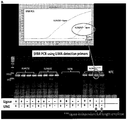
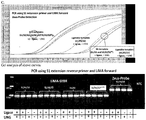
- PCR Three different DNA substrates (A) were incubated with E. coli ligase or no ligase and subjected to PCR containing full length DNA ligase substrate specific PCR primers in the presence/absence of UNG. PCR was monitored via SYBR green (qPCR) and the resultant reactions were subjected to gel analysis (B). Three different DNA substrates (A) were incubated with E. coli ligase or no ligase and subjected to PCR containing S1-Extension detection primers in the presence/absence of UNG. PCR was monitored via the commercially -available Zeus- Probe (qPCR) methodology (Zeus Scientific, Inc., Raritan, NJ) and the resultant reactions were subjected to gel analysis (C).
- qPCR Zeus- Probe
- microbes were beadmill-lysed and incubated with a DNA substrate (S1/AS only) in the presence of DNA polymerase buffer and dNTP's at 37° C for 30 min. (A). The lysates were then subjected to Zeus -Probe qPCR containing S1-extension specific primers. The results are displayed graphically in Figure 2 .
- Non-Ligate-able, Polymerase favorable substrates were found to be sensitive and specific in Microbe Spiked Blood Culture derived crude cell lysates:
- microbes were spiked into 10ml of blood broth. The microbes were subsequently recovered, subjected to beadmill-lysis and incubated with a DNA substrate (S1/AS only) in the presence of DNA polymerase buffer and dNTP's at 37° C for 30 min. (A). The lysates were then subjected to Zeus -Probe qPCR containing S1-extension specific primers. The results are displayed graphically in Figure 3 .
- the present invention improves upon the invention described and claimed in WO/2009/007719 .
- the putative DNA ligase specific substrate in accordance with the disclosure of said WO/2009/007719 yields robust signals from either purified DNA polymerase or purified DNA ligase, such that the methods set forth therein are not rendered DNA ligase specific when applied to the intended sample type, such as septicemia samples.
- septicemia samples using the sample preparation methods taught by WO/2009/007719 were input into the assay protocols as taught therein as crude microbe cell lysates containing a high abundance of DNA polymerases.
- DNA polymerase(s) are abundant in all living cells. It was found that the assays as disclosed in WO/2009/007719 are incapable of discriminating between any DNA polymerase and DNA ligase derived signals, when inputting non-ligase-purified samples, which from a practical standpoint include all clinical sample inputs, because isolating ligase is neither a practical nor routine procedure as disclosed in this reference, when attempting to obtain results from clinical samples. Rather, experiments conducted in accordance with what is taught by this reference were found to produce an assay signal contaminated by DNA polymerase, not a DNA ligase specific signal, which is clearly the desired result in accordance with this reference.
- the present invention provides improvements which enable specific ligase signals to be detected from non-purified ligase samples, such as crude microbe lysates, by providing alternative, substitute DNA substrates, as hereinafter described, that do not allow interfering signals from DNA polymerases to be detected.
- the present disclosure therefore also provides improved methods, and compositions and kits based thereon, of detecting an enzyme selected from the group consisting of NAD-dependent ligase, or phosphatase, or a mixture thereof as an indicator of the presence of a microorganism in a sample, the methods comprising:
- the improved methods are useful for identifying all microorganisms in which an NAD-dependent ligase, or a phosphatase, or mixtures thereof, are (or have been) expressed.
- the first step in the improved method disclosed herein comprises contacting the sample with a nucleic acid molecule which acts as a substrate for NAD-dependent ligase activity in the sample, while not allowing interfering signals from DNA polymerase.
- a nucleic acid molecule which acts as a substrate for NAD-dependent ligase activity in the sample, while not allowing interfering signals from DNA polymerase.
- Any suitable enzyme modified, or ligatable, molecule which can be specifically detected, once ligated, may be utilized in the methods described herein.
- the substrate nucleic acid molecules for use in the methods, and inclusion in the kits, must be of sequence and structure such that the NAD-dependent ligase can act on the molecule to produce a detectable enzyme modified or ligated (novel) nucleic acid molecule, and such that it does not allowing interfering signals from DNA polymerase.
- DNA polymerases have well-documented enzyme functions that need to be neutralized/controlled:
- suitable substrate nucleic acid molecule strategies for use in the novel methods which are suitable in substitution for those substrate molecules disclosed as being used in the methods of WO/2009/007719 , may include, but are not limited to, the following:
- Amplification assays contemplated for use in the present invention include, but are not limited to, other well-known nucleic-acid based techniques such as DNA amplification assays, PCR assays incorporating thermostable polymerases, and isothermal amplifications methods. It is to be appreciated that one skilled in the art may conceive of various suitable amplification methods that will be useful in the practice of the present invention, and that therefore the invention is not intended to be limited thereby.
- the present invention has applications in any and all methods, procedures and processes involving DNA diagnostics. Examples of such applications include but are not limited to those involving food, water safety, bioterrorism, medical/medicines and/or anything involving pathogen detection.
- the present invention can be used to monitor the efficacy of preservatives.
- the method of the invention has the potential to be applied to all cells. Although bacterial cells are exemplified in the example, one of ordinary skill in the art can easily see that the methods of the invention can be applied to many other cell types.
- the invention can also be used for the identification of substances that can disrupt membranes and/or kill cells, e.g. bacterial cells. The identification of new disinfectants and/or antibiotics are now a priority since multidrug resistance organisms have flourished and spread in health institutions and patients.
- the methods of the invention in combination with quantitative PCR as a tool, can quickly and successfully identify the impact of a disinfectant and/or antibiotic without having to spend time culturing the cells and waiting for growth.
- organisms can take days to weeks to culture, and thus it can take significant time to see if the candidate substance has been able to kill cells, like microorganisms. In other instances, certain organisms will not grow in cell culture, therefore making it difficult to determine if a substance was effective.
- applying the novel methods of the invention can save time and resources for identification of novel disinfectants and/or antibiotics.
- a further advantage of the novel methods according to the invention is their ease of use. For example, using these methods, large amounts of samples can easily be tested for the presence of viable cells, e.g. bacteria. For example, samples may be tested for the presence of potentially live bacteria with intact cell membranes. In another embodiment, environmental samples may be tested for the presence of viable cells, e.g. bacteria. These samples may be, for example, collected from soil or be parts of plants. The methods according to the invention can further be used for testing of treated waste water both before and after release.
- the methods according to the invention may further be used for testing medicinal samples, e.g., stool samples, blood cultures, sputum, tissue samples (also cuts), wound material, urine, and samples from the respiratory tract, implants and catheter surfaces.
- medicinal samples e.g., stool samples, blood cultures, sputum, tissue samples (also cuts), wound material, urine, and samples from the respiratory tract, implants and catheter surfaces.
- Another field of application of the methods according to the invention can be the control of foodstuffs.
- the food samples are obtained from milk or milk products (yogurt, cheese, sweet cheese, butter, and buttermilk), drinking water, beverages (lemonades, beer, and juices), bakery products or meat products.
- the method of the invention can determine if preservatives in the food or antimicrobial treatment of food (such as pasteurization) has prevented cell growth.
- a further field of application of the method according to the invention is the analysis of pharmaceutical and cosmetic products, e.g. ointments, creams, tinctures, juices, solutions, drops, etc.
- the methods of the invention can identify potentially viable members of a microbial community for ecological studies, health of specific soils for agricultural and/or ecological systems.
- identifying a bacterial community has been performed using cultivation-based approaches or plate counts. The more colonies that are counted, the more bacteria are estimated to be in the original sample. Problems, however, arise from sometimes long incubation times (in the range of days) making this method unsuitable for timely and accurate results. These drawbacks are utilizing the methods of the invention.
- Non-limiting examples of bacteria that can be subjected to analysis using the methods of the invention or to detect potential viability in a sample using the method of the invention comprise, for example: B. pertussis, Leptospira pomona, S. paratyphi A and B, C. diphtheriae, C. tetani, C. botidinum, C. perfringens, C.feseri and other gas gangrene bacteria, B. anthracis, P. pestis, P. multocida, Neisseria meningitidis, N.
- gonorrheae Hemophilus influenzae, Actinomyces ⁇ e.g., Norcardia), Acinetobacter, Bacillaceae ⁇ e.g., Bacillus anthrasis), Bacteroides ⁇ e.g., Bacteroides fragilis), Blastomycosis, Bordetella, Borrelia ⁇ e.g., Borrelia burgdorferi), Brucella, Campylobacter, Chlamydia, Coccidioides, Corynebacterium ⁇ e.g., Corynebacterium diptheriae), E. coli ⁇ e.g., Enterotoxigenic E. coli and Enterohemorrhagic E.
- Enterobacter e.g. Enter obacter aerogenes
- Enterobacteriaceae Klebsiella, Salmonella (e.g., Salmonella typhi, Salmonella enteritidis, Serratia, Yersinia, Shigella), Erysipelothrix, Haemophilus (e.g., Haemophilus influenza type B), Helicobacter, Legionella (e.g., Legionella pneumophila), Leptospira, Listeria (e.g., Listeria monocytogenes), Mycoplasma, Mycobacterium (e.g., Mycobacterium leprae and Mycobacterium tuberculosis), Vibrio (e.g.
- Vibrio cholerae Vibrio cholerae
- Pasteurellacea Proteus
- Pseudomonas e.g., Pseudomonas aeruginosa
- Rickettsiaceae Spirochetes (e.g., Treponema spp., Leptospira spp., Borrelia spp.), Shigella spp., Meningiococcus, Pneumococcus and all Streptococcus (e.g., Streptococcus pneumoniae and Groups A 3 B, and C Streptococci), Ureaplasmas.
- the above list is intended to be merely illustrative and by no means is meant to limit the invention to detection to those particular bacterial organisms.
- a particularly preferred embodiment of the present invention utilizes PCR.
- General procedures for PCR are taught in U.S. Pat. No. 4,683,195 (Mullis, et al. ) and U.S. Pat. No. 4,683,202 (Mullis, et al. ).
- optimal PCR conditions used for each amplification reaction are generally empirically determined or estimated with computer software commonly employed by artisans in the field. A number of parameters influence the success of a reaction. Among them are annealing temperature and time, extension time, Mg 2+ , pH, and the relative concentration of primers, templates, and deoxyribonucleotides.
- the template nucleic acid is denatured by heating to at least about 95°C for 1 to 10 minutes prior to the polymerase reaction. Approximately 20-99 cycles of amplification are executed using denaturation at a range of 90°C to 96°C for 0.05 to 1 minute, annealing at a temperature ranging from 48°C to 72°C for 0.05 to 2 minutes, and extension at 68°C to 75°C for at least 0.1 minute with an optimal final cycle.
- a PCR reaction may contain about 100 ng template nucleic acid, 20 uM of upstream and downstream primers, and 0.05 to 0.5 mm dNTP of each kind, and 0.5 to 5 units of commercially available thermal stable DNA polymerases.
- RT-PCR reverse transcription PCR reaction
- a reverse transcriptase first coverts RNA molecules to single stranded cDNA molecules, which are then employed as the template for subsequent amplification in the polymerase chain reaction. Isolation of RNA is well known in the art.
- the reverse transcriptase is generally added to the reaction sample after the target nucleic acid is heat denatured. The reaction is then maintained at a suitable temperature (e.g. 30-45°C) for a sufficient amount of time (10-60 minutes) to generate the cDNA template before the scheduled cycles of amplification take place.
- qPCR quantitative PCR
- qPCR can be run by competitive techniques employing an internal homologous control that differs in size from the target by a small insertion or deletion.
- non-competitive and kinetic quantitative PCR may also be used.
- Combination of real-time, kinetic PCR detection together with an internal homologous control that can be simultaneously detected alongside the target sequences can be advantageous.
- Primers for PCR, RT-PCR and/or qPCR are selected within regions or specific bacteria which will only amplify a DNA region which is selected for that specific organism. Alternatively, primers are selected which will hybridize and amplify a section of DNA which is common for all organisms. Primer selection and construction is generally known in the art. In general, one primer is located at each end of the sequence to be amplified. Such primers will normally be between 10 to 35 nucleotides in length and have a preferred length from between 18 to 22 nucleotides.
- the smallest sequence that can be amplified is approximately 50 nucleotides in length (e.g., a forward and reverse primer, both of 20 nucleotides in length, whose location in the sequences is separated by at least 10 nucleotides). Much longer sequences can be amplified.
- One primer is called the "forward primer” and is located at the left end of the region to be amplified.
- the forward primer is identical in sequence to a region in the top strand of the DNA (when a double- stranded DNA is pictured using the convention where the top strand is shown with polarity in the 5' to 3' direction).
- the sequence of the forward primer is such that it hybridizes to the strand of the DNA which is complementary to the top strand of DNA.
- the other primer is called the "reverse primer” and is located at the right end of the region to be amplified.
- the sequence of the reverse primer is such that it is complementary in sequence to, i.e., it is the reverse complement of a sequence in, a region in the top strand of the DNA.
- the reverse primer hybridizes to the top end of the DNA.
- PCR primers should also be chosen subject to a number of other conditions. PCR primers should be long enough (preferably 10 to 30 nucleotides in length) to minimize hybridization to greater than one region in the template. Primers with long runs of a single base should be avoided, if possible. Primers should preferably have a percent G+C content of between 40 and 60%.
- the percent G+C content of the 3' end of the primer should be higher than the percent G+C content of the 5' end of the primer.
- Primers should not contain sequences that can hybridize to another sequence within the primer (i.e., palindromes). Two primers used in the same PCR reaction should not be able to hybridize to one another.
- PCR primers are preferably chosen subject to the recommendations above, it is not necessary that the primers conform to these conditions. Other primers may work, but have a lower chance of yielding good results.
- PCR primers that can be used to amplify DNA within a given sequence can be chosen using one of a number of computer programs that are available. Such programs choose primers that are optimum for amplification of a given sequence (i.e., such programs choose primers subject to the conditions stated above, plus other conditions that may maximize the functionality of PCR primers).
- One computer program is the Genetics Computer Group (GCG recently became Accelrys) analysis package which has a routine for selection of PCR primers.
- oligonucleotide primers and probes disclosed below can be made in a number of ways.
- One way to make these oligonucleotides is to synthesize them using a commercially- available nucleic acid synthesizer. A variety of such synthesizers exists and is well known to those skilled in the art.
- Nucleic acid may also be detected by hybridization methods. In these methods, labeled nucleic acid may be added to a substrate containing labeled or unlabeled nucleic acid probes. Alternatively, unlabeled or unlabeled nucleic acid may be added to a substrate containing labelled nucleic acid probes. Hybridization methods are disclosed in, for example, Micro Array Analysis, Marc Schena, John Wiley and Sons, Hoboken N.J. 2003 .
- Methods of detecting nucleic acids can include the use of a label.
- radiolabels may be detected using photographic film or a phosphoimager (for detecting and quantifying radioactive phosphate incorporation).
- Fluorescent markers may be detected and quantified using a photodetector to detect emitted light (see U.S. Pat. No. 5,143,854 for an exemplary apparatus).
- Enzymatic labels are typically detected by providing the enzyme with a substrate and measuring the reaction product produced by the action of the enzyme on the substrate. Colorimetric labels are detected by simply visualizing the colored label.
- the amplified nucleic acid molecules are visualized by directly staining the amplified products with a nucleic acid-intercalating dye.
- exemplary dyes include but not limited to SYBR green, SYBR blue, DAPI, propidium iodine, and ethidium bromide.
- the amount of luminescent dyes intercalated into the amplified DNA molecules is directly proportional to the amount of the amplified products, which can be conveniently quantified using a conventional detection devices according to manufacturers' instructions.
- a variation of such an approach is gel electrophoresis of amplified products followed by staining and visualization of the selected intercalating dye.
- labeled oligonucleotide hybridization probes e.g. fluorescent probes such as fluorescent resonance energy transfer (FRET) probes and colorimetric probes
- FRET fluorescent resonance energy transfer
- a specific amplification of the genome sequences representative of the biological entity being tested may be verified by sequencing or demonstrating that the amplified products have the predicted size, exhibit the predicted restriction digestion pattern, or hybridize to the correct cloned nucleotide sequences.
- kits can comprise a substrate containing a nucleic acid molecule for activity of the selected enzyme or mixture in the sample (while not allowing interfering signals from DNA polymerase), incubation means for incubating the sample and substrate under conditions suitable for enzyme activity, and means for specifically determining the presence (and/or the amount) of a nucleic acid molecule resulting from the action of the selected enzyme or mixture on the substrate nucleic acid molecule (as an indication of the presence of the microorganism).
- kit can also comprise other reagents suitable for conducting the novel methods of the invention, for screening normally sterile body fluids for the presence of absence of microorganisms therein and to provide diagnostic, prognostic patient management information, as well as primers useful for amplifying nucleic acid molecule corresponding to organisms specifically or generally, buffers and reagents for isolating DNA, and reagents for PCR.
- the kit can further include detectably labelled oligonucleotide, which hybridizes to a nucleic acid sequence encoding a polypeptide corresponding to organisms of interest.
- the kit can also contain a control sample or a series of control samples which can be assayed and compared to a test sample contained. Each component of the kit can be enclosed within an individual container and all of the various containers can be within a single package, along with instructions for interpreting the results of the assays performed using the kit.
- the methods provided by the invention further comprise conducting a complete or partial microorganism genome and or transcriptome sequence analysis utilizing the principles and teachings provided herein, and wherein the complete or partial microorganism genome and or transcriptome sequence analysis can be performed simultaneously, in concert, or in parallel using a single sample preparation as herein described. It is also to be appreciated that the novel methods herein of the invention can provide for the diagnostic measure and detection of agents with anti-microbial and or anti-polymerase activity, useful in the management of patients.
Landscapes
- Chemical & Material Sciences (AREA)
- Life Sciences & Earth Sciences (AREA)
- Organic Chemistry (AREA)
- Health & Medical Sciences (AREA)
- Proteomics, Peptides & Aminoacids (AREA)
- Zoology (AREA)
- Engineering & Computer Science (AREA)
- Wood Science & Technology (AREA)
- Analytical Chemistry (AREA)
- Microbiology (AREA)
- Physics & Mathematics (AREA)
- Molecular Biology (AREA)
- Immunology (AREA)
- Biotechnology (AREA)
- Biophysics (AREA)
- Biochemistry (AREA)
- Bioinformatics & Cheminformatics (AREA)
- General Engineering & Computer Science (AREA)
- General Health & Medical Sciences (AREA)
- Genetics & Genomics (AREA)
- Toxicology (AREA)
- Measuring Or Testing Involving Enzymes Or Micro-Organisms (AREA)
Description
- This application is a non-provisional application, which claims priority, in part, of
US Provisional Application No. 61/324,939, filed April 16, 2010 US Provisional Application No. 61/324,949, filed April 16, 2010 US Provisional Application No. 61/325,413, filed April 19, 2010 - The present invention relates generally to the field of detecting microorganisms, and more particularly to the detection of bacteria. Also provided are improved methods of detecting microorganisms that are highly sensitive, are applicable to non-purified samples, and have numerous applications, together with assay kits, which rely upon the presence of ligase and/or phosphatase as an indicator of bacterial viability.
- The scope of protection is defined by the appended claims.
- Measuring the presence and levels of certain molecules which are associated with cell viability is important in a number of contexts. For example, measuring levels of ATP is useful in mammalian cells for growth analysis and toxicology purposes.
WO92/04467 - Culture approaches can be used to detect small numbers of bacteria but such techniques require several days to complete, especially when attempting to detect small numbers of bacteria and also when detecting slower growing microorganisms.
- Alternatively, tests may be carried out based upon measuring the presence of a molecule which can be linked to the presence in the sample of a contaminant cell or organism. The most commonly detected molecule is Adenosine Triphosphate (ATP). Detection of DNA and RNA has also been proposed, although the correlation between the presence of DNA and RNA and viability is not clear-cut due to the variable persistence of nucleic acids in cells post death (Keer & Birch, Journal of Microbiological Methods 53 (2003) 175-183). Detection of adenylate kinase as an indicator of viability has also been proposed (Squirrell DJ, Murphy MJ, Leslie RL, Green JCD: A comparison of ATP and adenylate kinase as bacterial cell markers: correlation with agar plate counts, in Bioluminescence and Chemiluminescence Progress and Current Applications. Edited by: Stanley RA, Kricka LJ. John Wiley and Sons; 2002 and
WO 96/02665 - Accordingly, it can be seen that a number of problems exist with respect to the conventional art of microbe detection. In order to further address such problems, detection of ligases has been proposed, such as described in published patent application
WO/1996/002665, published February 1, 1996 , there is disclosed a method for determining the presence and/or amount of microorganisms and/or their intracellular material present in a sample characterized in that the amount of adenylate kinase in the sample is estimated by mixing it with adenosine diphosphate (ADP), determining the amount of adenosine triphosphate (ATP) produced by the sample from this ADP, and relating the amount of ATP so produced to the presence/or amount of adenylate kinase and to microorganisms and/or their intracellular material, wherein the conversion of ADP to ATP is carried out in the presence of magnesium ions at a molar concentration sufficient to allow maximal conversion of ADP to ATP. The amount of magnesium present is preferably such that there is sufficient to provide one mole of magnesium for one mole of ADP such that all of the ADP molecules may be associated with at least one magnesium ion. - In published patent application
WO/2009/007719 , published January 15, 2009, entitled DETECTION OF MICRO-ORGANISMS BASED ON THEIR NAD-DEPENDENT DNA LIGASE ACTIVITY ligases, in particular NAD- dependent ligases, are disclosed as a useful indicator of the presence of a (viable) microorganism in a sample. Ligases are enzymes which catalyze ligation of nucleic acid molecules. The ligation reaction requires either ATP or NAD+ as co-factor depending upon the ligase concerned. In this disclosure, the use of NAD- dependent ligase activity is utilized as an indicator of the presence of a (viable) microorganism in a sample. The link between NAD-dependent ligase activity and viability is central to the invention disclosed in this application, (Korycka-Machala et al., Antimicrobial Agents and Chemotherapy, Aug. 2007, p2888-2897), since it allows the activity of this enzyme to be used as an indicator of viable microbial cells, in particular of bacterial origin, in the sample. However, in the experiments leading to the development of the present invention, it was found that the techniques and teachings described in this published patent applicationWO/2009/007719 could not be applied to the determination of viable microorganisms in unpurified samples, such as crude microbial lysates, blood or blood cultures, thereby constituting a major drawback of the technology as described in this reference. However, it has been discovered that these methodologies, too, have problems. For example, it has been found that in general the conventional ligase substrate assay design and resultant detection signal thereof, as disclosed in the above-reference patent application, is not ligase specific when applied to its intended sample type (blood derived microbe crude cell lysates). It is these problems which the present invention seeks to address and to overcome. - Assays to detect reverse transcriptase activity are described in: Pyra et al. (Proc Natl Acad Sci U S A. 1994 Feb 15; 91(4): 1544-1548); Arnold et al. (Biotechniques. 1998 Jul; 25(1): 98-106);
WO2001/027318 ; Brorson et al. (Biologicals. 2002 Mar; 30(1): 15-26); Lugert et al. (Biotechniques. 1996 Feb; 20(2)210-217); and Maudru et al. (J Virol Methods. 1997 Jul; 66(2):247-61). - Assays to detect telomerase activity are described in: Gauthier et al. (Br J Cancer. 2001 Mar 2;84(5):631-5); Lin et al. (Cell. 1995 Jun 30; 81(7): 1127-35); Cano et al. (Proc Natl Acad Sci U S A. 1999 Mar 30; 96(7): 3616-3621); Rubiano et al. (Mem Inst Oswaldo Cruz. 2003 Jul; 98(5):693-5); Raj et al. (Biochem Biophys Res Commun. 2003 Sep 26;309(3):685-8); and Kim et al. (Science. 1994 Dec 23;266(5193):2011-5).
- Vellore et al. (Appl Environ Microbiol. 2004 Dec; 70(12): 7140-7) describes the discovery of a heat-stable protein with reverse transcriptase activity in the genome of a thermophilic bacterium.
- In contrast to the conventional methods described above, in one aspect the present invention is directed to the detection of DNA polymerases as a useful indicator of the presence of a (viable) microorganism or microbe in a sample, in particular a sample that is, for example, a crude microbial lysate or unpurified blood or blood culture. The association discovered in accordance with the present invention between DNA polymerase activity and viability of microorganisms or microbes enables the detection of activity of these enzymes to be used as an indicator of viable microbial cells, in particular of bacterial origin, in the sample.
- The invention provides methods for detecting a DNA polymerase as an indicator of the presence of a microorganism in a sample. Such a method comprises:
- (a) contacting the sample with a DNA molecule which acts as a substrate for DNA polymerase activity in the sample;
- (b) incubating the thus contacted sample under conditions suitable for polymerase activity; and
- (c) specifically determining the presence (and/or the amount) of a nucleic acid molecule resulting from the action of the microorganism DNA polymerase on the substrate by nucleic acid amplification of the nucleic acid molecule, thereby to indicate the presence of the microorganism.
- In addition, the present specification provides reagents useful in the foregoing described methods, and assay kits comprising such reagents useful for performing the methods.
- In another aspect, the present disclosure provides improvements to the methods, compositions and kits described in published patent application
WO/2009/007719 , published January 15, 2009, entitled DETECTION OF MICRO-ORGANISMS BASED ON THEIR NAD-DEPENDENT DNA LIGASE ACTIVITY, which published application identifies ligases, in particular NAD-dependent ligases, as a useful indicator of the presence of a (viable) microorganism or microbe. - The present disclosure accordingly provides improvements to the methods, and compositions and kits based thereon as disclosed in
WO/2009/007719 , of detecting an enzyme selected from the group consisting of NAD-dependent ligase, or a phosphatase, or a mixture of the foregoing, as an indicator of the presence of a microorganism in a sample, which improved methods comprise: - (a) contacting the sample with a nucleic acid molecule which acts as a substrate for enzyme activity in the sample, while not allowing interfering signals from DNA polymerase,
- (b) incubating the thus contacted sample under conditions suitable for enzyme activity; and
- (c) determining the presence (and/or the amount) of an enzyme modified nucleic acid molecule resulting from the action of the selected enzyme or mixture on the substrate nucleic acid molecule to indicate the presence of the microorganism.
- Thus, it will be appreciated that the improved methods of the invention are useful for identifying all microorganisms in which such enzymes or mixtures thereof are (or have been) expressed.
- As stated herein, the first step in the method comprises contacting the sample with a nucleic acid molecule which acts as a substrate for enzyme activity in the sample, while not allowing interfering signals from DNA polymerase. It is thus to be appreciated that any suitable ligatable molecule which can be specifically detected once ligated may be utilized.
-
-
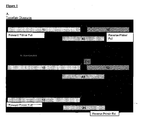
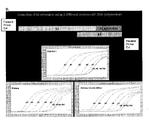
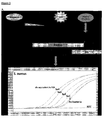
Figure 1 , drawings A. through D. show template diagrams and graphical representations of results produced by experiments conducted in accordance with the present invention as described herein. -
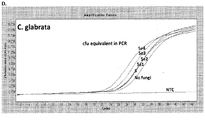
Figure 2 , drawings A. through D. are graphical representations showing that Non-Ligate-able, Polymerase favorable substrates are sensitive and specific in microbe derived crude cell lysates -
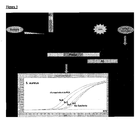
Figure 3 is a graphical representations showing Non-Ligate-able, Polymerase favorable substrates are sensitive and specific in Microbe Spiked Blood Culture derived crude cell lysates. - Thus, from the foregoing description it can be appreciated that the methods of the present invention are useful for identifying all microorganisms in which DNA polymerase, is (or has been) expressed. In certain embodiments, the methods of the invention are applied to the detection of viable microorganisms and thus may be considered as a method for detecting a viable microorganism in a sample. In particular, in a preferred embodiment the methods of the invention may be useful for identifying bacteria or microorganisms in which the nucleic acid polymerase gene and its translated active protein polymerase is essential for viability. However, microorganisms, such as bacteria, recently rendered non-viable (for example through treatment with an anti-bacterial) may retain detectable DNA polymerase activity until the enzyme is degraded.
- In the development of the present invention, a paradigm shift in sample preparation of functional cellular biochemical components was discovered in that the present invention enables assays to be performed directly on samples from gently lysed cells, without the expensive complications added by traditional, and often extreme, denaturation based isolation protocols. Thus, it has been found that the present invention enables the detection of viable organisms in samples such as crude clinical lysates, including without limitation cell fractions from whole blood and or blood cultures, and from large volumes of the same, which are typically 10-20 ml, preferable in the range of 0.1-100 ml. The invention is particularly useful for the detection of all organisms associated with septicemia, and for those associated with conditions including but not limited to bacteremia, fungemia, and virus and parasitic conditions. It has unexpectedly been found that in accordance with the present invention detection of such organisms can be accomplished in such non-purified samples as described above, in contrast to the teachings of the conventional art in which sample derived polymerase inhibition, as well as the presence of interfering proteinases and nucleases, has been a barrier to such assay methods when performed on non-purified samples.
- As described above, ligases, in particular NAD- dependent ligases, have been disclosed as a putatative useful indicator of the presence of a (viable) microorganism in a sample. However, in contrast, the present invention provides viable microbe cell derived DNA polymerases, useful rather than ligases, that can, similarly, be used to link their activity from viable cells to a high sensitivity signal generator such as amplification by techniques such as PCR and the like. This feature of the invention also potentially enables differentiating bacteria from fungi. Further examples of enzymes that may be used include:
- a. Kinases add PO4 which could be used to enable a ligase or stop a polymerase
- b. Phosphates can be used to remove a PO4 and enable Polymerases
- c. RNA Polymerases can be used to extend substrates to enable downstream traditional PCR or isothermal amplifications
- d. Isothermal amplifications can be run off of endonuclease enzyme activities
- e. Ribosomes
- f. miRNA mechanisms
- g. Gyrase
- h. Helicase
- i. Exonucleases , 5'-3', 3'-5' i.e. removing a blocking groups such as PO4, TaqMan etc
- j. Endonucleases
- k. Proteases
- l. DNases
- m. RNases
- n. UDGlycosolases
- o. Repair enzymes
- In a preferred embodiment of the present invention, it has been discovered that measurement of DNA polymerase activity, in accordance with the invention, enables the determination of cell viability from microbe crude lysates. This may be verified using more selective modified oligo substrates in combination with very selective "hot starts" (as well known in the art) and controlling for RT, 37, 60C activities.
- In one embodiment of the invention, the invention has application to blood product screening, especially of platelets as in this application any microbe growth is cause for discarding of product, and differentiation of bacteria from fungus is not necessary. In a further embodiment of the invention, phosphatases may be employed and are likely another excellent candidate enzyme to enable polymerase activity, as they remove either a 5' or 3' phosphate leaving an -OH- and thus could enable any polymerase by the removal of a designed 5' Taq included, or ligase (remove 3'). In addition, phosphatases are robust and may help to differentiate yeast and bacteria via optimization of pH. It will therefore be appreciated that any suitable enzyme that will enable polymerase as contemplated by the teachings herein may be useful in the practice of the present invention.
- In the practice of the present invention, detection of microorganisms may include recently viable microorganisms, up until the point where DNA polymerase has been degraded, as appropriate. If a distinction between viable and recently viable microorganisms is required, a simple time course or comparison of DNA polymerase activity between two or more time points, under appropriate conditions, should be sufficient to determine whether DNA polymerase activity increases, persists or diminishes over time. In a preferred embodiment, if the DNA polymerase activity is found to persist for, or increases over, an extended period or at (a) later time point (s) (compared to the initial measurement) , this may indicate that the microorganisms are viable. If DNA polymerase activity diminishes at (a) later time point (s), this may indicate that the detected activity was from recently viable microorganisms. This time course measurement approach may be especially useful when applied toward antibiotic susceptibility testing (AST) and as well as determination of other appropriate therapies. Detection methods are discussed in detail herein. In specific preferred embodiments of the invention, the microorganism is a bacterium, as herein described, and the methods of the invention may be more generally applicable (Wilkinson et al., Molecular Microbiology (2001) 40(6), 1241-1248). The bacteria may, as well, be mesophillic and/or thermophillic bacteria, for example.
- A "sample" in the context of the present invention is defined to include any sample in which it is desirable to test for the presence of a microorganism, in particular a bacterium. Thus the sample can consist of a clinically provided crude microbe lysate, or may comprise a clinical sample of blood or blood culture, or comprise a sample suitable for an in vitro assay system, for example. Samples may also comprise beverage or food samples or preparations thereof, or pharmaceutical or cosmetic products such as personal care products including shampoos, conditioners, moisturizers etc., all of which are tested for microbial contamination as a matter of routine. The sample may comprise tissue or cells and may comprise sputum or or a platelet sample. In addition, the methods and kits of the invention may be used to monitor contamination of surfaces, such as for example in locations where food is being prepared. In a preferred embodiment, contamination is indicated by the presence of polymerase activity. The contamination may be from any microbial source, in particular bacterial contamination. Furthermore, the invention is also useful in monitoring environmental conditions such as water supplies, wastewater, marine environments etc. The invention is also useful in monitoring bacterial growth in fermentation procedures and in air sampling where bacteria or spore content can be assessed in hospital, industrial facilities or in biodefense applications.
- The methods of the invention rely on the fact that if there are one or more (viable) micro-organisms, in particular bacteria, present in the sample, DNA polymerase activity will be present. The DNA polymerase can thus, under appropriate conditions, catalyse a reaction to generate a novel detectable nucleic acid molecule (in a subsequent process). The novel nucleic acid molecule may be detected by any suitable means such as hereinafter described, thereby allowing a determination of the presence of the microorganisms in the sample under test.
- Thus, if the microorganism is not present in the sample, there will be no DNA polymerase activity in the sample and thus the novel detectable nucleic acid molecule will not be generated.
- The methods of the present invention provide significant technical advantages, due in large part to the fact that a novel nucleic acid molecule is generated as part of the method. In the methods of the present invention, unreacted nucleic acid molecule will not contribute to the signal, and as a result no false positive signals should be produced when the methods are carried out.
- Furthermore, the methods provided by the invention are highly sensitive, and may provide detection of the DNA polymerase present in the sample down to femtogram and possibly even attogram levels. The sensitivity is derived from the fact that every bacterial cell contains thousands of enzyme molecules, and thus each can catalyse multiple events under suitable conditions. Unlike direct PCR approaches, which must target one or a few copies of a gene per cell or use additional steps or reagents to detect ribosomal or messenger RNA, the approach described herein targets the detection of multiple copies of the enzyme per cell in a simple assay format.
- As stated herein, the first step in a method according to the invention comprises contacting the sample with a DNA molecule which acts as a substrate for the DNA polymerase activity in the sample.
- Suitable substrate DNA molecules for use in the invention are described in more detail below. The DNA molecules may incorporate synthetic nucleotide analogues as appropriate. They may be labelled, such as using a fluorescent label, or FRET pair, in certain embodiments to facilitate detection. Suitable detection methods are described herein.
- "Nucleic acid" is defined herein to include any natural nucleic acid and natural or synthetic analogues that are capable of generating a detectable nucleic acid molecule by the action of polymerase. Suitable nucleic acid molecules may be composed of, for example, double or single-stranded DNA and double or single-stranded RNA.
- Though the nucleic acid substrate may comprise a blunt-ended double-stranded DNA molecule, in an embodiment of the invention the DNA substrate for the polymerase may comprise two double stranded DNA molecules with a complementary overhang and 5' phosphate groups at the ends to be joined. In one specific embodiment, the complementary overhang is between 2 and 10, such as 3 or 5 base pairs. In an alternative embodiment, the nucleic acid substrate comprises a DNA molecule with a nick containing a 5' phosphate. Synthesized nucleic acid molecules are commercially available and can be made to order with a terminal 51 phosphate group attached. This has the technical advantage that 100% of the nucleic acid molecules used in the methods of the invention will be labeled with a 5' phosphate group.
- In the invention, if DNA polymerase is present in the sample, it will catalyse and a novel nucleic acid molecule (incorporating an overall novel sequence) will be formed which can be detected by a subsequent process, as detailed herein (such as PCR for example).
- Thus, the substrate DNA molecule may, in fact, comprise two or more DNA molecules as appropriate. This applies generally to the methods and kits.
- In certain embodiments, the DNA substrate comprises two double stranded DNA molecules with single-stranded complementary overhangs.
- It is to be appreciated that the novel methods of the present invention can be used to differentiate ligase from polymerase by taking a sample suspected of containing both and testing for both polymerase and ligase in parallel in separate reaction vessels, then subtracting the signals , thus in fact determining the true ligase levels found in the sample. This can be represented by the following equation:

- It also is to be appreciated that in any embodiment of the present invention, the action of DNA polymerases on DNA molecules is well known and thus it can be seen that many different types of DNA molecule substrates can be selected for use and will have the advantages of utilization in the novel methods of the invention, as herein described. Preferably, the DNA molecule substrate is present in excess, and in particular in large molar excess, over the DNA polymerase in the sample. This is an important technical distinction over prior art methods. Because a novel polymerized nucleic acid molecule is detected, only the presence of this molecule in the sample is essential for the detection methods to work effectively. Thus, it is not detrimental to the methods of the invention if other nucleic acid molecules are present in the sample such as from the bacteria to be detected or from mammalian or fungal sources which may be found in the sample to be tested for example.
- The present invention can be more fully described by reference to the following examples of experimental work conducted in accordance with the invention. Also, while certain of the preferred embodiments of the present invention have been described and specifically exemplified above, it is not intended that the invention be limited to such embodiments.
- Three different DNA substrates (A) were incubated with E. coli ligase or no ligase and subjected to PCR containing full length DNA ligase substrate specific PCR primers in the presence/absence of UNG. PCR was monitored via SYBR green (qPCR) and the resultant reactions were subjected to gel analysis (B). Three different DNA substrates (A) were incubated with E. coli ligase or no ligase and subjected to PCR containing S1-Extension detection primers in the presence/absence of UNG. PCR was monitored via the commercially -available Zeus-Probe (qPCR) methodology (Zeus Scientific, Inc., Raritan, NJ) and the resultant reactions were subjected to gel analysis (C). Decreasing amounts of a non-ligatable DNA substrate (S1/AS only) was incubated with three different commercially available DNA polymerases and subjected to Zeus-Probe qPCR analysis. The results of these experiments are illustrated graphically in
Figure 1 . - Decreasing amounts microbes were beadmill-lysed and incubated with a DNA substrate (S1/AS only) in the presence of DNA polymerase buffer and dNTP's at 37° C for 30 min. (A). The lysates were then subjected to Zeus-Probe qPCR containing S1-extension specific primers. The results are displayed graphically in
Figure 2 . - Decreasing amounts microbes were spiked into 10ml of blood broth. The microbes were subsequently recovered, subjected to beadmill-lysis and incubated with a DNA substrate (S1/AS only) in the presence of DNA polymerase buffer and dNTP's at 37° C for 30 min. (A). The lysates were then subjected to Zeus-Probe qPCR containing S1-extension specific primers. The results are displayed graphically in
Figure 3 . - Accordingly, in yet another aspect the present invention improves upon the invention described and claimed in
WO/2009/007719 . In accordance with the present invention, it has been discovered that the putative DNA ligase specific substrate in accordance with the disclosure of saidWO/2009/007719 yields robust signals from either purified DNA polymerase or purified DNA ligase, such that the methods set forth therein are not rendered DNA ligase specific when applied to the intended sample type, such as septicemia samples. For example, in the development of the present invention, septicemia samples using the sample preparation methods taught byWO/2009/007719 were input into the assay protocols as taught therein as crude microbe cell lysates containing a high abundance of DNA polymerases. DNA polymerase(s) are abundant in all living cells. It was found that the assays as disclosed inWO/2009/007719 are incapable of discriminating between any DNA polymerase and DNA ligase derived signals, when inputting non-ligase-purified samples, which from a practical standpoint include all clinical sample inputs, because isolating ligase is neither a practical nor routine procedure as disclosed in this reference, when attempting to obtain results from clinical samples. Rather, experiments conducted in accordance with what is taught by this reference were found to produce an assay signal contaminated by DNA polymerase, not a DNA ligase specific signal, which is clearly the desired result in accordance with this reference. - These findings described above are contrary to the ability of a system, produced in accordance with the teachings of
WO/2009/007719 , to specifically detect DNA ligase from viable cells. It further precludes the intended ability of the disclosed assay of this reference to differentiate viable cell-derived NAD dependent bacterial ligase from ATP dependent fungal ligase, as active polymerases are common to all viable cells and cannot be differentiated from any ligases in such an assay system. Having thus identified this critical problem, which is clearly unanticipated by this reference or any other known art, the present invention provides improvements which enable specific ligase signals to be detected from non-purified ligase samples, such as crude microbe lysates, by providing alternative, substitute DNA substrates, as hereinafter described, that do not allow interfering signals from DNA polymerases to be detected. - The present disclosure therefore also provides improved methods, and compositions and kits based thereon, of detecting an enzyme selected from the group consisting of NAD-dependent ligase, or phosphatase, or a mixture thereof as an indicator of the presence of a microorganism in a sample, the methods comprising:
- (a) contacting the sample with a nucleic acid molecule which acts as a substrate for enzyme activity in the sample, while not allowing interfering signals from DNA polymerase,
- (b) incubating the thus contacted sample under conditions suitable for enzyme activity; and
- (c) determining the presence (and/or the amount) of an enzyme modified nucleic acid molecule resulting from the action of the selected enzyme or mixture on the substrate nucleic acid molecule to indicate the presence of the microorganism.
- Thus, the improved methods are useful for identifying all microorganisms in which an NAD-dependent ligase, or a phosphatase, or mixtures thereof, are (or have been) expressed.
- In a preferred example the first step in the improved method disclosed herein comprises contacting the sample with a nucleic acid molecule which acts as a substrate for NAD-dependent ligase activity in the sample, while not allowing interfering signals from DNA polymerase. Any suitable enzyme modified, or ligatable, molecule which can be specifically detected, once ligated, may be utilized in the methods described herein.
- The substrate nucleic acid molecules for use in the methods, and inclusion in the kits, must be of sequence and structure such that the NAD-dependent ligase can act on the molecule to produce a detectable enzyme modified or ligated (novel) nucleic acid molecule, and such that it does not allowing interfering signals from DNA polymerase.
- It is to be appreciated that in the development of the present invention, it was noted that the elimination of the polymerase chain reaction (PCR) Taq-DNA polymerase derived background was not a viable solution to the lack of specificity that has been found in the current substrate design as disclosed in
WO/2009/007719 , as it was determined to be a separate detection system issue that would have to be addressed separately and is therefore outside the scope of the present disclosure. - Accordingly, in the present case for experiments leading up to the present methods it was specifically set as a goal to block all DNA polymerase activity with a inhibitor additive that does not interfere with ligase. In order to accomplish this, it was noted that DNA polymerases have well-documented enzyme functions that need to be neutralized/controlled:
- (a) 5'-3' DNA polymerase activity
- (b) 3'-5'exonuclease activity
- (c) 5'-3'exonuclease activity
- (d) inherent esterase activity
- It has been determined in accordance with the present methods that suitable substrate nucleic acid molecule strategies for use in the novel methods, which are suitable in substitution for those substrate molecules disclosed as being used in the methods of
WO/2009/007719 , may include, but are not limited to, the following: - 1. Modified nucleotides that inhibit the polymerase from any activity
- 2. Dideoxynucleotides ddCTP, ddGTP that stop the polymerase upon first base addition and sequester -neutralize its activity while ligase enjoys productive reactions using dATP
- 3. Dideoxyoligonucleotides that prevent AS oligo from being extended
- 4. S1 oligos with polymerase inhibition modified bases incorporated to block their activity on this DNA substrate
- 5. DNA polymerase specific antibodies that inhibit this activity - these are well known in the art of PCR
- 6. Aptamer oligo inhibitory complexes.
- 7. DNA substrate hybridization strategies that eliminate polymerase extended substrates from being detected in downstream amplifications such as PCR- by shortening AS on the 5' side combined with a true "Hot Start," as such term is known in the art
- 8. DNA substrate hybridization strategies that eliminate polymerase from binding and extending by shortening AS on 3' side but do not effect ligase
- 9. Relative rate kinetics combined with polymerase extension length balanced in favor of ligase.
- 10. Per-PCR S1 3'-dideoxy competition (full length, or a 13mer that is the complementary to the 3' of the AS)
- 11. Pre-PCR S1 3' Phosphate competition
- 12. Complete removal of AS using optimal UNG (standard UNG enzyme) conditions
- 13. Complete removal of AS using Thermostable UNG (NEB). Will enable heat treatment of UNG to eliminate contaminating ligase/polymerase, PCR mm must have dTTP
- 14. Make an AS that has deoxyuridine (UNG removal) and the rest RNA bases to allow UNG/Rnase co-treatment prior to PCR
- 15. Need to get dideoxy 3' AS
- 16. Shorten the 3' end of the AS to reduce Taq docking at higher temps (i.e. 65 deg)
- 17. AS covalently attached to a solid support during ligation/extension step
- 18. 3'-dideoxy S2 reverse complement (full length, or maybe just a 13mer that is the complementary to the S1 Pol extension)
- 19. For background reduction - "Hot Start" strategies, as well known in the art - 100% elimination of unwanted oligo or extended oligo hybridizations
- a. True Physical - not easy to do as all contact materials must be at the hot temperature of about 90 degrees C, and must never drop below a threshold temperature of about 65 degrees C, the problem being that the transfer process creates a temperature drop, which should be avoided.
- b. Non enzyme Hot Starts, e.g., drop in 2mM MgCl (.1mM EDTA protected), primers, dNTPs or other essential components.
- c. Chem- primer Hot Start.
- Although it has been shown that the improvements of the present invention can be realized by the substitution of the suitable substrate nucleic acid molecules described herein for those described in
WO/2009/007719 , it is to be appreciated that the present invention is not to be limited in scope by the specific embodiments described herein. Indeed, various modifications of the invention in addition to those described herein will become apparent to those skilled in the art from the foregoing description. All such modifications are intended to fall within the scope of the present invention. Moreover, all embodiments described herein are considered to be broadly applicable and combinable with any and all other consistent embodiments, as appropriate. - It will be appreciated by those of ordinary skill in the art that the broad fundamental principles and teachings of the present invention are capable of being applied to optimize all variations of denaturant-enabled-crude lysate (bead mills & ultrasonics)-direct-probe/SYBR-PCR analysis of various biological tissue samples (including, but not limited to, blood, body fluid, and soft tissues) for not only microorganisms or microbes as specifically described above, but also for various pathogens, such as any bacteria, fungi, virus, parasites, etc.
- Although specific references are made herein to PCR, It is further to be appreciated that the improvements of the present invention are not limited to PCR or similar methodologies. Amplification assays contemplated for use in the present invention include, but are not limited to, other well-known nucleic-acid based techniques such as DNA amplification assays, PCR assays incorporating thermostable polymerases, and isothermal amplifications methods. It is to be appreciated that one skilled in the art may conceive of various suitable amplification methods that will be useful in the practice of the present invention, and that therefore the invention is not intended to be limited thereby.
- It is also to be appreciated that the present invention has applications in any and all methods, procedures and processes involving DNA diagnostics. Examples of such applications include but are not limited to those involving food, water safety, bioterrorism, medical/medicines and/or anything involving pathogen detection. In the food industry, the present invention can be used to monitor the efficacy of preservatives. The method of the invention has the potential to be applied to all cells. Although bacterial cells are exemplified in the example, one of ordinary skill in the art can easily see that the methods of the invention can be applied to many other cell types. The invention can also be used for the identification of substances that can disrupt membranes and/or kill cells, e.g. bacterial cells. The identification of new disinfectants and/or antibiotics are now a priority since multidrug resistance organisms have flourished and spread in health institutions and patients.
- It will further be appreciated that the methods of the invention, in combination with quantitative PCR as a tool, can quickly and successfully identify the impact of a disinfectant and/or antibiotic without having to spend time culturing the cells and waiting for growth. In some instances, organisms can take days to weeks to culture, and thus it can take significant time to see if the candidate substance has been able to kill cells, like microorganisms. In other instances, certain organisms will not grow in cell culture, therefore making it difficult to determine if a substance was effective. Thus, applying the novel methods of the invention can save time and resources for identification of novel disinfectants and/or antibiotics.
- A further advantage of the novel methods according to the invention is their ease of use. For example, using these methods, large amounts of samples can easily be tested for the presence of viable cells, e.g. bacteria. For example, samples may be tested for the presence of potentially live bacteria with intact cell membranes. In another embodiment, environmental samples may be tested for the presence of viable cells, e.g. bacteria. These samples may be, for example, collected from soil or be parts of plants. The methods according to the invention can further be used for testing of treated waste water both before and after release.
- The methods according to the invention may further be used for testing medicinal samples, e.g., stool samples, blood cultures, sputum, tissue samples (also cuts), wound material, urine, and samples from the respiratory tract, implants and catheter surfaces.
- Another field of application of the methods according to the invention can be the control of foodstuffs. In other embodiments, the food samples are obtained from milk or milk products (yogurt, cheese, sweet cheese, butter, and buttermilk), drinking water, beverages (lemonades, beer, and juices), bakery products or meat products. The method of the invention can determine if preservatives in the food or antimicrobial treatment of food (such as pasteurization) has prevented cell growth. A further field of application of the method according to the invention is the analysis of pharmaceutical and cosmetic products, e.g. ointments, creams, tinctures, juices, solutions, drops, etc.
- In addition, the methods of the invention can identify potentially viable members of a microbial community for ecological studies, health of specific soils for agricultural and/or ecological systems. Traditionally identifying a bacterial community has been performed using cultivation-based approaches or plate counts. The more colonies that are counted, the more bacteria are estimated to be in the original sample. Problems, however, arise from sometimes long incubation times (in the range of days) making this method unsuitable for timely and accurate results. These drawbacks are utilizing the methods of the invention.
- Non-limiting examples of bacteria that can be subjected to analysis using the methods of the invention or to detect potential viability in a sample using the method of the invention comprise, for example: B. pertussis, Leptospira pomona, S. paratyphi A and B, C. diphtheriae, C. tetani, C. botidinum, C. perfringens, C.feseri and other gas gangrene bacteria, B. anthracis, P. pestis, P. multocida, Neisseria meningitidis, N. gonorrheae, Hemophilus influenzae, Actinomyces {e.g., Norcardia), Acinetobacter, Bacillaceae {e.g., Bacillus anthrasis), Bacteroides {e.g., Bacteroides fragilis), Blastomycosis, Bordetella, Borrelia {e.g., Borrelia burgdorferi), Brucella, Campylobacter, Chlamydia, Coccidioides, Corynebacterium {e.g., Corynebacterium diptheriae), E. coli {e.g., Enterotoxigenic E. coli and Enterohemorrhagic E. coli), Enterobacter (e.g. Enter obacter aerogenes), Enterobacteriaceae (Klebsiella, Salmonella (e.g., Salmonella typhi, Salmonella enteritidis, Serratia, Yersinia, Shigella), Erysipelothrix, Haemophilus (e.g., Haemophilus influenza type B), Helicobacter, Legionella (e.g., Legionella pneumophila), Leptospira, Listeria (e.g., Listeria monocytogenes), Mycoplasma, Mycobacterium (e.g., Mycobacterium leprae and Mycobacterium tuberculosis), Vibrio (e.g. , Vibrio cholerae), Pasteurellacea, Proteus, Pseudomonas (e.g., Pseudomonas aeruginosa), Rickettsiaceae, Spirochetes (e.g., Treponema spp., Leptospira spp., Borrelia spp.), Shigella spp., Meningiococcus, Pneumococcus and all Streptococcus (e.g., Streptococcus pneumoniae and Groups A3 B, and C Streptococci), Ureaplasmas. Treponema pollidum, Staphylococcus aureus, Pasteurella haemolytica, Corynebacterium diptheriae toxoid, Meningococcal polysaccharide, Bordetella pertusis, Streptococcus pneumoniae, Clostridium tetani toxoid, and Mycobacterium bovis. The above list is intended to be merely illustrative and by no means is meant to limit the invention to detection to those particular bacterial organisms.
- A particularly preferred embodiment of the present invention utilizes PCR. General procedures for PCR are taught in
U.S. Pat. No. 4,683,195 (Mullis, et al. ) andU.S. Pat. No. 4,683,202 (Mullis, et al. ). However, optimal PCR conditions used for each amplification reaction are generally empirically determined or estimated with computer software commonly employed by artisans in the field. A number of parameters influence the success of a reaction. Among them are annealing temperature and time, extension time, Mg2+, pH, and the relative concentration of primers, templates, and deoxyribonucleotides. Generally, the template nucleic acid is denatured by heating to at least about 95°C for 1 to 10 minutes prior to the polymerase reaction. Approximately 20-99 cycles of amplification are executed using denaturation at a range of 90°C to 96°C for 0.05 to 1 minute, annealing at a temperature ranging from 48°C to 72°C for 0.05 to 2 minutes, and extension at 68°C to 75°C for at least 0.1 minute with an optimal final cycle. In one embodiment, a PCR reaction may contain about 100 ng template nucleic acid, 20 uM of upstream and downstream primers, and 0.05 to 0.5 mm dNTP of each kind, and 0.5 to 5 units of commercially available thermal stable DNA polymerases. - A variation of the conventional PCR is reverse transcription PCR reaction (RT-PCR), in which a reverse transcriptase first coverts RNA molecules to single stranded cDNA molecules, which are then employed as the template for subsequent amplification in the polymerase chain reaction. Isolation of RNA is well known in the art. In carrying out RT-PCR, the reverse transcriptase is generally added to the reaction sample after the target nucleic acid is heat denatured. The reaction is then maintained at a suitable temperature (e.g. 30-45°C) for a sufficient amount of time (10-60 minutes) to generate the cDNA template before the scheduled cycles of amplification take place. One of ordinary skill in the art will appreciate that if a quantitative result is desired, caution must be taken to use a method that maintains or controls for the relative copies of the amplified nucleic acid. Methods of "quantitative" amplification are well known to those of skill in the art. For example, quantitative PCR can involve simultaneously co-amplifying a known quantity of a control sequence using the same primers. This provides an internal standard that may be used to calibrate the PCR reaction.
- Another alternative of PCR is quantitative PCR (qPCR). qPCR can be run by competitive techniques employing an internal homologous control that differs in size from the target by a small insertion or deletion. However, non-competitive and kinetic quantitative PCR may also be used. Combination of real-time, kinetic PCR detection together with an internal homologous control that can be simultaneously detected alongside the target sequences can be advantageous.
- Primers for PCR, RT-PCR and/or qPCR are selected within regions or specific bacteria which will only amplify a DNA region which is selected for that specific organism. Alternatively, primers are selected which will hybridize and amplify a section of DNA which is common for all organisms. Primer selection and construction is generally known in the art. In general, one primer is located at each end of the sequence to be amplified. Such primers will normally be between 10 to 35 nucleotides in length and have a preferred length from between 18 to 22 nucleotides. The smallest sequence that can be amplified is approximately 50 nucleotides in length (e.g., a forward and reverse primer, both of 20 nucleotides in length, whose location in the sequences is separated by at least 10 nucleotides). Much longer sequences can be amplified. One primer is called the "forward primer" and is located at the left end of the region to be amplified. The forward primer is identical in sequence to a region in the top strand of the DNA (when a double- stranded DNA is pictured using the convention where the top strand is shown with polarity in the 5' to 3' direction). The sequence of the forward primer is such that it hybridizes to the strand of the DNA which is complementary to the top strand of DNA. The other primer is called the "reverse primer" and is located at the right end of the region to be amplified. The sequence of the reverse primer is such that it is complementary in sequence to, i.e., it is the reverse complement of a sequence in, a region in the top strand of the DNA. The reverse primer hybridizes to the top end of the DNA. PCR primers should also be chosen subject to a number of other conditions. PCR primers should be long enough (preferably 10 to 30 nucleotides in length) to minimize hybridization to greater than one region in the template. Primers with long runs of a single base should be avoided, if possible. Primers should preferably have a percent G+C content of between 40 and 60%. If possible, the percent G+C content of the 3' end of the primer should be higher than the percent G+C content of the 5' end of the primer. Primers should not contain sequences that can hybridize to another sequence within the primer (i.e., palindromes). Two primers used in the same PCR reaction should not be able to hybridize to one another. Although PCR primers are preferably chosen subject to the recommendations above, it is not necessary that the primers conform to these conditions. Other primers may work, but have a lower chance of yielding good results.
- PCR primers that can be used to amplify DNA within a given sequence can be chosen using one of a number of computer programs that are available. Such programs choose primers that are optimum for amplification of a given sequence (i.e., such programs choose primers subject to the conditions stated above, plus other conditions that may maximize the functionality of PCR primers). One computer program is the Genetics Computer Group (GCG recently became Accelrys) analysis package which has a routine for selection of PCR primers.
- The oligonucleotide primers and probes disclosed below can be made in a number of ways. One way to make these oligonucleotides is to synthesize them using a commercially- available nucleic acid synthesizer. A variety of such synthesizers exists and is well known to those skilled in the art.
- Nucleic acid may also be detected by hybridization methods. In these methods, labeled nucleic acid may be added to a substrate containing labeled or unlabeled nucleic acid probes. Alternatively, unlabeled or unlabeled nucleic acid may be added to a substrate containing labelled nucleic acid probes. Hybridization methods are disclosed in, for example, Micro Array Analysis, Marc Schena, John Wiley and Sons, Hoboken N.J. 2003.
- Methods of detecting nucleic acids can include the use of a label. For example, radiolabels may be detected using photographic film or a phosphoimager (for detecting and quantifying radioactive phosphate incorporation). Fluorescent markers may be detected and quantified using a photodetector to detect emitted light (see
U.S. Pat. No. 5,143,854 for an exemplary apparatus). Enzymatic labels are typically detected by providing the enzyme with a substrate and measuring the reaction product produced by the action of the enzyme on the substrate. Colorimetric labels are detected by simply visualizing the colored label. In one embodiment, the amplified nucleic acid molecules are visualized by directly staining the amplified products with a nucleic acid-intercalating dye. As is apparent to one skilled in the art, exemplary dyes include but not limited to SYBR green, SYBR blue, DAPI, propidium iodine, and ethidium bromide. The amount of luminescent dyes intercalated into the amplified DNA molecules is directly proportional to the amount of the amplified products, which can be conveniently quantified using a conventional detection devices according to manufacturers' instructions. A variation of such an approach is gel electrophoresis of amplified products followed by staining and visualization of the selected intercalating dye. Alternatively, labeled oligonucleotide hybridization probes (e.g. fluorescent probes such as fluorescent resonance energy transfer (FRET) probes and colorimetric probes) may be used to detect amplification. Where desired, a specific amplification of the genome sequences representative of the biological entity being tested, may be verified by sequencing or demonstrating that the amplified products have the predicted size, exhibit the predicted restriction digestion pattern, or hybridize to the correct cloned nucleotide sequences. - The present disclosure also comprises kits. For example, the kit can comprise a substrate containing a nucleic acid molecule for activity of the selected enzyme or mixture in the sample (while not allowing interfering signals from DNA polymerase), incubation means for incubating the sample and substrate under conditions suitable for enzyme activity, and means for specifically determining the presence (and/or the amount) of a nucleic acid molecule resulting from the action of the selected enzyme or mixture on the substrate nucleic acid molecule (as an indication of the presence of the microorganism). Such a kit can also comprise other reagents suitable for conducting the novel methods of the invention, for screening normally sterile body fluids for the presence of absence of microorganisms therein and to provide diagnostic, prognostic patient management information, as well as primers useful for amplifying nucleic acid molecule corresponding to organisms specifically or generally, buffers and reagents for isolating DNA, and reagents for PCR. The kit can further include detectably labelled oligonucleotide, which hybridizes to a nucleic acid sequence encoding a polypeptide corresponding to organisms of interest. The kit can also contain a control sample or a series of control samples which can be assayed and compared to a test sample contained. Each component of the kit can be enclosed within an individual container and all of the various containers can be within a single package, along with instructions for interpreting the results of the assays performed using the kit.
- It is also to be appreciated that the methods provided by the invention further comprise conducting a complete or partial microorganism genome and or transcriptome sequence analysis utilizing the principles and teachings provided herein, and wherein the complete or partial microorganism genome and or transcriptome sequence analysis can be performed simultaneously, in concert, or in parallel using a single sample preparation as herein described. It is also to be appreciated that the novel methods herein of the invention can provide for the diagnostic measure and detection of agents with anti-microbial and or anti-polymerase activity, useful in the management of patients.
- The foregoing detailed description has been given for clearness of understanding only and no unnecessary limitations should be inferred therefrom as modifications will be obvious to those skilled in the art. It is not an admission that any of the information provided herein is prior art or relevant to the presently claimed inventions, or that any publication specifically or implicitly referenced is prior art.
- Unless defined otherwise, all technical and scientific terms used herein have the same meaning as commonly understood by one of ordinary skill in the art to which this invention belongs.
- Although the present invention has been described in detail, the specific examples herein are provided by way of specific illustration of embodiments of the invention and for purposes of clarity of understanding. It will be readily apparent to those of ordinary skill in the art, in light of the teachings of this invention as set forth herein, that many changes and modifications may be made to these embodiments thus described without departing from the spirit or scope of the invention.
- While the invention has been described in connection with specific embodiments thereof, it will be understood that it is capable of further modifications and this application is intended to cover any variations, uses, or adaptations of the invention following, in general, the principles of the invention and including such departures from the present disclosure as come within known or customary practice within the art to which the invention pertains and as may be applied to the essential features hereinbefore set forth and as follows in the scope of the appended claims.
Claims (12)
- A method for detecting the presence of a microorganism in a sample, wherein DNA polymerase activity is detected as an indicator of the presence of said microorganism in said sample, which method comprises:(a) contacting the sample with a DNA molecule which acts as a substrate for DNA polymerase activity in the sample;(b) incubating the thus contacted sample under conditions suitable for polymerase activity; and(c) specifically determining the presence (and/or the amount) of a nucleic acid molecule resulting from the action of the microorganism DNA polymerase on the substrate by nucleic acid amplification of the nucleic acid molecule, thereby to indicate the presence of the microorganism.
- The method of claim 1, wherein the microorganism detected is a viable microorganism in the sample.
- The method of claim 1, wherein the microorganism detected is an intact microorganism in the sample.
- The method of claim 3, wherein the intact microorganism detected is one in which the DNA polymerase gene and its translated active protein polymerase is essential for viability of the microorganism.
- The method of claim 1, wherein the polymerase substrate is immobilized.
- The method of claim 1, wherein the sample in which the microorganism is detected is a normally sterile body fluid.
- The method of claim 1, wherein the sample is prepared using a differential cell lysis sample preparation method, thereby allowing only viable microorganism derived polymerase activity to modify the polymerase specific substrate.
- The method of anyone of claims 1 to 7, wherein the sample in which the microorganism is detected is prepared from crude cell lysates or purified cell fractions.
- The method of anyone of claims 1 to 8, wherein the method further comprises conducting a complete or partial microorganism genome and or transcriptome sequence analysis.
- The method of claim 9, wherein the complete or partial microorganism genome and or transcriptome sequence analysis can be performed simultaneously, in concert, or in parallel using a single sample preparation.
- The method of claim 9, wherein the complete or partial microorganism genome and or transcriptome sequence analysis of the microorganisms further comprises a method for the diagnostic measure and detection of agents with antimicrobial and or anti-polymerase activity useful in the management of patients.
- The method of any one of claims 1 to 11 wherein the sample comprises a blood or blood culture sample.
Priority Applications (2)
| Application Number | Priority Date | Filing Date | Title |
|---|---|---|---|
| EP17194583.5A EP3284831B1 (en) | 2010-04-16 | 2011-04-15 | Methods for measuring enzyme activity useful in determining cell viability in non-purified samples |
| EP19187658.0A EP3617320B1 (en) | 2010-04-16 | 2011-04-15 | Methods for measuring enzyme activity useful in determining cell viability in non-purified samples |
Applications Claiming Priority (4)
| Application Number | Priority Date | Filing Date | Title |
|---|---|---|---|
| US32493910P | 2010-04-16 | 2010-04-16 | |
| US32494910P | 2010-04-16 | 2010-04-16 | |
| US32541310P | 2010-04-19 | 2010-04-19 | |
| PCT/US2011/032600 WO2011130584A2 (en) | 2010-04-16 | 2011-04-15 | Methods for measuring enzyme activity useful in determining cell viability in non-purified samples |
Related Child Applications (4)
| Application Number | Title | Priority Date | Filing Date |
|---|---|---|---|
| EP17194583.5A Division EP3284831B1 (en) | 2010-04-16 | 2011-04-15 | Methods for measuring enzyme activity useful in determining cell viability in non-purified samples |
| EP17194583.5A Division-Into EP3284831B1 (en) | 2010-04-16 | 2011-04-15 | Methods for measuring enzyme activity useful in determining cell viability in non-purified samples |
| EP19187658.0A Division EP3617320B1 (en) | 2010-04-16 | 2011-04-15 | Methods for measuring enzyme activity useful in determining cell viability in non-purified samples |
| EP19187658.0A Division-Into EP3617320B1 (en) | 2010-04-16 | 2011-04-15 | Methods for measuring enzyme activity useful in determining cell viability in non-purified samples |
Publications (4)
| Publication Number | Publication Date |
|---|---|
| EP2558600A2 EP2558600A2 (en) | 2013-02-20 |
| EP2558600A4 EP2558600A4 (en) | 2014-04-30 |
| EP2558600B1 EP2558600B1 (en) | 2017-10-04 |
| EP2558600B2 true EP2558600B2 (en) | 2020-06-17 |
Family
ID=44799329
Family Applications (3)
| Application Number | Title | Priority Date | Filing Date |
|---|---|---|---|
| EP17194583.5A Active EP3284831B1 (en) | 2010-04-16 | 2011-04-15 | Methods for measuring enzyme activity useful in determining cell viability in non-purified samples |
| EP11769633.6A Active EP2558600B2 (en) | 2010-04-16 | 2011-04-15 | Methods for measuring enzyme activity useful in determining cell viability in non-purified samples |
| EP19187658.0A Active EP3617320B1 (en) | 2010-04-16 | 2011-04-15 | Methods for measuring enzyme activity useful in determining cell viability in non-purified samples |
Family Applications Before (1)
| Application Number | Title | Priority Date | Filing Date |
|---|---|---|---|
| EP17194583.5A Active EP3284831B1 (en) | 2010-04-16 | 2011-04-15 | Methods for measuring enzyme activity useful in determining cell viability in non-purified samples |
Family Applications After (1)
| Application Number | Title | Priority Date | Filing Date |
|---|---|---|---|
| EP19187658.0A Active EP3617320B1 (en) | 2010-04-16 | 2011-04-15 | Methods for measuring enzyme activity useful in determining cell viability in non-purified samples |
Country Status (16)
| Country | Link |
|---|---|
| US (3) | US20130196318A1 (en) |
| EP (3) | EP3284831B1 (en) |
| JP (2) | JP2013537399A (en) |
| KR (2) | KR20130094714A (en) |
| CN (1) | CN103328652B (en) |
| AP (1) | AP2012006530A0 (en) |
| AU (2) | AU2011239587B2 (en) |
| CA (1) | CA2796676C (en) |
| EA (1) | EA201291001A1 (en) |
| ES (3) | ES2906061T3 (en) |
| MY (1) | MY161567A (en) |
| NZ (2) | NZ701866A (en) |
| PH (2) | PH12012502065A1 (en) |
| SG (2) | SG184563A1 (en) |
| WO (1) | WO2011130584A2 (en) |
| ZA (1) | ZA201208522B (en) |
Families Citing this family (13)
| Publication number | Priority date | Publication date | Assignee | Title |
|---|---|---|---|---|
| NZ701866A (en) | 2010-04-16 | 2016-07-29 | Zeus Scientific Inc | Methods for measuring enzyme activity useful in determining cell viability in non-purified samples |
| AU2013206888A1 (en) * | 2012-01-05 | 2014-08-21 | Zeus Scientific, Inc. | Improved DNA polymerase activity assays and methods enabling detection of viable microbes |
| KR20150009539A (en) * | 2012-04-12 | 2015-01-26 | 제우스 사이언티픽, 아이엔씨. | Methods for measuring polymerase activity useful for sensitive, quantitative measurements of any polymerase extension activity and for determining the presence of viable cells |
| GB201412316D0 (en) * | 2014-07-10 | 2014-08-27 | Momentum Bioscience Ltd | Detecting the absence of micro-organisms |
| GB2528647A (en) * | 2014-07-10 | 2016-02-03 | Momentum Bioscience Ltd | Detecting viable microorganisms |
| US9879328B2 (en) * | 2014-11-21 | 2018-01-30 | GeneWeave Biosciences, Inc. | Mechanisms of antimicrobial susceptibility |
| US10662484B1 (en) | 2016-03-24 | 2020-05-26 | Bench in a Box, LLC | Two universal duplex primer sets and a combined real-time PCR and high resolution melt analysis assay for the amplification of gram-positive and gram-negative bacteria |
| GB201805479D0 (en) | 2018-04-03 | 2018-05-16 | Momentum Bioscience Ltd | Microorganism separation and detection |
| GB201914538D0 (en) | 2019-10-08 | 2019-11-20 | Momentum Bioscience Ltd | Microorganism capture from antimicrobial-containing solution |
| US20230112608A1 (en) | 2021-10-13 | 2023-04-13 | Disruptive Oil And Gas Technologies Corp | Nanobubble dispersions generated in electrochemically activated solutions |
| CN114032285B (en) * | 2021-11-24 | 2022-05-24 | 北京擎科生物科技有限公司 | PolyA polymerase activity detection method |
| US20250191691A1 (en) * | 2023-12-07 | 2025-06-12 | California Institute Of Technology | Methods for the translated alignment of transcriptomic data at single-cell resolution |
| GB202405229D0 (en) | 2024-04-12 | 2024-05-29 | Momentum Bioscience Ltd | Microorganism enumeration |
Citations (7)
| Publication number | Priority date | Publication date | Assignee | Title |
|---|---|---|---|---|
| WO1990006373A1 (en) † | 1988-11-30 | 1990-06-14 | Kaellander Clas Fredrik Runess | Method for polymerase activity determination |
| WO1992004467A1 (en) † | 1990-08-31 | 1992-03-19 | Boehringer Mannheim Gmbh | Method for the determination of polymerase activity |
| US5629154A (en) † | 1993-11-12 | 1997-05-13 | Geron Corporation | Telomerase activity assays |
| US5695932A (en) † | 1992-05-13 | 1997-12-09 | University Of Texas System | Telomerase activity assays for diagnosing pathogenic infections |
| US5863726A (en) † | 1993-11-12 | 1999-01-26 | Geron Corporation | Telomerase activity assays |
| WO2001027318A2 (en) † | 1999-10-09 | 2001-04-19 | Quip Technology Limited | Reverse transcriptase assay |
| WO2011130584A2 (en) † | 2010-04-16 | 2011-10-20 | Zeus Scientific, Inc. | Methods for measuring enzyme activity useful in determining cell viability in non-purified samples |
Family Cites Families (20)
| Publication number | Priority date | Publication date | Assignee | Title |
|---|---|---|---|---|
| JPS501953B1 (en) | 1968-08-05 | 1975-01-22 | ||
| JPS505942B1 (en) | 1970-08-23 | 1975-03-08 | ||
| JPS6054697A (en) * | 1983-09-05 | 1985-03-29 | イザド−ラ ブロドスキイ | Diagnostic method and apparatus |
| US4683195A (en) | 1986-01-30 | 1987-07-28 | Cetus Corporation | Process for amplifying, detecting, and/or-cloning nucleic acid sequences |
| US4683202A (en) | 1985-03-28 | 1987-07-28 | Cetus Corporation | Process for amplifying nucleic acid sequences |
| EP0385410B1 (en) * | 1989-02-28 | 1996-10-02 | Canon Kabushiki Kaisha | Partially double-stranded oligonucleotide and method for forming oligonucleotide |
| US5143854A (en) | 1989-06-07 | 1992-09-01 | Affymax Technologies N.V. | Large scale photolithographic solid phase synthesis of polypeptides and receptor binding screening thereof |
| DE59309936D1 (en) | 1992-05-11 | 2000-02-24 | Joerg Schuepbach | METHOD FOR DETECTING REVERSER TRANSCRIPTASE |
| JPH0622798A (en) * | 1992-07-07 | 1994-02-01 | Hitachi Ltd | Method for determining base sequence |
| US5719028A (en) * | 1992-12-07 | 1998-02-17 | Third Wave Technologies Inc. | Cleavase fragment length polymorphism |
| NZ268405A (en) | 1994-07-13 | 1997-12-19 | Secr Defence Brit | Atp-adp chemiluminescent testing for microorganisms including a source of a magnesium ion |
| US6054278A (en) * | 1997-05-05 | 2000-04-25 | The Perkin-Elmer Corporation | Ribosomal RNA gene polymorphism based microorganism identification |
| DE60042453D1 (en) * | 1999-07-28 | 2009-08-06 | Kaken Pharma Co Ltd | METHOD FOR DETECTING PATHOGENIC MICROORGANISMS AND ANTIMICROBIAL AGENTS, METHOD FOR DETECTING THE MEDICINAL EFFECT OF ANTIMICROBIAL AGENTS AND ANTIMICROBIAL AGENTS |
| EP1529117A2 (en) * | 2002-08-08 | 2005-05-11 | University of Lausanne | Method for the rapid assessment of the presence and viability of bacterial cells and use thereof |
| US20050136439A1 (en) * | 2003-09-12 | 2005-06-23 | North Carolina State University | Novel methods of inorganic compound discovery and synthesis |
| GB0508981D0 (en) * | 2005-05-03 | 2005-06-08 | Acolyte Biomedica Ltd | Distinguishing cells in a sample |
| EP1888770A2 (en) * | 2005-05-18 | 2008-02-20 | ISEAO Technologies Limited | Improved methods and kits for detecting an enzyme capable of modifying a nucleic acid |
| EP1963528A4 (en) * | 2005-12-20 | 2009-11-25 | Ming-Sheng Lee | Apparatus, methods and products for detecting genetic mutation |
| US7947447B2 (en) * | 2007-01-16 | 2011-05-24 | Somalogic, Inc. | Method for generating aptamers with improved off-rates |
| CA2692800A1 (en) * | 2007-07-09 | 2009-01-15 | Christopher John Stanley | Detection of micro-organisms based on their nad-dependent dna ligase activity |
-
2011
- 2011-04-15 NZ NZ701866A patent/NZ701866A/en not_active IP Right Cessation
- 2011-04-15 JP JP2013505162A patent/JP2013537399A/en active Pending
- 2011-04-15 KR KR1020127030167A patent/KR20130094714A/en not_active Ceased
- 2011-04-15 SG SG2012076097A patent/SG184563A1/en unknown
- 2011-04-15 US US13/641,480 patent/US20130196318A1/en not_active Abandoned
- 2011-04-15 NZ NZ720529A patent/NZ720529A/en not_active IP Right Cessation
- 2011-04-15 PH PH1/2012/502065A patent/PH12012502065A1/en unknown
- 2011-04-15 EP EP17194583.5A patent/EP3284831B1/en active Active
- 2011-04-15 EP EP11769633.6A patent/EP2558600B2/en active Active
- 2011-04-15 CA CA2796676A patent/CA2796676C/en active Active
- 2011-04-15 ES ES19187658T patent/ES2906061T3/en active Active
- 2011-04-15 AU AU2011239587A patent/AU2011239587B2/en not_active Ceased
- 2011-04-15 EA EA201291001A patent/EA201291001A1/en unknown
- 2011-04-15 ES ES17194583T patent/ES2739806T3/en active Active
- 2011-04-15 WO PCT/US2011/032600 patent/WO2011130584A2/en not_active Ceased
- 2011-04-15 AP AP2012006530A patent/AP2012006530A0/en unknown
- 2011-04-15 EP EP19187658.0A patent/EP3617320B1/en active Active
- 2011-04-15 MY MYPI2012004567A patent/MY161567A/en unknown
- 2011-04-15 SG SG10201502900PA patent/SG10201502900PA/en unknown
- 2011-04-15 ES ES11769633T patent/ES2644258T5/en active Active
- 2011-04-15 KR KR1020187021294A patent/KR102068136B1/en active Active
- 2011-04-15 CN CN201180019406.9A patent/CN103328652B/en active Active
-
2012
- 2012-11-13 ZA ZA2012/08522A patent/ZA201208522B/en unknown
-
2015
- 2015-06-12 US US14/737,736 patent/US10870894B2/en active Active
- 2015-08-12 US US14/825,092 patent/US10876173B2/en active Active
-
2016
- 2016-02-12 PH PH12016500300A patent/PH12016500300A1/en unknown
- 2016-06-09 AU AU2016203878A patent/AU2016203878A1/en not_active Abandoned
-
2017
- 2017-04-25 JP JP2017086485A patent/JP6603956B2/en active Active
Patent Citations (8)
| Publication number | Priority date | Publication date | Assignee | Title |
|---|---|---|---|---|
| WO1990006373A1 (en) † | 1988-11-30 | 1990-06-14 | Kaellander Clas Fredrik Runess | Method for polymerase activity determination |
| WO1992004467A1 (en) † | 1990-08-31 | 1992-03-19 | Boehringer Mannheim Gmbh | Method for the determination of polymerase activity |
| US5695932A (en) † | 1992-05-13 | 1997-12-09 | University Of Texas System | Telomerase activity assays for diagnosing pathogenic infections |
| US5629154A (en) † | 1993-11-12 | 1997-05-13 | Geron Corporation | Telomerase activity assays |
| US5863726A (en) † | 1993-11-12 | 1999-01-26 | Geron Corporation | Telomerase activity assays |
| US5891639A (en) † | 1993-11-12 | 1999-04-06 | Geron Corporation | Telomerase activity assays |
| WO2001027318A2 (en) † | 1999-10-09 | 2001-04-19 | Quip Technology Limited | Reverse transcriptase assay |
| WO2011130584A2 (en) † | 2010-04-16 | 2011-10-20 | Zeus Scientific, Inc. | Methods for measuring enzyme activity useful in determining cell viability in non-purified samples |
Non-Patent Citations (33)
| Title |
|---|
| "Encyclopedia of Life Sciences", 2001, JOHN WILEY, ISBN: 9780470015902, article LIM, DANIEL V.: "Microbiology", pages: 1 - 7 † |
| Alberts B.; Johnson A.; Lewis J. et al: Molecular Biology of the Cell (4th ed.) Garland Science. 2002 † |
| Anon. Enzyme Resource Guide: Polymerases. Promega Corporation. 1998 † |
| ARNOLD BA ET AL.: "One-step fluorescent probe product-enhanced reverse transcriptase assay", BIOTECHNIQUES, vol. 25, no. 1, July 1998 (1998-07-01), pages 98 - 100,102-106 † |
| Becker Y.: Replication of Viral and Cellular Genomes, Martinus Nijhoff Publishing. 1983 † |
| BRORSON K ET AL.: "Evaluation of a quantitative product-enhanced reverse transcriptase assay to monitor retrovirus in mAb cell -culture", BIOLOGICALS, vol. 30, no. 1, March 2002 (2002-03-01), pages 15 - 26 † |
| CANO MIN ET AL.: "Telomerase in kinetoplastid parasitic protozoa", PROCEEDINGS OF THE NATIONAL ACADEMY OF SCIENCES OF THE UNITED STATES OF AMERICA, vol. 96, no. 7, 30 March 1999 (1999-03-30), pages 3616 - 3621 † |
| COCKERILL ET AL, CLINICAL INFECTION DISEASES, vol. 38, 2004, pages 1724 - 1730 † |
| DAVID J. ECKER ET AL: "New technology for rapid molecular diagnosis of bloodstream infections", EXPERT REVIEW OF MOLECULAR DIAGNOSTICS, vol. 10, no. 4, 1 May 2010 (2010-05-01), pages 399 - 415 † |
| Dryden et al: International Journal of Pharmacy Practice (2017) † |
| DUTTON G.: "Speedy Sepsis Dx via Molecular Markers", GEN., vol. 36, no. 21, 2016, pages 8 - 9 † |
| ELL LUGERT R ET AL.: "Specific suppression of false-positive signals in the product-enhanced reverse transcriptase assay", BIOTECHNIQUES, vol. 20, no. 2, February 1996 (1996-02-01), pages 210 - 217 † |
| EUN H.M.: "DNA Polymerases, Chapter 6", 1996, ACADEMIC PRESS, article "Enzymology Primer for Recombinant DNA Technology", pages: 345 - 489 † |
| FAJKUS J.: "Detection of télomérase activity by the TRAP assay and its variants and alternatives", CLINICA CHIMICA ACTA, vol. 371, no. 1-2, 1 September 2006 (2006-09-01), pages 25 - 31 † |
| GAUTHIER LR ET AL.: "Detection of circulating carcinoma cells by telomerase activity", BR J CANCER, vol. 84, no. 5, 2 March 2001 (2001-03-02), pages 631 - 635 † |
| Griffiths A.J.F.; Gelbart W.M.; Lewontin R.C.; Miller J.H. et al: Modern Genetic Analysis (2nd ed.) W.H.Freeman. 2002 † |
| Hübscher U. et al: DNA Polymerases - Discovery, Characterization and Functions in Cellular DNA Transactions, World scientific Publishing. 2010 † |
| JOHNSON L.M. ET AL: "Isolation of the gene encoding yeast DNA polymerase I", CELL, vol. 43, no. 1, 1 November 1985 (1985-11-01), pages 369 - 377 † |
| KIM NW ET AL.: "Specific association of human telomerase activity with immortal cells and cancer", SCIENCE, vol. 266, 1994, pages 2011 - 2015 † |
| LIN JJ ET AL.: "An in vitro assay for Saccharomyces telomerase requires EST1", CELL, vol. 81, no. 7, 30 June 1995 (1995-06-30), pages 1127 - 1135 † |
| LOSICK R ET AL.: "Molecular biology of the gene", SAN FRANCISCO: PEARSON/BENJAMIN CUMMINGS, 2008, ISBN: 0-8053-9592-X † |
| LOVATT A. ET AL: "HIGH THROUGHPUT DETECTION OF RETROVIRUS-ASSOCIATED REVERSE TRANSCRIPTASE USING AN IMPROVED FLUORESCENT PRODUCT ENHANCED REVERSE TRANSCRIPTASE ASSAY AND ITS COMPARISON TO CONVENTIONAL DETECTION METHODS", JOURNAL OF VIROLOGICAL METHODS, vol. 82, no. 2, 1 January 1999 (1999-01-01), Elsevier BV, NL, pages 185 - 200 † |
| MAUDRU T. ET AL.: "Elimination of background signals in a modified polymerase chain reaction-based reverse transcriptase assay", JOURNAL OF VIROLOGICAL METHODS, vol. 66, no. 2, 1997, pages 247 - 261 † |
| NUGENT CL ET AL.: "The telomerase reverse transcriptase: components and regulation", GENES & DEVELOPMENT, vol. 12, 15 April 1998 (1998-04-15), pages 1073 - 1085 † |
| Oussalah A. et al: Diagnostic Accuracy of Procalcitonin for Predicting Blood Culture Results in Patients With Suspected Bloodstream Infection. Medicine, 2015;94(44):e1774 † |
| PYRA H ET AL.: "Ultrasensitive retrovirus detection by a reverse transcriptase assay based on product enhancement", PROCEEDINGS OF THE NATIONAL ACADEMY OF SCIENCES OF THE UNITED STATES OF AMERICA, vol. 91, no. 4, 1994, pages 1544 - 1548 † |
| RAJ DK ET AL.: "Identification of telomerase activity in gametocytes of Plasmodium falciparum", BIOCHEMICAL AND BIOPHYSICAL RESEARCH COMMUNICATIONS, vol. 309, no. 3, 26 September 2003 (2003-09-26), pages 685 - 688 † |
| RUBIANO CC ET AL.: "Detection of telomerase activity in Plasmodium falciparum using a nonradioactive method", MEMÖRIAS DO INSTITUTO OSWALDO CRUZ, vol. 98, no. 5, 2003, pages 693 - 695 † |
| SIMON AND ZIMMERLY, NUCLEIC ACIDS RESEARCH, vol. 36, no. 22, 2008, pages 7219 - 7229 † |
| SPELLBERG B. ET AL: "The epidemic of antibiotic-resistant infections: a call to action for the medical community from the Infectious Diseases Society of America", CLIN INFECT DIS, vol. 46, no. 2, 15 January 2008 (2008-01-15), pages 155 - 164 † |
| Summery of clinical studies from Momentum Bioscience † |
| TZERTZINIS G ET AL.: "RNA-dependent DNA polymerases", CURR PROTOC MOL BIOL., October 2008 (2008-10-01), pages 3.7.1 - 3.7.4 † |
| VELLORE J ET AL.: "A group 11 intron-type open reading frame from the thermophile Bacillus (Geobacillus) stearothermophilus encodes a heat-stable reverse transcriptase", APPL ENVIRON MICROBIOL., vol. 70, no. 12, December 2004 (2004-12-01), pages 7140 - 7147 † |
Also Published As
Similar Documents
| Publication | Publication Date | Title |
|---|---|---|
| EP2558600B1 (en) | Methods for measuring enzyme activity useful in determining cell viability in non-purified samples | |
| JP2013537399A5 (en) | ||
| EP2179052B1 (en) | Detection of micro-organisms based on their nad-dependent dna ligase activity | |
| US20110212438A1 (en) | Kits and Devices for Performing Methods of Detecting Viability-Associated Molecules | |
| AU2017201390A1 (en) | Improved methods for determining cell viability using molecular nucleic acid-based techniques | |
| US9796997B2 (en) | Detection of bacteria and fungi | |
| JP2014502510A5 (en) | ||
| Class et al. | Patent application title: Methods for Detection of Micro-Organisms Inventors: Christopher John Stanley (Cambridge, GB) Stuart Wilson (London, GB) Assignees: MICROSEN MEDTECH LIMITED |
Legal Events
| Date | Code | Title | Description |
|---|---|---|---|
| PUAI | Public reference made under article 153(3) epc to a published international application that has entered the european phase |
Free format text: ORIGINAL CODE: 0009012 |
|
| AK | Designated contracting states |
Kind code of ref document: A2 Designated state(s): AL AT BE BG CH CY CZ DE DK EE ES FI FR GB GR HR HU IE IS IT LI LT LU LV MC MK MT NL NO PL PT RO RS SE SI SK SM TR |
|
| AX | Request for extension of the european patent |
Extension state: BA ME |
|
| DAX | Request for extension of the european patent (deleted) | ||
| RIC1 | Information provided on ipc code assigned before grant |
Ipc: C12Q 1/02 20060101ALI20130617BHEP Ipc: C12Q 1/22 20060101AFI20130617BHEP |
|
| R17D | Deferred search report published (corrected) |
Effective date: 20130711 |
|
| 17P | Request for examination filed |
Effective date: 20140113 |
|
| RBV | Designated contracting states (corrected) |
Designated state(s): AL AT BE BG CH CY CZ DE DK EE ES FI FR GB GR HR HU IE IS IT LI LT LU LV MC MK MT NL NO PL PT RO RS SE SI SK SM TR |
|
| REG | Reference to a national code |
Ref country code: DE Ref legal event code: R079 Ref document number: 602011042127 Country of ref document: DE Free format text: PREVIOUS MAIN CLASS: C12Q0001680000 Ipc: C12Q0001220000 |
|
| R17P | Request for examination filed (corrected) |
Effective date: 20140111 |
|
| RBV | Designated contracting states (corrected) |
Designated state(s): AL AT BE BG CH CY CZ DE DK EE ES FI FR GB GR HR HU IE IS IT LI LT LU LV MC MK MT NL NO PL PT RO RS SE SI SK SM TR |
|
| A4 | Supplementary search report drawn up and despatched |
Effective date: 20140331 |
|
| RIC1 | Information provided on ipc code assigned before grant |
Ipc: C12Q 1/48 20060101ALI20140325BHEP Ipc: C12Q 1/42 20060101ALI20140325BHEP Ipc: C12Q 1/68 20060101ALI20140325BHEP Ipc: C12Q 1/22 20060101AFI20140325BHEP Ipc: C12Q 1/25 20060101ALI20140325BHEP Ipc: C12Q 1/04 20060101ALI20140325BHEP Ipc: C12Q 1/02 20060101ALI20140325BHEP |
|
| 17Q | First examination report despatched |
Effective date: 20160629 |
|
| STAA | Information on the status of an ep patent application or granted ep patent |
Free format text: STATUS: EXAMINATION IS IN PROGRESS |
|
| GRAP | Despatch of communication of intention to grant a patent |
Free format text: ORIGINAL CODE: EPIDOSNIGR1 |
|
| STAA | Information on the status of an ep patent application or granted ep patent |
Free format text: STATUS: GRANT OF PATENT IS INTENDED |
|
| INTG | Intention to grant announced |
Effective date: 20170413 |
|
| RAP1 | Party data changed (applicant data changed or rights of an application transferred) |
Owner name: ZWEITZIG, DANIEL R. Owner name: ZEUS SCIENTIFIC, INC. Owner name: O'HARA, SHAWN MARK |
|
| GRAS | Grant fee paid |
Free format text: ORIGINAL CODE: EPIDOSNIGR3 |
|
| GRAA | (expected) grant |
Free format text: ORIGINAL CODE: 0009210 |
|
| STAA | Information on the status of an ep patent application or granted ep patent |
Free format text: STATUS: THE PATENT HAS BEEN GRANTED |
|
| RAP1 | Party data changed (applicant data changed or rights of an application transferred) |
Owner name: MOMENTUM BIOSCIENCE LIMITED |
|
| AK | Designated contracting states |
Kind code of ref document: B1 Designated state(s): AL AT BE BG CH CY CZ DE DK EE ES FI FR GB GR HR HU IE IS IT LI LT LU LV MC MK MT NL NO PL PT RO RS SE SI SK SM TR |
|
| REG | Reference to a national code |
Ref country code: GB Ref legal event code: FG4D |
|
| REG | Reference to a national code |
Ref country code: CH Ref legal event code: EP Ref country code: CH Ref legal event code: NV Representative=s name: KIRKER AND CIE S.A., CH |
|
| REG | Reference to a national code |
Ref country code: AT Ref legal event code: REF Ref document number: 934076 Country of ref document: AT Kind code of ref document: T Effective date: 20171015 |
|
| REG | Reference to a national code |
Ref country code: IE Ref legal event code: FG4D |
|
| REG | Reference to a national code |
Ref country code: DE Ref legal event code: R096 Ref document number: 602011042127 Country of ref document: DE |
|
| REG | Reference to a national code |
Ref country code: ES Ref legal event code: FG2A Ref document number: 2644258 Country of ref document: ES Kind code of ref document: T3 Effective date: 20171128 |
|
| REG | Reference to a national code |
Ref country code: NL Ref legal event code: FP |
|
| REG | Reference to a national code |
Ref country code: SE Ref legal event code: TRGR |
|
| REG | Reference to a national code |
Ref country code: LT Ref legal event code: MG4D |
|
| REG | Reference to a national code |
Ref country code: AT Ref legal event code: MK05 Ref document number: 934076 Country of ref document: AT Kind code of ref document: T Effective date: 20171004 |
|
| REG | Reference to a national code |
Ref country code: FR Ref legal event code: PLFP Year of fee payment: 8 |
|
| PG25 | Lapsed in a contracting state [announced via postgrant information from national office to epo] |
Ref country code: NO Free format text: LAPSE BECAUSE OF FAILURE TO SUBMIT A TRANSLATION OF THE DESCRIPTION OR TO PAY THE FEE WITHIN THE PRESCRIBED TIME-LIMIT Effective date: 20180104 Ref country code: LT Free format text: LAPSE BECAUSE OF FAILURE TO SUBMIT A TRANSLATION OF THE DESCRIPTION OR TO PAY THE FEE WITHIN THE PRESCRIBED TIME-LIMIT Effective date: 20171004 Ref country code: FI Free format text: LAPSE BECAUSE OF FAILURE TO SUBMIT A TRANSLATION OF THE DESCRIPTION OR TO PAY THE FEE WITHIN THE PRESCRIBED TIME-LIMIT Effective date: 20171004 |
|
| PG25 | Lapsed in a contracting state [announced via postgrant information from national office to epo] |
Ref country code: BG Free format text: LAPSE BECAUSE OF FAILURE TO SUBMIT A TRANSLATION OF THE DESCRIPTION OR TO PAY THE FEE WITHIN THE PRESCRIBED TIME-LIMIT Effective date: 20180104 Ref country code: IS Free format text: LAPSE BECAUSE OF FAILURE TO SUBMIT A TRANSLATION OF THE DESCRIPTION OR TO PAY THE FEE WITHIN THE PRESCRIBED TIME-LIMIT Effective date: 20180204 Ref country code: LV Free format text: LAPSE BECAUSE OF FAILURE TO SUBMIT A TRANSLATION OF THE DESCRIPTION OR TO PAY THE FEE WITHIN THE PRESCRIBED TIME-LIMIT Effective date: 20171004 Ref country code: AT Free format text: LAPSE BECAUSE OF FAILURE TO SUBMIT A TRANSLATION OF THE DESCRIPTION OR TO PAY THE FEE WITHIN THE PRESCRIBED TIME-LIMIT Effective date: 20171004 Ref country code: RS Free format text: LAPSE BECAUSE OF FAILURE TO SUBMIT A TRANSLATION OF THE DESCRIPTION OR TO PAY THE FEE WITHIN THE PRESCRIBED TIME-LIMIT Effective date: 20171004 Ref country code: GR Free format text: LAPSE BECAUSE OF FAILURE TO SUBMIT A TRANSLATION OF THE DESCRIPTION OR TO PAY THE FEE WITHIN THE PRESCRIBED TIME-LIMIT Effective date: 20180105 Ref country code: HR Free format text: LAPSE BECAUSE OF FAILURE TO SUBMIT A TRANSLATION OF THE DESCRIPTION OR TO PAY THE FEE WITHIN THE PRESCRIBED TIME-LIMIT Effective date: 20171004 |
|
| REG | Reference to a national code |
Ref country code: DE Ref legal event code: R026 Ref document number: 602011042127 Country of ref document: DE |
|
| PLBI | Opposition filed |
Free format text: ORIGINAL CODE: 0009260 |
|
| PLAX | Notice of opposition and request to file observation + time limit sent |
Free format text: ORIGINAL CODE: EPIDOSNOBS2 |
|
| PG25 | Lapsed in a contracting state [announced via postgrant information from national office to epo] |
Ref country code: CZ Free format text: LAPSE BECAUSE OF FAILURE TO SUBMIT A TRANSLATION OF THE DESCRIPTION OR TO PAY THE FEE WITHIN THE PRESCRIBED TIME-LIMIT Effective date: 20171004 Ref country code: SK Free format text: LAPSE BECAUSE OF FAILURE TO SUBMIT A TRANSLATION OF THE DESCRIPTION OR TO PAY THE FEE WITHIN THE PRESCRIBED TIME-LIMIT Effective date: 20171004 Ref country code: EE Free format text: LAPSE BECAUSE OF FAILURE TO SUBMIT A TRANSLATION OF THE DESCRIPTION OR TO PAY THE FEE WITHIN THE PRESCRIBED TIME-LIMIT Effective date: 20171004 Ref country code: DK Free format text: LAPSE BECAUSE OF FAILURE TO SUBMIT A TRANSLATION OF THE DESCRIPTION OR TO PAY THE FEE WITHIN THE PRESCRIBED TIME-LIMIT Effective date: 20171004 |
|
| 26 | Opposition filed |
Opponent name: IP2 PATENTANWALTS GMBH Effective date: 20180629 |
|
| PG25 | Lapsed in a contracting state [announced via postgrant information from national office to epo] |
Ref country code: RO Free format text: LAPSE BECAUSE OF FAILURE TO SUBMIT A TRANSLATION OF THE DESCRIPTION OR TO PAY THE FEE WITHIN THE PRESCRIBED TIME-LIMIT Effective date: 20171004 Ref country code: PL Free format text: LAPSE BECAUSE OF FAILURE TO SUBMIT A TRANSLATION OF THE DESCRIPTION OR TO PAY THE FEE WITHIN THE PRESCRIBED TIME-LIMIT Effective date: 20171004 Ref country code: SM Free format text: LAPSE BECAUSE OF FAILURE TO SUBMIT A TRANSLATION OF THE DESCRIPTION OR TO PAY THE FEE WITHIN THE PRESCRIBED TIME-LIMIT Effective date: 20171004 |
|
| PG25 | Lapsed in a contracting state [announced via postgrant information from national office to epo] |
Ref country code: MC Free format text: LAPSE BECAUSE OF FAILURE TO SUBMIT A TRANSLATION OF THE DESCRIPTION OR TO PAY THE FEE WITHIN THE PRESCRIBED TIME-LIMIT Effective date: 20171004 Ref country code: SI Free format text: LAPSE BECAUSE OF FAILURE TO SUBMIT A TRANSLATION OF THE DESCRIPTION OR TO PAY THE FEE WITHIN THE PRESCRIBED TIME-LIMIT Effective date: 20171004 |
|
| PLBB | Reply of patent proprietor to notice(s) of opposition received |
Free format text: ORIGINAL CODE: EPIDOSNOBS3 |
|
| REG | Reference to a national code |
Ref country code: BE Ref legal event code: MM Effective date: 20180430 |
|
| PG25 | Lapsed in a contracting state [announced via postgrant information from national office to epo] |
Ref country code: LU Free format text: LAPSE BECAUSE OF NON-PAYMENT OF DUE FEES Effective date: 20180415 |
|
| PG25 | Lapsed in a contracting state [announced via postgrant information from national office to epo] |
Ref country code: BE Free format text: LAPSE BECAUSE OF NON-PAYMENT OF DUE FEES Effective date: 20180430 |
|
| PG25 | Lapsed in a contracting state [announced via postgrant information from national office to epo] |
Ref country code: MT Free format text: LAPSE BECAUSE OF NON-PAYMENT OF DUE FEES Effective date: 20180415 |
|
| PG25 | Lapsed in a contracting state [announced via postgrant information from national office to epo] |
Ref country code: TR Free format text: LAPSE BECAUSE OF FAILURE TO SUBMIT A TRANSLATION OF THE DESCRIPTION OR TO PAY THE FEE WITHIN THE PRESCRIBED TIME-LIMIT Effective date: 20171004 |
|
| PUAH | Patent maintained in amended form |
Free format text: ORIGINAL CODE: 0009272 |
|
| STAA | Information on the status of an ep patent application or granted ep patent |
Free format text: STATUS: PATENT MAINTAINED AS AMENDED |
|
| PG25 | Lapsed in a contracting state [announced via postgrant information from national office to epo] |
Ref country code: PT Free format text: LAPSE BECAUSE OF FAILURE TO SUBMIT A TRANSLATION OF THE DESCRIPTION OR TO PAY THE FEE WITHIN THE PRESCRIBED TIME-LIMIT Effective date: 20171004 Ref country code: HU Free format text: LAPSE BECAUSE OF FAILURE TO SUBMIT A TRANSLATION OF THE DESCRIPTION OR TO PAY THE FEE WITHIN THE PRESCRIBED TIME-LIMIT; INVALID AB INITIO Effective date: 20110415 |
|
| REG | Reference to a national code |
Ref country code: CH Ref legal event code: AELC |
|
| 27A | Patent maintained in amended form |
Effective date: 20200617 |
|
| AK | Designated contracting states |
Kind code of ref document: B2 Designated state(s): AL AT BE BG CH CY CZ DE DK EE ES FI FR GB GR HR HU IE IS IT LI LT LU LV MC MK MT NL NO PL PT RO RS SE SI SK SM TR |
|
| REG | Reference to a national code |
Ref country code: DE Ref legal event code: R102 Ref document number: 602011042127 Country of ref document: DE |
|
| PG25 | Lapsed in a contracting state [announced via postgrant information from national office to epo] |
Ref country code: CY Free format text: LAPSE BECAUSE OF FAILURE TO SUBMIT A TRANSLATION OF THE DESCRIPTION OR TO PAY THE FEE WITHIN THE PRESCRIBED TIME-LIMIT Effective date: 20171004 Ref country code: MK Free format text: LAPSE BECAUSE OF NON-PAYMENT OF DUE FEES Effective date: 20171004 |
|
| PG25 | Lapsed in a contracting state [announced via postgrant information from national office to epo] |
Ref country code: AL Free format text: LAPSE BECAUSE OF FAILURE TO SUBMIT A TRANSLATION OF THE DESCRIPTION OR TO PAY THE FEE WITHIN THE PRESCRIBED TIME-LIMIT Effective date: 20171004 |
|
| REG | Reference to a national code |
Ref country code: NL Ref legal event code: FP |
|
| REG | Reference to a national code |
Ref country code: SE Ref legal event code: RPEO |
|
| REG | Reference to a national code |
Ref country code: ES Ref legal event code: DC2A Ref document number: 2644258 Country of ref document: ES Kind code of ref document: T5 Effective date: 20210202 |
|
| REG | Reference to a national code |
Ref country code: FR Ref legal event code: PLFP Year of fee payment: 13 |
|
| PGFP | Annual fee paid to national office [announced via postgrant information from national office to epo] |
Ref country code: NL Payment date: 20240416 Year of fee payment: 14 |
|
| PGFP | Annual fee paid to national office [announced via postgrant information from national office to epo] |
Ref country code: SE Payment date: 20240419 Year of fee payment: 14 |
|
| PGFP | Annual fee paid to national office [announced via postgrant information from national office to epo] |
Ref country code: DE Payment date: 20250423 Year of fee payment: 15 |
|
| PGFP | Annual fee paid to national office [announced via postgrant information from national office to epo] |
Ref country code: GB Payment date: 20250417 Year of fee payment: 15 Ref country code: ES Payment date: 20250512 Year of fee payment: 15 |
|
| PGFP | Annual fee paid to national office [announced via postgrant information from national office to epo] |
Ref country code: IT Payment date: 20250418 Year of fee payment: 15 |
|
| PGFP | Annual fee paid to national office [announced via postgrant information from national office to epo] |
Ref country code: FR Payment date: 20250417 Year of fee payment: 15 |
|
| PGFP | Annual fee paid to national office [announced via postgrant information from national office to epo] |
Ref country code: CH Payment date: 20250501 Year of fee payment: 15 |
|
| REG | Reference to a national code |
Ref country code: DE Ref legal event code: R081 Ref document number: 602011042127 Country of ref document: DE Owner name: MOMENTUM BIOSCIENCE LTD., ABINGDON, GB Free format text: FORMER OWNER: MOMENTUM BIOSCIENCE LIMITED, CARDIFF, WALES, GB |
|
| PGFP | Annual fee paid to national office [announced via postgrant information from national office to epo] |
Ref country code: IE Payment date: 20250417 Year of fee payment: 15 |
|
| REG | Reference to a national code |
Ref country code: SE Ref legal event code: EUG |
|
| REG | Reference to a national code |
Ref country code: NL Ref legal event code: MM Effective date: 20250501 |
|
| PG25 | Lapsed in a contracting state [announced via postgrant information from national office to epo] |
Ref country code: NL Free format text: LAPSE BECAUSE OF NON-PAYMENT OF DUE FEES Effective date: 20250501 |
|
| PG25 | Lapsed in a contracting state [announced via postgrant information from national office to epo] |
Ref country code: SE Free format text: LAPSE BECAUSE OF NON-PAYMENT OF DUE FEES Effective date: 20250416 |