EP2557176A1 - Enzymatic amination - Google Patents
Enzymatic amination Download PDFInfo
- Publication number
- EP2557176A1 EP2557176A1 EP11170011A EP11170011A EP2557176A1 EP 2557176 A1 EP2557176 A1 EP 2557176A1 EP 11170011 A EP11170011 A EP 11170011A EP 11170011 A EP11170011 A EP 11170011A EP 2557176 A1 EP2557176 A1 EP 2557176A1
- Authority
- EP
- European Patent Office
- Prior art keywords
- activity
- biological agent
- amino acid
- cofactor
- dependent
- Prior art date
- Legal status (The legal status is an assumption and is not a legal conclusion. Google has not performed a legal analysis and makes no representation as to the accuracy of the status listed.)
- Withdrawn
Links
- 238000005576 amination reaction Methods 0.000 title description 3
- 230000002255 enzymatic effect Effects 0.000 title description 3
- 230000000694 effects Effects 0.000 claims abstract description 110
- 239000003124 biologic agent Substances 0.000 claims abstract description 66
- 150000001413 amino acids Chemical class 0.000 claims abstract description 65
- 101710128063 Carbohydrate oxidase Proteins 0.000 claims abstract description 44
- 229910052760 oxygen Inorganic materials 0.000 claims abstract description 43
- 230000001419 dependent effect Effects 0.000 claims abstract description 41
- 101710088194 Dehydrogenase Proteins 0.000 claims abstract description 40
- QVGXLLKOCUKJST-UHFFFAOYSA-N atomic oxygen Chemical compound [O] QVGXLLKOCUKJST-UHFFFAOYSA-N 0.000 claims abstract description 40
- 239000001301 oxygen Substances 0.000 claims abstract description 40
- 125000002887 hydroxy group Chemical group [H]O* 0.000 claims abstract description 35
- 102000003929 Transaminases Human genes 0.000 claims abstract description 31
- 108090000340 Transaminases Proteins 0.000 claims abstract description 31
- 239000004215 Carbon black (E152) Substances 0.000 claims abstract description 30
- 229930195733 hydrocarbon Natural products 0.000 claims abstract description 30
- 150000002430 hydrocarbons Chemical class 0.000 claims abstract description 30
- 238000000034 method Methods 0.000 claims abstract description 26
- 239000000758 substrate Substances 0.000 claims abstract description 18
- 235000001014 amino acid Nutrition 0.000 claims description 50
- 108090000698 Formate Dehydrogenases Proteins 0.000 claims description 22
- 102000004190 Enzymes Human genes 0.000 claims description 18
- 108090000790 Enzymes Proteins 0.000 claims description 18
- 239000011541 reaction mixture Substances 0.000 claims description 16
- 108010015133 Galactose oxidase Proteins 0.000 claims description 13
- 150000001875 compounds Chemical class 0.000 claims description 13
- 108090000765 processed proteins & peptides Proteins 0.000 claims description 13
- 229920001184 polypeptide Polymers 0.000 claims description 12
- 102000004196 processed proteins & peptides Human genes 0.000 claims description 12
- 108010031025 Alanine Dehydrogenase Proteins 0.000 claims description 11
- 102000016938 Catalase Human genes 0.000 claims description 11
- 125000000217 alkyl group Chemical group 0.000 claims description 10
- UHPMCKVQTMMPCG-UHFFFAOYSA-N 5,8-dihydroxy-2-methoxy-6-methyl-7-(2-oxopropyl)naphthalene-1,4-dione Chemical compound CC1=C(CC(C)=O)C(O)=C2C(=O)C(OC)=CC(=O)C2=C1O UHPMCKVQTMMPCG-UHFFFAOYSA-N 0.000 claims description 9
- 241000223218 Fusarium Species 0.000 claims description 9
- 108010001336 Horseradish Peroxidase Proteins 0.000 claims description 9
- OHDRQQURAXLVGJ-HLVWOLMTSA-N azane;(2e)-3-ethyl-2-[(e)-(3-ethyl-6-sulfo-1,3-benzothiazol-2-ylidene)hydrazinylidene]-1,3-benzothiazole-6-sulfonic acid Chemical compound [NH4+].[NH4+].S/1C2=CC(S([O-])(=O)=O)=CC=C2N(CC)C\1=N/N=C1/SC2=CC(S([O-])(=O)=O)=CC=C2N1CC OHDRQQURAXLVGJ-HLVWOLMTSA-N 0.000 claims description 9
- 229910052739 hydrogen Inorganic materials 0.000 claims description 9
- 108010001816 pyranose oxidase Proteins 0.000 claims description 8
- 125000003118 aryl group Chemical group 0.000 claims description 7
- 108010018734 hexose oxidase Proteins 0.000 claims description 7
- 241000589597 Paracoccus denitrificans Species 0.000 claims description 6
- 125000004432 carbon atom Chemical group C* 0.000 claims description 6
- 241000607291 Vibrio fluvialis Species 0.000 claims description 5
- 125000004429 atom Chemical group 0.000 claims description 5
- 239000000203 mixture Substances 0.000 claims description 5
- 229910052757 nitrogen Inorganic materials 0.000 claims description 5
- 241000206575 Chondrus crispus Species 0.000 claims description 4
- 241000222393 Phanerochaete chrysosporium Species 0.000 claims description 4
- 125000001424 substituent group Chemical group 0.000 claims description 4
- 125000003342 alkenyl group Chemical group 0.000 claims description 3
- 125000000304 alkynyl group Chemical group 0.000 claims description 3
- 125000000753 cycloalkyl group Chemical group 0.000 claims description 3
- 125000001072 heteroaryl group Chemical group 0.000 claims description 3
- 229910052717 sulfur Inorganic materials 0.000 claims description 3
- 108030002440 Catalase peroxidases Proteins 0.000 claims description 2
- HPXRVTGHNJAIIH-UHFFFAOYSA-N cyclohexanol Chemical compound OC1CCCCC1 HPXRVTGHNJAIIH-UHFFFAOYSA-N 0.000 claims description 2
- 238000006243 chemical reaction Methods 0.000 description 38
- 229940024606 amino acid Drugs 0.000 description 36
- 210000004027 cell Anatomy 0.000 description 26
- 238000007254 oxidation reaction Methods 0.000 description 22
- 230000003647 oxidation Effects 0.000 description 18
- 239000000872 buffer Substances 0.000 description 14
- RAXXELZNTBOGNW-UHFFFAOYSA-N 1H-imidazole Chemical compound C1=CNC=N1 RAXXELZNTBOGNW-UHFFFAOYSA-N 0.000 description 13
- 150000007523 nucleic acids Chemical group 0.000 description 12
- 150000001412 amines Chemical class 0.000 description 11
- 238000005891 transamination reaction Methods 0.000 description 10
- WVDDGKGOMKODPV-UHFFFAOYSA-N Benzyl alcohol Chemical compound OCC1=CC=CC=C1 WVDDGKGOMKODPV-UHFFFAOYSA-N 0.000 description 9
- 108010053835 Catalase Proteins 0.000 description 9
- 239000000523 sample Substances 0.000 description 9
- FAPWRFPIFSIZLT-UHFFFAOYSA-M Sodium chloride Chemical compound [Na+].[Cl-] FAPWRFPIFSIZLT-UHFFFAOYSA-M 0.000 description 8
- 239000003153 chemical reaction reagent Substances 0.000 description 8
- 238000002360 preparation method Methods 0.000 description 8
- 108091028043 Nucleic acid sequence Proteins 0.000 description 7
- QNAYBMKLOCPYGJ-REOHCLBHSA-N L-alanine Chemical compound C[C@H](N)C(O)=O QNAYBMKLOCPYGJ-REOHCLBHSA-N 0.000 description 6
- 229960003767 alanine Drugs 0.000 description 6
- 238000011534 incubation Methods 0.000 description 6
- AVKUERGKIZMTKX-NJBDSQKTSA-N ampicillin Chemical compound C1([C@@H](N)C(=O)N[C@H]2[C@H]3SC([C@@H](N3C2=O)C(O)=O)(C)C)=CC=CC=C1 AVKUERGKIZMTKX-NJBDSQKTSA-N 0.000 description 5
- 229960000723 ampicillin Drugs 0.000 description 5
- 239000007864 aqueous solution Substances 0.000 description 5
- 239000011942 biocatalyst Substances 0.000 description 5
- 230000015572 biosynthetic process Effects 0.000 description 5
- 239000003054 catalyst Substances 0.000 description 5
- 238000002474 experimental method Methods 0.000 description 5
- 239000008363 phosphate buffer Substances 0.000 description 5
- 239000000126 substance Substances 0.000 description 5
- 125000003088 (fluoren-9-ylmethoxy)carbonyl group Chemical group 0.000 description 4
- WEVYAHXRMPXWCK-UHFFFAOYSA-N Acetonitrile Chemical compound CC#N WEVYAHXRMPXWCK-UHFFFAOYSA-N 0.000 description 4
- PAYRUJLWNCNPSJ-UHFFFAOYSA-N Aniline Chemical compound NC1=CC=CC=C1 PAYRUJLWNCNPSJ-UHFFFAOYSA-N 0.000 description 4
- OKTJSMMVPCPJKN-UHFFFAOYSA-N Carbon Chemical compound [C] OKTJSMMVPCPJKN-UHFFFAOYSA-N 0.000 description 4
- 235000004279 alanine Nutrition 0.000 description 4
- 230000004071 biological effect Effects 0.000 description 4
- 150000001720 carbohydrates Chemical class 0.000 description 4
- 235000014633 carbohydrates Nutrition 0.000 description 4
- 125000002915 carbonyl group Chemical group [*:2]C([*:1])=O 0.000 description 4
- 150000001923 cyclic compounds Chemical class 0.000 description 4
- 239000003480 eluent Substances 0.000 description 4
- 238000004519 manufacturing process Methods 0.000 description 4
- 239000013612 plasmid Substances 0.000 description 4
- 230000008569 process Effects 0.000 description 4
- 108090000623 proteins and genes Proteins 0.000 description 4
- 239000011780 sodium chloride Substances 0.000 description 4
- 229910000162 sodium phosphate Inorganic materials 0.000 description 4
- 239000000243 solution Substances 0.000 description 4
- ZTOJFFHGPLIVKC-UHFFFAOYSA-N 3-ethyl-2-[(3-ethyl-6-sulfo-1,3-benzothiazol-2-ylidene)hydrazinylidene]-1,3-benzothiazole-6-sulfonic acid Chemical compound S1C2=CC(S(O)(=O)=O)=CC=C2N(CC)C1=NN=C1SC2=CC(S(O)(=O)=O)=CC=C2N1CC ZTOJFFHGPLIVKC-UHFFFAOYSA-N 0.000 description 3
- 244000063299 Bacillus subtilis Species 0.000 description 3
- 235000014469 Bacillus subtilis Nutrition 0.000 description 3
- YMWUJEATGCHHMB-UHFFFAOYSA-N Dichloromethane Chemical compound ClCCl YMWUJEATGCHHMB-UHFFFAOYSA-N 0.000 description 3
- OKKJLVBELUTLKV-UHFFFAOYSA-N Methanol Chemical compound OC OKKJLVBELUTLKV-UHFFFAOYSA-N 0.000 description 3
- BAWFJGJZGIEFAR-NNYOXOHSSA-O NAD(+) Chemical compound NC(=O)C1=CC=C[N+]([C@H]2[C@@H]([C@H](O)[C@@H](COP(O)(=O)OP(O)(=O)OC[C@@H]3[C@H]([C@@H](O)[C@@H](O3)N3C4=NC=NC(N)=C4N=C3)O)O2)O)=C1 BAWFJGJZGIEFAR-NNYOXOHSSA-O 0.000 description 3
- 102000004316 Oxidoreductases Human genes 0.000 description 3
- 108090000854 Oxidoreductases Proteins 0.000 description 3
- 229960004217 benzyl alcohol Drugs 0.000 description 3
- 235000019445 benzyl alcohol Nutrition 0.000 description 3
- JZCCFEFSEZPSOG-UHFFFAOYSA-L copper(II) sulfate pentahydrate Chemical compound O.O.O.O.O.[Cu+2].[O-]S([O-])(=O)=O JZCCFEFSEZPSOG-UHFFFAOYSA-L 0.000 description 3
- 238000001212 derivatisation Methods 0.000 description 3
- XPFVYQJUAUNWIW-UHFFFAOYSA-N furfuryl alcohol Chemical compound OCC1=CC=CO1 XPFVYQJUAUNWIW-UHFFFAOYSA-N 0.000 description 3
- 238000002290 gas chromatography-mass spectrometry Methods 0.000 description 3
- 238000009396 hybridization Methods 0.000 description 3
- 239000000463 material Substances 0.000 description 3
- 238000005259 measurement Methods 0.000 description 3
- 108020004707 nucleic acids Proteins 0.000 description 3
- 102000039446 nucleic acids Human genes 0.000 description 3
- 239000000047 product Substances 0.000 description 3
- 235000018102 proteins Nutrition 0.000 description 3
- 102000004169 proteins and genes Human genes 0.000 description 3
- 239000012064 sodium phosphate buffer Substances 0.000 description 3
- VHYFNPMBLIVWCW-UHFFFAOYSA-N 4-Dimethylaminopyridine Chemical compound CN(C)C1=CC=NC=C1 VHYFNPMBLIVWCW-UHFFFAOYSA-N 0.000 description 2
- QGZKDVFQNNGYKY-UHFFFAOYSA-N Ammonia Chemical compound N QGZKDVFQNNGYKY-UHFFFAOYSA-N 0.000 description 2
- 241000186226 Corynebacterium glutamicum Species 0.000 description 2
- QNAYBMKLOCPYGJ-UHFFFAOYSA-N D-alpha-Ala Natural products CC([NH3+])C([O-])=O QNAYBMKLOCPYGJ-UHFFFAOYSA-N 0.000 description 2
- 241000588724 Escherichia coli Species 0.000 description 2
- 241000672609 Escherichia coli BL21 Species 0.000 description 2
- BDAGIHXWWSANSR-UHFFFAOYSA-M Formate Chemical compound [O-]C=O BDAGIHXWWSANSR-UHFFFAOYSA-M 0.000 description 2
- QNAYBMKLOCPYGJ-UWTATZPHSA-N L-Alanine Natural products C[C@@H](N)C(O)=O QNAYBMKLOCPYGJ-UWTATZPHSA-N 0.000 description 2
- 239000006142 Luria-Bertani Agar Substances 0.000 description 2
- 241000191938 Micrococcus luteus Species 0.000 description 2
- 239000002253 acid Substances 0.000 description 2
- 150000001335 aliphatic alkanes Chemical class 0.000 description 2
- 125000001931 aliphatic group Chemical group 0.000 description 2
- 150000001336 alkenes Chemical class 0.000 description 2
- 125000003277 amino group Chemical group 0.000 description 2
- 238000004458 analytical method Methods 0.000 description 2
- WGQKYBSKWIADBV-UHFFFAOYSA-N benzylamine Chemical compound NCC1=CC=CC=C1 WGQKYBSKWIADBV-UHFFFAOYSA-N 0.000 description 2
- 229910052799 carbon Inorganic materials 0.000 description 2
- 239000003795 chemical substances by application Substances 0.000 description 2
- 230000000295 complement effect Effects 0.000 description 2
- 125000004122 cyclic group Chemical group 0.000 description 2
- 210000003527 eukaryotic cell Anatomy 0.000 description 2
- 238000000605 extraction Methods 0.000 description 2
- 239000002803 fossil fuel Substances 0.000 description 2
- 231100001261 hazardous Toxicity 0.000 description 2
- 238000004128 high performance liquid chromatography Methods 0.000 description 2
- 239000000543 intermediate Substances 0.000 description 2
- 229920002521 macromolecule Polymers 0.000 description 2
- 239000002609 medium Substances 0.000 description 2
- VNWKTOKETHGBQD-UHFFFAOYSA-N methane Chemical compound C VNWKTOKETHGBQD-UHFFFAOYSA-N 0.000 description 2
- 239000007800 oxidant agent Substances 0.000 description 2
- 230000001590 oxidative effect Effects 0.000 description 2
- 239000008188 pellet Substances 0.000 description 2
- 150000003214 pyranose derivatives Chemical class 0.000 description 2
- AJPJDKMHJJGVTQ-UHFFFAOYSA-M sodium dihydrogen phosphate Chemical compound [Na+].OP(O)([O-])=O AJPJDKMHJJGVTQ-UHFFFAOYSA-M 0.000 description 2
- 239000001488 sodium phosphate Substances 0.000 description 2
- 239000007858 starting material Substances 0.000 description 2
- 239000011550 stock solution Substances 0.000 description 2
- 239000006228 supernatant Substances 0.000 description 2
- 238000003786 synthesis reaction Methods 0.000 description 2
- 231100000167 toxic agent Toxicity 0.000 description 2
- RYFMWSXOAZQYPI-UHFFFAOYSA-K trisodium phosphate Chemical compound [Na+].[Na+].[Na+].[O-]P([O-])([O-])=O RYFMWSXOAZQYPI-UHFFFAOYSA-K 0.000 description 2
- -1 ω-transaminase Proteins 0.000 description 2
- 125000006290 2-hydroxybenzyl group Chemical group [H]OC1=C(C([H])=C([H])C([H])=C1[H])C([H])([H])* 0.000 description 1
- KKAJSJJFBSOMGS-UHFFFAOYSA-N 3,6-diamino-10-methylacridinium chloride Chemical group [Cl-].C1=C(N)C=C2[N+](C)=C(C=C(N)C=C3)C3=CC2=C1 KKAJSJJFBSOMGS-UHFFFAOYSA-N 0.000 description 1
- 229960000549 4-dimethylaminophenol Drugs 0.000 description 1
- NOEGNKMFWQHSLB-UHFFFAOYSA-N 5-hydroxymethylfurfural Chemical compound OCC1=CC=C(C=O)O1 NOEGNKMFWQHSLB-UHFFFAOYSA-N 0.000 description 1
- KTTKGQINVKPHLY-DOCRCCHOSA-N 5a,6-anhydrotetracycline Chemical compound C1=CC(O)=C2C(O)=C(C(=O)[C@@]3(O)[C@H]([C@@H](C(C(C(N)=O)=C3O)=O)N(C)C)C3)C3=C(C)C2=C1 KTTKGQINVKPHLY-DOCRCCHOSA-N 0.000 description 1
- 241000894006 Bacteria Species 0.000 description 1
- BTBUEUYNUDRHOZ-UHFFFAOYSA-N Borate Chemical compound [O-]B([O-])[O-] BTBUEUYNUDRHOZ-UHFFFAOYSA-N 0.000 description 1
- 241000222178 Candida tropicalis Species 0.000 description 1
- 108020004414 DNA Proteins 0.000 description 1
- MYMOFIZGZYHOMD-UHFFFAOYSA-N Dioxygen Chemical compound O=O MYMOFIZGZYHOMD-UHFFFAOYSA-N 0.000 description 1
- 241000196324 Embryophyta Species 0.000 description 1
- 241000588722 Escherichia Species 0.000 description 1
- 241001198387 Escherichia coli BL21(DE3) Species 0.000 description 1
- 241000235058 Komagataella pastoris Species 0.000 description 1
- 102000003960 Ligases Human genes 0.000 description 1
- 108090000364 Ligases Proteins 0.000 description 1
- 239000004472 Lysine Substances 0.000 description 1
- KDXKERNSBIXSRK-UHFFFAOYSA-N Lysine Natural products NCCCCC(N)C(O)=O KDXKERNSBIXSRK-UHFFFAOYSA-N 0.000 description 1
- 102000018697 Membrane Proteins Human genes 0.000 description 1
- 108010052285 Membrane Proteins Proteins 0.000 description 1
- 241001465754 Metazoa Species 0.000 description 1
- VVQNEPGJFQJSBK-UHFFFAOYSA-N Methyl methacrylate Chemical compound COC(=O)C(C)=C VVQNEPGJFQJSBK-UHFFFAOYSA-N 0.000 description 1
- 102000006746 NADH Dehydrogenase Human genes 0.000 description 1
- 239000007832 Na2SO4 Substances 0.000 description 1
- 229910019142 PO4 Inorganic materials 0.000 description 1
- 241000222385 Phanerochaete Species 0.000 description 1
- 229920005372 Plexiglas® Polymers 0.000 description 1
- 241000589516 Pseudomonas Species 0.000 description 1
- LCTONWCANYUPML-UHFFFAOYSA-M Pyruvate Chemical compound CC(=O)C([O-])=O LCTONWCANYUPML-UHFFFAOYSA-M 0.000 description 1
- 240000004808 Saccharomyces cerevisiae Species 0.000 description 1
- 235000014680 Saccharomyces cerevisiae Nutrition 0.000 description 1
- PMZURENOXWZQFD-UHFFFAOYSA-L Sodium Sulfate Chemical compound [Na+].[Na+].[O-]S([O-])(=O)=O PMZURENOXWZQFD-UHFFFAOYSA-L 0.000 description 1
- 241000607598 Vibrio Species 0.000 description 1
- JXBHQYZANKJVGW-UHFFFAOYSA-N [2-(aminomethyl)furan-3-yl]methanamine Chemical compound NCC=1C=COC=1CN JXBHQYZANKJVGW-UHFFFAOYSA-N 0.000 description 1
- AMANOVBJYCBOPN-UHFFFAOYSA-N [5-(aminomethyl)furan-2-yl]methanol Chemical compound NCC1=CC=C(CO)O1 AMANOVBJYCBOPN-UHFFFAOYSA-N 0.000 description 1
- XJLXINKUBYWONI-DQQFMEOOSA-N [[(2r,3r,4r,5r)-5-(6-aminopurin-9-yl)-3-hydroxy-4-phosphonooxyoxolan-2-yl]methoxy-hydroxyphosphoryl] [(2s,3r,4s,5s)-5-(3-carbamoylpyridin-1-ium-1-yl)-3,4-dihydroxyoxolan-2-yl]methyl phosphate Chemical compound NC(=O)C1=CC=C[N+]([C@@H]2[C@H]([C@@H](O)[C@H](COP([O-])(=O)OP(O)(=O)OC[C@@H]3[C@H]([C@@H](OP(O)(O)=O)[C@@H](O3)N3C4=NC=NC(N)=C4N=C3)O)O2)O)=C1 XJLXINKUBYWONI-DQQFMEOOSA-N 0.000 description 1
- 125000005024 alkenyl aryl group Chemical group 0.000 description 1
- 125000005217 alkenylheteroaryl group Chemical group 0.000 description 1
- 150000001345 alkine derivatives Chemical class 0.000 description 1
- 229910021529 ammonia Inorganic materials 0.000 description 1
- VZTDIZULWFCMLS-UHFFFAOYSA-N ammonium formate Chemical compound [NH4+].[O-]C=O VZTDIZULWFCMLS-UHFFFAOYSA-N 0.000 description 1
- 238000000137 annealing Methods 0.000 description 1
- 238000013459 approach Methods 0.000 description 1
- 230000001580 bacterial effect Effects 0.000 description 1
- 230000005587 bubbling Effects 0.000 description 1
- 239000007853 buffer solution Substances 0.000 description 1
- 238000004364 calculation method Methods 0.000 description 1
- 150000001721 carbon Chemical group 0.000 description 1
- 239000012159 carrier gas Substances 0.000 description 1
- 239000013592 cell lysate Substances 0.000 description 1
- 230000001413 cellular effect Effects 0.000 description 1
- 238000005119 centrifugation Methods 0.000 description 1
- 230000008859 change Effects 0.000 description 1
- 238000012512 characterization method Methods 0.000 description 1
- 125000003636 chemical group Chemical group 0.000 description 1
- 239000003034 coal gas Substances 0.000 description 1
- 238000005336 cracking Methods 0.000 description 1
- 239000013024 dilution buffer Substances 0.000 description 1
- 229910001882 dioxygen Inorganic materials 0.000 description 1
- 238000001035 drying Methods 0.000 description 1
- 239000003797 essential amino acid Substances 0.000 description 1
- 235000020776 essential amino acid Nutrition 0.000 description 1
- RIFGWPKJUGCATF-UHFFFAOYSA-N ethyl chloroformate Chemical compound CCOC(Cl)=O RIFGWPKJUGCATF-UHFFFAOYSA-N 0.000 description 1
- 239000013604 expression vector Substances 0.000 description 1
- 239000012634 fragment Substances 0.000 description 1
- 230000002538 fungal effect Effects 0.000 description 1
- 230000002068 genetic effect Effects 0.000 description 1
- 238000010353 genetic engineering Methods 0.000 description 1
- 239000011521 glass Substances 0.000 description 1
- 239000005431 greenhouse gas Substances 0.000 description 1
- 239000001307 helium Substances 0.000 description 1
- 229910052734 helium Inorganic materials 0.000 description 1
- SWQJXJOGLNCZEY-UHFFFAOYSA-N helium atom Chemical compound [He] SWQJXJOGLNCZEY-UHFFFAOYSA-N 0.000 description 1
- 239000001257 hydrogen Substances 0.000 description 1
- 125000004435 hydrogen atom Chemical group [H]* 0.000 description 1
- 238000011090 industrial biotechnology method and process Methods 0.000 description 1
- 239000003317 industrial substance Substances 0.000 description 1
- 230000003993 interaction Effects 0.000 description 1
- BPHPUYQFMNQIOC-NXRLNHOXSA-N isopropyl beta-D-thiogalactopyranoside Chemical compound CC(C)S[C@@H]1O[C@H](CO)[C@H](O)[C@H](O)[C@H]1O BPHPUYQFMNQIOC-NXRLNHOXSA-N 0.000 description 1
- 125000000468 ketone group Chemical group 0.000 description 1
- 238000004949 mass spectrometry Methods 0.000 description 1
- 230000008018 melting Effects 0.000 description 1
- 238000002844 melting Methods 0.000 description 1
- 239000012528 membrane Substances 0.000 description 1
- XMYQHJDBLRZMLW-UHFFFAOYSA-N methanolamine Chemical compound NCO XMYQHJDBLRZMLW-UHFFFAOYSA-N 0.000 description 1
- 238000001823 molecular biology technique Methods 0.000 description 1
- 239000000178 monomer Substances 0.000 description 1
- 239000003345 natural gas Substances 0.000 description 1
- 238000005580 one pot reaction Methods 0.000 description 1
- 150000002894 organic compounds Chemical class 0.000 description 1
- 239000012074 organic phase Substances 0.000 description 1
- 239000006174 pH buffer Substances 0.000 description 1
- 239000003209 petroleum derivative Substances 0.000 description 1
- NBIIXXVUZAFLBC-UHFFFAOYSA-K phosphate Chemical compound [O-]P([O-])([O-])=O NBIIXXVUZAFLBC-UHFFFAOYSA-K 0.000 description 1
- 239000010452 phosphate Substances 0.000 description 1
- 229920000642 polymer Polymers 0.000 description 1
- 239000002243 precursor Substances 0.000 description 1
- 125000002924 primary amino group Chemical group [H]N([H])* 0.000 description 1
- 210000001236 prokaryotic cell Anatomy 0.000 description 1
- 238000000746 purification Methods 0.000 description 1
- NGVDGCNFYWLIFO-UHFFFAOYSA-N pyridoxal 5'-phosphate Chemical compound CC1=NC=C(COP(O)(O)=O)C(C=O)=C1O NGVDGCNFYWLIFO-UHFFFAOYSA-N 0.000 description 1
- 230000035484 reaction time Effects 0.000 description 1
- 238000004064 recycling Methods 0.000 description 1
- 230000009467 reduction Effects 0.000 description 1
- 108091008146 restriction endonucleases Proteins 0.000 description 1
- 150000003839 salts Chemical class 0.000 description 1
- 239000013049 sediment Substances 0.000 description 1
- 229910052938 sodium sulfate Inorganic materials 0.000 description 1
- 239000002904 solvent Substances 0.000 description 1
- 238000010561 standard procedure Methods 0.000 description 1
- 235000000346 sugar Nutrition 0.000 description 1
- 150000008163 sugars Chemical class 0.000 description 1
- 230000009466 transformation Effects 0.000 description 1
- 238000002525 ultrasonication Methods 0.000 description 1
- 239000013598 vector Substances 0.000 description 1
- 238000010792 warming Methods 0.000 description 1
- 238000005406 washing Methods 0.000 description 1
- 239000002699 waste material Substances 0.000 description 1
Images




Classifications
-
- C—CHEMISTRY; METALLURGY
- C12—BIOCHEMISTRY; BEER; SPIRITS; WINE; VINEGAR; MICROBIOLOGY; ENZYMOLOGY; MUTATION OR GENETIC ENGINEERING
- C12P—FERMENTATION OR ENZYME-USING PROCESSES TO SYNTHESISE A DESIRED CHEMICAL COMPOUND OR COMPOSITION OR TO SEPARATE OPTICAL ISOMERS FROM A RACEMIC MIXTURE
- C12P13/00—Preparation of nitrogen-containing organic compounds
- C12P13/001—Amines; Imines
-
- C—CHEMISTRY; METALLURGY
- C12—BIOCHEMISTRY; BEER; SPIRITS; WINE; VINEGAR; MICROBIOLOGY; ENZYMOLOGY; MUTATION OR GENETIC ENGINEERING
- C12P—FERMENTATION OR ENZYME-USING PROCESSES TO SYNTHESISE A DESIRED CHEMICAL COMPOUND OR COMPOSITION OR TO SEPARATE OPTICAL ISOMERS FROM A RACEMIC MIXTURE
- C12P17/00—Preparation of heterocyclic carbon compounds with only O, N, S, Se or Te as ring hetero atoms
- C12P17/02—Oxygen as only ring hetero atoms
- C12P17/04—Oxygen as only ring hetero atoms containing a five-membered hetero ring, e.g. griseofulvin, vitamin C
-
- C—CHEMISTRY; METALLURGY
- C12—BIOCHEMISTRY; BEER; SPIRITS; WINE; VINEGAR; MICROBIOLOGY; ENZYMOLOGY; MUTATION OR GENETIC ENGINEERING
- C12P—FERMENTATION OR ENZYME-USING PROCESSES TO SYNTHESISE A DESIRED CHEMICAL COMPOUND OR COMPOSITION OR TO SEPARATE OPTICAL ISOMERS FROM A RACEMIC MIXTURE
- C12P17/00—Preparation of heterocyclic carbon compounds with only O, N, S, Se or Te as ring hetero atoms
- C12P17/10—Nitrogen as only ring hetero atom
- C12P17/12—Nitrogen as only ring hetero atom containing a six-membered hetero ring
-
- C—CHEMISTRY; METALLURGY
- C12—BIOCHEMISTRY; BEER; SPIRITS; WINE; VINEGAR; MICROBIOLOGY; ENZYMOLOGY; MUTATION OR GENETIC ENGINEERING
- C12P—FERMENTATION OR ENZYME-USING PROCESSES TO SYNTHESISE A DESIRED CHEMICAL COMPOUND OR COMPOSITION OR TO SEPARATE OPTICAL ISOMERS FROM A RACEMIC MIXTURE
- C12P7/00—Preparation of oxygen-containing organic compounds
- C12P7/02—Preparation of oxygen-containing organic compounds containing a hydroxy group
- C12P7/22—Preparation of oxygen-containing organic compounds containing a hydroxy group aromatic
Definitions
- Amines, organic derivates of ammonia represent of a class of industrially sought-after compounds, including bulk chemicals such as aniline, often prepared by conversion of compounds made from fossil carbon sources such as halogenated alkanes or alkenes.
- the reactions used for the synthesis of amines depend on the use of extreme temperatures, toxic compounds such as HCN and expensive of environmentally hazardous catalysts.
- industrially relevant amines include aniline, a precursor to various industrial chemicals, lysine, an essential amino acid, and di-(aminomethyl)-furan (DAMF), a monomer used for the production of polymers.
- Step a) of the present invention involves the use of a biological agent having carbohydrate oxidase activity.
- carbohydrate oxidase activity refers to an enzymatic activity that is able to oxidise a carbohydrate, preferably a carbohydrate capable of forming, at least transiently, a five- or six-membered ring structure comprising at least one hydroxyl group, wherein at least one hydroxyl group is oxidised, preferably such that it is replaced by a carbonyl group.
- the present inventors have surprisingly found that the entire suite of reactions presented, i. e . no less than five independent chemical reactions, are entirely compatible with respect to each other, enabling the person skilled in the art to carry out all the reactions simultaneously in the same reaction vessel without the need to add or mix components in a particular order or to purify an intermediate.
- the hydrocarbon comprising a hydroxyl group is HMF
- the carbohydrate oxidase is preferably the M1 variant of galactose oxidase from Fusarium NRRL 2903 (Escalettes & Turner, 2008) or the pyranose oxidase from Phanerochaete chrysosporiumor the hexose oxidase from Chondrus crispus or a homologue of any of them, and the transaminase is Vibrio flurialis or Paracoccus denitrificans transaminase or a homologue thereof.
- Sample preparation was performed to a standard procedure involving formation of FMOC derivatives in a glass HPLC vial, addition of borate buffer pH 9, addition of FMOC reagent and removing the FMOC reagent excess by way of addition of EVA reagent, addition of dilution buffer.
- the sample was subsequently subjected to HPLC analysis using the following conditions.
Landscapes
- Organic Chemistry (AREA)
- Chemical & Material Sciences (AREA)
- Life Sciences & Earth Sciences (AREA)
- Engineering & Computer Science (AREA)
- Zoology (AREA)
- Wood Science & Technology (AREA)
- Chemical Kinetics & Catalysis (AREA)
- Microbiology (AREA)
- General Chemical & Material Sciences (AREA)
- Biotechnology (AREA)
- Health & Medical Sciences (AREA)
- Biochemistry (AREA)
- Bioinformatics & Cheminformatics (AREA)
- General Engineering & Computer Science (AREA)
- General Health & Medical Sciences (AREA)
- Genetics & Genomics (AREA)
- Proteomics, Peptides & Aminoacids (AREA)
- Preparation Of Compounds By Using Micro-Organisms (AREA)
- Enzymes And Modification Thereof (AREA)
Abstract
Description
- The present invention relates to a method comprising the steps a) contacting a hydrocarbon comprising a hydroxy group with a biological agent having oxygen-dependent and cofactor-dependent carbohydrate oxidase activity in the presence of oxygen and carbohydrate oxidase cofactor, and b) contacting the hydrocarbon produced in step a) with a biological agent having transaminase activity and a biological agent having cofactor-dependent amino acid dehydrogenase activity in the presence of amino acid dehydrogenase cofactor and the substrate amino acid of the amino acid dehydrogenase, an aqueous mixture comprising a biological agent having oxygen-dependent and cofactor-dependent carbohydrate oxidase activity, a biological agent having transaminase activity, a biological agent having amino acid dehydrogenase activity, oxygen, the substrate amino acid of the amino acid dehydrogenase, carbohydrate oxidase cofactor and amino acid dehydrogenase cofactor and preferably a biological agent having formate dehydrogenase activity for transaminating a hydrocarbon comprising a hydroxy group, and a use of such an aqueous reaction mixture.
- The era of non-renewable fossil fuels is coming to an end. While chemists have been able to rely on a virtually unlimited supply of coal, petroleum and natural gas, the availability of such resources, formed by bacteria, plancton, plant and animal matter buried in ocean sediments over millions of years, is expected to be limiting in the very near future. Moreover, burning fossil fuels has been linked with the increase in atmospheric concentrations of CO2 and associated climate changes, most notably global warming. Therefore, next generation processes for the production of chemicals conventionally derived from fossil resources will have to start with renewable resources, i. e. materials that are easily and, in terms of geological time scales, rapidly replenishable.
- Industrial biotechnology, i. e. the application of biocatalysts such as enzymes or organisms as industrial catalysts, offers alternatives to many conventional processes using fossil resources as input. Not only are biocatalysts able to convert compounds made from renewable materials, often agricultural or process wastes that would otherwise have to be disposed of, but they do not require the use of toxic compounds and, last but not least, reduce greenhouse gas emissions compared to conventional approaches.
- Amines, organic derivates of ammonia, represent of a class of industrially sought-after compounds, including bulk chemicals such as aniline, often prepared by conversion of compounds made from fossil carbon sources such as halogenated alkanes or alkenes. The reactions used for the synthesis of amines depend on the use of extreme temperatures, toxic compounds such as HCN and expensive of environmentally hazardous catalysts. Examples of industrially relevant amines include aniline, a precursor to various industrial chemicals, lysine, an essential amino acid, and di-(aminomethyl)-furan (DAMF), a monomer used for the production of polymers.
- The prior art teaches a chemical route towards the synthesis of DAMF and chemically related amines, involving the stepwise oxidation of HMF to DFF, followed by transformation to the corresponding dioxime and subsequent nickel-catalyzed reduction of the latter (El Hajj et al., 1987). A biotechnological route based on renewable materials such as sugars would be desirable.
- Therefore, the problem underlying the present invention is to provide a system that may be used to produce amines starting with compounds comprising a hydroxyl group, preferably attached to an aromatic or aliphatic carbon ring, which compounds may be derived from renewable starting materials rather than compounds obtained by way of cracking fossil resources. Another problem underlying the present invention is to provide an entirely enzymatic route towards the production of organic amines, preferably one with a broad substrate specificity and/or improved yield and/or product specificity compared to reactions described in the prior art and one that does not require the addition of hazardous reagents and/or harsh reaction conditions.
- Another problem involves the provision of a suite of reactions for the production of amines that has, in toto, a redox balance of 0.
- Another problem underlying the present invention is to provide a system that may be used to produce amines starting with compounds comprising a hydroxyl group, preferably attached to an aromatic or aliphatic carbon ring, without the need to subject intermediates to purification and/or extraction procedures or have a change of solvent.
- The problem underlying the present invention is solved by the subject-matter of the attached independent and dependent claims.
- In a first aspect, the problem underlying the present invention is solved by a method comprising the steps
- (a) contacting a hydrocarbon comprising a hydroxyl group with
a biological agent having oxygen-dependent and cofactor-dependent carbohydrate oxidase activity
in the presence of oxygen and carbohydrate oxidase cofactor, and - (b) contacting the hydrocarbon produced in step a) with
a biological agent having transaminase activity and
a biological agent having cofactor-dependent amino acid dehydrogenase activity
in the presence of amino acid dehydrogenase cofactor and the substrate amino acid of the amino acid dehydrogenase. - In an embodiment of the first aspect, the hydrocarbon comprising a hydroxyl group comprises a 5 or 6 membered ring carrying at least one substituent selected from the group comprising -(CH2)x-OH, wherein x is 0 to 4.
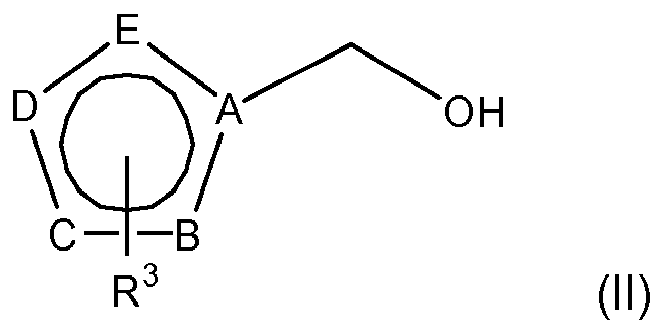
- In an embodiment of the first aspect, the hydrocarbon comprising a hydroxyl group is selected from the group of compounds represented by formulae (I) or (II)


wherein R3 is selected from the group comprising H, substituted or unsubstituted alkyl, alkenyl, alkynyl, -(CH2)x-CR4O, -(CH2)x-NH2, -(CH2)x-NO2, -(CH2)x-C-O-R4, -(CH2)x-CH2SH, -(CH2)x-COOR4,
wherein x is 0 to 20, preferably 0 to 4, more preferably 1 to 2,
and wherein R4 is selected from the group comprising H and substituted or unsubstituted alkyl, cycloalkyl, aryl and heteroaryl. - In an embodiment of the first aspect, up to two out of A, B, C, D, E and F are atoms each and independently selected from the group comprising N and O and the others are C,
wherein R3 is selected from the group comprising -(CH2)x-CR4O, -(CH2)x-NH2, -(CH2)x-O-R4 and -(CH2)x-C-COOR4 ,
wherein x is 0 to 4, more preferably 1 to 2,
and wherein R4 is selected from the group comprising H and alkyl comprising 1 to 4 carbon atoms. - In an embodiment of the first aspect, A, B, C, D, E and F are all C atoms.
- In an embodiment of the first aspect, the hydrocarbon comprising a hydroxyl group is a cycloalkanol, preferably cyclohexanol.
- In an embodiment of the first aspect, the oxygen-dependent and cofactor-dependent carbohydrate oxidase activity is an activity provided by an enzyme selected from the group comprising the M1 variant of galactose oxidase from Fusarium NRRL 2903, pyranose oxidase from Phanerochaete chrysosporium, hexose oxidase from Chondrus crispus and homologues thereof.
- In an embodiment of the first aspect, the amino acid dehydrogenase is alanine dehydrogenase.
- In an embodiment of the first aspect, the transaminase is selected from the group comprising the ω-transaminases from Vibrio fluvialis and Paracoccus denitrificans and homologues thereof.
- In an embodiment of the first aspect, step b) is carried out in the presence of a biological agent having formate dehydrogenase activity.
- In an embodiment of the first aspect, the redox factor produced by the biological agent having amino acid dehydrogenase activity is consumed by the biological agent having formate dehydrogenase activity.
- In an embodiment of the first aspect, step a) is carried out in the presence of an H2O2-degrading activity.
- In an embodiment of the first aspect, the H2O2-degrading activity is provided by a biological agent selected from the group comprising catalase and horse radish peroxidase/ABTS and homologues thereof.
- In an embodiment of the first aspect, steps a) and b) are carried out simultaneously in the same reaction mixture.
- In an embodiment of the first aspect, at least one component essential for the transaminase activity, preferably the biological agent having transaminase activity, is added to the reaction mixture following addition of the components essential for oxygen-dependent and cofactor-dependent carbohydrate oxidase activity.
- In an embodiment of the first aspect, the level of oxygen pressure is 2 to 7 bar, preferably 3 to 5 bar.
- In an embodiment of the first aspect, one or more, preferably all, of the biological agents selected from the group comprising the biological agent having oxygen-dependent and cofactor-dependent carbohydrate oxidase activity, the biological agent having transaminase activity, the biological agent having formate dehydrogenase activity and the biological agent having cofactor-dependent alanine dehydrogenase activity and the biological agent having formate dehydrogenase activity are associated with a viable cell.
- In a second aspect, the problem underlying the present invention is solved by a use of a mixture comprising a biological agent having oxygen-dependent and cofactor-dependent carbohydrate oxidase activity, a biological agent having transaminase activity, a biological agent having amino acid dehydrogenase activity, oxygen, the substrate amino acid of the amino acid dehydrogenase, carbohydrate oxidase cofactor and amino acid dehydrogenase cofactor and preferably a biological agent having formate dehydrogenase activity for transaminating a hydrocarbon comprising a hydroxyl group, wherein one or more than one, preferably all biological agents are or comprise a heterologous polypeptide having the activity of interest.
- In a third aspect, the problem underlying the present invention is solved by an aqueous reaction mixture comprising a hydrocarbon comprising a hydroxyl group, a biological agent having oxygen-dependent and cofactor-dependent carbohydrate oxidase activity, oxygen, carbohydrate oxidase cofactor, a biological agent having transaminase activity, a biological agent having amino acid dehydrogenase, amino acid dehydrogenase cofactor, the substrate amino acid of the amino acid dehydrogenase and preferably a biological agent having formate dehydrogenase activity, wherein one or more than one, preferably all biological agents are or comprise a heterologous polypeptide having the activity of interest.
- In a preferred embodiment of the third aspect, each of the biological agents specified is a whole cell biocatalyst comprising one or more heterologous active polypeptides having the activities of interest, preferably one whole cell biocatalyst comprising more than one heterologous active polypeptides has all the activities of interest.
- Further embodiments of the second and third aspect of the present invention comprise the embodiments of the first aspect of the present invention.
- The present invention is based on the surprising finding that a sequence of reactions exists that may be used to catalyse the oxidation and subsequent transamination of a hydrocarbon comprising a hydroxyl group, wherein said hydroxyl group is converted to an amine group, based entirely on biotechnological catalysts. Moreover, the present inventors have surprisingly found that all of these reactions are fully compatible with each other and may be carried out simultaneously in the same reaction vessel, using a uniform buffer system. Moreover, the present inventors have surprisingly found a suitable sequence of reactions that may be carried out without an in toto addition or removal of electrons.
- The inventive process may be used to convert a broad range of compounds. In a preferred embodiment, the term "hydrocarbon comprising a hydroxyl group", as used herein, refers to any organic compound comprising two carbon atoms linked via a C-C bond and comprising at least one hydroxyl group, the latter preferably attached to a carbon atom. In a preferred embodiment, the carbon chain of such a hydrocarbon is selected from the group comprising cyclic and linear alkanes, alkenes, alkynes, alkyl or alkenyl aryls and alkyl or alkenyl heteroaryls.
- In a preferred embodiment, the hydrocarbon comprising a hydroxyl group is selected from the group of compounds represented by formula (III):

- In a preferred embodiment, the hydrocarbon comprising a hydroxyl group is selected from the group of compounds represented by formula (IV):

wherein x is 0 to 20, preferably 0 to 4,
and wherein R4 is selected from the group comprising H and substituted or unsubstituted alkyl, cycloalkyl, aryl and heteroaryl,
and wherein up to one or two carbon atomes of the aromatic ring may each and independently be replaced by an atom selected from the group comprising N, O and S. - In a most preferred embodiment, the hydrocarbon comprising a hydroxyl group is HMF.
- In a preferred embodiment, the term "biological agent", as used herein, refers to any organism or molecule of biological origin that has the activity specified. In a more preferred embodiment, the biological agent is a more or less purified or isolated active biological macromolecule, most preferably a peptide or polypeptide. In another more preferred embodiment, the biological agent is a whole cell biocatalyst comprising or being associated with such a biological macromolecule. In a preferred embodiment, carbohydrate oxidase activity is provided by a carbohydrate oxidase or a homologue thereof. In another preferred embodiment, transaminase activity is provided by a transaminase or homologues thereof. In another preferred embodiment, catalase activity is provided by a catalase or a homologue thereof. In another preferred embodiment, amino acid, preferably alanine, dehydrogenase activity is provided by an amino acid, preferably alanine, dehydrogenase or a homologue thereof. In another preferred embodiment, formate dehydrogenase activity is provided by a formate dehydrogenase or a homologue thereof. The biological agent may be immobilised.
- In a preferred embodiment, the term "presence of a cofactor", as used herein, means that a cofactor required for activity or enhanced activity of an activity and/or enzyme is present, either free in solution and/or tightly associated with said activity and/or enzyme.
- It is clear that reaction conditions compatible with the activities involved have to be chosen, more specifically pH, buffer, buffer concentration and the like. In a preferred embodiment, the concentration of buffer, preferably potsassium phosphate, is more than 25 mM, preferably 25 to 250 mM, more preferably 40 to 220 mM, most preferably 90 to 160 mM, and the pH is 5 to 9, preferably 6,5 to 8,5.
- In a preferred embodiment, the term "activity", as used herein, refers to the ability to catalyse a chemical or biological reaction. In other words, a chemical or biological reaction reaches a state of equilibrium more rapidly if a suitable activity is present. In a preferred embodiment, the activity is displayed by a catalytically active polypeptide or cell comprising such a polypeptide.
- In a most preferred embodiment, the biological agent is a biological cell. The person skilled in the art is familiar with a wide range of biological cells that may be used to display a biological activity of interest. For example, the cell may be a prokaryotic cell, preferably a bacterial cell such as an Escherichia, Corynebaterium or Pseudomonas cell, most preferably an E. coli cell. The biological cell may also be a eukaryotic cell, preferably a unicellular eukaryotic cell, most preferred a fungal biological cell, for example Candida tropicalis, Saccharomyces cerevisiae or Pichia pastoris. The person skilled in the art is also familiar with a wide range of techniques that may be used to genetically alter cells such that they express a biological or other activity of interest.
- Step a) of the present invention involves the use of a biological agent having carbohydrate oxidase activity. In a preferred embodiment, the term "carbohydrate oxidase activity", as used herein, refers to an enzymatic activity that is able to oxidise a carbohydrate, preferably a carbohydrate capable of forming, at least transiently, a five- or six-membered ring structure comprising at least one hydroxyl group, wherein at least one hydroxyl group is oxidised, preferably such that it is replaced by a carbonyl group. In a preferred embodiment, the term "hydrocarbon produced in step a)", as used herein, means that the hydrocarbon subjected to contact with a biological agent having carbohydrate oxidase activity under the conditions specified with respect to step a) have the opportunity to first interact with the agent having carbohydrate oxidase activity, subsequently the hydrocarbon modified by way of interaction with the carbohydrate oxidase activity may proceed to react with the reagents specified with respect to step b). This does not necessitate that the reagents and activities specified with respect to step b) be absent as step a) occurs.
- The person skilled in the art knows how to prepare biological agents having adequate activities, in particular by introducing suitable polypeptides into cellular hosts by means of genetic engineering using standard molecular biology techniques. Moreover, the person skilled in the art knows how to employ such cells as whole-cell catalysts or use them as a starting material to prepare more or less isolated polypeptides having the activity of interest. Finally, the person skilled in the art is familiar with ways to preserve such activities or use it to catalyse chemical reactions, for example by addition essential cofactors, buffer reagents and adjusting pH and temperature conditions in a suitable manner. Finding such conditions is a matter of routine experimentation.
- In a preferred embodiment, the carbohydrate oxidase activity is an oxygen-dependent carbohydrate oxidase activity, i. e. it depends on the presence of molecular oxygen as an oxidant. The person skilled in the art is aware of methods that may be used to supply oxygen in an aqueous solution, for example by bubbling gaseous oxygen through the aqueous solution or by adding to the aqueous solution oxygen-releasing agents.
- The carbohydrate oxidase activity is, aside from oxygen, also dependent on a cofactor. In a preferred embodiment of the present invention, the term "cofactor", as used herein, refers to a redox factor that is either tightly associated with the molecule having the activity of interest or transiently interacting with such a molecule, preferably as a substrate. In a preferred embodiment, the carbohydrate oxidase uses its cofactor as an oxidant, i. e. to sink electrons released upon oxidation of the substrate's hydroxyl group. In another preferred embodiment of the present invention, the carbohydrate oxidase cofactor is a flavine cofactor, more preferably FAD+. In another preferred embodiment, the cofactor is selected from the group comprising FAD+, NAD+ and NADP+.
- Step b) of the present invention involves the use of a biological agent having transaminase activity. In a preferred embodiment, the term "transaminase activity", as used herein, is an activity capable of catalysing the conversion of a carbonyl function to an amine function. In a more preferred embodiment, the term "transamination activity", as used herein, refers to an activity that is able to catalyse the conversion of a carbohydrate having a hydroxyl group to a carbohydrate having an amine group, with the amine function replacing the hydroxyl group.
- Step b) also requires participation of an amino acid dehydrogenase activity. In a preferred embodiment, the term "amino acid dehydrogenase activity", as used herein, refers to an activity that is able to catalyse the conversion of an acid comprising a amine function, i. e. an amino acid, preferably alanine, to an acid, wherein the amino function is replaced by carbonyl function. In a most preferred embodiment, the amino acid dehydrogenase is an alanine dehydrogenase catalysing the conversion of alanine to pyruvate. In a most preferred embodiment, the amino acid dehydrogenase is dependent on a cofactor. In a preferred embodiment, the amino acid dehydrogenase cofactor is NAD+.
- Finally, step b) also involves a formate dehydrogenase activity. In a preferred embodiment, the term "formate dehydrogenase activity", as used herein, refers to an activity capable of converting formate to CO2, wherein a formate dehydrogenase cofactor is reduced. In a preferred embodiment, the formate dehydrogenase cofactor is NAD+.
- In a preferred embodiment, the term "-CR4O", as used herein, refers to an aldehyd substituent in case R4 is hydrogen or to a keto substituent if R4 is an organic substituent, wherein C is covalently bound to two carbon atoms.
- It is a particular strength of the present invention that the sequence of reactions devised by the present inventors has a net redox balance of 0, i.e. it does in toto not require the addition or removal of electrons and/or oxidised or reduced redox cofactors. This is accomplished by employing an amino acid dehydrogenase, preferably an alanine dehydrogenase, that releases, in an oxidised form, the cofactor used by the formate dehydrogenase to oxidase formate.
- The present inventors have found that it is advantageous to carry out step a) in the presence of H2O2-degrading activity. In a preferred embodiment, the term "H2O2-degrading activity", as used herein, refers to any activity that reduces the amount of H2O2 present in a given aqueous solution. The person skilled in the art is familiar with many catalysts, of inorganic, organic or even biological origin, that may be used for providing H2O2-degrading activity.
- Moreover, the present inventors have surprisingly found that the entire suite of reactions presented, i. e. no less than five independent chemical reactions, are entirely compatible with respect to each other, enabling the person skilled in the art to carry out all the reactions simultaneously in the same reaction vessel without the need to add or mix components in a particular order or to purify an intermediate.
- In a preferred embodiment, homologues of any amino acid or nucleic acid sequences referred to in this application explicitly, for example by name or accession number or indeed the term "homologue of", or implicitly, for example by functional characterisation, are within scope of the present invention. In a preferred embodiment, the term "homologue", as used herein, comprises amino acid or nucleic acid sequences, respectively, that are 60, 70, 75, 80, 85, 90, 92, 94, 95, 96, 97, 98 or 99 % identical to the reference amino acid or nucleic acid sequence. In a preferred embodiment, the term "homologue", with regard to amino acid sequence, comprises, preferably in addition to the above sequence identity, amino acid sequences that comprise one or more conservative amino acid changes with respect to the reference sequence. In a preferred embodiment, the term "homologue" of an amino acid sequence or nucleic acid sequence comprises, preferably in addition to the above sequence identity, active portions and/or fragments of the amino acid sequence or nucleic acid sequence, respectively. In a preferred embodiment, the term "active portion", as used herein, refers to an amino acid sequence or a nucleic acid sequence, which is less than the full length amino acid sequence or codes for less than the full length amino acid sequence, respectively, wherein the amino acid sequence or the amino acid sequence encoded, respectively retains at least some of its essential biological activity, e. g. as a carbohydrate oxidase, ω-transaminase, catalase, formate dehydrogenase or amino acid dehydrogenase. In a preferred embodiment, the term "retains at least some of its essential biological activity", as used herein, means that the amino acid sequence in question has a biological activity exceeding and distinct from the background activity and the kinetic parameters characterising said activity, more specifically kcat and KM, are preferably within 3, more preferably 2, most preferably one order of magnitude of the values displayed by the reference molecule with respect to a specific substrate. In a preferred embodiment, the term "homologue" of a nucleic acid comprises nucleic acids the complementary strand of which hybridises, preferably under stringent conditions, to the reference nucleic acid. Stringency of hybridisation reactions is readily determinable by one of ordinary skilled in the art, and in generally is an empirical calculation dependent on probe length, washing temperature and salt concentration. In general longer probes require higher temperatures for proper annealing, while shorter probes need lower temperatures. Hybridisation generally depends on the ability of denatured DNA to reanneal to complementary strands are present in an environment below their melting temperature. The higher the degree of desired homology between the probe and hybridisable sequence, the higher the relative temperature which may be used. As a result it follows that higher relative temperatures would tend to make the reaction conditions more stringent, while lower temperature less so. For additional details and explanation of stringency of hybridisation reactions, see Ausubel et al. (1995). In a preferred embodiment, the term "homologue" of a nucleic acid sequence, as used herein, refers to any nucleic acid sequence that encodes the same amino acid sequence as the reference nucleic acid sequence, in line with the degeneracy of the genetic code.
- In a preferred embodiment of the present invention, the term "associated with a viable cell", as used herein, means that the biological agent characterised as such is a polypeptide located in the inside of the cell or attached to the surface or to the membrane of a cell. In a more preferred embodiment, the polypeptide is fused to a membrane protein.
- In a most preferred embodiment, the hydrocarbon comprising a hydroxyl group is HMF, and the carbohydrate oxidase is preferably the M1 variant of galactose oxidase from Fusarium NRRL 2903 (Escalettes & Turner, 2008) or the pyranose oxidase from Phanerochaete chrysosporiumor the hexose oxidase from Chondrus crispus or a homologue of any of them, and the transaminase is Vibrio flurialis or Paracoccus denitrificans transaminase or a homologue thereof.
- The present invention is further illustrated by the following figures and non-limiting examples from which further features, embodiments, aspects and advantages of the present invention may be taken.
-
Fig. 1 depicts a scheme illustrating the inventive suite of reactions. -
Fig. 2 depicts the range of components subjected to oxidation, as described in Example 1, and subsequent transamination, as described in Example 5, in addition to HMF. -
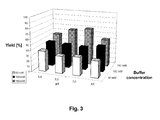
Fig. 3 shows the results of pilot experiments aiming to optimise pH and buffer concentration with respect to the oxidation reaction catalysed by the M1 variant of galactose oxidase from Fusarium NRRL2903. -
Fig. 4 shows the results of pilot experiments aiming to optimise the oxygen pressure with respect to the oxidation reaction catalysed by the M1 variant of galactose oxidase from Fusarium NRRL2903. -
Figs. 5a and 5b show mass spectrometry results demonstrating formation of benzylamine following oxidation and amination of benzylalcohol. -
Fig. 6 shows NMR data demonstrating formation of DAMF following oxidation and amination of - A range of cyclic compounds comprising a hydroxyl group (
Fig. 2 ) in addition to HMF was subjected to carbohydrate oxidase oxidation as follows. A whole cell preparation of the corresponding oxidase (20 mg, lyophilised dry weight) was resuspended in the corresponding phosphate buffer [1 mL; standard conditions: galactose oxidase: 100 mM sodium phosphate, pH = 7, CuSO4.5H2O (3 mg/mL); pyranose and hexose oxidase: 100 mM sodium phosphate, pH = 8, 1 mM FAD] at 30°C and 120 rpm for 20 min (horizontal position). Afterwards, horseradish peroxidase (Sigma, # P8125) (30 µL, 10 mg/mL), 2,2'-azino-bis(3-ethylbenzthiazoline-6-sulfonic acid) (ABTS) (30 µL, 10 mg/mL) and the respective hydrocarbon, for example HMF (5 mg, 40 mmol) were added and the reaction mixture was transferred to an oxygen apparatus consisting of a plexiglass cylinder (27cm length x 10cm diameter). The apparatus was primed with oxygen (technical grade) for about 1 min and pressurized to 4 bar. The whole apparatus was shaken at room temperature, 170 rpm, 20h (vertical position of the MG5 vial). As for catalase, 20 µL of the stock solution [Catalase from Micrococcus lysodeikticus (ca. 170000 U/mL, Sigma Aldrich #60634), Catalase from Corynebacterium glutamicum (> 500000 U/mL, Sigma Aldrich #02071)] were used instead of horseradish peroxidase and 2,2'-azino-bis(3-ethylbenzthiazoline-6-sulfonic acid) (ABTS). - Various carbohydrate oxidases, more specifically galactose oxidase from Fusarium NRRL 2903 (M1 variant) (Escalettes et al., 2008), pyranose oxidase from Phanerochaete chrysosporium and hexose oxidase from Chondrus crispus, used in recombinant form in E. coli BL21(DE3) as lyophilized whole cells and obtained as described in Example 7, could be shown to convert the hydroxy groups of a range of cyclic substrates, including HMF, benzyl alcohol and orthohydroxybenzyl, to the corresponding carbonyl groups.
- The reaction was carried out in aqueous solution in phosphate buffer using the M1 variant of galactose oxidase from Fusarium NRRL2903 under standard conditions, i. e. 40 mmol HMF, 10 mg whole-cell preparation of galactose oxidase, ABTS (30 µL, 10 mg/mL), horse radish peroxidase (30 µL, 10 mg/mL) and 100 mM sodium
phosphate buffer pH 7. The oxygen pressure was 4 bar. The optimum pH was 7.0 for galactose oxidase (Tab. 2,Fig. 3 ) As for catalase, 20 µL of the stock solution [Catalase from Micrococcus lysodeikticus (ca. 170000 U/mL, Sigma Aldrich #60634), Catalase from Corynebacterium glutamicum (> 500000 U/mL, Sigma Aldrich #02071)] were used instead of horseradish peroxidase and 2,2'-azino-bis(3-ethylbenzthiazoline-6-sulfonic acid) (ABTS). - A similar suite of experiments was carried out and showed that the optimal pH value is 8.0 if pyranose oxidase is used. However, oxidation takes place over a wide pH range from 5.0 to 9.0 in the case of both enzymes.
- A range of experiments was carried out under standard conditions as specified in Example 1, except for the fact that various concentrations of buffer were used. It could be shown that higher buffer strengths led to an increase in conversion (
Fig. 3 ). - Pilot experiments were carried out to investigate the dependency of the reaction on the oxygen pressure applied. More specifically, 40 mmol of two substrates, benzyl alcohol and furfuryl alcohol, were subjected to oxidation by the galactose oxidase as specified in Example 1, horse radish peroxidase (30 µL, 10 mg/mL) and ABTS (30 µL, 10 mg/mL) in 100 mM sodium
phosphate buffer pH 7. The application of oxygen at elevated pressure was shown to be optimal at 4 bar (Fig. 4 ). - Following incubation of the reaction mixture in Example 1 for 20 h, the transamination reaction mix consisting of transaminase, L-alanine, alanine dehydrogenase, NADH and the corresponding recycling system (see above) was added and the reaction was shaken for another 20 h. DFF was transaminated employing the recombinant transaminase from Vibrio fluvialis (Vf-ωTA) or Paracoccus denitrificans (pCR6) transaminases, see
WO 2010/089171 for details of transaminasesTab. 2 Optimisation of pH und buffer concentration using the M1 variant of galactose oxidase from Fusarium NRRL2903. Entry pH buffer strength [mM] yield [%] 1 5.0 50 38 2 6.0 50 32 3 7.0 50 34 4 8.0 50 31 5 5.0 100 46 6 6.0 100 44 7 7.0 100 42 8 8.0 100 47 9 5.0 150 54 10 6.0 150 65 11 7.0 150 69 12 8.0 150 51 - The transaminases were used as lyophilized whole cell preparation (recombinantly in E. coli), alanine dehydrogenase from Bacillus subtilis was purified prior to use and formate dehydrogenase was obtained from Codexis (# 24.11, H62411.01), see Example 7.
- Reaction conditions were as follows:
- Whole cell preparation of galactose oxidase from Fusarium NRRL 2903 (20 mg, lyophilised dry weight) was resuspended in sodium phosphate buffer (500 µL, 100 mM, pH = 7.0, 3 mg/mL CuSO4.5H2O) at 30°C and 120 rpm, 30 min. Horseradish peroxidase (15 µL, 10 mg/mL), ABTS (15 µL, 10 mg/mL) and HMF (5 mg) were added and the reaction mixture was placed into the oxygen apparatus (vertical position, room temperature, 4 bar O2, 170 rpm) for 20 h. The reaction mixture was transferred to Eppendorf vials. A solution of whole cell preparation of ω-transaminase from Vibrio fluvialis (20 mg, lyophilised dry weight) in P1-buffer (500µL, 100 mM, pH = 7.0, 2 mM PLP, 200 mmol L-alanine, 140 mmol ammonium formate) was added, followed by formate dehydrogenase (20 µL, Codexis) and purified alanine dehydrogenase from Bacillus subtilis (20µL, 7.5mg protein /mL). The reaction mixture was shaken at 30°C and 120 rpm in a horizontal position for 20h. The apparatus was primed with oxygen for about 1 min and pressurized to 4 bar.The reaction could be reproduced using as carbohydrate oxidase pyranose and hexose oxidase. The reaction conditions were identical except for the pact that the pH value was adjusted to 8, and 1 mM FAD was added rather than CuSO4.5H2O.
- This example illustrates that the transamination reaction is fully compatible with the conditions of the oxidation reaction mixture. Irrespective of the transaminase used, HMF was converted to DAMF at a yield of more than 80% after 20 h reaction time, more specifically 81 % and 83 % if Vf-ωTA or pCR6 transaminases were used. Other compounds were oxidised and transaminated at a total combined yield as shown in Tab. 3. DFF formed during the oxidation step was quantitatively converted to DAMF. Remaining HMF did not inhibit the transamination, but was converted to the corresponding hydroxymethylamine. In an analogous fashion, HMF was converted by all transaminases to [5-(aminomethyl)furan-2-yl]methanol (AMFM). The rate of conversion and the identity of the products were determined using GC-MS.
Tab. 3: A range of substrates, see Fig. 2, were subjected to the sequential oxidation and transamination steps as described in examples 1 and 5. Substrate Rate of conversion [%] 1 48 2 56 3 51 4 Could not be extracted 5 13 6 33 7 33 - The same experimental setup as outlined in Example 1 was added, except for the fact that HMF was used as a substrate and all reagents required for the oxidation and transamination were added right at the beginning, including pyranose oxidase from Phanerochaete chrysosporium, horseradish peroxidase and ABTS, ω-transaminase from Vibrio fluvialis, formate dehydrogenase and alanine dehydrogenase from Bacillus subtilis. 1 mM FAD was present and the pH was 8. The reaction was allowed to proceed for 24 h.
- The reaction was reproduced using as carbohydrate oxidase hexose oxidase under identical reaction conditions.
- The reaction mixture was heated to 95°C for 10 min to precipitate enzymes, diluted 1/1 with MeCN and centrifuged (13000 rpm, 3 min). Samples of 100 µL were taken, diluted with 1 mL H2O/
MeCN 1/1 containing 0.1% TFA and subjected to HPLC-UV analysis using the following setup. Column: Phenomenex LUNA 5µm C18(2) 100 A (250 x 4.60 mm); oven temp.: 30°C, flow: 0.25 mL/min, eluent A: H2O (0.1% TFA), eluent B: MeCN (0.1% TFA); Gradient: 0-4min 30% B, 4-30 min 30-100% B, 30-36min 100% B, 36-46min 30% B. - Samples of 500 µL were treated with DMAP (500 µL, 10% in MeOH). Ethyl chloroformate (200 µL) was added and the mixture was incubated at 60°C and 300 rpm for 2h. Extraction with dichloromethane (2x 500µL) and drying of the combined organic phase over Na2SO4 gave a sample which was subjected to GC-MS analysis under following conditions: Agilent 7890A GC system equipped with an Agilent 975C mass-selective detector (
El 70 eV) and a HP-5-MS column (30m x 0.25 mm x 0.25 µm film) using helium as carrier gas at a flow of 0.55 mL/min. The following temperature program was used: 100 °C, hold for 0.5 min, 10 °C/min, to 300 °C. - Sample preparation was performed to a standard procedure involving formation of FMOC derivatives in a glass HPLC vial, addition of
borate buffer pH 9, addition of FMOC reagent and removing the FMOC reagent excess by way of addition of EVA reagent, addition of dilution buffer. The sample was subsequently subjected to HPLC analysis using the following conditions. Column: Phenomenex LUNA 5µm C18(2) 100 A (250 x 4.60 mm); oven Temp. 30°C, flow: 0.5 mL/min, eluent A: H2O (0.1% TFA), eluent B: MeCN (0.1% TFA); Gradient: 0-2min 30% B, 2-15 min 30-100% B, 15-25min 100% B, 25-30min 30% B. - Genes were optimized and synthesized by GeneArt and delivered in a pMAL vector with ampicillin resistence. Protein-encoding insert was cut via Ndel and Xhol restriction enzymes (Fermentas) and ligated in a pET21 a expression vector via T4 Ligase (Fermentas). If oxidases were used, enzymes were prepared using pET16b or pET21a plasmid constructs as follows: a fresh single colony from an LB agar plate supplemented with 100 mg/ml Ampicillin and used to grow E. coli strain BL21 comprising the respective plasmid was used to inoculate 50 ml of an over night culture supplemented with the same amount of Ampicillin. Following incubation of said culture over night at 120 rpm and 30 °
C 4 ml of the over night culture was used to inoculate 600 ml of the same medium in a 3 I flask. The flask was shaken at 37 °C and 120 rpm until an OD550 of 0.6 was reached, i.e. approximately two to four hours. The expression of the respective enzyme was subsequently induced by addition of 0.6 ml IPTG (Isopropyl-b-D-thiogalactopyranosid, 238 mg/ml), followed by incubation over night at 20 °C and 120 rpm under vigorous shaking. Cells were then spun down at 8000 rpm and 4 °C for 20 minutes. The supernatant was disposed of, the pellet was washed using physiological NaCl solution, spun down and lyophilised. - If other enzymes were used, constructs comprising the pASK-IBA35+ (IBA Biotagnology, Germany) plasmid backbone were used. A fresh single colony from an LB agar plate supplemented with 100 mg/ml Ampicillin and used to grow E. coli strain BL21 comprising the respective plasmid was used to inoculate 50 ml of an over night culture supplemented with the same amount of Ampicillin. Following incubation of said culture over night at 180 rpm and 30 °
C 4 ml of the over night culture was used to inoculate 2 I of the same medium in a 5 l flask. The flask was shaken at 37 °C and 120 rpm until an OD550 of 0.6 was reached, i.e. approximately two to four hours. The expression of the respective enzyme was subsequently induced by addition of 0.2 ml Anhydrotetracyclin (2 mg/ml), followed by incubation for three hours at 30 °C and 180 rpm under vigorous shaking. Cells were then spun down at 5000 rpm and 4 °C for 20 minutes. The supernatant was disposed of, the pellet was washed using physiological NaCl solution, spun down and lyophilised. - In the case of alanine dehydrogenase, 4 g of the lyophilised cells were resuspended in phosphate buffer (50 mM NaH2PO4, 300 mM NaCl, 10 mM Imidazol) and lysed using ultrasonication (1 s pulse followed by incubation for 4 s, repeated for a total of 10 minutes). The cell lysate was spun down twice (16000rpm, 20 min, 4 °C), filtered using a syringe filter and applied to a His-trap column having a bed volume of 5 ml. Protein binding unspecifically was removed by applying phosphate buffer (50 mM NaH2PO4, 300 mM NaCl) comprising 20 mM imidazole. Protein was eluted using the same buffer, with a gradient from 50 mM to 80 mM imidazole being applied, followed by application of 60 ml of the same buffer comprising 150 mM imidazole Fractions comprising pure enzyme were pooled, dialyses against phosphate buffer to remove imidazole and concentrated via Vivaspin tubes and centrifugation at 4000 rpm.
- T. El Hajj, A. Masroua, J. C. Martin, and G. Decotes, Bull. Soc. Chim. Fr., 1987, 855 - 60
- F. M. Ausubel (1995), Current Protocols in Molecular Biology. John Wiley & Sons, Inc.
- F. Escalettes; N. J. Turner,
- R. Huang; W. Qi; R. Su; Z. He, Chem. Commun. 2009, 46, 1115-1117.
- D. Koszelewski; I. Lavandera; D. Clay; G. M. Guebitz; D. Rozzell; W. Kroutil, Angew. Chem. Int. Ed. 2008, 47, 9337-9340.
-
- F. Koopman; N. Wierckx; J. H. de Winde; H. J. Ruijssenaars, Bioresource Technol. 2010, 101, 6291-6296.
- M. P. J. van Deurzen; F. van Rantwijk; R. A. Sheldon, J. Carbohydr. Chem. 1997, 16, 299-309.
- T. H. de Koker; M. D. Mozuch; D. Cullen; J. Gaskell; P. J. Kersten, Appl. Environ. Microbiol. 2004, 70, 5794-5800.


Claims (18)
- A method comprising the steps(a) contacting a hydrocarbon comprising a hydroxyl group with
a biological agent having oxygen-dependent and cofactor-dependent carbohydrate oxidase activity
in the presence of oxygen and carbohydrate oxidase cofactor, and(b) contacting the hydrocarbon produced in step a) with
a biological agent having transaminase activity and
a biological agent having cofactor-dependent amino acid dehydrogenase activity
in the presence of amino acid dehydrogenase cofactor and the substrate amino acid of the amino acid dehydrogenase. - The method according to claim 1, wherein the hydrocarbon comprising a hydroxyl group comprises a 5 or 6 membered ring carrying at least one substituent selected from the group comprising -(CH2)x-OH, wherein x is 0 to 4.
- The method according to any of claims 1 to 2, wherein the hydrocarbon comprising a hydroxyl group is selected from the group of compounds represented by formulae (I) or (II)

wherein R3 is selected from the group comprising H, substituted or unsubstituted alkyl, alkenyl, alkynyl, -(CH2)x-CR4O, -(CH2)x-NH2, -(CH2)x-NO2, -(CH2)xC-O-R4, -(CH2)x-CH2SH, -(CH2)x-COOR4,
wherein x is 0 to 20, preferably 0 to 4,
and wherein R4 is selected from the group comprising H and substituted or unsubstituted alkyl, cycloalkyl, aryl and heteroaryl. - The method according to claim 3,
wherein up to two out of A, B, C, D, E and F are atoms each and independently selected from the group comprising N and O and the others are C,
wherein R3 is selected from the group comprising -(CH2)x-CR4O, -(CH2)x-NH2, -(CH2)x-O-R4 and -(CH2)x-C-COOR4,
wherein x is 0 to 4,
and wherein R4 is selected from the group comprising H and alkyl comprising 1 to 4 carbon atoms. - The method according to claim 2, wherein the hydrocarbon comprising a hydroxyl group is a cycloalkanol, preferably cyclohexanol.
- The method according to any of claims 1 to 5, wherein the oxygen-dependent and cofactor-dependent carbohydrate oxidase activity is an activity provided by an enzyme selected from the group comprising the M1 variant of galactose oxidase from Fusarium NRRL 2903, pyranose oxidase from Phanerochaete chrysosporium, hexose oxidase from Chondrus crispus and homologues thereof.
- The method according to any of claims 1 to 6, wherein the amino acid dehydrogenase is alanine dehydrogenase.
- The method according to any of claims 1 to 7, wherein the transaminase is selected from the group comprising the ω-transaminases from Vibrio fluvialis and Paracoccus denitrificans and homologues thereof.
- The method according to any of claims 1 to 8, wherein step b) is carried out in the presence of a biological agent having formate dehydrogenase activity.
- The method according to any of claims 1 to 9, wherein the redox factor produced by the biological agent having amino acid dehydrogenase activity is consumed by the biological agent having formate dehydrogenase activity.
- The method according to any of claims 1 to 10, wherein step a) is carried out in the presence of an H2O2-degrading activity.
- The method according to any of claims 1 to 11, wherein the H2O2-degrading activity is provided by a biological agent selected from the group comprising catalase and horse radish peroxidase/ABTS and homologues thereof.
- The method according to any of claims 1 to 12, wherein steps a) and b) are carried out simultaneously in the same reaction mixture.
- The method according to claim 13, wherein at least one component essential for the transaminase activity, preferably the biological agent having transaminase activity, is added to the reaction mixture following addition of the components essential for oxygen-dependent and cofactor-dependent carbohydrate oxidase activity.
- The method according to any of claims 1 to 14, wherein the level of oxygen pressure is 2 to 7 bar, preferably 3 to 5 bar.
- The method according to any of claims 1 to 15, wherein one or more, preferably all, of the biological agents selected from the group comprising the biological agent having oxygen-dependent and cofactor-dependent carbohydrate oxidase activity, the biological agent having transaminase activity and the biological agent having cofactor-dependent alanine dehydrogenase activity are associated with a viable cell.
- A use of a mixture comprising a biological agent having oxygen-dependent and cofactor-dependent carbohydrate oxidase activity, a biological agent having transaminase activity, a biological agent having amino acid dehydrogenase activity, oxygen, the substrate amino acid of the amino acid dehydrogenase, carbohydrate oxidase cofactor and amino acid dehydrogenase cofactor and preferably a biological agent having formate dehydrogenase activity for transaminating a hydrocarbon comprising a hydroxyl group.
- An aqueous reaction mixture comprising a hydrocarbon comprising a hydroxyl group, a biological agent having oxygen-dependent and cofactor-dependent carbohydrate oxidase activity, oxygen, carbohydrate oxidase cofactor, a biological agent having transaminase activity, a biological agent having amino acid dehydrogenase, amino acid dehydrogenase cofactor, the substrate amino acid of the amino acid dehydrogenase and preferably a biological agent having formate dehydrogenase activity, wherein all biological agents are or comprise a heterologous polypeptide having the respective activity of interest.
Priority Applications (8)
| Application Number | Priority Date | Filing Date | Title |
|---|---|---|---|
| EP11170011A EP2557176A1 (en) | 2011-06-15 | 2011-06-15 | Enzymatic amination |
| PCT/EP2012/050288 WO2012171666A1 (en) | 2011-06-15 | 2012-01-10 | Enzymatic amination |
| JP2014515102A JP2014516572A (en) | 2011-06-15 | 2012-01-10 | Enzymatic amination |
| US14/126,607 US20140120587A1 (en) | 2011-06-15 | 2012-01-10 | Enzymatic amination |
| CN201280029084.0A CN103635583B (en) | 2011-06-15 | 2012-01-10 | enzymatic amination |
| CA2839364A CA2839364A1 (en) | 2011-06-15 | 2012-01-10 | Enzymatic amination |
| RU2014100965/10A RU2014100965A (en) | 2011-06-15 | 2012-01-10 | ENZYMATIC AMINATION |
| US15/073,105 US20160244790A1 (en) | 2011-06-15 | 2016-03-17 | Enzymatic amination |
Applications Claiming Priority (1)
| Application Number | Priority Date | Filing Date | Title |
|---|---|---|---|
| EP11170011A EP2557176A1 (en) | 2011-06-15 | 2011-06-15 | Enzymatic amination |
Publications (1)
| Publication Number | Publication Date |
|---|---|
| EP2557176A1 true EP2557176A1 (en) | 2013-02-13 |
Family
ID=44910359
Family Applications (1)
| Application Number | Title | Priority Date | Filing Date |
|---|---|---|---|
| EP11170011A Withdrawn EP2557176A1 (en) | 2011-06-15 | 2011-06-15 | Enzymatic amination |
Country Status (7)
| Country | Link |
|---|---|
| US (2) | US20140120587A1 (en) |
| EP (1) | EP2557176A1 (en) |
| JP (1) | JP2014516572A (en) |
| CN (1) | CN103635583B (en) |
| CA (1) | CA2839364A1 (en) |
| RU (1) | RU2014100965A (en) |
| WO (1) | WO2012171666A1 (en) |
Cited By (2)
| Publication number | Priority date | Publication date | Assignee | Title |
|---|---|---|---|---|
| EP2875142A2 (en) * | 2012-07-20 | 2015-05-27 | Novozymes A/S | Enzymatic oxidation of 5-hydroxymethylfurfural and derivatives thereof |
| DE102014200497A1 (en) | 2014-01-14 | 2015-07-16 | Evonik Industries Ag | Enzymatic method |
Families Citing this family (25)
| Publication number | Priority date | Publication date | Assignee | Title |
|---|---|---|---|---|
| DE102011075162A1 (en) | 2010-12-08 | 2012-06-14 | Evonik Degussa Gmbh | A process for the homogeneous-catalyzed, highly selective direct amination of primary alcohols with ammonia to primary amines at high volume ratio of liquid to gas phase and / or high pressures |
| UA112980C2 (en) | 2011-02-16 | 2016-11-25 | Евонік Дегусса Гмбх | RARE Cationites |
| WO2012113475A1 (en) | 2011-02-21 | 2012-08-30 | Evonik Degussa Gmbh | Process for the direct amination of alcohols using ammonia to form primary amines by means of a xantphos catalyst system |
| BR112014000947A2 (en) | 2011-07-20 | 2017-06-13 | Evonik Degussa Gmbh | oxidation and amination of primary alcohols |
| EP2602328A1 (en) | 2011-12-05 | 2013-06-12 | Evonik Industries AG | Method of Oxidation of alkanes employing an AlkB alkane 1-monooxygenase |
| EP2607479A1 (en) | 2011-12-22 | 2013-06-26 | Evonik Industries AG | Biotechnological production of alcohols and derivatives thereof |
| EP2607490A1 (en) | 2011-12-22 | 2013-06-26 | Evonik Industries AG | Method for improved separation of a hydrophobic organic solution from an aqueous culture medium |
| EP2631298A1 (en) | 2012-02-22 | 2013-08-28 | Evonik Industries AG | Biotechnological method for producing butanol and butyric acid |
| EP2639308A1 (en) | 2012-03-12 | 2013-09-18 | Evonik Industries AG | Enzymatic omega-oxidation and -amination of fatty acids |
| EP2647696A1 (en) | 2012-04-02 | 2013-10-09 | Evonik Degussa GmbH | Method for aerobic production of alanine or a compound arising using alanine |
| DE102012207921A1 (en) | 2012-05-11 | 2013-11-14 | Evonik Industries Ag | Multi-stage synthesis process with synthesis gas |
| EP2700448A1 (en) | 2012-08-21 | 2014-02-26 | Evonik Industries AG | Branched fatty acids as liquid cation exchangers |
| EP2746400A1 (en) | 2012-12-21 | 2014-06-25 | Evonik Industries AG | Preparation of amines and diamines from a carboxylic acid or dicarboxylic acid or a monoester thereof |
| EP2746397A1 (en) | 2012-12-21 | 2014-06-25 | Evonik Industries AG | Production of omega amino fatty acids |
| EP2759598A1 (en) | 2013-01-24 | 2014-07-30 | Evonik Industries AG | Process for preparing alpha, omega alkanediols |
| EP2944697A1 (en) | 2014-05-13 | 2015-11-18 | Evonik Degussa GmbH | Method of producing nylon |
| CA2937594A1 (en) | 2015-02-26 | 2016-08-26 | Evonik Degussa Gmbh | Alkene production |
| EP3390622B1 (en) | 2015-12-17 | 2020-05-13 | Evonik Operations GmbH | A genetically modified acetogenic cell |
| CN106008418A (en) * | 2016-05-20 | 2016-10-12 | 厦门大学 | Method for synthesizing 5-aminomethyl-2-furfuryl alcohol |
| JP2019523271A (en) | 2016-07-27 | 2019-08-22 | エボニック デグサ ゲーエムベーハーEvonik Degussa GmbH | N-acetylhomoserine |
| WO2018190398A1 (en) * | 2017-04-13 | 2018-10-18 | 協和発酵バイオ株式会社 | Method for producing theanine |
| US20200149079A1 (en) * | 2017-05-12 | 2020-05-14 | Mitsui Chemicals, Inc. | Recombinant microorganism and method of producing pyridoxamine or salt thereof using recombinant microorganism |
| EP3415630A1 (en) | 2017-06-14 | 2018-12-19 | EntreChem, S.L. | Method for one-pot production of a primary amine from an alcohol |
| CN107586796B (en) * | 2017-07-20 | 2021-08-06 | 暨明医药科技(苏州)有限公司 | Synthesis method of (R) -2- (1-aminoethyl) -4-fluorophenol |
| WO2024197095A2 (en) * | 2023-03-20 | 2024-09-26 | Solugen, Inc. | Compositions and methods for carbon dioxide capture and fluid sweetening |
Citations (4)
| Publication number | Priority date | Publication date | Assignee | Title |
|---|---|---|---|---|
| WO2003072742A2 (en) * | 2002-02-27 | 2003-09-04 | California Institute Of Technology | Novel glucose 6-oxidases |
| WO2009023174A2 (en) | 2007-08-10 | 2009-02-19 | Archer Daniels Midland Company | Enzymatic oxidation of hmf |
| WO2009033957A1 (en) * | 2007-09-07 | 2009-03-19 | Evonik Degussa Gmbh | Process for preparing enantiomerically enriched amines |
| WO2010089171A2 (en) | 2009-02-04 | 2010-08-12 | Evonik Degussa Gmbh | Method for producing multicyclical ring systems carrying amino groups |
Family Cites Families (5)
| Publication number | Priority date | Publication date | Assignee | Title |
|---|---|---|---|---|
| WO1998048030A1 (en) * | 1997-04-23 | 1998-10-29 | Kaneka Corporation | Process for producing optically active amino compounds |
| US6706900B2 (en) * | 2001-09-17 | 2004-03-16 | E. I. Du Pont De Nemours And Company | Process for preparing 2,5-diformylfuran from carbohydrates |
| JP2009291158A (en) * | 2008-06-06 | 2009-12-17 | Daiichi Fine Chemical Co Ltd | Mutant enzyme of pyridoxamine-pyruvate aminotransferase |
| CN101293884A (en) * | 2008-06-13 | 2008-10-29 | 江南大学 | (1S,2S)-1-(2-furyl)-1,2-propanediol or its structural analogue and its preparation and application |
| CN101768142B (en) * | 2010-01-18 | 2012-04-25 | 四川大学 | A kind of method by carbohydrate catalytic synthesis 2,5-furandicarbaldehyde |
-
2011
- 2011-06-15 EP EP11170011A patent/EP2557176A1/en not_active Withdrawn
-
2012
- 2012-01-10 WO PCT/EP2012/050288 patent/WO2012171666A1/en not_active Ceased
- 2012-01-10 RU RU2014100965/10A patent/RU2014100965A/en not_active Application Discontinuation
- 2012-01-10 JP JP2014515102A patent/JP2014516572A/en not_active Ceased
- 2012-01-10 CA CA2839364A patent/CA2839364A1/en not_active Abandoned
- 2012-01-10 CN CN201280029084.0A patent/CN103635583B/en not_active Expired - Fee Related
- 2012-01-10 US US14/126,607 patent/US20140120587A1/en not_active Abandoned
-
2016
- 2016-03-17 US US15/073,105 patent/US20160244790A1/en not_active Abandoned
Patent Citations (4)
| Publication number | Priority date | Publication date | Assignee | Title |
|---|---|---|---|---|
| WO2003072742A2 (en) * | 2002-02-27 | 2003-09-04 | California Institute Of Technology | Novel glucose 6-oxidases |
| WO2009023174A2 (en) | 2007-08-10 | 2009-02-19 | Archer Daniels Midland Company | Enzymatic oxidation of hmf |
| WO2009033957A1 (en) * | 2007-09-07 | 2009-03-19 | Evonik Degussa Gmbh | Process for preparing enantiomerically enriched amines |
| WO2010089171A2 (en) | 2009-02-04 | 2010-08-12 | Evonik Degussa Gmbh | Method for producing multicyclical ring systems carrying amino groups |
Non-Patent Citations (18)
| Title |
|---|
| CHEMICAL ABSTRACTS, Columbus, Ohio, US; abstract no. 150:235749 |
| D. KOSZELEWSKI, I. LAVANDERA, D. CLAY, G. M. GUEBITZ, D. ROZZELL, W. KROUTIL, ANGEW. CHEM. INT. ED, vol. 47, 2008, pages 9337 - 9340 |
| EI HAJJ, A. MASROUA, J. C. MARTIN, G. DECOTES, BULL. SOC. CHIM. FR., 1987, pages 855 - 60 |
| ESCALETTES F ET AL: "Directed evolution of galactose oxidase: Generation of enantioselective secondary alcohol oxidases", CHEMBIOCHEM 20080414 DE LNKD- DOI:10.1002/CBIC.200700689, vol. 9, no. 6, 14 April 2008 (2008-04-14), pages 857 - 860, XP002663944, ISSN: 1439-4227 * |
| F. ESCALETTES, N. J. TURNER, CHEMBIOCHEM, vol. 9, 2008, pages 857 - 860 |
| F. KOOPMAN, N. WIERCKX, J. H. DE WINDE, H. J. RUIJSSENAARS, BIORESOURCE TECHNOL., vol. 101, 2010, pages 6291 - 6296 |
| F. M. AUSUBEL: "Current Protocols in Molecular Biology", 1995, JOHN WILEY & SONS, INC |
| FUCHS M ET AL: "Chemoenzymatic asymmetric total synthesis of (S)-Rivastigmine using [omega]-transaminases", CHEMICAL COMMUNICATIONS 20100814 ROYAL SOCIETY OF CHEMISTRY GBR LNKD- DOI:10.1039/C0CC00585A, vol. 46, no. 30, 14 August 2010 (2010-08-14), pages 5500 - 5502, XP002663942, ISSN: 1359-7345 * |
| HAJJ EL T ET AL: "SYNTHESE DE L'HYDROXYMETHYL-5 FURANNE CARBOXALDEHYDE-2 ET DE SES DERIVES PAR TRAITEMENT ACIDE DE SUCRES SUR RESINES ECHANGEUSES D'IONS", BULLETIN DE LA SOCIETE CHIMIQUE DE FRANCE, SOCIETE FRANCAISE DE CHIMIE. PARIS, FRANCE, vol. 5, 1 January 1987 (1987-01-01), pages 855 - 860, XP009002108, ISSN: 0037-8968 * |
| KOOPMAN F ET AL: "Efficient whole-cell biotransformation of 5-(hydroxymethyl)furfural into FDCA, 2,5-furandicarboxylic acid", BIORESOURCE TECHNOLOGY 2010 ELSEVIER LTD GBR LNKD- DOI:10.1016/J.BIORTECH.2010.03.050, vol. 101, no. 16, August 2010 (2010-08-01), pages 6291 - 6296, XP002663940, ISSN: 0960-8524 * |
| LOPEZ-GALLEGO F ET AL: "Multi-enzymatic synthesis", CURRENT OPINION IN CHEMICAL BIOLOGY 2010 ELSEVIER LTD GBR LNKD- DOI:10.1016/J.CBPA.2009.11.023, vol. 14, no. 2, April 2010 (2010-04-01), pages 174 - 183, ISSN: 1367-5931 * |
| M. P. J. VAN DEURZEN, F. VAN RANTWIJK, R. A. SHELDON, J. CARBOHYDR. CHEM, vol. 16, 1997, pages 299 - 309 |
| R. HUANG, W. QI, R. SU, Z. HE, CHEM. COMMUN., vol. 46, 2009, pages 1115 - 1117 |
| SHIN J -S ET AL: "Asymmetric synthesis of chiral amines with [omega]-transaminase", BIOTECHNOLOGY AND BIOENGINEERING 19991020 US LNKD- DOI:10.1002/(SICI)1097-0290(19991020)65:2<206::AID-BIT11>3.0.CO;2-9, vol. 65, no. 2, 20 October 1999 (1999-10-20), pages 206 - 211, XP002663941, ISSN: 0006-3592 * |
| T. H. DE KOKER, M. D. MOZUCH, D. CULLEN, J. GASKELL, P. J. KERSTEN, APPL. ENVIRON. MICROBIOL, vol. 70, 2004, pages 5794 - 5800 |
| VAN HELLEMOND ERIK W ET AL: "Occurrence and biocatalytic potential of carbohydrate oxidases", ADVANCES IN APPLIED MICROBIOLOGY, ACADEMIC PRESS, UNITED STATES, vol. 60, 1 January 2006 (2006-01-01), pages 17 - 54, XP008123150, ISSN: 0065-2164 * |
| VERENA RESCH ET AL: "Deracemisation of Mandelic Acid to Optically Pure Non-Natural L-Phenylglycine via a Redox-Neutral Biocatalytic Cascade", ADVANCED SYNTHESIS & CATALYSIS, vol. 352, no. 6, 19 April 2010 (2010-04-19), pages 993 - 997, XP055015033, ISSN: 1615-4150, DOI: 10.1002/adsc.200900891 * |
| WHITTAKER M M ET AL: "Catalytic reaction profile for alcohol oxidation by galactose oxidase", BIOCHEMISTRY 20010619 US, vol. 40, no. 24, 19 June 2001 (2001-06-19), pages 7140 - 7148, XP002663943, ISSN: 0006-2960 * |
Cited By (2)
| Publication number | Priority date | Publication date | Assignee | Title |
|---|---|---|---|---|
| EP2875142A2 (en) * | 2012-07-20 | 2015-05-27 | Novozymes A/S | Enzymatic oxidation of 5-hydroxymethylfurfural and derivatives thereof |
| DE102014200497A1 (en) | 2014-01-14 | 2015-07-16 | Evonik Industries Ag | Enzymatic method |
Also Published As
| Publication number | Publication date |
|---|---|
| WO2012171666A1 (en) | 2012-12-20 |
| JP2014516572A (en) | 2014-07-17 |
| US20140120587A1 (en) | 2014-05-01 |
| CN103635583B (en) | 2017-02-15 |
| CA2839364A1 (en) | 2012-12-20 |
| RU2014100965A (en) | 2015-07-20 |
| US20160244790A1 (en) | 2016-08-25 |
| CN103635583A (en) | 2014-03-12 |
Similar Documents
| Publication | Publication Date | Title |
|---|---|---|
| EP2557176A1 (en) | Enzymatic amination | |
| Pollegioni et al. | L-amino acid oxidase as biocatalyst: a dream too far? | |
| US20140308717A1 (en) | Oxidation and amination of secondary alcohols | |
| US9580732B2 (en) | Oxidation and amination of primary alcohols | |
| US20150099282A1 (en) | Nadp-dependent alanine dehydrogenase | |
| Huang et al. | Green chemical and biological synthesis of cadaverine: recent development and challenges | |
| CA2493941A1 (en) | Enzymatic processes for the production of 4-substituted 3-hydroxybutyric acid derivatives | |
| EP2330210A1 (en) | Process for production of optically active amine derivative | |
| EP2330190A1 (en) | Process for production of optically active amine derivative | |
| JP5936545B2 (en) | Novel aminotransferase showing high activity to glutamic acid, gene encoding the same, and method of use thereof | |
| AU2002219040B2 (en) | Cytochrome P450 monooxygenases consisting of thermophilic bacteria | |
| CN117903007B (en) | Key enzyme for spermidine biosynthesis pathway | |
| CN114934061B (en) | Engineering bacterium and application thereof in whole-cell catalysis of ketopantolactone to produce D-pantolactone | |
| CN117603923A (en) | Mononuclear non-heme iron enzyme, gene, expression vector, strain and application thereof | |
| CN114315647B (en) | An Improved Method for Preparing 1,5-Pentamethylene Diisocyanate from 1,5-Pentamethylene Diamine Salt | |
| WO2011078667A2 (en) | Method of finding a biocatalyst having ammonia lyase activity | |
| JP2011177029A (en) | Method for producing optically-active amine derivative | |
| KR102011415B1 (en) | Novel CO2 reductase from Rhodobacter aestuarii and thereof | |
| CN114836486B (en) | Enzyme-catalyzed method for synthesizing chiral beta-aminoalcohols | |
| CN112852768B (en) | Carbonyl reductase mutants and their applications | |
| Liang et al. | Biocatalytic synthesis of chiral five-membered carbasugars intermediates utilizing CV2025 ω-transaminase from Chromobacterium violaceum | |
| KR101291589B1 (en) | A METHOD FOR DERACEMIZATION OF HOMOALANINE USING D-AMINO ACID OXIDASE AND ω-TRANSAMINASE | |
| Renn | Engineering and Discovery of Novel Biocatalysts | |
| CN114045271A (en) | Immobilized carbonyl reductase and application thereof in preparation of (2R,3S) -2-hydroxy-4-phenylbutane derivative | |
| JPWO2006104124A1 (en) | Novel pantothenate kinase gene and method of use thereof |
Legal Events
| Date | Code | Title | Description |
|---|---|---|---|
| PUAI | Public reference made under article 153(3) epc to a published international application that has entered the european phase |
Free format text: ORIGINAL CODE: 0009012 |
|
| 17P | Request for examination filed |
Effective date: 20120104 |
|
| AK | Designated contracting states |
Kind code of ref document: A1 Designated state(s): AL AT BE BG CH CY CZ DE DK EE ES FI FR GB GR HR HU IE IS IT LI LT LU LV MC MK MT NL NO PL PT RO RS SE SI SK SM TR |
|
| AX | Request for extension of the european patent |
Extension state: BA ME |
|
| RBV | Designated contracting states (corrected) |
Designated state(s): AL AT BE BG CH CY CZ DE DK EE ES FI FR GB GR HR HU IE IS IT LI LT LU LV MC MK MT NL NO PL PT RO RS SE SI SK SM TR |
|
| GRAP | Despatch of communication of intention to grant a patent |
Free format text: ORIGINAL CODE: EPIDOSNIGR1 |
|
| INTG | Intention to grant announced |
Effective date: 20170213 |
|
| STAA | Information on the status of an ep patent application or granted ep patent |
Free format text: STATUS: THE APPLICATION IS DEEMED TO BE WITHDRAWN |
|
| 18D | Application deemed to be withdrawn |
Effective date: 20170624 |