EP2556834A1 - The therapeutic use of tetrathiomolybdate - Google Patents
The therapeutic use of tetrathiomolybdate Download PDFInfo
- Publication number
- EP2556834A1 EP2556834A1 EP12189630A EP12189630A EP2556834A1 EP 2556834 A1 EP2556834 A1 EP 2556834A1 EP 12189630 A EP12189630 A EP 12189630A EP 12189630 A EP12189630 A EP 12189630A EP 2556834 A1 EP2556834 A1 EP 2556834A1
- Authority
- EP
- European Patent Office
- Prior art keywords
- ttm
- therapy
- subject
- administration
- tetrathiomolybdate
- Prior art date
- Legal status (The legal status is an assumption and is not a legal conclusion. Google has not performed a legal analysis and makes no representation as to the accuracy of the status listed.)
- Granted
Links
Images

Classifications
-
- A—HUMAN NECESSITIES
- A61—MEDICAL OR VETERINARY SCIENCE; HYGIENE
- A61K—PREPARATIONS FOR MEDICAL, DENTAL OR TOILETRY PURPOSES
- A61K33/00—Medicinal preparations containing inorganic active ingredients
- A61K33/24—Heavy metals; Compounds thereof
-
- A—HUMAN NECESSITIES
- A61—MEDICAL OR VETERINARY SCIENCE; HYGIENE
- A61P—SPECIFIC THERAPEUTIC ACTIVITY OF CHEMICAL COMPOUNDS OR MEDICINAL PREPARATIONS
- A61P13/00—Drugs for disorders of the urinary system
- A61P13/12—Drugs for disorders of the urinary system of the kidneys
-
- A—HUMAN NECESSITIES
- A61—MEDICAL OR VETERINARY SCIENCE; HYGIENE
- A61P—SPECIFIC THERAPEUTIC ACTIVITY OF CHEMICAL COMPOUNDS OR MEDICINAL PREPARATIONS
- A61P25/00—Drugs for disorders of the nervous system
-
- A—HUMAN NECESSITIES
- A61—MEDICAL OR VETERINARY SCIENCE; HYGIENE
- A61P—SPECIFIC THERAPEUTIC ACTIVITY OF CHEMICAL COMPOUNDS OR MEDICINAL PREPARATIONS
- A61P41/00—Drugs used in surgical methods, e.g. surgery adjuvants for preventing adhesion or for vitreum substitution
-
- A—HUMAN NECESSITIES
- A61—MEDICAL OR VETERINARY SCIENCE; HYGIENE
- A61P—SPECIFIC THERAPEUTIC ACTIVITY OF CHEMICAL COMPOUNDS OR MEDICINAL PREPARATIONS
- A61P43/00—Drugs for specific purposes, not provided for in groups A61P1/00-A61P41/00
-
- A—HUMAN NECESSITIES
- A61—MEDICAL OR VETERINARY SCIENCE; HYGIENE
- A61P—SPECIFIC THERAPEUTIC ACTIVITY OF CHEMICAL COMPOUNDS OR MEDICINAL PREPARATIONS
- A61P7/00—Drugs for disorders of the blood or the extracellular fluid
-
- A—HUMAN NECESSITIES
- A61—MEDICAL OR VETERINARY SCIENCE; HYGIENE
- A61P—SPECIFIC THERAPEUTIC ACTIVITY OF CHEMICAL COMPOUNDS OR MEDICINAL PREPARATIONS
- A61P7/00—Drugs for disorders of the blood or the extracellular fluid
- A61P7/04—Antihaemorrhagics; Procoagulants; Haemostatic agents; Antifibrinolytic agents
-
- A—HUMAN NECESSITIES
- A61—MEDICAL OR VETERINARY SCIENCE; HYGIENE
- A61P—SPECIFIC THERAPEUTIC ACTIVITY OF CHEMICAL COMPOUNDS OR MEDICINAL PREPARATIONS
- A61P9/00—Drugs for disorders of the cardiovascular system
-
- A—HUMAN NECESSITIES
- A61—MEDICAL OR VETERINARY SCIENCE; HYGIENE
- A61P—SPECIFIC THERAPEUTIC ACTIVITY OF CHEMICAL COMPOUNDS OR MEDICINAL PREPARATIONS
- A61P9/00—Drugs for disorders of the cardiovascular system
- A61P9/10—Drugs for disorders of the cardiovascular system for treating ischaemic or atherosclerotic diseases, e.g. antianginal drugs, coronary vasodilators, drugs for myocardial infarction, retinopathy, cerebrovascula insufficiency, renal arteriosclerosis
Definitions
- This invention relates to therapy, and in particular to the use of a known compound in the treatment of patients that have undergone severe injury or are in intensive care.
- hypothermia may be beneficial in shock by reducing organ metabolism and increasing the tolerance to ischaemia.
- Wu et al., J Trauma 2002;53:654-62 compared regional (gut) and systemic hypothermia on survival in a rat haemorrhage model. They found that inducing systemic hypothermia increased 72 h survival time (100%) compared with regional hypothermia (25%) and normothermia (0%).
- Wu et al., Crit Care Med 2003;31:195-202 showed that hepatic injury was reduced.
- hypothermia In a rodent model of experimental sepsis induced by caecal ligation and puncture, survival time was inversely proportional to body temperature from 32-42°C; see L'Her et al., Crit Care Med 2006;34:2621-3 . The utility of hypothermia has also been demonstrated clinically. Hypothermic circulatory arrest is used in some forms of vascular surgery such as aortic arch repair to decrease metabolism and protect against cerebral ischaemia; see Haverich and Hagl., J Thorac Cardiovasc Surg 2003;125:460-2 .
- hypothermia In human sepsis associated with acute respiratory distress syndrome, a subset of patients was subjected to hypothermia as a 'last resort'; hypothermia dramatically decreased survival compared with normothermic septic patients (100 vs 67%); see Villar and Slutsky, Resuscitation 1993;26:183-92 .
- Tetrathiomolybdate is known as a therapeutic agent. Brewer et al, Arch Neurol 2006; 63:521-7 , discloses that ammonium TTM can be used to treat Wilson's disease, and that it preserves neurological function in patients who present with neurologic disease.
- TTM may be suitable in therapy of metastatic disease. Its utility apparently derives from its anti-copper activity.
- TTM is for use in therapy where reduced core temperature is desirable.
- the therapy is thus, for example, potentially beneficial in cases of shock such as severe hypoxemia and haemorrhage, trauma (e.g. head injury), in reperfusion injury conditions (such as haemorrhage-reperfusion injury and in elective vascular and cardiac surgery surgery involving interruption and re-institution of blood flow).
- This treatment may be applicable both in hospital or en route, e.g. in an ambulance.
- Clinical applications of particular interest are those surrounding ischaemia-reperfusion injury conditions such as those involving the brain (e.g. stroke, head injury), heart (e.g. during coronary artery bypass surgery and other types of open heart surgery, revascularisation after coronary artery thrombosis), and leg and kidney (e.g. following aortic cross-clamping for peripheral vascular surgery).
- TTM may be used as such or in the form of a pharmaceutically acceptable salt.
- Salts include pharmaceutically acceptable salts, for example acid addition salts derived from inorganic or organic acids, such as hydrochlorides, hydrobromides, p-toluenesulphonates, phosphates, sulphates, perchlorates, acetates, trifluoroacetates, propionates, citrates, malonates, succinates, lactates, oxalates, tartrates and benzoates.
- Salts may also be formed with bases.
- Such salts include salts derived from inorganic or organic bases, for example alkali metal salts such as magnesium or calcium salts, and organic amine salts such as morpholine, piperidine, dimethylamine or diethylamine salts.
- alkali metal salts such as magnesium or calcium salts
- organic amine salts such as morpholine, piperidine, dimethylamine or diethylamine salts.
- a particular salt is ammonium TTM.
- a typical dosage is 2 to 20 mg/kg, administered one or more times per day or by continuous infusion.
- the drug is preferably administered via the intravenous route. It will be understood, however, that the specific dose level for any particular patient will depend upon a variety of factors including the age, body weight, general health, sex, diet, time of administration, drug combination and the severity of the particular condition undergoing therapy.
- a pharmaceutical composition containing the active ingredient may be in any suitable form, for example aqueous or non-aqueous solutions or suspensions, dispersible powders or granules, transdermal or transmucosal patches, creams, ointments or emulsions.
- the pharmaceutical composition may be in the form of a sterile injectable aqueous or non-aqueous (e.g. oleaginous) solution or suspension.
- the sterile injectable preparation may also be in a sterile injectable solution or suspension in a non-toxic parenterally-acceptable diluent or solvent, for example as a solution in 1,3-butanediol.
- a non-toxic parenterally-acceptable diluent or solvent for example as a solution in 1,3-butanediol.
- the acceptable vehicles and solvents that may be employed are water, phosphate buffer solution, Ringer's solution and isotonic sodium chloride solution.
- sterile, fixed oils are conventionally employed as a solvent or suspending medium.
- any bland fixed oil may be employed, including synthetic mono- or diglycerides.
- fatty acids such as oleic acid find use in the preparation of injectables.
- Suspensions may be formulated according to the known art
- Aqueous suspensions contain the active ingredient in admixture with excipients suitable for the manufacture of aqueous suspensions.
- excipients are suspending agents, for example sodium carboxymethylcellulose, methylcellulose, hydroxypropylmethylcellulose, sodium alginate, polyvinylpyrrolidone, gum tragacanth and gum acacia; dispersing or wetting agents such as a naturally occurring phosphatide, for example lecithin, or condensation products of an alkylene oxide with fatty acids, for example polyoxyethylene stearate, or condensation products of ethylene oxide with long chain aliphatic alcohols, for example heptadecaethyleneoxycetanol, or condensation products of ethylene oxide with partial esters derived from fatty acids and a hexitol such a polyoxyethylene with partial esters derived from fatty acids and hexitol anhydrides, for example polyoxyethylene sorbitan monooleate.
- suspending agents for example sodium carboxymethylcellulose, methylcellulose,
- the aqueous suspensions may also contain one or more preservatives, for example ethyl or n-propyl p-hydroxybenzoate, one or more colouring agents, one or more flavouring agents, and one or more sweetening agents, such as sucrose or saccharin.
- Non-aqueous (i.e. oily) suspensions may be formulated by suspending the active ingredient in a vegetable oil, for example arachis oil, olive oil, sesame oil or coconut oil, or in a mineral oil such as liquid paraffin.
- the oily suspensions may contain a thickening agent, for example beeswax, hard paraffin or cetyl alcohol. These compositions may be preserved by the addition of an anti-oxidant such as ascorbic acid.
- Dispersible powders and granules suitable for preparation of an aqueous suspension by the addition of water provide the active ingredient in admixture with a dispersing or wetting agent, suspending agent and one or more preservatives. Suitable dispersing or wetting agents and suspending agents are known.
- the pharmaceutical compositions of the invention may also be in the form of oil-in-water emulsions.
- the oily phase may be a vegetable oil, for example olive oil or arachis oil, or a mineral oil, for example liquid paraffin or mixtures of these.
- Suitable emulsifying agents may be naturally occurring gums, for example gum acacia or gum tragacanth, naturally occurring phosphatides, for example soya bean, lecithin, and esters or partial esters derived from fatty acids and hexitol anhydrides, for example sorbitan monooleate and condensation products of the said partial esters with ethylene oxide, for example polyoxyethylene sorbitan monooleate.
- the active agent may also be administered in the form of suppositories for rectal administration of the drug.
- suppositories for rectal administration of the drug.
- These compositions can be prepared by mixing the drug with a suitable non-irritating excipient which is solid at ordinary temperatures but liquid at the rectal temperature and will therefore melt in the rectum to release the drug.
- suitable non-irritating excipient which is solid at ordinary temperatures but liquid at the rectal temperature and will therefore melt in the rectum to release the drug.
- Such materials are cocoa butter and polyethylene glycols.
- transdermal and transmucosal patches for topical delivery, transdermal and transmucosal patches, creams, ointments, jellies, solutions or suspensions may be employed.
- fast dissolving tablet formulations may be used, as well as a number of the presentations described above.
- oral administration the drug may be administered as tablets, capsules or liquids.
- TTM Male Wistar rats (300 g) were anaesthetised and instrumented with a venous line for drug administration. The animals were placed into a metabolic cart and allowed to recover from anaesthesia. After 2 h, TTM was administered i.v. hourly at increasing doses (2, 5, 10 and 20 mg/kg). Oxygen consumption and carbon dioxide production were continually monitored for the duration of the experiment. TTM induced a clear drop in oxygen consumption and carbon dioxide production at 10 and 20 mg/kg ( Fig. 1 ), compared to time-matched control animals (sham) receiving only vehicle (saline).
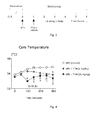
- TTM was administered every 20 minutes at increasing doses (0.2, 2 and 20 mg/kg). Core temperature was measured at the beginning of the experiment (i.e. before TTM administration) and 20 minutes after the last dose of the drug (20 mg/kg). A decrease in core temperature was introduced by TTM ( Fig. 2 ), compared to animals receiving vehicle (saline).
- Endotoxaemia (which typically causes an increase in core temperature) was induced by intravenous administration of lipopolysaccharide (20 mg/kg, Klebsiella pneumonia ).
- TTM or vehicle was administered 1 h following the onset of endotoxaemia ( Fig. 3 ; protocol).
- Administration of TTM ablated the hyperthermic response to endotoxin observed in control animals and induced significant hypothermia at the highest dose (20 mg/kg) ( Fig. 4 ).
Landscapes
- Health & Medical Sciences (AREA)
- Pharmacology & Pharmacy (AREA)
- Veterinary Medicine (AREA)
- Public Health (AREA)
- Chemical & Material Sciences (AREA)
- General Health & Medical Sciences (AREA)
- Medicinal Chemistry (AREA)
- Animal Behavior & Ethology (AREA)
- Life Sciences & Earth Sciences (AREA)
- Engineering & Computer Science (AREA)
- Bioinformatics & Cheminformatics (AREA)
- General Chemical & Material Sciences (AREA)
- Nuclear Medicine, Radiotherapy & Molecular Imaging (AREA)
- Chemical Kinetics & Catalysis (AREA)
- Organic Chemistry (AREA)
- Inorganic Chemistry (AREA)
- Hematology (AREA)
- Diabetes (AREA)
- Cardiology (AREA)
- Heart & Thoracic Surgery (AREA)
- Urology & Nephrology (AREA)
- Epidemiology (AREA)
- Vascular Medicine (AREA)
- Neurology (AREA)
- Neurosurgery (AREA)
- Biomedical Technology (AREA)
- Surgery (AREA)
- Pharmaceuticals Containing Other Organic And Inorganic Compounds (AREA)
- Medicinal Preparation (AREA)
- Acyclic And Carbocyclic Compounds In Medicinal Compositions (AREA)
Abstract
Description
- This invention relates to therapy, and in particular to the use of a known compound in the treatment of patients that have undergone severe injury or are in intensive care.
- Experimental evidence suggests that hypothermia may be beneficial in shock by reducing organ metabolism and increasing the tolerance to ischaemia. Wu et al., J Trauma 2002;53:654-62, compared regional (gut) and systemic hypothermia on survival in a rat haemorrhage model. They found that inducing systemic hypothermia increased 72 h survival time (100%) compared with regional hypothermia (25%) and normothermia (0%). In a follow-up study, the same group, in Wu et al., Crit Care Med 2003;31:195-202, showed that hepatic injury was reduced.
- Childs et al., J Trauma 2005;58:271-7 show that hypothermia protects against microvascular barrier dysfunction and reactive oxygen species production. Ning et al., Am J Physiol Heart Circ Physiol 2003;285:H212-H219, showed improved myocardial performance in isolated rabbit hearts subjected to hypoxia and reoxygenation during hypothermia compared with normothermic controls. Those under hypothermic conditions recovered better in terms of decreased coronary flow, oxygen consumption and developed pressure.
- In a rodent model of experimental sepsis induced by caecal ligation and puncture, survival time was inversely proportional to body temperature from 32-42°C; see L'Her et al., Crit Care Med 2006;34:2621-3. The utility of hypothermia has also been demonstrated clinically. Hypothermic circulatory arrest is used in some forms of vascular surgery such as aortic arch repair to decrease metabolism and protect against cerebral ischaemia; see Haverich and Hagl., J Thorac Cardiovasc Surg 2003;125:460-2.
- In human sepsis associated with acute respiratory distress syndrome, a subset of patients was subjected to hypothermia as a 'last resort'; hypothermia dramatically decreased survival compared with normothermic septic patients (100 vs 67%); see Villar and Slutsky, Resuscitation 1993;26:183-92.
- Tetrathiomolybdate (TTM) is known as a therapeutic agent. Brewer et al, Arch Neurol 2006; 63:521-7, discloses that ammonium TTM can be used to treat Wilson's disease, and that it preserves neurological function in patients who present with neurologic disease.
- Brewer et al, Clin. Cancer Res 2000; 6:1-10, reports that TTM may be suitable in therapy of metastatic disease. Its utility apparently derives from its anti-copper activity.
- According to the present invention, TTM is for use in therapy where reduced core temperature is desirable. The therapy is thus, for example, potentially beneficial in cases of shock such as severe hypoxemia and haemorrhage, trauma (e.g. head injury), in reperfusion injury conditions (such as haemorrhage-reperfusion injury and in elective vascular and cardiac surgery surgery involving interruption and re-institution of blood flow). This treatment may be applicable both in hospital or en route, e.g. in an ambulance. Clinical applications of particular interest are those surrounding ischaemia-reperfusion injury conditions such as those involving the brain (e.g. stroke, head injury), heart (e.g. during coronary artery bypass surgery and other types of open heart surgery, revascularisation after coronary artery thrombosis), and leg and kidney (e.g. following aortic cross-clamping for peripheral vascular surgery).
- This discovery is based on a showing that, during intravenous infusion of TTM into awake rats, there was a reduction in metabolism reflected by a decrease in oxygen consumption and carbon dioxide production. Notably, conscious level was maintained in the awake animals so this effect was not due to sedation. In anaesthetised rats administration of TTM induced a fall in core temperature. Importantly, it was also observed that TTM ablates the hyperthermic response to endotoxin and even causes hypothermia when administered at 20 mg/kg in endotoxaemic animals.
-
-
Figure 1 : Metabolic effects of TTM. Data show change in oxygen consumption and carbon dioxide production from baseline values. -
Figure 2 : Core temperature at the beginning and end of an experiment where TTM was administered at increasing doses every 20 minutes. -
Figure 3 : Protocol for endotoxaemia experiments. ETX is endotoxin, TTM is tetrathiomolybdate. Fluids: a 50:50 mix of colloid and crystalloid plus glucose. TTM was diluted in normal saline and administered as a 4 ml/kg bolus. -
Figure 4 : Core temperature during endotoxaemia. TTM or vehicle was administered 60 minutes following the onset of endotoxaemia. - TTM may be used as such or in the form of a pharmaceutically acceptable salt. Salts include pharmaceutically acceptable salts, for example acid addition salts derived from inorganic or organic acids, such as hydrochlorides, hydrobromides, p-toluenesulphonates, phosphates, sulphates, perchlorates, acetates, trifluoroacetates, propionates, citrates, malonates, succinates, lactates, oxalates, tartrates and benzoates.
- Salts may also be formed with bases. Such salts include salts derived from inorganic or organic bases, for example alkali metal salts such as magnesium or calcium salts, and organic amine salts such as morpholine, piperidine, dimethylamine or diethylamine salts. A particular salt is ammonium TTM.
- A typical dosage is 2 to 20 mg/kg, administered one or more times per day or by continuous infusion. The drug is preferably administered via the intravenous route. It will be understood, however, that the specific dose level for any particular patient will depend upon a variety of factors including the age, body weight, general health, sex, diet, time of administration, drug combination and the severity of the particular condition undergoing therapy.
- A pharmaceutical composition containing the active ingredient may be in any suitable form, for example aqueous or non-aqueous solutions or suspensions, dispersible powders or granules, transdermal or transmucosal patches, creams, ointments or emulsions.
- The pharmaceutical composition may be in the form of a sterile injectable aqueous or non-aqueous (e.g. oleaginous) solution or suspension. The sterile injectable preparation may also be in a sterile injectable solution or suspension in a non-toxic parenterally-acceptable diluent or solvent, for example as a solution in 1,3-butanediol. Among the acceptable vehicles and solvents that may be employed are water, phosphate buffer solution, Ringer's solution and isotonic sodium chloride solution. In addition, sterile, fixed oils are conventionally employed as a solvent or suspending medium. For this purpose, any bland fixed oil may be employed, including synthetic mono- or diglycerides. In addition, fatty acids such as oleic acid find use in the preparation of injectables. Suspensions may be formulated according to the known art using those suitable dispersing or wetting agents and suspending agents which have been mentioned elsewhere.
- Aqueous suspensions contain the active ingredient in admixture with excipients suitable for the manufacture of aqueous suspensions. Such excipients are suspending agents, for example sodium carboxymethylcellulose, methylcellulose, hydroxypropylmethylcellulose, sodium alginate, polyvinylpyrrolidone, gum tragacanth and gum acacia; dispersing or wetting agents such as a naturally occurring phosphatide, for example lecithin, or condensation products of an alkylene oxide with fatty acids, for example polyoxyethylene stearate, or condensation products of ethylene oxide with long chain aliphatic alcohols, for example heptadecaethyleneoxycetanol, or condensation products of ethylene oxide with partial esters derived from fatty acids and a hexitol such a polyoxyethylene with partial esters derived from fatty acids and hexitol anhydrides, for example polyoxyethylene sorbitan monooleate. The aqueous suspensions may also contain one or more preservatives, for example ethyl or n-propyl p-hydroxybenzoate, one or more colouring agents, one or more flavouring agents, and one or more sweetening agents, such as sucrose or saccharin.
- Non-aqueous (i.e. oily) suspensions may be formulated by suspending the active ingredient in a vegetable oil, for example arachis oil, olive oil, sesame oil or coconut oil, or in a mineral oil such as liquid paraffin. The oily suspensions may contain a thickening agent, for example beeswax, hard paraffin or cetyl alcohol. These compositions may be preserved by the addition of an anti-oxidant such as ascorbic acid.
- Dispersible powders and granules suitable for preparation of an aqueous suspension by the addition of water provide the active ingredient in admixture with a dispersing or wetting agent, suspending agent and one or more preservatives. Suitable dispersing or wetting agents and suspending agents are known.
- The pharmaceutical compositions of the invention may also be in the form of oil-in-water emulsions. The oily phase may be a vegetable oil, for example olive oil or arachis oil, or a mineral oil, for example liquid paraffin or mixtures of these. Suitable emulsifying agents may be naturally occurring gums, for example gum acacia or gum tragacanth, naturally occurring phosphatides, for example soya bean, lecithin, and esters or partial esters derived from fatty acids and hexitol anhydrides, for example sorbitan monooleate and condensation products of the said partial esters with ethylene oxide, for example polyoxyethylene sorbitan monooleate.
- The active agent may also be administered in the form of suppositories for rectal administration of the drug. These compositions can be prepared by mixing the drug with a suitable non-irritating excipient which is solid at ordinary temperatures but liquid at the rectal temperature and will therefore melt in the rectum to release the drug. Such materials are cocoa butter and polyethylene glycols.
- For topical delivery, transdermal and transmucosal patches, creams, ointments, jellies, solutions or suspensions may be employed. For sub-lingual delivery, fast dissolving tablet formulations may be used, as well as a number of the presentations described above. For oral administration, the drug may be administered as tablets, capsules or liquids.
- The following studies provides evidence on which the present invention is based.
- Male Wistar rats (300 g) were anaesthetised and instrumented with a venous line for drug administration. The animals were placed into a metabolic cart and allowed to recover from anaesthesia. After 2 h, TTM was administered i.v. hourly at increasing doses (2, 5, 10 and 20 mg/kg). Oxygen consumption and carbon dioxide production were continually monitored for the duration of the experiment. TTM induced a clear drop in oxygen consumption and carbon dioxide production at 10 and 20 mg/kg (
Fig. 1 ), compared to time-matched control animals (sham) receiving only vehicle (saline). - Animals were anaesthetised and instrumented as above. Under continuous anaesthesia, TTM was administered every 20 minutes at increasing doses (0.2, 2 and 20 mg/kg). Core temperature was measured at the beginning of the experiment (i.e. before TTM administration) and 20 minutes after the last dose of the drug (20 mg/kg). A decrease in core temperature was introduced by TTM (
Fig. 2 ), compared to animals receiving vehicle (saline). - Animals received a venous line for drug administration under anaesthesia. Endotoxaemia (which typically causes an increase in core temperature) was induced by intravenous administration of lipopolysaccharide (20 mg/kg, Klebsiella pneumonia). TTM or vehicle was administered 1 h following the onset of endotoxaemia (
Fig. 3 ; protocol). Administration of TTM ablated the hyperthermic response to endotoxin observed in control animals and induced significant hypothermia at the highest dose (20 mg/kg) (Fig. 4 ).
Claims (8)
- Tetrathiomolybdate (TTM) for use in therapy of ischemia-reperfusion injury, wherein the injury is of the heart.
- TTM according to claim 1, wherein the subject of therapy is undergoing coronary artery bypass surgery.
- TTM according to claim 1, wherein the subject of therapy is undergoing open heart surgery.
- TTM according to claim 1, wherein the subject of therapy is undergoing revascularisation following coronary artery thrombosis.
- TTM according to any preceding claim, wherein the subject of therapy is in intensive care.
- TTM according to any preceding claim, in the form of an aqueous or non-aqueous solution or suspension.
- TTM according to claim 6, for intravenous administration.
- TTM according to claim 6 or claim 7, for administration by continuous infusion.
Priority Applications (2)
| Application Number | Priority Date | Filing Date | Title |
|---|---|---|---|
| SI201130385T SI2556834T1 (en) | 2010-03-30 | 2011-03-30 | Tetrathiomolybdate for use in the treatment of ischemia-reperfusion injury of the heart |
| PL12189630T PL2556834T3 (en) | 2010-03-30 | 2011-03-30 | Tetrathiomolybdate for use in the treatment of ischemia-reperfusion injury of the heart |
Applications Claiming Priority (2)
| Application Number | Priority Date | Filing Date | Title |
|---|---|---|---|
| GBGB1005394.0A GB201005394D0 (en) | 2010-03-30 | 2010-03-30 | Therapy |
| EP11716626.4A EP2552461B1 (en) | 2010-03-30 | 2011-03-30 | Tetrathiomolybdate for use in the treatment of ischemia-reperfusion injury of the head or brain |
Related Parent Applications (3)
| Application Number | Title | Priority Date | Filing Date |
|---|---|---|---|
| EP11716626.4A Division-Into EP2552461B1 (en) | 2010-03-30 | 2011-03-30 | Tetrathiomolybdate for use in the treatment of ischemia-reperfusion injury of the head or brain |
| EP11716626.4A Division EP2552461B1 (en) | 2010-03-30 | 2011-03-30 | Tetrathiomolybdate for use in the treatment of ischemia-reperfusion injury of the head or brain |
| EP11716626.4 Division | 2011-03-30 |
Publications (2)
| Publication Number | Publication Date |
|---|---|
| EP2556834A1 true EP2556834A1 (en) | 2013-02-13 |
| EP2556834B1 EP2556834B1 (en) | 2014-11-26 |
Family
ID=42228650
Family Applications (3)
| Application Number | Title | Priority Date | Filing Date |
|---|---|---|---|
| EP11716626.4A Active EP2552461B1 (en) | 2010-03-30 | 2011-03-30 | Tetrathiomolybdate for use in the treatment of ischemia-reperfusion injury of the head or brain |
| EP14194820.8A Active EP2842562B1 (en) | 2010-03-30 | 2011-03-30 | Tetrathiomolybdate for use in the therapy of ischemia-reperfusion injury of the kidney |
| EP12189630.2A Active EP2556834B1 (en) | 2010-03-30 | 2011-03-30 | Tetrathiomolybdate for use in the treatment of ischemia-reperfusion injury of the heart |
Family Applications Before (2)
| Application Number | Title | Priority Date | Filing Date |
|---|---|---|---|
| EP11716626.4A Active EP2552461B1 (en) | 2010-03-30 | 2011-03-30 | Tetrathiomolybdate for use in the treatment of ischemia-reperfusion injury of the head or brain |
| EP14194820.8A Active EP2842562B1 (en) | 2010-03-30 | 2011-03-30 | Tetrathiomolybdate for use in the therapy of ischemia-reperfusion injury of the kidney |
Country Status (12)
| Country | Link |
|---|---|
| EP (3) | EP2552461B1 (en) |
| JP (2) | JP5674917B2 (en) |
| CN (1) | CN103096903A (en) |
| BR (1) | BR112012024704A8 (en) |
| DK (3) | DK2842562T3 (en) |
| ES (3) | ES2529115T3 (en) |
| GB (1) | GB201005394D0 (en) |
| HU (1) | HUE024155T2 (en) |
| PL (2) | PL2552461T3 (en) |
| PT (2) | PT2552461E (en) |
| SI (2) | SI2552461T1 (en) |
| WO (1) | WO2011121354A1 (en) |
Families Citing this family (4)
| Publication number | Priority date | Publication date | Assignee | Title |
|---|---|---|---|---|
| US10478455B2 (en) | 2010-03-30 | 2019-11-19 | Ucl Business Ltd | Therapeutic use of tetrathiomolybdate |
| EP2578221A1 (en) * | 2011-10-04 | 2013-04-10 | Magnus Intellectual Property Ltd. | The therapeutic use of tetrathiomolybdate |
| WO2017019892A1 (en) * | 2015-07-28 | 2017-02-02 | Insmed Incorporated | Compositions comprising copper chelators and methods of use thereof for treating vasculopathies |
| DK3529231T3 (en) | 2016-10-21 | 2021-05-31 | Ucl Business Ltd | Crystalline diethylamine trethiomolybdate and pharmaceutical uses thereof |
Citations (2)
| Publication number | Priority date | Publication date | Assignee | Title |
|---|---|---|---|---|
| WO2004017957A1 (en) * | 2002-08-20 | 2004-03-04 | Protemix Corporation Limited | Preventing and/or treating cardiovascular disease and/or associated heart failure |
| WO2008100653A2 (en) * | 2007-01-08 | 2008-08-21 | The Regents Of The University Of Michigan | Copper lowering treatment of cardiac disease |
Family Cites Families (6)
| Publication number | Priority date | Publication date | Assignee | Title |
|---|---|---|---|---|
| US6703050B1 (en) * | 1998-09-04 | 2004-03-09 | The Regents Of The University Of Michigan | Methods and compositions for the prevention or treatment of cancer |
| ES2188261T3 (en) * | 1998-09-04 | 2003-06-16 | Univ Michigan | TIOMOLIBDATE ASSOCIATED WITH, AT LEAST, A CARBON HYDRATION AND ITS USE IN THE PREVENTION OR TREATMENT OF CHARACTERIZED DISEASES BY AN OPENING VACULARIZATION, SUCH AS CANCER, MACULAR DEGENERATION, SMOKE TYPE, REUMATOID ARTHRITIS. |
| AU2003222513A1 (en) * | 2002-03-08 | 2003-09-22 | Protemix Corporation Limited | Preventing and/or treating vascular disease, cardiomyopathy and/or associated heart failure |
| CA2490541A1 (en) * | 2002-05-24 | 2003-12-04 | The Regents Of The University Of Michigan | Copper lowering treatment of inflammatory and fibrotic diseases |
| US7618615B2 (en) * | 2004-08-13 | 2009-11-17 | Healthpartners Research Foundation | Methods for providing neuroprotection for the animal central nervous system against neurodegeneration caused by ischemia |
| WO2007084818A2 (en) * | 2006-01-10 | 2007-07-26 | Pipex, Inc. | Pharmaceutical compositions and methods to achieve and maintain a targeted and stable copper status and prevent and treat copper-related central nervous system diseases |
-
2010
- 2010-03-30 GB GBGB1005394.0A patent/GB201005394D0/en not_active Ceased
-
2011
- 2011-03-30 PT PT117166264T patent/PT2552461E/en unknown
- 2011-03-30 JP JP2013501947A patent/JP5674917B2/en not_active Expired - Fee Related
- 2011-03-30 CN CN2011800168365A patent/CN103096903A/en active Pending
- 2011-03-30 ES ES11716626.4T patent/ES2529115T3/en active Active
- 2011-03-30 EP EP11716626.4A patent/EP2552461B1/en active Active
- 2011-03-30 ES ES14194820.8T patent/ES2573809T3/en active Active
- 2011-03-30 EP EP14194820.8A patent/EP2842562B1/en active Active
- 2011-03-30 PL PL11716626T patent/PL2552461T3/en unknown
- 2011-03-30 BR BR112012024704A patent/BR112012024704A8/en not_active Application Discontinuation
- 2011-03-30 SI SI201130380T patent/SI2552461T1/en unknown
- 2011-03-30 PT PT121896302T patent/PT2556834E/en unknown
- 2011-03-30 DK DK14194820.8T patent/DK2842562T3/en active
- 2011-03-30 PL PL12189630T patent/PL2556834T3/en unknown
- 2011-03-30 ES ES12189630.2T patent/ES2529225T3/en active Active
- 2011-03-30 WO PCT/GB2011/050653 patent/WO2011121354A1/en not_active Ceased
- 2011-03-30 DK DK12189630.2T patent/DK2556834T3/en active
- 2011-03-30 SI SI201130385T patent/SI2556834T1/en unknown
- 2011-03-30 HU HUE12189630A patent/HUE024155T2/en unknown
- 2011-03-30 EP EP12189630.2A patent/EP2556834B1/en active Active
- 2011-03-30 DK DK11716626.4T patent/DK2552461T3/en active
-
2014
- 2014-12-22 JP JP2014258628A patent/JP6038867B2/en not_active Expired - Fee Related
Patent Citations (2)
| Publication number | Priority date | Publication date | Assignee | Title |
|---|---|---|---|---|
| WO2004017957A1 (en) * | 2002-08-20 | 2004-03-04 | Protemix Corporation Limited | Preventing and/or treating cardiovascular disease and/or associated heart failure |
| WO2008100653A2 (en) * | 2007-01-08 | 2008-08-21 | The Regents Of The University Of Michigan | Copper lowering treatment of cardiac disease |
Non-Patent Citations (11)
| Title |
|---|
| BREWER ET AL., ARCH NEUROL, vol. 63, 2006, pages 521 - 7 |
| BREWER ET AL., CLIN. CANCER RES, vol. 6, 2000, pages 1 - 10 |
| CHILDS ET AL., J TRAUMA, vol. 58, 2005, pages 271 - 7 |
| HAVERICH; HAGL., J THORAC CARDIOVASC SURG, vol. 125, 2003, pages 460 - 2 |
| HOU ET AL: "Tetrathiomolybdate protects against cardiac damage by doxorubicin in mice", JOURNAL OF LABORATORY AND CLINICAL MEDICINE, MOSBY, INC, US, vol. 146, no. 5, 1 November 2005 (2005-11-01), pages 299 - 303, XP005119485, ISSN: 0022-2143, DOI: 10.1016/J.LAB.2005.07.004 * |
| L'HER ET AL., CRIT CARE MED, vol. 34, 2006, pages 2621 - 3 |
| MANDINOV L ET AL: "Inhibition of in-stent restenosis by oral copper chelation in porcine coronary arteries.", AMERICAN JOURNAL OF PHYSIOLOGY. HEART AND CIRCULATORY PHYSIOLOGY DEC 2006, vol. 291, no. 6, December 2006 (2006-12-01), pages H2692 - H2697, XP002687739, ISSN: 0363-6135 * |
| NING ET AL., AM J PHYSIOL HEART CIRC PHYSIOL, vol. 285, 2003, pages H212 - H219 |
| VILLAR; SLUTSKY, RESUSCITATION, vol. 26, 1993, pages 183 - 92 |
| WU ET AL., CRIT CARE MED, vol. 31, 2003, pages 195 - 202 |
| WU ET AL., J TRAUMA, vol. 53, 2002, pages 654 - 62 |
Also Published As
| Publication number | Publication date |
|---|---|
| JP2013523709A (en) | 2013-06-17 |
| EP2552461B1 (en) | 2014-12-17 |
| BR112012024704A8 (en) | 2021-03-23 |
| SI2556834T1 (en) | 2015-05-29 |
| EP2842562A1 (en) | 2015-03-04 |
| ES2529115T3 (en) | 2015-02-17 |
| PL2556834T3 (en) | 2015-04-30 |
| ES2573809T3 (en) | 2016-06-10 |
| PT2556834E (en) | 2015-02-10 |
| ES2529225T3 (en) | 2015-02-18 |
| JP2015057450A (en) | 2015-03-26 |
| PT2552461E (en) | 2015-02-10 |
| JP6038867B2 (en) | 2016-12-07 |
| JP5674917B2 (en) | 2015-02-25 |
| HUE024155T2 (en) | 2016-02-29 |
| DK2552461T3 (en) | 2015-02-09 |
| CN103096903A (en) | 2013-05-08 |
| GB201005394D0 (en) | 2010-05-12 |
| EP2556834B1 (en) | 2014-11-26 |
| BR112012024704A2 (en) | 2021-03-02 |
| DK2556834T3 (en) | 2015-02-09 |
| EP2842562B1 (en) | 2016-04-27 |
| DK2842562T3 (en) | 2016-06-06 |
| EP2552461A1 (en) | 2013-02-06 |
| WO2011121354A1 (en) | 2011-10-06 |
| SI2552461T1 (en) | 2015-03-31 |
| PL2552461T3 (en) | 2015-04-30 |
Similar Documents
| Publication | Publication Date | Title |
|---|---|---|
| JP6096299B2 (en) | Methods and compositions for hypotension resuscitation | |
| Nobile-Orazio et al. | Cerebral ischaemia after nifedipine treatment | |
| EP2842562B1 (en) | Tetrathiomolybdate for use in the therapy of ischemia-reperfusion injury of the kidney | |
| WO2009021404A1 (en) | (1s, 2s, 3s, 4r)-3-[(1s)-1-acetylamino-2-ethyl-butyl]-4-guanidino-2- hydroxyl-cyclopentyl-1-carboxylic acid hydrates and pharmaceutical uses thereof | |
| JP5680412B2 (en) | Use of Leonurine and compositions thereof | |
| AU2009223010B2 (en) | Apoaequorin-containing compositions and methods of using same | |
| JP2002534379A (en) | Novel bretylium compositions and kits and their use in the prevention and treatment of cardiovascular conditions | |
| EP2578221A1 (en) | The therapeutic use of tetrathiomolybdate | |
| WO2023020178A1 (en) | Use of cell-free fat extract for treating vaginal atrophy | |
| US10478455B2 (en) | Therapeutic use of tetrathiomolybdate | |
| CN109966290A (en) | Application of CID1067700 in the preparation of medicine for preventing and/or treating cerebrovascular disease and its pharmaceutical composition | |
| US6197818B1 (en) | Drug for treating diabetic nephrosis | |
| KR20240042402A (en) | Subcutaneous preparations and methods for treating edema refractory to oral diuretics | |
| JP2024529777A (en) | Pharmaceutical compositions and applications of ARNi and calcium ion antagonists | |
| WO2022183493A1 (en) | Application of polyphenol compound | |
| CN110755440B (en) | Application of ligustrazine and mannuronic acid composition in preparing medicine for treating thrombotic diseases and nervous system diseases | |
| US20240299461A1 (en) | Cell-free fat extract for treating ovarian insufficiency | |
| KR102405111B1 (en) | Method for maintaining iron homeostasis using shogaol | |
| JP2007500224A (en) | Method for alleviating side effects of IL-2 | |
| CN116549466A (en) | Application of acteoside compound in preparation of anti-arterial thrombosis medicine | |
| Shafiei et al. | A Case of Resistant Hypomagnesemia | |
| Jiang et al. | Hemorrhagic shock following hypoxemia is not a clinical situation | |
| McLAURIN | EFFECTS OF HEAD INJURY ON METABOLISM | |
| MD118Y (en) | Method for treating the chronic obstructive pulmonary disease to persons of elderly age | |
| WO2015176167A1 (en) | Argon is a mu opioid receptor antagonist |
Legal Events
| Date | Code | Title | Description |
|---|---|---|---|
| PUAI | Public reference made under article 153(3) epc to a published international application that has entered the european phase |
Free format text: ORIGINAL CODE: 0009012 |
|
| AC | Divisional application: reference to earlier application |
Ref document number: 2552461 Country of ref document: EP Kind code of ref document: P |
|
| AK | Designated contracting states |
Kind code of ref document: A1 Designated state(s): AL AT BE BG CH CY CZ DE DK EE ES FI FR GB GR HR HU IE IS IT LI LT LU LV MC MK MT NL NO PL PT RO RS SE SI SK SM TR |
|
| AX | Request for extension of the european patent |
Extension state: BA ME |
|
| 17P | Request for examination filed |
Effective date: 20130813 |
|
| RBV | Designated contracting states (corrected) |
Designated state(s): AL AT BE BG CH CY CZ DE DK EE ES FI FR GB GR HR HU IE IS IT LI LT LU LV MC MK MT NL NO PL PT RO RS SE SI SK SM TR |
|
| 17Q | First examination report despatched |
Effective date: 20131003 |
|
| GRAP | Despatch of communication of intention to grant a patent |
Free format text: ORIGINAL CODE: EPIDOSNIGR1 |
|
| RIC1 | Information provided on ipc code assigned before grant |
Ipc: A61K 33/24 20060101AFI20140527BHEP Ipc: A61P 9/00 20060101ALI20140527BHEP Ipc: A61P 41/00 20060101ALI20140527BHEP Ipc: A61P 43/00 20060101ALI20140527BHEP Ipc: A61P 9/10 20060101ALI20140527BHEP |
|
| INTG | Intention to grant announced |
Effective date: 20140610 |
|
| GRAS | Grant fee paid |
Free format text: ORIGINAL CODE: EPIDOSNIGR3 |
|
| GRAA | (expected) grant |
Free format text: ORIGINAL CODE: 0009210 |
|
| AC | Divisional application: reference to earlier application |
Ref document number: 2552461 Country of ref document: EP Kind code of ref document: P |
|
| AK | Designated contracting states |
Kind code of ref document: B1 Designated state(s): AL AT BE BG CH CY CZ DE DK EE ES FI FR GB GR HR HU IE IS IT LI LT LU LV MC MK MT NL NO PL PT RO RS SE SI SK SM TR |
|
| REG | Reference to a national code |
Ref country code: GB Ref legal event code: FG4D |
|
| REG | Reference to a national code |
Ref country code: CH Ref legal event code: EP |
|
| REG | Reference to a national code |
Ref country code: AT Ref legal event code: REF Ref document number: 697788 Country of ref document: AT Kind code of ref document: T Effective date: 20141215 |
|
| RAP2 | Party data changed (patent owner data changed or rights of a patent transferred) |
Owner name: MARTIN, JOHN FRANCIS Owner name: SINGER, MERVYN Owner name: DYSON, ALEX PETER Owner name: MAGNUS TTM IC |
|
| REG | Reference to a national code |
Ref country code: IE Ref legal event code: FG4D |
|
| REG | Reference to a national code |
Ref country code: DE Ref legal event code: R096 Ref document number: 602011011821 Country of ref document: DE Effective date: 20150108 |
|
| REG | Reference to a national code |
Ref country code: DK Ref legal event code: T3 Effective date: 20150202 |
|
| REG | Reference to a national code |
Ref country code: PT Ref legal event code: SC4A Free format text: AVAILABILITY OF NATIONAL TRANSLATION Effective date: 20150203 |
|
| REG | Reference to a national code |
Ref country code: NL Ref legal event code: T3 |
|
| REG | Reference to a national code |
Ref country code: SE Ref legal event code: TRGR |
|
| REG | Reference to a national code |
Ref country code: ES Ref legal event code: FG2A Ref document number: 2529225 Country of ref document: ES Kind code of ref document: T3 Effective date: 20150218 |
|
| REG | Reference to a national code |
Ref country code: NO Ref legal event code: T2 Effective date: 20141126 |
|
| PG25 | Lapsed in a contracting state [announced via postgrant information from national office to epo] |
Ref country code: IS Free format text: LAPSE BECAUSE OF FAILURE TO SUBMIT A TRANSLATION OF THE DESCRIPTION OR TO PAY THE FEE WITHIN THE PRESCRIBED TIME-LIMIT Effective date: 20150326 |
|
| REG | Reference to a national code |
Ref country code: PL Ref legal event code: T3 |
|
| PG25 | Lapsed in a contracting state [announced via postgrant information from national office to epo] |
Ref country code: GR Free format text: LAPSE BECAUSE OF FAILURE TO SUBMIT A TRANSLATION OF THE DESCRIPTION OR TO PAY THE FEE WITHIN THE PRESCRIBED TIME-LIMIT Effective date: 20150227 Ref country code: RS Free format text: LAPSE BECAUSE OF FAILURE TO SUBMIT A TRANSLATION OF THE DESCRIPTION OR TO PAY THE FEE WITHIN THE PRESCRIBED TIME-LIMIT Effective date: 20141126 Ref country code: HR Free format text: LAPSE BECAUSE OF FAILURE TO SUBMIT A TRANSLATION OF THE DESCRIPTION OR TO PAY THE FEE WITHIN THE PRESCRIBED TIME-LIMIT Effective date: 20141126 Ref country code: LV Free format text: LAPSE BECAUSE OF FAILURE TO SUBMIT A TRANSLATION OF THE DESCRIPTION OR TO PAY THE FEE WITHIN THE PRESCRIBED TIME-LIMIT Effective date: 20141126 Ref country code: CY Free format text: LAPSE BECAUSE OF FAILURE TO SUBMIT A TRANSLATION OF THE DESCRIPTION OR TO PAY THE FEE WITHIN THE PRESCRIBED TIME-LIMIT Effective date: 20141126 |
|
| REG | Reference to a national code |
Ref country code: SK Ref legal event code: T3 Ref document number: E 18456 Country of ref document: SK |
|
| PG25 | Lapsed in a contracting state [announced via postgrant information from national office to epo] |
Ref country code: RO Free format text: LAPSE BECAUSE OF FAILURE TO SUBMIT A TRANSLATION OF THE DESCRIPTION OR TO PAY THE FEE WITHIN THE PRESCRIBED TIME-LIMIT Effective date: 20141126 Ref country code: EE Free format text: LAPSE BECAUSE OF FAILURE TO SUBMIT A TRANSLATION OF THE DESCRIPTION OR TO PAY THE FEE WITHIN THE PRESCRIBED TIME-LIMIT Effective date: 20141126 |
|
| REG | Reference to a national code |
Ref country code: DE Ref legal event code: R097 Ref document number: 602011011821 Country of ref document: DE |
|
| RAP2 | Party data changed (patent owner data changed or rights of a patent transferred) |
Owner name: MAGNUS OXYGEN LIMITED |
|
| PLBE | No opposition filed within time limit |
Free format text: ORIGINAL CODE: 0009261 |
|
| STAA | Information on the status of an ep patent application or granted ep patent |
Free format text: STATUS: NO OPPOSITION FILED WITHIN TIME LIMIT |
|
| PG25 | Lapsed in a contracting state [announced via postgrant information from national office to epo] |
Ref country code: MC Free format text: LAPSE BECAUSE OF FAILURE TO SUBMIT A TRANSLATION OF THE DESCRIPTION OR TO PAY THE FEE WITHIN THE PRESCRIBED TIME-LIMIT Effective date: 20141126 Ref country code: LU Free format text: LAPSE BECAUSE OF FAILURE TO SUBMIT A TRANSLATION OF THE DESCRIPTION OR TO PAY THE FEE WITHIN THE PRESCRIBED TIME-LIMIT Effective date: 20150330 |
|
| 26N | No opposition filed |
Effective date: 20150827 |
|
| REG | Reference to a national code |
Ref country code: DE Ref legal event code: R081 Ref document number: 602011011821 Country of ref document: DE Owner name: MAGNUS OXYGEN LIMITED, GB Free format text: FORMER OWNER: MAGNUS TTM IC, ST. HELIER, JERSEY, GB |
|
| REG | Reference to a national code |
Ref country code: PT Ref legal event code: PC4A Owner name: MAGNUS OXYGEN LIMITED, GB Effective date: 20151126 |
|
| REG | Reference to a national code |
Ref country code: GB Ref legal event code: 732E Free format text: REGISTERED BETWEEN 20151126 AND 20151202 |
|
| REG | Reference to a national code |
Ref country code: IE Ref legal event code: MM4A |
|
| PG25 | Lapsed in a contracting state [announced via postgrant information from national office to epo] |
Ref country code: IE Free format text: LAPSE BECAUSE OF NON-PAYMENT OF DUE FEES Effective date: 20150330 |
|
| REG | Reference to a national code |
Ref country code: FR Ref legal event code: PLFP Year of fee payment: 6 |
|
| REG | Reference to a national code |
Ref country code: HU Ref legal event code: AG4A Ref document number: E024155 Country of ref document: HU |
|
| REG | Reference to a national code |
Ref country code: NL Ref legal event code: PD Owner name: MAGNUS OXYGEN LIMITED; GB Free format text: DETAILS ASSIGNMENT: VERANDERING VAN EIGENAAR(S), OVERDRACHT; FORMER OWNER NAME: MAGNUS TTM IC Effective date: 20151210 |
|
| REG | Reference to a national code |
Ref country code: AT Ref legal event code: UEP Ref document number: 697788 Country of ref document: AT Kind code of ref document: T Effective date: 20141126 |
|
| REG | Reference to a national code |
Ref country code: HU Ref legal event code: GB9C Owner name: MAGNUS OXYGEN LIMITED, GB Free format text: FORMER OWNER(S): MAGNUS TTM IC, GB; SINGER, MERVYN, GB; MARTIN, JOHN FRANCIS, GB; DYSON, ALEX PETER, BG |
|
| REG | Reference to a national code |
Ref country code: SI Ref legal event code: SP73 Owner name: MAGNUS OXYGEN LIMITED; GB Effective date: 20160609 |
|
| REG | Reference to a national code |
Ref country code: SK Ref legal event code: PC4A Ref document number: E 18456 Country of ref document: SK Owner name: MAGNUS OXYGEN LIMITED, LONDON, GB Free format text: FORMER OWNER: MAGNUS TTM IC, ST. HELIER, JERSEY, GB; SINGER MERVYN, LONDON, GREATER LONDON, GB; MARTIN JOHN FRANCIS, LONDON, GREATER LONDON, GB; DYSON ALEX PETER, LONDON, GREATER LONDON, GB Effective date: 20160629 |
|
| PG25 | Lapsed in a contracting state [announced via postgrant information from national office to epo] |
Ref country code: MT Free format text: LAPSE BECAUSE OF FAILURE TO SUBMIT A TRANSLATION OF THE DESCRIPTION OR TO PAY THE FEE WITHIN THE PRESCRIBED TIME-LIMIT Effective date: 20141126 |
|
| REG | Reference to a national code |
Ref country code: FR Ref legal event code: PLFP Year of fee payment: 7 |
|
| PG25 | Lapsed in a contracting state [announced via postgrant information from national office to epo] |
Ref country code: SM Free format text: LAPSE BECAUSE OF FAILURE TO SUBMIT A TRANSLATION OF THE DESCRIPTION OR TO PAY THE FEE WITHIN THE PRESCRIBED TIME-LIMIT Effective date: 20141126 Ref country code: BG Free format text: LAPSE BECAUSE OF FAILURE TO SUBMIT A TRANSLATION OF THE DESCRIPTION OR TO PAY THE FEE WITHIN THE PRESCRIBED TIME-LIMIT Effective date: 20141126 |
|
| REG | Reference to a national code |
Ref country code: FR Ref legal event code: PLFP Year of fee payment: 8 |
|
| PG25 | Lapsed in a contracting state [announced via postgrant information from national office to epo] |
Ref country code: AL Free format text: LAPSE BECAUSE OF FAILURE TO SUBMIT A TRANSLATION OF THE DESCRIPTION OR TO PAY THE FEE WITHIN THE PRESCRIBED TIME-LIMIT Effective date: 20141126 |
|
| PGFP | Annual fee paid to national office [announced via postgrant information from national office to epo] |
Ref country code: LT Payment date: 20220316 Year of fee payment: 12 Ref country code: HU Payment date: 20220320 Year of fee payment: 12 Ref country code: FI Payment date: 20220318 Year of fee payment: 12 Ref country code: DK Payment date: 20220322 Year of fee payment: 12 |
|
| PGFP | Annual fee paid to national office [announced via postgrant information from national office to epo] |
Ref country code: TR Payment date: 20220324 Year of fee payment: 12 Ref country code: SK Payment date: 20220318 Year of fee payment: 12 Ref country code: SE Payment date: 20220225 Year of fee payment: 12 Ref country code: PT Payment date: 20220323 Year of fee payment: 12 Ref country code: PL Payment date: 20220317 Year of fee payment: 12 Ref country code: NO Payment date: 20220317 Year of fee payment: 12 Ref country code: NL Payment date: 20220322 Year of fee payment: 12 Ref country code: MK Payment date: 20220317 Year of fee payment: 12 Ref country code: CZ Payment date: 20220329 Year of fee payment: 12 Ref country code: BE Payment date: 20220322 Year of fee payment: 12 |
|
| PGFP | Annual fee paid to national office [announced via postgrant information from national office to epo] |
Ref country code: SI Payment date: 20220322 Year of fee payment: 12 |
|
| PGFP | Annual fee paid to national office [announced via postgrant information from national office to epo] |
Ref country code: AT Payment date: 20230317 Year of fee payment: 13 |
|
| P01 | Opt-out of the competence of the unified patent court (upc) registered |
Effective date: 20230522 |
|
| P02 | Opt-out of the competence of the unified patent court (upc) changed |
Effective date: 20230526 |
|
| REG | Reference to a national code |
Ref country code: NO Ref legal event code: MMEP |
|
| REG | Reference to a national code |
Ref country code: LT Ref legal event code: MM4D Effective date: 20230330 |
|
| PG25 | Lapsed in a contracting state [announced via postgrant information from national office to epo] |
Ref country code: FI Free format text: LAPSE BECAUSE OF NON-PAYMENT OF DUE FEES Effective date: 20230330 Ref country code: CZ Free format text: LAPSE BECAUSE OF NON-PAYMENT OF DUE FEES Effective date: 20230330 |
|
| REG | Reference to a national code |
Ref country code: SE Ref legal event code: EUG |
|
| REG | Reference to a national code |
Ref country code: DK Ref legal event code: EBP Effective date: 20230331 |
|
| REG | Reference to a national code |
Ref country code: NL Ref legal event code: MM Effective date: 20230401 |
|
| REG | Reference to a national code |
Ref country code: SK Ref legal event code: MM4A Ref document number: E 18456 Country of ref document: SK Effective date: 20230330 |
|
| REG | Reference to a national code |
Ref country code: BE Ref legal event code: MM Effective date: 20230331 |
|
| PG25 | Lapsed in a contracting state [announced via postgrant information from national office to epo] |
Ref country code: NL Free format text: LAPSE BECAUSE OF NON-PAYMENT OF DUE FEES Effective date: 20230401 |
|
| REG | Reference to a national code |
Ref country code: SI Ref legal event code: KO00 Effective date: 20231127 |
|
| PG25 | Lapsed in a contracting state [announced via postgrant information from national office to epo] |
Ref country code: SK Free format text: LAPSE BECAUSE OF NON-PAYMENT OF DUE FEES Effective date: 20230330 |
|
| PG25 | Lapsed in a contracting state [announced via postgrant information from national office to epo] |
Ref country code: SK Free format text: LAPSE BECAUSE OF NON-PAYMENT OF DUE FEES Effective date: 20230330 Ref country code: SI Free format text: LAPSE BECAUSE OF NON-PAYMENT OF DUE FEES Effective date: 20230331 Ref country code: SE Free format text: LAPSE BECAUSE OF NON-PAYMENT OF DUE FEES Effective date: 20230331 Ref country code: PT Free format text: LAPSE BECAUSE OF NON-PAYMENT OF DUE FEES Effective date: 20231002 Ref country code: NO Free format text: LAPSE BECAUSE OF NON-PAYMENT OF DUE FEES Effective date: 20230331 Ref country code: LT Free format text: LAPSE BECAUSE OF NON-PAYMENT OF DUE FEES Effective date: 20230330 Ref country code: HU Free format text: LAPSE BECAUSE OF NON-PAYMENT OF DUE FEES Effective date: 20230331 |
|
| PG25 | Lapsed in a contracting state [announced via postgrant information from national office to epo] |
Ref country code: BE Free format text: LAPSE BECAUSE OF NON-PAYMENT OF DUE FEES Effective date: 20230331 |
|
| PG25 | Lapsed in a contracting state [announced via postgrant information from national office to epo] |
Ref country code: DK Free format text: LAPSE BECAUSE OF NON-PAYMENT OF DUE FEES Effective date: 20230331 |
|
| PG25 | Lapsed in a contracting state [announced via postgrant information from national office to epo] |
Ref country code: PL Free format text: LAPSE BECAUSE OF NON-PAYMENT OF DUE FEES Effective date: 20230330 |
|
| PG25 | Lapsed in a contracting state [announced via postgrant information from national office to epo] |
Ref country code: PL Free format text: LAPSE BECAUSE OF NON-PAYMENT OF DUE FEES Effective date: 20230330 |
|
| REG | Reference to a national code |
Ref country code: AT Ref legal event code: MM01 Ref document number: 697788 Country of ref document: AT Kind code of ref document: T Effective date: 20240330 |
|
| PG25 | Lapsed in a contracting state [announced via postgrant information from national office to epo] |
Ref country code: AT Free format text: LAPSE BECAUSE OF NON-PAYMENT OF DUE FEES Effective date: 20240330 |
|
| PG25 | Lapsed in a contracting state [announced via postgrant information from national office to epo] |
Ref country code: AT Free format text: LAPSE BECAUSE OF NON-PAYMENT OF DUE FEES Effective date: 20240330 |
|
| PGFP | Annual fee paid to national office [announced via postgrant information from national office to epo] |
Ref country code: ES Payment date: 20250416 Year of fee payment: 15 |
|
| PGFP | Annual fee paid to national office [announced via postgrant information from national office to epo] |
Ref country code: IT Payment date: 20250327 Year of fee payment: 15 |
|
| PGFP | Annual fee paid to national office [announced via postgrant information from national office to epo] |
Ref country code: CH Payment date: 20250401 Year of fee payment: 15 |
|
| REG | Reference to a national code |
Ref country code: CH Ref legal event code: U11 Free format text: ST27 STATUS EVENT CODE: U-0-0-U10-U11 (AS PROVIDED BY THE NATIONAL OFFICE) Effective date: 20260401 |
|
| PGFP | Annual fee paid to national office [announced via postgrant information from national office to epo] |
Ref country code: GB Payment date: 20260302 Year of fee payment: 16 |
|
| PGFP | Annual fee paid to national office [announced via postgrant information from national office to epo] |
Ref country code: DE Payment date: 20260320 Year of fee payment: 16 |
|
| PGFP | Annual fee paid to national office [announced via postgrant information from national office to epo] |
Ref country code: FR Payment date: 20260324 Year of fee payment: 16 |