EP2556150B1 - Viral particle released after infection of mammalian cells by human cytomegalovirus (hcmv) containing a fusion protein and use thereof - Google Patents
Viral particle released after infection of mammalian cells by human cytomegalovirus (hcmv) containing a fusion protein and use thereof Download PDFInfo
- Publication number
- EP2556150B1 EP2556150B1 EP11713689.5A EP11713689A EP2556150B1 EP 2556150 B1 EP2556150 B1 EP 2556150B1 EP 11713689 A EP11713689 A EP 11713689A EP 2556150 B1 EP2556150 B1 EP 2556150B1
- Authority
- EP
- European Patent Office
- Prior art keywords
- viral particle
- hcmv
- particle according
- heterologous peptide
- viral
- Prior art date
- Legal status (The legal status is an assumption and is not a legal conclusion. Google has not performed a legal analysis and makes no representation as to the accuracy of the status listed.)
- Active
Links
Images



Classifications
-
- C—CHEMISTRY; METALLURGY
- C12—BIOCHEMISTRY; BEER; SPIRITS; WINE; VINEGAR; MICROBIOLOGY; ENZYMOLOGY; MUTATION OR GENETIC ENGINEERING
- C12N—MICROORGANISMS OR ENZYMES; COMPOSITIONS THEREOF; PROPAGATING, PRESERVING, OR MAINTAINING MICROORGANISMS; MUTATION OR GENETIC ENGINEERING; CULTURE MEDIA
- C12N7/00—Viruses; Bacteriophages; Compositions thereof; Preparation or purification thereof
-
- A—HUMAN NECESSITIES
- A61—MEDICAL OR VETERINARY SCIENCE; HYGIENE
- A61K—PREPARATIONS FOR MEDICAL, DENTAL OR TOILETRY PURPOSES
- A61K39/00—Medicinal preparations containing antigens or antibodies
- A61K39/12—Viral antigens
- A61K39/245—Herpetoviridae, e.g. herpes simplex virus
-
- A—HUMAN NECESSITIES
- A61—MEDICAL OR VETERINARY SCIENCE; HYGIENE
- A61P—SPECIFIC THERAPEUTIC ACTIVITY OF CHEMICAL COMPOUNDS OR MEDICINAL PREPARATIONS
- A61P31/00—Antiinfectives, i.e. antibiotics, antiseptics, chemotherapeutics
- A61P31/12—Antivirals
-
- A—HUMAN NECESSITIES
- A61—MEDICAL OR VETERINARY SCIENCE; HYGIENE
- A61P—SPECIFIC THERAPEUTIC ACTIVITY OF CHEMICAL COMPOUNDS OR MEDICINAL PREPARATIONS
- A61P31/00—Antiinfectives, i.e. antibiotics, antiseptics, chemotherapeutics
- A61P31/12—Antivirals
- A61P31/14—Antivirals for RNA viruses
-
- A—HUMAN NECESSITIES
- A61—MEDICAL OR VETERINARY SCIENCE; HYGIENE
- A61P—SPECIFIC THERAPEUTIC ACTIVITY OF CHEMICAL COMPOUNDS OR MEDICINAL PREPARATIONS
- A61P31/00—Antiinfectives, i.e. antibiotics, antiseptics, chemotherapeutics
- A61P31/12—Antivirals
- A61P31/14—Antivirals for RNA viruses
- A61P31/16—Antivirals for RNA viruses for influenza or rhinoviruses
-
- A—HUMAN NECESSITIES
- A61—MEDICAL OR VETERINARY SCIENCE; HYGIENE
- A61P—SPECIFIC THERAPEUTIC ACTIVITY OF CHEMICAL COMPOUNDS OR MEDICINAL PREPARATIONS
- A61P31/00—Antiinfectives, i.e. antibiotics, antiseptics, chemotherapeutics
- A61P31/12—Antivirals
- A61P31/14—Antivirals for RNA viruses
- A61P31/18—Antivirals for RNA viruses for HIV
-
- A—HUMAN NECESSITIES
- A61—MEDICAL OR VETERINARY SCIENCE; HYGIENE
- A61P—SPECIFIC THERAPEUTIC ACTIVITY OF CHEMICAL COMPOUNDS OR MEDICINAL PREPARATIONS
- A61P31/00—Antiinfectives, i.e. antibiotics, antiseptics, chemotherapeutics
- A61P31/12—Antivirals
- A61P31/20—Antivirals for DNA viruses
-
- A—HUMAN NECESSITIES
- A61—MEDICAL OR VETERINARY SCIENCE; HYGIENE
- A61P—SPECIFIC THERAPEUTIC ACTIVITY OF CHEMICAL COMPOUNDS OR MEDICINAL PREPARATIONS
- A61P31/00—Antiinfectives, i.e. antibiotics, antiseptics, chemotherapeutics
- A61P31/12—Antivirals
- A61P31/20—Antivirals for DNA viruses
- A61P31/22—Antivirals for DNA viruses for herpes viruses
-
- A—HUMAN NECESSITIES
- A61—MEDICAL OR VETERINARY SCIENCE; HYGIENE
- A61P—SPECIFIC THERAPEUTIC ACTIVITY OF CHEMICAL COMPOUNDS OR MEDICINAL PREPARATIONS
- A61P37/00—Drugs for immunological or allergic disorders
- A61P37/02—Immunomodulators
- A61P37/06—Immunosuppressants, e.g. drugs for graft rejection
-
- C—CHEMISTRY; METALLURGY
- C12—BIOCHEMISTRY; BEER; SPIRITS; WINE; VINEGAR; MICROBIOLOGY; ENZYMOLOGY; MUTATION OR GENETIC ENGINEERING
- C12N—MICROORGANISMS OR ENZYMES; COMPOSITIONS THEREOF; PROPAGATING, PRESERVING, OR MAINTAINING MICROORGANISMS; MUTATION OR GENETIC ENGINEERING; CULTURE MEDIA
- C12N15/00—Mutation or genetic engineering; DNA or RNA concerning genetic engineering, vectors, e.g. plasmids, or their isolation, preparation or purification; Use of hosts therefor
- C12N15/09—Recombinant DNA-technology
- C12N15/63—Introduction of foreign genetic material using vectors; Vectors; Use of hosts therefor; Regulation of expression
- C12N15/79—Vectors or expression systems specially adapted for eukaryotic hosts
- C12N15/85—Vectors or expression systems specially adapted for eukaryotic hosts for animal cells
- C12N15/86—Viral vectors
-
- C—CHEMISTRY; METALLURGY
- C07—ORGANIC CHEMISTRY
- C07K—PEPTIDES
- C07K2319/00—Fusion polypeptide
- C07K2319/40—Fusion polypeptide containing a tag for immunodetection, or an epitope for immunisation
-
- C—CHEMISTRY; METALLURGY
- C12—BIOCHEMISTRY; BEER; SPIRITS; WINE; VINEGAR; MICROBIOLOGY; ENZYMOLOGY; MUTATION OR GENETIC ENGINEERING
- C12N—MICROORGANISMS OR ENZYMES; COMPOSITIONS THEREOF; PROPAGATING, PRESERVING, OR MAINTAINING MICROORGANISMS; MUTATION OR GENETIC ENGINEERING; CULTURE MEDIA
- C12N2710/00—MICROORGANISMS OR ENZYMES; COMPOSITIONS THEREOF; PROPAGATING, PRESERVING, OR MAINTAINING MICROORGANISMS; MUTATION OR GENETIC ENGINEERING; CULTURE MEDIA dsDNA viruses
- C12N2710/00011—Details
- C12N2710/16011—Herpesviridae
- C12N2710/16111—Cytomegalovirus, e.g. human herpesvirus 5
- C12N2710/16141—Use of virus, viral particle or viral elements as a vector
- C12N2710/16143—Use of virus, viral particle or viral elements as a vector viral genome or elements thereof as genetic vector
-
- C—CHEMISTRY; METALLURGY
- C12—BIOCHEMISTRY; BEER; SPIRITS; WINE; VINEGAR; MICROBIOLOGY; ENZYMOLOGY; MUTATION OR GENETIC ENGINEERING
- C12N—MICROORGANISMS OR ENZYMES; COMPOSITIONS THEREOF; PROPAGATING, PRESERVING, OR MAINTAINING MICROORGANISMS; MUTATION OR GENETIC ENGINEERING; CULTURE MEDIA
- C12N2710/00—MICROORGANISMS OR ENZYMES; COMPOSITIONS THEREOF; PROPAGATING, PRESERVING, OR MAINTAINING MICROORGANISMS; MUTATION OR GENETIC ENGINEERING; CULTURE MEDIA dsDNA viruses
- C12N2710/00011—Details
- C12N2710/16011—Herpesviridae
- C12N2710/16111—Cytomegalovirus, e.g. human herpesvirus 5
- C12N2710/16161—Methods of inactivation or attenuation
- C12N2710/16162—Methods of inactivation or attenuation by genetic engineering
Definitions
- the present invention is related to a viral particle released after infection of mammalian cells by human cytomegalovirus (HCMV), wherein
- HCMV human cytomegalovirus
- One aim of such vaccine would be to prevent infection in the mother or, at least, cross-placental transmission. Induction of neutralizing antibodies is considered essential to achieve this. In contrast, protection against reactivation and control of infection in transplant recipients is considered to be afforded by cellular responses, particularly mediated through CD8 T cells [13-15]. Therapeutic vaccination of transplant recipients, addressing the lymphocyte response, possibly combined with adoptive T-cell transfer would be desirable to ameliorate the consequences of viral reactivation of HCMV in the post-transplant period [16].
- DB dense bodies
- HCMV human cytomegalovirus
- such dense body also contains a fusion protein comprising one or more parts of the T-cell antigen pp65 and at least one heterologous peptide.
- Dense bodies and their preparation are also described in international patent application WO 00/53729 .
- DB can be modified in their antigenic content [21;22]. This was achieved by expressing a fusion protein consisting of the major DB-component pp65 and a heterologous MHC-class I presented peptide from the viral IE1-protein by a recombinant HCMV. This resulted in the formation of recombinant DB (recDB) in infected human foreskin fibroblasts (HFF). The recDB containing the fusion protein were released from infected HFF [21].
- recDB recombinant DB
- HFF human foreskin fibroblasts
- HLA-A2 transgenic HHD-mice induced a CD8+ T lymphocyte response, which became apparent after in vitro peptide stimulation of isolated T cells [22].
- HCMV specific T cells could not be immediately detected when CD8+ T cell fractions were tested directly ex-vivo by Elispot analysis. This indicated that, although in principle suitable for therapeutic application, priming was not as prominent as desirable with these particles. Further to that, the yield of these recDB from infected HFF cultures was low.
- the problem underlying the present invention was to provide a viral dense body which is suitable as a vaccine, wherein the viral dense body contains a fusion protein comprising one or more parts of the T-cell antigen pp65 and at least one heterologous peptide and wherein preferably the vaccine is capable of eliciting an immune response to the at least one heterologous peptide.
- a further problem underlying the present invention was to provide a viral dense body, wherein the viral dense body contains a fusion protein comprising one or more parts of the T-cell antigen pp65 and at least one heterologous peptide and wherein preferably the dense body is capable of inducing the formation of neutralizing antibodies and/or a CD8 + T lymphocyte response.
- a still further problem underlying the present invention was to provide a viral dense body, wherein the viral dense body contains a fusion protein comprising one or more part of the T-cell antigen pp65 and at least one heterologous peptide and wherein the dense body can be prepared at high yields.
- the problem underlying the present invention is solved in a first aspect which is also the first embodiment of the first aspect, by a viral particle released after infection of mammalian cells by human cytomegalovirus (HCMV), wherein the viral particle is a dense body, wherein
- HCMV human cytomegalovirus
- the at least one antigenic heterologous peptide is inserted at amino acid position W175 of the amino acid sequence of the T-cell antigen pp65.
- the amino acid sequence of the T-cell antigen pp65 comprises an amino acid sequence according to SEQ ID NO: 1.
- the particle is highly antigenic.
- the particle is capable of inducing the formation of neutralizing antibodies.
- the particle is capable of inducing a CD8 + T lymphocyte response.
- the at least one antigenic heterologous peptide is a MHC-class I presented antigen.
- the at least one antigenic heterologous peptide comprises or is formed of one or more parts of one or more proteins which is/are different from pp65.
- the at least one antigenic heterologous peptide comprises or is one or more parts of an HCMV glycoprotein.
- the at least one antigenic heterologous peptide comprises or is one or more parts of the HCMV glycoprotein gB.
- the at least one antigenic heterologous peptide comprises or is one or more parts of the HCMV glycoprotein gH.
- the at least one antigenic heterologous peptide comprises or consists of at least two HCMV glycoproteins which are variants of a particular glycoprotein from different HCMV strains.
- one of the at least two variants of the particular glycoprotein is the variant of the HCMV Towne strain and the other of the at least two variants of the particular glycoprotein is the variant of the HCMV Ad 169 strain.
- the glycoprotein is the gB protein of HCMV.
- the at least one antigenic heterologous peptide comprises or is one or more parts of the HCMV protein IE1.
- the at least one antigenic heterologous peptide comprises or is one or more parts of an HCMV glycoprotein and one or more parts of the HCMV protein IE1.
- the at least one antigenic heterologous peptide is one or more parts of a protein which is part of a human pathogen other than HCMV.
- the protein which is part of a human pathogen other than HCMV is a protein against which cytotoxic T lymphocytes are formed in humans upon natural infection of humans with the human pathogen other than HCMV.
- the human pathogen other than HCMV is human pathogen selected from the group comprising HIV-1, HBV, HCV and influenza.
- the fusion protein is a fusion protein comprising a full-length T-cell antigen pp65 and at least one antigenic heterologous peptide.
- the viral particle, or a plurality of such a particle is for the manufacture of a medicament for the treatment and/or prevention of a disease.
- the viral particle, or a plurality of such a particle is for use in a method for the treatment and/or prevention of a disease.
- the disease is a disease which can be treated and/or prevented by the formation of neutralizing antibodies against the at least one antigenic heterologous peptide or a derivative thereof, or by the induction of a CD8 + T lymphocyte response against the at least one antigenic heterologous peptide or a derivative thereof.
- the viral particle, or a plurality of such a particle is for the manufacture of a vaccine.
- the vaccine is for the treatment and/or prevention of HCMV infection.
- the vaccine is for the treatment and/or prevention of side effects of transplantation.
- the transplantation is transplantation of a solid organ or haematopoetic stem cells.
- the side effect is caused by or is going along with a HCMV infection.
- the problem underlying the present invention is solved in a second aspect which is also the first embodiment of the second aspect, by use of a viral particle according to any one of the first, the second, the third, the fourth, the fifth, the sixth, the seventh, the eighth, the ninth, the tenth, the eleventh, the twelfth, the thirteenth, the fourteenth, the fifteenth, the sixteenth, the seventeenth, the eighteenth, the nineteenth and the twentieth embodiment of the first aspect for the manufacture of a medicament for the treatment and/or prevention of a diseases or side effects, whereby the disease or side effects is a disease or are side effects as defined in each and any of the preceding embodiments and of each and any aspect.
- the problem underlying the present invention is solved in a third aspect which is also the first embodiment of the third aspect, by use of a viral particle according to any one of the first, the second, the third, the fourth, the fifth, the sixth, the seventh, the eighth, the ninth, the tenth, the eleventh, the twelfth, the thirteenth, the fourteenth, the fifteenth, the sixteenth, the seventeenth, the eighteenth, the nineteenth and the twentieth embodiment of the first aspect for the manufacture of a vaccine for the treatment and/or prevention of a disease or side effects, whereby the disease or side effects is a disease or are side effects as defined in each and any of the preceding embodiments and of each and any aspect.
- the present inventors have surprisingly found that the fusion protein which is contained in the viral particles of the invention and which comprises one or more parts of the T-cell antigen pp65 and at least one heterologous peptide, confers advantageous characteristics to the DB if the heterologous peptide is inserted at amino acid position W 175 or at amino acid position A534 of the pp65 amino acid sequence.
- the advantageous characteristics of these fusion proteins comprise the induction of neutralizing antibodies against the heterologous peptide, the induction of a CD8 + T lymphocyte response to the heterologous peptide and the production of such DB at a high yield.
- the T-cell antigen pp65 which is also referred to in the art as UL 83, has been described by Pande, H. et al. ( Pande, H, Lee, T.D., Churchill, M.A. and Zaia, J.A, "Structural analysis of a 64-kDa major structural protein of human cytomegalovirus (Towne): identification of a phosphorylation site and comparison to pp65 of HCMV (AD169); Virology 178 (1), 6-14 (1990 )).
- Insertion site selection was performed in a way to avoid regions conserved in beta-herpesviruses and also predicted secondary structures ( ⁇ -helices and ⁇ -sheet). This was done assuming that conserved regions, ⁇ -helices and ⁇ -sheets could be structurally and functionally important and should not be destroyed. However, most of these mutants failed to efficiently form recDB, indicating that this strategy could not identify proper insertion sites. In the light thereof the present inventors surprisingly found that the insertion sites in RV-SB3 and RV-SB6 proved to be more appropriate for recDB formation.
- the heterologous peptide is an antigenic peptide and more preferably an antigenic heterologous peptide.
- heterologous peptide is different from the IE1 protein of HCMV or a part thereof.
- the length of a peptide is from about 4 to 40 amino acid residues, preferably about 6 to 25 amino acid residues and more preferably about 8 to 15 amino acid residues and most preferably about 8-12 amino acid residues.
- any wording which specifies the limits of a range such as, e. g., "from 1 to 5" means any integer from 1 to 5, i. e. 1, 2, 3, 4 and 5.
- any range that is defined by two integers comprises both the two integers defining said limits of the definition and any integer comprised by or contained within said range.
- the antigenicity of the viral particle of the invention is increased compared to the dense bodies of the prior art, more specifically those dense bodies where the dense body contains a fusion protein comprising the full-length T-cell antigen pp65.
- the formation of the viral particle of the invention is increased compared to the formation of dense bodies as described in [25].
- the HCMV protein IE1 is also referred to as ppUL123.
- the fusion protein contained in the particle is, in a preferred embodiment a chimeric protein.
- Fig. 1 shows the result of an indirect immuno fluorescence analysis of HFF, infected with HCMV recombinants.
- Cells were infected with the indicated viruses for four days and were subsequently processed for immuno flourescence analysis.
- the configuration of the recombinant pp65, expressed by each virus is indicated below the micrographs.
- the N-terminal amino acid of pp65, flanking the insertion site is denoted.
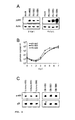
- Fig. 2 shows the expression of pp65-fusion proteins, replication of recombinant viruses and efficiency of packaging of fusion proteins into virions and DB.
- A Immuno blot analysis of 2-and 4-day infected HFF. Cells were infected at an m.o.i. of 2 and were collected at the indicated times for analysis. Filters were probed with pp65-specific monoclonal antibody 65-33. Amounts of proteins in each lane were normalized against ⁇ -actin.
- B Quantitative DNA-PCR analysis of viral genomes in the cell culture supernatant of infected HFF. Cells were infected at an m.o.i. of 10 genomes/cell. Culture supernatants were collected at the indicated time points and frozen.
- PCR analysis was performed in parallel in the same assay.
- C Immunoblot analysis of pp65, packaged in recDB or virions. Cells were infected with the recombinant viruses or with wt RV-HB5 for 6-7 days. Supernatants were subjected to glycerol-tartrate gradient centrifugation to collect virions- and DB-fractions. These fractions were analyzed by immunoblot, using monoclonal antibody 65-33 or, as internal standard, using a monoclonal antibody against viral gB.
- Fig. 3 shows the result of an IFN- ⁇ -Elispot analysis of MHC-class I presentation by HLA-A2 positive HFF, treated with recDB.
- Cells were treated with the indicated DB and were subsequently used as stimulator cells in IFN- ⁇ -Elispot analysis, using either pp65NLV-CTL (A) or IE1TMY-CTL (B) as responder cells.
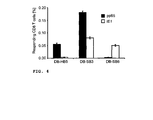
- Fig. 4 shows the result of an ex vivo IFN- ⁇ -Elispot analysis of CD8+ enriched spleen cells from HHD-mice, immunized with recDB.
- RMA-S cells loaded with the cognate peptides were taken as stimulator cells. Bar sizes represent most probable frequencies of IFN- ⁇ secreting CD8 T cells, as determined by linear regression analysis, described by Böhm et al [37]. Error bars indicate 95% confidence intervals.
- RMA-S cells were grown in RPMI 1640 medium (PAA Laboratories, Cölbe, Germany) supplemented with 10% FCS, 2 mM L-glutamine, 50 mg gentamicin L-1 and 5 ⁇ M ⁇ - mercaptoethanol. 2. Plasmids and viruses For mutagenesis of the viral DNA, the HCMV bacterial artificial chromosome (BAC) pHB5 [25] was used. Mutagenesis of pHB5 was performed according to the galK positive/negative selection procedure [26] as described elsewhere [21].
- BAC bacterial artificial chromosome
- Virus stocks were generated, titrated and quantified either by counting IE1 positive cells at 48 hours p.i. or by TaqMan DNA PCR analysis of extracellular viral genomes as described [28]. HFF were infected for 7 days. Infection at a moi of 0.1 resulted in a number of roughly 10 intracellular viral genomes.
- DB were purified from late-stage infected HFF by glycerol-tartrate gradient ultracentrifugation as originally published by Irmiere and Gibson [29] and described previously [20]. Indirect immunofluorescence analysis was carried out as described [30]. The pp65 was labelled by using monoclonal antibody 65-33 (kindly provided by W. Britt, University of Alabama, Birmingham, Alabama, USA) and FITCconjugated secondary antibodies (DAKO, Hamburg, Germany). The nucleus was counterstained with DAPI. Data from immunofluorescence analyses were collected using an Axiophot-1 microscope (Zeiss) at magnification of 1000fold.
- protein samples were denatured under reducing conditions, separated by SDS-PAGE and transferred onto nitrocellulose membranes (Millipore, Schwalbach, Germany) by electroblotting at 400 mA for 1 h 45 min.
- the membranes were incubated with antibodies against pp65, ⁇ -actin (Rockland, Gilbertsville, PA, USA) and glycoprotein B (gB) [31]).
- Western blots were probed with anti-mouse or anti-rabbit secondary antbodies, conjugated to ALEXA Fluor 680 (Invitrogen, Düsseldorf, Germany) or IRdye 800 (Rockland). Blotted proteins were detected and quantified using the Odyssey infrared imaging system (LI-COR, Lincoln, Kansas, USA).
- Enzyme linked immunospot (Elispot) assays were performed as described before [23;32].
- CTL lines specific for the HLA-A0201 (A2) restricted HCMV-derived peptides pp65495-503 (pp65NLV-CTL) [33;34] and IE1297-305 (IE1TMY-CTL) [35] were used in these analyses.
- the CTL lines had been generated by immunizing HLA-A2/huCD8 double-transgenic (tg) mice [23].
- HLA-A2 transgenic mice 8-12 week-old HLA-A2 transgenic mice (HHD mice, [36]) were immunized intraperitoneally with 6 ⁇ g DB of RV-HB5 (DB-HB5), RV-SB3 (DB-SB3) or RV-SB6 (DB-SB6), respectively, or with PBS. Lymphocytes were prepared from the spleens at day 7 after immunization. CD8 T cells were enriched by MACS sorting and the frequency of IFN- ⁇ secreting cells was analysed by Elispot directly ex vivo, using peptide loaded RMA-S HHD or T2 stimulator cells. In this setting the Elispot plates from Millipore (Schwalbach/Ts., Germany) were used. The Elispot assay was performed according to the manufacturer's recommendations. Frequencies of responding cells were determined by linear regression analysis as described by Böhm et al [37].
- selection of the insertion site of the heterologous peptide is critical for formation of cytoplasmic DB.
- Fig. 1 Five sites in different portions of the molecule were selected for insertion ( Fig. 1 ).
- the inserted peptide consisted of 20 amino acids encompassing the HLA-A2 presented nonapeptide TMYGGISLL (IE1TMY) from the HCMV IE1 protein [35].
- Recombinant viruses were generated by modifying the HCMV BAC plasmid pHB5 [25], using the galK-based selection procedure [21;22].
- Recombinant BAC-plasmids were analyzed for accuracy by restriction endonuclease digestion and nucleotide sequencing of the insertion site (data not shown). Reconstitution of recombinant viruses was subsequently performed by transfection of the BAC-plasmids into HFF.
- HCMV infection of HFF is the cytoplasmic accumulation of DB, which can be visualized by indirect immuno fluorescence analysis (IFA). Consequently, HFF were infected with the newly generated mutants and IFA was performed at 4 days post infection (d.p.i.), using a pp65-specific antibody ( Fig.1 ). Only cells infected with the mutants RV-SB3 and RV-SB6 showed the formation of cytoplasmic DB in a way comparable to the formation of DB in parental-virus infected cells. In contrast, no or only little DB formation was seen in RV-SB2, RV-SB4, and RV-SB5 infected cells.
- Example 3 Comparing RV-SB3 and RV-SB6 with the parental strain
- recombinant viruses RV-SB3 and RV-SB6 are comparable to the parental strain with respect to pp65-expression, virion release and packaging of pp65 into particles.
- pp65 in RV-SB3- and RV-SB6-infected HFF were tested by immunoblot analysis.
- Cells were infected with either virus or with parental RVHB5 for two or four days, respectively.
- Cells lysates were subjected to quantitative immunoblot analysis, using the Odyssey infrared imaging system. The amount of cellular actin was taken as internal standard ( Fig. 2A ).
- Expression levels of pp65-fusion proteins in RV-SB3- and RV-SB6-infected cells was reduced at 2 days p.i., compared to levels of pp65 in cells infected with parental RV-HB5.
- Example 4 Expression of both pp65NLV and IE1TMY by DB-SB3- or DB-SB6-treated HFF
- the present example shows that both pp65NLV and IE1TMY are presented by DB-SB3- or DB-SB6-treated HFF.
- recDB for vaccine development would be to support cytotoxic T cell reconstitution in patients following transplantation. These cells have been shown to be of critical importance for the prevention of viral reactivation and disease ([13;15] reviewed in [16]). It thus tested whether the recDB were capable to introduce both the pp65-derived pp65NLV and the IE1-derived IE1TMY into the MHC-class I presentation pathway of HFF.
- pp65NLV-CTL As responder cells, CTL clones against both peptides (pp65NLV-CTL; IE1TMY-CTL) were used [23]. Both DB-SB3- and DB-SB6-treated cells presented IE1TMY and pp65NLV. The pp65NLV -presentation was comparable between recDB and wt-DB, indicating that the insertion of the IE1-derived sequence did not impair pp65-presentation in HFF. Treatment of cells with DB-SB3 led to numbers of responding IE1TMY-CTL to levels that were comparable to the pp65-specific response.
- CD8 T cells specific for IE1TMY could be detected after immunization with both DB-SB3 and DB-SB6 ( Fig. 4 ).
- the IE1-specific response primed by DB-SB3 appeared be stronger than the response induced by DB-SB6, but both reached clearly detectable levels.
- CD8 T cells reactive against the pp65NLV could be detected to a roughly threefold level, compared to wt-DB.
Landscapes
- Health & Medical Sciences (AREA)
- Life Sciences & Earth Sciences (AREA)
- Chemical & Material Sciences (AREA)
- Virology (AREA)
- Genetics & Genomics (AREA)
- Engineering & Computer Science (AREA)
- Organic Chemistry (AREA)
- Bioinformatics & Cheminformatics (AREA)
- General Health & Medical Sciences (AREA)
- Wood Science & Technology (AREA)
- Zoology (AREA)
- Biotechnology (AREA)
- Medicinal Chemistry (AREA)
- General Engineering & Computer Science (AREA)
- Biomedical Technology (AREA)
- Microbiology (AREA)
- Immunology (AREA)
- Public Health (AREA)
- Veterinary Medicine (AREA)
- Animal Behavior & Ethology (AREA)
- Pharmacology & Pharmacy (AREA)
- Molecular Biology (AREA)
- Biochemistry (AREA)
- General Chemical & Material Sciences (AREA)
- Nuclear Medicine, Radiotherapy & Molecular Imaging (AREA)
- Chemical Kinetics & Catalysis (AREA)
- Communicable Diseases (AREA)
- Oncology (AREA)
- Plant Pathology (AREA)
- Biophysics (AREA)
- Physics & Mathematics (AREA)
- Mycology (AREA)
- Epidemiology (AREA)
- Transplantation (AREA)
- Pulmonology (AREA)
- AIDS & HIV (AREA)
- Tropical Medicine & Parasitology (AREA)
- Peptides Or Proteins (AREA)
- Medicines Containing Antibodies Or Antigens For Use As Internal Diagnostic Agents (AREA)
- Medicines That Contain Protein Lipid Enzymes And Other Medicines (AREA)
Description
- The present invention is related to a viral particle released after infection of mammalian cells by human cytomegalovirus (HCMV), wherein
- a) the particle is surrounded by a lipid membrane in which viral glycoproteins are embedded,
- b) the particle contains neither viral DNA nor capsids; and
- c) the particle contains a fusion protein comprising one or more parts of the T-cell antigen pp65 and at least one heterologous peptide;
- Infection with the human cytomegalovirus (HCMV) is a major cause of disease in patients following solid organ or haematopoetic stem cell transplantation [1-9]. Furthermore, transmission of the virus during pregnancy is one of the most frequent causes of lasting sequelae in the newborn in the western hemisphere [10;11]. The development of an HCMV vaccine has thus been identified as a high priority goal [12].
- One aim of such vaccine would be to prevent infection in the mother or, at least, cross-placental transmission. Induction of neutralizing antibodies is considered essential to achieve this. In contrast, protection against reactivation and control of infection in transplant recipients is considered to be afforded by cellular responses, particularly mediated through CD8 T cells [13-15]. Therapeutic vaccination of transplant recipients, addressing the lymphocyte response, possibly combined with adoptive T-cell transfer would be desirable to ameliorate the consequences of viral reactivation of HCMV in the post-transplant period [16].
- Despite promising approaches to develop an HCMV vaccine, there is however still no licensed formulation available [10;17-19]. From numerous studies addressing the immune effectors that afford protection, it appears evident that an ideal vaccine against HCMV should induce both antiviral neutralizing antibodies and T lymphocytes [10;17;18;38]. There is, however, concern if such a universal HCMV vaccine may ever be established. A recent clinical study showed that alphavirus replicons expressing HCMV proteins were well tolerated and induced sustained cellular and humoral responses [19]. Another study employed purified gB as vaccine and provided encouraging results, as significant levels of HCMV neutralizing antibodies could be induced [18]. These vaccines hold promise to be used for the prevention of congenital HCMV infection.
- In previous studies in mice, the so-called dense bodies, which are also referred to herein as DB, proved to be surprisingly immunogenic [20]. As generally understood in the art and as also used herein a dense body is a viral particle released after infection of mammalian cells by human cytomegalovirus (HCMV), wherein
- a) the particle is surrounded by a lipid membrane in which viral glycoproteins are embedded,
- b) the particle contains neither viral DNA nor capsids.
- Preferably such dense body also contains a fusion protein comprising one or more parts of the T-cell antigen pp65 and at least one heterologous peptide. Dense bodies and their preparation are also described in international patent application
WO 00/53729 - In view of their surprising immunogenicity, efforts were made to develop DB as an HCMV vaccine. Recent experiments provided experimental evidence that DB can be modified in their antigenic content [21;22]. This was achieved by expressing a fusion protein consisting of the major DB-component pp65 and a heterologous MHC-class I presented peptide from the viral IE1-protein by a recombinant HCMV. This resulted in the formation of recombinant DB (recDB) in infected human foreskin fibroblasts (HFF). The recDB containing the fusion protein were released from infected HFF [21]. Application of these particles to HLA-A2 transgenic HHD-mice induced a CD8+ T lymphocyte response, which became apparent after in vitro peptide stimulation of isolated T cells [22]. However, HCMV specific T cells could not be immediately detected when CD8+ T cell fractions were tested directly ex-vivo by Elispot analysis. This indicated that, although in principle suitable for therapeutic application, priming was not as prominent as desirable with these particles. Further to that, the yield of these recDB from infected HFF cultures was low.
- Therefore, the problem underlying the present invention was to provide a viral dense body which is suitable as a vaccine, wherein the viral dense body contains a fusion protein comprising one or more parts of the T-cell antigen pp65 and at least one heterologous peptide and wherein preferably the vaccine is capable of eliciting an immune response to the at least one heterologous peptide.
- A further problem underlying the present invention was to provide a viral dense body, wherein the viral dense body contains a fusion protein comprising one or more parts of the T-cell antigen pp65 and at least one heterologous peptide and wherein preferably the dense body is capable of inducing the formation of neutralizing antibodies and/or a CD8+ T lymphocyte response.
- A still further problem underlying the present invention was to provide a viral dense body, wherein the viral dense body contains a fusion protein comprising one or more part of the T-cell antigen pp65 and at least one heterologous peptide and wherein the dense body can be prepared at high yields.
- These and other problems are solved by the subject matter of the attached independent claims. Preferred embodiments may be taken from the also attached dependent claims.
- More specifically, the problem underlying the present invention is solved in a first aspect which is also the first embodiment of the first aspect, by a viral particle released after infection of mammalian cells by human cytomegalovirus (HCMV), wherein the viral particle is a dense body, wherein
- a) the particle is surrounded by a lipid membrane in which viral glycoproteins are embedded,
- b) the particle contains neither viral DNA nor capsids; and
- c) the particle contains a fusion protein comprising one or more parts of the T-cell antigen pp65 and at least one antigenic heterologous peptide,
- In a second embodiment of the first aspect which is also an embodiment of the first embodiment of the first aspect, the at least one antigenic heterologous peptide is inserted at amino acid position W175 of the amino acid sequence of the T-cell antigen pp65.
- In a third embodiment of the first aspect which is also an embodiment of the first and the second embodiment of the first aspect, the amino acid sequence of the T-cell antigen pp65 comprises an amino acid sequence according to SEQ ID NO: 1.
- In a fourth embodiment of the first aspect which is also an embodiment of the first, the second and the third embodiment of the first aspect, the particle is highly antigenic.
- In a fifth embodiment of the first aspect which is also an embodiment of the first, the second, the third and the fourth embodiment of the first aspect, the particle is capable of inducing the formation of neutralizing antibodies.
- In a sixth embodiment of the first aspect which is also an embodiment of the first, the second, the third, the fourth and the fifth embodiment of the first aspect, the particle is capable of inducing a CD8+ T lymphocyte response.
- In a seventh embodiment of the first aspect which is also an embodiment of the first, the second, the third, the fourth, the fifth and the sixth embodiment of the first aspect, the at least one antigenic heterologous peptide is a MHC-class I presented antigen.
- In an eighth embodiment of the first aspect which is also an embodiment of the first, the second, the third, the fourth, the fifth, the sixth and the seventh embodiment of the first aspect, the at least one antigenic heterologous peptide comprises or is formed of one or more parts of one or more proteins which is/are different from pp65.
- In a ninth embodiment of the first aspect which is also an embodiment of the first, the second, the third, the fourth, the fifth, the sixth, the seventh and the eighth embodiment of the first aspect, the at least one antigenic heterologous peptide comprises or is one or more parts of an HCMV glycoprotein.
- In a tenth embodiment of the first aspect which is also an embodiment of the first, the second, the third, the fourth, the fifth, the sixth, the seventh, the eighth and the ninth embodiment of the first aspect, the at least one antigenic heterologous peptide comprises or is one or more parts of the HCMV glycoprotein gB.
- In an eleventh embodiment of the first aspect which is also an embodiment of the first, the second, the third, the fourth, the fifth, the sixth, the seventh, the eighth and the ninth embodiment of the first aspect, the at least one antigenic heterologous peptide comprises or is one or more parts of the HCMV glycoprotein gH.
- In a twelfth embodiment of the first aspect which is also an embodiment of the first, the second, the third, the fourth, the fifth, the sixth, the seventh, the eighth and the ninth embodiment of the first aspect, the at least one antigenic heterologous peptide comprises or consists of at least two HCMV glycoproteins which are variants of a particular glycoprotein from different HCMV strains.
- In a thirteenth embodiment of the first aspect which is also an embodiment of the twelfth embodiment of the first aspect, one of the at least two variants of the particular glycoprotein is the variant of the HCMV Towne strain and the other of the at least two variants of the particular glycoprotein is the variant of the HCMV Ad 169 strain.
- In a fourteenth embodiment of the first aspect which is also an embodiment of the twelfth and the thirteenth embodiment of the first aspect, the glycoprotein is the gB protein of HCMV.
- In a fifteenth embodiment of the first aspect which is also an embodiment of the first, the second, the third, the fourth, the fifth, the sixth, the seventh and the eighth embodiment of the first aspect, the at least one antigenic heterologous peptide comprises or is one or more parts of the HCMV protein IE1.
- In a sixteenth embodiment of the first aspect which is also an embodiment of the first, the second, the third, the fourth, the fifth, the sixth, the seventh and the eighth embodiment of the first aspect, the at least one antigenic heterologous peptide comprises or is one or more parts of an HCMV glycoprotein and one or more parts of the HCMV protein IE1.
- In a seventeenth embodiment of the first aspect which is also an embodiment of the first, the second, the third, the fourth, the fifth, the sixth, the seventh and the eighth embodiment of the first aspect, the at least one antigenic heterologous peptide is one or more parts of a protein which is part of a human pathogen other than HCMV.
- In an eighteenth embodiment of the first aspect which is also an embodiment of the seventeenth embodiment of the first aspect, the protein which is part of a human pathogen other than HCMV, is a protein against which cytotoxic T lymphocytes are formed in humans upon natural infection of humans with the human pathogen other than HCMV.
- In a nineteenth embodiment of the first aspect which is also an embodiment of the eighteenth embodiment of the first aspect, the human pathogen other than HCMV is human pathogen selected from the group comprising HIV-1, HBV, HCV and influenza.
- In a twentieth embodiment of the first aspect which is also an embodiment of the first, the second, the third, the fourth, the fifth, the sixth, the seventh, the eighth, the ninth, the tenth, the eleventh, the twelfth, the thirteenth, the fourteenth, the fifteenth, the sixteenth, the seventeenth, the eighteenth and the nineteenth embodiment of the first aspect, the fusion protein is a fusion protein comprising a full-length T-cell antigen pp65 and at least one antigenic heterologous peptide.
- In a twenty-first embodiment of the first aspect which is also an embodiment of the first, the second, the third, the fourth, the fifth, the sixth, the seventh, the eighth, the ninth, the tenth, the eleventh, the twelfth, the thirteenth, the fourteenth, the fifteenth, the sixteenth, the seventeenth, the eighteenth, the nineteenth and the twentieth embodiment of the first aspect, the viral particle, or a plurality of such a particle, is for the manufacture of a medicament for the treatment and/or prevention of a disease.
- In a twenty-second embodiment of the first aspect which is also an embodiment of the first, the second, the third, the fourth, the fifth, the sixth, the seventh, the eighth, the ninth, the tenth, the eleventh, the twelfth, the thirteenth, the fourteenth, the fifteenth, the sixteenth, the seventeenth, the eighteenth, the nineteenth and the twentieth embodiment of the first aspect, the viral particle, or a plurality of such a particle, is for use in a method for the treatment and/or prevention of a disease.
- In a twenty-third embodiment of the first aspect which is also an embodiment of the twenty-first and the twenty-second embodiment of the first aspect, the disease is a disease which can be treated and/or prevented by the formation of neutralizing antibodies against the at least one antigenic heterologous peptide or a derivative thereof, or by the induction of a CD8+ T lymphocyte response against the at least one antigenic heterologous peptide or a derivative thereof.
- In a twenty-fourth embodiment of the first aspect which is also an embodiment of the first, the second, the third, the fourth, the fifth, the sixth, the seventh, the eighth, the ninth, the tenth, the twelfth, the thirteenth, the fourteenth, the fifteenth, the sixteenth, the seventeenth, the eighteenth, the nineteenth and the twentieth embodiment of the first aspect, the viral particle, or a plurality of such a particle, is for the manufacture of a vaccine.
- In a twenty-fifth embodiment of the first aspect which is also an embodiment of the twenty-fourth embodiment of the first aspect, the vaccine is for the treatment and/or prevention of HCMV infection.
- In a twenty-sixth embodiment of the first aspect which is also an embodiment of the twenty-fourth embodiment of the first aspect, the vaccine is for the treatment and/or prevention of side effects of transplantation.
- In a twenty-seventh embodiment of the first aspect which is also an embodiment of the twenty-sixth embodiment of the first aspect, the transplantation is transplantation of a solid organ or haematopoetic stem cells.
- In a twenty-eighth embodiment of the first aspect which is also an embodiment of the twenty-sixth and the twenty-seventh embodiment of the first aspect, the side effect is caused by or is going along with a HCMV infection.
- The problem underlying the present invention is solved in a second aspect which is also the first embodiment of the second aspect, by use of a viral particle according to any one of the first, the second, the third, the fourth, the fifth, the sixth, the seventh, the eighth, the ninth, the tenth, the eleventh, the twelfth, the thirteenth, the fourteenth, the fifteenth, the sixteenth, the seventeenth, the eighteenth, the nineteenth and the twentieth embodiment of the first aspect for the manufacture of a medicament for the treatment and/or prevention of a diseases or side effects, whereby the disease or side effects is a disease or are side effects as defined in each and any of the preceding embodiments and of each and any aspect.
- The problem underlying the present invention is solved in a third aspect which is also the first embodiment of the third aspect, by use of a viral particle according to any one of the first, the second, the third, the fourth, the fifth, the sixth, the seventh, the eighth, the ninth, the tenth, the eleventh, the twelfth, the thirteenth, the fourteenth, the fifteenth, the sixteenth, the seventeenth, the eighteenth, the nineteenth and the twentieth embodiment of the first aspect for the manufacture of a vaccine for the treatment and/or prevention of a disease or side effects, whereby the disease or side effects is a disease or are side effects as defined in each and any of the preceding embodiments and of each and any aspect.
- Based on the insight that the insertion site for heterologous peptide sequences into pp65 was critical for the efficiency of subsequent DB formation, the present inventors have surprisingly found that the fusion protein which is contained in the viral particles of the invention and which comprises one or more parts of the T-cell antigen pp65 and at least one heterologous peptide, confers advantageous characteristics to the DB if the heterologous peptide is inserted at amino acid position W 175 or at amino acid position A534 of the pp65 amino acid sequence. The advantageous characteristics of these fusion proteins comprise the induction of neutralizing antibodies against the heterologous peptide, the induction of a CD8+ T lymphocyte response to the heterologous peptide and the production of such DB at a high yield. Furthermore, these two loci in pp65 allowed efficient formation and release of DB containing said fusion proteins. The CD8+ T lymphocyte response observed for these two fusion proteins primed CD8 T cell responses, which are readily detectable by ex vivo Elispot analyses of CD8 T cell fractions.
- The T-cell antigen pp65, which is also referred to in the art as UL 83, has been described by Pande, H. et al. (Pande, H, Lee, T.D., Churchill, M.A. and Zaia, J.A, "Structural analysis of a 64-kDa major structural protein of human cytomegalovirus (Towne): identification of a phosphorylation site and comparison to pp65 of HCMV (AD169); Virology 178 (1), 6-14 (1990)).
- Little is known about the function of pp65 and about domains, important for function and proper folding of the protein. Consequently, there is no rationale for insertion site selection that would definitely spare functionally relevant regions within pp65. Insertion site selection was performed in a way to avoid regions conserved in beta-herpesviruses and also predicted secondary structures (α-helices and β-sheet). This was done assuming that conserved regions, α-helices and β-sheets could be structurally and functionally important and should not be destroyed. However, most of these mutants failed to efficiently form recDB, indicating that this strategy could not identify proper insertion sites. In the light thereof the present inventors surprisingly found that the insertion sites in RV-SB3 and RV-SB6 proved to be more appropriate for recDB formation.
- As is shown in the present application exogenous introduction of chimeric pp65 by DB-SB3 and DB-SB6 into HFF led to efficient presentation of pp65NLV and IE1TMY. Application of these particles to HLA-A2 transgenic HHD mice primed a CD8 T cell response against both peptides that could be detected after in-vitro expansion of these T cells with the cognate peptide. Similar results have also been obtained in previous experiments, using recDB with insertion of the IE1-peptide at position 548 of pp65 [21;22]. However, using the latter recDB, CD8 T cells against either peptide were undetectable directly ex vivo, suggesting that priming was inefficient. Application of DB-SB3, in contrast, led to readily detectable frequencies of pp65NLV-specific and IE1TMY-specific CD8 T cells. This indicates that these recDB were highly immunogenic and induced T cells against both the endogenous and the heterologous peptide.
- In an embodiment of the invention the heterologous peptide is an antigenic peptide and more preferably an antigenic heterologous peptide.
- In an embodiment of the present invention that the heterologous peptide is different from the IE1 protein of HCMV or a part thereof.
- In an embodiment of the present invention the length of a peptide is from about 4 to 40 amino acid residues, preferably about 6 to 25 amino acid residues and more preferably about 8 to 15 amino acid residues and most preferably about 8-12 amino acid residues.
- As preferably used, any wording which specifies the limits of a range such as, e. g., "from 1 to 5" means any integer from 1 to 5, i. e. 1, 2, 3, 4 and 5. In other words, any range that is defined by two integers comprises both the two integers defining said limits of the definition and any integer comprised by or contained within said range.
- In an embodiment of the present invention the antigenicity of the viral particle of the invention is increased compared to the dense bodies of the prior art, more specifically those dense bodies where the dense body contains a fusion protein comprising the full-length T-cell antigen pp65.
- In an embodiment of the present invention the formation of the viral particle of the invention is increased compared to the formation of dense bodies as described in [25].
- It will be acknowledged by a person skilled in the art that, preferably, the HCMV protein IE1 is also referred to as ppUL123.
- It will also be acknowledged that the fusion protein contained in the particle is, in a preferred embodiment a chimeric protein.
- The present invention is now further illustrated by reference to the following figures and examples from which further advantages, features, and embodiments may be taken, wherein
-
Fig. 1 shows the result of an indirect immuno fluorescence analysis of HFF, infected with HCMV recombinants; -
Fig. 2 shows the result of an immuno blot analysis (A), the result of a quantitative DNA-PCR analysis as a diagram indicating genome copies/ml as a function of time (d.p.i) for various fusion proteins (B), and the result of a further immuno blot analysis (C); -
Fig. 3 shows the result of an IFN-γ-Elispot analysis as a diagram indicating the percentage of responding CD8+ cells for various fusion proteins either using either pp65NLV-CTL (A) or IE1TMY-CTL (B) as responder cells; -
Fig. 4 shows the result of an IFN-γ-Elispot analysis as a diagram indicating the percentage of responding CD8+ cells for various fusion proteins either using RMA-S cells as stimulator cells; and -
Fig. 5 shows the amino acid sequence of full-length pp65 (SEQ ID NO: 1) -
Fig. 1 shows the result of an indirect immuno fluorescence analysis of HFF, infected with HCMV recombinants. Cells were infected with the indicated viruses for four days and were subsequently processed for immuno flourescence analysis. The configuration of the recombinant pp65, expressed by each virus is indicated below the micrographs. The N-terminal amino acid of pp65, flanking the insertion site is denoted. -
Fig. 2 shows the expression of pp65-fusion proteins, replication of recombinant viruses and efficiency of packaging of fusion proteins into virions and DB. (A), Immuno blot analysis of 2-and 4-day infected HFF. Cells were infected at an m.o.i. of 2 and were collected at the indicated times for analysis. Filters were probed with pp65-specific monoclonal antibody 65-33. Amounts of proteins in each lane were normalized against β-actin. (B), Quantitative DNA-PCR analysis of viral genomes in the cell culture supernatant of infected HFF. Cells were infected at an m.o.i. of 10 genomes/cell. Culture supernatants were collected at the indicated time points and frozen. PCR analysis was performed in parallel in the same assay. (C), Immunoblot analysis of pp65, packaged in recDB or virions. Cells were infected with the recombinant viruses or with wt RV-HB5 for 6-7 days. Supernatants were subjected to glycerol-tartrate gradient centrifugation to collect virions- and DB-fractions. These fractions were analyzed by immunoblot, using monoclonal antibody 65-33 or, as internal standard, using a monoclonal antibody against viral gB. -
Fig. 3 shows the result of an IFN-γ-Elispot analysis of MHC-class I presentation by HLA-A2 positive HFF, treated with recDB. Cells were treated with the indicated DB and were subsequently used as stimulator cells in IFN-γ-Elispot analysis, using either pp65NLV-CTL (A) or IE1TMY-CTL (B) as responder cells. -
Fig. 4 shows the result of an ex vivo IFN-γ-Elispot analysis of CD8+ enriched spleen cells from HHD-mice, immunized with recDB. RMA-S cells, loaded with the cognate peptides were taken as stimulator cells. Bar sizes represent most probable frequencies of IFN-γ secreting CD8 T cells, as determined by linear regression analysis, described by Böhm et al [37]. Error bars indicate 95% confidence intervals. - Primary human foreskin fibroblasts, CTL lines and T2 cells were cultured as described before [23]. RMA-S cells [24] were grown in RPMI 1640 medium (PAA Laboratories, Cölbe, Germany) supplemented with 10% FCS, 2 mM L-glutamine, 50 mg gentamicin L-1 and 5 µM β-mercaptoethanol. 2. Plasmids and viruses
For mutagenesis of the viral DNA, the HCMV bacterial artificial chromosome (BAC) pHB5 [25] was used. Mutagenesis of pHB5 was performed according to the galK positive/negative selection procedure [26] as described elsewhere [21]. The DNA sequence inserted into the UL83 open reading frame encoded the HLA-A2 presented peptide IE1TMY [IE1297-305], flanked by additional amino acids to enable accurate proteasomal processing. The additional polypeptide fused to pp65 reads TSDACMMTMYGGISLLSEFC, with the HLA-A2 presented nonapeptide being underlined. Viral reconstitution from BAC clones was performed according to Hobom et al. [27]. - Virus stocks were generated, titrated and quantified either by counting IE1 positive cells at 48 hours p.i. or by TaqMan DNA PCR analysis of extracellular viral genomes as described [28]. HFF were infected for 7 days. Infection at a moi of 0.1 resulted in a number of roughly 10 intracellular viral genomes.
- DB were purified from late-stage infected HFF by glycerol-tartrate gradient ultracentrifugation as originally published by Irmiere and Gibson [29] and described previously [20]. Indirect immunofluorescence analysis was carried out as described [30]. The pp65 was labelled by using monoclonal antibody 65-33 (kindly provided by W. Britt, University of Alabama, Birmingham, Alabama, USA) and FITCconjugated secondary antibodies (DAKO, Hamburg, Germany). The nucleus was counterstained with DAPI. Data from immunofluorescence analyses were collected using an Axiophot-1 microscope (Zeiss) at magnification of 1000fold. For immunoblotting, protein samples were denatured under reducing conditions, separated by SDS-PAGE and transferred onto nitrocellulose membranes (Millipore, Schwalbach, Germany) by electroblotting at 400 mA for 1 h 45 min. The membranes were incubated with antibodies against pp65, β-actin (Rockland, Gilbertsville, PA, USA) and glycoprotein B (gB) [31]). Western blots were probed with anti-mouse or anti-rabbit secondary antbodies, conjugated to ALEXA Fluor 680 (Invitrogen, Karlsruhe, Germany) or IRdye 800 (Rockland). Blotted proteins were detected and quantified using the Odyssey infrared imaging system (LI-COR, Lincoln, Nebraska, USA).
- Enzyme linked immunospot (Elispot) assays were performed as described before [23;32]. CTL lines specific for the HLA-A0201 (A2) restricted HCMV-derived peptides pp65495-503 (pp65NLV-CTL) [33;34] and IE1297-305 (IE1TMY-CTL) [35] were used in these analyses. The CTL lines had been generated by immunizing HLA-A2/huCD8 double-transgenic (tg) mice [23].
- 8-12 week-old HLA-A2 transgenic mice (HHD mice, [36]) were immunized intraperitoneally with 6 µg DB of RV-HB5 (DB-HB5), RV-SB3 (DB-SB3) or RV-SB6 (DB-SB6), respectively, or with PBS. Lymphocytes were prepared from the spleens at
day 7 after immunization. CD8 T cells were enriched by MACS sorting and the frequency of IFN-γ secreting cells was analysed by Elispot directly ex vivo, using peptide loaded RMA-S HHD or T2 stimulator cells. In this setting the Elispot plates from Millipore (Schwalbach/Ts., Germany) were used. The Elispot assay was performed according to the manufacturer's recommendations. Frequencies of responding cells were determined by linear regression analysis as described by Böhm et al [37]. - As will be illustrated in this example, selection of the insertion site of the heterologous peptide is critical for formation of cytoplasmic DB.
- The potential of a vaccine candidate to be further developed critically depends on the yield that can be achieved for further up-scaling. In previous work, proof could be provided that DB can be modified in their antigenic content by fusing a heterologous peptide sequence to the tegument protein pp65 [21]. However, cells infected with the respective recombinant of HCMV released only limited amounts of recDB. Therefore the hypothesis was tested that insertion of heterologous sequence such as the amino acid sequence of a heterologous peptide at other sites within pp65 would enhance the yield of recDB.
- Five sites in different portions of the molecule were selected for insertion (
Fig. 1 ). The inserted peptide consisted of 20 amino acids encompassing the HLA-A2 presented nonapeptide TMYGGISLL (IE1TMY) from the HCMV IE1 protein [35]. Recombinant viruses were generated by modifying the HCMV BAC plasmid pHB5 [25], using the galK-based selection procedure [21;22]. Recombinant BAC-plasmids were analyzed for accuracy by restriction endonuclease digestion and nucleotide sequencing of the insertion site (data not shown). Reconstitution of recombinant viruses was subsequently performed by transfection of the BAC-plasmids into HFF. The resulting viruses were tested for DB formation. One hallmark of HCMV infection of HFF is the cytoplasmic accumulation of DB, which can be visualized by indirect immuno fluorescence analysis (IFA). Consequently, HFF were infected with the newly generated mutants and IFA was performed at 4 days post infection (d.p.i.), using a pp65-specific antibody (Fig.1 ). Only cells infected with the mutants RV-SB3 and RV-SB6 showed the formation of cytoplasmic DB in a way comparable to the formation of DB in parental-virus infected cells. In contrast, no or only little DB formation was seen in RV-SB2, RV-SB4, and RV-SB5 infected cells. Note that in these cells, the nucleo-cytoplasmic translocation of pp65, which is typically seen in late-stage infected HFF was impaired. These results indicated that site selection for insertion of heterologous peptide sequences within pp65 was critical for recDB formation. Based on the IFA-results the viruses RV-SB3 and RV-SB6 were chosen for further analysis. - As will be shown in this example, recombinant viruses RV-SB3 and RV-SB6 are comparable to the parental strain with respect to pp65-expression, virion release and packaging of pp65 into particles.
- Expression levels of pp65 in RV-SB3- and RV-SB6-infected HFF were tested by immunoblot analysis. Cells were infected with either virus or with parental RVHB5 for two or four days, respectively. Cells lysates were subjected to quantitative immunoblot analysis, using the Odyssey infrared imaging system. The amount of cellular actin was taken as internal standard (
Fig. 2A ). Expression levels of pp65-fusion proteins in RV-SB3- and RV-SB6-infected cells was reduced at 2 days p.i., compared to levels of pp65 in cells infected with parental RV-HB5. However, at 4 days p.i., the levels of the two fusion proteins appeared to be even higher as that of the pp65 in RV-HB5 infected cells. This indicated that sufficient protein was synthesized in RV-SB3- and RV-SB6-infected cells to direct the synthesis of recDB. - To test the capacity of the recombinant strains to replicate in HFF, cells were infected at an m.o.i. of 0.1, resulting in 10 genome copies/cell and culture supernatant was collected in daily intervals until 7 days p.i.. Viral DNA released into the supernatant was quantified using quantitative PCR analysis (
Fig.2B ). Both RV-SB3 and RV-SB6 proved to replicate to similar levels as parental RV-HB5. - Packaging of the fusion proteins was finally analyzed by immunoblot analysis of purified virions and DB, collected from infected HFF supernatants by glycerol gradient centrifugation. In this case, normalization was performed using the viral envelope glycoprotein B (gB) as internal standard. No differences in the packaging of pp65 into virions or DBs were found when the recombinant strains were compared to their parental strain (
Fig. 2C ). Taken together these results indicated that both RV-SB3 and RVSB6 were comparable to RV-HB5 in expression and packaging of pp65 and in replication in infected cells. - The present example shows that both pp65NLV and IE1TMY are presented by DB-SB3- or DB-SB6-treated HFF.
- One goal of using recDB for vaccine development would be to support cytotoxic T cell reconstitution in patients following transplantation. These cells have been shown to be of critical importance for the prevention of viral reactivation and disease ([13;15] reviewed in [16]). It thus tested whether the recDB were capable to introduce both the pp65-derived pp65NLV and the IE1-derived IE1TMY into the MHC-class I presentation pathway of HFF.
- Accordingly, cells were treated with recDB and were subsequently subjected to interferon-γ Elispot analysis (
Fig. 3 ). As responder cells, CTL clones against both peptides (pp65NLV-CTL; IE1TMY-CTL) were used [23]. Both DB-SB3- and DB-SB6-treated cells presented IE1TMY and pp65NLV. The pp65NLV -presentation was comparable between recDB and wt-DB, indicating that the insertion of the IE1-derived sequence did not impair pp65-presentation in HFF. Treatment of cells with DB-SB3 led to numbers of responding IE1TMY-CTL to levels that were comparable to the pp65-specific response. However, treatment of cells with DB-SB6 led to a markedly reduced number of positive spots in the IE1-specific assay. This indicated that the ability of HFF to present the IE1-peptide after DB incubation was sensitive to the site, where the peptide was inserted into pp65. - This example shows that immunization with recombinant DB (recDB) primes significant frequencies IE1TMY-specific and pp65NLV-specific CD8 T cells.
- Previous experiments had shown that recDB could induce IE1TMY-specific CD8 T cells in mice. These cells were, however, only detectable after in-vitro stimulation of CD8 T cell fractions from immunized mice with the cognate peptide. No responding CD8 T cells were detected directly ex-vivo, indicating that the total number of specific cells, and thus the overall response to those recDB was low [21]. To evaluate the immunological potential of the newly established recDB, HLA-A2 transgenic HHD-mice were immunized with the different DB in the absence of adjuvant. As expected, responding CD8 T cells specific for IE1TMY or pp65NLV were detectable after in-vitro stimulation (data not shown).
- Cells from immunized mice were also tested directly ex-vivo. For this, the CD8+ fractions of spleen cells were separated by MACS-sorting and tested in Elispot analysis, using peptide loaded antigen presenting cells. CD8 T cells, specific for IE1TMY could be detected after immunization with both DB-SB3 and DB-SB6 (
Fig. 4 ). The IE1-specific response primed by DB-SB3 appeared be stronger than the response induced by DB-SB6, but both reached clearly detectable levels. - After immunization with DB-SB3, CD8 T cells reactive against the pp65NLV could be detected to a roughly threefold level, compared to wt-DB.
- Surprisingly, however, this response was undetectable in the experimental setting chosen after immunization with DB-SB6 and a pp65NLV-specific response could not be detected ex vivo. This result was confirmed in a second experiment and indicated that the CD8 T cell response, primed against the immunodominant pp65NLV-peptide by immunizing with DB-SB6 was inefficient. (
Fig. 4 ). Comparable results were obtained when T2 cells were chosen for antigen presentation (data not shown). Furthermore, this indicates that these cells were induced in only low frequencies below the detection limit of the assay. In accordance therewith, restimulation of pp65NLV-specific T cells in vitro was delayed compared to IE1TMY-specific cells (data not shown). - Taken together these experiments particularly proved the potential of DB-SB3 to prime a CD8 T cell response against a heterologous antigenic peptide.
- In the instant application it is referred to the various references as follows:
- [1] Mwintshi K, Brennan DC. Prevention and management of cytomegalovirus infection in solid-organ transplantation. Expert Rev Anti Infect Ther 2007; 5(2):295-304.
- [2] Rubin RH. The pathogenesis and clinical management of cytomegalovirus infection in the organ transplant recipient: the end of the 'silo hypothesis'. Curr Opin Infect Dis 2007; 20(4):399-407.
- [3] Arthurs SK, Eid AJ, Pedersen RA, Dierkhising RA, Kremers WK, Patel R, et al. Delayed-onset primary cytomegalovirus disease after liver transplantation. Liver Transpl 2007; 13(12):1703-9.
- [4] Arthurs SK, Eid AJ, Pedersen RA, Kremers WK, Cosio FG, Patel R, et al. Delayed-onset primary cytomegalovirus disease and the risk of allograft failure and mortality after kidney transplantation. Clin Infect Dis 2008; 46(6):840-6.
- [5] Peggs KS. Cytomegalovirus following stem cell transplantation: from pharmacologic to immunologic therapy. Expert Rev Anti Infect Ther 2004; 2(4):559-73.
- [6] Hebart H, Einsele H. Clinical aspects of CMV infection after stem cell transplantation. Hum Immunol 2004; 65(5):432-6.
- [7] Ljungman P. Risk assessment in haematopoietic stem cell transplantation: viral status. Best Pract Res Clin Haematol 2007; 20(2):209-17.
- [8] Boeckh M, Nichols WG, Papanicolaou G, Rubin R, Wingard JR, Zaia J. Cytomegalovirus in hematopoietic stem cell transplant recipients: Current status, known challenges, and future strategies. Biol Blood Marrow Transplant 2003; 9(9):543-58.
- [9] Boeckh M, Nichols WG. The impact of cytomegalovirus serostatus of donor and recipient before hematopoietic stem cell transplantation in the era of antiviral prophylaxis and preemptive therapy. Blood 2004; 103(6):2003-8.
- [10] Plotkin SA. Cytomegalovirus vaccines. In: Plotkin SA, Orenstein WA, Offit PA, editors. Vaccines. 5 ed. Elsevier, 2008: p. 1147-54.
- [11] Cheeran MC, Lokensgard JR, Schleiss MR. Neuropathogenesis of congenital cytomegalovirus infection: disease mechanisms and prospects for intervention. Clin Microbiol Rev 2009; 22(1):99-126, Table.
- [12] Stratton KR, Durch JS, Lawrence R.S. Vaccines for the 21st Century. A Tool for Decisionmaking. Washington, DC: National Academy Press, 2001.
- [13] Reddehase MJ, Mutter W, Münch K, Bühring HJ, Koszinowski UH. CD8-positive T lymphocytes specific for murine cytomegalovirus immediate-early antigens mediate protective immunity. J Virol 1987; 61:3102-8.
- [14] Wills MR, Carmichael AJ, Sissons JG. Adaptive Cellular Immunity to Human Cytomegalovirus. In: Reddehase MJ, editor. Cytomegalovirus: Molecular Biology and Immunology. Caister Academic Press, Wymondham, Norfolk, U.K., 2006: p. 341-65.
- [15] Walter EA, Greenberg PD, Gilbert MJ, Finch RJ, Watanabe KS, Thomas ED, et al. Reconstitution of cellular immunity against cytomegalovirus in recipients of allogeneic bone marrow by transfer of T-cell clones from the donor. N Engl J Med 1995; 333(16):1038-44.
- [16] Herr W, Plachter B. Cytomegalovirus and varicella-zoster virus vaccines in hematopoietic stem cell transplantation. Expert Rev Vaccines 2009; 8(8):999-1021.
- [17] Schleiss MR. Cytomegalovirus vaccine development. Curr Top Microbiol Immunol 2008; 325:361-82.
- [18] Pass RF, Zhang C, Evans A, Simpson T, Andrews W, Huang ML, et al. Vaccine prevention of maternal cytomegalovirus infection. N Engl J Med 2009; 360(12):1191-9.
- [19] Bernstein DI, Reap EA, Katen K, Watson A, Smith K, Norberg P, et al. Randomized, double-blind, .
- [20] Pepperl S, Münster J, Mach M, Harris JR, Plachter B. Dense bodies of human cytomegalovirus induce both humoral and cellular immune responses in the absence of viral gene expression. J Virol 2000; 74(13):6132-46.
- [21] Mersseman V, Besold K, Reddehase MJ, Wolfrum U, Strand D, Plachter B, et al. Exogenous introduction of an immunodominant peptide from the nonstructural IE1 protein of human cytomegalovirus into the MHC class I presentation pathway by recombinant dense bodies. J Gen Virol 2008; 89(Pt2):369-79.
- [22] Mersseman V, Bohm V, Holtappels R, Deegen P, Wolfrum U, Plachter B, et al. Refinement of strategies for the development of a human cytomegalovirus dense body vaccine. Med Microbiol Immunol 2008; 197(2):97-107.
- [23] Besold K, Frankenberg N, Pepperl-Klindworth S, Kuball J, Theobald M, Hahn G, et al. Processing and MHC class I presentation of human cytomegalovirus pp65-derived peptides persist despite gpUS2-11-mediated immune evasion. J Gen Virol 2007; 88(Pt 5):1429-39.
- [24] Townsend A, Ohlen C, Bastin J, Ljunggren HG, Foster L, Karre K. Association of class I major histocompatibility heavy and light chains induced by viral peptides. Nature 1989; 340(6233):443-8.
- [25] Borst EM, Hahn G, Koszinowski UH, Messerle M. Cloning of the human cytomegalovirus (HCMV) genome as an infectious bacterial artificial chromosome in Escherichia coli: a new approach for construction of HCMV mutants. J Virol 1999; 73(10):8320-9.
- [26] Warming S, Costantino N, Court DL, Jenkins NA, Copeland NG. Simple and highly efficient BAC recombineering using galK selection. Nucleic Acids Res 2005; 33(4):e36.
- [27] Hobom U, Brune W, Messerle M, Hahn G, Koszinowski UH. Fast screening procedures for random transposon libraries of cloned herpesvirus genomes: mutational analysis of human cytomegalovirus envelope glycoprotein genes.J Virol 2000; 74(17):7720-9.
- [28] Besold K, Wills M, Plachter B. Immune evasion proteins gpUS2 and gpUS11 of human cytomegalovirus incompletely protect infected cells from CD8 T cell recognition. Virology 2009; 391(1):5-19.
- [29] Irmiere A, Gibson W. Isolation and characterization of a noninfectious virionlike particle released from cells infected with human strains of cytomegalovirus. Virology 1983; 130:118-33.
- [30] Schmolke S, Drescher P, Jahn G, Plachter B. Nuclear targeting of the tegument protein pp65 (UL83) of human cytomegalovirus: an unusual bipartite nuclear localization signal functions with other portions of the protein to mediate its efficient nuclear transport. J Virol 1995; 69:1071-8.
- [31] Utz U, Britt W, Vugler L, Mach M. Identification of a neutralizing epitope on glycoprotein gp58 of human cytomegalovirus. J Virol 1989; 63:1995-2001.
- [32] Frankenberg N, Pepperl-Klindworth S, Meyer RG, Plachter B. Identification of a conserved HLA-A2-restricted decapeptide from the IE1 protein (pUL123) of human cytomegalovirus. Virology 2002; 295(2):208-16.
- [33] Wills MR, Carmichael AJ, Mynard K, Jin X, Weekes MP, Plachter B, et al. The human cytotoxic T-lymphocyte (CTL) response to cytomegalovirus is dominated by structural protein pp65: frequency, specificity, and T-cell receptor usage of pp65- specific CTL. J Virol 1996; 70:7569-79.
- [34] Diamond DJ, York J, Sun JY, Wright CL, Forman SJ. Development of a candidate HLA A*0201 restricted peptide-based vaccine against human cytomegalovirus infection. Blood 1997; 90(5): 1751-67.
- [35] Gallez-Hawkins G, Villacres MC, Li X, Sanborn MC, Lomeli NA, Zaia JA. Use of transgenic HLA A*0201/Kb and HHD II mice to evaluate frequency of cytomegalovirus IE1-derived peptide usage in eliciting human CD8 cytokine response. J Virol 2003; 77(7):4457-62.
- [36] Pascolo S, Bervas N, Ure JM, Smith AG, Lemonnier FA, Perarnau B. HLAA2.1-restricted education and cytolytic activity of CD8(+) T lymphocytes from beta2 microglobulin (beta2m) HLA-A2.1 monochain transgenic H-2Db beta2m double knockout mice. J Exp Med 1997; 185(12):2043-51.
- [37] Böhm V, Simon CO, Podlech J, Seckert CK, Gendig D, Deegen P, et al. The immune evasion paradox: immunoevasins of murine cytomegalovirus enhance priming of CD8 T cells by preventing negative feedback regulation. J Virol 2008; 82(23):11637-50.
- [38] Pepperl-Klindworth S, Plachter B. Current perspectives in vaccine development. In: Reddehase MJ, editor. Cytomegaloviruses: Molecular Biology and Immunology. Caister Academic Press Ltd, Wymondham, Norfolk, U.K., 2006.
- The features of the present invention disclosed in the specification, the claims, the sequence listing and/or the drawings may both separately and in any combination thereof be material for realizing the invention in various forms thereof.
-
- <110> Vakzine Projekt Management GmbH
- <120> Viral particle released after infection of mammalian cells by human cytomegalovirus (HCMV) containing a fusion protein and use thereof
- <130> V 10025 PCT
- <150>
EP10003712.6
<151> 2010-04-06 - <160> 1
- <170> PatentIn version 3.3
- <210> 1
<211> 561
<212> PRT
<213> Artificial - <220>
<223> synthetic - <400> 1


Claims (30)
- A viral particle released after infection of mammalian cells by human cytomegalovirus (HCMV), wherein the viral particle is a dense body, whereina) the particle is surrounded by a lipid membrane in which viral glycoproteins are embedded,b) the particle contains neither viral DNA nor capsids; andc) the particle contains a fusion protein comprising one or more parts of the T-cell antigen pp65 and at least one antigenic heterologous peptide,and wherein the at least one antigenic heterologous peptide is inserted at amino acid position W175 or A534 of the amino acid sequence of the T-cell antigen pp65 of SEQ ID NO: 1.
- The viral particle according to claim 1, wherein the at least one antigenic heterologous peptide is inserted at amino acid position W175 of the amino acid sequence of the T-cell antigen pp65.
- The viral particle according to any one of claims 1 to 2, wherein the amino acid sequence of the T-cell antigen pp65 comprises an amino acid sequence according to SEQ ID NO: 1.
- The viral particle according to any one of claims 1 to 3, wherein the particle is highly antigenic.
- The viral particle according to any one of claims 1 to 4, wherein the particle is capable of inducing the formation of neutralizing antibodies.
- The viral particle according to any one of claims 1 to 5, wherein the particle is capable of inducing a CD8+ T lymphocyte response.
- The viral particle according to any one of claims 1 to 6, wherein the at least one antigenic heterologous peptide is a MHC-class I presented antigen.
- The viral particle according to any one of claims 1 to 7, wherein the at least one antigenic heterologous peptide comprises or is formed of one or more parts of one or more proteins which is/are different from pp65.
- The viral particle according to any one of claims 1 to 8, wherein the at least one antigenic heterologous peptide comprises or is one or more parts of an HCMV glycoprotein.
- The viral particle according to any one of claims 1 to 9, wherein the at least one antigenic heterologous peptide comprises or is one or more parts of the HCMV glycoprotein gB.
- The viral particle according to any one of claims 1 to 9, wherein the at least one antigenic heterologous peptide comprises or is one or more parts of the HCMV glycoprotein gH.
- The viral particle according to any one of claims 1 to 9, wherein the at least one antigenic heterologous peptide comprises or consists of at least two HCMV glycoproteins which are variants of a particular glycoprotein from different HCMV strains.
- The viral particle according to claim 12, wherein one of the at least two variants of the particular glycoprotein is the variant of the HCMV Towne strain and the other of the at least two variants of the particular glycoprotein is the variant of the HCMV Ad169 strain.
- The viral particle according to any one of claims 12 to 13, wherein the glycoprotein is the gB protein of HCMV.
- The viral particle according to any one of claims 1 to 8, wherein the at least one antigenic heterologous peptide comprises or is one or more parts of the HCMV protein IE1.
- The viral particle according to any one of claims 1 to 8, wherein the at least one antigenic heterologous peptide comprises or is one or more parts of an HCMV glycoprotein and one or more parts of the HCMV protein IE1.
- The viral particle according to any one of claims 1 to 8, wherein the at least one antigenic heterologous peptide is one or more parts of a protein which is part of a human pathogen other than HCMV.
- The viral particle according to claim 17, wherein the protein which is part of a human pathogen other than HCMV, is a protein against which cytotoxic T lymphocytes are formed in humans upon natural infection of humans with the human pathogen other than HCMV.
- The viral particle according to claim 18, wherein the human pathogen other than HCMV is human pathogen selected from the group comprising HIV-1, HBV, HCV and influenza.
- The viral particle according to any one of claims 1 to 19, wherein the fusion protein is a fusion protein comprising a full-length T-cell antigen pp65 and at least one antigenic heterologous peptide.
- The viral particle according to any one of claims 1 to 20, or a plurality thereof, for the manufacture of a medicament for the treatment and/or prevention of a disease.
- The viral particle according to any one of claims 1 to 20, or a plurality thereof, for use in a method for the treatment and/or prevention of a disease.
- The viral particle according to any one of claims 21 to 22, wherein the disease is a disease which can be treated and/or prevented by the formation of neutralizing antibodies against the at least one antigenic heterologous peptide or a derivative thereof, or by the induction of a CD8+ T lymphocyte response against the at least one antigenic heterologous peptide or a derivative thereof.
- The viral particle according to any one of claims 1 to 20, or a plurality thereof, for the manufacture of a vaccine.
- The viral particle according to claim 24, wherein the vaccine is for the treatment and/or prevention of HCMV infection.
- The viral particle according to claim 24, wherein the vaccine is for the treatment and/or prevention of side effects of transplantation.
- The viral particle according to claim 26, wherein the transplantation is transplantation of a solid organ or haematopoetic stem cells.
- The viral particle according to any one of claims 26 to 27, wherein the side effect is caused by or is going along with a HCMV infection.
- Use of a viral particle according to any one of claims 1 to 20 for the manufacture of a medicament for the treatment and/or prevention of a diseases or side effects, whereby the disease or side effects is a disease or are side effects as defined in any of the preceding claims.
- Use of a viral particle according to any one of claims 1 to 20 for the manufacture of a vaccine for the treatment and/or prevention of a disease or side effects, whereby the disease or side effects is a disease or are side effects as defined in any of the preceding claims.
Priority Applications (8)
| Application Number | Priority Date | Filing Date | Title |
|---|---|---|---|
| RS20161007A RS55421B1 (en) | 2010-04-06 | 2011-04-06 | Viral Particulate with Fusion Protein, Released After Mammalian Cell Infection with Human Cytomegalovirus (HCMV) and Its Application |
| HRP20161556TT HRP20161556T1 (en) | 2010-04-06 | 2011-04-06 | Viral particle released after infection of mammalian cells by human cytomegalovirus (hcmv) containing a fusion protein and use thereof |
| SM20170002T SMT201700002T1 (en) | 2010-04-06 | 2011-04-06 | Viral particle released after infection of mammalian cells by human cytomegalovirus (hcmv) containing a fusion protein and use thereof |
| EP11713689.5A EP2556150B1 (en) | 2010-04-06 | 2011-04-06 | Viral particle released after infection of mammalian cells by human cytomegalovirus (hcmv) containing a fusion protein and use thereof |
| SI201131016A SI2556150T1 (en) | 2010-04-06 | 2011-04-06 | Viral particle released after infection of mammalian cells by human cytomegalovirus (hcmv) containing a fusion protein and use thereof |
| PL11713689T PL2556150T3 (en) | 2010-04-06 | 2011-04-06 | Viral particle released after infection of mammalian cells by human cytomegalovirus (hcmv) containing a fusion protein and use thereof |
| CY20161101076T CY1118138T1 (en) | 2010-04-06 | 2016-10-25 | ISOMATHIA RELEASED AFTER HUMAN CELL MICROPHONE INFECTION (HCMV) INCLUDES A FIRST TIME |
| SM201700002T SMT201700002B (en) | 2010-04-06 | 2017-01-02 | VIRAL PARTICLES RELEASED AFTER MAMMALUS CELLS INFECTION BY HUMAN CITOMEGALOVIRUS (HCMV) CONTAINING A FUSION PROTEIN AND THEIR USE |
Applications Claiming Priority (3)
| Application Number | Priority Date | Filing Date | Title |
|---|---|---|---|
| EP10003712 | 2010-04-06 | ||
| PCT/EP2011/001712 WO2011124371A1 (en) | 2010-04-06 | 2011-04-06 | Viral particle released after infection of mammalian cells by human cytomegalovirus (hcmv) containing a fusion protein and use thereof |
| EP11713689.5A EP2556150B1 (en) | 2010-04-06 | 2011-04-06 | Viral particle released after infection of mammalian cells by human cytomegalovirus (hcmv) containing a fusion protein and use thereof |
Publications (2)
| Publication Number | Publication Date |
|---|---|
| EP2556150A1 EP2556150A1 (en) | 2013-02-13 |
| EP2556150B1 true EP2556150B1 (en) | 2016-08-24 |
Family
ID=43923731
Family Applications (1)
| Application Number | Title | Priority Date | Filing Date |
|---|---|---|---|
| EP11713689.5A Active EP2556150B1 (en) | 2010-04-06 | 2011-04-06 | Viral particle released after infection of mammalian cells by human cytomegalovirus (hcmv) containing a fusion protein and use thereof |
Country Status (25)
| Country | Link |
|---|---|
| US (1) | US9486517B2 (en) |
| EP (1) | EP2556150B1 (en) |
| JP (1) | JP5827312B2 (en) |
| KR (2) | KR101839535B1 (en) |
| CN (1) | CN102933706B (en) |
| AU (1) | AU2011238085B2 (en) |
| BR (1) | BR112012025392B1 (en) |
| CA (1) | CA2795346C (en) |
| CY (1) | CY1118138T1 (en) |
| DK (1) | DK2556150T3 (en) |
| ES (1) | ES2601850T3 (en) |
| HR (1) | HRP20161556T1 (en) |
| HU (1) | HUE030704T2 (en) |
| IL (1) | IL222229A (en) |
| LT (1) | LT2556150T (en) |
| MX (1) | MX2012011639A (en) |
| MY (1) | MY162335A (en) |
| PL (1) | PL2556150T3 (en) |
| PT (1) | PT2556150T (en) |
| RS (1) | RS55421B1 (en) |
| RU (1) | RU2623172C2 (en) |
| SG (2) | SG184261A1 (en) |
| SI (1) | SI2556150T1 (en) |
| SM (2) | SMT201700002T1 (en) |
| WO (1) | WO2011124371A1 (en) |
Families Citing this family (10)
| Publication number | Priority date | Publication date | Assignee | Title |
|---|---|---|---|---|
| DE102011101446A1 (en) * | 2011-05-10 | 2012-11-15 | Aicuris Gmbh & Co. Kg | Production of Dense Bodies (DB) |
| WO2015048744A2 (en) | 2013-09-30 | 2015-04-02 | Moderna Therapeutics, Inc. | Polynucleotides encoding immune modulating polypeptides |
| EP3364981A4 (en) | 2015-10-22 | 2019-08-07 | ModernaTX, Inc. | VACCINE AGAINST THE CYTOMEGALOVIRUS HUMAN |
| US10611800B2 (en) | 2016-03-11 | 2020-04-07 | Pfizer Inc. | Human cytomegalovirus gB polypeptide |
| AU2017345766A1 (en) | 2016-10-21 | 2019-05-16 | Modernatx, Inc. | Human cytomegalovirus vaccine |
| AU2019280899B2 (en) | 2018-06-08 | 2025-12-11 | Vakzine Projekt Management Gmbh | Viral particle - based vaccine |
| EP3587566A1 (en) | 2018-06-29 | 2020-01-01 | Bodo Plachter | Hcmv vaccine strain |
| US11629172B2 (en) | 2018-12-21 | 2023-04-18 | Pfizer Inc. | Human cytomegalovirus gB polypeptide |
| US11857622B2 (en) | 2020-06-21 | 2024-01-02 | Pfizer Inc. | Human cytomegalovirus GB polypeptide |
| US11406703B2 (en) | 2020-08-25 | 2022-08-09 | Modernatx, Inc. | Human cytomegalovirus vaccine |
Family Cites Families (3)
| Publication number | Priority date | Publication date | Assignee | Title |
|---|---|---|---|---|
| US5733540A (en) * | 1995-03-08 | 1998-03-31 | Lee; Peter Poon-Hang | Protection from viral infection via colonization of mucosal membranes with genetically modified bacteria |
| DE19910044A1 (en) * | 1999-03-08 | 2000-09-14 | Bodo Plachter | Viral particles released after infection by human cytomegalovirus and their use as a vaccine |
| US20080044384A1 (en) * | 2004-06-25 | 2008-02-21 | Medlmmune Vaccines, Inc. | Recombinant Human Cytomegalovirus And Vaccines Comprising Heterologous Antigens |
-
2011
- 2011-04-06 HR HRP20161556TT patent/HRP20161556T1/en unknown
- 2011-04-06 KR KR1020127028033A patent/KR101839535B1/en active Active
- 2011-04-06 SG SG2012071189A patent/SG184261A1/en unknown
- 2011-04-06 CN CN201180027797.9A patent/CN102933706B/en active Active
- 2011-04-06 JP JP2013503035A patent/JP5827312B2/en active Active
- 2011-04-06 MY MYPI2012004446A patent/MY162335A/en unknown
- 2011-04-06 PT PT117136895T patent/PT2556150T/en unknown
- 2011-04-06 WO PCT/EP2011/001712 patent/WO2011124371A1/en not_active Ceased
- 2011-04-06 EP EP11713689.5A patent/EP2556150B1/en active Active
- 2011-04-06 DK DK11713689.5T patent/DK2556150T3/en active
- 2011-04-06 HU HUE11713689A patent/HUE030704T2/en unknown
- 2011-04-06 US US13/639,636 patent/US9486517B2/en active Active
- 2011-04-06 SG SG10201502271RA patent/SG10201502271RA/en unknown
- 2011-04-06 BR BR112012025392-1A patent/BR112012025392B1/en active IP Right Grant
- 2011-04-06 SM SM20170002T patent/SMT201700002T1/en unknown
- 2011-04-06 RS RS20161007A patent/RS55421B1/en unknown
- 2011-04-06 RU RU2012146775A patent/RU2623172C2/en active
- 2011-04-06 AU AU2011238085A patent/AU2011238085B2/en active Active
- 2011-04-06 LT LTEP11713689.5T patent/LT2556150T/en unknown
- 2011-04-06 MX MX2012011639A patent/MX2012011639A/en active IP Right Grant
- 2011-04-06 PL PL11713689T patent/PL2556150T3/en unknown
- 2011-04-06 ES ES11713689.5T patent/ES2601850T3/en active Active
- 2011-04-06 CA CA2795346A patent/CA2795346C/en active Active
- 2011-04-06 KR KR1020177025664A patent/KR20170108167A/en not_active Ceased
- 2011-04-06 SI SI201131016A patent/SI2556150T1/en unknown
-
2012
- 2012-09-27 IL IL222229A patent/IL222229A/en active IP Right Grant
-
2016
- 2016-10-25 CY CY20161101076T patent/CY1118138T1/en unknown
-
2017
- 2017-01-02 SM SM201700002T patent/SMT201700002B/en unknown
Also Published As
Similar Documents
| Publication | Publication Date | Title |
|---|---|---|
| CA2795346C (en) | Viral particle released after infection of mammalian cells by human cytomegalovirus (hcmv) containing a fusion protein and use thereof | |
| Anderholm et al. | Cytomegalovirus vaccines: current status and future prospects | |
| Gonczol et al. | Development of a cytomegalovirus vaccine: lessons from recent clinical trials | |
| EP2914284B1 (en) | Recombinant particle based vaccines against human cytomegalovirus infection | |
| Nitsche et al. | Epstein-Barr virus leader protein enhances EBNA-2-mediated transactivation of latent membrane protein 1 expression: a role for the W1W2 repeat domain | |
| US6723695B1 (en) | CTL epitopes from EBV | |
| US7163685B2 (en) | Human cytomegalovirus antigens expressed in MVA and methods of use | |
| US20110136896A1 (en) | Variant hcmv pp65, ie1, and ie2 polynucleotides and uses thereof | |
| CN107875382A (en) | For treating the composition and method of cytomegalovirus | |
| US20150307850A1 (en) | Conditional replicating viral vectors | |
| EP0914441A2 (en) | Novel human cytomegalovirus dna constructs and uses therefor | |
| WO1997040165A9 (en) | Novel human cytomegalovirus dna constructs and uses therefor | |
| CA2365903A1 (en) | Viral particles which are released after the infection with the human cytomegalovirus and the use of said particles as a vaccine | |
| Lockey et al. | Epstein-Barr virus vaccine development: a lytic and latent protein cocktail | |
| Becke et al. | Optimized recombinant dense bodies of human cytomegalovirus efficiently prime virus specific lymphocytes and neutralizing antibodies without the addition of adjuvant | |
| Mersseman et al. | Refinement of strategies for the development of a human cytomegalovirus dense body vaccine | |
| WO2023245159A1 (en) | Recombinant herpes simplex virus 2 (hsv-2) vectors and engineered transgenic vero cell lines | |
| AU8200098A (en) | Ctl epitopes from ebv |
Legal Events
| Date | Code | Title | Description |
|---|---|---|---|
| PUAI | Public reference made under article 153(3) epc to a published international application that has entered the european phase |
Free format text: ORIGINAL CODE: 0009012 |
|
| 17P | Request for examination filed |
Effective date: 20121017 |
|
| AK | Designated contracting states |
Kind code of ref document: A1 Designated state(s): AL AT BE BG CH CY CZ DE DK EE ES FI FR GB GR HR HU IE IS IT LI LT LU LV MC MK MT NL NO PL PT RO RS SE SI SK SM TR |
|
| DAX | Request for extension of the european patent (deleted) | ||
| 17Q | First examination report despatched |
Effective date: 20150522 |
|
| GRAP | Despatch of communication of intention to grant a patent |
Free format text: ORIGINAL CODE: EPIDOSNIGR1 |
|
| INTG | Intention to grant announced |
Effective date: 20160302 |
|
| GRAS | Grant fee paid |
Free format text: ORIGINAL CODE: EPIDOSNIGR3 |
|
| GRAA | (expected) grant |
Free format text: ORIGINAL CODE: 0009210 |
|
| AK | Designated contracting states |
Kind code of ref document: B1 Designated state(s): AL AT BE BG CH CY CZ DE DK EE ES FI FR GB GR HR HU IE IS IT LI LT LU LV MC MK MT NL NO PL PT RO RS SE SI SK SM TR |
|
| REG | Reference to a national code |
Ref country code: GB Ref legal event code: FG4D |
|
| REG | Reference to a national code |
Ref country code: CH Ref legal event code: EP |
|
| REG | Reference to a national code |
Ref country code: AT Ref legal event code: REF Ref document number: 823126 Country of ref document: AT Kind code of ref document: T Effective date: 20160915 |
|
| REG | Reference to a national code |
Ref country code: IE Ref legal event code: FG4D |
|
| REG | Reference to a national code |
Ref country code: DE Ref legal event code: R096 Ref document number: 602011029586 Country of ref document: DE |
|
| REG | Reference to a national code |
Ref country code: PT Ref legal event code: SC4A Ref document number: 2556150 Country of ref document: PT Date of ref document: 20161104 Kind code of ref document: T Free format text: AVAILABILITY OF NATIONAL TRANSLATION Effective date: 20161027 |
|
| REG | Reference to a national code |
Ref country code: RO Ref legal event code: EPE |
|
| REG | Reference to a national code |
Ref country code: CH Ref legal event code: NV Representative=s name: ISLER AND PEDRAZZINI AG, CH |
|
| REG | Reference to a national code |
Ref country code: HR Ref legal event code: TUEP Ref document number: P20161556 Country of ref document: HR |
|
| REG | Reference to a national code |
Ref country code: NL Ref legal event code: FP |
|
| REG | Reference to a national code |
Ref country code: DK Ref legal event code: T3 Effective date: 20161129 |
|
| REG | Reference to a national code |
Ref country code: SE Ref legal event code: TRGR |
|
| REG | Reference to a national code |
Ref country code: HR Ref legal event code: T1PR Ref document number: P20161556 Country of ref document: HR |
|
| REG | Reference to a national code |
Ref country code: NO Ref legal event code: T2 Effective date: 20160824 |
|
| REG | Reference to a national code |
Ref country code: EE Ref legal event code: FG4A Ref document number: E012878 Country of ref document: EE Effective date: 20161115 |
|
| REG | Reference to a national code |
Ref country code: ES Ref legal event code: FG2A Ref document number: 2601850 Country of ref document: ES Kind code of ref document: T3 Effective date: 20170216 |
|
| REG | Reference to a national code |
Ref country code: GR Ref legal event code: EP Ref document number: 20160402735 Country of ref document: GR Effective date: 20170130 |
|
| REG | Reference to a national code |
Ref country code: FR Ref legal event code: PLFP Year of fee payment: 7 |
|
| REG | Reference to a national code |
Ref country code: SK Ref legal event code: T3 Ref document number: E 22694 Country of ref document: SK |
|
| REG | Reference to a national code |
Ref country code: DE Ref legal event code: R097 Ref document number: 602011029586 Country of ref document: DE |
|
| REG | Reference to a national code |
Ref country code: HU Ref legal event code: AG4A Ref document number: E030704 Country of ref document: HU |
|
| PLBE | No opposition filed within time limit |
Free format text: ORIGINAL CODE: 0009261 |
|
| STAA | Information on the status of an ep patent application or granted ep patent |
Free format text: STATUS: NO OPPOSITION FILED WITHIN TIME LIMIT |
|
| 26N | No opposition filed |
Effective date: 20170526 |
|
| REG | Reference to a national code |
Ref country code: FR Ref legal event code: PLFP Year of fee payment: 8 |
|
| REG | Reference to a national code |
Ref country code: AT Ref legal event code: UEP Ref document number: 823126 Country of ref document: AT Kind code of ref document: T Effective date: 20160824 |
|
| REG | Reference to a national code |
Ref country code: HR Ref legal event code: ODRP Ref document number: P20161556 Country of ref document: HR Payment date: 20190502 Year of fee payment: 9 |
|
| REG | Reference to a national code |
Ref country code: HR Ref legal event code: ODRP Ref document number: P20161556 Country of ref document: HR Payment date: 20200114 Year of fee payment: 10 |
|
| REG | Reference to a national code |
Ref country code: HR Ref legal event code: ODRP Ref document number: P20161556 Country of ref document: HR Payment date: 20210209 Year of fee payment: 11 |
|
| REG | Reference to a national code |
Ref country code: HR Ref legal event code: ODRP Ref document number: P20161556 Country of ref document: HR Payment date: 20220314 Year of fee payment: 12 |
|
| REG | Reference to a national code |
Ref country code: HR Ref legal event code: ODRP Ref document number: P20161556 Country of ref document: HR Payment date: 20230125 Year of fee payment: 13 |
|
| REG | Reference to a national code |
Ref country code: HR Ref legal event code: ODRP Ref document number: P20161556 Country of ref document: HR Payment date: 20240416 Year of fee payment: 14 |
|
| PGFP | Annual fee paid to national office [announced via postgrant information from national office to epo] |
Ref country code: SE Payment date: 20250313 Year of fee payment: 15 |
|
| REG | Reference to a national code |
Ref country code: HR Ref legal event code: ODRP Ref document number: P20161556 Country of ref document: HR Payment date: 20250311 Year of fee payment: 15 |
|
| PGFP | Annual fee paid to national office [announced via postgrant information from national office to epo] |
Ref country code: NL Payment date: 20250407 Year of fee payment: 15 Ref country code: AL Payment date: 20250311 Year of fee payment: 15 |
|
| PGFP | Annual fee paid to national office [announced via postgrant information from national office to epo] |
Ref country code: MC Payment date: 20250530 Year of fee payment: 15 |
|
| PGFP | Annual fee paid to national office [announced via postgrant information from national office to epo] |
Ref country code: FI Payment date: 20250422 Year of fee payment: 15 |
|
| PGFP | Annual fee paid to national office [announced via postgrant information from national office to epo] |
Ref country code: DE Payment date: 20250328 Year of fee payment: 15 |
|
| PGFP | Annual fee paid to national office [announced via postgrant information from national office to epo] |
Ref country code: ES Payment date: 20250509 Year of fee payment: 15 Ref country code: DK Payment date: 20250422 Year of fee payment: 15 |
|
| PGFP | Annual fee paid to national office [announced via postgrant information from national office to epo] |
Ref country code: HU Payment date: 20250320 Year of fee payment: 15 |
|
| PGFP | Annual fee paid to national office [announced via postgrant information from national office to epo] |
Ref country code: BE Payment date: 20250428 Year of fee payment: 15 |
|
| PGFP | Annual fee paid to national office [announced via postgrant information from national office to epo] |
Ref country code: FR Payment date: 20250428 Year of fee payment: 15 |
|
| PGFP | Annual fee paid to national office [announced via postgrant information from national office to epo] |
Ref country code: CH Payment date: 20250501 Year of fee payment: 15 |
|
| PGFP | Annual fee paid to national office [announced via postgrant information from national office to epo] |
Ref country code: RO Payment date: 20250331 Year of fee payment: 15 Ref country code: AT Payment date: 20250402 Year of fee payment: 15 |
|
| PGFP | Annual fee paid to national office [announced via postgrant information from national office to epo] |
Ref country code: TR Payment date: 20250404 Year of fee payment: 15 |
|
| REG | Reference to a national code |
Ref country code: LU Ref legal event code: HC Owner name: SERUM LIFE SCIENCE EUROPE GMBH; DE Free format text: FORMER OWNER: VAKZINE PROJEKT MANAGEMENT GMBH Effective date: 20251205 |
|
| PGFP | Annual fee paid to national office [announced via postgrant information from national office to epo] |
Ref country code: CY Payment date: 20250324 Year of fee payment: 15 |
|
| REG | Reference to a national code |
Ref country code: BE Ref legal event code: HC Owner name: SERUM LIFE SCIENCE EUROPE GMBH; DE Free format text: DETAILS ASSIGNMENT: CHANGE OF OWNER(S), CHANGE OF OWNER(S) NAME; FORMER OWNER NAME: VAKZINE PROJEKT MANAGEMENT GMBH Effective date: 20251215 |
|
| PGFP | Annual fee paid to national office [announced via postgrant information from national office to epo] |
Ref country code: SM Payment date: 20260316 Year of fee payment: 16 |
|
| PGFP | Annual fee paid to national office [announced via postgrant information from national office to epo] |
Ref country code: GB Payment date: 20260317 Year of fee payment: 16 Ref country code: LT Payment date: 20260312 Year of fee payment: 16 |
|
| REG | Reference to a national code |
Ref country code: HR Ref legal event code: ODRP Ref document number: P20161556 Country of ref document: HR Payment date: 20260302 Year of fee payment: 16 |
|
| PGFP | Annual fee paid to national office [announced via postgrant information from national office to epo] |
Ref country code: NO Payment date: 20260305 Year of fee payment: 16 Ref country code: IE Payment date: 20260226 Year of fee payment: 16 |
|
| PGFP | Annual fee paid to national office [announced via postgrant information from national office to epo] |
Ref country code: HR Payment date: 20260302 Year of fee payment: 16 |
|
| PGFP | Annual fee paid to national office [announced via postgrant information from national office to epo] |
Ref country code: LU Payment date: 20260317 Year of fee payment: 16 Ref country code: IT Payment date: 20260311 Year of fee payment: 16 |
|
| REG | Reference to a national code |
Ref country code: SK Ref legal event code: TC4A Ref document number: E 22694 Country of ref document: SK Owner name: SERUM LIFE SCIENCE EUROPE GMBH, HANNOVER, DE Effective date: 20260317 |
|
| PGFP | Annual fee paid to national office [announced via postgrant information from national office to epo] |
Ref country code: RS Payment date: 20260226 Year of fee payment: 16 |
|
| PGFP | Annual fee paid to national office [announced via postgrant information from national office to epo] |
Ref country code: IS Payment date: 20260330 Year of fee payment: 16 |
|
| PGFP | Annual fee paid to national office [announced via postgrant information from national office to epo] |
Ref country code: PT Payment date: 20260226 Year of fee payment: 16 Ref country code: CZ Payment date: 20260227 Year of fee payment: 16 |
|
| PGFP | Annual fee paid to national office [announced via postgrant information from national office to epo] |
Ref country code: GR Payment date: 20260227 Year of fee payment: 16 Ref country code: MT Payment date: 20260326 Year of fee payment: 16 Ref country code: PL Payment date: 20260317 Year of fee payment: 16 |
|
| PGFP | Annual fee paid to national office [announced via postgrant information from national office to epo] |
Ref country code: LV Payment date: 20260226 Year of fee payment: 16 Ref country code: EE Payment date: 20260227 Year of fee payment: 16 Ref country code: SK Payment date: 20260302 Year of fee payment: 16 |
|
| PGFP | Annual fee paid to national office [announced via postgrant information from national office to epo] |
Ref country code: SI Payment date: 20260227 Year of fee payment: 16 |
|
| PGFP | Annual fee paid to national office [announced via postgrant information from national office to epo] |
Ref country code: BG Payment date: 20260227 Year of fee payment: 16 |
|
| REG | Reference to a national code |
Ref country code: CH Ref legal event code: U11 Free format text: ST27 STATUS EVENT CODE: U-0-0-U10-U11 (AS PROVIDED BY THE NATIONAL OFFICE) Effective date: 20260501 |
|
| PGFP | Annual fee paid to national office [announced via postgrant information from national office to epo] |
Ref country code: MK Payment date: 20260227 Year of fee payment: 16 |