EP2555762B1 - System and method for the release of nitric oxide using nanoscale media - Google Patents
System and method for the release of nitric oxide using nanoscale media Download PDFInfo
- Publication number
- EP2555762B1 EP2555762B1 EP11766664.4A EP11766664A EP2555762B1 EP 2555762 B1 EP2555762 B1 EP 2555762B1 EP 11766664 A EP11766664 A EP 11766664A EP 2555762 B1 EP2555762 B1 EP 2555762B1
- Authority
- EP
- European Patent Office
- Prior art keywords
- polymer
- nitric oxide
- poly
- modified
- elastomeric matrix
- Prior art date
- Legal status (The legal status is an assumption and is not a legal conclusion. Google has not performed a legal analysis and makes no representation as to the accuracy of the status listed.)
- Not-in-force
Links
- MWUXSHHQAYIFBG-UHFFFAOYSA-N Nitric oxide Chemical compound O=[N] MWUXSHHQAYIFBG-UHFFFAOYSA-N 0.000 title claims description 195
- 238000000034 method Methods 0.000 title claims description 22
- -1 poly(ethyleneimine) Polymers 0.000 claims description 47
- 239000000835 fiber Substances 0.000 claims description 44
- 229920001610 polycaprolactone Polymers 0.000 claims description 23
- 230000003578 releasing effect Effects 0.000 claims description 22
- 229920000435 poly(dimethylsiloxane) Polymers 0.000 claims description 21
- 239000004205 dimethyl polysiloxane Substances 0.000 claims description 20
- 229920000642 polymer Polymers 0.000 claims description 19
- 239000002840 nitric oxide donor Substances 0.000 claims description 17
- 239000011159 matrix material Substances 0.000 claims description 16
- 229920002689 polyvinyl acetate Polymers 0.000 claims description 11
- 238000001523 electrospinning Methods 0.000 claims description 10
- 229920001971 elastomer Polymers 0.000 claims description 9
- 239000000806 elastomer Substances 0.000 claims description 9
- WHNWPMSKXPGLAX-UHFFFAOYSA-N N-Vinyl-2-pyrrolidone Chemical compound C=CN1CCCC1=O WHNWPMSKXPGLAX-UHFFFAOYSA-N 0.000 claims description 7
- MUMXDRRTIYLYMY-YJKCNMNRSA-N (Z)-[dodecyl-[6-(dodecylazaniumyl)hexyl]amino]-oxido-oxidoiminoazanium Chemical compound CCCCCCCCCCCC[NH2+]CCCCCCN(CCCCCCCCCCCC)[N+](\[O-])=N\[O-] MUMXDRRTIYLYMY-YJKCNMNRSA-N 0.000 claims description 5
- RPNUMPOLZDHAAY-UHFFFAOYSA-N Diethylenetriamine Chemical compound NCCNCCN RPNUMPOLZDHAAY-UHFFFAOYSA-N 0.000 claims description 5
- 229920002873 Polyethylenimine Polymers 0.000 claims description 5
- 239000011118 polyvinyl acetate Substances 0.000 claims description 5
- 229920000431 shape-memory polymer Polymers 0.000 claims 2
- 238000004132 cross linking Methods 0.000 claims 1
- 239000002131 composite material Substances 0.000 description 16
- 239000000243 solution Substances 0.000 description 14
- 150000001875 compounds Chemical class 0.000 description 13
- XLYOFNOQVPJJNP-UHFFFAOYSA-N water Substances O XLYOFNOQVPJJNP-UHFFFAOYSA-N 0.000 description 13
- 239000002121 nanofiber Substances 0.000 description 9
- 230000002792 vascular Effects 0.000 description 9
- 230000015572 biosynthetic process Effects 0.000 description 8
- KWYUFKZDYYNOTN-UHFFFAOYSA-M Potassium hydroxide Chemical compound [OH-].[K+] KWYUFKZDYYNOTN-UHFFFAOYSA-M 0.000 description 7
- 239000000463 material Substances 0.000 description 6
- 230000008569 process Effects 0.000 description 6
- 230000002269 spontaneous effect Effects 0.000 description 6
- 230000002459 sustained effect Effects 0.000 description 6
- 239000008280 blood Substances 0.000 description 5
- 210000004369 blood Anatomy 0.000 description 5
- 230000002265 prevention Effects 0.000 description 5
- 229920002725 thermoplastic elastomer Polymers 0.000 description 5
- WQDUMFSSJAZKTM-UHFFFAOYSA-N Sodium methoxide Chemical compound [Na+].[O-]C WQDUMFSSJAZKTM-UHFFFAOYSA-N 0.000 description 4
- 230000003466 anti-cipated effect Effects 0.000 description 4
- 210000004204 blood vessel Anatomy 0.000 description 4
- 238000006243 chemical reaction Methods 0.000 description 4
- 229920001577 copolymer Polymers 0.000 description 4
- 230000035699 permeability Effects 0.000 description 4
- 239000012466 permeate Substances 0.000 description 4
- 238000003786 synthesis reaction Methods 0.000 description 4
- WEVYAHXRMPXWCK-UHFFFAOYSA-N Acetonitrile Chemical compound CC#N WEVYAHXRMPXWCK-UHFFFAOYSA-N 0.000 description 3
- LFQSCWFLJHTTHZ-UHFFFAOYSA-N Ethanol Chemical compound CCO LFQSCWFLJHTTHZ-UHFFFAOYSA-N 0.000 description 3
- OKKJLVBELUTLKV-UHFFFAOYSA-N Methanol Chemical compound OC OKKJLVBELUTLKV-UHFFFAOYSA-N 0.000 description 3
- 230000008901 benefit Effects 0.000 description 3
- 238000000576 coating method Methods 0.000 description 3
- 238000010494 dissociation reaction Methods 0.000 description 3
- 230000004720 fertilization Effects 0.000 description 3
- 230000006870 function Effects 0.000 description 3
- 238000004519 manufacturing process Methods 0.000 description 3
- 239000002114 nanocomposite Substances 0.000 description 3
- 229920002223 polystyrene Polymers 0.000 description 3
- 150000003141 primary amines Chemical class 0.000 description 3
- 230000001105 regulatory effect Effects 0.000 description 3
- 208000010110 spontaneous platelet aggregation Diseases 0.000 description 3
- 238000013268 sustained release Methods 0.000 description 3
- 239000012730 sustained-release form Substances 0.000 description 3
- 238000011282 treatment Methods 0.000 description 3
- 230000024883 vasodilation Effects 0.000 description 3
- GQWWGRUJOCIUKI-UHFFFAOYSA-N 2-[3-(2-methyl-1-oxopyrrolo[1,2-a]pyrazin-3-yl)propyl]guanidine Chemical compound O=C1N(C)C(CCCN=C(N)N)=CN2C=CC=C21 GQWWGRUJOCIUKI-UHFFFAOYSA-N 0.000 description 2
- NLXLAEXVIDQMFP-UHFFFAOYSA-N Ammonia chloride Chemical compound [NH4+].[Cl-] NLXLAEXVIDQMFP-UHFFFAOYSA-N 0.000 description 2
- 229920000299 Nylon 12 Polymers 0.000 description 2
- 229920002292 Nylon 6 Polymers 0.000 description 2
- 239000004952 Polyamide Substances 0.000 description 2
- 208000007536 Thrombosis Diseases 0.000 description 2
- 230000002411 adverse Effects 0.000 description 2
- 230000000845 anti-microbial effect Effects 0.000 description 2
- 230000004888 barrier function Effects 0.000 description 2
- 230000009286 beneficial effect Effects 0.000 description 2
- 230000004663 cell proliferation Effects 0.000 description 2
- 208000018459 dissociative disease Diseases 0.000 description 2
- 229940079593 drug Drugs 0.000 description 2
- 239000003814 drug Substances 0.000 description 2
- 210000002889 endothelial cell Anatomy 0.000 description 2
- 210000003038 endothelium Anatomy 0.000 description 2
- 238000000338 in vitro Methods 0.000 description 2
- 208000015181 infectious disease Diseases 0.000 description 2
- 238000003780 insertion Methods 0.000 description 2
- 230000037431 insertion Effects 0.000 description 2
- 230000010354 integration Effects 0.000 description 2
- 238000011068 loading method Methods 0.000 description 2
- 210000003899 penis Anatomy 0.000 description 2
- 230000004962 physiological condition Effects 0.000 description 2
- 229920003229 poly(methyl methacrylate) Polymers 0.000 description 2
- 229920002647 polyamide Polymers 0.000 description 2
- 239000004417 polycarbonate Substances 0.000 description 2
- 229920000515 polycarbonate Polymers 0.000 description 2
- 229920000139 polyethylene terephthalate Polymers 0.000 description 2
- 239000005020 polyethylene terephthalate Substances 0.000 description 2
- 239000004926 polymethyl methacrylate Substances 0.000 description 2
- 229920002635 polyurethane Polymers 0.000 description 2
- 239000004814 polyurethane Substances 0.000 description 2
- 230000035755 proliferation Effects 0.000 description 2
- 102000004169 proteins and genes Human genes 0.000 description 2
- 108090000623 proteins and genes Proteins 0.000 description 2
- 238000011084 recovery Methods 0.000 description 2
- 150000003335 secondary amines Chemical class 0.000 description 2
- 210000000329 smooth muscle myocyte Anatomy 0.000 description 2
- 229920000468 styrene butadiene styrene block copolymer Polymers 0.000 description 2
- STVYBUMQUAJDER-PEZBUJJGSA-N (Z)-[3-aminopropyl-[4-(3-aminopropylamino)butyl]amino]-hydroxyimino-oxidoazanium Chemical compound NCCC[NH2+]CCCCN([N+](\[O-])=N\[O-])CCCN STVYBUMQUAJDER-PEZBUJJGSA-N 0.000 description 1
- 125000004214 1-pyrrolidinyl group Chemical group [H]C1([H])N(*)C([H])([H])C([H])([H])C1([H])[H] 0.000 description 1
- ZOOGRGPOEVQQDX-UUOKFMHZSA-N 3',5'-cyclic GMP Chemical compound C([C@H]1O2)OP(O)(=O)O[C@H]1[C@@H](O)[C@@H]2N1C(N=C(NC2=O)N)=C2N=C1 ZOOGRGPOEVQQDX-UUOKFMHZSA-N 0.000 description 1
- 241000894006 Bacteria Species 0.000 description 1
- 102000015081 Blood Coagulation Factors Human genes 0.000 description 1
- 108010039209 Blood Coagulation Factors Proteins 0.000 description 1
- 102000004190 Enzymes Human genes 0.000 description 1
- 108090000790 Enzymes Proteins 0.000 description 1
- 208000010228 Erectile Dysfunction Diseases 0.000 description 1
- HTTJABKRGRZYRN-UHFFFAOYSA-N Heparin Chemical compound OC1C(NC(=O)C)C(O)OC(COS(O)(=O)=O)C1OC1C(OS(O)(=O)=O)C(O)C(OC2C(C(OS(O)(=O)=O)C(OC3C(C(O)C(O)C(O3)C(O)=O)OS(O)(=O)=O)C(CO)O2)NS(O)(=O)=O)C(C(O)=O)O1 HTTJABKRGRZYRN-UHFFFAOYSA-N 0.000 description 1
- 244000043261 Hevea brasiliensis Species 0.000 description 1
- DGAQECJNVWCQMB-PUAWFVPOSA-M Ilexoside XXIX Chemical compound C[C@@H]1CC[C@@]2(CC[C@@]3(C(=CC[C@H]4[C@]3(CC[C@@H]5[C@@]4(CC[C@@H](C5(C)C)OS(=O)(=O)[O-])C)C)[C@@H]2[C@]1(C)O)C)C(=O)O[C@H]6[C@@H]([C@H]([C@@H]([C@H](O6)CO)O)O)O.[Na+] DGAQECJNVWCQMB-PUAWFVPOSA-M 0.000 description 1
- JHWNWJKBPDFINM-UHFFFAOYSA-N Laurolactam Chemical compound O=C1CCCCCCCCCCCN1 JHWNWJKBPDFINM-UHFFFAOYSA-N 0.000 description 1
- VFZXVONSQCNCAT-UHFFFAOYSA-N NONOate(1-) Chemical compound CCN(CC)N([O-])N=O VFZXVONSQCNCAT-UHFFFAOYSA-N 0.000 description 1
- 102000008299 Nitric Oxide Synthase Human genes 0.000 description 1
- 108010021487 Nitric Oxide Synthase Proteins 0.000 description 1
- IOVCWXUNBOPUCH-UHFFFAOYSA-M Nitrite anion Chemical compound [O-]N=O IOVCWXUNBOPUCH-UHFFFAOYSA-M 0.000 description 1
- 229920012485 Plasticized Polyvinyl chloride Polymers 0.000 description 1
- 229920003171 Poly (ethylene oxide) Polymers 0.000 description 1
- 239000005062 Polybutadiene Substances 0.000 description 1
- 229920002367 Polyisobutene Polymers 0.000 description 1
- 239000004721 Polyphenylene oxide Substances 0.000 description 1
- 239000004793 Polystyrene Substances 0.000 description 1
- 239000002174 Styrene-butadiene Substances 0.000 description 1
- SECKRCOLJRRGGV-UHFFFAOYSA-N Vardenafil Chemical compound CCCC1=NC(C)=C(C(N=2)=O)N1NC=2C(C(=CC=1)OCC)=CC=1S(=O)(=O)N1CCN(CC)CC1 SECKRCOLJRRGGV-UHFFFAOYSA-N 0.000 description 1
- 206010047141 Vasodilatation Diseases 0.000 description 1
- 206010052428 Wound Diseases 0.000 description 1
- 208000027418 Wounds and injury Diseases 0.000 description 1
- 238000010521 absorption reaction Methods 0.000 description 1
- 239000000654 additive Substances 0.000 description 1
- 150000001447 alkali salts Chemical class 0.000 description 1
- 125000000217 alkyl group Chemical group 0.000 description 1
- 235000019270 ammonium chloride Nutrition 0.000 description 1
- 238000004458 analytical method Methods 0.000 description 1
- 230000000844 anti-bacterial effect Effects 0.000 description 1
- 230000010100 anticoagulation Effects 0.000 description 1
- 238000013459 approach Methods 0.000 description 1
- 239000007864 aqueous solution Substances 0.000 description 1
- 238000003556 assay Methods 0.000 description 1
- 230000002238 attenuated effect Effects 0.000 description 1
- 239000004623 biodegradable polyanhydride Substances 0.000 description 1
- 230000008827 biological function Effects 0.000 description 1
- 239000012620 biological material Substances 0.000 description 1
- 230000033228 biological regulation Effects 0.000 description 1
- 230000003592 biomimetic effect Effects 0.000 description 1
- 230000001164 bioregulatory effect Effects 0.000 description 1
- 230000000903 blocking effect Effects 0.000 description 1
- 239000003114 blood coagulation factor Substances 0.000 description 1
- MTAZNLWOLGHBHU-UHFFFAOYSA-N butadiene-styrene rubber Chemical compound C=CC=C.C=CC1=CC=CC=C1 MTAZNLWOLGHBHU-UHFFFAOYSA-N 0.000 description 1
- 125000002579 carboxylato group Chemical group [O-]C(*)=O 0.000 description 1
- 230000015556 catabolic process Effects 0.000 description 1
- 210000004027 cell Anatomy 0.000 description 1
- 238000012512 characterization method Methods 0.000 description 1
- GKTWGGQPFAXNFI-HNNXBMFYSA-N clopidogrel Chemical compound C1([C@H](N2CC=3C=CSC=3CC2)C(=O)OC)=CC=CC=C1Cl GKTWGGQPFAXNFI-HNNXBMFYSA-N 0.000 description 1
- 238000013270 controlled release Methods 0.000 description 1
- 229940072645 coumadin Drugs 0.000 description 1
- ZOOGRGPOEVQQDX-UHFFFAOYSA-N cyclic GMP Natural products O1C2COP(O)(=O)OC2C(O)C1N1C=NC2=C1NC(N)=NC2=O ZOOGRGPOEVQQDX-UHFFFAOYSA-N 0.000 description 1
- 238000000354 decomposition reaction Methods 0.000 description 1
- 238000006731 degradation reaction Methods 0.000 description 1
- 206010012601 diabetes mellitus Diseases 0.000 description 1
- 230000005593 dissociations Effects 0.000 description 1
- 230000000694 effects Effects 0.000 description 1
- 238000000635 electron micrograph Methods 0.000 description 1
- 210000002257 embryonic structure Anatomy 0.000 description 1
- 230000002708 enhancing effect Effects 0.000 description 1
- 230000005284 excitation Effects 0.000 description 1
- 230000001747 exhibiting effect Effects 0.000 description 1
- 230000004927 fusion Effects 0.000 description 1
- 230000009477 glass transition Effects 0.000 description 1
- 238000010438 heat treatment Methods 0.000 description 1
- 229960002897 heparin Drugs 0.000 description 1
- 229920000669 heparin Polymers 0.000 description 1
- 230000002209 hydrophobic effect Effects 0.000 description 1
- 206010020718 hyperplasia Diseases 0.000 description 1
- 238000005213 imbibition Methods 0.000 description 1
- 201000001881 impotence Diseases 0.000 description 1
- 230000006872 improvement Effects 0.000 description 1
- 238000010348 incorporation Methods 0.000 description 1
- 230000008595 infiltration Effects 0.000 description 1
- 238000001764 infiltration Methods 0.000 description 1
- 230000002401 inhibitory effect Effects 0.000 description 1
- 230000005764 inhibitory process Effects 0.000 description 1
- 230000001788 irregular Effects 0.000 description 1
- 238000002386 leaching Methods 0.000 description 1
- 230000007246 mechanism Effects 0.000 description 1
- 230000001404 mediated effect Effects 0.000 description 1
- 238000002844 melting Methods 0.000 description 1
- 230000008018 melting Effects 0.000 description 1
- 238000001000 micrograph Methods 0.000 description 1
- 230000003278 mimic effect Effects 0.000 description 1
- 230000004048 modification Effects 0.000 description 1
- 238000012986 modification Methods 0.000 description 1
- 229920006030 multiblock copolymer Polymers 0.000 description 1
- 229920003052 natural elastomer Polymers 0.000 description 1
- 229920001194 natural rubber Polymers 0.000 description 1
- 210000001640 nerve ending Anatomy 0.000 description 1
- 230000000269 nucleophilic effect Effects 0.000 description 1
- 230000018052 penile erection Effects 0.000 description 1
- 229920001603 poly (alkyl acrylates) Polymers 0.000 description 1
- 229920001084 poly(chloroprene) Polymers 0.000 description 1
- 229920002857 polybutadiene Polymers 0.000 description 1
- 229920000570 polyether Polymers 0.000 description 1
- 229920001195 polyisoprene Polymers 0.000 description 1
- 229920003225 polyurethane elastomer Polymers 0.000 description 1
- 230000031915 positive regulation of coagulation Effects 0.000 description 1
- 238000002360 preparation method Methods 0.000 description 1
- 125000002924 primary amino group Chemical group [H]N([H])* 0.000 description 1
- WGYKZJWCGVVSQN-UHFFFAOYSA-N propylamine Chemical group CCCN WGYKZJWCGVVSQN-UHFFFAOYSA-N 0.000 description 1
- 229920005604 random copolymer Polymers 0.000 description 1
- 238000009790 rate-determining step (RDS) Methods 0.000 description 1
- 230000035484 reaction time Effects 0.000 description 1
- 208000037803 restenosis Diseases 0.000 description 1
- 230000001568 sexual effect Effects 0.000 description 1
- 208000007056 sickle cell anemia Diseases 0.000 description 1
- SCPYDCQAZCOKTP-UHFFFAOYSA-N silanol Chemical compound [SiH3]O SCPYDCQAZCOKTP-UHFFFAOYSA-N 0.000 description 1
- 230000015590 smooth muscle cell migration Effects 0.000 description 1
- 229910052708 sodium Inorganic materials 0.000 description 1
- 239000011734 sodium Substances 0.000 description 1
- 238000009987 spinning Methods 0.000 description 1
- 239000011115 styrene butadiene Substances 0.000 description 1
- 229920003048 styrene butadiene rubber Polymers 0.000 description 1
- 239000000758 substrate Substances 0.000 description 1
- 230000002194 synthesizing effect Effects 0.000 description 1
- 229920002994 synthetic fiber Polymers 0.000 description 1
- 229960000835 tadalafil Drugs 0.000 description 1
- IEHKWSGCTWLXFU-IIBYNOLFSA-N tadalafil Chemical compound C1=C2OCOC2=CC([C@@H]2C3=C([C]4C=CC=CC4=N3)C[C@H]3N2C(=O)CN(C3=O)C)=C1 IEHKWSGCTWLXFU-IIBYNOLFSA-N 0.000 description 1
- 238000012360 testing method Methods 0.000 description 1
- 230000001225 therapeutic effect Effects 0.000 description 1
- 238000012546 transfer Methods 0.000 description 1
- 229960002381 vardenafil Drugs 0.000 description 1
- 208000019553 vascular disease Diseases 0.000 description 1
- 210000005166 vasculature Anatomy 0.000 description 1
- PJVWKTKQMONHTI-UHFFFAOYSA-N warfarin Chemical compound OC=1C2=CC=CC=C2OC(=O)C=1C(CC(=O)C)C1=CC=CC=C1 PJVWKTKQMONHTI-UHFFFAOYSA-N 0.000 description 1
- 230000029663 wound healing Effects 0.000 description 1
Images






Classifications
-
- A—HUMAN NECESSITIES
- A61—MEDICAL OR VETERINARY SCIENCE; HYGIENE
- A61K—PREPARATIONS FOR MEDICAL, DENTAL OR TOILETRY PURPOSES
- A61K9/00—Medicinal preparations characterised by special physical form
- A61K9/0087—Galenical forms not covered by A61K9/02 - A61K9/7023
- A61K9/0092—Hollow drug-filled fibres, tubes of the core-shell type, coated fibres, coated rods, microtubules or nanotubes
-
- A—HUMAN NECESSITIES
- A61—MEDICAL OR VETERINARY SCIENCE; HYGIENE
- A61K—PREPARATIONS FOR MEDICAL, DENTAL OR TOILETRY PURPOSES
- A61K47/00—Medicinal preparations characterised by the non-active ingredients used, e.g. carriers or inert additives; Targeting or modifying agents chemically bound to the active ingredient
- A61K47/50—Medicinal preparations characterised by the non-active ingredients used, e.g. carriers or inert additives; Targeting or modifying agents chemically bound to the active ingredient the non-active ingredient being chemically bound to the active ingredient, e.g. polymer-drug conjugates
- A61K47/69—Medicinal preparations characterised by the non-active ingredients used, e.g. carriers or inert additives; Targeting or modifying agents chemically bound to the active ingredient the non-active ingredient being chemically bound to the active ingredient, e.g. polymer-drug conjugates the conjugate being characterised by physical or galenical forms, e.g. emulsion, particle, inclusion complex, stent or kit
- A61K47/6953—Medicinal preparations characterised by the non-active ingredients used, e.g. carriers or inert additives; Targeting or modifying agents chemically bound to the active ingredient the non-active ingredient being chemically bound to the active ingredient, e.g. polymer-drug conjugates the conjugate being characterised by physical or galenical forms, e.g. emulsion, particle, inclusion complex, stent or kit the form being a fibre, a textile, a slab or a sheet
-
- A—HUMAN NECESSITIES
- A61—MEDICAL OR VETERINARY SCIENCE; HYGIENE
- A61L—METHODS OR APPARATUS FOR STERILISING MATERIALS OR OBJECTS IN GENERAL; DISINFECTION, STERILISATION OR DEODORISATION OF AIR; CHEMICAL ASPECTS OF BANDAGES, DRESSINGS, ABSORBENT PADS OR SURGICAL ARTICLES; MATERIALS FOR BANDAGES, DRESSINGS, ABSORBENT PADS OR SURGICAL ARTICLES
- A61L29/00—Materials for catheters, medical tubing, cannulae, or endoscopes or for coating catheters
- A61L29/12—Composite materials, i.e. containing one material dispersed in a matrix of the same or different material
- A61L29/126—Composite materials, i.e. containing one material dispersed in a matrix of the same or different material having a macromolecular matrix
-
- A—HUMAN NECESSITIES
- A61—MEDICAL OR VETERINARY SCIENCE; HYGIENE
- A61L—METHODS OR APPARATUS FOR STERILISING MATERIALS OR OBJECTS IN GENERAL; DISINFECTION, STERILISATION OR DEODORISATION OF AIR; CHEMICAL ASPECTS OF BANDAGES, DRESSINGS, ABSORBENT PADS OR SURGICAL ARTICLES; MATERIALS FOR BANDAGES, DRESSINGS, ABSORBENT PADS OR SURGICAL ARTICLES
- A61L29/00—Materials for catheters, medical tubing, cannulae, or endoscopes or for coating catheters
- A61L29/14—Materials characterised by their function or physical properties, e.g. lubricating compositions
- A61L29/16—Biologically active materials, e.g. therapeutic substances
-
- A—HUMAN NECESSITIES
- A61—MEDICAL OR VETERINARY SCIENCE; HYGIENE
- A61L—METHODS OR APPARATUS FOR STERILISING MATERIALS OR OBJECTS IN GENERAL; DISINFECTION, STERILISATION OR DEODORISATION OF AIR; CHEMICAL ASPECTS OF BANDAGES, DRESSINGS, ABSORBENT PADS OR SURGICAL ARTICLES; MATERIALS FOR BANDAGES, DRESSINGS, ABSORBENT PADS OR SURGICAL ARTICLES
- A61L31/00—Materials for other surgical articles, e.g. stents, stent-grafts, shunts, surgical drapes, guide wires, materials for adhesion prevention, occluding devices, surgical gloves, tissue fixation devices
- A61L31/12—Composite materials, i.e. containing one material dispersed in a matrix of the same or different material
- A61L31/125—Composite materials, i.e. containing one material dispersed in a matrix of the same or different material having a macromolecular matrix
- A61L31/129—Composite materials, i.e. containing one material dispersed in a matrix of the same or different material having a macromolecular matrix containing macromolecular fillers
-
- A—HUMAN NECESSITIES
- A61—MEDICAL OR VETERINARY SCIENCE; HYGIENE
- A61L—METHODS OR APPARATUS FOR STERILISING MATERIALS OR OBJECTS IN GENERAL; DISINFECTION, STERILISATION OR DEODORISATION OF AIR; CHEMICAL ASPECTS OF BANDAGES, DRESSINGS, ABSORBENT PADS OR SURGICAL ARTICLES; MATERIALS FOR BANDAGES, DRESSINGS, ABSORBENT PADS OR SURGICAL ARTICLES
- A61L31/00—Materials for other surgical articles, e.g. stents, stent-grafts, shunts, surgical drapes, guide wires, materials for adhesion prevention, occluding devices, surgical gloves, tissue fixation devices
- A61L31/14—Materials characterised by their function or physical properties, e.g. injectable or lubricating compositions, shape-memory materials, surface modified materials
- A61L31/16—Biologically active materials, e.g. therapeutic substances
-
- A—HUMAN NECESSITIES
- A61—MEDICAL OR VETERINARY SCIENCE; HYGIENE
- A61P—SPECIFIC THERAPEUTIC ACTIVITY OF CHEMICAL COMPOUNDS OR MEDICINAL PREPARATIONS
- A61P7/00—Drugs for disorders of the blood or the extracellular fluid
-
- A—HUMAN NECESSITIES
- A61—MEDICAL OR VETERINARY SCIENCE; HYGIENE
- A61P—SPECIFIC THERAPEUTIC ACTIVITY OF CHEMICAL COMPOUNDS OR MEDICINAL PREPARATIONS
- A61P7/00—Drugs for disorders of the blood or the extracellular fluid
- A61P7/02—Antithrombotic agents; Anticoagulants; Platelet aggregation inhibitors
-
- C—CHEMISTRY; METALLURGY
- C08—ORGANIC MACROMOLECULAR COMPOUNDS; THEIR PREPARATION OR CHEMICAL WORKING-UP; COMPOSITIONS BASED THEREON
- C08J—WORKING-UP; GENERAL PROCESSES OF COMPOUNDING; AFTER-TREATMENT NOT COVERED BY SUBCLASSES C08B, C08C, C08F, C08G or C08H
- C08J5/00—Manufacture of articles or shaped materials containing macromolecular substances
- C08J5/04—Reinforcing macromolecular compounds with loose or coherent fibrous material
-
- C—CHEMISTRY; METALLURGY
- C08—ORGANIC MACROMOLECULAR COMPOUNDS; THEIR PREPARATION OR CHEMICAL WORKING-UP; COMPOSITIONS BASED THEREON
- C08J—WORKING-UP; GENERAL PROCESSES OF COMPOUNDING; AFTER-TREATMENT NOT COVERED BY SUBCLASSES C08B, C08C, C08F, C08G or C08H
- C08J5/00—Manufacture of articles or shaped materials containing macromolecular substances
- C08J5/04—Reinforcing macromolecular compounds with loose or coherent fibrous material
- C08J5/046—Reinforcing macromolecular compounds with loose or coherent fibrous material with synthetic macromolecular fibrous material
-
- D—TEXTILES; PAPER
- D01—NATURAL OR MAN-MADE THREADS OR FIBRES; SPINNING
- D01D—MECHANICAL METHODS OR APPARATUS IN THE MANUFACTURE OF ARTIFICIAL FILAMENTS, THREADS, FIBRES, BRISTLES OR RIBBONS
- D01D5/00—Formation of filaments, threads, or the like
- D01D5/0007—Electro-spinning
-
- D—TEXTILES; PAPER
- D01—NATURAL OR MAN-MADE THREADS OR FIBRES; SPINNING
- D01F—CHEMICAL FEATURES IN THE MANUFACTURE OF ARTIFICIAL FILAMENTS, THREADS, FIBRES, BRISTLES OR RIBBONS; APPARATUS SPECIALLY ADAPTED FOR THE MANUFACTURE OF CARBON FILAMENTS
- D01F1/00—General methods for the manufacture of artificial filaments or the like
- D01F1/02—Addition of substances to the spinning solution or to the melt
- D01F1/10—Other agents for modifying properties
-
- D—TEXTILES; PAPER
- D06—TREATMENT OF TEXTILES OR THE LIKE; LAUNDERING; FLEXIBLE MATERIALS NOT OTHERWISE PROVIDED FOR
- D06M—TREATMENT, NOT PROVIDED FOR ELSEWHERE IN CLASS D06, OF FIBRES, THREADS, YARNS, FABRICS, FEATHERS OR FIBROUS GOODS MADE FROM SUCH MATERIALS
- D06M15/00—Treating fibres, threads, yarns, fabrics, or fibrous goods made from such materials, with macromolecular compounds; Such treatment combined with mechanical treatment
- D06M15/19—Treating fibres, threads, yarns, fabrics, or fibrous goods made from such materials, with macromolecular compounds; Such treatment combined with mechanical treatment with synthetic macromolecular compounds
- D06M15/37—Macromolecular compounds obtained otherwise than by reactions only involving carbon-to-carbon unsaturated bonds
- D06M15/643—Macromolecular compounds obtained otherwise than by reactions only involving carbon-to-carbon unsaturated bonds containing silicon in the main chain
-
- D—TEXTILES; PAPER
- D06—TREATMENT OF TEXTILES OR THE LIKE; LAUNDERING; FLEXIBLE MATERIALS NOT OTHERWISE PROVIDED FOR
- D06M—TREATMENT, NOT PROVIDED FOR ELSEWHERE IN CLASS D06, OF FIBRES, THREADS, YARNS, FABRICS, FEATHERS OR FIBROUS GOODS MADE FROM SUCH MATERIALS
- D06M15/00—Treating fibres, threads, yarns, fabrics, or fibrous goods made from such materials, with macromolecular compounds; Such treatment combined with mechanical treatment
- D06M15/693—Treating fibres, threads, yarns, fabrics, or fibrous goods made from such materials, with macromolecular compounds; Such treatment combined with mechanical treatment with natural or synthetic rubber, or derivatives thereof
-
- A—HUMAN NECESSITIES
- A61—MEDICAL OR VETERINARY SCIENCE; HYGIENE
- A61L—METHODS OR APPARATUS FOR STERILISING MATERIALS OR OBJECTS IN GENERAL; DISINFECTION, STERILISATION OR DEODORISATION OF AIR; CHEMICAL ASPECTS OF BANDAGES, DRESSINGS, ABSORBENT PADS OR SURGICAL ARTICLES; MATERIALS FOR BANDAGES, DRESSINGS, ABSORBENT PADS OR SURGICAL ARTICLES
- A61L2300/00—Biologically active materials used in bandages, wound dressings, absorbent pads or medical devices
- A61L2300/10—Biologically active materials used in bandages, wound dressings, absorbent pads or medical devices containing or releasing inorganic materials
- A61L2300/114—Nitric oxide, i.e. NO
-
- A—HUMAN NECESSITIES
- A61—MEDICAL OR VETERINARY SCIENCE; HYGIENE
- A61L—METHODS OR APPARATUS FOR STERILISING MATERIALS OR OBJECTS IN GENERAL; DISINFECTION, STERILISATION OR DEODORISATION OF AIR; CHEMICAL ASPECTS OF BANDAGES, DRESSINGS, ABSORBENT PADS OR SURGICAL ARTICLES; MATERIALS FOR BANDAGES, DRESSINGS, ABSORBENT PADS OR SURGICAL ARTICLES
- A61L2400/00—Materials characterised by their function or physical properties
- A61L2400/12—Nanosized materials, e.g. nanofibres, nanoparticles, nanowires, nanotubes; Nanostructured surfaces
Definitions
- the present invention relates to systems and method for releasing nitric oxide and, more particularly, toward elastomeric fibers for the release of nitric oxide.
- Thrombosis is a common phenomena associated with the use of many blood-contacting medical devices. This adverse affect often occurs due to the fact that a number of these devices are fabricated from hydrophobic materials that enable the absorption of proteins on the surfaces of the device, consequently leading to activation of coagulation factors.
- a plethora of molecular approaches (additives) have been implemented to try to mitigate this occurrence, including PlavixTM, coumadin, and heparin.
- Additives have been implemented to try to mitigate this occurrence, including PlavixTM, coumadin, and heparin.
- the effectiveness of these treatments is limited and often results in adverse effects, such as hemorrhaging in other parts of the body. Consequently, there has been growing interest in the application of nitric oxide (NO) for the prevention of platelet aggregation within the last two decades.
- NO nitric oxide
- Nitric oxide is a simple diatomic molecule involved in a number of bioregulatory functions ranging from vasodilatation and endothelial cell proliferation to the prevention of platelet aggregation.
- One aspect of our NO studies has focused on the anticoagulation properties of nitric oxide and the potential application of this NO-releasing compound as thrombo-resistant coatings on blood-contacting medical devices.
- our invention offers NO-modified compounds, within a nanofiber composite structure capable of sustained release of nitric oxide at physiological conditions.
- Nitric oxide has a number of other functions beyond those mentioned above.
- NO possesses antibacterial properties against both gram-positive and gram-negative bacteria.
- our present invention is anticipated to possess additional useful properties beyond prevention of thrombus formation.
- the NO-modified compounds could also serve as antimicrobial coatings that prevent biofilm infections, an undesirable phenomenon that is considered a common threat to hospitalized patients afflicted with exposed wounds.
- WO2005070008 discloses nitric oxide producing nanofibres formulated with second fibres.
- the present invention comprises an electrospun fiber mat including at least one nanofiber containing NO-donor molecules that is infiltrated with an elastomeric composite. More particularly, the present invention involves three components: (i) an electrospun nanofiber mat (ii) an NO donor attached to the nanofibers; and (iii) an elastomeric matrix infiltrated into the mat of nanofiber/NO donors.
- the NO-releasing electrospun fibers have a diameter in the nanometer range and the drug release rate is regulated by the elastomeric polymer matrix, which encapsulates the fibers, forming a two-part composite.
- a prepared nanofiber mat containing NO-donor molecules is infiltrated with an elastomeric matrix that has desirable permeability to both water and gas molecules.
- the present invention has permeability to both water and gas and, upon contact of the present invention with water or blood, water will permeate through the elastomeric matrix to the NO donor molecules, thereby resulting in a dissociation reaction that releases NO gas that will, in turn, permeate through the elastomeric barrier.
- the NO-donor nanofibers of the present invention may be formed by synthesizing acceptable NO-donors by NO loading the polymers in solution. After the polymers have been NO-modified, the solution is blended with PVP, PCL or PVAc and electrospun at relatively high voltage to form a fiber mat. PDMS is then applied to the fiber mat and allowed to cure.
- the resulting NO-releasing electrospun fibers may be used in medical devices such as catheters, stents, or vascular grafts, with the purpose of releasing nitric oxide within a controlled rate and for a sustained period of time, as well as other know medical applications for NO.
- the present invention involves nitric oxide (NO) releasing electrospun fibers whose diameter is in the nanometer range and whose release rate is regulated by an elastomeric polymer matrix binding the fibers together.
- NO nitric oxide
- a prepared nanofiber containing NO-donor molecules is infiltrated with an elastomeric composite that has desirable permeability to both water and gas, as seen in Fig 1 .
- water Upon contact of this structure with water or blood, water will permeate through the elastomeric matrix to the NO donor molecules (e.g., diazeniumdiolated OctaAPOSS), following which a dissociation reaction will occur, releasing NO gas.
- the NO donor molecules e.g., diazeniumdiolated OctaAPOSS
- This gas will, in turn, permeate through the same elastomeric barrier before release into the PBS or blood environment.
- the rate limiting steps appear to be the water permeation and the NO gas permeation, the former being the slowest. Without the presence of an elastomer, a spontaneous release of nitric oxide from the fibers would occur within a relatively shorter duration of time. Preliminary data (examples) substantiates this expectation.
- the present invention utilizes a group of nitric oxide- modified materials known as NO-Donors.
- Nitric oxide donors are molecules that are capable of releasing NO spontaneously through various mechanisms including thermal and photochemical decomposition. NO donors are often classified into two main groups: Diazeniumdiolates and S-Nitrosothiols.
- the present invention utilizes the diazeniumdiolation group of molecules because such NO compounds are formed by the facile reaction between the primary or secondary amines present within the donor compounds and pressurized nitric oxide gas.
- the resulting molecule is a stable structure containing two-moles of nitric oxide per amine capable of dissociation upon contact with water.
- the main NO donor molecules used for the present invention have included linear poly(ethyleneimine) (LPEI), poly(vinylpyrrolidone) (PVP), poly(caprolactone) (PCL), OctaAmmonium POSS (OctaAPOSS), and PEI-POSS hybrid polymer.
- LPEI linear poly(ethyleneimine)
- PVP poly(vinylpyrrolidone)
- PCL poly(caprolactone)
- OctaAmmonium POSS OctaAPOSS
- PEI-POSS hybrid polymer This choice of compounds was based mainly on their biocompatibility, electrospinnability, and past experience with the materials.
- OctaAPOSS, LPEI and PEI-POSS were selected based on the presence of nucleophilic primary or secondary amines, which would provide potential binding-sites for nitric oxide.
- OctaAPOSS has eight ammonium chloride (-NH 3 + Cl - ) alkyl arms that can be easily functionalized and modified to primary amines (-NH 2 ) under basic conditions, and is sequentially modified with nitric oxide. This NO-modified OctaAPOSS could potentially provide 8-fold the amount of nitric oxide produced by most NO-donors, as shown schematically in Figure 2 .
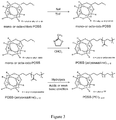
- the synthesis scheme for the preparation of PEI-POSS is shown in Figure 3 .
- the primary challenge in the art associated with NO-releasing media is the ability to control the release rate of the gas from the compound.
- the nanofiber mats of the present invention fabricated from the compounds aforementioned, are imbibed with an elastomer, such as crosslinked polydimethylsiloxane (PDMS).
- PDMS crosslinked polydimethylsiloxane
- the present invention may thus employ commercially available PDMS, Sylgard ®184, and silanol terminated PDMS have been utilized.
- Elastomers based on PDMS are permeable to gas and water molecules, owing primarily to the very low glass transition temperature (Tg).
- Such permeability is important to the present NO-releasing system, taking into consideration that NO donors release NO (gas permeation out) upon contact with water (water permeation in). Utilization of elastomers like PDMS in this manner will allow a more sustained release of NO from the fibers and would help to reduce the initial spontaneous "dump" of the gas once placed in aqueous solution (See Figure 5(b) , below, for the non-PDMS example).
- Diazeniumdiolation is the method used to synthesize diazeniumdiolates.
- the method is relatively simple, whereby materials are reacted with nitric oxide at relatively high pressure (ca. 70 psi) under vacuum and at room temperature for approximately 3 days.
- the main compounds utilized for these studies were placed in solution, contained in high-pressure glassware, and reacted with NO for approximately 3 days, though the time required for completion is likely much shorter.
- the present invention utilizes electro-spinning techniques to produce non-woven fibrous mats. These e-spun fibers provide a high surface to volume ratio, which enhances mass transfer properties and improves homogeneity.
- the present invention comprises two important and new elements to the formation of NO releasing media: (i) the use of OctaAmmoniumPOSS as the high loading-capacity and stable nitric oxide donor; and (ii) NO release rate regulation through the integration of an elastomeric within the fibers.
- the compounds used for the present invention and the affordance of spinnability adds to the uniqueness of the present invention.
- the nitric oxide modification process for solutions containing LPEI was obtained from literature; however, for OctaAmmoniumPOSS the compound could not be NO-modified unless the reaction was conducted in a basic (pH > 10) environment.
- sodium methoxide (NaOMe) was the basic salt used to create this basic environment.
- potassium hydroxide (KOH) was used.
- the pH of the solution needs to be between 10 and 12 for the reaction to occur without degradation of the POSS cage.
- the synthesis of the NO-modified PDMS system of the present invention is a three-step process, as shown in Figure 4 .
- the first step is to NO-load the compound in solution (in most cases we have used methanol, ethanol or acetonitrile).
- the reaction is conducted at 70 psi with a reaction time of about 3 days.
- the second step is to blend it with PVP or PCL and electrospin the solution at relatively high voltage of approximately 15 kV.
- the third step is to apply PDMS to the fiber mat and allow ⁇ 7 days for curing. After the system has cured a release analysis in PBS may be conducted.
- the Griess Assay was used to determine the presence of nitrite in the PBS solution.
- the advantage of the NO releasing system of the present invention is that it provides a large surface to volume ratio and high NO loading capabilities, as well as a highly controlled releasing system.
- Figure 5(b) showed the elastomeric composite released 1.03 ⁇ 0.09 ⁇ mols/mg for over 220 days - almost double the concentration of NO released from the fibers without Sylgard.
- the NO release curve for the elastomeric composite appeared to have zero-order release for the first 30 days, following a slight declination or plateau and another increase in the release.
- the fortuitous increase around day 72 was not anticipated, however, this could have occurred due to the leaching of PDMS from the composite over time thus, exposing more DETA/NO initially entrapped within the fibers to water.
- FIG. 7 shows a picture of a hollow tube conduit according to the present invention prepared by the electrospinning method aforementioned.
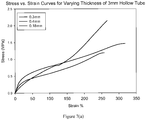
- Thickness of the tube inherently affects the modulus of the composite, thus the volume of solution electrospun was used to control the thickness (see Figure 8 ).
- Table 1 shows the relationship between tube thickness and thermal properties Table 1 Tube Thickness (mm) E-spinning time (h) Modulus (MPa) T m (°C) ⁇ H (J/g) Ratio ⁇ H tube / ⁇ H PCL 0.42 0.67 1.1 54.3 7.24 0.16 0.30 1.5 2.5 54.0 2.84 0.07 0.18 3 3.7 54.2 1.74 0.04
- Electrospinning a volume of 1 ml of PCL-POSS/NO solution yields a tube of 300 microns thickness after infiltration of PDMS, with a modulus generally around ⁇ 7.6 MPa, which not only exhibits adequate mechanical properties but also exhibits NO-releasing functionality.
- This particular vascular graft conduit provides an advantage over current commercially available vascular grafts.
- the NO-release concentration can be tailored by varying the electrospinning volume and quantity of the NO-donor respectively.
- shape-memory property of PVAc and PCL elastomeric fibers composites enable shape fixing prior to insertion, which is particularly beneficial for irregular bends present within blood vessels, as it helps to inhibit kinking or blockage of the graft during and after insertion, as seen in Figure 9 .
- Matrix Fiber NO Donor Elastomeric poly(vinyl acetate) Sodium (Z)-1-(N,N-Diethylamino)diazen-1-ium-1,2-diolate] (DEA-NO) poly(dimethyl siloxane), crosslinked poly( ⁇ -caprolactone) 1-[N-(2-Aminoethyl)-N-(2-ammomoethyl)amino]diazen-1-ium-1,2-diolate (DETA-NO) polyurethane-based thermoplastic elastomers polystyrene Disodium1 [(Carboxylato)pyrrol idin-1-yl]diazen-1-ium-1,2-diolate] (PROLI-NO) crosslinked polyurethane elastomers Nylon-6 1- ⁇ N-[3-Aminopropyl]-N-
- the present invention can be applied on surfaces of blood contacting medical devices such as catheters, stents, or vascular grafts, with the purpose of releasing nitric oxide within a controlled rate and for a sustained period of time - greater than one day, preferably greater than one week.
- blood contacting medical devices such as catheters, stents, or vascular grafts
- the body tries to correct this problem by enabling smooth muscle cell proliferation, and this oftentimes causes intimal hyperplasia which leads to restenosis.
- Nitric oxide not only prevents platelet aggregation, it also inhibits the proliferation of smooth muscle cell while it enhances the proliferation of endothelium cells.
- nitric oxide releasing compounds such as our novel NO-modified OctaAmmoniumPOSS, will impart a number of beneficial biological functions.
- the same invention can be applied for a sustained antimicrobial effect so important for the prevention of nosocomial (hospital-acquired) infections, but also of value for odor prevention in footware and clothing.
- the release media could be utilized for improved circulation and pain relief for patients suffering from diabetes or sickle cell disease.
- the same release media could be used for enhanced and extended penile erection in the form of condoms or similar skin-contacting devices. It is known that the erection of the penis during sexual excitation is mediated by NO released from nerve endings close to the blood vessels in the penis.
- the invented NO-release media may serve as a release media for the treatment of erectile dysfunction.
- sildefanil ViagraTM
- vardenafil LevitraTM
- tadalafil CialisTM
Landscapes
- Health & Medical Sciences (AREA)
- Engineering & Computer Science (AREA)
- Chemical & Material Sciences (AREA)
- Life Sciences & Earth Sciences (AREA)
- General Health & Medical Sciences (AREA)
- Veterinary Medicine (AREA)
- Public Health (AREA)
- Animal Behavior & Ethology (AREA)
- Medicinal Chemistry (AREA)
- Epidemiology (AREA)
- Chemical Kinetics & Catalysis (AREA)
- Textile Engineering (AREA)
- Materials Engineering (AREA)
- Pharmacology & Pharmacy (AREA)
- Bioinformatics & Cheminformatics (AREA)
- Organic Chemistry (AREA)
- Manufacturing & Machinery (AREA)
- Biomedical Technology (AREA)
- Heart & Thoracic Surgery (AREA)
- General Chemical & Material Sciences (AREA)
- Composite Materials (AREA)
- Vascular Medicine (AREA)
- Molecular Biology (AREA)
- Surgery (AREA)
- Polymers & Plastics (AREA)
- Nuclear Medicine, Radiotherapy & Molecular Imaging (AREA)
- Nanotechnology (AREA)
- Diabetes (AREA)
- Hematology (AREA)
- Mechanical Engineering (AREA)
- Materials For Medical Uses (AREA)
- Pharmaceuticals Containing Other Organic And Inorganic Compounds (AREA)
Description
- The present invention relates to systems and method for releasing nitric oxide and, more particularly, toward elastomeric fibers for the release of nitric oxide.
- Thrombosis is a common phenomena associated with the use of many blood-contacting medical devices. This adverse affect often occurs due to the fact that a number of these devices are fabricated from hydrophobic materials that enable the absorption of proteins on the surfaces of the device, consequently leading to activation of coagulation factors. A plethora of molecular approaches (additives) have been implemented to try to mitigate this occurrence, including Plavix™, coumadin, and heparin. However, the effectiveness of these treatments is limited and often results in adverse effects, such as hemorrhaging in other parts of the body. Consequently, there has been growing interest in the application of nitric oxide (NO) for the prevention of platelet aggregation within the last two decades.
- Nitric oxide is a simple diatomic molecule involved in a number of bioregulatory functions ranging from vasodilatation and endothelial cell proliferation to the prevention of platelet aggregation. One aspect of our NO studies has focused on the anticoagulation properties of nitric oxide and the potential application of this NO-releasing compound as thrombo-resistant coatings on blood-contacting medical devices. Herein, we will present our invention, which offers NO-modified compounds, within a nanofiber composite structure capable of sustained release of nitric oxide at physiological conditions.
- Nitric oxide has a number of other functions beyond those mentioned above. For example, NO possesses antibacterial properties against both gram-positive and gram-negative bacteria. Thus, our present invention is anticipated to possess additional useful properties beyond prevention of thrombus formation. The NO-modified compounds could also serve as antimicrobial coatings that prevent biofilm infections, an undesirable phenomenon that is considered a common threat to hospitalized patients afflicted with exposed wounds.
-
WO2005070008 discloses nitric oxide producing nanofibres formulated with second fibres. - The present invention comprises an electrospun fiber mat including at least one nanofiber containing NO-donor molecules that is infiltrated with an elastomeric composite. More particularly, the present invention involves three components: (i) an electrospun nanofiber mat (ii) an NO donor attached to the nanofibers; and (iii) an elastomeric matrix infiltrated into the mat of nanofiber/NO donors. The NO-releasing electrospun fibers have a diameter in the nanometer range and the drug release rate is regulated by the elastomeric polymer matrix, which encapsulates the fibers, forming a two-part composite. Specifically, a prepared nanofiber mat containing NO-donor molecules is infiltrated with an elastomeric matrix that has desirable permeability to both water and gas molecules.
- The present invention has permeability to both water and gas and, upon contact of the present invention with water or blood, water will permeate through the elastomeric matrix to the NO donor molecules, thereby resulting in a dissociation reaction that releases NO gas that will, in turn, permeate through the elastomeric barrier. The NO-donor nanofibers of the present invention may be formed by synthesizing acceptable NO-donors by NO loading the polymers in solution. After the polymers have been NO-modified, the solution is blended with PVP, PCL or PVAc and electrospun at relatively high voltage to form a fiber mat. PDMS is then applied to the fiber mat and allowed to cure. The resulting NO-releasing electrospun fibers may be used in medical devices such as catheters, stents, or vascular grafts, with the purpose of releasing nitric oxide within a controlled rate and for a sustained period of time, as well as other know medical applications for NO.
- The present invention will be more fully understood and appreciated by reading the following Detailed Description in conjunction with the accompanying drawings, in which:
-
Figure 1 is a schematic of a NO-releasing composite material according to the present invention; -
Figure 2 is a schematic of OctaAPOSS modified with sixteen moles of NO per molecule according to the present invention; -
Figure 3 is a schematic of the synthesis of PEI-POSS according to the present invention; -
Figure 4 are micrographs of: (a) the formation of e-spun fibers on collector; (b) e-spun 15 wt-% LPEI/PVP w/o NO, (c) 2 wt-% OctaAPOSS/KOH/PCL(90k) w/ NO; and (d) PDMS 2-wt% OctaAPOSS/KOH/PCL w/ NO, according to the present invention; -
Figures 5(a) and(b) are charts comparing NO release from OctaAPOSS/PCL fiber mats both with,Fig. 5(a) , and without,Fig. 5(b) , integration of a crosslinked PDMS (Sylgard™ 184) matrix; -
Figures 6(a) and(b) are charts comparing (a) NO release from PVAc-DETA/NO fibers (with no elastomer) and (b) the NO- release curve from PDMS_PVAc98.5-DETA/NO1.5 composite showing a slight plateau at day 72, then increase release for 220 days. -
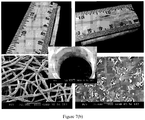
Figures 7(a) is a chart of the stress vs. strain curve of PCL conduit with varying thickness andFigure 7(b) are a series of images of PCL(90k) hollow tube fibers conduit capable of holding NO donors for sustained NO delivery; -
Figure 8 is a graph ofDSC 2nd heating traces showing melting endotherms for neat PCL and PCL/Sylgard composites with varying thickness. The data shows increase in tube thickness is associated with increase in PCL fiber density which is quantifiable by ΔH; and -
Figure 9 is a demonstration of 1-way-shape-memory properties of Sylgard/PCL as previously reported by the inventors, whereFigure 9(a) is a stress-temperature-strain plot showing one-way shape cycle of the composite,Figure 9(b) is a series of images showing utilization of heat induced shape-memory to fix and recover hollow tube conduit for vascular graft application, andFigure 9(c) is a table showing fixing and recovery percentage with εu, εm, εp and N representing strain of the material before unloading and after unloading (100% indicates complete fixing or recovery). - Referring now to the drawings, wherein like reference numerals refer to like parts throughout, the present invention involves nitric oxide (NO) releasing electrospun fibers whose diameter is in the nanometer range and whose release rate is regulated by an elastomeric polymer matrix binding the fibers together. In particular, a prepared nanofiber containing NO-donor molecules is infiltrated with an elastomeric composite that has desirable permeability to both water and gas, as seen in
Fig 1 . Upon contact of this structure with water or blood, water will permeate through the elastomeric matrix to the NO donor molecules (e.g., diazeniumdiolated OctaAPOSS), following which a dissociation reaction will occur, releasing NO gas. This gas will, in turn, permeate through the same elastomeric barrier before release into the PBS or blood environment. The rate limiting steps appear to be the water permeation and the NO gas permeation, the former being the slowest. Without the presence of an elastomer, a spontaneous release of nitric oxide from the fibers would occur within a relatively shorter duration of time. Preliminary data (examples) substantiates this expectation. - The present invention utilizes a group of nitric oxide- modified materials known as NO-Donors. Nitric oxide donors are molecules that are capable of releasing NO spontaneously through various mechanisms including thermal and photochemical decomposition. NO donors are often classified into two main groups: Diazeniumdiolates and S-Nitrosothiols. The present invention utilizes the diazeniumdiolation group of molecules because such NO compounds are formed by the facile reaction between the primary or secondary amines present within the donor compounds and pressurized nitric oxide gas. The resulting molecule is a stable structure containing two-moles of nitric oxide per amine capable of dissociation upon contact with water. The main NO donor molecules used for the present invention have included linear poly(ethyleneimine) (LPEI), poly(vinylpyrrolidone) (PVP), poly(caprolactone) (PCL), OctaAmmonium POSS (OctaAPOSS), and PEI-POSS hybrid polymer. This choice of compounds was based mainly on their biocompatibility, electrospinnability, and past experience with the materials. OctaAPOSS, LPEI and PEI-POSS were selected based on the presence of nucleophilic primary or secondary amines, which would provide potential binding-sites for nitric oxide. OctaAPOSS has eight ammonium chloride (-NH3 +Cl-) alkyl arms that can be easily functionalized and modified to primary amines (-NH2) under basic conditions, and is sequentially modified with nitric oxide. This NO-modified OctaAPOSS could potentially provide 8-fold the amount of nitric oxide produced by most NO-donors, as shown schematically in
Figure 2 . The synthesis scheme for the preparation of PEI-POSS is shown inFigure 3 . - The primary challenge in the art associated with NO-releasing media is the ability to control the release rate of the gas from the compound. In order to obtain a more controlled release rate, the nanofiber mats of the present invention, fabricated from the compounds aforementioned, are imbibed with an elastomer, such as crosslinked polydimethylsiloxane (PDMS). The present invention may thus employ commercially available PDMS, Sylgard ®184, and silanol terminated PDMS have been utilized. Elastomers based on PDMS are permeable to gas and water molecules, owing primarily to the very low glass transition temperature (Tg). Such permeability is important to the present NO-releasing system, taking into consideration that NO donors release NO (gas permeation out) upon contact with water (water permeation in). Utilization of elastomers like PDMS in this manner will allow a more sustained release of NO from the fibers and would help to reduce the initial spontaneous "dump" of the gas once placed in aqueous solution (See
Figure 5(b) , below, for the non-PDMS example). The benefits of regulating permeation via imbibition with PDMS (or other elastomers- such as biodegradable polyanhydride) in the form shown is two-fold: (i) maintaining nitric oxide concentration within a sub-toxic limit, and (ii) sustained release of NO spanning a range of time useful for healthcare. Such properties in a synthetic material render it biomimetic, behaving in a manner similar to endothelial cells, which are responsible for the synthesis and release of NO in human vasculature. - Diazeniumdiolation is the method used to synthesize diazeniumdiolates. The method is relatively simple, whereby materials are reacted with nitric oxide at relatively high pressure (ca. 70 psi) under vacuum and at room temperature for approximately 3 days. The main compounds utilized for these studies were placed in solution, contained in high-pressure glassware, and reacted with NO for approximately 3 days, though the time required for completion is likely much shorter.
- The present invention utilizes electro-spinning techniques to produce non-woven fibrous mats. These e-spun fibers provide a high surface to volume ratio, which enhances mass transfer properties and improves homogeneity. For this invention, solutions of NO-modified OctaAPOSS, LPEI, PVAc, and PEI-POSS were e-spun to obtain uniform fiber mats containing NO donors. Some solutions were blended with PVP (Mw = 360k), PCL (Mw = 90k) or PVAc (Mw = 260k) prior to electrospinning in order to enhance fiber formation and spinnability of the solution. E-spun webs containing fibers with average diameter in the 100 nm - 500 nm range were obtained. The process and example electron micrographs are shown in
Figure 4(a), (b), (c), (d) . Previous work of the inventors revealed how to combine electrospun polymeric fibers with PDMS elastomer (e.g. Sylgard 184) to form an elastomeric composite material with shape memory properties. - While electrospinning is a technique that has been utilized and the combination of diazeniumdiolation of NO donors and electrospinning techniques exist, the present invention comprises two important and new elements to the formation of NO releasing media: (i) the use of OctaAmmoniumPOSS as the high loading-capacity and stable nitric oxide donor; and (ii) NO release rate regulation through the integration of an elastomeric within the fibers. The compounds used for the present invention and the affordance of spinnability adds to the uniqueness of the present invention.
- The nitric oxide modification process for solutions containing LPEI was obtained from literature; however, for OctaAmmoniumPOSS the compound could not be NO-modified unless the reaction was conducted in a basic (pH > 10) environment. In conventional work, sodium methoxide (NaOMe) was the basic salt used to create this basic environment. In the present invention, potassium hydroxide (KOH) was used. The pH of the solution needs to be between 10 and 12 for the reaction to occur without degradation of the POSS cage.
- The synthesis of the NO-modified PDMS system of the present invention is a three-step process, as shown in
Figure 4 . The first step is to NO-load the compound in solution (in most cases we have used methanol, ethanol or acetonitrile). The reaction is conducted at 70 psi with a reaction time of about 3 days. After the solution has been NO-modified, the second step is to blend it with PVP or PCL and electrospin the solution at relatively high voltage of approximately 15 kV. The third step is to apply PDMS to the fiber mat and allow ≥ 7 days for curing. After the system has cured a release analysis in PBS may be conducted. The Griess Assay was used to determine the presence of nitrite in the PBS solution. The advantage of the NO releasing system of the present invention is that it provides a large surface to volume ratio and high NO loading capabilities, as well as a highly controlled releasing system. - In
Figure 5(a) , the plot shows NO release from the OctaAPOSS/PCL fibers without PDMS, as anticipated, a spontaneous release occurred within the first 20 min and plateaus out for most of the remaining 90 min. However, once PDMS is applied to the fibers the spontaneous release is significantly dampened and the release lasts for 27 days as opposed to 110 min as seen inFigure 5b . The same test was conducted using another NO-donor - DETA/NO, entrapped in PVAc fibers. NO release study showed that the PVAc- DETA/NO fibers (without Sylgard) released 0.54±0.07 µmols/mg of NO for approximately 72.5 h. The release curve,figure 5(a) , showed fairly large spontaneous release of NO within the first 1.5 h. However,Figure 5(b) showed the elastomeric composite released 1.03 ± 0.09 µmols/mg for over 220 days - almost double the concentration of NO released from the fibers without Sylgard. The NO release curve for the elastomeric composite appeared to have zero-order release for the first 30 days, following a slight declination or plateau and another increase in the release. The fortuitous increase around day 72 was not anticipated, however, this could have occurred due to the leaching of PDMS from the composite over time thus, exposing more DETA/NO initially entrapped within the fibers to water. - The ability of the present invention to use a variety of polymers and NO-donors, helped to successfully validate the generality of controlled and sustained NO release from the elastomeric nanocomposite system (see
Figure 6 (a) and(b) ). The results confirmed that the incorporation of DETA/NO into an elastomeric nanocomposite system attenuated the uncontrolled and spontaneous release of NO under physiological conditions, showing increase in the duration of NO release. There are a number of variables within the system that can be tailored or controlled, thus leaving a lot of room for further studies and characterization. However, NO release from the elastomeric composite for 220 days is very unique and advantageous. For this reason, the present NO-releasing elastomeric nanocomposite system could serve as an ideal candidate for the improvement of various localized biomaterials applications, including thromboresistant coatings, vascular grafts and wound healing applications. - Fabrication of OctaAPOSS/NO-PCL(1:10) and DETA/NO-PVAc (1:10) e-spun fibers can not only be fabricated as flats sheet but also in the form of hollow tubes. Furthermore, the ability of NO to inhibit thrombogenecity, promotion of endothelialization and inhibition of smooth muscle cell migration, motivated the fabrication of electrospun small diameter vascular graft conduits with NO-releasing properties. A vascular graft with NO-releasing capabilities, exhibiting these desirable characteristics, would better mimic native blood vessels. Obtaining sustained and controlled NO release for 220 d from our elastomeric composite makes this novel material a highly appropriate candidate for application towards blood-vessel replacement and other therapeutic applications.
- Fabrication of a hollow tube was achieved by collecting the fibers rather on a smaller mandrel (≤ 7 mm) instead of a 50 mm mandrel. The idea behind the hollow NO-releasing tube is to apply it as a synthetic vascular graft conduit for treatment of vascular diseases.
Figure (7 ) shows a picture of a hollow tube conduit according to the present invention prepared by the electrospinning method aforementioned. - Thickness of the tube inherently affects the modulus of the composite, thus the volume of solution electrospun was used to control the thickness (see
Figure 8 ). Table 1 below shows the relationship between tube thickness and thermal propertiesTable 1 Tube Thickness (mm) E-spinning time (h) Modulus (MPa) Tm (°C) ΔH (J/g) Ratio Δ Htube / Δ HPCL 0.42 0.67 1.1 54.3 7.24 0.16 0.30 1.5 2.5 54.0 2.84 0.07 0.18 3 3.7 54.2 1.74 0.04 - Electrospinning a volume of 1 ml of PCL-POSS/NO solution yields a tube of 300 microns thickness after infiltration of PDMS, with a modulus generally around ≤ 7.6 MPa, which not only exhibits adequate mechanical properties but also exhibits NO-releasing functionality. This particular vascular graft conduit provides an advantage over current commercially available vascular grafts. The NO-release concentration can be tailored by varying the electrospinning volume and quantity of the NO-donor respectively. In addition, the shape-memory property of PVAc and PCL elastomeric fibers composites enable shape fixing prior to insertion, which is particularly beneficial for irregular bends present within blood vessels, as it helps to inhibit kinking or blockage of the graft during and after insertion, as seen in
Figure 9 . - Table 2 below includes a list of compounds which may be used for the fibers, the matrix and the NO donor, in any combination.
Matrix Fiber NO Donor Elastomeric poly(vinyl acetate) Sodium (Z)-1-(N,N-Diethylamino)diazen-1-ium-1,2-diolate] (DEA-NO) poly(dimethyl siloxane), crosslinked poly(ε-caprolactone) 1-[N-(2-Aminoethyl)-N-(2-ammomoethyl)amino]diazen-1-ium-1,2-diolate (DETA-NO) polyurethane-based thermoplastic elastomers polystyrene Disodium1 [(Carboxylato)pyrrol idin-1-yl]diazen-1-ium-1,2-diolate] (PROLI-NO) crosslinked polyurethane elastomers Nylon-6 1-{N-[3-Aminopropyl]-N-[(3-aminopropylammoniobutyl)]}di azen-1-ium-1,2-diolate (SPER-NO) vulcanized styrene-butadiene random copolymer Nylon-12 Cation Stabilized Diazeniumdiolate POSS-(NHNONO-K+)8 (OctaAPOSS/NO) crosslinked poly(isobutylene) Polyamides (various) POSS-poly(ethylene imine)/NO POSS-(PEI)8-(NO)16 crosslinked cis-polyisoprene (vulcanized natural rubber) poly(methyl methacrylate) crosslinked cis-polybutadiene poly(styrene) Chloroprene rubber poly(alkyl methacrylate) copolymers Styrene-butadiene-styrene triblock copolymer thermoplastic elastomers Poly(ethylene terephthalate) General: diblock, tri-block, or multibock copolymers with at least one block that is crystalline or glassy and one block that is elastomeric Polycarbonate Crosslinked poly(alkyl acrylate) polyurethane-based thermoplastic elastomers plasticized PVC Styrene-butadiene-styrene triblock copolymer thermoplastic elastomers Polyamide-polyether multiblock copolymer thermoplastic elastomers, such as PEBAX™ General: diblock, triblock, or multibock copolymers with at least one block that is crystalline or glassy and one block that is elastomeric Glassy or Semicrystalline Crosslinked poly(ethylene oxide) Crosslinked poly(ε-caprolactone) poly(methyl methacrylate) poly(styrene) poly(alkyl methacrylate) copolymers Poly(ethylene terephthalate) Polyamides (various) Nylon-6 Nylon-12 Polycarbonate - The present invention can be applied on surfaces of blood contacting medical devices such as catheters, stents, or vascular grafts, with the purpose of releasing nitric oxide within a controlled rate and for a sustained period of time - greater than one day, preferably greater than one week. During the application of blood contacting medical devices, there is a potential that damage can be induced on the fragile endothelium lining. As a result, the body tries to correct this problem by enabling smooth muscle cell proliferation, and this oftentimes causes intimal hyperplasia which leads to restenosis. Nitric oxide not only prevents platelet aggregation, it also inhibits the proliferation of smooth muscle cell while it enhances the proliferation of endothelium cells. Therefore, nitric oxide releasing compounds, such as our novel NO-modified OctaAmmoniumPOSS, will impart a number of beneficial biological functions. The same invention can be applied for a sustained antimicrobial effect so important for the prevention of nosocomial (hospital-acquired) infections, but also of value for odor prevention in footware and clothing.
- Commercial potential exists for the anticipated vasodilation properties of the same invention. For example, the release media could be utilized for improved circulation and pain relief for patients suffering from diabetes or sickle cell disease. Also, the same release media could be used for enhanced and extended penile erection in the form of condoms or similar skin-contacting devices. It is known that the erection of the penis during sexual excitation is mediated by NO released from nerve endings close to the blood vessels in the penis. Thus, the invented NO-release media may serve as a release media for the treatment of erectile dysfunction. This would serve as an alternative to ingested drugs, sildefanil (Viagra™), vardenafil (Levitra™), and tadalafil (Cialis™) that function indirectly by inhibiting an enzyme that breaks down cyclic GMP, a messenger protein that signals vasodilation.
- Finally, commercial potential exists for the media in enhancing the process of in-vitro fertilization of human embryos. It is know that the acrosome at the tip of the sperm head activates NO synthase when it enters the egg. The resulting release of NO in the egg appears to be important for triggering the next steps in the process, in particular blocking the entry of additional sperm and possibly orienting the pronuclei for fusion. The literature in this area is restricted to non-human fertilization studies; thus, this is highly speculative. However, it is possible that in-vitro fertilization upon substrates consisting of the present invention would be more productive than the same process upon conventional Petri dishes.
Claims (14)
- A system for releasing nitric oxide, comprising:an electrospun fiber mat including at least one nitric oxide modified fiber; andan elastomeric matrix infiltrated into said fiber mat.
- The system of claim 1, wherein said at least one nitric oxide modified fiber comprises a diazeniumdiolate modified polymer.
- The system of claim 2, wherein said diazeniumdiolate modified polymer is selected from the group consisting of an NO-modified OctaAmmoniumPOSS, a DETA/NO entrapped in electrospun linear poly(ethyleneimine) (LPEI), a poly(vinylpyrrolidone) (PVP), a poly(caprolactone) (PCL), a poly(vinyl acetate) (PVAc) and a PEI-POSS hybrid polymer.
- The system of claim 3, wherein said at least one nitric oxide modified fiber has an average diameter of between 100 nanometers and 500 nanometers.
- The system of claim 1, wherein said elastomeric matrix comprises a crosslinked polydimethylsiloxane.
- The system of claim 1, wherein said elastomeric matrix comprises a shape memory polymer.
- A method of forming a nitric oxide releasing compound, comprising the steps of:modifying a polymer to include a nitric oxide donor;electrospinning said polymer to form a fiber mat; andimpregnating said fiber mat with an elastomeric matrix.
- The method of claim 7, wherein the step of modifying a polymer to include a nitric oxide donor comprises reacting said polymer with nitric oxide under a predetermined pressure in an anoxic environment, under vacuum, for a predetermined period of time.
- The method of claim 8, wherein said at least one nitric oxide modified polymer comprises a diazeniumdiolate modified polymer.
- The method of claim 9, wherein said diazeniumdiolate modified polymer is selected from the group consisting of an NO-modified OctaAmmoniumPOSS, a DETA/NO entrapped in electrospun linear poly(ethyleneimine) (LPEI), a poly(vinylpyrrolidone) (PVP), a poly(caprolactone) (PCL), a poly(vinyl acetate) (PVAc) and a PEI-POSS hybrid polymer.
- The method of claim 7, wherein the step of electrospinning said polymer to form a fiber mat comprises electrospinning said polymer to form polymeric fibers having an average diameter of between 100 nanometers and 500 nanometers.
- The method of claim 7, wherein the step of impregnating said fiber mat with an elastomeric matrix comprises infiltrating said fiber mat with an elastomer and cross-linking said elastomer by curing said elastomer.
- The method of claim 12, wherein said elastomeric matrix comprises a crosslinked polydimethylsiloxane.
- The method of claim 12, wherein said elastomeric matrix comprises a shape memory polymer.
Applications Claiming Priority (2)
| Application Number | Priority Date | Filing Date | Title |
|---|---|---|---|
| US32116710P | 2010-04-06 | 2010-04-06 | |
| PCT/US2011/031430 WO2011127181A2 (en) | 2010-04-06 | 2011-04-06 | System and method for the release of nitric oxide using nanoscale media |
Publications (3)
| Publication Number | Publication Date |
|---|---|
| EP2555762A2 EP2555762A2 (en) | 2013-02-13 |
| EP2555762A4 EP2555762A4 (en) | 2014-12-10 |
| EP2555762B1 true EP2555762B1 (en) | 2018-01-31 |
Family
ID=44709945
Family Applications (1)
| Application Number | Title | Priority Date | Filing Date |
|---|---|---|---|
| EP11766664.4A Not-in-force EP2555762B1 (en) | 2010-04-06 | 2011-04-06 | System and method for the release of nitric oxide using nanoscale media |
Country Status (3)
| Country | Link |
|---|---|
| US (1) | US8394393B2 (en) |
| EP (1) | EP2555762B1 (en) |
| WO (1) | WO2011127181A2 (en) |
Cited By (1)
| Publication number | Priority date | Publication date | Assignee | Title |
|---|---|---|---|---|
| WO2020018488A1 (en) * | 2018-07-16 | 2020-01-23 | University Of Georgia Research Foundation, Inc. | Robust nitric oxide-releasing polymers and articles and methods of making and uses thereof |
Families Citing this family (10)
| Publication number | Priority date | Publication date | Assignee | Title |
|---|---|---|---|---|
| JP5638003B2 (en) | 2009-01-12 | 2014-12-10 | ユニバーシティ オブ マサチューセッツ ローウェル | Polyisobutylene polyurethane |
| US9878487B2 (en) * | 2010-03-03 | 2018-01-30 | Syracuse University | Multi-shape product |
| CA2879843C (en) * | 2012-07-17 | 2021-05-04 | The United States Of America, As Represented By The Secretary, Department Of Health And Human Services | Nitric oxide-releasing diazeniumdiolated polyvinylpyrrolidone-based polymers, and compositions, medical devices, and uses thereof |
| CN105307695B (en) * | 2013-02-07 | 2017-07-18 | 密执安大学评议会 | With antithrombotic/sterilization S nitroso N acetyl penicilliamines (SNAP) the doping nitric oxide releasing polymer for improving stability |
| US9453501B2 (en) * | 2013-03-04 | 2016-09-27 | Patrick T. Mather | Reversible shape memory polymers exhibiting ambient actuation triggering |
| CN110446521B (en) * | 2017-01-21 | 2022-05-06 | 生物克瑞德公司 | Medical products and methods formulated for controlled release of nitric oxide |
| WO2018165273A1 (en) | 2017-03-07 | 2018-09-13 | Cardiac Pacemakers, Inc. | Hydroboration/oxidation of allyl-terminated polyisobutylene |
| US11472911B2 (en) | 2018-01-17 | 2022-10-18 | Cardiac Pacemakers, Inc. | End-capped polyisobutylene polyurethane |
| US11920026B2 (en) * | 2019-04-10 | 2024-03-05 | i-CoreBio Inc. | Polymer, preparation method therefor, nanofiber synthesized therefrom, and method for fabricating same nanofiber |
| GB2636411A (en) * | 2023-12-13 | 2025-06-18 | Univ Oxford Innovation Ltd | NO-generating material |
Family Cites Families (8)
| Publication number | Priority date | Publication date | Assignee | Title |
|---|---|---|---|---|
| US6753454B1 (en) | 1999-10-08 | 2004-06-22 | The University Of Akron | Electrospun fibers and an apparatus therefor |
| US6737447B1 (en) * | 1999-10-08 | 2004-05-18 | The University Of Akron | Nitric oxide-modified linear poly(ethylenimine) fibers and uses thereof |
| ATE533516T1 (en) * | 2002-04-04 | 2011-12-15 | Univ Akron Akron Ohio | NON-WOVEN FIBER BANDAGES |
| US20090136410A1 (en) * | 2003-07-25 | 2009-05-28 | Smith Daniel J | Stabilization and ionic triggering of nitric oxide release |
| WO2005070008A2 (en) * | 2004-01-22 | 2005-08-04 | The University Of Akron | Polymer no donor predrug nanofiber coating for medical devices and therapy |
| EP1861130B1 (en) * | 2005-02-11 | 2008-09-10 | NOLabs AB | Device and method for treatment of dermatomycosis, and in particular onychomycosis |
| EP1757278A1 (en) * | 2005-08-23 | 2007-02-28 | NOLabs AB | Device, system, and method comprising microencapsulated liquid for release of nitric oxide from a polymer |
| WO2008055719A2 (en) * | 2006-11-08 | 2008-05-15 | Arsenal Medical, Inc. | Medical device capable of releasing no |
-
2011
- 2011-04-06 WO PCT/US2011/031430 patent/WO2011127181A2/en not_active Ceased
- 2011-04-06 US US13/081,059 patent/US8394393B2/en active Active
- 2011-04-06 EP EP11766664.4A patent/EP2555762B1/en not_active Not-in-force
Non-Patent Citations (1)
| Title |
|---|
| None * |
Cited By (1)
| Publication number | Priority date | Publication date | Assignee | Title |
|---|---|---|---|---|
| WO2020018488A1 (en) * | 2018-07-16 | 2020-01-23 | University Of Georgia Research Foundation, Inc. | Robust nitric oxide-releasing polymers and articles and methods of making and uses thereof |
Also Published As
| Publication number | Publication date |
|---|---|
| US8394393B2 (en) | 2013-03-12 |
| US20110244001A1 (en) | 2011-10-06 |
| WO2011127181A2 (en) | 2011-10-13 |
| WO2011127181A3 (en) | 2012-03-08 |
| EP2555762A4 (en) | 2014-12-10 |
| EP2555762A2 (en) | 2013-02-13 |
Similar Documents
| Publication | Publication Date | Title |
|---|---|---|
| US8394393B2 (en) | System and method for the release of nitric oxide using nanoscale media | |
| Shakiba et al. | Nylon—A material introduction and overview for biomedical applications | |
| Aigner et al. | Biomedical applications of recombinant silk‐based materials | |
| Zupancic et al. | Controlled release of ciprofloxacin from core–shell nanofibers with monolithic or blended core | |
| Li et al. | Nitric oxide-releasing tryptophan-based poly (ester urea) s electrospun composite nanofiber mats with antibacterial and antibiofilm activities for infected wound healing | |
| US8298563B2 (en) | Polymer no donor predrug nanofiber coating for medical devices and therapy | |
| Bakare et al. | Synthesis and characterization of collagen grafted poly (hydroxybutyrate–valerate)(PHBV) scaffold for loading of bovine serum albumin capped silver (Ag/BSA) nanoparticles in the potential use of tissue engineering application | |
| Ke et al. | Surface modification of polyhydroxyalkanoates toward enhancing cell compatibility and antibacterial activity | |
| Wu et al. | Sustainable antibacterial surgical suture using a facile scalable silk-fibroin-based berberine loading system | |
| US20120068384A1 (en) | Nanofibrous materials as drug, protein, or genetic release vehicles | |
| US20130251778A1 (en) | Medical devices for therapeutic agent delivery with polymeric regions that contain copolymers having both soft segments and uniform length hard segments | |
| Ghalei et al. | Nitric oxide-releasing gelatin methacryloyl/silk fibroin interpenetrating polymer network hydrogels for tissue engineering applications | |
| Wischke et al. | Controlled drug release from biodegradable shape-memory polymers | |
| JP2008274512A (en) | Antibacterial nanofiber | |
| Shi et al. | REDV peptide conjugated nanoparticles/pZNF580 complexes for actively targeting human vascular endothelial cells | |
| Chan-Chan et al. | Characterization and biocompatibility studies of new degradable poly (urea) urethanes prepared with arginine, glycine or aspartic acid as chain extenders | |
| EP1408942A1 (en) | Methods and clinical devices for the inhibition or prevention of mammalian cell growth | |
| CA3001913A1 (en) | Biocidally active polymer compositions | |
| Salas et al. | Electrospun chitosan fibers | |
| Ghalei et al. | Nitric oxide-releasing nanofibrous scaffolds based on silk fibroin and zein with enhanced biodegradability and antibacterial properties | |
| Hussain et al. | Electrospun nanofibrous membrane functionalized with dual drug-cyclodextrin inclusion complexes for the potential treatment of otitis externa | |
| Ning et al. | Recent developments in controlled release of antibiotics | |
| Zambanini et al. | Bioactive glass/polymer composites for drug delivery | |
| Liu et al. | Epoxide cross-linked and lysine-blocked zein ultrafine fibrous scaffolds with prominent wet stability and cytocompatibility | |
| Sahu et al. | Nanofibers in drug delivery |
Legal Events
| Date | Code | Title | Description |
|---|---|---|---|
| PUAI | Public reference made under article 153(3) epc to a published international application that has entered the european phase |
Free format text: ORIGINAL CODE: 0009012 |
|
| 17P | Request for examination filed |
Effective date: 20121011 |
|
| AK | Designated contracting states |
Kind code of ref document: A2 Designated state(s): AL AT BE BG CH CY CZ DE DK EE ES FI FR GB GR HR HU IE IS IT LI LT LU LV MC MK MT NL NO PL PT RO RS SE SI SK SM TR |
|
| DAX | Request for extension of the european patent (deleted) | ||
| A4 | Supplementary search report drawn up and despatched |
Effective date: 20141110 |
|
| RIC1 | Information provided on ipc code assigned before grant |
Ipc: A61P 7/00 20060101ALI20141104BHEP Ipc: A61P 7/02 20060101ALI20141104BHEP Ipc: A61K 33/00 20060101ALI20141104BHEP Ipc: A61L 27/54 20060101ALI20141104BHEP Ipc: A61L 31/16 20060101ALI20141104BHEP Ipc: A61L 29/16 20060101ALI20141104BHEP Ipc: A61L 33/00 20060101ALI20141104BHEP Ipc: A61K 9/70 20060101AFI20141104BHEP |
|
| GRAP | Despatch of communication of intention to grant a patent |
Free format text: ORIGINAL CODE: EPIDOSNIGR1 |
|
| INTG | Intention to grant announced |
Effective date: 20170901 |
|
| GRAS | Grant fee paid |
Free format text: ORIGINAL CODE: EPIDOSNIGR3 |
|
| GRAA | (expected) grant |
Free format text: ORIGINAL CODE: 0009210 |
|
| AK | Designated contracting states |
Kind code of ref document: B1 Designated state(s): AL AT BE BG CH CY CZ DE DK EE ES FI FR GB GR HR HU IE IS IT LI LT LU LV MC MK MT NL NO PL PT RO RS SE SI SK SM TR |
|
| REG | Reference to a national code |
Ref country code: GB Ref legal event code: FG4D Ref country code: CH Ref legal event code: EP |
|
| REG | Reference to a national code |
Ref country code: AT Ref legal event code: REF Ref document number: 966727 Country of ref document: AT Kind code of ref document: T Effective date: 20180215 |
|
| REG | Reference to a national code |
Ref country code: IE Ref legal event code: FG4D |
|
| REG | Reference to a national code |
Ref country code: DE Ref legal event code: R096 Ref document number: 602011045460 Country of ref document: DE |
|
| REG | Reference to a national code |
Ref country code: NL Ref legal event code: MP Effective date: 20180131 |
|
| REG | Reference to a national code |
Ref country code: LT Ref legal event code: MG4D |
|
| REG | Reference to a national code |
Ref country code: AT Ref legal event code: MK05 Ref document number: 966727 Country of ref document: AT Kind code of ref document: T Effective date: 20180131 |
|
| PG25 | Lapsed in a contracting state [announced via postgrant information from national office to epo] |
Ref country code: HR Free format text: LAPSE BECAUSE OF FAILURE TO SUBMIT A TRANSLATION OF THE DESCRIPTION OR TO PAY THE FEE WITHIN THE PRESCRIBED TIME-LIMIT Effective date: 20180131 Ref country code: LT Free format text: LAPSE BECAUSE OF FAILURE TO SUBMIT A TRANSLATION OF THE DESCRIPTION OR TO PAY THE FEE WITHIN THE PRESCRIBED TIME-LIMIT Effective date: 20180131 Ref country code: NL Free format text: LAPSE BECAUSE OF FAILURE TO SUBMIT A TRANSLATION OF THE DESCRIPTION OR TO PAY THE FEE WITHIN THE PRESCRIBED TIME-LIMIT Effective date: 20180131 Ref country code: FI Free format text: LAPSE BECAUSE OF FAILURE TO SUBMIT A TRANSLATION OF THE DESCRIPTION OR TO PAY THE FEE WITHIN THE PRESCRIBED TIME-LIMIT Effective date: 20180131 Ref country code: NO Free format text: LAPSE BECAUSE OF FAILURE TO SUBMIT A TRANSLATION OF THE DESCRIPTION OR TO PAY THE FEE WITHIN THE PRESCRIBED TIME-LIMIT Effective date: 20180430 Ref country code: ES Free format text: LAPSE BECAUSE OF FAILURE TO SUBMIT A TRANSLATION OF THE DESCRIPTION OR TO PAY THE FEE WITHIN THE PRESCRIBED TIME-LIMIT Effective date: 20180131 |
|
| PG25 | Lapsed in a contracting state [announced via postgrant information from national office to epo] |
Ref country code: AT Free format text: LAPSE BECAUSE OF FAILURE TO SUBMIT A TRANSLATION OF THE DESCRIPTION OR TO PAY THE FEE WITHIN THE PRESCRIBED TIME-LIMIT Effective date: 20180131 Ref country code: PL Free format text: LAPSE BECAUSE OF FAILURE TO SUBMIT A TRANSLATION OF THE DESCRIPTION OR TO PAY THE FEE WITHIN THE PRESCRIBED TIME-LIMIT Effective date: 20180131 Ref country code: RS Free format text: LAPSE BECAUSE OF FAILURE TO SUBMIT A TRANSLATION OF THE DESCRIPTION OR TO PAY THE FEE WITHIN THE PRESCRIBED TIME-LIMIT Effective date: 20180131 Ref country code: BG Free format text: LAPSE BECAUSE OF FAILURE TO SUBMIT A TRANSLATION OF THE DESCRIPTION OR TO PAY THE FEE WITHIN THE PRESCRIBED TIME-LIMIT Effective date: 20180430 Ref country code: SE Free format text: LAPSE BECAUSE OF FAILURE TO SUBMIT A TRANSLATION OF THE DESCRIPTION OR TO PAY THE FEE WITHIN THE PRESCRIBED TIME-LIMIT Effective date: 20180131 Ref country code: LV Free format text: LAPSE BECAUSE OF FAILURE TO SUBMIT A TRANSLATION OF THE DESCRIPTION OR TO PAY THE FEE WITHIN THE PRESCRIBED TIME-LIMIT Effective date: 20180131 Ref country code: IS Free format text: LAPSE BECAUSE OF FAILURE TO SUBMIT A TRANSLATION OF THE DESCRIPTION OR TO PAY THE FEE WITHIN THE PRESCRIBED TIME-LIMIT Effective date: 20180531 Ref country code: GR Free format text: LAPSE BECAUSE OF FAILURE TO SUBMIT A TRANSLATION OF THE DESCRIPTION OR TO PAY THE FEE WITHIN THE PRESCRIBED TIME-LIMIT Effective date: 20180501 |
|
| PG25 | Lapsed in a contracting state [announced via postgrant information from national office to epo] |
Ref country code: AL Free format text: LAPSE BECAUSE OF FAILURE TO SUBMIT A TRANSLATION OF THE DESCRIPTION OR TO PAY THE FEE WITHIN THE PRESCRIBED TIME-LIMIT Effective date: 20180131 Ref country code: IT Free format text: LAPSE BECAUSE OF FAILURE TO SUBMIT A TRANSLATION OF THE DESCRIPTION OR TO PAY THE FEE WITHIN THE PRESCRIBED TIME-LIMIT Effective date: 20180131 Ref country code: EE Free format text: LAPSE BECAUSE OF FAILURE TO SUBMIT A TRANSLATION OF THE DESCRIPTION OR TO PAY THE FEE WITHIN THE PRESCRIBED TIME-LIMIT Effective date: 20180131 Ref country code: RO Free format text: LAPSE BECAUSE OF FAILURE TO SUBMIT A TRANSLATION OF THE DESCRIPTION OR TO PAY THE FEE WITHIN THE PRESCRIBED TIME-LIMIT Effective date: 20180131 |
|
| REG | Reference to a national code |
Ref country code: DE Ref legal event code: R119 Ref document number: 602011045460 Country of ref document: DE |
|
| PG25 | Lapsed in a contracting state [announced via postgrant information from national office to epo] |
Ref country code: SK Free format text: LAPSE BECAUSE OF FAILURE TO SUBMIT A TRANSLATION OF THE DESCRIPTION OR TO PAY THE FEE WITHIN THE PRESCRIBED TIME-LIMIT Effective date: 20180131 Ref country code: CZ Free format text: LAPSE BECAUSE OF FAILURE TO SUBMIT A TRANSLATION OF THE DESCRIPTION OR TO PAY THE FEE WITHIN THE PRESCRIBED TIME-LIMIT Effective date: 20180131 Ref country code: MC Free format text: LAPSE BECAUSE OF FAILURE TO SUBMIT A TRANSLATION OF THE DESCRIPTION OR TO PAY THE FEE WITHIN THE PRESCRIBED TIME-LIMIT Effective date: 20180131 Ref country code: SM Free format text: LAPSE BECAUSE OF FAILURE TO SUBMIT A TRANSLATION OF THE DESCRIPTION OR TO PAY THE FEE WITHIN THE PRESCRIBED TIME-LIMIT Effective date: 20180131 Ref country code: DK Free format text: LAPSE BECAUSE OF FAILURE TO SUBMIT A TRANSLATION OF THE DESCRIPTION OR TO PAY THE FEE WITHIN THE PRESCRIBED TIME-LIMIT Effective date: 20180131 |
|
| REG | Reference to a national code |
Ref country code: CH Ref legal event code: PL |
|
| PLBE | No opposition filed within time limit |
Free format text: ORIGINAL CODE: 0009261 |
|
| STAA | Information on the status of an ep patent application or granted ep patent |
Free format text: STATUS: NO OPPOSITION FILED WITHIN TIME LIMIT |
|
| REG | Reference to a national code |
Ref country code: BE Ref legal event code: MM Effective date: 20180430 |
|
| GBPC | Gb: european patent ceased through non-payment of renewal fee |
Effective date: 20180430 |
|
| 26N | No opposition filed |
Effective date: 20181102 |
|
| PG25 | Lapsed in a contracting state [announced via postgrant information from national office to epo] |
Ref country code: LU Free format text: LAPSE BECAUSE OF NON-PAYMENT OF DUE FEES Effective date: 20180406 Ref country code: DE Free format text: LAPSE BECAUSE OF NON-PAYMENT OF DUE FEES Effective date: 20181101 |
|
| PG25 | Lapsed in a contracting state [announced via postgrant information from national office to epo] |
Ref country code: LI Free format text: LAPSE BECAUSE OF NON-PAYMENT OF DUE FEES Effective date: 20180430 Ref country code: SI Free format text: LAPSE BECAUSE OF FAILURE TO SUBMIT A TRANSLATION OF THE DESCRIPTION OR TO PAY THE FEE WITHIN THE PRESCRIBED TIME-LIMIT Effective date: 20180131 Ref country code: CH Free format text: LAPSE BECAUSE OF NON-PAYMENT OF DUE FEES Effective date: 20180430 Ref country code: BE Free format text: LAPSE BECAUSE OF NON-PAYMENT OF DUE FEES Effective date: 20180430 Ref country code: GB Free format text: LAPSE BECAUSE OF NON-PAYMENT OF DUE FEES Effective date: 20180430 |
|
| PG25 | Lapsed in a contracting state [announced via postgrant information from national office to epo] |
Ref country code: FR Free format text: LAPSE BECAUSE OF NON-PAYMENT OF DUE FEES Effective date: 20180430 |
|
| PG25 | Lapsed in a contracting state [announced via postgrant information from national office to epo] |
Ref country code: MT Free format text: LAPSE BECAUSE OF NON-PAYMENT OF DUE FEES Effective date: 20180406 |
|
| PG25 | Lapsed in a contracting state [announced via postgrant information from national office to epo] |
Ref country code: TR Free format text: LAPSE BECAUSE OF FAILURE TO SUBMIT A TRANSLATION OF THE DESCRIPTION OR TO PAY THE FEE WITHIN THE PRESCRIBED TIME-LIMIT Effective date: 20180131 |
|
| PG25 | Lapsed in a contracting state [announced via postgrant information from national office to epo] |
Ref country code: HU Free format text: LAPSE BECAUSE OF FAILURE TO SUBMIT A TRANSLATION OF THE DESCRIPTION OR TO PAY THE FEE WITHIN THE PRESCRIBED TIME-LIMIT; INVALID AB INITIO Effective date: 20110406 Ref country code: PT Free format text: LAPSE BECAUSE OF FAILURE TO SUBMIT A TRANSLATION OF THE DESCRIPTION OR TO PAY THE FEE WITHIN THE PRESCRIBED TIME-LIMIT Effective date: 20180131 |
|
| PG25 | Lapsed in a contracting state [announced via postgrant information from national office to epo] |
Ref country code: MK Free format text: LAPSE BECAUSE OF NON-PAYMENT OF DUE FEES Effective date: 20180131 Ref country code: CY Free format text: LAPSE BECAUSE OF FAILURE TO SUBMIT A TRANSLATION OF THE DESCRIPTION OR TO PAY THE FEE WITHIN THE PRESCRIBED TIME-LIMIT Effective date: 20180131 |
|
| PGFP | Annual fee paid to national office [announced via postgrant information from national office to epo] |
Ref country code: IE Payment date: 20230427 Year of fee payment: 13 |
|
| PG25 | Lapsed in a contracting state [announced via postgrant information from national office to epo] |
Ref country code: IE Free format text: LAPSE BECAUSE OF NON-PAYMENT OF DUE FEES Effective date: 20240406 |