EP2554542A1 - Phenylalanine derivative salt crystal - Google Patents
Phenylalanine derivative salt crystal Download PDFInfo
- Publication number
- EP2554542A1 EP2554542A1 EP11762843A EP11762843A EP2554542A1 EP 2554542 A1 EP2554542 A1 EP 2554542A1 EP 11762843 A EP11762843 A EP 11762843A EP 11762843 A EP11762843 A EP 11762843A EP 2554542 A1 EP2554542 A1 EP 2554542A1
- Authority
- EP
- European Patent Office
- Prior art keywords
- crystal
- powder
- set forth
- angles
- ray diffraction
- Prior art date
- Legal status (The legal status is an assumption and is not a legal conclusion. Google has not performed a legal analysis and makes no representation as to the accuracy of the status listed.)
- Granted
Links
- 239000013078 crystal Substances 0.000 title claims abstract description 463
- -1 Phenylalanine derivative salt Chemical class 0.000 title abstract description 7
- 150000001875 compounds Chemical class 0.000 claims abstract description 206
- VEXZGXHMUGYJMC-UHFFFAOYSA-N Hydrochloric acid Chemical compound Cl VEXZGXHMUGYJMC-UHFFFAOYSA-N 0.000 claims abstract description 64
- QAOWNCQODCNURD-UHFFFAOYSA-L Sulfate Chemical compound [O-]S([O-])(=O)=O QAOWNCQODCNURD-UHFFFAOYSA-L 0.000 claims abstract description 31
- 150000003839 salts Chemical class 0.000 claims abstract description 24
- 229910002651 NO3 Inorganic materials 0.000 claims abstract description 17
- NHNBFGGVMKEFGY-UHFFFAOYSA-N Nitrate Chemical compound [O-][N+]([O-])=O NHNBFGGVMKEFGY-UHFFFAOYSA-N 0.000 claims abstract description 17
- JOXIMZWYDAKGHI-UHFFFAOYSA-N toluene-4-sulfonic acid Chemical compound CC1=CC=C(S(O)(=O)=O)C=C1 JOXIMZWYDAKGHI-UHFFFAOYSA-N 0.000 claims abstract description 15
- 238000000634 powder X-ray diffraction Methods 0.000 claims description 129
- CPELXLSAUQHCOX-UHFFFAOYSA-N Hydrogen bromide Chemical group Br CPELXLSAUQHCOX-UHFFFAOYSA-N 0.000 claims description 47
- 238000000034 method Methods 0.000 claims description 43
- 239000003795 chemical substances by application Substances 0.000 claims description 19
- 239000003814 drug Substances 0.000 claims description 13
- 230000000069 prophylactic effect Effects 0.000 claims description 11
- 206010028980 Neoplasm Diseases 0.000 claims description 8
- 201000006417 multiple sclerosis Diseases 0.000 claims description 8
- 230000002757 inflammatory effect Effects 0.000 claims description 7
- 208000028774 intestinal disease Diseases 0.000 claims description 7
- 239000008194 pharmaceutical composition Substances 0.000 claims description 7
- 229940124597 therapeutic agent Drugs 0.000 claims description 7
- AFVFQIVMOAPDHO-UHFFFAOYSA-M methanesulfonate group Chemical group CS(=O)(=O)[O-] AFVFQIVMOAPDHO-UHFFFAOYSA-M 0.000 claims description 6
- 208000024172 Cardiovascular disease Diseases 0.000 claims description 4
- 206010020751 Hypersensitivity Diseases 0.000 claims description 4
- 108010041012 Integrin alpha4 Proteins 0.000 claims description 4
- 206010027476 Metastases Diseases 0.000 claims description 4
- 201000004681 Psoriasis Diseases 0.000 claims description 4
- 208000021386 Sjogren Syndrome Diseases 0.000 claims description 4
- 206010052779 Transplant rejections Diseases 0.000 claims description 4
- 208000026935 allergic disease Diseases 0.000 claims description 4
- 230000007815 allergy Effects 0.000 claims description 4
- 208000011775 arteriosclerosis disease Diseases 0.000 claims description 4
- 208000006673 asthma Diseases 0.000 claims description 4
- 230000001419 dependent effect Effects 0.000 claims description 4
- 206010012601 diabetes mellitus Diseases 0.000 claims description 4
- 206010020718 hyperplasia Diseases 0.000 claims description 4
- 208000027866 inflammatory disease Diseases 0.000 claims description 4
- 230000009401 metastasis Effects 0.000 claims description 4
- 230000008569 process Effects 0.000 claims description 4
- 208000037803 restenosis Diseases 0.000 claims description 4
- 206010039073 rheumatoid arthritis Diseases 0.000 claims description 4
- 201000000596 systemic lupus erythematosus Diseases 0.000 claims description 4
- 229940125798 integrin inhibitor Drugs 0.000 claims description 2
- AFVFQIVMOAPDHO-UHFFFAOYSA-N Methanesulfonic acid Chemical compound CS(O)(=O)=O AFVFQIVMOAPDHO-UHFFFAOYSA-N 0.000 abstract description 51
- XLYOFNOQVPJJNP-UHFFFAOYSA-N water Substances O XLYOFNOQVPJJNP-UHFFFAOYSA-N 0.000 abstract description 20
- OKKJLVBELUTLKV-UHFFFAOYSA-N Methanol Chemical compound OC OKKJLVBELUTLKV-UHFFFAOYSA-N 0.000 description 147
- 239000000203 mixture Substances 0.000 description 122
- IAZDPXIOMUYVGZ-WFGJKAKNSA-N Dimethyl sulfoxide Chemical compound [2H]C([2H])([2H])S(=O)C([2H])([2H])[2H] IAZDPXIOMUYVGZ-WFGJKAKNSA-N 0.000 description 54
- LFQSCWFLJHTTHZ-UHFFFAOYSA-N Ethanol Chemical compound CCO LFQSCWFLJHTTHZ-UHFFFAOYSA-N 0.000 description 53
- KFZMGEQAYNKOFK-UHFFFAOYSA-N Isopropanol Chemical compound CC(C)O KFZMGEQAYNKOFK-UHFFFAOYSA-N 0.000 description 40
- 238000002156 mixing Methods 0.000 description 38
- WEVYAHXRMPXWCK-UHFFFAOYSA-N Acetonitrile Chemical compound CC#N WEVYAHXRMPXWCK-UHFFFAOYSA-N 0.000 description 35
- 239000000725 suspension Substances 0.000 description 35
- CSCPPACGZOOCGX-UHFFFAOYSA-N Acetone Chemical compound CC(C)=O CSCPPACGZOOCGX-UHFFFAOYSA-N 0.000 description 33
- 238000004519 manufacturing process Methods 0.000 description 32
- 239000000243 solution Substances 0.000 description 30
- 238000004255 ion exchange chromatography Methods 0.000 description 29
- 238000010586 diagram Methods 0.000 description 28
- 238000005160 1H NMR spectroscopy Methods 0.000 description 26
- 239000007787 solid Substances 0.000 description 23
- YMWUJEATGCHHMB-UHFFFAOYSA-N Dichloromethane Chemical compound ClCCl YMWUJEATGCHHMB-UHFFFAOYSA-N 0.000 description 21
- 235000019441 ethanol Nutrition 0.000 description 20
- QAOWNCQODCNURD-UHFFFAOYSA-N Sulfuric acid Chemical compound OS(O)(=O)=O QAOWNCQODCNURD-UHFFFAOYSA-N 0.000 description 17
- 150000001450 anions Chemical class 0.000 description 17
- XBDQKXXYIPTUBI-UHFFFAOYSA-M Propionate Chemical compound CCC([O-])=O XBDQKXXYIPTUBI-UHFFFAOYSA-M 0.000 description 16
- KXKVLQRXCPHEJC-UHFFFAOYSA-N acetic acid trimethyl ester Natural products COC(C)=O KXKVLQRXCPHEJC-UHFFFAOYSA-N 0.000 description 16
- 229910000041 hydrogen chloride Inorganic materials 0.000 description 15
- IXCSERBJSXMMFS-UHFFFAOYSA-N hydrogen chloride Substances Cl.Cl IXCSERBJSXMMFS-UHFFFAOYSA-N 0.000 description 15
- DTQVDTLACAAQTR-UHFFFAOYSA-N Trifluoroacetic acid Chemical compound OC(=O)C(F)(F)F DTQVDTLACAAQTR-UHFFFAOYSA-N 0.000 description 14
- 238000004090 dissolution Methods 0.000 description 13
- WYURNTSHIVDZCO-UHFFFAOYSA-N Tetrahydrofuran Chemical compound C1CCOC1 WYURNTSHIVDZCO-UHFFFAOYSA-N 0.000 description 12
- 239000007788 liquid Substances 0.000 description 12
- 239000008177 pharmaceutical agent Substances 0.000 description 12
- 239000000126 substance Substances 0.000 description 11
- GRYLNZFGIOXLOG-UHFFFAOYSA-N Nitric acid Chemical compound O[N+]([O-])=O GRYLNZFGIOXLOG-UHFFFAOYSA-N 0.000 description 10
- XEKOWRVHYACXOJ-UHFFFAOYSA-N Ethyl acetate Chemical compound CCOC(C)=O XEKOWRVHYACXOJ-UHFFFAOYSA-N 0.000 description 9
- YXFVVABEGXRONW-UHFFFAOYSA-N Toluene Chemical compound CC1=CC=CC=C1 YXFVVABEGXRONW-UHFFFAOYSA-N 0.000 description 9
- 239000000463 material Substances 0.000 description 9
- 229940098779 methanesulfonic acid Drugs 0.000 description 9
- 239000000825 pharmaceutical preparation Substances 0.000 description 9
- 239000002253 acid Substances 0.000 description 8
- 229910017604 nitric acid Inorganic materials 0.000 description 8
- 230000001225 therapeutic effect Effects 0.000 description 8
- 208000037265 diseases, disorders, signs and symptoms Diseases 0.000 description 7
- 229910000042 hydrogen bromide Inorganic materials 0.000 description 7
- 238000002360 preparation method Methods 0.000 description 7
- ZMXDDKWLCZADIW-UHFFFAOYSA-N N,N-Dimethylformamide Chemical compound CN(C)C=O ZMXDDKWLCZADIW-UHFFFAOYSA-N 0.000 description 6
- IMNFDUFMRHMDMM-UHFFFAOYSA-N N-Heptane Chemical compound CCCCCCC IMNFDUFMRHMDMM-UHFFFAOYSA-N 0.000 description 6
- 201000010099 disease Diseases 0.000 description 6
- 238000004128 high performance liquid chromatography Methods 0.000 description 6
- 150000004677 hydrates Chemical class 0.000 description 6
- 239000012453 solvate Substances 0.000 description 6
- 238000003860 storage Methods 0.000 description 6
- YLQBMQCUIZJEEH-UHFFFAOYSA-N tetrahydrofuran Natural products C=1C=COC=1 YLQBMQCUIZJEEH-UHFFFAOYSA-N 0.000 description 6
- FXXACINHVKSMDR-UHFFFAOYSA-N acetyl bromide Chemical compound CC(Br)=O FXXACINHVKSMDR-UHFFFAOYSA-N 0.000 description 5
- 229940079593 drug Drugs 0.000 description 5
- 239000002244 precipitate Substances 0.000 description 5
- 239000002904 solvent Substances 0.000 description 5
- 239000008187 granular material Substances 0.000 description 4
- 238000003756 stirring Methods 0.000 description 4
- 239000003826 tablet Substances 0.000 description 4
- 238000012360 testing method Methods 0.000 description 4
- 206010009900 Colitis ulcerative Diseases 0.000 description 3
- 208000011231 Crohn disease Diseases 0.000 description 3
- 238000005481 NMR spectroscopy Methods 0.000 description 3
- 201000006704 Ulcerative Colitis Diseases 0.000 description 3
- 239000011248 coating agent Substances 0.000 description 3
- 239000008367 deionised water Substances 0.000 description 3
- 229910021641 deionized water Inorganic materials 0.000 description 3
- 238000003795 desorption Methods 0.000 description 3
- 239000011259 mixed solution Substances 0.000 description 3
- 239000012046 mixed solvent Substances 0.000 description 3
- 239000000546 pharmaceutical excipient Substances 0.000 description 3
- 238000000926 separation method Methods 0.000 description 3
- 238000002336 sorption--desorption measurement Methods 0.000 description 3
- 230000003595 spectral effect Effects 0.000 description 3
- 239000006228 supernatant Substances 0.000 description 3
- 238000002560 therapeutic procedure Methods 0.000 description 3
- BMYNFMYTOJXKLE-UHFFFAOYSA-N 3-azaniumyl-2-hydroxypropanoate Chemical compound NCC(O)C(O)=O BMYNFMYTOJXKLE-UHFFFAOYSA-N 0.000 description 2
- CDBYLPFSWZWCQE-UHFFFAOYSA-L Sodium Carbonate Chemical compound [Na+].[Na+].[O-]C([O-])=O CDBYLPFSWZWCQE-UHFFFAOYSA-L 0.000 description 2
- UIIMBOGNXHQVGW-UHFFFAOYSA-M Sodium bicarbonate Chemical compound [Na+].OC([O-])=O UIIMBOGNXHQVGW-UHFFFAOYSA-M 0.000 description 2
- 150000007513 acids Chemical class 0.000 description 2
- 230000009471 action Effects 0.000 description 2
- 239000007864 aqueous solution Substances 0.000 description 2
- 230000008859 change Effects 0.000 description 2
- 238000002425 crystallisation Methods 0.000 description 2
- 230000008025 crystallization Effects 0.000 description 2
- 239000003937 drug carrier Substances 0.000 description 2
- 230000000694 effects Effects 0.000 description 2
- 239000007888 film coating Substances 0.000 description 2
- 238000009501 film coating Methods 0.000 description 2
- 239000007924 injection Substances 0.000 description 2
- 238000002347 injection Methods 0.000 description 2
- 238000001990 intravenous administration Methods 0.000 description 2
- KBOPZPXVLCULAV-UHFFFAOYSA-N mesalamine Chemical compound NC1=CC=C(O)C(C(O)=O)=C1 KBOPZPXVLCULAV-UHFFFAOYSA-N 0.000 description 2
- 229960004963 mesalazine Drugs 0.000 description 2
- KJIFKLIQANRMOU-UHFFFAOYSA-N oxidanium;4-methylbenzenesulfonate Chemical compound O.CC1=CC=C(S(O)(=O)=O)C=C1 KJIFKLIQANRMOU-UHFFFAOYSA-N 0.000 description 2
- 230000002265 prevention Effects 0.000 description 2
- 108020003175 receptors Proteins 0.000 description 2
- NCEXYHBECQHGNR-QZQOTICOSA-N sulfasalazine Chemical compound C1=C(O)C(C(=O)O)=CC(\N=N\C=2C=CC(=CC=2)S(=O)(=O)NC=2N=CC=CC=2)=C1 NCEXYHBECQHGNR-QZQOTICOSA-N 0.000 description 2
- 229960001940 sulfasalazine Drugs 0.000 description 2
- 150000003467 sulfuric acid derivatives Chemical class 0.000 description 2
- HNSDLXPSAYFUHK-UHFFFAOYSA-N 1,4-bis(2-ethylhexyl) sulfosuccinate Chemical compound CCCCC(CC)COC(=O)CC(S(O)(=O)=O)C(=O)OCC(CC)CCCC HNSDLXPSAYFUHK-UHFFFAOYSA-N 0.000 description 1
- 238000001644 13C nuclear magnetic resonance spectroscopy Methods 0.000 description 1
- ZWEHNKRNPOVVGH-UHFFFAOYSA-N 2-Butanone Chemical compound CCC(C)=O ZWEHNKRNPOVVGH-UHFFFAOYSA-N 0.000 description 1
- LBLYYCQCTBFVLH-UHFFFAOYSA-M 2-methylbenzenesulfonate Chemical compound CC1=CC=CC=C1S([O-])(=O)=O LBLYYCQCTBFVLH-UHFFFAOYSA-M 0.000 description 1
- JRWROCIMSDXGOZ-UHFFFAOYSA-N 4-tert-butyl-n-[4-chloro-2-(1-oxidopyridin-1-ium-4-carbonyl)phenyl]benzenesulfonamide Chemical compound C1=CC(C(C)(C)C)=CC=C1S(=O)(=O)NC1=CC=C(Cl)C=C1C(=O)C1=CC=[N+]([O-])C=C1 JRWROCIMSDXGOZ-UHFFFAOYSA-N 0.000 description 1
- MJZJYWCQPMNPRM-UHFFFAOYSA-N 6,6-dimethyl-1-[3-(2,4,5-trichlorophenoxy)propoxy]-1,6-dihydro-1,3,5-triazine-2,4-diamine Chemical compound CC1(C)N=C(N)N=C(N)N1OCCCOC1=CC(Cl)=C(Cl)C=C1Cl MJZJYWCQPMNPRM-UHFFFAOYSA-N 0.000 description 1
- XDBHURGONHZNJF-UHFFFAOYSA-N 6-[2-(3,4-diethoxyphenyl)-1,3-thiazol-4-yl]pyridine-2-carboxylic acid Chemical compound C1=C(OCC)C(OCC)=CC=C1C1=NC(C=2N=C(C=CC=2)C(O)=O)=CS1 XDBHURGONHZNJF-UHFFFAOYSA-N 0.000 description 1
- 102100025677 Alkaline phosphatase, germ cell type Human genes 0.000 description 1
- VOVIALXJUBGFJZ-KWVAZRHASA-N Budesonide Chemical compound C1CC2=CC(=O)C=C[C@]2(C)[C@@H]2[C@@H]1[C@@H]1C[C@H]3OC(CCC)O[C@@]3(C(=O)CO)[C@@]1(C)C[C@@H]2O VOVIALXJUBGFJZ-KWVAZRHASA-N 0.000 description 1
- PMATZTZNYRCHOR-CGLBZJNRSA-N Cyclosporin A Chemical compound CC[C@@H]1NC(=O)[C@H]([C@H](O)[C@H](C)C\C=C\C)N(C)C(=O)[C@H](C(C)C)N(C)C(=O)[C@H](CC(C)C)N(C)C(=O)[C@H](CC(C)C)N(C)C(=O)[C@@H](C)NC(=O)[C@H](C)NC(=O)[C@H](CC(C)C)N(C)C(=O)[C@H](C(C)C)NC(=O)[C@H](CC(C)C)N(C)C(=O)CN(C)C1=O PMATZTZNYRCHOR-CGLBZJNRSA-N 0.000 description 1
- 108010036949 Cyclosporine Proteins 0.000 description 1
- 241000792859 Enema Species 0.000 description 1
- 101000574440 Homo sapiens Alkaline phosphatase, germ cell type Proteins 0.000 description 1
- 101001068480 Homo sapiens Guanylyl cyclase-activating protein 1 Proteins 0.000 description 1
- UETNIIAIRMUTSM-UHFFFAOYSA-N Jacareubin Natural products CC1(C)OC2=CC3Oc4c(O)c(O)ccc4C(=O)C3C(=C2C=C1)O UETNIIAIRMUTSM-UHFFFAOYSA-N 0.000 description 1
- AFCARXCZXQIEQB-UHFFFAOYSA-N N-[3-oxo-3-(2,4,6,7-tetrahydrotriazolo[4,5-c]pyridin-5-yl)propyl]-2-[[3-(trifluoromethoxy)phenyl]methylamino]pyrimidine-5-carboxamide Chemical compound O=C(CCNC(=O)C=1C=NC(=NC=1)NCC1=CC(=CC=C1)OC(F)(F)F)N1CC2=C(CC1)NN=N2 AFCARXCZXQIEQB-UHFFFAOYSA-N 0.000 description 1
- KFSLWBXXFJQRDL-UHFFFAOYSA-N Peracetic acid Chemical compound CC(=O)OO KFSLWBXXFJQRDL-UHFFFAOYSA-N 0.000 description 1
- WCUXLLCKKVVCTQ-UHFFFAOYSA-M Potassium chloride Chemical compound [Cl-].[K+] WCUXLLCKKVVCTQ-UHFFFAOYSA-M 0.000 description 1
- QJJXYPPXXYFBGM-LFZNUXCKSA-N Tacrolimus Chemical compound C1C[C@@H](O)[C@H](OC)C[C@@H]1\C=C(/C)[C@@H]1[C@H](C)[C@@H](O)CC(=O)[C@H](CC=C)/C=C(C)/C[C@H](C)C[C@H](OC)[C@H]([C@H](C[C@H]2C)OC)O[C@@]2(O)C(=O)C(=O)N2CCCC[C@H]2C(=O)O1 QJJXYPPXXYFBGM-LFZNUXCKSA-N 0.000 description 1
- 229960002964 adalimumab Drugs 0.000 description 1
- 239000000654 additive Substances 0.000 description 1
- 239000003470 adrenal cortex hormone Substances 0.000 description 1
- 239000003708 ampul Substances 0.000 description 1
- 239000003242 anti bacterial agent Substances 0.000 description 1
- 230000003092 anti-cytokine Effects 0.000 description 1
- 239000003963 antioxidant agent Substances 0.000 description 1
- LMEKQMALGUDUQG-UHFFFAOYSA-N azathioprine Chemical compound CN1C=NC([N+]([O-])=O)=C1SC1=NC=NC2=C1NC=N2 LMEKQMALGUDUQG-UHFFFAOYSA-N 0.000 description 1
- 229960002170 azathioprine Drugs 0.000 description 1
- 229960002537 betamethasone Drugs 0.000 description 1
- UREBDLICKHMUKA-DVTGEIKXSA-N betamethasone Chemical compound C1CC2=CC(=O)C=C[C@]2(C)[C@]2(F)[C@@H]1[C@@H]1C[C@H](C)[C@@](C(=O)CO)(O)[C@@]1(C)C[C@@H]2O UREBDLICKHMUKA-DVTGEIKXSA-N 0.000 description 1
- 239000011230 binding agent Substances 0.000 description 1
- 229960002874 briakinumab Drugs 0.000 description 1
- 229960003735 brodalumab Drugs 0.000 description 1
- 229960004436 budesonide Drugs 0.000 description 1
- 239000006172 buffering agent Substances 0.000 description 1
- 239000002775 capsule Substances 0.000 description 1
- 230000001413 cellular effect Effects 0.000 description 1
- 229960003115 certolizumab pegol Drugs 0.000 description 1
- 229960001265 ciclosporin Drugs 0.000 description 1
- 238000000576 coating method Methods 0.000 description 1
- 239000003086 colorant Substances 0.000 description 1
- 238000007796 conventional method Methods 0.000 description 1
- 238000001816 cooling Methods 0.000 description 1
- 238000011161 development Methods 0.000 description 1
- 238000007865 diluting Methods 0.000 description 1
- 208000035475 disorder Diseases 0.000 description 1
- 239000012153 distilled water Substances 0.000 description 1
- 239000008298 dragée Substances 0.000 description 1
- 238000001035 drying Methods 0.000 description 1
- 235000020882 elemental diet Nutrition 0.000 description 1
- 239000003995 emulsifying agent Substances 0.000 description 1
- 239000000839 emulsion Substances 0.000 description 1
- 239000007920 enema Substances 0.000 description 1
- 229940095399 enema Drugs 0.000 description 1
- 238000011067 equilibration Methods 0.000 description 1
- 239000003889 eye drop Substances 0.000 description 1
- 238000001914 filtration Methods 0.000 description 1
- 235000003599 food sweetener Nutrition 0.000 description 1
- 235000014105 formulated food Nutrition 0.000 description 1
- 229960001743 golimumab Drugs 0.000 description 1
- 239000007902 hard capsule Substances 0.000 description 1
- 229940125721 immunosuppressive agent Drugs 0.000 description 1
- 239000003018 immunosuppressive agent Substances 0.000 description 1
- 230000006872 improvement Effects 0.000 description 1
- 238000001727 in vivo Methods 0.000 description 1
- 230000006698 induction Effects 0.000 description 1
- 229960000598 infliximab Drugs 0.000 description 1
- 230000000977 initiatory effect Effects 0.000 description 1
- 108010021315 integrin beta7 Proteins 0.000 description 1
- 238000001361 intraarterial administration Methods 0.000 description 1
- 238000007918 intramuscular administration Methods 0.000 description 1
- OWFXIOWLTKNBAP-UHFFFAOYSA-N isoamyl nitrite Chemical compound CC(C)CCON=O OWFXIOWLTKNBAP-UHFFFAOYSA-N 0.000 description 1
- 239000007937 lozenge Substances 0.000 description 1
- 239000000314 lubricant Substances 0.000 description 1
- 230000000873 masking effect Effects 0.000 description 1
- 238000005259 measurement Methods 0.000 description 1
- VAOCPAMSLUNLGC-UHFFFAOYSA-N metronidazole Chemical compound CC1=NC=C([N+]([O-])=O)N1CCO VAOCPAMSLUNLGC-UHFFFAOYSA-N 0.000 description 1
- 229960000282 metronidazole Drugs 0.000 description 1
- 239000003094 microcapsule Substances 0.000 description 1
- 238000012986 modification Methods 0.000 description 1
- 230000004048 modification Effects 0.000 description 1
- HSKAZIJJKRAJAV-KOEQRZSOSA-N n-[(e)-(3-methylphenyl)methylideneamino]-6-morpholin-4-yl-2-(2-pyridin-2-ylethoxy)pyrimidin-4-amine Chemical compound CC1=CC=CC(\C=N\NC=2N=C(OCCC=3N=CC=CC=3)N=C(C=2)N2CCOCC2)=C1 HSKAZIJJKRAJAV-KOEQRZSOSA-N 0.000 description 1
- 239000002674 ointment Substances 0.000 description 1
- 238000007911 parenteral administration Methods 0.000 description 1
- 150000002993 phenylalanine derivatives Chemical class 0.000 description 1
- 239000006187 pill Substances 0.000 description 1
- IOLCXVTUBQKXJR-UHFFFAOYSA-M potassium bromide Chemical compound [K+].[Br-] IOLCXVTUBQKXJR-UHFFFAOYSA-M 0.000 description 1
- OTYBMLCTZGSZBG-UHFFFAOYSA-L potassium sulfate Chemical compound [K+].[K+].[O-]S([O-])(=O)=O OTYBMLCTZGSZBG-UHFFFAOYSA-L 0.000 description 1
- 229910052939 potassium sulfate Inorganic materials 0.000 description 1
- 239000000843 powder Substances 0.000 description 1
- 238000001556 precipitation Methods 0.000 description 1
- 229960005205 prednisolone Drugs 0.000 description 1
- OIGNJSKKLXVSLS-VWUMJDOOSA-N prednisolone Chemical compound O=C1C=C[C@]2(C)[C@H]3[C@@H](O)C[C@](C)([C@@](CC4)(O)C(=O)CO)[C@@H]4[C@@H]3CCC2=C1 OIGNJSKKLXVSLS-VWUMJDOOSA-N 0.000 description 1
- 239000000047 product Substances 0.000 description 1
- 239000002994 raw material Substances 0.000 description 1
- 229920006395 saturated elastomer Polymers 0.000 description 1
- 229960004540 secukinumab Drugs 0.000 description 1
- 229910000030 sodium bicarbonate Inorganic materials 0.000 description 1
- 229910000029 sodium carbonate Inorganic materials 0.000 description 1
- 239000007901 soft capsule Substances 0.000 description 1
- 239000007962 solid dispersion Substances 0.000 description 1
- 238000001179 sorption measurement Methods 0.000 description 1
- 239000006190 sub-lingual tablet Substances 0.000 description 1
- 238000007920 subcutaneous administration Methods 0.000 description 1
- 239000007940 sugar coated tablet Substances 0.000 description 1
- 238000009495 sugar coating Methods 0.000 description 1
- NCEXYHBECQHGNR-UHFFFAOYSA-N sulfasalazine Natural products C1=C(O)C(C(=O)O)=CC(N=NC=2C=CC(=CC=2)S(=O)(=O)NC=2N=CC=CC=2)=C1 NCEXYHBECQHGNR-UHFFFAOYSA-N 0.000 description 1
- 239000000829 suppository Substances 0.000 description 1
- 239000000375 suspending agent Substances 0.000 description 1
- 239000003765 sweetening agent Substances 0.000 description 1
- 239000006188 syrup Substances 0.000 description 1
- 235000020357 syrup Nutrition 0.000 description 1
- 229960001967 tacrolimus Drugs 0.000 description 1
- QJJXYPPXXYFBGM-SHYZHZOCSA-N tacrolimus Natural products CO[C@H]1C[C@H](CC[C@@H]1O)C=C(C)[C@H]2OC(=O)[C@H]3CCCCN3C(=O)C(=O)[C@@]4(O)O[C@@H]([C@H](C[C@H]4C)OC)[C@@H](C[C@H](C)CC(=C[C@@H](CC=C)C(=O)C[C@H](O)[C@H]2C)C)OC QJJXYPPXXYFBGM-SHYZHZOCSA-N 0.000 description 1
- 229950002896 tetomilast Drugs 0.000 description 1
- 239000002562 thickening agent Substances 0.000 description 1
- 229960003989 tocilizumab Drugs 0.000 description 1
- 229960003824 ustekinumab Drugs 0.000 description 1
- 229960004914 vedolizumab Drugs 0.000 description 1
Images











Classifications
-
- C—CHEMISTRY; METALLURGY
- C07—ORGANIC CHEMISTRY
- C07D—HETEROCYCLIC COMPOUNDS
- C07D239/00—Heterocyclic compounds containing 1,3-diazine or hydrogenated 1,3-diazine rings
- C07D239/70—Heterocyclic compounds containing 1,3-diazine or hydrogenated 1,3-diazine rings condensed with carbocyclic rings or ring systems
- C07D239/72—Quinazolines; Hydrogenated quinazolines
- C07D239/95—Quinazolines; Hydrogenated quinazolines with hetero atoms directly attached in positions 2 and 4
- C07D239/96—Two oxygen atoms
-
- A—HUMAN NECESSITIES
- A61—MEDICAL OR VETERINARY SCIENCE; HYGIENE
- A61P—SPECIFIC THERAPEUTIC ACTIVITY OF CHEMICAL COMPOUNDS OR MEDICINAL PREPARATIONS
- A61P1/00—Drugs for disorders of the alimentary tract or the digestive system
- A61P1/04—Drugs for disorders of the alimentary tract or the digestive system for ulcers, gastritis or reflux esophagitis, e.g. antacids, inhibitors of acid secretion, mucosal protectants
-
- A—HUMAN NECESSITIES
- A61—MEDICAL OR VETERINARY SCIENCE; HYGIENE
- A61P—SPECIFIC THERAPEUTIC ACTIVITY OF CHEMICAL COMPOUNDS OR MEDICINAL PREPARATIONS
- A61P11/00—Drugs for disorders of the respiratory system
- A61P11/06—Antiasthmatics
-
- A—HUMAN NECESSITIES
- A61—MEDICAL OR VETERINARY SCIENCE; HYGIENE
- A61P—SPECIFIC THERAPEUTIC ACTIVITY OF CHEMICAL COMPOUNDS OR MEDICINAL PREPARATIONS
- A61P17/00—Drugs for dermatological disorders
- A61P17/06—Antipsoriatics
-
- A—HUMAN NECESSITIES
- A61—MEDICAL OR VETERINARY SCIENCE; HYGIENE
- A61P—SPECIFIC THERAPEUTIC ACTIVITY OF CHEMICAL COMPOUNDS OR MEDICINAL PREPARATIONS
- A61P25/00—Drugs for disorders of the nervous system
-
- A—HUMAN NECESSITIES
- A61—MEDICAL OR VETERINARY SCIENCE; HYGIENE
- A61P—SPECIFIC THERAPEUTIC ACTIVITY OF CHEMICAL COMPOUNDS OR MEDICINAL PREPARATIONS
- A61P29/00—Non-central analgesic, antipyretic or antiinflammatory agents, e.g. antirheumatic agents; Non-steroidal antiinflammatory drugs [NSAID]
-
- A—HUMAN NECESSITIES
- A61—MEDICAL OR VETERINARY SCIENCE; HYGIENE
- A61P—SPECIFIC THERAPEUTIC ACTIVITY OF CHEMICAL COMPOUNDS OR MEDICINAL PREPARATIONS
- A61P3/00—Drugs for disorders of the metabolism
- A61P3/08—Drugs for disorders of the metabolism for glucose homeostasis
- A61P3/10—Drugs for disorders of the metabolism for glucose homeostasis for hyperglycaemia, e.g. antidiabetics
-
- A—HUMAN NECESSITIES
- A61—MEDICAL OR VETERINARY SCIENCE; HYGIENE
- A61P—SPECIFIC THERAPEUTIC ACTIVITY OF CHEMICAL COMPOUNDS OR MEDICINAL PREPARATIONS
- A61P35/00—Antineoplastic agents
-
- A—HUMAN NECESSITIES
- A61—MEDICAL OR VETERINARY SCIENCE; HYGIENE
- A61P—SPECIFIC THERAPEUTIC ACTIVITY OF CHEMICAL COMPOUNDS OR MEDICINAL PREPARATIONS
- A61P35/00—Antineoplastic agents
- A61P35/04—Antineoplastic agents specific for metastasis
-
- A—HUMAN NECESSITIES
- A61—MEDICAL OR VETERINARY SCIENCE; HYGIENE
- A61P—SPECIFIC THERAPEUTIC ACTIVITY OF CHEMICAL COMPOUNDS OR MEDICINAL PREPARATIONS
- A61P37/00—Drugs for immunological or allergic disorders
- A61P37/02—Immunomodulators
- A61P37/06—Immunosuppressants, e.g. drugs for graft rejection
-
- A—HUMAN NECESSITIES
- A61—MEDICAL OR VETERINARY SCIENCE; HYGIENE
- A61P—SPECIFIC THERAPEUTIC ACTIVITY OF CHEMICAL COMPOUNDS OR MEDICINAL PREPARATIONS
- A61P37/00—Drugs for immunological or allergic disorders
- A61P37/08—Antiallergic agents
-
- A—HUMAN NECESSITIES
- A61—MEDICAL OR VETERINARY SCIENCE; HYGIENE
- A61P—SPECIFIC THERAPEUTIC ACTIVITY OF CHEMICAL COMPOUNDS OR MEDICINAL PREPARATIONS
- A61P43/00—Drugs for specific purposes, not provided for in groups A61P1/00-A61P41/00
-
- A—HUMAN NECESSITIES
- A61—MEDICAL OR VETERINARY SCIENCE; HYGIENE
- A61P—SPECIFIC THERAPEUTIC ACTIVITY OF CHEMICAL COMPOUNDS OR MEDICINAL PREPARATIONS
- A61P9/00—Drugs for disorders of the cardiovascular system
-
- A—HUMAN NECESSITIES
- A61—MEDICAL OR VETERINARY SCIENCE; HYGIENE
- A61P—SPECIFIC THERAPEUTIC ACTIVITY OF CHEMICAL COMPOUNDS OR MEDICINAL PREPARATIONS
- A61P9/00—Drugs for disorders of the cardiovascular system
- A61P9/10—Drugs for disorders of the cardiovascular system for treating ischaemic or atherosclerotic diseases, e.g. antianginal drugs, coronary vasodilators, drugs for myocardial infarction, retinopathy, cerebrovascula insufficiency, renal arteriosclerosis
Definitions
- the form Cl 2 crystal is a crystal of hydrochloride of the compound (I) and it shows the peaks appearing at angles (2 ⁇ ) of diffraction of 5.24, 10.39, 21.04 and 21.41 and more preferably the peaks appearing at angles of diffraction of 5.24, 10.39, 11.10, 15.56, 21.04, 21.41, 24.82, 25.36, 25.97 and 28.82, in the powder X-ray diffraction pattern.
- the form Cl 2 crystal can preferably be prepared by blending a mixture comprising methanol, the compound (I) and hydrogen chloride preferably with ethanol and then recovering the crystals precipitated out of the mixture.
- hydrochloride of the compound (I) is prepared in advance, the resulting hydrochloride is then blended with dichloromethane and more preferably methyl acetate to give a mixture and subsequently the same procedures used above are repeated except for using the resulting mixture to thus give desired form Cl 5 crystals of the compound (I).
- the form Cl 6 crystal is a crystal of hydrochloride of the compound (I) and it shows the peaks appearing at angles (2 ⁇ ) of diffraction of 22.32, 22.90, 26.43 and 26.77 and more preferably the peaks appearing at angles of diffraction of 12.64, 17.69, 20.21, 22.32, 22.90, 23.82, 25.44, 26.43, 26.77 and 29.74, in the powder X-ray diffraction pattern.
- the form Cl 6 crystal can be produced by preparing hydrochloride of the compound (I) in advance, blending the resulting hydrochloride with a mixed solvent comprising methyl acetate and acetonitrile to give a mixture and subsequently repeating the same procedures used above except for using the resulting mixture to thus give desired form Cl 6 crystals of the compound (I).
- the form Cl 7 crystal can be produced by preparing hydrochloride of the compound (I) in advance, blending the resulting hydrochloride with a mixed solvent comprising isopropyl alcohol, methyl acetate and tetrahydrofuran to give a mixture and subsequently repeating the same procedures used above except for using the resulting mixture to thus give desired form Cl 7 crystals of the compound (I).
- the form Br3 crystal is a crystal of hydrobromide of the compound (I) and it shows the peaks appearing at angles (2 ⁇ ) of diffraction of 21.53, 22.12, 23.69 and 25.39 and more preferably the peaks appearing at angles of diffraction of 12.65, 16.88, 19.74, 21.53, 22.12, 22.87, 23.69, 25.39, 26.53, 29.09 and 30.66, in the powder X-ray diffraction pattern.
- the form Br3 crystal can be produced by preliminarily preparing hydrobromide of the compound (I), mixing the hydrobromide with acetone to give a mixture and then repeating the same procedures used above except for using the resulting mixture.
- the form Ms1 crystal can preferably be produced by blending a mixture of methanol, the Compound (I) and methane-sulfonic acid (CH 3 SO 3 H) with ethyl alcohol, acetonitrile and n-heptane, allowing the mixture to stand at a temperature of about 5°C to obtain crystals and then recovering the resulting crystals.
- the form Ms1 crystal of methane-sulfonate of the compound (I) can likewise be produced by preliminarily preparing methane-sulfonate of the compound (I), blending the resulting methane-sulfonate with methanol to thus give a mixture and then repeating the same procedures used above except for using the resulting mixture.
- the crystal of the present invention is not only easily used, but also excellent in its solubility as an original drug and, in particular, it is quite useful in the preparation of a pharmaceutical agent excellent in the absorbability and bioavailability. More favorably, it possesses stability sufficient for use in the production of a pharmaceutical preparation.
- particularly preferably used herein are the forms Cl1, Br2 and Ms1 crystals of the compound (I), among the aforementioned crystalline forms, and the forms Cl1 and Br2 crystals are particularly preferred herein, with the form Cl1 being more particularly used herein.
- the compound represented by the foregoing formula (I) or the pharmaceutically acceptable salt thereof may likewise be used in combination with other pharmaceutical agents which can show therapeutic and/or prophylactic effects on the foregoing diseases or disorders.
- other pharmaceutical agents include, for instance, an elemental diet (such as Elental available from Ajinomoto Co., Ltd.), 5-ASA pharmaceutical preparations (such as mesalazine, salazosulfapyridine (sulfasalazine)), adrenocortical hormone-containing pharmaceutical preparations (such as prednisolone, bethamethasone, and budesonide), and antibacterial agents (such as metronidazole), among others.
- an elemental diet such as Elental available from Ajinomoto Co., Ltd.
- 5-ASA pharmaceutical preparations such as mesalazine, salazosulfapyridine (sulfasalazine)
- adrenocortical hormone-containing pharmaceutical preparations such as prednisolone
- the pharmaceutical composition comprising the crystal according to the present invention is preferably one which comprises the crystal of the present invention in a rate of not less than that which permits the achievement of a desired and substantial therapeutic effect.
- the rate of the crystal, which permits the achievement of a desired and substantial therapeutic effect is determined while taking into consideration, for instance, the dose of the pharmaceutical composition and any particular therapeutic effect to be achieved, and the pharmaceutical composition can be administered through various oral or parenteral routes (through, for instance, intravenous, intra-arterial, subcutaneous, intramuscular and sublingual routes, or administered in the form of, for instance, a suppository, an enema, an ointment, a patch or a poultice, a lozenge, an eye drop or a vaporole).
- the crystal of the present invention when using the crystal of the present invention as a pharmaceutical agent, it can be used as such or in the form of a pharmaceutical composition and can be administered through, for instance, oral or parenteral routes such as intravenous, intrabuccal, per-rectal, intravaginal, percutaneous or intranasal routes, or through inhalation, but the pharmaceutical agent is preferably be administrated orally.
- oral or parenteral routes such as intravenous, intrabuccal, per-rectal, intravaginal, percutaneous or intranasal routes, or through inhalation, but the pharmaceutical agent is preferably be administrated orally.
- the pharmaceutical composition to be orally administered may be in the form of, for instance, tablets (including, for instance, sugar-coated tablets, coating tablets, dry coated tablets, and sublingual tablets), pills, capsules (including, for instance, hard capsules, soft capsules and microcapsules), powders, granules, fine granules, troches, and liquid preparations (including, for instance, syrup, emulsions and suspensions).
- the tablets, granules and fine granules may be coated with any known coating agent according to any known method, for the purposes of, for instance, the masking of the taste thereof, the improvement of the stability thereof to light, and/or the impartment of the enteric characteristics thereto.
- coating agents usable herein include sugar-coating materials, water-soluble film-coating materials, and enteric film-coating materials.
- the compound (I) (500 mg) in its free state was suspended in 1 mL of methanol, then 80 ⁇ L of nitric acid was added to the suspension and the mixture was stirred at room temperature. Thereafter, the resulting mixed liquid was dropwise added to 5 mL of ethyl alcohol and the crystals thus precipitated out of the liquid were removed. The crystals were then dried under reduced pressure to thus give 442 mg of the title nitrate crystals (form N1 crystals) of the compound (I) as a white solid.
Landscapes
- Health & Medical Sciences (AREA)
- Chemical & Material Sciences (AREA)
- Organic Chemistry (AREA)
- Public Health (AREA)
- Animal Behavior & Ethology (AREA)
- General Health & Medical Sciences (AREA)
- Veterinary Medicine (AREA)
- Life Sciences & Earth Sciences (AREA)
- Pharmacology & Pharmacy (AREA)
- Chemical Kinetics & Catalysis (AREA)
- General Chemical & Material Sciences (AREA)
- Medicinal Chemistry (AREA)
- Nuclear Medicine, Radiotherapy & Molecular Imaging (AREA)
- Bioinformatics & Cheminformatics (AREA)
- Engineering & Computer Science (AREA)
- Immunology (AREA)
- Pulmonology (AREA)
- Diabetes (AREA)
- Cardiology (AREA)
- Heart & Thoracic Surgery (AREA)
- Oncology (AREA)
- Rheumatology (AREA)
- Vascular Medicine (AREA)
- Urology & Nephrology (AREA)
- Endocrinology (AREA)
- Obesity (AREA)
- Transplantation (AREA)
- Hematology (AREA)
- Pain & Pain Management (AREA)
- Emergency Medicine (AREA)
- Biomedical Technology (AREA)
- Neurology (AREA)
- Neurosurgery (AREA)
- Dermatology (AREA)
- Pharmaceuticals Containing Other Organic And Inorganic Compounds (AREA)
- Organic Low-Molecular-Weight Compounds And Preparation Thereof (AREA)
- Acyclic And Carbocyclic Compounds In Medicinal Compositions (AREA)
Abstract
Description
- The present invention relates to crystals of salts of a phenylalanine derivative having a specific structure, a method for the preparation of the same and the use thereof as a medicine.
- The compound represented by the chemical formula (I) as will be specified later (hereunder referred to as "the compound (I)") or a pharmaceutically acceptable salt thereof shows an α 4-integrin-inhibitory action in vivo, it is a compound useful as a therapeutic agent for treating, for instance, inflammatory intestinal diseases and it can be produced according to the methods disclosed in
Patent Documents Patent Document 3, an form α crystal or the like of the compound (I) as a form which is excellent in the storage stability and moisture-proofing characteristics. Moreover,Patent Document 4 reports that the solubility of the compound (I) can be improved by forming the compound (I), as a drug hardly soluble in water, into a solid dispersion, while it is maintained in its amorphous state.
On the other hand, it has also been known that if such a compound forms a salt, it may be, for instance, improved in its solubility and its bioavailability, as well as the modification of characteristics of the original compound or agent (see Non-PatentDocument 1 specified below). However, there has not yet been reported any crystal of a pharmaceutically acceptable salt of the compound (I) and accordingly, there has been desired for the development of a crystalline salt of the compound (I) having excellent solubility in water, while maintaining the stability thereof sufficient for use in the production of a pharmaceutical preparations containing the same. -
- Patent Document 1: Pamphlet of International Laid-Open Patent No.
02/16329 - Patent Document 2: Pamphlet of International Laid-Open Patent No.
2004/074264 - Patent Document 3: Pamphlet of International Laid-Open Patent No.
2005/051925 - Patent Document 4: Pamphlet of International Laid-Open Patent No.
2005/046696 - Non-Patent Document 1: P. Heirich Stahl, Camille G. Wermuth (Eds.), "Handbook of Pharmaceutical Salts", Wiley-VCH.
- It is an object of the present invention to provide a crystal of a salt of the compound (I), which is excellent in its solubility in water.
- The inventors of this invention have conducted various studies to solve the foregoing problems associated with the conventional techniques, have found that a salt of the compound (I) with an acid can form crystals having various crystalline forms when treating the same under specific conditions and that the foregoing problems can be solved through the use of such a crystal and have thus completed the present invention.
The details of the present invention will be given below: -
- (1) A crystal of a pharmaceutically acceptable acid-addition salt of the compound represented by the following chemical formula (I):

- (2) The crystal as set forth in the foregoing item (1), wherein it is hydrochloride of the compound represented by the chemical formula (I).
- (3) The crystal as set forth in the foregoing item (2), wherein it is
form Cl 1 crystal characterized by the peaks appearing at angles (2 θ) of diffraction of 20.8, 23.6, 25.3 and 26.9 in the powder X-ray diffraction pattern. - (4) The crystal as set forth in the foregoing item (2), wherein it is
form Cl 2 crystal characterized by the peaks appearing at angles (2 θ) of diffraction of 5.24, 10.39, 21.04 and 21.41 in the powder X-ray diffraction pattern. - (5) The crystal as set forth in the foregoing item (2), wherein it is
form Cl 3 crystal characterized by the peaks appearing at angles (2 θ) of diffraction of 4.21, 10.13, 10.30 and 16.17 in the powder X-ray diffraction pattern. -
- (6) The crystal as set forth in the foregoing item (2), wherein it is
form Cl 4 crystal characterized by the peaks appearing at angles (2 θ) of diffraction of 4.07, 17.84, 23.83 and 24.87 in the powder X-ray diffraction pattern. - (7) The crystal as set forth in the foregoing item (2), wherein it is
form Cl 5 crystal characterized by the peaks appearing at angles (2 θ) of diffraction of 4.09, 22.12, 23.17 and 27.76 in the powder X-ray diffraction pattern. - (8) The crystal as set forth in the foregoing item (2), wherein it is form Cl 6 crystal characterized by the peaks appearing at angles (2 θ) of diffraction of 22.32, 22.90, 26.43 and 26.77 in the powder X-ray diffraction pattern.
- (9) The crystal as set forth in the foregoing item (2), wherein it is form Cl 7 crystal characterized by the peaks appearing at angles (2 θ) of diffraction of 16.65, 20.99, 22.61 and 24.70 in the powder X-ray diffraction pattern.
- (10) The crystal as set forth in the foregoing item (1), wherein it is hydrobromide of the compound represented by the chemical formula (I).
- (11) The crystal as set forth in the foregoing item (10), wherein it is form Br1 crystal characterized by the peaks appearing at angles (2 θ) of diffraction of 14.3, 17.4, 20.5 and 24.9 in the powder X-ray diffraction pattern.
- (12) The crystal as set forth in the foregoing item (10), wherein it is form Br2 crystal characterized by the peaks appearing at angles (2 θ) of diffraction of 18.9, 20.6, 23.3, 25.0 and 26.7 in the powder X-ray diffraction pattern.
- (13) The crystal as set forth in the foregoing item (10), wherein it is form Br3 crystal characterized by the peaks appearing at angles (2 θ) of diffraction of 21.53, 22.12, 23.69 and 25.39 in the powder X-ray diffraction pattern.
- (14) The crystal as set forth in the foregoing item (10), wherein it is form Br4 crystal characterized by the peaks appearing at angles (2 θ) of diffraction of 4.07, 17.78, 23.62 and 24.65 in the powder X-ray diffraction pattern.
- (15) The crystal as set forth in the foregoing item (10), wherein it is form Br5 crystal characterized by the peaks appearing at angles (2 θ) of diffraction of 21.20, 21.98, 23.21 and 23.93 in the powder X-ray diffraction pattern.
-
- (16) The crystal as set forth in the foregoing item (10), wherein it is form Br6 crystal characterized by the peaks appearing at angles (2 θ) of diffraction of 17.25, 23.38, 24.55 and 26.73 in the powder X-ray diffraction pattern.
- (17) The crystal as set forth in the foregoing item (1), wherein it is sulfate of the compound represented by the chemical formula (I).
- (18) The crystal as set forth in the foregoing item (17), wherein it is form S1 crystal characterized by the peaks appearing at angles (2 θ) of diffraction of 18.2, 22.7, 24.8 and 25.5 in the powder X-ray diffraction pattern.
- (19) The crystal as set forth in the foregoing item (17), wherein it is form S2 crystal characterized by the peaks appearing at angles (2 θ) of diffraction of 15.6, 16.2, 18.0 and 19.2 in the powder X-ray diffraction pattern.
- (20) The crystal as set forth in the foregoing item (17), wherein it is form S3 crystal characterized by the peaks appearing at angles (2 θ) of diffraction of 13.0, 18.7, 22.1 and 22.5 in the powder X-ray diffraction pattern.
- (21) The crystal as set forth in the foregoing item (17), wherein it is form S4 crystal characterized by the peaks appearing at angles (2 θ) of diffraction of 12.58, 21.08, 23.02 and 23.93 in the powder X-ray diffraction pattern.
- (22) The crystal as set forth in the foregoing item (17), wherein it is form S5 crystal characterized by the peaks appearing at angles (2 θ) of diffraction of 4.04, 21.06, 21.46 and 25.75 in the powder X-ray diffraction pattern.
- (23) The crystal as set forth in the foregoing item (1), wherein it is nitrate of the compound represented by the chemical formula (I).
- (24) The crystal as set forth in the foregoing item (23), wherein it is form N1 crystal characterized by the peaks appearing at angles (2 θ) of diffraction of 12.8, 22.5, 23.3 and 24.6 in the powder X-ray diffraction pattern.
- (25) The crystal as set forth in the foregoing item (23), wherein it is form N2 crystal characterized by the peaks appearing at angles (2 θ) of diffraction of 18.9, 20.7, 23.5 and 26.5 in the powder X-ray diffraction pattern.
-
- (26) The crystal as set forth in the foregoing item (1), wherein it is p-toluene-sulfonate of the compound represented by the chemical formula (I).
- (27) The crystal as set forth in the foregoing item (26), wherein it is form Ts1 crystal characterized by the peaks appearing at angles (2 θ) of diffraction of 12.9, 21.5 and 23.1 in the powder X-ray diffraction pattern.
- (28) The crystal as set forth in the foregoing item (1), wherein it is methane-sulfonate of the compound represented by the chemical formula (I).
- (29) The crystal as set forth in the foregoing item (28), wherein it is form Ms1 crystal characterized by the peaks appearing at angles (2 θ) of diffraction of 10.1, 11.5, 21.2 and 21.9 in the powder X-ray diffraction pattern.
- (30) The crystal as set forth in the foregoing item (28), wherein it is form Ms2 crystal characterized by the peaks appearing at angles (2 θ) of diffraction of 12.9, 15.9, 18.8 and 23.0 in the powder X-ray diffraction pattern.
- (31) The crystal as set forth in the foregoing item (28), wherein it is form Ms3 crystal characterized by the peaks appearing at angles (2 θ) of diffraction of 11.2, 12.6, 22.9 and 25.5 in the powder X-ray diffraction pattern.
- (32) The crystal as set forth in the foregoing item (28), wherein it is form Ms4 crystal characterized by the peaks appearing at angles (2 θ) of diffraction of 17.99, 19.22, 19.75 and 25.64 in the powder X-ray diffraction pattern.
- (33) A pharmaceutical composition comprising a crystal as set forth in any one of the foregoing items.
- (34) An α 4-integrin-inhibitor comprising a crystal as set forth in any one of the foregoing items.
- (35) A therapeutic agent or a prophylactic agent for treating or preventing an inflammatory disease, wherein the α 4-integrin-dependent adhesion process is involved in the pathema, comprising a crystal as set forth in any one of the foregoing items.
- (36) A therapeutic agent or a prophylactic agent for treating or preventing rheumatoid arthritis, inflammatory intestinal diseases, systemic lupus erythematosus, disseminated or multiple sclerosis, Sjogren's syndrome, asthma, psoriasis, allergy, diabetes (mellitus), cardiovascular diseases, arterial sclerosis, restenosis, tumor hyperplasia, tumor metastasis, graft rejection, characterized in that it comprises a crystal as set forth in any one of the foregoing items.
- The crystal according to the present invention can easily be handled as an original drug for preparing a pharmaceutical agent and is excellent in, in particular, solubility since it is in a crystalline form. Moreover, it preferably possesses a high stability in water sufficient for use as an original drug of a pharmaceutical preparation. Accordingly, the crystal according to the present invention can be regarded as an original drug for use in the preparation of a pharmaceutical agent or a pharmaceutical preparation, which is excellent in the absorbability or bioavailability and the ability thereof to be easily formed into a preparation.
-
- [
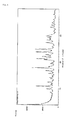
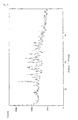
Figure 1] Fig. 1 is a diagram showing the powder X-ray diffraction pattern observed for theform Cl 1 crystal according to the present invention wherein the angle of diffraction: 2 θ (degrees) is plotted as abscissa, while the intensity (counts) is plotted as ordinate. - [
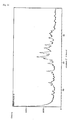
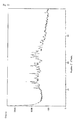
Figure 2] Fig. 2 is a diagram showing the powder X-ray diffraction pattern observed for theform Cl 2 crystal according to the present invention wherein the angle of diffraction: 2 θ (degrees) is plotted as abscissa, while the intensity (counts) is plotted as ordinate. - [
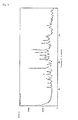
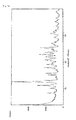
Figure 3] Fig. 3 is a diagram showing the powder X-ray diffraction pattern observed for theform Cl 3 crystal according to the present invention wherein the angle of diffraction: 2 θ (degrees) is plotted as abscissa, while the intensity (counts) is plotted as ordinate. - [
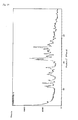
Figure 4] Fig. 4 is a diagram showing the powder X-ray diffraction pattern observed for theform Cl 4 crystal according to the present invention wherein the angle of diffraction: 2 θ (degrees) is plotted as abscissa, while the intensity (counts) is plotted as ordinate. - [
Figure 5] Fig. 5 is a diagram showing the powder X-ray diffraction pattern observed for theform Cl 5 crystal according to the present invention wherein the angle of diffraction: 2 θ (degrees) is plotted as abscissa, while the intensity (counts) is plotted as ordinate. - [
Figure 6] Fig. 6 is a diagram showing the powder X-ray diffraction pattern observed for the form Cl 6 crystal according to the present invention wherein the angle of diffraction: 2 θ (degrees) is plotted as abscissa, while the intensity (counts) is plotted as ordinate. - [
Figure 7] Fig. 7 is a diagram showing the powder X-ray diffraction pattern observed for the form Cl 7 crystal according to the present invention wherein the angle of diffraction: 2 θ (degrees) is plotted as abscissa, while the intensity (counts) is plotted as ordinate. - [
Figure 8] Fig. 8 is a diagram showing the powder X-ray diffraction pattern observed for the form Br1 crystal according to the present invention wherein the angle of diffraction: 2 θ (degrees) is plotted as abscissa, while the intensity (counts) is plotted as ordinate. - [
Figure 9] Fig. 9 is a diagram showing the powder X-ray diffraction pattern observed for the form Br2 crystal according to the present invention wherein the angle of diffraction: 2 θ (degrees) is plotted as abscissa, while the intensity (counts) is plotted as ordinate. - [
Figure 10] Fig. 10 is a diagram showing the powder X-ray diffraction pattern observed for the form Br3 crystal according to the present invention wherein the angle of diffraction: 2 θ (degrees) is plotted as abscissa, while the intensity (counts) is plotted as ordinate. - [
Figure 11] Fig. 11 is a diagram showing the powder X-ray diffraction pattern observed for the form Br4 crystal according to the present invention wherein the angle of diffraction: 2 θ (degrees) is plotted as abscissa, while the intensity (counts) is plotted as ordinate. - [
Figure 12] Fig. 12 is a diagram showing the powder X-ray diffraction pattern observed for the form Br5 crystal according to the present invention wherein the angle of diffraction: 2 θ (degrees) is plotted as abscissa, while the intensity (counts) is plotted as ordinate. - [
Figure 13] Fig. 13 is a diagram showing the powder X-ray diffraction pattern observed for the form Br6 crystal according to the present invention wherein the angle of diffraction: 2 θ (degrees) is plotted as abscissa, while the intensity (counts) is plotted as ordinate. - [
Figure 14] Fig. 14 is a diagram showing the powder X-ray diffraction pattern observed for the form S1 crystal according to the present invention wherein the angle of diffraction: 2 θ (degrees) is plotted as abscissa, while the intensity (counts) is plotted as ordinate. - [
Figure 15] Fig. 15 is a diagram showing the powder X-ray diffraction pattern observed for the form S2 crystal according to the present invention wherein the angle of diffraction: 2 θ (degrees) is plotted as abscissa, while the intensity (counts) is plotted as ordinate. - [
Figure 16] Fig. 16 is a diagram showing the powder X-ray diffraction pattern observed for the form S3 crystal according to the present invention wherein the angle of diffraction: 2 θ (degrees) is plotted as abscissa, while the intensity (counts) is plotted as ordinate. - [
Figure 17] Fig. 17 is a diagram showing the powder X-ray diffraction pattern observed for the form S4 crystal according to the present invention wherein the angle of diffraction: 2 θ (degrees) is plotted as abscissa, while the intensity (counts) is plotted as ordinate. - [
Figure 18] Fig. 18 is a diagram showing the powder X-ray diffraction pattern observed for the form S5 crystal according to the present invention wherein the angle of diffraction: 2 θ (degrees) is plotted as abscissa, while the intensity (counts) is plotted as ordinate. - [
Figure 19] Fig. 19 is a diagram showing the powder X-ray diffraction pattern observed for the form N1 crystal according to the present invention wherein the angle of diffraction: 2 θ (degrees) is plotted as abscissa, while the intensity (counts) is plotted as ordinate. - [
Figure 20] Fig. 20 is a diagram showing the powder X-ray diffraction pattern observed for the form N2 crystal according to the present invention wherein the angle of diffraction: 2 θ (degrees) is plotted as abscissa, while the intensity (counts) is plotted as ordinate. - [
Figure 21] Fig. 21 is a diagram showing the powder X-ray diffraction pattern observed for the form Ts1 crystal according to the present invention wherein the angle of diffraction: 2 θ (degrees) is plotted as abscissa, while the intensity (counts) is plotted as ordinate. - [
Figure 22] Fig. 22 is a diagram showing the powder X-ray diffraction pattern observed for the form Ms1 crystal according to the present invention wherein the angle of diffraction: 2 θ (degrees) is plotted as abscissa, while the intensity (counts) is plotted as ordinate. - [
Figure 23] Fig. 23 is a diagram showing the powder X-ray diffraction pattern observed for the form Ms2 crystal according to the present invention wherein the angle of diffraction: 2 θ (degrees) is plotted as abscissa, while the intensity (counts) is plotted as ordinate. - [
Figure 24] Fig. 24 is a diagram showing the powder X-ray diffraction pattern observed for the form Ms3 crystal according to the present invention wherein the angle of diffraction: 2 θ (degrees) is plotted as abscissa, while the intensity (counts) is plotted as ordinate. - [
Figure 25] Fig. 25 is a diagram showing the powder X-ray diffraction pattern observed for the form Ms4 crystal according to the present invention wherein the angle of diffraction: 2 θ (degrees) is plotted as abscissa, while the intensity (counts) is plotted as ordinate. - [
Figure 26] Fig. 26 is a diagram showing the isothermal vapor absorption-desorption curve observed for theform Cl 1 crystal according to the present invention. - [
Figure 27] Fig. 27 is a diagram showing the isothermal vapor absorption-desorption curve observed for the form Br2 crystal according to the present invention. - [
Figure 28] Fig. 28 is a diagram showing the isothermal vapor absorption-desorption curve observed for the form Ms1 crystal according to the present invention. - The compound represented by the foregoing chemical formula (I) is disclosed in Example 196 of
Patent Document 1 and Example 1 ofPatent Document 2 and accordingly, it can be prepared according to the disclosure of these prior art documents.
Regarding the pharmaceutically acceptable acid-addition salts of the compound represented by the chemical formula (I), the pharmaceutically acceptable acid is not restricted to any particular one inasmuch as it can form a salt with the compound (I). Preferred examples thereof include hydrochloric acid, hydrobromic acid, sulfuric acid, nitric acid, p-toluene-sulfonic acid, and methane-sulfonic acid. In this respect, particularly preferably used herein as such acids are hydrochloric acid and hydrobromic acid, among others.
The crystals of hydrochloride of the compound (I) may be those of the hydrochloride in the form of hydrates and solvates thereof and, more specifically, examples thereof includeform Cl 1 crystals,form Cl 2 crystals,form Cl 3 crystals,form Cl 4 crystals,form Cl 5 crystals, form Cl 6 crystals andform Cl 2 crystals. - The
form Cl 1 crystal is a crystal of hydrochloride of the compound (I), it shows the peaks at angles (2 θ) of diffraction of 20.8, 23.6, 25.3 and 26.9 and more preferably the peaks at angles of diffraction of 6.1, 11.6, 12.2, 15.7, 19.1, 20.8, 23.6, 25.3, 26.9, 27.8 and 31.7, in the powder X-ray diffraction pattern. Theform Cl 1 crystal can preferably be prepared by blending a mixture comprising methanol, the compound (I) and hydrogen chloride preferably with ethanol, isopropyl alcohol or mixture thereof and then recovering the resulting crystals. Alternatively, hydrochloride of the compound (I) is prepared in advance, the resulting hydrochloride of the compound is then blended with methanol to give a mixture and subsequently the same procedures used above are repeated except for using the resulting mixture to thus give desiredform Cl 1 crystals of the compound (I). In this respect, theform Cl 1 crystal can likewise be obtained by drying theform Cl 2 crystal under reduced pressure and then adjusting the moisture content of the vacuum dried-product. - The
form Cl 2 crystal is a crystal of hydrochloride of the compound (I) and it shows the peaks appearing at angles (2 θ) of diffraction of 5.24, 10.39, 21.04 and 21.41 and more preferably the peaks appearing at angles of diffraction of 5.24, 10.39, 11.10, 15.56, 21.04, 21.41, 24.82, 25.36, 25.97 and 28.82, in the powder X-ray diffraction pattern. Theform Cl 2 crystal can preferably be prepared by blending a mixture comprising methanol, the compound (I) and hydrogen chloride preferably with ethanol and then recovering the crystals precipitated out of the mixture. Alternatively, hydrochloride of the compound (I) is prepared in advance, the resulting hydrochloride is then blended with ethanol to give a mixture and subsequently the same procedures used above are repeated except for using the resulting mixture to thus give desiredform Cl 2 crystals of the compound (I) . - The
form Cl 3 crystal is a crystal of hydrochloride of the compound (I) and it shows the peaks appearing at angles (2 θ) of diffraction of 4.21, 10.13, 10.30 and 16.17 and more preferably the peaks appearing at angles of diffraction of 4.21, 10.13, 10.30, 13.15, 15.61, 16.17, 16.62, 19.49, 22.65, 23.90 and 25.80, in the powder X-ray diffraction pattern. Theform Cl 3 crystal can preferably be prepared by blending a mixture comprising methanol, the compound (I) and hydrogen chloride preferably with acetone and then recovering the resulting crystals. Alternatively, hydrochloride of the compound (I) is prepared in advance, the resulting hydrochloride is then blended with acetone to give a mixture and subsequently the same procedures used above are repeated except for using the mixture prepared above to thus give desiredform Cl 3 crystals of the compound (I). - The
form Cl 4 crystal is a crystal of hydrochloride of the compound (I) and it shows the peaks appearing at angles (2 θ) of diffraction of 4.07, 17.84, 23.83 and 24.87 and more preferably the peaks appearing at angles of diffraction of 4.07, 10.99, 17.84, 20.94, 21.27, 22.14, 22.80, 23.83, 24.87, 27.39 and 29.86, in the powder X-ray diffraction pattern. Theform Cl 4 crystal can be produced by preparing hydrochloride of the compound (I) in advance, blending the resulting hydrochloride with acetonitrile and more preferably with dichloromethane and acetonitrile to give a mixture and subsequently repeating the same procedures used above except for using the resulting mixture to thus give desiredform Cl 4 crystals of the compound (I). - The
form Cl 5 crystal is a crystal of hydrochloride of the compound (I) and it shows the peaks appearing at angles (2 θ) of diffraction of 4.09, 22.12, 23.17 and 27.76 and more preferably the peaks appearing at angles of diffraction of 4.09, 9.03, 12.43, 14.66, 20.86, 22.12, 23.17, 26.06, 26.45, 27.76 and 31.98, in the powder X-ray diffraction pattern. Theform Cl 5 crystal can preferably be prepared by blending a mixture comprising methanol, the compound (I) and hydrogen chloride preferably with methyl acetate and then recovering the resulting crystals. Alternatively, hydrochloride of the compound (I) is prepared in advance, the resulting hydrochloride is then blended with dichloromethane and more preferably methyl acetate to give a mixture and subsequently the same procedures used above are repeated except for using the resulting mixture to thus give desiredform Cl 5 crystals of the compound (I). - The form Cl 6 crystal is a crystal of hydrochloride of the compound (I) and it shows the peaks appearing at angles (2 θ) of diffraction of 22.32, 22.90, 26.43 and 26.77 and more preferably the peaks appearing at angles of diffraction of 12.64, 17.69, 20.21, 22.32, 22.90, 23.82, 25.44, 26.43, 26.77 and 29.74, in the powder X-ray diffraction pattern. The form Cl 6 crystal can be produced by preparing hydrochloride of the compound (I) in advance, blending the resulting hydrochloride with a mixed solvent comprising methyl acetate and acetonitrile to give a mixture and subsequently repeating the same procedures used above except for using the resulting mixture to thus give desired form Cl 6 crystals of the compound (I).
- The form Cl 7 crystal is a crystal of hydrochloride of the compound (I) and it shows the peaks appearing at angles (2 θ) of diffraction of 16.65, 20.99, 22.61 and 24.70 and more preferably the peaks appearing at angles of diffraction of 12.34, 13.23, 15.42, 16.65, 17.48, 20.99, 22.61, 24.70, 27.27 and 27.99, in the powder X-ray diffraction pattern. The form Cl 7 crystal can be produced by preparing hydrochloride of the compound (I) in advance, blending the resulting hydrochloride with a mixed solvent comprising isopropyl alcohol, methyl acetate and tetrahydrofuran to give a mixture and subsequently repeating the same procedures used above except for using the resulting mixture to thus give desired form Cl 7 crystals of the compound (I).
- The crystals of hydrobromide of the compound (I) may be those of the hydrobromide in the form of hydrates and solvates thereof and, more specifically, examples thereof include form Br1 crystals, form Br2 crystals, form Br3 crystals, form Br4 crystals, form Br5 crystals and form Br6 crystals.
- The form Br1 crystal is a crystal of hydrobromide of the compound (I) and it shows the peaks appearing at angles (2 θ) of diffraction of 14.3, 17.4, 20.5 and 24.9 and more preferably the peaks appearing at angles (2 θ) of diffraction of 14.3, 15.4, 17.4, 20.5, 22.7, 23.6, 24.9 and 25.9, in the powder X-ray diffraction pattern. The form Br1 crystal can preferably be prepared by allowing, to stand, a mixture of methanol, the compound (I) and preferably acetyl bromide, preferably at room temperature and then recovering the crystals thus precipitated out of the mixture. Alternatively, it is also possible to form a desired form Br1 crystal by preparing hydrobromide of the compound (I) in advance, blending the resulting hydrobromide with methanol to give a mixture and then repeating the same procedures used above except for using the mixture thus obtained.
- The form Br2 crystal is a crystal of hydrobromide of the compound (I) and it shows the peaks appearing at angles (2 θ) of diffraction of 18.9, 20.6, 23.3, 25.0 and 26.7 and more preferably the peaks appearing at angles of diffraction of 15.6, 16.1, 18.0, 18.9, 20.6, 23.3, 25.0, 26.7, 27.7, 28.3, 31.5 and 32.8, in the powder X-ray diffraction pattern.
The form Br2 crystal can preferably be prepared by blending a mixture comprising methanol, the compound (I) and preferably acetyl bromide, preferably with ethanol, cooling the resulting mixed liquid to a temperature of preferably 5°C, and then recovering the crystals thus precipitated out of the mixed liquid. Moreover, it is also possible to obtain a desired form Br2 crystal by preparing, in advance, hydrobromide of the compound (I), blending the resulting hydrobromide with methanol and isopropanol to thus give a mixture and then repeating the same procedures used above, except for using the resulting mixture, while using ethanol, isopropanol, 2-butanone, tetrahydrofuran, methyl acetate, toluene, acetone and dichloromethane. - The form Br3 crystal is a crystal of hydrobromide of the compound (I) and it shows the peaks appearing at angles (2 θ) of diffraction of 21.53, 22.12, 23.69 and 25.39 and more preferably the peaks appearing at angles of diffraction of 12.65, 16.88, 19.74, 21.53, 22.12, 22.87, 23.69, 25.39, 26.53, 29.09 and 30.66, in the powder X-ray diffraction pattern. The form Br3 crystal can be produced by preliminarily preparing hydrobromide of the compound (I), mixing the hydrobromide with acetone to give a mixture and then repeating the same procedures used above except for using the resulting mixture.
- The form Br4 crystal is a crystal of hydrobromide of the compound (I) and it shows the peaks appearing at angles (2 θ) of diffraction of 4.07, 17.78, 23.62 and 24.65 and more preferably the peaks appearing at angles of diffraction of 4.07, 15.57, 17.78, 21.17, 21.87, 22.63, 23.62, 24.65, 27.04 and 28.04, in the powder X-ray diffraction pattern. The form Br4 crystal can be produced by preliminarily preparing hydrobromide of the compound (I), mixing the resulting hydrobromide with acetonitrile to give a mixture and then repeating the same procedures used above except for using the resulting mixture.
- The form Br5 crystal is a crystal of hydrobromide of the compound (I) and it shows the peaks appearing at angles (2 θ) of diffraction of 21.20, 21.98, 23.21 and 23.93 and more preferably the peaks appearing at angles of diffraction of 14.72, 17.76, 21.20, 21.98, 22.90, 23.21, 23.41, 23.93, 25.13, 28.32 and 28.81, in the powder X-ray diffraction pattern. The form Br5 crystal can be produced by preparing, in advance, hydrobromide of the compound (I), mixing the resulting hydrobromide with dimethylformamide to give a mixture and then repeating the same procedures used above except for using the resulting mixture.
- The form Br6 crystal is a crystal of hydrobromide of the compound (I) and it shows the peaks appearing at angles (2 θ) of diffraction of 17.25, 23.38, 24.55 and 26.73 and more preferably the peaks appearing at angles of diffraction of 7.50, 17.25, 18.67, 18.96, 19.77, 20.72, 22.22, 23.38, 24.55, 26.73 and 28.32, in the powder X-ray diffraction pattern. The form Br6 crystal can be produced by preparing, in advance, hydrobromide of the compound (I), mixing the hydrobromide with dichloromethane to give a mixture and then repeating the same procedures used above except for using the resulting mixture.
- The crystals of sulfates of the compound (I) may be those of sulfates in the form of hydrates and solvates thereof and, more specifically, examples thereof include form S1 crystals, form S2 crystals, form S3 crystals, form S4 crystals and form S5 crystals.
- The form S1 crystal is a crystal of sulfate of the compound (I) and it shows the peaks appearing at angles (2 θ) of diffraction of 18.2, 22.7, 24.8 and 25.5 and more preferably the peaks appearing at angles of diffraction of 11.6, 15.3, 18.2, 19.9, 20.4, 22.7, 24.3, 24.8 and 25.5, in the powder X-ray diffraction pattern. The Form S1 crystal can preferably be produced by blending a mixture comprising methanol, the compound (I) and sulfuric acid, preferably with isopropanol and subsequently recovering the crystals precipitated out of the mixture. Alternatively, it is also possible to form a desired form S1 crystal of sulfate of the compound (I) by preparing, in advance, sulfate of the compound (I), mixing the resulting sulfate with methanol to give a mixture and then repeating the same procedures used above except for using the resulting mixture and using ethyl acetate, methyl acetate, toluene and n-heptane.
- The form S2 crystal is a crystal of sulfate of the compound (I) and it shows the peaks appearing at angles (2 θ) of diffraction of 15.6, 16.2, 18.0 and 19.2 and more preferably the peaks appearing at angles of diffraction of 15.6, 16.2, 18.0, 19.2, 20.1, 22.5, 23.5 and 25.4, in the powder X-ray diffraction pattern. The form S2 crystal can preferably be produced by blending a mixture comprising methanol, the compound (I) and sulfuric acid, preferably with methyl acetate and subsequently recovering the crystals thus precipitated out of the resulting mixture. Alternatively, it is also possible to form a desired form S2 crystal of sulfate of the compound (I) by preparing, in advance, sulfate of the compound (I), mixing the resulting sulfate with methanol to give a mixture and then repeating the same procedures used above except for using the resulting mixture.
- The form S3 crystal is a crystal of sulfate of the compound (I) and it shows the peaks appearing at angles (2 θ) of diffraction of 13.0, 18.7, 22.1 and 22.5 and more preferably the peaks appearing at angles of diffraction of 12.7, 13.0, 16.0, 18.7, 21.6, 22.1, 22.5 and 22.9, in the powder X-ray diffraction pattern. The form S3 crystal can preferably be produced by blending a mixture comprising methanol, the compound (I) and sulfuric acid, preferably with methyl acetate and subsequently recovering the crystals thus precipitated out of the resulting mixture. Alternatively, it is also possible to form a desired form S3 crystal of sulfate of the compound (I) by preparing, in advance, sulfate of the compound (I), mixing the resulting sulfate with methanol to give a mixture and then repeating the same procedures used above except for using the resulting mixture.
- The form S4 crystal is a crystal of sulfate of the compound (I) and it shows the peaks appearing at angles (2 θ) of diffraction of 12.58, 21.08, 23.02 and 23.93 and more preferably the peaks appearing at angles (2 θ) of diffraction of 12.58, 16.87, 18.28, 21.08, 21.27, 22.79, 23.02, 23.93, 24.79 and 28.87, in the powder X-ray diffraction pattern. The form S4 crystal can be prepared by producing, in advance, sulfate of the compound (I), mixing the resulting sulfate with acetone, acetonitrile, and tetrahydrofuran to give a mixture and then repeating the same procedures used above except for using the mixture thus prepared.
- The form S5 crystal is a crystal of sulfate of the compound (I) and it shows the peaks appearing at angles (2 θ) of diffraction of 4.04, 21.06, 21.46 and 25.75 and more preferably the peaks appearing at angles of diffraction of 4.04, 12.31, 18.12, 21.06, 21.46, 22.33, 23.26, 24.38, 24.99 and 25.75, in the powder X-ray diffraction pattern. The form S5 crystal can be prepared by producing, in advance, sulfate of the compound (I), mixing the resulting sulfate with ethanol to give a mixture and then repeating the same procedures used above except for using the mixture thus prepared.
- The crystals of nitrate of the compound (I) may be those of the nitrate in the form of hydrates and solvates thereof and, more specifically, examples thereof include form N1 crystals and form N2 crystals.
The form N1 crystal is a crystal of nitrate of the compound (I) and it shows the peaks appearing at angles (2 θ) of diffraction of 12.8, 22.5, 23.3 and 24.6 and more preferably the peaks appearing at angles of diffraction of 11.3, 11.8, 12.8, 14.7, 21.3, 22.5, 23.3, 24.6 and 25.6, in the powder X-ray diffraction pattern. The form N1 crystal can preferably be produced by blending a mixture comprising methanol, the compound (I) and nitric acid with preferably ethanol and subsequently recovering the crystals precipitated out of the resulting mixture. Alternatively, it is also possible to form a desired form N1 crystal of nitrate of the compound (I) by preliminarily preparing nitrate of the compound (I), blending the resulting nitrate with methanol to thus give a mixture and then repeating the same procedures used above except for using the resulting mixture. - The form N2 crystal is a crystal of nitrate of the compound (I) and it shows the peaks appearing at angles (2 θ) of diffraction of 18.9, 20.7, 23.5 and 26.5 and more preferably the peaks appearing at angles of diffraction of 11.3, 15.7, 18.9, 20.7, 22.1, 23.5, 25.0, 25.4, 26.5 and 27.7, in the powder X-ray diffraction pattern. The form N2 crystal can preferably be produced by blending a mixture comprising methanol, the compound (I) and nitric acid with preferably isopropyl alcohol and subsequently recovering the crystals precipitated out of the resulting mixture. Alternatively, it is also possible to form a desired form N2 crystal of nitrate of the compound (I) by preliminarily preparing nitrate of the compound (I), blending the resulting nitrate with methanol to thus give a mixture and then repeating the same procedures used above except for using the resulting mixture.
- The crystals ofp-toluene-sulfonate of the compound (I) may be those of the p-toluene-sulfonate in the form of hydrates and solvates thereof and, more specifically, examples thereof include form Ts1 crystals.
The form Ts1 crystal is a crystal of p-toluene-sulfonate of the compound (I) and it shows the peaks appearing at angles (2 θ) of diffraction of 12.9, 21.5 and 23.1 and more preferably the peaks appearing at angles of diffraction of 12.9, 15.4, 17.3, 18.0, 18.2, 18.4, 20.1, 20.8, 21.0, 21.5, 21.8, 23.1 and 27.3, in the powder X-ray diffraction pattern. The Form Ts1 crystal can preferably be produced by blending a mixture of methanol, the Compound (I) and p-toluene-sulfonic acid (p-CH3-Ph-SO3H) with methyl acetate, ethanol, isopropyl alcohol and then recovering the crystals precipitated out of the resulting mixture. Alternatively, the form Ts1 crystal of p-toluene-sulfonate of the compound (I) can likewise be produced by preliminarily preparing p-toluene-sulfonate of the compound (I), blending the resulting p-toluene-sulfonate with methanol to thus give a mixture and then repeating the same procedures used above except for using the resulting mixture. - The crystals of methane-sulfonate of the compound (I) may be those of the methane-sulfonate in the form of hydrates and solvates thereof and, more specifically, examples thereof include forms Ms1, Ms2, Ms3 and Ms4 crystals.
The form Ms1 crystal is a crystal of methane-sulfonate of the compound (I) and it shows the peaks appearing at angles (2 θ) of diffraction of 10.1, 11.5, 21.2 and 21.9 and more preferably the peaks appearing at angles of diffraction of 10.1, 11.5, 13.1, 18.6, 19.8, 21.2, 21.9, 22.8, 23.2, 24.9, 25.3 and 31.5, in the powder X-ray diffraction pattern. The form Ms1 crystal can preferably be produced by blending a mixture of methanol, the Compound (I) and methane-sulfonic acid (CH3SO3H) with ethyl alcohol, acetonitrile and n-heptane, allowing the mixture to stand at a temperature of about 5°C to obtain crystals and then recovering the resulting crystals. Alternatively, the form Ms1 crystal of methane-sulfonate of the compound (I) can likewise be produced by preliminarily preparing methane-sulfonate of the compound (I), blending the resulting methane-sulfonate with methanol to thus give a mixture and then repeating the same procedures used above except for using the resulting mixture. - The form Ms2 crystal is a crystal of methane-sulfonate of the compound (I) and it shows the peaks appearing at angles (2 θ) of diffraction of 12.9, 15.9, 18.8 and 23.0 and more preferably the peaks appearing at angles of diffraction of 10.6, 12.4, 12.9, 15.9, 18.8, 19.2, 19.8, 22.2, 23.0, 23.8 and 24.3, in the powder X-ray diffraction pattern. The form Ms2 crystal can preferably be produced by blending a mixture of methanol, the Compound (I) and methane-sulfonic acid (CH3SO3H) with isopropyl alcohol to thus give crystals, allowing the crystals to grow or ripen by leaving them to stand at a temperature of about 5°C and then recovering the resulting crystals. Alternatively, the form Ms2 crystal can likewise be produced by preliminarily preparing methane-sulfonate of the compound (I), blending the resulting methane-sulfonate with methanol and ethyl acetate, methyl acetate, toluene and isopropanol to thus give a mixture and then repeating the same procedures used above except for using the resulting mixture.
- The form Ms3 crystal is a crystal of methane-sulfonate of the compound (I) and it shows the peaks appearing at angles (2 θ) of diffraction of 11.2, 12.6, 22.9 and 25.5 and more preferably the peaks appearing at angles of diffraction of 11.2, 12.6, 13.2, 15.8, 17.9, 20.9, 22.2, 22.9, 23.8 and 25.5, in the powder X-ray diffraction pattern. The form Ms3 crystal can preferably be produced by blending a mixture of methanol, the Compound (I) and methane-sulfonic acid (CH3SO3H) with ethanol, allowing the mixture to stand at room temperature (25°C) to obtain crystals and then recovering the resulting crystals. Alternatively, the form Ms3 crystal can likewise be produced by preliminarily preparing methane-sulfonate of the compound (I), blending the resulting methane-sulfonate with methanol to thus give a mixture and then repeating the same procedures used above except for using the resulting mixture.
- The form Ms4 crystal is a crystal of methane-sulfonate of the compound (I) and it shows the peaks appearing at angles (2 θ) of diffraction of 17.99, 19.22, 19.75 and 25.64 and more preferably the peaks appearing at angles of diffraction of 11.79, 12.35, 17.04, 17.99, 19.22, 19.75, 20.66, 22.64, 23.88, 25.14 and 25.64, in the powder X-ray diffraction pattern. The form Ms4 crystal can preferably be produced by blending a mixture of methanol, the Compound (I) and methane-sulfonic acid (CH3SO3H) with acetone, allowing the resulting mixture to stand at room temperature (25°C) to obtain crystals and then recovering the resulting crystals. Alternatively, the form Ms4 crystal can likewise be produced by preliminarily preparing methane-sulfonate of the compound (I), blending the resulting methane-sulfonate with dichloromethane and acetone to thus give a mixture and then repeating the same procedures used above except for using the resulting mixture.
- In this respect, each peak appearing at the angle (2 θ) of diffraction observed for the powder X-ray diffraction pattern may slightly undergo a change or shift depending on, for instance, the conditions for the determination thereof. Such an error may of course be acceptable even in each angle of diffraction disclosed in the instant specification.
When blending the compound (I) with an acid, in the foregoing production method, it would be sufficient that an acid such as hydrogen chloride or hydrogen bromide is added, to the compound (I), in a molar ratio, with respect to the latter, of not less than 1:1, preferably on the order of 1:1.05 to 1:2.00 and particularly preferably an acid such as hydrochloric acid is added in a molar ratio of 1:1.1.
In addition, the amount of the solvent used for the separation of desired crystals is not restricted to any specific level, but it preferably falls within the range of from 2 to 1,000 parts by mass and, in particular, 5 to 40 parts by mass, per one part by mass of the compound (in its free state) represented by the foregoing formula (I) or a salt thereof.
Moreover, in some cases, the mixed liquid comprising a salt of the compound (I) may often be left to stand or stirred for a time period preferably ranging from 30 minutes to 5 hours for the induction of crystallization of the salt of the compound (I) and/or having the precipitation of sufficient amount of the crystals.
In the production method according to the present invention, the compound (I) usable herein as a raw material may be not only one in the form of amorphous or non-crystalline solids, but also known crystals such as form α crystal. - The crystal of the present invention is not only easily used, but also excellent in its solubility as an original drug and, in particular, it is quite useful in the preparation of a pharmaceutical agent excellent in the absorbability and bioavailability. More favorably, it possesses stability sufficient for use in the production of a pharmaceutical preparation. From the foregoing standpoints, particularly preferably used herein are the forms Cl1, Br2 and Ms1 crystals of the compound (I), among the aforementioned crystalline forms, and the forms Cl1 and Br2 crystals are particularly preferred herein, with the form Cl1 being more particularly used herein.
Since the compound represented by the foregoing formula (I) or the pharmaceutically acceptable salt thereof shows an excellent α 4-integrin-inhibitory action, the crystal of the present invention can be used as an excellent α 4-integrin-inhibitory agent and it can further be effectively used as an effective component for the preparation of a therapeutic agent or a prophylactic agent for treating or preventing, for instance, either of inflammatory diseases, in which the α 4-integrin-dependent adhesion process of leucocytes is involved in the pathema thereof, rheumatoid arthritis, inflammatory intestinal diseases (inclusive of, for instance, Crohn's disease and ulcerative colitis), systemic lupus erythematosus, disseminated or multiple sclerosis, Sjogren's syndrome, asthma, psoriasis, allergy, diabetes (mellitus), cardiovascular diseases, arterial sclerosis, restenosis, tumor hyperplasia, tumor metastasis and graft rejection.
The compound represented by the foregoing formula (I) or the pharmaceutically acceptable salt thereof may likewise be used in combination with other pharmaceutical agents which can show therapeutic and/or prophylactic effects on the foregoing diseases or disorders. For instance, in case of the inflammatory intestinal diseases such as Crohn's disease and ulcerative colitis, such other pharmaceutical agents include, for instance, an elemental diet (such as Elental available from Ajinomoto Co., Ltd.), 5-ASA pharmaceutical preparations (such as mesalazine, salazosulfapyridine (sulfasalazine)), adrenocortical hormone-containing pharmaceutical preparations (such as prednisolone, bethamethasone, and budesonide), and antibacterial agents (such as metronidazole), among others. In addition, also listed as such other agents capable of being used in combination with the compound or salt of the present invention include, for instance, immunosuppressive agents (such as azathioprine, 6-mercaptoprine, ciclosporin, and tacrolimus). Moreover, anti-cytokine agents may likewise be used as such pharmaceutical agents capable of being used in combination with the foregoing. Specific examples thereof are anti-TNF α -antibodies (such as infliximab, adalimumab, certolizumab · pegol, and golimumab), anti-IL-6 receptor antibodies (such as tocilizumab), anti-IL-12/23 antibodies (such as ustekinumab, and briakinumab), anti-IL-17 receptor antibodies (such as AMG827 and AIN457), IL-12/23 production-inhibitory agents (such as STA-5326) as low molecular weight agents and PDE-4-inhibitory agents (such as tetomilast). In addition, also listed herein as such other agents include, for instance, CCR9-inhibitory agents as the cellular infiltration-inhibitory agents (such as GSK1605786 and CCX025), and anti-α 4 β 7-integrin antibodies (such as vedolizumab). Furthermore, usable herein in combination with the foregoing compounds or salts of the present invention also include other therapeutic methods which can show a therapeutic and/or prophylactic effect on the aforementioned diseases in addition to the foregoing pharmaceutical agents. For instance, in case of the inflammatory intestinal diseases such as Crohn's disease and ulcerative colitis, such therapeutic and/or prophylactic methods include, for instance, leukocyte-removing therapies (such as GCAP and LCAP).
In other words, the therapeutic or prophylactic agent used for the treatment or prevention of the foregoing diseases, which comprises the crystal of the present invention, can be used in combination with other pharmaceutical agents having an effect of treating and/or preventing the foregoing diseases. In addition, the therapeutic or prophylactic agent used for the treatment or prevention of the foregoing diseases, which comprises the crystal of the present invention, can likewise be used in combination with other therapeutic methods for the treatment of the foregoing diseases. - The pharmaceutical composition comprising the crystal according to the present invention is preferably one which comprises the crystal of the present invention in a rate of not less than that which permits the achievement of a desired and substantial therapeutic effect. The rate of the crystal, which permits the achievement of a desired and substantial therapeutic effect is determined while taking into consideration, for instance, the dose of the pharmaceutical composition and any particular therapeutic effect to be achieved, and the pharmaceutical composition can be administered through various oral or parenteral routes (through, for instance, intravenous, intra-arterial, subcutaneous, intramuscular and sublingual routes, or administered in the form of, for instance, a suppository, an enema, an ointment, a patch or a poultice, a lozenge, an eye drop or a vaporole). However, the rate of the crystal, as expressed in terms of the dose per day for adult, is generally in the range of from 1 µ g to 5g, preferably 1mg to 1.5g for the oral administration, while the dose per day for adults may likewise preferably range from 1 µ g to 50g, or 1mg to 10g, or further 1g to 2g. On the other hand, the crystal is used in such a rate falling within the range of from 0.01 µ g to 1g, in case of the parenteral administration.
- When using the crystal of the present invention as a pharmaceutical agent, it can be used as such or in the form of a pharmaceutical composition and can be administered through, for instance, oral or parenteral routes such as intravenous, intrabuccal, per-rectal, intravaginal, percutaneous or intranasal routes, or through inhalation, but the pharmaceutical agent is preferably be administrated orally. The pharmaceutical composition to be orally administered may be in the form of, for instance, tablets (including, for instance, sugar-coated tablets, coating tablets, dry coated tablets, and sublingual tablets), pills, capsules (including, for instance, hard capsules, soft capsules and microcapsules), powders, granules, fine granules, troches, and liquid preparations (including, for instance, syrup, emulsions and suspensions).
- Such a pharmaceutical agent can be prepared according to any method commonly used in this art after, for instance, blending the crystal of the present invention with, for instance, pharmaceutically acceptable excipients and carriers.
Examples of such pharmaceutically acceptable excipients and carriers include excipients, binders, disintegrators and/or lubricants currently used in the production of solid pharmaceutical preparations; and solvents, solubilizing agents, suspending agents, buffering agents, thickeners, and emulsifying agents used in the production of liquid pharmaceutical preparations. Moreover, it is also possible to use additives for pharmaceutical preparations such as coloring agents, antioxidants and/or sweetening agents, as the need arises. - In respect of, for instance, the tablets, granules and fine granules, they may be coated with any known coating agent according to any known method, for the purposes of, for instance, the masking of the taste thereof, the improvement of the stability thereof to light, and/or the impartment of the enteric characteristics thereto. Examples of such coating agents usable herein include sugar-coating materials, water-soluble film-coating materials, and enteric film-coating materials.
- The present invention will hereunder be described in more specifically. Illustrative methods for the preparation of the crystal according to the present invention will be described below with reference to the following Examples, but the present invention is not restricted to these specific Examples at all.
- The compound (I) (500 mg) in its free form was suspended in 2 mL of methanol, 79 µ L of methanol containing 2 moles of hydrogen chloride was added to the resulting suspension and then the mixture was stirred at room temperature for the dissolution of the compound (I). This methanol solution was dropwise added to 2 mL of isopropyl alcohol, the crystals thus precipitated out of the mixture was separated, and then the crystals were dried at 50°C under reduced pressure to thus give 573 mg of the intended crystal (form Cl1 crystals) of hydrochloride of the compound (I) as a pale green solid.
- To 50.0 g of the compound (I) in its free form, there was added 88 mL of methanol containing 2 moles of hydrogen chloride and then the resulting mixture was stirred at room temperature for the dissolution of the compound (I). This methanol solution was dropwise added to 625 mL of ethanol, the resulting mixture was then stirred at room temperature for 2 hours and subsequently, the mixture was allowed to stand overnight in a refrigerator. After the separation of the crystals thus precipitated out of the mixture, they were dried at 50°C under reduced pressure and the moisture content thereof was subsequently controlled at a temperature of 50°C to give 51.97 g of the intended crystals (form Cl1 crystals) of hydrochloride of the compound (I) as a pale green solid.
Powder X-Ray Diffraction Pattern:Figure 1
1H-NMR (DMSO-d6) : δ 2.99-3.27(dd,2H), 3.08(s,6H), 3.53(s,3H), 3.69(s,3H), 4.79-4.85(m,1H), 7.20(d,2H), 7.38-7.47(m,5H), 7.56(d,1H), 7.74(b,2H), 9.28 (d,1H)
Mass (ESI, Found Value) : [M+H]+ 568.9
IC (Determined as C1 Anion, Found Value) : 5.1 w/w% (as HCl) - There were suspended 10 g of the crystals of hydrochloride of the compound (I) in 700 mL of ethanol, and then the resulting suspension was stirred at 65°C so that the compound (I) was dissolved in the solvent. This ethanol solution was cooled down to 5°C while stirring the solution, the crystals thus precipitated out of the solution was separated and subsequently the crystals were dried at 40°C under reduced pressure to thus give 9.72 g of the intended crystals (form Cl2 crystals) of hydrochloride of the compound (I) as a white solid.
Powder X-Ray Diffraction Pattern:Figure 2
1H-NMR (DMSO-d6) : δ 1.03(t,3H), 2.99-3.25(dd,2H), 3.10(s,6H), 3.41-3.47(dd, 2H),3.53(s,3H), 3.69(s,3H), 4.79-4.82(m,1H), 7.20(d,2H), 7.38-7.47(m,5H), 7.58(d,1H), 8.02(b,2H), 9.28(d,1H);
Mass (ESI, Found Value): [M+H]+ 568.9
IC (Determined as Cl Anion, Found Value) : 5.5 w/w% (as HCl) - There were dissolved 10 g of the crystals of hydrochloride of the compound (I) in a mixed solvent containing 40 mL of methanol and 140 mL of acetone, while stirring these substances at room temperature for the dissolution of the compound (I). This mixed solution was dropwise added to 40 mL of acetone with stirring, the crystals thus precipitated out of the mixed solution was separated and subsequently the crystals were dried at 40°C under reduced pressure to thus give 2.81 g of the intended crystals (form Cl3 crystals) of hydrochloride of the compound (I) as a pale green solid. Powder X-Ray Diffraction Pattern:
Figure 3
1H-NMR (DMSO-d6) : δ 2.89-3.22(dd,2H), 3.08(s,6H), 3.53(s,3H), 3.69(s,3H), 4.79-4.82(m,1H), 7.20(d,2H), 7.39-7.47(m,5H), 7.57(d,1H), 7.87(b,2H), 9.28(d,1H)
Mass (ESI, Found Value): [M+H]+ 568.9
IC (Determined as Cl Anion, Found Value) : 5.5 w/w% (as HCl) - To 5 mL of acetonitrile, there were added 500 mg of the crystals of hydrochloride of the compound (I) and the mixture was stirred at room temperature to thus form a suspension. The resulting precipitates were separated from the suspension and then dried at 40°C under reduced pressure to thus give 501.1 mg of the intended crystals (form C14 crystals) of hydrochloride of the compound (I) as a pale green solid.
Powder X-Ray Diffraction Pattern:Figure 4
1H-NMR (DMSO-d6) : δ 2.074(s, 4.4H),2.99-3.25(dd,2H), 3.09(s,6H), 3.53(s,3H), 3.69(s,3H), 4.79-4.85(m,1H), 7.20(d,2H), 7.38-7.47(m,5H), 7.59(d,1H), 7.98(b,2H), 9.28(d,1H)
Mass (ESI, Found Value): [M+H]+ 568.9
IC (Determined as Cl Anion, Found Value) : 5.2 w/w% (as HCl) - There was suspended 10 g of the compound (I) in its free state in 50 mL of methyl acetate at 50°C, then 35 mL of ethyl acetate containing one mole of hydrogen chloride was added to the suspension and the resulting mixture was stirred at 50°C for the dissolution of the compound (I). The resulting mixed solution was cooled down to 10°C, the crystals precipitated out of the solution was removed and then dried at 40°C under reduced pressure to give the intended crystals (form Cl5 crystals) of hydrochloride of the compound (I) as a white solid.
Powder X-Ray Diffraction Pattern:Figure 5
1H-NMR (DMSO-d6) : δ 2.99-3.25(dd,2H), 3.08(s,6H), 3.53(s,3H), 3.69(s,3H), 4.79-4.82(m,1H), 7.20(d,2H), 7.39-7.47(m,5H), 7.57(d,1H), 7.85(b,2H), 9.28(d,1H)
Mass (ESI, Found Value): [M+H]+ 568.9
IC (Determined as Cl Anion, Found Value) : 5.7 w/w% (as HCl) - There were added 500 mg of the crystals of hydrochloride of the compound (I) to a mixture comprising 3 mL of acetonitrile and 3 mL of methyl acetate and the mixture was stirred at room temperature to form a suspension. The precipitates thus separated out of the mixture was removed and then dried at 40°C under reduced pressure to thus give 18.9 mg of the intended crystals (form Cl6 crystals) of hydrochloride of the compound (I) as a pale green solid.
Powder X-Ray Diffraction Pattern:Figure 6
1H-NMR (DMSO-d6) : δ 2.00(s,0.08H), 2.07(s,0.3H), 2.99-3.25(dd,2H), 3.09(s,6H), 3.53(s,3H), 3.70(s,3H), 4.79-4.85(m,1H), 7.20(d,2H), 7.38-7.47(m,5H), 7.58(d,1H), 7.88(b,2H), 9.28(d,1H)
Mass (ESI, Found Value): [M+H]+ 568.9
IC (Determined as Cl Anion, Found Value) : 5.7 w/w% (as HCl) - To a mixture of 5 mL of isopropanol and 5 mL of tetrahydrofuran, there were added 500 mg of the crystals of hydrochloride of the compound (I) and the mixture was then stirred at room temperature to give a suspension. The suspended material was separated from the suspension and then dried at 40°C under reduced pressure to give 420.3 mg of the intended crystals (form Cl7 crystals) of hydrochloride of the compound (I) as a pale green solid.
Powder X-Ray Diffraction Pattern:Figure 7
1H-NMR (DMSO-d6) : δ 1.04(d,2.7H), 2.99-3.25(dd,2H), 3.10(s,6H), 3.53(s,3H), 3.69(s,3H), 3.77(m,0.4H), 4.79-4.85(m,1H), 7.20(d,2H),
Mass (ESI, Found Value): [M+H]+ 568.9
IC (Determined as Cl Anion, Found Value) : 5.8 w/w% (as HCl) - There was suspended, in 35 mL of methanol, 5.1 g of the compound (I) in its free state and the suspension was cooled in an ice bath. The compound (I) was dissolved by the addition of 955 µ L of acetyl bromide with stirring. Crystals were precipitated out of the solution when allowing the methanol solution to stand at room temperature. The crystals thus separated were recovered, washed with methanol and then dried at 60°C under reduced pressure to thus give 0.89 g of the intended crystals (form Br1 crystals) of hydrobromide of the compound (I) as a white solid.
Powder X-Ray Diffraction Pattern:Figure 8
1H-NMR (DMSO-d6) : δ 2.99-3.25(dd,2H), 3.10(s,6H), 3.53(s,3H), 3.69(s,3H), 4.79-4.85(m,1H), 7.19(d,2H), 7.39-7.47(m,5H), 7.55(d,1H), 7.74(b,2H), 9.27(d,1H)
Mass (ESI, Found Value): [M+H]+ 569.1
IC (Determined as Br Anion, Found Value) : 11.6 w/w% (as HBr) - There were suspended, in 7 mL of methanol, 1.0 g of the compound (I) in the free state, 191 µ L of acetyl bromide was added to the suspension and then the mixture was stirred at room temperature for the dissolution of the compound (I). Thereafter, the solution was dropwise added to 20 mL of ethyl alcohol and the mixture was allowed to stand in a refrigerator (about 4°C). The crystals thus precipitated out of the mixture, washed with 10 mL of ethanol and then dried at 50°C under reduced pressure to thus give 1.04 g of the intended crystals (form Br2 crystals) of hydrobromide of the compound (I) as a pale green solid.
Powder X-Ray Diffraction Pattern:Figure 9
1H-NMR (DMSO-d6) : δ 6 3.03-3.22(dd,2H), 3.13(s,6H), 3.53(s,3H), 3.69(s,3H), 4.79-4.85(m,1H), 7.20(d,2H), 7.38-7.47(m,5H), 7.59(d,1H), 7.87(b,2H), 9.28(d,1H)
Mass (ESI, Found Value): [M+H]+ 569.0
IC (Determined as Br Anion, Found Value) : 12.3 w/w% (as HBr) - To 8 mL of acetone, there were added 500 mg of the crystals of hydrobromide of the compound (I) and the mixture was stirred at room temperature to give a suspension. The suspended material was removed from the suspension and then dried at 40°C under reduced pressure to thus give 459.2 mg of the intended crystals (form Br3 crystals) of hydrobromide of the compound (I) as a pale green solid.
Powder X-Ray Diffraction Pattern:Figure 10
1H-NMR (DMSO-d6) : δ 2.09(s,1.5H), 3.00-3.26(dd,2H), 3.13(s,6H), 3.53(s,3H), 3.69(s,3H), 4.79-4.85(m,1H), 7.20(d,2H), 7.38-7.46(m,5H), 7.59(d,1H), 7.85(b,2H), 9.28(d,1H)
Mass (ESI, Found Value): [M+H]+ 568.9
IC (Determined as Br Anion, Found Value) : 11.5 w/w% (as HBr) - To 5 mL of acetonitrile, there were added 500 mg of the crystals of hydrobromide of the compound (I) and the mixture was stirred at room temperature to give a suspension. The suspended material was removed from the suspension and then dried at 40°C under reduced pressure to thus give 528.6 mg of the intended crystals (form Br4 crystals) of hydrobromide of the compound (I) as a pale green solid.
Powder X-Ray Diffraction Pattern:Figure 11
1H-NMR (DMSO-d6) : 6 2.08(s,3.9H), 3.00-3.25(dd,2H), 3.14(s,6H), 3.53(s,3H), 3.70(s,3H), 4.79-4.85(m,1H), 7.20(d,2H), 7.38-7.47(m,5H), 7.59(d,1H), 7.88(b,2H), 9.28(d,1H)
Mass (ESI, Found Value): [M+H]+ 568.9
IC (Determined as Br Anion, Found Value) : 10.9 w/w% (as HBr) - The crystals of hydrobromide of the compound (I) (2 g) were added to 1 mL of dimethylformamide and the mixture was stirred at room temperature to form a suspension. After the separation of the suspended material, the latter was dried at 40°C under reduced pressure to thus give 2.23 g of the intended crystals (form Br5 crystals) of hydrobromide of the compound (I) as a pale green solid.
Powder X-Ray Diffraction Pattern:Figure 12
1H-NMR (DMSO-d6) : δ 2.73(s,3H), 2.89(s,3H), 3.03-3.25(dd,2H), 3.12(s,6H), 3.53(s,3H), 3.70(s,3H), 4.79-4.85(m,1H), 7.19(d,2H), 7.38-7.47(m,5H), 7.57(d,1H), 7.84(b,2H), 7.96(s,1H), 9.28(d,1H)
Mass (ESI, Found Value): [M+H]+ 568.9
IC (Determined as Br Anion, Found Value) : 9.9 w/w% (as HBr) - The compound (I) (10 g) in its free state was suspended in 1 mL of methanol, then 1.95 mL of acetyl bromide was added to the suspension and the mixture was stirred at room temperature for the dissolution of the compound (I). Thereafter, the solution was dropwise added to 90 mL of dichloromethane and the resulting mixture was stirred at 10 °C to precipitate crystals. The crystals thus precipitated out of the solution were separated, washed with 60 mL of dichloromethane and finally dried at 40°C under reduced pressure to give 10.5 g of the title crystals (form Br6 crystals) of hydrobromide of the compound (I) as a white solid.
Powder X-Ray Diffraction Pattern:Figure 13
1H-NMR (DMSO-d6) : 6 2.99-3.25(dd,2H), 3.09(s,6H), 3.52(s,3H), 3.70(s,3H), 4.79-4.85(m,1H), 7.20(d,2H), 7.38-7.47(m,5H), 7.59(d,1H), 7.87(b,2H), 9.28(d,1H)
Mass (ESI, Found Value): [M+H]+ 568.9
IC (Determined as Br Anion, Found Value) : 11.3 w/w% (as HBr) - There was suspended, in 1 mL of methanol, 500 mg of the compound (I) in the free state, then 50 µ L of sulfuric acid was added to the suspension and the mixture was stirred at room temperature for the dissolution of the compound (I). Subsequently, the resulting solution was dropwise added to 3 mL of isopropyl alcohol to thus precipitate crystals. The crystals thus precipitated out of the solution were removed and then dried at 60°C under reduced pressure to give 408 mg of the title crystals (form S1 crystals) of sulfate of the compound (I) as a solid.
Powder X-Ray Diffraction Pattern:Figure 14
1H-NMR (DMSO-d6) : δ 2.99-3.25(dd,2H), 3.09(s,6H), 3.52(s,3H), 3.69(s,3H), 4.79-4.85(m,1H), 7.14(d,2H), 7.38-7.47(m,5H), 7.53(d,1H), 7.69(b,2H), 7.70-8.50(b,2H), 9.27(d,1H)
Mass (ESI, Found Value): [M+H]+ 568.9
IC (Determined as SO4 Anion, Found Value) : 14.4 w/w% (as H2SO4) - The compound (I) (5.0 g) in its free state was suspended in 10 mL of methanol, then 500 µ L of sulfuric acid was added to the suspension and the mixture was stirred at room temperature for the dissolution of the compound (I). Thereafter, the resulting solution was dropwise added to 100 mL of methyl acetate and 50 mL of additional methyl acetate was added to the mixture to thus precipitate crystals. The crystals thus precipitated out of the mixture were separated and then dried at 60°C under reduced pressure to thus give 5.0 g of the title crystals (form S2 crystals) of sulfate of the compound (I).
Powder X-Ray Diffraction Pattern:Figure 15
1H-NMR (DMSO-d6) : δ 2.99-3.25(dd,2H), 3.10(s,6H), 3.52(s,3H), 3.69(s,3H), 4.79-4.85(m,1H), 6.10-7.80(b,2H), 7.19(d,2H), 7.38-7.47(m,5H), 7.54(d,1H), 7.71(b,2H), 9.27(d,1H)
Mass (ESI, Found Value): [M+H]+ 568.9 - The compound (I) (500 mg) in its free state was suspended in 1 mL of methanol, then 50 µ L of sulfuric acid was added to the suspension and the mixture was stirred at room temperature for the dissolution of the compound (I). Thereafter, the resulting solution was dropwise added to 10 mL of methyl acetate to thus precipitate crystals. The crystals thus precipitated out of the mixture were separated and then dried at 60°C under reduced pressure to thus give the title crystals (form S3 crystals) of sulfate of the compound (I).
Powder X-Ray Diffraction Pattern:Figure 16
1H-NMR (DMSO-d6) : δ 2.99-3.25(dd,2H), 3.12(s,6H), 3.53(s,3H), 3.69(s,3H), 4.79-4.85(m,1H), 7.19(d,2H), 7.38-7.47(m,5H), 7.58 (d,1H), 7.80(b,2H), 9.27(d,1H), 9.40-10.1(b,2H)
Mass (ESI, Found Value): [M+H]+ 569.3 - There were added, in 8 mL of tetrahydrofuran, 500 mg of the sulfate crystals of the compound (I) and the resulting mixture was then stirred at room temperature to give a suspension. After the suspended material was removed, it was dried at 40°C under reduced pressure to thus obtain 439.6 mg of the title sulfate crystals (form S4 crystals) of the compound (I) as a white solid.
Powder X-Ray Diffraction Pattern:Figure 17
1H-NMR (DMSO-d6) : δ 2.99-3.25(dd,2H), 3.06(s,6H), 3.52(s,3H), 3.69(s,3H), 4.78-4.84(m,1H), 7.19(d,2H), 7.39-7.46(m,5H), 7.48 (d,1H), 7.55(b,2H), 9.27(d,1H)
Mass (ESI, Found Value): [M+H]+ 568.9
IC (Determined as SO4 Anion, Found Value) : 23.5 w/w% (as H2SO4) - There were added, to 8 mL of tetrahydrofuran, 500 mg of the sulfate crystals of the compound (I) and the mixture was stirred at room temperature to form a suspension. The suspended material was separated from the suspension and then dried at 40°C under reduced pressure to thus give 439.6 mg of the title sulfate crystals (form S5 crystals) of the compound (I) as a white solid.
Powder X-Ray Diffraction Pattern:Figure 18
1H-NMR (DMSO-d6) : δ 1.06(t,1.6H), 2.99-3.25(dd,2H), 3.06(s,6H), 3.44(dd, 1H), 3.52(s,3H), 3.69(s,3H), 4.78-4.84(m,1H), 5.86(b, 5H),7.19(d,2H), 7.38-7.47(m,5H), 7.51 (d,1H), 7.60(b,2H), 9.27(d,1H)
Mass (ESI, Found Value): [M+H]+ 568.9
IC (Determined as SO4 Anion, Found Value) : 21.0 w/w% (as H2SO4) - The compound (I) (500 mg) in its free state was suspended in 1 mL of methanol, then 80 µ L of nitric acid was added to the suspension and the mixture was stirred at room temperature. Thereafter, the resulting mixed liquid was dropwise added to 5 mL of ethyl alcohol and the crystals thus precipitated out of the liquid were removed. The crystals were then dried under reduced pressure to thus give 442 mg of the title nitrate crystals (form N1 crystals) of the compound (I) as a white solid.
Powder X-Ray Diffraction Pattern:Figure 19
1H-NMR (DMSO-d6) : δ 2.99-3.25(dd,2H), 3.11(s,6H), 3.52(s,3H), 3.69(s,3H), 4.79-4.87(m,1H), 5.90-6.90(b,1H), 7.20(d,2H), 7.38-7.47(m,5H), 7.54(d,1H), 7.72(b,2H), 9.28(d,1H)
Mass (ESI, Found Value): [M+H]+ 569.1
IC (Determined as NO3 Anion, Found Value) : 9.2 w/w% (as HNO3) - There was suspended, in 1 mL of methanol, 500 mg of the compound (I) in its free state, then 86 µ L of nitric acid was added to the suspension and the mixture was stirred at room temperature. Thereafter, the mixed liquid was dropwise added to 5 mL of isopropyl alcohol and the resulting crystals were separated from the mixture. Then the crystals were dried under reduced pressure to thus give 498 mg of the title nitrate crystals (form N2 crystals) of the compound (I) as a pale pink-colored solid.
Powder X-Ray Diffraction Pattern:Figure 20
1H-NMR (DMSO-d6) : δ 2.99-3.28(dd,2H), 3.11(s,6H), 3.52(s,3H), 3.69(s,3H), 4.79-4.87(m,1H), 7.20(d,2H), 7.38-7.47(m,5H), 7.55(d,1H), 7.72(b,2H), 7.80-8.80(b,1H), 9.28(d,1H)
Mass (ESI, Found Value): [M+H]+ 568.9
IC (Determined as NO3 Anion, Found Value) : 8.6 w/w% (as HNO3) - There was suspended, in 0.5 mL of methanol, 500 mg of the compound (I) in its free state, then 182 mg of p-toluene-sulfonic acid monohydrate was added to the resulting suspension and the resulting mixture was stirred at room temperature. Subsequently, the resulting mixed liquid was dropwise added to 5 mL of ethyl alcohol, the crystals thus precipitated out of the mixed liquid were separated from the mixed liquid and then dried under reduced pressure to give 471 mg of the title p-toluene-sulfonate crystals (form Ts1 crystals) of the compound (I) as a white solid.
Powder X-Ray Diffraction Pattern:Figure 21
1H-NMR (DMSO-d6) : δ 2.91(s,3H), 2.99-3.28(dd,2H), 3.11(s,6H), 3.52(s,3H), 3.69(s,3H), 4.79-4.87(m,1H),7.12(d,2H), 7.20(2H), 7.34(d,2H), 7.38-7.47(m,5H), 7.54(d,1H), 7.72(b,2H), 9.27(d,1H)
Mass (ESI, Found Value): [M+H]+ 569.1
IC (Determined as Toluene-sulfonate Anion, Found Value) : 22.9 w/w% (as TsOH) - There was suspended, in 1 mL of methanol, 500 mg of the compound (I) in its free state, then 60 µ L of methane-sulfonic acid was added to the resulting suspension and the mixture was stirred at room temperature for the dissolution of the compound (I). This solution was dropwise added to 5 mL of ethyl alcohol and the mixture was stirred at room temperature. The solution was allowed to stand in a refrigerator to precipitate crystals and then the latter were separated through filtration. Then the crystals were dried at 50°C under reduced pressure to thus give 466 mg of the title methane-sulfonate crystals (form Ms1 crystals) of the compound (I).
Powder X-Ray Diffraction Pattern:Figure 22
1H-NMR (DMSO-d6) : δ 2.42(s,3H), 2.99-3.28(dd,2H), 3.10(s,6H), 3.52(s,3H), 3.69(s,3H), 4.79-4.87(m,1H),7.19(d,2H), 7.38-7.47(m,5H), 7.54(d,1H), 7.72(b,2H), 9.28(d,1H)
Mass (ESI, Found Value): [M+H]+ 569.1
IC (Determined as Methane-sulfonate Anion, Found Value) : 13.3 w/w% (as MsOH) - There was suspended, in 10 mL of methanol, 5.0 g of the compound (I) in its free state, then 600 µ L of methane-sulfonic acid was added to the resulting suspension and the mixture was stirred at room temperature for the dissolution of the compound (I). This solution was dropwise added to 50 mL of isopropyl alcohol (IPA, 2-propanol), then the mixture was stirred at room temperature for a period of time for the initiation of the crystallization and thereafter the mixture was allowed to stand overnight in a refrigerator. The crystals thus precipitated out of the mixture were separated from the mixture, washed with 20 mL of methyl acetate to give wet crystals and the latter was dried at 60°C under reduced pressure to thus give 4.38 g of the title methane-sulfonate crystals (form Ms2 crystals) of the compound (I) as a white solid.
Powder X-Ray Diffraction Pattern:Figure 23
1H-NMR (DMSO-d6) : δ 6 2.40(s,3H), 2.99-3.25(dd,2H), 3.09(s,6H), 3.52(s,3H), 3.69(s,3H), 4.79-4.85(m,1H), 7.19(d,2H), 7.38-7.47(m,5H), 7.53(d,1H), 7.68(b,2H), 9.27(d,1H)
Mass (ESI, Found Value): [M+H]+ 569.1
IC (Determined as Methane-sulfonate Anion, Found Value) : 14.2 w/w% (as MsOH) - There was suspended, in 10 mL of methanol, 5 g of the compound (I) in its free state, then 600 µ L of methane-sulfonic acid was added to the resulting suspension and the mixture was stirred at room temperature for the dissolution of the compound (I). The resulting solution was dropwise added to 50 mL of ethyl alcohol, the crystals precipitated out of the resulting mixture were separated from the solution and then they were washed with ethyl alcohol to give wet crystals. The resulting wet crystals were dried at 50°C under reduced pressure to give 5.70 g of the title methane-sulfonate crystals (form Ms3 crystals) of the compound (I).
Powder X-Ray Diffraction Pattern:Figure 24
1H-NMR (DMSO-d6) : δ 2.42(s,3H), 2.99-3.25(dd,2H), 3.11(s,6H), 3.53(s,3H), 3.69(s,3H), 4.79-4.87(m,1H), 7.19(d,2H), 7.38-7.47(m,5H), 7.55(d,1H), 7.78(b,2H), 9.28(d,1H)
Mass (ESI, Found Value): [M+H]+ 568.9
IC (Determined as Methane-sulfonate Anion, Found Value) : 14.3 w/w% (as MsOH) - There was suspended, in 3 mL of methanol, 10 g of the compound (I) in its free state, then 1.2 mL of methane-sulfonic acid was added to the resulting suspension and the mixture was stirred at room temperature to give a suspension. After the dropwise addition of the suspension to 40 mL of acetone, the mixture was stirred at 50°C for the dissolution of the compound (I), the resulting solution was cooled down to 10°C and the crystals thus precipitated out of the solution were separated from the solution to thus obtain wet crystals. The resulting wet crystals were dried at 40°C under reduced pressure to give 11.1 g of the title methane-sulfonate crystals (form Ms4 crystals) of the compound (I).
Powder X-Ray Diffraction Pattern:Figure 25
1H-NMR (DMSO-d6) δ 2.42(s,3H), 2.99-3.25(dd,2H), 3.11(s,6H), 3.53(s,3H), 3.69(s,3H), 4.79-4.87(m,1H), 7.19(d,2H), 7.38-7.47(m,5H), 7.55(d,1H), 7.78(b,2H), 9.28(d,1H)
Mass (ESI, Found Value): [M+H]+ 568.9
IC (Determined as Methane-sulfonate Anion, Found Value) : 14.3 w/w% (as MsOH) - The following are the conditions for the determination of the powder X-ray diffraction patterns disclosed in the foregoing Examples 1 to 25:
- Device Used: X'Pert (available from PANalytical B.V);
- Target Used: Cu Full-Automatic Monochromater;
- Established Output of X-Ray: 401V, 30mA;
- Divergence Slit: Type: Fixed type one, Size: 1.0000°
- Slit: Divergence: 1/2°
: Scattering: 1/2°
: Light Receipt: 0.15 mm - Scan Speed: 2° /min
- 2 θ Range: 4 to 40°
- The NMR spectral data disclosed in the foregoing Examples 1 to 13 were determined using
Bruker Avance 400 NMR Spectrometer, while using, as standards, TMS (δ 0.00) for the 1H-NMR spectral data and DMSO-d6 (δ 39.7) for the 13C-NMR spectral data. The solvent used for the determination was DMSO-d6 contained in an ampoule (0.75 mL) available from Eurisotop Company, unless otherwise specified. - Each IC value disclosed in the foregoing Examples is expressed in terms of the concentration by mass of the corresponding acid component in the crystal estimated on the basis of the amount of anions determined according to the following method and it is determined on the basis of the results obtained in the following ion-chromatography measurement. The compound represented by the foregoing formula (I) was suspended in deionized water, the suspension was passed through a disposable filter overnight and then each ion-chromatography datum was determined under the following conditions. In this connection, however, used herein as reference liquid were those obtained by diluting KCl, KBr, K2SO4, TsOH, MsOH or HNO3 with deionized water.
-
- Device Used: Ion-Chromatograph DX-120 (available from DIONEX Company);
- Eluting Solution: 1.0 M Na2CO3/1.0 M NaHCO3/Deionized water = 2.7/0.3/997
- After 50 mg each of samples of the crystals prepared according to the foregoing methods and the crystal of the compound (I) in its free state was suspended in 10 mL of distilled water and then each suspension was stirred at room temperature for 15 minutes, the supernatant of each suspension was collected, then passed through a disposable filter of 0.2 µ m for HPLC, 1 to 3.5 g of each filtered supernatant was dispensed, the volume thereof was increased up to 10 mL with a 90% aqueous solution of acetonitrile and finally the content of the compound (I) present in the supernatant was determined according to the HPLC while using the following conditions. The results thus obtained are summarized in the following Table 1.
-
- Device Used: LC-10A Series (available from Shimadzu Corporation);
- Column: Inertsil (available from GL Science Company) ODS - 24.5 mm × 150 mm, 5 µ m, 40°C;
- Flow Rate: 1 mL/min, UV at 254 nm, 10 µ L Injection;
- Eluting Solution A: 0.1% TFA (trifluoroacetic acid)/water;
- Eluting Solution B: 0.1% TFA/MeCN;
- Gradient Program: 0 → 25 min (B: 0 → 90%).
-
Table 1 Entry Form of Salt (Crystalline Form) Solubility in Water (25°C, µ g/mL, 15 min) Control Free State 0.24 1 Hydrochloride (Form Cl1) 12 2 Hydrochloride (Form Cl2) 10 3 Hydrochloride (Form Cl3) 10 4 Hydrochloride (Form Cl5) 9 5 HBr salt (Form Br1) 12 6 HBr salt (Form Br2) 42 7 Sulfate (Form S1) 26 8 Sulfate (Form S2) 21 9 Sulfate (Form S3) 30 10 Nitrate (Form N1) 19 11 Nitrate (Form N2) 13 12 Toluene-sulfonate (Form Ts1) 25 13 Methane-sulfonate (Form Ms1) 25 14 Methane-sulfonate (Form Ms2) 25 15 Methane-sulfonate (Form Ms3) 27 16 Methane-sulfonate (Form Ms4) 9 - Thus, the data listed in the foregoing Table 1 clearly indicate that all of the crystals of the compound (I) with pharmaceutically acceptable acids, according to the present invention are considerably improved in their solubility in water as compared with that observed for the crystal of the compound (I) in its free state and that they are substantially valuable for use as pharmaceutical agents.
- The crystal of a salt of the compound represented by the formula (I) was inspected for the storage stability, when it was stored at 40°C, 75% RH over two months, according to the following method. The results observed for preferred crystals, i.e., forms Cl1, Br1, Br2, Ms1 and Ms3 crystals, among others, are summarized in the following Table 2. The data listed in Table 2 indicate that the crystals of the compound (I) in their preferred crystalline forms according to the present invention are particularly excellent in their storage stability.
- The storage stability of each sample, which had been stored in a depository at 40°C, 75% RH over two months, was determined according to the HPLC analysis method.
More specifically, about 25 mg each of the crystals of the compound represented by the formula (I) was dispensed into a 50mL volume measuring flask and then dissolved in a 90% aqueous solution of acetonitrile containing 0.1% TFA and the storage stability of the resulting solution was determined by the HPLC analysis under the following conditions. -
- Device Used: LC-10A Series (available from Shimadzu Corporation);
- Column: Inertsil (available from GL Science Company) ODS - 24.5 mm × 150 mm, 5 µ m, 40°C;
- Flow Rate: 1 mL/min, UV at 254 nm, 10 µ L Injection;
- Eluting Solution A: 0.1% TFA (trifluoroacetic acid)/water;
- Eluting Solution B: 0.1% TFA/MeCN;
- Gradient Program: 0 → 25 min (B: 0 → 90%).
-
Table 2 Crystalline Form, PXRD Accelerated Test, Stability, 40°C, 75% RH 2M Form Cl1 99.03% of the initial sample was still in existence. Form Br1 99.05% of the initial sample was still in existence. Form Br2 98.13% of the initial sample was still in existence and 1.17% thereof was converted into the hydrolyzates. Form Ms1 99.06% of the initial sample was still in existence. Form Ms3 97.41% of the initial sample was still in existence and 1.81% thereof was converted into the hydrolyzates. - The crystals of the present invention were inspected for their water vapor adsorption-desorption ability using BELLSORP-aqua3 available from Nippon Bell Co., Ltd. More specifically, about 300 mg of the compound represented by the formula (I) was dispensed into a measuring tube, dried at 50°C for 30 minutes and the amount of water vapor adsorbed on or desorbed from the crystal was determined under the following conditions:
- Adsorption Temperature: 25°C; Equilibration Time: 500 sec; Saturated Vapor Pressure: 3.169 kPa;
- Excessively Introduced Amount: 0.2 or 1.0 cm3 (STP)/g; Tolerance for Increase or Decrease of Adsorbed Amount: 0.2 or 1.0 cm3 (STP)/g.
- The crystals of salts of the compound (I) according to the present invention, which are useful as α 4-integrin-inhibitory agents, can easily be handled, are excellent in the solubility in water, and are useful as effective components of therapeutic agents or prophylactic agents for treating or preventing inflammatory diseases, in which the α 4-integrin-dependent adhesion process is involved in the pathema, rheumatoid arthritis, inflammatory intestinal diseases, systemic lupus erythematosus, disseminated or multiple sclerosis, Sjogren's syndrome, asthma, psoriasis, allergy, diabetes (mellitus), cardiovascular diseases, arterial sclerosis, restenosis, tumor hyperplasia, tumor metastasis, and graft rejection.
Claims (36)
- A crystal of a pharmaceutically acceptable acid-addition salt of the compound represented by the following formula (I):

- The crystal as set forth in claim 1, wherein it is hydrochloride of the compound represented by the formula (I).
- The crystal as set forth in claim 2, wherein it is form Cl 1 crystal characterized by the peaks appearing at angles (2θ) of diffraction of 20.8, 23.6, 25.3 and 26.9 in the powder X-ray diffraction pattern.
- The crystal as set forth in claim 2, wherein it is form Cl 2 crystal characterized by the peaks appearing at angles (2θ) of diffraction of 5.24, 10.39, 21.04 and 21.41 in the powder X-ray diffraction pattern.
- The crystal as set forth in claim 2, wherein it is form Cl 3 crystal characterized by the peaks appearing at angles (2θ) of diffraction of 4.21, 10.13, 10.30 and 16.17 in the powder X-ray diffraction pattern.
- The crystal as set forth in claim 2, wherein it is form Cl 4 crystal characterized by the peaks appearing at angles (2θ) of diffraction of 4.07, 17.84, 23.83 and 24.87 in the powder X-ray diffraction pattern.
- The crystal as set forth in claim 2, wherein it is form Cl 5 crystal characterized by the peaks appearing at angles (2θ) of diffraction of 4.09, 22.12, 23.17 and 27.76 in the powder X-ray diffraction pattern.
- The crystal as set forth in claim 2, wherein it is form Cl 6 crystal characterized by the peaks appearing at angles (2 θ) of diffraction of 22.32, 22.90, 26.43 and 26.77 in the powder X-ray diffraction pattern.
- The crystal as set forth in claim 2, wherein it is form Cl 7 crystal characterized by the peaks appearing at angles (2 θ) of diffraction of 16.65, 20.99, 22.61 and 24.70 in the powder X-ray diffraction pattern.
- The crystal as set forth in claim 1, wherein it is hydrobromide of the compound represented by the formula (I).
- The crystal as set forth in claim 10, wherein it is form Br1 crystal characterized by the peaks appearing at angles (2θ) of diffraction of 14.3, 17.4, 20.5 and 24.9 in the powder X-ray diffraction pattern.
- The crystal as set forth in claim 10, wherein it is form Br2 crystal characterized by the peaks appearing at angles (2θ) of diffraction of 18.9, 20.6, 23.3, 25.0 and 26.7 in the powder X-ray diffraction pattern.
- The crystal as set forth in claim 10, wherein it is form Br3 crystal characterized by the peaks appearing at angles (2 θ) of diffraction of 21.53, 22.12, 23.69 and 25.39 in the powder X-ray diffraction pattern.
- The crystal as set forth in claim 10, wherein it is form Br4 crystal characterized by the peaks appearing at angles (2 θ) of diffraction of 4.07, 17.78, 23.62 and 24.65 in the powder X-ray diffraction pattern.
- The crystal as set forth in claim 10, wherein it is form Br5 crystal characterized by the peaks appearing at angles (2 θ) of diffraction of 21.20, 21.98, 23.21 and 23.93 in the powder X-ray diffraction pattern.
- The crystal as set forth in claim 10, wherein it is form Br6 crystal characterized by the peaks appearing at angles (2 θ) of diffraction of 17.25, 23.38, 24.55 and 26.73 in the powder X-ray diffraction pattern.
- The crystal as set forth in claim 1, wherein it is sulfate of the compound represented by the formula (I).
- The crystal as set forth in claim 17, wherein it is form S1 crystal characterized by the peaks appearing at angles (2θ) of diffraction of 18.2, 22.7, 24.8 and 25.5 in the powder X-ray diffraction pattern.
- The crystal as set forth in claim 17, wherein it is form S2 crystal characterized by the peaks appearing at angles (2θ) of diffraction of 15.6, 16.2, 18.0 and 19.2 in the powder X-ray diffraction pattern.
- The crystal as set forth in claim 17, wherein it is form S3 crystal characterized by the peaks appearing at angles (2θ) of diffraction of 13.0, 18.7, 22.1 and 22.5 in the powder X-ray diffraction pattern.
- The crystal as set forth in claim 17, wherein it is form S4 crystal characterized by the peaks appearing at angles (2θ) of diffraction of 12.58, 21.08, 23.02 and 23.93 in the powder X-ray diffraction pattern.
- The crystal as set forth in claim 17, wherein it is form S5 crystal characterized by the peaks appearing at angles (2θ) of diffraction of 4.04, 21.06, 21.46 and 25.75 in the powder X-ray diffraction pattern.
- The crystal as set forth in claim 1, wherein it is nitrate of the compound represented by the formula (I).
- The crystal as set forth in claim 23, wherein it is form N1 crystal characterized by the peaks appearing at angles (2θ) of diffraction of 12.8, 22.5, 23.3 and 24.6 in the powder X-ray diffraction pattern.
- The crystal as set forth in claim 23, wherein it is form N2 crystal characterized by the peaks appearing at angles (2θ) of diffraction of 18.9, 20.7, 23.5 and 26.5 in the powder X-ray diffraction pattern.
- The crystal as set forth in claim 1, wherein it is p-toluene- sulfonate of the compound represented by the formula (I).
- The crystal as set forth in claim 26, wherein it is form Ts1 crystal characterized by the peaks appearing at angles (2θ) of diffraction of 12.9, 21.5 and 23.1 in the powder X-ray diffraction pattern.
- The crystal as set forth in claim 1, wherein it is methane- sulfonate of the compound represented by the formula (I).
- The crystal as set forth in claim 28, wherein it is form Ms1 crystal characterized by the peaks appearing at angles (2θ) of diffraction of 10.1, 11.5, 21.2 and 21.9 in the powder X-ray diffraction pattern.
- The crystal as set forth in claim 28, wherein it is form Ms2 crystal characterized by the peaks appearing at angles (2θ) of diffraction of 12.9, 15.9, 18.8 and 23.0 in the powder X-ray diffraction pattern.
- The crystal as set forth in claim 28, wherein it is form Ms3 crystal characterized by the peaks appearing at angles (2θ) of diffraction of 11.2, 12.6, 22.9 and 25.5 in the powder X-ray diffraction pattern.
- The crystal as set forth in claim 28, wherein it is form Ms4 crystal characterized by the peaks appearing at angles (2θ) of diffraction of 17.99, 19.22, 19.75 and 25.64 in the powder X-ray diffraction pattern.
- A pharmaceutical composition comprising a crystal as set forth in any one of claims 1 to 32.
- An α 4-integrin-inhibitor comprising a crystal as set forth in any one of claims 1 to 32.
- A therapeutic agent or a prophylactic agent for treating or preventing an inflammatory disease, in which the α 4-integrin-dependent adhesion process is involved in the pathema, comprising a crystal as set forth in any one of claims 1 to 32.
- A therapeutic agent or a prophylactic agent for treating or preventing rheumatoid arthritis, inflammatory, intestinal diseases, systemic lupus erythematosus, disseminated or multiple sclerosis, Sjogren's syndromes, asthma, psoriasis, allergy, diabetes (mellitus), cardiovascular diseases, arterial sclerosis, restenosis, tumor hyperplasia, tumor metastasis, and graft rejection, characterized in that it comprises a crystal as set forth in any one of claims 1 to 32.
Priority Applications (2)
| Application Number | Priority Date | Filing Date | Title |
|---|---|---|---|
| EP14197204.2A EP2853529A1 (en) | 2010-03-29 | 2011-03-29 | Crystals of salts of phenylalanine derivatives |
| EP15188487.1A EP2993173A1 (en) | 2010-03-29 | 2011-03-29 | Crystals of salts of phenylalanine derivatives |
Applications Claiming Priority (2)
| Application Number | Priority Date | Filing Date | Title |
|---|---|---|---|
| JP2010074617 | 2010-03-29 | ||
| PCT/JP2011/057798 WO2011122619A1 (en) | 2010-03-29 | 2011-03-29 | Phenylalanine derivative salt crystal |
Related Child Applications (3)
| Application Number | Title | Priority Date | Filing Date |
|---|---|---|---|
| EP15188487.1A Division EP2993173A1 (en) | 2010-03-29 | 2011-03-29 | Crystals of salts of phenylalanine derivatives |
| EP14197204.2A Division EP2853529A1 (en) | 2010-03-29 | 2011-03-29 | Crystals of salts of phenylalanine derivatives |
| EP14197204.2A Division-Into EP2853529A1 (en) | 2010-03-29 | 2011-03-29 | Crystals of salts of phenylalanine derivatives |
Publications (3)
| Publication Number | Publication Date |
|---|---|
| EP2554542A1 true EP2554542A1 (en) | 2013-02-06 |
| EP2554542A4 EP2554542A4 (en) | 2014-05-21 |
| EP2554542B1 EP2554542B1 (en) | 2015-10-07 |
Family
ID=44712314
Family Applications (3)
| Application Number | Title | Priority Date | Filing Date |
|---|---|---|---|
| EP11762843.8A Not-in-force EP2554542B1 (en) | 2010-03-29 | 2011-03-29 | Phenylalanine derivative hydrochloride salt crystal |
| EP14197204.2A Withdrawn EP2853529A1 (en) | 2010-03-29 | 2011-03-29 | Crystals of salts of phenylalanine derivatives |
| EP15188487.1A Withdrawn EP2993173A1 (en) | 2010-03-29 | 2011-03-29 | Crystals of salts of phenylalanine derivatives |
Family Applications After (2)
| Application Number | Title | Priority Date | Filing Date |
|---|---|---|---|
| EP14197204.2A Withdrawn EP2853529A1 (en) | 2010-03-29 | 2011-03-29 | Crystals of salts of phenylalanine derivatives |
| EP15188487.1A Withdrawn EP2993173A1 (en) | 2010-03-29 | 2011-03-29 | Crystals of salts of phenylalanine derivatives |
Country Status (5)
| Country | Link |
|---|---|
| US (2) | US9181202B2 (en) |
| EP (3) | EP2554542B1 (en) |
| JP (2) | JP6109568B2 (en) |
| ES (1) | ES2549768T3 (en) |
| WO (1) | WO2011122619A1 (en) |
Families Citing this family (10)
| Publication number | Priority date | Publication date | Assignee | Title |
|---|---|---|---|---|
| JP2941274B2 (en) | 1987-01-30 | 1999-08-25 | 株式会社日立製作所 | High-speed pattern generator |
| CA2871464C (en) * | 2012-04-24 | 2017-09-26 | Ajinomoto Co., Inc. | Sulfonamide derivatives and their use in the inhibition of .alpha.4.beta.7 integrin-dependent process |
| BR112015031040A8 (en) * | 2013-06-11 | 2018-01-02 | Receptos Inc | NEW GLP-1 RECEIVER MODULATORS |
| MX381440B (en) * | 2014-09-29 | 2025-03-12 | Ea Pharma Co Ltd | PHARMACEUTICAL COMPOSITION FOR TREATMENT OF ULCERATIVE COLITIS. |
| KR102630416B1 (en) | 2018-10-30 | 2024-02-01 | 길리애드 사이언시즈, 인코포레이티드 | Quinoline derivatives as alpha4beta7 integrin inhibitors |
| AU2019373242B2 (en) | 2018-10-30 | 2023-07-13 | Gilead Sciences, Inc. | Compounds for inhibition of alpha 4 beta 7 integrin |
| ES3013256T3 (en) | 2018-10-30 | 2025-04-11 | Gilead Sciences Inc | Imidazo[1,2-a]pyridine derivatives as alpha4beta7 integrin inhibitors for the treatment of inflammatory diseases |
| US11179383B2 (en) | 2018-10-30 | 2021-11-23 | Gilead Sciences, Inc. | Compounds for inhibition of α4β7 integrin |
| CN114222730B (en) | 2019-08-14 | 2024-09-10 | 吉利德科学公司 | Compounds for inhibiting α4β7 integrin |
| JPWO2023171789A1 (en) * | 2022-03-11 | 2023-09-14 |
Family Cites Families (9)
| Publication number | Priority date | Publication date | Assignee | Title |
|---|---|---|---|---|
| ATE497385T1 (en) | 2000-08-18 | 2011-02-15 | Ajinomoto Kk | NEW PHENYLALANINE DERIVATIVES |
| JP4572832B2 (en) | 2003-02-20 | 2010-11-04 | 味の素株式会社 | Process for producing phenylalanine derivative having quinazolinedione skeleton and production intermediate |
| EP1683525B1 (en) | 2003-11-14 | 2017-05-17 | EA Pharma Co., Ltd. | Sustained-release phenylalanine derivative preparation for oral administration |
| CN101664411A (en) * | 2003-11-14 | 2010-03-10 | 味之素株式会社 | Solid dispersion or medicinal solid dispersion preparation of phenylalanine derivative |
| ES2451140T3 (en) * | 2003-11-27 | 2014-03-26 | Ajinomoto Co., Inc. | Phenylalanine derivative crystal and method for its production |
| EP1700850B1 (en) | 2003-12-22 | 2015-07-15 | Ajinomoto Co., Inc. | Phenylalanine derivative |
| ES2416354T3 (en) * | 2005-06-21 | 2013-07-31 | Ajinomoto Co., Inc. | Phenylalanine derivative crystal, production method and use thereof |
| ES2380135T3 (en) | 2006-11-22 | 2012-05-08 | Ajinomoto Co., Inc. | Method of preparation of phenylalanine derivatives having quinazolinadione skeleton and intermediates for their preparation |
| ES2768349T3 (en) | 2010-03-29 | 2020-06-22 | Ea Pharma Co Ltd | Pharmaceutical preparation comprising a phenylalanine derivative |
-
2011
- 2011-03-29 EP EP11762843.8A patent/EP2554542B1/en not_active Not-in-force
- 2011-03-29 EP EP14197204.2A patent/EP2853529A1/en not_active Withdrawn
- 2011-03-29 JP JP2012508341A patent/JP6109568B2/en active Active
- 2011-03-29 ES ES11762843.8T patent/ES2549768T3/en active Active
- 2011-03-29 WO PCT/JP2011/057798 patent/WO2011122619A1/en not_active Ceased
- 2011-03-29 EP EP15188487.1A patent/EP2993173A1/en not_active Withdrawn
-
2012
- 2012-10-01 US US13/632,474 patent/US9181202B2/en not_active Expired - Fee Related
-
2014
- 2014-03-12 US US14/206,540 patent/US9102630B2/en not_active Expired - Fee Related
-
2015
- 2015-03-20 JP JP2015057228A patent/JP6120897B2/en active Active
Also Published As
| Publication number | Publication date |
|---|---|
| JP6120897B2 (en) | 2017-04-26 |
| EP2993173A1 (en) | 2016-03-09 |
| US20130066072A1 (en) | 2013-03-14 |
| US20140206705A1 (en) | 2014-07-24 |
| ES2549768T3 (en) | 2015-11-02 |
| EP2853529A1 (en) | 2015-04-01 |
| JPWO2011122619A1 (en) | 2013-07-08 |
| EP2554542B1 (en) | 2015-10-07 |
| WO2011122619A1 (en) | 2011-10-06 |
| JP2015147780A (en) | 2015-08-20 |
| JP6109568B2 (en) | 2017-04-05 |
| US9102630B2 (en) | 2015-08-11 |
| US9181202B2 (en) | 2015-11-10 |
| EP2554542A4 (en) | 2014-05-21 |
Similar Documents
| Publication | Publication Date | Title |
|---|---|---|
| US9102630B2 (en) | Crystals of salts of phenylalanine derivatives | |
| CA2614334C (en) | Crystalline forms of 4-methyl-n-[3-(4-methyl-imidazol-1-yl)-5-trifluoromethyl-phenyl]-3-(4-pyridin-3-yl-pyrimidin-2-ylamino)-benzamide | |
| US7951942B2 (en) | Crystals of phenylalanine derivatives and production methods thereof | |
| US20110009434A1 (en) | Crystals of isopropyl ester of n-(2,6-dichlorobenzoyl)-4-[6-(methylamino)methyl -1-methyl-2,4-dioxo-1,4-dihydroquinazoline-3(2h)-yl]-l- phenylalanine hydrochloride, production method thereof and use thereof | |
| EP3212193B1 (en) | Crystalline forms of pemetrexed diacid and manufacturing processes therefor | |
| EP4384525A1 (en) | Solid state forms of relugolix | |
| EP3397618A1 (en) | Process for making crystalline form a of gefitinib | |
| HK1177456A (en) | Crystalline forms of 4-methyl-n-[3-(4-methyl-imidazol-1-yl)-5-trifluoromethyl-phenyl]-3-(4-pyridin-3-yl-pyrimidin-2-ylamino)-benzamide sulfate and its amorphous form | |
| HK1177455A (en) | Crystalline forms of 4-methyl-n-[3-(4-methyl-imidazol-1-yl)-5-trifluoromethyl-phenyl]-3-(4-pyridin-3-yl-pyrimidin-2-ylamino)-benzamide free base | |
| HK1116783B (en) | Crystalline forms of 4-methyl-n-[3-(4-methyl-imidazol-1-yl)-5-trifluoromethyl-phenyl]3-(4-pyridin-3-yl-pyrimidin-2-ylamino)-benzamide | |
| WO2019182463A1 (en) | Acid addition salt of pyrimethamine |
Legal Events
| Date | Code | Title | Description |
|---|---|---|---|
| PUAI | Public reference made under article 153(3) epc to a published international application that has entered the european phase |
Free format text: ORIGINAL CODE: 0009012 |
|
| 17P | Request for examination filed |
Effective date: 20121022 |
|
| AK | Designated contracting states |
Kind code of ref document: A1 Designated state(s): AL AT BE BG CH CY CZ DE DK EE ES FI FR GB GR HR HU IE IS IT LI LT LU LV MC MK MT NL NO PL PT RO RS SE SI SK SM TR |
|
| DAX | Request for extension of the european patent (deleted) | ||
| A4 | Supplementary search report drawn up and despatched |
Effective date: 20140424 |
|
| RIC1 | Information provided on ipc code assigned before grant |
Ipc: C07D 239/96 20060101AFI20140411BHEP Ipc: A61P 35/00 20060101ALI20140411BHEP Ipc: A61P 43/00 20060101ALI20140411BHEP Ipc: A61P 1/04 20060101ALI20140411BHEP Ipc: A61P 11/06 20060101ALI20140411BHEP Ipc: A61P 3/10 20060101ALI20140411BHEP Ipc: A61K 31/517 20060101ALI20140411BHEP Ipc: A61P 29/00 20060101ALI20140411BHEP Ipc: A61P 9/00 20060101ALI20140411BHEP Ipc: A61P 35/04 20060101ALI20140411BHEP Ipc: A61P 37/06 20060101ALI20140411BHEP Ipc: A61P 25/00 20060101ALI20140411BHEP Ipc: A61P 37/08 20060101ALI20140411BHEP Ipc: A61P 17/06 20060101ALI20140411BHEP Ipc: A61P 9/10 20060101ALI20140411BHEP |
|
| 17Q | First examination report despatched |
Effective date: 20141208 |
|
| GRAP | Despatch of communication of intention to grant a patent |
Free format text: ORIGINAL CODE: EPIDOSNIGR1 |
|
| INTG | Intention to grant announced |
Effective date: 20150513 |
|
| GRAS | Grant fee paid |
Free format text: ORIGINAL CODE: EPIDOSNIGR3 |
|
| GRAA | (expected) grant |
Free format text: ORIGINAL CODE: 0009210 |
|
| AK | Designated contracting states |
Kind code of ref document: B1 Designated state(s): AL AT BE BG CH CY CZ DE DK EE ES FI FR GB GR HR HU IE IS IT LI LT LU LV MC MK MT NL NO PL PT RO RS SE SI SK SM TR |
|
| REG | Reference to a national code |
Ref country code: GB Ref legal event code: FG4D |
|
| REG | Reference to a national code |
Ref country code: AT Ref legal event code: REF Ref document number: 753667 Country of ref document: AT Kind code of ref document: T Effective date: 20151015 Ref country code: CH Ref legal event code: EP |
|
| REG | Reference to a national code |
Ref country code: IE Ref legal event code: FG4D |
|
| REG | Reference to a national code |
Ref country code: DE Ref legal event code: R096 Ref document number: 602011020378 Country of ref document: DE |
|
| REG | Reference to a national code |
Ref country code: FR Ref legal event code: PLFP Year of fee payment: 6 |
|
| REG | Reference to a national code |
Ref country code: NL Ref legal event code: MP Effective date: 20151007 |
|
| REG | Reference to a national code |
Ref country code: AT Ref legal event code: MK05 Ref document number: 753667 Country of ref document: AT Kind code of ref document: T Effective date: 20151007 |
|
| REG | Reference to a national code |
Ref country code: LT Ref legal event code: MG4D |
|
| PG25 | Lapsed in a contracting state [announced via postgrant information from national office to epo] |
Ref country code: NL Free format text: LAPSE BECAUSE OF FAILURE TO SUBMIT A TRANSLATION OF THE DESCRIPTION OR TO PAY THE FEE WITHIN THE PRESCRIBED TIME-LIMIT Effective date: 20151007 Ref country code: HR Free format text: LAPSE BECAUSE OF FAILURE TO SUBMIT A TRANSLATION OF THE DESCRIPTION OR TO PAY THE FEE WITHIN THE PRESCRIBED TIME-LIMIT Effective date: 20151007 Ref country code: IS Free format text: LAPSE BECAUSE OF FAILURE TO SUBMIT A TRANSLATION OF THE DESCRIPTION OR TO PAY THE FEE WITHIN THE PRESCRIBED TIME-LIMIT Effective date: 20160207 Ref country code: NO Free format text: LAPSE BECAUSE OF FAILURE TO SUBMIT A TRANSLATION OF THE DESCRIPTION OR TO PAY THE FEE WITHIN THE PRESCRIBED TIME-LIMIT Effective date: 20160107 Ref country code: LT Free format text: LAPSE BECAUSE OF FAILURE TO SUBMIT A TRANSLATION OF THE DESCRIPTION OR TO PAY THE FEE WITHIN THE PRESCRIBED TIME-LIMIT Effective date: 20151007 |
|
| PG25 | Lapsed in a contracting state [announced via postgrant information from national office to epo] |
Ref country code: PL Free format text: LAPSE BECAUSE OF FAILURE TO SUBMIT A TRANSLATION OF THE DESCRIPTION OR TO PAY THE FEE WITHIN THE PRESCRIBED TIME-LIMIT Effective date: 20151007 Ref country code: SE Free format text: LAPSE BECAUSE OF FAILURE TO SUBMIT A TRANSLATION OF THE DESCRIPTION OR TO PAY THE FEE WITHIN THE PRESCRIBED TIME-LIMIT Effective date: 20151007 Ref country code: PT Free format text: LAPSE BECAUSE OF FAILURE TO SUBMIT A TRANSLATION OF THE DESCRIPTION OR TO PAY THE FEE WITHIN THE PRESCRIBED TIME-LIMIT Effective date: 20160208 Ref country code: GR Free format text: LAPSE BECAUSE OF FAILURE TO SUBMIT A TRANSLATION OF THE DESCRIPTION OR TO PAY THE FEE WITHIN THE PRESCRIBED TIME-LIMIT Effective date: 20160108 Ref country code: AT Free format text: LAPSE BECAUSE OF FAILURE TO SUBMIT A TRANSLATION OF THE DESCRIPTION OR TO PAY THE FEE WITHIN THE PRESCRIBED TIME-LIMIT Effective date: 20151007 Ref country code: RS Free format text: LAPSE BECAUSE OF FAILURE TO SUBMIT A TRANSLATION OF THE DESCRIPTION OR TO PAY THE FEE WITHIN THE PRESCRIBED TIME-LIMIT Effective date: 20151007 Ref country code: FI Free format text: LAPSE BECAUSE OF FAILURE TO SUBMIT A TRANSLATION OF THE DESCRIPTION OR TO PAY THE FEE WITHIN THE PRESCRIBED TIME-LIMIT Effective date: 20151007 Ref country code: LV Free format text: LAPSE BECAUSE OF FAILURE TO SUBMIT A TRANSLATION OF THE DESCRIPTION OR TO PAY THE FEE WITHIN THE PRESCRIBED TIME-LIMIT Effective date: 20151007 |
|
| REG | Reference to a national code |
Ref country code: DE Ref legal event code: R097 Ref document number: 602011020378 Country of ref document: DE |
|
| PG25 | Lapsed in a contracting state [announced via postgrant information from national office to epo] |
Ref country code: CZ Free format text: LAPSE BECAUSE OF FAILURE TO SUBMIT A TRANSLATION OF THE DESCRIPTION OR TO PAY THE FEE WITHIN THE PRESCRIBED TIME-LIMIT Effective date: 20151007 |
|
| PLBE | No opposition filed within time limit |
Free format text: ORIGINAL CODE: 0009261 |
|
| STAA | Information on the status of an ep patent application or granted ep patent |
Free format text: STATUS: NO OPPOSITION FILED WITHIN TIME LIMIT |
|
| PG25 | Lapsed in a contracting state [announced via postgrant information from national office to epo] |
Ref country code: SM Free format text: LAPSE BECAUSE OF FAILURE TO SUBMIT A TRANSLATION OF THE DESCRIPTION OR TO PAY THE FEE WITHIN THE PRESCRIBED TIME-LIMIT Effective date: 20151007 Ref country code: DK Free format text: LAPSE BECAUSE OF FAILURE TO SUBMIT A TRANSLATION OF THE DESCRIPTION OR TO PAY THE FEE WITHIN THE PRESCRIBED TIME-LIMIT Effective date: 20151007 Ref country code: SK Free format text: LAPSE BECAUSE OF FAILURE TO SUBMIT A TRANSLATION OF THE DESCRIPTION OR TO PAY THE FEE WITHIN THE PRESCRIBED TIME-LIMIT Effective date: 20151007 Ref country code: BE Free format text: LAPSE BECAUSE OF NON-PAYMENT OF DUE FEES Effective date: 20160331 Ref country code: RO Free format text: LAPSE BECAUSE OF FAILURE TO SUBMIT A TRANSLATION OF THE DESCRIPTION OR TO PAY THE FEE WITHIN THE PRESCRIBED TIME-LIMIT Effective date: 20151007 Ref country code: EE Free format text: LAPSE BECAUSE OF FAILURE TO SUBMIT A TRANSLATION OF THE DESCRIPTION OR TO PAY THE FEE WITHIN THE PRESCRIBED TIME-LIMIT Effective date: 20151007 |
|
| 26N | No opposition filed |
Effective date: 20160708 |
|
| REG | Reference to a national code |
Ref country code: ES Ref legal event code: PC2A Owner name: EA PHARMA CO., LTD Effective date: 20160926 |
|
| REG | Reference to a national code |
Ref country code: DE Ref legal event code: R082 Ref document number: 602011020378 Country of ref document: DE Representative=s name: PATENTANWAELTE STREHL, SCHUEBEL-HOPF & PARTNER, DE Ref country code: DE Ref legal event code: R081 Ref document number: 602011020378 Country of ref document: DE Owner name: EA PHARMA CO., LTD., JP Free format text: FORMER OWNER: AJINOMOTO CO., INC., TOKYO, JP Ref country code: DE Ref legal event code: R082 Ref document number: 602011020378 Country of ref document: DE Representative=s name: STREHL SCHUEBEL-HOPF & PARTNER MBB PATENTANWAE, DE |
|
| REG | Reference to a national code |
Ref country code: GB Ref legal event code: 732E Free format text: REGISTERED BETWEEN 20160908 AND 20160914 |
|
| PG25 | Lapsed in a contracting state [announced via postgrant information from national office to epo] |
Ref country code: MC Free format text: LAPSE BECAUSE OF FAILURE TO SUBMIT A TRANSLATION OF THE DESCRIPTION OR TO PAY THE FEE WITHIN THE PRESCRIBED TIME-LIMIT Effective date: 20151007 Ref country code: LU Free format text: LAPSE BECAUSE OF FAILURE TO SUBMIT A TRANSLATION OF THE DESCRIPTION OR TO PAY THE FEE WITHIN THE PRESCRIBED TIME-LIMIT Effective date: 20160329 |
|
| REG | Reference to a national code |
Ref country code: CH Ref legal event code: PL |
|
| REG | Reference to a national code |
Ref country code: FR Ref legal event code: TP Owner name: EA PHARMA CO., LTD., JP Effective date: 20161019 |
|
| PG25 | Lapsed in a contracting state [announced via postgrant information from national office to epo] |
Ref country code: SI Free format text: LAPSE BECAUSE OF FAILURE TO SUBMIT A TRANSLATION OF THE DESCRIPTION OR TO PAY THE FEE WITHIN THE PRESCRIBED TIME-LIMIT Effective date: 20151007 |
|
| REG | Reference to a national code |
Ref country code: IE Ref legal event code: MM4A |
|
| PG25 | Lapsed in a contracting state [announced via postgrant information from national office to epo] |
Ref country code: BE Free format text: LAPSE BECAUSE OF FAILURE TO SUBMIT A TRANSLATION OF THE DESCRIPTION OR TO PAY THE FEE WITHIN THE PRESCRIBED TIME-LIMIT Effective date: 20151007 |
|
| PG25 | Lapsed in a contracting state [announced via postgrant information from national office to epo] |
Ref country code: IE Free format text: LAPSE BECAUSE OF NON-PAYMENT OF DUE FEES Effective date: 20160329 Ref country code: CH Free format text: LAPSE BECAUSE OF NON-PAYMENT OF DUE FEES Effective date: 20160331 Ref country code: LI Free format text: LAPSE BECAUSE OF NON-PAYMENT OF DUE FEES Effective date: 20160331 |
|
| REG | Reference to a national code |
Ref country code: FR Ref legal event code: PLFP Year of fee payment: 7 |
|
| PGFP | Annual fee paid to national office [announced via postgrant information from national office to epo] |
Ref country code: FR Payment date: 20170213 Year of fee payment: 7 Ref country code: DE Payment date: 20170321 Year of fee payment: 7 |
|
| PGFP | Annual fee paid to national office [announced via postgrant information from national office to epo] |
Ref country code: GB Payment date: 20170329 Year of fee payment: 7 |
|
| PGFP | Annual fee paid to national office [announced via postgrant information from national office to epo] |
Ref country code: IT Payment date: 20170320 Year of fee payment: 7 Ref country code: ES Payment date: 20170214 Year of fee payment: 7 |
|
| PG25 | Lapsed in a contracting state [announced via postgrant information from national office to epo] |
Ref country code: MT Free format text: LAPSE BECAUSE OF FAILURE TO SUBMIT A TRANSLATION OF THE DESCRIPTION OR TO PAY THE FEE WITHIN THE PRESCRIBED TIME-LIMIT Effective date: 20151007 |
|
| PG25 | Lapsed in a contracting state [announced via postgrant information from national office to epo] |
Ref country code: CY Free format text: LAPSE BECAUSE OF FAILURE TO SUBMIT A TRANSLATION OF THE DESCRIPTION OR TO PAY THE FEE WITHIN THE PRESCRIBED TIME-LIMIT Effective date: 20151007 Ref country code: HU Free format text: LAPSE BECAUSE OF FAILURE TO SUBMIT A TRANSLATION OF THE DESCRIPTION OR TO PAY THE FEE WITHIN THE PRESCRIBED TIME-LIMIT; INVALID AB INITIO Effective date: 20110329 |
|
| PG25 | Lapsed in a contracting state [announced via postgrant information from national office to epo] |
Ref country code: MT Free format text: LAPSE BECAUSE OF FAILURE TO SUBMIT A TRANSLATION OF THE DESCRIPTION OR TO PAY THE FEE WITHIN THE PRESCRIBED TIME-LIMIT Effective date: 20160331 Ref country code: MK Free format text: LAPSE BECAUSE OF FAILURE TO SUBMIT A TRANSLATION OF THE DESCRIPTION OR TO PAY THE FEE WITHIN THE PRESCRIBED TIME-LIMIT Effective date: 20151007 Ref country code: TR Free format text: LAPSE BECAUSE OF FAILURE TO SUBMIT A TRANSLATION OF THE DESCRIPTION OR TO PAY THE FEE WITHIN THE PRESCRIBED TIME-LIMIT Effective date: 20151007 |
|
| PG25 | Lapsed in a contracting state [announced via postgrant information from national office to epo] |
Ref country code: BG Free format text: LAPSE BECAUSE OF FAILURE TO SUBMIT A TRANSLATION OF THE DESCRIPTION OR TO PAY THE FEE WITHIN THE PRESCRIBED TIME-LIMIT Effective date: 20151007 |
|
| REG | Reference to a national code |
Ref country code: DE Ref legal event code: R119 Ref document number: 602011020378 Country of ref document: DE |
|
| PG25 | Lapsed in a contracting state [announced via postgrant information from national office to epo] |
Ref country code: AL Free format text: LAPSE BECAUSE OF FAILURE TO SUBMIT A TRANSLATION OF THE DESCRIPTION OR TO PAY THE FEE WITHIN THE PRESCRIBED TIME-LIMIT Effective date: 20151007 |
|
| GBPC | Gb: european patent ceased through non-payment of renewal fee |
Effective date: 20180329 |
|
| PG25 | Lapsed in a contracting state [announced via postgrant information from national office to epo] |
Ref country code: DE Free format text: LAPSE BECAUSE OF NON-PAYMENT OF DUE FEES Effective date: 20181002 |
|
| PG25 | Lapsed in a contracting state [announced via postgrant information from national office to epo] |
Ref country code: IT Free format text: LAPSE BECAUSE OF NON-PAYMENT OF DUE FEES Effective date: 20180329 Ref country code: GB Free format text: LAPSE BECAUSE OF NON-PAYMENT OF DUE FEES Effective date: 20180329 |
|
| PG25 | Lapsed in a contracting state [announced via postgrant information from national office to epo] |
Ref country code: FR Free format text: LAPSE BECAUSE OF NON-PAYMENT OF DUE FEES Effective date: 20180331 |
|
| REG | Reference to a national code |
Ref country code: ES Ref legal event code: FD2A Effective date: 20190911 |
|
| PG25 | Lapsed in a contracting state [announced via postgrant information from national office to epo] |
Ref country code: ES Free format text: LAPSE BECAUSE OF NON-PAYMENT OF DUE FEES Effective date: 20180330 |