EP2554248A1 - Asymmetrical hollow fibre gas separation membrane - Google Patents
Asymmetrical hollow fibre gas separation membrane Download PDFInfo
- Publication number
- EP2554248A1 EP2554248A1 EP11762892A EP11762892A EP2554248A1 EP 2554248 A1 EP2554248 A1 EP 2554248A1 EP 11762892 A EP11762892 A EP 11762892A EP 11762892 A EP11762892 A EP 11762892A EP 2554248 A1 EP2554248 A1 EP 2554248A1
- Authority
- EP
- European Patent Office
- Prior art keywords
- hollow fiber
- gas
- formula
- fiber membrane
- gas separation
- Prior art date
- Legal status (The legal status is an assumption and is not a legal conclusion. Google has not performed a legal analysis and makes no representation as to the accuracy of the status listed.)
- Granted
Links
Images

Classifications
-
- C—CHEMISTRY; METALLURGY
- C01—INORGANIC CHEMISTRY
- C01B—NON-METALLIC ELEMENTS; COMPOUNDS THEREOF; METALLOIDS OR COMPOUNDS THEREOF NOT COVERED BY SUBCLASS C01C
- C01B13/00—Oxygen; Ozone; Oxides or hydroxides in general
- C01B13/02—Preparation of oxygen
- C01B13/0229—Purification or separation processes
- C01B13/0248—Physical processing only
- C01B13/0251—Physical processing only by making use of membranes
- C01B13/0255—Physical processing only by making use of membranes characterised by the type of membrane
-
- B—PERFORMING OPERATIONS; TRANSPORTING
- B01—PHYSICAL OR CHEMICAL PROCESSES OR APPARATUS IN GENERAL
- B01D—SEPARATION
- B01D53/00—Separation of gases or vapours; Recovering vapours of volatile solvents from gases; Chemical or biological purification of waste gases, e.g. engine exhaust gases, smoke, fumes, flue gases, aerosols
- B01D53/22—Separation of gases or vapours; Recovering vapours of volatile solvents from gases; Chemical or biological purification of waste gases, e.g. engine exhaust gases, smoke, fumes, flue gases, aerosols by diffusion
- B01D53/228—Separation of gases or vapours; Recovering vapours of volatile solvents from gases; Chemical or biological purification of waste gases, e.g. engine exhaust gases, smoke, fumes, flue gases, aerosols by diffusion characterised by specific membranes
-
- B—PERFORMING OPERATIONS; TRANSPORTING
- B01—PHYSICAL OR CHEMICAL PROCESSES OR APPARATUS IN GENERAL
- B01D—SEPARATION
- B01D69/00—Semi-permeable membranes for separation processes or apparatus characterised by their form, structure or properties; Manufacturing processes specially adapted therefor
- B01D69/02—Semi-permeable membranes for separation processes or apparatus characterised by their form, structure or properties; Manufacturing processes specially adapted therefor characterised by their properties
-
- B—PERFORMING OPERATIONS; TRANSPORTING
- B01—PHYSICAL OR CHEMICAL PROCESSES OR APPARATUS IN GENERAL
- B01D—SEPARATION
- B01D69/00—Semi-permeable membranes for separation processes or apparatus characterised by their form, structure or properties; Manufacturing processes specially adapted therefor
- B01D69/08—Hollow fibre membranes
-
- B—PERFORMING OPERATIONS; TRANSPORTING
- B01—PHYSICAL OR CHEMICAL PROCESSES OR APPARATUS IN GENERAL
- B01D—SEPARATION
- B01D71/00—Semi-permeable membranes for separation processes or apparatus characterised by the material; Manufacturing processes specially adapted therefor
- B01D71/06—Organic material
- B01D71/58—Other polymers having nitrogen in the main chain, with or without oxygen or carbon only
- B01D71/62—Polycondensates having nitrogen-containing heterocyclic rings in the main chain
- B01D71/64—Polyimides; Polyamide-imides; Polyester-imides; Polyamide acids or similar polyimide precursors
-
- B—PERFORMING OPERATIONS; TRANSPORTING
- B01—PHYSICAL OR CHEMICAL PROCESSES OR APPARATUS IN GENERAL
- B01D—SEPARATION
- B01D2256/00—Main component in the product gas stream after treatment
- B01D2256/12—Oxygen
-
- B—PERFORMING OPERATIONS; TRANSPORTING
- B01—PHYSICAL OR CHEMICAL PROCESSES OR APPARATUS IN GENERAL
- B01D—SEPARATION
- B01D2257/00—Components to be removed
- B01D2257/10—Single element gases other than halogens
- B01D2257/102—Nitrogen
-
- B—PERFORMING OPERATIONS; TRANSPORTING
- B01—PHYSICAL OR CHEMICAL PROCESSES OR APPARATUS IN GENERAL
- B01D—SEPARATION
- B01D2325/00—Details relating to properties of membranes
- B01D2325/02—Details relating to pores or porosity of the membranes
- B01D2325/022—Asymmetric membranes
Definitions
- the present invention relates to an asymmetric hollow fiber membrane for gas separation, which is made of an aromatic polyimide and which has both excellent gas separation performance and improved mechanical properties.
- an asymmetric hollow fiber membrane for gas separation produced using an aromatic polyimide prepared from a tetracarboxylic acid component containing biphenyl tetracarboxylic acid, pyromellitic acid and 4,4'-(hexafluoroisopropylidene) diphthalic acid, and a diamine component having an intramolecular sulfonic group.
- Patent Reference No. 1 Japanese-open patent publication No. 1993-68859
- Japanese-open patent publication No. 1993-68859 Japanese laid-open patent publication No. 1993-68859
- a separation coefficient ⁇ (P'O 2 /P'N 2 ) as a representative element of gas permselectivity is 4.7 to 4.9, which must be further improved.
- Patent Reference No. 2 Japanese-open patent publication No. 1994-254367 .
- This gas separation membrane is suitable for producing a nitrogen-rich air and an oxygen-rich air and has a separation coefficient ⁇ (P'O 2 /P'N 2 ) of 5.3 or more.
- the membrane frequently has a low permeation rate P'O 2 of 4.4 or less, and thus, when it is used in a module, it causes deterioration in performance due to variation in a permeation rate P'O 2 or P'N 2 , and when P'O 2 or P'N 2 is low, a too large membrane area is required, leading to disadvantage that a module cannot be efficiently designed or produced.
- Example 2 has described an example with a large permeation rate P'O 2 (Example 1), but has not described mechanical properties.
- a membrane in this example has a low density probably because a dope solution for spinning has a low concentration and a relatively lower molecular weight.
- a large permeation rate P'O 2 can be obtained, whereas mechanical strength is reduced.
- the membrane is processed at a high temperature of 330 °C for achieving performance of ⁇ ⁇ 5.3, it further has insufficient mechanical properties such as elongation at break. When the elongation at break is insufficient, yarn break during producing a separation module by bundling hollow fiber membranes, or deterioration or variation in performance is caused.
- Patent Reference No. 1 Japanese laid-open patent publication No. 1993-68859 .
- Patent Reference No. 2 Japanese laid-open patent publication No. 1994-254367 .
- An objective of the present invention is to provide an asymmetric hollow fiber membrane for gas separation, which is made of an aromatic polyimide and which has both excellent gas separation performance and excellent mechanical properties. Since a hollow fiber membrane of the present invention has excellent gas separation performance for oxygen and nitrogen gases and excellent mechanical properties, it can be suitably used for producing a nitrogen-rich air with an increased nitrogen concentration or an oxygen-rich air with an increased oxygen concentration.
- the present invention relates to an asymmetric hollow fiber membrane for gas separation which is made of a soluble aromatic polyimide, wherein an orientation index is 1.3 or less; a separation coefficient ⁇ (P'O 2 /P'N 2 ) which represents a ratio of a permeation rate of oxygen gas and nitrogen gas at 40 °C is 5.3 or more; and a tensile elongation at break is 15 % or more.
- an oxygen gas permeation rate P'O 2 at 40 °C is preferably 6.0 ⁇ 10 -5 cm 3 (STP)/cm 2 sec cmHg or more.
- an asymmetric hollow fiber membrane for gas separation which is made of an aromatic polyimide and which has both excellent gas separation performance and excellent mechanical properties.
- a hollow fiber membrane of the present invention is excellent in gas separation performance for oxygen and nitrogen gases and in mechanical properties. It can be, therefore, suitably used for providing a nitrogen-rich air with an increased nitrogen concentration or an oxygen-rich air with an increased concentration of oxygen from the air.
- An asymmetric hollow fiber membrane for gas separation of the present invention is made of a soluble aromatic polyimide, has an asymmetric structure consisting of an extremely thin dense layer (preferably, a thickness of 0.001 to 5 ⁇ m) that is mainly responsible for gas separation and a relatively thicker porous layer (preferably, a thickness of 10 to 2000 ⁇ m) that supports the dense layer, and has excellent gas separation performance.
- it is a hollow fiber membrane having an inner diameter of 10 to 3000 ⁇ m and an outer diameter of about 30 to 7000 ⁇ m.
- An asymmetric hollow fiber membrane for gas separation of the present invention has an orientation index of 1.3 or less.
- An orientation index is an index indicating orientation of polyimide molecules in the dense layer, and it has been found that a hollow fiber having a low orientation index has a large oxygen gas permeation rate P'O 2 and an large elongation.
- a separation coefficient ⁇ (P'O 2 /P'N 2 ) is identical, a hollow fiber having a lower orientation index has a larger permeation rate P'O 2 and a larger elongation, resulting in better mechanical properties.
- a separation coefficient ⁇ (P'O 2 /P'N 2 ) which represents a ratio of permeation rate of oxygen gas and nitrogen gas at 40 °C is 5.3 or more, preferably 5.6 or more.
- An oxygen gas permeation rate P'O 2 at 40 °C is preferably 6.0 ⁇ 10 -5 cm 3 (STP)/cm 2 sec cmHg or more, more preferably 7.0 ⁇ 10 -5 cm 3 (STP)/cm 2 sec cmHg or more.
- an elongation that is, a tensile elongation at break as a hollow fiber membrane is 15 % or more, preferably 20 % or more.
- An aromatic polyimide forming an asymmetric hollow fiber membrane for gas separation of the present invention (hereinafter, sometimes simply referred to as "hollow fiber membrane”) is represented by the repeating unit of general formula (1).
- 0 to 70 mol% of A is a tetravalent unit based on a diphenylhexafluoropropane structure represented by formula (3):
- A is a tetravalent unit based on a phenyl structure represented by formula (4):
- R is a divalent unit based on a diphenylene sulfone structure represented by formula (5):
- R1 and R2 in formula (5) are a hydrogen atom or a lower alkyl group, and 30 to 70 mol% of R is a divalent unit based on a biphenyl structure represented by formula (6):
- X in formula (6) is a chlorine or bromine atom and n is 1 to 3.
- examples of a tetravalent unit based on a biphenyl structure represented by formula (2) which is derived from a tetracarboxylic acid component may include residues of biphenyl tetracarboxylic acids such as 3,3',4,4'-biphenyl tetracarboxylic acid and its anhydride and 2,3,3',4'-biphenyl tetracarboxylic acid and its anhydride.
- the tetravalent unit based on a biphenyl structure represented by formula (2) is contained in 25 to 100 mol%, preferably 30 to 100 mol%, more preferably 30 to 80 mol%.
- the biphenyltetracarboxylic acids facilitate forming a thin membrane with no defects in a film production, forming a hollow fiber membrane and so on. If its amount is too small, membrane forming may be difficult or defects may be caused, which is disadvantageous in practical use.
- Examples of a tetravalent unit based on a diphenylhexafluoropropane structure represented by formula (3) may include residues of diphenylhexafluoropropanes such as 2,2-bis(3,4-dicarboxyphenyl)hexafluoropropane and its anhydride.
- the tetravalent unit based on a diphenylhexafluoropropane structure represented by formula (3) is contained in 0 to 70 mol%, preferably 10 to 60 mol%, more preferably 20 to 50 mol%.
- the diphenylhexafluoropropanes are effective for increasing an oxygen permeation rate, but when an amount thereof is too much, a permselectivity is decreased.
- examples of the tetravalent unit based on the phenyl structure represented by formula (4) may include residues of pyromellitic acids such as pyromellitic acid and its anhydride.
- the tetravalent unit based on the phenyl structure represented by formula (4) is contained in 0 to 30 mol%, preferably 10 to 20 mol%.
- the pyromellitic acids are suitably used to enhance the mechanical strength, but when an amount thereof is too much, the polymer solution used for membrane preparation undesirably becomes coagulated or unstable, which makes forming a hollow fiber difficult.
- examples of a divalent unit based on the diphenylene sulfone structure represented by formula (5) which is derived from a diamine component may include residues of diaminodiphenylene sulfones such as 3,7-diamino-2,8-dimethyl-diphenylene sulfone, 3,7-diamino-2,8-diethyl-diphenylene sulfone and 3,7-diamino-2,6-dimethyl-diphenylene sulfone.
- a divalent unit based on a diphenylene sulfone structure represented by formula (5) is suitably contained in 30 to 70 mol%, preferably, 30 to 60 mol%.
- the diaminodiphenylene sulfones are effective for increasing permeation performance, but when an amount thereof is too much, a permselectivity is decreased.
- examples of a divalent unit based on a biphenyl structure represented by formula (6) which is derived from a diamine component may include residues of benzidines such as 2,2',5,5'-tetrachlorobenzidine, 3,3',5,5'-tetrachlorobenzidine, 3,3'-dichlorobenzidine, 2,2'-dichlorobenzidine, 2,2',3,3',5,5'-hexachlorobenzidine, 2,2',5,5'-tetrabromobenzidine, 3,3',5,5'-tetrabromobenzidine, 3,3'-dibromobenzidine, 2,2'-dibromobenzidine and 2,2',3,3',5,5'-hexachlorobenzidine.
- benzidines such as 2,2',5,5'-tetrachlorobenzidine, 3,3',5,5'-tetrachlorobenzidine, 3,3'-dichlorobenzidine, 2,2'-
- a benzidine in which X is a chlorine atom in formula (6) and n is 2 is suitable in the light of a permeation rate, a permselectivity and so on.
- a divalent unit based on a biphenyl structure represented by formula (6) is suitably contained in 30 to 70 mol%, preferably 30 to 60 mol%.
- the benzidines contribute to increase a permselectivity, but when an amount thereof is too much, a polymer becomes insoluble and membrane forming is difficult, and when an amount thereof is too low, a permselectivity is disadvantageously decreased.
- An asymmetric hollow fiber polyimide membrane for gas separation of the present invention substantially exerts its effects by containing a repeating unit represented by general formula (1) derived from the tetracarboxylic acid component and the diamine component described above, but it can contain a unit derived from a tetracarboxylic acid component and a diamine component other than those described above without departing from the scope of this invention.
- Examples of another tetracarboxylic acid component may include diphenyl ether tetracarboxylic acids, benzophenone tetracarboxylic acids, diphenyl sulfone tetracarboxylic acids, naphthalene tetracarboxylic acids, diphenylmethane tetracarboxylic acids and diphenylpropane tetracarboxylic acids.
- Examples of another diamine component may include diaminodiphenylmethanes, diaminodiphenyl ethers, diaminodibenzothiophenes, diaminobenzophenones, bis(aminophenyl)propanes, phenylenediamines and diaminobenzoic acids.
- a solution of the above aromatic polyimide is suitably prepared by two step process comprising adding a tetracarboxylic acid component and a diamine component to an organic polar solvent in a predetermined composition ratio, polymerizing the mixture at a low temperature such as about room temperature to form a polyamide acid followed by heating imidization or by chemical imidization by adding pyridine and the like; or alternatively one-step process comprising adding a tetracarboxylic acid component and a diamine component to an organic polar solvent in a predetermined composition ratio and polymerizing and imidizing the mixture at a high temperature such as about 100 to 250 °C, preferably about 130 to 200 °C.
- a high temperature such as about 100 to 250 °C, preferably about 130 to 200 °C.
- the used amounts of a tetracarboxylic acid component and a diamine component to an organic polar solvent are determined so that a concentration of a polyimide in the solvent is suitably about 5 to 50 % by weight, preferably 5 to 40 % by weight.
- the aromatic polyimide solution prepared by polymerization and imidization may be used as it is as a dopant solution for spinning.
- the aromatic polyimide solution thus obtained is poured into a solvent in which the aromatic polyimide is insoluble to precipitate the aromatic polyimide, which is then isolated and again dissolved in an organic polar solvent in a predetermined concentration to prepare an aromatic polyimide solution, which can be used for spinning.
- a concentration of the polyimide in the spinning dope solution is preferably about 5 to 50 % by weight, more preferably 5 to 40 % by weight, particularly preferably 10 to 30 % by weight.
- a polyimide concentration is 5 to 40 % by weight, preferably 8 to 25 % by weight, and a solution viscosity (rotational viscosity) at 100 °C is 100 to 15000 poise, preferably 200 to 10000 poise, particularly preferably 300 to 5000 poise. If a solution viscosity is less than 100 poise, a homogeneous membrane (film) may be provided, but it is difficult to obtain an asymmetric membrane with high mechanical strength and elongation. If it is more than 15000 poise, the solution is difficult to extrude from the spinning nozzle and thus it is difficult to obtain an asymmetric hollow fiber membrane with a desired shape. In the present invention, the viscosity is particularly preferably 1000 to 4000 poise.
- an organic polar solvent for polymerization or spinning
- suitable examples include phenolic solvents including phenols such as phenol, cresol and xylenol, catechols having two hydroxy groups in a benzene ring such as catechol and resorcin, and halogenated phenols such as 3-chlorophenol, 4-chlorophenol (identical to para-chlorophenol described later), 3-bromophenol, 4-bromophenol and 2-chloro-5-hydroxytoluene; amide solvents including amides such as N-methyl-2-pyrrolidone, 1,3-dimethyl-2-imidazolidinone, N,N-dimethylformamide, N,N-diethylformamide, N,N-dimethylacetamide and N,N-diethylacetamide; and mixtures thereof.
- a hollow fiber membrane of the present invention is preferably obtained by spinning by a dry/wet process (dry/wet spinning process) using the above aromatic polyimide solution.
- the dry/wet process is a process comprising evaporating a solvent in the surface of a polymer solution formed in a form of hollow fiber to form a thin dense layer (separation layer) and immersing the polymer into a coagulation liquid (a solvent miscible with the solvent of the polymer solution and incapable of dissolving the polymer) to form fine pores by using phase separation phenomenon occurring here so as to form a porous layer (support layer) (phase inversion method), which has been proposed by Loeb et al. (for example, US Patent No. 3133132 ).
- the producing process generally comprises the steps of spinning (spinning dope extruding step), coagulation, washing, drying and heating. These steps include the step(s) in which the hollow fiber must be essentially continuously processed by being continuously fed/drawn, and the step(s) in which the hollow fiber can be either processed batchwise in the state of being wound on a bobbin or the like or continuously processed.
- a spinning nozzle used for extruding a spinning dope solution is those capable of extruding a spinning dope solution in a form of hollow fiber, and is preferably a tube-in-orifice type nozzle.
- a temperature range of an aromatic polyimide solution during extrusion is preferably about 20 °C to 150 °C, particularly preferably 30 °C to 120 °C.
- a suitable temperature range varies, depending on the type of a solvent in the dope, a viscosity and so on.
- a gas or liquid is fed into the inside of the hollow fiber-shaped material extruded from the nozzle.
- the hollow fiber-shaped material discharged from the nozzle is extruded into, for example, the air or the atmosphere of an inert gas such as nitrogen, and is successively introduced into a coagulation bath and immersed in a coagulation liquid.
- a suitable coagulation liquid does not substantially dissolve the aromatic polyimide component and compatible to the solvent in the aromatic polyimide solution. Suitable examples include, but not limited to, water; lower alcohols such as methanol, ethanol and propyl alcohol; ketones having a lower alkyl group such as acetone, diethyl ketone and methyl ethyl ketone; and mixture thereof.
- the solvent in the aromatic polyimide solution is an amide type solvent
- an aqueous solution of the amide type solvent is also preferable.
- the aromatic polyimide solution discharged in a hollow fiber form from the nozzle is immersed in a first coagulation liquid which coagulates the solution as much as its shape can be maintained, and then immersed in a second coagulation liquid for completing coagulation.
- the first and the second coagulation liquids may be the same or different.
- a plurality of coagulation tanks may be used to efficiently extract the solvent in the polyimide solution.
- the spinning and the coagulation steps are essentially continuous steps where a hollow fiber is continuously fed/drawn while the hollow fiber is continuously processed.
- the hollow fiber is, if necessary, washed with a washing solvent such as ethanol, and then the coagulation liquid and/or the washing solvent in the outside and the inside of the hollow fiber are replaced with a replacing solvent, for example, an aliphatic hydrocarbon such as isopentane, n-hexane, isooctane and n-heptane.
- a washing solvent such as ethanol
- a replacing solvent for example, an aliphatic hydrocarbon such as isopentane, n-hexane, isooctane and n-heptane.
- the hollow fiber containing the replacing solvent is dried at an appropriate temperature.
- the fiber is heated at a temperature which is lower than a softening point or second-order transition point of the aromatic polyimide used, to give an asymmetric hollow fiber membrane for gas separation.
- the above washing, drying and heating steps can be continuous processes where the hollow fiber is continuously processed while it is continuously fed/drawn, or can be batch processes where the fiber is processed in a state of being wound on, for example, a bobbin.
- a hollow fiber membrane to which a tension is applied is processed. It has been found that an excessive tension in each step causes reduction in an oxygen permeation rate. Therefore, for providing a hollow fiber membrane of the present invention, the tension must be properly controlled in each step, and a tension is preferably 1.5 N or less, more preferably 1.0 N or less.
- a hollow fiber membrane retaining a predetermined orientation index can be produced by controlling the tension.
- a hollow fiber membrane of the present invention can be suitably used as a module.
- a common gas separation membrane module is fabricated as follows: approximately 100 to 100,000 tubes of hollow-fiber membranes having an appropriate length are bound together; both ends of the resulting hollow-fiber bundle are fixed into a tube sheet made of a thermosetting resin and the like while at least one of the end of the hollow-fiber membrane is kept to be opened; and then a resulting hollow-fiber membrane element composed of the hollow-fiber bundle and the tube sheet is accommodated in a vessel that is equipped with at least a mixed gas inlet, a permeated gas outlet, and a non-permeated gas outlet, in such a manner that the space connected to the internal side of the hollow-fiber membranes is isolated from the space connected to the external side of the hollow-fiber membranes.
- a mixed gas is fed from the mixed gas inlet to the inside of the hollow-fiber membranes or the space communicating to the outside; a specific gas component contained in the mixed gas is selectively permeated through the membrane; the permeated gas is discharged from the permeated gas outlet and the non-permeated gas that does not permeate through the membranes is discharged from the non-permeated gas outlet.
- gas separation is performed suitably.
- a hollow fiber membrane of the present invention can separate and recover a variety of gases with a high permselectivity (a ratio of permeation rate).
- a high permselectivity is suitable because a recovery ratio for a desired gas can be increased.
- gases which can be separated It can be suitably used for separation and recovery of, for example, hydrogen gas, helium gas, carbon dioxide gas, hydrocarbon gas such as methane and ethane, oxygen gas and nitrogen gas.
- it can be suitably used for providing a nitrogen-rich air with a high concentration of nitrogen and an oxygen-rich air with a high concentration of oxygen from the air.
- An element for evaluating permeation performance with an effective length of 8 cm was prepared using six asymmetric hollow fiber membranes, a stainless-steel pipe and an epoxy resin adhesive, and mounted in a stainless-steel vessel to give a pencil module. Pure oxygen and nitrogen gases are fed to the outside of the hollow fiber membranes at a pressure of 1 MPaG and a temperature of 40 °C, and a permeation flow rate was measured. From a permeation flow rate, a feeding pressure and an effective membrane area measured, permeation rates of the oxygen and the nitrogen gases were calculated. A permeation rate has a unit of 10 -5 xcm 3 (STP)/(cm 2 -s cmHg).
- Measurement was conducted with an effective length of 20 mm and a tensile rate of 10 mm/min using a tensile tester. Measurement was conducted at 23 °C. A cross-sectional area of a hollow fiber was calculated by observing the cross section of the hollow fiber by optical microscopy and measuring the dimensions of an optical microscopic image.
- a solution viscosity of a polyimide solution was measured at a temperature of 100 °C using a rotating viscometer (shear rate of a rotor: 1.75 sec -1 ).
- a ⁇ / ⁇ is defined as described below as an index for a magnitude of vibration parallel to a polyimide backbone.
- a ⁇ / ⁇ absorbance at 1500 ⁇ cm - 1 / absorbance at 1715 ⁇ cm - 1 wherein absorption at 1500 cm -1 is an absorption of the benzene ring for the vibration mode in a direction parallel to the backbone, and absorption at 1715 cm -1 is an absorption of the carbonyl in the imide ring for the vibration mode in a direction vertical to the backbone.
- a hollow fiber is set as shown in FIGs. 1 and 2 , and in X ( FIG. 1 ), incident light enters from a hollow fiber length direction (x-axis direction) and reflected light passes through the polarizer and only s-polarized light (vertical polarized light: vertical to the incident and the reflection planes) is introduced to a detector, which measures infrared absorption spectrum.
- X FIG. 1
- reflected light enters from a hollow fiber length direction (x-axis direction) and reflected light passes through the polarizer and only s-polarized light (vertical polarized light: vertical to the incident and the reflection planes) is introduced to a detector, which measures infrared absorption spectrum.
- Y FIG.
- Tetracarboxylic acid BPDA 3,3',4,4'-biphenyl tetracarboxylic dianhydride 6 FDA 4,4'-(hexafluoroisopropylidene)-bis(phthalic anhydride) PMDA pyromellitic dianhydride
- BPDA/6FDA/PMDA/TSN/TCB 225/200/75/250/250 mmols together with 1882 g of PCP, and while being purged with N 2 gas, the mixture is polymerized with stirring by a stirrer at 190 °C for 20 hours, to prepare a 17 wt% solution of an aromatic polyimide.
- a viscosity at 100 °C (rotatory viscosity) was 1,940 poise.
- the polyimide solution obtained was filtrated through a 400 mesh wire-mesh filter to give a dopant solution.
- a dope solution 16 is charged in a spinning apparatus equipped with a hollow fiber spinning nozzle 2 (an outer diameter of a dope extrusion unit: 1,000 ⁇ m, a slit width of the dope extrusion: 200 ⁇ m, and a diameter of a core-liquid discharge unit: 400 ⁇ m), and a dope solution and a core liquid were extruded from the nozzle 2 and a tube 3, respectively, by means of a gear pump, to form a hollow fiber material 4, which was then passed through an atmosphere of N 2 , immersed in a first coagulation liquid tank 6 filled with a first coagulation liquid 17 (0 °C, 85 wt% aqueous solution of ethanol), passed through an immersion roll 5 and then a guide roll 7, and carried back and forth in a second coagulation liquid tank 11 (0 °C) filled with a second coagulation liquid 18 while being drawn by revolving rolls 8,9 at 25 m/min, to give a hollow fiber
- the hollow fiber membrane 14 thus obtained was continuously wound on a bobbin 12 at 25 m/min. A tension applied to the hollow fiber was 0.5 N or less.
- the fiber was first wound as a skein, which was then washed with ethanol for completely removing PCP. After ethanol was replaced with isooctane, the fiber was dried at 100 °C and then heated at 255 °C for 30 min to give a hollow fiber membrane.
- FIG. 4 schematically shows a continuous heating equipment used.
- the fiber was continuously heated using a heat treatment vessel 20 under control by a tension of 0.5 to 1.0 N at 280 °C with a rate at a front roll 19 of 50 m/min and a rate at a back roll 22 of 50.5 m/min, to give a hollow fiber membrane.
- a hollow fiber membrane was produced as described in Example 1, except that a drawing rate at a revolving roll was 23 m/min and a winding rate at a bobbin was 25 m/min.
- Example 4 a hollow fiber membrane obtained was washed with ethanol followed by replacement of ethanol with isooctane, then dried at 100 °C and continuously heated, during which the rolls before and after the heat treatment vessel were operated at different rates for stretching, giving a hollow fiber membrane.
- a rate at the front roll was 45 m/min
- a rate at the back roll was 50.5 m/min
- a tension applied to the hollow fiber was about 1.0 to 1.5 N. Otherwise, the process in Example 2 was conducted to give a hollow fiber membrane.
- a dope solution and a core liquid extruded from nozzles by a gear pump were passed through an atmosphere of N 2 , then immersed in a first coagulation liquid (0 °C, 85 wt% aqueous solution of ethanol) and carried back and forth in a tank through revolving rolls in a second coagulation bath (0 °C) while being drawn by the revolving rolls at 25 m/min, for extracting PCP in the dope solution, to give a hollow fiber membrane, during which the guide roll 7 shown in FIG. 1 was displaced backward (back from the paper surface in FIG. 1 ) by 70 mm for increasing friction to the hollow fiber while the fiber was continuously wound on a bobbin at 25 m/min. Otherwise, the process described in Example 1 was conducted to give a hollow fiber membrane.
- a hollow fiber membrane was produced as described in Example 1, except that a drawing rate at a revolving roll was 20 m/min and a winding rate at a bobbin was 25 m/min.
- a hollow fiber membrane was produced as described in Example 2, except that a hollow fiber membrane obtained was washed with ethanol followed by replacement of ethanol with isooctane, then dried at 100 °C and continuously heated, during which the rolls before and after the heat treatment vessel were operated at different rates for stretching.
- a rate at a front roll was 40 m/min
- a rate at a back roll was 50.5 m/min
- to the hollow fiber membrane a tension of about more than 1.5 N and 2.0 N or less was applied.
- a rate at a front roll was 35 m/min
- a rate at a back roll was 50.5 m/min and to the hollow fiber membrane, a tension of about more than 2.0 N and 2.5 N or less was applied.
- Table 1 shows the evaluation results of the properties of the hollow fiber membranes produced in Examples and Comparative Examples.
- An asymmetric hollow fiber membrane for gas separation of the present invention is excellent in gas separation performance for oxygen and nitrogen gases and in mechanical properties, and it can be, therefore, suitably used for providing a nitrogen-rich air with an increased nitrogen concentration or an oxygen-rich air with an increased concentration of oxygen from the air and for separating other gases.
Landscapes
- Chemical & Material Sciences (AREA)
- Chemical Kinetics & Catalysis (AREA)
- Analytical Chemistry (AREA)
- Organic Chemistry (AREA)
- Inorganic Chemistry (AREA)
- Engineering & Computer Science (AREA)
- General Chemical & Material Sciences (AREA)
- Oil, Petroleum & Natural Gas (AREA)
- Separation Using Semi-Permeable Membranes (AREA)
- Oxygen, Ozone, And Oxides In General (AREA)
- Macromolecular Compounds Obtained By Forming Nitrogen-Containing Linkages In General (AREA)
Abstract
Description
- The present invention relates to an asymmetric hollow fiber membrane for gas separation, which is made of an aromatic polyimide and which has both excellent gas separation performance and improved mechanical properties.
- There has been known an asymmetric hollow fiber membrane for gas separation produced using an aromatic polyimide prepared from a tetracarboxylic acid component containing biphenyl tetracarboxylic acid, pyromellitic acid and 4,4'-(hexafluoroisopropylidene) diphthalic acid, and a diamine component having an intramolecular sulfonic group.
- As a hollow fiber membrane having such a composition, Patent Reference No. 1 (Japanese laid-open patent publication No.
1993-68859 - Patent Reference No. 2 (Japanese laid-open patent publication No.
1994-254367 - Patent Reference No. 1: Japanese laid-open patent publication No.
1993-68859
Patent Reference No. 2: Japanese laid-open patent publication No.1994-254367 - An objective of the present invention is to provide an asymmetric hollow fiber membrane for gas separation, which is made of an aromatic polyimide and which has both excellent gas separation performance and excellent mechanical properties. Since a hollow fiber membrane of the present invention has excellent gas separation performance for oxygen and nitrogen gases and excellent mechanical properties, it can be suitably used for producing a nitrogen-rich air with an increased nitrogen concentration or an oxygen-rich air with an increased oxygen concentration.
- The present invention relates to an asymmetric hollow fiber membrane for gas separation which is made of a soluble aromatic polyimide, wherein an orientation index is 1.3 or less; a separation coefficient α (P'O2/P'N2) which represents a ratio of a permeation rate of oxygen gas and nitrogen gas at 40 °C is 5.3 or more; and a tensile elongation at break is 15 % or more.
- In particular, an oxygen gas permeation rate P'O2 at 40 °C is preferably 6.0×10⁻⁵ cm3 (STP)/cm2 sec cmHg or more.
- According to the present invention, there can be provided an asymmetric hollow fiber membrane for gas separation, which is made of an aromatic polyimide and which has both excellent gas separation performance and excellent mechanical properties. A hollow fiber membrane of the present invention is excellent in gas separation performance for oxygen and nitrogen gases and in mechanical properties. It can be, therefore, suitably used for providing a nitrogen-rich air with an increased nitrogen concentration or an oxygen-rich air with an increased concentration of oxygen from the air.
-
-
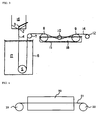
FIG. 1 illustrates a method for measuring an orientation index. -
FIG. 2 illustrates a method for measuring an orientation index. -
FIG. 3 schematically shows a spinning apparatus used in Examples. -
FIG. 4 schematically shows a continuous heat treatment equipment used in Examples. - An asymmetric hollow fiber membrane for gas separation of the present invention is made of a soluble aromatic polyimide, has an asymmetric structure consisting of an extremely thin dense layer (preferably, a thickness of 0.001 to 5 µm) that is mainly responsible for gas separation and a relatively thicker porous layer (preferably, a thickness of 10 to 2000 µm) that supports the dense layer, and has excellent gas separation performance. Preferably, it is a hollow fiber membrane having an inner diameter of 10 to 3000 µm and an outer diameter of about 30 to 7000 µm.
- An asymmetric hollow fiber membrane for gas separation of the present invention has an orientation index of 1.3 or less. An orientation index is an index indicating orientation of polyimide molecules in the dense layer, and it has been found that a hollow fiber having a low orientation index has a large oxygen gas permeation rate P'O2 and an large elongation. Thus, when a separation coefficient α (P'O2/P'N2) is identical, a hollow fiber having a lower orientation index has a larger permeation rate P'O2 and a larger elongation, resulting in better mechanical properties. A method for measuring an orientation index will be described in Examples.
- A separation coefficient α(P'O2/P'N2) which represents a ratio of permeation rate of oxygen gas and nitrogen gas at 40 °C is 5.3 or more, preferably 5.6 or more. An oxygen gas permeation rate P'O2 at 40 °C is preferably 6.0×10⁻⁵ cm3 (STP)/cm2 sec cmHg or more, more preferably 7.0×10⁻⁵ cm3 (STP)/cm2 sec cmHg or more.
- Furthermore, an elongation, that is, a tensile elongation at break as a hollow fiber membrane is 15 % or more, preferably 20 % or more.
- An aromatic polyimide forming an asymmetric hollow fiber membrane for gas separation of the present invention (hereinafter, sometimes simply referred to as "hollow fiber membrane") is represented by the repeating unit of general formula (1).
-

-

-

-

-

30 to 70 mol% of R is a divalent unit based on a biphenyl structure represented by formula (6): -

- In the present invention, examples of a tetravalent unit based on a biphenyl structure represented by formula (2) which is derived from a tetracarboxylic acid component may include residues of biphenyl tetracarboxylic acids such as 3,3',4,4'-biphenyl tetracarboxylic acid and its anhydride and 2,3,3',4'-biphenyl tetracarboxylic acid and its anhydride. The tetravalent unit based on a biphenyl structure represented by formula (2) is contained in 25 to 100 mol%, preferably 30 to 100 mol%, more preferably 30 to 80 mol%. The biphenyltetracarboxylic acids facilitate forming a thin membrane with no defects in a film production, forming a hollow fiber membrane and so on. If its amount is too small, membrane forming may be difficult or defects may be caused, which is disadvantageous in practical use.
- Examples of a tetravalent unit based on a diphenylhexafluoropropane structure represented by formula (3) may include residues of diphenylhexafluoropropanes such as 2,2-bis(3,4-dicarboxyphenyl)hexafluoropropane and its anhydride. The tetravalent unit based on a diphenylhexafluoropropane structure represented by formula (3) is contained in 0 to 70 mol%, preferably 10 to 60 mol%, more preferably 20 to 50 mol%. The diphenylhexafluoropropanes are effective for increasing an oxygen permeation rate, but when an amount thereof is too much, a permselectivity is decreased.
- In the present invention, examples of the tetravalent unit based on the phenyl structure represented by formula (4) may include residues of pyromellitic acids such as pyromellitic acid and its anhydride. The tetravalent unit based on the phenyl structure represented by formula (4) is contained in 0 to 30 mol%, preferably 10 to 20 mol%. The pyromellitic acids are suitably used to enhance the mechanical strength, but when an amount thereof is too much, the polymer solution used for membrane preparation undesirably becomes coagulated or unstable, which makes forming a hollow fiber difficult.
- In the present invention, examples of a divalent unit based on the diphenylene sulfone structure represented by formula (5) which is derived from a diamine component may include residues of diaminodiphenylene sulfones such as 3,7-diamino-2,8-dimethyl-diphenylene sulfone, 3,7-diamino-2,8-diethyl-diphenylene sulfone and 3,7-diamino-2,6-dimethyl-diphenylene sulfone. A divalent unit based on a diphenylene sulfone structure represented by formula (5) is suitably contained in 30 to 70 mol%, preferably, 30 to 60 mol%. The diaminodiphenylene sulfones are effective for increasing permeation performance, but when an amount thereof is too much, a permselectivity is decreased.
- In the present invention, examples of a divalent unit based on a biphenyl structure represented by formula (6) which is derived from a diamine component may include residues of benzidines such as 2,2',5,5'-tetrachlorobenzidine, 3,3',5,5'-tetrachlorobenzidine, 3,3'-dichlorobenzidine, 2,2'-dichlorobenzidine, 2,2',3,3',5,5'-hexachlorobenzidine, 2,2',5,5'-tetrabromobenzidine, 3,3',5,5'-tetrabromobenzidine, 3,3'-dibromobenzidine, 2,2'-dibromobenzidine and 2,2',3,3',5,5'-hexachlorobenzidine. Among these, a benzidine in which X is a chlorine atom in formula (6) and n is 2 is suitable in the light of a permeation rate, a permselectivity and so on. A divalent unit based on a biphenyl structure represented by formula (6) is suitably contained in 30 to 70 mol%, preferably 30 to 60 mol%. The benzidines contribute to increase a permselectivity, but when an amount thereof is too much, a polymer becomes insoluble and membrane forming is difficult, and when an amount thereof is too low, a permselectivity is disadvantageously decreased.
- An asymmetric hollow fiber polyimide membrane for gas separation of the present invention substantially exerts its effects by containing a repeating unit represented by general formula (1) derived from the tetracarboxylic acid component and the diamine component described above, but it can contain a unit derived from a tetracarboxylic acid component and a diamine component other than those described above without departing from the scope of this invention. Examples of another tetracarboxylic acid component may include diphenyl ether tetracarboxylic acids, benzophenone tetracarboxylic acids, diphenyl sulfone tetracarboxylic acids, naphthalene tetracarboxylic acids, diphenylmethane tetracarboxylic acids and diphenylpropane tetracarboxylic acids. Examples of another diamine component may include diaminodiphenylmethanes, diaminodiphenyl ethers, diaminodibenzothiophenes, diaminobenzophenones, bis(aminophenyl)propanes, phenylenediamines and diaminobenzoic acids.
- A solution of the above aromatic polyimide is suitably prepared by two step process comprising adding a tetracarboxylic acid component and a diamine component to an organic polar solvent in a predetermined composition ratio, polymerizing the mixture at a low temperature such as about room temperature to form a polyamide acid followed by heating imidization or by chemical imidization by adding pyridine and the like; or alternatively one-step process comprising adding a tetracarboxylic acid component and a diamine component to an organic polar solvent in a predetermined composition ratio and polymerizing and imidizing the mixture at a high temperature such as about 100 to 250 °C, preferably about 130 to 200 °C. During imidization by heating, it is preferable to remove eliminated water or alcohol. The used amounts of a tetracarboxylic acid component and a diamine component to an organic polar solvent are determined so that a concentration of a polyimide in the solvent is suitably about 5 to 50 % by weight, preferably 5 to 40 % by weight.
- The aromatic polyimide solution prepared by polymerization and imidization may be used as it is as a dopant solution for spinning. Alternatively, for example, the aromatic polyimide solution thus obtained is poured into a solvent in which the aromatic polyimide is insoluble to precipitate the aromatic polyimide, which is then isolated and again dissolved in an organic polar solvent in a predetermined concentration to prepare an aromatic polyimide solution, which can be used for spinning. A concentration of the polyimide in the spinning dope solution is preferably about 5 to 50 % by weight, more preferably 5 to 40 % by weight, particularly preferably 10 to 30 % by weight. When the concentration is too low, not only a viscosity is reduced and thereby deformation of a hollow fiber during molding is caused, but also a degree of shrinkage of a membrane size during extraction of a polymerization solvent with a poor solvent is increased and thereby size controlling is difficult. In addition, the amount of a polymerization solvent must be increased, which is uneconomical. When the concentration is too high, a viscosity is increased and thus a back pressure in a spinning nozzle unit is increased too much, and thereby undue production facilities are required. In addition, when the viscosity is too high, it is difficult to increase an amount of extrusion (increase in a back pressure), leading to reduction in productivity.
- In an aromatic polyimide solution used for spinning, a polyimide concentration is 5 to 40 % by weight, preferably 8 to 25 % by weight, and a solution viscosity (rotational viscosity) at 100 °C is 100 to 15000 poise, preferably 200 to 10000 poise, particularly preferably 300 to 5000 poise. If a solution viscosity is less than 100 poise, a homogeneous membrane (film) may be provided, but it is difficult to obtain an asymmetric membrane with high mechanical strength and elongation. If it is more than 15000 poise, the solution is difficult to extrude from the spinning nozzle and thus it is difficult to obtain an asymmetric hollow fiber membrane with a desired shape. In the present invention, the viscosity is particularly preferably 1000 to 4000 poise.
- There are no particular restrictions to an organic polar solvent (for polymerization or spinning) as long as it suitably dissolve an aromatic polyimide obtained; suitable examples include phenolic solvents including phenols such as phenol, cresol and xylenol, catechols having two hydroxy groups in a benzene ring such as catechol and resorcin, and halogenated phenols such as 3-chlorophenol, 4-chlorophenol (identical to para-chlorophenol described later), 3-bromophenol, 4-bromophenol and 2-chloro-5-hydroxytoluene; amide solvents including amides such as N-methyl-2-pyrrolidone, 1,3-dimethyl-2-imidazolidinone, N,N-dimethylformamide, N,N-diethylformamide, N,N-dimethylacetamide and N,N-diethylacetamide; and mixtures thereof.
- A hollow fiber membrane of the present invention is preferably obtained by spinning by a dry/wet process (dry/wet spinning process) using the above aromatic polyimide solution. The dry/wet process is a process comprising evaporating a solvent in the surface of a polymer solution formed in a form of hollow fiber to form a thin dense layer (separation layer) and immersing the polymer into a coagulation liquid (a solvent miscible with the solvent of the polymer solution and incapable of dissolving the polymer) to form fine pores by using phase separation phenomenon occurring here so as to form a porous layer (support layer) (phase inversion method), which has been proposed by Loeb et al. (for example,
US Patent No. 3133132 ). - The producing process generally comprises the steps of spinning (spinning dope extruding step), coagulation, washing, drying and heating. These steps include the step(s) in which the hollow fiber must be essentially continuously processed by being continuously fed/drawn, and the step(s) in which the hollow fiber can be either processed batchwise in the state of being wound on a bobbin or the like or continuously processed.
- First, in the spinning step (spinning dope extruding step), a spinning nozzle used for extruding a spinning dope solution is those capable of extruding a spinning dope solution in a form of hollow fiber, and is preferably a tube-in-orifice type nozzle. Generally, a temperature range of an aromatic polyimide solution during extrusion is preferably about 20 °C to 150 °C, particularly preferably 30 °C to 120 °C. A suitable temperature range varies, depending on the type of a solvent in the dope, a viscosity and so on. Furthermore, while a spinning is conducted, a gas or liquid is fed into the inside of the hollow fiber-shaped material extruded from the nozzle.
- In the coagulation step continued from the spinning step, the hollow fiber-shaped material discharged from the nozzle is extruded into, for example, the air or the atmosphere of an inert gas such as nitrogen, and is successively introduced into a coagulation bath and immersed in a coagulation liquid. A suitable coagulation liquid does not substantially dissolve the aromatic polyimide component and compatible to the solvent in the aromatic polyimide solution. Suitable examples include, but not limited to, water; lower alcohols such as methanol, ethanol and propyl alcohol; ketones having a lower alkyl group such as acetone, diethyl ketone and methyl ethyl ketone; and mixture thereof. Furthermore, when the solvent in the aromatic polyimide solution is an amide type solvent, an aqueous solution of the amide type solvent is also preferable.
- In the coagulation step, preferably, the aromatic polyimide solution discharged in a hollow fiber form from the nozzle is immersed in a first coagulation liquid which coagulates the solution as much as its shape can be maintained, and then immersed in a second coagulation liquid for completing coagulation. The first and the second coagulation liquids may be the same or different. Alternatively, a plurality of coagulation tanks may be used to efficiently extract the solvent in the polyimide solution.
- The spinning and the coagulation steps are essentially continuous steps where a hollow fiber is continuously fed/drawn while the hollow fiber is continuously processed.
- In the subsequent washing step, the hollow fiber is, if necessary, washed with a washing solvent such as ethanol, and then the coagulation liquid and/or the washing solvent in the outside and the inside of the hollow fiber are replaced with a replacing solvent, for example, an aliphatic hydrocarbon such as isopentane, n-hexane, isooctane and n-heptane.
- In the subsequent drying step, the hollow fiber containing the replacing solvent is dried at an appropriate temperature. Then, in the heating step, preferably, the fiber is heated at a temperature which is lower than a softening point or second-order transition point of the aromatic polyimide used, to give an asymmetric hollow fiber membrane for gas separation.
- The above washing, drying and heating steps can be continuous processes where the hollow fiber is continuously processed while it is continuously fed/drawn, or can be batch processes where the fiber is processed in a state of being wound on, for example, a bobbin.
- In the continuous steps in the producing process, a hollow fiber membrane to which a tension is applied is processed. It has been found that an excessive tension in each step causes reduction in an oxygen permeation rate. Therefore, for providing a hollow fiber membrane of the present invention, the tension must be properly controlled in each step, and a tension is preferably 1.5 N or less, more preferably 1.0 N or less.
- First, for improvement and stability of gas permeation performance, it is important to generate a state with a low molecular orientation (disordered state) in a skin layer which is present in the surface and determining the performance of the hollow fiber membrane, and to conduct the process with maintaining the low-orientation state as much as possible until the hollow fiber membrane is finally formed. If the tension is applied too much to the hollow fiber membrane during the subsequent washing, drying or heating step, molecular orientation is promoted due to stretching, leading to reduction in a permeation rate.
- Specifically, it is effective in the spinning step to reduce an extrusion line velocity from a spinning nozzle, to reduce a draft ratio and to increase a slit width. Furthermore, in the steps of washing, drying, heating and further bundling by drawing hollow fiber membranes, a hollow fiber membrane retaining a predetermined orientation index can be produced by controlling the tension.
- A hollow fiber membrane of the present invention can be suitably used as a module. A common gas separation membrane module is fabricated as follows: approximately 100 to 100,000 tubes of hollow-fiber membranes having an appropriate length are bound together; both ends of the resulting hollow-fiber bundle are fixed into a tube sheet made of a thermosetting resin and the like while at least one of the end of the hollow-fiber membrane is kept to be opened; and then a resulting hollow-fiber membrane element composed of the hollow-fiber bundle and the tube sheet is accommodated in a vessel that is equipped with at least a mixed gas inlet, a permeated gas outlet, and a non-permeated gas outlet, in such a manner that the space connected to the internal side of the hollow-fiber membranes is isolated from the space connected to the external side of the hollow-fiber membranes. In this gas separation membrane module, a mixed gas is fed from the mixed gas inlet to the inside of the hollow-fiber membranes or the space communicating to the outside; a specific gas component contained in the mixed gas is selectively permeated through the membrane; the permeated gas is discharged from the permeated gas outlet and the non-permeated gas that does not permeate through the membranes is discharged from the non-permeated gas outlet. In this way, gas separation is performed suitably.
- A hollow fiber membrane of the present invention can separate and recover a variety of gases with a high permselectivity (a ratio of permeation rate). A high permselectivity is suitable because a recovery ratio for a desired gas can be increased. There are no particular restrictions to gases which can be separated. It can be suitably used for separation and recovery of, for example, hydrogen gas, helium gas, carbon dioxide gas, hydrocarbon gas such as methane and ethane, oxygen gas and nitrogen gas. In particular, it can be suitably used for providing a nitrogen-rich air with a high concentration of nitrogen and an oxygen-rich air with a high concentration of oxygen from the air.
- There will be further described the present invention with reference to Examples. The present invention is not limited to the examples described below.
- An element for evaluating permeation performance with an effective length of 8 cm was prepared using six asymmetric hollow fiber membranes, a stainless-steel pipe and an epoxy resin adhesive, and mounted in a stainless-steel vessel to give a pencil module. Pure oxygen and nitrogen gases are fed to the outside of the hollow fiber membranes at a pressure of 1 MPaG and a temperature of 40 °C, and a permeation flow rate was measured. From a permeation flow rate, a feeding pressure and an effective membrane area measured, permeation rates of the oxygen and the nitrogen gases were calculated. A permeation rate has a unit of 10-5xcm3(STP)/(cm2 -s cmHg).
- Measurement was conducted with an effective length of 20 mm and a tensile rate of 10 mm/min using a tensile tester. Measurement was conducted at 23 °C. A cross-sectional area of a hollow fiber was calculated by observing the cross section of the hollow fiber by optical microscopy and measuring the dimensions of an optical microscopic image.
- A solution viscosity of a polyimide solution was measured at a temperature of 100 °C using a rotating viscometer (shear rate of a rotor: 1.75 sec-1).
- It is determined as described below, using a single reflection ATR-FTIR apparatus equipped with a polarizer (Spectrum One, from PerkinElmer).
- A ∥ / ⊥ is defined as described below as an index for a magnitude of vibration parallel to a polyimide backbone.

wherein absorption at 1500 cm-1 is an absorption of the benzene ring for the vibration mode in a direction parallel to the backbone, and absorption at 1715 cm-1 is an absorption of the carbonyl in the imide ring for the vibration mode in a direction vertical to the backbone. - To the FT-IR apparatus, a hollow fiber is set as shown in
FIGs. 1 and 2 , and in X (FIG. 1 ), incident light enters from a hollow fiber length direction (x-axis direction) and reflected light passes through the polarizer and only s-polarized light (vertical polarized light: vertical to the incident and the reflection planes) is introduced to a detector, which measures infrared absorption spectrum. In Y (FIG. 2 ), incident light enters from a length direction and a vertical direction of a hollow fiber (y-axis direction) and a reflected light passes through the polarizer and only s-polarized light (vertical polarized light: vertical to the incident and the reflection planes) is introduced to a detector, which measures infrared absorption spectrum. When the polyimide molecule chain is oriented to a hollow fiber length direction (x-axis direction), A∥/⊥ is reduced in X (FIG. 1 ) while being increased in Y (FIG. 2 ). Thus, in the surface of the hollow fiber membrane (2 to 3 µm), an orientation index indicating molecular orientation in a hollow fiber length direction. -

- The following compounds were used in the examples described below.
-
Tetracarboxylic acid BPDA 
3,3',4,4'-biphenyl tetracarboxylic dianhydride 6 FDA 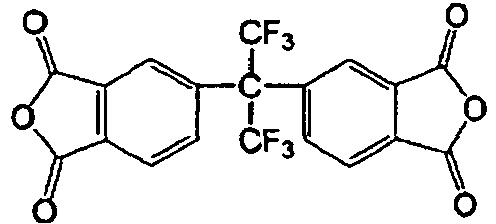
4,4'-(hexafluoroisopropylidene)-bis(phthalic anhydride) PMDA 
pyromellitic dianhydride -
Diamine compound TSN 
3,7-diamino-dimethyldibenzothiophene =5,5-dioxide TCB 
4,4'-diamino-2,2',5,5'-tetrachlorobiphenyl - Here, 6FDA can be referred to as 2,2-bis(3,4-dicarboxyphenyl)hexafluoropropane dianhydride. TSN is a mixture of 3,7-diamino-2,8-dimethyldibenzothiophene=5,5-dioxide as a main component and isomers having a methyl group at a different position, that is, 3,7-diamino-2,6-dimethyldibenzothiophene=5,5-dioxide, 3,7-diamino-4,6-dimethyldibenzothiophene=5,5-dioxide.
- PCP: para-chlorophenol
- In a separable flask which could be purged with N2 gas were placed monomers, BPDA/6FDA/PMDA/TSN/TCB = 225/200/75/250/250 mmols together with 1882 g of PCP, and while being purged with N2 gas, the mixture is polymerized with stirring by a stirrer at 190 °C for 20 hours, to prepare a 17 wt% solution of an aromatic polyimide. A viscosity at 100 °C (rotatory viscosity) was 1,940 poise. The polyimide solution obtained was filtrated through a 400 mesh wire-mesh filter to give a dopant solution.
- The spinning apparatus used is shown in
Fig. 3 . Adope solution 16 is charged in a spinning apparatus equipped with a hollow fiber spinning nozzle 2 (an outer diameter of a dope extrusion unit: 1,000 µm, a slit width of the dope extrusion: 200 µm, and a diameter of a core-liquid discharge unit: 400 µm), and a dope solution and a core liquid were extruded from thenozzle 2 and a tube 3, respectively, by means of a gear pump, to form a hollow fiber material 4, which was then passed through an atmosphere of N2, immersed in a firstcoagulation liquid tank 6 filled with a first coagulation liquid 17 (0 °C, 85 wt% aqueous solution of ethanol), passed through animmersion roll 5 and then a guide roll 7, and carried back and forth in a second coagulation liquid tank 11 (0 °C) filled with asecond coagulation liquid 18 while being drawn by revolvingrolls hollow fiber membrane 14. Thehollow fiber membrane 14 thus obtained was continuously wound on abobbin 12 at 25 m/min. A tension applied to the hollow fiber was 0.5 N or less. The fiber was first wound as a skein, which was then washed with ethanol for completely removing PCP. After ethanol was replaced with isooctane, the fiber was dried at 100 °C and then heated at 255 °C for 30 min to give a hollow fiber membrane. - The hollow fiber that was obtained by replacement with isooctane and drying as described in Example 1 was continuously heated.
FIG. 4 schematically shows a continuous heating equipment used. The fiber was continuously heated using aheat treatment vessel 20 under control by a tension of 0.5 to 1.0 N at 280 °C with a rate at afront roll 19 of 50 m/min and a rate at aback roll 22 of 50.5 m/min, to give a hollow fiber membrane. - A hollow fiber membrane was produced as described in Example 1, except that a drawing rate at a revolving roll was 23 m/min and a winding rate at a bobbin was 25 m/min.
- In Example 4, a hollow fiber membrane obtained was washed with ethanol followed by replacement of ethanol with isooctane, then dried at 100 °C and continuously heated, during which the rolls before and after the heat treatment vessel were operated at different rates for stretching, giving a hollow fiber membrane. Here, a rate at the front roll was 45 m/min, a rate at the back roll was 50.5 m/min, and a tension applied to the hollow fiber was about 1.0 to 1.5 N. Otherwise, the process in Example 2 was conducted to give a hollow fiber membrane.
- A dope solution and a core liquid extruded from nozzles by a gear pump were passed through an atmosphere of N2, then immersed in a first coagulation liquid (0 °C, 85 wt% aqueous solution of ethanol) and carried back and forth in a tank through revolving rolls in a second coagulation bath (0 °C) while being drawn by the revolving rolls at 25 m/min, for extracting PCP in the dope solution, to give a hollow fiber membrane, during which the guide roll 7 shown in
FIG. 1 was displaced backward (back from the paper surface inFIG. 1 ) by 70 mm for increasing friction to the hollow fiber while the fiber was continuously wound on a bobbin at 25 m/min. Otherwise, the process described in Example 1 was conducted to give a hollow fiber membrane. - A hollow fiber membrane was produced as described in Example 1, except that a drawing rate at a revolving roll was 20 m/min and a winding rate at a bobbin was 25 m/min.
- A hollow fiber membrane was produced as described in Example 2, except that a hollow fiber membrane obtained was washed with ethanol followed by replacement of ethanol with isooctane, then dried at 100 °C and continuously heated, during which the rolls before and after the heat treatment vessel were operated at different rates for stretching. In Comparative Example 3, a rate at a front roll was 40 m/min, a rate at a back roll was 50.5 m/min, and to the hollow fiber membrane, a tension of about more than 1.5 N and 2.0 N or less was applied. In Comparative Example 4, a rate at a front roll was 35 m/min, a rate at a back roll was 50.5 m/min and to the hollow fiber membrane, a tension of about more than 2.0 N and 2.5 N or less was applied.
- Table 1 shows the evaluation results of the properties of the hollow fiber membranes produced in Examples and Comparative Examples.
-
Table 1 Permeation performance Mechanical properties Orientation index P'O2 P'N2 Separation degree α (O2/N2) Stress (kgf/mm2) Elongation (%) Average Example 1 9.90 1.74 5.70 5.72 24.4 1.17 Example 2 9.00 1.57 5.74 5.63 27.9 1.14 Example 3 8.40 1.42 5.92 6.32 20.8 1.21 Example 4 6.70 1.15 5.79 5.56 18.6 1.23 Comparative Example 1 5.70 0.97 5.98 5.68 14.3 1.46 Comparative Example 2 5.40 0.93 5.77 9.29 13.0 1.32 Comparative Example 3 7.60 1.45 5.28 5.71 13.8 1.23 Comparative Example 4 9.40 1.94 4.85 6.47 11.5 1.37 Note) Unit of P'O2 and P'N2: 10-5×cm3(STP)/(cm2 s cmHg) - An asymmetric hollow fiber membrane for gas separation of the present invention is excellent in gas separation performance for oxygen and nitrogen gases and in mechanical properties, and it can be, therefore, suitably used for providing a nitrogen-rich air with an increased nitrogen concentration or an oxygen-rich air with an increased concentration of oxygen from the air and for separating other gases.
-
- 2:
- nozzle
- 3:
- tube
- 4:
- hollow fiber-shaped material
- 5:
- immersion roll
- 6:
- first coagulation liquid tank
- 7:
- guide roll
- 8:
- revolving roll 1
- 9:
- revolving
roll 2 - 10:
- press roll
- 11:
- second coagulation liquid tank
- 12:
- bobbin
- 14:
- hollow fiber
- 16:
- dope solution
- 17:
- first coagulation liquid
- 18:
- second coagulation liquid
- 19:
- front roll
- 20:
- heat treatment vessel
- 21:
- hollow fiber
- 22:
- back roll
Claims (5)
- An asymmetric hollow fiber membrane for gas separation made of a soluble aromatic polyimide, wherein
an orientation index is 1.3 or less,
a separation coefficient a(P'O2/P'N2) which represents a ratio of permeation rate of oxygen gas and nitrogen gas at 40 °C is 5.3 or more, and
a tensile elongation at break is 15 % or more. - The asymmetric hollow fiber membrane for gas separation according to Claim 1, wherein an oxygen gas permeation rate P'O2 at 40 °C is 6.0×10⁻⁵ cm3 (STP)/cm2 sec cmHg or more.
- The asymmetric hollow fiber membrane for gas separation according to Claim 1 or 2, wherein the soluble aromatic polyimide comprises a repeating unit represented by general formula (1).


30 to 70 mol% of R is a divalent unit based on a biphenyl structure represented by formula (6):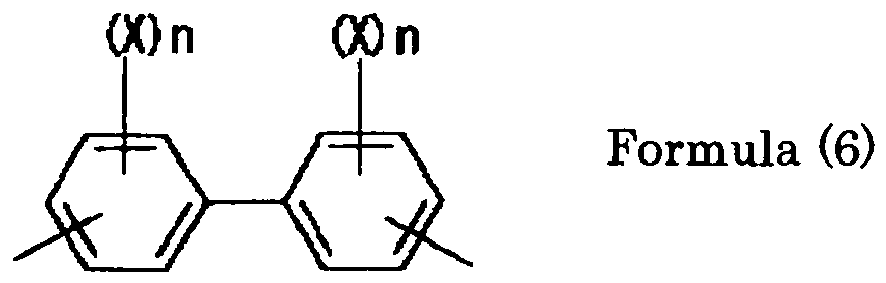
- A process for selectively separating and collecting a particular gas from a mixed gas containing a plurality of gases by using the asymmetric hollow fiber membrane for gas separation according to any one of Claims 1 to 3.
- A process for producing an oxygen-rich air or nitrogen-rich air from the air by using the asymmetric hollow fiber membrane for gas separation according to any one of Claims 1 to 3.
Applications Claiming Priority (2)
| Application Number | Priority Date | Filing Date | Title |
|---|---|---|---|
| JP2010079618 | 2010-03-30 | ||
| PCT/JP2011/058053 WO2011122668A1 (en) | 2010-03-30 | 2011-03-30 | Asymmetrical hollow fibre gas separation membrane |
Publications (3)
| Publication Number | Publication Date |
|---|---|
| EP2554248A1 true EP2554248A1 (en) | 2013-02-06 |
| EP2554248A4 EP2554248A4 (en) | 2014-01-08 |
| EP2554248B1 EP2554248B1 (en) | 2019-02-20 |
Family
ID=44712362
Family Applications (1)
| Application Number | Title | Priority Date | Filing Date |
|---|---|---|---|
| EP11762892.5A Active EP2554248B1 (en) | 2010-03-30 | 2011-03-30 | Asymmetric hollow fiber gas separation membrane |
Country Status (5)
| Country | Link |
|---|---|
| US (1) | US8734568B2 (en) |
| EP (1) | EP2554248B1 (en) |
| JP (1) | JP5983405B2 (en) |
| CN (1) | CN102905779B (en) |
| WO (1) | WO2011122668A1 (en) |
Cited By (1)
| Publication number | Priority date | Publication date | Assignee | Title |
|---|---|---|---|---|
| KR20160053578A (en) * | 2014-11-05 | 2016-05-13 | 주식회사 휴비스워터 | Preparation Method of Hollow Fiber Membrane and Manufacturing System Thereof |
Families Citing this family (3)
| Publication number | Priority date | Publication date | Assignee | Title |
|---|---|---|---|---|
| CN103706258B (en) * | 2013-12-05 | 2016-03-02 | 云南城投碧水源水务科技有限责任公司 | The preparation method of the fiber reinforcement hollow-fibre membrane that a kind of dry method is preserved and production equipment thereof |
| US10569075B2 (en) * | 2014-09-19 | 2020-02-25 | Children's Medical Center Corporation | Apparatuses for cleaning catheter ports |
| CN114011248B (en) * | 2021-09-29 | 2023-10-20 | 广州先进技术研究所 | Thermally induced phase separation film-making method capable of changing core liquid type |
Family Cites Families (13)
| Publication number | Priority date | Publication date | Assignee | Title |
|---|---|---|---|---|
| NL271831A (en) | 1960-11-29 | |||
| JPH029429A (en) | 1988-06-28 | 1990-01-12 | Agency Of Ind Science & Technol | Gas separation membrane and its manufacturing method |
| US5030252A (en) * | 1990-08-27 | 1991-07-09 | The Dow Chemical Company | Novel benzotrifluoride aryl ether gas separation membranes |
| US5215554A (en) * | 1991-06-12 | 1993-06-01 | Permea, Inc. | Membranes having enhanced selectivity and method of producing such membranes |
| JP2588806B2 (en) | 1991-09-10 | 1997-03-12 | 宇部興産株式会社 | Gas separation hollow fiber membrane and method for producing the same |
| JP2874741B2 (en) * | 1993-03-02 | 1999-03-24 | 宇部興産株式会社 | Asymmetric hollow fiber polyimide gas separation membrane |
| US20040210289A1 (en) * | 2002-03-04 | 2004-10-21 | Xingwu Wang | Novel nanomagnetic particles |
| JP2005220202A (en) * | 2004-02-04 | 2005-08-18 | Mitsubishi Rayon Co Ltd | Porous membrane manufacturing method and porous membrane |
| JP4507894B2 (en) * | 2005-01-24 | 2010-07-21 | 宇部興産株式会社 | Asymmetric hollow fiber gas separation membrane and gas separation method |
| JP5358903B2 (en) * | 2006-07-21 | 2013-12-04 | 宇部興産株式会社 | Asymmetric hollow fiber gas separation membrane, gas separation method, and gas separation membrane module |
| US7803214B2 (en) * | 2006-07-21 | 2010-09-28 | Ube Industries, Ltd. | Asymmetric hollow-fiber gas separation membrane, gas separation method and gas separation membrane module |
| US8409325B2 (en) * | 2008-09-30 | 2013-04-02 | Ube Industries, Ltd. | Asymmetric gas separation membrane and process for gas separation |
| US8366804B2 (en) * | 2010-05-28 | 2013-02-05 | Uop Llc | High permeance polyimide membranes for air separation |
-
2011
- 2011-03-30 EP EP11762892.5A patent/EP2554248B1/en active Active
- 2011-03-30 JP JP2012508364A patent/JP5983405B2/en active Active
- 2011-03-30 US US13/638,087 patent/US8734568B2/en active Active
- 2011-03-30 WO PCT/JP2011/058053 patent/WO2011122668A1/en not_active Ceased
- 2011-03-30 CN CN201180025433.7A patent/CN102905779B/en active Active
Cited By (1)
| Publication number | Priority date | Publication date | Assignee | Title |
|---|---|---|---|---|
| KR20160053578A (en) * | 2014-11-05 | 2016-05-13 | 주식회사 휴비스워터 | Preparation Method of Hollow Fiber Membrane and Manufacturing System Thereof |
Also Published As
| Publication number | Publication date |
|---|---|
| US20130019748A1 (en) | 2013-01-24 |
| WO2011122668A1 (en) | 2011-10-06 |
| CN102905779B (en) | 2014-12-24 |
| EP2554248A4 (en) | 2014-01-08 |
| CN102905779A (en) | 2013-01-30 |
| JP5983405B2 (en) | 2016-08-31 |
| US8734568B2 (en) | 2014-05-27 |
| JPWO2011122668A1 (en) | 2013-07-08 |
| EP2554248B1 (en) | 2019-02-20 |
Similar Documents
| Publication | Publication Date | Title |
|---|---|---|
| US8409325B2 (en) | Asymmetric gas separation membrane and process for gas separation | |
| EP2237856B1 (en) | Method of making a crosslinked fiber membrane from a high molecular weight, monoesterified polyimide polymer | |
| AU2009204479B2 (en) | Method of making a high molecular weight, monoesterified polyimide polymer | |
| JP3698078B2 (en) | Method for producing asymmetric hollow fiber gas separation membrane | |
| JP2874741B2 (en) | Asymmetric hollow fiber polyimide gas separation membrane | |
| EP2554248B1 (en) | Asymmetric hollow fiber gas separation membrane | |
| EP3124108A1 (en) | Asymmetric gas separation membrane, and methods for separating and recovering gases | |
| JP5348026B2 (en) | Method for producing an asymmetric hollow fiber gas separation membrane | |
| JP4507894B2 (en) | Asymmetric hollow fiber gas separation membrane and gas separation method | |
| JP5359957B2 (en) | Polyimide gas separation membrane and gas separation method | |
| JP5359914B2 (en) | Polyimide gas separation membrane and gas separation method | |
| JP6067205B2 (en) | Method for producing nitrogen-enriched air from hot gas | |
| JP4978602B2 (en) | Asymmetric hollow fiber gas separation membrane and gas separation method | |
| JP7676874B2 (en) | Asymmetric hollow fiber gas separation membrane | |
| JP4835020B2 (en) | Asymmetric hollow fiber gas separation membrane and gas separation method | |
| JP5114912B2 (en) | Asymmetric membrane, gas separation membrane, and gas separation method formed of Si atom-containing polyimide | |
| JP7718533B1 (en) | Gas separation membrane unit, gas separation system, and method for producing enriched gas | |
| JP5240152B2 (en) | Polyimide gas separation membrane and gas separation method | |
| JP5348085B2 (en) | Method for producing an asymmetric hollow fiber gas separation membrane |
Legal Events
| Date | Code | Title | Description |
|---|---|---|---|
| PUAI | Public reference made under article 153(3) epc to a published international application that has entered the european phase |
Free format text: ORIGINAL CODE: 0009012 |
|
| 17P | Request for examination filed |
Effective date: 20120929 |
|
| AK | Designated contracting states |
Kind code of ref document: A1 Designated state(s): AL AT BE BG CH CY CZ DE DK EE ES FI FR GB GR HR HU IE IS IT LI LT LU LV MC MK MT NL NO PL PT RO RS SE SI SK SM TR |
|
| DAX | Request for extension of the european patent (deleted) | ||
| A4 | Supplementary search report drawn up and despatched |
Effective date: 20131211 |
|
| RIC1 | Information provided on ipc code assigned before grant |
Ipc: B01D 69/08 20060101ALI20131205BHEP Ipc: B01D 53/22 20060101ALI20131205BHEP Ipc: C01B 13/02 20060101ALI20131205BHEP Ipc: B01D 71/64 20060101AFI20131205BHEP |
|
| STAA | Information on the status of an ep patent application or granted ep patent |
Free format text: STATUS: EXAMINATION IS IN PROGRESS |
|
| 17Q | First examination report despatched |
Effective date: 20170412 |
|
| GRAP | Despatch of communication of intention to grant a patent |
Free format text: ORIGINAL CODE: EPIDOSNIGR1 |
|
| STAA | Information on the status of an ep patent application or granted ep patent |
Free format text: STATUS: GRANT OF PATENT IS INTENDED |
|
| INTG | Intention to grant announced |
Effective date: 20180703 |
|
| GRAS | Grant fee paid |
Free format text: ORIGINAL CODE: EPIDOSNIGR3 |
|
| GRAJ | Information related to disapproval of communication of intention to grant by the applicant or resumption of examination proceedings by the epo deleted |
Free format text: ORIGINAL CODE: EPIDOSDIGR1 |
|
| GRAL | Information related to payment of fee for publishing/printing deleted |
Free format text: ORIGINAL CODE: EPIDOSDIGR3 |
|
| STAA | Information on the status of an ep patent application or granted ep patent |
Free format text: STATUS: EXAMINATION IS IN PROGRESS |
|
| GRAP | Despatch of communication of intention to grant a patent |
Free format text: ORIGINAL CODE: EPIDOSNIGR1 |
|
| STAA | Information on the status of an ep patent application or granted ep patent |
Free format text: STATUS: GRANT OF PATENT IS INTENDED |
|
| INTC | Intention to grant announced (deleted) | ||
| INTG | Intention to grant announced |
Effective date: 20181204 |
|
| GRAA | (expected) grant |
Free format text: ORIGINAL CODE: 0009210 |
|
| STAA | Information on the status of an ep patent application or granted ep patent |
Free format text: STATUS: THE PATENT HAS BEEN GRANTED |
|
| AK | Designated contracting states |
Kind code of ref document: B1 Designated state(s): AL AT BE BG CH CY CZ DE DK EE ES FI FR GB GR HR HU IE IS IT LI LT LU LV MC MK MT NL NO PL PT RO RS SE SI SK SM TR |
|
| REG | Reference to a national code |
Ref country code: GB Ref legal event code: FG4D |
|
| REG | Reference to a national code |
Ref country code: CH Ref legal event code: EP |
|
| REG | Reference to a national code |
Ref country code: DE Ref legal event code: R096 Ref document number: 602011056350 Country of ref document: DE |
|
| REG | Reference to a national code |
Ref country code: AT Ref legal event code: REF Ref document number: 1097440 Country of ref document: AT Kind code of ref document: T Effective date: 20190315 |
|
| REG | Reference to a national code |
Ref country code: IE Ref legal event code: FG4D |
|
| REG | Reference to a national code |
Ref country code: NL Ref legal event code: MP Effective date: 20190220 |
|
| REG | Reference to a national code |
Ref country code: LT Ref legal event code: MG4D |
|
| PG25 | Lapsed in a contracting state [announced via postgrant information from national office to epo] |
Ref country code: PT Free format text: LAPSE BECAUSE OF FAILURE TO SUBMIT A TRANSLATION OF THE DESCRIPTION OR TO PAY THE FEE WITHIN THE PRESCRIBED TIME-LIMIT Effective date: 20190620 Ref country code: FI Free format text: LAPSE BECAUSE OF FAILURE TO SUBMIT A TRANSLATION OF THE DESCRIPTION OR TO PAY THE FEE WITHIN THE PRESCRIBED TIME-LIMIT Effective date: 20190220 Ref country code: LT Free format text: LAPSE BECAUSE OF FAILURE TO SUBMIT A TRANSLATION OF THE DESCRIPTION OR TO PAY THE FEE WITHIN THE PRESCRIBED TIME-LIMIT Effective date: 20190220 Ref country code: NO Free format text: LAPSE BECAUSE OF FAILURE TO SUBMIT A TRANSLATION OF THE DESCRIPTION OR TO PAY THE FEE WITHIN THE PRESCRIBED TIME-LIMIT Effective date: 20190520 Ref country code: SE Free format text: LAPSE BECAUSE OF FAILURE TO SUBMIT A TRANSLATION OF THE DESCRIPTION OR TO PAY THE FEE WITHIN THE PRESCRIBED TIME-LIMIT Effective date: 20190220 |
|
| PG25 | Lapsed in a contracting state [announced via postgrant information from national office to epo] |
Ref country code: NL Free format text: LAPSE BECAUSE OF FAILURE TO SUBMIT A TRANSLATION OF THE DESCRIPTION OR TO PAY THE FEE WITHIN THE PRESCRIBED TIME-LIMIT Effective date: 20190220 Ref country code: LV Free format text: LAPSE BECAUSE OF FAILURE TO SUBMIT A TRANSLATION OF THE DESCRIPTION OR TO PAY THE FEE WITHIN THE PRESCRIBED TIME-LIMIT Effective date: 20190220 Ref country code: GR Free format text: LAPSE BECAUSE OF FAILURE TO SUBMIT A TRANSLATION OF THE DESCRIPTION OR TO PAY THE FEE WITHIN THE PRESCRIBED TIME-LIMIT Effective date: 20190521 Ref country code: HR Free format text: LAPSE BECAUSE OF FAILURE TO SUBMIT A TRANSLATION OF THE DESCRIPTION OR TO PAY THE FEE WITHIN THE PRESCRIBED TIME-LIMIT Effective date: 20190220 Ref country code: IS Free format text: LAPSE BECAUSE OF FAILURE TO SUBMIT A TRANSLATION OF THE DESCRIPTION OR TO PAY THE FEE WITHIN THE PRESCRIBED TIME-LIMIT Effective date: 20190620 Ref country code: BG Free format text: LAPSE BECAUSE OF FAILURE TO SUBMIT A TRANSLATION OF THE DESCRIPTION OR TO PAY THE FEE WITHIN THE PRESCRIBED TIME-LIMIT Effective date: 20190520 Ref country code: RS Free format text: LAPSE BECAUSE OF FAILURE TO SUBMIT A TRANSLATION OF THE DESCRIPTION OR TO PAY THE FEE WITHIN THE PRESCRIBED TIME-LIMIT Effective date: 20190220 |
|
| REG | Reference to a national code |
Ref country code: AT Ref legal event code: MK05 Ref document number: 1097440 Country of ref document: AT Kind code of ref document: T Effective date: 20190220 |
|
| PG25 | Lapsed in a contracting state [announced via postgrant information from national office to epo] |
Ref country code: EE Free format text: LAPSE BECAUSE OF FAILURE TO SUBMIT A TRANSLATION OF THE DESCRIPTION OR TO PAY THE FEE WITHIN THE PRESCRIBED TIME-LIMIT Effective date: 20190220 Ref country code: IT Free format text: LAPSE BECAUSE OF FAILURE TO SUBMIT A TRANSLATION OF THE DESCRIPTION OR TO PAY THE FEE WITHIN THE PRESCRIBED TIME-LIMIT Effective date: 20190220 Ref country code: CZ Free format text: LAPSE BECAUSE OF FAILURE TO SUBMIT A TRANSLATION OF THE DESCRIPTION OR TO PAY THE FEE WITHIN THE PRESCRIBED TIME-LIMIT Effective date: 20190220 Ref country code: RO Free format text: LAPSE BECAUSE OF FAILURE TO SUBMIT A TRANSLATION OF THE DESCRIPTION OR TO PAY THE FEE WITHIN THE PRESCRIBED TIME-LIMIT Effective date: 20190220 Ref country code: ES Free format text: LAPSE BECAUSE OF FAILURE TO SUBMIT A TRANSLATION OF THE DESCRIPTION OR TO PAY THE FEE WITHIN THE PRESCRIBED TIME-LIMIT Effective date: 20190220 Ref country code: DK Free format text: LAPSE BECAUSE OF FAILURE TO SUBMIT A TRANSLATION OF THE DESCRIPTION OR TO PAY THE FEE WITHIN THE PRESCRIBED TIME-LIMIT Effective date: 20190220 Ref country code: SK Free format text: LAPSE BECAUSE OF FAILURE TO SUBMIT A TRANSLATION OF THE DESCRIPTION OR TO PAY THE FEE WITHIN THE PRESCRIBED TIME-LIMIT Effective date: 20190220 Ref country code: AL Free format text: LAPSE BECAUSE OF FAILURE TO SUBMIT A TRANSLATION OF THE DESCRIPTION OR TO PAY THE FEE WITHIN THE PRESCRIBED TIME-LIMIT Effective date: 20190220 |
|
| REG | Reference to a national code |
Ref country code: CH Ref legal event code: PL |
|
| REG | Reference to a national code |
Ref country code: DE Ref legal event code: R097 Ref document number: 602011056350 Country of ref document: DE |
|
| PG25 | Lapsed in a contracting state [announced via postgrant information from national office to epo] |
Ref country code: PL Free format text: LAPSE BECAUSE OF FAILURE TO SUBMIT A TRANSLATION OF THE DESCRIPTION OR TO PAY THE FEE WITHIN THE PRESCRIBED TIME-LIMIT Effective date: 20190220 Ref country code: SM Free format text: LAPSE BECAUSE OF FAILURE TO SUBMIT A TRANSLATION OF THE DESCRIPTION OR TO PAY THE FEE WITHIN THE PRESCRIBED TIME-LIMIT Effective date: 20190220 Ref country code: LU Free format text: LAPSE BECAUSE OF NON-PAYMENT OF DUE FEES Effective date: 20190330 |
|
| REG | Reference to a national code |
Ref country code: BE Ref legal event code: MM Effective date: 20190331 |
|
| PLBE | No opposition filed within time limit |
Free format text: ORIGINAL CODE: 0009261 |
|
| STAA | Information on the status of an ep patent application or granted ep patent |
Free format text: STATUS: NO OPPOSITION FILED WITHIN TIME LIMIT |
|
| PG25 | Lapsed in a contracting state [announced via postgrant information from national office to epo] |
Ref country code: AT Free format text: LAPSE BECAUSE OF FAILURE TO SUBMIT A TRANSLATION OF THE DESCRIPTION OR TO PAY THE FEE WITHIN THE PRESCRIBED TIME-LIMIT Effective date: 20190220 Ref country code: MC Free format text: LAPSE BECAUSE OF FAILURE TO SUBMIT A TRANSLATION OF THE DESCRIPTION OR TO PAY THE FEE WITHIN THE PRESCRIBED TIME-LIMIT Effective date: 20190220 |
|
| 26N | No opposition filed |
Effective date: 20191121 |
|
| GBPC | Gb: european patent ceased through non-payment of renewal fee |
Effective date: 20190520 |
|
| PG25 | Lapsed in a contracting state [announced via postgrant information from national office to epo] |
Ref country code: LI Free format text: LAPSE BECAUSE OF NON-PAYMENT OF DUE FEES Effective date: 20190331 Ref country code: IE Free format text: LAPSE BECAUSE OF NON-PAYMENT OF DUE FEES Effective date: 20190330 Ref country code: CH Free format text: LAPSE BECAUSE OF NON-PAYMENT OF DUE FEES Effective date: 20190331 |
|
| PG25 | Lapsed in a contracting state [announced via postgrant information from national office to epo] |
Ref country code: SI Free format text: LAPSE BECAUSE OF FAILURE TO SUBMIT A TRANSLATION OF THE DESCRIPTION OR TO PAY THE FEE WITHIN THE PRESCRIBED TIME-LIMIT Effective date: 20190220 Ref country code: FR Free format text: LAPSE BECAUSE OF NON-PAYMENT OF DUE FEES Effective date: 20190420 Ref country code: BE Free format text: LAPSE BECAUSE OF NON-PAYMENT OF DUE FEES Effective date: 20190331 |
|
| PG25 | Lapsed in a contracting state [announced via postgrant information from national office to epo] |
Ref country code: TR Free format text: LAPSE BECAUSE OF FAILURE TO SUBMIT A TRANSLATION OF THE DESCRIPTION OR TO PAY THE FEE WITHIN THE PRESCRIBED TIME-LIMIT Effective date: 20190220 |
|
| PG25 | Lapsed in a contracting state [announced via postgrant information from national office to epo] |
Ref country code: GB Free format text: LAPSE BECAUSE OF NON-PAYMENT OF DUE FEES Effective date: 20190520 |
|
| PG25 | Lapsed in a contracting state [announced via postgrant information from national office to epo] |
Ref country code: MT Free format text: LAPSE BECAUSE OF NON-PAYMENT OF DUE FEES Effective date: 20190330 |
|
| PG25 | Lapsed in a contracting state [announced via postgrant information from national office to epo] |
Ref country code: CY Free format text: LAPSE BECAUSE OF FAILURE TO SUBMIT A TRANSLATION OF THE DESCRIPTION OR TO PAY THE FEE WITHIN THE PRESCRIBED TIME-LIMIT Effective date: 20190220 |
|
| PG25 | Lapsed in a contracting state [announced via postgrant information from national office to epo] |
Ref country code: HU Free format text: LAPSE BECAUSE OF FAILURE TO SUBMIT A TRANSLATION OF THE DESCRIPTION OR TO PAY THE FEE WITHIN THE PRESCRIBED TIME-LIMIT; INVALID AB INITIO Effective date: 20110330 |
|
| PG25 | Lapsed in a contracting state [announced via postgrant information from national office to epo] |
Ref country code: MK Free format text: LAPSE BECAUSE OF FAILURE TO SUBMIT A TRANSLATION OF THE DESCRIPTION OR TO PAY THE FEE WITHIN THE PRESCRIBED TIME-LIMIT Effective date: 20190220 |
|
| REG | Reference to a national code |
Ref country code: DE Ref legal event code: R081 Ref document number: 602011056350 Country of ref document: DE Owner name: UBE CORPORATION, UBE-SHI, JP Free format text: FORMER OWNER: UBE INDUSTRIES, LTD., UBE-SHI, YAMAGUCHI, JP |
|
| P01 | Opt-out of the competence of the unified patent court (upc) registered |
Effective date: 20230522 |
|
| REG | Reference to a national code |
Ref country code: DE Ref legal event code: R082 Ref document number: 602011056350 Country of ref document: DE Representative=s name: BLUMBACH ZINNGREBE PATENTANWAELTE PARTG MBB, DE |
|
| PGFP | Annual fee paid to national office [announced via postgrant information from national office to epo] |
Ref country code: DE Payment date: 20260204 Year of fee payment: 16 |