EP2552958B1 - Monoclonal antibody directed against the p17 protein of hiv, capable of neutralising the binding of p17 to the p17 receptor (p17r) - Google Patents
Monoclonal antibody directed against the p17 protein of hiv, capable of neutralising the binding of p17 to the p17 receptor (p17r) Download PDFInfo
- Publication number
- EP2552958B1 EP2552958B1 EP11728944.7A EP11728944A EP2552958B1 EP 2552958 B1 EP2552958 B1 EP 2552958B1 EP 11728944 A EP11728944 A EP 11728944A EP 2552958 B1 EP2552958 B1 EP 2552958B1
- Authority
- EP
- European Patent Office
- Prior art keywords
- monoclonal antibody
- acid sequence
- antibody according
- nucleic acid
- protein
- Prior art date
- Legal status (The legal status is an assumption and is not a legal conclusion. Google has not performed a legal analysis and makes no representation as to the accuracy of the status listed.)
- Not-in-force
Links
Images



Classifications
-
- C—CHEMISTRY; METALLURGY
- C07—ORGANIC CHEMISTRY
- C07K—PEPTIDES
- C07K16/00—Immunoglobulins [IG], e.g. monoclonal or polyclonal antibodies
- C07K16/08—Immunoglobulins [IG], e.g. monoclonal or polyclonal antibodies against material from viruses
- C07K16/10—RNA viruses
- C07K16/112—Retroviridae (F), e.g. leukemia viruses
- C07K16/114—Lentivirus (G), e.g. human immunodeficiency virus [HIV], feline immunodeficiency virus [FIV] or simian immunodeficiency virus [SIV]
- C07K16/1143—Gag-pol proteins, e.g. p17or p24
-
- A—HUMAN NECESSITIES
- A61—MEDICAL OR VETERINARY SCIENCE; HYGIENE
- A61P—SPECIFIC THERAPEUTIC ACTIVITY OF CHEMICAL COMPOUNDS OR MEDICINAL PREPARATIONS
- A61P31/00—Antiinfectives, i.e. antibiotics, antiseptics, chemotherapeutics
- A61P31/12—Antivirals
- A61P31/14—Antivirals for RNA viruses
- A61P31/18—Antivirals for RNA viruses for HIV
-
- A—HUMAN NECESSITIES
- A61—MEDICAL OR VETERINARY SCIENCE; HYGIENE
- A61K—PREPARATIONS FOR MEDICAL, DENTAL OR TOILETRY PURPOSES
- A61K39/00—Medicinal preparations containing antigens or antibodies
- A61K2039/505—Medicinal preparations containing antigens or antibodies comprising antibodies
-
- C—CHEMISTRY; METALLURGY
- C07—ORGANIC CHEMISTRY
- C07K—PEPTIDES
- C07K2317/00—Immunoglobulins specific features
- C07K2317/30—Immunoglobulins specific features characterized by aspects of specificity or valency
- C07K2317/33—Crossreactivity, e.g. for species or epitope, or lack of said crossreactivity
-
- C—CHEMISTRY; METALLURGY
- C07—ORGANIC CHEMISTRY
- C07K—PEPTIDES
- C07K2317/00—Immunoglobulins specific features
- C07K2317/70—Immunoglobulins specific features characterized by effect upon binding to a cell or to an antigen
- C07K2317/76—Antagonist effect on antigen, e.g. neutralization or inhibition of binding
-
- C—CHEMISTRY; METALLURGY
- C12—BIOCHEMISTRY; BEER; SPIRITS; WINE; VINEGAR; MICROBIOLOGY; ENZYMOLOGY; MUTATION OR GENETIC ENGINEERING
- C12N—MICROORGANISMS OR ENZYMES; COMPOSITIONS THEREOF; PROPAGATING, PRESERVING, OR MAINTAINING MICROORGANISMS; MUTATION OR GENETIC ENGINEERING; CULTURE MEDIA
- C12N2740/00—Reverse transcribing RNA viruses
- C12N2740/00011—Details
- C12N2740/10011—Retroviridae
- C12N2740/16011—Human Immunodeficiency Virus, HIV
Definitions
- the present invention relates to a monoclonal antibody directed against HIV p 17 protein, the said antibody being capable of neutralizing the binding between the p 17 protein and the p 17 protein receptor (p17R) expressed on the surface of immunocompetent cells.
- p17R p 17 protein receptor
- p17 protein is known to play an important role in the pathogenesis of AIDS.
- p17 is also known to represent the target of neutralizing antibodies directed against HTV-1 and high levels of anti-p17 antibodies are correlated with a slower progression towards AIDS.
- p17 exhibits several immunomodulating properties that could be significant within the context of the viral pathogenesis.
- p17 was indeed proven to increase the in vitro replication of HIV-1 and affects the activation and differentiation state, in addition to the proliferation ability, of the cells that constitute the target of the virus, such as CD4 + T lymphocytes, NK cells, monocytes, plasmacytoid dendritic cells.
- p17 The ability of p17 to disrupt the physiological function of various cells of the immune system and to increase the production of pro-inflammatory molecules is very likely a mechanism exploited by the virus to escape the immune response and, at the same time, to create an environment that is more suitable for virus infection and replication. Recently, p17 was also observed to be exported outside the infected cells and it can be detected in the serum of HIV-1-infected patients, remaining in the lymph nodes, also in patients successfully treated with antiretrovirals and thus in the absence of virus replication. Such findings lead to believe that the mechanism of action observed in vitro is also possible in vivo.
- p17 protein exerts its biological activity directly by interacting with a specific receptor (p17R) expressed on the surface of several immunocompetent cells.
- the present inventors also identified an epitope in the N-terminal region of p17 that is involved in the binding with the receptor.
- the amino acid sequence of such epitope was identified and used for designing a synthetic peptide of 20 amino acids in length, designated as AT20, exemplary of the functional region of p 17 from the HIV-1 BH10 isolate (HTV-1B subtype).
- the synthetic peptide AT20 coupled with the Keyhole Limpet Hemocyanin (KLH) protein results in the generation of anti-p17 neutralizing antibodies capable of blocking the interaction p17/p17R and, accordingly, its biological activity.
- KLH Keyhole Limpet Hemocyanin
- the anti-p17 monoclonal antibody subject of the present invention exhibits unexpected properties, as - even though it is a monoclonal - it is endowed with a broad-range neutralizing activity similar to a polyclonal, but on the other hand it does not recognize the neutralizing AT20 epitope recognized instead by the neutralizing sera described in the above-mentioned Fiorentini et al., 2008 reference and by an anti-p17 neutralizing monoclonal previously described and designated as MBS3 ( De Francesco et al. Proc Natl Acad Sci USA. 2002 Jul 23;99(15):9972-7 ; WO2003/016337 ).
- a comparison between the binding and neutralizing properties of the prior art MBS3 antibody and the MBA1 antibody of the present invention is shown in the following experimental section.
- a broader range neutralizing activity of the MBA1 antibody of the invention is observed compared to the prior art MBS3 antibody.
- the MBA1 monoclonal antibody of the invention is particularly suitable to be used as a medicament for the therapeutic treatment of a pathology related to the human immunodeficiency virus.
- the expression "related to the human immunodeficiency virus” means that the pathology is directly or indirectly caused by said virus.
- the pathology related to the human immunodeficiency virus is selected from the group consisting of acquired immunodeficiency syndrome (AIDS), dementia and lymphoma.
- the monoclonal antibody of the invention may be administered in any pharmaceutically acceptable way.
- the antibody may be administered by parenteral route, preferably by intravenous injection or slow infusion.
- Other contemplated administration routes are, for example, the oral, nasal, ophthalmic, rectal or topical routes.
- the monoclonal antibody of the invention may be formulated into any suitable dosage form for the intended administration route.
- a dosage form includes pharmaceutically acceptable excipients and/or carriers suitable for the intended administration route. The selection of the administration route, the dosage form and the pharmaceutically acceptable carriers and/or excipients are well within the skills of a person of skill in the art.
- the monoclonal antibody of the invention is administered by injection.
- the antibody is administered at a dosage within the range from about 0.1 mg/kg to about 100 mg/kg. If the antibody is administered by slow infusion, an infusion period of about 30 minutes to 2 hours may be used for example.
- the administration is preferably repeated on a monthly, two-monthly or higher basis, for both acute and chronic and intermittent treatments.
- mice 9-week female Balb/c mice were immunized with 25 ⁇ g/mouse of the p17 BH10 protein emulsified in Freund's complete adjuvant for the first injection and in Freund's incomplete adjuvant for the last three.
- the immunizations were performed by intra-peritoneal route at an interval of 7 days. Three days after the last inoculation an intra-caudal immunization was carried out.
- the spleen was removed aseptically from each mouse for the recovery of the splenocytes, thus in order to proceed with the fusion to myelomatous cells (NSO), which are genetically deprived of the hypoxanthine-guanine-phosphoribosyltransferase enzyme (HGPRT).
- NSO myelomatous cells
- HGPRT hypoxanthine-guanine-phosphoribosyltransferase enzyme
- the day of the fusion was considered as day 0; the first clones were detected after about three days and the first hybridoma colonies appeared about 15 days after the fusion.
- the supernatants were then screened in order to assess the possible presence of the antigen-specific antibody.
- the screening was performed by the ELISA technique.
- the positive hybridoma colony was collected and cloned into appropriate 96-well plates for the selection of hybridomas that were producing the antibody and for the isolation of a cell line derived from a single clone, thereby obtaining the MBA1 monoclonal antibody capable of reacting against the p17 BH10 protein and the African variants thereof (see below).
- HIV-1 genome RNA was isolated from the plasma of Kenya patients by using the viral RNA extraction kit (Qiagen, Milan, Italy). The extract was then retro-transcribed by using the MULV retrotranscriptase (Applera, Monza, Italy) and the resulting cDNA was used as the template to perform a high-fidelity PCR by using Pfu DNA Polymerase.
- the following primers were used for amplifying partial HIV-1 genome sequences comprising the p 17 BH10 gene: UGF1 (5'- GTG CCC GTC TGT TGT GTG A-3', SEQ ID NO:1) and UGR1 (5'-AAT CTT GTG GGG TGG CTC CTT 3', SEQ ID NO:2) for the first step and UGF2 (5'-ACA GGG ACC TGA AAG CGA AAG-3', SEQ ID NO:3) and UGR1 for the second step.
- PCR products were purified (Strataprep PCR purification Kit; Stratagene, La Jolla, CA, United States of America) and inserted into the SrfI-digested pPCR-Script Amp SK(+) cloning vector (Stratagene). Thereafter, both the nucleotide sequences and the orientation of the inserts were verified (CRIBI BMR Genomics Sequence Facility, Padua, Italy).
- the previously cloned p17 BH10 fragments were further amplified by PCR using the following primers: UGp17For (5'-TAA GGA TCC ATG GGT GCG AGA GCG TCA-3', SEQ ID NO:4) and UGp17Rev (5'-CGG GAA TTC TCA GTA ATT TTG GCT GAC C-3', SEQ ID NO: 5) containing the restriction sites BamHI and EcoRI, respectively.
- the amplified DNA fragment was ligated into the prokaryotic pGEX-4T expression vector (GE Healthcare, Piscataway, NJ, United States of America) in a 10:1 ratio (insert:vector) at 16°C for 3 hours.
- the four cloned products were subsequently transformed in E. coli BL21 (DE3) cells (Stratagene).
- the nucleotide sequences thereof were confirmed and the products were expressed by induction with isopropyl- ⁇ -D-1-thiogalactopyranoside (IPTG) and purified by glutathione-sepharose 4B beads (GE Healthcare).
- IPTG isopropyl- ⁇ -D-1-thiogalactopyranoside
- GST proteins were further purified (>98%) by reversed-phase high performance liquid chromatography (HPLC).
- the ELISA test was carried out to select hybridomas and clones secreting the antibody capable of recognizing the p17 BH10 protein and the African variants thereof (S75X, S85X, S92X and S012X).
- Each well of a 96-well plate was incubated with 1 ⁇ g/ml of p17 BH10, S75X, S85X, S92X and S012X in a volume of 100 ⁇ l PBS, pH 7.2, per well at room temperature overnight. The following day, after several washes in washing buffer (PBS/Tween 20 0.1 %), the wells were blocked with 200 ⁇ l PBS/BSA 3% per well for 1 hour at 37°C and subsequently incubated with the cell supernatants to be tested for 1 hour at 37°C.
- washing buffer PBS/Tween 20 0.1 %
- the supernatant of the selected hybridoma was tested by the Western Blot technique, which allows to verify the binding of the antibody to the denatured protein.
- the proteins were subjected to a high temperature, for the denaturation thereof, and to a SDS-PAGE electrophoresis.
- the latter technique allows the denatured proteins to run in a polyacrylamide gel according to their size, to then be transferred onto a nitrocellulose membrane by the action of an electric field. To reveal the bands corresponding to the proteins, the membrane was stained with Ponceau Red and left to dry.
- the Isostrip Monoclonal Antibody Isotyping Kit (Saint-Cruz Biotechn) was used to determine the isotype that characterizes the produced and selected MBA1 monoclonal antibody.
- the obtained monoclonal antibody was also subjected to an optimized neutralization test to verify its ability to block the interaction between p17 proteins (BH10 and African variants thereof) and p17R receptor.
- the Raji cell line a neoplastic B lymphocyte line expressing the surface receptor that binds the p17 protein (p17R)
- the antibody was incubated with the p17 BH10 protein or the biotinylated African variants thereof, to allow for the formation of the antigen-antibody complex, and then the Raji cells were added with an incubation for 30' at 4°C. After several washes, a further incubation with streptavidin was carried out to detect, by cytofluorimetric analysis, the possible presence of the protein bound to the p17R surface receptor, not neutralized by the monoclonal antibody.
- the cellular RNA was isolated from the clone secreting the MBA1 monoclonal antibody by using the RNA extraction kit (Qiagen, Milan, Italy). The extract was subjected to retro-transcription by using the High Capacity cDNA Archive Kit (Applied Biosystem) and the resulting cDNA was used as a template to amplify, by PCR, partial sequences encoding the light (Vk) and heavy (Vh) chain variable regions of the monoclonal antibody.
- Vk 5' sense 5'- CAGATCA-GATCTCGTGATGACCCAG -3', SEQ ID NO:6; 3' Vk antisense: 5'-agcccgtttgagctccagcttgg-3', SEQ ID NO:7; MuG102, Fd 5' sense: 5'-TGTCCACCTCGAGGTCCAGCTGCAGCAGTCTGG-3', SEQ ID NO:8; 3' Vh antisense: 5'-gagactgtcaccggtgtgccttgg-3', SEQ ID NO:9.
- PCR products were cloned into the pGEM-T cloning vector (Promega) by exploiting the "T/A Cloning" method, after which the clones containing the insert were sequenced and analyzed.
- the light and heavy chain variable regions of the previously isolated murine Ig gene were then subcloned, after digestion with restriction enzymes (Bgl II and Sac I for Vk; Xho I and Sgr AI for Vh), into expression vector constructs, designated as L122S and L126S, respectively ( Fiorentini S et al., Scand J Immunol 55, 284-292, 2002 ).
- MBA1 The generated monoclonal antibody, designated as MBA1, resulted very interesting as to several biochemical-molecular features.
- Figure 1 shows the binding reactivity of the MBA1 antibody towards the different matrix proteins.
- the diagram shows that the MBA1 monoclonal antibody recognizes and binds the proteins of interest, unlike the non-related protein. These results were also confirmed by Western Blot.
- the MBA monoclonal antibody was actually shown to bind the p 17 BH10 protein and the African variants thereof even in the denatured form.
- the inventors also identified the antibody isotype of the MBA monoclonal antibody, which was shown to be an IgG1/k-chain isotype immunoglobulin.
- the inventors verified if the interaction between p17 and its receptor was altered in the presence of another antibody with the same features as the Mab MBA1: in fact, the MBA 15 monoclonal antibody selected for this comparison is an IgG1 k-chain immunoglobulin and, as MBA1, it recognizes the different p17 proteins both by ELISA and Western Blot, even if at a different epitope.
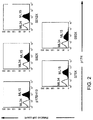
- MBA 15 as Figure 2 shows, does not alter the interaction between the assayed proteins and their receptor.
- the histograms depicted in Figure 2 show that the p17 BH10 protein and the African variants thereof are able to bind the specific receptor expressed on all of the analyzed Raji cells.
- the inventors carried out a study on the nucleotide sequences encoding the heavy (Vh) and light (Vk) chain variable regions of the MBA1 monoclonal antibody under examination, in order to chimerize the antibody itself.
- the Vh and Vk variable regions, isolated with specific primers, were inserted into two different expression vector constructs comprising the remaining human antibody regions, in order to finally assemble a chimeric antibody in a single final expression vector.
- the nucleotide sequences of the heavy chain and light chain variable regions of the MBA1 monoclonal antibody are designated as SEQ ID NO: 10 and SEQ ID NO:11, respectively, in the sequence listing.
- any monoclonal antibody comprising a heavy chain variable region comprising the amino acid sequence obtainable from the nucleotide sequence SEQ ID NO: 10 and a light chain variable region comprising the amino acid sequence obtainable from the nucleotide sequence SEQ ID NO: 11 falls within the scope of the invention.
- the expression "obtainable from” means that the above-mentioned nucleotide sequences SEQ ID NO:10 and 11 do not have a restrictive meaning.
- the MBA1 monoclonal antibody of the invention may be manufactured in a humanized form, by conventional techniques well known to the person of skill in the art and therefore do not need further description.
- the p17 BH10 proteins and the African mutants thereof were denatured and subjected to an electrical field according to the SDS-PAGE electrophoresis technique. After the electrophoretic run on a polyacrylamide gel, the proteins were transferred on two different nitrocellulose membranes. To reveal the bands corresponding to the proteins and thereby verify the transfer thereof, the membranes were stained with Ponceau Red and left to dry.
- the immunohistochemical assay was then carried out, by which, after blocking of the specific sites with PBS/BSA 5% and incubation of the two membranes, each with one of the two monoclonal antibodies to be tested (MBA-1 and MBS-3), it was possible to assess the binding of the antibodies to the proteins (p17 BH10 and African variants thereof) after incubation with a HRP-labeled goat secondary anti-mouse antibody and development on an X-ray film (chemiluminescence).
- Monoclonal antibodies MBA-1 and MBS-3 were also subjected to an optimized neutralization test to verify their ability to block the interaction between the p17 BH10 proteins and African variants and their cellular receptor (p17R).
- Raji cells a neoplastic B lymphocyte line expressing the surface receptor that binds the p17 protein (p17R), were used.
- Each antibody was incubated with the p17 BH10 protein or the biotinylated African variants thereof, in order to allow for the possible formation of the antigen-antibody complex, which was then incubated with the Raji cells for 30 minutes at 4°C. After several washes, a further incubation with streptavidin was carried out to detect, by cytofluorimetric analysis, the possible presence of the protein bound to the surface receptor, not neutralized by the monoclonal antibody.
- the immunoenzymatic test to which the monoclonal antibodies under examination (MBA-1 and MBS-3) were subjected, showed the attainment of different results for the two antibodies.
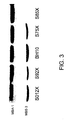
- the monoclonal antibody MBA-1 bound all the denatured p17 BH10, S75X, S85X, S92X and S012X proteins with the same affinity.
- MBS-3 bound the p17 BH10 protein and its variants S75X, S92X and S012X with different affinities; instead, the S85X variant was not recognized.
- the cytofluorimetric test was performed to verify the ability of two monoclonal antibodies, MBA-1 and MBS-3, to neutralize the binding of the p17 BH10, S75X, S85X, S92X and S012X proteins to the cellular receptor. All the assayed p17 proteins were able to bind p17 receptor expressed on all the Raji cells ( Figures 4a -e ). Adding MBA-1 antibody to the p17 proteins completely inhibited their ability of interacting with the cellular receptor. In contrast, MBS-3 monoclonal antibody blocked completely the interaction between the proteins p17 BH10 and S012X and partially between the proteins S75X and S92X and p17 receptor expressed on the Raji cells. The same antibody was not able to block the interaction between the S85X variant and p17 cellular receptor ( Figures 4a - e ).
Landscapes
- Life Sciences & Earth Sciences (AREA)
- Health & Medical Sciences (AREA)
- Chemical & Material Sciences (AREA)
- Virology (AREA)
- Organic Chemistry (AREA)
- General Health & Medical Sciences (AREA)
- Medicinal Chemistry (AREA)
- Molecular Biology (AREA)
- Biophysics (AREA)
- Biochemistry (AREA)
- Immunology (AREA)
- Genetics & Genomics (AREA)
- Proteomics, Peptides & Aminoacids (AREA)
- Oncology (AREA)
- Chemical Kinetics & Catalysis (AREA)
- Animal Behavior & Ethology (AREA)
- Nuclear Medicine, Radiotherapy & Molecular Imaging (AREA)
- Public Health (AREA)
- Veterinary Medicine (AREA)
- General Chemical & Material Sciences (AREA)
- Pharmacology & Pharmacy (AREA)
- Communicable Diseases (AREA)
- Tropical Medicine & Parasitology (AREA)
- AIDS & HIV (AREA)
- Peptides Or Proteins (AREA)
- Preparation Of Compounds By Using Micro-Organisms (AREA)
- Medicines Containing Antibodies Or Antigens For Use As Internal Diagnostic Agents (AREA)
- Micro-Organisms Or Cultivation Processes Thereof (AREA)
Description
- The present invention relates to a monoclonal antibody directed against HIV p 17 protein, the said antibody being capable of neutralizing the binding between the p 17 protein and the p 17 protein receptor (p17R) expressed on the surface of immunocompetent cells.
- p17 protein is known to play an important role in the pathogenesis of AIDS.
- p17 is also known to represent the target of neutralizing antibodies directed against HTV-1 and high levels of anti-p17 antibodies are correlated with a slower progression towards AIDS. In addition to its support role in the virus replication, p17 exhibits several immunomodulating properties that could be significant within the context of the viral pathogenesis. p17 was indeed proven to increase the in vitro replication of HIV-1 and affects the activation and differentiation state, in addition to the proliferation ability, of the cells that constitute the target of the virus, such as CD4+ T lymphocytes, NK cells, monocytes, plasmacytoid dendritic cells. The ability of p17 to disrupt the physiological function of various cells of the immune system and to increase the production of pro-inflammatory molecules is very likely a mechanism exploited by the virus to escape the immune response and, at the same time, to create an environment that is more suitable for virus infection and replication. Recently, p17 was also observed to be exported outside the infected cells and it can be detected in the serum of HIV-1-infected patients, remaining in the lymph nodes, also in patients successfully treated with antiretrovirals and thus in the absence of virus replication. Such findings lead to believe that the mechanism of action observed in vitro is also possible in vivo.
- Moreover, in previous studies the present inventors demonstrated that p17 protein exerts its biological activity directly by interacting with a specific receptor (p17R) expressed on the surface of several immunocompetent cells. The present inventors also identified an epitope in the N-terminal region of p17 that is involved in the binding with the receptor. The amino acid sequence of such epitope was identified and used for designing a synthetic peptide of 20 amino acids in length, designated as AT20, exemplary of the functional region of p 17 from the HIV-1 BH10 isolate (HTV-1B subtype). The synthetic peptide AT20 coupled with the Keyhole Limpet Hemocyanin (KLH) protein results in the generation of anti-p17 neutralizing antibodies capable of blocking the interaction p17/p17R and, accordingly, its biological activity.
- In a subsequent study, the present inventors have also demonstrated that immunization of animals with the full-length p17 BH10 protein or with the synthetic peptide AT20-KLH causes the production of neutralizing sera capable of inhibiting the binding to p17R not only of the p17 BH10 protein but also of a series of African variants of such protein, identified as S75X, S85X, S92X and S012X, respectively (Fiorentini et al., Vaccine 26 (2008) 4758-4765). However, polyclonal antibodies exhibit several drawbacks. First of all, whenever it is desired to produce a polyclonal antibody it is necessary to resort to the immunization of animals. Secondly, the polyclonal antibodies produced at each immunization must be characterized and verified both for their binding and neutralizing properties and for their safety features.
- Such drawbacks have now been overcome thanks to the anti-p17 monoclonal antibody as defined in the claims that follow, the contents of which are an integral part of the technical teachings of the present specification.
- The anti-p17 monoclonal antibody subject of the present invention, designated below as "MBA1 antibody'', exhibits unexpected properties, as - even though it is a monoclonal - it is endowed with a broad-range neutralizing activity similar to a polyclonal, but on the other hand it does not recognize the neutralizing AT20 epitope recognized instead by the neutralizing sera described in the above-mentioned Fiorentini et al., 2008 reference and by an anti-p17 neutralizing monoclonal previously described and designated as MBS3 (De Francesco et al. Proc Natl Acad Sci USA. 2002 Jul 23;99(15):9972-7;
WO2003/016337 ). - A comparison between the binding and neutralizing properties of the prior art MBS3 antibody and the MBA1 antibody of the present invention is shown in the following experimental section. In particular, a broader range neutralizing activity of the MBA1 antibody of the invention is observed compared to the prior art MBS3 antibody.
- Due to its binding and binding neutralization abilities between multiple variants of the HIV-1 p17 protein and the p17R receptor, the MBA1 monoclonal antibody of the invention is particularly suitable to be used as a medicament for the therapeutic treatment of a pathology related to the human immunodeficiency virus. The expression "related to the human immunodeficiency virus" means that the pathology is directly or indirectly caused by said virus. Preferably, the pathology related to the human immunodeficiency virus is selected from the group consisting of acquired immunodeficiency syndrome (AIDS), dementia and lymphoma.
- The monoclonal antibody of the invention may be administered in any pharmaceutically acceptable way. For instance, the antibody may be administered by parenteral route, preferably by intravenous injection or slow infusion. Other contemplated administration routes are, for example, the oral, nasal, ophthalmic, rectal or topical routes. Thus, the monoclonal antibody of the invention may be formulated into any suitable dosage form for the intended administration route. In addition to the antibody, which plays the role of the active ingredient, a dosage form includes pharmaceutically acceptable excipients and/or carriers suitable for the intended administration route. The selection of the administration route, the dosage form and the pharmaceutically acceptable carriers and/or excipients are well within the skills of a person of skill in the art. In a particularly preferred embodiment, the monoclonal antibody of the invention is administered by injection. In such a case, the antibody is administered at a dosage within the range from about 0.1 mg/kg to about 100 mg/kg. If the antibody is administered by slow infusion, an infusion period of about 30 minutes to 2 hours may be used for example. The administration is preferably repeated on a monthly, two-monthly or higher basis, for both acute and chronic and intermittent treatments.
- A procedure for the manufacture of the MBA1 monoclonal antibody subject of the invention is described in the experimental section below. Further, the studies carried out by the inventors in order to detect the binding and neutralizing properties thereof are reported. The following experimental section is solely provided by way of illustration and non limitation of the scope of the invention as defined in the appended claims.
- 9-week female Balb/c mice were immunized with 25µg/mouse of the p17 BH10 protein emulsified in Freund's complete adjuvant for the first injection and in Freund's incomplete adjuvant for the last three. The immunizations were performed by intra-peritoneal route at an interval of 7 days. Three days after the last inoculation an intra-caudal immunization was carried out.
- The spleen was removed aseptically from each mouse for the recovery of the splenocytes, thus in order to proceed with the fusion to myelomatous cells (NSO), which are genetically deprived of the hypoxanthine-guanine-phosphoribosyltransferase enzyme (HGPRT). The cell suspension mix so formed was slowly and gently mixed with polyethylene glycol for a few minutes and then transferred into a culture medium containing hypoxanthine, aminopterin and thymidine (HAT medium) in 96-well plates incubated at 37°C in 5% CO2. The day of the fusion was considered as
day 0; the first clones were detected after about three days and the first hybridoma colonies appeared about 15 days after the fusion. The supernatants were then screened in order to assess the possible presence of the antigen-specific antibody. The screening was performed by the ELISA technique. The positive hybridoma colony was collected and cloned into appropriate 96-well plates for the selection of hybridomas that were producing the antibody and for the isolation of a cell line derived from a single clone, thereby obtaining the MBA1 monoclonal antibody capable of reacting against the p17 BH10 protein and the African variants thereof (see below). - HIV-1 genome RNA was isolated from the plasma of Uganda patients by using the viral RNA extraction kit (Qiagen, Milan, Italy). The extract was then retro-transcribed by using the MULV retrotranscriptase (Applera, Monza, Italy) and the resulting cDNA was used as the template to perform a high-fidelity PCR by using Pfu DNA Polymerase. The following primers were used for amplifying partial HIV-1 genome sequences comprising the p 17 BH10 gene: UGF1 (5'- GTG CCC GTC TGT TGT GTG A-3', SEQ ID NO:1) and UGR1 (5'-AAT CTT GTG GGG TGG CTC CTT 3', SEQ ID NO:2) for the first step and UGF2 (5'-ACA GGG ACC TGA AAG CGA AAG-3', SEQ ID NO:3) and UGR1 for the second step. The PCR products were purified (Strataprep PCR purification Kit; Stratagene, La Jolla, CA, United States of America) and inserted into the SrfI-digested pPCR-Script Amp SK(+) cloning vector (Stratagene). Thereafter, both the nucleotide sequences and the orientation of the inserts were verified (CRIBI BMR Genomics Sequence Facility, Padua, Italy). The previously cloned p17 BH10 fragments were further amplified by PCR using the following primers: UGp17For (5'-TAA GGA TCC ATG GGT GCG AGA GCG TCA-3', SEQ ID NO:4) and UGp17Rev (5'-CGG GAA TTC TCA GTA ATT TTG GCT GAC C-3', SEQ ID NO: 5) containing the restriction sites BamHI and EcoRI, respectively. The amplified DNA fragment was ligated into the prokaryotic pGEX-4T expression vector (GE Healthcare, Piscataway, NJ, United States of America) in a 10:1 ratio (insert:vector) at 16°C for 3 hours. The four cloned products, designated as S75X, S85X, S92X and S012X, respectively, were subsequently transformed in E. coli BL21 (DE3) cells (Stratagene). The nucleotide sequences thereof were confirmed and the products were expressed by induction with isopropyl-β-D-1-thiogalactopyranoside (IPTG) and purified by glutathione-sepharose 4B beads (GE Healthcare). The S75X, S85X, S92X and S012X and GST proteins were further purified (>98%) by reversed-phase high performance liquid chromatography (HPLC). The absence of contamination with endotoxin in the protein preparations was assessed by the LAL (Limulus amoebocyte lysate) technique (BioWhittaker, Walkersville, ME). Finally, the proteins were biotinylated with biotin-AH-N-hydroxysuccinimide (biotin-AH-NHS, BioSPA, Milan, Italy) for the use thereof in a cytofluorimetric neutralization test.
- The ELISA test was carried out to select hybridomas and clones secreting the antibody capable of recognizing the p17 BH10 protein and the African variants thereof (S75X, S85X, S92X and S012X).
- Each well of a 96-well plate was incubated with 1µg/ml of p17 BH10, S75X, S85X, S92X and S012X in a volume of 100 µl PBS, pH 7.2, per well at room temperature overnight. The following day, after several washes in washing buffer (PBS/Tween 20 0.1 %), the wells were blocked with 200 µl PBS/
BSA 3% per well for 1 hour at 37°C and subsequently incubated with the cell supernatants to be tested for 1 hour at 37°C. After 4 washes, a goat secondary anti-mouse antibody labeled with HRP enzyme (Thermo Scientific, Waltham, MA) was added, which allowed for the development thereof by acting on the OPD substrate (Sigma-Aldrich, St Louis, MO). The reading of the optical density was performed by using an automated reader at a wavelength of 492 nm. - For a more detailed confirmation of the antibody specificity against the p17 BH10 protein and the African variants thereof, the supernatant of the selected hybridoma was tested by the Western Blot technique, which allows to verify the binding of the antibody to the denatured protein. First of all, the proteins were subjected to a high temperature, for the denaturation thereof, and to a SDS-PAGE electrophoresis. The latter technique allows the denatured proteins to run in a polyacrylamide gel according to their size, to then be transferred onto a nitrocellulose membrane by the action of an electric field. To reveal the bands corresponding to the proteins, the membrane was stained with Ponceau Red and left to dry. Subsequently, it was subjected to an immunohistochemical assay, by which, after blocking of the specific sites with PBS/BSA 5% and incubation with the sample, it was possible to assess the binding of the MBA1 monoclonal antibody to the proteins (p 17 BH10 and African variants thereof) after incubation with a horseradish peroxidase (HRP)-labeled goat secondary anti-mouse antibody and development with the DAB compound (Sigma-Aldrich, St Louis, MO).
- The Isostrip Monoclonal Antibody Isotyping Kit (Saint-Cruz Biotechn) was used to determine the isotype that characterizes the produced and selected MBA1 monoclonal antibody.
- The obtained monoclonal antibody was also subjected to an optimized neutralization test to verify its ability to block the interaction between p17 proteins (BH10 and African variants thereof) and p17R receptor. To this end, the Raji cell line, a neoplastic B lymphocyte line expressing the surface receptor that binds the p17 protein (p17R), was used. Firstly, the antibody was incubated with the p17 BH10 protein or the biotinylated African variants thereof, to allow for the formation of the antigen-antibody complex, and then the Raji cells were added with an incubation for 30' at 4°C. After several washes, a further incubation with streptavidin was carried out to detect, by cytofluorimetric analysis, the possible presence of the protein bound to the p17R surface receptor, not neutralized by the monoclonal antibody.
- The cellular RNA was isolated from the clone secreting the MBA1 monoclonal antibody by using the RNA extraction kit (Qiagen, Milan, Italy). The extract was subjected to retro-transcription by using the High Capacity cDNA Archive Kit (Applied Biosystem) and the resulting cDNA was used as a template to amplify, by PCR, partial sequences encoding the light (Vk) and heavy (Vh) chain variable regions of the monoclonal antibody. The following primers were used to amplify these specific areas: Vk 5' sense: 5'- CAGATCA-GATCTCGTGATGACCCAG -3', SEQ ID NO:6; 3' Vk antisense: 5'-agcccgtttgagctccagcttgg-3', SEQ ID NO:7; MuG102, Fd 5' sense: 5'-TGTCCACCTCGAGGTCCAGCTGCAGCAGTCTGG-3', SEQ ID NO:8; 3' Vh antisense: 5'-gagactgtcaccggtgtgccttgg-3', SEQ ID NO:9.
- The PCR products were cloned into the pGEM-T cloning vector (Promega) by exploiting the "T/A Cloning" method, after which the clones containing the insert were sequenced and analyzed.
- The light and heavy chain variable regions of the previously isolated murine Ig gene were then subcloned, after digestion with restriction enzymes (Bgl II and Sac I for Vk; Xho I and Sgr AI for Vh), into expression vector constructs, designated as L122S and L126S, respectively (Fiorentini S et al., Scand J Immunol 55, 284-292, 2002).
- The generated monoclonal antibody, designated as MBA1, resulted very interesting as to several biochemical-molecular features. The results obtained by the immunoenzymatic ELISA and Western Blot tests demonstrate that MBA1 recognizes the p17 BH10, S75X, S85X, S92X and S012X proteins both in the tertiary conformation and the linear structure. Moreover, this antibody was shown not to recognize the AT20 epitope.
-
Figure 1 shows the binding reactivity of the MBA1 antibody towards the different matrix proteins. The diagram shows that the MBA1 monoclonal antibody recognizes and binds the proteins of interest, unlike the non-related protein. These results were also confirmed by Western Blot. The MBA monoclonal antibody was actually shown to bind the p 17 BH10 protein and the African variants thereof even in the denatured form. - The inventors also identified the antibody isotype of the MBA monoclonal antibody, which was shown to be an IgG1/k-chain isotype immunoglobulin.
- A further test was carried out to assess the neutralizing binding ability of the monoclonal antibody of the invention towards the p17 BH10, S75X, S85X, S92X and S012X proteins. By the cytofluorimetric analysis performed on Raji cells, characterized by the presence of p17R on the surface thereof, incubated with the protein complexed to the antibody under examination, it can be noted that none of the cells bind the biotinylated p17 protein or the African variants thereof, as the presence of the monoclonal antibody interferes in a restrictive way, by blocking the interaction p17-p17R (
Figure 2 ). The inventors verified if the interaction between p17 and its receptor was altered in the presence of another antibody with the same features as the Mab MBA1: in fact, the MBA 15 monoclonal antibody selected for this comparison is an IgG1 k-chain immunoglobulin and, as MBA1, it recognizes the different p17 proteins both by ELISA and Western Blot, even if at a different epitope. However, unlike the antibody under examination, MBA 15, asFigure 2 shows, does not alter the interaction between the assayed proteins and their receptor. In fact, the histograms depicted inFigure 2 show that the p17 BH10 protein and the African variants thereof are able to bind the specific receptor expressed on all of the analyzed Raji cells. - Finally, the inventors carried out a study on the nucleotide sequences encoding the heavy (Vh) and light (Vk) chain variable regions of the MBA1 monoclonal antibody under examination, in order to chimerize the antibody itself. The Vh and Vk variable regions, isolated with specific primers, were inserted into two different expression vector constructs comprising the remaining human antibody regions, in order to finally assemble a chimeric antibody in a single final expression vector. The nucleotide sequences of the heavy chain and light chain variable regions of the MBA1 monoclonal antibody are designated as SEQ ID NO: 10 and SEQ ID NO:11, respectively, in the sequence listing.
- Obviously, any monoclonal antibody comprising a heavy chain variable region comprising the amino acid sequence obtainable from the nucleotide sequence SEQ ID NO: 10 and a light chain variable region comprising the amino acid sequence obtainable from the nucleotide sequence SEQ ID NO: 11 falls within the scope of the invention. By virtue of the degeneration of the genetic code, that is the fact that one amino acid may be encoded by several nucleotide triplets, the expression "obtainable from" means that the above-mentioned nucleotide sequences SEQ ID NO:10 and 11 do not have a restrictive meaning.
- As an alternative to chimerization, the MBA1 monoclonal antibody of the invention may be manufactured in a humanized form, by conventional techniques well known to the person of skill in the art and therefore do not need further description.
- The monoclonal antibodies MBA-1 (invention) and MBS-3 (prior art), directed against p17 protein, were tested by the Western Blot technique, which allows to verify the binding of the antibody to the denatured and thus linear protein.
- At first, the p17 BH10 proteins and the African mutants thereof (S92X, S85X, S75X and S012X) were denatured and subjected to an electrical field according to the SDS-PAGE electrophoresis technique. After the electrophoretic run on a polyacrylamide gel, the proteins were transferred on two different nitrocellulose membranes. To reveal the bands corresponding to the proteins and thereby verify the transfer thereof, the membranes were stained with Ponceau Red and left to dry. The immunohistochemical assay was then carried out, by which, after blocking of the specific sites with PBS/BSA 5% and incubation of the two membranes, each with one of the two monoclonal antibodies to be tested (MBA-1 and MBS-3), it was possible to assess the binding of the antibodies to the proteins (p17 BH10 and African variants thereof) after incubation with a HRP-labeled goat secondary anti-mouse antibody and development on an X-ray film (chemiluminescence).
- Monoclonal antibodies MBA-1 and MBS-3 were also subjected to an optimized neutralization test to verify their ability to block the interaction between the p17 BH10 proteins and African variants and their cellular receptor (p17R).
- Raji cells, a neoplastic B lymphocyte line expressing the surface receptor that binds the p17 protein (p17R), were used.
- Each antibody was incubated with the p17 BH10 protein or the biotinylated African variants thereof, in order to allow for the possible formation of the antigen-antibody complex, which was then incubated with the Raji cells for 30 minutes at 4°C. After several washes, a further incubation with streptavidin was carried out to detect, by cytofluorimetric analysis, the possible presence of the protein bound to the surface receptor, not neutralized by the monoclonal antibody.
- The immunoenzymatic test, to which the monoclonal antibodies under examination (MBA-1 and MBS-3) were subjected, showed the attainment of different results for the two antibodies.
- As shown in
Figure 3 , with the Western Blot technique, the monoclonal antibody MBA-1 bound all the denatured p17 BH10, S75X, S85X, S92X and S012X proteins with the same affinity. In contrast, MBS-3 bound the p17 BH10 protein and its variants S75X, S92X and S012X with different affinities; instead, the S85X variant was not recognized. - The cytofluorimetric test was performed to verify the ability of two monoclonal antibodies, MBA-1 and MBS-3, to neutralize the binding of the p17 BH10, S75X, S85X, S92X and S012X proteins to the cellular receptor. All the assayed p17 proteins were able to bind p17 receptor expressed on all the Raji cells (
Figures 4a -e ). Adding MBA-1 antibody to the p17 proteins completely inhibited their ability of interacting with the cellular receptor. In contrast, MBS-3 monoclonal antibody blocked completely the interaction between the proteins p17 BH10 and S012X and partially between the proteins S75X and S92X and p17 receptor expressed on the Raji cells. The same antibody was not able to block the interaction between the S85X variant and p17 cellular receptor (Figures 4a - e ). -
- <110> MEDESTEA RESEARCH & PRODUCTION S.P.A.
- <120> Monoclonal antibody directed against the p17 protein of HIV, capable of neutralising the binding of p17 to the p17 receptor (p17R)
- <130> PC1044-EC
- <160> 11
- <170> PatentIn version 3.3
- <210> 1
<211> 18
<212> DNA
<213> artificial - <220>
<223> UGF1 primer - <400> 1
gtgcccgtct gttgtgtg 18 - <210> 2
<211> 21
<212> DNA
<213> artificial - <220>
<223> UGR1 primer - <400> 2
aatcttgtgg ggtggctcct t 21 - <210> 3
<211> 21
<212> DNA
<213> artificial - <220>
<223> UGF2 primer - <400> 3
acagggacct gaaagcgaaa g 21 - <210> 4
<211> 27
<212> DNA
<213> artificial - <220>
<223> UGp17For primer - <400> 4
taaggatcca tgggtgcgag agcgtca 27 - <210> 5
<211> 28
<212> DNA
<213> artificial - <220>
<223> UGp17Rev primer - <400> 5
cgggaattct cagtaatttt ggctgacc 28 - <210> 6
<211> 25
<212> DNA
<213> artificial - <220>
<223> Vk 5' sense primer - <400> 6
cagatcagat ctcgtgatga cccag 25 - <210> 7
<211> 23
<212> DNA
<213> artificial - <220>
<223> 3' Vk antisense primer - <400> 7
agcccgtttg agctccagct tgg 23 - <210> 8
<211> 33
<212> DNA
<213> artificial - <220>
<223> MuG102, Fd 5' sense primer - <400> 8
tgtccacctc gaggtccagc tgcagcagtc tgg 33 - <210> 9
<211> 24
<212> DNA
<213> artificial - <220>
<223> 3' Vh antisense primer - <400> 9
gagactgtca ccggtgtgcc ttgg 24 - <210> 10
<211> 351
<212> DNA
<213> SCID mouse - <400> 10


- <210> 11
<211> 337
<212> DNA
<213> SCID mouse - <400> 11

Claims (15)
- A monoclonal antibody against p17 of the human immunodeficiency virus HIV-1, or a functional fragment thereof, capable of neutralizing the binding between the p17 protein and the p17 receptor, comprising at least a heavy chain variable region and a light chain variable region, the heavy chain variable region comprising the amino acid sequence obtainable by the nucleic acid sequence SEQ ID NO: 10 and the light chain variable region comprising the amino acid sequence obtainable by the nucleic acid sequence SEQ ID NO: 11.
- The monoclonal antibody according to claim 1, which is a whole immunoglobulin (Ig).
- The monoclonal antibody according to claim 2, which is an immunoglobulin of the IgG class.
- The monoclonal antibody according to claim 3, which is an immunoglobulin of the isotype IgGI/k-chain.
- The monoclonal antibody according to claim 1, which is a Fab fragment.
- The monoclonal antibody according to any of claims 1 to 5, which is a chimeric antibody.
- The monoclonal antibody according to any of claims 1 to 5, which is a humanized antibody.
- The monoclonal antibody according to any of claims 1 to 7, or a functional fragment thereof, for use as a medicament.
- The monoclonal antibody according to claim 8, or a functional fragment thereof, for use as a medicament for the therapeutic treatment of a disease related to the human immunodeficiency virus (HIV).
- The monoclonal antibody according to the use of claim 9, or a functional fragment thereof,
wherein the disease related to the human immunodeficiency virus is selected from the group consisting of acquired immune deficiency syndrome (AIDS), dementia and lymphoma. - A pharmaceutical composition for the treatment of a disease related to the human immunodeficiency virus (HIV), comprising a therapeutically effective amount of a monoclonal antibody according to any of claims 1 to 7, or a functional fragment thereof, in combination with one or more pharmaceutically acceptable excipients.
- An isolated nucleic acid sequence coding for a monoclonal antibody according to any of claims 1 to 7, or a functional fragment thereof.
- The isolated nucleic acid sequence according to claim 12, comprising the nucleic acid sequence SEQ ID NO: 10 and/or the nucleic acid sequence SEQ ID NO: 11.
- A recombinant expression vector comprising the nucleic acid sequence according to claim 12 or claim 13.
- A host cell transformed with a recombinant expression vector according to claim 14.
Applications Claiming Priority (2)
| Application Number | Priority Date | Filing Date | Title |
|---|---|---|---|
| ITTO2010A000257A IT1401359B1 (en) | 2010-03-31 | 2010-03-31 | MONOCLONAL ANTIBODY DIRECTED AGAINST P17 HIV PROTEIN, ACTING TO NEUTRALIZE THE BOND BETWEEN PROTEIN P17 AND PROTEIN P17 RECEPTOR (P17R) |
| PCT/IB2011/051363 WO2011121556A2 (en) | 2010-03-31 | 2011-03-30 | Monoclonal antibody directed against the p17 protein of hiv, capable of neutralising the binding of p17 to the p17 receptor (p17r) |
Publications (2)
| Publication Number | Publication Date |
|---|---|
| EP2552958A2 EP2552958A2 (en) | 2013-02-06 |
| EP2552958B1 true EP2552958B1 (en) | 2016-11-02 |
Family
ID=42938370
Family Applications (1)
| Application Number | Title | Priority Date | Filing Date |
|---|---|---|---|
| EP11728944.7A Not-in-force EP2552958B1 (en) | 2010-03-31 | 2011-03-30 | Monoclonal antibody directed against the p17 protein of hiv, capable of neutralising the binding of p17 to the p17 receptor (p17r) |
Country Status (11)
| Country | Link |
|---|---|
| US (1) | US9090675B2 (en) |
| EP (1) | EP2552958B1 (en) |
| CN (1) | CN102844330B (en) |
| AP (1) | AP4074A (en) |
| BR (1) | BR112012024634A2 (en) |
| CA (1) | CA2793688A1 (en) |
| IT (1) | IT1401359B1 (en) |
| MX (1) | MX2012011258A (en) |
| RU (1) | RU2012146085A (en) |
| WO (1) | WO2011121556A2 (en) |
| ZA (1) | ZA201208156B (en) |
Families Citing this family (1)
| Publication number | Priority date | Publication date | Assignee | Title |
|---|---|---|---|---|
| WO2020160418A1 (en) * | 2019-01-31 | 2020-08-06 | Board Of Regents Of The University Of Nebraska | Virus-like particles and methods of use thereof |
Family Cites Families (1)
| Publication number | Priority date | Publication date | Assignee | Title |
|---|---|---|---|---|
| DE60237373D1 (en) * | 2001-08-07 | 2010-09-30 | Medestea Internaz S R L | ISOLATED POLYPEPTIDES BASED ON THE NEUTRALIZING EPITOPS OF P17 PROTEIN OF HIV SUITABLE AS VACCINES AND NEUTRALIZING ANTI-P17 ANTIBODIES SPECIFICALLY RECOGNIZING SPECIFIC EPITOP |
-
2010
- 2010-03-31 IT ITTO2010A000257A patent/IT1401359B1/en active
-
2011
- 2011-03-30 CN CN201180017975.XA patent/CN102844330B/en not_active Expired - Fee Related
- 2011-03-30 WO PCT/IB2011/051363 patent/WO2011121556A2/en not_active Ceased
- 2011-03-30 MX MX2012011258A patent/MX2012011258A/en not_active Application Discontinuation
- 2011-03-30 US US13/637,997 patent/US9090675B2/en not_active Expired - Fee Related
- 2011-03-30 BR BR112012024634A patent/BR112012024634A2/en not_active IP Right Cessation
- 2011-03-30 EP EP11728944.7A patent/EP2552958B1/en not_active Not-in-force
- 2011-03-30 RU RU2012146085/10A patent/RU2012146085A/en not_active Application Discontinuation
- 2011-03-30 CA CA2793688A patent/CA2793688A1/en not_active Abandoned
- 2011-03-30 AP AP2012006520A patent/AP4074A/en active
-
2012
- 2012-10-30 ZA ZA2012/08156A patent/ZA201208156B/en unknown
Also Published As
| Publication number | Publication date |
|---|---|
| AP2012006520A0 (en) | 2012-10-31 |
| AP4074A (en) | 2017-03-19 |
| ITTO20100257A1 (en) | 2011-10-01 |
| ZA201208156B (en) | 2014-01-29 |
| WO2011121556A2 (en) | 2011-10-06 |
| RU2012146085A (en) | 2014-05-10 |
| US20130028908A1 (en) | 2013-01-31 |
| EP2552958A2 (en) | 2013-02-06 |
| CA2793688A1 (en) | 2011-10-06 |
| CN102844330A (en) | 2012-12-26 |
| US9090675B2 (en) | 2015-07-28 |
| CN102844330B (en) | 2014-09-10 |
| WO2011121556A3 (en) | 2011-12-01 |
| BR112012024634A2 (en) | 2016-12-06 |
| IT1401359B1 (en) | 2013-07-18 |
| MX2012011258A (en) | 2013-01-18 |
Similar Documents
| Publication | Publication Date | Title |
|---|---|---|
| TWI803523B (en) | Tigit antibody, antigen-binding fragments and pharmaceutical use thereof | |
| RU2757813C2 (en) | Antibody against lag-3, its antigen-binding fragment and their pharmaceutical application | |
| US10730947B2 (en) | Bispecific molecules that are immunoreactive with immune effector cells that express an activating receptor and an antigen expressed by a cell infected by a virus and uses thereof | |
| TWI758558B (en) | Cd96 antibody, antigen-binding fragment and pharmaceutical uses thereof | |
| CN111333723B (en) | Monoclonal antibody aiming at rabies virus G protein and application thereof | |
| CN108026178B (en) | A kind of C5aR antibody and its preparation method and application | |
| CN108610416A (en) | Dengue fever virus neutralizing antibody and application thereof | |
| JP7145895B2 (en) | recombinant bispecific antibody | |
| US20250368722A1 (en) | Multispecific antibodies targeting multiple epitopes on the hiv-1 envelope | |
| CN119019558A (en) | Anti-PD-L1 Nanobody | |
| CN118184774A (en) | Fully human antibodies for neutralizing SARS-CoV-2 and its variants and their applications | |
| CN113980125B (en) | Neutralizing monoclonal antibody for resisting SFTSV and application thereof | |
| JP2014526886A (en) | Antibodies cross-reactive with macrophage migration inhibitory factor (MIF) and D-dopachrome tomerase (D-DT) | |
| WO1999022008A1 (en) | Inducer for production of antigen-specific antibody, expression vector containing gene therefor, and method of inducing production of antigen-specific antibody | |
| US9090675B2 (en) | Monoclonal antibodies directed against the human immunodeficiency virus type 1 (hiv-1) P17 matrix (ma) protein | |
| CN113817052A (en) | Anti SARS-CoV-2 nucleocapsid protein monoclonal antibody and its preparation method and use | |
| CN116731164A (en) | Monoclonal antibody against coxsackievirus B1 and application thereof | |
| CN101222937A (en) | Antibodies or fragments thereof having neutralizing activity not against IL-2 but against HIV | |
| CZ285194A3 (en) | Monoclonal antibodies and their use | |
| RU2769223C1 (en) | Means and method for therapy and emergency prevention of diseases caused by the sars-cov-2 virus based on a recombinant antibody and a humanized monoclonal antibody | |
| RU2765731C1 (en) | Humanized monoclonal antibody specifically binding to rbd s of the protein of the sars-cov-2 virus, agent and method for therapy and emergency prevention of diseases caused by sars-cov-2 virus | |
| CN119119268A (en) | PVRIG antibody and its preparation method and application | |
| CN117285621A (en) | Antigen-binding proteins targeting SARS-COV-2 S protein and their applications | |
| WO2022191162A1 (en) | Anti-ace2 monoclonal antibody | |
| TW202442687A (en) | Monospecific and bispecific antibodies against C-MET |
Legal Events
| Date | Code | Title | Description |
|---|---|---|---|
| PUAI | Public reference made under article 153(3) epc to a published international application that has entered the european phase |
Free format text: ORIGINAL CODE: 0009012 |
|
| 17P | Request for examination filed |
Effective date: 20121018 |
|
| AK | Designated contracting states |
Kind code of ref document: A2 Designated state(s): AL AT BE BG CH CY CZ DE DK EE ES FI FR GB GR HR HU IE IS IT LI LT LU LV MC MK MT NL NO PL PT RO RS SE SI SK SM TR |
|
| DAX | Request for extension of the european patent (deleted) | ||
| 17Q | First examination report despatched |
Effective date: 20140513 |
|
| GRAP | Despatch of communication of intention to grant a patent |
Free format text: ORIGINAL CODE: EPIDOSNIGR1 |
|
| INTG | Intention to grant announced |
Effective date: 20151116 |
|
| GRAS | Grant fee paid |
Free format text: ORIGINAL CODE: EPIDOSNIGR3 |
|
| RAP1 | Party data changed (applicant data changed or rights of an application transferred) |
Owner name: MEDESTEA RESEARCH & PRODUCTION S.P.A. |
|
| GRAA | (expected) grant |
Free format text: ORIGINAL CODE: 0009210 |
|
| RAP1 | Party data changed (applicant data changed or rights of an application transferred) |
Owner name: MEDESTEA RESEARCH & PRODUCTION S.P.A. |
|
| AK | Designated contracting states |
Kind code of ref document: B1 Designated state(s): AL AT BE BG CH CY CZ DE DK EE ES FI FR GB GR HR HU IE IS IT LI LT LU LV MC MK MT NL NO PL PT RO RS SE SI SK SM TR |
|
| REG | Reference to a national code |
Ref country code: GB Ref legal event code: FG4D |
|
| REG | Reference to a national code |
Ref country code: AT Ref legal event code: REF Ref document number: 841778 Country of ref document: AT Kind code of ref document: T Effective date: 20161115 Ref country code: CH Ref legal event code: EP |
|
| REG | Reference to a national code |
Ref country code: IE Ref legal event code: FG4D |
|
| REG | Reference to a national code |
Ref country code: DE Ref legal event code: R096 Ref document number: 602011031907 Country of ref document: DE |
|
| REG | Reference to a national code |
Ref country code: CH Ref legal event code: NV Representative=s name: JACOBACCI AND PARTNERS SA, CH |
|
| PG25 | Lapsed in a contracting state [announced via postgrant information from national office to epo] |
Ref country code: LV Free format text: LAPSE BECAUSE OF FAILURE TO SUBMIT A TRANSLATION OF THE DESCRIPTION OR TO PAY THE FEE WITHIN THE PRESCRIBED TIME-LIMIT Effective date: 20161102 |
|
| REG | Reference to a national code |
Ref country code: NL Ref legal event code: MP Effective date: 20161102 |
|
| REG | Reference to a national code |
Ref country code: LT Ref legal event code: MG4D |
|
| REG | Reference to a national code |
Ref country code: AT Ref legal event code: MK05 Ref document number: 841778 Country of ref document: AT Kind code of ref document: T Effective date: 20161102 |
|
| PG25 | Lapsed in a contracting state [announced via postgrant information from national office to epo] |
Ref country code: SE Free format text: LAPSE BECAUSE OF FAILURE TO SUBMIT A TRANSLATION OF THE DESCRIPTION OR TO PAY THE FEE WITHIN THE PRESCRIBED TIME-LIMIT Effective date: 20161102 Ref country code: LT Free format text: LAPSE BECAUSE OF FAILURE TO SUBMIT A TRANSLATION OF THE DESCRIPTION OR TO PAY THE FEE WITHIN THE PRESCRIBED TIME-LIMIT Effective date: 20161102 Ref country code: NO Free format text: LAPSE BECAUSE OF FAILURE TO SUBMIT A TRANSLATION OF THE DESCRIPTION OR TO PAY THE FEE WITHIN THE PRESCRIBED TIME-LIMIT Effective date: 20170202 Ref country code: NL Free format text: LAPSE BECAUSE OF FAILURE TO SUBMIT A TRANSLATION OF THE DESCRIPTION OR TO PAY THE FEE WITHIN THE PRESCRIBED TIME-LIMIT Effective date: 20161102 Ref country code: GR Free format text: LAPSE BECAUSE OF FAILURE TO SUBMIT A TRANSLATION OF THE DESCRIPTION OR TO PAY THE FEE WITHIN THE PRESCRIBED TIME-LIMIT Effective date: 20170203 |
|
| PG25 | Lapsed in a contracting state [announced via postgrant information from national office to epo] |
Ref country code: RS Free format text: LAPSE BECAUSE OF FAILURE TO SUBMIT A TRANSLATION OF THE DESCRIPTION OR TO PAY THE FEE WITHIN THE PRESCRIBED TIME-LIMIT Effective date: 20161102 Ref country code: HR Free format text: LAPSE BECAUSE OF FAILURE TO SUBMIT A TRANSLATION OF THE DESCRIPTION OR TO PAY THE FEE WITHIN THE PRESCRIBED TIME-LIMIT Effective date: 20161102 Ref country code: PL Free format text: LAPSE BECAUSE OF FAILURE TO SUBMIT A TRANSLATION OF THE DESCRIPTION OR TO PAY THE FEE WITHIN THE PRESCRIBED TIME-LIMIT Effective date: 20161102 Ref country code: ES Free format text: LAPSE BECAUSE OF FAILURE TO SUBMIT A TRANSLATION OF THE DESCRIPTION OR TO PAY THE FEE WITHIN THE PRESCRIBED TIME-LIMIT Effective date: 20161102 Ref country code: FI Free format text: LAPSE BECAUSE OF FAILURE TO SUBMIT A TRANSLATION OF THE DESCRIPTION OR TO PAY THE FEE WITHIN THE PRESCRIBED TIME-LIMIT Effective date: 20161102 Ref country code: IS Free format text: LAPSE BECAUSE OF FAILURE TO SUBMIT A TRANSLATION OF THE DESCRIPTION OR TO PAY THE FEE WITHIN THE PRESCRIBED TIME-LIMIT Effective date: 20170302 Ref country code: PT Free format text: LAPSE BECAUSE OF FAILURE TO SUBMIT A TRANSLATION OF THE DESCRIPTION OR TO PAY THE FEE WITHIN THE PRESCRIBED TIME-LIMIT Effective date: 20170302 Ref country code: AT Free format text: LAPSE BECAUSE OF FAILURE TO SUBMIT A TRANSLATION OF THE DESCRIPTION OR TO PAY THE FEE WITHIN THE PRESCRIBED TIME-LIMIT Effective date: 20161102 |
|
| PG25 | Lapsed in a contracting state [announced via postgrant information from national office to epo] |
Ref country code: DK Free format text: LAPSE BECAUSE OF FAILURE TO SUBMIT A TRANSLATION OF THE DESCRIPTION OR TO PAY THE FEE WITHIN THE PRESCRIBED TIME-LIMIT Effective date: 20161102 Ref country code: CZ Free format text: LAPSE BECAUSE OF FAILURE TO SUBMIT A TRANSLATION OF THE DESCRIPTION OR TO PAY THE FEE WITHIN THE PRESCRIBED TIME-LIMIT Effective date: 20161102 Ref country code: RO Free format text: LAPSE BECAUSE OF FAILURE TO SUBMIT A TRANSLATION OF THE DESCRIPTION OR TO PAY THE FEE WITHIN THE PRESCRIBED TIME-LIMIT Effective date: 20161102 Ref country code: EE Free format text: LAPSE BECAUSE OF FAILURE TO SUBMIT A TRANSLATION OF THE DESCRIPTION OR TO PAY THE FEE WITHIN THE PRESCRIBED TIME-LIMIT Effective date: 20161102 Ref country code: SK Free format text: LAPSE BECAUSE OF FAILURE TO SUBMIT A TRANSLATION OF THE DESCRIPTION OR TO PAY THE FEE WITHIN THE PRESCRIBED TIME-LIMIT Effective date: 20161102 |
|
| REG | Reference to a national code |
Ref country code: DE Ref legal event code: R097 Ref document number: 602011031907 Country of ref document: DE |
|
| PG25 | Lapsed in a contracting state [announced via postgrant information from national office to epo] |
Ref country code: BE Free format text: LAPSE BECAUSE OF FAILURE TO SUBMIT A TRANSLATION OF THE DESCRIPTION OR TO PAY THE FEE WITHIN THE PRESCRIBED TIME-LIMIT Effective date: 20161102 Ref country code: BG Free format text: LAPSE BECAUSE OF FAILURE TO SUBMIT A TRANSLATION OF THE DESCRIPTION OR TO PAY THE FEE WITHIN THE PRESCRIBED TIME-LIMIT Effective date: 20170202 Ref country code: SM Free format text: LAPSE BECAUSE OF FAILURE TO SUBMIT A TRANSLATION OF THE DESCRIPTION OR TO PAY THE FEE WITHIN THE PRESCRIBED TIME-LIMIT Effective date: 20161102 |
|
| PLBE | No opposition filed within time limit |
Free format text: ORIGINAL CODE: 0009261 |
|
| STAA | Information on the status of an ep patent application or granted ep patent |
Free format text: STATUS: NO OPPOSITION FILED WITHIN TIME LIMIT |
|
| REG | Reference to a national code |
Ref country code: FR Ref legal event code: PLFP Year of fee payment: 7 |
|
| 26N | No opposition filed |
Effective date: 20170803 |
|
| REG | Reference to a national code |
Ref country code: CH Ref legal event code: PL |
|
| REG | Reference to a national code |
Ref country code: CH Ref legal event code: AECN Free format text: DAS PATENT IST AUFGRUND DES WEITERBEHANDLUNGSANTRAGS VOM 03.11.2017 REAKTIVIERT WORDEN. |
|
| GBPC | Gb: european patent ceased through non-payment of renewal fee |
Effective date: 20170330 |
|
| PG25 | Lapsed in a contracting state [announced via postgrant information from national office to epo] |
Ref country code: SI Free format text: LAPSE BECAUSE OF FAILURE TO SUBMIT A TRANSLATION OF THE DESCRIPTION OR TO PAY THE FEE WITHIN THE PRESCRIBED TIME-LIMIT Effective date: 20161102 Ref country code: MC Free format text: LAPSE BECAUSE OF FAILURE TO SUBMIT A TRANSLATION OF THE DESCRIPTION OR TO PAY THE FEE WITHIN THE PRESCRIBED TIME-LIMIT Effective date: 20161102 |
|
| REG | Reference to a national code |
Ref country code: IE Ref legal event code: MM4A |
|
| REG | Reference to a national code |
Ref country code: GB Ref legal event code: S28 Free format text: APPLICATION FILED |
|
| PG25 | Lapsed in a contracting state [announced via postgrant information from national office to epo] |
Ref country code: LU Free format text: LAPSE BECAUSE OF NON-PAYMENT OF DUE FEES Effective date: 20170330 |
|
| PG25 | Lapsed in a contracting state [announced via postgrant information from national office to epo] |
Ref country code: IE Free format text: LAPSE BECAUSE OF NON-PAYMENT OF DUE FEES Effective date: 20170330 Ref country code: GB Free format text: LAPSE BECAUSE OF NON-PAYMENT OF DUE FEES Effective date: 20170330 |
|
| REG | Reference to a national code |
Ref country code: GB Ref legal event code: S28 Free format text: RESTORATION ALLOWED Effective date: 20180220 |
|
| REG | Reference to a national code |
Ref country code: IE Ref legal event code: NE4A |
|
| REG | Reference to a national code |
Ref country code: FR Ref legal event code: PLFP Year of fee payment: 8 |
|
| PG25 | Lapsed in a contracting state [announced via postgrant information from national office to epo] |
Ref country code: MT Free format text: LAPSE BECAUSE OF NON-PAYMENT OF DUE FEES Effective date: 20170330 |
|
| PG25 | Lapsed in a contracting state [announced via postgrant information from national office to epo] |
Ref country code: IE Free format text: LAPSE BECAUSE OF NON-PAYMENT OF DUE FEES Effective date: 20170330 |
|
| PGRI | Patent reinstated in contracting state [announced from national office to epo] |
Ref country code: IE Effective date: 20180724 |
|
| PGFP | Annual fee paid to national office [announced via postgrant information from national office to epo] |
Ref country code: RS Payment date: 20180928 Year of fee payment: 6 |
|
| PG25 | Lapsed in a contracting state [announced via postgrant information from national office to epo] |
Ref country code: HU Free format text: LAPSE BECAUSE OF FAILURE TO SUBMIT A TRANSLATION OF THE DESCRIPTION OR TO PAY THE FEE WITHIN THE PRESCRIBED TIME-LIMIT; INVALID AB INITIO Effective date: 20110330 |
|
| PGFP | Annual fee paid to national office [announced via postgrant information from national office to epo] |
Ref country code: IE Payment date: 20170331 Year of fee payment: 7 |
|
| PG25 | Lapsed in a contracting state [announced via postgrant information from national office to epo] |
Ref country code: CY Free format text: LAPSE BECAUSE OF NON-PAYMENT OF DUE FEES Effective date: 20161102 |
|
| REG | Reference to a national code |
Ref country code: CH Ref legal event code: PL |
|
| PG25 | Lapsed in a contracting state [announced via postgrant information from national office to epo] |
Ref country code: MK Free format text: LAPSE BECAUSE OF FAILURE TO SUBMIT A TRANSLATION OF THE DESCRIPTION OR TO PAY THE FEE WITHIN THE PRESCRIBED TIME-LIMIT Effective date: 20161102 |
|
| PGFP | Annual fee paid to national office [announced via postgrant information from national office to epo] |
Ref country code: GB Payment date: 20190930 Year of fee payment: 9 |
|
| PG25 | Lapsed in a contracting state [announced via postgrant information from national office to epo] |
Ref country code: CH Free format text: LAPSE BECAUSE OF NON-PAYMENT OF DUE FEES Effective date: 20190331 Ref country code: IE Free format text: LAPSE BECAUSE OF NON-PAYMENT OF DUE FEES Effective date: 20190330 Ref country code: LI Free format text: LAPSE BECAUSE OF NON-PAYMENT OF DUE FEES Effective date: 20190331 |
|
| PGFP | Annual fee paid to national office [announced via postgrant information from national office to epo] |
Ref country code: DE Payment date: 20190930 Year of fee payment: 9 |
|
| PGFP | Annual fee paid to national office [announced via postgrant information from national office to epo] |
Ref country code: IT Payment date: 20190930 Year of fee payment: 9 Ref country code: FR Payment date: 20191001 Year of fee payment: 9 |
|
| PG25 | Lapsed in a contracting state [announced via postgrant information from national office to epo] |
Ref country code: TR Free format text: LAPSE BECAUSE OF FAILURE TO SUBMIT A TRANSLATION OF THE DESCRIPTION OR TO PAY THE FEE WITHIN THE PRESCRIBED TIME-LIMIT Effective date: 20161102 |
|
| PG25 | Lapsed in a contracting state [announced via postgrant information from national office to epo] |
Ref country code: AL Free format text: LAPSE BECAUSE OF FAILURE TO SUBMIT A TRANSLATION OF THE DESCRIPTION OR TO PAY THE FEE WITHIN THE PRESCRIBED TIME-LIMIT Effective date: 20161102 |
|
| REG | Reference to a national code |
Ref country code: DE Ref legal event code: R119 Ref document number: 602011031907 Country of ref document: DE |
|
| PG25 | Lapsed in a contracting state [announced via postgrant information from national office to epo] |
Ref country code: DE Free format text: LAPSE BECAUSE OF NON-PAYMENT OF DUE FEES Effective date: 20201001 Ref country code: FR Free format text: LAPSE BECAUSE OF NON-PAYMENT OF DUE FEES Effective date: 20200331 |
|
| GBPC | Gb: european patent ceased through non-payment of renewal fee |
Effective date: 20200330 |
|
| PG25 | Lapsed in a contracting state [announced via postgrant information from national office to epo] |
Ref country code: GB Free format text: LAPSE BECAUSE OF NON-PAYMENT OF DUE FEES Effective date: 20200330 |
|
| PG25 | Lapsed in a contracting state [announced via postgrant information from national office to epo] |
Ref country code: IT Free format text: LAPSE BECAUSE OF NON-PAYMENT OF DUE FEES Effective date: 20200330 |