EP2552156A1 - Mobile communication system, network apparatus and mobile communication method - Google Patents
Mobile communication system, network apparatus and mobile communication method Download PDFInfo
- Publication number
- EP2552156A1 EP2552156A1 EP11759447A EP11759447A EP2552156A1 EP 2552156 A1 EP2552156 A1 EP 2552156A1 EP 11759447 A EP11759447 A EP 11759447A EP 11759447 A EP11759447 A EP 11759447A EP 2552156 A1 EP2552156 A1 EP 2552156A1
- Authority
- EP
- European Patent Office
- Prior art keywords
- mobile communication
- transition
- frequency
- communication terminal
- location information
- Prior art date
- Legal status (The legal status is an assumption and is not a legal conclusion. Google has not performed a legal analysis and makes no representation as to the accuracy of the status listed.)
- Withdrawn
Links
Images



Classifications
-
- H—ELECTRICITY
- H04—ELECTRIC COMMUNICATION TECHNIQUE
- H04W—WIRELESS COMMUNICATION NETWORKS
- H04W36/00—Hand-off or reselection arrangements
- H04W36/06—Reselecting a communication resource in the serving access point
-
- H—ELECTRICITY
- H04—ELECTRIC COMMUNICATION TECHNIQUE
- H04W—WIRELESS COMMUNICATION NETWORKS
- H04W36/00—Hand-off or reselection arrangements
- H04W36/04—Reselecting a cell layer in multi-layered cells
-
- H—ELECTRICITY
- H04—ELECTRIC COMMUNICATION TECHNIQUE
- H04W—WIRELESS COMMUNICATION NETWORKS
- H04W36/00—Hand-off or reselection arrangements
- H04W36/08—Reselecting an access point
-
- H—ELECTRICITY
- H04—ELECTRIC COMMUNICATION TECHNIQUE
- H04W—WIRELESS COMMUNICATION NETWORKS
- H04W36/00—Hand-off or reselection arrangements
- H04W36/14—Reselecting a network or an air interface
-
- H—ELECTRICITY
- H04—ELECTRIC COMMUNICATION TECHNIQUE
- H04W—WIRELESS COMMUNICATION NETWORKS
- H04W36/00—Hand-off or reselection arrangements
- H04W36/24—Reselection being triggered by specific parameters
- H04W36/32—Reselection being triggered by specific parameters by location or mobility data, e.g. speed data
- H04W36/322—Reselection being triggered by specific parameters by location or mobility data, e.g. speed data by location data
Definitions
- the present invention relates to a mobile communication system configured to be capable of utilizing multiple frequencies in a predetermined area, and a network apparatus and a mobile communication method used in the mobile communication system.
- CSG Cell Subscriber Group
- home cell e.g., a femtocell, or the like
- femtocell e.g., NON-PATENT DOCUMENT 1
- an access type is configurable in the specific cell. The access type is "Closed,” “Hybrid,” or "Open”.
- the “Closed” specific cell is configured to permit only a specific user (UE; User Equipment) to receive provision of services.
- the “Hybrid” specific cell is configured to permit a specific user to perform communications with a higher quality than other users (non-specific users).
- the “Open” specific cell is configured to permit all the users to receive provision of services, as is the case with a general macrocell.
- the predetermined condition includes, for example, (a) a non-specific user requests a transition to a specific cell configured with an access type and (b) interference received at a current frequency by a mobile communication terminal exceeds a predetermined threshold.
- the "transition” means a change of communication cells (frequencies) when a mobile communication terminal is in communication (Connected). Also, the “transition” means a change of stand-by cells (frequencies) when a mobile communication terminal is in stand-by (Idle).
- PATENT DOCUMENT 1 3GPP TS22.220
- a mobile communication terminal is instructed to perform a transition to a cell #2 (a frequency #2) when the mobile communication terminal is in stand-by or in communication in a cell #1 (a frequency #1).
- a frequency allocated to a radio base station is reutilized among multiple radio base stations. Thus, it is not preferable to permanently prohibit the transition to the cell #1 (the frequency #1).
- an objective of the present invention is to provide a mobile communication system, a network apparatus, and a mobile communication method, which allow a reinstruction of a transition to a different frequency to be properly inhibited.
- a mobile communication system is configured to be capable of utilizing a plurality of frequencies in a predetermined area.
- the mobile communication system includes a selection unit configured to select a transition target frequency from the plurality of frequencies when a condition under which a mobile communication terminal not utilize a transition source frequency being any of the plurality of frequencies is fulfilled;, and an instruction unit configured to instruct the mobile communication terminal to perform a transition to the transition target frequency selected by the selection unit.
- the selection unit excludes the transition source frequency from a frequency candidate to be utilized by the mobile communication terminal until an elapsed time after the instruction of the transition to the transition target frequency exceeds a predetermined time.
- a mobile communication system is configured to be capable of utilizing a plurality of frequencies in a predetermined area.
- the mobile communication system includes a selection unit configured to select a transition target frequency from the plurality of frequencies when a condition under which a mobile communication terminal not utilize a transition source frequency being any of the plurality of frequencies is fulfilled, an instruction unit configured to instruct the mobile communication terminal to perform a transition to the transition target frequency selected by the selection unit, and an acquisition unit configured to acquire first location information being location information of the mobile communication terminal when the transition to the transition target frequency is instructed, and configured to acquire second location information being location information of the mobile communication terminal when a condition for reselecting a frequency to be utilized by the mobile communication terminal is fulfilled.
- the selection unit excludes the transition source frequency from a frequency candidate to be utilized by the mobile communication terminal when a distance specified by the first location information and the second location information is shorter than a predetermined distance in a case where the condition for reselecting the frequency to be utilized by the mobile communication terminal is fulfilled.
- the condition under which the mobile communication terminal not utilize the transition source frequency is that a frequency used in a specific cell to which access from the mobile communication terminal is restricted is the same as the transition source frequency.
- the condition under which the mobile communication terminal not utilize the transition source frequency is that an amount of interference received at the transition source frequency by the mobile communication terminal exceeds a predetermined amount of interference.
- a network apparatus in a mobile communication system configured to be capable of utilizing a plurality of frequencies in a predetermined area.
- the network apparatus includes a selection unit configured to select a transition target frequency from the plurality of frequencies when a condition under which a mobile communication terminal not utilize a transition source frequency being any of the plurality of frequencies is fulfilled, and an instruction unit configured to instruct the mobile communication terminal to perform a transition to the transition target frequency selected by the selection unit.
- the selection unit excludes the transition source frequency from a frequency candidate to be utilized by the mobile communication terminal until an elapsed time after the instruction of the transition to the transition target frequency exceeds a predetermined time.
- a network apparatus in a mobile communication system configured to be capable of utilizing a plurality of frequencies in a predetermined area.
- the network apparatus includes a selection unit configured to select a transition target frequency from the plurality of frequencies when a condition under which a mobile communication terminal not utilize a transition source frequency being any of the plurality of frequencies is fulfilled, an instruction unit configured to instruct the mobile communication terminal to perform a transition to the transition target frequency selected by the selection unit, and an acquisition unit configured to acquire first location information being location information of the mobile communication terminal when the transition to the transition target frequency is instructed, and configured to acquire second location information being location information of the mobile communication terminal when a condition for reselecting a frequency to be utilized by the mobile communication terminal is fulfilled.
- the selection unit excludes the transition source frequency from a frequency candidate to be utilized by the mobile communication terminal when a distance specified by the first location information and the second location information is shorter than a predetermined distance in a case where the condition for reselecting the frequency to be utilized by the mobile communication terminal is fulfilled.
- a mobile communication method is applied to a mobile communication system configured to be capable of utilizing a plurality of frequencies in a predetermined area.
- the method includes a step A of selecting a transition target frequency from the plurality of frequencies when a condition under which a mobile communication terminal not utilize a transition source frequency being any of the plurality of frequencies is fulfilled, a step B of instructing the mobile communication terminal to perform a transition to the transition target frequency selected at the step A, and a step C of excluding the transition source frequency from a frequency candidate to be utilized by the mobile communication terminal until an elapsed time after the instruction of the transition to the transition target frequency exceeds a predetermined time.
- a mobile communication method is applied to a mobile communication system configured to be capable of utilizing a plurality of frequencies in a predetermined area.
- the method includes a step A of selecting a transition target frequency from the plurality of frequencies when a condition under which a mobile communication terminal not utilize a transition source frequency being any of the plurality of frequencies is fulfilled, a step B of instructing the mobile communication terminal to perform a transition to the transition target frequency selected at the step A, a step C of acquiring first location information being location information of the mobile communication terminal when the transition to the transition target frequency is instructed, and acquiring second location information being location information of the mobile communication terminal when a condition for reselecting a frequency to be utilized by the mobile communication terminal is fulfilled, and a step D of excluding the transition source frequency from a frequency candidate to be utilized by the mobile communication terminal when a distance specified by the first location information and the second location information is shorter than a predetermined distance in a case where the condition for reselecting the frequency to be utilized by the mobile communication terminal is fulfilled
- drawings are schematic ones and proportions of sizes and the like are different from actual ones. Thus, specific sizes and the like should be judged by referring to the description below.
- drawings naturally include portions where relationships or percentages of sizes are different among the drawings.
- a mobile communication system configured to be capable of utilizing multiple frequencies in a predetermined area.
- the mobile communication system includes a selection unit configured to select a transition target frequency among multiple frequencies when a condition under which a mobile communication terminal not utilize a transition source frequency being any one of the multiple frequencies is fulfilled, and an instruction unit configured to instruct a mobile communication terminal to perform a transition to the transition target frequency selected by the selection unit.
- the selection unit excludes the transition source frequency from the frequency candidates to be utilized by the mobile communication terminal until an elapsed time after the instruction of the transition to the transition target frequency exceeds a predetermined time.
- the selection unit excludes the transition source frequency from the frequency candidates to be utilized by the mobile communication terminal until an elapsed time after the instruction of the transition to the transition target frequency exceeds a predetermined time.
- a mobile communication system configured to be capable of utilizing multiple frequencies in a predetermined area.
- the mobile communication system includes a selection unit configured to select a transition target frequency among multiple frequencies when a condition under which the mobile communication terminal not utilize a transition source frequency being any of the multiple frequencies is fulfilled, an instruction unit configured to instruct a mobile communication terminal to perform a transition to the transition target frequency selected by the selection unit, and an acquisition unit configured to acquire first location information being location information of the mobile communication terminal when the transition to the transition target frequency is instructed, and configured to acquire second location information being location information of the mobile communication terminal when a condition for reselecting a frequency to be utilized by the mobile communication terminal is fulfilled.
- the selection unit excludes the transition source frequency from the frequency candidates to be utilized by the mobile communication terminal when a distance specified by the first location information and the second location information is shorter than a predetermined distance in a case where the condition for reselecting the frequency to be utilized by the mobile communication terminal is fulfilled.
- the selection unit excludes the transition source frequency from the frequency candidates to be utilized by the mobile communication terminal when the distance specified by the first location information and the second location information is shorter than the predetermined distance.
- Fig. 1 is a drawing showing a mobile communication system 100 according to the first embodiment.
- the mobile communication system 100 includes a mobile terminal device 10 (hereinafter, EU 10) and a core network 50.
- EU mobile terminal device
- the mobile communication system 100 includes a first communication system and a second communication system.
- the first communication system 100 is a communication system supporting UMTS (Universal Mobile Telecommunication System).
- the first communication system has a base station 110A (hereinafter NB 110A), a home base station 110B (hereinafter HNB 110B), a RNC 120A, a home base station gateway 120B (hereinafter, HNB-GW 120B), and an SGSN 130.
- NB 110A base station 110A
- HNB 110B home base station 110B
- RNC 120A a home base station gateway 120B
- HNB-GW 120B home base station gateway 120B
- SGSN 130 SGSN
- a radio access network (UTRAN; Universal Terrestrial Radio Access Network) supporting the first communication system includes the NB 110A, HNB 110B, RNC 120A, and HNB-GW 120B.
- the second communication system is a communication system supporting LTE (Long Term Evolution).
- the second communication system has, for example, a base station 210A (hereinafter eNB 210A), a home base station 210B (hereinafter HeNB 210B), a home base station gateway 220B (hereinafter, HeNB-GW 220B), and an MME 230.
- eNB 210A a base station 210A
- HeNB 210B home base station 210B
- HeNB-GW 220B home base station gateway 220B
- MME Mobility Management Entity
- a radio access network (E-UTRAN; Evolved Universal Terrestrial Radio Access Network) supporting the second communication system includes the eNB 210A, HeNB 210B, and HeNB-GW 220B.
- E-UTRAN Evolved Universal Terrestrial Radio Access Network
- the UE 10 is a device (User Equipment) configured to communicate with the first communication system or the second communication system.
- the UE 10 has a function to perform radio communications with the NB 110A and the HNB 110B.
- the UE 10 has a function to perform radio communications with the eNB 210A and the HeNB 210B.
- the NB 110A is a device (NodeB) having a macrocell 111A and configured to perform radio communications with the UE 10 present in the macrocell 111A.
- the HNB 110B is a device (Home NodeB) having a specific cell 111B and configured to perform radio communications with the UE 10 present in the specific cell 111B.
- the RNC 120A is a device (Radio Network Controller) connected with the NB 110A and configured to establish a radio connection (RRC Connection) with the UE 10 present in the macrocell 111A.
- RRC Connection radio connection
- the HNB-GW 120B is a device (Home NodeB Gateway) connected with the HNB 110B and configured to establish a radio connection (RRC Connection) with the UE 10 present in the specific cell 111B.
- RRC Connection radio connection
- the SGSN 130 is a device (Serving GPRS Support Node) configured to exchange packets in a packet exchange domain.
- the SGSN 130 is provided in the core network 50.
- a device MSC; Mobile Switching Center
- MSC Mobile Switching Center
- the eNB 210A is a device (evolvedNodeB) having a macrocell 211A and configured to perform radio communications with the UE 10 present in the macrocell 211A.
- the HeNB 210B is a device (Home evolved NodeB) having the specific cell 211B and configured to perform radio communications with the UE 10 present in the specific cell 211B.
- the HeNB-GW 220B is a device (Home evolved NodeB Gateway) connected with the HeNB 210B and configured to manage the HeNB 210B.
- the MME 230 is a device (Mobility Management Entity) connected with the eNB 210A and configured to manage mobility of the UE 10 establishing the radio connection with the eNB 210A. Also, the MME 230 is a device connected with the HeNB 210B via the HeNB-GW 220B and configured to manage the mobility of the UE 10 establishing the radio connection with the HeNB 210B.
- MME 230 Mobility Management Entity
- the macrocell and the specific cell should be understood as functions to perform radio communications with the UE 10.
- the macrocell and the specific cell are also used as terms to express service areas of cells.
- a cell such as the macrocell or the specific cell is identified by a frequency, spread code, or time slot, which is used in a cell.
- the specific cell is sometimes referred to as a femtocell, a CSG (Closed Subscriber Group), or a home cell. Also, the specific cell is configured to be configurable with an access type for defining UEs 10 allowed to access the specific cell.
- the access type is "Closed,” "Hybrid,” or "Open”.
- the "Closed" specific cell is configured to permit only a specific user (UE; User Equipment) managed by the specific cell to receive provision of services.
- UE User Equipment
- the "Hybrid" specific cell is configured to permit a specific user managed by the specific cell to perform communications with a high quality and is configured to permit a non-specific user not managed by the specific cell to perform communications with a best effort quality.
- the "Open" specific cell is configured to permit all the UEs 10 to receive provision of services, as is the case with the macrocell.
- UEs 10 can perform communications with equal quality without being distinguished as to whether the UEs 10 are managed by the specific cell.
- the access type may be an "ACCESS CLASS BARRED” to prohibit an access of the UE 10 by each access class, or a "CELL BARRED” to prohibit an access of the UE 10 by each cell.
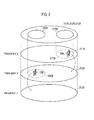
- FIG. 2 is a drawing showing an example of a cell configuration according to the first embodiment.
- three frequencies ( ⁇ to ⁇ ) are described as an example.
- a macrocell 311A, a macrocell 312A, and a macrocell 313A have a same service area. In this manner, in the mobile communication system 100, multiple frequencies can be used in a predetermined area.
- the frequency ⁇ is one specific cell 311B having a service area overlapping with a service area of the macrocell 311A. Also, the service area of the specific cell 311B is smaller than the service area of the macrocell 311A.
- the frequency ⁇ there are provided two specific cells 312B, each having a service area overlapping with the service area of the macrocell 312A.
- the service area of the macrocell 312A is smaller than the service area of the macrocell 312A.
- macrocells are generally referred to as a macrocell 311A to a macrocell 313A without having the macrocell 111A and the macrocell 211A distinguished from each other.
- specific cells are generally referred to as a specific cell 311B to a specific cell 312B without having the specific cell 111B and the specific cell 211B distinguished from each other.
- the UE 10 utilizing the macrocell 111A (the frequency ⁇ ) is prohibited from accessing the specific cell 311B, that is, a case where the UE 10A is a non-specific user.
- the radio field intensity from the specific cell 311B is considered to increase in the UE 10A because the UE 10A comes closer to the specific cell 311B.
- the transition request is rejected. Instead, interference received by the UE 10A becomes larger due to the radio field from the specific cell 311B. In other words, the UE 10A cannot stay in stand-by or continue communication at the frequency ⁇ .
- the network side instructs the UE 10A to perform a transition to a different frequency (e.g. , the frequency ⁇ ).
- a different frequency e.g., the frequency ⁇
- the UE 10A is highly likely to request the transition to the specific cell 311B again when the UE 10A comes closer to the specific cell 311B.
- the UE 10B utilizing the macrocell 312A (the frequency ⁇ ) is prohibited from accessing the specific cell 312B, that is, a case where the UE 10B is a non-specific user.
- the radio field intensity from the specific cell 312B is considered to increase in the UE 10B because the UE 10B comes closer to the specific cell 312B.
- the transition request is rejected. Instead, interference received by the UE 10B becomes larger due to the radio field from the specific cell 312B. In other words, the UE 10B cannot stay in stand-by or continue communication at the frequency ⁇ .
- the network side instructs the UE 10B to perform a transition to a different frequency (e.g., the frequency ⁇ ).
- a different frequency e.g., the frequency ⁇
- the UE 10B is highly likely to request the transition to the specific cell 312B again when the UE 10B comes closer to the specific cell 312B.
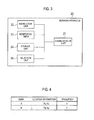
- Fig. 3 is a drawing showing the network apparatus 20 according to the first embodiment.
- the network apparatus 20 has a communication unit 21, an instruction unit 22, a monitoring timer 23, a storage unit 24, and a selection unit 25.
- the network apparatus 20 may be a device (such as NB 110A, eNB 210A) which manages a macrocell. Also, the network apparatus 20 may be a device (such as RNC 120A, SGSN 130, MME 230) which is provided in an upper level of an apparatus managing a macrocell.
- a cell shown in Fig. 2 is provided under the control of the network apparatus 20.
- the communication unit 21 performs communications with the UE 10. Also, the communication unit 21 performs communications with other network apparatus.
- the communication unit 21 receives a transition request to the specific cell 311B or the specific cell 312B from the UE 10 (non-specific user) via a device (HNB 110B, HNB-GW 120B, HeNB210B or HeNB-GW 220B) managing the specific cell 311B or the specific cell 312B. Instead, the communication unit 21 receives a report of an increased amount of interference indicating that the amount of interference received by the UE 10 exceeds a predetermined amount of interference.
- the communication unit 21 receives (acquires) location information (first location information) of the UE 10 from the UE 10 when the condition under which a mobile communication terminal not utilize a transition source frequency being any of the multiple frequencies (e.g., the frequencies ⁇ , ⁇ , ⁇ shown in Fig. 2 ) is fulfilled.
- the communication unit 21 receives (acquires) the location information (first location information) of the UE 10 from the UE 10 when instructing the transition to the transition target frequency.
- the location information of the UE 10 may be acquired by the GPS function provided in the UE 10. Instead, the location information of the UE 10 may be acquired by a delay time (Propagation Delay) of the radio base station managing the specific cell or the macrocell and the UE 10 (e.g., see 3GPP TS25.433 Subclause 9.2.2.26). In Propagation Delay, the network apparatus 20 acquires the location information of the UE 10 based on the delay time acquired from the radio base station managing the specific cell or the macrocell.
- Propagation Delay the delay time of the UE 10 based on the delay time acquired from the radio base station managing the specific cell or the macrocell.
- the condition under which the mobile communication terminal not utilize a transition source frequency is (a) a frequency used by a specific cell to which access from the UE 10 is restricted is the same as the transition source frequency or (b) an amount of interference received by the UE 10 at the transition source frequency exceeds a predetermined amount of interference.
- the communication unit 21 receives (acquires) the location information (second location information) of the UE 10 from the UE 10 when the condition for reselecting the frequency to be utilized by the UE 10 is fulfilled.
- the location information of the UE 10 may be acquired by the GPS function provided in the UE 10. Instead, the location information of the UE 10 may be acquired by a delay time (Propagation Delay) of the radio base station managing the specific cell or the macrocell and the UE 10 (e.g. , see 3GPP TS25.433 Subclause 9.2.2.26).
- a delay time Propagation Delay
- the condition for reselecting the frequency to be utilized by the UE 10 is that (a) the UE 10 requests a start of communication or (b) a channel established with the UE 10 is switched from a shared channel to a dedicated channel.
- the shared channel is switched to the dedicated channel.
- the dedicated channel is switched to the shared channel.
- the instruction unit 22 instructs the UE 10 to perform a transition to a different frequency when the condition under which a mobile communication terminal not utilize the transition source frequency is fulfilled.
- the transition target frequency to which the UE 10 should perform the transition is selected by the selection unit 25 to be described later.
- the instruction unit 22 instructs the UE 10 to perform a transition to the transition target frequency selected by the selection unit 25.
- the monitoring timer 23 is a timer for monitoring an elapsed time after the instruction to the US 10 to perform the transition to the transition target frequency.
- the monitoring timer 23 is set with a predetermined monitoring time and is configured to count down the time set in the monitoring timer 23. However, the monitoring timer 23 may be configured to count up the elapsed time after the instruction to the US 10 to perform the transition to the transition target frequency.
- the storage unit 23 stores various pieces of information needed for the operation of the network apparatus 20.
- the storage unit 24 stores the location information (first location information) of the UE 10 in association with the UE 10 when the UE 10 is instructed to perform the transition to the transition target frequency.
- the storage unit 24 acquires the transition source frequency and stores the transition source frequency in association with the UE 10 when the UE 10 is instructed to perform the transition to the transition target frequency.
- the storage unit 24 stores the location information of a specific cell provided in a neighborhood of the macrocell provided under the control of the network apparatus 20.
- location information of the specific cell may be registered in advance by an operator or the like. Instead, such location information of the specific cell may be specified by acquiring broadcast information from the specific cell by a radio base station (NB 110A or eNB 210A) having the macrocell and acquiring the broadcast information acquired by the radio base station from the radio base station.
- the selection unit 25 selects a frequency to be utilized by the UE 10. Specifically, the selection unit 25 selects the frequency to be utilized by the UE 10 when any of the following two conditions is fulfilled.
- the selection unit 25 selects a transition target frequency among the multiple frequencies (e.g., the frequencies ⁇ , ⁇ , ⁇ shown in Fig. 2 ) usable in the predetermined area when the condition under which the UE 10 not utilize the transition source frequency is fulfilled.
- the multiple frequencies e.g., the frequencies ⁇ , ⁇ , ⁇ shown in Fig. 2
- the selection unit 25 selects a transition target frequency among the multiple frequencies (e.g., the frequencies ⁇ , ⁇ , ⁇ shown in Fig. 2 ) usable in the predetermined area when the condition for reselecting the frequency to be utilized by the UE is fulfilled.
- the multiple frequencies e.g., the frequencies ⁇ , ⁇ , ⁇ shown in Fig. 2
- the selection unit 25 excludes the transition source frequency stored in the storage unit 24 from frequency candidates to be utilized by the UE 10 until the monitoring timer 23 times out.
- the selection unit 25 excludes the transition source frequency stored in the storage unit 24 from the frequency candidates to be utilized by the UE 10 when a distance specified by the location information (first location information) of the UE 10 and the location information (second location information) of the UE 10 is shorter than a predetermined distance.
- the selection unit 25 includes the transition source frequency stored in the storage unit 24 in the frequency candidates to be utilized by the UE 10 when a distance specified by the location information (first location information) of the UE 10 and the location information (second location information) is longer than a predetermined distance.
- the selection unit 25 includes the transition source frequency in the frequency candidates to be utilized by the UE 10 even before the monitoring timer 23 times out when a difference (distance) between the location specified by the first location information and the location specified by the second location information is longer than the predetermined distance.
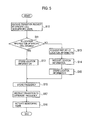
- FIGs. 5 to 7 are flowcharts, each showing an operation of the network apparatus 20 according to the first embodiment.
- a frequency used in a specific cell to which access from the UE 10 is restricted is the same as a transition source frequency.
- the network apparatus 20 receives a transition request to a specific cell from the UE 10 (non-specific user). Note that the network apparatus 20 receives the transition request to the specific cell via a device managing the specific cell. Of course, the transition request includes a reconnection request caused by a synchronization loss of the UE 10 (non-specific user).
- the network apparatus 20 determines if location information of the specific cell to which the UE 10 (non-specific user) requests the transition is stored in the storage unit 24. When the location information of the specific cell is stored in the storage unit 24, the network apparatus 20 proceeds to processing at Step 12. When the location information of the specific cell is not stored in the storage unit 24, the network apparatus 20 proceeds to processing at Step 13.
- the network apparatus 20 stores the location information of the specific cell as location information (first location information) of the UE 10.
- the network apparatus 20 requests the UE 10 to report the location information of the UE 10.
- the network apparatus 20 receives the location information (first location information) of the UE 10 from the UE 10.
- the UE 10 may acquire the location information by GPS (Global Positioning System). Instead, the UE 10 may acquire the location information based on broadcast information provided in the neighborhood of the UE 10.
- the network apparatus 20 stores the location information (first location information) of the UE 10, which was received at step S14, in the storage unit 24.
- the location information of the UE 10 may be acquired by a delay time (Propagation Delay) of the radio base station managing the specific cell or the macrocell and the UE 10 (e.g., see 3GPP TS25.433 Subclause 9.2.2.26).
- the network apparatus 20 stores the frequency (transition source frequency) currently being utilized by the UE 10 in the storage unit 24.
- the network apparatus 20 instructs the UE 10 to perform the transition to a different frequency.
- the network apparatus 20 activates the monitoring timer 23.
- the network apparatus 20 sets a predetermined monitoring time in the monitoring timer 23.
- the network apparatus 20 receives a report of an increased amount of interference indicating that the amount of interference received by the UE 10 at the frequency (transition source frequency) currently utilized by the UE 10 exceeds the predetermined amount of interference.
- the network apparatus 20 requests the UE 10 to report the location information of the UE 10.
- the network apparatus 20 receives the location information (second location information) of the UE 10 from the UE 10.
- the UE 10 may acquire the location information by GPS (Global Positioning System). Instead, the UE 10 may acquire the location information based on broadcast information provided in the neighborhood of the UE 10.
- the network apparatus 20 stores the location information (second location information) of the UE 10, which was received at step S32, in the storage unit 24.
- the location information of the UE 10 may be acquired by a delay time (Propagation Delay) of the radio base station managing the specific cell or the macrocell and the UE 10 (e.g., see 3GPP TS25.433 Subclause 9.2.2.26).
- the network apparatus 20 stores the frequency (transition source frequency) currently being utilized by the UE 10 in the storage unit 24.
- the network apparatus 20 instructs the UE 10 to perform the transition to a different frequency.
- the network apparatus 20 activates the monitoring timer 23. For example, the network apparatus 20 sets a predetermined monitoring time in the monitoring timer 23.
- Fig. 7 the description is given to an operation of reselecting the frequency to be utilized by the UE 10.
- the flow shown in Fig. 7 starts by using the following (a) or (b) as a trigger.
- the network apparatus 20 determines if a distance specified by the first location information and the second location information is longer than a predetermined distance. When the distance is longer than the predetermined distance, the network apparatus 20 proceeds to processing at Step 53. When the distance is not longer than the predetermined distance, the network apparatus 20 proceeds to processing at Step 52.
- the network apparatus 20 excludes the transition source frequency stored in the storage unit 24 from the frequency candidates to be utilized by the UE 10.
- the network apparatus 20 selects the transition source frequency from the frequency candidates to be utilized by the UE 10.
- the transition source frequency stored in the storage unit 24 is excluded from the frequency candidates to be utilized by the UE 10.
- the selection unit 25 excludes the transition source frequency from the frequency candidate to be utilized by the UE 10 until an elapsed time after the instruction of the transition to the transition target frequency exceeds a predetermined time.
- the selection unit 25 does not exclude the transition source frequency from the frequency candidates to be utilized by the UE 10 even before the monitoring timer 23 times out when a difference (distance) between the location specified by the first location information and the location specified by the second location information is longer than a predetermined distance.
- the transition source frequency is included in the frequency candidates to be utilized by the UE 10. Accordingly, the usability efficiency of the frequency is improved.
- an upper node of an HNB 110B is an HNB-GW120B.
- an upper node of an HNB 110B is a RNC 120A.
- the RNC 120A manages the HNB 110B in place of the HNB-GW 120B.
- the RNC 120A provides functions similar to those of the HNB-GW 120B to devices residing under the control of the RNC 120A.
- an upper node of the HeNB 210B is a HeNB-GW 220B.
- an upper node of the HeNB 210B is an MME 230.
- the HeNB 210B provides functions similar to those of the HeNB-GW 220B to devices residing under the control of the HeNB 210B in place of the HeNB-GW 220B.
- HNB-GB 120B may be omitted or only the HeNB-GW 220B may be omitted.
- the storage unit 24 stores location information of the UE 10 and the frequency for each of the multiple transition source frequencies. Also, for each of the multiple transition source frequencies, the selection unit 25 determines whether or not to include the transition source frequency is in the frequency candidates to be utilized by the UE 10.
- the network apparatus 20 may determine whether or not to exclude the transition source frequency from the frequency candidates to be utilized by the 10 by only comparing the elapsed time after the instruction of the transition to the transition target frequency with a predetermined time. Instead, the network apparatus 20 may determine whether or not to exclude the transition source frequency from the frequency candidates to be utilized by the UE 10 by only comparing a distance specified by the first location information and the second location information with a predetermined distance.
- the configuration (the communication unit 21, the instruction unit 22, the monitoring timer 23, the storage unit 24, and the selection unit 25) which is provided in the network apparatus 20 is provided in one apparatus.
- the embodiment is not limited to that configuration.
- the communication unit 21, the instruction unit 22, the monitoring timer 23, the storage unit 24, and the selection unit 25 may be provided in different apparatuses, respectively.
- Control signals such as RANAP (Radio Access Network Application Part), NBAP (Node B Application Part), RNSAP (Radio Network Subsystem Application Part), and HNBAP (Home Node B Application Part) are used in communications between respective apparatuses.
- RANAP Radio Access Network Application Part
- NBAP Node B Application Part
- RNSAP Radio Network Subsystem Application Part
- HNBAP Home Node B Application Part
- an operation of the network apparatus 20 may be implemented by hardware or may be implemented by a software module to be executed by a processor, or may be implemented in combination of the both.
- the software module may be provided in any form of a recording medium such as a RAM (Random Access Memory), a flash memory, a ROM (Read Only Memory), an EPROM (Erasable Programmable ROM), an EEPROM (Electronically Erasable and Programmable ROM), a register, a hard disk, a removable disk, or a CD-ROM.
- a recording medium such as a RAM (Random Access Memory), a flash memory, a ROM (Read Only Memory), an EPROM (Erasable Programmable ROM), an EEPROM (Electronically Erasable and Programmable ROM), a register, a hard disk, a removable disk, or a CD-ROM.
- Such recording medium is connected with a processor so that the processor can read and write information on the recording medium.
- such recording medium may be integrated on the processor.
- such recording medium and the processor may be provided inside ASIC.
- ASIC may be provided inside the network apparatus 20.
- such recording medium and the processor may be provided inside the network apparatus 20 as a discrete component.
- the present invention can provide a mobile communication system, a network apparatus, and a mobile communication method, which allow a transition to a different frequency to be properly inhibited.
- the present invention is useful in a radio communication and the like.
- 10 communication terminal device, 20... network apparatus, 21... communication unit, 22... instruction unit, 23... monitoring timer, 24... storage unit, 25... selection unit, 50... core network, 100... mobile communication system, 110A... NB, 110B... HNB, 111A... macrocell, 111B... specific cell, 120A... RNC, 120B... HNB-GW, 130 SGSN, 210A... eNB, 210B... HeNB, 211A... macrocell, 2118... specific cell, 220B... HeNB-GW, 230... MME, 311A ⁇ 313A... macrocell, 311B ⁇ 312B... specific cell
Landscapes
- Engineering & Computer Science (AREA)
- Computer Networks & Wireless Communication (AREA)
- Signal Processing (AREA)
- Mobile Radio Communication Systems (AREA)
Abstract
Description
- The present invention relates to a mobile communication system configured to be capable of utilizing multiple frequencies in a predetermined area, and a network apparatus and a mobile communication method used in the mobile communication system.
- There has known a specific cell referred to as a CSG (Closed Subscriber Group) cell, a home cell, a femtocell, or the like (e.g., NON-PATENT DOCUMENT 1). Note that an access type is configurable in the specific cell. The access type is "Closed," "Hybrid," or "Open".
- The "Closed" specific cell is configured to permit only a specific user (UE; User Equipment) to receive provision of services. The "Hybrid" specific cell is configured to permit a specific user to perform communications with a higher quality than other users (non-specific users). The "Open" specific cell is configured to permit all the users to receive provision of services, as is the case with a general macrocell.
- Also, there has been known a mobile communication system in which a network side instructs a mobile communication terminal to perform a transition to a different frequency when a predetermined condition is fulfilled. The predetermined condition includes, for example, (a) a non-specific user requests a transition to a specific cell configured with an access type and (b) interference received at a current frequency by a mobile communication terminal exceeds a predetermined threshold.
- Note that the "transition" means a change of communication cells (frequencies) when a mobile communication terminal is in communication (Connected). Also, the "transition" means a change of stand-by cells (frequencies) when a mobile communication terminal is in stand-by (Idle).
- PATENT DOCUMENT 1: 3GPP TS22.220
- For example, let us consider a case where a mobile communication terminal is instructed to perform a transition to a cell #2 (a frequency #2) when the mobile communication terminal is in stand-by or in communication in a cell #1 (a frequency #1).
- In such a case, it is considered that a re-instruction to perform a transition to a different frequency is needed if the mobile communication terminal having performed the transition to the cell #2 (the frequency #2) requests a transition to the cell #1 (the frequency #1) again.
- Also, a frequency allocated to a radio base station is reutilized among multiple radio base stations. Thus, it is not preferable to permanently prohibit the transition to the cell #1 (the frequency #1).
- For this reason, the present invention has been made with a view to solving the above problems. Accordingly, an objective of the present invention is to provide a mobile communication system, a network apparatus, and a mobile communication method, which allow a reinstruction of a transition to a different frequency to be properly inhibited.
- A mobile communication system according to the first feature is configured to be capable of utilizing a plurality of frequencies in a predetermined area. The mobile communication system includes a selection unit configured to select a transition target frequency from the plurality of frequencies when a condition under which a mobile communication terminal not utilize a transition source frequency being any of the plurality of frequencies is fulfilled;, and an instruction unit configured to instruct the mobile communication terminal to perform a transition to the transition target frequency selected by the selection unit. The selection unit excludes the transition source frequency from a frequency candidate to be utilized by the mobile communication terminal until an elapsed time after the instruction of the transition to the transition target frequency exceeds a predetermined time.
- A mobile communication system according to the second feature is configured to be capable of utilizing a plurality of frequencies in a predetermined area. The mobile communication system includes a selection unit configured to select a transition target frequency from the plurality of frequencies when a condition under which a mobile communication terminal not utilize a transition source frequency being any of the plurality of frequencies is fulfilled, an instruction unit configured to instruct the mobile communication terminal to perform a transition to the transition target frequency selected by the selection unit, and an acquisition unit configured to acquire first location information being location information of the mobile communication terminal when the transition to the transition target frequency is instructed, and configured to acquire second location information being location information of the mobile communication terminal when a condition for reselecting a frequency to be utilized by the mobile communication terminal is fulfilled. The selection unit excludes the transition source frequency from a frequency candidate to be utilized by the mobile communication terminal when a distance specified by the first location information and the second location information is shorter than a predetermined distance in a case where the condition for reselecting the frequency to be utilized by the mobile communication terminal is fulfilled.
- In the first feature of the second feature, the condition under which the mobile communication terminal not utilize the transition source frequency is that a frequency used in a specific cell to which access from the mobile communication terminal is restricted is the same as the transition source frequency.
- In the first feature of the second feature, the condition under which the mobile communication terminal not utilize the transition source frequency is that an amount of interference received at the transition source frequency by the mobile communication terminal exceeds a predetermined amount of interference.
- A network apparatus according to the third feature is provided in a mobile communication system configured to be capable of utilizing a plurality of frequencies in a predetermined area. The network apparatus includes a selection unit configured to select a transition target frequency from the plurality of frequencies when a condition under which a mobile communication terminal not utilize a transition source frequency being any of the plurality of frequencies is fulfilled, and an instruction unit configured to instruct the mobile communication terminal to perform a transition to the transition target frequency selected by the selection unit. The selection unit excludes the transition source frequency from a frequency candidate to be utilized by the mobile communication terminal until an elapsed time after the instruction of the transition to the transition target frequency exceeds a predetermined time.
- A network apparatus according to the fourth feature is provided in a mobile communication system configured to be capable of utilizing a plurality of frequencies in a predetermined area. The network apparatus includes a selection unit configured to select a transition target frequency from the plurality of frequencies when a condition under which a mobile communication terminal not utilize a transition source frequency being any of the plurality of frequencies is fulfilled, an instruction unit configured to instruct the mobile communication terminal to perform a transition to the transition target frequency selected by the selection unit, and an acquisition unit configured to acquire first location information being location information of the mobile communication terminal when the transition to the transition target frequency is instructed, and configured to acquire second location information being location information of the mobile communication terminal when a condition for reselecting a frequency to be utilized by the mobile communication terminal is fulfilled. The selection unit excludes the transition source frequency from a frequency candidate to be utilized by the mobile communication terminal when a distance specified by the first location information and the second location information is shorter than a predetermined distance in a case where the condition for reselecting the frequency to be utilized by the mobile communication terminal is fulfilled.
- A mobile communication method according to the fifth feature is applied to a mobile communication system configured to be capable of utilizing a plurality of frequencies in a predetermined area. The method includes a step A of selecting a transition target frequency from the plurality of frequencies when a condition under which a mobile communication terminal not utilize a transition source frequency being any of the plurality of frequencies is fulfilled, a step B of instructing the mobile communication terminal to perform a transition to the transition target frequency selected at the step A, and a step C of excluding the transition source frequency from a frequency candidate to be utilized by the mobile communication terminal until an elapsed time after the instruction of the transition to the transition target frequency exceeds a predetermined time.
- A mobile communication method according to the sixth feature is applied to a mobile communication system configured to be capable of utilizing a plurality of frequencies in a predetermined area. The method includes a step A of selecting a transition target frequency from the plurality of frequencies when a condition under which a mobile communication terminal not utilize a transition source frequency being any of the plurality of frequencies is fulfilled, a step B of instructing the mobile communication terminal to perform a transition to the transition target frequency selected at the step A, a step C of acquiring first location information being location information of the mobile communication terminal when the transition to the transition target frequency is instructed, and acquiring second location information being location information of the mobile communication terminal when a condition for reselecting a frequency to be utilized by the mobile communication terminal is fulfilled, and a step D of excluding the transition source frequency from a frequency candidate to be utilized by the mobile communication terminal when a distance specified by the first location information and the second location information is shorter than a predetermined distance in a case where the condition for reselecting the frequency to be utilized by the mobile communication terminal is fulfilled.
-
- [
Fig. 1] Fig. 1 is a drawing showing amobile communication system 100 according to a first embodiment. - [
Fig. 2] Fig. 2 is a drawing showing an example of a cell configuration according to the first embodiment. - [
Fig. 3] Fig. 3 is a drawing showing anetwork apparatus 20 according to the first embodiment. - [
Fig. 4] Fig. 4 is a drawing showing an example of information stored in astorage unit 24 according to the first embodiment. - [
Fig. 5] Fig. 5 is a flowchart showing an operation of themobile communication system 100 according to the first embodiment. - [
Fig. 6] Fig. 6 is a flowchart showing an operation of themobile communication system 100 according to the first embodiment. - [
Fig. 7] Fig. 7 is a flowchart showing an operation of themobile communication system 100 according to the first embodiment. - [
Fig. 8] Fig. 8 is a drawing showing amobile communication system 100 according toModification 1. - A mobile communication system according to embodiments of the present invention is described below by referring to the drawings. In the following description of the drawings, same or similar reference numerals are given to denote same or similar portions.
- Moreover, the drawings are schematic ones and proportions of sizes and the like are different from actual ones. Thus, specific sizes and the like should be judged by referring to the description below. In addition, the drawings naturally include portions where relationships or percentages of sizes are different among the drawings.
- Firstly, a mobile communication system according to an embodiment is configured to be capable of utilizing multiple frequencies in a predetermined area. The mobile communication system includes a selection unit configured to select a transition target frequency among multiple frequencies when a condition under which a mobile communication terminal not utilize a transition source frequency being any one of the multiple frequencies is fulfilled, and an instruction unit configured to instruct a mobile communication terminal to perform a transition to the transition target frequency selected by the selection unit. The selection unit excludes the transition source frequency from the frequency candidates to be utilized by the mobile communication terminal until an elapsed time after the instruction of the transition to the transition target frequency exceeds a predetermined time.
- In the present embodiment, the selection unit excludes the transition source frequency from the frequency candidates to be utilized by the mobile communication terminal until an elapsed time after the instruction of the transition to the transition target frequency exceeds a predetermined time.
- Accordingly, without permanently prohibiting the transition to the transition source frequency, it is possible to inhibit a transition to a different frequency from being repeatedly reinstructed in a short period of time.
- Secondly, a mobile communication system according to an embodiment is configured to be capable of utilizing multiple frequencies in a predetermined area. The mobile communication system includes a selection unit configured to select a transition target frequency among multiple frequencies when a condition under which the mobile communication terminal not utilize a transition source frequency being any of the multiple frequencies is fulfilled, an instruction unit configured to instruct a mobile communication terminal to perform a transition to the transition target frequency selected by the selection unit, and an acquisition unit configured to acquire first location information being location information of the mobile communication terminal when the transition to the transition target frequency is instructed, and configured to acquire second location information being location information of the mobile communication terminal when a condition for reselecting a frequency to be utilized by the mobile communication terminal is fulfilled. The selection unit excludes the transition source frequency from the frequency candidates to be utilized by the mobile communication terminal when a distance specified by the first location information and the second location information is shorter than a predetermined distance in a case where the condition for reselecting the frequency to be utilized by the mobile communication terminal is fulfilled.
- In the embodiment, the selection unit excludes the transition source frequency from the frequency candidates to be utilized by the mobile communication terminal when the distance specified by the first location information and the second location information is shorter than the predetermined distance.
- Accordingly, without permanently prohibiting the transition to the transition source frequency, it is possible to inhibit a transition to a different frequency from being repeatedly reinstructed during a short period of time
- The configuration of a mobile communication system according to a first embodiment is described below by referring to the drawings.
Fig. 1 is a drawing showing amobile communication system 100 according to the first embodiment. - As shown in
Fig. 1 , themobile communication system 100 includes a mobile terminal device 10 (hereinafter, EU 10) and acore network 50. In addition, themobile communication system 100 includes a first communication system and a second communication system. - For example, the
first communication system 100 is a communication system supporting UMTS (Universal Mobile Telecommunication System). The first communication system has abase station 110A (hereinafterNB 110A), ahome base station 110B (hereinafterHNB 110B), aRNC 120A, a homebase station gateway 120B (hereinafter, HNB-GW 120B), and anSGSN 130. - Note that a radio access network (UTRAN; Universal Terrestrial Radio Access Network) supporting the first communication system includes the
NB 110A,HNB 110B,RNC 120A, and HNB-GW 120B. - For example, the second communication system is a communication system supporting LTE (Long Term Evolution). The second communication system has, for example, a
base station 210A (hereinaftereNB 210A), ahome base station 210B (hereinafterHeNB 210B), a homebase station gateway 220B (hereinafter, HeNB-GW 220B), and anMME 230. - Note that a radio access network (E-UTRAN; Evolved Universal Terrestrial Radio Access Network) supporting the second communication system includes the
eNB 210A,HeNB 210B, and HeNB-GW 220B. - The
UE 10 is a device (User Equipment) configured to communicate with the first communication system or the second communication system. For example, theUE 10 has a function to perform radio communications with theNB 110A and theHNB 110B. Instead, theUE 10 has a function to perform radio communications with theeNB 210A and theHeNB 210B. - The
NB 110A is a device (NodeB) having amacrocell 111A and configured to perform radio communications with theUE 10 present in themacrocell 111A. - The
HNB 110B is a device (Home NodeB) having aspecific cell 111B and configured to perform radio communications with theUE 10 present in thespecific cell 111B. - The
RNC 120A is a device (Radio Network Controller) connected with theNB 110A and configured to establish a radio connection (RRC Connection) with theUE 10 present in themacrocell 111A. - The HNB-
GW 120B is a device (Home NodeB Gateway) connected with theHNB 110B and configured to establish a radio connection (RRC Connection) with theUE 10 present in thespecific cell 111B. - The
SGSN 130 is a device (Serving GPRS Support Node) configured to exchange packets in a packet exchange domain. TheSGSN 130 is provided in thecore network 50. Although omitted inFig. 1 , a device (MSC; Mobile Switching Center) to perform line switching in a line switching domain may be provided in thecore network 50. - The
eNB 210A is a device (evolvedNodeB) having amacrocell 211A and configured to perform radio communications with theUE 10 present in themacrocell 211A. - The
HeNB 210B is a device (Home evolved NodeB) having thespecific cell 211B and configured to perform radio communications with theUE 10 present in thespecific cell 211B. - The HeNB-
GW 220B is a device (Home evolved NodeB Gateway) connected with theHeNB 210B and configured to manage theHeNB 210B. - The
MME 230 is a device (Mobility Management Entity) connected with theeNB 210A and configured to manage mobility of theUE 10 establishing the radio connection with theeNB 210A. Also, theMME 230 is a device connected with theHeNB 210B via the HeNB-GW 220B and configured to manage the mobility of theUE 10 establishing the radio connection with theHeNB 210B. - Note that the macrocell and the specific cell should be understood as functions to perform radio communications with the
UE 10. However, the macrocell and the specific cell are also used as terms to express service areas of cells. Also, a cell such as the macrocell or the specific cell is identified by a frequency, spread code, or time slot, which is used in a cell. - The specific cell is sometimes referred to as a femtocell, a CSG (Closed Subscriber Group), or a home cell. Also, the specific cell is configured to be configurable with an access type for defining
UEs 10 allowed to access the specific cell. The access type is "Closed," "Hybrid," or "Open". - The "Closed" specific cell is configured to permit only a specific user (UE; User Equipment) managed by the specific cell to receive provision of services.
- The "Hybrid" specific cell is configured to permit a specific user managed by the specific cell to perform communications with a high quality and is configured to permit a non-specific user not managed by the specific cell to perform communications with a best effort quality.
- The "Open" specific cell is configured to permit all the UEs 10 to receive provision of services, as is the case with the macrocell. Here, in the "Open" cell,
UEs 10 can perform communications with equal quality without being distinguished as to whether theUEs 10 are managed by the specific cell. - Note that the access type may be an "ACCESS CLASS BARRED" to prohibit an access of the
UE 10 by each access class, or a "CELL BARRED" to prohibit an access of theUE 10 by each cell. - An example of a cell configuration according to the first embodiment is described below by referring to the drawings.
Fig. 2 is a drawing showing an example of a cell configuration according to the first embodiment. Here, three frequencies (α to γ) are described as an example. Also, amacrocell 311A, amacrocell 312A, and amacrocell 313A have a same service area. In this manner, in themobile communication system 100, multiple frequencies can be used in a predetermined area. - As shown in
Fig. 2 , provided at the frequency α is onespecific cell 311B having a service area overlapping with a service area of themacrocell 311A. Also, the service area of thespecific cell 311B is smaller than the service area of themacrocell 311A. - At the frequency β, there are provided two
specific cells 312B, each having a service area overlapping with the service area of themacrocell 312A. In addition, the service area of themacrocell 312A is smaller than the service area of themacrocell 312A. - At the frequency γ, there is provided no specific cell having a service area overlapping with the service area of the
macrocell 313A. - It should be noted that in
Fig. 2 , macrocells are generally referred to as amacrocell 311A to amacrocell 313A without having themacrocell 111A and themacrocell 211A distinguished from each other. Similarly, it should be noted that specific cells are generally referred to as aspecific cell 311B to aspecific cell 312B without having thespecific cell 111B and thespecific cell 211B distinguished from each other. - Let us consider a case where the
UE 10 utilizing themacrocell 111A (the frequency α) is prohibited from accessing thespecific cell 311B, that is, a case where theUE 10A is a non-specific user. The radio field intensity from thespecific cell 311B is considered to increase in theUE 10A because theUE 10A comes closer to thespecific cell 311B. In such a case, even when a transition request is transmitted from theUE 10A to thespecific cell 311B, the transition request is rejected. Instead, interference received by theUE 10A becomes larger due to the radio field from thespecific cell 311B. In other words, theUE 10A cannot stay in stand-by or continue communication at the frequency α. Accordingly, the network side instructs theUE 10A to perform a transition to a different frequency (e.g. , the frequency β). However, it should be noted that even though the instruction to perform a transition to a different frequency (e.g., the frequency β) is made, theUE 10A is highly likely to request the transition to thespecific cell 311B again when theUE 10A comes closer to thespecific cell 311B. - Similarly, let us consider a case where the
UE 10B utilizing themacrocell 312A (the frequency β) is prohibited from accessing thespecific cell 312B, that is, a case where theUE 10B is a non-specific user. The radio field intensity from thespecific cell 312B is considered to increase in theUE 10B because theUE 10B comes closer to thespecific cell 312B. In such a case, even when a transition request is transmitted from theUE 10B to thespecific cell 312B, the transition request is rejected. Instead, interference received by theUE 10B becomes larger due to the radio field from thespecific cell 312B. In other words, theUE 10B cannot stay in stand-by or continue communication at the frequency β. Accordingly, for example, the network side instructs theUE 10B to perform a transition to a different frequency (e.g., the frequency γ). However, it should be noted that even though the instruction to perform a transition to a different frequency (e.g., the frequency γ) is made, theUE 10B is highly likely to request the transition to thespecific cell 312B again when theUE 10B comes closer to thespecific cell 312B. - The configuration of the network apparatus according to the first embodiment is described below by referring to the drawings.
Fig. 3 is a drawing showing thenetwork apparatus 20 according to the first embodiment. As shown inFig. 3 , thenetwork apparatus 20 has acommunication unit 21, aninstruction unit 22, amonitoring timer 23, astorage unit 24, and aselection unit 25. - Note that the
network apparatus 20 may be a device (such asNB 110A,eNB 210A) which manages a macrocell. Also, thenetwork apparatus 20 may be a device (such asRNC 120A,SGSN 130, MME 230) which is provided in an upper level of an apparatus managing a macrocell. - In addition, in the following description, illustrated is a case where a cell shown in
Fig. 2 is provided under the control of thenetwork apparatus 20. - The
communication unit 21 performs communications with theUE 10. Also, thecommunication unit 21 performs communications with other network apparatus. - For example, the
communication unit 21 receives a transition request to thespecific cell 311B or thespecific cell 312B from the UE 10 (non-specific user) via a device (HNB 110B, HNB-GW 120B, HeNB210B or HeNB-GW 220B) managing thespecific cell 311B or thespecific cell 312B. Instead, thecommunication unit 21 receives a report of an increased amount of interference indicating that the amount of interference received by theUE 10 exceeds a predetermined amount of interference. - Also, the
communication unit 21 receives (acquires) location information (first location information) of theUE 10 from theUE 10 when the condition under which a mobile communication terminal not utilize a transition source frequency being any of the multiple frequencies (e.g., the frequencies α, β, γ shown inFig. 2 ) is fulfilled. In other words, thecommunication unit 21 receives (acquires) the location information (first location information) of theUE 10 from theUE 10 when instructing the transition to the transition target frequency. - Note that the location information of the
UE 10 may be acquired by the GPS function provided in theUE 10. Instead, the location information of theUE 10 may be acquired by a delay time (Propagation Delay) of the radio base station managing the specific cell or the macrocell and the UE 10 (e.g., see 3GPP TS25.433 Subclause 9.2.2.26). In Propagation Delay, thenetwork apparatus 20 acquires the location information of theUE 10 based on the delay time acquired from the radio base station managing the specific cell or the macrocell. - Here, the condition under which the mobile communication terminal not utilize a transition source frequency is (a) a frequency used by a specific cell to which access from the
UE 10 is restricted is the same as the transition source frequency or (b) an amount of interference received by theUE 10 at the transition source frequency exceeds a predetermined amount of interference. - Furthermore, the
communication unit 21 receives (acquires) the location information (second location information) of theUE 10 from theUE 10 when the condition for reselecting the frequency to be utilized by theUE 10 is fulfilled. - As described above, the location information of the
UE 10 may be acquired by the GPS function provided in theUE 10. Instead, the location information of theUE 10 may be acquired by a delay time (Propagation Delay) of the radio base station managing the specific cell or the macrocell and the UE 10 (e.g. , see 3GPP TS25.433 Subclause 9.2.2.26). - Here, the condition for reselecting the frequency to be utilized by the
UE 10 is that (a) theUE 10 requests a start of communication or (b) a channel established with theUE 10 is switched from a shared channel to a dedicated channel. Here, when the amount of data (in an uplink direction or a downlink direction) of the communication performed by theUE 10 increases, the shared channel is switched to the dedicated channel. In contrast, when the amount of data (in an uplink direction or a downlink direction) of the communication performed by theUE 10 decreases, the dedicated channel is switched to the shared channel. - The
instruction unit 22 instructs theUE 10 to perform a transition to a different frequency when the condition under which a mobile communication terminal not utilize the transition source frequency is fulfilled. Note that the transition target frequency to which theUE 10 should perform the transition is selected by theselection unit 25 to be described later. In other words, theinstruction unit 22 instructs theUE 10 to perform a transition to the transition target frequency selected by theselection unit 25. - The
monitoring timer 23 is a timer for monitoring an elapsed time after the instruction to theUS 10 to perform the transition to the transition target frequency. Themonitoring timer 23 is set with a predetermined monitoring time and is configured to count down the time set in themonitoring timer 23. However, themonitoring timer 23 may be configured to count up the elapsed time after the instruction to theUS 10 to perform the transition to the transition target frequency. - The
storage unit 23 stores various pieces of information needed for the operation of thenetwork apparatus 20. For example, thestorage unit 24 stores the location information (first location information) of theUE 10 in association with theUE 10 when theUE 10 is instructed to perform the transition to the transition target frequency. Thestorage unit 24 acquires the transition source frequency and stores the transition source frequency in association with theUE 10 when theUE 10 is instructed to perform the transition to the transition target frequency. - Also, the
storage unit 24 stores the location information of a specific cell provided in a neighborhood of the macrocell provided under the control of thenetwork apparatus 20. Such location information of the specific cell may be registered in advance by an operator or the like. Instead, such location information of the specific cell may be specified by acquiring broadcast information from the specific cell by a radio base station (NB 110A oreNB 210A) having the macrocell and acquiring the broadcast information acquired by the radio base station from the radio base station. - The
selection unit 25 selects a frequency to be utilized by theUE 10. Specifically, theselection unit 25 selects the frequency to be utilized by theUE 10 when any of the following two conditions is fulfilled. - Firstly, the
selection unit 25 selects a transition target frequency among the multiple frequencies (e.g., the frequencies α, β, γ shown inFig. 2 ) usable in the predetermined area when the condition under which theUE 10 not utilize the transition source frequency is fulfilled. - Secondly, the
selection unit 25 selects a transition target frequency among the multiple frequencies (e.g., the frequencies α, β, γ shown inFig. 2 ) usable in the predetermined area when the condition for reselecting the frequency to be utilized by the UE is fulfilled. - Here, the
selection unit 25 excludes the transition source frequency stored in thestorage unit 24 from frequency candidates to be utilized by theUE 10 until themonitoring timer 23 times out. - Also, the
selection unit 25 excludes the transition source frequency stored in thestorage unit 24 from the frequency candidates to be utilized by theUE 10 when a distance specified by the location information (first location information) of theUE 10 and the location information (second location information) of theUE 10 is shorter than a predetermined distance. In other words, theselection unit 25 includes the transition source frequency stored in thestorage unit 24 in the frequency candidates to be utilized by theUE 10 when a distance specified by the location information (first location information) of theUE 10 and the location information (second location information) is longer than a predetermined distance. In other words, theselection unit 25 includes the transition source frequency in the frequency candidates to be utilized by theUE 10 even before themonitoring timer 23 times out when a difference (distance) between the location specified by the first location information and the location specified by the second location information is longer than the predetermined distance. - An operation of the network apparatus according to the first embodiment is described below by referring to the drawings.
Figs. 5 to 7 are flowcharts, each showing an operation of thenetwork apparatus 20 according to the first embodiment. - Firstly, referring to
Fig. 5 , the description is given to a case where a frequency used in a specific cell to which access from theUE 10 is restricted is the same as a transition source frequency. - As shown in
Fig. 5 , atStep 10, thenetwork apparatus 20 receives a transition request to a specific cell from the UE 10 (non-specific user). Note that thenetwork apparatus 20 receives the transition request to the specific cell via a device managing the specific cell. Of course, the transition request includes a reconnection request caused by a synchronization loss of the UE 10 (non-specific user). - At
Step 11, thenetwork apparatus 20 determines if location information of the specific cell to which the UE 10 (non-specific user) requests the transition is stored in thestorage unit 24. When the location information of the specific cell is stored in thestorage unit 24, thenetwork apparatus 20 proceeds to processing at Step 12. When the location information of the specific cell is not stored in thestorage unit 24, thenetwork apparatus 20 proceeds to processing atStep 13. - At Step 12, the
network apparatus 20 stores the location information of the specific cell as location information (first location information) of theUE 10. - At
Step 13, thenetwork apparatus 20 requests theUE 10 to report the location information of theUE 10. - At Step 14, the
network apparatus 20 receives the location information (first location information) of theUE 10 from theUE 10. Note that theUE 10 may acquire the location information by GPS (Global Positioning System). Instead, theUE 10 may acquire the location information based on broadcast information provided in the neighborhood of theUE 10. - At Step 15, the
network apparatus 20 stores the location information (first location information) of theUE 10, which was received at step S14, in thestorage unit 24. Note that, the location information of theUE 10 may be acquired by a delay time (Propagation Delay) of the radio base station managing the specific cell or the macrocell and the UE 10 (e.g., see 3GPP TS25.433 Subclause 9.2.2.26). - At Step 16, the
network apparatus 20 stores the frequency (transition source frequency) currently being utilized by theUE 10 in thestorage unit 24. - At Step 17, the
network apparatus 20 instructs theUE 10 to perform the transition to a different frequency. - At Step 18, the
network apparatus 20 activates themonitoring timer 23. For example, thenetwork apparatus 20 sets a predetermined monitoring time in themonitoring timer 23. - Secondly, referring to
Fig. 6 , the description is given to a case where an amount of interference received by theUE 10 at the transition source frequency exceeds a predetermined amount of interference. - As shown in
Fig. 6 , atStep 30, thenetwork apparatus 20 receives a report of an increased amount of interference indicating that the amount of interference received by theUE 10 at the frequency (transition source frequency) currently utilized by theUE 10 exceeds the predetermined amount of interference. - At Step 31, the
network apparatus 20 requests theUE 10 to report the location information of theUE 10. - At Step 32, the
network apparatus 20 receives the location information (second location information) of theUE 10 from theUE 10. Note that theUE 10 may acquire the location information by GPS (Global Positioning System). Instead, theUE 10 may acquire the location information based on broadcast information provided in the neighborhood of theUE 10. - At Step 33, the
network apparatus 20 stores the location information (second location information) of theUE 10, which was received at step S32, in thestorage unit 24. Note that, the location information of theUE 10 may be acquired by a delay time (Propagation Delay) of the radio base station managing the specific cell or the macrocell and the UE 10 (e.g., see 3GPP TS25.433 Subclause 9.2.2.26). - At Step 34, the
network apparatus 20 stores the frequency (transition source frequency) currently being utilized by theUE 10 in thestorage unit 24. - At Step 35, the
network apparatus 20 instructs theUE 10 to perform the transition to a different frequency. - At Step 36, the
network apparatus 20 activates themonitoring timer 23. For example, thenetwork apparatus 20 sets a predetermined monitoring time in themonitoring timer 23. - Thirdly, referring to
Fig. 7 , the description is given to an operation of reselecting the frequency to be utilized by theUE 10. In other words, the flow shown inFig. 7 starts by using the following (a) or (b) as a trigger. -
- (a) The
UE 10 requests the start of communication. - (b) The channel established with the
UE 10 is switched from a shared channel to a dedicated channel. - At Step 51, the
network apparatus 20 determines if a distance specified by the first location information and the second location information is longer than a predetermined distance. When the distance is longer than the predetermined distance, thenetwork apparatus 20 proceeds to processing at Step 53. When the distance is not longer than the predetermined distance, thenetwork apparatus 20 proceeds to processing at Step 52. - At Step 52, the
network apparatus 20 excludes the transition source frequency stored in thestorage unit 24 from the frequency candidates to be utilized by theUE 10. - At Step 53, the
network apparatus 20 selects the transition source frequency from the frequency candidates to be utilized by theUE 10. - In this manner, in a case where the
monitoring timer 23 does not time out yet and the distance specified by the first location information and the second location information is not longer than the predetermined distance, the transition source frequency stored in thestorage unit 24 is excluded from the frequency candidates to be utilized by theUE 10. - In the first embodiment, the
selection unit 25 excludes the transition source frequency from the frequency candidate to be utilized by theUE 10 until an elapsed time after the instruction of the transition to the transition target frequency exceeds a predetermined time. - Accordingly, it can be inhibited without permanently prohibiting the transition to the transition source frequency that the transition to a different frequency is repeatedly reinstructed during a short period of time.
- In the first embodiment, the
selection unit 25 does not exclude the transition source frequency from the frequency candidates to be utilized by theUE 10 even before themonitoring timer 23 times out when a difference (distance) between the location specified by the first location information and the location specified by the second location information is longer than a predetermined distance. - In other words, even though the
UE 10 performs the transition to the transition source frequency, but if there is no possibility that a reinstruction of the transition to a different frequency is repeated, the transition source frequency is included in the frequency candidates to be utilized by theUE 10. Accordingly, the usability efficiency of the frequency is improved. -
Modification 1 of the first embodiment is described below by referring to the drawings. In the following description, portions different from those of the first embodiment are mainly described. - Specifically, in the first embodiment, an upper node of an
HNB 110B is an HNB-GW120B. On the other hand, inModification 1, as shown inFig. 8 , an upper node of anHNB 110B is aRNC 120A. - In
Modification 1, theRNC 120A manages theHNB 110B in place of the HNB-GW 120B. In other words, theRNC 120A provides functions similar to those of the HNB-GW 120B to devices residing under the control of theRNC 120A. - In addition, in the first embodiment, an upper node of the
HeNB 210B is a HeNB-GW 220B. On the other hand, inModification 1, as shown inFig. 8 , an upper node of theHeNB 210B is anMME 230. - In
Modification 1, theHeNB 210B provides functions similar to those of the HeNB-GW 220B to devices residing under the control of theHeNB 210B in place of the HeNB-GW 220B. - Note that only the HNB-
GB 120B may be omitted or only the HeNB-GW 220B may be omitted. - The present invention has been described by using the above-described embodiment. However, it not be understood that the description and the drawings, which constitute one part of this disclosure, are to limit the present invention. Various alternative embodiments, examples, and operational techniques will be obvious for those who are in the art from this disclosure.
- Although it is not particularly described in the above-described embodiment, in a case where the
UE 10 repeatedly performs the transition to a different frequency and there exist multiple transition source frequencies, thestorage unit 24 stores location information of theUE 10 and the frequency for each of the multiple transition source frequencies. Also, for each of the multiple transition source frequencies, theselection unit 25 determines whether or not to include the transition source frequency is in the frequency candidates to be utilized by theUE 10. - The
network apparatus 20 may determine whether or not to exclude the transition source frequency from the frequency candidates to be utilized by the 10 by only comparing the elapsed time after the instruction of the transition to the transition target frequency with a predetermined time. Instead, thenetwork apparatus 20 may determine whether or not to exclude the transition source frequency from the frequency candidates to be utilized by theUE 10 by only comparing a distance specified by the first location information and the second location information with a predetermined distance. - In the above-described embodiment, illustrated is the case where the configuration (the
communication unit 21, theinstruction unit 22, themonitoring timer 23, thestorage unit 24, and the selection unit 25) which is provided in thenetwork apparatus 20 is provided in one apparatus. However, the embodiment is not limited to that configuration. In other words, thecommunication unit 21, theinstruction unit 22, themonitoring timer 23, thestorage unit 24, and theselection unit 25 may be provided in different apparatuses, respectively. - Control signals such as RANAP (Radio Access Network Application Part), NBAP (Node B Application Part), RNSAP (Radio Network Subsystem Application Part), and HNBAP (Home Node B Application Part) are used in communications between respective apparatuses.
- Note that an operation of the
network apparatus 20 may be implemented by hardware or may be implemented by a software module to be executed by a processor, or may be implemented in combination of the both. - The software module may be provided in any form of a recording medium such as a RAM (Random Access Memory), a flash memory, a ROM (Read Only Memory), an EPROM (Erasable Programmable ROM), an EEPROM (Electronically Erasable and Programmable ROM), a register, a hard disk, a removable disk, or a CD-ROM.
- Such recording medium is connected with a processor so that the processor can read and write information on the recording medium. Also, such recording medium may be integrated on the processor. Instead, such recording medium and the processor may be provided inside ASIC. Such ASIC may be provided inside the
network apparatus 20. Alternatively, such recording medium and the processor may be provided inside thenetwork apparatus 20 as a discrete component. - Note that the contents of Japanese Patent Application PublicationNo.
2010-066868 (filed on March 23, 2010 - The present invention can provide a mobile communication system, a network apparatus, and a mobile communication method, which allow a transition to a different frequency to be properly inhibited. Thus, the present invention is useful in a radio communication and the like.
- 10... communication terminal device, 20... network apparatus, 21... communication unit, 22... instruction unit, 23... monitoring timer, 24... storage unit, 25... selection unit, 50... core network, 100... mobile communication system, 110A... NB, 110B... HNB, 111A... macrocell, 111B... specific cell, 120A... RNC, 120B... HNB-GW, 130 SGSN, 210A... eNB, 210B... HeNB, 211A... macrocell, 2118... specific cell, 220B... HeNB-GW, 230... MME, 311A~313A... macrocell, 311B~312B... specific cell
Claims (8)
- A mobile communication system configured to be capable of utilizing a plurality of frequencies in a predetermined area, comprising:a selection unit configured to select a transition target frequency from the plurality of frequencies when a condition under which a mobile communication terminal not utilize a transition source frequency being any of the plurality of frequencies is fulfilled; andan instruction unit configured to instruct the mobile communication terminal to perform a transition to the transition target frequency selected by the selection unit, whereinthe selection unit excludes the transition source frequency from a frequency candidate to be utilized by the mobile communication terminal until an elapsed time after the instruction of the transition to the transition target frequency exceeds a predetermined time.
- A mobile communication system configured to be capable of utilizing a plurality of frequencies in a predetermined area, comprising:a selection unit configured to select a transition target frequency from the plurality of frequencies when a condition under which a mobile communication terminal not utilize a transition source frequency being any of the plurality of frequencies is fulfilled;an instruction unit configured to instruct the mobile communication terminal to perform a transition to the transition target frequency selected by the selection unit; andan acquisition unit configured to acquire first location information being location information of the mobile communication terminal when the transition to the transition target frequency is instructed, and configured to acquire second location information being location information of the mobile communication terminal when a condition for reselecting a frequency to be utilized by the mobile communication terminal is fulfilled, whereinthe selection unit excludes the transition source frequency from a frequency candidate to be utilized by the mobile communication terminal when a distance specified by the first location information and the second location information is shorter than a predetermined distance in a case where the condition for reselecting the frequency to be utilized by the mobile communication terminal is fulfilled.
- The mobile communication system according to claim 1 or 2, wherein the condition under which the mobile communication terminal not utilize the transition source frequency is that a frequency used in a specific cell to which access from the mobile communication terminal is restricted is the same as the transition source frequency.
- The mobile communication system according to claim 1 or 2, wherein the condition under which the mobile communication terminal not utilize the transition source frequency is that an amount of interference received at the transition source frequency by the mobile communication terminal exceeds a predetermined amount of interference.
- A network apparatus provided in a mobile communication system configured to be capable of utilizing a plurality of frequencies in a predetermined area, comprising:a selection unit configured to select a transition target frequency from the plurality of frequencies when a condition under which a mobile communication terminal not utilize a transition source frequency being any of the plurality of frequencies is fulfilled; andan instruction unit configured to instruct the mobile communication terminal to perform a transition to the transition target frequency selected by the selection unit, whereinthe selection unit excludes the transition source frequency from a frequency candidate to be utilized by the mobile communication terminal until an elapsed time after the instruction of the transition to the transition target frequency exceeds a predetermined time.
- A network apparatus provided in a mobile communication system configured to be capable of utilizing a plurality of frequencies in a predetermined area, comprising:a selection unit configured to select a transition target frequency from the plurality of frequencies when a condition under which a mobile communication terminal not utilize a transition source frequency being any of the plurality of frequencies is fulfilled;an instruction unit configured to instruct the mobile communication terminal to perform a transition to the transition target frequency selected by the selection unit; andan acquisition unit configured to acquire first location information being location information of the mobile communication terminal when the transition to the transition target frequency is instructed, and configured to acquire second location information being location information of the mobile communication terminal when a condition for reselecting a frequency to be utilized by the mobile communication terminal is fulfilled, whereinthe selection unit excludes the transition source frequency from a frequency candidate to be utilized by the mobile communication terminal when a distance specified by the first location information and the second location information is shorter than a predetermined distance in a case where the condition for reselecting the frequency to be utilized by the mobile communication terminal is fulfilled.
- A mobile communication method applied to a mobile communication system configured to be capable of utilizing a plurality of frequencies in a predetermined area, the method comprising:a step A of selecting a transition target frequency from the plurality of frequencies when a condition under which a mobile communication terminal not utilize a transition source frequency being any of the plurality of frequencies is fulfilled;a step B of instructing the mobile communication terminal to perform a transition to the transition target frequency selected at the step A; anda step C of excluding the transition source frequency from a frequency candidate to be utilized by the mobile communication terminal until an elapsed time after the instruction of the transition to the transition target frequency exceeds a predetermined time.
- A mobile communication method applied to a mobile communication system configured to be capable of utilizing a plurality of frequencies in a predetermined area, comprising:a step A of selecting a transition target frequency from the plurality of frequencies when a condition under which a mobile communication terminal not utilize a transition source frequency being any of the plurality of frequencies is fulfilled;a step B of instructing the mobile communication terminal to perform a transition to the transition target frequency selected at the step A;a step C of acquiring first location information being location information of the mobile communication terminal when the transition to the transition target frequency is instructed, and acquiring second location information being location information of the mobile communication terminal when a condition for reselecting a frequency to be utilized by the mobile communication terminal is fulfilled; anda step D of excluding the transition source frequency from a frequency candidate to be utilized by the mobile communication terminal when a distance specified by the first location information and the second location information is shorter than a predetermined distance in a case where the condition for reselecting the frequency to be utilized by the mobile communication terminal is fulfilled.
Applications Claiming Priority (2)
| Application Number | Priority Date | Filing Date | Title |
|---|---|---|---|
| JP2010066868A JP5295158B2 (en) | 2010-03-23 | 2010-03-23 | Mobile communication system, network device, and mobile communication method |
| PCT/JP2011/057009 WO2011118642A1 (en) | 2010-03-23 | 2011-03-23 | Mobile communication system, network apparatus and mobile communication method |
Publications (2)
| Publication Number | Publication Date |
|---|---|
| EP2552156A1 true EP2552156A1 (en) | 2013-01-30 |
| EP2552156A4 EP2552156A4 (en) | 2018-02-07 |
Family
ID=44673192
Family Applications (1)
| Application Number | Title | Priority Date | Filing Date |
|---|---|---|---|
| EP11759447.3A Withdrawn EP2552156A4 (en) | 2010-03-23 | 2011-03-23 | Mobile communication system, network apparatus and mobile communication method |
Country Status (6)
| Country | Link |
|---|---|
| US (1) | US9078185B2 (en) |
| EP (1) | EP2552156A4 (en) |
| JP (1) | JP5295158B2 (en) |
| KR (1) | KR20120140678A (en) |
| CN (1) | CN102804854B (en) |
| WO (1) | WO2011118642A1 (en) |
Families Citing this family (2)
| Publication number | Priority date | Publication date | Assignee | Title |
|---|---|---|---|---|
| EP4017109A1 (en) * | 2019-08-15 | 2022-06-22 | Ntt Docomo, Inc. | Terminal |
| EP4047989A1 (en) * | 2019-10-16 | 2022-08-24 | Ntt Docomo, Inc. | Terminal |
Family Cites Families (18)
| Publication number | Priority date | Publication date | Assignee | Title |
|---|---|---|---|---|
| US5204686A (en) * | 1988-04-06 | 1993-04-20 | Trw Inc. | RF Feed array |
| WO1998010307A1 (en) * | 1996-09-09 | 1998-03-12 | Dennis Jay Dupray | Location of a mobile station |
| US6052593A (en) * | 1997-05-08 | 2000-04-18 | Telefonaktiebolaget L M Ericsson | Method for frequency mode validation for, frequency assignment for, and evaluating the network effect of a frequency plan revision within a dual mode cellular telephone system |
| US6128473A (en) * | 1997-12-22 | 2000-10-03 | Telefonaktiebolaget Lm Ericsson (Publ) | Method for frequency plan revision within a cellular telephone system using downlink interference estimates |
| KR100291038B1 (en) * | 1999-03-12 | 2001-05-15 | 윤종용 | Method for searching target frequency of mobile station in cellular system |
| US7315744B2 (en) * | 2001-01-24 | 2008-01-01 | Qualcomm Incorporated | System and method for minimizing hardware and maximizing capacity in a wireless communications system |
| WO2002082853A1 (en) * | 2001-04-05 | 2002-10-17 | Kabushiki Kaisha Kenwood | Method for detecting high-speed movement of mobile communication terminal, mobile communication terminal, and program |
| US20030224730A1 (en) * | 2002-04-29 | 2003-12-04 | Peter Muszynski | Method and apparatus for selection of downlink carriers in a cellular system using multiple downlink carriers |
| US7660583B2 (en) * | 2004-03-19 | 2010-02-09 | Nokia Corporation | Advanced handover in phased-shifted and time-sliced networks |
| JP2006157528A (en) * | 2004-11-30 | 2006-06-15 | Kyocera Corp | Mobile communication system, base station apparatus, mobile station apparatus, and control method for mobile communication system |
| JP5080481B2 (en) | 2005-10-04 | 2012-11-21 | テレフオンアクチーボラゲット エル エム エリクソン(パブル) | Selection of radio network control station for IP-connected radio base station |
| WO2007055504A1 (en) | 2005-11-10 | 2007-05-18 | Samsung Electronics Co., Ltd. | Method and apparatus for controlling measuring frequency of forbidden registration area in a mobile communication system |
| JP4585549B2 (en) * | 2007-07-27 | 2010-11-24 | 株式会社エヌ・ティ・ティ・ドコモ | COMMUNICATION DEVICE, COMMUNICATION SYSTEM, AND PROGRAM |
| JP5117508B2 (en) * | 2007-10-26 | 2013-01-16 | パナソニック株式会社 | Cell selection system, cell selection method, and portable terminal |
| EP2241130B1 (en) * | 2008-02-08 | 2016-10-26 | Telefonaktiebolaget LM Ericsson (publ) | Method and user equipment in a communication network |
| KR100983027B1 (en) * | 2008-12-16 | 2010-09-17 | 엘지전자 주식회사 | Mobile Terminal And Method Of Transferring And Receiving Data Using The Same |
| US8406736B2 (en) * | 2008-12-30 | 2013-03-26 | Symbol Technologies, Inc. | System and method for identifying and locating wireless devices that are being operated by unauthorized users |
| US8224349B2 (en) * | 2010-02-25 | 2012-07-17 | At&T Mobility Ii Llc | Timed fingerprint locating in wireless networks |
-
2010
- 2010-03-23 JP JP2010066868A patent/JP5295158B2/en not_active Expired - Fee Related
-
2011
- 2011-03-23 US US13/636,745 patent/US9078185B2/en not_active Expired - Fee Related
- 2011-03-23 CN CN201180014934.5A patent/CN102804854B/en not_active Expired - Fee Related
- 2011-03-23 EP EP11759447.3A patent/EP2552156A4/en not_active Withdrawn
- 2011-03-23 KR KR1020127027200A patent/KR20120140678A/en not_active Ceased
- 2011-03-23 WO PCT/JP2011/057009 patent/WO2011118642A1/en not_active Ceased
Non-Patent Citations (1)
| Title |
|---|
| See references of WO2011118642A1 * |
Also Published As
| Publication number | Publication date |
|---|---|
| KR20120140678A (en) | 2012-12-31 |
| JP5295158B2 (en) | 2013-09-18 |
| EP2552156A4 (en) | 2018-02-07 |
| WO2011118642A1 (en) | 2011-09-29 |
| CN102804854A (en) | 2012-11-28 |
| US9078185B2 (en) | 2015-07-07 |
| US20130045768A1 (en) | 2013-02-21 |
| JP2011199774A (en) | 2011-10-06 |
| CN102804854B (en) | 2015-11-25 |
Similar Documents
| Publication | Publication Date | Title |
|---|---|---|
| EP2282581B1 (en) | Mobile communication method, femtocell radio base station | |
| EP2528394A1 (en) | Mobile communication system, network apparatus and mobile communication method | |
| JP4927154B2 (en) | Mobile communication system, home radio base station, and operating frequency determination method | |
| US8868084B2 (en) | Mobile communication terminal, mobile communication system, and mobile communication method | |
| EP2509354B1 (en) | Mobile communication terminal, network device, mobile communication system, and mobile communication method | |
| EP2528393A1 (en) | Mobile communication system, network apparatus and mobile communication method | |
| US9078185B2 (en) | Mobile communication system, network apparatus, and mobile communication method | |
| EP2541991A1 (en) | Mobile communication system, network device, and mobile communication method | |
| EP2528392A1 (en) | Mobile communication system, network apparatus and mobile communication method | |
| US8532655B2 (en) | Mobile communication terminal, mobile communication system, and mobile communication method | |
| EP2530965A1 (en) | Determination program, determination device, and determination method | |
| EP2528372A1 (en) | Mobile communication system, radio base station for particular cell, and mobile communication method |
Legal Events
| Date | Code | Title | Description |
|---|---|---|---|
| PUAI | Public reference made under article 153(3) epc to a published international application that has entered the european phase |
Free format text: ORIGINAL CODE: 0009012 |
|
| 17P | Request for examination filed |
Effective date: 20121019 |
|
| AK | Designated contracting states |
Kind code of ref document: A1 Designated state(s): AL AT BE BG CH CY CZ DE DK EE ES FI FR GB GR HR HU IE IS IT LI LT LU LV MC MK MT NL NO PL PT RO RS SE SI SK SM TR |
|
| DAX | Request for extension of the european patent (deleted) | ||
| RA4 | Supplementary search report drawn up and despatched (corrected) |
Effective date: 20180109 |
|
| RIC1 | Information provided on ipc code assigned before grant |
Ipc: H04W 36/08 20090101AFI20180103BHEP Ipc: H04W 36/32 20090101ALI20180103BHEP |
|
| STAA | Information on the status of an ep patent application or granted ep patent |
Free format text: STATUS: THE APPLICATION HAS BEEN WITHDRAWN |
|
| 18W | Application withdrawn |
Effective date: 20190401 |