EP2549754A1 - Method and apparatus for reframing and encoding an original video signal - Google Patents
Method and apparatus for reframing and encoding an original video signal Download PDFInfo
- Publication number
- EP2549754A1 EP2549754A1 EP11305937A EP11305937A EP2549754A1 EP 2549754 A1 EP2549754 A1 EP 2549754A1 EP 11305937 A EP11305937 A EP 11305937A EP 11305937 A EP11305937 A EP 11305937A EP 2549754 A1 EP2549754 A1 EP 2549754A1
- Authority
- EP
- European Patent Office
- Prior art keywords
- video signal
- reframing
- map
- coding cost
- size
- Prior art date
- Legal status (The legal status is an assumption and is not a legal conclusion. Google has not performed a legal analysis and makes no representation as to the accuracy of the status listed.)
- Withdrawn
Links
- 238000000034 method Methods 0.000 title claims description 27
- 230000007704 transition Effects 0.000 claims description 4
- 230000007423 decrease Effects 0.000 claims description 3
- 239000011159 matrix material Substances 0.000 description 13
- 238000012545 processing Methods 0.000 description 9
- 102220047090 rs6152 Human genes 0.000 description 9
- 230000002123 temporal effect Effects 0.000 description 8
- 230000000007 visual effect Effects 0.000 description 6
- 230000008569 process Effects 0.000 description 5
- 238000005259 measurement Methods 0.000 description 4
- 238000000605 extraction Methods 0.000 description 3
- 238000009432 framing Methods 0.000 description 3
- 230000008859 change Effects 0.000 description 2
- 238000012937 correction Methods 0.000 description 2
- 238000006073 displacement reaction Methods 0.000 description 2
- 238000010606 normalization Methods 0.000 description 2
- 238000013519 translation Methods 0.000 description 2
- PXFBZOLANLWPMH-UHFFFAOYSA-N 16-Epiaffinine Natural products C1C(C2=CC=CC=C2N2)=C2C(=O)CC2C(=CC)CN(C)C1C2CO PXFBZOLANLWPMH-UHFFFAOYSA-N 0.000 description 1
- 230000006978 adaptation Effects 0.000 description 1
- 238000004364 calculation method Methods 0.000 description 1
- 230000001427 coherent effect Effects 0.000 description 1
- 230000000295 complement effect Effects 0.000 description 1
- 230000003247 decreasing effect Effects 0.000 description 1
- 230000001419 dependent effect Effects 0.000 description 1
- 238000010586 diagram Methods 0.000 description 1
- 230000000694 effects Effects 0.000 description 1
- 238000004091 panning Methods 0.000 description 1
- 238000003909 pattern recognition Methods 0.000 description 1
- 238000007781 pre-processing Methods 0.000 description 1
- 230000009467 reduction Effects 0.000 description 1
- 238000011160 research Methods 0.000 description 1
- 238000005070 sampling Methods 0.000 description 1
- 239000003381 stabilizer Substances 0.000 description 1
- 238000010200 validation analysis Methods 0.000 description 1
Images


Classifications
-
- H—ELECTRICITY
- H04—ELECTRIC COMMUNICATION TECHNIQUE
- H04N—PICTORIAL COMMUNICATION, e.g. TELEVISION
- H04N7/00—Television systems
- H04N7/01—Conversion of standards, e.g. involving analogue television standards or digital television standards processed at pixel level
-
- H—ELECTRICITY
- H04—ELECTRIC COMMUNICATION TECHNIQUE
- H04N—PICTORIAL COMMUNICATION, e.g. TELEVISION
- H04N7/00—Television systems
- H04N7/01—Conversion of standards, e.g. involving analogue television standards or digital television standards processed at pixel level
- H04N7/0117—Conversion of standards, e.g. involving analogue television standards or digital television standards processed at pixel level involving conversion of the spatial resolution of the incoming video signal
-
- H—ELECTRICITY
- H04—ELECTRIC COMMUNICATION TECHNIQUE
- H04N—PICTORIAL COMMUNICATION, e.g. TELEVISION
- H04N19/00—Methods or arrangements for coding, decoding, compressing or decompressing digital video signals
- H04N19/10—Methods or arrangements for coding, decoding, compressing or decompressing digital video signals using adaptive coding
- H04N19/102—Methods or arrangements for coding, decoding, compressing or decompressing digital video signals using adaptive coding characterised by the element, parameter or selection affected or controlled by the adaptive coding
- H04N19/115—Selection of the code volume for a coding unit prior to coding
-
- H—ELECTRICITY
- H04—ELECTRIC COMMUNICATION TECHNIQUE
- H04N—PICTORIAL COMMUNICATION, e.g. TELEVISION
- H04N19/00—Methods or arrangements for coding, decoding, compressing or decompressing digital video signals
- H04N19/10—Methods or arrangements for coding, decoding, compressing or decompressing digital video signals using adaptive coding
- H04N19/134—Methods or arrangements for coding, decoding, compressing or decompressing digital video signals using adaptive coding characterised by the element, parameter or criterion affecting or controlling the adaptive coding
- H04N19/136—Incoming video signal characteristics or properties
- H04N19/14—Coding unit complexity, e.g. amount of activity or edge presence estimation
-
- H—ELECTRICITY
- H04—ELECTRIC COMMUNICATION TECHNIQUE
- H04N—PICTORIAL COMMUNICATION, e.g. TELEVISION
- H04N19/00—Methods or arrangements for coding, decoding, compressing or decompressing digital video signals
- H04N19/10—Methods or arrangements for coding, decoding, compressing or decompressing digital video signals using adaptive coding
- H04N19/134—Methods or arrangements for coding, decoding, compressing or decompressing digital video signals using adaptive coding characterised by the element, parameter or criterion affecting or controlling the adaptive coding
- H04N19/154—Measured or subjectively estimated visual quality after decoding, e.g. measurement of distortion
-
- H—ELECTRICITY
- H04—ELECTRIC COMMUNICATION TECHNIQUE
- H04N—PICTORIAL COMMUNICATION, e.g. TELEVISION
- H04N19/00—Methods or arrangements for coding, decoding, compressing or decompressing digital video signals
- H04N19/10—Methods or arrangements for coding, decoding, compressing or decompressing digital video signals using adaptive coding
- H04N19/169—Methods or arrangements for coding, decoding, compressing or decompressing digital video signals using adaptive coding characterised by the coding unit, i.e. the structural portion or semantic portion of the video signal being the object or the subject of the adaptive coding
- H04N19/17—Methods or arrangements for coding, decoding, compressing or decompressing digital video signals using adaptive coding characterised by the coding unit, i.e. the structural portion or semantic portion of the video signal being the object or the subject of the adaptive coding the unit being an image region, e.g. an object
-
- H—ELECTRICITY
- H04—ELECTRIC COMMUNICATION TECHNIQUE
- H04N—PICTORIAL COMMUNICATION, e.g. TELEVISION
- H04N19/00—Methods or arrangements for coding, decoding, compressing or decompressing digital video signals
- H04N19/10—Methods or arrangements for coding, decoding, compressing or decompressing digital video signals using adaptive coding
- H04N19/169—Methods or arrangements for coding, decoding, compressing or decompressing digital video signals using adaptive coding characterised by the coding unit, i.e. the structural portion or semantic portion of the video signal being the object or the subject of the adaptive coding
- H04N19/17—Methods or arrangements for coding, decoding, compressing or decompressing digital video signals using adaptive coding characterised by the coding unit, i.e. the structural portion or semantic portion of the video signal being the object or the subject of the adaptive coding the unit being an image region, e.g. an object
- H04N19/176—Methods or arrangements for coding, decoding, compressing or decompressing digital video signals using adaptive coding characterised by the coding unit, i.e. the structural portion or semantic portion of the video signal being the object or the subject of the adaptive coding the unit being an image region, e.g. an object the region being a block, e.g. a macroblock
-
- H—ELECTRICITY
- H04—ELECTRIC COMMUNICATION TECHNIQUE
- H04N—PICTORIAL COMMUNICATION, e.g. TELEVISION
- H04N19/00—Methods or arrangements for coding, decoding, compressing or decompressing digital video signals
- H04N19/10—Methods or arrangements for coding, decoding, compressing or decompressing digital video signals using adaptive coding
- H04N19/189—Methods or arrangements for coding, decoding, compressing or decompressing digital video signals using adaptive coding characterised by the adaptation method, adaptation tool or adaptation type used for the adaptive coding
- H04N19/196—Methods or arrangements for coding, decoding, compressing or decompressing digital video signals using adaptive coding characterised by the adaptation method, adaptation tool or adaptation type used for the adaptive coding being specially adapted for the computation of encoding parameters, e.g. by averaging previously computed encoding parameters
-
- H—ELECTRICITY
- H04—ELECTRIC COMMUNICATION TECHNIQUE
- H04N—PICTORIAL COMMUNICATION, e.g. TELEVISION
- H04N19/00—Methods or arrangements for coding, decoding, compressing or decompressing digital video signals
- H04N19/70—Methods or arrangements for coding, decoding, compressing or decompressing digital video signals characterised by syntax aspects related to video coding, e.g. related to compression standards
-
- H—ELECTRICITY
- H04—ELECTRIC COMMUNICATION TECHNIQUE
- H04N—PICTORIAL COMMUNICATION, e.g. TELEVISION
- H04N19/00—Methods or arrangements for coding, decoding, compressing or decompressing digital video signals
- H04N19/80—Details of filtering operations specially adapted for video compression, e.g. for pixel interpolation
- H04N19/82—Details of filtering operations specially adapted for video compression, e.g. for pixel interpolation involving filtering within a prediction loop
-
- H—ELECTRICITY
- H04—ELECTRIC COMMUNICATION TECHNIQUE
- H04N—PICTORIAL COMMUNICATION, e.g. TELEVISION
- H04N19/00—Methods or arrangements for coding, decoding, compressing or decompressing digital video signals
- H04N19/85—Methods or arrangements for coding, decoding, compressing or decompressing digital video signals using pre-processing or post-processing specially adapted for video compression
Definitions
- the invention relates to a method and to an apparatus for reframing and encoding an original video signal, wherein the reframing window position and/or size is adapted so as to reduce the encoding cost of the reframed video signal.
- Reframing is used to re-size an image or video content, e.g. for displaying video signals with a given aspect ratio on a display having a different aspect ratio.
- an image or video content e.g. for displaying video signals with a given aspect ratio on a display having a different aspect ratio.
- High Definition (HD) video content might not be well suited for display on a small portable device.
- EP 1748385 A2 discloses dynamic reframing based on a human visual attention model, in which source video content is appropriately cropped in order to keep the region of interest.
- the output signal may be encoded and transmitted via a network.
- a cropping window may track a region of interest, without considering the coding complexity of the encoded video signal. This can result in multiple zooming and de-zooming, pannings and thereby in high coding cost for appearing areas.
- the final reframed video signal is encoded, for example by using an H.264/AVC encoder, this can result in an increase of the bit rate and/or a decrease of video quality.
- a problem to be solved by the invention is to provide a video source signal reframing wherein the cropping window position and size takes into account the rate/distortion of an encoded output video signal containing that cropped window. This problem is solved by the method disclosed in claim 1. An apparatus that utilises this method is disclosed in claim 2.
- the cropping window parameters are constrained in order to optimise the rate/distortion of the encoded output video signal.
- An initial reframing is improved by considering the video coding context and then by taking into account the coding cost induced if the reframed video sequence is encoded.
- the inventive method is suited for reframing an original video signal, followed by an encoding of the reframed video signal, said method including the steps:
- the inventive apparatus is suited for reframing an original video signal, followed by an encoding of the reframed video signal, said apparatus including:
- a source video signal is fed to saliency computing step or stage 12 and to a reframing step/stage 16.
- the saliency computing step or stage 12 computes a saliency map 13 of the current source video signal content.
- a block or macroblock coding cost map can be calculated in a corresponding step/stage 14, which receives its input signal from an encoded version of the source video signal ?????. If step/stage 14 is present, its output signal is combined 15 with the saliency map 13.
- the result is also input to the reframing step/stage 16, which operates as described in the following, and outputs a reframed video signal 17 with reduced coding cost.
- the reframed video signal 17 is encoded in an encoder 18 (e.g. by using H.264 processing), resulting in encoded reframed video signal with optimised rate/distortion properties.
- the cropping window is following some rules:
- Fig. 2 shows the reframing processing in more detail.
- the original source sequence 21 is checked with a visual attention model 22, resulting in a saliency map for a current picture (corresponds to 12 and 13 in Fig. 1 ).
- the following cropping window extraction 23 (corresponds to 16 in Fig. 1 ) outputs a reframed sequence 24, and includes an initial window extraction 231, a temporary consistency check 232 and an aspect ratio processing 233 as described below.
- a Kalman filter is used to control the position and the size of the cropping window.
- the covariance noise matrix Q is constrained.
- the goal of the Kalman filter application is to smooth the variations of the raw values provided by the attention model 22, i.e. the variations of the content of the saliency map over time.
- the raw values given by the attention model 22 are considered as representing a noise measurement while it is tried to estimate the optimal cropping parameters (centre and size of window).
- the Kalman filter is used as follows.
- the Kalman filter is applied in two steps: prediction phase and update phase.
- the prediction step estimates the current state with the previous state and the state transition model.
- the Kalman filter is used to stabilise the cropping window parameters. Consequently the predicted state x ⁇ k is mostly a copy of the previous state:
- the update phase is a correction of the prediction using the noisy measure:
- R and Q are constant diagonal matrices that define state and measure covariance noise, respectively.
- the simplest way to implement a temporal constraint is to lower the values in the state covariance noise matrix Q .
- the cropping window follows the dominant motion in order to avoid appearing blocks at the border of the image and to avoid size change of objects for better inter-picture prediction.
- a motion estimator In the visual attention model, a motion estimator is used that computes parameters of dominant motion with a 6-parameters affine model. In the context previously defined, these parameters are used to derive background translation and zoom.
- Kalman filter is applied in two steps: prediction phase and update phase.
- the prediction step estimates the current state with the previous state and the state transition model.
- the cropping window parameters are allowed to change only according to the dominant motion:
- the update phase is a correction of the prediction using a noise measure:
- Q and R are constant diagonal matrices that define state and measure covariance noise.
- Q defines the relation between the model and the actual output. It also takes into account the noise in the estimation of the dominant motion parameters. If Q has low values, the output is strongly constrained to the model, otherwise (Q has high values) it will faster follow the attention model output and possibly high variations due to noise.
- the output of the dominant motion u k can also be integrated into the Kalman filter for improving temporal consistency.
- these input sequence coding costs are used for constraining the reframing.
- the processing defined in the following can be used in addition to, or independently from, the processings described in section A.
- the state covariance noise matrix Q of the Kalman filter can be derived from the overall cost of the picture sequence. If the cost of the input sequence is low, it can be predicted that the cost of the cropped picture will also be low, and as a consequence the constraints for reducing the cost of the cropped sequence can be lowered.
- This implementation deals with the aspect ratio step/stage 233 described in Fig. 2 .
- the aspect ratio AR is the ratio between the width and the height of the original video signal 11 and 22.
- the anisotropic extension refines the cropping window size by extending the cropping window C ⁇ W i SM x SM ⁇ y SM ⁇ w SM ⁇ h SM in a direction depending on the current aspect ratio R SM , wherein SM refers to salience map.
- the extension is either on width or on height for achieving the targeted aspect ratio R TG .
- d r; g ht and d left may be computed in a different manner.
- Such solutions are not optimal from a content point of view. Therefore, in the prior art a finer analysis of the saliency map was carried out to favour one side or the other one.
- a new criterion is used for the choice of the extended direction: the coding cost based on a macro-block coding cost map for a current picture, which is depicted in Fig. 4 .
- the area of one direction costs more bits to be coded (deduced by the macro-block cost map) than the other direction, the other direction is favoured.
- the cropping window is extended in the opposite direction proportionally to the bits cost in each direction, whereby this cost is minimised.
- d left d w ⁇ C left max C left max + C right max
- d right d w ⁇ C right max C left max + C right max
- Another way to constraint the location of the cropping window box is to compute only the cost corresponding to several reachable cropping windows in the neighbourhood, as depicted in Fig. 5 , and to keep the one with the smallest coding cost.
- the set of M candidate cropping windows has the corresponding cost ⁇ C 0 ... C M ⁇ .
- Another interesting embodiment is to merge the saliency map with the macro-block cost map, such that an expensive coding cost macro-block decreases its corresponding saliency in the final saliency map. Thereby the potential impact of an expensive macro-block is decreased in the determination of the final cropping window location.
- Some simplifications can be performed to adapt the cropping window to the encoder architecture, but also to improve coding efficiency in some cases:
- the cropping window can be computed during the encoding of a frame such that the encoding and the re-framing are jointly optimised instead of being performed as a pre-processing.
Landscapes
- Engineering & Computer Science (AREA)
- Multimedia (AREA)
- Signal Processing (AREA)
- Computing Systems (AREA)
- Theoretical Computer Science (AREA)
- Computer Graphics (AREA)
- Compression Or Coding Systems Of Tv Signals (AREA)
Abstract
Reframing is used to re-size an image or video content, e.g. for displaying video signals with a given aspect ratio on a display having a different aspect ratio. Window cropping parameters (position and size over time) are constrained in order to optimise the rate/ distortion of the encoded output video signal. Initial reframing is improved by computing a saliency map which considers the video coding context and by optionally providing a macroblock coding cost map and then taking the saliency map or a combined saliency/coding cost map into account so that the coding cost for said reframed video signal is smaller than the coding cost for another candidate reframing windows' sizes and positions.
Description
- The invention relates to a method and to an apparatus for reframing and encoding an original video signal, wherein the reframing window position and/or size is adapted so as to reduce the encoding cost of the reframed video signal.
- Reframing is used to re-size an image or video content, e.g. for displaying video signals with a given aspect ratio on a display having a different aspect ratio. For example, High Definition (HD) video content might not be well suited for display on a small portable device.
-
EP 1748385 A2 discloses dynamic reframing based on a human visual attention model, in which source video content is appropriately cropped in order to keep the region of interest. The output signal may be encoded and transmitted via a network. - C. Chamaret, O. LeMeur, "Attention-based video reframing: validation using eye-tracking", 19th International Conference on Pattern Recognition ICPR'08, 8-11 Dec.2008, Tampa, FL, USA, also describes reframing applications. O. LeMeur, P. LeCallet and D. Barba, "Predicting visual fixations on video based on low-level visual features", Vision Research, vol.47, no.19, pp.2483-2498, Sept.2007, describes the calculation of a dynamic saliency map, based on a visual attention model.
- It appears that no known reframing processing addresses the bit rate and distortion of the output cropped and encoded video signal. For example, a cropping window may track a region of interest, without considering the coding complexity of the encoded video signal. This can result in multiple zooming and de-zooming, pannings and thereby in high coding cost for appearing areas. When the final reframed video signal is encoded, for example by using an H.264/AVC encoder, this can result in an increase of the bit rate and/or a decrease of video quality.
- A problem to be solved by the invention is to provide a video source signal reframing wherein the cropping window position and size takes into account the rate/distortion of an encoded output video signal containing that cropped window. This problem is solved by the method disclosed in
claim 1. An apparatus that utilises this method is disclosed in claim 2. - According to the invention, the cropping window parameters (position and size over time) are constrained in order to optimise the rate/distortion of the encoded output video signal. An initial reframing is improved by considering the video coding context and then by taking into account the coding cost induced if the reframed video sequence is encoded.
- In principle, the inventive method is suited for reframing an original video signal, followed by an encoding of the reframed video signal, said method including the steps:
- computing a saliency map for a current picture of said original video signal;
- optionally providing a macroblock coding cost map for said current picture of said original video signal, and combining said saliency map and said macroblock coding cost map;
- selecting a candidate reframing window size and position within said current picture of said original video signal;
- by using said saliency map or said combined saliency and macroblock coding cost map, determining in said original video signal a different position and/or size of the reframing window, for which different position and/or size the coding cost for said reframed video signal are smaller than the coding cost for said candidate reframing window size and position;
- encoding said corresponding reframed video signal.
- In principle the inventive apparatus is suited for reframing an original video signal, followed by an encoding of the reframed video signal, said apparatus including:
- means being adapted for computing a saliency map for a current picture of said original video signal, and optionally for providing a macroblock coding cost map for said current picture and for combining said saliency map and said macroblock coding cost map;
- means being adapted for selecting a candidate reframing window size and position within said current picture of said original video signal, and for determining in said original video signal a different position and/or size of the reframing window, by using said saliency map or said combined saliency and macroblock coding cost map, for which different position and/or size the coding cost for said reframed video signal are smaller than the coding cost for said candidate reframing window size and position;
- encoding means for said corresponding reframed video signal.
- Advantageous additional embodiments of the invention are disclosed in the respective dependent claims.
- Exemplary embodiments of the invention are described with reference to the accompanying drawings, which show in:
- Fig. 1
- overall block diagram of the inventive processing;
- Fig. 2
- reframing processing according to the invention;
- Fig. 3
- anisotropic extension of a cropping window;
- Fig. 4
- anisotropic extension based on macro-block cost map;
- Fig. 5
- choice between several cropping windows regarding their coding costs Ci;
- Fig. 6
- cropping window displacement optimised for video coding.
- In
Fig. 1 a source video signal is fed to saliency computing step orstage 12 and to a reframing step/stage 16. The saliency computing step orstage 12 computes asaliency map 13 of the current source video signal content. As an option, a block or macroblock coding cost map can be calculated in a corresponding step/stage 14, which receives its input signal from an encoded version of the source video signal ?????. If step/stage 14 is present, its output signal is combined 15 with thesaliency map 13. The result is also input to the reframing step/stage 16, which operates as described in the following, and outputs a reframedvideo signal 17 with reduced coding cost. The reframedvideo signal 17 is encoded in an encoder 18 (e.g. by using H.264 processing), resulting in encoded reframed video signal with optimised rate/distortion properties. - To optimise the rate/distortion of the output video signal encoding, the cropping window is following some rules:
- Avoid appearing areas or objects on window borders because this induces intra-coding mode blocks and requires more bits for encoding than inter-coding mode or skip mode. If appropriate, an electronic image stabiliser should be used.
- Avoid changing size of objects: to favour good inter prediction the zoom factor should follow video motion parameters.
- Favour constant dominant motion: encoding can be more efficient if the content motion is constant (good use of bi-directional prediction, skip and direct modes).
- Try to not enclose macro-blocks that are difficult to encode. When reframing compressed video, use the macroblock coding cost map for trying to reject costly areas of the image if such areas are not of interest.
-
Fig. 2 shows the reframing processing in more detail. Theoriginal source sequence 21 is checked with avisual attention model 22, resulting in a saliency map for a current picture (corresponds to 12 and 13 inFig. 1 ). The following cropping window extraction 23 (corresponds to 16 inFig. 1 ) outputs a reframedsequence 24, and includes aninitial window extraction 231, atemporary consistency check 232 and anaspect ratio processing 233 as described below. - Following are several complementary embodiments that address bit rate reduction of the encoded output reframed video sequence.
- In this section the fact is used that a temporally more stable image will in principle need fewer bits for encoding.
- A Kalman filter is used to control the position and the size of the cropping window. In a first implementation the covariance noise matrix Q is constrained. The goal of the Kalman filter application is to smooth the variations of the raw values provided by the
attention model 22, i.e. the variations of the content of the saliency map over time. In the Kalman modelisation, the raw values given by theattention model 22 are considered as representing a noise measurement while it is tried to estimate the optimal cropping parameters (centre and size of window). The current state xk of the parameters of the cropping window is defined as xk = Akx k-1 + Bkuk + wk, where Ak is the state transition model applied to the previous state, Bk is the control input model, uk is the control vector, wk is the state noise with wk ≈ N(0,Qk ), and N is the normal distribution with zero mean and covariance Qk . - At time k an observation or measurement zk of the true state xk is made and is defined as zk = Hkxk + vk, where Hk is the observation model which maps the true state space into the observed space and vk is the observation noise with vk ≈ N(0,Rk ) that is assumed to be zero mean Gaussian white noise with covariance Rk .
- In the reframing application, the Kalman filter is used as follows. The state xk defines the position of the centre of the cropping window and its size. It is defined as:

- For each image, the Kalman filter is applied in two steps: prediction phase and update phase.
- In the prediction phase, the prediction step estimates the current state with the previous state and the state transition model. In this particular case, the Kalman filter is used to stabilise the cropping window parameters. Consequently the predicted state x̂k is mostly a copy of the previous state:
- x̂k = x k―1, if Ak is the identity matrix and Bk=0, P̂k =Pk―1 + Q k―1,
- The update phase is a correction of the prediction using the noisy measure:
- ỹk = zk ― x̂k is the measurement residual, where zk are the raw window parameters given by the attention model, and Hk is the identity matrix.

- As an initial estimate the centre of the screen can be chosen. R and Q are constant diagonal matrices that define state and measure covariance noise, respectively. In this context, the simplest way to implement a temporal constraint is to lower the values in the state covariance noise matrix Q.
- This solution does not consider video content with moving background (or non-zero dominant motion). The next section considers this more complex case.
- In case of video content with non-zero dominant motion, i.e. with background translation and/or zoom, to improve coding efficiency, the cropping window follows the dominant motion in order to avoid appearing blocks at the border of the image and to avoid size change of objects for better inter-picture prediction.
- In the visual attention model, a motion estimator is used that computes parameters of dominant motion with a 6-parameters affine model. In the context previously defined, these parameters are used to derive background translation and zoom.
- As before, the Kalman filter state is defined as:

- This time the command is non-null and is used to follow dominant motion:

- Again, for each image the Kalman filter is applied in two steps: prediction phase and update phase.
- In the prediction phase, the prediction step estimates the current state with the previous state and the state transition model. The cropping window parameters are allowed to change only according to the dominant motion:
- x̂k = x k―1 + Bkuk , where Ak is the identity matrix, P̂k =P k―1+Q k―1.
- The update phase is a correction of the prediction using a noise measure:
- ỹk = zk ― x̂k is the measurement residual, where zk are the raw window parameters given by the attention model, and Hk is the identity matrix.
-


- As an initial estimate the centre of the screen can be chosen. Q and R are constant diagonal matrices that define state and measure covariance noise. Here again the state covariance noise matrix Q defines the relation between the model and the actual output. It also takes into account the noise in the estimation of the dominant motion parameters. If Q has low values, the output is strongly constrained to the model, otherwise (Q has high values) it will faster follow the attention model output and possibly high variations due to noise.
- The output of the dominant motion uk can also be integrated into the Kalman filter for improving temporal consistency.
- It is assumed that the
original video sequence - According to the invention, these input sequence coding costs are used for constraining the reframing. The processing defined in the following can be used in addition to, or independently from, the processings described in section A.
- The state covariance noise matrix Q of the Kalman filter can be derived from the overall cost of the picture sequence. If the cost of the input sequence is low, it can be predicted that the cost of the cropped picture will also be low, and as a consequence the constraints for reducing the cost of the cropped sequence can be lowered.
- As an example, the matrix Q can be defined as Q =I·(σ―λ·cost), where I is the identity matrix, σ is a constant, λ is a weighting parameter that gives more or less weight to the cost, and cost is the coding cost of the sequence in megabytes per second (MB/s).
- This implementation deals with the aspect ratio step/
stage 233 described inFig. 2 . Once the first cropping window has been extrapolated in step/stage 231 out of the saliency map, its location and size is smoothed temporally. Thereafter an anisotropic extension is performed, of which the different variables and notations are depicted inFig. 3 . - The aspect ratio AR is the ratio between the width and the height of the
original video signal 


- If RTG > RSM , horizontal extension is performed (on the width of the current rectangle) else vertical extension is performed (on the height of the current rectangle).
- Assuming a horizontal extension (for vertical extension in parentheses), one can define:


where

- Once the side of extension is defined, there are still several ways to extend the window. In other words, dr;ght and dleft may be computed in a different manner. In the following it is assumed that the width wSM is to be extended to reach the final aspect ratio. The extension may be entirely transferred to the left side, such as dleft = dw and dright =0, to the right side, such as dleft =0 and dright =dw , or to both sides in the same proportion, such as


- According to the invention a new criterion is used for the choice of the extended direction: the coding cost based on a macro-block coding cost map for a current picture, which is depicted in
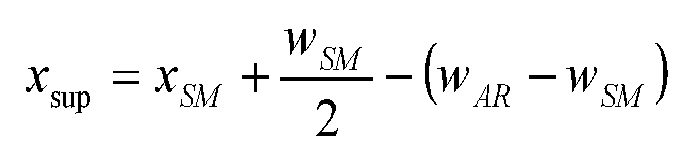
Fig. 4 . In case the area of one direction costs more bits to be coded (deduced by the macro-block cost map) than the other direction, the other direction is favoured. I.e., the cropping window is extended in the opposite direction proportionally to the bits cost in each direction, whereby this cost is minimised. The extensions to the left and/or to the right are computed as follows:
- The bits cost



- Another way to constraint the location of the cropping window box is to compute only the cost corresponding to several reachable cropping windows in the neighbourhood, as depicted in
Fig. 5 , and to keep the one with the smallest coding cost. The set of M candidate cropping windows has the corresponding cost {C 0 ... CM }. The coding cost of the final location of the cropping window and thereby the final location itself is determined by Cfinal = Min{C 0 ...CM }. - Another interesting embodiment is to merge the saliency map with the macro-block cost map, such that an expensive coding cost macro-block decreases its corresponding saliency in the final saliency map. Thereby the potential impact of an expensive macro-block is decreased in the determination of the final cropping window location.
- One way to merge the two maps is to apply the following processing, called Coherent Normalisation, Sum plus Product (CNSP) :

where MB is a macro-block coding cost map value in the range 0...255, MBinv =255-MB, SM is a salience map value, and Nc is the normalisation operator driven by a priori knowledge. Instead of using the global maximum of each map, this operator uses an empirical value. - Some simplifications can be performed to adapt the cropping window to the encoder architecture, but also to improve coding efficiency in some cases:
- Insure alignment of the cropping window on the macroblock grid between prediction frame and current frame. It will improve the temporal prediction quality, but also may help to select the appropriate block size. The drawback is that a smooth temporal variation of the cropping window should be anyway guaranteed; otherwise some temporal artefacts will be visible.
- Similarly the cropping window position can be set to match the pixel sampling grid. In that case the motion vector will be necessarily a multiple of a number of pixels, and sub-pel motion estimation may not be necessary. Advantageously, this leads to a significant simplification of the encoder.
- Re-use any information from the re-framing process. For instance, in order to compute the saliency areas, it is necessary to compute the motion between frames. This information can be passed to the video encoder to help or replace the encoder motion estimation. Similarly, temporal variations of the cropping window are monitored and managed to ensure a smooth behaviour similar to the camera-man way of shooting. These virtual camera movements can also be used by the encoder to help motion estimation.
- If the source input video signal is an encoded one (whatever the encoder format), it is possible to re-use coding information like parameters, like it is known from video signal transcoding or transrating.
- In addition to such adaptations of the re-framing process for the encoding, it is also possible to include the reframing process within the encoding loop. For instance, the cropping window can be computed during the encoding of a frame such that the encoding and the re-framing are jointly optimised instead of being performed as a pre-processing.
- There are several advantages in doing that:
- First, the full picture can be encoded and some encoding strategy can be adapted to the cropping window, i.e. H.264/AVC SEI messages are used to signal to the decoder the optional cropping window, higher bit-rate/encoding quality can be set for the cropping window, different slices can be used for the two areas, skip modes can be set for the non cropping window.
- Second, the full frame can be used in the encoder but only the cropping window is encoded. This allows the previously described joint optimisations of the cropping window size and position as well as encoding, and the motion estimation can be performed on the full frame to prevent border effects and to ease encoding of the motion field (better homogeneity), provides the possibility of dynamically switching from the cropping window to the full frame.
- Third, as mentioned, many computations from one process can be re-used by a subsequent process, instead of performing them twice. The architecture and the CPU performance (or hardware complexity) will be globally reduced, and such system offers more functionalities and flexibility.

Claims (10)
- Method for reframing (16, 23) an original video signal (11, 21), followed by an encoding (18) of the reframed video signal, said method including the steps:- computing (12, 22) a saliency map for a current picture of said original video signal;- optionally providing (14) a macroblock coding cost map for said current picture of said original video signal;- selecting (231) a candidate reframing window size and position within said current picture of said original video signal;- by using said saliency map or said combined saliency and macroblock coding cost map, determining (16, 17) in said original video signal a different position and/or size of the reframing window, for which different position and/or size the coding cost for said reframed video signal are smaller than the coding cost for said candidate reframing window size and position;- encoding (18) said corresponding reframed video signal.
- Apparatus for reframing (16, 23) an original video signal (11, 21), followed by an encoding (18) of the reframed video signal, said apparatus including:- means (12, 14, 15, 22) being adapted for computing a saliency map for a current picture of said original video signal, and optionally for providing a macroblock coding cost map for said current picture;- means (231, 16, 17) being adapted for selecting a candidate reframing window size and position within said current picture of said original video signal, and for determining in said original video signal a different position and/or size of the reframing window, by using said saliency map or said combined saliency and macroblock coding cost map, for which different position and/or size the coding cost for said reframed video signal are smaller than the coding cost for said candidate reframing window size and position;- encoding means (18) for said corresponding reframed video signal.
- Method according to claim 1, or apparatus according to claim 2, wherein a Kalman filter is used (232, 233) to control the variation of the position and the size of the reframing window due to variations of the content of the saliency map over time.
- Method according to the method of claim 3, or apparatus according to the apparatus of claim 3, wherein a Kalman filter is used in two steps for each picture, for predicting a current state xk with respect to a previous state x k―1 and a state transition model so as to stabilise the reframing window parameters, and for correcting the prediction using a noisy measure, wherein state xk defines the position of the centre of the reframing window and its size,

- Method according to the method of claim 1, 3 or 4, or apparatus according to the apparatus of claim 2, 3 or 4, wherein said macroblock coding cost map (14) is provided and, if the aspect ratio of the candidate reframing window resulting from the current content of said saliency map is different than the aspect ratio of said original video signal (11, 21), the candidate reframing window is extended correspondingly in horizontal or vertical direction so as to achieve said aspect ratio of said original video signal, wherein the direction of said extension is performed such that for the current candidate reframing window the macroblock coding cost derived from the current macroblock coding cost map is reduced.
- Method according to the method of one of claims 1 and 2 to 5, or apparatus according to the apparatus of one of claims 2 to 5, wherein said saliency map (13) is merged (15) with said macro-block cost map (14), such that an expensive coding cost macro-block decreases the corresponding saliency value in a final saliency map applied.
- Method according to the method of one of claims 1 and 2 to 6, wherein said encoding (18) is a H.264/AVC encoding, or apparatus according to the apparatus of one of claims 2 to 6, wherein said encoding means (18) are H.264/AVC encoding means.
- Method according to the method of claim 7, or apparatus according to the apparatus of claim 7, wherein said reframing is included within the encoding loop but the full picture is encoded, and wherein SEI messages are used to signal to the decoder a reframing window to be used.
- Method according to the method of one of claims 1 and 2 to 8, or apparatus according to the apparatus of one of claims 2 to 8, wherein said reframing window is aligned to macroblock borders.
- Digital video signal that is reframed according to the method of one of claims 1 and 2 to 9.
Priority Applications (7)
| Application Number | Priority Date | Filing Date | Title |
|---|---|---|---|
| EP11305937A EP2549754A1 (en) | 2011-07-19 | 2011-07-19 | Method and apparatus for reframing and encoding an original video signal |
| EP12730496.2A EP2735146A1 (en) | 2011-07-19 | 2012-06-25 | Method and apparatus for reframing and encoding a video signal |
| PCT/EP2012/062196 WO2013010751A1 (en) | 2011-07-19 | 2012-06-25 | Method and apparatus for reframing and encoding a video signal |
| US14/233,556 US9641795B2 (en) | 2011-07-19 | 2012-06-25 | Method and apparatus for reframing and encoding a video signal |
| JP2014520583A JP5974089B2 (en) | 2011-07-19 | 2012-06-25 | Method and apparatus for reframing and encoding video signals |
| CN201280035550.6A CN103688538B (en) | 2011-07-19 | 2012-06-25 | Method and apparatus for reconstructing and encoding a video signal |
| KR1020147001126A KR20140042860A (en) | 2011-07-19 | 2012-06-25 | Method and apparatus for reframing and encoding a video signal |
Applications Claiming Priority (1)
| Application Number | Priority Date | Filing Date | Title |
|---|---|---|---|
| EP11305937A EP2549754A1 (en) | 2011-07-19 | 2011-07-19 | Method and apparatus for reframing and encoding an original video signal |
Publications (1)
| Publication Number | Publication Date |
|---|---|
| EP2549754A1 true EP2549754A1 (en) | 2013-01-23 |
Family
ID=46397235
Family Applications (2)
| Application Number | Title | Priority Date | Filing Date |
|---|---|---|---|
| EP11305937A Withdrawn EP2549754A1 (en) | 2011-07-19 | 2011-07-19 | Method and apparatus for reframing and encoding an original video signal |
| EP12730496.2A Withdrawn EP2735146A1 (en) | 2011-07-19 | 2012-06-25 | Method and apparatus for reframing and encoding a video signal |
Family Applications After (1)
| Application Number | Title | Priority Date | Filing Date |
|---|---|---|---|
| EP12730496.2A Withdrawn EP2735146A1 (en) | 2011-07-19 | 2012-06-25 | Method and apparatus for reframing and encoding a video signal |
Country Status (6)
| Country | Link |
|---|---|
| US (1) | US9641795B2 (en) |
| EP (2) | EP2549754A1 (en) |
| JP (1) | JP5974089B2 (en) |
| KR (1) | KR20140042860A (en) |
| CN (1) | CN103688538B (en) |
| WO (1) | WO2013010751A1 (en) |
Families Citing this family (11)
| Publication number | Priority date | Publication date | Assignee | Title |
|---|---|---|---|---|
| EP2582134A1 (en) * | 2011-10-12 | 2013-04-17 | Thomson Licensing | Saliency value determination of predictively encoded video streams |
| EP2680219A1 (en) * | 2012-06-29 | 2014-01-01 | Thomson Licensing | Method for reframing images of a video sequence, and apparatus for reframing images of a video sequence |
| US9626584B2 (en) * | 2014-10-09 | 2017-04-18 | Adobe Systems Incorporated | Image cropping suggestion using multiple saliency maps |
| US20160234522A1 (en) * | 2015-02-05 | 2016-08-11 | Microsoft Technology Licensing, Llc | Video Decoding |
| KR20180079314A (en) * | 2015-09-29 | 2018-07-10 | 엘지전자 주식회사 | And apparatus for encoding and decoding video signals using graph-based lifting transforms |
| CN106934397B (en) | 2017-03-13 | 2020-09-01 | 北京市商汤科技开发有限公司 | Image processing method and device and electronic equipment |
| KR102340942B1 (en) * | 2017-11-17 | 2021-12-17 | 엘지디스플레이 주식회사 | Method for Image Processing and Display Device using the same |
| US11425412B1 (en) * | 2020-11-10 | 2022-08-23 | Amazon Technologies, Inc. | Motion cues for video encoding |
| CN113411582A (en) * | 2021-05-10 | 2021-09-17 | 华南理工大学 | Video coding method, system, device and medium based on active contour |
| CN116033180A (en) * | 2021-10-25 | 2023-04-28 | 中兴通讯股份有限公司 | Video processing method, electronic device and storage medium |
| CN119520724B (en) * | 2024-11-26 | 2026-01-13 | 天翼云科技有限公司 | Image generation method, device, equipment, medium and program product based on virtual camera |
Citations (6)
| Publication number | Priority date | Publication date | Assignee | Title |
|---|---|---|---|---|
| GB2370438A (en) * | 2000-12-22 | 2002-06-26 | Hewlett Packard Co | Automated image cropping using selected compositional rules. |
| US20050025387A1 (en) * | 2003-07-31 | 2005-02-03 | Eastman Kodak Company | Method and computer program product for producing an image of a desired aspect ratio |
| EP1679659A1 (en) * | 2005-01-06 | 2006-07-12 | Thomson Licensing | Method and device for selecting quantization parameters in a picture using side information |
| EP1748385A2 (en) | 2005-07-28 | 2007-01-31 | THOMSON Licensing | Method and device for generating a sequence of images of reduced size |
| US20080212897A1 (en) * | 2007-02-07 | 2008-09-04 | Olivier Le Meur | Image processing method |
| EP2071511A1 (en) * | 2007-12-13 | 2009-06-17 | Thomson Licensing | Method and device for generating a sequence of images of reduced size |
Family Cites Families (12)
| Publication number | Priority date | Publication date | Assignee | Title |
|---|---|---|---|---|
| US6654507B2 (en) * | 2000-12-14 | 2003-11-25 | Eastman Kodak Company | Automatically producing an image of a portion of a photographic image |
| US20070230565A1 (en) * | 2004-06-18 | 2007-10-04 | Tourapis Alexandros M | Method and Apparatus for Video Encoding Optimization |
| DE602006017812D1 (en) * | 2005-03-17 | 2010-12-09 | British Telecomm | METHOD FOR TRACKING OBJECTS IN A VIDEO SEQUENCE |
| TW200719281A (en) * | 2005-07-28 | 2007-05-16 | Thomson Licensing | Method and device for generating a sequence of images of reduced size |
| FR2889381A1 (en) * | 2005-07-28 | 2007-02-02 | Thomson Licensing Sas | METHOD AND DEVICE FOR DETERMINING QUANTIFICATION PARAMETERS IN AN IMAGE |
| EP2077525A1 (en) | 2006-02-13 | 2009-07-08 | SNELL & WILCOX LIMITED | Method and apparatus for spatially segmenting a moving image sequence |
| US8160150B2 (en) * | 2007-04-10 | 2012-04-17 | Texas Instruments Incorporated | Method and system for rate distortion optimization |
| WO2009024966A2 (en) | 2007-08-21 | 2009-02-26 | Closevu Ltd. | Method for adapting media for viewing on small display screens |
| EP2269371B1 (en) | 2008-03-20 | 2018-01-31 | Institut für Rundfunktechnik GmbH | A method of adapting video images to small screen sizes |
| EP2141658B1 (en) | 2008-06-30 | 2013-05-01 | Thomson Licensing | Method for detecting layout areas in a video image and method for generating a reduced size image using the detection method |
| US9025933B2 (en) * | 2010-02-12 | 2015-05-05 | Sony Corporation | Information processing device, information processing method, playback device, playback method, program and recording medium |
| US8891009B2 (en) * | 2011-08-29 | 2014-11-18 | Futurewei Technologies, Inc. | System and method for retargeting video sequences |
-
2011
- 2011-07-19 EP EP11305937A patent/EP2549754A1/en not_active Withdrawn
-
2012
- 2012-06-25 EP EP12730496.2A patent/EP2735146A1/en not_active Withdrawn
- 2012-06-25 JP JP2014520583A patent/JP5974089B2/en active Active
- 2012-06-25 KR KR1020147001126A patent/KR20140042860A/en not_active Abandoned
- 2012-06-25 US US14/233,556 patent/US9641795B2/en active Active
- 2012-06-25 WO PCT/EP2012/062196 patent/WO2013010751A1/en not_active Ceased
- 2012-06-25 CN CN201280035550.6A patent/CN103688538B/en active Active
Patent Citations (6)
| Publication number | Priority date | Publication date | Assignee | Title |
|---|---|---|---|---|
| GB2370438A (en) * | 2000-12-22 | 2002-06-26 | Hewlett Packard Co | Automated image cropping using selected compositional rules. |
| US20050025387A1 (en) * | 2003-07-31 | 2005-02-03 | Eastman Kodak Company | Method and computer program product for producing an image of a desired aspect ratio |
| EP1679659A1 (en) * | 2005-01-06 | 2006-07-12 | Thomson Licensing | Method and device for selecting quantization parameters in a picture using side information |
| EP1748385A2 (en) | 2005-07-28 | 2007-01-31 | THOMSON Licensing | Method and device for generating a sequence of images of reduced size |
| US20080212897A1 (en) * | 2007-02-07 | 2008-09-04 | Olivier Le Meur | Image processing method |
| EP2071511A1 (en) * | 2007-12-13 | 2009-06-17 | Thomson Licensing | Method and device for generating a sequence of images of reduced size |
Non-Patent Citations (6)
| Title |
|---|
| 0. LEMEUR, P. LECALLET, D. BARBA: "Predicting visual fixations on video based on low-level visual features", VISION RESEARCH, vol. 47, no. 19, September 2007 (2007-09-01), pages 2483 - 2498, XP022237937 * |
| 0. LEMEUR, P. LECALLET, D. BARBA: "Predicting visual fixations on video based on low-level visual features", VISION RESEARCH, vol. 47, no. 19, September 2007 (2007-09-01), pages 2483 - 2498, XP022237937, DOI: doi:10.1016/j.visres.2007.06.015 |
| C. CHAMARET, 0. LEMEUR: "Attention-based video reframing: validation using eye-tracking", 19TH INTERNATIONAL CONFERENCE ON PATTERN RECOGNITION ICPR'08, 8 December 2008 (2008-12-08) |
| C. CHAMARET, 0. LEMEUR: "Attention-based video reframing: validation using eye-tracking", 19TH INTERNATIONAL CONFERENCE ON PATTERN RECOGNITION ICPR'08, 8 December 2008 (2008-12-08), XP031412162 * |
| CHEN L-Q ET AL: "A VISUAL ATTENTION MODEL FOR ADAPTING IMAGES ON SMALL DISPLAYS", MULTIMEDIA SYSTEMS, ACM, NEW YORK, NY, US, vol. 9, no. 4, 1 October 2003 (2003-10-01), pages 353 - 364, XP001196335, ISSN: 0942-4962, DOI: 10.1007/S00530-003-0105-4 * |
| SUH BONGWON ET AL: "Automatic thumbnail cropping and its effectiveness", PROCEEDINGS OF THE 16TH ANNUAL ACM SYMPOSIUM ON USER INTERFACE SOFTWARE AND TECHNOLOGY : VANCOUVER, CANADA, NOVEMBER 2 - 5, 2003; [ACM SYMPOSIUM ON USER INTERFACE SOFTWARE AND TECHNOLOGY], ACM PRESS, NEW YORK, NY, vol. 5, no. 2, 1 January 2003 (2003-01-01), pages 95 - 104, XP002367824, ISBN: 978-1-58113-636-4, DOI: 10.1145/964696.964707 * |
Also Published As
| Publication number | Publication date |
|---|---|
| WO2013010751A8 (en) | 2013-08-15 |
| US9641795B2 (en) | 2017-05-02 |
| CN103688538B (en) | 2017-05-31 |
| WO2013010751A1 (en) | 2013-01-24 |
| JP5974089B2 (en) | 2016-08-23 |
| EP2735146A1 (en) | 2014-05-28 |
| JP2014521272A (en) | 2014-08-25 |
| KR20140042860A (en) | 2014-04-07 |
| CN103688538A (en) | 2014-03-26 |
| US20140153651A1 (en) | 2014-06-05 |
Similar Documents
| Publication | Publication Date | Title |
|---|---|---|
| US9641795B2 (en) | Method and apparatus for reframing and encoding a video signal | |
| Li et al. | A deep learning approach for multi-frame in-loop filter of HEVC | |
| EP2123051B1 (en) | Image compression and decompression | |
| US10091500B2 (en) | Video coding method using at least evaluated visual quality and related video coding apparatus | |
| JP5261376B2 (en) | Image coding apparatus and image decoding apparatus | |
| CN109379594B (en) | Video coding compression method, device, equipment and medium | |
| US9438912B2 (en) | Video encoding/decoding methods, video encoding/decoding apparatuses, and programs therefor | |
| EP3416386A1 (en) | Hash-based encoder decisions for video coding | |
| WO2002102086A2 (en) | Apparatus and method for adaptive spatial segmentation-based noise reducing for encoded image signal | |
| US20040151243A1 (en) | Method and apparatus for DCT domain filtering for block based encoding | |
| WO2009033152A2 (en) | Real-time video coding/decoding | |
| EP3726837B1 (en) | Coding unit division determining method and device, computing device and readable storage medium | |
| JP2014521272A5 (en) | ||
| EP3777174B1 (en) | Template based adaptive weighted bi-prediction for video coding | |
| US8565311B2 (en) | Image processing apparatus and method thereof | |
| JP2008301336A (en) | Image processing apparatus, image encoding apparatus, and image decoding apparatus | |
| TWI884435B (en) | Method and apparatus using curve based or spread-angle based intra prediction mode | |
| JP2001245179A (en) | Method for reducing image data distortion and equipment of the same | |
| JP2021013145A (en) | Video transmission device, video transmission method | |
| JP3715273B2 (en) | Image data smoothing processing apparatus, smoothing processing method, and smoothing processing program | |
| JP2007228519A (en) | Image encoding device and image encoding method | |
| JP4763413B2 (en) | Image improvement device | |
| Hong | Low computing post processing to suppress annoying artifacts of compressed video sequences | |
| Fu et al. | Fast global motion estimation based on local motion segmentation | |
| Ahmadianpour et al. | A novel approach for bi-directional motion estimation and compensation |
Legal Events
| Date | Code | Title | Description |
|---|---|---|---|
| PUAI | Public reference made under article 153(3) epc to a published international application that has entered the european phase |
Free format text: ORIGINAL CODE: 0009012 |
|
| AK | Designated contracting states |
Kind code of ref document: A1 Designated state(s): AL AT BE BG CH CY CZ DE DK EE ES FI FR GB GR HR HU IE IS IT LI LT LU LV MC MK MT NL NO PL PT RO RS SE SI SK SM TR |
|
| AX | Request for extension of the european patent |
Extension state: BA ME |
|
| STAA | Information on the status of an ep patent application or granted ep patent |
Free format text: STATUS: THE APPLICATION IS DEEMED TO BE WITHDRAWN |
|
| 18D | Application deemed to be withdrawn |
Effective date: 20130724 |