EP2549353A2 - Systems and methods for generating a command trajectory - Google Patents
Systems and methods for generating a command trajectory Download PDFInfo
- Publication number
- EP2549353A2 EP2549353A2 EP12162021A EP12162021A EP2549353A2 EP 2549353 A2 EP2549353 A2 EP 2549353A2 EP 12162021 A EP12162021 A EP 12162021A EP 12162021 A EP12162021 A EP 12162021A EP 2549353 A2 EP2549353 A2 EP 2549353A2
- Authority
- EP
- European Patent Office
- Prior art keywords
- natural frequency
- closure rate
- flight path
- aircraft
- threshold
- Prior art date
- Legal status (The legal status is an assumption and is not a legal conclusion. Google has not performed a legal analysis and makes no representation as to the accuracy of the status listed.)
- Withdrawn
Links
- 238000000034 method Methods 0.000 title claims description 30
- 230000008859 change Effects 0.000 claims description 2
- 230000003190 augmentative effect Effects 0.000 description 28
- 238000004891 communication Methods 0.000 description 18
- 230000002085 persistent effect Effects 0.000 description 14
- 238000010586 diagram Methods 0.000 description 8
- RZVHIXYEVGDQDX-UHFFFAOYSA-N 9,10-anthraquinone Chemical compound C1=CC=C2C(=O)C3=CC=CC=C3C(=O)C2=C1 RZVHIXYEVGDQDX-UHFFFAOYSA-N 0.000 description 7
- 238000004364 calculation method Methods 0.000 description 3
- 239000004744 fabric Substances 0.000 description 3
- 230000006870 function Effects 0.000 description 3
- 230000003287 optical effect Effects 0.000 description 2
- 238000003491 array Methods 0.000 description 1
- 230000005540 biological transmission Effects 0.000 description 1
- 238000004590 computer program Methods 0.000 description 1
- 230000001419 dependent effect Effects 0.000 description 1
- 230000000977 initiatory effect Effects 0.000 description 1
- 230000007246 mechanism Effects 0.000 description 1
- 230000008569 process Effects 0.000 description 1
- 210000003813 thumb Anatomy 0.000 description 1
- 230000007723 transport mechanism Effects 0.000 description 1
Images

Classifications
-
- G—PHYSICS
- G05—CONTROLLING; REGULATING
- G05D—SYSTEMS FOR CONTROLLING OR REGULATING NON-ELECTRIC VARIABLES
- G05D1/00—Control of position, course, altitude or attitude of land, water, air or space vehicles, e.g. using automatic pilots
- G05D1/04—Control of altitude or depth
- G05D1/06—Rate of change of altitude or depth
- G05D1/0607—Rate of change of altitude or depth specially adapted for aircraft
-
- G—PHYSICS
- G01—MEASURING; TESTING
- G01C—MEASURING DISTANCES, LEVELS OR BEARINGS; SURVEYING; NAVIGATION; GYROSCOPIC INSTRUMENTS; PHOTOGRAMMETRY OR VIDEOGRAMMETRY
- G01C23/00—Combined instruments indicating more than one navigational value, e.g. for aircraft; Combined measuring devices for measuring two or more variables of movement, e.g. distance, speed or acceleration
- G01C23/005—Flight directors
-
- G—PHYSICS
- G05—CONTROLLING; REGULATING
- G05D—SYSTEMS FOR CONTROLLING OR REGULATING NON-ELECTRIC VARIABLES
- G05D1/00—Control of position, course, altitude or attitude of land, water, air or space vehicles, e.g. using automatic pilots
- G05D1/08—Control of attitude, i.e. control of roll, pitch, or yaw
- G05D1/0808—Control of attitude, i.e. control of roll, pitch, or yaw specially adapted for aircraft
- G05D1/0866—Control of attitude, i.e. control of roll, pitch, or yaw specially adapted for aircraft specially adapted to captive aircraft
Definitions
- the field of the disclosure relates generally to flight control systems for aircraft, and, more particularly, to systems and methods for use in generating command trajectories for aircraft.
- Automatic flight control systems for aircraft allow aircraft to automatically capture and hold a selected altitude, glideslope, and/or other types of vertical path or trajectory. This is typically accomplished via an autopilot that computes a command trajectory. Based on the computed command trajectory, automatic flight control systems cause various aircraft control surfaces to selectively perform such that the aircraft maneuvers to capture the desired trajectory.
- U.S. Patent No. 5,695,156 describes a number of flight control systems and methods that are known in the art and may be applied, at least in part, to embodiments described herein.
- a system for use in generating a command trajectory for an aircraft includes a natural frequency determining module configured to determine a closure rate of the aircraft to a selected flight path, compare the closure rate of the aircraft to a threshold closure rate, and calculate a natural frequency based on whether the closure rate is below the threshold closure rate.
- the system further includes a command processor coupled to the natural frequency determining module and configured to receive the calculated natural frequency from the natural frequency determining module, and generate a command trajectory using the calculated natural frequency.
- a processing device for use in generating a command trajectory for an aircraft.
- the processing device is configured to determine a closure rate of the aircraft to a selected flight path, compare the closure rate of the aircraft to a threshold closure rate, calculate a natural frequency based on whether the closure rate is below the threshold closure rate, and supply the calculated natural frequency to a command processor configured to generate a command trajectory based on the calculated natural frequency.
- a method for performing a change in the flight path of an aircraft includes comparing an initial flight path of the aircraft to a selected flight path that is to be captured by the aircraft to determine whether the initial flight path is nearly parallel to the selected flight path, and expediting a capture maneuver of the selected flight path when the initial flight path is nearly parallel to the selected flight path.
- the systems and methods described herein provide improvements over at least some known flight control systems. More specifically, the systems and methods described herein enable a closure rate of an aircraft with a selected flight path to be determined. A natural frequency is calculated based on the closure rate, and the calculated natural frequency is used to generate a command trajectory. When an aircraft is flying nearly parallel to a selected flight path, an augmented command trajectory is generated, and the aircraft performs an expedited capture maneuver to capture the selected flight path. As mentioned herein, at least some flight control systems and methods are known in the art.
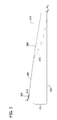
- Fig. 1 is a schematic diagram of an aircraft 200 capturing a selected flight path 202.
- Aircraft 200 initially has current altitude h and current vertical speed ⁇ that define an initial flight path 204.
- Selected flight path 202 is defined by selected altitude h s and selected vertical speed ⁇ s .
- initial flight path 204 is nearly parallel to selected flight path 202. More specifically, the value of current vertical speed ⁇ is relatively close to the value of selected vertical speed ⁇ s .
- a capture maneuver may be initiated even though the aircraft may not be in at least some of the capture regions as known in the art.
- An alternative calculation of the natural frequency may be used in this case, as using the natural frequency calculations as known in the art may result in a non-optimal capture maneuver. For example, if a natural frequency calculation is performed as known in the art, as current vertical speed ⁇ is relatively close to selected vertical speed ⁇ s , the natural frequency ⁇ n may be relatively small. As shown in Fig. 1 , a command trajectory 208 generated using a relatively small ⁇ n results in aircraft 200 executing a relatively slow capture of selected flight path 202.
- selected flight path 202 is a glideslope flight path.
- selected flight path 202 may be a constant altitude flight path or any other desired flight path.
- an augmented natural frequency ⁇ ' n is calculated and used to generate an augmented command trajectory 210, as described in detail below.
- the augmented natural frequency ⁇ ' n may be calculated such that aircraft 200 captures selected flight path 202 above a decision height and/or before performing a flare maneuver.
- the augmented natural frequency ⁇ ' n is greater than the natural frequency ⁇ n calculated as known in the art.
- augmented command trajectory 210 results in aircraft 200 capturing selected flight path 202 in a shorter distance and time than command trajectory 208. That is, because the augmented natural frequency ⁇ ' n is greater than the natural frequency ⁇ n , augmented command trajectory 210 results in an expedited capture maneuver as compared to command trajectory 208.
- Fig. 1 also shows a region 211 that includes a threshold 212.
- the boundaries of region 211 may not be dependent upon current altitude h, current vertical speed ⁇ , selected altitude h s , and selected vertical speed ⁇ s .
- region 211 may be defined as a predetermined range from selected flight path 202 to a threshold 212 located a fixed distance from selected flight path 202.
- threshold 212 is parallel to selected flight path 202 and set a fixed distance from selected flight path 202.
- Threshold 212 may be set any predetermined fixed distance from selected flight path 202 that enables generation of augmented command trajectory 210 as described herein.
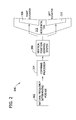
- Fig. 2 is a block diagram of an exemplary system 300 for generating an augmented command trajectory and controlling an aircraft to follow the generated trajectory, such as augmented command trajectory 210 (shown in Fig. 1 ).
- System 300 includes a natural frequency determining module 302, a command processor 304, and a vertical position control system 306.
- natural frequency determining module 302 determines whether initial flight path 204 of aircraft 200 is nearly parallel to selected flight path 202 by determining a closure rate of aircraft 200.
- the closure rate is defined as
- natural frequency determining module 302 compares the closure rate with a threshold closure rate.
- the threshold closure rate is a constant ft/sec threshold calculated based on a maximum allowable time between initiating a capture maneuver and acquiring selected flight path 202. Further, in at least some embodiments, threshold closure rate is a predetermined value. Alternatively, the threshold closure rate may be any value and/or calculated using any methods that enable system 300 to function as described herein.
- natural frequency determining module 302 calculates the natural frequency ⁇ n as is known in the art.
- natural frequency determining module 302 calculates the augmented natural frequency ⁇ ' n .
- the augmented natural frequency ⁇ ' n may be calculated using various methods. In some embodiments, the augmented natural frequency ⁇ ' n is calculated as a predetermined multiple of the natural frequency ⁇ n that is calculated as is known in the art. In other embodiments, the augmented natural frequency ⁇ ' n may be calculated as if aircraft 200 were located in one of the capture regions known in the art, even when aircraft 200 is not actually located within the particular capture region.
- the augmented natural frequency ⁇ ' n is set to a predetermined fixed value.
- the augmented natural frequency ⁇ ' n may be calculated using any methods that enable system 300 to function as described herein. As described above, in the exemplary embodiment, the augmented natural frequency ⁇ ' n is greater than the natural frequency ⁇ n calculated as is known in the art.
- natural frequency determining module 302 calculates the augmented natural frequency ⁇ ' n if the determined closure rate is below the closure rate threshold.
- natural frequency determining module 302 calculates the augmented natural frequency ⁇ ' n (as opposed to natural frequency ⁇ n ) when the closure rate is below the closure rate threshold and aircraft 200 is located in region 211. That is, in some embodiments, the augmented natural frequency ⁇ ' n is only calculated when the aircraft 200 is located between selected flight path 202 and threshold 212 (both shown in Fig. 1 ).
- Natural frequency determining module 302 is coupled to command processor 304.
- command processor 304 is a command processor as is known in the art.
- Natural frequency determining module 302 supplies the calculated natural frequency ( ⁇ ' n or ⁇ n ) to command processor 304, and command processor 304 generates a command trajectory in terms of commanded altitude h c and commanded vertical speed ⁇ c , using the systems and methods as known in the art.
- the calculated natural frequency is the augmented natural frequency ⁇ ' n
- the augmented natural frequency ⁇ ' n is simply substituted for ⁇ n where appropriate in the systems, methods and/or equations known in the art.
- Command processor 304 is coupled to vertical position control system 306.
- vertical position control system 306 is a vertical position control system as is known in the art. Using the methods and systems known in the art, vertical position control system 306 generates an elevator command ⁇ e .
- vertical position control system 306 controls operation of a right elevator 308 and a left elevator 310 on a horizontal tail 312 of aircraft 200. Specifically, vertical position control system 306 controls right elevator 308 and left elevator 310 based on elevator command ⁇ e such that aircraft 200 follows the command trajectory generated by command processor 304.
- natural frequency determining module 302, command processor 304, and vertical position control system 306 are shown as three separate components, one or more of natural frequency determining module 302, command processor 304, and vertical position control system 306 may be implemented using the same processing device.
- Fig. 3 is a flow diagram of an exemplary method 400 for generating a command trajectory.
- the method 400 includes determining 402 the closure rate for an aircraft, such as aircraft 200.
- the closure rate is compared to a threshold closure rate to determine 404 whether the closure rate is below the threshold closure rate. If the closure rate is below the threshold closure rate, an augmented natural frequency ⁇ ' n is calculated 406. If the closure rate is above or equal to the threshold closure rate, a natural frequency ⁇ n is calculated 408.
- the calculated natural frequency ( ⁇ ' n or ⁇ n ) is then used to generate 410 a corresponding command trajectory.
- the command trajectory is referred to as an augmented command trajectory.
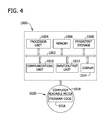
- Fig. 4 is a diagram of an exemplary data processing system 1000 that may be used in implementing one or more of the embodiments described herein.
- natural frequency determining module 302, command processor 304, and/or vertical position control system 306 may be implemented using data processing system 1000.
- data processing system 1000 includes communications fabric 1002, which provides communications between processor unit 1004, memory 1006, persistent storage 1008, communications unit 1010, input/output (I/O) unit 1012, and display 1014.
- Processor unit 1004 serves to execute instructions for software that may be loaded into memory 1006.
- Processor unit 1004 may be a set of one or more processors or may be a multi-processor core, depending on the particular implementation. Further, processor unit 1004 may be implemented using one or more heterogeneous processor systems in which a main processor is present with secondary processors on a single chip.
- processor unit 1004 may be a symmetric multi-processor system containing multiple processors of the same type. Further, processor unit 1004 may be implemented using any suitable programmable circuit including one or more systems and microcontrollers, microprocessors, reduced instruction set circuits (RISC), application specific integrated circuits (ASIC), programmable logic circuits, field programmable gate arrays (FPGA), and any other circuit capable of executing the functions described herein.
- RISC reduced instruction set circuits
- ASIC application specific integrated circuits
- FPGA field programmable gate arrays
- Memory 1006 and persistent storage 1008 are examples of storage devices.
- a storage device is any piece of hardware that is capable of storing information either on a temporary basis and/or a permanent basis.
- Memory 1006, in these examples, may be, for example, without limitation, a random access memory or any other suitable volatile or non-volatile storage device.
- Persistent storage 1008 may take various forms depending on the particular implementation.
- persistent storage 1008 may contain one or more components or devices.
- persistent storage 1008 may be a hard drive, a flash memory, a rewritable optical disk, a rewritable magnetic tape, or some combination of the above.
- the media used by persistent storage 1008 also may be removable.
- a removable hard drive may be used for persistent storage 1008.
- Communications unit 1010 in these examples, provides for communications with other data processing systems or devices.
- communications unit 1010 is a network interface card.
- Communications unit 1010 may provide communications through the use of either or both physical and wireless communication links.
- Input/output unit 1012 allows for input and output of data with other devices that may be connected to data processing system 1000.
- input/output unit 1012 may provide a connection for user input through a keyboard and mouse. Further, input/output unit 1012 may send output to a printer.
- Display 1014 provides a mechanism to display information to a user.
- Instructions for the operating system and applications or programs are located on persistent storage 1008. These instructions may be loaded into memory 1006 for execution by processor unit 1004. The processes of the different embodiments may be performed by processor unit 1004 using computer implemented instructions, which may be located in a memory, such as memory 1006. These instructions are referred to as program code, computer usable program code, or computer readable program code that may be read and executed by a processor in processor unit 1004. The program code in the different embodiments may be embodied on different physical or tangible computer readable media, such as memory 1006 or persistent storage 1008.
- Program code 1016 is located in a functional form on computer readable media 1018 that is selectively removable and may be loaded onto or transferred to data processing system 1000 for execution by processor unit 1004.
- Program code 1016 and computer readable media 1018 form computer program product 1020 in these examples.
- computer readable media 1018 may be in a tangible form, such as, for example, an optical or magnetic disc that is inserted or placed into a drive or other device that is part of persistent storage 1008 for transfer onto a storage device, such as a hard drive that is part of persistent storage 1008.
- computer readable media 1018 also may take the form of a persistent storage, such as a hard drive, a thumb drive, or a flash memory that is connected to data processing system 1000.
- the tangible form of computer readable media 1018 is also referred to as computer recordable storage media. In some instances, computer readable media 1018 may not be removable.
- program code 1016 may be transferred to data processing system 1000 from computer readable media 1018 through a communications link to communications unit 1010 and/or through a connection to input/output unit 1012.
- the communications link and/or the connection may be physical or wireless in the illustrative examples.
- the computer readable media also may take the form of non-tangible media, such as communications links or wireless transmissions containing the program code.
- program code 1016 may be downloaded over a network to persistent storage 1008 from another device or data processing system for use within data processing system 1000.
- program code stored in a computer readable storage medium in a server data processing system may be downloaded over a network from the server to data processing system 1000.
- the data processing system providing program code 1016 may be a server computer, a client computer, or some other device capable of storing and transmitting program code 1016.
- data processing system 1000 The different components illustrated for data processing system 1000 are not meant to provide architectural limitations to the manner in which different embodiments may be implemented.
- the different illustrative embodiments may be implemented in a data processing system including components in addition to or in place of those illustrated for data processing system 1000.
- Other components shown in Fig. 4 can be varied from the illustrative examples shown.
- a storage device in data processing system 1000 is any hardware apparatus that may store data.
- Memory 1006, persistent storage 1008 and computer readable media 1018 are examples of storage devices in a tangible form.
- a bus system may be used to implement communications fabric 1002 and may be comprised of one or more buses, such as a system bus or an input/output bus.
- the bus system may be implemented using any suitable type of architecture that provides for a transfer of data between different components or devices attached to the bus system.
- a communications unit may include one or more devices used to transmit and receive data, such as a modem or a network adapter.
- a memory may be, for example, without limitation, memory 1006 or a cache such as that found in an interface and memory controller hub that may be present in communications fabric 1002.
- the systems and methods described herein provide improvements over at least some known flight control systems, as the systems and methods described herein enable an aircraft to perform an expedited capture maneuver when the aircraft is in a flight path that is nearly parallel to a selected flight path. More specifically, the systems and methods described herein determine a closure rate of an aircraft with a selected flight path. A natural frequency is calculated based on the closure rate, and the calculated natural frequency is used to generate a command trajectory. When an aircraft is flying nearly parallel to a selected flight path, an augmented command trajectory is generated, and the aircraft performs the expedited capture maneuver to capture the selected flight path.
- a computer or computing device may include one or more processors or processing units, system memory, and some form of computer readable media.
- Exemplary computer readable media include flash memory drives, digital versatile discs (DVDs), compact discs (CDs), floppy disks, and tape cassettes.
- computer readable media comprise computer storage media and communication media.
- Computer storage media store information such as computer readable instructions, data structures, program modules, or other data.
- Communication media typically embody computer readable instructions, data structures, program modules, or other data in a modulated data signal such as a carrier wave or other transport mechanism and include any information delivery media. Combinations of any of the above are also included within the scope of computer readable media.
- the embodiments described herein may further include a processing device for use in generating a command trajectory for an aircraft configured to determine a closure rate of the aircraft to a selected flight path, compare the closure rate of the aircraft to a threshold closure rate, calculate a natural frequency based on whether the closure rate is below the threshold closure rate, and supply the calculated natural frequency to a command processor configured to generate a command trajectory based on the calculated natural frequency.
- the processing device may be further configured to determine a closure rate of the aircraft to a glideslope flight path.
- the processing device may be further configured to set the natural frequency to a predetermined fixed value when the closure rate is below the threshold closure rate.
- the processing device may be further configured to calculate a first natural frequency when the closure rate is not below the threshold closure rate, and calculate a second natural frequency when the closure rate is below the threshold closure rate, wherein the first natural frequency is less than the second natural frequency.
- the processing device may be further configured to calculate a first natural frequency when the closure rate is not below the threshold closure rate, and calculate a second natural frequency when the closure rate is below the threshold closure rate, wherein the second natural frequency is a predetermined multiple of the first natural frequency.
- the processing device is further configured to calculate a first natural frequency when at least one of the closure rate is not below the threshold closure rate and the aircraft is not within a predetermined range from the selected flight path, and calculate a second natural frequency when the closure rate is below the threshold closure rate and the aircraft is within the predetermined vertical range from the selected flight path, wherein the first natural frequency is less than the second natural frequency.
Landscapes
- Engineering & Computer Science (AREA)
- Radar, Positioning & Navigation (AREA)
- Remote Sensing (AREA)
- Aviation & Aerospace Engineering (AREA)
- Physics & Mathematics (AREA)
- General Physics & Mathematics (AREA)
- Automation & Control Theory (AREA)
- Traffic Control Systems (AREA)
Abstract
Description
- The field of the disclosure relates generally to flight control systems for aircraft, and, more particularly, to systems and methods for use in generating command trajectories for aircraft.
- Automatic flight control systems for aircraft allow aircraft to automatically capture and hold a selected altitude, glideslope, and/or other types of vertical path or trajectory. This is typically accomplished via an autopilot that computes a command trajectory. Based on the computed command trajectory, automatic flight control systems cause various aircraft control surfaces to selectively perform such that the aircraft maneuvers to capture the desired trajectory.
-
U.S. Patent No. 5,695,156 describes a number of flight control systems and methods that are known in the art and may be applied, at least in part, to embodiments described herein. - In one aspect, a system for use in generating a command trajectory for an aircraft is provided. The system includes a natural frequency determining module configured to determine a closure rate of the aircraft to a selected flight path, compare the closure rate of the aircraft to a threshold closure rate, and calculate a natural frequency based on whether the closure rate is below the threshold closure rate. The system further includes a command processor coupled to the natural frequency determining module and configured to receive the calculated natural frequency from the natural frequency determining module, and generate a command trajectory using the calculated natural frequency.
- In another aspect, a processing device for use in generating a command trajectory for an aircraft is provided. The processing device is configured to determine a closure rate of the aircraft to a selected flight path, compare the closure rate of the aircraft to a threshold closure rate, calculate a natural frequency based on whether the closure rate is below the threshold closure rate, and supply the calculated natural frequency to a command processor configured to generate a command trajectory based on the calculated natural frequency.
- In yet another aspect, a method for performing a change in the flight path of an aircraft is provided. The method includes comparing an initial flight path of the aircraft to a selected flight path that is to be captured by the aircraft to determine whether the initial flight path is nearly parallel to the selected flight path, and expediting a capture maneuver of the selected flight path when the initial flight path is nearly parallel to the selected flight path.
-
-
Fig. 1 is a schematic diagram of an aircraft capturing a selected flight path. -
Fig. 2 is a block diagram of an exemplary system for generating a command trajectory and controlling an aircraft to follow that trajectory. -
Fig. 3 is a flow diagram of an exemplary method for generating a command trajectory. -
Fig. 4 is a diagram of an exemplary data processing system that may be used in implementing one or more of the embodiments described herein. - The systems and methods described herein provide improvements over at least some known flight control systems. More specifically, the systems and methods described herein enable a closure rate of an aircraft with a selected flight path to be determined. A natural frequency is calculated based on the closure rate, and the calculated natural frequency is used to generate a command trajectory. When an aircraft is flying nearly parallel to a selected flight path, an augmented command trajectory is generated, and the aircraft performs an expedited capture maneuver to capture the selected flight path. As mentioned herein, at least some flight control systems and methods are known in the art.
-
Fig. 1 is a schematic diagram of anaircraft 200 capturing a selectedflight path 202.Aircraft 200 initially has current altitude h and current vertical speed ḣ that define aninitial flight path 204. Selectedflight path 202 is defined by selected altitude h s and selected vertical speed ḣ s . Notably, inFig. 1 ,initial flight path 204 is nearly parallel to selectedflight path 202. More specifically, the value of current vertical speed ḣ is relatively close to the value of selected vertical speed ḣ s . - When
initial flight path 204 is nearly parallel to selectedflight path 202, a capture maneuver may be initiated even though the aircraft may not be in at least some of the capture regions as known in the art. An alternative calculation of the natural frequency may be used in this case, as using the natural frequency calculations as known in the art may result in a non-optimal capture maneuver. For example, if a natural frequency calculation is performed as known in the art, as current vertical speed ḣ is relatively close to selected vertical speed ḣ s , the natural frequency ωn may be relatively small. As shown inFig. 1 , acommand trajectory 208 generated using a relatively small ωn results inaircraft 200 executing a relatively slow capture of selectedflight path 202. - In the exemplary embodiment, selected
flight path 202 is a glideslope flight path. Alternatively, selectedflight path 202 may be a constant altitude flight path or any other desired flight path. Wheninitial flight path 204 is nearly parallel to selectedflight path 202, an augmented natural frequency ω'n is calculated and used to generate an augmentedcommand trajectory 210, as described in detail below. Moreover, in embodiments where selectedflight path 202 is a glideslope flight path, the augmented natural frequency ω'n may be calculated such thataircraft 200 captures selectedflight path 202 above a decision height and/or before performing a flare maneuver. - In the exemplary embodiment, the augmented natural frequency ω'n is greater than the natural frequency ωn calculated as known in the art. As shown in
Fig. 1 , augmentedcommand trajectory 210 results inaircraft 200 capturing selectedflight path 202 in a shorter distance and time thancommand trajectory 208. That is, because the augmented natural frequency ω'n is greater than the natural frequency ωn, augmentedcommand trajectory 210 results in an expedited capture maneuver as compared tocommand trajectory 208. -
Fig. 1 also shows aregion 211 that includes athreshold 212. Unlike at least some of the capture regions known in the art, in at least some embodiments, the boundaries ofregion 211 may not be dependent upon current altitude h, current vertical speed ḣ , selected altitude h s , and selected vertical speed ḣ s . Instead,region 211 may be defined as a predetermined range from selectedflight path 202 to athreshold 212 located a fixed distance from selectedflight path 202. In the exemplary embodiment,threshold 212 is parallel to selectedflight path 202 and set a fixed distance from selectedflight path 202.Threshold 212 may be set any predetermined fixed distance from selectedflight path 202 that enables generation of augmentedcommand trajectory 210 as described herein. -
Fig. 2 is a block diagram of anexemplary system 300 for generating an augmented command trajectory and controlling an aircraft to follow the generated trajectory, such as augmented command trajectory 210 (shown inFig. 1 ).System 300 includes a naturalfrequency determining module 302, acommand processor 304, and a verticalposition control system 306. - In the exemplary embodiment, natural
frequency determining module 302 determines whetherinitial flight path 204 ofaircraft 200 is nearly parallel to selectedflight path 202 by determining a closure rate ofaircraft 200. The closure rate is defined as |ḣ-ḣs|, and represents the speed at whichaircraft 200 is approaching selectedflight path 202. Accordingly, a relatively low closure rate indicates thatinitial flight path 204 is nearly parallel to selectedflight path 202, while a relatively high closure rate indicates thatinitial flight path 204 is not nearly parallel to selectedflight path 202. - Once the closure rate is determined, natural
frequency determining module 302 compares the closure rate with a threshold closure rate. In the exemplary embodiment, the threshold closure rate is a constant ft/sec threshold calculated based on a maximum allowable time between initiating a capture maneuver and acquiring selectedflight path 202. Further, in at least some embodiments, threshold closure rate is a predetermined value. Alternatively, the threshold closure rate may be any value and/or calculated using any methods that enablesystem 300 to function as described herein. - If the determined closure rate is above or equal to the threshold closure rate, natural
frequency determining module 302 calculates the natural frequency ωn as is known in the art. - If the determined closure rate is below the threshold closure rate, natural
frequency determining module 302 calculates the augmented natural frequency ω'n. The augmented natural frequency ω' n may be calculated using various methods. In some embodiments, the augmented natural frequency ω'n is calculated as a predetermined multiple of the natural frequency ωn that is calculated as is known in the art. In other embodiments, the augmented natural frequency ω'n may be calculated as ifaircraft 200 were located in one of the capture regions known in the art, even whenaircraft 200 is not actually located within the particular capture region. - Further, in other embodiments, the augmented natural frequency ω'n is set to a predetermined fixed value. Alternatively, the augmented natural frequency ω'n may be calculated using any methods that enable
system 300 to function as described herein. As described above, in the exemplary embodiment, the augmented natural frequency ω'n is greater than the natural frequency ωn calculated as is known in the art. - Accordingly, in the exemplary embodiment, if the determined closure rate is below the closure rate threshold, natural
frequency determining module 302 calculates the augmented natural frequency ω'n. In an alternate embodiment, naturalfrequency determining module 302 calculates the augmented natural frequency ω'n (as opposed to natural frequency ωn) when the closure rate is below the closure rate threshold andaircraft 200 is located inregion 211. That is, in some embodiments, the augmented natural frequency ω'n is only calculated when theaircraft 200 is located between selectedflight path 202 and threshold 212 (both shown inFig. 1 ). - Natural
frequency determining module 302 is coupled tocommand processor 304. In the exemplary embodiment,command processor 304 is a command processor as is known in the art. Naturalfrequency determining module 302 supplies the calculated natural frequency (ω'n or ωn) tocommand processor 304, andcommand processor 304 generates a command trajectory in terms of commanded altitude h c and commanded vertical speed ḣc , using the systems and methods as known in the art. When the calculated natural frequency is the augmented natural frequency ω'n, to generateaugmented command trajectory 210, the augmented natural frequency ω'n is simply substituted for ωn where appropriate in the systems, methods and/or equations known in the art. -
Command processor 304 is coupled to verticalposition control system 306. In the exemplary embodiment, verticalposition control system 306 is a vertical position control system as is known in the art. Using the methods and systems known in the art, verticalposition control system 306 generates an elevator command δ e . In the exemplary embodiment, verticalposition control system 306 controls operation of aright elevator 308 and aleft elevator 310 on ahorizontal tail 312 ofaircraft 200. Specifically, verticalposition control system 306 controlsright elevator 308 and leftelevator 310 based on elevator command δ e such thataircraft 200 follows the command trajectory generated bycommand processor 304. - While in the exemplary embodiment, natural
frequency determining module 302,command processor 304, and verticalposition control system 306 are shown as three separate components, one or more of naturalfrequency determining module 302,command processor 304, and verticalposition control system 306 may be implemented using the same processing device. -
Fig. 3 is a flow diagram of anexemplary method 400 for generating a command trajectory. Themethod 400 includes determining 402 the closure rate for an aircraft, such asaircraft 200. The closure rate is compared to a threshold closure rate to determine 404 whether the closure rate is below the threshold closure rate. If the closure rate is below the threshold closure rate, an augmented natural frequency ω'n is calculated 406. If the closure rate is above or equal to the threshold closure rate, a natural frequency ωn is calculated 408. The calculated natural frequency (ω'n or ωn) is then used to generate 410 a corresponding command trajectory. When the calculated natural frequency is the augmented natural frequency ω'n, the command trajectory is referred to as an augmented command trajectory. -
Fig. 4 is a diagram of an exemplarydata processing system 1000 that may be used in implementing one or more of the embodiments described herein. For example, naturalfrequency determining module 302,command processor 304, and/or verticalposition control system 306 may be implemented usingdata processing system 1000. In the exemplary embodiment,data processing system 1000 includescommunications fabric 1002, which provides communications betweenprocessor unit 1004,memory 1006,persistent storage 1008,communications unit 1010, input/output (I/O)unit 1012, anddisplay 1014. -
Processor unit 1004 serves to execute instructions for software that may be loaded intomemory 1006.Processor unit 1004 may be a set of one or more processors or may be a multi-processor core, depending on the particular implementation. Further,processor unit 1004 may be implemented using one or more heterogeneous processor systems in which a main processor is present with secondary processors on a single chip. - As another illustrative example,
processor unit 1004 may be a symmetric multi-processor system containing multiple processors of the same type. Further,processor unit 1004 may be implemented using any suitable programmable circuit including one or more systems and microcontrollers, microprocessors, reduced instruction set circuits (RISC), application specific integrated circuits (ASIC), programmable logic circuits, field programmable gate arrays (FPGA), and any other circuit capable of executing the functions described herein. -
Memory 1006 andpersistent storage 1008 are examples of storage devices. A storage device is any piece of hardware that is capable of storing information either on a temporary basis and/or a permanent basis.Memory 1006, in these examples, may be, for example, without limitation, a random access memory or any other suitable volatile or non-volatile storage device.Persistent storage 1008 may take various forms depending on the particular implementation. - For example, without limitation,
persistent storage 1008 may contain one or more components or devices. For example,persistent storage 1008 may be a hard drive, a flash memory, a rewritable optical disk, a rewritable magnetic tape, or some combination of the above. The media used bypersistent storage 1008 also may be removable. For example, without limitation, a removable hard drive may be used forpersistent storage 1008. -
Communications unit 1010, in these examples, provides for communications with other data processing systems or devices. In these examples,communications unit 1010 is a network interface card.Communications unit 1010 may provide communications through the use of either or both physical and wireless communication links. - Input/
output unit 1012 allows for input and output of data with other devices that may be connected todata processing system 1000. For example, without limitation, input/output unit 1012 may provide a connection for user input through a keyboard and mouse. Further, input/output unit 1012 may send output to a printer.Display 1014 provides a mechanism to display information to a user. - Instructions for the operating system and applications or programs are located on
persistent storage 1008. These instructions may be loaded intomemory 1006 for execution byprocessor unit 1004. The processes of the different embodiments may be performed byprocessor unit 1004 using computer implemented instructions, which may be located in a memory, such asmemory 1006. These instructions are referred to as program code, computer usable program code, or computer readable program code that may be read and executed by a processor inprocessor unit 1004. The program code in the different embodiments may be embodied on different physical or tangible computer readable media, such asmemory 1006 orpersistent storage 1008. -
Program code 1016 is located in a functional form on computerreadable media 1018 that is selectively removable and may be loaded onto or transferred todata processing system 1000 for execution byprocessor unit 1004.Program code 1016 and computerreadable media 1018 formcomputer program product 1020 in these examples. In one example, computerreadable media 1018 may be in a tangible form, such as, for example, an optical or magnetic disc that is inserted or placed into a drive or other device that is part ofpersistent storage 1008 for transfer onto a storage device, such as a hard drive that is part ofpersistent storage 1008. In a tangible form, computerreadable media 1018 also may take the form of a persistent storage, such as a hard drive, a thumb drive, or a flash memory that is connected todata processing system 1000. The tangible form of computerreadable media 1018 is also referred to as computer recordable storage media. In some instances, computerreadable media 1018 may not be removable. - Alternatively,
program code 1016 may be transferred todata processing system 1000 from computerreadable media 1018 through a communications link tocommunications unit 1010 and/or through a connection to input/output unit 1012. The communications link and/or the connection may be physical or wireless in the illustrative examples. The computer readable media also may take the form of non-tangible media, such as communications links or wireless transmissions containing the program code. - In some illustrative embodiments,
program code 1016 may be downloaded over a network topersistent storage 1008 from another device or data processing system for use withindata processing system 1000. For instance, program code stored in a computer readable storage medium in a server data processing system may be downloaded over a network from the server todata processing system 1000. The data processing system providingprogram code 1016 may be a server computer, a client computer, or some other device capable of storing and transmittingprogram code 1016. - The different components illustrated for
data processing system 1000 are not meant to provide architectural limitations to the manner in which different embodiments may be implemented. The different illustrative embodiments may be implemented in a data processing system including components in addition to or in place of those illustrated fordata processing system 1000. Other components shown inFig. 4 can be varied from the illustrative examples shown. - As one example, a storage device in
data processing system 1000 is any hardware apparatus that may store data.Memory 1006,persistent storage 1008 and computerreadable media 1018 are examples of storage devices in a tangible form. - In another example, a bus system may be used to implement
communications fabric 1002 and may be comprised of one or more buses, such as a system bus or an input/output bus. Of course, the bus system may be implemented using any suitable type of architecture that provides for a transfer of data between different components or devices attached to the bus system. Additionally, a communications unit may include one or more devices used to transmit and receive data, such as a modem or a network adapter. Further, a memory may be, for example, without limitation,memory 1006 or a cache such as that found in an interface and memory controller hub that may be present incommunications fabric 1002. - The systems and methods described herein provide improvements over at least some known flight control systems, as the systems and methods described herein enable an aircraft to perform an expedited capture maneuver when the aircraft is in a flight path that is nearly parallel to a selected flight path. More specifically, the systems and methods described herein determine a closure rate of an aircraft with a selected flight path. A natural frequency is calculated based on the closure rate, and the calculated natural frequency is used to generate a command trajectory. When an aircraft is flying nearly parallel to a selected flight path, an augmented command trajectory is generated, and the aircraft performs the expedited capture maneuver to capture the selected flight path.
- The systems described herein may be implemented or performed using one or more computers or computing devices. A computer or computing device may include one or more processors or processing units, system memory, and some form of computer readable media. Exemplary computer readable media include flash memory drives, digital versatile discs (DVDs), compact discs (CDs), floppy disks, and tape cassettes. By way of example and not limitation, computer readable media comprise computer storage media and communication media. Computer storage media store information such as computer readable instructions, data structures, program modules, or other data. Communication media typically embody computer readable instructions, data structures, program modules, or other data in a modulated data signal such as a carrier wave or other transport mechanism and include any information delivery media. Combinations of any of the above are also included within the scope of computer readable media.
- As such, the embodiments described herein may further include a processing device for use in generating a command trajectory for an aircraft configured to determine a closure rate of the aircraft to a selected flight path, compare the closure rate of the aircraft to a threshold closure rate, calculate a natural frequency based on whether the closure rate is below the threshold closure rate, and supply the calculated natural frequency to a command processor configured to generate a command trajectory based on the calculated natural frequency. To determine a closure rate, the processing device may be further configured to determine a closure rate of the aircraft to a glideslope flight path.
- To calculate the natural frequency, the processing device may be further configured to set the natural frequency to a predetermined fixed value when the closure rate is below the threshold closure rate. In another embodiment, to calculate a natural frequency, the processing device may be further configured to calculate a first natural frequency when the closure rate is not below the threshold closure rate, and calculate a second natural frequency when the closure rate is below the threshold closure rate, wherein the first natural frequency is less than the second natural frequency. In still another embodiment, to calculate a natural frequency, the processing device may be further configured to calculate a first natural frequency when the closure rate is not below the threshold closure rate, and calculate a second natural frequency when the closure rate is below the threshold closure rate, wherein the second natural frequency is a predetermined multiple of the first natural frequency. In yet another embodiment, calculate a natural frequency, the processing device is further configured to calculate a first natural frequency when at least one of the closure rate is not below the threshold closure rate and the aircraft is not within a predetermined range from the selected flight path, and calculate a second natural frequency when the closure rate is below the threshold closure rate and the aircraft is within the predetermined vertical range from the selected flight path, wherein the first natural frequency is less than the second natural frequency.
- This written description uses examples to disclose various embodiments, which include the best mode, to enable any person skilled in the art to practice those embodiments, including making and using any devices or systems and performing any incorporated methods. The patentable scope is defined by the claims, and may include other examples that occur to those skilled in the art. Such other examples are intended to be within the scope of the claims if they have structural elements that do not differ from the literal language of the claims, or if they include equivalent structural elements with insubstantial differences from the literal languages of the claims.
Claims (14)
- A system (300) for use in generating (410) a command trajectory (208) for an aircraft (200), said system (300) comprising:a natural frequency determining module (302) configured to:determine (402) a closure rate of the aircraft (200) to a selected flight path (202);compare the closure rate of the aircraft (200) to a threshold closure rate; andcalculate (406) a natural frequency based on whether the closure rate is below the threshold closure rate; anda command processor (304) coupled to said natural frequency determining module (302) and configured to:receive the calculated natural frequency from said natural frequency determining module (302); andgenerate (410) a command trajectory (208) using the calculated natural frequency.
- A system (300) in accordance with Claim 1, wherein to calculate (406) the natural frequency, said natural frequency determining module (302) is further configured to set the natural frequency to a predetermined fixed value when the closure rate is below the threshold closure rate.
- A system (300) in accordance with Claim 1, wherein to calculate (406) a natural frequency, said natural frequency determining module (302) is further configured to:calculate (408) a first natural frequency when the closure rate is not below the threshold closure rate; andcalculate (406) a second natural frequency when the closure rate is below the threshold closure rate, wherein the first natural frequency is less than the second natural frequency.
- A system (300) in accordance with Claim 1, wherein to calculate (406) a natural frequency, said natural frequency determining module (302) is further configured to:calculate (408) a first natural frequency when the closure rate is not below the threshold closure rate; andcalculate (406) a second natural frequency when the closure rate is below the threshold closure rate, wherein the second natural frequency is a predetermined multiple of the first natural frequency.
- A system (300) in accordance with Claim 1, said system (300) further comprising a vertical position control system (306) coupled to said command processor (304) and configured to control the aircraft (200), using the generated command trajectory (208), such that the aircraft (200) captures the selected flight path (202).
- A system (300) in accordance with Claim 1, wherein to determine (402) a closure rate, said natural frequency determining module (302) is further configured to determine a closure rate of the aircraft (200) to a glideslope flight path.
- A system (300) in accordance with Claim 6, said system (300) further comprising a vertical position control system (306) coupled to said command processor (304) and configured to control the aircraft (200), using the generated command trajectory (208), such that the aircraft (200) captures the glideslope flight path above a decision height.
- A method (400) for performing a change in the flight path of an aircraft (200), said method (400) comprising:comparing an initial flight path (204) of the aircraft (200) to a selected flight path (202) that is to be captured by the aircraft (200) to determine whether the initial flight path (204) is nearly parallel to the selected flight path (202); andexpediting a capture maneuver of the selected flight path (202) when the initial flight path (204) is nearly parallel to the selected flight path (202).
- A method (400) in accordance with Claim 8, wherein comparing an initial flight path (204) to a selected flight path (202) comprises:determining(402) a closure rate of the aircraft (200) to the selected flight path (202);comparing the closure rate of the aircraft (200) to a threshold closure rate;calculating a natural frequency based on whether the closure rate is below the threshold closure rate, wherein the natural frequency is increased when the closure rate is below the threshold closure rate; andgenerating (410) a command trajectory (208) based on the calculated natural frequency; andwherein expediting a capture maneuver comprises following the generated command trajectory (208).
- A method (400) in accordance with Claim 9, wherein calculating (406) a natural frequency comprises setting the natural frequency to a predetermined fixed value when the closure rate is below the threshold closure rate.
- A method (400) in accordance with Claim 9, wherein calculating a natural frequency comprises:calculating (408) a first natural frequency when the closure rate is not below the threshold closure rate; andcalculating (406) a second natural frequency when the closure rate is below the threshold closure rate, wherein a command trajectory (208) generated using the first natural frequency results in a slower capture of the selected flight path (202) by the aircraft (200) than a command trajectory (208) generated using the second natural frequency.
- A method (400) in accordance with Claim 9, wherein calculating a natural frequency comprises:calculating (408) a first natural frequency when the closure rate is not below the threshold closure rate; andcalculating (410) a second natural frequency when the closure rate is below the threshold closure rate, wherein the second natural frequency is a predetermined multiple of the first natural frequency.
- A method (400) in accordance with Claim 8, wherein comparing an initial flight path (204) of the aircraft (200) to a selected flight path (202) comprises comparing the initial flight path (204) to a glideslope flight path.
- A method (400) in accordance with Claim 13, wherein expediting a capture maneuver of the selected flight path (202) comprises expediting the capture maneuver of the glideslope flight path such that the aircraft (200) captures the glideslope flight path above a decision height.
Applications Claiming Priority (1)
| Application Number | Priority Date | Filing Date | Title |
|---|---|---|---|
| US13/189,223 US8774985B2 (en) | 2011-07-22 | 2011-07-22 | Systems and methods for generating a command trajectory |
Publications (2)
| Publication Number | Publication Date |
|---|---|
| EP2549353A2 true EP2549353A2 (en) | 2013-01-23 |
| EP2549353A3 EP2549353A3 (en) | 2013-10-16 |
Family
ID=46085769
Family Applications (1)
| Application Number | Title | Priority Date | Filing Date |
|---|---|---|---|
| EP12162021.5A Withdrawn EP2549353A3 (en) | 2011-07-22 | 2012-03-29 | Systems and methods for generating a command trajectory |
Country Status (2)
| Country | Link |
|---|---|
| US (1) | US8774985B2 (en) |
| EP (1) | EP2549353A3 (en) |
Citations (1)
| Publication number | Priority date | Publication date | Assignee | Title |
|---|---|---|---|---|
| US5695156A (en) | 1995-05-15 | 1997-12-09 | The Boeing Company | Aircraft vertical position control system |
Family Cites Families (25)
| Publication number | Priority date | Publication date | Assignee | Title |
|---|---|---|---|---|
| US2022517A (en) * | 1928-11-17 | 1935-11-26 | Gen Electric | Radio echo altimeter |
| US3490556A (en) * | 1968-01-15 | 1970-01-20 | Mc Donnell Douglas Corp | Aircraft cabin noise reduction system with tuned vibration absorbers |
| US3994455A (en) | 1973-03-19 | 1976-11-30 | The Boeing Company | Automatic approach pitch axis control system for aircraft |
| WO1988009027A1 (en) * | 1987-05-08 | 1988-11-17 | John Harold Dunlavy | Aircraft collision avoidance |
| US5117362A (en) | 1989-12-15 | 1992-05-26 | Honeywell | Path capture forcing function generator for aircraft vertical axis control |
| US5377937A (en) | 1991-09-03 | 1995-01-03 | The Boeing Company | Aircraft flare control system utilizing an envelope limiter |
| US6116389A (en) * | 1995-08-07 | 2000-09-12 | Quality Research, Development & Consulting, Inc. | Apparatus and method for confinement and damping of vibration energy |
| US5781126A (en) * | 1996-07-29 | 1998-07-14 | Alliedsignal Inc. | Ground proximity warning system and methods for rotary wing aircraft |
| FR2754364B1 (en) * | 1996-10-03 | 1998-11-27 | Aerospatiale | METHOD AND DEVICE FOR VERTICAL GUIDANCE OF AN AIRCRAFT |
| US5933099A (en) * | 1997-02-19 | 1999-08-03 | Mahon; James | Collision avoidance system |
| US5978715A (en) * | 1997-10-15 | 1999-11-02 | Dassault Aviation | Apparatus and method for aircraft display and control |
| JP2939234B1 (en) * | 1998-03-24 | 1999-08-25 | 株式会社コミュータヘリコプタ先進技術研究所 | Flight path display device |
| US6422517B1 (en) * | 1999-12-02 | 2002-07-23 | Boeing Company | Aircraft tailstrike avoidance system |
| ATE348317T1 (en) | 2000-08-18 | 2007-01-15 | Honeywell Int Inc | AIRCRAFT LANDING ANGLE MONITORING DEVICE |
| JP2004518213A (en) * | 2000-10-25 | 2004-06-17 | ユナイテッド パーセル サービス オブ アメリカ インコーポレイテッド | Altitude range filter for cockpit traffic display |
| US6666410B2 (en) * | 2001-10-05 | 2003-12-23 | The Charles Stark Draper Laboratory, Inc. | Load relief system for a launch vehicle |
| WO2003040844A2 (en) * | 2001-11-06 | 2003-05-15 | Bombardier Inc. | Apparatus for controlling a joystick having force-feedback |
| US7742845B2 (en) * | 2002-07-22 | 2010-06-22 | California Institute Of Technology | Multi-agent autonomous system and method |
| US7976310B2 (en) * | 2006-01-13 | 2011-07-12 | Systems Technology, Inc. | Autorotation flight control system |
| FR2916280A1 (en) * | 2007-05-15 | 2008-11-21 | Thales Sa | RADAR SURVEILLANCE METHOD FOR WAKE TURBULENCE |
| US7917254B2 (en) | 2007-05-22 | 2011-03-29 | The Boeing Company | Aircraft guidance using localizer capture criteria for rectilinear displacement data |
| FR2922189B1 (en) * | 2007-10-16 | 2009-12-18 | Airbus France | METHOD AND DEVICE FOR DECREASING INDUCED SPEEDS IN AN AIRCRAFT WAKE. |
| CL2008000024A1 (en) * | 2008-01-04 | 2009-01-16 | Univ Pontificia Catolica Chile | System and method for the detection, location and identification of objects in soil and subsoil that are in an area of interest previously referenced. |
| US8116923B2 (en) | 2009-11-19 | 2012-02-14 | Honeywell International | Stabilized approach monitor |
| FR2953013B1 (en) * | 2009-11-20 | 2012-05-25 | Sagem Defense Securite | NAVIGATION SYSTEM INERTIA / GNSS |
-
2011
- 2011-07-22 US US13/189,223 patent/US8774985B2/en not_active Expired - Fee Related
-
2012
- 2012-03-29 EP EP12162021.5A patent/EP2549353A3/en not_active Withdrawn
Patent Citations (1)
| Publication number | Priority date | Publication date | Assignee | Title |
|---|---|---|---|---|
| US5695156A (en) | 1995-05-15 | 1997-12-09 | The Boeing Company | Aircraft vertical position control system |
Also Published As
| Publication number | Publication date |
|---|---|
| US8774985B2 (en) | 2014-07-08 |
| US20130024052A1 (en) | 2013-01-24 |
| EP2549353A3 (en) | 2013-10-16 |
Similar Documents
| Publication | Publication Date | Title |
|---|---|---|
| CN105405322B (en) | System and method for managing speed constraints during required time of arrival operations | |
| CN107064985B (en) | Method and system for deriving position data using radar in GPS landing system | |
| US20100070112A1 (en) | Progressive takeoff thrust ramp for an aircraft | |
| US9564056B1 (en) | Flight path optimization using nonlinear programming | |
| US8774989B1 (en) | Aircraft energy state display | |
| US8831799B1 (en) | Flight director flare guidance | |
| CN105278400B (en) | The system left the theatre from runway of control aircraft and generation are left the theatre the computer system of section | |
| JP5947525B2 (en) | Method and system for calculating standby route in time for required standby departure time | |
| US8706326B2 (en) | Method and device for aiding the piloting of an aircraft during a landing phase | |
| EP3032518B1 (en) | Aircraft turns for interval managent | |
| KR101640720B1 (en) | Method and apparatus for comparing performance of satellite attitude control | |
| CN113511205A (en) | Method and system for planning movement of vehicle | |
| CN113635912A (en) | Vehicle control method, device, equipment, storage medium and automatic driving vehicle | |
| US20070005247A1 (en) | A system and a method for automatic air collision avoidance | |
| US9811093B2 (en) | Flight trajectory compensation system for airspeed variations | |
| CN113741529B (en) | Remote guidance method and remote guidance device for spacecraft and rendezvous unit | |
| JP6181621B2 (en) | Photo management apparatus and photo management system | |
| US8774985B2 (en) | Systems and methods for generating a command trajectory | |
| Bronsvoort et al. | Improved trajectory prediction for air traffic management by simulation of guidance logic and inferred aircraft intent using existing data-link technology | |
| CN205507552U (en) | Unmanned aerial vehicle | |
| US11733713B2 (en) | System and method for improved aircraft and UAM control path accuracy including derivative segments control | |
| US10838431B2 (en) | Aircraft vertical guidance | |
| CN115158301A (en) | Aircraft avoidance method, device, equipment and medium for autonomous vehicle | |
| US10372636B2 (en) | System for changing rules for data pipeline reading using trigger data from one or more data connection modules | |
| CN117622501A (en) | A switching control method and equipment for aircraft launch flight state |
Legal Events
| Date | Code | Title | Description |
|---|---|---|---|
| PUAI | Public reference made under article 153(3) epc to a published international application that has entered the european phase |
Free format text: ORIGINAL CODE: 0009012 |
|
| 17P | Request for examination filed |
Effective date: 20120329 |
|
| AK | Designated contracting states |
Kind code of ref document: A2 Designated state(s): AL AT BE BG CH CY CZ DE DK EE ES FI FR GB GR HR HU IE IS IT LI LT LU LV MC MK MT NL NO PL PT RO RS SE SI SK SM TR |
|
| AX | Request for extension of the european patent |
Extension state: BA ME |
|
| PUAL | Search report despatched |
Free format text: ORIGINAL CODE: 0009013 |
|
| AK | Designated contracting states |
Kind code of ref document: A3 Designated state(s): AL AT BE BG CH CY CZ DE DK EE ES FI FR GB GR HR HU IE IS IT LI LT LU LV MC MK MT NL NO PL PT RO RS SE SI SK SM TR |
|
| AX | Request for extension of the european patent |
Extension state: BA ME |
|
| RIC1 | Information provided on ipc code assigned before grant |
Ipc: G05D 1/06 20060101AFI20130910BHEP |
|
| RIC1 | Information provided on ipc code assigned before grant |
Ipc: G01C 23/00 20060101AFI20171212BHEP Ipc: G05D 1/06 20060101ALI20171212BHEP |
|
| 17Q | First examination report despatched |
Effective date: 20180223 |
|
| STAA | Information on the status of an ep patent application or granted ep patent |
Free format text: STATUS: THE APPLICATION HAS BEEN WITHDRAWN |
|
| 18W | Application withdrawn |
Effective date: 20180619 |