EP2548454A1 - Range of aseptically produced infant foods having low concentrations of undesired by-products and methods for making the same - Google Patents
Range of aseptically produced infant foods having low concentrations of undesired by-products and methods for making the same Download PDFInfo
- Publication number
- EP2548454A1 EP2548454A1 EP12188961A EP12188961A EP2548454A1 EP 2548454 A1 EP2548454 A1 EP 2548454A1 EP 12188961 A EP12188961 A EP 12188961A EP 12188961 A EP12188961 A EP 12188961A EP 2548454 A1 EP2548454 A1 EP 2548454A1
- Authority
- EP
- European Patent Office
- Prior art keywords
- range
- infant
- food products
- stage
- product
- Prior art date
- Legal status (The legal status is an assumption and is not a legal conclusion. Google has not performed a legal analysis and makes no representation as to the accuracy of the status listed.)
- Granted
Links
- 235000008452 baby food Nutrition 0.000 title claims abstract description 49
- 239000006227 byproduct Substances 0.000 title claims abstract description 13
- 238000000034 method Methods 0.000 title claims description 11
- 239000000047 product Substances 0.000 claims abstract description 104
- YLQBMQCUIZJEEH-UHFFFAOYSA-N Furan Chemical compound C=1C=COC=1 YLQBMQCUIZJEEH-UHFFFAOYSA-N 0.000 claims abstract description 82
- 235000013305 food Nutrition 0.000 claims abstract description 55
- 238000012545 processing Methods 0.000 claims abstract description 13
- 235000013311 vegetables Nutrition 0.000 claims description 44
- 235000013399 edible fruits Nutrition 0.000 claims description 36
- 235000012054 meals Nutrition 0.000 claims description 28
- 230000008131 children development Effects 0.000 claims description 17
- 208000037265 diseases, disorders, signs and symptoms Diseases 0.000 claims description 9
- 238000004519 manufacturing process Methods 0.000 claims description 8
- 238000011161 development Methods 0.000 claims description 5
- 230000018109 developmental process Effects 0.000 claims description 5
- 208000002720 Malnutrition Diseases 0.000 claims description 3
- 208000008589 Obesity Diseases 0.000 claims description 3
- 206010012601 diabetes mellitus Diseases 0.000 claims description 3
- 201000010099 disease Diseases 0.000 claims description 3
- 239000003814 drug Substances 0.000 claims description 3
- 208000019622 heart disease Diseases 0.000 claims description 3
- 230000001071 malnutrition Effects 0.000 claims description 3
- 235000000824 malnutrition Nutrition 0.000 claims description 3
- 235000006180 nutrition needs Nutrition 0.000 claims description 3
- 208000015380 nutritional deficiency disease Diseases 0.000 claims description 3
- 235000020824 obesity Nutrition 0.000 claims description 3
- 230000002265 prevention Effects 0.000 claims description 3
- 235000013376 functional food Nutrition 0.000 claims 1
- 239000004615 ingredient Substances 0.000 description 25
- CIWBSHSKHKDKBQ-JLAZNSOCSA-N Ascorbic acid Chemical compound OC[C@H](O)[C@H]1OC(=O)C(O)=C1O CIWBSHSKHKDKBQ-JLAZNSOCSA-N 0.000 description 20
- 235000016709 nutrition Nutrition 0.000 description 19
- 235000019577 caloric intake Nutrition 0.000 description 18
- 230000000295 complement effect Effects 0.000 description 16
- 235000002767 Daucus carota Nutrition 0.000 description 13
- 244000000626 Daucus carota Species 0.000 description 13
- 235000021186 dishes Nutrition 0.000 description 12
- 235000009854 Cucurbita moschata Nutrition 0.000 description 10
- 240000001980 Cucurbita pepo Species 0.000 description 10
- 235000011430 Malus pumila Nutrition 0.000 description 10
- 235000015103 Malus silvestris Nutrition 0.000 description 10
- 244000061456 Solanum tuberosum Species 0.000 description 10
- 235000002595 Solanum tuberosum Nutrition 0.000 description 10
- 244000291564 Allium cepa Species 0.000 description 9
- 230000015572 biosynthetic process Effects 0.000 description 9
- 240000008067 Cucumis sativus Species 0.000 description 8
- 235000010799 Cucumis sativus var sativus Nutrition 0.000 description 8
- 240000004370 Pastinaca sativa Species 0.000 description 8
- 235000017769 Pastinaca sativa subsp sativa Nutrition 0.000 description 8
- 244000078534 Vaccinium myrtillus Species 0.000 description 8
- 235000015278 beef Nutrition 0.000 description 8
- 235000013339 cereals Nutrition 0.000 description 8
- 235000005911 diet Nutrition 0.000 description 8
- 230000037213 diet Effects 0.000 description 8
- 235000014698 Brassica juncea var multisecta Nutrition 0.000 description 7
- 235000006008 Brassica napus var napus Nutrition 0.000 description 7
- 235000006618 Brassica rapa subsp oleifera Nutrition 0.000 description 7
- 235000004977 Brassica sinapistrum Nutrition 0.000 description 7
- 244000188595 Brassica sinapistrum Species 0.000 description 7
- 241001672694 Citrus reticulata Species 0.000 description 7
- 240000006927 Foeniculum vulgare Species 0.000 description 7
- 235000004204 Foeniculum vulgare Nutrition 0.000 description 7
- 244000046052 Phaseolus vulgaris Species 0.000 description 7
- 235000019484 Rapeseed oil Nutrition 0.000 description 7
- 235000019486 Sunflower oil Nutrition 0.000 description 7
- 235000002017 Zea mays subsp mays Nutrition 0.000 description 7
- 230000001954 sterilising effect Effects 0.000 description 7
- 238000004659 sterilization and disinfection Methods 0.000 description 7
- 239000002600 sunflower oil Substances 0.000 description 7
- XLYOFNOQVPJJNP-UHFFFAOYSA-N water Substances O XLYOFNOQVPJJNP-UHFFFAOYSA-N 0.000 description 7
- 235000002732 Allium cepa var. cepa Nutrition 0.000 description 6
- 235000000832 Ayote Nutrition 0.000 description 6
- 235000011299 Brassica oleracea var botrytis Nutrition 0.000 description 6
- 240000003259 Brassica oleracea var. botrytis Species 0.000 description 6
- 235000009804 Cucurbita pepo subsp pepo Nutrition 0.000 description 6
- ZZZCUOFIHGPKAK-UHFFFAOYSA-N D-erythro-ascorbic acid Natural products OCC1OC(=O)C(O)=C1O ZZZCUOFIHGPKAK-UHFFFAOYSA-N 0.000 description 6
- 235000019687 Lamb Nutrition 0.000 description 6
- 235000018290 Musa x paradisiaca Nutrition 0.000 description 6
- 235000009827 Prunus armeniaca Nutrition 0.000 description 6
- 244000018633 Prunus armeniaca Species 0.000 description 6
- 235000006040 Prunus persica var persica Nutrition 0.000 description 6
- 235000011034 Rubus glaucus Nutrition 0.000 description 6
- 235000009122 Rubus idaeus Nutrition 0.000 description 6
- 244000137827 Rumex acetosa Species 0.000 description 6
- 244000061458 Solanum melongena Species 0.000 description 6
- 235000010721 Vigna radiata var radiata Nutrition 0.000 description 6
- 229930003268 Vitamin C Natural products 0.000 description 6
- 235000019197 fats Nutrition 0.000 description 6
- 235000015136 pumpkin Nutrition 0.000 description 6
- 235000019154 vitamin C Nutrition 0.000 description 6
- 239000011718 vitamin C Substances 0.000 description 6
- 235000007688 Lycopersicon esculentum Nutrition 0.000 description 5
- 240000004713 Pisum sativum Species 0.000 description 5
- 240000007651 Rubus glaucus Species 0.000 description 5
- 240000003768 Solanum lycopersicum Species 0.000 description 5
- 235000007303 Thymus vulgaris Nutrition 0.000 description 5
- 240000002657 Thymus vulgaris Species 0.000 description 5
- 238000010438 heat treatment Methods 0.000 description 5
- 235000013336 milk Nutrition 0.000 description 5
- 239000008267 milk Substances 0.000 description 5
- 210000004080 milk Anatomy 0.000 description 5
- 239000001585 thymus vulgaris Substances 0.000 description 5
- 235000005254 Allium ampeloprasum Nutrition 0.000 description 4
- 240000006108 Allium ampeloprasum Species 0.000 description 4
- 244000144730 Amygdalus persica Species 0.000 description 4
- 244000099147 Ananas comosus Species 0.000 description 4
- 235000007119 Ananas comosus Nutrition 0.000 description 4
- 241000272525 Anas platyrhynchos Species 0.000 description 4
- 241000167854 Bourreria succulenta Species 0.000 description 4
- 235000004936 Bromus mango Nutrition 0.000 description 4
- 235000005747 Carum carvi Nutrition 0.000 description 4
- 240000000467 Carum carvi Species 0.000 description 4
- 240000003538 Chamaemelum nobile Species 0.000 description 4
- 235000007866 Chamaemelum nobile Nutrition 0.000 description 4
- 241000219109 Citrullus Species 0.000 description 4
- 235000012828 Citrullus lanatus var citroides Nutrition 0.000 description 4
- 235000008733 Citrus aurantifolia Nutrition 0.000 description 4
- 235000005979 Citrus limon Nutrition 0.000 description 4
- 244000131522 Citrus pyriformis Species 0.000 description 4
- 241000219112 Cucumis Species 0.000 description 4
- 235000009075 Cucumis anguria Nutrition 0.000 description 4
- 235000015510 Cucumis melo subsp melo Nutrition 0.000 description 4
- 235000009852 Cucurbita pepo Nutrition 0.000 description 4
- 241000219130 Cucurbita pepo subsp. pepo Species 0.000 description 4
- 235000003954 Cucurbita pepo var melopepo Nutrition 0.000 description 4
- 235000017788 Cydonia oblonga Nutrition 0.000 description 4
- 244000019459 Cynara cardunculus Species 0.000 description 4
- 235000019106 Cynara scolymus Nutrition 0.000 description 4
- 241000287828 Gallus gallus Species 0.000 description 4
- 235000001018 Hibiscus sabdariffa Nutrition 0.000 description 4
- 240000008415 Lactuca sativa Species 0.000 description 4
- 235000003228 Lactuca sativa Nutrition 0.000 description 4
- 241000220225 Malus Species 0.000 description 4
- 235000014826 Mangifera indica Nutrition 0.000 description 4
- 240000007228 Mangifera indica Species 0.000 description 4
- 235000007232 Matricaria chamomilla Nutrition 0.000 description 4
- 235000010654 Melissa officinalis Nutrition 0.000 description 4
- 244000062730 Melissa officinalis Species 0.000 description 4
- 235000014749 Mentha crispa Nutrition 0.000 description 4
- 240000005561 Musa balbisiana Species 0.000 description 4
- 240000009023 Myrrhis odorata Species 0.000 description 4
- 235000007265 Myrrhis odorata Nutrition 0.000 description 4
- 240000007817 Olea europaea Species 0.000 description 4
- 235000007164 Oryza sativa Nutrition 0.000 description 4
- 240000007594 Oryza sativa Species 0.000 description 4
- 235000012550 Pimpinella anisum Nutrition 0.000 description 4
- 235000006029 Prunus persica var nucipersica Nutrition 0.000 description 4
- 244000017714 Prunus persica var. nucipersica Species 0.000 description 4
- 241000508269 Psidium Species 0.000 description 4
- 235000014443 Pyrus communis Nutrition 0.000 description 4
- 240000001987 Pyrus communis Species 0.000 description 4
- 235000002357 Ribes grossularia Nutrition 0.000 description 4
- 244000171263 Ribes grossularia Species 0.000 description 4
- 240000001890 Ribes hudsonianum Species 0.000 description 4
- 235000016954 Ribes hudsonianum Nutrition 0.000 description 4
- 235000001466 Ribes nigrum Nutrition 0.000 description 4
- 235000016911 Ribes sativum Nutrition 0.000 description 4
- 235000002355 Ribes spicatum Nutrition 0.000 description 4
- 244000281209 Ribes triste Species 0.000 description 4
- 235000016897 Ribes triste Nutrition 0.000 description 4
- 235000017848 Rubus fruticosus Nutrition 0.000 description 4
- 235000005291 Rumex acetosa Nutrition 0.000 description 4
- 235000009184 Spondias indica Nutrition 0.000 description 4
- 240000006909 Tilia x europaea Species 0.000 description 4
- 235000011941 Tilia x europaea Nutrition 0.000 description 4
- 235000017537 Vaccinium myrtillus Nutrition 0.000 description 4
- 235000009754 Vitis X bourquina Nutrition 0.000 description 4
- 235000012333 Vitis X labruscana Nutrition 0.000 description 4
- 240000006365 Vitis vinifera Species 0.000 description 4
- 235000014787 Vitis vinifera Nutrition 0.000 description 4
- 241000482268 Zea mays subsp. mays Species 0.000 description 4
- FJJCIZWZNKZHII-UHFFFAOYSA-N [4,6-bis(cyanoamino)-1,3,5-triazin-2-yl]cyanamide Chemical compound N#CNC1=NC(NC#N)=NC(NC#N)=N1 FJJCIZWZNKZHII-UHFFFAOYSA-N 0.000 description 4
- 235000016520 artichoke thistle Nutrition 0.000 description 4
- 125000003118 aryl group Chemical group 0.000 description 4
- 235000010323 ascorbic acid Nutrition 0.000 description 4
- 239000011668 ascorbic acid Substances 0.000 description 4
- 229960005070 ascorbic acid Drugs 0.000 description 4
- WHGYBXFWUBPSRW-FOUAGVGXSA-N beta-cyclodextrin Chemical compound OC[C@H]([C@H]([C@@H]([C@H]1O)O)O[C@H]2O[C@@H]([C@@H](O[C@H]3O[C@H](CO)[C@H]([C@@H]([C@H]3O)O)O[C@H]3O[C@H](CO)[C@H]([C@@H]([C@H]3O)O)O[C@H]3O[C@H](CO)[C@H]([C@@H]([C@H]3O)O)O[C@H]3O[C@H](CO)[C@H]([C@@H]([C@H]3O)O)O3)[C@H](O)[C@H]2O)CO)O[C@@H]1O[C@H]1[C@H](O)[C@@H](O)[C@@H]3O[C@@H]1CO WHGYBXFWUBPSRW-FOUAGVGXSA-N 0.000 description 4
- 235000021029 blackberry Nutrition 0.000 description 4
- 235000019693 cherries Nutrition 0.000 description 4
- 235000013330 chicken meat Nutrition 0.000 description 4
- 235000021316 daily nutritional intake Nutrition 0.000 description 4
- 235000005489 dwarf bean Nutrition 0.000 description 4
- 235000015143 herbs and spices Nutrition 0.000 description 4
- 235000021374 legumes Nutrition 0.000 description 4
- 239000004571 lime Substances 0.000 description 4
- 235000013372 meat Nutrition 0.000 description 4
- 235000015927 pasta Nutrition 0.000 description 4
- 235000020777 polyunsaturated fatty acids Nutrition 0.000 description 4
- 235000015277 pork Nutrition 0.000 description 4
- 235000018102 proteins Nutrition 0.000 description 4
- 102000004169 proteins and genes Human genes 0.000 description 4
- 108090000623 proteins and genes Proteins 0.000 description 4
- 235000009566 rice Nutrition 0.000 description 4
- 235000003513 sheep sorrel Nutrition 0.000 description 4
- 229910052708 sodium Inorganic materials 0.000 description 4
- 239000011734 sodium Substances 0.000 description 4
- 235000020354 squash Nutrition 0.000 description 4
- 241000251468 Actinopterygii Species 0.000 description 3
- 235000010167 Allium cepa var aggregatum Nutrition 0.000 description 3
- 235000001270 Allium sibiricum Nutrition 0.000 description 3
- 244000016163 Allium sibiricum Species 0.000 description 3
- 235000017647 Brassica oleracea var italica Nutrition 0.000 description 3
- 235000010773 Cajanus indicus Nutrition 0.000 description 3
- 244000105627 Cajanus indicus Species 0.000 description 3
- 235000009467 Carica papaya Nutrition 0.000 description 3
- 240000006432 Carica papaya Species 0.000 description 3
- 235000010523 Cicer arietinum Nutrition 0.000 description 3
- 244000045195 Cicer arietinum Species 0.000 description 3
- 235000013162 Cocos nucifera Nutrition 0.000 description 3
- 244000060011 Cocos nucifera Species 0.000 description 3
- 235000015655 Crocus sativus Nutrition 0.000 description 3
- 244000124209 Crocus sativus Species 0.000 description 3
- 235000007129 Cuminum cyminum Nutrition 0.000 description 3
- 244000304337 Cuminum cyminum Species 0.000 description 3
- 240000002943 Elettaria cardamomum Species 0.000 description 3
- 235000016623 Fragaria vesca Nutrition 0.000 description 3
- 240000009088 Fragaria x ananassa Species 0.000 description 3
- 235000011363 Fragaria x ananassa Nutrition 0.000 description 3
- 244000017020 Ipomoea batatas Species 0.000 description 3
- 235000002678 Ipomoea batatas Nutrition 0.000 description 3
- 235000014647 Lens culinaris subsp culinaris Nutrition 0.000 description 3
- 244000043158 Lens esculenta Species 0.000 description 3
- 235000005135 Micromeria juliana Nutrition 0.000 description 3
- 235000000370 Passiflora edulis Nutrition 0.000 description 3
- 244000288157 Passiflora edulis Species 0.000 description 3
- 235000010582 Pisum sativum Nutrition 0.000 description 3
- 235000007315 Satureja hortensis Nutrition 0.000 description 3
- 240000002114 Satureja hortensis Species 0.000 description 3
- 235000002597 Solanum melongena Nutrition 0.000 description 3
- 235000009337 Spinacia oleracea Nutrition 0.000 description 3
- 244000300264 Spinacia oleracea Species 0.000 description 3
- 241000219977 Vigna Species 0.000 description 3
- 244000042295 Vigna mungo Species 0.000 description 3
- 235000006085 Vigna mungo var mungo Nutrition 0.000 description 3
- 240000004922 Vigna radiata Species 0.000 description 3
- 235000011469 Vigna radiata var sublobata Nutrition 0.000 description 3
- 235000010726 Vigna sinensis Nutrition 0.000 description 3
- 240000008042 Zea mays Species 0.000 description 3
- 235000005824 Zea mays ssp. parviglumis Nutrition 0.000 description 3
- 235000005300 cardamomo Nutrition 0.000 description 3
- 235000005822 corn Nutrition 0.000 description 3
- 235000021323 fish oil Nutrition 0.000 description 3
- 235000013974 saffron Nutrition 0.000 description 3
- 239000004248 saffron Substances 0.000 description 3
- 239000000126 substance Substances 0.000 description 3
- HRPVXLWXLXDGHG-UHFFFAOYSA-N Acrylamide Chemical compound NC(=O)C=C HRPVXLWXLXDGHG-UHFFFAOYSA-N 0.000 description 2
- 240000002234 Allium sativum Species 0.000 description 2
- 244000003416 Asparagus officinalis Species 0.000 description 2
- 235000005340 Asparagus officinalis Nutrition 0.000 description 2
- 235000016068 Berberis vulgaris Nutrition 0.000 description 2
- 241000335053 Beta vulgaris Species 0.000 description 2
- 240000002791 Brassica napus Species 0.000 description 2
- 235000011293 Brassica napus Nutrition 0.000 description 2
- 240000007124 Brassica oleracea Species 0.000 description 2
- 235000003899 Brassica oleracea var acephala Nutrition 0.000 description 2
- 235000011301 Brassica oleracea var capitata Nutrition 0.000 description 2
- 235000004221 Brassica oleracea var gemmifera Nutrition 0.000 description 2
- 235000001169 Brassica oleracea var oleracea Nutrition 0.000 description 2
- 244000308368 Brassica oleracea var. gemmifera Species 0.000 description 2
- 235000000540 Brassica rapa subsp rapa Nutrition 0.000 description 2
- 244000045232 Canavalia ensiformis Species 0.000 description 2
- 240000004160 Capsicum annuum Species 0.000 description 2
- 235000008534 Capsicum annuum var annuum Nutrition 0.000 description 2
- 235000002787 Coriandrum sativum Nutrition 0.000 description 2
- 244000018436 Coriandrum sativum Species 0.000 description 2
- 235000014375 Curcuma Nutrition 0.000 description 2
- 244000164480 Curcuma aromatica Species 0.000 description 2
- 235000006679 Mentha X verticillata Nutrition 0.000 description 2
- 235000002899 Mentha suaveolens Nutrition 0.000 description 2
- 235000001636 Mentha x rotundifolia Nutrition 0.000 description 2
- 241001465754 Metazoa Species 0.000 description 2
- 241000234295 Musa Species 0.000 description 2
- 235000009421 Myristica fragrans Nutrition 0.000 description 2
- 235000010617 Phaseolus lunatus Nutrition 0.000 description 2
- 235000016816 Pisum sativum subsp sativum Nutrition 0.000 description 2
- 240000005809 Prunus persica Species 0.000 description 2
- 235000010580 Psophocarpus tetragonolobus Nutrition 0.000 description 2
- 244000046095 Psophocarpus tetragonolobus Species 0.000 description 2
- 244000088415 Raphanus sativus Species 0.000 description 2
- 244000299790 Rheum rhabarbarum Species 0.000 description 2
- 235000009411 Rheum rhabarbarum Nutrition 0.000 description 2
- 235000015807 Rumex acetosa ssp. acetosa Nutrition 0.000 description 2
- 235000015447 Rumex acetosa ssp. alpestris Nutrition 0.000 description 2
- 235000015448 Rumex acetosa ssp. ambiguus Nutrition 0.000 description 2
- 235000015437 Rumex acetosa ssp. arifolius Nutrition 0.000 description 2
- 235000015436 Rumex acetosa ssp. lapponicus Nutrition 0.000 description 2
- 235000015441 Rumex acetosa ssp. pseudoxyria Nutrition 0.000 description 2
- 235000015439 Rumex acetosa ssp. thyrsiflorus Nutrition 0.000 description 2
- 244000299461 Theobroma cacao Species 0.000 description 2
- 235000009470 Theobroma cacao Nutrition 0.000 description 2
- 235000009499 Vanilla fragrans Nutrition 0.000 description 2
- 244000263375 Vanilla tahitensis Species 0.000 description 2
- 235000012036 Vanilla tahitensis Nutrition 0.000 description 2
- DTOSIQBPPRVQHS-PDBXOOCHSA-N alpha-linolenic acid Chemical group CC\C=C/C\C=C/C\C=C/CCCCCCCC(O)=O DTOSIQBPPRVQHS-PDBXOOCHSA-N 0.000 description 2
- 230000000711 cancerogenic effect Effects 0.000 description 2
- 231100000315 carcinogenic Toxicity 0.000 description 2
- VFLDPWHFBUODDF-FCXRPNKRSA-N curcumin Chemical compound C1=C(O)C(OC)=CC(\C=C\C(=O)CC(=O)\C=C\C=2C=C(OC)C(O)=CC=2)=C1 VFLDPWHFBUODDF-FCXRPNKRSA-N 0.000 description 2
- 235000013601 eggs Nutrition 0.000 description 2
- 235000012027 fruit salads Nutrition 0.000 description 2
- 235000004611 garlic Nutrition 0.000 description 2
- 235000020978 long-chain polyunsaturated fatty acids Nutrition 0.000 description 2
- 239000000463 material Substances 0.000 description 2
- 235000014571 nuts Nutrition 0.000 description 2
- 238000004806 packaging method and process Methods 0.000 description 2
- 239000000843 powder Substances 0.000 description 2
- 235000015113 tomato pastes and purées Nutrition 0.000 description 2
- 235000009434 Actinidia chinensis Nutrition 0.000 description 1
- 244000298697 Actinidia deliciosa Species 0.000 description 1
- 235000009436 Actinidia deliciosa Nutrition 0.000 description 1
- 241000222519 Agaricus bisporus Species 0.000 description 1
- 235000001674 Agaricus brunnescens Nutrition 0.000 description 1
- 244000144725 Amygdalus communis Species 0.000 description 1
- 235000011437 Amygdalus communis Nutrition 0.000 description 1
- 244000226021 Anacardium occidentale Species 0.000 description 1
- 241000024188 Andala Species 0.000 description 1
- 235000007258 Anthriscus cerefolium Nutrition 0.000 description 1
- 240000002022 Anthriscus cerefolium Species 0.000 description 1
- 235000012284 Bertholletia excelsa Nutrition 0.000 description 1
- 244000205479 Bertholletia excelsa Species 0.000 description 1
- 241001513358 Billardiera scandens Species 0.000 description 1
- 235000002566 Capsicum Nutrition 0.000 description 1
- 235000009025 Carya illinoensis Nutrition 0.000 description 1
- 244000068645 Carya illinoensis Species 0.000 description 1
- 235000014036 Castanea Nutrition 0.000 description 1
- 241001070941 Castanea Species 0.000 description 1
- 244000223760 Cinnamomum zeylanicum Species 0.000 description 1
- 240000000560 Citrus x paradisi Species 0.000 description 1
- 241000193155 Clostridium botulinum Species 0.000 description 1
- 240000009226 Corylus americana Species 0.000 description 1
- 235000001543 Corylus americana Nutrition 0.000 description 1
- 235000007466 Corylus avellana Nutrition 0.000 description 1
- 241000238424 Crustacea Species 0.000 description 1
- ZFMSMUAANRJZFM-UHFFFAOYSA-N Estragole Chemical compound COC1=CC=C(CC=C)C=C1 ZFMSMUAANRJZFM-UHFFFAOYSA-N 0.000 description 1
- 235000006200 Glycyrrhiza glabra Nutrition 0.000 description 1
- 244000303040 Glycyrrhiza glabra Species 0.000 description 1
- 240000007049 Juglans regia Species 0.000 description 1
- 235000009496 Juglans regia Nutrition 0.000 description 1
- 235000013628 Lantana involucrata Nutrition 0.000 description 1
- 240000005183 Lantana involucrata Species 0.000 description 1
- 235000017858 Laurus nobilis Nutrition 0.000 description 1
- 244000147568 Laurus nobilis Species 0.000 description 1
- 235000018330 Macadamia integrifolia Nutrition 0.000 description 1
- 235000003800 Macadamia tetraphylla Nutrition 0.000 description 1
- 240000000912 Macadamia tetraphylla Species 0.000 description 1
- 235000006677 Monarda citriodora ssp. austromontana Nutrition 0.000 description 1
- 244000270834 Myristica fragrans Species 0.000 description 1
- 235000017879 Nasturtium officinale Nutrition 0.000 description 1
- 240000005407 Nasturtium officinale Species 0.000 description 1
- 206010028980 Neoplasm Diseases 0.000 description 1
- 235000010676 Ocimum basilicum Nutrition 0.000 description 1
- 240000007926 Ocimum gratissimum Species 0.000 description 1
- 235000011203 Origanum Nutrition 0.000 description 1
- 240000000783 Origanum majorana Species 0.000 description 1
- 239000006002 Pepper Substances 0.000 description 1
- 244000062780 Petroselinum sativum Species 0.000 description 1
- 235000016761 Piper aduncum Nutrition 0.000 description 1
- 240000003889 Piper guineense Species 0.000 description 1
- 235000017804 Piper guineense Nutrition 0.000 description 1
- 235000008184 Piper nigrum Nutrition 0.000 description 1
- 235000003447 Pistacia vera Nutrition 0.000 description 1
- 240000006711 Pistacia vera Species 0.000 description 1
- 235000011380 Raphanus sativus Nutrition 0.000 description 1
- 235000006140 Raphanus sativus var sativus Nutrition 0.000 description 1
- 244000178231 Rosmarinus officinalis Species 0.000 description 1
- 244000235659 Rubus idaeus Species 0.000 description 1
- 235000016639 Syzygium aromaticum Nutrition 0.000 description 1
- 244000223014 Syzygium aromaticum Species 0.000 description 1
- 235000006886 Zingiber officinale Nutrition 0.000 description 1
- 244000273928 Zingiber officinale Species 0.000 description 1
- -1 acrylamide Chemical compound 0.000 description 1
- OENHQHLEOONYIE-UKMVMLAPSA-N all-trans beta-carotene Natural products CC=1CCCC(C)(C)C=1/C=C/C(/C)=C/C=C/C(/C)=C/C=C/C=C(C)C=CC=C(C)C=CC1=C(C)CCCC1(C)C OENHQHLEOONYIE-UKMVMLAPSA-N 0.000 description 1
- 235000020224 almond Nutrition 0.000 description 1
- 235000020661 alpha-linolenic acid Nutrition 0.000 description 1
- 235000001014 amino acid Nutrition 0.000 description 1
- 150000001413 amino acids Chemical class 0.000 description 1
- 238000010171 animal model Methods 0.000 description 1
- 235000013734 beta-carotene Nutrition 0.000 description 1
- TUPZEYHYWIEDIH-WAIFQNFQSA-N beta-carotene Natural products CC(=C/C=C/C=C(C)/C=C/C=C(C)/C=C/C1=C(C)CCCC1(C)C)C=CC=C(/C)C=CC2=CCCCC2(C)C TUPZEYHYWIEDIH-WAIFQNFQSA-N 0.000 description 1
- 239000011648 beta-carotene Substances 0.000 description 1
- 229960002747 betacarotene Drugs 0.000 description 1
- 201000011510 cancer Diseases 0.000 description 1
- 150000001720 carbohydrates Chemical class 0.000 description 1
- 235000014633 carbohydrates Nutrition 0.000 description 1
- 231100000357 carcinogen Toxicity 0.000 description 1
- 239000003183 carcinogenic agent Substances 0.000 description 1
- 235000020226 cashew nut Nutrition 0.000 description 1
- 239000003153 chemical reaction reagent Substances 0.000 description 1
- 235000017803 cinnamon Nutrition 0.000 description 1
- 150000001875 compounds Chemical class 0.000 description 1
- 238000010411 cooking Methods 0.000 description 1
- 238000002474 experimental method Methods 0.000 description 1
- 231100000024 genotoxic Toxicity 0.000 description 1
- 230000001738 genotoxic effect Effects 0.000 description 1
- 235000008397 ginger Nutrition 0.000 description 1
- LPLVUJXQOOQHMX-QWBHMCJMSA-N glycyrrhizinic acid Chemical compound O([C@@H]1[C@@H](O)[C@H](O)[C@H](O[C@@H]1O[C@@H]1C([C@H]2[C@]([C@@H]3[C@@]([C@@]4(CC[C@@]5(C)CC[C@@](C)(C[C@H]5C4=CC3=O)C(O)=O)C)(C)CC2)(C)CC1)(C)C)C(O)=O)[C@@H]1O[C@H](C(O)=O)[C@@H](O)[C@H](O)[C@H]1O LPLVUJXQOOQHMX-QWBHMCJMSA-N 0.000 description 1
- 230000036512 infertility Effects 0.000 description 1
- 235000020778 linoleic acid Nutrition 0.000 description 1
- OYHQOLUKZRVURQ-IXWMQOLASA-N linoleic acid Natural products CCCCC\C=C/C\C=C\CCCCCCCC(O)=O OYHQOLUKZRVURQ-IXWMQOLASA-N 0.000 description 1
- OYHQOLUKZRVURQ-HZJYTTRNSA-N linoleic acid group Chemical group C(CCCCCCC\C=C/C\C=C/CCCCC)(=O)O OYHQOLUKZRVURQ-HZJYTTRNSA-N 0.000 description 1
- 229960004488 linolenic acid Drugs 0.000 description 1
- 235000011477 liquorice Nutrition 0.000 description 1
- 239000001115 mace Substances 0.000 description 1
- 239000000203 mixture Substances 0.000 description 1
- 238000012986 modification Methods 0.000 description 1
- 230000004048 modification Effects 0.000 description 1
- 239000001702 nutmeg Substances 0.000 description 1
- 235000011197 perejil Nutrition 0.000 description 1
- 239000002243 precursor Substances 0.000 description 1
- 238000011160 research Methods 0.000 description 1
- 235000002020 sage Nutrition 0.000 description 1
- 235000000346 sugar Nutrition 0.000 description 1
- 150000008163 sugars Chemical class 0.000 description 1
- 238000012360 testing method Methods 0.000 description 1
- 235000020234 walnut Nutrition 0.000 description 1
- OENHQHLEOONYIE-JLTXGRSLSA-N β-Carotene Chemical compound CC=1CCCC(C)(C)C=1\C=C\C(\C)=C\C=C\C(\C)=C\C=C\C=C(/C)\C=C\C=C(/C)\C=C\C1=C(C)CCCC1(C)C OENHQHLEOONYIE-JLTXGRSLSA-N 0.000 description 1
Images


Classifications
-
- A—HUMAN NECESSITIES
- A23—FOODS OR FOODSTUFFS; TREATMENT THEREOF, NOT COVERED BY OTHER CLASSES
- A23L—FOODS, FOODSTUFFS OR NON-ALCOHOLIC BEVERAGES, NOT OTHERWISE PROVIDED FOR; PREPARATION OR TREATMENT THEREOF
- A23L5/00—Preparation or treatment of foods or foodstuffs, in general; Food or foodstuffs obtained thereby; Materials therefor
- A23L5/20—Removal of unwanted matter, e.g. deodorisation or detoxification
- A23L5/21—Removal of unwanted matter, e.g. deodorisation or detoxification by heating without chemical treatment, e.g. steam treatment, cooking
-
- A—HUMAN NECESSITIES
- A23—FOODS OR FOODSTUFFS; TREATMENT THEREOF, NOT COVERED BY OTHER CLASSES
- A23L—FOODS, FOODSTUFFS OR NON-ALCOHOLIC BEVERAGES, NOT OTHERWISE PROVIDED FOR; PREPARATION OR TREATMENT THEREOF
- A23L19/00—Products from fruits or vegetables; Preparation or treatment thereof
- A23L19/09—Mashed or comminuted products, e.g. pulp, purée, sauce, or products made therefrom, e.g. snacks
-
- A—HUMAN NECESSITIES
- A23—FOODS OR FOODSTUFFS; TREATMENT THEREOF, NOT COVERED BY OTHER CLASSES
- A23L—FOODS, FOODSTUFFS OR NON-ALCOHOLIC BEVERAGES, NOT OTHERWISE PROVIDED FOR; PREPARATION OR TREATMENT THEREOF
- A23L33/00—Modifying nutritive qualities of foods; Dietetic products; Preparation or treatment thereof
- A23L33/40—Complete food formulations for specific consumer groups or specific purposes, e.g. infant formula
-
- A—HUMAN NECESSITIES
- A61—MEDICAL OR VETERINARY SCIENCE; HYGIENE
- A61P—SPECIFIC THERAPEUTIC ACTIVITY OF CHEMICAL COMPOUNDS OR MEDICINAL PREPARATIONS
- A61P3/00—Drugs for disorders of the metabolism
- A61P3/02—Nutrients, e.g. vitamins, minerals
-
- A—HUMAN NECESSITIES
- A61—MEDICAL OR VETERINARY SCIENCE; HYGIENE
- A61P—SPECIFIC THERAPEUTIC ACTIVITY OF CHEMICAL COMPOUNDS OR MEDICINAL PREPARATIONS
- A61P3/00—Drugs for disorders of the metabolism
- A61P3/04—Anorexiants; Antiobesity agents
-
- A—HUMAN NECESSITIES
- A61—MEDICAL OR VETERINARY SCIENCE; HYGIENE
- A61P—SPECIFIC THERAPEUTIC ACTIVITY OF CHEMICAL COMPOUNDS OR MEDICINAL PREPARATIONS
- A61P3/00—Drugs for disorders of the metabolism
- A61P3/08—Drugs for disorders of the metabolism for glucose homeostasis
- A61P3/10—Drugs for disorders of the metabolism for glucose homeostasis for hyperglycaemia, e.g. antidiabetics
-
- A—HUMAN NECESSITIES
- A61—MEDICAL OR VETERINARY SCIENCE; HYGIENE
- A61P—SPECIFIC THERAPEUTIC ACTIVITY OF CHEMICAL COMPOUNDS OR MEDICINAL PREPARATIONS
- A61P9/00—Drugs for disorders of the cardiovascular system
-
- A—HUMAN NECESSITIES
- A23—FOODS OR FOODSTUFFS; TREATMENT THEREOF, NOT COVERED BY OTHER CLASSES
- A23V—INDEXING SCHEME RELATING TO FOODS, FOODSTUFFS OR NON-ALCOHOLIC BEVERAGES AND LACTIC OR PROPIONIC ACID BACTERIA USED IN FOODSTUFFS OR FOOD PREPARATION
- A23V2002/00—Food compositions, function of food ingredients or processes for food or foodstuffs
Definitions
- the present invention relates generally to infant food products and particularly to infant food products having low concentrations of undesired by-products produced during processing or packaging.
- processing of food products can produce undesirable by-products.
- the roasting process can lead to the production of undesirable acrylamide.
- this can lead to production of undesirable furan.
- Furan like acrylamide, is a substance wich is generated naturally during the heating of food products during processing. It is not a synthetic substance added to the food as an ingredient, but occurs in food products as a result of processing.
- Furan is listed in the Department of Health and Human Services list of carcinogens, and considered as possibly carcinogenic by the International Agency for Research on Cancer, based on studies in the laboratory animals at high exposures. Thus, high concentrations of furan are undesirable in food products.
- Furan can be generated by heat processing of foods comprising polyunsaturated fatty acids (PUFAs), ascorbic acid (vitamin C), ⁇ -carotene, sugars and amino acids.
- PUFAs polyunsaturated fatty acids
- vitamin C ascorbic acid
- ⁇ -carotene ⁇ -carotene
- sugars ⁇ -carotene
- an object of the invention to provide a new range of infant food products that includes a reduced level of undesirable by-products.
- the level of undesirable by-products can be measured, for example, by reference to furan concentration in a food product.
- each product in the range has less than about 15 micrograms furan per kg food product.
- the resulting range of infant food products has the advantage that each food product in the range has minimal concentrations of undesirable by products produced during processing.
- the components include substantially no furan (eg less than about 5 micrograms/kg furan in the food product) or no furan.
- the invention provides a feeding regime for meeting the nutritional needs of an infant during different stages of development, the regime comprising administering to an infant a range of food products according to the invention.
- the invention provides use of a range of food products according to the invention in the manufacture of one or more medicaments for the prevention or treatment of a nutritionally related disorder.
- the invention provides a method of preventing or treating a nutritionally related disorder, comprising administering a range of food products according to the invention.
- the nutritionally related disease is optionally selected from obesity, malnutrition, diabetes and heart disease.
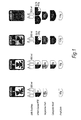
- Figure 1 illustrates a feeding plan according to the invention.
- Figures 2 and 3 illustrate the results of studies to investigate furan formation was in aqueous model systems at pH7 and pH4 respectively following heat treatment at 121°C for 25 minutes.
- Figure 4 illustrates the results of a study carried out to investigate the amount of furan formation relative to the addition of ascorbic acid and LC-PUFA derived from fish oil.
- Figured 5 and 6 illustrate the results of a study carried out to investigate the concentration of furan formation relative to the sterilization conditions used for processing of the food product.
- the results are shown with regard to a vegetable food product comprising carrot.
- the results are shown with regard to a savoury food product comprising cod and mixed vegetables.
- the term "about” means plus or minus 20%, more preferably plus or minus 10%, even more preferably plus or minus 5%, most preferably plus or minus 2%.
- range of infant food products refers to a plurality of packaged nutritional compositions (eg 2 or more) that, together with milk, provide the nutritional requirements an infant.
- the range could be interpreted to form a kit of parts.
- by-product refers to a substance present in a food product that is produced during processing of the product.
- Stage 1 refers to about 4 to about 6 months of age
- Stage 2 refers to about 6 to about 8 months of age
- Stage 3 refers to about 8 to about 12 months of age
- Stage 4 also referred to as Junior Stage
- Infants falling within these different developmental stages have different nutritional requirements.
- the invention provides a range of infant food products wherein each product in the range has less than about 15 micrograms furan per kilogram of food product.
- a range of food products according to the invention has the advantage that each food product in the range has low levels of undesirable by products.
- each product in the range comprises less than about 20 micrograms furan per kilogram of food product. More preferably, each product in the range comprises less than about 10 micrograms furan per kilogram of food product. More preferably, each product in the range comprises less than about 5 micrograms furan per kilogram of food product. Even more preferably, each product in the range comprises less than about 2 micrograms furan per kilogram of food product.
- the components include substantially no furan (eg less than 1 micrograms furan per kilogram of food product) or no measurable furan.
- the range of products comprises at least one food product suitable for each stage of infant development.
- the range of products comprises two or more food products suitable for each stage of infant development. More preferably, the range of products comprises at least a vegetable based product and a fruit based product for each stage of infant development. More preferably, the range of products comprises a plurality of vegetable based products and fruit based products for each stage of infant development.
- the range of products comprises at least a vegetable based product and a fruit based product for stage 1 of infant development.
- the range of products comprises at least a vegetable based product, a complete meal and a fruit based product for stage 2 of infant development.
- a complete meal is designed to provide one nutritionally balanced serving - it is not necessary to combine the complete meal with another food product to provide a meal.
- the range of products comprises at least a vegetable based product, a complete meal and a fruit based product for stage 3 of infant development.
- the range of products comprises at least a vegetable based product, a complete meal and a fruit based product for stage 4 of infant development.
- the infant food products for infants from about 4 to about 6 months of age comprise one or more vegetables selected from artichoke, carrot, cucumber, fennel, French bean, leek, lettuce, parsnip, potato, pumpkin, squash and zucchini.
- infant food products for infants from about 4 to about 6 months of age comprise the legume soy.
- infant food products for infants from about 4 to about 6 months of age comprise one or more meats selected from beef, veal, chicken, lamb, pork, turkey and duck.
- infant food products for infants from about 4 to about 6 months of age comprise one or more fruits selected from apple, apricot, banana, blackberry, blackcurrant, bilberry, cherry, date, grape, gooseberry, guava, lemon, lime, mandarin, mango, melon, nectarine, olive, orange, peach, pear, pineapple, plum, quince, raspberry, redcurrant and watermelon.
- infant food products for infants from about 4 to about 6 months of age comprise one or more aromatic herbs and spices selected from anise, balm mint, chamomile, caraway, gherkin, orange blossom and sorrel.
- infant food products for infants from about 6 to about 8 months of age comprise one or more vegetables selected from artichoke, carrot, cucumber, fennel, French bean, leek, lettuce, parsnip, potato, pumpkin, squash, zucchini, broccoli, cauliflower, eggplant (aubergine), sweet potato, tomato, pea and spinach.
- infant food products for infants from about 6 to about 8 months of age comprise one or more legumes selected from soy, black gram seed, chickpea, cowpea, kidney bean, lentil, mung bean and pigeon pea.
- infant food products for infants from about 6 to about 8 months of age comprise one or more meats selected from of beef, veal, chicken, lamb, pork, turkey and duck, and/or fish.
- infant food products for infants from about 6 to about 8 months of age comprise one or more fruits selected from apple, apricot, banana, blackberry, blackcurrant, bilberry, cherry, date, grape, gooseberry, guava, lemon, lime, mandarin, mango, melon, nectarine, olive, orange, peach, pear, pineapple, plum, quince, raspberry, redcurrant, watermelon, fig, papaya, passionfruit, strawberry and tangerine.
- infant food products for infants from about 6 to about 8 months of age comprise one or more aromatic herbs and spices selected from anise, balm mint, chamomile, caraway, gherkin, orange blossom, sorrel, cardamom, chives, cumin, onion, saffron, savory, shallot and thyme.
- infant food products for infants from about 6 to about 8 months of age comprise coconut.
- infant food products for infants from about 8 to about 12 months of age comprise one or more vegetables selected from artichoke, carrot, cucumber, fennel, French bean, leek, lettuce, parsnip, potato, pumpkin, squash, zucchini, broccoli, cauliflower, eggplant (aubergine), sweet potato, tomato, pea, spinach, asparagus, beet(root), brussel sprout, cabbage, garden pea, radish and turnip.
- infant food products for infants from about 8 to about 12 months of age comprise one or more legumes selected from soy, black gram seed, chickpea, cowpea, kidney bean, lentil, mung bean, pigeon pea, lima bean and winged bean.
- infant food products for infants from about 8 to about 12 months of age comprise one or more meats selected from beef, veal, chicken, lamb, pork, turkey and duck, and/or fish and/or eggs.
- infant food products for infants from about 8 to about 12 months of age comprise one or more fruits selected from apple, apricot, banana, blackberry, blackcurrant, bilberry, cherry, date, grape, gooseberry, guava, lemon, lime, mandarin, mango, melon, nectarine, olive, orange, peach, pear, pineapple, plum, quince, raspberry, redcurrant, watermelon, fig, papaya, passionfruit, strawberry, tangerine and rhubarb.
- infant food products for infants from about 8 to about 12 months of age comprise one or more aromatic herbs and spices selected from anise, balm mint, chamomile, caraway, gherkin, orange blossom, sorrel, cardamom, chives, cumin, onion, saffron, savory, shallot, thyme, coriander, curcuma, garden sorrel, garlic, mint and vanilla.
- infant food products for infants from about 8 to about 12 months of age comprise coconut and/or cocoa.
- infant food products for infants from about 12 to about 36 months of age comprise one or more vegetables selected from artichoke, carrot, cucumber, fennel, French bean, leek, lettuce, parsnip, potato, pumpkin, squash, zucchini, broccoli, cauliflower, eggplant (aubergine), sweet potato, tomato, pea, spinach, asparagus, beet(root), brussel sprout, cabbage, garden pea, radish, turnip, mushroom and watercress.
- infant food products for infants from about 12 to about 36 months of age comprise one or more legumes selected from soy, black gram seed, chickpea, cowpea, kidney bean, lentil, mung bean, pigeon pea, lima bean and winged bean.
- infant food products for infants from about 12 to about 36 months of age comprise one or more meats selected from beef, veal, chicken, lamb, pork, turkey, duck, and/or fish, and/or eggs and/or crustaceans.
- infant food products for infants from about 12 to about 36 months of age comprise one or more fruits selected from apple, apricot, banana, blackberry, blackcurrant, bilberry, cherry, date, grape, gooseberry, guava, lemon, lime, mandarin, mango, melon, nectarine, olive, orange, peach, pear, pineapple, plum, quince, raspberry, redcurrant, watermelon, fig, papaya, passionfruit, strawberry, tangerine, rhubarb, grapefruit and kiwi.
- infant food products for infants from about 12 to about 36 months of age comprise one or more aromatic herbs and spices selected from anise, balm mint, chamomile, caraway, gherkin, orange blossom, sorrel, cardamom, chives, cumin, onion, saffron, savory, shallot, thyme, coriander, curcuma, garden sorrel, garlic, mint, vanilla, basil, bay laurel, chervil, cinnamon, clove, ginger, liquorice, mace, marjoram, nutmeg, oregano, parsley, pepper, rosemary, sage and terragon.
- Aroma Junior aromatic herbs and spices selected from anise, balm mint, chamomile, caraway, gherkin, orange blossom, sorrel, cardamom, chives, cumin, onion, saffron, savory, shallot, thyme, coriander, curcuma, garden sorrel, garlic, mint, vanilla, basil, bay laure
- infant food products for infants from about 12 to about 36 months of age comprise one or more nuts selected from coconut, cocoa, almond, beechnut, brazil nut, cashew nut, chestnut, hazelnut, macadamia nut, pecan nut, pistachio nut and walnut.
- the invention provides a method for production of the food product which comprises precooking the ingredients separately, mixing the ingredients, subjecting them to UHT treatment and asceptically filling packaging containers.
- a method for production of the food product which comprises precooking the ingredients separately, mixing the ingredients, subjecting them to UHT treatment and asceptically filling packaging containers.
- the invention provides a feeding regime for meeting the nutritional needs of an infant during different stages of development, the regime comprising administering to an infant a range of food products according to the invention.
- the invention provides use of a range of food products according to the invention in the manufacture of one or more medicaments for the prevention or treatment of a nutritionally related disorder.
- the invention provides a method of preventing or treating a nutritionally related disorder, comprising administering a range of food products according to the invention.
- the nutritionally related disease is optionally selected from obesity, malnutrition, diabetes and heart disease.
- the invention provides the product produced using the method of the invention.
- a daily complementary diet for stage 1 comprised:
- a number of vegetable and fruit dishes were provided in a range of baby food products and were labeled according to their suitability for a stage 1 diet.
- the feeding plan shown in figure 1 was used to determine which meals could make up the daily food intake for stage 1.
- the vegetable dish was a pumpkin based dish and the fruit dish was an apple based dish.
- Table 1 List of ingredients for vegetable dish Ingredient Amount per 100g (g) POTATO FLAKES 4.000 Pumpkin frozen 40.000 Potato 6x6 mm frozen 10.000 CARROT 15.000 RAPESEED OIL LOW ERUCIC (CANOLA) 0.400 SUNFLOWER OIL 0.400 WATER 30.200
- Table 2 List of ingredients for fruit dish Ingredient Amount per 100g (g) Apple fresh 99.95 Vitamin C 0.05
- Each dish provided the following nutritional values: Table 3: Nutritional values provided by each Stage 1 dish kcal/100g kcal/serving % daily energy intake Cereal Dish 106.0 for RTE pap 106.00 17.0 424 for dry powder Vegetable Dish 40.7 26.46 4.2 Fruit Dish 53.2 34.58 5.5
- the total daily nutritional values provided by the complementary dishes were as follows: Table 4: Daily nutritional values provided by the Stage 1 complementary dishes per day per 100g E% (daily energy intake) Total Protein (g) 4.3 2.8 10.4 Total Fat (g) 3.3 2.2 18.1 Total CHO (g) 29.8 19.2 71.5 Fibres (g) 3.1 2.0 - Sodium (mg) 38.1 24.6 - LA (g) 0.8 0.5 4.3 ALA (g) 0.1 0.1 0.6 LA/ALA ratio 7.1 - - Energy (kcal) 166.5 107.4 - (Wherein CHO represents carbohydrate, LA represents linoleic acid and ALA represents alpha-linolenic acid).
- the sum of the daily energy intake provided by the complementary foods was 26.6% (166.5 kcal). The remaining 73.4% (458 kcal) of daily energy intake was provided by milk. This provided a total daily energy intake of 625.04 kcal.
- a daily complementary diet for stage 2 comprised:
- a number of complete meals, vegetable and fruit dishes were provided in the range of baby food products and were labeled according to their suitability for a stage 2 diet.
- the feeding plan shown in figure 1 was used to determine which meals could make up the daily food intake for stage 2.
- the vegetable dish was garden vegetables and corn based
- the complete meal was garden vegetables and lamb based
- the fruit dish was apple and raspberry based.
- Table 5 List of ingredients for vegetable dish Ingredient Amount per 100g (g) CARROT 30.000 POTATO FLAKES 3.000 Sweetcorn frozen 10.000 Parsnip frozen 10.000 RICE SEMOLINA 1.000 RAPESEED OIL LOW ERUCIC (CANOLA) 0.400 Fennel frozen 5.000 SUNFLOWER OIL 0.200 WATER 40.400
- Table 6 List of ingredients for complete meal Ingredient Amount per 100g (g) POTATO FLAKES 4.000 CARROT 30.000 Lamb frozen 8.500 RICE SEMOLINA 2.000 Parsnip frozen 5.000 Sweetcorn frozen 3.000 RAPESEED OIL LOW ERUCIC (CANOLA) 0.600 SUNFLOWER OIL 0.400 Onion 10 mm frozen 4.000 WATER 42.500
- Table 7 List of ingredients for fruit dish Ingredient Amount per 100g (g) Apple fresh 79.96 Raspberry puree 19.99 Vitamin C 0.05
- Each dish provided the following nutritional values: Table 8 : Nutritional values provided by each Stage 2 dish kcal/100g kcal/serving % daily energy intake Cereal Dish 106.0 for RTE pap 106.00 15.8 424 for dry powder Vegetable Dish 42.6 42.6 6.4 Complete Meal 62.6 62.6 9.3 Fruit Dish 50.2 32.63 4.9
- the total daily nutritional values provided by the complementary dishes were as follows: Table 9: Daily nutritional values provided by the Stage 2 complementary dishes per day per 100g E% (daily energy intake) Total Protein (g) 7.8 2.7 12.9 Total Fat (g) 6.2 2.1 23.1 Total CHO (g) 38.5 13.3 63.9 Fibres (g) 5.2 1.8 - Sodium (mg) 75.7 26.1 - LA (g) 1.2 0.4 4.6 ALA (g) 0.2 0.1 0.6 LA/ALA ratio 7.3 - - Energy (kcal) 241.1 83.1 -
- the sum of the daily energy intake provided by the complementary foods was 35.9% (241.1 kcal).
- the remaining 64.1% (428.93 kcal) of daily energy intake was provided by milk. This provided a total daily energy intake of 670.03 kcal.
- a daily complementary diet for stage 3 comprised:
- a number of complete meal, vegetable and fruit dishes were provided in the range of baby food products and were labeled according to their suitability for a stage 3 diet.
- the feeding plan shown in figure 1 was used to determine which meals could make up the daily food intake for stage 3.
- vegetable dish was garden vegetables and corn based
- the complete meal was a pasta
- tomato and beef based was fruit salad based.
- Table 10 List of ingredients for vegetable dish Ingredient Amount per 100g (g) CARROT 30.000 POTATO FLAKES 3.000 Sweetcorn frozen 10.000 Parsnip frozen 10.000 RICE SEMOLINA 1.000 RAPESEED OIL LOW ERUCIC (CANOLA) 0.400 Fennel frozen 5.000 SUNFLOWER OIL 0.200 WATER 40.400 Table 11: List of ingredients for complete meal Ingredient Amount per 100g (g) Pasta spaghetti short 8.000 Beef frozen 14% fat 8.000 CARROT 20.000 Tomato puree 5.000 RAPESEED OIL LOW ERUCIC (CANOLA) 0.800 SUNFLOWER OIL 0.400 Bell pepper red 10mm frozen 4.000 Onion 10 mm frozen 3.000 Thyme frozen 0.100 WATER 50.700 Table 12: List of ingredients for fruit dish Ingredient Amount per 100g (g) Apple fresh 39.98 Pear William fresh 14.9925 Peach puree 14.9925 Banana puree without seeds 19.990 Apricot puree 9.995 Vitamin C 0.05
- Each dish provided the following nutritional values: Table 13: Nutritional values provided by each Stage 3 dish Kcal/100 g kcal/serving % daily energy intake Cereal Dish 106.0 159.00 20.6 Vegetable Dish 42.6 85.2 11.1 Complete Meal 65.9 131.8 17.1 Fruit Dish 56.0 72.8 9.5
- the total daily nutritional values provided by the complementary dishes were as follows: Table 14: Daily nutritional values provided by the Stage 3 complementary dishes Per day per 100g E% Total Protein (g) 14.8 2.6 13.2 Total Fat (g) 10.9 1.9 22 Total CHO (g) 72.4 12.8 64.8 Fibres (g) 8.4 1.5 - Sodium (mg) 142.3 25.1 - LA (g) 2.3 0.4 4.6 ALA (g) 0.4 0.1 0.7 LA/ALA ratio 6.5 - - Energy (kcal) 447.0 78.8 -
- the sum of the daily energy intake provided by the complementary foods was 58.0% (447.0 kcal).
- the remaining 42.0% (323.0 kcal) of daily energy intake was provided by milk. This provided a total daily energy intake of 770 kcal.
- a daily complementary diet for stage 4 comprised:
- a number of complete meals, vegetable and fruit dishes were provided in the range of baby food products and were labeled according to their suitability for a stage 4 diet.
- the feeding plan shown in figure 1 was used to determine which meals could make up the daily food intake for stage 4.
- the vegetable dish was a garden vegetables and corn dish
- the complete meal was a pasta
- tomato and beef dish was a fruit salad dish.
- Table 15 List of ingredients for vegetable dish Ingredient Amount per 100g (g) CARROT 30.000 POTATO FLAKES 3.000 Sweetcorn frozen 10.000 Parsnip frozen 10.000 RICE SEMOLINA 1.000 RAPESEED OIL LOW ERUCIC (CANOLA) 0.400 Fennel frozen 5.000 SUNFLOWER OIL 0.200 WATER 40.400 Table 16: List of ingredients for complete meal Ingredient Amount per 100g (g) Pasta spaghetti short 8.000 Beef frozen 14% fat 8.000 CARROT 20.000 Tomato puree 5.000 RAPESEED OIL LOW ERUCIC (CANOLA) 0.800 SUNFLOWER OIL 0.400 Bell pepper red 10mm frozen 4.000 Onion 10 mm frozen 3.000 Thyme frozen 0.100 WATER 50.700 Table 17: List of ingredients for fruit dish Ingredient Amount per 100g (g) Apple fresh 39.98 Pear William fresh 14.9925 Peach puree 14.9925 Banana puree without seeds 19.990 Apricot puree 9.995 Vitamin C 0.05
- Each dish provided the following nutritional values: Table 18: Nutritional values provided by each Stage 4 dish kcal/100g kcal/serving % daily energy intake Cereal Dish 106.0 371 35.7 Vegetable Dish 42.6 85.2 8.2 Complete Meal 65.9 164.75 15.8 Fruit Dish 56.0 72.8 7.0
- the daily nutritional values provided by the complementary dishes were as follows: Table 19: Daily nutritional values provided by the Stage 4 complementary dishes per day per 100g E% Total Protein (g) 23.6 3.5 13.6 Total Fat (g) 17.2 2.6 22.4 Total CHO (g) 110.6 16.6 64.0 Fibres (g) 9.8 1.5 - Sodium (mg) 215.0 32.2 - LA (g) 3.4 0.5 4.5 ALA (g) 0.5 0.1 0.7 LA/ALA ratio 6.8 - - Energy (kcal) 691.7 103.6 -
- the sum of the daily energy intake provided by the complementary foods was 66.5% (691.7 kcal).
- the remaining 33.5% (348.3 kcal) of daily energy intake was provided by milk. This provided a total daily energy intake of 1040 kcal.
- Furan formation was studied in aqueous model systems at pH7 and pH4 following heat treatment at 121 °C for 25 minutes. The results are shown in Figures 2 and 3 . The results show that at pH7, the concentration of PUFAs show the highest impact on furan development after heat treatment at 121°C for 25 minutes.
- ascorbic acid plays an important role as a precursor of furan after heat treatment at 121°C for 25 minutes, but it can be seen that PUFAs still show the highest impact on furan development.
- the first study was carried out to investigate the amount of furan formation relative to the addition of ascorbic acid and LC-PUFA derived from fish oil and the results are shown in Figure 4 .
- the second study was carried out to investigate the concentration of furan formation relative to the sterilization conditions used for processing of the food product and the results are shown in Figures 5 and 6 .
- Figure 5 the results are shown with regard to a vegetable food product comprising carrot.
- Figure 6 the results are shown with regard to a savoury food product comprising cod and mixed vegetables. It can be seen that there is about 2 micrograms of furan per kg food product produced as a by-product following processing according to the invention.
Landscapes
- Health & Medical Sciences (AREA)
- Life Sciences & Earth Sciences (AREA)
- Engineering & Computer Science (AREA)
- Chemical & Material Sciences (AREA)
- Nutrition Science (AREA)
- Polymers & Plastics (AREA)
- Food Science & Technology (AREA)
- Diabetes (AREA)
- Veterinary Medicine (AREA)
- Medicinal Chemistry (AREA)
- Nuclear Medicine, Radiotherapy & Molecular Imaging (AREA)
- Organic Chemistry (AREA)
- Pharmacology & Pharmacy (AREA)
- Chemical Kinetics & Catalysis (AREA)
- Animal Behavior & Ethology (AREA)
- General Health & Medical Sciences (AREA)
- Public Health (AREA)
- General Chemical & Material Sciences (AREA)
- Bioinformatics & Cheminformatics (AREA)
- Hematology (AREA)
- Obesity (AREA)
- Mycology (AREA)
- Pediatric Medicine (AREA)
- Endocrinology (AREA)
- Emergency Medicine (AREA)
- Heart & Thoracic Surgery (AREA)
- Child & Adolescent Psychology (AREA)
- Cardiology (AREA)
- Coloring Foods And Improving Nutritive Qualities (AREA)
- Seeds, Soups, And Other Foods (AREA)
- General Preparation And Processing Of Foods (AREA)
- Dairy Products (AREA)
- Plural Heterocyclic Compounds (AREA)
- Seasonings (AREA)
- Furan Compounds (AREA)
- Medicines Containing Material From Animals Or Micro-Organisms (AREA)
Abstract
Description
- The present invention relates generally to infant food products and particularly to infant food products having low concentrations of undesired by-products produced during processing or packaging.
- It is known that processing of food products can produce undesirable by-products. For example, when food products are roasted, the roasting process can lead to the production of undesirable acrylamide. Alternatively, when food products are subjected to cooking, for example in cans and jars, this can lead to production of undesirable furan.
- Furan, like acrylamide, is a substance wich is generated naturally during the heating of food products during processing. It is not a synthetic substance added to the food as an ingredient, but occurs in food products as a result of processing.
- High concentrations of furan have been shown to be genotoxic and in animal experiments carcinogenic.
- Furan is listed in the Department of Health and Human Services list of carcinogens, and considered as possibly carcinogenic by the International Agency for Research on Cancer, based on studies in the laboratory animals at high exposures. Thus, high concentrations of furan are undesirable in food products.
- Furan can be generated by heat processing of foods comprising polyunsaturated fatty acids (PUFAs), ascorbic acid (vitamin C), β-carotene, sugars and amino acids.
- It is, therefore, an object of the invention to provide a new range of infant food products that includes a reduced level of undesirable by-products. The level of undesirable by-products can be measured, for example, by reference to furan concentration in a food product.
- These and other objects are addressed in one aspect of the invention by providing a range of infant food products wherein each product in the range has less than about 15 micrograms furan per kg food product. The resulting range of infant food products has the advantage that each food product in the range has minimal concentrations of undesirable by products produced during processing. In various embodiments, the components include substantially no furan (eg less than about 5 micrograms/kg furan in the food product) or no furan.
- In a further aspect, the invention provides a feeding regime for meeting the nutritional needs of an infant during different stages of development, the regime comprising administering to an infant a range of food products according to the invention.
- In a further aspect, the invention provides use of a range of food products according to the invention in the manufacture of one or more medicaments for the prevention or treatment of a nutritionally related disorder.
- In other aspect, the invention provides a method of preventing or treating a nutritionally related disorder, comprising administering a range of food products according to the invention.
- The nutritionally related disease is optionally selected from obesity, malnutrition, diabetes and heart disease.
- Other and further objects, features, and advantages of the present invention will be readily apparent to those skilled in the art.
-
Figure 1 illustrates a feeding plan according to the invention. -
Figures 2 and3 illustrate the results of studies to investigate furan formation was in aqueous model systems at pH7 and pH4 respectively following heat treatment at 121°C for 25 minutes. -
Figure 4 illustrates the results of a study carried out to investigate the amount of furan formation relative to the addition of ascorbic acid and LC-PUFA derived from fish oil. - Figured 5 and 6 illustrate the results of a study carried out to investigate the concentration of furan formation relative to the sterilization conditions used for processing of the food product. In
Figure 5 the results are shown with regard to a vegetable food product comprising carrot. InFigure 6 the results are shown with regard to a savoury food product comprising cod and mixed vegetables. - Within the context of this specification, the term "about" means plus or minus 20%, more preferably plus or minus 10%, even more preferably plus or minus 5%, most preferably plus or minus 2%.
- The term "range of infant food products" refers to a plurality of packaged nutritional compositions (
eg 2 or more) that, together with milk, provide the nutritional requirements an infant. The range could be interpreted to form a kit of parts. - The term "by-product" refers to a substance present in a food product that is produced during processing of the product.
- There are recognized stages of infant development that can be defined, wherein Stage 1 refers to about 4 to about 6 months of age;
Stage 2 refers to about 6 to about 8 months of age,Stage 3 refers to about 8 to about 12 months of age, and Stage 4 (also referred to as Junior Stage) refers to about 12 to about 36 months of age. Infants falling within these different developmental stages have different nutritional requirements. - The invention is not limited to the particular methodology, protocols, and reagents described herein because they may vary. Further, the terminology used herein is for the purpose of describing particular embodiments only and is not intended to limit the scope of the present invention. As used herein and in the appended claims, the singular forms "a," "an," and "the" include plural reference unless the context clearly dictates otherwise.
- Unless defined otherwise, all technical and scientific terms and any acronyms used herein have the same meanings as commonly understood by one of ordinary skill in the art in the field of the invention. Although any methods and materials similar or equivalent to those described herein can be used in the practice of the present invention, the preferred methods, devices, and materials are described herein.
- All patents, patent applications, and publications mentioned herein are incorporated herein by reference to the extent allowed by law for the purpose of describing and disclosing the compounds and methodologies reported therein that might be used with the present invention. However, nothing herein is to be construed as an admission that the invention is not entitled to antedate such disclosure by virtue of prior invention.
- All percentages for weights expressed herein are by weight of the total food product unless specifically stated otherwise.
- Within this specification embodiments have been described in a way which enables a clear and concise specification to be written, but it is intended and will be appreciated that embodiments may be variously combined or separated without parting from the invention
- In one aspect, the invention provides a range of infant food products wherein each product in the range has less than about 15 micrograms furan per kilogram of food product. In view of the fact that furan concentrations can be used as a good indicator of undesirable by-products formed during processing, a range of food products according to the invention has the advantage that each food product in the range has low levels of undesirable by products.
- In a preferred embodiment each product in the range comprises less than about 20 micrograms furan per kilogram of food product. More preferably, each product in the range comprises less than about 10 micrograms furan per kilogram of food product. More preferably, each product in the range comprises less than about 5 micrograms furan per kilogram of food product. Even more preferably, each product in the range comprises less than about 2 micrograms furan per kilogram of food product.
- In a preferred embodiment, the components include substantially no furan (eg less than 1 micrograms furan per kilogram of food product) or no measurable furan.
- Preferably, the range of products comprises at least one food product suitable for each stage of infant development.
- Preferably, the range of products comprises two or more food products suitable for each stage of infant development. More preferably, the range of products comprises at least a vegetable based product and a fruit based product for each stage of infant development. More preferably, the range of products comprises a plurality of vegetable based products and fruit based products for each stage of infant development.
- Preferably, the range of products comprises at least a vegetable based product and a fruit based product for stage 1 of infant development.
- Preferably, the range of products comprises at least a vegetable based product, a complete meal and a fruit based product for
stage 2 of infant development. A complete meal is designed to provide one nutritionally balanced serving - it is not necessary to combine the complete meal with another food product to provide a meal. - Preferably, the range of products comprises at least a vegetable based product, a complete meal and a fruit based product for
stage 3 of infant development. - Preferably, the range of products comprises at least a vegetable based product, a complete meal and a fruit based product for stage 4 of infant development.
- Preferably, the infant food products for infants from about 4 to about 6 months of age (Stage 1) comprise one or more vegetables selected from artichoke, carrot, cucumber, fennel, French bean, leek, lettuce, parsnip, potato, pumpkin, squash and zucchini.
- Preferably, infant food products for infants from about 4 to about 6 months of age (Stage 1) comprise the legume soy.
- Preferably, infant food products for infants from about 4 to about 6 months of age (Stage 1) comprise one or more meats selected from beef, veal, chicken, lamb, pork, turkey and duck.
- Preferably, infant food products for infants from about 4 to about 6 months of age (Stage 1) comprise one or more fruits selected from apple, apricot, banana, blackberry, blackcurrant, bilberry, cherry, date, grape, gooseberry, guava, lemon, lime, mandarin, mango, melon, nectarine, olive, orange, peach, pear, pineapple, plum, quince, raspberry, redcurrant and watermelon.
- Preferably, infant food products for infants from about 4 to about 6 months of age (Stage 1) comprise one or more aromatic herbs and spices selected from anise, balm mint, chamomile, caraway, gherkin, orange blossom and sorrel.
- Preferably, infant food products for infants from about 6 to about 8 months of age (Stage 2) comprise one or more vegetables selected from artichoke, carrot, cucumber, fennel, French bean, leek, lettuce, parsnip, potato, pumpkin, squash, zucchini, broccoli, cauliflower, eggplant (aubergine), sweet potato, tomato, pea and spinach.
- Preferably, infant food products for infants from about 6 to about 8 months of age (Stage 2) comprise one or more legumes selected from soy, black gram seed, chickpea, cowpea, kidney bean, lentil, mung bean and pigeon pea.
- In another embodiment, infant food products for infants from about 6 to about 8 months of age (Stage 2) comprise one or more meats selected from of beef, veal, chicken, lamb, pork, turkey and duck, and/or fish.
- Preferably, infant food products for infants from about 6 to about 8 months of age (Stage 2) comprise one or more fruits selected from apple, apricot, banana, blackberry, blackcurrant, bilberry, cherry, date, grape, gooseberry, guava, lemon, lime, mandarin, mango, melon, nectarine, olive, orange, peach, pear, pineapple, plum, quince, raspberry, redcurrant, watermelon, fig, papaya, passionfruit, strawberry and tangerine.
- Preferably, infant food products for infants from about 6 to about 8 months of age (Stage 2) comprise one or more aromatic herbs and spices selected from anise, balm mint, chamomile, caraway, gherkin, orange blossom, sorrel, cardamom, chives, cumin, onion, saffron, savory, shallot and thyme.
- Preferably, infant food products for infants from about 6 to about 8 months of age (Stage 2) comprise coconut.
- Preferably, infant food products for infants from about 8 to about 12 months of age (Stage 3) comprise one or more vegetables selected from artichoke, carrot, cucumber, fennel, French bean, leek, lettuce, parsnip, potato, pumpkin, squash, zucchini, broccoli, cauliflower, eggplant (aubergine), sweet potato, tomato, pea, spinach, asparagus, beet(root), brussel sprout, cabbage, garden pea, radish and turnip.
- Preferably, infant food products for infants from about 8 to about 12 months of age (Stage 3) comprise one or more legumes selected from soy, black gram seed, chickpea, cowpea, kidney bean, lentil, mung bean, pigeon pea, lima bean and winged bean.
- Preferably, infant food products for infants from about 8 to about 12 months of age (Stage 3) comprise one or more meats selected from beef, veal, chicken, lamb, pork, turkey and duck, and/or fish and/or eggs.
- Preferably, infant food products for infants from about 8 to about 12 months of age (Stage 3) comprise one or more fruits selected from apple, apricot, banana, blackberry, blackcurrant, bilberry, cherry, date, grape, gooseberry, guava, lemon, lime, mandarin, mango, melon, nectarine, olive, orange, peach, pear, pineapple, plum, quince, raspberry, redcurrant, watermelon, fig, papaya, passionfruit, strawberry, tangerine and rhubarb.
- Preferably, infant food products for infants from about 8 to about 12 months of age (Stage 3) comprise one or more aromatic herbs and spices selected from anise, balm mint, chamomile, caraway, gherkin, orange blossom, sorrel, cardamom, chives, cumin, onion, saffron, savory, shallot, thyme, coriander, curcuma, garden sorrel, garlic, mint and vanilla.
- Preferably, infant food products for infants from about 8 to about 12 months of age (Stage 3) comprise coconut and/or cocoa.
- Preferably, it is preferred that infant food products for infants from about 12 to about 36 months of age (Stage Junior) comprise one or more vegetables selected from artichoke, carrot, cucumber, fennel, French bean, leek, lettuce, parsnip, potato, pumpkin, squash, zucchini, broccoli, cauliflower, eggplant (aubergine), sweet potato, tomato, pea, spinach, asparagus, beet(root), brussel sprout, cabbage, garden pea, radish, turnip, mushroom and watercress.
- Preferably, infant food products for infants from about 12 to about 36 months of age (Stage Junior) comprise one or more legumes selected from soy, black gram seed, chickpea, cowpea, kidney bean, lentil, mung bean, pigeon pea, lima bean and winged bean.
- Preferably, infant food products for infants from about 12 to about 36 months of age (Stage Junior) comprise one or more meats selected from beef, veal, chicken, lamb, pork, turkey, duck, and/or fish, and/or eggs and/or crustaceans.
- Preferably, infant food products for infants from about 12 to about 36 months of age (Stage Junior) comprise one or more fruits selected from apple, apricot, banana, blackberry, blackcurrant, bilberry, cherry, date, grape, gooseberry, guava, lemon, lime, mandarin, mango, melon, nectarine, olive, orange, peach, pear, pineapple, plum, quince, raspberry, redcurrant, watermelon, fig, papaya, passionfruit, strawberry, tangerine, rhubarb, grapefruit and kiwi.
- Preferably, infant food products for infants from about 12 to about 36 months of age (Stage Junior) comprise one or more aromatic herbs and spices selected from anise, balm mint, chamomile, caraway, gherkin, orange blossom, sorrel, cardamom, chives, cumin, onion, saffron, savory, shallot, thyme, coriander, curcuma, garden sorrel, garlic, mint, vanilla, basil, bay laurel, chervil, cinnamon, clove, ginger, liquorice, mace, marjoram, nutmeg, oregano, parsley, pepper, rosemary, sage and terragon.
- Preferably, infant food products for infants from about 12 to about 36 months of age (Stage Junior) comprise one or more nuts selected from coconut, cocoa, almond, beechnut, brazil nut, cashew nut, chestnut, hazelnut, macadamia nut, pecan nut, pistachio nut and walnut.
- In a further aspect, the invention provides a method for production of the food product which comprises precooking the ingredients separately, mixing the ingredients, subjecting them to UHT treatment and asceptically filling packaging containers. Advantagously, it has been found that food products of the invention produced in this way have reduced levels of by-products including furan compared to similar products processed using conventional retorting.
- In a further aspect, the invention provides a feeding regime for meeting the nutritional needs of an infant during different stages of development, the regime comprising administering to an infant a range of food products according to the invention.
- In a further aspect, the invention provides use of a range of food products according to the invention in the manufacture of one or more medicaments for the prevention or treatment of a nutritionally related disorder.
- In another aspect, the invention provides a method of preventing or treating a nutritionally related disorder, comprising administering a range of food products according to the invention.
- The nutritionally related disease is optionally selected from obesity, malnutrition, diabetes and heart disease.
- In other aspects, the invention provides the product produced using the method of the invention.
- This invention can be further illustrated by the following examples although it will be understood that these examples are included merely for purposes of illustration and are not intended to limit the scope of the invention unless otherwise specifically indicated.
- A daily complementary diet for stage 1 comprised:
- (i) 100g portion of infant cereal;
- (ii) 65g portion of vegetable dish in accordance with the invention; and
- (iii) 65g portion of fruit dish in accordance with the invention.
- A number of vegetable and fruit dishes were provided in a range of baby food products and were labeled according to their suitability for a stage 1 diet. The feeding plan shown in
figure 1 was used to determine which meals could make up the daily food intake for stage 1. In this example, the vegetable dish was a pumpkin based dish and the fruit dish was an apple based dish.Table 1: List of ingredients for vegetable dish Ingredient Amount per 100g (g) POTATO FLAKES 4.000 Pumpkin frozen 40.000 Potato 6x6 mm frozen 10.000 CARROT 15.000 RAPESEED OIL LOW ERUCIC (CANOLA) 0.400 SUNFLOWER OIL 0.400 WATER 30.200 Table 2: List of ingredients for fruit dish Ingredient Amount per 100g (g) Apple fresh 99.95 Vitamin C 0.05 - Each dish provided the following nutritional values:
Table 3: Nutritional values provided by each Stage 1 dish kcal/100g kcal/serving % daily energy intake Cereal Dish 106.0 for RTE pap 106.00 17.0 424 for dry powder Vegetable Dish 40.7 26.46 4.2 Fruit Dish 53.2 34.58 5.5 - The total daily nutritional values provided by the complementary dishes were as follows:
Table 4: Daily nutritional values provided by the Stage 1 complementary dishes per day per 100g E% (daily energy intake) Total Protein (g) 4.3 2.8 10.4 Total Fat (g) 3.3 2.2 18.1 Total CHO (g) 29.8 19.2 71.5 Fibres (g) 3.1 2.0 - Sodium (mg) 38.1 24.6 - LA (g) 0.8 0.5 4.3 ALA (g) 0.1 0.1 0.6 LA/ALA ratio 7.1 - - Energy (kcal) 166.5 107.4 - - The sum of the daily energy intake provided by the complementary foods was 26.6% (166.5 kcal). The remaining 73.4% (458 kcal) of daily energy intake was provided by milk. This provided a total daily energy intake of 625.04 kcal.
- A daily complementary diet for
stage 2 comprised: - (i) 100g portion of infant cereal;
- (ii) 100g portion of vegetable dish in accordance with the invention;
- (iii) 100g portion of a complete meal in accordance with the invention; and
- (iv) 65g portion of fruit dish in accordance with the invention.
- A number of complete meals, vegetable and fruit dishes were provided in the range of baby food products and were labeled according to their suitability for a
stage 2 diet. The feeding plan shown infigure 1 was used to determine which meals could make up the daily food intake forstage 2. In this example, the vegetable dish was garden vegetables and corn based, the complete meal was garden vegetables and lamb based and the fruit dish was apple and raspberry based.Table 5: List of ingredients for vegetable dish Ingredient Amount per 100g (g) CARROT 30.000 POTATO FLAKES 3.000 Sweetcorn frozen 10.000 Parsnip frozen 10.000 RICE SEMOLINA 1.000 RAPESEED OIL LOW ERUCIC (CANOLA) 0.400 Fennel frozen 5.000 SUNFLOWER OIL 0.200 WATER 40.400 Table 6: List of ingredients for complete meal Ingredient Amount per 100g (g) POTATO FLAKES 4.000 CARROT 30.000 Lamb frozen 8.500 RICE SEMOLINA 2.000 Parsnip frozen 5.000 Sweetcorn frozen 3.000 RAPESEED OIL LOW ERUCIC (CANOLA) 0.600 SUNFLOWER OIL 0.400 Onion 10 mm frozen4.000 WATER 42.500 Table 7: List of ingredients for fruit dish Ingredient Amount per 100g (g) Apple fresh 79.96 Raspberry puree 19.99 Vitamin C 0.05 - Each dish provided the following nutritional values:
Table 8 : Nutritional values provided by each Stage 2 dishkcal/100g kcal/serving % daily energy intake Cereal Dish 106.0 for RTE pap 106.00 15.8 424 for dry powder Vegetable Dish 42.6 42.6 6.4 Complete Meal 62.6 62.6 9.3 Fruit Dish 50.2 32.63 4.9 - The total daily nutritional values provided by the complementary dishes were as follows:
Table 9: Daily nutritional values provided by the Stage 2 complementary dishesper day per 100g E% (daily energy intake) Total Protein (g) 7.8 2.7 12.9 Total Fat (g) 6.2 2.1 23.1 Total CHO (g) 38.5 13.3 63.9 Fibres (g) 5.2 1.8 - Sodium (mg) 75.7 26.1 - LA (g) 1.2 0.4 4.6 ALA (g) 0.2 0.1 0.6 LA/ALA ratio 7.3 - - Energy (kcal) 241.1 83.1 - - The sum of the daily energy intake provided by the complementary foods was 35.9% (241.1 kcal). The remaining 64.1% (428.93 kcal) of daily energy intake was provided by milk. This provided a total daily energy intake of 670.03 kcal.
- A daily complementary diet for
stage 3 comprised: - (i) 150g portion of infant cereal;
- (ii) 200g portion of vegetable dish in accordance with the invention;
- (iii) 200g portion of a complete meal in accordance with the invention; and
- (iv) 130g portion of fruit dish in accordance with the invention.
- A number of complete meal, vegetable and fruit dishes were provided in the range of baby food products and were labeled according to their suitability for a
stage 3 diet. The feeding plan shown infigure 1 was used to determine which meals could make up the daily food intake forstage 3. In this example, vegetable dish was garden vegetables and corn based, the complete meal was a pasta, tomato and beef based and the fruit dish was fruit salad based.Table 10: List of ingredients for vegetable dish Ingredient Amount per 100g (g) CARROT 30.000 POTATO FLAKES 3.000 Sweetcorn frozen 10.000 Parsnip frozen 10.000 RICE SEMOLINA 1.000 RAPESEED OIL LOW ERUCIC (CANOLA) 0.400 Fennel frozen 5.000 SUNFLOWER OIL 0.200 WATER 40.400 Table 11: List of ingredients for complete meal Ingredient Amount per 100g (g) Pasta spaghetti short 8.000 Beef frozen 14% fat 8.000 CARROT 20.000 Tomato puree 5.000 RAPESEED OIL LOW ERUCIC (CANOLA) 0.800 SUNFLOWER OIL 0.400 Bell pepper red 10mm frozen 4.000 Onion 10 mm frozen3.000 Thyme frozen 0.100 WATER 50.700 Table 12: List of ingredients for fruit dish Ingredient Amount per 100g (g) Apple fresh 39.98 Pear William fresh 14.9925 Peach puree 14.9925 Banana puree without seeds 19.990 Apricot puree 9.995 Vitamin C 0.05 - Each dish provided the following nutritional values:
Table 13: Nutritional values provided by each Stage 3 dishKcal/100 g kcal/serving % daily energy intake Cereal Dish 106.0 159.00 20.6 Vegetable Dish 42.6 85.2 11.1 Complete Meal 65.9 131.8 17.1 Fruit Dish 56.0 72.8 9.5 - The total daily nutritional values provided by the complementary dishes were as follows:
Table 14: Daily nutritional values provided by the Stage 3 complementary dishesPer day per 100g E% Total Protein (g) 14.8 2.6 13.2 Total Fat (g) 10.9 1.9 22 Total CHO (g) 72.4 12.8 64.8 Fibres (g) 8.4 1.5 - Sodium (mg) 142.3 25.1 - LA (g) 2.3 0.4 4.6 ALA (g) 0.4 0.1 0.7 LA/ALA ratio 6.5 - - Energy (kcal) 447.0 78.8 - - The sum of the daily energy intake provided by the complementary foods was 58.0% (447.0 kcal). The remaining 42.0% (323.0 kcal) of daily energy intake was provided by milk. This provided a total daily energy intake of 770 kcal.
- A daily complementary diet for stage 4 comprised:
- (i) 350g portion of infant cereal;
- (ii) 200g portion of vegetable dish in accordance with the invention;
- (iii) 250g portion of a complete meal in accordance with the invention; and
- (iv) 130g portion of fruit dish in accordance with the invention.
- A number of complete meals, vegetable and fruit dishes were provided in the range of baby food products and were labeled according to their suitability for a stage 4 diet. The feeding plan shown in
figure 1 was used to determine which meals could make up the daily food intake for stage 4. In this example, the vegetable dish was a garden vegetables and corn dish, the complete meal was a pasta, tomato and beef dish and the fruit dish was a fruit salad dish.Table 15: List of ingredients for vegetable dish Ingredient Amount per 100g (g) CARROT 30.000 POTATO FLAKES 3.000 Sweetcorn frozen 10.000 Parsnip frozen 10.000 RICE SEMOLINA 1.000 RAPESEED OIL LOW ERUCIC (CANOLA) 0.400 Fennel frozen 5.000 SUNFLOWER OIL 0.200 WATER 40.400 Table 16: List of ingredients for complete meal Ingredient Amount per 100g (g) Pasta spaghetti short 8.000 Beef frozen 14% fat 8.000 CARROT 20.000 Tomato puree 5.000 RAPESEED OIL LOW ERUCIC (CANOLA) 0.800 SUNFLOWER OIL 0.400 Bell pepper red 10mm frozen 4.000 Onion 10 mm frozen3.000 Thyme frozen 0.100 WATER 50.700 Table 17: List of ingredients for fruit dish Ingredient Amount per 100g (g) Apple fresh 39.98 Pear William fresh 14.9925 Peach puree 14.9925 Banana puree without seeds 19.990 Apricot puree 9.995 Vitamin C 0.05 - Each dish provided the following nutritional values:
Table 18: Nutritional values provided by each Stage 4 dish kcal/100g kcal/serving % daily energy intake Cereal Dish 106.0 371 35.7 Vegetable Dish 42.6 85.2 8.2 Complete Meal 65.9 164.75 15.8 Fruit Dish 56.0 72.8 7.0 - The daily nutritional values provided by the complementary dishes were as follows:
Table 19: Daily nutritional values provided by the Stage 4 complementary dishes per day per 100g E% Total Protein (g) 23.6 3.5 13.6 Total Fat (g) 17.2 2.6 22.4 Total CHO (g) 110.6 16.6 64.0 Fibres (g) 9.8 1.5 - Sodium (mg) 215.0 32.2 - LA (g) 3.4 0.5 4.5 ALA (g) 0.5 0.1 0.7 LA/ALA ratio 6.8 - - Energy (kcal) 691.7 103.6 - - The sum of the daily energy intake provided by the complementary foods was 66.5% (691.7 kcal). The remaining 33.5% (348.3 kcal) of daily energy intake was provided by milk. This provided a total daily energy intake of 1040 kcal.
- Furan formation was studied in aqueous model systems at pH7 and pH4 following heat treatment at 121 °C for 25 minutes. The results are shown in
Figures 2 and3 . The results show that at pH7, the concentration of PUFAs show the highest impact on furan development after heat treatment at 121°C for 25 minutes. - At pH 4, ascorbic acid plays an important role as a precursor of furan after heat treatment at 121°C for 25 minutes, but it can be seen that PUFAs still show the highest impact on furan development.
- Two further studies were carried out. The first study was carried out to investigate the amount of furan formation relative to the addition of ascorbic acid and LC-PUFA derived from fish oil and the results are shown in
Figure 4 . The second study was carried out to investigate the concentration of furan formation relative to the sterilization conditions used for processing of the food product and the results are shown inFigures 5 and6 . InFigure 5 the results are shown with regard to a vegetable food product comprising carrot. InFigure 6 the results are shown with regard to a savoury food product comprising cod and mixed vegetables. It can be seen that there is about 2 micrograms of furan per kg food product produced as a by-product following processing according to the invention. - The results clearly show that increased levels of fish oil and vitamin C lead to larger levels of furan production. In addition, sterilization of the food product by retorting lead to remarkably larger levels of furan production in the food product compared to sterilization by UHT treatment at F0=100, F0=15 and F0=8. (F0 is a well known indicator of sterility - the F0 value is a known measure of the time required to kill clostridium botulinum bacteria). Indeed, it can clearly be seen that UHT sterilization minimizes the formation of furan by a factor of 2.5 to 5 compared to traditional retorting under normal sterilization conditions. In addition, remarkably, while amplified sterilization conditions resulted in a linear increase of Furan formation in products processed by retorting, furan formation as a result of UHT treatment remained almost constant.
- In the specification, there have been disclosed typical preferred embodiments of the invention and, although specific terms are employed, they are used in a generic and descriptive sense only and not for purposes of limitation, the scope of the invention being set forth in the following claims. Obviously many modifications and variations of the present invention are possible in light of the above teachings. It is therefore to be understood that within the scope of the appended claims the invention may be practiced otherwise than as specifically described.
Claims (17)
- A range of infant food products wherein each product in the range includes minimal levels of undesired by-products produced during processing as indicated by less than about 15 micrograms furan per kg food product.
- A range of infant food products according to claim 1 wherein each product in the range comprises less than about 5 micrograms furan per kg food product.
- A range of infant food products according to claim 1 or 2 wherein each product in the range comprises less than about 2 micrograms furan per kg food product.
- A range of infant food products according to any preceding claim wherein each product in the range comprises substantially no furan.
- A range of infant food products according to any preceding claim wherein the range of products comprises at least one food product suitable for each stage of infant development.
- A range of infant food products according to any preceding claim wherein the range of products comprises two or more food products suitable for each stage of infant development.
- A range of infant food products according to any preceding claim wherein the range of products comprises at least a vegetable based product and a fruit based product for each stage of infant development.
- A range of infant food products according to any preceding claim wherein the range of products comprises a plurality of vegetable based products and fruit based products for each stage of infant development.
- A range of infant food products according to any preceding claim wherein the range of products comprises at least a vegetable based product and a fruit based product for stage 1 of infant development.
- A range of infant food products according to any preceding claim wherein the range of products comprises at least a vegetable based product, a complete meal and a fruit based product for stage 2 of infant development.
- A range of infant food products according to any preceding claim wherein the range of products comprises at least a vegetable based product, a complete meal and a fruit based product for stage 3 of infant development.
- A range of infant food products according to any preceding claim wherein the range of products comprises at least a vegetable based product, a complete meal and a fruit based product for stage 4 of infant development.
- A feeding regime for meeting the nutritional needs of an infant during different stages of development, the regime comprising administering to an infant a range of food products according to any preceding claim.
- Use of a range of food products according to any one of claims 1 to 12 in the manufacture of one or more medicaments or functional foods for the prevention or treatment of a nutritionally related disorder.
- A method of preventing, treating or delaying the onset of a nutritionally related disorder, comprising administering a range of food products according to any one of claims 1 to 12.
- Use of claim 14 or the method of claim 15 wherein the nutritionally related disease is selected from obesity, malnutrition, diabetes and heart disease.
- A range of infant food products substantially as described herein.
Priority Applications (1)
| Application Number | Priority Date | Filing Date | Title |
|---|---|---|---|
| PL12188961T PL2548454T3 (en) | 2007-09-07 | 2008-09-05 | Aseptically produced infant foods having low concentrations of undesired by-products and methods for making the same |
Applications Claiming Priority (3)
| Application Number | Priority Date | Filing Date | Title |
|---|---|---|---|
| EP07017565 | 2007-09-07 | ||
| EP08801858.5A EP2187766B1 (en) | 2007-09-07 | 2008-09-05 | Range of aseptically produced infant foods having low concentrations of undesired by-products and methods for making the same |
| PCT/EP2008/007263 WO2009030488A1 (en) | 2007-09-07 | 2008-09-05 | Range of aseptically produced infant foods having low concentrations of undesired by-products and methods for making the same |
Related Parent Applications (2)
| Application Number | Title | Priority Date | Filing Date |
|---|---|---|---|
| EP08801858.5 Division | 2008-09-05 | ||
| EP08801858.5A Division EP2187766B1 (en) | 2007-09-07 | 2008-09-05 | Range of aseptically produced infant foods having low concentrations of undesired by-products and methods for making the same |
Publications (3)
| Publication Number | Publication Date |
|---|---|
| EP2548454A1 true EP2548454A1 (en) | 2013-01-23 |
| EP2548454B1 EP2548454B1 (en) | 2019-06-05 |
| EP2548454B8 EP2548454B8 (en) | 2019-07-24 |
Family
ID=39711052
Family Applications (2)
| Application Number | Title | Priority Date | Filing Date |
|---|---|---|---|
| EP12188961.2A Revoked EP2548454B8 (en) | 2007-09-07 | 2008-09-05 | Aseptically produced infant foods having low concentrations of undesired by-products and methods for making the same |
| EP08801858.5A Revoked EP2187766B1 (en) | 2007-09-07 | 2008-09-05 | Range of aseptically produced infant foods having low concentrations of undesired by-products and methods for making the same |
Family Applications After (1)
| Application Number | Title | Priority Date | Filing Date |
|---|---|---|---|
| EP08801858.5A Revoked EP2187766B1 (en) | 2007-09-07 | 2008-09-05 | Range of aseptically produced infant foods having low concentrations of undesired by-products and methods for making the same |
Country Status (19)
| Country | Link |
|---|---|
| US (2) | US20120009269A1 (en) |
| EP (2) | EP2548454B8 (en) |
| JP (1) | JP5457354B2 (en) |
| CN (1) | CN101795583B (en) |
| AR (1) | AR068237A1 (en) |
| AU (1) | AU2008295078B2 (en) |
| BR (1) | BRPI0816360A2 (en) |
| CA (1) | CA2698553C (en) |
| DE (1) | DE202008017537U1 (en) |
| DK (1) | DK2187766T3 (en) |
| ES (2) | ES2441578T3 (en) |
| MX (1) | MX2010002503A (en) |
| MY (1) | MY170999A (en) |
| PL (2) | PL2548454T3 (en) |
| PT (1) | PT2187766E (en) |
| RU (1) | RU2490940C2 (en) |
| TW (1) | TWI486129B (en) |
| WO (1) | WO2009030488A1 (en) |
| ZA (1) | ZA201002399B (en) |
Families Citing this family (5)
| Publication number | Priority date | Publication date | Assignee | Title |
|---|---|---|---|---|
| CN101795583B (en) | 2007-09-07 | 2014-08-13 | 雀巢产品技术援助有限公司 | Range of aseptically produced infant foods having low concentrations of undesired by-products and methods for making the same |
| US8498729B2 (en) | 2008-08-29 | 2013-07-30 | Smp Logic Systems Llc | Manufacturing execution system for use in manufacturing baby formula |
| DK2734049T3 (en) | 2011-06-20 | 2018-07-30 | Heinz Co Brands H J Llc | PROBIOTIC COMPOSITIONS AND PROCEDURES |
| WO2014148885A1 (en) * | 2013-03-21 | 2014-09-25 | N.V. Nutricia | Stage 1 and stage 2 food products for infants |
| CN104041593B (en) * | 2014-04-16 | 2016-04-13 | 南昌大学 | A kind of method reducing furans generation in soymilk powder processing |
Family Cites Families (9)
| Publication number | Priority date | Publication date | Assignee | Title |
|---|---|---|---|---|
| DE59606051D1 (en) * | 1995-08-08 | 2000-11-30 | Nutricia Nv | PROTEIN COMPOSITION |
| US20050095324A1 (en) * | 2002-01-22 | 2005-05-05 | Ruben Santana Suarez | Ready-to-eat food for infants or babies and method for its production |
| EP1329383B1 (en) | 2002-01-22 | 2006-05-31 | Societe Des Produits Nestle S.A. | Ready-to-eat food for infants and small children and method for its preparation |
| US20060019017A1 (en) * | 2002-12-09 | 2006-01-26 | Navpreet Singh | Soy protein concentrate with high gel strength and the process for making the same |
| US20060105095A1 (en) * | 2004-11-15 | 2006-05-18 | Raquel Anthony | Process of freezing fresh pureed fruits, vegetables and meats to produce a healthy frozen baby food product |
| US20060210692A1 (en) * | 2005-03-18 | 2006-09-21 | Mower Thomas E | Baby food composition |
| AU2008295077A1 (en) | 2007-09-07 | 2009-03-12 | Nestec S.A. | Range of shelf stable baby foods in which the content of undesirable ingredients is controlled by stage |
| PL2036447T3 (en) | 2007-09-07 | 2010-05-31 | Nestec Sa | Process for producing infant food products |
| CN101795583B (en) | 2007-09-07 | 2014-08-13 | 雀巢产品技术援助有限公司 | Range of aseptically produced infant foods having low concentrations of undesired by-products and methods for making the same |
-
2008
- 2008-09-05 CN CN200880105850.0A patent/CN101795583B/en active Active
- 2008-09-05 PT PT88018585T patent/PT2187766E/en unknown
- 2008-09-05 DK DK08801858.5T patent/DK2187766T3/en active
- 2008-09-05 CA CA2698553A patent/CA2698553C/en active Active
- 2008-09-05 EP EP12188961.2A patent/EP2548454B8/en not_active Revoked
- 2008-09-05 DE DE202008017537U patent/DE202008017537U1/en not_active Expired - Lifetime
- 2008-09-05 TW TW097134241A patent/TWI486129B/en active
- 2008-09-05 AU AU2008295078A patent/AU2008295078B2/en active Active
- 2008-09-05 MX MX2010002503A patent/MX2010002503A/en active IP Right Grant
- 2008-09-05 PL PL12188961T patent/PL2548454T3/en unknown
- 2008-09-05 US US12/672,911 patent/US20120009269A1/en not_active Abandoned
- 2008-09-05 ES ES08801858.5T patent/ES2441578T3/en active Active
- 2008-09-05 EP EP08801858.5A patent/EP2187766B1/en not_active Revoked
- 2008-09-05 MY MYPI2010000633A patent/MY170999A/en unknown
- 2008-09-05 JP JP2010523327A patent/JP5457354B2/en not_active Expired - Fee Related
- 2008-09-05 WO PCT/EP2008/007263 patent/WO2009030488A1/en not_active Ceased
- 2008-09-05 ES ES12188961T patent/ES2743233T3/en active Active
- 2008-09-05 BR BRPI0816360-0A2A patent/BRPI0816360A2/en not_active Application Discontinuation
- 2008-09-05 RU RU2010113378/13A patent/RU2490940C2/en not_active IP Right Cessation
- 2008-09-05 PL PL08801858T patent/PL2187766T3/en unknown
- 2008-09-08 AR ARP080103897A patent/AR068237A1/en unknown
-
2010
- 2010-04-06 ZA ZA2010/02399A patent/ZA201002399B/en unknown
-
2016
- 2016-05-12 US US15/153,121 patent/US10111454B2/en active Active
Non-Patent Citations (3)
| Title |
|---|
| BIANCHI, F.; CARERI, M.; MANGIA, A.; MUSCI, M.: "Development and validation of a solid phase micro-extraction-gas chromatography-mass spectrometry method for the determination of furan in baby-food", JOURNAL OF CHROMATOGRAPHY A., vol. 1102, 17 November 2006 (2006-11-17), pages 268 - 272, XP002494033 * |
| KUBALLA, T.: "Furan in Kaffee und anderen Lebensmitteln", JOURNAL FÜR VERBRAUCHERSCHUTZ UND LEBENSMITTELSICHERHEIT, vol. 2, August 2007 (2007-08-01), pages 429 - 433, XP002494035 * |
| YOSHIDA, I.; ISAGAWA, S.; KIBUNE, N.; HAMANO-NAGAOKA, M.; MAITANI, T.: "Rapid and Improved Determination of Furan in Baby Foods and Infant Formulas by Headspace GC/MS", JOURNAL OF THE FOOD HYGIENICS SOCIETY OF JAPAN, vol. 48, no. 4, August 2007 (2007-08-01), pages 83 - 89, XP002494034 * |
Also Published As
| Publication number | Publication date |
|---|---|
| HK1142243A1 (en) | 2010-12-03 |
| US20160262436A1 (en) | 2016-09-15 |
| US10111454B2 (en) | 2018-10-30 |
| TW200915998A (en) | 2009-04-16 |
| EP2187766A1 (en) | 2010-05-26 |
| PL2187766T3 (en) | 2014-03-31 |
| EP2187766B1 (en) | 2013-10-23 |
| BRPI0816360A2 (en) | 2014-10-07 |
| RU2010113378A (en) | 2011-10-20 |
| MY170999A (en) | 2019-09-23 |
| MX2010002503A (en) | 2010-06-17 |
| US20120009269A1 (en) | 2012-01-12 |
| ES2743233T3 (en) | 2020-02-18 |
| CA2698553A1 (en) | 2009-03-12 |
| PT2187766E (en) | 2014-01-07 |
| JP2010537654A (en) | 2010-12-09 |
| ES2441578T3 (en) | 2014-02-05 |
| EP2548454B8 (en) | 2019-07-24 |
| RU2490940C2 (en) | 2013-08-27 |
| CA2698553C (en) | 2017-12-19 |
| CN101795583B (en) | 2014-08-13 |
| JP5457354B2 (en) | 2014-04-02 |
| WO2009030488A1 (en) | 2009-03-12 |
| CN101795583A (en) | 2010-08-04 |
| AU2008295078B2 (en) | 2013-10-24 |
| DK2187766T3 (en) | 2014-01-06 |
| DE202008017537U1 (en) | 2009-12-03 |
| PL2548454T3 (en) | 2019-11-29 |
| ZA201002399B (en) | 2011-12-28 |
| EP2548454B1 (en) | 2019-06-05 |
| AR068237A1 (en) | 2009-11-11 |
| AU2008295078A1 (en) | 2009-03-12 |
| TWI486129B (en) | 2015-06-01 |
Similar Documents
| Publication | Publication Date | Title |
|---|---|---|
| JP5432148B2 (en) | How to make infant food products | |
| JP2010537649A5 (en) | ||
| US10111454B2 (en) | Range of aseptically produced infant foods having low concentrations of undesired by-products and methods for making same | |
| JP2010537654A5 (en) | ||
| AU2008295075B2 (en) | Range of shelf stable infant foods which include only "naturally contained" sugars and methods for making the same | |
| HK1142243B (en) | Range of aseptically produced infant foods having low concentrations of undesired by-products and methods for making the same | |
| HK1132149B (en) | Process for producing infant food products |
Legal Events
| Date | Code | Title | Description |
|---|---|---|---|
| PUAI | Public reference made under article 153(3) epc to a published international application that has entered the european phase |
Free format text: ORIGINAL CODE: 0009012 |
|
| AC | Divisional application: reference to earlier application |
Ref document number: 2187766 Country of ref document: EP Kind code of ref document: P |
|
| AK | Designated contracting states |
Kind code of ref document: A1 Designated state(s): AT BE BG CH CY CZ DE DK EE ES FI FR GB GR HR HU IE IS IT LI LT LU LV MC MT NL NO PL PT RO SE SI SK TR |
|
| RIN1 | Information on inventor provided before grant (corrected) |
Inventor name: KALB, NADINE Inventor name: WEBER, FRANK Inventor name: KUSLYS, MARTINAS Inventor name: HUTSCHENREUTHER, SIMON |
|
| 17P | Request for examination filed |
Effective date: 20130723 |
|
| RBV | Designated contracting states (corrected) |
Designated state(s): AT BE BG CH CY CZ DE DK EE ES FI FR GB GR HR HU IE IS IT LI LT LU LV MC MT NL NO PL PT RO SE SI SK TR |
|
| 17Q | First examination report despatched |
Effective date: 20131024 |
|
| RIC1 | Information provided on ipc code assigned before grant |
Ipc: A23L 1/29 20060101AFI20150120BHEP Ipc: A23L 1/01 20060101ALI20150120BHEP |
|
| STAA | Information on the status of an ep patent application or granted ep patent |
Free format text: STATUS: EXAMINATION IS IN PROGRESS |
|
| RAP1 | Party data changed (applicant data changed or rights of an application transferred) |
Owner name: NESTEC S.A. |
|
| REG | Reference to a national code |
Ref country code: DE Ref legal event code: R079 Ref document number: 602008060306 Country of ref document: DE Free format text: PREVIOUS MAIN CLASS: A23L0001290000 Ipc: A23L0033000000 |
|
| RIC1 | Information provided on ipc code assigned before grant |
Ipc: A23L 5/20 20160101ALI20171102BHEP Ipc: A23L 33/00 20160101AFI20171102BHEP Ipc: A23L 17/00 20160101ALI20171102BHEP Ipc: A23L 15/00 20160101ALI20171102BHEP Ipc: A23L 13/00 20160101ALI20171102BHEP |
|
| GRAP | Despatch of communication of intention to grant a patent |
Free format text: ORIGINAL CODE: EPIDOSNIGR1 |
|
| STAA | Information on the status of an ep patent application or granted ep patent |
Free format text: STATUS: GRANT OF PATENT IS INTENDED |
|
| INTG | Intention to grant announced |
Effective date: 20190306 |
|
| GRAS | Grant fee paid |
Free format text: ORIGINAL CODE: EPIDOSNIGR3 |
|
| GRAA | (expected) grant |
Free format text: ORIGINAL CODE: 0009210 |
|
| STAA | Information on the status of an ep patent application or granted ep patent |
Free format text: STATUS: THE PATENT HAS BEEN GRANTED |
|
| AC | Divisional application: reference to earlier application |
Ref document number: 2187766 Country of ref document: EP Kind code of ref document: P |
|
| AK | Designated contracting states |
Kind code of ref document: B1 Designated state(s): AT BE BG CH CY CZ DE DK EE ES FI FR GB GR HR HU IE IS IT LI LT LU LV MC MT NL NO PL PT RO SE SI SK TR |
|
| REG | Reference to a national code |
Ref country code: GB Ref legal event code: FG4D |
|
| REG | Reference to a national code |
Ref country code: CH Ref legal event code: EP |
|
| REG | Reference to a national code |
Ref country code: AT Ref legal event code: REF Ref document number: 1139107 Country of ref document: AT Kind code of ref document: T Effective date: 20190615 |
|
| REG | Reference to a national code |
Ref country code: DE Ref legal event code: R096 Ref document number: 602008060306 Country of ref document: DE |
|
| REG | Reference to a national code |
Ref country code: IE Ref legal event code: FG4D |
|
| REG | Reference to a national code |
Ref country code: CH Ref legal event code: PK Free format text: BERICHTIGUNG B8 |
|
| RAP2 | Party data changed (patent owner data changed or rights of a patent transferred) |
Owner name: SOCIETE DES PRODUITS NESTLE S.A. |
|
| REG | Reference to a national code |
Ref country code: CH Ref legal event code: PCOW |
|
| REG | Reference to a national code |
Ref country code: DE Ref legal event code: R082 Ref document number: 602008060306 Country of ref document: DE Representative=s name: MITSCHERLICH, PATENT- UND RECHTSANWAELTE PARTM, DE |
|
| REG | Reference to a national code |
Ref country code: SE Ref legal event code: TRGR |
|
| REG | Reference to a national code |
Ref country code: NL Ref legal event code: MP Effective date: 20190605 |
|
| REG | Reference to a national code |
Ref country code: LT Ref legal event code: MG4D |
|
| PG25 | Lapsed in a contracting state [announced via postgrant information from national office to epo] |
Ref country code: NO Free format text: LAPSE BECAUSE OF FAILURE TO SUBMIT A TRANSLATION OF THE DESCRIPTION OR TO PAY THE FEE WITHIN THE PRESCRIBED TIME-LIMIT Effective date: 20190905 Ref country code: FI Free format text: LAPSE BECAUSE OF FAILURE TO SUBMIT A TRANSLATION OF THE DESCRIPTION OR TO PAY THE FEE WITHIN THE PRESCRIBED TIME-LIMIT Effective date: 20190605 Ref country code: LT Free format text: LAPSE BECAUSE OF FAILURE TO SUBMIT A TRANSLATION OF THE DESCRIPTION OR TO PAY THE FEE WITHIN THE PRESCRIBED TIME-LIMIT Effective date: 20190605 Ref country code: HR Free format text: LAPSE BECAUSE OF FAILURE TO SUBMIT A TRANSLATION OF THE DESCRIPTION OR TO PAY THE FEE WITHIN THE PRESCRIBED TIME-LIMIT Effective date: 20190605 |
|
| PGFP | Annual fee paid to national office [announced via postgrant information from national office to epo] |
Ref country code: SE Payment date: 20190910 Year of fee payment: 12 |
|
| PG25 | Lapsed in a contracting state [announced via postgrant information from national office to epo] |
Ref country code: LV Free format text: LAPSE BECAUSE OF FAILURE TO SUBMIT A TRANSLATION OF THE DESCRIPTION OR TO PAY THE FEE WITHIN THE PRESCRIBED TIME-LIMIT Effective date: 20190605 Ref country code: BG Free format text: LAPSE BECAUSE OF FAILURE TO SUBMIT A TRANSLATION OF THE DESCRIPTION OR TO PAY THE FEE WITHIN THE PRESCRIBED TIME-LIMIT Effective date: 20190905 Ref country code: GR Free format text: LAPSE BECAUSE OF FAILURE TO SUBMIT A TRANSLATION OF THE DESCRIPTION OR TO PAY THE FEE WITHIN THE PRESCRIBED TIME-LIMIT Effective date: 20190906 |
|
| PGFP | Annual fee paid to national office [announced via postgrant information from national office to epo] |
Ref country code: GB Payment date: 20190906 Year of fee payment: 12 |
|
| REG | Reference to a national code |
Ref country code: AT Ref legal event code: MK05 Ref document number: 1139107 Country of ref document: AT Kind code of ref document: T Effective date: 20190605 |
|
| PG25 | Lapsed in a contracting state [announced via postgrant information from national office to epo] |
Ref country code: CZ Free format text: LAPSE BECAUSE OF FAILURE TO SUBMIT A TRANSLATION OF THE DESCRIPTION OR TO PAY THE FEE WITHIN THE PRESCRIBED TIME-LIMIT Effective date: 20190605 Ref country code: PT Free format text: LAPSE BECAUSE OF FAILURE TO SUBMIT A TRANSLATION OF THE DESCRIPTION OR TO PAY THE FEE WITHIN THE PRESCRIBED TIME-LIMIT Effective date: 20191007 Ref country code: SK Free format text: LAPSE BECAUSE OF FAILURE TO SUBMIT A TRANSLATION OF THE DESCRIPTION OR TO PAY THE FEE WITHIN THE PRESCRIBED TIME-LIMIT Effective date: 20190605 Ref country code: AT Free format text: LAPSE BECAUSE OF FAILURE TO SUBMIT A TRANSLATION OF THE DESCRIPTION OR TO PAY THE FEE WITHIN THE PRESCRIBED TIME-LIMIT Effective date: 20190605 Ref country code: NL Free format text: LAPSE BECAUSE OF FAILURE TO SUBMIT A TRANSLATION OF THE DESCRIPTION OR TO PAY THE FEE WITHIN THE PRESCRIBED TIME-LIMIT Effective date: 20190605 Ref country code: EE Free format text: LAPSE BECAUSE OF FAILURE TO SUBMIT A TRANSLATION OF THE DESCRIPTION OR TO PAY THE FEE WITHIN THE PRESCRIBED TIME-LIMIT Effective date: 20190605 Ref country code: RO Free format text: LAPSE BECAUSE OF FAILURE TO SUBMIT A TRANSLATION OF THE DESCRIPTION OR TO PAY THE FEE WITHIN THE PRESCRIBED TIME-LIMIT Effective date: 20190605 |
|
| REG | Reference to a national code |
Ref country code: DE Ref legal event code: R082 Ref document number: 602008060306 Country of ref document: DE Representative=s name: MITSCHERLICH, PATENT- UND RECHTSANWAELTE PARTM, DE |
|
| REG | Reference to a national code |
Ref country code: ES Ref legal event code: FG2A Ref document number: 2743233 Country of ref document: ES Kind code of ref document: T3 Effective date: 20200218 |
|
| PG25 | Lapsed in a contracting state [announced via postgrant information from national office to epo] |
Ref country code: IS Free format text: LAPSE BECAUSE OF FAILURE TO SUBMIT A TRANSLATION OF THE DESCRIPTION OR TO PAY THE FEE WITHIN THE PRESCRIBED TIME-LIMIT Effective date: 20191005 |
|
| PGFP | Annual fee paid to national office [announced via postgrant information from national office to epo] |
Ref country code: IT Payment date: 20191022 Year of fee payment: 12 |
|
| REG | Reference to a national code |
Ref country code: DE Ref legal event code: R026 Ref document number: 602008060306 Country of ref document: DE |
|
| PLBI | Opposition filed |
Free format text: ORIGINAL CODE: 0009260 |
|
| PLAX | Notice of opposition and request to file observation + time limit sent |
Free format text: ORIGINAL CODE: EPIDOSNOBS2 |
|
| PG25 | Lapsed in a contracting state [announced via postgrant information from national office to epo] |
Ref country code: TR Free format text: LAPSE BECAUSE OF FAILURE TO SUBMIT A TRANSLATION OF THE DESCRIPTION OR TO PAY THE FEE WITHIN THE PRESCRIBED TIME-LIMIT Effective date: 20190605 |
|
| 26 | Opposition filed |
Opponent name: SCHIWECK WEINZIERL KOCH PATENTANWAELTE PARTNERSCHAFT MBB Effective date: 20200305 |
|
| PG25 | Lapsed in a contracting state [announced via postgrant information from national office to epo] |
Ref country code: DK Free format text: LAPSE BECAUSE OF FAILURE TO SUBMIT A TRANSLATION OF THE DESCRIPTION OR TO PAY THE FEE WITHIN THE PRESCRIBED TIME-LIMIT Effective date: 20190605 |
|
| PG25 | Lapsed in a contracting state [announced via postgrant information from national office to epo] |
Ref country code: SI Free format text: LAPSE BECAUSE OF FAILURE TO SUBMIT A TRANSLATION OF THE DESCRIPTION OR TO PAY THE FEE WITHIN THE PRESCRIBED TIME-LIMIT Effective date: 20190605 Ref country code: MC Free format text: LAPSE BECAUSE OF FAILURE TO SUBMIT A TRANSLATION OF THE DESCRIPTION OR TO PAY THE FEE WITHIN THE PRESCRIBED TIME-LIMIT Effective date: 20190605 |
|
| PLBB | Reply of patent proprietor to notice(s) of opposition received |
Free format text: ORIGINAL CODE: EPIDOSNOBS3 |
|
| PG25 | Lapsed in a contracting state [announced via postgrant information from national office to epo] |
Ref country code: IE Free format text: LAPSE BECAUSE OF NON-PAYMENT OF DUE FEES Effective date: 20190905 Ref country code: LU Free format text: LAPSE BECAUSE OF NON-PAYMENT OF DUE FEES Effective date: 20190905 |
|
| REG | Reference to a national code |
Ref country code: BE Ref legal event code: MM Effective date: 20190930 |
|
| PG25 | Lapsed in a contracting state [announced via postgrant information from national office to epo] |
Ref country code: BE Free format text: LAPSE BECAUSE OF NON-PAYMENT OF DUE FEES Effective date: 20190930 |
|
| PLAY | Examination report in opposition despatched + time limit |
Free format text: ORIGINAL CODE: EPIDOSNORE2 |
|
| PLBC | Reply to examination report in opposition received |
Free format text: ORIGINAL CODE: EPIDOSNORE3 |
|
| GBPC | Gb: european patent ceased through non-payment of renewal fee |
Effective date: 20200905 |
|
| PG25 | Lapsed in a contracting state [announced via postgrant information from national office to epo] |
Ref country code: CY Free format text: LAPSE BECAUSE OF FAILURE TO SUBMIT A TRANSLATION OF THE DESCRIPTION OR TO PAY THE FEE WITHIN THE PRESCRIBED TIME-LIMIT Effective date: 20190605 |
|
| PG25 | Lapsed in a contracting state [announced via postgrant information from national office to epo] |
Ref country code: HU Free format text: LAPSE BECAUSE OF FAILURE TO SUBMIT A TRANSLATION OF THE DESCRIPTION OR TO PAY THE FEE WITHIN THE PRESCRIBED TIME-LIMIT; INVALID AB INITIO Effective date: 20080905 Ref country code: MT Free format text: LAPSE BECAUSE OF FAILURE TO SUBMIT A TRANSLATION OF THE DESCRIPTION OR TO PAY THE FEE WITHIN THE PRESCRIBED TIME-LIMIT Effective date: 20190605 |
|
| PG25 | Lapsed in a contracting state [announced via postgrant information from national office to epo] |
Ref country code: GB Free format text: LAPSE BECAUSE OF NON-PAYMENT OF DUE FEES Effective date: 20200905 Ref country code: SE Free format text: LAPSE BECAUSE OF NON-PAYMENT OF DUE FEES Effective date: 20200906 |
|
| REG | Reference to a national code |
Ref country code: SE Ref legal event code: EUG |
|
| PG25 | Lapsed in a contracting state [announced via postgrant information from national office to epo] |
Ref country code: IT Free format text: LAPSE BECAUSE OF NON-PAYMENT OF DUE FEES Effective date: 20200905 |
|
| APBM | Appeal reference recorded |
Free format text: ORIGINAL CODE: EPIDOSNREFNO |
|
| APBP | Date of receipt of notice of appeal recorded |
Free format text: ORIGINAL CODE: EPIDOSNNOA2O |
|
| APAH | Appeal reference modified |
Free format text: ORIGINAL CODE: EPIDOSCREFNO |
|
| APBM | Appeal reference recorded |
Free format text: ORIGINAL CODE: EPIDOSNREFNO |
|
| APBP | Date of receipt of notice of appeal recorded |
Free format text: ORIGINAL CODE: EPIDOSNNOA2O |
|
| APBQ | Date of receipt of statement of grounds of appeal recorded |
Free format text: ORIGINAL CODE: EPIDOSNNOA3O |
|
| P01 | Opt-out of the competence of the unified patent court (upc) registered |
Effective date: 20230527 |
|
| PGFP | Annual fee paid to national office [announced via postgrant information from national office to epo] |
Ref country code: PL Payment date: 20230713 Year of fee payment: 16 Ref country code: FR Payment date: 20230703 Year of fee payment: 16 Ref country code: DE Payment date: 20230712 Year of fee payment: 16 |
|
| PGFP | Annual fee paid to national office [announced via postgrant information from national office to epo] |
Ref country code: ES Payment date: 20231010 Year of fee payment: 16 |
|
| PGFP | Annual fee paid to national office [announced via postgrant information from national office to epo] |
Ref country code: CH Payment date: 20231001 Year of fee payment: 16 |
|
| REG | Reference to a national code |
Ref country code: DE Ref legal event code: R103 Ref document number: 602008060306 Country of ref document: DE Ref country code: DE Ref legal event code: R064 Ref document number: 602008060306 Country of ref document: DE |
|
| APBU | Appeal procedure closed |
Free format text: ORIGINAL CODE: EPIDOSNNOA9O |
|
| RDAF | Communication despatched that patent is revoked |
Free format text: ORIGINAL CODE: EPIDOSNREV1 |
|
| RDAD | Information modified related to despatch of communication that patent is revoked |
Free format text: ORIGINAL CODE: EPIDOSCREV1 |
|
| STAA | Information on the status of an ep patent application or granted ep patent |
Free format text: STATUS: PATENT REVOKED |
|
| RDAG | Patent revoked |
Free format text: ORIGINAL CODE: 0009271 |
|
| REG | Reference to a national code |
Ref country code: CH Ref legal event code: PL |
|
| 27W | Patent revoked |
Effective date: 20240322 |