EP2548137B1 - Distributed event system for relational models - Google Patents
Distributed event system for relational models Download PDFInfo
- Publication number
- EP2548137B1 EP2548137B1 EP11756760.2A EP11756760A EP2548137B1 EP 2548137 B1 EP2548137 B1 EP 2548137B1 EP 11756760 A EP11756760 A EP 11756760A EP 2548137 B1 EP2548137 B1 EP 2548137B1
- Authority
- EP
- European Patent Office
- Prior art keywords
- event
- target database
- database
- skills
- agents
- Prior art date
- Legal status (The legal status is an assumption and is not a legal conclusion. Google has not performed a legal analysis and makes no representation as to the accuracy of the status listed.)
- Active
Links
Images


Classifications
-
- G—PHYSICS
- G06—COMPUTING OR CALCULATING; COUNTING
- G06F—ELECTRIC DIGITAL DATA PROCESSING
- G06F16/00—Information retrieval; Database structures therefor; File system structures therefor
- G06F16/20—Information retrieval; Database structures therefor; File system structures therefor of structured data, e.g. relational data
- G06F16/24—Querying
- G06F16/245—Query processing
- G06F16/2458—Special types of queries, e.g. statistical queries, fuzzy queries or distributed queries
- G06F16/2471—Distributed queries
-
- G—PHYSICS
- G06—COMPUTING OR CALCULATING; COUNTING
- G06F—ELECTRIC DIGITAL DATA PROCESSING
- G06F16/00—Information retrieval; Database structures therefor; File system structures therefor
- G06F16/20—Information retrieval; Database structures therefor; File system structures therefor of structured data, e.g. relational data
- G06F16/21—Design, administration or maintenance of databases
- G06F16/211—Schema design and management
- G06F16/212—Schema design and management with details for data modelling support
-
- G—PHYSICS
- G06—COMPUTING OR CALCULATING; COUNTING
- G06F—ELECTRIC DIGITAL DATA PROCESSING
- G06F16/00—Information retrieval; Database structures therefor; File system structures therefor
- G06F16/20—Information retrieval; Database structures therefor; File system structures therefor of structured data, e.g. relational data
- G06F16/24—Querying
- G06F16/245—Query processing
- G06F16/2453—Query optimisation
- G06F16/24534—Query rewriting; Transformation
- G06F16/24549—Run-time optimisation
-
- G—PHYSICS
- G06—COMPUTING OR CALCULATING; COUNTING
- G06F—ELECTRIC DIGITAL DATA PROCESSING
- G06F16/00—Information retrieval; Database structures therefor; File system structures therefor
- G06F16/20—Information retrieval; Database structures therefor; File system structures therefor of structured data, e.g. relational data
- G06F16/24—Querying
- G06F16/245—Query processing
- G06F16/2455—Query execution
- G06F16/24564—Applying rules; Deductive queries
- G06F16/24565—Triggers; Constraints
-
- G—PHYSICS
- G06—COMPUTING OR CALCULATING; COUNTING
- G06F—ELECTRIC DIGITAL DATA PROCESSING
- G06F16/00—Information retrieval; Database structures therefor; File system structures therefor
- G06F16/20—Information retrieval; Database structures therefor; File system structures therefor of structured data, e.g. relational data
- G06F16/27—Replication, distribution or synchronisation of data between databases or within a distributed database system; Distributed database system architectures therefor
-
- G—PHYSICS
- G06—COMPUTING OR CALCULATING; COUNTING
- G06F—ELECTRIC DIGITAL DATA PROCESSING
- G06F16/00—Information retrieval; Database structures therefor; File system structures therefor
- G06F16/20—Information retrieval; Database structures therefor; File system structures therefor of structured data, e.g. relational data
- G06F16/28—Databases characterised by their database models, e.g. relational or object models
- G06F16/283—Multi-dimensional databases or data warehouses, e.g. MOLAP or ROLAP
-
- G—PHYSICS
- G06—COMPUTING OR CALCULATING; COUNTING
- G06F—ELECTRIC DIGITAL DATA PROCESSING
- G06F16/00—Information retrieval; Database structures therefor; File system structures therefor
- G06F16/20—Information retrieval; Database structures therefor; File system structures therefor of structured data, e.g. relational data
- G06F16/28—Databases characterised by their database models, e.g. relational or object models
- G06F16/284—Relational databases
-
- G—PHYSICS
- G06—COMPUTING OR CALCULATING; COUNTING
- G06F—ELECTRIC DIGITAL DATA PROCESSING
- G06F16/00—Information retrieval; Database structures therefor; File system structures therefor
- G06F16/90—Details of database functions independent of the retrieved data types
- G06F16/95—Retrieval from the web
- G06F16/953—Querying, e.g. by the use of web search engines
- G06F16/9535—Search customisation based on user profiles and personalisation
-
- G—PHYSICS
- G06—COMPUTING OR CALCULATING; COUNTING
- G06F—ELECTRIC DIGITAL DATA PROCESSING
- G06F21/00—Security arrangements for protecting computers, components thereof, programs or data against unauthorised activity
- G06F21/10—Protecting distributed programs or content, e.g. vending or licensing of copyrighted material ; Digital rights management [DRM]
-
- G—PHYSICS
- G06—COMPUTING OR CALCULATING; COUNTING
- G06F—ELECTRIC DIGITAL DATA PROCESSING
- G06F21/00—Security arrangements for protecting computers, components thereof, programs or data against unauthorised activity
- G06F21/60—Protecting data
- G06F21/62—Protecting access to data via a platform, e.g. using keys or access control rules
- G06F21/6218—Protecting access to data via a platform, e.g. using keys or access control rules to a system of files or objects, e.g. local or distributed file system or database
-
- G—PHYSICS
- G06—COMPUTING OR CALCULATING; COUNTING
- G06F—ELECTRIC DIGITAL DATA PROCESSING
- G06F21/00—Security arrangements for protecting computers, components thereof, programs or data against unauthorised activity
- G06F21/60—Protecting data
- G06F21/62—Protecting access to data via a platform, e.g. using keys or access control rules
- G06F21/6218—Protecting access to data via a platform, e.g. using keys or access control rules to a system of files or objects, e.g. local or distributed file system or database
- G06F21/6227—Protecting access to data via a platform, e.g. using keys or access control rules to a system of files or objects, e.g. local or distributed file system or database where protection concerns the structure of data, e.g. records, types, queries
Definitions
- relational database systems only provide security at object/operation level. For example, it is possible to configure which users can read or modify a table, view or store procedure. It is also possible in more advanced database systems to control row level access using views to control access to the data (using role membership functions provided by the database system) and a model to store the association of data labels to roles that can be used to filter the data presented by the view.
- Those mechanisms present the following problems:
- US2005/222996A1 describes use of a database-enabled rules engine which includes receiving and storing ECA expressions in the database and evaluating rules during a database session.
- US2003/149714A1 describes a method of assigning resources to nodes in a workflow with each node being a task to be executed within the workflow.
- Event-based Distributed Workflow Execution with EVE by Geppert et al describes the distributed multi-server, multi-client architecture of EVE and illustrates its usage for workflow execution.
- US2008/0284597 teaches the dynamic modification of a user query by a security service module, based on the determined role of the user issuing the query.
- inventions address the shortcomings of the prior art.
- embodiments provide a declarative distributed event system for relational data models.
- the event system allows the execution of predefined operations upon the creation, modification or deletion of entities on a target relational model. Events can be filtered using conditional statements over the data of the target entity.
- the invention provides a database method and system as set out in the independent claims. Further features are set out in the dependent claims.
- the distributed execution may employ one or more agents.
- Each agent may download the respective code binaries of the determined corresponding operation that the agent is executing.
- each agent has a common set of skills.
- the invention system may further annotate the event data model with skills in a manner that enables respective filtering of agents for executing different operations.
- An event engine of the invention system may inject credentials per operation at runtime.
- An event runtime subsystem of the event engine may post the pending operations for agents to obtain on a first come, first served basis in some embodiments.
- the event engine monitoring and detecting occurrence of an event involving the subject entity includes a security runtime subsystem.
- the security runtime subsystem intercepts a query of the target database and identifies the subject entity as part of the query.
- the security runtime subsystem may then cross-references events and corresponding operations in the event data model for the subject entity as identified.
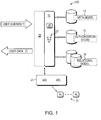
- the diagram of Fig. 1 represents the components of one embodiment of the present invention.
- the illustrated system 100 provides and implements a declarative distributed event system for relational data models or a target database system 19.
- Systems 100 embodying the present invention may operate on or otherwise apply to a plurality of relational models/databases 19 at a time.
- the databases 19 are unrelated to each other and non-centrally managed.
- the illustrated non-limiting, example system 100 comprises:
- the repository 15 comprises: (1) a plurality of models 23 and (2) a model manager 25.
- the plurality of models 23 includes custom models along with system standard models.
- Each model 23 is formed of data models representative of a target database 19, business logic, event triggers and functions, security definitions and distribution configurations.
- Each of these elements that are part of a model 23 can be created, modified, and injected into the model manager 25/repository 15.
- the model manager 25 manages these elements per model 23 and groups these elements into a model 23.
- its data model defines entities, attributes and relationships, such as tables and sub-tables and organization of the tables/sub-tables of the target database 19.
- Security configurations can be defined at each logical level (table element, sub-table element, table part or whole, sub-table part or whole).
- Custom business logic can be easily written composing workflows from a library of existing activities that include integrations with external systems, and utilities for data and model management.
- System 100 can associate a different custom task for each read, write and delete operation on any data element in a subject model 23. For example, system 100 can execute workflow "A" every time a new request is submitted, or execute workflow "B" every time a virtual machine is deleted.
- Defining, modifying or updating part of a model 23, injecting new models 23 into the model manager 25/repository 15 or updating old ones is a simple configuration task in system 100 that requires no coding or compilation, and can be performed while an instance of repository 15 is running.
- the system 100 defines in model manager 25/repository 15 the model's data and business logic and specifies in model manager 25 the model's security, event and distribution configurations. This enables the model manager 25 and repository 15 to govern who, when and where business logic is executed and data is accessed.
- governance structure of repository 15 can tailor and control how services are provided and customized for specific users, groups and organizations.
- Applicant's refer to virtual machines, desk tops, physical servers, and in general any infrastructure, platform or software managed by the system 100 within a private or public cloud.
- Repository's 15 governance structure controls aspects of a custom solution that integrates with an external database/relational model 19 system.
- repository's 15 governance controls
- a new data model (at 23) can be defined in two ways:
- the data model and corresponding model 23 can then be injected into the model manager 25 and the repository 15, and in turn the model manager 25 automatically generates a REST interface 29 (or the like web service interface).
- a REST interface 29 or the like web service interface.
- system's 100 automatically generated REST interface 29 exposes only selected parts to the data using access permissions, rules and filters that can easily support complex conditions. This is accomplished without writing explicit or dedicated code.
- the data from external systems 19 or from new models 23 can be read, modified, and deleted by users using the REST interface 29 and governance structure of repository 15.
- model manager 25 is used to define and configure data, workflows, security and events.
- system 100 run time environment.
- Both the repository 15 management logic and any custom logic added to model manager 25 is executed in a distributed execution environment.
- the repository 15 run time environment is formed of a distributed event engine 41 and one or more agents 31.
- Agents 31 are empty "containers" that can execute any workflow managed by the model manager 25.
- An agent 31 pings or otherwise communicates with the model manager 25 to see whether there are workflows to be executed. If there are, then an appropriate workflow (in code binaries) is downloaded from the model manager 25 and executed.
- the fact that an agent 31 initiates the communication with repository 15 greatly simplifies the installation of agents 31 across network segments and across firewalls. Upgrading the software that is executed by an agent 31 becomes a non-issue, as an agent 31 is logically an empty container that can only execute workflows (code binaries) downloaded from the model manager 25.
- version checking on the downloaded binaries using known technology may be utilized by agents 31.
- Other techniques common in the art for determining that the code binaries at the agent 31 end are up-to-date relative to the code binaries at the model manager 25 end are suitable.
- the high level operation of invention system 100 is as follows. First a user submits a query 11 to a target relational model 19 via repository 15.
- the target relational model 19 may be one of many databases 19.
- the repository 15 intercepts the input query 11 and identifies the submitting user.
- the user name can be provided as additional information in the query 11 in order to support delegation.
- repository 15 parses the query 11 and identifies which database objects or entities are to be accessed by the query 11.
- the repository 15 looks up in the MetaModel 13 the security information of the database entities to be accessed and resolves any group memberships stored in the authorization store (i.e. LDAP) 17.
- the repository 15 either allows or disallows access to the database objects/entities before even reaching the database 19.
- the repository 15 modifies the query before it is submitted to the relational model 19 such that the data objects for which the user is unauthorized to access are filtered out, for example using a SQL where clause.
- a modified query applied to relational model 19 results.
- distributed event engine 41 determines which operations to execute and which agents 31 to employ to process the operations.
- Distributed event engine 41 looks up, in models 23 and metamodel 13, stored definitions of operations per events. In this way, the event operations are predefined in and by models 23.
- Example event operations include filters, event scheduling (by absolute time, relative time or recurrent interval), a dynamic menu to an end user's application, and others.
- Distributed event engine 41 may annotate the operations with certain skills and may inject credentials at runtime. This filters the operations to agents 31 having qualifying skills and network credentials. As a result, system 100 can load balance the work across agents 31 and with the injected credentials adds a level of flexibility in distributing work across the network.
- a skill is a qualifier that is associated to workflows and to agents 31. Any number and combination of required skills can be associated with a workflow. For example, a workflow will only run in a specific location or will require an environment that supports a specific API that the workflow is using. Any number or combination of skills can be supported by an agent 31. Any combination of workflow/agent skills determines which agent 31 will be used for the execution of a specific workflow.
- Distributed event engine 41 posts or queues the operations ready for execution. Agents 31 obtain operations from the queue on a first come, first served basis, and execute. In particular, agents 31 download the code binaries of the operations to execute.
- MetaModel 13 stores the security configuration information as data that qualify which data object(s) is accessible by certain user role/task. This information is also secured by the repository 15 itself (in models 23) making the invention security system 100 dynamically adjustable at runtime.
- a plurality of relational data models 19 is hosted in a storage system that includes a query language capable of processing queries with conditional statements support.
- a storage system that includes a query language capable of processing queries with conditional statements support.
- An example of (but not limited to) such a storage system is a relational database with support for primary and foreign keys, join statements and where clauses.
- the relational data models 19 in the plurality are generally unrelated to each other, disparate and non-centrally managed.
- Each relational model 19 includes all of its relationships and entities in a standard machine readable format.
- This machine readable information includes a full description of all of the entities that are used to store data, including the type of information of the data stored, and the relationships between all the entities.
- the meta model 13 data provides the data models of models 23.
- the declarative role based security system 17 is preferably formed of two main subsystems: a data subsystem and a security runtime subsystem.
- That Data subsystem is a relational model used to store security access rules of the target relational model 19.
- the rules set forth who has access by organization, groups of users, and the like roles, and what these roles can respectively see and do. This defines how to relate to the relational model 19 data and what database 19 rows to relate.
- the security system 17 uses hierarchical structures in order to maximize the expressiveness of the system and thus minimize repetition of information when representing complex relationships between the access control rules and different user roles of the target model 19.
- the security runtime subsystem is a set of algorithms used to determine the access control rules that apply to a particular user, and filter data not accessible to (unauthorized for) that user.
- the security runtime intercepts any queries 11 to the storage system of the target relational model 19. It then modifies the queries such that unauthorized data (i.e., data not authorized to be accessible to the user) is filtered.
- the role based security information 17 is stored using the relational model illustrated in Fig. 3 .
- Model represents a target relational model 19 to be secured and has declared definitions of data entities and relationships.
- Entity represents an entity or object in the target model 19.
- EntityAuthorization represents an access rule associated to an entity, for example read access to the entity.
- a scope could be the name of a city, such as London, then all of the addresses in London, employees who live in London and all London phone numbers can be uniquely identified as part of the scope.
- RoleAssignment represents the role of a user in a particular scope.
- RoleDefinition represents a role within the system, for example, users, administrators, visitors.
- TaskDefinition represents a set of tasks associated to a role.
- Model manager 25 uses the foregoing as part of the security configuration of a model 23 stored in repository 15 and related to a target database/relational model 19. Then in accordance with model 23 definitions, model manager 25 generates code to produce a pertinent representation of target database 19 in REST or web service interface 29.
- the distributed event engine 41 comprises an event data subsystem 43, an event runtime subsystem 45, and one or more agents 31.
- the event data subsystem 43 is a relational model used to store event definitions on the target relational model 19. It also contains the definitions of operations and filters.
- the event runtime subsystem 45 is a set of algorithms used to determine which operations to execute when an target database 19 event occurs.
- Each Agent 31 is a remote process executing respective operations scheduled by the event runtime subsystem 45.
- An agent 31 processes operations in an asynchronous manner.
- Agents 31 obtain operations scheduled by the event runtime subsystem 45 on a first-come-first served basis.
- the invention system 100 can load balance the work across plural agents 31. As will be made clear below, the invention system 100 filters work (operations) by agent skill and agent credentials.
- the event data subsystem 43 relational model in one embodiment is illustrated in Fig. 4 and detailed as follows:
- Model represents a target relational model 19 to be secured and has declared definitions of data entities and their relationships.
- Entity represents an entity in the target database model 19.
- EntityEventDefinition represents an event associated to an operation over an entity, for example create a new instance of an entity.
- Workflow An operation or program to be executed when an entity event is triggered.
- Invention system 100 can annotate workflows with skills. This serves to filter WorkflowInstances to the agents 31 having respective skills.
- WorkflowInstance An instance of an operation to be executed in an agent 31.
- Agent The name of a remote process capable of executing WorkflowInstances.
- Each agent 31 in the network can run under different network credentials, for example credentials may be specific to location the agent 31 is running in.
- the invention distributed event engine 41 in some embodiments can inject credentials into a WorkflowInstance assigned to an agent where the agent 31 has respective credentials. This provides a level of flexibility in distributing workflow.
- Step 1 To begin, a query 11 is submitted and in turn intercepted by the security runtime subsystem at 17 in the form of an expression tree. For example: "INSERT INTO Employee (Name) VALUES ('Abe')"
- Step 2 The security runtime subsystem of 17 parses the expression tree and identifies which entities in the target model 19 are part of the query 11.
- entities in the target model 19 are part of the query 11.
- Step 3 the security runtime subsystem of 17 builds a list of events associated to that entity from metadata definitions (including annotations of skills) stored in event data subsystem 43.
- metadata definitions including annotations of skills
- Step 4 The security runtime subsystem of 17 builds an expression tree to filter the events using the following algorithm:
- Step 5 The security runtime subsystem of 17 evaluates the expression generated in Step 4. If the return value is true, the security runtime subsystem 17 schedules with event engine 41 (event runtime subsystem 45) an instance of the operation associated to the event. In doing so, the security runtime subsystem 17 passes as arguments a copy of the entity data as it looks at the time the event occurred. In turn, event runtime subsystem 45 compiles and automatically generates the desired code and injects that code (operations) into system 100. One or more pending operations managed by model manager 25 result.
- Step 6 An agent 31 of event engine 41 reads the list of pending operations scheduled above, pulls down from repository 15 the code binaries for an operation and executes the code/operation. That is, per skill and credentials of the agent 31, the agent obtains an operation (WorkInstance) having matching or otherwise qualifying/acceptable skill (as annotated) and credentials (as injected) and executes that operation. If in operation, the agent 31 needs to make a data request, the agent generates a suitable query and system 100 processes as described above.
- the invention system 100 automates low level code generation using a declarative approach.
- Definitions of business processes, triggering events and corresponding data model (target databases), and organizational rules for the data (actions and operations) are declared.
- event engine 41 compiles and generates low level code on the fly and interjects such code into the system 100 and computer network thereof.
- the present invention system 100 provides a declarative distributed event system for relational data models 19. Moreover, the present invention presents a resource and data centric, global computer network (i.e., Internet) scale architecture. Declarative, distributed events systems of the present invention are capable of operation across a computer network, and allow for adapting to, preserving and having no limits on canonical styles of target database. The declarative approach of Applicant's invention allows one to describe what the system should do as opposed to how the system should do it. Such advantages are not achieved by the prior art.
- Figure 5 illustrates a computer network or similar digital processing environment in which the present invention may be implemented.
- Client computer(s)/devices 50 and server computer(s) 60 provide processing, storage, and input/output devices executing application programs and the like.
- Client computer(s)/devices 50 can also be linked through communications network 70 to other computing devices, including other client devices/processes 50 and server computer(s) 60.
- Communications network 70 can be part of a remote access network, a global network (e.g., the Internet), a worldwide collection of computers, Local area or Wide area networks, and gateways that currently use respective protocols (TCP/IP, Bluetooth, etc.) to communicate with one another.
- Other electronic device/computer network architectures are suitable.
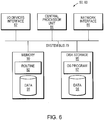
- Fig. 6 is a diagram of the internal structure of a computer (e.g., client processor/device 50 or server computers 60) in the computer system of Fig. 5 .
- Each computer 50, 60 contains system bus 79, where a bus is a set of hardware lines used for data transfer among the components of a computer or processing system.
- Bus 79 is essentially a shared conduit that connects different elements of a computer system (e.g., processor, disk storage, memory, input/output ports, network ports, etc.) that enables the transfer of information between the elements.
- I/O device interface 82 Attached to system bus 79 is I/O device interface 82 for connecting various input and output devices (e.g., keyboard, mouse, displays, printers, speakers, etc.) to the computer 50, 60.
- Network interface 86 allows the computer to connect to various other devices attached to a network (e.g., network 70 of Fig. 5 ).
- Memory 90 provides volatile storage for computer software instructions 92 and data 94 used to implement an embodiment of the present invention (e.g., security subsystem 17, model manager 25, distributed event engine 41 and supporting code detailed above).
- Disk storage 95 provides nonvolatile storage for computer software instructions 92 and data 94 used to implement an embodiment of the present invention.
- Central processor unit 84 is also attached to system bus 79 and provides for the execution of computer instructions.
- the processor routines 92 and data 94 are a computer program product (generally referenced 92), including a computer readable medium (e.g., a removable storage medium such as one or more DVD-ROM's, CD-ROM's, diskettes, tapes, etc.) that provides at least a portion of the software instructions for the invention system.
- Computer program product 92 can be installed by any suitable software installation procedure, as is well known in the art.
- at least a portion of the software instructions may also be downloaded over a cable, communication and/or wireless connection.
- the invention programs are a computer program propagated signal product 107 embodied on a propagated signal on a propagation medium (e.g., a radio wave, an infrared wave, a laser wave, a sound wave, or an electrical wave propagated over a global network such as the Internet, or other network(s)).
- a propagation medium e.g., a radio wave, an infrared wave, a laser wave, a sound wave, or an electrical wave propagated over a global network such as the Internet, or other network(s).
- Such carrier medium or signals provide at least a portion of the software instructions for the present invention routines/program 92.
- the propagated signal is an analog carrier wave or digital signal carried on the propagated medium.
- the propagated signal may be a digitized signal propagated over a global network (e.g., the Internet), a telecommunications network, or other network.
- the propagated signal is a signal that is transmitted over the propagation medium over a period of time, such as the instructions for a software application sent in packets over a network over a period of milliseconds, seconds, minutes, or longer.
- the computer readable medium of computer program product 92 is a propagation medium that the computer system 50 may receive and read, such as by receiving the propagation medium and identifying a propagated signal embodied in the propagation medium, as described above for computer program propagated signal product.
- carrier medium or transient carrier encompasses the foregoing transient signals, propagated signals, propagated medium, storage medium and the like.
Landscapes
- Engineering & Computer Science (AREA)
- Theoretical Computer Science (AREA)
- Databases & Information Systems (AREA)
- Physics & Mathematics (AREA)
- General Physics & Mathematics (AREA)
- General Engineering & Computer Science (AREA)
- Data Mining & Analysis (AREA)
- Software Systems (AREA)
- Computational Linguistics (AREA)
- Computer Security & Cryptography (AREA)
- Computer Hardware Design (AREA)
- General Health & Medical Sciences (AREA)
- Health & Medical Sciences (AREA)
- Bioethics (AREA)
- Multimedia (AREA)
- Technology Law (AREA)
- Fuzzy Systems (AREA)
- Mathematical Physics (AREA)
- Probability & Statistics with Applications (AREA)
- Computing Systems (AREA)
- Storage Device Security (AREA)
- Information Retrieval, Db Structures And Fs Structures Therefor (AREA)
Description
- This application claims the benefit of
U.S. Provisional Application No. 61/313,951, filed on March 15, 2010 - The entire teachings of the above application(s) are incorporated herein by reference.
- Generally in the state of the art, relational database systems only provide security at object/operation level. For example, it is possible to configure which users can read or modify a table, view or store procedure. It is also possible in more advanced database systems to control row level access using views to control access to the data (using role membership functions provided by the database system) and a model to store the association of data labels to roles that can be used to filter the data presented by the view. Those mechanisms present the following problems:
- (1) The user or group accessing the database needs to be configured in the database system.
- (2) The database system must have physical access to the security store (i.e. LDAP) in order to resolve user group memberships and the state of the account (enabled/disabled).
- (3) The identity of the user must be used with or upon connection to the database.
- (4) Authentication of users on multi layer systems requires delegation of credentials which is not universally available.
- (5) Authenticating every user in the database server prevents the usage of connection pools and therefore degrades performance.
- (6) Forcing the database to resolve users, groups and role memberships degrades performance.
- (7) Changes on the security roles, requires modification of database objects (i.e. views or store procedures).
- Further traditional distributed systems or ordinary centralized systems provide no transparency to the user and lack ability to adapt to complexities of the user and their environment.
-
US2005/222996A1 describes use of a database-enabled rules engine which includes receiving and storing ECA expressions in the database and evaluating rules during a database session.US2003/149714A1 describes a method of assigning resources to nodes in a workflow with each node being a task to be executed within the workflow. "Event-based Distributed Workflow Execution with EVE" by Geppert et al describes the distributed multi-server, multi-client architecture of EVE and illustrates its usage for workflow execution.US2008/0284597 teaches the dynamic modification of a user query by a security service module, based on the determined role of the user issuing the query. - The present invention addresses the shortcomings of the prior art. In particular, embodiments provide a declarative distributed event system for relational data models.
- The event system allows the execution of predefined operations upon the creation, modification or deletion of entities on a target relational model. Events can be filtered using conditional statements over the data of the target entity.
- The invention provides a database method and system as set out in the independent claims. Further features are set out in the dependent claims.
- The distributed execution may employ one or more agents. Each agent may download the respective code binaries of the determined corresponding operation that the agent is executing. In one embodiment, each agent has a common set of skills. The invention system may further annotate the event data model with skills in a manner that enables respective filtering of agents for executing different operations.
- We also describe that different agents may have different credentials. An event engine of the invention system may inject credentials per operation at runtime. An event runtime subsystem of the event engine may post the pending operations for agents to obtain on a first come, first served basis in some embodiments.
- We also describe that the event engine monitoring and detecting occurrence of an event involving the subject entity includes a security runtime subsystem. The security runtime subsystem intercepts a query of the target database and identifies the subject entity as part of the query. The security runtime subsystem may then cross-references events and corresponding operations in the event data model for the subject entity as identified.
- The foregoing will be apparent from the following more particular description of example embodiments of the invention, as illustrated in the accompanying drawings in which like reference characters refer to the same parts throughout the different views. The drawings are not necessarily to scale, emphasis instead being placed upon illustrating embodiments of the present invention.
-
Fig. 1 is a block diagram of an embodiment of the present invention. -
Fig. 2 is a schematic view of the relational data model and corresponding metadata (i.e., metamodel) in embodiments. -
Fig. 3 is a schematic view of the role-based security information of the metamodel in embodiments. -
Fig.4 is a schematic view of an event data subsystem in embodiments of the present invention. -
Fig. 5 is a schematic view of a computer network embodying the present invention. -
Fig. 6 is a block diagram of a computer node in the network ofFig. 5 . - A description of example embodiments of the invention follows. The teachings of all patents, published applications and references cited herein are incorporated by reference in their entirety.
- The diagram of
Fig. 1 represents the components of one embodiment of the present invention. The illustratedsystem 100 provides and implements a declarative distributed event system for relational data models or atarget database system 19.Systems 100 embodying the present invention may operate on or otherwise apply to a plurality of relational models/databases 19 at a time. Thedatabases 19 are unrelated to each other and non-centrally managed. The illustrated non-limiting,example system 100 comprises: - (1) a
repository 15 storingmodels 23 of thetarget databases 19; - (2) a
model manager 25 defining and managingmodels 23; - (3) a
distributed event engine 41 that at run time manages different types of events and associates them with the execution of one or more workflows; and - (4) a
web service interface 29 that presents to users representations of themodels 23. - The
repository 15 comprises: (1) a plurality ofmodels 23 and (2) amodel manager 25. The plurality ofmodels 23 includes custom models along with system standard models. Eachmodel 23 is formed of data models representative of atarget database 19, business logic, event triggers and functions, security definitions and distribution configurations. Each of these elements that are part of amodel 23 can be created, modified, and injected into themodel manager 25/repository 15. Themodel manager 25 manages these elements permodel 23 and groups these elements into amodel 23. - For a given
model 23, its data model defines entities, attributes and relationships, such as tables and sub-tables and organization of the tables/sub-tables of thetarget database 19. Security configurations can be defined at each logical level (table element, sub-table element, table part or whole, sub-table part or whole). - Custom business logic can be easily written composing workflows from a library of existing activities that include integrations with external systems, and utilities for data and model management.
System 100 can associate a different custom task for each read, write and delete operation on any data element in asubject model 23. For example,system 100 can execute workflow "A" every time a new request is submitted, or execute workflow "B" every time a virtual machine is deleted. - Defining, modifying or updating part of a
model 23, injectingnew models 23 into themodel manager 25/repository 15 or updating old ones is a simple configuration task insystem 100 that requires no coding or compilation, and can be performed while an instance ofrepository 15 is running. For eachmodel 23, thesystem 100 defines inmodel manager 25/repository 15 the model's data and business logic and specifies inmodel manager 25 the model's security, event and distribution configurations. This enables themodel manager 25 andrepository 15 to govern who, when and where business logic is executed and data is accessed. - In one embodiment, the governance structure of
repository 15 can tailor and control how services are provided and customized for specific users, groups and organizations. By services, Applicant's refer to virtual machines, desk tops, physical servers, and in general any infrastructure, platform or software managed by thesystem 100 within a private or public cloud. - Repository's 15 governance structure controls aspects of a custom solution that integrates with an external database/
relational model 19 system. In particular, repository's 15 governance controls: - the creation, access and modification of existing or new data, either inside
repository 15 or using an external database or system; - the definition of custom business logic that is executed in a distributed scalable environment;
- the configuration of the rules that specify when the business logic is executed; and
- the configuration of the rules that specify where the business logic is executed.
- A new data model (at 23) can be defined in two ways:
- (i) connecting to an existing
external database 19 and selecting the subset of the data or theentire database 19. - (ii) creating new data from scratch specifying new entities, attributes and relationships.
- The data model and
corresponding model 23 can then be injected into themodel manager 25 and therepository 15, and in turn themodel manager 25 automatically generates a REST interface 29 (or the like web service interface). Unlike atypical REST interface 29 that exposes the entire contents of a URI (Uniform Resource Identifier, identifying a resource on the internet), system's 100 automatically generatedREST interface 29 exposes only selected parts to the data using access permissions, rules and filters that can easily support complex conditions. This is accomplished without writing explicit or dedicated code. The data fromexternal systems 19 or fromnew models 23 can be read, modified, and deleted by users using theREST interface 29 and governance structure ofrepository 15. - The foregoing discusses how the
model manager 25 is used to define and configure data, workflows, security and events. Next is described thesystem 100 run time environment. - Both the
repository 15 management logic and any custom logic added tomodel manager 25 is executed in a distributed execution environment. In a preferred embodiment, therepository 15 run time environment is formed of a distributedevent engine 41 and one ormore agents 31.Agents 31 are empty "containers" that can execute any workflow managed by themodel manager 25. - Generally, an
agent 31, through distributedevent engine 41, communicates withrepository 15 using theREST interface 29. Anagent 31 pings or otherwise communicates with themodel manager 25 to see whether there are workflows to be executed. If there are, then an appropriate workflow (in code binaries) is downloaded from themodel manager 25 and executed. The fact that anagent 31 initiates the communication withrepository 15 greatly simplifies the installation ofagents 31 across network segments and across firewalls. Upgrading the software that is executed by anagent 31 becomes a non-issue, as anagent 31 is logically an empty container that can only execute workflows (code binaries) downloaded from themodel manager 25. - In some embodiments, version checking on the downloaded binaries using known technology may be utilized by
agents 31. Other techniques common in the art for determining that the code binaries at theagent 31 end are up-to-date relative to the code binaries at themodel manager 25 end are suitable. - The high level operation of
invention system 100 is as follows. First a user submits a query 11 to a targetrelational model 19 viarepository 15. The targetrelational model 19 may be one ofmany databases 19. In response, therepository 15 intercepts the input query 11 and identifies the submitting user. The user name can be provided as additional information in the query 11 in order to support delegation. - Next,
repository 15 parses the query 11 and identifies which database objects or entities are to be accessed by the query 11. Therepository 15 looks up in theMetaModel 13 the security information of the database entities to be accessed and resolves any group memberships stored in the authorization store (i.e. LDAP) 17. As a result, therepository 15 either allows or disallows access to the database objects/entities before even reaching thedatabase 19. - For allowed access, the
repository 15 modifies the query before it is submitted to therelational model 19 such that the data objects for which the user is unauthorized to access are filtered out, for example using a SQL where clause. A modified query applied torelational model 19 results. - In response to a triggering event, e.g., creation, modification or deletion of entities in
data model 19, distributedevent engine 41 determines which operations to execute and whichagents 31 to employ to process the operations. - Distributed
event engine 41 looks up, inmodels 23 andmetamodel 13, stored definitions of operations per events. In this way, the event operations are predefined in and bymodels 23. Example event operations include filters, event scheduling (by absolute time, relative time or recurrent interval), a dynamic menu to an end user's application, and others. - Distributed
event engine 41 may annotate the operations with certain skills and may inject credentials at runtime. This filters the operations toagents 31 having qualifying skills and network credentials. As a result,system 100 can load balance the work acrossagents 31 and with the injected credentials adds a level of flexibility in distributing work across the network. - In preferred embodiments, a skill is a qualifier that is associated to workflows and to
agents 31. Any number and combination of required skills can be associated with a workflow. For example, a workflow will only run in a specific location or will require an environment that supports a specific API that the workflow is using. Any number or combination of skills can be supported by anagent 31. Any combination of workflow/agent skills determines whichagent 31 will be used for the execution of a specific workflow. - Distributed
event engine 41 posts or queues the operations ready for execution.Agents 31 obtain operations from the queue on a first come, first served basis, and execute. In particular,agents 31 download the code binaries of the operations to execute. - In a preferred embodiment,
MetaModel 13 stores the security configuration information as data that qualify which data object(s) is accessible by certain user role/task. This information is also secured by therepository 15 itself (in models 23) making theinvention security system 100 dynamically adjustable at runtime. - A plurality of
relational data models 19 is hosted in a storage system that includes a query language capable of processing queries with conditional statements support. An example of (but not limited to) such a storage system is a relational database with support for primary and foreign keys, join statements and where clauses. Therelational data models 19 in the plurality are generally unrelated to each other, disparate and non-centrally managed. - Each
relational model 19 includes all of its relationships and entities in a standard machine readable format. This machine readable information (model metadata 13) includes a full description of all of the entities that are used to store data, including the type of information of the data stored, and the relationships between all the entities. - An example of a
rational data model 19 and corresponding XML metadata 13 (machine readable) is provided inFig. 2 and detailed as follows:
 <model>
 <entities>
        <entity name="Address">
              <properties name="AddressId" key="true"/>
              <properties name="Street"/>
              <properties name="City"/>
               <properties name="ZipCode"/>
               <properties name="Country"/>
        </entity>
        <entity name="Employee">
               <properties name="EmployeeId" key="true"/>
               <properties name="Name"/>
        </entity>
        <entity name="Telephone">
               <properties name="TelephoneId" key="true"/>
               <properties name="PhoneNumber"/>
        </entity>
 </entities>
 <relationships>
        <relationship>
               <end name="Address" multiplicity="*"/>
               <end name="Employee" multiplicity="*"/>
        </relationship>
        <relationship>
               <end name="Telephone" multiplicity="*"/>
               <end name="Employee" multiplicity="1"/>
        </relationship>
 </relationships>
 </model>
Model: represents a target
Entity: represents an entity or object in the
EntityAuthorization: represents an access rule associated to an entity, for example read access to the entity.
EntityFilter: is a set of conditional statements over the data of a target entity and its relationships. For example "Employee.Addresses.City = London"
Scope: is a bit of information that can be used to group a set of entities in the
RoleAssignment: represents the role of a user in a particular scope.
RoleDefinition: represents a role within the system, for example, users, administrators, visitors.
TaskDefinition: represents a set of tasks associated to a role.
"INSERT INTO Employee (Name) VALUES ('Abe')"
Employee
- Workflow = NotifyUser
- EntityEventDefinition = Employee (Create = true)
- EntityFilter = Employee.Name= 'Abe'
- a. Generate an expression for each filter in the list generated in Step 3:
- i. Literal values are not modified.
- ii. If no expression is associated to the Entity Authorization a constant "True" Boolean expression is generated.
- b. All expressions are concatenated into a single expression using the AND expression.
Claims (14)
- A database method comprising:providing an event data model (23) of a target database (19), the target database (19) being one of a plurality of databases;per a subject entity in the target database (19), using the event data model (23) to declare and define triggering events and respective corresponding operations for each triggering event;providing a distributed event engine (41) executed by a processor, said distributed event engine (41) performing all of the following steps-detecting occurrence of an event involving the subject entity in the target database (19);based on the detected event, and skills wherein said skills comprise at least one of network credentials, support of a specific API or specific location of the workflow in a distributed database environment, determining from the event data model (23) corresponding operations; anddistributing execution of the determined corresponding operations characterised bystoring, in a metamodel (13) of the plurality of databases, security information that qualifies which data objects are accessible by certain roles of users providing a user query of the target database (19);the step of detecting including:intercepting a user query of the target database, andidentifying the subject entity as part of the user query; andmodifying the user query to filter out objects for which the user is unauthorised to access based on said security information stored in said metamodeland based on said skills.
- The method of claim 1, wherein the step of distributing employs one or more agents (31) to execute respective operations; and
respective code binaries of the operations are downloaded to the one or more agents (31). - The method of claim 2, wherein each agent (31) has a common set of skills; and
the method further comprises annotating the event data model with skills in a manner enabling respective filtering of agents for executing different operations. - The method of claim 2, wherein different agents (31) have respective different credentials; and
the step of distributing execution further comprises injecting credentials per operation. - The method of claim 2, wherein said distributing operations to agents (31) is on a first come first served basis.
- The method of claim 1, wherein the target database (19) is a relational database.
- The method of claim 1, wherein the target database (19) is one or more databases.
- The method of claim 1, wherein the event modifying the target database is selected from a list consisting of:creation of the subject entity in the target database;modification of the subject entity in the target database; anddeletion of the subject entity in the target database
- A computer database system, comprising:an event data model (23) of a target database (19), for a subject entity in the target database, the event data model declaring and defining triggering events and corresponding operations for each triggering event, wherein the target database is one of a plurality of databases; a distributed event engine (41) executed by a processor, the distributed event engine (41) (i) detecting occurrence of an event involving the subject entity in the target database, (ii) based on the detected event, and skills wherein said skills comprise at least one of network credentials, support of a specific API or specific location of the workflow in a distributed database environment, determining from the event data model corresponding operations, and (iii) distributing execution of the determined corresponding operations; andone or more agents (31) responsive to the distributed event engine (41) and executing the determined corresponding operationscharacterised in that the computer database system comprisesa metamodel (13) of the plurality of databases, the metamodel (13) being configured to store security information that qualifies which data objects are accessible by certain roles of users providing a user query of the target database (19) andin that the distributed event engine (41) includes a security runtime subsystem (17), the security runtime subsystem (17):intercepting a query of the target database (19);identifying the subject entity as part of the query; andmodifying the user query to filter out objects for which the user is unauthorised to access based on said security information stored in said metamodeland based on said skills.
- The computer database system of claim 9, wherein each agent (31) has a common set of skills; and the event data model (23) is annotated with skills in a manner enabling respective filtering of agents (31) for executing different operations.
- The computer database system of claim 9, wherein different agents (31) have different credentials; and
the event engine (41) enables credentials to be injected per determined corresponding operation at runtime. - The computer database system of claim 9, wherein each agent (31) obtains determined corresponding operations to execute on a first come, first served basis.
- The computer database system of claim 9, wherein to execute the determined corresponding operations, the one or more agents (31) download code binaries of the determined corresponding operations.
- A computer readable storage medium having computer program code embodied thereon to perform the method of any of claims 1 to 8.
Applications Claiming Priority (2)
| Application Number | Priority Date | Filing Date | Title |
|---|---|---|---|
| US31395110P | 2010-03-15 | 2010-03-15 | |
| PCT/US2011/028095 WO2011115833A2 (en) | 2010-03-15 | 2011-03-11 | Distributed event system for relational models |
Publications (3)
| Publication Number | Publication Date |
|---|---|
| EP2548137A2 EP2548137A2 (en) | 2013-01-23 |
| EP2548137A4 EP2548137A4 (en) | 2016-10-19 |
| EP2548137B1 true EP2548137B1 (en) | 2018-08-15 |
Family
ID=44649778
Family Applications (2)
| Application Number | Title | Priority Date | Filing Date |
|---|---|---|---|
| EP11756760.2A Active EP2548137B1 (en) | 2010-03-15 | 2011-03-11 | Distributed event system for relational models |
| EP11756764.4A Active EP2548138B1 (en) | 2010-03-15 | 2011-03-11 | Computer relational database method and system having role based access control |
Family Applications After (1)
| Application Number | Title | Priority Date | Filing Date |
|---|---|---|---|
| EP11756764.4A Active EP2548138B1 (en) | 2010-03-15 | 2011-03-11 | Computer relational database method and system having role based access control |
Country Status (4)
| Country | Link |
|---|---|
| US (5) | US9195707B2 (en) |
| EP (2) | EP2548137B1 (en) |
| CN (1) | CN102844756B (en) |
| WO (2) | WO2011115839A2 (en) |
Families Citing this family (47)
| Publication number | Priority date | Publication date | Assignee | Title |
|---|---|---|---|---|
| WO2011115839A2 (en) | 2010-03-15 | 2011-09-22 | DynamicOps, Inc. | Computer relational database method and system having role based access control |
| US20120278334A1 (en) * | 2011-04-29 | 2012-11-01 | John Abjanic | Database System |
| US9449178B2 (en) * | 2012-07-24 | 2016-09-20 | ID Insight | System, method and computer product for fast and secure data searching |
| US10754625B2 (en) * | 2017-06-16 | 2020-08-25 | Mongodb, Inc. | Systems and methods for managing a database back end as a service |
| US20140278807A1 (en) * | 2013-03-15 | 2014-09-18 | Cloudamize, Inc. | Cloud service optimization for cost, performance and configuration |
| CN104077284A (en) * | 2013-03-26 | 2014-10-01 | 中国移动通信集团湖北有限公司 | Data security access method and data security access system |
| EP3063665A4 (en) * | 2013-10-29 | 2017-05-10 | Hewlett-Packard Enterprise Development LP | Validating a query execution |
| EP2902926A1 (en) * | 2014-01-31 | 2015-08-05 | Hewlett-Packard Development Company, L.P. | Filtering data from a database |
| CN104318180A (en) * | 2014-11-18 | 2015-01-28 | 上海斐讯数据通信技术有限公司 | System security permission treatment state machine model based on intelligent terminal |
| US9792454B2 (en) * | 2015-01-16 | 2017-10-17 | Protegrity Corporation | Record level data security |
| US20160306503A1 (en) * | 2015-04-16 | 2016-10-20 | Vmware, Inc. | Workflow Guidance Widget with State-Indicating Buttons |
| CN106295388B (en) * | 2015-06-04 | 2019-09-10 | 中国移动通信集团山东有限公司 | A kind of data desensitization method and device |
| US9760734B2 (en) * | 2015-06-26 | 2017-09-12 | Sap Se | Catalog-based user authorization to access to multiple applications |
| CN106548085A (en) * | 2015-09-17 | 2017-03-29 | 中国移动通信集团甘肃有限公司 | A kind of processing method and processing device of data |
| US10205730B2 (en) | 2015-09-29 | 2019-02-12 | International Business Machines Corporation | Access control for database |
| US10380334B2 (en) * | 2015-11-06 | 2019-08-13 | Sap Se | Data access rules in a database layer |
| US10305918B1 (en) * | 2016-01-27 | 2019-05-28 | Vmware Inc. | Monitoring for hybrid applications |
| KR101905771B1 (en) * | 2016-01-29 | 2018-10-11 | 주식회사 엔오디비즈웨어 | Self defense security server with behavior and environment analysis and operating method thereof |
| WO2017140213A1 (en) | 2016-02-19 | 2017-08-24 | Huawei Technologies Co., Ltd. | System, method, and device for unified access control on federated database |
| WO2017172443A1 (en) * | 2016-03-28 | 2017-10-05 | Carrier Corporation | Cold chain distribution data prioritization |
| US10417441B2 (en) * | 2016-04-29 | 2019-09-17 | International Business Machines Corporation | Effectively validating dynamic database queries through database activity monitoring |
| CN107025411B (en) * | 2017-03-22 | 2019-11-26 | 红有软件股份有限公司 | A kind of system and method for fine-grained data permission dynamic control |
| US10713246B2 (en) * | 2017-06-22 | 2020-07-14 | Sap Se | Column based data access controls |
| CN107392053A (en) * | 2017-08-11 | 2017-11-24 | 四川长虹电器股份有限公司 | A kind of data permission control method in enterprise staff information database |
| US11790099B1 (en) * | 2018-02-09 | 2023-10-17 | Microsoft Technology Licensing, Llc | Policy enforcement for dataset access in distributed computing environment |
| CN108509807A (en) * | 2018-04-13 | 2018-09-07 | 南京新贝金服科技有限公司 | A kind of the table data authority control system and method for based role |
| US11244063B2 (en) * | 2018-06-11 | 2022-02-08 | Palantir Technologies Inc. | Row-level and column-level policy service |
| US11048815B2 (en) * | 2018-08-06 | 2021-06-29 | Snowflake Inc. | Secure data sharing in a multi-tenant database system |
| CN111262821A (en) * | 2018-12-01 | 2020-06-09 | 星际空间(天津)科技发展有限公司 | Authentication method based on micro-service |
| US11361040B2 (en) * | 2019-01-11 | 2022-06-14 | Johnson Controls Tyco IP Holdings LLP | Systems and methods for providing persona-adjusted data |
| US11106674B2 (en) * | 2019-03-31 | 2021-08-31 | International Business Machines Corporation | Extensible data skipping |
| CN110222032A (en) * | 2019-05-22 | 2019-09-10 | 武汉掌游科技有限公司 | A kind of generalised event model based on software data analysis |
| US20200379988A1 (en) * | 2019-05-29 | 2020-12-03 | Sigma Computing, Inc. | Row-level worksheet security |
| CN111368001B (en) * | 2020-03-04 | 2023-06-02 | 徐皓 | Block chain method, system and computer readable storage medium |
| JP2021189569A (en) * | 2020-05-26 | 2021-12-13 | 富士通株式会社 | Data update program, data update device, and data update method |
| EP4189552A1 (en) * | 2020-09-01 | 2023-06-07 | Sigma Computing, Inc. | Generating a data warehouse index |
| US11397826B2 (en) * | 2020-10-29 | 2022-07-26 | Snowflake Inc. | Row-level security |
| CN112000992B (en) * | 2020-10-29 | 2021-03-16 | 腾讯科技(深圳)有限公司 | Data leakage prevention protection method and device, computer readable medium and electronic equipment |
| US12536318B2 (en) * | 2022-06-24 | 2026-01-27 | Nextlabs, Inc. | Dynamically inserting guard conditions into a database query to protect privacy and confidentiality and prevent data leak |
| US12530480B2 (en) * | 2023-05-08 | 2026-01-20 | Nvidia Corporation | Role-based large language model to enable security and accuracy |
| US12216694B1 (en) | 2023-07-25 | 2025-02-04 | Instabase, Inc. | Systems and methods for using prompt dissection for large language models |
| US12619760B2 (en) * | 2023-10-23 | 2026-05-05 | Oracle International Corporation | Compositional reasoning of information flow in scripted query language |
| US12493754B1 (en) | 2023-11-27 | 2025-12-09 | Instabase, Inc. | Systems and methods for using one or more machine learning models to perform tasks as prompted |
| US12450217B1 (en) | 2024-01-16 | 2025-10-21 | Instabase, Inc. | Systems and methods for agent-controlled federated retrieval-augmented generation |
| US12657330B2 (en) * | 2024-03-01 | 2026-06-16 | Databricks, Inc. | Access control of managed clusters performing data processing on cloud platforms |
| US12488136B1 (en) * | 2024-03-29 | 2025-12-02 | Instabase, Inc. | Systems and methods for access control for federated retrieval-augmented generation |
| US20260023842A1 (en) * | 2024-07-19 | 2026-01-22 | Varonis Systems, Inc. | System and Method for Utilizing a Large Language Model (LLM) with Constraints Derived from Organizational Context |
Citations (1)
| Publication number | Priority date | Publication date | Assignee | Title |
|---|---|---|---|---|
| US20080284597A1 (en) * | 2007-05-17 | 2008-11-20 | Oracle International Corporation | Security Using EPCIS Data And A Virtual Private Database |
Family Cites Families (40)
| Publication number | Priority date | Publication date | Assignee | Title |
|---|---|---|---|---|
| US5566337A (en) * | 1994-05-13 | 1996-10-15 | Apple Computer, Inc. | Method and apparatus for distributing events in an operating system |
| WO1996034350A1 (en) * | 1995-04-24 | 1996-10-31 | Aspect Development, Inc. | Modeling of object-oriented database structures, translation to relational database structures, and dynamic searches thereon |
| US6085191A (en) | 1997-10-31 | 2000-07-04 | Sun Microsystems, Inc. | System and method for providing database access control in a secure distributed network |
| US7281003B2 (en) | 1998-10-05 | 2007-10-09 | Oracle International Corporation | Database fine-grained access control |
| US6820082B1 (en) * | 2000-04-03 | 2004-11-16 | Allegis Corporation | Rule based database security system and method |
| FR2813682B1 (en) | 2000-09-07 | 2003-01-17 | France Telecom | METHOD FOR SEARCHING AUDIOVISUAL PROGRAMS OR CONTENTS ON AN AUDIOVISUAL STREAM COMPRISING EVENT TABLES DISTRIBUTED BY A DATABASE |
| US20030014394A1 (en) | 2001-03-22 | 2003-01-16 | Shinji Fujiwara | Cell-level data access control using user-defined functions |
| US7155720B2 (en) | 2001-10-26 | 2006-12-26 | Hewlett-Packard Development Company, L.P. | Dynamic task assignment in workflows |
| US6985904B1 (en) | 2002-02-28 | 2006-01-10 | Oracle International Corporation | Systems and methods for sharing of execution plans for similar database statements |
| US7096217B2 (en) | 2002-10-31 | 2006-08-22 | International Business Machines Corporation | Global query correlation attributes |
| US6928554B2 (en) | 2002-10-31 | 2005-08-09 | International Business Machines Corporation | Method of query return data analysis for early warning indicators of possible security exposures |
| US7418448B2 (en) * | 2003-03-12 | 2008-08-26 | Microsoft Corporation | Organization structure system |
| US7054877B2 (en) | 2003-03-31 | 2006-05-30 | International Business Machines Corporation | Dealing with composite data through data model entities |
| US7158969B2 (en) | 2003-06-12 | 2007-01-02 | International Business Machines Corporation | Iterative data analysis process via query result augmentation and result data feedback |
| US20050222996A1 (en) | 2004-03-30 | 2005-10-06 | Oracle International Corporation | Managing event-condition-action rules in a database system |
| US20070180490A1 (en) * | 2004-05-20 | 2007-08-02 | Renzi Silvio J | System and method for policy management |
| US7599924B2 (en) | 2004-06-25 | 2009-10-06 | International Business Machines Corporation | Relationship management in a data abstraction model |
| US7228307B2 (en) * | 2004-07-29 | 2007-06-05 | International Business Machines Corporation | Security model using security domains in a security model applied to abstract database |
| US20060141985A1 (en) * | 2004-12-23 | 2006-06-29 | Motorola, Inc. | Dynamic management for interface access permissions |
| US20060248592A1 (en) | 2005-04-28 | 2006-11-02 | International Business Machines Corporation | System and method for limiting disclosure in hippocratic databases |
| US7186626B2 (en) * | 2005-07-22 | 2007-03-06 | The Regents Of The University Of California | Method for controlling dislocation positions in silicon germanium buffer layers |
| US9679031B2 (en) | 2005-09-14 | 2017-06-13 | International Business Machines Corporation | Composing abstract queries for delegated user roles |
| US8635660B2 (en) | 2005-12-06 | 2014-01-21 | Oracle International Corporation | Dynamic constraints for query operations |
| US8332430B2 (en) * | 2006-03-01 | 2012-12-11 | Oracle International Corporation | Secure search performance improvement |
| US20070288890A1 (en) | 2006-05-17 | 2007-12-13 | Ipreo Holdings, Inc. | System, method and apparatus to allow for a design, administration, and presentation of computer software applications |
| US20080010239A1 (en) * | 2006-07-10 | 2008-01-10 | Sap Ag | Systems and methods of managing product tracking data |
| US7685194B2 (en) * | 2006-08-31 | 2010-03-23 | Microsoft Corporation | Fine-grained access control in a database by preventing information leakage and removing redundancy |
| US7739219B2 (en) | 2006-09-08 | 2010-06-15 | Oracle International Corporation | Techniques of optimizing queries using NULL expression analysis |
| US8516538B2 (en) | 2007-02-01 | 2013-08-20 | Frequentz Llc | Providing security for queries to electronic product code information services |
| EP1973053A1 (en) | 2007-03-19 | 2008-09-24 | British Telecommunications Public Limited Company | Multiple user access to data triples |
| US7639140B2 (en) * | 2007-05-17 | 2009-12-29 | Oracle International Corporation | Systems and methods for determining storage locations for RFID data integrity and event compensation |
| US7970892B2 (en) | 2007-06-29 | 2011-06-28 | Microsoft Corporation | Tuning and optimizing distributed systems with declarative models |
| US7984043B1 (en) * | 2007-07-24 | 2011-07-19 | Amazon Technologies, Inc. | System and method for distributed query processing using configuration-independent query plans |
| US8230386B2 (en) | 2007-08-23 | 2012-07-24 | Microsoft Corporation | Monitoring distributed applications |
| US7809751B2 (en) | 2007-08-27 | 2010-10-05 | Sap Ag | Authorization controlled searching |
| NO326743B1 (en) * | 2007-10-18 | 2009-02-09 | Fast Search & Transfer As | Method of limiting access to search results and search engine supporting the process |
| US8566909B2 (en) * | 2008-02-01 | 2013-10-22 | Oracle International Corporation | Row-level security with expression data type |
| US8285748B2 (en) | 2008-05-28 | 2012-10-09 | Oracle International Corporation | Proactive information security management |
| US8214325B2 (en) | 2008-11-20 | 2012-07-03 | Sap Ag | Federating business event data within an enterprise network |
| WO2011115839A2 (en) | 2010-03-15 | 2011-09-22 | DynamicOps, Inc. | Computer relational database method and system having role based access control |
-
2011
- 2011-03-11 WO PCT/US2011/028138 patent/WO2011115839A2/en not_active Ceased
- 2011-03-11 US US13/045,963 patent/US9195707B2/en active Active
- 2011-03-11 WO PCT/US2011/028095 patent/WO2011115833A2/en not_active Ceased
- 2011-03-11 US US13/635,300 patent/US9058353B2/en active Active
- 2011-03-11 EP EP11756760.2A patent/EP2548137B1/en active Active
- 2011-03-11 US US13/046,209 patent/US10430430B2/en active Active
- 2011-03-11 EP EP11756764.4A patent/EP2548138B1/en active Active
- 2011-03-11 CN CN201180014182.2A patent/CN102844756B/en not_active Expired - Fee Related
- 2011-03-11 US US13/635,313 patent/US9384361B2/en not_active Expired - Fee Related
-
2015
- 2015-05-08 US US14/707,949 patent/US9852206B2/en not_active Expired - Fee Related
Patent Citations (1)
| Publication number | Priority date | Publication date | Assignee | Title |
|---|---|---|---|---|
| US20080284597A1 (en) * | 2007-05-17 | 2008-11-20 | Oracle International Corporation | Security Using EPCIS Data And A Virtual Private Database |
Also Published As
| Publication number | Publication date |
|---|---|
| US9384361B2 (en) | 2016-07-05 |
| EP2548138A4 (en) | 2013-10-30 |
| US20130138666A1 (en) | 2013-05-30 |
| US10430430B2 (en) | 2019-10-01 |
| US20150317486A1 (en) | 2015-11-05 |
| EP2548137A2 (en) | 2013-01-23 |
| CN102844756A (en) | 2012-12-26 |
| WO2011115839A2 (en) | 2011-09-22 |
| US20130144852A1 (en) | 2013-06-06 |
| EP2548138A2 (en) | 2013-01-23 |
| US20110302200A1 (en) | 2011-12-08 |
| CN102844756B (en) | 2019-02-15 |
| US9852206B2 (en) | 2017-12-26 |
| WO2011115833A2 (en) | 2011-09-22 |
| EP2548137A4 (en) | 2016-10-19 |
| WO2011115833A3 (en) | 2011-12-15 |
| EP2548138B1 (en) | 2018-09-12 |
| US9195707B2 (en) | 2015-11-24 |
| WO2011115839A3 (en) | 2011-12-22 |
| US20110302180A1 (en) | 2011-12-08 |
| US9058353B2 (en) | 2015-06-16 |
Similar Documents
| Publication | Publication Date | Title |
|---|---|---|
| US9195707B2 (en) | Distributed event system for relational models | |
| US11799969B2 (en) | Forming activity streams across heterogeneous applications | |
| US7580946B2 (en) | Smart integration engine and metadata-oriented architecture for automatic EII and business integration | |
| US8326911B2 (en) | Request processing with mapping and repeatable processes | |
| US8707451B2 (en) | Search hit URL modification for secure application integration | |
| US8433712B2 (en) | Link analysis for enterprise environment | |
| US9177124B2 (en) | Flexible authentication framework | |
| US8005816B2 (en) | Auto generation of suggested links in a search system | |
| US8332430B2 (en) | Secure search performance improvement | |
| CN103530568B (en) | Authority control method, Apparatus and system | |
| CN101408899B (en) | Method and apparatus for switching website multiple data sources | |
| US20120278303A1 (en) | Propagating user identities in a secure federated search system | |
| US20070283425A1 (en) | Minimum Lifespan Credentials for Crawling Data Repositories | |
| US20110246443A1 (en) | Suggested content with attribute parameterization | |
| CN103049684A (en) | Data authority control method and data authority control system based on RBAC (role-based access control) model extension | |
| CN113127906A (en) | Unified authority management platform, method and storage medium based on C/S architecture | |
| US9946885B2 (en) | Process-oriented modeling and flow to restrict access to objects | |
| US8694559B2 (en) | Using database content for multiple business data systems connected to one database | |
| US20040139141A1 (en) | Integration of virtual data within a host operating environment | |
| CN111414591B (en) | Workflow management method and device | |
| CN118802907A (en) | Tenant Management Service Platform | |
| Hill | The design and implementation of an extensible, user-management service for communications applications | |
| Zehoo et al. | Pro ODP. NET for Oracle Database 11g | |
| Reed et al. | Service Provisioning Markup |
Legal Events
| Date | Code | Title | Description |
|---|---|---|---|
| PUAI | Public reference made under article 153(3) epc to a published international application that has entered the european phase |
Free format text: ORIGINAL CODE: 0009012 |
|
| 17P | Request for examination filed |
Effective date: 20121006 |
|
| AK | Designated contracting states |
Kind code of ref document: A2 Designated state(s): AL AT BE BG CH CY CZ DE DK EE ES FI FR GB GR HR HU IE IS IT LI LT LU LV MC MK MT NL NO PL PT RO RS SE SI SK SM TR |
|
| DAX | Request for extension of the european patent (deleted) | ||
| RAP1 | Party data changed (applicant data changed or rights of an application transferred) |
Owner name: VMWARE, INC. |
|
| A4 | Supplementary search report drawn up and despatched |
Effective date: 20160919 |
|
| RIC1 | Information provided on ipc code assigned before grant |
Ipc: G06F 21/10 20130101ALI20160913BHEP Ipc: G06F 21/60 20130101ALI20160913BHEP Ipc: G06F 15/16 20060101ALI20160913BHEP Ipc: G06F 21/33 20130101ALI20160913BHEP Ipc: G06F 21/62 20130101ALI20160913BHEP Ipc: G06F 21/54 20130101ALI20160913BHEP Ipc: G06F 17/30 20060101AFI20160913BHEP |
|
| GRAP | Despatch of communication of intention to grant a patent |
Free format text: ORIGINAL CODE: EPIDOSNIGR1 |
|
| STAA | Information on the status of an ep patent application or granted ep patent |
Free format text: STATUS: GRANT OF PATENT IS INTENDED |
|
| RIN1 | Information on inventor provided before grant (corrected) |
Inventor name: MULLER, LESLIE Inventor name: WASSER, MICHAEL, MORRIS Inventor name: MAESTRO, ALBERTO, ARIAS |
|
| INTG | Intention to grant announced |
Effective date: 20180326 |
|
| GRAS | Grant fee paid |
Free format text: ORIGINAL CODE: EPIDOSNIGR3 |
|
| GRAA | (expected) grant |
Free format text: ORIGINAL CODE: 0009210 |
|
| STAA | Information on the status of an ep patent application or granted ep patent |
Free format text: STATUS: THE PATENT HAS BEEN GRANTED |
|
| AK | Designated contracting states |
Kind code of ref document: B1 Designated state(s): AL AT BE BG CH CY CZ DE DK EE ES FI FR GB GR HR HU IE IS IT LI LT LU LV MC MK MT NL NO PL PT RO RS SE SI SK SM TR |
|
| REG | Reference to a national code |
Ref country code: CH Ref legal event code: EP Ref country code: GB Ref legal event code: FG4D Ref country code: AT Ref legal event code: REF Ref document number: 1030593 Country of ref document: AT Kind code of ref document: T Effective date: 20180815 |
|
| REG | Reference to a national code |
Ref country code: IE Ref legal event code: FG4D |
|
| REG | Reference to a national code |
Ref country code: DE Ref legal event code: R096 Ref document number: 602011051085 Country of ref document: DE |
|
| REG | Reference to a national code |
Ref country code: DE Ref legal event code: R079 Ref document number: 602011051085 Country of ref document: DE Free format text: PREVIOUS MAIN CLASS: G06F0017300000 Ipc: G06F0016000000 |
|
| REG | Reference to a national code |
Ref country code: NL Ref legal event code: MP Effective date: 20180815 |
|
| REG | Reference to a national code |
Ref country code: LT Ref legal event code: MG4D |
|
| REG | Reference to a national code |
Ref country code: AT Ref legal event code: MK05 Ref document number: 1030593 Country of ref document: AT Kind code of ref document: T Effective date: 20180815 |
|
| PG25 | Lapsed in a contracting state [announced via postgrant information from national office to epo] |
Ref country code: LT Free format text: LAPSE BECAUSE OF FAILURE TO SUBMIT A TRANSLATION OF THE DESCRIPTION OR TO PAY THE FEE WITHIN THE PRESCRIBED TIME-LIMIT Effective date: 20180815 Ref country code: FI Free format text: LAPSE BECAUSE OF FAILURE TO SUBMIT A TRANSLATION OF THE DESCRIPTION OR TO PAY THE FEE WITHIN THE PRESCRIBED TIME-LIMIT Effective date: 20180815 Ref country code: AT Free format text: LAPSE BECAUSE OF FAILURE TO SUBMIT A TRANSLATION OF THE DESCRIPTION OR TO PAY THE FEE WITHIN THE PRESCRIBED TIME-LIMIT Effective date: 20180815 Ref country code: IS Free format text: LAPSE BECAUSE OF FAILURE TO SUBMIT A TRANSLATION OF THE DESCRIPTION OR TO PAY THE FEE WITHIN THE PRESCRIBED TIME-LIMIT Effective date: 20181215 Ref country code: RS Free format text: LAPSE BECAUSE OF FAILURE TO SUBMIT A TRANSLATION OF THE DESCRIPTION OR TO PAY THE FEE WITHIN THE PRESCRIBED TIME-LIMIT Effective date: 20180815 Ref country code: GR Free format text: LAPSE BECAUSE OF FAILURE TO SUBMIT A TRANSLATION OF THE DESCRIPTION OR TO PAY THE FEE WITHIN THE PRESCRIBED TIME-LIMIT Effective date: 20181116 Ref country code: NO Free format text: LAPSE BECAUSE OF FAILURE TO SUBMIT A TRANSLATION OF THE DESCRIPTION OR TO PAY THE FEE WITHIN THE PRESCRIBED TIME-LIMIT Effective date: 20181115 Ref country code: BG Free format text: LAPSE BECAUSE OF FAILURE TO SUBMIT A TRANSLATION OF THE DESCRIPTION OR TO PAY THE FEE WITHIN THE PRESCRIBED TIME-LIMIT Effective date: 20181115 Ref country code: SE Free format text: LAPSE BECAUSE OF FAILURE TO SUBMIT A TRANSLATION OF THE DESCRIPTION OR TO PAY THE FEE WITHIN THE PRESCRIBED TIME-LIMIT Effective date: 20180815 Ref country code: NL Free format text: LAPSE BECAUSE OF FAILURE TO SUBMIT A TRANSLATION OF THE DESCRIPTION OR TO PAY THE FEE WITHIN THE PRESCRIBED TIME-LIMIT Effective date: 20180815 |
|
| PG25 | Lapsed in a contracting state [announced via postgrant information from national office to epo] |
Ref country code: HR Free format text: LAPSE BECAUSE OF FAILURE TO SUBMIT A TRANSLATION OF THE DESCRIPTION OR TO PAY THE FEE WITHIN THE PRESCRIBED TIME-LIMIT Effective date: 20180815 Ref country code: LV Free format text: LAPSE BECAUSE OF FAILURE TO SUBMIT A TRANSLATION OF THE DESCRIPTION OR TO PAY THE FEE WITHIN THE PRESCRIBED TIME-LIMIT Effective date: 20180815 Ref country code: AL Free format text: LAPSE BECAUSE OF FAILURE TO SUBMIT A TRANSLATION OF THE DESCRIPTION OR TO PAY THE FEE WITHIN THE PRESCRIBED TIME-LIMIT Effective date: 20180815 |
|
| PG25 | Lapsed in a contracting state [announced via postgrant information from national office to epo] |
Ref country code: RO Free format text: LAPSE BECAUSE OF FAILURE TO SUBMIT A TRANSLATION OF THE DESCRIPTION OR TO PAY THE FEE WITHIN THE PRESCRIBED TIME-LIMIT Effective date: 20180815 Ref country code: CZ Free format text: LAPSE BECAUSE OF FAILURE TO SUBMIT A TRANSLATION OF THE DESCRIPTION OR TO PAY THE FEE WITHIN THE PRESCRIBED TIME-LIMIT Effective date: 20180815 Ref country code: ES Free format text: LAPSE BECAUSE OF FAILURE TO SUBMIT A TRANSLATION OF THE DESCRIPTION OR TO PAY THE FEE WITHIN THE PRESCRIBED TIME-LIMIT Effective date: 20180815 Ref country code: PL Free format text: LAPSE BECAUSE OF FAILURE TO SUBMIT A TRANSLATION OF THE DESCRIPTION OR TO PAY THE FEE WITHIN THE PRESCRIBED TIME-LIMIT Effective date: 20180815 Ref country code: IT Free format text: LAPSE BECAUSE OF FAILURE TO SUBMIT A TRANSLATION OF THE DESCRIPTION OR TO PAY THE FEE WITHIN THE PRESCRIBED TIME-LIMIT Effective date: 20180815 Ref country code: EE Free format text: LAPSE BECAUSE OF FAILURE TO SUBMIT A TRANSLATION OF THE DESCRIPTION OR TO PAY THE FEE WITHIN THE PRESCRIBED TIME-LIMIT Effective date: 20180815 |
|
| REG | Reference to a national code |
Ref country code: DE Ref legal event code: R097 Ref document number: 602011051085 Country of ref document: DE |
|
| PG25 | Lapsed in a contracting state [announced via postgrant information from national office to epo] |
Ref country code: DK Free format text: LAPSE BECAUSE OF FAILURE TO SUBMIT A TRANSLATION OF THE DESCRIPTION OR TO PAY THE FEE WITHIN THE PRESCRIBED TIME-LIMIT Effective date: 20180815 Ref country code: SM Free format text: LAPSE BECAUSE OF FAILURE TO SUBMIT A TRANSLATION OF THE DESCRIPTION OR TO PAY THE FEE WITHIN THE PRESCRIBED TIME-LIMIT Effective date: 20180815 Ref country code: SK Free format text: LAPSE BECAUSE OF FAILURE TO SUBMIT A TRANSLATION OF THE DESCRIPTION OR TO PAY THE FEE WITHIN THE PRESCRIBED TIME-LIMIT Effective date: 20180815 |
|
| PLBE | No opposition filed within time limit |
Free format text: ORIGINAL CODE: 0009261 |
|
| STAA | Information on the status of an ep patent application or granted ep patent |
Free format text: STATUS: NO OPPOSITION FILED WITHIN TIME LIMIT |
|
| 26N | No opposition filed |
Effective date: 20190516 |
|
| PG25 | Lapsed in a contracting state [announced via postgrant information from national office to epo] |
Ref country code: SI Free format text: LAPSE BECAUSE OF FAILURE TO SUBMIT A TRANSLATION OF THE DESCRIPTION OR TO PAY THE FEE WITHIN THE PRESCRIBED TIME-LIMIT Effective date: 20180815 |
|
| PG25 | Lapsed in a contracting state [announced via postgrant information from national office to epo] |
Ref country code: MC Free format text: LAPSE BECAUSE OF FAILURE TO SUBMIT A TRANSLATION OF THE DESCRIPTION OR TO PAY THE FEE WITHIN THE PRESCRIBED TIME-LIMIT Effective date: 20180815 |
|
| REG | Reference to a national code |
Ref country code: CH Ref legal event code: PL |
|
| PG25 | Lapsed in a contracting state [announced via postgrant information from national office to epo] |
Ref country code: LU Free format text: LAPSE BECAUSE OF NON-PAYMENT OF DUE FEES Effective date: 20190311 |
|
| REG | Reference to a national code |
Ref country code: BE Ref legal event code: MM Effective date: 20190331 |
|
| PG25 | Lapsed in a contracting state [announced via postgrant information from national office to epo] |
Ref country code: LI Free format text: LAPSE BECAUSE OF NON-PAYMENT OF DUE FEES Effective date: 20190331 Ref country code: CH Free format text: LAPSE BECAUSE OF NON-PAYMENT OF DUE FEES Effective date: 20190331 Ref country code: IE Free format text: LAPSE BECAUSE OF NON-PAYMENT OF DUE FEES Effective date: 20190311 |
|
| PG25 | Lapsed in a contracting state [announced via postgrant information from national office to epo] |
Ref country code: BE Free format text: LAPSE BECAUSE OF NON-PAYMENT OF DUE FEES Effective date: 20190331 |
|
| PG25 | Lapsed in a contracting state [announced via postgrant information from national office to epo] |
Ref country code: TR Free format text: LAPSE BECAUSE OF FAILURE TO SUBMIT A TRANSLATION OF THE DESCRIPTION OR TO PAY THE FEE WITHIN THE PRESCRIBED TIME-LIMIT Effective date: 20180815 |
|
| PG25 | Lapsed in a contracting state [announced via postgrant information from national office to epo] |
Ref country code: MT Free format text: LAPSE BECAUSE OF NON-PAYMENT OF DUE FEES Effective date: 20190311 Ref country code: PT Free format text: LAPSE BECAUSE OF FAILURE TO SUBMIT A TRANSLATION OF THE DESCRIPTION OR TO PAY THE FEE WITHIN THE PRESCRIBED TIME-LIMIT Effective date: 20181215 |
|
| PG25 | Lapsed in a contracting state [announced via postgrant information from national office to epo] |
Ref country code: CY Free format text: LAPSE BECAUSE OF FAILURE TO SUBMIT A TRANSLATION OF THE DESCRIPTION OR TO PAY THE FEE WITHIN THE PRESCRIBED TIME-LIMIT Effective date: 20180815 |
|
| PG25 | Lapsed in a contracting state [announced via postgrant information from national office to epo] |
Ref country code: HU Free format text: LAPSE BECAUSE OF FAILURE TO SUBMIT A TRANSLATION OF THE DESCRIPTION OR TO PAY THE FEE WITHIN THE PRESCRIBED TIME-LIMIT; INVALID AB INITIO Effective date: 20110311 |
|
| PG25 | Lapsed in a contracting state [announced via postgrant information from national office to epo] |
Ref country code: MK Free format text: LAPSE BECAUSE OF FAILURE TO SUBMIT A TRANSLATION OF THE DESCRIPTION OR TO PAY THE FEE WITHIN THE PRESCRIBED TIME-LIMIT Effective date: 20180815 |
|
| REG | Reference to a national code |
Ref country code: DE Ref legal event code: R081 Ref document number: 602011051085 Country of ref document: DE Owner name: VMWARE LLC, PALO ALTO, US Free format text: FORMER OWNER: VMWARE, INC., PALO ALTO, CA, US |
|
| PGFP | Annual fee paid to national office [announced via postgrant information from national office to epo] |
Ref country code: GB Payment date: 20260220 Year of fee payment: 16 |
|
| PGFP | Annual fee paid to national office [announced via postgrant information from national office to epo] |
Ref country code: DE Payment date: 20260310 Year of fee payment: 16 |
|
| PGFP | Annual fee paid to national office [announced via postgrant information from national office to epo] |
Ref country code: FR Payment date: 20260220 Year of fee payment: 16 |