EP2547678B1 - Anti-infective compounds - Google Patents
Anti-infective compounds Download PDFInfo
- Publication number
- EP2547678B1 EP2547678B1 EP11711032.0A EP11711032A EP2547678B1 EP 2547678 B1 EP2547678 B1 EP 2547678B1 EP 11711032 A EP11711032 A EP 11711032A EP 2547678 B1 EP2547678 B1 EP 2547678B1
- Authority
- EP
- European Patent Office
- Prior art keywords
- nmr
- mhz
- cdcl
- pyridine
- carboxamide
- Prior art date
- Legal status (The legal status is an assumption and is not a legal conclusion. Google has not performed a legal analysis and makes no representation as to the accuracy of the status listed.)
- Active
Links
- 0 CCc1c(C(C[C@@](C)C2=CC3N=C(c(cc4)ccc4F)OC3C=C2)=O)[n](ccc(*)c2)c2n1 Chemical compound CCc1c(C(C[C@@](C)C2=CC3N=C(c(cc4)ccc4F)OC3C=C2)=O)[n](ccc(*)c2)c2n1 0.000 description 17
- BZPOVOXKRWFOGZ-UHFFFAOYSA-N CCc1c(C(NCc(cc2)cc(Cl)c2N2CCOCC2)=O)[n](cc(cc2)Cl)c2n1 Chemical compound CCc1c(C(NCc(cc2)cc(Cl)c2N2CCOCC2)=O)[n](cc(cc2)Cl)c2n1 BZPOVOXKRWFOGZ-UHFFFAOYSA-N 0.000 description 2
- CDEKDOUJTKHAFP-UHFFFAOYSA-N CCc1c(C(NCc(cc2)cc3c2[o]c(C2CCCCC2)n3)=O)[n](cc(cc2)Cl)c2n1 Chemical compound CCc1c(C(NCc(cc2)cc3c2[o]c(C2CCCCC2)n3)=O)[n](cc(cc2)Cl)c2n1 CDEKDOUJTKHAFP-UHFFFAOYSA-N 0.000 description 2
- KVBOIGGYTNDQJF-UHFFFAOYSA-N CCc1c(C(NCc(cc2)ccc2N(CC2)CCC2(F)F)=O)[n](cc(cc2)Cl)c2n1 Chemical compound CCc1c(C(NCc(cc2)ccc2N(CC2)CCC2(F)F)=O)[n](cc(cc2)Cl)c2n1 KVBOIGGYTNDQJF-UHFFFAOYSA-N 0.000 description 2
- WWJSDCKKHLZODU-UHFFFAOYSA-N CCc1c(C(NCc(cc2)ccc2N(CC2)CCC2=C)=O)[n](ccc(Cl)c2)c2n1 Chemical compound CCc1c(C(NCc(cc2)ccc2N(CC2)CCC2=C)=O)[n](ccc(Cl)c2)c2n1 WWJSDCKKHLZODU-UHFFFAOYSA-N 0.000 description 2
- JICXDJXUSMRPKG-UHFFFAOYSA-N CCc1c(C(NCc(cc2)ccc2N2CCCCCC2)=O)[n](cc(cc2)Cl)c2n1 Chemical compound CCc1c(C(NCc(cc2)ccc2N2CCCCCC2)=O)[n](cc(cc2)Cl)c2n1 JICXDJXUSMRPKG-UHFFFAOYSA-N 0.000 description 2
- VGFQUVWGIIUJSO-UHFFFAOYSA-N C=C(CC1)CCN1c(cc1)ccc1C#N Chemical compound C=C(CC1)CCN1c(cc1)ccc1C#N VGFQUVWGIIUJSO-UHFFFAOYSA-N 0.000 description 1
- WQONIZVJSFDXRS-UHFFFAOYSA-N CC(C(c(cc1)ccc1-c1ccccc1)NC1=O)c2c1[n](cccc1)c1n2 Chemical compound CC(C(c(cc1)ccc1-c1ccccc1)NC1=O)c2c1[n](cccc1)c1n2 WQONIZVJSFDXRS-UHFFFAOYSA-N 0.000 description 1
- CVGHJECRKANTAQ-IUXPMGMMSA-N CC/C=C(/c1c(C)nc2[n]1cccc2C(F)(F)F)\NCc1ccccc1 Chemical compound CC/C=C(/c1c(C)nc2[n]1cccc2C(F)(F)F)\NCc1ccccc1 CVGHJECRKANTAQ-IUXPMGMMSA-N 0.000 description 1
- OZQMPMYHMXIMRD-UHFFFAOYSA-N CCC1=C(C(NCc(cc2)ccc2N2CCC(C)(C)CC2)=O)N2C=CC(Cl)=CC2N1 Chemical compound CCC1=C(C(NCc(cc2)ccc2N2CCC(C)(C)CC2)=O)N2C=CC(Cl)=CC2N1 OZQMPMYHMXIMRD-UHFFFAOYSA-N 0.000 description 1
- UYLNUTMDHINRQQ-UHFFFAOYSA-N CCc1c(-c2nnc(CN(CC3)CCN3c(cc3)ccc3OC(F)(F)F)[o]2)[n](ccc(Cl)c2)c2n1 Chemical compound CCc1c(-c2nnc(CN(CC3)CCN3c(cc3)ccc3OC(F)(F)F)[o]2)[n](ccc(Cl)c2)c2n1 UYLNUTMDHINRQQ-UHFFFAOYSA-N 0.000 description 1
- VQVBOXPMMJTKGS-UHFFFAOYSA-N CCc1c(/C(/C)=[O]/C)[n](CCC(C)(C2)C(F)(F)F)c2n1 Chemical compound CCc1c(/C(/C)=[O]/C)[n](CCC(C)(C2)C(F)(F)F)c2n1 VQVBOXPMMJTKGS-UHFFFAOYSA-N 0.000 description 1
- DTFXXCCYAFCONJ-UHFFFAOYSA-N CCc1c(C(NCc(cc2)cc3c2[n](C)cc3)=O)[n](cccc2)c2n1 Chemical compound CCc1c(C(NCc(cc2)cc3c2[n](C)cc3)=O)[n](cccc2)c2n1 DTFXXCCYAFCONJ-UHFFFAOYSA-N 0.000 description 1
- VMQWCTXGSMDWQZ-UHFFFAOYSA-N CCc1c(C(NCc(cc2)cc3c2[o]c(-c(cc2)ccc2OC(F)(F)F)n3)=O)[n](cc(cc2)Cl)c2n1 Chemical compound CCc1c(C(NCc(cc2)cc3c2[o]c(-c(cc2)ccc2OC(F)(F)F)n3)=O)[n](cc(cc2)Cl)c2n1 VMQWCTXGSMDWQZ-UHFFFAOYSA-N 0.000 description 1
- LAVPQYWZXNNFLD-UHFFFAOYSA-N CCc1c(C(NCc(cc2)ccc2-c(cc2)ccc2Cl)=O)[n](cc(cc2)Cl)c2n1 Chemical compound CCc1c(C(NCc(cc2)ccc2-c(cc2)ccc2Cl)=O)[n](cc(cc2)Cl)c2n1 LAVPQYWZXNNFLD-UHFFFAOYSA-N 0.000 description 1
- VOJDELKGTRDADJ-UHFFFAOYSA-N CCc1c(C(NCc(cc2)ccc2-c(cc2)ccc2OC)=O)[n](ccc(Cl)c2)c2n1 Chemical compound CCc1c(C(NCc(cc2)ccc2-c(cc2)ccc2OC)=O)[n](ccc(Cl)c2)c2n1 VOJDELKGTRDADJ-UHFFFAOYSA-N 0.000 description 1
- GAFVXWRCEMZYBG-UHFFFAOYSA-N CCc1c(C(NCc(cc2)ccc2-c(ccc(F)c2)c2Cl)=O)[n](ccc(Cl)c2)c2n1 Chemical compound CCc1c(C(NCc(cc2)ccc2-c(ccc(F)c2)c2Cl)=O)[n](ccc(Cl)c2)c2n1 GAFVXWRCEMZYBG-UHFFFAOYSA-N 0.000 description 1
- NHRVEBLRKOOYDC-UHFFFAOYSA-N CCc1c(C(NCc(cc2)ccc2-c(cccc2)c2C#N)=O)[n](cc(cc2)Cl)c2n1 Chemical compound CCc1c(C(NCc(cc2)ccc2-c(cccc2)c2C#N)=O)[n](cc(cc2)Cl)c2n1 NHRVEBLRKOOYDC-UHFFFAOYSA-N 0.000 description 1
- KJANCPLMNGTYLO-UHFFFAOYSA-N CCc1c(C(NCc(cc2)ccc2-c2c(C(F)(F)F)cccc2)=O)[n](ccc(Cl)c2)c2n1 Chemical compound CCc1c(C(NCc(cc2)ccc2-c2c(C(F)(F)F)cccc2)=O)[n](ccc(Cl)c2)c2n1 KJANCPLMNGTYLO-UHFFFAOYSA-N 0.000 description 1
- GDSRTJFZEVMXHK-UHFFFAOYSA-N CCc1c(C(NCc(cc2)ccc2-c2c(C)cccc2)=O)[n](cc(cc2)Cl)c2n1 Chemical compound CCc1c(C(NCc(cc2)ccc2-c2c(C)cccc2)=O)[n](cc(cc2)Cl)c2n1 GDSRTJFZEVMXHK-UHFFFAOYSA-N 0.000 description 1
- APOFNOBXLQIHFK-UHFFFAOYSA-N CCc1c(C(NCc(cc2)ccc2-c2c(C)cccc2)=O)[n](ccc(Cl)c2)c2n1 Chemical compound CCc1c(C(NCc(cc2)ccc2-c2c(C)cccc2)=O)[n](ccc(Cl)c2)c2n1 APOFNOBXLQIHFK-UHFFFAOYSA-N 0.000 description 1
- BFSPVVTWHBMATN-UHFFFAOYSA-N CCc1c(C(NCc(cc2)ccc2-c2ccc(C(F)(F)F)cc2)=O)[n](ccc(Cl)c2)c2n1 Chemical compound CCc1c(C(NCc(cc2)ccc2-c2ccc(C(F)(F)F)cc2)=O)[n](ccc(Cl)c2)c2n1 BFSPVVTWHBMATN-UHFFFAOYSA-N 0.000 description 1
- NXLOCHVBQOLZIS-UHFFFAOYSA-N CCc1c(C(NCc(cc2)ccc2-c2ccc(C)cc2)=O)[n](cc(cc2)Cl)c2n1 Chemical compound CCc1c(C(NCc(cc2)ccc2-c2ccc(C)cc2)=O)[n](cc(cc2)Cl)c2n1 NXLOCHVBQOLZIS-UHFFFAOYSA-N 0.000 description 1
- WHMZCMLBJAHXCF-UHFFFAOYSA-N CCc1c(C(NCc(cc2)ccc2-c2ccc(C)cc2)=O)[n](ccc(Cl)c2)c2n1 Chemical compound CCc1c(C(NCc(cc2)ccc2-c2ccc(C)cc2)=O)[n](ccc(Cl)c2)c2n1 WHMZCMLBJAHXCF-UHFFFAOYSA-N 0.000 description 1
- JHQZZTQXVMYWMQ-UHFFFAOYSA-N CCc1c(C(NCc(cc2)ccc2-c2ccccc2)=O)[n](cccc2)c2n1 Chemical compound CCc1c(C(NCc(cc2)ccc2-c2ccccc2)=O)[n](cccc2)c2n1 JHQZZTQXVMYWMQ-UHFFFAOYSA-N 0.000 description 1
- WBQHIKZPROMPLI-UHFFFAOYSA-N CCc1c(C(NCc(cc2)ccc2-c2ccccc2Cl)=O)[n](ccc(Cl)c2)c2n1 Chemical compound CCc1c(C(NCc(cc2)ccc2-c2ccccc2Cl)=O)[n](ccc(Cl)c2)c2n1 WBQHIKZPROMPLI-UHFFFAOYSA-N 0.000 description 1
- WLSIBNOFVGOMMS-UHFFFAOYSA-N CCc1c(C(NCc(cc2)ccc2Cl)=O)[n](cc(cc2)Cl)c2n1 Chemical compound CCc1c(C(NCc(cc2)ccc2Cl)=O)[n](cc(cc2)Cl)c2n1 WLSIBNOFVGOMMS-UHFFFAOYSA-N 0.000 description 1
- PAMHBNMLNKNQED-UHFFFAOYSA-N CCc1c(C(NCc(cc2)ccc2N(CC2)CCC2C(N(C)C)=O)=O)[n](cc(cc2)Cl)c2n1 Chemical compound CCc1c(C(NCc(cc2)ccc2N(CC2)CCC2C(N(C)C)=O)=O)[n](cc(cc2)Cl)c2n1 PAMHBNMLNKNQED-UHFFFAOYSA-N 0.000 description 1
- OGLSUHKDMBXBQU-UHFFFAOYSA-N CCc1c(C(NCc(cc2)ccc2N(CC2)CCC2C(N(C)C)=O)=O)[n](ccc(Cl)c2)c2n1 Chemical compound CCc1c(C(NCc(cc2)ccc2N(CC2)CCC2C(N(C)C)=O)=O)[n](ccc(Cl)c2)c2n1 OGLSUHKDMBXBQU-UHFFFAOYSA-N 0.000 description 1
- QMEYKYLNUSSJDK-UHFFFAOYSA-N CCc1c(C(NCc(cc2)ccc2N(CC2)CCC2C(N)=O)=O)[n](cc(cc2)Cl)c2n1 Chemical compound CCc1c(C(NCc(cc2)ccc2N(CC2)CCC2C(N)=O)=O)[n](cc(cc2)Cl)c2n1 QMEYKYLNUSSJDK-UHFFFAOYSA-N 0.000 description 1
- SAOWIAICNWDLKX-UHFFFAOYSA-N CCc1c(C(NCc(cc2)ccc2N(CC2)CCC2C(N)=O)=O)[n](ccc(Cl)c2)c2n1 Chemical compound CCc1c(C(NCc(cc2)ccc2N(CC2)CCC2C(N)=O)=O)[n](ccc(Cl)c2)c2n1 SAOWIAICNWDLKX-UHFFFAOYSA-N 0.000 description 1
- XLTPFTBNXVCXFN-UHFFFAOYSA-N CCc1c(C(NCc(cc2)ccc2N(CC2)CCC2OCc(cc2)ccc2F)=O)[n](cc(cc2)Cl)c2n1 Chemical compound CCc1c(C(NCc(cc2)ccc2N(CC2)CCC2OCc(cc2)ccc2F)=O)[n](cc(cc2)Cl)c2n1 XLTPFTBNXVCXFN-UHFFFAOYSA-N 0.000 description 1
- PSKKWCUWLPXTJS-UHFFFAOYSA-N CCc1c(C(NCc(cc2)ccc2N(CC2)CCC2OCc(cc2)ccc2F)=O)[n](ccc(Cl)c2)c2n1 Chemical compound CCc1c(C(NCc(cc2)ccc2N(CC2)CCC2OCc(cc2)ccc2F)=O)[n](ccc(Cl)c2)c2n1 PSKKWCUWLPXTJS-UHFFFAOYSA-N 0.000 description 1
- VLKDQMQMPXCHIQ-UHFFFAOYSA-N CCc1c(C(NCc(cc2)ccc2N(CC2)CCC2Oc(cc2)ccc2F)=O)[n](cc(cc2)Cl)c2n1 Chemical compound CCc1c(C(NCc(cc2)ccc2N(CC2)CCC2Oc(cc2)ccc2F)=O)[n](cc(cc2)Cl)c2n1 VLKDQMQMPXCHIQ-UHFFFAOYSA-N 0.000 description 1
- JAMSMRXMUMRDCM-UHFFFAOYSA-N CCc1c(C(NCc(cc2)ccc2N(CC2)CCC2Oc(cc2)ccc2OC(F)(F)F)=O)[n](cc(cc2)Cl)c2n1 Chemical compound CCc1c(C(NCc(cc2)ccc2N(CC2)CCC2Oc(cc2)ccc2OC(F)(F)F)=O)[n](cc(cc2)Cl)c2n1 JAMSMRXMUMRDCM-UHFFFAOYSA-N 0.000 description 1
- ZNBAXIPHEFMSPS-UHFFFAOYSA-N CCc1c(C(NCc(cc2)ccc2N(CC2)CCC2c(cc2)ccc2F)=O)[n](ccc(Cl)c2)c2n1 Chemical compound CCc1c(C(NCc(cc2)ccc2N(CC2)CCC2c(cc2)ccc2F)=O)[n](ccc(Cl)c2)c2n1 ZNBAXIPHEFMSPS-UHFFFAOYSA-N 0.000 description 1
- JYEUMWHSALOBSJ-UHFFFAOYSA-N CCc1c(C(NCc(cc2)ccc2N(CC2)CCC2c(cc2)ccc2F)=O)[n](cccc2)c2n1 Chemical compound CCc1c(C(NCc(cc2)ccc2N(CC2)CCC2c(cc2)ccc2F)=O)[n](cccc2)c2n1 JYEUMWHSALOBSJ-UHFFFAOYSA-N 0.000 description 1
- OJICYBSWSZGRFB-UHFFFAOYSA-N CCc1c(C(NCc(cc2)ccc2N(CC2)CCC2c(cc2)ccc2OC(F)(F)F)=O)[n](cc(cc2)Cl)c2n1 Chemical compound CCc1c(C(NCc(cc2)ccc2N(CC2)CCC2c(cc2)ccc2OC(F)(F)F)=O)[n](cc(cc2)Cl)c2n1 OJICYBSWSZGRFB-UHFFFAOYSA-N 0.000 description 1
- ODTWNJFYTOVDKM-UHFFFAOYSA-N CCc1c(C(NCc(cc2)ccc2N(CC2)CCC2c(cc2)ccc2OC(F)(F)F)=O)[n](cccc2)c2n1 Chemical compound CCc1c(C(NCc(cc2)ccc2N(CC2)CCC2c(cc2)ccc2OC(F)(F)F)=O)[n](cccc2)c2n1 ODTWNJFYTOVDKM-UHFFFAOYSA-N 0.000 description 1
- JQRWGRLPRHISAE-UHFFFAOYSA-N CCc1c(C(NCc(cc2)ccc2N(CC2)CCC2c2ccccc2)=O)[n](cc(cc2)Cl)c2n1 Chemical compound CCc1c(C(NCc(cc2)ccc2N(CC2)CCC2c2ccccc2)=O)[n](cc(cc2)Cl)c2n1 JQRWGRLPRHISAE-UHFFFAOYSA-N 0.000 description 1
- MRXYVJCCUQZFLZ-UHFFFAOYSA-N CCc1c(C(NCc(cc2)ccc2N(CC2)CCC2c2ccccc2)=O)[n](ccc(Cl)c2)c2n1 Chemical compound CCc1c(C(NCc(cc2)ccc2N(CC2)CCC2c2ccccc2)=O)[n](ccc(Cl)c2)c2n1 MRXYVJCCUQZFLZ-UHFFFAOYSA-N 0.000 description 1
- SFOVRZGTFGUISK-UHFFFAOYSA-N CCc1c(C(NCc(cc2)ccc2N(CC2)CCN2c(cc2)ccc2F)=O)[n](cc(cc2)Br)c2n1 Chemical compound CCc1c(C(NCc(cc2)ccc2N(CC2)CCN2c(cc2)ccc2F)=O)[n](cc(cc2)Br)c2n1 SFOVRZGTFGUISK-UHFFFAOYSA-N 0.000 description 1
- BUMIBHBDHKSQPR-UHFFFAOYSA-N CCc1c(C(NCc(cc2)ccc2N(CC2)CCN2c(cc2)ccc2F)=O)[n](cc(cc2)F)c2n1 Chemical compound CCc1c(C(NCc(cc2)ccc2N(CC2)CCN2c(cc2)ccc2F)=O)[n](cc(cc2)F)c2n1 BUMIBHBDHKSQPR-UHFFFAOYSA-N 0.000 description 1
- KKEAXWMQNXEWGE-UHFFFAOYSA-N CCc1c(C(NCc(cc2)ccc2N(CC2)CCN2c(cc2)ccc2F)=O)[n](cccc2Br)c2n1 Chemical compound CCc1c(C(NCc(cc2)ccc2N(CC2)CCN2c(cc2)ccc2F)=O)[n](cccc2Br)c2n1 KKEAXWMQNXEWGE-UHFFFAOYSA-N 0.000 description 1
- NNDALNAURKADHU-UHFFFAOYSA-N CCc1c(C(NCc(cc2)ccc2N2CC(C)CC(C)C2)=O)[n](ccc(Cl)c2)c2n1 Chemical compound CCc1c(C(NCc(cc2)ccc2N2CC(C)CC(C)C2)=O)[n](ccc(Cl)c2)c2n1 NNDALNAURKADHU-UHFFFAOYSA-N 0.000 description 1
- SQFRJNHHOGKWJI-UHFFFAOYSA-N CCc1c(C(NCc(cc2)ccc2N2CCC(COC)CC2)=O)[n](cc(cc2)Cl)c2n1 Chemical compound CCc1c(C(NCc(cc2)ccc2N2CCC(COC)CC2)=O)[n](cc(cc2)Cl)c2n1 SQFRJNHHOGKWJI-UHFFFAOYSA-N 0.000 description 1
- RTMKKBBIQNHLLM-UHFFFAOYSA-N CCc1c(C(NCc(cc2)ccc2N2CCC(COC)CC2)=O)[n](ccc(Cl)c2)c2n1 Chemical compound CCc1c(C(NCc(cc2)ccc2N2CCC(COC)CC2)=O)[n](ccc(Cl)c2)c2n1 RTMKKBBIQNHLLM-UHFFFAOYSA-N 0.000 description 1
- KTCGNCIPRQJPRV-UHFFFAOYSA-N CCc1c(C(NCc(cc2)ccc2N2CCC(COC3CCCC3)CC2)=O)[n](ccc(Cl)c2)c2n1 Chemical compound CCc1c(C(NCc(cc2)ccc2N2CCC(COC3CCCC3)CC2)=O)[n](ccc(Cl)c2)c2n1 KTCGNCIPRQJPRV-UHFFFAOYSA-N 0.000 description 1
- LJFBYHKGVRUSGR-UHFFFAOYSA-N CCc1c(C(NCc(cc2)ccc2N2CCC(COc(cc3)ccc3F)CC2)=O)[n](cc(cc2)Cl)c2n1 Chemical compound CCc1c(C(NCc(cc2)ccc2N2CCC(COc(cc3)ccc3F)CC2)=O)[n](cc(cc2)Cl)c2n1 LJFBYHKGVRUSGR-UHFFFAOYSA-N 0.000 description 1
- RTQHTWCKQYVVMN-UHFFFAOYSA-N CCc1c(C(NCc(cc2)ccc2N2CCCC2)=O)[n](ccc(Cl)c2)c2n1 Chemical compound CCc1c(C(NCc(cc2)ccc2N2CCCC2)=O)[n](ccc(Cl)c2)c2n1 RTQHTWCKQYVVMN-UHFFFAOYSA-N 0.000 description 1
- PLXJXBBPEFXJMZ-UHFFFAOYSA-N CCc1c(C(NCc(cc2)ccc2N2CCN(Cc(cc3)ccc3F)CC2)=O)[n](ccc(Cl)c2)c2n1 Chemical compound CCc1c(C(NCc(cc2)ccc2N2CCN(Cc(cc3)ccc3F)CC2)=O)[n](ccc(Cl)c2)c2n1 PLXJXBBPEFXJMZ-UHFFFAOYSA-N 0.000 description 1
- UYILOLXRXFUEQD-UHFFFAOYSA-N CCc1c(C(NCc(cc2)ccc2N2CCOCC2)=O)[n](cc(cc2)Cl)c2n1 Chemical compound CCc1c(C(NCc(cc2)ccc2N2CCOCC2)=O)[n](cc(cc2)Cl)c2n1 UYILOLXRXFUEQD-UHFFFAOYSA-N 0.000 description 1
- ZGIPXLLRDCCHNR-UHFFFAOYSA-N CCc1c(C(NCc(cc2)ccc2N2CCOCC2)=O)[n](ccc(Br)c2)c2n1 Chemical compound CCc1c(C(NCc(cc2)ccc2N2CCOCC2)=O)[n](ccc(Br)c2)c2n1 ZGIPXLLRDCCHNR-UHFFFAOYSA-N 0.000 description 1
- YQRCOLWMMUZQOW-UHFFFAOYSA-N CCc1c(C(NCc(cc2)ccc2N2CCOCC2)=O)[n](ccc(Cl)c2)c2n1 Chemical compound CCc1c(C(NCc(cc2)ccc2N2CCOCC2)=O)[n](ccc(Cl)c2)c2n1 YQRCOLWMMUZQOW-UHFFFAOYSA-N 0.000 description 1
- CFGNMMMTJHFQIZ-UHFFFAOYSA-N CCc1c(C(NCc(cc2)ccc2N2CCOCC2)=O)[n](cccc2Br)c2n1 Chemical compound CCc1c(C(NCc(cc2)ccc2N2CCOCC2)=O)[n](cccc2Br)c2n1 CFGNMMMTJHFQIZ-UHFFFAOYSA-N 0.000 description 1
- SXHFMCJTXOOJME-UHFFFAOYSA-N CCc1c(C(NCc(cc2)ccc2OC(F)(F)F)=O)[n](cc(C)c(C)c2)c2n1 Chemical compound CCc1c(C(NCc(cc2)ccc2OC(F)(F)F)=O)[n](cc(C)c(C)c2)c2n1 SXHFMCJTXOOJME-UHFFFAOYSA-N 0.000 description 1
- BHNSCDBRYLIYQX-UHFFFAOYSA-N CCc1c(C(NCc(cc2)ccc2OC(F)(F)F)=O)[n](ccc(Cl)c2)c2n1 Chemical compound CCc1c(C(NCc(cc2)ccc2OC(F)(F)F)=O)[n](ccc(Cl)c2)c2n1 BHNSCDBRYLIYQX-UHFFFAOYSA-N 0.000 description 1
- DOPWXWHMSWSAMS-UHFFFAOYSA-N CCc1c(C(NCc(cc2)ccc2Oc(cc2)ccc2OC(F)(F)F)=O)[n](cc(C)cc2)c2n1 Chemical compound CCc1c(C(NCc(cc2)ccc2Oc(cc2)ccc2OC(F)(F)F)=O)[n](cc(C)cc2)c2n1 DOPWXWHMSWSAMS-UHFFFAOYSA-N 0.000 description 1
- CVURIHYOPMEKKU-UHFFFAOYSA-N CCc1c(C(NCc(cc2)ccc2Oc(cc2)ccc2OC(F)(F)F)=O)[n](cc(cc2)Br)c2n1 Chemical compound CCc1c(C(NCc(cc2)ccc2Oc(cc2)ccc2OC(F)(F)F)=O)[n](cc(cc2)Br)c2n1 CVURIHYOPMEKKU-UHFFFAOYSA-N 0.000 description 1
- IANLWKWCGYIAGK-UHFFFAOYSA-N CCc1c(C(NCc(cc2)ccc2Oc(cc2)ccc2OC(F)(F)F)=O)[n](ccc(Cl)c2)c2n1 Chemical compound CCc1c(C(NCc(cc2)ccc2Oc(cc2)ccc2OC(F)(F)F)=O)[n](ccc(Cl)c2)c2n1 IANLWKWCGYIAGK-UHFFFAOYSA-N 0.000 description 1
- UOMORYFQEIKHDI-UHFFFAOYSA-N CCc1c(C(NCc(cc2)ccc2Oc2ccccc2)=O)[n](cccc2)c2n1 Chemical compound CCc1c(C(NCc(cc2)ccc2Oc2ccccc2)=O)[n](cccc2)c2n1 UOMORYFQEIKHDI-UHFFFAOYSA-N 0.000 description 1
- RLNLIGBFHWPUPN-UHFFFAOYSA-N CCc1c(C(NCc(cc2)ccc2[N-](CC2)CCN2c(cc2)ccc2F)=O)[n](cc(C)cc2)c2n1 Chemical compound CCc1c(C(NCc(cc2)ccc2[N-](CC2)CCN2c(cc2)ccc2F)=O)[n](cc(C)cc2)c2n1 RLNLIGBFHWPUPN-UHFFFAOYSA-N 0.000 description 1
- WGUCTQCXLXNBSQ-UHFFFAOYSA-N CCc1c(C(NCc(cc2)n[n]2-c2ccc(C(F)(F)F)cc2)=O)[n](ccc(C)c2)c2n1 Chemical compound CCc1c(C(NCc(cc2)n[n]2-c2ccc(C(F)(F)F)cc2)=O)[n](ccc(C)c2)c2n1 WGUCTQCXLXNBSQ-UHFFFAOYSA-N 0.000 description 1
- HJAJGEQACCPBRD-UHFFFAOYSA-N CCc1c(C(NCc2ccc(C(C)(C)C)cc2)=O)[n](ccc(Cl)c2)c2n1 Chemical compound CCc1c(C(NCc2ccc(C(C)(C)C)cc2)=O)[n](ccc(Cl)c2)c2n1 HJAJGEQACCPBRD-UHFFFAOYSA-N 0.000 description 1
- IAUDMRATAXRMPV-UHFFFAOYSA-O CCc1c(C(NCc2ccc(C(C)(C)C)cc2)=O)[n](ccc([NH+]2CCNCC2)c2)c2n1 Chemical compound CCc1c(C(NCc2ccc(C(C)(C)C)cc2)=O)[n](ccc([NH+]2CCNCC2)c2)c2n1 IAUDMRATAXRMPV-UHFFFAOYSA-O 0.000 description 1
- DXBURLJZQLMFRW-UHFFFAOYSA-N CCc1c(C(NCc2ccccc2)=O)[n](cccc2)c2n1 Chemical compound CCc1c(C(NCc2ccccc2)=O)[n](cccc2)c2n1 DXBURLJZQLMFRW-UHFFFAOYSA-N 0.000 description 1
- FZOPTPJFMWYQSP-UHFFFAOYSA-N CCc1c(C(OCc(cc2)ccc2-c2ccccc2)=O)[n](cc(cc2)Cl)c2n1 Chemical compound CCc1c(C(OCc(cc2)ccc2-c2ccccc2)=O)[n](cc(cc2)Cl)c2n1 FZOPTPJFMWYQSP-UHFFFAOYSA-N 0.000 description 1
- AJPLKSKAZURNID-UHFFFAOYSA-N CCc1c(CNc(cc2)ccc2N(CC2)CCN2c(cc2)ccc2F)[n](cc(cc2)Cl)c2n1 Chemical compound CCc1c(CNc(cc2)ccc2N(CC2)CCN2c(cc2)ccc2F)[n](cc(cc2)Cl)c2n1 AJPLKSKAZURNID-UHFFFAOYSA-N 0.000 description 1
- IZXVJZUJJDSSAL-UHFFFAOYSA-N CCc1c(NC(Cc(cc2)ccc2-c2ccccc2)=O)[n](ccc(Cl)c2)c2n1 Chemical compound CCc1c(NC(Cc(cc2)ccc2-c2ccccc2)=O)[n](ccc(Cl)c2)c2n1 IZXVJZUJJDSSAL-UHFFFAOYSA-N 0.000 description 1
- FXHRAKUEZPSMLJ-UHFFFAOYSA-N CN1CCNCCC1 Chemical compound CN1CCNCCC1 FXHRAKUEZPSMLJ-UHFFFAOYSA-N 0.000 description 1
- JJZIHUCJISJTOW-UHFFFAOYSA-N Cc1c(C(NCC2CCNCC2)=O)[n](cccc2)c2n1 Chemical compound Cc1c(C(NCC2CCNCC2)=O)[n](cccc2)c2n1 JJZIHUCJISJTOW-UHFFFAOYSA-N 0.000 description 1
- XIRMLWVDTGGQOP-UHFFFAOYSA-N Cc1c(C(NCc(cc2)ccc2-c2ccccc2)=O)[n](ccc(Cl)c2)c2n1 Chemical compound Cc1c(C(NCc(cc2)ccc2-c2ccccc2)=O)[n](ccc(Cl)c2)c2n1 XIRMLWVDTGGQOP-UHFFFAOYSA-N 0.000 description 1
- HZVJMDAOYVKTMG-UHFFFAOYSA-N Cc1c(C(NCc(cc2)ccc2OC(F)(F)F)=O)[n](cc(cc2)Cl)c2n1 Chemical compound Cc1c(C(NCc(cc2)ccc2OC(F)(F)F)=O)[n](cc(cc2)Cl)c2n1 HZVJMDAOYVKTMG-UHFFFAOYSA-N 0.000 description 1
- ZRAWSNOZUUYREK-UHFFFAOYSA-N Cc1c(C(NCc(cc2)ccc2OC)=O)[n](cccc2)c2n1 Chemical compound Cc1c(C(NCc(cc2)ccc2OC)=O)[n](cccc2)c2n1 ZRAWSNOZUUYREK-UHFFFAOYSA-N 0.000 description 1
- YUIPZNTWCZIGDG-UHFFFAOYSA-N Cc1c(C(NCc(cc2)ccc2Oc2ccccc2)=O)[n](cccc2)c2n1 Chemical compound Cc1c(C(NCc(cc2)ccc2Oc2ccccc2)=O)[n](cccc2)c2n1 YUIPZNTWCZIGDG-UHFFFAOYSA-N 0.000 description 1
- OFPTWARFCROJMO-UHFFFAOYSA-N Cc1c(C(NCc2ccccc2)=O)[n](cc(cc2)F)c2n1 Chemical compound Cc1c(C(NCc2ccccc2)=O)[n](cc(cc2)F)c2n1 OFPTWARFCROJMO-UHFFFAOYSA-N 0.000 description 1
- QBJOSARWMBXEDX-UHFFFAOYSA-N Cc1c(C(NCc2ccccc2)=O)[n](cccc2Cl)c2n1 Chemical compound Cc1c(C(NCc2ccccc2)=O)[n](cccc2Cl)c2n1 QBJOSARWMBXEDX-UHFFFAOYSA-N 0.000 description 1
- YIVBGIOAMMORKS-UHFFFAOYSA-N Cc1c(C(NCc2ccccc2)=O)[n](cccc2F)c2n1 Chemical compound Cc1c(C(NCc2ccccc2)=O)[n](cccc2F)c2n1 YIVBGIOAMMORKS-UHFFFAOYSA-N 0.000 description 1
- QHCDBGIBFUZIOQ-UHFFFAOYSA-N Cc1c(NC(Cc2ccccc2)=O)[n](cccc2)c2n1 Chemical compound Cc1c(NC(Cc2ccccc2)=O)[n](cccc2)c2n1 QHCDBGIBFUZIOQ-UHFFFAOYSA-N 0.000 description 1
- RJWQDPGTDSRETR-UHFFFAOYSA-N N#Cc(cc1)ccc1N(CC1)CCC1=O Chemical compound N#Cc(cc1)ccc1N(CC1)CCC1=O RJWQDPGTDSRETR-UHFFFAOYSA-N 0.000 description 1
- AIFMEOHBBANOOK-UHFFFAOYSA-N N#Cc(cc1)ccc1N(CC1)CCC1O Chemical compound N#Cc(cc1)ccc1N(CC1)CCC1O AIFMEOHBBANOOK-UHFFFAOYSA-N 0.000 description 1
Images


Classifications
-
- C—CHEMISTRY; METALLURGY
- C07—ORGANIC CHEMISTRY
- C07D—HETEROCYCLIC COMPOUNDS
- C07D401/00—Heterocyclic compounds containing two or more hetero rings, having nitrogen atoms as the only ring hetero atoms, at least one ring being a six-membered ring with only one nitrogen atom
- C07D401/02—Heterocyclic compounds containing two or more hetero rings, having nitrogen atoms as the only ring hetero atoms, at least one ring being a six-membered ring with only one nitrogen atom containing two hetero rings
- C07D401/04—Heterocyclic compounds containing two or more hetero rings, having nitrogen atoms as the only ring hetero atoms, at least one ring being a six-membered ring with only one nitrogen atom containing two hetero rings directly linked by a ring-member-to-ring-member bond
-
- A—HUMAN NECESSITIES
- A61—MEDICAL OR VETERINARY SCIENCE; HYGIENE
- A61K—PREPARATIONS FOR MEDICAL, DENTAL OR TOILETRY PURPOSES
- A61K31/00—Medicinal preparations containing organic active ingredients
- A61K31/33—Heterocyclic compounds
- A61K31/395—Heterocyclic compounds having nitrogen as a ring hetero atom, e.g. guanethidine or rifamycins
- A61K31/435—Heterocyclic compounds having nitrogen as a ring hetero atom, e.g. guanethidine or rifamycins having six-membered rings with one nitrogen as the only ring hetero atom
- A61K31/4353—Heterocyclic compounds having nitrogen as a ring hetero atom, e.g. guanethidine or rifamycins having six-membered rings with one nitrogen as the only ring hetero atom ortho- or peri-condensed with heterocyclic ring systems
- A61K31/437—Heterocyclic compounds having nitrogen as a ring hetero atom, e.g. guanethidine or rifamycins having six-membered rings with one nitrogen as the only ring hetero atom ortho- or peri-condensed with heterocyclic ring systems the heterocyclic ring system containing a five-membered ring having nitrogen as a ring hetero atom, e.g. indolizine, beta-carboline
-
- A—HUMAN NECESSITIES
- A61—MEDICAL OR VETERINARY SCIENCE; HYGIENE
- A61P—SPECIFIC THERAPEUTIC ACTIVITY OF CHEMICAL COMPOUNDS OR MEDICINAL PREPARATIONS
- A61P31/00—Antiinfectives, i.e. antibiotics, antiseptics, chemotherapeutics
- A61P31/04—Antibacterial agents
-
- A—HUMAN NECESSITIES
- A61—MEDICAL OR VETERINARY SCIENCE; HYGIENE
- A61P—SPECIFIC THERAPEUTIC ACTIVITY OF CHEMICAL COMPOUNDS OR MEDICINAL PREPARATIONS
- A61P31/00—Antiinfectives, i.e. antibiotics, antiseptics, chemotherapeutics
- A61P31/04—Antibacterial agents
- A61P31/06—Antibacterial agents for tuberculosis
-
- C—CHEMISTRY; METALLURGY
- C07—ORGANIC CHEMISTRY
- C07D—HETEROCYCLIC COMPOUNDS
- C07D243/00—Heterocyclic compounds containing seven-membered rings having two nitrogen atoms as the only ring hetero atoms
- C07D243/06—Heterocyclic compounds containing seven-membered rings having two nitrogen atoms as the only ring hetero atoms having the nitrogen atoms in positions 1 and 4
- C07D243/10—Heterocyclic compounds containing seven-membered rings having two nitrogen atoms as the only ring hetero atoms having the nitrogen atoms in positions 1 and 4 condensed with carbocyclic rings or ring systems
- C07D243/14—1,4-Benzodiazepines; Hydrogenated 1,4-benzodiazepines
- C07D243/16—1,4-Benzodiazepines; Hydrogenated 1,4-benzodiazepines substituted in position 5 by aryl radicals
- C07D243/18—1,4-Benzodiazepines; Hydrogenated 1,4-benzodiazepines substituted in position 5 by aryl radicals substituted in position 2 by nitrogen, oxygen or sulfur atoms
- C07D243/20—Nitrogen atoms
-
- C—CHEMISTRY; METALLURGY
- C07—ORGANIC CHEMISTRY
- C07D—HETEROCYCLIC COMPOUNDS
- C07D471/00—Heterocyclic compounds containing nitrogen atoms as the only ring hetero atoms in the condensed system, at least one ring being a six-membered ring with one nitrogen atom, not provided for by groups C07D451/00 - C07D463/00
- C07D471/02—Heterocyclic compounds containing nitrogen atoms as the only ring hetero atoms in the condensed system, at least one ring being a six-membered ring with one nitrogen atom, not provided for by groups C07D451/00 - C07D463/00 in which the condensed system contains two hetero rings
- C07D471/04—Ortho-condensed systems
-
- C—CHEMISTRY; METALLURGY
- C07—ORGANIC CHEMISTRY
- C07D—HETEROCYCLIC COMPOUNDS
- C07D487/00—Heterocyclic compounds containing nitrogen atoms as the only ring hetero atoms in the condensed system, not provided for by groups C07D451/00 - C07D477/00
- C07D487/02—Heterocyclic compounds containing nitrogen atoms as the only ring hetero atoms in the condensed system, not provided for by groups C07D451/00 - C07D477/00 in which the condensed system contains two hetero rings
- C07D487/04—Ortho-condensed systems
Definitions
- the present invention relates to small molecule compounds and their use in the treatment of bacterial infections, in particular Tuberculosis.
- Tuberculosis (TB) as a disease continues to result in millions of deaths each year.
- Inadequate use of chemotherapy has led to an increasing number of drug resistant cases. This situation is likely to worsen with the emergence of extremely resistant strains to all currently known drugs (Van Rie and Enarson, 2006).
- the internationally recommended TB control strategy also referred to as directly observed short-course chemotherapy (DOTS), relies on a combination of five antibacterial agents to be taken for a protracted period of more than six months (http://www.who.int/tb/dots/en/).
- the bacillus mainly localizes inside phagocytic cells, such as macrophages and dendritic cells, and it has clearly been established that the tubercle bacillus adopts a different phenotype in the host macrophage's phagosome compared to growth in extracellular conditions (Rohde et al., 2007; Schnappinger et al., 2003).
- phagocytic cells such as macrophages and dendritic cells
- Kaplancikli et al. disclose synthesis and antituberculosis activity of hydrazide derivatives, namely imidazo[1,2-a]pyridines.
- WO 2011/057145 A2 discloses imidazo[1,2-a]pyridine compounds and methods of using the compounds to treat or prevent tuberculosis in a subject or to inhibit fungal growth on plant species.
- a phenotypic cell-based assay suitable for high throughput screening, which allows for the search of compounds that would prevent M. tuberculosis multiplication inside the host macrophage was utilized ( WO2010003533A2 ), overcoming many of the numerous and burdensome steps involved in previous methodologies (Arain et al., 1996).
- the present invention relates to compounds having the general formula Ib as defined in claim 1 for use in the treatment of a bacterial infection, in particular wherein
- the present invention relates to compounds having the general formula Ib as defined in claim 7, in particular wherein
- the present invention also relates to pharmeceutically acceptable salts of the compounds according to the present invention.
- alkyl refers to a monovalent straight or branched chain, saturated aliphatic hydrocarbon radical having a number of carbon atoms in the specified range.
- C 1 -C 6 alkyl refers to any of the hexyl alkyl and pentyl alkyl isomers as well as n-, iso-, sec-, and t-butyl, n- and isopropyl, ethyl and methyl.
- alkoxy means a group having the formula -O-alkyl, in which an alkyl group, as defined above, is attached to the parent molecule via an oxygen atom.
- the alkyl portion of an alkoxy group can have 1 to 20 carbon atoms ( i.e ., C 1 -C 20 alkoxy), 1 to 12 carbon atoms ( i.e., C 1 -C 12 alkoxy), or 1 to 6 carbon atoms ( i.e., C 1 -C 6 alkoxy).
- alkoxy groups include, but are not limited to, methoxy (-O-CH 3 or OMe), ethoxy (-OCH 2 CH 3 or-OEt), t-butoxy (-O-C(CH 3 ) 3 or -OtBu) and the like.
- alkenyl refers to a monovalent straight or branched chain aliphatic hydrocarbon radical containing one carbon-carbon double bond and having a number of carbon atoms in the specified range.
- C 2 -C 6 alkenyl refers to all of the hexenyl and pentenyl isomers as well as 1-butenyl, 2-butenyl, 3-butenyl, isobutenyl, 1-propenyl, 2-propenyl, and ethenyl (or vinyl).
- alkynyl refers to a monovalent straight or branched chain aliphatic hydrocarbon radical containing one carbon-carbon triple bond and having a number of carbon atoms in the specified range.
- C 2 -C 6 alkynyl refers to all of the hexynyl and pentynyl isomers as well as 1-butynyl, 2-butynyl, 3-butynyl, 1-propynyl, 2-propynyl, and ethynyl.
- alkylene refers to a saturated, branched or straight chain or cyclic hydrocarbon radical having two monovalent radical centers derived by the removal of two hydrogen atoms from the same or two different carbon atoms, 1 to 10 carbon atoms, or 1 to 6 carbon atoms.
- Typical alkylene radicals include, but are not limited to, methylene (-CH 2 -), 1,1-ethyl (-CH(CH 3 )-), 1,2-ethyl (-CH 2 CH 2 -), 1,1-propyl (-CH(CH 2 CH 3 )-), 1,2-propyl (-CH 2 CH(CH 3 )-), 1,3-propyl (-CH 2 CH 2 CH 2 -), 1,4-butyl (-CH 2 CH 2 CH 2 CH 2 -), and the like.
- alkenylene refers to an unsaturated, branched or straight chain or cyclic hydrocarbon radical having two monovalent radical centers derived by the removal of two hydrogen atoms from the same or two different carbon atoms of parent alkene.
- an alkenylene group can have 1 to 20 carbon atoms, 1 to 10 carbon atoms, or 1 to 6 carbon atoms.
- alkynylene refers to an unsaturated, branched or straight chain or cyclic hydrocarbon radical having two monovalent radical centers derived by the removal of two hydrogen atoms from the same or two different carbon atoms of parent alkyne.
- an alkynylene group can have 1 to 20 carbon atoms, 1 to 10 carbon atoms or 1 to 6 carbon atoms.
- Typical alkynylene radicals include, but are not limited to, acetylene (-C ⁇ C-), propargyl (-CH 2 C ⁇ C-), and 4-pentynyl (-CH 2 CH 2 CH 2 C ⁇ CH-).
- cycloalkyl refers to a group, such as optionally substituted or non-substituted cyclic hydrocarbon, having from three to eight carbon atoms, unless otherwise defined.
- C 3 -C 8 cycloalkyl refers to cyclopropyl, cyclobutyl, cyclopentyl, cyclohexyl, cycloheptyl, and cyclooctyl.
- haloalkyl refers to an alkyl group, as defined herein that is substituted with at least one halogen.
- straight or branched chained “haloalkyl” groups useful in the present invention include, but are not limited to, methyl, ethyl, propyl, isopropyl, n -butyl, and t -butyl substituted independently with one or more halogens.
- haloalkyl should be interpreted to include such substituents such as -CHF 2 , -CF 3 , -CH 2 -CH 2 -F, -CH 2 -CF 3 , and the like.
- heteroalkyl refers to an alkyl group where one or more carbon atoms have been replaced with a heteroatom, such as, O, N, or S.
- a heteroatom e.g ., O, N, or S
- the resulting heteroalkyl groups are, respectively, an alkoxy group ( e.g., -OCH 3 , etc.), an amine ( e.g., -NHCH 3 , -N(CH 3 ) 2 , etc.), or thioalkyl group ( e.g., -SCH 3 , etc.).
- a non-terminal carbon atom of the alkyl group which is not attached to the parent molecule is replaced with a heteroatom (e.g ., O, N, or S) and the resulting heteroalkyl groups are, respectively, an alkyl ether (e.g., -CH 2 CH 2 -O-CH 3 , etc.), alkyl amine (e.g., -CH 2 NHCH 3 , -CH 2 N(CH 3 ) 2 , etc.), or thioalkyl ether (e.g., -CH 2 -S-CH 3 ).
- an alkyl ether e.g., -CH 2 CH 2 -O-CH 3 , etc.
- alkyl amine e.g., -CH 2 NHCH 3 , -CH 2 N(CH 3 ) 2 , etc.
- thioalkyl ether e.g., -CH 2 -S-CH 3
- halogen refers to fluorine, chlorine, bromine, or iodine.
- aryl refers to (i) optionally substituted phenyl, (ii) optionally substituted 9- or 10 membered bicyclic, fused carbocyclic ring systems in which at least one ring is aromatic, and (iii) optionally substituted 11- to 14-membered tricyclic, fused carbocyclic ring systems in which at least one ring is aromatic.
- Suitable aryls include, for example, phenyl, biphenyl, naphthyl, tetrahydronaphthyl (tetralinyl), indenyl, anthracenyl, and fluorenyl.
- phenyl as used herein is meant to indicate that optionally substituted or non-substituted phenyl group.
- benzyl as used herein is meant to indicate that optionally substituted or non-substituted benzyl group.
- heteroaryl refers to (i) optionally substituted 5- and 6-membered heteroaromatic rings and (ii) optionally substituted 9- and 10-membered bicyclic, fused ring systems in which at least one ring is aromatic, wherein the heteroaromatic ring or the bicyclic, fused ring system contains from 1 to 4 heteroatoms independently selected from N, O, and S, where each N is optionally in the form of an oxide and each S in a ring which is not aromatic is optionally S(O) or S(O) 2 .
- Suitable 5- and 6-membered heteroaromatic rings include, for example, pyridyl, pyrrolyl, pyrazinyl, pyrimidinyl, pyridazinyl, triazinyl, thienyl, furanyl, imidazolyl, pyrazolyl, triazolyl, tetrazolyl, oxazolyl, isooxazolyl, oxadiazolyl, thiazolyl, isothiazolyl, and thiadiazolyl.
- Suitable 9-and 10-membered heterobicyclic, fused ring systems include, for example, benzofuranyl, indolyl, indazolyl, naphthyridinyl, isobenzofuranyl, benzopiperidinyl, benzisoxazolyl, benzoxazolyl, chromenyl, quinolinyl, isoquinolinyl, cinnolinyl, quinazolinyl, tetrahydroquinolinyl, tetrahydroisoquinolinyl, isoindolyl, benzodioxolyl, benzofuranyl, imidazo[1,2-a]pyridinyl, benzotriazolyl, dihydroindolyl, dihydroisoindolyl, indazolyl, indolinyl, isoindolinyl, quinoxalinyl, quinazolinyl, 2,3-dihydrobenzo
- heterocyclyl refers to (i) optionally substituted 4- to 8-membered, saturated and unsaturated but non-aromatic monocyclic rings containing at least one carbon atom and from 1 to 4 heteroatoms, (ii) optionally substituted bicyclic ring systems containing from 1 to 6 heteroatoms, and (iii) optionally substituted tricyclic ring systems, wherein each ring in (ii) or (iii) is independent of fused to, or bridged with the other ring or rings and each ring is saturated or unsaturated but nonaromatic, and wherein each heteroatom in (i), (ii), and (iii) is independently selected from N, O, and S, wherein each N is optionally in the form of an oxide and each S is optionally oxidized to S(O) or S(O) 2 .
- Suitable 4- to 8-membered saturated heterocyclyls include, for example, azetidinyl, piperidinyl, morpholinyl, thiomorpholinyl, thiazolidinyl, isothiazolidinyl, oxazolidinyl, isoxazolidinyl, pyrrolidinyl, imidazolidinyl, piperazinyl, tetrahydrofuranyl, tetrahydrothienyl, pyrazolidinyl, hexahydropyrimidinyl, thiazinanyl, thiazepanyl, azepanyl, diazepanyl, tetrahydropyranyl, tetrahydrothiopyranyl, dioxanyl, and azacyclooctyl.
- Suitable unsaturated heterocyclic rings include those corresponding to the saturated heterocyclic rings listed in the above sentence in which a single bond is replaced with a double bond. It is understood that the specific rings and ring systems suitable for use in the present invention are not limited to those listed in this and the preceding paragraphs. These rings and ring systems are merely representative.
- the present invention relates to compounds and pharmaceutically acceptable salts thereof for use in treating a bacterial infection having one of the formula as shown in claim 2 (see also Table 1), preferably one of the formulae 56, 66-69, 74, 77-80, 89-91, 110, 111, 113, 139, 140, 144, 162-167, 171-181, 193, 209-218, 221-225, 267-269, 271-274, 280-293, 295-315, 317-318, 320-321, and 324, and pharmaceutically acceptable salts thereof.
- a particularly preferred compound is the compounds having the formula 177.
- the pharmaceutical acitivity of the compounds is shown in Figure 2 .
- the invention realtes to compounds having one of the formulae 17, 56, 58, 59, 66-69, 74, 77-80, 89-91, 108-115, 139, 140, 144, 162-181, 183, 193-195, 204-225, 265-329, and 331-352 and pharmaceutically acceptable salts thereof, preferably one of the formulae 56, 66-69, 74, 77-80, 89-91, 110, 111, 113, 139, 140, 144, 162-167, 171-181, 193, 209-218, 221-225, 267-269, 271-274, 280-293, 295-315, 317-318, 320-321, and 324, and pharmaceutically acceptable salts thereof.
- the compound having formula 177 is most preferred.
- the compounds as defined above have an inhibitory activity on bacterial growth, preferably on the growth of M. tuberculosis, inside a host cell, preferably a macrophage, at a concentration between 1-20 ⁇ M, preferably less than 1 ⁇ M.
- the present invention relates to compounds as defined above for use in the treatment of a bacterial infection, e.g. tuberculosis.
- the present invention relates to compounds as defined above for use in the treatment of Tuberculosis.
- the present invention relates to a pharmaceutical composition
- a pharmaceutical composition comprising a compound as defined above, and a pharmaceutically acceptable carrier.
- the present invention relates to a method of treatment of Tuberculosis, comprising the application of a suitable amount of a compound as defined above or of a pharmaceutical composition as defined above to a person in need thereof.
- a "suitable amount”, as used herein, is meant to refer to an amount in the range of from 0.01 mg/kg body weight to 1 g/kg body weight.
- the objects of the present invention are also solved by a compound that competitively inhibits the specific binding of a compound according to the present invention.
- a compound that competitively inhibits the specific binding of a compound according to the present invention is with respect to a target protein of said compound according to the present invention.
- the objects of the present invention are also solved by a method of treatment of a bacterial infection, in particular tuberculosis comprising the application of a suitable amount of a compound which compound is characterized by an ability to competitively inhibit the specific binding of a compound according to the present invention or a pharmaceutical composition according to the present invention, to a target protein, to a person in need thereof.
- Examples of pharmaceutically acceptable addition salts include, without limitation, the nontoxic inorganic and organic acid addition salts such as the acetate derived from acetic acid, the aconate derived from aconitic acid, the ascorbate derived from ascorbic acid, the benzenesulfonate derived from benzensulfonic acid, the benzoate derived from benzoic acid, the cinnamate derived from cinnamic acid, the citrate derived from citric acid, the embonate derived from embonic acid, the enantate derived from enanthic acid, the formate derived from formic acid, the fumarate derived from fumaric acid, the glutamate derived from glutamic acid, the glycolate derived from glycolic acid, the hydrochloride derived from hydrochloric acid, the hydrobromide derived from hydrobromic acid, the lactate derived from lactic acid, the maleate derived from maleic acid, the malonate derived from malonic
- acids such as oxalic acid, which may not be considered pharmaceutically acceptable, may be useful in the preparation of salts useful as intermediates in obtaining a chemical compound of the invention and its pharmaceutically acceptable acid addition salt.
- the compounds of the invention are used in their respective free base form according to the present invention.
- Metal salts of a chemical compound of the invention include alkali metal salts, such as the sodium salt of a chemical compound of the invention containing a carboxy group.
- the chemical compounds of the invention may be provided in unsolvated or solvated forms together with a pharmaceutically acceptable solvent(s) such as water, ethanol, and the like.
- Solvated forms may also include hydrated forms such as the monohydrate, the dihydrate, the hemihydrate, the trihydrate, the tetrahydrate, and the like. In general, solvated forms are considered equivalent to unsolvated forms for the purposes of this invention.
- the compounds of the invention may be administered in the form of the raw chemical compound, it is preferred to introduce the active ingredient, optionally in the form of a physiologically acceptable salt in a pharmaceutical composition together with one or more adjuvants, excipients, carriers, buffers, diluents, and/or other customary pharmaceutical auxiliaries.
- Such salts of the compounds of the invention may be anhydrous or solvated.
- the invention provides medicaments comprising a compound useable according to the invention, or a pharmaceutically acceptable salt or derivative thereof, together with one or more pharmaceutically acceptable carriers therefor, and, optionally, other therapeutic and/or prophylactic ingredients.
- the carrier(s) must be "acceptable” in the sense of being compatible with the other ingredients of the formulation and not harmful to the recipient thereof.
- a medicament of the invention may be those suitable for oral, rectal, bronchial, nasal, topical, buccal, sub-lingual, transdermal, vaginal or parenteral (including cutaneous, subcutaneous, intramuscular, intraperitoneal, intravenous, intraarterial, intracerebral, intraocular injection or infusion) administration, or those in a form suitable for administration by inhalation or insufflation, including powders and liquid aerosol administration, or by sustained release systems.
- sustained release systems include semipermeable matrices of solid hydrophobic polymers containing the compound of the invention, which matrices may be in form of shaped articles, e.g. films or microcapsules.
- the compounds useable according to the invention may thus be placed into the form of medicament and unit dosages thereof.
- Such forms include solids, and in particular tablets, filled capsules, powder and pellet forms, and liquids, in particular aqueous or non-aqueous solutions, suspensions, emulsions, elixirs, and capsules filled with the same, all for oral use, suppositories for rectal administration, and sterile injectable solutions for parenteral use.
- Such medicament and unit dosage forms thereof may comprise conventional ingredients in conventional proportions, with or without additional active compounds or principles, and such unit dosage forms may contain any suitable effective amount of the active ingredient commensurate with the intended daily dosage range to be employed.
- the compounds useable according to the invention can be administered in a wide variety of oral and parenteral dosage forms. It will be obvious to those skilled in the art that the following dosage forms may comprise, as the active component, either a compound(s) useable according to the invention or a pharmaceutically acceptable salt of a compound(s) useable according to the invention.
- pharmaceutically acceptable carriers can be either solid or liquid.
- Solid form preparations include powders, tablets, pills, capsules, cachets, suppositories, and dispersible granules.
- a solid carrier can be one or more substances which may also act as diluents, flavouring agents, solubilizers, lubricants, suspending agents, binders, preservatives, tablet disintegrating agents, or an encapsulating material.
- the carrier is a finely divided solid which is in a mixture with the finely divided active component.
- the active component is mixed with the carrier having the necessary binding capacity in suitable proportions and compacted in the shape and size desired.
- Suitable carriers are magnesium carbonate, magnesium stearate, talc, sugar, lactose, pectin, dextrin, starch, gelatin, tragacanth, methylcellulose, sodium carboxymethylcellulose, a low melting wax, cocoa butter, and the like.
- the term "preparation” is intended to include the formulation of the active compound with encapsulating material as carrier providing a capsule in which the active component, with or without carriers, is surrounded by a carrier, which is thus in association with it.
- cachets and lozenges are included. Tablets, powders, capsules, pills, cachets, and lozenges can be used as solid forms suitable for oral administration.
- a low melting wax such as a mixture of fatty acid glyceride or cocoa butter
- the active component is dispersed homogeneously therein, as by stirring.
- the molten homogenous mixture is then poured into convenient sized moulds, allowed to cool, and thereby to solidify.
- Compositions suitable for vaginal administration may be presented as pessaries, tampons, creams, gels, pastes, foams or sprays containing in addition to the active ingredient such carriers as are known in the art to be appropriate.
- Liquid preparations include solutions, suspensions, and emulsions, for example, water or water-propylene glycol solutions.
- parenteral injection liquid preparations can be formulated as solutions in aqueous polyethylene glycol solution.
- the chemical compounds according to the present invention may thus be formulated for parenteral administration (e.g. by injection, for example bolus injection or continuous infusion) and may be presented in unit dose form in ampoules, pre-filled syringes, small volume infusion or in multi-dose containers with an added preservative.
- the compositions may take such forms as suspensions, solutions, or emulsions in oily or aqueous vehicles, and may contain formulation agents such as suspending, stabilising and/or dispersing agents.
- the active ingredient may be in powder form, obtained by aseptic isolation of sterile solid or by lyophilization from solution, for constitution with a suitable vehicle, e.g. sterile, pyrogen-free water, before use.
- Aqueous solutions suitable for oral use can be prepared by dissolving the active component in water and adding suitable colorants, flavours, stabilising and thickening agents, as desired.
- Aqueous suspensions suitable for oral use can be made by dispersing the finely divided active component in water with viscous material, such as natural or synthetic gums, resins, methylcellulose, sodium carboxymethylcellulose, or other well known suspending agents.
- solid form preparations which are intended to be converted, shortly before use, to liquid form preparations for oral administration.
- liquid forms include solutions, suspensions, and emulsions.
- These preparations may contain, in addition to the active component, colorants, flavours, stabilisers, buffers, artificial and natural sweeteners, dispersants, thickeners, solubilizing agents, and the like.
- the medicament is applied topically or systemically or via a combination of the two routes.
- the compounds of the present invention may, in one embodiment, be administered in a formulation containing 0,001% to 70% per weight of the compound, preferably between 0,01% to 70% per weight of the compound, even more preferred between 0,1% and 70% per weight of the compound.
- a suitable amount of compound administered is in the range of from 0.01 mg/kg body weight to 1 g/kg body weight.
- compositions suitable for administration also include lozenges comprising the active agent in a flavoured base, usually sucrose and acacia or tragacanth; pastilles comprising the active ingredient in an inert base such as gelatin and glycerol or sucrose and acacia; and mouthwashes comprising the active ingredient in a suitable liquid carrier.
- lozenges comprising the active agent in a flavoured base, usually sucrose and acacia or tragacanth
- pastilles comprising the active ingredient in an inert base such as gelatin and glycerol or sucrose and acacia
- mouthwashes comprising the active ingredient in a suitable liquid carrier.
- Solutions or suspensions are applied directly to the nasal cavity by conventional means, for example with a dropper, pipette or spray.
- the compositions may be provided in single or multi-dose form. In the latter case of a dropper or pipette, this may be achieved by the patient administering an appropriate, predetermined volume of the solution or suspension. In the case of a spray, this may be achieved for example by means of a metering atomising spray pump.
- Administration to the respiratory tract may also be achieved by means of an aerosol formulation in which the active ingredient is provided in a pressurised pack with a suitable propellant such as a chlorofluorocarbon (CFC) for example dichlorodifluoromethane, trichlorofluoromethane, or dichlorotetrafluoroethane, carbon dioxide, or other suitable gas.
- a suitable propellant such as a chlorofluorocarbon (CFC) for example dichlorodifluoromethane, trichlorofluoromethane, or dichlorotetrafluoroethane, carbon dioxide, or other suitable gas.
- CFC chlorofluorocarbon
- the aerosol may conveniently also contain a surfactant such as lecithin.
- the dose of drug may be controlled by provision of a metered valve.
- the active ingredients may be provided in the form of a dry powder, for example a powder mix of the compound in a suitable powder base such as lactose, starch, starch derivatives such as hydroxypropylmethyl cellulose and polyvinylpyrrolidone (PVP).
- a powder base such as lactose, starch, starch derivatives such as hydroxypropylmethyl cellulose and polyvinylpyrrolidone (PVP).
- PVP polyvinylpyrrolidone
- the powder carrier will form a gel in the nasal cavity.
- the powder composition may be presented in unit dose form for example in capsules or cartridges of, e.g., gelatin, or blister packs from which the powder may be administered by means of an inhaler.
- the compound In compositions intended for administration to the respiratory tract, including intranasal compositions, the compound will generally have a small particle size for example of the order of 5 microns or less. Such a particle size may be obtained by means known in the art, for example by micronization.
- compositions adapted to give sustained release of the active ingredient may be employed.
- the pharmaceutical preparations are preferably in unit dosage forms.
- the preparation is subdivided into unit doses containing appropriate quantities of the active component.
- the unit dosage form can be a packaged preparation, the package containing discrete quantities of preparation, such as packaged tablets, capsules, and powders in vials or ampoules.
- the unit dosage form can be a capsule, tablet, cachet, or lozenge itself, or it can be the appropriate number of any of these in packaged form. Tablets or capsules for oral administration and liquids for intravenous administration and continuous infusion are preferred compositions.
- Example 1 Primary screening of a large library of small synthetic compounds using the phenotypic cell-based assay
- a 120,000 small molecule compound library was screened using a validated phenotypic cell-based assay ( WO2010003533A2 ). Active compounds from the primary screen were confirmed via dose response in the intracellular (QIM) assay and an in vitro (QUM) assay, wherein the abbreviation "QIM” stands for Quantification of Intracellular Mycobacteria and the abbreviation “QUM” stands for Quantification of in vitro grown Mycobacteria.
- QIM intracellular
- QUM in vitro
- Compound 8 ( Figure 1A ) demonstrated activity in both the QUM and QIM assay ( Figure 1B and 1C respectively) and is the basis of the imidazopyridine general scaffolds Ia and Ib.
- Compound 8 from the dose response confirmation experiments demonstrated a minimum inhibitory concentration (MIC) or 5 ⁇ M and 2.5 ⁇ M in the QUM and QIM assays respectively.
- the MIC is the minimum concentration of compound required to obtain 80% bacterial growth inhibition.
- Compound 8 demonstrated potent antibacterial activity and consequently is the focus of the present invention.
- Method I A solution of B1 (1.0 mmol) in THF (10 mL) was added LAH at 0 °C. The mixture was refluxed for 1 h and then cooled to room temperature. The reaction mixture was quenched by the addition of saturated aq. NaHCO 3 (10 mL) and extracted three times with EtOAc. The combined organic layers were washed with brine and dried over MgSO 4 , filtered and concentrated in vacuo. The residue was purified via flash column chromatography to give B2 .
- Method II A solution of 4-bromobenzylamine (1.0 mmol) in DME (3 mL) were added the appropriate arylboronic acid (1.0 mmol), 1,1'-bis(diphenylphosphino)ferrocene)-dichloropalladium(II) (0.03 mmol), Na 2 CO 3 (aq. 2.0 mmol). The mixture was stirred and heated at reflux under N 2 atmosphere. After 1 h, the mixture was cooled to room temperature, then the mixture was extracted with EtOAc, washed with sat. NaHCO 3 (aq.) brine and dried over MgSO 4 and filtered. After removal of the solvent, the amines were obtained, which were used without purification.
- F1 (11.30 mmol) was added to a solution of 2-chloroacetoacetate (11.30 mmol) in pyridine (4 mL) and water (4 mL) at -5 °C. The mixture was stirred at -5 °C for 30 min, and the resulting precipitate was filtered and washed with ice cold water. Recrystallization from EtOH/water gave F2 .
Landscapes
- Chemical & Material Sciences (AREA)
- Organic Chemistry (AREA)
- Health & Medical Sciences (AREA)
- Life Sciences & Earth Sciences (AREA)
- Veterinary Medicine (AREA)
- Public Health (AREA)
- General Health & Medical Sciences (AREA)
- Medicinal Chemistry (AREA)
- Animal Behavior & Ethology (AREA)
- Pharmacology & Pharmacy (AREA)
- Epidemiology (AREA)
- Nuclear Medicine, Radiotherapy & Molecular Imaging (AREA)
- General Chemical & Material Sciences (AREA)
- Chemical Kinetics & Catalysis (AREA)
- Oncology (AREA)
- Communicable Diseases (AREA)
- Pulmonology (AREA)
- Pharmaceuticals Containing Other Organic And Inorganic Compounds (AREA)
- Nitrogen Condensed Heterocyclic Rings (AREA)
- Nitrogen And Oxygen Or Sulfur-Condensed Heterocyclic Ring Systems (AREA)
Description
- The present invention relates to small molecule compounds and their use in the treatment of bacterial infections, in particular Tuberculosis.
- Tuberculosis (TB) as a disease continues to result in millions of deaths each year. Inadequate use of chemotherapy has led to an increasing number of drug resistant cases. This situation is likely to worsen with the emergence of extremely resistant strains to all currently known drugs (Van Rie and Enarson, 2006). The internationally recommended TB control strategy, also referred to as directly observed short-course chemotherapy (DOTS), relies on a combination of five antibacterial agents to be taken for a protracted period of more than six months (http://www.who.int/tb/dots/en/). With the use of a mathematical model, taking into consideration treatment duration and TB dynamics, benefits of reduced treatment length were predicted to be substantial and likely to greatly contribute to a reduced global TB burden (Salomon et al., 2006).
- Current chemotherapy consists of compounds that directly target Mycobacterium tuberculosis bacillus, either by neutralizing general information pathways and critical processes such as RNA polymerization and protein synthesis inhibition or by interfering with mycobacterial specific cell envelope synthesis. The most widely used dedicated anti-tubercular drugs isoniazid, ethionamide and pyrazinamide are pro-drugs that first require activation. As active forms, they demonstrate inhibitory activity on a wide range of mycobacterial targets, which have not yet been fully characterized. As for other chronic infectious diseases like human immunodeficiency virus, a multi-therapy approach, including drugs that target a wide range of critical features of M. tuberculosis, proved to be the most successful strategy to date. It is, thus, likely that a combination of current drug inhibitors, having different mechanisms of action against M. tuberculosis, will be the solution for the control of the disease.
- The most challenging approaches for discovering new anti-TB drugs rely on screening for active compounds that target critical features essential for the survival of the bacillus. Although there is still a lack of understanding of the biological mechanisms behind tubercle bacillus persistence, i.e. the location and state of latent bacteria, in humans, M. tuberculosis is thought to reside in primary granulomas under hypoxic conditions (Lenaerts et al., 2007) as well as to hide within various types of cells (Houben et al., 2006; Neyrolles et al., 2006). The bacillus mainly localizes inside phagocytic cells, such as macrophages and dendritic cells, and it has clearly been established that the tubercle bacillus adopts a different phenotype in the host macrophage's phagosome compared to growth in extracellular conditions (Rohde et al., 2007; Schnappinger et al., 2003). Upon infection, an inflammatory response is induced, thereby initiating recruitment of T lymphocytes that release interleukins and cytokines, which in turn activate the infected macrophages to enable the destruction of the pathogen. Upon the appropriate trigger, the host macrophage is, thus, able to eliminate the invading bacillus. This is further supported by the fact that of the people that inhale M. tuberculosis, more than 95% percent do not develop the disease, suggesting that the human host response is sufficient in most cases to thwart M. tuberculosis induced pathogenesis. This gives rise to the hypothesis that small molecular compounds could mimic the immune cell response signals and induce the host cells to clear the mycobacteria.
- Kaplancikli et al. (Arch. Pharm. Chem. Life Sci. 2008, 341, 721-724) disclose synthesis and antituberculosis activity of hydrazide derivatives, namely imidazo[1,2-a]pyridines.
-
WO 2011/057145 A2 discloses imidazo[1,2-a]pyridine compounds and methods of using the compounds to treat or prevent tuberculosis in a subject or to inhibit fungal growth on plant species. - Accordingly, a phenotypic cell-based assay, suitable for high throughput screening, which allows for the search of compounds that would prevent M. tuberculosis multiplication inside the host macrophage was utilized (
WO2010003533A2 ), overcoming many of the numerous and burdensome steps involved in previous methodologies (Arain et al., 1996). - It was an object of the present invention to identify compounds effective against bacterial infections, in particular compounds that would prevent M. tuberculosis multiplication inside the host macrophage.
- In one aspect, the present invention relates to compounds having the general formula Ib as defined in
claim 1 for use in the treatment of a bacterial infection, in particular
- X, Y and Z are CH;
- o is 1; n is 0; m is 0, 1, 2, 3 or 4;
- A is C=O;
- W is NH;
- R2 is, at each occurrence, independently selected from the group consisting of hydrogen, halogen, C1-C10 alkyl, C3-C10 cycloalkyl, C2-C10 alkenyl, C3-C10 cycloalkenyl, C2-C10 alkynyl, C1-C10 haloalkyl, -OH, -OR5, C1-C10 alkoxy, C3-C10 cycloalkoxy, C3-C15 cycloalkylalkoxy, C3-C15 cycloalkylalkyl, -CN, -NO2, -NH2, -N(R5)2, -C(O)R5, -C(O)OR5, -C(O)N(R5)2, -SR5,-S(O)R5, -S(O)2R5, -S(O)2N(R5)2, aryl, e.g. phenyl, benzyl, heteroaryl, and heterocyclyl;
- R3 is, at each occurrence, independently selected from the group consisting of hydrogen, halogen, C1-C10 alkyl, C3-C10 cycloalkyl, hydroxyl, -OR6, -CN, -NO2, -NH2, -N(R6)C(O)R6,-C(O)R6, -C(O)OR6, -C(O)N(R6)2, -S(O)R6, -S(O)2R6, -S(O)2N(R6)2, aryl, e.g. phenyl, benzyl, heteroaryl, heterocyclyl, or two groups of R3 are connected to each other to make five or six membered cyclic and heterocyclic rings,
- R5 and R6 are, at each occurrence, independently selected from the group consisting of hydrogen, C1-C10 alkyl, C3-C10 cycloalkyl, C2-C10 alkenyl, C3-C10 cycloalkenyl, C2-C10 alkynyl, C1-C10 haloalkyl, aryl, e.g. phenyl, benzyl, heteroaryl, and heterocyclyl;
- R10 is a moiety selected from the group consisting of


- R11 is, at each occurrence, independently selected from the group consisting of hydrogen, C1-C10 alkyl, C3-C10 cycloalkyl, C2-C10 alkenyl, C3-C10 cycloalkenyl, C2-C10 alkynyl, C1-C10 haloalkyl, -OH, -OR13, C1-C10 alkoxy, C3-C10 cycloalkoxy, C3-C15 cycloalkylalkoxy, C3-C15 cycloalkylalkyl, -NH2, -N(R13)2, -C(O)R13, -C(O)OR13, -C(O)N(R13)2, -S(O)R13, -S(O)2R13,-S(O)2N(R13)2, aryl, e.g. phenyl, benzyl, heteroaryl, and heterocyclyl;
- R12 is, at each occurrence, independently selected from the group consisting of hydrogen, C1-C10 alkyl, C3-C10 cycloalkyl, C2-C10 alkenyl, C3-C10 cycloalkenyl, C2-C10 alkynyl, C1-C10 haloalkyl, hydroxyl, -OR14, -C(O)R14, -C(O)OR14, -CN, -NO2, -NH2, -N(R14)2, -C(O)N(R14)2, S(O)R14, -S(O)2R14, -S(O)2N(R14)2, aryl, e.g. phenyl, benzyl, heteroaryl, and heterocyclyl;
- R13 is, at each occurrence, independently selected from the group consisting of hydrogen, C1-C10 alkyl, C3-C10 cycloalkyl, C2-C10 alkenyl, C3-C10 cycloalkenyl, C2-C10 alkynyl, C1-C10 haloalkyl, aryl, e.g. phenyl, benzyl, heteroaryl, and heterocyclyl; and
- R14 is, at each occurrence, independently selected from the group consisting of hydrogen, C1-C8 alkyl optionally substituted with at least one hydroxyl or halogen; C3-C7 cycloalkyl, C2-C10 alkenyl, C3-C10 cycloalkenyl, C2-C10 alkynyl, C1-C10 haloalkyl, aryl, e.g. phenyl, benzyl, heteroaryl and heterocyclyl.
- In another aspect, the present invention relates to compounds having the general formula Ib as defined in claim 7, in particular

- X, Y and Z are CH;
- o is 1; n is 0; m is 1, 2, 3 or 4;
- A is C=O;
- W is NH;
- R2 is, at each occurrence, independently selected from the group consisting of hydrogen, halogen, C1-C10 alkyl, C3-C10 cycloalkyl, C2-C10 alkenyl, C3-C10 cycloalkenyl, C2-C10 alkynyl, C1-C10 haloalkyl, -OR5, C1-C10 alkoxy, C3-C10 cycloalkoxy, C3-C15 cycloalkylalkoxy, C3-C15 cycloalkylalkyl, -CN, -NO2, -NH2, -N(R5)2, -C(O)R5, -C(O)OR5, -C(O)N(R5)2, -SR5,-S(O)R5, -S(O)2R5, -S(O)2N(R5)2, aryl, e.g. phenyl, benzyl, and heterocyclyl;
- R3 is, at each occurrence, independently selected from the group consisting of halogen, C1-C10 alkyl, C3-C10 cycloalkyl, hydroxyl, -OR6, -CN, -NO2, -NH2, -N(R6)C(O)R6, -C(O)R6,-C(O)N(R6)2, -S(O)R6, -S(O)2R6, -S(O)2N(R6)2, aryl, e.g. phenyl, benzyl, heteroaryl, heterocyclyl, or two groups of R3 are connected to each other to make five or six membered cyclic and heterocyclic rings,
- R5 and R6 are, at each occurrence, independently selected from the group consisting of hydrogen, C1-C10 alkyl, C3-C10 cycloalkyl, C2-C10 alkenyl, C3-C10 cycloalkenyl, C2-C10 alkynyl, C1-C10 haloalkyl, aryl, e.g. phenyl, benzyl, heteroaryl, and heterocyclyl;
- R10 is a moiety selected from the group consisting of


- R11 is, at each occurrence, independently selected from the group consisting of hydrogen, C1-C10 alkyl, C3-C10 cycloalkyl, C2-C10 alkenyl, C3-C10 cycloalkenyl, C2-C10 alkynyl, C1-C10 haloalkyl, -OH, -OR13, C1-C10 alkoxy, C3-C10 cycloalkoxy, C3-C15 cycloalkylalkoxy, C3-C15 cycloalkylalkyl, -NH2, -N(R13)2, -C(O)R13, -C(O)OR13, -C(O)N(R13)2, -S(O)2R13,-S(O)2N(R13)2, aryl, e.g. phenyl, benzyl, heteroaryl, and heterocyclyl;
- R12 is, at each occurrence, independently selected from the group consisting of hydrogen, C1-C10 alkyl, C3-C10 cycloalkyl, C2-C10 alkenyl, C3-C10 cycloalkenyl, C2-C10 alkynyl, C1-C10 haloalkyl, hydroxyl, -OR14, -C(O)R14, -R14(R14)C(O)R14, -R14(R14)C(O)OR14, -CN, -NO2,-NH2, -N(R14)2, -C(O)N(R14)2, -R14(R14)C(O)N(R14)2, -S(O)R14, -S(O)2R14, -S(O)2N(R14)2, aryl, e.g. phenyl, benzyl, heteroaryl, and heterocyclyl;
- R13 is, at each occurrence, independently selected from the group consisting of hydrogen, C1-C10 alkyl, C3-C10 cycloalkyl, C2-C10 alkenyl, C3-C10 cycloalkenyl, C2-C10 alkynyl, C1-C10 haloalkyl, aryl, e.g. phenyl, benzyl, heteroaryl, and heterocyclyl, and
- R14 is, at each occurrence, independently selected from the group consisting of hydrogen, C1-C8 alkyl optionally substituted with at least one hydroxyl or halogen; C3-C7 cycloalkyl, C2-C10 alkenyl, C3-C10 cycloalkenyl, C2-C10 alkynyl, C1-C10 haloalkyl, aryl, e.g. phenyl, benzyl, heteroaryl and heterocyclyl.
- In one embodiment, the present invention also relates to pharmeceutically acceptable salts of the compounds according to the present invention.
- The term "alkyl" refers to a monovalent straight or branched chain, saturated aliphatic hydrocarbon radical having a number of carbon atoms in the specified range. Thus, for example, "C1-C6 alkyl" refers to any of the hexyl alkyl and pentyl alkyl isomers as well as n-, iso-, sec-, and t-butyl, n- and isopropyl, ethyl and methyl.
- The term "alkoxy" means a group having the formula -O-alkyl, in which an alkyl group, as defined above, is attached to the parent molecule via an oxygen atom. The alkyl portion of an alkoxy group can have 1 to 20 carbon atoms (i.e., C1-C20 alkoxy), 1 to 12 carbon atoms (i.e., C1-C12 alkoxy), or 1 to 6 carbon atoms (i.e., C1-C6 alkoxy). Examples of suitable alkoxy groups include, but are not limited to, methoxy (-O-CH3 or OMe), ethoxy (-OCH2CH3 or-OEt), t-butoxy (-O-C(CH3)3 or -OtBu) and the like.
- The term "alkenyl" refers to a monovalent straight or branched chain aliphatic hydrocarbon radical containing one carbon-carbon double bond and having a number of carbon atoms in the specified range. Thus, for example, "C2-C6 alkenyl" refers to all of the hexenyl and pentenyl isomers as well as 1-butenyl, 2-butenyl, 3-butenyl, isobutenyl, 1-propenyl, 2-propenyl, and ethenyl (or vinyl).
- The term "alkynyl" refers to a monovalent straight or branched chain aliphatic hydrocarbon radical containing one carbon-carbon triple bond and having a number of carbon atoms in the specified range. Thus, for example, "C2-C6 alkynyl" refers to all of the hexynyl and pentynyl isomers as well as 1-butynyl, 2-butynyl, 3-butynyl, 1-propynyl, 2-propynyl, and ethynyl.
- The term "alkylene" refers to a saturated, branched or straight chain or cyclic hydrocarbon radical having two monovalent radical centers derived by the removal of two hydrogen atoms from the same or two different carbon atoms, 1 to 10 carbon atoms, or 1 to 6 carbon atoms. Typical alkylene radicals include, but are not limited to, methylene (-CH2-), 1,1-ethyl (-CH(CH3)-), 1,2-ethyl (-CH2CH2-), 1,1-propyl (-CH(CH2CH3)-), 1,2-propyl (-CH2CH(CH3)-), 1,3-propyl (-CH2CH2CH2-), 1,4-butyl (-CH2CH2CH2CH2-), and the like.
- The term "alkenylene" refers to an unsaturated, branched or straight chain or cyclic hydrocarbon radical having two monovalent radical centers derived by the removal of two hydrogen atoms from the same or two different carbon atoms of parent alkene. For example, an alkenylene group can have 1 to 20 carbon atoms, 1 to 10 carbon atoms, or 1 to 6 carbon atoms. Typical alkenylene radicals include, but are not limited to, 1,2-ethenyl (-CH=CH-).
- The term "alkynylene" refers to an unsaturated, branched or straight chain or cyclic hydrocarbon radical having two monovalent radical centers derived by the removal of two hydrogen atoms from the same or two different carbon atoms of parent alkyne. For example, an alkynylene group can have 1 to 20 carbon atoms, 1 to 10 carbon atoms or 1 to 6 carbon atoms. Typical alkynylene radicals include, but are not limited to, acetylene (-C≡C-), propargyl (-CH2C≡C-), and 4-pentynyl (-CH2CH2CH2C≡CH-).
- The term "cycloalkyl", alone or in combination with any other term, refers to a group, such as optionally substituted or non-substituted cyclic hydrocarbon, having from three to eight carbon atoms, unless otherwise defined. Thus, for example, "C3-C8 cycloalkyl" refers to cyclopropyl, cyclobutyl, cyclopentyl, cyclohexyl, cycloheptyl, and cyclooctyl.
- The term "haloalkyl" refers to an alkyl group, as defined herein that is substituted with at least one halogen. Examples of straight or branched chained "haloalkyl" groups useful in the present invention include, but are not limited to, methyl, ethyl, propyl, isopropyl, n-butyl, and t-butyl substituted independently with one or more halogens. The term "haloalkyl" should be interpreted to include such substituents such as -CHF2, -CF3, -CH2-CH2-F, -CH2-CF3, and the like.
- The term "heteroalkyl" refers to an alkyl group where one or more carbon atoms have been replaced with a heteroatom, such as, O, N, or S. For example, if the carbon atom of alkyl group which is attached to the parent molecule is replaced with a heteroatom (e.g., O, N, or S) the resulting heteroalkyl groups are, respectively, an alkoxy group (e.g., -OCH3, etc.), an amine (e.g., -NHCH3, -N(CH3)2, etc.), or thioalkyl group (e.g., -SCH3, etc.). If a non-terminal carbon atom of the alkyl group which is not attached to the parent molecule is replaced with a heteroatom (e.g., O, N, or S) and the resulting heteroalkyl groups are, respectively, an alkyl ether (e.g., -CH2CH2-O-CH3, etc.), alkyl amine (e.g., -CH2NHCH3, -CH2N(CH3)2, etc.), or thioalkyl ether (e.g., -CH2-S-CH3).
- The term "halogen" refers to fluorine, chlorine, bromine, or iodine.
- The term "aryl" refers to (i) optionally substituted phenyl, (ii) optionally substituted 9- or 10 membered bicyclic, fused carbocyclic ring systems in which at least one ring is aromatic, and (iii) optionally substituted 11- to 14-membered tricyclic, fused carbocyclic ring systems in which at least one ring is aromatic. Suitable aryls include, for example, phenyl, biphenyl, naphthyl, tetrahydronaphthyl (tetralinyl), indenyl, anthracenyl, and fluorenyl.
- The term "phenyl" as used herein is meant to indicate that optionally substituted or non-substituted phenyl group.
- The term "benzyl" as used herein is meant to indicate that optionally substituted or non-substituted benzyl group.
- The term "heteroaryl" refers to (i) optionally substituted 5- and 6-membered heteroaromatic rings and (ii) optionally substituted 9- and 10-membered bicyclic, fused ring systems in which at least one ring is aromatic, wherein the heteroaromatic ring or the bicyclic, fused ring system contains from 1 to 4 heteroatoms independently selected from N, O, and S, where each N is optionally in the form of an oxide and each S in a ring which is not aromatic is optionally S(O) or S(O)2. Suitable 5- and 6-membered heteroaromatic rings include, for example, pyridyl, pyrrolyl, pyrazinyl, pyrimidinyl, pyridazinyl, triazinyl, thienyl, furanyl, imidazolyl, pyrazolyl, triazolyl, tetrazolyl, oxazolyl, isooxazolyl, oxadiazolyl, thiazolyl, isothiazolyl, and thiadiazolyl. Suitable 9-and 10-membered heterobicyclic, fused ring systems include, for example, benzofuranyl, indolyl, indazolyl, naphthyridinyl, isobenzofuranyl, benzopiperidinyl, benzisoxazolyl, benzoxazolyl, chromenyl, quinolinyl, isoquinolinyl, cinnolinyl, quinazolinyl, tetrahydroquinolinyl, tetrahydroisoquinolinyl, isoindolyl, benzodioxolyl, benzofuranyl, imidazo[1,2-a]pyridinyl, benzotriazolyl, dihydroindolyl, dihydroisoindolyl, indazolyl, indolinyl, isoindolinyl, quinoxalinyl, quinazolinyl, 2,3-dihydrobenzofuranyl, and 2,3-dihydrobenzo-1,4-dioxinyl.
- The term "heterocyclyl" refers to (i) optionally substituted 4- to 8-membered, saturated and unsaturated but non-aromatic monocyclic rings containing at least one carbon atom and from 1 to 4 heteroatoms, (ii) optionally substituted bicyclic ring systems containing from 1 to 6 heteroatoms, and (iii) optionally substituted tricyclic ring systems, wherein each ring in (ii) or (iii) is independent of fused to, or bridged with the other ring or rings and each ring is saturated or unsaturated but nonaromatic, and wherein each heteroatom in (i), (ii), and (iii) is independently selected from N, O, and S, wherein each N is optionally in the form of an oxide and each S is optionally oxidized to S(O) or S(O)2. Suitable 4- to 8-membered saturated heterocyclyls include, for example, azetidinyl, piperidinyl, morpholinyl, thiomorpholinyl, thiazolidinyl, isothiazolidinyl, oxazolidinyl, isoxazolidinyl, pyrrolidinyl, imidazolidinyl, piperazinyl, tetrahydrofuranyl, tetrahydrothienyl, pyrazolidinyl, hexahydropyrimidinyl, thiazinanyl, thiazepanyl, azepanyl, diazepanyl, tetrahydropyranyl, tetrahydrothiopyranyl, dioxanyl, and azacyclooctyl. Suitable unsaturated heterocyclic rings include those corresponding to the saturated heterocyclic rings listed in the above sentence in which a single bond is replaced with a double bond. It is understood that the specific rings and ring systems suitable for use in the present invention are not limited to those listed in this and the preceding paragraphs. These rings and ring systems are merely representative.
- In another aspect, the present invention relates to compounds and pharmaceutically acceptable salts thereof for use in treating a bacterial infection having one of the formula as shown in claim 2 (see also Table 1), preferably one of the formulae 56, 66-69, 74, 77-80, 89-91, 110, 111, 113, 139, 140, 144, 162-167, 171-181, 193, 209-218, 221-225, 267-269, 271-274, 280-293, 295-315, 317-318, 320-321, and 324, and pharmaceutically acceptable salts thereof. A particularly preferred compound is the compounds having the
formula 177. The pharmaceutical acitivity of the compounds is shown inFigure 2 . - In another aspect, the invention realtes to compounds having one of the formulae 17, 56, 58, 59, 66-69, 74, 77-80, 89-91, 108-115, 139, 140, 144, 162-181, 183, 193-195, 204-225, 265-329, and 331-352 and pharmaceutically acceptable salts thereof,
preferably one of the formulae 56, 66-69, 74, 77-80, 89-91, 110, 111, 113, 139, 140, 144, 162-167, 171-181, 193, 209-218, 221-225, 267-269, 271-274, 280-293, 295-315, 317-318, 320-321, and 324, and pharmaceutically acceptable salts thereof. Thecompound having formula 177 is most preferred. - Preferably, the compounds as defined above have an inhibitory activity on bacterial growth, preferably on the growth of M. tuberculosis, inside a host cell, preferably a macrophage, at a concentration between 1-20 µM, preferably less than 1 µM.
- In one aspect, the present invention relates to compounds as defined above for use in the treatment of a bacterial infection, e.g. tuberculosis.
- In one aspect, the present invention relates to compounds as defined above for use in the treatment of Tuberculosis.
- In one aspect, the present invention relates to a pharmaceutical composition comprising a compound as defined above, and a pharmaceutically acceptable carrier.
- In one aspect, the present invention relates to a method of treatment of Tuberculosis, comprising the application of a suitable amount of a compound as defined above or of a pharmaceutical composition as defined above to a person in need thereof.
- In one embodiment, a "suitable amount", as used herein, is meant to refer to an amount in the range of from 0.01 mg/kg body weight to 1 g/kg body weight.
- The objects of the present invention are also solved by a compound that competitively inhibits the specific binding of a compound according to the present invention. Preferably, such specific binding is with respect to a target protein of said compound according to the present invention.
- The objects of the present invention are also solved by a method of treatment of a bacterial infection, in particular tuberculosis comprising the application of a suitable amount of a compound which compound is characterized by an ability to competitively inhibit the specific binding of a compound according to the present invention or a pharmaceutical composition according to the present invention, to a target protein, to a person in need thereof.
- Examples of pharmaceutically acceptable addition salts include, without limitation, the nontoxic inorganic and organic acid addition salts such as the acetate derived from acetic acid, the aconate derived from aconitic acid, the ascorbate derived from ascorbic acid, the benzenesulfonate derived from benzensulfonic acid, the benzoate derived from benzoic acid, the cinnamate derived from cinnamic acid, the citrate derived from citric acid, the embonate derived from embonic acid, the enantate derived from enanthic acid, the formate derived from formic acid, the fumarate derived from fumaric acid, the glutamate derived from glutamic acid, the glycolate derived from glycolic acid, the hydrochloride derived from hydrochloric acid, the hydrobromide derived from hydrobromic acid, the lactate derived from lactic acid, the maleate derived from maleic acid, the malonate derived from malonic acid, the mandelate derived from mandelic acid, the methanesulfonate derived from methane sulphonic acid, the naphthalene-2-sulphonate derived from naphtalene-2-sulphonic acid, the nitrate derived from nitric acid, the perchlorate derived from perchloric acid, the phosphate derived from phosphoric acid, the phthalate derived from phthalic acid, the salicylate derived from salicylic acid, the sorbate derived from sorbic acid, the stearate derived from stearic acid, the succinate derived from succinic acid, the sulphate derived from sulphuric acid, the tartrate derived from tartaric acid, the toluene-p-sulphonate derived from p-toluene sulphonic acid, and the like. Such salts may be formed by procedures well known and described in the art.
- Other acids such as oxalic acid, which may not be considered pharmaceutically acceptable, may be useful in the preparation of salts useful as intermediates in obtaining a chemical compound of the invention and its pharmaceutically acceptable acid addition salt.
- In another embodiment, the compounds of the invention are used in their respective free base form according to the present invention.
- Metal salts of a chemical compound of the invention include alkali metal salts, such as the sodium salt of a chemical compound of the invention containing a carboxy group.
- The chemical compounds of the invention may be provided in unsolvated or solvated forms together with a pharmaceutically acceptable solvent(s) such as water, ethanol, and the like. Solvated forms may also include hydrated forms such as the monohydrate, the dihydrate, the hemihydrate, the trihydrate, the tetrahydrate, and the like. In general, solvated forms are considered equivalent to unsolvated forms for the purposes of this invention.
- The production of medicaments containing the compounds of the invention, its active metabolites or isomers and salts according to the invention and their application can be performed according to well-known pharmaceutical methods.
- While the compounds of the invention, useable according to the invention for use in therapy, may be administered in the form of the raw chemical compound, it is preferred to introduce the active ingredient, optionally in the form of a physiologically acceptable salt in a pharmaceutical composition together with one or more adjuvants, excipients, carriers, buffers, diluents, and/or other customary pharmaceutical auxiliaries. Such salts of the compounds of the invention may be anhydrous or solvated.
- In a preferred embodiment, the invention provides medicaments comprising a compound useable according to the invention, or a pharmaceutically acceptable salt or derivative thereof, together with one or more pharmaceutically acceptable carriers therefor, and, optionally, other therapeutic and/or prophylactic ingredients. The carrier(s) must be "acceptable" in the sense of being compatible with the other ingredients of the formulation and not harmful to the recipient thereof.
- A medicament of the invention may be those suitable for oral, rectal, bronchial, nasal, topical, buccal, sub-lingual, transdermal, vaginal or parenteral (including cutaneous, subcutaneous, intramuscular, intraperitoneal, intravenous, intraarterial, intracerebral, intraocular injection or infusion) administration, or those in a form suitable for administration by inhalation or insufflation, including powders and liquid aerosol administration, or by sustained release systems. Suitable examples of sustained release systems include semipermeable matrices of solid hydrophobic polymers containing the compound of the invention, which matrices may be in form of shaped articles, e.g. films or microcapsules.
- The compounds useable according to the invention, together with a conventional adjuvant, carrier, or diluent, may thus be placed into the form of medicament and unit dosages thereof. Such forms include solids, and in particular tablets, filled capsules, powder and pellet forms, and liquids, in particular aqueous or non-aqueous solutions, suspensions, emulsions, elixirs, and capsules filled with the same, all for oral use, suppositories for rectal administration, and sterile injectable solutions for parenteral use. Such medicament and unit dosage forms thereof may comprise conventional ingredients in conventional proportions, with or without additional active compounds or principles, and such unit dosage forms may contain any suitable effective amount of the active ingredient commensurate with the intended daily dosage range to be employed.
- The compounds useable according to the invention can be administered in a wide variety of oral and parenteral dosage forms. It will be obvious to those skilled in the art that the following dosage forms may comprise, as the active component, either a compound(s) useable according to the invention or a pharmaceutically acceptable salt of a compound(s) useable according to the invention.
- For preparing a medicament from a compound useable according to the invention, pharmaceutically acceptable carriers can be either solid or liquid. Solid form preparations include powders, tablets, pills, capsules, cachets, suppositories, and dispersible granules. A solid carrier can be one or more substances which may also act as diluents, flavouring agents, solubilizers, lubricants, suspending agents, binders, preservatives, tablet disintegrating agents, or an encapsulating material.
- In powders, the carrier is a finely divided solid which is in a mixture with the finely divided active component. In tablets, the active component is mixed with the carrier having the necessary binding capacity in suitable proportions and compacted in the shape and size desired. Suitable carriers are magnesium carbonate, magnesium stearate, talc, sugar, lactose, pectin, dextrin, starch, gelatin, tragacanth, methylcellulose, sodium carboxymethylcellulose, a low melting wax, cocoa butter, and the like. The term "preparation" is intended to include the formulation of the active compound with encapsulating material as carrier providing a capsule in which the active component, with or without carriers, is surrounded by a carrier, which is thus in association with it. Similarly, cachets and lozenges are included. Tablets, powders, capsules, pills, cachets, and lozenges can be used as solid forms suitable for oral administration.
- For preparing suppositories, a low melting wax, such as a mixture of fatty acid glyceride or cocoa butter, is first melted and the active component is dispersed homogeneously therein, as by stirring. The molten homogenous mixture is then poured into convenient sized moulds, allowed to cool, and thereby to solidify. Compositions suitable for vaginal administration may be presented as pessaries, tampons, creams, gels, pastes, foams or sprays containing in addition to the active ingredient such carriers as are known in the art to be appropriate. Liquid preparations include solutions, suspensions, and emulsions, for example, water or water-propylene glycol solutions. For example, parenteral injection liquid preparations can be formulated as solutions in aqueous polyethylene glycol solution.
- The chemical compounds according to the present invention may thus be formulated for parenteral administration (e.g. by injection, for example bolus injection or continuous infusion) and may be presented in unit dose form in ampoules, pre-filled syringes, small volume infusion or in multi-dose containers with an added preservative. The compositions may take such forms as suspensions, solutions, or emulsions in oily or aqueous vehicles, and may contain formulation agents such as suspending, stabilising and/or dispersing agents. Alternatively, the active ingredient may be in powder form, obtained by aseptic isolation of sterile solid or by lyophilization from solution, for constitution with a suitable vehicle, e.g. sterile, pyrogen-free water, before use.
- Aqueous solutions suitable for oral use can be prepared by dissolving the active component in water and adding suitable colorants, flavours, stabilising and thickening agents, as desired. Aqueous suspensions suitable for oral use can be made by dispersing the finely divided active component in water with viscous material, such as natural or synthetic gums, resins, methylcellulose, sodium carboxymethylcellulose, or other well known suspending agents.
- Also included are solid form preparations which are intended to be converted, shortly before use, to liquid form preparations for oral administration. Such liquid forms include solutions, suspensions, and emulsions. These preparations may contain, in addition to the active component, colorants, flavours, stabilisers, buffers, artificial and natural sweeteners, dispersants, thickeners, solubilizing agents, and the like.
- In one embodiment of the present invention, the medicament is applied topically or systemically or via a combination of the two routes.
- For administration, the compounds of the present invention may, in one embodiment, be administered in a formulation containing 0,001% to 70% per weight of the compound, preferably between 0,01% to 70% per weight of the compound, even more preferred between 0,1% and 70% per weight of the compound. In one embodiment, a suitable amount of compound administered is in the range of from 0.01 mg/kg body weight to 1 g/kg body weight.
- Compositions suitable for administration also include lozenges comprising the active agent in a flavoured base, usually sucrose and acacia or tragacanth; pastilles comprising the active ingredient in an inert base such as gelatin and glycerol or sucrose and acacia; and mouthwashes comprising the active ingredient in a suitable liquid carrier.
- Solutions or suspensions are applied directly to the nasal cavity by conventional means, for example with a dropper, pipette or spray. The compositions may be provided in single or multi-dose form. In the latter case of a dropper or pipette, this may be achieved by the patient administering an appropriate, predetermined volume of the solution or suspension. In the case of a spray, this may be achieved for example by means of a metering atomising spray pump.
- Administration to the respiratory tract may also be achieved by means of an aerosol formulation in which the active ingredient is provided in a pressurised pack with a suitable propellant such as a chlorofluorocarbon (CFC) for example dichlorodifluoromethane, trichlorofluoromethane, or dichlorotetrafluoroethane, carbon dioxide, or other suitable gas. The aerosol may conveniently also contain a surfactant such as lecithin. The dose of drug may be controlled by provision of a metered valve.
- Alternatively the active ingredients may be provided in the form of a dry powder, for example a powder mix of the compound in a suitable powder base such as lactose, starch, starch derivatives such as hydroxypropylmethyl cellulose and polyvinylpyrrolidone (PVP). Conveniently the powder carrier will form a gel in the nasal cavity. The powder composition may be presented in unit dose form for example in capsules or cartridges of, e.g., gelatin, or blister packs from which the powder may be administered by means of an inhaler.
- In compositions intended for administration to the respiratory tract, including intranasal compositions, the compound will generally have a small particle size for example of the order of 5 microns or less. Such a particle size may be obtained by means known in the art, for example by micronization.
- When desired, compositions adapted to give sustained release of the active ingredient may be employed.
- The pharmaceutical preparations are preferably in unit dosage forms. In such form, the preparation is subdivided into unit doses containing appropriate quantities of the active component. The unit dosage form can be a packaged preparation, the package containing discrete quantities of preparation, such as packaged tablets, capsules, and powders in vials or ampoules. Also, the unit dosage form can be a capsule, tablet, cachet, or lozenge itself, or it can be the appropriate number of any of these in packaged form. Tablets or capsules for oral administration and liquids for intravenous administration and continuous infusion are preferred compositions.
- Further details on techniques for formulation and administration may be found in the latest edition of Remington's Pharmaceutical Sciences (Maack Publishing Co. Easton, Pa.).
- Reference is now made to the figures and tables, wherein
-
Figure 1 shows the dose response results on compound 8 (A) from the in vitro growth fluorescence assay (QUM) (B) and the intracellular growth assay (QIM) (C). Each curve represents a separate replicate experiment, [Cpd] refers to compound concentration, (M) refers to molar; -
Figure 2 illustrates the kinetics of inhibition and bactericidal activity of imidazopyridine compounds 47 and 54 compared to the reference compound PA-824 represented in terms of CFU reduction (A) and as a time course (B) . Chemical structure of positive control PA-824 (C); -
Figure 3 shows the in vivo efficacy ofcompounds - Table 1 summarizes imidazopyridine derivatives (general scaffolds Ia and Ib) with their respective inhibitory activities, wherein the numbers in bold print refer to the compounds listed in Example 2;
- Table 2 shows anti-bacterial activity for
compound 47 andcompound 54 on several multidrug resistant (MDR) strains. - The invention is now further described by reference to the following examples and reference examples which are intended to illustrate, not to limit the scope of the invention.
- A 120,000 small molecule compound library was screened using a validated phenotypic cell-based assay (
WO2010003533A2 ). Active compounds from the primary screen were confirmed via dose response in the intracellular (QIM) assay and an in vitro (QUM) assay, wherein the abbreviation "QIM" stands for Quantification of Intracellular Mycobacteria and the abbreviation "QUM" stands for Quantification of in vitro grown Mycobacteria. Compound 8 (Figure 1A ) demonstrated activity in both the QUM and QIM assay (Figure 1B and 1C respectively) and is the basis of the imidazopyridine general scaffolds Ia and Ib.Compound 8, from the dose response confirmation experiments demonstrated a minimum inhibitory concentration (MIC) or 5 µM and 2.5 µM in the QUM and QIM assays respectively. The MIC is the minimum concentration of compound required to obtain 80% bacterial growth inhibition.Compound 8 demonstrated potent antibacterial activity and consequently is the focus of the present invention. - The imidazopyridine compounds (scaffolds Ia and Ib; see Table 1) underwent derivatization according to the methods outlined below (Schemes 1-13). Resulting derivatives were examined for inhibitory activity (MIC) using the assays described above (Example 1) and the results are summarized in Table 1.

- To a solution of Ethyl propionylacetate (6.9 mmol) in Et2O (30 mL) was added Ammonium acetate (2.07 mmol) and N-Bromosuccinimide (7.6 mmol). The mixture was stirred at room temperature for 6 hour. After reaction was completed, the reaction mixture was filtered off and washed with H2O (30 mL). The organic layer was dried over anhydrous MgSO4 and concentrated in vacuo to give A1.
- To a solution of A1 (0.89 mmol) in EtOH (4 mL) was added 2-aminopyridine (0.89 mmol). The mixture was stirred and refluxed for overnight. After cooling, the dark residue was diluted with EtOAc (20 mL) and saturated NaHCO3 solution (30 mL). The organic layer was dried over anhydrous MgSO4 and concentrated in vacuo. The crude product was purified by flash column chromatography to give A2.
-

- 1H NMR (400 MHz, CDCl3) δ 1.28 (t, J = 7.2 Hz, 3H), 2.56 (s, 3H), 4.27 (q, J = 7.2 Hz, 2H), 6.78 (dd, J = 7.2 Hz, 7.2 Hz, 1 H), 7.19 (dd, J = 6.8Hz, 6.8 Hz, 1 H), 7.42 (dd, J = 8.8 Hz, 8.8 Hz, 1H), 9.12 (dd, J= 6.8 Hz, 6.8 Hz, 1H); 13C NMR (100 MHz, CDCl3) δ 14.5, 16.7, 60.3, 112.6, 113.6, 116.9, 127.5, 127.9, 146.9, 152.8, 161.4.
- To a solution of A2 (0.31 mmol) in H2O (1.0 mL) and EtOH (3.0 mL) was added Lithium hydroxide (0.93 mmol). The mixture was stirred at room temperature for overnight. After reaction was completed, the mixture was evaporated and 1 N HCl (10 ml) was added until pH was 4. The residual pale solid was collected by filtration and washed with H2O to give A3.
- To a solution of A3 (0.56 mmol) in CH2Cl2 (3 mL) was added triethylamine (1.7 mmol), benzylamine (0.56 mmol) and 1-ethyl-3-(3-dimethylaminopropyl)carbodiimide (0.84 mmol). The reaction mixture was stirred at room temperature for overnight. After reaction was completed, the reaction mixture was diluted with CH2Cl2 (10 mL) washed with 1N HCl (10 ml) and saturated NaHCO3 solution (10 mL). The organic layer was dried over anhydrous MgSO4 and concentrated in vacuo. The crude product was purified by flash column chromatography to give A4.

- A solution of 4-chlorobenzonitrile (1.0 mmol) in ethylene glycol (2 mL) was added the appropriate amine (5.0 mmol). The reaction mixture was heated to 160 °C for 12 h and then cooled to room temperature, poured into ice water, and extracted three times with EtOAc. The combined organic layers were washed with brine and dried over MgSO4, filtered and concentrated in vacuo. The residue was purified via flash column chromatography to give B1.
-

- 1H NMR (400 MHz, CDCl3) δ 1.60 - 1.68 (m, 5H), 3.30 - 3.40 (m, 4H), 6.83 (d, J= 9.2 Hz 2H), 7.46 (d, J= 8.8 Hz, 2H).
- Method I: A solution of B1(1.0 mmol) in THF (10 mL) was added LAH at 0 °C. The mixture was refluxed for 1 h and then cooled to room temperature. The reaction mixture was quenched by the addition of saturated aq. NaHCO3 (10 mL) and extracted three times with EtOAc. The combined organic layers were washed with brine and dried over MgSO4, filtered and concentrated in vacuo. The residue was purified via flash column chromatography to give B2.
-
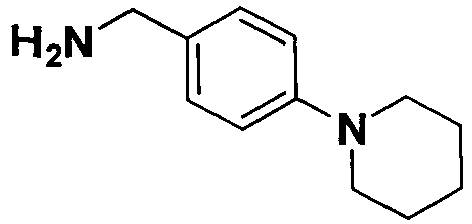
- 1H NMR (400 MHz, CDCl3) δ 1.55 - 1.59 (m, 2H), 1.68 - 1.74 (m, 4H), 3.13 (t, J= 5.6 Hz, 4H), 3.77 (s, 2H), 6.92 (d, J = 8.4 Hz 2H), 7.19 (d, J = 8.8 Hz, 2H).
- Method II: A solution of 4-bromobenzylamine (1.0 mmol) in DME (3 mL) were added the appropriate arylboronic acid (1.0 mmol), 1,1'-bis(diphenylphosphino)ferrocene)-dichloropalladium(II) (0.03 mmol), Na2CO3 (aq. 2.0 mmol). The mixture was stirred and heated at reflux under N2 atmosphere. After 1 h, the mixture was cooled to room temperature, then the mixture was extracted with EtOAc, washed with sat. NaHCO3 (aq.) brine and dried over MgSO4 and filtered. After removal of the solvent, the amines were obtained, which were used without purification.
- A solution of 4-chlorobenzonitrile (1.0 mmol) in DME (3 mL) were added the appropriate arylboronic acid (1.0 mmol), 1,1'-bis(diphenylphosphino)ferrocene)dichloropalladium(II) (0.03 mmol), Na2CO3 (aq. 2.0 mmol). The mixture was stirred and heated at reflux under N2 atmosphere. After 1 h, the mixture was cooled to room temperature, then filtered and evaporated in vacuo. The residue was extracted with EtOAc, washed with sat. NaHCO3 (aq.) brine and dried over MgSO4, filtered and concentrated in vacuo. The residue was purified via flash column chromatography to give C1.
-

- 1H NMR (400 MHz, CDCl3) δ 7.30 (d, J - 7.0 Hz, 1H), 7.45 (d, J = 8.0 Hz, 2H), 7.54 (dd, J = 7.6, 7.6 Hz, 1H), 7.61 (dd, J = 7.2, 7.6 Hz, 1H), 7.70 (d, J = 8.0 Hz, 2H), 7.76 (d, J = 7.6 Hz, 1H).

- A mixture of 4-fluorobenzonitrile (4.2 g, 35 mmol), piperazine (1.0 g, 12 mmol) and K2CO3 (4.8 g, 35 mmol) in DMSO (30 mL) was stirred for overnight at 120 °C. The reaction mixture was poured to the ice and resulting solid was filtered, washed with methanol and dried in vacuo to give D1 as a white solid; 1H NMR (400 MHz, DMSO) δ 3.49 (s, 8H), 7.01 (d, J = 9.2 Hz, 4H), 7.57 (d, J = 9.2 Hz, 4H); LCMS (electrospray) m/z (M+H)+ 289.
- To a stirred solution of D1 (0.30 g, 1.00 mmol) in THF (5 mL) was added LAH (0.24 g, 6.20 mmol) and the resulting mixture was heated to reflux temperature for 3h. The reaction mixture was quenched with water and the solid was filtered off. The filtrate was extracted with MC (30 mL x 2), the organic layer was washed with saturated aqueous Na2CO3 (20 mL) and concentrated in vacuo to give D2; 1H NMR (400 MHz, CDCl3) δ 3.32 (s, 8H), 3.80 (s, 4H), 6.95 (d, J= 8.4 Hz, 4H), 7.25 (d, J= 8.4 Hz, 4H); LCMS (electrospray) m/z (M)+ 296.
- To a stirred solution of D2 (0.70 g, 2.36 mmol) in MC (25 mL) was added butyryl chloride (25 uL, 0.23 mmol) and the resulting mixture was stirred for 30 min under ice bath. After removal of the ice bath, the reaction mixture was stirred for another 30 min. The reaction mixture was diluted with MC (20 mL), washed with saturated aqueous Na2CO3 (20 mL) and the organic layer was concentrated under reduced pressure. The crude residue was purified by column chromatography (20 % MeOH in MC) to give D3; 1H NMR (400 MHz, CDCl3) δ 0.41(t, J= 7.2 Hz, 3H), 1.00 (brs, 2H), 1.12 - 1.21 (m, 2H), 1.63 (t, J = 7.2 Hz, 2H), 2.80 (s, 8H), 3.27 (s, 2H), 3.84 (d, J = 5.2 Hz, 2H), 5.16 (brs, 1H), 6.38 - 6.45 (m, 4H), 6.67 - 6.74 (m, 4H); LCMS (electrospray) m/z (M+H)+ 367.
- To a solution of acid (0.012 g, 0.054 mmol) in DMF (1 mL) was added triethylamine (15uL, 0.11 mmol), D3 (0.020 g, 0.055 mmol), hydroxybenzotriazole (3.7 mg, 0.027 mmol) and 1-ethyl-3-(3-dimethylaminopropyl)carbodiimide (0.016 g, 0.082 mmol) and the reaction mixture was stirred at 80°C for overnight. The reaction mixture was cooled to -10°C, the resulting solid was filtered, washed with MC and dried in vacuo to give D4;

- A mixture of E1 (0.32 g, 0.86 mmol), an amine (excess) and DIPEA (0.75 mL, 4.32 mmol) in ethylene glycol (4 mL) was heated to 160 °C for 1.5 days. After reaction completion, the reaction mixture was diluted with water (20 mL) and extracted with ethyl acetate (20 mL x 3). The organic layer was dried over anhydrous MgSO4 and concentrated in vacuo. The crude residue was purified by flash column chromatography (20 % MeOH in MC) and then precipitated with acetonitrile to give E2 as a white solid.

- To an ice-salt-cooled solution of the 4-(trifluoromethoxy)aniline (11.29 mmol) in HBF4 (50%, 22.58 mmol) and water (2 mL) was dropwise added a precooled solution of NaNO2 (12.42 mmol) in water (2 mL). During the addition, the temperature was carefully kept below 5 °C and the resulting mixture was left to stir at 0 °C for 30 min. The diazonium salt (F1) was collected by filtration, washed with Et2O, and extensively dried in vacuo.
- F1 (11.30 mmol) was added to a solution of 2-chloroacetoacetate (11.30 mmol) in pyridine (4 mL) and water (4 mL) at -5 °C. The mixture was stirred at -5 °C for 30 min, and the resulting precipitate was filtered and washed with ice cold water. Recrystallization from EtOH/water gave F2.
-

- 1H NMR (400 MHz, CDCl3) δ 1.41 (t, J = 7.2 Hz, 3H), 4.39 (q, J = 7.2 Hz, 2H), 7.20 (d, J = 9.6 Hz, 2H), 7.24 (d, J= 9.2 Hz, 2H), 8.32 (brs, 1H)
- A mixture of F2 (9.33 mmol), bicyclo[2.2.1]hepta-2,5-diene (46.67 mmol) and Et3N (28.00 mmol) in toluene (10 mL) was stirred at 70 °C for 1 h. The resulting mixture was cooled and filtered, the filter cake was washed with toluene, and the organic fractions were combined and evaporated. The residue was refluxed in xylenes (10 mL) for 2 h. Column chromatography of the cooled reaction mixture, eluting with hexanes, first gave xylenes, and then further elution with ethyl acetate gave F3.
-

- 1H NMR (400 MHz, CDCl3) δ 1.42 (t, J = 7.2 Hz, 3H), 4.44 (q, J = 7.2 Hz, 2H), 7.00 (d, J = 2.4 Hz, 1H), 7.33 (d, J = 8.8 Hz, 2H), 7.79 (d, J = 9.2 Hz, 2H), 7.91 (d, J = 2.4 Hz, 1H)
- LiAlH4 (0.67 mmol) was added to a stirred solution of F3 (0.67 mmol) in THF (5 mL) at 0 °C, and the mixture was warmed to room temperature for 1 hr, then cooled to 0 °C and quenched with ice. The resulting mixture was diluted with ethyl acetate (10 mL) washed with water (10 mL) and brine (10 mL). The organic layer was dried over anhydrous MgSO4, filtered and concentrated in vacuo. The crude product was purified by flash column chromatography to give F4.
- DEAD (0.84 mmol) was added dropwise to a stirred and cooled (0 °C) solution of phthalimide (0.83 mmol), Ph3P (0.84 mmol) and F4 (0.69 mmol) in dry THF. The cooling bath removed and stirring was continued at room temperature for 4 hr, then water (1 mL) was added the reaction mixture was filtered through a column of silica, eluting with CH2Cl2. The eluate was concentrated in vacuo and the residue was purified by flash column chromatography to give F5.
- To a solution of F5 (0.69 mmol) in EtOH (5 mL) was added hydrazine hydrate (1.38 mmol). The reaction mixture was stirred and refluxed for 4 hr. After cooling, the reaction mixture was evaporated and diluted with EtOAc (10 mL) and saturated NaHCO3 solution (10 mL), then washed with brine (10 mL). The organic layer was dried over anhydrous MgSO4, filtered and concentrated in vacuo. The crude product F6 was used for next step without further purification.

- To a solution of cyclohexane-1,3-dione (17.84 mmol) in toluene (20 mL) was added DMF.DMA (26.75 mmol). The reaction mixture was stirred and refluxed for overnight. After cooling, the reaction mixture was concentrated in vacuo. The crude product G1 was used for next step without further purification.
- To a solution of G1 (8.98 mmol) in methanol (20 mL) and water (3 mL) was added (4-(trifluoromethoxy)phenyl)hydrazine hydrochloride (8.98 mmol) and sodium hydroxide (8.98 mmol). The reaction mixture heated at reflux for 2 h and concentrated in vacuo. Then to the residue were added AcOH (20 mL) and water (10 mL), and the reaction mixture was heated to 110 °C for 2 h. On completion of the reaction, the solution was concentrated in vacuo, the residue was diluted with EtOAc (20 mL) and saturated NaHCO3 solution (20 mL), then washed with brine (20 mL). The organic layer was dried over anhydrous MgSO4, filtered and concentrated in vacuo. The residue was purified by flash column chromatography to give G2.
- To a solution of G2 (2.36 mmol) in 2-propanol (5 mL) was added ammonium acetate (23.65 mmol). After complete dissolution, molecular sieves (4A , 1.0 g) and NaBH3CN (11.82 mmol) were added and the reaction mixture was stirred and refluxed for overnight. After cooling, the reaction mixture was evaporated and diluted with EtOAc (10 mL) and saturated NaHCO3 solution (10 mL), then washed with brine (10 mL). The organic layer was dried over anhydrous MgSO4, filtered and concentrated in vacuo. The crude product G3 was used for next step without further purification.

- To a solution of 4-trifluoromethoxybenzyl bromide (1.05 g, 4.09 mmol) in 5 mL dry DMF was added sodium cyanide (220 mg, 4.50 mmol). The reaction was stirred for 1 h at room temperature, poured into water and extracted with of ethyl acetate (2 x 20 mL). The combined layer was dried over anhydrous MgSO4, filtered and concentrated in vacuo. The crude product H1 was used in the next reaction without further purification.
- To a solution of H1 (93 mg, 0.46 mmol) in EtOH was added a solution of
hydroxylamine 50 wt% in water (0.12 mL, 1.84 mmol). The reaction mixture was refluxed for overnight. After cooling, the mixture was concentrated in vacuo. The crude product H2 was used in the next reaction without further purification. - To a solution of H3 (114 mg, 0.506 mmol) in dry DMF were added 1-ethyl-3-(3-dimethylaminopropyl)carbodiimide (97 mg, 0.506 mmol), 1-hydroxybenzotriazole (68 mg, 0.506 mmol). The mixture was stirred for 30 min at room temperature. Then to the reaction mixture was added a solution of C2 (108 mg, 0.46 mmol) in dry DMF. The reaction mixture was stirred at 140 °C for 2 h. After cooling, the reaction mixture was diluted with ethyl acetate (10 mL), washed with saturated NaHCO3 solution (10 mL) and brine (10 mL). The organic layer was dried over anhydrous MgSO4 and concentrated in vacuo. The crude product was purified by flash column chromatography to give H4.

- To a solution of I1 (253 mg, 1.0 mmol) in EtOH was added hydrazine hydrate (0.75 mL, mmol). The reaction mixture was refluxed for 12 h. After cooling, the resulting precipitate (D2) was filtered, washed with EtOH and dried.
- To a solution of I2 (96 mg, 0.402 mmol) in CH2Cl2 was added Et3N (0.057 mL, 0.406 mmol). The reaction mixture was cooled to 0 °C and to the mixture was added dropwise a solution of chloroacetyl chloride (0.035 mL, 0.442 mmol) in CH2Cl2. The reaction mixture was stirred at 0 °C, the reaction temperature was raised to room temperature and the resultant mixture is further stirred for 30 min. To the mixture was added water, the solution was extracted with CH2Cl2, washed with brine. The organic layer was dried over anhydrous MgSO4 and concentrated in vacuo. The crude product (I3) was used in the next reaction without further purification.
- I3 (0.402 mmol) was placed under nitrogen and POCl3 (2 mL) was added. The reaction mixture was refluxed for 2 h. The mixture was cooled to room temperature, poured into water and extracted with ethylacetate (x 2). The combined organic layers were washed with brine, dried over anhydrous MgSO4 and concentrated in vacuo. The crude product was purified by flash column chromatography to give I4.
- To a solution of I4 (50 mg, 0.17 mmol) in CH2Cl2 were added I5 (50 mg, 0.20 mmol) and DIPEA (0.035 mL, 0.20 mmol). The reaction mixture was stirred for overnight. the mixture was extracted with CH2Cl2 and water, washed with brine. The organic layer was dried over anhydrous MgSO4 and concentrated in vacuo. The crude product was purified by flash column chromatography to give I6.

- To a solution of 1-bromo-4-(trifluoromethoxy)benzene (0.50 g, 2.07 mmol) in DME (6 mL) were added 3-cyanophenyl boronic acid (0.37 g, 2.49 mmol), 1,1'-bis(diphenylphosphino)ferrocene)-dichloropalladium(II) (0.046 g, 0.062 mmol) and Na2CO3 (2 mL of aqueous solution, 0.44 g, 4.14 mmol). The resulting mixture was stirred at 120 °C for 2h. After removal of organic solvent, the resulting residue was dilited with water (10 mL) and extracted with methylene chloride (10 mL x 2). The organic layer was dried over MgSO4 and concentrated in vacuo. The resulting crude residue was purified by flash column chromatography (n-hexane : ethyl acetate = 10 : 1 ratio) to give a J1.

- To a stirred suspension of K1 (0.050 g, 0.12 mmol) and NaHCO3 (0.051 g, 0.60 mmol) in methylene chloride (2.0 mL) was added dess-martin periodinane (0.10 g, 0.24 mmol) under ice-bath. After 5-minutes, the reaction temperature was raise to room temperature and the resulting solution was stirred for 2h. The reaction mixture was diluted with methylene chloride (10 mL) and washed with saturated aqueous NaHCO3 solution (10 mL) and brine (10 mL). The organic layer was dried over anhydrous MgSO4 and concentrated in vacuo. The resulting crude residue was purified by flash column chromatography (methylene chloride : methanol = 50 : 1 ratio) to give K2 and K3.

- A solution of oxalyl chloride (0.43 mL, 4.94 mmol) in methylene chloride (5 mL) was cooled to -78 °C and DMSO (0.70 mL, 9.88 mmol) was added slowly. After 10 minutes, a solution of alcohol (0.50 g, 2.47 mmol) in methylene chloride (3mL) was added over 10 min, and the mixture was further stirred for 15min at -78 °C. Triethylamine (1.4 mL, 9.88 mmol)was added to the solution and the mixture was stirred for 15 min and allowed to warm up to 0 °C. After reaction completion, the reaction mixture was diluted with methylene chloride (15 mL) and washed with aqueous Na2CO3 (15mL). The organic layer was dried over MgSO4 and concentrated in vacuo. The resulting crude residue was purified by flash column chromatography (n-hexane : ethyl acetate = 5 : 1 ratio) to give L2.
- To a suspension of methyltriphenylphosphonium bromide (0.43 g, 1.20 mmol) in THF (5 mL) was added nBuLi (2.5 M in n-hexane, 0.48 mL, 1.20 mmol) under ice-bath and the mixture was stirred for 30min. A solution of ketone compound in THF (3 mL) was added dropwise and the resulting mixture was allowed to warm up to room temperature over 2h. After reaction completion, solution was diluted with methylene chloride (10 mL) and washed with aqueous NaHCO3 (15 mL). The organic layer was dried over MgSO4 and concentrated in vacuo. The resulting crude residue was purified by flash column chromatography (n-hexane : ethyl acetate = 15 : 1 ratio) to give a target compound L3.

- To a solution of M1 (0.050 g, 0.13 mmol) in DME (2 mL) were added pyridine boronic acid (0.017 g, 0.13 mmol), 1,1'-bis(diphenylphosphino)ferrocene)-dichloropalladium(II) (1.5 mg, 3.38 umol) and Na2CO3 (0.5 mL of aqueous solution, 0.024 g, 0.22 mmol). The resulting mixture was stirred at 120 °C for 2h. After removal of organic solvent, the resulting residue was dilited with water (10 mL) and extracted with methylene chloride (10 mL x 2). The organic layer was dried over MgSO4 and concentrated in vacuo. The resulting crude residue was purified by flash column chromatography (methylene chloride : methanol = 20 : 1 ratio) to give a target compound M2.
-

- 1H NMR (400 MHz, CD3OD) δ 2.84 (s, 3H), 7.04 (dd, J= 1.2 Hz, 7.2 Hz, 1H), 7.96 (d, J = 8.8 Hz, 1H), 8.07 (dd, J = 1.2 Hz, 7.2 Hz, 1H), 9.65 (d, J= 7.2 Hz, 1H).
-

- 1H NMR (400 MHz, CDCl3) δ 1.45 (t, J= 7.2 Hz, 3H), 2.73 (s, 3H), 4.44 (q, J = 7.2 Hz, 2H), 7.25 (dd, J = 1.6 Hz, 7.2 Hz, 1H), 7.42 - 7.51 (m, 3H), 7.68 (d, J= 7.6 Hz, 2H), 7.80 (s, 1H), 9.32 (d, J = 7.2 Hz, 1H).
-

- 1H NMR (400 MHz, DMSO d-6) δ 2.60 (s, 3H), 7.43 - 7.52 (m, 5H), 7.83 (s, 1H), 7.85 (s, 1H), 7.94 (s, 1H), 9.26 (d, J = 7.6 Hz, 1H)
-

- 1H NMR (400 MHz, CDCl3) δ 1.41 (t, J= 7.2 Hz, 3H), 2.70 (s, 3H), 4.40 (q, J= 7.2 Hz, 2H), 7.33 - 7.36 (m, 1H), 7.42 (t, J = 7.4 Hz, 2H), 7.56 (d, J= 7.2 Hz, 2H), 7.60 - 7.61 (m, 1H), 9.52 (s, 1H).
-

- 1H NMR (400 MHz, CDCl3+DMSO-d6 ) δ 2.72 (s, 3H), 6.89 (dd, J = 1.2, 7.2 Hz, 1H), 7.28 - 7.33 (m, 1H), 7.52 (d, J = 9.2 Hz, 1H), 7.57 (dd, J = 1.6,4.8 Hz, 2H), 8.43 (dd, J = 1.6, 4.8 Hz, 1H), 8.92 (br s, 1H), 9.11 (d, J= 6.8 Hz, 1H); LCMS (electrospray) m/z (M+H)+ 253.18
-
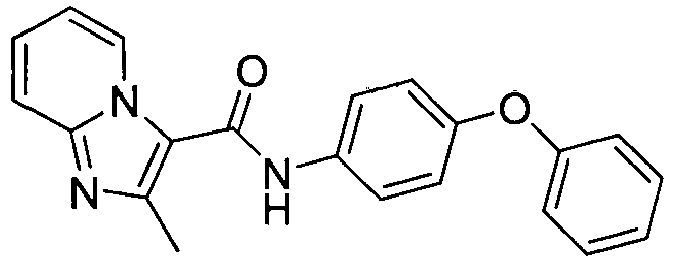
- 1H NMR (400 MHz, CDCl3) δ 2.60(s, 3H), 6.89(t, J=8.0Hz, 3H), 6.96(d, J=6.8Hz, 2H), 7.02(t, J=7.6Hz, 1H), 7.27(t, J=7.6Hz, 2H), 7.38(t, J=6.8Hz, 1H), 7.47(d, J=8.8Hz, 1H), 7.57(d, J=6.8Hz, 2H), 8.89(d, J=6.8Hz, 1H).
-

- 1H NMR (400 MHz, CDCl3)□□ δ 2.57(s, 3H), 4.97(s, 2H), 6.88 - 6.91(m, 3H), 7.19(t, J=7.2Hz, 1H), 7.28(t, J=8.4Hz, 2H), 7.32(t, J=6.8Hz, 3H), 7.43 - 7.46(m, 3H), 8.85(d, J =5.6Hz, 1H).
-

- 1H NMR (400 MHz, CDCl3) δ 2.68 (s, 3H), 4.70 (d, J= 5.6 Hz, 2H), 6.13 (brs, 1H), 6.91 (dd, J= 1.2 Hz, 7.2 Hz, 1H), 7.29 - 7.39 (m, 6H), 7.56 (d, J = 9.2 Hz, 1H), 9.42 (d, J= 7.2 Hz, 1H).
-

- 1H NMR (400 MHz, CDCl3) δ 2.67 (s, 3H), 4.66 (d, J= 6.0 Hz, 2H), 6.11 (brs, 1H), 6.91 (d, J = 6.8 Hz, 1H), 7.02 - 7.06 (m, 2H), 7.30 - 7.36 (m, 3H), 7.56 (d, J= 8.8 Hz, 1H), 9.41 (d, J= 6.8 Hz, 1H).
-

- 1H NMR (400 MHz, CDCl3) δ □2.70 (s, 3H), 3.90 (s, 3H), 4.76 (d, J= 6.0 Hz, 2H), 6.24 (brs, 1H), 6.91 - 6.95 (m, 1H), 7.32 - 7.36 (m, 1H), 7.44 (d, J = 8.4 Hz, 2H), 7.56 (d, J = 9.2 Hz, 1H), 8.02 (d, J = 8.4 Hz, 2H), 9.41 (d, J = 6.8 Hz, 1H).
-

- 1H NMR (400 MHz, CD3OD) δ □2.64 (s, 3H), 4.69 (s, 2H), 7.03 (dd, J= 6.8 Hz, 6.8 Hz, 1H), 7.43 - 7.47 (m, 1H), 7.50 (d, J= 8.4 Hz, 2H), 7.53 - 7.55 (m, 1H), 8.01 (d, J= 8.4 Hz, 2H), 9.04 (d, J = 7.2 Hz, 1H).
-

- 1H NMR (400 MHz, CDCl3) δ 2.67 (s, 3H), 3.810 (s, 3H), 4.63 (d, J= 5.2 Hz, 2H), 6.01 (m, 1H), 6.89 - 6.94 (m, 3H), 7.30 - 7.35 (m, 3H), 7.56 - 7.58 (m, 1H), 9.43 (dd, J= 0.8, 6.8 Hz, 1H).
-

- 1H NMR (400 MHz, CDCl3) δ 2.68 (s, 3H), 4.70 (d, J= 6.0 Hz, 2H), 6.30 (brs, 1H), 6.89 - 6.93 (m, 1H), 7.26 - 7.35 (m, 2H), 7.55 (d, J= 8.8 Hz, 1H), 7.72 (d, J= 8.0 Hz, 1H), 8.53 (d, J = 3.6 Hz, 1H), 8.62 (s, 1H), 9.38 (d, J = 7.2 Hz, 1H).
-

- 1H NMR (400 MHz, CDCl3) δ 2.70 (s, 3H), 4.68 (d, J= 6.0 Hz, 2H), 6.41 (brs, 1H), 6.88 - 6.92 (m, 1H), 7.25 (d, J= 4.4 Hz, 2H), 7.30 - 7.34 (m, 1H), 7.53 (d, J= 8.8 Hz, 1H), 8.53 (d, J = 4.4 Hz, 2H), 9.35 (d, J = 7.2 Hz, 1H); 13C NMR (100 MHz, CDCl3) δ 17.0, 42.4, 113.6, 115.2, 116.7, 122.3, 127.5, 128.3, 145.9, 146.4, 147.7, 150.3, 161.9.
-

- 1H NMR (400 MHz, CDCl3) δ □2.70 (s, 3H), 4.67 (d, J= 5.6 Hz, 2H), 6.14 (brs, 1H), 6.92 - 6.96 (m, 1H), 6.99 - 7.08 (m, 4H), 7.12 (dd, J= 6.4 Hz, 6.4 Hz, 1H), 7.31 - 7.37 (m, 5H), 7.59 (d, J = 8.8 Hz, 1H), 9.43 (d, J = 6.8 Hz, 1H).
-

- 1H NMR (400 MHz, CDCl3) δ □2.70 (s, 3H), 4.74 (d, J= 4.0 Hz, 2H), 6.19 (brs, 1H), 6.91 (dd, J= 6.0 Hz, 6.0 Hz, 1H), 7.30 - 7.36 (m, 2H), 7.41 - 7.45 (m, 5H), 7.58 (m, 4H), 9.43 (d, J = 6.8 Hz, 1H).
-

- 1H NMR (400 MHz, CDCl3) δ □2.68 (s, 3H), 4.78 (d, J= 5.2 Hz, 2H), 6.18 (brs, 1H), 6.55 (s, 1H), 6.98 - 7.02 (m, 1H), 7.22 - 7.24 (m, 2H), 7.40 (s, 1H), 7.42 (s, 1H), 7.66 - 7.68 (m, 2H), 8.24 (brs, 1H), 9.47 (d, J = 7.2 Hz, 1H).
-

- 1H NMR (400 MHz, CDCl3) δ 0.94 -1.27 (m, 5H), 1.54 - 1.78 (m, 6H), 2.67 (s, 3H), 3.31 (t, J= 6.2 Hz, 2H), 5.91 (m 1H), 6.64 (t, J = 6.8 Hz, 1H), 7.24 - 7.28 (m, 1H), 7.50 (d, J = 9.2 Hz, 1H), 9.32 (d, J = 6.8 Hz, 1H).
-

- 1H NMR (400 MHz, CDCl3) δ 1.87 - 1.25 (m, 2H), 1.44 (s, 9H), 1.73 - 1.82 (m, 3H), 1.97 (m, 2H), 2.70 (s, 3H), 3.40 (m, 2H), 5.92 (t, J= 5.6 Hz, 1H), 6.90 (t, J= 6.8 Hz, 1H), 7.29 - 7.33 (m, 1H), 7.55 (d, J= 8.8 Hz, 1H), 9.36 (d, J= 6.8 Hz, 1H).
-

- 1H NMR (400 MHz, CDCl3) δ 1.20 - 1.77 (m, 6H), 2.58 - 2.64 (m, 1H), 2.65 (s, 3H), 3.13 (d, J = 11.6 Hz, 2H), 3.34 (t, J = 12.0 Hz, 2H), 3.68 (br s, 1H), 6.71 (m, 1H), 6.84 (t, J = 6.8 Hz, 1H), 7.26 (t, J = 7.6 Hz, 1H), 7.49 (d, J = 8.8 Hz, 1H), 9.28 (d, J = 6.8 Hz, 1H).
-

- 1H NMR (400 MHz, CDCl3) δ 2.28(s, 3H), 2.82(t, J=7.2Hz, 2H), 3.56(t, J=6.8Hz, 2H), 6.79(t, J=6.8Hz, 1H), 7.06(t, J=6.8Hz, 1H), 7.14(d, J=7.2Hz, 3H), 7.30(t, J=7.2Hz, 2H), 7.33(d, J=6.8Hz, 1H), 8.74(d, J=5.6Hz, 1H).
-

- 1H NMR (400 MHz, CDCl3) δ 2.46 (s, 3H), 2.92 (t, J= 6.6 Hz, 2H), 3.74 (q, J= 6.4 Hz, 2H), 3.80 (s, 3H), 6.87 - 6.92 (m, 3H), 7.18 (d, J= 8.4 Hz, 2H), 7.29 - 7.33 (m, 1H), 7.55 (d, J= 8.8 Hz, 1H), 9.41 (d, J = 7.2 Hz, 1H); LCMS (electrospray) m/z (M+H)+ 310.25
-

- 1H NMR (400 MHz, CDCl3) δ 2.72 (s, 3H), 3.93 (q, J= 4.8 Hz, 2H), 4.19 (t, J= 5.0 Hz, 2H), 6.33 (m, 1H), 6.90 - 9.94 (m, 3H), 6.98 (d, J = 7.4 Hz, 1H), 7.28 - 7.34 (m, 3H), 7.57 (d, J= 9.2 Hz, 1H), 9.40 (d, J = 7.2 Hz, 1H).
-

- 1H NMR (400 MHz, CDCl3) δ 2.66 (s, 3H), 3.68 - 3.75 (m, 4H), 4.57 (s, 2H), 6.90 (dd, J= 1.2, 6.8 Hz, 1H), 7.27 - 7.34 (m, 6H), 7.57 (dd, J = 1.2, 9.2 Hz, 1H), 9.37 (dd, J = 2.0, 6.8 Hz, 1H).
-

- 1H NMR (400 MHz, CDCl3) δ 2.50 (s, 3H), 3.25 (dd, J= 5.6, 14.0 Hz, 1H), 3.33 (dd, J= 5.6, 14.0 Hz, 1H), 5 .08 - 5.13 (m, 1H), 6.23 (d, J = 7.2 Hz, 1H), 6.91 (dd, J = 1.2 , 6.8 Hz, 1H), 7.14 - 7.16 (m, 2H), 7.27 - 7.35 (m, 4H), 7.57 (d, J= 8.8 Hz, 1H), 9.39 (d, J= 7.2 Hz, 1H); LCMS (electrospray) m/z (M+H)+ 338.28
-

- 1H NMR (400 MHz, CD3OD) δ 2.26 (s, 3H), 3.82 (s, 2H), 7.24 - 7.31 (m, 2H), 7.36 - 7.41 (m, 2H), 7.43 - 7.44 (m, 3H), 7.76 (d, J = 6.8 Hz, 1H).
-

- 1H NMR (400 MHz, CDCl3) δ 2.72 (s, 3H), 4.71 (d, J= 6.0 Hz, 2H), 6.14 (brs, 1H), 6.87 (dd, J = 7.2 Hz, 7.2 Hz, 1H), 7.32 (dd, J = 4.4 Hz, 4.4 Hz, 1H), 7.34 - 7.42 (m, 5H), 9.38 (d, J = 7.2 Hz, 1H); 13C NMR (100 MHz, CDC13) □□□16.9, 29.9, 43.8, 113.1, 122.4, 126.2, 127.1, 127.9, 128.0, 129.1, 138.1, 141.8, 145.9, 161.3.
-

- 1H NMR (400 MHz, CDCl3) δ 2.66 (s, 3H), 4.69 (d, J = 5.6 Hz, 2H), 6.13 (brs, 1H), 6.89 - 6.91 (m, 1H), 7.29 - 7.37 (m, 5H), 7.55 (d, J = 1.6 Hz, 1H), 9.37 (d, J= 7.6 Hz, 1H).
-

- 1H NMR (400 MHz, CDCl3) δ □2.68 (s, 3H), 4.70 (d, J = 5.6 Hz, 2H), 6.16 (brs, 1H), 7.30 - 7.35 (m, 3H), 7.37 - 7.38 (m, 3H), 7.53 (d, J = 9.2 Hz, 1H), 9.56 (d, J = 1.6 Hz, 1H).
-

- 1H NMR (400 MHz, MeOH-d4 )□□ δ 2.55(s, 3H), 2.63(s, 3H), 4.63(s, 2H), 6.95(t, J = 6.8Hz, 1H), 7.25(d, J = 6.8Hz, 1H), 7.28(d, J = 7.2Hz, 1H), 7.37(t, J=7.2Hz, 2H), 7.42(d, J = 7.6Hz, 2H), 8.87(d, J = 6.8Hz, 1H).
-

- 1H NMR (400 MHz, MeOH-d4 )□□ δ 2.44(s, 3H), 2.59(s, 3H), 4.63(s, 2H), 6.91(d, J = 7.2Hz, 1H), 7.28(t, J=7.2Hz, 1H), 7.33(d, J=6.4Hz, 2H), 7.37(t, J=7.2Hz, 1H), 7.42(d, J=7.6Hz, 2H), 8.92(d, J=7.2Hz, 1H).
-

- 1H NMR (400 MHz, MeOH-d4 )□□ δ 2.36(s, 3H), 2.59(s, 3H), 4.63(s, 2H), 7.29(d, J=7.6Hz, 1H), 7.31(d, J=1.6Hz, 1H), 7.37(t, J=7.2Hz, 3H), 7.43(t, J=4.8Hz, 2H), 7.46(s, 1H), 8.83(s, 1H).
-

- 1H NMR (400 MHz, MeOH-d4 )□□ δ 2.44(s, 3H), 2.59(s, 3H), 4.29(s, 2H), 6.75(d, J=7.2Hz, 1H), 7.21 - 7.27(m, 3H), 7.33(t, J=6.4Hz, 2H), 7.41(t, J=8.8Hz, 1H), 7.49(s, 1H).
-

- 1H NMR (400 MHz, CD3OD) δ 2.68 (s, 3H), 4.71 (d, J = 6.0 Hz, 2H), 7.24 - 7.39 (m 6H), 7.52 - 7.56 (m, 1H), 9.48 - 9.49 (m, 1H); LCMS (electrospray) m/z (M+H)+ 284.27
-
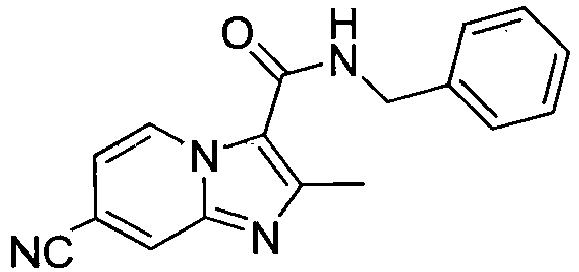
- 1H NMR (400 MHz, CDCl3) δ 1.64 (s, 3H), 4.61 (d, J = 6.0 Hz, 2H), 6.39 (brs, 1H), 6.85 (dd, J = 1.2 Hz, 5.2 Hz, 1H), 6.89 (s, 1H), 7.29 - 7.38 (m, 5H), 8.13 (d, J = 5.6 Hz, 1H)
-
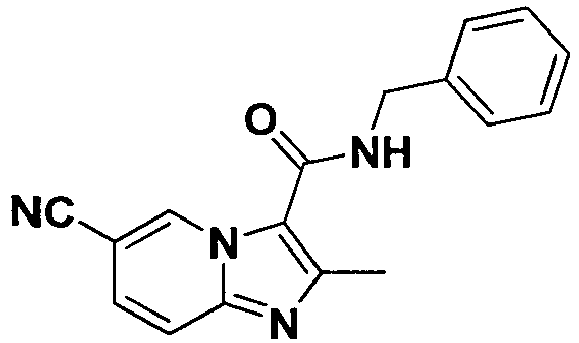
- 1H NMR (400 MHz, CD3OD) δ 2.63 (s, 3H), 4.65 (s, 2H), 7.27 (t, J= 7.4 Hz, 1H), 7.35 (t, J= 7.6 Hz, 2H), 7.42 (d, J = 7.6 Hz, 2H), 7.57 (dd, J = 0.8, 9.2 Hz, 1H), 7.85 (dd, J = 1.6, 9.2 Hz, 1H), 9.58 (m, 1H).
-

- 1H NMR (400 MHz, CDCl3) δ □2.70 (s, 3H), 4.71 (d, J = 5.6 Hz, 2H), 6.15 (brs, 1H), 7.22 (dd, J = 2.0 Hz, 7.2 Hz, 1H), 7.29 - 7.33 (m, 1H), 7.36 - 7.44 (m, 5H), 7.47 - 7.51 (m, 2H), 7.66 (s, 1H), 7.68 (d, J = 1.2 Hz, 1H), 7.78 (s, 1H), 9.47 (d, J = 7.2 Hz, 1H).
-

- 1H NMR (400 MHz, CDCl3) δ 2.71 (s, 3H), 4.73 (d, J = 5.6 Hz, 2H), 6.12 (m, 1H), 7.30 - 7.34 (m, 1H), 7.36 - 7.40 (m, 7H), 7.60 - 7.66 (m, 4H), 9.71 (s, 1H).
-

- 1H NMR (400 MHz, MeOH-d4 )□□ δ 2.63(s, 3H), 4.64(s, 2H), 6.96-7.01(m, 1H), 7.21(t, J =6.8Hz, 1H), 7.25 - 7.29(m, 2H), 7.37(t, J=7.2Hz, 2H), 7.41(t, J=7.6Hz, 2H), 8.84(d, J =6.8Hz, 1H).
-

- 1H NMR (400 MHz, MeOH-d4 )□□ δ 2.66(s, 3H), 4.63(s, 2H), 7.15(t, J=6.8Hz, 1H), 7.25-7.28(m, 1H), 7.37(t, J=8.0Hz, 2H), 7.43(d, J=7.6Hz, 2H), 7.82(d, J=7.2Hz, 1H), 9.21(d, J =6.8Hz, 1H).
-

- 1H NMR (400 MHz, MeOH-d4)□ δ 2.65(s, 3H), 3.95(s, 2H), 4.02(s, 3H), 6.96(d, J=8.0Hz, 1H), 7.03(t, J=6.8Hz, 1H), 7.23-7.26(m, 1H), 7.29(d, J=5.6Hz, 2H), 7.34(t, J=6.0Hz, 2H), 7.39(t, J=6.4Hz, 1H), 8.93(d, J=7.2Hz, 1H).
-

- 1H NMR (400 MHz, MeOH-d4 )□□ δ 2.67(s, 3H), 4.65(s, 2H), 7.17(t, J=7.2Hz, 1H), 7.26-7.31(m, 2H), 7.38(t, J=7.2Hz, 2H), 7.44(d, J=8.0Hz, 2H), 8.21(d, J=7.2Hz, 1H), 9.19(d, J =6.8Hz, 1H).
-

- 1H NMR (400 MHz, MeOH-d4 )□□ δ 2.60(s, 3H), 4.63(s, 2H), 6.70(d, J=7.6Hz, 1H), 6.83(t, J=6.8Hz, 1H), 7.28(t, J=7.2Hz, 1H), 7.40(t, J=8.0Hz, 3H), 7.42(d, J=7.2Hz, 2H), 8.53(d, J =6.0Hz, 1H).
-

- 1H NMR (400 MHz, CDCl3) δ 2.69 (s, 3H), 4.73 (d, J = 5.2 Hz, 2H), 6.18 (brs, 1H), 6.92 (d, J = 6.4 Hz, 1H), 7.36 (d, J = 7.2 Hz, 1H), 7.44 - 7.45 (m, 4H), 7.57 - 7.60 (m, 5H), 9.39 (d, J = 7.6 Hz, 1H).
-

- 1H NMR (400 MHz, CDCl3) δ 2.70 (s, 3H), 4.73 (d, J= 5.2 Hz, 2H), 6.20 (brs, 1H), 7.29 - 7.36 (m, 4H), 7.45 (d, J= 8.0 Hz, 1H), 7.51 (d, J= 9.6 Hz, 1H), 7.57 (m, 5H), 9.56 (s, 1H)
-

- 1H NMR (400 MHz, CDCl3) δ 1.40 (t, J = 7.6 Hz, 3H), 1.63 (s, 3H), 2.99 (q, J = 7.6 Hz, 2H), 4.71 (d, J = 6.0 Hz, 2H), 6.09 (brs, 1H), 6.92 (dd, J = 5.6 Hz, 1H), 7.30 - 7.38 (m, 6H), 7.60 (d, J = 9.2 Hz, 1H), 9.40 (d, J = 7.2 Hz, 1H).
-

- 1H NMR (400 MHz, CDCl3) δ 1.42 (t, J = 7.6 Hz, 3H), 3.02 (q, J= 7.6 Hz, 2H), 4.75 (d, J= 5.6 Hz, 2H), 6.19 (brs, 1H), 6.92 (dd, J = 6.4 Hz, 6.4 Hz, 1H), 7.32 (d, J = 7.6 Hz, 1H), 7.35 (d, J= 7.2 Hz, 1H), 7.45 (d, J= 8.0 Hz, 4H), 7.58 - 7.59 (m, 5H), 9.41 (d, J= 6.8 Hz, 1H).
-

- 1H NMR (400 MHz, CD3OD) δ 0.93 (t, J= 7.4 Hz, 3H), 1.75 - 1.85 (m, 2H), 2.89 (t, J= 7.8 Hz, 2H), 4.67 (d, J= 5.6 Hz, 2H), 6.24 (m, 1H), 6.86 (t, J= 6.8 Hz, 1H), 7.26 - 7.36 (m, 6H), 7.54 (d, J = 8.8 Hz, 1H), 9.31 (d, J = 6.8 Hz, 1H).
-

- 1H NMR (400 MHz, CDCl3) δ 0.98 (t, J = 7.4 Hz, 3H), 1.80 - 1.89 (m, 2H), 2.93 (t, J = 7.8 Hz, 2H), 4.73 (d, J = 5.6 Hz, 2H), 6.29 (t, J = 5.2 Hz, 1H), 6.89 (dd, J = 1.2, 6.8 Hz, 1H), 7.27 - 7.37 (m, 2H), 7.42 - 7.46 (m, 4H), 7.56 - 7.61 (m, 5H), 9.35 (d, J = 6.8 Hz, 1H).; LCMS (electrospray) m/z (M+H)+ 370.32
-

- 1H NMR (400 MHz, CD3OD) δ 1.00 - 1.03 (m, 2H), 1.14 -1.18 (m, 2H), 2.11 - 2.15 (m, 1H), 6.91 (dd, J = 1.2, 6.8 Hz, 1H), 7.29 - 7.38 (m, 5H), 7.57 (dd, J= 0.8, 8.8 Hz, 1H), 9.49 - 9.51 (m, 1H); LCMS (electrospray) m/z (M+H)+ 292.23
-

- 1H NMR (400 MHz, CDCl3) δ 1.41 (d, J= 6.8 Hz, 6H), 3.36 - 3.32 (m, 1H), 4.71 (d, J= 5.6 Hz, 2H), 6.11 (brs, 1H), 6.88 (dd, J= 6.8 Hz, 6.8 Hz, 1H), 7.29 (dd, J = 6.8 Hz, 6.8 Hz, 1H), 7.31 - 7.3 9 (m, 5H), 7.62 (d, J = 9.2 Hz, 1H), 9.31 (d, J = 7.2 Hz, 1H).
-

- 1H NMR (400 MHz, CDCl3) δ 1.44 (d, J = 6.4 Hz, 6H), 3.34 - 3.41 (m, 1H), 4.76 (d, J= 5.6 Hz, 2H), 6.16 (brs, 1H), 6.90 (dd, J= 7.2 Hz, 7.2 Hz, 1H), 7.29 - 7.37 (m, 2H), 7.42 - 7.47 (m, 4H), 7.60 - 7.64 (m, 5H), 9.32 (d, J= 7.2 Hz, 1H).
-

- 1H NMR (400 MHz, CDCl3) δ 4.50 (d, J= 5.6 Hz, 2H), 6.090 (m, 1H), 7.14 - 7.16 (m, 2H), 7.26 - 7.32 (m, 4H), 7.36 - 7.40 (m, 4H), 7.61 - 7.63 (m, 2H), 7.69 (d, J= 9.2 Hz, 1H),
-

- 1H NMR (400 MHz, CDCl3) δ 1.41 (t, J= 7.6 Hz, 3H), 2.99 (q, J = 7.6 Hz, 2H), 4.67 (d, J = 5.6 Hz, 2H), 6.08 (brs, 1H), 6.89 - 6.93 (m, 1H), 7.00 (dd, J= 2.0 Hz, 8.8 Hz, 4H), 7.08 - 7.12 (m, 1H), 7.30 - 7.35 (m, 5H), 7.60 (d, J = 9.2 Hz, 1H), 9.39 (d, J= 7.2 Hz, 1H).
-

- 1H NMR (400 MHz, CDCl3) δ 1.32 (s, 9H), 1.41 (t, J= 7.6 Hz, 3H), 2.99 (q, J= 7.6 Hz, 2H), 4.68 (d, J= 5.6 Hz, 2H), 6.12 (brs, 1H), 6.93 (dd, J= 6.8 Hz, 6.8 Hz, 1H), 7.32 (d, J= 8.4 Hz, 2H), 7.34 - 7.36 (m, 1H), 7.40 (d, J= 8.4 Hz, 2H), 7.63 (d, J = 8.8 Hz, 1H), 9.40 (d, J = 7.2 Hz, 1H).
-

- 1H NMR (400 MHz, CDCl3) δ 1.37 (t, J = 7.6 Hz, 3H), 2.95 (q, J = 7.6 Hz, 2H), 3.81 (s, 3H), 4.79 (d, J = 5.6 Hz, 2H), 6.08 (brs, 1H), 6.48 (s, 1H), 6.92 (dd, J = 6.8 Hz, 6.8 Hz, 1H), 7.08 (s, 1H), 7.25 (s, 1H), 7.26 - 7.34 (m, 2H), 7.60 (d, J = 8.8 Hz, 1H), 7.63 (s, 1H), 9.43 (d, J = 7.2 Hz, 1H).
-

- 1H NMR (400 MHz, CDCl3) δ 1.41 (t, J = 7.6 Hz, 3H), 3.00 (q, J = 7.6 Hz, 2H), 4.69 (d, J = 6.0 Hz, 2H), 6.21 (brs, 1H), 6.91 (dd, J = 6.8 Hz, 6.8 Hz, 1H), 7.19 (s, 1H), 7.21 (s, 1H), 7.30 - 7.34 (m, 1H), 7.39 (s, 1H), 7.41 (s, 1H), 7.60 (d, J = 9.2 Hz, 1H), 9.37 (d, J = 7.2 Hz, 1H); 13C NMR (100 MHz, CDCl3) δ 13.5, 23.7, 42.9, 113.5, 114.7, 119.3, 121.5, 121.9, 127.3, 128.3, 129.2, 137.3, 146.4, 148.8, 151.1, 161.7.
-

- 1H NMR (400 MHz, CDCl3) δ 1.37 (t, J = 7.6 Hz, 3H), 2.95 (q, J= 7.6 Hz, 2H), 3.80 (s, 3H), 4.78 (d, J = 5.6 Hz, 2H), 6.09 (brs, 1H), 6.48 (d, J = 2.8 Hz, 1H), 6.89 - 6.93 (m, 1H), 7.08 (d, J = 3.2 Hz, 1H), 7.23 - 7.33 (m, 3H), 7.59 (s, 1H), 7.62(d, J = 5.6 Hz, 1H), 9.41 (d, J= 6.8 Hz, 1H).
-

- 1H NMR (400 MHz, CDCl3) δ 1.37 (t, J = 7.6 Hz, 3H), 2.96 (q, J = 7.6 Hz, 2H), 3.14 (t, J = 4.8 Hz, 4H), 3.85 (t, J = 4.8 Hz, 4H), 4.61 (d, J = 5.6 Hz, 2H), 6.05 (brs, 1H), 6.88 - 6.92 (m, 3H), 7.27 - 7.33 (m, 3H), 7.59 (d, J = 8.8 Hz, 1H), 9.39 (d, J = 7.2 Hz, 1H).
-

- 1H NMR (400 MHz, CDCl3) δ 1.32 (d, J= 5.6 Hz, 6H), 1.38 (t, J= 7.6 Hz, 3H), 2.96 (q, J = 7.6 Hz, 2H), 4.52 - 4.56 (m, 1H), 4.61 (d, J= 4.8 Hz, 2H), 6.05 (brs, 1H), 6.86 - 6.92 (m, 3H), 7.26 - 7.33 (m, 3H), 7.59 (d, J= 8.8 Hz, 1H), 9.38 (d, J= 6.4 Hz, 1H).
-
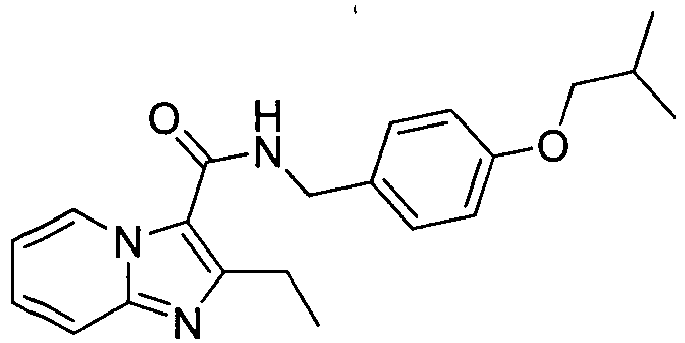
- 1H NMR (400 MHz, CDCl3) δ 1.01 (d, J = 6.8 Hz, 6H), 1.37 (t, J = 7.6 Hz, 3H), 2.05 - 2.09 (m, 1H), 2.96 (q, J = 7.6 Hz, 2H), 3.71 (d, J = 6.8 Hz, 2H), 4.62 (d, J = 5.2 Hz, 2H), 6.06 (brs, 1H), 6.89 (dd, J = 2.4 Hz, 2H), 6.92 (dd, J = 1.2 Hz, 6.8 Hz, 1H), 7.27 - 7.34 (m, 3H), 7.59 (d, J = 8.0 Hz, 1H), 9.37 (dd, J = 2.4 Hz, 6.8 Hz, 1H); 13C NMR (100 MHz, CDCl3) δ 13.6, 19.4, 23.5, 28.4, 43.3, 53.1, 74.7, 113.4, 115.0, 116.7, 124.2, 127.2, 128.3, 129.2, 130.0, 146.2, 150.7, 159.0, 161.5.
-

- 1H NMR (400 MHz, MeOH-d4 )□□ δ 1.34(t, J = 7.6Hz, 3H), 2.37(s, 3H), 3.02(q, J = 7.6Hz, 2H), 4.68(s, 2H), 7.31-7.34(m, 2H), 7.43(d, J = 8.0Hz, 2H), 7.46(d, J = 4.8Hz, 1H), 7.51(d, J =8.8Hz, 3H), 7.64(t, J = 4.4Hz, 4H), 8.78(s, 1H).
-

- 1H NMR (400 MHz, MeOH-d4 )□□ δ 1.35(t, J = 8.0Hz, 3H), 2.37(s, 3H), 2.99(q, J=7.2Hz, 2H), 4.61(s, 2H), 6.99(d, J=8.8Hz, 4H), 7.12(t, J=7.2Hz, 1H), 7.31-7.36(m, 3H), 7.42(d, J =8.8Hz, 2H), 7.48(d, J=9.2Hz, 1H), 8.76(s, 1H).
-

- 1H NMR (400 MHz, MeOH-d4 )□□ δ 1.30(t, J = 7.2Hz, 3H), 1.32(s, 9H), 2.37(s, 3H), 2.98(q, J=8.0Hz, 2H), 4.59(s, 2H), 7.30(d, J=1.6Hz, 1H), 7.34(d, J=8.4Hz, 2H), 7.41(d, J=6.8Hz, 2H), 7.47(d, J=9.2Hz, 1H), 8.74(s, 1H).
-

- 1H NMR (400 MHz, MeOH-d4)□□ δ 1.33(t, J=8.0Hz, 3H), 2.36(s, 3H), 3.00(q, J=7.6Hz, 2H), 4.65(s, 2H), 7.28(d, J=8.0Hz, 2H), 7.34(d, J=9.2Hz, 1H), 7.48(d, J=9.2Hz, 1H), 7.52(d, J=8.4Hz, 2H), 8.77(s, 1H).
-

- 1H NMR (400 MHz, MeOH-d4 )□□ δ 1.28(t, J=7.6Hz, 3H), 2.36(s, 3H), 2.95(q, J=7.2Hz, 2H), 3.80(s, 3H), 4.71(s, 2H), 6.42(d, J=2.8Hz, 1H), 7.16(d, J=3.2Hz, 1H), 7.26(d, J=8.4Hz, 1H), 7.32(d, J=9.2Hz, 1H), 7.38(d, J=8.4Hz, 1H), 7.46(d, J=9.2Hz, 2H), 7.59(s, 1H), 8.73(s, 1H).
-

- 1H NMR (400 MHz, MeOH-d4 )□□ δ 1.30(t, J=7.6Hz, 3H), 2.35(s, 3H), 3.0(q, J=7.6Hz, 2H), 3.80(s, 3H), 4.75(s, 2H), 6.41(d, J=3.2Hz, 1H), 7.11-7.14(m, 2H), 7.32(d, J=9.2Hz, 1H), 7.46(d, J=9.2Hz, 2H), 7.55(d, J=8.0Hz, 1H), 8.74(s, 1H).
-

- White solid, mp 190°C 1H NMR(400 MHz, MeOH-d4 )□□ δ 1.31 (t, J = 7.6 Hz, 3H), 2.43 (s, 3H), 2.98 (q, J = 7.6 Hz, 2H), 3.14 (t, J = 4.8 Hz, 4H), 3.35 (s, 1H), 3.85 (t, J = 4.8 Hz, 4H), 4.53 (s, 2H), 6.90 (d, J= 7.2 Hz, 1H), 6.98 (d, J= 8.8 Hz, 2H), 7.32 (d, J= 8.8 Hz, 3H), 8.83 (d, J= 7.2 Hz, 1H).
-

- White solid, mp 192°C; 1H NMR(400 MHz, MeOH-d4 )□□ δ 1.33 (t, J = 7.6 Hz, 3H), 2.45 (s, 3H), 3.02 (q, J= 7.6 Hz, 2H), 4.79 (s, 2H), 6.9 (d, J= 7.2 Hz, 1H), 7.33(s, 1H), 7.45-7.48(m, 2H), 7.56 (d, J= 8.8 Hz, 1H), 7.82-7.88 (m, 4H), 8.87 (d, J= 7.2 Hz, 1H).
-

- 1H NMR (400 MHz, CDCl3) δ 1.41 (t, J = 7.6 Hz, 3H), 2.98 (q, J = 7.6 Hz, 2H), 4.66 (d, J= 5.6 Hz, 2H), 6.14 (m, 1H), 7.29 - 7.3 5 (m, 5H), 7.54 (dd, J = 0.8, 9.6 Hz, 1H), 9.51 (dd, J = 0.8, 2.0 Hz, 1H); LCMS (electrospray) m/z (M+H)+ 348.14
-

- 1H NMR (400 MHz, CDCl3) δ 1.41 (t, J= 7.6 Hz, 3H), 2.99 (q, J= 7.6 Hz, 2H), 4.67 (d, J= 5.6 Hz, 2H), 7.01 (d, J = 8.4 Hz, 4H), 7.09 - 7.13 (m, 1H), 7.30 (dd, J = 2.0, 9.6 Hz, 1H), 7.32 - 7.36 (m, 4H), 7.54 (d, J= 9.6 Hz, 1H), 9.54 (d, J= 2.0 Hz, 1H); LCMS (electrospray) m/z (M+H)+ 406.23
-

- 1H NMR (400 MHz, CDCl3) δ 1.43 (t, J = 7.6 Hz, 3H), 3.00 (q, J = 7.6 Hz, 2H), 4.71 (d, J = 6.0 Hz, 2H), 6.15 (m, 1H), 7.23 (d, J = 8.4 Hz, 2H), 7.31 (dd, J = 2.0, 9.6 Hz, 1H), 7.42 (d, J = 8.8 Hz, 2H), 7.55 (d, J = 9.6 Hz, 1H), 9.54 (d, J = 2.0 Hz, 1H)); LCMS (electrospray) m/z (M+H)+ 398.21
-

- 1H NMR (400 MHz, CDCl3) δ 1.41 (t, J = 7.6 Hz, 3H), 2.98 (q, J= 7.6 Hz, 2H), 4.68 (d, J = 6.0 Hz, 2H), 6.09 (m, 1H), 7.28 - 7.31 (m, 1H), 7.32 (d, J = 8.0 Hz, 2H), 7.41 (d, J = 8.0 Hz, 2H), 7.54 (d, J = 9.6 Hz, 1H), 9.54 (d, J = 2.0 Hz, 1H); LCMS (electrospray) m/z (M+H)+ 370.25
-

- 1H NMR (400 MHz, CDCl3) δ 1.39 (t, J = 7.6 Hz, 3H), 2.95 (q, J = 7.6 Hz, 2H), 3.16 (t, J = 4.8 Hz, 4H), 3.96 (t, J = 4.8 Hz, 4H), 4.61 (d, J = 5.6 Hz, 2H), 6.92 (d, J = 8.8 Hz, 2H), 7.26 - 7.30 (m, 3H), 7.54 (d, J = 9.6 Hz, 1H), 9.52 (d, J = 1.2 Hz, 1H); LCMS (electrospray) m/z (M+H)+ 399.30
-

- 1H NMR (400 MHz, CDCl3) δ 1.34 (d, J = 6.0 Hz, 6H), 1.39 (t, J = 7.6 Hz, 3H), 2.96 (q, J = 7.6 Hz, 2H), 4.52 - 4.58 (m, 1H), 4.62 (d, J = 5.6 Hz, 2H), 6.03 (m, 1H), 6.89 (d, J= 8.8 Hz, 2H), 7.27 - 7.31 (m, 3H), 7.54 (d, J = 9.6 Hz, 1H), 9.53 (d, J = 1.2 Hz, 1H); LCMS (electrospray) m/z (M+H)+ 372.22
-

- 1H NMR (400 MHz, CDCl3) δ 1.00 (d, J = 6.8 Hz, 6H), 1.36 (t, J= 7.6 Hz, 3H), 2.03 - 2.09 (m, 1H), 2.93 (q, J = 7.6 Hz, 2H), 3.69 (d, J = 6.8 Hz, 2H), 4.59 (d, J = 5.6 Hz, 2H), 6.13 (t, J = 4.8 Hz, 1H), 6.87 (d, J = 8.4 Hz, 2H), 7.24 - 7.27 (m, 3H), 7.49 (d, J = 9.6 Hz, 1H), 9.47 (d, J = 1.2 Hz, 1H)); LCMS (electrospray) m/z (M+H)+ 386.30
-

- 1H NMR (400 MHz, CDCl3) δ 1.37 (t, J = 7.6 Hz, 3H), 2.94 (q, J = 7.6 Hz, 2H), 3.81 (s, 3H), 4.78 (d, J = 5.6 Hz, 2H), 6.07 (m, 1H), 6.48 (d, J = 3.2 Hz, 1H), 7.09 (d, J = 2.8 Hz, 1H), 7.24 - 7.26 (m, 1H), 7.29 (dd, J = 2.0, 9.6 Hz, 1H), 7.34 (d, J = 8.4 Hz, 1H), 7.53 (d, J = 9.6 Hz, 1H), 7.63 (s, 1H), 9.54 (d, J= 1.2 Hz, 1H); LCMS (electrospray) m/z (M+H)+ 367.19
-
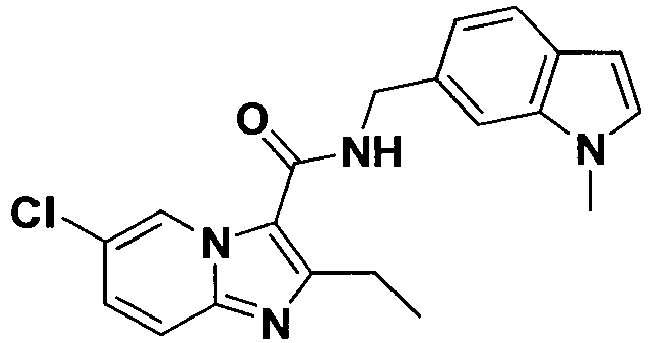
- 1H NMR (400 MHz, CDCl3) δ 1.36 (t, J = 7.6 Hz, 3H), 2.95 (q, J = 7.6 Hz, 2H), 3.80 (s, 3H), 4.82 (d, J = 5.6 Hz, 2H), 6.13 (m, 1H), 6.49 (d, J = 3.2 Hz, 1H), 7.08 (d, J = 2.8 Hz, 1H), 7.12 (dd, J = 1.2, 8.0 Hz, 1H), 7.30 (dd, J = 2.0, 9.6 Hz, 1H), 7.34 (s, 1H), 7.55 (d, J = 9.6 Hz, 1H), 7.63 (d, J = 8.0 Hz, 1H), 9.54 (d, J = 1.2 Hz, 1H); LCMS (electrospray) m/z (M+H)+ 367.26
-

- 1H NMR (400 MHz, CDCl3) δ 1.38 (t, J = 7.6 Hz, 3H), 1.54 - 1.60 (m, 2H), 1.69 -1.73 (m, 4H), 2.94 (q, J = 7.6 Hz, 2H), 3.16 (t, J = 5.14 Hz, 4H), 4.59 (d, J = 5.6 Hz, 2H), 6.00 (m, 1H), 6.93 (d, J = 8.8 Hz, 2H), 7.25 (d, J = 8.0 Hz, 2H), 7.29 (dd, J = 2.0, 9.6 Hz, 1H), 7.53 (d, J = 9.6 Hz, 1H), 9.52 (d, J = 2.0 Hz, 1H); LCMS (electrospray) m/z (M+H)+ 397.32
-

- 1H NMR (400 MHz, CDCl3) δ 1.40 (t, J = 7.4 Hz, 3H), 2.98 (q, J = 7.6 Hz, 2H), 4.87 (q, J = 5.6 Hz, 2H), 6.19 (m, 1H), 7.31 (dd, J = 2.0, 9.6 Hz, 1H), 7.47 - 7. 51 (m, 3H), 7.55 (d, J = 9.6 Hz, 1H), 7.82 - 7.85 (m, 3H), 7.87 (d, J = 8.4 Hz, 1H), 9.57 (d, J = 2.0 Hz, 1H); LCMS (electrospray) m/z (M+H)+ 364.20
-

- 1H NMR (400 MHz, CDCl3) δ 1.43 (t, J = 7.6 Hz, 3H), 3.01 (q, J = 7.6 Hz, 2H), 4.75 (d, J = 5.6 Hz, 2H), 6.15 (m, 1H), 7.31 (dd, J = 2.0, 9.6 Hz, 1H), 7.43 - 7.47 (m, 4H), 7.55 (d, J= 9.2 Hz, 1H), 7.58 - 7.62 (m, 4H), 9.56 (d, J = 2.0 Hz, 1H); LCMS (electrospray) m/z (M+H)+ 390.25
-

- 1H NMR (400 MHz, CDCl3) δ 1.44 (t, J = 7.6 Hz, 3H), 3.02 (q, J= 7.6 Hz, 2H), 4.77 (d, J= 6.0 Hz, 2H), 6.18 (m, 1H), 7.27 - 7.35 (m, 4H), 7.43 - 7.48 (m, 5H), 7.56 (d, J= 9.6 Hz, 1H), 9.56 (d, J= 2.0 Hz, 1H); LCMS (electrospray) m/z (M+H)+ 404.26
-

- 1H NMR (400 MHz, CDCl3) δ 1.43 (t, J = 7.6 Hz, 3H), 3.01 (q, J = 7.6 Hz, 2H), 4.71 (d, J = 6.0 Hz, 2H), 6.13 (m, 1H), 7.31 (dd, J = 2.0, 9.6 Hz, 1H), 7.41 (d, J = 8.8 Hz, 2H), 7.45 (d, J = 8.0 Hz, 2H), 7.51 (d, J = 8.4 Hz, 2H), 7.54 - 7.58 (m, 3H), 9.55 (d, J = 2.0 Hz, 1H); LCMS (electrospray) m/z (M+H)+ 424.26
-
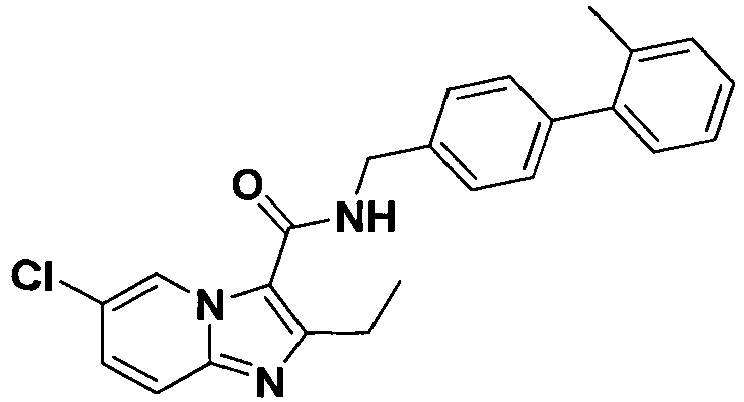
- 1H NMR (400 MHz, CDCl3) δ 1.43 (t, J= 7.6 Hz, 3H), 2.27 (s, 3H), 3.02 (q, J= 7.6 Hz, 2H), 4.76 (d, J = 5.6 Hz, 2H), 6.21 (t, J = 5.2 Hz, 1H), 7.20 - 7.28 (m, 4H), 7.30 (dd, J = 2.0, 9.6 Hz, 1H), 7.34 (d, J= 8.0 Hz, 2H), 7.42 (d, J= 8.0 Hz, 2H), 7.54 (d, J= 9.6 Hz, 1H), 9.55 (d, J = 2.0 Hz, 1H); LCMS (electrospray) m/z (M+H)+ 404.26
-

- 1H NMR (400 MHz, CDCl3) δ 1.43 (t, J = 7.6 Hz, 3H), 2.42 (s, 3H), 3.00 (q, J = 7.6 Hz, 2H), 4.75 (d, J = 5.6 Hz, 2H), 6.14 (m, 1H), 7.18 (d, J = 7.2 Hz, 1H), 7.31 (dd, J = 2.0, 9.6 Hz, 1H), 7.34 (d, J = 7.2 Hz, 1H), 7.39 (d, J = 8.0 Hz, 2H), 7.44 (d, J = 8.4 Hz, 2H), 7.55 (d, J = 9.6 Hz, 1H), 7.60 (d, J = 8.0 Hz, 2H), 9.56 (d, J = 2.0 Hz, 1H); LCMS (electrospray) m/z (M+H)+ 404.26
-

- 1H NMR (400 MHz, CDCl3) δ 1.42 (t, J = 7.6 Hz, 3H), 3.00 (q, J = 7.6 Hz, 2H), 2.40 (s, 3H), 4.74 (d, J= 5.6 Hz, 2H), 6.16 (m, 1H), 7.25 (d, J= 7.2 Hz, 2H), 7.30 (dd, J= 2.0, 9.6 Hz, 1H), 7.44 (d, J = 8.0 Hz, 2H), 7.49 (d, J = 8.0 Hz, 2H), 7.54 (d, J = 9.6 Hz, 1H), 7.59 (d, J = 8.4 Hz, 2H), 9.55 (d, J= 2.0 Hz, 1H); LCMS (electrospray) m/z (M+H)+ 404.26
-

- 1H NMR (400 MHz, CDCl3) δ□1.40 (t, J = 7.6 Hz, 3H), 2.96 (q, J = 7.6 Hz, 2H), 4.65 (d, J = 5.6 Hz, 2H), 6.12 (brs, 1H), 6.90 (dd, J = 7.6, 2.4 Hz, 1H), 7.30 (d, J = 8.4 Hz, 2H), 7.34 (d, J = 8.4 Hz, 2H), 7.58 (d, 1H), 9.34 (d, J = 7.6 Hz, 1H) ; LCMS (electrospray) m/z (M+H)+ 348.21
-

- 1H NMR (400 MHz, MeOH-d4 ) δ □1.29 (t, J= 7.6 Hz, 3H), 2.96 (q, J = 7.6 Hz, 2H), 3.12 - 3.15 (m, 4H), 4.52 (s, 2H), 6.76 (d, J = 8.4 Hz, 2H), 7.06 (dd, J = 7.6, 2.0 Hz, 1H), 7.23 (d, J = 8.4 Hz, 2H), 7.58 (d, J = 1.6 Hz, 1H), 8.91 (d, J = 7.6 Hz, 1H); LCMS (electrospray) m/z (M+H)+ 330.25
-
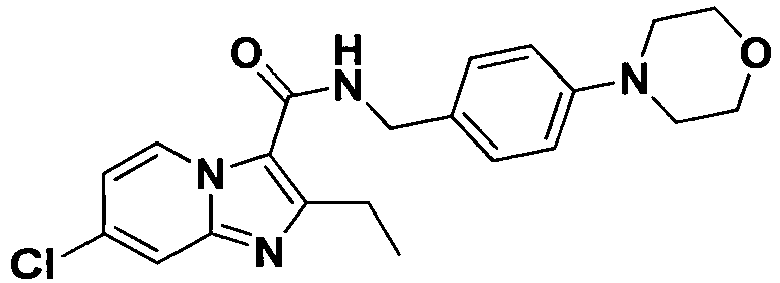
- White solid, mp 195°C; 1H NMR(400 MHz, MeOH-d4) □□ δ 1.31 (t, J = 7.6 Hz, 3H), 3.00 (q, J = 7.6 Hz, 2H), 3.14 (t, J = 4.8 Hz, 4H), 3.84 (t, J = 4.8 Hz, 4H), 4.54 (s, 2H), 6.97 (d, J = 6.8 Hz, 2H), 7.07 (d, J = 7.6 Hz, 1H), 7.32 (d, J = 8.8 Hz, 2H), 7.59 (s, 1H), 8.93 (d, J = 7.2 Hz, 1H).
-

- 1H NMR (400 MHz, CDCl3) δ □1.35 (t, J = 7.6 Hz, 3H), 1.55 - 1.57 (m, 2H), 1.66 - 1.70 (m, 4H), 2.91 (q, J = 7.6 Hz, 2H), 3.12 - 3.15 (m, 4H), 4.56 (d, J = 5.6 Hz, 2H), 6.07 (brs, 1H), 6.86 (dd, J = 7.6, 2.0 Hz, 1H), 6.90 (d, J = 8.4 Hz, 2H), 7.22 (d, J = 8.4 Hz, 2H), 7.54 (d, J = 2.0 Hz, 1H), 9.30 (d, J = 7.6 Hz, 1H) ; LCMS (electrospray) m/z (M+H)+ 397.32
-

- 1H NMR (400 MHz, MeOH-d4 ) δ □1.32 (t, J = 7.6 Hz, 3H), 3.02 (q, J = 7.6 Hz, 2H), 4.79 (s, 2H), 7.06 (dd, J = 7.6, 2.0 Hz, 1H), 7.45 - 7.48 (m, 2H), 7.54 (d, J = 8.4 Hz, 1H), 7.59 (d, J = 2.0 Hz, 1H), 7.82 - 7.88 (m, 4H), 8.96 (d, J = 7.6 Hz, 1H); LCMS (electrospray) m/z (M+H)+ 364.20
-

- 1H NMR (400 MHz, CDCl3) δ □ 1.32 (s, 9H), 1.40 (t, J = 7.6 Hz, 3H), 2.96 (q, J = 7.6 Hz, 2H), 4.67 (d, J = 5.6 Hz, 2H), 6.13 (brs, 1H), 6.90 (dd, J = 7.2, 2.4 Hz, 1H), 7.31 (d, J = 8.0 Hz, 2H), 7.40 (d, J = 8.0 Hz, 2H), 7.59 (d, J = 1.6 Hz, 1H), 9.36 (d, J = 7.2 Hz, 1H) ; LCMS (electrospray) m/z (M+H)+ 370.25
-

- 1H NMR (400 MHz, CDCl3) δ □1.42 (t, J = 7.6 Hz, 3H), 3.00 (q, J = 7.6 Hz, 2H), 4.74 (d, J = 5.6 Hz, 2H), 6.14 (brs, 1H), 6.91 (dd, J = 7.6, 2.4 Hz, 1H), 7.35 (m, 1H), 7.42 - 7.46 (m, 4H), 7.57 - 7.62 (m, 5H), 9.38 (d, J = 7.6 Hz, 1H) ; 13C NMR (100 MHz, CDCl3) δ □□13.4, 23.6, 31.5, 34.7, 43.4, 114.7, 115.8, 126.0, 127.5, 128.6, 133.6, 135.0, 146.2, 150.9, 151.6, 161.3. ; LCMS (electrospray) m/z (M+H)+ 390.25
-

- 1H NMR (400 MHz, MeOH-d4 ) δ□1.32 (t, J = 7.6 Hz, 3H), 3.01 (q, J = 7.6 Hz, 2H), 4.68 (s, 2H), 7.03 (dd, J = 7.6, 2.0 Hz, 1H), 7.29 - 7.57 (m, 9H), 8.94 (d, J = 7.6 Hz, 1H) ; LCMS (electrospray) m/z (M+H)+ 424.26
-

- 1H NMR (400 MHz, CDCl3) δ □1.42 (t, J = 7.6 Hz, 3H), 2.99 (q, J = 7.6 Hz, 2H), 4.73 (s, 2H), 6.15 (brs, 1H), 6.91 (dd, J = 7.6, 2.0 Hz, 1H), 7.40 (d, J = 8.4 Hz, 2H), 7.44 (d, J = 8.0 Hz, 2H), 7.51 (d, J = 8.4 Hz, 2H), 7.56 (d, J = 8.0 Hz, 2H), 7.60 (d, J = 1.6 Hz, 1H), 9.38 (d, J = 7.2 Hz, 1H); LCMS (electrospray) m/z (M+H)+ 424.26
-

- 1H NMR (400 MHz, CDCl3) δ □1.46 (t, J = 7.6 Hz, 3H), 2.31 (s, 3H), 3.05 (q, J = 7.6 Hz, 2H), 4.79 (d, J = 5.6 Hz, 2H), 6.22 (brs, 1H), 6.95 (dd, J = 7.6, 1.6 Hz, 1H), 7.24 -7.36 (m, 4H), 7.39 (d, J = 7.6 Hz, 2H), 7.45 (d, J = 7.6 Hz, 2H), 7.63 (d, 1H), 9.42 (d, J = 7.2 Hz, 1H); LCMS (electrospray) m/z (M+H)+ 404.26
-

- 1H NMR (400 MHz, CDCl3) δ □1.41 (t, J = 7.6 Hz, 3H), 2.42 (s, 3H), 2.99 (q, J = 7.6 Hz, 2H), 4.74 (d, J = 5.6 Hz, 2H), 6.13 (brs, 1H), 6.91 (dd, J = 7.6, 2.0 Hz, 1H), 7.18 (d, J = 8.4 Hz, 1H), 7.33 - 7.40 (m, 3H), 7.43 (d, J = 8.4 Hz, 2H), 7.58 - 7.61 (m, 3H), 9.38 (d, J = 7.6 Hz, 1H); LCMS (electrospray) m/z (M+H)+ 404.33
-

- 1H NMR (400 MHz, CDCl3) δ □1.41 (t, J= 7.6 Hz, 3H), 2.40 (s, 3H), 2.99 (q, J = 7.6 Hz, 2H), 4.73 (s, 2H), 6.91 (dd, J = 7.6, 2.0 Hz, 1H), 7.25 (d, J = 8.4 Hz, 2H), 7.43 (d, J = 8.0 Hz, 2H), 7.48 (d, J = 8.0 Hz, 2H), 7.58 - 7.60 (m, 3H), 9.38 (d, J = 7.2 Hz, 1H) ; LCMS (electrospray) m/z (M+H)+ 404.26
-

- 1H NMR (400 MHz, CDCl3) δ 4.74 (d, J = 5.6 Hz, 2H), 6.69 (m, 1H), 7.36 (dd, J = 7.2, 7.2 Hz, 1H), 7.43 - 7.47 (m, 5H), 7.56 (dd, J = 8.0, 8.4 Hz, 4H), 7.71 (d, J = 9.6 Hz, 1H), 9.45 (s, 1H)); LCMS (electrospray) m/z (M+H)+ 430.18
-

- 1H NMR (400 MHz, CDCl3) δ 1.32 (s, 9H), 4.67 (d, J = 6.0 Hz, 2H), 6.63 (m, 1H), 7.30 (d, J = 8.0 Hz, 2H), 7.41 (d, J = 8.4 Hz, 2H), 7.41 - 7.45 (m, 1H), 7.69 (d, J = 9.6 Hz, 1H), 9.42 (d, J = 1.2 Hz, 1H); LCMS (electrospray) m/z (M+H)+ 410.25
-
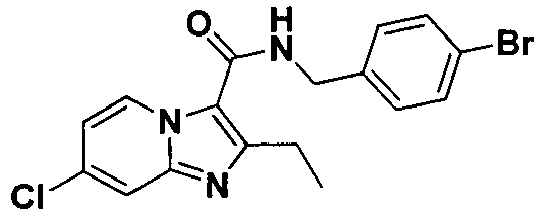
- 1H NMR (400 MHz, CDCl3) δ □1.41 (t, J = 7.6 Hz, 3H), 2.97 (q, J = 7.6 Hz, 2H), 4.65 (d, J = 5.6 Hz, 2H), 6.09 (brs, 1H), 6.91 (dd, J = 7.6, 2.0 Hz, 1H), 7.25 (d, J = 8.4 Hz, 2H), 7.50 (d, J = 8.4 Hz, 2H), 7.60 (d, J = 2.0 Hz, 1H), 9.35 (d, J = 7.6 Hz, 1H); LCMS (electrospray) m/z (M+H)+ 394.13
-

- 1H NMR (400 MHz, CDCl3) δ□ 1.41 (t, J = 7.6 Hz, 3H), 2.98 (q, J = 7.6 Hz, 2H), 4.70 (d, J = 5.6 Hz, 2H), 6.09 (brs, 1H), 6.91 (dd, J = 7.6, 2.0 Hz, 1H), 7.22 (d, J = 8.4 Hz, 2H), 7.40 (d, J = 8.4 Hz, 2H), 7.60 (d, J = 2.0 Hz, 1H), 9.36 (d, J = 7.6 Hz, 1H) ; LCMS (electrospray) m/z (M+H)+ 398.28
-

- 1H NMR (400 MHz, CDCl3) δ □1.42 (t, J = 7.6 Hz, 3H), 3.00 (q, J = 7.6 Hz, 2H), 4.71 (d, J = 6.0 Hz, 2H), 6.14 (brs, 1H), 6.91 (dd, J = 7.6, 2.0 Hz, 1H), 7.20 (d, J = 8.0 Hz, 1H), 7.26 (m, 1H), 7.57 (d, J = 5.2 Hz, 1H), 7.59 (d, J = 5.2 Hz, 1H), 9.45 (dd, J = 5.2, 2.4 Hz, 1H); LCMS (electrospray) m/z (M+H)+ 382.15
-

- 1H NMR (400 MHz, CDCl3) δ 1.39 (t, J = 7.6 Hz, 3H), 2.95 (q, J= 7.6 Hz, 2H), 3.87 (s, 3H), 6.06 (m, 1H), 6.61 (dd, J = 2.8, 7.6, 1H), 6.89 (d, J = 2.4 Hz, 1H), 7.21 (d, J = 8.8 Hz, 2H), 7.41 (d, J= 8.4 Hz, 2H), 9.24 (d, J= 7.6 Hz, 1H).
-

- 1H NMR (400 MHz, CDCl3 + CD3OD) δ 1.21 (t, J = 7.6 Hz, 3H), 2.79 (q, J= 7.6 Hz, 2H), 4.51 (q, J = 4.0 Hz, 2H), 4.74 (brs, 1H), 6.49 (dd, J= 2.4, 7.6, 1H), 6.89 (d, J = 2.4 Hz, 1H), 7.21 (d, J= 8.0 Hz, 2H), 7.29 (d, J= 8.8 Hz, 2H), 8.86 (d, J = 7.6 Hz, 1H).
-

- 1H NMR (400 MHz, CDCl3) δ 1.00 (t, J = 7.4 Hz, 3H), 1.37 (t, J = 7.6 Hz, 3H), 1.60 -1.69 (m, 2H), 2.93 (q, J = 8.0 Hz, 2H), 3.08 (t, J = 7.2 Hz, 2H), 3.69 (brs, 1H), 4.55 (d, J = 5.2 Hz, 2H), 5.96 (m, 1H), 6.60 (d, J = 8.4, 2H), 7.18 (d, J = 8.0 Hz, 2H), 7.57 (d, J = 1.2 Hz, 1H), 9.35 (d, J = 7.6 Hz, 1H).
-

- 1H NMR (400 MHz, CDCl3) δ 0.92 (t, J= 7.0 Hz, 3H), 1.25 - 1.42 (m, 8H), 1.58 - 1.66 (m, 2H), 2.93 (q, J= 7.6 Hz, 2H), 3.10 (t, J= 7.2 Hz, 2H), 3.66 (brs, 1H), 4.55 (d, J= 5.2 Hz, 2H), 5.95 (m, 1H), 6.60 (d, J = 8.4, 2H), 6.89 (dd, J = 2.0, 7.2 Hz, 1H), 7.18 (d, J = 8.0 Hz, 2H), 7.58 (d, J = 1.2 Hz, 1H), 9.36 (d, J= 7.6 Hz, 1H).
-

- 1H NMR (400 MHz, CDCl3) δ 1.39 (t, J= 7.6 Hz, 3H), 2.36 (s, 3H), 2.58 (t, J= 5.0 Hz, 4H), 2.95(q, J = 7.6 Hz, 2H), 3.22 (t, J = 4.8 Hz, 4H), 4.60 (d, J = 5.6 Hz, 2H), 6.93 (d, J = 8.8 Hz, 2H), 7.26 - 7.30 (m, 3H), 7.53 (d, J= 5.6 Hz, 1H), 9.53 (d, J = 1.6 Hz, 1H).
-

- 1H NMR (400 MHz, CDCl3) δ □1.37 (t, J= 7.6 Hz, 3H), 2.35 (s, 3H), 2.57 - 2.59 (m, 4H), 2.94 (q, J = 7.6 Hz, 2H), 3.20 - 3.23 (m, 4H), 4.59 (d, J = 5.2 Hz, 2H), 6.00 (brs, 1H), 6.88 - 6.94 (m, 3H), 7.27 (d, J = 8.4 Hz, 2H), 7.58 (d, J = 2.0 Hz, 1H), 9.35 (d, J = 7.6 Hz, 1H); LCMS (electrospray) m/z (M+H)+ 412.29
-

- 1H NMR (400 MHz, CDCl3) δ 1.10 (d, J = 6.0 Hz, 6H), 1.38 (t, J = 7.6 Hz, 3H), 2.69 (m, 4H), 2.94 (q, J = 7.6 Hz, 2H), 3.22 (m, 4H), 4.60 (d, J = 5.6 Hz, 2H), 5.99 (m, 1H), 6.90 (dd, J = 2.0, 7.6 Hz, 1H), 6.93 (d, J = 8.4 Hz, 1H), 7.26 - 7.38 (m, 5H), 7.58 (d, J = 1.6 Hz, 1H), 9.36 (d, J = 7.6 Hz, 1H).
-

- 1H NMR (400 MHz, DMSO-d6 ) δ 1.29 (t, J = 7.6 Hz, 3H), 3.00 (q, J = 7.6 Hz, 2H), 3.30 (m, 8H), 4.48 (d, J = 6.0 Hz, 2H), 6.84 (t, J = 6.0 Hz, 1H), 7.01 - 7.05 (m, 4H), 7.13 (dd, J = 2.4, 7.6 Hz, 1H), 7.26 - 7.31 (m, 4H), 7.82 (d, J = 1.6 Hz, 1H), 8.45 (t, J = 6.0 Hz, 1H), 8.99 (d, J = 7.6 Hz, 1H).
-

- White solid; mp = 173.8 °C; 1H NMR (400 MHz, CDCl3) δ 1.39 (t, J = 7.6 Hz, 3H), 2.95 (q, J = 7.2 Hz, 2H), 3.24 - 3.27 (m, 4H), 3.33 - 3.36 (m, 4H), 3.87 (s, 3H), 4.63 (d, J = 5.6 Hz, 2H), 6.03 (t, J = 5.0 Hz, 1H), 6.91 - 7.01 (m, 6H), 7.31 (d, J = 8.8 Hz, 2H), 7.48 (d, J = 9.6 Hz, 1H), 9.11 (d, J = 2.4 Hz, 1H); LCMS (electrospray) m/z (M+H)+ 488
-

- 1H NMR (400 MHz, CDCl3) δ 1.40 (t, J = 7.6 Hz, 3H), 2.96 (q, J = 7.6 Hz 2H), 3.25 - 3.27 (m, 4H), 3.34 - 3.36 (m, 4H), 4.62 (d, J = 5.6 Hz, 2H), 6.02 - 6.64 (m, 1H), 6.92 - 6.95 (m, 3H), 6.97 - 7.01 (m, 3H), 7.29 (dd, J = 2.4, 9.6 Hz, 1H), 7.31 (d, J = 8.8 Hz, 2H), 7.54 (d, J = 9.6 Hz, 2H), 9.54 (d, J = 1.2 Hz, 2H); LCMS (electrospray) m/z (M+H)+ 492.28
-

- White solid; 1H NMR (400 MHz, CDCl3); δ 1.30 (t, J= 7.6 Hz, 3H), 2.84 (q, J = 7.6 Hz, 2H), 3.18 - 3.19 (m, 4H), 3.26 - 3.27 (m, 4H), 3.78 (s, 3H), 4.54 (d, J = 5.6 Hz, 2H), 6.15 (brs, 1H), 6.51 - 6.53 (m, 1H), 6.79 (s, 1H), 6.85 - 6.95 (m, 6H), 7.24 (d, J= 8.0 Hz, 2H), 9.12 (d, J= 8.0 Hz, 1H).
-

- Pale yellow solid; 1H NMR (400 MHz, CDCl3); δ 1.34 (t, J = 7.6 Hz, 3H), 2.93 (q, J = 7.6 Hz, 2H), 3.22 - 3.27 (m, 4H), 3.29 - 3.34 (m, 4H), 3.99 (s, 3H), 4.60 (d, J= 5.6 Hz, 2H), 6.08 (brs, 1H), 6.58 (d, J = 7.6 Hz, 1H), 6.76 (dd, J= 7.2, 7.6 Hz, 1H), 6.89 - 6.99 (m, 6H), 7.28 (d, J= 8.4 Hz, 2H), 8.95 (d, J= 7.2 Hz, 1H).
-
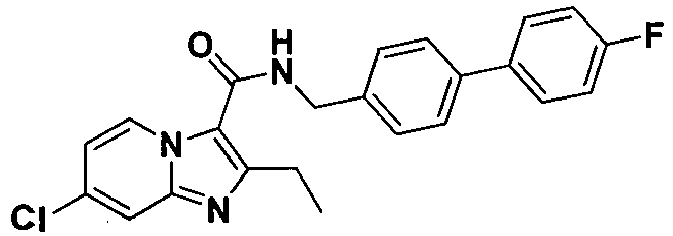
- 1H NMR (400 MHz, CDCl3) δ □1.42 (t, J= 7.6 Hz, 3H), 2.99 (q, J = 7.6 Hz, 2H), 4.73 (d, J = 5.6 Hz, 2H), 6.14 (brs, 1H), 6.91 (dd, J = 7.2, 2.0 Hz, 1H), 7.13 (t, J = 8.4 Hz, 2H), 7.44 (d, J = 8.4 Hz, 2H), 7.52 - 7.56 (m, 4H), 7.60 (d, J = 2.0 Hz, 1H), 9.38 (d, J = 7.2 Hz, 1H); LCMS (electrospray) m/z (M+H)+ 408.21
-

- 1H NMR (400 MHz, CDCl3) δ □1.36 (s, 9H), 1.41 (t, J = 7.6 Hz, 3H), 2.99 (q, J = 7.6 Hz, 2H), 4.73 (d, J = 5.6 Hz, 2H), 6.13 (brs, 1H), 6.91 (dd, J = 7.2, 2.0 Hz, 1H), 7.43 (d, J = 8.0 Hz, 2H), 7.47 (d, J = 8.4 Hz, 2H), 7.53 (d, J= 8.4 Hz, 2H), 7.59 - 7.61 (m, 3H), 9.38 (d, J = 7.2 Hz, 1H) ; LCMS (electrospray) m/z (M+H)+ 446.30
-
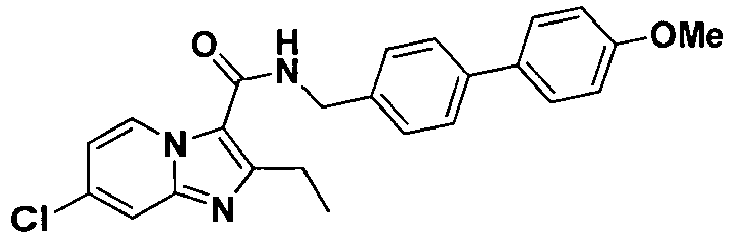
- 1H NMR (400 MHz, CDCl3) δ □1.41 (t, J = 7.6 Hz, 3H), 2.99 (q, J = 7.6 Hz, 2H), 3.85 (s, 3H), 4.72 (d, J = 6.0 Hz, 2H), 6.12 (brs, 1H), 6.91 (dd, J = 7.2, 2.0 Hz, 1H), 6.98 (d, J = 8.8 Hz, 2H), 7.42 (d, J = 8.0 Hz, 2H), 7.52 (d, J = 8.8 Hz, 2H), 7.56 (d, J = 8.0 Hz, 2H), 7.59 (d, J = 1.6 Hz, 1H), 9.38 (d, J = 7.6 Hz, 1H); LCMS (electrospray) m/z (M+H)+ 420.18
-

- 1H NMR (400 MHz, CDCl3) δ □1.42 (t, J= 7.6 Hz, 3H), 3.00 (q, J= 7.6 Hz, 2H), 4.75 (d, J= 6.0 Hz, 2H), 6.15 (brs, 1H), 6.91 (dd, J = 7.6, 2.0 Hz, 1H), 7.28 (d, J= 8.4 Hz, 2H), 7.46 (d, J = 8.4 Hz, 2H), 7.54 - 7.60 (m, 5H), 9.38 (d, J= 7.6 Hz, 1H); LCMS (electrospray) m/z (M+H)+ 474.18
-

- 1H NMR (400 MHz, CDCl3) δ□ 1.42 (t, J = 7.6 Hz, 3H), 3.01 (q, J = 7.6 Hz, 2H), 4.76 (d, J= 6.0 Hz, 2H), 6.16 (brs, 1H), 6.92 (dd, J = 7.2, 2.0 Hz, 1H), 7.48 (d, J = 8.4 Hz, 2H), 7.60 (m, 3H), 7.70 (m, 3H), 9.38 (d, J = 7.2 Hz, 1H); LCMS (electrospray) m/z (M+H)+ 458.20
-

- 1H NMR (400 MHz, CDCl3) δ 1.44 (t, J= 7.6 Hz, 3H), 3.02 (q, J= 7.2 Hz, 2H), 4.77 (d, J = 5.6 Hz, 2H), 6.19 (m, 1H), 7.32 (dd, J = 2.0, 9.6 Hz, 1H), 7.50 (d, J = 8.0 Hz, 2H), 7.56 (d, J = 9.6 Hz, 1H), 7.68 (d, J = 8.4 Hz, 2H), 7.73 (d, J = 8.4 Hz, 2H), 9.55 (d, J = 2.0 Hz, 1H).
-

- 1H NMR (400 MHz, CDCl3) δ □1.42 (t, J = 7.6 Hz, 3H), 3.01 (q, J= 7.6 Hz, 2H), 4.76 (d, J = 6.0 Hz, 2H), 6.17 (brs, 1H), 6.92 (dd, J = 7.6, 2.4 Hz, 1H), 7.49 (d, J = 8.0 Hz, 2H), 7.60 (d, J = 8.0 Hz, 2H), 7.60 (d, J = 2.4 Hz, 1H), 7.68 (d, J = 8.4 Hz, 2H), 7.73 (d, J = 8.4 Hz, 2H), 9.38 (d, J = 7.6 Hz, 1H); LCMS (electrospray) m/z (M+H)+ 415.21
-

- 1H NMR (400 MHz, CDCl3) δ 1.43 (t, J = 7.6 Hz, 3H), 3.02 (q, J = 7.2 Hz, 2H), 4.78 (d, J = 5.6 Hz, 2H), 6.17 (m, 1H), 7.30 - 7.35 (m, 4H), 7.42 (d, J= 8.0 Hz, 2H), 7.48 (t, J= 8.0 Hz, 1H), 7.55 (d, J= 8.8 Hz, 2H), 7.75 (d, J= 7.6 Hz, 1H), 7.73 (d, J= 8.4 Hz, 2H), 9.56 (d, J= 1.2 Hz, 1H).
-

- 1H NMR (400 MHz, CDCl3) δ □1.41 (t, J = 7.6 Hz, 3H), 3.01 (q, J = 7.6 Hz, 2H), 4.77 (d, J = 5.6 Hz, 2H), 6.16 (brs, 1H), 6.92 (dd, J = 7.2, 2.4 Hz, 1H), 7.32 (d, J = 7.6 Hz, 1H), 7.34 (d, J = 8.4 Hz, 2H), 7.41 (d, J = 8.4 Hz, 2H), 7.47 (t, J = 7.6 Hz, 1H), 7.56 (t, J = 7.6 Hz, 1H), 7.60 (d, J = 2.4 Hz, 1H), 7.75 (d, J = 8.0 Hz, 1H), 9.38 (d, J = 7.2 Hz, 1H); LCMS (electrospray) m/z (M+H)+ 458.27
-

- 1H NMR (400 MHz, CDCl3) δ 1.45 (t, J = 7.6 Hz, 3H), 3.03 (q, J = 7.6 Hz, 2H), 4.78 (d, J = 5.6 Hz, 2H), 6.18 - 6.20 (m, 1H), 7.32 (dd, J = 1.2, 7.6 Hz, 1H), 7.46 (dd, J = 7.6, 7.6 Hz, 1H), 7.50 - 7.55 (m, 3H), 7.57 (d, J= 8.4 Hz, 2H), 7.65 (dd, J = 7.6, 7.6 Hz, 1H), 7.77 (d, J = 7.6 Hz, 1H), 9.56 (d, J = 1.2 Hz, 1H).
-

- 1H NMR (400 MHz, CDCl3) δ □1.44 (t, J= 7.6 Hz, 3H), 3.02 (q, J= 7.6 Hz, 2H), 4.77 (d, J= 5.6 Hz, 2H), 6.18 (brs, 1H), 6.92 (dd, J = 7.6, 2.0 Hz, 1H), 7.47 - 7.60 (m, 4H), 7.63 - 7.65 (m, 4H), 7.77 (d, J= 7.6 Hz, 1H), 9.38 (d, J= 7.6 Hz, 1H); LCMS (electrospray) m/z (M+H)+ 415.28
-

- 1H NMR (400 MHz, CDCl3) δ 1.44 (t, J = 7.6 Hz, 3H), 3.02 (q, J= 7.6 Hz, 2H), 4.77 (d, J= 5.6 Hz, 2H), 6.19 (m, 1H), 7.32 (dd, J = 2.0, 9.2 Hz, 1H), 7.50 (d, J = 8.4 Hz, 2H), 7.55 - 7.59 (m, 3H), 7.64 (d, J = 7.6 Hz, 1H), 7.81 (d, J= 8.0 Hz, 1H), 7.86 (s, 1H), 9.56 (d, J = 1.6 Hz, 1H).
-

- 1H NMR (400 MHz, CDCl3) δ □1.42 (t, J= 7.6 Hz, 3H), 3.01 (q, J= 7.6 Hz, 2H), 4.76 (d, J= 6.0 Hz, 2H), 6.17 (brs, 1H), 6.92 (dd, J = 7.2, 2.0 Hz, 1H), 7.49 (d, J = 8.4 Hz, 1H), 7.55 - 7.63 (m, 5H), 7.80 (d, J = 8.0 Hz, 1H), 7.85 (d, J = 1.6 Hz, 1H), 9.38 (d, J = 7.2 Hz, 1H); LCMS (electrospray) m/z (M+H)+ 415.28
-

- 1H NMR (400 MHz, CDCl3) δ 1.44 (t, J = 7.6 Hz, 3H), 3.02 (q, J = 7.6 Hz, 2H), 4.77 (d, J = 5.6 Hz, 2H), 6.18 (m, 1H), 7.27 (d, J = 7.6 Hz, 2H), 7.31 (d, J = 7.6 Hz, 2H), 7.42 (d, J = 8.0 Hz, 2H), 7.52 - 7.56 (m, 2H), 7.73 (d, J = 2.0 Hz, 1H), 7.86 (s, 1H), 9.55 (d, J = 1.2 Hz, 1H).
-

- 1H NMR (400 MHz, CDCl3) δ □ 1.41 (t, J= 7.6 Hz, 3H), 3.01 (q, J = 7.6 Hz, 2H), 4.76 (d, J = 6.0 Hz, 2H), 6.16 (brs, 1H), 6.92 (dd, J = 7.2, 2.0 Hz, 1H), 7.28 (d, J = 8.0 Hz, 1H), 7.30 (d, J = 8.0 Hz, 2H), 7.41 (d, J = 8.0 Hz, 2H), 7.53 (dd, J = 8.0, 1.6 Hz, 1H), 7.60 (d, J = 2.0 Hz, 1H), 7.73 (d, J = 2.0 Hz, 1H), 9.38 (d, J = 7.6 Hz, 1H); LCMS (electrospray) m/z (M+H)+ 492.21
-

- 1H NMR (400 MHz, CDCl3) δ 1.44 (t, J = 7.6 Hz, 3H), 2.30 (s, 3H), 3.03 (q, J = 7.6 Hz, 2H), 4.77 (d, J = 5.6 Hz, 2H), 6.21 (t, J = 5.2 Hz, 1H), 7.30 - 7.33 (m, 4H), 7.31 (d, J = 7.6 Hz, 2H), 7.46 (d, J = 8.0 Hz, 2H), 7.52 - 7.56 (m, 2H), 7.52 - 7.57 (m, 3H), 9.56 (d, J = 2.0 Hz, 1 H).
-

- 1H NMR (400 MHz, CDCl3) δ □1.43 (t, J = 7.6 Hz, 3H), 2.29 (s, 3H), 3.02 (q, J = 7.6 Hz, 2H), 4.77 (d, J = 6.0 Hz, 2H), 6.18 (brs, 1H), 6.92 (dd, J= 7.6, 2.0 Hz, 1H), 7.30 (d, J = 8.0 Hz, 3H), 7.45 (d, J = 8.0 Hz, 2H), 7.52 (d, J = 7.6 Hz, 1H), 7.56 (s, 1H), 7.60 (d, J = 2.4 Hz, 1H), 9.39 (d, J= 7.2 Hz, 1H); LCMS (electrospray) m/z (M+H)+ 429.29
-

- LCMS (electrospray) m/z (M+H)+ 442.15
-

- 1H NMR (400 MHz, CDCl3) δ □1.42 (t, J = 7.6 Hz, 3H), 3.01 (q, J = 7.6 Hz, 2H), 4.76 (d, J = 5.6 Hz, 2H), 6.20 (brs, 1H), 6.91 (dd, J = 7.6, 2.0 Hz, 1H), 7.26 - 7.51 (m, 4H), 7.61 (d, J = 2.0 Hz, 1H), 7.65 (d, J = 8.0 Hz, 2H), 8.65 (brs, 2H), 9.37 (d, J = 7.6 Hz, 1H); LCMS (electrospray) m/z (M+H)+ 391.20
-

- 1H NMR (400 MHz, CDCl3) δ □1.40 (t, J = 7.6 Hz, 3H), 2.97 (q, J = 7.6 Hz, 2H), 3.91 (s, 3H), 4.74 (d, J = 5.6 Hz, 2H), 6.11 (brs, 1H), 6.91 (dd, J = 7.6, 2.0 Hz, 1H), 7.28 (d, J = 8.8 Hz, 1H), 7.45 (d, J = 8.4 Hz, 2H), 7.60 (d, J = 2.0 Hz, 1H), 7.67 (d, J = 8.8 Hz, 1H), 7.67 (d, J = 8.8 Hz, 1H), 7.94 (d, J = 8.4 Hz, 2H), 8.39 (d, J = 2.8 Hz, 1H), 9.38 (d, J = 7.2 Hz, 1H); LCMS (electrospray) m/z (M+H)+ 421.20
-

- 1H NMR (400 MHz, CDCl3) δ 1.40 (t, J = 7.6 Hz, 3H), 2.69 (m, 4H), 2.97 (q, J = 7.6 Hz, 2H), 4.68 (d, J = 6.0 Hz, 2H), 6.10 (m, 1H), 6.29 - 6.32 (m, 1H), 6.53 - 6.54 (m, 1H), 6.87 - 6.88 (m, 1H), 6.91 (dd, J = 2.0, 7.2 Hz, 1H), 7.37 (d, J = 8.0 Hz, 2H), 7.48 (d, J = 8.4 Hz, 2H), 7.59 (d, J = 2.0 Hz, 1H), 8.51 (brs, 1H), 9.37 (d, J = 7.6 Hz, 1H).
-

- 1H NMR (400 MHz, CDCl3) δ 1.40 (t, J = 7.6 Hz, 3H), 2.98 (q, J = 7.6 Hz, 2H), 4.70 (d, J = 5.6 Hz, 2H), 6.47 - 6.48 (m, 1H), 6.53 - 6.54 (m, 1H), 6.66 (d, J = 3.2, 1H), 6.91 (dd, J = 2.0, 7.6 Hz, 1H), 7.40 (d, J = 8.4 Hz, 2H), 7.47 (d, J = 1.2 Hz, 1H), 7.60 (d, J = 1.6 Hz, 1H), 7.68 (d, J = 8.0 Hz, 2H), 9.37 (d, J = 7.2 Hz, 1H).
-

- 1H NMR (400 MHz, CDCl3) δ 1.41 (t, J = 7.6 Hz, 3H), 2.99 (q, J = 7.6 Hz, 2H), 4.71 (d, J = 6.0 Hz, 2H), 6.12 - 6.14 (m, 1H), 6.34 - 6.36 (m, 2H), 6.92 (dd, J = 2.0, 7.6 Hz, 1H), 7.08 - 7.09 (m, 2H), 7.40 (d, J = 8.8 Hz, 2H), 7.44 (d, J = 8.8 Hz, 21H), 7.60 (d, J = 2.0 Hz, 1H), 7.68 (d, J = 8.0 Hz, 2H), 9.38 (d, J = 7.6 Hz, 1H).
-

- 1H NMR (400 MHz, CDCl3) δ 1.38 (t, J = 7.6 Hz, 3H), 1.90 - 1.98 (m, 2H), 2.07 - 2.13 (m, 2H), 2.96 (q, J = 7.6 Hz, 2H), 3.10 - 3.16 (m, 2H), 3.48 - 3.54 (m, 2H), 4.42 - 4.48 (m, 1H), 3.22 (t, J = 4.8 Hz, 4H), 4.61 (d, J = 5.6 Hz, 2H), 6.00 - 6.20 (m, 1H), 6.91 (d, J = 7.2 Hz, 2H), 6.96 (d, J = 8.8Hz, 2H), 7.14 (d, J = 8.4 Hz, 1H), 7.26 - 7.31 (m, 3H), 7.54 (d, J = 9.6 Hz, 1H), 9.53 (d, J = 1.6 Hz, 1H).
-

- 1H NMR (400 MHz, CDCl3) δ 1.38 (t, J = 7.6 Hz, 3H), 1.89 - 1.98 (m, 2H), 2.07 - 2.13 (m, 2H), 2.95 (q, J = 7.6 Hz, 2H), 3.09 - 3.16 (m, 2H), 3.47 - 3.53 (m, 2H), 4.42 - 4.48 (m, 1H), 3.22 (t, J = 4.8 Hz, 4H), 4.60 (d, J = 5.6 Hz, 2H), 5.99 - 6.01 (m, 1H), 6.88 - 6.93 (m, 3H), 6.96 (d, J = 8.4 Hz, 2H), 7.14 (d, J = 8.8Hz, 2H), 7.26 - 7.29 (m, 2H), 7.59 (d, J = 2.0 Hz, 1H), 9.36 (d, J = 7.6 Hz, 1H).
-

- 1H NMR (400 MHz, DMSO-d6 ) δ 1.46 (t, J = 7.6 Hz, 3H), 3.06 (q, J = 7.6 Hz, 2H), 4.76 (d, J = 5.6 Hz, 2H), 6.23 - 6.25 (m, 1H), 7.41 (d, J = 8.4 Hz, 2H), 7.45 (d, J = 8.0 Hz, 2H), 7.51 (d, J = 8.4 Hz, 2H), 7.57 (d, J = 8.0 Hz, 2H), 8.03 (d, J = 4.4 Hz, 1H), 9.11 (s, 1H), 9.28 (d, J = 4.8 Hz, 1H).
-

- 1H NMR (400 MHz, CDCl3) δ 1.33 (t, J = 7.6 Hz, 3H), 2.75 (q, J = 7.2 Hz, 2H), 6.78 (dd, J = 1.2, 7.2, 1H), 6.89 (dd, J = 1.2, 7.2 Hz, 1H), 7.44 (d, J = 8.0 Hz, 2H), 7.48 - 7.53 (m, 3H), 7.58 (d, J = 8.0 Hz, 1H), 7.65 (d, J = 7.6 Hz, 2H), 7.72 (d, J = 7.6 Hz, 1H), 7.76 (d, J = 8.0 Hz, 2H), 8.02 (brs, 1H), 8.07 (d, J = 8.0 Hz, 2H).
-

- 1H NMR (400 MHz, DMSO-d6 ) δ 1.25 (t, J = 7.6 Hz, 3H), 2.62 (q, J = 7.6 Hz, 2H), 3.89 (s, 2H), 6.74 (dd, J = 2.0, 7.2 Hz, 1H), 7.00 (brs, 1H), 7.44 - 7.53 (m, 5H), 7.61 (d, J = 7.2 Hz, 2H), 7.68 (d, J = 8.4 Hz, 2H).
-

- 1H NMR (400 MHz, CDCl3) δ 0.93 (t, J = 6.4 Hz, 3H), 1.37 (t, J = 6.0 Hz, 3H), 1.65 - 1.71 (m, 2H), 2.15 (t, J = 6.4 Hz, 2H), 2.94(q, J = 6.0 Hz, 2H), 3.33 (s, 8H), 4.36 (d, J = 4.4 Hz, 2H), 4.61 (d, J = 4.0 Hz, 2H), 5.59 (brs, 1H), 6.01 (brs, 1H), 6.88 - 6.98 (m, 5H), 7.19 (d, J = 7.2 Hz, 2H), 7.29 (d, J = 7.2 Hz, 2H), 7.58 (s, 1H), 9.35 (d, J = 7.2 Hz, 1H); LCMS (electrospray) m/z (M+H)+ 573.
-

- 1H NMR (400 MHz, DMSO) δ 1.20 (t, J = 7.6 Hz, 3H), 1.24 (s, 9H), 2.78 - 2.80 (m, 4H), 2.86 (q, J = 7.6 Hz, 2H), 3.13 - 3.15 (m, 4H), 4.42 (d, J = 6.0 Hz, 2H), 6.66 (d, J = 2.0 Hz, 1H), 6.86 (dd, J = 8.0, 2.0 Hz, 1H), 7.24 (d, J = 8.4 Hz, 2H), 7.32 (d, J = 87.4 Hz, 2H), 7.99 (brt, J = 6.0 Hz, 1H), 8.75 (d, J = 8.0 Hz, 1H); LCMS (electrospray) m/z (M+H)+ 420; mp 186.1 - 186.9 °C.
-

- White solid; mp = 223 - 224 °C; 1H NMR (400 MHz, CDCl3) δ 1.45 (t, J = 7.6 Hz, 3H), 3.02 (q, J = 7.2 Hz, 2H), 4.76 (d, J = 6.0 Hz, 2H), 6.21 - 6.23 (m, 1H), 7.33 (dd, J = 2.0, 9.6 Hz, 1H), 7.49 (d, J = 8.0 Hz, 2H), 7.56 (d, J = 9.2 Hz, 1H), 7.67 (d, J = 8.0 Hz, 2H), 9.53 (d, J = 2.0 Hz, 1H)); LCMS (electrospray) m/z (M+H)+ 339.16
-

- White solid; mp = 179 - 180 °C; 1H NMR (400 MHz, CDCl3) δ 1.44 (t, J = 7.6 Hz, 3H), 3.01 (q, J = 7.6 Hz, 2H), 4.77 (d, J = 6.0 Hz, 2H), 6.19 - 6.21 (m, 1 H), 7.32 (dd, J = 2.0, 9.2 Hz, 1H), 7.50 (d, J = 8.4 Hz, 2H), 7.56 (d, J = 9.6 Hz, 1H), 7.64 (d, J = 8.4 Hz, 2H), 9.54 (d, J = 2.0 Hz, 1H)); LCMS (electrospray) m/z (M+H)+ 382.15
-

- White solid; mp = 196.2 - 196.9 °C; 1H NMR (400 MHz, CDCl3) δ 1.43 (t, J= 7.4 Hz, 3H), 3.00 (q, J = 7.6 Hz, 2H), 4.76 (d, J = 6.4 Hz, 2H), 6.92 (dd, J = 2.0, 7.2 Hz, 1H), 7.49 (d, J = 8.4 Hz, 2H), 7.60 (d, J = 2.0 Hz, 1H), 7.63 (d, J = 8.0 Hz, 2H), 9.36 (d, J = 7.6 Hz, 1H); LCMS (electrospray) m/z (M+H)+ 382.15
-

- 1H NMR (400 MHz, CDCl3) δ 1.37 (t,□ J = 7.6 Hz, 3H), 3.49 (q, J = 7.6 Hz, 2H), 4.66 (d, J = 6.0 Hz, 2H), 7.19 (d, J = 7.6 Hz, 2H), 7.41 (d, J = 8.4 Hz, 2H), 7.60 (d, J = 10.0 Hz, 1H), 7.82 (brs, 1H), 7.99 (dd, J = 10.0, 2.0 Hz, 1H), 9.11 (d, J = 1.6 Hz, 1H); LCMS (electrospray) m/z (M+H)+ 409.23
-

- 1H NMR (400 MHz, DMSO-d6 ) δ 1.29 (t,D J = 7.6 Hz, 3H), 3.05 (q, J = 7.6 Hz, 2H), 4.57 (d, J = 5.6 Hz, 2H), 7.35 (d, J = 8.4 Hz, 2H), 7.50 (d, J = 8.4 Hz, 2H), 7.76 (dd, J = 7.6, 2.4 Hz, 1H), 8.56 (d, J = 2.4 Hz, 1H), 8.79 (brs, 1H), 9.06 (d, J = 8.0 Hz, 1H); LCMS (electrospray) m/z (M+H)+ 409.35
-

- 1H NMR (400 MHz, CDCl3) δ 1.43 (t,□ J = 7.6 Hz, 3H), 3.02 (q, J = 7.6 Hz, 2H), 4.71 (d, J = 5.6 Hz, 2H), 6.21 (brs, 1H), 7.22 (d, J = 8.4 Hz, 2H), 7.41 (d, J = 8.4 Hz, 2H), 7.48 (dd, J = 9.2, 1.2 Hz, 1H), 7.69 (d, J = 9.2 Hz, 1H), 9.84 (d, J= 1.2 Hz, 1H); LCMS (electrospray) m/z (M+H)+ 432.42
-

- 1H NMR (400 MHz, CDCl3) δ 1.43 (t,□ J = 7.6 Hz, 3H), 2.99 (q, J = 7.6 Hz, 2H), 4.71 (d, J = 5.6 Hz, 2H), 6.14 (brs, 1H), 7.23 (d, J = 8.4 Hz, 2H), 7.39-7.42 (m, 3H), 7.51 (d, J = 9.2 Hz, 1H), 9.63 (d, J = 2.0 Hz, 1H); LCMS (electrospray) m/z (M+H)+ 444.12
-

- 1H NMR (400 MHz, CDCl3) δ 1.42 (t,□ J = 7.6 Hz, 3H), 2.99 (q, J = 7.6 Hz, 2H), 4.70 (d, J = 6.0 Hz, 2H), 6.14 (brs, 1H), 7.23 (d, J = 8.0 Hz, 2H), 7.41 (d, J = 8.8 Hz, 2H), 7.72 (s, 1H), 9.66 (s, 1H); LCMS (electrospray) m/z (M+H)+ 432.15
-

- White solid; mp = 192 - 193 °C; 1H NMR (400 MHz, CDCl3) δ 2.70 (s, 3H), 4.71 (d, J = 6.0 Hz, 2H), 6.12 - 6.14 (m, 1H), 7.22 (d, J = 8.4 Hz, 2H), 7.32 (dd, J = 2.0, 9.6 Hz, 1H), 7.42 (d, J = 8.8 Hz, 2H), 7.52 (d, J = 9.6 Hz, 1H), 9.65 (d, J = 2.0 Hz, 1H); LCMS (electrospray) m/z (M+H)+ 384.20
-

- White solid; mp = 176 - 177 °C; 1H NMR (400 MHz, CDCl3) δ 1.48 (t, J = 7.6 Hz, 3H), 3.04 (q, J = 7.6 Hz, 2H), 4.71 (d, J = 5.6 Hz, 2H), 6.26 - 6.27 (m, 1H), 7.22 (d, J = 8.0 Hz, 2H), 7.41 (d, J = 8.8 Hz, 2H), 8.02 (d, J = 4.8 Hz, 1H), 9.10 (d, J = 1.2 Hz, 1H), 9.25 (dd, J = 1.2, 4.8 Hz, 1H)); LCMS (electrospray) m/z (M+H)+ 365.12
-

- White solid; mp = 215 - 216 °C; 1H NMR (400 MHz, CDCl3) δ 1.43 (t, J = 7.6 Hz, 3H), 2.99 (q, J = 7.6 Hz, 2H), 4.70 (d, J = 6.0 Hz, 2H), 6.19 - 6.20 (m, 1H), 7.23 (d, J = 8.0 Hz, 2H), 7.40 (d, J = 8.4 Hz, 2H), 7.69 (dd, J = 1.6, 5.6 Hz, 1H).8.57 (d, J = 2.0 Hz, 1H), 9.29 (d, J = 6.0 Hz, 1H)); LCMS (electrospray) m/z (M+H)+ 381.13
-

- White solid; mp = 129 - 130 °C; 1H NMR (400 MHz, CDCl3) δ 1.25 (t, J = 7.4 Hz, 3H), 2.72 (q, J = 7.6 Hz, 2H), 2.92 (t, J = 6.8 Hz, 2H), 3.77 (q, J = 5.6 Hz, 2H), 3.80 (s, 3H), 5.73 - 5.74 (m, 1H), 6.89 (d, J = 8.4 Hz, 2H), 7.18 (d, J = 8.8 Hz, 2H), 7.28 (d, J = 2.0 Hz, 1H), 7.51 (dd, J = 0.8, 9.6 Hz, 1H), 9.49 (d, J = 2.0 Hz, 1H)); LCMS (electrospray) m/z (M+H)+ 358.21
-

- White solid; mp = 158 - 159 °C; 1H NMR (400 MHz, CDCl3) δ 1.28 (t, J = 7.4 Hz, 3H), 2.76 (q, J = 7.6 Hz, 2H), 2.96 (t, J = 6.6 Hz, 2H), 3.78 (q, J = 6.0 Hz, 2H), 5.73 - 5.74 (m, 1H), 7.20 (d, J = 8.4 Hz, 2H), 7.29 (d, J = 2.0 Hz, 1H), 7.32 (d, J = 8.4 Hz, 1H), 7.52 (dd, J = 2.0, 9.6 Hz, 1H), 9.48 (d, J = 1.6 Hz, 1H)); LCMS (electrospray) m/z (M+H)+ 362.16
-

- White solid; 1H NMR (400 MHz, CDCl3); δ 0.95 (t, J = 7.2 Hz, 3H), 1.39 (t, J = 7.6 Hz, 3H), 1.64 - 1.75 (m, 2H), 2.19 (t, J = 7.2 Hz, 2H), 2.97 (q, J = 7.6 Hz, 2H), 4.48 (d, J = 5.6 Hz, 2H), 4.73 (d, J = 5.6 Hz, 2H), 5.71 (brs, 1H), 6.12 (brt, J = 5.6 Hz, 1H), 6.90 (dd, J = 2.0, 7.2 Hz, 1H), 7.34 (d, J = 8.0 Hz, 2H), 7.43 (d, J = 8.0 Hz, 2H), 7.51 - 7.60 (m, 5H), 9.37 (d, J = 7.2 Hz, 1H); LCMS (electrospray) m/z (M+H)+ 489.
-
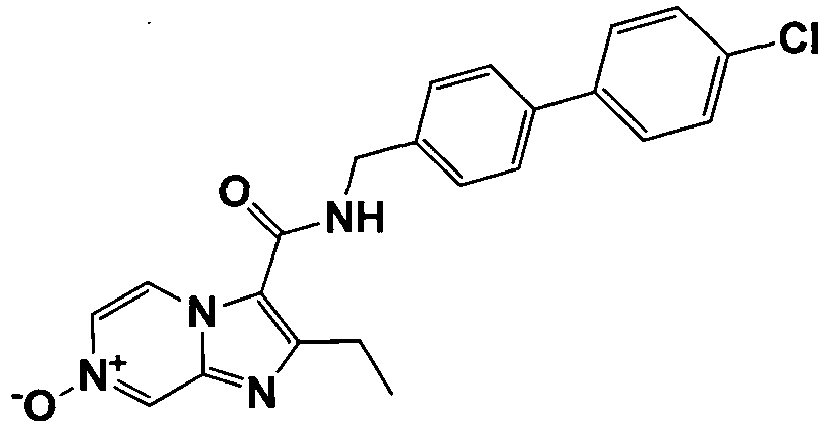
- White solid; mp = 238 °C; 1H NMR (400 MHz, CDCl3) δ 1.43 (t, J = 7.6 Hz, 3H), 3.00 (q, J = 7.6 Hz, 2H), 4.73(d, J = 6.0 Hz, 2H), 6.21 (t, J = 4.8 Hz, 1H), 7.41 (d, J = 8.8 Hz, 2H), 7.44 (d, J = 8.0 Hz, 2H), 7.51 (d, J = 8.4 Hz, 2H), 7.57 (d, J = 8.4 Hz, 2H), 7.69 (dd, J = 2.0, 6.4 Hz, 1H). 8.56 - 8.57 (m, 1H), 9.31 (d, J = 6.0 Hz, 1H); LCMS (electrospray) m/z (M+H)+ 407.12
-
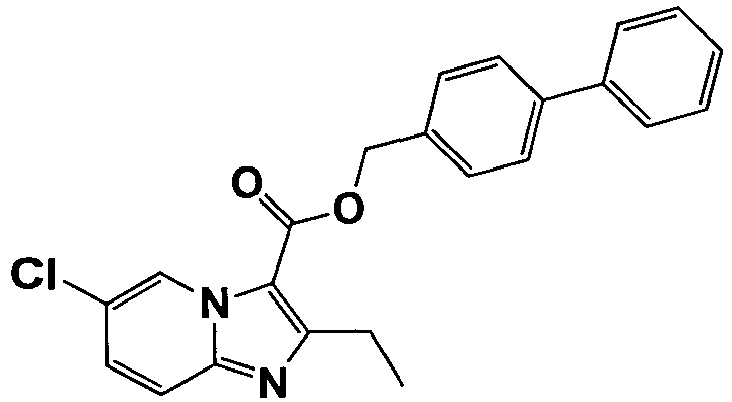
- White solid; mp = 122.3 - 123.0 °C; 1H NMR (400 MHz, CDCl3) δ 1.34 (t, J = 7.6 Hz, 3H), 3.13 (q, J = 7.6 Hz, 2H), 5.48 (s, 2H), 7.34 - 7.38 (m, 2H), 7.45 (dd, J = 7.2, 8.0 Hz, 2H), 7.54 (d, J = 8.4 Hz, 2H), 7.57 - 7.65 (m, 5H), 9.45 (d, J = 2.0 Hz, 1H); LCMS (electrospray) m/z (M+H)+ 390.20
-

- 1H NMR (400 MHz, CDCl3) δ 1.39 (t,□ J = 7.6 Hz, 3H), 1.94 (m, 2H), 2.06-2.10 (m, 2H), 2.96 (q, J = 7.6 Hz, 2H), 3.09-3.14 (m, 2H), 3.15-3.52 (m, 2H), 4.43 (m, 1H), 4.61 (d, J = 5.6 Hz, 2H), 6.01 (brs, 1H), 6.85 (d, J = 9.2 Hz, 2H), 6.95 (d, J = 8.8 Hz, 2H), 7.20-7.31 (m, 5H), 7.53 (d, J = 10.4 Hz, 1H), 9.53 (d, J = 1.2 Hz, 1H); LCMS (electrospray) m/z (M+H)+ 523.29
-

- 1H NMR (400 MHz, CDCl3) δ 1.21 (t,□ J = 7.2 Hz, 3H), 1.91-1.96 (m, 2H), 2.06-2.11 (m, 2H), 2.96 (q, J = 7.6 Hz, 2H), 2.97-3.15 (m, 2H), 3.47-3.52 (m, 2H), 4.43 (m, 1H), 4.60 (d, J = 5.6 Hz, 2H), 6.00 (brs, 1H), 6.86 (d, J = 8.8 Hz, 2H), 6.90 (dd, J = 7.6, 2.4 Hz, 1H), 6.95 (d, J = 8.8 Hz, 1H), 7.21-7.28 (m, 4H), 7.58 (d, J = 1.6 Hz, 1H), 9.36 (d, J = 7.6 Hz, 1H); LCMS (electrospray) m/z (M+H)+ 523.29
-

- 1H NMR (400 MHz, CDCl3) δ 1.40 (t,□ J = 7.6 Hz, 3H), 1.94-1.99 (m, 2H), 2.10-2.15 (m, 2H), 2.96 (q, J= 7.6 Hz, 2H), 3.12-3.18 (m, 2H), 3.47-3.53 (m, 2H), 4.53-4.57 (m, 1H), 4.61 (d, J = 5.2 Hz, 2H), 6.02 (brs, 1H), 6.96 (d, J = 8.4 Hz, 2H), 6.98 (d, J = 8.4 Hz, 2H), 7.27-7.31 (m, 3H), 7.51-7.55 (m, 3H), 9.53 (d, J= 2.0 Hz, 1H); LCMS (electrospray) m/z (M+H)+ 557.37
-

- 1H NMR (400 MHz, CDCl3) δ 1.39 (t,□ J = 7.6 Hz, 3H), 1.94-1.98 (m, 2H), 2.09-2.11 (m, 2H), 2.95 (q, J = 7.6 Hz, 2H), 3.12-3.18 (m, 2H), 3.47-3.53 (m, 2H), 4.55 (m, 1H), 4.60 (d, J = 5.6 Hz, 2H), 6.00 (brs, 1H), 6.90 (dd, J= 7.6, 2.0 Hz, 1H), 6.96 (d, J = 8.8 Hz, 2H), 6.98 (d, J = 8.4 Hz, 2H), 7.28 (d, J = 8.8 Hz, 2H), 7.54 (d, J = 8.4 Hz, 2H), 7.58 (d, J = 2.0 Hz, 1H), 9.36 (d, J= 8.0 Hz, 1H); LCMS (electrospray) m/z (M+H)+ 557.37
-
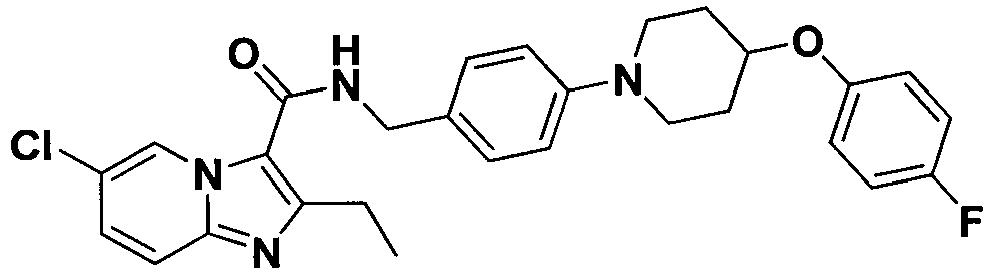
- 1H NMR (400 MHz, CDCl3) δ 1.39 (t,□ J = 7.6 Hz, 3H), 1.91-1.94 (m, 2H), 2.06-2.11 (m, 2H), 2.96 (q, J = 7.6 Hz, 2H), 3.08-3.14 (m, 2H), 3.47-3.54 (m, 2H), 4.37-4.39 (m, 1H), 4.61 (d, J = 5.6 Hz, 2H), 6.01 (brs, 1H), 6.86-6.89 (m, 2H), 6.95-7.00 (m, 4H), 7.26-7.30 (m, 3H), 7.53 (d, J = 8.8 Hz, 1H), 9.53 (d, J = 1.6 Hz, 1H); LCMS (electrospray) m/z (M+H)+ 507.31
-

- White solid; mp = 138 - 139 °C; 1H NMR (400 MHz, CDCl3) δ 1.38 (t, J = 7.6 Hz, 3H), 1.88 δ - 1.96 (m, 2H), 2.05 - 2.12 (m, 2H), 2.95 (q, J = 7.6 Hz, 2H), 3.08 - 3.14 (m, 2H), 3.48 - 3.54 (m, 2H), 4.35 - 4.41 (m, 2H), 4.60 (d, J = 5.6 Hz, 2H), 5.99 - 6.01 (m, 1H), 6.86 - 6.91 (m, 3H), 6.91 - 7.00 (m, 4H), 7.27 (d, J = 8.4 Hz, 2H), 7.59 (d, J = 2.0 Hz, 1H), 9.36 (d, J = 7.6 Hz, 1H)); LCMS (electrospray) m/z (M+H)+ 507.31
-
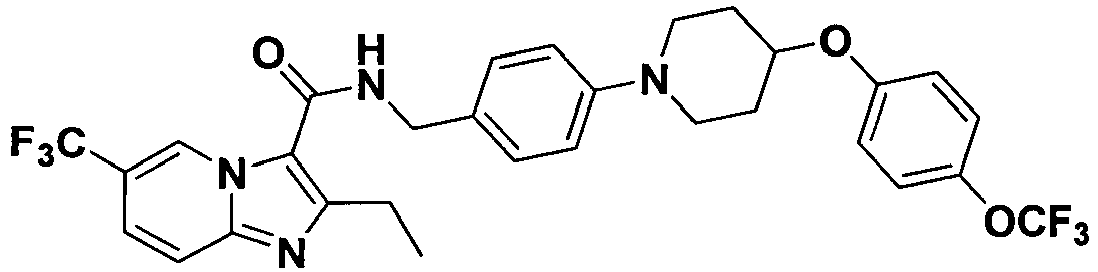
- 1H NMR (400 MHz, CDCl3) δ 1.41 (t,□ J = 7.6 Hz, 3H), 1.90-1.98 (m, 2H), 2.08-2.13 (m, 2H), 2.99 (q, J = 7.6 Hz, 2H), 3.10-3.15 (m, 2H), 3.47-3.54 (m, 2H), 4.43-4.46 (m, 1H), 4.62 (d, J = 5.6 Hz, 2H), 6.05 (brs, 1H), 6.91 (d, J = 8.4 Hz, 2H), 6.96 (d, J = 8.4 Hz, 2H), 7.14 (d, J = 8.4 Hz, 2H), 7.28 (d, J = 8.4 Hz, 2H), 7.46 (dd, J = 9.2, 2.0 Hz, 1H), 7.69 (d, J = 9.2 Hz, 1H), 9.85 (d, J = 2.0 Hz, 1H); LCMS (electrospray) m/z (M+H)+ 607.56
-

-

- 1H NMR (400 MHz, CDCl3) δ 1.43 (t,□ J = 7.6 Hz, 3H), 1.95 (m, 2H), 2.10 (m, 2H), 3.01 (q, J = 7.6 Hz, 2H), 3.11-3.16 (m, 2H), 3.49-3.53 (m, 2H), 4.45 (m, 1H), 4.63 (d, J = 5.2 Hz, 2H), 6.11 (brs, 1H), 6.91 (d, J = 9.2 Hz, 2H), 6.96 (d, J = 8.8 Hz, 2H), 7.14 (d, J = 8.8 Hz, 2H), 7.28 (d, J = 8.8 Hz, 2H), 7.72 (d, J = 7.6 Hz, 1H), 8.53 (s, 1H), 9.54 (d, J = 7.6 Hz, 1H); LCMS (electrospray) m/z (M+H)+ 584.58
-

- 1H NMR (400 MHz, CDCl3) δ 1.38 (t,□ J = 7.6 Hz, 3H), 2.59 (m, 4H), 2.95 (q, J = 7.6 Hz, 2H), 3.20 (m, 4H), 3.52 (s, 2H), 4.60 (d, J = 5.6 Hz, 2H), 6.00 (brs, 1H), 6.91 (d, J = 8.4 Hz, 2H), 7.01 (t, J = 8.4 Hz, 2H), 7.26-7.32 (m, 5H), 7.53 (d, J = 9.6 Hz, 1H), 9.52 (d, J = 1.2 Hz, 1H); LCMS (electrospray) m/z (M+H)+ 506.29
-

- White solid; mp = 141 - 142 °C; 1H NMR (400 MHz, CDCl3) δ 1.37 (t, J = 7.8 Hz, 3H), 2.59 (t, J = 4.8 Hz, 4H), 2.94 (q, J = 7.2 Hz, 2H), 3.20 (t, J = 5.0 Hz, 4H), 3.53 (s, 2H), 4.59 (d, J = 5.2 Hz, 2H), 5.98 - 6.00 (m, 1H), 6.88 - 6.92 (m, 3H), 7.01 (dd, J = 8.8, 8.8 Hz, 2H), 7.25 - 7.27 (m, 4H), 7.31 (dd, J = 5.6, 8.0 Hz , 2H), 7.58 (d, J = 2.0 Hz, 1H), 9.36 (d, J = 7.6 Hz, 1H) ); LCMS (electrospray) m/z (M+H)+ 506.36
-

- White solid; mp = 138.1 - 138.7 °C; 1H NMR (400 MHz, CDCl3) δ 1.39 (t, J = 7.6 Hz, 3H), 2.60 (t, J = 5.0 Hz, 4H), 2.95 (q, J = 7.6 Hz, 2H), 3.21 (t, J = 5.0 Hz, 4H), 3.56 (s, 2H), 4.60 (d, J = 5.6 Hz, 2H), 6.00 - 6.02 (m, 1H), 6.92 (d, J = 8.8 Hz, 2H), 7.18 (d, J = 8.0 Hz, 2H), 7.26 - 7.30 (m, 3H), 7.38 (d, J = 8.4 Hz, 2H), 7.53 (d, J = 9.2 Hz, 1H), 9.53 (d, J = 2.0 Hz, 1H); LCMS (electrospray) m/z (M+H)+ 572.40
-

- White solid; mp = 137.1 - 137.6 °C; 1H NMR (400 MHz, CDCl3) δ 1.37 (t, J = 7.6 Hz, 3H), 2.60 (t, J = 4.8 Hz, 4H), 2.94 (q, J = 7.6 Hz, 2H), 3.21 (t, J = 4.8 Hz, 4H), 3.56 (s, 2H), 4.60 (d, J = 5.6 Hz, 2H), 5.99 - 6.00 (m, 1H), 6.88 - 6.93 (m, 3H), 7.18 (d, J = 8.0 Hz, 2H), 7.26 (d, J = 8.0 Hz, 2H), 7.38 (d, J = 8.4 Hz, 2H), 7.58(d, J = 1.6 Hz, 1H), 9.36 (d, J = 7.6 Hz, 1H); LCMS (electrospray) m/z (M+H)+ 572.40
-

- 1H NMR (400 MHz, DMSO-d6 ) δ 1.24 (t,□ J = 7.6 Hz, 3H), 2.50 (m, 4H), 2.95 (q, J = 7.6 Hz, 2H), 3.08 (m, 4H), 3.48 (s, 2H), 4.41 (d, J = 6.0 Hz, 2H), 6.89 (d, J = 8.8 Hz, 2H), 7.14 (dd, J = 9.2 Hz, 2H), 7.20 (d, J = 8.4 Hz, 2H), 7.33-7.36 (m, 2H), 8.06 (s, 1H), 8.44 (t, 1H), 9.20 (s, 1H); LCMS (electrospray) m/z (M+H)+ 540.36
-

- White solid; mp = 212 - 213 °C 1H NMR (400 MHz, CDCl3) δ 1.39 (t, J = 7.6 Hz, 3H), 2.95 (q, J = 7.6 Hz, 2H), 3.26 (t, J = 4.8 Hz, 4H), 3.35 (t, J = 4.8 Hz, 4H), 4.62 (d, J = 5.6 Hz, 2H), 6.01 - 6.03 (m, 1H), 6.89 - 7.02 (m, 7H), 7.30 (d, J = 8.4 Hz, 2H), 7.59 (d, J = 2.0 Hz, 1H), 9.37 (d, J = 7.2 Hz, 1H)); LCMS (electrospray) m/z (M+H)+492.28
-

- White solid; mp = 204.4 - 206.9 °C; 1H NMR (400 MHz, DMSO-d6 ) δ 1.36 (t, J = 7.6 Hz, 3H), 3.14 (q, J = 7.6 Hz, 2H), 3.54 - 3.70 (m, 8H), 4.56 (d, J = 6.0 Hz, 2H), 7.26 (dd, J = 8.4, 8.8 Hz, 2H), 7.36 - 7.50 (m, 6H), 7.63 (dd, J = 2.4, 7.6 Hz, 1H), 8.15 (d, J = 1.6 Hz, 1H), 9.13 (d, J 7.2 Hz, 1H), 9.26 (t, J = 5.6 Hz, 1H).
-

- White solid; mp = 206.5 - 207.0 °C; 1H NMR (400 MHz, CDCl3) δ 1.40 (t, J = 7.6 Hz, 3H), 2.96 (q, J = 7.6 Hz, 2H), 3.30 - 3.40 (m, 8H), 4.63 (d, J = 5.2 Hz, 2H), 6.03 - 6.04 (m, 1H), 6.95 (d, J = 9.2 Hz, 2H), 6.98 (d, J = 8.4 Hz, 2H), 7.14 (d, J = 8.0 Hz, 2H), 7.27 - 7.32 (m, 3H), 7.54 (d, J = 9.6 Hz, 1H), 9.53 - 9.34 (m, 1H); LCMS (electrospray) m/z (M+H)+ 558.32
-

- White solid; mp = 216.3 - 217.0 °C; 1H NMR (400 MHz, CDCl3) δ 1.39 (t, J = 7.6 Hz, 3H), 2.95 (q, J = 7.6 Hz, 2H), 3.30 - 3.40 (m, 8H), 4.62 (d, J = 5.6 Hz, 2H), 6.01 - 6.02 (m, 1H), 6.90 (dd, J = 2.0, 7.2 Hz, 1H), 6.94 (d, J = 9.2 Hz, 2H), 6.98 (d, J = 8.8 Hz, 2H), 7.14 (d, J = 8.8 Hz, 2H), 7.31 (d, J = 8.8 Hz, 2H), 7.59 (d, J = 1.6 Hz, 1H), 9.37 (d, J = 7.6 Hz, 1H); LCMS (electrospray) m/z (M+H)+ 558.32
-

- 1H NMR (400 MHz, CDCl3) δ 1.39 (t,□ J = 7.6 Hz, 3H), 2.95 (q, J = 7.6 Hz, 2H), 3.24-3.27 (m, 4H), 3.34-3.36 (m, 4H), 4.62 (d, J = 5.6 Hz, 2H), 6.03 (brs, 1H), 6.91-7.02 (m, 6H), 7.30 (d, J = 8.8 Hz, 2H), 7.71 (s, 1H), 9.67 (s, 1H); LCMS (electrospray) m/z (M+H)+ 526.35
-

- White solid; mp = 178 - 179 °C; 1H NMR (400 MHz, CDCl3) δ 1.40 (t, J = 7.6 Hz, 3H), 2.97 (q, J = 7.2 Hz, 2H), 3.31 - 3.38 (m, 8H), 4.63 (d, J = 5.6 Hz, 2H), 6.05 (t, J = 5.0 Hz, 1H), 6.89 - 6.99 (m, 5H), 7.14 (d, J = 8.8 Hz, 2H), 7.29 - 7.32 (m, 3H), 7.60 (d, J = 9.2 Hz, 1H), 9.40 (d, J = 6.8 Hz, 1H); LCMS (electrospray) m/z (M+H)+ 524.45
-

- White solid; mp = 148 - 149 °C; 1H NMR (400 MHz, CDCl3) δ 1.37 (t, J = 7.4 Hz, 3H), 2.78 (q, J = 7.6 Hz, 2H), 2.99 (s, 3H), 3.24 - 3.27 (m, 4H), 3.33 - 3.36 (m, 4H), 4.66 (s, 2H), 6.92 - 7.02 (m, 6H), 7.12 - 7.20 (m, 2H), 7.21 (dd, J = 2.0, 9.6 Hz, 1H), 7.52 (d, J = 9.6 Hz, 1H), 8.46 (d, J = 1.6 Hz, 1H); LCMS (electrospray) m/z (M+H)+ 506.36
-

- White solid; 1H NMR (400 MHz, CDCl3) δ 1.37 (t, J = 7. 6 Hz, 3H), 1.41 - 1.48 (m, 2H), 1.70 - 1.86 (m, 3H), 2.72 (t, J = 12.4 Hz, 2H), 2.93 (q, J = 7.6 Hz, 2H), 3.69 - 3.73 (m, 4H), 4.58 (d, J = 5.6 Hz, 2H), 6.00 (brs, 1H), 6.20 (t, J = 75.2 Hz, due to F2), 6.88 (dd, J = 1.6 Hz, 7.6 Hz, 1H), 6.92 (d, J = 8.4 Hz, 2H), 7.25 (d, J = 8.4 Hz, 2H), 7.56 (d, J = 1.6 Hz, 1H), 9.34 (d, J = 7.6 Hz, 1H).; LCMS (electrospray) m/z (M+H)+ 477.
-

- White solid;1H NMR (400 MHz, CDCl3); δ 0.87 (t, J = 6.8 Hz, 3H), 1.30 - 1.35 (m, 4H), 1.40 (t, J = 7.6 Hz, 3H), 1.63 - 1.71 (m, 2H), 2.21 (t, J = 7.6 Hz, 2H), 3.03 (q, J = 7.6 Hz, 2H), 4.47 (d, J = 5.6 Hz, 2H), 4.72 (d, J = 6.0 Hz, 2H), 5.74 (brs, 1H), 6.99 (dd, J = 2.0, 7.2 Hz, 1H), 7.34 (d, J = 8.4 Hz, 2H), 7.45 (d, J = 8.4 Hz, 2H), 7.51 - 7.59 (m, 5H), 7.74 (brs, 1H), 9.32 (d, J = 7.2 Hz, 1H); LCMS (electrospray) m/z (M+H)+ 517.
-

- 1H NMR (400 MHz, CDCl3) δ 1.42 (t,□ J = 7.6 Hz, 3H), 2.99 (q, J = 7.6 Hz, 2H), 4.68 (d, J = 6.0 Hz, 2H), 6.11 (brs, 1H), 7.00 (d, J = 8.8 Hz, 2H), 7.01 (d, J = 8.4 Hz, 2H), 7.18 (d, J = 8.8 Hz, 2H), 7.30 (dd, J = 9.6, 2.0 Hz, 1H), 7.37 (d, J = 8.8 Hz, 2H), 7.54 (d, J = 9.2 Hz, 1H), 9.53 (d, J = 1.6 Hz, 1H); LCMS (electrospray) m/z (M+H)+ 490.17
-

- White solid; mp = 141 - 142 °C; 1H NMR (400 MHz, CDCl3) δ 1.41 (t, J = 7.6 Hz, 3H), 2.98 (q, J = 7.6 Hz, 2H), 4.68 (d, J = 5.6 Hz, 2H), 6.09 - 6.11 (m, 1H), 6.91 (dd, J = 2.0, 7.6 Hz, 1H), 6.98 - 7.02 (m, 4H), 7.18 (d, J = 8.8 Hz, 2H), 7.37 (d, J = 8.4 Hz, 2H), 7.60 (d, J = 2.0 Hz, 1H), 9.37 (d, J = 7.2 Hz, 1H)); LCMS (electrospray) m/z (M+H)+ 490.24
-

- White solid; mp = 168 - 169 °C; 1H NMR (400 MHz, CDCl3) δ 1.41 (t, J = 7.4 Hz, 3H), 2.99 (q, J = 7.6 Hz, 2H), 4.67 (d, J = 6.0 Hz, 2H), 6.09 - 6.11 (m, 1H), 6.96 - 7.06 (m, 6H), 7.30 (dd, J = 2.0, 9.6 Hz, 1H), 7.34 (d, J = 8.8 Hz, 2H), 7.54 (d, J = 9.6 Hz, 1H), 9.53 (d, J = 1.2 Hz, 1H)); LCMS (electrospray) m/z (M+H)+ 424.26
-
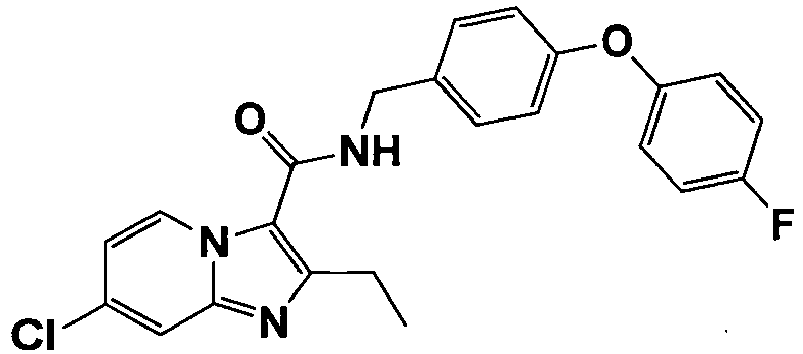
- White solid; mp = 146 - 147 °C; 1H NMR (400 MHz, CDCl3) δ 1.40 (t, J = 7.6 Hz, 3H), 2.97 (q, J = 7.6 Hz, 2H), 4.66 (d, J = 5.6 Hz, 2H), 6.07 - 6.09 (m, 1H), 6.91 (dd, J = 2.2, 7.4 Hz, 1H), 6.95 - 7.06 (m, 6H), 7.33 (d, J = 8.4 Hz, 2H), 7.59 (d, J = 2.2 Hz, 1H), 9.37 (d, J = 7.2 Hz, 1H)); LCMS (electrospray) m/z (M+H)+ 424.26
-

- 1H NMR (400 MHz, CDCl3) δ 1.41 (t,□ J = 7.6 Hz, 3H), 2.98 (q, J = 7.6 Hz, 2H), 4.66 (d, J = 5.6 Hz, 2H), 6.09 (brs, 1H), 6.95-7.06 (m, 6H), 7.34 (d, J = 8.8 Hz, 2H), 7.40 (dd, J = 9.6, 1.6 Hz, 1H), 7.49 (d, J = 9.6 Hz, 1H), 9.63 (d, J = 1.2 Hz, 1H); LCMS (electrospray) m/z (M+H)+ 470.10
-

- White solid; mp = 159 - 160.7 °C; 1H NMR (400 MHz, CDCl3) δ 1.42 (t, J = 7.6 Hz, 3H), 2.99 (q, J = 7.2 Hz, 2H), 4.68 (d, J = 5.6 Hz, 2H), 6.10 - 6.11 (m, 1H), 6.94 (d, J = 9.2 Hz, 2H), 7.00 (d, J = 8.8 Hz, 2H), 7.27 - 7.32 (m, 3H), 7.36 (d, J = 8.4 Hz, 2H), 7.55 (d, J = 9.6 Hz, 1H), 9.54 (d, J = 2.0 Hz, 1H); LCMS (electrospray) m/z (M+H)+440.18
-

- White solid; mp = 167.1 - 167.9 °C; 1H NMR (400 MHz, CDCl3) δ 1.41 (t, J = 7.6 Hz, 3H), 2.98 (q, J = 7.6 Hz, 2H), 4.67 (d, J = 5.6 Hz, 2H), 6.08 - 6.10 (m, 1H), 6.91 (dd, J = 2.4, 7.6 Hz, 1H), 6.94 (d, J = 8.8 Hz, 2H), 7.00 (d, J = 8.8 Hz, 2H), 7.29 (d, J = 9.2 Hz, 2H), 7.35 (d, J = 8.8 Hz, 2H), 7.60 (d, J = 2.0 Hz, 1H), 9.37 (d, J = 7.6 Hz, 1H); LCMS (electrospray) m/z (M+H)+ 440.18
-

- 1H NMR (400 MHz, CDCl3) δ 1.42 (t,□ J = 7.6 Hz, 3H), 3.01 (q, J = 7.6 Hz, 2H), 4.69 (d, J = 6.0 Hz, 2H), 6.12 (brs, 1H), 6.92 (t, J = 6.8 Hz, 1H), 7.00 (d, J = 9.2 Hz, 2H), 7.01 (d, J = 8.8 Hz, 2H), 7.18 (d, J = 8.8 Hz, 2H), 7.31-7.36 (m, 1H), 7.37 (d, J = 8.8 Hz, 2H), 7.61 (d, J = 8.8 Hz, 1H), 9.40 (d, J = 6.8 Hz, 1H); LCMS (electrospray) m/z (M+H)+ 456.23
-

- White solid; mp = 167.0 - 167.6 °C; 1H NMR (400 MHz, CDCl3) δ 1.41 (t, J = 7.6 Hz, 3H), 2.97 (q, J = 7.6 Hz, 2H), 4.64 (d, J = 6.0 Hz, 2H), 6.09 (t, J = 5.6 Hz, 1H), 6.90 - 6.93 (m, 2H), 7.06 - 7.11 (m, 4H), 7.58 (d, J = 2.0 Hz, 1H), 7.80 (dd, J = 2.8, 8.8 Hz, 1H), 8.20 (d, J = 2.0 Hz, 1H), 9.34 (d, J = 7.6 Hz, 1H); LCMS (electrospray) m/z (M+H)+ 425.28
-

- White solid; mp = 154 - 155 °C; 1H NMR (400 MHz, CDCl3) δ 1.42 (t, J = 7.8 Hz, 3H), 2.98 (q, J = 7.6 Hz, 2H), 4.66 (d, J = 6.0 Hz, 2H), 6.14 (t, J = 5.6 Hz, 1H), 6.96 (d, J = 8.4 Hz, 1H), 7.16 (d, J = 9.2 Hz, 2H), 7.24 (d, J = 9.2 Hz, 2H), 7.32 (dd, J = 2.0, 9.6 Hz, 1H), 7.54 (d, J = 9.2 Hz, 1H), 7.80 (dd, J = 2.4, 8.4 Hz, 1H), 8.20 (d, J = 2.4 Hz, 1H), 9.51 (d, J = 2.0 Hz, 1H); LCMS (electrospray) m/z (M+H)+ 491.26
-

- White solid; 1H NMR (400 MHz, CDCl3) δ 1.41 (t, J = 7.4 Hz, 3H), 2.97 (q, J = 7.6 Hz, 2H), 4.66 (d, J = 6.0 Hz, 2H), 6.14 (t, J = 5.4 Hz, 1H), 6.92 (dd, J = 2.0, 7.6 Hz, 1H), 6.96 (d, J = 8.8 Hz, 1H), 7.16 (d, J = 9.2 Hz, 2H), 7.24 (d, J = 9.2 Hz, 2H), 7.60 (d, J = 1.6 Hz, 1H), 7.79 (dd, J = 2.4, 8.4 Hz, 1H), 8.20 (d, J = 2.0 Hz, 1H), 9.35 (d, J = 7.6 Hz, 1H).
-

- White solid; mp = 123.3 - 123.8 °C; 1H NMR (400 MHz, CDCl3) δ 1.31 (t, J = 7.4 Hz, 3H), 3.10 (q, J = 7.6 Hz, 2H), 4.67 (s, 2H), 7.02 (d, J = 8.4 Hz, 4H), 7.12 (dd, J = 7.2, 7.6 Hz, 1H), 7.34 (dd, J = 7.2, 7.6 Hz, 3H), 7.43 (d, J = 8.8 Hz, 2H), 7.58 (d, J = 9.6 Hz, 1H), 9.42 (d, J = 2.0 Hz, 1H); LCMS (electrospray) m/z (M+H)+ 407.12
-
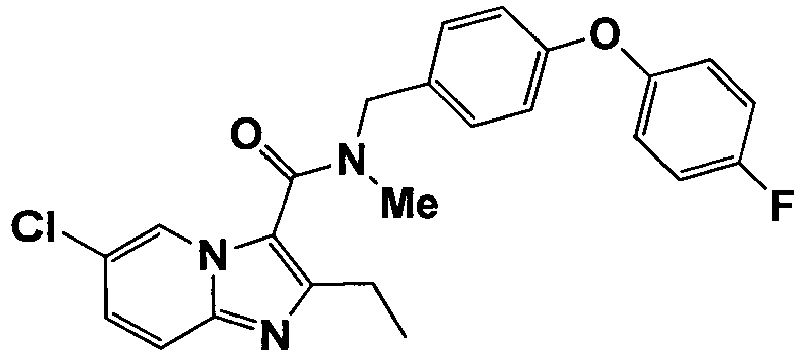
- White solid; 1H NMR (400 MHz, CDCl3) δ 1.37 (t, J= 7.4 Hz, 3H), 2.78 (q, J= 7.6 Hz, 2H), 3.01 (s, 3H), 4.70 (s, 2H), 6.94 - 7.06 (m, 6H), 7.21 - 7.26 (m, 3H), 8.47 (d, J= 9.2 Hz, 1H), 8.47 (d, J= 1.6 Hz, 1H); LCMS (electrospray) m/z (M+H)+ 438.20
-

- 1H NMR (400 MHz, CDCl3) δ 1.41 (t,□ J = 7.6 Hz, 3H), 2.98 (q, J = 7.6 Hz, 2H), 4.64 (d, J = 5.6 Hz, 2H), 5.74 (s, 1H), 6.07 (brs, 1H), 7.04 (d, J = 7.2 Hz, 2H), 7.06 (d, J = 7.2 Hz, 2H), 7.12 (d, J = 8.4 Hz, 2H), 7.28-7.32 (m, 3H), 7.54 (d, J = 9.2 Hz, 1H), 9.54 (d, J = 1.2 Hz, 1H); LCMS (electrospray) m/z (M+H)+ 489.22
-

- 1H NMR (400 MHz, CDCl3) δ 1.40 (t,□ J = 7.6 Hz, 3H), 2.98 (q, J = 7.6 Hz, 2H), 4.63 (d, J = 5.6 Hz, 2H), 5.74 (s, 1H), 6.05 (brs, 1H), 6.91 (dd, J = 7.6, 2.0 Hz, 1H), 7.04 (d, J = 9.2 Hz, 2H), 7.06 (d, J = 8.8 Hz, 2H), 7.12 (d, J = 9.2 Hz, 2H), 7.29 (d, J = 8.8 Hz, 2H), 7.59 (d, J = 1.6 Hz, 1H), 9.36 (d, J = 7.6 Hz, 1H); LCMS (electrospray) m/z (M+H)+ 489.22
-

- 1H NMR (400 MHz, CDCl3) δ 1.40 (t,□ J = 7.6 Hz, 3H), 2.96 (q, J = 7.6 Hz, 2H), 4.64 (d, J = 5.6 Hz, 2H), 5.06 (s, 2H), 6.05 (brs, 1H), 6.97 (d, J = 8.4 Hz, 2H), 7.20-7.33 (m, 5H), 7.46 (d, J = 8.8 Hz, 2H), 7.54 (d, J = 9.2 Hz, 2H), 9.53 (d, J = 1.2 Hz, 1H); LCMS (electrospray) m/z (M+H)+ 504.25
-

- 1H NMR (400 MHz, CDCl3) δ 1.39 (t,□ J = 7.6 Hz, 3H), 2.95 (q, J = 7.6 Hz, 2H), 4.63 (d, J = 5.6 Hz, 2H), 5.06 (s, 2H), 6.03 (brs, 1H), 6.90 (dd, J = 7.6, 2.0 Hz, 1 H), 6.97 (d, J = 8.8 Hz, 2H), 7.23 (d, J = 8.0 Hz, 2H), 7.28 (d, J = 8.8 Hz, 2H), 7.31 (d, J = 8.8 Hz, 2H), 7.46 (d, J = 8.8 Hz, 2H), 7.59 (d, J = 2.0 Hz, 1H), 9.36 (d, J = 7.6 Hz, 1H); LCMS (electrospray) m/z (M+H)+ 504.25
-

- 1H NMR (400 MHz, CDCl3) δ 1.40 (t,□ J = 7.6 Hz, 3H), 2.96 (q, J = 7.6 Hz, 2H), 4.63 (d, J = 5.6 Hz, 2H), 5.03 (s, 2H), 6.04 (brs, 1H), 6.96 (d, J = 8.8 Hz, 2H), 7.06 (d, J = 8.8 Hz, 1H), 7.08 (d, J = 8.4 Hz, 1H), 7.28-7.32 (m, 3H), 7.40 (dd, J = 8.8 Hz, 2H), 7.53 (d, J = 9.2 Hz, 1H), 9.53 (d, J = 1.6 Hz, 1H); LCMS (electrospray) m/z (M+H)+ 438.20
-

- 1H NMR (400 MHz, CDCl3) δ 1.38 (t,□ J = 7.6 Hz, 3H), 2.95 (q, J = 7.6 Hz, 2H), 4.62 (d, J = 5.6 Hz, 2H), 5.03 (s, 2H), 6.02 (brs, 1H), 6.90 (dd, J = 7.6, 2.4 Hz, 1H), 6.96 (d, J = 8.8 Hz, 2H), 7.07 (dd, J = 8.8 Hz, 2H), 7.30 (d, J = 8.8 Hz, 2H), 7.40 (dd, J = 8.8 Hz, 2H), 7.58 (d, J = 1.6 Hz, 1H), 9.36 (d, J = 7.6 Hz, 1H); LCMS (electrospray) m/z (M+H)+ 438.20
-

- 1H NMR (400 MHz, DMSO-d6 ) 1.26 (m, 3H), 2.97-3.03 (m, 2H), 4.65 (t,□□□ J = 6.4 Hz, 2H), 7.24 (dd, J = 18.4, 8.0 Hz, 1H), 7.45 (d, J = 9.6, 2.4 Hz, 1H), 7.51-7.56 (m, 3H), 7.65-7.68 (m, 2H), 8.24-8.28 (m, 1H), 8.52-8.56 (m, 1H), 9.09-7.10 (m, 1H), 12.96 (ss, 1H); LCMS (electrospray) m/z (M+H)+ 514.38
-

- 1H NMR (400 MHz, CDCl3) δ 1.38 (t,□ J = 7.6 Hz, 3H), 2.97 (q, J = 7.6 Hz, 2H), 4.82 (d, J = 5.6 Hz, 2H), 6.19 (brs, 1H), 6.90 (dd, J = 7.6, 2.0 Hz, 1H), 7.30 (m, 1H), 7.35 (d, J = 8.0 Hz, 2H), 7.50-7.52 (m, 1H), 7.59 (d, J = 2.0 Hz, 1H), 7.81 (m, 1H), 8.07 (d, J = 8.8 Hz, 2H), 9.37 (d, J = 7.6 Hz, 1H); LCMS (electrospray) m/z (M+H)+ 514.31
-

- 1H NMR (400 MHz, DMSO-d6 ) δ 1.23-1.28 (m,□ 3H), 2.44 (m, 4H), 2.98 (q, J = 7.6 Hz, 2H), 3.59 (m, 4H), 3.69 (s, 2H), 4.61 (m, 2H), 6.19 (brs, 1H), 7.09 (dd, J = 9.6, 2.0 Hz, 1H), 7.18 (dd, J = 9.6, 7.2 Hz, 1H), 7.41 (m, 1H), 7.51 (m, 1H), 7.79 (d, J = 2.0 Hz, 1H), 8.52 (m, 1H), 8.96 (d, J = 7.6 Hz, 1H), 9.37 (d, J = 7.6 Hz, 1H), 12.27 (m, 1H); LCMS (electrospray) m/z (M+H)+ 453.39
-

- White solid; 1H NMR (400 MHz, CDCl3); δ 1.40 (t, J = 7.6 Hz, 3H), 2.99 (q, J = 7.6 Hz, 2H), 4.82 (d, J = 6.0 Hz, 2H), 6.20 (brs, 1H), 7.31 (dd, J = 1.6 Hz, 7.6 Hz, 1H), 7.35 (d, J = 8.4 Hz, 2H), 7.42 (dd, J = 1.6 Hz, 8.4 Hz, 1H), 7.55 (d, J = 9.2 Hz, 1H), 7.59 (d, J = 8.4 Hz, 1H), 7.77 (s, 1H), 8.29 (d, J = 8.8 Hz, 2H), 9.55 (d, J = 1.6 Hz, 1H) ; LCMS (electrospray) m/z (M+H)+ 515, 517 (Cl- isotope pattern).
-

- White solid; 1H NMR (400 MHz, CDCl3); δ 1.40 (t, J = 7.6 Hz, 3H), 2.98 (q, J = 7.6 Hz, 2H), 4.82 (d, J = 6.0 Hz, 2H), 6.19 (brs, 1H), 6.92 (dd, J = 2.0 Hz, 7.6 Hz, 1H), 7.36 (d, J = 8.0 Hz, 2H), 7.41 (dd, J = 2.0 Hz, 8.4 Hz, 1H), 7.59 (d, J = 8.8 Hz, 2H), 7.77 (s, 1H), 8.28 (d, J = 8.8 Hz, 2H), 9.38 (d, J = 7.6 Hz, 1H) ; LCMS (electrospray) m/z (M+H)+ 515, 517 (Cl- isotope pattern).
-

- White solid; mp = 176 - 177 °C; 1H NMR (400 MHz, CDCl3) δ 1.25 (s, 3H), ), 1.27 (s, 3H), 1.39 (t, J = 7.6 Hz, 3H), 2.42 (t, J = 11.2 Hz, 2H), 2.95 (q, J = 7.2 Hz, 2H), 3.46 (d, J = 10.4 Hz, 2H), 3.78 - 3.82 (m, 2H), 4.61 (d, J = 5.6 Hz, 2H), 6.00 - 6.02 (m, 1H), 6.91 (d, J = 8.8 Hz, 1H), 7.26 - 7.31 (m, 3H), 7.54 (d, J = 9.2 Hz, 1H), 9.53 (d, J = 2.2 Hz, 1H); LCMS (electrospray) m/z (M+H)+ 427.32
-

- White solid; mp = 165 - 166 °C; 1H NMR (400 MHz, CDCl3) δ 1.25 (s, 3H), 1.27 (s, 3H), 1.38 (t, J = 7.6 Hz, 3H), 2.42 (t, J = 11.2 Hz, 2H), 2.94 (q, J = 7.6 Hz, 2H), 3.45 (d, J = 10.4 Hz, 2H), 3.76 - 3.84 (m, 2H), 4.60 (d, J = 5.6 Hz, 2H), 5.99 - 6.01 (m, 1H), 6.89 - 6.92 (m, 3H), 7.28 (d, J = 8.4 Hz, 2H), 7.58 (d, J = 2.0 Hz, 1H), 9.35 (d, J = 7.2 Hz, 1H); LCMS (electrospray) m/z (M+H)+ 427.32
-

- White solid; mp = 222 - 223 °C; 1H NMR (400 MHz, CDCl3) δ 1.38 (t, J = 7.4 Hz, 3H), 1.99 - 2.03 (m, 4H), 2.94 (q, J = 7.6 Hz, 2H), 3.29 (t, J = 6.6 Hz, 4H), 4.57 (d, J = 5.6 Hz, 2H), 5.95 - 5.97 (m, 1H), 6.56 (d, J = 8.4 Hz, 2H), 7.22 - 7.30 (m, 6H), 7.53 (d, J = 9.6 Hz, 1H), 9.53 (d, J = 1.6 Hz, 1H); LCMS (electrospray) m/z (M+H)+ 383.24
-

- 1H NMR (400 MHz, CDCl3) δ 1.35 - 1.42 (m, 3H), 1.93 - 1.96 (m, 2H), 1.99 - 2.02 (m, 2H), 2.90 - 2.99 (m, 2H), 3.28 (t, J = 6.4 Hz, 2H), 3.38 (t, J = 6.4 Hz, 2H), 4.57 (d, J = 4.8 Hz, 2H), 5.95 - 6.02 (m, 1H), 6.56 (d, J = 8.4 Hz, 2H), 6.85 - 6.92 (m, 1H), 7.14 - 7.31 (m, 3H), 7.57 - 7.59 (m, 1H), 9.36 (d, J = 7.6 Hz, 1H)
-

- 1H NMR (400 MHz, CDCl3) δ 1.38 (t,□ J = 7.6 Hz, 3H), 2.29-2.32 (m, 2H), 2.94 (q, J = 7.6 Hz, 2H), 3.38 (t, J = 5.6 Hz, 2H), 3.68-3.72 (m, 2H), 4.59 (d, J = 5.6 Hz, 2H), 5.79-5.82 (m, 1H), 5.88-5.91 (m, 1H), 5.99 (brs, 1H), 6.88-6.93 (m, 3H), 7.27 (d, J = 8.0 Hz, 2H), 7.58 (d, J = 1.6 Hz, 1H), 9.36 (d, J = 7.6 Hz, 1H); LCMS (electrospray) m/z (M+H)+ 395.35
-

- 1H NMR (400 MHz, CDCl3) δ 0.97 (d,□ J = 6.4 Hz, 3H), 1.35 (m, 2H), 1.38 (t, J = 7.6 Hz, 3H), 1.53 (m, 1H), 1.72-1.76 (m, 2H), 2.66-2.73 (m, 2H), 2.95 (q, J = 7.6 Hz, 2H), 3.64-3.67 (m, 2H), 4.59 (d, J = 5.6 Hz, 2H), 5.99 (brs, 1H), 6.93 (d, J = 8.4 Hz, 2H), 7.25 (d, J = 7.6 Hz, 2H), 7.29 (dd, J = 9.6, 2.0 Hz, 1H), 7.53 (d, J = 9.6 Hz, 1H), 9.53 (d, J = 1.6 Hz, 1H); LCMS (electrospray) m/z (M+H)+ 411.40
-
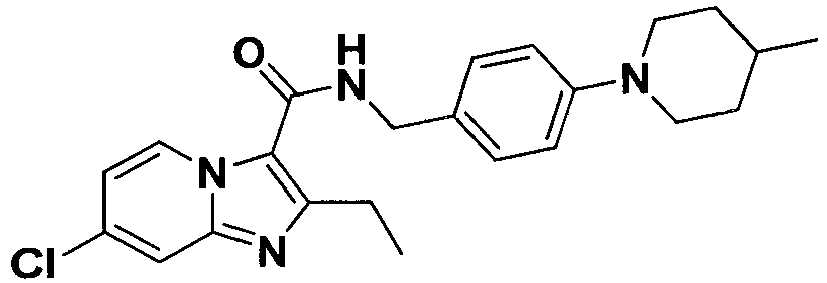
- 1H NMR (400 MHz, CDCl3) δ 0.97 (d,□ J = 6.8 Hz, 3H), 1.35 (m, 2H), 1.37 (t, J = 7.6 Hz, 3H), 1.51-1.53 (m, 1H), 1.72-1.75 (m, 2H), 2.66-2.73 (m, 2H), 2.94 (q, J = 7.6 Hz, 2H), 3.64-3.67 (m, 2H), 4.59 (d, J = 5.6 Hz, 2H), 5.98 (brs, 1H), 6.90 (dd, J = 7.6, 2.4 Hz, 1H), 6.93 (d, J = 8.4 Hz, 2H), 7.25 (d, J = 8.4 Hz, 2H), 7.58 (d, J = 2.4 Hz, 1H), 9.36 (d, J = 7.6 Hz, 1H); LCMS (electrospray) m/z (M+H)+ 411.40
-

- Pale yellow solid; mp = 157.2 - 158.0 °C; 1H NMR (400 MHz, CDCl3); δ 0.91 (d, J = 6.4 Hz, 6H), 1.35 (t, J = 7.6 Hz, 3H), 1.73 - 1.81 (m, 4H), 2.16 (dd, J = 11.6, 11.6 Hz, 2H), 2.90 (q, 7.6 Hz, 2H), 3.58 - 3.61 (m, 2H), 4.56 (d, J = 5.6 Hz, 2H), 6.01 (brs, 1H), 6.90 (d, J = 8.8 Hz, 2H), 7.22 (d, J = 8.8 Hz, 2H), 7.26 (dd, J = 2.0, 9.6 Hz, 1H), 7.49 (d, J = 9.6 Hz, 1H), 9.49 (d, J = 2.0 Hz, 1H); 13C NMR (100 MHz, CDCl3); δ 13.3, 19.6, 23.6, 30.9, 42.2, 43.4, 57.2, 115.4, 116.6, 117.0, 121.5, 126.3, 127.8, 128.2, 128.9, 144.5, 151.3, 151.4, 161.1; LCMS (electrospray) m/z (M+H)+ 425, 427 (Cl- isotope pattern).
-

- Pale yellow solid; mp = 181.5 - 182.8 °C; 1H NMR (400 MHz, CDCl3); δ 0.92 (d, J = 6.8 Hz, 6H), 1.35 (t, J = 7.6 Hz, 3H), 1.74 - 1.82 (m, 4H), 2.17 (dd, J = 11.6, 11.6 Hz, 2H), 2.90 (q, 7.6 Hz, 2H), 3.59 - 3.62 (m, 2H), 4.57 (d, J = 5.2 Hz, 2H), 6.01 (brs, 1H), 6.87 (dd, J = 2.0, 7.6 Hz, 1H), 6.91 (d, J = 8.8 Hz, 2H), 7.23 (d, J = 8.8 Hz, 2H), 7.57 (d, J = 2.0 Hz, 1H), 9.33 (d, J = 7.6 Hz, 1H); 13C NMR (100 MHz, CDCl3); δ 13.4, 19.6, 23.6, 30.9, 42.2, 43.4, 57.2, 114.7, 115.1, 115.7, 116.6, 127.8, 128.6, 128.9, 133.6, 146.1, 151.3, 151.6, 161.1; LCMS (electrospray) m/z (M+H)+ 425, 427 (Cl- isotope pattern).
-

- Pale yellow solid; mp = 179.1 - 180.0 °C; 1H NMR (400 MHz, DMSO-d6); δ 1.22 (t, J = 7.2Hz, 3H), 1.39 - 1.48 (m, 2H), 1.76 - 1.81 (m, 2H), 2.76 - 2.82 (m, 2H), 2.92 (q, J = 7.2 Hz, 2H), 3.46 - 3.51 (m, 2H), 3.57 - 3.62 (m, 1H), 4.39 (d, J = 5.6 Hz, 2H), 4.64 (d, J = 4.0 Hz, 1H), 6.88 (d, J = 8.4 Hz, 2H), 7.07 (dd, J = 2.0, 7.2 Hz, 1H), 7.18 (d, J = 8.4 Hz, 2H), 7.77 (d, J = 2.0 Hz, 1H), 8.37 (t, J = 5.6 Hz, 1H), 8.93 (d, J = 7.2 Hz, 1H); LCMS (electrospray) m/z (M+H)+ 413, 415 (Cl- isotope pattern).
-

- White solid; 1H NMR (400 MHz, CDCl3) δ 1.38 (t, J = 7.2 Hz, 3H), 2.35 (s, 3H), 2.94 (q, J = 7.6 Hz, 2H), 3.15 (t, J = 4.8 Hz, 4H). 3.86 (t, J = 4.Hz, 4H), 4.61 (d, J = 5.2 Hz, 2H), 6.00 (brs, 1H), 6.91 (d, J = 8.8 Hz, 2H), 7.16 (dd, J = 2.0 Hz, 9.2 Hz, 1H), 7.29 (d, J = 8.8 Hz, 2H), 7.49 (d, J = 9.2 Hz, 1H), 9.20 (s, 1H); LCMS (electrospray) m/z (M+H)+ 379.
-

- White solid; 1H NMR (400 MHz, DMSO-d6 ); δ 1.23 (t, J = 7.6 Hz, 3H), 1.57 - 1.67 (m, 2H), 1.85 - 1.89 (m, 2H), 2.34 - 2.41 (m, 1H), 2.68 - 2.74 (m, 2H), 2.94 (q, J = 7.6 Hz, 2H), 3.58 - 3.61 (m, 2H), 4.41 (d, J = 5.6 Hz, 2H), 6.90 (d, J = 8.8 Hz, 2H), 7.20 (d, J = 8.8 Hz, 2H), 7.43 (dd, J = 2.0, 9.6 Hz, 1H), 7.64 (d, J = 9.6 Hz, 1H), 8.38 (brt, J = 5.6 Hz, 1H), 9.05 (d, J = 2.0 Hz, 1H); LCMS (electrospray) m/z 441 (M+H)+.
-

- 1H NMR (400 MHz, CDCl3) δ 1.26 (t,□ J = 7.2 Hz, 3H), 1.38 (m, 4H), 1.53-1.56 (m, 4H), 2.95 (q, J = 7.6 Hz, 2H), 3.45 (t, J = 5.6 Hz, 4H), 4.56 (d, J = 5.6 Hz, 2H), 5.97 (brs, 1H), 6.68 (d, J = 8.8 Hz, 2H), 7.21 (d, J = 8.8 Hz, 2H), 7.28 (dd, J = 9.6, 2.0 Hz, 2H), 7.53 (d, J = 9.6 Hz, 1H), 9.53 (d, J = 2.4 Hz, 1H); LCMS (electrospray) m/z (M+H)+ 411.40
-
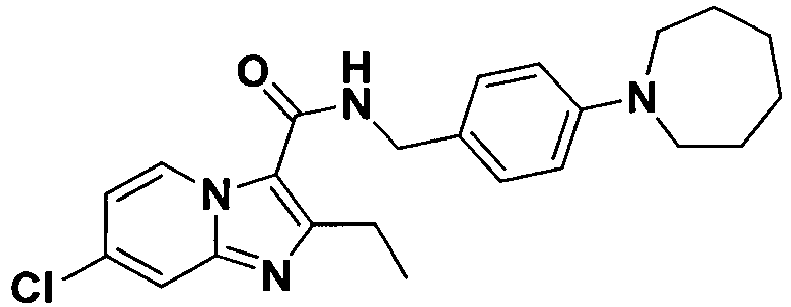
- 1H NMR (400 MHz, CDCl3) δ 1.38 (t,□ J = 7.6 Hz, 3H), 1.52-1.55 (m, 4H), 1.78 (m, 4H), 2.94 (q, J = 7.6 Hz, 2H), 3.45 (t, J = 6.0 Hz, 4H), 4.56 (d, J = 5.2 Hz, 2H), 5.95 (brs, 1H), 6.67 (d, J = 8.8 Hz, 2H), 6.89 (dd, J = 7.6, 2.4 Hz, 1H), 7.20 (d, J = 8.8 Hz, 2H), 7.57 (d, J = 2.4 Hz, 1H), 9.36 (d, J = 7.6 Hz, 1H); LCMS (electrospray) m/z (M+H)+ 411.40
-

- White solid; 1H NMR (400 MHz, CDCl3); δ 1.36 (t, J = 7.6 Hz, 3H), 1.96 (dd, J = 4.0 Hz, 16.4 Hz, 2H), 2.25 - 2.31 (m, 2H), 2.45(dd, J = 5.2 Hz, 8.8 Hz, 2H), 2.92 (q, J = 7.6 Hz, 2H), 3.11 (dd, J = 5.2 Hz, 8.8 Hz, 2H), 3.39 (dd, J = 6.4 Hz, 8.8 Hz, 2H), 4.55 (d, J = 5.2 Hz, 2H), 5.67 (s, 2H), 5.94 (brs, 1H), 6.51 (d, J = 8.8 Hz, 2H), 6.89 (dd, J = 2.0 Hz, 7.6 Hz, 1H), 7.22 (d, J = 8.8 Hz, 2H), 7.57 (d, J = 2.0 Hz, 1H), 9.35 (d, J = 7.6 Hz, 1H); LCMS (electrospray) m/z (M+H)+ 435, 437 (Cl- isotope pattern).
-

- White solid; 1H NMR (400 MHz, CDCl3); δ 1.36 (t, J = 7.6 Hz, 3H), 1.40 - 2.03 (m, 8H), 2.29 - 2.34 (m, 2H), 2.92 (q, J = 7.2 Hz, 2H), 3.16 (dd, J = 5.2 Hz, 9.2 Hz, 2H), 3.29 (dd, J = 6.8 Hz, 8.8 Hz, 2H), 4.55 (d, J = 5.2 Hz, 2H), 5.97 (brs, 1H), 6.49 (d, J = 8.4 Hz, 2H), 6.88 (dd, J = 2.4 Hz, 7.6 Hz, 1H), 7.21 (d, J = 8.4 Hz, 2H), 7.56 (d, J = 2.4 Hz, 1H), 9.33 (d, J = 7.6 Hz, 1H); LCMS (electrospray) m/z (M+H)+ 437, 439 (Cl- isotope pattern)
-

- White solid; 1H NMR (400 MHz, CDCl3); δ 1.39 (t, J = 7.6 Hz, 3H), 1.74 - 1.77 (m, 4H), 2.63 (m, 4H), 2.97 (q, J = 7.6 Hz, 2H), 4.68 (d, J = 6.0 Hz, 2H), 6.14 (brs, 1H), 6.78 (s, 2H), 6.91 (dd, J = 2.0 Hz, 7.6 Hz, 1H), 7.32 (d, J = 8.4 Hz, 2H), 7.38 (d, J = 8.4 Hz, 2H), 7.59 (d, J = 2.0 Hz, 1H), 9.36 (d, J = 7.2 Hz, 1H) ; LCMS (electrospray) m/z (M+H)+ 433, 435 (Cl- sotope pattern).
-

- White solid; mp = 171 - 172 °C; 1H NMR (400 MHz, CDCl3) δ 1.35 - 1.41 (m, 2H), 1.44 (t, J = 7.6 Hz, 3H), 1.63 - 1.72 (m, 1H), 1.74 - 1.77 (m, 2H), 1.99 - 2.05 (m, 2H), 2.90 - 2.93 (m, 2H), 3.00 (q, J = 7.6 Hz, 2H), 3.41 (t, J = 6.2 Hz, 2H), 3.51 (s, 2H), 5.89 (t, J = 5.4Hz, 1H), 7.15 (d, J = 8.0 Hz, 2H), 7.28 (dd, J = 2.4, 9.6 Hz, 1H), 7.34 (d, J = 8.4 Hz, 2H), 7.53 (d, J = 9.6 Hz, 1H), 9.49 (d, J = 1.6 Hz, 1H)); LCMS (electrospray) m/z (M+H)+ 495.34
-

- White solid; mp = 176 - 177 °C; 1H NMR (400 MHz, CDCl3) δ 1.33 - 1.39 (m, 2H), 1.44 (t, J = 7.6 Hz, 3H), 1.62 - 1.70 (m, 1H), 1.72 - 1.76 (m, 2H), 1.95 - 2.00 (m, 2H), 2.88 - 2.91 (m, 2H), 2.99 (q, J = 7.6 Hz, 2H), 3.05 (t, J = 6.4 Hz, 2H), 3.46 (s, 2H), 5.87 - 5.89 (m, 1H), 6.99 (dd, J = 8.4, 8.8 Hz, 2H), 7.25 - 7.30 (m, 3H), 7.53 (d, J = 9.6 Hz, 1H), 9.48 (d, J = 1.6 Hz, 1H)); LCMS (electrospray) m/z (M+H)+ 429.29
-

- White solid; mp = 145 - 146 °C; 1H NMR (400 MHz, CDCl3) δ 1.33 -1.39 (m, 2H), 1.44 (t, J = 7.6 Hz, 3H), 1.62 - 1.69 (m, 1H), 1.72 - 1.76 (m, 2H), 1.96 - 2.02 (m, 2H), 2.88 - 2.91 (m, 2H), 2.99 (q, J = 7.6 Hz, 2H), 3.41 (t, J = 6.4 Hz, 2H), 3.48 (s, 2H), 5.87 (t, J = 5.4 Hz, 1H), 6.88 (dd, J = 2.0, 7.6 Hz, 1H), 7.15 (d, J= 8.0 Hz, 2H), 7.33 (d, J = 8.4 Hz, 2H), 7.58 (d, J = 2.4 Hz, 1H), 9.31 (d, J = 7.2 Hz, 1H)); LCMS (electrospray) m/z (M+H)+495.20
-

- White solid; mp = 157 - 158 °C; 1H NMR (400 MHz, CDCl3) δ 1.43 (t, J = 7.6 Hz, 3H), 1.56 - 1.66 (m, 2H), 2.05 - 2.10 (m, 1H), 2.22 - 2.27 (m, 2H), 2.81 - 2.84 (m, 2H), 2.98 (q, J = 7.6 Hz, 2H), 3.53 (s, 2H), 4.08 - 4.11 (m, 1H), 5.69 - 5.71 (m, 1H), 7.17 (d, J = 8.0 Hz, 2H), 7.29 (dd, J = 2.0, 9.6 Hz, 1H), 7.36 (d, J = 8.4 Hz, 2H), 7.53 (d, J = 9.2 Hz, 1H), 9.46 (d, J = 1.6 Hz, 1H)); LCMS (electrospray) m/z (M+H)+ 481.26
-

- 1H NMR (400 MHz, CDCl3) δ 1.38 (t,D J = 7.2 Hz, 3H), 1.71-1.78 (m, 2H), 1.94 (m, 2H), 2.78 (q, J= 7.6 Hz, 2H), 3.51 (m, 2H), 3.74 (m, 1H), 3.89 (m, 2H), 4.58 (s, 2H), 7.19-7.23 (m, 3H), 7.38 (d, J= 8.4 Hz, 2H), 7.51 (d, J= 9.6 Hz, 1H), 8.48 (s, 1H); LCMS (electrospray) m/z (M+H)+ 481.26
-

- 1H NMR (400 MHz, CDCl3) δ 1.48 (t,□ J = 7.6 Hz, 3H), 3.12 (q, J = 7.6 Hz, 2H), 4.80 (d, J = 4.8 Hz, 2H), 6.49 (d, J = 2.4 Hz, 2H), 6.69 (brs, 1H), 7.29-7.33 (m, 3H), 7.55 (d, J = 9.2 Hz, 1H), 7.70 (d, J = 9.2 Hz, 2H), 7.90 (d, J = 2.4 Hz, 1H), 9.56 (d, J = 2.0 Hz, 1H); LCMS (electrospray) m/z (M+H)+ 464.19
-

- 1H NMR (400 MHz, CDCl3) δ 1.47 (t,D J = 7.6 Hz, 3H), 3.11 (q, J = 7.6 Hz, 2H), 4.79 (d, J = 5.2 Hz, 2H), 6.48 (d, J = 2.4 Hz, 2H), 6.68 (brs, 1H), 6.91 (dd, J = 7.6, 2.0 Hz, 1H), 7.32 (d, J = 8.4 Hz, 2H), 7.60 (d, J = 2.0 Hz, 1H), 7.70 (d, J = 6.8 Hz, 2H), 7.90 (d, J = 2.0 Hz, 1H), 9.39 (d, J= 7.6 Hz, 1H); LCMS (electrospray) m/z (M+H)+ 464.19
-

- 1H NMR (400 MHz, DMSO-d 6) δ 1.29 (t,D J = 7.6 Hz, 3H), 3.02 (q, J = 7.6 Hz, 2H), 4.62 (d, J = 5.6 Hz, 2H), 6.59 (d, J = 2.8 Hz, 1H), 7.46 (dd, J = 9.2, 1.6 Hz, 1H), 7.67 (d, J = 9.2 Hz, 1 H), 7.87 (d, J = 8.8 Hz, 2H), 8.06 (d, J = 8.4 Hz, 2H), 8.55 (t, J = 5.6 Hz, 1H), 8.62 (d, J = 2.4 Hz, 1H), 9.10 (d, J = 2.0 Hz, 2H); LCMS (electrospray) m/z (M+H)+ 448.37
-

- 1H NMR (400 MHz, DMSO-d 6) δ 1.28 (t,□ J = 7.6 Hz, 3H), 3.02 (q, J = 7.6 Hz, 2H), 4.61 (d, J = 5.6 Hz, 2H), 6.58 (d, J = 2.8 Hz, 1H), 7.11 (dd, J = 7.6, 2.0 Hz, 1H), 7.80 (d, J = 2.0 Hz, 1 H), 7.87 (d, J = 8.8 Hz, 2H), 8.06 (d, J = 8.8 Hz, 2H), 8.52 (t, J = 5.6 Hz, 1H), 8.61 (d, J = 2.4 Hz, 1H), 8.97 (d, J = 7.6 Hz, 1H); LCMS (electrospray) m/z (M+H)+ 448.13
-

- 1H NMR (400 MHz, CDCl3) δ 1.47 (t,D J= 7.6 Hz, 3H), 3.11 (q, J = 7.6 Hz, 2H), 4.79 (d, J = 4.8 Hz, 2H), 6.46 (d, J = 2.0 Hz, 1H), 6.70 (brs, 1H), 7.16 (dd, J = 8.8 Hz, 2H), 7.30 (dd, J = 9.2, 2.0 Hz, 1H), 7.55 (d, J = 9.6 Hz, 1H), 7.61-7.64 (m, 2H), 7.85 (d, J = 2.4 Hz, 1H), 9.56 (d, J = 2.0 Hz, 1H); LCMS (electrospray) m/z (M+H)+ 398.32
-

- 1H NMR (400 MHz, CDCl3) δ 1.46 (t,D J = 7.6 Hz, 3H), 3.11 (q, J = 7.6 Hz, 2H), 4.78 (d, J = 4.8 Hz, 2H), 6.46 (d, J = 2.0 Hz, 1H), 6.69 (brs, 1H), 6.91 (dd, J = 7.6, 2.4 Hz, 1H), 7.16 (dd, J= 8.8 Hz, 2H), 7.59-7.64 (m, 3H), 7.85 (d, J= 2.4 Hz, 1H), 9.39 (d, J= 7.6 Hz, 1H); LCMS (electrospray) m/z (M+H)+ 398.14
-

- 1H NMR (400 MHz, CDCl3) 6 1.41 (t,D J = 7.6 Hz, 3H), 1.89-1.98 (m, 3H), 2.27 (m, 1H), 2.77-2.84 (m, 2H), 2.96 (q, J = 7.6 Hz, 2H), 5.40 (m, 1H), 5.96 (d, J = 8.0 Hz, 1H), 7.29-7.34 (m, 3H), 7.54-7.58 (m, 3H), 7.70 (s, 1H), 9.54 (d, J = 1.2 Hz, 1H); LCMS (electrospray) m/z (M+H)+ 504.25
-

- 1H NMR (400 MHz, CDCl3) δ 1.42 (t,D J = 7.6 Hz, 3H), 1.88-1.97 (m, 3H), 2.26 (m, 1H), 2.74-2.78 (m, 2H), 2.96 (q, J = 7.6 Hz, 2H), 5.40 (m, 1H), 5.96 (d, J = 7.6 Hz, 1H), 7.17 (dd, J = 8.0, 8.8 Hz, 2H), 7.31 (dd, J = 9.2, 2.0 Hz, 1H), 7.48-7.50 (m, 2H), 7.55 (d, J = 9.2 Hz, 1H), 7.68 (s, 1H), 9.54 (d, J = 2.0 Hz, 1H); LCMS (electrospray) m/z (M+H)+ 438.40
-

- White solid; mp = 127 - 128 °C; 1H NMR (400 MHz, CDCl3) δ 1.34 (t, J = 7.6 Hz, 3H), 2.82 (q, J = 7.6 Hz, 2H), 5.27 (s, 2H), 7.00 (d, J = 9.2 Hz, 2H), 7.19 (d, J = 9.2 Hz, 2H), 7.53 (dd, J = 0.8, 9.2 Hz, 1H), 8.12 (dd, J = 0.8, 2.0 Hz, 1H); LCMS (electrospray) m/z (M+H)+ 3 71.07
-

- White solid; 1H NMR (400 MHz, CDCl3) δ 1.35 (J = 7.6 Hz, 3H), 2.82 (q, J = 7.2 Hz, 2H), 3.67 (t, J = 4.6 Hz, 1H), 4.50 (d, J = 5.2 Hz, 2H), 6.72 (d, J = 8.8 Hz, 2H), 7.13 (d, J = 8.8 Hz, 2H), 7.51 (dd, J = 2.0, 9.6 Hz, 1H), 7.51 (d, J = 9.6 Hz, 1H), 8.10 (d, J = 1.2 Hz, 1H); LCMS (electrospray) m/z (M+H)+ 370.11
-

- White solid; mp = 191 - 192 °C; 1H NMR (400 MHz, CDCl3) δ 1.35 (J = 7.6 Hz, 3H), 2.82 (q, J = 7.2 Hz, 2H), 3.22 - 3.24 (m, 4H), 3.26 - 3.28 (m, 4H), 3.40 (br s, 1H), 4.50 (s, 2H), 6.75 (d, J = 8.8 Hz, 2H), 6.92 - 7.01 (m, 6H), 7.14 (dd, J = 1.6, 9.2 Hz, 1H), 7.51 (d, J = 9.6 Hz, 1H), 8.18 (d, J = 1.2 Hz, 1H); LCMS (electrospray) m/z (M+H)+ 464.32
-

- White solid; mp = 148.6 - 148.8 °C; 1H NMR (400 MHz, CDCl3) δ 1.35 (t, J = 7.4 Hz, 3H), 2.82 (q, J= 7.6 Hz, 2H), 4.50 (s, 2H), 6.74 (d, J= 8.8 Hz, 2H), 6.90 - 7.01 (m, 6H), 7.15 (dd, J = 2.0, 9.6 Hz, 1H), 7.52 (d, J = 9.2 Hz, 1H), 8.16 (d, J = 1.2 Hz, 1H); LCMS (electrospray) m/z (M+H)+ 396.17
-

- Pale yellow solid; mp = 146.4 - 146.9 °C; 1H NMR (400 MHz, CDCl3) δ 1.42 (t, J = 7.6 Hz, 3H), 3.22 (q, J = 7.2 Hz, 2H), 4.20 (s, 2H), 7.21 (d, J = 8.0 Hz, 2H), 7.40 (dd, J = 2.0, 9.6 Hz, 1H), 7.46 (d, J = 8.8 Hz, 2H), 7.65 (d, J = 9.6 Hz, 1H), 8.47 (d, J = 1.2 Hz, 1H); LCMS (electrospray) m/z (M+H)+ 423.10
-

- Pale yellow solid; 1H NMR (400 MHz, CDCl3) 1.41 (t,□□ J = 7.4 Hz, 3H), 2.83 (t, J = 4.8 Hz, 4H), 3.16 (q, J = 7.6 Hz, 2H), 3.23 (t, J = 4.8 Hz, 4H), 4.02 (s, 2H), 6.88 (d, J = 9.2 Hz, 2H), 7.05 (dd, J = 2.0, 9.6 Hz, 1H), 7.10 (d, J = 8.4 Hz, 2H), 7.70 (d, J = 1.6 Hz, 1H), 9.42 (d, J = 7.6 Hz, 1H); LCMS (electrospray) m/z (M+H)+ 507.24
-

- Yellow solid; mp = 129.9 °C; 1H NMR (400 MHz, CDCl3) δ □□1.41 (t, J = 7.8 Hz, 3H), 3.22 (q, J = 7.2 Hz, 2H), 4.16 (s, 2H), 6.93 - 7.04 (m, 6H), 7.36 - 7.39 (m, 3H), 7.63 (d, J = 9.6 Hz, 1H), 9.48 (d, J= 2.0 Hz, 1H); LCMS (electrospray) m/z (M+H)+ 449
-

- White solid; mp = 176.7 °C; 1H NMR (400 MHz, CDCl3); δ 1.29 (t, J = 7.2 Hz, 3H), 1.43 (t, J = 7.6 Hz, 3H), 2.99 (q, J = 7.2 Hz, 2H), 3.51 - 3.57 (m, 2H), 5.79 (brs, 1H), 7.27 (dd, J= 2.4 Hz, 9.6 Hz, 1H), 7.51 (d, J = 9.6 Hz, 1H), 9.45 (d, J = 2.4 Hz, 1H); LCMS (electrospray) m/z (M+H)+ 252.
-

- White solid; mp = 162.2 °C; 1H NMR (400 MHz, CDCl3); δ 1.01 (d, J= 6.8 Hz, 6H), 1.45 (t, J= 7.6 Hz, 3H), 1.90 -1.97 (m, 1H), 3.01 (q, J= 7.6 Hz, 2H), 3.34 (t, J= 6.8 Hz, 2H), 5.86 (brs, 1H), 7.28 (dd, J = 2.0 Hz, 9.6 Hz, 1H), 7.53 (d, J = 9.6 Hz, 1H), 9.47 (d, J = 2.0 Hz, 1H); LCMS (electrospray) m/z (M+H)+ 280.
-
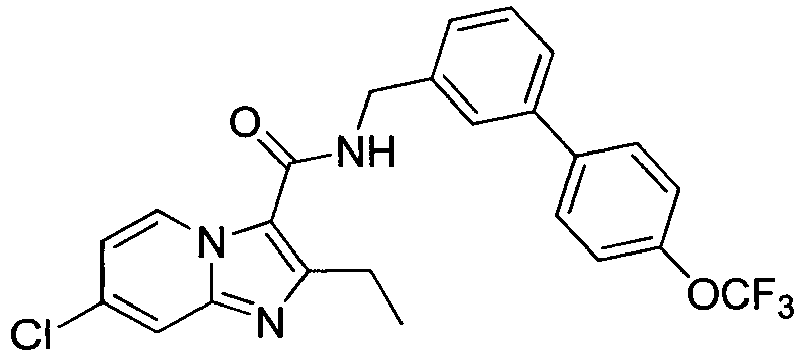
- White solid; mp = 192.6 °C; 1H NMR (400 MHz, CDCl3); δ 1.37 (t, J = 7.2 Hz, 3H), 2.95 (q, J= 7.2 Hz, 2H), 4.75 (d, J= 6.0 Hz, 2H), 6.19 (brt, J = 6.0 Hz, 1H), 6.88 (dd, J= 2.0, 7.6 Hz, 1H), 7.26 (d, J = 8.8 Hz, 2H), 7.36 (d, J= 7.6 Hz, 1H), 7.43 (dd, J= 7.2, 7.6 Hz, 1H), 7.48 - 7.59 (m, 5H), 9.33 (d, J= 7.6 Hz, 1H); LCMS (electrospray) m/z 474, 476 (M+H)+ (Cl- sotope pattern).
-

- Pale yellow solid; 1H NMR (400 MHz, CDCl3); δ □ 1.33 (t, J = 7.6 Hz, 3H), 2.91 (q, J = 7.6 Hz, 2H), 4.64 (d, J = 5.2 Hz, 2H), 6.25 (brt, J = 5.2 Hz, 1H), 6.69 (dd, J = 1.6, 7.2 Hz, 1H), 7.16 (d, J = 8.4 Hz, 2H), 7.30 (s, 1H), 7.35 (d, J = 8.4 Hz, 2H), 9.19 (d, J = 7.2 Hz, 1H).
-

- White solid; 1H NMR (400 MHz, CDCl3); δ □1.37 (t, J = 7.6 Hz, 3H), 2.94 (q, J = 7.6 Hz, 2H), 4.67 (d, J = 5.6 Hz, 2H), 6.18 (brt, J= 5.6 Hz, 1H), 6.99 (dd, J = 1.6, 7.2 Hz, 1H), 7.19 (d, J = 8.4 Hz, 2H), 7.38 (d, J = 8.4 Hz, 2H), 7.75 (d, J = 1.6 Hz, 1H), 9.25 (d, J= 7.2 Hz, 1H).
-

- White solid; 1H NMR (400 MHz, CDCl3); δ □ 1.38 (t, J = 7.6 Hz, 3H), 2.97 (q, J = 7.6 Hz, 2H), 4.68 (d, J = 6.0 Hz, 2H), 6.25 (brs, 1H), 6.79 - 6.84 (m, 1H), 7.00 (dd, J = 8.0, 9.6 Hz, 1H), 7.19 (d, J = 8.4 Hz, 2H), 7.38 (d, J = 8.4 Hz, 2H), 9.16 (d, J = 6.8 Hz, 1H).
-

- White solid; 1H NMR (400 MHz, CDCl3); δ □1.40 (t, J= 7.6 Hz, 3H), 2.97 (q, J= 7.6 Hz, 2H), 4.75 (d, J = 6.0 Hz, 2H), 6.18 (brt, J = 6.0 Hz, 1H), 6.89 (dd, J = 2.4, 7.6 Hz, 1H), 7.47 (d, J = 8.4 Hz, 2H), 7.59 (d, J= 2.4 Hz, 1H), 7.63 (d, J = 8.0 Hz, 2H), 7.73 (d, J = 8.0 Hz, 2H), 7.93 (d, J = 8.4 Hz, 2H), 9.36 (d, J = 7.6 Hz, 1H), 10.05 (s, 1H); 13C NMR (100 MHz, CDCl3) δ □13.4, 23.8, 43.4, 114.9, 115.9, 127.8, 128.0, 128.4, 128.7, 130.5, 133.8, 135.5, 138.7, 139.3, 146.3, 146.7, 151.9, 161.4, 192.0 (hidden 1 aromatic carbon).
-

- White solid; mp = 133.4 °C; 1H NMR (400 MHz, CDCl3) δ □1.42 (t, J= 7.6 Hz, 3H), 3.00 (q, J = 7.6 Hz, 2H), 4.68 (d, J = 5.6 Hz, 2H), 6.12 - 6.14 (m, 1H), 6.98 - 7.03 (m, 4H), 7.18 (d, J = 8.8 Hz, 2H), 7.23 - 7.28 (m, 1H), 7.5 (dd, J = 5.2, 9.6 Hz, 1H), 9.44 - 9.46 (m, 1H); LCMS (electrospray) m/z (M+H)+ 474.
-
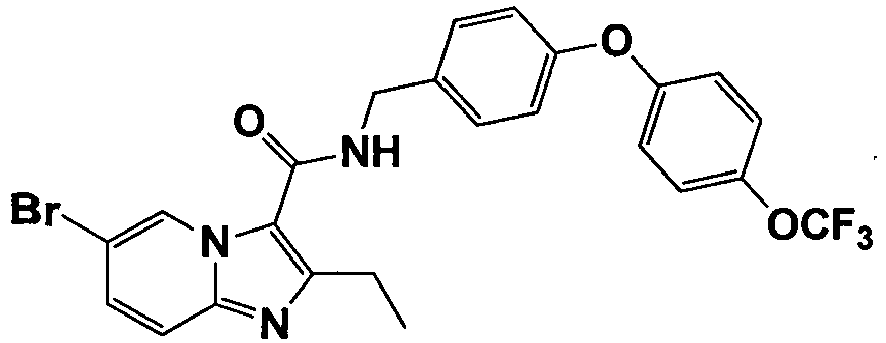
- White solid; mp = 152.9 °C; 1H NMR (400 MHz, CDCl3) δ □1.42 (t, J= 7.4 Hz, 3H), 2.99 (q, J = 7.6 Hz, 2H), 4.68 (d, J = 5.6 Hz, 2H), 6.12 - 6.14 (m, 1H), 6.98 - 6.03 (m, 4H), 7.18 (d, J = 8.8 Hz, 2H), 7.37 (d, J = 8.4 Hz, 1H), 7.40 (dd, J = 2.0, 9.6 Hz, 1H), 7.50 (d, J = 9.2 Hz, 1H), 9.63 (d, J = 1.2 Hz, 1H)); LCMS (electrospray) m/z (M+H)+ 534, 536 (Br- isotope pattern).
-

- Pale yellow solid; 1H NMR (400 MHz, CDCl3); δ □1.31 (t, J = 7.6 Hz, 3H), 2.30 (s, 3H), 2.90 (q, J= 7.6 Hz, 2H), 4.62 (d, J = 5.6 Hz, 2H), 6.32 (brt, J = 5.6 Hz, 1H), 6.93 - 6.96 (m, 4H), 7.11 - 7.14 (m, 3H), 7.31 (d, J = 8.4 Hz, 2H), 7.42 (d, J = 8.4 Hz, 1H), 9.11 (s, 1H); LCMS (electrospray) m/z 470 (M+H)+ .
-

- Pale yellow solid; mp = 133.6 °C; 1H NMR (400 MHz, CDCl3); δ □1.36 (t, J= 7.6 Hz, 3H), 2.39 (s, 3H), 2.93 (q, J= 7.6 Hz, 2H), 4.65 (d, J= 5.6 Hz, 2H), 6.13 (brt, J= 5.6 Hz, 1H), 6.71 (dd, J= 1.6, 7.2 Hz, 1H), 6.96 - 7.00 (m, 4H), 7.15 (d, J= 8.4 Hz, 2H), 7.32 - 7.37 (m, 3H), 9.23 (d, J = 7.2 Hz, 1H); LCMS (electrospray) m/z 470 (M+H)+ .
-

- Pale yellow solid; mp = 105.6 °C; 1H NMR (400 MHz, CDCl3); δ □1.35 (t, J= 7.6 Hz, 3H), 2.96 (q, J= 7.6 Hz, 2H), 4.65 (d, J= 5.6 Hz, 2H), 6.29 (brt, J= 5.6 Hz, 1H), 6.77 - 6.82 (m, 1H), 6.96 - 7.02 (m, 5H), 7.13 - 7.17 (m, 2H), 7.32 - 7.35 (m, 2H), 9.12 (dd, J= 0.8, 7.2 Hz, 1H); LCMS (electrospray) m/z 474 (M+H)+ .
-

- White solid; 1H NMR (400 MHz, CDCl3); δ □1.37 (t, J = 7.2 Hz, 3H), 2.93 (q, J = 7.2 Hz, 2H), 4.62 (d, J = 5.6 Hz, 2H), 5.06 (s, 2H), 6.06 (brt, J = 5.6 Hz, 1H), 6.95 (d, J = 8.8 Hz, 2H), 7.22 - 7.26 (m, 3H), 7.29 (d, J = 8.4 Hz, 2H), 7.45 (d, J = 8.8 Hz, 2H), 7.47 - 7.58 (m, 1H), 9.43 - 9.45 (m, 1H); LCMS (electrospray) m/z 488 (M+H)+ .
-

- Pale yellow solid; mp = 189.7 °C; 1H NMR (400 MHz, CDCl3); δ □1.36(t, J = 7.6 Hz, 3H), 2.92 (q, J = 7.6 Hz, 2H), 4.62 (d, J = 5.6 Hz, 2H), 5.05 (s, 2H), 6.06 (brt, J = 5.6 Hz, 1H), 6.95 (d, J = 8.4 Hz, 2H), 7.21 (d, J = 8.4 Hz, 2H), 7.29 (d, J = 8.8 Hz, 2H), 7.36 (dd, J = 2.0, 9.2 Hz, 1H), 7.43 - 7.49 (m, 3H), 9.60 (d, J= 2.0 Hz, 1H); LCMS (electrospray) m/z 548, 550 (M+H)+ (Br- isotope pattern).
-

- White solid; mp = 138.7 °C; 1H NMR (400 MHz, CDCl3); δ □1.35 (t, J= 7.6 Hz, 3H), 2.91 (q, J= 7.6 Hz, 2H), 4.60 (d, J= 5.6 Hz, 2H), 5.03 (s, 2H), 6.14 (brt, J= 5.6 Hz, 1H), 6.85 (ddd, J = 1.2, 7.2, 7.2 Hz, 1H), 6.92 (d, J= 8.0 Hz, 2H), 7.20 (d, J= 8.0 Hz, 2H), 7.26 - 7.30 (m, 3H), 7.42 (d, J = 8.8 Hz, 2H), 7.55 (d, J= 9.2 Hz, 1H), 9.33 (d, J= 7.2 Hz, 1H); LCMS (electrospray) m/z 470 (M+H)+ .
-
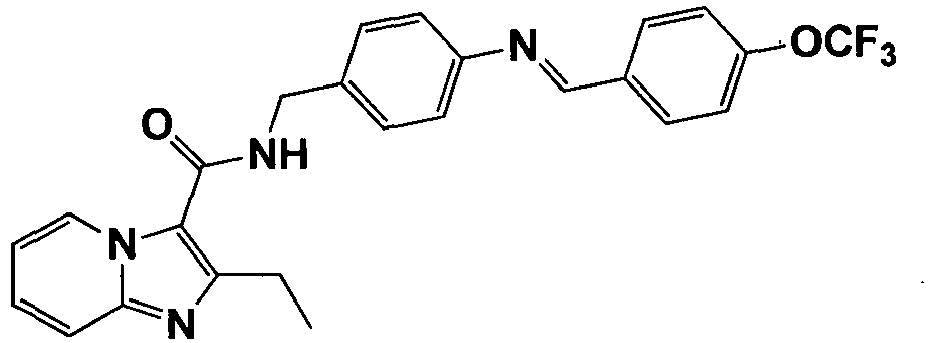
- Off-white solid; mp = 194 °C; 1H NMR (400 MHz, CDCl3) δ 1.42 (t, J= 7.4 Hz, 3H), 3.00 (q, J = 7.6 Hz, 2H), 4.72 (d, J = 5.2 Hz, 2H), 6.14 (t, J = 5.2 Hz, 1H), 6.90 - 6.94 (m, 1H), 7.22 (d, J = 8.0 Hz, 2H), 7.30 - 7.35 (m, 3H), 7.42 (d, J = 8.4 Hz, 2H), 7.61 (d, J= 8.8 Hz, 1H), 7.94 (d, J = 8.8 Hz, 2H), 8.45 (s, 1H), 9.41 (d, J = 7.2 Hz, 1H); LCMS (electrospray) m/z (M+H)+ 467.
-

- White solid; mp = 169.6 °C; 1H NMR (400 MHz, CDCl3) δ 1.36 (t, J = 7.6 Hz, 3H), 2.05 - 2.12 (m, 2H), 2.93 (q, J= 7.2 Hz, 2H), 4.18 (br s, 1H), 4.55 (d, J = 5.2 Hz, 2H), 5.99 - 6.01 (m, 1H), 6.60 (d, J = 8.4 Hz, 2H), 6.87 (d, J= 7.6 Hz, 1H), 7.17 (d, J= 8.0 Hz, 4H), 7.38(d, J = 8.0 Hz, 2H), 7.56 (s, 1H), 9.33 (d, J = 7.2 Hz, 1H); LCMS (electrospray) m/z (M+H)+ 503.
-

- Off-white solid; 1H NMR (400 MHz, CDCl3) δ 1.39 (t, J = 7.6 Hz, 3H), 2.96 (q, J = 7.6 Hz, 2H), 3.03 (s, 3H), 4.53 (s, 2H), 4.59 (d, J= 5.6 Hz, 2H), 5.98 - 5.99 (m, 1H), 6.72 (d, J= 8.8Hz, 2H), 6.89 - 6.92 (m, 1H), 7.16 (d, J= 8.0 Hz, 2H), 7.24 (d, J = 8.8 Hz, 1H), 7.29 - 7.33 (m, 1H), 7.60 (d, J = 8.8 Hz, 1H), 9.39 (d, J = 6.8 Hz, 1H); LCMS (electrospray) m/z (M+H)+ 505.
-

- White solid; mp = 89.7 °C; 1H NMR (400 MHz, CDCl3) δ 1.298 (t, J= 7.6 Hz, 3H), 3.07 (q, J = 7.6 Hz, 2H), 5.37 (s, 2H), 6.93 - 7.05 (m, 7H),7.41 (d, J= 8.8 Hz, 2H), 7.62 (d, J= 2.0 Hz, 1H), 9.24 (d, J= 7.6 Hz, 1H); LCMS (electrospray) m/z (M+H)+ 425.
-

- White solid; mp = 159.1 °C; 1H NMR (400 MHz, CDCl3); δ 1.20 (t, J = 7.2 Hz, 3H), 1.85 - 1.92 (m, 2H), 2.01 - 2.03 (m, 2H), 2.17 - 2.21 (m, 2H), 2.39 - 2.58 (m, 5H), 3.14 - 3.16 (m, 2H), 3.61 (d, J = 11.6 Hz, 1H), 3.75 (d, J = 10.0 Hz, 1H), 4.59 (d, J = 5.2 Hz, 2H), 6.01 (brs, 1H), 6.88 (dd, J= 1.6 Hz, 7.2 Hz, 1H), 6.93 (d, J= 8.4 Hz, 2H), 7.25 (d, J= 8.4 Hz, 2H), 7.56 (d, J = 1.6 Hz, 1H), 9.34 (d, J = 7.2 Hz, 1H); LCMS (electrospray) m/z (M+H)+ 438.
-

- White solid; mp = 163.0 °C; 1H NMR (400 MHz, CDCl3); δ 1.38 (t, J= 7.6 Hz, 3H), 1.47 - 1.53 (m, 2H), 1.65 -1.85 (m, 2H), 2.17 (t, J = 8.8 Hz, 2H), 2.34 - 2.40 (m, 1H), 2.54 (t, J = 10.8 Hz, 1H), 2.89 - 2.97 (m, 3H), 3.13 (m, 2H), 3.61 (d, J= 12.4 Hz, 1H), 3.76 (d, J= 10.4 Hz, 1H), 4.60 (d, J= 5.6 Hz, 2H), 6.01 (brs, 1H), 6.93 (d, J= 8.4 Hz, 2H), 7.25 - 7.29 (m, 3H), 7.52 (d, J= 9.6 Hz, 1H), 9.51 (s, 1H); LCMS (electrospray) m/z (M+H)+ 438.
-

- White solid; mp = 141.7 °C; 1H NMR (400 MHz, CDCl3); δ □0.94 - 1.03 (m, 3H), 1.24 - 1.42 (m, 4H), 1.34 (t, J = 7.2 Hz, 3H), 1.57 -1.66 (m, 3H), 1.73 - 1.74 (m, 2H), 2.30 - 2.35 (m, 1H), 2.65 - 2.72 (m, 1H), 2.89 (q, J= 7.2 Hz, 2H), 3.48 - 3.53 (m, 1H), 3.67 - 3.71 (m, 1H), 4.56 (d, J= 5.6 Hz, 2H), 6.03 (brt, J= 5.6 Hz, 1H), 6.89 (d, J= 8.4 Hz, 2H), 7.21 (d, J= 8.4 Hz, 2H) 7.24 (dd, J= 2.0, 9.2 Hz, 1H), 7.48 (d, J= 9.2 Hz, 1H), 9.48 (d, J= 2.0 Hz, 1H); 13C NMR (100 MHz, CDCl3) δ □13.3, 23.5, 26.1, 26.5, 30.5, 32.8, 33.0, 41.6, 41.8, 43.3, 50.3, 56.2, 115.4, 116.5, 116.9, 121.5, 126.3, 127.8, 128.2, 128.8, 144.5, 151.3, 151.5, 161.1; LCMS (electrospray) m/z 451, 453 (M+H)+ (Cl- isotope pattern).
-

- White solid; mp = 174.2 °C; 1H NMR (400 MHz, CDCl3); δ □0.93 - 1.01 (m, 3H), 1.24 - 1.40 (m, 4H), 1.30 (t, J= 7.6 Hz, 3H), 1.56 -1.64 (m, 3H), 1.71 -1.72 (m, 2H), 2.27 - 2.33 (m, 1H), 2.63 - 2.69 (m, 1H), 2.86 (q, J= 7.6 Hz, 2H), 3.48 - 3.50 (m, 1H), 3.65 - 3.68 (m, 1H), 4.53 (d, J = 5.2 Hz, 2H), 6.10 (brt, J = 5.2 Hz, 1H), 6.81 (d, J = 7.2 Hz, 1H), 6.87 (d, J = 8.0 Hz, 2H), 7.18 (d, J= 8.0 Hz, 2H), 7.51 (s, 1H), 9.25 (d, J = 7.2 Hz, 1H); 13C NMR (100 MHz, CDCl3) δ □13.3, 23.4, 26.1, 26.4, 30.5, 32.8, 33.0, 41.6, 41.7, 43.3, 50.2, 56.1, 114.5, 115.1, 115.6, 116.4, 127.8, 128.4, 128.7, 133.4, 145.9, 151.4, 151.5, 161.1; LCMS (electrospray) m/z 451, 453 (M+H)+ (Cl- isotope pattern).
-

- Pale yellow solid; 1H NMR (400 MHz, CDCl3); δ 1.37 (t, J= 7.2 Hz, 3H), 2.54 (t, J= 6.6 Hz, 4H), 2.93 (q, J= 7.2 Hz, 2H), 3.60 (t, J = 6.0 Hz, 4H), 4.61 (d, J = 5.6 Hz, 2H), 6.04 (brt, J = 5.6 Hz, 1H), 6.89 (dd, J = 2.4, 7.6 Hz, 1H), 6.96 (d, J = 8.4 Hz, 2H), 7.29 (d, J = 8.4 Hz, 2H), 7.58 (d, J= 2.4 Hz, 1H), 9.35 (d, J= 7.6 Hz, 1H); LCMS (electrospray) m/z (M+H)+ 411, 413 (Cl- isotope pattern).
-
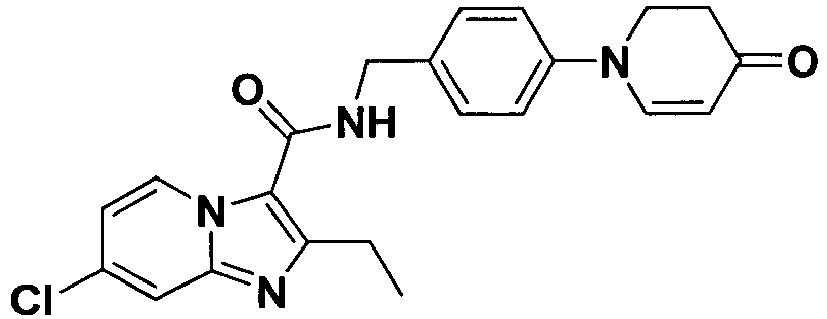
- Pale yellow solid; mp = 201.3 - 202.8 °C; 1H NMR (400 MHz, CDCl3); δ 1.38 (t, J= 7.6 Hz, 3H), 2.64 (t, J = 7.6 Hz, 2H), 2.95 (q, J = 7.6 Hz, 2H), 3.98 (t, J = 7.2 Hz, 2H), 4.66 (d, J = 5.6 Hz, 2H), 5.23 (d, J = 8.0 Hz, 1H), 6.13 (t, J = 5.6 Hz, 1H), 6.89 (dd, J = 2.4, 7.6 Hz, 1H), 7.08 (d, J = 8.4 Hz, 2H), 7.38 (d, J = 8.4 Hz, 2H), 7.41 (d, J = 8.0 Hz, 1H), 7.60 (d, J = 2.4 Hz, 1H), 9.34 (d, J = 7.2 Hz, 1H); LCMS (electrospray) m/z (M+H)+ 409, 411 (Cl- isotope pattern).
-

- White solid; mp = 168.3 °C; 1H NMR (400 MHz, CDCl3); δ 1.33 (t, J= 7.2 Hz, 3H), 2.32 - 2.34 (m, 4H), 2.89 (q, J= 7.2 Hz, 2H), 3.23 - 3.25 (m, 4H), 4.56 (d, J= 5.2 Hz, 2H), 4.73 (s, 2H), 6.07 (brs, 1H), 6.84 (d, J = 7.2 Hz, 1H), 6.90 (d, J = 8.4 Hz, 2H), 7.22 (d, J = 8.4 Hz, 2H), 7.54 (s, 1H), 9.29 (d, J= 7.2 Hz, 1H); 13C NMR (100 MHz, CDCl3) δ 13.4, 23.5, 34.2, 43.3, 51.2, 108.5, 114.6, 115.1, 115.7, 116.7, 128.3, 128.5, 128.9, 133.5, 145.8, 146.0, 150.8, 151.5, 161.1; LCMS (electrospray) m/z 409, 411 (M+H)+ (Cl- isotope pattern).
-

- Sticky pale yellow solid; 1H NMR (400 MHz, CDCl3); δ 0.99 (d, J = 6.4 Hz, 3H), 1.32 (t, J = 7.6 Hz, 3H), 1.55 - 1.70 (m, 4H), 1.81 - 1.88 (m, 2H), 2.91 (q, J = 7.6 Hz, 2H), 2.92 - 2.98 (m, 1H), 3.21 - 3.26 (m, 1H), 3.93 - 3.96 (m, 1H), 4.58 (d, J = 5.2 Hz, 2H), 6.01 (brt, J = 5.2 Hz, 1H), 6.90 (d, J= 8.8 Hz, 2H), 7.22 (d, J= 8.8 Hz, 2H), 7.26 (dd, J= 2.0, 9.2 Hz, 1 H), 7.50 (d, J = 9.2 Hz, 1H), 9.50 (d, J = 2.0 Hz, 1H); 13C NMR (100 MHz, CDCl3) δ 13.3, 13.7, 19.6, 23.6, 26.2, 31.6, 43.4, 44.6, 51.2, 115.4, 117.0, 117.5, 121.6, 126.3, 127.9, 128.2, 128.8, 144.5, 151.1, 151.4, 161.1; LCMS (electrospray) m/z 411, 413 (M+H)+ (Cl- isotope pattern).
-

- White solid; mp = 117.9 °C; 1H NMR (400 MHz, CDCl3); δ 1.00 (d, J= 6.4 Hz, 3H), 1.35 (t, J= 7.6 Hz, 3H), 1.56 - 1.69 (m, 4H), 1.75 - 1.90 (m, 2H), 2.92 (q, J= 7.6 Hz, 2H), 2.96 - 2.99 (m, 1H), 3.23 - 3.28 (m, 1H), 3.95 - 3.98 (m, 1H), 4.59 (d, J = 5.6 Hz, 2H), 6.08 (brt, J = 5.6 Hz, 1H), 6.87 (dd, J = 2.0, 7.6 Hz, 1H), 6.91 (d, J = 8.8 Hz, 2H), 7.23 (d, J = 8.8 Hz, 2H), 7.57 (d, J = 2.0 Hz, 1H), 9.32 (d, J= 7.6 Hz, 1H); 13C NMR (100 MHz, CDCl3) δ 13.4, 13.7, 19.5, 23.5, 26.1, 31.6, 43.3, 44.5, 51.2, 114.6, 115.1, 115.7, 117.4, 127.8, 128.5, 128.8, 133.5, 146.0, 151.0, 151.5, 161.1; LCMS (electrospray) m/z 411, 413 (M+H)+ (Cl- isotope pattern).
-

- White solid; mp = 121.3 °C; 1H NMR (400 MHz, CDCl3); δ □0.97 (s, 6H), 1.34 (t, J = 7.2 Hz, 3H), 1.49 - 1.52 (m, 4H), 2.89 (q, J = 7.2 Hz, 2H), 3.15 - 3.17 (m, 4H), 4.57 (d, J = 5.2 Hz, 2H), 6.00 (brt, J= 5.2 Hz, 1H), 6.86 (dd, J= 2.0, 7.6 Hz, 1H), 6.91 (d, J= 8.4 Hz, 2H), 7.22 (d, J = 8.4 Hz, 2H), 7.56 (d, J = 2.0 Hz, 1H), 9.32 (d, J= 7.6 Hz, 1H); 13C NMR (100 MHz, CDCl3) δ □13.4, 23.5, 28.0, 29.8, 38.5, 43.4, 45.9, 114.7, 115.7, 116.4, 127.9, 128.6, 128.9, 129.0, 133.6, 146.1, 151.5, 151.6, 161.2; LCMS (electrospray) m/z 425, 427 (M+H)+ (Cl- isotope pattern).
-

- White solid; mp = 197.9 °C; 1H NMR (400 MHz, CDCl3); δ □1.35 (t, J = 7.6 Hz, 3H), 1.68 - 1.82 (m, 2H), 1.94 - 1.97 (m, 2H), 2.12 - 2.18 (m, 1H), 2.66 - 2.73 (m, 2H), 2.91 (q, J = 7.6 Hz, 2H), 3.73 - 3.77 (m, 2H), 4.58 (d, J = 5.6 Hz, 2H), 6.04 (brt, J = 5.2 Hz, 1H), 6.91 (d, J = 8.8 Hz, 2H), 7.25 - 7.29 (m, 3H), 7.50 (d, J= 9.2 Hz, 1H), 9.50 (d, J= 1.2 Hz, 1H); LCMS (electrospray) m/z 465, 467 (M+H)+ (Cl- isotope pattern).
-

- White solid; mp = 209.4 °C; 1H NMR (400 MHz, CDCl3); δ □1.34 (t, J = 7.6 Hz, 3H), 1.68 - 1.78 (m, 2H), 1.94 -1.98 (m, 2H), 2.11 - 2.20 (m, 1H), 2.66 - 2.73 (m, 2H), 2.90 (q, J= 7.6 Hz, 2H), 3.73 - 3.77 (m, 2H), 4.58 (d, J= 5.2 Hz, 2H), 6.03 (brt, J= 5.2 Hz, 1H), 6.86 (dd, J = 2.4, 7.6 Hz, 1H), 6.91 (d, J= 8.8 Hz, 2H), 7.25 (d, J= 8.8 Hz, 2H), 7.56 (d, J= 2.4 Hz, 1H), 9.32 (d, J= 7.6 Hz, 1H); LCMS (electrospray) m/z 465, 467 (M+H)+ (Cl- isotope pattern).
-

- White solid; mp = 194.2 °C; 1H NMR (400 MHz, CDCl3); δ □1.36 (t, J= 7.6 Hz, 3H), 1.98 - 2.13 (m, 4H), 2.92 (q, J= 7.6 Hz, 2H), 3.33 - 3.36 (m, 4H), 4.59 (d, J = 5.6 Hz, 2H), 6.04
- (brt, J= 5.6 Hz, 1H), 6.91 - 6.95 (m, 2H), 7.25 - 7.30 (m, 3H), 7.52 (d, J= 9.6 Hz, 1H), 9.51 (d, J= 2.0 Hz, 1H); LCMS (electrospray) m/z 433, 435 (M+H)+ (Cl- isotope pattern).
-
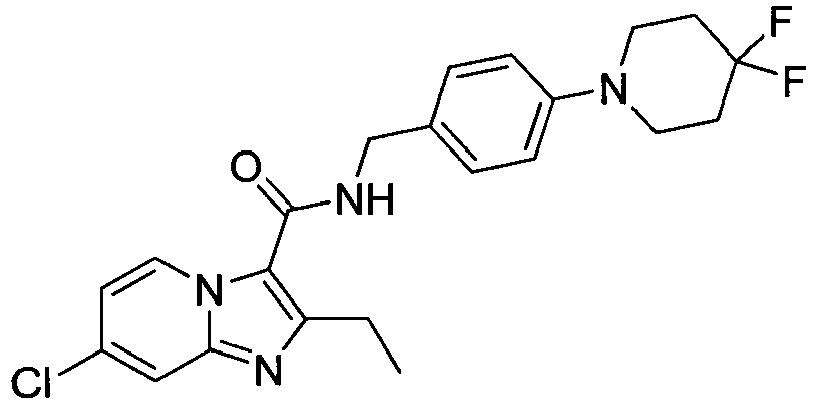
- White solid; mp = 166.3 °C; 1H NMR (400 MHz, CDCl3); δ1.34 (t, J= 7.2 Hz, 3H), 2.03 - 2.12 (m, 4H), 2.90 (q, J = 7.2 Hz, 2H), 3.32 - 3.35 (m, 4H), 4.58 (d, J= 5.2 Hz, 2H), 6.06 (brt, J= 5.2 Hz, 1H), 6.86 (dd, J = 2.0, 7.6 Hz, 1H), 6.91 (d, J = 8.4 Hz, 2H), 7.25 (d, J = 8.4 Hz, 2H), 7.55 (d, J = 2.0 Hz, 1H), 9.31 (d, J= 7.6 Hz, 1H); LCMS (electrospray) m/z 433, 435 (M+H)+ (Cl- isotope pattern).
-

- Pale yellow solid; mp = 161.1 °C; 1H NMR (400 MHz, CDCl3); δ 1.23 - 1.41 (m, 2H), 1.33 (t, J = 7.6 Hz, 3H), 1.59 - 1.65 (m, 1H), 1.80 - 1.84 (m, 2H), 2.64 - 2.71 (m, 2H), 2.89 (q, J = 7.6 Hz, 2H), 3.50 (d, J= 6.4 Hz, 2H), 3.66 - 3.69 (m, 2H), 4.55 (d, J= 5.2 Hz, 2H), 6.09 (brt, J= 5.2 Hz, 1H), 6.89 (d, J= 8.4 Hz, 2H), 7.21 (d, J= 8.4 Hz, 2H), 7.23 (dd, J= 2.0, 9.2 Hz, 1H), 7.47 (d, J= 9.2 Hz, 1H), 9.45 (d, J= 2.0 Hz, 1H); 13C NMR (100 MHz, CDCl3) δ 13.3, 23.4, 28.7, 38.6, 43.3, 49.6, 67.6, 115.3, 116.8, 116.9, 121.5, 126.2, 128.2, 128.3, 128.8, 144.4, 151.3, 151.4, 161.1; LCMS (electrospray) m/z 427, 429 (M+H)+ (Cl- isotope pattern).
-

- White solid; mp = 179.8 °C; 1H NMR (400 MHz, CDCl3); δ 1.33 (t, J = 7.6 Hz, 3H), 1.35 - 1.42 (m, 2H), 1.60 - 1.67 (m, 1H), 1.82 - 1.85 (m, 2H), 1.98 (brs, 1H), 2.66 - 2.73 (m, 2H), 2.91 (q, J= 7.6 Hz, 2H), 3.52 (d, J = 6.4 Hz, 2H), 3.68 - 3.71 (m, 2H), 4.56 (d, J= 5.6 Hz, 2H), 6.04 (brt, J = 5.6 Hz, 1H), 6.86 (dd, J = 2.0, 7.6 Hz, 1H), 6.91 (d, J = 8.8 Hz, 2H), 7.22 (d, J= 8.8 Hz, 2H), 7.55 (d, J = 2.0 Hz, 1H), 9.30 (d, J= 7.6 Hz, 1H); 13C NMR (100 MHz, CDCl3) δ □13.4, 23.5, 28.7, 38.6, 43.3, 49.7, 67.7, 114.7, 115.1, 115.7, 116.8, 128.3, 128.6, 128.8, 133.6, 146.1, 151.5, 151.6, 161.1; LCMS (electrospray) m/z 427, 429 (M+H)+ (Cl- sotope pattern).
-

- White solid; mp = 162.1 °C; 1H NMR (400 MHz, CDCl3); δ 1.34-1.57 (□m, 2H), □1.36 (t, J = 7.6 Hz, 3H), 1.70 -1.85 (m, 3H), 2.68 - 2.74 (m, 2H), 2.88 (q, J= 7.6 Hz, 2H), 3.25 (d, J= 6.4 Hz, 2H), 3.53 (s, 3H), 3.68 - 3.71 (m, 2H), 4.58 (d, J= 5.6 Hz, 2H), 5.98 (brt, J= 5.6 Hz, 1H), 6.92 (d, J= 8.4 Hz, 2H), 7.24 - 7.30 (m, 3H), 7.51 (d, J= 10.0 Hz, 1H), 9.52 (d, J= 1.6 Hz, 1H); LCMS (electrospray) m/z 441, 443 (M+H)+ (Cl- isotope pattern).
-

- White solid; mp = 172.5 °C; 1H NMR (400 MHz, CDCl3); δ 1.33 - 1.43 (m, 2H), 1.35 (t, J = 7.6 Hz, 3H), .72 - 1.85 (m, 3H), 2.67 - 2.74 (m, 2H), 2.90 (q, J = 7.6 Hz, 2H), 3.25 (d, J= 6.4 Hz, 2H), 3.35 (s, 3H), 3.68 - 3.71 (m, 2H), 4.58 (d, J = 5.2 Hz, 2H), 5.97 (brt, J = 5.2 Hz, 1H), 6.88 (dd, J= 2.4, 7.6 Hz, 1H), 6.92 (d, J= 8.8 Hz, 2H), 7.23 (d, J= 8.8 Hz, 2H), 7.57 (d, J= 2.4 Hz, 1H), 9.34 (d, J= 7.6 Hz, 1H); LCMS (electrospray) m/z 441, 443 (M+H)+ (Cl- isotope pattern).
-

- White solid; mp = 164.5 °C; 1H NMR (400 MHz, CDCl3); δ □1.36 (t, J = 7.6 Hz, 3H), 1.87 - 1.98 (m, 4H), 2.67 - 2.68 (m, 1H), 2.80 - 2.85 (m, 2H), 2.91 (q, J= 7.6 Hz, 2H), 3.80 - 3.83 (m, 2H), 4.59 (d, J= 5.6 Hz, 2H), 6.01 (brt, J= 5.6 Hz, 1H), 6.87 (d, J= 7.6 Hz, 1H), 6.97 (d, J= 8.4 Hz, 2H), 7.19 - 7.33 (m, 7H), 7.57 (s, 1H), 9.34 (d, J= 7.6 Hz, 1H); 13C NMR (100 MHz, CDCl3) δ □13.4, 23.6, 33.3, 42.6, 43.4, 50.5, 114.7, 115.1, 115.8, 116.9, 126.5, 127.0, 128.5, 128.6, 128.7, 128.9, 133.6, 146.1, 146.2, 151.5, 151.6, 161.2; LCMS (electrospray) m/z 473, 475 (M+H)+ (Cl- isotope pattern).
-

- Pale yellow solid; mp = 138.2 °C; 1H NMR (400 MHz, CDCl3); δ □1.36 (t, J = 7.6 Hz, 3H), 1.84 -1.97 (m,4H), 2.62 - 2.69 (m, 1H), 2.79 - 2.86 (m, 2H), 2.92 (q, J = 7.6 Hz, 2H), 3.80 - 3.83 (m, 2H), 4.60 (d, J= 5.2 Hz, 2H), 6.07 (brt, J= 5.2 Hz, 1H), 6.97 (d, J = 8.8 Hz, 2H), 7.19 - 7.33 (m, 8H), 7.50 (d, J = 9.6 Hz, 1H), 9.50 (d, J= 2.0 Hz, 1H); 13C NMR (100 MHz, CDCl3) δ □13.3, 23.5, 33.3, 42.5, 43.3, 50.5, 115.4, 116.9, 117.0, 121.6, 126.3, 126.4, 126.9, 128.2, 128.4, 128.6, 128.9, 144.4, 146.0, 151.3, 151.4, 161.1; LCMS (electrospray) m/z 473, 475 (M+H)+ (Cl- isotope pattern).
-

- Pale yellow solid; 1H NMR (400 MHz, CDCl3); δ □ 1.37 (t, J = 7.6 Hz, 3H), 1.81 - 1.95 (m, 4H), 2.60 - 2.67 (m, 1H), 2.77 - 2.85 (m, 2H), 2.94 (q, J = 7.6 Hz, 2H), 3.79 - 3.82 (m, 2H), 4.61 (d, J = 5.6 Hz, 2H), 6.02 (brs, 1H), 6.89 (ddd, J = 1.2, 6.8, 6.8 Hz, 1H), 6.96 - 7.02 (m, 4H), 7.17 - 7.23 (m, 2H), 7.25 - 7.33 (m, 3H), 7.8 (d, J = 8.8 Hz, 1H), 9.39 (d, J = 6.8 Hz, 1H).
-

- White solid; mp = 164.0 °C; 1H NMR (400 MHz, CDCl3); δ 1.35 (t, J= 7.6 Hz, 3H), 1.76 - 1.95 (m, 4H), 2.60 - 2.66 (m, 1H), 2.78 - 2.85 (m, 2H), 2.92 (q, J= 7.6 Hz, 2H), 3.79 - 3.82 (m, 2H), 4.60 (d, J = 5.2 Hz, 2H), 6.03 (brt, J = 5.2 Hz, 1H), 6.96 - 7.01 (m, 4H), 7.17 - 7.21 (m, 2H), 7.26 - 7.29 (m, 3H), 7.51 (d, J = 9.6 Hz, 1H), 9.52 (d, J = 1.6 Hz, 1H); LCMS (electrospray) m/z 491 (M+H)+ .
-

- White solid; mp = 182.7 °C; 1H NMR (400 MHz, CDCl3); δ 1.35 (t, J = 7.6 Hz, 3H), 1.79 - 1.95 (m, 4H), 2.59 - 2.67 (m, 1H), 2.78 - 2.85 (m, 2H), 2.91 (q, J = 7.6 Hz, 2H), 3.79 - 3.82 (m, 2H), 4.59 (d, J = 5.6 Hz, 2H), 6.03 (brt, J= 5.6 Hz, 1H), 6.87 (dd, J = 2.4, 7.6 Hz, 1H), 6.96 - 7.01 (m, 4H), 7.17 - 7.21 (m, 2H), 7.26 (d, J= 8.8 Hz, 2H), 7.57 (d, J = 2.4 Hz, 1H), 9.33 (d, J= 7.6 Hz, 1H); LCMS (electrospray) m/z 491 (M+H)+ .
-

-

- White solid; mp = 164.0 °C; 1H NMR (400 MHz, CDCl3); δ □ 1.37 (t, J= 7.6 Hz, 3H), 1.81 - 1.96 (m, 4H), 2.63 - 2.70 (m, 1H), 2.79 - 2.86 (m, 2H), 2.92 (q, J= 7.6 Hz, 2H), 3.80 - 3.83 (m, 2H), 4.60 (d, J= 5.2 Hz, 2H), 6.04 (brt, J= 5.2 Hz, 1H), 6.96 (d, J= 8.4 Hz, 2H), 7.14 (d, J= 8.4 Hz, 2H), 7.24 - 7.29 (m, 5H), 7.51 (d, J= 9.6 Hz, 1H), 9.51 (d, J= 1.6 Hz, 1H).
-

- White solid; 1H NMR (400 MHz, CDCl3); δ □1.36 (t, J = 7.6 Hz, 3H), 1.82 - 1.96 (m, 4H), 2.64 - 2.70 (m, 1H), 2.79 - 2.86 (m, 2H), 2.91 (q, J = 7.6 Hz, 2H), 3.80 - 3.83 (m, 2H), 4.59 (d, J= 5.36 Hz, 2H), 6.04 (brs, 1H), 6.87 (dd, J = 1.6, 7.2 Hz, 1H), 6.97 (d, J= 8.4 Hz, 2H), 7.14 (d, J= 8.4 Hz, 2H), 7.24 - 7.28 (m, 4H), 7.57 (d, J= 1.6 Hz, 1H), 9.34 (d, J= 7.2 Hz, 1H).
-

- White solid; 1H NMR (400 MHz, CDCl3); δ □1.29 (d, J = 6.0 Hz, 6H), 1.46 - 1.56 (m, 2H), 1.50 (t, J = 7.6 Hz, 3H), 1.81 - 1.89 (m, 1H), 1.99 - 2.02 (m, 2H), 2.82 - 2.89 (m, 2H), 3.06 (q, J = 7.6 Hz, 2H), 3.43 (d, J = 6.4 Hz, 2H), 3.66 - 3.72 (m, 1H), 3.82 - 3.85 (m, 2H), 4.73 (d, J = 5.6 Hz, 2H), 6.17 (brt, J = 5.6 Hz, 1H), 7.06 (d, J = 8.4 Hz, 2H), 7.38 (d, J = 8.4 Hz, 2H), 7.40 (dd, J= 2.0, 9.2 Hz, 1H), 7.65 (d, J= 9.2 Hz, 1H), 9.65 (d, J= 2.0 Hz, 1H); 13C NMR (100 MHz, CDCl3) δ □13.3, 22.2, 23.6, 29.4, 36.6, 43.4, 49.7, 71.8, 73.3, 115.4, 116.8, 117.0, 121.5, 126.3, 128.2, 128.8, 144.5, 151.4, 151.6, 161.1 (hidden 1 aromatic carbon).
-

- White solid; 1H NMR (400 MHz, CDCl3); δ □1.14 (d, J = 6.0 Hz, 6H), 1.31 - 1.41 (m, 2H), 1.34 (t, J= 7.6 Hz, 3H), 1.66 - 1.73 (m, 1H), 1.84 - 1.87 (m, 2H), 2.67 - 2.74 (m, 2H), 2.90 (q, J= 7.6 Hz, 2H), 3.27 (d, J= 6.8 Hz, 2H), 3.50 - 3.56 (m, 1H), 3.67 - 3.70 (m, 2H), 4.57 (d, J= 5.6 Hz, 2H), 5.99 (brt, J= 5.6 Hz, 1H), 6.86 (dd, J = 2.0, 7.2 Hz, 1H), 6.91 (d, J = 8.4 Hz, 2H), 7.22 (d, J= 8.4 Hz, 2H), 7.56 (d, J= 1.6 Hz, 1H), 9.33 (d, J= 7.2 Hz, 1H); 13C NMR (100 MHz, CDCl3) δ □ 13.4, 22.2, 23.6, 29.4, 36.6, 43.4, 49.7, 71.8, 73.3, 114.7, 115.2, 115.8, 116.8, 128.2, 128.6, 128.8, 133.6, 146.1, 151.6, 151.7, 161.2.
-

- White solid; 1H NMR (400 MHz, CDCl3); δ □1.28 - 1.38 (m, 2H), 1.32 (t, J = 7.6 Hz, 3H), 1.46 - 1.51 (m, 2H), 1.58 - 1.66 (m, 7H), 1.79 - 1.83 (m, 2H), 2.63 - 2.70 (m, 2H), 2.87 (q, J = 7.6 Hz, 2H), 3.21 (d, J = 6.4 Hz, 2H), 3.63 - 3.66 (m, 2H), 3.82 - 3.83 (m, 1H), 4.54 (d, J = 5.2 Hz, 2H), 6.08 (brt, J = 5.2 Hz, 1H), 6.87 (d, J= 8.4 Hz, 2H), 7.19 - 7.25 (m, 3H), 7.45 (d, J= 9.2 Hz, 1H), 9.44 (d, J = 1.6 Hz, 1H); 13C NMR (100 MHz, CDCl3) δ □13.2, 23.4, 23.6, 29.3, 32.3, 36.4, 43.3, 49.6, 73.7, 81.5, 115.3, 116.6, 116.8, 121.4, 126.2, 128.0, 128.1, 128.7, 144.4, 151.3, 151.5, 161.0.
-

- White solid; mp = 63.8 °C; 1H NMR (400 MHz, CDCl3); δ □1.33 (t, J = 7.6 Hz, 3H), 1.37 - 1.44 (m, 2H), 1.63 - 1.70 (m, 1H), 1.72 - 1.76 (m, 2H), 2.56 (d, J = 6.8 Hz, 2H), 2.61 - 2.67 (m, 2H), 2.89 (q, J = 7.6 Hz, 2H), 3.63 - 3.66 (m, 2H), 4.56 (d, J = 5.2 Hz, 2H), 6.08 (brs, 1H), 6.84 - 6.87 (m, 1H), 6.89 (d, J = 8.0 Hz, 2H), 7.14 (d, J = 7.2 Hz, 2H), 7.19 - 7.30 (m, 5H), 7.54 (d, J= 1.6 Hz, 1H), 9.29 - 9.32 (m, 1H); 13C NMR (100 MHz, CDCl3) δ □13.3, 23.5, 32.0, 37.9, 43.2, 43.3, 49.9, 114.6, 115.1, 115.7, 116.7, 126.0, 128.2, 128.3, 128.5, 128.8, 129.2, 133.5, 140.5, 146.0, 151.5, 151.6, 161.1; LCMS (electrospray) m/z 487, 489 (M+H)+ (Cl- isotope pattern).
-

- White solid; mp = 144.2 °C; 1H NMR (400 MHz, CDCl3); δ 1.39 (t, J = 7.2 Hz, 3H), 1.46 - 1.60 (m, 3H), 1.94 -1.96 (m, 2H), 2.73 - 2.78 (m, 2H), 2.96 (q, J = 7.2 Hz, 2H), 3.73 (d, J = 12.0, 2H), 3.80 (d, J = 6.0 Hz, 2H), 4.61 (d, J = 5.2 Hz, 2H), 5.99 (brs, 1H), 6.82 - 6.84 (m, 1H), 6.89 - 6.92 (m, 2H), 6.94 - 6.98 (m, 4H), 7.25 - 7.29 (m, 2H), 7.32 (d, J= 8.4 Hz, 1H), 7.59 (d, J= 8.4 Hz, 1H), 8.40 (d, J = 7.2 Hz, 1H) ; LCMS (electrospray) m/z (M+H)+ 487.
-
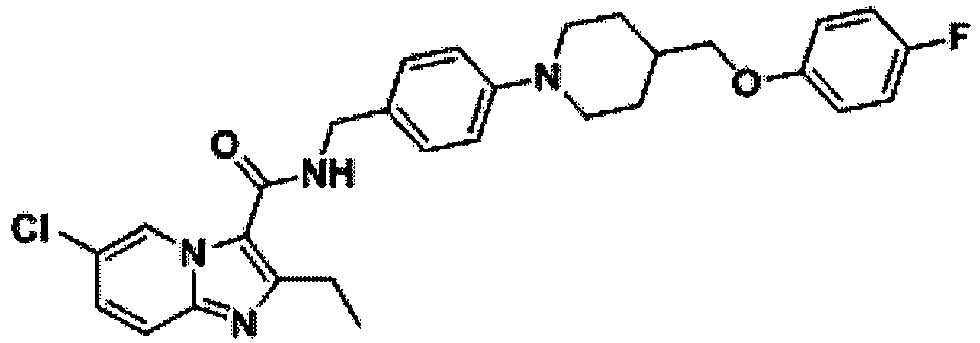
- White solid; mp = 171.0 °C; 1H NMR (400 MHz, CDCl3); δ 1.38 (t, J = 7. 6 Hz, 3H), 1.50 - 1.56 (m, 2H), 1.94 -1.96 (m, 3H), 2.72 - 2.79 (m, 2H), 2.95 (q, J = 7.6 Hz, 2H), 3.74 (d, J= 12.4 Hz, 2H), 3.80 (d, J= 5.6 Hz, 2H), 4.60 (d, J= 5.6 Hz, 2H), 6.01 (brs, 1H), 6.81 - 6.84 (m, 2H), 6.94 - 6.98 (m, 4H), 7.27 - 7.29 (m, 3H), 7.53 (d, J= 9.6 Hz, 1H), 9.52 (d, J= 2.0 Hz, 1H) ; LCMS (electrospray) m/z (M+H)+ 521.
-

- White solid; mp = 186.5 °C; 1H NMR (400 MHz, CDCl3); δ 1.37 (t, J = 7. 6 Hz, 3H), 1.50 - 1.61 (m, 2H), 1.94 -1.96 (m, 3H), 2.76 (t, J = 10.8 Hz, 2H), 2.93 (q, J= 7.6 Hz, 2H), 3.74 (d, J= 12.0 Hz, 2H), 3.80 (d, J= 5.6 Hz, 2H), 4.59 (d, J= 5.6 Hz, 2H), 6.00 (brs, 1H), 6.80 - 6.84 (m, 2H), 6.88 - 6.90 (m, 1H), 6.94 - 6.98 (m, 4H), 7.25 - 7.27 (m, 2H), 7.58 (d, J= 1.6 Hz, 1H), 9.34 (d, J= 8.0 Hz, 1H) ; LCMS (electrospray) m/z (M+H)+ 521.
-

- Pale yellow solid; mp = 183.6 °C ; 1H NMR (400 MHz, CDCl3); δ □1.35 (t, J = 7.6 Hz, 3H), 1.46 - 1.57 (m, 2H), 1.93 - 1.96 (m, 3H), 2.72 - 2.78 (m, 2H), 2.91 (q, J= 7.6 Hz, 2H), 3.71 - 3.74 (m, 2H), 3.81 (d, J = 6.0 Hz, 2H), 4.58 (d, J = 5.6 Hz, 2H), 6.05 (brt, J = 5.6 Hz, 1H), 6.85 (d, J= 8.8 Hz, 2H), 6.93 (d, J= 8.8 Hz, 2H), 7.11 (d, J= 8.8 Hz, 2H), 7.24 - 7.28 (m, 3H), 7.50 (d, J= 9.6 Hz, 1H), 9.50 (d, J= 1.2 Hz, 1H); LCMS (electrospray) m/z 587, 589 (M+H)+ (Cl- isotope pattern).
-
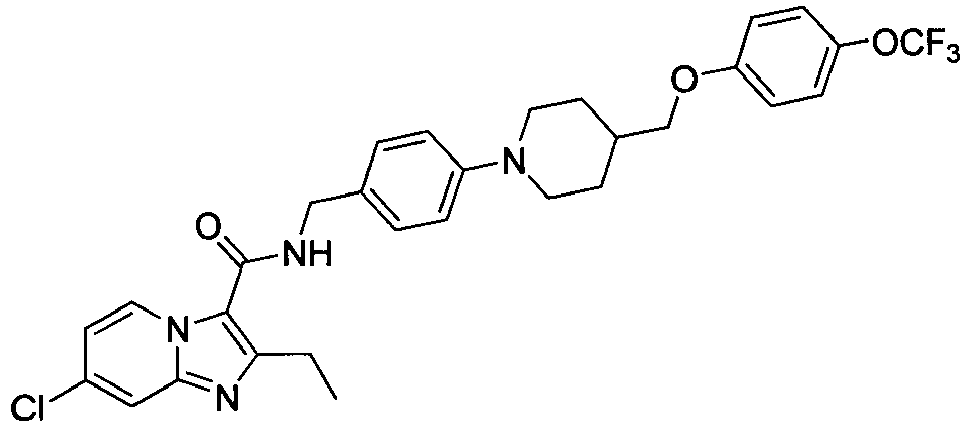
- White solid; mp = 189.5 °C; 1H NMR (400 MHz, CDCl3); δ □1.34 (t, J = 7.6 Hz, 3H), 1.46 - 1.56 (m, 2H), 1.93 - 2.02 (m, 3H), 2.71 - 2.78 (m, 2H), 2.90 (q, J= 7.6 Hz, 2H), 3.71 - 3.74 (m, 2H), 3.81 (d, J= 6.0 Hz, 2H), 4.57 (d, J= 5.2 Hz, 2H), 6.05 (brt, J= 5.2 Hz, 1H), 6.84 - 6.87 (m, 3H), 6.93 (d, J = 8.8 Hz, 2H), 7.11 (d, J = 8.8 Hz, 2H), 7.24 (d, J = 8.8 Hz, 2H), 7.55 (d, J = 2.0 Hz, 1H), 9.31 (d, J= 7.2 Hz, 1H); LCMS (electrospray) m/z 587, 589 (M+H)+ (Cl-isotope pattern).
-

- White solid; 1H NMR (400 MHz, CDCl3); δ □1.23 (t, J= 7.2 Hz, 3H), 1.35 (t, J= 7.2 Hz, 3H), 1.80 - 1.90 (m, 2H), 1.98 - 2.02 (m, 2H), 2.38 - 2.46 (m, 1H), 2.75 - 2.82 (m, 2H), 2.91 (q, J= 7.6 Hz, 2H), 3.61 - 3.65 (m, 2H), 4.11 (q, J= 7.2 Hz, 2H), 4.57 (d, J= 5.6 Hz, 2H), 6.03 (brt, J= 5.6 Hz, 1H), 6.90 (d, J= 8.8 Hz, 2H), 7.23 - 7.28 (m, 3H), 7.49 (d, J= 9.6 Hz, 1H), 9.49 (d, J= 1.6 Hz, 1H); 13C NMR (100 MHz, CDCl3) δ □13.3, 14.4, 23.6, 28.1, 41.6, 43.3, 49.2, 60.6, 115.4, 116.9, 117.0, 121.5, 126.3, 128.2, 128.6, 128.9, 144.5, 151.2, 151.4, 161.1, 174.9.
-

- White solid; 1H NMR (400 MHz, CDCl3); δ □1.21 (t, J= 7.2 Hz, 3H), 1.31 (t, J= 7.2 Hz, 3H), 1.77 - 1.87 (m, 2H), 1.96 - 2.00 (m, 2H), 2.36 - 2.42 (m, 1H), 2.72 - 2.79 (m, 2H), 2.87 (q, J= 7.2 Hz, 2H), 3.58 - 3.63 (m, 2H), 4.09 (q, J= 7.2 Hz, 2H), 4.53 (d, J= 5.6 Hz, 2H), 6.12 (brt, J= 5.6 Hz, 1H), 6.81 (dd, J= 2.0, 7.2 Hz, 1H), 6.87 (d, J= 8.8 Hz, 2H), 7.20 (d, J= 8.8 Hz, 2H), 7.51 (d, J= 2.0, 1H), 9.25 (d, J= 7.2 Hz, 1H); 13C NMR (100 MHz, CDCl3) δ □13.3, 14.3, 23.4, 28.0, 41.0, 43.2, 49.1, 60.5, 114.5, 115.1, 115.6, 116.7, 128.4, 128.6, 128.8,133.4,146.0,151.1,151.5,161.1,174.8.
-

- White solid; 1H NMR (400 MHz, DMSO-d 6); δ □1.22 (t, J= 7.6 Hz, 3H), 1.57 - 1.66 (m, 2H), 1.84 -1.88 (m, 2H), 2.29 - 2.34 (m, 1H), 2.67 - 2.73 (m, 2H), 2.92 (q, J= 7.6 Hz, 2H), 3.57 - 3.60 (m, 2H), 4.40 (d, J= 5.6 Hz, 2H), 5.75 (s, 1H), 6.89 (d, J= 8.4 Hz, 2H), 7.06 (dd, J = 1.6, 7.6 Hz, 1H), 7.19 (d, J = 8.4 Hz, 2H), 7.77 (d, J = 1.6 Hz, 1H), 8.37 (brt, J = 5.6 Hz, 1H), 8.93 (d, J = 7.6 Hz, 1H).
-

- White solid; mp = 189.2 °C; 1H NMR (400 MHz, CDCl3) δ □1.40 (t, J= 7.8 Hz, 3H), 2.96 (q, J= 7.6 Hz, 2H), 3.24 - 3.29 (m, 2H), 3.32 - 3.36 (m, 2H), 4.63 (d, J = 5.6 Hz, 2H), 6.02 - 6.04 (m, 1H), 6.90 - 7.01 (m, 7H), 7.30 - 7.34 (m, 2H), 7.60 (d, J = 9.2 Hz, 1H), 9.41 (d, J = 7.2 Hz, 1H); LCMS (electrospray) m/z (M+H)+ 458.
-

- Pale yellow; mp = 186.3 °C; 1H NMR (400 MHz, CDCl3) δ 1.38 (t, J= 7.6 Hz, 3H), 2.98 (q, J = 7.6 Hz, 2H), 3.24 - 3.27 (m, 4H), 3.34 - 3.36 (m, 4H), 4.63 (d, J= 5.6 Hz, 2H), 6.05 - 6.07 (m, 1H), 6.85 (dd, J = 7.2 Hz, 1H), 6.91 - 7.01 (m, 6H), 7.10 (d, J = 7.6 Hz, 2H), 7.26 (t, J = 74.2 Hz, 1H due to F2), 9.24 (d, J= 6.8 Hz, 1H); LCMS (electrospray) m/z (M+H)+ 524
-

- White solid; 1H NMR (400 MHz, CDCl3) δ 1.37 (t, J = 7.6 Hz, 3H), 3.00 (q, J = 7.6 Hz, 2H), 3.23 - 3.35 (m, 8H), 4.61 (d, J= 5.6 Hz, 2H), 6.08 (brs, 1H), 6.77 (dd, J= 6.8 Hz, 6.8 Hz, 1H), 6.90 - 7.00 (m, 6H), 7.29 (d, J= 8.4 Hz, 2H), 7.56 (d, J= 7.2 Hz, 1H), 9.38 (d, J= 7.2 Hz, 1H).; 13C NMR (100 MHz, CDCl3) δ 14.1, 23.7, 43.4, 49.5, 50.6, 110.7, 113.3, 115.7, 115.9, 116.7, 118.4, 127.6, 129.0, 129.2, 129.4, 144.1, 148.0, 151.0, 151.5, 158.8, 161.3.; LCMS (electrospray) m/z (M+H)+ 538.
-

- White solid; mp = 200.9 °C; 1H NMR (400 MHz, CDCl3) δ □1.40 (t, J = 7.8 Hz, 3H), 2.96 (q, J = 7.6 Hz, 2H), 3.24 - 3.29 (m, 2H), 3.32 - 3.36 (m, 2H), 4.62 (d, J = 5.6 Hz, 2H), 6.03 - 6.05 (m, 1H), 6.92 - 7.01 (m, 6H), 7.22 - 7.27 (m, 2H), 7.31 (d, J = 8.4 Hz, 2H), 7.56 (dd, J = 5.0, 9.8 Hz, 1H), 9.44 - 9.46 (m, 1H); LCMS (electrospray) m/z (M+H)+ 476.
-

- White solid; mp = 218.1 °C; 1H NMR (400 MHz, CDCl3) δ □1.40 (t, J= 7.6 Hz, 3H), 2.95 (q, J = 7.6 Hz, 2H), 3.24 - 3.29 (m, 2H), 3.31- 3.36 (m, 2H), 4.62 (d, J = 5.6 Hz, 2H), 6.04 (t, J = 5.0 Hz, 1H), 6.92 - 7.01 (m, 6H), 7.31 (d, J = 8.8 Hz, 2H), 7.39 (dd, J = 2.0, 9.2 Hz, 1H), 7.49 (d, J = 9.6 Hz, 1H), 9.63 (d, J = 1.6 Hz, 1H); LCMS (electrospray) m/z (M+H)+ 536, 538 (Br- isotope pattern).
-

- White solid; mp = 187.6 °C; 1H NMR (400 MHz, CDCl3); δ □1.35 (t, J= 7.6 Hz, 3H), 2.89 (s, 3H), 2.91 (q, J= 7.6 Hz, 2H), 3.22 - 3.24 (m, 4H), 3.31 - 3.33 (m, 4H), 4.60 (d, J= 5.2 Hz, 2H), 6.04 (brt, J = 5.2 Hz, 1H), 6.89 - 6.99 (m, 6H), 7.13 (dd, J = 1.6, 9.2 Hz, 1H), 7.28 (d, J= 8.4 Hz, 2H), 7.46 (d, J= 9.2 Hz, 1H), 9.18 (s, 1H); LCMS (electrospray) m/z 472 (M+H)+ .
-

- White solid; mp = 203.7 °C; 1H NMR (400 MHz, CDCl3); δ □1.35 (t, J = 7.6 Hz, 3H), 2.40 (s, 3H), 2.91 (q, J = 7.6 Hz, 2H), 3.23 - 3.26 (m, 4H), 3.32 - 3.34 (m, 4H), 4.60 (d, J = 5.6 Hz, 2H), 6.02 (brt, J = 5.6 Hz, 1H), 6.72 - 6.74 (m, 1H), 6.91 - 7.00 (m, 6H), 7.29 - 7.33 (m, 3H), 9.25 (d, J= 7.2 Hz, 1H); LCMS (electrospray) m/z 472 (M+H)+ .
-

- Pale yellow solid; mp = 204.1 °C; 1H NMR (400 MHz, CDCl3 + CD3OD); δ □1.34 (t, J = 7.6 Hz, 3H), 2.94 (q, J = 7.6 Hz, 2H), 3.24 - 3.26 (m, 4H), 3.33 - 3.35 (m, 4H), 4.60 (d, J = 5.6 Hz, 2H), 6.44 (brt, J = 5.6 Hz, 1H), 6.81 - 6.86 (m, 1H), 6.92 - 7.06 (m, 7H), 7.29 (d, J = 8.8 Hz, 2H), 9.08 (d, J= 6.8 Hz, 1H); LCMS (electrospray) m/z 476 (M+H)+ .
-

- White solid; mp = 214.6 °C; 1H NMR (400 MHz, CDCl3); δ 1.36 (t, J= 7.6 Hz, 3H), 2.92 (q, J= 7.6 Hz, 2H), 3.24 - 3.28 (m, 4H), 3.33 - 3.35 (m, 4H), 4.60 (d, J= 5.2 Hz, 2H), 6.02 (brt, J = 5.2 Hz, 1H), 6.91 - 7.02 (m, 7H), 7.28 (d, J = 8.8 Hz, 2H), 7.76 (d, J = 1.6 Hz, 1H), 9.28 (d, J= 7.6 Hz, 1H); LCMS (electrospray) m/z 536, 538 (M+H)+ (Br- isotope pattern).
-

-

- White solid; mp = 193.4 °C; 1H NMR (400 MHz, CDCl3) δ 1.38 (t, J = 7.4 Hz, 3H), 2.94 (q, J = 7.6 Hz, 2H), 3.15 - 3.17 (m, 4H), 3.85 - 3.87 (m, 7H), 4.62 (d, J= 52 Hz, 2H), 6.00 - 6.02 (m, 1H), 6.92 (d, J= 9.6 Hz, 2H), 7.11 (dd, J= 2.4, 9.6 Hz, 1H), 7.30 (d, J= 8.8 Hz, 2H), 7.48 (d, J= 9.6 Hz, 1H), 9.10 (d, J= 2.4 Hz, 1H); LCMS (electrospray) m/z (M+H)+ 395 2-Ethyl-7-methoxy-N-(4-morpholinobenzyl)imidazo[1,2-a]pyridine-3-carboxamide(314)

- White solid; 1NMR(400 MHz, CDCl3); δ □1.33 (t, J = 7.6 Hz, 3H), 2.86 (q, J = 7.6 Hz, 2H), 3.12 - 3.14 (m, 4H), 3.80 - 3.88 (m, 4H), 3.83 (s, 3H), 4.56 (d, J= 5.6 Hz, 2H), 5.98 (brt, J = 5.6 Hz, 1H), 6.56 (dd, J = 2.4, 7.6 Hz, 1H), 6.84 (d, J = 2.4 Hz, 1H), 6. 87 (d, J = 8.8 Hz, 2H), 7.25 (d, J= 8.8 Hz, 2H), 9.19 (d, J= 7.6 Hz, 1H); 13C NMR (100 MHz, CDCl3) δ □13.4, 23.5, 43.1, 49.4, 55.6, 67.0, 94.5, 107.4, 113.9, 116.0, 128.8, 128.9, 129.6, 148.1, 150.9, 151.0, 159.4, 161.5.
-

- White solid; mp = 228.2 °C; 1H NMR (400 MHz, CDCl); δ 1.38 (t, J= 7.6 Hz, 3H), 2.95 (q, J = 7.6 Hz, 2H), 3.16 (t, J = 4.8 Hz, 4H), 3.86 (t, J = 4.8 Hz, 4H), 4.61 (d, J = 5.6 Hz, 2H), 6.02 (brs, 1H), 6.91 (d, J = 8.8 Hz, 2H), 7.29 (d, J = 8.8 Hz, 2H), 7.38 (dd, J = 1.6 Hz, 9.6 Hz, 1H), 7.48 (d, J= 9.6 Hz, 1H), 9.61 (d, J= 0.8 Hz, 1H); LCMS (electrospray) m/z (M+H)+ 443.
-

- White solid; mp = 181.7 °C; 1H NMR (400 MHz, CDCl3); δ 1.42 (t, J = 7.6 Hz, 3H), 2.99 (q, J = 7.6 Hz, 2H), 3.19 (t, J= 4.8 Hz, 4H), 3.89 (t, J= 4.8 Hz, 4H), 4.64 (d, J = 5.2 Hz, 2H), 6.02 (brs, 1H), 6.91 (d, J = 8.4 Hz, 2H), 7.26 - 7.3 (m, 3H), 7.60 (dd, J = 5.2 Hz, 5.4 Hz, 1H), 9.48 (dd, J= 2.4 Hz, 5.2 Hz, 1H); LCMS (electrospray) m/z (M+H)+ 383.
-
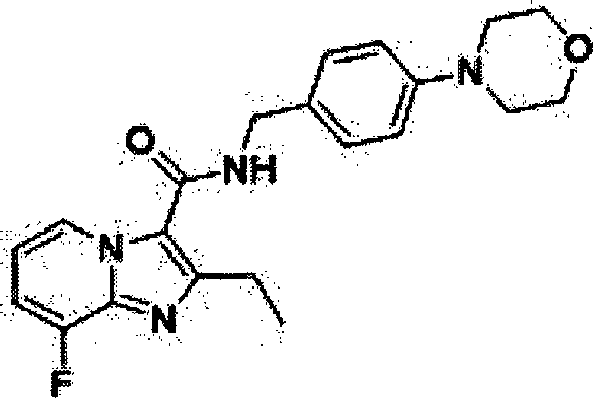
- White solid; mp = 197.3 °C; 1H NMR (400 MHz, CDCl3); δ 1.39 (t, J = 7.6 Hz, 3H), 2.98 (q, J = 7.6 Hz, 2H), 3.15 - 3.17 (m, 4H), 3.85 - 3.87 (m, 4H), 4.61 (d, J = 5.6 Hz, 2H), 6.05 (brs, 1H), 6.80 - 6.85 (m, 1H), 6.92 (d, J= 8.8 Hz, 2H), 7.00 - 7.05 (m, 1H), 7.29 (d, J= 8.8 Hz, 2H), 9.19 (dd, J= 0.8 Hz, 7.2 Hz, 1H); LCMS (electrospray) m/z (M+H)+ 383.
-

- Pale yellow solid; 1H NMR (400 MHz, CDCl3); δ □1.33 (t, J= 7.6 Hz, 3H), 2.92 (q, J= 7.6 Hz, 2H), 3.12 - 3.14 (m, 4H), 3.82 - 3.84 (m, 4H), 3.98 (s, 3H), 4.58 (d, J = 5.6 Hz, 1H), 6.08 (brs, 1H), 6.57 (d, J= 7.2 Hz, 1H), 6.75 (dd, J = 7.2, 7.2 Hz, 1H), 6.87 (d, J = 8.8 Hz, 2H), 7.26 (d, J= 8.8 Hz, 2H), 8.93 (d, J= 7.2 Hz, 1H); 13C NMR (100 MHz, CDCl3) δ □13.9, 23.6, 43.2, 49.3, 56.0, 67.0, 103.1, 113.0, 116.0, 120.9, 124.8, 128.9, 129.4, 140.4, 148.2, 149.9, 150.9, 161.5.
-
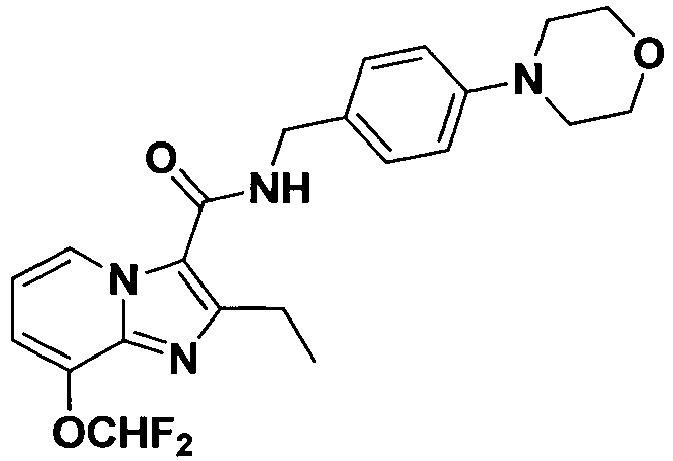
- Off-white solid; mp = 163.0 °C; 1H NMR (400 MHz, CDCl3) δ 1.38 (t, J= 7.6 Hz, 3H), 2.97 (q, J= 7.6 Hz, 2H), 3.16 (t, J= 5.0 Hz, 4H), 3.86 (t, J= 4.8 Hz, 4H), 4.62 (d, J= 5.6 Hz, 2H), 6.03 - 6.05 (m, 1H), 6.85 (dd, J= 7.6 Hz, 2H), 6.92 (d, J= 6.8 Hz, 2H), 7.11 (d, J= 7.6 Hz, 1H), 7.26 (t, J= 74.2 Hz, 1H due to F2), 7.29 (d, J = 8.4 Hz, 2H), 9.25 (d, J = 7.2 Hz, 1H); LCMS (electrospray) m/z (M+H)+ 431
-

- White solid; 1H NMR (400 MHz, CDCl3) δ 1.36 (t, J = 7.6 Hz, 3H), 2.99 (q, J= 7.6 Hz, 2H), 3.15 (t, J= 4.8 Hz, 4H), 3.85 (t, J= 4.8 Hz, 4H), 4.60 (d, J= 5.2 Hz, 2H), 6.06 (brs, 1H), 6.77 (dd, J= 7.2 Hz, 1H), 6.90 (d, J= 8.8 Hz, 2H), 7.28 (d, J= 8.8 Hz, 2H), 7.56 (dd, J= 0.8 Hz, 7.2 Hz, 1H), 9.37 (dd, J= 0.8 Hz, 7.2 Hz, 1H).; LCMS (electrospray) m/z (M+H)+ 445.
-

- White solid; mp = 207.6 °C; 1H NMR (400 MHz, CDCl3); δ □1.37 (t, J= 7.2 Hz, 3H), 2.94 (q, J= 7.2 Hz, 2H), 3.13 - 3.15 (m, 4H), 3.83 - 3.85 (m, 4H), 4.60 (d, J= 5.2 Hz, 2H), 6.10 (brs, 1H), 6.89 (d, J= 8.0 Hz, 2H), 7.27 (d, J= 8.0 Hz, 2H), 7.44 (d, J= 9.2 Hz, 1H), 7.65 (d, J = 9.2 Hz, 1H), 9.82 (s, 1H).
-

- White solid; mp = 174.1 °C; 1H NMR (400 MHz, CDCl3) δ 1.40 (t, J = 7.6 Hz, 3H), 2.98 (q, J = 7.6 Hz, 2H), 3.16 (t, J = 4.8 Hz, 4H), 3.86 (t, J = 4.8 Hz, 4H), 4.62 (d, J = 5.6 Hz, 2H), 6.09 - 6.11 (m, 1H), 6.91 (d, J = 8.8 Hz, 2H), 7.07 (dd, J = 2.0, 7.6 Hz, 1H), 7.29 (d, J = 8.4 Hz, 2H), 7.88 - 7.90 (m, 1H), 9.50 (d, J= 7.2 Hz, 1H); LCMS (electrospray) m/z (M+H)+ 433
-

- White solid; mp = 200.6 °C; 1H NMR (400 MHz, CDCl3); δ □1.34 (t, J = 7.6 Hz, 3H), 2.98 (q, J = 7.6 Hz, 2H), 3.14 - 3.16 (m, 4H), 3.83 - 3.86 (m, 4H), 4.60 (d, J = 5.6 Hz, 2H), 6.11 (brt, J = 5.6 Hz, 1H), 6.89 (d, J = 8.8 Hz, 2H), 6.93 (dd, J = 6.8, 6.8 Hz, 1H), 7.26 (d, J = 8.8 Hz, 2H), 7.62 (d, J= 6.8 Hz, 1H), 9.54 (d, J= 6.8 Hz, 1H).
-

- Pale gray solid; mp = 202.6 °C; 1H NMR (400 MHz, CDCl3); δ 1.34 (t, J= 7.6 Hz, 3H), 2.90 (q, J= 7.6 Hz, 2H), 3.13 - 3.15 (m, 4H), 3.83 - 3.86 (m, 4H), 4.58 (d, J= 5.6 Hz, 2H), 6.05 (brt, J= 5.6 Hz, 1H), 6.88 (d, J= 8.8 Hz, 2H), 6.97 (dd, J= 2.0, 7.2 Hz, 1H), 7.26 (d, J= 8.8 Hz, 2H), 7.74 (d, J= 2.0 Hz, 1H), 9.25 (d, J= 7.2 Hz, 1H); 13C NMR (100 MHz, CDCl3) δ 13.4, 23.5, 43.2, 49.3, 67.0, 115.1, 116.0, 117.0, 119.1, 121.1, 128.5, 128.9, 129.2, 143.6, 151.0, 151.4, 161.2; LCMS (electrospray) m/z 443, 445 (M+H)+ (Br- isotope pattern).
-

- Yellow solid; mp = 210.1 °C; 1H NMR (400 MHz, CDCl3); δ 1.37 (t, J = 7.6 Hz, 3H), 2.94 (q, J = 7.6 Hz, 2H), 3.12 - 3.15 (m, 4H), 3.82 - 3.85 (m, 4H), 4.60 (d, J = 5.2 Hz, 2H), 6.16 (brt, J = 5.2 Hz, 1H), 6.88 (d, J = 8.8 Hz, 2H), 7.16 (dd, J= 2.0, 7.2 Hz, 1H), 7.27 (d, J = 8.8 Hz, 2H), 7.53 (d, J= 6.0 Hz, 2H), 7.85 (d, J= 2.0 Hz, 1H), 8.68 (d, J= 6.0 Hz, 2H), 9.44 (d, J = 7.2 Hz, 1H); 13C NMR (100 MHz, CDCl3) δ 13.3, 23.6, 43.2, 49.3, 66.9, 111.8, 114.3, 115.3, 116.0, 121.2, 128.6, 128.9, 129.2, 136.3, 145.5, 146.1, 150.7, 151.0, 151.9, 161.2; LCMS (electrospray) m/z 442 (M+H)+ .
-

- Yellow solid; mp = 208.5 °C; 1H NMR (400 MHz, CDCl3); δ 1.36 (t, J= 7.2 Hz, 3H), 2.93 (q, J= 7.2 Hz, 2H), 3.12 - 3.15 (m, 4H), 3.82 - 3.85 (m, 4H), 4.59 (d, J= 4.8 Hz, 2H), 6.21 (brs, 1H), 6.87 (d, J= 8.4 Hz, 2H), 7.12 (d, J= 6.0 Hz, 1H), 7.26 (d, J= 8.4 Hz, 2H), 7.37 (dd, J= 5.6, 6.0 Hz, 1H), 7.77 (brs, 1H), 7.90 (d, J = 7.2 Hz, 1H), 8.60 (brs, 1H), 8.88 (brs, 1H), 9.41 (d, J= 7.2 Hz, 1H); 13C NMR (100 MHz, CDCl3) δ 13.3, 23.5, 43.2, 49.3, 66.9, 112.2, 113.8, 115.0, 116.0, 123.9, 128.5, 128.9, 129.3, 134.0, 134.2, 136.2, 146.3, 148.0, 149.6, 150.9, 151.7, 161.3; LCMS (electrospray) m/z 442 (M+H)+ .
-

- White solid; 1H NMR (400 MHz, CDCl3) δ 1.40 (t, J= 7. 6 Hz, 3H), 2.99 (q, J= 7.6 Hz, 2H), 3.16 (t, J = 4.8 Hz, 4H), 3.86 (t, J = 4.8 Hz, 4H), 4.63 (d, J = 5.6 Hz, 2H), 6.07 (brs, 1H), 6.92 (d, J = 8.8 Hz, 2H), 7.02 (dd, J = 6.8 Hz, 6.8 Hz, 1H), 7.31 (d, J= 8.8 Hz, 2H), 7.54 (dd, J = 1.2 Hz, 7.2 Hz, 1H), 7.99 (d, J= 6.0 Hz, 2H), 8.72 (d, J= 5.2 Hz, 2H), 9.47 (dd, J= 1.2 Hz, 5.6 Hz, 1H).; LCMS (electrospray) m/z (M+H)+ 442.
-

- White solid; mp = 204.8 °C,; 1H NMR (400 MHz, CDCl3); δ 1.33 (t, J= 7.6 Hz, 3H), 2.33 (s, 3H), 2.54 - 2.56 (m, 4H), 2.85 (q, J= 7.6 Hz, 2H), 3.12 - 3.15 (m, 4H), 3.27 - 3.30 (m, 4H), 3.83 - 3.85 (m, 4H), 4.57 (d, J= 5.6 Hz, 2H), 5.91 (brt, J= 5.6 Hz, 1H), 6.62 (dd, J= 2.4, 8.0 Hz, 1 H), 6.5 (d, J = 2.4 Hz, 1H), 6.88 (d, J = 8.4 Hz, 2H), 7.26 (d, J = 8.4 Hz, 2H), 9.16 (d, J = 8.0 Hz, 1H); 13C NMR (100 MHz, CDCl3) δ 13.4, 23.6, 43.1, 46.2, 47.8, 49.4, 54.7, 67.0, 96.4, 105.9, 113.2, 116.0, 128.3, 128.8, 129.8, 148.5, 150.0, 150.9, 151.2, 161.7; LCMS (electrospray) m/z 463 (M+H)+ .
-

- White solid; 1H NMR (400 MHz, CDCl3); δ □1.34 (t, J= 7.6 Hz, 3H), 2.87 (q, J= 7.6 Hz, 2H), 3.13 - 3.15 (m, 4H), 3.22 - 3.25 (m, 4H), 3.41 - 3.43 (m, 4H), 3.83 - 3.86 (m, 4H), 4.58 (d, J = 5.2 Hz, 2H), 5.99 (brt, J= 5.2 Hz, 1H), 6.67 (dd, J = 2.4, 8.0 Hz, 1H), 6.81 (d, J = 2.4 Hz, 1H), 6.88 - 6.93 (m, 4H), 6.96 (dd, J= 8.4, 8.8 Hz, 2H), 7.27 (d, J= 8.4 Hz, 2H), 9.19 (d, J= 8.0 Hz, 1H); LCMS (electrospray) m/z 543 (M+H)+.
-

- Pale yellow solid; mp = 235.2 °C; 1H NMR (400 MHz, CDCl3); δ 1.40 (t, J = 7.2 Hz, 3H), 2.93 (q, J = 7.2 Hz, 2H), 3.34 - 3.36 (m, 4H), 3.44 - 3.48 (m, 4H), 4.74 (d, J = 6.0 Hz, H), 6.07 (brt, J = 6.0 Hz, 1H), 6.70 (dd, J = 2.4, 7.6 Hz, 1H), 6.84 (d, J = 2.4 Hz, 1H), 6.90 (dd, J = 7.2, 7.6 Hz, 1H), 6.97 (d, J= 8.4 Hz, 2H), 7.28 - 7.32 (m, 2H), 7.48 (d, J= 8.0 Hz, 2H), 7.61 (d, J= 8.4 Hz, 2H), 9.22 (d, J= 7.6 Hz, 1H); LCMS (electrospray) m/z 508 (M+H)+ .
-

- White solid; mp = 212.5 °C; 1H NMR (400 MHz, CDCl3); δ □ 1.33 (t, J= 7.6 Hz, 3H), 2.56 - 2.58 (m, 4H), 2.85 (q, J= 7.6 Hz, 2H), 3.13 - 3.15 (m, 4H), 3.26 - 3.29 (m, 4H), 3.51 (s, 2H), 3.83 - 3.86 (m, 4H), 4.57 (d, J = 5.6 Hz, 2H), 5.93 (brt, J = 5.6 Hz, 1H), 6.62 (dd, J = 2.4, 7.6 Hz, 1H), 6.75 (d, J = 2.4 Hz, 1H), 6.88 (d, J = 8.8 Hz, 2H), 6.98 - 7.03 (m, 2H), 7.26 - 7.31 (m, 4H), 9.15 (d, J = 7.6 Hz, 1H).
-

- White solid; 1H NMR (400 MHz, CDCl3) δ 1.40 (t, J= 7. 6 Hz, 3H), 2.98 (q, J= 7.6 Hz, 2H), 3.72 (m, 8H), 4.65 (d, J= 6.0 Hz, 2H), 4.73 (d, J= 6.0 Hz, 2H), 6.29 (brs, 1H), 6.62 (brs, 1H), 7.31 (dd, J = 2.0 Hz, 9.6 Hz, 1H), 7.36 (s, 4H), 7.43 (d, J = 8.0 Hz, 2H), 7.55 (d, J= 9.6 Hz, 1H), 7.80 (d, J= 8.0 Hz, 2H), 9.49 (s, 1H).; LCMS (electrospray) m/z (M+H)+ 560.
-

- White solid; 1H NMR (400 MHz, CDCl3) δ 1.42 (t, J = 7.6 Hz, 3H), 2.99 (q, J= 7.6 Hz, 2H), 3.70 - 3.71 (m, 8H), 4.72 (d, J= 6.0 Hz, 2H), 6.17 (brs, 1H), 7.31 (dd, J= 2.0 Hz, 9.2 Hz, 1H), 7.42 (s, 4H), 7.55 (dd, J= 0.8 Hz, 9.6 Hz, 1H), 9.53 (dd, J= 0.8 Hz, 2.0 Hz, 1H).; LCMS (electrospray) m/z (M+H)+ 427.
-

- White solid; 1H NMR (400 MHz, DMSO-d6) δ 1.25 (t, J = 7. 6 Hz, 3H), 2.99 (q, J = 7.6 Hz, 2H), 4.65 (d, J = 6.0 Hz, 2H), 6.99 (dd, J = 7.2 Hz, 1H), 7.36 (dd, J = 6.8 Hz, 1H), 7.42 (s, 1H), 7.45 (d, J = 8.8 Hz, 2H), 7.58 (d, J = 9.2 Hz, 1H), 7.74 (d, J = 8.4 Hz, 1H), 7.77 (s, 1H), 8.23 (dd, J= 5.2 Hz, 8.8 Hz, 2H), 8.47 (t, J= 6.0 Hz, 1H), 8.97 (d, J= 6.8 Hz, 1H).; LCMS (electrospray) m/z (M+H)+ 415.
-

- White solid; 1H NMR (400 MHz, DMSO-d6 ) δ 1.25 (t, J = 7. 6 Hz, 3H), 2.99 (q, J = 7.6 Hz, 2H), 4.65 (d, J = 5.6 Hz, 2H), 7.41 - 7.46 (m, 4H), 7.64 (d, J = 9.6 Hz, 1H), 7.74 (d, J = 8.4 Hz, 1H), 7.78 (s, 1H), 8.21 - 8.25 (m, 2H), 8.54 (t, J= 5.6 Hz, 1H), 9.08 (d, J= 2.0 Hz, 1H).; LCMS (electrospray) m/z (M+H)+ 449.
-
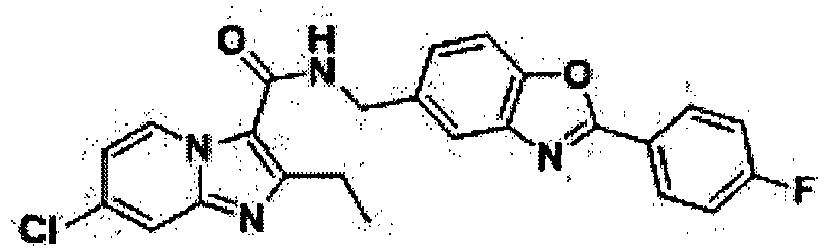
- White solid; 1H NMR (400 MHz, DMSO-d6) δ 1.25 (t, J= 7. 2 Hz, 3H), 2.98 (q, J = 7.2 Hz, 2H), 4.64 (d, J = 5.6 Hz, 2H), 7.07 (d, J= 7.6 Hz, 1H), 7.42 - 7.46 (m, 3H), 7.75 (d, J= 8.4 Hz, 2H), 7.77 (s, 1H), 8.23 (d, J= 8.4 Hz, 2H), 8.55 (brs, 1H), 8.96 (d, J= 7.2 Hz, 1H).; LCMS (electrospray) m/z (M+H)+ 449.
-
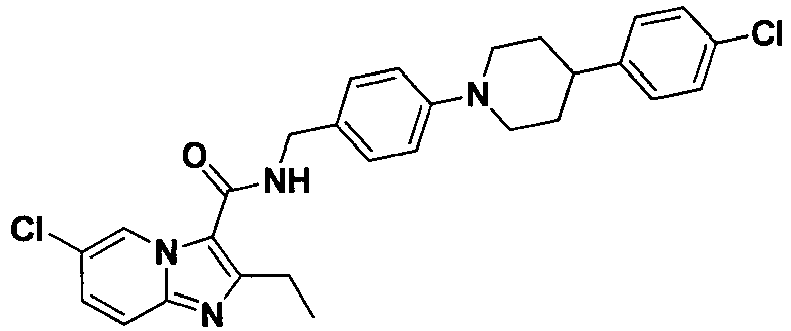
- Pale yellow solid; 1H NMR (400 MHz, CDCl3) δ 1.39 (t, J = 7.6 Hz, 3H), 1.80 - 1.96 (m, 4H), 2.60 - 2.68 (m, 1H), 2.92 - 2.98 (m, 4H), 2.95 (q, J = 7.6 Hz, 2H), 3.79 - 3.83 (m, 2H), 4.61 (q, J = 5.2 Hz, 2H), 5.99 - 6.01 (m, 1H), 6.90 (dd, J = 2.2, 7.4 Hz, 1H), 6.98 (d, J = 8.4 Hz, 2H), 7.18 (d, J = 8.4 Hz, 2H), 7.26 - 7.29 (m, 4H), 7.59 (d, J = 2.0 Hz, 1H), 9.30 (d, J = 7.6 Hz, 1H); LCMS (electrospray) m/z (M+H)+ 507
-

- Pale yellow solid; mp = 177.0 °C; 1H NMR (400 MHz, CDCl3) δ 1.40 (t, J = 7.4 Hz, 3H), 1.80 - 1.96 (m, 4H), 2.60 - 2.67 (m, 1H), 2.79 - 2.86 (m, 4H), 2.96 (q, J = 7.4 Hz, 2H), 3.80 - 3.83 (m, 2H), 4.62 (q, J = 5.2 Hz, 2H), 6.00 - 6.02 (m, 1H), 6.98 (dd, J = 8.8 Hz, 2H), 7.18 (d, J = 8.4 Hz, 2H), 7.26 - 7.31 (m, 4H), 7.54 (d, J = 9.6 Hz, 2H), 9.30 (d, J = 7.6 Hz, 1H).
-

- White solid; mp = 169.7 °C; 1H NMR (400 MHz, CDCl3) δ 1.30 - 1.44 (m, 4H), 1.59 - 1.88 (m, 8H), 2.16 (d, J = 10.8 Hz, 2H), 2.96 (q, J = 7.6 Hz, 2H), 4.78 (d, J = 5.6 Hz, 2H), 6.19 (brs, 1H), 7.28 (d, J = 1.6 Hz, 1H), 7.30 - 7.34 (m, 1H), 7.46 (d, J = 8.0 Hz, 1H), 7.53 (d, J = 9.2 Hz, 1H), 7.67 (s, 1H), 9.53 (d, J= 2.4 Hz, 1H).; LCMS (electrospray) m/z (M+H)+ 437.
-

- White solid; mp = 163.0 °C; 1H NMR (400 MHz, CDCl3) δ 1.30 - 1.46 (m, 6H), 1.60 - 1.73 (m, 4H), 1.86 (d, J = 13.2 Hz, 2H), 2.15 (d, J = 13.2 Hz, 2H), 2.95 (q, J = 7.2 Hz, 2H), 4.77 (d, J = 5.6 Hz, 2H), 6.12 (brs, 1H), 6.89 (d, J = 7.2 Hz, 1H), 7.31 (d, J = 8.0 Hz, 1H), 7.46 (d, J = 8.0 Hz, 1H), 7.58 (s, 1H), 7.67 (s, 1H), 9.36 (d, J = 7.2 Hz, 1H). ; LCMS (electrospray) m/z (M+H)+ 437.
-
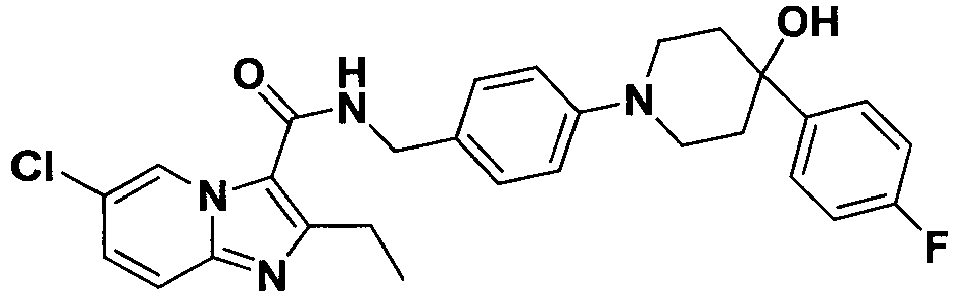
- White solid; mp = 173.5 °C; 1H NMR (400 MHz, CDCl3) δ 1.35 (t, J= 7.6 Hz, 3H), 1.66 (s, 1H), 1.85 (d, J = 12.0 Hz, 2H), 2.18 - 2.26 (m, 2H), 2.91 (q, J= 7.6 Hz, 2H), 3.21 - 3.26 (dd, J = 10.4 Hz, 12.0 Hz, 2H), 3.58 (d, J = 11.6 Hz, 2H), 4.60 (d, J = 5.6 Hz, 2H), 6.00 (brs, 1H), 6.89 (dd, J = 1.6 Hz, 7.6 Hz, 1H), 6.99 (d, J = 8.4 Hz, 2H), 7.04 (dd, J = 8.8 Hz, 2H), 7.26 (d, J = 8.4 Hz, 2H), 7.48 (dd, J = 5.2 Hz, 8.8 Hz, 2H), 7.56 (d, J = 2.0 Hz, 1H), 9.3 5 (d, J = 7.6 Hz, 1H). ; LCMS (electrospray) m/z (M+H)+ 507.
-

- White solid; mp = 199.0 °C; 1H NMR (400 MHz, CDCl3) δ 1.38 (t, J= 7.6 Hz, 3H), 1.6 (s, 1H), 1.86 (dd, J= 2.8 Hz, 14.0Hz, 2H), 2.19 - 2.26 (m, 2H), 2.95 (q, J = 7.6 Hz, 2H), 3.20 - 3.27 (m, 2H), 3.59 (dd, J= 2.4 Hz, 10.0 Hz, 2H), 4.61 (d, J= 5.6 Hz, 2H), 6.02 (s, 1H), 6.98 - 7.06 (m, 4H), 7.27 (d, J= 8.8 Hz, 2H), 7.29 (s, 1H), 7.46 - 7.51 (m, 2H), 7.53 (s, 1H), 9.52 (d, J= 2.4 Hz, 1H). ; LCMS (electrospray) m/z (M+H)+ 507.
-

- White solid; mp = 257.5 °C; 1H NMR (400 MHz, DMSO-d 6); δ 1.23 (t, J= 7.2 Hz, 3H), 1.57 - 1.66 (m, 2H), 1.74 - 1.76 (m, 2H), 2.19 - 2.45 (m, 1H), 2.59 - 2.66 (m, 2H), 2.94 (q, J= 7.2 Hz, 2H), 3.65 - 3.69 (m, 2H), 4.41 (d, J = 6.0 Hz, 2H), 6.75 (brs, 1H), 6.90 (d, J = 8.4 Hz, 2H), 7.20 (d, J = 8.4 Hz, 2H), 7.26 (brs, 1H), 7.43 (dd, J = 2.4, 9.6 Hz, 1H), 7.67 (d, J = 9.6 Hz, 1H), 8.38 (brt, J = 6.0 Hz, 1H), 9.06 (d, J = 2.4 Hz, 1H); LCMS (electrospray) m/z 440 (M+H)+.
-
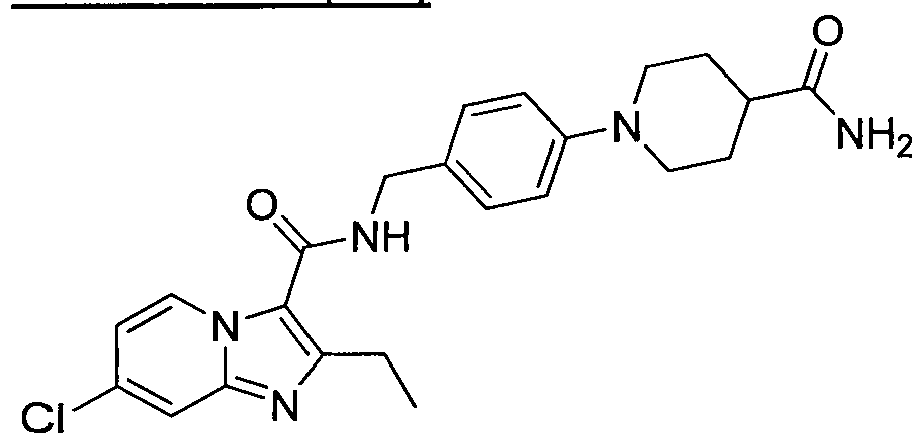
- White solid; mp = 244 °C; 1H NMR (400 MHz, DMSO-d 6); δ 1.23 (t, J= 7.2 Hz, 3H), 1.56 - 1.66 (m, 2H), 1.74 - 1.76 (m, 2H), 2.18 - 2.24 (m, 1H), 2.59 - 2.66 (m, 2H), 2.92 (q, J = 7.2 Hz, 2H), 3.65 - 3.68 (m, 2H), 4.40 (d, J = 5.6 Hz, 2H), 6.75 (brs, 1H), 6.89 (d, J = 8.8 Hz, 2H), 7.07 (dd, J= 2.0, 7.6 Hz, 1H), 7.19 (d, J= 8.8 Hz, 2H), 7.25 (brs, 1H), 7.77 (d, J= 2.0 Hz, 1H), 8.36 (brt, J = 5.6 Hz, 1H), 8.93 (d, J = 7.6 Hz, 1H); LCMS (electrospray) m/z 440 (M+H)+.
-

- White solid; 1H NMR (400 MHz, CDCl3); δ 1.35 (t, J = 7.6 Hz, 3H), 1.78 - 1.81 (m, 2H), 1.90 - 2.00 (m, 2H), 2.59 - 2.67 (m, 1H), 2.71 - 7.78 (m, 2H), 2.91 - 2.97 (m, 5H), 3.07 (s, 3H), 3.73 - 3.76 (m, 2H), 4.57 (d, J = 5.2 Hz, 2H), 6.03 (brt, J= 5.2 Hz, 1H), 6.90 (d, J = 8.4 Hz, 2H), 7.23 - 7.28 (m, 3H), 7.50 (d, J = 9.6 Hz, 1H), 9.50 (d, J= 1.2 Hz, 1H); 13C NMR (100 MHz, CDCl3) δ 13.3, 23.6, 28.4, 35.8, 37.2, 38.7, 43.3, 49.3, 115.4, 116.7, 117.0, 121.5, 126.3, 128.2, 128.5, 128.9, 144.5, 151.3, 151.4, 161.1, 174.7; LCMS (electrospray) m/z 468 (M+H)+.
-

- Pale yellow solid; 1H NMR (400 MHz, CDCl3); δ 1.33 (t, J = 7.2 Hz, 3H), 1.77 - 1.80 (m, 2H), 1.88 - 1.99 (m, 2H), 2.58 - 2.66 (m, 1H), 2.70 - 2.77 (m, 2H), 2.89 - 2.95 (m, 5H), 3.06 (s, 3H), 3.71 - 3.74 (m, 2H), 4.56 (d, J = 5.2 Hz, 2H), 6.07 (brs, 1H), 6.84 (dd, J = 1.6, 7.2 Hz, 1H), 6.89 (d, J= 8.4 Hz, 2H), 7.22 (d, J= 8.4 Hz, 2H), 7.54 (d, J= 1.6 Hz, 1H), 9.30 (d, J = 7.2 Hz, 1H); 13C NMR (100 MHz, CDCl3) δ 13.4, 23.5, 28.4, 35.8, 37.2, 38.7, 43.3, 49.3, 114.6, 115.1, 115.7, 116.7, 128.5, 128.6, 128.8, 133.5, 146.1, 151.2, 151.6, 161.2, 174.7; LCMS (electrospray) m/z 468 (M+H)+.
-

- Pale pink solid; 1H NMR (400 MHz, CDCl3); δ 1.35 (t, J= 7.6 Hz, 3H), 1.73 - 1.82 (m, 2H), 2.00 - 2.04 (m, 2H), 2.91 - 2.98 (m, 4H), 3.50 - 3.59 (m, 3H), 4.53 (s, 2H), 4.58 (d, J= 5.2 Hz, 2H), 6.00 (brt, J = 5.2 Hz, 1H), 6.91 (d, J = 8.8 Hz, 2H), 6.99 - 7.04 (m, 2H), 7.23 - 7.3 5 (m, 5H), 7.50 (d, J = 9.6 Hz, 1H), 9.51 (d, J= 2.0 Hz, 1H); LCMS (electrospray) m/z 521 (M+H)+.
-

- Pale pink solid; 1H NMR (400 MHz, CDCl3); δ 1.34 (t, J= 7.2 Hz, 3H), 1.73 - 1.82 (m, 2H), 1.96 - 2.07 (m, 2H), 2.91 - 2.95 (m, 4H), 3.49 - 3.59 (m, 3H), 4.52 (s, 2H), 4.56 (d, J= 5.6 Hz, 2H), 5.99 (brt, J= 5.6 Hz, 1H), 6.86 - 6.92 (m, 3H), 6.99 - 7.03 (m, 2H), 7.22 - 7.32 (m, 4H), 7.55 (d, J = 1.6 Hz, 1H), 9.32 (d, J = 7.2 Hz, 1H); LCMS (electrospray) m/z 521 (M+H)+.
-

- White solid; mp = 175.5 °C; 1H NMR (400 MHz, CDCl3); δ 1.37 (t, J = 7.6 Hz, 3H), 2.94 (q, J= 7.6 Hz, 2H), 2.99 - 3.03 (m, 4H), 3.83 - 3.85 (m, 4H), 4.58 (d, J= 6.0 Hz, 2H), 6.15 (brt, J = 6.0 Hz, 1H), 6.99 (d, J = 8.0 Hz, 1H), 7.21 (dd, J = 1.6, 8.0 Hz, 1H), 7.26 - 7.28 (m, 1H), 7.36 (d, J = 1.6 Hz, 1H), 7.49 (d, J = 9.2 Hz, 1H), 9.47 (d, J = 0.8 Hz, 1H); 13C NMR (100 MHz, CDCl3) δ 13.3, 23.7, 42.7, 51.8, 67.2, 115.1, 117.0, 120.7, 121.7, 126.3, 127.0, 128.4, 129.2, 130.1, 134.0, 144.6, 148.6, 151.6, 161.2; LCMS (electrospray) m/z 433 (M+H)+.
-

- Pale yellow solid; 1H NMR (400 MHz, CDCl3); δ 1.38 (t, J = 7.6 Hz, 3H), 2.94 (q, J= 7.6 Hz, 2H), 3.02 - 3.05 (m, 4H), 3.85 - 3.87 (m, 4H), 4.59 (d, J = 5.6 Hz, 2H), 6.09 (brt, J= 5.6 Hz, 1H), 6.88 (dd, J = 2.0, 7.2 Hz, 1H), 7.00 (d, J = 8.0 Hz, 1H), 7.22 (dd, J = 1.6, 8.0 Hz, 1H), 7.37 (d, J = 1.6 Hz, 1H), 7.57 (d, J = 2.0 Hz, 1H), 9.32 (d, J = 7.2 Hz, 1H); 13C NMR (100 MHz, CDCl3) δ 13.4, 23.7, 42.7, 51.8, 67.3, 114.9, 115.8, 120.7, 127.1, 128.6, 129.2, 130.1, 133.8, 134.0, 146.3, 148.7, 151.9, 161.3 (hidden 1 carbon); LCMS (electrospray) m/z 433 (M+H)+.
-

- Pale yellow solid; 1H NMR (400 MHz, CDCl3); δ 1.36 (t, J = 7.6 Hz, 3H), 1.74 - 1.84 (m, 2H), 2.01 - 2.05 (m, 2H), 2.37 - 2.44 (m, 1H), 2.84 - 2.91 (m, 2H), 2.92 (q, J = 7.6 Hz, 2H), 3.60 - 3.65 (m, 2H), 4.59 (d, J = 5.6 Hz, 2H), 5.99 (brt, J = 5.6 Hz, 1H), 6.92 (d, J = 8.4 Hz, 2H), 7.25 (d, J= 8.4 Hz, 2H), 7.27 (dd, J= 2.4, 9.6 Hz, 1H), 7.52 (d, J= 9.6 Hz, 1H), 9.52 (d, J = 2.4 Hz, 1H), 9.70 (s, 1H); LCMS (electrospray) m/z 425 (M+H)+.
-

- Pale yellow solid; 1H NMR (400 MHz, CDCl3); δ 1.35 (t, J = 7.6 Hz, 3H), 1.74 - 1.84 (m, 2H), 2.01 - 2.05 (m, 2H), 2.38 - 2.44 (m, 1H), 2.84 - 2.90 (m, 2H), 2.91 (q, J = 7.6 Hz, 2H), 3.59 - 3.64 (m, 2H), 4.58 (d, J= 5.2 Hz, 2H), 5.98 (brt, J= 5.2 Hz, 1H), 6.88 (dd, J= 2.0, 7.6 Hz, 1H), 6.91 (d, J= 8.4 Hz, 2H), 7.52 (d, J= 8.4 Hz, 2H), 7.57 (d, J= 2.0 Hz, 1H), 9.34 (d, J = 7.6 Hz, 1H), 9.70 (s, 1H); LCMS (electrospray) m/z 425 (M+H)+.
- Mycobacterium tuberculosis H37Rv was incubated at an initial inoculum of 2x10⁶ bacteria/ml in Middlebrook 7H9 media containing an increasing concentration of
representative compound - Bactericidal activity was demonstrated by the decrease in colongy forming unit (CFU) number after incubation with various concentrations of either
compound Figure 2 ). The activity of both compounds was quite potent and reached 100% growth inhibition around the same time as the reference compound PA-824. These data demonstrate the therapeutic usefulness of this scaffold for the treatment of tuberculosis. - MIC of
representative compounds - All MDR tested strains showed an MIC lower than or equal to 1.25 µM for
compound 47 and 0.625 forcompound 54, while INH resistance was confirmed for all these strains (Table 2). These values are similar to that obtained for the M. tuberculosis drug sensitive strain (1.25 µM and 0.625 µM, respectively). Bothcompound 47 andcompound 54 showed levels of activity comparable to or better than MFX. These data clearly show that this scaffold has therapeutic applicability for the treatment of tuberculosis and in particular multi-drug resistant strains of the disease. - The effect of
compounds day 1 to control the number of CFU in the lungs. In the acute model of infection, mice were treated for 4 weeks, starting atday 1. Compounds were freshly dissolved in a 0.5% methylcellulose solution and administered byoral gavage 5 times/week. Bacterial load was assessed in lungs and spleen after homogenizing the organs in IX PBS. Serial dilutions of organs homogenates were spread on Middlebrook 7H11 plates and CFU were determined after 3 weeks incubation at 37°C under 5% CO2. - In the acute model of infection (after 4 weeks of treatment;
Figure 3 ), a reduction of ~2 log CFU compared to untreated mice was observed in the lungs of mice treated with 50 mg/kg of eithercompound 177 orcompound 185 administered orally (Figure 3A ). No CFU were detected in the spleen of those same mice, while the infection control mice presented an average of 2.5x10⁴ CFU/ spleen (Figure 3B ). No CFU were recovered from either lungs or spleen from mice treated with 25 mg/kg of INH. Overall bothcompound 177 andcompound 185, demonstrated a significant effect in the acute mouse model of infection. - One of the current challenges for TB drug discovery is the identification of compounds that are active against persistent bacteria. Although the location and state of latent bacteria remains a matter of debate, one commonly shared hypothesis for mycobacterial persistence is that M. tuberculosis bacilli are able to survive in macrophages for prolonged periods of time and, unlike other bacteria, are able to actively replicate. The intraphagosomal profile of M. tuberculosis is complex; a large variety of genes are over-expressed and timely regulated and are also dependent on environmental factors. Altogether, this makes the identification of one specific tubercle factor that could be selected as the ideal target difficult. Consequently, non-target cell-based assays are a critical tool in the search of intracellular M. tuberculosis inhibitors.
- Investigation of bacillus growth inhibitors within macrophages has long been limited due to cumbersome CFU plating, slow bacillus growth, safety requirements and difficulties in setting-up appropriate infection conditions. As a consequence, this approach was always used as a secondary assay after the initial selection of compounds that are active on in vitro extracellular growth. With the advent of automated confocal microscopy, the above mentioned limitations could be readdressed and the methodology employed herein demonstrates the feasibility of large scale compound screening.
- Obviously compounds found to be active against both intracellular and in vitro M. tuberculosis growth are the most promising. The best inhibitors isolated from this library have an inhibitory activity within the same range as INH and/or PA-824. Further structure activity relationship studies will contribute to determine if their activity can be additionally improved. Taken together, the above results show that monitoring M. tuberculosis growth with automated fluorescence microscopy is highly robust and reliable and that this method enables fast selection of potent anti-TB compounds.
Table 1 Compound QUM (µM) QIM (µM) Compound QUM (µM) QIM (µM) 
+ + 
+ + 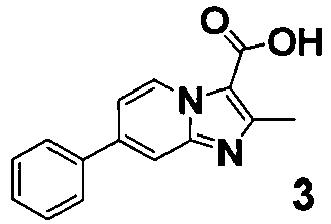
+ + 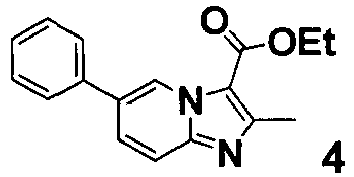
+ + 
+ + 
+ + 
+ + 
+ ++ 
+ + 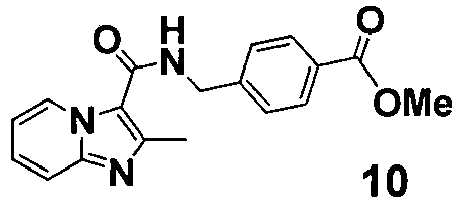
++ + 
+ + 
++ ++ 
+ + 
+ + 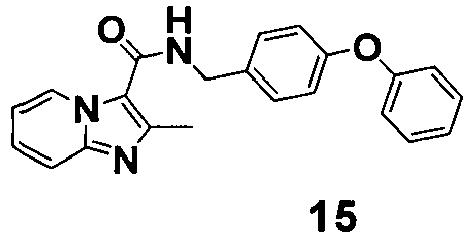
++ +++ 
+++ +++ 
++ ++ 
+ + 
+ + 
+ + 
+ + 
+ + 
++ ++ 
+ + 
+ + 
+ + 
+ + 
+ ++ 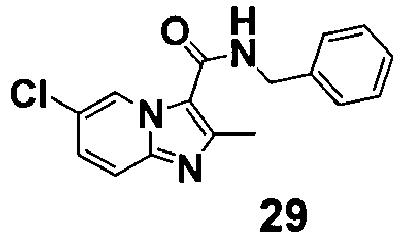
++ ++ 
+ + 
++ +++ 
+++ +++ 
+ + 
++ ++ 
+ + 
+ + 
+ + 
+ + 
++ ++ 
+ + 
+ + 
+ + 
+ + 
+++ +++ 
+++ +++ 
++ ++ 
+++ +++ 
++ + 
+++ +++ 
++ ++ 
+ + 
++ ++ 
+ + 
+++ +++ 
+++ +++ 
+++ +++ 
+++ +++ 
++ ++ 
++ ++ 
+++ +++ 
+++ +++ 
+++ +++ 
+++ +++ 
+++ +++ 
+++ +++ 
+++ +++ 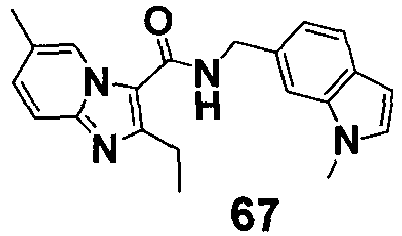
+++ +++ 
++ +++ 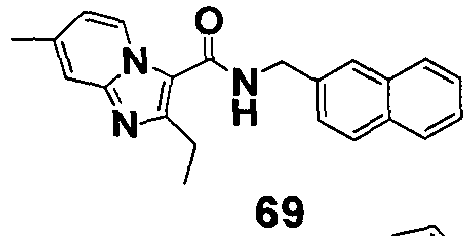
++ +++ 
+++ +++ 
+++ +++ 
+++ +++ 
+++ +++ 
+++ +++ 
+++ +++ 
+++ +++ 
+++ +++ 
+++ +++ 
+++ +++ 
+++ +++ 
+++ +++ 
+++ +++ 
t++ +++ 
+++ +++ 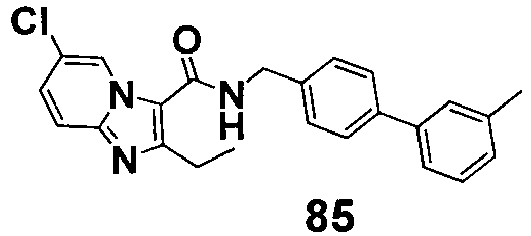
+++ +++ 
+++ +++ 
+++ +++ 
++ ++ 
+++ ++ 
+++ +++ 
+++ ++ 
+++ +++ 
+++ +++ 
+++ +++ 
+++ +++ 
+++ +++ 
+++ +++ 
+++ +++ 
+++ +++ 
+++ +++ 
++ +++ 
+++ ++ 
++ +++ 
+ ++ 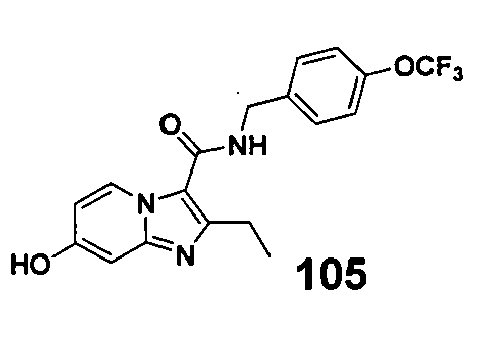
+ + 
+++ ++ 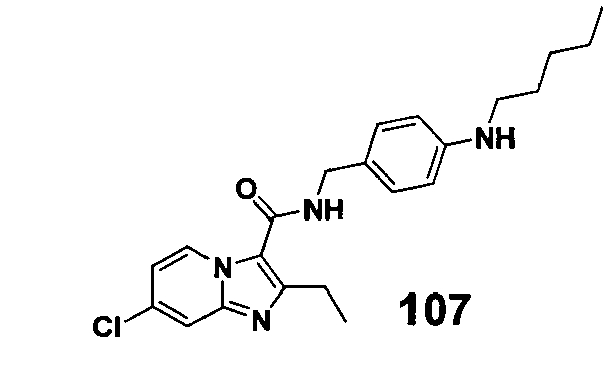
+++ +++ 
++ ++ 
++ ++ 
++ +++ 
+++ +++ 
+++ nd 
+++ +++ 
+++ nd 
+++ nd 
+++ +++ 
+++ +++ 
+++ +++ 
+++ +++ 
+++ +++ 
+++ +++ 
+++ +++ 
++ +++ 
++ +++ 
+++ ++ 
+++ ++ 
+ +++ 
+ +++ 
+++ +++ 
++ +++ 
+++ +++ 
+++ +++ 
+++ +++ 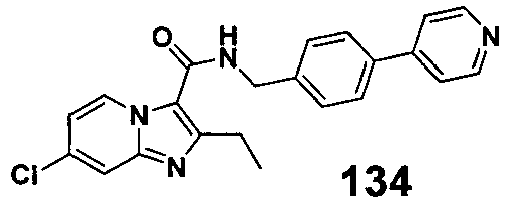
++ +++ 
++ +++ 
++ ++ 
++ +++ 
+++ +++ 
+++ +++ 
+++ +++ 
+++ +++ 
+ + 
++ +++ 
+++ +++ 
+ + 
+ ++ 
+++ +++ 
+++ +++ 
+ + 
+ + 
++ + 
+++ +++ 
++ + 
+++ ++ 
+ + 
+ + 
+++ +++ 
+++ +++ 
+++ +++ 
+ + 
+++ +++ 
+++ +++ 
+++ +++ 
+++ +++ 
+++ +++ 
+++ +++ 
+++ +++ 
++ ++ 
+++ nd 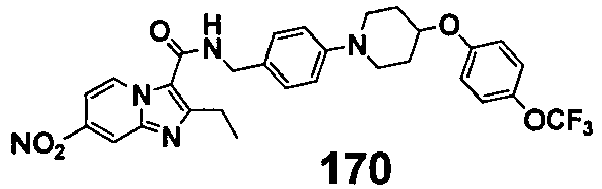
++ ++ 
+++ +++ 
+++ +++ 
+++ +++ 
+++ +++ 
+ +++ 
+++ +++ 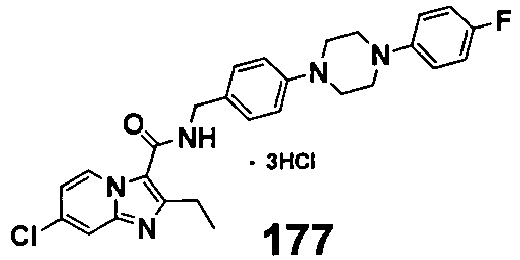
+++ +++ 
+++ +++ 
+++ +++ 
+++ +++ 
+++ +++ 
+++ ++ 
+++ nd 
+++ +++ 
+++ +++ 
+++ +++ 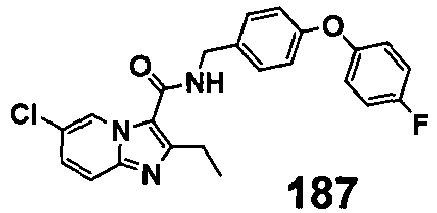
+++ +++ 
+++ +++ 
+++ +++ 
+++ +++ 
+++ +++ 
+++ +++ 
+++ +++ 
++ +++ 
++ ++ 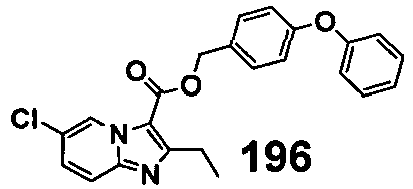
++ +++ 
++ ++ 
++ +++ 
+++ +++ 
+++ +++ 
+++ +++ 
+++ +++ 
++ ++ 
+ + 
+ + 
+ + 
+++ +++ 
+++ +++ 
+++ +++ 
++ +++ 
+++ +++ 
+++ +++ 
+++ ++ 
+++ +++ 
+++ +++ 
+++ +++ 
+++ +++ 
+++ + 
+++ nd 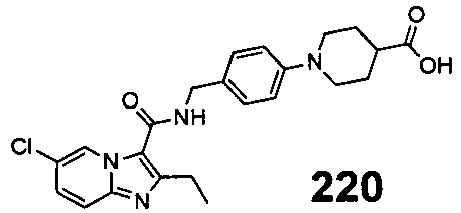
+++ nd 
+++ +++ 
+++ +++ 
+++ nd 
+++ nd 
+++ nd 
+++ +++ 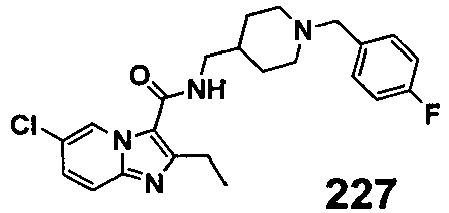
++ +++ 
+ + 
+ + 
+ + 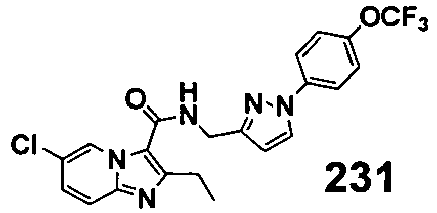
+++ +++ 
++ ++ 
+ + 
++ ++ 
++ ++ 
++ + 
+ + 
+ + 
+ + 
+ + 
+ + 
+ + 
+ + 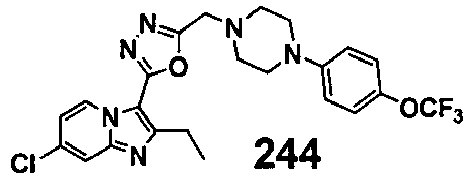
++ ++ 
++ nd 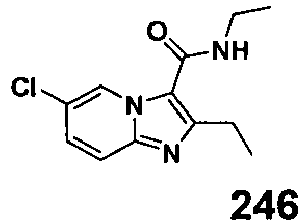
+ nd 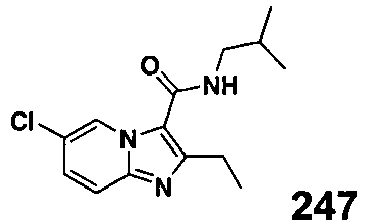
+ nd 
+++ nd 
+++ nd 
+++ nd 
+++ nd 
+++ nd 
+++ nd 
+++ nd 
+++ nd 
+++ nd 
+++ nd 
+++ +++ 
+++ nd 
+++ nd 
+ + 
+++ +++ 
+++ +++ 
+++ nd 
+ nd 
+ nd 
+++ +++ 
+++ nd 
+++ ++ 
+ + 
+++ nd 
+++ +++ 
+++ +++ 
+++ nd 
++ nd 
+ nd 
++ nd 
++ nd 
+ nd 
+++ nd 
+++ +++ 
+++ +++ 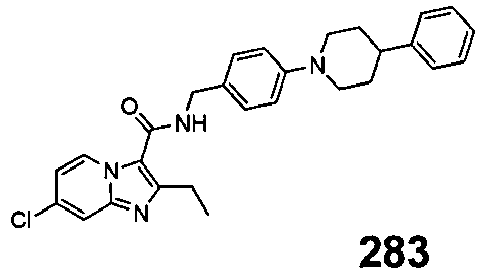
+++ nd 
+++ nd 
+++ nd 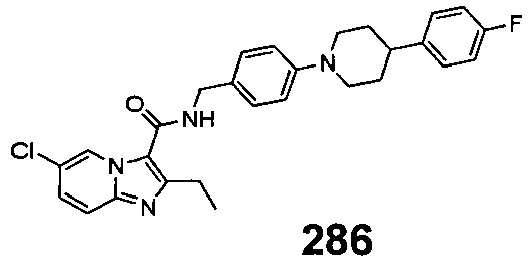
+++ +++ 
+++ +++ 
+++ nd 
+++ nd 
+++ nd 
+++ +++ 
+++ +++ 
+++ nd 
++ nd 
+++ +++ 
+++ +++ 
+++ +++ 
+++ nd 
+++ nd 
+++ nd 
+++ nd 
+++ nd 
+++ +++ 
+++ nd 
+++ nd 
+++ +++ 
+++ +++ 
+++ nd 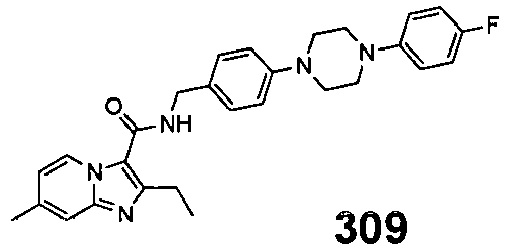
+++ +++ 
+++ +++ 
+++ +++ 
+++ nd 
+++ nd 
+++ nd 
+++ +++ 
++ ++ 
+++ +++ 
+++ nd 
++ nd 
+++ nd 
+++ nd 
++ nd 
++ nd 
+++ +++ 
+ + 
+ + 
+ nd 
+ + 
+ + 
+ +++ 
+ + 
+ nd 
+ nd 
+++ nd 
+++ nd 
+++ nd 
+++ nd 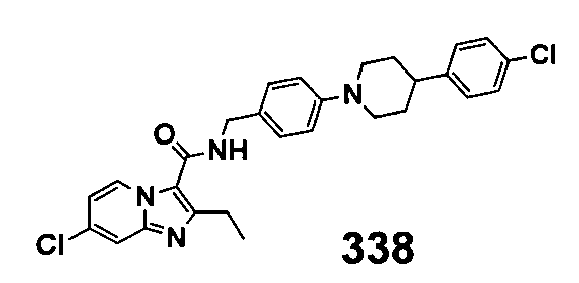
+++ nd 
+++ nd 
+++ nd 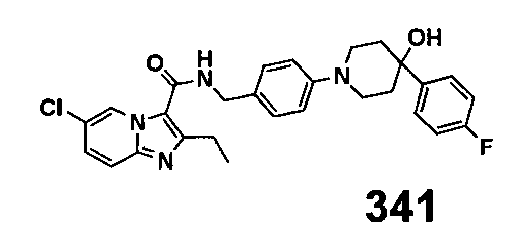
+++ nd 
+++ nd 
+++ nd 
++ nd 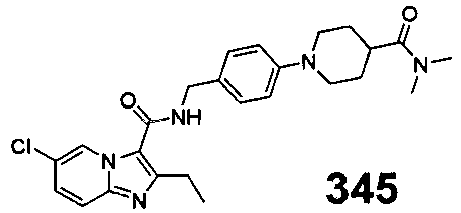
+++ nd 
+++ nd 
+++ nd 
++ nd 
+++ nd 
+++ nd 
+++ nd 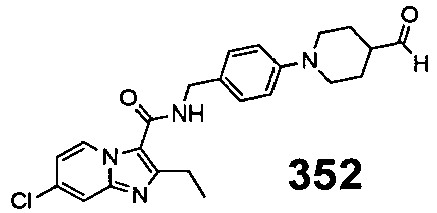
+++ nd Activity range: +++ indicates < 1 uM, ++ indicates between 1-20 uM, + indicates > 20 uM nd : not determined Table 2 MIC80 (µM) MDR isolates Sensitive Strain Compound #13 #33 #48 #61 #80 #125 #137 #143 #146 #171 H37Rv 47 0.3125 0.3125 0.3125 0.3125 0.3125 0.625 1.25 1.25 0.1562 5 1.25 1.25 54 0.15625 0.15625 0.15625 0.15625 0.15625 0.3125 0.625 0.3125 0.3125 0.3125 0.625 INH 5 10 10 20 5 10 20 10 20 5 1.25 MFX 0.15625 0.3125 0.3125 0.3125 0.625 0.625 0.625 1.25 0.625 0.625 1.25
Claims (8)
- A compound having the general formula Ib:
 X, Y and Z are CH;o is 1; n is 0; m is 0, 1, 2, 3 or 4;A is C=O;W is NH;R2 is, at each occurrence, independently selected from the group consisting of hydrogen, halogen, C1-C10 alkyl, C3-C10 cycloalkyl, C2-C10 alkenyl, C3-C10 cycloalkenyl, C2-C10 alkynyl, C1-C10 haloalkyl, -OH, -OR5, C1-C10 alkoxy, C3-C10 cycloalkoxy, C3-C15 cycloalkylalkoxy, C3-C15 cycloalkylalkyl, -CN, -NO2, -NH2, -N(R5)2, -C(O)R5, -C(O)OR5, -C(O)N(R5)2, -SR5,-S(O)R5, -S(O)2R5, -S(O)2N(RS)2, aryl, e.g. phenyl, benzyl, heteroaryl, and heterocyclyl;R3 is, at each occurrence, independently selected from the group consisting of hydrogen, halogen, C1-C10 alkyl, C3-C10 cycloalkyl, hydroxyl, -OR6, -CN, -NO2, -NH2, -N(R6)C(O)R6,-C(O)R6, -C(O)OR6, -C(O)N(R6)2, -S(O)R6, -S(O)2R6, -S(O)2N(R6)2, aryl, e.g. phenyl, benzyl, heteroaryl, heterocyclyl, or two groups of R3 are connected to each other to make five or six membered cyclic and heterocyclic rings,R5 and R6 are, at each occurrence, independently selected from the group consisting of hydrogen, C1-C10 alkyl, C3-C10 cycloalkyl, C2-C10 alkenyl, C3-C10 cycloalkenyl, C2-C10 alkynyl, C1-C10 haloalkyl, aryl, e.g. phenyl, benzyl, heteroaryl, and heterocyclyl;R10 is a moiety selected from the group consisting of


 R11 is, at each occurrence, independently selected from the group consisting of hydrogen, C1-C10 alkyl, C3-C10 cycloalkyl, C2-C10 alkenyl, C3-C10 cycloalkenyl, C2-C10 alkynyl, C1-C10 haloalkyl, -OH, -OR13, C1-C10 alkoxy, C3-C10 cycloalkoxy, C3-C15 cycloalkylalkoxy, C3-C15 cycloalkylalkyl, -NH2, -N(R13)2, -C(O)R13, -COOR13, -C(O)N(R13)2, -S(O)R13, -S(O)2R13,-S(O)2N(R13)2, aryl, e.g. phenyl, benzyl, heteroaryl, and heterocyclyl;R12 is, at each occurrence, independently selected from the group consisting of hydrogen, C1-C10 alkyl, C3-C10 cycloalkyl, C2-C10 alkenyl, C3-C10 cycloalkenyl, C2-C10 alkynyl, C1-C10 haloalkyl, hydroxyl, -OR14, -C(O)R14, -C(O)OR14, -CN, -NO2, -NH2, -N(R14)2, -C(O)N(R14)2, S(O)R14, -S(O)2R14, -S(O)2N(R14)2, aryl, e.g. phenyl, benzyl, heteroaryl, and heterocyclyl;R3 is, at each occurrence, independently selected from the group consisting of hydrogen, C1-C10 alkyl, C3-C10 cycloalkyl, C2-C10 alkenyl, C3-C10 cycloalkenyl, C2-C10 alkynyl, C1-C10 haloalkyl, aryl, e.g. phenyl, benzyl, heteroaryl, and heterocyclyl; andR14 is, at each occurrence, independently selected from the group consisting of hydrogen, C1-Cg alkyl optionally substituted with at least one hydroxyl or halogen; C3-C7 cycloalkyl, C2-C10 alkenyl, C3-C10 cycloalkenyl, C2-C10 alkynyl, C1-C10 haloalkyl, aryl, e.g. phenyl, benzyl, heteroaryl and heterocyclyl,and pharmaceutically acceptable salts thereof
for use in the treatment of a bacterial infection. - The compound for use according to claim 1, having one of the following formulae:






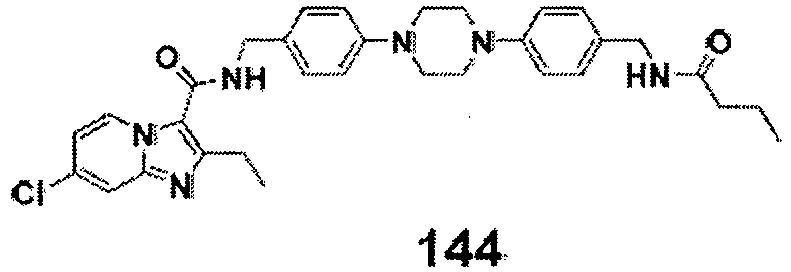





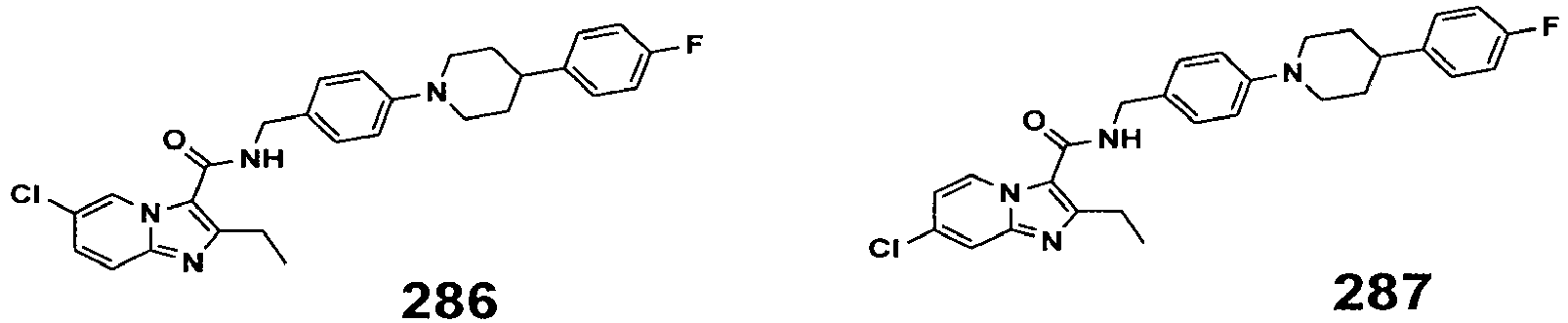


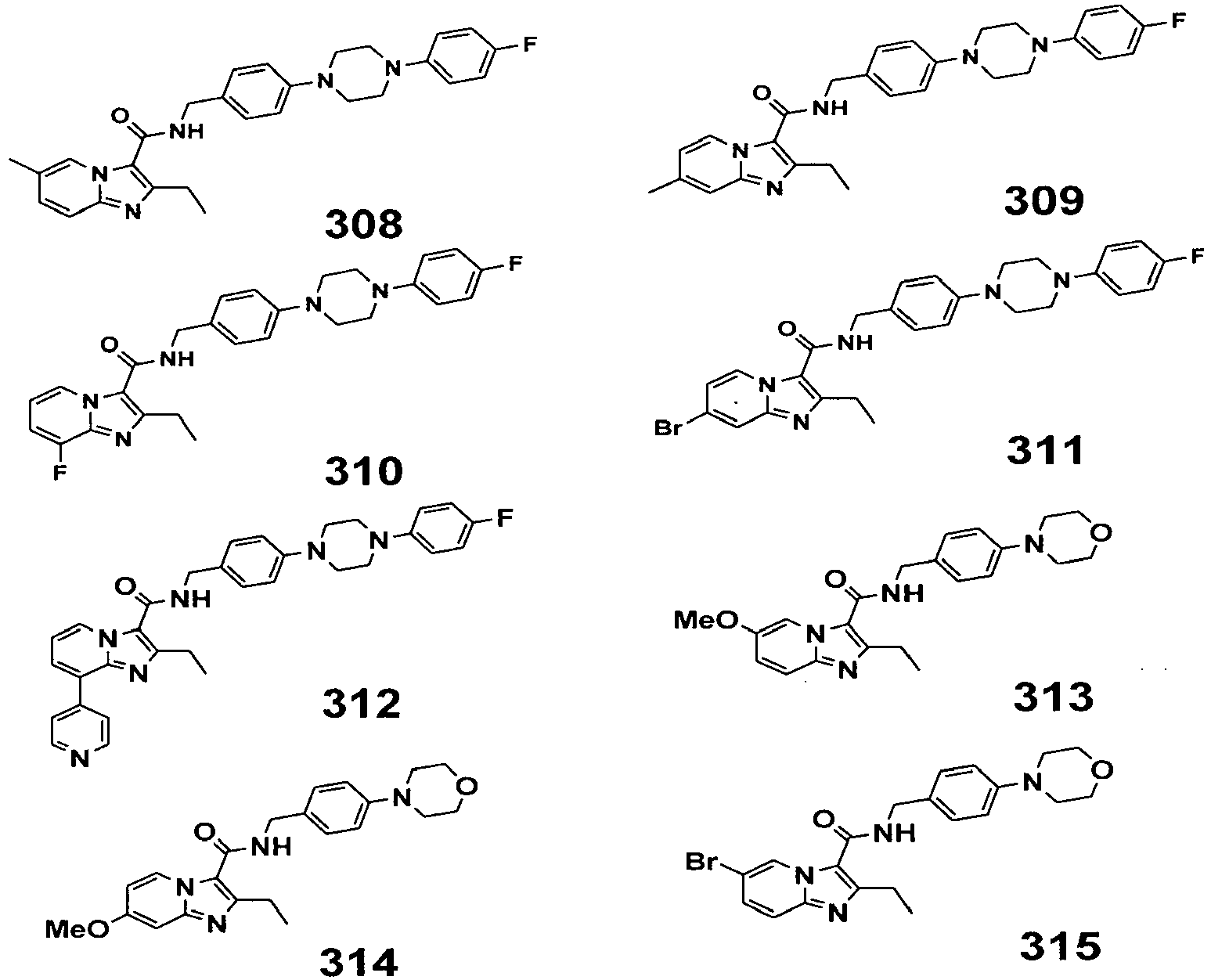









and pharmaceutically acceptable salts thereof. - The compound for use according to claim 2, having formula 177,
and pharmaceutically acceptable salts thereof. - The compound for use according to any of claims 1 - 3, wherein said bacterial infection is Tuberculosis.
- A compound having one of the formulae 17, 56, 58, 59, 66-69, 74, 77-80, 89-91, 108-115, 139, 140, 144, 162-181, 183, 193-195, 204-225, 265-329, and 331-352 as shown in claim 2, preferably one of the formulae 56, 66-69, 74, 77-80, 89-91, 110, 111, 113, 139, 140, 144, 162-167, 171-181, 193, 209-218, 221-225, 267-269, 271-274, 280-293, 295-315, 317-318, 320-321, and 324,
and pharmaceutically acceptable salts thereof. - The compound according to claim 5, having formula 177,
and pharmaceutically acceptable salts thereof. - A compound having the general formula Ib:
 X, Y and Z are CH;o is 1; n is 0; m is 1, 2, 3 or 4;A is C=O;W is NH;R2 is, at each occurrence, independently selected from the group consisting of hydrogen, halogen, C1-C10 alkyl, C3-C10 cycloalkyl, C2-C10alkenyl, C3-C10 cycloalkenyl, C2-C10 alkynyl, C1-C10 haloalkyl, -OR5, C1-C10 alkoxy, C3-C10 cycloalkoxy, C3-C15 cycloalkylalkoxy, C3-C15 cycloalkylalkyl, -CN, -NO2, -NH2, -N(R5)2, -C(O)R5, -C(O)OR5, -C(O)N(R5)2, -SR5,-S(O)R5, -S(O)2R5, -S(O)2N(R5)2, aryl, e.g. phenyl, benzyl, and heterocyclyl;R3 is, at each occurrence, independently selected from the group consisting of halogen, C1-C10 alkyl, C3-C10 cycloalkyl, hydroxyl, -OR6, -CN, -NO2, -NH2, -N(R6)C(O)R6, -C(O)R6,-C(O)N(R6)2, -S(O)R6, -S(O)2R6, -S(O)2N(R6)2, aryl, e.g. phenyl, benzyl, heteroaryl, heterocyclyl, or two groups of R3 are connected to each other to make five or six membered cyclic and heterocyclic rings,R5 and R6 are, at each occurrence, independently selected from the group consisting of hydrogen, C1-C10 alkyl, C3-C10 cycloalkyl, C2-C10 alkenyl, C3-C10 cycloalkenyl, C2-C10 alkynyl, C1-C10 haloalkyl, aryl, e.g. phenyl, benzyl, heteroaryl, and heterocyclyl;R10 is a moiety selected from the group consisting of


 R11 is, at each occurrence, independently selected from the group consisting of hydrogen, C1-C10 alkyl, C3-C10 cycloalkyl, C2-C10 alkenyl, C3-C10 cycloalkenyl, C2-C10 alkynyl, C1-C10 haloalkyl, -OH, -OR13, C1-C10 alkoxy, C3-C10 cycloalkoxy, C3-C15 cycloalkylalkoxy, C3-C15 cycloalkylalkyl, -NH2, -N(R13)2, -C(O)R13, -C(O)OR13, -C(O)N(R13)2, -S(O)R13, -S(O)2R13,-S(O)2N(R13)2, aryl, e.g. phenyl, benzyl, heteroaryl, and heterocyclyl;R12 is, at each occurrence, independently selected from the group consisting of hydrogen, C1-C10 alkyl, C3-C10 cycloalkyl, C2-C10 alkenyl, C3-C10 cycloalkenyl, C2-C10 alkynyl, C1-C10 haloalkyl, hydroxyl, -OR14, -C(O)R14, -R14(R14)C(O)R14, -R14(R14)C(O)OR14, -CN, -NO2,-NH2, -N(R14)2, -C(O)N(R14)2, -R14(R14)C(O)N(R14)2, -S(O)R14, -S(O)2R14, -S(O)2N(R14)2, aryl, e.g. phenyl, benzyl, heteroaryl, and heterocyclyl;R13 is, at each occurrence, independently selected from the group consisting of hydrogen, C1-C10 alkyl, C3-C10 cycloalkyl, C2-C10 alkenyl, C3-C10 cycloalkenyl, C2-C10 alkynyl, C1-C10 haloalkyl, aryl, e.g. phenyl, benzyl, heteroaryl, and heterocyclyl, andR14 is, at each occurrence, independently selected from the group consisting of hydrogen, C1-C8 alkyl optionally substituted with at least one hydroxyl or halogen; C3-C7 cycloalkyl, C2-C10 alkenyl, C3-C10 cycloalkenyl, C2-C10 alkynyl, C1-C10 haloalkyl, aryl, e.g. phenyl, benzyl, heteroaryl and heterocyclyl,and pharmaceutically acceptable salts thereof.
 - A pharmaceutical composition comprising a compound according to any of claims 5 - 7, and a pharmaceutically acceptable carrier.
Applications Claiming Priority (3)
| Application Number | Priority Date | Filing Date | Title |
|---|---|---|---|
| US31511310P | 2010-03-18 | 2010-03-18 | |
| US201161440937P | 2011-02-09 | 2011-02-09 | |
| PCT/EP2011/001345 WO2011113606A1 (en) | 2010-03-18 | 2011-03-18 | Anti-infective compounds |
Publications (2)
| Publication Number | Publication Date |
|---|---|
| EP2547678A1 EP2547678A1 (en) | 2013-01-23 |
| EP2547678B1 true EP2547678B1 (en) | 2016-03-16 |
Family
ID=44021876
Family Applications (1)
| Application Number | Title | Priority Date | Filing Date |
|---|---|---|---|
| EP11711032.0A Active EP2547678B1 (en) | 2010-03-18 | 2011-03-18 | Anti-infective compounds |
Country Status (18)
| Country | Link |
|---|---|
| US (1) | US8865734B2 (en) |
| EP (1) | EP2547678B1 (en) |
| JP (1) | JP5944837B2 (en) |
| KR (1) | KR101732212B1 (en) |
| CN (1) | CN102869661B (en) |
| AU (1) | AU2011229423B2 (en) |
| BR (1) | BR112012023576B1 (en) |
| CA (1) | CA2793086C (en) |
| ES (1) | ES2572387T3 (en) |
| IL (1) | IL221940A (en) |
| MX (1) | MX345762B (en) |
| NZ (1) | NZ602311A (en) |
| PH (1) | PH12012501841B1 (en) |
| PL (1) | PL2547678T3 (en) |
| RU (1) | RU2576662C2 (en) |
| SG (2) | SG184073A1 (en) |
| WO (1) | WO2011113606A1 (en) |
| ZA (1) | ZA201206814B (en) |
Families Citing this family (115)
| Publication number | Priority date | Publication date | Assignee | Title |
|---|---|---|---|---|
| CN110483499A (en) * | 2009-11-05 | 2019-11-22 | 圣母大学 | Imidazo[1,2-a]pyridine compounds and methods for their synthesis and use |
| WO2011119518A1 (en) | 2010-03-25 | 2011-09-29 | Merck Sharp & Dohme Corp. | Soluble guanylate cyclase activators |
| MA34330B1 (en) | 2010-05-27 | 2013-06-01 | Merck Sharp & Dohme | SOLUBLE GUANYLATE CYCLASE ACTIVATORS |
| WO2012045729A1 (en) * | 2010-10-05 | 2012-04-12 | Glaxo Group Limited | Imidazo [1, 2 -a] pyridine and pyrazolo [1, 5 -a] pyridine derivatives as trpv1 antagonists |
| WO2012143796A2 (en) * | 2011-04-21 | 2012-10-26 | Institut Pasteur Korea | Anti-inflammation compounds |
| ES2597034T3 (en) | 2011-05-30 | 2017-01-13 | Astellas Pharma Inc. | Imidazopyridine Compound |
| JP2014517079A (en) | 2011-06-22 | 2014-07-17 | バーテックス ファーマシューティカルズ インコーポレイテッド | Compounds useful as ATR kinase inhibitors |
| EP2768832A1 (en) | 2011-10-21 | 2014-08-27 | Torrent Pharmaceuticals Limited | Novel substituted imidazopyrimidines as gpbar1 receptor modulators |
| US8765959B2 (en) * | 2011-12-23 | 2014-07-01 | Boehringer Ingelheim International Gmbh | Piperidine derivatives |
| CA2879460C (en) * | 2012-07-18 | 2021-10-19 | Garrett MORASKI | 5,5-heteroaromatic anti-infective compounds |
| TW201410677A (en) * | 2012-07-31 | 2014-03-16 | Kyowa Hakko Kirin Co Ltd | Condensed ring heterocyclic compound |
| US8778964B2 (en) | 2012-11-05 | 2014-07-15 | Bayer Pharma Aktiengesellschaft | Hydroxy-substituted imidazo[1,2-a]-pyridinecarboxamides and their use |
| US8796305B2 (en) | 2012-11-05 | 2014-08-05 | Bayer Pharma Aktiengesellschaft | Carboxy-substituted imidazo[1,2-a]pyridinecarboxamides and their use |
| US9624214B2 (en) | 2012-11-05 | 2017-04-18 | Bayer Pharma Aktiengesellschaft | Amino-substituted imidazo[1,2-a]pyridinecarboxamides and their use |
| US9126998B2 (en) | 2012-11-05 | 2015-09-08 | Bayer Pharma AG | Amino-substituted imidazo[1,2-a]pyridinecarboxamides and their use |
| CN104822680B (en) * | 2012-11-30 | 2016-10-12 | 安斯泰来制药株式会社 | Imidazopyridine |
| SMT202000713T1 (en) | 2012-12-07 | 2021-03-15 | Vertex Pharma | Pyrazolo[1,5-a]pyrimidines useful as inhibitors of atr kinase for the treatment of cancer diseases |
| WO2014143241A1 (en) | 2013-03-15 | 2014-09-18 | Vertex Pharmaceuticals Incorporated | Compounds useful as inhibitors of atr kinase |
| JP2016512815A (en) | 2013-03-15 | 2016-05-09 | バーテックス ファーマシューティカルズ インコーポレイテッドVertex Pharmaceuticals Incorporated | Condensed pyrazolopyrimidine derivatives useful as inhibitors of ATR kinase |
| EP2970288A1 (en) | 2013-03-15 | 2016-01-20 | Vertex Pharmaceuticals Incorporated | Compounds useful as inhibitors of atr kinase |
| CN105339368B (en) | 2013-06-04 | 2017-08-15 | 拜耳制药股份公司 | Imidazo [1,2 a] pyridine of 3 aryl substitution and application thereof |
| KR102301753B1 (en) * | 2013-07-17 | 2021-09-15 | 더 글로벌 얼라이언스 포 티비 드러그 디벨롭먼트, 잉크. | Azaindole compounds, synthesis thereof, and methods of using the same |
| US20160185774A1 (en) * | 2013-08-02 | 2016-06-30 | Institut Pasteur Korea | Anti-Infective Compounds |
| HUE046727T2 (en) | 2013-12-06 | 2020-03-30 | Vertex Pharma | 2-amino-6-fluoro-n-[5-fluoro-pyridin-3-yl]pyrazolo[1,5-a]pyrimidin-3-carboxamide compound useful as atr kinase inhibitor, its preparation, different solid forms and radiolabelled derivatives thereof |
| NZ723203A (en) | 2014-02-13 | 2020-08-28 | Incyte Corp | Cyclopropylamines as lsd1 inhibitors |
| US9527835B2 (en) | 2014-02-13 | 2016-12-27 | Incyte Corporation | Cyclopropylamines as LSD1 inhibitors |
| KR102421235B1 (en) | 2014-02-13 | 2022-07-15 | 인사이트 코포레이션 | Cyclopropylamines as lsd1 inhibitors |
| EP3392244A1 (en) | 2014-02-13 | 2018-10-24 | Incyte Corporation | Cyclopropylamines as lsd1 inhibitors |
| WO2015124544A1 (en) | 2014-02-19 | 2015-08-27 | Bayer Pharma Aktiengesellschaft | 3-(pyrimidine-2-yl)imidazo[1,2-a]pyridines |
| JP2017508810A (en) | 2014-03-21 | 2017-03-30 | バイエル・ファルマ・アクティエンゲゼルシャフト | Cyano-substituted imidazo [1,2-a] pyridinecarboxamide and uses thereof |
| US20170057958A1 (en) | 2014-05-02 | 2017-03-02 | Bayer Pharma Aktiengesellschaft | Enantiomers of the n-(2-amino-5-fluoro-2-methylpentyl)-8-[(2,6-difluorobenzyl)oxy]-2-methylimidazo[1,2-a]pyridine-3-carboxamide, as well as of the di- and trifluoro derivatives for the treatment of cardiovascular diseases |
| CN103965193B (en) * | 2014-05-30 | 2016-04-06 | 浙江司太立制药股份有限公司 | N-(benzene oxyalkyl) imidazo [1,2-a] pyridine-3-amides and preparation method thereof |
| CN107074863B (en) | 2014-06-05 | 2019-12-03 | 沃泰克斯药物股份有限公司 | Methods of making ATR kinase inhibitors and their different solid forms |
| PL3157566T3 (en) | 2014-06-17 | 2019-10-31 | Vertex Pharma | Method for treating cancer using a combination of chk1 and atr inhibitors |
| WO2016007722A1 (en) | 2014-07-10 | 2016-01-14 | Incyte Corporation | Triazolopyridines and triazolopyrazines as lsd1 inhibitors |
| WO2016007731A1 (en) | 2014-07-10 | 2016-01-14 | Incyte Corporation | Imidazopyridines and imidazopyrazines as lsd1 inhibitors |
| US9758523B2 (en) | 2014-07-10 | 2017-09-12 | Incyte Corporation | Triazolopyridines and triazolopyrazines as LSD1 inhibitors |
| US9695180B2 (en) | 2014-07-10 | 2017-07-04 | Incyte Corporation | Substituted imidazo[1,2-a]pyrazines as LSD1 inhibitors |
| JP2017536396A (en) | 2014-12-02 | 2017-12-07 | バイエル・ファルマ・アクティエンゲゼルシャフト | Heteroaryl substituted imidazo [1,2-a] pyridines and uses thereof |
| UA122688C2 (en) | 2015-04-03 | 2020-12-28 | Інсайт Корпорейшн | HETEROCYCLIC COMPOUNDS AS LSD1 INHIBITORS |
| EP4074378A1 (en) | 2015-07-02 | 2022-10-19 | Janssen Sciences Ireland Unlimited Company | Antibacterial compounds |
| JP7427363B2 (en) | 2015-08-12 | 2024-02-05 | インサイト・ホールディングス・コーポレイション | LSD1 inhibitor salt |
| US10919888B2 (en) | 2015-09-17 | 2021-02-16 | University Of Notre Dame Du Lac | Benzyl amine-containing heterocyclic compounds and compositions useful against mycobacterial infection |
| KR102678021B1 (en) | 2015-09-30 | 2024-06-26 | 버텍스 파마슈티칼스 인코포레이티드 | Pharmaceutical composition for cancer treatment comprising an ATR inhibitor, used in combination with a DNA damaging agent |
| ES2928164T3 (en) | 2015-10-19 | 2022-11-15 | Incyte Corp | Heterocyclic compounds as immunomodulators |
| MD3377488T2 (en) | 2015-11-19 | 2023-02-28 | Incyte Corp | Heterocyclic compounds as immunomodulators |
| MX2018007040A (en) | 2015-12-10 | 2018-08-15 | Bayer Pharma AG | 2-phenyl-3-(piperazinomethyl)imidazo[1,2-a]pyridine derivatives as blockers of task-1 and task-2 channels, for the treatment of sleep-related breathing disorders. |
| CN108699084A (en) | 2015-12-10 | 2018-10-23 | 拜耳制药股份公司 | Substituted perhydropyrrolo[3,4-c]pyrrole derivatives and uses thereof |
| MA44075A (en) | 2015-12-17 | 2021-05-19 | Incyte Corp | N-PHENYL-PYRIDINE-2-CARBOXAMIDE DERIVATIVES AND THEIR USE AS MODULATORS OF PROTEIN / PROTEIN PD-1 / PD-L1 INTERACTIONS |
| MY199705A (en) | 2015-12-22 | 2023-11-20 | Incyte Corp | Heterocyclic compounds as immunomodulators |
| WO2017146246A1 (en) * | 2016-02-26 | 2017-08-31 | 大塚製薬株式会社 | Piperidine derivative |
| US10166221B2 (en) | 2016-04-22 | 2019-01-01 | Incyte Corporation | Formulations of an LSD1 inhibitor |
| WO2017192961A1 (en) | 2016-05-06 | 2017-11-09 | Incyte Corporation | Heterocyclic compounds as immunomodulators |
| WO2017205464A1 (en) | 2016-05-26 | 2017-11-30 | Incyte Corporation | Heterocyclic compounds as immunomodulators |
| EA201990043A1 (en) * | 2016-06-16 | 2019-05-31 | Янссен Сайенсиз Айрлэнд Анлимитед Компани | ANTIBACTERIAL CONNECTIONS |
| KR20190018681A (en) * | 2016-06-16 | 2019-02-25 | 얀센 사이언시즈 아일랜드 언리미티드 컴퍼니 | Heterocyclic compounds as antimicrobial agents |
| KR102685249B1 (en) | 2016-06-20 | 2024-07-17 | 인사이트 코포레이션 | Heterocyclic Compounds as Immunomodulators |
| MA45669A (en) | 2016-07-14 | 2019-05-22 | Incyte Corp | HETEROCYCLIC COMPOUNDS USED AS IMMUNOMODULATORS |
| JOP20190005A1 (en) | 2016-07-20 | 2019-01-20 | Bayer Ag | Substituted diazahetero-bicyclic compounds and their use |
| CN106279123B (en) * | 2016-08-15 | 2018-09-04 | 郑州大学 | 3- (benzenesulfonylmethyl) imidazoheterocycles class compound and its synthetic method |
| JOP20190024A1 (en) | 2016-08-26 | 2019-02-19 | Gilead Sciences Inc | Substituted pyrrolizine compounds and uses thereof |
| WO2018044783A1 (en) | 2016-08-29 | 2018-03-08 | Incyte Corporation | Heterocyclic compounds as immunomodulators |
| EP3558989B1 (en) | 2016-12-22 | 2021-04-14 | Incyte Corporation | Triazolo[1,5-a]pyridine derivatives as immunomodulators |
| EP3558973B1 (en) | 2016-12-22 | 2021-09-15 | Incyte Corporation | Pyridine derivatives as immunomodulators |
| PE20191532A1 (en) | 2016-12-22 | 2019-10-23 | Incyte Corp | HETEROCYCLIC COMPOUNDS AS IMMUNOMODULATORS |
| CA3047991A1 (en) | 2016-12-22 | 2018-06-28 | Incyte Corporation | Bicyclic heteroaromatic compounds as immunomodulators |
| WO2018119224A1 (en) | 2016-12-22 | 2018-06-28 | Incyte Corporation | Tetrahydro imidazo[4,5-c]pyridine derivatives as pd-l1 internalization inducers |
| EP4417262A3 (en) | 2017-03-01 | 2024-11-27 | Janssen Sciences Ireland Unlimited Company | Combination therapy |
| WO2018184976A1 (en) | 2017-04-05 | 2018-10-11 | Bayer Pharma Aktiengesellschaft | Substituted imidazo[1,2-a]pyridinecarboxamides and use of same |
| JOP20190284A1 (en) | 2017-06-14 | 2019-12-11 | Bayer Pharma AG | Diazabicyclic substituted imidazopyrimidines and their use for the treatment of breathing disorders |
| WO2018227427A1 (en) | 2017-06-14 | 2018-12-20 | Bayer Aktiengesellschaft | Substituted bridged diazepane derivatives and use thereof |
| EP3428815A1 (en) | 2017-07-11 | 2019-01-16 | Institut Pasteur | Docking method based on saturation transfer difference nmr data, and means for its implementation |
| EP3691619A1 (en) | 2017-10-05 | 2020-08-12 | Quretech Bio AB | Ring-fused thiazolino 2-pyridones in combination with a drug against tuberculosis |
| CN111727042A (en) | 2017-12-06 | 2020-09-29 | 仁新医药私人有限公司 | tubulin inhibitor |
| CN108159049B (en) * | 2018-02-01 | 2021-01-05 | 中国科学院广州生物医药与健康研究院 | A new use of pyridine compounds |
| JP7184383B2 (en) * | 2018-02-01 | 2022-12-06 | ザ・ユニバーシティ・オブ・シドニー | anticancer compounds |
| KR102526964B1 (en) | 2018-02-26 | 2023-04-28 | 길리애드 사이언시즈, 인코포레이티드 | Substituted pyrrolizine compounds as HBV replication inhibitors |
| BR122023024273A2 (en) | 2018-02-27 | 2024-02-20 | Incyte Corporation | IMIDAZOPIRIMIDINE AND TRIAZOLOPYRIMIDIINE COMPOUNDS, THEIR USES, METHOD FOR INHIBITING AN ADENOSINE RECEPTOR ACTIVITY AND PHARMACEUTICAL COMPOSITION THEREOF |
| RS64055B1 (en) | 2018-03-30 | 2023-04-28 | Incyte Corp | Heterocyclic compounds as immunomodulators |
| MD3790877T2 (en) | 2018-05-11 | 2023-08-31 | Incyte Corp | Tetrahydro-imidazo[4,5-c]pyridine derivatives as pd-l1 immunomodulators |
| EP3810610A1 (en) | 2018-05-18 | 2021-04-28 | Incyte Corporation | Fused pyrimidine derivatives as a2a / a2b inhibitors |
| AU2019297361B2 (en) | 2018-07-05 | 2024-06-27 | Incyte Corporation | Fused pyrazine derivatives as A2A / A2B inhibitors |
| WO2020047198A1 (en) | 2018-08-31 | 2020-03-05 | Incyte Corporation | Salts of an lsd1 inhibitor and processes for preparing the same |
| CN109651363B (en) * | 2019-01-03 | 2020-06-26 | 东华理工大学 | Aminomethylated imidazo[1,2-a]pyridine compound and preparation method thereof |
| TWI829857B (en) | 2019-01-29 | 2024-01-21 | 美商英塞特公司 | Pyrazolopyridines and triazolopyridines as a2a / a2b inhibitors |
| CN113905787A (en) | 2019-04-05 | 2022-01-07 | 斯托姆治疗有限公司 | METTL3 inhibiting compounds |
| EP4427748A3 (en) * | 2019-07-30 | 2025-01-08 | Qurient Co. Ltd. | Different forms of 6-chloro-2-ethyl-n-(4-(4-(4-(trifluoromethoxy)phenyl)piperidine-1-yl)benzyl)imidazo[1,2-a]pyridine-3-carboxamide |
| JP7665593B2 (en) | 2019-08-09 | 2025-04-21 | インサイト・コーポレイション | Salts of PD-1/PD-L1 inhibitors |
| TWI861208B (en) | 2019-09-10 | 2024-11-11 | 日商鹽野義製藥股份有限公司 | Benzyl amine-containing 5,6-heteroaromatic compounds useful against mycobacterial infection |
| KR102955654B1 (en) | 2019-09-13 | 2026-04-21 | 얀센 사이언시즈 아일랜드 언리미티드 컴퍼니 | antimicrobial compounds |
| MX2022003816A (en) | 2019-09-30 | 2022-05-06 | Janssen Sciences Ireland Unlimited Co | Antibacterial compounds. |
| AR120109A1 (en) | 2019-09-30 | 2022-02-02 | Incyte Corp | PYRIDO[3,2-D]PYRIMIDINE COMPOUNDS AS IMMUNOMODULATORS |
| KR20220071199A (en) * | 2019-09-30 | 2022-05-31 | 얀센 사이언시즈 아일랜드 언리미티드 컴퍼니 | 4-quinolinone antibacterial compound |
| PE20230407A1 (en) | 2019-11-11 | 2023-03-07 | Incyte Corp | SALTS AND CRYSTALLINE FORMS OF A PD-1/PD-L1 INHIBITOR |
| ES2986373T3 (en) | 2019-12-20 | 2024-11-11 | Qurient Co Ltd | An oral dosage form of q203 |
| JP7807381B2 (en) * | 2020-03-02 | 2026-01-27 | シロナックス リミテッド. | Ferroptosis inhibitors: diarylamine paraacetamides |
| US11718622B2 (en) | 2020-03-16 | 2023-08-08 | Exelixis Inc. | Heterocyclic adenosine receptor antagonists |
| CN111393435A (en) * | 2020-03-16 | 2020-07-10 | 青岛吉澳医药科技有限公司 | Azaindole amide compound and preparation method and application thereof |
| US12612388B2 (en) | 2020-05-20 | 2026-04-28 | Sironax Ltd. | Receptor-interacting protein 1 inhibitors including piperazine heterocyclic amide ureas |
| WO2022016021A1 (en) | 2020-07-15 | 2022-01-20 | Third Harmonic Bio, Inc. | Crystalline forms of a selective c-kit kinase inhibitor |
| TW202233616A (en) | 2020-11-06 | 2022-09-01 | 美商英塞特公司 | Process for making a pd-1/pd-l1 inhibitor and salts and crystalline forms thereof |
| WO2022099075A1 (en) | 2020-11-06 | 2022-05-12 | Incyte Corporation | Crystalline form of a pd-1/pd-l1 inhibitor |
| WO2022099018A1 (en) | 2020-11-06 | 2022-05-12 | Incyte Corporation | Process of preparing a pd-1/pd-l1 inhibitor |
| TW202237097A (en) | 2020-11-19 | 2022-10-01 | 美商第三諧波生物公司 | Pharmaceutical compositions of a selective c-kit kinase inhibitor and methods for making and using same |
| WO2022119899A1 (en) * | 2020-12-02 | 2022-06-09 | Shionogi & Co., Ltd. | A medicament for treating mycobacterial infection characterized by combining a cytochrome bc1 inhibitor with clarithromycin or azithromycin |
| KR20230157400A (en) | 2021-03-16 | 2023-11-16 | 얀센 사이언시즈 아일랜드 언리미티드 컴퍼니 | antibacterial compounds |
| CA3212074A1 (en) | 2021-03-17 | 2022-09-22 | Janssen Sciences Ireland Unlimited Company | Antibacterial compounds |
| WO2022194905A1 (en) | 2021-03-17 | 2022-09-22 | Janssen Sciences Ireland Unlimited Company | Antibacterial compounds |
| WO2022214520A1 (en) | 2021-04-07 | 2022-10-13 | Janssen Sciences Ireland Unlimited Company | Antibacterial compounds |
| WO2022214519A1 (en) | 2021-04-07 | 2022-10-13 | Janssen Sciences Ireland Unlimited Company | Antibacterial compounds |
| TW202325274A (en) | 2021-10-28 | 2023-07-01 | 愛爾蘭商健生科學愛爾蘭無限公司 | Antibacterial compounds |
| EP4582422A4 (en) * | 2022-09-16 | 2025-12-24 | Global Health Drug Discovery Inst | METTL3 inhibitor compound and pharmaceutical composition and use thereof |
| WO2024089170A1 (en) | 2022-10-27 | 2024-05-02 | Janssen Sciences Ireland Unlimited Company | Antibacterial compounds |
| WO2024223859A1 (en) | 2023-04-26 | 2024-10-31 | Janssen Pharmaceutica Nv | Antibacterial compounds |
| WO2025017047A1 (en) | 2023-07-18 | 2025-01-23 | Janssen Pharmaceutica Nv | Combination products of at least three antibiotics comprising bedaquiline, pretomanid or delamanid, and a cytochrome bc1 inhibitor, and their use in the treatment of mycobacterial infections |
Family Cites Families (16)
| Publication number | Priority date | Publication date | Assignee | Title |
|---|---|---|---|---|
| BE598759A (en) * | 1960-01-04 | |||
| US3133076A (en) * | 1961-04-06 | 1964-05-12 | Simes | Phenyl-imidazo(1, 2-a)pyridine-6-car-boxylic acids and their esters |
| US3105834A (en) * | 1961-10-11 | 1963-10-01 | Norwich Pharma Co | 2-(5-nitro-2-furyl)-imidazo [1, 2-alpha]-pyridine or-pyrimidine |
| US6080767A (en) * | 1996-01-02 | 2000-06-27 | Aventis Pharmaceuticals Products Inc. | Substituted n-[(aminoiminomethyl or aminomethyl)phenyl]propyl amides |
| DK1218380T3 (en) * | 1999-10-08 | 2004-03-15 | Gruenenthal Gmbh | Bicyclic imidazo-3-yl amino derivatives substituted in the six-membered ring |
| US6723332B2 (en) * | 2000-05-26 | 2004-04-20 | Neurogen Corporation | Oxomidazopyridine-carboxamides |
| US7563788B2 (en) * | 2004-03-19 | 2009-07-21 | Pfizer Inc. | Substituted Imidazo[1,2-a]pyridines as Antibacterial Agents |
| WO2007027999A2 (en) * | 2005-08-31 | 2007-03-08 | Smithkline Beecham Corporation | Chemical compounds |
| WO2007034282A2 (en) * | 2005-09-19 | 2007-03-29 | Pfizer Products Inc. | Diaryl-imidazole compounds condensed with a heterocycle as c3a receptor antagonists |
| WO2007034278A2 (en) * | 2005-09-19 | 2007-03-29 | Pfizer Products Inc. | Fused imidazole derivatives as c3a receptor antagonists |
| WO2008082490A2 (en) * | 2006-12-20 | 2008-07-10 | Schering Corporation | Novel jnk inhibitors |
| CL2008001631A1 (en) * | 2007-06-06 | 2009-01-02 | Smithkline Beecham Corp | Compounds derived from substituted heterocycles, with the presence of a phenoxy group, reverse transcriptase inhibitors; pharmaceutical composition; and use in the treatment of HIV viral infections. |
| US8148380B2 (en) * | 2007-07-23 | 2012-04-03 | Crestone, Inc. | Antibacterial amide and sulfonamide substituted heterocyclic urea compounds |
| EP2310388B1 (en) | 2008-06-17 | 2015-08-05 | Institut Pasteur Korea | Pyridopyrimidine compounds as anti-tubercular agents |
| WO2011050245A1 (en) | 2009-10-23 | 2011-04-28 | Yangbo Feng | Bicyclic heteroaryls as kinase inhibitors |
| CN110483499A (en) * | 2009-11-05 | 2019-11-22 | 圣母大学 | Imidazo[1,2-a]pyridine compounds and methods for their synthesis and use |
-
2011
- 2011-03-18 ES ES11711032T patent/ES2572387T3/en active Active
- 2011-03-18 PL PL11711032.0T patent/PL2547678T3/en unknown
- 2011-03-18 RU RU2012144317/04A patent/RU2576662C2/en active
- 2011-03-18 KR KR1020127027183A patent/KR101732212B1/en active Active
- 2011-03-18 JP JP2012557449A patent/JP5944837B2/en active Active
- 2011-03-18 CA CA2793086A patent/CA2793086C/en active Active
- 2011-03-18 WO PCT/EP2011/001345 patent/WO2011113606A1/en not_active Ceased
- 2011-03-18 CN CN201180020751.4A patent/CN102869661B/en active Active
- 2011-03-18 SG SG2012068268A patent/SG184073A1/en unknown
- 2011-03-18 NZ NZ602311A patent/NZ602311A/en unknown
- 2011-03-18 EP EP11711032.0A patent/EP2547678B1/en active Active
- 2011-03-18 SG SG10201502109VA patent/SG10201502109VA/en unknown
- 2011-03-18 PH PH1/2012/501841A patent/PH12012501841B1/en unknown
- 2011-03-18 US US13/634,165 patent/US8865734B2/en active Active
- 2011-03-18 BR BR112012023576-1A patent/BR112012023576B1/en active IP Right Grant
- 2011-03-18 MX MX2012010671A patent/MX345762B/en active IP Right Grant
- 2011-03-18 AU AU2011229423A patent/AU2011229423B2/en active Active
-
2012
- 2012-09-12 ZA ZA2012/06814A patent/ZA201206814B/en unknown
- 2012-09-13 IL IL221940A patent/IL221940A/en active IP Right Grant
Non-Patent Citations (4)
| Title |
|---|
| DATABASE REAXYS [online] ELSEVIER; 2000, KAWAMOTO T ET AL., TETRAHEDRON LETTERS, 41(18), 3447 - 3451, Database accession no. 84996020 * |
| DATABASE REAXYS [online] ELSEVIER; 2000, KAWAMOTO T ET AL., TETRAHEDRON LETTERS, 41(18), 3447 - 3451, Database accession no. 8503486 * |
| DATABASE REGISTRY [online] CHEMICAL ABSTRACTS SERVICE, COLUMBUS, OHIO, US; 2010, retrieved from STN Database accession no. 1235377-77-1 * |
| KAWAMOTO T ET AL: "Efficient syntheses of a novel 5-thia-1-azacycl[3.3.2]azine ring system and 3H-1,4-diazacycl[3.3.2]azine derivatives", TETRAHEDRON LETTERS, ELSEVIER, AMSTERDAM, NL, vol. 41, no. 18, 1 April 2000 (2000-04-01), pages 3447 - 3451, XP004198058, ISSN: 0040-4039, DOI: 10.1016/S0040-4039(00)00426-3 * |
Also Published As
| Publication number | Publication date |
|---|---|
| PL2547678T3 (en) | 2016-10-31 |
| SG184073A1 (en) | 2012-10-30 |
| CN102869661A (en) | 2013-01-09 |
| BR112012023576A2 (en) | 2020-09-01 |
| US20130065884A1 (en) | 2013-03-14 |
| CA2793086A1 (en) | 2011-09-22 |
| EP2547678A1 (en) | 2013-01-23 |
| KR101732212B1 (en) | 2017-05-02 |
| JP2013522253A (en) | 2013-06-13 |
| SG10201502109VA (en) | 2015-05-28 |
| ES2572387T3 (en) | 2016-05-31 |
| RU2576662C2 (en) | 2016-03-10 |
| AU2011229423B2 (en) | 2015-12-10 |
| AU2011229423A1 (en) | 2012-09-27 |
| CN102869661B (en) | 2015-08-05 |
| RU2012144317A (en) | 2014-04-27 |
| JP5944837B2 (en) | 2016-07-05 |
| HK1180683A1 (en) | 2013-10-25 |
| CA2793086C (en) | 2018-08-21 |
| MX345762B (en) | 2017-02-15 |
| PH12012501841B1 (en) | 2018-01-12 |
| IL221940A (en) | 2017-03-30 |
| MX2012010671A (en) | 2013-04-03 |
| WO2011113606A1 (en) | 2011-09-22 |
| NZ602311A (en) | 2014-08-29 |
| ZA201206814B (en) | 2016-03-30 |
| US8865734B2 (en) | 2014-10-21 |
| WO2011113606A8 (en) | 2012-10-26 |
| BR112012023576B1 (en) | 2022-08-23 |
| KR20130028723A (en) | 2013-03-19 |
| PH12012501841A1 (en) | 2012-11-12 |
Similar Documents
| Publication | Publication Date | Title |
|---|---|---|
| RU2576662C2 (en) | Antiinfective compounds | |
| US9029389B2 (en) | Anti-inflammation compounds | |
| EP3157904B1 (en) | Anti-infective compounds | |
| KR102663994B1 (en) | novel compounds | |
| EP2987487B1 (en) | Indazole inhibitors of the wnt signal pathway and therapeutic uses thereof | |
| EP3027615B1 (en) | Anti-infective compounds | |
| EP2922846B1 (en) | Amide-substituted heterocyclic compounds useful as modulators of il-12, il-23 and/or ifn-alpha | |
| AU2017263361A1 (en) | Cyclopropyl-amide compounds as dual LSD1/HDAC inhibitors | |
| EP3892621A1 (en) | Haloallylamine compounds and application thereof | |
| HK1180683B (en) | Anti-infective compounds | |
| EP3227287B1 (en) | Heteroaryl-substituted imidazo[1,2-a]pyridines and their use | |
| HK40053245A (en) | Haloallylamine compounds and application thereof | |
| HK1224176B (en) | Indazole inhibitors of the wnt signal pathway and therapeutic uses thereof | |
| JPWO1996006843A1 (en) | NOVEL NAPHTHYRIDINE DERIVATIVES AND PHARMACEUTICAL COMPOSITIONS THEREOF |
Legal Events
| Date | Code | Title | Description |
|---|---|---|---|
| PUAI | Public reference made under article 153(3) epc to a published international application that has entered the european phase |
Free format text: ORIGINAL CODE: 0009012 |
|
| 17P | Request for examination filed |
Effective date: 20120912 |
|
| AK | Designated contracting states |
Kind code of ref document: A1 Designated state(s): AL AT BE BG CH CY CZ DE DK EE ES FI FR GB GR HR HU IE IS IT LI LT LU LV MC MK MT NL NO PL PT RO RS SE SI SK SM TR |
|
| DAX | Request for extension of the european patent (deleted) | ||
| RIN1 | Information on inventor provided before grant (corrected) |
Inventor name: LEE, SAEYEON Inventor name: JEON, HEEKYOUNG Inventor name: GENOVESIO, AUGUSTE Inventor name: JIYEON, JANG Inventor name: BRODIN, PRISCILLE BRODIN Inventor name: NO, ZAESUNG Inventor name: KANG, SUNHEE Inventor name: EWANN, FANNY ANNE Inventor name: KIM, JAESEUNG Inventor name: NAM, JI YOUN Inventor name: JAMUNG, HEO Inventor name: CECHETTO, JONATHAN Inventor name: SEO, MIN JUNG Inventor name: KIM, YOUNG MI Inventor name: CHRISTOPHE, THIERRY Inventor name: FENISTEIN, DENIS, PHILIPPE, CEDRIC |
|
| RAP1 | Party data changed (applicant data changed or rights of an application transferred) |
Owner name: INSTITUT PASTEUR KOREA Owner name: INSTITUT NATIONAL DE LA SANTE ET DE LA RECHERCHE M |
|
| 17Q | First examination report despatched |
Effective date: 20130822 |
|
| REG | Reference to a national code |
Ref country code: HK Ref legal event code: DE Ref document number: 1180683 Country of ref document: HK |
|
| GRAP | Despatch of communication of intention to grant a patent |
Free format text: ORIGINAL CODE: EPIDOSNIGR1 |
|
| INTG | Intention to grant announced |
Effective date: 20151021 |
|
| GRAS | Grant fee paid |
Free format text: ORIGINAL CODE: EPIDOSNIGR3 |
|
| GRAA | (expected) grant |
Free format text: ORIGINAL CODE: 0009210 |
|
| INTG | Intention to grant announced |
Effective date: 20160120 |
|
| AK | Designated contracting states |
Kind code of ref document: B1 Designated state(s): AL AT BE BG CH CY CZ DE DK EE ES FI FR GB GR HR HU IE IS IT LI LT LU LV MC MK MT NL NO PL PT RO RS SE SI SK SM TR |
|
| REG | Reference to a national code |
Ref country code: GB Ref legal event code: FG4D |
|
| REG | Reference to a national code |
Ref country code: CH Ref legal event code: EP |
|
| REG | Reference to a national code |
Ref country code: IE Ref legal event code: FG4D |
|
| REG | Reference to a national code |
Ref country code: FR Ref legal event code: PLFP Year of fee payment: 6 |
|
| REG | Reference to a national code |
Ref country code: AT Ref legal event code: REF Ref document number: 781122 Country of ref document: AT Kind code of ref document: T Effective date: 20160415 |
|
| REG | Reference to a national code |
Ref country code: DE Ref legal event code: R096 Ref document number: 602011024032 Country of ref document: DE |
|
| REG | Reference to a national code |
Ref country code: CH Ref legal event code: NV Representative=s name: E. BLUM AND CO. AG PATENT- UND MARKENANWAELTE , CH |
|
| REG | Reference to a national code |
Ref country code: NL Ref legal event code: FP |
|
| REG | Reference to a national code |
Ref country code: PT Ref legal event code: SC4A Free format text: AVAILABILITY OF NATIONAL TRANSLATION Effective date: 20160517 |
|
| REG | Reference to a national code |
Ref country code: ES Ref legal event code: FG2A Ref document number: 2572387 Country of ref document: ES Kind code of ref document: T3 Effective date: 20160531 |
|
| REG | Reference to a national code |
Ref country code: RO Ref legal event code: EPE |
|
| REG | Reference to a national code |
Ref country code: LT Ref legal event code: MG4D |
|
| PG25 | Lapsed in a contracting state [announced via postgrant information from national office to epo] |
Ref country code: GR Free format text: LAPSE BECAUSE OF FAILURE TO SUBMIT A TRANSLATION OF THE DESCRIPTION OR TO PAY THE FEE WITHIN THE PRESCRIBED TIME-LIMIT Effective date: 20160617 Ref country code: HR Free format text: LAPSE BECAUSE OF FAILURE TO SUBMIT A TRANSLATION OF THE DESCRIPTION OR TO PAY THE FEE WITHIN THE PRESCRIBED TIME-LIMIT Effective date: 20160316 Ref country code: NO Free format text: LAPSE BECAUSE OF FAILURE TO SUBMIT A TRANSLATION OF THE DESCRIPTION OR TO PAY THE FEE WITHIN THE PRESCRIBED TIME-LIMIT Effective date: 20160616 Ref country code: FI Free format text: LAPSE BECAUSE OF FAILURE TO SUBMIT A TRANSLATION OF THE DESCRIPTION OR TO PAY THE FEE WITHIN THE PRESCRIBED TIME-LIMIT Effective date: 20160316 |
|
| PG25 | Lapsed in a contracting state [announced via postgrant information from national office to epo] |
Ref country code: LT Free format text: LAPSE BECAUSE OF FAILURE TO SUBMIT A TRANSLATION OF THE DESCRIPTION OR TO PAY THE FEE WITHIN THE PRESCRIBED TIME-LIMIT Effective date: 20160316 Ref country code: LV Free format text: LAPSE BECAUSE OF FAILURE TO SUBMIT A TRANSLATION OF THE DESCRIPTION OR TO PAY THE FEE WITHIN THE PRESCRIBED TIME-LIMIT Effective date: 20160316 Ref country code: RS Free format text: LAPSE BECAUSE OF FAILURE TO SUBMIT A TRANSLATION OF THE DESCRIPTION OR TO PAY THE FEE WITHIN THE PRESCRIBED TIME-LIMIT Effective date: 20160316 Ref country code: SE Free format text: LAPSE BECAUSE OF FAILURE TO SUBMIT A TRANSLATION OF THE DESCRIPTION OR TO PAY THE FEE WITHIN THE PRESCRIBED TIME-LIMIT Effective date: 20160316 |
|
| PG25 | Lapsed in a contracting state [announced via postgrant information from national office to epo] |
Ref country code: EE Free format text: LAPSE BECAUSE OF FAILURE TO SUBMIT A TRANSLATION OF THE DESCRIPTION OR TO PAY THE FEE WITHIN THE PRESCRIBED TIME-LIMIT Effective date: 20160316 Ref country code: IS Free format text: LAPSE BECAUSE OF FAILURE TO SUBMIT A TRANSLATION OF THE DESCRIPTION OR TO PAY THE FEE WITHIN THE PRESCRIBED TIME-LIMIT Effective date: 20160716 |
|
| REG | Reference to a national code |
Ref country code: HK Ref legal event code: GR Ref document number: 1180683 Country of ref document: HK |
|
| PG25 | Lapsed in a contracting state [announced via postgrant information from national office to epo] |
Ref country code: SK Free format text: LAPSE BECAUSE OF FAILURE TO SUBMIT A TRANSLATION OF THE DESCRIPTION OR TO PAY THE FEE WITHIN THE PRESCRIBED TIME-LIMIT Effective date: 20160316 Ref country code: SM Free format text: LAPSE BECAUSE OF FAILURE TO SUBMIT A TRANSLATION OF THE DESCRIPTION OR TO PAY THE FEE WITHIN THE PRESCRIBED TIME-LIMIT Effective date: 20160316 |
|
| REG | Reference to a national code |
Ref country code: DE Ref legal event code: R097 Ref document number: 602011024032 Country of ref document: DE |
|
| REG | Reference to a national code |
Ref country code: IE Ref legal event code: MM4A |
|
| PLBE | No opposition filed within time limit |
Free format text: ORIGINAL CODE: 0009261 |
|
| STAA | Information on the status of an ep patent application or granted ep patent |
Free format text: STATUS: NO OPPOSITION FILED WITHIN TIME LIMIT |
|
| PG25 | Lapsed in a contracting state [announced via postgrant information from national office to epo] |
Ref country code: IE Free format text: LAPSE BECAUSE OF NON-PAYMENT OF DUE FEES Effective date: 20160318 Ref country code: DK Free format text: LAPSE BECAUSE OF FAILURE TO SUBMIT A TRANSLATION OF THE DESCRIPTION OR TO PAY THE FEE WITHIN THE PRESCRIBED TIME-LIMIT Effective date: 20160316 |
|
| 26N | No opposition filed |
Effective date: 20161219 |
|
| REG | Reference to a national code |
Ref country code: FR Ref legal event code: PLFP Year of fee payment: 7 |
|
| PG25 | Lapsed in a contracting state [announced via postgrant information from national office to epo] |
Ref country code: SI Free format text: LAPSE BECAUSE OF FAILURE TO SUBMIT A TRANSLATION OF THE DESCRIPTION OR TO PAY THE FEE WITHIN THE PRESCRIBED TIME-LIMIT Effective date: 20160316 |
|
| PG25 | Lapsed in a contracting state [announced via postgrant information from national office to epo] |
Ref country code: MT Free format text: LAPSE BECAUSE OF FAILURE TO SUBMIT A TRANSLATION OF THE DESCRIPTION OR TO PAY THE FEE WITHIN THE PRESCRIBED TIME-LIMIT Effective date: 20160316 |
|
| REG | Reference to a national code |
Ref country code: FR Ref legal event code: PLFP Year of fee payment: 8 |
|
| PG25 | Lapsed in a contracting state [announced via postgrant information from national office to epo] |
Ref country code: HU Free format text: LAPSE BECAUSE OF FAILURE TO SUBMIT A TRANSLATION OF THE DESCRIPTION OR TO PAY THE FEE WITHIN THE PRESCRIBED TIME-LIMIT; INVALID AB INITIO Effective date: 20110318 Ref country code: CY Free format text: LAPSE BECAUSE OF FAILURE TO SUBMIT A TRANSLATION OF THE DESCRIPTION OR TO PAY THE FEE WITHIN THE PRESCRIBED TIME-LIMIT Effective date: 20160316 |
|
| PG25 | Lapsed in a contracting state [announced via postgrant information from national office to epo] |
Ref country code: MC Free format text: LAPSE BECAUSE OF FAILURE TO SUBMIT A TRANSLATION OF THE DESCRIPTION OR TO PAY THE FEE WITHIN THE PRESCRIBED TIME-LIMIT Effective date: 20160316 Ref country code: MK Free format text: LAPSE BECAUSE OF FAILURE TO SUBMIT A TRANSLATION OF THE DESCRIPTION OR TO PAY THE FEE WITHIN THE PRESCRIBED TIME-LIMIT Effective date: 20160316 Ref country code: LU Free format text: LAPSE BECAUSE OF NON-PAYMENT OF DUE FEES Effective date: 20160318 Ref country code: MT Free format text: LAPSE BECAUSE OF FAILURE TO SUBMIT A TRANSLATION OF THE DESCRIPTION OR TO PAY THE FEE WITHIN THE PRESCRIBED TIME-LIMIT Effective date: 20160331 |
|
| PG25 | Lapsed in a contracting state [announced via postgrant information from national office to epo] |
Ref country code: AL Free format text: LAPSE BECAUSE OF FAILURE TO SUBMIT A TRANSLATION OF THE DESCRIPTION OR TO PAY THE FEE WITHIN THE PRESCRIBED TIME-LIMIT Effective date: 20160316 |
|
| REG | Reference to a national code |
Ref country code: AT Ref legal event code: UEP Ref document number: 781122 Country of ref document: AT Kind code of ref document: T Effective date: 20160316 |
|
| REG | Reference to a national code |
Ref country code: DE Ref legal event code: R082 Ref document number: 602011024032 Country of ref document: DE Representative=s name: VOSSIUS & PARTNER PATENTANWAELTE RECHTSANWAELT, DE |
|
| PGFP | Annual fee paid to national office [announced via postgrant information from national office to epo] |
Ref country code: ES Payment date: 20250408 Year of fee payment: 15 |
|
| PGFP | Annual fee paid to national office [announced via postgrant information from national office to epo] |
Ref country code: CH Payment date: 20250401 Year of fee payment: 15 |
|
| PGFP | Annual fee paid to national office [announced via postgrant information from national office to epo] |
Ref country code: FR Payment date: 20251231 Year of fee payment: 16 |
|
| PGFP | Annual fee paid to national office [announced via postgrant information from national office to epo] |
Ref country code: NL Payment date: 20260106 Year of fee payment: 16 |
|
| REG | Reference to a national code |
Ref country code: CH Ref legal event code: U11 Free format text: ST27 STATUS EVENT CODE: U-0-0-U10-U11 (AS PROVIDED BY THE NATIONAL OFFICE) Effective date: 20260401 |
|
| PGFP | Annual fee paid to national office [announced via postgrant information from national office to epo] |
Ref country code: GB Payment date: 20260106 Year of fee payment: 16 |
|
| PGFP | Annual fee paid to national office [announced via postgrant information from national office to epo] |
Ref country code: DE Payment date: 20260102 Year of fee payment: 16 |
|
| PGFP | Annual fee paid to national office [announced via postgrant information from national office to epo] |
Ref country code: AT Payment date: 20260225 Year of fee payment: 16 |
|
| PGFP | Annual fee paid to national office [announced via postgrant information from national office to epo] |
Ref country code: BE Payment date: 20260105 Year of fee payment: 16 Ref country code: RO Payment date: 20260213 Year of fee payment: 16 Ref country code: IT Payment date: 20260220 Year of fee payment: 16 |
|
| PGFP | Annual fee paid to national office [announced via postgrant information from national office to epo] |
Ref country code: TR Payment date: 20260318 Year of fee payment: 16 |
|
| PGFP | Annual fee paid to national office [announced via postgrant information from national office to epo] |
Ref country code: PT Payment date: 20260318 Year of fee payment: 16 Ref country code: CZ Payment date: 20260303 Year of fee payment: 16 |
|
| PGFP | Annual fee paid to national office [announced via postgrant information from national office to epo] |
Ref country code: PL Payment date: 20260108 Year of fee payment: 16 |
|
| PGFP | Annual fee paid to national office [announced via postgrant information from national office to epo] |
Ref country code: BG Payment date: 20260122 Year of fee payment: 16 |