EP2546739A1 - Apparatus and method for scalable application service - Google Patents
Apparatus and method for scalable application service Download PDFInfo
- Publication number
- EP2546739A1 EP2546739A1 EP12152109A EP12152109A EP2546739A1 EP 2546739 A1 EP2546739 A1 EP 2546739A1 EP 12152109 A EP12152109 A EP 12152109A EP 12152109 A EP12152109 A EP 12152109A EP 2546739 A1 EP2546739 A1 EP 2546739A1
- Authority
- EP
- European Patent Office
- Prior art keywords
- terminal
- integrated document
- repeater
- application
- server
- Prior art date
- Legal status (The legal status is an assumption and is not a legal conclusion. Google has not performed a legal analysis and makes no representation as to the accuracy of the status listed.)
- Granted
Links
Images




Classifications
-
- G—PHYSICS
- G06—COMPUTING OR CALCULATING; COUNTING
- G06F—ELECTRIC DIGITAL DATA PROCESSING
- G06F9/00—Arrangements for program control, e.g. control units
- G06F9/06—Arrangements for program control, e.g. control units using stored programs, i.e. using an internal store of processing equipment to receive or retain programs
- G06F9/44—Arrangements for executing specific programs
- G06F9/445—Program loading or initiating
- G06F9/44505—Configuring for program initiating, e.g. using registry, configuration files
- G06F9/4451—User profiles; Roaming
-
- H—ELECTRICITY
- H04—ELECTRIC COMMUNICATION TECHNIQUE
- H04N—PICTORIAL COMMUNICATION, e.g. TELEVISION
- H04N21/00—Selective content distribution, e.g. interactive television or video on demand [VOD]
- H04N21/20—Servers specifically adapted for the distribution of content, e.g. VOD servers; Operations thereof
- H04N21/23—Processing of content or additional data; Elementary server operations; Server middleware
-
- G—PHYSICS
- G06—COMPUTING OR CALCULATING; COUNTING
- G06F—ELECTRIC DIGITAL DATA PROCESSING
- G06F15/00—Digital computers in general; Data processing equipment in general
- G06F15/16—Combinations of two or more digital computers each having at least an arithmetic unit, a program unit and a register, e.g. for a simultaneous processing of several programs
Definitions
- the following description relates to a scalable application service, and more particularly, to a scalable application service that is serviced in a network environment where there are various terminals.
- a camera function a GPS function, a multimedia reproducing function, etc.
- applications based on these functions are installed in the electronic devices when they are manufactured, or implemented to be able to be installed in them as necessary.
- most of the electronic devices have a communication function using a wired/wireless network.
- an electronic device may be used under different use environments according to users' tastes, network environments, etc.
- a service such as a multimedia streaming service and a web service, which provides multimedia content
- studies into providing a scalable service in consideration of the unique characteristics (for example, terminal capability, a display size, a supportable resolution, an accessible network, etc.) of various terminals have been conducted.
- IPTV service is trying to provide applications executable in various terminals, such as TV, a computer, a mobile terminal, as well as providing multimedia data, such as video, audio, images, etc.
- IPTV service When a mobile IPTV service is realized, the IPTV service will be evaluated to an IP convergence service that can be supported in both wired and wireless networks. Particularly, since the mobile IPTV service will be able to be provided through all terminals having a communication function through a mobile communication network, the IPTV service is expected to be able to be supported for various terminals at the same time. Recently, studies into an IPTV service capable of providing multimedia content adaptively to various terminals using a multilayered video coding method, such as scalable video coding (SVC), etc. are being conducted.
- SVC scalable video coding
- SVC is a method of hierarchically encoding video content (moving images) to provide the video content to various terminals.
- an application service provides various contents including video, in the form of a program that is installed in and executable by a user terminal or an engine, such as JAVA, FLASH, etc., and the application service integrates a plurality of factors and/or conditions.
- an application to which integrated factors and/or conditions are reflected can be represented on a GUI of a user terminal.
- IPTV services developed so far have not considered the individual characteristics (for example, performance or display size) of terminals.
- an application program that reproduces multimedia content, data, etc. provided through an IPTV service has fixed characteristics (for example, image quality, sound quality, security level, the kind or number of content configuring GUI, an accessible range, etc.), and does not provide a service adaptively in consideration of the individual characteristics of terminals. Accordingly, the application program cannot provide an application service optimized for the performance and specification of a specific terminal.
- a method of providing an optimized application service in consideration of the performance specification of a terminal has been introduced in which a service provider creates and provides a plurality of formats for GUI in consideration of the performance specifications of various terminals.
- a content provider such as Naver, Daum, etc.
- a service provider since the method should create various formats of content in advance and store them in a service server, a service provider had to cover high service cost. Furthermore, creating and storing GUIs optimized for all terminals with various characteristics is practically impossible.
- MPEG-21 which is an international standard defined by the Moving Picture Expert Group (MPEG), is in charge of multimedia framework standardization of a core technology and an integration technology required for electronic trading of digital content.
- DID Digital Item Declaration
- DIA MPEG-21 Digital Item Adaptation
- framework includes a syntax and semantics tool capable of controlling digital items and optimizes the digital items according to users' tendencies and network environments.
- the MPEG-21 defines a method of processing users' tendencies or information about a network environment, however, suggests no service method capable of applying user viewing state information in various terminal environments.
- the following description relates to an apparatus and method capable of providing an application service to which the unique characteristics of each terminal and/or each server and information about each user's viewing state are reflected in a network environment where there are various terminals.
- a pre-parser for extracting one or more components from integrated document in a network system comprised of at least one terminal, a server, and at least one repeater may be installed in one or more of the terminal, the server, and the repeater.
- all of the terminal, the server, and the repeater may include pre-parsers, respectively.
- the server may create an application optimized for the terminal and transmit the application to the terminal.
- the server may transmit primary SADL integrated document primarily filtered to the terminal or the repeater.
- the server may transmit SADL integrated document as it is to the terminal or the repeater.
- the repeater may transmit the received SADL integrated document, the received primary SADL integrated document, or the received application, as it is, to the terminal, or may apply delivery context to the received SADL integrated document, the received primary SADL integrated document, or the received application and then transmit the resultant primary SADL integrated document, the resultant secondary SADL integrated document, or the resultant application to the terminal.
- the terminal may apply, when receiving SADL integrated document, primary SADL integrated document, or secondary SADL integrated document from the server or the repeater, delivery content to the received SADL integrated document, the received primary SADL integrated document, or the received secondary SADL integrated document to thereby create an application optimized for the terminal.
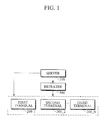
- FIG. 1 is a diagram illustrating a configuration example of a network system that can provide an application service.
- the network system includes a server 100 and a plurality of terminals 200_1 through 200_N.
- the network system may further include a repeater 300 which relays communication between the server 100 and the terminals 200_1 through 200_N.
- Each terminal 200_1 through 200_N may be one of various digital devices that can configure a home network system or that can allow users to use various services therethrough.
- the network system is not limited to a home network system and may be any other network system that can be configured using a predetermined communication network (a wired network, a wireless network, a mobile communication network, a short range communication network, a mobile network, etc.).
- each terminal 200_1 through 200_N may be a mobile device, such as a smart phone, a Personal Digital Assistant (PDA), a cellular phone, a Personal Communication Service (PCS) phone, a hand-held PC, a Global System for Mobile (GSM) phone, a Wideband Code Division Multiple Access (WCDMA) phone, a CDMA200 phone, a Mobile Broadband System (MBS) phone, etc.
- the terminal 200_1 through 200_N may be a Personal Computer (PC), a tablet PC, a laptop computer, a digital TV, etc.
- the terminals 200_1 through 200_N are connected to the server 10 in a wired or wireless network for communication with the server 100.
- the terminals 200_1 through 200_N may be connected to the server 100 directly or via the repeater 300 of the corresponding network system. If the terminals 200_1 through 200_N are connected directly to the server 100, the terminals 200_1 through 200_N communicate directly with the server 100, however, if the terminals 200_1 through 200_N are connected to the server 100 via the repeater 300, the terminals 200_1 through 200_N communicate with the server 100 through the repeater 300.
- the repeater 300 may relay all of the terminals 200_1 through 200_N or there may be provided a plurality of repeaters to distributively relay the terminals 200_1 through 200_N.
- the server 100 provides, when receiving an application request from a specific terminal 200_1 through 200_N, an application optimized for the terminal to the corresponding terminal.
- the server 100 may use, when receiving an application request from a specific terminal 200_1 through 200_N, a user' viewing state information or delivery context (DC) received directly from the terminal 200_1 through 200_N or via the repeater 300.
- the server 100 may use both the received DC and pre-stored DC about the terminals 200_1 through 200_N. A method of using DC to create an application optimized for each terminal 200_1 through 200_N will be described later.
- the repeater 300 relays communication between the terminals 200_1 through 200_N and the server 100.
- the repeater 300 may perform predetermined processing on received data before relaying communication between the terminals 200_1 through 200_ N and the server 10.
- the repeater 300 may remove a part of DC included in an application request received from the terminals 200_1 through 200_N and transfer the resultant application request to the server 100.
- the repeater 30 may include DC stored therein in an application request received from the terminals 200_1 through 200_N and transfer the resultant application request to the server 100.
- the repeater 300 may transfer an application received from the server 100 to the terminals 200_1 through 200_N without any addition or conversion, or the repeater 300 may use DC about the terminals 200_1 through 200_N, stored therein, or DC about the terminals 200_1 through 200_N, removed when transferring it to the server 100 to thereby transfer a more optimized application to each of the terminals 200_1 through 200_N.
- communication between the terminals 200_1 through 200_N and the server 100 may be performed through a single repeater 300 or through two or more repeaters 300.
- the terminals 200_1 through 200_N may receive applications optimized for them from the server 100 or the repeater 300. In this case, the terminals 200_1 through 200_N may reproduce the received application as it is. However, according to an aspect, all or a part of the terminals 200_1 through 200_N may apply DC about them to data (for example, integrated document which will be described later) received from the server 100 or the repeater 300 to create applications optimized for them and then reproduce the applications.
- data for example, integrated document which will be described later
- a procedure of providing an application service when the terminals 200_1 through 200_N communicate with the server 100 directly or via the repeater 300 that simply relays communication between the terminals 200_1 through 200_N and the server 100 and a procedure of providing an application service when the repeater 300 contributes to provision of an optimized application to each terminal 200_1 through 200_N, that is, when DC is used to create an optimized application will be described respectively.
- the cases where the server 100 uses DC, where the repeater 300 uses DC, and where the terminals 200_1 through 200_N use DC will be described respectively.
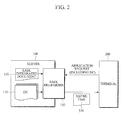
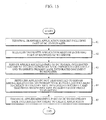
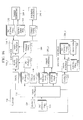
- FIG. 2 is a view for explaining an application service method according to a first example
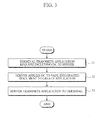
- FIG. 3 is a flowchart illustrating the application service method according to the first example.
- the first example corresponds to the case where a terminal 200 communicates with a server 100 directly or via a repeater (in the following description related to the first, second and third examples, for convenience of description, the repeater is neither shown nor described) that simply relays communication between the terminal 200 and the server 100, wherein only the server 100 uses DC.
- a pre-parser capable of performing the same function as a pre-parser 110 of the server 100, which will be described later, is installed in the terminal 200.
- the terminal 200 transmits an application request including DC 130 about the terminal 200 to the server 100 (11). That is, the server 100 receives an application request including DC from the terminal 200. In order to transmit an application request together with DC, the terminal 200 may perform a process of extracting needed DC. Also, the application request which the terminal 200 transmits to the server 100 includes DC about the terminal 200.
- the DC included in the application request may contain all or a part of information required for creating an optimized application. The case where the DC contains a part of information required for creating an optimized application may be the case where DC has been already stored in the server 100, or no DC may be included in an application request that is transmitted from the terminal 200, due to the reason of security, network traffic, etc.
- DC is a factor that decides a current viewing state of a user who reproduces and executes an application through his or her own terminal, and may include various kinds of information.
- a user's viewing state information may be classified as follows, however, this is only exemplary.
- DC may enable various services according to a method of applying the DC and timings at which the DC is applied.
- the server 100 which has received the application request from the terminal 200 applies the DC 130 to thereby create an application optimized for the corresponding terminal 200 (12).
- the DC 130 is DC about the terminal 200, included in the received application request.
- the server 100 may use both the received DC 130 and DC 130 stored therein to create the application optimized for the terminal 200.
- the server 100 may store Scalable Application Description Language (SADL) document or SADL integrated document 120 therein, wherein the SADL document or the SADL integrated document may be based on scalable user interface technology.
- SADL integrated document 120 may be stored in database of the server 100 or in another data server that can communicate with the server 100.
- the SADL integrated document 120 may be written using one of mark-up languages that have been newly defined by the present applicant.
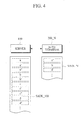
- FIG. 4 is a view for explaining a process of creating an application optimized for a specific terminal 200_N using SADL integrated document SADL_100 stored in a server 100.
- the SADL integrated document SADL_100 may be document into which components (or items) a, a', a", b, b', c, c', c", d, d', ... written with a mark-up language which enables each of a plurality of terminals to create an application optimized for itself are integrated.
- the SADL integrated document SADL_100 is integrated document capable of providing applications optimized for the characteristics of various terminals.
- the server 100 selects and extracts a component from the SADL integrated document SADL_100, thereby creating an application SADL_N optimized for the corresponding terminal 200_N.
- the DC about the terminal 200_N that is, DC received from the terminal 200-N and/or stored in the server 100 is used as a filter for selecting or extracting one or more components from the SADL integrated document SADL_100. For example, if the performance of the terminal 200_N is higher than a predetermined level, the component a" that can support the performance may be selected and extracted from among the components a, a', and a".
- the components b and d' suitable for the user may be selected and extracted from among the components b, b', d, and d', and none of the components c, c' and c" may be selected due to a content limitation rule about the corresponding user.
- a process of using DC about a specific terminal 200_N to select and extract one or components from SADL integrated document SADL_100 may be performed by a SADL pre-parser 110 (see FIG. 2 ).
- SADL pre-parser is arbitrary and may refer to an arbitrary unit of performing the same function by applying DC about a terminal to integrated document.
- the "SADL pre-parser” may be a functional unit configuring a pre-parser engine, a parser engine, or a processor of the server 100.
- the server 100 transmits a created application 150 to the terminal 200.
- the application 150 created by applying DC about the terminal 200_ N is denoted as SADL_N.
- the application 150 transmitted from the server 10 is a program in a format that can be reproduced and executed by the terminal 200.
- the application 150 includes content containing audio, video, and/or images, and a Graphics User Interface (GUI) to allow a user to select and reproduce the content.
- GUI Graphics User Interface
- the application 150 may have at least one format among XHTML, JAVA, and FLASH.
- the application 150 may be more expanded if it is an object-oriented descriptable application program. That is, the application 150 has no limited format and may have a predetermined format that is promised between a plurality of terminals or between a plurality of terminals and a server.
- FIG. 5 is a view for explaining an application service method according to a second example
- FIG. 6 is a flowchart illustrating the application service method according to the second example.
- the second example corresponds to the case where a terminal 200 communicates with a server 100 directly or via a repeater (not shown) that simply relays communication between the terminal 200 and the server 100, wherein only the terminal 200 uses DC.
- the second example will be described based on differences from the first example described above, and accordingly details not described in the following description can be referred to the above description about the first example or will be understood by appropriately modifying the first example.
- the terminal 200 transmits an application request to the server 100 (21). That is, the server 100 receives an application request from the terminal 200.
- the application request includes no DC about the terminal 200. Accordingly, the terminal 200 does not need to perform a process of extracting DC about itself before transmitting the application request, and may perform the process of extracting DC about itself before applying the DC to SADL integrated document to create an application.
- the server 100 which has received the application request transmits SADL integrated document corresponding to the requested application to the terminal 200 (22).
- the terminal 200 since the terminal 200 includes a pre-parser 210 for applying DC to received document, the server 100 only transmits the SADL integrated document as it is to the terminal 200.
- the server 100 may apply the part of the DC to SADL integrated document to select and extract one or more components from the SADL integrated document, and transmit (new?) SADL integrated document consisting of only the extracted components to the terminal 200.
- the terminal 200 applies DC 240 about itself to the received SADL integrated document to create an application 250 optimized for the terminal 200 (23).
- the terminal 200 may perform a process of extracting the DC 240 in advance.
- the process of applying the DC 240 may be performed by the pre-parser 210 installed in the terminal 200. Details about the process in which the pre-parser 210 creates the application 250 from the SADL integrated document has been described in detail in the first example, and accordingly, a detailed description therefor will be omitted.
- one or more components are selected and extracted from the SADL integrated document to thereby create the application 250 in at least one format among XHTML, JAVA, and FLASH.
- the application 250 is reproduced and executed by a processor 260 and then output through a display and/or audio system, etc. of the terminal 200 so that a user can recognizes the application 250 with his or her sense.
- FIG. 7 is a view for explaining an application service method according to a third example
- FIG. 8 is a flowchart illustrating the application service method according to the third example.
- the third example corresponds to the case where a terminal 200 communicates with a server 100 directly or via a repeater (not shown) that simply relays communication between the terminal 200 and the server 100, wherein both the server 100 and the terminal 200 use DC.
- the third example will be described based on differences from the first and second examples described above, and accordingly details not described in the following description can be referred to the above description about the first and second examples or will be understood by appropriately modifying the first and second examples.
- the terminal 200 transmits an application request including DC about itself to the server 100 (31). That is, the server 100 receives an application request including DC about the terminal 200 from the terminal 200.
- the application request transmitted to the server 100 includes all or a part of DC about the terminal 200, and the following description relates to the case where the application request includes a part of DC about the terminal 200.
- the case where the application request includes all of DC about the terminal 200 is different from the case where the application request includes a part of DC about the terminal 200, in that the server 100 applies a part of the received DC in operation 32 which will be described later.
- the terminal 200 may perform a process of extracting DC that is to be transmitted to the server 100.
- no DC about the terminal 200 may be included in the application request.
- the server 100 which has received the application request from the terminal 200 applies DC 130 (that is, a part of DC about the terminal 200) to SADL integrated document to thus create primary SADL integrated document (32).
- the process of applying the DC 130 to SADL integrated document to create primary SADL integrated document may be performed by a pre-parser 110 of the server 100.
- the DC 130 that is applied to create the primary SADL integrated document for the terminal 200 may be a part of the DC about the terminal 200, included in the received application request. Together with the part of the DC included in the application request, all or a part of the DC about the terminal 200, stored in the server 100, also may be applied to the SADL integrated document to create the primary SADL integrated document.
- the server 100 transmits the primary SADL integrated document to the terminal 200 (33).
- the terminal 200 applies the remaining part of the DC about itself to the received primary SADL integrated document to thereby create an application 250 optimized for the terminal 200 (34).
- the terminal 200 may perform a process of extracting the remaining part (that is, DC 240) of the DC in advance or before operation 31.
- the process of applying the DC 240 to the primary SADL integrated document to create the application 250 may be performed by a pre-parser 210 of the terminal 200.
- the process is the same as the process of creating an application from SADL integrated document in the pre-parser 110 of the first example, except that DC is applied to primary SADL integrated document, instead of SADL integrated document, to create an application, and accordingly a detailed description therefor will be omitted.
- one or more components are selected and extracted from the primary SADL integrated document to thereby create an application 250 in at least one format of XHTIVIL, JAVA, and FLASH.
- the application 250 is reproduced and executed by a processor 260 and then output through a display and/or audio system of the terminal 200 so that the user can recognize the application 250 with his or her sense.
- FIG. 9 is a view for explaining an application service method according to a fourth example
- FIG. 10 is a flowchart illustrating the application service method according to the fourth example.
- the fourth example corresponds to the case where a terminal 200 communicates with a server 100 via a repeater 300, wherein only the server 100 and the repeater 300 use DC.
- the fourth example will be described based on differences from the first, second, and third examples described above, and accordingly details not described in the following description can be referred to the above description about the first, second, and third examples or will be understood by appropriately modifying the first, second, and third examples.
- the terminal 200 transmits an application request including DC about the terminal 200 to the repeater 300 (41). That is, the repeater 300 receives an application request including DC about the terminal 200 from the terminal 200.
- the application request transmitted to the repeater 300 may include all or a part of DC about the terminal 200.
- the terminal 200 may perform a process of extracting DC that is to be transmitted to the repeater 300.
- the DC may be not included in the application request.
- the repeater 300 transmits the application request received from the terminal 200 to the server 100 (42).
- the application request that is transmitted from the repeater 300 to the server 100 may include a part of the DC received from the terminal 200.
- DC (not shown) about the repeater 300 also may be included in the application request.
- the DC about the repeater 300 functions to inform the server 100 of the performance of the repeater 300 or network environment information.
- the server 100 which has received the application request from the repeater 300 applies the received part (that is, DC 130) of the DC about the terminal 200 to SADL integrated document to create primary SADL integrated document, and then transmits the primary SADL integrated document to the repeater 300 (43).
- the process of applying the DC 130 to the SADL integrated document to create the primary SADL integrated document may be performed by a pre-parser 110 of the server 100.
- the DC 130 that is applied to the SADL integrated document to create the primary SADL integrated document for the corresponding terminal 200 is a part of the DC about the terminal 200, included in the application request. Together with the DC 130 included in the application request, all or a part of the DC about the terminal 200, stored in the server 100, also may be applied to the SADL integrated document to create the primary SADL integrated document.
- the repeater 300 applies the remaining part (that is, DC 320) of the DC about the terminal 200 to the received primary SADL integrated document to thereby create an application 150 optimized for the terminal 200 (44).
- the DC 320 is DC that has not been transmitted to the server 100 in operation 42 although it has been received in operation 41.
- the DC about the terminal 200, stored in the repeater 300 also may be additionally applied to the primary SADL integrated document to create the application 150.
- the process of applying the remaining part of the DC may be performed by a pre-parser 310 of the repeater 300.
- the process is the same as the process of creating an application from SADL integrated document in the pre-parser 110 of the first example, except that DC is applied to primary SADL integrated document, instead of SADL integrated document, to create an application, and accordingly a detailed description therefor will be omitted.
- DC is applied to primary SADL integrated document, instead of SADL integrated document, to create an application, and accordingly a detailed description therefor will be omitted.
- one or more components are selected and extracted from the primary SADL integrated document to thereby create an application in at least one format of XHTML, JAVA, and FLASH.
- the repeater 300 transmits the created application to the terminal 200 (45).
- the terminal 200 that has received the application reproduces and executes the application using a processor to output the application through a display and/or an audio system so that a user can recognize the application with his or her sense.
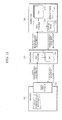
- FIG. 11 is a view for explaining an application service method according to a fifth example
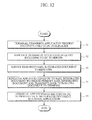
- FIG. 12 is a flowchart illustrating the application service method according to the fifth example.
- the fifth example corresponds to the case where a terminal 200 communicates with a server 100 via a repeater 150, wherein only the repeater 150 and the terminal 200 use DC.
- the fifth example will be described based on differences from the first through fourth examples described above, and accordingly details not described in the following description can be referred to the above description about the first through fourth examples or will be understood by appropriately modifying the first and fourth examples.
- the terminal 200 transmits an application request including DC about itself to the repeater 300 (51). That is, the repeater 300 receives an application request including DC about the terminal 200 from the terminal 200.
- the application request that is transmitted to the repeater 300 may include a part of DC about the terminal 200.
- the terminal 200 may perform a process of extracting a part of DC that is to be transmitted to the repeater 300.
- the DC may be not included in the application request.
- the repeater 300 transmits the application request received from the terminal 200 to the server 100 (52).
- the application request that is transmitted from the repeater 300 to the server 100 may include no DC received from the terminal 200.
- DC (not shown) about the repeater 300 may be included in the application request.
- DC about the repeater 300 functions to inform the server 100 of the performance of the repeater 300 or network environment information.
- the server 100 which has received the application request from the repeater 300 may transmit SADL integrated document corresponding to the requested application to the repeater 300 (53).
- the server 100 since the repeater 300 and the terminal 200 include pre-parsers 210 and 310 for applying DC, respectively, the server 100 only transmits the SADL integrated document as it is to the repeater 310.
- the server 100 applies the part of DC about the terminal 200 or the DC about the repeater 300 to SADL integrated document to select and extract one or more components from the SADL integrated document, creates (new?) SADL integrated document consisting of only the extracted components, and then transmits the SADL integrated document to the repeater 300.
- the repeater 300 applies DC 320 to the received SADL integrated document to thereby create primary SADL integrated document (54).
- the DC 320 is DC about the terminal 200, which has not been transmitted to the server 100 in operation 52 although it has been received in operation 51.
- DC about the terminal 200, stored in the repeater 300 may be additionally applied to create the primary SADL integrated document.
- the process of applying the DC' 320 may be performed by a pre-parser 310 of the repeater 300. The process is the same as the process of creating an application from SADL integrated document in the pre-parser 110 of the first example, and accordingly a detailed description therefor will be omitted.
- the terminal 200 applies DC 240, that is, the remaining part of DC about the terminal 200, which has not been transmitted to the repeater 300 in operation 51, to the received primary SADL integrated document to thereby create an application 250 optimized for the terminal 200 (55).
- the terminal 200 may perform a process of extracting DC 240 in advance.
- the process of applying the DC 240 may be performed by a pre-parser 210 of the terminal 200, and the process in which the pre-parser 210 creates the application 250 from the SADL integrated document is the same as that described in the first example, and accordingly, a detailed description therefor will be omitted.
- one or more components are selected and extracted from the SADL integrated document to thereby create the application 250 in at least one format of XHTM, JAVA, and FLASH.
- the application 250 is reproduced and executed by a processor 260 and then output through a display and/or an audio system of the terminal 200 so that a user can recognize the application 250 with his or her sense.
- the modified example it is possible to differentiate methods of applying DC and timings at which the DC is applied according to groups into which the DC is classified.
- the modified example may be, like the first and fourth examples and a sixth example which will be described later, applied to the case where at least two units applies DC.
- FIG. 13 is a view for explaining an example of classifying DC into several groups and differentiating timings at which DC is applied using a repeater by a predetermined policy.
- there are two repeaters (will be referred to as first and second repeaters 300_1 and 300_2) between a server 100 and various terminals 200 in a home network system.
- the repeaters 300_1 and 300_2 may be configured by a service provider or using a home server or a home gateway.
- the client home network uses a scalable application or primary SADL integrated document (SADL') 320_1 to which the DC has been primarily applied.
- SADL' SADL integrated document
- the second repeater 300_2 is configured using the home server or the home gateway, and may apply DC associated with user information (for example, individual's preferences) or privacy (for example, for adults) to the scalable application or the primary SADL integrated document (SADL') 320_1 received from the first repeater 300_1.
- a scalable application or second SADL integrated document (SADL") 320_2 to which DC has been secondarily applied is created by the second repeater 300_2, and the scalable application or the second SADL integrated document (SADL”) 320_2 is used to thereby provide a differentiated, optimized scalable application service to each terminal which belongs to the client home network. Therefore, DC groups and repeaters are used to provide various application services.
- FIG. 13 relates to the case where two repeaters 300_1 and 300_2 are used to apply DC for each predetermined group, however, the current example is not limited to this.
- one among a plurality of groups into which DC is classified may be used by the server 100 or the terminal 300, and the other groups may be used by one or more repeaters 300.
- one of the plurality of groups may be used by the server 100, and the other groups may be used by the terminal 20.
- one of the plurality of groups may be used by the server 100, another one may be used by the terminal 200, and the remaining one or more groups may be used by the one or more repeaters 300.
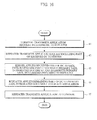
- FIG. 14 is a view for explaining an application service method according to a sixth example
- FIG. 15 is a flowchart illustrating the application service method according to the sixth example.
- the sixth example corresponds to the case where a terminal 200 communicates with a server 100 via a repeater 150, wherein all of the server 100, the repeater 150, and the terminal 200 use DC.
- the sixth example will be described based on differences from the first through fifth examples, and accordingly details not described in the following description can be referred to the above description about the first through fifth examples or will be understood by appropriately modifying the first through fifth examples.
- the terminal 200 transmits an application request including DC about itself to the repeater 300 (61). That is, the repeater 300 receives an application request including DC.
- the application request that is transmitted to the repeater 300 may include a part of DC about the terminal 200.
- the terminal 200 may perform a process of extracting DC that is to be transmitted to the repeater 300.
- the DC may be not included in the application request.
- the repeater 300 may transmit the application request received from the terminal 200 to the server 100 (62).
- the application request that is transmitted from the repeater 300 to the server 100 also may include a part of the DC received from the terminal 200.
- DC (not shown) about the repeater 300 may be included in the application request.
- the DC about the repeater 300 functions to inform the server 100 of the performance of the repeater 300, network environment information, etc.
- the server 100 which has received the application request from the repeater 300 applies the part of DC about the terminal 200 (that is, DC 130) to create primary SADL integrated document, and transmits the primary SADL integrated document to the repeater 300 (63).
- the process of applying the DC 130 to the SADL integrated document to create the primary SADL integrated document may be performed by a pre-parser 110 of the server 100.
- the DC 130 that is applied to create the primary SADL integrated document may be DC about the terminal 200, included in the application request received from the repeater 300. Together with the received DC 130, all or a part of DC about the terminal 200, stored in the server 100, may be applied to create the primary SADL integrated document.
- the repeater 300 applies DC 320 to the received primary SADL integrated document to thereby create secondary SADL integrated document (64).
- the DC 320 is DC that has not been transmitted to the server 100 in operation 62 although it has been received in operation 61, and the repeater 300 may apply the DC 320 to the primary SADL integrated document.
- DC about the terminal 200, stored in the repeater 300 also may be additionally applied to create the secondary SADL integrated document.
- the process of applying a part of DC may be performed by a pre-parser 310 of the repeater 300, and is the same as the process of creating an application from SADL integrated document in the pre-parser 110 of the first example, and accordingly a detailed description therefor will be omitted.
- the terminal 200 applies the remaining part of DC about itself, that is, DC 240 that has not been transmitted to the repeater 300 in operation 61, to the received secondary SADL integrated document to thereby create an application optimized for the terminal 200 (65).
- the terminal 200 may perform a process of extracting DC about itself in advance. The process may be performed by a pre-parser 210 of the terminal 200, and a process in which the pre-parser 210 creates an application 250 from SADL integrated document has been described in detail in the first example, and a detailed description therefor will be omitted.
- one or more components are selected and extracted from the SADL integrated document to thereby create an application 250 in at least one format of XHTML, JAVA, and FLASH.
- the application 250 is reproduced and executed by a processor 260 and then output through a display and/or an audio system of the terminal 200 so that the user can recognize the application through his or her sense.
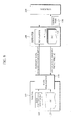
- FIG. 16 is a view for explaining an example where the examples described above are integrated to adaptively provide an application service.
- FIG. 16 relates to the cases where only a server applies DC as described above in the first example, where only a terminal applies DC as described above in the second example, and where a plurality of repeaters apply DC for each group as described above in FIG. 13 .
- a repeater 300 receives DC 232 from clients, that is, third and fourth terminals 200_3 and 200_4, transmits the DC 232 to a server 100, receives primary SADL integrated document to which the DC 232 has been primarily applied from the server 100, and then applies DC 334 to the primary SADL integrated document.
- the repeater 300 applies, as described above, the DC 334 to the primary SADL integrated document using a pre-parser 310_2 of the repeater 300 to thereby create a scalable application 350 (or secondary SADL integrated document 326?) in the format reproducible or excutable by a processor 260 of each of the third and fourth terminals 200_3 and 200_4 and transmits the scalable application 350 to the third terminal 200_3 or the secondary SADL integrated document 326 to the fourth terminal 200_4.
- the terminal 200_4 applies DC to the secondary SADL integrated document 326 to thereby create an application executable by the processor 260 and then the application is displayed to a user.
- the terminal 200_4 includes a pre-parser as described above.
- pre-parsers for extracting one or more components from integrated document in a network system comprised of at least one terminal, a server, and at least one repeater, where the pre-parsers are installed in one or more of the terminal, the server, and the repeater.
- the server may create an application optimized for each terminal using Scalable Application Description Language (SADL) integrated document and transmit the application to the terminal.
- SADL Scalable Application Description Language
- the server may transmit primary SADL integrated document primarily filtered to the terminal or the repeater.
- the server may transmit the SADL integrated document as it is to the terminal or the repeater.
- SADL Scalable Application Description Language
- the repeater also may transmit the SADL integrated document, the primary SADL integrated document, or the application, received from the server, as it is, to the terminal, or may transmit primary SADL integrated document, secondary SADL integrated document, or an application, created by applying delivery context to SADL integrated document, to the terminal.
- the terminal applies delivery context to the SADL integrated document, the primary SADL integrated document, or the secondary SADL integrated document, received from the server or the repeater, thereby creating an application optimized for the terminal.
Landscapes
- Engineering & Computer Science (AREA)
- Software Systems (AREA)
- Theoretical Computer Science (AREA)
- Physics & Mathematics (AREA)
- General Engineering & Computer Science (AREA)
- General Physics & Mathematics (AREA)
- Computer Hardware Design (AREA)
- Information Transfer Between Computers (AREA)
- Multimedia (AREA)
- Signal Processing (AREA)
- Telephonic Communication Services (AREA)
Abstract
Description
- This application claims the benefit under 35 U.S.C. § 119(a) of a Korean Patent Application No.
10-2011-0070658, filed on July 15, 2011 - The following description relates to a scalable application service, and more particularly, to a scalable application service that is serviced in a network environment where there are various terminals.
- With development of information communication technologies, more various kinds of electronic devices are being developed. Also, along with rapid development of mobile communication technologies, various kinds of mobile electronic devices as well as fixed-type electronic devices are being introduced. In the case of a desktop computer which is a representative fixed-type electronic device, the kinds of products are more and more diversified with performance enhancement. Meanwhile, typical analog electronic devices (for example, television) are being digitalized, and other home and office electronics (for example, washing machine, refrigerator, air conditioner, facsimile, printer, etc.) are also combined with information communication technologies to thus have enhanced performance while being further diversified.
- Diversification in kind of electronic devices is significant in mobile devices. For example, a laptop computer, a cellular phone, a MP3 player, a digital camera, a hand-held multimedia player, a navigations, an electronic dictionary, an E-book reader, a DMB receiver, etc. have been already developed and widely being utilized. Also, recently, a smart phone, a smart pad, a tablet PC, etc. have been newly introduced, and related industries are rapidly being expanded. Accordingly, such mobile devices are more and more diversified according to their purposes and performance.
- Besides, some functions of such fixed-type and/or mobile electronic devices are integrated. For example, a camera function, a GPS function, a multimedia reproducing function, etc. are presently adopted in most of electronic devices, and accordingly applications based on these functions are installed in the electronic devices when they are manufactured, or implemented to be able to be installed in them as necessary. Particularly, most of the electronic devices have a communication function using a wired/wireless network.
- However, most of such electronic devices use different platforms and different service framework environments, as well as having different characteristics or performance according to their dedicated functions, and users who utilize the electronic devices also may have different ages, different sexes, different preferences, etc. Also, an electronic device may be used under different use environments according to users' tastes, network environments, etc. In the case of a service, such as a multimedia streaming service and a web service, which provides multimedia content, studies into providing a scalable service in consideration of the unique characteristics (for example, terminal capability, a display size, a supportable resolution, an accessible network, etc.) of various terminals have been conducted.
- Recently, with popularization of an IPTV service using the Internet, broadcasting services move from a unidirectional service of providing multimedia content to viewers to an interactive service, and service objects are also being diversified. Along with the trend, the IPTV service is trying to provide applications executable in various terminals, such as TV, a computer, a mobile terminal, as well as providing multimedia data, such as video, audio, images, etc.
- Recently, a technical trial to provide a mobile IPTV service through a mobile communication network is being run. When a mobile IPTV service is realized, the IPTV service will be evaluated to an IP convergence service that can be supported in both wired and wireless networks. Particularly, since the mobile IPTV service will be able to be provided through all terminals having a communication function through a mobile communication network, the IPTV service is expected to be able to be supported for various terminals at the same time. Recently, studies into an IPTV service capable of providing multimedia content adaptively to various terminals using a multilayered video coding method, such as scalable video coding (SVC), etc. are being conducted.
- However, SVC is a method of hierarchically encoding video content (moving images) to provide the video content to various terminals. Unlike this, an application service provides various contents including video, in the form of a program that is installed in and executable by a user terminal or an engine, such as JAVA, FLASH, etc., and the application service integrates a plurality of factors and/or conditions. When such an application program is reproduced, an application to which integrated factors and/or conditions are reflected can be represented on a GUI of a user terminal.
- However, presently, application programs have been provided with a single format regardless of the kinds or characteristics of terminals so far, and standardization or studies into a method of providing application programs optimized for various terminals have not sufficiently been conducted. In other words, IPTV services developed so far have not considered the individual characteristics (for example, performance or display size) of terminals. For example, an application program that reproduces multimedia content, data, etc. provided through an IPTV service has fixed characteristics (for example, image quality, sound quality, security level, the kind or number of content configuring GUI, an accessible range, etc.), and does not provide a service adaptively in consideration of the individual characteristics of terminals. Accordingly, the application program cannot provide an application service optimized for the performance and specification of a specific terminal.
- A method of providing an optimized application service in consideration of the performance specification of a terminal has been introduced in which a service provider creates and provides a plurality of formats for GUI in consideration of the performance specifications of various terminals. For example, when a user tries web browsing through a mobile device with a small size of display, a content provider, such as Naver, Daum, etc., enables the mobile terminal to access a web page created in advance for the mobile terminal in order to represent a web suitable for the mobile terminal. However, since the method should create various formats of content in advance and store them in a service server, a service provider had to cover high service cost. Furthermore, creating and storing GUIs optimized for all terminals with various characteristics is practically impossible.
- Meanwhile, MPEG-21, which is an international standard defined by the Moving Picture Expert Group (MPEG), is in charge of multimedia framework standardization of a core technology and an integration technology required for electronic trading of digital content. MPEG-21 Digital Item Declaration (DID) (ISO/IEC 2100-2) defines how digital items are described and structurized, as the second part of the MPEG-21. Also, a MPEG-21 Digital Item Adaptation (DIA) (ISO/IEC 21000-7) framework includes a syntax and semantics tool capable of controlling digital items and optimizes the digital items according to users' tendencies and network environments.
- However, since the syntax and semantics tool causes a large amount of overhead and have a complicated structure, it is not easy to use the syntax and semantics tool. The MPEG-21 defines a method of processing users' tendencies or information about a network environment, however, suggests no service method capable of applying user viewing state information in various terminal environments.
- The following description relates to an apparatus and method capable of providing an application service to which the unique characteristics of each terminal and/or each server and information about each user's viewing state are reflected in a network environment where there are various terminals.
- A pre-parser for extracting one or more components from integrated document in a network system comprised of at least one terminal, a server, and at least one repeater may be installed in one or more of the terminal, the server, and the repeater. According to an aspect, all of the terminal, the server, and the repeater may include pre-parsers, respectively. As a result, the server may create an application optimized for the terminal and transmit the application to the terminal. Or, the server may transmit primary SADL integrated document primarily filtered to the terminal or the repeater. Or, the server may transmit SADL integrated document as it is to the terminal or the repeater. The repeater may transmit the received SADL integrated document, the received primary SADL integrated document, or the received application, as it is, to the terminal, or may apply delivery context to the received SADL integrated document, the received primary SADL integrated document, or the received application and then transmit the resultant primary SADL integrated document, the resultant secondary SADL integrated document, or the resultant application to the terminal. Also, the terminal may apply, when receiving SADL integrated document, primary SADL integrated document, or secondary SADL integrated document from the server or the repeater, delivery content to the received SADL integrated document, the received primary SADL integrated document, or the received secondary SADL integrated document to thereby create an application optimized for the terminal.
- Other features and aspects will be apparent from the following detailed description, the drawings, and the claims.
-
-
FIG. 1 is a diagram illustrating a configuration example of a network system that can provide an application service. -
FIG. 2 is a view for explaining an application service method according to a first example. -
FIG. 3 is a flowchart illustrating the application service method according to the first example. -
FIG. 4 is a view for explaining a process of creating an application optimized for a specific terminal using integrated document stored in a server. -
FIG. 5 is a view for explaining an application service method according to a second example. -
FIG. 6 is a flowchart illustrating the application service method according to the second example. -
FIG. 7 is a view for explaining an application service method according to a third example. -
FIG. 8 is a flowchart illustrating the application service method according to the third example. -
FIG. 9 is a view for explaining an application service method according to a fourth example. -
FIG. 10 is a flowchart illustrating the application service method according to the fourth example. -
FIG. 11 is a view for explaining an application service method according to a fifth example. -
FIG. 12 is a flowchart illustrating the application service method according to the fifth example. -
FIG. 13 is a view for explaining an example of classifying DC into several groups and differentiating timings at which DC is applied using a repeater by a policy. -
FIG. 14 is a view for explaining an application service method according to a sixth example. -
FIG. 15 is a flowchart illustrating the application service method according to the sixth example. -
FIG. 16 is a view for explaining an example where the examples are integrated to adaptively provide an application service. - Throughout the drawings and the detailed description, unless otherwise described, the same drawing reference numerals will be understood to refer to the same elements, features, and structures. The relative size and depiction of these elements may be exaggerated for clarity, illustration, and convenience.
- The following description is provided to assist the reader in gaining a comprehensive understanding of the methods, apparatuses, and/or systems described herein. Accordingly, various changes, modifications, and equivalents of the methods, apparatuses, and/or systems described herein will be suggested to those of ordinary skill in the art. Also, descriptions of well-known functions and constructions may be omitted for increased clarity and conciseness.
-
FIG. 1 is a diagram illustrating a configuration example of a network system that can provide an application service. Referring toFIG. 1 , the network system includes aserver 100 and a plurality of terminals 200_1 through 200_N. Also, the network system may further include arepeater 300 which relays communication between theserver 100 and the terminals 200_1 through 200_N. - Each terminal 200_1 through 200_N may be one of various digital devices that can configure a home network system or that can allow users to use various services therethrough. However, the network system is not limited to a home network system and may be any other network system that can be configured using a predetermined communication network (a wired network, a wireless network, a mobile communication network, a short range communication network, a mobile network, etc.). Also, each terminal 200_1 through 200_N may be a mobile device, such as a smart phone, a Personal Digital Assistant (PDA), a cellular phone, a Personal Communication Service (PCS) phone, a hand-held PC, a Global System for Mobile (GSM) phone, a Wideband Code Division Multiple Access (WCDMA) phone, a CDMA200 phone, a Mobile Broadband System (MBS) phone, etc. Also, the terminal 200_1 through 200_N may be a Personal Computer (PC), a tablet PC, a laptop computer, a digital TV, etc.
- The terminals 200_1 through 200_N are connected to the server 10 in a wired or wireless network for communication with the
server 100. Here, the terminals 200_1 through 200_N may be connected to theserver 100 directly or via therepeater 300 of the corresponding network system. If the terminals 200_1 through 200_N are connected directly to theserver 100, the terminals 200_1 through 200_N communicate directly with theserver 100, however, if the terminals 200_1 through 200_N are connected to theserver 100 via therepeater 300, the terminals 200_1 through 200_N communicate with theserver 100 through therepeater 300. Also, therepeater 300 may relay all of the terminals 200_1 through 200_N or there may be provided a plurality of repeaters to distributively relay the terminals 200_1 through 200_N. - The
server 100 provides, when receiving an application request from a specific terminal 200_1 through 200_N, an application optimized for the terminal to the corresponding terminal. In order to provide an optimized application to each terminal 200_1 through 200_N, theserver 100 may use, when receiving an application request from a specific terminal 200_1 through 200_N, a user' viewing state information or delivery context (DC) received directly from the terminal 200_1 through 200_N or via therepeater 300. Or, theserver 100 may use both the received DC and pre-stored DC about the terminals 200_1 through 200_N. A method of using DC to create an application optimized for each terminal 200_1 through 200_N will be described later. - The
repeater 300 relays communication between the terminals 200_1 through 200_N and theserver 100. At this time, therepeater 300 may perform predetermined processing on received data before relaying communication between the terminals 200_1 through 200_N and the server 10. For example, therepeater 300 may remove a part of DC included in an application request received from the terminals 200_1 through 200_N and transfer the resultant application request to theserver 100. Also, the repeater 30 may include DC stored therein in an application request received from the terminals 200_1 through 200_N and transfer the resultant application request to theserver 100. Furthermore, therepeater 300 may transfer an application received from theserver 100 to the terminals 200_1 through 200_N without any addition or conversion, or therepeater 300 may use DC about the terminals 200_1 through 200_N, stored therein, or DC about the terminals 200_1 through 200_N, removed when transferring it to theserver 100 to thereby transfer a more optimized application to each of the terminals 200_1 through 200_N. Meanwhile, communication between the terminals 200_1 through 200_N and theserver 100 may be performed through asingle repeater 300 or through two ormore repeaters 300. - According to the configuration of the network system, the terminals 200_1 through 200_N may receive applications optimized for them from the
server 100 or therepeater 300. In this case, the terminals 200_1 through 200_N may reproduce the received application as it is. However, according to an aspect, all or a part of the terminals 200_1 through 200_N may apply DC about them to data (for example, integrated document which will be described later) received from theserver 100 or therepeater 300 to create applications optimized for them and then reproduce the applications. - Hereinafter, a procedure of providing an application service when the terminals 200_1 through 200_N communicate with the
server 100 directly or via therepeater 300 that simply relays communication between the terminals 200_1 through 200_N and theserver 100, and a procedure of providing an application service when therepeater 300 contributes to provision of an optimized application to each terminal 200_1 through 200_N, that is, when DC is used to create an optimized application will be described respectively. Also, in each of the procedures of providing an application service, the cases where theserver 100 uses DC, where therepeater 300 uses DC, and where the terminals 200_1 through 200_N use DC will be described respectively. -
FIG. 2 is a view for explaining an application service method according to a first example, andFIG. 3 is a flowchart illustrating the application service method according to the first example. The first example corresponds to the case where a terminal 200 communicates with aserver 100 directly or via a repeater (in the following description related to the first, second and third examples, for convenience of description, the repeater is neither shown nor described) that simply relays communication between the terminal 200 and theserver 100, wherein only theserver 100 uses DC. In the current example, there is no limitation on whether or not a pre-parser capable of performing the same function as apre-parser 110 of theserver 100, which will be described later, is installed in theterminal 200. - Referring to
FIGS. 2 and3 , the terminal 200 transmits an applicationrequest including DC 130 about the terminal 200 to the server 100 (11). That is, theserver 100 receives an application request including DC from the terminal 200. In order to transmit an application request together with DC, the terminal 200 may perform a process of extracting needed DC. Also, the application request which the terminal 200 transmits to theserver 100 includes DC about theterminal 200. The DC included in the application request may contain all or a part of information required for creating an optimized application. The case where the DC contains a part of information required for creating an optimized application may be the case where DC has been already stored in theserver 100, or no DC may be included in an application request that is transmitted from the terminal 200, due to the reason of security, network traffic, etc. - DC is a factor that decides a current viewing state of a user who reproduces and executes an application through his or her own terminal, and may include various kinds of information. For example, a user's viewing state information may be classified as follows, however, this is only exemplary. DC may enable various services according to a method of applying the DC and timings at which the DC is applied.
- 1. Device Capability: terminal's performance information (the type of terminal, a memory size, memory compatibility information, the kind of OS, OS version, a display size, a maximum supportable resolution, etc.)
- 2. Service Policy: information related to a service policy (a service provider's policy, such as users' ranks, information about subscription, security information, information about content limitation, etc.)
- 3. User information: users' personal information (users' preference information, users' ages, a current time, users' languages, users' cultures, etc.)
- 4. Viewing State: environmental information that changes in real time (the bandwidth of an available network, the brightness of a peripheral environment, etc.).
- Referring again to
FIGS. 2 and3 , theserver 100 which has received the application request from the terminal 200 applies theDC 130 to thereby create an application optimized for the corresponding terminal 200 (12). TheDC 130 is DC about the terminal 200, included in the received application request. Theserver 100 may use both the receivedDC 130 andDC 130 stored therein to create the application optimized for the terminal 200. - According to an aspect, in order to use the
DC 130 to create an application optimized for the terminal 200, theserver 100 may store Scalable Application Description Language (SADL) document or SADLintegrated document 120 therein, wherein the SADL document or the SADL integrated document may be based on scalable user interface technology. The SADLintegrated document 120 may be stored in database of theserver 100 or in another data server that can communicate with theserver 100. The SADLintegrated document 120 may be written using one of mark-up languages that have been newly defined by the present applicant. -
FIG. 4 is a view for explaining a process of creating an application optimized for a specific terminal 200_N using SADL integrated document SADL_100 stored in aserver 100. Referring toFIG. 4 , the SADL integrated document SADL_100 may be document into which components (or items) a, a', a", b, b', c, c', c", d, d', ... written with a mark-up language which enables each of a plurality of terminals to create an application optimized for itself are integrated. Here, different alphabets, such as a, b, c, d, indicate different kinds of user interfaces and/or content, and the same alphabets with different suffixes, such as a, a', a", indicate scalable data from the same user interface or content, etc. That is, the SADL integrated document SADL_100 is integrated document capable of providing applications optimized for the characteristics of various terminals. - When receiving an application request from the terminal 200_N, the
server 100 selects and extracts a component from the SADL integrated document SADL_100, thereby creating an application SADL_N optimized for the corresponding terminal 200_N. The DC about the terminal 200_N, that is, DC received from the terminal 200-N and/or stored in theserver 100 is used as a filter for selecting or extracting one or more components from the SADL integrated document SADL_100. For example, if the performance of the terminal 200_N is higher than a predetermined level, the component a" that can support the performance may be selected and extracted from among the components a, a', and a". Also, according to a user's rank, the components b and d' suitable for the user may be selected and extracted from among the components b, b', d, and d', and none of the components c, c' and c" may be selected due to a content limitation rule about the corresponding user. - A process of using DC about a specific terminal 200_N to select and extract one or components from SADL integrated document SADL_100 may be performed by a SADL pre-parser 110 (see
FIG. 2 ). The term "SADL pre-parser" is arbitrary and may refer to an arbitrary unit of performing the same function by applying DC about a terminal to integrated document. For example, the "SADL pre-parser" may be a functional unit configuring a pre-parser engine, a parser engine, or a processor of theserver 100. - Referring again to
FIGS. 2 and3 , theserver 100 transmits a createdapplication 150 to the terminal 200. InFIG. 4 , theapplication 150 created by applying DC about the terminal 200_N is denoted as SADL_N. Theapplication 150 transmitted from the server 10 is a program in a format that can be reproduced and executed by theterminal 200. Theapplication 150 includes content containing audio, video, and/or images, and a Graphics User Interface (GUI) to allow a user to select and reproduce the content. For example, theapplication 150 may have at least one format among XHTML, JAVA, and FLASH. Other than XHTML, JAVA, and FLASH, theapplication 150 may be more expanded if it is an object-oriented descriptable application program. That is, theapplication 150 has no limited format and may have a predetermined format that is promised between a plurality of terminals or between a plurality of terminals and a server. -
FIG. 5 is a view for explaining an application service method according to a second example, andFIG. 6 is a flowchart illustrating the application service method according to the second example. The second example corresponds to the case where a terminal 200 communicates with aserver 100 directly or via a repeater (not shown) that simply relays communication between the terminal 200 and theserver 100, wherein only the terminal 200 uses DC. The second example will be described based on differences from the first example described above, and accordingly details not described in the following description can be referred to the above description about the first example or will be understood by appropriately modifying the first example. - Referring to
FIGS. 5 and6 , the terminal 200 transmits an application request to the server 100 (21). That is, theserver 100 receives an application request from the terminal 200. According to the current example, the application request includes no DC about theterminal 200. Accordingly, the terminal 200 does not need to perform a process of extracting DC about itself before transmitting the application request, and may perform the process of extracting DC about itself before applying the DC to SADL integrated document to create an application. - Then, the
server 100 which has received the application request transmits SADL integrated document corresponding to the requested application to the terminal 200 (22). In the current example, since the terminal 200 includes a pre-parser 210 for applying DC to received document, theserver 100 only transmits the SADL integrated document as it is to the terminal 200. According to an aspect, if a part of DC about the terminal 200 is stored in theserver 200, theserver 100 may apply the part of the DC to SADL integrated document to select and extract one or more components from the SADL integrated document, and transmit (new?) SADL integrated document consisting of only the extracted components to the terminal 200. - Successively, the terminal 200 applies
DC 240 about itself to the received SADL integrated document to create anapplication 250 optimized for the terminal 200 (23). For this, the terminal 200 may perform a process of extracting theDC 240 in advance. The process of applying theDC 240 may be performed by the pre-parser 210 installed in theterminal 200. Details about the process in which the pre-parser 210 creates theapplication 250 from the SADL integrated document has been described in detail in the first example, and accordingly, a detailed description therefor will be omitted. As a result, one or more components are selected and extracted from the SADL integrated document to thereby create theapplication 250 in at least one format among XHTML, JAVA, and FLASH. Theapplication 250 is reproduced and executed by aprocessor 260 and then output through a display and/or audio system, etc. of the terminal 200 so that a user can recognizes theapplication 250 with his or her sense. -
FIG. 7 is a view for explaining an application service method according to a third example, andFIG. 8 is a flowchart illustrating the application service method according to the third example. The third example corresponds to the case where a terminal 200 communicates with aserver 100 directly or via a repeater (not shown) that simply relays communication between the terminal 200 and theserver 100, wherein both theserver 100 and the terminal 200 use DC. The third example will be described based on differences from the first and second examples described above, and accordingly details not described in the following description can be referred to the above description about the first and second examples or will be understood by appropriately modifying the first and second examples. - Referring to
FIGS. 7 and8 , the terminal 200 transmits an application request including DC about itself to the server 100 (31). That is, theserver 100 receives an application request including DC about the terminal 200 from the terminal 200. The application request transmitted to theserver 100 includes all or a part of DC about the terminal 200, and the following description relates to the case where the application request includes a part of DC about theterminal 200. The case where the application request includes all of DC about the terminal 200 is different from the case where the application request includes a part of DC about the terminal 200, in that theserver 100 applies a part of the received DC inoperation 32 which will be described later. For this, the terminal 200 may perform a process of extracting DC that is to be transmitted to theserver 100. Likewise, in the current example, in the case where DC has been already stored in theserver 100 or due to security, network traffic, etc., no DC about the terminal 200 may be included in the application request. - Then, the
server 100 which has received the application request from the terminal 200 applies DC 130 (that is, a part of DC about the terminal 200) to SADL integrated document to thus create primary SADL integrated document (32). The process of applying theDC 130 to SADL integrated document to create primary SADL integrated document may be performed by apre-parser 110 of theserver 100. TheDC 130 that is applied to create the primary SADL integrated document for the terminal 200 may be a part of the DC about the terminal 200, included in the received application request. Together with the part of the DC included in the application request, all or a part of the DC about the terminal 200, stored in theserver 100, also may be applied to the SADL integrated document to create the primary SADL integrated document. Then, theserver 100 transmits the primary SADL integrated document to the terminal 200 (33). - Then, the terminal 200 applies the remaining part of the DC about itself to the received primary SADL integrated document to thereby create an
application 250 optimized for the terminal 200 (34). For this, the terminal 200 may perform a process of extracting the remaining part (that is, DC 240) of the DC in advance or beforeoperation 31. The process of applying theDC 240 to the primary SADL integrated document to create theapplication 250 may be performed by apre-parser 210 of the terminal 200. The process is the same as the process of creating an application from SADL integrated document in thepre-parser 110 of the first example, except that DC is applied to primary SADL integrated document, instead of SADL integrated document, to create an application, and accordingly a detailed description therefor will be omitted. As a result, one or more components are selected and extracted from the primary SADL integrated document to thereby create anapplication 250 in at least one format of XHTIVIL, JAVA, and FLASH. Theapplication 250 is reproduced and executed by aprocessor 260 and then output through a display and/or audio system of the terminal 200 so that the user can recognize theapplication 250 with his or her sense. -
FIG. 9 is a view for explaining an application service method according to a fourth example, andFIG. 10 is a flowchart illustrating the application service method according to the fourth example. The fourth example corresponds to the case where a terminal 200 communicates with aserver 100 via arepeater 300, wherein only theserver 100 and therepeater 300 use DC. Hereinafter, the fourth example will be described based on differences from the first, second, and third examples described above, and accordingly details not described in the following description can be referred to the above description about the first, second, and third examples or will be understood by appropriately modifying the first, second, and third examples. - Referring to
FIGS. 9 and10 , the terminal 200 transmits an application request including DC about the terminal 200 to the repeater 300 (41). That is, therepeater 300 receives an application request including DC about the terminal 200 from the terminal 200. The application request transmitted to therepeater 300 may include all or a part of DC about theterminal 200. For this, the terminal 200 may perform a process of extracting DC that is to be transmitted to therepeater 300. In the fourth example, if DC about the terminal 200 has been already stored in therepeater 200 and/or theserver 100, the DC may be not included in the application request. - Then, the
repeater 300 transmits the application request received from the terminal 200 to the server 100 (42). The application request that is transmitted from therepeater 300 to theserver 100 may include a part of the DC received from the terminal 200. According to an aspect, DC (not shown) about therepeater 300 also may be included in the application request. The DC about therepeater 300 functions to inform theserver 100 of the performance of therepeater 300 or network environment information. - Successively, the
server 100 which has received the application request from therepeater 300 applies the received part (that is, DC 130) of the DC about the terminal 200 to SADL integrated document to create primary SADL integrated document, and then transmits the primary SADL integrated document to the repeater 300 (43). The process of applying theDC 130 to the SADL integrated document to create the primary SADL integrated document may be performed by apre-parser 110 of theserver 100. Also, theDC 130 that is applied to the SADL integrated document to create the primary SADL integrated document for thecorresponding terminal 200 is a part of the DC about the terminal 200, included in the application request. Together with theDC 130 included in the application request, all or a part of the DC about the terminal 200, stored in theserver 100, also may be applied to the SADL integrated document to create the primary SADL integrated document. - Then, the
repeater 300 applies the remaining part (that is, DC 320) of the DC about the terminal 200 to the received primary SADL integrated document to thereby create anapplication 150 optimized for the terminal 200 (44). Here, theDC 320 is DC that has not been transmitted to theserver 100 inoperation 42 although it has been received inoperation 41. According to an aspect, the DC about the terminal 200, stored in therepeater 300, also may be additionally applied to the primary SADL integrated document to create theapplication 150. The process of applying the remaining part of the DC may be performed by apre-parser 310 of therepeater 300. The process is the same as the process of creating an application from SADL integrated document in thepre-parser 110 of the first example, except that DC is applied to primary SADL integrated document, instead of SADL integrated document, to create an application, and accordingly a detailed description therefor will be omitted. As a result, one or more components are selected and extracted from the primary SADL integrated document to thereby create an application in at least one format of XHTML, JAVA, and FLASH. - Successively, the
repeater 300 transmits the created application to the terminal 200 (45). The terminal 200 that has received the application reproduces and executes the application using a processor to output the application through a display and/or an audio system so that a user can recognize the application with his or her sense. -
FIG. 11 is a view for explaining an application service method according to a fifth example, andFIG. 12 is a flowchart illustrating the application service method according to the fifth example. The fifth example corresponds to the case where a terminal 200 communicates with aserver 100 via arepeater 150, wherein only therepeater 150 and the terminal 200 use DC. The fifth example will be described based on differences from the first through fourth examples described above, and accordingly details not described in the following description can be referred to the above description about the first through fourth examples or will be understood by appropriately modifying the first and fourth examples. - Referring to
FIGS. 11 and12 , the terminal 200 transmits an application request including DC about itself to the repeater 300 (51). That is, therepeater 300 receives an application request including DC about the terminal 200 from the terminal 200. The application request that is transmitted to therepeater 300 may include a part of DC about theterminal 200. For this, the terminal 200 may perform a process of extracting a part of DC that is to be transmitted to therepeater 300. Likewise, in the fifth example, if DC. about the terminal 200 has been already stored in theserver 100 and/or therepeater 100, the DC may be not included in the application request. - Then, the
repeater 300 transmits the application request received from the terminal 200 to the server 100 (52). The application request that is transmitted from therepeater 300 to theserver 100 may include no DC received from the terminal 200. According to an aspect, DC (not shown) about therepeater 300 may be included in the application request. DC about therepeater 300 functions to inform theserver 100 of the performance of therepeater 300 or network environment information. - Successively, the
server 100 which has received the application request from therepeater 300 may transmit SADL integrated document corresponding to the requested application to the repeater 300 (53). In the current example, since therepeater 300 and the terminal 200 includepre-parsers server 100 only transmits the SADL integrated document as it is to therepeater 310. According to an aspect, if a part of DC about the terminal 200 is stored in theserver 100 or if DC about therepeater 300 is received from therepeater 300, theserver 100 applies the part of DC about the terminal 200 or the DC about therepeater 300 to SADL integrated document to select and extract one or more components from the SADL integrated document, creates (new?) SADL integrated document consisting of only the extracted components, and then transmits the SADL integrated document to therepeater 300. - Successively, the
repeater 300 appliesDC 320 to the received SADL integrated document to thereby create primary SADL integrated document (54). Here, theDC 320 is DC about the terminal 200, which has not been transmitted to theserver 100 inoperation 52 although it has been received inoperation 51. Also, according to an aspect, DC about the terminal 200, stored in therepeater 300, may be additionally applied to create the primary SADL integrated document. The process of applying the DC' 320 may be performed by apre-parser 310 of therepeater 300. The process is the same as the process of creating an application from SADL integrated document in thepre-parser 110 of the first example, and accordingly a detailed description therefor will be omitted. - Successively, the terminal 200 applies
DC 240, that is, the remaining part of DC about the terminal 200, which has not been transmitted to therepeater 300 inoperation 51, to the received primary SADL integrated document to thereby create anapplication 250 optimized for the terminal 200 (55). For this, the terminal 200 may perform a process of extractingDC 240 in advance. The process of applying theDC 240 may be performed by apre-parser 210 of the terminal 200, and the process in which the pre-parser 210 creates theapplication 250 from the SADL integrated document is the same as that described in the first example, and accordingly, a detailed description therefor will be omitted. As a result, one or more components are selected and extracted from the SADL integrated document to thereby create theapplication 250 in at least one format of XHTM, JAVA, and FLASH. Theapplication 250 is reproduced and executed by aprocessor 260 and then output through a display and/or an audio system of the terminal 200 so that a user can recognize theapplication 250 with his or her sense. - According to a modified example, it is possible to differentiate methods of applying DC and timings at which the DC is applied according to groups into which the DC is classified. The modified example may be, like the first and fourth examples and a sixth example which will be described later, applied to the case where at least two units applies DC.
-
FIG. 13 is a view for explaining an example of classifying DC into several groups and differentiating timings at which DC is applied using a repeater by a predetermined policy. Referring toFIG. 13 , there are two repeaters (will be referred to as first and second repeaters 300_1 and 300_2) between aserver 100 andvarious terminals 200 in a home network system. - The repeaters 300_1 and 300_2 may be configured by a service provider or using a home server or a home gateway.
- For example, if the first repeater 300_1 provides a client home network by applying DC associated with content limitation (for example, closed captioning) and security (for example, content protection) to SADL integrated document received from the
server 100, the client home network uses a scalable application or primary SADL integrated document (SADL') 320_1 to which the DC has been primarily applied. - Also, the second repeater 300_2 is configured using the home server or the home gateway, and may apply DC associated with user information (for example, individual's preferences) or privacy (for example, for adults) to the scalable application or the primary SADL integrated document (SADL') 320_1 received from the first repeater 300_1. Accordingly, a scalable application or second SADL integrated document (SADL") 320_2 to which DC has been secondarily applied is created by the second repeater 300_2, and the scalable application or the second SADL integrated document (SADL") 320_2 is used to thereby provide a differentiated, optimized scalable application service to each terminal which belongs to the client home network. Therefore, DC groups and repeaters are used to provide various application services.
-
FIG. 13 relates to the case where two repeaters 300_1 and 300_2 are used to apply DC for each predetermined group, however, the current example is not limited to this. For example, one among a plurality of groups into which DC is classified may be used by theserver 100 or the terminal 300, and the other groups may be used by one ormore repeaters 300. Or, one of the plurality of groups may be used by theserver 100, and the other groups may be used by the terminal 20. Or, one of the plurality of groups may be used by theserver 100, another one may be used by the terminal 200, and the remaining one or more groups may be used by the one ormore repeaters 300. -
FIG. 14 is a view for explaining an application service method according to a sixth example, andFIG. 15 is a flowchart illustrating the application service method according to the sixth example. The sixth example corresponds to the case where a terminal 200 communicates with aserver 100 via arepeater 150, wherein all of theserver 100, therepeater 150, and the terminal 200 use DC. Hereinafter, the sixth example will be described based on differences from the first through fifth examples, and accordingly details not described in the following description can be referred to the above description about the first through fifth examples or will be understood by appropriately modifying the first through fifth examples. - Referring to
FIGS. 14 and15 , the terminal 200 transmits an application request including DC about itself to the repeater 300 (61). That is, therepeater 300 receives an application request including DC. The application request that is transmitted to therepeater 300 may include a part of DC about theterminal 200. For this, the terminal 200 may perform a process of extracting DC that is to be transmitted to therepeater 300. Likewise, in the current example, if DC has been already stored in theserver 100 and/or therepeater 300, the DC may be not included in the application request. - Successively, the
repeater 300 may transmit the application request received from the terminal 200 to the server 100 (62). The application request that is transmitted from therepeater 300 to theserver 100 also may include a part of the DC received from the terminal 200. According to an aspect, DC (not shown) about therepeater 300 may be included in the application request. The DC about therepeater 300 functions to inform theserver 100 of the performance of therepeater 300, network environment information, etc. - Then, the
server 100 which has received the application request from therepeater 300 applies the part of DC about the terminal 200 (that is, DC 130) to create primary SADL integrated document, and transmits the primary SADL integrated document to the repeater 300 (63). The process of applying theDC 130 to the SADL integrated document to create the primary SADL integrated document may be performed by apre-parser 110 of theserver 100. TheDC 130 that is applied to create the primary SADL integrated document may be DC about the terminal 200, included in the application request received from therepeater 300. Together with the receivedDC 130, all or a part of DC about the terminal 200, stored in theserver 100, may be applied to create the primary SADL integrated document. - Thereafter, the
repeater 300 appliesDC 320 to the received primary SADL integrated document to thereby create secondary SADL integrated document (64). Here, theDC 320 is DC that has not been transmitted to theserver 100 inoperation 62 although it has been received inoperation 61, and therepeater 300 may apply theDC 320 to the primary SADL integrated document. According to an aspect, DC about the terminal 200, stored in therepeater 300, also may be additionally applied to create the secondary SADL integrated document. The process of applying a part of DC may be performed by apre-parser 310 of therepeater 300, and is the same as the process of creating an application from SADL integrated document in thepre-parser 110 of the first example, and accordingly a detailed description therefor will be omitted. - Thereafter, the terminal 200 applies the remaining part of DC about itself, that is,
DC 240 that has not been transmitted to therepeater 300 inoperation 61, to the received secondary SADL integrated document to thereby create an application optimized for the terminal 200 (65). For this, the terminal 200 may perform a process of extracting DC about itself in advance. The process may be performed by apre-parser 210 of the terminal 200, and a process in which the pre-parser 210 creates anapplication 250 from SADL integrated document has been described in detail in the first example, and a detailed description therefor will be omitted. As a result, one or more components are selected and extracted from the SADL integrated document to thereby create anapplication 250 in at least one format of XHTML, JAVA, and FLASH. Theapplication 250 is reproduced and executed by aprocessor 260 and then output through a display and/or an audio system of the terminal 200 so that the user can recognize the application through his or her sense. -
FIG. 16 is a view for explaining an example where the examples described above are integrated to adaptively provide an application service.FIG. 16 relates to the cases where only a server applies DC as described above in the first example, where only a terminal applies DC as described above in the second example, and where a plurality of repeaters apply DC for each group as described above inFIG. 13 . - Referring to
FIG. 16 , arepeater 300 receivesDC 232 from clients, that is, third and fourth terminals 200_3 and 200_4, transmits theDC 232 to aserver 100, receives primary SADL integrated document to which theDC 232 has been primarily applied from theserver 100, and then appliesDC 334 to the primary SADL integrated document. - The
repeater 300 applies, as described above, theDC 334 to the primary SADL integrated document using a pre-parser 310_2 of therepeater 300 to thereby create a scalable application 350 (or secondary SADLintegrated document 326?) in the format reproducible or excutable by aprocessor 260 of each of the third and fourth terminals 200_3 and 200_4 and transmits thescalable application 350 to the third terminal 200_3 or the secondary SADLintegrated document 326 to the fourth terminal 200_4. - Finally, the terminal 200_4 applies DC to the secondary SADL
integrated document 326 to thereby create an application executable by theprocessor 260 and then the application is displayed to a user. For this operation, the terminal 200_4 includes a pre-parser as described above. - According to the examples described above, by appropriately applying DC in various terminals and network environments to select and extract components from single integrated document and thereby providing an optimized application to each terminal, user convenience can be improved.
- A number of examples have been described above. Nevertheless, it will be understood that various modifications may be made. For example, suitable results may be achieved if the described techniques are performed in a different order and/or if components in a described system, architecture, device, or circuit are combined in a different manner and/or replaced or supplemented by other components or their equivalents. Accordingly, other implementations are within the scope of the following claims.
- There are one or more pre-parsers for extracting one or more components from integrated document in a network system comprised of at least one terminal, a server, and at least one repeater, where the pre-parsers are installed in one or more of the terminal, the server, and the repeater. The server may create an application optimized for each terminal using Scalable Application Description Language (SADL) integrated document and transmit the application to the terminal. Or, the server may transmit primary SADL integrated document primarily filtered to the terminal or the repeater. Or, the server may transmit the SADL integrated document as it is to the terminal or the repeater. The repeater also may transmit the SADL integrated document, the primary SADL integrated document, or the application, received from the server, as it is, to the terminal, or may transmit primary SADL integrated document, secondary SADL integrated document, or an application, created by applying delivery context to SADL integrated document, to the terminal. The terminal applies delivery context to the SADL integrated document, the primary SADL integrated document, or the secondary SADL integrated document, received from the server or the repeater, thereby creating an application optimized for the terminal.
Claims (12)
- A scalable application service method comprising:receiving an application request including a part of delivery context about a terminal from the terminal;applying the part of the delivery context to first integrated document to extract one or more components from the first integrated document, thereby creating second integrated document consisting of the extracted components; andtransmitting the second integrated document to the terminal so that the terminal applies the remaining part of the delivery context to the second integrated document to extract one or more components from the second integrated document, thereby creating an application consisting of the extracted components.
- The scalable application service method of claim 1, wherein the delivery context includes at least one piece of information among information regarding the performance of the terminal, information regarding a service policy, information about a user of the terminal, and environmental information related to the terminal.
- The scalable application service method of claim 2, wherein information regarding security of the terminal among the delivery context is not included in delivery context that is transmitted to a server.
- The scalable application service method of claim 1, wherein the applying of the part of the delivery context to the first integrated document to thereby create the second integrated document comprises applying both the part of the delivery context received from the terminal and pre-stored delivery context about the terminal to the first integrated document.
- The scalable application service method of claim 1, wherein the first integrated document includes a plurality of user interfaces, and each user interface is comprised of one or more pieces of scalable data that are optimized for and applicable to a corresponding one of a plurality of terminals.
- The scalable application service method of one of claims 1 through 5, wherein the receiving of the application request comprises receiving the application request directly from the terminal, and
the transmitting of the second integrated document to the terminal comprises transmitting the second integrated document directly to the terminal. - The scalable application service method of one of claims 1 through 5, wherein the receiving of the application request comprises receiving the application request via a repeater, and
the transmitting of the second integrated document comprises transmitting the second integrated document via the repeater. - The scalable application service method of claim 7, wherein the repeater receives all of delivery context about the terminal, and the server receives a part of the delivery context about the terminal, received by the repeater.
- The scalable application service method of claim 7, wherein the receiving of the application request comprises receiving delivery context about the repeater, and
the creating of the second integrated document comprises applying the delivery context about the repeater to the first integrated document. - The scalable application service method of claim 7, wherein the creating of the second integrated document comprises applying both the part of the delivery context received from the repeater and pre-stored delivery context about the terminal to the first integrated document.
- The scalable application service method of claim 7, wherein the application is created by applying both the remaining part of the delivery context about the terminal and delivery context about the terminal, stored in the repeater, to the second integrated document.
- The scalable application service method of claim 7, wherein the terminal applies delivery context stored in the terminal to the second integrated document received from the repeater to extract one or more components from the second integrated document, thereby creating an application consisting of the extracted components.
Applications Claiming Priority (1)
| Application Number | Priority Date | Filing Date | Title |
|---|---|---|---|
| KR1020110070658A KR20130009911A (en) | 2011-07-15 | 2011-07-15 | Apparatus and method for scalable application service |
Publications (2)
| Publication Number | Publication Date |
|---|---|
| EP2546739A1 true EP2546739A1 (en) | 2013-01-16 |
| EP2546739B1 EP2546739B1 (en) | 2018-10-10 |
Family
ID=45560704
Family Applications (1)
| Application Number | Title | Priority Date | Filing Date |
|---|---|---|---|
| EP12152109.0A Not-in-force EP2546739B1 (en) | 2011-07-15 | 2012-01-23 | Apparatus and method for scalable application service |
Country Status (4)
| Country | Link |
|---|---|
| US (1) | US9104445B2 (en) |
| EP (1) | EP2546739B1 (en) |
| KR (1) | KR20130009911A (en) |
| CN (1) | CN102882839B (en) |
Citations (5)
| Publication number | Priority date | Publication date | Assignee | Title |
|---|---|---|---|---|
| US6308325B1 (en) * | 1996-04-09 | 2001-10-23 | International Business Machines Corporation | Apparatus and method for downloading data to electronic device |
| US7065754B1 (en) * | 2000-10-31 | 2006-06-20 | Hewlett-Packard Development Company, L.P. | Method and apparatus for switching between multiple implementations of a routine |
| US20090249296A1 (en) * | 2008-03-31 | 2009-10-01 | Walter Haenel | Instantiating a composite application for different target platforms |
| US7730468B1 (en) * | 2001-03-26 | 2010-06-01 | Trowbridge Sean E | System and method providing on-demand generation of specialized executables |
| US20100281102A1 (en) * | 2009-05-02 | 2010-11-04 | Chinta Madhav | Methods and systems for launching applications into existing isolation environments |
Family Cites Families (7)
| Publication number | Priority date | Publication date | Assignee | Title |
|---|---|---|---|---|
| EP1309181A1 (en) * | 2001-11-06 | 2003-05-07 | Thomson Licensing S.A. | Device, method and system for multimedia content adaption |
| EP1618716A1 (en) | 2003-04-23 | 2006-01-25 | Telecom Italia S.p.A. | A client-server system and method thereof for providing multimedia and interactive services to mobile terminals |
| US7509658B2 (en) * | 2004-01-30 | 2009-03-24 | Research In Motion Limited | System and method for adaptable provisioning of generic application content |
| WO2008130282A1 (en) * | 2007-04-19 | 2008-10-30 | Telefonaktiebolaget Lm Ericsson (Publ) | A method and arrangement for handling profiles in a multimedia service network |
| KR101137269B1 (en) * | 2007-08-27 | 2012-04-23 | 엔이씨 유럽 리미티드 | Method and system for performing delegation of resources |
| WO2010102834A1 (en) * | 2009-03-12 | 2010-09-16 | Nec Europe Ltd. | Method for supporting management and exchange of distributed data of user or an entity |
| US10264029B2 (en) * | 2009-10-30 | 2019-04-16 | Time Warner Cable Enterprises Llc | Methods and apparatus for packetized content delivery over a content delivery network |
-
2011
- 2011-07-15 KR KR1020110070658A patent/KR20130009911A/en not_active Ceased
-
2012
- 2012-01-21 CN CN201210020108.8A patent/CN102882839B/en not_active Expired - Fee Related
- 2012-01-23 EP EP12152109.0A patent/EP2546739B1/en not_active Not-in-force
- 2012-01-26 US US13/359,158 patent/US9104445B2/en active Active
Patent Citations (5)
| Publication number | Priority date | Publication date | Assignee | Title |
|---|---|---|---|---|
| US6308325B1 (en) * | 1996-04-09 | 2001-10-23 | International Business Machines Corporation | Apparatus and method for downloading data to electronic device |
| US7065754B1 (en) * | 2000-10-31 | 2006-06-20 | Hewlett-Packard Development Company, L.P. | Method and apparatus for switching between multiple implementations of a routine |
| US7730468B1 (en) * | 2001-03-26 | 2010-06-01 | Trowbridge Sean E | System and method providing on-demand generation of specialized executables |
| US20090249296A1 (en) * | 2008-03-31 | 2009-10-01 | Walter Haenel | Instantiating a composite application for different target platforms |
| US20100281102A1 (en) * | 2009-05-02 | 2010-11-04 | Chinta Madhav | Methods and systems for launching applications into existing isolation environments |
Non-Patent Citations (3)
| Title |
|---|
| KYOUNGRO YOON ET AL: "Background for Proposing Scalable Application Markup Language for AITÃâ not â s Present Content Elementary Service", 94. MPEG MEETING; 11-10-2010 - 15-10-2010; GUANGZHOU; (MOTION PICTURE EXPERT GROUP OR ISO/IEC JTC1/SC29/WG11),, no. M18213, 28 October 2010 (2010-10-28), XP030046803 * |
| KYOUNGRO YOON ET AL: "Request for providing of use cases for MPEG-M", 95. MPEG MEETING; 24-1-2011 - 28-1-2011; DAEGU; (MOTION PICTURE EXPERT GROUP OR ISO/IEC JTC1/SC29/WG11),, no. m19407, 20 January 2011 (2011-01-20), XP030047974 * |
| TAE-BEOM LIM ET AL: "Scalable application framework to support IPTV client device independence based on MPEG-21", CONSUMER ELECTRONICS (ICCE), 2011 IEEE INTERNATIONAL CONFERENCE ON, IEEE, 9 January 2011 (2011-01-09), pages 859 - 860, XP031921551, ISBN: 978-1-4244-8711-0, DOI: 10.1109/ICCE.2011.5722904 * |
Also Published As
| Publication number | Publication date |
|---|---|
| KR20130009911A (en) | 2013-01-24 |
| CN102882839A (en) | 2013-01-16 |
| US20130018981A1 (en) | 2013-01-17 |
| US9104445B2 (en) | 2015-08-11 |
| CN102882839B (en) | 2015-10-28 |
| EP2546739B1 (en) | 2018-10-10 |
Similar Documents
| Publication | Publication Date | Title |
|---|---|---|
| Bormans et al. | MPEG-21: The 21st century multimedia framework | |
| US7272791B2 (en) | Device, method and system for multimedia content adaptation | |
| CN106412621B (en) | Image display method and device, control method and relevant device between network direct broadcasting | |
| EP3790284B1 (en) | Interactive video generation | |
| Vidakovic et al. | Android4TV: A proposition for integration of DTV in Android devices | |
| US9942620B2 (en) | Device and method for remotely controlling the rendering of multimedia content | |
| CN101945252A (en) | Cross-platform media system and implementation method thereof | |
| KR20100008735A (en) | Apparatus and method of an user interface in a multimedia system | |
| Zorrilla et al. | A Web-based distributed architecture for multi-device adaptation in media applications | |
| Montagud et al. | Immersive media and accessibility: hand in hand to the future | |
| US9032021B2 (en) | Method for providing customized advertisement/news on scalable application service system | |
| US20190007471A1 (en) | Reception device, reception method, transmission device, and transmission method | |
| CN102316386A (en) | Double-screen interaction method based on digital television receiving device, and device and system | |
| CN111225261B (en) | Multimedia device for processing voice command and control method thereof | |
| KR101097372B1 (en) | Application service method and server in home network system | |
| JP2007507155A5 (en) | ||
| KR20050031056A (en) | Package metadata and targeting/synchronization service providing system using it | |
| Lai et al. | A personalized mobile IPTV system with seamless video reconstruction algorithm in cloud networks | |
| US9104445B2 (en) | Apparatus and method for scalable application service | |
| KR101189773B1 (en) | Scalable application service system and method applying delivery context | |
| EP3352463A1 (en) | Transmission device, reception device, and data processing method | |
| Papadimitriou et al. | A semantics-aware platform for interactive tv services | |
| Daoist | Adopting HTML5 for television: Next steps | |
| Almgren et al. | Scalable Services over DAB and DVB-T from a Receiver Point of View | |
| KR100931307B1 (en) | Enhanced model of relation with Quantitive Representation, and TV anytime service method and system employing it |
Legal Events
| Date | Code | Title | Description |
|---|---|---|---|
| PUAI | Public reference made under article 153(3) epc to a published international application that has entered the european phase |
Free format text: ORIGINAL CODE: 0009012 |
|
| 17P | Request for examination filed |
Effective date: 20120123 |
|
| AK | Designated contracting states |
Kind code of ref document: A1 Designated state(s): AL AT BE BG CH CY CZ DE DK EE ES FI FR GB GR HR HU IE IS IT LI LT LU LV MC MK MT NL NO PL PT RO RS SE SI SK SM TR |
|
| AX | Request for extension of the european patent |
Extension state: BA ME |
|
| GRAP | Despatch of communication of intention to grant a patent |
Free format text: ORIGINAL CODE: EPIDOSNIGR1 |
|
| STAA | Information on the status of an ep patent application or granted ep patent |
Free format text: STATUS: GRANT OF PATENT IS INTENDED |
|
| RIC1 | Information provided on ipc code assigned before grant |
Ipc: G06F 9/445 20060101AFI20180411BHEP |
|
| INTG | Intention to grant announced |
Effective date: 20180426 |
|
| GRAS | Grant fee paid |
Free format text: ORIGINAL CODE: EPIDOSNIGR3 |
|
| GRAF | Information related to payment of grant fee modified |
Free format text: ORIGINAL CODE: EPIDOSCIGR3 |
|
| GRAA | (expected) grant |
Free format text: ORIGINAL CODE: 0009210 |
|
| STAA | Information on the status of an ep patent application or granted ep patent |
Free format text: STATUS: THE PATENT HAS BEEN GRANTED |
|
| AK | Designated contracting states |
Kind code of ref document: B1 Designated state(s): AL AT BE BG CH CY CZ DE DK EE ES FI FR GB GR HR HU IE IS IT LI LT LU LV MC MK MT NL NO PL PT RO RS SE SI SK SM TR |
|
| RAP1 | Party data changed (applicant data changed or rights of an application transferred) |
Owner name: KOREA ELECTRONICS TECHNOLOGY INSTITUTE |
|
| REG | Reference to a national code |
Ref country code: GB Ref legal event code: FG4D |
|
| REG | Reference to a national code |
Ref country code: CH Ref legal event code: EP Ref country code: AT Ref legal event code: REF Ref document number: 1052042 Country of ref document: AT Kind code of ref document: T Effective date: 20181015 |
|
| REG | Reference to a national code |
Ref country code: IE Ref legal event code: FG4D |
|
| REG | Reference to a national code |
Ref country code: DE Ref legal event code: R096 Ref document number: 602012051946 Country of ref document: DE |
|
| REG | Reference to a national code |
Ref country code: NL Ref legal event code: MP Effective date: 20181010 |
|
| REG | Reference to a national code |
Ref country code: LT Ref legal event code: MG4D |
|
| REG | Reference to a national code |
Ref country code: AT Ref legal event code: MK05 Ref document number: 1052042 Country of ref document: AT Kind code of ref document: T Effective date: 20181010 |
|
| PG25 | Lapsed in a contracting state [announced via postgrant information from national office to epo] |
Ref country code: NL Free format text: LAPSE BECAUSE OF FAILURE TO SUBMIT A TRANSLATION OF THE DESCRIPTION OR TO PAY THE FEE WITHIN THE PRESCRIBED TIME-LIMIT Effective date: 20181010 |
|
| PG25 | Lapsed in a contracting state [announced via postgrant information from national office to epo] |
Ref country code: NO Free format text: LAPSE BECAUSE OF FAILURE TO SUBMIT A TRANSLATION OF THE DESCRIPTION OR TO PAY THE FEE WITHIN THE PRESCRIBED TIME-LIMIT Effective date: 20190110 Ref country code: BG Free format text: LAPSE BECAUSE OF FAILURE TO SUBMIT A TRANSLATION OF THE DESCRIPTION OR TO PAY THE FEE WITHIN THE PRESCRIBED TIME-LIMIT Effective date: 20190110 Ref country code: HR Free format text: LAPSE BECAUSE OF FAILURE TO SUBMIT A TRANSLATION OF THE DESCRIPTION OR TO PAY THE FEE WITHIN THE PRESCRIBED TIME-LIMIT Effective date: 20181010 Ref country code: PL Free format text: LAPSE BECAUSE OF FAILURE TO SUBMIT A TRANSLATION OF THE DESCRIPTION OR TO PAY THE FEE WITHIN THE PRESCRIBED TIME-LIMIT Effective date: 20181010 Ref country code: FI Free format text: LAPSE BECAUSE OF FAILURE TO SUBMIT A TRANSLATION OF THE DESCRIPTION OR TO PAY THE FEE WITHIN THE PRESCRIBED TIME-LIMIT Effective date: 20181010 Ref country code: LT Free format text: LAPSE BECAUSE OF FAILURE TO SUBMIT A TRANSLATION OF THE DESCRIPTION OR TO PAY THE FEE WITHIN THE PRESCRIBED TIME-LIMIT Effective date: 20181010 Ref country code: LV Free format text: LAPSE BECAUSE OF FAILURE TO SUBMIT A TRANSLATION OF THE DESCRIPTION OR TO PAY THE FEE WITHIN THE PRESCRIBED TIME-LIMIT Effective date: 20181010 Ref country code: ES Free format text: LAPSE BECAUSE OF FAILURE TO SUBMIT A TRANSLATION OF THE DESCRIPTION OR TO PAY THE FEE WITHIN THE PRESCRIBED TIME-LIMIT Effective date: 20181010 Ref country code: IS Free format text: LAPSE BECAUSE OF FAILURE TO SUBMIT A TRANSLATION OF THE DESCRIPTION OR TO PAY THE FEE WITHIN THE PRESCRIBED TIME-LIMIT Effective date: 20190210 Ref country code: AT Free format text: LAPSE BECAUSE OF FAILURE TO SUBMIT A TRANSLATION OF THE DESCRIPTION OR TO PAY THE FEE WITHIN THE PRESCRIBED TIME-LIMIT Effective date: 20181010 |
|
| PG25 | Lapsed in a contracting state [announced via postgrant information from national office to epo] |
Ref country code: GR Free format text: LAPSE BECAUSE OF FAILURE TO SUBMIT A TRANSLATION OF THE DESCRIPTION OR TO PAY THE FEE WITHIN THE PRESCRIBED TIME-LIMIT Effective date: 20190111 Ref country code: PT Free format text: LAPSE BECAUSE OF FAILURE TO SUBMIT A TRANSLATION OF THE DESCRIPTION OR TO PAY THE FEE WITHIN THE PRESCRIBED TIME-LIMIT Effective date: 20190210 Ref country code: SE Free format text: LAPSE BECAUSE OF FAILURE TO SUBMIT A TRANSLATION OF THE DESCRIPTION OR TO PAY THE FEE WITHIN THE PRESCRIBED TIME-LIMIT Effective date: 20181010 Ref country code: RS Free format text: LAPSE BECAUSE OF FAILURE TO SUBMIT A TRANSLATION OF THE DESCRIPTION OR TO PAY THE FEE WITHIN THE PRESCRIBED TIME-LIMIT Effective date: 20181010 Ref country code: AL Free format text: LAPSE BECAUSE OF FAILURE TO SUBMIT A TRANSLATION OF THE DESCRIPTION OR TO PAY THE FEE WITHIN THE PRESCRIBED TIME-LIMIT Effective date: 20181010 |
|
| REG | Reference to a national code |
Ref country code: DE Ref legal event code: R097 Ref document number: 602012051946 Country of ref document: DE |
|
| PG25 | Lapsed in a contracting state [announced via postgrant information from national office to epo] |
Ref country code: DK Free format text: LAPSE BECAUSE OF FAILURE TO SUBMIT A TRANSLATION OF THE DESCRIPTION OR TO PAY THE FEE WITHIN THE PRESCRIBED TIME-LIMIT Effective date: 20181010 Ref country code: IT Free format text: LAPSE BECAUSE OF FAILURE TO SUBMIT A TRANSLATION OF THE DESCRIPTION OR TO PAY THE FEE WITHIN THE PRESCRIBED TIME-LIMIT Effective date: 20181010 Ref country code: CZ Free format text: LAPSE BECAUSE OF FAILURE TO SUBMIT A TRANSLATION OF THE DESCRIPTION OR TO PAY THE FEE WITHIN THE PRESCRIBED TIME-LIMIT Effective date: 20181010 |
|
| PLBE | No opposition filed within time limit |
Free format text: ORIGINAL CODE: 0009261 |
|
| STAA | Information on the status of an ep patent application or granted ep patent |
Free format text: STATUS: NO OPPOSITION FILED WITHIN TIME LIMIT |
|
| PG25 | Lapsed in a contracting state [announced via postgrant information from national office to epo] |
Ref country code: SK Free format text: LAPSE BECAUSE OF FAILURE TO SUBMIT A TRANSLATION OF THE DESCRIPTION OR TO PAY THE FEE WITHIN THE PRESCRIBED TIME-LIMIT Effective date: 20181010 Ref country code: MC Free format text: LAPSE BECAUSE OF FAILURE TO SUBMIT A TRANSLATION OF THE DESCRIPTION OR TO PAY THE FEE WITHIN THE PRESCRIBED TIME-LIMIT Effective date: 20181010 Ref country code: SM Free format text: LAPSE BECAUSE OF FAILURE TO SUBMIT A TRANSLATION OF THE DESCRIPTION OR TO PAY THE FEE WITHIN THE PRESCRIBED TIME-LIMIT Effective date: 20181010 Ref country code: EE Free format text: LAPSE BECAUSE OF FAILURE TO SUBMIT A TRANSLATION OF THE DESCRIPTION OR TO PAY THE FEE WITHIN THE PRESCRIBED TIME-LIMIT Effective date: 20181010 Ref country code: RO Free format text: LAPSE BECAUSE OF FAILURE TO SUBMIT A TRANSLATION OF THE DESCRIPTION OR TO PAY THE FEE WITHIN THE PRESCRIBED TIME-LIMIT Effective date: 20181010 |
|
| REG | Reference to a national code |
Ref country code: CH Ref legal event code: PL |
|
| 26N | No opposition filed |
Effective date: 20190711 |
|
| PG25 | Lapsed in a contracting state [announced via postgrant information from national office to epo] |
Ref country code: LU Free format text: LAPSE BECAUSE OF NON-PAYMENT OF DUE FEES Effective date: 20190123 |
|
| REG | Reference to a national code |
Ref country code: BE Ref legal event code: MM Effective date: 20190131 |
|
| REG | Reference to a national code |
Ref country code: IE Ref legal event code: MM4A |
|
| PG25 | Lapsed in a contracting state [announced via postgrant information from national office to epo] |
Ref country code: SI Free format text: LAPSE BECAUSE OF FAILURE TO SUBMIT A TRANSLATION OF THE DESCRIPTION OR TO PAY THE FEE WITHIN THE PRESCRIBED TIME-LIMIT Effective date: 20181010 |
|
| PG25 | Lapsed in a contracting state [announced via postgrant information from national office to epo] |
Ref country code: BE Free format text: LAPSE BECAUSE OF NON-PAYMENT OF DUE FEES Effective date: 20190131 |
|
| PG25 | Lapsed in a contracting state [announced via postgrant information from national office to epo] |
Ref country code: LI Free format text: LAPSE BECAUSE OF NON-PAYMENT OF DUE FEES Effective date: 20190131 Ref country code: CH Free format text: LAPSE BECAUSE OF NON-PAYMENT OF DUE FEES Effective date: 20190131 |
|
| PG25 | Lapsed in a contracting state [announced via postgrant information from national office to epo] |
Ref country code: IE Free format text: LAPSE BECAUSE OF NON-PAYMENT OF DUE FEES Effective date: 20190123 |
|
| PG25 | Lapsed in a contracting state [announced via postgrant information from national office to epo] |
Ref country code: TR Free format text: LAPSE BECAUSE OF FAILURE TO SUBMIT A TRANSLATION OF THE DESCRIPTION OR TO PAY THE FEE WITHIN THE PRESCRIBED TIME-LIMIT Effective date: 20181010 |
|
| PG25 | Lapsed in a contracting state [announced via postgrant information from national office to epo] |
Ref country code: MT Free format text: LAPSE BECAUSE OF NON-PAYMENT OF DUE FEES Effective date: 20190123 |
|
| PG25 | Lapsed in a contracting state [announced via postgrant information from national office to epo] |
Ref country code: CY Free format text: LAPSE BECAUSE OF FAILURE TO SUBMIT A TRANSLATION OF THE DESCRIPTION OR TO PAY THE FEE WITHIN THE PRESCRIBED TIME-LIMIT Effective date: 20181010 |
|
| PG25 | Lapsed in a contracting state [announced via postgrant information from national office to epo] |
Ref country code: HU Free format text: LAPSE BECAUSE OF FAILURE TO SUBMIT A TRANSLATION OF THE DESCRIPTION OR TO PAY THE FEE WITHIN THE PRESCRIBED TIME-LIMIT; INVALID AB INITIO Effective date: 20120123 |
|
| PG25 | Lapsed in a contracting state [announced via postgrant information from national office to epo] |
Ref country code: MK Free format text: LAPSE BECAUSE OF FAILURE TO SUBMIT A TRANSLATION OF THE DESCRIPTION OR TO PAY THE FEE WITHIN THE PRESCRIBED TIME-LIMIT Effective date: 20181010 |
|
| PGFP | Annual fee paid to national office [announced via postgrant information from national office to epo] |
Ref country code: GB Payment date: 20221220 Year of fee payment: 12 Ref country code: FR Payment date: 20221220 Year of fee payment: 12 |
|
| PGFP | Annual fee paid to national office [announced via postgrant information from national office to epo] |
Ref country code: DE Payment date: 20221220 Year of fee payment: 12 |
|
| REG | Reference to a national code |
Ref country code: DE Ref legal event code: R119 Ref document number: 602012051946 Country of ref document: DE |
|
| GBPC | Gb: european patent ceased through non-payment of renewal fee |
Effective date: 20240123 |
|
| PG25 | Lapsed in a contracting state [announced via postgrant information from national office to epo] |
Ref country code: DE Free format text: LAPSE BECAUSE OF NON-PAYMENT OF DUE FEES Effective date: 20240801 |
|
| PG25 | Lapsed in a contracting state [announced via postgrant information from national office to epo] |
Ref country code: GB Free format text: LAPSE BECAUSE OF NON-PAYMENT OF DUE FEES Effective date: 20240123 |
|
| PG25 | Lapsed in a contracting state [announced via postgrant information from national office to epo] |
Ref country code: FR Free format text: LAPSE BECAUSE OF NON-PAYMENT OF DUE FEES Effective date: 20240131 |
|
| PG25 | Lapsed in a contracting state [announced via postgrant information from national office to epo] |
Ref country code: GB Free format text: LAPSE BECAUSE OF NON-PAYMENT OF DUE FEES Effective date: 20240123 Ref country code: FR Free format text: LAPSE BECAUSE OF NON-PAYMENT OF DUE FEES Effective date: 20240131 Ref country code: DE Free format text: LAPSE BECAUSE OF NON-PAYMENT OF DUE FEES Effective date: 20240801 |