EP2545915A1 - 2-amino-2-oxoethyl trans-3-[5-(6-methoxy-naphtalen-1-yl)-1,3-dioxan-2-yl]propyl-carbamate for use in the treatment of persistent cancer pain - Google Patents
2-amino-2-oxoethyl trans-3-[5-(6-methoxy-naphtalen-1-yl)-1,3-dioxan-2-yl]propyl-carbamate for use in the treatment of persistent cancer pain Download PDFInfo
- Publication number
- EP2545915A1 EP2545915A1 EP11305903A EP11305903A EP2545915A1 EP 2545915 A1 EP2545915 A1 EP 2545915A1 EP 11305903 A EP11305903 A EP 11305903A EP 11305903 A EP11305903 A EP 11305903A EP 2545915 A1 EP2545915 A1 EP 2545915A1
- Authority
- EP
- European Patent Office
- Prior art keywords
- pain
- treatment
- naphtalen
- dioxan
- carbamate
- Prior art date
- Legal status (The legal status is an assumption and is not a legal conclusion. Google has not performed a legal analysis and makes no representation as to the accuracy of the status listed.)
- Ceased
Links
- 238000011282 treatment Methods 0.000 title claims abstract description 139
- 206010058019 Cancer Pain Diseases 0.000 title claims abstract description 95
- 230000002085 persistent effect Effects 0.000 title claims abstract description 78
- YNTOKMNHRPSGFU-UHFFFAOYSA-N n-Propyl carbamate Chemical compound CCCOC(N)=O YNTOKMNHRPSGFU-UHFFFAOYSA-N 0.000 title claims abstract description 25
- 125000000979 2-amino-2-oxoethyl group Chemical group [H]C([*])([H])C(=O)N([H])[H] 0.000 title claims abstract description 24
- 208000002193 Pain Diseases 0.000 claims description 99
- 230000036407 pain Effects 0.000 claims description 94
- BQJCRHHNABKAKU-KBQPJGBKSA-N morphine Chemical compound O([C@H]1[C@H](C=C[C@H]23)O)C4=C5[C@@]12CCN(C)[C@@H]3CC5=CC=C4O BQJCRHHNABKAKU-KBQPJGBKSA-N 0.000 claims description 78
- 229960005181 morphine Drugs 0.000 claims description 36
- 206010028980 Neoplasm Diseases 0.000 claims description 30
- 201000011510 cancer Diseases 0.000 claims description 29
- 238000002560 therapeutic procedure Methods 0.000 claims description 17
- 208000000003 Breakthrough pain Diseases 0.000 claims description 9
- 230000002981 neuropathic effect Effects 0.000 claims description 9
- 230000003040 nociceptive effect Effects 0.000 claims description 9
- 239000008194 pharmaceutical composition Substances 0.000 claims description 8
- 230000001225 therapeutic effect Effects 0.000 claims description 6
- 206010005949 Bone cancer Diseases 0.000 claims description 5
- 208000018084 Bone neoplasm Diseases 0.000 claims description 5
- 239000004480 active ingredient Substances 0.000 claims description 4
- 239000005022 packaging material Substances 0.000 claims description 4
- 238000004519 manufacturing process Methods 0.000 claims description 3
- 239000000546 pharmaceutical excipient Substances 0.000 claims description 3
- 230000001394 metastastic effect Effects 0.000 claims description 2
- 208000037819 metastatic cancer Diseases 0.000 claims description 2
- 208000011575 metastatic malignant neoplasm Diseases 0.000 claims description 2
- 206010061289 metastatic neoplasm Diseases 0.000 claims description 2
- 229940126062 Compound A Drugs 0.000 abstract description 102
- NLDMNSXOCDLTTB-UHFFFAOYSA-N Heterophylliin A Natural products O1C2COC(=O)C3=CC(O)=C(O)C(O)=C3C3=C(O)C(O)=C(O)C=C3C(=O)OC2C(OC(=O)C=2C=C(O)C(O)=C(O)C=2)C(O)C1OC(=O)C1=CC(O)=C(O)C(O)=C1 NLDMNSXOCDLTTB-UHFFFAOYSA-N 0.000 abstract description 102
- 238000011534 incubation Methods 0.000 description 24
- WAEXKFONHRHFBZ-ZXDZBKESSA-N Morphine-3-glucuronide Chemical compound O([C@@H]1[C@]23CCN([C@H](C4)[C@@H]3C=C[C@@H]1O)C)C1=C2C4=CC=C1O[C@@H]1O[C@H](C(O)=O)[C@@H](O)[C@H](O)[C@H]1O WAEXKFONHRHFBZ-ZXDZBKESSA-N 0.000 description 18
- GNJCUHZOSOYIEC-GAROZEBRSA-N Morphine-6-glucuronide Chemical compound O([C@H]1C=C[C@H]2[C@H]3CC=4C5=C(C(=CC=4)O)O[C@@H]1[C@]52CCN3C)[C@@H]1O[C@H](C(O)=O)[C@@H](O)[C@H](O)[C@H]1O GNJCUHZOSOYIEC-GAROZEBRSA-N 0.000 description 18
- 230000015572 biosynthetic process Effects 0.000 description 13
- 230000004060 metabolic process Effects 0.000 description 13
- 238000000034 method Methods 0.000 description 13
- XLYOFNOQVPJJNP-UHFFFAOYSA-N water Substances O XLYOFNOQVPJJNP-UHFFFAOYSA-N 0.000 description 13
- RZVAJINKPMORJF-UHFFFAOYSA-N Acetaminophen Chemical compound CC(=O)NC1=CC=C(O)C=C1 RZVAJINKPMORJF-UHFFFAOYSA-N 0.000 description 12
- WEVYAHXRMPXWCK-UHFFFAOYSA-N Acetonitrile Chemical compound CC#N WEVYAHXRMPXWCK-UHFFFAOYSA-N 0.000 description 12
- 239000003814 drug Substances 0.000 description 12
- 230000000694 effects Effects 0.000 description 11
- 239000000243 solution Substances 0.000 description 11
- TWRXJAOTZQYOKJ-UHFFFAOYSA-L Magnesium chloride Chemical compound [Mg+2].[Cl-].[Cl-] TWRXJAOTZQYOKJ-UHFFFAOYSA-L 0.000 description 10
- 238000001294 liquid chromatography-tandem mass spectrometry Methods 0.000 description 10
- 238000001959 radiotherapy Methods 0.000 description 10
- IAZDPXIOMUYVGZ-UHFFFAOYSA-N Dimethylsulphoxide Chemical compound CS(C)=O IAZDPXIOMUYVGZ-UHFFFAOYSA-N 0.000 description 9
- 239000012491 analyte Substances 0.000 description 9
- 238000002512 chemotherapy Methods 0.000 description 9
- 229940079593 drug Drugs 0.000 description 9
- 239000002207 metabolite Substances 0.000 description 9
- 238000012216 screening Methods 0.000 description 9
- OKKJLVBELUTLKV-UHFFFAOYSA-N Methanol Chemical compound OC OKKJLVBELUTLKV-UHFFFAOYSA-N 0.000 description 8
- CYQFCXCEBYINGO-UHFFFAOYSA-N THC Natural products C1=C(C)CCC2C(C)(C)OC3=CC(CCCCC)=CC(O)=C3C21 CYQFCXCEBYINGO-UHFFFAOYSA-N 0.000 description 8
- CYQFCXCEBYINGO-IAGOWNOFSA-N delta1-THC Chemical compound C1=C(C)CC[C@H]2C(C)(C)OC3=CC(CCCCC)=CC(O)=C3[C@@H]21 CYQFCXCEBYINGO-IAGOWNOFSA-N 0.000 description 8
- 229960004242 dronabinol Drugs 0.000 description 8
- 230000036651 mood Effects 0.000 description 8
- 206010010774 Constipation Diseases 0.000 description 7
- 102000004190 Enzymes Human genes 0.000 description 7
- 108090000790 Enzymes Proteins 0.000 description 7
- HDYANYHVCAPMJV-LXQIFKJMSA-N UDP-alpha-D-glucuronic acid Chemical compound C([C@@H]1[C@H]([C@H]([C@@H](O1)N1C(NC(=O)C=C1)=O)O)O)OP(O)(=O)OP(O)(=O)O[C@H]1O[C@H](C(O)=O)[C@@H](O)[C@H](O)[C@H]1O HDYANYHVCAPMJV-LXQIFKJMSA-N 0.000 description 7
- HDYANYHVCAPMJV-UHFFFAOYSA-N Uridine diphospho-D-glucuronic acid Natural products O1C(N2C(NC(=O)C=C2)=O)C(O)C(O)C1COP(O)(=O)OP(O)(=O)OC1OC(C(O)=O)C(O)C(O)C1O HDYANYHVCAPMJV-UHFFFAOYSA-N 0.000 description 7
- 238000004128 high performance liquid chromatography Methods 0.000 description 7
- 230000005764 inhibitory process Effects 0.000 description 7
- 210000001853 liver microsome Anatomy 0.000 description 7
- 229960005489 paracetamol Drugs 0.000 description 7
- 102000004169 proteins and genes Human genes 0.000 description 7
- 108090000623 proteins and genes Proteins 0.000 description 7
- 238000001356 surgical procedure Methods 0.000 description 7
- 229940124639 Selective inhibitor Drugs 0.000 description 6
- 238000011088 calibration curve Methods 0.000 description 6
- 238000006243 chemical reaction Methods 0.000 description 6
- 150000002500 ions Chemical class 0.000 description 6
- BDAGIHXWWSANSR-UHFFFAOYSA-N methanoic acid Natural products OC=O BDAGIHXWWSANSR-UHFFFAOYSA-N 0.000 description 6
- 239000000203 mixture Substances 0.000 description 6
- 229940005483 opioid analgesics Drugs 0.000 description 6
- 238000010791 quenching Methods 0.000 description 6
- 230000009467 reduction Effects 0.000 description 6
- 239000002671 adjuvant Substances 0.000 description 5
- 238000004364 calculation method Methods 0.000 description 5
- 230000008859 change Effects 0.000 description 5
- 229910001629 magnesium chloride Inorganic materials 0.000 description 5
- 238000002483 medication Methods 0.000 description 5
- 230000008520 organization Effects 0.000 description 5
- 238000002360 preparation method Methods 0.000 description 5
- 239000000047 product Substances 0.000 description 5
- 206010028813 Nausea Diseases 0.000 description 4
- 208000001294 Nociceptive Pain Diseases 0.000 description 4
- 230000001154 acute effect Effects 0.000 description 4
- 238000004458 analytical method Methods 0.000 description 4
- 238000011156 evaluation Methods 0.000 description 4
- 230000036541 health Effects 0.000 description 4
- 230000006872 improvement Effects 0.000 description 4
- 238000012417 linear regression Methods 0.000 description 4
- 238000002552 multiple reaction monitoring Methods 0.000 description 4
- 230000008693 nausea Effects 0.000 description 4
- 239000008057 potassium phosphate buffer Substances 0.000 description 4
- 230000004044 response Effects 0.000 description 4
- 239000000758 substrate Substances 0.000 description 4
- 239000006228 supernatant Substances 0.000 description 4
- 230000000007 visual effect Effects 0.000 description 4
- OSWFIVFLDKOXQC-UHFFFAOYSA-N 4-(3-methoxyphenyl)aniline Chemical compound COC1=CC=CC(C=2C=CC(N)=CC=2)=C1 OSWFIVFLDKOXQC-UHFFFAOYSA-N 0.000 description 3
- 108010009551 Alamethicin Proteins 0.000 description 3
- USFZMSVCRYTOJT-UHFFFAOYSA-N Ammonium acetate Chemical compound N.CC(O)=O USFZMSVCRYTOJT-UHFFFAOYSA-N 0.000 description 3
- 239000005695 Ammonium acetate Substances 0.000 description 3
- 208000000094 Chronic Pain Diseases 0.000 description 3
- -1 D-saccharic acid-1,4-lactone monohydrate Chemical class 0.000 description 3
- LGHSQOCGTJHDIL-UTXLBGCNSA-N alamethicin Chemical compound N([C@@H](C)C(=O)NC(C)(C)C(=O)N[C@@H](C)C(=O)N[C@@H](CCC(N)=O)C(=O)NC(C)(C)C(=O)N[C@H](C(=O)NC(C)(C)C(=O)NCC(=O)N[C@@H](CC(C)C)C(=O)NC(C)(C)C(=O)N1[C@@H](CCC1)C(=O)N[C@@H](C(C)C)C(=O)NC(C)(C)C(=O)NC(C)(C)C(=O)N[C@@H](CCC(O)=O)C(=O)N[C@@H](CCC(N)=O)C(=O)N[C@H](CO)CC=1C=CC=CC=1)C(C)C)C(=O)C(C)(C)NC(=O)[C@@H]1CCCN1C(=O)C(C)(C)NC(C)=O LGHSQOCGTJHDIL-UTXLBGCNSA-N 0.000 description 3
- 235000019257 ammonium acetate Nutrition 0.000 description 3
- 229940043376 ammonium acetate Drugs 0.000 description 3
- 235000013305 food Nutrition 0.000 description 3
- 235000019253 formic acid Nutrition 0.000 description 3
- 239000007789 gas Substances 0.000 description 3
- 230000002439 hemostatic effect Effects 0.000 description 3
- 238000000338 in vitro Methods 0.000 description 3
- 238000012544 monitoring process Methods 0.000 description 3
- 208000004296 neuralgia Diseases 0.000 description 3
- 239000000902 placebo Substances 0.000 description 3
- 229940068196 placebo Drugs 0.000 description 3
- 239000013641 positive control Substances 0.000 description 3
- 239000000523 sample Substances 0.000 description 3
- 230000035807 sensation Effects 0.000 description 3
- 239000011550 stock solution Substances 0.000 description 3
- 238000012360 testing method Methods 0.000 description 3
- XMAYWYJOQHXEEK-OZXSUGGESA-N (2R,4S)-ketoconazole Chemical compound C1CN(C(=O)C)CCN1C(C=C1)=CC=C1OC[C@@H]1O[C@@](CN2C=NC=C2)(C=2C(=CC(Cl)=CC=2)Cl)OC1 XMAYWYJOQHXEEK-OZXSUGGESA-N 0.000 description 2
- TVYLLZQTGLZFBW-ZBFHGGJFSA-N (R,R)-tramadol Chemical compound COC1=CC=CC([C@]2(O)[C@H](CCCC2)CN(C)C)=C1 TVYLLZQTGLZFBW-ZBFHGGJFSA-N 0.000 description 2
- 208000019901 Anxiety disease Diseases 0.000 description 2
- BSYNRYMUTXBXSQ-UHFFFAOYSA-N Aspirin Chemical compound CC(=O)OC1=CC=CC=C1C(O)=O BSYNRYMUTXBXSQ-UHFFFAOYSA-N 0.000 description 2
- IJGRMHOSHXDMSA-UHFFFAOYSA-N Atomic nitrogen Chemical compound N#N IJGRMHOSHXDMSA-UHFFFAOYSA-N 0.000 description 2
- XECPAIJNBXCOBO-MMPJQOAZSA-N D-glucaro-1,4-lactone Chemical compound OC(=O)[C@@H](O)[C@H]1OC(=O)[C@H](O)[C@H]1O XECPAIJNBXCOBO-MMPJQOAZSA-N 0.000 description 2
- UGJMXCAKCUNAIE-UHFFFAOYSA-N Gabapentin Chemical compound OC(=O)CC1(CN)CCCCC1 UGJMXCAKCUNAIE-UHFFFAOYSA-N 0.000 description 2
- 208000004454 Hyperalgesia Diseases 0.000 description 2
- 230000002159 abnormal effect Effects 0.000 description 2
- 229960001138 acetylsalicylic acid Drugs 0.000 description 2
- 208000005298 acute pain Diseases 0.000 description 2
- 230000003556 anti-epileptic effect Effects 0.000 description 2
- 239000001961 anticonvulsive agent Substances 0.000 description 2
- 239000000935 antidepressant agent Substances 0.000 description 2
- 229960003965 antiepileptics Drugs 0.000 description 2
- 230000036506 anxiety Effects 0.000 description 2
- 239000008280 blood Substances 0.000 description 2
- 210000004369 blood Anatomy 0.000 description 2
- 210000000988 bone and bone Anatomy 0.000 description 2
- 238000005119 centrifugation Methods 0.000 description 2
- 230000001684 chronic effect Effects 0.000 description 2
- 150000001875 compounds Chemical class 0.000 description 2
- 229940111134 coxibs Drugs 0.000 description 2
- 239000003255 cyclooxygenase 2 inhibitor Substances 0.000 description 2
- 230000006378 damage Effects 0.000 description 2
- 239000002621 endocannabinoid Substances 0.000 description 2
- 230000006870 function Effects 0.000 description 2
- 230000005182 global health Effects 0.000 description 2
- 230000023611 glucuronidation Effects 0.000 description 2
- OROGSEYTTFOCAN-UHFFFAOYSA-N hydrocodone Natural products C1C(N(CCC234)C)C2C=CC(O)C3OC2=C4C1=CC=C2OC OROGSEYTTFOCAN-UHFFFAOYSA-N 0.000 description 2
- CGIGDMFJXJATDK-UHFFFAOYSA-N indomethacin Chemical compound CC1=C(CC(O)=O)C2=CC(OC)=CC=C2N1C(=O)C1=CC=C(Cl)C=C1 CGIGDMFJXJATDK-UHFFFAOYSA-N 0.000 description 2
- 229940126602 investigational medicinal product Drugs 0.000 description 2
- 229960004125 ketoconazole Drugs 0.000 description 2
- HQKMJHAJHXVSDF-UHFFFAOYSA-L magnesium stearate Chemical compound [Mg+2].CCCCCCCCCCCCCCCCCC([O-])=O.CCCCCCCCCCCCCCCCCC([O-])=O HQKMJHAJHXVSDF-UHFFFAOYSA-L 0.000 description 2
- 239000003550 marker Substances 0.000 description 2
- 230000001404 mediated effect Effects 0.000 description 2
- 210000005036 nerve Anatomy 0.000 description 2
- 208000021722 neuropathic pain Diseases 0.000 description 2
- 239000000041 non-steroidal anti-inflammatory agent Substances 0.000 description 2
- 229940021182 non-steroidal anti-inflammatory drug Drugs 0.000 description 2
- 208000035824 paresthesia Diseases 0.000 description 2
- 230000001575 pathological effect Effects 0.000 description 2
- 238000003359 percent control normalization Methods 0.000 description 2
- 230000002093 peripheral effect Effects 0.000 description 2
- 239000002243 precursor Substances 0.000 description 2
- 238000011084 recovery Methods 0.000 description 2
- 229940124834 selective serotonin reuptake inhibitor Drugs 0.000 description 2
- 239000012896 selective serotonin reuptake inhibitor Substances 0.000 description 2
- 230000000392 somatic effect Effects 0.000 description 2
- 239000000126 substance Substances 0.000 description 2
- 239000000725 suspension Substances 0.000 description 2
- 208000024891 symptom Diseases 0.000 description 2
- 230000000451 tissue damage Effects 0.000 description 2
- 231100000827 tissue damage Toxicity 0.000 description 2
- 229960004380 tramadol Drugs 0.000 description 2
- TVYLLZQTGLZFBW-GOEBONIOSA-N tramadol Natural products COC1=CC=CC([C@@]2(O)[C@@H](CCCC2)CN(C)C)=C1 TVYLLZQTGLZFBW-GOEBONIOSA-N 0.000 description 2
- 230000009278 visceral effect Effects 0.000 description 2
- 239000012224 working solution Substances 0.000 description 2
- WRRSFOZOETZUPG-FFHNEAJVSA-N (4r,4ar,7s,7ar,12bs)-9-methoxy-3-methyl-2,4,4a,7,7a,13-hexahydro-1h-4,12-methanobenzofuro[3,2-e]isoquinoline-7-ol;hydrate Chemical compound O.C([C@H]1[C@H](N(CC[C@@]112)C)C3)=C[C@H](O)[C@@H]1OC1=C2C3=CC=C1OC WRRSFOZOETZUPG-FFHNEAJVSA-N 0.000 description 1
- ZEUITGRIYCTCEM-KRWDZBQOSA-N (S)-duloxetine Chemical compound C1([C@@H](OC=2C3=CC=CC=C3C=CC=2)CCNC)=CC=CS1 ZEUITGRIYCTCEM-KRWDZBQOSA-N 0.000 description 1
- SVUOLADPCWQTTE-UHFFFAOYSA-N 1h-1,2-benzodiazepine Chemical compound N1N=CC=CC2=CC=CC=C12 SVUOLADPCWQTTE-UHFFFAOYSA-N 0.000 description 1
- XMGJGSKRRWXOIF-UHFFFAOYSA-N 2-(azepan-1-yl)ethyl 2-cyclohexyl-2-thiophen-3-ylacetate;2-hydroxypropane-1,2,3-tricarboxylic acid Chemical compound OC(=O)CC(O)(C(O)=O)CC(O)=O.C1CCCCC1C(C1=CSC=C1)C(=O)OCCN1CCCCCC1 XMGJGSKRRWXOIF-UHFFFAOYSA-N 0.000 description 1
- USSIQXCVUWKGNF-UHFFFAOYSA-N 6-(dimethylamino)-4,4-diphenylheptan-3-one Chemical compound C=1C=CC=CC=1C(CC(C)N(C)C)(C(=O)CC)C1=CC=CC=C1 USSIQXCVUWKGNF-UHFFFAOYSA-N 0.000 description 1
- 208000004998 Abdominal Pain Diseases 0.000 description 1
- WSVLPVUVIUVCRA-KPKNDVKVSA-N Alpha-lactose monohydrate Chemical compound O.O[C@@H]1[C@@H](O)[C@@H](O)[C@@H](CO)O[C@H]1O[C@@H]1[C@@H](CO)O[C@H](O)[C@H](O)[C@H]1O WSVLPVUVIUVCRA-KPKNDVKVSA-N 0.000 description 1
- 208000006820 Arthralgia Diseases 0.000 description 1
- 206010006002 Bone pain Diseases 0.000 description 1
- OGKKHZMANPWMSD-SGNKCFNYSA-N COc1cc2cccc([C@H]3CO[C@H](CCCNC(OCC(N)=O)=O)OC3)c2cc1 Chemical compound COc1cc2cccc([C@H]3CO[C@H](CCCNC(OCC(N)=O)=O)OC3)c2cc1 OGKKHZMANPWMSD-SGNKCFNYSA-N 0.000 description 1
- 108090000312 Calcium Channels Proteins 0.000 description 1
- 102000003922 Calcium Channels Human genes 0.000 description 1
- 208000002881 Colic Diseases 0.000 description 1
- 229920002261 Corn starch Polymers 0.000 description 1
- 206010012735 Diarrhoea Diseases 0.000 description 1
- 206010013654 Drug abuse Diseases 0.000 description 1
- 206010013710 Drug interaction Diseases 0.000 description 1
- 206010017062 Formication Diseases 0.000 description 1
- 102000016354 Glucuronosyltransferase Human genes 0.000 description 1
- 108010092364 Glucuronosyltransferase Proteins 0.000 description 1
- 101000918494 Homo sapiens Fatty-acid amide hydrolase 1 Proteins 0.000 description 1
- 208000035154 Hyperesthesia Diseases 0.000 description 1
- 206010020751 Hypersensitivity Diseases 0.000 description 1
- HEFNNWSXXWATRW-UHFFFAOYSA-N Ibuprofen Chemical compound CC(C)CC1=CC=C(C(C)C(O)=O)C=C1 HEFNNWSXXWATRW-UHFFFAOYSA-N 0.000 description 1
- 239000007836 KH2PO4 Substances 0.000 description 1
- NNJVILVZKWQKPM-UHFFFAOYSA-N Lidocaine Chemical compound CCN(CC)CC(=O)NC1=C(C)C=CC=C1C NNJVILVZKWQKPM-UHFFFAOYSA-N 0.000 description 1
- 235000019759 Maize starch Nutrition 0.000 description 1
- XADCESSVHJOZHK-UHFFFAOYSA-N Meperidine Chemical compound C=1C=CC=CC=1C1(C(=O)OCC)CCN(C)CC1 XADCESSVHJOZHK-UHFFFAOYSA-N 0.000 description 1
- 208000019695 Migraine disease Diseases 0.000 description 1
- 208000019022 Mood disease Diseases 0.000 description 1
- 206010028116 Mucosal inflammation Diseases 0.000 description 1
- 201000010927 Mucositis Diseases 0.000 description 1
- WHNWPMSKXPGLAX-UHFFFAOYSA-N N-Vinyl-2-pyrrolidone Chemical compound C=CN1CCCC1=O WHNWPMSKXPGLAX-UHFFFAOYSA-N 0.000 description 1
- 150000001200 N-acyl ethanolamides Chemical class 0.000 description 1
- CMWTZPSULFXXJA-UHFFFAOYSA-N Naproxen Natural products C1=C(C(C)C(O)=O)C=CC2=CC(OC)=CC=C21 CMWTZPSULFXXJA-UHFFFAOYSA-N 0.000 description 1
- BRUQQQPBMZOVGD-XFKAJCMBSA-N Oxycodone Chemical compound O=C([C@@H]1O2)CC[C@@]3(O)[C@H]4CC5=CC=C(OC)C2=C5[C@@]13CCN4C BRUQQQPBMZOVGD-XFKAJCMBSA-N 0.000 description 1
- 239000004743 Polypropylene Substances 0.000 description 1
- 241000223261 Trichoderma viride Species 0.000 description 1
- 229940123445 Tricyclic antidepressant Drugs 0.000 description 1
- 206010047700 Vomiting Diseases 0.000 description 1
- 239000008186 active pharmaceutical agent Substances 0.000 description 1
- 230000002411 adverse Effects 0.000 description 1
- 208000026935 allergic disease Diseases 0.000 description 1
- 206010053552 allodynia Diseases 0.000 description 1
- 230000036592 analgesia Effects 0.000 description 1
- 230000001430 anti-depressive effect Effects 0.000 description 1
- 229940005513 antidepressants Drugs 0.000 description 1
- MPPFPJYBGPJGKX-QWGSIYABSA-N azane;(2s,3s,4s,5r,6r)-6-[[[(2r,3s,4r,5r)-5-(2,4-dioxopyrimidin-1-yl)-3,4-dihydroxyoxolan-2-yl]methoxy-hydroxyphosphoryl]oxy-hydroxyphosphoryl]oxy-3,4,5-trihydroxyoxane-2-carboxylic acid Chemical compound N.N.N.C([C@@H]1[C@H]([C@H]([C@@H](O1)N1C(NC(=O)C=C1)=O)O)O)OP(O)(=O)OP(O)(=O)O[C@H]1O[C@H](C(O)=O)[C@@H](O)[C@H](O)[C@H]1O MPPFPJYBGPJGKX-QWGSIYABSA-N 0.000 description 1
- 230000008901 benefit Effects 0.000 description 1
- 229940049706 benzodiazepine Drugs 0.000 description 1
- 238000001574 biopsy Methods 0.000 description 1
- 239000012496 blank sample Substances 0.000 description 1
- 238000004820 blood count Methods 0.000 description 1
- 239000006227 byproduct Substances 0.000 description 1
- 230000000747 cardiac effect Effects 0.000 description 1
- 229960000590 celecoxib Drugs 0.000 description 1
- RZEKVGVHFLEQIL-UHFFFAOYSA-N celecoxib Chemical compound C1=CC(C)=CC=C1C1=CC(C(F)(F)F)=NN1C1=CC=C(S(N)(=O)=O)C=C1 RZEKVGVHFLEQIL-UHFFFAOYSA-N 0.000 description 1
- 239000003153 chemical reaction reagent Substances 0.000 description 1
- 229960004126 codeine Drugs 0.000 description 1
- OROGSEYTTFOCAN-DNJOTXNNSA-N codeine Natural products C([C@H]1[C@H](N(CC[C@@]112)C)C3)=C[C@H](O)[C@@H]1OC1=C2C3=CC=C1OC OROGSEYTTFOCAN-DNJOTXNNSA-N 0.000 description 1
- 230000003920 cognitive function Effects 0.000 description 1
- 238000012790 confirmation Methods 0.000 description 1
- 229960000913 crospovidone Drugs 0.000 description 1
- 231100000858 damage to nervous tissue Toxicity 0.000 description 1
- 238000013480 data collection Methods 0.000 description 1
- 230000001419 dependent effect Effects 0.000 description 1
- 238000001514 detection method Methods 0.000 description 1
- 206010012601 diabetes mellitus Diseases 0.000 description 1
- 238000003745 diagnosis Methods 0.000 description 1
- 229960001259 diclofenac Drugs 0.000 description 1
- DCOPUUMXTXDBNB-UHFFFAOYSA-N diclofenac Chemical compound OC(=O)CC1=CC=CC=C1NC1=C(Cl)C=CC=C1Cl DCOPUUMXTXDBNB-UHFFFAOYSA-N 0.000 description 1
- RBOXVHNMENFORY-DNJOTXNNSA-N dihydrocodeine Chemical compound C([C@H]1[C@H](N(CC[C@@]112)C)C3)C[C@H](O)[C@@H]1OC1=C2C3=CC=C1OC RBOXVHNMENFORY-DNJOTXNNSA-N 0.000 description 1
- 229960000920 dihydrocodeine Drugs 0.000 description 1
- XYYVYLMBEZUESM-UHFFFAOYSA-N dihydrocodeine Natural products C1C(N(CCC234)C)C2C=CC(=O)C3OC2=C4C1=CC=C2OC XYYVYLMBEZUESM-UHFFFAOYSA-N 0.000 description 1
- ZPWVASYFFYYZEW-UHFFFAOYSA-L dipotassium hydrogen phosphate Chemical compound [K+].[K+].OP([O-])([O-])=O ZPWVASYFFYYZEW-UHFFFAOYSA-L 0.000 description 1
- 229910000396 dipotassium phosphate Inorganic materials 0.000 description 1
- 230000008406 drug-drug interaction Effects 0.000 description 1
- 229960002866 duloxetine Drugs 0.000 description 1
- 238000000132 electrospray ionisation Methods 0.000 description 1
- 238000006911 enzymatic reaction Methods 0.000 description 1
- 229960004945 etoricoxib Drugs 0.000 description 1
- MNJVRJDLRVPLFE-UHFFFAOYSA-N etoricoxib Chemical compound C1=NC(C)=CC=C1C1=NC=C(Cl)C=C1C1=CC=C(S(C)(=O)=O)C=C1 MNJVRJDLRVPLFE-UHFFFAOYSA-N 0.000 description 1
- 230000000763 evoking effect Effects 0.000 description 1
- 230000007717 exclusion Effects 0.000 description 1
- 239000003940 fatty acid amidase inhibitor Substances 0.000 description 1
- 229960002428 fentanyl Drugs 0.000 description 1
- PJMPHNIQZUBGLI-UHFFFAOYSA-N fentanyl Chemical compound C=1C=CC=CC=1N(C(=O)CC)C(CC1)CCN1CCC1=CC=CC=C1 PJMPHNIQZUBGLI-UHFFFAOYSA-N 0.000 description 1
- 229960002870 gabapentin Drugs 0.000 description 1
- 229930182480 glucuronide Natural products 0.000 description 1
- 230000035929 gnawing Effects 0.000 description 1
- 230000005484 gravity Effects 0.000 description 1
- 210000001624 hip Anatomy 0.000 description 1
- LLPOLZWFYMWNKH-CMKMFDCUSA-N hydrocodone Chemical compound C([C@H]1[C@H](N(CC[C@@]112)C)C3)CC(=O)[C@@H]1OC1=C2C3=CC=C1OC LLPOLZWFYMWNKH-CMKMFDCUSA-N 0.000 description 1
- 229960000240 hydrocodone Drugs 0.000 description 1
- 239000001866 hydroxypropyl methyl cellulose Substances 0.000 description 1
- 235000010979 hydroxypropyl methyl cellulose Nutrition 0.000 description 1
- 229920003088 hydroxypropyl methyl cellulose Polymers 0.000 description 1
- 230000009610 hypersensitivity Effects 0.000 description 1
- 229960003943 hypromellose Drugs 0.000 description 1
- 229960001680 ibuprofen Drugs 0.000 description 1
- 229960000905 indomethacin Drugs 0.000 description 1
- 208000015181 infectious disease Diseases 0.000 description 1
- 230000008595 infiltration Effects 0.000 description 1
- 238000001764 infiltration Methods 0.000 description 1
- 208000027866 inflammatory disease Diseases 0.000 description 1
- 239000004615 ingredient Substances 0.000 description 1
- 239000003112 inhibitor Substances 0.000 description 1
- 230000002401 inhibitory effect Effects 0.000 description 1
- 239000000543 intermediate Substances 0.000 description 1
- 230000003871 intestinal function Effects 0.000 description 1
- 230000009545 invasion Effects 0.000 description 1
- 210000001503 joint Anatomy 0.000 description 1
- DKYWVDODHFEZIM-UHFFFAOYSA-N ketoprofen Chemical compound OC(=O)C(C)C1=CC=CC(C(=O)C=2C=CC=CC=2)=C1 DKYWVDODHFEZIM-UHFFFAOYSA-N 0.000 description 1
- 229960000991 ketoprofen Drugs 0.000 description 1
- 229960001021 lactose monohydrate Drugs 0.000 description 1
- 238000013532 laser treatment Methods 0.000 description 1
- 210000002414 leg Anatomy 0.000 description 1
- 230000003902 lesion Effects 0.000 description 1
- 229960004194 lidocaine Drugs 0.000 description 1
- 239000003446 ligand Substances 0.000 description 1
- 238000004895 liquid chromatography mass spectrometry Methods 0.000 description 1
- 230000033001 locomotion Effects 0.000 description 1
- 229960002373 loxoprofen Drugs 0.000 description 1
- BAZQYVYVKYOAGO-UHFFFAOYSA-M loxoprofen sodium hydrate Chemical compound O.O.[Na+].C1=CC(C(C([O-])=O)C)=CC=C1CC1C(=O)CCC1 BAZQYVYVKYOAGO-UHFFFAOYSA-M 0.000 description 1
- 238000009593 lumbar puncture Methods 0.000 description 1
- 235000019359 magnesium stearate Nutrition 0.000 description 1
- 230000014759 maintenance of location Effects 0.000 description 1
- 239000000463 material Substances 0.000 description 1
- 239000011159 matrix material Substances 0.000 description 1
- 238000005259 measurement Methods 0.000 description 1
- 230000002503 metabolic effect Effects 0.000 description 1
- 229960001797 methadone Drugs 0.000 description 1
- 230000003228 microsomal effect Effects 0.000 description 1
- 206010027599 migraine Diseases 0.000 description 1
- 229910000402 monopotassium phosphate Inorganic materials 0.000 description 1
- GRVOTVYEFDAHCL-RTSZDRIGSA-N morphine sulfate pentahydrate Chemical class O.O.O.O.O.OS(O)(=O)=O.O([C@H]1[C@H](C=C[C@H]23)O)C4=C5[C@@]12CCN(C)[C@@H]3CC5=CC=C4O.O([C@H]1[C@H](C=C[C@H]23)O)C4=C5[C@@]12CCN(C)[C@@H]3CC5=CC=C4O GRVOTVYEFDAHCL-RTSZDRIGSA-N 0.000 description 1
- 208000018962 mouth sore Diseases 0.000 description 1
- 229960002009 naproxen Drugs 0.000 description 1
- CMWTZPSULFXXJA-VIFPVBQESA-N naproxen Chemical compound C1=C([C@H](C)C(O)=O)C=CC2=CC(OC)=CC=C21 CMWTZPSULFXXJA-VIFPVBQESA-N 0.000 description 1
- 230000001272 neurogenic effect Effects 0.000 description 1
- 230000004751 neurological system process Effects 0.000 description 1
- 230000007935 neutral effect Effects 0.000 description 1
- 229910052757 nitrogen Inorganic materials 0.000 description 1
- 230000001473 noxious effect Effects 0.000 description 1
- 231100000862 numbness Toxicity 0.000 description 1
- 210000000056 organ Anatomy 0.000 description 1
- 239000003960 organic solvent Substances 0.000 description 1
- OFPXSFXSNFPTHF-UHFFFAOYSA-N oxaprozin Chemical compound O1C(CCC(=O)O)=NC(C=2C=CC=CC=2)=C1C1=CC=CC=C1 OFPXSFXSNFPTHF-UHFFFAOYSA-N 0.000 description 1
- 229960002739 oxaprozin Drugs 0.000 description 1
- 229960002085 oxycodone Drugs 0.000 description 1
- 238000002638 palliative care Methods 0.000 description 1
- 229960004662 parecoxib Drugs 0.000 description 1
- TZRHLKRLEZJVIJ-UHFFFAOYSA-N parecoxib Chemical compound C1=CC(S(=O)(=O)NC(=O)CC)=CC=C1C1=C(C)ON=C1C1=CC=CC=C1 TZRHLKRLEZJVIJ-UHFFFAOYSA-N 0.000 description 1
- 230000007170 pathology Effects 0.000 description 1
- 230000008289 pathophysiological mechanism Effects 0.000 description 1
- 210000004197 pelvis Anatomy 0.000 description 1
- 230000008447 perception Effects 0.000 description 1
- 208000033808 peripheral neuropathy Diseases 0.000 description 1
- 229960000482 pethidine Drugs 0.000 description 1
- 229920001155 polypropylene Polymers 0.000 description 1
- 235000013809 polyvinylpolypyrrolidone Nutrition 0.000 description 1
- 229920000523 polyvinylpolypyrrolidone Polymers 0.000 description 1
- GNSKLFRGEWLPPA-UHFFFAOYSA-M potassium dihydrogen phosphate Chemical compound [K+].OP(O)([O-])=O GNSKLFRGEWLPPA-UHFFFAOYSA-M 0.000 description 1
- 229960001233 pregabalin Drugs 0.000 description 1
- AYXYPKUFHZROOJ-ZETCQYMHSA-N pregabalin Chemical compound CC(C)C[C@H](CN)CC(O)=O AYXYPKUFHZROOJ-ZETCQYMHSA-N 0.000 description 1
- 230000002265 prevention Effects 0.000 description 1
- 238000012545 processing Methods 0.000 description 1
- 230000000750 progressive effect Effects 0.000 description 1
- 230000000171 quenching effect Effects 0.000 description 1
- 230000035484 reaction time Effects 0.000 description 1
- 230000003252 repetitive effect Effects 0.000 description 1
- 238000011160 research Methods 0.000 description 1
- 238000004007 reversed phase HPLC Methods 0.000 description 1
- 150000003839 salts Chemical class 0.000 description 1
- 238000009118 salvage therapy Methods 0.000 description 1
- 229920006395 saturated elastomer Polymers 0.000 description 1
- 230000035945 sensitivity Effects 0.000 description 1
- 238000000926 separation method Methods 0.000 description 1
- 239000002904 solvent Substances 0.000 description 1
- 230000003238 somatosensory effect Effects 0.000 description 1
- 238000012421 spiking Methods 0.000 description 1
- 210000000278 spinal cord Anatomy 0.000 description 1
- 230000002269 spontaneous effect Effects 0.000 description 1
- 239000007921 spray Substances 0.000 description 1
- 230000000638 stimulation Effects 0.000 description 1
- 208000011117 substance-related disease Diseases 0.000 description 1
- MLKXDPUZXIRXEP-MFOYZWKCSA-N sulindac Chemical compound CC1=C(CC(O)=O)C2=CC(F)=CC=C2\C1=C/C1=CC=C(S(C)=O)C=C1 MLKXDPUZXIRXEP-MFOYZWKCSA-N 0.000 description 1
- 229960000894 sulindac Drugs 0.000 description 1
- 230000002459 sustained effect Effects 0.000 description 1
- 208000011580 syndromic disease Diseases 0.000 description 1
- 230000000542 thalamic effect Effects 0.000 description 1
- 210000001519 tissue Anatomy 0.000 description 1
- LLPOLZWFYMWNKH-UHFFFAOYSA-N trans-dihydrocodeinone Natural products C1C(N(CCC234)C)C2CCC(=O)C3OC2=C4C1=CC=C2OC LLPOLZWFYMWNKH-UHFFFAOYSA-N 0.000 description 1
- 230000007704 transition Effects 0.000 description 1
- 239000003029 tricyclic antidepressant agent Substances 0.000 description 1
- 241001529453 unidentified herpesvirus Species 0.000 description 1
- 210000000689 upper leg Anatomy 0.000 description 1
- 229960002004 valdecoxib Drugs 0.000 description 1
- LNPDTQAFDNKSHK-UHFFFAOYSA-N valdecoxib Chemical compound CC=1ON=C(C=2C=CC=CC=2)C=1C1=CC=C(S(N)(=O)=O)C=C1 LNPDTQAFDNKSHK-UHFFFAOYSA-N 0.000 description 1
- 229960004688 venlafaxine Drugs 0.000 description 1
- PNVNVHUZROJLTJ-UHFFFAOYSA-N venlafaxine Chemical compound C1=CC(OC)=CC=C1C(CN(C)C)C1(O)CCCCC1 PNVNVHUZROJLTJ-UHFFFAOYSA-N 0.000 description 1
- 208000009935 visceral pain Diseases 0.000 description 1
- 230000008673 vomiting Effects 0.000 description 1
Images
Classifications
-
- A—HUMAN NECESSITIES
- A61—MEDICAL OR VETERINARY SCIENCE; HYGIENE
- A61K—PREPARATIONS FOR MEDICAL, DENTAL OR TOILETRY PURPOSES
- A61K31/00—Medicinal preparations containing organic active ingredients
- A61K31/33—Heterocyclic compounds
- A61K31/335—Heterocyclic compounds having oxygen as the only ring hetero atom, e.g. fungichromin
- A61K31/357—Heterocyclic compounds having oxygen as the only ring hetero atom, e.g. fungichromin having two or more oxygen atoms in the same ring, e.g. crown ethers, guanadrel
-
- A—HUMAN NECESSITIES
- A61—MEDICAL OR VETERINARY SCIENCE; HYGIENE
- A61K—PREPARATIONS FOR MEDICAL, DENTAL OR TOILETRY PURPOSES
- A61K31/00—Medicinal preparations containing organic active ingredients
- A61K31/33—Heterocyclic compounds
- A61K31/395—Heterocyclic compounds having nitrogen as a ring hetero atom, e.g. guanethidine or rifamycins
- A61K31/435—Heterocyclic compounds having nitrogen as a ring hetero atom, e.g. guanethidine or rifamycins having six-membered rings with one nitrogen as the only ring hetero atom
- A61K31/47—Quinolines; Isoquinolines
- A61K31/485—Morphinan derivatives, e.g. morphine, codeine
-
- A—HUMAN NECESSITIES
- A61—MEDICAL OR VETERINARY SCIENCE; HYGIENE
- A61K—PREPARATIONS FOR MEDICAL, DENTAL OR TOILETRY PURPOSES
- A61K45/00—Medicinal preparations containing active ingredients not provided for in groups A61K31/00 - A61K41/00
- A61K45/06—Mixtures of active ingredients without chemical characterisation, e.g. antiphlogistics and cardiaca
-
- A—HUMAN NECESSITIES
- A61—MEDICAL OR VETERINARY SCIENCE; HYGIENE
- A61P—SPECIFIC THERAPEUTIC ACTIVITY OF CHEMICAL COMPOUNDS OR MEDICINAL PREPARATIONS
- A61P25/00—Drugs for disorders of the nervous system
- A61P25/04—Centrally acting analgesics, e.g. opioids
Definitions
- the present invention relates to 2-amino-2-oxoethyl trans-3-[5-(6-methoxy-naphtalen-1-yl)-1,3-dioxan-2-yl]propyl-carbamate (hereinafter referred to as compound A) for use in the treatment of persistent cancer pain, alone or as adjunctive treatment.
- the compounds described in this document can be used in the prevention and treatment of any pathological condition in which endogenous cannabinoids and/or any other substrate metabolized by the FAAH enzyme are involved.
- pain is mentioned, notably acute or chronic pain of the neurogenic type: migraine, neuropathic pain including forms associated with the herpes virus and with diabetes; acute or chronic pain associated with inflammatory diseases, acute or chronic peripheral pain.
- Cancer pain is complex and involves mixed types of pain from multiple causes. Cancer patients usually experience more than one pain type, making accurate diagnosis and selection of treatment difficult.
- the present invention relates to 2-amino-2-oxoethyl trans-3-[5-(6-methoxy-naphtalen-1-yl)-1,3-dioxan-2-yl]propyl-carbamate for use in the treatment of persistent cancer pain.
- the invention is related to compound A for use in the treatment of persistent cancer pain. It is also to considered that the invention is related to compound A for use in the treatment of persistent pain in cancer patients.
- the invention is related to compound A for use in the treatment of persistent cancer pain wherein pain generator is primarily due to underlying cancer.
- the invention is related to compound A for use in the treatment of persistent cancer pain wherein pain generator is primarily due to cancer treatment.
- the invention is related to compound A for use in the treatment of persistent cancer pain wherein pain generator is classified as primarly nociceptive.
- the invention is related to compound A for use in the treatment of persistent cancer pain wherein pain generator is classified as primarly neuropathic.
- the invention is related to compound A for use in the treatment of persistent cancer pain wherein the persistent cancer pain is bone cancer.
- the invention is related to compound A for use in the treatment of persistent cancer pain wherein persistent cancer pain is metastatic cancer.
- the invention is related to compound A for use in the treatment of persistent cancer pain wherein persistent cancer pain is metastatic bone cancer.
- the invention is related to compound A for use in a therapeutic treatment to reduce pain intensity.
- the invention is related to compound A for use in a therapeutic treatment to reduce breakthrough pain frequency.
- the invention is related to compound A for each uses as specified before in the treatment of persistent cancer pain as adjunctive treatment.
- the invention is related to compound A for use in a therapeutic treatment to reduce utilization of background therapy.
- the invention is related to use of compound A and morphine in the treatment of persistent cancer pain. In another aspect, the invention is related to use of compound A and morphine derivative in the treatment of persistent cancer pain.
- the invention is related to use of compound A and opioids in the treatment of persistent cancer pain.
- compound A and background therapy can be simultaneously, separately or sequentially.
- the invention is related to compound A for use as adjunctive treatment in the treatment of persistent cancer pain, wherein compound A is administered to
- the invention is related to compound A for use as adjunctive treatment in the treatment of persistent cancer pain, wherein compound A is administered to patient with moderate or severe, persistent cancer pain who are receiving the World Health Organization (WHO) Step 2 or 3 cancer pain treatment.
- WHO World Health Organization
- the invention is related to compound A for use as adjunctive treatment in the treatment of persistent cancer pain, wherein pain generator is primarily due to underlying cancer.
- the invention is related to compound A for use as adjunctive treatment in the treatment of persistent cancer pain, wherein pain generator is primarily due to cancer treatment.
- the invention is related to compound A for use as adjunctive treatment in the treatment of persistent cancer pain, wherein pain generator is classified as either primarily nociceptive or primarily neuropathic.
- the invention is related to compound A for use as adjunctive treatment in the treatment of persistent cancer pain, wherein pain generator is classified as primarily nociceptive.
- the invention is related to compound A for use as adjunctive treatment in the treatment of persistent cancer pain, wherein pain generator is classified as primarily neuropathic.
- the invention is related to compound A for use as adjunctive treatment in the treatment of persistent cancer pain, wherein pain severity is moderate or severe as defined by the Numeric Rating Scale during the screening phase.
- the invention is related to compound A for use as adjunctive treatment in the treatment of persistent cancer pain, wherein pain severity is moderate as defined by the Numeric Rating Scale during the screening phase.
- the invention is related to compound A for use as adjunctive treatment in the treatment of persistent cancer pain, wherein pain severity is severe as defined by the Numeric Rating Scale during the screening phase.
- the invention is related to compound A for use as adjunctive treatment in the treatment of persistent cancer pain, measured by the change of pain severity from baseline using the Numeric Rating Scale.
- the invention is related to compound A for use as adjunctive treatment in the treatment of persistent cancer pain measured by Brief Pain Inventory Short-Form (BPI-SF).
- BPI-SF Brief Pain Inventory Short-Form
- the invention is related to compound A for use as adjunctive treatment in the treatment of persistent cancer pain, measured by reduction of pain intensity.
- the invention is related to compound A for use as adjunctive treatment in the treatment of persistent cancer pain, measured by responder rate.
- the invention is related to compound A for use as adjunctive treatment in the treatment of persistent cancer pain, measured by reduction of breakthrough pain frequency.
- the invention is related to compound A for use as adjunctive treatment in the treatment of persistent cancer pain, measured by reduction of background therapy utilization.
- the invention is related to compound A for use as adjunctive treatment in the treatment of persistent cancer pain and to reduce background therapy utilization.
- the invention is related to compound A for use as adjunctive treatment in the treatment of persistent cancer pain, measured by improvement of mood.
- the invention is related to compound A for use as adjunctive treatment in the treatment of persistent cancer pain, and to improve mood.
- the invention is related to compound A for use as adjunctive treatment in the treatment of persistent cancer pain, measured by improvement of patient satisfaction of pain relief.
- the invention is related to compound A for use as adjunctive treatment in the treatment of persistent cancer pain, and to improve patient satisfaction of pain relief.
- the invention is related to compound A for use as adjunctive treatment in the treatment of persistent cancer pain, measured by reduction of constipation.
- the invention is related to compound A for use as adjunctive treatment in the treatment of persistent cancer pain, and to reduce constipation.
- the invention is related to compound A for use as adjunctive treatment in the treatment of persistent cancer pain, measured by improvement in Nausea visual analog scale.
- the invention is related to compound A for use as adjunctive treatment in the treatment of persistent cancer pain, and to improve Nausea visual analog scale.
- the invention is related to compound A for use as adjunctive treatment in the treatment of persistent cancer pain, measured by heathcare utilization.
- the invention is related to compound A for use as adjunctive treatment in the treatment of persistent cancer pain, measured by improvement of quality of life.
- the invention is related to compound A for use as adjunctive treatment in the treatment of persistent cancer pain, measured by one or several "indicator” selected from the following list : change of pain severity from baseline using the Numeric Rating Scale, reduction of pain intensity, responder rate, breakthrough pain frequency, background therapy utilization, mood, patient satisfaction of pain relief, constipation, heathcare utilization, quality of life.
- indicator selected from the following list : change of pain severity from baseline using the Numeric Rating Scale, reduction of pain intensity, responder rate, breakthrough pain frequency, background therapy utilization, mood, patient satisfaction of pain relief, constipation, heathcare utilization, quality of life.
- the invention is related to compound A for use in the treatment of persistent cancer pain wherein compound A is administered 200 mg once daily. In another aspect, the invention is related to compound A for use in the treatment of persistent cancer pain wherein compound A is administered 200 mg once daily with food. In another aspect, the invention is related to compound A for use in the treatment of persistent cancer pain wherein compound A is administered 200 mg once daily in the morning with food.
- the dosage appropriate for each patient is determined by the physician according to the method of administration, the weight, the pathology, the body surface, the cardiac output and the response of said patient.
- compound A for use in the treatment of has an equivalent meaning to "Use of compound A for the treatment of", "Use of compound A for the manufacture of a medicament useful for the treatment of”.
- the invention is related to a pharmaceutical composition
- a pharmaceutical composition comprising 2-amino-2-oxoethyl trans-3-[5-(6-methoxy-naphtalen-1-yl)-1,3-dioxan-2-yl]propyl-carbamate (compound A) as active ingredient and pharmaceutically acceptable excipients for use in the treatment of persistent cancer pain.
- the invention is also related to this pharmaceutical composition any one of the uses as described before.
- the invention is related to a medicament comprising 2-amino-2-oxoethyl trans-3-[5-(6-methoxy-naphtalen-1-yl)-1,3-dioxan-2-yl]propyl-carbamate as active ingredient for use in the treatment of persistent cancer pain. More particularly, the invention is also related to a medicament for any one of the uses as described before.
- the invention is related to compound A for use in the treatment of persistent cancer pain wherein compound A is administered as a tablet having the following composition: Ingredients [mg] Compound A 200 Lactose monohydrate 106 Maize starch 53 Hypromellose 16,5 Crospovidone 20,5 Magnesium stearate 4 total weight [mg] 400
- the present invention also relates to a method for treating cancer pain as indicated above, which comprises the administration, to a patient, of an effective dose of compound A or a pharmaceutically acceptable salt thereof.
- the invention is related to a method of reducing pain intensity by administering compound A to a patient having persistent cancer pain. In another aspect, the invention is related to a method of reducing breakthrough pain frequency by administering compound A to a patient having persistent cancer pain. In another aspect, the invention is related to a method of reducing utilization of background therapy by administering compound A to a patient having persistent cancer pain.
- the invention is related to an article of manufacture comprising a packaging material; compound A; and a label or package insert contained within the packaging material indicating that patients receiving the treatment with the above mentioned pharmaceutical composition can be treated for persistent cancer can be treated for persistent cancer pain.
- the invention is related to a method of treating a human subject having persistent cancer pain comprising administering a pharmaceutical composition comprising compound A to the subject.
- the invention is related to a method of preventing pain associated with cancer comprising administering a pharmaceutical composition comprising compound A to a patient having cancer, such that pain is prevented.
- Compound A is 2-amino-2-oxoethyl trans-3-[5-(6-methoxy-naphtalen-1-yl)-1,3-dioxan-2-yl]propyl-carbamate having the following chemical structure:
- Cancer pain is a chronic moderate or severe pain defined as complex pain modulated by one or several pathophysiological mechanisms (visceral, somatic, neuropathic). The two most common causes of cancer pain are the cancer itself and the treatments used to treat cancer.
- Persistent cancer pain is defined as chronic pain for which relief is not obtainable with existing pain treatments.
- Nociceptive cancer pain is pain caused by tissue damage created by pressure, infiltration or destruction by an identifiable visceral or somatic lesion.
- Neuropathic cancer pain is pain caused by pressure, invasion or destruction of peripheral or central nervous tissues, which leads to complex and abnormal spinal cord or thalamic neural processes that produce sustained pain.
- Neurogenic pain is pain caused or affected by nerve or nervous tissue damage.
- Moderate or severe cancer pain is defined according to a pain severity scale such as NRS and/or BPI-SF.
- Breakthrough pain is an acute flare of pain that 'breaks through' the pain analgesia.
- Pain generator is defined as the source of pain.
- Adjunctive treatment is a background therapy for the treatment of pain and is defined as opioids ⁇ non-opioids ⁇ adjuvants ⁇ rescue therapy for breakthrough pain.
- Opioids refer to, it can be mentioned: morphine, fentanyl, codeine, hydrocodeine, oxycodone, acetaminophen/paracetamol, hydrocodone/tramadol, lidocaine, methadone, meperidine, tramadol. This list is not limitative.
- Non-opiods refer to NSAIDs, Paracetamol, COX 2 inhibitor, antiepileptics, anti-depressant, benzodiazepine, tranquillisers, biphosponates.
- NSAIDs refer to acetylsalicylic acid (aspirin), diclofenac, ibuprofen, indomethacin, sulindac, ketoprofen, loxoprofen, naproxen, oxaprozin.
- Cox2 inhibitors refer to celecoxib, etoricoxib, valdecoxib, parecoxib.
- Anti-epileptics refer to Calcium channel ⁇ 2- ⁇ ligands such as Gabapentin and pregabalin.
- Antidepressants refer to Tricyclic antidepressants, Selective serotonin reuptake inhibitors (SSNRIs) such as duloxetine and venlafaxine.
- SSNRIs Selective serotonin reuptake inhibitors
- the NRS (numeric rating scale) is an 11-category (from 0 [no pain] to 10 [worst possible pain]), descriptive-anchor scale that is one of the most frequently employed and accepted scales for pain evaluation. NRS allows a discontinuous 0 to 10 data collection between the same boundaries. While the NRS and the Visual Analogue Scale (VAS) demonstrate similar sensitivity of rating in pain intensity, the choice of the NRS is based on the fact that this scale is validated in cancer pain population.
- VAS Visual Analogue Scale
- the BPI-SF (Brief Pain Inventory Short-Form) was developed originally for use with cancer patients and it has been adopted widely for clinical pain assessment, epidemiological studies, and in studies of effectiveness of pain treatment. Nine questions measure the intensity of pain, interference of pain, pain relief, pain quality, and patient perception of the cause of pain.
- the HADS Hospital Anxiety and Depression Scale
- This self-reported scale contains 14 items rated on 4-point Likert scales.
- Two subscales assess depression (7 items) and anxiety (7 items).
- Each 7-item subscale yields a score of 0 to 21 that is interpreted with the following cut points: 0-7, normal; 8-10, mild mood disturbance; 11-14, moderate mood disturbance; and 12-21, severe mood disturbance.
- the BFI Bowel Function Index
- the time frame for the questions is "during the last 7 days”.
- the BFI is administered by a clinician.
- Patient satisfaction of pain relief is a 5-point Likert scale that measures patient satisfaction with treatment.
- the five categorical responses are: extremely unsatisfied, unsatisfied, neutral, satisfied, extremely satisfied.
- the EORTC QLQ-C30 (European Organization For Research And Treatment Of Cancer Quality Of Life Questionnaire-C3 Version 3) was designed evaluate the quality of life (QoL) of cancer patients participating in international clinical trials.
- the questionnaire contains a total of 30 items, of which 28 items are rated on 4-point Likert-type scale and 2 items are rated on 7-point Likert scale. These include 5 functional scales, 3 symptom scales, a global health status/QoL scale, and 6 single items. A high scale score represents a higher response level.
- a high score for a functional scale represents a high/healthy level of functioning
- a high score for the global health status/QoL represents a high QoL
- a high score for a symptom scale/item represents a high level of symptomatology/problems.
- the test article is compound A
- the following equipment and supplies can be used. Equipment and supplies, which are capable of delivering equivalent performance from alternative manufacturers, may be substituted.
- the miscellaneous glassware can be used for preparation of standard, QC solutions and samples.
- Vortexers VWR Scientific Multi-Tube Vortexer, Thermo MaxMix II Vortex Mixer, Fisher Genie 2, or equivalent
- Evaporator Caliper TurboVap® LV Evaporator, or equivalent
- Disposable Pipettes 1 mL in 1/100, 5 mL in 1/10, and 10 mL in 1/10, VWR, or equivalent
- Micro-Pipettes 1-5, 25, 50, and 100 ⁇ L, Eppendorf, or equivalent
- 96-well plate True Taper 2-mL 96-well plate (Analytical Sales & Products, Inc.) or equivalent Miscellaneous bottles, vials, tubes and various glassware.
- a reverse phase HPLC column was used for the separation of the analyte.
- the analyte was eluted using a gradient of mobile phase A (HPLC water with 5 mM ammonium acetate and 0.1 % formic acid) and mobile phase B (CH 3 OH/water (90/10) with 5 mM ammonium acetate and 0.1 % formic acid) from 2% to 40% mobile phase B.
- Mass Spectrometer MDS Sciex API 4000 LC-MS/MS System, or equivalent ; Ionization Mode: Turbo IonSpray ® , Positive Ion Detection ; Scan Mode: Multiple Reaction Monitoring (MRM) ; Ion Spray Voltage (IS): 5,500 V ; Temperature (TEM): 500 °C ; Curtain Gas (N 2 ) (CUR): 20 ; Collision Gas (CAD): 6 ; Gas 1: 60 ; Gas 2: 60 ; Declustering Potential (DP): 30 ; Entrance Potential (EP): 10; Potential (CXP): 12.
- Precursor Ion and Product Ion Compound Precursor ⁇ Product Transition (m/z) Collision Energy (CE) Dwell Time (msec) Morphine 286.1 ⁇ 201.1 50 V 200 Morphine-3-glucuronide (M3G) 462.0 ⁇ 286.3 36 V 200 Morphine-6-glucuronide (M6G) 462.0 ⁇ 286.3 36 V 200 Acetaminophen (IS) 152.2 ⁇ 110.0 20 V 100
- Stock solutions of morphine were prepared in suitable organic solvents and stored at -20 °C prior to use. Working stock solutions were freshly prepared before each incubation in potassium phosphate buffer (0.1 M, pH 7.4) and kept on ice prior to use.
- ketoconazole was prepared in DMSO and stored at -20 °C until use. Acetaminophen was used as the IS for the determination of morphine, M3G, and M6G. Stock and working solutions of acetaminophen were prepared in methanol and potassium phosphate buffer (0.1 M, pH 7.4). Solutions were stored at -20 °C prior to use. Acetonitrile was used as quench solution in the study.
- Incubations were conducted in 2-mL polypropylene centrifuge tubes. Incubation mixtures containing HLM suspension and alamethicin (25 ⁇ g/mL) in 0.1 M potassium phosphate buffer (pH 7.4), were placed on wet ice for 5 min. MgCl 2 , morphine, and saccharolactone were added and pre-incubated at 37 °C for 5 min in a water bath. Reactions were initiated by the addition of 50 mM UDPGA spiking solution. The final incubation mixture contained 0.1 mg (0.5 mg/mL) HLM, 2 mM MgCl 2 5 mM UDPGA, and morphine over a concentration range of 0.5 - 7.5 mM.
- the kinetic parameters K m and V max for two prominent metabolites of morphine in HLM were determined. Prior to the determination of the kinetic parameters, the metabolism of morphine with respect to incubation time and protein concentration was evaluated. At each timepoint, the incubation mixture was taken and quenched by the addition of 2 volumes of ice-cold Quench Solution. The samples were centrifuged and the resultant supernatants were analyzed for the formation of metabolites M3G and M6G, using LC-MS/MS.
- Morphine metabolism as a function of time was determined by incubating morphine with HLM (0.5 mg/mL) at 2.0 mM for 0, 15, 30, 45, and 60 min.
- Morphine metabolism as a function of protein concentration was determined by incubating morphine at 2.0 mM with 0, 0.25, 0.5 and 1.0 mg/mL HLM for 30 min.
- K m and V max values for two prominent metabolites of morphine in HLM was performed under conditions shown to be linear with respect to time and protein concentration.
- Kinetic parameters were determined by incubating morphine at 0.1, 0.25, 0.5, 1.0, 2.0, 2.5, 5.0, and 7.5 mM with HLM at 0.5 mg/mL for 30 min.
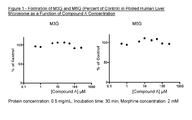
- UGT-dependent activities were determined by monitoring the formation of enzyme specific metabolites from marker substrates. For the reaction, formation of the metabolite of morphine in the presence (0.5, 1, 5, 10, 25, 50, 100, and 250 ⁇ M) and absence (positive control) of Compound A were measured. Incubation with selective inhibitors (positive control) was performed at a concentration above their established IC50 for the confirmation of enzyme activity and inhibitory effects.
- Incubations were performed in 2-mL centrifuge tubes. Incubation mixtures containing HLM suspension and alamethicin (25 ⁇ g/mL) in 0.1 M potassium phosphate buffer (pH 7.4), were placed on wet ice for 5 min. MgCl 2 , morphine, Compound A or selective inhibitor (added from 100X working solution) and saccharolactone were added and pre-incubated at 37 °C for 5 min in a water bath. Reactions were initiated by the addition of UDPGA. The final incubation mixture contained 0.5 mg/mL HLM, 2 mM MgCl 2 , 5 mM UDPGA, various concentration of Compound A or a selective inhibitor.
- concentrations of the metabolites from the marker substrate reactions were determined by LC-MS/MS. Appropriate concentrations of calibration standards (eight) and QCs (3 levels) of individual metabolites were prepared in HLM extract.
- Acetonitrile was used as quench solution and kept on ice prior to use. After the supernatant was transferred into 96-well plate, 10 ⁇ L of IS-C was added into each sample.
- the software provided with the LC-MS/MS system (Analyst TM software, version 1.5) was used to integrate the area under the mass ion peaks of the analytes and internal standards.
- the data were subsequently imported into Microsoft ® Excel spreadsheets, version 2003, and the report was prepared using Microsoft ® Word for Windows version XP software.
- the entries were verified against the raw data. Due to rounding, data may vary by ⁇ 0.01% for concentration or recovery.
- the calibration curve should have yielded a correlation coefficient (r) value of 0.990 or greater, and at least four of the back-calculated concentrations of individual standards should have been within ⁇ 15% of the nominal values, except for the lowest concentration standard where within ⁇ 20% of the nominal values was allowed.
- the mean values of the intra-day samples at each QC concentration should be within 85-115% of the nominal value and for precision, CV of the intra-day QC samples at each QC concentration should be within 15%.
- the software Analyst 1.5 provided with the LC-MS/MS system by Applied Biosystems/MDS Sciex will be used to integrate the area of the mass ion peaks for the analytes and the internal standard.
- the peak area ratio (analyte/IS) vs. nominal concentrations of the calibration standards will be used to determine the concentration of samples and QCs with a weighted linear regression.
- Calibration standards will be prepared at eight concentration levels in blank incubation matrix.
- Cmet Concentration of the metabolite in the incubations in the presence of Compound A or selective inhibitor
- the IC 50 for Compound A was estimated by non-linear regression analysis of individual sets of percent inhibition values using GraphPad Prism 5.
- M3G and M6G appeared to be linear up to a protein concentration of 1.0 mg/mL and up to 60 min.
- the microsomal protein concentration 0.5 mg/mL was used for all subsequent incubations.
- M3G and M6G appeared to be linear up to a 30 min incubation. A 30-min incubation was used for all subsequent incubations.
- Morphine was incubated at eight concentrations 0.1, 0.25, 0.5, 1.0, 2.0, 2.5, 5.0, and 7.5 mM with HLM at 0.5 mg/mL for 30 min.
- the metabolic parameter K m was estimated using the Michaelis-Menten equations. K m values were 2.59 mM and 2.11 mM for M3G and M6G, respectively.
- Metabolism of morphine at 2 mM in HLM in the presence of Compound A at 0, 0.5, 1.0, 5.0, 10, 25, 50, 100, and 250 ⁇ M was evaluated. Formation of two glucuronide metabolites of morphine, M3G and M6G, was monitored. In the incubations containing 2 mM morphine, IC 50 of Compound A could not be estimated under the concentration range tested (Table 1.1 and Table 1.2; Figure 1 , respectively).
- ketoconazole a known inhibitor
- linearity of morphine, M3G, and M6G were acceptable within the concentration range of 0.0175 to 3.5 ⁇ M, 0.01 to 2.0 ⁇ M, and 0.01 to 2.0 ⁇ M respectively.
- Example 2 A clinical trial to assess the clinical benefit of Compound A as adjunctive treatment for persistent cancer pain
- the Study Primary objective is to evaluate the efficacy of Compound A 200 mg daily compared to placebo as adjunctive treatment for persistent cancer pain, as measured by the change of pain severity from baseline using the Numeric Rating Scale.
- the inclusion criteria are patient with moderate or severe, persistent cancer pain who are receiving the World Health Organization (WHO) Step 2 or 3 cancer pain treatment and :
- the exclusion criteria are:
- the secondary endpoints are:
Landscapes
- Health & Medical Sciences (AREA)
- Public Health (AREA)
- Veterinary Medicine (AREA)
- Chemical & Material Sciences (AREA)
- Medicinal Chemistry (AREA)
- Pharmacology & Pharmacy (AREA)
- Life Sciences & Earth Sciences (AREA)
- Animal Behavior & Ethology (AREA)
- General Health & Medical Sciences (AREA)
- Epidemiology (AREA)
- Emergency Medicine (AREA)
- Pain & Pain Management (AREA)
- Engineering & Computer Science (AREA)
- Bioinformatics & Cheminformatics (AREA)
- Biomedical Technology (AREA)
- Neurology (AREA)
- Neurosurgery (AREA)
- Chemical Kinetics & Catalysis (AREA)
- General Chemical & Material Sciences (AREA)
- Nuclear Medicine, Radiotherapy & Molecular Imaging (AREA)
- Organic Chemistry (AREA)
- Pharmaceuticals Containing Other Organic And Inorganic Compounds (AREA)
Abstract
The present invention relates to 2-amino-2-oxoethyl trans-3-[5-(6-methoxy-naphtalen-1-yl)-1,3-dioxan-2-yl]propyl-carbamate (hereinafter referred to as compound A) for use in the treatment of persistent cancer pain, alone or as adjunctive treatment
Description
- The present invention relates to 2-amino-2-oxoethyl trans-3-[5-(6-methoxy-naphtalen-1-yl)-1,3-dioxan-2-yl]propyl-carbamate (hereinafter referred to as compound A) for use in the treatment of persistent cancer pain, alone or as adjunctive treatment.
- The compound 2-amino-2-oxoethyl trans-3-[5-(6-methoxy-naphtalen-1-yl)-1,3-dioxan-2-yl]propyl-carbamate and a preparative method are described in the patent application
W02004/0204303 - The compounds described in this document can be used in the prevention and treatment of any pathological condition in which endogenous cannabinoids and/or any other substrate metabolized by the FAAH enzyme are involved. Among other pathological conditions, pain is mentioned, notably acute or chronic pain of the neurogenic type: migraine, neuropathic pain including forms associated with the herpes virus and with diabetes; acute or chronic pain associated with inflammatory diseases, acute or chronic peripheral pain.
- Other pain should also be considered. There is an increase of medical need such as the treatment of persistent cancer pain.
- Cancer pain is complex and involves mixed types of pain from multiple causes. Cancer patients usually experience more than one pain type, making accurate diagnosis and selection of treatment difficult.
- The present invention relates to 2-amino-2-oxoethyl trans-3-[5-(6-methoxy-naphtalen-1-yl)-1,3-dioxan-2-yl]propyl-carbamate for use in the treatment of persistent cancer pain.
- In some cases, patients with persistent cancer pain have a background therapy which consists of opioids ± non-opioids ± adjuvants. Therefore it is necessary for adjunctive treatment not to interfere with the background therapy for pain. According to in vitro results, compound A has no significant drug interaction with morphine that is essential to allow its use as adjunctive treatment for persistent cancer pain.
- The invention is related to compound A for use in the treatment of persistent cancer pain. It is also to considered that the invention is related to compound A for use in the treatment of persistent pain in cancer patients.
- In another aspect, the invention is related to compound A for use in the treatment of persistent cancer pain wherein pain generator is primarily due to underlying cancer.
- In another aspect, the invention is related to compound A for use in the treatment of persistent cancer pain wherein pain generator is primarily due to cancer treatment.
- In another aspect, the invention is related to compound A for use in the treatment of persistent cancer pain wherein pain generator is classified as primarly nociceptive.
- In another aspect, the invention is related to compound A for use in the treatment of persistent cancer pain wherein pain generator is classified as primarly neuropathic.
- In another aspect, the invention is related to compound A for use in the treatment of persistent cancer pain wherein the persistent cancer pain is bone cancer.
- In another aspect, the invention is related to compound A for use in the treatment of persistent cancer pain wherein persistent cancer pain is metastatic cancer.
- In another aspect, the invention is related to compound A for use in the treatment of persistent cancer pain wherein persistent cancer pain is metastatic bone cancer.
- In another aspect, the invention is related to compound A for use in a therapeutic treatment to reduce pain intensity.
- In another aspect, the invention is related to compound A for use in a therapeutic treatment to reduce breakthrough pain frequency.
- In other aspects, the invention is related to compound A for each uses as specified before in the treatment of persistent cancer pain as adjunctive treatment.
- In another aspect, the invention is related to compound A for use in a therapeutic treatment to reduce utilization of background therapy.
- In another aspect, the invention is related to use of compound A and morphine in the treatment of persistent cancer pain. In another aspect, the invention is related to use of compound A and morphine derivative in the treatment of persistent cancer pain.
- In another aspect, the invention is related to use of compound A and opioids in the treatment of persistent cancer pain.
- The use of compound A and background therapy can be simultaneously, separately or sequentially.
- In another aspect, the invention is related to compound A for use as adjunctive treatment in the treatment of persistent cancer pain, wherein compound A is administered to
- patient with moderate or severe, persistent cancer pain who are receiving the World Health Organization (WHO)
Step 2 or 3 cancer pain treatment. - pain generator is primarily due to underlying cancer or cancer treatment.
- pain generator is classified as either primarily nociceptive or primarily neuropathic.
- pain severity is moderate or severe as defined by the Numeric Rating Scale during the screening phase
- In another aspect, the invention is related to compound A for use as adjunctive treatment in the treatment of persistent cancer pain, wherein compound A is administered to patient with moderate or severe, persistent cancer pain who are receiving the World Health Organization (WHO)
Step 2 or 3 cancer pain treatment. - In another aspect, the invention is related to compound A for use as adjunctive treatment in the treatment of persistent cancer pain, wherein pain generator is primarily due to underlying cancer.
- In another aspect, the invention is related to compound A for use as adjunctive treatment in the treatment of persistent cancer pain, wherein pain generator is primarily due to cancer treatment.
- In another aspect, the invention is related to compound A for use as adjunctive treatment in the treatment of persistent cancer pain, wherein pain generator is classified as either primarily nociceptive or primarily neuropathic.
- In another aspect, the invention is related to compound A for use as adjunctive treatment in the treatment of persistent cancer pain, wherein pain generator is classified as primarily nociceptive.
- In another aspect, the invention is related to compound A for use as adjunctive treatment in the treatment of persistent cancer pain, wherein pain generator is classified as primarily neuropathic.
- In another aspect, the invention is related to compound A for use as adjunctive treatment in the treatment of persistent cancer pain, wherein pain severity is moderate or severe as defined by the Numeric Rating Scale during the screening phase.
- In another aspect, the invention is related to compound A for use as adjunctive treatment in the treatment of persistent cancer pain, wherein pain severity is moderate as defined by the Numeric Rating Scale during the screening phase.
- In another aspect, the invention is related to compound A for use as adjunctive treatment in the treatment of persistent cancer pain, wherein pain severity is severe as defined by the Numeric Rating Scale during the screening phase.
- In a further aspect of the invention, it is to be understood that the patients having the following caracteristics are not included in the scope of the invention and/or the claimed use and/or technical effect:
- pain is not stable at study visit 1 (screening visit) and visit 2 (randomization visit)
- use of prohibited adjuvant pain treatment in the week prior to visit 1 or plan to use these medications during the study
- current use of medication containing tetrahydrocannabinol (THC)
- chemotherapy within 4 weeks of
visit 1 or chemotherapy planned during the study - radiotherapy within 4 weeks of
visit 1 or radiotherapy planned during the study (hemostatic palliative radiotherapy is permitted) - cancer related surgery within 4 weeks of
visit 1 or cancer-related surgery planned during the study - pain is stable at study visit 1 (screening visit) and visit 2 (randomization visit),
and/or - use of adjuvant pain treatment in the week prior to visit 1 or plan to use these medications during the study is prohibited, and/or
- the patient does not currently use of medication containing tetrahydrocannabinol (THC), and/or
- the patient does not have chemotherapy within 4 weeks of
visit 1 or chemotherapy planned during the study, and/or - the patient does not have radiotherapy within 4 weeks of
visit 1 or radiotherapy planned during the study (hemostatic palliative radiotherapy is permitted), and/or - the patient does not have cancer related surgery within 4 weeks of
visit 1 or cancer-related surgery planned during the study. - In another aspect, the invention is related to compound A for use as adjunctive treatment in the treatment of persistent cancer pain, measured by the change of pain severity from baseline using the Numeric Rating Scale.
- More particularly, the invention is related to compound A for use as adjunctive treatment in the treatment of persistent cancer pain, measured by change from baseline (baseline = average pain intensity between
visit 1 and visit 2) to end of treatment (end of treatment = average pain intensity during week 4) in cancer pain severity assessed by the Numeric Rating Scale. - More particularly, the invention is related to compound A for use as adjunctive treatment in the treatment of persistent cancer pain measured by Brief Pain Inventory Short-Form (BPI-SF).
- In another aspect, the invention is related to compound A for use as adjunctive treatment in the treatment of persistent cancer pain, measured by reduction of pain intensity.
- In another aspect, the invention is related to compound A for use as adjunctive treatment in the treatment of persistent cancer pain, measured by responder rate.
- In another aspect, the invention is related to compound A for use as adjunctive treatment in the treatment of persistent cancer pain, measured by reduction of breakthrough pain frequency.
- In another aspect, the invention is related to compound A for use as adjunctive treatment in the treatment of persistent cancer pain, measured by reduction of background therapy utilization.
- In another aspect, the invention is related to compound A for use as adjunctive treatment in the treatment of persistent cancer pain and to reduce background therapy utilization.
- In another aspect, the invention is related to compound A for use as adjunctive treatment in the treatment of persistent cancer pain, measured by improvement of mood.
- In another aspect, the invention is related to compound A for use as adjunctive treatment in the treatment of persistent cancer pain, and to improve mood.
- In another aspect, the invention is related to compound A for use as adjunctive treatment in the treatment of persistent cancer pain, measured by improvement of patient satisfaction of pain relief.
- In another aspect, the invention is related to compound A for use as adjunctive treatment in the treatment of persistent cancer pain, and to improve patient satisfaction of pain relief.
- In another aspect, the invention is related to compound A for use as adjunctive treatment in the treatment of persistent cancer pain, measured by reduction of constipation.
- In another aspect, the invention is related to compound A for use as adjunctive treatment in the treatment of persistent cancer pain, and to reduce constipation.
- In another aspect, the invention is related to compound A for use as adjunctive treatment in the treatment of persistent cancer pain, measured by improvement in Nausea visual analog scale.
- In another aspect, the invention is related to compound A for use as adjunctive treatment in the treatment of persistent cancer pain, and to improve Nausea visual analog scale.
- In another aspect, the invention is related to compound A for use as adjunctive treatment in the treatment of persistent cancer pain, measured by heathcare utilization.
- In another aspect, the invention is related to compound A for use as adjunctive treatment in the treatment of persistent cancer pain, measured by improvement of quality of life.
- In another aspect, the invention is related to compound A for use as adjunctive treatment in the treatment of persistent cancer pain, measured by one or several "indicator" selected from the following list : change of pain severity from baseline using the Numeric Rating Scale, reduction of pain intensity, responder rate, breakthrough pain frequency, background therapy utilization, mood, patient satisfaction of pain relief, constipation, heathcare utilization, quality of life.
- In another aspect, the invention is related to compound A for use in the treatment of persistent cancer pain wherein compound A is administered 200 mg once daily. In another aspect, the invention is related to compound A for use in the treatment of persistent cancer pain wherein compound A is administered 200 mg once daily with food. In another aspect, the invention is related to compound A for use in the treatment of persistent cancer pain wherein compound A is administered 200 mg once daily in the morning with food.
- There may be specific cases where higher or lower dosages are appropriate; such dosages do not depart from the context of the invention. According to the usual practice, the dosage appropriate for each patient is determined by the physician according to the method of administration, the weight, the pathology, the body surface, the cardiac output and the response of said patient.
- One or several of each aspects of the invention cited before can be combined independently with one or several other aspects of the invention also cited before to provide another aspect of the invention.
- Is it to be understood that "compound A for use in the treatment of" has an equivalent meaning to "Use of compound A for the treatment of", "Use of compound A for the manufacture of a medicament useful for the treatment of".
- In another aspect, the invention is related to a pharmaceutical composition comprising 2-amino-2-oxoethyl trans-3-[5-(6-methoxy-naphtalen-1-yl)-1,3-dioxan-2-yl]propyl-carbamate (compound A) as active ingredient and pharmaceutically acceptable excipients for use in the treatment of persistent cancer pain. More particularly, the invention is also related to this pharmaceutical composition any one of the uses as described before.
- In another aspect, the invention is related to a medicament comprising 2-amino-2-oxoethyl trans-3-[5-(6-methoxy-naphtalen-1-yl)-1,3-dioxan-2-yl]propyl-carbamate as active ingredient for use in the treatment of persistent cancer pain. More particularly, the invention is also related to a medicament for any one of the uses as described before.
- In another aspect, the invention is related to compound A for use in the treatment of persistent cancer pain wherein compound A is administered as a tablet having the following composition:
Ingredients [mg] Compound A 200 Lactose monohydrate 106 Maize starch 53 Hypromellose 16,5 Crospovidone 20,5 Magnesium stearate 4 total weight [mg] 400 - According to another of its aspects, the present invention also relates to a method for treating cancer pain as indicated above, which comprises the administration, to a patient, of an effective dose of compound A or a pharmaceutically acceptable salt thereof.
- Other subject matters of the invention are the methods of treatment for the different aspects of the invention described before and the methods of treatment comprising the uses of compound A as described before.
- In another aspect, the invention is related to a method of reducing pain intensity by administering compound A to a patient having persistent cancer pain. In another aspect, the invention is related to a method of reducing breakthrough pain frequency by administering compound A to a patient having persistent cancer pain. In another aspect, the invention is related to a method of reducing utilization of background therapy by administering compound A to a patient having persistent cancer pain.
- In another aspect, the invention is related to an article of manufacture comprising a packaging material; compound A; and a label or package insert contained within the packaging material indicating that patients receiving the treatment with the above mentioned pharmaceutical composition can be treated for persistent cancer can be treated for persistent cancer pain.
- In another aspect, the invention is related to a method of treating a human subject having persistent cancer pain comprising administering a pharmaceutical composition comprising compound A to the subject.
- In another aspect, the invention is related to a method of preventing pain associated with cancer comprising administering a pharmaceutical composition comprising compound A to a patient having cancer, such that pain is prevented.
- Compound A is 2-amino-2-oxoethyl trans-3-[5-(6-methoxy-naphtalen-1-yl)-1,3-dioxan-2-yl]propyl-carbamate having the following chemical structure:

- Cancer pain is a chronic moderate or severe pain defined as complex pain modulated by one or several pathophysiological mechanisms (visceral, somatic, neuropathic). The two most common causes of cancer pain are the cancer itself and the treatments used to treat cancer.
- The cancer itself. When cancer causes pain, some probable causes include the pressure of a tumor on one of the body's organs or on bone or nerves.
- Cancer treatments. Some examples of treatment-related pain include:
- Chemotherapy can cause numerous side effects, depending in the medication being used. Some of the more common side effects that cause pain include mouth sores (mucositis), peripheral neuropathy (numb and sometimes painful sensations in the feet, legs, fingers, hands and arms), constipation, diarrhea, nausea, vomiting and abdominal cramps. Some people also experience bone and joint pain from chemotherapy medications and from some medications used to offset the impact of the chemotherapy on blood counts and on the risk of infection.
- Radiotherapy which may cause tissue damage leading in some cases to nociceptive pain.
- Surgical treatments will, in some instances produce pain after they are completed.
- Procedures related to cancer pain, such as biopsies, blood draws, lumbar punctures, laser treatments, etc. can cause pain.
- Persistent cancer pain is defined as chronic pain for which relief is not obtainable with existing pain treatments.
- Three broad categories of cancer pain may be considered alone or concomitantly:
- Nociceptive cancer pain is pain caused by tissue damage created by pressure, infiltration or destruction by an identifiable visceral or somatic lesion.
- ■ Visceral pain is constant, dull, aching, poorly localized pain that has a gradual onset often felt at a distance from the origin.
- ■ Somatic pain is constant gnawing or aching, usually well localized, worse on movement or weight-bearing if in pelvis, hips, femur, joints or spine.
- ■ Within nociceptive pain, bone cancer represents a particular subcategory with mixed syndromes of nociceptive and neuropathic pain types. However it is acknowledged that the skilled man in the art, such as an investigator, physician or doctor having skills in palliative care and management of pain is able to differentiate whether pain is
- Neuropathic cancer pain is pain caused by pressure, invasion or destruction of peripheral or central nervous tissues, which leads to complex and abnormal spinal cord or thalamic neural processes that produce sustained pain.
- The abnormal sensation or hypersensitivity in the affected area may be characterized by:
- Paraesthesias: skin crawling sensation or tingling
- Spontaneous ongoing pain, burning, shooting, electric shock-like sensations
- Accompanying somatosensory disturbance in the painful territory
- o Numbness
- o Allodynia: provocation of pain by normally innocuous stimuli such as light touch
- o Hyperalgesia: exaggerated response to painful stimuli
- o Summation: progressive worsening of pain evoked by slow repetitive stimulation with mildly noxious stimuli
- Neurogenic pain is pain caused or affected by nerve or nervous tissue damage.
- Moderate or severe cancer pain is defined according to a pain severity scale such as NRS and/or BPI-SF.
- Breakthrough pain is an acute flare of pain that 'breaks through' the pain analgesia.
- Pain generator is defined as the source of pain.
- Adjunctive treatment is a background therapy for the treatment of pain and is defined as opioids ± non-opioids ± adjuvants ± rescue therapy for breakthrough pain.
- Opioids refer to, it can be mentioned: morphine, fentanyl, codeine, hydrocodeine, oxycodone, acetaminophen/paracetamol, hydrocodone/tramadol, lidocaine, methadone, meperidine, tramadol. This list is not limitative.
- Non-opiods refer to NSAIDs, Paracetamol,
COX 2 inhibitor, antiepileptics, anti-depressant, benzodiazepine, tranquillisers, biphosponates. - NSAIDs refer to acetylsalicylic acid (aspirin), diclofenac, ibuprofen, indomethacin, sulindac, ketoprofen, loxoprofen, naproxen, oxaprozin.
- Cox2 inhibitors refer to celecoxib, etoricoxib, valdecoxib, parecoxib.
- Anti-epileptics refer to Calcium channel α2-δ ligands such as Gabapentin and pregabalin.
- Antidepressants refer to Tricyclic antidepressants, Selective serotonin reuptake inhibitors (SSNRIs) such as duloxetine and venlafaxine.
- The NRS (numeric rating scale) is an 11-category (from 0 [no pain] to 10 [worst possible pain]), descriptive-anchor scale that is one of the most frequently employed and accepted scales for pain evaluation. NRS allows a discontinuous 0 to 10 data collection between the same boundaries. While the NRS and the Visual Analogue Scale (VAS) demonstrate similar sensitivity of rating in pain intensity, the choice of the NRS is based on the fact that this scale is validated in cancer pain population.
- The BPI-SF (Brief Pain Inventory Short-Form) was developed originally for use with cancer patients and it has been adopted widely for clinical pain assessment, epidemiological studies, and in studies of effectiveness of pain treatment. Nine questions measure the intensity of pain, interference of pain, pain relief, pain quality, and patient perception of the cause of pain.
- The HADS (Hospital Anxiety and Depression Scale) was designed to screen for the presence of a mood disorder in medically ill patients. This self-reported scale contains 14 items rated on 4-point Likert scales. Two subscales assess depression (7 items) and anxiety (7 items). Each 7-item subscale yields a score of 0 to 21 that is interpreted with the following cut points: 0-7, normal; 8-10, mild mood disturbance; 11-14, moderate mood disturbance; and 12-21, severe mood disturbance.
- The BFI (Bowel Function Index) is a 3-item questionnaire to measure constipation from the patient's perspective. The time frame for the questions is "during the last 7 days". The BFI is administered by a clinician. The answer for each of the 3 items is rated on a scale from 0 to 100, where 0 = easy or no difficulty and 100 = severe difficulty.
- Healthcare utilization measures patients'overall healthcare needs including unscheduled hospitalizations, emergency department visits, healthcare provider office visits, and sick leave days
- Patient satisfaction of pain relief is a 5-point Likert scale that measures patient satisfaction with treatment. The five categorical responses are: extremely unsatisfied, unsatisfied, neutral, satisfied, extremely satisfied.
- The EORTC QLQ-C30 (European Organization For Research And Treatment Of Cancer Quality Of Life Questionnaire-C3 Version 3) was designed evaluate the quality of life (QoL) of cancer patients participating in international clinical trials. The questionnaire contains a total of 30 items, of which 28 items are rated on 4-point Likert-type scale and 2 items are rated on 7-point Likert scale. These include 5 functional scales, 3 symptom scales, a global health status/QoL scale, and 6 single items. A high scale score represents a higher response level. Thus a high score for a functional scale represents a high/healthy level of functioning, a high score for the global health status/QoL represents a high QoL, but a high score for a symptom scale/item represents a high level of symptomatology/problems.
- WHO: World Health Organization
- THC: tetrahydrocannabinol
- Conc.: Concentration
- CV: Coefficient of variance
- ESI: Electrospray ionization
- eq: Equivalent
- g: Gram(s)
- x g: Times gravity
- HLM Human Liver Microsomes
- HPLC: High-performance liquid chromatography
- hr: Hour(s)
- K m : Michaelis-Menten constant
- LC-MS/MS: Liquid chromatography-tandem mass spectrometry
- MBL: Medpace Bioanalytical Laboratory
- mg: Milligram(s)
- min (m): Minute(s)
- mL: Milliliter(s)
- mm: Millimeter(s)
- mM: Millimolar(s)
- MRM: Multiple reaction monitoring
- µg: Microgram(s)
- µL: Microliter(s)
- µm: Micrometer(s)
- µM: Micromolar(s)
- N2: Nitrogen
- Rt: Retention time
- SD: Standard deviation
- STD: Standard
- UDPGA: Uridine 5'-diphosphoglucuronic acid
- UGT: UDP-glucuronosyl transferase
- V: Volt(s)
- V max : Maximum enzyme velocity
- The present invention is illustrated by the data hereinafter.
- The inhibition of UDP-glucuronosyl tranferase mediated metabolism of morphine glucuronidation by Compound A was investigated in human liver microsomes, by monitoring the formation of two prominent metabolites (morphine-3-glucuronide and morphine-6-glucuronide). Compound A showed no inhibition of morphine metabolism under the conditions employed in this in vitro study.
- The test article is compound A
- 1.2 Test Systems Human liver microsomes (pool of 10, product number: X008061) were obtained from Celsis.
-
- Water (H2O): HPLC Grade, Fisher, or equivalent
- Methanol (CH3OH): HPLC Grade, Fisher, or equivalent
- Acetonitrile (ACN): HPLC Grade, Fisher, or equivalent
- Ammonium Acetate: HPLC Grade, Fisher, or equivalent
- Formic acid: 96% ACS, Sigma-Aldrich, or equivalent
- K2HPO4: 98% ACS, Sigma-Aldrich, or equivalent
- KH2PO4: 99% ACS, Sigma-Aldrich, or equivalent
- MgCl2: 98% ACS, Sigma-Aldrich, or equivalent
- DMSO: 99.9% ACS, Sigma-Aldrich, or equivalent
- The following equipment and supplies can be used. Equipment and supplies, which are capable of delivering equivalent performance from alternative manufacturers, may be substituted. The miscellaneous glassware can be used for preparation of standard, QC solutions and samples.
- Balances: Mettler Toledo, MX-5, XS205DU, PL202-S or equivalent
- Centrifuges: Eppendorf 5810, 5810R or equivalent
- Vortexers: VWR Scientific Multi-Tube Vortexer, Thermo MaxMix II Vortex Mixer,
Fisher Genie 2, or equivalent - Evaporator: Caliper TurboVap® LV Evaporator, or equivalent
- Disposable Pipettes: 1 mL in 1/100, 5 mL in 1/10, and 10 mL in 1/10, VWR, or equivalent Micro-Pipettes: 1-5, 25, 50, and 100 µL, Eppendorf, or equivalent
- Automatic Pipettes: 10-100 µL, 20-200 µL, and 100-1,000 µL, Eppendorf, or equivalent Sonicator: Branson 5510, 1510, or equivalent
- Autosampler Vials: 1.5-mL Amber Glass Vials (SUN-SRi, Cat. No. 200 252) or equivalent
- pH Meter: Mettler-Toledo
- Water Baths: Fisher Scientific.
- Centrifuge Tubes with Screw Caps: 2-mL (VWR, Cat. No. 20170-211) or equivalent
- 96-well plate: True Taper 2-mL 96-well plate (Analytical Sales & Products, Inc.) or equivalent Miscellaneous bottles, vials, tubes and various glassware.
- A reverse phase HPLC column was used for the separation of the analyte. The analyte was eluted using a gradient of mobile phase A (HPLC water with 5 mM ammonium acetate and 0.1 % formic acid) and mobile phase B (CH3OH/water (90/10) with 5 mM ammonium acetate and 0.1 % formic acid) from 2% to 40% mobile phase B. Morphine, M3G, M6G and the internal standard were detected using the following conditions: Mass Spectrometer: MDS Sciex API 4000 LC-MS/MS System, or equivalent ; Ionization Mode: Turbo IonSpray®, Positive Ion Detection ; Scan Mode: Multiple Reaction Monitoring (MRM) ; Ion Spray Voltage (IS): 5,500 V ; Temperature (TEM): 500 °C ; Curtain Gas (N2) (CUR): 20 ; Collision Gas (CAD): 6 ; Gas 1: 60 ; Gas 2: 60 ; Declustering Potential (DP): 30 ; Entrance Potential (EP): 10; Potential (CXP): 12.
- Precursor Ion and Product Ion
Compound Precursor → Product Transition (m/z) Collision Energy (CE) Dwell Time (msec) Morphine 286.1 →201.1 50 V 200 Morphine-3-glucuronide (M3G) 462.0 →286.3 36 V 200 Morphine-6-glucuronide (M6G) 462.0 →286.3 36 V 200 Acetaminophen (IS) 152.2 →110.0 20 V 100 - Stock solutions of morphine were prepared in suitable organic solvents and stored at -20 °C prior to use. Working stock solutions were freshly prepared before each incubation in potassium phosphate buffer (0.1 M, pH 7.4) and kept on ice prior to use.
- Various concentration of Compound A was prepared in DMSO and stored at -20 °C until use.
- Selective inhibitor, ketoconazole, was prepared in DMSO and stored at -20 °C until use. Acetaminophen was used as the IS for the determination of morphine, M3G, and M6G. Stock and working solutions of acetaminophen were prepared in methanol and potassium phosphate buffer (0.1 M, pH 7.4). Solutions were stored at -20 °C prior to use. Acetonitrile was used as quench solution in the study.
- Incubations were conducted in 2-mL polypropylene centrifuge tubes. Incubation mixtures containing HLM suspension and alamethicin (25 µg/mL) in 0.1 M potassium phosphate buffer (pH 7.4), were placed on wet ice for 5 min. MgCl2, morphine, and saccharolactone were added and pre-incubated at 37 °C for 5 min in a water bath. Reactions were initiated by the addition of 50 mM UDPGA spiking solution. The final incubation mixture contained 0.1 mg (0.5 mg/mL) HLM, 2 mM MgCl2 5 mM UDPGA, and morphine over a concentration range of 0.5 - 7.5 mM. Samples were incubated aerobically in a water bath at 37 °C for the required amount of time and reactions terminated by the addition of 400 µL of the appropriate quench solution. The 2-mL centrifuge tubes were vortex mixed and stored in a -20 °C freezer for ca. 20 min prior to centrifugation at 13.3 × g, 4 °C for 10 min. Supernatants were analyzed by LC-MS/MS for morphine metabolites formation.
- The kinetic parameters K m and V max for two prominent metabolites of morphine in HLM were determined. Prior to the determination of the kinetic parameters, the metabolism of morphine with respect to incubation time and protein concentration was evaluated. At each timepoint, the incubation mixture was taken and quenched by the addition of 2 volumes of ice-cold Quench Solution. The samples were centrifuged and the resultant supernatants were analyzed for the formation of metabolites M3G and M6G, using LC-MS/MS.
- Morphine metabolism as a function of time was determined by incubating morphine with HLM (0.5 mg/mL) at 2.0 mM for 0, 15, 30, 45, and 60 min.
- Morphine metabolism as a function of protein concentration was determined by incubating morphine at 2.0 mM with 0, 0.25, 0.5 and 1.0 mg/mL HLM for 30 min.
- Determination of the kinetic parameters K m and V max values for two prominent metabolites of morphine in HLM was performed under conditions shown to be linear with respect to time and protein concentration. Kinetic parameters were determined by incubating morphine at 0.1, 0.25, 0.5, 1.0, 2.0, 2.5, 5.0, and 7.5 mM with HLM at 0.5 mg/mL for 30 min.
- UGT-dependent activities were determined by monitoring the formation of enzyme specific metabolites from marker substrates. For the reaction, formation of the metabolite of morphine in the presence (0.5, 1, 5, 10, 25, 50, 100, and 250 µM) and absence (positive control) of Compound A were measured. Incubation with selective inhibitors (positive control) was performed at a concentration above their established IC50 for the confirmation of enzyme activity and inhibitory effects.
- Incubations were performed in 2-mL centrifuge tubes. Incubation mixtures containing HLM suspension and alamethicin (25 µg/mL) in 0.1 M potassium phosphate buffer (pH 7.4), were placed on wet ice for 5 min. MgCl2, morphine, Compound A or selective inhibitor (added from 100X working solution) and saccharolactone were added and pre-incubated at 37 °C for 5 min in a water bath. Reactions were initiated by the addition of UDPGA. The final incubation mixture contained 0.5 mg/mL HLM, 2 mM MgCl2, 5 mM UDPGA, various concentration of Compound A or a selective inhibitor. Samples were incubated aerobically in a water bath at 37 °C for 30 min. The incubation systems were terminated by the addition of a 400-µL quenching solution. The 2-mL centrifuge tubes were vortex mixed and stored in a -20 °C freezer for approximately 20 min prior to centrifugation at 13.3 × g, 4 °C for 10 min. Supernatants were analyzed by LC-MS/MS.
- The concentrations of the metabolites from the marker substrate reactions were determined by LC-MS/MS. Appropriate concentrations of calibration standards (eight) and QCs (3 levels) of individual metabolites were prepared in HLM extract.
- Acetonitrile was used as quench solution and kept on ice prior to use. After the supernatant was transferred into 96-well plate, 10 µL of IS-C was added into each sample.
- The software provided with the LC-MS/MS system (Analyst™ software, version 1.5) was used to integrate the area under the mass ion peaks of the analytes and internal standards.
- The data were subsequently imported into Microsoft® Excel spreadsheets, version 2003, and the report was prepared using Microsoft® Word for Windows version XP software. The entries were verified against the raw data. Due to rounding, data may vary by ±0.01% for concentration or recovery.
- Accuracy, defined as the closeness of agreement between the test result and the nominal value, was expressed as the mean recovery. Precision, defined as the variability of measurements within replicates, was represented by the percent coefficient of variation.
- The criteria for an acceptable batch are: For linearity, the calibration curve should have yielded a correlation coefficient (r) value of 0.990 or greater, and at least four of the back-calculated concentrations of individual standards should have been within ±15% of the nominal values, except for the lowest concentration standard where within ±20% of the nominal values was allowed.
- For accuracy, the mean values of the intra-day samples at each QC concentration should be within 85-115% of the nominal value and for precision, CV of the intra-day QC samples at each QC concentration should be within 15%.
- The software Analyst 1.5 provided with the LC-MS/MS system by Applied Biosystems/MDS Sciex will be used to integrate the area of the mass ion peaks for the analytes and the internal standard.
- The peak area ratio (analyte/IS) vs. nominal concentrations of the calibration standards will be used to determine the concentration of samples and QCs with a weighted linear regression.
- Calibration standards will be prepared at eight concentration levels in blank incubation matrix. The calibration curve will be determined from peak area ratio vs. concentration using a weighted linear regression: y = mx + b where x = Analyte calibration standard concentration ; y = Peak area ratio (i.e., analyte/IS) ; b = Intercept ; m = Slope.
- Once the values of m and b are established and the calibration curve meets acceptance criteria, the m and b values will be used to calculate the concentrations of analyte in each sample by the following equation:

where x = Concentration of analyte ; y = Peak area ratio (analyte/IS) ; b = Intercept ; m = Slope. - Calculation of Mean Value

- Calculation of Standard Deviation

- The Michaelis-Menten equation describes the kinetics of an enzyme reaction under pseudo first order conditions - the initial reaction velocity (Vo) is linear with respect to reaction time and enzyme concentration. Under steady state conditions with respect to the formation of any intermediates, the formation of product P per unit time is expressed as:

where Vmax is the maximum enzyme velocity, attained when the enzyme sites are saturated with substrate [S]. Km is the Michaelis constant such that when
- The apparent values for K m and V max were determined by non-linear regression analysis of the Michaelis-Menten equation using GraphPad Prism version 5.01 for Windows (GraphPad Software, San Diego California USA).
- Percent of Control = Cmet ÷ Ccontrol × 100%
- Cmet: Concentration of the metabolite in the incubations in the presence of Compound A or selective inhibitor
- Ccontrol: Concentration of the enzyme-specific metabolite in the incubations in the absence of Compound A and selective inhibitor
- The IC50 for Compound A was estimated by non-linear regression analysis of individual sets of percent inhibition values using GraphPad Prism 5.
- The formation of M3G and M6G appeared to be linear up to a protein concentration of 1.0 mg/mL and up to 60 min. The microsomal protein concentration 0.5 mg/mL was used for all subsequent incubations.
- The formation of M3G and M6G appeared to be linear up to a 30 min incubation. A 30-min incubation was used for all subsequent incubations.
- Morphine was incubated at eight concentrations 0.1, 0.25, 0.5, 1.0, 2.0, 2.5, 5.0, and 7.5 mM with HLM at 0.5 mg/mL for 30 min. The metabolic parameter K m was estimated using the Michaelis-Menten equations. K m values were 2.59 mM and 2.11 mM for M3G and M6G, respectively.
- Metabolism of morphine at 2 mM in HLM in the presence of Compound A at 0, 0.5, 1.0, 5.0, 10, 25, 50, 100, and 250 µM was evaluated. Formation of two glucuronide metabolites of morphine, M3G and M6G, was monitored. In the incubations containing 2 mM morphine, IC50 of Compound A could not be estimated under the concentration range tested (Table 1.1 and Table 1.2;
Figure 1 , respectively).Table 1.1 M3G Formation Activity of Human Liver Microsomes in the Presence and Absence of Compound A Compound A (µM) M3G (µM) Activity a (pmole/mg/min) Mean SD % Control 0 5.83 389 371 11.3 100.0 5.69 379 5.44 363 0.5 5.54 369 362 7.0 97.7 5.32 355 5.45 363 1.0 5.49 366 357 13.1 96.2 5.45 363 5.13 342 5.0 5.67 378 393 16.6 106.0 6.17 411 5.87 391 10 6.38 425 400 31.4 107.9 5.47 365 6.17 411 25 6.10 407 402 19.6 108.3 6.27 418 5.70 380 50 5.69 379 392 20.0 105.7 6.23 415 5.73 382 100 5.00 333 344 17.3 92.7 5.46 364 5.02 335 250 5.18 345 349 5.1 94.2 5.22 348 5.33 355 aProtein concentration: 0.5 mg/mL; Incubation time: 30 min; Morphine concentration: 2mM Table 1.2 M6G Formation Activity of Human Liver Microsomes in the Presence and Absence of Compound A Compound A (µM) M6G (µM) Activity a (pmole/mg/min) Mean SD % Control 0 0.789 52.6 51 1.5 100.0 0.758 50.5 0.746 49.7 0.5 0.765 51.0 49 2.2 96.9 0.704 46.9 0.752 50.1 1.0 0.723 48.2 48 1.7 94.4 0.745 49.7 0.695 46.3 5.0 0.742 49.5 52 2.8 102.4 0.827 55.1 0.778 51.9 10 0.869 57.9 56 2.1 110.4 0.808 53.9 0.853 56.9 25 0.764 50.9 54 3.3 105.8 0.861 57.4 0.800 53.3 50 0.833 55.5 55 4.5 108.3 0.893 59.5 0.758 50.5 100 0.733 48.9 50 2.8 97.4 0.790 52.7 0.709 47.3 250 0.727 48.5 49 1.6 96.5 0.719 47.9 0.765 51.0 aProtein concentration: 0.5 mg/mL; Incubation time: 30 min; Morphine concentration: 2mM - Under the same conditions, positive control incubations with ketoconazole, a known inhibitor, demonstrated a ≥98.5% inhibition to both M3G and M6G activities.
- Statistical calculations in the report tables were calculated from unrounded concentration values taken directly from the raw data. The concentration values appearing in the report tables were rounded for display purposes.
- Calibration standard regression was performed by Analyste 1.5. Linearity was expressed as 2 the correlation coefficient (r2) of the calibration curve. The calibration curve had
correlation 2 coefficient (r2) values ≥ 0.9924 for morphine, M3G, and M6G. - The linearity of morphine, M3G, and M6G were acceptable within the concentration range of 0.0175 to 3.5 µM, 0.01 to 2.0 µM, and 0.01 to 2.0 µM respectively.
- All chromatograms obtained from blank sample were evaluated for the presence of any interference peaks at regions of interest of M3G, M6G, and the internal standard. No interference was observed in the region of interest. There was also no obvious interference between the analytes and internal standard. The results have shown that this method is very specific and selective.
- The inhibition of UDP-glucuronosyl tranferase mediated metabolism of morphine glucuronidation by Compound A was investigated in human liver microsomes, by monitoring the formation of two prominent metabolites (morphine-3-glucuronide and morphine-6-glucuronide). Compound A showed no inhibition of morphine metabolism under the conditions employed in this in vitro study.
- The Study Primary objective is to evaluate the efficacy of Compound A 200 mg daily compared to placebo as adjunctive treatment for persistent cancer pain, as measured by the change of pain severity from baseline using the Numeric Rating Scale.
- The Study Secondary Objectives are:
- to evalute the efficacy of Compound A compared to placebo as adjunctive treatment for persistent cancer pain, measured by :
- reduction of pain intensity
- responder rate
- breakthrough pain frequency
- background therapy utilization
- mood
- patient satisfaction of pain relief
- constipation
- heathcare utilization
- quality of life,
- to evaluate the tolerability and safety of Compound A as adjunctive treatment for persistent cancer pain,
- to evaluate the blood concentration and byproducts of Compound A,
- to assess plasma endocannabinoid concentration.
- The inclusion criteria are patient with moderate or severe, persistent cancer pain who are receiving the World Health Organization (WHO)
Step 2 or 3 cancer pain treatment and : - Pain generator (source of pain) must be primarily due to underlying cancer or cancer treatment,
- Pain generator (source of pain) must be classified as either primarily nociceptive or primarily neuropathic,
- Pain severity must be moderate or severe as defined by the Numeric Rating Scale during the screening phase.
- The exclusion criteria are:
- Pain is not stable at study Visit 1 (screening visit) and Visit 2 (randomization visit),
- Use of prohibited adjuvant pain treatment in the week prior to Visit 1 or plan to use these medications during the study,
- Current use of medication containing tetrahydrocannabinol (THC),
- Chemotherapy within 4 weeks of
Visit 1 or chemotherapy planned during the study, - Radiotherapy within 4 weeks of
Visit 1 or radiotherapy planned during the study (hemostatic palliative radiotherapy is permitted), - Cancer related surgery within 4 weeks of
Visit 1 or cancer-related surgery planned during the study. - For a given participating patient, the total duration of this study is 6 weeks:
- Screening Phase:
- No investigational medicinal product administered
- Patient continues to receive
WHO Step 2 or 3 cancer pain treatment as Background Therapy
- Randomized Treatment Phase:
- Patients randomized to 1 of 2 treatment groups in a 1:1 ratio:
- Group I: [Background Therapy + Compound A]
- Group II: [Background Theray + placebo]
- Compound A is administered 200 mg once daily in the morning with food
- Patient continues to receive
WHO Step 2 or 3 cancer pain treatment as Background Therapy
- Patients randomized to 1 of 2 treatment groups in a 1:1 ratio:
- Posttreatment Phase:
- No investigational medicinal product administered
- Patient continues to receive
WHO Step 2 or 3 cancer pain treatment as Background Therapy
- The primary endpoint is a change from baseline (baseline = average pain intensity between
Visit 1 and Visit 2) to end of treatment (end of treatment = average pain intensity during Week 4) in cancer pain severity assessed by the Numeric Rating Scale. - The secondary endpoints are:
- Adverse events and other clinical and para-clinical parameters (eg, vital signs, physical examinations, clinical laboratories, electrocardiogram)
- Other safety assessments (suicidality, drug abuse liability, cognitive function)
- Brief Pain Inventory Short-Form (BPI-SF)
- Responder rate
- Breakthrough pain frequency
- Background therapy utilization
- Mood
- Nausea visual analog scale
- Constipation.
Claims (16)
- 2-amino-2-oxoethyl trans-3-[5-(6-methoxy-naphtalen-1-yl)-1,3-dioxan-2-yl]propyl-carbamate for use in the treatment of persistent cancer pain.
- 2-amino-2-oxoethyl trans-3-[5-(6-methoxy-naphtalen-1-yl)-1,3-dioxan-2-yl]propyl-carbamate for use according to claim 1 wherein pain generator is primarily due to underlying cancer.
- 2-amino-2-oxoethyl trans-3-[5-(6-methoxy-naphtalen-1-yl)-1,3-dioxan-2-yl]propyl-carbamate for use according to claim 1 wherein pain generator is primarily due to cancer treatment.
- 2-amino-2-oxoethyl trans-3-[5-(6-methoxy-naphtalen-1-yl)-1,3-dioxan-2-yl]propyl-carbamate for use according to any of claims 1 to 3 wherein pain generator is classified as primarly nociceptive.
- 2-amino-2-oxoethyl trans-3-[5-(6-methoxy-naphtalen-1-yl)-1,3-dioxan-2-yl]propyl-carbamate for use according to any of claims 1 to 3 wherein pain generator is classified as primarly neuropathic.
- 2-amino-2-oxoethyl trans-3-[5-(6-methoxy-naphtalen-1-yl)-1,3-dioxan-2-yl]propyl-carbamate for use according to any of claims 1 to 5 wherein the persistent cancer pain is bone cancer.
- 2-amino-2-oxoethyl trans-3-[5-(6-methoxy-naphtalen-1-yl)-1,3-dioxan-2-yl]propyl-carbamate for use according to any of claims 1 to 6 wherein the persistent cancer pain is metastatic cancer.
- 2-amino-2-oxoethyl trans-3-[5-(6-methoxy-naphtalen-1-yl)-1,3-dioxan-2-yl]propyl-carbamate for use according to any of claims 1 to 7 wherein the persistent cancer pain is metastatic bone cancer.
- 2-amino-2-oxoethyl trans-3-[5-(6-methoxy-naphtalen-1-yl)-1,3-dioxan-2-yl]propyl-carbamate for use in a therapeutic treatment to reduce cancer pain intensity.
- 2-amino-2-oxoethyl trans-3-[5-(6-methoxy-naphtalen-1-yl)-1,3-dioxan-2-yl]propyl-carbamate for use in a therapeutic treatment to reduce breakthrough cancer pain frequency.
- 2-amino-2-oxoethyl trans-3-[5-(6-methoxy-naphtalen-1-yl)-1,3-dioxan-2-yl]propyl-carbamate for use according to any of claims 1 to 10 as adjunctive treatment.
- 2-amino-2-oxoethyl trans-3-[5-(6-methoxy-naphtalen-1-yl)-1,3-dioxan-2-yl]propyl-carbamate for use according to any of claims 1 to 11 in a therapeutic treatment to reduce utilization of background therapy.
- 2-amino-2-oxoethyl trans-3-[5-(6-methoxy-naphtalen-1-yl)-1,3-dioxan-2-yl]propyl-carbamate for use according to claim 11 or 12 wherein the background therapy is morphine or morphine derivative.
- 2-amino-2-oxoethyl trans-3-[5-(6-methoxy-naphtalen-1-yl)-1,3-dioxan-2-yl]propyl-carbamate for use according to any of claims 1 to 13 wherein 2-amino-2-oxoethyl trans-3-[5-(6-methoxy-naphtalen-1-yl)-1,3-dioxan-2-yl]propyl-carbamate is administered 200 mg once daily.
- Pharmaceutical composition comprising 2-amino-2-oxoethyl trans-3-[5-(6-methoxy-naphtalen-1-yl)-1,3-dioxan-2-yl]propyl-carbamate as active ingredient and pharmaceutically acceptable excipients for use according to any of claims 1 to 14.
- An article of manufacture comprising:- a packaging material;- a pharmaceutical composition comprising 2-amino-2-oxoethyl trans-3-[5-(6-methoxy-naphtalen-1-yl)-1,3-dioxan-2-yl]propyl-carbamate as active ingredient and pharmaceutically acceptable excipients; and- a label or package insert contained within the packaging material indicating that patients receiving the treatment with the above mentioned pharmaceutical composition can be treated for persistent cancer pain.
Priority Applications (1)
| Application Number | Priority Date | Filing Date | Title |
|---|---|---|---|
| EP11305903A EP2545915A1 (en) | 2011-07-11 | 2011-07-11 | 2-amino-2-oxoethyl trans-3-[5-(6-methoxy-naphtalen-1-yl)-1,3-dioxan-2-yl]propyl-carbamate for use in the treatment of persistent cancer pain |
Applications Claiming Priority (1)
| Application Number | Priority Date | Filing Date | Title |
|---|---|---|---|
| EP11305903A EP2545915A1 (en) | 2011-07-11 | 2011-07-11 | 2-amino-2-oxoethyl trans-3-[5-(6-methoxy-naphtalen-1-yl)-1,3-dioxan-2-yl]propyl-carbamate for use in the treatment of persistent cancer pain |
Publications (1)
| Publication Number | Publication Date |
|---|---|
| EP2545915A1 true EP2545915A1 (en) | 2013-01-16 |
Family
ID=44764039
Family Applications (1)
| Application Number | Title | Priority Date | Filing Date |
|---|---|---|---|
| EP11305903A Ceased EP2545915A1 (en) | 2011-07-11 | 2011-07-11 | 2-amino-2-oxoethyl trans-3-[5-(6-methoxy-naphtalen-1-yl)-1,3-dioxan-2-yl]propyl-carbamate for use in the treatment of persistent cancer pain |
Country Status (1)
| Country | Link |
|---|---|
| EP (1) | EP2545915A1 (en) |
Cited By (1)
| Publication number | Priority date | Publication date | Assignee | Title |
|---|---|---|---|---|
| WO2016040822A1 (en) * | 2014-09-12 | 2016-03-17 | Pinpoint Testing, Llc | Ready-to-constitute analytical platforms for chemical analyses and quantification |
Citations (1)
| Publication number | Priority date | Publication date | Assignee | Title |
|---|---|---|---|---|
| WO2004020430A2 (en) | 2002-08-29 | 2004-03-11 | Sanofi-Aventis | Derivatives of dioxane-2-alkyl carbamates, preparation method thereof and application of same in therapeutics |
-
2011
- 2011-07-11 EP EP11305903A patent/EP2545915A1/en not_active Ceased
Patent Citations (1)
| Publication number | Priority date | Publication date | Assignee | Title |
|---|---|---|---|---|
| WO2004020430A2 (en) | 2002-08-29 | 2004-03-11 | Sanofi-Aventis | Derivatives of dioxane-2-alkyl carbamates, preparation method thereof and application of same in therapeutics |
Non-Patent Citations (1)
| Title |
|---|
| I. A. KHASABOVA ET AL: "A Decrease in Anandamide Signaling Contributes to the Maintenance of Cutaneous Mechanical Hyperalgesia in a Model of Bone Cancer Pain", JOURNAL OF NEUROSCIENCE, vol. 28, no. 44, 29 October 2008 (2008-10-29), pages 11141 - 11152, XP055012168, ISSN: 0270-6474, DOI: 10.1523/JNEUROSCI.2847-08.2008 * |
Cited By (1)
| Publication number | Priority date | Publication date | Assignee | Title |
|---|---|---|---|---|
| WO2016040822A1 (en) * | 2014-09-12 | 2016-03-17 | Pinpoint Testing, Llc | Ready-to-constitute analytical platforms for chemical analyses and quantification |
Similar Documents
| Publication | Publication Date | Title |
|---|---|---|
| Chini et al. | The pharmacology of CD38/NADase: an emerging target in cancer and diseases of aging | |
| Hanaya et al. | The new antiepileptic drugs: their neuropharmacology and clinical indications | |
| Urso et al. | Analysis of human skeletal muscle after 48 h immobilization reveals alterations in mRNA and protein for extracellular matrix components | |
| Fabbrocini et al. | Acneiform rash induced by EGFR inhibitors: review of the literature and new insights | |
| Conceicao et al. | Attenuated PGC-1 alpha Isoforms following Endurance Exercise with Blood Flow Restriction | |
| Cao et al. | Changes in serum miRNA-let-7 level in children with attention deficit hyperactivity disorder treated by repetitive transcranial magnetic stimulation or atomoxetine: An exploratory trial | |
| Gadepalli et al. | Loperamide, a peripheral Mu-Opioid receptor agonist, attenuates chemotherapy-induced neuropathic pain in rats | |
| WO2013056153A1 (en) | Activators of pyruvate kinase m2 and methods of treating disease | |
| Huang et al. | Sinomenine-induced histamine release-like anaphylactoid reactions are blocked by tranilast via inhibiting NF-κB signaling | |
| Garbossa et al. | A retrospective two-center study of antiepileptic prophylaxis in patients with surgically treated high-grade gliomas | |
| Ho et al. | Inhibition of lipopolysaccharide-induced inducible nitric oxide synthase expression by endoplasmic reticulum stress | |
| Huo et al. | p300/CBP inhibitor A-485 inhibits the differentiation of osteoclasts and protects against osteoporotic bone loss | |
| EP2788317B1 (en) | Isolated stereoisomeric forms of (s) 2-n (3-o-(propan 2-ol) -1-propyl-4-hydroxybenzene) -3-phenylpropylamide | |
| Sverrisdóttir et al. | Modelling concentration–analgesia relationships for morphine to evaluate experimental pain models | |
| Wang et al. | Narciclasine alleviates endothelial inflammation and atherosclerosis initiation by inhibiting histone lactylation-mediated NF-κB activation | |
| De Bruijn et al. | Liquid chromatographic determination of ketoconazole, a potent inhibitor of CYP3A4-mediated metabolism | |
| Mut et al. | Both mitogen-activated protein kinase (MAPK)/extracellular-signal-regulated kinases (ERK) 1/2 and phosphatidylinositide-3-OH kinase (PI3K)/Akt pathways regulate activation of E-twenty-six (ETS)-like transcription factor 1 (Elk-1) in U138 glioblastoma cells | |
| Yfanti et al. | A phase 1 trial of AP30663, a KCa2 channel inhibitor in development for conversion of atrial fibrillation | |
| Lv et al. | Skimmianine Attenuates Osteoclast Activity by Suppressing ERp57‐Driven Calcium Oscillations/Calcineurin/Nfatc1 Signalling in Postmenopausal Osteoporosis | |
| EP2545914A1 (en) | 2-amino-2-oxoethyl trans-3-[5-(6-methoxy-naphtalen-1-yl)-1,3-dioxan-2-yl]propyl-carbamate for use in the treatment of persistent cancer pain | |
| Yang et al. | Release property study on the novel divalproex sodium enteric-coated capsules | |
| Brazeau et al. | Impact of an acute 1-month cannabidiol treatment on pain and inflammation after a long bone fracture: a triple-blind randomised, placebo-controlled, clinical trial protocol | |
| Lee et al. | Efficacy and safety of the controlled-release pregabalin tablet (GLA5PR GLARS-NF1) and immediate-release pregabalin capsule for peripheral neuropathic pain: a multicenter, randomized, double-blind, parallel-group, active-controlled, phase III clinical trial | |
| Felger | Increased inflammation and treatment of depression: from resistance to reuse, repurposing, and redesign | |
| Takamatsu et al. | Safety and efficacy of anti-influenza drugs, intravenous peramivir against influenza virus infection in elderly patients with underlying disease |
Legal Events
| Date | Code | Title | Description |
|---|---|---|---|
| PUAI | Public reference made under article 153(3) epc to a published international application that has entered the european phase |
Free format text: ORIGINAL CODE: 0009012 |
|
| AK | Designated contracting states |
Kind code of ref document: A1 Designated state(s): AL AT BE BG CH CY CZ DE DK EE ES FI FR GB GR HR HU IE IS IT LI LT LU LV MC MK MT NL NO PL PT RO RS SE SI SK SM TR |
|
| AX | Request for extension of the european patent |
Extension state: BA ME |
|
| STAA | Information on the status of an ep patent application or granted ep patent |
Free format text: STATUS: THE APPLICATION HAS BEEN REFUSED |
|
| 18R | Application refused |
Effective date: 20130228 |