EP2544707B1 - Methods for inhibiting preterm labor and uterine contractility disorders and preventing cervical ripening - Google Patents
Methods for inhibiting preterm labor and uterine contractility disorders and preventing cervical ripening Download PDFInfo
- Publication number
- EP2544707B1 EP2544707B1 EP11754034.4A EP11754034A EP2544707B1 EP 2544707 B1 EP2544707 B1 EP 2544707B1 EP 11754034 A EP11754034 A EP 11754034A EP 2544707 B1 EP2544707 B1 EP 2544707B1
- Authority
- EP
- European Patent Office
- Prior art keywords
- day
- oil
- steroid hormone
- composition
- progesterone
- Prior art date
- Legal status (The legal status is an assumption and is not a legal conclusion. Google has not performed a legal analysis and makes no representation as to the accuracy of the status listed.)
- Not-in-force
Links
- 0 CCS([C@@](C)(CC1)*(C)(CCC([C@@]2(*)CC3)=C(CC4)C3=CC4=O)[C@@]12I)=O Chemical compound CCS([C@@](C)(CC1)*(C)(CCC([C@@]2(*)CC3)=C(CC4)C3=CC4=O)[C@@]12I)=O 0.000 description 1
Images











Classifications
-
- A—HUMAN NECESSITIES
- A61—MEDICAL OR VETERINARY SCIENCE; HYGIENE
- A61K—PREPARATIONS FOR MEDICAL, DENTAL OR TOILETRY PURPOSES
- A61K31/00—Medicinal preparations containing organic active ingredients
- A61K31/33—Heterocyclic compounds
- A61K31/395—Heterocyclic compounds having nitrogen as a ring hetero atom, e.g. guanethidine or rifamycins
- A61K31/435—Heterocyclic compounds having nitrogen as a ring hetero atom, e.g. guanethidine or rifamycins having six-membered rings with one nitrogen as the only ring hetero atom
- A61K31/44—Non condensed pyridines; Hydrogenated derivatives thereof
- A61K31/4422—1,4-Dihydropyridines, e.g. nifedipine, nicardipine
-
- A—HUMAN NECESSITIES
- A61—MEDICAL OR VETERINARY SCIENCE; HYGIENE
- A61K—PREPARATIONS FOR MEDICAL, DENTAL OR TOILETRY PURPOSES
- A61K31/00—Medicinal preparations containing organic active ingredients
- A61K31/33—Heterocyclic compounds
- A61K31/395—Heterocyclic compounds having nitrogen as a ring hetero atom, e.g. guanethidine or rifamycins
- A61K31/40—Heterocyclic compounds having nitrogen as a ring hetero atom, e.g. guanethidine or rifamycins having five-membered rings with one nitrogen as the only ring hetero atom, e.g. sulpiride, succinimide, tolmetin, buflomedil
- A61K31/403—Heterocyclic compounds having nitrogen as a ring hetero atom, e.g. guanethidine or rifamycins having five-membered rings with one nitrogen as the only ring hetero atom, e.g. sulpiride, succinimide, tolmetin, buflomedil condensed with carbocyclic rings, e.g. carbazole
- A61K31/404—Indoles, e.g. pindolol
- A61K31/405—Indole-alkanecarboxylic acids; Derivatives thereof, e.g. tryptophan, indomethacin
-
- A—HUMAN NECESSITIES
- A61—MEDICAL OR VETERINARY SCIENCE; HYGIENE
- A61K—PREPARATIONS FOR MEDICAL, DENTAL OR TOILETRY PURPOSES
- A61K31/00—Medicinal preparations containing organic active ingredients
- A61K31/56—Compounds containing cyclopenta[a]hydrophenanthrene ring systems; Derivatives thereof, e.g. steroids
- A61K31/57—Compounds containing cyclopenta[a]hydrophenanthrene ring systems; Derivatives thereof, e.g. steroids substituted in position 17 beta by a chain of two carbon atoms, e.g. pregnane or progesterone
-
- A—HUMAN NECESSITIES
- A61—MEDICAL OR VETERINARY SCIENCE; HYGIENE
- A61K—PREPARATIONS FOR MEDICAL, DENTAL OR TOILETRY PURPOSES
- A61K47/00—Medicinal preparations characterised by the non-active ingredients used, e.g. carriers or inert additives; Targeting or modifying agents chemically bound to the active ingredient
- A61K47/44—Oils, fats or waxes according to two or more groups of A61K47/02-A61K47/42; Natural or modified natural oils, fats or waxes, e.g. castor oil, polyethoxylated castor oil, montan wax, lignite, shellac, rosin, beeswax or lanolin
-
- A—HUMAN NECESSITIES
- A61—MEDICAL OR VETERINARY SCIENCE; HYGIENE
- A61K—PREPARATIONS FOR MEDICAL, DENTAL OR TOILETRY PURPOSES
- A61K9/00—Medicinal preparations characterised by special physical form
- A61K9/0012—Galenical forms characterised by the site of application
- A61K9/0014—Skin, i.e. galenical aspects of topical compositions
-
- A—HUMAN NECESSITIES
- A61—MEDICAL OR VETERINARY SCIENCE; HYGIENE
- A61K—PREPARATIONS FOR MEDICAL, DENTAL OR TOILETRY PURPOSES
- A61K9/00—Medicinal preparations characterised by special physical form
- A61K9/0012—Galenical forms characterised by the site of application
- A61K9/0019—Injectable compositions; Intramuscular, intravenous, arterial, subcutaneous administration; Compositions to be administered through the skin in an invasive manner
-
- A—HUMAN NECESSITIES
- A61—MEDICAL OR VETERINARY SCIENCE; HYGIENE
- A61K—PREPARATIONS FOR MEDICAL, DENTAL OR TOILETRY PURPOSES
- A61K9/00—Medicinal preparations characterised by special physical form
- A61K9/0012—Galenical forms characterised by the site of application
- A61K9/0034—Urogenital system, e.g. vagina, uterus, cervix, penis, scrotum, urethra, bladder; Personal lubricants
-
- A—HUMAN NECESSITIES
- A61—MEDICAL OR VETERINARY SCIENCE; HYGIENE
- A61K—PREPARATIONS FOR MEDICAL, DENTAL OR TOILETRY PURPOSES
- A61K9/00—Medicinal preparations characterised by special physical form
- A61K9/0012—Galenical forms characterised by the site of application
- A61K9/0043—Nose
-
- A—HUMAN NECESSITIES
- A61—MEDICAL OR VETERINARY SCIENCE; HYGIENE
- A61P—SPECIFIC THERAPEUTIC ACTIVITY OF CHEMICAL COMPOUNDS OR MEDICINAL PREPARATIONS
- A61P15/00—Drugs for genital or sexual disorders; Contraceptives
- A61P15/06—Antiabortive agents; Labour repressants
Definitions
- the invention relates to compositions for use in inhibiting or preventing preterm birth, delaying cervical ripening, inhibiting myometrial contractility and treating uterine contractility disorders, in subjects in need thereof.
- the method comprises administering an effective amount of a steroid hormone such as progesterone or a pharmaceutical equivalent, analog, derivative or a salt thereof.
- a steroid hormone such as progesterone or a pharmaceutical equivalent, analog, derivative or a salt thereof.
- the invention also relates to pharmaceutical compositions and kits, comprising steroid hormones such as progesterone or a salt thereof and a pharmaceutically acceptable carrier.
- Preterm birth (less than 37 completed weeks of gestation) is one of the major problems and challenges in obstetrics.
- the frequency of preterm births is about 12-13% in the USA and 5-9% in many other developed countries. 1,2 Despite all efforts to reduce the number of preterm births the problem is continuing to escalate. Since 1990 the percentage of births delivered preterm has risen more than 20 percent and is 36 percent higher since the early 1980s in the USA.
- Preterm birth is not only a major determinant of neonatal and infant morbidity, including neurodevelopmental handicaps, chronic respiratory problems, intraventricular hemorrhage, infection, retrolental fibroplasia, and necrotizing enterocolitis, but it is also the single most important cause of perinatal mortality in North America, Europe and particularly in undeveloped countries. 4 Additionally, the neonatal and long-term health care costs of preterm infants impose a considerable economic strain both on individual families and on healthcare costs (> $26.2 billion in 2005 in the USA). 5
- the cervix undergoes dramatic changes throughout pregnancy and parturition, a process that is termed cervical ripening -- from a firm, rigid and closed state that is protecting the special milieu of the fetus from the environment, to a soft and easy-to-open state that is essential for successful vaginal delivery.
- the cervix is dominated by fibrous connective tissue that is composed of an extracellular matrix which consists mostly of collagen (70 % type I and ⁇ 30 % type III 6 ) with elastin and proteoglycans and a cellular portion that consists of smooth muscles, fibroblasts, epithelium and blood vessels.
- Cervical ripening is an active biochemical process, which occurs independent of uterine contractions. Studies have shown that cervical ripening is associated with a strong reorganization of the extracellular matrix, especially collagen: Not only does the concentration decrease by 30-70%, but there is also a switch from insoluble to more soluble collagen. 6,7 Ripening of the cervix is an inflammatory-like reaction with infiltration of leukocytes, increase of cytokines (interleukin (IL)- 1 and IL-8) and an increase in metalloproteinases. 8,9,10 This process also seems to be at least partially regulated by steroid hormones (in particular progesterone (P4) and estrogen), as antiprogestins successfully induce cervical ripening.
- IL interleukin
- P4 progesterone
- estrogen antiprogestins
- progesterone has been known to be used for recurrent or high risk preterm labor (PTL), its current use is crystalline progesterone in micronized form, and used to treat preterm labor and uterine contractile disorders by the often inconvenient and less effective routes of vaginal, oral or IM. Since the half life of progesterone is roughly 32 hours, progesterone by this matter must be given daily, and since crystalline progesterone can only be dissolved in oil, it can only be applied via vaginal administration or injected IM.
- PTL preterm labor
- the invention includes a composition for inhibiting or preventing preterm birth, or inhibiting or delaying cervical ripening in a subject in need thereof.
- the composition comprises a steroid hormone or a salt thereof, and an agent to render the steroid hormone soluble, for use in inhibiting or preventing preterm birth, or inhibiting or delaying cervical ripening, wherein the agent is any one or more of sesame oil, fish oil, corn oil, olive oil, coconut oil, krill oil, omega fatty acids, peppermint oil, flaxseed oil, and argan oil, and wherein the composition is administered topically.
- compositions for inhibiting or treating uterine contractility disorders, or inhibiting or treating myometrial contractility in a subject in need thereof comprises progestogen or a salt thereof, and an agent to render the progestogen or salt thereof soluble, wherein the agent is any one or more of sesame oil, fish oil, corn oil, olive oil, coconut oil, krill oil, omega fatty acids, peppermint oil, flaxseed oil, and argan oil, and wherein the composition is administered topically.
- references in the description to methods of treatment refer to the compounds, pharmaceutical compositions and medicaments of the present invention for use in a method for treatment of the human (or animal) body by therapy.
- the invention also provides that steroid hormones such as progesterone (P4) may be rendered soluble by mixing with agents such as sesame oil, fish oil, corn oil, olive oil, coconut oil, krill oil, omega fatty acids, mineral oil, peppermint oil, flaxseed oil, vitamin E oil, or argan oil.
- P4 progesterone
- agents such as sesame oil, fish oil, corn oil, olive oil, coconut oil, krill oil, omega fatty acids, mineral oil, peppermint oil, flaxseed oil, vitamin E oil, or argan oil.
- the composition may be applied topically.
- compositions comprising steroid hormones (for example progesterone or a pharmaceutical equivalent, analog, derivative or a salt thereof) and a pharmaceutically acceptable carrier.
- the pharmaceutical compositions may be mixed with agents such as cyclodextrins, sesame oil, fish oil, corn oil, olive oil, coconut oil, krill oil, omega fatty acids, mineral oil, peppermint oil, flaxseed oil, vitamin E oil, argan oil, saline solution and/or glucose solution, to render the steroid hormone soluble.
- agents such as cyclodextrins, sesame oil, fish oil, corn oil, olive oil, coconut oil, krill oil, omega fatty acids, mineral oil, peppermint oil, flaxseed oil, vitamin E oil, argan oil, saline solution and/or glucose solution, to render the steroid hormone soluble.
- kit comprising steroid hormones.
- Treatment and “treating,” as used herein refer to both therapeutic treatment and prophylactic or preventative measures, wherein the object is to prevent or slow down (lessen) the targeted pathologic condition, prevent the pathologic condition, pursue or obtain beneficial results, or lower the chances of the individual developing the condition even if the treatment is ultimately unsuccessful.
- Those in need of treatment include those already with the condition as well as those prone to have the condition or those in whom the condition is to be prevented.
- P4 means progesterone
- progesterone has the formula (Formula 1):
- Promegestone (R5020) has the formula (Formula 2):
- 17-hydroxyprogesterone has the formula (Formula 3):
- 17-hydroxyprogesterone caproate has the formula (Formula 4):
- Nifedipine has the formula (Formula 5):
- Indomethacin has the fomula (Formula 6):
- 17P means 17-alpha-hydroxyprogesterone caproate, a synthetic caproate ester of the naturally occurring metabolite of progesterone.
- LIP light-induced fluorescence
- soluble progesterone is progesterone (P4) mixed in or suspended in agents that render the progesterone soluble.
- agents include but are not limited to cyclodextrins, sesame oil, fish oil, corn oil, olive oil, coconut oil, krill oil, omega fatty acids, mineral oil, peppermint oil, flaxseed oil, vitamin E oil, argan oil, saline solution, and/or glucose solution.
- encapsulated progesterone (such as progesterone encapsulated in cyclodextrins) may be solubilized in any water based solutions including but not limited to saline solution or glucose solution to render it soluble.
- powdered progesterone may be may be solubilized in any water based solutions including but not limited to saline solution or glucose solution to render it soluble. Additionally, crystalline or microcrystalline progesterone may be dissolved in various oils to render it soluble. Saline solution may be isotonic. Saline solution may be 0.9% w/v NaCl. Any form of progesterone (powdered, desiccated, crystalline or microcrystalline) may be dissolved with any suitable agent to render the progesterone soluble.
- the present invention is based, at least in part, on the findings described herein and thus the present invention describes compositions and pharmaceutical compositions for using steroid hormones to treat conditions in a subject, such as preterm birth.
- the disclosure relates to kit for using steroid hormones to treat conditions in a subject.
- the steroid hormone is soluble.
- the steroid hormone may be a progestogen or a pharmaceutical equivalent, analog, derivative or a salt thereof.
- the progestogen is progesterone (P4) and is mixed with or suspended in agents that render the progesterone soluble.
- progesterone is mixed with fish oil, or peppermint oil. While not wishing to be bound by any particular theory, the inventors believe that the combination of progesterone and agents such as fish oil or peppermint oil, when administered topically (for example placed or rubbed on the abdominal surface of pregnant patients), delay the onset of contractions, labor and delivery. In an embodiment, delay of the delivery acts on the subject's myometrium, for instance, via inhibition of uterine contractility.
- the present invention provides a composition for inhibiting or preventing preterm birth, or inhibiting or delaying cervical ripening in a subject in need thereof.
- the composition comprises a steroid hormone or a salt thereof, and an agent to render the steroid hormone soluble, for use in for inhibiting or preventing preterm birth, or inhibiting or delaying cervical ripening, wherein the agent is any one or more of sesame oil, fish oil, corn oil, olive oil, coconut oil, krill oil, omega fatty acids, peppermint oil, flaxseed oil, and argan oil, and wherein the composition is administered topically.
- the steroid hormone is soluble and is a progestogen (for example progesterone) or a pharmaceutical equivalent, analog, derivative or a salt thereof.
- the invention includes a composition for treating or inhibiting uterine contractility disorders, or inhibiting myometrial contractility in a subject in need thereof.
- the composition comprises progestogen or a salt thereof, for use in treating or inhibiting uterine contractility disorders, or inhibiting myometrial contractility, and an agent to render the progestogen or salt thereof soluble, wherein the agent is any one or more of sesame oil, fish oil, corn oil, olive oil, coconut oil, krill oil, omega fatty acids, peppermint oil, flaxseed oil, and argan oil, and wherein the composition is administered topically.
- inhibiting uterine contractility disorders is promoting prophylaxis of uterine contractility disorders.
- the progestogen is soluble.
- the present invention provides a composition for suppressing delivery in a subject comprising progestogen (for example, progesterone, or pharmaceutical equivalent, analog, derivative, or salt thereof).
- progestogen for example, progesterone, or pharmaceutical equivalent, analog, derivative, or salt thereof.
- the steroid hormones are progestogens.
- progestogens include but are not limited to progesterone (P4) or a pharmaceutical equivalent, analog, derivative or a salt thereof, 17-hydroxyprogesterone or a pharmaceutical equivalent, analog, derivative or a salt thereof and progestins.
- the progestogen is progesterone (P4) or a pharmaceutical equivalent, analog, derivative or a salt thereof.
- the progestins include but are not limited to 17-hydroxyprogesterone caproate or a pharmaceutical equivalent, analog, derivative or a salt thereof or promegestone (R5020) or a pharmaceutical equivalent, analog, derivative or a salt thereof.
- the steroid hormone is a compound having formula I or a salt thereof.
- progestins include but are not limited to medroxyprogesterone acetate, norethindrone, norethindrone acetate, norethindrone enanthate, desogestrel, levonorgestrel, lynestrenol, ethynodiol diacetate, norgestrel, norgestimate, norethynodrel, gestodene, drospirenone, trimegstone, levodesogestrel, gestodyne, nesterone, etonogestrel and derivatives of 19-nor-testerone.
- steroid hormones such as progesterone (P4), 17-hydroxyprogesterone, 17-hydroxyprogesterone caproate, promegestone (R5020), or pharmaceutical equivalents, analogs, derivatives or salts thereof
- these hormones may be suspended in or mixed with agents that render the steroid hormones soluble. For instance, suspending or mixing steroid hormones with agents such as cyclodextrins, sesame oil, fish oil, corn oil, olive oil, coconut oil, krill oil, omega fatty acids, mineral oil, peppermint oil, flaxseed oil, vitamin E oil, argan oil, saline solution and/or glucose solution, facilitates dissolution.
- progesterone (P4) or pharmaceutical equivalents, analogs, derivatives or salts thereof may be suspended in or mixed with REPLENS vaginal moisturizer (available from Lil' Drug Store Products, Inc.).
- the steroid hormones may be mixed with carrier molecules such as cyclodextrins to render the steroid hormone (such as progesterone (P4)) soluble.
- carrier molecules such as cyclodextrins to render the steroid hormone (such as progesterone (P4)) soluble.
- cyclodextrins include but are not limited to ⁇ -cyclodextrin, ⁇ -cyclodextrin, ⁇ -cyclodextrin, 2-hydroxypropyl- ⁇ -cyclodextrin and methyl- ⁇ -cyclodextrin.
- progesterone for example by encapsulating progesterone in cyclodextrins and solubilizing it in any of the agents described above, renders the progesterone soluble and can be used intravenously, topically, parenterally, nasally, subcutaneously, intravascularly, vaginally and/or topically or by other routes of administration.
- progesterone (P4) or a pharmaceutical equivalent, analog, derivative or a salt thereof is suspended in or mixed with omega fatty acid, omega-3-fatty acids, fish oil or peppermint oil and may be used topically.
- administration of progesterone mixed with fish oil or peppermint oil is topical.
- topical application of progesterone mixed in fish oil can inhibit delivery (such as preterm delivery) in a subject in need thereof.
- the steroid hormone is 17-hydroxyprogesterone or a pharmaceutical equivalent, analog, derivative or a salt thereof and may be suspended in or mixed with agents such as sesame oil, fish oil, corn oil, olive oil, coconut oil, krill oil, omega fatty acids, mineral oil, peppermint oil, flaxseed oil, vitamin E oil, or argan oil, to facilitate dissolution.
- agents such as sesame oil, fish oil, corn oil, olive oil, coconut oil, krill oil, omega fatty acids, mineral oil, peppermint oil, flaxseed oil, vitamin E oil, or argan oil, to facilitate dissolution.
- the steroid hormones are 17-hydroxyprogesterone caproate or a pharmaceutical equivalent, analog, derivative or a salt thereof and may be suspended in or mixed with agents such as sesame oil, fish oil, corn oil, olive oil, coconut oil, krill oil, omega fatty acids, mineral oil, peppermint oil, flaxseed oil, vitamin E oil, or argan oil. facilitate dissolution.
- the steroid hormone is promegestone (R5020) or a salt thereof and may be suspended in or mixed agents such as sesame oil, fish oil, corn oil, olive oil, coconut oil, krill oil, omega fatty acids, mineral oil, peppermint oil, flaxseed oil, vitamin E oil, or argan oil, to facilitate dissolution.
- promegestone R5020
- agents such as sesame oil, fish oil, corn oil, olive oil, coconut oil, krill oil, omega fatty acids, mineral oil, peppermint oil, flaxseed oil, vitamin E oil, or argan oil, to facilitate dissolution.
- the composition of the claimed methods comprises progesterone (P4) and further comprises nifedipine, indomethacin and/or oxytocin antagonists (for example atosiban).
- progesterone (P4) and nifedipine may be administered concurrently.
- progesterone (P4) and nifedipine may be administered sequentially.
- progesterone (P4) and indomethacin may be administered concurrently.
- progesterone (P4) and indomethacin may be administered sequentially.
- progesterone (P4) and oxytocin antagonists for example atosiban
- progesterone (P4) and oxytocin antagonists may be administered sequentially.
- progesterone (P4), nifedipine and indomethacin may be administered concurrently.
- progesterone (P4), nifedipine and indomethacin may be administered sequentially.
- progesterone (P4) is suspended in or mixed with agents that render progesterone soluble and is administered concurrently or sequentially with nifedipine and/or with indomethacin and/or with oxytocin antagonists such as atosiban.
- agents that render progesterone soluble include but are not limited to such as cyclodextrins, sesame oil, fish oil, corn oil, olive oil, coconut oil, krill oil, omega fatty acids, mineral oil, peppermint oil, flaxseed oil, vitamin E oil, argan oil, saline solution and/or glucose solution.
- the composition comprising progesterone (with or without agents that render the progesterone soluble) and nifedipine and/or indomethacin is administered topically.
- the subjects treated by the present invention include mammalian subjects, including but not limited to human, monkey, ape, dog, cat, cow, horse, goat, pig, rabbit, mouse and rat.
- the subject is human.
- the human subject is administered a steroid hormone (for example, progestogen such as progesterone (P4), 17-hydroxyprogesterone, 17-hydroxyprogesterone caproate, promegestone (R5020), or pharmaceutical equivalents, analogs, derivatives or a salts thereof) beginning at about the 16 th week up to the 37 th week of gestation, beginning at about 18 th week up to about 22 nd week of gestation and ending at about the 37 th week of gestation, beginning at about 18 th week up to about 35 th week of gestation, beginning at about 18 th week up to about 37 th week of gestation, beginning at the time of positive pregnancy until the 37 th week of gestation or beginning at the time preterm labor is suspected up to when time of delivery is imminent.
- a steroid hormone for example, progestogen such as progesterone (P4), 17-hydroxyprogesterone, 17-hydroxyprogesterone caproate, promegestone (R5020),
- the steroid hormone (such as progesterone (P4), 17-hydroxyprogesterone, 17-hydroxyprogesterone caproate, promegestone (R5020), or pharmaceutical equivalents, analogs, derivatives or salts thereof) is mixed with or suspended in agents to render the steroid hormones soluble and is applied topically.
- progesterone (P4) is mixed with fish oil, peppermint oil or with omega fatty acids and is applied topically, for example, by placing or rubbing the progesterone mixed in oil on the abdominal surface of a pregnant woman.
- the steroid hormones such as progesterone (P4) is mixed with saline solution (such as isotonic saline solution) and is administered intravenously, topically, nasally or via any other route of administration.
- the human subject is administered a steroid hormone (for example, progestogen such as progesterone (P4), 17-hydroxyprogesterone, 17-hydroxyprogesterone caproate, promegestone (R5020), or pharmaceutical equivalents, analogs, derivatives or a salts thereof) for about 2 to 4 weeks, for about 4 to 6 weeks, for about 6 to 8 weeks, for about 8 to 10 weeks, for about 10 to 12 weeks, for about 12 to 14 weeks, for about 14 to 19 weeks, for about 20 weeks, for about 21 weeks, for about 22 weeks, for about 23 weeks, for about 25 weeks, for about 26 weeks, for about 27 weeks, for about 28 weeks or for about 29 weeks, for about 30 weeks, for about 35 weeks or for about 37 weeks.
- progestogen such as progesterone (P4), 17-hydroxyprogesterone, 17-hydroxyprogesterone caproate, promegestone (R5020), or pharmaceutical equivalents, analogs, derivatives or a salts thereof
- P4 progesterone
- the steroid hormone (such as progesterone (P4), 17-hydroxyprogesterone, 17-hydroxyprogesterone caproate, promegestone (R5020), or pharmaceutical equivalents, analogs, derivatives or salts thereof) is mixed with or suspended in agents to render the steroid hormones soluble and is applied topically.
- progesterone (P4) is mixed with fish oil, peppermint oil or with omega fatty acids and is applied topically, for example, by placing or rubbing the progesterone mixed in oil on the abdominal surface of a pregnant woman.
- the human subject is administered a steroid hormone (for example, progestogen such as progesterone (P4), 17-hydroxyprogesterone, 17-hydroxyprogesterone caproate, promegestone (R5020), or salts thereof) when the pregnant woman's cervix length is greater than 1.0 cm, or when the cervix length is less than or equal to about 3.0 cm, or when the cervix length is between 1.0 and 8.0 cm.
- a steroid hormone for example, progestogen such as progesterone (P4), 17-hydroxyprogesterone, 17-hydroxyprogesterone caproate, promegestone (R5020), or salts thereof
- the steroid hormone (such as progesterone (P4), 17-hydroxyprogesterone, 17-hydroxyprogesterone caproate, promegestone (R5020), or pharmaceutical equivalents, analogs, derivatives or salts thereof) is mixed with or suspended in agents to render the steroid hormones soluble and is applied topically.
- progesterone (P4) is mixed with fish oil or with omega fatty acids or with cyclodextrins and is applied topically, for example, by placing or rubbing the progesterone mixed in oil on the abdominal surface of a pregnant woman.
- the steroid hormones such as progesterone (P4) is mixed with saline solution (such as isotonic saline solution) and is administered intravenously, topically, nasally or via any other route of administration.
- the steroid hormones in the composition of the claimed methods are in a soluble form, crystalline form, gel form, tablet form or encapsulated form.
- compositions comprising steroid hormones of the claimed methods including but not limited to aerosol, nasal, oral, subcutaneous, transmucosal, transdermal, parenteral, implantable pump, continuous infusion, topical application, capsules, injections, intradermally, intravenously, intramuscularly, intraperitonealy, rectally, non-vaginally and/or vaginally.
- the steroid hormone for example progesterone (P4)
- P4 progesterone
- promegestone R5020 is administered vaginally.
- progesterone is mixed with or suspended in agents to render it soluble and is applied topically by placing or rubbing on the abdominal surface of pregnant patients.
- Agents that render the steroid hormones soluble include but are not limited to cyclodextrins, sesame oil, fish oil, corn oil, olive oil, coconut oil, krill oil, omega fatty acids, mineral oil, peppermint oil, flaxseed oil, vitamin E oil, argan oil, saline solution and/or glucose solution.
- progesterone is mixed with fish oil or peppermint oil and is applied topically to prevent or inhibit preterm birth and/or delay or inhibit cervical ripening.
- the steroid hormones such as progesterone (P4) is mixed with saline solution (such as isotonic saline solution) and is administered intravenously, topically, nasally or via any other route of administration so as to prevent or inhibit preterm birth and/or delay or inhibit cervical ripening
- saline solution such as isotonic saline solution
- the effective amounts of the steroid hormone is about 0.5-1mg/day, 1-5mg/day, 5-10mg/day, 10-15mg/day, 15-20mg/day, 20-25mg/day, 25-30mg/day, 30-35mg/day, 35-40mg/day, 40-45mg/day, 45-50mg/day, 50-55mg/day, 55-60mg/day, 60-65mg/day, 65-70mg/day, 70-75mg/day, 75-80mg/day, 80-85mg/day, 85-90mg/day, 90-95mg/day or 95-100mg/day, 100-200mg/day, 200-300mg/day, 300-400mg/day, 300-500 mg/day, 400-500mg/day, 500
- P4 progesterone
- 17-hydroxyprogesterone 17-hydroxyprogesterone caproate
- promegestone promegestone
- the steroid hormone administered at the aforementioned dosage is progesterone (P4) or a pharmaceutical equivalent, analog, derivative or a salt thereof.
- the steroid hormone administered at the aforementioned dosage is 17-hydroxyprogesterone caproate or a pharmaceutical equivalent, analog, derivative or a salt thereof.
- the steroid embodiment administered at the aforementioned dosage is promegestone (R5020) or a pharmaceutical equivalent, analog, derivative or a salt thereof.
- the steroid hormone for example progesterone (P4) such as soluble progesterone (P4) or a pharmaceutical equivalent, analog, derivative or a salt thereof is administered daily, biweekly, weekly, every fortnight or monthly.
- progesterone (P4) such as soluble progesterone (P4) or a pharmaceutical equivalent, analog, derivative or a salt thereof is administered daily.
- the steroid hormones including but not limited to progesterone (P4), 17-hydroxyprogesterone caproate, promegestone (R5020), or pharmaceutical equivalents, analogs, derivatives or a salts thereof, may be suspended in or mixed with agents that render the steroid hormone soluble.
- agents include but are not limited to cyclodextrins, sesame oil, fish oil, corn oil, olive oil, coconut oil, krill oil, omega fatty acids, mineral oil, peppermint oil, flaxseed oil, vitamin E oil, argan oil, saline solution and/or glucose solution.
- the effective amount of the agent may be about 0.05-0.1 ml/mg of steroid hormone, 0.1-0.2 ml/mg of steroid hormone, 0.2-0.3 ml/mg of steroid hormone, 0.3-0.4 ml/mg of steroid hormone, 0.4-0.5 ml/mg of steroid hormone, 0.5-0.6 ml/mg of steroid hormone, 0.6-0.7 ml/mg of steroid hormone, 0.7-0.8 ml/mg of steroid hormone, 0.8-0.9 ml/mg of steroid hormone, 0.9-1.0 ml/mg of steroid hormone, 1.0-5.0ml/mg of steroid hormone, 5.0-10.0ml/mg of steroid hormone, 10.0-15.0ml/mg of steroid hormone, 15.0-20.0ml/mg of steroid hormone, 20.0-25.0ml/mg of steroid hormone or 25.0-30.0ml/mg of
- the steroid hormones including but not limited to progesterone (P4), 17-hydroxyprogesterone caproate, promegestone (R5020), or a salts thereof, may be administered concurrently or sequentially with an effective amount of Nifedipine.
- the effective amounts of Nifedipine is about 0.5-1mg/day, 1-5mg/day, 5-10mg/day, 10-15mg/day, 15-20mg/day, 20-25mg/day, 25-30mg/day, 30-35mg/day, 35-40mg/day, 40-45mg/day, 45-50mg/day, 50-55mg/day, 55-60mg/day, 60-65mg/day, 65-70mg/day, 70-75mg/day, 75-80mg/day, 80-85mg/day, 85-90mg/day, 90-95mg/day or 95-100mg/day, 100-200mg/day, 200-300mg/day, 300-400mg/day, 400-500mg/day, 500-600mg/day, 600-700mg/day, 700-800mg/day, 800-900mg/day, 900-1000mg/day, 1000-1100mg/day,
- the steroid hormones including but not limited to progesterone (P4), 17-hydroxyprogesterone caproate, promegestone (R5020), or pharmaceutical equivalents, analogs, derivatives or a salts thereof, may be administered concurrently or sequentially with an effective amount of Indomethacin.
- P4 progesterone
- R5020 promegestone
- pharmaceutical equivalents, analogs, derivatives or a salts thereof may be administered concurrently or sequentially with an effective amount of Indomethacin.
- the effective amounts of Indomethacin is about 0.5-1mg/day, 1-5mg/day, 5-10mg/day, 10-15mg/day, 15-20mg/day, 20-25mg/day, 25-30mg/day, 30-35mg/day, 35-40mg/day, 40-45mg/day, 45-50mg/day, 50-55mg/day, 55-60mg/day, 60-65mg/day, 65-70mg/day, 70-75mg/day, 75-80mg/day, 80-85mg/day, 85-90mg/day, 90-95mg/day or 95-100mg/day, 100-200mg/day, 200-300mg/day, 300-400mg/day, 400-500mg/day, 500-600mg/day, 600-700mg/day, 700-800mg/day, 800-900mg/day, 900-1000mg/day, 1000-1100mg/day,
- Typical dosages of an effective amount of a steroid hormone, progesterone (P4), 17-hydroxyprogesterone, 17-hydroxyprogesterone caproate, promegestone (R5020), or pharmaceutical equivalents, analogs, derivatives or a salts thereof, can be in the ranges recommended by the manufacturer where known therapeutic compounds are used, and also as indicated to the skilled artisan by the in vitro responses or responses in animal models.
- the same or similar dosing can be used in accordance with various embodiments of the present invention, or an alternate dosage may be used in connection with alternate embodiments of the invention, with or without oil, nifedipine or indomethacin.
- the actual dosage can depend upon the judgment of the physician, the condition of the patient, and the effectiveness of the therapeutic method based, for example, on the in vitro responsiveness of relevant cultured cells or histocultured tissue sample, or the responses observed in the appropriate animal models.
- the instant invention also provides a pharmaceutical composition
- a pharmaceutical composition comprising a steroid hormone such as progesterone (P4), 17-hydroxyprogesterone, 17-hydroxyprogesterone caproate, promegestone (R5020), or pharmaceutical equivalents, analogs, derivatives or salts thereof and a pharmaceutically acceptable carrier.
- a steroid hormone such as progesterone (P4), 17-hydroxyprogesterone, 17-hydroxyprogesterone caproate, promegestone (R5020), or pharmaceutical equivalents, analogs, derivatives or salts thereof and a pharmaceutically acceptable carrier.
- the invention is a pharmaceutical composition
- a pharmaceutical composition comprising a therapeutically effective amount of a compound of the formula of formula I and/or salt thereof, and an agent to render the steroid hormone soluble, and a pharmaceutically acceptable carrier, wherein the agent is any one or more of sesame oil, fish oil, corn oil, olive oil, coconut oil, krill oil, omega fatty acids, peppermint oil, flaxseed oil, and argan oil, and wherein the composition is administered topically.
- the pharmaceutical composition further comprises agents that render the steroid hormone soluble.
- Such agents include but are not limited to cyclodextrins, sesame oil, fish oil, corn oil, olive oil, coconut oil, krill oil, omega fatty acids, mineral oil, peppermint oil, flaxseed oil, vitamin E oil, argan oil and/or glucose solution.
- the pharmaceutical composition further comprises Nifedipine.
- the pharmaceutical composition further comprises Indomethacin.
- the pharmaceutical composition further comprises a steroid hormone, Nifedipine and Indomethacin.
- the effective amount of the agent in the pharmaceutical composition of about 0.05-0.1 ml/mg of steroid hormone, 0.1-0.2 ml/mg of steroid hormone, 0.2-0.3 ml/mg of steroid hormone, 0.3-0.4 ml/mg of steroid hormone, 0.4-0.5 ml/mg of steroid hormone, 0.5-0.6 ml/mg of steroid hormone, 0.6-0.7 ml/mg of steroid hormone, 0.7-0.8 ml/mg of steroid hormone, 0.8-0.9 ml/mg of steroid hormone, 0.9-1.0 ml/mg of steroid hormone, 1.0-5.0ml/mg of steroid hormone, 5.0-10.0ml/mg of steroid hormone, 10.0-15.0ml/mg of steroid hormone, 15.0-20.0ml/mg of steroid hormone, 20.0-25.0ml/mg of steroid hormone or 25.0-30.0
- the therapeutically effective amount of the steroid hormone (such as) in the pharmaceutical composition is about 0.5-1mg/day, 1-5mg/day, 5-10mg/day, 10-15mg/day, 15-20mg/day, 20-25mg/day, 25-30mg/day, 30-35mg/day, 35-40mg/day, 40-45mg/day, 45-50mg/day, 50-55mg/day, 55-60mg/day, 60-65mg/day, 65-70mg/day, 70-75mg/day, 75-80mg/day, 80-85mg/day, 85-90mg/day, 90-95mg/day, 95-100mg/day, 100-200mg/day, 200-300mg/day, 300-500mg/day, 500-700mg/day, 700-1000mg/day, 1000-2000mg/day, 2000-3000mg/day, 3000-4000mg/day or 4000-5000mg/day.
- the effective amount of indomethacin in the pharmaceutical composition is about 0.5-1mg/day, 1-5mg/day, 5-10mg/day, 10-15mg/day, 15-20mg/day, 20-25mg/day, 25-30mg/day, 30-35mg/day, 35-40mg/day, 40-45mg/day, 45-50mg/day, 50-55mg/day, 55-60mg/day, 60-65mg/day, 65-70mg/day, 70-75mg/day, 75-80mg/day, 80-85mg/day, 85-90mg/day, 90-95mg/day or 95-100mg/day.
- effective amount of nifedipine in the pharmaceutical composition is about 0.5-1mg/day, 1-5mg/day, 5-10mg/day, 10-15mg/day, 15-20mg/day, 20-25mg/day, 25-30mg/day, 30-35mg/day, 35-40mg/day, 40-45mg/day, 45-50mg/day, 50-55mg/day, 55-60mg/day, 60-65mg/day, 65-70mg/day, 70-75mg/day, 75-80mg/day, 80-85mg/day, 85-90mg/day, 90-95mg/day or 95-100mg/day.
- the present invention provides pharmaceutical compositions including a pharmaceutically acceptable excipient along with a therapeutically effective amount of a steroid hormone, such as progesterone (P4), 17-hydroxyprogesterone, 17-hydroxyprogesterone caproate, promegestone (R5020), or salts thereof.
- a steroid hormone such as progesterone (P4), 17-hydroxyprogesterone, 17-hydroxyprogesterone caproate, promegestone (R5020), or salts thereof.
- P4 progesterone
- 17-hydroxyprogesterone 17-hydroxyprogesterone caproate
- promegestone R5020
- compositions according to the invention can also contain any pharmaceutically acceptable carrier.
- “Pharmaceutically acceptable carrier” as used herein refers to a pharmaceutically acceptable material, composition, or vehicle that is involved in carrying or transporting a compound of interest from one tissue, organ, or portion of the body to another tissue, organ, or portion of the body.
- the carrier may be a liquid or solid filler, diluent, excipient, solvent, or encapsulating material, or a combination thereof.
- Each component of the carrier must be “pharmaceutically acceptable” in that it must be compatible with the other ingredients of the formulation. It must also be suitable for use in contact with any tissues or organs with which it may come in contact, meaning that it must not carry a risk of toxicity, irritation, allergic response, immunogenicity, or any other complication that excessively outweighs its therapeutic benefits.
- the pharmaceutical preparations are made following the conventional techniques of pharmacy involving milling, mixing, granulation, and compressing, when necessary, for tablet forms; or milling, mixing and filling for hard gelatin capsule forms.
- a liquid carrier When a liquid carrier is used, the preparation will be in the form of syrup, elixir, emulsion or an aqueous or non-aqueous suspension.
- Such a liquid formulation may be administered directly per os (p.o., by mouth) or filled into a soft gelatin capsule.
- the pharmaceutical compositions according to the invention may be delivered in a therapeutically effective amount.
- the precise therapeutically effective amount is that amount of the composition that will yield the most effective results in terms of efficacy of treatment in a given subject. This amount will vary depending upon a variety of factors, including but not limited to the characteristics of the therapeutic compound (including activity, pharmacokinetics, pharmacodynamics, and bioavailability), the physiological condition of the subject (including age, sex, disease type and stage, general physical condition, responsiveness to a given dosage, and type of medication), the nature of the pharmaceutically acceptable carrier or carriers in the formulation, and the route of administration.
- the disclosure also relates to a kit to treat and/or inhibit preterm delivery.
- the kit is an assemblage of materials or components, including at least one of the inventive compositions.
- the kit contains a composition including progesterone or salt thereof for topical application, as described above.
- the kit is configured particularly for the purpose of treating mammalian subjects.
- the kit is configured particularly for the purpose of treating human subjects.
- the kit is configured for veterinary applications, treating subjects such as, but not limited to, farm animals, domestic animals, and laboratory animals.
- Instructions for use may be included in the kit.
- “Instructions for use” typically include a tangible expression describing the technique to be employed in using the components of the kit to effect a desired outcome, such as to apply progesterone topically.
- the kit also contains other useful components, such as, diluents, buffers, pharmaceutically acceptable carriers, syringes, catheters, applicators, pipetting or measuring tools, bandaging materials or other useful paraphernalia as will be readily recognized by those of skill in the art.
- the materials or components assembled in the kit can be provided to the practitioner stored in any convenient and suitable ways that preserve their operability and utility.
- the components can be in dissolved, dehydrated, or lyophilized form; they can be provided at room, refrigerated or frozen temperatures.
- the components are typically contained in suitable packaging material(s).
- packaging material refers to one or more physical structures used to house the contents of the kit, such as inventive compositions and the like.
- the packaging material is constructed by well known methods, preferably to provide a sterile, contaminant-free environment.
- steroid hormones like progesterone (P4)
- agents that render steroid hormones soluble include but are not limited to cyclodextrins, sesame oil, fish oil, corn oil, olive oil, coconut oil, krill oil, omega fatty acids, mineral oil, peppermint oil, flaxseed oil, vitamin E oil, argan oil, saline solution and/or glucose solution.
- Progesterone has a relatively short half life of about 30 minutes and therefore must be administered daily. Oily compositions of progesterone such as those dissolved in fish oil, omega fatty acid or peppermint oil may readily be used topically.
- progesterone when mixed with the aforementioned agents is useful for postmenopausal hormone replacement therapy with and without estrogen, prevention of amenorrhea and abnormal uterine bleeding due to hormonal imbalance and prevention of cancer fibroids.
- Soluble progesterone is particularly useful because it can be used in injections, intravenously, subcutaneously, parenterally, topically and/or nasally.
- the inventor evaluated cervical changes and delivery at term during pregnancy in rats after various progestin treatments.
- Pregnant rats were treated by various routes and vehicles with progesterone (P4), 17-alpha-hydroxyprogesterone caproate (17P), promegestone (R5020) and RU-486. Delivery time was determined and cervical ripening assessed in vivo by collagen light-induced fluorescence (LIF).
- P4 progesterone
- 17P 17-alpha-hydroxyprogesterone caproate
- R5020 promegestone
- RU-486 Delivery time was determined and cervical ripening assessed in vivo by collagen light-induced fluorescence (LIF).
- the cervix is rigid in P4 injection, 17P and vaginal promegestone (R5020) groups versus controls. Vaginal P4 had no effect. RU-486 treatment softened the cervix during preterm delivery. Only subcutaneously P4, promegestone (R5020) (subcutaneously and vaginal) and topical P4 in sesame and fish oil inhibits delivery. Delivery was not changed by subcutaneously 17P, vaginal P4, oral P4 and topical P4 in Replens. These results demonstrate why many of the commonly used treatments for preterm labor are not efficacious.
- Nonpregnant and timed-pregnant Sprague-Dawley rats (200-250 g) from Charles-River Laboratories (Wilmington, MA, USA) were delivered to animal care facilities on day 12 of gestation (day 1 being the day when a sperm plug was observed). The animals were housed separately, with free access to food and water and maintained on a constant 12-hour light-dark cycle. Control pregnant rats were spontaneously delivering on day 22 and 23 of gestation. For the measurements with the collascope the animals were anaesthetized (interperitoneal (i.p).
- vaginal promegestone (R5020) group micronized promegestone (R5020) (1 mg/treatment) was mixed into 0.18 ml of Replens.
- the control rats for the vaginal groups were treated with Replens (0.18 ml/ treatment).
- Crystalline progesterone (used for oral, topical and subcutaneous P4), RU-486, sesame oil and ethanol were purchased from Sigma (St Louis, MO, USA), fish oil (concentrated omega-3 fatty acids) was obtained from General Nutrition Corp. (Pittsburgh, PA, USA), 17-alpha-hydroxyprogesterone caproate from MP Biomedicals (Solon, OH, USA), promegestone (promegestone (R5020)) from Roussel Uclaf, France. P4, 17P, promegestone (R5020) and RU-486 were dissolved in ethanol and then mixed with sesame oil. Crinone (micronized P4 in Replens, a bioadhesive gel) was used for vaginal P4) and Replens were gifts from Columbia Laboratories (Livingston, NJ, USA).
- cervical collagen was evaluated in vivo (only in group subcutaneously P4, vaginal P4, subcutaneously 17P, vaginal promegestone (R5020), subcutaneously RU-486) by measurement of the auto-fluorescent properties of cross-linked collagen with a new prototype of an instrument, termed collascope (Reproductive Research Technologies, Houston, TX, USA), as used previously with an earlier prototype. 11,16,19
- the optical probe of the collascope was placed on the surface of the exocervix.
- the probe which is connected to the main unit of the instrument by a fiberoptic cable, delivers not only excitation light (wavelength: 339 nm) onto the cervix but also carries the fluorescent light (mainly caused by pyridinoline cross-links of collagen with a maximum peak at 390 nm) back to the instrument to a CCD camera to display the full spectrum of fluorescence and analysis of the photons emitted by the cervix.
- the exposure time for excitation was 100 msec.
- LIF cervical light-induced fluorescence
- Times of delivery (see also Figure 4 ) of controls and various treatment groups were determined as hours after 8 a.m. of day 22 of gestation ( Figure 5 ). The expulsion of one pup was defined as delivery.
- the cervical LIFs obtained at different times of gestation were compared using one-way analysis of variance (ANOVA) and multiple pairwise comparison procedures (Holm-Sidak). Student's t-test was used to compare the LIF results of a treatment group to its specific control group at any time in gestation and postpartum and also to determine the differences in delivery times ( Figures 2 , 3 and 5 ). A two-tailed probability value of P ⁇ 0.05 was considered statistically significant.
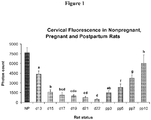
- LIF in nonpregnant, pregnant and postpartum rats Measurements of cervical light-induced-fluorescence (LIF) in pregnant, non-treated animals show ( Figure 1 ) a continuously decreasing photon count throughout pregnancy, reaching lowest values at term, and reversal postpartum. After significant (P ⁇ 0.05) decrease from day 13 to day 15 LIF reaches a wider plateau of non-significant (P>0.05) decreases prior to delivery. LIF values progressively increase postpartum (P ⁇ 0.05).
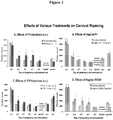
- LIF is significantly (P ⁇ 0.05) higher in the P4 injection group compared with vehicle controls for any day of gestation ( Figure 2A ). There is no difference (P ⁇ 0.05) between day 25 (delayed delivery) in the P4 injection group (and delivery is blocked see Figure 4A ) compared to control animals at day 21 of gestation. LIF before treatment at day 13 shows no significant differences (P>0.05) between the treatment and the control group and this is similar for all treatment groups mentioned with other treatments ( Figures 2A-D and 3 ).
- LIF is significantly higher (P ⁇ 0.05) in the 17P treated group (until day 19 only) compared with vehicle controls ( Figure 2C ).
- LIF vaginal promegestone
- LIF is significantly lower (P ⁇ 0.05) in the RU-486 treated group 24 and 72 hours after treatment compared with vehicle controls ( Figure 3 ). LIF is higher in the RU-486 treated group 5 days after treatment compared with vehicle controls (P ⁇ 0.05).
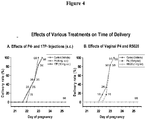
- Vaginal promegestone (R5020), but not vaginal P4, completely block delivery ( Figure 4B ).
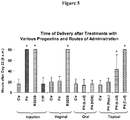
- Figure 5 summarizes the results of the different treatment groups on time of delivery and shows additional treatment groups. Animals treated as mentioned above. Other treatment groups followed the same design with treatments starting at day 13 of gestation until delivery. Additional treatment groups: Injections of promegestone (R5020) also completely block delivery. Oral P4 suspended in sesame oil or H 2 O had no effect on time of delivery. However, topical P4 in sesame oil (partially) and in fish oil (completely), but not in Replens prolongs delivery (P ⁇ 0.05).
- vaginal promegestone (R5020)) on day 21. Therefore inhibition of delivery is not due to an unripe cervix, but must be due to inhibition of uterine contractions.
- 17P partly delays ripening, similar to subcutaneous P4, and is not significantly different from controls at day 21, like promegestone (R5020), but does not block delivery at all.
- RU-486 the antiprogestin used in this study is well known to act both on the cervix and uterus to induce delivery by stimulation of uterine contractility and cervical ripening. Additionally the uterine contractility increases dramatically during spontaneous delivery at term and preterm after RU-486 treatment. 51 17P had no effect on delaying term delivery supporting the conclusion that 17P is not an effective treatment for preventing birth.
- progestins for other indications (such as menstrual cramps, uterine and other cancers, osteoporosis, contraception, to oppose unwanted effects of estrogens, amenorrhea and abnormal uterine bleeding, infertility, endometriosis, etc.) could be greatly improved by the methods described herein.
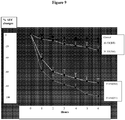
- the soluble form was equally effective in inhibiting myometrial contractility as compared to crystalline progesterone dissolved in ethanol ( Fig. 9 ).
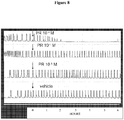
- the inventors showed that soluble progesterone inhibits uterine contractions (electromyographic activity) when given to pregnant rats in labor ( Figs 8 , 15 , 16 , 17 ).
- Recent studies with progesterone show promise in treatment of preterm labor but these preparations use crystalline progesterone which is usually given vaginally.
- Use of soluble progesterone offers many advantages as described above.
- Figure 7 is a schematic drawing of the muscle bath that is used to measure uterine contractility in vitro.
- the system consists of a water-jacketed chamber to maintain temperature at 37 degrees and an inner chamber where the tissue is suspended in Krebs'-Ringer solution and bubbled with air.
- the tissue is connected to a force transducer and the signals from the transducer are amplified, stored and analyzed by a data acquisition system.
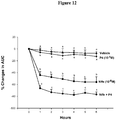
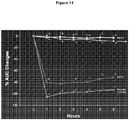
- the soluble form of progesterone (P4) was found to be effective in inhibiting myometrial contractility (Figs. 8 , 15 , 16 and 17 ). The inventors found that P4 inhibits myometrial contractility (soluble and crystalline in ETOH) ( Fig 9 ). Progesterone (P4) with nifedipine (Nife) ( Fig. 11 ) or indomethacin (IND) ( Fig 12 ), but not MgSO 4 increased contractile inhibition, by additive or synergistic actions. Additionally, use of P4 with Nife or IND could also be useful for preterm labor treatment, and higher endogenous P4 levels can increase effectiveness of Nife or IND.
- the inventors examined the direct effects of various tocolytics on uterine contractility with and without progesterone, as it was possible that a tocolytic used with progesterone would produce additive, synergistic or antagonistic action on contractility. Methods used for collecting samples and data were:
- P4 inhibits myometrial contractility (soluble and crystalline in ETOH).
- P4 with nifedipine (Nife) or indomethacin (IND) increase contractile inhibition, by additive or synergistic actions.
- use of P4 with Nife or IND could also be useful for PTL treatment, and higher endogenous P4 levels can increase effectiveness of Nife or IND.
- P4 decreases pinacidil inhibition of contractility possibly by interaction of agents at K+ channels.
- progesterone applied topically in many types of oils can inhibit delivery Soluble progesterone is usually applied in oil preparations because of its solubility.
- progesterone becomes soluble and can be used parenterally, and by other routes of administration.
- Figure 15 depicts delay of delivery times in timed pregnant rats treated with progesterone (P4) with different routes and vehicles.
- Treatment was started on day 13 of gestation and continued until delivery of pups or until delivery was blocked at 80 hours (day 25) past day 22 of gestation. 8am on day 22 is noted as hour 0 and delay is compared to control group treated only with vehicle.
- Treatment groups included: P4 in fish oil (vaginal, nasal, injection and topical groups), P4 in cocoa butter (rectal) and P4 in sesame oil (oral). All treatment groups received a total daily dose of 30mg P4/day except the nasal and subcutaneous injection group which received 1mg/day and 4mg/day, respectively. Rectal, subcutaneous injection and topical administration in fish oil had significant delay of delivery.
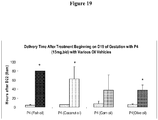
- pregnant timed rats were treated topically with progesterone (P4) in different oil vehicles beginning on day 19 of gestation.
- Vehicles included: Omegasorb fish oil, coconut oil, corn oil and olive oil.
- Treatment was administered twice a day (15mg P4, bid) and continued until delivery of pups or until complete block of delivery was observed. 8 am on day 22 is noted as hour 0 and complete block is determined by an 80 hour delay (day 25). All groups but corn oil had significant delay of delivery.
- Figure 17 depicts delay of delivery in time pregnant rats treated with progesterone (P4) with different vehicles.
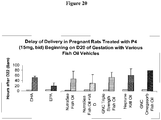
- Treatment was started on day 20 of gestation and continued until delivery of pups or delivery was blocked at 80 hours (day 25). 8 am on day 22 is noted as hour 0 and delay is compared to control group treated only with vehicle.
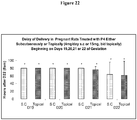
- animals were treated either subcutaneously or topically with P4 in fish oil beginning on days 19, 20, 21 and 22 of gestation. Delivery time of timed pregnant rats treated with progesterone (P4) either with subcutaneous injection or topical application on different days of gestation.
- Treatment groups consisted of P4 in fish oil administered starting on different days of gestation and with different routes. Treatment was administered on either days 19, 20 21 or day 22 of gestation and continued until delivery of pups or until complete block of delivery was observed. 8am on day 22 is noted as Hour 0 and complete block is determined by an 80 hour delay (day 25). All groups had significant delay of delivery. D19 topical application and D21 subcutaneous injection demonstrated complete block in all animals. Delivery was blocked or significantly delayed even when treatment was begun just prior to delivery on day 22.
Landscapes
- Health & Medical Sciences (AREA)
- Chemical & Material Sciences (AREA)
- Pharmacology & Pharmacy (AREA)
- Veterinary Medicine (AREA)
- Public Health (AREA)
- General Health & Medical Sciences (AREA)
- Animal Behavior & Ethology (AREA)
- Life Sciences & Earth Sciences (AREA)
- Medicinal Chemistry (AREA)
- Epidemiology (AREA)
- Dermatology (AREA)
- Reproductive Health (AREA)
- Gynecology & Obstetrics (AREA)
- Oil, Petroleum & Natural Gas (AREA)
- Urology & Nephrology (AREA)
- Otolaryngology (AREA)
- Chemical Kinetics & Catalysis (AREA)
- Bioinformatics & Cheminformatics (AREA)
- Engineering & Computer Science (AREA)
- Pregnancy & Childbirth (AREA)
- Endocrinology (AREA)
- Organic Chemistry (AREA)
- General Chemical & Material Sciences (AREA)
- Nuclear Medicine, Radiotherapy & Molecular Imaging (AREA)
- Pharmaceuticals Containing Other Organic And Inorganic Compounds (AREA)
Description
- This application claims priority to
U.S. Serial No. 61/311,944 filed March 9, 2010 U.S. Serial No. 61/434,309 filed January 19, 2011 - The invention relates to compositions for use in inhibiting or preventing preterm birth, delaying cervical ripening, inhibiting myometrial contractility and treating uterine contractility disorders, in subjects in need thereof. The method comprises administering an effective amount of a steroid hormone such as progesterone or a pharmaceutical equivalent, analog, derivative or a salt thereof. The invention also relates to pharmaceutical compositions and kits, comprising steroid hormones such as progesterone or a salt thereof and a pharmaceutically acceptable carrier.
- Preterm birth (less than 37 completed weeks of gestation) is one of the major problems and challenges in obstetrics. The frequency of preterm births is about 12-13% in the USA and 5-9% in many other developed countries.1,2 Despite all efforts to reduce the number of preterm births the problem is continuing to escalate. Since 1990 the percentage of births delivered preterm has risen more than 20 percent and is 36 percent higher since the early 1980s in the USA.3 Preterm birth is not only a major determinant of neonatal and infant morbidity, including neurodevelopmental handicaps, chronic respiratory problems, intraventricular hemorrhage, infection, retrolental fibroplasia, and necrotizing enterocolitis, but it is also the single most important cause of perinatal mortality in North America, Europe and particularly in undeveloped countries.4 Additionally, the neonatal and long-term health care costs of preterm infants impose a considerable economic strain both on individual families and on healthcare costs (> $26.2 billion in 2005 in the USA).5
- Both uterine and cervical functions play important roles in the onset and progression of term and preterm labor and delivery. The cervix undergoes dramatic changes throughout pregnancy and parturition, a process that is termed cervical ripening -- from a firm, rigid and closed state that is protecting the special milieu of the fetus from the environment, to a soft and easy-to-open state that is essential for successful vaginal delivery. The cervix is dominated by fibrous connective tissue that is composed of an extracellular matrix which consists mostly of collagen (70 % type I and ∼ 30 % type III6) with elastin and proteoglycans and a cellular portion that consists of smooth muscles, fibroblasts, epithelium and blood vessels. Cervical ripening is an active biochemical process, which occurs independent of uterine contractions. Studies have shown that cervical ripening is associated with a strong reorganization of the extracellular matrix, especially collagen: Not only does the concentration decrease by 30-70%, but there is also a switch from insoluble to more soluble collagen.6,7 Ripening of the cervix is an inflammatory-like reaction with infiltration of leukocytes, increase of cytokines (interleukin (IL)- 1 and IL-8) and an increase in metalloproteinases.8,9,10 This process also seems to be at least partially regulated by steroid hormones (in particular progesterone (P4) and estrogen), as antiprogestins successfully induce cervical ripening.11,12,11 Other hormones and mediators shown to be involved in cervical ripening are dihydrotestosterone14, prostaglandins15, and local mediators such as platelet-activating factor16 and nitric oxide.15 Various methods have been used to evaluate cervical ripening and effects of progestins, including cervical length.17,18 However the biochemical mechanisms that are responsible for the remarkable changes in the cervix remain poorly understood. Although progesterone has been known to be used for recurrent or high risk preterm labor (PTL), its current use is crystalline progesterone in micronized form, and used to treat preterm labor and uterine contractile disorders by the often inconvenient and less effective routes of vaginal, oral or IM. Since the half life of progesterone is roughly 32 hours, progesterone by this matter must be given daily, and since crystalline progesterone can only be dissolved in oil, it can only be applied via vaginal administration or injected IM.
- The invention includes a composition for inhibiting or preventing preterm birth, or inhibiting or delaying cervical ripening in a subject in need thereof. The composition comprises a steroid hormone or a salt thereof, and an agent to render the steroid hormone soluble, for use in inhibiting or preventing preterm birth, or inhibiting or delaying cervical ripening, wherein the agent is any one or more of sesame oil, fish oil, corn oil, olive oil, coconut oil, krill oil, omega fatty acids, peppermint oil, flaxseed oil, and argan oil, and wherein the composition is administered topically.
- Further provided is a composition for inhibiting or treating uterine contractility disorders, or inhibiting or treating myometrial contractility in a subject in need thereof. The composition comprises progestogen or a salt thereof, and an agent to render the progestogen or salt thereof soluble, wherein the agent is any one or more of sesame oil, fish oil, corn oil, olive oil, coconut oil, krill oil, omega fatty acids, peppermint oil, flaxseed oil, and argan oil, and wherein the composition is administered topically.
- The scope of the invention is defined by the claims.
- Any references in the description to methods of treatment refer to the compounds, pharmaceutical compositions and medicaments of the present invention for use in a method for treatment of the human (or animal) body by therapy.
- The invention also provides that steroid hormones such as progesterone (P4) may be rendered soluble by mixing with agents such as sesame oil, fish oil, corn oil, olive oil, coconut oil, krill oil, omega fatty acids, mineral oil, peppermint oil, flaxseed oil, vitamin E oil, or argan oil. The composition may be applied topically.
- Also provided are pharmaceutical compositions comprising steroid hormones (for example progesterone or a pharmaceutical equivalent, analog, derivative or a salt thereof) and a pharmaceutically acceptable carrier. The pharmaceutical compositions may be mixed with agents such as cyclodextrins, sesame oil, fish oil, corn oil, olive oil, coconut oil, krill oil, omega fatty acids, mineral oil, peppermint oil, flaxseed oil, vitamin E oil, argan oil, saline solution and/or glucose solution, to render the steroid hormone soluble. The disclosure also relates to kit comprising steroid hormones.
- Exemplary embodiments are illustrated in referenced figures. It is intended that the embodiments and figures disclosed herein are to be considered illustrative rather than restrictive.
-
Figure 1 depicts bar graphs showing means ± SD of cervical light-induced fluorescence (LIF) obtained in vivo from nonpregnant (N = 3), pregnant (d13, 15 and 17: N = 12/ group; d19 and d21: N = 11 / group; d22: N = 6) and postpartum rats (pp3, 5 and 7: N = 7; pp10: N = 6). Significant differences (P <0.05) between groups are marked with different letters. -
Figure 2 depicts bar graphs showing means ± SD of cervical light-induced fluorescence (LIF) obtained in vivo from pregnant rats at different days of pregnancy and postpartum (N = 6/ group) treated with various progestins or vehicle.Figure 2A : Daily treatment with vehicle (controls) or P4 (4 mg, subcutaneously). Note that delivery is inhibited in the treatment group.Figure 2B : Twice a day treatment with vehicle (controls) or vaginal P4 (15 mg bid). Note that no significant differences are observed at any time between controls vs. treated animals.Figure 2C : Treatment daily with vehicle (controls) or 17P (10 mg, subcutaneously). Note that significant differences are only observed until day 19 of gestation.Figure 2D : Twice a day treatment with vehicle (controls) or vaginal promegestone (R5020) (1 mg bid). Note that significant differences are observed only until day 19, but delivery is blocked in the treatment group. Asterisks indicate P < 0.05 compared with controls. -
Figure 3 depicts bar graphs showing means ± SD of cervical light-induced fluorescence (LIF) obtained in vivo from pregnant rats at different days of pregnancy and postpartum (N = 6/ group) treated once on day 16 with vehicle (controls) or RU-486 (3 mg subcutaneously). Asterisks indicate P <0 .05 compared with controls. -
Figure 4 depicts the percent of animals delivering versus day of pregnancy after various treatments.Figure 4A : Delivery times after daily treatment with vehicle (subcutaneously, controls), P4 (4 mg, subcutaneously) and 17P (10 mg, subcutaneously). Note that injections of P4 completely blocked delivery, whereas 17P had no significant effect on delaying term delivery (see alsoFigure 5 ).Figure 4B : Percent of animals delivering versus time of delivery following twice a day treatment with vaginal vehicle (controls), vaginal P4 (15 mg bid) and vaginal promegestone (R5020) (1 mg bid). Note that vaginal promegestone (R5020) completely blocked delivery, whereas vaginal P4 had no significant effect on delaying term delivery (P >0.05 compared with controls, see alsoFigure 5 ). -
Figure 5 depicts the time of delivery (= hours after 8 a.m. ofday 22 of gestation) of pregnant rats treated with vehicles (controls) and various progestins by different routes of administration - injections (subcutaneously; daily): vehicle: sesame oil; P4 (4 mg);17P (10 mg); vaginal (bid): vehicle: Replens; P4 (15 mg, Crinone); promegestone (R5020) (1 mg); oral (bid): vehicle: sesame oil or H2O; P4 (15 mg); topical (bid): vehicle: Replens, sesame oil or fish oil; P4 (15 mg). Rats with delayed parturition were sacrificed onday 25. Asterisks indicate P <0.05 compared with controls. -
Figure 6 depicts plasma levels of progesterone following various treatments. Plasma progesterone (P4) levels in pregnant rats atday -
Figure 7 depicts, in accordance with an embodiment herein, an organ chamber system set up for study of uterine contractions. -
Figure 8 depicts, in accordance with an embodiment herein, effects of progesterone (depicted as PR) on human myometrial contractions. As shown, 10-4M progesterone inhibited myometrial contractions. -
Figure 9 depicts, in accordance with an embodiment herein, effects of soluble (SOL) progesterone and crystalline P4 in ethanol (ET) on myometrial contractility. -
Figure 10 depicts, in accordance with an embodiment herein, effects of various concentrations of MgSO4 on myometrial contractility. -
Figure 11 depicts, in accordance with an embodiment herein, effects of progesterone (P4) with MgSO4 on myometrial contractility. -
Figure 12 depicts, in accordance with an embodiment herein, effects of nifedipine (Nife) and progesterone (P4) and their combination on myometrial contractility. -
Figure 13 depicts, in accordance with an embodiment herein, effects of indomethacin (IND) and progesterone (P4) and their combination on myometrial contractility. -
Figure 14 depicts, in accordance with an embodiment herein, effect of pinacidil (10-6.5M) alone, or with P4 (10-5M) on human myometrium contractility (term, not in labor). -
Figure 15 depicts, in accordance with an embodiment herein, in vivo electromyographic activity of uterine contractility over one hour periods after treatment with soluble progesterone (P4) (dissolved in 0.9% NaCl) at 2 mg/ml marked in rats. -
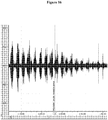
Figure 16 depicts, in accordance with an embodiment herein, in vivo electromyographic activity of uterine contractility over four minute periods after treatment with soluble progesterone (P4) (dissolved in 0.9% NaCl) at 2 mg/ml marked in rats. -
Figure 17 depicts, in accordance with an embodiment herein, electromyographic activity of uterine contractility in rats both (A) before treatment, and (B) after treatment, with soluble progesterone (P4) (dissolved in 0.9% NaCl) at 2 mg/ml. -
Figure 18 depicts effects of various routes of administration of progesterone (P4) in delivery of pregnant rats treated beginning at day 13 (D13) of gestation. -
Figure 19 depicts delivery time after treatment beginning at day 19 (D19) of gestation with progesterone (P4) with various oil vehicles. -
Figure 20 depicts delay in pregnant rats treated with progesterone (P4) beginning at day 20 (D20) of gestation with various fish oil vehicles. -
Figure 21 depicts delay of delivery in pregnant rats treated with progesterone (P4) beginning at day 20 (D20) of gestation with various vehicles. -
Figure 22 depicts delay of delivery in pregnant rats treated with progesterone (P4) either subcutaneously or topically beginning atdays -
Figure 23 depicts chemical structures of some embodiments of the invention. - Unless defined otherwise, technical and scientific terms used herein have the same meaning as commonly understood by one of ordinary skill in the art to which this invention belongs. Singleton et al., Dictionary of Microbiology and Molecular Biology 3rd ed., J. Wiley & Sons (New York, NY 2001); March, Advanced Organic Chemistry Reactions, Mechanisms and Structure 5th ed., J. Wiley & Sons (New York, NY 2001); and Sambrook and Russel, Molecular Cloning: A Laboratory Manual 3rd ed., Cold Spring Harbor Laboratory Press (Cold Spring Harbor, NY 2001), provide one skilled in the art with a general guide to many of the terms used in the present application.
- One skilled in the art will recognize many methods and materials similar or equivalent to those described herein, which could be used in the practice of the present invention. Indeed, the present invention is in no way limited to the methods and materials described. For purposes of the present invention, the following terms are defined below.
- "Treatment" and "treating," as used herein refer to both therapeutic treatment and prophylactic or preventative measures, wherein the object is to prevent or slow down (lessen) the targeted pathologic condition, prevent the pathologic condition, pursue or obtain beneficial results, or lower the chances of the individual developing the condition even if the treatment is ultimately unsuccessful. Those in need of treatment include those already with the condition as well as those prone to have the condition or those in whom the condition is to be prevented.
- As used herein, the term "P4" means progesterone.
- As used herein, progesterone (P4) has the formula (Formula 1):

- As used herein, Promegestone (R5020) has the formula (Formula 2):

- As used herein, 17-hydroxyprogesterone has the formula (Formula 3):

- As used herein, 17-hydroxyprogesterone caproate has the formula (Formula 4):

- As used herein, Nifedipine has the formula (Formula 5):

- As used herein, Indomethacin has the fomula (Formula 6):

- As used herein, the term "17P" means 17-alpha-hydroxyprogesterone caproate, a synthetic caproate ester of the naturally occurring metabolite of progesterone.
- As used herein, the term "LIP" means light-induced fluorescence.
- As used herein, soluble progesterone is progesterone (P4) mixed in or suspended in agents that render the progesterone soluble. Examples of such agents include but are not limited to cyclodextrins, sesame oil, fish oil, corn oil, olive oil, coconut oil, krill oil, omega fatty acids, mineral oil, peppermint oil, flaxseed oil, vitamin E oil, argan oil, saline solution, and/or glucose solution. For example, encapsulated progesterone (such as progesterone encapsulated in cyclodextrins) may be solubilized in any water based solutions including but not limited to saline solution or glucose solution to render it soluble. Alternately, powdered progesterone may be may be solubilized in any water based solutions including but not limited to saline solution or glucose solution to render it soluble. Additionally, crystalline or microcrystalline progesterone may be dissolved in various oils to render it soluble. Saline solution may be isotonic. Saline solution may be 0.9% w/v NaCl. Any form of progesterone (powdered, desiccated, crystalline or microcrystalline) may be dissolved with any suitable agent to render the progesterone soluble.
- The present invention is based, at least in part, on the findings described herein and thus the present invention describes compositions and pharmaceutical compositions for using steroid hormones to treat conditions in a subject, such as preterm birth. The disclosure relates to kit for using steroid hormones to treat conditions in a subject. In an embodiment of the invention claimed herein, the steroid hormone is soluble. For example, the steroid hormone may be a progestogen or a pharmaceutical equivalent, analog, derivative or a salt thereof. In a preferred embodiment, the progestogen is progesterone (P4) and is mixed with or suspended in agents that render the progesterone soluble. These agents are sesame oil, fish oil, corn oil, olive oil, coconut oil, krill oil, omega fatty acids, mineral oil, peppermint oil, flaxseed oil, vitamin E oil, or argan oil. In the most preferred embodiment, progesterone is mixed with fish oil, or peppermint oil. While not wishing to be bound by any particular theory, the inventors believe that the combination of progesterone and agents such as fish oil or peppermint oil, when administered topically (for example placed or rubbed on the abdominal surface of pregnant patients), delay the onset of contractions, labor and delivery. In an embodiment, delay of the delivery acts on the subject's myometrium, for instance, via inhibition of uterine contractility.
- The present invention provides a composition for inhibiting or preventing preterm birth, or inhibiting or delaying cervical ripening in a subject in need thereof. The composition comprises a steroid hormone or a salt thereof, and an agent to render the steroid hormone soluble, for use in for inhibiting or preventing preterm birth, or inhibiting or delaying cervical ripening, wherein the agent is any one or more of sesame oil, fish oil, corn oil, olive oil, coconut oil, krill oil, omega fatty acids, peppermint oil, flaxseed oil, and argan oil, and wherein the composition is administered topically. In an embodiment, the steroid hormone is soluble and is a progestogen (for example progesterone) or a pharmaceutical equivalent, analog, derivative or a salt thereof.
- Further, the invention includes a composition for treating or inhibiting uterine contractility disorders, or inhibiting myometrial contractility in a subject in need thereof. The composition comprises progestogen or a salt thereof, for use in treating or inhibiting uterine contractility disorders, or inhibiting myometrial contractility, and an agent to render the progestogen or salt thereof soluble, wherein the agent is any one or more of sesame oil, fish oil, corn oil, olive oil, coconut oil, krill oil, omega fatty acids, peppermint oil, flaxseed oil, and argan oil, and wherein the composition is administered topically. In one embodiment, inhibiting uterine contractility disorders is promoting prophylaxis of uterine contractility disorders. In another embodiment, the progestogen is soluble.
- In one embodiment, the present invention provides a composition for suppressing delivery in a subject comprising progestogen (for example, progesterone, or pharmaceutical equivalent, analog, derivative, or salt thereof).
- In some embodiments, the steroid hormones are progestogens. In a further embodiment, progestogens include but are not limited to progesterone (P4) or a pharmaceutical equivalent, analog, derivative or a salt thereof, 17-hydroxyprogesterone or a pharmaceutical equivalent, analog, derivative or a salt thereof and progestins. In a preferred embodiment of the invention, the progestogen is progesterone (P4) or a pharmaceutical equivalent, analog, derivative or a salt thereof. In another embodiment of the invention, the progestins include but are not limited to 17-hydroxyprogesterone caproate or a pharmaceutical equivalent, analog, derivative or a salt thereof or promegestone (R5020) or a pharmaceutical equivalent, analog, derivative or a salt thereof. In a further embodiment of the invention, the steroid hormone is a compound having formula I or a salt thereof. In a further embodiment of the instant invention, progestins include but are not limited to medroxyprogesterone acetate, norethindrone, norethindrone acetate, norethindrone enanthate, desogestrel, levonorgestrel, lynestrenol, ethynodiol diacetate, norgestrel, norgestimate, norethynodrel, gestodene, drospirenone, trimegstone, levodesogestrel, gestodyne, nesterone, etonogestrel and derivatives of 19-nor-testerone.
- Since steroid hormones (such as progesterone (P4), 17-hydroxyprogesterone, 17-hydroxyprogesterone caproate, promegestone (R5020), or pharmaceutical equivalents, analogs, derivatives or salts thereof) have low solubilities, these hormones may be suspended in or mixed with agents that render the steroid hormones soluble. For instance, suspending or mixing steroid hormones with agents such as cyclodextrins, sesame oil, fish oil, corn oil, olive oil, coconut oil, krill oil, omega fatty acids, mineral oil, peppermint oil, flaxseed oil, vitamin E oil, argan oil, saline solution and/or glucose solution, facilitates dissolution. In an embodiment, progesterone (P4) or pharmaceutical equivalents, analogs, derivatives or salts thereof may be suspended in or mixed with REPLENS vaginal moisturizer (available from Lil' Drug Store Products, Inc.).
- In another embodiment, the steroid hormones may be mixed with carrier molecules such as cyclodextrins to render the steroid hormone (such as progesterone (P4)) soluble. Examples of cyclodextrins include but are not limited to α-cyclodextrin, β-cyclodextrin, γ-cyclodextrin, 2-hydroxypropyl-β-cyclodextrin and methyl-β-cyclodextrin. For example by encapsulating progesterone in cyclodextrins and solubilizing it in any of the agents described above, renders the progesterone soluble and can be used intravenously, topically, parenterally, nasally, subcutaneously, intravascularly, vaginally and/or topically or by other routes of administration.
- In some preferred embodiments, progesterone (P4) or a pharmaceutical equivalent, analog, derivative or a salt thereof, is suspended in or mixed with omega fatty acid, omega-3-fatty acids, fish oil or peppermint oil and may be used topically. In a preferred embodiment, administration of progesterone mixed with fish oil or peppermint oil is topical. For example, topical application of progesterone mixed in fish oil can inhibit delivery (such as preterm delivery) in a subject in need thereof.
- In another embodiment, the steroid hormone is 17-hydroxyprogesterone or a pharmaceutical equivalent, analog, derivative or a salt thereof and may be suspended in or mixed with agents such as sesame oil, fish oil, corn oil, olive oil, coconut oil, krill oil, omega fatty acids, mineral oil, peppermint oil, flaxseed oil, vitamin E oil, or argan oil, to facilitate dissolution. In a further embodiment, the steroid hormones are 17-hydroxyprogesterone caproate or a pharmaceutical equivalent, analog, derivative or a salt thereof and may be suspended in or mixed with agents such as sesame oil, fish oil, corn oil, olive oil, coconut oil, krill oil, omega fatty acids, mineral oil, peppermint oil, flaxseed oil, vitamin E oil, or argan oil. facilitate dissolution.
- In an additional embodiment, the steroid hormone is promegestone (R5020) or a salt thereof and may be suspended in or mixed agents such as sesame oil, fish oil, corn oil, olive oil, coconut oil, krill oil, omega fatty acids, mineral oil, peppermint oil, flaxseed oil, vitamin E oil, or argan oil, to facilitate dissolution.
- In an embodiment of the invention, the composition of the claimed methods comprises progesterone (P4) and further comprises nifedipine, indomethacin and/or oxytocin antagonists (for example atosiban). In one embodiment, progesterone (P4) and nifedipine may be administered concurrently. In another embodiment, progesterone (P4) and nifedipine may be administered sequentially. Similarly, in one embodiment, progesterone (P4) and indomethacin may be administered concurrently. In another embodiment, progesterone (P4) and indomethacin may be administered sequentially. Additionally, progesterone (P4) and oxytocin antagonists (for example atosiban) may be administered concurrently. In another embodiment, progesterone (P4) and oxytocin antagonists (for example atosiban) may be administered sequentially. In an additional embodiment, progesterone (P4), nifedipine and indomethacin may be administered concurrently. Alternatively, progesterone (P4), nifedipine and indomethacin may be administered sequentially.
- In a preferred embodiment, progesterone (P4) is suspended in or mixed with agents that render progesterone soluble and is administered concurrently or sequentially with nifedipine and/or with indomethacin and/or with oxytocin antagonists such as atosiban. Examples of agents that render progesterone soluble include but are not limited to such as cyclodextrins, sesame oil, fish oil, corn oil, olive oil, coconut oil, krill oil, omega fatty acids, mineral oil, peppermint oil, flaxseed oil, vitamin E oil, argan oil, saline solution and/or glucose solution. In an embodiment, the composition comprising progesterone (with or without agents that render the progesterone soluble) and nifedipine and/or indomethacin is administered topically.
- The subjects treated by the present invention include mammalian subjects, including but not limited to human, monkey, ape, dog, cat, cow, horse, goat, pig, rabbit, mouse and rat.
- In a preferred embodiment, the subject is human. In an embodiment, the human subject is administered a steroid hormone (for example, progestogen such as progesterone (P4), 17-hydroxyprogesterone, 17-hydroxyprogesterone caproate, promegestone (R5020), or pharmaceutical equivalents, analogs, derivatives or a salts thereof) beginning at about the 16th week up to the 37th week of gestation, beginning at about 18th week up to about 22nd week of gestation and ending at about the 37th week of gestation, beginning at about 18th week up to about 35th week of gestation, beginning at about 18th week up to about 37th week of gestation, beginning at the time of positive pregnancy until the 37th week of gestation or beginning at the time preterm labor is suspected up to when time of delivery is imminent. In an embodiment, the steroid hormone (such as progesterone (P4), 17-hydroxyprogesterone, 17-hydroxyprogesterone caproate, promegestone (R5020), or pharmaceutical equivalents, analogs, derivatives or salts thereof) is mixed with or suspended in agents to render the steroid hormones soluble and is applied topically. In some preferred embodiments, progesterone (P4) is mixed with fish oil, peppermint oil or with omega fatty acids and is applied topically, for example, by placing or rubbing the progesterone mixed in oil on the abdominal surface of a pregnant woman. In other preferred embodiments, the steroid hormones such as progesterone (P4) is mixed with saline solution (such as isotonic saline solution) and is administered intravenously, topically, nasally or via any other route of administration.
- In another embodiment, the human subject is administered a steroid hormone (for example, progestogen such as progesterone (P4), 17-hydroxyprogesterone, 17-hydroxyprogesterone caproate, promegestone (R5020), or pharmaceutical equivalents, analogs, derivatives or a salts thereof) for about 2 to 4 weeks, for about 4 to 6 weeks, for about 6 to 8 weeks, for about 8 to 10 weeks, for about 10 to 12 weeks, for about 12 to 14 weeks, for about 14 to 19 weeks, for about 20 weeks, for about 21 weeks, for about 22 weeks, for about 23 weeks, for about 25 weeks, for about 26 weeks, for about 27 weeks, for about 28 weeks or for about 29 weeks, for about 30 weeks, for about 35 weeks or for about 37 weeks. In an embodiment, the steroid hormone (such as progesterone (P4), 17-hydroxyprogesterone, 17-hydroxyprogesterone
caproate, promegestone (R5020), or pharmaceutical equivalents, analogs, derivatives or salts thereof) is mixed with or suspended in agents to render the steroid hormones soluble and is applied topically. In some preferred embodiments, progesterone (P4) is mixed with fish oil, peppermint oil or with omega fatty acids and is applied topically, for example, by placing or rubbing the progesterone mixed in oil on the abdominal surface of a pregnant woman. - In a further embodiment, the human subject is administered a steroid hormone (for example, progestogen such as progesterone (P4), 17-hydroxyprogesterone, 17-hydroxyprogesterone caproate, promegestone (R5020), or salts thereof) when the pregnant woman's cervix length is greater than 1.0 cm, or when the cervix length is less than or equal to about 3.0 cm, or when the cervix length is between 1.0 and 8.0 cm. In an embodiment, the steroid hormone (such as progesterone (P4), 17-hydroxyprogesterone, 17-hydroxyprogesterone caproate, promegestone (R5020), or pharmaceutical equivalents, analogs, derivatives or salts thereof) is mixed with or suspended in agents to render the steroid hormones soluble and is applied topically. In some preferred embodiments, progesterone (P4) is mixed with fish oil or with omega fatty acids or with cyclodextrins and is applied topically, for example, by placing or rubbing the progesterone mixed in oil on the abdominal surface of a pregnant woman. In other preferred embodiments, the steroid hormones such as progesterone (P4) is mixed with saline solution (such as isotonic saline solution) and is administered intravenously, topically, nasally or via any other route of administration.
- In one embodiment, the steroid hormones in the composition of the claimed methods (for example, progestogens such as progesterone (P4), 17-hydroxyprogesterone, 17-hydroxyprogesterone caproate, promegestone (R5020), or pharmaceutical equivalents, analogs, derivatives or a salts thereof) are in a soluble form, crystalline form, gel form, tablet form or encapsulated form.
- Various methods may be utilized to administer the compositions comprising steroid hormones of the claimed methods, including but not limited to aerosol, nasal, oral, subcutaneous, transmucosal, transdermal, parenteral, implantable pump, continuous infusion, topical application, capsules, injections, intradermally, intravenously, intramuscularly, intraperitonealy, rectally, non-vaginally and/or vaginally. In a preferred embodiment of the claimed invention, the steroid hormone (for example progesterone (P4)) is administered topically or subcutaneously. In another preferred embodiment of the claimed methods, promegestone (R5020) is administered vaginally. In another preferred embodiment, progesterone (P4) is mixed with or suspended in agents to render it soluble and is applied topically by placing or rubbing on the abdominal surface of pregnant patients. Agents that render the steroid hormones soluble include but are not limited to cyclodextrins, sesame oil, fish oil, corn oil, olive oil, coconut oil, krill oil, omega fatty acids, mineral oil, peppermint oil, flaxseed oil, vitamin E oil, argan oil, saline solution and/or glucose solution. In the most preferred embodiment of the claimed invention, progesterone is mixed with fish oil or peppermint oil and is applied topically to prevent or inhibit preterm birth and/or delay or inhibit cervical ripening. In other preferred embodiments, the steroid hormones such as progesterone (P4) is mixed with saline solution (such as isotonic saline solution) and is administered intravenously, topically, nasally or via any other route of administration so as to prevent or inhibit preterm birth and/or delay or inhibit cervical ripening
- In some embodiments of the invention, the effective amounts of the steroid hormone (for example progesterone (P4), 17-hydroxyprogesterone, 17-hydroxyprogesterone caproate, promegestone (R5020)) is about 0.5-1mg/day, 1-5mg/day, 5-10mg/day, 10-15mg/day, 15-20mg/day, 20-25mg/day, 25-30mg/day, 30-35mg/day, 35-40mg/day, 40-45mg/day, 45-50mg/day, 50-55mg/day, 55-60mg/day, 60-65mg/day, 65-70mg/day, 70-75mg/day, 75-80mg/day, 80-85mg/day, 85-90mg/day, 90-95mg/day or 95-100mg/day, 100-200mg/day, 200-300mg/day, 300-400mg/day, 300-500 mg/day, 400-500mg/day, 500-600mg/day, 500-700 mg/day, 600-700mg/day, 700-800mg/day, 700-1000mg/day, 800-900mg/day, 900-1000mg/day, 1000-1100mg/day, 1000-2000 mg/day, 1100-1200mg/day, 1200-1300mg/day, 1300-1400mg/day, 1400-1500mg/day, 1500-1600mg/day, 1600-1700mg/day, 1700-1800mg/day, 1800-1900mg/day, 1900-2000mg/day, 2000-2100mg/day, 2000-3000 mg/day, 2100-2200mg/day, 2200-2300mg/day, 2300-2400mg/day, 2400-2500mg/day, 2500-2600mg/day, 2600-2700mg/day, 2700-2800mg/day, 2800-2900mg/day, 2900-3000mg/day, 3000-3100mg/day, 3100-3200mg/day, 3000-4000 mg/day, 3200-3300mg/day, 3300-3400mg/day, 3400-3500mg/day, 3500-3600mg/day, 3600-3700mg/day, 3700-3800mg/day, 3800-3900mg/day, 3900-4000mg/day, 4000-4200mg/day, 4200-4400mg/day, 4400-4600mg/day, 4600-4800mg/day, 4800-5000mg/day or 4000-5000mg/day. In one embodiment, the steroid hormone administered at the aforementioned dosage is progesterone (P4) or a pharmaceutical equivalent, analog, derivative or a salt thereof. In another embodiment, the steroid hormone administered at the aforementioned dosage is 17-hydroxyprogesterone caproate or a pharmaceutical equivalent, analog, derivative or a salt thereof. In a further embodiment, the steroid embodiment administered at the aforementioned dosage is promegestone (R5020) or a pharmaceutical equivalent, analog, derivative or a salt thereof. In an embodiment, the steroid hormone, for example progesterone (P4) such as soluble progesterone (P4) or a pharmaceutical equivalent, analog, derivative or a salt thereof is administered daily, biweekly, weekly, every fortnight or monthly. In a preferred embodiment, progesterone (P4) such as soluble progesterone (P4) or a pharmaceutical equivalent, analog, derivative or a salt thereof is administered daily.
- As described above, in one embodiment of the invention the steroid hormones including but not limited to progesterone (P4), 17-hydroxyprogesterone caproate, promegestone (R5020), or pharmaceutical equivalents, analogs, derivatives or a salts thereof, may be suspended in or mixed with agents that render the steroid hormone soluble. Such agents include but are not limited to cyclodextrins, sesame oil, fish oil, corn oil, olive oil, coconut oil, krill oil, omega fatty acids, mineral oil, peppermint oil, flaxseed oil, vitamin E oil, argan oil, saline solution and/or glucose solution. The effective amount of the agent may be about 0.05-0.1 ml/mg of steroid hormone, 0.1-0.2 ml/mg of steroid hormone, 0.2-0.3 ml/mg of steroid hormone, 0.3-0.4 ml/mg of steroid hormone, 0.4-0.5 ml/mg of steroid hormone, 0.5-0.6 ml/mg of steroid hormone, 0.6-0.7 ml/mg of steroid hormone, 0.7-0.8 ml/mg of steroid hormone, 0.8-0.9 ml/mg of steroid hormone, 0.9-1.0 ml/mg of steroid hormone, 1.0-5.0ml/mg of steroid hormone, 5.0-10.0ml/mg of steroid hormone, 10.0-15.0ml/mg of steroid hormone, 15.0-20.0ml/mg of steroid hormone, 20.0-25.0ml/mg of steroid hormone or 25.0-30.0ml/mg of steroid hormone. In a preferred embodiment, progesterone (P4) is mixed with fish oil or peppermint oil wherein the aforementioned amounts are the effective amounts of the fish oil or peppermint oil.
- Further, the steroid hormones including but not limited to progesterone (P4), 17-hydroxyprogesterone caproate, promegestone (R5020), or a salts thereof, may be administered concurrently or sequentially with an effective amount of Nifedipine. In some embodiments of the invention, the effective amounts of Nifedipine is about 0.5-1mg/day, 1-5mg/day, 5-10mg/day, 10-15mg/day, 15-20mg/day, 20-25mg/day, 25-30mg/day, 30-35mg/day, 35-40mg/day, 40-45mg/day, 45-50mg/day, 50-55mg/day, 55-60mg/day, 60-65mg/day, 65-70mg/day, 70-75mg/day, 75-80mg/day, 80-85mg/day, 85-90mg/day, 90-95mg/day or 95-100mg/day, 100-200mg/day, 200-300mg/day, 300-400mg/day, 400-500mg/day, 500-600mg/day, 600-700mg/day, 700-800mg/day, 800-900mg/day, 900-1000mg/day, 1000-1100mg/day, 1100-1200mg/day, 1200-1300mg/day, 1300-1400mg/day, 1400-1500mg/day, 1500-1600mg/day, 1600-1700mg/day, 1700-1800mg/day, 1800-1900mg/day, 1900-2000mg/day, 2000-2100mg/day, 2100-2200mg/day, 2200-2300mg/day, 2300-2400mg/day, 2400-2500mg/day, 2500-2600mg/day, 2600-2700mg/day, 2700-2800mg/day, 2800-2900mg/day, 2900-3000mg/day, 3000-3100mg/day, 3100-3200mg/day, 3200-3300mg/day, 3300-3400mg/day, 3400-3500mg/day, 3500-3600mg/day, 3600-3700mg/day, 3700-3800mg/day, 3800-3900mg/day, 3900-4000mg/day, 4000-4200mg/day, 4200-4400mg/day, 4400-4600mg/day, 4600-4800mg/day or 4800-5000mg/day.
- In another embodiment of the invention, the steroid hormones including but not limited to progesterone (P4), 17-hydroxyprogesterone caproate, promegestone (R5020), or pharmaceutical equivalents, analogs, derivatives or a salts thereof, may be administered concurrently or sequentially with an effective amount of Indomethacin. In some embodiments of the invention, the effective amounts of Indomethacin is about 0.5-1mg/day, 1-5mg/day, 5-10mg/day, 10-15mg/day, 15-20mg/day, 20-25mg/day, 25-30mg/day, 30-35mg/day, 35-40mg/day, 40-45mg/day, 45-50mg/day, 50-55mg/day, 55-60mg/day, 60-65mg/day, 65-70mg/day, 70-75mg/day, 75-80mg/day, 80-85mg/day, 85-90mg/day, 90-95mg/day or 95-100mg/day, 100-200mg/day, 200-300mg/day, 300-400mg/day, 400-500mg/day, 500-600mg/day, 600-700mg/day, 700-800mg/day, 800-900mg/day, 900-1000mg/day, 1000-1100mg/day, 1100-1200mg/day, 1200-1300mg/day, 1300-1400mg/day, 1400-1500mg/day, 1500-1600mg/day, 1600-1700mg/day, 1700-1800mg/day, 1800-1900mg/day, 1900-2000mg/day, 2000-2100mg/day, 2100-2200mg/day, 2200-2300mg/day, 2300-2400mg/day, 2400-2500mg/day, 2500-2600mg/day, 2600-2700mg/day, 2700-2800mg/day, 2800-2900mg/day, 2900-3000mg/day, 3000-3100mg/day, 3100-3200mg/day, 3200-3300mg/day, 3300-3400mg/day, 3400-3500mg/day, 3500-3600mg/day, 3600-3700mg/day, 3700-3800mg/day, 3800-3900mg/day, 3900-4000mg/day, 4000-4200mg/day, 4200-4400mg/day, 4400-4600mg/day, 4600-4800mg/day or 4800-5000mg/day.
- Typical dosages of an effective amount of a steroid hormone, progesterone (P4), 17-hydroxyprogesterone, 17-hydroxyprogesterone caproate, promegestone (R5020), or pharmaceutical equivalents, analogs, derivatives or a salts thereof, can be in the ranges recommended by the manufacturer where known therapeutic compounds are used, and also as indicated to the skilled artisan by the in vitro responses or responses in animal models. The same or similar dosing can be used in accordance with various embodiments of the present invention, or an alternate dosage may be used in connection with alternate embodiments of the invention, with or without oil, nifedipine or indomethacin. The actual dosage can depend upon the judgment of the physician, the condition of the patient, and the effectiveness of the therapeutic method based, for example, on the in vitro responsiveness of relevant cultured cells or histocultured tissue sample, or the responses observed in the appropriate animal models.
- The instant invention also provides a pharmaceutical composition comprising a steroid hormone such as progesterone (P4), 17-hydroxyprogesterone, 17-hydroxyprogesterone caproate, promegestone (R5020), or pharmaceutical equivalents, analogs, derivatives or salts thereof and a pharmaceutically acceptable carrier. In one aspect, the invention is a pharmaceutical composition comprising a therapeutically effective amount of a compound of the formula of formula I and/or salt thereof, and an agent to render the steroid hormone soluble, and a pharmaceutically acceptable carrier, wherein the agent is any one or more of sesame oil, fish oil, corn oil, olive oil, coconut oil, krill oil, omega fatty acids, peppermint oil, flaxseed oil, and argan oil, and wherein the composition is administered topically. In one embodiment, the pharmaceutical composition further comprises agents that render the steroid hormone soluble. Such agents
include but are not limited to cyclodextrins, sesame oil, fish oil, corn oil, olive oil, coconut oil, krill oil, omega fatty acids, mineral oil, peppermint oil, flaxseed oil, vitamin E oil, argan oil and/or glucose solution. In another embodiment, the pharmaceutical composition further comprises Nifedipine. In yet another embodiment, the pharmaceutical composition further comprises Indomethacin. In a further embodiment, the pharmaceutical composition further comprises a steroid hormone, Nifedipine and Indomethacin. - In one embodiment, the effective amount of the agent in the pharmaceutical composition of about 0.05-0.1 ml/mg of steroid hormone, 0.1-0.2 ml/mg of steroid hormone, 0.2-0.3 ml/mg of steroid hormone, 0.3-0.4 ml/mg of steroid hormone, 0.4-0.5 ml/mg of steroid hormone, 0.5-0.6 ml/mg of steroid hormone, 0.6-0.7 ml/mg of steroid hormone, 0.7-0.8 ml/mg of steroid hormone, 0.8-0.9 ml/mg of steroid hormone, 0.9-1.0 ml/mg of steroid hormone, 1.0-5.0ml/mg of steroid hormone, 5.0-10.0ml/mg of steroid hormone, 10.0-15.0ml/mg of steroid hormone, 15.0-20.0ml/mg of steroid hormone, 20.0-25.0ml/mg of steroid hormone or 25.0-30.0ml/mg of steroid hormone.
- In an embodiment, the therapeutically effective amount of the steroid hormone (such as) in the pharmaceutical composition is about 0.5-1mg/day, 1-5mg/day, 5-10mg/day, 10-15mg/day, 15-20mg/day, 20-25mg/day, 25-30mg/day, 30-35mg/day, 35-40mg/day, 40-45mg/day, 45-50mg/day, 50-55mg/day, 55-60mg/day, 60-65mg/day, 65-70mg/day, 70-75mg/day, 75-80mg/day, 80-85mg/day, 85-90mg/day, 90-95mg/day, 95-100mg/day, 100-200mg/day, 200-300mg/day, 300-500mg/day, 500-700mg/day, 700-1000mg/day, 1000-2000mg/day, 2000-3000mg/day, 3000-4000mg/day or 4000-5000mg/day.
- In an additional embodiment, the effective amount of indomethacin in the pharmaceutical composition is about 0.5-1mg/day, 1-5mg/day, 5-10mg/day, 10-15mg/day, 15-20mg/day, 20-25mg/day, 25-30mg/day, 30-35mg/day, 35-40mg/day, 40-45mg/day, 45-50mg/day, 50-55mg/day, 55-60mg/day, 60-65mg/day, 65-70mg/day, 70-75mg/day, 75-80mg/day, 80-85mg/day, 85-90mg/day, 90-95mg/day or 95-100mg/day.
- In another embodiment, effective amount of nifedipine in the pharmaceutical composition is about 0.5-1mg/day, 1-5mg/day, 5-10mg/day, 10-15mg/day, 15-20mg/day, 20-25mg/day, 25-30mg/day, 30-35mg/day, 35-40mg/day, 40-45mg/day, 45-50mg/day, 50-55mg/day, 55-60mg/day, 60-65mg/day, 65-70mg/day, 70-75mg/day, 75-80mg/day, 80-85mg/day, 85-90mg/day, 90-95mg/day or 95-100mg/day.
- In various embodiments, the present invention provides pharmaceutical compositions including a pharmaceutically acceptable excipient along with a therapeutically effective amount of a steroid hormone, such as progesterone (P4), 17-hydroxyprogesterone, 17-hydroxyprogesterone caproate, promegestone (R5020), or salts thereof. "Pharmaceutically acceptable excipient" means an excipient that is useful in preparing a pharmaceutical composition that is generally safe, nontoxic, and desirable, and includes excipients that are acceptable for veterinary use as well as for human pharmaceutical use. Such excipients may be solid, liquid, semisolid, or, in the case of an aerosol composition, gaseous.
- The pharmaceutical compositions according to the invention can also contain any pharmaceutically acceptable carrier. "Pharmaceutically acceptable carrier" as used herein refers to a pharmaceutically acceptable material, composition, or vehicle that is involved in carrying or transporting a compound of interest from one tissue, organ, or portion of the body to another tissue, organ, or portion of the body. For example, the carrier may be a liquid or solid filler, diluent, excipient, solvent, or encapsulating material, or a combination thereof. Each component of the carrier must be "pharmaceutically acceptable" in that it must be compatible with the other ingredients of the formulation. It must also be suitable for use in contact with any tissues or organs with which it may come in contact, meaning that it must not carry a risk of toxicity, irritation, allergic response, immunogenicity, or any other complication that excessively outweighs its therapeutic benefits.
- The pharmaceutical preparations are made following the conventional techniques of pharmacy involving milling, mixing, granulation, and compressing, when necessary, for tablet forms; or milling, mixing and filling for hard gelatin capsule forms. When a liquid carrier is used, the preparation will be in the form of syrup, elixir, emulsion or an aqueous or non-aqueous suspension. Such a liquid formulation may be administered directly per os (p.o., by mouth) or filled into a soft gelatin capsule.
- The pharmaceutical compositions according to the invention may be delivered in a therapeutically effective amount. The precise therapeutically effective amount is that amount of the composition that will yield the most effective results in terms of efficacy of treatment in a given subject. This amount will vary depending upon a variety of factors, including but not limited to the characteristics of the therapeutic compound (including activity, pharmacokinetics, pharmacodynamics, and bioavailability), the physiological condition of the subject (including age, sex, disease type and stage, general physical condition, responsiveness to a given dosage, and type of medication), the nature of the pharmaceutically acceptable carrier or carriers in the formulation, and the route of administration. One skilled in the clinical and pharmacological arts will be able to determine a therapeutically effective amount through routine experimentation, for instance, by monitoring a subject's response to administration of a compound and adjusting the dosage accordingly. For additional guidance, see Remington: The Science and Practice of Pharmacy (Gennaro ed. 20th edition, Williams & Wilkins PA, USA) (2000).
- The disclosure also relates to a kit to treat and/or inhibit preterm delivery. The kit is an assemblage of materials or components, including at least one of the inventive compositions. Thus, the kit contains a composition including progesterone or salt thereof for topical application, as described above.
- The kit is configured particularly for the purpose of treating mammalian subjects. In another embodiment, the kit is configured particularly for the purpose of treating human subjects. The kit is configured for veterinary applications, treating subjects such as, but not limited to, farm animals, domestic animals, and laboratory animals.
- Instructions for use may be included in the kit. "Instructions for use" typically include a tangible expression describing the technique to be employed in using the components of the kit to effect a desired outcome, such as to apply progesterone topically. Optionally, the kit also contains other useful components, such as, diluents, buffers, pharmaceutically acceptable carriers, syringes, catheters, applicators, pipetting or measuring tools, bandaging materials or other useful paraphernalia as will be readily recognized by those of skill in the art.
- The materials or components assembled in the kit can be provided to the practitioner stored in any convenient and suitable ways that preserve their operability and utility. For example the components can be in dissolved, dehydrated, or lyophilized form; they can be provided at room, refrigerated or frozen temperatures. The components are typically contained in suitable packaging material(s). As employed herein, the phrase "packaging material" refers to one or more physical structures used to house the contents of the kit, such as inventive compositions and the like. The packaging material is constructed by well known methods, preferably to provide a sterile, contaminant-free environment.
- One skilled in the art will recognize many methods and materials similar or equivalent to those described herein, which could be used in the practice of the present invention. Indeed, the present invention is in no way limited to the methods and materials described. For purposes of the present invention, the following terms are defined below.
- As described herein, use of steroid hormones like progesterone (P4), when mixed with agents that render the steroid hormone soluble, inhibit uterine contractility and cervical ripening, prevent preterm labor and prevent miscarriages. Agents that render steroid hormones soluble include but are not limited to cyclodextrins, sesame oil, fish oil, corn oil, olive oil, coconut oil, krill oil, omega fatty acids, mineral oil, peppermint oil, flaxseed oil, vitamin E oil, argan oil, saline solution and/or glucose solution. Progesterone has a relatively short half life of about 30 minutes and therefore must be administered daily. Oily compositions of progesterone such as those dissolved in fish oil, omega fatty acid or peppermint oil may readily be used topically.
- In non-pregnant women, progesterone (P4) when mixed with the aforementioned agents is useful for postmenopausal hormone replacement therapy with and without estrogen, prevention of amenorrhea and abnormal uterine bleeding due to hormonal imbalance and prevention of cancer fibroids. Soluble progesterone is particularly useful because it can be used in injections, intravenously, subcutaneously, parenterally, topically and/or nasally.
- The following example is provided to better illustrate the claimed invention and is not to be interpreted as limiting the scope of the invention. To the extent that specific materials are mentioned, it is merely for purposes of illustration and is not intended to limit the invention. One skilled in the art may develop equivalent means or reactants without the exercise of inventive capacity and without departing from the scope of the invention.
- As disclosed herein, the inventor evaluated cervical changes and delivery at term during pregnancy in rats after various progestin treatments. Pregnant rats were treated by various routes and vehicles with progesterone (P4), 17-alpha-hydroxyprogesterone caproate (17P), promegestone (R5020) and RU-486. Delivery time was determined and cervical ripening assessed in vivo by collagen light-induced fluorescence (LIF).
- As further disclosed herein, the cervix is rigid in P4 injection, 17P and vaginal promegestone (R5020) groups versus controls. Vaginal P4 had no effect. RU-486 treatment softened the cervix during preterm delivery. Only subcutaneously P4, promegestone (R5020) (subcutaneously and vaginal) and topical P4 in sesame and fish oil inhibits delivery. Delivery was not changed by
subcutaneously 17P, vaginal P4, oral P4 and topical P4 in Replens. These results demonstrate why many of the commonly used treatments for preterm labor are not efficacious. - Nonpregnant and timed-pregnant Sprague-Dawley rats (200-250 g) from Charles-River Laboratories (Wilmington, MA, USA) were delivered to animal care facilities on day 12 of gestation (
day 1 being the day when a sperm plug was observed). The animals were housed separately, with free access to food and water and maintained on a constant 12-hour light-dark cycle. Control pregnant rats were spontaneously delivering onday day day 25 of pregnancy in the groups with delayed delivery. All procedures were approved by the Animal Care and Use Committee of the St. Joseph's Hospital and Medical Center in Phoenix. - Prior to any treatment LIF measurements were made in control rats throughout pregnancy and postpartum to estimate the LIF profile during gestation (see
Figure 1 ). Pregnant rats (N = 6/ group) were treated (seeFigure 2 ), when not otherwise mentioned (seeFigure 3 ), from day 13 of pregnancy until delivery. Single daily treatments were performed at 8 a.m. and twice a day treatments at 8 a.m. and 8 p.m. All single injections (4 mg P4, 10mg volume 1 ml) gavage was used. For topical P4 treatment (15 mg, bid, P4 in 1 ml sesame oil, fish oil or in Replens) the drug was applied on the back of animals that were shaved onday - Crystalline progesterone (used for oral, topical and subcutaneous P4), RU-486, sesame oil and ethanol were purchased from Sigma (St Louis, MO, USA), fish oil (concentrated omega-3 fatty acids) was obtained from General Nutrition Corp. (Pittsburgh, PA, USA), 17-alpha-hydroxyprogesterone caproate from MP Biomedicals (Solon, OH, USA), promegestone (promegestone (R5020)) from Roussel Uclaf, France. P4, 17P, promegestone (R5020) and RU-486 were dissolved in ethanol and then mixed with sesame oil. Crinone (micronized P4 in Replens, a bioadhesive gel) was used for vaginal P4) and Replens were gifts from Columbia Laboratories (Livingston, NJ, USA).
- The amount of cervical collagen was evaluated in vivo (only in group subcutaneously P4, vaginal P4,
subcutaneously 17P, vaginal promegestone (R5020), subcutaneously RU-486) by measurement of the auto-fluorescent properties of cross-linked collagen with a new prototype of an instrument, termed collascope (Reproductive Research Technologies, Houston, TX, USA), as used previously with an earlier prototype.11,16,19 - After insertion of a small speculum into the vagina of the anesthetized animal, the optical probe of the collascope was placed on the surface of the exocervix. The probe, which is connected to the main unit of the instrument by a fiberoptic cable, delivers not only excitation light (wavelength: 339 nm) onto the cervix but also carries the fluorescent light (mainly caused by pyridinoline cross-links of collagen with a maximum peak at 390 nm) back to the instrument to a CCD camera to display the full spectrum of fluorescence and analysis of the photons emitted by the cervix. The exposure time for excitation was 100 msec. The average of 20 measurements of the detected fluorescent intensity (photon count) at 390 nm was used for each animal at any given time. Measurements of cervical light-induced fluorescence (LIF) were performed on nonpregnant animals once and in pregnant animals every other day starting at day 13 of gestation until delivery and on
postpartum day 3 and/ or postpartum day 5 (seeFigures 2 and3 ), and for some animals also on postpartum days 7 and 10 (seeFigures 1 and3 ). - Times of delivery (see also
Figure 4 ) of controls and various treatment groups were determined as hours after 8 a.m. ofday 22 of gestation (Figure 5 ). The expulsion of one pup was defined as delivery. - The cervical LIFs obtained at different times of gestation (
Figure 1 ) were compared using one-way analysis of variance (ANOVA) and multiple pairwise comparison procedures (Holm-Sidak). Student's t-test was used to compare the LIF results of a treatment group to its specific control group at any time in gestation and postpartum and also to determine the differences in delivery times (Figures 2 ,3 and5 ). A two-tailed probability value of P<0.05 was considered statistically significant. - LIF in nonpregnant, pregnant and postpartum rats: Measurements of cervical light-induced-fluorescence (LIF) in pregnant, non-treated animals show (
Figure 1 ) a continuously decreasing photon count throughout pregnancy, reaching lowest values at term, and reversal postpartum. After significant (P<0.05) decrease from day 13 today 15 LIF reaches a wider plateau of non-significant (P>0.05) decreases prior to delivery. LIF values progressively increase postpartum (P<0.05). - Effects of injections of P4 on LIF: LIF is significantly (P<0.05) higher in the P4 injection group compared with vehicle controls for any day of gestation (
Figure 2A ). There is no difference (P<0.05) between day 25 (delayed delivery) in the P4 injection group (and delivery is blocked seeFigure 4A ) compared to control animals atday 21 of gestation. LIF before treatment at day 13 shows no significant differences (P>0.05) between the treatment and the control group and this is similar for all treatment groups mentioned with other treatments (Figures 2A-D and3 ). - Effects of vaginal P4 on LIF: There are no significant differences (P>0.05) between the vaginal P4 group and vehicle controls at any time in gestation (
Figure 2B ) and vaginal P4 failed to inhibit delivery (seefigure 4B ). - Effects of injections of 17P on LIF: LIF is significantly higher (P<0.05) in the 17P treated group (until day 19 only) compared with vehicle controls (
Figure 2C ). - Effects of vaginal promegestone (R5020) on LIF: LIF is significantly higher (P<0.05) in the promegestone (R5020) treated group (until day 19 only) compared with vehicle controls (
Figure 2D ). - Effects of a single injection of RU-486 on LIF: LIF is significantly lower (P<0.05) in the RU-486 treated
group 24 and 72 hours after treatment compared with vehicle controls (Figure 3 ). LIF is higher in the RU-486 treatedgroup 5 days after treatment compared with vehicle controls (P<0.05). - Effects of injections of P4 and 17P on time of delivery: Injections of P4, but not 17P, completely block delivery (
Figure 4A ). - Effects of vaginal P4 and promegestone (R5020) on time of delivery: Vaginal promegestone (R5020), but not vaginal P4, completely block delivery (
Figure 4B ). - Effect of various progestins and routes of administration on time of delivery:
Figure 5 summarizes the results of the different treatment groups on time of delivery and shows additional treatment groups. Animals treated as mentioned above. Other treatment groups followed the same design with treatments starting at day 13 of gestation until delivery. Additional treatment groups: Injections of promegestone (R5020) also completely block delivery. Oral P4 suspended in sesame oil or H2O had no effect on time of delivery. However, topical P4 in sesame oil (partially) and in fish oil (completely), but not in Replens prolongs delivery (P<0.05). - Effects of RU-486 on time of delivery: The P4 antagonist RU-486 (mifepristone) induced preterm delivery 24- 48 hours after injection (see
Figure 3 ;4 of 6 animals delivered after 24 hours and the remaining two animals delivered within 48 hours after treatment). - Various studies have raised questions about the ability of P4 and 17P to inhibit recurrent preterm labor and whether these progestins have effects on the cervix to prevent cervical ripening. It is not established which of the progestins and which route of administration is superior and there is controversy in the findings. Existing treatment do not completely prevent preterm birth and in many studies, women were exposed to progestins whether they needed it or not.
- As described herein, injections of P4 show (
Figure 2A ) the longest effect on delaying cervical ripening in rats of all compounds used. This treatment inhibited the progression of softening of the cervix in a stage of rat pregnancy, where the physiological P4-levels are still rising.33,34 Thus, higher P4 levels in midgestation of pregnancy in rat has an anti-ripening effect on the cervix. Exogenous P4, administered by subcutaneous injections also decelerate the consequences of the sharp withdrawal of P4 that occurs at day 19 of rat pregnancy.33,34 The consequences of blocking the P4 receptors during pregnancy with the P4 antagonist RU-486 results in termination of pregnancy in both rats and humans.28,35 RU-486-induced cervical ripening occurs after 24 hours followed by preterm delivery (Figure 3 ) and this confirms effects of antiprogestins on the cervix36 and indicates the importance of P4 in control of the cervix and maintaining pregnancy. - Data described herein demonstrates that the intrinsic properties of the progestins dictate their affects on the cervix and myometrium. Thus, 17P and promegestone (R5020) delayed cervical ripening but not at term immediately preceding delivery and subcutaneous and vaginal promegestone (R5020) and parenteral P4 prevented delivery. Cervical ripening is only attenuated until day 19 of gestation with promegestone (R5020) and 17P in contrast to injection of P4 which also prevents further ripening on day 21 (
Figure 2A, 2C, 2D ). This indicates that P4 accomplishes inhibitory effects on the cervix beyond the ability of promegestone (R5020) and 17P and demonstrates how properties of the progestins are significant factors affecting action. - Despite any of the treatments with progestins the cervix still manages to ripen at the end of pregnancy (
Figures 2A-D ). The fact that prophylactic parenteral P4 can only delay, but not completely inhibit cervical ripening indicates the involvement of other control pathways in the ripening process. Following the concept of the liver first-pass effect after administration of oral drugs, de Ziegler et al.43 established the term "uterine first-pass effect" to point out the minimized systemic, but optimized uterine exposure after transvaginal treatment with sex steroids. However, in data described herein for vaginal P4, even at a very high dose (7.5 X the injected dose) had no effect on cervical ripening and on delivery - The importance of the vehicle is demonstrated by the observations where topical P4 in fish oil completely, in sesame oil only partially and in Replens not at all inhibits delivery (
Figure 5 ). This indicates that Replens may not release P4 as effectively as oil. It could be suggested that P4 regulates parturition through genomic actions via various proteins that are thought to be involved in controlling myometrial contractility.49,50 - Recently, it was shown that P4, at concentrations equivalent to those present in the placenta and uterus, inhibits spontaneous myometrial contractility by nongenomic mechanism.39 As disclosed herein, the inventors measured delivery and cervical ripening. Delivery at term or preterm is thought from many studies to be due to these two main processes and involves both uterine muscle activity and changes in the cervical connective tissue. The inventor demonstrates that delivery is completely inhibited by some progestin treatments (e.g. subcutaneous P4 and both subcutaneous and vaginal promegestone (R5020)), but cervical ripening is delayed but not entirely blocked during the final days of gestation (e.g. subcutaneous P4) or not significantly different from controls (e.g. vaginal promegestone (R5020)) on
day 21. Therefore inhibition of delivery is not due to an unripe cervix, but must be due to inhibition of uterine contractions. On theother hand 17P partly delays ripening, similar to subcutaneous P4, and is not significantly different from controls atday 21, like promegestone (R5020), but does not block delivery at all. RU-486, the antiprogestin used in this study is well known to act both on the cervix and uterus to induce delivery by stimulation of uterine contractility and cervical ripening. Additionally the uterine contractility increases dramatically during spontaneous delivery at term and preterm after RU-486 treatment.51 17P had no effect on delaying term delivery supporting the conclusion that 17P is not an effective treatment for preventing birth. - In addition use of progestins for other indications (such as menstrual cramps, uterine and other cancers, osteoporosis, contraception, to oppose unwanted effects of estrogens, amenorrhea and abnormal uterine bleeding, infertility, endometriosis, etc.) could be greatly improved by the methods described herein.
- The inventors tested whether a soluble form of progesterone would inhibit human myometrial contractility in vitro and in vivo. The soluble form was equally effective in inhibiting myometrial contractility as compared to crystalline progesterone dissolved in ethanol (
Fig. 9 ). In addition, the inventors showed that soluble progesterone inhibits uterine contractions (electromyographic activity) when given to pregnant rats in labor (Figs 8 ,15 ,16 ,17 ). Recent studies with progesterone show promise in treatment of preterm labor but these preparations use crystalline progesterone which is usually given vaginally. Use of soluble progesterone offers many advantages as described above. - The inventors tested whether a soluble form of progesterone would inhibit human myometrial contractility in vitro (
Fig. 7). Figure 7 is a schematic drawing of the muscle bath that is used to measure uterine contractility in vitro. The system consists of a water-jacketed chamber to maintain temperature at 37 degrees and an inner chamber where the tissue is suspended in Krebs'-Ringer solution and bubbled with air. The tissue is connected to a force transducer and the signals from the transducer are amplified, stored and analyzed by a data acquisition system. - The soluble form of progesterone (P4) was found to be effective in inhibiting myometrial contractility (
Figs. 8 ,15 ,16 and17 ). The inventors found that P4 inhibits myometrial contractility (soluble and crystalline in ETOH) (Fig 9 ). Progesterone (P4) with nifedipine (Nife) (Fig. 11 ) or indomethacin (IND) (Fig 12 ), but not MgSO4 increased contractile inhibition, by additive or synergistic actions. Additionally, use of P4 with Nife or IND could also be useful for preterm labor treatment, and higher endogenous P4 levels can increase effectiveness of Nife or IND. - The inventors examined the direct effects of various tocolytics on uterine contractility with and without progesterone, as it was possible that a tocolytic used with progesterone would produce additive, synergistic or antagonistic action on contractility. Methods used for collecting samples and data were:
- IRB approval
- Informed consent
- Women at term not in labor (n = 37 patients and 280 tissues)
- N=10 / group (Based on power analysis)
- Cesarean section
- 0.2x0.2x1.0 cm piece of tissue from lower uterine segment
- Samples used within 24 hours of collection
- Myometrial strips equilibrated with 1 gm of passive tension
- Spontaneous contractile activity stabilized
- P4 dissolved in ETOH added to tissue bath at 10-5 M concentration
- MgSO4, indomethacin, nifedipine and pinacidil dissolved in H2O or ethanol
- Solvent time-controls were run in parallel
- Contractile activity registered, stored and analyzed
- Statistics- One-way ANOVA used to determine statistical differences (P<0.05 = significant).
- The inventors found that P4 inhibits myometrial contractility (soluble and crystalline in ETOH). P4 with nifedipine (Nife) or indomethacin (IND), but not MgSO4 increase contractile inhibition, by additive or synergistic actions. Additionally, use of P4 with Nife or IND could also be useful for PTL treatment, and higher endogenous P4 levels can increase effectiveness of Nife or IND. P4 decreases pinacidil inhibition of contractility possibly by interaction of agents at K+ channels.
- As described herein, progesterone applied topically in many types of oils can inhibit delivery Soluble progesterone is usually applied in oil preparations because of its solubility. For example, by encapsulating progesterone in cyclodexrins progesterone becomes soluble and can be used parenterally, and by other routes of administration.
-
Figure 15 depicts delay of delivery times in timed pregnant rats treated with progesterone (P4) with different routes and vehicles. Treatment was started on day 13 of gestation and continued until delivery of pups or until delivery was blocked at 80 hours (day 25)past day 22 of gestation. 8am onday 22 is noted ashour 0 and delay is compared to control group treated only with vehicle. Treatment groups included: P4 in fish oil (vaginal, nasal, injection and topical groups), P4 in cocoa butter (rectal) and P4 in sesame oil (oral). All treatment groups received a total daily dose of 30mg P4/day except the nasal and subcutaneous injection group which received 1mg/day and 4mg/day, respectively. Rectal, subcutaneous injection and topical administration in fish oil had significant delay of delivery. - As depicted in
Figure 16 , pregnant timed rats were treated topically with progesterone (P4) in different oil vehicles beginning on day 19 of gestation. Vehicles included: Omegasorb fish oil, coconut oil, corn oil and olive oil. Treatment was administered twice a day (15mg P4, bid) and continued until delivery of pups or until complete block of delivery was observed. 8 am onday 22 is noted ashour 0 and complete block is determined by an 80 hour delay (day 25). All groups but corn oil had significant delay of delivery. -
Figure 17 depicts delay of delivery in time pregnant rats treated with progesterone (P4) with different vehicles. Treatment was started onday 20 of gestation and continued until delivery of pups or delivery was blocked at 80 hours (day 25). 8 am onday 22 is noted ashour 0 and delay is compared to control group treated only with vehicle. Treatment group included: DHA=Docosahexanoic acid, EPA=Eicosapentanoic acid (both omega-3 fatty acids), Nutraseafish oil, Nutrasea+D fish oil, GNC Triple Strength fish oil, Neptune Krill Oil, Omegasorb GNC fish oil. All treatment groups received a total daily dose of 30mg P4. All treatment groups except EPA had significant delays when compared to controls but only Omegasorb GNC fish oil vehicle group demonstrated complete block of delivery. -
Figure 18 depicts delay of delivery in timed pregnant rats treated with progesterone (P4) with different vehicles. Treatment was started onday 20 of gestation and continued until delivery of pups or delivery was blocked at 80 hours (day 25). 8 am onday 22 is noted ashour 0 and delay is compared to control group treated only with vehicles. Vehicles included: ETOH=Ethanol, Mineral oil, Peppermint oil, Flaxseed oil, Vitamin E oil, Argan Oil, DMSO. All treatment groups received a total daily dose of 30mg P4. - As depicted in
Figure 19 , animals were treated either subcutaneously or topically with P4 in fish oil beginning ondays days 19, 20 21 orday 22 of gestation and continued until delivery of pups or until complete block of delivery was observed. 8am onday 22 is noted asHour 0 and complete block is determined by an 80 hour delay (day 25). All groups had significant delay of delivery. D19 topical application and D21 subcutaneous injection demonstrated complete block in all animals. Delivery was blocked or significantly delayed even when treatment was begun just prior to delivery onday 22. -
- 1. Goldenberg R, Culhane J, lams J, Romero R. Epidemiology and causes of preterm birth. Lancet 2008;371: 75-84.
- 2. Steer P. The epidemiology of preterm labour. BJOG 2005; 112 Suppl 1:1-3.
- 3. Martin JA, Hamilton BE, Sutton PD, Ventura SJ, Menacker F, Kirmeyer S, Mathews TJ. Births: Final Data for 2006. Natl Vital Stat Rep 2009;57:1-104.
- 4. Berkowitz GS, Papiemik E. Epidemiology of preterm birth. Epidemiol Rev 1993; 15(2):414-43.
- 5. Behrman R, Butler A. Preterm Birth: Causes, Consequences, and Prevention. Washington, D.C: The National Academies Press;2007: 398-429.
- 6. Uldbjerg N, Ekman G, Malmström A, Olsson K, Ulmsten U. Ripening of the human uterine cervix related to changes in collagen, glycosaminoglycans, and collagenolytic activity. Am J Obstet Gynecol 1983;147:662-6.
- 7. Rechberger T, Uldbjerg N, Oxlund H. Connective tissue changes in the cervix during normal pregnancy and pregnancy complicated by cervical incompetence. Obstet Gynecol 1988;71(4):563-7.
- 8. Chwalisz K, Benson M, Scholz P, Daum J, Beier HM, Hegele-Hartung C. Cervical ripening with the cytokines IL-8, IL-1β1-beta and TNFα in guinea-pigs. Hum Reprod 1994;9:2173-81.
- 9. Junqueira LC, Zugaib M, Montes GS, Toledo OM, Krisztan RM, Shigihara KM. Morphologic and histochemical evidence for the occurrence of collagenolysis and for the role of neutrophilic polymorphonuclear leukocytes during cervical dilation. Am J Obstet Gynecol 1980;138:273-81.
- 10. Osmers R, W Rath, BC Adelmann-Grill, C Fittkow, M Kuloczik, M Szeverényi, H Tschesche, W Kuhn: Origin of cervical collagenase during parturition. Am J Obstet Gynecol 1992;166(5):1455-60.
- 11. Glassman W, Byam-Smith M, Garfield RE. Changes in rat cervical collagen during gestation and after antiprogesterone treatment as measured in vivo with light-induced autofluorescence. Am J Obstet Gynecol 1995;173:1550-6.
- 12. Clark K, Ji H, Feltovich H, Janowski J, Carroll C, Chien EK. Mifepristone-induced cervical ripening: structural, biomechanical, and molecular events. Am J Obstet Gynecol 2006;194:1391-8.
- 13. Cheah, SH, Ng, K.H., Johgalingam, V.T. and Ragavan M. The effects of oestradiol and relaxin on extensibility and collagen organization of the pregnant rat cervix. J Endocrinol 1995;146:331-337.
- 14. Ji H, Dailey TL, Long V, Chien EK. Androgen-regulated cervical ripening: a structural, biomechanical, and molecular analysis. Am J Obstet Gynecol 2008;198:543.e1-9.
- 15. Shi L, Shi SQ, Saade GR, Chwalisz K, Garfield RE. Studies of cervical ripening in pregnant rats: effects of various treatments. .
- 16. Maul H, Shi L, Marx SG, Garfield RE, Saade GR. Local application of platelet-activating factor induces cervical ripening accompanied by infiltration of polymorphonuclear leukocytes in rats. Am J Obstet Gynecol. 2002;187:829-33.
- 17. Facchinetti F, Paganelli S, Comitini G, Dante G, Volpe A. Cervical length changes during preterm cervical ripening: effects of 17-alpha-hydroxyprogesterone caproate. Am J Obstet Gynecol 2007;196:453.e1-4; discussion 421.
- 18. DeFranco EA, O'Brien JM, Adair CD, Lewis DF et al. Vaginal progesterone is associated with a decrease in risk for early preterm birth and improved neonatal outcome in women with a short cervix: a secondary analysis from a randomized, double-blind, placebo-controlled trial. Ultrasound Obstet Gynecol 2007;30:697-705.
- 19. Fittkow CT, Shi SQ, Bytautiene E, Olson G, Saade GR, Garfield RE. Changes in light-induced fluorescence of cervical collagen in guinea pigs during gestation and after sodium nitroprusside treatment. J Perinat Med 2001; 29:535-43.
- 20. Johnson JW, Austin KL, Jones GS, Davis GH, King TM. Efficacy of 17alpha-hydroxyprogesterone caproate in the prevention of premature labor. N Engl J Med 1975; 293:675-80.
- 21. Keirse MJ. Progestogen administration in pregnancy may prevent preterm delivery. Br J Obstet Gynaecol 1990; 97:149-54.
- 22. Meis PJ, Klebanoff M, Thom E et al. Prevention of recurrent preterm delivery by 17 alpha-hydroxyprogesterone caproate. N Engl J Med 2003; 348:2379-85.
- 23. Da Fonseca EB, Bittar RE, Carvalho MH, Zugaib M. Prophylactic administration of progesterone by vaginal suppository to reduce the incidence of spontaneous preterm birth in women at increased risk: a randomized placebo-controlled double-blind study. Am J Obstet Gynecol 2003; 188:419-24.
- 24. Keirse MJ. Progesterone and preterm: seventy years of "déjà vu" or "still to be seen"? Birth 2004; 31:230-5.
- 25. O'Brien JM, Adair CD, Lewis DF et al. Progesterone vaginal gel for the reduction of recurrent preterm birth: primary results from a randomized, double-blind, placebo-controlled trial. Ultrasound Obstet Gynecol 2007; 30:687-96.
- 26. Fonseca EB, Celik E, Parra M, Singh M, Nicolaides KH. Progesterone and the risk of preterm birth among women with a short cervix. N Engl J Med 2007; 357:462-9.
- 27. Durnwald CP, Lynch CD, Walker H, lams JD. The effect of treatment with 17 alpha-hydroxyprogesterone caproate on changes in cervical length over time. Am J Obstet Gynecol 2009; 201:410.e1-5.
- 28. Garfield RE, Gasc JM, Baulieu EE. Effects of the .
- 29. Fittkow CT, Maul H, Olson G, Martin E, MacKay LB, Saade GR, Garfield RE. Light-induced fluorescence of the human cervix decreases after prostaglandin application for induction of labor at term. Eur J Obstet Gynecol Reprod Biol 2005; 123:62-6.
- 30. Shi L, Shi SQ, Saade GR, Chwalisz K, Garfield RE. Changes in cervical resistance and collagen fluorescence during gestation in rats. J Perinat Med 1999; 27:188-94.
- 31. O'Brien JM, Defranco EA, Adair CD, Lewis DF, Hall DR, How H, Bsharat M, Creasy GW. Effect of progesterone on cervical shortening in women at risk for preterm birth: secondary analysis from a multinational, randomized, double-blind, placebo-controlled trial. Ultrasound Obstet Gynecol 2009; 34:653-9.
- 32. Society for Maternal Fetal Medicine Publications Committee. ACOG Committee Opinion number 419 October 2008 (replaces no. 291, November 2003). Use of progesterone to reduce preterm birth. Obstet Gynecol 2008; 112:963-5.
- 33. Garfield RE, Puri CP, Csapo AI. Endocrine, structural, and functional changes in the uterus during premature labor. Am J Obstet Gynecol 1982; 142:21-7.
- 34. Pepe GJ, Rothchild I. A comparative study of serum progesterone levels in pregnancy and in various types of pseudopregnancy in the rat. Endocrinology 1974; 95:275-9.
- 35. Peyron R, Aubény E, Targosz V, Silvestre L, Renault M, Elkik F, Leclerc P, Ulmann A, Baulieu EE. Early termination of pregnancy with mifepristone (RU 486) and the orally active prostaglandin misoprostol. N Engl J Med 1993; 328:1509-13.
- 36. Chwalisz K. The use of progesterone antagonists for cervical ripening and as an adjunct to labour and delivery. Hum Reprod 1994; 9 Suppl 1:131-61.
- 37. Zakar T, Hertelendy F. Progesterone withdrawal: key to parturition. Am J Obstet Gynecol 2007; 196:289-96.
- 38. Yellon SM, Ebner CA, Elovitz MA. Medroxyprogesterone acetate modulates remodeling, immune cell census, and nerve fibers in the cervix of a mouse model for inflammation-induced preterm birth. Reprod Sci. 2009; 16:257-64.
- 39. Ruddock NK, Shi SQ, Jain S, Moore G, Hankins GD, Romero R, Garfield RE. Progesterone, but not 17-alpha-hydroxyprogesterone caproate, inhibits human myometrial contractions. Am J Obstet Gynecol 2008; 199:391.e1-7.
- 40. Stjernholm-Vladic Y, Wang H, Stygar D, Ekman G, Sahlin L. Differential regulation of the progesterone receptor A and B in the human uterine cervix at parturition. Gynecol Endocrinol 2004; 18(1):41-6.
- 41. Mesiano S. Myometrial progesterone responsiveness and the control of human parturition. J Soc Gynecol Investig 2004;11:193-202.
- 42. Cicinelli E. Intravaginal oestrogen and progestin administration: advantages and disadvantages. Best Pract Res Clin Obstet Gynaecol 2008; 22(2):391-405.
- 43. De Ziegler D, Bulletti C, De Monstier B et al. The first pass uterine effect. Ann N Ann N Y Acad SciY Acad Sci 1997; 828:291-299.
- 44. Cicinelli E, Cignarelli M, Sabatelli S, Romano F, Schonauer LM, Padovano R, Einer-Jensen N. Plasma concentrations of progesterone are higher in the uterine artery than in the radial artery after vaginal administration of micronized progesterone in an oilbased solution to postmenopausal women. Fertil Steril 1998; 69:471-3.
- 45. Levine H, Watson N. Comparison of the pharmacokinetics of .
- 46. Richardson JL, Illum L. The vaginal route of peptide and protein drug delivery. Adv Drug Deliv Rev 1992; 8:341-366.
- 47. Cicinelli E, Di Naro E, De Ziegler D et al. Placement of the vaginal 17b-estradiol tablets in the inner or outer one third of the vagina affects the preferential delivery of 17b-estradiol towards the uterus or periurethral areas, thereby modifying efficacy and endometrial safety. Am J Obstet Gynecol 2003; 189:55-58.
- 48. Schindler AE, Campagnoli C, Druckmann R, Huber J, Pasqualini JR, Schweppe KW, Thijssen JH. Classification and pharmacology of progestins. Maturitas 2008; 61:171-80.
- 49. Garfield RE, Kannan MS, Daniel EE. Gap junction formation in myometrium: control by estrogens, progesterone, and prostaglandins. Am J Physiol 1980; 238:C81-9.
- 50. Garfield RE, Saade G, Buhimschi C, Buhimschi I, Shi L, Shi SQ, Chwalisz K. Control and assessment of the uterus and cervix during pregnancy and labour. Hum Reprod Update 1998; 4:673-95.
- 51. Shi SQ, Maner WL, Mackay LB, Garfield RE. Identification of term and preterm labor in rats using artificial neural networks on uterine electromyography signals. Am J Obstet Gynecol 2008; 198:235.el-4.
- 52. Sexton DJ, O'Reilly MW, Friel AM, Morrison JJ. Functional effects of 17alpha-hydroxyprogesterone caproate (17P) on human myometrial contractility in vitro. Reprod Biol Endocrinol 2004; 2:80.
Claims (15)
- A composition comprising a steroid hormone or a salt thereof, and an agent to render the steroid hormone soluble, for use in inhibiting or preventing preterm birth, or inhibiting or delaying cervical ripening, wherein the agent is any one or more of sesame oil, fish oil, corn oil, olive oil, coconut oil, krill oil, omega fatty acids, peppermint oil, flaxseed oil, and argan oil, and wherein the composition is administered topically.
- The composition for use according to claim 1, wherein the steroid hormone is a progesterone (P4).
- The composition for use according to either claim 1 or claim 2, wherein the composition is administered beginning at about the 18th week to about the 22nd week of gestation and ending at about the 37th week of gestation, or wherein the composition is administered beginning at about the 16th week of gestation and ending at about the 37th week of gestation, or wherein the composition is administered beginning at the time of positive pregnancy until the 37th week of gestation, or from the time that preterm labour is suspected to a time when delivery is imminent.
- The composition for use according to any preceding claim, wherein the composition is administered for about 2 to 4 weeks, for about 4 to 6 weeks, for about 6 to 8 weeks, for about 8 to 10 weeks, for about 10 to 12 weeks, for about 12 to 14 weeks, for about 14 to 19 weeks, for about 20 weeks, for about 21 weeks, for about 22 weeks, for about 23 weeks, for about 25 weeks, for about 26 weeks, for about 27 weeks, for about 28 weeks or for about 29 weeks.
- A composition comprising a progestogen or a salt thereof, and an agent to render the progestogen or salt thereof soluble, for use in inhibiting or treating uterine contractility disorders or inhibiting myometrial contractility wherein the agent is any one or more of sesame oil, fish oil, corn oil, olive oil, coconut oil, krill oil, omega fatty acids, peppermint oil, flaxseed oil, and argan oil, and wherein the composition is administered topically.
- The composition for use according to any preceding claim, wherein the composition is in a soluble form, crystalline form, gel form, tablet form or encapsulated form.
- The composition for use according to any preceding claim, wherein the steroid hormone is a progestogen or a salt thereof, optionally wherein the progestogen is progesterone (P4), 17-hydroxyprogesterone (17OHP), progestin, 17-hydroxyprogesterone caproate (17P), promegestone (R5020) or a compound having the formula

- A pharmaceutical composition comprising a therapeutically effective amount of a compound of the formula:

- The pharmaceutical composition according to claim 8, further comprising an effective amount of nifedipine and/or indomethacin.
- The composition according to either claim 8 or claim 9, wherein the effective amount of nifedipine is about 0.5-1mg/day, 1-5mg/day, 5-10mg/day, 10-15mg/day, 15-20mg/day, 20-25mg/day, 25-30mg/day, 30-35mg/day, 35-40mg/day, 40-45mg/day, 45-50mg/day, 50-55mg/day, 55-60mg/day, 60-65mg/day, 65-70mg/day, 70-75mg/day, 75-80mg/day, 80-85mg/day, 85-90mg/day, 90-95mg/day or 95-100mg/day.
- The composition according to either claim 8 or claim 9, wherein the effective amount of indomethacin is about 0.5-1mg/day, 1-5mg/day, 5-10mg/day, 10-15mg/day, 15-20mg/day, 20-25mg/day, 25-30mg/day, 30-35mg/day, 35-40mg/day, 40-45mg/day, 45-50mg/day, 50-55mg/day, 55-60mg/day, 60-65mg/day, 65-70mg/day, 70-75mg/day, 75-80mg/day, 80-85mg/day, 85-90mg/day, 90-95mg/day or 95-100mg/day.
- The composition according to any of claims 8-11 or the composition for use according to any of claims 1-7, wherein the agent is fish oil.
- The composition according any of claims 8-11 or the composition for use according to any of claims 1-7, wherein the agent is peppermint oil.
- The composition according any of claims 8-13 or the composition for use according to any of claims 1-7 or 12-13, wherein the effective amount of the agent is about 0.05-0.1 ml/mg of steroid hormone, 0.1-0.2 ml/mg of steroid hormone, 0.2-0.3 ml/mg of steroid hormone, 0.3-0.4 ml/mg of steroid hormone, 0.4-0.5 ml/mg of steroid hormone, 0.5-0.6 ml/mg of steroid hormone, 0.6-0.7 ml/mg of steroid hormone , 0.7-0.8 ml/mg of steroid hormone, 0.8-0.9 ml/mg of steroid hormone, 0.9-1.0 ml/mg of steroid hormone, 1.0-5.0ml/mg of steroid hormone, 5.0-10.0ml/mg of steroid hormone, 10.0-15.0ml/mg of steroid hormone, 15.0-20.0ml/mg of steroid hormone, 20.0-25.0ml/mg of steroid hormone or 25.0-30.0ml/mg of steroid hormone.
- The composition according any of claims 8-14 or the composition for use according to any of claims 1-7 or 12-14, wherein the effective amount of the steroid hormone is about 0.5-1mg/day, 1-5mg/day, 5-10mg/day, 10-15mg/day, 15-20mg/day, 20-25mg/day, 25-30mg/day, 30-35mg/day, 35-40mg/day, 40-45mg/day, 45-50mg/day, 50-55mg/day, 55-60mg/day, 60-65mg/day, 65-70mg/day, 70-75mg/day, 75-80mg/day, 80-85mg/day, 85-90mg/day, 90-95mg/day, 95-100mg/day, 100-200mg/day, 200-300mg/day, 300-500mg/day, 500-700mg/day, 700-1000mg/day, 1000-2000mg/day, 2000-3000mg/day, 3000-4000mg/day or 4000-5000mg/day.
Applications Claiming Priority (3)
| Application Number | Priority Date | Filing Date | Title |
|---|---|---|---|
| US31194410P | 2010-03-09 | 2010-03-09 | |
| US201161434309P | 2011-01-19 | 2011-01-19 | |
| PCT/US2011/027788 WO2011112747A1 (en) | 2010-03-09 | 2011-03-09 | Methods for inhibiting preterm labor and uterine contractility disorders and preventing cervical ripening |
Publications (3)
| Publication Number | Publication Date |
|---|---|
| EP2544707A1 EP2544707A1 (en) | 2013-01-16 |
| EP2544707A4 EP2544707A4 (en) | 2015-04-22 |
| EP2544707B1 true EP2544707B1 (en) | 2018-11-21 |
Family
ID=44563831
Family Applications (1)
| Application Number | Title | Priority Date | Filing Date |
|---|---|---|---|
| EP11754034.4A Not-in-force EP2544707B1 (en) | 2010-03-09 | 2011-03-09 | Methods for inhibiting preterm labor and uterine contractility disorders and preventing cervical ripening |
Country Status (4)
| Country | Link |
|---|---|
| US (2) | US20130023505A1 (en) |
| EP (1) | EP2544707B1 (en) |
| CA (1) | CA2789238C (en) |
| WO (1) | WO2011112747A1 (en) |
Families Citing this family (31)
| Publication number | Priority date | Publication date | Assignee | Title |
|---|---|---|---|---|
| US9375437B2 (en) | 2010-06-18 | 2016-06-28 | Lipocine Inc. | Progesterone containing oral dosage forms and kits |
| WO2012058463A2 (en) | 2010-10-27 | 2012-05-03 | Dignity Health | Trimegestone (tmg) for treatment of preterm birth |
| US9358241B2 (en) | 2010-11-30 | 2016-06-07 | Lipocine Inc. | High-strength testosterone undecanoate compositions |
| US20180153904A1 (en) | 2010-11-30 | 2018-06-07 | Lipocine Inc. | High-strength testosterone undecanoate compositions |
| US9034858B2 (en) | 2010-11-30 | 2015-05-19 | Lipocine Inc. | High-strength testosterone undecanoate compositions |
| US20120148675A1 (en) | 2010-12-10 | 2012-06-14 | Basawaraj Chickmath | Testosterone undecanoate compositions |
| US8951996B2 (en) | 2011-07-28 | 2015-02-10 | Lipocine Inc. | 17-hydroxyprogesterone ester-containing oral compositions and related methods |
| US9301920B2 (en) | 2012-06-18 | 2016-04-05 | Therapeuticsmd, Inc. | Natural combination hormone replacement formulations and therapies |
| EP2782584B1 (en) | 2011-11-23 | 2021-06-09 | TherapeuticsMD, Inc. | Natural combination hormone replacement formulations and therapies |
| US20150196640A1 (en) | 2012-06-18 | 2015-07-16 | Therapeuticsmd, Inc. | Progesterone formulations having a desirable pk profile |
| US20130338122A1 (en) | 2012-06-18 | 2013-12-19 | Therapeuticsmd, Inc. | Transdermal hormone replacement therapies |
| US10806697B2 (en) | 2012-12-21 | 2020-10-20 | Therapeuticsmd, Inc. | Vaginal inserted estradiol pharmaceutical compositions and methods |
| US10806740B2 (en) | 2012-06-18 | 2020-10-20 | Therapeuticsmd, Inc. | Natural combination hormone replacement formulations and therapies |
| US10537581B2 (en) | 2012-12-21 | 2020-01-21 | Therapeuticsmd, Inc. | Vaginal inserted estradiol pharmaceutical compositions and methods |
| US11246875B2 (en) | 2012-12-21 | 2022-02-15 | Therapeuticsmd, Inc. | Vaginal inserted estradiol pharmaceutical compositions and methods |
| US11266661B2 (en) | 2012-12-21 | 2022-03-08 | Therapeuticsmd, Inc. | Vaginal inserted estradiol pharmaceutical compositions and methods |
| US9180091B2 (en) | 2012-12-21 | 2015-11-10 | Therapeuticsmd, Inc. | Soluble estradiol capsule for vaginal insertion |
| US10568891B2 (en) | 2012-12-21 | 2020-02-25 | Therapeuticsmd, Inc. | Vaginal inserted estradiol pharmaceutical compositions and methods |
| US10471072B2 (en) | 2012-12-21 | 2019-11-12 | Therapeuticsmd, Inc. | Vaginal inserted estradiol pharmaceutical compositions and methods |
| AR100562A1 (en) | 2014-05-22 | 2016-10-12 | Therapeuticsmd Inc | PHARMACEUTICAL COMPOSITION OF ESTRADIOL AND PROGESTERONE FOR HORMONAL REPLACEMENT THERAPY |
| KR20170040209A (en) | 2014-07-29 | 2017-04-12 | 쎄러퓨틱스엠디, 인코퍼레이티드 | Transdermal cream |
| WO2016205423A2 (en) | 2015-06-15 | 2016-12-22 | Lipocine Inc. | Composition and method for oral delivery of androgen prodrugs |
| JP2018522854A (en) | 2015-06-22 | 2018-08-16 | リポカイン インコーポレーテッド | Oral compositions containing 17-hydroxyprogesterone esters and related methods |
| US10328087B2 (en) | 2015-07-23 | 2019-06-25 | Therapeuticsmd, Inc. | Formulations for solubilizing hormones |
| US10231979B2 (en) * | 2015-08-07 | 2019-03-19 | Indiana University Research And Technology Corporation | Modulation of inflammation using progesterone metabolites |
| WO2017173044A1 (en) | 2016-04-01 | 2017-10-05 | Therapeuticsmd Inc. | Steroid hormone compositions in medium chain oils |
| KR20180126582A (en) | 2016-04-01 | 2018-11-27 | 쎄러퓨틱스엠디, 인코퍼레이티드 | Steroid hormone pharmaceutical composition |
| CA3078723A1 (en) | 2016-11-28 | 2018-05-31 | Nachiappan Chidambaram | Oral testosterone undecanoate therapy |
| EP3824296B1 (en) | 2018-07-20 | 2026-04-01 | Lipocine Inc. | Oral pharmaceutical composition comprising testosterone tridecanoate and/or testosterone dodecanoate for treating liver diseases |
| CN113616660A (en) * | 2020-05-07 | 2021-11-09 | 深圳埃格林医药有限公司 | Progestogen formulations and uses thereof |
| WO2025106820A1 (en) * | 2023-11-16 | 2025-05-22 | University Of South Florida | Method of preventing progesterone contraceptive-induced abnormal uterine bleeding (aub) |
Family Cites Families (13)
| Publication number | Priority date | Publication date | Assignee | Title |
|---|---|---|---|---|
| US5409955A (en) * | 1993-05-13 | 1995-04-25 | Bockow; Barry I. | Compositions and methods for inhibiting uterine contractility |
| US5370135A (en) * | 1993-10-13 | 1994-12-06 | Biex, Inc. | Use of estriol measurement to monitor tocolytic therapy |
| US5912006A (en) * | 1996-08-28 | 1999-06-15 | Eboc, Inc. | Compositions and methods for alleviating discomforting menstrual pain |
| NZ330596A (en) * | 1998-06-05 | 2001-02-23 | Dec Res | Intravaginal devices allowing for increased uptake of active ingredients |
| IL122278A (en) * | 1997-11-24 | 2007-10-31 | Shamir Leibovitz | Pharmaceutical composition for inhibiting premature rupture of fetal membranes, ripening of uterine cervix and preterm labor in mammals |
| US6248363B1 (en) * | 1999-11-23 | 2001-06-19 | Lipocine, Inc. | Solid carriers for improved delivery of active ingredients in pharmaceutical compositions |
| WO2003009834A1 (en) * | 2000-08-17 | 2003-02-06 | Battey Alyce S | Oral delivery of pharmaceuticals via encapsulation |
| WO2003047610A1 (en) * | 2001-12-03 | 2003-06-12 | Herturn, L.L.C. | Composition and method to increase female sexual desire and sexual satisfaction |
| EP1936376B1 (en) * | 2003-02-06 | 2012-04-11 | Hologic Inc. | Screening and treatment methods for prevention of preterm delivery |
| EP1488785A1 (en) * | 2003-06-18 | 2004-12-22 | B. Braun Melsungen Ag | Oil emulsion for postnatal substitution of hormones |
| ITMI20041763A1 (en) * | 2004-09-16 | 2004-12-16 | Altergon Sa | NEW INJECTABLE FORMULATIONS CONTAINING PROGESTERONE |
| US8828981B2 (en) * | 2007-02-06 | 2014-09-09 | George Creasy | Progesterone for the treatment or prevention of spontaneous preterm birth |
| WO2010009514A1 (en) * | 2008-07-25 | 2010-01-28 | Newcastle Innovation Limited | Methods and kits for predicting the onset of labour |
-
2011
- 2011-03-09 EP EP11754034.4A patent/EP2544707B1/en not_active Not-in-force
- 2011-03-09 CA CA2789238A patent/CA2789238C/en active Active
- 2011-03-09 WO PCT/US2011/027788 patent/WO2011112747A1/en not_active Ceased
-
2012
- 2012-09-06 US US13/605,767 patent/US20130023505A1/en not_active Abandoned
-
2017
- 2017-11-08 US US15/806,512 patent/US10449183B2/en not_active Expired - Fee Related
Non-Patent Citations (1)
| Title |
|---|
| None * |
Also Published As
| Publication number | Publication date |
|---|---|
| US10449183B2 (en) | 2019-10-22 |
| CA2789238C (en) | 2020-05-12 |
| US20130023505A1 (en) | 2013-01-24 |
| WO2011112747A1 (en) | 2011-09-15 |
| EP2544707A1 (en) | 2013-01-16 |
| US20180117024A1 (en) | 2018-05-03 |
| CA2789238A1 (en) | 2011-09-15 |
| EP2544707A4 (en) | 2015-04-22 |
Similar Documents
| Publication | Publication Date | Title |
|---|---|---|
| CA2789238C (en) | Methods for inhibiting preterm labor and uterine contractility disorders and preventing cervical ripening | |
| Kuon et al. | Pharmacologic actions of progestins to inhibit cervical ripening and prevent delivery depend on their properties, the route of administration, and the vehicle | |
| US8063029B2 (en) | Pharmaceutical composition | |
| CN100594907C (en) | Process for the preparation of particles of stable shape consisting of estradiol and cholesterol | |
| US20120129819A1 (en) | Gel compositions for administration of pharmaceutically active compounds | |
| US20200163976A1 (en) | Trimegestone (tmg) for treatment of preterm birth | |
| CA2467237C (en) | Method of preventing or treating benign gynaecological disorders | |
| US20050101579A1 (en) | Endometriosis treatment protocol | |
| BR112014031914B1 (en) | ENCAPSULATED PHARMACEUTICAL FORMULATION FOR INTRAVAGINAL RELEASE INCLUDING ESTRADIOL AND USE THEREOF FOR THE TREATMENT OF VULVOVAGINAL ATROPHY AND AN ASSOCIATED SYSTEM, AS WELL AS AN ESTROGEN-DEFICIENT URINARY STATE | |
| Kuon et al. | Actions of progestins for the inhibition of cervical ripening and uterine contractions to prevent preterm birth | |
| Fang et al. | Optimal routes of administration, vehicles and timing of progesterone treatment for inhibition of delivery during pregnancy | |
| Saraogi et al. | Oral Natural Micronized Progesterone: A Review of Its Implications in Obstetric Indications | |
| HK1082682B (en) | Pharmaceutical composition | |
| HK1098386B (en) | Pharmaceutical composition comprising an androgen |
Legal Events
| Date | Code | Title | Description |
|---|---|---|---|
| PUAI | Public reference made under article 153(3) epc to a published international application that has entered the european phase |
Free format text: ORIGINAL CODE: 0009012 |
|
| 17P | Request for examination filed |
Effective date: 20121008 |
|
| AK | Designated contracting states |
Kind code of ref document: A1 Designated state(s): AL AT BE BG CH CY CZ DE DK EE ES FI FR GB GR HR HU IE IS IT LI LT LU LV MC MK MT NL NO PL PT RO RS SE SI SK SM TR |
|
| DAX | Request for extension of the european patent (deleted) | ||
| RIC1 | Information provided on ipc code assigned before grant |
Ipc: A61K 31/4422 20060101ALI20150311BHEP Ipc: A61K 39/00 20060101AFI20150311BHEP Ipc: A61K 47/44 20060101ALI20150311BHEP Ipc: A61K 31/57 20060101ALI20150311BHEP Ipc: A61K 31/405 20060101ALI20150311BHEP Ipc: A61K 9/00 20060101ALI20150311BHEP |
|
| RA4 | Supplementary search report drawn up and despatched (corrected) |
Effective date: 20150325 |
|
| STAA | Information on the status of an ep patent application or granted ep patent |
Free format text: STATUS: EXAMINATION IS IN PROGRESS |
|
| 17Q | First examination report despatched |
Effective date: 20170724 |
|
| REG | Reference to a national code |
Ref country code: DE Ref legal event code: R079 Ref document number: 602011054090 Country of ref document: DE Free format text: PREVIOUS MAIN CLASS: A61K0039000000 Ipc: A61P0015060000 |
|
| RIC1 | Information provided on ipc code assigned before grant |
Ipc: A61K 31/57 20060101ALI20180326BHEP Ipc: A61K 31/4422 20060101ALI20180326BHEP Ipc: A61K 9/00 20060101ALI20180326BHEP Ipc: A61K 31/405 20060101ALI20180326BHEP Ipc: A61K 47/44 20060101ALI20180326BHEP Ipc: A61K 39/00 20060101ALI20180326BHEP Ipc: A61P 15/06 20060101AFI20180326BHEP |
|
| GRAP | Despatch of communication of intention to grant a patent |
Free format text: ORIGINAL CODE: EPIDOSNIGR1 |
|
| STAA | Information on the status of an ep patent application or granted ep patent |
Free format text: STATUS: GRANT OF PATENT IS INTENDED |
|
| INTG | Intention to grant announced |
Effective date: 20180606 |
|
| GRAS | Grant fee paid |
Free format text: ORIGINAL CODE: EPIDOSNIGR3 |
|
| GRAA | (expected) grant |
Free format text: ORIGINAL CODE: 0009210 |
|
| STAA | Information on the status of an ep patent application or granted ep patent |
Free format text: STATUS: THE PATENT HAS BEEN GRANTED |
|
| AK | Designated contracting states |
Kind code of ref document: B1 Designated state(s): AL AT BE BG CH CY CZ DE DK EE ES FI FR GB GR HR HU IE IS IT LI LT LU LV MC MK MT NL NO PL PT RO RS SE SI SK SM TR |
|
| REG | Reference to a national code |
Ref country code: CH Ref legal event code: EP |
|
| REG | Reference to a national code |
Ref country code: IE Ref legal event code: FG4D |
|
| REG | Reference to a national code |
Ref country code: DE Ref legal event code: R096 Ref document number: 602011054090 Country of ref document: DE |
|
| REG | Reference to a national code |
Ref country code: AT Ref legal event code: REF Ref document number: 1066869 Country of ref document: AT Kind code of ref document: T Effective date: 20181215 |
|
| REG | Reference to a national code |
Ref country code: CH Ref legal event code: NV Representative=s name: TR-IP CONSULTING LLC, CH |
|
| REG | Reference to a national code |
Ref country code: NL Ref legal event code: MP Effective date: 20181121 |
|
| REG | Reference to a national code |
Ref country code: AT Ref legal event code: MK05 Ref document number: 1066869 Country of ref document: AT Kind code of ref document: T Effective date: 20181121 |
|
| PG25 | Lapsed in a contracting state [announced via postgrant information from national office to epo] |
Ref country code: BG Free format text: LAPSE BECAUSE OF FAILURE TO SUBMIT A TRANSLATION OF THE DESCRIPTION OR TO PAY THE FEE WITHIN THE PRESCRIBED TIME-LIMIT Effective date: 20190221 Ref country code: FI Free format text: LAPSE BECAUSE OF FAILURE TO SUBMIT A TRANSLATION OF THE DESCRIPTION OR TO PAY THE FEE WITHIN THE PRESCRIBED TIME-LIMIT Effective date: 20181121 Ref country code: LT Free format text: LAPSE BECAUSE OF FAILURE TO SUBMIT A TRANSLATION OF THE DESCRIPTION OR TO PAY THE FEE WITHIN THE PRESCRIBED TIME-LIMIT Effective date: 20181121 Ref country code: AT Free format text: LAPSE BECAUSE OF FAILURE TO SUBMIT A TRANSLATION OF THE DESCRIPTION OR TO PAY THE FEE WITHIN THE PRESCRIBED TIME-LIMIT Effective date: 20181121 Ref country code: IS Free format text: LAPSE BECAUSE OF FAILURE TO SUBMIT A TRANSLATION OF THE DESCRIPTION OR TO PAY THE FEE WITHIN THE PRESCRIBED TIME-LIMIT Effective date: 20190321 Ref country code: NO Free format text: LAPSE BECAUSE OF FAILURE TO SUBMIT A TRANSLATION OF THE DESCRIPTION OR TO PAY THE FEE WITHIN THE PRESCRIBED TIME-LIMIT Effective date: 20190221 Ref country code: ES Free format text: LAPSE BECAUSE OF FAILURE TO SUBMIT A TRANSLATION OF THE DESCRIPTION OR TO PAY THE FEE WITHIN THE PRESCRIBED TIME-LIMIT Effective date: 20181121 Ref country code: HR Free format text: LAPSE BECAUSE OF FAILURE TO SUBMIT A TRANSLATION OF THE DESCRIPTION OR TO PAY THE FEE WITHIN THE PRESCRIBED TIME-LIMIT Effective date: 20181121 Ref country code: LV Free format text: LAPSE BECAUSE OF FAILURE TO SUBMIT A TRANSLATION OF THE DESCRIPTION OR TO PAY THE FEE WITHIN THE PRESCRIBED TIME-LIMIT Effective date: 20181121 |
|
| PG25 | Lapsed in a contracting state [announced via postgrant information from national office to epo] |
Ref country code: AL Free format text: LAPSE BECAUSE OF FAILURE TO SUBMIT A TRANSLATION OF THE DESCRIPTION OR TO PAY THE FEE WITHIN THE PRESCRIBED TIME-LIMIT Effective date: 20181121 Ref country code: SE Free format text: LAPSE BECAUSE OF FAILURE TO SUBMIT A TRANSLATION OF THE DESCRIPTION OR TO PAY THE FEE WITHIN THE PRESCRIBED TIME-LIMIT Effective date: 20181121 Ref country code: NL Free format text: LAPSE BECAUSE OF FAILURE TO SUBMIT A TRANSLATION OF THE DESCRIPTION OR TO PAY THE FEE WITHIN THE PRESCRIBED TIME-LIMIT Effective date: 20181121 Ref country code: RS Free format text: LAPSE BECAUSE OF FAILURE TO SUBMIT A TRANSLATION OF THE DESCRIPTION OR TO PAY THE FEE WITHIN THE PRESCRIBED TIME-LIMIT Effective date: 20181121 Ref country code: PT Free format text: LAPSE BECAUSE OF FAILURE TO SUBMIT A TRANSLATION OF THE DESCRIPTION OR TO PAY THE FEE WITHIN THE PRESCRIBED TIME-LIMIT Effective date: 20190321 Ref country code: GR Free format text: LAPSE BECAUSE OF FAILURE TO SUBMIT A TRANSLATION OF THE DESCRIPTION OR TO PAY THE FEE WITHIN THE PRESCRIBED TIME-LIMIT Effective date: 20190222 |
|
| PG25 | Lapsed in a contracting state [announced via postgrant information from national office to epo] |
Ref country code: PL Free format text: LAPSE BECAUSE OF FAILURE TO SUBMIT A TRANSLATION OF THE DESCRIPTION OR TO PAY THE FEE WITHIN THE PRESCRIBED TIME-LIMIT Effective date: 20181121 Ref country code: DK Free format text: LAPSE BECAUSE OF FAILURE TO SUBMIT A TRANSLATION OF THE DESCRIPTION OR TO PAY THE FEE WITHIN THE PRESCRIBED TIME-LIMIT Effective date: 20181121 Ref country code: IT Free format text: LAPSE BECAUSE OF FAILURE TO SUBMIT A TRANSLATION OF THE DESCRIPTION OR TO PAY THE FEE WITHIN THE PRESCRIBED TIME-LIMIT Effective date: 20181121 Ref country code: CZ Free format text: LAPSE BECAUSE OF FAILURE TO SUBMIT A TRANSLATION OF THE DESCRIPTION OR TO PAY THE FEE WITHIN THE PRESCRIBED TIME-LIMIT Effective date: 20181121 |
|
| REG | Reference to a national code |
Ref country code: DE Ref legal event code: R097 Ref document number: 602011054090 Country of ref document: DE |
|
| PG25 | Lapsed in a contracting state [announced via postgrant information from national office to epo] |
Ref country code: EE Free format text: LAPSE BECAUSE OF FAILURE TO SUBMIT A TRANSLATION OF THE DESCRIPTION OR TO PAY THE FEE WITHIN THE PRESCRIBED TIME-LIMIT Effective date: 20181121 Ref country code: RO Free format text: LAPSE BECAUSE OF FAILURE TO SUBMIT A TRANSLATION OF THE DESCRIPTION OR TO PAY THE FEE WITHIN THE PRESCRIBED TIME-LIMIT Effective date: 20181121 Ref country code: SM Free format text: LAPSE BECAUSE OF FAILURE TO SUBMIT A TRANSLATION OF THE DESCRIPTION OR TO PAY THE FEE WITHIN THE PRESCRIBED TIME-LIMIT Effective date: 20181121 Ref country code: SK Free format text: LAPSE BECAUSE OF FAILURE TO SUBMIT A TRANSLATION OF THE DESCRIPTION OR TO PAY THE FEE WITHIN THE PRESCRIBED TIME-LIMIT Effective date: 20181121 |
|
| PLBE | No opposition filed within time limit |
Free format text: ORIGINAL CODE: 0009261 |
|
| STAA | Information on the status of an ep patent application or granted ep patent |
Free format text: STATUS: NO OPPOSITION FILED WITHIN TIME LIMIT |
|
| 26N | No opposition filed |
Effective date: 20190822 |
|
| PG25 | Lapsed in a contracting state [announced via postgrant information from national office to epo] |
Ref country code: MC Free format text: LAPSE BECAUSE OF FAILURE TO SUBMIT A TRANSLATION OF THE DESCRIPTION OR TO PAY THE FEE WITHIN THE PRESCRIBED TIME-LIMIT Effective date: 20181121 Ref country code: SI Free format text: LAPSE BECAUSE OF FAILURE TO SUBMIT A TRANSLATION OF THE DESCRIPTION OR TO PAY THE FEE WITHIN THE PRESCRIBED TIME-LIMIT Effective date: 20181121 |
|
| PG25 | Lapsed in a contracting state [announced via postgrant information from national office to epo] |
Ref country code: LU Free format text: LAPSE BECAUSE OF NON-PAYMENT OF DUE FEES Effective date: 20190309 |
|
| REG | Reference to a national code |
Ref country code: BE Ref legal event code: MM Effective date: 20190331 |
|
| PG25 | Lapsed in a contracting state [announced via postgrant information from national office to epo] |
Ref country code: IE Free format text: LAPSE BECAUSE OF NON-PAYMENT OF DUE FEES Effective date: 20190309 |
|
| REG | Reference to a national code |
Ref country code: CH Ref legal event code: PCAR Free format text: NEW ADDRESS: ROUTE DU COUTSET 18, 1485 NUVILLY (CH) |
|
| PG25 | Lapsed in a contracting state [announced via postgrant information from national office to epo] |
Ref country code: BE Free format text: LAPSE BECAUSE OF NON-PAYMENT OF DUE FEES Effective date: 20190331 |
|
| PG25 | Lapsed in a contracting state [announced via postgrant information from national office to epo] |
Ref country code: TR Free format text: LAPSE BECAUSE OF FAILURE TO SUBMIT A TRANSLATION OF THE DESCRIPTION OR TO PAY THE FEE WITHIN THE PRESCRIBED TIME-LIMIT Effective date: 20181121 |
|
| PG25 | Lapsed in a contracting state [announced via postgrant information from national office to epo] |
Ref country code: MT Free format text: LAPSE BECAUSE OF NON-PAYMENT OF DUE FEES Effective date: 20190309 |
|
| REG | Reference to a national code |
Ref country code: DE Ref legal event code: R082 Ref document number: 602011054090 Country of ref document: DE Representative=s name: VENNER SHIPLEY GERMANY LLP, DE Ref country code: DE Ref legal event code: R082 Ref document number: 602011054090 Country of ref document: DE Representative=s name: VENNER SHIPLEY LLP, DE |
|
| PG25 | Lapsed in a contracting state [announced via postgrant information from national office to epo] |
Ref country code: CY Free format text: LAPSE BECAUSE OF FAILURE TO SUBMIT A TRANSLATION OF THE DESCRIPTION OR TO PAY THE FEE WITHIN THE PRESCRIBED TIME-LIMIT Effective date: 20181121 |
|
| PG25 | Lapsed in a contracting state [announced via postgrant information from national office to epo] |
Ref country code: HU Free format text: LAPSE BECAUSE OF FAILURE TO SUBMIT A TRANSLATION OF THE DESCRIPTION OR TO PAY THE FEE WITHIN THE PRESCRIBED TIME-LIMIT; INVALID AB INITIO Effective date: 20110309 |
|
| PGFP | Annual fee paid to national office [announced via postgrant information from national office to epo] |
Ref country code: GB Payment date: 20220328 Year of fee payment: 12 Ref country code: DE Payment date: 20220329 Year of fee payment: 12 |
|
| PGFP | Annual fee paid to national office [announced via postgrant information from national office to epo] |
Ref country code: FR Payment date: 20220325 Year of fee payment: 12 |
|
| PG25 | Lapsed in a contracting state [announced via postgrant information from national office to epo] |
Ref country code: MK Free format text: LAPSE BECAUSE OF FAILURE TO SUBMIT A TRANSLATION OF THE DESCRIPTION OR TO PAY THE FEE WITHIN THE PRESCRIBED TIME-LIMIT Effective date: 20181121 |
|
| PGFP | Annual fee paid to national office [announced via postgrant information from national office to epo] |
Ref country code: CH Payment date: 20220404 Year of fee payment: 12 |
|
| REG | Reference to a national code |
Ref country code: DE Ref legal event code: R119 Ref document number: 602011054090 Country of ref document: DE |
|
| REG | Reference to a national code |
Ref country code: CH Ref legal event code: PL |
|
| GBPC | Gb: european patent ceased through non-payment of renewal fee |
Effective date: 20230309 |
|
| PG25 | Lapsed in a contracting state [announced via postgrant information from national office to epo] |
Ref country code: GB Free format text: LAPSE BECAUSE OF NON-PAYMENT OF DUE FEES Effective date: 20230309 |
|
| PG25 | Lapsed in a contracting state [announced via postgrant information from national office to epo] |
Ref country code: LI Free format text: LAPSE BECAUSE OF NON-PAYMENT OF DUE FEES Effective date: 20230331 Ref country code: GB Free format text: LAPSE BECAUSE OF NON-PAYMENT OF DUE FEES Effective date: 20230309 Ref country code: FR Free format text: LAPSE BECAUSE OF NON-PAYMENT OF DUE FEES Effective date: 20230331 Ref country code: DE Free format text: LAPSE BECAUSE OF NON-PAYMENT OF DUE FEES Effective date: 20231003 Ref country code: CH Free format text: LAPSE BECAUSE OF NON-PAYMENT OF DUE FEES Effective date: 20230331 |