EP2544698B1 - Composition comprising probiotic bacteria for use in the treatment of immune disorders - Google Patents
Composition comprising probiotic bacteria for use in the treatment of immune disorders Download PDFInfo
- Publication number
- EP2544698B1 EP2544698B1 EP11717732.9A EP11717732A EP2544698B1 EP 2544698 B1 EP2544698 B1 EP 2544698B1 EP 11717732 A EP11717732 A EP 11717732A EP 2544698 B1 EP2544698 B1 EP 2544698B1
- Authority
- EP
- European Patent Office
- Prior art keywords
- composition
- dsm
- treatment
- accordance
- deposited
- Prior art date
- Legal status (The legal status is an assumption and is not a legal conclusion. Google has not performed a legal analysis and makes no representation as to the accuracy of the status listed.)
- Active
Links
Images

Classifications
-
- A—HUMAN NECESSITIES
- A61—MEDICAL OR VETERINARY SCIENCE; HYGIENE
- A61K—PREPARATIONS FOR MEDICAL, DENTAL OR TOILETRY PURPOSES
- A61K35/00—Medicinal preparations containing materials or reaction products thereof with undetermined constitution
- A61K35/66—Microorganisms or materials therefrom
- A61K35/74—Bacteria
- A61K35/741—Probiotics
- A61K35/744—Lactic acid bacteria, e.g. enterococci, pediococci, lactococci, streptococci or leuconostocs
- A61K35/747—Lactobacilli, e.g. L. acidophilus or L. brevis
-
- A—HUMAN NECESSITIES
- A61—MEDICAL OR VETERINARY SCIENCE; HYGIENE
- A61K—PREPARATIONS FOR MEDICAL, DENTAL OR TOILETRY PURPOSES
- A61K35/00—Medicinal preparations containing materials or reaction products thereof with undetermined constitution
- A61K35/66—Microorganisms or materials therefrom
- A61K35/74—Bacteria
-
- A—HUMAN NECESSITIES
- A23—FOODS OR FOODSTUFFS; TREATMENT THEREOF, NOT COVERED BY OTHER CLASSES
- A23L—FOODS, FOODSTUFFS OR NON-ALCOHOLIC BEVERAGES, NOT OTHERWISE PROVIDED FOR; PREPARATION OR TREATMENT THEREOF
- A23L33/00—Modifying nutritive qualities of foods; Dietetic products; Preparation or treatment thereof
- A23L33/10—Modifying nutritive qualities of foods; Dietetic products; Preparation or treatment thereof using additives
- A23L33/135—Bacteria or derivatives thereof, e.g. probiotics
-
- A—HUMAN NECESSITIES
- A61—MEDICAL OR VETERINARY SCIENCE; HYGIENE
- A61K—PREPARATIONS FOR MEDICAL, DENTAL OR TOILETRY PURPOSES
- A61K35/00—Medicinal preparations containing materials or reaction products thereof with undetermined constitution
- A61K35/66—Microorganisms or materials therefrom
- A61K35/74—Bacteria
- A61K35/741—Probiotics
- A61K35/744—Lactic acid bacteria, e.g. enterococci, pediococci, lactococci, streptococci or leuconostocs
-
- A—HUMAN NECESSITIES
- A61—MEDICAL OR VETERINARY SCIENCE; HYGIENE
- A61K—PREPARATIONS FOR MEDICAL, DENTAL OR TOILETRY PURPOSES
- A61K35/00—Medicinal preparations containing materials or reaction products thereof with undetermined constitution
- A61K35/66—Microorganisms or materials therefrom
- A61K35/74—Bacteria
- A61K35/741—Probiotics
- A61K35/744—Lactic acid bacteria, e.g. enterococci, pediococci, lactococci, streptococci or leuconostocs
- A61K35/745—Bifidobacteria
-
- A—HUMAN NECESSITIES
- A61—MEDICAL OR VETERINARY SCIENCE; HYGIENE
- A61K—PREPARATIONS FOR MEDICAL, DENTAL OR TOILETRY PURPOSES
- A61K9/00—Medicinal preparations characterised by special physical form
- A61K9/0012—Galenical forms characterised by the site of application
- A61K9/0053—Mouth and digestive tract, i.e. intraoral and peroral administration
-
- A—HUMAN NECESSITIES
- A61—MEDICAL OR VETERINARY SCIENCE; HYGIENE
- A61P—SPECIFIC THERAPEUTIC ACTIVITY OF CHEMICAL COMPOUNDS OR MEDICINAL PREPARATIONS
- A61P11/00—Drugs for disorders of the respiratory system
- A61P11/02—Nasal agents, e.g. decongestants
-
- A—HUMAN NECESSITIES
- A61—MEDICAL OR VETERINARY SCIENCE; HYGIENE
- A61P—SPECIFIC THERAPEUTIC ACTIVITY OF CHEMICAL COMPOUNDS OR MEDICINAL PREPARATIONS
- A61P11/00—Drugs for disorders of the respiratory system
- A61P11/06—Antiasthmatics
-
- A—HUMAN NECESSITIES
- A61—MEDICAL OR VETERINARY SCIENCE; HYGIENE
- A61P—SPECIFIC THERAPEUTIC ACTIVITY OF CHEMICAL COMPOUNDS OR MEDICINAL PREPARATIONS
- A61P17/00—Drugs for dermatological disorders
-
- A—HUMAN NECESSITIES
- A61—MEDICAL OR VETERINARY SCIENCE; HYGIENE
- A61P—SPECIFIC THERAPEUTIC ACTIVITY OF CHEMICAL COMPOUNDS OR MEDICINAL PREPARATIONS
- A61P37/00—Drugs for immunological or allergic disorders
-
- A—HUMAN NECESSITIES
- A61—MEDICAL OR VETERINARY SCIENCE; HYGIENE
- A61P—SPECIFIC THERAPEUTIC ACTIVITY OF CHEMICAL COMPOUNDS OR MEDICINAL PREPARATIONS
- A61P37/00—Drugs for immunological or allergic disorders
- A61P37/02—Immunomodulators
-
- A—HUMAN NECESSITIES
- A61—MEDICAL OR VETERINARY SCIENCE; HYGIENE
- A61P—SPECIFIC THERAPEUTIC ACTIVITY OF CHEMICAL COMPOUNDS OR MEDICINAL PREPARATIONS
- A61P37/00—Drugs for immunological or allergic disorders
- A61P37/02—Immunomodulators
- A61P37/04—Immunostimulants
-
- A—HUMAN NECESSITIES
- A61—MEDICAL OR VETERINARY SCIENCE; HYGIENE
- A61P—SPECIFIC THERAPEUTIC ACTIVITY OF CHEMICAL COMPOUNDS OR MEDICINAL PREPARATIONS
- A61P37/00—Drugs for immunological or allergic disorders
- A61P37/08—Antiallergic agents
-
- A—HUMAN NECESSITIES
- A61—MEDICAL OR VETERINARY SCIENCE; HYGIENE
- A61P—SPECIFIC THERAPEUTIC ACTIVITY OF CHEMICAL COMPOUNDS OR MEDICINAL PREPARATIONS
- A61P43/00—Drugs for specific purposes, not provided for in groups A61P1/00-A61P41/00
-
- A—HUMAN NECESSITIES
- A23—FOODS OR FOODSTUFFS; TREATMENT THEREOF, NOT COVERED BY OTHER CLASSES
- A23V—INDEXING SCHEME RELATING TO FOODS, FOODSTUFFS OR NON-ALCOHOLIC BEVERAGES AND LACTIC OR PROPIONIC ACID BACTERIA USED IN FOODSTUFFS OR FOOD PREPARATION
- A23V2002/00—Food compositions, function of food ingredients or processes for food or foodstuffs
-
- A—HUMAN NECESSITIES
- A23—FOODS OR FOODSTUFFS; TREATMENT THEREOF, NOT COVERED BY OTHER CLASSES
- A23V—INDEXING SCHEME RELATING TO FOODS, FOODSTUFFS OR NON-ALCOHOLIC BEVERAGES AND LACTIC OR PROPIONIC ACID BACTERIA USED IN FOODSTUFFS OR FOOD PREPARATION
- A23V2200/00—Function of food ingredients
- A23V2200/30—Foods, ingredients or supplements having a functional effect on health
- A23V2200/32—Foods, ingredients or supplements having a functional effect on health having an effect on the health of the digestive tract
- A23V2200/3204—Probiotics, living bacteria to be ingested for action in the digestive tract
-
- A—HUMAN NECESSITIES
- A23—FOODS OR FOODSTUFFS; TREATMENT THEREOF, NOT COVERED BY OTHER CLASSES
- A23V—INDEXING SCHEME RELATING TO FOODS, FOODSTUFFS OR NON-ALCOHOLIC BEVERAGES AND LACTIC OR PROPIONIC ACID BACTERIA USED IN FOODSTUFFS OR FOOD PREPARATION
- A23V2400/00—Lactic or propionic acid bacteria
- A23V2400/11—Lactobacillus
- A23V2400/181—Salivarius
-
- A—HUMAN NECESSITIES
- A61—MEDICAL OR VETERINARY SCIENCE; HYGIENE
- A61K—PREPARATIONS FOR MEDICAL, DENTAL OR TOILETRY PURPOSES
- A61K35/00—Medicinal preparations containing materials or reaction products thereof with undetermined constitution
- A61K2035/11—Medicinal preparations comprising living procariotic cells
- A61K2035/115—Probiotics
Definitions
- the present invention relates to a composition comprising probiotic bacteria as defined in claims 1-11 for use in the treatment of pathologies associated with alterations of the immune system.
- the present invention as claimed relates to the use of selected probiotic bacteria for the preparation of a composition for use in the treatment of allergies, such as atopic dermatitis.
- AD Atopic Dermatitis
- IL-4 interleukin-4
- IL-5 interleukin-5
- IL-4 regulates the development of the T helper 2 (Th2) phenotype, with consequent hyperproduction of immunoglobulin (Ig) and eosinophilia. Elevated serum Ig E levels and skin tests positive for food and inhalant allergens can be demonstrated in 80-90% of subjects with atopic dermatitis.
- AD is based both on genetic factors and on immunological factors, even though a large number of external factors can modify its expression.
- a family history of atopy can be demonstrated; in other words, if one parent has an atopic diathesis there is a 60% likelihood that the children will be atopic.
- Atopy is the genetic predisposition to developing localised anaphylactic reactions following contact, ingestion, inoculation or inhalation of allergens.
- the immunological factors taken into consideration in the etiology of AD are: allergy to foods, allergy induced by contact allergens and irritants, allergy induced by aeroallergens and immunoregulatory abnormalities.
- Drug-based treatments have several contraindications that limit their use. Moreover, these drugs do not seem well tolerated by some categories of patients. However, at present there exists no treatment having absolute and definitive efficacy. It is possible only to adopt certain precautions against the onset of allergies or, as needed, remedies for mitigating the bothersome symptoms, such as itching and reddening of the skin.
- the Applicant has provided an answer to the above-mentioned needs since it has succeeded, after intense research activity, in selecting specific probiotic bacterial strains.
- compositions as defined in claims 1-11 are compositions as defined in claims 1-11.
- herein described is the use of at least one culture of probiotic bacteria.
- the Applicant set itself the objective of selecting specific bacterial strains for the purpose of evaluating their effect on the clinical course and quality of life of patients with moderate or severe AD and for the purpose of determining their influence on clinical and immunological parameters.
- the Applicant set itself the objective of selecting bacterial strains with probiotic activity able to be tolerated by patients and capable of colonising the intestinal tract.
- AD moderate/severe AD
- Said index is known to those persons skilled in the art.
- the bacterial strains of the present invention have a high immunomodulating effect and are thus useful for the treatment of pathologies associated with alterations of the immune system.
- the cultures of probiotic bacteria can be in the form of live bacteria, dead bacteria or cellular components, cell extracts or lysates thereof.
- composition comprising at least one bacterial culture for use as an immunomodulating composition capable of modulating the immune system.
- immunomodulating composition means that the composition is capable of modulating the immune system in the sense that it is capable of stimulating/inducing several responses of the immune system, rendering it more reactive, for example by intervening through the production of specific cytokines.
- said immunomodulating composition induces the immune system toward the production of type 1 cytokines.
- the bacterial strains and the corresponding bacterial cultures have demonstrated to be capable of improving clinical and immunological parameters.
- the present invention concerns a composition
- a composition comprising or, consisting of Lactobacillus salivarius (LS01) DSM 22775, Bifidobacterium breve (BR03) DSM. 16604 and Lactobacillus pentosus (LPS01) DSM 21980.
- LS01 Lactobacillus salivarius
- BR03 Bifidobacterium breve
- LPS01 Lactobacillus pentosus
- the composition comprises or, alternatively, consists of the cultures of Lactobacillus salivarius (LS01) DSM 22775 and Bifidobacterium breve (BR03), DSM 16604.
- a composition comprising or, alternatively, comprising of said culture of Lactobacillus salivarius (LS01) DSM 22775 and of said culture of Bifidobacterium breve (BR03) DSM 16604 in association with at least one other culture of Lactobacillus pentosus (LPS01) DSM 21980,
- the composition comprises or, alternatively, consists of the cultures of Lactobacillus salivarius (LS01) DSM 22775,
- Bifidobacterium breve (BR03), DSM 16604 and Lactobacillus pentosus (LPS01) DSM 21980.
- the present invention concerns the use of at least one culture of probiotic bacteria selected from the group comprising or, alternatively, consisting of the cultures of Lactobacillus salivarius (LS01) DSM 22775, Bifidobacterium breve (BR03) DSM 16604 and Lactobacillus pentosus (LPS01) DSM 21980, for the preparation of a composition capable of preventing, reducing and/or curing the pathologies associated with alterations of the immune system such as allergies, atopy, allergic rhinitis, food hypersensitivity, atopic dermatitis, eczema, asthma and immunodeficiencies.
- probiotic bacteria selected from the group comprising or, alternatively, consisting of the cultures of Lactobacillus salivarius (LS01) DSM 22775, Bifidobacterium breve (BR03) DSM 16604 and Lactobacillus pentosus (LPS01) DSM 21980.
- the present invention concerns the use of a composition
- a composition comprising or, alternatively, consisting of said cultures of Lactobacillus salivarius (LS01) DSM 22775 and Bifidobacterium breve (BR03), DSM 16604.
- the invention concerns the use of said culture of Lactobacillus salivarius (LS01) DSM 22775 and said culture of Bifidobacterium breve (BR03) DSM 16604 in association with at least one other culture selected from the group comprising: Lactobacillus pentosus (LPS01) DSM 21980 for use in the preventive and/or curative treatment of atopic dermatitis.
- LS01 Lactobacillus salivarius
- BR03 Bifidobacterium breve
- LPS01 Lactobacillus pentosus
- the present invention concerns the use of a composition
- a composition comprising or, alternatively, consisting of Lactobacillus salivarius (LSO1) DSM 22775, Bifidobacterium breve (BR03) and Lactobacillus pentosus (LPS01) DSM 21980.
- LSO1 Lactobacillus salivarius
- BR03 Bifidobacterium breve
- LPS01 Lactobacillus pentosus
- the composition comprises or, alternatively, consists of Lactobacillus salivarius (LS01) DSM 22775 and of Bifidobacterium breve (BR03) DSM 16604 in a ratio by weight comprised from 1:3 to 3:1, preferably 1:1.
- LS01 Lactobacillus salivarius
- BR03 Bifidobacterium breve
- the composition comprises or, alternatively, consists of Lactobacillus salivarius (LS01) DSM 22775, Bifidobacterium breve (BR03) DSM 16604 and Lactobacillus pentosus (LPS01) DSM 21980, preferably in a ratio by weight of 1:1:1.
- LS01 Lactobacillus salivarius
- BR03 Bifidobacterium breve
- LPS01 Lactobacillus pentosus
- the bacterial cultures of the present invention can be considered as "active ingredients" which can be blended, in the due proportions, with physiologically and/or pharmaceutically acceptable excipients.
- the active ingredients can be administered systemically, advantageously orally, in the form of compositions in a solid state, prepared according to techniques known to a person skilled in the art.
- compositions are in the form of lyophilizates, powders, granules, tablets, soft-gel capsules or suspensions.
- compositions of the present invention can be pharmaceutical, dietetic, nutritional or nutraceutical compositions.
- compositions of the present invention can moreover comprise dietary fibres with prebiotic activity, such as fructooligosaccharides (FOS), inulin and partially hydrolyzed guar gum (PHGG).
- FOS fructooligosaccharides
- PHGG partially hydrolyzed guar gum
- compositions of the present invention comprise at least one culture of probiotic bacteria, as indicated above.
- the final concentration of the composition is comprised from 1x10 7 to 1x10 11 CFU/g of composition, preferably from 1x10 8 to 1x10 10 CFU/g of composition.
- compositions of the present invention which comprise selected probiotic bacteria, are useful as immunomodulating compositions capable of modulating the immune system.
- compositions are capable of curing and/or preventing the pathologies associated with alterations in the functions of the following cytokines: Th1 (IFN- ⁇ and IL-12) and Th2 (IL-4, IL-5 and IL-10) as claimed. Furthermore, said compositions are capable of inducing the immune system, inducing the latter toward the production of type 1 cytokines.
- compositions of the present invention have valid application for the preventive and/or curative treatment of pathologies associated with alterations of the immune system, in particular for the preventive and/or curative treatment of allergies, atopy, allergic rhinitis, food hypersensitivity, atopic dermatitis, eczema, asthma or immunodeficiencies.
- the compositions of the present invention have valid application in the preventive and/or curative treatment of atopic dermatitis.
- the intake, by patients affected with atopic dermatitis AD, of a probiotic composition comprising the culture of Lactobacillus salivarius (LS01) DSM 22775 and the culture of Bifidobacterium breve (BR03) DSM 16604 at a concentration comprised from 1x10 7 to 1x10 11 CFU, preferably 1x10 9 CFU/g, determines a decrease in the Scorad index (a lower Scorad value indicates a better quality of life).
- the administration of said probiotic composition for a period comprised from 12 to 24 weeks, preferably 16 weeks is capable of reducing/blocking the secretion of the cytokine IL-4.
- a first clinical study was conducted to test a composition comprising the culture of Lactobacillus salivarius (LS01) DSM 22775 and the culture of Bifidobacterium breve (BR03) DSM 16604.
- a group of 40 patients (males and females, aged from 18 to 55 years) with moderate/severe AD were randomized (1:1) into two groups.
- T0 represents time zero, as the starting point of the treatment
- T16 represents the 16-week period of treatment.
- an examination was performed, with Scorad and sampling.
- Group A was treated with a composition comprising the culture of Lactobacillus salivarius (LS01) DSM 22775 and the culture of Bifidobacterium breve (BR03) DSM 16604, having a concentration of 1x10 9 CFU (corresponding to 0.01 g).
- the two cultures were blended with 1 g of corn starch to give a final composition of 1.01 g in sachets.
- the 20 patients of group A received 2 sachets per day for 16 weeks.
- Group B was treated with a placebo represented by 1 g of (only) corn starch.
- the 20 patients of group B received 2 sachets of placebo per day for 16 weeks.
- Th1 IFN- ⁇ and IL-12
- Th2 IL-4, IL-5 and IL-10
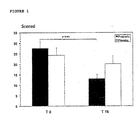
- Figure 1 shows a histogram relative to the Scorad index at T0 and T16.
- the results obtained show that the intake, by the 20 patients of group A, of the probiotic composition comprising the culture of Lactobacillus salivarius (LS01) DSM 22775 and the culture of Bifidobacterium breve (BR03) DSM 16604, at a concentration of 1x10 9 CFU, determined a decrease in the Scorad in patients affected by AD (a lower Scorad value indicates a better quality of life).
- the probiotic composition comprising the culture of Lactobacillus salivarius (LS01) DSM 22775 and the culture of Bifidobacterium breve (BR03) DSM 16604, at a concentration of 1x10 9 CFU, determined a decrease in the Scorad in patients affected by AD (a lower Scorad value indicates a better quality of life).
- the administration of said probiotic composition for 16 weeks was able to block secretion of the cytokine considered, IL-4, whose mean value was comparable to that obtained at the time of enrolment.
- the administration of the placebo was not able to block the release of the cytokine IL-4, which significantly increased after 16 weeks of treatment (evolution of the disease).
- Lactobacillus pentosus LPS01
- Streptococcus thermophilus FP4
- FP4 Streptococcus thermophilus
- LR04 Lactobacillus casei ssp. rhamnosus
- LA02 Lactobacillus acidophilus
- IL-12 is a Th1-type cytokine and represents a key element in the treatment of allergies and other atopic pathologies.
- the Applicant conducted a first clinical study using a composition comprising the cultures Lactobacillus salivarius (LS01) DSM 22775 and Bifidobacterium breve (BR03) and a second clinical study using a composition comprising the cultures Lactobacillus salivarius (LS01) DSM 22775, Bifidobacterium breve (BR03) and Lactobacillus pentosus (LPS01) DSM 21980.
- LS01 Lactobacillus salivarius
- BR03 Bifidobacterium breve
- LPS01 Lactobacillus pentosus
- the Applicant conducted said first clinical study (randomised, double-blind, on patients affected by severe or moderate atopic dermatitis), in order to evaluate the clinical efficacy of the administration of two probiotic bacterial strains, namely Lactobacillus salivarius (LS01), deposited with the DSMZ and having the deposit number DSM 22775, and Bifidobacterium breve (BR03), deposited with the DSMZ and having the deposit number DSM 16604.
- two probiotic bacterial strains namely Lactobacillus salivarius (LS01), deposited with the DSMZ and having the deposit number DSM 22775, and Bifidobacterium breve (BR03), deposited with the DSMZ and having the deposit number DSM 16604.
- AD atopic dermatitis
- the clinical evaluation was based on the SCORAD index (SCORing Atopic Dermatitis), on the DLQI (Dermatology Life Quality Index) and on microbial translocation and immunological parameters. For each individual patient, all evaluations were made at the time of enrolment (baseline), after 3 months of treatment (3ms) and two months after the end of the therapy (3+2ms).
- the diagnostic criteria for AD were set following the recently published clinical guide.
- Clinical severity was evaluated using the SCORAD index developed by the European Task Force for atopic dermatitis.
- all enrolled patients filled out the specific DLQI (Dermatology Life Quality Index) questionnaire.
- the SCORAD evaluation was performed at the start, end and two months after suspension of the treatment (probiotics or placebo) by an operator who did not know in which group the patient was enrolled.
- the DLQI was filled in by patients at the time of enrolment and at 12 and 20 weeks.
- PBMCs peripheral blood mononuclear cells
- peripheral blood mononuclear cells samples of peripheral venous blood were drawn from all study subjects at the time of enrolment, after 3 months of treatment and 2 months after suspension of the therapy. The plasma was stored until the time of analysis, whereas the PBMCs were separated by density gradient centrifugation. Cell viability was determined using an Adam-MC cell counter.
- the PBMCs were incubated for 18 hours in the presence or absence of Lipopolysaccharide (LPS) bacterial stimulation.
- LPS Lipopolysaccharide
- the percentage of activated CD8+ T lymphocytes was calculated directly on samples of peripheral venous blood by cytofluorimetric analysis using monoclonal antibodies (mAb) conjugated with fluorochromes (CD8, CD38, CD45RO). After incubation with the mAb, the erythrocytes were lysed and the cells were fixed and analysed with an FC500 flow cytometer (Beckman Coulter).
- T lymphocytes The identification of the different subpopulations of T lymphocytes was conducted on non-stimulated PBMC cultures and PMBC cultures stimulated for 18 hours with LPS, at all times (baseline, 3ms and 3+2ms).
- Cell marking was done by simultaneously using combinations of fluorescent antibodies capable of recognising molecules both on the cell surface and on intracellular components.
- type 1 T helper lymphocytes were identified as CD4+/IFN- ⁇ +/Tbet+; type 2 T helper lymphocytes (Th2) as CD4+/IL-4+/GATA3+; type 17 T helper lymphocytes (Th17) as CD4+/IL-17+/ROR ⁇ T+ and, finally, regulatory T helper lymphocytes (Treg) as CD4+/CD25+/FoxP3+/IL-10+/TGF- ⁇ +.
- TLR toll-like receptors
- Faecal samples were collected at the time of enrolment, after 3 months of treatment and 2 months after the end of the study. The samples were immediately placed at 4°C, aliquoted and stored at -80°C until the time of analysis.
- the quantification was conducted on all aerobic bacteria and on the following bacterial groups: Enterobacteria, Staphylococci, Lactobacilli (in particular L.salivarius LS01), and Bifidobacteria (in particular B. breve BR03). Faecal samples were diluted in physiological solution and the appropriate dilutions were incubated according to the following scheme:
- the composition of the intestinal microbiota was expressed as the count (mean ⁇ standard deviation of the base 10 logarithm (log10) per gram of faeces) for each bacterial group.
- the detection limits were 2 log10 CFU/g for all microorganisms with the exception of B. Breve, whose limit was 5 log10 CFU/g.
- the modifications of the counts of the different microbial groups were calculated as:
- L. salivarius LS01 cultivated on agarized BSM medium forms cream-white coloured colonies, roundish with an elongated shape and a diameter comprised from 2 to 4 mm;
- B. breve BR03 on agarized BSM medium forms fuchsia coloured colonies, roundish with an elongated shape and a diameter comprised from 1 to 2 mm.
- the LPS concentration is an index of microbial translocation; an increase in the LPS concentration is associated with alterations in intestinal permeability.
- Table 3 Patients with probiotics Placebo Baseline 71.71 56.64 3ms of treatment 53.17 76.7 2ms after suspension 36 119.61
- the activated CD8+ T cells were analysed by evaluating the expression on the same of the CD38 and CD45 molecules. A progressive reduction was observed in said cells during the study period in the patients treated with the two probiotics (baseline vs. 2 months after suspension of the treatment: p ⁇ 0.001; 3 months of treatment vs. 2 months after suspension of the treatment: p ⁇ 0.001) (Table 4). No significant difference was observed in the placebo group.
- Table 4 Patients with probiotics Placebo Baseline 2.51 1.8 3ms treatment 2.08 1.61 2ms after suspension 1.19 1.3
- Table 5A Patients with probiotics Placebo Baseline 18.57 33.22 3ms treatment 23.08 32.08 2ms after suspension 39.12 27.22
- Table 5B Patients with probiotics Placebo Baseline 19.85 16.77 3ms treatment 24.99 28.31 2ms after suspension 31.8 22.38
- the percentage of the Th17 cell subpopulation, identified on the basis of the expression of the CD4 and ROR ⁇ T molecules and secreting the cytokine IL-17, was decreased in the patients treated with the probiotics after 3 months of treatment (non-stimulated: baseline vs. 3 months of treatment: p 0.037; LPS: baseline vs. 3 months of treatment: p 0.046) (Table 6E and Table 6F).
- Table 6E Patients with probiotics Placebo Baseline 0.18 0.14 3ms treatment 0.1 0.18 2ms after suspension 0.12 0.04
- Table 6F Patients with probiotics Placebo Baseline 0.17 0.15 3ms treatment 0.1 0.12 2ms after suspension 0.11 0.1
- Table 7A Patients with probiotics Placebo Baseline 0.48 0.74 3ms treatment 1.27 0.95 2ms after suspension 0.49 0.95
- Table 7B Patients with probiotics Placebo Baseline 1.075 0.94 3ms treatment 0.57 1.19 2ms after suspension 0.62 0.333
- Table 8 The cell counts at the time of enrolment, after 3 months of treatment and 2 months after the end of administration are shown in Table 8.
- Table 8 baseline 3ms treatment 2ms after suspension Patients with probiotics Total aerobes 7.7 ⁇ 1.0 7.9 ⁇ 0.9 8.2 ⁇ 0.7 Enterobacteriaceae 6.8 ⁇ 1.3 7.3 ⁇ 1.2 6.7 ⁇ 2.6 Staphylococci 4.0 ⁇ 1.6 2.8 ⁇ 1.5 * ⁇ 2.3 ⁇ 1.6 * ⁇ Lactobacilli 5.4 ⁇ 2.0 5.1 ⁇ 1.8 5.5 ⁇ 0.4 Bifidobacteria 9.1 ⁇ 0.6 8.8 ⁇ 0.5 8.4 ⁇ 0.6 Patients with placebo Total aerobes 7.1 ⁇ 1.5 7.5 ⁇ 1.2 7.7 ⁇ 1.3 Enterobacteriaceae 5.8 ⁇ 1.7 6.7 ⁇ 1.6 6.2 ⁇ 1.5 Staphylococci 4.1 ⁇ 0.9 3.9 ⁇ 1.1 4.0 ⁇ 1.1 Lactobacilli 5.4
- the strain L. salivarius LS01 was found in all subjects after 3 months of treatment, in a quantity equal to 10 2 -10 5 CFU/g.
- the strain B. breve BR03 was detected in 90% of the subjects, after three months of treatment, in a quantity equal to 10 6 -10 8 CFU/g.
- both strains were also isolated 2 months after suspension of the treatment but in a smaller quantity compared to those obtained immediately after the end of administration.
- compositions of the present invention in particular those of said first clinical study (Lactobacillus salivarius (LS01) DSM 22775, and Bifidobacterium breve (BR03) DSM 16604) and said second clinical study (Lactobacillus salivarius (LS01) DSM 22775, Bifidobacterium breve (BR03) DSM16604 and Lactobacillus pentosus (LPS01) DSM 21980), administered for 3 months to adult subjects affected by severe or moderate atopic dermatitis, demonstrated to be able to improve the clinical and immunological parameters thereof.
- the probiotic strains used were capable of colonising the gastrointestinal tract of the patients and of reducing the staphylococcal load in faeces.
- the clinical effect of the administration of probiotics in terms of improving the symptoms of the pathology and quality of life, revealed itself after 3 months of treatment. Said effect showed to persist even 2 months after suspension of the treatment.
- the persistence of the 3 probiotic bacterial strains (Lactobacillus salivarius (LS01) DSM 22775, Bifidobacterium breve (BR03) DSM16604 and Lactobacillus pentosus (LPS01) DSM 219809) in the gastrointestinal tract was also observed after suspension of the treatment, suggesting the ability of the specific bacterial combinations to colonise the intestine.
- CD4+ T-helper lymphocytes Four different subpopulations of CD4+ T-helper lymphocytes were identified on the basis of their capacity to secrete cytokines: Th1, main producers of IFN- ⁇ and IL-2, are involved in cell-mediated immune responses; Th2, secreting IL-4, are responsible for triggering the humoural response; Th17, secreting IL-17 IL-21 and IL-22, are involved in immune responses directed against extracellular pathogens and in autoimmune diseases; regulatory T cells with an immunoregulatory function control the hyperactivation of immune responses.
- Treg cells A decrease in Treg cells has been reported in patients with atopic dermatitis and asthma, and their number is inversely correlatable to the secretion of IgE, eosinophilia, and IFN- ⁇ levels.
- the intake of the probiotic strains induced a significant increase in the percentage of total Treg lymphocytes and a significant increase in Treg lymphocytes expressing the receptors TLR2 and TLR4 after the treatment. These cell subpopulations perform an immunosuppressive activity as their main function.
- the colonisation of S. aureus is a crucial question for the progression of atopic dermatitis, as is the positive correlation between the severity of the disease and colonisation by S. aureus.
- the beneficial effects of the probiotics could be due to a Treg-cell mediated recovery of immunological tolerance toward S . aureus and Gram-negative bacteria.
- a negative correlation was found between the SCORAD index and Treg cells, suggesting a positive role of the latter in the evolution of atopic dermatitis.
- the Th2 subtype plays a critical role in the pathogenesis of allergic reactions and is responsible for the acute phase of atopic dermatitis, while the Th1 subpopulation has a protective function that is associated with the chronic phase of the disease.
- Th17 cells are increased in acute skin lesions but not in chronic lesions and are positively correlated with the severity of the disease.
- the data obtained in this study have shown that this new probiotic combination increases the functionality of Th1 cells to the detriment of the Th2 and Th17 subpopulations, thus increasing the Th1/Th2 and Th17/Treg ratios.
- Th2 and Th17 subtypes are positively correlated with plasma LPS levels, suggesting a strong interaction between microbial translocation and immune system modifications. This finding is further confirmed by the positive correlation between Th17 and activated CD8+.
- the role performed by microbial intestinal flora in the development of immunological tolerance and in the pathogenesis of allergic diseases has moreover been amply demonstrated.
- the alteration in intestinal microflora plays a role in the onset of atopic dermatitis and in the worsening of skin symptoms.
- the same authors when analysing the composition of the faecal microbiota of sensitized whez and non-whez children, observed that the lactobacteria and bifidobacteria were similar in both groups.
- the present clinical study has shown that the bacterial strains of the present invention are well tolerated, and are capable of colonising the intestinal tract and of inducing beneficial clinical effects in subjects affected by atopic dermatitis through the modulation of some of the most important immunopathological alterations typical of this inflammatory skin disease.
- the subject matter of the present invention is the use of the above tested bacterial strains in an additional therapy supporting the treatment of atopic dermatitis in adult subjects.
Landscapes
- Health & Medical Sciences (AREA)
- Life Sciences & Earth Sciences (AREA)
- Chemical & Material Sciences (AREA)
- Medicinal Chemistry (AREA)
- Public Health (AREA)
- Veterinary Medicine (AREA)
- Pharmacology & Pharmacy (AREA)
- Animal Behavior & Ethology (AREA)
- General Health & Medical Sciences (AREA)
- Mycology (AREA)
- Microbiology (AREA)
- Engineering & Computer Science (AREA)
- Epidemiology (AREA)
- General Chemical & Material Sciences (AREA)
- Organic Chemistry (AREA)
- Nuclear Medicine, Radiotherapy & Molecular Imaging (AREA)
- Chemical Kinetics & Catalysis (AREA)
- Bioinformatics & Cheminformatics (AREA)
- Molecular Biology (AREA)
- Immunology (AREA)
- Pulmonology (AREA)
- Nutrition Science (AREA)
- Food Science & Technology (AREA)
- Polymers & Plastics (AREA)
- Physiology (AREA)
- Dermatology (AREA)
- Otolaryngology (AREA)
- Medicines Containing Material From Animals Or Micro-Organisms (AREA)
- Coloring Foods And Improving Nutritive Qualities (AREA)
- Pharmaceuticals Containing Other Organic And Inorganic Compounds (AREA)
- Micro-Organisms Or Cultivation Processes Thereof (AREA)
- Medicinal Preparation (AREA)
- Medicines Containing Plant Substances (AREA)
Description
- The present invention relates to a composition comprising probiotic bacteria as defined in claims 1-11 for use in the treatment of pathologies associated with alterations of the immune system. In particular, the present invention as claimed relates to the use of selected probiotic bacteria for the preparation of a composition for use in the treatment of allergies, such as atopic dermatitis.
- It is well known that Atopic Dermatitis (hereinafter AD for the sake of brevity) is a chronic relapsing skin disorder which begins in the neonatal period or childhood and may persist into adulthood. Therefore, the phases of AD are divided into neonatal, infantile and adult. AD is an inflammatory skin disease which, like asthma and allergic rhinitis, is associated with local infiltration of T lymphocytes that produce interleukin-4 (IL-4) and interleukin-5 (IL-5).
- IL-4, as is well known, regulates the development of the T helper 2 (Th2) phenotype, with consequent hyperproduction of immunoglobulin (Ig) and eosinophilia. Elevated serum Ig E levels and skin tests positive for food and inhalant allergens can be demonstrated in 80-90% of subjects with atopic dermatitis.
- AD is based both on genetic factors and on immunological factors, even though a large number of external factors can modify its expression. In 60% of the cases of AD a family history of atopy can be demonstrated; in other words, if one parent has an atopic diathesis there is a 60% likelihood that the children will be atopic.
- Atopy is the genetic predisposition to developing localised anaphylactic reactions following contact, ingestion, inoculation or inhalation of allergens.
- The immunological factors taken into consideration in the etiology of AD are: allergy to foods, allergy induced by contact allergens and irritants, allergy induced by aeroallergens and immunoregulatory abnormalities.
- Among the multitude of treatments directed at curing and/or preventing allergies or skin inflammations, in particular, at treating atopic dermatitis, many drug-based treatments stand out.
- Drug-based treatments have several contraindications that limit their use. Moreover, these drugs do not seem well tolerated by some categories of patients. However, at present there exists no treatment having absolute and definitive efficacy. It is possible only to adopt certain precautions against the onset of allergies or, as needed, remedies for mitigating the bothersome symptoms, such as itching and reddening of the skin.
- Therefore, there remains a need to have a treatment which does not present the limitations of drug-based treatments and which can be administered to all categories of patients.
- In particular, there remains a need to have a treatment which can serve to combat the onset of allergies and the development of skin inflammations and/or to reduce bothersome symptoms such as reddening of skin tissue, itching and eczema.
- The Applicant has provided an answer to the above-mentioned needs since it has succeeded, after intense research activity, in selecting specific probiotic bacterial strains.
- The subject matter of the present invention is a composition as defined in claims 1-11. Herein described is the use of at least one culture of probiotic bacteria.
- The Applicant set itself the objective of selecting specific bacterial strains for the purpose of evaluating their effect on the clinical course and quality of life of patients with moderate or severe AD and for the purpose of determining their influence on clinical and immunological parameters.
- Moreover, the Applicant set itself the objective of selecting bacterial strains with probiotic activity able to be tolerated by patients and capable of colonising the intestinal tract.
- The diagnosis of moderate/severe AD was evaluated using a standardized severity index for Atopic Dermatitis - hereinafter indicated as AD - (SCORAD index = SCORing Atopic Dermatitis). Said index is known to those persons skilled in the art.
- It was found that the bacterial strains of the present invention have a high immunomodulating effect and are thus useful for the treatment of pathologies associated with alterations of the immune system.
- Following intense research activity, the Applicant selected, from among the many strains tested, the following probiotic bacterial strains:
- 1) Lactobacillus salivarius (LS01) DSM 22775, deposited on 23.07.2009, by the company Probiotical SpA of Novara - Italy;
- 2) Bifidobacterium breve (BR03) DSM 16604, deposited on 20.07.2004, by the company Probiotical SpA of Novara - Italy;
- 3) Lactobacillus pentosus (LPS01) DSM 21980, deposited on 14.11.2008, by the company Probiotical SpA of Novara - Italy;
- 4) Streptococcus thermophilus (FP4) DSM 18616, deposited on 13.09.2006, by the company Mofin Srl of Novara - Italy;
- 5) Lactobacillus casei ssp. rhamnosus (LR04) DSM 16605, deposited on 20.07.2004, by the company Probiotical SpA of Novara - Italy; and
- 6) Lactobacillus acidophilus (LA02) DSM 21717, deposited on 06.08.2008, by the company Probiotical SpA of Novara - Italy.
- The cultures listed above were all deposited with the Deutsche Sammlung von Mikroorganismen und Zellkulturen GmbH, (DSMZ) in Germany, in accordance with the Budapest Treaty.
- In the context of the present invention, the cultures of probiotic bacteria can be in the form of live bacteria, dead bacteria or cellular components, cell extracts or lysates thereof.
- Herein described is a composition comprising at least one bacterial culture for use as an immunomodulating composition capable of modulating the immune system.
- The expression "immunomodulating composition" means that the composition is capable of modulating the immune system in the sense that it is capable of stimulating/inducing several responses of the immune system, rendering it more reactive, for example by intervening through the production of specific cytokines.
- Advantageously, said immunomodulating composition induces the immune system toward the production of type 1 cytokines.
- Advantageously, the bacterial strains and the corresponding bacterial cultures have demonstrated to be capable of improving clinical and immunological parameters. In particular, it was observed that they are capable of:
- 1) significantly improving the SCORAD index and DLQI;
- 2) reducing microbial translocation (plasma LPS levels) and activating CD8+ T lymphocytes;
- 3) increasing the percentage both of total regulatory T lymphocytes (Treg), and of the same expressing the markers TLR2- and TLR4;
- 4) improving the Th1/ Th2 and Th17/ Treg ratios. Therefore, the composition of the present invention (immunomodulating composition) is capable of preventing, reducing and/or curing the pathologies associated with alterations of the immune system such as allergies, atopy, allergic rhinitis, food hypersensitivity, atopic dermatitis, eczema, asthma and immunodeficiencies.
- The present invention concerns a composition comprising or, consisting of Lactobacillus salivarius (LS01) DSM 22775, Bifidobacterium breve (BR03) DSM. 16604 and Lactobacillus pentosus (LPS01) DSM 21980.
- In a preferred embodiment, the composition comprises or, alternatively, consists of the cultures of Lactobacillus salivarius (LS01) DSM 22775 and Bifidobacterium breve (BR03), DSM 16604. comprising Herein described is a composition comprising or, alternatively, comprising of said culture of Lactobacillus salivarius (LS01) DSM 22775 and of said culture of Bifidobacterium breve (BR03) DSM 16604 in association with at least one other culture of Lactobacillus pentosus (LPS01) DSM 21980,
- In a preferred embodiment, the composition comprises or, alternatively, consists of the cultures of Lactobacillus salivarius (LS01) DSM 22775,
- Bifidobacterium breve (BR03), DSM 16604 and Lactobacillus pentosus (LPS01) DSM 21980.
- In accordance with another preferred embodiment, the present invention concerns the use of at least one culture of probiotic bacteria selected from the group comprising or, alternatively, consisting of the cultures of Lactobacillus salivarius (LS01) DSM 22775, Bifidobacterium breve (BR03) DSM 16604 and Lactobacillus pentosus (LPS01) DSM 21980, for the preparation of a composition capable of preventing, reducing and/or curing the pathologies associated with alterations of the immune system such as allergies, atopy, allergic rhinitis, food hypersensitivity, atopic dermatitis, eczema, asthma and immunodeficiencies.
- In accordance with another preferred embodiment, the present invention concerns the use of a composition comprising or, alternatively, consisting of said cultures of Lactobacillus salivarius (LS01) DSM 22775 and Bifidobacterium breve (BR03), DSM 16604.
- Preferably, the invention concerns the use of said culture of Lactobacillus salivarius (LS01) DSM 22775 and said culture of Bifidobacterium breve (BR03) DSM 16604 in association with at least one other culture selected from the group comprising: Lactobacillus pentosus (LPS01) DSM 21980 for use in the preventive and/or curative treatment of atopic dermatitis.
- In accordance with another preferred embodiment, the present invention concerns the use of a composition comprising or, alternatively, consisting of Lactobacillus salivarius (LSO1) DSM 22775, Bifidobacterium breve (BR03) and Lactobacillus pentosus (LPS01) DSM 21980.
- Advantageously, the composition comprises or, alternatively, consists of Lactobacillus salivarius (LS01) DSM 22775 and of Bifidobacterium breve (BR03) DSM 16604 in a ratio by weight comprised from 1:3 to 3:1, preferably 1:1.
- Alternatively, the composition comprises or, alternatively, consists of Lactobacillus salivarius (LS01) DSM 22775, Bifidobacterium breve (BR03) DSM 16604 and Lactobacillus pentosus (LPS01) DSM 21980, preferably in a ratio by weight of 1:1:1.
- The bacterial cultures of the present invention can be considered as "active ingredients" which can be blended, in the due proportions, with physiologically and/or pharmaceutically acceptable excipients.
- In order to enhance their activity, the active ingredients can be administered systemically, advantageously orally, in the form of compositions in a solid state, prepared according to techniques known to a person skilled in the art.
- In a preferred embodiment, the compositions are in the form of lyophilizates, powders, granules, tablets, soft-gel capsules or suspensions.
- The compositions of the present invention can be pharmaceutical, dietetic, nutritional or nutraceutical compositions.
- The compositions of the present invention can moreover comprise dietary fibres with prebiotic activity, such as fructooligosaccharides (FOS), inulin and partially hydrolyzed guar gum (PHGG).
- The pharmaceutical, dietetic, nutritional or nutraceutical compositions of the present invention comprise at least one culture of probiotic bacteria, as indicated above. The final concentration of the composition is comprised from 1x10⁷ to 1x10¹¹ CFU/g of composition, preferably from 1x10⁸ to 1x10¹⁰ CFU/g of composition.
- The compositions of the present invention, which comprise selected probiotic bacteria, are useful as immunomodulating compositions capable of modulating the immune system.
- Said compositions are capable of curing and/or preventing the pathologies associated with alterations in the functions of the following cytokines: Th1 (IFN-γ and IL-12) and Th2 (IL-4, IL-5 and IL-10) as claimed. Furthermore, said compositions are capable of inducing the immune system, inducing the latter toward the production of type 1 cytokines.
- Therefore, the compositions of the present invention have valid application for the preventive and/or curative treatment of pathologies associated with alterations of the immune system, in particular for the preventive and/or curative treatment of allergies, atopy, allergic rhinitis, food hypersensitivity, atopic dermatitis, eczema, asthma or immunodeficiencies. Advantageously, the compositions of the present invention have valid application in the preventive and/or curative treatment of atopic dermatitis. Advantageously, the intake, by patients affected with atopic dermatitis AD, of a probiotic composition comprising the culture of Lactobacillus salivarius (LS01) DSM 22775 and the culture of Bifidobacterium breve (BR03) DSM 16604 at a concentration comprised from 1x10⁷ to 1x10¹¹ CFU, preferably 1x10⁹ CFU/g, determines a decrease in the Scorad index (a lower Scorad value indicates a better quality of life). Moreover, the administration of said probiotic composition for a period comprised from 12 to 24 weeks, preferably 16 weeks, is capable of reducing/blocking the secretion of the cytokine IL-4.
- The Applicant tested all six of the above-mentioned strains.
- A first clinical study was conducted to test a composition comprising the culture of Lactobacillus salivarius (LS01) DSM 22775 and the culture of Bifidobacterium breve (BR03) DSM 16604.
- A group of 40 patients (males and females, aged from 18 to 55 years) with moderate/severe AD were randomized (1:1) into two groups.
- The diagnosis of moderate/severe AD was evaluated using a standardized AD severity index (SCORAD index = SCORing Atopic Dermatitis). Said index is known to those persons skilled in the art.
- T0 represents time zero, as the starting point of the treatment, whereas T16 represents the 16-week period of treatment. At T16 an examination was performed, with Scorad and sampling.
- Group A was treated with a composition comprising the culture of Lactobacillus salivarius (LS01) DSM 22775 and the culture of Bifidobacterium breve (BR03) DSM 16604, having a concentration of 1x10⁹ CFU (corresponding to 0.01 g). The two cultures were blended with 1 g of corn starch to give a final composition of 1.01 g in sachets. The 20 patients of group A received 2 sachets per day for 16 weeks. Group B was treated with a placebo represented by 1 g of (only) corn starch. The 20 patients of group B received 2 sachets of placebo per day for 16 weeks.
- The following cytokines were tested for: Th1 (IFN-γ and IL-12) and Th2 (IL-4, IL-5 and IL-10).
- All data of the 40 patients were carefully collected and analysed.
-
Figure 1 shows a histogram relative to the Scorad index at T0 and T16. - The results obtained show that the intake, by the 20 patients of group A, of the probiotic composition comprising the culture of Lactobacillus salivarius (LS01) DSM 22775 and the culture of Bifidobacterium breve (BR03) DSM 16604, at a concentration of 1x10⁹ CFU, determined a decrease in the Scorad in patients affected by AD (a lower Scorad value indicates a better quality of life).
- Moreover, the administration of said probiotic composition for 16 weeks was able to block secretion of the cytokine considered, IL-4, whose mean value was comparable to that obtained at the time of enrolment. Whereas in contrast the administration of the placebo was not able to block the release of the cytokine IL-4, which significantly increased after 16 weeks of treatment (evolution of the disease).
- A series of pre-clinical in vitro studies were conducted on a group of bacteria comprising, among others, the culture of Lactobacillus salivarius (LS01) DSM 22775 and the culture of Bifidobacterium breve (BR03) DSM 16604.
- Pre-clinical in vitro studies comparing the immunomodulating capacities of the tested bacterial strains demonstrated that the culture of Lactobacillus salivarius (LS01) DSM 22775 and the culture of Bifidobacterium breve (BR03) DSM 16604 show a superior capacity in inducing the production of type 1 cytokines.
- The cultures of the bacteria Lactobacillus pentosus (LPS01) DSM 21980, Streptococcus thermophilus (FP4) DSM 18616, Lactobacillus casei ssp. rhamnosus (LR04) DSM 16605 and Lactobacillus acidophilus (LA02) DSM 21717 were also tested.
- The culture of the strain L. pentosus (LPS01) DSM 22775 demonstrated in vitro to induce a very strong pro-Th1 cytokine profile.
- Moreover, all the cultures of the strains Lactobacillus pentosus (LPS 01) DSM 21980, Streptococcus thermophilus (FP4) DSM 18616, Lactobacillus casei ssp. rhamnosus (LR04) DSM 16605 and Lactobacillus acidophilus (LA02) DSM 21717 were tested for their capacity to induce the synthesis of IL-12 by PBMCs in an in vivo study. IL-12 is a Th1-type cytokine and represents a key element in the treatment of allergies and other atopic pathologies.
- By way of example, the data relative to L. pentosus (LPS01) DSM 21980, tested on PBMCs, are reported: Th-1 (pg/ml) = 1.754; Th-2 (pg/ml) = 326; Th1/Th2 = 5.38.
- The Applicant conducted a first clinical study using a composition comprising the cultures Lactobacillus salivarius (LS01) DSM 22775 and Bifidobacterium breve (BR03) and a second clinical study using a composition comprising the cultures Lactobacillus salivarius (LS01) DSM 22775, Bifidobacterium breve (BR03) and Lactobacillus pentosus (LPS01) DSM 21980. For the sake of simplicity, only the details of said first clinical study are reported, since said second clinical study was conducted with the same methods. Both clinical studies (first and second) gave comparable results.
- The Applicant conducted said first clinical study (randomised, double-blind, on patients affected by severe or moderate atopic dermatitis), in order to evaluate the clinical efficacy of the administration of two probiotic bacterial strains, namely Lactobacillus salivarius (LS01), deposited with the DSMZ and having the deposit number DSM 22775, and Bifidobacterium breve (BR03), deposited with the DSMZ and having the deposit number DSM 16604.
- 48 patients affected by atopic dermatitis (hereinafter AD) were recruited into the study. Their characteristics are shown in Table 1.
Table 1 Patients with probiotics (n=31) Placebo patients (n=15) Sex (M/F) 14/17 5/10 Age (years) 32.44 ± 1.47 30.91 ± 2.79 Respiratory allergy 23/31 (74.2%) 9/15 (60%) Food allergy 2/31 (6.4%) 2/15 (13.3%) Other allergies 7/31 (22.6%) 2/15 (13.3%) No allergies 5/31 (16%) 4/15 (26.6 %) Years of AD 19.36 ± 2.38 15.08 ± 3.04 - The present clinical study was conducted in the period of April-September 2010. 32 patients (treatment group) received a preparation containing the two probiotic bacterial strains, namely L. salivarius (LS01) DSM 22775 and B. breve (BR03) DSM 16604, at a dose of 1x10⁹ CFU/g of each strain in maltodextrin.
- Whereas 16 patients (placebo group) received a preparation of maltodextrin alone. Both groups were treated twice a day for 12 weeks. The compositions in lyophilised form were dissolved in water and administered orally to the patients.
- None of the patients modified his or her diet and all were told not to consume fermented products containing live microorganisms during the clinical study. Patients who were affected by active allergic (respiratory or skin) disease, or infectious disease during pregnancy or breastfeeding, were excluded from the present study. Patients who had received a treatment with probiotics, antibiotics or immunomodulators during the six months prior to enrolment or who had received treatment with oral steroids a month prior to enrolment were excluded from the present study. All patients gave their informed consent at the time of enrolment.
- The clinical evaluation was based on the SCORAD index (SCORing Atopic Dermatitis), on the DLQI (Dermatology Life Quality Index) and on microbial translocation and immunological parameters. For each individual patient, all evaluations were made at the time of enrolment (baseline), after 3 months of treatment (3ms) and two months after the end of the therapy (3+2ms).
- The diagnostic criteria for AD were set following the recently published clinical guide. Clinical severity was evaluated using the SCORAD index developed by the European Task Force for atopic dermatitis. In the course of the study, in order to measure variations in the symptoms tied to the pathology, all enrolled patients filled out the specific DLQI (Dermatology Life Quality Index) questionnaire. The SCORAD evaluation was performed at the start, end and two months after suspension of the treatment (probiotics or placebo) by an operator who did not know in which group the patient was enrolled. The DLQI was filled in by patients at the time of enrolment and at 12 and 20 weeks.
- For the separation of plasma and peripheral blood mononuclear cells (PBMCs), samples of peripheral venous blood were drawn from all study subjects at the time of enrolment, after 3 months of treatment and 2 months after suspension of the therapy. The plasma was stored until the time of analysis, whereas the PBMCs were separated by density gradient centrifugation. Cell viability was determined using an Adam-MC cell counter.
- The PBMCs were incubated for 18 hours in the presence or absence of Lipopolysaccharide (LPS) bacterial stimulation. An analysis of the cytokines induced by the antigenic stimulus was performed by flow cytometry, adding Brefeldin A as an inhibitor of cell transport in the last hours of culture.
- The percentage of activated CD8+ T lymphocytes was calculated directly on samples of peripheral venous blood by cytofluorimetric analysis using monoclonal antibodies (mAb) conjugated with fluorochromes (CD8, CD38, CD45RO). After incubation with the mAb, the erythrocytes were lysed and the cells were fixed and analysed with an FC500 flow cytometer (Beckman Coulter).
- The identification of the different subpopulations of T lymphocytes was conducted on non-stimulated PBMC cultures and PMBC cultures stimulated for 18 hours with LPS, at all times (baseline, 3ms and 3+2ms). Cell marking was done by simultaneously using combinations of fluorescent antibodies capable of recognising molecules both on the cell surface and on intracellular components. Specifically, type 1 T helper lymphocytes (Th1) were identified as CD4+/IFN-γ+/Tbet+; type 2 T helper lymphocytes (Th2) as CD4+/IL-4+/GATA3+; type 17 T helper lymphocytes (Th17) as CD4+/IL-17+/RORγT+ and, finally, regulatory T helper lymphocytes (Treg) as CD4+/CD25+/FoxP3+/IL-10+/TGF-β+.
- The analysis was performed on non-stimulated PBMCs, following the protocol provided by the manufacturer of the mAb. Specifically, the following mAb were necessary: CD4, CD25, FoxP3, TLR-4, TLR-2.
- In order to determine the concentration of LPS present in the plasma samples, use was made of "LAL Chromogenic Endopoint Assay" kit sold by the company Hycult biotechnology, following the manufacturer's instructions. The test was conducted in a 96 well plate. After 45 minutes of incubation at room temperature, the absorbance at a wavelength of 405 nm was read with a spectrophotometer and the LPS concentration, expressed in pg/ml, was calculated by interpolation with a curve of known concentration.
- Faecal samples were collected at the time of enrolment, after 3 months of treatment and 2 months after the end of the study. The samples were immediately placed at 4°C, aliquoted and stored at -80°C until the time of analysis.
- The quantification was conducted on all aerobic bacteria and on the following bacterial groups: Enterobacteria, Staphylococci, Lactobacilli (in particular L.salivarius LS01), and Bifidobacteria (in particular B. breve BR03). Faecal samples were diluted in physiological solution and the appropriate dilutions were incubated according to the following scheme:
- All AEROBIC bacteria: Tryptic soy agar with 5% sheep's blood (AS);
- Enterobacteria: MacConkey Agar (MC);
- Staphylococci: Mannitol salt agar (MSA);
- Lactobacilli: Man, Rogosa and Sharp agar (MRS); Bifidobacteria: Bifidobacterium selective medium (BSM). The MC and BSM media were incubated at 37°C for 24 and 48 hours, respectively. The AS, MRS and BSM media were incubated at 37°C, in the presence of 10% carbon dioxide, for 24, 48 and 72 hours, respectively.
- All colonies were identified through growth in selective media, Gram stain, cell morphology and tests for catalase and oxidase.
- The composition of the intestinal microbiota was expressed as the count (mean ± standard deviation of the base 10 logarithm (log10) per gram of faeces) for each bacterial group. The detection limits were 2 log10 CFU/g for all microorganisms with the exception of B. Breve, whose limit was 5 log10 CFU/g. The modifications of the counts of the different microbial groups were calculated as:
- [(Log10 CFU/g at T12 or T16) - (Log10 CFU/g at TO)]
- The two bacterial strains were initially identified based on their morphological peculiarities: L. salivarius LS01 cultivated on agarized BSM medium forms cream-white coloured colonies, roundish with an elongated shape and a diameter comprised from 2 to 4 mm; B. breve BR03 on agarized BSM medium forms fuchsia coloured colonies, roundish with an elongated shape and a diameter comprised from 1 to 2 mm.
- In the cultures in which it was possible to assume the presence of the strains L. salivarius and B. breve, 10 random colonies were analysed by Polymerase Chain Reaction (PCR) in accordance with the guidelines published by the National Institute of Health. All of the colonies classified as L. salivarius or B. breve were further characterised by running pulsed field gel electrophoresis (PFGE) and comparing the profiles with suitable references.
- The results were analysed using appropriate statistical tests. T-tests were used to compare patients during the treatments. Possible relationships were evaluated using the test of Pearson's correlation. The variations in the bacterial count were analysed using the Wilcoxon-Mann-Whitney test. The statistical analysis was performed using the SPSS statistical package.
- 46 patients affected by AD completed the clinical study; 2 patients (1 patient per group) were excluded. The evaluation of the SCORAD (SCORAD index) and DLQI was made during the follow-up examinations. The patients treated with the probiotics showed a significant reduction in the SCORAD at the end of the treatment (p=0.001), which was also maintained after suspension of the treatment (p=0.006) (Table 2). Analogously, the DLQI showed an improvement in the patients treated with the probiotic mixture (enrolment vs. 3m treatment: p=0.024; enrolment vs. 2ms after suspension: p=0.001). In the group of patients to whom the placebo was administered, no significant difference was observed either in terms of SCORAD or of DLQI (Table 2).
- The LPS concentration is an index of microbial translocation; an increase in the LPS concentration is associated with alterations in intestinal permeability. The treatment with the two probiotic strains induced a reduction in the plasma LPS concentration, which was maintained after interruption of the therapy (baseline vs. 3 months of treatment: p=0.050; baseline vs. 2 months after suspension of the treatment: p< 0.001; 3 months of treatment vs. 2 months after suspension of the treatment: p< 0.001), as shown below (Table 3).
Table 3 Patients with probiotics Placebo Baseline 71.71 56.64 3ms of treatment 53.17 76.7 2ms after suspension 36 119.61 - In patients treated with the placebo a significant increase was observed in the plasma LPS levels during the study period (baseline vs. 2 months after suspension of the treatment: p=0.004; 3 months of treatment vs. 2 months after suspension of the treatment: p=0.016) (Table 3). At the end of the study, the plasma LPS concentration was significantly higher in the control group (placebo) in comparison to the treatment group (p<0.001).
- The activated CD8+ T cells were analysed by evaluating the expression on the same of the CD38 and CD45 molecules. A progressive reduction was observed in said cells during the study period in the patients treated with the two probiotics (baseline vs. 2 months after suspension of the treatment: p<0.001; 3 months of treatment vs. 2 months after suspension of the treatment: p<0.001) (Table 4). No significant difference was observed in the placebo group.
Table 4 Patients with probiotics Placebo Baseline 2.51 1.8 3ms treatment 2.08 1.61 2ms after suspension 1.19 1.3 - The regulatory T cells were evaluated both in the absence of stimulation and after stimulation with LPS. After treatment with the probiotic mixture, the percentage of non-stimulated Treg lymphocytes was significantly increased (baseline vs. 2 months after suspension of the treatment: p=0.002; 3 months of treatment vs. 2 months after suspension of the treatment: p=0.034) (Table 5A and Table 5B). Similar results were obtained from the analysis after stimulation with LPS.
Table 5A Patients with probiotics Placebo Baseline 18.57 33.22 3ms treatment 23.08 32.08 2ms after suspension 39.12 27.22 Table 5B Patients with probiotics Placebo Baseline 19.85 16.77 3ms treatment 24.99 28.31 2ms after suspension 31.8 22.38 - The expression of the Toll-like receptors 2 (TLR-2) and 4 (TLR-4) was evaluated directly in peripheral venous blood. As shown in Table 5C and Table 5D, the expression of both molecules on the Treg lymphocytes was significantly increased after 3 months of administration of probiotics; this result was also maintained 2 months after suspension of the treatment (TLR-2: baseline vs. 3 months of treatment: p<0.001; baseline vs. 2 months after suspension of the treatment: p=0.010; TLR-4: baseline vs. 3 months of treatment: p<0.001; baseline vs. 2 months after suspension of the treatment: p=0.011). In the control group (placebo), a significant decrease was observed in the expression of the molecule TLR-2 by the Treg lymphocytes at the end of the study (3 months of treatment vs. 2 months after suspension of the treatment: p=0.009).
Table 5C Patients with probiotics Placebo Baseline 8.67 16.67 3ms treatment 30.89 23 2ms after suspension 23.78 12.51 Table 5D Patients with probiotics Placebo Baseline 9.27 17.02 3ms treatment 31.17 22.97 2ms after suspension 22.67 18.87 - The lymphocyte subpopulations Th1, Th2 and Th17 were evaluated in the absence of stimulation and after stimulation with LPS in both groups undergoing analysis: the percentage of the subpopulation Th1, identified on the basis of the expression of the CD4 and Tbet molecules and secreting the cytokine IFN-γ, was significantly increased in the subjects treated with the probiotic mixture, both in the absence of stimulation and after stimulation with LPS (non-stimulated: baseline vs. 3 months of treatment: p=0.003; LPS: baseline vs. 3 months of treatment: p=0.025; baseline vs. 2 months after suspension of the treatment: p=0.019) (Table 6A and Table 6B). In the patients treated with the probiotics, two months after the end of the treatment a further decrease in the Th1 cells was observed (p<0.001).
Table 6A Patients with probiotics Placebo Baseline 0.11 0.18 3ms treatment 0.23 0.2 2ms after suspension 0.16 0.14 Table 6B Patients with probiotics Placebo Baseline 0.09 0.13 3ms treatment 0.19 0.21 2ms after suspension 0.18 0.1 - The percentage of the Th2 cell subpopulation, identified on the basis of the expression of the CD4 and GATA3 molecules and secreting the cytokine IL-4, was significantly decreased during the administration of probiotics but after suspension of the therapy it increased again (non-stimulated: baseline vs. 3 months of treatment: p=0.016; 3 months of treatment vs. 2 months after suspension of the treatment: p=0.005; LPS: baseline vs. 3 months of treatment: p=ns; 3 months of treatment vs. 2 months after suspension of the treatment: p=0.0045) (Table 6C and Table 6D).
Table 6C Patients With probiotics Placebo Baseline 0.85 0.45 T 1 0.26 0.19 T 20.9 0.41 Table 6D Patients with probiotics Placebo Baseline 0.81 0.61 T 1 0.45 0.3 T 21.69 0.07 - The percentage of the Th17 cell subpopulation, identified on the basis of the expression of the CD4 and RORγT molecules and secreting the cytokine IL-17, was decreased in the patients treated with the probiotics after 3 months of treatment (non-stimulated: baseline vs. 3 months of treatment: p=0.037; LPS: baseline vs. 3 months of treatment: p 0.046) (Table 6E and Table 6F). Two months after suspension of the treatment significant differences were observed between the two groups undergoing analysis as regards the Th2 and Th17 lymphocyte subpopulations (p=0.008 and p=0.031, respectively). No significant difference was found in the Th1, Th2 and Th17 cell populations in the subjects of the control group (placebo).
Table 6E Patients with probiotics Placebo Baseline 0.18 0.14 3ms treatment 0.1 0.18 2ms after suspension 0.12 0.04 Table 6F Patients with probiotics Placebo Baseline 0.17 0.15 3ms treatment 0.1 0.12 2ms after suspension 0.11 0.1 - After 3 months of administration of probiotics, a significant increase was observed in the Th1/Th2 ratio (p=0.028) (Table 7A). This effect was lost after interruption of the treatment (p=0.002). In contrast, in the group treated with the bacterial mixture, the Th17/Treg ratio progressively decreased and this result was also found 2 months after interruption of the therapy (p=0.029). During the study the subjects enrolled in the control group (placebo) did not show any significant variation in the Th1/Th2 and Th17/Treg ratios. The Th17/Treg ratio was significantly higher in the placebo group in comparison with the probiotic group after 3 months of treatment (P=0.037) (Table 7B).
Table 7A Patients with probiotics Placebo Baseline 0.48 0.74 3ms treatment 1.27 0.95 2ms after suspension 0.49 0.95 Table 7B Patients with probiotics Placebo Baseline 1.075 0.94 3ms treatment 0.57 1.19 2ms after suspension 0.62 0.333 - In the patients to whom the probiotics were administered, at the end of the treatment a negative correlation was observed between the SCORAD and the percentage of Treg lymphocytes after stimulation with LPS (p=0.020) and between the percentage of activated CD8+ T lymphocytes and that of the Th1 cells stimulated with LPS (p=0.046).
- A significant positive correlation was observed between the plasma LPS concentration and the percentage of non-stimulated Th2 cells (p=0.016), between the plasma LPS concentration and the percentage of Th17 cells stimulated with LPS (p=0.04) and between the percentage of activated CD8+ T lymphocytes and that of the Th17 cells stimulated with LPS (p=0.037).
- The cell counts at the time of enrolment, after 3 months of treatment and 2 months after the end of administration are shown in Table 8.
Table 8 baseline 3ms treatment 2ms after suspension Patients with probiotics Total aerobes 7.7 ± 1.0 7.9 ± 0.9 8.2 ± 0.7 Enterobacteriaceae 6.8 ± 1.3 7.3 ± 1.2 6.7 ± 2.6 Staphylococci 4.0 ± 1.6 2.8 ± 1.5 * ◊ 2.3 ± 1.6 * ◊ Lactobacilli 5.4 ± 2.0 5.1 ± 1.8 5.5 ± 0.4 Bifidobacteria 9.1 ± 0.6 8.8 ± 0.5 8.4 ± 0.6 Patients with placebo Total aerobes 7.1 ± 1.5 7.5 ± 1.2 7.7 ± 1.3 Enterobacteriaceae 5.8 ± 1.7 6.7 ± 1.6 6.2 ± 1.5 Staphylococci 4.1 ± 0.9 3.9 ± 1.1 4.0 ± 1.1 Lactobacilli 5.4 ± 1.9 5.2 ± 1.6 5.4 ± 1.8 Bifidobacteria 8.5 ± 1.1 8.6 ± 0.6 8.6 ± 0.9 * Significance decreased (P<0.05) compared to baseline
◊ Significant difference (P<0.05) compared to placebo at the same time. - In the control group (placebo), no significant alterations were found in the faecal flora. In the group treated with probiotics, after 3 months a significant decrease in staphylococci was detected. This finding was significant also in comparison with the control group after 3 months of treatment. The decrease remained statistically significant even two months after suspension of the probiotics. No significant modifications were found in any other microbial group analysed.
- The findings related to the probiotic strains in the faecal samples of the subjects enrolled in the study are shown in Table 9. All the colonies with a morphology corresponding to that of the strains considered, identified by PCR analysis and PFGE, were correspondent to those of the strains previously identified as L. salivarius LS01 or B. breve BR03.
- The strain L. salivarius LS01 was found in all subjects after 3 months of treatment, in a quantity equal to 102-105 CFU/g. The strain B. breve BR03 was detected in 90% of the subjects, after three months of treatment, in a quantity equal to 106-108 CFU/g.
- In some patients, both strains were also isolated 2 months after suspension of the treatment but in a smaller quantity compared to those obtained immediately after the end of administration.
- The Applicant was able to verify that the compositions of the present invention, in particular those of said first clinical study (Lactobacillus salivarius (LS01) DSM 22775, and Bifidobacterium breve (BR03) DSM 16604) and said second clinical study (Lactobacillus salivarius (LS01) DSM 22775, Bifidobacterium breve (BR03) DSM16604 and Lactobacillus pentosus (LPS01) DSM 21980), administered for 3 months to adult subjects affected by severe or moderate atopic dermatitis, demonstrated to be able to improve the clinical and immunological parameters thereof. In particular, at the end of the probiotic treatment, the following were observed:
- 1) a significant improvement in the SCORAD index and DLQI;
- 2) a reduction in microbial translocation (plasma LPS levels) and in the activation of CD8+ T lymphocytes;
- 3) an increase in the percentage both of the total regulatory T lymphocytes (Treg), and of the same expressing the markers TLR2- and TLR4;
- 4) an improvement in the Th1/ Th2 and Th17/ Treg ratios.
- Advantageously, it was demonstrated that the probiotic strains used were capable of colonising the gastrointestinal tract of the patients and of reducing the staphylococcal load in faeces.
- Advantageously, the clinical effect of the administration of probiotics, in terms of improving the symptoms of the pathology and quality of life, revealed itself after 3 months of treatment. Said effect showed to persist even 2 months after suspension of the treatment.
- Advantageously, the persistence of the 3 probiotic bacterial strains (Lactobacillus salivarius (LS01) DSM 22775, Bifidobacterium breve (BR03) DSM16604 and Lactobacillus pentosus (LPS01) DSM 219809) in the gastrointestinal tract was also observed after suspension of the treatment, suggesting the ability of the specific bacterial combinations to colonise the intestine.
- Alterations in intestinal permeability play a key role in the pathogenesis of atopic dermatitis and in other diseases characterised by an inflammatory component. The results obtained from the clinical study demonstrate an important aspect, which is represented by the presence of a negative correlation between plasma LPS levels and atopy. Specifically, the presence of a significant improvement in microbial translocation both during and after the probiotic treatment demonstrated the immunomodulating effect possessed by the 3 bacterial strains, able to improve the intestinal barrier by acting both directly and indirectly.
- Studies on HIV infections have shown an association between microbial translocation and immunological activation with an excessive T-cell turnover. The evaluation of the percentage of activated CD8+ T lymphocytes, considered an important prognostic factor in HIV infections, is one of the most widely accepted markers of LPS-mediated activation of the immune system. As expected, in the patients affected by atopic dermatitis enrolled in the present study, a reduction in the plasma LPS values was observed in association with a decrease in activated CD8+ T cells. These data demonstrate that the bacterial strains tested have a strong immunomodulating activity as a consequence of their capacity to increase the intestinal barrier. In the placebo group this correlation was not observed. Four different subpopulations of CD4+ T-helper lymphocytes were identified on the basis of their capacity to secrete cytokines: Th1, main producers of IFN-γ and IL-2, are involved in cell-mediated immune responses; Th2, secreting IL-4, are responsible for triggering the humoural response; Th17, secreting IL-17 IL-21 and IL-22, are involved in immune responses directed against extracellular pathogens and in autoimmune diseases; regulatory T cells with an immunoregulatory function control the hyperactivation of immune responses.
- A decrease in Treg cells has been reported in patients with atopic dermatitis and asthma, and their number is inversely correlatable to the secretion of IgE, eosinophilia, and IFN-γ levels.
- The intake of the probiotic strains induced a significant increase in the percentage of total Treg lymphocytes and a significant increase in Treg lymphocytes expressing the receptors TLR2 and TLR4 after the treatment. These cell subpopulations perform an immunosuppressive activity as their main function. The colonisation of S. aureus is a crucial question for the progression of atopic dermatitis, as is the positive correlation between the severity of the disease and colonisation by S. aureus. The beneficial effects of the probiotics could be due to a Treg-cell mediated recovery of immunological tolerance toward S. aureus and Gram-negative bacteria. Moreover, a negative correlation was found between the SCORAD index and Treg cells, suggesting a positive role of the latter in the evolution of atopic dermatitis.
- The Th2 subtype plays a critical role in the pathogenesis of allergic reactions and is responsible for the acute phase of atopic dermatitis, while the Th1 subpopulation has a protective function that is associated with the chronic phase of the disease. In patients affected by atopic dermatitis, Th17 cells are increased in acute skin lesions but not in chronic lesions and are positively correlated with the severity of the disease. The data obtained in this study have shown that this new probiotic combination increases the functionality of Th1 cells to the detriment of the Th2 and Th17 subpopulations, thus increasing the Th1/Th2 and Th17/Treg ratios.
- The Th2 and Th17 subtypes are positively correlated with plasma LPS levels, suggesting a strong interaction between microbial translocation and immune system modifications. This finding is further confirmed by the positive correlation between Th17 and activated CD8+. The role performed by microbial intestinal flora in the development of immunological tolerance and in the pathogenesis of allergic diseases has moreover been amply demonstrated. The alteration in intestinal microflora plays a role in the onset of atopic dermatitis and in the worsening of skin symptoms. The same authors, when analysing the composition of the faecal microbiota of sensitized wheezy and non-wheezy children, observed that the lactobacteria and bifidobacteria were similar in both groups.
- In the present study a significant difference was observed in the microbial composition of the two groups analysed, with respect to Staphylococci. Therefore, it is presumable that said genus could have a crucial role both at the level of the skin and in the intestines of patients affected by atopic dermatitis and that the administration of the present probiotic combination could rebalance it.
- The present clinical study has shown that the bacterial strains of the present invention are well tolerated, and are capable of colonising the intestinal tract and of inducing beneficial clinical effects in subjects affected by atopic dermatitis through the modulation of some of the most important immunopathological alterations typical of this inflammatory skin disease. The subject matter of the present invention is the use of the above tested bacterial strains in an additional therapy supporting the treatment of atopic dermatitis in adult subjects.
Claims (11)
- A composition comprising the following bacterial cultures deposited with the Deutsche Sammlung von Mikroorganismen und Zellkulturen GmbH, (DSMZ):- Lactobacillus salivarius (LS01) DSM 22775, deposited on 23.07.2009;- Bifidobacterium breve (BR03) DSM 16604, deposited on 20.07.2004;for use in the preventive and/or curative treatment of pathologies selected from the group consisting of allergies, atopy, allergic rhinitis, food hypersensitivity, atopic dermatitis, eczema, asthma or immunodeficiencies.
- The composition for use in accordance with claim 1, in the preventive and/or curative treatment of atopic dermatitis and/or eczema.
- The composition for use in accordance with claim 1 or 2, in the preventive and/or curative treatment of atopic dermatitis.
- The composition for use in accordance with any one of claims 1 to 3, wherein the composition consists of the following bacterial cultures deposited with the Deutsche Sammlung von Mikroorganismen und Zellkulturen GmbH,(DSMZ):- Lactobacillus salivarius (LS01) DSM 22775, deposited on 23.07.2009;- Bifidobacterium breve (BR03) DSM 16604, deposited on 20.07.2004.
- The composition for use in accordance with one of the claims 1-3, wherein said composition further comprises one culture of probiotic bacteria of Lactobacillus pentosus (LPS 01) DSM 21980.
- The composition for use in accordance with claim 5, wherein the composition consists of the following bacterial cultures deposited with the Deutsche Sammlung von Mikroorganismen und Zellkulturen GmbH,(DSMZ): Lactobacillus salivarius (LPS01) DSM 22775, Bifidobacterium breve (BR03) DSM 16604 and L. pentosus (LPS01) DSM 21980.
- The composition for use in accordance with any one of claims 1-6, wherein said bacterial cultures are present in said compositions in the form of live bacteria, dead bacteria or cellular components, cell extracts or lysates thereof.
- The composition for use in accordance with any one of claims 1-7, wherein said composition is in solid form for oral administration.
- The composition for use in accordance with any one of claims 1-8, wherein said cultures of probiotic bacteria are present at a concentration comprised from 1x10⁷ to 1x10¹¹ CFU/g of composition, preferably from 1x10⁸ to 1x10¹⁰ CFU/g of composition.
- The composition for use in accordance with any one of claims 1-9, wherein said composition further comprises dietary fibres with prebiotic activity selected from among fructooligosaccharides (FOS), inulin and partially hydrolyzed guar gum (PHGG).
- The composition for use in accordance with any one of claims 1-10, wherein said composition is a pharmaceutical, dietetic, nutritional or nutraceutical composition.
Priority Applications (3)
| Application Number | Priority Date | Filing Date | Title |
|---|---|---|---|
| EP13166218.1A EP2626076B1 (en) | 2010-03-08 | 2011-03-07 | Therapeutic uses of Lactobacillus salivarius LS01 DSM 22775 |
| PL11717732T PL2544698T3 (en) | 2010-03-08 | 2011-03-07 | Composition comprising probiotic bacteria for use in the treatment of immune disorders |
| DK13166218.1T DK2626076T3 (en) | 2010-03-08 | 2011-03-07 | Therapeutic uses of Lactobacillus salivarius DSM 22775 LS01 |
Applications Claiming Priority (2)
| Application Number | Priority Date | Filing Date | Title |
|---|---|---|---|
| ITMI2010A000375A IT1398553B1 (en) | 2010-03-08 | 2010-03-08 | COMPOSITION INCLUDING PROBIOTIC BACTERIA FOR THE TREATMENT OF PATHOLOGIES ASSOCIATED WITH THE ALTERATION OF THE IMMUNE SYSTEM. |
| PCT/IB2011/000490 WO2011110918A1 (en) | 2010-03-08 | 2011-03-07 | Composition comprising probiotic bacteria for use in the treatment of immune disorders |
Related Child Applications (2)
| Application Number | Title | Priority Date | Filing Date |
|---|---|---|---|
| EP13166218.1A Division EP2626076B1 (en) | 2010-03-08 | 2011-03-07 | Therapeutic uses of Lactobacillus salivarius LS01 DSM 22775 |
| EP13166218.1A Division-Into EP2626076B1 (en) | 2010-03-08 | 2011-03-07 | Therapeutic uses of Lactobacillus salivarius LS01 DSM 22775 |
Publications (2)
| Publication Number | Publication Date |
|---|---|
| EP2544698A1 EP2544698A1 (en) | 2013-01-16 |
| EP2544698B1 true EP2544698B1 (en) | 2016-05-04 |
Family
ID=42942117
Family Applications (2)
| Application Number | Title | Priority Date | Filing Date |
|---|---|---|---|
| EP11717732.9A Active EP2544698B1 (en) | 2010-03-08 | 2011-03-07 | Composition comprising probiotic bacteria for use in the treatment of immune disorders |
| EP13166218.1A Active EP2626076B1 (en) | 2010-03-08 | 2011-03-07 | Therapeutic uses of Lactobacillus salivarius LS01 DSM 22775 |
Family Applications After (1)
| Application Number | Title | Priority Date | Filing Date |
|---|---|---|---|
| EP13166218.1A Active EP2626076B1 (en) | 2010-03-08 | 2011-03-07 | Therapeutic uses of Lactobacillus salivarius LS01 DSM 22775 |
Country Status (18)
| Country | Link |
|---|---|
| US (3) | US8734783B2 (en) |
| EP (2) | EP2544698B1 (en) |
| JP (2) | JP5931754B2 (en) |
| KR (1) | KR101872946B1 (en) |
| CN (2) | CN103037876B (en) |
| AU (1) | AU2011225798B2 (en) |
| BR (1) | BR112012022755B1 (en) |
| CA (1) | CA2792343C (en) |
| DK (2) | DK2544698T3 (en) |
| ES (2) | ES2603629T3 (en) |
| HU (2) | HUE030888T2 (en) |
| IT (1) | IT1398553B1 (en) |
| PL (2) | PL2626076T3 (en) |
| PT (2) | PT2544698T (en) |
| RU (2) | RU2605293C2 (en) |
| UA (1) | UA111715C2 (en) |
| WO (1) | WO2011110918A1 (en) |
| ZA (2) | ZA201207377B (en) |
Families Citing this family (79)
| Publication number | Priority date | Publication date | Assignee | Title |
|---|---|---|---|---|
| IT1398553B1 (en) | 2010-03-08 | 2013-03-01 | Probiotical Spa | COMPOSITION INCLUDING PROBIOTIC BACTERIA FOR THE TREATMENT OF PATHOLOGIES ASSOCIATED WITH THE ALTERATION OF THE IMMUNE SYSTEM. |
| WO2011149335A1 (en) * | 2010-05-25 | 2011-12-01 | N.V. Nutricia | Immune imprinting nutritional composition |
| IT1403661B1 (en) | 2011-01-28 | 2013-10-31 | Probiotical Spa | EFFERVESCENT COMPOSITION IN THE SOLID FORM FOR USE IN VAGINAL APPLICATIONS FOR THE TREATMENT OF VAGINAL INFECTIONS. |
| ITMI20110792A1 (en) | 2011-05-09 | 2012-11-10 | Probiotical Spa | STRAINS OF BACTERIA BELONGING TO THE BIFIDOBACTERIUM TYPE FOR USE IN THE TREATMENT OF HYPERCOLESTEROLEMIA. |
| ITMI20110791A1 (en) | 2011-05-09 | 2012-11-10 | Probiotical Spa | BACTERIA OF BACTERIA ABLE TO METABOLIZE THE OXALATES. |
| ITMI20110793A1 (en) | 2011-05-09 | 2012-11-10 | Probiotical Spa | STRAINS OF PROBIOTIC BACTERIA AND SYNBIOTIC COMPOSITION CONTAINING THEMSELVES INTENDED FOR THE BABY FOOD. |
| GB201112091D0 (en) | 2011-07-14 | 2011-08-31 | Gt Biolog Ltd | Bacterial strains isolated from pigs |
| ITRM20110477A1 (en) | 2011-09-09 | 2013-03-10 | Giovanni Mogna | COMPOSITION INCLUDING N-ACETYLCISTEIN AND / OR LYSOZYME MICROINCAPSULATE GASTROPROTECT IN ASSOCIATION WITH PROBIOTIC BACTERES ABLE TO RESTORE THE BARRIER EFFECT OF THE STOMACH THAT IS LOST DURING THE PHARMACOLOGICAL TREATMENT OF |
| ITMI20111718A1 (en) | 2011-09-23 | 2013-03-24 | Probiotical Spa | A WATERPROOF MOISTURE AND OXYGEN MATERIAL FOR PACKAGING DIETARY, COSMETIC AND MEDICINAL PRODUCTS. |
| GB201117313D0 (en) | 2011-10-07 | 2011-11-16 | Gt Biolog Ltd | Bacterium for use in medicine |
| WO2013130773A2 (en) | 2012-02-29 | 2013-09-06 | Ethicon Endo-Surgery, Inc. | Compositions of microbiota and methods related thereto |
| US8906668B2 (en) | 2012-11-23 | 2014-12-09 | Seres Health, Inc. | Synergistic bacterial compositions and methods of production and use thereof |
| NZ709392A (en) | 2012-11-23 | 2016-10-28 | Seres Therapeutics Inc | Synergistic bacterial compositions and methods of production and use thereof |
| ITMI20122270A1 (en) | 2012-12-31 | 2014-07-01 | Giovanni Mogna | THERAPY SUPPORTING CHEMOTHERAPY TREATMENTS FOR CANCER, FOR THE IMMUNO-DEFICIENCY SYNDROME ACQUIRED AND FOR LEUCEMIES. |
| EP3904502A3 (en) | 2013-02-04 | 2022-02-23 | Seres Therapeutics, Inc. | Compositions and methods |
| US11185562B2 (en) | 2013-02-04 | 2021-11-30 | Seres Therapeutics, Inc. | Compositions and methods for inhibition of pathogenic bacterial growth |
| HK1220326A1 (en) | 2013-03-15 | 2017-05-05 | Seres Therapeutics, Inc. | Network-based microbial compositions and methods |
| GB201306536D0 (en) | 2013-04-10 | 2013-05-22 | Gt Biolog Ltd | Polypeptide and immune modulation |
| FR3004349B1 (en) * | 2013-04-15 | 2015-11-27 | Greentech | COSMETIC AND PHARMACEUTICAL APPLICATIONS OF LACTOBACILLUS PENTOSUS |
| ITMI20130795A1 (en) * | 2013-05-14 | 2014-11-15 | Probiotical Spa | COMPOSITION INCLUDING LACTIC BACTERIA AND / OR BIFIDOBACTERIES FOR USE IN THE PREVENTIVE AND / OR CURATIVE TREATMENT OF BACTERIAL INFECTIONS AND / OR INFLAMMATIONS OF THE URINARY AND / OR PROSTATE TRACT THAT ARE THE CAUSE OF PROSTATITIS AND PROSTAT HYPERTROPHY |
| ITMI20130793A1 (en) * | 2013-05-14 | 2014-11-15 | Probiotical Spa | COMPOSITION INCLUDING LACTIC BACTERIA FOR USE IN THE PREVENTIVE AND / OR CURATIVE TREATMENT OF THE RECURRENT CYCLES. |
| US10165788B2 (en) * | 2013-06-17 | 2019-01-01 | The Regents Of The University Of California | Methods and compositions for improved digestion of milk oligosaccharides |
| MX367109B (en) | 2013-11-25 | 2019-08-05 | Seres Therapeutics Inc | Synergistic bacterial compositions and methods of production and use thereof. |
| WO2015095241A2 (en) * | 2013-12-16 | 2015-06-25 | Seres Health, Inc. | Bacterial compositions and methods of use thereof for treatment of immune system disorders |
| CA2964480A1 (en) | 2014-10-31 | 2016-05-06 | Whole Biome Inc. | Methods and compositions relating to microbial treatment and diagnosis of disorders |
| MA41020A (en) | 2014-11-25 | 2017-10-03 | Evelo Biosciences Inc | PROBIOTIC AND PREBIOTIC COMPOSITIONS, AND THEIR METHODS OF USE FOR MODULATION OF THE MICROBIOME |
| EP3223836A1 (en) * | 2014-11-26 | 2017-10-04 | Probiotical S.p.A. | Strains of lactobacillus or bifidobacterium for maintaining homeostasis |
| PL3065748T3 (en) | 2014-12-23 | 2018-07-31 | 4D Pharma Research Limited | A bacteroides thetaiotaomicron strain and its use in reducing inflammation |
| KR20170091157A (en) | 2014-12-23 | 2017-08-08 | 4디 파마 리서치 리미티드 | Pirin polypeptide and immune modulation |
| EP3240426B1 (en) | 2014-12-29 | 2019-05-01 | Mofin S.R.L. | Production of a yeast-free, highly digestible pizza by using a dough containing lactic acid bacteria |
| EA201890050A1 (en) | 2015-06-15 | 2018-06-29 | 4Д Фарма Рисёрч Лимитед | COMPOSITIONS CONTAINING BACTERIAL STRAINS |
| MA41010B1 (en) | 2015-06-15 | 2020-01-31 | 4D Pharma Res Ltd | Compositions comprising bacterial strains |
| SI3240554T1 (en) | 2015-06-15 | 2019-12-31 | 4D Pharma Research Limited, | Blautia stercosis and wexlerae for use in the treatment of inflammatory and autoimmune diseases |
| MA41060B1 (en) | 2015-06-15 | 2019-11-29 | 4D Pharma Res Ltd | Compositions comprising bacterial strains |
| MD3650033T2 (en) * | 2015-06-15 | 2022-08-31 | 4D Pharma Res Ltd | Compositions comprising bacterial strains |
| ITUB20155700A1 (en) * | 2015-11-18 | 2017-05-18 | Probiotical Spa | Compositions with synergistic action between a mucus-adherent gelling complex against the passage of antigens, and anti-IL17 immunomodulating bacteria for use in the treatment of dependent autoimmune and neurodegenerative diseases IL17. |
| ITUB20155752A1 (en) * | 2015-11-19 | 2017-05-19 | Probiotical Spa | Composition of bacteria for use to mitigate performance decreases after an exercise that damages the muscles. |
| AU2016357554B2 (en) | 2015-11-20 | 2019-04-04 | Cj Bioscience, Inc. | Compositions comprising bacterial strains |
| GB201520497D0 (en) | 2015-11-20 | 2016-01-06 | 4D Pharma Res Ltd | Compositions comprising bacterial strains |
| GB201520631D0 (en) | 2015-11-23 | 2016-01-06 | 4D Pharma Res Ltd | Compositions comprising bacterial strains |
| GB201520638D0 (en) | 2015-11-23 | 2016-01-06 | 4D Pharma Res Ltd | Compositions comprising bacterial strains |
| JP6347268B2 (en) * | 2016-02-26 | 2018-06-27 | トヨタ自動車株式会社 | Method for producing composite active material |
| GB201612191D0 (en) | 2016-07-13 | 2016-08-24 | 4D Pharma Plc | Compositions comprising bacterial strains |
| EP3520801A1 (en) | 2016-03-04 | 2019-08-07 | 4D Pharma Plc | Compositions comprising bacterial blautia strains for treating visceral hypersensitivity |
| ITUA20162013A1 (en) | 2016-03-24 | 2017-09-24 | Probiotical Spa | Composition based on lactic bacteria for the simultaneous treatment of vaginal infections of fungal and bacterial origin. |
| ITUA20164065A1 (en) * | 2016-06-01 | 2017-12-01 | Probiotical Spa | GEL COMPOSITIONS FOR TOPIC APPLICATIONS BASED ON BACTERIA, PREPARATION OF THE SAME AND THEIR USES. |
| TW201821093A (en) | 2016-07-13 | 2018-06-16 | 英商4D製藥有限公司 | Composition comprising a bacterial strain |
| GB201621123D0 (en) | 2016-12-12 | 2017-01-25 | 4D Pharma Plc | Compositions comprising bacterial strains |
| JP7212945B2 (en) | 2017-05-22 | 2023-01-26 | フォーディー ファーマ リサーチ リミテッド | Compositions containing bacterial strains |
| TW201907931A (en) | 2017-05-24 | 2019-03-01 | 英商4D製藥研究有限公司 | Composition comprising a bacterial strain |
| WO2018229188A1 (en) | 2017-06-14 | 2018-12-20 | 4D Pharma Research Limited | Compositions comprising bacterial strains |
| MD3804737T2 (en) | 2017-06-14 | 2022-10-31 | 4D Pharma Res Limited | Compositions comprising bacterial strains |
| KR102205829B1 (en) * | 2017-06-14 | 2021-01-21 | 기초과학연구원 | Novel Bifidobacterium bifidum Strain and Polysaccharides Derived from Bifidobacterium bifidum |
| CN115813955A (en) | 2017-06-14 | 2023-03-21 | 4D制药研究有限公司 | Compositions comprising bacterial strains |
| AU2018318132B2 (en) | 2017-08-14 | 2025-06-26 | Seres Therapeutics, Inc. | Compositions and methods for treating cholestatic disease |
| RU2699540C2 (en) * | 2017-08-17 | 2019-09-06 | Павел Павлович Несмиянов | Composition comprising probiotic bacteria or components thereof, and method for use thereof in treating immune skin diseases |
| WO2019046646A1 (en) | 2017-08-30 | 2019-03-07 | Whole Biome Inc. | Methods and compositions for treatment of microbiome-associated disorders |
| EP3703720A1 (en) | 2017-10-30 | 2020-09-09 | Seres Therapeutics, Inc. | Compositions and methods for treating antibiotic resistance |
| KR102038679B1 (en) | 2018-01-12 | 2019-10-30 | (주)지아이이노베이션 | Composition comprising probiotics and ige-binding polypeptide and use thereof |
| CN110710627A (en) * | 2018-07-12 | 2020-01-21 | 序瑞生物科技(上海)有限公司 | Functional probiotic solid beverage and preparation method thereof |
| JP7811843B2 (en) | 2018-07-19 | 2026-02-06 | ペンデュラム セラピューティクス, インコーポレイテッド | Methods and compositions for microbial engraftment |
| KR102130646B1 (en) * | 2018-10-15 | 2020-07-06 | 주식회사 제일바이오 | Novel lactobacillus salivarius and feed additives for aquacultural fish and crustacea comprising the same |
| PL3934671T3 (en) * | 2019-03-07 | 2026-04-20 | Probiotical S.P.A. | Mixture of probiotic bacteria strains for use in the treatment of allergic asthma and with recurrent wheezing, preferably in paediatric subjects |
| CN110616167B (en) * | 2019-08-22 | 2022-02-01 | 江南大学 | Bifidobacterium capable of relieving atopic dermatitis and application thereof |
| CN110643541B (en) * | 2019-10-25 | 2021-08-24 | 江南大学 | A Lactobacillus casei that can regulate the balance of Th2/Th1 in allergic asthma and its application |
| WO2021138599A1 (en) * | 2020-01-03 | 2021-07-08 | Forte Subsidiary, Inc. | Cosmetic compositions |
| KR102152878B1 (en) * | 2020-03-02 | 2020-09-07 | 주식회사 잇츠한불 | Lactobacillus pentosus strain and composition for improving microbial flora and improving skin varrier comprising the same |
| CN111528479A (en) * | 2020-05-15 | 2020-08-14 | 深圳爱米基因科技有限责任公司 | Probiotics and prebiotics composition for relieving atopic dermatitis function and application |
| CN111700917B (en) * | 2020-06-18 | 2022-08-09 | 江南大学 | A product for preventing and/or treating atopic dermatitis |
| CN111840335A (en) * | 2020-07-07 | 2020-10-30 | 刘平祥 | Composition containing probiotics and application of composition to trachitis asthma |
| IT202000018901A1 (en) * | 2020-07-31 | 2022-01-31 | Synbalance Srl | PROBIOTIC COMPOSITIONS AND THEIR USE IN THE PREVENTION AND/OR TREATMENT OF SKIN DISEASES AND/OR DISORDERS |
| WO2022024023A1 (en) * | 2020-07-31 | 2022-02-03 | Roelmi HPC s.r.l. | Probiotic compositions and their use to modulate immune systems |
| CN111944727B (en) | 2020-08-24 | 2021-12-03 | 汤臣倍健股份有限公司 | Bifidobacterium breve 207-1 and application thereof |
| JP6928195B1 (en) * | 2021-05-21 | 2021-09-01 | 国立大学法人東京工業大学 | Lactic acid bacteria with immunosedative effect |
| CN114304642A (en) * | 2021-11-25 | 2022-04-12 | 青岛康益生物科技有限公司 | A probiotic product for allergy |
| CN115428954A (en) * | 2022-09-15 | 2022-12-06 | 北京三元食品股份有限公司 | Application of compound probiotics and fermented milk in the preparation of products for adjuvant treatment of HIV patients |
| CN121969250A (en) | 2023-08-31 | 2026-05-01 | 森永乳业株式会社 | Composition for promoting serotonin production |
| CN121941759A (en) | 2023-08-31 | 2026-04-28 | 森永乳业株式会社 | Bacteria, composition and method for producing composition |
| CN119112955B (en) * | 2024-11-12 | 2025-01-14 | 内蒙古自治区农牧业科学院 | Preparation method and application of composite lactobacillus dairy cow hoof bath lotion |
Citations (1)
| Publication number | Priority date | Publication date | Assignee | Title |
|---|---|---|---|---|
| WO2006013588A1 (en) * | 2004-08-05 | 2006-02-09 | Anidral S.R.L. | Folic acid producing bifidobacterium bacterial strains, formulations and use thereof |
Family Cites Families (13)
| Publication number | Priority date | Publication date | Assignee | Title |
|---|---|---|---|---|
| MXPA04001999A (en) * | 2001-09-05 | 2004-07-16 | Vsl Pharmaceuticals Inc | Lactic acid bacteria comprising unmethylated cytosine-guanine dinucleotides for use in therapy. |
| GB0124580D0 (en) * | 2001-10-12 | 2001-12-05 | Univ Reading | New composition |
| FR2853908B1 (en) * | 2003-04-16 | 2005-06-03 | Gervais Danone Sa | IMMUNOMODULATOR PRODUCT OBTAINED FROM CULTURE OF BIFIDOBACTERIUM AND COMPOSITIONS CONTAINING THE SAME |
| JP4740866B2 (en) * | 2003-10-24 | 2011-08-03 | ナムローゼ フェンノートシャップ ニュートリシア | Symbiotic composition for infants |
| ITMI20042189A1 (en) * | 2004-11-16 | 2005-02-16 | Anidral Srl | COMPOSITION BASED ON PROBIOTIC BACTERIA AND ITS USE IN THE PREVENTION OF E-OR IN THE TREATMENT OF PATHOLOGIES AND-OR RESPIRATORY INFECTIONS AND IN THE IMPROVEMENT OF INTESTINAL FUNCTIONALITY |
| KR100479719B1 (en) * | 2005-01-29 | 2005-03-31 | 주식회사 프로바이오닉 | -65Novel acid tolerant Lactobacillus sakei Probio-65 with the ability of growth suppression of pathogenic microorganisms and the anti-allergic effect |
| EP1776877A1 (en) * | 2005-10-21 | 2007-04-25 | N.V. Nutricia | Method for stimulating the intestinal flora |
| WO2008153377A1 (en) * | 2007-06-15 | 2008-12-18 | N.V. Nutricia | Nutrition with non-viable bifidobacterium and non-digestible oligosaccharide |
| BRPI0821165B8 (en) * | 2007-12-07 | 2021-05-25 | Nutricia Nv | use of a composition |
| EP2213178B1 (en) | 2009-01-28 | 2012-11-21 | Metalquimia, SA | Forced convection treatment unit for a meat product cut into slices and method of treatment of a meat product using said unit |
| IT1400821B1 (en) * | 2009-03-09 | 2013-07-02 | Probiotical Spa | OIL SUSPENSION CONTAINING PROBIOTIC BACTERIA FOR PEDIATRIC USE |
| US20110064777A1 (en) * | 2009-09-11 | 2011-03-17 | Sharad Mohan | Live lactobacillus soap and method for delivering lactobacillus to skin tissue |
| IT1398553B1 (en) * | 2010-03-08 | 2013-03-01 | Probiotical Spa | COMPOSITION INCLUDING PROBIOTIC BACTERIA FOR THE TREATMENT OF PATHOLOGIES ASSOCIATED WITH THE ALTERATION OF THE IMMUNE SYSTEM. |
-
2010
- 2010-03-08 IT ITMI2010A000375A patent/IT1398553B1/en active
-
2011
- 2011-03-07 CA CA2792343A patent/CA2792343C/en active Active
- 2011-03-07 CN CN201180019385.0A patent/CN103037876B/en active Active
- 2011-03-07 CN CN201510082517.4A patent/CN104800247A/en active Pending
- 2011-03-07 JP JP2012556603A patent/JP5931754B2/en active Active
- 2011-03-07 WO PCT/IB2011/000490 patent/WO2011110918A1/en not_active Ceased
- 2011-03-07 DK DK11717732.9T patent/DK2544698T3/en active
- 2011-03-07 RU RU2012140052/15A patent/RU2605293C2/en active
- 2011-03-07 BR BR112012022755-6A patent/BR112012022755B1/en not_active IP Right Cessation
- 2011-03-07 US US13/583,477 patent/US8734783B2/en active Active
- 2011-03-07 ES ES13166218.1T patent/ES2603629T3/en active Active
- 2011-03-07 EP EP11717732.9A patent/EP2544698B1/en active Active
- 2011-03-07 HU HUE13166218A patent/HUE030888T2/en unknown
- 2011-03-07 AU AU2011225798A patent/AU2011225798B2/en not_active Ceased
- 2011-03-07 DK DK13166218.1T patent/DK2626076T3/en active
- 2011-03-07 ES ES11717732.9T patent/ES2581803T3/en active Active
- 2011-03-07 HU HUE11717732A patent/HUE029245T2/en unknown
- 2011-03-07 PT PT117177329T patent/PT2544698T/en unknown
- 2011-03-07 PT PT131662181T patent/PT2626076T/en unknown
- 2011-03-07 PL PL13166218T patent/PL2626076T3/en unknown
- 2011-03-07 PL PL11717732T patent/PL2544698T3/en unknown
- 2011-03-07 RU RU2016129186A patent/RU2712751C9/en active
- 2011-03-07 EP EP13166218.1A patent/EP2626076B1/en active Active
- 2011-03-07 KR KR1020127026327A patent/KR101872946B1/en active Active
- 2011-07-03 UA UAA201211024A patent/UA111715C2/en unknown
-
2012
- 2012-10-02 ZA ZA2012/07377A patent/ZA201207377B/en unknown
-
2014
- 2014-05-23 US US14/286,308 patent/US9498503B2/en active Active
- 2014-12-18 ZA ZA2014/09369A patent/ZA201409369B/en unknown
-
2016
- 2016-02-18 JP JP2016029244A patent/JP6182628B2/en active Active
- 2016-10-14 US US15/294,464 patent/US9931363B2/en active Active
Patent Citations (1)
| Publication number | Priority date | Publication date | Assignee | Title |
|---|---|---|---|---|
| WO2006013588A1 (en) * | 2004-08-05 | 2006-02-09 | Anidral S.R.L. | Folic acid producing bifidobacterium bacterial strains, formulations and use thereof |
Non-Patent Citations (9)
| Title |
|---|
| ANONYMOUS: "Bifidobacterium breve BR 03 (DSM 16604) - Funzione intestinale", 25 February 2010 (2010-02-25), Retrieved from the Internet <URL:http://registerofquestions.efsa.europa.eu/roqFrontend/?wicket:interface=:1::::> [retrieved on 20150414] * |
| ANONYMOUS: "Consolidated list of Article 13 health claim List of references received by EFSA Part 4", 21 September 2009 (2009-09-21), Retrieved from the Internet <URL:http://www.bezpecnostpotravin.cz/UserFiles/File/Kvasnickova2/claims_ID_4.pdf> [retrieved on 20150414] * |
| CHRISTINA E. WEST ET AL: "Probiotics during weaning reduce the incidence of eczema", PEDIATRIC ALLERGY AND IMMUNOLOGY, vol. 20, no. 5, 1 August 2009 (2009-08-01), pages 430 - 437, XP055069609, ISSN: 0905-6157, DOI: 10.1111/j.1399-3038.2009.00745.x * |
| IEMOLI ENRICO ET AL: "Probiotics reduce gut microbial translocation and improve adult atopic dermatitis.", JOURNAL OF CLINICAL GASTROENTEROLOGY OCT 2012, vol. 46 Suppl, October 2012 (2012-10-01), pages S33 - S40, ISSN: 1539-2031 * |
| JI YEUN KIM ET AL: "Effect of probiotic mix ( Bifidobacterium bifidum, Bifidobacterium lactis, Lactobacillus acidophilus ) in the primary prevention of eczema: a double-blind, randomized, placebo-controlled trial", PEDIATRIC ALLERGY AND IMMUNOLOGY, vol. 21, no. 2p2, 1 March 2010 (2010-03-01), pages e386 - e393, XP055069608, ISSN: 0905-6157, DOI: 10.1111/j.1399-3038.2009.00958.x * |
| L. NIERS ET AL: "The effects of selected probiotic strains on the development of eczema (the PandA study)", ALLERGY, vol. 64, no. 9, 1 September 2009 (2009-09-01), pages 1349 - 1358, XP055069616, ISSN: 0105-4538, DOI: 10.1111/j.1398-9995.2009.02021.x * |
| NIERS L ET AL: "Probiotics for prevention of atopic disease?", THE LANCET, LANCET LIMITED. LONDON, GB, vol. 362, no. 9382, 9 August 2003 (2003-08-09), pages 496, XP004783945, ISSN: 0140-6736, DOI: 10.1016/S0140-6736(03)14086-X * |
| PROBIOTIC STUDY GROUP ET AL: "A differential effect of 2 probiotics in the prevention of eczema and atopy: A double-blind, randomized, placebo-controlled trial", JOURNAL OF ALLERGY AND CLINICAL IMMUNOLOGY, ELSEVIER, AMSTERDAM, NL, vol. 122, no. 4, 1 October 2008 (2008-10-01), pages 788 - 794, XP025493925, ISSN: 0091-6749, [retrieved on 20080831], DOI: 10.1016/J.JACI.2008.07.011 * |
| TAYLOR ET AL: "Probiotic supplementation for the first 6 months of life fails to reduce the risk of atopic dermatitis and increases the risk of allergen sensitization in high-risk children: A randomized controlled trial", JOURNAL OF ALLERGY AND CLINICAL IMMUNOLOGY, ELSEVIER, AMSTERDAM, NL, vol. 119, no. 1, 1 January 2007 (2007-01-01), pages 184 - 191, XP022128225, ISSN: 0091-6749, DOI: 10.1016/J.JACI.2006.08.036 * |
Also Published As
Similar Documents
| Publication | Publication Date | Title |
|---|---|---|
| US9931363B2 (en) | Composition comprising probiotic bacteria for use in the treatment of immune disorders | |
| Iemoli et al. | Probiotics reduce gut microbial translocation and improve adult atopic dermatitis | |
| WO2022218335A1 (en) | Lactobacillus reuteri, and use, composition, drug and food thereof | |
| Drago et al. | Changing of fecal flora and clinical effect of L. salivarius LS01 in adults with atopic dermatitis | |
| EP2403510B1 (en) | Bacteria strains having a high anti-inflammatory activity | |
| WO2013144701A1 (en) | Composition based on strains of bifidobacterium longum bacteria capable of helping to prolong life | |
| Ozkan et al. | Effect of Saccharomyces boulardii in children with acute gastroenteritis and its relationship to the immune response | |
| WO2009068474A1 (en) | Strains of lactobacillus plantarum as probiotics with immunomodulatory specific effect | |
| KR20200020849A (en) | Bacterial compositions and / or derivatives thereof with biological activity specifically studied for improving differential health conditions in men and women | |
| US20220339217A1 (en) | Probiotic formulations for liver and oral health and enhancement of immunity | |
| TWI886566B (en) | Novel lacticaseibacillus paracasei subsp. paracasei apl008, and compositions and uses thereof | |
| Wang | The human microbiome and role of probiotics in the prevention of atopic dermatitis | |
| POPESCU et al. | STUDY ON IMMUNOMODULATORY EFFECTS OF PROBIOTICS IN ASTHMA | |
| Brigidi | Effect of probiotic strains on interleukin 8 production by HT29/19A cells |
Legal Events
| Date | Code | Title | Description |
|---|---|---|---|
| PUAI | Public reference made under article 153(3) epc to a published international application that has entered the european phase |
Free format text: ORIGINAL CODE: 0009012 |
|
| 17P | Request for examination filed |
Effective date: 20120912 |
|
| AK | Designated contracting states |
Kind code of ref document: A1 Designated state(s): AL AT BE BG CH CY CZ DE DK EE ES FI FR GB GR HR HU IE IS IT LI LT LU LV MC MK MT NL NO PL PT RO RS SE SI SK SM TR |
|
| DAX | Request for extension of the european patent (deleted) | ||
| 17Q | First examination report despatched |
Effective date: 20130710 |
|
| GRAP | Despatch of communication of intention to grant a patent |
Free format text: ORIGINAL CODE: EPIDOSNIGR1 |
|
| INTG | Intention to grant announced |
Effective date: 20151001 |
|
| GRAS | Grant fee paid |
Free format text: ORIGINAL CODE: EPIDOSNIGR3 |
|
| GRAA | (expected) grant |
Free format text: ORIGINAL CODE: 0009210 |
|
| AK | Designated contracting states |
Kind code of ref document: B1 Designated state(s): AL AT BE BG CH CY CZ DE DK EE ES FI FR GB GR HR HU IE IS IT LI LT LU LV MC MK MT NL NO PL PT RO RS SE SI SK SM TR |
|
| REG | Reference to a national code |
Ref country code: GB Ref legal event code: FG4D |
|
| REG | Reference to a national code |
Ref country code: CH Ref legal event code: EP |
|
| REG | Reference to a national code |
Ref country code: AT Ref legal event code: REF Ref document number: 796285 Country of ref document: AT Kind code of ref document: T Effective date: 20160515 |
|
| REG | Reference to a national code |
Ref country code: IE Ref legal event code: FG4D |
|
| REG | Reference to a national code |
Ref country code: DE Ref legal event code: R096 Ref document number: 602011026152 Country of ref document: DE |
|
| REG | Reference to a national code |
Ref country code: DK Ref legal event code: T3 Effective date: 20160624 |
|
| REG | Reference to a national code |
Ref country code: PT Ref legal event code: SC4A Ref document number: 2544698 Country of ref document: PT Date of ref document: 20160715 Kind code of ref document: T Free format text: AVAILABILITY OF NATIONAL TRANSLATION Effective date: 20160701 |
|
| REG | Reference to a national code |
Ref country code: SE Ref legal event code: TRGR |
|
| REG | Reference to a national code |
Ref country code: NL Ref legal event code: FP |
|
| REG | Reference to a national code |
Ref country code: ES Ref legal event code: FG2A Ref document number: 2581803 Country of ref document: ES Kind code of ref document: T3 Effective date: 20160907 |
|
| REG | Reference to a national code |
Ref country code: LT Ref legal event code: MG4D |
|
| PG25 | Lapsed in a contracting state [announced via postgrant information from national office to epo] |
Ref country code: NO Free format text: LAPSE BECAUSE OF FAILURE TO SUBMIT A TRANSLATION OF THE DESCRIPTION OR TO PAY THE FEE WITHIN THE PRESCRIBED TIME-LIMIT Effective date: 20160804 Ref country code: LT Free format text: LAPSE BECAUSE OF FAILURE TO SUBMIT A TRANSLATION OF THE DESCRIPTION OR TO PAY THE FEE WITHIN THE PRESCRIBED TIME-LIMIT Effective date: 20160504 Ref country code: FI Free format text: LAPSE BECAUSE OF FAILURE TO SUBMIT A TRANSLATION OF THE DESCRIPTION OR TO PAY THE FEE WITHIN THE PRESCRIBED TIME-LIMIT Effective date: 20160504 |
|
| REG | Reference to a national code |
Ref country code: AT Ref legal event code: MK05 Ref document number: 796285 Country of ref document: AT Kind code of ref document: T Effective date: 20160504 |
|
| PG25 | Lapsed in a contracting state [announced via postgrant information from national office to epo] |
Ref country code: RS Free format text: LAPSE BECAUSE OF FAILURE TO SUBMIT A TRANSLATION OF THE DESCRIPTION OR TO PAY THE FEE WITHIN THE PRESCRIBED TIME-LIMIT Effective date: 20160504 Ref country code: LV Free format text: LAPSE BECAUSE OF FAILURE TO SUBMIT A TRANSLATION OF THE DESCRIPTION OR TO PAY THE FEE WITHIN THE PRESCRIBED TIME-LIMIT Effective date: 20160504 Ref country code: HR Free format text: LAPSE BECAUSE OF FAILURE TO SUBMIT A TRANSLATION OF THE DESCRIPTION OR TO PAY THE FEE WITHIN THE PRESCRIBED TIME-LIMIT Effective date: 20160504 |
|
| PG25 | Lapsed in a contracting state [announced via postgrant information from national office to epo] |
Ref country code: RO Free format text: LAPSE BECAUSE OF FAILURE TO SUBMIT A TRANSLATION OF THE DESCRIPTION OR TO PAY THE FEE WITHIN THE PRESCRIBED TIME-LIMIT Effective date: 20160504 Ref country code: SK Free format text: LAPSE BECAUSE OF FAILURE TO SUBMIT A TRANSLATION OF THE DESCRIPTION OR TO PAY THE FEE WITHIN THE PRESCRIBED TIME-LIMIT Effective date: 20160504 Ref country code: EE Free format text: LAPSE BECAUSE OF FAILURE TO SUBMIT A TRANSLATION OF THE DESCRIPTION OR TO PAY THE FEE WITHIN THE PRESCRIBED TIME-LIMIT Effective date: 20160504 |
|
| REG | Reference to a national code |
Ref country code: GR Ref legal event code: EP Ref document number: 20160401450 Country of ref document: GR Effective date: 20160906 |
|
| REG | Reference to a national code |
Ref country code: DE Ref legal event code: R097 Ref document number: 602011026152 Country of ref document: DE |
|
| PG25 | Lapsed in a contracting state [announced via postgrant information from national office to epo] |
Ref country code: AT Free format text: LAPSE BECAUSE OF FAILURE TO SUBMIT A TRANSLATION OF THE DESCRIPTION OR TO PAY THE FEE WITHIN THE PRESCRIBED TIME-LIMIT Effective date: 20160504 Ref country code: SM Free format text: LAPSE BECAUSE OF FAILURE TO SUBMIT A TRANSLATION OF THE DESCRIPTION OR TO PAY THE FEE WITHIN THE PRESCRIBED TIME-LIMIT Effective date: 20160504 |
|
| REG | Reference to a national code |
Ref country code: HU Ref legal event code: AG4A Ref document number: E029245 Country of ref document: HU |
|
| PLBE | No opposition filed within time limit |
Free format text: ORIGINAL CODE: 0009261 |
|
| STAA | Information on the status of an ep patent application or granted ep patent |
Free format text: STATUS: NO OPPOSITION FILED WITHIN TIME LIMIT |
|
| REG | Reference to a national code |
Ref country code: FR Ref legal event code: PLFP Year of fee payment: 7 |
|
| 26N | No opposition filed |
Effective date: 20170207 |
|
| PG25 | Lapsed in a contracting state [announced via postgrant information from national office to epo] |
Ref country code: SI Free format text: LAPSE BECAUSE OF FAILURE TO SUBMIT A TRANSLATION OF THE DESCRIPTION OR TO PAY THE FEE WITHIN THE PRESCRIBED TIME-LIMIT Effective date: 20160504 |
|
| PG25 | Lapsed in a contracting state [announced via postgrant information from national office to epo] |
Ref country code: MC Free format text: LAPSE BECAUSE OF FAILURE TO SUBMIT A TRANSLATION OF THE DESCRIPTION OR TO PAY THE FEE WITHIN THE PRESCRIBED TIME-LIMIT Effective date: 20160504 |
|
| REG | Reference to a national code |
Ref country code: IE Ref legal event code: MM4A |
|
| PG25 | Lapsed in a contracting state [announced via postgrant information from national office to epo] |
Ref country code: LU Free format text: LAPSE BECAUSE OF NON-PAYMENT OF DUE FEES Effective date: 20170307 |
|
| PG25 | Lapsed in a contracting state [announced via postgrant information from national office to epo] |
Ref country code: IE Free format text: LAPSE BECAUSE OF NON-PAYMENT OF DUE FEES Effective date: 20170307 |
|
| REG | Reference to a national code |
Ref country code: FR Ref legal event code: PLFP Year of fee payment: 8 |
|
| PG25 | Lapsed in a contracting state [announced via postgrant information from national office to epo] |
Ref country code: MT Free format text: LAPSE BECAUSE OF NON-PAYMENT OF DUE FEES Effective date: 20170307 |
|
| PG25 | Lapsed in a contracting state [announced via postgrant information from national office to epo] |
Ref country code: AL Free format text: LAPSE BECAUSE OF FAILURE TO SUBMIT A TRANSLATION OF THE DESCRIPTION OR TO PAY THE FEE WITHIN THE PRESCRIBED TIME-LIMIT Effective date: 20160504 |
|
| PG25 | Lapsed in a contracting state [announced via postgrant information from national office to epo] |
Ref country code: BG Free format text: LAPSE BECAUSE OF FAILURE TO SUBMIT A TRANSLATION OF THE DESCRIPTION OR TO PAY THE FEE WITHIN THE PRESCRIBED TIME-LIMIT Effective date: 20160504 |
|
| PG25 | Lapsed in a contracting state [announced via postgrant information from national office to epo] |
Ref country code: CY Free format text: LAPSE BECAUSE OF NON-PAYMENT OF DUE FEES Effective date: 20160504 |
|
| PG25 | Lapsed in a contracting state [announced via postgrant information from national office to epo] |
Ref country code: MK Free format text: LAPSE BECAUSE OF FAILURE TO SUBMIT A TRANSLATION OF THE DESCRIPTION OR TO PAY THE FEE WITHIN THE PRESCRIBED TIME-LIMIT Effective date: 20160504 |
|
| PGFP | Annual fee paid to national office [announced via postgrant information from national office to epo] |
Ref country code: HU Payment date: 20200303 Year of fee payment: 10 Ref country code: PT Payment date: 20200228 Year of fee payment: 10 Ref country code: GR Payment date: 20200225 Year of fee payment: 10 Ref country code: SE Payment date: 20200228 Year of fee payment: 10 |
|
| PGFP | Annual fee paid to national office [announced via postgrant information from national office to epo] |
Ref country code: CZ Payment date: 20200311 Year of fee payment: 10 |
|
| PGFP | Annual fee paid to national office [announced via postgrant information from national office to epo] |
Ref country code: TR Payment date: 20200225 Year of fee payment: 10 |
|
| PG25 | Lapsed in a contracting state [announced via postgrant information from national office to epo] |
Ref country code: IS Free format text: LAPSE BECAUSE OF FAILURE TO SUBMIT A TRANSLATION OF THE DESCRIPTION OR TO PAY THE FEE WITHIN THE PRESCRIBED TIME-LIMIT Effective date: 20160904 |
|
| PG25 | Lapsed in a contracting state [announced via postgrant information from national office to epo] |
Ref country code: CZ Free format text: LAPSE BECAUSE OF NON-PAYMENT OF DUE FEES Effective date: 20210307 |
|
| PG25 | Lapsed in a contracting state [announced via postgrant information from national office to epo] |
Ref country code: PT Free format text: LAPSE BECAUSE OF NON-PAYMENT OF DUE FEES Effective date: 20210907 |
|
| PG25 | Lapsed in a contracting state [announced via postgrant information from national office to epo] |
Ref country code: SE Free format text: LAPSE BECAUSE OF NON-PAYMENT OF DUE FEES Effective date: 20210308 Ref country code: HU Free format text: LAPSE BECAUSE OF NON-PAYMENT OF DUE FEES Effective date: 20210308 |
|
| PG25 | Lapsed in a contracting state [announced via postgrant information from national office to epo] |
Ref country code: GR Free format text: LAPSE BECAUSE OF NON-PAYMENT OF DUE FEES Effective date: 20211008 |
|
| REG | Reference to a national code |
Ref country code: DE Ref legal event code: R082 Ref document number: 602011026152 Country of ref document: DE Representative=s name: FRANKE & PARTNER PATENT- UND RECHTSANWAELTE IN, DE |
|
| PGFP | Annual fee paid to national office [announced via postgrant information from national office to epo] |
Ref country code: CH Payment date: 20220421 Year of fee payment: 12 |
|
| REG | Reference to a national code |
Ref country code: CH Ref legal event code: PL |
|
| PG25 | Lapsed in a contracting state [announced via postgrant information from national office to epo] |
Ref country code: LI Free format text: LAPSE BECAUSE OF NON-PAYMENT OF DUE FEES Effective date: 20230331 Ref country code: CH Free format text: LAPSE BECAUSE OF NON-PAYMENT OF DUE FEES Effective date: 20230331 |
|
| PGFP | Annual fee paid to national office [announced via postgrant information from national office to epo] |
Ref country code: ES Payment date: 20250403 Year of fee payment: 15 |
|
| PGFP | Annual fee paid to national office [announced via postgrant information from national office to epo] |
Ref country code: GB Payment date: 20260326 Year of fee payment: 16 |
|
| PGFP | Annual fee paid to national office [announced via postgrant information from national office to epo] |
Ref country code: DK Payment date: 20260306 Year of fee payment: 16 Ref country code: DE Payment date: 20260309 Year of fee payment: 16 |
|
| PGFP | Annual fee paid to national office [announced via postgrant information from national office to epo] |
Ref country code: BE Payment date: 20260304 Year of fee payment: 16 Ref country code: IT Payment date: 20260325 Year of fee payment: 16 |
|
| PGFP | Annual fee paid to national office [announced via postgrant information from national office to epo] |
Ref country code: NL Payment date: 20260310 Year of fee payment: 16 |
|
| PGFP | Annual fee paid to national office [announced via postgrant information from national office to epo] |
Ref country code: FR Payment date: 20260304 Year of fee payment: 16 |
|
| PGFP | Annual fee paid to national office [announced via postgrant information from national office to epo] |
Ref country code: PL Payment date: 20260227 Year of fee payment: 16 |