EP2544486A1 - Method and system for keeping single radio voice call continuity session alive - Google Patents
Method and system for keeping single radio voice call continuity session alive Download PDFInfo
- Publication number
- EP2544486A1 EP2544486A1 EP11768402A EP11768402A EP2544486A1 EP 2544486 A1 EP2544486 A1 EP 2544486A1 EP 11768402 A EP11768402 A EP 11768402A EP 11768402 A EP11768402 A EP 11768402A EP 2544486 A1 EP2544486 A1 EP 2544486A1
- Authority
- EP
- European Patent Office
- Prior art keywords
- application layer
- scc
- layer gateway
- transfer request
- signaling connection
- Prior art date
- Legal status (The legal status is an assumption and is not a legal conclusion. Google has not performed a legal analysis and makes no representation as to the accuracy of the status listed.)
- Granted
Links
Images

Classifications
-
- H—ELECTRICITY
- H04—ELECTRIC COMMUNICATION TECHNIQUE
- H04W—WIRELESS COMMUNICATION NETWORKS
- H04W76/00—Connection management
- H04W76/20—Manipulation of established connections
- H04W76/25—Maintenance of established connections
-
- H—ELECTRICITY
- H04—ELECTRIC COMMUNICATION TECHNIQUE
- H04L—TRANSMISSION OF DIGITAL INFORMATION, e.g. TELEGRAPHIC COMMUNICATION
- H04L67/00—Network arrangements or protocols for supporting network services or applications
- H04L67/14—Session management
- H04L67/143—Termination or inactivation of sessions, e.g. event-controlled end of session
- H04L67/145—Termination or inactivation of sessions, e.g. event-controlled end of session avoiding end of session, e.g. keep-alive, heartbeats, resumption message or wake-up for inactive or interrupted session
-
- H—ELECTRICITY
- H04—ELECTRIC COMMUNICATION TECHNIQUE
- H04W—WIRELESS COMMUNICATION NETWORKS
- H04W36/00—Hand-off or reselection arrangements
- H04W36/0005—Control or signalling for completing the hand-off
- H04W36/0011—Control or signalling for completing the hand-off for data sessions of end-to-end connection
- H04W36/0022—Control or signalling for completing the hand-off for data sessions of end-to-end connection for transferring data sessions between adjacent core network technologies
- H04W36/00224—Control or signalling for completing the hand-off for data sessions of end-to-end connection for transferring data sessions between adjacent core network technologies between packet switched [PS] and circuit switched [CS] network technologies, e.g. circuit switched fallback [CSFB]
- H04W36/00226—Control or signalling for completing the hand-off for data sessions of end-to-end connection for transferring data sessions between adjacent core network technologies between packet switched [PS] and circuit switched [CS] network technologies, e.g. circuit switched fallback [CSFB] wherein the core network technologies comprise IP multimedia system [IMS], e.g. single radio voice call continuity [SRVCC]
Definitions
- the present invention relates to the field of communications, and more particularly, to a method for keeping a single radio voice call continuity session alive in an Internet Protocol (IP for short) Multimedia Subsystem.
- IP Internet Protocol
- IMS IP Multimedia Core Network Subsystem
- control layer In the IMS service system, the control layer and the service layer are separated.
- the control layer does not provide specific services, but only provides necessary triggering, routing, billing and other functions to the service layer.
- the service trigger and control functions in the control layer are accomplished by a call session control function (CSCF for short).
- the call session control function is divided into an proxy call session control function (Proxy-CSCF, P-CSCF for short), an interrogating call session control function (Interrogating-CSCF, I-CSCF for short) and a serving call session control function (Serving-CSCF, S-CSCF for short), among which the S-CSCF has the main responsibility, and the I-CSCF is optional.
- the service layer consists of a series of application servers (AS for short), and is able to provide specific business services.
- AS application servers
- the ASs might be standalone entities or reside in the S-CSCF.
- the control layer controls service triggering according to user subscription information, invokes services in the ASs, and achieves service functions.
- Both the ASs and the S-CSCF can be collectively referred to as server equipment (SE for short).
- a session media path passing a ALG is divided into two sections, one being a intra-network media path, that is, a media path between the ALG and a terminal of a session which is in the same network as the ALG, the other being a inter-network media path, that is, a media path between the ALG and another terminal of the session.
- End-to-end devices in the session are called as user equipment (UE for short) and are responsible for interacting with users.
- Some UEs use various network access modes, such as by a packet switch (PS for short) domain access network of 3GPP, by a PS domain access network of other non-3GPP, or even by a circuit switch (CS for short) domain access network, etc.
- PS packet switch
- CS circuit switch
- an enhanced mobile switch center (eMSC for short) is configured in the CS network and provides a SIP (Session Initial Protocol) interface to interact with the IMS network, then the interaction between the IMS network and the CS network can be achieved by the eMSC.
- SIP Session Initial Protocol
- the UE can use only one access mode at a time, when it is executing a certain service, such as a call, in one access mode, when the UE moves to other places and needs to change its used access mode, the UE and the network can provide a certain mode such that the service which is being executed by the UE will not interrupted.
- a certain service such as a call
- the UE and the network can provide a certain mode such that the service which is being executed by the UE will not interrupted.
- Such capability is called as single terminal radio voice call continuity, single radio voice call continuity (SRVCC) for short.
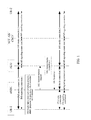
- FIG. 1 is a flow chart of an existing method for implementing single radio voice call continuity, in which an IMS session between a UE-1 and a UE-2 is established, session signaling passes through an ALG and SCC AS (service centralization and continuity application server) in order to establish an IMS media connection path.
- ALG and SCC AS service centralization and continuity application server
- the UE-1 and the network enable the UE-1 to establish a media connection using the CS domain and maintain the original session continuity process.
- an access network decides to cause the UE-1 to switch from the PS domain to the CS domain, an eMSC prepares CS resources for the UE-1, which switches to the CS domain according to a network notification, where the process of keeping a single radio voice call continuity session alive comprises the following steps.
- a PS network entity which is a mobility management entity (MME) or a serving GPRS support node (SGSN), sends a request of switching of the UE-1 from the PS domain to the CS domain to the eMSC.
- MME mobility management entity
- SGSN serving GPRS support node
- step 102 after the eMSC receives the request of switching of the UE-1 from the PS domain to the CS domain, it sends a transfer request destining for a number or identifier of the ALG to the ALG.
- the transfer request might be an INVITE message or an IAM (initialized address message).
- step 103 the ALG receives the transfer request and updates a media connection between the UE-1 and the ALG, that is, establishes a CS media connection between the UE-1 and the ALG.
- step 104 the ALG sends a response message of the transfer request, such as a "200 OK" message or an ANM (Answer Message), to the eMSC.
- a response message of the transfer request such as a "200 OK" message or an ANM (Answer Message)
- the ALG establishes a new signaling connection 4 with the eMSC.
- a CS signaling connection is also established between the UE-1 and eMSC.
- a CS media connection is established between the eMSC and the UE-1 through the standard single radio voice call switching process, and a new media connection 3 is established through the single radio voice call continuity process.
- the eMSC connects the CS media connection with the newly established media connection 3, and the ALG connects the newly established media connection 3 with the original IMS media connection 2, such that the UE-1 can continue the call with the UE-2.
- the existing method for implementing single radio voice call continuity does not consider an IMS re-registration timer in the S-CSCF.
- the S-CSCF will release a session signaling path (that is, the signaling connection 2 in the FIG. 2 ) between the original SCC AS and the UE-1 due to re-registration timeout, such that the ALG receives a session release message in the IMS signaling connection 2, eventually resulting in interruption of the session.
- the present invention provides a method and system for keeping a single radio voice call continuity session alive so as to solve the problem of call interruption due to a UE being unable to perform IMS re-registration in a destination domain in a single radio voice call continuity process in the prior art.
- the present invention provides a method for keeping a single radio voice call continuity session alive comprising:
- the application layer gateway notifies the SCC AS to establish the new signaling connection with the application layer gateway by sending a second transfer request to the SCC AS.
- the first transfer request received by the application layer gateway is an invite message destining for a number or identifier of the application layer gateway, or an initialized address message destining for a number or identifier of the application layer gateway.
- the method further comprises:
- the response message of the first transfer request and the notification are sent simultaneously, or are sent after the response message of the second transfer request returned by the SCC AS is received.
- the second transfer request sent by the application layer gateway is an invite message destining for a number or identifier of the SCC AS, or an initialized address message destining for a number or identifier of the SCC AS.
- the present invention also provides a system for keeping a single radio voice call continuity session alive comprising an application layer gateway, an enhanced mobile switch center and a service centralization and continuity application server (SCC AS); wherein the application layer gateway is configured to, during switching of a terminal from a packet switch domain to a circuit switch domain, establish a new signaling connection with an enhanced mobile switch center after receiving a first transfer request and notify a service centralization and continuity application server (SCC AS) to establish a new signaling connection with the application layer gateway.
- SCC AS service centralization and continuity application server
- the SCC AS is configured to establish a new signaling connection with the application layer gateway after receiving the notification.
- the application layer gateway is configured to notify the SCC AS to establish the new signaling connection with the application layer gateway by sending a second transfer request to the SCC AS.
- the first transfer request received by the application layer gateway is an invite message destining for a number or identifier of the application layer gateway, or an initialized address message destining for a number or identifier of the application layer gateway.
- the application layer gateway is further configured to send a response message of the first transfer request to the enhanced mobile switch center after establishing the new signaling connection with the enhanced mobile switch center.
- the SCC AS is further configured to send a response message of the second transfer request to the application layer gateway after establishing the new signaling connection with the application layer gateway.
- the response message of the first transfer request and the notification are sent simultaneously, or are sent after the response message of the second transfer request returned by the SCC AS is received.
- the second transfer request sent by the application layer gateway is an invite message destining for a number or identifier of the SCC AS, or an initialized address message destining for a number or identifier of the SCC AS.
- the present invention provides a method and system for keeping a single radio voice call continuity session alive in which when single radio voice call switching of a terminal from a PS domain to a CS domain occurs, an eMSC sends a transfer request to an ALG in a session signaling path in which the terminal is located, and the ALG receives the transfer request and sends an IMS transfer request to the SCC AS to notify the SCC AS to establish a new IMS signaling connection with the ALG, and responds to the transfer request (that is, establishes a new IMS signaling connection with the eMSC). Because a new session signaling path between the SCC AS and the ALG is established through the IMS transfer request, the problem of call interruption due to re-registration timeout in the existing single radio voice call continuity process is solved.
- the existing method for implementing single radio voice call continuity does not consider an IMS re-registration timer in the S-CSCF.
- the S-CSCF will release a session signaling path between the original SCC AS and the UE-1 due to re-registration timeout, such that the ALG receives a session release message in the original session, eventually resulting in interruption of the session.
- One embodiment provides a system for implementing single radio voice call continuity in an IP multimedia subsystem comprising a SCC AS, the ALG and an eMSC.
- the ALG is configured to, during switching of a terminal from a packet switch domain to a circuit switch domain, establish a new signaling connection with an enhanced mobile switch center after receiving a first transfer request and notify a service centralization and continuity application server (SCC AS) to establish a new signaling connection with the application layer gateway.
- SCC AS service centralization and continuity application server
- the SCC AS is configured to establish a new signaling connection with the application layer gateway after receiving the notification.
- the ALG is configured to notify the SCC AS to establish the new signaling connection with the application layer gateway by sending a second transfer request to the SCC AS.
- the transfer request received by the ALG is an invite message destining for a number or identifier of the ALG, or an initialized address message destining for a number or identifier of the ALG.
- the transfer request received by the ALG is denoted as the first transfer request, and the transfer request sent by the ALG to the SCC AS is denoted as the second transfer request.
- the ALG is further configured to send a response message of the first transfer request to the enhanced mobile switch center after establishing the new signaling connection with the eMSC.
- the SCC AS is further configured to send a response message of the second transfer request to the application layer gateway after establishing the new signaling connection with the ALG.
- the response message of the first transfer request and the notification are sent simultaneously, or are sent after the response message of the second transfer request returned by the SCC AS is received.
- the second transfer request sent by the ALG is an invite message destining for a number or identifier of the SCC AS, or an initialized address message destining for a number or identifier of the SCC AS.
- the present invention provides a method for keeping a single radio voice call continuity session alive in an IP multimedia subsystem, in which during switching of a terminal from a packet switch domain to a circuit switch domain, an application layer gateway establishes a new signaling connection with an enhanced mobile switch center after receiving a first transfer request, and notifies a service centralization and continuity application server (SCC AS) to establish a new signaling connection with the application layer gateway, and the SCC AS establishes a new signaling connection with the application layer gateway according to the notification.
- SCC AS service centralization and continuity application server
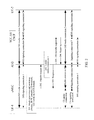
- FIG. 2 is the first flow chart of a method for implementing single radio voice call continuity in accordance with the present invention, in which an IMS session between a UE-1 and a UE-2 is established, session signaling passes through an ALG and SCC AS in order to establish an IMS media connection path, which passes through the ALG.
- the SCC AS sends a number of the SCC AS to the ALG through a signaling message.
- the UE-1 and the network enable the UE-1 to establish a media connection using the CS domain and maintain the original session continuity.
- the process comprises the following steps.
- an access network decides to cause the UE-1 to switch from the PS domain to the CS domain, and an eMSC prepares CS resources for the UE-1, which switches to the CS domain according to a network notification, where the process of keeping a single radio voice call continuity session alive comprises the following steps.
- a PS network entity (MME or SGSN) sends a request of switching of the UE-1 from the PS domain to the CS domain to the eMSC.
- step 202 after the eMSC receives the request of switching of the UE-1 from the PS domain to the CS domain, it sends a transfer request to the ALG.
- the transfer request might be an INVITE message destining for a number or identifier of the ALG, which means a field indicating that the receiving end is the ALG is carried in the INVITE message, where the field contains the number or identifier of the ALG, or the transfer request might be an IAM (initialized address message) destining for a number or identifier of the ALG, which means a field indicating that the receiving end is the ALG is carried in the IAM, where the field contains the number of the ALG.
- IAM initialized address message
- the ALG receives the transfer request and updates a media connection between the UE-1 and the ALG, that is, establishes a CS media connection between the UE-1 and the ALG.
- step 204 the ALG sends a response message of the transfer request, such as a "200 OK" message or an ANM (Answer Message), to the eMSC.
- a response message of the transfer request such as a "200 OK" message or an ANM (Answer Message)
- the ALG establishes a new signaling connection 4 with the eMSC.
- the ALG notifies the SCC AS to establish a new signaling connection with the ALG, such as send a transfer request to the SCC AS.
- the transfer request might be an INVITE message destining for a number or identifier of the SCC AS, which means a field indicating that the receiving end is the SCC AS is carried in the INVITE message, where the field containing the number or identifier of the SCC AS, or the transfer request might be an IAM destining for a number or identifier of the SCC AS, which means a field indicating that the receiving end is the SCC AS is carried in the IAM, where the field contains the number of the SCC AS.
- the number or identifier of the SCC AS is obtained through signaling interaction in the session establishment process.
- step 206 the SCC AS receives the transfer request, and returns a response message of the transfer request immediately, and establishes a new signaling connection 5 with the ALG.
- the returned response might be a "200 OK" message or an ANM (answer message).
- a CS signaling connection is also established between the UE-1 and the eMSC.
- the SCC AS connects the newly established signaling connection 5 with the original IMS signaling connection 3, the ALG connects the newly established signaling connection 4 with the newly established signaling connection 5, and the eMSC connects the newly established signaling connection 4 with the newly established CS signaling connection.
- FIG. 3 is the second flow chart of a method for implementing single radio voice call continuity in accordance with the present invention, in which an IMS session between a UE-1 and a UE-2 is established, session signaling passes through an ALG and SCC AS in order to establish an IMS media connection path, which passes through the ALG.
- the SCC AS sends a number of the SCC AS to the ALG through a signaling message.
- the UE-1 and the network enable the UE-1 to establish a media connection using the CS domain and maintain the original session continuity.
- the process comprises the following steps.
- an access network decides to cause the UE-1 to switch from the PS domain to the CS domain, and an eMSC prepares CS resources for the UE-1, which switches to the CS domain according to a network notification, where the process of keeping a single radio voice call continuity session alive comprises the following steps.
- a PS network entity (MME or SGSN) sends a request of switching of the UE-1 from the PS domain to the CS domain to the eMSC.
- step 302 after the eMSC receives the request of switching of the UE-1 from the PS domain to the CS domain, it sends a transfer request to the ALG.
- the transfer request might be an INVITE message destining for a number or identifier of the ALG, which means a field indicating that the receiving end is the ALG is carried in the INVITE message, where the field contains the number or identifier of the ALG, or the transfer request might be an IAM (initialized address message) destining for a number or identifier of the ALG, which means a field indicating that the receiving end is the ALG is carried in the IAM, where the field contains the number of the ALG.
- IAM initialized address message
- the ALG receives the transfer request and updates a media connection between the UE-1 and the ALG, that is, establishes a CS media connection between the UE-1 and the ALG.
- step 304 after the ALG receives the transfer request, it notifies the SCC AS to establish a new signaling connection with the ALG, such as send a transfer request to the SCC AS.
- the transfer request might be an INVITE message destining for a number or identifier of the SCC AS, which means a field indicating that the receiving end is the SCC AS is carried in the INVITE message, where the field contains the number or identifier of the SCC AS, or the transfer request might be an IAM destining for a number or identifier of the SCC AS, which means a field indicating that the receiving end is the SCC AS is carried in the IAM, where the field contains the number of the SCC AS.
- the number or identifier of the SCC AS is obtained through signaling interaction in the session establishment process.
- step 305 the SCC AS receives the transfer request, and returns a response message of the transfer request immediately, and establishes a new signaling connection 5 with the ALG.
- the returned response might be a "200 OK" message or an ANM (answer message).
- step 306 the ALG receives the response message and then returns a response message of the transfer request to the eMSC immediately, and establishes a new signaling connection 4 with the eMSC, such as sends a "200 OK" message or an ANM.
- a CS signaling connection is also established between the UE-1 and the eMSC.
- the SCC AS connects the newly established signaling connection 5 with the original IMS signaling connection 3, the ALG connects the newly established signaling connection 4 with the newly established signaling connection 5, and the eMSC connects the newly established signaling connection 4 with the newly established CS signaling connection.
- each functional unit in each embodiment of the present invention can be implemented in the form of a hardware or software functional module. If the integrated module is implemented in the form of a software function module and sold or used as an independent product, it may also be stored in computer readable storage mediums.
- the aforementioned storage medium may be a read-only memory, disk or CD-ROM.
Landscapes
- Engineering & Computer Science (AREA)
- Computer Networks & Wireless Communication (AREA)
- Signal Processing (AREA)
- Health & Medical Sciences (AREA)
- Cardiology (AREA)
- General Health & Medical Sciences (AREA)
- Multimedia (AREA)
- Mobile Radio Communication Systems (AREA)
Abstract
Description
- The present invention relates to the field of communications, and more particularly, to a method for keeping a single radio voice call continuity session alive in an Internet Protocol (IP for short) Multimedia Subsystem.
- IP Multimedia Core Network Subsystem (IMS), which is the IP-based network architecture proposed by the Third Generation Partnership Project (3GPP for short), constructs an open and flexible service environment, supports multimedia applications, and is able to provide users with enriched multimedia services.
- In the IMS service system, the control layer and the service layer are separated. The control layer does not provide specific services, but only provides necessary triggering, routing, billing and other functions to the service layer.
- The service trigger and control functions in the control layer are accomplished by a call session control function (CSCF for short). The call session control function is divided into an proxy call session control function (Proxy-CSCF, P-CSCF for short), an interrogating call session control function (Interrogating-CSCF, I-CSCF for short) and a serving call session control function (Serving-CSCF, S-CSCF for short), among which the S-CSCF has the main responsibility, and the I-CSCF is optional.
- The service layer consists of a series of application servers (AS for short), and is able to provide specific business services. The ASs might be standalone entities or reside in the S-CSCF.
- The control layer (S-CSCF) controls service triggering according to user subscription information, invokes services in the ASs, and achieves service functions. Both the ASs and the S-CSCF can be collectively referred to as server equipment (SE for short).
- Application layer gateways (ALG, including signaling processing entities and media processing entities) also exist in the IMS network to achieve interaction of control signaling and media between different networks. A session media path passing a ALG is divided into two sections, one being a intra-network media path, that is, a media path between the ALG and a terminal of a session which is in the same network as the ALG, the other being a inter-network media path, that is, a media path between the ALG and another terminal of the session.
- End-to-end devices in the session are called as user equipment (UE for short) and are responsible for interacting with users. Some UEs use various network access modes, such as by a packet switch (PS for short) domain access network of 3GPP, by a PS domain access network of other non-3GPP, or even by a circuit switch (CS for short) domain access network, etc.
- If an enhanced mobile switch center (eMSC for short) is configured in the CS network and provides a SIP (Session Initial Protocol) interface to interact with the IMS network, then the interaction between the IMS network and the CS network can be achieved by the eMSC.
- For a UE with a variety of access modes, if the UE can use only one access mode at a time, when it is executing a certain service, such as a call, in one access mode, when the UE moves to other places and needs to change its used access mode, the UE and the network can provide a certain mode such that the service which is being executed by the UE will not interrupted. Such capability is called as single terminal radio voice call continuity, single radio voice call continuity (SRVCC) for short.
-
FIG. 1 is a flow chart of an existing method for implementing single radio voice call continuity, in which an IMS session between a UE-1 and a UE-2 is established, session signaling passes through an ALG and SCC AS (service centralization and continuity application server) in order to establish an IMS media connection path. After the single radio voice call continuity occurs in the media connection path through the ALG and the UE-1, the UE-1 and the network enable the UE-1 to establish a media connection using the CS domain and maintain the original session continuity process. - According to a standard single radio voice call terminal switching process, an access network decides to cause the UE-1 to switch from the PS domain to the CS domain, an eMSC prepares CS resources for the UE-1, which switches to the CS domain according to a network notification, where the process of keeping a single radio voice call continuity session alive comprises the following steps.
- In step 101, a PS network entity, which is a mobility management entity (MME) or a serving GPRS support node (SGSN), sends a request of switching of the UE-1 from the PS domain to the CS domain to the eMSC.
- In
step 102, after the eMSC receives the request of switching of the UE-1 from the PS domain to the CS domain, it sends a transfer request destining for a number or identifier of the ALG to the ALG. The transfer request might be an INVITE message or an IAM (initialized address message). - In
step 103, the ALG receives the transfer request and updates a media connection between the UE-1 and the ALG, that is, establishes a CS media connection between the UE-1 and the ALG. - In
step 104, the ALG sends a response message of the transfer request, such as a "200 OK" message or an ANM (Answer Message), to the eMSC. Up to now, the ALG establishes anew signaling connection 4 with the eMSC. - During the switching from the PS domain to the CS domain, a CS signaling connection is also established between the UE-1 and eMSC.
- Until now, a CS media connection is established between the eMSC and the UE-1 through the standard single radio voice call switching process, and a
new media connection 3 is established through the single radio voice call continuity process. The eMSC connects the CS media connection with the newly establishedmedia connection 3, and the ALG connects the newly establishedmedia connection 3 with the originalIMS media connection 2, such that the UE-1 can continue the call with the UE-2. - The existing method for implementing single radio voice call continuity does not consider an IMS re-registration timer in the S-CSCF. After the UE-1 switches to the CS domain, since the network does not provide a PS connection for the UE-1 to implement the IMS re-registration, the S-CSCF will release a session signaling path (that is, the
signaling connection 2 in theFIG. 2 ) between the original SCC AS and the UE-1 due to re-registration timeout, such that the ALG receives a session release message in theIMS signaling connection 2, eventually resulting in interruption of the session. - The present invention provides a method and system for keeping a single radio voice call continuity session alive so as to solve the problem of call interruption due to a UE being unable to perform IMS re-registration in a destination domain in a single radio voice call continuity process in the prior art.
- The present invention provides a method for keeping a single radio voice call continuity session alive comprising:
- during switching of a terminal from a packet switch domain to a circuit switch domain, an application layer gateway establishing a new signaling connection with an enhanced mobile switch center after receiving a first transfer request and notifying a service centralization and continuity application server (SCC AS) to establish a new signaling connection with the application layer gateway, and the SCC AS establishing a new signaling connection with the application layer gateway according to the notification.
- Preferably, the application layer gateway notifies the SCC AS to establish the new signaling connection with the application layer gateway by sending a second transfer request to the SCC AS.
- Preferably, the first transfer request received by the application layer gateway is an invite message destining for a number or identifier of the application layer gateway, or an initialized address message destining for a number or identifier of the application layer gateway.
- Preferably, the method further comprises:
- the application layer gateway sending a response message of the first transfer request to the enhanced mobile switch center after establishing the new signaling connection with the enhanced mobile switch center; and the SCC AS sending a response message of the second transfer request to the application layer gateway after establishing the new signaling connection with the application layer gateway.
- The response message of the first transfer request and the notification are sent simultaneously, or are sent after the response message of the second transfer request returned by the SCC AS is received.
- Preferably, the second transfer request sent by the application layer gateway is an invite message destining for a number or identifier of the SCC AS, or an initialized address message destining for a number or identifier of the SCC AS.
- The present invention also provides a system for keeping a single radio voice call continuity session alive comprising an application layer gateway, an enhanced mobile switch center and a service centralization and continuity application server (SCC AS); wherein
the application layer gateway is configured to, during switching of a terminal from a packet switch domain to a circuit switch domain, establish a new signaling connection with an enhanced mobile switch center after receiving a first transfer request and notify a service centralization and continuity application server (SCC AS) to establish a new signaling connection with the application layer gateway. - The SCC AS is configured to establish a new signaling connection with the application layer gateway after receiving the notification.
- Preferably, the application layer gateway is configured to notify the SCC AS to establish the new signaling connection with the application layer gateway by sending a second transfer request to the SCC AS.
- Preferably, the first transfer request received by the application layer gateway is an invite message destining for a number or identifier of the application layer gateway, or an initialized address message destining for a number or identifier of the application layer gateway.
- Preferably, the application layer gateway is further configured to send a response message of the first transfer request to the enhanced mobile switch center after establishing the new signaling connection with the enhanced mobile switch center.
- The SCC AS is further configured to send a response message of the second transfer request to the application layer gateway after establishing the new signaling connection with the application layer gateway.
- The response message of the first transfer request and the notification are sent simultaneously, or are sent after the response message of the second transfer request returned by the SCC AS is received.
- Preferably, the second transfer request sent by the application layer gateway is an invite message destining for a number or identifier of the SCC AS, or an initialized address message destining for a number or identifier of the SCC AS.
- The present invention provides a method and system for keeping a single radio voice call continuity session alive in which when single radio voice call switching of a terminal from a PS domain to a CS domain occurs, an eMSC sends a transfer request to an ALG in a session signaling path in which the terminal is located, and the ALG receives the transfer request and sends an IMS transfer request to the SCC AS to notify the SCC AS to establish a new IMS signaling connection with the ALG, and responds to the transfer request (that is, establishes a new IMS signaling connection with the eMSC). Because a new session signaling path between the SCC AS and the ALG is established through the IMS transfer request, the problem of call interruption due to re-registration timeout in the existing single radio voice call continuity process is solved.
-
-
FIG. 1 is a flow chart of a existing method for implementing single radio voice call continuity; -
FIG. 2 is a flow chart of a method for implementing single radio voice call continuity in accordance with the first embodiment of the present invention; and -
FIG. 3 is a flow chart of a method for implementing single radio voice call continuity in accordance with the second embodiment of the present invention. - The existing method for implementing single radio voice call continuity does not consider an IMS re-registration timer in the S-CSCF. After the UE-1 switches to the CS domain, since the network does not provide a PS connection for the UE-1 to implement the IMS re-registration, the S-CSCF will release a session signaling path between the original SCC AS and the UE-1 due to re-registration timeout, such that the ALG receives a session release message in the original session, eventually resulting in interruption of the session.
- One embodiment provides a system for implementing single radio voice call continuity in an IP multimedia subsystem comprising a SCC AS, the ALG and an eMSC.
- The ALG is configured to, during switching of a terminal from a packet switch domain to a circuit switch domain, establish a new signaling connection with an enhanced mobile switch center after receiving a first transfer request and notify a service centralization and continuity application server (SCC AS) to establish a new signaling connection with the application layer gateway.
- The SCC AS is configured to establish a new signaling connection with the application layer gateway after receiving the notification.
- The ALG is configured to notify the SCC AS to establish the new signaling connection with the application layer gateway by sending a second transfer request to the SCC AS.
- The transfer request received by the ALG is an invite message destining for a number or identifier of the ALG, or an initialized address message destining for a number or identifier of the ALG.
- The transfer request received by the ALG is denoted as the first transfer request, and the transfer request sent by the ALG to the SCC AS is denoted as the second transfer request.
- The ALG is further configured to send a response message of the first transfer request to the enhanced mobile switch center after establishing the new signaling connection with the eMSC.
- The SCC AS is further configured to send a response message of the second transfer request to the application layer gateway after establishing the new signaling connection with the ALG.
- The response message of the first transfer request and the notification are sent simultaneously, or are sent after the response message of the second transfer request returned by the SCC AS is received.
- The second transfer request sent by the ALG is an invite message destining for a number or identifier of the SCC AS, or an initialized address message destining for a number or identifier of the SCC AS.
- The present invention provides a method for keeping a single radio voice call continuity session alive in an IP multimedia subsystem, in which during switching of a terminal from a packet switch domain to a circuit switch domain, an application layer gateway establishes a new signaling connection with an enhanced mobile switch center after receiving a first transfer request, and notifies a service centralization and continuity application server (SCC AS) to establish a new signaling connection with the application layer gateway, and the SCC AS establishes a new signaling connection with the application layer gateway according to the notification.
-
FIG. 2 is the first flow chart of a method for implementing single radio voice call continuity in accordance with the present invention, in which an IMS session between a UE-1 and a UE-2 is established, session signaling passes through an ALG and SCC AS in order to establish an IMS media connection path, which passes through the ALG. During establishment of the session, the SCC AS sends a number of the SCC AS to the ALG through a signaling message. After single radio voice call continuity occurs in the UE-1, the UE-1 and the network enable the UE-1 to establish a media connection using the CS domain and maintain the original session continuity. The process comprises the following steps. - According to a standard single radio voice call terminal switching process, an access network decides to cause the UE-1 to switch from the PS domain to the CS domain, and an eMSC prepares CS resources for the UE-1, which switches to the CS domain according to a network notification, where the process of keeping a single radio voice call continuity session alive comprises the following steps.
- In
step 201, a PS network entity (MME or SGSN) sends a request of switching of the UE-1 from the PS domain to the CS domain to the eMSC. - In step 202, after the eMSC receives the request of switching of the UE-1 from the PS domain to the CS domain, it sends a transfer request to the ALG. The transfer request might be an INVITE message destining for a number or identifier of the ALG, which means a field indicating that the receiving end is the ALG is carried in the INVITE message, where the field contains the number or identifier of the ALG, or the transfer request might be an IAM (initialized address message) destining for a number or identifier of the ALG, which means a field indicating that the receiving end is the ALG is carried in the IAM, where the field contains the number of the ALG.
- In
step 203, the ALG receives the transfer request and updates a media connection between the UE-1 and the ALG, that is, establishes a CS media connection between the UE-1 and the ALG. - In
step 204, the ALG sends a response message of the transfer request, such as a "200 OK" message or an ANM (Answer Message), to the eMSC. Up to now, the ALG establishes anew signaling connection 4 with the eMSC. - In
step 205, at the same time asstep 204, the ALG notifies the SCC AS to establish a new signaling connection with the ALG, such as send a transfer request to the SCC AS. The transfer request might be an INVITE message destining for a number or identifier of the SCC AS, which means a field indicating that the receiving end is the SCC AS is carried in the INVITE message, where the field containing the number or identifier of the SCC AS, or the transfer request might be an IAM destining for a number or identifier of the SCC AS, which means a field indicating that the receiving end is the SCC AS is carried in the IAM, where the field contains the number of the SCC AS. The number or identifier of the SCC AS is obtained through signaling interaction in the session establishment process. - In
step 206, the SCC AS receives the transfer request, and returns a response message of the transfer request immediately, and establishes anew signaling connection 5 with the ALG. The returned response might be a "200 OK" message or an ANM (answer message). - During the switching from the PS domain to the CS domain, a CS signaling connection is also established between the UE-1 and the eMSC.
- The SCC AS connects the newly established
signaling connection 5 with the originalIMS signaling connection 3, the ALG connects the newly establishedsignaling connection 4 with the newly establishedsignaling connection 5, and the eMSC connects the newly establishedsignaling connection 4 with the newly established CS signaling connection. - Until now, a new signaling path is established between the ALG and the SCC AS. Since the UE-1 switches to the CS domain, one end of the original signaling path (that is, the IMS signaling connection 1) is actually in a half hang-up state, if the S-CSCF releases the original session signaling path (that is, the IMS signaling connection 2) due to re-registration timeout, the newly established session signaling path and the media connection will not be affected.
-
FIG. 3 is the second flow chart of a method for implementing single radio voice call continuity in accordance with the present invention, in which an IMS session between a UE-1 and a UE-2 is established, session signaling passes through an ALG and SCC AS in order to establish an IMS media connection path, which passes through the ALG. During establishment of the session, the SCC AS sends a number of the SCC AS to the ALG through a signaling message. After single radio voice call continuity occurs in the UE-1, the UE-1 and the network enable the UE-1 to establish a media connection using the CS domain and maintain the original session continuity. The process comprises the following steps. - According to a standard single radio voice call terminal switching process, an access network decides to cause the UE-1 to switch from the PS domain to the CS domain, and an eMSC prepares CS resources for the UE-1, which switches to the CS domain according to a network notification, where the process of keeping a single radio voice call continuity session alive comprises the following steps.
- In
step 301, a PS network entity (MME or SGSN) sends a request of switching of the UE-1 from the PS domain to the CS domain to the eMSC. - In step 302, after the eMSC receives the request of switching of the UE-1 from the PS domain to the CS domain, it sends a transfer request to the ALG. The transfer request might be an INVITE message destining for a number or identifier of the ALG, which means a field indicating that the receiving end is the ALG is carried in the INVITE message, where the field contains the number or identifier of the ALG, or the transfer request might be an IAM (initialized address message) destining for a number or identifier of the ALG, which means a field indicating that the receiving end is the ALG is carried in the IAM, where the field contains the number of the ALG.
- In
step 303, the ALG receives the transfer request and updates a media connection between the UE-1 and the ALG, that is, establishes a CS media connection between the UE-1 and the ALG. - In
step 304, after the ALG receives the transfer request, it notifies the SCC AS to establish a new signaling connection with the ALG, such as send a transfer request to the SCC AS. The transfer request might be an INVITE message destining for a number or identifier of the SCC AS, which means a field indicating that the receiving end is the SCC AS is carried in the INVITE message, where the field contains the number or identifier of the SCC AS, or the transfer request might be an IAM destining for a number or identifier of the SCC AS, which means a field indicating that the receiving end is the SCC AS is carried in the IAM, where the field contains the number of the SCC AS. The number or identifier of the SCC AS is obtained through signaling interaction in the session establishment process. - In
step 305, the SCC AS receives the transfer request, and returns a response message of the transfer request immediately, and establishes anew signaling connection 5 with the ALG. The returned response might be a "200 OK" message or an ANM (answer message). - In
step 306, the ALG receives the response message and then returns a response message of the transfer request to the eMSC immediately, and establishes anew signaling connection 4 with the eMSC, such as sends a "200 OK" message or an ANM. - During the switching from the PS domain to the CS domain, a CS signaling connection is also established between the UE-1 and the eMSC.
- The SCC AS connects the newly established
signaling connection 5 with the originalIMS signaling connection 3, the ALG connects the newly establishedsignaling connection 4 with the newly establishedsignaling connection 5, and the eMSC connects the newly establishedsignaling connection 4 with the newly established CS signaling connection. - Until now, a new signaling path is established between the ALG and the SCC AS. Since the UE-1 switches to the CS domain, one end of the
original signaling path 1 is actually in a half hang-up state, if the S-CSCF releases the original session signaling path (that is, the IMS signaling connection 2) due to re-registration timeout, the newly established session signaling path and the media connection will not be affected. - It may be understood by those skilled in the art that all or some of steps contained in the described method embodiment can be implemented by related hardware instructed by programs which may be stored in a computer readable storage medium. The executed program comprises one of the steps of the method embodiment or a combination thereof.
- In addition, each functional unit in each embodiment of the present invention can be implemented in the form of a hardware or software functional module. If the integrated module is implemented in the form of a software function module and sold or used as an independent product, it may also be stored in computer readable storage mediums.
- The aforementioned storage medium may be a read-only memory, disk or CD-ROM.
- The above description is only the preferred embodiments of the present invention and the protect scope of the present invention is not limited thereto. Any variation or substitution occurring easily to those skilled in the art within the technical scope disclosed in the present invention should be covered in the protect scope of the present invention. Therefore, the protection scope of the present invention should be subject to the protection scope of the claims.
- Compared with the prior art, in the method and system for keeping the single radio voice call continuity session alive, since the IMS transfer request establishes a new session signaling path between the SCC AS and the ALG, the problem of call interruption due to re-registration timeout in the existing single radio voice call continuity process is solved.
Claims (10)
- A method for keeping a single radio voice call continuity session alive comprising:during switching of a terminal from a packet switch domain to a circuit switch domain, an application layer gateway establishing a new signaling connection with an enhanced mobile switch center after receiving a first transfer request and notifying a service centralization and continuity application server (SCC AS) to establish a new signaling connection with the application layer gateway, and the SCC AS establishing a new signaling connection with the application layer gateway according to the notification.
- The method according to claim 1, wherein the application layer gateway notifies the SCC AS to establish the new signaling connection with the application layer gateway by sending a second transfer request to the SCC AS.
- The method according to claim 1, wherein the first transfer request received by the application layer gateway is an invite message destining for a number or identifier of the application layer gateway, or an initialized address message destining for a number or identifier of the application layer gateway.
- The method according to claim 2, further comprising:the application layer gateway sending a response message of the first transfer request to the enhanced mobile switch center after establishing the new signaling connection with the enhanced mobile switch center; and the SCC AS sending a response message of the second transfer request to the application layer gateway after establishing the new signaling connection with the application layer gateway; whereinthe response message of the first transfer request and the notification are sent simultaneously, or are sent after the response message of the second transfer request returned by the SCC AS is received.
- The method according to claim 2, wherein the second transfer request sent by the application layer gateway is an invite message destining for a number or identifier of the SCC AS, or an initialized address message destining for a number or identifier of the SCC AS.
- A system for keeping a single radio voice call continuity session alive comprising an application layer gateway, an enhanced mobile switch center and a service centralization and continuity application server (SCC AS); wherein
the application layer gateway is configured to, during switching of a terminal from a packet switch domain to a circuit switch domain, establish a new signaling connection with an enhanced mobile switch center after receiving a first transfer request and notify a service centralization and continuity application server (SCC AS) to establish a new signaling connection with the application layer gateway; and
the SCC AS is configured to establish a new signaling connection with the application layer gateway after receiving the notification. - The system according to claim 6, wherein the application layer gateway is configured to notify the SCC AS to establish the new signaling connection with the application layer gateway by sending a second transfer request to the SCC AS.
- The system according to claim 6, wherein the first transfer request received by the application layer gateway is an invite message destining for a number or identifier of the application layer gateway, or an initialized address message destining for a number or identifier of the application layer gateway.
- The system according to claim 7, wherein the application layer gateway is further configured to send a response message of the first transfer request to the enhanced mobile switch center after establishing the new signaling connection with the enhanced mobile switch center; and
the SCC AS is further configured to send a response message of the second transfer request to the application layer gateway after establishing the new signaling connection with the application layer gateway; and wherein
the response message of the first transfer request and the notification are sent simultaneously, or are sent after the response message of the second transfer request returned by the SCC AS is received. - The system according to claim 7, wherein the second transfer request sent by the application layer gateway is an invite message destining for a number or identifier of the SCC AS, or an initialized address message destining for a number or identifier of the SCC AS.
Applications Claiming Priority (2)
| Application Number | Priority Date | Filing Date | Title |
|---|---|---|---|
| CN201010146449.0A CN102223348B (en) | 2010-04-13 | 2010-04-13 | Method and system for realizing session keep-alive of single radio voice call continuity |
| PCT/CN2011/072347 WO2011127790A1 (en) | 2010-04-13 | 2011-03-31 | Method and system for keeping single radio voice call continuity session alive |
Publications (3)
| Publication Number | Publication Date |
|---|---|
| EP2544486A1 true EP2544486A1 (en) | 2013-01-09 |
| EP2544486A4 EP2544486A4 (en) | 2014-04-23 |
| EP2544486B1 EP2544486B1 (en) | 2015-07-01 |
Family
ID=44779779
Family Applications (1)
| Application Number | Title | Priority Date | Filing Date |
|---|---|---|---|
| EP11768402.7A Active EP2544486B1 (en) | 2010-04-13 | 2011-03-31 | Method and system for keeping a single radio voice call continuity (srvcc) session alive |
Country Status (4)
| Country | Link |
|---|---|
| US (1) | US9603183B2 (en) |
| EP (1) | EP2544486B1 (en) |
| CN (1) | CN102223348B (en) |
| WO (1) | WO2011127790A1 (en) |
Families Citing this family (6)
| Publication number | Priority date | Publication date | Assignee | Title |
|---|---|---|---|---|
| EP2696623B1 (en) | 2012-06-14 | 2016-08-10 | HTC Corporation | Methods and apparatus of monitoring a call state over a single radio voice call continuity handover |
| CN104144399B (en) * | 2013-05-10 | 2018-01-30 | 中国电信股份有限公司 | The method of control data and voice transfer, system and third party's business platform |
| CN106909446B (en) * | 2015-12-23 | 2020-06-23 | 阿里巴巴集团控股有限公司 | Keep-alive method and device for application program |
| US11032331B2 (en) * | 2017-09-21 | 2021-06-08 | T-Mobile Usa, Inc. | Batched IMS SIP registration proxy |
| CN114268610B (en) * | 2020-09-25 | 2024-10-25 | 维沃移动通信有限公司 | IP Multimedia Subsystem IMS suspension method, device and equipment |
| CN114640958B (en) * | 2020-12-16 | 2024-10-29 | 维沃移动通信有限公司 | IMS process processing method and related equipment |
Family Cites Families (7)
| Publication number | Priority date | Publication date | Assignee | Title |
|---|---|---|---|---|
| US20080089325A1 (en) * | 2006-10-14 | 2008-04-17 | E28 Limited | Audio quality-based continuity switching system and method |
| CN101291454A (en) | 2007-04-17 | 2008-10-22 | 华为技术有限公司 | Method for Realizing Voice Conversation, Method for Voice Continuity, and Communication System |
| CN101227677B (en) | 2008-02-05 | 2011-06-22 | 中兴通讯股份有限公司 | Single wireless channel voice business continuity field switching method |
| CN101459891B (en) * | 2008-03-25 | 2011-03-16 | 中兴通讯股份有限公司 | Handover Method for Voice Service Continuity in Single Radio Channel |
| CN101459939B (en) | 2008-03-28 | 2011-03-16 | 中兴通讯股份有限公司 | Domain switching method |
| US8467786B2 (en) * | 2009-05-04 | 2013-06-18 | Motorola Mobility Llc | Communication devices and methods for providing services to communication devices in a communication system including a private cell |
| CN102045299B (en) * | 2009-10-19 | 2014-02-05 | 中兴通讯股份有限公司 | Method and system for realizing service continuity of simple module |
-
2010
- 2010-04-13 CN CN201010146449.0A patent/CN102223348B/en active Active
-
2011
- 2011-03-31 WO PCT/CN2011/072347 patent/WO2011127790A1/en not_active Ceased
- 2011-03-31 US US13/639,192 patent/US9603183B2/en active Active
- 2011-03-31 EP EP11768402.7A patent/EP2544486B1/en active Active
Non-Patent Citations (3)
| Title |
|---|
| "3rd Generation Partnership Project; Technical Specification Group Services and System Aspects; IP Multimedia Subsystem (IMS) Service Continuity; Stage 2 (Release 11)", 3GPP STANDARD; 3GPP TS 23.237, 3RD GENERATION PARTNERSHIP PROJECT (3GPP), MOBILE COMPETENCE CENTRE ; 650, ROUTE DES LUCIOLES ; F-06921 SOPHIA-ANTIPOLIS CEDEX ; FRANCE, no. V11.0.0, 17 March 2011 (2011-03-17), pages 1-155, XP050476346, [retrieved on 2011-03-17] * |
| "3rd Generation Partnership Project; Technical Specification Group Services and System Aspects; Single Radio Voice Call Continuity (SRVCC) enhancements; Stage 2 (Release 10)", 3GPP STANDARD; 3GPP TR 23.856, 3RD GENERATION PARTNERSHIP PROJECT (3GPP), MOBILE COMPETENCE CENTRE ; 650, ROUTE DES LUCIOLES ; F-06921 SOPHIA-ANTIPOLIS CEDEX ; FRANCE, no. V1.0.0, 22 March 2010 (2010-03-22), pages 1-52, XP050401983, [retrieved on 2010-03-22] * |
| See also references of WO2011127790A1 * |
Also Published As
| Publication number | Publication date |
|---|---|
| WO2011127790A1 (en) | 2011-10-20 |
| CN102223348B (en) | 2014-04-09 |
| CN102223348A (en) | 2011-10-19 |
| US20130028195A1 (en) | 2013-01-31 |
| EP2544486A4 (en) | 2014-04-23 |
| US9603183B2 (en) | 2017-03-21 |
| EP2544486B1 (en) | 2015-07-01 |
Similar Documents
| Publication | Publication Date | Title |
|---|---|---|
| CN102045299B (en) | Method and system for realizing service continuity of simple module | |
| US9408064B2 (en) | Method and system for obtaining user equipment ability by user equipment, home subscriber data server and core network element | |
| US9351269B2 (en) | Method and system for processing service continuity | |
| EP2544486B1 (en) | Method and system for keeping a single radio voice call continuity (srvcc) session alive | |
| CN102378297A (en) | Terminal capacity report method and system | |
| EP2485530A1 (en) | System and method for switching ringing state session with customized alerting tone | |
| EP2487958B1 (en) | Method and system for realizing session handover | |
| US8665793B2 (en) | Method and system for implementing single radio voice call continuity | |
| CN102769880B (en) | The changing method and system in single wireless voice calling continuity domain | |
| CN102238672B (en) | Method and system for realizing rSRVCC (reverse signal radio voice call continuity) | |
| CN102238158B (en) | The implementation method of reverse single-standby service continuity and system | |
| WO2013064105A1 (en) | Method and device for switching reverse single radio voice call continuity bearer | |
| WO2012041138A1 (en) | Method and system for final call accessing via visited ims access point | |
| CN102158923B (en) | Method and system for realizing single radio voice call continuity (SRVCC) | |
| CN101997847B (en) | Method and system for realizing service continuity in the case of switching circuit switch multi-session to packet switch | |
| CN102340490B (en) | A kind of method and system realizing anchor of media | |
| WO2013071897A1 (en) | Method and system for implementing reverse single radio voice call continuity | |
| CN103200149A (en) | Reverse-direction one-standby service continuity implementation method and device |
Legal Events
| Date | Code | Title | Description |
|---|---|---|---|
| PUAI | Public reference made under article 153(3) epc to a published international application that has entered the european phase |
Free format text: ORIGINAL CODE: 0009012 |
|
| 17P | Request for examination filed |
Effective date: 20121005 |
|
| AK | Designated contracting states |
Kind code of ref document: A1 Designated state(s): AL AT BE BG CH CY CZ DE DK EE ES FI FR GB GR HR HU IE IS IT LI LT LU LV MC MK MT NL NO PL PT RO RS SE SI SK SM TR |
|
| DAX | Request for extension of the european patent (deleted) | ||
| A4 | Supplementary search report drawn up and despatched |
Effective date: 20140325 |
|
| RIC1 | Information provided on ipc code assigned before grant |
Ipc: H04W 76/04 20090101ALI20140319BHEP Ipc: H04W 36/00 20090101AFI20140319BHEP |
|
| REG | Reference to a national code |
Ref country code: DE Ref legal event code: R079 Ref document number: 602011017521 Country of ref document: DE Free format text: PREVIOUS MAIN CLASS: H04W0036140000 Ipc: H04W0036000000 |
|
| GRAP | Despatch of communication of intention to grant a patent |
Free format text: ORIGINAL CODE: EPIDOSNIGR1 |
|
| RIC1 | Information provided on ipc code assigned before grant |
Ipc: H04W 36/00 20090101AFI20150122BHEP Ipc: H04L 29/08 20060101ALI20150122BHEP Ipc: H04W 76/04 20090101ALI20150122BHEP |
|
| INTG | Intention to grant announced |
Effective date: 20150209 |
|
| GRAS | Grant fee paid |
Free format text: ORIGINAL CODE: EPIDOSNIGR3 |
|
| GRAA | (expected) grant |
Free format text: ORIGINAL CODE: 0009210 |
|
| AK | Designated contracting states |
Kind code of ref document: B1 Designated state(s): AL AT BE BG CH CY CZ DE DK EE ES FI FR GB GR HR HU IE IS IT LI LT LU LV MC MK MT NL NO PL PT RO RS SE SI SK SM TR |
|
| RAP1 | Party data changed (applicant data changed or rights of an application transferred) |
Owner name: ZTE CORPORATION |
|
| REG | Reference to a national code |
Ref country code: GB Ref legal event code: FG4D |
|
| RIN1 | Information on inventor provided before grant (corrected) |
Inventor name: XIE, ZHENHUA |
|
| REG | Reference to a national code |
Ref country code: AT Ref legal event code: REF Ref document number: 734587 Country of ref document: AT Kind code of ref document: T Effective date: 20150715 Ref country code: CH Ref legal event code: EP |
|
| REG | Reference to a national code |
Ref country code: IE Ref legal event code: FG4D |
|
| REG | Reference to a national code |
Ref country code: DE Ref legal event code: R096 Ref document number: 602011017521 Country of ref document: DE |
|
| REG | Reference to a national code |
Ref country code: NL Ref legal event code: MP Effective date: 20150701 |
|
| REG | Reference to a national code |
Ref country code: LT Ref legal event code: MG4D |
|
| REG | Reference to a national code |
Ref country code: FR Ref legal event code: PLFP Year of fee payment: 6 |
|
| PG25 | Lapsed in a contracting state [announced via postgrant information from national office to epo] |
Ref country code: NO Free format text: LAPSE BECAUSE OF FAILURE TO SUBMIT A TRANSLATION OF THE DESCRIPTION OR TO PAY THE FEE WITHIN THE PRESCRIBED TIME-LIMIT Effective date: 20151001 Ref country code: FI Free format text: LAPSE BECAUSE OF FAILURE TO SUBMIT A TRANSLATION OF THE DESCRIPTION OR TO PAY THE FEE WITHIN THE PRESCRIBED TIME-LIMIT Effective date: 20150701 Ref country code: GR Free format text: LAPSE BECAUSE OF FAILURE TO SUBMIT A TRANSLATION OF THE DESCRIPTION OR TO PAY THE FEE WITHIN THE PRESCRIBED TIME-LIMIT Effective date: 20151002 Ref country code: LT Free format text: LAPSE BECAUSE OF FAILURE TO SUBMIT A TRANSLATION OF THE DESCRIPTION OR TO PAY THE FEE WITHIN THE PRESCRIBED TIME-LIMIT Effective date: 20150701 Ref country code: LV Free format text: LAPSE BECAUSE OF FAILURE TO SUBMIT A TRANSLATION OF THE DESCRIPTION OR TO PAY THE FEE WITHIN THE PRESCRIBED TIME-LIMIT Effective date: 20150701 |
|
| REG | Reference to a national code |
Ref country code: AT Ref legal event code: UEP Ref document number: 734587 Country of ref document: AT Kind code of ref document: T Effective date: 20150701 |
|
| PG25 | Lapsed in a contracting state [announced via postgrant information from national office to epo] |
Ref country code: IS Free format text: LAPSE BECAUSE OF FAILURE TO SUBMIT A TRANSLATION OF THE DESCRIPTION OR TO PAY THE FEE WITHIN THE PRESCRIBED TIME-LIMIT Effective date: 20151101 Ref country code: RS Free format text: LAPSE BECAUSE OF FAILURE TO SUBMIT A TRANSLATION OF THE DESCRIPTION OR TO PAY THE FEE WITHIN THE PRESCRIBED TIME-LIMIT Effective date: 20150701 Ref country code: PT Free format text: LAPSE BECAUSE OF FAILURE TO SUBMIT A TRANSLATION OF THE DESCRIPTION OR TO PAY THE FEE WITHIN THE PRESCRIBED TIME-LIMIT Effective date: 20151102 Ref country code: ES Free format text: LAPSE BECAUSE OF FAILURE TO SUBMIT A TRANSLATION OF THE DESCRIPTION OR TO PAY THE FEE WITHIN THE PRESCRIBED TIME-LIMIT Effective date: 20150701 Ref country code: PL Free format text: LAPSE BECAUSE OF FAILURE TO SUBMIT A TRANSLATION OF THE DESCRIPTION OR TO PAY THE FEE WITHIN THE PRESCRIBED TIME-LIMIT Effective date: 20150701 Ref country code: SE Free format text: LAPSE BECAUSE OF FAILURE TO SUBMIT A TRANSLATION OF THE DESCRIPTION OR TO PAY THE FEE WITHIN THE PRESCRIBED TIME-LIMIT Effective date: 20150701 Ref country code: HR Free format text: LAPSE BECAUSE OF FAILURE TO SUBMIT A TRANSLATION OF THE DESCRIPTION OR TO PAY THE FEE WITHIN THE PRESCRIBED TIME-LIMIT Effective date: 20150701 |
|
| REG | Reference to a national code |
Ref country code: DE Ref legal event code: R097 Ref document number: 602011017521 Country of ref document: DE |
|
| PG25 | Lapsed in a contracting state [announced via postgrant information from national office to epo] |
Ref country code: CZ Free format text: LAPSE BECAUSE OF FAILURE TO SUBMIT A TRANSLATION OF THE DESCRIPTION OR TO PAY THE FEE WITHIN THE PRESCRIBED TIME-LIMIT Effective date: 20150701 Ref country code: DK Free format text: LAPSE BECAUSE OF FAILURE TO SUBMIT A TRANSLATION OF THE DESCRIPTION OR TO PAY THE FEE WITHIN THE PRESCRIBED TIME-LIMIT Effective date: 20150701 Ref country code: SK Free format text: LAPSE BECAUSE OF FAILURE TO SUBMIT A TRANSLATION OF THE DESCRIPTION OR TO PAY THE FEE WITHIN THE PRESCRIBED TIME-LIMIT Effective date: 20150701 Ref country code: EE Free format text: LAPSE BECAUSE OF FAILURE TO SUBMIT A TRANSLATION OF THE DESCRIPTION OR TO PAY THE FEE WITHIN THE PRESCRIBED TIME-LIMIT Effective date: 20150701 |
|
| PLBE | No opposition filed within time limit |
Free format text: ORIGINAL CODE: 0009261 |
|
| STAA | Information on the status of an ep patent application or granted ep patent |
Free format text: STATUS: NO OPPOSITION FILED WITHIN TIME LIMIT |
|
| PG25 | Lapsed in a contracting state [announced via postgrant information from national office to epo] |
Ref country code: RO Free format text: LAPSE BECAUSE OF FAILURE TO SUBMIT A TRANSLATION OF THE DESCRIPTION OR TO PAY THE FEE WITHIN THE PRESCRIBED TIME-LIMIT Effective date: 20150701 |
|
| 26N | No opposition filed |
Effective date: 20160404 |
|
| PG25 | Lapsed in a contracting state [announced via postgrant information from national office to epo] |
Ref country code: SI Free format text: LAPSE BECAUSE OF FAILURE TO SUBMIT A TRANSLATION OF THE DESCRIPTION OR TO PAY THE FEE WITHIN THE PRESCRIBED TIME-LIMIT Effective date: 20150701 Ref country code: BE Free format text: LAPSE BECAUSE OF NON-PAYMENT OF DUE FEES Effective date: 20160331 |
|
| PG25 | Lapsed in a contracting state [announced via postgrant information from national office to epo] |
Ref country code: LU Free format text: LAPSE BECAUSE OF FAILURE TO SUBMIT A TRANSLATION OF THE DESCRIPTION OR TO PAY THE FEE WITHIN THE PRESCRIBED TIME-LIMIT Effective date: 20160331 Ref country code: MC Free format text: LAPSE BECAUSE OF FAILURE TO SUBMIT A TRANSLATION OF THE DESCRIPTION OR TO PAY THE FEE WITHIN THE PRESCRIBED TIME-LIMIT Effective date: 20150701 |
|
| REG | Reference to a national code |
Ref country code: CH Ref legal event code: PL |
|
| REG | Reference to a national code |
Ref country code: IE Ref legal event code: MM4A |
|
| PG25 | Lapsed in a contracting state [announced via postgrant information from national office to epo] |
Ref country code: BE Free format text: LAPSE BECAUSE OF FAILURE TO SUBMIT A TRANSLATION OF THE DESCRIPTION OR TO PAY THE FEE WITHIN THE PRESCRIBED TIME-LIMIT Effective date: 20150701 |
|
| PG25 | Lapsed in a contracting state [announced via postgrant information from national office to epo] |
Ref country code: CH Free format text: LAPSE BECAUSE OF NON-PAYMENT OF DUE FEES Effective date: 20160331 Ref country code: IE Free format text: LAPSE BECAUSE OF NON-PAYMENT OF DUE FEES Effective date: 20160331 Ref country code: LI Free format text: LAPSE BECAUSE OF NON-PAYMENT OF DUE FEES Effective date: 20160331 |
|
| REG | Reference to a national code |
Ref country code: FR Ref legal event code: PLFP Year of fee payment: 7 |
|
| PG25 | Lapsed in a contracting state [announced via postgrant information from national office to epo] |
Ref country code: NL Free format text: LAPSE BECAUSE OF FAILURE TO SUBMIT A TRANSLATION OF THE DESCRIPTION OR TO PAY THE FEE WITHIN THE PRESCRIBED TIME-LIMIT Effective date: 20150701 |
|
| PG25 | Lapsed in a contracting state [announced via postgrant information from national office to epo] |
Ref country code: MT Free format text: LAPSE BECAUSE OF FAILURE TO SUBMIT A TRANSLATION OF THE DESCRIPTION OR TO PAY THE FEE WITHIN THE PRESCRIBED TIME-LIMIT Effective date: 20150701 |
|
| REG | Reference to a national code |
Ref country code: FR Ref legal event code: PLFP Year of fee payment: 8 |
|
| PG25 | Lapsed in a contracting state [announced via postgrant information from national office to epo] |
Ref country code: CY Free format text: LAPSE BECAUSE OF FAILURE TO SUBMIT A TRANSLATION OF THE DESCRIPTION OR TO PAY THE FEE WITHIN THE PRESCRIBED TIME-LIMIT Effective date: 20150701 Ref country code: HU Free format text: LAPSE BECAUSE OF FAILURE TO SUBMIT A TRANSLATION OF THE DESCRIPTION OR TO PAY THE FEE WITHIN THE PRESCRIBED TIME-LIMIT; INVALID AB INITIO Effective date: 20110331 Ref country code: SM Free format text: LAPSE BECAUSE OF FAILURE TO SUBMIT A TRANSLATION OF THE DESCRIPTION OR TO PAY THE FEE WITHIN THE PRESCRIBED TIME-LIMIT Effective date: 20150701 |
|
| PG25 | Lapsed in a contracting state [announced via postgrant information from national office to epo] |
Ref country code: MK Free format text: LAPSE BECAUSE OF FAILURE TO SUBMIT A TRANSLATION OF THE DESCRIPTION OR TO PAY THE FEE WITHIN THE PRESCRIBED TIME-LIMIT Effective date: 20150701 |
|
| PG25 | Lapsed in a contracting state [announced via postgrant information from national office to epo] |
Ref country code: BG Free format text: LAPSE BECAUSE OF FAILURE TO SUBMIT A TRANSLATION OF THE DESCRIPTION OR TO PAY THE FEE WITHIN THE PRESCRIBED TIME-LIMIT Effective date: 20150701 |
|
| PG25 | Lapsed in a contracting state [announced via postgrant information from national office to epo] |
Ref country code: AL Free format text: LAPSE BECAUSE OF FAILURE TO SUBMIT A TRANSLATION OF THE DESCRIPTION OR TO PAY THE FEE WITHIN THE PRESCRIBED TIME-LIMIT Effective date: 20150701 |
|
| P01 | Opt-out of the competence of the unified patent court (upc) registered |
Effective date: 20230530 |
|
| PGFP | Annual fee paid to national office [announced via postgrant information from national office to epo] |
Ref country code: GB Payment date: 20260209 Year of fee payment: 16 |
|
| PGFP | Annual fee paid to national office [announced via postgrant information from national office to epo] |
Ref country code: DE Payment date: 20260102 Year of fee payment: 16 |
|
| PGFP | Annual fee paid to national office [announced via postgrant information from national office to epo] |
Ref country code: AT Payment date: 20260225 Year of fee payment: 16 |
|
| PGFP | Annual fee paid to national office [announced via postgrant information from national office to epo] |
Ref country code: IT Payment date: 20260220 Year of fee payment: 16 |
|
| PGFP | Annual fee paid to national office [announced via postgrant information from national office to epo] |
Ref country code: FR Payment date: 20260209 Year of fee payment: 16 |
|
| PGFP | Annual fee paid to national office [announced via postgrant information from national office to epo] |
Ref country code: TR Payment date: 20260327 Year of fee payment: 16 |