EP2542677B1 - Molecular targets for healing or treating wounds - Google Patents
Molecular targets for healing or treating wounds Download PDFInfo
- Publication number
- EP2542677B1 EP2542677B1 EP11704847.0A EP11704847A EP2542677B1 EP 2542677 B1 EP2542677 B1 EP 2542677B1 EP 11704847 A EP11704847 A EP 11704847A EP 2542677 B1 EP2542677 B1 EP 2542677B1
- Authority
- EP
- European Patent Office
- Prior art keywords
- nwasp
- therapeutic
- inhibitor
- wound
- cells
- Prior art date
- Legal status (The legal status is an assumption and is not a legal conclusion. Google has not performed a legal analysis and makes no representation as to the accuracy of the status listed.)
- Not-in-force
Links
- 206010052428 Wound Diseases 0.000 title claims description 123
- 208000027418 Wounds and injury Diseases 0.000 title claims description 123
- 230000035876 healing Effects 0.000 title description 27
- XUBJEDZHBUPBKL-UHFFFAOYSA-N 1-(3,6-dibromocarbazol-9-yl)-3-(dimethylamino)propan-2-ol Chemical group BrC1=CC=C2N(CC(O)CN(C)C)C3=CC=C(Br)C=C3C2=C1 XUBJEDZHBUPBKL-UHFFFAOYSA-N 0.000 claims description 55
- 230000001684 chronic effect Effects 0.000 claims description 53
- 239000003112 inhibitor Substances 0.000 claims description 52
- 230000001225 therapeutic effect Effects 0.000 claims description 44
- 241000282414 Homo sapiens Species 0.000 claims description 38
- 230000014509 gene expression Effects 0.000 claims description 27
- 108700019146 Transgenes Proteins 0.000 claims description 22
- 108090000623 proteins and genes Proteins 0.000 claims description 20
- 238000011282 treatment Methods 0.000 claims description 18
- 239000000203 mixture Substances 0.000 claims description 16
- 230000000699 topical effect Effects 0.000 claims description 14
- 102000009652 Neuronal Wiskott-Aldrich Syndrome Protein Human genes 0.000 claims description 12
- 108010009519 Neuronal Wiskott-Aldrich Syndrome Protein Proteins 0.000 claims description 12
- 102000004169 proteins and genes Human genes 0.000 claims description 10
- 230000004952 protein activity Effects 0.000 claims description 9
- 108091032973 (ribonucleotides)n+m Proteins 0.000 claims description 8
- 102000007469 Actins Human genes 0.000 claims description 8
- 108010085238 Actins Proteins 0.000 claims description 8
- 108090000994 Catalytic RNA Proteins 0.000 claims description 8
- 102000053642 Catalytic RNA Human genes 0.000 claims description 8
- 108091092562 ribozyme Proteins 0.000 claims description 8
- 230000004853 protein function Effects 0.000 claims description 7
- 239000003795 chemical substances by application Substances 0.000 claims description 6
- 239000003814 drug Substances 0.000 claims description 6
- 239000011230 binding agent Substances 0.000 claims description 4
- 108020004491 Antisense DNA Proteins 0.000 claims description 3
- 108020005544 Antisense RNA Proteins 0.000 claims description 3
- 108020004459 Small interfering RNA Proteins 0.000 claims description 3
- 239000005557 antagonist Substances 0.000 claims description 3
- 239000003816 antisense DNA Substances 0.000 claims description 3
- 239000003184 complementary RNA Substances 0.000 claims description 3
- 239000008194 pharmaceutical composition Substances 0.000 claims description 3
- 239000013600 plasmid vector Substances 0.000 claims description 3
- 230000007727 signaling mechanism Effects 0.000 claims description 3
- 239000002924 silencing RNA Substances 0.000 claims description 3
- 238000011144 upstream manufacturing Methods 0.000 claims description 3
- 239000013603 viral vector Substances 0.000 claims description 3
- 239000003937 drug carrier Substances 0.000 claims description 2
- 238000005470 impregnation Methods 0.000 claims description 2
- 210000004027 cell Anatomy 0.000 description 82
- 210000001519 tissue Anatomy 0.000 description 39
- 230000000694 effects Effects 0.000 description 35
- 102000001392 Wiskott Aldrich Syndrome protein Human genes 0.000 description 33
- 108010093528 Wiskott Aldrich Syndrome protein Proteins 0.000 description 33
- 238000013508 migration Methods 0.000 description 29
- 230000005012 migration Effects 0.000 description 28
- 108020004414 DNA Proteins 0.000 description 19
- 238000000034 method Methods 0.000 description 18
- 101000898034 Homo sapiens Hepatocyte growth factor Proteins 0.000 description 13
- 239000000499 gel Substances 0.000 description 13
- 102100021866 Hepatocyte growth factor Human genes 0.000 description 12
- 244000309469 Human enteric coronavirus Species 0.000 description 12
- 230000002159 abnormal effect Effects 0.000 description 12
- 230000001965 increasing effect Effects 0.000 description 12
- 230000008859 change Effects 0.000 description 11
- 238000003556 assay Methods 0.000 description 10
- 150000001875 compounds Chemical class 0.000 description 10
- 230000029663 wound healing Effects 0.000 description 10
- IAZDPXIOMUYVGZ-UHFFFAOYSA-N Dimethylsulphoxide Chemical compound CS(C)=O IAZDPXIOMUYVGZ-UHFFFAOYSA-N 0.000 description 9
- 208000006110 Wiskott-Aldrich syndrome Diseases 0.000 description 9
- 238000013459 approach Methods 0.000 description 9
- 230000002018 overexpression Effects 0.000 description 9
- 230000001154 acute effect Effects 0.000 description 8
- 238000009472 formulation Methods 0.000 description 8
- 108020004999 messenger RNA Proteins 0.000 description 8
- 238000012360 testing method Methods 0.000 description 8
- 210000005239 tubule Anatomy 0.000 description 8
- 230000015572 biosynthetic process Effects 0.000 description 7
- 230000012292 cell migration Effects 0.000 description 7
- 239000011159 matrix material Substances 0.000 description 7
- 239000002609 medium Substances 0.000 description 7
- 102000011068 Cdc42 Human genes 0.000 description 6
- 108050001278 Cdc42 Proteins 0.000 description 6
- 210000002510 keratinocyte Anatomy 0.000 description 6
- 239000007788 liquid Substances 0.000 description 6
- 210000003491 skin Anatomy 0.000 description 6
- 108091034117 Oligonucleotide Proteins 0.000 description 5
- 239000013543 active substance Substances 0.000 description 5
- 230000033115 angiogenesis Effects 0.000 description 5
- 230000006870 function Effects 0.000 description 5
- 238000001415 gene therapy Methods 0.000 description 5
- 230000012010 growth Effects 0.000 description 5
- 230000036541 health Effects 0.000 description 5
- 238000000338 in vitro Methods 0.000 description 5
- 230000002401 inhibitory effect Effects 0.000 description 5
- 230000037311 normal skin Effects 0.000 description 5
- 239000000243 solution Substances 0.000 description 5
- 102100031181 Glyceraldehyde-3-phosphate dehydrogenase Human genes 0.000 description 4
- 102000003745 Hepatocyte Growth Factor Human genes 0.000 description 4
- 108090000100 Hepatocyte Growth Factor Proteins 0.000 description 4
- 238000000540 analysis of variance Methods 0.000 description 4
- 238000004458 analytical method Methods 0.000 description 4
- 239000000969 carrier Substances 0.000 description 4
- 239000002299 complementary DNA Chemical group 0.000 description 4
- 108020004445 glyceraldehyde-3-phosphate dehydrogenase Proteins 0.000 description 4
- 208000015181 infectious disease Diseases 0.000 description 4
- 239000013612 plasmid Substances 0.000 description 4
- 230000008569 process Effects 0.000 description 4
- 238000009163 protein therapy Methods 0.000 description 4
- 230000009467 reduction Effects 0.000 description 4
- 239000000523 sample Substances 0.000 description 4
- 230000011664 signaling Effects 0.000 description 4
- 230000004936 stimulating effect Effects 0.000 description 4
- 238000007910 systemic administration Methods 0.000 description 4
- 208000003790 Foot Ulcer Diseases 0.000 description 3
- 102000029749 Microtubule Human genes 0.000 description 3
- 108091022875 Microtubule Proteins 0.000 description 3
- 241000542980 Mimidae Species 0.000 description 3
- 206010028980 Neoplasm Diseases 0.000 description 3
- 208000025865 Ulcer Diseases 0.000 description 3
- 125000003275 alpha amino acid group Chemical group 0.000 description 3
- 239000003242 anti bacterial agent Substances 0.000 description 3
- 230000003915 cell function Effects 0.000 description 3
- 210000004292 cytoskeleton Anatomy 0.000 description 3
- 230000001419 dependent effect Effects 0.000 description 3
- 206010012601 diabetes mellitus Diseases 0.000 description 3
- 208000037265 diseases, disorders, signs and symptoms Diseases 0.000 description 3
- 210000002889 endothelial cell Anatomy 0.000 description 3
- 238000001727 in vivo Methods 0.000 description 3
- 210000003141 lower extremity Anatomy 0.000 description 3
- 210000004688 microtubule Anatomy 0.000 description 3
- 230000035772 mutation Effects 0.000 description 3
- 230000004044 response Effects 0.000 description 3
- 239000003826 tablet Substances 0.000 description 3
- 238000013518 transcription Methods 0.000 description 3
- 230000035897 transcription Effects 0.000 description 3
- 102000004127 Cytokines Human genes 0.000 description 2
- 108090000695 Cytokines Proteins 0.000 description 2
- 108010010803 Gelatin Proteins 0.000 description 2
- 241000699670 Mus sp. Species 0.000 description 2
- FAPWRFPIFSIZLT-UHFFFAOYSA-M Sodium chloride Chemical compound [Na+].[Cl-] FAPWRFPIFSIZLT-UHFFFAOYSA-M 0.000 description 2
- CZMRCDWAGMRECN-UGDNZRGBSA-N Sucrose Chemical compound O[C@H]1[C@H](O)[C@@H](CO)O[C@@]1(CO)O[C@@H]1[C@H](O)[C@@H](O)[C@H](O)[C@@H](CO)O1 CZMRCDWAGMRECN-UGDNZRGBSA-N 0.000 description 2
- 229930006000 Sucrose Natural products 0.000 description 2
- 230000004913 activation Effects 0.000 description 2
- 238000001574 biopsy Methods 0.000 description 2
- 239000002775 capsule Substances 0.000 description 2
- 210000000170 cell membrane Anatomy 0.000 description 2
- 238000006243 chemical reaction Methods 0.000 description 2
- 239000013599 cloning vector Substances 0.000 description 2
- 239000006071 cream Substances 0.000 description 2
- 230000003436 cytoskeletal effect Effects 0.000 description 2
- 230000034994 death Effects 0.000 description 2
- 230000002950 deficient Effects 0.000 description 2
- 201000010099 disease Diseases 0.000 description 2
- 229940079593 drug Drugs 0.000 description 2
- 239000000839 emulsion Substances 0.000 description 2
- 238000011156 evaluation Methods 0.000 description 2
- 210000002950 fibroblast Anatomy 0.000 description 2
- 239000012530 fluid Substances 0.000 description 2
- 239000008273 gelatin Substances 0.000 description 2
- 229940014259 gelatin Drugs 0.000 description 2
- 229920000159 gelatin Polymers 0.000 description 2
- 235000019322 gelatine Nutrition 0.000 description 2
- 235000011852 gelatine desserts Nutrition 0.000 description 2
- 230000003993 interaction Effects 0.000 description 2
- HQKMJHAJHXVSDF-UHFFFAOYSA-L magnesium stearate Chemical compound [Mg+2].CCCCCCCCCCCCCCCCCC([O-])=O.CCCCCCCCCCCCCCCCCC([O-])=O HQKMJHAJHXVSDF-UHFFFAOYSA-L 0.000 description 2
- 230000036210 malignancy Effects 0.000 description 2
- 239000000463 material Substances 0.000 description 2
- 239000003921 oil Substances 0.000 description 2
- 239000002674 ointment Substances 0.000 description 2
- 229920000036 polyvinylpyrrolidone Polymers 0.000 description 2
- 235000013855 polyvinylpyrrolidone Nutrition 0.000 description 2
- 238000002360 preparation method Methods 0.000 description 2
- 108090000765 processed proteins & peptides Proteins 0.000 description 2
- 239000012268 protein inhibitor Substances 0.000 description 2
- 229940121649 protein inhibitor Drugs 0.000 description 2
- RYYKJJJTJZKILX-UHFFFAOYSA-M sodium octadecanoate Chemical compound [Na+].CCCCCCCCCCCCCCCCCC([O-])=O RYYKJJJTJZKILX-UHFFFAOYSA-M 0.000 description 2
- 238000007619 statistical method Methods 0.000 description 2
- 239000005720 sucrose Substances 0.000 description 2
- 229960004793 sucrose Drugs 0.000 description 2
- 239000000725 suspension Substances 0.000 description 2
- 230000008685 targeting Effects 0.000 description 2
- 206010043554 thrombocytopenia Diseases 0.000 description 2
- 238000001890 transfection Methods 0.000 description 2
- 231100000397 ulcer Toxicity 0.000 description 2
- 210000003556 vascular endothelial cell Anatomy 0.000 description 2
- 239000003981 vehicle Substances 0.000 description 2
- XLYOFNOQVPJJNP-UHFFFAOYSA-N water Substances O XLYOFNOQVPJJNP-UHFFFAOYSA-N 0.000 description 2
- 230000003442 weekly effect Effects 0.000 description 2
- LNAZSHAWQACDHT-XIYTZBAFSA-N (2r,3r,4s,5r,6s)-4,5-dimethoxy-2-(methoxymethyl)-3-[(2s,3r,4s,5r,6r)-3,4,5-trimethoxy-6-(methoxymethyl)oxan-2-yl]oxy-6-[(2r,3r,4s,5r,6r)-4,5,6-trimethoxy-2-(methoxymethyl)oxan-3-yl]oxyoxane Chemical compound CO[C@@H]1[C@@H](OC)[C@H](OC)[C@@H](COC)O[C@H]1O[C@H]1[C@H](OC)[C@@H](OC)[C@H](O[C@H]2[C@@H]([C@@H](OC)[C@H](OC)O[C@@H]2COC)OC)O[C@@H]1COC LNAZSHAWQACDHT-XIYTZBAFSA-N 0.000 description 1
- 101150084750 1 gene Proteins 0.000 description 1
- 101150028074 2 gene Proteins 0.000 description 1
- IXUATGFEVCPOOD-UHFFFAOYSA-N 2,3-dihydroxypropyl octadecanoate;octadecanoic acid Chemical compound CCCCCCCCCCCCCCCCCC(O)=O.CCCCCCCCCCCCCCCCCC(=O)OCC(O)CO IXUATGFEVCPOOD-UHFFFAOYSA-N 0.000 description 1
- 101710122462 65 kDa protein Proteins 0.000 description 1
- GUBGYTABKSRVRQ-XLOQQCSPSA-N Alpha-Lactose Chemical compound O[C@@H]1[C@@H](O)[C@@H](O)[C@@H](CO)O[C@H]1O[C@@H]1[C@@H](CO)O[C@H](O)[C@H](O)[C@H]1O GUBGYTABKSRVRQ-XLOQQCSPSA-N 0.000 description 1
- 239000005995 Aluminium silicate Substances 0.000 description 1
- 241000416162 Astragalus gummifer Species 0.000 description 1
- 241000167854 Bourreria succulenta Species 0.000 description 1
- 206010006187 Breast cancer Diseases 0.000 description 1
- 208000026310 Breast neoplasm Diseases 0.000 description 1
- 206010053567 Coagulopathies Diseases 0.000 description 1
- 108091026890 Coding region Proteins 0.000 description 1
- 229920002261 Corn starch Polymers 0.000 description 1
- FBPFZTCFMRRESA-FSIIMWSLSA-N D-Glucitol Natural products OC[C@H](O)[C@H](O)[C@@H](O)[C@H](O)CO FBPFZTCFMRRESA-FSIIMWSLSA-N 0.000 description 1
- FBPFZTCFMRRESA-KVTDHHQDSA-N D-Mannitol Chemical compound OC[C@@H](O)[C@@H](O)[C@H](O)[C@H](O)CO FBPFZTCFMRRESA-KVTDHHQDSA-N 0.000 description 1
- 201000004624 Dermatitis Diseases 0.000 description 1
- 206010012741 Diarrhoea haemorrhagic Diseases 0.000 description 1
- 235000019739 Dicalciumphosphate Nutrition 0.000 description 1
- 101100015729 Drosophila melanogaster drk gene Proteins 0.000 description 1
- 241000588724 Escherichia coli Species 0.000 description 1
- 239000001856 Ethyl cellulose Substances 0.000 description 1
- ZZSNKZQZMQGXPY-UHFFFAOYSA-N Ethyl cellulose Chemical compound CCOCC1OC(OC)C(OCC)C(OCC)C1OC1C(O)C(O)C(OC)C(CO)O1 ZZSNKZQZMQGXPY-UHFFFAOYSA-N 0.000 description 1
- 108010037362 Extracellular Matrix Proteins Proteins 0.000 description 1
- 102000010834 Extracellular Matrix Proteins Human genes 0.000 description 1
- 102000013446 GTP Phosphohydrolases Human genes 0.000 description 1
- 108091006109 GTPases Proteins 0.000 description 1
- 108060003393 Granulin Proteins 0.000 description 1
- 208000032843 Hemorrhage Diseases 0.000 description 1
- GUBGYTABKSRVRQ-QKKXKWKRSA-N Lactose Natural products OC[C@H]1O[C@@H](O[C@H]2[C@H](O)[C@@H](O)C(O)O[C@@H]2CO)[C@H](O)[C@@H](O)[C@H]1O GUBGYTABKSRVRQ-QKKXKWKRSA-N 0.000 description 1
- 235000010643 Leucaena leucocephala Nutrition 0.000 description 1
- 240000007472 Leucaena leucocephala Species 0.000 description 1
- 229930195725 Mannitol Natural products 0.000 description 1
- 244000246386 Mentha pulegium Species 0.000 description 1
- 235000016257 Mentha pulegium Nutrition 0.000 description 1
- 235000004357 Mentha x piperita Nutrition 0.000 description 1
- 229920000168 Microcrystalline cellulose Polymers 0.000 description 1
- WHNWPMSKXPGLAX-UHFFFAOYSA-N N-Vinyl-2-pyrrolidone Chemical compound C=CN1CCCC1=O WHNWPMSKXPGLAX-UHFFFAOYSA-N 0.000 description 1
- 108010057466 NF-kappa B Proteins 0.000 description 1
- 102000003945 NF-kappa B Human genes 0.000 description 1
- 102000010995 Pleckstrin homology domains Human genes 0.000 description 1
- 108050001185 Pleckstrin homology domains Proteins 0.000 description 1
- 238000001190 Q-PCR Methods 0.000 description 1
- 238000011529 RT qPCR Methods 0.000 description 1
- 102000007056 Recombinant Fusion Proteins Human genes 0.000 description 1
- 108010008281 Recombinant Fusion Proteins Proteins 0.000 description 1
- 108091078243 Rho family Proteins 0.000 description 1
- 102000042463 Rho family Human genes 0.000 description 1
- 102000000395 SH3 domains Human genes 0.000 description 1
- 108050008861 SH3 domains Proteins 0.000 description 1
- VYPSYNLAJGMNEJ-UHFFFAOYSA-N Silicium dioxide Chemical compound O=[Si]=O VYPSYNLAJGMNEJ-UHFFFAOYSA-N 0.000 description 1
- 206010040943 Skin Ulcer Diseases 0.000 description 1
- 229920002472 Starch Polymers 0.000 description 1
- 238000000692 Student's t-test Methods 0.000 description 1
- 208000002847 Surgical Wound Diseases 0.000 description 1
- 210000001744 T-lymphocyte Anatomy 0.000 description 1
- 101100002024 Thermus aquaticus pstI gene Proteins 0.000 description 1
- 208000031981 Thrombocytopenic Idiopathic Purpura Diseases 0.000 description 1
- 229920001615 Tragacanth Polymers 0.000 description 1
- 230000005856 abnormality Effects 0.000 description 1
- DPXJVFZANSGRMM-UHFFFAOYSA-N acetic acid;2,3,4,5,6-pentahydroxyhexanal;sodium Chemical compound [Na].CC(O)=O.OCC(O)C(O)C(O)C(O)C=O DPXJVFZANSGRMM-UHFFFAOYSA-N 0.000 description 1
- 239000011149 active material Substances 0.000 description 1
- 208000038016 acute inflammation Diseases 0.000 description 1
- 230000006022 acute inflammation Effects 0.000 description 1
- 239000000783 alginic acid Substances 0.000 description 1
- 235000010443 alginic acid Nutrition 0.000 description 1
- 229920000615 alginic acid Polymers 0.000 description 1
- 229960001126 alginic acid Drugs 0.000 description 1
- 150000004781 alginic acids Chemical class 0.000 description 1
- 235000012211 aluminium silicate Nutrition 0.000 description 1
- 150000001413 amino acids Chemical group 0.000 description 1
- 238000002266 amputation Methods 0.000 description 1
- 239000002870 angiogenesis inducing agent Substances 0.000 description 1
- 230000002491 angiogenic effect Effects 0.000 description 1
- 229940088710 antibiotic agent Drugs 0.000 description 1
- 238000003491 array Methods 0.000 description 1
- 208000010668 atopic eczema Diseases 0.000 description 1
- 230000001580 bacterial effect Effects 0.000 description 1
- 230000003115 biocidal effect Effects 0.000 description 1
- 230000004071 biological effect Effects 0.000 description 1
- 230000031018 biological processes and functions Effects 0.000 description 1
- 208000034158 bleeding Diseases 0.000 description 1
- 230000000740 bleeding effect Effects 0.000 description 1
- 230000000903 blocking effect Effects 0.000 description 1
- 230000037396 body weight Effects 0.000 description 1
- 210000004556 brain Anatomy 0.000 description 1
- 210000000481 breast Anatomy 0.000 description 1
- 239000001506 calcium phosphate Substances 0.000 description 1
- 239000001768 carboxy methyl cellulose Substances 0.000 description 1
- 102000013515 cdc42 GTP-Binding Protein Human genes 0.000 description 1
- 108010051348 cdc42 GTP-Binding Protein Proteins 0.000 description 1
- 230000021164 cell adhesion Effects 0.000 description 1
- 238000003352 cell adhesion assay Methods 0.000 description 1
- 239000013592 cell lysate Substances 0.000 description 1
- 230000009087 cell motility Effects 0.000 description 1
- 230000001413 cellular effect Effects 0.000 description 1
- 235000019693 cherries Nutrition 0.000 description 1
- 230000035602 clotting Effects 0.000 description 1
- 239000008119 colloidal silica Substances 0.000 description 1
- 238000004040 coloring Methods 0.000 description 1
- 230000001276 controlling effect Effects 0.000 description 1
- 239000012050 conventional carrier Substances 0.000 description 1
- 239000008120 corn starch Substances 0.000 description 1
- 229940099112 cornstarch Drugs 0.000 description 1
- 238000007405 data analysis Methods 0.000 description 1
- 238000001804 debridement Methods 0.000 description 1
- 230000007547 defect Effects 0.000 description 1
- 230000007812 deficiency Effects 0.000 description 1
- 230000002939 deleterious effect Effects 0.000 description 1
- 230000008021 deposition Effects 0.000 description 1
- 238000011161 development Methods 0.000 description 1
- NEFBYIFKOOEVPA-UHFFFAOYSA-K dicalcium phosphate Chemical compound [Ca+2].[Ca+2].[O-]P([O-])([O-])=O NEFBYIFKOOEVPA-UHFFFAOYSA-K 0.000 description 1
- 229940038472 dicalcium phosphate Drugs 0.000 description 1
- 229910000390 dicalcium phosphate Inorganic materials 0.000 description 1
- 208000035475 disorder Diseases 0.000 description 1
- 239000002552 dosage form Substances 0.000 description 1
- 238000004520 electroporation Methods 0.000 description 1
- 239000003974 emollient agent Substances 0.000 description 1
- 230000003511 endothelial effect Effects 0.000 description 1
- 238000005516 engineering process Methods 0.000 description 1
- 235000019325 ethyl cellulose Nutrition 0.000 description 1
- 229920001249 ethyl cellulose Polymers 0.000 description 1
- 238000002474 experimental method Methods 0.000 description 1
- 238000010195 expression analysis Methods 0.000 description 1
- 239000013613 expression plasmid Substances 0.000 description 1
- 210000002744 extracellular matrix Anatomy 0.000 description 1
- 239000003889 eye drop Substances 0.000 description 1
- 229940012356 eye drops Drugs 0.000 description 1
- 239000000945 filler Substances 0.000 description 1
- 239000000796 flavoring agent Substances 0.000 description 1
- 235000013355 food flavoring agent Nutrition 0.000 description 1
- 238000003197 gene knockdown Methods 0.000 description 1
- 101150025688 ggact gene Proteins 0.000 description 1
- 239000008187 granular material Substances 0.000 description 1
- 101150098203 grb2 gene Proteins 0.000 description 1
- 239000001963 growth medium Substances 0.000 description 1
- 210000003958 hematopoietic stem cell Anatomy 0.000 description 1
- 238000000265 homogenisation Methods 0.000 description 1
- 235000001050 hortel pimenta Nutrition 0.000 description 1
- 102000057308 human HGF Human genes 0.000 description 1
- 239000001866 hydroxypropyl methyl cellulose Substances 0.000 description 1
- 235000010979 hydroxypropyl methyl cellulose Nutrition 0.000 description 1
- 229920003088 hydroxypropyl methyl cellulose Polymers 0.000 description 1
- UFVKGYZPFZQRLF-UHFFFAOYSA-N hydroxypropyl methyl cellulose Chemical compound OC1C(O)C(OC)OC(CO)C1OC1C(O)C(O)C(OC2C(C(O)C(OC3C(C(O)C(O)C(CO)O3)O)C(CO)O2)O)C(CO)O1 UFVKGYZPFZQRLF-UHFFFAOYSA-N 0.000 description 1
- 238000010191 image analysis Methods 0.000 description 1
- 210000000987 immune system Anatomy 0.000 description 1
- 239000000411 inducer Substances 0.000 description 1
- 230000001939 inductive effect Effects 0.000 description 1
- 239000004615 ingredient Substances 0.000 description 1
- 230000005764 inhibitory process Effects 0.000 description 1
- 208000014674 injury Diseases 0.000 description 1
- 230000002452 interceptive effect Effects 0.000 description 1
- 230000008863 intramolecular interaction Effects 0.000 description 1
- 238000007912 intraperitoneal administration Methods 0.000 description 1
- 239000007928 intraperitoneal injection Substances 0.000 description 1
- 238000011835 investigation Methods 0.000 description 1
- 208000028867 ischemia Diseases 0.000 description 1
- 235000015110 jellies Nutrition 0.000 description 1
- 239000008274 jelly Substances 0.000 description 1
- NLYAJNPCOHFWQQ-UHFFFAOYSA-N kaolin Chemical compound O.O.O=[Al]O[Si](=O)O[Si](=O)O[Al]=O NLYAJNPCOHFWQQ-UHFFFAOYSA-N 0.000 description 1
- 229960000829 kaolin Drugs 0.000 description 1
- 238000009533 lab test Methods 0.000 description 1
- 239000008101 lactose Substances 0.000 description 1
- 229960001375 lactose Drugs 0.000 description 1
- 239000010410 layer Substances 0.000 description 1
- 208000032839 leukemia Diseases 0.000 description 1
- 238000011542 limb amputation Methods 0.000 description 1
- 239000007937 lozenge Substances 0.000 description 1
- 239000000314 lubricant Substances 0.000 description 1
- 235000019359 magnesium stearate Nutrition 0.000 description 1
- 238000007726 management method Methods 0.000 description 1
- 239000000594 mannitol Substances 0.000 description 1
- 235000010355 mannitol Nutrition 0.000 description 1
- 229960001855 mannitol Drugs 0.000 description 1
- 238000004519 manufacturing process Methods 0.000 description 1
- 239000003550 marker Substances 0.000 description 1
- 201000001441 melanoma Diseases 0.000 description 1
- 229920000609 methyl cellulose Polymers 0.000 description 1
- OSWPMRLSEDHDFF-UHFFFAOYSA-N methyl salicylate Chemical compound COC(=O)C1=CC=CC=C1O OSWPMRLSEDHDFF-UHFFFAOYSA-N 0.000 description 1
- 239000001923 methylcellulose Substances 0.000 description 1
- 235000010981 methylcellulose Nutrition 0.000 description 1
- 235000019813 microcrystalline cellulose Nutrition 0.000 description 1
- 239000008108 microcrystalline cellulose Substances 0.000 description 1
- 229940016286 microcrystalline cellulose Drugs 0.000 description 1
- 210000003632 microfilament Anatomy 0.000 description 1
- 238000001000 micrograph Methods 0.000 description 1
- 238000010232 migration assay Methods 0.000 description 1
- 230000003278 mimic effect Effects 0.000 description 1
- 210000000865 mononuclear phagocyte system Anatomy 0.000 description 1
- 230000004899 motility Effects 0.000 description 1
- 239000002324 mouth wash Substances 0.000 description 1
- 201000001119 neuropathy Diseases 0.000 description 1
- 230000007823 neuropathy Effects 0.000 description 1
- 208000004235 neutropenia Diseases 0.000 description 1
- 231100000957 no side effect Toxicity 0.000 description 1
- 230000005937 nuclear translocation Effects 0.000 description 1
- 238000010899 nucleation Methods 0.000 description 1
- 230000000474 nursing effect Effects 0.000 description 1
- 230000008520 organization Effects 0.000 description 1
- 230000001717 pathogenic effect Effects 0.000 description 1
- 230000001575 pathological effect Effects 0.000 description 1
- 208000033808 peripheral neuropathy Diseases 0.000 description 1
- 239000000546 pharmaceutical excipient Substances 0.000 description 1
- 238000007747 plating Methods 0.000 description 1
- 238000006116 polymerization reaction Methods 0.000 description 1
- 229920001296 polysiloxane Polymers 0.000 description 1
- 239000001267 polyvinylpyrrolidone Substances 0.000 description 1
- 239000013641 positive control Substances 0.000 description 1
- 229940069328 povidone Drugs 0.000 description 1
- 239000000843 powder Substances 0.000 description 1
- 238000001556 precipitation Methods 0.000 description 1
- 238000003753 real-time PCR Methods 0.000 description 1
- 230000001105 regulatory effect Effects 0.000 description 1
- 238000011160 research Methods 0.000 description 1
- 238000002271 resection Methods 0.000 description 1
- 238000003757 reverse transcription PCR Methods 0.000 description 1
- 102000007268 rho GTP-Binding Proteins Human genes 0.000 description 1
- 108010033674 rho GTP-Binding Proteins Proteins 0.000 description 1
- 230000022932 ruffle assembly Effects 0.000 description 1
- 238000007493 shaping process Methods 0.000 description 1
- 230000019491 signal transduction Effects 0.000 description 1
- 239000002356 single layer Substances 0.000 description 1
- 235000019812 sodium carboxymethyl cellulose Nutrition 0.000 description 1
- 229920001027 sodium carboxymethylcellulose Polymers 0.000 description 1
- 239000011780 sodium chloride Substances 0.000 description 1
- 229960002668 sodium chloride Drugs 0.000 description 1
- 235000002639 sodium chloride Nutrition 0.000 description 1
- 239000007787 solid Substances 0.000 description 1
- 239000000600 sorbitol Substances 0.000 description 1
- 229960002920 sorbitol Drugs 0.000 description 1
- 235000010356 sorbitol Nutrition 0.000 description 1
- 239000008107 starch Substances 0.000 description 1
- 229940032147 starch Drugs 0.000 description 1
- 235000019698 starch Nutrition 0.000 description 1
- 230000000638 stimulation Effects 0.000 description 1
- 239000011550 stock solution Substances 0.000 description 1
- 210000000225 synapse Anatomy 0.000 description 1
- 235000020357 syrup Nutrition 0.000 description 1
- 239000006188 syrup Substances 0.000 description 1
- 230000009885 systemic effect Effects 0.000 description 1
- 239000000454 talc Substances 0.000 description 1
- 229910052623 talc Inorganic materials 0.000 description 1
- 238000007862 touchdown PCR Methods 0.000 description 1
- 231100000419 toxicity Toxicity 0.000 description 1
- 230000001988 toxicity Effects 0.000 description 1
- 239000000196 tragacanth Substances 0.000 description 1
- 235000010487 tragacanth Nutrition 0.000 description 1
- 229940116362 tragacanth Drugs 0.000 description 1
- 238000003146 transient transfection Methods 0.000 description 1
- 230000008733 trauma Effects 0.000 description 1
- 230000036269 ulceration Effects 0.000 description 1
- 238000010200 validation analysis Methods 0.000 description 1
- 230000002792 vascular Effects 0.000 description 1
- 238000005406 washing Methods 0.000 description 1
- 239000001993 wax Substances 0.000 description 1
- 230000004580 weight loss Effects 0.000 description 1
- 239000009637 wintergreen oil Substances 0.000 description 1
Images


Classifications
-
- A—HUMAN NECESSITIES
- A61—MEDICAL OR VETERINARY SCIENCE; HYGIENE
- A61K—PREPARATIONS FOR MEDICAL, DENTAL OR TOILETRY PURPOSES
- A61K38/00—Medicinal preparations containing peptides
- A61K38/04—Peptides having up to 20 amino acids in a fully defined sequence; Derivatives thereof
- A61K38/12—Cyclic peptides, e.g. bacitracins; Polymyxins; Gramicidins S, C; Tyrocidins A, B or C
-
- A—HUMAN NECESSITIES
- A61—MEDICAL OR VETERINARY SCIENCE; HYGIENE
- A61K—PREPARATIONS FOR MEDICAL, DENTAL OR TOILETRY PURPOSES
- A61K31/00—Medicinal preparations containing organic active ingredients
- A61K31/33—Heterocyclic compounds
- A61K31/395—Heterocyclic compounds having nitrogen as a ring hetero atom, e.g. guanethidine or rifamycins
- A61K31/40—Heterocyclic compounds having nitrogen as a ring hetero atom, e.g. guanethidine or rifamycins having five-membered rings with one nitrogen as the only ring hetero atom, e.g. sulpiride, succinimide, tolmetin, buflomedil
- A61K31/403—Heterocyclic compounds having nitrogen as a ring hetero atom, e.g. guanethidine or rifamycins having five-membered rings with one nitrogen as the only ring hetero atom, e.g. sulpiride, succinimide, tolmetin, buflomedil condensed with carbocyclic rings, e.g. carbazole
-
- A—HUMAN NECESSITIES
- A61—MEDICAL OR VETERINARY SCIENCE; HYGIENE
- A61K—PREPARATIONS FOR MEDICAL, DENTAL OR TOILETRY PURPOSES
- A61K9/00—Medicinal preparations characterised by special physical form
- A61K9/0012—Galenical forms characterised by the site of application
- A61K9/0014—Skin, i.e. galenical aspects of topical compositions
-
- A—HUMAN NECESSITIES
- A61—MEDICAL OR VETERINARY SCIENCE; HYGIENE
- A61P—SPECIFIC THERAPEUTIC ACTIVITY OF CHEMICAL COMPOUNDS OR MEDICINAL PREPARATIONS
- A61P17/00—Drugs for dermatological disorders
- A61P17/02—Drugs for dermatological disorders for treating wounds, ulcers, burns, scars, keloids, or the like
-
- C—CHEMISTRY; METALLURGY
- C12—BIOCHEMISTRY; BEER; SPIRITS; WINE; VINEGAR; MICROBIOLOGY; ENZYMOLOGY; MUTATION OR GENETIC ENGINEERING
- C12N—MICROORGANISMS OR ENZYMES; COMPOSITIONS THEREOF; PROPAGATING, PRESERVING, OR MAINTAINING MICROORGANISMS; MUTATION OR GENETIC ENGINEERING; CULTURE MEDIA
- C12N15/00—Mutation or genetic engineering; DNA or RNA concerning genetic engineering, vectors, e.g. plasmids, or their isolation, preparation or purification; Use of hosts therefor
- C12N15/09—Recombinant DNA-technology
- C12N15/11—DNA or RNA fragments; Modified forms thereof; Non-coding nucleic acids having a biological activity
- C12N15/113—Non-coding nucleic acids modulating the expression of genes, e.g. antisense oligonucleotides; Antisense DNA or RNA; Triplex- forming oligonucleotides; Catalytic nucleic acids, e.g. ribozymes; Nucleic acids used in co-suppression or gene silencing
-
- A—HUMAN NECESSITIES
- A61—MEDICAL OR VETERINARY SCIENCE; HYGIENE
- A61K—PREPARATIONS FOR MEDICAL, DENTAL OR TOILETRY PURPOSES
- A61K48/00—Medicinal preparations containing genetic material which is inserted into cells of the living body to treat genetic diseases; Gene therapy
-
- C—CHEMISTRY; METALLURGY
- C12—BIOCHEMISTRY; BEER; SPIRITS; WINE; VINEGAR; MICROBIOLOGY; ENZYMOLOGY; MUTATION OR GENETIC ENGINEERING
- C12N—MICROORGANISMS OR ENZYMES; COMPOSITIONS THEREOF; PROPAGATING, PRESERVING, OR MAINTAINING MICROORGANISMS; MUTATION OR GENETIC ENGINEERING; CULTURE MEDIA
- C12N2310/00—Structure or type of the nucleic acid
- C12N2310/10—Type of nucleic acid
- C12N2310/12—Type of nucleic acid catalytic nucleic acids, e.g. ribozymes
- C12N2310/121—Hammerhead
-
- C—CHEMISTRY; METALLURGY
- C12—BIOCHEMISTRY; BEER; SPIRITS; WINE; VINEGAR; MICROBIOLOGY; ENZYMOLOGY; MUTATION OR GENETIC ENGINEERING
- C12N—MICROORGANISMS OR ENZYMES; COMPOSITIONS THEREOF; PROPAGATING, PRESERVING, OR MAINTAINING MICROORGANISMS; MUTATION OR GENETIC ENGINEERING; CULTURE MEDIA
- C12N2310/00—Structure or type of the nucleic acid
- C12N2310/10—Type of nucleic acid
- C12N2310/14—Type of nucleic acid interfering nucleic acids [NA]
-
- C—CHEMISTRY; METALLURGY
- C12—BIOCHEMISTRY; BEER; SPIRITS; WINE; VINEGAR; MICROBIOLOGY; ENZYMOLOGY; MUTATION OR GENETIC ENGINEERING
- C12N—MICROORGANISMS OR ENZYMES; COMPOSITIONS THEREOF; PROPAGATING, PRESERVING, OR MAINTAINING MICROORGANISMS; MUTATION OR GENETIC ENGINEERING; CULTURE MEDIA
- C12N2320/00—Applications; Uses
- C12N2320/30—Special therapeutic applications
-
- C—CHEMISTRY; METALLURGY
- C12—BIOCHEMISTRY; BEER; SPIRITS; WINE; VINEGAR; MICROBIOLOGY; ENZYMOLOGY; MUTATION OR GENETIC ENGINEERING
- C12N—MICROORGANISMS OR ENZYMES; COMPOSITIONS THEREOF; PROPAGATING, PRESERVING, OR MAINTAINING MICROORGANISMS; MUTATION OR GENETIC ENGINEERING; CULTURE MEDIA
- C12N2320/00—Applications; Uses
- C12N2320/30—Special therapeutic applications
- C12N2320/31—Combination therapy
-
- C—CHEMISTRY; METALLURGY
- C12—BIOCHEMISTRY; BEER; SPIRITS; WINE; VINEGAR; MICROBIOLOGY; ENZYMOLOGY; MUTATION OR GENETIC ENGINEERING
- C12N—MICROORGANISMS OR ENZYMES; COMPOSITIONS THEREOF; PROPAGATING, PRESERVING, OR MAINTAINING MICROORGANISMS; MUTATION OR GENETIC ENGINEERING; CULTURE MEDIA
- C12N2330/00—Production
- C12N2330/50—Biochemical production, i.e. in a transformed host cell
Definitions
- the present invention relates to at least one molecular target for healing or treating wounds and, in particular, human wounds. More particularly still, the molecular target has application in the treatment of chronic wounds. Further, the invention concerns a novel therapeutic for treating said wounds and a novel gene therapy approach, involving said molecular target, for treating said wounds.
- Chronic foot ulcers are a major complication of diabetes, accounting for up to 25% of all hospital admissions involving diabetes, and at a cost to the UK National Health Service of £250M annually. Chronic foot ulcers cause substantial morbidity, impair the quality of life, and are the major cause of lower limb amputation. Despite careful attention to foot care, as many as 25% of diabetics develop foot ulcers in their lifetimes. The causes of lower limb ulceration are the same in diabetics as in non-diabetics, namely neuropathy, ischaemia and trauma. However, this "pathogenic triad" predisposes wounds to infection, which can also contribute to the non-healing nature of the wounds.
- the healing of a wound is controlled by complex biological processes that involve a diverse number of cell types; complex interactions between cells and tissues; the activation of the immune system and the activation of the angiogenic process. Moreover, all of these processes involve a large number of molecules.
- a typical healing process can be divided into 5 distinct, but closely related, stages: clotting stage, acute inflammation stage, matrix deposition stage, capillary formation stage and re-epithelialisation stage. A diverse number of factors are involved in and control each of these stages. Deficiencies in any aspect of the process may result in defective wound healing. Thus, a 'normal' healing process may be defective as a result of either intrinsic or external factors, which manifest as 'abnormal non-healing' or 'chronic' wounds. It is these chronic or 'non-healing' wounds that present the greatest challenge to the quality of a patient's life and mounting expenses to the healthcare system.
- Wiskott-Aldrich syndrome also described as Werlhof's disease (Van den Bosch and Drukker 1964) was originally described in American kindred where it was manifested as eczema, thrombocytopenia, proneness to infection, and bloody diarrhoea (Alfrich et al. 1954). Death usually occurs before the age of 10 years. The causes of death are mainly infections or bleeding, but also development of malignancies: lymphoreticular tumors and leukemia reticuloendothelial system malignancies (Perry et al. 19980, Ten Bense et al 1966, Sullivan et al. 1994).
- Wiskott-Aldrich protein provides a link between Cell Division Cycle 42 (Cdc42) and the actin cytoskeleton (Symons et al. 1996). T lymphocytes of affected males with WAS exhibit a severe disturbance of the actin cytoskeleton, suggesting that the WAS protein may regulate its organization.
- the WAS protein interacts with Cdc42, a member of the RHO family of GTPases (thus GTP-dependent) it was detected in cell lysates, in transient transfections, and with purified recombinant proteins (Kolluri et al.
- WAS WAS protein functions as a signal transduction adaptor downstream of Cdc42, and that cytoskeletal abnormalities may result from a defect in Cdc42 signalling. It has since been demonstrated that WAS is a rare X-linked disorder with variable clinical phenotypes that correlate with the type of mutations in the WAS protein (WASP) gene (Ochs and Thrasher 2006).
- WASP is a key regulator of actin polymerization in hematopoietic cells with 5 domains involved in signalling, cell motility/migration, in immune synapse formation and in facilitating the nuclear translocation of nuclear factor kappaB (Ochs and Thrasher 2006). Mutations of WASP are located throughout the gene and either inhibit or dysregulate normal WASP function: classic WAS occurs when WASP is absent; X-linked thrombocytopenia when mutated WASP is expressed; and X-linked neutropenia when missense mutations occur in the Cdc42-binding site (Ochs and Thrasher 2006).
- N-WASP Wiskott-Aldrich syndrome protein
- N-WASP-stimulated actin assembly is responsible for membrane ruffling (Zalevsky et al., 2001), a process that actively involves the cytoskeletal associated protein family, ERM (ezrin-moesin-radixin)(Brescher et al 1989, Hiscox and Jiang 1999).
- ERM ezrin-moesin-radixin
- N-WASP activity is regulated by an intramolecular interaction that is alleviated following concomitant binding of Cdc42-GTP to the Cdc42/Rac interactive binding (CRIB) domain and Ptdlns(4,5) P 2 to the polybasic region (Kovacs et al. 2006).
- Cdc42-GTP Cdc42/Rac interactive binding
- Ptdlns(4,5) P 2 to the polybasic region
- the two homologous proteins share a common functionality in stimulating actin assembly or organisation of the cytoskeleton.
- the invention relates to a novel therapeutic comprising an inhibitor of either, or both, nWASP expression or nWASP activity.
- the invention involves a novel gene therapy approach and in the latter instance a novel protein therapy approach.
- the teaching of the invention further extends to WASP.
- the teaching also relates to a novel therapeutic comprising an inhibitor of either, or both, WASP expression or WASP activity.
- the invention involves a novel gene therapy approach and in the latter instance a novel protein therapy approach.
- nWASP or WASP
- WASP is reference to a gene or protein whose identity is shown in Figure 13 .
- Our invention can improve the quality of a patient's life by ensuring that new wounds do not deteriorate into a chronic state and existing chronic wounds can be treated in a way that actively promotes healing.
- a novel therapeutic comprising an inhibitor of either, or both, nWASP gene expression or nWASP protein activity for use in the treatment of mammalian chronic wounds.
- the invention involves a novel gene therapy approach and in the latter instance a novel protein therapy approach.
- the novel therapeutic comprises an inhibitor of nWASP gene expression
- this inhibitor can be either anti-sense DNA or RNA, siRNA, or ribozymes, either naked or in the form of plasmid and viral vectors.
- the novel therapeutic comprises an inhibitor of nWASP protein function
- this inhibitor can be either a nWASP binding agent that binds, either reversibly or irreversibly, to inhibit protein function such as an antibody or a known, or synthesized, nWASP antagonist; or an agent that works upstream or downstream of the nWASP signalling mechanism to inhibit nWASP signalling and so negate the effects of over-expression of nWASP protein in chronic wound tissue.
- nWASP binding agent that binds, either reversibly or irreversibly, to inhibit protein function
- protein function such as an antibody or a known, or synthesized, nWASP antagonist
- the teaching herein also comprises a novel therapeutic comprising an inhibitor of either, or both, WASP gene expression or WASP protein activity for use in the treatment of mammalian chronic wounds.
- the teaching involves a novel gene therapy approach and in the latter instance a novel protein therapy approach.
- the novel therapeutic comprises an inhibitor of WASP gene expression
- this inhibitor can be either anti-sense DNA or RNA, siRNA, or ribozymes, either naked or in the form of plasmid and viral vectors.
- the novel therapeutic comprises an inhibitor of WASP protein function
- this inhibitor can be either a WASP binding agent that binds, either reversibly or irreversibly, to inhibit protein function such as an antibody or a known, or synthesized, WASP antagonist; or an agent that works upstream or downstream of the WASP signalling mechanism to inhibit WASP signalling and so negate the effects of over-expression of WASP protein in chronic wound tissue.
- the therapeutic comprises an nWASP gene inhibitor such as transgene 1 or transgene 2 or transgene 3 described herein. These molecules are termed anti-nWASP ribozyme/RNA transgenes.
- Transgene 1 is produced by transcription of the nWASP gene using the following short oligos:
- Transgene 2 is produced by transcription of the nWASP gene using the following short oligos:
- Transgene 3 is produced by transcription of the nWASP gene using the following short oligos:
- antisense-hammerhead ribozyme also known as antisense-hammerhead RNA, ideally they are flanked by selected restriction sites such as pstI and SpeI and more ideally still they are cloned into a cloning vector such as pEF6/V5/His TOPO.
- transgene 1 The sequence structure of transgene 1 is:
- transgene 2 The sequence structure of transgene 2 is:
- transgene 3 The sequence structure of transgene 3 is:
- the therapeutic comprises a commercially available nWASP protein inhibitor such as, without limitation, Wiskostatin (Merck Pharmaceuticals) or 187-1 (TOCRIS).
- nWASP protein inhibitor such as, without limitation, Wiskostatin (Merck Pharmaceuticals) or 187-1 (TOCRIS).
- the therapeutic comprises a commercially available WASP protein inhibitor.
- the therapeutic of the invention is for use in treating mammalian chronic wounds, ideally human.
- An antibody for use in the invention is most ideally a monoclonal antibody or a humanised antibody.
- the therapeutic is formulated for topical application.
- the therapeutic is formulated for oral application.
- the therapeutic is formulated for application to a dressing or impregnation in a dressing.
- the therapeutic of the invention may be administered in combination with an antibiotic or antibacterial agent. Numerous such agents are known and suitable choices will be familiar to skilled practitioners.
- a pharmaceutical composition for use in the treatment of mammalian chronic wounds comprising a therapeutic of the invention together with a pharmaceutically acceptable carrier.
- compositions may also contain an emollient, or the like.
- each of the carriers must be acceptable in the sense of being compatible with the other ingredients of the formulation and not deleterious to the recipient.
- formulations include those suitable for topical (including eye drops), oral (including buccal and sublingual), rectal, nasal or vaginal administration and may be prepared by any methods well known in the art of pharmacy.
- the composition may be prepared by bringing into association the therapeutic of the invention and the carrier.
- the formulations are prepared by uniformly and intimately bringing into association the active agent with liquid carriers or finely divided solid carriers or both, and then if necessary shaping the product.
- the disclosure extends to methods for preparing a pharmaceutical composition comprising bringing a therapeutic of the invention in conjunction or association with a pharmaceutically or veterinarily acceptable carrier or vehicle.
- Cream or ointment formulations that may be used for the composition are conventional formulations well known in the art, for example, as described in standard text books of pharmaceutics such as the British Pharmacopoeia.
- Formulations for oral administration in the present invention may be presented as: discrete units such as capsules, sachets or tablets each containing a predetermined amount of the active agent; as a powder or granules; as a solution or a suspension of the active agent in an aqueous liquid or a nonaqueous liquid; or as an oil-in-water liquid emulsion or a water in oil liquid emulsion; or as a bolus etc.
- the term "acceptable carrier” includes vehicles such as common excipients e.g. binding agents, for example syrup, acacia, gelatin, sorbitol, tragacanth, polyvinylpyrrolidone (Povidone), methylcellulose, ethylcellulose, sodium carboxymethylcellulose, hydroxypropylmethylcellulose, sucrose and starch; fillers and carriers, for example corn starch, gelatin, lactose, sucrose, microcrystalline cellulose, kaolin, mannitol, dicalcium phosphate, sodium chloride and alginic acid; and lubricants such as magnesium stearate, sodium stearate and other metallic stearates, glycerol stearate stearic acid, silicone fluid, talc waxes, oils and colloidal silica.
- Flavouring agents such as peppermint, oil of wintergreen, cherry flavouring and the like can also be used. It may be desirable to
- compositions suitable for oral administration include lozenges comprising the active agent in a flavoured or inert base base and mouthwashes comprising the active agent in a suitable liquid carrier.
- kits for use in the treatment of mammalian chronic wounds, preferably a chronic wound wherein said kit comprises:
- the teaching herein also extends to a combination therapeutic comprising an inhibitor of n-WASP gene expression and an inhibitor of WASP gene expression.
- a combination therapeutic comprising an inhibitor of n-WASP protein activity and an inhibitor of WASP protein activity.
- a combination therapeutic for use in the treatment of mammalian chronic wounds comprising an inhibitor of: a) n-WASP gene expression; and an inhibitor of b) n-WASP protein activity.
- a therapeutic comprising an inhibitor of nWASP, or a homologoue thereof.
- an inhibitor of nWASP, or a homologoue thereof in the manufacture of a medicament for treating a mammalian chronic wound.
- an inhibitor of nWASP, or a homologue thereof for treating a mammalian chronic wound.
- homologue refers to amino acid sequences which have a sequence at least 90% homologous to the amino acid sequence of nWASP and which retain the biological activity of the nWASP sequence. It is preferred that homologues are at least 90% homologous to the nWASP peptide sequence and, in increasing order of preference, at least 90%, 95% or 99% homologous to the nWASP peptide sequence.
- Treatment of a wound described herein includes reference to human or veterinary use.
- any feature disclosed herein may be replaced by an alternative feature serving the same or a similar purpose.
- CD-1 athymic mice Charles River Laboratories
- CD-1 athymic mice owing to their slow and steady rate of growth and easier to observe changes in the skin (hairless) and other possible side effects.
- CD-1 of 4-6 weeks old, 20g in weight were housed in filter topped cages.
- 187-1 MW 1784, dissolved in BSS buffer
- Wiskostatin MW 426, dissolved in DMSO and diluted in BSS
- Dosages administered were 1 and 10uM for each compounds, equivalent to 1.8g/kg/day and 17.8g/kg/day for 187-1 and 0.43g/kg/day and 4.3g/kg/day.
- CD-1 were observed daily, weighed twice weekly. An additional tolerance and efficacy test was carried out using the db/db strain.
- the diabetic strain of db/db was obtained from Harlan. 4-6 weeks old with body weight at 20g were used. Creation of a wound was according to a recently described method (Cho et al 2006). Briefly, after being housed for a week, the db/db mice were first ear-pieced using an ear puncher, in order to create a wound (hole) of 1mm in diameter. The following day after wound creation, all the db/db were weighed, wound photographed using a digital camera. Treatment was given systemically (by IP injection) or topically (by manually applying the compounds in gel into the wound area). Both treatments were given every other day. Images were obtained weekly. The size of the wounds was determined using an image analysis software. Data are given in two ways:
- 187-1 was dissolved in BSS and diluted in the same for the required concentration.
- Wiskostatin was first dissolved in DMSO at concentration of 5mg/ml. The DMSO solution was then gradually diluted in BSS in order to avoid precipitation. The solutions were prepared such that each 100ul contained the correct amount of compounds and was aliquatted and stored at - 20°C until used. The compounds were injected every other day by the IP route. Dosages administered were 0.5 and 5uM or 0.89g/kg/day and 8.9g/kg/day for 187-1 and 1 and 10uM or 0.43g/kg/day and 4.3g/kg/day. Treatment was given every other working day (Monday, Wednesday and Friday) and the images obtained on Wednesday.
- N - WASP is differentially expressed in normal skin, acute and abnormal / chronic wound tissues
- N-WASP inhibitor Wiskostatin
- HGF a cytokine that increases the motility of cell
- Inclusion of Wiskostatin further increased the adhesiveness, as shown by a rapid return to normal level after the cells were wounded.
- Wiskostatin increased the migration of HaCat cells
- Figures-6 and -7 shows the effects of Wiskostatin on the migration of HaCat cells. For example, measured at 400Hz (figure-6A), inclusion of Wiskostatin at 1 nM and 10nM resulted in a rapid rise of resistance, following wounding.
- nWASP mRNA Based on the secondary structure of nWASP mRNA (Figure-2), three sites were found suitable for targeting. Three anti-nWASP transgenes were created. In transfecting the HaCaT cells, transgenes-2 and -3 were highly active ( Figure-2) and the cells that carried these two transgenes were subsequently used for testing.
- nWASP is critical in controlling the migration and healing of wounds. Together with the increased expression of nWASP in abnormal/chronic wounds, it is plausible to suggest that high levels of nWASP in a given wound may indicate that nWASP hampers the healing process of the wound, which may primarily be due to reduced ability of cells type, to migrate into the wound. Thus, both in vitro and clinical data point to nWASP being an important therapeutic target in abnormal/chronic wounds.
Landscapes
- Health & Medical Sciences (AREA)
- Life Sciences & Earth Sciences (AREA)
- Engineering & Computer Science (AREA)
- Chemical & Material Sciences (AREA)
- Genetics & Genomics (AREA)
- General Health & Medical Sciences (AREA)
- Biomedical Technology (AREA)
- Bioinformatics & Cheminformatics (AREA)
- Animal Behavior & Ethology (AREA)
- Veterinary Medicine (AREA)
- Public Health (AREA)
- Pharmacology & Pharmacy (AREA)
- Medicinal Chemistry (AREA)
- Organic Chemistry (AREA)
- Epidemiology (AREA)
- Molecular Biology (AREA)
- Wood Science & Technology (AREA)
- General Engineering & Computer Science (AREA)
- Biotechnology (AREA)
- Zoology (AREA)
- Dermatology (AREA)
- Microbiology (AREA)
- Physics & Mathematics (AREA)
- Biophysics (AREA)
- Biochemistry (AREA)
- Plant Pathology (AREA)
- Immunology (AREA)
- Gastroenterology & Hepatology (AREA)
- Proteomics, Peptides & Aminoacids (AREA)
- General Chemical & Material Sciences (AREA)
- Nuclear Medicine, Radiotherapy & Molecular Imaging (AREA)
- Chemical Kinetics & Catalysis (AREA)
- Pharmaceuticals Containing Other Organic And Inorganic Compounds (AREA)
- Medicines That Contain Protein Lipid Enzymes And Other Medicines (AREA)
Description
- The present invention relates to at least one molecular target for healing or treating wounds and, in particular, human wounds. More particularly still, the molecular target has application in the treatment of chronic wounds. Further, the invention concerns a novel therapeutic for treating said wounds and a novel gene therapy approach, involving said molecular target, for treating said wounds.
- In one form or another, chronic and poorly healing wounds constitute a major burden on the UK health system. Moreover, in certain member countries of the EU health expenses relating to wound healing are already approaching the third most expensive drain on health care funding.
- Chronic foot ulcers are a major complication of diabetes, accounting for up to 25% of all hospital admissions involving diabetes, and at a cost to the UK National Health Service of £250M annually. Chronic foot ulcers cause substantial morbidity, impair the quality of life, and are the major cause of lower limb amputation. Despite careful attention to foot care, as many as 25% of diabetics develop foot ulcers in their lifetimes. The causes of lower limb ulceration are the same in diabetics as in non-diabetics, namely neuropathy, ischaemia and trauma. However, this "pathogenic triad" predisposes wounds to infection, which can also contribute to the non-healing nature of the wounds.
- Current treatment involves removing pressure from the area, debridement, wound dressing and management of infection: surgical resection and vascular reconstruction may be required in more advanced disease, which ultimately may necessitate amputation.
- In addition to lower limb ulcers in diabetics, another major resource health cost is created by pressure wounds or ulcers that result, for example, from failure to provide routine nursing or medical care. In the UK 412,000 people are affected annually by this sort of wound at a cost of £1.4-2.1 billion.
- The healing of a wound is controlled by complex biological processes that involve a diverse number of cell types; complex interactions between cells and tissues; the activation of the immune system and the activation of the angiogenic process. Moreover, all of these processes involve a large number of molecules.
- A typical healing process can be divided into 5 distinct, but closely related, stages: clotting stage, acute inflammation stage, matrix deposition stage, capillary formation stage and re-epithelialisation stage. A diverse number of factors are involved in and control each of these stages. Deficiencies in any aspect of the process may result in defective wound healing. Thus, a 'normal' healing process may be defective as a result of either intrinsic or external factors, which manifest as 'abnormal non-healing' or 'chronic' wounds. It is these chronic or 'non-healing' wounds that present the greatest challenge to the quality of a patient's life and mounting expenses to the healthcare system.
- Although some common clinical/pathological factors may assist in pre-judging if a wound may be 'healing' or 'non-healing', or if an acute wound may become chronic, there is no specific laboratory test(s) to distinguish wound type. Additionally, there is no clear way to define how to predict the healing process and a patient's likely response to treatment in chronic wound care.
- Wiskott-Aldrich syndrome (WAS), also described as Werlhof's disease (Van den Bosch and Drukker 1964), was originally described in American kindred where it was manifested as eczema, thrombocytopenia, proneness to infection, and bloody diarrhoea (Alfrich et al. 1954). Death usually occurs before the age of 10 years. The causes of death are mainly infections or bleeding, but also development of malignancies: lymphoreticular tumors and leukemia reticuloendothelial system malignancies (Perry et al. 19980, Ten Bense et al 1966, Sullivan et al. 1994).
- It has been recognised that the Wiskott-Aldrich protein provides a link between Cell Division Cycle 42 (Cdc42) and the actin cytoskeleton (Symons et al. 1996). T lymphocytes of affected males with WAS exhibit a severe disturbance of the actin cytoskeleton, suggesting that the WAS protein may regulate its organization. The WAS protein interacts with Cdc42, a member of the RHO family of GTPases (thus GTP-dependent) it was detected in cell lysates, in transient transfections, and with purified recombinant proteins (Kolluri et al. 1996) suggesting that the WAS protein functions as a signal transduction adaptor downstream of Cdc42, and that cytoskeletal abnormalities may result from a defect in Cdc42 signalling. It has since been demonstrated that WAS is a rare X-linked disorder with variable clinical phenotypes that correlate with the type of mutations in the WAS protein (WASP) gene (Ochs and Thrasher 2006).
- It has also been shown that WASP is a key regulator of actin polymerization in hematopoietic cells with 5 domains involved in signalling, cell motility/migration, in immune synapse formation and in facilitating the nuclear translocation of nuclear factor kappaB (Ochs and Thrasher 2006). Mutations of WASP are located throughout the gene and either inhibit or dysregulate normal WASP function: classic WAS occurs when WASP is absent; X-linked thrombocytopenia when mutated WASP is expressed; and X-linked neutropenia when missense mutations occur in the Cdc42-binding site (Ochs and Thrasher 2006).
- Miki et al (1996) first described a 65 kDa protein from brain that bound to the SH3 domains of Ash/Grb2. The amino acid sequence was approximately 50% homologous to Wiskott-Aldrich syndrome protein (WASP) and was termed N-WASP (neural-WASP). N-WASP has several functional motifs (such as a pleckstrin homology (PH) domain and cofilin-homologous region) through which N-WASP depolymerizes actin filaments. N-WASP-stimulated actin assembly is responsible for membrane ruffling (Zalevsky et al., 2001), a process that actively involves the cytoskeletal associated protein family, ERM (ezrin-moesin-radixin)(Brescher et al 1989, Hiscox and Jiang 1999). N-WASP activity is regulated by an intramolecular interaction that is alleviated following concomitant binding of Cdc42-GTP to the Cdc42/Rac interactive binding (CRIB) domain and Ptdlns(4,5)P 2 to the polybasic region (Kovacs et al. 2006). We have recently reported that two major complexes that linked to the WASP family, namely the ERM family and Rho GTPases were aberrantly expressed in human breast cancer (Harrison et al 2003, Jiang et al 2003).
- Thus the two homologous proteins share a common functionality in stimulating actin assembly or organisation of the cytoskeleton.
- In our investigations we have surprisingly discovered what may be termed a loss in the control of nWASP activities in chronic, or abnormal, wounds where nWASP is over-expressed compared with acute wounds which have low levels of nWASP expression. This observation indicated to us the potential role of nWASP or nWASP-like proteins in the healing process. We therefore undertook work to block the aberrantly expressed nWASP in chronic wounds and found it helped in the healing of keratinocytes. Further work showed that manipulating nWASP is an effective and safe way to promote the healing of difficult wounds where nWASP is over-expressed and this over-expression results in a hindered healing process.
- In summary, we have identified at least one molecular target for treating wounds and in particular human wounds. More particularly, but not exclusively, said molecular target has application in the treatment of chronic wounds. The molecular target is nWASP and therefore the invention relates to a novel therapeutic comprising an inhibitor of either, or both, nWASP expression or nWASP activity. In the former instance, the invention involves a novel gene therapy approach and in the latter instance a novel protein therapy approach. Further, given the sequence homology and structure and function homology between n-WASP and WASP the teaching of the invention further extends to WASP. Accordingly, the teaching also relates to a novel therapeutic comprising an inhibitor of either, or both, WASP expression or WASP activity. In the former instance, the invention involves a novel gene therapy approach and in the latter instance a novel protein therapy approach.
- Reference herein to nWASP, or WASP, is reference to a gene or protein whose identity is shown in
Figure 13 . - Our invention can improve the quality of a patient's life by ensuring that new wounds do not deteriorate into a chronic state and existing chronic wounds can be treated in a way that actively promotes healing.
- Accordingly, in one aspect of the invention there is provided a novel therapeutic comprising an inhibitor of either, or both, nWASP gene expression or nWASP protein activity for use in the treatment of mammalian chronic wounds.
- In the former instance, the invention involves a novel gene therapy approach and in the latter instance a novel protein therapy approach. Thus, in one embodiment the novel therapeutic comprises an inhibitor of nWASP gene expression, this inhibitor can be either anti-sense DNA or RNA, siRNA, or ribozymes, either naked or in the form of plasmid and viral vectors. Those skilled in the art are aware of the aforementioned inhibitory molecules and so would be able to work the invention once they knew that over-expression of nWASP contributed to the chronic wound phenotype. However, in another embodiment the novel therapeutic comprises an inhibitor of nWASP protein function, this inhibitor can be either a nWASP binding agent that binds, either reversibly or irreversibly, to inhibit protein function such as an antibody or a known, or synthesized, nWASP antagonist; or an agent that works upstream or downstream of the nWASP signalling mechanism to inhibit nWASP signalling and so negate the effects of over-expression of nWASP protein in chronic wound tissue. Those skilled in the art are aware of the aforementioned inhibitory molecules and so would be able to work the invention once they knew that over-expression of nWASP contributed to the chronic wound phenotype.
- Additionally, or alternatively, the teaching herein also comprises a novel therapeutic comprising an inhibitor of either, or both, WASP gene expression or WASP protein activity for use in the treatment of mammalian chronic wounds.
- As above, in the former instance, the teaching involves a novel gene therapy approach and in the latter instance a novel protein therapy approach. Thus, in one teaching the novel therapeutic comprises an inhibitor of WASP gene expression, this inhibitor can be either anti-sense DNA or RNA, siRNA, or ribozymes, either naked or in the form of plasmid and viral vectors. Those skilled in the art are aware of the afore inhibitory molecules and so would be able to use the teaching once they knew that over-expression of WASP contributed to the chronic wound phenotype. However, in another teaching the novel therapeutic comprises an inhibitor of WASP protein function, this inhibitor can be either a WASP binding agent that binds, either reversibly or irreversibly, to inhibit protein function such as an antibody or a known, or synthesized, WASP antagonist; or an agent that works upstream or downstream of the WASP signalling mechanism to inhibit WASP signalling and so negate the effects of over-expression of WASP protein in chronic wound tissue. Those skilled in the art are aware of the aforementioned inhibitory molecules and so would be able to use the teaching once they knew that over-expression of WASP contributed to the chronic wound phenotype.
- In a preferred embodiment of the invention the therapeutic comprises an nWASP gene inhibitor such as
transgene 1 ortransgene 2 ortransgene 3 described herein. These molecules are termed anti-nWASP ribozyme/RNA transgenes.Transgene 1 is produced by transcription of the nWASP gene using the following short oligos: - nWASPRib1F (5'Ctgcaggagttctttgaccacatacagttccctgatgagtccgtgagga'3) and
- nWASPRib1R (5'ActagttggtgcagttatatgcagcagAtttcgtcctcacggact'3).
-
Transgene 2 is produced by transcription of the nWASP gene using the following short oligos: - nWASPrib2F (5'Ctgcagacaagcaacaccactgcacttctttctgatgagtccgtgagga'3) and
- nWASPRib2R (5'Actagttatatgcagcag ATC ggaactgtatgtgG tttcgtcctcacggact'3).
-
Transgene 3 is produced by transcription of the nWASP gene using the following short oligos: - nWASPRib3F (5'Ctgcaggtgcagctgtgggagctcttctgatgagtccgtgagga'3) and
- nWASPRib3R (5'ActagtgctaggggaagaggcgctcctcccccaccaccTtttcgtcctcacggact'3).
- These products are antisense-hammerhead ribozyme also known as antisense-hammerhead RNA, ideally they are flanked by selected restriction sites such as pstI and SpeI and more ideally still they are cloned into a cloning vector such as pEF6/V5/His TOPO.
- The sequence structure of
transgene 1 is: - 5'Ctgcaggagttctttgaccacatacagttccctgatgagtccgtgaggacgaaatctgctgcatataactgca ccacactagt'3
- The sequence structure of
transgene 2 is: - 5'Ctgcagacaagcaacaccactgcacttctttctgatgagtccgtgaggacgaaaccacatacagttccgatc tgctg catataactagt'3
- The sequence structure of
transgene 3 is: - 5'Ctgcaggtgcagctgtgggagctcttctgatgagtccgtgaggacgaaaaggtggtgggggaggagcgcc tcttcccctagcctagt'3
- In a preferred embodiment of the invention the therapeutic comprises a commercially available nWASP protein inhibitor such as, without limitation, Wiskostatin (Merck Pharmaceuticals) or 187-1 (TOCRIS).
- In a further teaching the therapeutic comprises a commercially available WASP protein inhibitor.
- The therapeutic of the invention is for use in treating mammalian chronic wounds, ideally human.
- An antibody for use in the invention is most ideally a monoclonal antibody or a humanised antibody.
- In the above aspects and embodiments of the invention the therapeutic is formulated for topical application.
- Alternatively, in the above aspects and embodiments of the invention the therapeutic is formulated for oral application.
- Alternatively again, in the above aspects and embodiments of the invention the therapeutic is formulated for application to a dressing or impregnation in a dressing.
- The therapeutic of the invention may be administered in combination with an antibiotic or antibacterial agent. Numerous such agents are known and suitable choices will be familiar to skilled practitioners.
- In yet another aspect of the invention, there is provided a pharmaceutical composition for use in the treatment of mammalian chronic wounds comprising a therapeutic of the invention together with a pharmaceutically acceptable carrier.
- Other active materials may also be present in the paharmaceutical composition, as may be considered appropriate or advisable for the wound being treated. For example, the composition may also contain an emollient, or the like.
- The carrier, or, if more than one be present, each of the carriers, must be acceptable in the sense of being compatible with the other ingredients of the formulation and not deleterious to the recipient.
- The formulations include those suitable for topical (including eye drops), oral (including buccal and sublingual), rectal, nasal or vaginal administration and may be prepared by any methods well known in the art of pharmacy.
- The composition may be prepared by bringing into association the therapeutic of the invention and the carrier. In general, the formulations are prepared by uniformly and intimately bringing into association the active agent with liquid carriers or finely divided solid carriers or both, and then if necessary shaping the product. The disclosure extends to methods for preparing a pharmaceutical composition comprising bringing a therapeutic of the invention in conjunction or association with a pharmaceutically or veterinarily acceptable carrier or vehicle.
- For topical application to the skin, compounds of conventional use may be made up into a cream, ointment, jelly, solution or suspension etc. Cream or ointment formulations that may be used for the composition are conventional formulations well known in the art, for example, as described in standard text books of pharmaceutics such as the British Pharmacopoeia.
- Formulations for oral administration in the present invention may be presented as: discrete units such as capsules, sachets or tablets each containing a predetermined amount of the active agent; as a powder or granules; as a solution or a suspension of the active agent in an aqueous liquid or a nonaqueous liquid; or as an oil-in-water liquid emulsion or a water in oil liquid emulsion; or as a bolus etc.
- For compositions for oral administration (e.g. tablets and capsules), the term "acceptable carrier" includes vehicles such as common excipients e.g. binding agents, for example syrup, acacia, gelatin, sorbitol, tragacanth, polyvinylpyrrolidone (Povidone), methylcellulose, ethylcellulose, sodium carboxymethylcellulose, hydroxypropylmethylcellulose, sucrose and starch; fillers and carriers, for example corn starch, gelatin, lactose, sucrose, microcrystalline cellulose, kaolin, mannitol, dicalcium phosphate, sodium chloride and alginic acid; and lubricants such as magnesium stearate, sodium stearate and other metallic stearates, glycerol stearate stearic acid, silicone fluid, talc waxes, oils and colloidal silica. Flavouring agents such as peppermint, oil of wintergreen, cherry flavouring and the like can also be used. It may be desirable to add a colouring agent to make the dosage form readily identifiable. Tablets may also be coated by methods well known in the art.
- Other formulations suitable for oral administration include lozenges comprising the active agent in a flavoured or inert base base and mouthwashes comprising the active agent in a suitable liquid carrier.
- There is taught herein a method for treating a mammalian wound, typically a chronic wound, which method comprises:
- administering to said wound a therapeutic that inhibits either, or both of, nWASP gene expression or nWASP protein activity.
- There is also taught herein another novel method for treating a mammalian wound, typically a chronic wound, which method comprises:
- administering to said wound a therapeutic that inhibits either, or both of, WASP gene expression or WASP protein activity.
- According to yet a further aspect of the invention there is provided a kit for use in the treatment of mammalian chronic wounds, preferably a chronic wound, wherein said kit comprises:
- (a) at least one therapeutic as above described; and
- (b) at least one dressing for applying to said wound.
- The teaching herein also extends to a combination therapeutic comprising an inhibitor of n-WASP gene expression and an inhibitor of WASP gene expression.
- Further the teaching herein extends to a combination therapeutic comprising an inhibitor of n-WASP protein activity and an inhibitor of WASP protein activity.
- According to a yet further aspect of the invention there is provided a combination therapeutic for use in the treatment of mammalian chronic wounds comprising an inhibitor of: a) n-WASP gene expression; and an inhibitor of b) n-WASP protein activity.
- According to a further aspect of the invention there is provided a therapeutic comprising an inhibitor of nWASP, or a homologoue thereof.
- According to a further aspect of the invention there is provided use of an inhibitor of nWASP, or a homologoue thereof, in the manufacture of a medicament for treating a mammalian chronic wound.
- According to a further aspect of the invention there is provided use of an inhibitor of nWASP, or a homologue thereof, for treating a mammalian chronic wound.
- The term "homologue" as used herein refers to amino acid sequences which have a sequence at least 90% homologous to the amino acid sequence of nWASP and which retain the biological activity of the nWASP sequence. It is preferred that homologues are at least 90% homologous to the nWASP peptide sequence and, in increasing order of preference, at least 90%, 95% or 99% homologous to the nWASP peptide sequence.
- Treatment of a wound described herein includes reference to human or veterinary use.
- In the claims which follow and in the preceding description of the invention, except where the context requires otherwise due to express language or necessary implication, the word "comprises", or variations such as "comprises" or "comprising" is used in an inclusive sense i.e. to specify the presence of the stated features but not to preclude the presence or addition of further features in various embodiments of the invention.
- Preferred features of each aspect of the invention may be as described in connection with any of the other aspects.
- Other features of the present invention will become apparent from the following examples.
- Moreover, unless stated otherwise, any feature disclosed herein may be replaced by an alternative feature serving the same or a similar purpose.
- The present invention will now be described by way of the following examples with particular reference to
Figures 1-21 wherein: - Figure-1. Shows expression analysis of nWASP transcript in normal skin, acute wound and abnormal/chronic wound tissues. Shown are median and the inter-quartile range of the transcript level;
- Figure-2. Shows Left: The predicted secondary structure of human nWASP which was the basis for designing the anti-nWASP rizozyme transgenes. Right: The effect of anti-nWASP transgenes on levels of nWASP mRNA after transfection. Transgenes-1 2 and 3 were active in knocking down the nWASP transcript from HaCaT cells;
- Figure-3. Shows frequency scanning of HaCat cells. Probe-A2: medium control; probe-B3: Wiskostatin 100nM; probe-B6: Wiskostatin 10nM; probe-B7:
Wiskostatin 1 nM; - Figure-4. Shows effects of Wiskostatin on the adhesiveness of HaCaT cells in an electric wounding assay. Probe-A2: medium control; probe-A3: Wiskostatin 100nM; probe-A6: Wiskostatin 10nM; probe-A7:
Wiskostatin 1 nM. Shown are 400 (top), 4000 (middle) and 40,000 Hz (bottom); - Figure-5. Shows effects of Wiskostatin on HGF-induced adhesion of HaCaT cells in an electric wounding assay. All wells included HGF at 40ng/ml except where it is indicated. Probe-B2: medium control; probe-B3: Wiskostatin 100nM; probe-B6: Wiskostatin. 10nM; probe-B7:
Wiskostatin 1 nM. Shown are 400 (top), 4000 (middle) and 40,000 Hz (bottom). Probe-A2: no HGF control; - Figure-6. Shows effects of Wiskostatin on the migration of HaCaT cells in an electric wounding assay. Probe-A2: medium control; probe-A3: Wiskostatin 100nM; probe-A6: Wiskostatin 10nM; probe-A7:
Wiskostatin 1 nM. Shown are 400 (A-top), 4000 (B-middle) and 40,000 Hz (C-bottom); - Figure-7. Shows effects of Wiskostatin on HGF-induced the migration of HaCaT cells in an electric wounding assay. Probe-B2: medium control; probe-B3: Wiskostatin 100uM; probe-B6: Wiskostatin 10uM; probe-B7: Wiskostatin 1uM. Shown are 400 H. All wells except indicated were with HGF 40ng/ml;
- Figure-8. Shows effects of an nWASP inhibitor, 187-1, on the migration and micromotion of HaCaT cells. Wild type HaCaT cells were treated with either control medium (A2), 187-1 at 10µM (A3), 178-1 at 1.0µM (A6), or 187-1 at 0.1µM (A7). The migration was recorded using ECIS9600 over a period up to 3 hours. The inhibitor has substantially increased the speed of migration/healing with the most obvious effect seen at 10µM. (graph generated from
Experiment ID 20 Feb 2009 HaCaT 178-1.tc). A-shows traces of cell migration; B-shows the migration as calculated by Rb cell modelling (* p=0.0114 vs control); C: Concentration dependent stimulation of migration by 178-1; D-shows the modelling of micromotion, 8 p<0.05 vs control; - Figure-9. Shows evaluation of the role of nWASP in the migration of HaCaT keratinocytes. Top Left: A1 is the wild type HaCaT; A2 is HaCaT cells transfected with anti-nWASP transgene-2 and A3 with ant-nWASP transgene-3. A4 is cell free electrode control. Loss of nWASP from the cells (A2 and A3, also refer to figure-2) resulted in dramatic increase in cell migration (A2 and A3 vs A1). Top Right: all wells included HGF at 40ng/ml. A5 is the wild type HaCaT; A6 is HaCaT cells transfected with anti-nWASP transgene-2 and A7 with ant-nWASP transgene-3. A8 is cell free electrode control; Bottom two graphs: the effect of nWASP inhibitors on the growth of HaCaT cells (bottom left-Wiskostatin, Bottom right-187-1): Wiskostatin had limited inhibitory effect on the growth and only at a high concentration. 187-1 had not significant effect on the growth of the cells;
- Figure-10. Shows nWASP had a profound impact on the function of endothelial cells. A: Cellular migration after nWASP expression. Electrode-A1: HECV wild type cells; A2: HECV/pcDNA-GFP plasmid control cells; A3/A4: duplicated assay for HECV transfected with pcDNA/GFP-nWASP7 plasmid. Forced expression of nWASP markedly reduced the migration of the cells. B: Quantified changes as shown by resistance in OHM. There was a significant reduction in the migration speed as shown by reduced resistance in nWASP over-expressing cells (p<0.05 vs wild type and control cells);
- Figure-11. Shows A:
Tubule formation 24 hours (X4 magnification). A1-A4-HECV-wt, B1-B4-HDCV-GFP control, C1-C4: HECV/nWASP7exp cells. 1-control; 2-cell treated with 187-1 (10uM, except C2A=1uM, and C2B-10uM); 3-cells treated with Wiskostatin shown are 100nM; 4-positive control (cells treated with HGF at 50ng/ml). Arrows indicate microtubules. Shown aremicrographs 24 hours after seeding. B: The same experimental setting but photographed after 48 hours at X10 magnification; - Figure-12 Shows the effects of blocking nWASP by nWASP inhibitor 187-1 on the expansion of chronic wound tissue (WD). 187-1 treated in the expansion in areas of the chronic tissues compared with the control tissues during the 24 hour period;
-
Figure 13 shows the amino acid and cDNA sequence structure of nWASP and WASP; -
Figure 14 shows nWASP expession was signficantly higher in wound tissues that fail to heal (chronic non-healing, n=51) than in wound that heal within 3 months (chronic healed, n=20); -
Figure 15 shows the effect of systemic administration of 187-1 on the change of the size of wounds, shown are the percentage change of wound areas over day-1 in the respective groups; -
Figure 16 shows the effect of systemic administration of 187-1 on the size of wounds, shown are size of the wounds in pixels (mean±SD); -
Figure 17 shows topical application of 187-1 by Gel-B reduced the size of wounds, shown is the percentage change of wound areas over day-1 in the respective groups; - Figure-17b shows topical application of 187-1 by Gel-B reduced the size of wounds, shown are size of the wounds in pixels (mean±SD);
-
Figure 18 shows topical delivery of 187-1 by Gel A, shown is the percentage change of wound areas over day-1 in the respective groups; -
Figure 18b shows topical application of 187-1 by Gel-A reduced the size of wounds, shown are size of the wounds in pixels (mean±SD); -
Figure 19 shows the effect of systemic administration of Wiskostatin on wound healing, at both concentrations, there was a significant reduction of the size of wound by Wiskostatin, shown is the percentage change of wound areas over day-1 in the respective groups; -
Figure 19b shows the effect of systemic administration of Wiskostatin on wound healing, at both concentrations, there was a significant reduction of the size of wound by Wiskostatin, shown are size of the wounds in pixels (mean±SD). -
Figure 20 shows topical application of Wiskostatin on wound healing, shown are the percentage change of wound areas over day-1 in the respective groups; -
Figure 20b shows topical application of Wiskostatin on wound healing, shown are the percentage change of wound areas over day-1 in the respective groups, shown are size of the wounds in pixels (mean±SD); -
Figure 21 shows topical application of Wiskostatin using Gel A, shown is the percentage change of wound areas over day-1 in the respective groups; -
Figure 21b shows topical application of Wiskostatin using Gel A, shown is the percentage change of wound areas over day-1 in the respective groups. -
- 1. Cells and Human keratinocytes and melanoma Cells (HaCaT-from The German Cancer Institute/Cell Service, Germany and A431 -from ATCC), human vascular endothelial cell, HECV (from Interlab, Italy) were used. Recombinant human HGF was from the research laboratory. nWASP inhibitors, Wiskostatin and 187-1 were from Merck Pharmaceuticals and TOCRIS, respectively. Tissue collection and preparation of RNA/cDNA bank from human wound/skin tissues. Fresh tissues from abnormal/chronic wounds (n=14), acute wounds (n=10) and normal skin from healthy volunteers (n=10) were collected under an approval from the local ethical committee(Ethical approval ID: 05/WSE03/92) and stored in -80°C until use. Written informed consent was obtained from each patient who agreed for a biopsy to be taken. Tissues were frozen sectioned on a cryostat (Leica). A portion of the sections were kept for histological analysis. Approximate 20 sections were pooled and homogenised using a hand-held homogenizer using a procedure to extract RNA from the tissues. RNA extracted from the tissues was quantified and cDNA was subsequently generated using a RT kit. Abnormal/chronic wound tissues were from patients with abnormal/chronic leg ulcers. Acute wound tissues were obtained from patients with acute surgical wounds after undergoing excision of pilonidal disease. Normal tissues were from normal volunteer's normal skin.
- 2. Analysis of nWASP gene transcripts was carried out using conventional and quantitative real time PCR (Icycler IQ, Bio-Rad) on human wound and skin tissues and cells. For conventional PCR, primers used were: NWASPF8 (5'agtccctcttcactttcctc'3) and NWASPR8 (5'gcttttcccttcttcttttc'3) and NWASPF9 (5'attttcatacctttgctgga'3) and NWASPR9 (5'taacagcttcaacacctcct'3). For Q-PCR primers used were nWASPF1 and NWASPZR1 (5'gagctggatgagaacaacac'3) and (5'actgaacctgaccgtacaaaagaagtggcaggaagagt'3).
- 3. The study adopted the Ampliflor quantitation technology, in which one set of gene specific primers and a Uniprimer probes were used, in combination with quantitative PCR master mix. The reaction was carried out using ICyclerIQ (Bio-Rad). An internal standard was employed for quantitation purpose. In all the assays, GAPDH and actin were amplified and used as the house keeping controls. Levels of a specific gene was normalised to the expression level of GAPDH in the respective sample for example, nWASP, GAPDH and actin transcripts (mRNA) were measure in the same sample. nWASP was then normalised to GAPDH.
- 4. Evaluation of cells response to wound stress after n-WASP is targeted. Here, an in vitro cell model, based on the ECIS system, was adopted. Briefly, cells were allowed to sit in the electric arrays and an 8E10 format was used. Cells in fixed number and fixed volume of culture medium were added into each of the respective wells, which had either control medium or a specific inhibitor to N-WASP, namely Wiskostatin or 187-1. In selected wells, a cell migration inducer, HGF was also included in the absence or presence of the nWASP inhibitors. Cells were investigated for the following functions: the adhesiveness to the matrix surface and the migration capacity. The first was recorded immediately after plating of the cells into each well at 3 frequencies: 400Hz, 4,000Hz, 40,000 Hz. The frequencies were chosen following a frequency scanning (Figure-3). Two main cell functions were thus tested here: the adhesiveness of the cells to matrix and cell migration.
- 5. Creation of cell models. We have created a new cell model, based on a human keratinocyte cell line, HaCaT, which expressed high levels of n-WASP. By using anti-nWASP transgenes, we successfully knocked out the expression of n-WASP from the cells and subsequently used the cells in our testing. Briefly, the secondary structure (Figure-2) of human nWASP was generated using Zuker's RNA mFold software. Three suitable sites for targeting within the nWASP mRNA were identified. These sites fulfil the following criteria: GTC/ATC/TTC sequence in the mRNA sequence and GTC/ATC sequence situated in a loop (a large loop preferred) region and not in a stem region. Touch-down PCR was used to generate PCR-based ribozyme/RNA using paired oligos. Pstl and Spel restriction sites were introduced during the PCR reaction. Three anti-nWASP transgenes were prepared using the following short oligos: nWASPRib1F (5'Ctgcaggagttctttgaccacatacagttccctgatgagtccgtgagga'3) and nWASPRib1R (5'ActagttggtgcagttatatgcagcagAtttcgtcctcacggact'3), nWASPrib2F (5'Ctgcagacaagcaacaccactgcacttctttctgatgagtccgtgagga'3) and nWASPRib2R (5'Actagttatatgcagcag ATCggaactgtatgtgG tttcgtcctcacggact'3), nWASPRib3F (5'Ctgcaggtgcagctgtgggagctcttctgatgagtccgtgagga'3) and nWASPRib3R (5'ActagtgctaggggaagaggcgctcctcccccaccaccTtttcgtcctcacggact'3). PCR products generated antisense-hammerhead ribozyme, flanked by pstl and Spel restriction sites, were T-A cloned into a pEF6/V5/His TOPO cloning vector which used EF6 promoter for mammalian expression (Invitrogen, Paisley, Scotland, UK), which was amplified in the OneShot™ E.coli (Invitrogen). Clones with correct oriented insert were verified using PCR. Plasmid was subsequently purified from the bacterial preparation and used for transfection of HaCaT cells by way of electroporation (EasyJet, Flowgen, England, UK). Following selection, transgenes-1, 2 and 3 were found to be active in knocking down nWASP mRNA from HaCaT cells.
- 6. For cell adhesion assay, we adopted the ECIS methods by employing ECIS9600 and 1600R models of these instruments. Cells were plated into the corresponding wells in a 8W10E array, in which different concentration of Wiskostatin was included (please see Figure legends). The adhesion was recorded at 400Hz, 4,000Hz and 40,000 Hz over a 3 hour period.
- 7. Cell migration assay. This was essentially the same as the adhesion assay, except that cells were allowed to reach confluence first. They were then electrically wounded at 5 volts for 60 seconds. Electrical sensing was immediately applied after wounding for over a period up to 15 hours, at varying frequencies. Furthermore, we also determined the micromotion of cells under the same experimental setting. This is one further type of function that our instrument measures, in that quiescent cells (no wounding) were evaluated by the instrument over a period of minutes at a 0.1 second interval. The instrument would predict the micromotion between cell membrane and the electrodes. Micromotion reflects the subtle interaction between cell membrane and electrode and partly reflects the migration capacity of the cells. Micromotion was recorded at 15 minute intervals and analysed using cell modelling.
- 8. Ex vivo effects of nWASP inhibitors in chronic human wound tissues. This was based on an ex vivo model that we previously established (Jiang and Harding 1998). Briefly, fresh biopsies from abnormal/chronic wounds were immediately placed in a purposely made buffer that mimic the physiological fluid and with a mixture of antibiotics. The tissues were finely minced using sterile scalpel to sizes below 1 mm in diameter. After extensive washing in the buffer, the living tissues were immediately embedded in extracellular matrix gel as we previously described in Jiang WG and Harding KG. Enhancement of expansion of wound tissue and angiogenesis by matrix embedded fibroblasts (Dermagraft), a role for hepatocyte growth factor/scatter factor. International Journal of Molecular Medicine, 1998, 2 (2), 203-210. The gels and the topping solution include test materials (cytokines and nWASP inhibitors). The tissues were photographed daily. The degree of tissue expanded from the implanted tissues was calculated using the imager as we previously reported in Jiang WG and Harding KG. Enhancement of expansion of wound tissue and angiogenesis by matrix embedded fibroblasts (Dermagraft), a role for hepatocyte growth factor/scatter factor. International Journal of Molecular Medicine, 1998, 2 (2), 203-210.
- 9. nWASP and angiogenesis. We used an in vitro angiogenesis model, endothelial tubule forming assay. Briefly, endothelial cells with differential expression of nWASP were sandwiched between layers of matrix proteins and allowed to form microtubules. The cells were also treated with known angiogenic factors or nWASP inhibitors. The tubules were evaluated using a time lapse video recorder and image analysis tools. The endothelial cells used in this study, HECV, which were negative in nWASP expression, were transfected with a mammalian expression plasmid that carried full length human nWASP coding region. This was prepared from normal breast tissue cDNA (using primer sets: 5'atgagctccgtccagcag'3 and 5'tcagtcttcccactcatcatc'3,) was T-A cloned into an pcDNA-NT GFP-TOPO (Invitrogen) plasmid, selection marker G418). The impact of nWASP expression and nWASP inhibitors on tubule formation was evaluated. Furthermore, cell functions including cell attachment and cell migration after forced expression of nWASP in HECV cells were also determined using the ECIS method.
- 10. Statistical analysis was conducted using Minitab, SPSS and an online Chisquare service tool (http://www.people.ku.edu/~preacher/chisq/chisq.htm).
- First, the main tolerance tests were conducted using the CD-1 athymic mice (Charles River Laboratories), owing to their slow and steady rate of growth and easier to observe changes in the skin (hairless) and other possible side effects. Briefly, CD-1 of 4-6 weeks old, 20g in weight, were housed in filter topped cages. 187-1 (
MW 1784, dissolved in BSS buffer) and Wiskostatin (MW 426, dissolved in DMSO and diluted in BSS), were injected, via the intraperitoneal route, on a daily basis. Both compounds were given at 1 and 10M final concentration in 100ul in volume. Dosages administered were 1 and 10uM for each compounds, equivalent to 1.8g/kg/day and 17.8g/kg/day for 187-1 and 0.43g/kg/day and 4.3g/kg/day. CD-1 were observed daily, weighed twice weekly. An additional tolerance and efficacy test was carried out using the db/db strain. - The diabetic strain of db/db was obtained from Harlan. 4-6 weeks old with body weight at 20g were used. Creation of a wound was according to a recently described method (Cho et al 2006). Briefly, after being housed for a week, the db/db mice were first ear-pieced using an ear puncher, in order to create a wound (hole) of 1mm in diameter. The following day after wound creation, all the db/db were weighed, wound photographed using a digital camera. Treatment was given systemically (by IP injection) or topically (by manually applying the compounds in gel into the wound area). Both treatments were given every other day. Images were obtained weekly. The size of the wounds was determined using an image analysis software. Data are given in two ways:
- 1. the area of the wounds in pixels. Two sample student t test was used for statistical analysis.
- 2. change of the size of wound over the starting point calculated using: (area at a given point - area at the starting point)/(area of the starting point)X100. Bonferroni model was used for data analysis.
- For systemic application, 187-1 was dissolved in BSS and diluted in the same for the required concentration. Wiskostatin was first dissolved in DMSO at concentration of 5mg/ml. The DMSO solution was then gradually diluted in BSS in order to avoid precipitation. The solutions were prepared such that each 100ul contained the correct amount of compounds and was aliquatted and stored at - 20°C until used. The compounds were injected every other day by the IP route. Dosages administered were 0.5 and 5uM or 0.89g/kg/day and 8.9g/kg/day for 187-1 and 1 and 10uM or 0.43g/kg/day and 4.3g/kg/day. Treatment was given every other working day (Monday, Wednesday and Friday) and the images obtained on Wednesday.
- For tropical application, we used two conventional carrier gels (purchased from Pharmacy of University Hospital of Wales) that are currently used in wound care. From the concentrated master stock of 187-1 and Wiskostatin, 100ul of the stock solution was mixed with 2 grams of the respective gels (equivalent to 1 mg of the respective compound for 1 gram of the respective gel), followed by low speed homogenisation using a hand held homogeniser, for 2 minutes. The newly formulated gels which showed no sign of changes of the strength and consistency, were stored at 4°C until used. For use, a small amount (150ul) of the gel was applied to the wound area and gently rubbed in using fingers. Treatment was given every other working day (Monday, Wednesday and Friday) and the images obtained on Wednesday.
- By examining the levels of nWASP mRNA transcripts in human skin and wound tissues, it was revealed that abnormal/chronic wound tissues had significantly higher levels of the nWASP transcripts than normal skin and acute tissues (Figure-1).
- HaCaT cell expressed nWASP as shown by conventional RT-PCR (Figure-2-Right). In Figure-2 right, there is a faint band indicating the presence of nWASP transcript in wild type, control and in transgene-3 cells, indicating that transgene-3 was not very active.
- As shown in Figure-4, inclusion of Wiskostatin increased the adhesiveness of HaCaT cells to matrix surface, particularly when recorded at 40,000 Hz, at which minor differences between cells are visible (please see Figure-3).
- As shown in Figure-5, where cells were treated with HGF, a cytokine that increases the motility of cell, HGF increased the adhesiveness of the cells compared with control cells. Inclusion of Wiskostatin further increased the adhesiveness, as shown by a rapid return to normal level after the cells were wounded.
- Using a similar assay, we further evaluated the impact of inhibition of N-WASP on the migration of HaCaT cells.
- Figures-6 and -7 shows the effects of Wiskostatin on the migration of HaCat cells. For example, measured at 400Hz (figure-6A), inclusion of Wiskostatin at 1 nM and 10nM resulted in a rapid rise of resistance, following wounding.
- Using the above methods, we tested the effect of 187-1, a small nWASP inhibitor (TOCRIS, MW 1784), on the migration of HaCaT cells. As shown in Figure-8a, over a concentration range tested, 187-1 showed a stimulatory effect on the migration of the cells with the strongest effect seen at 10µM. The statistical difference was demonstrated using the Rb Cell Modelling methods in which cells with 10µM 187-1 showed a rapid increase in migration speed (p=0.0114) (Figure-8B). Furthermore, a concentration dependent effect was seen with the effect reaching maximum after 10µM (Figure-8C).
- Micromotion analysis has revealed that cells given 187-1 also had a significant increase in micromotion (Figure-8D).
- Finally, all the effects of Wiskostatin and 187-1 on the aforementioned cell functions were achieved at concentrations that are far below those that may cause toxicity and growth changes (figure-9C bottom).
- Based on the secondary structure of nWASP mRNA (Figure-2), three sites were found suitable for targeting. Three anti-nWASP transgenes were created. In transfecting the HaCaT cells, transgenes-2 and -3 were highly active (Figure-2) and the cells that carried these two transgenes were subsequently used for testing.
- As shown in Figure-9 (top left), cells that carried anti-nWASP transgenes and so lost nWASP mRNA had dramatically increased rate of healing/migration when compared with the control cell. Using HGF as a migration inducing agent, it was found that HGF increased the migration of control HaCaT cells and also has some limited effect on the nWASP transgene carrying cells (Figure-9 top right)
- When HECV cells were forced to express nWASP, there was a significant reduction in the migration as shown in
Figures 10A and 10b . - Using in vitro tubule formation assays, it was found that neither 187-1 nor Wiskostatin had a major impact on the tubule formation from HECV cells, a cell line that is negative for nWASP expression. However, as shown in Figure-11 A, when HECV cells were transfected and forced to express nWASP, their responses to the inhibitors changed substantially, particularly with 187-1, in that the presence of 187-1 markedly increased the formation of microtubules in nWASP expression HECV cells. Figure-11 B shows tubule forming after 48 hours. Both nWASP and 187-1 now show a strong stimulatory effect on tubule forming, in HECV cells that were forced to express nWASP.
- We tested the impact of nWASP inhibitors on the expansion of wound tissues using an ex vivo model that we established. As shown in Figure-12, inclusion of 187-1 in the 3-D system resulted in expansion of the chronic tissues, whereas no expansion was seen in control conditions over the same period.
- Using an independent cohort of chronic tissues, we have shown wounds that failed to heal had a significantly higher levels of nWASP that which had healed (p<0.05) (
figure 14 ). - We have delivered the compounds systemically on a daily basis in our tolerant test, for a two week period in athymic CD-1. Throughout the study, we did not observe any side effects. There was no weight loss and no signs of any changes in the skin in any of the groups. The compounds were also well tolerated in the db/db strain, in that administration on alternative date rendered no side effects.
- Two concentrations of 187-1 were given systemically, 0.5 and 5 µM (equivalent to 0.89g/kg/day and 8.9g/kg/day). After two weeks, wounds in the treated group were significantly smaller than the control group as shown in
Figure 15 (p=0.037 and p=0.04, control vs 187-1, 0.5 and 5µM resectively, 2-Way ANOVA with Bonferroni model).Figure 16 showed the change of wound area. - Topical application of 187-1 in both gels A and B showed a significant effect after three weeks, (p=0.028 and p=0.045, control vs 187-1, in topical-B and Topical-A applications respectively, 2-Way ANOVA with Bonferroni model) (figure-17 and 17b, 18 and 18b).
- At 1 and 10µM, Wiskostatin had significantly reduced the size of the wounds in comparison with control (p=0.017 and p=0.04, control vs Wiskostatin, 1 and 10µM respectively, 2-Way ANOVA with Bonferroni model) after three weeks (
figure 19 and19b ). - Using either carrier gel Wiskostatin showed a significant effect (p=0.044 and p=0.044, control vs 187-1, in topical-B and Topical-A applications respectively, 2-Way ANOVA with Bonferroni model) (
figure 20 and 20b ,21 and 21b ). - The main findings of the present study can be summarised in the following:
- Abnormal/chronic human wounds have increased levels of nWASP as demonstrated by quantitative transcript analysis; and using an exogenous nWASP inhibitor, such as Wiskostatin, can increase the migration and healing speed of wounded tissue or using knock down nWASP transcripts can also increase the migration and healing speed of wounded tissue.
- These findings collectively show that nWASP is critical in controlling the migration and healing of wounds. Together with the increased expression of nWASP in abnormal/chronic wounds, it is plausible to suggest that high levels of nWASP in a given wound may indicate that nWASP hampers the healing process of the wound, which may primarily be due to reduced ability of cells type, to migrate into the wound. Thus, both in vitro and clinical data point to nWASP being an important therapeutic target in abnormal/chronic wounds.
-
- <110> University College Cardiff Consultants Limited
Jiang, Wenguo
Harding, Keith - <120> Molecular Target for Healing or Treating Wounds
- <130> 0033P/EP
- <150>
GB1003652.3
<151> 2010-03-05 - <160> 21
- <170> PatentIn version 3.5
- <210> 1
<211> 20
<212> DNA
<213> Homo sapiens - <400> 1
agtccctctt cactttcctc 20 - <210> 2
<211> 20
<212> DNA
<213> Homo sapiens - <400> 2
gcttttccct tcttcttttc 20 - <210> 3
<211> 20
<212> DNA
<213> Homo sapiens - <400> 3
attttcatac ctttgctgga 20 - <210> 4
<211> 20
<212> DNA
<213> Homo sapiens - <400> 4
taacagcttc aacacctcct 20 - <210> 5
<211> 20
<212> DNA
<213> Homo sapiens - <400> 5
gagctggatg agaacaacac 20 - <210> 6
<211> 38
<212> DNA
<213> Homo sapiens - <400> 6
actgaacctg accgtacaaa agaagtggca ggaagagt 38 - <210> 7
<211> 49
<212> DNA
<213> Homo sapiens - <400> 7
ctgcaggagt tctttgacca catacagttc cctgatgagt ccgtgagga 49 - <210> 8
<211> 45
<212> DNA
<213> Homo sapiens - <400> 8
actagttggt gcagttatat gcagcagatt tcgtcctcac ggact 45 - <210> 9
<211> 49
<212> DNA
<213> Homo sapiens - <400> 9
ctgcagacaa gcaacaccac tgcacttctt tctgatgagt ccgtgagga 49 - <210> 10
<211> 52
<212> DNA
<213> Homo sapiens - <400> 10
actagttata tgcagcagat cggaactgta tgtggtttcg tcctcacgga ct 52 - <210> 11
<211> 44
<212> DNA
<213> Homo sapiens - <400> 11
ctgcaggtgc agctgtggga gctcttctga tgagtccgtg agga 44 - <210> 12
<211> 56
<212> DNA
<213> Homo sapiens - <400> 12
actagtgcta ggggaagagg cgctcctccc ccaccacctt ttcgtcctca cggact 56 - <210> 13
<211> 505
<212> PRT
<213> Homo sapiens - <400> 13


- <210> 14
<211> 1792
<212> DNA
<213> Homo sapiens - <400> 14
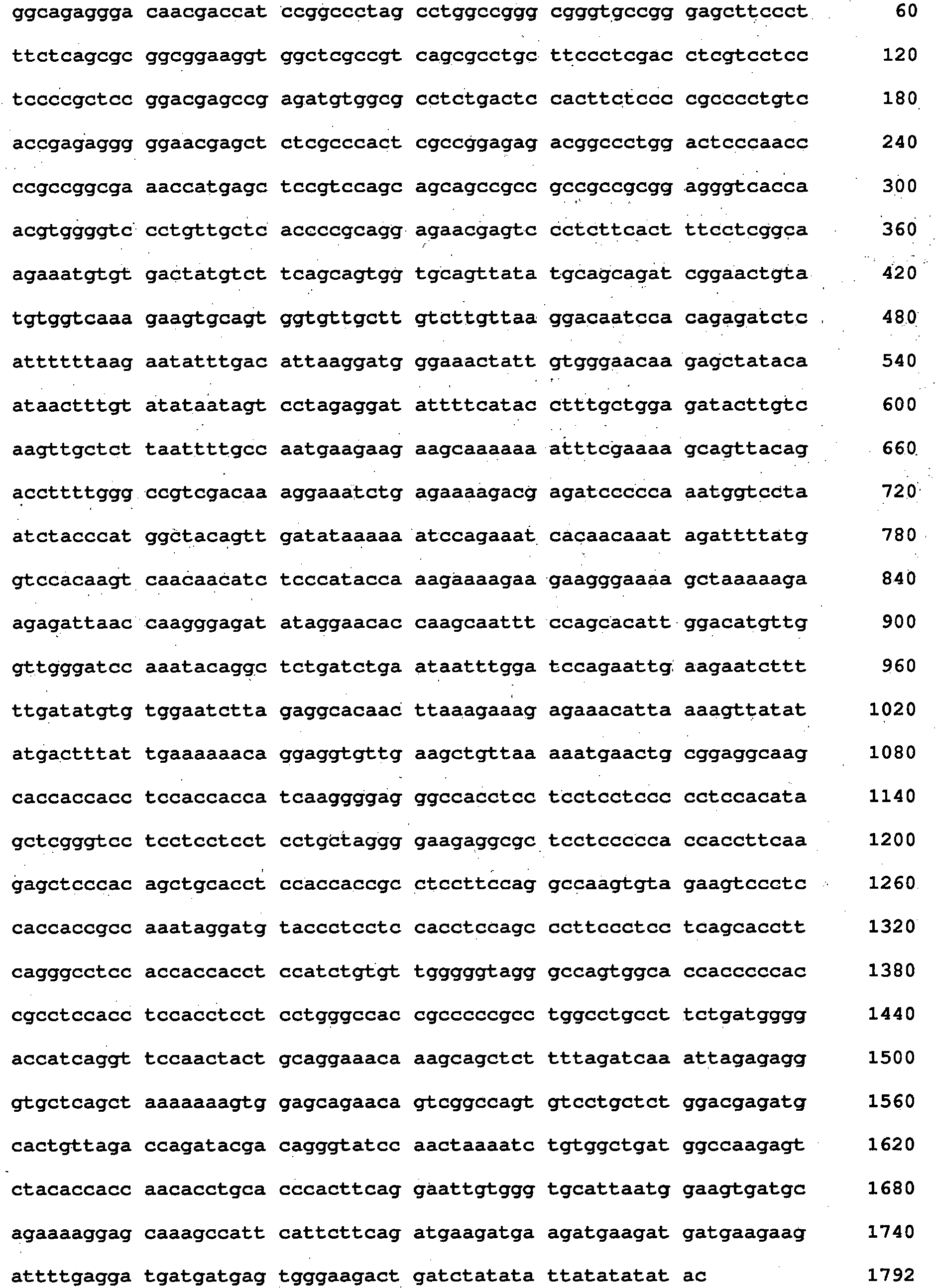
- <210> 15
<211> 502
<212> PRT
<213> Homo sapiens - <400> 15


- <210> 16
<211> 1796
<212> DNA
<213> Homo sapiens - <400> 16


- <210> 17
<211> 83
<212> DNA
<213> Homo sapiens - <400> 17

- <210> 18
<211> 89
<212> DNA
<213> Homo sapiens - <400> 18

- <210> 19
<211> 87
<212> DNA
<213> Homo sapiens - <400> 19

- <210> 20
<211> 18
<212> DNA
<213> Homo sapiens - <400> 20
atgagctccg tccagcag 18 - <210> 21
<211> 21
<212> DNA
<213> Homo sapiens - <400> 21
tcagtcttcc cactcatcatc 21
Claims (13)
- A therapeutic comprising an inhibitor of either, or both, nWASP gene expression or nWASP protein activity; or an inhibitor of a protein that is at least 90% homologous to nWASP and that modulates actin assembly, for use in the treatment of mammalian chronic wounds.
- A therapeutic for use according to claim 1 wherein said inhibitor is an inhibitor of nWASP protein function.
- A therapeutic for use according to claim 2 wherein said inhibitor is selected from the group consisting of: a nWASP binding agent that binds, either reversibly or irreversibly, to inhibit protein function such as an antibody or a known, or synthesized, nWASP antagonist; or an agent that works upstream or downstream of the nWASP signalling mechanism to inhibit nWASP function.
- A therapeutic for use according to claim 3 wherein said inhibitor is Wiskostatin (Merck Pharmaceuticals) or 187-1 (TOCRIS).
- A therapeutic for use according to claim 1 wherein said inhibitor is an inhibitor of nWASP gene expression.
- A therapeutic for use according to claim 5 wherein said inhibitor is selected from the group consisting of: anti-sense DNA or RNA, siRNA, or ribozymes, either naked or in the form of plasmid or viral vectors.
- A therapeutic for use according to claim 6 wherein said inhibitor is anti-nWASP ribozyme/RNA transgene selected from the group comprising:a) transgene 1
 b) or transgene 2
 c) or transgene 3
- A therapeutic for use according to any preceding claim wherein the therapeutic is formulated for use in treating human wounds.
- A therapeutic for use according to any preceding claim wherein the therapeutic is formulated for topical application.
- A therapeutic for use according to any preceding claim wherein the therapeutic is formulated for application to a dressing or impregnation in a dressing.
- A pharmaceutical composition for use in the treatment of mammalian chronic wounds comprising a therapeutic according to any preceding claim together with a pharmaceutically acceptable carrier.
- A kit for use in the treatment of mammalian chronic wounds wherein said kit comprises:a) at least one therapeutic according to claims 1-10 or a composition according to claim 11; andb) at least one dressing for applying to said wound.
- A combination therapeutic for use in the treatment of mammalian chronic wounds according to claim 1 comprising an inhibitor of:a) n-WASP gene expression according to any one of claims 1-4; andb) an inhibitor of n-WASP protein activity according to any one of claims 5-7
Applications Claiming Priority (2)
| Application Number | Priority Date | Filing Date | Title |
|---|---|---|---|
| GBGB1003652.3A GB201003652D0 (en) | 2010-03-05 | 2010-03-05 | Molecular target for healing or treating wounds |
| PCT/GB2011/050298 WO2011107772A1 (en) | 2010-03-05 | 2011-02-16 | Molecular targets for healing or treating wounds |
Publications (2)
| Publication Number | Publication Date |
|---|---|
| EP2542677A1 EP2542677A1 (en) | 2013-01-09 |
| EP2542677B1 true EP2542677B1 (en) | 2015-07-01 |
Family
ID=42136506
Family Applications (1)
| Application Number | Title | Priority Date | Filing Date |
|---|---|---|---|
| EP11704847.0A Not-in-force EP2542677B1 (en) | 2010-03-05 | 2011-02-16 | Molecular targets for healing or treating wounds |
Country Status (4)
| Country | Link |
|---|---|
| US (2) | US20120321613A1 (en) |
| EP (1) | EP2542677B1 (en) |
| GB (1) | GB201003652D0 (en) |
| WO (1) | WO2011107772A1 (en) |
Families Citing this family (1)
| Publication number | Priority date | Publication date | Assignee | Title |
|---|---|---|---|---|
| JP2016524621A (en) | 2013-06-03 | 2016-08-18 | バル−イラン ユニバーシティ | Liposomes that modulate Wiscot Aldrich syndrome protein |
Family Cites Families (2)
| Publication number | Priority date | Publication date | Assignee | Title |
|---|---|---|---|---|
| EP0941108B1 (en) * | 1996-12-04 | 2002-10-16 | Renovo Limited | Wound healing and treatment of fibrosis |
| US20060194769A1 (en) * | 2005-01-25 | 2006-08-31 | University Of Vermont And State Agricultural College | Small molecules that reduce fungal growth |
-
2010
- 2010-03-05 GB GBGB1003652.3A patent/GB201003652D0/en not_active Ceased
-
2011
- 2011-02-16 WO PCT/GB2011/050298 patent/WO2011107772A1/en not_active Ceased
- 2011-02-16 US US13/579,999 patent/US20120321613A1/en not_active Abandoned
- 2011-02-16 EP EP11704847.0A patent/EP2542677B1/en not_active Not-in-force
-
2015
- 2015-06-26 US US14/752,087 patent/US20160038563A1/en not_active Abandoned
Also Published As
| Publication number | Publication date |
|---|---|
| US20160038563A1 (en) | 2016-02-11 |
| WO2011107772A1 (en) | 2011-09-09 |
| GB201003652D0 (en) | 2010-04-21 |
| EP2542677A1 (en) | 2013-01-09 |
| US20120321613A1 (en) | 2012-12-20 |
Similar Documents
| Publication | Publication Date | Title |
|---|---|---|
| Song et al. | Advanced glycation end products regulate anabolic and catabolic activities via NLRP3‐inflammasome activation in human nucleus pulposus cells | |
| Link et al. | Combined control of the fibroblast contractile program by YAP and TAZ | |
| JP6140120B2 (en) | Visfatin treatment for treating pressure ulcers and other conditions | |
| Mou et al. | Macrophage‐targeted delivery of siRNA to silence Mecp2 gene expression attenuates pulmonary fibrosis | |
| Palomo et al. | Silencing of frataxin gene expression triggers p53-dependent apoptosis in human neuron-like cells | |
| DE69633272T2 (en) | Methods for cancer treatment and control | |
| CN112011614B (en) | Application of KMT5A in regulation of glioma stem cell characteristics and glioma diagnosis and treatment | |
| RU2663100C2 (en) | Mi-rna and their use in methods and compositions for treatment and / or prevention of eye conditions | |
| CN101437399A (en) | Methods and agents for modulating an immune response | |
| US7105656B2 (en) | Compositions and methods for treating hematologic malignancies and multiple drug resistance | |
| CN114540481B (en) | A chronic pain treatment target ALKBH5 and its application | |
| US9782381B2 (en) | Molecular targets for healing or treating wounds | |
| US20160038563A1 (en) | Molecular targets for healing or treating wounds | |
| US7595158B2 (en) | Bcl2L12 polypeptide activators and inhibitors | |
| CN110551197B (en) | Micro-peptide and cancer treatment drug | |
| CN117737068B (en) | Small nucleic acid molecules for the treatment of skin melanoma | |
| JP7804918B2 (en) | Use of siRNA, DNA, vectors, inhibitors of female cancer cell proliferation, inhibitors of female cancer tumor formation, medicines, and long non-coding RNA | |
| TW201241179A (en) | MiRNAs in joint disease | |
| US20250064846A1 (en) | Treatment and prevention of trigeminal neuralgia | |
| EP3737763A1 (en) | Pharmaceutical composition for preventing or treating muscular disease or cachexia comprising, as active ingredient, mirna located in dlk1 -dio3 cluster or variant thereof | |
| CN121668314A (en) | Application of annexin A11 inhibitor in preparation of medicines for improving or treating inflammatory diseases | |
| CN120204428A (en) | ITGB1-siRNA lipid nanoparticles and their application in anti-angiogenesis therapy | |
| WO2026056985A1 (en) | Method for treating depression and pharmaceutical composition | |
| WO2024003350A1 (en) | Combination therapy for melanoma | |
| HK1192904B (en) | Molecular targets for healing or treating wounds |
Legal Events
| Date | Code | Title | Description |
|---|---|---|---|
| PUAI | Public reference made under article 153(3) epc to a published international application that has entered the european phase |
Free format text: ORIGINAL CODE: 0009012 |
|
| 17P | Request for examination filed |
Effective date: 20120710 |
|
| AK | Designated contracting states |
Kind code of ref document: A1 Designated state(s): AL AT BE BG CH CY CZ DE DK EE ES FI FR GB GR HR HU IE IS IT LI LT LU LV MC MK MT NL NO PL PT RO RS SE SI SK SM TR |
|
| DAX | Request for extension of the european patent (deleted) | ||
| 17Q | First examination report despatched |
Effective date: 20131112 |
|
| GRAP | Despatch of communication of intention to grant a patent |
Free format text: ORIGINAL CODE: EPIDOSNIGR1 |
|
| INTG | Intention to grant announced |
Effective date: 20150327 |
|
| GRAS | Grant fee paid |
Free format text: ORIGINAL CODE: EPIDOSNIGR3 |
|
| GRAA | (expected) grant |
Free format text: ORIGINAL CODE: 0009210 |
|
| AK | Designated contracting states |
Kind code of ref document: B1 Designated state(s): AL AT BE BG CH CY CZ DE DK EE ES FI FR GB GR HR HU IE IS IT LI LT LU LV MC MK MT NL NO PL PT RO RS SE SI SK SM TR |
|
| REG | Reference to a national code |
Ref country code: GB Ref legal event code: FG4D |
|
| REG | Reference to a national code |
Ref country code: AT Ref legal event code: REF Ref document number: 733992 Country of ref document: AT Kind code of ref document: T Effective date: 20150715 Ref country code: CH Ref legal event code: EP |
|
| REG | Reference to a national code |
Ref country code: DE Ref legal event code: R096 Ref document number: 602011017458 Country of ref document: DE |
|
| REG | Reference to a national code |
Ref country code: IE Ref legal event code: FG4D |
|
| REG | Reference to a national code |
Ref country code: AT Ref legal event code: MK05 Ref document number: 733992 Country of ref document: AT Kind code of ref document: T Effective date: 20150701 |
|
| REG | Reference to a national code |
Ref country code: NL Ref legal event code: MP Effective date: 20150701 |
|
| REG | Reference to a national code |
Ref country code: LT Ref legal event code: MG4D |
|
| PG25 | Lapsed in a contracting state [announced via postgrant information from national office to epo] |
Ref country code: LV Free format text: LAPSE BECAUSE OF FAILURE TO SUBMIT A TRANSLATION OF THE DESCRIPTION OR TO PAY THE FEE WITHIN THE PRESCRIBED TIME-LIMIT Effective date: 20150701 Ref country code: NO Free format text: LAPSE BECAUSE OF FAILURE TO SUBMIT A TRANSLATION OF THE DESCRIPTION OR TO PAY THE FEE WITHIN THE PRESCRIBED TIME-LIMIT Effective date: 20151001 Ref country code: FI Free format text: LAPSE BECAUSE OF FAILURE TO SUBMIT A TRANSLATION OF THE DESCRIPTION OR TO PAY THE FEE WITHIN THE PRESCRIBED TIME-LIMIT Effective date: 20150701 Ref country code: LT Free format text: LAPSE BECAUSE OF FAILURE TO SUBMIT A TRANSLATION OF THE DESCRIPTION OR TO PAY THE FEE WITHIN THE PRESCRIBED TIME-LIMIT Effective date: 20150701 Ref country code: GR Free format text: LAPSE BECAUSE OF FAILURE TO SUBMIT A TRANSLATION OF THE DESCRIPTION OR TO PAY THE FEE WITHIN THE PRESCRIBED TIME-LIMIT Effective date: 20151002 |
|
| REG | Reference to a national code |
Ref country code: FR Ref legal event code: PLFP Year of fee payment: 6 |
|
| PG25 | Lapsed in a contracting state [announced via postgrant information from national office to epo] |
Ref country code: SE Free format text: LAPSE BECAUSE OF FAILURE TO SUBMIT A TRANSLATION OF THE DESCRIPTION OR TO PAY THE FEE WITHIN THE PRESCRIBED TIME-LIMIT Effective date: 20150701 Ref country code: PT Free format text: LAPSE BECAUSE OF FAILURE TO SUBMIT A TRANSLATION OF THE DESCRIPTION OR TO PAY THE FEE WITHIN THE PRESCRIBED TIME-LIMIT Effective date: 20151102 Ref country code: RS Free format text: LAPSE BECAUSE OF FAILURE TO SUBMIT A TRANSLATION OF THE DESCRIPTION OR TO PAY THE FEE WITHIN THE PRESCRIBED TIME-LIMIT Effective date: 20150701 Ref country code: ES Free format text: LAPSE BECAUSE OF FAILURE TO SUBMIT A TRANSLATION OF THE DESCRIPTION OR TO PAY THE FEE WITHIN THE PRESCRIBED TIME-LIMIT Effective date: 20150701 Ref country code: IS Free format text: LAPSE BECAUSE OF FAILURE TO SUBMIT A TRANSLATION OF THE DESCRIPTION OR TO PAY THE FEE WITHIN THE PRESCRIBED TIME-LIMIT Effective date: 20151101 Ref country code: PL Free format text: LAPSE BECAUSE OF FAILURE TO SUBMIT A TRANSLATION OF THE DESCRIPTION OR TO PAY THE FEE WITHIN THE PRESCRIBED TIME-LIMIT Effective date: 20150701 Ref country code: AT Free format text: LAPSE BECAUSE OF FAILURE TO SUBMIT A TRANSLATION OF THE DESCRIPTION OR TO PAY THE FEE WITHIN THE PRESCRIBED TIME-LIMIT Effective date: 20150701 Ref country code: HR Free format text: LAPSE BECAUSE OF FAILURE TO SUBMIT A TRANSLATION OF THE DESCRIPTION OR TO PAY THE FEE WITHIN THE PRESCRIBED TIME-LIMIT Effective date: 20150701 |
|
| REG | Reference to a national code |
Ref country code: DE Ref legal event code: R097 Ref document number: 602011017458 Country of ref document: DE |
|
| PG25 | Lapsed in a contracting state [announced via postgrant information from national office to epo] |
Ref country code: CZ Free format text: LAPSE BECAUSE OF FAILURE TO SUBMIT A TRANSLATION OF THE DESCRIPTION OR TO PAY THE FEE WITHIN THE PRESCRIBED TIME-LIMIT Effective date: 20150701 Ref country code: DK Free format text: LAPSE BECAUSE OF FAILURE TO SUBMIT A TRANSLATION OF THE DESCRIPTION OR TO PAY THE FEE WITHIN THE PRESCRIBED TIME-LIMIT Effective date: 20150701 Ref country code: SK Free format text: LAPSE BECAUSE OF FAILURE TO SUBMIT A TRANSLATION OF THE DESCRIPTION OR TO PAY THE FEE WITHIN THE PRESCRIBED TIME-LIMIT Effective date: 20150701 Ref country code: EE Free format text: LAPSE BECAUSE OF FAILURE TO SUBMIT A TRANSLATION OF THE DESCRIPTION OR TO PAY THE FEE WITHIN THE PRESCRIBED TIME-LIMIT Effective date: 20150701 Ref country code: IT Free format text: LAPSE BECAUSE OF FAILURE TO SUBMIT A TRANSLATION OF THE DESCRIPTION OR TO PAY THE FEE WITHIN THE PRESCRIBED TIME-LIMIT Effective date: 20150701 |
|
| PLBE | No opposition filed within time limit |
Free format text: ORIGINAL CODE: 0009261 |
|
| STAA | Information on the status of an ep patent application or granted ep patent |
Free format text: STATUS: NO OPPOSITION FILED WITHIN TIME LIMIT |
|
| PG25 | Lapsed in a contracting state [announced via postgrant information from national office to epo] |
Ref country code: RO Free format text: LAPSE BECAUSE OF FAILURE TO SUBMIT A TRANSLATION OF THE DESCRIPTION OR TO PAY THE FEE WITHIN THE PRESCRIBED TIME-LIMIT Effective date: 20150701 Ref country code: BE Free format text: LAPSE BECAUSE OF NON-PAYMENT OF DUE FEES Effective date: 20160229 |
|
| 26N | No opposition filed |
Effective date: 20160404 |
|
| PG25 | Lapsed in a contracting state [announced via postgrant information from national office to epo] |
Ref country code: SI Free format text: LAPSE BECAUSE OF FAILURE TO SUBMIT A TRANSLATION OF THE DESCRIPTION OR TO PAY THE FEE WITHIN THE PRESCRIBED TIME-LIMIT Effective date: 20150701 |
|
| PG25 | Lapsed in a contracting state [announced via postgrant information from national office to epo] |
Ref country code: MC Free format text: LAPSE BECAUSE OF FAILURE TO SUBMIT A TRANSLATION OF THE DESCRIPTION OR TO PAY THE FEE WITHIN THE PRESCRIBED TIME-LIMIT Effective date: 20150701 Ref country code: LU Free format text: LAPSE BECAUSE OF FAILURE TO SUBMIT A TRANSLATION OF THE DESCRIPTION OR TO PAY THE FEE WITHIN THE PRESCRIBED TIME-LIMIT Effective date: 20160216 |
|
| REG | Reference to a national code |
Ref country code: CH Ref legal event code: PL |
|
| PG25 | Lapsed in a contracting state [announced via postgrant information from national office to epo] |
Ref country code: LI Free format text: LAPSE BECAUSE OF NON-PAYMENT OF DUE FEES Effective date: 20160229 Ref country code: CH Free format text: LAPSE BECAUSE OF NON-PAYMENT OF DUE FEES Effective date: 20160229 |
|
| REG | Reference to a national code |
Ref country code: IE Ref legal event code: MM4A |
|
| PG25 | Lapsed in a contracting state [announced via postgrant information from national office to epo] |
Ref country code: BE Free format text: LAPSE BECAUSE OF FAILURE TO SUBMIT A TRANSLATION OF THE DESCRIPTION OR TO PAY THE FEE WITHIN THE PRESCRIBED TIME-LIMIT Effective date: 20150701 |
|
| PG25 | Lapsed in a contracting state [announced via postgrant information from national office to epo] |
Ref country code: IE Free format text: LAPSE BECAUSE OF NON-PAYMENT OF DUE FEES Effective date: 20160216 |
|
| REG | Reference to a national code |
Ref country code: FR Ref legal event code: PLFP Year of fee payment: 7 |
|
| PGFP | Annual fee paid to national office [announced via postgrant information from national office to epo] |
Ref country code: DE Payment date: 20170224 Year of fee payment: 7 Ref country code: FR Payment date: 20170217 Year of fee payment: 7 |
|
| PGFP | Annual fee paid to national office [announced via postgrant information from national office to epo] |
Ref country code: GB Payment date: 20170214 Year of fee payment: 7 |
|
| PG25 | Lapsed in a contracting state [announced via postgrant information from national office to epo] |
Ref country code: NL Free format text: LAPSE BECAUSE OF FAILURE TO SUBMIT A TRANSLATION OF THE DESCRIPTION OR TO PAY THE FEE WITHIN THE PRESCRIBED TIME-LIMIT Effective date: 20150701 |
|
| PG25 | Lapsed in a contracting state [announced via postgrant information from national office to epo] |
Ref country code: MT Free format text: LAPSE BECAUSE OF FAILURE TO SUBMIT A TRANSLATION OF THE DESCRIPTION OR TO PAY THE FEE WITHIN THE PRESCRIBED TIME-LIMIT Effective date: 20150701 |
|
| PG25 | Lapsed in a contracting state [announced via postgrant information from national office to epo] |
Ref country code: HU Free format text: LAPSE BECAUSE OF FAILURE TO SUBMIT A TRANSLATION OF THE DESCRIPTION OR TO PAY THE FEE WITHIN THE PRESCRIBED TIME-LIMIT; INVALID AB INITIO Effective date: 20110216 Ref country code: SM Free format text: LAPSE BECAUSE OF FAILURE TO SUBMIT A TRANSLATION OF THE DESCRIPTION OR TO PAY THE FEE WITHIN THE PRESCRIBED TIME-LIMIT Effective date: 20150701 Ref country code: CY Free format text: LAPSE BECAUSE OF FAILURE TO SUBMIT A TRANSLATION OF THE DESCRIPTION OR TO PAY THE FEE WITHIN THE PRESCRIBED TIME-LIMIT Effective date: 20150701 |
|
| PG25 | Lapsed in a contracting state [announced via postgrant information from national office to epo] |
Ref country code: MK Free format text: LAPSE BECAUSE OF FAILURE TO SUBMIT A TRANSLATION OF THE DESCRIPTION OR TO PAY THE FEE WITHIN THE PRESCRIBED TIME-LIMIT Effective date: 20150701 Ref country code: TR Free format text: LAPSE BECAUSE OF FAILURE TO SUBMIT A TRANSLATION OF THE DESCRIPTION OR TO PAY THE FEE WITHIN THE PRESCRIBED TIME-LIMIT Effective date: 20150701 Ref country code: MT Free format text: LAPSE BECAUSE OF FAILURE TO SUBMIT A TRANSLATION OF THE DESCRIPTION OR TO PAY THE FEE WITHIN THE PRESCRIBED TIME-LIMIT Effective date: 20160229 |
|
| PG25 | Lapsed in a contracting state [announced via postgrant information from national office to epo] |
Ref country code: BG Free format text: LAPSE BECAUSE OF FAILURE TO SUBMIT A TRANSLATION OF THE DESCRIPTION OR TO PAY THE FEE WITHIN THE PRESCRIBED TIME-LIMIT Effective date: 20150701 |
|
| REG | Reference to a national code |
Ref country code: DE Ref legal event code: R119 Ref document number: 602011017458 Country of ref document: DE |
|
| GBPC | Gb: european patent ceased through non-payment of renewal fee |
Effective date: 20180216 |
|
| PG25 | Lapsed in a contracting state [announced via postgrant information from national office to epo] |
Ref country code: AL Free format text: LAPSE BECAUSE OF FAILURE TO SUBMIT A TRANSLATION OF THE DESCRIPTION OR TO PAY THE FEE WITHIN THE PRESCRIBED TIME-LIMIT Effective date: 20150701 |
|
| REG | Reference to a national code |
Ref country code: FR Ref legal event code: ST Effective date: 20181031 |
|
| PG25 | Lapsed in a contracting state [announced via postgrant information from national office to epo] |
Ref country code: DE Free format text: LAPSE BECAUSE OF NON-PAYMENT OF DUE FEES Effective date: 20180901 |
|
| PG25 | Lapsed in a contracting state [announced via postgrant information from national office to epo] |
Ref country code: GB Free format text: LAPSE BECAUSE OF NON-PAYMENT OF DUE FEES Effective date: 20180216 Ref country code: FR Free format text: LAPSE BECAUSE OF NON-PAYMENT OF DUE FEES Effective date: 20180228 |