EP2540788A2 - Thick doped adhesive tape to enhance backscatter x-ray detectability - Google Patents
Thick doped adhesive tape to enhance backscatter x-ray detectability Download PDFInfo
- Publication number
- EP2540788A2 EP2540788A2 EP12171650A EP12171650A EP2540788A2 EP 2540788 A2 EP2540788 A2 EP 2540788A2 EP 12171650 A EP12171650 A EP 12171650A EP 12171650 A EP12171650 A EP 12171650A EP 2540788 A2 EP2540788 A2 EP 2540788A2
- Authority
- EP
- European Patent Office
- Prior art keywords
- adhesive tape
- tape
- doped
- backscatter
- iodine
- Prior art date
- Legal status (The legal status is an assumption and is not a legal conclusion. Google has not performed a legal analysis and makes no representation as to the accuracy of the status listed.)
- Granted
Links
- 239000002390 adhesive tape Substances 0.000 title claims abstract description 97
- 239000002019 doping agent Substances 0.000 claims abstract description 32
- 238000007689 inspection Methods 0.000 claims abstract description 27
- 238000001514 detection method Methods 0.000 claims abstract description 23
- 238000004519 manufacturing process Methods 0.000 claims abstract description 20
- 238000000034 method Methods 0.000 claims description 54
- ZCYVEMRRCGMTRW-UHFFFAOYSA-N 7553-56-2 Chemical compound [I] ZCYVEMRRCGMTRW-UHFFFAOYSA-N 0.000 claims description 52
- 229910052740 iodine Inorganic materials 0.000 claims description 52
- 239000011630 iodine Substances 0.000 claims description 52
- 239000000853 adhesive Substances 0.000 claims description 38
- 230000001070 adhesive effect Effects 0.000 claims description 38
- 230000008569 process Effects 0.000 claims description 35
- NLKNQRATVPKPDG-UHFFFAOYSA-M potassium iodide Chemical compound [K+].[I-] NLKNQRATVPKPDG-UHFFFAOYSA-M 0.000 claims description 18
- 239000002002 slurry Substances 0.000 claims description 17
- 238000004513 sizing Methods 0.000 claims description 10
- 239000010410 layer Substances 0.000 abstract description 30
- 239000012790 adhesive layer Substances 0.000 abstract description 18
- PNDPGZBMCMUPRI-UHFFFAOYSA-N iodine Chemical compound II PNDPGZBMCMUPRI-UHFFFAOYSA-N 0.000 abstract description 8
- 238000000429 assembly Methods 0.000 abstract description 3
- 238000005516 engineering process Methods 0.000 abstract 2
- 239000000463 material Substances 0.000 description 10
- 150000001875 compounds Chemical class 0.000 description 5
- 239000004033 plastic Substances 0.000 description 5
- OKTJSMMVPCPJKN-UHFFFAOYSA-N Carbon Chemical compound [C] OKTJSMMVPCPJKN-UHFFFAOYSA-N 0.000 description 4
- 238000013459 approach Methods 0.000 description 4
- 229910052799 carbon Inorganic materials 0.000 description 4
- 229910052729 chemical element Inorganic materials 0.000 description 3
- 239000004744 fabric Substances 0.000 description 3
- 238000003384 imaging method Methods 0.000 description 3
- 238000010348 incorporation Methods 0.000 description 3
- 238000012545 processing Methods 0.000 description 3
- 230000000712 assembly Effects 0.000 description 2
- 230000008901 benefit Effects 0.000 description 2
- 238000002059 diagnostic imaging Methods 0.000 description 2
- 238000005553 drilling Methods 0.000 description 2
- 230000006872 improvement Effects 0.000 description 2
- 239000007788 liquid Substances 0.000 description 2
- 229910052751 metal Inorganic materials 0.000 description 2
- 239000002184 metal Substances 0.000 description 2
- 238000010422 painting Methods 0.000 description 2
- 238000005507 spraying Methods 0.000 description 2
- WKBOTKDWSSQWDR-UHFFFAOYSA-N Bromine atom Chemical compound [Br] WKBOTKDWSSQWDR-UHFFFAOYSA-N 0.000 description 1
- ZAMOUSCENKQFHK-UHFFFAOYSA-N Chlorine atom Chemical compound [Cl] ZAMOUSCENKQFHK-UHFFFAOYSA-N 0.000 description 1
- 235000015842 Hesperis Nutrition 0.000 description 1
- 235000012633 Iberis amara Nutrition 0.000 description 1
- 229920001131 Pulp (paper) Polymers 0.000 description 1
- NIXOWILDQLNWCW-UHFFFAOYSA-N acrylic acid group Chemical group C(C=C)(=O)O NIXOWILDQLNWCW-UHFFFAOYSA-N 0.000 description 1
- 239000000654 additive Substances 0.000 description 1
- 230000009286 beneficial effect Effects 0.000 description 1
- 230000005540 biological transmission Effects 0.000 description 1
- GDTBXPJZTBHREO-UHFFFAOYSA-N bromine Substances BrBr GDTBXPJZTBHREO-UHFFFAOYSA-N 0.000 description 1
- 229910052794 bromium Inorganic materials 0.000 description 1
- 229910052801 chlorine Inorganic materials 0.000 description 1
- 239000000460 chlorine Substances 0.000 description 1
- 239000002872 contrast media Substances 0.000 description 1
- 238000000151 deposition Methods 0.000 description 1
- 230000001066 destructive effect Effects 0.000 description 1
- 238000009826 distribution Methods 0.000 description 1
- 238000001035 drying Methods 0.000 description 1
- 239000000428 dust Substances 0.000 description 1
- 230000000694 effects Effects 0.000 description 1
- 239000006260 foam Substances 0.000 description 1
- PCHJSUWPFVWCPO-UHFFFAOYSA-N gold Chemical compound [Au] PCHJSUWPFVWCPO-UHFFFAOYSA-N 0.000 description 1
- 239000010931 gold Substances 0.000 description 1
- 229910052737 gold Inorganic materials 0.000 description 1
- 231100001261 hazardous Toxicity 0.000 description 1
- 229910052739 hydrogen Inorganic materials 0.000 description 1
- 239000001257 hydrogen Substances 0.000 description 1
- 125000004435 hydrogen atom Chemical group [H]* 0.000 description 1
- 239000003550 marker Substances 0.000 description 1
- 238000005259 measurement Methods 0.000 description 1
- 230000007246 mechanism Effects 0.000 description 1
- 239000000203 mixture Substances 0.000 description 1
- 238000012986 modification Methods 0.000 description 1
- 230000004048 modification Effects 0.000 description 1
- 230000001681 protective effect Effects 0.000 description 1
- 239000013055 pulp slurry Substances 0.000 description 1
- 239000007787 solid Substances 0.000 description 1
- 229920002994 synthetic fiber Polymers 0.000 description 1
- 230000008719 thickening Effects 0.000 description 1
- 238000011179 visual inspection Methods 0.000 description 1
- 239000011800 void material Substances 0.000 description 1
- XLYOFNOQVPJJNP-UHFFFAOYSA-N water Substances O XLYOFNOQVPJJNP-UHFFFAOYSA-N 0.000 description 1
Images


Classifications
-
- C—CHEMISTRY; METALLURGY
- C09—DYES; PAINTS; POLISHES; NATURAL RESINS; ADHESIVES; COMPOSITIONS NOT OTHERWISE PROVIDED FOR; APPLICATIONS OF MATERIALS NOT OTHERWISE PROVIDED FOR
- C09J—ADHESIVES; NON-MECHANICAL ASPECTS OF ADHESIVE PROCESSES IN GENERAL; ADHESIVE PROCESSES NOT PROVIDED FOR ELSEWHERE; USE OF MATERIALS AS ADHESIVES
- C09J11/00—Features of adhesives not provided for in group C09J9/00, e.g. additives
- C09J11/02—Non-macromolecular additives
- C09J11/04—Non-macromolecular additives inorganic
-
- C—CHEMISTRY; METALLURGY
- C09—DYES; PAINTS; POLISHES; NATURAL RESINS; ADHESIVES; COMPOSITIONS NOT OTHERWISE PROVIDED FOR; APPLICATIONS OF MATERIALS NOT OTHERWISE PROVIDED FOR
- C09J—ADHESIVES; NON-MECHANICAL ASPECTS OF ADHESIVE PROCESSES IN GENERAL; ADHESIVE PROCESSES NOT PROVIDED FOR ELSEWHERE; USE OF MATERIALS AS ADHESIVES
- C09J7/00—Adhesives in the form of films or foils
- C09J7/20—Adhesives in the form of films or foils characterised by their carriers
- C09J7/205—Adhesives in the form of films or foils characterised by their carriers characterised by the backing impregnating composition
-
- C—CHEMISTRY; METALLURGY
- C09—DYES; PAINTS; POLISHES; NATURAL RESINS; ADHESIVES; COMPOSITIONS NOT OTHERWISE PROVIDED FOR; APPLICATIONS OF MATERIALS NOT OTHERWISE PROVIDED FOR
- C09J—ADHESIVES; NON-MECHANICAL ASPECTS OF ADHESIVE PROCESSES IN GENERAL; ADHESIVE PROCESSES NOT PROVIDED FOR ELSEWHERE; USE OF MATERIALS AS ADHESIVES
- C09J7/00—Adhesives in the form of films or foils
- C09J7/20—Adhesives in the form of films or foils characterised by their carriers
- C09J7/21—Paper; Textile fabrics
-
- C—CHEMISTRY; METALLURGY
- C09—DYES; PAINTS; POLISHES; NATURAL RESINS; ADHESIVES; COMPOSITIONS NOT OTHERWISE PROVIDED FOR; APPLICATIONS OF MATERIALS NOT OTHERWISE PROVIDED FOR
- C09J—ADHESIVES; NON-MECHANICAL ASPECTS OF ADHESIVE PROCESSES IN GENERAL; ADHESIVE PROCESSES NOT PROVIDED FOR ELSEWHERE; USE OF MATERIALS AS ADHESIVES
- C09J2301/00—Additional features of adhesives in the form of films or foils
- C09J2301/40—Additional features of adhesives in the form of films or foils characterized by the presence of essential components
- C09J2301/408—Additional features of adhesives in the form of films or foils characterized by the presence of essential components additives as essential feature of the adhesive layer
-
- C—CHEMISTRY; METALLURGY
- C09—DYES; PAINTS; POLISHES; NATURAL RESINS; ADHESIVES; COMPOSITIONS NOT OTHERWISE PROVIDED FOR; APPLICATIONS OF MATERIALS NOT OTHERWISE PROVIDED FOR
- C09J—ADHESIVES; NON-MECHANICAL ASPECTS OF ADHESIVE PROCESSES IN GENERAL; ADHESIVE PROCESSES NOT PROVIDED FOR ELSEWHERE; USE OF MATERIALS AS ADHESIVES
- C09J2301/00—Additional features of adhesives in the form of films or foils
- C09J2301/40—Additional features of adhesives in the form of films or foils characterized by the presence of essential components
- C09J2301/41—Additional features of adhesives in the form of films or foils characterized by the presence of essential components additives as essential feature of the carrier layer
-
- Y—GENERAL TAGGING OF NEW TECHNOLOGICAL DEVELOPMENTS; GENERAL TAGGING OF CROSS-SECTIONAL TECHNOLOGIES SPANNING OVER SEVERAL SECTIONS OF THE IPC; TECHNICAL SUBJECTS COVERED BY FORMER USPC CROSS-REFERENCE ART COLLECTIONS [XRACs] AND DIGESTS
- Y10—TECHNICAL SUBJECTS COVERED BY FORMER USPC
- Y10T—TECHNICAL SUBJECTS COVERED BY FORMER US CLASSIFICATION
- Y10T156/00—Adhesive bonding and miscellaneous chemical manufacture
- Y10T156/10—Methods of surface bonding and/or assembly therefor
-
- Y—GENERAL TAGGING OF NEW TECHNOLOGICAL DEVELOPMENTS; GENERAL TAGGING OF CROSS-SECTIONAL TECHNOLOGIES SPANNING OVER SEVERAL SECTIONS OF THE IPC; TECHNICAL SUBJECTS COVERED BY FORMER USPC CROSS-REFERENCE ART COLLECTIONS [XRACs] AND DIGESTS
- Y10—TECHNICAL SUBJECTS COVERED BY FORMER USPC
- Y10T—TECHNICAL SUBJECTS COVERED BY FORMER US CLASSIFICATION
- Y10T156/00—Adhesive bonding and miscellaneous chemical manufacture
- Y10T156/11—Methods of delaminating, per se; i.e., separating at bonding face
- Y10T156/1105—Delaminating process responsive to feed or shape at delamination
-
- Y—GENERAL TAGGING OF NEW TECHNOLOGICAL DEVELOPMENTS; GENERAL TAGGING OF CROSS-SECTIONAL TECHNOLOGIES SPANNING OVER SEVERAL SECTIONS OF THE IPC; TECHNICAL SUBJECTS COVERED BY FORMER USPC CROSS-REFERENCE ART COLLECTIONS [XRACs] AND DIGESTS
- Y10—TECHNICAL SUBJECTS COVERED BY FORMER USPC
- Y10T—TECHNICAL SUBJECTS COVERED BY FORMER US CLASSIFICATION
- Y10T428/00—Stock material or miscellaneous articles
- Y10T428/26—Web or sheet containing structurally defined element or component, the element or component having a specified physical dimension
- Y10T428/266—Web or sheet containing structurally defined element or component, the element or component having a specified physical dimension of base or substrate
-
- Y—GENERAL TAGGING OF NEW TECHNOLOGICAL DEVELOPMENTS; GENERAL TAGGING OF CROSS-SECTIONAL TECHNOLOGIES SPANNING OVER SEVERAL SECTIONS OF THE IPC; TECHNICAL SUBJECTS COVERED BY FORMER USPC CROSS-REFERENCE ART COLLECTIONS [XRACs] AND DIGESTS
- Y10—TECHNICAL SUBJECTS COVERED BY FORMER USPC
- Y10T—TECHNICAL SUBJECTS COVERED BY FORMER US CLASSIFICATION
- Y10T428/00—Stock material or miscellaneous articles
- Y10T428/28—Web or sheet containing structurally defined element or component and having an adhesive outermost layer
-
- Y—GENERAL TAGGING OF NEW TECHNOLOGICAL DEVELOPMENTS; GENERAL TAGGING OF CROSS-SECTIONAL TECHNOLOGIES SPANNING OVER SEVERAL SECTIONS OF THE IPC; TECHNICAL SUBJECTS COVERED BY FORMER USPC CROSS-REFERENCE ART COLLECTIONS [XRACs] AND DIGESTS
- Y10—TECHNICAL SUBJECTS COVERED BY FORMER USPC
- Y10T—TECHNICAL SUBJECTS COVERED BY FORMER US CLASSIFICATION
- Y10T428/00—Stock material or miscellaneous articles
- Y10T428/28—Web or sheet containing structurally defined element or component and having an adhesive outermost layer
- Y10T428/2848—Three or more layers
Definitions
- Manufacturing aircraft is a largely manual process, involving assembly of components into an airframe. Components are manually fitted, attached, and assembled by technicians on an assembly line. While in some instances, jigs and other devices are used to facilitate the assembly process, many of the procedures require manually measuring, positioning, and attaching components.
- One supply material that has been found useful in the manufacturing process is a commonly available adhesive tape, frequently referred to as "painter's tape.” This type of tape has an adhesive applied to one side allowing the tape to be easily and cleanly removed. Specifically, the adhesive allows the tape to be removed without leaving behind adhesive residue on the component, and with minimal pullout of the surface material to which it is attached. Such tapes are readily available in home improvement stores or painting supply stores.
- This tape is used for a variety of applications during the manufacturing process, including positioning parts together during the assembly.
- the applications of using this tape during assembly are numerous, and hence many pieces of tape are used during assembly of an aircraft. After assembly, the tape should be removed and discarded. However, it is possible some pieces of tape remain, and the tape becomes a "foreign object" left behind after the aircraft is assembled. This is undesirable for various reasons.
- a doped adhesive tape includes a backing layer and an adhesive layer, where a dopant is added to the backing layer or the adhesive layer.
- the dopant is an element that facilitates detection of the doped adhesive tape using a backscatter X-ray inspection process.
- a method of manufacturing the doped adhesive tape includes the operations of producing a paper slurry for manufacturing the adhesive tape, forming a continuous paper sheet using the paper slurry, and applying an adhesive sizing to the continuous paper sheet.
- a dopant is added during the manufacturing process that facilitates detection of the adhesive tape by a backscatter X-ray inspection process.
- the continuous paper sheet with adhesive and dopant is then formed into a roll of adhesive tape.
- a method for using doped adhesive tape includes operations of applying the doped adhesive tape to a first component being assembled, where the doped adhesive tape includes a dopant facilitating detection of the doped adhesive tape by a backscatter X-ray inspection process.
- the first component is assembled with a second component, and the assembly is subjected to the backscatter X-ray inspection process.
- Aircraft manufacturing is largely a manual process involving assembling, fitting, and attaching various components or subassemblies. During this process, various different types of processes are involved. For example, components must be temporarily held in position while fasteners are attached, components must be first positioned relative to other components before assembly, or measurements relative to certain points are made and be notated.
- the adhesive tape can be one of the so-called "painter's tape” that are found in home improvement stores and are advertised frequently for use in painting applications.
- the tape features an adhesive that allows the tape to be readily applied to a surface and later removed. Unlike other tapes which are intended to be permanent or have a high surface bonding capability, this adhesive allows the tape to be readily and cleanly removed later without leaving an adhesive residue, without pulling out the portion of the underlying surface, and without tearing into small pieces.
- painter's tape is the blue-colored ScotchBlueTM Multi-Surface 2090 Painter's Tape. This tape is available in various widths, ranging from at least 3 ⁇ 4" to 3". Other brands are available having similar characteristics and features. Various brands or types of tapes also purport to have similar adhesives designed for relatively longer/shorter removal times.
- FIG. 1 illustrates a variety of applications, for purposes of illustrating potential uses of the doped adhesive tape. These applications are demonstrative in nature, and it should be realized that various other applications are readily possible.
- FIG. 1 three panels are illustrated. Panel 102 abuts up with a second panel 105 at seam 101, and a third panel 104 is positioned over both of these panels. This third panel 104 is held in position by three pieces of doped adhesive tape 108a-108c (this, as well as exemplars 108e and 108f, are collectively referred to as 108). The placement of the third panel 104 may be necessary as a protective covering, with the doped adhesive tape 108 utilized to hold the third panel 104 in position, while fasteners are attached for affixing the third panel 104 to the other panels 102, 105.
- the doped adhesive tape 108 is used to position and hold the panel 104, and it is possible to readily re-position the panel by removing the doped adhesive tape, and reapplying the tape. If for some reason it is necessary, the doped adhesive tape 108 can be replaced with new tape. After the process is completed, the doped adhesive tape 108 can be removed and discarded.
- FIG. 1 also shows another application for the doped adhesive tape.
- the doped adhesive tape 108d is applied to the panel 102 and marked with indicia ("+") 107. This can be marked by an assembly worker using a pen, felt marker, or pencil.
- the indicia can represent a position for drilling a hole, attaching a fastener, or for some other purpose. Thus, if a hole is to be drilled, the position can be manually marked without marking on the panel itself.
- the doped adhesive tape 108f in FIG. 1 shows yet another application of doped adhesive tape, namely to provide markings for distances 116. This may be used to indicate positioning of other components, for drilling holes, etc.
- the doped adhesive tape 108e may be used as a means of protection.
- a tube 110 is illustrated which has an open end. During the manufacturing process, dust, dirt, shavings, and other debris may be present in the work area. Covering the end of an orifice with the doped adhesive tape is an easy way to prevent such debris from entering the orifice. Thus, if the pipe were, for example, a hydraulic line, then covering the hydraulic line opening with the doped adhesive tape can prevent debris from entering the hydraulic system. Other holes or openings can be covered for similar reasons.
- the doped adhesive tape should be removed. Removal of the doped adhesive tape after the assembly is critical. In many instances, the doped tape can be easily visually detected and then removed. However, as subcomponents are assembled into larger assemblies, pieces of doped adhesive tape which were previously readily visible may become hidden from visual inspection. Human error or oversight may result in pieces of tape remaining after assembly, which are then subsequently hidden. Since the doped adhesive tape is not part of the intended completed assembly, the doped adhesive tape is considered a foreign object. Removal of all foreign objects within the aircraft assembly is critical, since foreign objects may impede the operation of various systems and present a safety hazard. Before foreign objects can be removed, they must be identified which is referred to as a foreign object detection ("FOD”) process.
- FOD foreign object detection
- backscatter X-ray detection involves bombarding a surface with X-rays causing scattering of the X-rays at various angles.
- the scattered X-ray beam is analyzed to allow non-destructive inspection of 3-dimenisional objects in completed assemblies. For reference purposes, this is referred to as a "backscatter X-ray inspection" process.
- the foreign object item can be removed.
- the backscatter X-ray inspection system 200 of FIG. 2 diagrammatically illustrates a sub-assembly 202 having a void that is not readily visible for human inspection.
- the sub-assembly 202 includes a piece of adhesive tape 204 remaining within it.
- the sub-assembly is subjected to a backscatter X-ray inspection processing by generating an X-ray beam generated by an X-ray generator 206.
- the backscatter X-ray inspection device includes one or more collimator receivers 207.
- the collimator receivers 207 receive the scattered X-rays from the surface.
- the X-rays are reflected by the objects detected, as opposed to transmitted through the objects.
- the control of the X-ray generator 206 and the data it receives is processed by a controller 208, which generates a display image on a computer display 210.
- the display image typically is a black-and-white image, and would show in this embodiment an X-ray image of the panel of assembly 212 and the tape 214.
- the display is visually analyzed by a technician to ascertain whether a foreign object is present, namely the doped adhesive tape. Once detected, the doped adhesive tape can be removed.
- Backscatter X-ray processing allows inspection of components which cannot otherwise be readily visually inspected and which would otherwise potentially have undetected foreign objects.
- a backscatter X-ray inspection system 200 may be a commercially available unit, such as those manufactured by NUCSAFETM of Oak Ridge, Tennessee.
- the unit can be stationary, or can be attached to a robotic arm, gantry, or other movable mechanism.
- the relatively low mass density of the tape mass density x thickness
- because of its small thickness, coupled with the high content of carbon, which has a low atomic number of 6, and relatively low density can render detection difficult.
- detection of the adhesive tape by the backscatter X-ray device can be facilitated by modifying the mass density of the tape, which can be accomplished in at least two ways.
- a dopant is used that has a relatively higher density material, typically of a chemical element with a higher atomic number, that provides higher visibility to the backscatter X-ray inspection process than the materials used in conventional adhesive tape.
- the second approach is to make the tape thicker in addition to adding the dopant.
- the dopant may comprise a higher atomic number element relative to carbon, and this facilitates detection by the X-ray backscattering process because the heaver element will scatter the X-rays differently.
- the selection of the element added should preferably be relatively inexpensive in cost and safe to use. Thus, while gold has a heavy atomic number, its use would likely be prohibitly expensive. On the other hand, lead has a very high atomic number, but its use could pose safety hazards when handled.
- One compound that is relatively inexpensive, safe, and easy to incorporate into adhesive tape is iodine.
- Iodine has an atomic number of 53, and is commonly used for X-ray contrast imaging purposes in medical imaging. (It should be noted that medical X-ray techniques are often based on transmission of X-rays through the subject matter and are different from the back-scattering technique disclosed herein. Nevertheless, iodine is effective as a contrast agent in X-ray imaging.)
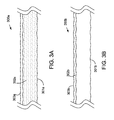
- FIG. 3A a side view of a section of the doped adhesive tape 300a is shown.
- the tape 300a comprises a backing layer comprising a paper layer 301a and an adhesive layer 303a.
- the adhesive layer is also referred to herein as a "sizing" and the process of applying the adhesive layer may also be referred to as "to size.”
- the thickness of the adhesive layer and the paper layer are not necessarily drawn to scale.
- the adhesive layer may be an acrylic or some other type.
- the backing layer can be made of cloth, plastic, or other types of synthetic materials.
- this embodiment does not modify the characteristics of the adhesive as may be used in conventional painter's tapes.
- the paper layer 301a may be crepe paper, or based on other types of paper used for making painter's tape.
- the paper layer 301a is modified to incorporate iodine 302a, illustrated diagrammatically as dots within the paper layer.
- This embodiment of the doped adhesive tape adds iodine to the paper as it is being made. This results in the iodine being evenly interspersed into the paper.
- the adhesive layer 303a may be added in a conventional manner.
- FIG. 3B Another embodiment of incorporating iodine into adhesive tape is shown in FIG. 3B .
- the tape 300b in this embodiment also comprises a paper layer 301b and an adhesive layer 303b.
- the paper does not have any iodine incorporated therein. Rather, the iodine 302b is incorporated into the adhesive layer 303b.
- the iodine 302b can be mixed into the adhesive prior to application to the paper, and the iodine laced adhesive may be then applied (sized) to the paper layer 301b in a conventional manner.
- the paper layer 301b could be sprayed with iodine, or an iodine based solution comprising potassium iodide (or other forms), onto the tape, and then the adhesive is applied onto the layer of iodine.
- the iodine is located between the paper and the adhesive.
- the iodine can be applied into the adhesive layer after the adhesive layer has been applied to the paper layer. This results in a layered structure of paper, adhesive and then iodine.
- Other variations are possible and could be developed by those skilled in the art.
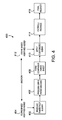
- a process for manufacturing iodine doped adhesive tape is shown in FIG. 4 .
- the process 400 is shown as a series of operations beginning with forming a paper pulp slurry in operation 402.
- iodine, potassium iodide, or other iodine based additives are added to the slurry in operation 404. This results in incorporation of iodine into the paper itself. Mixing of the solution then facilities even distribution of the iodine into the paper slurry.
- the slurry is then processed in operation 406 by a paper processing machine, which forms the crepe paper (or other type of paper), used as the paper layer in the adhesive tape.
- the slurry is passed over a heated rotating drum semi-solidifying the slurry paper, and the semi-solid paper is scraped off the drum using a large blade as it rotates and dried to create a continuous paper sheet 408.
- the thickness can be controlled in part on the speed of rotation, the slurry mixture, and the heat. Other factors may be involved.
- the result is a continuous paper sheet 408, which is then sized in operation 410.
- Operation 410 involves application of the sizing (e.g., liquid adhesive) onto the tape, which can occur by spraying, depositing, or otherwise applying the adhesive onto one side of the paper.
- the addition of the adhesive at operation 412 may have iodine incorporated into the sizing. If so, this produces the doped adhesive layer on the paper.
- operation 414 cuts the tape to the desired width, rolls, and packages its. The result is the doped adhesive tape 416.
- the addition of iodine at operation 404 and operation 412 is optional.
- the iodine may be added into 1) the paper slurry (to produce iodine in the paper layer), 2) the sizing (to produce iodine in the adhesive layer), or 3) a combination of both.
- the amount of iodine added varies, and can depend on the thickness of the paper layer and whether iodine is added to both the paper and the sizing. If the paper layer is made thicker (e.g., relative to current painter's tape), and iodine is added to both the paper and the adhesive, then this will produce the most easily detectable tape by the backscatter X-ray detection technique.
- a slightly less detectable tape can be produced by making a thicker paper layer with iodine added to only one of the paper or the adhesive. Depending on the thickness of the paper and the amount of iodine added, this arrangement may be acceptable for detecting the doped adhesive tape.
- the paper used in the adhesive tape is made about 100 mils thick (0.1") (e.g., within 80 - 120 mils).
- the tape can be made thinner, e.g., at least 20 or 50 mils, or even thinner based on the relative level of doping applied.
- the tape can be made thicker, but there are practical considerations regarding making the tape thicker, including the increased costs of manufacturing and handling.
- Mass density density x thickness
- Mass density 0.009 lbs . / in 3
- Mass density 0.000045 lbs . / in 2
- the thicker tape increases the mass density by 20 times (which is derived by dividing equation 2b by equation 1c). Since the ability to detect the tape varies linearly with respect to its mass density, this thicker tape will be 20 times more detectable using the backscatter X-ray inspection process. This example shows the improved detectability by thickening the tape, but it is not practical to have a very thick tape owing to considerations cited previously.
- the amount of required dopant, such as iodine, to be added into paper slurry or adhesive can be estimating using the following calculations. Assuming that the major chemical element in the paper is carbon, that has an atomic number 6, and the atomic number of iodine is 53. Using the combined atomic number of 59 and weighted factors, the carbon contributes 6/59 or about 10% of overall detectability and the iodine contributes 53/59 or about 90% of overall detectability. Therefore, in one embodiment the portion ratio of paper slurry to iodine is 9 to 1. That is, 9 parts of paper slurry to 1 part of iodine.
- the major chemical element in the adhesive is hydrogen which has an atomic number 1.
- the adhesive contributes 1/54 or about 2% of overall detectability and the iodine contributes 53/54 or about 98% of overall detectability. Therefore, the portion ratio of adhesive to iodine is 9.8 to 0.2. Therefore, in one embodiment the portion ratio is 9.8 parts of adhesive to 0.2 part of iodine, which is equivalent to 49 parts adhesive to 1 part iodine.
- the paper layer may remain the same thickness as conventional paper tape, and a greater concentration of iodine may be added to the paper, the adhesive, or both. Depending on the application, this arrangement may be sufficient to enhance the detectability of the tape by the X-ray detection technique. Further, the detectability of the doped adhesive tape is relative to the materials being inspected. For example, doped tape may be used to assembly plastic or metal parts. The amount of doping, how it is applied, and the thickness of the paper required to facilitate detection using the backscatter X-ray process may vary based on whether plastic of metal parts are being inspected.
- dopant to the adhesive of the paper used in a conventional painter's tape (about 5.4 mils).
- dopant should not be interpreted as limiting the resulting tape to a particular manufacturing process, or to one of the embodiments described above.
- the dopant disclosed herein is iodine, and it could be in the form of a suitable concentration of potassium iodide dissolved in water or other suitable carrier.
- Other iodine based compounds could be used.
- other compounds may be substituted in lieu of, or added with, iodine to form the dopant that provides a relatively opaque effect using the backscatter X-ray backscattering inspection process.
- bromine and chlorine have similar atomic numbers as iodine, but these elements can be hazardous or expensive in various forms. It is desirable, but not necessary, that whatever compound is used as the dopant that it is safe and inexpensive. Thus, some elements which may be effective for detection, may not be preferred because they are highly reactive or costly.
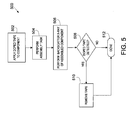
- FIG. 5 discloses a process 500 for using the doped adhesive tape in an industrial assembling process, which does not necessarily have to be limited to assembling an aircraft.
- the doped adhesive tape is applied to the components as appropriate. This may include, but is not limited to any of the aforementioned applications.
- any necessary assembly related task is then performed. This may be positioning the component relative to another, marking a location or distance on the tape, covering an orifice, etc. Typically, at some point subsequent to the assembly operation the tape should be removed, but this may not always occur.
- the doped adhesive tape may be inadvertently left on the applied components.
- inspection for foreign object debris is performed using the backscatter X-ray inspection technique.
- detection of the tape is facilitated by the doped nature of the tape as described above. If the tape is detected, then operation 510 occurs and the tape is removed. If no tape is detected, then the process is completed at operation 512.
- the above disclosure has illustrated the concepts based on using a paper-based doped adhesive tape.
- the above concepts and principles are not limited to using only a paper-based tape, but can be applied to tapes where the backing material is made from other non-paper materials.
- adhesive tapes where the backing material is made from cloth, plastic, foam, or other types of materials can benefit from the above concepts.
- a cloth or plastic backing can either be made that incorporate a dopant into the backing itself, or has the doped adhesive applied thereto.
Landscapes
- Chemical & Material Sciences (AREA)
- Organic Chemistry (AREA)
- Inorganic Chemistry (AREA)
- Analysing Materials By The Use Of Radiation (AREA)
- Adhesive Tapes (AREA)
- Adhesives Or Adhesive Processes (AREA)
- Laminated Bodies (AREA)
Abstract
Description
- Manufacturing aircraft is a largely manual process, involving assembly of components into an airframe. Components are manually fitted, attached, and assembled by technicians on an assembly line. While in some instances, jigs and other devices are used to facilitate the assembly process, many of the procedures require manually measuring, positioning, and attaching components. One supply material that has been found useful in the manufacturing process is a commonly available adhesive tape, frequently referred to as "painter's tape." This type of tape has an adhesive applied to one side allowing the tape to be easily and cleanly removed. Specifically, the adhesive allows the tape to be removed without leaving behind adhesive residue on the component, and with minimal pullout of the surface material to which it is attached. Such tapes are readily available in home improvement stores or painting supply stores.
- This tape is used for a variety of applications during the manufacturing process, including positioning parts together during the assembly. The applications of using this tape during assembly are numerous, and hence many pieces of tape are used during assembly of an aircraft. After assembly, the tape should be removed and discarded. However, it is possible some pieces of tape remain, and the tape becomes a "foreign object" left behind after the aircraft is assembled. This is undesirable for various reasons.
- Therefore, it is important to be able to detect and remove all vestiges of any adhesive tape used during the assembly process. It is with respect to these and other considerations that the disclosure herein is presented.
- It should be appreciated that this Summary is provided to introduce a selection of concepts in a simplified form that are further described below in the Detailed Description. This Summary is not intended to be used to limit the scope of the claimed subject matter.
- In one embodiment of the present disclosure, a doped adhesive tape includes a backing layer and an adhesive layer, where a dopant is added to the backing layer or the adhesive layer. The dopant is an element that facilitates detection of the doped adhesive tape using a backscatter X-ray inspection process.
- In another embodiment of the present disclosure, a method of manufacturing the doped adhesive tape includes the operations of producing a paper slurry for manufacturing the adhesive tape, forming a continuous paper sheet using the paper slurry, and applying an adhesive sizing to the continuous paper sheet. A dopant is added during the manufacturing process that facilitates detection of the adhesive tape by a backscatter X-ray inspection process. The continuous paper sheet with adhesive and dopant is then formed into a roll of adhesive tape.
- In another embodiment of the present disclosure, a method for using doped adhesive tape includes operations of applying the doped adhesive tape to a first component being assembled, where the doped adhesive tape includes a dopant facilitating detection of the doped adhesive tape by a backscatter X-ray inspection process. The first component is assembled with a second component, and the assembly is subjected to the backscatter X-ray inspection process.
- Other embodiments may include:
- A. A doped adhesive tape comprising: a backing layer having a first side and a second side; an adhesive layer applied to the first side of the backing layer; and a dopant added to the backing layer or the adhesive layer, the dopant comprising an element facilitating detection of the doped adhesive tape using a backscatter X-ray inspection process.
- B. The doped adhesive tape of paragraph A, wherein the backing layer comprises a paper layer comprising an iodine based dopant.
- C. The doped adhesive tape of paragraph A, wherein the adhesive layer comprises an iodine based dopant.
- D. The doped adhesive tape of paragraph A, wherein the backing layer is a paper layer that is greater than 20 mils thickness.
- E. The doped adhesive tape of paragraph B, wherein the iodine comprises potassium iodide.
- F. The doped adhesive tape of paragraph C, wherein the iodine comprises potassium iodide.
- G. The doped adhesive tape of paragraph A, wherein the dopant is added to the backing layer by spraying a liquid comprising iodine on the backing layer prior to application of the adhesive.
- The features, functions, and advantages that have been discussed can be achieved independently in various embodiments of the present disclosure or may be combined in yet other embodiments, further details of which can be seen with reference to the following description and drawings.
-
-
FIG.1 illustrates various applications of a thick doped adhesive tape used in conjunction with the assembly of various parts according to various embodiments described herein. -
FIG.2 illustrates one system for detecting thick doped adhesive tape remaining after assembly of components according to various embodiments described herein. -
FIGS. 3A and 3B illustrate various embodiments of a thick doped adhesive tape for use in the assembly process according to various embodiments described herein. -
FIG. 4 . illustrates one embodiment of a manufacturing process flow for manufacturing thick doped adhesive tape according to various embodiments described herein. -
FIG. 5 illustrates one process flow for detecting remnants of thick doped adhesive tape after assembly of components according to various embodiments described herein. - The following detailed description is directed to systems and methods related to the use of thick doped adhesive tape in the manufacturing process of an aircraft. Although various embodiments are described in the context of assembling an aircraft, it should be recognized that the application of the invention is not limited to manufacturing aircraft per se, but can be applied to other applications where detection of unremoved adhesive tape is required using a backscatter X-ray inspection process. This includes assembly of electronic systems, propulsion systems, rockets, spacecraft components, etc. In the following detailed description, references are made to the accompanying drawings by way of illustration and various embodiments of the invention. In the drawings, like numerals represent like elements.
- Aircraft manufacturing, whether it be for commercial or military airplanes, is largely a manual process involving assembling, fitting, and attaching various components or subassemblies. During this process, various different types of processes are involved. For example, components must be temporarily held in position while fasteners are attached, components must be first positioned relative to other components before assembly, or measurements relative to certain points are made and be notated.
- Various uses have been found for using a commonly available adhesive tape is beneficial during the assembly process. The adhesive tape can be one of the so-called "painter's tape" that are found in home improvement stores and are advertised frequently for use in painting applications. The tape features an adhesive that allows the tape to be readily applied to a surface and later removed. Unlike other tapes which are intended to be permanent or have a high surface bonding capability, this adhesive allows the tape to be readily and cleanly removed later without leaving an adhesive residue, without pulling out the portion of the underlying surface, and without tearing into small pieces. Once such commonly known brand of painter's tape is the blue-colored ScotchBlue™ Multi-Surface 2090 Painter's Tape. This tape is available in various widths, ranging from at least ¾" to 3". Other brands are available having similar characteristics and features. Various brands or types of tapes also purport to have similar adhesives designed for relatively longer/shorter removal times.
- Using conventional adhesive tape readily allows two parts to be positioned and affixed in place for assembly. However, the adhesive tape may not be removed and remain within the assembled parts. Detection of conventional adhesive tape can be enhanced by doping the tape to increase visibility using backscatter X-ray imaging techniques. One embodiment of using a doped adhesive tape is shown in
FIG. 1 , which illustrates a variety of applications, for purposes of illustrating potential uses of the doped adhesive tape. These applications are demonstrative in nature, and it should be realized that various other applications are readily possible. - In
FIG. 1 , three panels are illustrated.Panel 102 abuts up with asecond panel 105 atseam 101, and athird panel 104 is positioned over both of these panels. Thisthird panel 104 is held in position by three pieces of dopedadhesive tape 108a-108c (this, as well asexemplars third panel 104 may be necessary as a protective covering, with the doped adhesive tape 108 utilized to hold thethird panel 104 in position, while fasteners are attached for affixing thethird panel 104 to theother panels panel 104, and it is possible to readily re-position the panel by removing the doped adhesive tape, and reapplying the tape. If for some reason it is necessary, the doped adhesive tape 108 can be replaced with new tape. After the process is completed, the doped adhesive tape 108 can be removed and discarded. -
FIG. 1 also shows another application for the doped adhesive tape. The dopedadhesive tape 108d is applied to thepanel 102 and marked with indicia ("+") 107. This can be marked by an assembly worker using a pen, felt marker, or pencil. The indicia can represent a position for drilling a hole, attaching a fastener, or for some other purpose. Thus, if a hole is to be drilled, the position can be manually marked without marking on the panel itself. - The doped
adhesive tape 108f inFIG. 1 shows yet another application of doped adhesive tape, namely to provide markings fordistances 116. This may be used to indicate positioning of other components, for drilling holes, etc. Finally, the dopedadhesive tape 108e may be used as a means of protection. In this case, atube 110 is illustrated which has an open end. During the manufacturing process, dust, dirt, shavings, and other debris may be present in the work area. Covering the end of an orifice with the doped adhesive tape is an easy way to prevent such debris from entering the orifice. Thus, if the pipe were, for example, a hydraulic line, then covering the hydraulic line opening with the doped adhesive tape can prevent debris from entering the hydraulic system. Other holes or openings can be covered for similar reasons. - Again, after completion of the assembly process, the doped adhesive tape should be removed. Removal of the doped adhesive tape after the assembly is critical. In many instances, the doped tape can be easily visually detected and then removed. However, as subcomponents are assembled into larger assemblies, pieces of doped adhesive tape which were previously readily visible may become hidden from visual inspection. Human error or oversight may result in pieces of tape remaining after assembly, which are then subsequently hidden. Since the doped adhesive tape is not part of the intended completed assembly, the doped adhesive tape is considered a foreign object. Removal of all foreign objects within the aircraft assembly is critical, since foreign objects may impede the operation of various systems and present a safety hazard. Before foreign objects can be removed, they must be identified which is referred to as a foreign object detection ("FOD") process.
- One approach for foreign object detection involves using backscatter X-ray detection. This process is well known in the art and involves bombarding a surface with X-rays causing scattering of the X-rays at various angles. The scattered X-ray beam is analyzed to allow non-destructive inspection of 3-dimenisional objects in completed assemblies. For reference purposes, this is referred to as a "backscatter X-ray inspection" process. After detection of the foreign objects, the foreign object item can be removed.
- One such inspection system is illustrated in
FIG. 2 . The backscatterX-ray inspection system 200 ofFIG. 2 diagrammatically illustrates a sub-assembly 202 having a void that is not readily visible for human inspection. The sub-assembly 202 includes a piece ofadhesive tape 204 remaining within it. The sub-assembly is subjected to a backscatter X-ray inspection processing by generating an X-ray beam generated by anX-ray generator 206. The backscatter X-ray inspection device includes one ormore collimator receivers 207. Thecollimator receivers 207 receive the scattered X-rays from the surface. Unlike many medical imaging systems, the X-rays are reflected by the objects detected, as opposed to transmitted through the objects. The control of theX-ray generator 206 and the data it receives is processed by acontroller 208, which generates a display image on acomputer display 210. The display image typically is a black-and-white image, and would show in this embodiment an X-ray image of the panel ofassembly 212 and thetape 214. The display is visually analyzed by a technician to ascertain whether a foreign object is present, namely the doped adhesive tape. Once detected, the doped adhesive tape can be removed. Backscatter X-ray processing allows inspection of components which cannot otherwise be readily visually inspected and which would otherwise potentially have undetected foreign objects. - A backscatter
X-ray inspection system 200 may be a commercially available unit, such as those manufactured by NUCSAFE™ of Oak Ridge, Tennessee. The unit can be stationary, or can be attached to a robotic arm, gantry, or other movable mechanism. Such backscatter X-ray devices can potentially detect adhesive tape, but the detection of conventional painter's tape by such units is difficult because the tape itself may be made from crepe paper that is only about 5.4 mils thick (1 mil = 1/1000"). Thus, the relatively low mass density of the tape (mass density = density x thickness), because of its small thickness, coupled with the high content of carbon, which has a low atomic number of 6, and relatively low density, can render detection difficult. - According to various embodiments described herein, detection of the adhesive tape by the backscatter X-ray device can be facilitated by modifying the mass density of the tape, which can be accomplished in at least two ways. In the first approach, a dopant is used that has a relatively higher density material, typically of a chemical element with a higher atomic number, that provides higher visibility to the backscatter X-ray inspection process than the materials used in conventional adhesive tape. The second approach is to make the tape thicker in addition to adding the dopant.
- Changing the mass density and the subsequent Compton scattering characteristics by using a dopant increases the visibility of the adhesive tape relative to surrounding materials and structures when using the backscatter X-ray inspection process. The dopant may comprise a higher atomic number element relative to carbon, and this facilitates detection by the X-ray backscattering process because the heaver element will scatter the X-rays differently. The selection of the element added should preferably be relatively inexpensive in cost and safe to use. Thus, while gold has a heavy atomic number, its use would likely be prohibitly expensive. On the other hand, lead has a very high atomic number, but its use could pose safety hazards when handled. One compound that is relatively inexpensive, safe, and easy to incorporate into adhesive tape is iodine. Iodine has an atomic number of 53, and is commonly used for X-ray contrast imaging purposes in medical imaging. (It should be noted that medical X-ray techniques are often based on transmission of X-rays through the subject matter and are different from the back-scattering technique disclosed herein. Nevertheless, iodine is effective as a contrast agent in X-ray imaging.)
- The incorporation of an iodine based dopant into the adhesive tape can occur in at least two ways. These are diagrammatically illustrated in
FIG. 3A and FIG. 3B . InFIG. 3A , a side view of a section of the dopedadhesive tape 300a is shown. Thetape 300a comprises a backing layer comprising apaper layer 301a and anadhesive layer 303a. The adhesive layer is also referred to herein as a "sizing" and the process of applying the adhesive layer may also be referred to as "to size." InFIG. 3A (and 3B ), the thickness of the adhesive layer and the paper layer are not necessarily drawn to scale. The adhesive layer may be an acrylic or some other type. Further, the backing layer can be made of cloth, plastic, or other types of synthetic materials. As shown inFIG. 3A , this embodiment does not modify the characteristics of the adhesive as may be used in conventional painter's tapes. Thepaper layer 301a may be crepe paper, or based on other types of paper used for making painter's tape. However, thepaper layer 301a is modified to incorporateiodine 302a, illustrated diagrammatically as dots within the paper layer. This embodiment of the doped adhesive tape adds iodine to the paper as it is being made. This results in the iodine being evenly interspersed into the paper. Then, theadhesive layer 303a may be added in a conventional manner. - Another embodiment of incorporating iodine into adhesive tape is shown in
FIG. 3B . InFIG. 3B , thetape 300b in this embodiment also comprises apaper layer 301b and anadhesive layer 303b. In this embodiment, the paper does not have any iodine incorporated therein. Rather, theiodine 302b is incorporated into theadhesive layer 303b. Theiodine 302b can be mixed into the adhesive prior to application to the paper, and the iodine laced adhesive may be then applied (sized) to thepaper layer 301b in a conventional manner. - Other embodiments are possible in order to achieve incorporation of iodine into the adhesive tape. For example, the
paper layer 301b could be sprayed with iodine, or an iodine based solution comprising potassium iodide (or other forms), onto the tape, and then the adhesive is applied onto the layer of iodine. This results in a layered structure of paper, iodine (or an iodine based compound), and adhesive. Specifically, the iodine is located between the paper and the adhesive. In another embodiment, the iodine can be applied into the adhesive layer after the adhesive layer has been applied to the paper layer. This results in a layered structure of paper, adhesive and then iodine. Other variations are possible and could be developed by those skilled in the art. - A process for manufacturing iodine doped adhesive tape is shown in
FIG. 4 . Theprocess 400 is shown as a series of operations beginning with forming a paper pulp slurry inoperation 402. In one embodiment, iodine, potassium iodide, or other iodine based additives are added to the slurry inoperation 404. This results in incorporation of iodine into the paper itself. Mixing of the solution then facilities even distribution of the iodine into the paper slurry. The slurry is then processed inoperation 406 by a paper processing machine, which forms the crepe paper (or other type of paper), used as the paper layer in the adhesive tape. In one embodiment, the slurry is passed over a heated rotating drum semi-solidifying the slurry paper, and the semi-solid paper is scraped off the drum using a large blade as it rotates and dried to create acontinuous paper sheet 408. The thickness can be controlled in part on the speed of rotation, the slurry mixture, and the heat. Other factors may be involved. After drying, the result is acontinuous paper sheet 408, which is then sized inoperation 410.Operation 410 involves application of the sizing (e.g., liquid adhesive) onto the tape, which can occur by spraying, depositing, or otherwise applying the adhesive onto one side of the paper. The addition of the adhesive atoperation 412 may have iodine incorporated into the sizing. If so, this produces the doped adhesive layer on the paper. From there,operation 414 cuts the tape to the desired width, rolls, and packages its. The result is the dopedadhesive tape 416. - As shown in
FIG. 4 , the addition of iodine atoperation 404 andoperation 412 is optional. The iodine may be added into 1) the paper slurry (to produce iodine in the paper layer), 2) the sizing (to produce iodine in the adhesive layer), or 3) a combination of both. The amount of iodine added varies, and can depend on the thickness of the paper layer and whether iodine is added to both the paper and the sizing. If the paper layer is made thicker (e.g., relative to current painter's tape), and iodine is added to both the paper and the adhesive, then this will produce the most easily detectable tape by the backscatter X-ray detection technique. A slightly less detectable tape can be produced by making a thicker paper layer with iodine added to only one of the paper or the adhesive. Depending on the thickness of the paper and the amount of iodine added, this arrangement may be acceptable for detecting the doped adhesive tape. - The other approach previously identified for increasing the mass density is to make the doped adhesive tape thicker. In one embodiment, the paper used in the adhesive tape is made about 100 mils thick (0.1") (e.g., within 80 - 120 mils). In other embodiments, the tape can be made thinner, e.g., at least 20 or 50 mils, or even thinner based on the relative level of doping applied. The tape can be made thicker, but there are practical considerations regarding making the tape thicker, including the increased costs of manufacturing and handling.
- Assuming that the paper used in conventional adhesive tape has a density of 250 kg/m3 or 0.009 1bs./in3, then a 1 square inch of this paper would have a mass density be provided by the following equations (1a - 1c):


- If however, the thickness is increased to 100 mils, then equations 2a-2b provide for the mass density:


- The thicker tape increases the mass density by 20 times (which is derived by dividing equation 2b by equation 1c). Since the ability to detect the tape varies linearly with respect to its mass density, this thicker tape will be 20 times more detectable using the backscatter X-ray inspection process. This example shows the improved detectability by thickening the tape, but it is not practical to have a very thick tape owing to considerations cited previously.
- The amount of required dopant, such as iodine, to be added into paper slurry or adhesive, can be estimating using the following calculations. Assuming that the major chemical element in the paper is carbon, that has an atomic number 6, and the atomic number of iodine is 53. Using the combined atomic number of 59 and weighted factors, the carbon contributes 6/59 or about 10% of overall detectability and the iodine contributes 53/59 or about 90% of overall detectability. Therefore, in one embodiment the portion ratio of paper slurry to iodine is 9 to 1. That is, 9 parts of paper slurry to 1 part of iodine.
- Similarly, it is assumed that the major chemical element in the adhesive is hydrogen which has an atomic number 1. The adhesive contributes 1/54 or about 2% of overall detectability and the iodine contributes 53/54 or about 98% of overall detectability. Therefore, the portion ratio of adhesive to iodine is 9.8 to 0.2. Therefore, in one embodiment the portion ratio is 9.8 parts of adhesive to 0.2 part of iodine, which is equivalent to 49 parts adhesive to 1 part iodine.
- The above examples provide the guidelines for the amount of required dopant, such as iodine, in paper slurry and adhesive in one embodiment. It is believed that more dopant would further enhance the detectability. Other embodiments may use other ratios depending on other factors.
- Other variations are possible. In another embodiment, the paper layer may remain the same thickness as conventional paper tape, and a greater concentration of iodine may be added to the paper, the adhesive, or both. Depending on the application, this arrangement may be sufficient to enhance the detectability of the tape by the X-ray detection technique. Further, the detectability of the doped adhesive tape is relative to the materials being inspected. For example, doped tape may be used to assembly plastic or metal parts. The amount of doping, how it is applied, and the thickness of the paper required to facilitate detection using the backscatter X-ray process may vary based on whether plastic of metal parts are being inspected. Thus, it may be sufficient in some embodiments to merely apply a dopant to the adhesive of the paper used in a conventional painter's tape (about 5.4 mils). The reference to "doped adhesive tape" herein should not be interpreted as limiting the resulting tape to a particular manufacturing process, or to one of the embodiments described above.
- The dopant disclosed herein is iodine, and it could be in the form of a suitable concentration of potassium iodide dissolved in water or other suitable carrier. Other iodine based compounds could be used. Further, other compounds may be substituted in lieu of, or added with, iodine to form the dopant that provides a relatively opaque effect using the backscatter X-ray backscattering inspection process. For example, bromine and chlorine have similar atomic numbers as iodine, but these elements can be hazardous or expensive in various forms. It is desirable, but not necessary, that whatever compound is used as the dopant that it is safe and inexpensive. Thus, some elements which may be effective for detection, may not be preferred because they are highly reactive or costly.
- Once the doped adhesive taped is produced, its use is detailed in the process flow of
FIG. 5. FIG. 5 discloses aprocess 500 for using the doped adhesive tape in an industrial assembling process, which does not necessarily have to be limited to assembling an aircraft. Inoperation 502, the doped adhesive tape is applied to the components as appropriate. This may include, but is not limited to any of the aforementioned applications. Inoperation 504, any necessary assembly related task is then performed. This may be positioning the component relative to another, marking a location or distance on the tape, covering an orifice, etc. Typically, at some point subsequent to the assembly operation the tape should be removed, but this may not always occur. - However, as noted, the doped adhesive tape may be inadvertently left on the applied components. In
operation 506, inspection for foreign object debris is performed using the backscatter X-ray inspection technique. Atoperation 508, detection of the tape is facilitated by the doped nature of the tape as described above. If the tape is detected, thenoperation 510 occurs and the tape is removed. If no tape is detected, then the process is completed atoperation 512. - The above disclosure has illustrated the concepts based on using a paper-based doped adhesive tape. However, the above concepts and principles are not limited to using only a paper-based tape, but can be applied to tapes where the backing material is made from other non-paper materials. Thus, adhesive tapes where the backing material is made from cloth, plastic, foam, or other types of materials can benefit from the above concepts. Specifically, a cloth or plastic backing can either be made that incorporate a dopant into the backing itself, or has the doped adhesive applied thereto.
- The subject matter described herein is provided by way of illustration only and should not be construed as limiting. Various modifications and changes may be made to the subject matter described herein without exactly following the example embodiments and applications illustrated and described, and without departing from the true spirit and scope of the present disclosure, which is set forth in the following claims.
Claims (13)
- A method for manufacturing doped adhesive tape comprising:producing a paper slurry for manufacturing adhesive tape;forming a continuous paper sheet using the paper slurry;applying an adhesive sizing to the continuous paper sheet;applying a dopant facilitating the detection of the doped adhesive tape by backscatter x-ray inspection, wherein the dopant applied is added to the paper slurry or to the adhesive sizing; andforming a roll of adhesive tape with the adhesive applied thereto.
- The method of claim 1, wherein the continuous paper sheet is of a thickness greater than 20 mils.
- The method of claim 2, wherein the dopant comprises iodine and is added to the paper slurry prior to forming a continuous paper sheet.
- The method of claim 2, wherein the dopant comprises iodine and is added to the adhesive sizing prior to applying the adhesive sizing to the continuous paper sheet.
- The method of claim 2, wherein the continuous paper sheet is crepe paper.
- The method of either claim 3 or claim 4, wherein the dopant comprises potassium iodide.
- An adhesive tape made by the method of any of claims 1 through 6.
- A method for using doped adhesive tape comprising:applying the doped adhesive tape to a first component being assembled, wherein the doped adhesive tape comprises a dopant facilitating detection by a backscatter X-ray inspection process;assembling the first component with a second component; andsubjecting the assembled first component and the second component to the backscatter X-ray inspection process.
- The method of claim 8, further comprising:determining whether the doped adhesive tape is present on the first component; andremoving the doped adhesive tape from the first component if the doped adhesive tape is present on the first component.
- The method of claim 9, wherein the doped adhesive tape is not readily visible after the first component and the second component have been assembled.
- The method of claim 10, wherein the tape is of a thickness greater than 20 mils.
- The method of claim 10, wherein the dopant comprises iodine.
- The method of claim 10, where determining whether the doped adhesive tape is present on the first component involves visually analyzing an X-ray image of the first component using a backscatter X-ray inspection device.
Applications Claiming Priority (1)
| Application Number | Priority Date | Filing Date | Title |
|---|---|---|---|
| US13/174,911 US8366848B2 (en) | 2011-07-01 | 2011-07-01 | Thick doped adhesive tape to enhance backscatter X-ray detectability |
Publications (3)
| Publication Number | Publication Date |
|---|---|
| EP2540788A2 true EP2540788A2 (en) | 2013-01-02 |
| EP2540788A3 EP2540788A3 (en) | 2017-05-31 |
| EP2540788B1 EP2540788B1 (en) | 2021-08-04 |
Family
ID=46261951
Family Applications (1)
| Application Number | Title | Priority Date | Filing Date |
|---|---|---|---|
| EP12171650.0A Active EP2540788B1 (en) | 2011-07-01 | 2012-06-12 | Thick doped adhesive tape to enhance backscatter x-ray detectability |
Country Status (5)
| Country | Link |
|---|---|
| US (2) | US8366848B2 (en) |
| EP (1) | EP2540788B1 (en) |
| JP (1) | JP5968095B2 (en) |
| CN (1) | CN102850952B (en) |
| CA (1) | CA2776439C (en) |
Families Citing this family (5)
| Publication number | Priority date | Publication date | Assignee | Title |
|---|---|---|---|---|
| ES2527728T3 (en) * | 2011-06-27 | 2015-01-29 | Wegmann Automotive Gmbh & Co. Kg | Balancing weight with activatable adhesive medium |
| US8366848B2 (en) * | 2011-07-01 | 2013-02-05 | The Boeing Company | Thick doped adhesive tape to enhance backscatter X-ray detectability |
| US10317349B2 (en) * | 2015-11-30 | 2019-06-11 | The Boeing Company | X-ray scatter systems and methods for detecting structural variations |
| US20180348150A1 (en) * | 2017-05-30 | 2018-12-06 | Malvern Panalytical B.V. | Pressed Powder Sample Measurements Using X-ray Fluorescence |
| EP4086668A3 (en) * | 2021-05-05 | 2023-02-15 | Varex Imaging Corporation | Backscatter imaging system |
Family Cites Families (12)
| Publication number | Priority date | Publication date | Assignee | Title |
|---|---|---|---|---|
| US5116676A (en) | 1987-04-15 | 1992-05-26 | Minnesota Mining And Manufacturing Company | Removable pressure-sensitive adhesive tape |
| US5181234B1 (en) | 1990-08-06 | 2000-01-04 | Rapiscan Security Products Inc | X-ray backscatter detection system |
| JP2000063781A (en) * | 1998-08-26 | 2000-02-29 | Matsushita Electric Works Ltd | Adhesive for x-ray projection |
| US6939936B2 (en) * | 2002-04-25 | 2005-09-06 | 3M Innovative Properties Company | Iodine/iodide-containing hot melt coatable adhesive, methods and uses therefor |
| US20040103903A1 (en) * | 2002-10-18 | 2004-06-03 | Falahee Mark H. | Surgical surface localizing grid |
| JP2005325165A (en) * | 2004-05-12 | 2005-11-24 | Three M Innovative Properties Co | Iodine-containing hotmelt pressure-sensitive adhesive meltable and applicable at temperature of 100°c or lower and medical pressure-sensitive adhesive sheet product using the pressure-sensitive adhesive |
| US7335899B2 (en) * | 2004-12-03 | 2008-02-26 | Eastman Kodak Company | Media for detection of X-ray exposure |
| US7393468B2 (en) * | 2005-02-23 | 2008-07-01 | Intel Corporation | Adhesive with differential optical properties and its application for substrate processing |
| DE102006029651A1 (en) * | 2006-06-28 | 2008-01-03 | Hoelger, Christof-Gottfried, Dr. | Adhesive tape with an impregnated and release agent coated crepe paper substrate, consists of a layer of crepe paper fibers embedded in a matrix of a polymer latex that has the impregnation and a polymer latex layer with a release function |
| US7463714B2 (en) * | 2006-10-17 | 2008-12-09 | The Boeing Company | Foreign object detection |
| US8568545B2 (en) * | 2009-06-16 | 2013-10-29 | The Boeing Company | Automated material removal in composite structures |
| US8366848B2 (en) * | 2011-07-01 | 2013-02-05 | The Boeing Company | Thick doped adhesive tape to enhance backscatter X-ray detectability |
-
2011
- 2011-07-01 US US13/174,911 patent/US8366848B2/en not_active Expired - Fee Related
-
2012
- 2012-05-08 CA CA2776439A patent/CA2776439C/en active Active
- 2012-06-12 EP EP12171650.0A patent/EP2540788B1/en active Active
- 2012-06-13 JP JP2012134272A patent/JP5968095B2/en not_active Expired - Fee Related
- 2012-06-29 CN CN201210225342.4A patent/CN102850952B/en not_active Expired - Fee Related
- 2012-12-20 US US13/722,154 patent/US8828538B1/en not_active Expired - Fee Related
Non-Patent Citations (1)
| Title |
|---|
| None |
Also Published As
| Publication number | Publication date |
|---|---|
| US8366848B2 (en) | 2013-02-05 |
| US20130000814A1 (en) | 2013-01-03 |
| JP2013014761A (en) | 2013-01-24 |
| US8828538B1 (en) | 2014-09-09 |
| JP5968095B2 (en) | 2016-08-10 |
| CN102850952B (en) | 2016-03-30 |
| CA2776439C (en) | 2014-02-04 |
| EP2540788B1 (en) | 2021-08-04 |
| EP2540788A3 (en) | 2017-05-31 |
| CA2776439A1 (en) | 2013-01-01 |
| CN102850952A (en) | 2013-01-02 |
Similar Documents
| Publication | Publication Date | Title |
|---|---|---|
| EP2540788B1 (en) | Thick doped adhesive tape to enhance backscatter x-ray detectability | |
| SE502119C2 (en) | System for error handling when laying a fabric | |
| US20230330802A1 (en) | Flaw grinding system, flaw grinding method, and steel-product manufacturing method employing the flaw grinding method | |
| EP1881340A2 (en) | Position system for determining the position of a tool | |
| JP2009068910A (en) | X-ray inspection equipment | |
| Wadanambi et al. | The leaching of lead from lead-based paint in landfill environments | |
| Axinte et al. | An approach to use an array of three acoustic emission sensors to locate uneven events in machining—Part 1: method and validation | |
| KR102022365B1 (en) | Ultrasonic image display method and ultrasonic image display system | |
| EP3582039B1 (en) | Object surface evaluation method, evaluation device, workpiece machining method using said evaluation method, and machine tool | |
| CN103901058A (en) | Dual-optical path X-ray nondestructive testing device | |
| Köhler et al. | Clinching in in-situ CT–experimental study on suitable tool materials | |
| EP2320286A1 (en) | Method for logging process information data | |
| Burke et al. | NDE of spacecraft materials using 3D Compton backscatter x-ray imaging | |
| Tornow et al. | In-line quality assurance for ENDT of multi material adherend surfaces | |
| Vietas | Artificial Intelligence and the Future of Work; Opportunities and Risks Associated with Worker Health and Safety | |
| JP2014234613A (en) | Coating condition inspecting method and sealant applying method | |
| Draper et al. | Effect of Steel Surface Profile Peak Density on Rust Creepage | |
| US9360438B2 (en) | Method for radiographically inspecting a component by means of X-ray beams using a smoothing agent and smoothing agent for carrying out the method | |
| JP7302135B2 (en) | Deformation analysis method for rubber materials | |
| CN207344645U (en) | A kind of TPX release films cutting machine | |
| Checchi et al. | A study on the feasibility of in-process compensation of cutting force induced errors using axes motors absorbed current | |
| JP2024029629A (en) | Flexible members used for non-destructive testing and non-destructive testing methods | |
| Köhler et al. | Clinching in In-situ CT–Experimental Stud Clinching in In-situ CT–Experimental Study on Suitable T y on Suitable Tool Materials | |
| AT515473B1 (en) | Method for removing the film section projecting over the edges of a laminated safety glass panel | |
| Shaw et al. | Permeation of Active Ingredient in Pesticide Formulations Through Single-Use and Reusable Chemical-Resistant Gloves |
Legal Events
| Date | Code | Title | Description |
|---|---|---|---|
| PUAI | Public reference made under article 153(3) epc to a published international application that has entered the european phase |
Free format text: ORIGINAL CODE: 0009012 |
|
| 17P | Request for examination filed |
Effective date: 20120612 |
|
| AK | Designated contracting states |
Kind code of ref document: A2 Designated state(s): AL AT BE BG CH CY CZ DE DK EE ES FI FR GB GR HR HU IE IS IT LI LT LU LV MC MK MT NL NO PL PT RO RS SE SI SK SM TR |
|
| AX | Request for extension of the european patent |
Extension state: BA ME |
|
| PUAL | Search report despatched |
Free format text: ORIGINAL CODE: 0009013 |
|
| AK | Designated contracting states |
Kind code of ref document: A3 Designated state(s): AL AT BE BG CH CY CZ DE DK EE ES FI FR GB GR HR HU IE IS IT LI LT LU LV MC MK MT NL NO PL PT RO RS SE SI SK SM TR |
|
| AX | Request for extension of the european patent |
Extension state: BA ME |
|
| RIC1 | Information provided on ipc code assigned before grant |
Ipc: C09J 7/04 20060101AFI20170427BHEP Ipc: C09J 11/04 20060101ALI20170427BHEP |
|
| STAA | Information on the status of an ep patent application or granted ep patent |
Free format text: STATUS: EXAMINATION IS IN PROGRESS |
|
| 17Q | First examination report despatched |
Effective date: 20190910 |
|
| REG | Reference to a national code |
Ref country code: DE Ref legal event code: R079 Ref document number: 602012076274 Country of ref document: DE Free format text: PREVIOUS MAIN CLASS: C09J0007040000 Ipc: C09J0007000000 |
|
| RIC1 | Information provided on ipc code assigned before grant |
Ipc: C09J 7/00 20180101AFI20201103BHEP |
|
| GRAP | Despatch of communication of intention to grant a patent |
Free format text: ORIGINAL CODE: EPIDOSNIGR1 |
|
| STAA | Information on the status of an ep patent application or granted ep patent |
Free format text: STATUS: GRANT OF PATENT IS INTENDED |
|
| INTG | Intention to grant announced |
Effective date: 20210119 |
|
| RIN1 | Information on inventor provided before grant (corrected) |
Inventor name: ENGEL, JAMES E Inventor name: TOH, CHIN H |
|
| GRAS | Grant fee paid |
Free format text: ORIGINAL CODE: EPIDOSNIGR3 |
|
| GRAA | (expected) grant |
Free format text: ORIGINAL CODE: 0009210 |
|
| STAA | Information on the status of an ep patent application or granted ep patent |
Free format text: STATUS: THE PATENT HAS BEEN GRANTED |
|
| AK | Designated contracting states |
Kind code of ref document: B1 Designated state(s): AL AT BE BG CH CY CZ DE DK EE ES FI FR GB GR HR HU IE IS IT LI LT LU LV MC MK MT NL NO PL PT RO RS SE SI SK SM TR |
|
| REG | Reference to a national code |
Ref country code: GB Ref legal event code: FG4D |
|
| REG | Reference to a national code |
Ref country code: AT Ref legal event code: REF Ref document number: 1416990 Country of ref document: AT Kind code of ref document: T Effective date: 20210815 |
|
| REG | Reference to a national code |
Ref country code: CH Ref legal event code: EP |
|
| REG | Reference to a national code |
Ref country code: DE Ref legal event code: R096 Ref document number: 602012076274 Country of ref document: DE |
|
| REG | Reference to a national code |
Ref country code: IE Ref legal event code: FG4D |
|
| REG | Reference to a national code |
Ref country code: LT Ref legal event code: MG9D |
|
| REG | Reference to a national code |
Ref country code: NL Ref legal event code: MP Effective date: 20210804 |
|
| REG | Reference to a national code |
Ref country code: AT Ref legal event code: MK05 Ref document number: 1416990 Country of ref document: AT Kind code of ref document: T Effective date: 20210804 |
|
| PG25 | Lapsed in a contracting state [announced via postgrant information from national office to epo] |
Ref country code: SE Free format text: LAPSE BECAUSE OF FAILURE TO SUBMIT A TRANSLATION OF THE DESCRIPTION OR TO PAY THE FEE WITHIN THE PRESCRIBED TIME-LIMIT Effective date: 20210804 Ref country code: HR Free format text: LAPSE BECAUSE OF FAILURE TO SUBMIT A TRANSLATION OF THE DESCRIPTION OR TO PAY THE FEE WITHIN THE PRESCRIBED TIME-LIMIT Effective date: 20210804 Ref country code: PT Free format text: LAPSE BECAUSE OF FAILURE TO SUBMIT A TRANSLATION OF THE DESCRIPTION OR TO PAY THE FEE WITHIN THE PRESCRIBED TIME-LIMIT Effective date: 20211206 Ref country code: NO Free format text: LAPSE BECAUSE OF FAILURE TO SUBMIT A TRANSLATION OF THE DESCRIPTION OR TO PAY THE FEE WITHIN THE PRESCRIBED TIME-LIMIT Effective date: 20211104 Ref country code: RS Free format text: LAPSE BECAUSE OF FAILURE TO SUBMIT A TRANSLATION OF THE DESCRIPTION OR TO PAY THE FEE WITHIN THE PRESCRIBED TIME-LIMIT Effective date: 20210804 Ref country code: ES Free format text: LAPSE BECAUSE OF FAILURE TO SUBMIT A TRANSLATION OF THE DESCRIPTION OR TO PAY THE FEE WITHIN THE PRESCRIBED TIME-LIMIT Effective date: 20210804 Ref country code: FI Free format text: LAPSE BECAUSE OF FAILURE TO SUBMIT A TRANSLATION OF THE DESCRIPTION OR TO PAY THE FEE WITHIN THE PRESCRIBED TIME-LIMIT Effective date: 20210804 Ref country code: AT Free format text: LAPSE BECAUSE OF FAILURE TO SUBMIT A TRANSLATION OF THE DESCRIPTION OR TO PAY THE FEE WITHIN THE PRESCRIBED TIME-LIMIT Effective date: 20210804 Ref country code: BG Free format text: LAPSE BECAUSE OF FAILURE TO SUBMIT A TRANSLATION OF THE DESCRIPTION OR TO PAY THE FEE WITHIN THE PRESCRIBED TIME-LIMIT Effective date: 20211104 Ref country code: LT Free format text: LAPSE BECAUSE OF FAILURE TO SUBMIT A TRANSLATION OF THE DESCRIPTION OR TO PAY THE FEE WITHIN THE PRESCRIBED TIME-LIMIT Effective date: 20210804 |
|
| PG25 | Lapsed in a contracting state [announced via postgrant information from national office to epo] |
Ref country code: PL Free format text: LAPSE BECAUSE OF FAILURE TO SUBMIT A TRANSLATION OF THE DESCRIPTION OR TO PAY THE FEE WITHIN THE PRESCRIBED TIME-LIMIT Effective date: 20210804 Ref country code: LV Free format text: LAPSE BECAUSE OF FAILURE TO SUBMIT A TRANSLATION OF THE DESCRIPTION OR TO PAY THE FEE WITHIN THE PRESCRIBED TIME-LIMIT Effective date: 20210804 Ref country code: GR Free format text: LAPSE BECAUSE OF FAILURE TO SUBMIT A TRANSLATION OF THE DESCRIPTION OR TO PAY THE FEE WITHIN THE PRESCRIBED TIME-LIMIT Effective date: 20211105 |
|
| PG25 | Lapsed in a contracting state [announced via postgrant information from national office to epo] |
Ref country code: NL Free format text: LAPSE BECAUSE OF FAILURE TO SUBMIT A TRANSLATION OF THE DESCRIPTION OR TO PAY THE FEE WITHIN THE PRESCRIBED TIME-LIMIT Effective date: 20210804 |
|
| PG25 | Lapsed in a contracting state [announced via postgrant information from national office to epo] |
Ref country code: DK Free format text: LAPSE BECAUSE OF FAILURE TO SUBMIT A TRANSLATION OF THE DESCRIPTION OR TO PAY THE FEE WITHIN THE PRESCRIBED TIME-LIMIT Effective date: 20210804 |
|
| REG | Reference to a national code |
Ref country code: DE Ref legal event code: R097 Ref document number: 602012076274 Country of ref document: DE |
|
| PG25 | Lapsed in a contracting state [announced via postgrant information from national office to epo] |
Ref country code: SM Free format text: LAPSE BECAUSE OF FAILURE TO SUBMIT A TRANSLATION OF THE DESCRIPTION OR TO PAY THE FEE WITHIN THE PRESCRIBED TIME-LIMIT Effective date: 20210804 Ref country code: SK Free format text: LAPSE BECAUSE OF FAILURE TO SUBMIT A TRANSLATION OF THE DESCRIPTION OR TO PAY THE FEE WITHIN THE PRESCRIBED TIME-LIMIT Effective date: 20210804 Ref country code: RO Free format text: LAPSE BECAUSE OF FAILURE TO SUBMIT A TRANSLATION OF THE DESCRIPTION OR TO PAY THE FEE WITHIN THE PRESCRIBED TIME-LIMIT Effective date: 20210804 Ref country code: EE Free format text: LAPSE BECAUSE OF FAILURE TO SUBMIT A TRANSLATION OF THE DESCRIPTION OR TO PAY THE FEE WITHIN THE PRESCRIBED TIME-LIMIT Effective date: 20210804 Ref country code: CZ Free format text: LAPSE BECAUSE OF FAILURE TO SUBMIT A TRANSLATION OF THE DESCRIPTION OR TO PAY THE FEE WITHIN THE PRESCRIBED TIME-LIMIT Effective date: 20210804 Ref country code: AL Free format text: LAPSE BECAUSE OF FAILURE TO SUBMIT A TRANSLATION OF THE DESCRIPTION OR TO PAY THE FEE WITHIN THE PRESCRIBED TIME-LIMIT Effective date: 20210804 |
|
| PLBE | No opposition filed within time limit |
Free format text: ORIGINAL CODE: 0009261 |
|
| STAA | Information on the status of an ep patent application or granted ep patent |
Free format text: STATUS: NO OPPOSITION FILED WITHIN TIME LIMIT |
|
| 26N | No opposition filed |
Effective date: 20220506 |
|
| PG25 | Lapsed in a contracting state [announced via postgrant information from national office to epo] |
Ref country code: IT Free format text: LAPSE BECAUSE OF FAILURE TO SUBMIT A TRANSLATION OF THE DESCRIPTION OR TO PAY THE FEE WITHIN THE PRESCRIBED TIME-LIMIT Effective date: 20210804 |
|
| PG25 | Lapsed in a contracting state [announced via postgrant information from national office to epo] |
Ref country code: SI Free format text: LAPSE BECAUSE OF FAILURE TO SUBMIT A TRANSLATION OF THE DESCRIPTION OR TO PAY THE FEE WITHIN THE PRESCRIBED TIME-LIMIT Effective date: 20210804 |
|
| REG | Reference to a national code |
Ref country code: DE Ref legal event code: R119 Ref document number: 602012076274 Country of ref document: DE |
|
| PG25 | Lapsed in a contracting state [announced via postgrant information from national office to epo] |
Ref country code: MC Free format text: LAPSE BECAUSE OF FAILURE TO SUBMIT A TRANSLATION OF THE DESCRIPTION OR TO PAY THE FEE WITHIN THE PRESCRIBED TIME-LIMIT Effective date: 20210804 |
|
| REG | Reference to a national code |
Ref country code: CH Ref legal event code: PL |
|
| REG | Reference to a national code |
Ref country code: BE Ref legal event code: MM Effective date: 20220630 |
|
| GBPC | Gb: european patent ceased through non-payment of renewal fee |
Effective date: 20220612 |
|
| PG25 | Lapsed in a contracting state [announced via postgrant information from national office to epo] |
Ref country code: LU Free format text: LAPSE BECAUSE OF NON-PAYMENT OF DUE FEES Effective date: 20220612 Ref country code: LI Free format text: LAPSE BECAUSE OF NON-PAYMENT OF DUE FEES Effective date: 20220630 Ref country code: IE Free format text: LAPSE BECAUSE OF NON-PAYMENT OF DUE FEES Effective date: 20220612 Ref country code: FR Free format text: LAPSE BECAUSE OF NON-PAYMENT OF DUE FEES Effective date: 20220630 Ref country code: CH Free format text: LAPSE BECAUSE OF NON-PAYMENT OF DUE FEES Effective date: 20220630 |
|
| PG25 | Lapsed in a contracting state [announced via postgrant information from national office to epo] |
Ref country code: GB Free format text: LAPSE BECAUSE OF NON-PAYMENT OF DUE FEES Effective date: 20220612 Ref country code: DE Free format text: LAPSE BECAUSE OF NON-PAYMENT OF DUE FEES Effective date: 20230103 Ref country code: BE Free format text: LAPSE BECAUSE OF NON-PAYMENT OF DUE FEES Effective date: 20220630 |
|
| PG25 | Lapsed in a contracting state [announced via postgrant information from national office to epo] |
Ref country code: HU Free format text: LAPSE BECAUSE OF FAILURE TO SUBMIT A TRANSLATION OF THE DESCRIPTION OR TO PAY THE FEE WITHIN THE PRESCRIBED TIME-LIMIT; INVALID AB INITIO Effective date: 20120612 |
|
| PG25 | Lapsed in a contracting state [announced via postgrant information from national office to epo] |
Ref country code: MK Free format text: LAPSE BECAUSE OF FAILURE TO SUBMIT A TRANSLATION OF THE DESCRIPTION OR TO PAY THE FEE WITHIN THE PRESCRIBED TIME-LIMIT Effective date: 20210804 Ref country code: CY Free format text: LAPSE BECAUSE OF FAILURE TO SUBMIT A TRANSLATION OF THE DESCRIPTION OR TO PAY THE FEE WITHIN THE PRESCRIBED TIME-LIMIT Effective date: 20210804 |
|
| PG25 | Lapsed in a contracting state [announced via postgrant information from national office to epo] |
Ref country code: TR Free format text: LAPSE BECAUSE OF FAILURE TO SUBMIT A TRANSLATION OF THE DESCRIPTION OR TO PAY THE FEE WITHIN THE PRESCRIBED TIME-LIMIT Effective date: 20210804 |
|
| PG25 | Lapsed in a contracting state [announced via postgrant information from national office to epo] |
Ref country code: MT Free format text: LAPSE BECAUSE OF FAILURE TO SUBMIT A TRANSLATION OF THE DESCRIPTION OR TO PAY THE FEE WITHIN THE PRESCRIBED TIME-LIMIT Effective date: 20210804 |