EP2536500B1 - Supported metal catalysts - Google Patents
Supported metal catalysts Download PDFInfo
- Publication number
- EP2536500B1 EP2536500B1 EP11704850.4A EP11704850A EP2536500B1 EP 2536500 B1 EP2536500 B1 EP 2536500B1 EP 11704850 A EP11704850 A EP 11704850A EP 2536500 B1 EP2536500 B1 EP 2536500B1
- Authority
- EP
- European Patent Office
- Prior art keywords
- catalyst
- carbon
- palladium
- palladium carbon
- metal
- Prior art date
- Legal status (The legal status is an assumption and is not a legal conclusion. Google has not performed a legal analysis and makes no representation as to the accuracy of the status listed.)
- Not-in-force
Links
- 239000003054 catalyst Substances 0.000 title claims description 131
- 229910052751 metal Inorganic materials 0.000 title claims description 109
- 239000002184 metal Substances 0.000 title claims description 109
- KDLHZDBZIXYQEI-UHFFFAOYSA-N Palladium Chemical compound [Pd] KDLHZDBZIXYQEI-UHFFFAOYSA-N 0.000 claims description 209
- XLYOFNOQVPJJNP-UHFFFAOYSA-N water Substances O XLYOFNOQVPJJNP-UHFFFAOYSA-N 0.000 claims description 111
- OKTJSMMVPCPJKN-UHFFFAOYSA-N Carbon Chemical compound [C] OKTJSMMVPCPJKN-UHFFFAOYSA-N 0.000 claims description 73
- BASFCYQUMIYNBI-UHFFFAOYSA-N platinum Substances [Pt] BASFCYQUMIYNBI-UHFFFAOYSA-N 0.000 claims description 63
- 229910052799 carbon Inorganic materials 0.000 claims description 58
- 238000000034 method Methods 0.000 claims description 53
- 229910052763 palladium Inorganic materials 0.000 claims description 53
- 229910002651 NO3 Inorganic materials 0.000 claims description 45
- DHMQDGOQFOQNFH-UHFFFAOYSA-N Glycine Chemical compound NCC(O)=O DHMQDGOQFOQNFH-UHFFFAOYSA-N 0.000 claims description 38
- 229910052739 hydrogen Inorganic materials 0.000 claims description 37
- 150000001412 amines Chemical class 0.000 claims description 36
- UKVIEHSSVKSQBA-UHFFFAOYSA-N methane;palladium Chemical compound C.[Pd] UKVIEHSSVKSQBA-UHFFFAOYSA-N 0.000 claims description 32
- 229940024606 amino acid Drugs 0.000 claims description 31
- 235000001014 amino acid Nutrition 0.000 claims description 31
- -1 Platinum Carbon Lysine Gold Carbon Lysine Chemical compound 0.000 claims description 29
- 150000001413 amino acids Chemical class 0.000 claims description 29
- 229910052794 bromium Inorganic materials 0.000 claims description 28
- 229910052801 chlorine Inorganic materials 0.000 claims description 28
- 229910052740 iodine Inorganic materials 0.000 claims description 28
- 238000002360 preparation method Methods 0.000 claims description 28
- PNEYBMLMFCGWSK-UHFFFAOYSA-N aluminium oxide Inorganic materials [O-2].[O-2].[O-2].[Al+3].[Al+3] PNEYBMLMFCGWSK-UHFFFAOYSA-N 0.000 claims description 25
- 239000001257 hydrogen Substances 0.000 claims description 22
- UFHFLCQGNIYNRP-UHFFFAOYSA-N Hydrogen Chemical compound [H][H] UFHFLCQGNIYNRP-UHFFFAOYSA-N 0.000 claims description 20
- 239000004472 Lysine Substances 0.000 claims description 20
- 150000003839 salts Chemical class 0.000 claims description 20
- 239000004471 Glycine Substances 0.000 claims description 19
- KDXKERNSBIXSRK-UHFFFAOYSA-N Lysine Natural products NCCCCC(N)C(O)=O KDXKERNSBIXSRK-UHFFFAOYSA-N 0.000 claims description 17
- 239000003638 chemical reducing agent Substances 0.000 claims description 16
- 239000010931 gold Substances 0.000 claims description 16
- KDXKERNSBIXSRK-YFKPBYRVSA-N L-lysine Chemical compound NCCCC[C@H](N)C(O)=O KDXKERNSBIXSRK-YFKPBYRVSA-N 0.000 claims description 15
- PXHVJJICTQNCMI-UHFFFAOYSA-N Nickel Chemical compound [Ni] PXHVJJICTQNCMI-UHFFFAOYSA-N 0.000 claims description 14
- XKUKSGPZAADMRA-UHFFFAOYSA-N glycyl-glycyl-glycine Chemical compound NCC(=O)NCC(=O)NCC(O)=O XKUKSGPZAADMRA-UHFFFAOYSA-N 0.000 claims description 14
- 239000002245 particle Substances 0.000 claims description 14
- VTYYLEPIZMXCLO-UHFFFAOYSA-L Calcium carbonate Chemical compound [Ca+2].[O-]C([O-])=O VTYYLEPIZMXCLO-UHFFFAOYSA-L 0.000 claims description 13
- HQABUPZFAYXKJW-UHFFFAOYSA-N butan-1-amine Chemical compound CCCCN HQABUPZFAYXKJW-UHFFFAOYSA-N 0.000 claims description 12
- 239000003125 aqueous solvent Substances 0.000 claims description 11
- 229910052700 potassium Inorganic materials 0.000 claims description 11
- SLXKOJJOQWFEFD-UHFFFAOYSA-N 6-aminohexanoic acid Chemical compound NCCCCCC(O)=O SLXKOJJOQWFEFD-UHFFFAOYSA-N 0.000 claims description 10
- COLNVLDHVKWLRT-QMMMGPOBSA-N L-phenylalanine Chemical compound OC(=O)[C@@H](N)CC1=CC=CC=C1 COLNVLDHVKWLRT-QMMMGPOBSA-N 0.000 claims description 10
- 229910052737 gold Inorganic materials 0.000 claims description 10
- 229910052744 lithium Inorganic materials 0.000 claims description 10
- 229960005190 phenylalanine Drugs 0.000 claims description 10
- 229910052708 sodium Inorganic materials 0.000 claims description 10
- 229910009112 xH2O Inorganic materials 0.000 claims description 10
- VYPSYNLAJGMNEJ-UHFFFAOYSA-N Silicium dioxide Chemical compound O=[Si]=O VYPSYNLAJGMNEJ-UHFFFAOYSA-N 0.000 claims description 9
- OAKJQQAXSVQMHS-UHFFFAOYSA-N Hydrazine Chemical compound NN OAKJQQAXSVQMHS-UHFFFAOYSA-N 0.000 claims description 8
- 229910052593 corundum Inorganic materials 0.000 claims description 8
- COLNVLDHVKWLRT-UHFFFAOYSA-N phenylalanine Natural products OC(=O)C(N)CC1=CC=CC=C1 COLNVLDHVKWLRT-UHFFFAOYSA-N 0.000 claims description 8
- 235000008729 phenylalanine Nutrition 0.000 claims description 8
- 229910052697 platinum Inorganic materials 0.000 claims description 8
- 229910001845 yogo sapphire Inorganic materials 0.000 claims description 8
- QNAYBMKLOCPYGJ-REOHCLBHSA-N L-alanine Chemical compound C[C@H](N)C(O)=O QNAYBMKLOCPYGJ-REOHCLBHSA-N 0.000 claims description 7
- ONIBWKKTOPOVIA-UHFFFAOYSA-N Proline Natural products OC(=O)C1CCCN1 ONIBWKKTOPOVIA-UHFFFAOYSA-N 0.000 claims description 7
- MTCFGRXMJLQNBG-UHFFFAOYSA-N Serine Natural products OCC(N)C(O)=O MTCFGRXMJLQNBG-UHFFFAOYSA-N 0.000 claims description 7
- 235000004279 alanine Nutrition 0.000 claims description 7
- 229960002684 aminocaproic acid Drugs 0.000 claims description 7
- 108010067216 glycyl-glycyl-glycine Proteins 0.000 claims description 7
- YMAWOPBAYDPSLA-UHFFFAOYSA-N glycylglycine Chemical compound [NH3+]CC(=O)NCC([O-])=O YMAWOPBAYDPSLA-UHFFFAOYSA-N 0.000 claims description 7
- 125000000449 nitro group Chemical group [O-][N+](*)=O 0.000 claims description 7
- 235000013930 proline Nutrition 0.000 claims description 7
- 235000004400 serine Nutrition 0.000 claims description 7
- BDAGIHXWWSANSR-UHFFFAOYSA-M Formate Chemical compound [O-]C=O BDAGIHXWWSANSR-UHFFFAOYSA-M 0.000 claims description 6
- CKLJMWTZIZZHCS-REOHCLBHSA-N L-aspartic acid Chemical compound OC(=O)[C@@H](N)CC(O)=O CKLJMWTZIZZHCS-REOHCLBHSA-N 0.000 claims description 6
- KZSNJWFQEVHDMF-BYPYZUCNSA-N L-valine Chemical compound CC(C)[C@H](N)C(O)=O KZSNJWFQEVHDMF-BYPYZUCNSA-N 0.000 claims description 6
- MUBZPKHOEPUJKR-UHFFFAOYSA-N Oxalic acid Chemical compound OC(=O)C(O)=O MUBZPKHOEPUJKR-UHFFFAOYSA-N 0.000 claims description 6
- KZSNJWFQEVHDMF-UHFFFAOYSA-N Valine Natural products CC(C)C(N)C(O)=O KZSNJWFQEVHDMF-UHFFFAOYSA-N 0.000 claims description 6
- 235000003704 aspartic acid Nutrition 0.000 claims description 6
- OQFSQFPPLPISGP-UHFFFAOYSA-N beta-carboxyaspartic acid Natural products OC(=O)C(N)C(C(O)=O)C(O)=O OQFSQFPPLPISGP-UHFFFAOYSA-N 0.000 claims description 6
- 229910000019 calcium carbonate Inorganic materials 0.000 claims description 6
- PCHJSUWPFVWCPO-UHFFFAOYSA-N gold Chemical compound [Au] PCHJSUWPFVWCPO-UHFFFAOYSA-N 0.000 claims description 6
- 108090000765 processed proteins & peptides Proteins 0.000 claims description 6
- 235000014393 valine Nutrition 0.000 claims description 6
- 239000004474 valine Substances 0.000 claims description 6
- MTCFGRXMJLQNBG-REOHCLBHSA-N (2S)-2-Amino-3-hydroxypropansäure Chemical compound OC[C@H](N)C(O)=O MTCFGRXMJLQNBG-REOHCLBHSA-N 0.000 claims description 5
- BMVXCPBXGZKUPN-UHFFFAOYSA-N 1-hexanamine Chemical compound CCCCCCN BMVXCPBXGZKUPN-UHFFFAOYSA-N 0.000 claims description 5
- 239000004475 Arginine Substances 0.000 claims description 5
- ONIBWKKTOPOVIA-BYPYZUCNSA-N L-Proline Chemical compound OC(=O)[C@@H]1CCCN1 ONIBWKKTOPOVIA-BYPYZUCNSA-N 0.000 claims description 5
- 150000001345 alkine derivatives Chemical class 0.000 claims description 5
- WGQKYBSKWIADBV-UHFFFAOYSA-N aminomethyl benzene Natural products NCC1=CC=CC=C1 WGQKYBSKWIADBV-UHFFFAOYSA-N 0.000 claims description 5
- 235000009697 arginine Nutrition 0.000 claims description 5
- ODKSFYDXXFIFQN-UHFFFAOYSA-N arginine Natural products OC(=O)C(N)CCCNC(N)=N ODKSFYDXXFIFQN-UHFFFAOYSA-N 0.000 claims description 5
- 235000009582 asparagine Nutrition 0.000 claims description 5
- NAQMVNRVTILPCV-UHFFFAOYSA-N hexane-1,6-diamine Chemical compound NCCCCCCN NAQMVNRVTILPCV-UHFFFAOYSA-N 0.000 claims description 5
- ACVYVLVWPXVTIT-UHFFFAOYSA-M phosphinate Chemical compound [O-][PH2]=O ACVYVLVWPXVTIT-UHFFFAOYSA-M 0.000 claims description 5
- 239000010948 rhodium Substances 0.000 claims description 5
- DCXYFEDJOCDNAF-UHFFFAOYSA-N Asparagine Natural products OC(=O)C(N)CC(N)=O DCXYFEDJOCDNAF-UHFFFAOYSA-N 0.000 claims description 4
- XEEYBQQBJWHFJM-UHFFFAOYSA-N Iron Chemical compound [Fe] XEEYBQQBJWHFJM-UHFFFAOYSA-N 0.000 claims description 4
- DCXYFEDJOCDNAF-REOHCLBHSA-N L-asparagine Chemical compound OC(=O)[C@@H](N)CC(N)=O DCXYFEDJOCDNAF-REOHCLBHSA-N 0.000 claims description 4
- GWEVSGVZZGPLCZ-UHFFFAOYSA-N Titan oxide Chemical compound O=[Ti]=O GWEVSGVZZGPLCZ-UHFFFAOYSA-N 0.000 claims description 4
- MCMNRKCIXSYSNV-UHFFFAOYSA-N Zirconium dioxide Chemical compound O=[Zr]=O MCMNRKCIXSYSNV-UHFFFAOYSA-N 0.000 claims description 4
- 150000001336 alkenes Chemical class 0.000 claims description 4
- 229960001230 asparagine Drugs 0.000 claims description 4
- 230000000737 periodic effect Effects 0.000 claims description 4
- 102000004196 processed proteins & peptides Human genes 0.000 claims description 4
- 239000000377 silicon dioxide Substances 0.000 claims description 4
- XYUBQWNJDIAEES-QMMMGPOBSA-N (2r)-2-amino-3-phenylsulfanylpropanoic acid Chemical compound OC(=O)[C@@H](N)CSC1=CC=CC=C1 XYUBQWNJDIAEES-QMMMGPOBSA-N 0.000 claims description 3
- GHBAYRBVXCRIHT-VIFPVBQESA-N S-benzyl-L-cysteine zwitterion Chemical compound OC(=O)[C@@H](N)CSCC1=CC=CC=C1 GHBAYRBVXCRIHT-VIFPVBQESA-N 0.000 claims description 3
- 150000003973 alkyl amines Chemical class 0.000 claims description 3
- 150000004982 aromatic amines Chemical class 0.000 claims description 3
- 150000003939 benzylamines Chemical class 0.000 claims description 3
- CNQSZDMYASSXPV-NSHDSACASA-N ethyl (2r)-2-amino-3-benzylsulfanylpropanoate Chemical compound CCOC(=O)[C@@H](N)CSCC1=CC=CC=C1 CNQSZDMYASSXPV-NSHDSACASA-N 0.000 claims description 3
- YVKSGVDJQXLXDV-BYPYZUCNSA-N ethyl (2r)-2-amino-3-sulfanylpropanoate Chemical compound CCOC(=O)[C@@H](N)CS YVKSGVDJQXLXDV-BYPYZUCNSA-N 0.000 claims description 3
- BBKFSSMUWOMYPI-UHFFFAOYSA-N gold palladium Chemical compound [Pd].[Au] BBKFSSMUWOMYPI-UHFFFAOYSA-N 0.000 claims description 3
- XLYOFNOQVPJJNP-ZSJDYOACSA-N heavy water Substances [2H]O[2H] XLYOFNOQVPJJNP-ZSJDYOACSA-N 0.000 claims description 3
- WSFSSNUMVMOOMR-NJFSPNSNSA-N methanone Chemical compound O=[14CH2] WSFSSNUMVMOOMR-NJFSPNSNSA-N 0.000 claims description 3
- 238000002156 mixing Methods 0.000 claims description 3
- 238000005580 one pot reaction Methods 0.000 claims description 3
- BVKZGUZCCUSVTD-UHFFFAOYSA-M Bicarbonate Chemical compound OC([O-])=O BVKZGUZCCUSVTD-UHFFFAOYSA-M 0.000 claims description 2
- KRKNYBCHXYNGOX-UHFFFAOYSA-K Citrate Chemical compound [O-]C(=O)CC(O)(CC([O-])=O)C([O-])=O KRKNYBCHXYNGOX-UHFFFAOYSA-K 0.000 claims description 2
- CHCZKTHSADRFPN-JEDNCBNOSA-N N[C@@H](CCCCN)C(=O)O.[C] Chemical compound N[C@@H](CCCCN)C(=O)O.[C] CHCZKTHSADRFPN-JEDNCBNOSA-N 0.000 claims description 2
- CETPSERCERDGAM-UHFFFAOYSA-N ceric oxide Chemical compound O=[Ce]=O CETPSERCERDGAM-UHFFFAOYSA-N 0.000 claims description 2
- 229910000422 cerium(IV) oxide Inorganic materials 0.000 claims description 2
- 239000010941 cobalt Substances 0.000 claims description 2
- 229910017052 cobalt Inorganic materials 0.000 claims description 2
- GUTLYIVDDKVIGB-UHFFFAOYSA-N cobalt atom Chemical compound [Co] GUTLYIVDDKVIGB-UHFFFAOYSA-N 0.000 claims description 2
- 239000010949 copper Substances 0.000 claims description 2
- 229910052802 copper Inorganic materials 0.000 claims description 2
- 229910052731 fluorine Inorganic materials 0.000 claims description 2
- 229910052741 iridium Inorganic materials 0.000 claims description 2
- 229910052742 iron Inorganic materials 0.000 claims description 2
- 229910052759 nickel Inorganic materials 0.000 claims description 2
- 229910000008 nickel(II) carbonate Inorganic materials 0.000 claims description 2
- 229910052762 osmium Inorganic materials 0.000 claims description 2
- JRTYPQGPARWINR-UHFFFAOYSA-N palladium platinum Chemical compound [Pd].[Pt] JRTYPQGPARWINR-UHFFFAOYSA-N 0.000 claims description 2
- 229910052703 rhodium Inorganic materials 0.000 claims description 2
- 229910052707 ruthenium Inorganic materials 0.000 claims description 2
- 229910052709 silver Inorganic materials 0.000 claims description 2
- RYGMFSIKBFXOCR-UHFFFAOYSA-N Copper Chemical compound [Cu] RYGMFSIKBFXOCR-UHFFFAOYSA-N 0.000 claims 1
- KJTLSVCANCCWHF-UHFFFAOYSA-N Ruthenium Chemical compound [Ru] KJTLSVCANCCWHF-UHFFFAOYSA-N 0.000 claims 1
- BQCADISMDOOEFD-UHFFFAOYSA-N Silver Chemical compound [Ag] BQCADISMDOOEFD-UHFFFAOYSA-N 0.000 claims 1
- GKOZUEZYRPOHIO-UHFFFAOYSA-N iridium atom Chemical compound [Ir] GKOZUEZYRPOHIO-UHFFFAOYSA-N 0.000 claims 1
- SYQBFIAQOQZEGI-UHFFFAOYSA-N osmium atom Chemical compound [Os] SYQBFIAQOQZEGI-UHFFFAOYSA-N 0.000 claims 1
- MHOVAHRLVXNVSD-UHFFFAOYSA-N rhodium atom Chemical compound [Rh] MHOVAHRLVXNVSD-UHFFFAOYSA-N 0.000 claims 1
- 239000004332 silver Substances 0.000 claims 1
- 239000002002 slurry Substances 0.000 description 75
- HEMHJVSKTPXQMS-UHFFFAOYSA-M Sodium hydroxide Chemical group [OH-].[Na+] HEMHJVSKTPXQMS-UHFFFAOYSA-M 0.000 description 62
- 239000007787 solid Substances 0.000 description 45
- 238000003756 stirring Methods 0.000 description 30
- 239000011734 sodium Substances 0.000 description 28
- 238000004458 analytical method Methods 0.000 description 25
- WSFSSNUMVMOOMR-UHFFFAOYSA-N Formaldehyde Chemical compound O=C WSFSSNUMVMOOMR-UHFFFAOYSA-N 0.000 description 24
- 238000003991 Rietveld refinement Methods 0.000 description 23
- 238000006243 chemical reaction Methods 0.000 description 23
- 238000005984 hydrogenation reaction Methods 0.000 description 23
- VEXZGXHMUGYJMC-UHFFFAOYSA-N Hydrochloric acid Chemical compound Cl VEXZGXHMUGYJMC-UHFFFAOYSA-N 0.000 description 21
- LFQSCWFLJHTTHZ-UHFFFAOYSA-N Ethanol Chemical compound CCO LFQSCWFLJHTTHZ-UHFFFAOYSA-N 0.000 description 19
- 239000002253 acid Substances 0.000 description 19
- 239000002585 base Substances 0.000 description 19
- 125000003118 aryl group Chemical group 0.000 description 18
- 229960003646 lysine Drugs 0.000 description 18
- 229910003244 Na2PdCl4 Inorganic materials 0.000 description 17
- 125000004432 carbon atom Chemical group C* 0.000 description 17
- 125000000217 alkyl group Chemical group 0.000 description 15
- 239000008098 formaldehyde solution Substances 0.000 description 15
- 239000000203 mixture Substances 0.000 description 14
- 238000005695 dehalogenation reaction Methods 0.000 description 13
- 239000011541 reaction mixture Substances 0.000 description 13
- OKKJLVBELUTLKV-UHFFFAOYSA-N Methanol Chemical compound OC OKKJLVBELUTLKV-UHFFFAOYSA-N 0.000 description 12
- 238000010438 heat treatment Methods 0.000 description 12
- 239000002904 solvent Substances 0.000 description 12
- 239000000758 substrate Substances 0.000 description 12
- 125000004429 atom Chemical group 0.000 description 11
- 229910002804 graphite Inorganic materials 0.000 description 11
- 239000010439 graphite Substances 0.000 description 11
- 125000003342 alkenyl group Chemical group 0.000 description 9
- 125000000304 alkynyl group Chemical group 0.000 description 9
- 125000003710 aryl alkyl group Chemical group 0.000 description 9
- 125000005843 halogen group Chemical group 0.000 description 8
- 125000000623 heterocyclic group Chemical group 0.000 description 8
- 238000011068 loading method Methods 0.000 description 8
- 239000000047 product Substances 0.000 description 8
- PAYRUJLWNCNPSJ-UHFFFAOYSA-N Aniline Chemical compound NC1=CC=CC=C1 PAYRUJLWNCNPSJ-UHFFFAOYSA-N 0.000 description 7
- 238000006264 debenzylation reaction Methods 0.000 description 7
- 229940044170 formate Drugs 0.000 description 7
- CSCPPACGZOOCGX-UHFFFAOYSA-N Acetone Chemical compound CC(C)=O CSCPPACGZOOCGX-UHFFFAOYSA-N 0.000 description 6
- IJGRMHOSHXDMSA-UHFFFAOYSA-N Atomic nitrogen Chemical compound N#N IJGRMHOSHXDMSA-UHFFFAOYSA-N 0.000 description 6
- YMWUJEATGCHHMB-UHFFFAOYSA-N Dichloromethane Chemical compound ClCCl YMWUJEATGCHHMB-UHFFFAOYSA-N 0.000 description 6
- UIIMBOGNXHQVGW-UHFFFAOYSA-M Sodium bicarbonate Chemical compound [Na+].OC([O-])=O UIIMBOGNXHQVGW-UHFFFAOYSA-M 0.000 description 6
- 229910052783 alkali metal Inorganic materials 0.000 description 6
- 210000004534 cecum Anatomy 0.000 description 6
- 230000000052 comparative effect Effects 0.000 description 6
- ODEHKVYXWLXRRR-UHFFFAOYSA-N hex-3-yn-1-ol Chemical compound CCC#CCCO ODEHKVYXWLXRRR-UHFFFAOYSA-N 0.000 description 6
- 150000001875 compounds Chemical class 0.000 description 5
- 125000000592 heterocycloalkyl group Chemical group 0.000 description 5
- 239000003446 ligand Substances 0.000 description 5
- 238000010189 synthetic method Methods 0.000 description 5
- BFCFYVKQTRLZHA-UHFFFAOYSA-N 1-chloro-2-nitrobenzene Chemical compound [O-][N+](=O)C1=CC=CC=C1Cl BFCFYVKQTRLZHA-UHFFFAOYSA-N 0.000 description 4
- KWSLGOVYXMQPPX-UHFFFAOYSA-N 5-[3-(trifluoromethyl)phenyl]-2h-tetrazole Chemical compound FC(F)(F)C1=CC=CC(C2=NNN=N2)=C1 KWSLGOVYXMQPPX-UHFFFAOYSA-N 0.000 description 4
- 229910002621 H2PtCl6 Inorganic materials 0.000 description 4
- 229910004042 HAuCl4 Inorganic materials 0.000 description 4
- 229910019029 PtCl4 Inorganic materials 0.000 description 4
- WYURNTSHIVDZCO-UHFFFAOYSA-N Tetrahydrofuran Chemical compound C1CCOC1 WYURNTSHIVDZCO-UHFFFAOYSA-N 0.000 description 4
- 238000009835 boiling Methods 0.000 description 4
- 150000001721 carbon Chemical group 0.000 description 4
- 238000006555 catalytic reaction Methods 0.000 description 4
- 238000000605 extraction Methods 0.000 description 4
- 238000002290 gas chromatography-mass spectrometry Methods 0.000 description 4
- 125000004404 heteroalkyl group Chemical group 0.000 description 4
- 125000001072 heteroaryl group Chemical group 0.000 description 4
- 150000002430 hydrocarbons Chemical group 0.000 description 4
- 150000002739 metals Chemical class 0.000 description 4
- 229910000069 nitrogen hydride Inorganic materials 0.000 description 4
- 229910052760 oxygen Inorganic materials 0.000 description 4
- 238000001556 precipitation Methods 0.000 description 4
- BDERNNFJNOPAEC-UHFFFAOYSA-N propan-1-ol Chemical compound CCCO BDERNNFJNOPAEC-UHFFFAOYSA-N 0.000 description 4
- 239000012279 sodium borohydride Substances 0.000 description 4
- 229910000033 sodium borohydride Inorganic materials 0.000 description 4
- 229910001379 sodium hypophosphite Inorganic materials 0.000 description 4
- 239000007858 starting material Substances 0.000 description 4
- AKCRQHGQIJBRMN-UHFFFAOYSA-N 2-chloroaniline Chemical compound NC1=CC=CC=C1Cl AKCRQHGQIJBRMN-UHFFFAOYSA-N 0.000 description 3
- WEVYAHXRMPXWCK-UHFFFAOYSA-N Acetonitrile Chemical compound CC#N WEVYAHXRMPXWCK-UHFFFAOYSA-N 0.000 description 3
- KFZMGEQAYNKOFK-UHFFFAOYSA-N Isopropanol Chemical compound CC(C)O KFZMGEQAYNKOFK-UHFFFAOYSA-N 0.000 description 3
- ZMXDDKWLCZADIW-UHFFFAOYSA-N N,N-Dimethylformamide Chemical compound CN(C)C=O ZMXDDKWLCZADIW-UHFFFAOYSA-N 0.000 description 3
- 229910021128 PdPb Inorganic materials 0.000 description 3
- OAICVXFJPJFONN-UHFFFAOYSA-N Phosphorus Chemical compound [P] OAICVXFJPJFONN-UHFFFAOYSA-N 0.000 description 3
- KWYUFKZDYYNOTN-UHFFFAOYSA-M Potassium hydroxide Chemical compound [OH-].[K+] KWYUFKZDYYNOTN-UHFFFAOYSA-M 0.000 description 3
- NINIDFKCEFEMDL-UHFFFAOYSA-N Sulfur Chemical group [S] NINIDFKCEFEMDL-UHFFFAOYSA-N 0.000 description 3
- 150000001340 alkali metals Chemical class 0.000 description 3
- QVGXLLKOCUKJST-UHFFFAOYSA-N atomic oxygen Chemical compound [O] QVGXLLKOCUKJST-UHFFFAOYSA-N 0.000 description 3
- 125000004122 cyclic group Chemical group 0.000 description 3
- 230000000694 effects Effects 0.000 description 3
- 125000005842 heteroatom Chemical group 0.000 description 3
- 239000011981 lindlar catalyst Substances 0.000 description 3
- 229910052987 metal hydride Inorganic materials 0.000 description 3
- 150000004681 metal hydrides Chemical class 0.000 description 3
- 239000003607 modifier Substances 0.000 description 3
- 229910052757 nitrogen Inorganic materials 0.000 description 3
- 239000001301 oxygen Substances 0.000 description 3
- 229910052698 phosphorus Inorganic materials 0.000 description 3
- 239000011574 phosphorus Substances 0.000 description 3
- 229910052705 radium Inorganic materials 0.000 description 3
- 229910052701 rubidium Inorganic materials 0.000 description 3
- 235000012239 silicon dioxide Nutrition 0.000 description 3
- 229910000030 sodium bicarbonate Inorganic materials 0.000 description 3
- 125000001424 substituent group Chemical group 0.000 description 3
- 229910052717 sulfur Inorganic materials 0.000 description 3
- 239000011593 sulfur Substances 0.000 description 3
- 125000004434 sulfur atom Chemical group 0.000 description 3
- 125000006370 trihalo methyl group Chemical group 0.000 description 3
- UFLHIIWVXFIJGU-ARJAWSKDSA-N (Z)-hex-3-en-1-ol Chemical compound CC\C=C/CCO UFLHIIWVXFIJGU-ARJAWSKDSA-N 0.000 description 2
- RYHBNJHYFVUHQT-UHFFFAOYSA-N 1,4-Dioxane Chemical compound C1COCCO1 RYHBNJHYFVUHQT-UHFFFAOYSA-N 0.000 description 2
- 125000003903 2-propenyl group Chemical group [H]C([*])([H])C([H])=C([H])[H] 0.000 description 2
- BMYNFMYTOJXKLE-UHFFFAOYSA-N 3-azaniumyl-2-hydroxypropanoate Chemical compound NCC(O)C(O)=O BMYNFMYTOJXKLE-UHFFFAOYSA-N 0.000 description 2
- QNAYBMKLOCPYGJ-UHFFFAOYSA-N Alanine Chemical compound CC([NH3+])C([O-])=O QNAYBMKLOCPYGJ-UHFFFAOYSA-N 0.000 description 2
- COLNVLDHVKWLRT-MRVPVSSYSA-N D-phenylalanine Chemical compound OC(=O)[C@H](N)CC1=CC=CC=C1 COLNVLDHVKWLRT-MRVPVSSYSA-N 0.000 description 2
- 229930182832 D-phenylalanine Natural products 0.000 description 2
- IAZDPXIOMUYVGZ-UHFFFAOYSA-N Dimethylsulphoxide Chemical compound CS(C)=O IAZDPXIOMUYVGZ-UHFFFAOYSA-N 0.000 description 2
- 208000033962 Fontaine progeroid syndrome Diseases 0.000 description 2
- 108010008488 Glycylglycine Proteins 0.000 description 2
- MHAJPDPJQMAIIY-UHFFFAOYSA-N Hydrogen peroxide Chemical compound OO MHAJPDPJQMAIIY-UHFFFAOYSA-N 0.000 description 2
- 229910020252 KAuCl4 Inorganic materials 0.000 description 2
- LRHPLDYGYMQRHN-UHFFFAOYSA-N N-Butanol Chemical class CCCCO LRHPLDYGYMQRHN-UHFFFAOYSA-N 0.000 description 2
- 229910003827 NRaRb Inorganic materials 0.000 description 2
- 229910021586 Nickel(II) chloride Inorganic materials 0.000 description 2
- 229910021604 Rhodium(III) chloride Inorganic materials 0.000 description 2
- 229910019891 RuCl3 Inorganic materials 0.000 description 2
- DKGAVHZHDRPRBM-UHFFFAOYSA-N Tert-Butanol Chemical compound CC(C)(C)O DKGAVHZHDRPRBM-UHFFFAOYSA-N 0.000 description 2
- YTPLMLYBLZKORZ-UHFFFAOYSA-N Thiophene Chemical compound C=1C=CSC=1 YTPLMLYBLZKORZ-UHFFFAOYSA-N 0.000 description 2
- 238000002441 X-ray diffraction Methods 0.000 description 2
- 150000008044 alkali metal hydroxides Chemical class 0.000 description 2
- 229910052784 alkaline earth metal Inorganic materials 0.000 description 2
- 125000003122 aryl chloride group Chemical group 0.000 description 2
- 230000009286 beneficial effect Effects 0.000 description 2
- 230000015572 biosynthetic process Effects 0.000 description 2
- 125000002837 carbocyclic group Chemical group 0.000 description 2
- 239000011203 carbon fibre reinforced carbon Substances 0.000 description 2
- 125000003178 carboxy group Chemical group [H]OC(*)=O 0.000 description 2
- 125000002843 carboxylic acid group Chemical group 0.000 description 2
- 230000003197 catalytic effect Effects 0.000 description 2
- 229910052681 coesite Inorganic materials 0.000 description 2
- 229910052906 cristobalite Inorganic materials 0.000 description 2
- 125000004093 cyano group Chemical group *C#N 0.000 description 2
- PAFZNILMFXTMIY-UHFFFAOYSA-N cyclohexylamine Chemical compound NC1CCCCC1 PAFZNILMFXTMIY-UHFFFAOYSA-N 0.000 description 2
- 238000001914 filtration Methods 0.000 description 2
- UFLHIIWVXFIJGU-UHFFFAOYSA-N hex-3-en-1-ol Natural products CCC=CCCO UFLHIIWVXFIJGU-UHFFFAOYSA-N 0.000 description 2
- ZSIAUFGUXNUGDI-UHFFFAOYSA-N hexan-1-ol Chemical class CCCCCCO ZSIAUFGUXNUGDI-UHFFFAOYSA-N 0.000 description 2
- FUZZWVXGSFPDMH-UHFFFAOYSA-N hexanoic acid Chemical compound CCCCCC(O)=O FUZZWVXGSFPDMH-UHFFFAOYSA-N 0.000 description 2
- 150000002431 hydrogen Chemical group 0.000 description 2
- XMBWDFGMSWQBCA-UHFFFAOYSA-N hydrogen iodide Chemical compound I XMBWDFGMSWQBCA-UHFFFAOYSA-N 0.000 description 2
- 229940071870 hydroiodic acid Drugs 0.000 description 2
- 229910052500 inorganic mineral Inorganic materials 0.000 description 2
- 229910044991 metal oxide Inorganic materials 0.000 description 2
- 150000004706 metal oxides Chemical class 0.000 description 2
- 235000010755 mineral Nutrition 0.000 description 2
- 239000011707 mineral Substances 0.000 description 2
- QMMRZOWCJAIUJA-UHFFFAOYSA-L nickel dichloride Chemical compound Cl[Ni]Cl QMMRZOWCJAIUJA-UHFFFAOYSA-L 0.000 description 2
- 230000006911 nucleation Effects 0.000 description 2
- 238000010899 nucleation Methods 0.000 description 2
- 239000012044 organic layer Substances 0.000 description 2
- GPNDARIEYHPYAY-UHFFFAOYSA-N palladium(II) nitrate Inorganic materials [Pd+2].[O-][N+]([O-])=O.[O-][N+]([O-])=O GPNDARIEYHPYAY-UHFFFAOYSA-N 0.000 description 2
- 125000002924 primary amino group Chemical group [H]N([H])* 0.000 description 2
- SONJTKJMTWTJCT-UHFFFAOYSA-K rhodium(iii) chloride Chemical compound [Cl-].[Cl-].[Cl-].[Rh+3] SONJTKJMTWTJCT-UHFFFAOYSA-K 0.000 description 2
- YBCAZPLXEGKKFM-UHFFFAOYSA-K ruthenium(iii) chloride Chemical compound [Cl-].[Cl-].[Cl-].[Ru+3] YBCAZPLXEGKKFM-UHFFFAOYSA-K 0.000 description 2
- FSYKKLYZXJSNPZ-UHFFFAOYSA-N sarcosine Chemical compound C[NH2+]CC([O-])=O FSYKKLYZXJSNPZ-UHFFFAOYSA-N 0.000 description 2
- 229930195734 saturated hydrocarbon Natural products 0.000 description 2
- 235000017557 sodium bicarbonate Nutrition 0.000 description 2
- 229910052682 stishovite Inorganic materials 0.000 description 2
- 238000003786 synthesis reaction Methods 0.000 description 2
- YLQBMQCUIZJEEH-UHFFFAOYSA-N tetrahydrofuran Natural products C=1C=COC=1 YLQBMQCUIZJEEH-UHFFFAOYSA-N 0.000 description 2
- 229910052905 tridymite Inorganic materials 0.000 description 2
- 229930195735 unsaturated hydrocarbon Natural products 0.000 description 2
- 125000000391 vinyl group Chemical group [H]C([*])=C([H])[H] 0.000 description 2
- HZRUTVAFDWTKGD-JEDNCBNOSA-N (2s)-2,6-diaminohexanoic acid;hydrate Chemical compound O.NCCCC[C@H](N)C(O)=O HZRUTVAFDWTKGD-JEDNCBNOSA-N 0.000 description 1
- ZMOHLGVPMBNAKX-GRHHLOCNSA-N (2s)-2-(chloroamino)-3-phenylpropanoic acid;(2s)-2-(dichloroamino)-3-phenylpropanoic acid Chemical compound OC(=O)[C@@H](NCl)CC1=CC=CC=C1.OC(=O)[C@@H](N(Cl)Cl)CC1=CC=CC=C1 ZMOHLGVPMBNAKX-GRHHLOCNSA-N 0.000 description 1
- BVAUMRCGVHUWOZ-ZETCQYMHSA-N (2s)-2-(cyclohexylazaniumyl)propanoate Chemical compound OC(=O)[C@H](C)NC1CCCCC1 BVAUMRCGVHUWOZ-ZETCQYMHSA-N 0.000 description 1
- HUOYGRNYKOUAFE-QMMMGPOBSA-N (2s)-2-(iodoamino)-3-phenylpropanoic acid Chemical compound OC(=O)[C@@H](NI)CC1=CC=CC=C1 HUOYGRNYKOUAFE-QMMMGPOBSA-N 0.000 description 1
- IYKLZBIWFXPUCS-VIFPVBQESA-N (2s)-2-(naphthalen-1-ylamino)propanoic acid Chemical compound C1=CC=C2C(N[C@@H](C)C(O)=O)=CC=CC2=C1 IYKLZBIWFXPUCS-VIFPVBQESA-N 0.000 description 1
- CNMAQBJBWQQZFZ-LURJTMIESA-N (2s)-2-(pyridin-2-ylamino)propanoic acid Chemical compound OC(=O)[C@H](C)NC1=CC=CC=N1 CNMAQBJBWQQZFZ-LURJTMIESA-N 0.000 description 1
- PNFCWRLBHVCODC-JTQLQIEISA-N (2s)-3-acetyloxy-2-anilinopropanoic acid Chemical compound CC(=O)OC[C@@H](C(O)=O)NC1=CC=CC=C1 PNFCWRLBHVCODC-JTQLQIEISA-N 0.000 description 1
- UFLHIIWVXFIJGU-ONEGZZNKSA-N (E)-hex-3-en-1-ol Chemical compound CC\C=C\CCO UFLHIIWVXFIJGU-ONEGZZNKSA-N 0.000 description 1
- UKAUYVFTDYCKQA-UHFFFAOYSA-N -2-Amino-4-hydroxybutanoic acid Natural products OC(=O)C(N)CCO UKAUYVFTDYCKQA-UHFFFAOYSA-N 0.000 description 1
- BWKMGYQJPOAASG-UHFFFAOYSA-N 1,2,3,4-tetrahydroisoquinoline-3-carboxylic acid Chemical compound C1=CC=C2CNC(C(=O)O)CC2=C1 BWKMGYQJPOAASG-UHFFFAOYSA-N 0.000 description 1
- 125000004972 1-butynyl group Chemical group [H]C([H])([H])C([H])([H])C#C* 0.000 description 1
- BBMCTIGTTCKYKF-UHFFFAOYSA-N 1-heptanol Chemical class CCCCCCCO BBMCTIGTTCKYKF-UHFFFAOYSA-N 0.000 description 1
- 125000006018 1-methyl-ethenyl group Chemical group 0.000 description 1
- BLCJBICVQSYOIF-UHFFFAOYSA-N 2,2-diaminobutanoic acid Chemical compound CCC(N)(N)C(O)=O BLCJBICVQSYOIF-UHFFFAOYSA-N 0.000 description 1
- SXQWVGXLKTZECH-UHFFFAOYSA-N 2,2-diaminopentanoic acid Chemical compound CCCC(N)(N)C(O)=O SXQWVGXLKTZECH-UHFFFAOYSA-N 0.000 description 1
- RRWZZMHRVSMLCT-UHFFFAOYSA-N 2-(butylazaniumyl)acetate Chemical compound CCCCNCC(O)=O RRWZZMHRVSMLCT-UHFFFAOYSA-N 0.000 description 1
- OYIFNHCXNCRBQI-UHFFFAOYSA-N 2-aminoadipic acid Chemical compound OC(=O)C(N)CCCC(O)=O OYIFNHCXNCRBQI-UHFFFAOYSA-N 0.000 description 1
- SNDPXSYFESPGGJ-UHFFFAOYSA-N 2-aminopentanoic acid Chemical compound CCCC(N)C(O)=O SNDPXSYFESPGGJ-UHFFFAOYSA-N 0.000 description 1
- JUQLUIFNNFIIKC-UHFFFAOYSA-N 2-aminopimelic acid Chemical compound OC(=O)C(N)CCCCC(O)=O JUQLUIFNNFIIKC-UHFFFAOYSA-N 0.000 description 1
- 125000004974 2-butenyl group Chemical group C(C=CC)* 0.000 description 1
- 125000000069 2-butynyl group Chemical group [H]C([H])([H])C#CC([H])([H])* 0.000 description 1
- PECYZEOJVXMISF-REOHCLBHSA-N 3-amino-L-alanine Chemical compound [NH3+]C[C@H](N)C([O-])=O PECYZEOJVXMISF-REOHCLBHSA-N 0.000 description 1
- 125000004975 3-butenyl group Chemical group C(CC=C)* 0.000 description 1
- 125000000474 3-butynyl group Chemical group [H]C#CC([H])([H])C([H])([H])* 0.000 description 1
- CZGCEKJOLUNIFY-UHFFFAOYSA-N 4-Chloronitrobenzene Chemical compound [O-][N+](=O)C1=CC=C(Cl)C=C1 CZGCEKJOLUNIFY-UHFFFAOYSA-N 0.000 description 1
- 229910002710 Au-Pd Inorganic materials 0.000 description 1
- CBOCVOKPQGJKKJ-UHFFFAOYSA-L Calcium formate Chemical compound [Ca+2].[O-]C=O.[O-]C=O CBOCVOKPQGJKKJ-UHFFFAOYSA-L 0.000 description 1
- 241000782774 Coniothyrium glycines Species 0.000 description 1
- XBPCUCUWBYBCDP-UHFFFAOYSA-N Dicyclohexylamine Chemical compound C1CCCCC1NC1CCCCC1 XBPCUCUWBYBCDP-UHFFFAOYSA-N 0.000 description 1
- 241000282326 Felis catus Species 0.000 description 1
- 229910003771 Gold(I) chloride Inorganic materials 0.000 description 1
- 229910003767 Gold(III) bromide Inorganic materials 0.000 description 1
- 229910003803 Gold(III) chloride Inorganic materials 0.000 description 1
- 229910003603 H2PdCl4 Inorganic materials 0.000 description 1
- 229910003609 H2PtCl4 Inorganic materials 0.000 description 1
- 229910003594 H2PtCl6.6H2O Inorganic materials 0.000 description 1
- 229910004044 HAuCl4.3H2O Inorganic materials 0.000 description 1
- LCWXJXMHJVIJFK-UHFFFAOYSA-N Hydroxylysine Natural products NCC(O)CC(N)CC(O)=O LCWXJXMHJVIJFK-UHFFFAOYSA-N 0.000 description 1
- PMMYEEVYMWASQN-DMTCNVIQSA-N Hydroxyproline Chemical compound O[C@H]1CN[C@H](C(O)=O)C1 PMMYEEVYMWASQN-DMTCNVIQSA-N 0.000 description 1
- HCUARRIEZVDMPT-UHFFFAOYSA-N Indole-2-carboxylic acid Chemical compound C1=CC=C2NC(C(=O)O)=CC2=C1 HCUARRIEZVDMPT-UHFFFAOYSA-N 0.000 description 1
- 229910020427 K2PtCl4 Inorganic materials 0.000 description 1
- 229910020437 K2PtCl6 Inorganic materials 0.000 description 1
- QUOGESRFPZDMMT-UHFFFAOYSA-N L-Homoarginine Natural products OC(=O)C(N)CCCCNC(N)=N QUOGESRFPZDMMT-UHFFFAOYSA-N 0.000 description 1
- ZGUNAGUHMKGQNY-ZETCQYMHSA-N L-alpha-phenylglycine zwitterion Chemical compound OC(=O)[C@@H](N)C1=CC=CC=C1 ZGUNAGUHMKGQNY-ZETCQYMHSA-N 0.000 description 1
- ODKSFYDXXFIFQN-BYPYZUCNSA-P L-argininium(2+) Chemical compound NC(=[NH2+])NCCC[C@H]([NH3+])C(O)=O ODKSFYDXXFIFQN-BYPYZUCNSA-P 0.000 description 1
- RHGKLRLOHDJJDR-BYPYZUCNSA-N L-citrulline Chemical compound NC(=O)NCCC[C@H]([NH3+])C([O-])=O RHGKLRLOHDJJDR-BYPYZUCNSA-N 0.000 description 1
- QUOGESRFPZDMMT-YFKPBYRVSA-N L-homoarginine Chemical compound OC(=O)[C@@H](N)CCCCNC(N)=N QUOGESRFPZDMMT-YFKPBYRVSA-N 0.000 description 1
- JTTHKOPSMAVJFE-VIFPVBQESA-N L-homophenylalanine Chemical compound OC(=O)[C@@H](N)CCC1=CC=CC=C1 JTTHKOPSMAVJFE-VIFPVBQESA-N 0.000 description 1
- UKAUYVFTDYCKQA-VKHMYHEASA-N L-homoserine Chemical compound OC(=O)[C@@H](N)CCO UKAUYVFTDYCKQA-VKHMYHEASA-N 0.000 description 1
- 229910021547 Lithium tetrachloropalladate(II) hydrate Inorganic materials 0.000 description 1
- AMQJEAYHLZJPGS-UHFFFAOYSA-N N-Pentanol Chemical class CCCCCO AMQJEAYHLZJPGS-UHFFFAOYSA-N 0.000 description 1
- QIVLXDXPYZOGPQ-UHFFFAOYSA-N NC(CCC(=O)O)(CCC(=O)O)N Chemical compound NC(CCC(=O)O)(CCC(=O)O)N QIVLXDXPYZOGPQ-UHFFFAOYSA-N 0.000 description 1
- 229910021205 NaH2PO2 Inorganic materials 0.000 description 1
- RHGKLRLOHDJJDR-UHFFFAOYSA-N Ndelta-carbamoyl-DL-ornithine Natural products OC(=O)C(N)CCCNC(N)=O RHGKLRLOHDJJDR-UHFFFAOYSA-N 0.000 description 1
- 229910021585 Nickel(II) bromide Inorganic materials 0.000 description 1
- 229910021587 Nickel(II) fluoride Inorganic materials 0.000 description 1
- GEYBMYRBIABFTA-VIFPVBQESA-N O-methyl-L-tyrosine Chemical compound COC1=CC=C(C[C@H](N)C(O)=O)C=C1 GEYBMYRBIABFTA-VIFPVBQESA-N 0.000 description 1
- 229910021605 Palladium(II) bromide Inorganic materials 0.000 description 1
- 239000012696 Pd precursors Substances 0.000 description 1
- 229910002666 PdCl2 Inorganic materials 0.000 description 1
- 229910021126 PdPt Inorganic materials 0.000 description 1
- ZLMJMSJWJFRBEC-UHFFFAOYSA-N Potassium Chemical compound [K] ZLMJMSJWJFRBEC-UHFFFAOYSA-N 0.000 description 1
- 229910018944 PtBr2 Inorganic materials 0.000 description 1
- 229910019032 PtCl2 Inorganic materials 0.000 description 1
- 108010077895 Sarcosine Proteins 0.000 description 1
- 239000004280 Sodium formate Substances 0.000 description 1
- 238000000026 X-ray photoelectron spectrum Methods 0.000 description 1
- 238000003916 acid precipitation Methods 0.000 description 1
- 230000002378 acidificating effect Effects 0.000 description 1
- 239000011149 active material Substances 0.000 description 1
- 150000001298 alcohols Chemical class 0.000 description 1
- 229910001854 alkali hydroxide Inorganic materials 0.000 description 1
- 229910000288 alkali metal carbonate Inorganic materials 0.000 description 1
- 150000008041 alkali metal carbonates Chemical class 0.000 description 1
- 229910001860 alkaline earth metal hydroxide Inorganic materials 0.000 description 1
- HSFWRNGVRCDJHI-UHFFFAOYSA-N alpha-acetylene Natural products C#C HSFWRNGVRCDJHI-UHFFFAOYSA-N 0.000 description 1
- 125000003277 amino group Chemical group 0.000 description 1
- 229940124277 aminobutyric acid Drugs 0.000 description 1
- 125000002490 anilino group Chemical group [H]N(*)C1=C([H])C([H])=C([H])C([H])=C1[H] 0.000 description 1
- 125000002178 anthracenyl group Chemical group C1(=CC=CC2=CC3=CC=CC=C3C=C12)* 0.000 description 1
- 229910021383 artificial graphite Inorganic materials 0.000 description 1
- 150000001500 aryl chlorides Chemical group 0.000 description 1
- 150000001508 asparagines Chemical class 0.000 description 1
- RXQNHIDQIJXKTK-UHFFFAOYSA-N azane;pentanoic acid Chemical compound [NH4+].CCCCC([O-])=O RXQNHIDQIJXKTK-UHFFFAOYSA-N 0.000 description 1
- AXCZMVOFGPJBDE-UHFFFAOYSA-L calcium dihydroxide Chemical compound [OH-].[OH-].[Ca+2] AXCZMVOFGPJBDE-UHFFFAOYSA-L 0.000 description 1
- 229940044172 calcium formate Drugs 0.000 description 1
- 239000004281 calcium formate Substances 0.000 description 1
- 235000019255 calcium formate Nutrition 0.000 description 1
- 239000000920 calcium hydroxide Substances 0.000 description 1
- 229910001861 calcium hydroxide Inorganic materials 0.000 description 1
- 239000006229 carbon black Substances 0.000 description 1
- UHBYWPGGCSDKFX-UHFFFAOYSA-N carboxyglutamic acid Chemical compound OC(=O)C(N)CC(C(O)=O)C(O)=O UHBYWPGGCSDKFX-UHFFFAOYSA-N 0.000 description 1
- 238000005119 centrifugation Methods 0.000 description 1
- 238000003889 chemical engineering Methods 0.000 description 1
- 235000013477 citrulline Nutrition 0.000 description 1
- 229960002173 citrulline Drugs 0.000 description 1
- 238000003776 cleavage reaction Methods 0.000 description 1
- 125000000753 cycloalkyl group Chemical group 0.000 description 1
- 125000001995 cyclobutyl group Chemical group [H]C1([H])C([H])([H])C([H])(*)C1([H])[H] 0.000 description 1
- 125000000113 cyclohexyl group Chemical group [H]C1([H])C([H])([H])C([H])([H])C([H])(*)C([H])([H])C1([H])[H] 0.000 description 1
- 125000001511 cyclopentyl group Chemical group [H]C1([H])C([H])([H])C([H])([H])C([H])(*)C1([H])[H] 0.000 description 1
- 125000001559 cyclopropyl group Chemical group [H]C1([H])C([H])([H])C1([H])* 0.000 description 1
- 238000010908 decantation Methods 0.000 description 1
- 239000008367 deionised water Substances 0.000 description 1
- YSMODUONRAFBET-UHFFFAOYSA-N delta-DL-hydroxylysine Natural products NCC(O)CCC(N)C(O)=O YSMODUONRAFBET-UHFFFAOYSA-N 0.000 description 1
- 230000005595 deprotonation Effects 0.000 description 1
- 238000010537 deprotonation reaction Methods 0.000 description 1
- PMMYEEVYMWASQN-UHFFFAOYSA-N dl-hydroxyproline Natural products OC1C[NH2+]C(C([O-])=O)C1 PMMYEEVYMWASQN-UHFFFAOYSA-N 0.000 description 1
- 238000001035 drying Methods 0.000 description 1
- 238000010894 electron beam technology Methods 0.000 description 1
- 150000002118 epoxides Chemical class 0.000 description 1
- YSMODUONRAFBET-UHNVWZDZSA-N erythro-5-hydroxy-L-lysine Chemical compound NC[C@H](O)CC[C@H](N)C(O)=O YSMODUONRAFBET-UHNVWZDZSA-N 0.000 description 1
- 125000001495 ethyl group Chemical group [H]C([H])([H])C([H])([H])* 0.000 description 1
- 125000002534 ethynyl group Chemical group [H]C#C* 0.000 description 1
- 239000000706 filtrate Substances 0.000 description 1
- 150000004675 formic acid derivatives Chemical class 0.000 description 1
- 125000002541 furyl group Chemical group 0.000 description 1
- BTCSSZJGUNDROE-UHFFFAOYSA-N gamma-aminobutyric acid Chemical compound NCCCC(O)=O BTCSSZJGUNDROE-UHFFFAOYSA-N 0.000 description 1
- 239000007789 gas Substances 0.000 description 1
- 238000004817 gas chromatography Methods 0.000 description 1
- 108010001064 glycyl-glycyl-glycyl-glycine Proteins 0.000 description 1
- FDWREHZXQUYJFJ-UHFFFAOYSA-M gold monochloride Chemical compound [Cl-].[Au+] FDWREHZXQUYJFJ-UHFFFAOYSA-M 0.000 description 1
- OVWPJGBVJCTEBJ-UHFFFAOYSA-K gold tribromide Chemical compound Br[Au](Br)Br OVWPJGBVJCTEBJ-UHFFFAOYSA-K 0.000 description 1
- RJHLTVSLYWWTEF-UHFFFAOYSA-K gold trichloride Chemical compound Cl[Au](Cl)Cl RJHLTVSLYWWTEF-UHFFFAOYSA-K 0.000 description 1
- 229910021505 gold(III) hydroxide Inorganic materials 0.000 description 1
- 125000001475 halogen functional group Chemical group 0.000 description 1
- YVXHZKKCZYLQOP-UHFFFAOYSA-N hept-1-yne Chemical compound CCCCCC#C YVXHZKKCZYLQOP-UHFFFAOYSA-N 0.000 description 1
- 125000004446 heteroarylalkyl group Chemical group 0.000 description 1
- 125000004435 hydrogen atom Chemical group [H]* 0.000 description 1
- QJHBJHUKURJDLG-UHFFFAOYSA-N hydroxy-L-lysine Natural products NCCCCC(NO)C(O)=O QJHBJHUKURJDLG-UHFFFAOYSA-N 0.000 description 1
- 229960002591 hydroxyproline Drugs 0.000 description 1
- 238000011065 in-situ storage Methods 0.000 description 1
- 125000001041 indolyl group Chemical group 0.000 description 1
- ZXEKIIBDNHEJCQ-UHFFFAOYSA-N isobutanol Chemical compound CC(C)CO ZXEKIIBDNHEJCQ-UHFFFAOYSA-N 0.000 description 1
- 125000000959 isobutyl group Chemical group [H]C([H])([H])C([H])(C([H])([H])[H])C([H])([H])* 0.000 description 1
- 229960004592 isopropanol Drugs 0.000 description 1
- 125000001449 isopropyl group Chemical group [H]C([H])([H])C([H])(*)C([H])([H])[H] 0.000 description 1
- 229960002306 lysine monohydrate Drugs 0.000 description 1
- VTHJTEIRLNZDEV-UHFFFAOYSA-L magnesium dihydroxide Chemical compound [OH-].[OH-].[Mg+2] VTHJTEIRLNZDEV-UHFFFAOYSA-L 0.000 description 1
- 239000000347 magnesium hydroxide Substances 0.000 description 1
- 229910001862 magnesium hydroxide Inorganic materials 0.000 description 1
- GMDNUWQNDQDBNQ-UHFFFAOYSA-L magnesium;diformate Chemical compound [Mg+2].[O-]C=O.[O-]C=O GMDNUWQNDQDBNQ-UHFFFAOYSA-L 0.000 description 1
- 239000000463 material Substances 0.000 description 1
- 238000010907 mechanical stirring Methods 0.000 description 1
- 239000002923 metal particle Substances 0.000 description 1
- 125000002496 methyl group Chemical group [H]C([H])([H])* 0.000 description 1
- 125000002757 morpholinyl group Chemical group 0.000 description 1
- 125000004108 n-butyl group Chemical group [H]C([H])([H])C([H])([H])C([H])([H])C([H])([H])* 0.000 description 1
- KUDPGZONDFORKU-UHFFFAOYSA-N n-chloroaniline Chemical compound ClNC1=CC=CC=C1 KUDPGZONDFORKU-UHFFFAOYSA-N 0.000 description 1
- 125000001280 n-hexyl group Chemical group C(CCCCC)* 0.000 description 1
- 125000000740 n-pentyl group Chemical group [H]C([H])([H])C([H])([H])C([H])([H])C([H])([H])C([H])([H])* 0.000 description 1
- 125000004123 n-propyl group Chemical group [H]C([H])([H])C([H])([H])C([H])([H])* 0.000 description 1
- 239000011943 nanocatalyst Substances 0.000 description 1
- 239000002105 nanoparticle Substances 0.000 description 1
- 125000001624 naphthyl group Chemical group 0.000 description 1
- 229910021382 natural graphite Inorganic materials 0.000 description 1
- 230000007935 neutral effect Effects 0.000 description 1
- IPLJNQFXJUCRNH-UHFFFAOYSA-L nickel(2+);dibromide Chemical compound [Ni+2].[Br-].[Br-] IPLJNQFXJUCRNH-UHFFFAOYSA-L 0.000 description 1
- 229910021508 nickel(II) hydroxide Inorganic materials 0.000 description 1
- KBJMLQFLOWQJNF-UHFFFAOYSA-N nickel(II) nitrate Inorganic materials [Ni+2].[O-][N+]([O-])=O.[O-][N+]([O-])=O KBJMLQFLOWQJNF-UHFFFAOYSA-N 0.000 description 1
- DBJLJFTWODWSOF-UHFFFAOYSA-L nickel(ii) fluoride Chemical compound F[Ni]F DBJLJFTWODWSOF-UHFFFAOYSA-L 0.000 description 1
- 239000012454 non-polar solvent Substances 0.000 description 1
- TVMXDCGIABBOFY-UHFFFAOYSA-N octane Chemical compound CCCCCCCC TVMXDCGIABBOFY-UHFFFAOYSA-N 0.000 description 1
- 125000002971 oxazolyl group Chemical group 0.000 description 1
- 230000003647 oxidation Effects 0.000 description 1
- 238000007254 oxidation reaction Methods 0.000 description 1
- HBEQXAKJSGXAIQ-UHFFFAOYSA-N oxopalladium Chemical compound [Pd]=O HBEQXAKJSGXAIQ-UHFFFAOYSA-N 0.000 description 1
- 125000004430 oxygen atom Chemical group O* 0.000 description 1
- 229910003445 palladium oxide Inorganic materials 0.000 description 1
- MUJIDPITZJWBSW-UHFFFAOYSA-N palladium(2+) Chemical compound [Pd+2] MUJIDPITZJWBSW-UHFFFAOYSA-N 0.000 description 1
- PIBWKRNGBLPSSY-UHFFFAOYSA-L palladium(II) chloride Chemical compound Cl[Pd]Cl PIBWKRNGBLPSSY-UHFFFAOYSA-L 0.000 description 1
- INIOZDBICVTGEO-UHFFFAOYSA-L palladium(ii) bromide Chemical compound Br[Pd]Br INIOZDBICVTGEO-UHFFFAOYSA-L 0.000 description 1
- XDASSWBZWFFNPX-UHFFFAOYSA-N palladium(ii) cyanide Chemical compound [Pd+2].N#[C-].N#[C-] XDASSWBZWFFNPX-UHFFFAOYSA-N 0.000 description 1
- 125000001997 phenyl group Chemical group [H]C1=C([H])C([H])=C(*)C([H])=C1[H] 0.000 description 1
- YWIQQKOKNPPGDO-VURMDHGXSA-N phenyldehydroalanine Chemical compound OC(=O)C(/N)=C/C1=CC=CC=C1 YWIQQKOKNPPGDO-VURMDHGXSA-N 0.000 description 1
- 125000004193 piperazinyl group Chemical group 0.000 description 1
- KGRJUMGAEQQVFK-UHFFFAOYSA-L platinum(2+);dibromide Chemical compound Br[Pt]Br KGRJUMGAEQQVFK-UHFFFAOYSA-L 0.000 description 1
- 239000002574 poison Substances 0.000 description 1
- 231100000614 poison Toxicity 0.000 description 1
- 239000003880 polar aprotic solvent Substances 0.000 description 1
- 239000002798 polar solvent Substances 0.000 description 1
- 239000011591 potassium Substances 0.000 description 1
- 229960003975 potassium Drugs 0.000 description 1
- 239000011736 potassium bicarbonate Substances 0.000 description 1
- 229910000028 potassium bicarbonate Inorganic materials 0.000 description 1
- 235000015497 potassium bicarbonate Nutrition 0.000 description 1
- WFIZEGIEIOHZCP-UHFFFAOYSA-M potassium formate Chemical compound [K+].[O-]C=O WFIZEGIEIOHZCP-UHFFFAOYSA-M 0.000 description 1
- TYJJADVDDVDEDZ-UHFFFAOYSA-M potassium hydrogencarbonate Chemical compound [K+].OC([O-])=O TYJJADVDDVDEDZ-UHFFFAOYSA-M 0.000 description 1
- 229940086066 potassium hydrogencarbonate Drugs 0.000 description 1
- 229910001380 potassium hypophosphite Inorganic materials 0.000 description 1
- CRGPNLUFHHUKCM-UHFFFAOYSA-M potassium phosphinate Chemical compound [K+].[O-]P=O CRGPNLUFHHUKCM-UHFFFAOYSA-M 0.000 description 1
- 229910002093 potassium tetrachloropalladate(II) Inorganic materials 0.000 description 1
- 239000010970 precious metal Substances 0.000 description 1
- 239000002243 precursor Substances 0.000 description 1
- 239000003586 protic polar solvent Substances 0.000 description 1
- 238000000746 purification Methods 0.000 description 1
- 125000004076 pyridyl group Chemical group 0.000 description 1
- 125000000714 pyrimidinyl group Chemical group 0.000 description 1
- 239000010453 quartz Substances 0.000 description 1
- 239000000376 reactant Substances 0.000 description 1
- 238000010992 reflux Methods 0.000 description 1
- 239000011347 resin Substances 0.000 description 1
- 229920005989 resin Polymers 0.000 description 1
- 229910052594 sapphire Inorganic materials 0.000 description 1
- 229940043230 sarcosine Drugs 0.000 description 1
- 230000007017 scission Effects 0.000 description 1
- 125000002914 sec-butyl group Chemical group [H]C([H])([H])C([H])([H])C([H])(*)C([H])([H])[H] 0.000 description 1
- 238000000926 separation method Methods 0.000 description 1
- HLBBKKJFGFRGMU-UHFFFAOYSA-M sodium formate Chemical compound [Na+].[O-]C=O HLBBKKJFGFRGMU-UHFFFAOYSA-M 0.000 description 1
- 235000019254 sodium formate Nutrition 0.000 description 1
- 241000894007 species Species 0.000 description 1
- 238000001228 spectrum Methods 0.000 description 1
- 239000000126 substance Substances 0.000 description 1
- 239000006228 supernatant Substances 0.000 description 1
- 125000000999 tert-butyl group Chemical group [H]C([H])([H])C(*)(C([H])([H])[H])C([H])([H])[H] 0.000 description 1
- 229940071240 tetrachloroaurate Drugs 0.000 description 1
- FBEIPJNQGITEBL-UHFFFAOYSA-J tetrachloroplatinum Chemical compound Cl[Pt](Cl)(Cl)Cl FBEIPJNQGITEBL-UHFFFAOYSA-J 0.000 description 1
- 125000000335 thiazolyl group Chemical group 0.000 description 1
- 229930192474 thiophene Natural products 0.000 description 1
- FGMPLJWBKKVCDB-UHFFFAOYSA-N trans-L-hydroxy-proline Natural products ON1CCCC1C(O)=O FGMPLJWBKKVCDB-UHFFFAOYSA-N 0.000 description 1
- 230000009466 transformation Effects 0.000 description 1
- 229910052723 transition metal Inorganic materials 0.000 description 1
- 150000003624 transition metals Chemical class 0.000 description 1
- 229920002554 vinyl polymer Polymers 0.000 description 1
- 238000005406 washing Methods 0.000 description 1
- 229910006587 β-Al2O3 Inorganic materials 0.000 description 1
- 229910003158 γ-Al2O3 Inorganic materials 0.000 description 1
- 229910006415 θ-Al2O3 Inorganic materials 0.000 description 1
Images









Classifications
-
- B—PERFORMING OPERATIONS; TRANSPORTING
- B01—PHYSICAL OR CHEMICAL PROCESSES OR APPARATUS IN GENERAL
- B01J—CHEMICAL OR PHYSICAL PROCESSES, e.g. CATALYSIS OR COLLOID CHEMISTRY; THEIR RELEVANT APPARATUS
- B01J31/00—Catalysts comprising hydrides, coordination complexes or organic compounds
- B01J31/02—Catalysts comprising hydrides, coordination complexes or organic compounds containing organic compounds or metal hydrides
- B01J31/0234—Nitrogen-, phosphorus-, arsenic- or antimony-containing compounds
- B01J31/0235—Nitrogen containing compounds
- B01J31/0254—Nitrogen containing compounds on mineral substrates
-
- C—CHEMISTRY; METALLURGY
- C07—ORGANIC CHEMISTRY
- C07C—ACYCLIC OR CARBOCYCLIC COMPOUNDS
- C07C209/00—Preparation of compounds containing amino groups bound to a carbon skeleton
- C07C209/30—Preparation of compounds containing amino groups bound to a carbon skeleton by reduction of nitrogen-to-oxygen or nitrogen-to-nitrogen bonds
- C07C209/32—Preparation of compounds containing amino groups bound to a carbon skeleton by reduction of nitrogen-to-oxygen or nitrogen-to-nitrogen bonds by reduction of nitro groups
- C07C209/36—Preparation of compounds containing amino groups bound to a carbon skeleton by reduction of nitrogen-to-oxygen or nitrogen-to-nitrogen bonds by reduction of nitro groups by reduction of nitro groups bound to carbon atoms of six-membered aromatic rings in presence of hydrogen-containing gases and a catalyst
- C07C209/365—Preparation of compounds containing amino groups bound to a carbon skeleton by reduction of nitrogen-to-oxygen or nitrogen-to-nitrogen bonds by reduction of nitro groups by reduction of nitro groups bound to carbon atoms of six-membered aromatic rings in presence of hydrogen-containing gases and a catalyst by reduction with preservation of halogen-atoms in compounds containing nitro groups and halogen atoms bound to the same carbon skeleton
-
- B—PERFORMING OPERATIONS; TRANSPORTING
- B01—PHYSICAL OR CHEMICAL PROCESSES OR APPARATUS IN GENERAL
- B01J—CHEMICAL OR PHYSICAL PROCESSES, e.g. CATALYSIS OR COLLOID CHEMISTRY; THEIR RELEVANT APPARATUS
- B01J31/00—Catalysts comprising hydrides, coordination complexes or organic compounds
- B01J31/02—Catalysts comprising hydrides, coordination complexes or organic compounds containing organic compounds or metal hydrides
- B01J31/0234—Nitrogen-, phosphorus-, arsenic- or antimony-containing compounds
- B01J31/0235—Nitrogen containing compounds
- B01J31/0237—Amines
-
- B—PERFORMING OPERATIONS; TRANSPORTING
- B01—PHYSICAL OR CHEMICAL PROCESSES OR APPARATUS IN GENERAL
- B01J—CHEMICAL OR PHYSICAL PROCESSES, e.g. CATALYSIS OR COLLOID CHEMISTRY; THEIR RELEVANT APPARATUS
- B01J31/00—Catalysts comprising hydrides, coordination complexes or organic compounds
- B01J31/26—Catalysts comprising hydrides, coordination complexes or organic compounds containing in addition, inorganic metal compounds not provided for in groups B01J31/02 - B01J31/24
-
- C—CHEMISTRY; METALLURGY
- C07—ORGANIC CHEMISTRY
- C07C—ACYCLIC OR CARBOCYCLIC COMPOUNDS
- C07C209/00—Preparation of compounds containing amino groups bound to a carbon skeleton
- C07C209/62—Preparation of compounds containing amino groups bound to a carbon skeleton by cleaving carbon-to-nitrogen, sulfur-to-nitrogen, or phosphorus-to-nitrogen bonds, e.g. hydrolysis of amides, N-dealkylation of amines or quaternary ammonium compounds
-
- C—CHEMISTRY; METALLURGY
- C07—ORGANIC CHEMISTRY
- C07C—ACYCLIC OR CARBOCYCLIC COMPOUNDS
- C07C29/00—Preparation of compounds having hydroxy or O-metal groups bound to a carbon atom not belonging to a six-membered aromatic ring
- C07C29/17—Preparation of compounds having hydroxy or O-metal groups bound to a carbon atom not belonging to a six-membered aromatic ring by hydrogenation of carbon-to-carbon double or triple bonds
- C07C29/172—Preparation of compounds having hydroxy or O-metal groups bound to a carbon atom not belonging to a six-membered aromatic ring by hydrogenation of carbon-to-carbon double or triple bonds with the obtention of a fully saturated alcohol
-
- B—PERFORMING OPERATIONS; TRANSPORTING
- B01—PHYSICAL OR CHEMICAL PROCESSES OR APPARATUS IN GENERAL
- B01J—CHEMICAL OR PHYSICAL PROCESSES, e.g. CATALYSIS OR COLLOID CHEMISTRY; THEIR RELEVANT APPARATUS
- B01J2231/00—Catalytic reactions performed with catalysts classified in B01J31/00
- B01J2231/60—Reduction reactions, e.g. hydrogenation
- B01J2231/64—Reductions in general of organic substrates, e.g. hydride reductions or hydrogenations
- B01J2231/641—Hydrogenation of organic substrates, i.e. H2 or H-transfer hydrogenations, e.g. Fischer-Tropsch processes
-
- B—PERFORMING OPERATIONS; TRANSPORTING
- B01—PHYSICAL OR CHEMICAL PROCESSES OR APPARATUS IN GENERAL
- B01J—CHEMICAL OR PHYSICAL PROCESSES, e.g. CATALYSIS OR COLLOID CHEMISTRY; THEIR RELEVANT APPARATUS
- B01J2231/00—Catalytic reactions performed with catalysts classified in B01J31/00
- B01J2231/60—Reduction reactions, e.g. hydrogenation
- B01J2231/64—Reductions in general of organic substrates, e.g. hydride reductions or hydrogenations
- B01J2231/641—Hydrogenation of organic substrates, i.e. H2 or H-transfer hydrogenations, e.g. Fischer-Tropsch processes
- B01J2231/645—Hydrogenation of organic substrates, i.e. H2 or H-transfer hydrogenations, e.g. Fischer-Tropsch processes of C=C or C-C triple bonds
-
- B—PERFORMING OPERATIONS; TRANSPORTING
- B01—PHYSICAL OR CHEMICAL PROCESSES OR APPARATUS IN GENERAL
- B01J—CHEMICAL OR PHYSICAL PROCESSES, e.g. CATALYSIS OR COLLOID CHEMISTRY; THEIR RELEVANT APPARATUS
- B01J2531/00—Additional information regarding catalytic systems classified in B01J31/00
- B01J2531/10—Complexes comprising metals of Group I (IA or IB) as the central metal
- B01J2531/16—Copper
-
- B—PERFORMING OPERATIONS; TRANSPORTING
- B01—PHYSICAL OR CHEMICAL PROCESSES OR APPARATUS IN GENERAL
- B01J—CHEMICAL OR PHYSICAL PROCESSES, e.g. CATALYSIS OR COLLOID CHEMISTRY; THEIR RELEVANT APPARATUS
- B01J2531/00—Additional information regarding catalytic systems classified in B01J31/00
- B01J2531/10—Complexes comprising metals of Group I (IA or IB) as the central metal
- B01J2531/17—Silver
-
- B—PERFORMING OPERATIONS; TRANSPORTING
- B01—PHYSICAL OR CHEMICAL PROCESSES OR APPARATUS IN GENERAL
- B01J—CHEMICAL OR PHYSICAL PROCESSES, e.g. CATALYSIS OR COLLOID CHEMISTRY; THEIR RELEVANT APPARATUS
- B01J2531/00—Additional information regarding catalytic systems classified in B01J31/00
- B01J2531/10—Complexes comprising metals of Group I (IA or IB) as the central metal
- B01J2531/18—Gold
-
- B—PERFORMING OPERATIONS; TRANSPORTING
- B01—PHYSICAL OR CHEMICAL PROCESSES OR APPARATUS IN GENERAL
- B01J—CHEMICAL OR PHYSICAL PROCESSES, e.g. CATALYSIS OR COLLOID CHEMISTRY; THEIR RELEVANT APPARATUS
- B01J2531/00—Additional information regarding catalytic systems classified in B01J31/00
- B01J2531/80—Complexes comprising metals of Group VIII as the central metal
- B01J2531/82—Metals of the platinum group
- B01J2531/821—Ruthenium
-
- B—PERFORMING OPERATIONS; TRANSPORTING
- B01—PHYSICAL OR CHEMICAL PROCESSES OR APPARATUS IN GENERAL
- B01J—CHEMICAL OR PHYSICAL PROCESSES, e.g. CATALYSIS OR COLLOID CHEMISTRY; THEIR RELEVANT APPARATUS
- B01J2531/00—Additional information regarding catalytic systems classified in B01J31/00
- B01J2531/80—Complexes comprising metals of Group VIII as the central metal
- B01J2531/82—Metals of the platinum group
- B01J2531/822—Rhodium
-
- B—PERFORMING OPERATIONS; TRANSPORTING
- B01—PHYSICAL OR CHEMICAL PROCESSES OR APPARATUS IN GENERAL
- B01J—CHEMICAL OR PHYSICAL PROCESSES, e.g. CATALYSIS OR COLLOID CHEMISTRY; THEIR RELEVANT APPARATUS
- B01J2531/00—Additional information regarding catalytic systems classified in B01J31/00
- B01J2531/80—Complexes comprising metals of Group VIII as the central metal
- B01J2531/82—Metals of the platinum group
- B01J2531/824—Palladium
-
- B—PERFORMING OPERATIONS; TRANSPORTING
- B01—PHYSICAL OR CHEMICAL PROCESSES OR APPARATUS IN GENERAL
- B01J—CHEMICAL OR PHYSICAL PROCESSES, e.g. CATALYSIS OR COLLOID CHEMISTRY; THEIR RELEVANT APPARATUS
- B01J2531/00—Additional information regarding catalytic systems classified in B01J31/00
- B01J2531/80—Complexes comprising metals of Group VIII as the central metal
- B01J2531/82—Metals of the platinum group
- B01J2531/825—Osmium
-
- B—PERFORMING OPERATIONS; TRANSPORTING
- B01—PHYSICAL OR CHEMICAL PROCESSES OR APPARATUS IN GENERAL
- B01J—CHEMICAL OR PHYSICAL PROCESSES, e.g. CATALYSIS OR COLLOID CHEMISTRY; THEIR RELEVANT APPARATUS
- B01J2531/00—Additional information regarding catalytic systems classified in B01J31/00
- B01J2531/80—Complexes comprising metals of Group VIII as the central metal
- B01J2531/82—Metals of the platinum group
- B01J2531/827—Iridium
-
- B—PERFORMING OPERATIONS; TRANSPORTING
- B01—PHYSICAL OR CHEMICAL PROCESSES OR APPARATUS IN GENERAL
- B01J—CHEMICAL OR PHYSICAL PROCESSES, e.g. CATALYSIS OR COLLOID CHEMISTRY; THEIR RELEVANT APPARATUS
- B01J2531/00—Additional information regarding catalytic systems classified in B01J31/00
- B01J2531/80—Complexes comprising metals of Group VIII as the central metal
- B01J2531/82—Metals of the platinum group
- B01J2531/828—Platinum
Definitions
- the present invention relates to supported metal catalysts, wherein the catalysts are modified by at least one amine, a method for the preparation thereof and hydrogenation processes utilising the supported metal catalysts.
- WO2008098830 (to Evonik Degussa GmbH) relates to supported and unsupported transition metal catalysts which surfaces have been modified with sulfur-containing modifiers.
- Example 2 describes the preparation of modified Pt catalysts wherein H 2 PtCl 6 .6H 2 O is reduced onto Al 2 O 3 . The Pt/Al 2 O 3 catalyst is then suspended in methanol and modified by the addition of a modifier.
- Ma et al (Chemical Engineering Journal 156 (2010) 532-539 ) relates to the direct synthesis of hydrogen peroxide from H 2 /O 2 and oxidation of thiophene over supported gold catalysts.
- Mastalir et al (Carbon 46 (2008) 1631-1637 ) relates to the synthesis and catalytic application of Pd nanoparticles in graphite oxide.
- L'Argentière et al (Applied Catalysis A: General 226 (2002) 253-263 ) relates to a palladium tetra-coordinated complex as catalyst in the selective hydrogenation of 1-heptyne.
- Drelinkiewicz et al (Journal of Molecular Catalysis A: Chemical 300 (2009) 8-18 ) relates to amine groups functionalized gel-type resin supported Pd catalysts.
- Cardenas-Lizana et al (Journal of Catalysis 262 (2009) 235-243 ) relates to Pd-promoted selected gas phase hydrogenation of p -chloronitrobenzene over alumina supported Au.
- the present invention provides a supported metal catalyst, wherein the catalyst comprises at least one metal selected from Group VIII or IB of the Periodic Table, the catalyst is modified by at least one amine, and wherein the catalyst comprises faceted particles, provided that when the metal is Pt and the support is Al 2 O 3 , the amine is not:
- Another aspect of the invention provides a process for the preparation of a supported metal catalyst as defined herein, wherein the process comprises the steps of:
- Yet another aspect of the invention provides a process for the preparation of an optionally substituted amine, comprising the step of hydrogenating an optionally substituted benzyl-amine in the presence of hydrogen and a supported metal catalyst as described herein.
- Another aspect of the invention provides a process for the preparation of an optionally substituted arylamine, comprising the step of hydrogenating an optionally substituted aryl compound comprising one or more nitro groups in the presence of hydrogen and a supported metal catalyst as defined herein.
- Yet another aspect of the invention provides a process for the preparation of an optionally substituted alkene, comprising the step of hydrogenating an optionally substituted alkyne in the presence of hydrogen and a supported metal catalyst as defined herein.
- Alkyl refers to a straight-chain, branched or cyclic saturated hydrocarbon group.
- the alkyl group may have from 1-20 carbon atoms, in certain embodiments from 1-15 carbon atoms, in certain embodiments, 1-8 carbon atoms.
- the alkyl group may be unsubstituted or substituted. Unless otherwise specified, the alkyl group may be attached at any suitable carbon atom and, if substituted, may be substituted at any suitable atom.
- Typical alkyl groups include but are not limited to methyl, ethyl, n-propyl, iso-propyl, cyclopropyl, n-butyl, iso-butyl, sec-butyl, tert-butyl, cyclobutyl, n-pentyl, cyclopentyl, n-hexyl, cyclohexyl and the like.
- Alkenyl refers to a straight-chain, branched or cyclic unsaturated hydrocarbon group having at least one carbon-carbon double bond. The group may be in either the cis- or trans-configuration around each double bond. In certain embodiments, the alkenyl group can have from 2-20 carbon atoms, in certain embodiments from 2-15 carbon atoms, in certain embodiments, 2-8 carbon atoms. The alkenyl group may be unsubstituted or substituted. Unless otherwise specified, the alkenyl group may be attached at any suitable carbon atom and, if substituted, may be substituted at any suitable atom.
- alkenyl groups include but are not limited to ethenyl (vinyl), 2-propenyl (allyl), 1-methylethenyl, 2-butenyl, 3-butenyl, cyclobut-1,3-dienyl and the like.
- Alkynyl refers to a straight-chain, branched or cyclic unsaturated hydrocarbon group having at least one carbon-carbon triple bond.
- the alkynyl group can have from 2-20 carbon atoms, in certain embodiments from 2-15 carbon atoms, in certain embodiments, 2-8 carbon atoms.
- the alkynyl group may be unsubstituted or substituted. Unless otherwise specified, the alkynyl group may be attached at any suitable carbon atom and, if substituted, may be substituted at any suitable atom.
- alkynyl groups include but are not limited to ethynyl, prop-1-ynyl, prop-2-ynyl, 1-methylprop-2-ynyl, but-1-ynyl, but-2-ynyl, but-3-ynyl and the like.
- Aryl refers to an aromatic carbocyclic group.
- the aryl group may have a single ring or multiple condensed rings.
- the aryl group can have from 6-20 carbon atoms, in certain embodiments from 6-15 carbon atoms, in certain embodiments, 6-12 carbon atoms.
- the aryl group may be unsubstituted or substituted. Unless otherwise specified, the aryl group may be attached at any suitable carbon atom and, if substituted, may be substituted at any suitable atom. Examples of aryl groups include, but are not limited to, phenyl, naphthyl, anthracenyl and the like.
- Arylalkyl refers to an optionally substituted group of the formula aryl-alkyl-, where aryl and alkyl are as defined above.
- Halo refers to -F, -Cl, -Br and -I.
- Heteroalkyl refers to a straight-chain or branched saturated hydrocarbon group wherein one or more carbon atoms are independently replaced with one or more heteroatoms (e.g. nitrogen, oxygen, phosphorus and/or sulfur atoms).
- the heteroalkyl group may be unsubstituted or substituted. Unless otherwise specified, the heteroalkyl group may be attached at any suitable atom and, if substituted, may be substituted at any suitable atom.
- Heterocycloalkyl refers to a saturated cyclic hydrocarbon group wherein one or more carbon atoms are independently replaced with one or more heteroatoms (e.g. nitrogen, oxygen, phosphorus and/or sulfur atoms).
- the heterocycloalkyl group may be unsubstituted or substituted. Unless otherwise specified, the heterocycloalkyl group may be attached at any suitable atom and, if substituted, may be substituted at any suitable atom.
- Examples of heterocycloalkyl group include but are not limited to epoxide, morpholinyl, piperadinyl, piperazinyl, thirranyl and the like.
- Heteroaryl refers to an aromatic carbocyclic group wherein one or more carbon atoms are independently replaced with one or more heteroatoms (e.g. nitrogen, oxygen, phosphorus and/or sulfur atoms). Unless otherwise specified, the heteroaryl group may be attached at any suitable atom and, if substituted, may be substituted at any suitable atom. Examples of heteroaryl groups include but are not limited to furanyl, indolyl, oxazolyl, pyridinyl, pyrimidinyl, thiazolyl, thiphenyl and the like.
- Substituted refers to a group in which one or more (e.g. 1, 2, 3, 4 or 5) hydrogen atoms are each independently replaced with substituents which may be the same or different.
- the present invention provides a supported metal catalyst, wherein the catalyst comprises at least one metal selected from Group VIII or IB of the Periodic Table, the catalyst is modified by at least one amine, and wherein the catalyst comprises faceted particles, provided that when the metal is Pt and the support is Al 2 O 3 , the amine is not:
- a supported metal catalyst typically comprises an inert support material and a catalytically active material.
- the support may be selected from the group consisting of carbon, alumina, calcium carbonate, titania, silica, zirconia, ceria and a combination thereof.
- the alumina may be in the form of alpha-Al 2 O 3 , beta-Al 2 O 3 , gamma-Al 2 O 3 , delta-Al 2 O 3 , theta-Al 2 O 3 or a combination thereof.
- the support is carbon, the carbon may be in the form of activated carbon (e.g. neutral, basic or acidic activated carbon), carbon black or graphite (e.g. natural or synthetic graphite). Examples of suitable carbon supports are Norit Carbon GSX, Ceca L4S, Ceca 2S, Ceca CPL, Timcal T44 Graphite or a combination thereof.
- the catalyst comprises at least one metal is selected from Group VIII or IB of the Periodic Table. More preferably, the metal is selected from the group consisting of at least one of the platinum group metals (i.e. Pd, Pt, Ru, Rh, Ir and Os), the coinage metals (i.e. Cu, Ag and Au), iron, cobalt and nickel. Most preferably, the metal is palladium, platinum and/or gold.
- the platinum group metals i.e. Pd, Pt, Ru, Rh, Ir and Os
- the coinage metals i.e. Cu, Ag and Au
- iron cobalt and nickel.
- the metal is palladium, platinum and/or gold.
- the supported metal catalyst comprises a single metal e.g. Pt, Pd or Au.
- the supported metal catalyst comprises two metals e.g. Au-Pd, Au-Pt or Pd-Au.
- the ratio of each metal may be any suitable ratio. In one embodiment, the ratio is from about 0.01: 1 wt% to about 20:1 wt% with respect to each metal, more preferably from about 0.1:1 to about 10:1 wt% e.g. 0.5:1, 1:1, 2:1, 4:1 or 9:1 wt%.
- the metal loading of the supported metal catalyst may be any suitable loading, such as from about 0.01 wt% to about 20 wt% per metal.
- the at least one amine is preferably selected from the group consisting of natural amino acids, non-natural amino acids, peptides, substituted or unsubstituted alkylamines, substituted or unsubstituted alkyldiamines, substituted or unsubstituted alkylpolyamines and combinations thereof.
- the substituted or unsubstituted alkylamine, alkyldiamine or alkylpolyamines have from 1-20 carbon atoms and in certain embodiments, 1-15 carbon atoms.
- non-natural amino acids we mean a compound comprising an amino and a carboxylic acid group but which is not a natural amino acid.
- non-natural amino acids are hydroxylysine, hydroxyproline, alloleucine, allotheonine, aminovaleric acid, aminohexanoic acid, homoserine, homoarginine, homophenylalanine, aminopropanoic acid, aminopropanoic acid, aminobutyric acid, aminopentanoic acid, aminohexanoic acid, aminohexandioic acid, aminoheptandioic acid, diaminopropanoic acid, diaminobutanoic acid, diaminopentanoic acid, diaminoheptandioic acid, carboxyglutamic acid, butylglycine, chlorophenylalanine dichlorophenylalanine, cyclohexylalanine, citrulline, dehydrophenylalanine, fluorophenylalanine, indolecarboxylic acid, iodophenylalanine, naphthylalanine, phenylg
- the amino acid may have the D-, L- or DL- configuration.
- the natural amino acid or non-natural amino acid does not comprise a sulfur-containing functionality as the sulfur-containing functionality may poison the catalyst.
- the at least one amine is a peptide
- the peptide consists of 2, 3, 4, 5 or more amino acids.
- the amino acids may be natural and/or non-natural as described above. Examples of peptides are GlyGly and GlyGlyGly.
- the at least one amine is selected from the group consisting of lysine, glycine, proline, alanine, serine, phenylalanine, asparagine, aspartic acid, valine, butylamine, 6-aminocaproic acid, 1,6-diaminohexane, hexylamine and combinations thereof.
- the ratio of amine : metal may be any suitable ratio. In one preferred embodiment, however, the ratio is from about 0.05:1 to about 5:1.
- the supported metal catalyst is selected from the group consisting of: Metal(s) Support Amine Palladium Carbon Lysine Palladium Carbon Glycine Palladium Carbon Proline Palladium Carbon Alanine Palladium Carbon Arginine Palladium Carbon Serine Palladium Carbon Phenylalanine Palladium Carbon Asparagine Palladium Carbon Aspartic acid Palladium Carbon Valine Palladium Carbon Butylamine Palladium Carbon 6-Amino caproic acid Palladium Carbon 1,6-Diaminohexane Palladium Carbon Hexylamine Palladium Alumina Glycine Palladium Carbon Gly-Gly Palladium Carbon Gly-Gly-Gly Platinum Carbon Lysine Gold Carbon Lysine Gold-palladium Carbon Lysine Gold-platinum Carbon Lysine Palladium-platinum Carbon Lysine Palladium-platinum Carbon Lysine Palladium-platinum Carbon Lysine Palladium-platinum Carbon Lysine Palladium-platinum Carbon Lysine Palladium-platinum
- the catalyst may comprise crystallites.
- the crystallites may vary in size from about 1nm to about 50 nm.
- the crystallites may be ⁇ about 4nm.
- the crystallites may be ⁇ about 40nm.
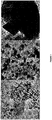
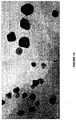
- the catalyst comprises faceted particles. Without wishing to be bound by theory, it is believed that the large planes and lack of corner sites in the faceted particles may contribute to the selective nature of the supported metal catalysts in hydrogenation reactions. In certain embodiments, the faceted particles may display clear grain boundaries. Without wishing to be bound by theory, this may indicate that the particles grew together from two different nucleation points.
- the form of the metal in the supported catalyst may comprise the elemental metal and/or a metal oxide and/or metal hydride.
- the elemental metal, metal oxide and/or metal hydride will be referred to by the metal name.
- a supported palladium catalyst may comprise elemental (metallic) palladium, palladium oxide and/or metal hydride. Regardless of the actual form(s) of palladium present, however, the catalyst will be referred to as a "supported palladium catalyst".
- the present invention provides a process for the preparation of a supported metal catalyst as described above, wherein the process comprises the steps of:
- the at least one water soluble metal salt may be selected from the group consisting of:
- the at least one water soluble metal salt is selected from the group consisting of H 2 PtCl 6 , H 2 PdCl 6 , HAuCl 4 , Na 2 PdCl 4 and a combination thereof.
- the aqueous solvent is deionised water.
- the water may further comprise one or more water miscible solvents.
- Typical water miscible solvents include but are not limited to alcohols (such as methanol, ethanol, n-propanol and/or iso-propanol), acetone, acetonitrile, dioxane, tetrahydrofuran, dimethylformamide and dimethylsulfoxide.
- the at least one amine is soluble in the aqueous solvent. If it is found, however, that the at least one amine is not soluble, the at least one amine may be further treated in order to solubilise it.
- the amino acid may be solubilised by the addition of a base (such as an alkali hydroxide), an acid (e.g. hydrochloric acid) or a solvent (such as acetone).
- the support, the at least one water-soluble metal salt and the at least one amine may be combined in the aqueous solvent in any suitable order.
- the support, the at least one metal salt and the at least one amine are each mixed in a portion of aqueous solvent (e.g. water).
- aqueous solvent e.g. water
- the mixture of the at least one metal salt, followed by the mixture of the at least one amine, is then added to the mixture of the support.
- each aqueous mixture may be allowed to stand before stirring and, if desired, allowed to stand and re-stirred before combining them together optionally with further stirring.
- the mixture of the support is stirred and boiled before the mixtures of the at least one metal salt and at least one amine are added.
- the mixture of the at least one amine is added slowly (e.g. dropwise) to the mixture of the at least one metal salt and support.
- the mixture of the at least one metal salt is added rapidly to the mixture of the support.
- the mixture of the at least one amine is added rapidly to the mixture of the at least one metal salt and support.
- the at least one water-soluble metal salt and the at least one amine are reacted to form an amino acid metal complex which may be optionally recovered and purified.
- the amino acid metal complex may then be combined with the at least one support and the reaction mixture optionally heated.
- the reducing agent is (i) a combination of a base and formaldehyde, (ii) a formate, (iii) a borohydride, (iv) a hypophosphite, (v) hydrazine, or (vi) hydrogen.
- the base can be an alkali metal hydroxide, an alkaline earth metal hydroxide, an alkali metal carbonate, an alkaline earth metal carbonate or an alkali metal hydrogen carbonate.
- the base is sodium hydroxide, potassium hydroxide, magnesium hydroxide, calcium hydroxide, sodium hydrogen carbonate or potassium hydrogen carbonate, especially sodium hydroxide or sodium hydrogen carbonate.
- the combination of a base and formaldehyde can be added to the reaction mixture to form a formate in situ.
- the formate may be prepared prior to its addition to the support, at least one water soluble metal salt and at least one amine.
- the formate when the reducing agent is a formate, the formate may be an alkali metal formate or alkaline earth metal formate. Examples of formates are sodium formate, potassium formate, magnesium formate and calcium formate.
- the borohydride may be an alkali metal borohydride, such as sodium borohydride or potassium borohydride.
- the alkali metal borohydride is sodium borohydride.
- the hypophosphite can be an alkali metal hypophosphite.
- alkali metal hypophosphites are sodium hypophosphite and potassium hypophosphite.
- Sodium hypophosphite is preferred.
- the hydrazine can be anhydrous or a solution in a solvent, such as tetrahydrofuran or water.
- the reducing agents described above may be added to the aqueous mixture of the support, the at least one water soluble metal salt and the at least one amine alone or as a solution in further aqueous solvent.
- the supported metal catalysts may be reduced prior to or during a hydrogenation reaction.
- Step (a) and step (b) may be carried out at one or more temperatures between about 15°C and 100°C. In one embodiment, step (a) is carried out at a temperature between about 15°C and about 25°C, most preferably room temperature. In another embodiment, step (a) is carried out at the boiling temperature of the aqueous solvent.
- step (b) is carried out at one or more temperatures between about 25°C and about 100°C.
- the reaction mixture is heated and stirred to about 90°C. When the reaction mixture reaches this temperature, the reaction mixture is allowed to cool, for example by removing the heat source or adding further aqueous solvent, to about 60°C or below, whereupon the stirring may be stopped if desired.
- the reaction mixture is boiled for a period of time and then cooled to about 60°C or below e.g. by the addition of further solvent or removing the heat source.
- the reaction may be continued for a period of from about 30 minutes to several hours, but is normally complete within about four hours.
- the supported metal catalyst may be collected and separated from the reaction mixture by any conventional separation technique such as filtration, decantation or centrifugation, then subjected to further purification or processing steps such as washing and/or drying if so desired.
- the separated reaction mixture may be further treated to recover additional supported metal catalyst.
- the supported metal catalyst may be prepared on any desired scale. For example, it has been found that the above mentioned process may be reliably scaled up to prepare about 3kg of supported metal catalyst.
- the supported metal catalysts of the present invention may be used in hydrogenation reactions.
- the catalysts are chemoselective in the hydrogenation of substrates containing one or more halogen atoms i.e. the desired hydrogenation reaction proceeds with a reduced propensity for concurrent dehalogenation.
- the at least one amine binds to the surface of the catalyst and that the presence of the at least one amine controls the size and shape of the catalyst which subtly influences the surface of the catalyst electronically.
- Another aspect of the invention therefore provides a process for the preparation of an optionally substituted amine, comprising the step of hydrogenating an optionally substituted benzyl-amine in the presence of hydrogen and a supported metal catalyst as described herein.
- the benzyl-amine is a compound of formula A, which on hydrogenation forms a compound of formula B and C: wherein,
- R 1 , R 2 , R 3 , R 4 and R 5 are each H.
- At least one of R 7 , R 8 , R 9 , R 10 or R 11 is a halo group, especially -Cl.
- At least one of R 9 , R 10 or R 11 is a halo group.
- the process further comprises an acid, for example, a mineral acid such as hydrochloric acid, hydrobromic acid or hydroiodic acid.
- an acid for example, a mineral acid such as hydrochloric acid, hydrobromic acid or hydroiodic acid.
- a mineral acid such as hydrochloric acid, hydrobromic acid or hydroiodic acid.
- the addition of an acid may be useful when the compound of formula A contains one or more halogen atoms. This is because the presence of the acid has been found to further reduce the undesirable dehalogenation reaction.
- the molar ratio of acid to substrate may be any suitable molar ratio. Conveniently, the molar ratio may be about 1:1.
- the present invention provides a process for the preparation of an optionally substituted arylamine, comprising the step of hydrogenating an optionally substituted aryl compound comprising one or more nitro groups in the presence of hydrogen and a supported metal catalyst as defined herein.
- the aryl compound further comprises one or more halo groups.
- the process further comprises an acid, for example, a mineral acid such as hydrochloric acid, hydrobromic acid or hydroiodic acid.
- an acid for example, a mineral acid such as hydrochloric acid, hydrobromic acid or hydroiodic acid.
- the addition of the acid is useful for the same reason as given above i.e. the presence of the acid further reduces the undesirable dehalogenation reaction.
- the molar ratio of acid to substrate may also be as described above.
- the present invention provides a process for the preparation of an optionally substituted alkene, comprising the step of hydrogenating an optionally substituted alkyne in the presence of hydrogen and a supported metal catalyst as defined herein.
- alkyne is a compound of formula D: wherein,
- the supported metal catalysts of the present invention are useful in the preparation of cis-alkenes, trans-alkenes or a mixture thereof.
- the hydrogenation is selective.
- the alkene predominantly comprises a cis-alkene.
- the hydrogen pressures of the hydrogenation reactions mentioned above are suitably in the range of up to about 100 bar and conveniently in the range of from about 1 to 10 bar.
- the ratio of catalyst : starting material may vary in the range from about 1:1 to about 1:20,000, more preferably, 1:1 to about 1:3000, even more preferably, about 1:200 to about 1:2500 and most preferably, about 1:250 to about 1:2000.
- the hydrogenation reactions preferably further comprise a solvent.
- a solvent Any suitable solvent may be used, for example, aqueous solvents, polar solvents, non-polar solvents, aprotic solvents, protic solvents or a combination thereof.
- the solvent is one or more C 1-10 alkanols, more preferably, methanol, ethanol, propanol isomers (i.e. n- or i-propanol), butanol isomers (i.e. n-, i- or t-butanol), pentanol isomers, hexanol isomers, heptanol isomers or combinations thereof.
- Methanol and ethanol are especially preferred solvents.
- the concentration of the starting material in the solvent may be any suitable concentration. Conveniently, the concentration may be about 0.5M.
- Reaction temperatures are suitably in the range from 10 to 100°C, preferably in the range from about 15 to about 80°C, most preferably about 20 to about 60°C.
- the reactants may be added in any suitable order, but in a preferred process of the invention, the starting material (i.e. substrate to be hydrogenated) and the supported metal catalyst is placed in a hydrogenation vessel, together with a solvent (if used). The vessel is then charged with hydrogen and heated and/or stirred if necessary. The reaction may be continued until the calculated number of moles of hydrogen has been consumed.
- the ligands butylamine, hexylamine, 6-amino caproic acid, 1,6-diaminohexane, lysine, glycine, alanine, arginine, serine, proline, asparagines, aspartic acid, valine and phenylalanine were purchased from Alfa Aesar.
- the precious metal salts Na 2 PdCl 4 , H 2 PtCl 6 , HAuCl 4
- the supports Carbon GSX was purchased from Norit, L4S, 2S and CPL were purchased from Ceca.
- T44 Graphite was purchased from Timcal and calcium carbonate "Calopake F" was purchased from Ellis & Everard.
- Pd on alumina and Pd/C (5% Pd/C Type 39, 5% Pd/C 87L, 5% Pd/Alumina Type 324, 5% PdPb/CaCO 3 A305060-5, and 5% Pt/C type 18) were obtained from Johnson Matthey PLC.
- Carbon GSX (9.5g) was weighed out and 60ml of DI water was added to it and briefly stirred. The slurry was then allowed to stand for 1 hour. After this time, the stirring was resumed. Na 2 PdCl 4 (1.46g; (34.97% solid) 0.51g of metal) was dissolved in water (8ml) and added to the slurry. This was stirred for 30 minutes. Lysine (0.77g, 1 equiv, dissolved in 10 ml of water) was then added dropwise to the slurry over 5 minutes. It was then stirred for a further 30 minutes.
- the black solid was collected and dried in the oven at 90°C for 24 hours.
- the diffraction pattern Figure 2 indicates the presence of a significant amount of poorly crystalline Palladium (Pd, PDF No.00-046-1043). Rietveld analysis estimates the Palladium crystallite size to be 15.8nm.
- a standard GSX carbon pattern has been included in Figure 2 for reference. This standard GSX pattern shows the presence of SiO2 - Quartz (SiO2, PDF No.00-046-1045) also evident in the sample.
- the above Example has since been scaled up from 10g scale to a 100g and a 3kg scale.
- Example 1 The reaction as exemplified in Example 1 has also undertaken with different carbon supports - Ceca L4S, Ceca 2S, CPL. Large particles were similarly formed.
- Example 1 The reaction exemplified in Example 1 has been undertaken using different ligands.
- Carbon GSX (9.5g) was weighed out and 60ml of DI water was added to it and briefly stirred. The slurry was then allowed to stand for 1 hour. After this time, the stirring was resumed. Butylamine (0.34g, 1 equiv, dissolved in 5 ml of water) was then added to the slurry. It was then stirred for 30 minutes. Na 2 PdCl 4 (1.46g; (34.97% solid) 0.51g of metal) was dissolved in water (25ml) and added dropwise to the slurry over 10 minutes. This was stirred for a further 30 minutes.
- the black solid was collected and dried in the oven at 90°C for 24 hours.
- the XRD diffraction pattern indicates the presence of a major amount of poorly crystalline Palladium (Pd, PDF No.00-046-1043) supported on carbon.
- the Pd crystallite size was estimated by Rietveld analysis (LVol-IB method) to be 7.5nm.
- Carbon GSX (9.5g) was weighed out and 60ml of DI water was added to it and briefly stirred. The slurry was then allowed to stand for 1 hour. After this time, the stirring was resumed. Na 2 PdCl 4 (1.46g; (34.97% solid) 0.51g of metal) was dissolved in water (8ml) and added to the slurry. This was stirred for 30 minutes. 6-Amino caproic acid (0.62g, 1 equiv, dissolved in 10 ml of water) was then added dropwise to the slurry over 5 minutes. It was then stirred for a further 30 minutes.
- the black solid was collected and dried in the oven at 90°C for 24 hours.
- the XRD diffraction pattern indicates the presence of a major amount of poorly crystalline Palladium (Pd, PDF No.00-046-1043) supported on carbon.
- Pd poorly crystalline Palladium
- the Pd crystallite size has been estimated by Rietveld analysis (LVol-IB method) to be ⁇ 8.6nm.
- the XRD diffraction pattern indicates the presence of a significant amount of poorly crystalline Palladium (Pd, PDF No.00-046-1043) supported on carbon.
- Pd poorly crystalline Palladium
- the Pd crystallite size has been estimated by Rietveld analysis (LVol-IB method) to be ⁇ 11.9nm.
- the XRD diffraction pattern indicates the presence of a major amount of poorly crystalline Palladium (Pd, PDF No.00-046-1043) supported on carbon.
- Pd poorly crystalline Palladium
- the Pd crystallite size has been estimated by Rietveld analysis (LVol-IB method) to be -16.9nm.
- the XRD diffraction pattern indicates the presence of a major amount of poorly crystalline Palladium (Pd, PDF No.00-046-1043) supported on carbon.
- Pd poorly crystalline Palladium
- the Pd crystallite size has been estimated by Rietveld analysis (LVol-IB method) to be ⁇ 7.3nm.
- Carbon GSX (9.5g) was weighed out and 60ml of DI water was added to it and briefly stirred. The slurry was then allowed to stand for 1 hour. After this time, the stirring was resumed. Na 2 PdCl 4 (1.46g; (34.97% solid) 0.51g of metal) was dissolved in water (8ml) and added to the slurry. This was stirred for 30 minutes. The relevant amino acid (1 equiv, dissolved in 10 ml of water) was then added to the slurry. It was then stirred for a further 30 minutes.
- the black solid was collected and dried in the oven at 90°C for 24 hours.
- the diffraction pattern Figure 4 indicates the presence of a major amount of poorly crystalline Palladium (Pd, PDF No.00-046-1043) supported on carbon.
- the Pd crystallite size has been estimated by Rietveld analysis (LVol-IB method) to be ⁇ 13.3nm.
- the diffraction pattern Figure 5 indicates the presence of a major amount of poorly crystalline Palladium (Pd, PDF No.00-046-1043) supported on carbon.
- the Pd crystallite size has been estimated by Rietveld analysis (LVol-IB method) to be ⁇ 17.4nm.
- the diffraction pattern Figure 6 indicates the presence of a significant amount of poorly crystalline Palladium (Pd, PDF No.00-046-1043) supported on carbon.
- the Pd crystallite size has been estimated by Rietveld analysis (LVol-IB method) to be ⁇ 11.2nm.
- the diffraction pattern Figure 7 indicates the presence of a major amount of poorly crystalline Palladium (Pd, PDF No.00-046-1043) supported on carbon.
- the Pd crystallite size has been estimated by Rietveld analysis (LVol-IB method) to be ⁇ 16.7nm.
- the diffraction pattern Figure 8 indicates the presence of a major amount of poorly crystalline Palladium (Pd, PDF No.00-046-1043) supported on carbon.
- the Pd crystallite size has been estimated by Rietveld analysis (LVol-IB method) to be ⁇ 5.7nm.
- the diffraction pattern Figure 9 indicates the presence of a significant amount of poorly crystalline Palladium (Pd, PDF No.00-046-1043) supported on carbon.
- the Pd crystallite size has been estimated by Rietveld analysis (LVol-IB method) to be ⁇ 7.9nm.
- Carbon GSX (9.5g) was weighed out and 60ml of DI water was added to it and briefly stirred. The slurry was then allowed to stand for 1 hour. After this time, the stirring was resumed.
- Na 2 PdCl 4 (1.46g; (34.97% solid) 0.51g of metal) was dissolved in water (8ml) and added to the slurry. This was stirred for 30 minutes. Lysine, 0.77g, 1 equiv, dissolved in 10 ml of water) was then added dropwise to the slurry over 5 minutes. It was then stirred for a further 30 minutes.
- NaBH 4 (0.20g) was dissolved in DI water (6ml). This solution was then added to the slurry and stirred for 1 hour. The flask was then allowed to settle. The solution was then filtered and the resulting black solid was washed with 500ml of DI water. The black solid was collected and dried in the oven at 90°C for 24 hours.
- the XRD pattern indicates the presence of a significant amount of poorly crystalline Palladium (Pd, PDF No.00-046-1043) supported on carbon.
- the Pd crystallite size has been estimated by Rietveld analysis (LVol-IB method) to be ⁇ 6.6nm.
- the XRD pattern indicates the presence of a major amount of poorly crystalline Palladium (Pd, PDF No.00-046-1043) supported on carbon.
- Pd poorly crystalline Palladium
- the Pd crystallite size has been estimated by Rietveld analysis (LVol-IB method) to be ⁇ 5.9nm.
- sodium hypophosphite also results in a poorer monodispersity of metal particles on the surface, in comparison to formaldehyde.
- Carbon GSX (9.5g) was weighed out and 60ml of DI water was added to it and briefly stirred. The slurry was then allowed to stand for 1 hour. After this time, the stirring was resumed. Na 2 PdCl 4 (1.46g; (34.97% solid) 0.51g of metal) was dissolved in water (8ml) and added to the slurry. This was stirred for 30 minutes.
- Lysine (1.54g, 2 equivs, dissolved in 10 ml of water) was then added dropwise to the slurry over 5 minutes. It was then stirred for a further 30 minutes.
- the black solid was collected and dried in the oven at 90°C for 24 hours.
- Carbon GSX (9.0g) was weighed out and 60ml of DI water was added to it and briefly stirred. The slurry was then allowed to stand for 1 hour. After this time, the stirring was resumed.
- Na 2 PdCl 4 (2.92g; (34.97% solid) 0.51g of metal) was dissolved in water (8ml) and added to the slurry. This was stirred for 30 minutes.
- Glycine (0.70g, 1 equiv, dissolved in 10 ml of water) was then added to the slurry. It was then stirred for a further 30 minutes.
- the black solid was collected and dried in the oven at 90°C for 24 hours.
- the diffraction pattern Figure 10 indicates the presence of a major amount of poorly crystalline Palladium (Pd, PDF No.00-046-1043) supported on carbon.
- the Pd crystallite size has been estimated by Rietveld analysis (LVol-IB method) to be ⁇ 19.6nm.
- Carbon GSX (9.9g) was weighed out and 60ml of DI water was added to it and briefly stirred. The slurry was then allowed to stand for 1 hour. After this time, the stirring was resumed.
- Na 2 PdCl 4 (0.29g; (34.97% solid) 0.51g of metal) was dissolved in water (8ml) and added to the slurry. This was stirred for 30 minutes.
- Glycine (0.07g, 1 equiv, dissolved in 10 ml of water) was then added to the slurry. It was then stirred for a further 30 minutes.
- the black solid was collected and dried in the oven at 90°C for 24 hours.
- the diffraction pattern Figure 11 indicates the presence of a significant amount of poorly crystalline Palladium (Pd, PDF No.00-046-1043) supported on carbon.
- the Pd crystallite size has been estimated by Rietveld analysis (LVol-IB method) to be ⁇ 9.4nm.
- Alumina (9.5g) was weighed out and 60ml of DI water was added to it and briefly stirred.
- Na 2 PdCl 4 (1.46g; (34.97% solid) 0.51g of metal) was dissolved in water (8ml) and added to the slurry. This was stirred for 30 minutes.
- Glycine (0.35g, 1 equiv, dissolved in 10 ml of water) was then added to the slurry. It was then stirred for a further 30 minutes.
- the diffraction pattern Figure 12 indicates the presence of a major amount of poorly crystalline Palladium (Pd, PDF No.00-046-1043) supported on delta alumina.
- the Pd crystallite size has been estimated by Rietveld analysis (LVoI-IB method) to be -8.6nm.
- Alumina (9.5g) was weighed out and 60ml of DI water was added to it and briefly stirred. Na 2 PdCl 4 (1.46g; (34.97% solid) 0.51g of metal) was dissolved in water (8ml) and added to the slurry. This was stirred for 30 minutes.
- the diffraction pattern Figure 13 indicates the presence of a minor amount of poorly crystalline Palladium (Pd, PDF No.00-046-1043) supported on delta alumina.
- the Pd crystallite size has been estimated by Rietveld analysis (LVol-IB method) to be ⁇ 2.6nm.
- Carbon GSX (9.5g) was weighed out and 60ml of DI water was added to it. The slurry was then stirred and boiled for 30 minutes.
- H 2 PtCl 6 (2.04g; (25.0% solution) 0.51g of metal) was dissolved in water (8ml) and rapidly added to the boiling slurry. This was boiled for a further 30 minutes. Lysine (0.38g, 2.61 mmol, 1 equiv, dissolved in 10 ml of water) was then added rapidly, which was then boiled for a further 90 minutes.
- the diffraction pattern (not shown) indicated the presence of a major amount of crystalline platinum supported on GSX carbon.
- the Pt crystallite size was estimated by Rietveld analysis (LVoI-IB method) to be ⁇ 9.0nm.
- Carbon GSX (9.5g) was weighed out and 60ml of DI water was added to it and briefly stirred. The slurry was then allowed to stand for 1 hour. After this time, the stirring was resumed.
- Hydrogen tetrachloroaurate (1.20g; (41.24% solution) 0.51g of metal) was dissolved in water (8ml) and added to the slurry. This was stirred for 30 minutes.
- Lysine 0.38g (1 equiv, dissolved in 10 ml of water) was then added immediately to the slurry, which was then stirred for a further 30 minutes.
- the black solid was collected and dried in the oven at 90°C for 24 hours.
- the diffraction pattern (not shown) indicated the presence of a major amount of crystalline Gold supported on GSX carbon.
- the Au crystallite size was estimated by Rietveld analysis (LVol-IB method) to be ⁇ 27.5nm.
- Carbon GSX (9.5g) was weighed out and 60ml of DI water was added to it and briefly stirred. The slurry was then allowed to stand for 1 hour. After this time, the stirring was resumed.
- Na 2 PdCl 4 (1.46g; (34.97% solid) 0.51g of metal) was dissolved in water (8ml) and added to the slurry. This was stirred for 30 minutes.
- Diglycine (Gly-Gly) (0.63g, 4.79mmol, 1 equiv, dissolved in 10 ml of water) was then added immediately to the slurry, which was then stirred for a further 30 minutes.
- the black solid was collected and dried in the oven at 90°C for 24 hours.
- the diffraction pattern (not shown) indicated the presence of a major amount of crystalline palladium supported on GSX carbon.
- the Pd crystallite size has been estimated by Rietveld analysis (LVol-IB method) to be ⁇ 23.9nm.
- Carbon GSX (9.5g) was weighed out and 60ml of DI water was added to it and briefly stirred. The slurry was then allowed to stand for 1 hour. After this time, the stirring was resumed.
- Na 2 PdCl 4 (1.46g; (34.97% solid) 0.51g of metal) was dissolved in water (8ml) and added to the slurry. This was stirred for 30 minutes.
- Triglycine (Gly-Gly-Gly) (0.92g, 4.79mmol, 1 equiv, dissolved in 10 ml of water) was then added immediately to the slurry, which was then stirred for a further 30 minutes.
- the black solid was collected and dried in the oven at 90°C for 24 hours.
- the diffraction pattern (not shown) indicated the presence of a major amount of crystalline palladium supported on GSX carbon.
- the Pd crystallite size has been estimated by Rietveld analysis (LVol-IB method) to be ⁇ 21.3nm.
- a bis(glycinato) palladium(II) complex (Pd(gly) 2 ) was prepared according to the method described by J. S. Coe and J. R. Lyons in J. Chem. Soc. A, 1971, 829-33 . This was then used as a precursor in the reaction where the amino acid was already complexed to the metal prior to addition.
- Carbon GSX (9.5g) was weighed out and 60ml of DI water was added to it and briefly stirred. The slurry was then allowed to stand for 1 hour. After this time, the stirring was resumed.
- Pd(gly) 2 (1.22g, 4.79mmol, 0.51g of metal) was dissolved in water (20ml) and added to the slurry.
- the complex was not that soluble and so had to be heated to get it into solution. Upon addition much of this was observed to precipitate out. This was stirred for 2 hours. After this time, there was no visible sign of any of the palladium precursor either in solution or as a solid. Without wishing to be bound by theory, it is believed that, in the additional solvent, it had dissolved and stuck to the carbon support.
- the black solid was collected and dried in the oven at 90°C for 24 hours.
- the diffraction pattern (not shown) indicates the presence of a minor amount of poorly crystalline Palladium (Pd, PDF No.00-046-1043).
- Timcal T44 graphite was placed in a round bottomed flask and 60ml of water added to this. This was stirred for one hour before 0.146g of Na 2 PdCl 4 (in 10 ml of DI water) was added to this. Glycine (0.035g) was then dissolved in 10ml of water and rapidly added to the slurry, which was stirred for a further 30 minutes. NaOH (0.062g) and formaldehyde solution (0.204ml) were combined and subsequently added to the slurry, before it was heated to 90°C. Upon reaching this temperature, excess water was added to bring the temperature down to 60°C. The resulting black solid was then filtered off, washed with water (500ml) and dried in the oven at 105°C for 2 days.
- Figures 14a and 14b are TEM analyses of the glycine-modified Pd on graphite catalyst.
- the graphite supported catalysts have very large and faceted particles present, with an average particle size of approximately 40nm.
- a number of particles display clear grain boundaries, which without being bound by theory, may indicate that the particles grew together from two different nucleation points.
- several of the particles display a strange diffraction effect in the electron beam, which may be a result of their relatively large size.
- Figure 15 illustrates the XPS analysis of the glycine-modified Pd on graphite catalyst.
- the above method was also used to prepare 1%, 2.5% and 5% loaded catalysts.
- XRD The diffraction pattern Figure 16 indicates the presence of a major amount of poorly crystalline Gold (Au, PDF No.00-004-0784) supported on GSX carbon.
- the Au crystallite size has been estimated by Rietveld analysis (LVol-IB method) to be ⁇ 9.9nm. There is no evidence of any crystalline Pd species.
- Figure 17 is the TEM analysis of the Au-Pd-Lys / GSX catalyst.
- the above method has also been used to prepare Au-Pd-Lys / GSX catalysts with different metal ratios e.g. 0.5:1, 2:1, 4:1 and 9:1 wt% with respect to Au and Pd respectively, as well as different combinations of metals e.g. AuPt and PdPt.
- the reactions were performed in a Baskerville 10 Vessel Multicell Reactor using 5ml of the ethanolic solution. Where the addition of acid was required, 0.5ml of hydrochloric acid (1 molar equivalent wrt to substrate) was added to the reaction mixture. Analysis of the solutions was made using GCMS. The presence of acid often resulted on the precipitation of salts from the solution. In order to ensure all of the products could be analysed a basic extraction was performed prior to analysis. This involved the addition of 10M NaOH solution ( ⁇ 5ml) and dichloromethane ( ⁇ 10ml). Vigorous stirring and extraction of the organic layer allowed analysis that gave satisfactory mass balances to be obtained.
- Figure 18 shows that in the absence of acid the dehalogenation process is initially slowed; however, over time aniline begins to form, illustrating the slow cleavage of the aryl chloride bond. In contrast, in the presence of the acid the unwanted dehalogenation step is significantly retarded so that after 90 minutes there is over 90% of the desired 2-chloroaniline product.
- Figure 20 shows the same reaction conditions for the N-debenzylation run for one hour.
- the supported metal catalysts of the present invention have shown a propensity to retard dehalogenation reactions in chloronitrobenzene hydrogenations.
- the reactions were performed in a Baskerville 10 Vessel Multicell Reactor using 5ml of the ethanolic solution. Where the addition of acid was required, 0.5ml of hydrochloric acid (1 molar equivalent wrt to substrate) was added to the reaction mixture. Analysis of the solutions was made using GC or GCMS. The presence of acid often resulted on the precipitation of salts from the solution. In order to ensure all of the products could be analysed a basic extraction was performed prior to analysis. This involved the addition of 10M NaOH solution ( ⁇ 5ml) and dichloromethane ( ⁇ 10ml). Vigorous stirring and extraction of the organic layer allowed analysis that gave satisfactory mass balances to be obtained.
- Reactions were undertaken using 60ml of a 0.5M ethanol solution of the substrate containing octane as an internal standard in a 100ml Parr autoclave. 60mg of the 5%, and 120mg of the 2.5% loaded Pd catalysts were used (1:1,000 catalyst to substrate molar ratio). Conditions used were a temperature of 50°C, a pressure of 3bar H 2 and mechanical stirring at 400rpm.
Landscapes
- Chemical & Material Sciences (AREA)
- Organic Chemistry (AREA)
- Chemical Kinetics & Catalysis (AREA)
- Engineering & Computer Science (AREA)
- Materials Engineering (AREA)
- Inorganic Chemistry (AREA)
- Organic Low-Molecular-Weight Compounds And Preparation Thereof (AREA)
Description
- The present invention relates to supported metal catalysts, wherein the catalysts are modified by at least one amine, a method for the preparation thereof and hydrogenation processes utilising the supported metal catalysts.
-
WO2008098830 (to Evonik Degussa GmbH) relates to supported and unsupported transition metal catalysts which surfaces have been modified with sulfur-containing modifiers. Example 2 describes the preparation of modified Pt catalysts wherein H2PtCl6.6H2O is reduced onto Al2O3. The Pt/Al2O3 catalyst is then suspended in methanol and modified by the addition of a modifier. - Ma et al (Chemical Engineering Journal 156 (2010) 532-539) relates to the direct synthesis of hydrogen peroxide from H2/O2 and oxidation of thiophene over supported gold catalysts. Mastalir et al (Carbon 46 (2008) 1631-1637) relates to the synthesis and catalytic application of Pd nanoparticles in graphite oxide. L'Argentière et al (Applied Catalysis A: General 226 (2002) 253-263) relates to a palladium tetra-coordinated complex as catalyst in the selective hydrogenation of 1-heptyne. Drelinkiewicz et al (Journal of Molecular Catalysis A: Chemical 300 (2009) 8-18) relates to amine groups functionalized gel-type resin supported Pd catalysts. Cardenas-Lizana et al (Journal of Catalysis 262 (2009) 235-243) relates to Pd-promoted selected gas phase hydrogenation of p-chloronitrobenzene over alumina supported Au.
- In one aspect the present invention provides a supported metal catalyst, wherein the catalyst comprises at least one metal selected from Group VIII or IB of the Periodic Table, the catalyst is modified by at least one amine, and wherein the catalyst comprises faceted particles,
provided that when the metal is Pt and the support is Al2O3, the amine is not: - a) S-benzyl-L-cysteine;
- b) N-benzyl-S-benzyl-L-cysteine;
- c) L-cysteine ethyl ester;
- d) S-benzyl-L-cysteine ethyl ester;
- e) N-benzyl-S-benzyl-L-cysteine ethyl ester;
- f) S-phenyl-L-cysteine ethyl ester; or
- g) N-benzyl-S-phenyl-L-cysteine ethyl ester.
- Another aspect of the invention provides a process for the preparation of a supported metal catalyst as defined herein, wherein the process comprises the steps of:
- a) mixing a support, at least one water soluble metal salt and at least one amine in an aqueous solvent; and
- b) adding a reducing agent to form the supported metal catalyst;
- Yet another aspect of the invention provides a process for the preparation of an optionally substituted amine, comprising the step of hydrogenating an optionally substituted benzyl-amine in the presence of hydrogen and a supported metal catalyst as described herein.
- Another aspect of the invention provides a process for the preparation of an optionally substituted arylamine, comprising the step of hydrogenating an optionally substituted aryl compound comprising one or more nitro groups in the presence of hydrogen and a supported metal catalyst as defined herein.
- Yet another aspect of the invention provides a process for the preparation of an optionally substituted alkene, comprising the step of hydrogenating an optionally substituted alkyne in the presence of hydrogen and a supported metal catalyst as defined herein.
- The point of attachment of a moiety or substituent is represented by "-". For example, -OH is attached through the oxygen atom.
- "Alkyl" refers to a straight-chain, branched or cyclic saturated hydrocarbon group. In certain embodiments, the alkyl group may have from 1-20 carbon atoms, in certain embodiments from 1-15 carbon atoms, in certain embodiments, 1-8 carbon atoms. The alkyl group may be unsubstituted or substituted. Unless otherwise specified, the alkyl group may be attached at any suitable carbon atom and, if substituted, may be substituted at any suitable atom. Typical alkyl groups include but are not limited to methyl, ethyl, n-propyl, iso-propyl, cyclopropyl, n-butyl, iso-butyl, sec-butyl, tert-butyl, cyclobutyl, n-pentyl, cyclopentyl, n-hexyl, cyclohexyl and the like.
- "Alkenyl" refers to a straight-chain, branched or cyclic unsaturated hydrocarbon group having at least one carbon-carbon double bond. The group may be in either the cis- or trans-configuration around each double bond. In certain embodiments, the alkenyl group can have from 2-20 carbon atoms, in certain embodiments from 2-15 carbon atoms, in certain embodiments, 2-8 carbon atoms. The alkenyl group may be unsubstituted or substituted. Unless otherwise specified, the alkenyl group may be attached at any suitable carbon atom and, if substituted, may be substituted at any suitable atom. Examples of alkenyl groups include but are not limited to ethenyl (vinyl), 2-propenyl (allyl), 1-methylethenyl, 2-butenyl, 3-butenyl, cyclobut-1,3-dienyl and the like.
- "Alkynyl" refers to a straight-chain, branched or cyclic unsaturated hydrocarbon group having at least one carbon-carbon triple bond. In certain embodiments, the alkynyl group can have from 2-20 carbon atoms, in certain embodiments from 2-15 carbon atoms, in certain embodiments, 2-8 carbon atoms. The alkynyl group may be unsubstituted or substituted. Unless otherwise specified, the alkynyl group may be attached at any suitable carbon atom and, if substituted, may be substituted at any suitable atom. Examples of alkynyl groups include but are not limited to ethynyl, prop-1-ynyl, prop-2-ynyl, 1-methylprop-2-ynyl, but-1-ynyl, but-2-ynyl, but-3-ynyl and the like.
- "Aryl" refers to an aromatic carbocyclic group. The aryl group may have a single ring or multiple condensed rings. In certain embodiments, the aryl group can have from 6-20 carbon atoms, in certain embodiments from 6-15 carbon atoms, in certain embodiments, 6-12 carbon atoms. The aryl group may be unsubstituted or substituted. Unless otherwise specified, the aryl group may be attached at any suitable carbon atom and, if substituted, may be substituted at any suitable atom. Examples of aryl groups include, but are not limited to, phenyl, naphthyl, anthracenyl and the like.
- "Arylalkyl" refers to an optionally substituted group of the formula aryl-alkyl-, where aryl and alkyl are as defined above.
- "Halo" refers to -F, -Cl, -Br and -I.
- "Heteroalkyl" refers to a straight-chain or branched saturated hydrocarbon group wherein one or more carbon atoms are independently replaced with one or more heteroatoms (e.g. nitrogen, oxygen, phosphorus and/or sulfur atoms). The heteroalkyl group may be unsubstituted or substituted. Unless otherwise specified, the heteroalkyl group may be attached at any suitable atom and, if substituted, may be substituted at any suitable atom.
- "Heterocycloalkyl" refers to a saturated cyclic hydrocarbon group wherein one or more carbon atoms are independently replaced with one or more heteroatoms (e.g. nitrogen, oxygen, phosphorus and/or sulfur atoms). The heterocycloalkyl group may be unsubstituted or substituted. Unless otherwise specified, the heterocycloalkyl group may be attached at any suitable atom and, if substituted, may be substituted at any suitable atom. Examples of heterocycloalkyl group include but are not limited to epoxide, morpholinyl, piperadinyl, piperazinyl, thirranyl and the like.
- "Heteroaryl" refers to an aromatic carbocyclic group wherein one or more carbon atoms are independently replaced with one or more heteroatoms (e.g. nitrogen, oxygen, phosphorus and/or sulfur atoms). Unless otherwise specified, the heteroaryl group may be attached at any suitable atom and, if substituted, may be substituted at any suitable atom. Examples of heteroaryl groups include but are not limited to furanyl, indolyl, oxazolyl, pyridinyl, pyrimidinyl, thiazolyl, thiphenyl and the like.
- "Substituted" refers to a group in which one or more (e.g. 1, 2, 3, 4 or 5) hydrogen atoms are each independently replaced with substituents which may be the same or different. Examples of substituents include but are not limited to -halo, -C(halo)3, -Ra, =O, =S, -O-Ra, -S-Ra,-NRaRb, =NRa, =N-ORa, -CN, -SCN, -NCS, -NO2, -C(O)-Ra, -COORa, -C(S)-Ra, -C(S)ORa,-S(O)2OH, -S(O)2-Ra, -S(O)2NRaRb, -O-S(O)-Ra and -CONaNb; wherein Ra and Rb are independently selected from the groups consisting of H, alkyl, aryl, arylalkyl, heteroalkyl, heteroaryl, heteroaryl-alkyl-, or Ra and Rb together with the atom to which they are attached form a heterocycloalkyl group, and wherein Ra and Rb may be unsubstituted or further substituted as defined herein.
- In one aspect, the present invention provides a supported metal catalyst, wherein the catalyst comprises at least one metal selected from Group VIII or IB of the Periodic Table, the catalyst is modified by at least one amine, and wherein the catalyst comprises faceted particles, provided that when the metal is Pt and the support is Al2O3, the amine is not:
- a) S-benzyl-L-cysteine;
- b) N-benzyl-S-benzyl-L-cysteine;
- c) L-cysteine ethyl ester;
- d) S-benzyl-L-cysteine ethyl ester;
- e) N-benzyl-S-benzyl-L-cysteine ethyl ester;
- f) S-phenyl-L-cysteine ethyl ester; or
- g) N-benzyl-S-phenyl-L-cysteine ethyl ester.
- A supported metal catalyst typically comprises an inert support material and a catalytically active material. The support may be selected from the group consisting of carbon, alumina, calcium carbonate, titania, silica, zirconia, ceria and a combination thereof. When the support is alumina, the alumina may be in the form of alpha-Al2O3, beta-Al2O3, gamma-Al2O3, delta-Al2O3, theta-Al2O3 or a combination thereof. When the support is carbon, the carbon may be in the form of activated carbon (e.g. neutral, basic or acidic activated carbon), carbon black or graphite (e.g. natural or synthetic graphite). Examples of suitable carbon supports are Norit Carbon GSX, Ceca L4S, Ceca 2S, Ceca CPL, Timcal T44 Graphite or a combination thereof.
- The catalyst comprises at least one metal is selected from Group VIII or IB of the Periodic Table. More preferably, the metal is selected from the group consisting of at least one of the platinum group metals (i.e. Pd, Pt, Ru, Rh, Ir and Os), the coinage metals (i.e. Cu, Ag and Au), iron, cobalt and nickel. Most preferably, the metal is palladium, platinum and/or gold.
- In one embodiment, the supported metal catalyst comprises a single metal e.g. Pt, Pd or Au.
- In another embodiment, the supported metal catalyst comprises two metals e.g. Au-Pd, Au-Pt or Pd-Au. The ratio of each metal may be any suitable ratio. In one embodiment, the ratio is from about 0.01: 1 wt% to about 20:1 wt% with respect to each metal, more preferably from about 0.1:1 to about 10:1 wt% e.g. 0.5:1, 1:1, 2:1, 4:1 or 9:1 wt%.
- Whether the supported metal catalysts comprises a single metal or two or more metals, the metal loading of the supported metal catalyst may be any suitable loading, such as from about 0.01 wt% to about 20 wt% per metal.
- The at least one amine is preferably selected from the group consisting of natural amino acids, non-natural amino acids, peptides, substituted or unsubstituted alkylamines, substituted or unsubstituted alkyldiamines, substituted or unsubstituted alkylpolyamines and combinations thereof. In one embodiment, the substituted or unsubstituted alkylamine, alkyldiamine or alkylpolyamines have from 1-20 carbon atoms and in certain embodiments, 1-15 carbon atoms.
- Natural amino acids and their nomenclature are well-known in the art, for example, see Biochem. J., 1984, 219, 345. By "non-natural amino acids" we mean a compound comprising an amino and a carboxylic acid group but which is not a natural amino acid. Examples, of non-natural amino acids are hydroxylysine, hydroxyproline, alloleucine, allotheonine, aminovaleric acid, aminohexanoic acid, homoserine, homoarginine, homophenylalanine, aminopropanoic acid, aminopropanoic acid, aminobutyric acid, aminopentanoic acid, aminohexanoic acid, aminohexandioic acid, aminoheptandioic acid, diaminopropanoic acid, diaminobutanoic acid, diaminopentanoic acid, diaminoheptandioic acid, carboxyglutamic acid, butylglycine, chlorophenylalanine dichlorophenylalanine, cyclohexylalanine, citrulline, dehydrophenylalanine, fluorophenylalanine, indolecarboxylic acid, iodophenylalanine, naphthylalanine, phenylglycine, O-acetylphenylserine, pyridylalanine, sarcosine, 1,2,3,4-tetrahydroisoquinoline-3-carboxylic acid, O-methyltyrosine, caproic acid and isomers thereof.
- The amino acid (whether natural or non-natural) may have the D-, L- or DL- configuration.
- In one embodiment, it is preferred that the natural amino acid or non-natural amino acid does not comprise a sulfur-containing functionality as the sulfur-containing functionality may poison the catalyst.
- When the at least one amine is a peptide, it is preferred that the peptide consists of 2, 3, 4, 5 or more amino acids. The amino acids may be natural and/or non-natural as described above. Examples of peptides are GlyGly and GlyGlyGly.
- Preferably, the at least one amine is selected from the group consisting of lysine, glycine, proline, alanine, serine, phenylalanine, asparagine, aspartic acid, valine, butylamine, 6-aminocaproic acid, 1,6-diaminohexane, hexylamine and combinations thereof.
- The ratio of amine : metal may be any suitable ratio. In one preferred embodiment, however, the ratio is from about 0.05:1 to about 5:1.
- Preferably, the supported metal catalyst is selected from the group consisting of:
Metal(s) Support Amine Palladium Carbon Lysine Palladium Carbon Glycine Palladium Carbon Proline Palladium Carbon Alanine Palladium Carbon Arginine Palladium Carbon Serine Palladium Carbon Phenylalanine Palladium Carbon Asparagine Palladium Carbon Aspartic acid Palladium Carbon Valine Palladium Carbon Butylamine Palladium Carbon 6-Amino caproic acid Palladium Carbon 1,6-Diaminohexane Palladium Carbon Hexylamine Palladium Alumina Glycine Palladium Carbon Gly-Gly Palladium Carbon Gly-Gly-Gly Platinum Carbon Lysine Gold Carbon Lysine Gold-palladium Carbon Lysine Gold-platinum Carbon Lysine Palladium-platinum Carbon Lysine - The catalyst may comprise crystallites. In this instance, the crystallites may vary in size from about 1nm to about 50 nm. In one embodiment, the crystallites may be ≥ about 4nm. In another embodiment, the crystallites may be ≤ about 40nm.
- The catalyst comprises faceted particles. Without wishing to be bound by theory, it is believed that the large planes and lack of corner sites in the faceted particles may contribute to the selective nature of the supported metal catalysts in hydrogenation reactions. In certain embodiments, the faceted particles may display clear grain boundaries. Without wishing to be bound by theory, this may indicate that the particles grew together from two different nucleation points.
- The form of the metal in the supported catalyst may comprise the elemental metal and/or a metal oxide and/or metal hydride. For clarity, however, the elemental metal, metal oxide and/or metal hydride will be referred to by the metal name. For example, a supported palladium catalyst may comprise elemental (metallic) palladium, palladium oxide and/or metal hydride. Regardless of the actual form(s) of palladium present, however, the catalyst will be referred to as a "supported palladium catalyst".
- In another aspect, the present invention provides a process for the preparation of a supported metal catalyst as described above, wherein the process comprises the steps of:
- (a) mixing a support, at least one water soluble metal salt and at least one amine in an aqueous solvent; and
- (b) adding a reducing agent to form the supported metal catalyst;
- The at least one water soluble metal salt may be selected from the group consisting of:
- (i) M2PtX4 wherein M is H, Li, Na, K or NH3 and X is Cl, Br, I, NO3, OH or CN.
Examples include but are not limited to H2PtCl4, Na2PtCl4, K2PtCl4, Li2PtCl4, (NH3)2PtCl4, H2PtBr4, Na2PtBr4, K2PtBr4, Li2PtBr4, (NH3)2PtBr4, H2Ptl4, Na2Ptl4, K2Ptl4, Li2Ptl4, (NH3)2Ptl4, H2Pt(NO3)4, Na2Pt(NO3)4, K2Pt(NO3)4, Li2Pt(NO3)4, (NH3)2Pt(NO3)4, H2Pt(OH)4, Na2Pt(OH)4, K2Pt(OH)4, Li2Pt(OH)4, (NH3)2Pt(OH)4, H2Pt(CN)4, Na2Pt(CN)4, K2Pt(CN)4, Li2Pt(CN)4, (NH3)2Pt(CN)4; - (ii) M2PtX6 wherein M is H, Li, Na, K or NH3 and X is Cl, Br, I, NO3, OH or CN.
Examples include but are not limited to H2PtCl6, Na2PtCl6, K2PtCl6, Li2PtCl6, (NH3)2PtCl6, H2PtBr6, Na2PtBr6, K2PtBr6, Li2PtBr6, (NH3)2PtBr6, H2Ptl6, Na2Ptl6, K2Ptl6, Li2Ptl6, (NH3)2Ptl6, H2Pt(NO3)6, Na2Pt(NO3)6, K2Pt(NO3)6, Li2Pt(NO3)6, (NH3)2Pt(NO3)6, H2Pt(OH)6, Na2Pt(OH)6, K2Pt(OH)6, Li2Pt(OH)6, (NH3)2Pt(OH)6, H2Pt(CN)6, Na2Pt(CN)6, K2Pt(CN)6, Li2Pt(CN)6, (NH3)2Pt(CN)6; - (iii) PtX2 wherein X is Cl, Br, I, NO3, OH or CN.
Examples include but are not limited to PtCl2, PtBr2, Ptl2, Pt(NO3)2, Pt(OH)2, Pt(CN)2; - (iv) PtX4 wherein X is Cl, Br, I, NO3, OH or CN.
Examples include but are not limited to PtCl4, PtBr4, Ptl4, Pt(NO3)4, Pt(OH)4, Pt(CN)4; - (v) Pt(NH3)4-yXy wherein X is Cl, Br, I or NO3 and y is 0, 1, 2, 3 or 4.
Examples include but are not limited to Pt(NH3)2Cl2, Pt(NH3)2Br2, Pt(NH3)2l2, Pt(NH3)2(NO3)2; - (vi) M2PdX4 wherein M is H, Li, Na, K or NH3 and X is Cl, Br, I, NO3, OH, CN or HCO3. Examples include but are not limited to H2PdCl4, Na2PdCl4, K2PdCl4, Li2PdCl4, (NH3)2PdCl4, H2PdBr4, Na2PdBr4, K2PdBr4, Li2PdBr4, (NH3)2PdBr4, H2Pdl4, Na2Pdl4, K2Pdl4, Li2Pdl4, (NH3)2Pdl4, H2Pd(NO3)4, Na2Pd(NO3)4, K2Pd(NO3)4, Li2Pd(NO3)4, (NH3)2Pd(NO3)4, H2Pd(OH)4, Na2Pd(OH)4, K2Pd(OH)4, Li2Pd(OH)4, (NH3)2Pd(OH)4, H2Pd(CN)4, Na2Pd(CN)4, K2Pd(CN)4, Li2Pd(CN)4, (NH3)2Pd(CN)4;
- (vii) M2PdX6 wherein M is H, Li, Na, K or NH3 and X is Cl, Br, I, NO3, OH or CN.
Examples include but are not limited to H2PdCl6, Na2PdCl6, K2PdCl6, Li2PdCl6, (NH3)2PdCl6, H2PdBr6, Na2PdBr6, K2PdBr6, Li2PdBr6, (NH3)2PdBr6, H2Pdl6, Na2Pdl6, K2Pdl6, Li2Pdl6, (NH3)2Pdl6, H2Pd(NO3)6, Na2Pd(NO3)6, K2Pd(NO3)6, Li2Pd(NO3)6, (NH3)2Pd(NO3)6, H2Pd(OH)6, Na2Pd(OH)6, K2Pd(OH)6, Li2Pd(OH)6, (NH3)2Pd(OH)6, H2Pd(CN)6, Na2Pd(CN)6, K2Pd(CN)6, Li2Pd(CN)6, (NH3)2Pd(CN)6; - (viii) PdX2 wherein X is Cl, Br, I, NO3, OH or CN.
Examples include but are not limited to PdCl2, PdBr2, Pdl2, Pd(NO3)2, Pd(NO3)2.xH2O, Pd(OH)2, Pd(CN)2; - (ix) MAuX4 wherein M is H, Li, Na or K and X is Cl, Br or I.
Examples include but are not limited to HAuCl4, HAuCl4.3H2O, HAuBr4, HAul4, LiAuCl4, LiAuBr4, LiAul4, NaAuCl4, NaAuBr4, NaAul4, KAuCl4, KAuCl4.xH2O, KAuBr4, KAuBr4.2H2O, KAul4. - (x) AuX3 wherein X is OAc, Cl, Br, I or OH.
Examples include but are not limited to Au(OAc)3, AuCl3, AuBr3, Aul3, Au(OH)3; - (xi) AuX wherein X is Cl, Br, I or CN.
Examples include but are not limited to AuCl, AuBr, Aul, AuCN; - (xii) RhX3 wherein X is Cl, Br, I or NO3.
Examples include but are not limited to RhCl3, RhCl3.xH2O, RhBr3, RhBr3.xH2O, Rhl3, Rh(NO3)2; - (xiii) RuX3 wherein X is Cl, Br or I.
Examples include but are not limited to RuCl3, RuCl3.xH2O, RuBr3, RuBr3.xH2O, Rul3; - (xiv) NiX2 wherein X is F, Cl, Br, I, OH, OAc or NO3.
Examples include but are not limited to NiF2, NiF2.4H2O, NiCl2, NiCl2.6H2O, NiCl2.xH2O, NiBr2, NiBr2.3H2O, Nil2, Ni(OH)2, Ni(OAc)2, Ni(OAc)2.4H2O, Ni(OAc)2.xH2O, Ni(NO3)2, Ni(NO3)2.6H2O; and - (xv) Pd(oxalate), Ni(oxalate), Ni(oxalate).2H2O, [Rh(OAc)2]2, NiCO3, Ni3(citrate)2.xH2O.
- Preferably, the at least one water soluble metal salt is selected from the group consisting of H2PtCl6, H2PdCl6, HAuCl4, Na2PdCl4 and a combination thereof.
- Preferably, the aqueous solvent is deionised water. Optionally, the water may further comprise one or more water miscible solvents. Typical water miscible solvents include but are not limited to alcohols (such as methanol, ethanol, n-propanol and/or iso-propanol), acetone, acetonitrile, dioxane, tetrahydrofuran, dimethylformamide and dimethylsulfoxide.
- In one embodiment, the at least one amine is soluble in the aqueous solvent. If it is found, however, that the at least one amine is not soluble, the at least one amine may be further treated in order to solubilise it. For example, when the at least one amine is an amino acid which is not soluble in water, the amino acid may be solubilised by the addition of a base (such as an alkali hydroxide), an acid (e.g. hydrochloric acid) or a solvent (such as acetone).
- The support, the at least one water-soluble metal salt and the at least one amine may be combined in the aqueous solvent in any suitable order. In one preferred process of the invention, however, the support, the at least one metal salt and the at least one amine are each mixed in a portion of aqueous solvent (e.g. water). The mixture of the at least one metal salt, followed by the mixture of the at least one amine, is then added to the mixture of the support. If desired, each aqueous mixture may be allowed to stand before stirring and, if desired, allowed to stand and re-stirred before combining them together optionally with further stirring.
- In one embodiment, the mixture of the support is stirred and boiled before the mixtures of the at least one metal salt and at least one amine are added.
- In one embodiment, the mixture of the at least one amine is added slowly (e.g. dropwise) to the mixture of the at least one metal salt and support.
- In one embodiment, the mixture of the at least one metal salt is added rapidly to the mixture of the support.
- In one embodiment, the mixture of the at least one amine is added rapidly to the mixture of the at least one metal salt and support.
- In another preferred process of the invention, the at least one water-soluble metal salt and the at least one amine are reacted to form an amino acid metal complex which may be optionally recovered and purified. The amino acid metal complex may then be combined with the at least one support and the reaction mixture optionally heated.
- Preferably, the reducing agent is (i) a combination of a base and formaldehyde, (ii) a formate, (iii) a borohydride, (iv) a hypophosphite, (v) hydrazine, or (vi) hydrogen.
- When the reducing agent is a combination of a base and formaldehyde, the base can be an alkali metal hydroxide, an alkaline earth metal hydroxide, an alkali metal carbonate, an alkaline earth metal carbonate or an alkali metal hydrogen carbonate. Preferably, the base is sodium hydroxide, potassium hydroxide, magnesium hydroxide, calcium hydroxide, sodium hydrogen carbonate or potassium hydrogen carbonate, especially sodium hydroxide or sodium hydrogen carbonate.
- The combination of a base and formaldehyde can be added to the reaction mixture to form a formate in situ. Alternatively, the formate may be prepared prior to its addition to the support, at least one water soluble metal salt and at least one amine. In this instance, when the reducing agent is a formate, the formate may be an alkali metal formate or alkaline earth metal formate. Examples of formates are sodium formate, potassium formate, magnesium formate and calcium formate.
- When the reducing agent is a borohydride, the borohydride may be an alkali metal borohydride, such as sodium borohydride or potassium borohydride. Preferably, the alkali metal borohydride is sodium borohydride.
- When the reducing agent is a hypophosphite, the hypophosphite can be an alkali metal hypophosphite. Examples of alkali metal hypophosphites are sodium hypophosphite and potassium hypophosphite. Sodium hypophosphite is preferred.
- When the reducing agent is hydrazine, the hydrazine can be anhydrous or a solution in a solvent, such as tetrahydrofuran or water.
- The reducing agents described above may be added to the aqueous mixture of the support, the at least one water soluble metal salt and the at least one amine alone or as a solution in further aqueous solvent.
- When the reducing agent is hydrogen, the supported metal catalysts may be reduced prior to or during a hydrogenation reaction.
- Step (a) and step (b) may be carried out at one or more temperatures between about 15°C and 100°C. In one embodiment, step (a) is carried out at a temperature between about 15°C and about 25°C, most preferably room temperature. In another embodiment, step (a) is carried out at the boiling temperature of the aqueous solvent.
- In one embodiment, step (b) is carried out at one or more temperatures between about 25°C and about 100°C. In a preferred embodiment, after the addition of the reducing agent, the reaction mixture is heated and stirred to about 90°C. When the reaction mixture reaches this temperature, the reaction mixture is allowed to cool, for example by removing the heat source or adding further aqueous solvent, to about 60°C or below, whereupon the stirring may be stopped if desired. In another preferred embodiment, after the addition of the reducing agent, the reaction mixture is boiled for a period of time and then cooled to about 60°C or below e.g. by the addition of further solvent or removing the heat source.
- The reaction may be continued for a period of from about 30 minutes to several hours, but is normally complete within about four hours. On completion, the supported metal catalyst may be collected and separated from the reaction mixture by any conventional separation technique such as filtration, decantation or centrifugation, then subjected to further purification or processing steps such as washing and/or drying if so desired. The separated reaction mixture may be further treated to recover additional supported metal catalyst.
- The supported metal catalyst may be prepared on any desired scale. For example, it has been found that the above mentioned process may be reliably scaled up to prepare about 3kg of supported metal catalyst.
- The supported metal catalysts of the present invention may be used in hydrogenation reactions. For example, it has been found that the catalysts are chemoselective in the hydrogenation of substrates containing one or more halogen atoms i.e. the desired hydrogenation reaction proceeds with a reduced propensity for concurrent dehalogenation. Without wishing to be bound by theory, it is believed that the at least one amine binds to the surface of the catalyst and that the presence of the at least one amine controls the size and shape of the catalyst which subtly influences the surface of the catalyst electronically. Another aspect of the invention therefore provides a process for the preparation of an optionally substituted amine, comprising the step of hydrogenating an optionally substituted benzyl-amine in the presence of hydrogen and a supported metal catalyst as described herein.
- In one embodiment, the benzyl-amine is a compound of formula A, which on hydrogenation forms a compound of formula B and C:

- R1, R2, R3, R4, R5, R6, R7, R8, R9, R10 and R11 are independently selected from the group consisting of H, alkyl, aryl, alkenyl, alkynyl, arylalkyl-, -O-alkyl, -O-aryl, -O-alkylaryl, heterocycle, halo, -NO2, -CN, -SCN, -NCS, -OH, -C(halo)3, -NR'R"R"', -COR', -COOH,-COOR', -OCOR', -OC(O)-OR', -CONR'R", -C=N-O-R', -S-alkyl, -S-aryl, -S-alkylaryl, -SO2R',-S(O)2NR'R", -O-S(O)-R', -C(S)R', -C(S)OH, -C(S)OR', -OC(S)-OR', -C(S)NR'R", wherein the alkyl, aryl, alkenyl, alkynyl, arylalkyl- and heterocyclic groups may be optionally further substituted; and
- R', R" and R'" are independently selected from the group consisting of H, alkyl, aryl, arylalkyl- and heterocycle, wherein the alkyl, aryl, arylalkyl- and heterocyclic groups may be optionally further substituted.
- In one embodiment, R1, R2, R3, R4 and R5 are each H.
- In one embodiment, at least one of R7, R8, R9, R10 or R11 is a halo group, especially -Cl.
- In one embodiment, at least one of R9, R10 or R11 is a halo group.
- In one embodiment, the process further comprises an acid, for example, a mineral acid such as hydrochloric acid, hydrobromic acid or hydroiodic acid. The addition of an acid may be useful when the compound of formula A contains one or more halogen atoms. This is because the presence of the acid has been found to further reduce the undesirable dehalogenation reaction.
- The molar ratio of acid to substrate may be any suitable molar ratio. Conveniently, the molar ratio may be about 1:1.
- In yet another aspect, the present invention provides a process for the preparation of an optionally substituted arylamine, comprising the step of hydrogenating an optionally substituted aryl compound comprising one or more nitro groups in the presence of hydrogen and a supported metal catalyst as defined herein.
- In one embodiment, the aryl compound further comprises one or more halo groups.
- Preferably, the process further comprises an acid, for example, a mineral acid such as hydrochloric acid, hydrobromic acid or hydroiodic acid. The addition of the acid is useful for the same reason as given above i.e. the presence of the acid further reduces the undesirable dehalogenation reaction. The molar ratio of acid to substrate may also be as described above.
- In yet another aspect, the present invention provides a process for the preparation of an optionally substituted alkene, comprising the step of hydrogenating an optionally substituted alkyne in the presence of hydrogen and a supported metal catalyst as defined herein.
- Preferably, wherein the alkyne is a compound of formula D:

- R12 and R13 are independently selected from the group consisting of H, alkyl, aryl, alkenyl, alkynyl, arylalkyl-, -O-alkyl, -O-aryl, -O-alkylaryl, heterocycle, halo, -NO2, -CN, -SCN, -NCS, - OH, -C(halo)3, -NR'R"R"', -COR', -COOH, -COOR', -OCOR', -OC(O)-OR', -CONR'R", -C=NO-R', -S-alkyl, -S-aryl, -S-alkylaryl, -SO2R', -S(O)2NR'R", -O-S(O)-R', -C(S)R', -C(S)OH, - C(S)OR', -OC(S)-OR', -C(S)NR'R", wherein the alkyl, aryl, alkenyl, alkynyl, arylalkyl- and heterocyclic groups may be optionally further substituted; and
- R', R" and R'" are independently selected from the group consisting of H, alkyl, aryl, arylalkyl- and heterocycle, wherein the alkyl, aryl, arylalkyl- and heterocyclic groups may be optionally further substituted.
- The supported metal catalysts of the present invention are useful in the preparation of cis-alkenes, trans-alkenes or a mixture thereof. In one embodiment, the hydrogenation is selective. In a preferred embodiment, the alkene predominantly comprises a cis-alkene.
- The hydrogen pressures of the hydrogenation reactions mentioned above are suitably in the range of up to about 100 bar and conveniently in the range of from about 1 to 10 bar.
- Preferably, the ratio of catalyst : starting material may vary in the range from about 1:1 to about 1:20,000, more preferably, 1:1 to about 1:3000, even more preferably, about 1:200 to about 1:2500 and most preferably, about 1:250 to about 1:2000.
- The hydrogenation reactions preferably further comprise a solvent. Any suitable solvent may be used, for example, aqueous solvents, polar solvents, non-polar solvents, aprotic solvents, protic solvents or a combination thereof. Preferably, the solvent is one or more C1-10 alkanols, more preferably, methanol, ethanol, propanol isomers (i.e. n- or i-propanol), butanol isomers (i.e. n-, i- or t-butanol), pentanol isomers, hexanol isomers, heptanol isomers or combinations thereof. Methanol and ethanol are especially preferred solvents.
- The concentration of the starting material in the solvent may be any suitable concentration. Conveniently, the concentration may be about 0.5M.
- Reaction temperatures are suitably in the range from 10 to 100°C, preferably in the range from about 15 to about 80°C, most preferably about 20 to about 60°C.
- The reactants may be added in any suitable order, but in a preferred process of the invention, the starting material (i.e. substrate to be hydrogenated) and the supported metal catalyst is placed in a hydrogenation vessel, together with a solvent (if used). The vessel is then charged with hydrogen and heated and/or stirred if necessary. The reaction may be continued until the calculated number of moles of hydrogen has been consumed.
- The invention will now be described by way of example only and with reference to the following drawings in which:
-
Figures 1a-c are TEM analyses of Pd-Lysine on a carbon support. -
Figure 2 is a XRD of Pd-Lysine on a carbon support. -
Figure 3 illustrates the XPS analysis of Pd-Gly / GSX catalyst. -
Figure 4 is a XRD of 5% Pd-Pro / GSX catalyst. -
Figure 5 is a XRD of 5% Pd-Ala / GSX catalyst. -
Figure 6 is a XRD of 5% Pd-Arg / GSX catalyst. -
Figure 7 is a XRD of 5% Pd-Ser / GSX catalyst. -
Figure 8 is a XRD of 5% Pd-D-Phe / GSX catalyst. -
Figure 9 is a XRD of 5% Pd-L-Phe / GSX catalyst. -
Figure 10 is a XRD of 10% Pd-Gly / GSX catalyst. -
Figure 11 is a XRD of 1 % Pd-Gly / GSX catalyst. -
Figure 12 is a XRD of 5% Pd-Gly / Alumina catalyst. -
Figure 13 is a XRD of 5% Pd / Alumina catalyst (comparative). -
Figures 14a-b are the TEM analyses of 0.5% Pd-Gly / Graphite catalyst. -
Figure 15 illustrates the XPS analysis of 0.5% Pd-Gly / Graphite catalyst. -
Figure 16 is a XRD of Au-Pd-Lys / GSX catalyst (1:1 wt% with respect to each metal). -
Figure 17 is the TEM analysis of a Au-Pd-Lys / GSX catalyst (1:1 wt% with respect to each metal). -
Figure 18 illustrates an analysis of lysine-precipitated Pd / C catalyst examined over different time periods in an N-debenzylation reaction both in the presence (LysH) and absence (Lys) of 1 eq. HCl. -
Figure 19 illustrates an analysis Pd/C catalyst (Type 39) examined over different time periods in an N-debenzylation reaction both in the presence (39H) and absence (39) of 1 eq. HCl (comparative). -
Figure 20 illustrates an analysis of various catalysts in an N-debenzylation reaction. -
Figure 21 illustrates the hydrogen uptake curves of 5% Pd-lysine/C, 5% Pd/C (Type 39) and 2.5% Pd-2.5% Au-Lysine/C in the hydrogenation of 2-chloronitrobenzene. -
Figure 22 illustrates the hydrogen uptake curves of Lindlar catalyst, Pd/C (Type 39) and Pd-Gly / T44 during the hydrogenation of 3-hexyn-1-ol. - The ligands butylamine, hexylamine, 6-amino caproic acid, 1,6-diaminohexane, lysine, glycine, alanine, arginine, serine, proline, asparagines, aspartic acid, valine and phenylalanine were purchased from Alfa Aesar. The precious metal salts (Na2PdCl4, H2PtCl6, HAuCl4) were purchased from Alfa Aesar. The supports Carbon GSX was purchased from Norit, L4S, 2S and CPL were purchased from Ceca. T44 Graphite was purchased from Timcal and calcium carbonate "Calopake F" was purchased from Ellis & Everard. Pd on alumina and Pd/C (5% Pd/
C Type C Alumina Type 324, 5% PdPb/CaCO3 A305060-5, and 5% Pt/C type 18) were obtained from Johnson Matthey PLC. - Carbon GSX (9.5g) was weighed out and 60ml of DI water was added to it and briefly stirred. The slurry was then allowed to stand for 1 hour. After this time, the stirring was resumed. Na2PdCl4 (1.46g; (34.97% solid) 0.51g of metal) was dissolved in water (8ml) and added to the slurry. This was stirred for 30 minutes. Lysine (0.77g, 1 equiv, dissolved in 10 ml of water) was then added dropwise to the slurry over 5 minutes. It was then stirred for a further 30 minutes.
- NaOH (0.31g) was dissolved in DI water (6ml) and 1.02ml of formaldehyde solution (40%) was added to the base and stirred. This solution was then added to the slurry. This was then heated up to 90°C. Upon reaching this temperature, the flask was raised from the heating mantle. When the temperature had fallen to below 60°C, the stirring was also stopped. Upon reaching room temperature, the slurry was decanted. The flask was then refilled with DI water, stirred rapidly for 5 minutes and allowed to settle. The solution was then filtered and the resulting black solid was washed with 500ml of DI water.
- The black solid was collected and dried in the oven at 90°C for 24 hours.
- The TEM analysis of the catalyst is illustrated in
Figures 1a-c (mean particle size = 28.1nm, standard deviation = 20.0nm, minimum = 6.7nm, maximum = 112.8nm). - The diffraction pattern
Figure 2 indicates the presence of a significant amount of poorly crystalline Palladium (Pd, PDF No.00-046-1043). Rietveld analysis estimates the Palladium crystallite size to be 15.8nm. A standard GSX carbon pattern has been included inFigure 2 for reference. This standard GSX pattern shows the presence of SiO2 - Quartz (SiO2, PDF No.00-046-1045) also evident in the sample. - The above Example has since been scaled up from 10g scale to a 100g and a 3kg scale.
- The reaction as exemplified in Example 1 has also undertaken with different carbon supports - Ceca L4S, Ceca 2S, CPL. Large particles were similarly formed.
- The reaction exemplified in Example 1 has been undertaken using different ligands.
- Carbon GSX (9.5g) was weighed out and 60ml of DI water was added to it and briefly stirred. The slurry was then allowed to stand for 1 hour. After this time, the stirring was resumed. Butylamine (0.34g, 1 equiv, dissolved in 5 ml of water) was then added to the slurry. It was then stirred for 30 minutes. Na2PdCl4 (1.46g; (34.97% solid) 0.51g of metal) was dissolved in water (25ml) and added dropwise to the slurry over 10 minutes. This was stirred for a further 30 minutes.
- NaOH (0.31g) was dissolved in DI water (6ml) and 1.02ml of formaldehyde solution (40%) was added to the base and stirred. This solution was then added to the slurry. This was then heated up to 90°C. Upon reaching this temperature, the flask was raised from the heating mantle. When the temperature had fallen to below 60°C, the stirring was also stopped. Upon reaching room temperature, the solution was then filtered and the resulting black solid was washed with 500ml of DI water.
- The black solid was collected and dried in the oven at 90°C for 24 hours.
- The XRD diffraction pattern indicates the presence of a major amount of poorly crystalline Palladium (Pd, PDF No.00-046-1043) supported on carbon. The Pd crystallite size was estimated by Rietveld analysis (LVol-IB method) to be 7.5nm.
- Carbon GSX (9.5g) was weighed out and 60ml of DI water was added to it and briefly stirred. The slurry was then allowed to stand for 1 hour. After this time, the stirring was resumed. Na2PdCl4 (1.46g; (34.97% solid) 0.51g of metal) was dissolved in water (8ml) and added to the slurry. This was stirred for 30 minutes. 6-Amino caproic acid (0.62g, 1 equiv, dissolved in 10 ml of water) was then added dropwise to the slurry over 5 minutes. It was then stirred for a further 30 minutes.
- NaOH (0.31g) was dissolved in DI water (6ml) and 1.02ml of formaldehyde solution (40%) was added to the base and stirred. This solution was then added to the slurry. This was then heated up to 90°C. Upon reaching this temperature, the flask was raised from the heating mantle. When the temperature had fallen to below 60°C, the stirring was also stopped. Upon reaching room temperature, the slurry was decanted. The flask was then refilled with DI water, stirred rapidly for 5 minutes and allowed to settle. The solution was then filtered and the resulting black solid was washed with 500ml of DI water.
- The black solid was collected and dried in the oven at 90°C for 24 hours.
- The XRD diffraction pattern indicates the presence of a major amount of poorly crystalline Palladium (Pd, PDF No.00-046-1043) supported on carbon. The Pd crystallite size has been estimated by Rietveld analysis (LVol-IB method) to be ~8.6nm.
- The same synthetic method was used as above with the exception that one equivalent of 1,6-diaminohexane (0.55g) was used to precipitate the metal onto the carbon support.
- The XRD diffraction pattern indicates the presence of a significant amount of poorly crystalline Palladium (Pd, PDF No.00-046-1043) supported on carbon. The Pd crystallite size has been estimated by Rietveld analysis (LVol-IB method) to be ~11.9nm.
- The same synthetic method was used as above with the exception that one equivalent of Glycine (0.35g) was used to precipitate the metal onto the carbon support.
- The XRD diffraction pattern indicates the presence of a major amount of poorly crystalline Palladium (Pd, PDF No.00-046-1043) supported on carbon. The Pd crystallite size has been estimated by Rietveld analysis (LVol-IB method) to be -16.9nm.
- XPS analysis of the Pd-Gly / GSX catalyst formed is illustrated in
Figure 3 . Examination of the XPS spectra indicates that the amino acid remains bound on the surface. In addition to metallic Pd and oxidic PdO peaks that are seen in conventional Pd/C catalysts (Pd3d5 1 andPd3d5 3 peaks in the spectra respectively), a significant peak with intermediate binding energy is also observed (Pd3d5 2). This has been assigned to amino-palladium bonding and illustrates that the presence of the amino acid subtly modifies the surface of the catalyst electronically. - The same synthetic method was used (as above) with the exception that one equivalent of hexylamine (0.47g) was used to precipitate the metal onto the carbon support.
- The XRD diffraction pattern indicates the presence of a major amount of poorly crystalline Palladium (Pd, PDF No.00-046-1043) supported on carbon. The Pd crystallite size has been estimated by Rietveld analysis (LVol-IB method) to be ~7.3nm.
- Carbon GSX (9.5g) was weighed out and 60ml of DI water was added to it and briefly stirred. The slurry was then allowed to stand for 1 hour. After this time, the stirring was resumed. Na2PdCl4 (1.46g; (34.97% solid) 0.51g of metal) was dissolved in water (8ml) and added to the slurry. This was stirred for 30 minutes. The relevant amino acid (1 equiv, dissolved in 10 ml of water) was then added to the slurry. It was then stirred for a further 30 minutes.
- NaOH (0.31g) was dissolved in DI water (6ml) and 1.02ml of formaldehyde solution (40%) was added to the base and stirred. This solution was then added to the slurry. This was then heated up to 90°C. Upon reaching this temperature, the flask was raised from the heating mantle and DI water was added to the slurry until the temperature had fallen to below 60°C, the stirring was also stopped. The solution was then filtered and the resulting black solid was washed with 500ml of DI water.
- The black solid was collected and dried in the oven at 90°C for 24 hours.
- The following amino acids were used:
- a) Proline (0.55g)
- b) Alanine (0.43g)
- c) Arginine (0.83g)
- d) Serine (0.50g)
- The use of other amino acids were also tried (namely: asparginine, aspartic acid, valine and phenylalanine). These did not dissolved in water at pH 7, therefore the above preparation could not be used in this instance. However, the addition of base did dissolve the amino acids (due to deprotonation of the carboxylic acid group). The preparation of phenylalanine stabilised Pd/C was attempted using one equivalent of NaOH to solubilise the amino acid.
- In order to see if the use of different isomers of amino acids had any effect, the D- (Sample e) and L- (Sample f) isomers of phenylalanine were used.
- e) D-Phenylalanine (0.79g)
- f) L-Phenylalanine (0.79g)
- 0.79g of each of the isomers were combined with 0.19g of NaOH (1.0 equivalent) and stirred in 10ml of DI water.
- The same preparation as above was used.
- The diffraction pattern
Figure 4 indicates the presence of a major amount of poorly crystalline Palladium (Pd, PDF No.00-046-1043) supported on carbon. The Pd crystallite size has been estimated by Rietveld analysis (LVol-IB method) to be ~13.3nm. - The same preparation as above was used.
- The diffraction pattern
Figure 5 indicates the presence of a major amount of poorly crystalline Palladium (Pd, PDF No.00-046-1043) supported on carbon. The Pd crystallite size has been estimated by Rietveld analysis (LVol-IB method) to be ~17.4nm. - The same preparation as above was used.
- The diffraction pattern
Figure 6 indicates the presence of a significant amount of poorly crystalline Palladium (Pd, PDF No.00-046-1043) supported on carbon. The Pd crystallite size has been estimated by Rietveld analysis (LVol-IB method) to be ~11.2nm. - The same preparation as above was used.
- The diffraction pattern
Figure 7 indicates the presence of a major amount of poorly crystalline Palladium (Pd, PDF No.00-046-1043) supported on carbon. The Pd crystallite size has been estimated by Rietveld analysis (LVol-IB method) to be ~16.7nm. - The same preparation as above was used.
- The diffraction pattern
Figure 8 indicates the presence of a major amount of poorly crystalline Palladium (Pd, PDF No.00-046-1043) supported on carbon. The Pd crystallite size has been estimated by Rietveld analysis (LVol-IB method) to be ~5.7nm. - The same preparation as above was used.
- The diffraction pattern
Figure 9 indicates the presence of a significant amount of poorly crystalline Palladium (Pd, PDF No.00-046-1043) supported on carbon. The Pd crystallite size has been estimated by Rietveld analysis (LVol-IB method) to be ~7.9nm. - Carbon GSX (9.5g) was weighed out and 60ml of DI water was added to it and briefly stirred. The slurry was then allowed to stand for 1 hour. After this time, the stirring was resumed.
- Na2PdCl4 (1.46g; (34.97% solid) 0.51g of metal) was dissolved in water (8ml) and added to the slurry. This was stirred for 30 minutes. Lysine, 0.77g, 1 equiv, dissolved in 10 ml of water) was then added dropwise to the slurry over 5 minutes. It was then stirred for a further 30 minutes.
- NaBH4 (0.20g) was dissolved in DI water (6ml). This solution was then added to the slurry and stirred for 1 hour. The flask was then allowed to settle. The solution was then filtered and the resulting black solid was washed with 500ml of DI water. The black solid was collected and dried in the oven at 90°C for 24 hours.
- The XRD pattern indicates the presence of a significant amount of poorly crystalline Palladium (Pd, PDF No.00-046-1043) supported on carbon. The Pd crystallite size has been estimated by Rietveld analysis (LVol-IB method) to be ~6.6nm.
- The same synthetic method was used as above with the exception that one equivalent of NaH2PO2 (0.50g) was used as the reductant.
- The XRD pattern indicates the presence of a major amount of poorly crystalline Palladium (Pd, PDF No.00-046-1043) supported on carbon. The Pd crystallite size has been estimated by Rietveld analysis (LVol-IB method) to be ~5.9nm.
- The use of sodium hypophosphite also results in a poorer monodispersity of metal particles on the surface, in comparison to formaldehyde.
- Carbon GSX (9.5g) was weighed out and 60ml of DI water was added to it and briefly stirred. The slurry was then allowed to stand for 1 hour. After this time, the stirring was resumed. Na2PdCl4 (1.46g; (34.97% solid) 0.51g of metal) was dissolved in water (8ml) and added to the slurry. This was stirred for 30 minutes.
- Lysine (1.54g, 2 equivs, dissolved in 10 ml of water) was then added dropwise to the slurry over 5 minutes. It was then stirred for a further 30 minutes.
- NaOH (0.31g) was dissolved in DI water (6ml) and 1.02ml of formaldehyde solution (40%) was added to the base and stirred. This solution was then added to the slurry. This was then heated up to 90°C. Upon reaching this temperature, the flask was raised from the heating mantle. When the temperature had fallen to below 60°C, the stirring was also stopped. Upon reaching room temperature, the slurry was decanted. The flask was then refilled with DI water, stirred rapidly for 5 minutes and allowed to settle. The solution was then filtered and the resulting black solid was washed with 500ml of DI water.
- The black solid was collected and dried in the oven at 90°C for 24 hours.
- The same synthetic method was used as above with the exception that 0.1 equivalents of lysine (0.08g) was used to precipitate the metal.
- Carbon GSX (9.0g) was weighed out and 60ml of DI water was added to it and briefly stirred. The slurry was then allowed to stand for 1 hour. After this time, the stirring was resumed.
- Na2PdCl4 (2.92g; (34.97% solid) 0.51g of metal) was dissolved in water (8ml) and added to the slurry. This was stirred for 30 minutes.
- Glycine (0.70g, 1 equiv, dissolved in 10 ml of water) was then added to the slurry. It was then stirred for a further 30 minutes.
- NaOH (0.62g) was dissolved in DI water (6ml) and 2.04ml of formaldehyde solution (40%) was added to the base and stirred. This solution was then added to the slurry. This was then heated up to 90°C. Upon reaching this temperature, the flask was raised from the heating mantle. When the temperature had fallen to below 60°C, the stirring was also stopped. Upon reaching room temperature, the slurry was decanted. The flask was then refilled with DI water, stirred rapidly for 5 minutes and allowed to settle. The solution was then filtered and the resulting black solid was washed with 500ml of DI water.
- The black solid was collected and dried in the oven at 90°C for 24 hours.
- The diffraction pattern
Figure 10 indicates the presence of a major amount of poorly crystalline Palladium (Pd, PDF No.00-046-1043) supported on carbon. The Pd crystallite size has been estimated by Rietveld analysis (LVol-IB method) to be ~19.6nm. - Carbon GSX (9.9g) was weighed out and 60ml of DI water was added to it and briefly stirred. The slurry was then allowed to stand for 1 hour. After this time, the stirring was resumed.
- Na2PdCl4 (0.29g; (34.97% solid) 0.51g of metal) was dissolved in water (8ml) and added to the slurry. This was stirred for 30 minutes.
- Glycine (0.07g, 1 equiv, dissolved in 10 ml of water) was then added to the slurry. It was then stirred for a further 30 minutes.
- NaOH (0.06g) was dissolved in DI water (6ml) and 0.20ml of formaldehyde solution (40%) was added to the base and stirred. This solution was then added to the slurry. this was then heated up to 90°C. Upon reaching this temperature, the flask was raised from the heating mantle. When the temperature had fallen to below 60C, the stirring was also stopped. Upon reaching room temperature, the slurry was decanted. The flask was then refilled with DI water, stirred rapidly for 5 minutes and allowed to settle. The solution was then filtered and the resulting black solid was washed with 500ml of DI water.
- The black solid was collected and dried in the oven at 90°C for 24 hours.
- The diffraction pattern
Figure 11 indicates the presence of a significant amount of poorly crystalline Palladium (Pd, PDF No.00-046-1043) supported on carbon. The Pd crystallite size has been estimated by Rietveld analysis (LVol-IB method) to be ~9.4nm. - Alumina (9.5g) was weighed out and 60ml of DI water was added to it and briefly stirred. Na2PdCl4 (1.46g; (34.97% solid) 0.51g of metal) was dissolved in water (8ml) and added to the slurry. This was stirred for 30 minutes. Glycine (0.35g, 1 equiv, dissolved in 10 ml of water) was then added to the slurry. It was then stirred for a further 30 minutes.
- NaOH (0.31g) was dissolved in DI water (6ml) and 1.02ml of formaldehyde solution (40%) was added to the base and stirred. This solution was then added to the slurry. This was then heated up to 90°C. Upon reaching this temperature, the flask was raised from the heating mantle and DI water was added to the slurry until the temperature had fallen to below 60°C, the stirring was also stopped. The solution was then filtered and the resulting solid was washed with 500ml of DI water. The filtrate had a faint tinge of yellow. The dark brown solid was collected and dried in the oven at 90°C for 24 hours.
- The diffraction pattern
Figure 12 indicates the presence of a major amount of poorly crystalline Palladium (Pd, PDF No.00-046-1043) supported on delta alumina. The Pd crystallite size has been estimated by Rietveld analysis (LVoI-IB method) to be -8.6nm. - Alumina (9.5g) was weighed out and 60ml of DI water was added to it and briefly stirred. Na2PdCl4 (1.46g; (34.97% solid) 0.51g of metal) was dissolved in water (8ml) and added to the slurry. This was stirred for 30 minutes.
- NaOH (0.31g) was dissolved in DI water (6ml) and 1.02ml of formaldehyde solution (40%) was added to the base and stirred. This solution was then added to the slurry. This was then heated up to 90°C. Upon reaching this temperature, the flask was raised from the heating mantle and DI water was added to the slurry until the temperature had fallen to below 60°C, the stirring was also stopped. The solution was then filtered and the resulting solid was washed with 500ml of DI water.
- The dark brown solid was collected and dried in the oven at 90°C for 24 hours.
- The diffraction pattern
Figure 13 indicates the presence of a minor amount of poorly crystalline Palladium (Pd, PDF No.00-046-1043) supported on delta alumina. The Pd crystallite size has been estimated by Rietveld analysis (LVol-IB method) to be ~2.6nm. - Carbon GSX (9.5g) was weighed out and 60ml of DI water was added to it. The slurry was then stirred and boiled for 30 minutes.
- H2PtCl6 (2.04g; (25.0% solution) 0.51g of metal) was dissolved in water (8ml) and rapidly added to the boiling slurry. This was boiled for a further 30 minutes. Lysine (0.38g, 2.61 mmol, 1 equiv, dissolved in 10 ml of water) was then added rapidly, which was then boiled for a further 90 minutes.
- 0.36ml of formaldehyde solution (40%) was dissolved in 5 ml of water along with one equimolar quantity of NaHCO3 (0.44g, 5.18mmol) and added rapidly to the slurry. The boiling slurry was maintained for a further one hour. After this time, the slurry was topped up with water in order to cool it to less than 60°C.
- After standing, the supernatant was decanted off and the black solid was collected by filtration. This was then washed with 500ml of DI water. The black solid was collected and dried in the oven at 90°C.
- The diffraction pattern (not shown) indicated the presence of a major amount of crystalline platinum supported on GSX carbon. The Pt crystallite size was estimated by Rietveld analysis (LVoI-IB method) to be ~9.0nm.
- Carbon GSX (9.5g) was weighed out and 60ml of DI water was added to it and briefly stirred. The slurry was then allowed to stand for 1 hour. After this time, the stirring was resumed.
- Hydrogen tetrachloroaurate (1.20g; (41.24% solution) 0.51g of metal) was dissolved in water (8ml) and added to the slurry. This was stirred for 30 minutes.
- Lysine 0.38g (1 equiv, dissolved in 10 ml of water) was then added immediately to the slurry, which was then stirred for a further 30 minutes.
- 0.63ml of formaldehyde solution (40%, 3.5 molar equivalents) was added to the slurry and stirred for 30 minutes. This was then heated up to reflux and maintained at this temperature for a further 30 minutes. The solution was then allowed to cool to room temperature, filtered and the resulting black solid was washed with 500ml of DI water.
- The black solid was collected and dried in the oven at 90°C for 24 hours.
- The diffraction pattern (not shown) indicated the presence of a major amount of crystalline Gold supported on GSX carbon. The Au crystallite size was estimated by Rietveld analysis (LVol-IB method) to be ~27.5nm.
- Carbon GSX (9.5g) was weighed out and 60ml of DI water was added to it and briefly stirred. The slurry was then allowed to stand for 1 hour. After this time, the stirring was resumed.
- Na2PdCl4 (1.46g; (34.97% solid) 0.51g of metal) was dissolved in water (8ml) and added to the slurry. This was stirred for 30 minutes.
- Diglycine (Gly-Gly) (0.63g, 4.79mmol, 1 equiv, dissolved in 10 ml of water) was then added immediately to the slurry, which was then stirred for a further 30 minutes.
- NaOH (0.31g) was dissolved in DI water (6ml) and 1.02ml of formaldehyde solution (40%) was added to the base and stirred. This solution was then added to the slurry. This was then heated up to 90°C. Upon reaching this temperature, the flask was raised from the heating mantle. When the temperature had fallen to below 60°C, the stirring was also stopped. Upon reaching room temperature, the slurry was decanted. The flask was then refilled with DI water, stirred rapidly for 5 minutes and allowed to settle. The solution was then filtered and the resulting black solid was washed with 500ml of DI water.
- The black solid was collected and dried in the oven at 90°C for 24 hours.
- The diffraction pattern (not shown) indicated the presence of a major amount of crystalline palladium supported on GSX carbon. The Pd crystallite size has been estimated by Rietveld analysis (LVol-IB method) to be ~23.9nm.
- Carbon GSX (9.5g) was weighed out and 60ml of DI water was added to it and briefly stirred. The slurry was then allowed to stand for 1 hour. After this time, the stirring was resumed.
- Na2PdCl4 (1.46g; (34.97% solid) 0.51g of metal) was dissolved in water (8ml) and added to the slurry. This was stirred for 30 minutes.
- Triglycine (Gly-Gly-Gly) (0.92g, 4.79mmol, 1 equiv, dissolved in 10 ml of water) was then added immediately to the slurry, which was then stirred for a further 30 minutes.
- NaOH (0.31g) was dissolved in DI water (6ml) and 1.02ml of formaldehyde solution (40%) was added to the base and stirred. This solution was then added to the slurry. This was then heated up to 90°C. Upon reaching this temperature, the flask was raised from the heating mantle. When the temperature had fallen to below 60°C, the stirring was also stopped. Upon reaching room temperature, the slurry was decanted. The flask was then refilled with DI water, stirred rapidly for 5 minutes and allowed to settle. The solution was then filtered and the resulting black solid was washed with 500ml of DI water.
- The black solid was collected and dried in the oven at 90°C for 24 hours.
- The diffraction pattern (not shown) indicated the presence of a major amount of crystalline palladium supported on GSX carbon. The Pd crystallite size has been estimated by Rietveld analysis (LVol-IB method) to be ~21.3nm.
- A bis(glycinato) palladium(II) complex (Pd(gly)2) was prepared according to the method described by J. S. Coe and J. R. Lyons in J. Chem. Soc. A, 1971, 829-33. This was then used as a precursor in the reaction where the amino acid was already complexed to the metal prior to addition.
- Carbon GSX (9.5g) was weighed out and 60ml of DI water was added to it and briefly stirred. The slurry was then allowed to stand for 1 hour. After this time, the stirring was resumed.
- Pd(gly)2 (1.22g, 4.79mmol, 0.51g of metal) was dissolved in water (20ml) and added to the slurry. The complex was not that soluble and so had to be heated to get it into solution. Upon addition much of this was observed to precipitate out. This was stirred for 2 hours. After this time, there was no visible sign of any of the palladium precursor either in solution or as a solid. Without wishing to be bound by theory, it is believed that, in the additional solvent, it had dissolved and stuck to the carbon support.
- NaOH (0.31g) was dissolved in DI water (6ml) and 1.02ml of formaldehyde solution (40%) was added to the base and stirred. This solution was then added to the slurry. This was then heated up to 90°C. Upon reaching this temperature, the flask was raised from the heating mantle. When the temperature had fallen to below 60°C, the stirring was also stopped. Upon reaching room temperature, the slurry was decanted. The flask was then refilled with DI water, stirred rapidly for 5 minutes and allowed to settle. The solution was then filtered and the resulting black solid was washed with 500ml of DI water.
- The black solid was collected and dried in the oven at 90°C for 24 hours.
- The diffraction pattern (not shown) indicates the presence of a minor amount of poorly crystalline Palladium (Pd, PDF No.00-046-1043).
- 9.95g of Timcal T44 graphite was placed in a round bottomed flask and 60ml of water added to this. This was stirred for one hour before 0.146g of Na2PdCl4 (in 10 ml of DI water) was added to this. Glycine (0.035g) was then dissolved in 10ml of water and rapidly added to the slurry, which was stirred for a further 30 minutes. NaOH (0.062g) and formaldehyde solution (0.204ml) were combined and subsequently added to the slurry, before it was heated to 90°C. Upon reaching this temperature, excess water was added to bring the temperature down to 60°C. The resulting black solid was then filtered off, washed with water (500ml) and dried in the oven at 105°C for 2 days.
-
Figures 14a and 14b are TEM analyses of the glycine-modified Pd on graphite catalyst. The graphite supported catalysts have very large and faceted particles present, with an average particle size of approximately 40nm. A number of particles display clear grain boundaries, which without being bound by theory, may indicate that the particles grew together from two different nucleation points. In addition, several of the particles display a strange diffraction effect in the electron beam, which may be a result of their relatively large size. -
Figure 15 illustrates the XPS analysis of the glycine-modified Pd on graphite catalyst. - The above method was also used to prepare 1%, 2.5% and 5% loaded catalysts.
- 9.5g of Carbon GSX was suspended in 60ml of DI water. This was allowed to stand for one hour before stirring was commenced. The metal salts (Na2PdCl4 0.73g and HAuCl4 0.62g) were dissolved in 10ml of water and rapidly added to the slurry. This was stirred for 30 minutes. Lysine monohydrate (0.61 g) was then dissolved in 10ml of water and rapidly added to the slurry and this was stirred for a further 30 minutes. NaOH (0.34g) and formaldehyde (0.85ml) were dissolved in 10 ml of water and this solution was added to the slurry, which was then heated to boiling. This was maintained at this temperature for 30 minutes. After this water was added to the slurry to bring the temperature down to 60°C. This was then allowed to cool to room temperature. The slurry was then filtered and washed with 500ml of water. The resulting black solid was collected and dried in the oven for 3 days.
- XRD: The diffraction pattern
Figure 16 indicates the presence of a major amount of poorly crystalline Gold (Au, PDF No.00-004-0784) supported on GSX carbon. The Au crystallite size has been estimated by Rietveld analysis (LVol-IB method) to be ~9.9nm. There is no evidence of any crystalline Pd species. -
Figure 17 is the TEM analysis of the Au-Pd-Lys / GSX catalyst. - The above method has also been used to prepare Au-Pd-Lys / GSX catalysts with different metal ratios e.g. 0.5:1, 2:1, 4:1 and 9:1 wt% with respect to Au and Pd respectively, as well as different combinations of metals e.g. AuPt and PdPt.
- One aspect of the catalytic work has focussed on N-debenzylation reactions containing aryl chloride groups and chloronitrobenzene hydrogenation. In both cases, the conversion to chloroaniline proceeded with significantly less reaction of the aryl chloride functionality than standard catalysts. This was further benefited by the addition of hydrochloric acid to the reaction mixture, which further retarded the undesired dehalogenation.
- The hydrogenation of N-benzyl protected 2-chloroaniline was studied. A range of conditions were examined, but the conditions of a 0.5M ethanol solution, reacting at 50°C, 1 bar H2, with a 1:250 catalyst to substrate ratio were found to be suitable. The solutions contained 1,4-dioxane as an internal standard for the resulting analysis.

- The reactions were performed in a
Baskerville 10 Vessel Multicell Reactor using 5ml of the ethanolic solution. Where the addition of acid was required, 0.5ml of hydrochloric acid (1 molar equivalent wrt to substrate) was added to the reaction mixture. Analysis of the solutions was made using GCMS. The presence of acid often resulted on the precipitation of salts from the solution. In order to ensure all of the products could be analysed a basic extraction was performed prior to analysis. This involved the addition of 10M NaOH solution (~5ml) and dichloromethane (~10ml). Vigorous stirring and extraction of the organic layer allowed analysis that gave satisfactory mass balances to be obtained. - Analysis of the lysine-precipitated Pd/C catalyst was examined over different time periods in the N-debenzylation both in the presence (LysH) and absence (Lys) of one equivalent of HCl (see
Figure 18 ). -
Figure 18 shows that in the absence of acid the dehalogenation process is initially slowed; however, over time aniline begins to form, illustrating the slow cleavage of the aryl chloride bond. In contrast, in the presence of the acid the unwanted dehalogenation step is significantly retarded so that after 90 minutes there is over 90% of the desired 2-chloroaniline product. - Analogous reactions were performed using a standard 5% Pd/C catalyst (Type 39), and these were again run in the presence (39H) and absence (39) of one molar equivalent of hydrochloric acid (
Figure 19 ). In the absence of acid, dehalogenation was a rapid process with over 95% aniline formed after just 45 minutes. When acid was added, the dehalogenation process was slowed with 68% of the desired product at the end of the reaction, with the balance being aniline. However, this is dramatically less than in the amino acid precipitated catalyst. - Similar results were also shown to occur when using the analogous meta and para isomers.
- The reaction has also been examined using catalysts precipitated using different ligands.
Figure 20 shows the same reaction conditions for the N-debenzylation run for one hour. - The supported metal catalysts of the present invention have shown a propensity to retard dehalogenation reactions in chloronitrobenzene hydrogenations.

- The reactions were performed in a
Baskerville 10 Vessel Multicell Reactor using 5ml of the ethanolic solution. Where the addition of acid was required, 0.5ml of hydrochloric acid (1 molar equivalent wrt to substrate) was added to the reaction mixture. Analysis of the solutions was made using GC or GCMS. The presence of acid often resulted on the precipitation of salts from the solution. In order to ensure all of the products could be analysed a basic extraction was performed prior to analysis. This involved the addition of 10M NaOH solution (~5ml) and dichloromethane (~10ml). Vigorous stirring and extraction of the organic layer allowed analysis that gave satisfactory mass balances to be obtained. - The following data was taken after a 2.5 hour run, in order to ensure complete conversion of the starting materials.
Aniline 2-Chloro-aniline 2-Chloro nitrobenzene ClAn:An Pd-6-Amino Caproic Acid / C 32.82% 67.18% 0.00% 2.05 Pd-1,6-Diaminohexane / C 5.25% 43.41% 51.34% 8.27 Pd-Hexylamine / C 42.75% 57.25% 0.00% 1.34 Pd-Lysine / C 30.00% 70.00% 0.00% 2.33 Pd-Glycine / C 22.82% 77.18% 0.00% 3.38 Pd-GlyGly / C 19.80% 72.60% 0.00% 3.67 Pd-GlyGlyGly / C 17.40% 74.70% 0.00% 4.30 Pt-Lysine / C 9.40% 79.60% 0.00% 8.48 Pt / C (Type 18) # (comparative) 24.0% 28.20% 0.00% 1.17 Pd/C (Type 39) (comparative) 88.84% 11.16% 0.00% 0.13 0.5M EtOH Solution, 50°C, 3 bar H2 1:1000 catalyst:substrate molar ratio Proportion of products via GCMS analysis
#Note: Significant quantities of cyclohexylamine (8.3%) and dicyclohexylamine (27.8%) and other products (8.9%) were also observed in this transformation - After this time, the standard Pd/C catalyst has resulted in near complete dehalogenation. In contrast, the amino modified catalysts all showed large quantities of the desired 2-chloroaniline - with the glycine modified catalysts appearing the best for this reaction.
- Where the standard catalyst was used, the hydrogen uptake is rapid and overshoots the theoretical uptake required to just reduce the nitro group. The rate of reaction then slows, where it is believed that the aryl chloride groups are then reduced. This is confirmed by GCMS analysis after 2 hours which reveals that 80% of the reaction mixture is aniline.
- In contrast, the hydrogen uptake of the lysine-modified catalyst slows earlier than the standard catalyst. The rate of reaction then also slows and it is believed that this is due to the slower dehalogenation occurring.
- Addition of hydrochloric acid has also proved beneficial to this reaction, by minimising the rate of dehalogenation. The addition of one equivalent of hydrochloric acid to the reaction mixture resulted in an enhancement of the selectivity of the lysine-modified catalyst to over 90% selectivity.
- The use of bimetallic gold-palladium nanocatalysts has been shown to be beneficial to the palladium only system. The reduction in the undesirable dehalogenation of the substrate is observed in the hydrogen uptake curves (see
Figure 21 ). - Reactions were undertaken using 60ml of a 0.5M ethanol solution of the substrate containing octane as an internal standard in a 100ml Parr autoclave. 60mg of the 5%, and 120mg of the 2.5% loaded Pd catalysts were used (1:1,000 catalyst to substrate molar ratio). Conditions used were a temperature of 50°C, a pressure of 3bar H2 and mechanical stirring at 400rpm.
-

- A number of palladium-based catalysts that were modified with amino acids were initially screened in a
Baskerville 10 Vessel Multicell Reactor. This showed that a number of the amino acid modified catalysts gave high quantities of the desired cis-alkene product, in comparison with the standard lead-poisoned Lindlar catalyst. In contrast the analogous 5% Pd/C (87L) sample gave rise to near total over reduction to the unsaturated 1-hexanol.Table of Product Distribution, Mass Balance, Selectivity and Activity Data of 3-Hexyn-1-ol Hydrogenation using different amino acid modified catalysts. 0.5M EtOH solution, 30°C, 3 bar H2, 30 mins, 1:1000 molar catalyst/substrate ratio, GC analysis Modifier trans-3-Hexen-1-ol cis-3-Hexen-1-ol 1-Hexanol 3-Hexyn-1-ol Mass Balance Conversion Selectivity Glycine (10% Pd Loading) 2.02% 53.82% 0.87% 46.56% 104.07% 53.44% 93.59% Glycine (5% Pd Loading) 3.09% 83.85% 1.13% 13.58% 102.79% 86.42% 94.00% Glycine (1% Pd Loading) 21.39% 59.10% 10.86% 0.00% 99.57% 100.00% 59.36% Proline 2.31% 63.78% 1.03% 34.88% 102.81% 65.12% 93.88% Alanine 6.68% 89.08% 2.60% 0.00% 101.26% 100.00% 87.98% Arginine 3.81% 92.61% 1.58% 3.00% 102.21% 97.00% 93.35% Serine 2.30% 63.59% 0.86% 33.33% 101.03% 66.67% 93.92% D-Phenylalanine 12.39% 75.62% 7.48% 0.00% 100.32% 100.00% 75.37% L-Phenylalanine 14.02% 72.95% 8.33% 0.00% 100.65% 100.00% 72.48% 5% Pd/C (87L) * 11.22% 1.80% 71.37% 0.00% 101.25% 100.00% 1.78% Pd Glycine / Al2O3 2.13% 74.12% 0.87% 25.94% 103.65% 74.06% 95.37% Pd Glycine/ Al2O3NaOH 2.45% 76.69% 1.20% 20.63% 101.89% 79.37% 94.38% Blank - no catalyst * 0.00% 0.14% 0.07% 97.71% 97.92% 2.29% 68.13% Pd Lys ppt 1.53% 40.59% 0.63% 61.73% 104.98% 38.27% 93.84% PdPb CaCO3 (Lindlar's cat) * 2.03% 89.15% 0.62% 15.57% 107.64% 84.43% 96.83% NB Support is Norit Carbon GSX and catalysts contain 5% metal by weight, unless stated otherwise.
* Comparative - A number of samples were also probed in a Parr single autoclave, using the same reaction conditions. The hydrogen uptake curves for Lindlar catalyst (PdPb/CaCO3), Pd/C (Type 39) and Pd-Gly / T44 are provided in
Figure 22 .
Claims (15)
- A supported metal catalyst, wherein the catalyst comprises at least one metal selected from Group VIII or IB of the Periodic Table, the catalyst is modified by at least one amine, and wherein the catalyst comprises faceted particles,
provided that when the metal is Pt and the support is Al2O3, the amine is not:a) S-benzyl-L-cysteine;b) N-benzyl-S-benzyl-L-cysteine;c) L-cysteine ethyl ester;d) S-benzyl-L-cysteine ethyl ester;e) N-benzyl-S-benzyl-L-cysteine ethyl ester;f) S-phenyl-L-cysteine ethyl ester; org) N-benzyl-S-phenyl-L-cysteine ethyl ester. - A catalyst according to claim 1, wherein the support is selected from the group consisting of carbon, alumina, calcium carbonate, titania, silica, zirconia, ceria and a combination thereof.
- A catalyst according to claim 1 or claim 2, wherein the metal is selected from the group consisting of ruthenium, rhodium, palladium, osmium, iridium, platinum, gold, silver, copper, iron, cobalt, nickel and a combination thereof.
- A catalyst according to any one of the preceding claims, wherein the amine is selected from the group consisting of natural amino acids, non-natural amino acids, peptides, substituted or unsubstituted alkylamines, substituted or unsubstituted alkyldiamines, substituted or unsubstituted alkylpolyamines and combinations thereof.
- A catalyst according to claim 4, wherein the amine is selected from the group consisting of lysine, glycine, proline, alanine, serine, phenylalanine, asparagine, aspartic acid, valine, butylamine, 6-aminocaproic acid, 1,6-diaminohexane, hexylamine and combinations thereof.
- A catalyst according to any one of the preceding claims, wherein the catalyst is:
Metal(s) Support Amine Palladium Carbon Lysine Palladium Carbon Glycine Palladium Carbon Proline Palladium Carbon Alanine Palladium Carbon Arginine Palladium Carbon Serine Palladium Carbon Phenylalanine Palladium Carbon Asparagine Palladium Carbon Aspartic acid Palladium Carbon Valine Palladium Carbon Butylamine Palladium Carbon 6-Amino caproic acid Palladium Carbon 1,6-Diaminohexane Palladium Carbon Hexylamine Palladium Alumina Glycine Palladium Carbon Gly-Gly Palladium Carbon Gly-Gly-Gly Platinum Carbon Lysine Gold Carbon Lysine Gold-palladium Carbon Lysine Gold-platinum Carbon Lysine Palladium-platinum Carbon Lysine - A catalyst according to any one of the preceding claims, wherein the catalyst comprises crystallites.
- A catalyst according to claim 7, wherein the size of the crystallites is from about 1 nm to about 50 nm.
- A process for the preparation of a supported metal catalyst as defined in any one of claims 1 to 8, wherein the process comprises the steps of:a) mixing a support, at least one water soluble metal salt and at least one amine in an aqueous solvent; andb) adding a reducing agent to form the supported metal catalyst;and wherein steps (a) and (b) are carried out as a one-pot reaction.
- A process according to claim 9, wherein the at least one water soluble metal salt is selected from the group consisting of:(i) M2PtX2 wherein M is H, Li, Na, K or NH3 and X is Cl, Br, I, NO3, OH or CN;(ii) M2PtX6 wherein M is H, Li, Na, K or NH3 and X is Cl, Br, I, NO3, OH or CN;(iii) PtX2 wherein X is Cl, Br, I, NO3, OH or CN;(iv) PtX4 wherein X is Cl, Br, I, NO3, OH or CN;(v) Pt(NH3)4-yXy wherein X is Cl, Br, I or NO3 and y is 0, 1, 2, 3 or 4;(vi) M2PdX4 wherein M is H, Li, Na, K or NH3 and X is Cl, Br, I, NO3, OH, CN or HCO3;(vii) M2PdX6 wherein M is H, Li, Na, K or NH3 and X is Cl, Br, I, NO3, OH or CN;(viii) PdX2 wherein X is Cl, Br, I, NO3, OH or CN;(ix) MAuX4 wherein M is H, Li, Na or K and X is Cl, Br or I;(x) AuX3 wherein X is OAc, Cl, Br, I or OH;(xi) AuX wherein X is Cl, Br, I or CN;(xii) RhX3 wherein X is Cl, Br, I or NO3;(xiii) RuX3 wherein X is Cl, Br or I;(xiv) NiX2 wherein X is F, Cl, Br, I, OH, OAc or NO3; and(xv) Pd(oxalate), Ni(oxalate), Ni(oxalate).2H2O, [Rh(OAc)2]2, NiCO3, Ni (citrate).xH2O.
- A process according to claim 9 or claim 10, wherein the reducing agent is (i) a combination of a base and formaldehyde, (ii) a formate, (iii) a borohydride, (iv) a hypophosphite, (v) hydrazine, or (vi) hydrogen.
- A process according to any one of claims 9 to 11, wherein step (a) and step (b) are carried out at one or more temperatures between about 15°C and 100°C.
- A process for the preparation of an optionally substituted amine, comprising the step of hydrogenating an optionally substituted benzyl-amine in the presence of hydrogen and a supported metal catalyst as claimed in any one of claims 1 to 8.
- A process for the preparation of an optionally substituted arylamine, comprising the step of hydrogenating an optionally substituted aryl compound comprising one or more nitro groups in the presence of hydrogen and a supported metal catalyst as defined in any one of claims 1 to 8.
- A process for the preparation of an optionally substituted alkene, comprising the step of hydrogenating an optionally substituted alkyne in the presence of hydrogen and a supported metal catalyst as defined in any one of claims 1 to 8.
Priority Applications (1)
| Application Number | Priority Date | Filing Date | Title |
|---|---|---|---|
| SI201131090A SI2536500T1 (en) | 2010-02-17 | 2011-02-17 | Supported metal catalysts |
Applications Claiming Priority (2)
| Application Number | Priority Date | Filing Date | Title |
|---|---|---|---|
| GBGB1002677.1A GB201002677D0 (en) | 2010-02-17 | 2010-02-17 | Supported metal catalysts |
| PCT/GB2011/050321 WO2011101679A1 (en) | 2010-02-17 | 2011-02-17 | Supported metal catalysts |
Publications (2)
| Publication Number | Publication Date |
|---|---|
| EP2536500A1 EP2536500A1 (en) | 2012-12-26 |
| EP2536500B1 true EP2536500B1 (en) | 2016-12-07 |
Family
ID=42113940
Family Applications (1)
| Application Number | Title | Priority Date | Filing Date |
|---|---|---|---|
| EP11704850.4A Not-in-force EP2536500B1 (en) | 2010-02-17 | 2011-02-17 | Supported metal catalysts |
Country Status (7)
| Country | Link |
|---|---|
| US (3) | US20130072722A1 (en) |
| EP (1) | EP2536500B1 (en) |
| CN (1) | CN102834174B (en) |
| ES (1) | ES2618610T3 (en) |
| GB (1) | GB201002677D0 (en) |
| SI (1) | SI2536500T1 (en) |
| WO (1) | WO2011101679A1 (en) |
Families Citing this family (12)
| Publication number | Priority date | Publication date | Assignee | Title |
|---|---|---|---|---|
| CN103055907A (en) * | 2013-01-25 | 2013-04-24 | 华东理工大学 | High-water resistance catalyst for low-temperature oxidization of CO (Carbon Monoxide) and preparation method thereof |
| JP6729370B2 (en) * | 2014-05-23 | 2020-07-22 | 三菱ケミカル株式会社 | Metal-supported catalyst, method for producing and storing metal-supported catalyst, and method for producing alcohol |
| ITUB20154976A1 (en) * | 2015-10-16 | 2017-04-16 | Lavazza Luigi Spa | Process for the treatment of gaseous effluents developed in a coffee roasting plant. |
| EP3664931A1 (en) * | 2017-08-10 | 2020-06-17 | Shell Internationale Research Maatschappij B.V. | Method for preparing a catalyst and method for producing 1,4-butanediol and/or tetrahydrofuran from furan |
| US11285463B1 (en) * | 2017-12-15 | 2022-03-29 | Precision Combustion, Inc. | Bimetallic catalyst for catalytic partial oxidation of hydrocarbons |
| CN113166944B (en) * | 2018-09-28 | 2024-07-30 | 丹麦技术大学 | Method for producing alloy nanoparticles |
| CN110755640B (en) * | 2019-10-21 | 2022-06-10 | 浙江师范大学 | A kind of preparation method and application of gold-platinum composite nano-diagnostic agent |
| CN112121853B (en) * | 2020-09-08 | 2023-03-28 | 重庆邮电大学 | Mesoporous hollow silica nanosphere loaded with prolinol catalyst as well as preparation method and application of mesoporous hollow silica nanosphere |
| CN114146718A (en) * | 2021-11-03 | 2022-03-08 | 汪志友 | A kind of aluminum-based N-doped porous polyhydroxy carbon-coated catalyst and preparation method thereof |
| CN114950421B (en) * | 2022-06-27 | 2023-09-01 | 中国科学院赣江创新研究院 | Cerium-zirconium solid solution catalyst and preparation method and application thereof |
| CN116535307A (en) * | 2023-05-05 | 2023-08-04 | 上海蓝欧化工科技有限公司 | Preparation method of 2,2' -dihydroxymethyl butyric acid |
| CN119657124B (en) * | 2024-12-27 | 2025-09-12 | 湖北三峡实验室 | Preparation method and application of alumina-supported ruthenium catalyst |
Family Cites Families (8)
| Publication number | Priority date | Publication date | Assignee | Title |
|---|---|---|---|---|
| US7396795B2 (en) * | 2005-08-31 | 2008-07-08 | Headwaters Technology Innovation, Llc | Low temperature preparation of supported nanoparticle catalysts having increased dispersion |
| US7935652B2 (en) * | 2005-09-15 | 2011-05-03 | Headwaters Technology Innovation, Llc. | Supported nanoparticle catalysts manufactured using caged catalyst atoms |
| US7605107B2 (en) * | 2005-09-29 | 2009-10-20 | Exxonmobil Research And Engineering Company | Method of preparing a supported hydrotreating catalyst |
| FR2893262A1 (en) * | 2005-11-14 | 2007-05-18 | Inst Francais Du Petrole | PROCESS FOR SYNTHESIS IN THE PRESENCE OF CATALYST REDUCER BASED ON ANISOTROPIC METAL NANOPARTICLES. |
| CN100553768C (en) * | 2006-05-12 | 2009-10-28 | 中国科学院大连化学物理研究所 | A kind of loaded and non-supported catalyst and preparation method |
| DE102007007227A1 (en) | 2007-02-14 | 2008-10-09 | Evonik Degussa Gmbh | Precious metal catalysts |
| CN100492731C (en) * | 2007-07-03 | 2009-05-27 | 中国科学院上海微系统与信息技术研究所 | A kind of preparation method of nano-palladium or palladium-platinum alloy electrocatalyst for fuel cell |
| CN101549296B (en) * | 2009-05-06 | 2011-01-12 | 中国科学院山西煤炭化学研究所 | A kind of preparation method of anti-water and anti-carbon dioxide type CO low temperature oxidation catalyst |
-
2010
- 2010-02-17 GB GBGB1002677.1A patent/GB201002677D0/en not_active Ceased
-
2011
- 2011-02-17 ES ES11704850.4T patent/ES2618610T3/en active Active
- 2011-02-17 SI SI201131090A patent/SI2536500T1/en unknown
- 2011-02-17 WO PCT/GB2011/050321 patent/WO2011101679A1/en not_active Ceased
- 2011-02-17 US US13/579,783 patent/US20130072722A1/en not_active Abandoned
- 2011-02-17 CN CN201180019338.6A patent/CN102834174B/en not_active Expired - Fee Related
- 2011-02-17 EP EP11704850.4A patent/EP2536500B1/en not_active Not-in-force
-
2017
- 2017-10-19 US US15/788,484 patent/US20180099923A1/en not_active Abandoned
-
2020
- 2020-04-02 US US16/838,692 patent/US20200231532A1/en not_active Abandoned
Also Published As
| Publication number | Publication date |
|---|---|
| WO2011101679A1 (en) | 2011-08-25 |
| GB201002677D0 (en) | 2010-04-07 |
| CN102834174B (en) | 2017-11-03 |
| ES2618610T3 (en) | 2017-06-21 |
| US20180099923A1 (en) | 2018-04-12 |
| US20130072722A1 (en) | 2013-03-21 |
| SI2536500T1 (en) | 2017-03-31 |
| CN102834174A (en) | 2012-12-19 |
| US20200231532A1 (en) | 2020-07-23 |
| EP2536500A1 (en) | 2012-12-26 |
Similar Documents
| Publication | Publication Date | Title |
|---|---|---|
| US20200231532A1 (en) | Supported Metal Catalysts | |
| Şen et al. | A novel thiocarbamide functionalized graphene oxide supported bimetallic monodisperse Rh-Pt nanoparticles (RhPt/TC@ GO NPs) for Knoevenagel condensation of aryl aldehydes together with malononitrile | |
| Peng et al. | Bimetallic dendrimer-encapsulated nanoparticles as catalysts: a review of the research advances | |
| Sonström et al. | Supported colloidal nanoparticles in heterogeneous gas phase catalysis: on the way to tailored catalysts | |
| US11666891B2 (en) | Highly active metal oxide supported atomically dispersed platinum group metal catalysts | |
| US5250490A (en) | Noble metal supported on a base metal catalyst | |
| EP1542794B1 (en) | Process for preparing cobalt catalysts on titania support | |
| JP5939485B2 (en) | Hydrogenation method | |
| Ferlin et al. | Au@ zirconium-phosphonate nanoparticles as an effective catalytic system for the chemoselective and switchable reduction of nitroarenes | |
| KR20080027839A (en) | Catalyst and its preparation method | |
| US7396795B2 (en) | Low temperature preparation of supported nanoparticle catalysts having increased dispersion | |
| WO2006121553A2 (en) | Methods for manufacturing supported nanocatalysts and methods for using supported nanocatalysts | |
| US7935652B2 (en) | Supported nanoparticle catalysts manufactured using caged catalyst atoms | |
| KR20100123702A (en) | Process for the preparation of an aqueous colloidal precious metal suspension | |
| CN105601672A (en) | Binuclear ruthenium NNN complex and preparation method thereof | |
| JP5177339B2 (en) | Metal nanoparticles, catalyst containing the same, and method for hydrogenating alkyne compounds | |
| KR100852309B1 (en) | Process for producing metallic carrier catalyst | |
| JP2007518557A (en) | Non-chromium containing catalyst of Cu metal and at least one second metal | |
| JP2018141235A (en) | Method for producing solid solution alloy fine particles | |
| CN115888813B (en) | A supported metal catalyst, its synthesis method and application | |
| KR100830726B1 (en) | Catalyst for cycloolefin production and process for production | |
| Parlinska-Wojtan et al. | Ternary Pt/Re/SnO2 nanoparticles for ethanol oxidation reaction: Understanding the correlation between the synthesis route and the obtained material | |
| JP2023016704A (en) | Hydrogenation catalyst and method for producing hydrogenated compound | |
| JP4171324B2 (en) | Hydrocracking catalyst and hydrocracking method using the same | |
| CN117399012B (en) | A catalyst encapsulating rare alloy nanoparticles, its preparation method and application |
Legal Events
| Date | Code | Title | Description |
|---|---|---|---|
| PUAI | Public reference made under article 153(3) epc to a published international application that has entered the european phase |
Free format text: ORIGINAL CODE: 0009012 |
|
| 17P | Request for examination filed |
Effective date: 20120821 |
|
| AK | Designated contracting states |
Kind code of ref document: A1 Designated state(s): AL AT BE BG CH CY CZ DE DK EE ES FI FR GB GR HR HU IE IS IT LI LT LU LV MC MK MT NL NO PL PT RO RS SE SI SK SM TR |
|
| DAX | Request for extension of the european patent (deleted) | ||
| 17Q | First examination report despatched |
Effective date: 20130807 |
|
| GRAP | Despatch of communication of intention to grant a patent |
Free format text: ORIGINAL CODE: EPIDOSNIGR1 |
|
| INTG | Intention to grant announced |
Effective date: 20160408 |
|
| GRAP | Despatch of communication of intention to grant a patent |
Free format text: ORIGINAL CODE: EPIDOSNIGR1 |
|
| INTG | Intention to grant announced |
Effective date: 20160624 |
|
| GRAS | Grant fee paid |
Free format text: ORIGINAL CODE: EPIDOSNIGR3 |
|
| GRAA | (expected) grant |
Free format text: ORIGINAL CODE: 0009210 |
|
| AK | Designated contracting states |
Kind code of ref document: B1 Designated state(s): AL AT BE BG CH CY CZ DE DK EE ES FI FR GB GR HR HU IE IS IT LI LT LU LV MC MK MT NL NO PL PT RO RS SE SI SK SM TR |
|
| REG | Reference to a national code |
Ref country code: GB Ref legal event code: FG4D |
|
| REG | Reference to a national code |
Ref country code: CH Ref legal event code: EP Ref country code: AT Ref legal event code: REF Ref document number: 851257 Country of ref document: AT Kind code of ref document: T Effective date: 20161215 |
|
| REG | Reference to a national code |
Ref country code: IE Ref legal event code: FG4D |
|
| REG | Reference to a national code |
Ref country code: CH Ref legal event code: NV Representative=s name: BOVARD AG PATENT- UND MARKENANWAELTE, CH |
|
| REG | Reference to a national code |
Ref country code: DE Ref legal event code: R096 Ref document number: 602011033103 Country of ref document: DE |
|
| REG | Reference to a national code |
Ref country code: FR Ref legal event code: PLFP Year of fee payment: 7 |
|
| PG25 | Lapsed in a contracting state [announced via postgrant information from national office to epo] |
Ref country code: LV Free format text: LAPSE BECAUSE OF FAILURE TO SUBMIT A TRANSLATION OF THE DESCRIPTION OR TO PAY THE FEE WITHIN THE PRESCRIBED TIME-LIMIT Effective date: 20161207 |
|
| REG | Reference to a national code |
Ref country code: LT Ref legal event code: MG4D |
|
| REG | Reference to a national code |
Ref country code: NL Ref legal event code: MP Effective date: 20161207 |
|
| PG25 | Lapsed in a contracting state [announced via postgrant information from national office to epo] |
Ref country code: LT Free format text: LAPSE BECAUSE OF FAILURE TO SUBMIT A TRANSLATION OF THE DESCRIPTION OR TO PAY THE FEE WITHIN THE PRESCRIBED TIME-LIMIT Effective date: 20161207 Ref country code: GR Free format text: LAPSE BECAUSE OF FAILURE TO SUBMIT A TRANSLATION OF THE DESCRIPTION OR TO PAY THE FEE WITHIN THE PRESCRIBED TIME-LIMIT Effective date: 20170308 Ref country code: SE Free format text: LAPSE BECAUSE OF FAILURE TO SUBMIT A TRANSLATION OF THE DESCRIPTION OR TO PAY THE FEE WITHIN THE PRESCRIBED TIME-LIMIT Effective date: 20161207 Ref country code: NO Free format text: LAPSE BECAUSE OF FAILURE TO SUBMIT A TRANSLATION OF THE DESCRIPTION OR TO PAY THE FEE WITHIN THE PRESCRIBED TIME-LIMIT Effective date: 20170307 |
|
| REG | Reference to a national code |
Ref country code: AT Ref legal event code: MK05 Ref document number: 851257 Country of ref document: AT Kind code of ref document: T Effective date: 20161207 |
|
| PG25 | Lapsed in a contracting state [announced via postgrant information from national office to epo] |
Ref country code: RS Free format text: LAPSE BECAUSE OF FAILURE TO SUBMIT A TRANSLATION OF THE DESCRIPTION OR TO PAY THE FEE WITHIN THE PRESCRIBED TIME-LIMIT Effective date: 20161207 Ref country code: BE Free format text: LAPSE BECAUSE OF NON-PAYMENT OF DUE FEES Effective date: 20170228 Ref country code: FI Free format text: LAPSE BECAUSE OF FAILURE TO SUBMIT A TRANSLATION OF THE DESCRIPTION OR TO PAY THE FEE WITHIN THE PRESCRIBED TIME-LIMIT Effective date: 20161207 Ref country code: HR Free format text: LAPSE BECAUSE OF FAILURE TO SUBMIT A TRANSLATION OF THE DESCRIPTION OR TO PAY THE FEE WITHIN THE PRESCRIBED TIME-LIMIT Effective date: 20161207 |
|
| REG | Reference to a national code |
Ref country code: ES Ref legal event code: FG2A Ref document number: 2618610 Country of ref document: ES Kind code of ref document: T3 Effective date: 20170621 |
|
| PG25 | Lapsed in a contracting state [announced via postgrant information from national office to epo] |
Ref country code: NL Free format text: LAPSE BECAUSE OF FAILURE TO SUBMIT A TRANSLATION OF THE DESCRIPTION OR TO PAY THE FEE WITHIN THE PRESCRIBED TIME-LIMIT Effective date: 20161207 |
|
| PG25 | Lapsed in a contracting state [announced via postgrant information from national office to epo] |
Ref country code: EE Free format text: LAPSE BECAUSE OF FAILURE TO SUBMIT A TRANSLATION OF THE DESCRIPTION OR TO PAY THE FEE WITHIN THE PRESCRIBED TIME-LIMIT Effective date: 20161207 Ref country code: CZ Free format text: LAPSE BECAUSE OF FAILURE TO SUBMIT A TRANSLATION OF THE DESCRIPTION OR TO PAY THE FEE WITHIN THE PRESCRIBED TIME-LIMIT Effective date: 20161207 Ref country code: SK Free format text: LAPSE BECAUSE OF FAILURE TO SUBMIT A TRANSLATION OF THE DESCRIPTION OR TO PAY THE FEE WITHIN THE PRESCRIBED TIME-LIMIT Effective date: 20161207 Ref country code: RO Free format text: LAPSE BECAUSE OF FAILURE TO SUBMIT A TRANSLATION OF THE DESCRIPTION OR TO PAY THE FEE WITHIN THE PRESCRIBED TIME-LIMIT Effective date: 20161207 Ref country code: IS Free format text: LAPSE BECAUSE OF FAILURE TO SUBMIT A TRANSLATION OF THE DESCRIPTION OR TO PAY THE FEE WITHIN THE PRESCRIBED TIME-LIMIT Effective date: 20170407 |
|
| PG25 | Lapsed in a contracting state [announced via postgrant information from national office to epo] |
Ref country code: BE Free format text: LAPSE BECAUSE OF FAILURE TO SUBMIT A TRANSLATION OF THE DESCRIPTION OR TO PAY THE FEE WITHIN THE PRESCRIBED TIME-LIMIT Effective date: 20161207 Ref country code: PT Free format text: LAPSE BECAUSE OF FAILURE TO SUBMIT A TRANSLATION OF THE DESCRIPTION OR TO PAY THE FEE WITHIN THE PRESCRIBED TIME-LIMIT Effective date: 20170407 Ref country code: BG Free format text: LAPSE BECAUSE OF FAILURE TO SUBMIT A TRANSLATION OF THE DESCRIPTION OR TO PAY THE FEE WITHIN THE PRESCRIBED TIME-LIMIT Effective date: 20170307 Ref country code: SM Free format text: LAPSE BECAUSE OF FAILURE TO SUBMIT A TRANSLATION OF THE DESCRIPTION OR TO PAY THE FEE WITHIN THE PRESCRIBED TIME-LIMIT Effective date: 20161207 Ref country code: PL Free format text: LAPSE BECAUSE OF FAILURE TO SUBMIT A TRANSLATION OF THE DESCRIPTION OR TO PAY THE FEE WITHIN THE PRESCRIBED TIME-LIMIT Effective date: 20161207 Ref country code: AT Free format text: LAPSE BECAUSE OF FAILURE TO SUBMIT A TRANSLATION OF THE DESCRIPTION OR TO PAY THE FEE WITHIN THE PRESCRIBED TIME-LIMIT Effective date: 20161207 |
|
| REG | Reference to a national code |
Ref country code: DE Ref legal event code: R097 Ref document number: 602011033103 Country of ref document: DE |
|
| PG25 | Lapsed in a contracting state [announced via postgrant information from national office to epo] |
Ref country code: MC Free format text: LAPSE BECAUSE OF FAILURE TO SUBMIT A TRANSLATION OF THE DESCRIPTION OR TO PAY THE FEE WITHIN THE PRESCRIBED TIME-LIMIT Effective date: 20161207 |
|
| PLBE | No opposition filed within time limit |
Free format text: ORIGINAL CODE: 0009261 |
|
| STAA | Information on the status of an ep patent application or granted ep patent |
Free format text: STATUS: NO OPPOSITION FILED WITHIN TIME LIMIT |
|
| 26N | No opposition filed |
Effective date: 20170908 |
|
| REG | Reference to a national code |
Ref country code: IE Ref legal event code: MM4A |
|
| PG25 | Lapsed in a contracting state [announced via postgrant information from national office to epo] |
Ref country code: DK Free format text: LAPSE BECAUSE OF FAILURE TO SUBMIT A TRANSLATION OF THE DESCRIPTION OR TO PAY THE FEE WITHIN THE PRESCRIBED TIME-LIMIT Effective date: 20161207 |
|
| PG25 | Lapsed in a contracting state [announced via postgrant information from national office to epo] |
Ref country code: LU Free format text: LAPSE BECAUSE OF NON-PAYMENT OF DUE FEES Effective date: 20170217 |
|
| REG | Reference to a national code |
Ref country code: FR Ref legal event code: PLFP Year of fee payment: 8 |
|
| PG25 | Lapsed in a contracting state [announced via postgrant information from national office to epo] |
Ref country code: IE Free format text: LAPSE BECAUSE OF NON-PAYMENT OF DUE FEES Effective date: 20170217 |
|
| PGFP | Annual fee paid to national office [announced via postgrant information from national office to epo] |
Ref country code: SI Payment date: 20180129 Year of fee payment: 8 |
|
| PG25 | Lapsed in a contracting state [announced via postgrant information from national office to epo] |
Ref country code: MT Free format text: LAPSE BECAUSE OF NON-PAYMENT OF DUE FEES Effective date: 20170217 |
|
| PG25 | Lapsed in a contracting state [announced via postgrant information from national office to epo] |
Ref country code: HU Free format text: LAPSE BECAUSE OF FAILURE TO SUBMIT A TRANSLATION OF THE DESCRIPTION OR TO PAY THE FEE WITHIN THE PRESCRIBED TIME-LIMIT; INVALID AB INITIO Effective date: 20110217 |
|
| REG | Reference to a national code |
Ref country code: DE Ref legal event code: R082 Ref document number: 602011033103 Country of ref document: DE Representative=s name: BARDEHLE PAGENBERG PARTNERSCHAFT MBB PATENTANW, DE |
|
| PG25 | Lapsed in a contracting state [announced via postgrant information from national office to epo] |
Ref country code: CY Free format text: LAPSE BECAUSE OF NON-PAYMENT OF DUE FEES Effective date: 20161207 Ref country code: SI Free format text: LAPSE BECAUSE OF NON-PAYMENT OF DUE FEES Effective date: 20190218 |
|
| PG25 | Lapsed in a contracting state [announced via postgrant information from national office to epo] |
Ref country code: MK Free format text: LAPSE BECAUSE OF FAILURE TO SUBMIT A TRANSLATION OF THE DESCRIPTION OR TO PAY THE FEE WITHIN THE PRESCRIBED TIME-LIMIT Effective date: 20161207 |
|
| REG | Reference to a national code |
Ref country code: SI Ref legal event code: KO00 Effective date: 20191007 |
|
| PG25 | Lapsed in a contracting state [announced via postgrant information from national office to epo] |
Ref country code: TR Free format text: LAPSE BECAUSE OF FAILURE TO SUBMIT A TRANSLATION OF THE DESCRIPTION OR TO PAY THE FEE WITHIN THE PRESCRIBED TIME-LIMIT Effective date: 20161207 |
|
| PG25 | Lapsed in a contracting state [announced via postgrant information from national office to epo] |
Ref country code: AL Free format text: LAPSE BECAUSE OF FAILURE TO SUBMIT A TRANSLATION OF THE DESCRIPTION OR TO PAY THE FEE WITHIN THE PRESCRIBED TIME-LIMIT Effective date: 20161207 |
|
| PGFP | Annual fee paid to national office [announced via postgrant information from national office to epo] |
Ref country code: GB Payment date: 20220124 Year of fee payment: 12 Ref country code: DE Payment date: 20220119 Year of fee payment: 12 Ref country code: CH Payment date: 20220120 Year of fee payment: 12 |
|
| PGFP | Annual fee paid to national office [announced via postgrant information from national office to epo] |
Ref country code: IT Payment date: 20220119 Year of fee payment: 12 Ref country code: FR Payment date: 20220119 Year of fee payment: 12 Ref country code: ES Payment date: 20220301 Year of fee payment: 12 |
|
| REG | Reference to a national code |
Ref country code: DE Ref legal event code: R119 Ref document number: 602011033103 Country of ref document: DE |
|
| REG | Reference to a national code |
Ref country code: CH Ref legal event code: PL |
|
| GBPC | Gb: european patent ceased through non-payment of renewal fee |
Effective date: 20230217 |
|
| PG25 | Lapsed in a contracting state [announced via postgrant information from national office to epo] |
Ref country code: LI Free format text: LAPSE BECAUSE OF NON-PAYMENT OF DUE FEES Effective date: 20230228 Ref country code: CH Free format text: LAPSE BECAUSE OF NON-PAYMENT OF DUE FEES Effective date: 20230228 |
|
| PG25 | Lapsed in a contracting state [announced via postgrant information from national office to epo] |
Ref country code: GB Free format text: LAPSE BECAUSE OF NON-PAYMENT OF DUE FEES Effective date: 20230217 |
|
| PG25 | Lapsed in a contracting state [announced via postgrant information from national office to epo] |
Ref country code: IT Free format text: LAPSE BECAUSE OF NON-PAYMENT OF DUE FEES Effective date: 20230217 Ref country code: GB Free format text: LAPSE BECAUSE OF NON-PAYMENT OF DUE FEES Effective date: 20230217 Ref country code: FR Free format text: LAPSE BECAUSE OF NON-PAYMENT OF DUE FEES Effective date: 20230228 Ref country code: DE Free format text: LAPSE BECAUSE OF NON-PAYMENT OF DUE FEES Effective date: 20230901 |
|
| REG | Reference to a national code |
Ref country code: ES Ref legal event code: FD2A Effective date: 20240405 |
|
| PG25 | Lapsed in a contracting state [announced via postgrant information from national office to epo] |
Ref country code: ES Free format text: LAPSE BECAUSE OF NON-PAYMENT OF DUE FEES Effective date: 20230218 |
|
| PG25 | Lapsed in a contracting state [announced via postgrant information from national office to epo] |
Ref country code: ES Free format text: LAPSE BECAUSE OF NON-PAYMENT OF DUE FEES Effective date: 20230218 |