EP2536207B1 - Event reporting in a communication network - Google Patents
Event reporting in a communication network Download PDFInfo
- Publication number
- EP2536207B1 EP2536207B1 EP11169963.3A EP11169963A EP2536207B1 EP 2536207 B1 EP2536207 B1 EP 2536207B1 EP 11169963 A EP11169963 A EP 11169963A EP 2536207 B1 EP2536207 B1 EP 2536207B1
- Authority
- EP
- European Patent Office
- Prior art keywords
- entity
- measurement results
- network
- network connection
- communication device
- Prior art date
- Legal status (The legal status is an assumption and is not a legal conclusion. Google has not performed a legal analysis and makes no representation as to the accuracy of the status listed.)
- Not-in-force
Links
- 238000004891 communication Methods 0.000 title claims description 55
- 238000005259 measurement Methods 0.000 claims description 119
- 238000000034 method Methods 0.000 claims description 32
- 230000001960 triggered effect Effects 0.000 claims description 7
- 230000011664 signaling Effects 0.000 claims description 5
- 230000000737 periodic effect Effects 0.000 claims description 4
- 238000011867 re-evaluation Methods 0.000 claims description 3
- 238000001514 detection method Methods 0.000 claims description 2
- 238000011156 evaluation Methods 0.000 claims description 2
- 210000004027 cell Anatomy 0.000 description 33
- 230000008901 benefit Effects 0.000 description 8
- 230000007246 mechanism Effects 0.000 description 7
- 230000010267 cellular communication Effects 0.000 description 4
- 230000009286 beneficial effect Effects 0.000 description 2
- 230000005540 biological transmission Effects 0.000 description 2
- 230000001419 dependent effect Effects 0.000 description 2
- 230000007774 longterm Effects 0.000 description 2
- 238000012360 testing method Methods 0.000 description 2
- 241000237519 Bivalvia Species 0.000 description 1
- 230000003139 buffering effect Effects 0.000 description 1
- 230000001413 cellular effect Effects 0.000 description 1
- 210000003850 cellular structure Anatomy 0.000 description 1
- 230000008859 change Effects 0.000 description 1
- 235000020639 clam Nutrition 0.000 description 1
- 238000005457 optimization Methods 0.000 description 1
- 230000008569 process Effects 0.000 description 1
- 230000004044 response Effects 0.000 description 1
- 230000011218 segmentation Effects 0.000 description 1
Images

Classifications
-
- H—ELECTRICITY
- H04—ELECTRIC COMMUNICATION TECHNIQUE
- H04W—WIRELESS COMMUNICATION NETWORKS
- H04W36/00—Hand-off or reselection arrangements
- H04W36/0005—Control or signalling for completing the hand-off
- H04W36/0083—Determination of parameters used for hand-off, e.g. generation or modification of neighbour cell lists
- H04W36/0085—Hand-off measurements
- H04W36/0088—Scheduling hand-off measurements
-
- H—ELECTRICITY
- H04—ELECTRIC COMMUNICATION TECHNIQUE
- H04W—WIRELESS COMMUNICATION NETWORKS
- H04W88/00—Devices specially adapted for wireless communication networks, e.g. terminals, base stations or access point devices
- H04W88/02—Terminal devices
Definitions
- the invention relates to event reporting in a communication network, and especially to a method of handling network disturbances in a communication network.
- Cellular communications systems for providing communications services to mobile terminals and user equipment are known and widely used.
- the cellular structure of such systems allows a user equipment connected to one cell (the so-called serving cell) of the system to switch to a neighbouring cell, e.g. when a neighbouring cell becomes more suitable to be connected to due to e.g. a movement of the user equipment.
- This process of switching cells is normally referred to as handover (HO).
- HO handover
- a user equipment connected to a network node makes on a regular basis measurements on the serving as well as detected neighbouring cells in order to find the most suitable cell to be connected to.
- a HO is triggered and either the terminal informs the cellular network to change serving cell, or the network command the user equipment to connect to a certain cell.
- MDT Minimization of Drive Tests
- 3GPP document R2-102082 "Report on email discussion [69#30] trying to progress main MDT open issues”.
- the measurement results may be evaluated and triggered by a third entity (layer 3, RRC for 3GPP), and submitted to a second entity (layer 2, RLC for 3GPP) to be sent to the network, either in acknowledge mode or non-acknowledge mode.
- the second entity In case of network disturbances, for example in problematic areas or where the quality is low, the second entity handles possible re-transmissions until either successful acknowledgement is received from the network, that is when good quality is regained, or until the second entity stops re-transmission.
- the third entity is informed about the transmission failure and the network connection is lost. This procedure may be time consuming and, in some situations, especially during sudden coverage drops, a network connection may be lost even though network quality has been regained.
- a method of handling network connection disturbance(s) in a communication network and a communication device implementing the method, is provided, the network having a communication device with first, second and third entities, the third entity receiving measurement results for evaluation and submission to the second entity, the method comprising, performing by the third entity:
- the present invention further provides a communication device for handling network connection disturbance(s) in a communication network, the communication device having first, second and third entities, the third entity comprising a third entity processor for evaluating measurement results, and a third entity storage configured to store evaluated measurement results for measurement results being received after receipt of information of a network connection disturbance, wherein the third entity processor re-evaluates stored measurement results for validity upon network restoration, and submits only valid measurement results to the second entity when the network connection is restored.
- the third entity after receiving information of a communication network disturbance, stores evaluated measurement results and, thus, do not submit all evaluated measurement results to the second entity when triggered irrespective of the network connection status or quality.
- the third entity re-evaluates the stored measurement results for validity upon network restoration before submitting the measurement results to the second entity.
- the communication network connection may be restored immediately after network restoration, without introducing a delay due to the handling of measurement results which are no longer valid.
- normal mode operation operation under normal network connection conditions
- disturbed mode operation operation during network connection disturbances
- the third entity only operates in a disturbed mode upon receiving information of a network connection disturbance and returns to normal mode operation as soon as it is detected that the network connection is restored.
- no round-trip delay is introduced in the normal mode, as there is no delay before the evaluated measurement results are submitted to the second layer in the normal mode.
- the mobility of a communication device may be network controlled so that the network commands the communication device to go to a certain cell.
- the decision behind commanding a communication device to a specific cell is typically based on measurement results containing the quality of the current cell and any surrounding cells.
- the measurement results containing the quality of the current and any surrounding cells are normally provided by the communication device to the network.
- the measurement results may for example include measurement results such as the RSCP/EcNO in WCDMA, or such as RSRP/RSRQ in 3GPP Long Term Evolution (LTE).
- the third entity continuously evaluates the measurement results irrespective of the network connection status, and the third entity thus evaluates the measurement results in normal mode operation as well as in disturbed mode operation.
- any timer hysteresis such as time-to-trigger, etc, may be continuously evaluated.
- the re-evaluation of the stored measurement results for validity upon network restoration may comprise the step of checking whether a stored measurement result is still valid, and, in the affirmative, measurement result quality values may be updated before the re-evaluated measurement results are submitted to the second entity. In case it, upon re-evaluation, is determined that a stored measurement result is no longer valid, then the invalid measurement result may be discarded.
- the third entity selects specific measurement results to be submitted to the second entity during the network connection disturbance, and submits the specific measurement results until the network connection is restored.
- a specific measurement result may be submitted to the second entity before a second entity re-transmission threshold is reached.
- the second entity re-transmission threshold is reset upon receiving a further specific measurement result. It is, thus, an advantage of submitting specific measurement results to the second entity during the network connection disturbance that the network connection is not lost due to the second entity reaching the re-transmission threshold.
- the specific measurement results submitted to the second entity may be stored in a second entity buffer until the network connection is restored.
- the second entity buffer may have the capacity to store a predetermined plurality of measurement results and preferably, the third entity submits fewer than the predetermined plurality of measurement results per signalling radio bearer during the network disturbance.
- the third entity preferably submits fewer than the predetermined plurality of measurement results to the second entity until the second entity receives information of network restoration.
- the measurement results provided from the communication device to the network may be either periodic measurement results or event-based measurement results. Both these types of measurement reporting are typically configured by the network.
- the periodic results may be configured and may be submitted periodically, such as approximately once per second.
- the periodic measurement results are configured to be submitted in a non-acknowledge mode.
- the event-based measurement results may be triggered by a certain event configured by the network. That is, a measurement result may be triggered when the communication device detects that a neighbouring cell's quality is becoming as good as the current cell's quality, etc.
- the event-based measurement results are typically configured to be reported in the acknowledge mode.
- the third entity submits less than the predetermined plurality of measurement results of type acknowledge mode per signalling radio bearer during the network disturbance. It is envisaged that the third entity may await acknowledgement of the plurality of measurement results before submitting new results, or the third entity may await acknowledgement of a predetermined fraction of the predetermined plurality of measurement results before submitting new results. In this case, it is preferred that that only a number of measurement results corresponding to the predetermined plurality of measurement results subtracted said fraction is submitted to the second entity so as not to exceed the predetermined plurality of measurement results, and thereby not overfill the second entity buffer.
- the third entity may furthermore be configured to submit new measurement results of type acknowledge mode only after receipt of at least one acknowledgement of receipt.
- the network connection may be considered restored when at least one acknowledgement of receipt is received by the communication device, such as by the second entity.
- the third entity may receive information of a network connection disturbance at any instance where the network connection is not optimized.
- the determination of a network connection disturbance, and thus the instances in which the third entity receives information of a network connection disturbance may comprise any one or any combination of the following instances:
- the third entity may furthermore implement a backup mechanism, such as a timer, which is activated after a number of measurement results have been submitted to the second entity in the disturbed mode.
- the timer may be activated when the predetermined plurality of measurement results have been submitted to the second entity.
- the second entity re-transmission system may comprise a buffer and a counter.
- the buffer may hold the predetermined plurality of measurement results and the counter may be a counter being incremented per retransmission of each higher layer measurement result.
- the second entity may stop further re-transmissions.
- the counter may be implemented to re-start from 0 for every new higher layer data unit submitted, e.g. for every measurement report submitted from the third entity. It is therefore advantageously if the third entity at e.g. pre-set time intervals submits a specified measurement result to the second entity to thereby re-start the counter from 0.
- the pre-set time intervals may be realised by the third entity backup mechanism, such as a timer.
- the value or pre-set time intervals of the backup mechanism is based on the configuration the network has applied to the second entity, the configuration comprising re-transmission amount, retransmission time-out and total re-transmission window size.
- a number of valid measurement results in the third entity may await submission. However, as the number of valid measurement results may not be sent simultaneously, it may be beneficial to prioritize the submitting order of the valid measurement reports awaiting submission.
- the valid measurement reports may be prioritized according to specific selection criteria, such as their ability to maintain the network connection, such as their ability to add cells to an active set of cells, etc.
- the valid measurement results most beneficial for maintaining the network connection are submitted firstly. For example, amongst simultaneously queued or buffered measurement results of type 3GPP WCDMA event 1A, i.e. a neighbouring cell's quality is getting close to the serving cell's quality, and 1 B, i.e.
- the third entity would prioritize 1A over 1 B, and thereby submitting 1A before 1 B.
- the network would first add a new cell the current active set (1A), before removing a cell from the active set (1B), keeping the active set as large as possible at all times.
- the term communication device is intended to comprise any electronic equipment, portable radio communications equipment, and other handheld or portable devices.
- portable radio communications equipment includes all equipment such as mobile terminals, e.g. mobile telephones, pagers, communicators, electronic organisers, smart phones, personal digital assistants (PDAs), handheld computers, tablet computers, or the like.
- PDAs personal digital assistants
- the term processor is intended to comprise any integrated circuits, microprocessors, chips or chipsets for use in telecommunications equipment.
- the mobility of a communication device may be network controlled so that the network commands the communication device to go to a certain cell.
- the decision behind commanding a communication device to a specific cell is typically based on measurement results containing the quality of the current cell and any surrounding cells.
- the measurement results containing the quality of the current and any surrounding cells are normally provided by the communication device to the network.
- the measurement results may for example include measurement results such as the RSCP/EcNO in WCDMA, or such as RSRP/RSRQ in LTE.
- Fig. 1 shows schematically a communication device 1 for handling network connection disturbance(s) in a communication network, such as in a cellular communication network 5.
- the communication device 1 has a first entity 4, a second entity 3, and a third entity 2 implementing e.g. layer 1, layer 2 and layer 3 of a WCDMA or 3GPP network.
- the third entity 2 comprises a third entity processor 6 for evaluating measurement results, and a third entity storage 7 configured to store evaluated measurement results for measurement results being received after receipt of information of a network connection disturbance.
- the third entity processor 6 further re-evaluates stored measurement results for validity upon network restoration, and submits only valid measurement results to the second entity 3 when the network connection is restored.
- the communication device 1 is connected to network 5 via network connection 11.
- the second entity 3 comprises a buffer 8 for buffering or queuing measurement results received from the third entity 2.
- the buffer 8 is configured to hold a predetermined plurality of measurement results x, with x being any integer.
- the third entity 2 submits a maximum of x measurement results to the second entity 3 per signalling radio bearer of type acknowledge mode to the second entity 3 until the second entity 3 receives an acknowledgement from the network 7, such as from the peer entity on the network side.
- the third entity 2 may await full acknowledgement of all x sent measurement results before submitting further measurement results.
- the third entity 2 awaits only y acknowledgements, y being an integer and y ⁇ x. However, in this case the third entity 2 submits only x-y new results to the second entity in order not to exceed x.
- the third entity 2 further implements a backup mechanism 9, in the present example a timer of N ms, but the backup mechanism 9 may be implemented in any other known way.
- the timer 9 is started after the x measurement results have been submitted to the second entity.
- the third entity may be allowed to submit new measurement result(s) to the second entity 3.
- the backup mechanism 9 may benefit the communication device since, typically, the second entity 3 is configured to re-transmit until a certain threshold is used where after no further re-transmissions are sent.
- the threshold may be implemented as a counter 10 which is incremented per re-sent higher layer data unit.
- the counter may be kept activated for a longer time, provided the third entity 2 submits measurement results at time intervals.
- the second entity stops retransmission because a maximum number of re-transmissions is reached.
- the second entity may still stop re-transmission because e.g. a maximum transmission time is exceeded.
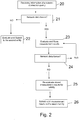
- Fig. 2 shows a flow chart describing the method of the invention in more detail, the method being implemented by the third entity 2.
- the third entity 2 receives information of a network connection quality, and may on the basis of the network connection quality determine whether there is a network disturbance or not, step 21. In case no network disturbance is detected, incoming measurement results are evaluated and submitted to the second entity. In case a network disturbance is present, the third entity evaluates and stores the evaluated measurement results 23, and the network condition is monitored. As long as the network disturbance is present, the third entity operates in a disturbed network mode 24. As soon as the network connection is restored, the stored measurement results are re-evaluated for validity 25, and the valid measurement results are submitted to the second entity.
- the disturbed mode operation may also be triggered by an event, and likewise the information about the network connection restoration may also be provided in the form of an event message, triggering the move from step 24 to step 25 where the stored measurement results are re-evaluated.
- the valid measurement results are submitted to the second entity.
- the method and the communication device implementing the method may be used with any network type, such as WCDMA, such as 3GPP, such as 3GPP LTE, etc.
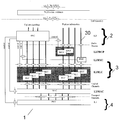
- An exemplary embodiment of such a network system implementing the method and the device according to the 3GPP standard is shown in Fig. 3 .
- the communication device 1 has a third entity comprising the L3, Layer 3, and the RRC, the Radio Resource Control.
- the third entity comprising the RRC protocol handles the Layer 3 control plane signalling by which the network controls the communication device behaviour.
- the second entity comprises at least the Layer 2/RLC, the Radio Link Control, but may also comprise one or more of the layer 2 elements, such as the L2/PDCP, the L2/BMC, the L2/MAC, etc.
- the second entity comprising at least the radio link control handles the segmentation and re-assembly of upper layer packets (e.g. layer 3 packets) in order to adapt them to a size which may be transmitted over the radio interface.
- the second entity comprising the RLC layer also performs re-transmission to recover from packet losses.
- the communication between the third entity and the second entity is performed via radio bearers 30.
- the second entity comprising the RLC layer transmits the messages to the first entity being the physical layer. It defines the means of transmitting raw bits rather than logical data packets over a physical link to the network.
- the method, product means, and device described herein can be implemented by means of hardware comprising several distinct elements, and/or partly or completely by means of a suitably programmed microprocessor.
- a suitably programmed microprocessor e.g. a suitably programmed microprocessor, one or more digital signal processor, or the like.
- the mere fact that certain measures are recited in mutually different dependent claims or described in different embodiments does not indicate that a combination of these measures cannot be used to advantage.
Landscapes
- Engineering & Computer Science (AREA)
- Computer Networks & Wireless Communication (AREA)
- Signal Processing (AREA)
- Mobile Radio Communication Systems (AREA)
Description
- The invention relates to event reporting in a communication network, and especially to a method of handling network disturbances in a communication network.
- Cellular communications systems for providing communications services to mobile terminals and user equipment are known and widely used. The cellular structure of such systems allows a user equipment connected to one cell (the so-called serving cell) of the system to switch to a neighbouring cell, e.g. when a neighbouring cell becomes more suitable to be connected to due to e.g. a movement of the user equipment. This process of switching cells is normally referred to as handover (HO). To this end, a user equipment connected to a network node makes on a regular basis measurements on the serving as well as detected neighbouring cells in order to find the most suitable cell to be connected to. In case another cell than the currently serving cell becomes strong, a HO is triggered and either the terminal informs the cellular network to change serving cell, or the network command the user equipment to connect to a certain cell.
- The optimization of a network with respect to the handover areas, as well as with respect to other coverage problematic areas, is performed using measurement drive tests. More advanced techniques are known as Minimization of Drive Tests (MDT). An examples of prior art is 3GPP document R2-102082, "Report on email discussion [69#30] trying to progress main MDT open issues". In case the reporting of the measurement results is configured by the network, such as in a 3GPP network, the measurement results may be evaluated and triggered by a third entity (
layer 3, RRC for 3GPP), and submitted to a second entity (layer 2, RLC for 3GPP) to be sent to the network, either in acknowledge mode or non-acknowledge mode. In case of network disturbances, for example in problematic areas or where the quality is low, the second entity handles possible re-transmissions until either successful acknowledgement is received from the network, that is when good quality is regained, or until the second entity stops re-transmission. Hereafter, the third entity is informed about the transmission failure and the network connection is lost. This procedure may be time consuming and, in some situations, especially during sudden coverage drops, a network connection may be lost even though network quality has been regained. - It is an object of the present invention to overcome at least some of the above described disadvantages, and provide an improved method of handling network connection disturbance(s) in a communication network. The present invention is defined by the accompanying independent claims. Preferred embodiments are defined by the dependent clams.
- According to the present invention, a method of handling network connection disturbance(s) in a communication network, and a communication device implementing the method, is provided, the network having a communication device with first, second and third entities, the third entity receiving measurement results for evaluation and submission to the second entity, the method comprising, performing by the third entity:
- receiving information of a network connection disturbance,
- evaluating measurement results received after detection of the network connection disturbance, and
- storing the evaluated measurement results in the third entity,
- re-evaluating stored measurement results for validity upon network restoration,
- submitting only valid measurement results to the second entity when the network connection is restored.
- The present invention further provides a communication device for handling network connection disturbance(s) in a communication network, the communication device having first, second and third entities, the third entity comprising a third entity processor for evaluating measurement results, and a third entity storage configured to store evaluated measurement results for measurement results being received after receipt of information of a network connection disturbance,
wherein the third entity processor re-evaluates stored measurement results for validity upon network restoration, and submits only valid measurement results to the second entity when the network connection is restored. - It is an advantage of the present invention that the third entity, after receiving information of a communication network disturbance, stores evaluated measurement results and, thus, do not submit all evaluated measurement results to the second entity when triggered irrespective of the network connection status or quality.
- It is a further advantage of the present invention that the third entity re-evaluates the stored measurement results for validity upon network restoration before submitting the measurement results to the second entity. Hereby, the communication network connection may be restored immediately after network restoration, without introducing a delay due to the handling of measurement results which are no longer valid.
- The operation under normal network connection conditions is referred to as normal mode operation, whereas operation during network connection disturbances is referred to as a disturbed mode operation.
- It is a further advantage of the present invention that the third entity only operates in a disturbed mode upon receiving information of a network connection disturbance and returns to normal mode operation as soon as it is detected that the network connection is restored. Hereby, no round-trip delay is introduced in the normal mode, as there is no delay before the evaluated measurement results are submitted to the second layer in the normal mode.
- In some cellular communication networks, such as WCDMA and 3GPP LTE, the mobility of a communication device may be network controlled so that the network commands the communication device to go to a certain cell. The decision behind commanding a communication device to a specific cell is typically based on measurement results containing the quality of the current cell and any surrounding cells. The measurement results containing the quality of the current and any surrounding cells are normally provided by the communication device to the network. The measurement results may for example include measurement results such as the RSCP/EcNO in WCDMA, or such as RSRP/RSRQ in 3GPP Long Term Evolution (LTE).
- Preferably, the third entity continuously evaluates the measurement results irrespective of the network connection status, and the third entity thus evaluates the measurement results in normal mode operation as well as in disturbed mode operation. Thereby, also any timer hysteresis, such as time-to-trigger, etc, may be continuously evaluated.
- The re-evaluation of the stored measurement results for validity upon network restoration may comprise the step of checking whether a stored measurement result is still valid, and, in the affirmative, measurement result quality values may be updated before the re-evaluated measurement results are submitted to the second entity. In case it, upon re-evaluation, is determined that a stored measurement result is no longer valid, then the invalid measurement result may be discarded.
- In a preferred embodiment, the third entity selects specific measurement results to be submitted to the second entity during the network connection disturbance, and submits the specific measurement results until the network connection is restored. Hereby, a specific measurement result may be submitted to the second entity before a second entity re-transmission threshold is reached. Preferably, the second entity re-transmission threshold is reset upon receiving a further specific measurement result. It is, thus, an advantage of submitting specific measurement results to the second entity during the network connection disturbance that the network connection is not lost due to the second entity reaching the re-transmission threshold.
- The specific measurement results submitted to the second entity may be stored in a second entity buffer until the network connection is restored. The second entity buffer may have the capacity to store a predetermined plurality of measurement results and preferably, the third entity submits fewer than the predetermined plurality of measurement results per signalling radio bearer during the network disturbance. Thus, the third entity preferably submits fewer than the predetermined plurality of measurement results to the second entity until the second entity receives information of network restoration.
- The measurement results provided from the communication device to the network may be either periodic measurement results or event-based measurement results. Both these types of measurement reporting are typically configured by the network. The periodic results may be configured and may be submitted periodically, such as approximately once per second. Typically, the periodic measurement results are configured to be submitted in a non-acknowledge mode. The event-based measurement results may be triggered by a certain event configured by the network. That is, a measurement result may be triggered when the communication device detects that a neighbouring cell's quality is becoming as good as the current cell's quality, etc. The event-based measurement results are typically configured to be reported in the acknowledge mode.
- Preferably, the third entity submits less than the predetermined plurality of measurement results of type acknowledge mode per signalling radio bearer during the network disturbance. It is envisaged that the third entity may await acknowledgement of the plurality of measurement results before submitting new results, or the third entity may await acknowledgement of a predetermined fraction of the predetermined plurality of measurement results before submitting new results. In this case, it is preferred that that only a number of measurement results corresponding to the predetermined plurality of measurement results subtracted said fraction is submitted to the second entity so as not to exceed the predetermined plurality of measurement results, and thereby not overfill the second entity buffer.
- The third entity may furthermore be configured to submit new measurement results of type acknowledge mode only after receipt of at least one acknowledgement of receipt. The network connection may be considered restored when at least one acknowledgement of receipt is received by the communication device, such as by the second entity.
- The third entity may receive information of a network connection disturbance at any instance where the network connection is not optimized. The determination of a network connection disturbance, and thus the instances in which the third entity receives information of a network connection disturbance may comprise any one or any combination of the following instances:
- a) a measured cell quality of a current cell connected to the communications device is below a certain threshold,
- b) a block error rate of the reception at the communication device is above a threshold value, and/or
- c) a second entity re-transmission time has exceeded a second retransmission threshold.
- It is envisaged that the third entity may furthermore implement a backup mechanism, such as a timer, which is activated after a number of measurement results have been submitted to the second entity in the disturbed mode. The timer may be activated when the predetermined plurality of measurement results have been submitted to the second entity.
- The second entity re-transmission system may comprise a buffer and a counter. The buffer may hold the predetermined plurality of measurement results and the counter may be a counter being incremented per retransmission of each higher layer measurement result. Upon reaching a threshold value configured by the network, the second entity may stop further re-transmissions. The counter may be implemented to re-start from 0 for every new higher layer data unit submitted, e.g. for every measurement report submitted from the third entity. It is therefore advantageously if the third entity at e.g. pre-set time intervals submits a specified measurement result to the second entity to thereby re-start the counter from 0. The pre-set time intervals may be realised by the third entity backup mechanism, such as a timer. Preferably, the value or pre-set time intervals of the backup mechanism is based on the configuration the network has applied to the second entity, the configuration comprising re-transmission amount, retransmission time-out and total re-transmission window size.
- It is an advantage of using a third entity backup mechanism that the time before the second entity stops re-transmission and therefore the time before the network connection is lost may be increased.
- After network restoration, a number of valid measurement results in the third entity may await submission. However, as the number of valid measurement results may not be sent simultaneously, it may be beneficial to prioritize the submitting order of the valid measurement reports awaiting submission. The valid measurement reports may be prioritized according to specific selection criteria, such as their ability to maintain the network connection, such as their ability to add cells to an active set of cells, etc. Preferably, the valid measurement results most beneficial for maintaining the network connection are submitted firstly. For example, amongst simultaneously queued or buffered measurement results of type 3GPP WCDMA event 1A, i.e. a neighbouring cell's quality is getting close to the serving cell's quality, and 1 B, i.e. an active cell's quality is getting worse than other active cell's quality, the third entity would prioritize 1A over 1 B, and thereby submitting 1A before 1 B. In response hereto, the network would first add a new cell the current active set (1A), before removing a cell from the active set (1B), keeping the active set as large as possible at all times.
- The term communication device is intended to comprise any electronic equipment, portable radio communications equipment, and other handheld or portable devices. The term portable radio communications equipment includes all equipment such as mobile terminals, e.g. mobile telephones, pagers, communicators, electronic organisers, smart phones, personal digital assistants (PDAs), handheld computers, tablet computers, or the like. The term processor is intended to comprise any integrated circuits, microprocessors, chips or chipsets for use in telecommunications equipment.
- The above and other aspects will be apparent and elucidated from the embodiments described with reference to the drawing in which:
-
Fig. 1 shows schematically a communication device according to the invention, -
Fig. 2 shows a flowchart of a method according to the present invention, and -
Fig. 3 shows schematically a 3GPP WCDMA configuration. - In some cellular communication networks, such as WCDMA and 3GPP Long Term Evolution (LTE), the mobility of a communication device may be network controlled so that the network commands the communication device to go to a certain cell. The decision behind commanding a communication device to a specific cell is typically based on measurement results containing the quality of the current cell and any surrounding cells. The measurement results containing the quality of the current and any surrounding cells are normally provided by the communication device to the network. The measurement results may for example include measurement results such as the RSCP/EcNO in WCDMA, or such as RSRP/RSRQ in LTE.
-
Fig. 1 shows schematically acommunication device 1 for handling network connection disturbance(s) in a communication network, such as in acellular communication network 5. - The
communication device 1 has afirst entity 4, asecond entity 3, and athird entity 2 implementinge.g. layer 1,layer 2 andlayer 3 of a WCDMA or 3GPP network. Thethird entity 2 comprises athird entity processor 6 for evaluating measurement results, and a third entity storage 7 configured to store evaluated measurement results for measurement results being received after receipt of information of a network connection disturbance. Thethird entity processor 6 further re-evaluates stored measurement results for validity upon network restoration, and submits only valid measurement results to thesecond entity 3 when the network connection is restored. Thecommunication device 1 is connected tonetwork 5 vianetwork connection 11. - The
second entity 3 comprises abuffer 8 for buffering or queuing measurement results received from thethird entity 2. Thebuffer 8 is configured to hold a predetermined plurality of measurement results x, with x being any integer. During the disturbed mode, thethird entity 2 submits a maximum of x measurement results to thesecond entity 3 per signalling radio bearer of type acknowledge mode to thesecond entity 3 until thesecond entity 3 receives an acknowledgement from the network 7, such as from the peer entity on the network side. Thethird entity 2 may await full acknowledgement of all x sent measurement results before submitting further measurement results. Alternatively, thethird entity 2 awaits only y acknowledgements, y being an integer and y<x. However, in this case thethird entity 2 submits only x-y new results to the second entity in order not to exceed x. - The
third entity 2 further implements a backup mechanism 9, in the present example a timer of N ms, but the backup mechanism 9 may be implemented in any other known way. The timer 9 is started after the x measurement results have been submitted to the second entity. At a time-out for the timer, the third entity may be allowed to submit new measurement result(s) to thesecond entity 3. The backup mechanism 9 may benefit the communication device since, typically, thesecond entity 3 is configured to re-transmit until a certain threshold is used where after no further re-transmissions are sent. The threshold may be implemented as acounter 10 which is incremented per re-sent higher layer data unit. As this counter starts from 0 for every new higher layer data unit submitted, the counter may be kept activated for a longer time, provided thethird entity 2 submits measurement results at time intervals. Hereby, it may take longer time before the second entity stops retransmission because a maximum number of re-transmissions is reached. The second entity may still stop re-transmission because e.g. a maximum transmission time is exceeded. -
Fig. 2 shows a flow chart describing the method of the invention in more detail, the method being implemented by thethird entity 2. Instep 20, thethird entity 2 receives information of a network connection quality, and may on the basis of the network connection quality determine whether there is a network disturbance or not, step 21. In case no network disturbance is detected, incoming measurement results are evaluated and submitted to the second entity. In case a network disturbance is present, the third entity evaluates and stores the evaluatedmeasurement results 23, and the network condition is monitored. As long as the network disturbance is present, the third entity operates in adisturbed network mode 24. As soon as the network connection is restored, the stored measurement results are re-evaluated forvalidity 25, and the valid measurement results are submitted to the second entity. It is envisaged that the disturbed mode operation may also be triggered by an event, and likewise the information about the network connection restoration may also be provided in the form of an event message, triggering the move fromstep 24 to step 25 where the stored measurement results are re-evaluated. Instep 26, the valid measurement results are submitted to the second entity. - It is an advantage of the present method that there is no, or substantially no, impact on the normal mode operation.
- The method and the communication device implementing the method may be used with any network type, such as WCDMA, such as 3GPP, such as 3GPP LTE, etc. An exemplary embodiment of such a network system implementing the method and the device according to the 3GPP standard is shown in
Fig. 3 . Thecommunication device 1 has a third entity comprising the L3,Layer 3, and the RRC, the Radio Resource Control. The third entity comprising the RRC protocol handles theLayer 3 control plane signalling by which the network controls the communication device behaviour. The second entity comprises at least theLayer 2/RLC, the Radio Link Control, but may also comprise one or more of thelayer 2 elements, such as the L2/PDCP, the L2/BMC, the L2/MAC, etc. The second entity comprising at least the radio link control handles the segmentation and re-assembly of upper layer packets (e.g. layer 3 packets) in order to adapt them to a size which may be transmitted over the radio interface. The second entity comprising the RLC layer also performs re-transmission to recover from packet losses. The communication between the third entity and the second entity is performed viaradio bearers 30. The second entity comprising the RLC layer transmits the messages to the first entity being the physical layer. It defines the means of transmitting raw bits rather than logical data packets over a physical link to the network. - Although some embodiments have been described and shown in detail, the invention is not restricted to them, but may also be embodied in other ways within the scope of the subject matter defined in the following claims.
- The method, product means, and device described herein can be implemented by means of hardware comprising several distinct elements, and/or partly or completely by means of a suitably programmed microprocessor. In the device claims enumerating several means, several of these means can be embodied by one and the same item of hardware, e.g. a suitably programmed microprocessor, one or more digital signal processor, or the like. The mere fact that certain measures are recited in mutually different dependent claims or described in different embodiments does not indicate that a combination of these measures cannot be used to advantage.
- It should be emphasized that the term "comprises/comprising" when used in this specification is taken to specify the presence of stated features, integers, steps or components but does not preclude the presence or addition of one or more other features, integers, steps, components or groups thereof.
Claims (15)
- A method of handling network connection disturbances in a communication network, the network having a communication device (1) and wherein mobility of the communication device is controlled by the communication network so that the communication network commands the communication device to go to a certain cell based on measurement results received by the network from the communication device, the communication device having first (4), second (3) and third (2) entities, the third entity (2) comprising a Radio Resource Control and receiving measurement results for evaluation and submission to the second entity (3), the second entity comprising a Radio Link Control, the first entity being a physical layer, the method comprising, performing by the third entity (2):receiving information of a network connection disturbance,evaluating measurement results received after detection of the network connection disturbance,the method being characterized by storing the evaluated measurement results in the third entity (2), re-evaluating stored measurement results for validity upon network restoration,
submitting only valid measurement results to the second entity (3) when the network connection is restored - A method according to claim 1, wherein the third entity (2) selects specific measurement results to be submitted to the second entity (3) during the network connection disturbance, and submits the specific measurement results until the network connection is restored.
- A method according to claim 2, wherein a specific measurement result is submitted to the second entity (3) before a second entity re-transmission threshold is reached.
- A method according to claims 2 or 3, wherein the specific measurement results submitted to the second entity (3) are stored in a second entity buffer (8) until the network connection is restored.
- A method according to any of the previous claims, wherein the second entity buffer (8) has capacity to store a predetermined plurality of measurement results and wherein the third entity (2) submits fewer than the predetermined plurality of measurement results per signalling radio bearer (30) of type acknowledge mode during the network disturbance.
- A method according to claim 5, wherein the third entity (2) awaits acknowledgement of the plurality of measurement results before submitting new results.
- A method according to claim 5, wherein the third entity (2) awaits acknowledgement of a predetermined fraction of the predetermined plurality of measurement results before submitting new results.
- A method according to any of the previous claims, wherein the network connection is considered restored when at least one acknowledgement of receipt is received by the third entity (2).
- A method according to any of the previous claims, wherein the measurement results are periodic measurement results or event triggered measurement results.
- A method according to any of the previous claims, wherein information of a network connection disturbance is received upon:a) a measured cell quality of a current cell connected to the communications device is below a certain threshold,b) a block error rate of the reception at the communication device is above a threshold value, and/orc) a second entity re-transmission time has exceeded a second retransmission threshold.
- A method according to any of the previous claims, wherein the re-evaluation of the stored measurement results for validity comprises updating measurement result quality values before submission.
- A method according to any of the previous claims, wherein a number of valid measurement results in the third entity (2) await submission after network connection restoration and wherein the submitting order of the valid measurement results is prioritized before submission.
- A method according to any of the previous claims, wherein the valid measurement results are prioritized according to specific selection criteria.
- A communications device adapted to perform the steps of the method defined in any one of claims 1 through 13.
- A communication device according to claim 14, for handling network connection disturbances in a communication network, the communication device having first (4), second (3) and third (2) entities, the first entity (4) being a physical layer, the second entity (3) comprising a radio link control, the third entity (2) comprising
a radio resource control,
a processor (6) for evaluating measurement results,
a third entity storage (7) configured to store evaluated measurement results for measurement results being received after receipt of information of a network connection disturbance,
wherein the third entity processor (6) re-evaluates stored measurement results for validity upon network restoration, and submits only valid measurement results to the second entity (3) when the network connection is restored to allow the communication network to command a communication device to go to a certain cell based on the measurement results.
Priority Applications (3)
| Application Number | Priority Date | Filing Date | Title |
|---|---|---|---|
| PL11169963T PL2536207T3 (en) | 2011-06-15 | 2011-06-15 | Event reporting in a communication network |
| EP11169963.3A EP2536207B1 (en) | 2011-06-15 | 2011-06-15 | Event reporting in a communication network |
| PCT/EP2012/060810 WO2012171848A1 (en) | 2011-06-15 | 2012-06-07 | Event reporting in a communication network |
Applications Claiming Priority (1)
| Application Number | Priority Date | Filing Date | Title |
|---|---|---|---|
| EP11169963.3A EP2536207B1 (en) | 2011-06-15 | 2011-06-15 | Event reporting in a communication network |
Publications (2)
| Publication Number | Publication Date |
|---|---|
| EP2536207A1 EP2536207A1 (en) | 2012-12-19 |
| EP2536207B1 true EP2536207B1 (en) | 2017-08-09 |
Family
ID=44862396
Family Applications (1)
| Application Number | Title | Priority Date | Filing Date |
|---|---|---|---|
| EP11169963.3A Not-in-force EP2536207B1 (en) | 2011-06-15 | 2011-06-15 | Event reporting in a communication network |
Country Status (3)
| Country | Link |
|---|---|
| EP (1) | EP2536207B1 (en) |
| PL (1) | PL2536207T3 (en) |
| WO (1) | WO2012171848A1 (en) |
-
2011
- 2011-06-15 EP EP11169963.3A patent/EP2536207B1/en not_active Not-in-force
- 2011-06-15 PL PL11169963T patent/PL2536207T3/en unknown
-
2012
- 2012-06-07 WO PCT/EP2012/060810 patent/WO2012171848A1/en not_active Ceased
Also Published As
| Publication number | Publication date |
|---|---|
| EP2536207A1 (en) | 2012-12-19 |
| WO2012171848A1 (en) | 2012-12-20 |
| PL2536207T3 (en) | 2018-01-31 |
Similar Documents
| Publication | Publication Date | Title |
|---|---|---|
| US11129081B2 (en) | Providing communication for a mobile communication device using a central unit node and distributed unit nodes | |
| KR100993648B1 (en) | Sending device, receiving device, information communication method | |
| RU2408146C2 (en) | Method and device for controlling data block transmission | |
| US20040052229A1 (en) | System for efficient recovery of Node-B buffered data following MAC layer reset | |
| US9191870B2 (en) | Handover method for reducing the amount of data forwarded to a target node | |
| CN106068018B (en) | Method and apparatus for throughput recovery during restart from an outage scenario | |
| US20140119219A1 (en) | Control of measurement messaging in a mobile device | |
| US20130194933A1 (en) | Selecting a data unit for retransmission | |
| KR20090076811A (en) | Method of Discarding Packet Data, Wireless Communication Device, Mobile Communication System | |
| WO2007046764A1 (en) | Select diversity for radio communications | |
| JP2003189368A (en) | Mobile communication system | |
| US20030022628A1 (en) | Data communication system and wireless communication device | |
| JP5909950B2 (en) | Radio base station apparatus and data transfer method in radio base station apparatus | |
| US20120201151A1 (en) | Layer 2 ACK And NACK Status Reporting | |
| EP2536207A1 (en) | Event reporting in a communication network | |
| KR101637788B1 (en) | Method and system for reducing mac-is reset ambiguity for common e-dch transmissions | |
| KR20070048630A (en) | Method and apparatus for handling RLC protocol error in wireless communication system | |
| CN102281120B (en) | Signaling sending method, network side equipment and user equipment | |
| CN105406949B (en) | A kind of method and apparatus of data transmission | |
| US20250119873A1 (en) | Wireless communication device and second wireless communication device | |
| KR20100060853A (en) | Method and system for reporting status at radio link control protocol | |
| JP2011055435A (en) | Apparatus and method for retransmission control | |
| WO2026098395A1 (en) | Communication method based on ai model, communication apparatus, and device | |
| WO1999057840A1 (en) | Method and means for processing information | |
| CN117295108A (en) | Data transmission method, device and equipment |
Legal Events
| Date | Code | Title | Description |
|---|---|---|---|
| PUAI | Public reference made under article 153(3) epc to a published international application that has entered the european phase |
Free format text: ORIGINAL CODE: 0009012 |
|
| AK | Designated contracting states |
Kind code of ref document: A1 Designated state(s): AL AT BE BG CH CY CZ DE DK EE ES FI FR GB GR HR HU IE IS IT LI LT LU LV MC MK MT NL NO PL PT RO RS SE SI SK SM TR |
|
| AX | Request for extension of the european patent |
Extension state: BA ME |
|
| 17P | Request for examination filed |
Effective date: 20130618 |
|
| RBV | Designated contracting states (corrected) |
Designated state(s): AL AT BE BG CH CY CZ DE DK EE ES FI FR GB GR HR HU IE IS IT LI LT LU LV MC MK MT NL NO PL PT RO RS SE SI SK SM TR |
|
| GRAP | Despatch of communication of intention to grant a patent |
Free format text: ORIGINAL CODE: EPIDOSNIGR1 |
|
| RIC1 | Information provided on ipc code assigned before grant |
Ipc: H04W 88/02 20090101ALN20170223BHEP Ipc: H04W 36/00 20090101AFI20170223BHEP |
|
| INTG | Intention to grant announced |
Effective date: 20170317 |
|
| GRAS | Grant fee paid |
Free format text: ORIGINAL CODE: EPIDOSNIGR3 |
|
| GRAA | (expected) grant |
Free format text: ORIGINAL CODE: 0009210 |
|
| AK | Designated contracting states |
Kind code of ref document: B1 Designated state(s): AL AT BE BG CH CY CZ DE DK EE ES FI FR GB GR HR HU IE IS IT LI LT LU LV MC MK MT NL NO PL PT RO RS SE SI SK SM TR |
|
| REG | Reference to a national code |
Ref country code: GB Ref legal event code: FG4D |
|
| REG | Reference to a national code |
Ref country code: CH Ref legal event code: EP Ref country code: AT Ref legal event code: REF Ref document number: 918070 Country of ref document: AT Kind code of ref document: T Effective date: 20170815 |
|
| REG | Reference to a national code |
Ref country code: IE Ref legal event code: FG4D |
|
| REG | Reference to a national code |
Ref country code: DE Ref legal event code: R096 Ref document number: 602011040321 Country of ref document: DE |
|
| REG | Reference to a national code |
Ref country code: NL Ref legal event code: MP Effective date: 20170809 |
|
| REG | Reference to a national code |
Ref country code: LT Ref legal event code: MG4D |
|
| REG | Reference to a national code |
Ref country code: AT Ref legal event code: MK05 Ref document number: 918070 Country of ref document: AT Kind code of ref document: T Effective date: 20170809 |
|
| PG25 | Lapsed in a contracting state [announced via postgrant information from national office to epo] |
Ref country code: SE Free format text: LAPSE BECAUSE OF FAILURE TO SUBMIT A TRANSLATION OF THE DESCRIPTION OR TO PAY THE FEE WITHIN THE PRESCRIBED TIME-LIMIT Effective date: 20170809 Ref country code: NO Free format text: LAPSE BECAUSE OF FAILURE TO SUBMIT A TRANSLATION OF THE DESCRIPTION OR TO PAY THE FEE WITHIN THE PRESCRIBED TIME-LIMIT Effective date: 20171109 Ref country code: NL Free format text: LAPSE BECAUSE OF FAILURE TO SUBMIT A TRANSLATION OF THE DESCRIPTION OR TO PAY THE FEE WITHIN THE PRESCRIBED TIME-LIMIT Effective date: 20170809 Ref country code: FI Free format text: LAPSE BECAUSE OF FAILURE TO SUBMIT A TRANSLATION OF THE DESCRIPTION OR TO PAY THE FEE WITHIN THE PRESCRIBED TIME-LIMIT Effective date: 20170809 Ref country code: AT Free format text: LAPSE BECAUSE OF FAILURE TO SUBMIT A TRANSLATION OF THE DESCRIPTION OR TO PAY THE FEE WITHIN THE PRESCRIBED TIME-LIMIT Effective date: 20170809 Ref country code: LT Free format text: LAPSE BECAUSE OF FAILURE TO SUBMIT A TRANSLATION OF THE DESCRIPTION OR TO PAY THE FEE WITHIN THE PRESCRIBED TIME-LIMIT Effective date: 20170809 Ref country code: HR Free format text: LAPSE BECAUSE OF FAILURE TO SUBMIT A TRANSLATION OF THE DESCRIPTION OR TO PAY THE FEE WITHIN THE PRESCRIBED TIME-LIMIT Effective date: 20170809 |
|
| PG25 | Lapsed in a contracting state [announced via postgrant information from national office to epo] |
Ref country code: ES Free format text: LAPSE BECAUSE OF FAILURE TO SUBMIT A TRANSLATION OF THE DESCRIPTION OR TO PAY THE FEE WITHIN THE PRESCRIBED TIME-LIMIT Effective date: 20170809 Ref country code: IS Free format text: LAPSE BECAUSE OF FAILURE TO SUBMIT A TRANSLATION OF THE DESCRIPTION OR TO PAY THE FEE WITHIN THE PRESCRIBED TIME-LIMIT Effective date: 20171209 Ref country code: BG Free format text: LAPSE BECAUSE OF FAILURE TO SUBMIT A TRANSLATION OF THE DESCRIPTION OR TO PAY THE FEE WITHIN THE PRESCRIBED TIME-LIMIT Effective date: 20171109 Ref country code: GR Free format text: LAPSE BECAUSE OF FAILURE TO SUBMIT A TRANSLATION OF THE DESCRIPTION OR TO PAY THE FEE WITHIN THE PRESCRIBED TIME-LIMIT Effective date: 20171110 Ref country code: RS Free format text: LAPSE BECAUSE OF FAILURE TO SUBMIT A TRANSLATION OF THE DESCRIPTION OR TO PAY THE FEE WITHIN THE PRESCRIBED TIME-LIMIT Effective date: 20170809 Ref country code: LV Free format text: LAPSE BECAUSE OF FAILURE TO SUBMIT A TRANSLATION OF THE DESCRIPTION OR TO PAY THE FEE WITHIN THE PRESCRIBED TIME-LIMIT Effective date: 20170809 |
|
| PG25 | Lapsed in a contracting state [announced via postgrant information from national office to epo] |
Ref country code: CZ Free format text: LAPSE BECAUSE OF FAILURE TO SUBMIT A TRANSLATION OF THE DESCRIPTION OR TO PAY THE FEE WITHIN THE PRESCRIBED TIME-LIMIT Effective date: 20170809 Ref country code: RO Free format text: LAPSE BECAUSE OF FAILURE TO SUBMIT A TRANSLATION OF THE DESCRIPTION OR TO PAY THE FEE WITHIN THE PRESCRIBED TIME-LIMIT Effective date: 20170809 Ref country code: DK Free format text: LAPSE BECAUSE OF FAILURE TO SUBMIT A TRANSLATION OF THE DESCRIPTION OR TO PAY THE FEE WITHIN THE PRESCRIBED TIME-LIMIT Effective date: 20170809 |
|
| REG | Reference to a national code |
Ref country code: DE Ref legal event code: R097 Ref document number: 602011040321 Country of ref document: DE |
|
| PG25 | Lapsed in a contracting state [announced via postgrant information from national office to epo] |
Ref country code: SM Free format text: LAPSE BECAUSE OF FAILURE TO SUBMIT A TRANSLATION OF THE DESCRIPTION OR TO PAY THE FEE WITHIN THE PRESCRIBED TIME-LIMIT Effective date: 20170809 Ref country code: IT Free format text: LAPSE BECAUSE OF FAILURE TO SUBMIT A TRANSLATION OF THE DESCRIPTION OR TO PAY THE FEE WITHIN THE PRESCRIBED TIME-LIMIT Effective date: 20170809 Ref country code: EE Free format text: LAPSE BECAUSE OF FAILURE TO SUBMIT A TRANSLATION OF THE DESCRIPTION OR TO PAY THE FEE WITHIN THE PRESCRIBED TIME-LIMIT Effective date: 20170809 Ref country code: SK Free format text: LAPSE BECAUSE OF FAILURE TO SUBMIT A TRANSLATION OF THE DESCRIPTION OR TO PAY THE FEE WITHIN THE PRESCRIBED TIME-LIMIT Effective date: 20170809 |
|
| PLBE | No opposition filed within time limit |
Free format text: ORIGINAL CODE: 0009261 |
|
| STAA | Information on the status of an ep patent application or granted ep patent |
Free format text: STATUS: NO OPPOSITION FILED WITHIN TIME LIMIT |
|
| 26N | No opposition filed |
Effective date: 20180511 |
|
| PG25 | Lapsed in a contracting state [announced via postgrant information from national office to epo] |
Ref country code: SI Free format text: LAPSE BECAUSE OF FAILURE TO SUBMIT A TRANSLATION OF THE DESCRIPTION OR TO PAY THE FEE WITHIN THE PRESCRIBED TIME-LIMIT Effective date: 20170809 |
|
| REG | Reference to a national code |
Ref country code: CH Ref legal event code: PL |
|
| REG | Reference to a national code |
Ref country code: BE Ref legal event code: MM Effective date: 20180630 |
|
| REG | Reference to a national code |
Ref country code: IE Ref legal event code: MM4A |
|
| PG25 | Lapsed in a contracting state [announced via postgrant information from national office to epo] |
Ref country code: LU Free format text: LAPSE BECAUSE OF NON-PAYMENT OF DUE FEES Effective date: 20180615 Ref country code: MC Free format text: LAPSE BECAUSE OF FAILURE TO SUBMIT A TRANSLATION OF THE DESCRIPTION OR TO PAY THE FEE WITHIN THE PRESCRIBED TIME-LIMIT Effective date: 20170809 |
|
| PG25 | Lapsed in a contracting state [announced via postgrant information from national office to epo] |
Ref country code: FR Free format text: LAPSE BECAUSE OF NON-PAYMENT OF DUE FEES Effective date: 20180630 Ref country code: CH Free format text: LAPSE BECAUSE OF NON-PAYMENT OF DUE FEES Effective date: 20180630 Ref country code: IE Free format text: LAPSE BECAUSE OF NON-PAYMENT OF DUE FEES Effective date: 20180615 Ref country code: LI Free format text: LAPSE BECAUSE OF NON-PAYMENT OF DUE FEES Effective date: 20180630 |
|
| PG25 | Lapsed in a contracting state [announced via postgrant information from national office to epo] |
Ref country code: BE Free format text: LAPSE BECAUSE OF NON-PAYMENT OF DUE FEES Effective date: 20180630 |
|
| PGFP | Annual fee paid to national office [announced via postgrant information from national office to epo] |
Ref country code: PL Payment date: 20190521 Year of fee payment: 9 |
|
| PG25 | Lapsed in a contracting state [announced via postgrant information from national office to epo] |
Ref country code: MT Free format text: LAPSE BECAUSE OF NON-PAYMENT OF DUE FEES Effective date: 20180615 |
|
| PG25 | Lapsed in a contracting state [announced via postgrant information from national office to epo] |
Ref country code: TR Free format text: LAPSE BECAUSE OF FAILURE TO SUBMIT A TRANSLATION OF THE DESCRIPTION OR TO PAY THE FEE WITHIN THE PRESCRIBED TIME-LIMIT Effective date: 20170809 |
|
| PG25 | Lapsed in a contracting state [announced via postgrant information from national office to epo] |
Ref country code: PT Free format text: LAPSE BECAUSE OF FAILURE TO SUBMIT A TRANSLATION OF THE DESCRIPTION OR TO PAY THE FEE WITHIN THE PRESCRIBED TIME-LIMIT Effective date: 20170809 Ref country code: HU Free format text: LAPSE BECAUSE OF FAILURE TO SUBMIT A TRANSLATION OF THE DESCRIPTION OR TO PAY THE FEE WITHIN THE PRESCRIBED TIME-LIMIT; INVALID AB INITIO Effective date: 20110615 |
|
| PG25 | Lapsed in a contracting state [announced via postgrant information from national office to epo] |
Ref country code: MK Free format text: LAPSE BECAUSE OF NON-PAYMENT OF DUE FEES Effective date: 20170809 Ref country code: CY Free format text: LAPSE BECAUSE OF FAILURE TO SUBMIT A TRANSLATION OF THE DESCRIPTION OR TO PAY THE FEE WITHIN THE PRESCRIBED TIME-LIMIT Effective date: 20170809 |
|
| PG25 | Lapsed in a contracting state [announced via postgrant information from national office to epo] |
Ref country code: AL Free format text: LAPSE BECAUSE OF FAILURE TO SUBMIT A TRANSLATION OF THE DESCRIPTION OR TO PAY THE FEE WITHIN THE PRESCRIBED TIME-LIMIT Effective date: 20170809 |
|
| PGFP | Annual fee paid to national office [announced via postgrant information from national office to epo] |
Ref country code: GB Payment date: 20220628 Year of fee payment: 12 |
|
| PG25 | Lapsed in a contracting state [announced via postgrant information from national office to epo] |
Ref country code: PL Free format text: LAPSE BECAUSE OF NON-PAYMENT OF DUE FEES Effective date: 20200615 |
|
| PGFP | Annual fee paid to national office [announced via postgrant information from national office to epo] |
Ref country code: DE Payment date: 20220629 Year of fee payment: 12 |
|
| REG | Reference to a national code |
Ref country code: DE Ref legal event code: R119 Ref document number: 602011040321 Country of ref document: DE |
|
| GBPC | Gb: european patent ceased through non-payment of renewal fee |
Effective date: 20230615 |
|
| PG25 | Lapsed in a contracting state [announced via postgrant information from national office to epo] |
Ref country code: DE Free format text: LAPSE BECAUSE OF NON-PAYMENT OF DUE FEES Effective date: 20240103 Ref country code: GB Free format text: LAPSE BECAUSE OF NON-PAYMENT OF DUE FEES Effective date: 20230615 |