EP2535969A1 - Novel method and product - Google Patents
Novel method and product Download PDFInfo
- Publication number
- EP2535969A1 EP2535969A1 EP11169811A EP11169811A EP2535969A1 EP 2535969 A1 EP2535969 A1 EP 2535969A1 EP 11169811 A EP11169811 A EP 11169811A EP 11169811 A EP11169811 A EP 11169811A EP 2535969 A1 EP2535969 A1 EP 2535969A1
- Authority
- EP
- European Patent Office
- Prior art keywords
- sucrose
- fesio
- carbon
- amount
- mixture
- Prior art date
- Legal status (The legal status is an assumption and is not a legal conclusion. Google has not performed a legal analysis and makes no representation as to the accuracy of the status listed.)
- Withdrawn
Links
- 238000000034 method Methods 0.000 title claims abstract description 15
- 239000000463 material Substances 0.000 claims abstract description 34
- CZMRCDWAGMRECN-UGDNZRGBSA-N Sucrose Chemical compound O[C@H]1[C@H](O)[C@@H](CO)O[C@@]1(CO)O[C@@H]1[C@H](O)[C@@H](O)[C@H](O)[C@@H](CO)O1 CZMRCDWAGMRECN-UGDNZRGBSA-N 0.000 claims description 44
- 229930006000 Sucrose Natural products 0.000 claims description 44
- 239000005720 sucrose Substances 0.000 claims description 44
- 229910009731 Li2FeSiO4 Inorganic materials 0.000 claims description 39
- OKTJSMMVPCPJKN-UHFFFAOYSA-N Carbon Chemical compound [C] OKTJSMMVPCPJKN-UHFFFAOYSA-N 0.000 claims description 31
- 229910052799 carbon Inorganic materials 0.000 claims description 30
- 229910052744 lithium Inorganic materials 0.000 claims description 22
- VYPSYNLAJGMNEJ-UHFFFAOYSA-N Silicium dioxide Chemical compound O=[Si]=O VYPSYNLAJGMNEJ-UHFFFAOYSA-N 0.000 claims description 19
- 239000002245 particle Substances 0.000 claims description 18
- WHXSMMKQMYFTQS-UHFFFAOYSA-N Lithium Chemical compound [Li] WHXSMMKQMYFTQS-UHFFFAOYSA-N 0.000 claims description 16
- 239000000203 mixture Substances 0.000 claims description 13
- IIPYXGDZVMZOAP-UHFFFAOYSA-N lithium nitrate Chemical compound [Li+].[O-][N+]([O-])=O IIPYXGDZVMZOAP-UHFFFAOYSA-N 0.000 claims description 12
- XLYOFNOQVPJJNP-UHFFFAOYSA-N water Substances O XLYOFNOQVPJJNP-UHFFFAOYSA-N 0.000 claims description 10
- 229910052681 coesite Inorganic materials 0.000 claims description 9
- 229910052906 cristobalite Inorganic materials 0.000 claims description 9
- 238000003780 insertion Methods 0.000 claims description 9
- 230000037431 insertion Effects 0.000 claims description 9
- 239000000377 silicon dioxide Substances 0.000 claims description 9
- 229910052682 stishovite Inorganic materials 0.000 claims description 9
- 229910052905 tridymite Inorganic materials 0.000 claims description 9
- 238000010438 heat treatment Methods 0.000 claims description 8
- 238000002485 combustion reaction Methods 0.000 claims description 4
- VCJMYUPGQJHHFU-UHFFFAOYSA-N iron(III) nitrate Inorganic materials [Fe+3].[O-][N+]([O-])=O.[O-][N+]([O-])=O.[O-][N+]([O-])=O VCJMYUPGQJHHFU-UHFFFAOYSA-N 0.000 claims description 4
- 238000004519 manufacturing process Methods 0.000 claims description 4
- 150000002823 nitrates Chemical class 0.000 claims description 2
- 239000002105 nanoparticle Substances 0.000 abstract description 9
- 239000002243 precursor Substances 0.000 abstract description 6
- 238000009841 combustion method Methods 0.000 abstract description 5
- 239000010406 cathode material Substances 0.000 abstract description 4
- 150000001875 compounds Chemical class 0.000 abstract description 2
- 238000006479 redox reaction Methods 0.000 abstract description 2
- 150000003839 salts Chemical class 0.000 abstract description 2
- XEEYBQQBJWHFJM-UHFFFAOYSA-N Iron Chemical compound [Fe] XEEYBQQBJWHFJM-UHFFFAOYSA-N 0.000 description 16
- 238000002441 X-ray diffraction Methods 0.000 description 12
- 230000001351 cycling effect Effects 0.000 description 10
- 239000000446 fuel Substances 0.000 description 9
- 238000003991 Rietveld refinement Methods 0.000 description 8
- 229910052742 iron Inorganic materials 0.000 description 8
- 239000000843 powder Substances 0.000 description 8
- 238000009826 distribution Methods 0.000 description 7
- -1 Fe2+ cation Chemical class 0.000 description 5
- 239000007800 oxidant agent Substances 0.000 description 5
- 229910052710 silicon Inorganic materials 0.000 description 5
- SECXISVLQFMRJM-UHFFFAOYSA-N N-Methylpyrrolidone Chemical compound CN1CCCC1=O SECXISVLQFMRJM-UHFFFAOYSA-N 0.000 description 4
- 239000002131 composite material Substances 0.000 description 4
- 239000007789 gas Substances 0.000 description 4
- 239000012535 impurity Substances 0.000 description 4
- 239000006188 syrup Substances 0.000 description 4
- 235000020357 syrup Nutrition 0.000 description 4
- 229910007562 Li2SiO3 Inorganic materials 0.000 description 3
- 238000003917 TEM image Methods 0.000 description 3
- 239000011149 active material Substances 0.000 description 3
- 230000015572 biosynthetic process Effects 0.000 description 3
- 238000006243 chemical reaction Methods 0.000 description 3
- 239000012153 distilled water Substances 0.000 description 3
- 239000006260 foam Substances 0.000 description 3
- 238000001198 high resolution scanning electron microscopy Methods 0.000 description 3
- 229910001416 lithium ion Inorganic materials 0.000 description 3
- 238000005259 measurement Methods 0.000 description 3
- 230000001590 oxidative effect Effects 0.000 description 3
- 238000001878 scanning electron micrograph Methods 0.000 description 3
- 238000003786 synthesis reaction Methods 0.000 description 3
- 238000002411 thermogravimetry Methods 0.000 description 3
- XKRFYHLGVUSROY-UHFFFAOYSA-N Argon Chemical compound [Ar] XKRFYHLGVUSROY-UHFFFAOYSA-N 0.000 description 2
- IJGRMHOSHXDMSA-UHFFFAOYSA-N Atomic nitrogen Chemical compound N#N IJGRMHOSHXDMSA-UHFFFAOYSA-N 0.000 description 2
- 239000004411 aluminium Substances 0.000 description 2
- 229910052782 aluminium Inorganic materials 0.000 description 2
- XAGFODPZIPBFFR-UHFFFAOYSA-N aluminium Chemical compound [Al] XAGFODPZIPBFFR-UHFFFAOYSA-N 0.000 description 2
- 239000011248 coating agent Substances 0.000 description 2
- 238000000576 coating method Methods 0.000 description 2
- 230000007423 decrease Effects 0.000 description 2
- 238000006073 displacement reaction Methods 0.000 description 2
- 230000000694 effects Effects 0.000 description 2
- 238000000840 electrochemical analysis Methods 0.000 description 2
- 239000003792 electrolyte Substances 0.000 description 2
- 229910001960 metal nitrate Inorganic materials 0.000 description 2
- 230000003647 oxidation Effects 0.000 description 2
- 238000007254 oxidation reaction Methods 0.000 description 2
- 229910052760 oxygen Inorganic materials 0.000 description 2
- 229920002981 polyvinylidene fluoride Polymers 0.000 description 2
- 230000005855 radiation Effects 0.000 description 2
- 230000002441 reversible effect Effects 0.000 description 2
- 238000012360 testing method Methods 0.000 description 2
- 238000004627 transmission electron microscopy Methods 0.000 description 2
- 238000004438 BET method Methods 0.000 description 1
- 229910001290 LiPF6 Inorganic materials 0.000 description 1
- HBBGRARXTFLTSG-UHFFFAOYSA-N Lithium ion Chemical compound [Li+] HBBGRARXTFLTSG-UHFFFAOYSA-N 0.000 description 1
- BPQQTUXANYXVAA-UHFFFAOYSA-N Orthosilicate Chemical compound [O-][Si]([O-])([O-])[O-] BPQQTUXANYXVAA-UHFFFAOYSA-N 0.000 description 1
- 239000002033 PVDF binder Substances 0.000 description 1
- XUIMIQQOPSSXEZ-UHFFFAOYSA-N Silicon Chemical compound [Si] XUIMIQQOPSSXEZ-UHFFFAOYSA-N 0.000 description 1
- 239000005030 aluminium foil Substances 0.000 description 1
- 238000004458 analytical method Methods 0.000 description 1
- 229910052786 argon Inorganic materials 0.000 description 1
- 239000006229 carbon black Substances 0.000 description 1
- 125000002091 cationic group Chemical group 0.000 description 1
- 150000001768 cations Chemical class 0.000 description 1
- 239000003153 chemical reaction reagent Substances 0.000 description 1
- 239000010941 cobalt Substances 0.000 description 1
- 229910017052 cobalt Inorganic materials 0.000 description 1
- GUTLYIVDDKVIGB-UHFFFAOYSA-N cobalt atom Chemical compound [Co] GUTLYIVDDKVIGB-UHFFFAOYSA-N 0.000 description 1
- 239000013078 crystal Substances 0.000 description 1
- 238000002447 crystallographic data Methods 0.000 description 1
- 125000004122 cyclic group Chemical group 0.000 description 1
- 230000003247 decreasing effect Effects 0.000 description 1
- 238000011161 development Methods 0.000 description 1
- 238000002848 electrochemical method Methods 0.000 description 1
- 238000002474 experimental method Methods 0.000 description 1
- 238000000605 extraction Methods 0.000 description 1
- 230000002349 favourable effect Effects 0.000 description 1
- 239000003365 glass fiber Substances 0.000 description 1
- 229910021389 graphene Inorganic materials 0.000 description 1
- 238000006713 insertion reaction Methods 0.000 description 1
- 150000002500 ions Chemical class 0.000 description 1
- 239000007788 liquid Substances 0.000 description 1
- AIRPCZTWEOZWNF-UHFFFAOYSA-N lithium hydroxy(trioxido)silane iron(2+) Chemical compound [Li+].[Fe+2].O[Si]([O-])([O-])[O-] AIRPCZTWEOZWNF-UHFFFAOYSA-N 0.000 description 1
- 230000014759 maintenance of location Effects 0.000 description 1
- 239000004570 mortar (masonry) Substances 0.000 description 1
- 229910052757 nitrogen Inorganic materials 0.000 description 1
- 229920000447 polyanionic polymer Polymers 0.000 description 1
- 229920000642 polymer Polymers 0.000 description 1
- 238000002459 porosimetry Methods 0.000 description 1
- 239000007774 positive electrode material Substances 0.000 description 1
- 239000011541 reaction mixture Substances 0.000 description 1
- 150000004760 silicates Chemical class 0.000 description 1
- 239000010703 silicon Substances 0.000 description 1
- 238000003892 spreading Methods 0.000 description 1
- 239000007858 starting material Substances 0.000 description 1
- 230000002194 synthesizing effect Effects 0.000 description 1
Images




Classifications
-
- H—ELECTRICITY
- H01—ELECTRIC ELEMENTS
- H01M—PROCESSES OR MEANS, e.g. BATTERIES, FOR THE DIRECT CONVERSION OF CHEMICAL ENERGY INTO ELECTRICAL ENERGY
- H01M4/00—Electrodes
- H01M4/02—Electrodes composed of, or comprising, active material
- H01M4/36—Selection of substances as active materials, active masses, active liquids
- H01M4/362—Composites
- H01M4/364—Composites as mixtures
-
- C—CHEMISTRY; METALLURGY
- C01—INORGANIC CHEMISTRY
- C01B—NON-METALLIC ELEMENTS; COMPOUNDS THEREOF; METALLOIDS OR COMPOUNDS THEREOF NOT COVERED BY SUBCLASS C01C
- C01B33/00—Silicon; Compounds thereof
- C01B33/20—Silicates
-
- C—CHEMISTRY; METALLURGY
- C01—INORGANIC CHEMISTRY
- C01B—NON-METALLIC ELEMENTS; COMPOUNDS THEREOF; METALLOIDS OR COMPOUNDS THEREOF NOT COVERED BY SUBCLASS C01C
- C01B33/00—Silicon; Compounds thereof
- C01B33/20—Silicates
- C01B33/32—Alkali metal silicates
-
- H—ELECTRICITY
- H01—ELECTRIC ELEMENTS
- H01M—PROCESSES OR MEANS, e.g. BATTERIES, FOR THE DIRECT CONVERSION OF CHEMICAL ENERGY INTO ELECTRICAL ENERGY
- H01M10/00—Secondary cells; Manufacture thereof
- H01M10/05—Accumulators with non-aqueous electrolyte
- H01M10/052—Li-accumulators
- H01M10/0525—Rocking-chair batteries, i.e. batteries with lithium insertion or intercalation in both electrodes; Lithium-ion batteries
-
- H—ELECTRICITY
- H01—ELECTRIC ELEMENTS
- H01M—PROCESSES OR MEANS, e.g. BATTERIES, FOR THE DIRECT CONVERSION OF CHEMICAL ENERGY INTO ELECTRICAL ENERGY
- H01M4/00—Electrodes
- H01M4/02—Electrodes composed of, or comprising, active material
- H01M4/13—Electrodes for accumulators with non-aqueous electrolyte, e.g. for lithium-accumulators; Processes of manufacture thereof
- H01M4/136—Electrodes based on inorganic compounds other than oxides or hydroxides, e.g. sulfides, selenides, tellurides, halogenides or LiCoFy
-
- H—ELECTRICITY
- H01—ELECTRIC ELEMENTS
- H01M—PROCESSES OR MEANS, e.g. BATTERIES, FOR THE DIRECT CONVERSION OF CHEMICAL ENERGY INTO ELECTRICAL ENERGY
- H01M4/00—Electrodes
- H01M4/02—Electrodes composed of, or comprising, active material
- H01M4/36—Selection of substances as active materials, active masses, active liquids
- H01M4/58—Selection of substances as active materials, active masses, active liquids of inorganic compounds other than oxides or hydroxides, e.g. sulfides, selenides, tellurides, halogenides or LiCoFy; of polyanionic structures, e.g. phosphates, silicates or borates
- H01M4/5825—Oxygenated metallic salts or polyanionic structures, e.g. borates, phosphates, silicates, olivines
-
- Y—GENERAL TAGGING OF NEW TECHNOLOGICAL DEVELOPMENTS; GENERAL TAGGING OF CROSS-SECTIONAL TECHNOLOGIES SPANNING OVER SEVERAL SECTIONS OF THE IPC; TECHNICAL SUBJECTS COVERED BY FORMER USPC CROSS-REFERENCE ART COLLECTIONS [XRACs] AND DIGESTS
- Y02—TECHNOLOGIES OR APPLICATIONS FOR MITIGATION OR ADAPTATION AGAINST CLIMATE CHANGE
- Y02E—REDUCTION OF GREENHOUSE GAS [GHG] EMISSIONS, RELATED TO ENERGY GENERATION, TRANSMISSION OR DISTRIBUTION
- Y02E60/00—Enabling technologies; Technologies with a potential or indirect contribution to GHG emissions mitigation
- Y02E60/10—Energy storage using batteries
Definitions
- the present invention relates to a method for producing a lithium insertion material for a battery, the material comprising iron, lithium, silicon, and carbon.
- Lithium iron orthosilicate Li 2 FeSiO 4
- Li 2 FeSiO 4 has increasingly become a material of interest as a cathode for lithium ion batteries due to its promising electrochemical properties demonstrated the first time by Nyten et al. and the low synthesis cost compared to the cobalt based cathodes (Nyten 2005, 2006).
- a limiting factor with polyanion materials is their poor conductivity.
- Synthesis conditions have a large influence on the electrochemical performances of Li 2 FeSiO 4 , and many studies have been done to find out the key factor for optimized electrochemical performances.
- Recent trends on Li 2 FeSiO 4 are focused on development of material active materials with nano-sized particle to improve the electrochemical performance by different synthesis techniques such as solid-state, sol-gel, hydrothermal, and hydrothermal assisted sol-gel.
- the present invention relates to a new, cheaper and rapid sucrose-aided combustion method, adequate for preparing homogeneous nano-sized materials.
- the method is based on an oxidation-reduction reaction between soluble precursor salts (oxidizers) and sacrificial, carbonaceous compounds (fuels).
- oxidizers soluble precursor salts
- fuels sacrificial, carbonaceous compounds
- the method relies on using metal nitrates as oxidizers and sucrose as fuel, to synthesize an inexpensive, nano-sized, silicate cathode material.
- nano-sized Li 2 FeSiO 4 /C powders have been synthesized by a novel combustion process in which a very low-cost material, sucrose, is used as fuel.
- sucrose a very low-cost material
- XRD analysis shows that the amount of Li 2 SiO 3 and Fe 1-x O impurities increase with increasing sucrose amount.
- Combined SEM and TEM micrographs and BET analysis show that the addition of sucrose is favourable for increasing the surface area while the particle size decreases.
- a simple combustion method based on sucrose is employed to synthesize pure Li 2 FeSiO 4 /C. This leads to an improved cycling performance of this silicate cathode material.
- the process offers good sample homogeneity and allows synthesizing samples with small particle size.
- the invention in one aspect, relates to a process for preparing a Li-Fe-SiO-C material.
- Said material is a lithium insertion material, useful in batteries.
- Li-Fe-SiO-C material can be described as follows: LiNO 3 (Sigma-Aldrich) and Fe (NO 3 ) 3 •9H 2 O (Sigma-Aldrich) are used as the oxidant precursors, sucrose (Sigma) as fuel and SiO 2 nanoparticles (Sigma), and the chemical reaction can be described as follows: 48LiNO 3 + 24Fe (NO 3 ) 3 + 24SiO 2 + 13C 12 H 22 O 11 ⁇ 24Li 2 FeSiO 4 + 60 N 2 + 156 CO 2 + 144 H 2 O
- the reaction yields nano-particles (i.e. having a size of about 25-100nm) of Li 2 FeSiO 4 /C.
- the material has the stoichiometric amounts of Li, Fe, Si and O, further containing carbon, e.g. in an amount of about 12% by weight of carbon.
- the precursors e.g. Li, Fe, and Si sources such as LiNO 3 , Fe (NO 3 ) 3 , and SiO 2 are dissolved in distilled water, and the fuel (e.g. sucrose) is added to the solution.
- the mixture is then kept at elevated temperature to evaporate excess water.
- the mixture forms a syrup, accompanied by a colour change from red to green, whereby the syrup forms into a brown foam.
- the foam starts to burn spontaneously and transforms into a light, downy, brown-black powder.
- This powder may optionally be ground and further heat treated, optionally under a gas mixture to prevent oxidation of the Fe 2+ cation.
- the invention provides a method for producing a lithium insertion material for a battery, the method comprising the following steps:
- SiO 2 is not soluble in water, so the term “dissolve” or “dissolving” is not literally applicable to SiO 2 .
- SiO 2 nanoparticles are instead suspended in solution, but the term “dissolve” or “dissolving”, as used herein, may also include the meanings “suspend” or “suspending”.
- the ratio between LiNO 3 and Fe(NO 3 ) 3 is 2:1.
- the stoichiometric ratio between the nitrates and the sucrose is between 1.2 and 1.7, or between 1.4 and 1.6, or 1.5.
- the lithium insertion material is ground and milled during heating at a temperature above above 600°C for at least 7 hours under a mixture of CO gas and CO 2 gas.
- the temperature may be as high as 800°C, and the heat treatment may last as long as 10hrs or more.
- the invention provides a product obtained by the method according to the invention, comprising Li 2 FeSiO 4 , and carbon in an amount of 12% by weight, optionally having an average size of 70-100nm, and optionally a surface area (SBET) of 55-65m 2 /g, optionally having a carbon content of 8-14% by weight, and/or the resulting particles having a crystal size of 25-40nm.
- a product obtained by the method according to the invention comprising Li 2 FeSiO 4 , and carbon in an amount of 12% by weight, optionally having an average size of 70-100nm, and optionally a surface area (SBET) of 55-65m 2 /g, optionally having a carbon content of 8-14% by weight, and/or the resulting particles having a crystal size of 25-40nm.
- SBET surface area
- Li 2 FeSiO 4 /C samples were prepared by a so-called combustion method using LiNO 3 (Sigma-Aldrich) and Fe(NO 3 ) 3 •9H 2 O (Sigma-Aldrich) as the oxidant precursors, sucrose (Sigma) as fuel and SiO 2 nanoparticles (Sigma).
- the reaction can be described as follows: 48LiNO 3 + 24Fe (NO 3 ) 3 + 24SiO 2 + 13C 12 H 22 O 11 ⁇ 24Li 2 FeSiO 4 + 60 N 2 + 156 CO 2 + 144 H 2 O
- the preset stoichiometric amounts of reagent grade Li, Fe and Si sources were dissolved (or, in the case of SiO 2 , suspended) in the minimum amount of distilled water; the fuel (sucrose) was then added to the solution.
- the beaker containing the reaction mixture was placed on an electric heater and kept at 120°C for 2 hours to evaporate the excess water.
- the liquid adopted a syrup consistency and the colour changed from red to green while the syrup swelled up and transformed into brown foam. On continuing heating, this foamy mass started to burn spontaneously without flame and transformed finally to light and downy brownish-black powder.
- the as-formed powder was collected, ground in an agate mortar, and further heat-treated at 800°C for 10 h under a flowing gas mixture (CO/CO 2 : 50/50) to prevent the oxidation of Fe 2+ cation.
- the samples thus prepared are referred to hereafter as 0.5Sc, 1 Sc, 1.5Sc, 2Sc, 2.5Sc and 3Sc, respectively, where the coefficient denotes the F:O ratio and Sc stands for sucrose.
- a comparison of the diffraction patterns for the Li 2 FeSiO 4 /C composites with various amounts of sucrose shows that increasing sucrose content may lead to increasing Fe 1-x O and Li 2 SiO 3 impurities.
- Table 1 Comparison of cell parameters obtained by the Rietveld refinement, BET surface area, crystallite size and carbon content for the Li 2 FeSiO 4 /C samples as the amount of sucrose is increased.
- a full pattern matching refinement allowed determining the lattice parameters and the profile parameters of the Pseudo-Voigt function used to descript the shape of the diffraction lines.
- the structural refinement was carried out by considering the structure of Li 2 FeSiO 4 /C composites can be indexed in a monoclinic cell (P2 1 /n space group). As described in the P2 1 /n space group, the Li, Fe, Si, and O occupy 4e sites. All the crystallographic sites were constrained to be fully occupied. The isotropic atomic displacement parameters (Biso ( ⁇ 2 )) were refined. Cell parameters obtained for the six-Li 2 FeSiO 4 /C composites are compared in Table 1.
- the morphology of the samples was observed using a high resolution scanning electron microscopy (HRSEM LEO 1550). Transmission electron microscopy (TEM) studies were performed on JEOL JEM-2100F microscope, equipped with field emission gun operated at 200 kV. Specific surface area measurements were carried out by the Brunauer, Emmet and Teller (BET) method with a Micrometrics ASAP 2020 Accelerated Surface Area and Porosimetry Analyzer. Samples were dried 10h at 300 °C under nitrogen before measurement. The Carbon content was calculated from thermogravimetric analysis (TGA) using TA instruments Q500, with a 10° C min -1 heating rate under a purified air flow in the temperature range between 25° and 600° C.
- TGA thermogravimetric analysis
- Fig. 3 gives a comparison of SEM micrographs obtained for the Li 2 FeSiO 4 /C materials with various amount of sucrose (0.5Sc, 1.5Sc, 2Sc and 3Sc).
- the samples prepared with a low amount of sucrose (0.5Sc) are more agglomerated and inhomogeneous in the particles size distribution than those with high amount of sucrose.
- the crystallite size, the specific surface area and carbon content of all samples were also estimated by XRD, BET method and TGA study, respectively.
- the specific surface area, carbon content and the crystallite size of the Li 2 FeSiO 4 /C materials at various quantities of sucrose are listed in Table 1. As shown in this table, with increasing of sucrose quantities, the surface area increased while the cristalitte size decreased. A proportion of the surface area (increase from 3.66 to 117.47 m 2 /g) would be attributed to the increased levels of residual carbon (0.96 to 21.05 %) in the samples. However, the presence of increasing amounts of sucrose also inhibits crystallite growth which results in higher surface areas of the active Li 2 FeSiO 4 /C materials.
- Electrochemical measurements were performed in aluminium pouch cells.
- Positive electrodes were prepared by spreading a mixture of 75% active material, 15% carbon black, and 10% of PVDF [poly(vinylidene fluoride)] dissolved in NMP (1-methyl-2pyrrolidinone) onto an aluminium foil.
- Circular electrodes (area: 3.14 cm 2 ) were dried under vacuum at 120 C in an argon-filled glove box ( ⁇ 3 ppm H 2 O and O 2 ) before cell assembly.
- Batteries comprising the dried positive electrode, a glass fibre separator soaked in electrolyte, and a lithium metal counter electrode (0.38 mm thick) were assembled and packed in the polymer-coated aluminium pouch in a so called "Coffee-bag" configuration ( T.
- the electrolyte was 1 M LiPF 6 (Tomyama, dried over night at 80°C in a vacuum furnace in the glove box) in an EC/DEC (Merck, battery grade and used as received) 2:1 by volume mixture.
- EC/DEC Merck, battery grade and used as received
- Fig. 5 shows the first discharge curves of the cells with various Li 2 FeSiO 4 /C electrodes at C/20 rate over the potential range of 1.8-4.0 V. It can be seen that the initial discharge capacities of Li 2 FeSiO 4 /C samples synthesized with different amounts of sucrose 0.5Sc, 1Sc, 1.5Sc, 2Sc, 2.5Sc and 3Sc are 30, 64, 135, 94, 111 and 92 mAh.g -1 , respectively.
- Li 2 FeSiO 4 /C powder prepared with 1.5Sc delivers the highest discharge capacity.
- particles of Li 2 FeSiO 4 /C powder synthesized with low amounts of sucrose have low levels of impurities but also low specific surface area, which leads to low intrinsic conductivity.
- increasing the amount of sucrose affects in purity of Li 2 FeSiO 4 /C material which results in presence of two major impurities Li 2 SiO 3 and Fe 1-x O.
- 1.5Sc seems to be the optimum amount of sucrose for the Li 2 FeSiO 4 /C with both high intrinsic conductivity due the carbon content ( ⁇ 12 wt %) and an almost phase-pure material, which results in the best electrochemical performance.
Landscapes
- Chemical & Material Sciences (AREA)
- Inorganic Chemistry (AREA)
- Electrochemistry (AREA)
- General Chemical & Material Sciences (AREA)
- Chemical Kinetics & Catalysis (AREA)
- Organic Chemistry (AREA)
- Engineering & Computer Science (AREA)
- Materials Engineering (AREA)
- Crystallography & Structural Chemistry (AREA)
- Manufacturing & Machinery (AREA)
- Composite Materials (AREA)
- Battery Electrode And Active Subsutance (AREA)
- Silicates, Zeolites, And Molecular Sieves (AREA)
Abstract
The present invention relates to a new, cheaper and rapid sucrose-aided combustion method, adequate for preparing homogeneous nano-sized materials. The method is based on an oxidation-reduction reaction between soluble precursor salts (oxidizers) and sacrificial, carbonaceous compounds.
The invention also relates to cathode materials manufactured by the method, and batteries incorporating such cathode materials.
Description
- The present invention relates to a method for producing a lithium insertion material for a battery, the material comprising iron, lithium, silicon, and carbon.
- Lithium iron orthosilicate, Li2FeSiO4, has increasingly become a material of interest as a cathode for lithium ion batteries due to its promising electrochemical properties demonstrated the first time by Nyten et al. and the low synthesis cost compared to the cobalt based cathodes (Nyten 2005, 2006). A limiting factor with polyanion materials is their poor conductivity. Synthesis conditions have a large influence on the electrochemical performances of Li2FeSiO4, and many studies have been done to find out the key factor for optimized electrochemical performances. Recent trends on Li2FeSiO4 are focused on development of material active materials with nano-sized particle to improve the electrochemical performance by different synthesis techniques such as solid-state, sol-gel, hydrothermal, and hydrothermal assisted sol-gel.
- The present invention relates to a new, cheaper and rapid sucrose-aided combustion method, adequate for preparing homogeneous nano-sized materials. The method is based on an oxidation-reduction reaction between soluble precursor salts (oxidizers) and sacrificial, carbonaceous compounds (fuels). In general terms, a combustion reaction may be controlled by several basic parameters: type of fuel and oxidizer, fuel= to-oxidizer molar ratio, ignition temperature, and relative volume of the evolved gaseous products. The method relies on using metal nitrates as oxidizers and sucrose as fuel, to synthesize an inexpensive, nano-sized, silicate cathode material.
- According to the invention, nano-sized Li2FeSiO4/C powders have been synthesized by a novel combustion process in which a very low-cost material, sucrose, is used as fuel. As the sucrose amount increases from half-stoichiometric to triple stoichiometric, the purity and morphology of the products is affected. XRD analysis shows that the amount of Li2SiO3 and Fe1-xO impurities increase with increasing sucrose amount. Combined SEM and TEM micrographs and BET analysis show that the addition of sucrose is favourable for increasing the surface area while the particle size decreases. The best electrochemical performance is reached for the sample with 50% excess of sucrose as compared to the stoichiometric amount, which delivered an attractive capacity of 130 mAh/g at C/20 rate with stable cycling performance even at 2C, owing to the good crystallinity and phase purity.
- According to the invention, a simple combustion method based on sucrose is employed to synthesize pure Li2FeSiO4/C. This leads to an improved cycling performance of this silicate cathode material. The process offers good sample homogeneity and allows synthesizing samples with small particle size.
- in one aspect, the invention relates to a process for preparing a Li-Fe-SiO-C material. Said material is a lithium insertion material, useful in batteries.
- The process leading to the Li-Fe-SiO-C material can be described as follows: LiNO3 (Sigma-Aldrich) and Fe (NO3)3•9H2O (Sigma-Aldrich) are used as the oxidant precursors, sucrose (Sigma) as fuel and SiO2 nanoparticles (Sigma), and the chemical reaction can be described as follows:
48LiNO3 + 24Fe (NO3)3 + 24SiO2 + 13C12H22O11 → 24Li2FeSiO4 + 60 N2 + 156 CO2 + 144 H2O
- With said precursors, the reaction yields nano-particles (i.e. having a size of about 25-100nm) of Li2FeSiO4/C. This means that the material has the stoichiometric amounts of Li, Fe, Si and O, further containing carbon, e.g. in an amount of about 12% by weight of carbon.
- The precursors (e.g. Li, Fe, and Si sources such as LiNO3, Fe (NO3)3, and SiO2 are dissolved in distilled water, and the fuel (e.g. sucrose) is added to the solution. The mixture is then kept at elevated temperature to evaporate excess water. After continued heating, the mixture forms a syrup, accompanied by a colour change from red to green, whereby the syrup forms into a brown foam. On continued heating, the foam starts to burn spontaneously and transforms into a light, downy, brown-black powder. This powder may optionally be ground and further heat treated, optionally under a gas mixture to prevent oxidation of the Fe2+ cation.
- Consequently, in one aspect, the invention provides a method for producing a lithium insertion material for a battery, the method comprising the following steps:
- a. dissolving LiNO3 and Fe(NO3)3 and SiO2 in distilled water, thus creating a solution;
- b. adding sucrose to said solution, thus creating a mixture;
- c. heating said mixture until combustion occurs;
- d. collecting the resulting lithium insertion material.
- It should be noted that SiO2 is not soluble in water, so the term "dissolve" or "dissolving" is not literally applicable to SiO2. SiO2 nanoparticles are instead suspended in solution, but the term "dissolve" or "dissolving", as used herein, may also include the meanings "suspend" or "suspending".
- In one embodiment, the ratio between LiNO3 and Fe(NO3)3 is 2:1.
- In a further embodiment, the stoichiometric ratio between the nitrates and the sucrose is between 1.2 and 1.7, or between 1.4 and 1.6, or 1.5.
- In one embodiment, following the collection of the resulting lithium insertion material, the lithium insertion material is ground and milled during heating at a temperature above above 600°C for at least 7 hours under a mixture of CO gas and CO2 gas. The temperature may be as high as 800°C, and the heat treatment may last as long as 10hrs or more.
- In another aspect, the invention provides a product obtained by the method according to the invention, comprising Li2FeSiO4, and carbon in an amount of 12% by weight, optionally having an average size of 70-100nm, and optionally a surface area (SBET) of 55-65m2/g, optionally having a carbon content of 8-14% by weight, and/or the resulting particles having a crystal size of 25-40nm.
-
-
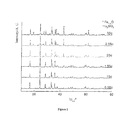
Figure 1 : X-ray diffraction patterns of Li2FeSiO4/C materials synthesized with different amount of sucrose (0.5Sc, 1Sc, 1.5Sc, 2Sc, 2.5Sc and 3Sc). -
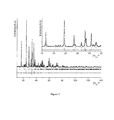
Figure 2 : Rietveld refinement of X-ray diffraction pattern obtained for Li2FeSiO4/C material with 0.5Sc of sucrose. Detailed diffraction data in the 15-40° range is shown as an inset. -
Figure 3 : SEM images of Li2FeSiO4/C materials with various amount of sucrose: (a) 0.5Sc, (b) 1.5Sc, (c) 2Sc and (d) 3Sc. -
Figure 4 : TEM images of Li2FeSiO4/C materials with various amount of sucrose: (a) 0.5Sc, (b) 1Sc, (c) 1.5Sc, (d) 2Sc, (e) 2.5Sc, and (f) 3Sc. The carbon and graphene are marked with black and white arrows, respectively. -
Figure 5 : The first discharge capacities for various Li2FeSiO4/C cathodes synthesized at different amount of sucrose. -
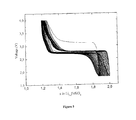
Figure 6 : Variation of the cell voltage vs. lithium amount at the C/20 rate for the first 50 galvanostatic charge/discharge cycles for Li2FeSiO4/C synthesized with 50% excess of sucrose. -
Figure 7 : Evolution of the charge and discharge capacity for a Li//Li2FeSiO4 (1.5Sc) cell during 100 cycles at the C/2 rate in the 1.8 - 4 V range. - Figure 8: Cyclic performance of Li2FeSiO4 (1.5Sc) cathode cycled between 1.8 and 4 V vs. Li/Li+ at: a) different C/n rates over 50 cycles and b) successive sequences of a 10 cycles at different C/n rates.
- All starting materials are of 99.99% purity. Li2FeSiO4/C samples were prepared by a so-called combustion method using LiNO3 (Sigma-Aldrich) and Fe(NO3)3•9H2O (Sigma-Aldrich) as the oxidant precursors, sucrose (Sigma) as fuel and SiO2 nanoparticles (Sigma). Typically, the reaction can be described as follows:
48LiNO3 + 24Fe (NO3)3 + 24SiO2 + 13C12H22O11 → 24Li2FeSiO4 + 60 N2 + 156 CO2 + 144 H2O
- Briefly, the preset stoichiometric amounts of reagent grade Li, Fe and Si sources were dissolved (or, in the case of SiO2, suspended) in the minimum amount of distilled water; the fuel (sucrose) was then added to the solution. The beaker containing the reaction mixture was placed on an electric heater and kept at 120°C for 2 hours to evaporate the excess water. The liquid adopted a syrup consistency and the colour changed from red to green while the syrup swelled up and transformed into brown foam. On continuing heating, this foamy mass started to burn spontaneously without flame and transformed finally to light and downy brownish-black powder. The as-formed powder was collected, ground in an agate mortar, and further heat-treated at 800°C for 10 h under a flowing gas mixture (CO/CO2: 50/50) to prevent the oxidation of Fe2+ cation.
- The stoichiometric mixture of the oxidants and sucrose was calculated on the basis of the total oxidizing and reducing valence of the metal nitrates (O) and the sucrose (F) according a F:O =1. Experiments were also carried out with other stoichiometric (F:O = 0.5; 1.5; 2; 2.5 and 3) amounts of sucrose. The samples thus prepared are referred to hereafter as 0.5Sc, 1 Sc, 1.5Sc, 2Sc, 2.5Sc and 3Sc, respectively, where the coefficient denotes the F:O ratio and Sc stands for sucrose.
- All samples were characterized by X-ray diffraction (XRD) using a Siemens D5000 diffractometer with Cu Kα radiation. The diffraction patterns were recorded in [10-120] ° (2θ) angular range, using a 0.02° (2θ) step and a constant counting time of 10s. The lattice parameters and cation distributions were refined by the Rietveld method using the Fullprof program (J. Rodriguez-Carvajal, Fullprof, Program for Rietveld Refinement, version 3.7, LLB JRC (1997)). X-ray diffraction patterns of Li2FeSiO4/C composites (0.5Sc, 1 Sc, 1.5Sc, 2Sc, 2.5Sc and 3Sc) are compared in
Fig. 1 . All the diffraction peaks can be indexed in a monoclinic cell (P21/n space group) with the cell parameters a = 8.2275(3) A, b =5.0176 (2) A, c = 8.2313(2) Å, and β = 99.1308(3) (see Table 1). A comparison of the diffraction patterns for the Li2FeSiO4/C composites with various amounts of sucrose shows that increasing sucrose content may lead to increasing Fe1-xO and Li2SiO3 impurities.Table 1 Sample a/Å b/A c/Å β SBET/m2. g-1 Crystallite size*/nm Carbon content/% 0.5Sc 8.2274(3) 5.0175(2) 8.2313(2) 99.1308(2) 3.66 43 0.96 1Sc 8.2220(3) 5.0137(2) 8.2363(3) 99.1303(3) 9.67 41 4.04 1.5Sc 8.2207(1) 5.0171(2) 8.2445(2) 99.0758(2) 59.75 29 11.38 2Sc 8.2212(2) 5.0198(3) 8.2467(4) 99.0493(3) 74.54 27 18 2.5Sc 8.2255(1) 5.0198(2) 8.2498(3) 99.1632(3) 91.31 25 20.63 3Sc 8.2252(3) 5.0144(2) 8.2501(2) 99.2277(2) 117.47 23 21.05 *the average crystallite size was estimated from the full width at half maximum (FWHM) of several XRD considering the Scherrer formula FWHM (2θ) = 0. 9λ / (L cosθ) with λ = 1.54 Å for the Kα Cu radiation and L the average crystallite size. - Table 1: Comparison of cell parameters obtained by the Rietveld refinement, BET surface area, crystallite size and carbon content for the Li2FeSiO4/C samples as the amount of sucrose is increased.
- In order to accurately determine the structure of these materials, refinements by Rietveld method of X-ray data was performed using the Fullprof program. The Rietveld refinement was used to determine the lattice and structural parameters as well as the cationic distribution between the lithium and iron sites.
- Firstly, a full pattern matching refinement allowed determining the lattice parameters and the profile parameters of the Pseudo-Voigt function used to descript the shape of the diffraction lines. Then, the structural refinement was carried out by considering the structure of Li2FeSiO4/C composites can be indexed in a monoclinic cell (P21/n space group). As described in the P21/n space group, the Li, Fe, Si, and O occupy 4e sites. All the crystallographic sites were constrained to be fully occupied. The isotropic atomic displacement parameters (Biso (Å2)) were refined. Cell parameters obtained for the six-Li2FeSiO4/C composites are compared in Table 1. The P21/n space group was used. Detailed results of the X-ray diffraction pattern refinement by Rietveld method are given as example in Table 2 for 0.5Sc, whereas
Fig. 2 gives a comparison of the experimental and calculated XRD patterns. A rather good minimization of the difference (Iobs.-Ical.) with low Rietveld agreement factors (Rwp = 10.9 %; RB = 4.97 %) suggest a good description of the structure by P21/n space group.Table 2: Space group : P21/n a = 8.2274(3) A b = 5.0175(2) A c = 8.2313(2) A β = 99.1308(2) Site Wyckoff positions B(Å2) Occupancy Li1 4e 0.6420(2) 0.8771(4) 0.6813(2) 1.250(1) 1.00 Li2 4e 0.5877(1) 0.2224(2) 0.0584(1) 1.250(1) 1.00 Fe 4e 0.2905(3) 0.8021 (5) 0.5438(4) 0.802(3) 1.00 Si 4e 0.0376(1) 0.8136(6) 0.7981(5) 0.249(1) 1.00 O1 4e 0.8534(1) 0.7294(2) 0.8325(1) 0.808(2) 1.00 O2 4e 0.4315(1) 0.2060(1) 0.8755(1) 0.868(2) 1.00 O3 4e 0.6839(4) 0.7611(2) 0.4444(1) 0.725(1) 1.00 O4 4e 0.9604(5) 0.8525(2) 0.2214(5) 1.499(178) 1.00 Conditions of the run Temperature 300 K Angular range 100≤2θ≤140° Displacement sample holder(2θ) 0.0225 Number of fitted parameters 56 Conventional Rietveld R-factors for points with Bragg contribution Rwp = 10.9%; RB = 4.97% - Structural and profile parameters obtained by Rietveld refinement of the X-ray diffraction pattern recorded for 0.5Sc sample.
- The exchange between lithium and iron ions in the 4e sites was also checked. The refinement of all our XRD patterns assuming this structural hypothesis, i.e. P21/n space group, shows that no exchange occurs between the Li and Fe ions.
- The morphology of the samples was observed using a high resolution scanning electron microscopy (HRSEM LEO 1550). Transmission electron microscopy (TEM) studies were performed on JEOL JEM-2100F microscope, equipped with field emission gun operated at 200 kV. Specific surface area measurements were carried out by the Brunauer, Emmet and Teller (BET) method with a Micrometrics ASAP 2020 Accelerated Surface Area and Porosimetry Analyzer. Samples were dried 10h at 300 °C under nitrogen before measurement. The Carbon content was calculated from thermogravimetric analysis (TGA) using TA instruments Q500, with a 10° C min-1 heating rate under a purified air flow in the temperature range between 25° and 600° C.
- High Resolution Scanning Electron Microscopy was used to check trends in powder grain size and morphology with increasing sucrose amount.
Fig. 3 gives a comparison of SEM micrographs obtained for the Li2FeSiO4/C materials with various amount of sucrose (0.5Sc, 1.5Sc, 2Sc and 3Sc). The samples prepared with a low amount of sucrose (0.5Sc) are more agglomerated and inhomogeneous in the particles size distribution than those with high amount of sucrose. With the increase of the amount of sucrose, a significant decrease in particle size and a more uniform particle size distribution are observed. The crystallite size, the specific surface area and carbon content of all samples were also estimated by XRD, BET method and TGA study, respectively. The specific surface area, carbon content and the crystallite size of the Li2FeSiO4/C materials at various quantities of sucrose are listed in Table 1. As shown in this table, with increasing of sucrose quantities, the surface area increased while the cristalitte size decreased. A proportion of the surface area (increase from 3.66 to 117.47 m2/g) would be attributed to the increased levels of residual carbon (0.96 to 21.05 %) in the samples. However, the presence of increasing amounts of sucrose also inhibits crystallite growth which results in higher surface areas of the active Li2FeSiO4/C materials. - In order to study the effect of sucrose content on the carbon coating status, TEM observations were carried out and the results are presented in
Fig. 4 . It is clear that different amounts of sucrose results in different carbon distributions on Li2FeSiO4 particle surface as well as different particle size of Li2FeSiO4. TEM images of samples 0.5Sc and 1Sc, containing only 0.96% and 4.04% carbon, respectively, do not provide information about carbon distribution, seefigure 4 (a-b), as amount of carbon is too low to be detected. When the carbon content is increased to about 11.38% (1.5Sc), the carbon coating is comparatively uniform, and the conductive carbon spreads all over the particles. For samples 2.5Sc and 3Sc, although the active materials are also coated completely by carbon, the carbon agglomerates formed by excessive graphene-like carbon around particles. It can be concluded that the sucrose content maybe a critical factor for the carbon distribution around particles, and the surfaces cannot be coated effectively until the carbon content reaches a critical value (about 10%). For this reason, the electrochemical behaviour for these Li2FeSiO4/C materials was investigated by galvanostatic cycling. - Electrochemical measurements were performed in aluminium pouch cells. Positive electrodes were prepared by spreading a mixture of 75% active material, 15% carbon black, and 10% of PVDF [poly(vinylidene fluoride)] dissolved in NMP (1-methyl-2pyrrolidinone) onto an aluminium foil. Circular electrodes (area: 3.14 cm2) were dried under vacuum at 120 C in an argon-filled glove box (<3 ppm H2O and O2) before cell assembly. Batteries comprising the dried positive electrode, a glass fibre separator soaked in electrolyte, and a lithium metal counter electrode (0.38 mm thick) were assembled and packed in the polymer-coated aluminium pouch in a so called "Coffee-bag" configuration (T. Gustafsson, J.O. Thomas, R. Koksbang and G.C. Farrington, Electrochim. Acta 37 (1992) 1639). The electrolyte was 1 M LiPF6 (Tomyama, dried over night at 80°C in a vacuum furnace in the glove box) in an EC/DEC (Merck, battery grade and used as received) 2:1 by volume mixture. Charge-discharge tests were performed using a Digatron BTS600 battery testing system with different rates at 60°C.
- To clarify the effect of the amount of sucrose on the electrochemical performance of the Li2FeSiO4/C, some electrochemical tests were carried out.
Fig. 5 shows the first discharge curves of the cells with various Li2FeSiO4/C electrodes at C/20 rate over the potential range of 1.8-4.0 V. It can be seen that the initial discharge capacities of Li2FeSiO4/C samples synthesized with different amounts of sucrose 0.5Sc, 1Sc, 1.5Sc, 2Sc, 2.5Sc and 3Sc are 30, 64, 135, 94, 111 and 92 mAh.g-1, respectively. From the XRD and BET measurements of the samples, we can explain why the Li2FeSiO4/C powder prepared with 1.5Sc delivers the highest discharge capacity. As described in the previous section, particles of Li2FeSiO4/C powder synthesized with low amounts of sucrose have low levels of impurities but also low specific surface area, which leads to low intrinsic conductivity. On the other hand, increasing the amount of sucrose affects in purity of Li2FeSiO4/C material which results in presence of two major impurities Li2SiO3 and Fe1-xO. As a result, 1.5Sc seems to be the optimum amount of sucrose for the Li2FeSiO4/C with both high intrinsic conductivity due the carbon content (~12 wt %) and an almost phase-pure material, which results in the best electrochemical performance. - In order to determine the capacity and cyclability of 1.5Sc electrode, charge/discharge cycling on Li2FeSiO4/C electrodes at different rates was performed.
Figure 6 give the change in voltage vs. lithium amount during the first fifty galvanostatic charge/discharge cycles performed between 1.8 and 4 V (vs. Li+/Li) at C/20 rate. It is seen that this sample shows a reversible capacity of 130 mAh/g, approaching the theoretical capacity of 166 mAh/g. A much higher charge potential was observed in the first cycle. This very good reversibility is confirmed inFigure 7 that gives the evolution of charge/discharge capacities at C/2 rate during the 100 cycles. Indeed, one can observe that the capacity remains above 88 mAh/g after 100 cycles at high rate. This high cyclability could be attributed to an enhanced electronic conductivity due to the presence of carbon and to a small particle size obtained by combustion method. Since the individual Li2FeSiO4 particles are connected by a carbon network, the active Li2FeSiO4/C materials can be fully utilized for lithium extraction and insertion reactions. - To characterize the material response to the change in cycling conditions, two different cycling modes were used. For the first one, the cycle performance of the cells was investigated for up to 50 cycles at different rates between C/10 to 2C. As seen in Figure 8a, the discharge capacity dropped with increasing current density (C-rate) from 120 mAh/g to 88 mAh/g and 40 mAh/g at C/10, C/2 and 2C, respectively. For the second cycling mode with rate changes, sequences of charge/discharge cycles were successively performed at C/n rate, n could vary between 20 and 1. This cycling program was alternated between slow and fast cycling rates. Figure 8b shows the discharge capacity obtained for this Li2FeSiO4/C material used as positive electrode material in lithium cell cycled in this condition. This electrochemical test clearly shows that the capacity retention remains very good between C/20 to C rates, in good agreement with the results reported in Figure 8a. Furthermore, stable reversible capacity at C/20 rate- comparable to that obtained initially- even after cycling at high rate (C rate for instance) during a few cycles.
Claims (7)
- Method for producing a lithium insertion material for a battery, the method comprising the following steps:a. dissolving LiNO3 and Fe(NO3)3 and SiO2 in water, thus creating a solution;b. adding sucrose to said solution, thus creating a mixture;c. heating said mixture until combustion occurs; andd. collecting the resulting lithium insertion material.
- Method according to claim 1, wherein the stoichiometric ratio between the nitrates and the sucrose is between 1.2 and 1.7.
- Method according to claim 1 or 2, wherein the resulting lithium insertion material is ground, and heated at a temperature above 600°C for at least 7 hours under a mixture of CO gas and CO2 gas.
- Product obtained by the method according to any one of claims 1-3, comprising Li2FeSiO4 and carbon in an amount of 12% by weight.
- Product according to claim 4, wherein the resulting particles have an average size of 70-1 00nm.
- Product according to claim 4 or 5, wherein the resulting particles have a surface area (SBET) of 55-65m2/g.
- Product according to claim 4, 5, or 6, having a carbon content of 8-14% by weight, and/or the resulting particles having a crystallite size of 25-40nm.
Priority Applications (6)
| Application Number | Priority Date | Filing Date | Title |
|---|---|---|---|
| EP11169811A EP2535969A1 (en) | 2011-06-14 | 2011-06-14 | Novel method and product |
| US14/126,061 US9397332B2 (en) | 2011-06-14 | 2012-06-07 | Lithium insertion material for cathodes and a method for producing the same |
| KR1020147000724A KR101962124B1 (en) | 2011-06-14 | 2012-06-07 | Novel method and product |
| CN201280028895.9A CN103620835B (en) | 2011-06-14 | 2012-06-07 | novel methods and products |
| PCT/EP2012/060809 WO2012171847A1 (en) | 2011-06-14 | 2012-06-07 | Novel method and product |
| EP12726125.3A EP2721671A1 (en) | 2011-06-14 | 2012-06-07 | Novel method and product |
Applications Claiming Priority (1)
| Application Number | Priority Date | Filing Date | Title |
|---|---|---|---|
| EP11169811A EP2535969A1 (en) | 2011-06-14 | 2011-06-14 | Novel method and product |
Publications (1)
| Publication Number | Publication Date |
|---|---|
| EP2535969A1 true EP2535969A1 (en) | 2012-12-19 |
Family
ID=44863357
Family Applications (2)
| Application Number | Title | Priority Date | Filing Date |
|---|---|---|---|
| EP11169811A Withdrawn EP2535969A1 (en) | 2011-06-14 | 2011-06-14 | Novel method and product |
| EP12726125.3A Withdrawn EP2721671A1 (en) | 2011-06-14 | 2012-06-07 | Novel method and product |
Family Applications After (1)
| Application Number | Title | Priority Date | Filing Date |
|---|---|---|---|
| EP12726125.3A Withdrawn EP2721671A1 (en) | 2011-06-14 | 2012-06-07 | Novel method and product |
Country Status (5)
| Country | Link |
|---|---|
| US (1) | US9397332B2 (en) |
| EP (2) | EP2535969A1 (en) |
| KR (1) | KR101962124B1 (en) |
| CN (1) | CN103620835B (en) |
| WO (1) | WO2012171847A1 (en) |
Families Citing this family (3)
| Publication number | Priority date | Publication date | Assignee | Title |
|---|---|---|---|---|
| JP5760871B2 (en) * | 2011-09-05 | 2015-08-12 | 昭栄化学工業株式会社 | Positive electrode material for lithium ion secondary battery, positive electrode member for lithium ion secondary battery, lithium ion secondary battery, and method for producing positive electrode material for lithium ion secondary battery |
| DE102015211284B4 (en) | 2015-06-18 | 2023-05-17 | Ford Global Technologies, Llc | Spark-ignition supercharged internal combustion engine with a variable intake system and method for mixture formation in such an internal combustion engine |
| CN106229512A (en) * | 2016-08-12 | 2016-12-14 | 中南大学 | A kind of battery preparation method of 3-D ordered multiporous silicate/C composite |
Family Cites Families (4)
| Publication number | Priority date | Publication date | Assignee | Title |
|---|---|---|---|---|
| JP5156946B2 (en) * | 2007-03-07 | 2013-03-06 | 国立大学法人九州大学 | Method for producing positive electrode active material for secondary battery |
| CN101540394B (en) * | 2009-04-09 | 2010-12-29 | 西安建筑科技大学 | Method for preparing lithium ferrosilicon silicate of lithium-ion battery cathode material |
| CN101582495B (en) * | 2009-07-06 | 2011-04-06 | 中南大学 | Anode composite material of lithium ion battery and preparation method thereof |
| CN101764227A (en) * | 2010-01-20 | 2010-06-30 | 成都中科来方能源科技有限公司 | Lithium ferrosilicon silicate/carbon composite cathode material and preparation method thereof |
-
2011
- 2011-06-14 EP EP11169811A patent/EP2535969A1/en not_active Withdrawn
-
2012
- 2012-06-07 US US14/126,061 patent/US9397332B2/en not_active Expired - Fee Related
- 2012-06-07 KR KR1020147000724A patent/KR101962124B1/en not_active Expired - Fee Related
- 2012-06-07 CN CN201280028895.9A patent/CN103620835B/en not_active Expired - Fee Related
- 2012-06-07 WO PCT/EP2012/060809 patent/WO2012171847A1/en not_active Ceased
- 2012-06-07 EP EP12726125.3A patent/EP2721671A1/en not_active Withdrawn
Non-Patent Citations (5)
| Title |
|---|
| DOMINKO ET AL: "Impact of synthesis conditions on the structure and performance of Li2FeSiO4", JOURNAL OF POWER SOURCES, ELSEVIER SA, CH, vol. 178, no. 2, 3 March 2008 (2008-03-03), pages 842 - 847, XP022509837, ISSN: 0378-7753, DOI: 10.1016/J.JPOWSOUR.2007.07.064 * |
| GUO H J ET AL: "Preparation and characteristics of Li2FeSiO4/C composite for cathode of lithium ion batteries", TRANSACTIONS OF NONFERROUS METALS SOCIETY OF CHINA, CENTRAL SOUTH UNIVERSITY OF TECHNOLOGY, CHANGSHA, CN, vol. 19, no. 1, 1 February 2009 (2009-02-01), pages 166 - 169, XP025895737, ISSN: 1003-6326, [retrieved on 20090123], DOI: 10.1016/S1003-6326(08)60246-0 * |
| HUANG X ET AL: "Synthesis and electrochemical performance of Li2FeSiO4/C as cathode material for lithium batteries", SOLID STATE IONICS, NORTH HOLLAND PUB. COMPANY. AMSTERDAM; NL, NL, vol. 181, no. 31-32, 7 October 2010 (2010-10-07), pages 1451 - 1455, XP027347167, ISSN: 0167-2738, [retrieved on 20100909] * |
| T. GUSTAFSSON, J.O. THOMAS, R. KOKSBANG, G.C. FARRINGTON, ELECTROCHIM. ACTA, vol. 37, 1992, pages 1639 |
| T. MURALIGANTH ET AL: "Microwave-Solvothermal Synthesis of Nanostructured Li 2 MSiO 4 /C (M = Mn and Fe) Cathodes for Lithium-Ion Batteries", CHEMISTRY OF MATERIALS, vol. 22, no. 20, 26 October 2010 (2010-10-26), pages 5754 - 5761, XP055011694, ISSN: 0897-4756, DOI: 10.1021/cm102058n * |
Also Published As
| Publication number | Publication date |
|---|---|
| WO2012171847A1 (en) | 2012-12-20 |
| KR101962124B1 (en) | 2019-03-26 |
| KR20140041715A (en) | 2014-04-04 |
| US9397332B2 (en) | 2016-07-19 |
| CN103620835B (en) | 2016-09-28 |
| CN103620835A (en) | 2014-03-05 |
| US20140145121A1 (en) | 2014-05-29 |
| EP2721671A1 (en) | 2014-04-23 |
Similar Documents
| Publication | Publication Date | Title |
|---|---|---|
| CN114930570B (en) | Anode material for Li/Na ion battery | |
| US12463198B2 (en) | Negative electrode active material for non-aqueous electrolyte secondary battery and manufacturing method thereof | |
| Yin et al. | Synthesis and electrochemical properties of LiNi0. 5Mn1. 5O4 for Li-ion batteries by the metal–organic framework method | |
| Yuan et al. | Effects of Ni and Mn doping on physicochemical and electrochemical performances of LiFePO4/C | |
| Deng et al. | Ti2Nb10O29–x mesoporous microspheres as promising anode materials for high-performance lithium-ion batteries | |
| Yang et al. | An in situ method of creating metal oxide–carbon composites and their application as anode materials for lithium-ion batteries | |
| Li et al. | Enhancing the performances of Li-ion batteries by carbon-coating: present and future | |
| KR101944154B1 (en) | Negative electrode material for a rechargeable battery and method for producing the same | |
| Zeng et al. | Superior electronic/ionic kinetics of LiMn0. 8Fe0. 2PO4@ C nanoparticles cathode by doping strategy toward enhanced Li-ion storage | |
| Gong et al. | In-situ synthesis of monodisperse micro-nanospherical LiFePO4/carbon cathode composites for lithium-ion batteries | |
| Rommel et al. | Challenges in the synthesis of high voltage electrode materials for lithium-ion batteries: a review on LiNiPO4 | |
| Hu et al. | Li 2 MnSiO 4@ C nanocomposite as a high-capacity cathode material for Li-ion batteries | |
| Dahbi et al. | Combustion synthesis and electrochemical performance of Li2FeSiO4/C cathode material for lithium-ion batteries | |
| Kim et al. | Synthesis of LiFePO4 nanoparticles and their electrochemical properties | |
| Zhou et al. | Comparative study of LiMnPO 4 cathode materials synthesized by solvothermal methods using different manganese salts | |
| Zhang et al. | Convenient and high-yielding strategy for preparing nano-ZnMn2O4 as anode material in lithium-ion batteries | |
| JP2011523171A (en) | Iron oxyfluoride electrode for electrochemical energy storage | |
| Huang et al. | Carbon-coated lithium titanium phosphate nanoporous microplates with superior electrochemical performance | |
| US11001506B2 (en) | Method of producing high performance lithium titanate anode material for lithium ion battery applications | |
| Zhu et al. | Synthesis and electrochemical performance of Li 4 Ti 5 O 12/TiO 2/C nanocrystallines for high-rate lithium ion batteries | |
| Fu et al. | Glucose assisted synthesis of hollow spindle LiMnPO4/C nanocomposites for high performance Li-ion batteries | |
| Chen et al. | Mesoporous LiFeBO3/C hollow spheres for improved stability lithium-ion battery cathodes | |
| Sun et al. | LiNi0. 5Mn1. 45Zn0. 05O4 with excellent electrochemical performance for lithium ion batteries | |
| Li et al. | Synthesis and electrochemical performance of Li4Ti5O12/Ag composite prepared by electroless plating | |
| Kuruahmet et al. | Cobalt-free layered LiNi0. 8Mn0. 15Al0. 05O2/graphene aerogel composite electrode for next-generation Li-ion batteries |
Legal Events
| Date | Code | Title | Description |
|---|---|---|---|
| PUAI | Public reference made under article 153(3) epc to a published international application that has entered the european phase |
Free format text: ORIGINAL CODE: 0009012 |
|
| AK | Designated contracting states |
Kind code of ref document: A1 Designated state(s): AL AT BE BG CH CY CZ DE DK EE ES FI FR GB GR HR HU IE IS IT LI LT LU LV MC MK MT NL NO PL PT RO RS SE SI SK SM TR |
|
| AX | Request for extension of the european patent |
Extension state: BA ME |
|
| STAA | Information on the status of an ep patent application or granted ep patent |
Free format text: STATUS: THE APPLICATION HAS BEEN WITHDRAWN |
|
| 18W | Application withdrawn |
Effective date: 20130419 |