EP2534787B1 - Systems and methods to prevent denial of service attacks - Google Patents
Systems and methods to prevent denial of service attacks Download PDFInfo
- Publication number
- EP2534787B1 EP2534787B1 EP10784613.1A EP10784613A EP2534787B1 EP 2534787 B1 EP2534787 B1 EP 2534787B1 EP 10784613 A EP10784613 A EP 10784613A EP 2534787 B1 EP2534787 B1 EP 2534787B1
- Authority
- EP
- European Patent Office
- Prior art keywords
- pseudo
- message
- code
- random
- interleaved
- Prior art date
- Legal status (The legal status is an assumption and is not a legal conclusion. Google has not performed a legal analysis and makes no representation as to the accuracy of the status listed.)
- Active
Links
Images


Classifications
-
- H—ELECTRICITY
- H04—ELECTRIC COMMUNICATION TECHNIQUE
- H04L—TRANSMISSION OF DIGITAL INFORMATION, e.g. TELEGRAPHIC COMMUNICATION
- H04L9/00—Cryptographic mechanisms or cryptographic arrangements for secret or secure communications; Network security protocols
- H04L9/12—Transmitting and receiving encryption devices synchronised or initially set up in a particular manner
-
- H—ELECTRICITY
- H04—ELECTRIC COMMUNICATION TECHNIQUE
- H04L—TRANSMISSION OF DIGITAL INFORMATION, e.g. TELEGRAPHIC COMMUNICATION
- H04L63/00—Network architectures or network communication protocols for network security
- H04L63/14—Network architectures or network communication protocols for network security for detecting or protecting against malicious traffic
- H04L63/1441—Countermeasures against malicious traffic
- H04L63/1458—Denial of Service
-
- H—ELECTRICITY
- H04—ELECTRIC COMMUNICATION TECHNIQUE
- H04L—TRANSMISSION OF DIGITAL INFORMATION, e.g. TELEGRAPHIC COMMUNICATION
- H04L9/00—Cryptographic mechanisms or cryptographic arrangements for secret or secure communications; Network security protocols
- H04L9/32—Cryptographic mechanisms or cryptographic arrangements for secret or secure communications; Network security protocols including means for verifying the identity or authority of a user of the system or for message authentication, e.g. authorization, entity authentication, data integrity or data verification, non-repudiation, key authentication or verification of credentials
- H04L9/3271—Cryptographic mechanisms or cryptographic arrangements for secret or secure communications; Network security protocols including means for verifying the identity or authority of a user of the system or for message authentication, e.g. authorization, entity authentication, data integrity or data verification, non-repudiation, key authentication or verification of credentials using challenge-response
-
- H—ELECTRICITY
- H04—ELECTRIC COMMUNICATION TECHNIQUE
- H04L—TRANSMISSION OF DIGITAL INFORMATION, e.g. TELEGRAPHIC COMMUNICATION
- H04L2209/00—Additional information or applications relating to cryptographic mechanisms or cryptographic arrangements for secret or secure communication H04L9/00
- H04L2209/80—Wireless
Definitions
- the following discussion generally relates to data communications and security. More particularly, the following discussion relates to systems and techniques that may be used to prevent denial of service attacks.
- Digital communications are widely used in personal, commercial, industrial, military and other settings.
- a digital message is represented with electromagnetic signals, such as electrical voltages or modulated radio waves, that can be transmitted across wires, optical fibers, wireless media, or the like.
- Some digital communications take place over point-to-point links (such as an optical fiber or other wired connection) that can be readily secured by limiting physical access to the communications medium.
- Other communications occur over public or private networks (e.g., the Internet) or over wireless media where physical security is much more difficult.
- Wireless and other physically-accessible networks are generally much easier to implement than secure dedicated links.
- the convenience of the Internet and various wireless networks, for example, has led to widespread use of such networks in many different settings. This openness, however, can lend itself to various types of security threats. Unauthorized listeners, for example, may be able to "listen in” on data communications that are not encrypted or otherwise obscured. For this reason, sensitive data is often encrypted or otherwise obscured prior to transmission across a public or other unsecure network.
- DOS denial of service
- a typical DOS attack may involve numerous computers simultaneously requesting access to the service, thereby consuming processing and communications resources that would otherwise be available for rightful users.
- DOS attacks are particularly bothersome when the attacker knows the correct preamble, synchronization or other data values that are typically provided by legitimate users of the service. Such data may be obtained, for example, by capturing a legitimate message and then re-transmitting (or “replaying") the same data to the service at a later time.
- DOS attacks may be mounted against web sites or other network services, as well as against cellular telephone systems (e.g., by overwhelming a base station or other resource with new requests for access or other data), military or public safety communications systems, or any other services that are accessible by unsecured wired or wireless media.
- Various embodiments provide systems and methods to avoid denial of service attacks by placing an interleaved bit sequence constructed from two or more different pseudo-random codes in valid messages. By creating multiple pseudo-random codes and then interleaving the various codes together, a robust bit sequence can be efficiently computed.
- Various embodiments provide a method that is executable by a data receiver that is configured to provide a service.
- the method suitably comprises generating a first pseudo-random code and a second pseudo-random code at the data receiver, interleaving the first and second pseudo-random codes with the data receiver using a pre-determined instruction to create an interleaved bit sequence, receiving a message from a transmitter at the data receiver, identifying the interleaved bit sequence in the message, and, if the interleaved bit sequence is identified in the message, allowing access to the service, and otherwise denying access to the service.
- inventions provide a system configured to provide a service in response to a message received via a data communications medium.
- the system suitably comprises an interface to the data communications medium, and a processor that is coupled to the interface.
- the processor is configured to generate a first pseudo-random code and a second pseudo-random code, to interleave the first and second pseudo-random codes to create an interleaved bit sequence, to receive the message via the interface, to identify the interleaved bit sequence in the message, and to allow access to the service only if the message comprises the interleaved bit sequence, wherein the interleaved bit sequence comprises a first pseudo-random bit code interleaved with a second pseudo-random code.
- Still other embodiments provide a method executable by a data transmitter.
- the method suitably comprises generating a first pseudo-random code and a second pseudo-random code at the data transmitter, interleaving the first and second pseudo-random codes using a pre-determined instruction by the data transmitter to create an interleaved bit sequence, and transmitting a message that comprises the interleaved bit sequence from the data transmitter to a receiver.
- FIG. 1 is a diagram of an exemplary digital communications system.
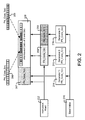
- FIG. 2 is a block diagram of an exemplary process for creating one type of interleaved bit sequence.
- FIG. 3 is a flowchart of an exemplary process for reducing or preventing denial of service attacks using an interleaved bit sequence.
- Various embodiments provide systems and techniques for avoiding denial of service attacks by discarding or otherwise ignoring service requests that do not present a particular pseudo-random digital code that is generated using two or more different but interleaved pseudo-random bit sequences.
- Each bit sequence may be generated using a different algorithm and/or other parameter to increase unpredictability.
- the multiple pseudo-random sequences are then interleaved with each other according to a pre-determined instruction pattern so that the interleaved bit sequence is difficult to predict without prior knowledge of the instruction pattern and/or the information used to generate the random sequences.
- the pseudorandom sequences and/or the particular interleaving pattern may be changed in subsequent request messages to avoid replay attacks and to make predictability even more difficult.
- the interleaved combination of two or more digital bit sequences may exhibit favorable autocorrelation and cross-correlation properties, making such techniques suitable for use in many different military or other secure environments. Additional details of several exemplary embodiments are presented below.
- an exemplary communications system 100 suitably includes one or more transmitting systems 102 attempting to legitimately gain access to a service 110 provided by a server or other receiving system 104.
- Transmitting system (abbreviated as “transmitter” herein) 102 and receiving system (abbreviated as “receiver”) 104 communicate using any sort of wired or wireless communications medium 106 as appropriate.
- transmitter 102 suitably transmits a message 115 to receiver 104 that includes a hybrid bit sequence generated by interleaving two or more different pseudo-random bit patterns, as described more fully below.
- Receiver 104 is able to identify the appropriate bit sequence in message 115, and to thereby differentiate between legitimate messages 115 and other undesired messages that may be part of a denial of service attack.
- Transmitter 102 is any sort of digital computing device or other client node operating on medium 106.
- transmitter 102 may be implemented using any sort of computer, personal digital assistant, mobile telephone, sensor and/or other client node as desired.
- transmitter 102 suitably includes any sort of conventional processor 107, memory 108 and input/output features 109 as desired.
- Receiver 104 is any sort of server or other node capable of providing a service 110 via communications media 106.
- receiver 104 represents a network server that provides web content or other data via the Internet or any other network.
- receiver 104 is a receiver interface to a control system, military effector and/or other service 110 as desired.
- the exemplary receiver 104 shown in FIG. 1 includes a processor 111, a memory 112 and input/output features 113 that correspond to hardware found in conventional server systems compatible with any sort of communications media 106.
- processors 107 and 111 are each implemented using any sort of microprocessor, microcontroller, digital signal processor, programmed logic array and/or other programmable hardware capable of executing the various functions described herein under the direction of any sort of software, firmware or other control logic.
- Other embodiments may be implemented in dedicated processing hardware, firmware and/or other means for processing data, including any sort of common gate array, ASIC, or other programmed or programmable digital logic as desired.
- Input/output features 109 and 113 may include any sort of conventional wired or wireless network interface, and/or any sort of physical and/or logical resources used to support communications on medium 106.
- Medium 106 is any wired and/or wireless link, network and/or other medium capable of supporting communications between transmitter 102 and receiver 104.
- medium 106 is any sort of local area or wide area network, such as the Internet or another public or private network that is based upon TCP/IP or other protocols.
- medium 106 includes a wireless network, such as any network that is based upon CDMA, GSM, IEEE 802.11 and/or other protocols.
- FIG. 2 shows one example of a technique that could be used to create an interleaved pseudo-random bit sequence 206.
- This interleaved sequence 206 may be used by a transmitter to create a service request or other message 115 in some embodiments; sequence 206 may be similarly generated and used by a receiver 104 to identify matching sequences 206 in received messages 115.
- the various functions shown in FIG. 2 may be implemented using any sort of hardware, software, firmware and/or other logic, including logic that may be stored in memories 108 and/or 112 and executed by processors 107 and/or 111, respectively.
- two or more code generators 214, 215, 216 produce pseudo-random codes 207, 208, 209 (respectively) as a function of one or more seed values 210.
- a common seed value 210 is applied to two or more different code generators 214-216.
- each code generator 214-216 uses a different seed value 210, as appropriate.
- the particular pseudo-random codes 207, 208, 209 may be produced using any algorithms or other techniques. Examples of algorithms that may be used in various embodiments include any of the various techniques associated with generating Gold codes, Walsh codes, Barker codes, Kasami codes and/or any other techniques that are currently known or subsequently developed.
- each of the code generators 214, 215, 216 produces a resultant code 207, 208, 209 using a different algorithm.
- an exemplary embodiment could generate code 207 as a Gold code, code 208 as a Walsh code and code 209 as a Barker code.
- Some implementations may compute different codes 207-209 using one or more common algorithms, but different seed values 210, if desired.
- Other embodiments may use any other techniques or combinations of techniques, as desired.
- At least two of the generated pseudo-random codes are interleaved with each other using a pre-determined instruction 212.
- This instruction 212 suitably describes a pattern or other scheme by which certain bits of codes 208 and 209 are interspersed or otherwise combined with each other to create an interleaved bit sequence 206.
- Such patterns may be formulated and represented in instruction 212 in any manner.
- FIG. 2 shows an exemplary pattern wherein two bits of code 208 are followed by a single bit of code 209, followed in sequence by three bits of code 208, five bits of code 209, one bit of code 208 and four bits of code 209, and then ending with four bits of code 208.
- two of the bits generated with each code 208, 209 are not used in the interleaved sequence 206. These extra bits may be discarded or punctured to fit the desired length of the preamble.
- the particular pattern shown in FIG. 2 is an arbitrary example, and other embodiments may combine two or more codes 208, 209 in any other manner.
- FIG. 2 also shows an additional pseudo-random code 207 that is not necessarily interspersed with codes 208 and 209, but that is nevertheless appended to or otherwise combined with interleaved sequence 206.
- Alternate embodiments may similarly interleave any portion(s) of two or more codes 208-209 in any regular or irregular manner.
- the particular lengths of the codes 208, 209 and the length of interleaved sequence 206 may vary from embodiment to embodiment, and the order of bits placed in sequence 206 need not be the same as the order of bits in codes 208, 209. Any portion of bits from two or more codes 208, 209 may therefore be interleaved in any spatial or numerical order to create interleaved sequence 206.
- Interleaved sequence 206 may be used for any purpose.
- a transmitter 102 embeds sequence 206 in a message 115 along with payload data and any other header-type data as desired.
- receiver 104 generates and uses sequence 206 to identify matching sequences 206 in received messages 115, as appropriate.
- FIG. 3 shows an exemplary process 300 for avoiding, or at least reducing, the effects of denial of service attacks by using an interleaved bit sequence 206.
- Process 300 as shown in FIG. 3 includes various functions that may be performed by transmitter 102 and by receiver 104.
- transmitter 102 generates first and second pseudo-random codes 208, 209 (function 304), interleaves the codes 208, 209 using a predetermined instruction 212 (function 306), embeds the interleaved sequence 206 into a message 115 (function 308), and transmits the message 115 to receiver 104 (function 310).
- Receiver 104 similarly generates first and second pseudo-random codes 208, 209 (function 305), interleaves the codes 208, 209 using predetermined instruction 212 to independently create the interleaved sequence 206 (function 307), and then identifies the interleaved sequence (function 315) in received messages 115. Messages 115 that contain the appropriate sequence 206 may be further processed (function 319), whereas messages that do not contain an appropriate sequence 206 may be discarded or otherwise treated as invalid (function 317).
- the functions shown in FIG. 3 may be supplemented, modified or differently-ordered in any number of equivalent embodiments.
- the interleaved sequences 206 described above are typically computed using proprietary or other shared information.
- This information may include, for example, one or more initial seed values 210 used to generate pseudo-random codes 207-209, as well as one or more interleaving patterns represented by instruction 212.
- the shared information established during an initiation phase (function 302 for transmitter 102, function 303 for receiver 104). Initialization takes place prior to transmission of message 115 so that both transmitter 102 and receiver 104 have enough information to generate and process a common interleaved sequence 206.
- pseudo-random seed values, instruction patterns 212 and/or any other appropriate data may be generated by either transmitter 102 or receiver 104 and shared with the other as appropriate. Sharing of secret data may be performed using a separate secure channel (e.g., a channel in which physical access is controlled, wherein end-to-end encryption is present, or that is otherwise secure enough for exchange of secret information without substantial concern for interception), or in any other manner.
- initial seed values and/or other secrets may be initially stored in a ROM, flash memory (e.g., memory 108 of transmitter 102) by an administrator or other trusted party prior to use.
- shared secrets may be provided to transmitter 102 prior to use via physical media (e.g., a disk, ROM or the like), via a secure network (e.g., a secure LAN), and/or the like.
- the interleaved sequence 206 may be created at transmitter 102 and at receiver 104 in any manner.
- two or more different pseudo-random codes 208, 209 are generated by transmitter 102 (function 304) and receiver 104 (function 305).
- the different codes 208, 209 may be computed according to different algorithms (e.g., Gold, Walsh, Barker, Kasami and/or other codes) in some implementations. Other embodiments may use common algorithms but different pseudo-random number seeds so that different values 208, 209 result.
- the generated codes 208, 209 are interleaved with each other using the pre-determined instruction 212 at both transmitter 102 (function 306) and receiver 104 (function 307).
- any number of different codes 207-209 may be generated and combined in any manner.
- Bits from each code may be interspersed with each other in any order, and in any regular or irregular pattern.
- the interspersed bits may be appended, pre-pended or otherwise combined with additional code data (e.g., code 207 in FIG. 2 ), if desired.
- Transmitter 102 suitably embeds the interleaved sequence 206 into a message 115 as appropriate.
- message 115 is a conventional data communications packet or other message that is formatted according to any protocols associated with communications media 106.
- Interleaved bit sequence 206 may be placed in any location within message 115, such as in a header, footer or the like.
- interleaved bit sequence 206 is placed in a preamble or header to a message 115 that is otherwise formatted in accordance with TCP/IP, wireless or other conventional protocols.
- Message 115 is then transmitted from transmitter 102 (using I/O interface 109) to receiver 104, which appropriately accepts the message 115 at I/O interface 113 for further processing (function 311).
- Receiver 104 suitably analyzes received messages 115 to identify the interleaved sequence 206 in the preamble or other appropriate location (function 315). If the interleaved sequence 206 is recognized in the message 115, then the message 115 can be determined to be valid (function 319). Receiver 104 may therefore grant access to the service 110 in some embodiments, or at least continue processing message 115 or other messages received from transmitter 102. In various embodiments, receiver 104 subsequently processes payload data contained within message 115 if the proper interleaved sequence 206 is identified in function 315. This payload data may contain, for example, a request for data or services (e.g., a web page), an instruction to carry out an action (e.g., a call for fire or the like), or any other information as desired.
- This payload data may contain, for example, a request for data or services (e.g., a web page), an instruction to carry out an action (e.g., a call for fire or the like), or any
- the shared values may change from time to time or message to message as desired (functions 312, 313). That is, values may be changed on any temporal basis, or any operational basis (e.g., in response to a successful message, in response to a command to change values that is received from the other party, or any other technique). Changing values prevents replay attacks by ensuring that each sequence 206 is only valid for a single use, or for a sort period of time. Changing values during operation can further complicate reverse engineering of the interleaved sequence, therefore improving security and robustness.
- pseudo-random number seeds 210 may be cycled, different instruction patterns 212 may be selected for use with the same or different pseudo-random values, and/or other changes may be implemented.
- new pseudo-random seed values may be calculated as a function of the previous seed value according to any number of techniques. Interleaving patterns may be similarly modified from message to message 115 as desired.
- transmitter 102 and receiver 104 each maintain several different values for instruction 212 in memory or the like. The different instruction patterns may be sequenced in any manner.
- each of the various functions shown in process 300 may be performed by computing hardware, firmware and/or software executing in any computing environment.
- some or all of functions associated with transmitter 102 are implemented in software or firmware instructions that can be stored in memory 108 and executed by processor 107, whereas functions associated with receiver 104 may be implemented using software or firmware instructions that are stored in memory 112 and executed by processor 111.
- Other embodiments may use dedicated hardware logic for certain functions, and/or may implement the features of process 300 in any other manner.
- exemplary means “serving as an example, instance, or illustration”. "Exemplary” embodiments are not intended as models to be literally duplicated, but rather as examples that provide instances of embodiments that may be modified or altered in any way to create other embodiments. Any implementation described herein as "exemplary” is not necessarily to be construed as preferred or advantageous over other implementations.
Landscapes
- Engineering & Computer Science (AREA)
- Computer Security & Cryptography (AREA)
- Computer Networks & Wireless Communication (AREA)
- Signal Processing (AREA)
- Computer Hardware Design (AREA)
- Computing Systems (AREA)
- General Engineering & Computer Science (AREA)
- Mobile Radio Communication Systems (AREA)
Abstract
Description
- This application claims priority to
U.S. Non-Provisional Patent Application Serial No. 12/703,566, filed February 10, 2010 - This invention was made with United States Government support under Contract Number HQ0276-08-C-0001 with the Department of Defense. The United States Government has certain rights in this invention.
- The following discussion generally relates to data communications and security. More particularly, the following discussion relates to systems and techniques that may be used to prevent denial of service attacks.
- Digital communications are widely used in personal, commercial, industrial, military and other settings. In a typical communication session, a digital message is represented with electromagnetic signals, such as electrical voltages or modulated radio waves, that can be transmitted across wires, optical fibers, wireless media, or the like. Some digital communications take place over point-to-point links (such as an optical fiber or other wired connection) that can be readily secured by limiting physical access to the communications medium. Other communications occur over public or private networks (e.g., the Internet) or over wireless media where physical security is much more difficult.
- Wireless and other physically-accessible networks are generally much easier to implement than secure dedicated links. The convenience of the Internet and various wireless networks, for example, has led to widespread use of such networks in many different settings. This openness, however, can lend itself to various types of security threats. Unauthorized listeners, for example, may be able to "listen in" on data communications that are not encrypted or otherwise obscured. For this reason, sensitive data is often encrypted or otherwise obscured prior to transmission across a public or other unsecure network.
- Another type of security threat is a so-called "denial of service" (DOS) attack, in which authorized users are prevented from gaining access to a service that is available on a network. In a DOS attack, the attacker generally overwhelms the service with unnecessary data so that resources are not available for legitimate users. A typical DOS attack may involve numerous computers simultaneously requesting access to the service, thereby consuming processing and communications resources that would otherwise be available for rightful users. DOS attacks are particularly bothersome when the attacker knows the correct preamble, synchronization or other data values that are typically provided by legitimate users of the service. Such data may be obtained, for example, by capturing a legitimate message and then re-transmitting (or "replaying") the same data to the service at a later time. DOS attacks may be mounted against web sites or other network services, as well as against cellular telephone systems (e.g., by overwhelming a base station or other resource with new requests for access or other data), military or public safety communications systems, or any other services that are accessible by unsecured wired or wireless media.
- It is therefore desirable to create systems and techniques to prevent denial-of-service attacks. It is further desirable that such systems and techniques be effective, yet computationally manageable. These and other desirable features and characteristics will become apparent from the subsequent detailed description and the appended claims, taken in conjunction with the accompanying drawings and this background section.
- Anthony D Wood et al: "DEEJAM: Defeating energy-effcient jamming in IEEE 802.15.4-based wireless networks"; Sensor, Mesh and Ad Hoc Communications and Networks, 2007-06-01, pages 60-69 discloses a MAC-layer protocol for defeating stealthy jammers with IEEE 802.15.4-based hardware to address the problem of jamming by layering four defensive mechanisms to hide communication from a jammer, evade its search, and reduce its impact.
- Guolong Lin, Guevara Noubir: "On link layer denial of service in data wireless LANs", John Wiley Online Library Wireless Communications and Mobile Computing vol. 5, no. 3 investigates and analyses the performance of combining a cryptographic interleaver with various coding schemes to improve the robustness of wireless LANs for IP packets transmission.
- In accordance with a first aspect of the invention, there is provided a method according to
claim 1. - In accordance with a second aspect of the invention, there is provided a method according to claim 10.
- Various embodiments provide systems and methods to avoid denial of service attacks by placing an interleaved bit sequence constructed from two or more different pseudo-random codes in valid messages. By creating multiple pseudo-random codes and then interleaving the various codes together, a robust bit sequence can be efficiently computed.
- Various embodiments provide a method that is executable by a data receiver that is configured to provide a service. The method suitably comprises generating a first pseudo-random code and a second pseudo-random code at the data receiver, interleaving the first and second pseudo-random codes with the data receiver using a pre-determined instruction to create an interleaved bit sequence, receiving a message from a transmitter at the data receiver, identifying the interleaved bit sequence in the message, and, if the interleaved bit sequence is identified in the message, allowing access to the service, and otherwise denying access to the service.
- Other embodiments provide a system configured to provide a service in response to a message received via a data communications medium. The system suitably comprises an interface to the data communications medium, and a processor that is coupled to the interface. The processor is configured to generate a first pseudo-random code and a second pseudo-random code, to interleave the first and second pseudo-random codes to create an interleaved bit sequence, to receive the message via the interface, to identify the interleaved bit sequence in the message, and to allow access to the service only if the message comprises the interleaved bit sequence, wherein the interleaved bit sequence comprises a first pseudo-random bit code interleaved with a second pseudo-random code.
- Still other embodiments provide a method executable by a data transmitter. The method suitably comprises generating a first pseudo-random code and a second pseudo-random code at the data transmitter, interleaving the first and second pseudo-random codes using a pre-determined instruction by the data transmitter to create an interleaved bit sequence, and transmitting a message that comprises the interleaved bit sequence from the data transmitter to a receiver.
- The various implementations may be enhanced or modified in many different ways to create any number of alternate embodiments. Various other embodiments, aspects and other features are described in more detail below.
- Exemplary embodiments will hereinafter be described in conjunction with the following drawing figures, wherein like numerals denote like elements, and
-
FIG. 1 is a diagram of an exemplary digital communications system. -
FIG. 2 is a block diagram of an exemplary process for creating one type of interleaved bit sequence. -
FIG. 3 is a flowchart of an exemplary process for reducing or preventing denial of service attacks using an interleaved bit sequence. - The following detailed description is merely exemplary in nature and is not intended to limit the invention or the application and uses of the invention. Furthermore, there is no intention to be bound by any theory presented in the preceding background or the following detailed description.
- Various embodiments provide systems and techniques for avoiding denial of service attacks by discarding or otherwise ignoring service requests that do not present a particular pseudo-random digital code that is generated using two or more different but interleaved pseudo-random bit sequences. Each bit sequence may be generated using a different algorithm and/or other parameter to increase unpredictability. The multiple pseudo-random sequences are then interleaved with each other according to a pre-determined instruction pattern so that the interleaved bit sequence is difficult to predict without prior knowledge of the instruction pattern and/or the information used to generate the random sequences. Moreover, the pseudorandom sequences and/or the particular interleaving pattern may be changed in subsequent request messages to avoid replay attacks and to make predictability even more difficult. In addition to providing a robust defense against denial of service attacks, the interleaved combination of two or more digital bit sequences may exhibit favorable autocorrelation and cross-correlation properties, making such techniques suitable for use in many different military or other secure environments. Additional details of several exemplary embodiments are presented below.
- The various systems and techniques described herein may find use in any number of settings. For convenience, the following discussion may emphasize wireless services, such as those used in military settings. Equivalent systems and techniques, however, may be applied in any military, commercial, industrial, personal or other setting that uses any sort of wired or wireless network media to provide communications to any sort of network service.
- Turning to the drawing figures and with reference now to
FIG. 1 , anexemplary communications system 100 suitably includes one or more transmittingsystems 102 attempting to legitimately gain access to aservice 110 provided by a server orother receiving system 104. Transmitting system (abbreviated as "transmitter" herein) 102 and receiving system (abbreviated as "receiver") 104 communicate using any sort of wired orwireless communications medium 106 as appropriate. In various embodiments,transmitter 102 suitably transmits amessage 115 toreceiver 104 that includes a hybrid bit sequence generated by interleaving two or more different pseudo-random bit patterns, as described more fully below.Receiver 104 is able to identify the appropriate bit sequence inmessage 115, and to thereby differentiate betweenlegitimate messages 115 and other undesired messages that may be part of a denial of service attack. - The general concepts, systems and techniques that are described herein may be well-suited for any number of communications systems, environments and applications.
Transmitter 102 is any sort of digital computing device or other client node operating onmedium 106. In various embodiments,transmitter 102 may be implemented using any sort of computer, personal digital assistant, mobile telephone, sensor and/or other client node as desired. As shown inFIG. 1 ,transmitter 102 suitably includes any sort ofconventional processor 107,memory 108 and input/output features 109 as desired. -
Receiver 104 is any sort of server or other node capable of providing aservice 110 viacommunications media 106. In various embodiments,receiver 104 represents a network server that provides web content or other data via the Internet or any other network. In other embodiments,receiver 104 is a receiver interface to a control system, military effector and/orother service 110 as desired. Theexemplary receiver 104 shown inFIG. 1 includes aprocessor 111, amemory 112 and input/output features 113 that correspond to hardware found in conventional server systems compatible with any sort ofcommunications media 106. - To that end,
processors medium 106. -
Medium 106 is any wired and/or wireless link, network and/or other medium capable of supporting communications betweentransmitter 102 andreceiver 104. In various embodiments, medium 106 is any sort of local area or wide area network, such as the Internet or another public or private network that is based upon TCP/IP or other protocols. In other embodiments, medium 106 includes a wireless network, such as any network that is based upon CDMA, GSM, IEEE 802.11 and/or other protocols. - Digital codes that are generated from interleaved combinations of two or more different bit sequences may be generated relatively easily using conventional hardware.
FIG. 2 shows one example of a technique that could be used to create an interleavedpseudo-random bit sequence 206. This interleavedsequence 206 may be used by a transmitter to create a service request orother message 115 in some embodiments;sequence 206 may be similarly generated and used by areceiver 104 to identify matchingsequences 206 in receivedmessages 115. To that end, the various functions shown inFIG. 2 may be implemented using any sort of hardware, software, firmware and/or other logic, including logic that may be stored inmemories 108 and/or 112 and executed byprocessors 107 and/or 111, respectively. - As shown in
FIG. 2 , two ormore code generators pseudo-random codes common seed value 210 is applied to two or more different code generators 214-216. In other embodiments, each code generator 214-216 uses adifferent seed value 210, as appropriate. - The particular
pseudo-random codes code generators resultant code code 207 as a Gold code,code 208 as a Walsh code andcode 209 as a Barker code. Some implementations may compute different codes 207-209 using one or more common algorithms, butdifferent seed values 210, if desired. Other embodiments may use any other techniques or combinations of techniques, as desired. - At least two of the generated pseudo-random codes (e.g.,
codes FIG. 2 ) are interleaved with each other using apre-determined instruction 212. Thisinstruction 212 suitably describes a pattern or other scheme by which certain bits ofcodes bit sequence 206. Such patterns may be formulated and represented ininstruction 212 in any manner.FIG. 2 , for example, shows an exemplary pattern wherein two bits ofcode 208 are followed by a single bit ofcode 209, followed in sequence by three bits ofcode 208, five bits ofcode 209, one bit ofcode 208 and four bits ofcode 209, and then ending with four bits ofcode 208. In the example ofFIG. 2 , two of the bits generated with eachcode sequence 206. These extra bits may be discarded or punctured to fit the desired length of the preamble. The particular pattern shown inFIG. 2 is an arbitrary example, and other embodiments may combine two ormore codes -
FIG. 2 also shows an additionalpseudo-random code 207 that is not necessarily interspersed withcodes sequence 206. - Alternate embodiments may similarly interleave any portion(s) of two or more codes 208-209 in any regular or irregular manner. The particular lengths of the
codes sequence 206 may vary from embodiment to embodiment, and the order of bits placed insequence 206 need not be the same as the order of bits incodes more codes sequence 206. - Interleaved
sequence 206 may be used for any purpose. In various embodiments, atransmitter 102 embedssequence 206 in amessage 115 along with payload data and any other header-type data as desired. In other embodiments,receiver 104 generates and usessequence 206 to identify matchingsequences 206 in receivedmessages 115, as appropriate. -
FIG. 3 shows anexemplary process 300 for avoiding, or at least reducing, the effects of denial of service attacks by using an interleavedbit sequence 206.Process 300 as shown inFIG. 3 includes various functions that may be performed bytransmitter 102 and byreceiver 104. Generally speaking,transmitter 102 generates first and secondpseudo-random codes 208, 209 (function 304), interleaves thecodes sequence 206 into a message 115 (function 308), and transmits themessage 115 to receiver 104 (function 310).Receiver 104 similarly generates first and secondpseudo-random codes 208, 209 (function 305), interleaves thecodes predetermined instruction 212 to independently create the interleaved sequence 206 (function 307), and then identifies the interleaved sequence (function 315) in receivedmessages 115.Messages 115 that contain theappropriate sequence 206 may be further processed (function 319), whereas messages that do not contain anappropriate sequence 206 may be discarded or otherwise treated as invalid (function 317). The functions shown inFIG. 3 may be supplemented, modified or differently-ordered in any number of equivalent embodiments. - The interleaved
sequences 206 described above are typically computed using proprietary or other shared information. This information may include, for example, one or more initial seed values 210 used to generate pseudo-random codes 207-209, as well as one or more interleaving patterns represented byinstruction 212. In various embodiments, the shared information established during an initiation phase (function 302 fortransmitter 102, function 303 for receiver 104). Initialization takes place prior to transmission ofmessage 115 so that bothtransmitter 102 andreceiver 104 have enough information to generate and process a common interleavedsequence 206. - In various embodiments, pseudo-random seed values,
instruction patterns 212 and/or any other appropriate data (e.g., AES or other cryptography keys) may be generated by eithertransmitter 102 orreceiver 104 and shared with the other as appropriate. Sharing of secret data may be performed using a separate secure channel (e.g., a channel in which physical access is controlled, wherein end-to-end encryption is present, or that is otherwise secure enough for exchange of secret information without substantial concern for interception), or in any other manner. In some implementations, initial seed values and/or other secrets may be initially stored in a ROM, flash memory (e.g.,memory 108 of transmitter 102) by an administrator or other trusted party prior to use. In other embodiments, shared secrets may be provided totransmitter 102 prior to use via physical media (e.g., a disk, ROM or the like), via a secure network (e.g., a secure LAN), and/or the like. - The interleaved
sequence 206 may be created attransmitter 102 and atreceiver 104 in any manner. As noted above, two or more differentpseudo-random codes different codes different values - The generated
codes pre-determined instruction 212 at both transmitter 102 (function 306) and receiver 104 (function 307). As noted above, any number of different codes 207-209 may be generated and combined in any manner. Bits from each code may be interspersed with each other in any order, and in any regular or irregular pattern. The interspersed bits may be appended, pre-pended or otherwise combined with additional code data (e.g.,code 207 inFIG. 2 ), if desired. -
Transmitter 102 suitably embeds the interleavedsequence 206 into amessage 115 as appropriate. In various embodiments,message 115 is a conventional data communications packet or other message that is formatted according to any protocols associated withcommunications media 106. Interleavedbit sequence 206 may be placed in any location withinmessage 115, such as in a header, footer or the like. In various embodiments, interleavedbit sequence 206 is placed in a preamble or header to amessage 115 that is otherwise formatted in accordance with TCP/IP, wireless or other conventional protocols.Message 115 is then transmitted from transmitter 102 (using I/O interface 109) toreceiver 104, which appropriately accepts themessage 115 at I/O interface 113 for further processing (function 311). -
Receiver 104 suitably analyzes receivedmessages 115 to identify the interleavedsequence 206 in the preamble or other appropriate location (function 315). If the interleavedsequence 206 is recognized in themessage 115, then themessage 115 can be determined to be valid (function 319).Receiver 104 may therefore grant access to theservice 110 in some embodiments, or at least continue processingmessage 115 or other messages received fromtransmitter 102. In various embodiments,receiver 104 subsequently processes payload data contained withinmessage 115 if the proper interleavedsequence 206 is identified in function 315. This payload data may contain, for example, a request for data or services (e.g., a web page), an instruction to carry out an action (e.g., a call for fire or the like), or any other information as desired. - In various embodiments, the shared values may change from time to time or message to message as desired (
functions 312, 313). That is, values may be changed on any temporal basis, or any operational basis (e.g., in response to a successful message, in response to a command to change values that is received from the other party, or any other technique). Changing values prevents replay attacks by ensuring that eachsequence 206 is only valid for a single use, or for a sort period of time. Changing values during operation can further complicate reverse engineering of the interleaved sequence, therefore improving security and robustness. After avalid message 115 fromtransmitter 102 is processed byreceiver 104, for example,pseudo-random number seeds 210 may be cycled,different instruction patterns 212 may be selected for use with the same or different pseudo-random values, and/or other changes may be implemented. In various embodiments, new pseudo-random seed values may be calculated as a function of the previous seed value according to any number of techniques. Interleaving patterns may be similarly modified from message tomessage 115 as desired. In various embodiments,transmitter 102 andreceiver 104 each maintain several different values forinstruction 212 in memory or the like. The different instruction patterns may be sequenced in any manner. - Generally speaking, each of the various functions shown in
process 300 may be performed by computing hardware, firmware and/or software executing in any computing environment. In an exemplary embodiment, some or all of functions associated withtransmitter 102 are implemented in software or firmware instructions that can be stored inmemory 108 and executed byprocessor 107, whereas functions associated withreceiver 104 may be implemented using software or firmware instructions that are stored inmemory 112 and executed byprocessor 111. Other embodiments may use dedicated hardware logic for certain functions, and/or may implement the features ofprocess 300 in any other manner. - Various systems and techniques for avoiding denial of service attacks are therefore described. As noted at the outset, these techniques and systems may be variously applied in any military, industrial, commercial, personal or other setting. Any number of modifications and enhancements could be formulated from the various examples described herein.
- As used herein, the word "exemplary" means "serving as an example, instance, or illustration". "Exemplary" embodiments are not intended as models to be literally duplicated, but rather as examples that provide instances of embodiments that may be modified or altered in any way to create other embodiments. Any implementation described herein as "exemplary" is not necessarily to be construed as preferred or advantageous over other implementations.
- While the foregoing detailed description will provide those skilled in the art with a convenient road map for implementing various embodiments of the invention, it should be appreciated that the particular embodiments described above are only examples, and are not intended to limit the scope, applicability, or configuration of the invention in any way. Various changes may be made in the function and arrangement of elements described without departing from the scope of the invention and its legal equivalents.
Claims (15)
- A method executable by a data receiver (104) that is configured to provide a service (110), the method comprising:generating a first pseudo-random code and a second pseudo-random code at the data receiver;interleaving the first and second pseudo-random codes by the data receiver using a first pre-determined instruction pattern to create an interleaved bit sequence;receiving a message from a transmitter (102) at the data receiver;identifying the interleaved bit sequence in the message; andif the interleaved bit sequence is identified in the message, allowing access to the service, and otherwise denying access to the service; andrepeating the generating and interleaving for a second message, wherein the interleaving for the second message uses a second pre-determined instruction pattern different to the first pre-determined instruction pattern.
- The method of claim 1 further comprising, prior to receiving the message, initializing communications with the transmitter.
- The method of claim 2 wherein the initializing comprises establishing the predetermined instruction pattern used to interleave the first and second pseudo-random codes.
- The method of claim 2 wherein the initializing comprises establishing an initial seed value (210) used in generating at least one of the first and second pseudo-random codes.
- The method of claim 4 wherein the first and second pseudo-random codes are both generated using the initial seed value.
- The method of claim 4 wherein the second message comprises a second interleaved bit sequence generated using a second seed value (210) that is determined as a function of the initial seed value.
- The method of claim 1 wherein the first and second pseudo-random codes are generated using different algorithms.
- The method of claim 1 wherein the first and second pseudo-random codes are each generated in accordance with different ones of a group consisting of: a Gold code, a Walsh code, a Barker code, and a Kasami code.
- The method of claim 1 wherein the message further comprises a third pseudo-random code (207) that is not interleaved with the first and second pseudo-random codes
- A method executable by a data transmitter (102), the method comprising:generating a first pseudo-random code (208) and a second pseudo-random code (209) at the data transmitter;interleaving the first and second pseudo-random codes using a first predetermined instruction pattern by the data transmitter to create an interleaved bit sequence (206);transmitting a message that comprises the interleaved bit sequence from the data transmitter to a receiver (104); andrepeating the generating and interleaving for a second message, wherein the interleaving for the second message uses a second pre-determined instruction pattern different to the first pre-determined instruction pattern.
- The method of claim 10 further comprising repeating the generating, interleaving and transmitting for a second message that comprises a second interleaved bit sequence generated using a second seed value (210) that is determined as a function of an initial seed value used to generate the first and second pseudo-random codes.
- The method of claim 10 further comprising repeating the transmitting for the second message.
- The method of claim 10 further comprising, prior to transmitting the message, establishing the pre-determined instruction pattern used to interleave the first and second pseudo-random codes.
- The method of claim 10 wherein the first and second pseudo-random codes are generated using different algorithms.
- The method of claim 10 wherein the first and second pseudo-random codes are each generated in accordance with different ones of a group consisting of: a Gold code, a Walsh code, a Barker code, and a Kasami code.
Applications Claiming Priority (2)
| Application Number | Priority Date | Filing Date | Title |
|---|---|---|---|
| US12/703,566 US8683555B2 (en) | 2010-02-10 | 2010-02-10 | Systems and methods to prevent denial of service attacks |
| PCT/US2010/056161 WO2011100007A1 (en) | 2010-02-10 | 2010-11-10 | Systems and methods to prevent denial of service attacks |
Publications (2)
| Publication Number | Publication Date |
|---|---|
| EP2534787A1 EP2534787A1 (en) | 2012-12-19 |
| EP2534787B1 true EP2534787B1 (en) | 2013-12-25 |
Family
ID=43446902
Family Applications (1)
| Application Number | Title | Priority Date | Filing Date |
|---|---|---|---|
| EP10784613.1A Active EP2534787B1 (en) | 2010-02-10 | 2010-11-10 | Systems and methods to prevent denial of service attacks |
Country Status (3)
| Country | Link |
|---|---|
| US (1) | US8683555B2 (en) |
| EP (1) | EP2534787B1 (en) |
| WO (1) | WO2011100007A1 (en) |
Families Citing this family (9)
| Publication number | Priority date | Publication date | Assignee | Title |
|---|---|---|---|---|
| US9106405B1 (en) | 2012-06-25 | 2015-08-11 | Amazon Technologies, Inc. | Multi-user secret decay |
| US8745710B1 (en) | 2012-06-25 | 2014-06-03 | Amazon Technologies, Inc. | Automated secret renegotiation |
| EP2882117B1 (en) * | 2012-07-31 | 2017-07-05 | Kuang-Chi Intelligent Photonic Technology Ltd. | Visible light encryption method, decryption method, communication device and communication system |
| US9225735B1 (en) * | 2013-12-23 | 2015-12-29 | Symantec Corporation | Systems and methods for blocking flanking attacks on computing systems |
| US10291256B2 (en) * | 2015-03-02 | 2019-05-14 | Samsung Electronics Co., Ltd. | Transmitter and method for generating additional parity thereof |
| DE102016219926A1 (en) * | 2016-10-13 | 2018-04-19 | Siemens Aktiengesellschaft | Method, sender and receiver for authentication and integrity protection of message content |
| US10523498B2 (en) | 2016-12-23 | 2019-12-31 | Sierra Nevada Corporation | Multi-broker messaging and telemedicine database replication |
| US10263661B2 (en) | 2016-12-23 | 2019-04-16 | Sierra Nevada Corporation | Extended range communications for ultra-wideband network nodes |
| CN109379193B (en) * | 2018-12-06 | 2021-06-29 | 佛山科学技术学院 | A dynamic anti-replay attack authentication method and device |
Family Cites Families (20)
| Publication number | Priority date | Publication date | Assignee | Title |
|---|---|---|---|---|
| JPH0783337B2 (en) | 1988-03-01 | 1995-09-06 | 日本電気株式会社 | Scramble-descramble method |
| FR2639781B1 (en) | 1988-11-25 | 1991-01-04 | Alcatel Thomson Faisceaux | INTERLEAVING METHOD FOR DIGITAL TRANSMISSION DEVICE |
| US5414771A (en) * | 1993-07-13 | 1995-05-09 | Mrj, Inc. | System and method for the creation of random sequences and for the cryptographic protection of communications |
| JPH1093447A (en) * | 1996-09-17 | 1998-04-10 | Uniden Corp | Decoding device and decoding method |
| US6301288B1 (en) * | 1997-03-19 | 2001-10-09 | Infineon Technologies Ag | Method of chip interleaving in direct sequence spread spectrum communications |
| US6061386A (en) * | 1997-03-19 | 2000-05-09 | I.C. Com Ltd. | Method of chip interleaving in direct sequence spread spectrum communications |
| US5864491A (en) * | 1997-11-10 | 1999-01-26 | Telefonaktiebolaget L M Ericsson | Apparatus and associated method for generating a pseudo random number |
| EP0963049B1 (en) * | 1998-06-01 | 2007-08-01 | Her Majesty The Queen In Right Of Canada as represented by the Minister of Industry | Interleaving with golden section increments |
| US7308575B2 (en) * | 2000-03-30 | 2007-12-11 | Arris Group, Inc. | Data scrambling system for a shared transmission media |
| US20050041746A1 (en) * | 2003-08-04 | 2005-02-24 | Lowell Rosen | Software-defined wideband holographic communications apparatus and methods |
| US7570695B2 (en) * | 2003-12-18 | 2009-08-04 | Intel Corporation | Method and adaptive bit interleaver for wideband systems using adaptive bit loading |
| EP2058972B1 (en) * | 2003-12-25 | 2011-08-17 | NTT DoCoMo, Inc. | Radio communication system, transmitter, receiver and radio communicating method |
| US7543197B2 (en) * | 2004-12-22 | 2009-06-02 | Qualcomm Incorporated | Pruned bit-reversal interleaver |
| US7395461B2 (en) * | 2005-05-18 | 2008-07-01 | Seagate Technology Llc | Low complexity pseudo-random interleaver |
| KR101216079B1 (en) * | 2005-11-30 | 2012-12-26 | 엘지전자 주식회사 | Digital broadcasting system and processing method |
| US8214715B1 (en) * | 2007-10-17 | 2012-07-03 | Marvell International Ltd. | Hardware implementation of QPP interleaver |
| CN101626608B (en) * | 2008-07-07 | 2012-07-04 | 中兴通讯美国公司 | Using identification sequences in wireless communication systems |
| WO2010034326A1 (en) * | 2008-09-24 | 2010-04-01 | Verigy (Singapore) Pte. Ltd. | State machine and generator for generating a description of a state machine feedback function |
| KR101133256B1 (en) * | 2009-02-27 | 2012-04-09 | 한국과학기술원 | Apparatus and method for processing timestamp using signature information in physical layer |
| US8390485B2 (en) * | 2011-03-21 | 2013-03-05 | Viasat, Inc. | Subset transform interleaver |
-
2010
- 2010-02-10 US US12/703,566 patent/US8683555B2/en active Active
- 2010-11-10 WO PCT/US2010/056161 patent/WO2011100007A1/en not_active Ceased
- 2010-11-10 EP EP10784613.1A patent/EP2534787B1/en active Active
Also Published As
| Publication number | Publication date |
|---|---|
| US20110196965A1 (en) | 2011-08-11 |
| EP2534787A1 (en) | 2012-12-19 |
| WO2011100007A1 (en) | 2011-08-18 |
| US8683555B2 (en) | 2014-03-25 |
Similar Documents
| Publication | Publication Date | Title |
|---|---|---|
| US8683555B2 (en) | Systems and methods to prevent denial of service attacks | |
| Salau et al. | Data security in wireless sensor networks: Attacks and countermeasures | |
| Calhoun Jr et al. | An 802.11 MAC layer covert channel | |
| Khan et al. | DDoS attack modeling and resistance using trust based protocol for the security of Internet of Things | |
| Schmidt et al. | A security architecture for mobile wireless sensor networks | |
| Schmidbauer et al. | SoK: A survey of indirect network-level covert channels | |
| Malekzadeh et al. | A new security model to prevent denial‐of‐service attacks and violation of availability in wireless networks | |
| Wagner et al. | Take a bite of the reality sandwich: revisiting the security of progressive message authentication codes | |
| Hamid et al. | Defense against lap-top class attacker in wireless sensor network | |
| US12207084B2 (en) | Wireless device and network node for verification of a device as well as corresponding methods in a wireless communication system | |
| Balaji et al. | SIPTAN: Securing inimitable and plundering track for ad hoc network | |
| Park et al. | Watermarking for detecting freeloader misbehavior in software-defined networks | |
| Singh et al. | Security and trust management in MANET | |
| CN107070927A (en) | A kind of saltus step concealed communication method encrypted based on DNA | |
| Alani | IoT lotto: Utilizing IoT devices in brute-force attacks | |
| Kim et al. | Security in underwater acoustic sensor network: focus on suitable encryption mechanisms | |
| Kesavan et al. | Secret key cryptography based security approach for wireless sensor networks | |
| Anwarul et al. | Image enciphering using modified AES with secure key transmission | |
| Ma et al. | Protecting satellite systems from disassociation DoS attacks | |
| Zhang et al. | JR-SND: Jamming-resilient secure neighbor discovery in mobile ad hoc networks | |
| Nagpal et al. | Physical Layer Security Techniques for Wireless Communication Systems | |
| Varshney et al. | Cyber crime awareness and corresponding countermeasures | |
| Jaballah et al. | An efficient source authentication scheme in wireless sensor networks | |
| CN117675412B (en) | A data sharing method with strong privacy protection in industrial Internet of Things scenarios | |
| Obeis et al. | Content delivery network for secure of software defined networking by using IPv4, OpenFlow, and ALTO |
Legal Events
| Date | Code | Title | Description |
|---|---|---|---|
| PUAI | Public reference made under article 153(3) epc to a published international application that has entered the european phase |
Free format text: ORIGINAL CODE: 0009012 |
|
| 17P | Request for examination filed |
Effective date: 20120903 |
|
| AK | Designated contracting states |
Kind code of ref document: A1 Designated state(s): AL AT BE BG CH CY CZ DE DK EE ES FI FR GB GR HR HU IE IS IT LI LT LU LV MC MK MT NL NO PL PT RO RS SE SI SK SM TR |
|
| DAX | Request for extension of the european patent (deleted) | ||
| GRAP | Despatch of communication of intention to grant a patent |
Free format text: ORIGINAL CODE: EPIDOSNIGR1 |
|
| INTG | Intention to grant announced |
Effective date: 20130620 |
|
| GRAS | Grant fee paid |
Free format text: ORIGINAL CODE: EPIDOSNIGR3 |
|
| GRAA | (expected) grant |
Free format text: ORIGINAL CODE: 0009210 |
|
| AK | Designated contracting states |
Kind code of ref document: B1 Designated state(s): AL AT BE BG CH CY CZ DE DK EE ES FI FR GB GR HR HU IE IS IT LI LT LU LV MC MK MT NL NO PL PT RO RS SE SI SK SM TR |
|
| REG | Reference to a national code |
Ref country code: GB Ref legal event code: FG4D |
|
| REG | Reference to a national code |
Ref country code: CH Ref legal event code: EP |
|
| REG | Reference to a national code |
Ref country code: AT Ref legal event code: REF Ref document number: 647081 Country of ref document: AT Kind code of ref document: T Effective date: 20140115 |
|
| REG | Reference to a national code |
Ref country code: IE Ref legal event code: FG4D |
|
| REG | Reference to a national code |
Ref country code: DE Ref legal event code: R096 Ref document number: 602010012742 Country of ref document: DE Effective date: 20140213 |
|
| PG25 | Lapsed in a contracting state [announced via postgrant information from national office to epo] |
Ref country code: NO Free format text: LAPSE BECAUSE OF FAILURE TO SUBMIT A TRANSLATION OF THE DESCRIPTION OR TO PAY THE FEE WITHIN THE PRESCRIBED TIME-LIMIT Effective date: 20140325 Ref country code: SE Free format text: LAPSE BECAUSE OF FAILURE TO SUBMIT A TRANSLATION OF THE DESCRIPTION OR TO PAY THE FEE WITHIN THE PRESCRIBED TIME-LIMIT Effective date: 20131225 Ref country code: HR Free format text: LAPSE BECAUSE OF FAILURE TO SUBMIT A TRANSLATION OF THE DESCRIPTION OR TO PAY THE FEE WITHIN THE PRESCRIBED TIME-LIMIT Effective date: 20131225 Ref country code: LT Free format text: LAPSE BECAUSE OF FAILURE TO SUBMIT A TRANSLATION OF THE DESCRIPTION OR TO PAY THE FEE WITHIN THE PRESCRIBED TIME-LIMIT Effective date: 20131225 Ref country code: FI Free format text: LAPSE BECAUSE OF FAILURE TO SUBMIT A TRANSLATION OF THE DESCRIPTION OR TO PAY THE FEE WITHIN THE PRESCRIBED TIME-LIMIT Effective date: 20131225 |
|
| REG | Reference to a national code |
Ref country code: NL Ref legal event code: VDEP Effective date: 20131225 |
|
| REG | Reference to a national code |
Ref country code: AT Ref legal event code: MK05 Ref document number: 647081 Country of ref document: AT Kind code of ref document: T Effective date: 20131225 |
|
| REG | Reference to a national code |
Ref country code: LT Ref legal event code: MG4D |
|
| PG25 | Lapsed in a contracting state [announced via postgrant information from national office to epo] |
Ref country code: RS Free format text: LAPSE BECAUSE OF FAILURE TO SUBMIT A TRANSLATION OF THE DESCRIPTION OR TO PAY THE FEE WITHIN THE PRESCRIBED TIME-LIMIT Effective date: 20131225 Ref country code: LV Free format text: LAPSE BECAUSE OF FAILURE TO SUBMIT A TRANSLATION OF THE DESCRIPTION OR TO PAY THE FEE WITHIN THE PRESCRIBED TIME-LIMIT Effective date: 20131225 |
|
| PG25 | Lapsed in a contracting state [announced via postgrant information from national office to epo] |
Ref country code: IS Free format text: LAPSE BECAUSE OF FAILURE TO SUBMIT A TRANSLATION OF THE DESCRIPTION OR TO PAY THE FEE WITHIN THE PRESCRIBED TIME-LIMIT Effective date: 20140425 Ref country code: EE Free format text: LAPSE BECAUSE OF FAILURE TO SUBMIT A TRANSLATION OF THE DESCRIPTION OR TO PAY THE FEE WITHIN THE PRESCRIBED TIME-LIMIT Effective date: 20131225 Ref country code: BE Free format text: LAPSE BECAUSE OF FAILURE TO SUBMIT A TRANSLATION OF THE DESCRIPTION OR TO PAY THE FEE WITHIN THE PRESCRIBED TIME-LIMIT Effective date: 20131225 |
|
| PG25 | Lapsed in a contracting state [announced via postgrant information from national office to epo] |
Ref country code: PT Free format text: LAPSE BECAUSE OF FAILURE TO SUBMIT A TRANSLATION OF THE DESCRIPTION OR TO PAY THE FEE WITHIN THE PRESCRIBED TIME-LIMIT Effective date: 20140428 Ref country code: ES Free format text: LAPSE BECAUSE OF FAILURE TO SUBMIT A TRANSLATION OF THE DESCRIPTION OR TO PAY THE FEE WITHIN THE PRESCRIBED TIME-LIMIT Effective date: 20131225 Ref country code: CY Free format text: LAPSE BECAUSE OF FAILURE TO SUBMIT A TRANSLATION OF THE DESCRIPTION OR TO PAY THE FEE WITHIN THE PRESCRIBED TIME-LIMIT Effective date: 20131225 Ref country code: RO Free format text: LAPSE BECAUSE OF FAILURE TO SUBMIT A TRANSLATION OF THE DESCRIPTION OR TO PAY THE FEE WITHIN THE PRESCRIBED TIME-LIMIT Effective date: 20131225 Ref country code: NL Free format text: LAPSE BECAUSE OF FAILURE TO SUBMIT A TRANSLATION OF THE DESCRIPTION OR TO PAY THE FEE WITHIN THE PRESCRIBED TIME-LIMIT Effective date: 20131225 Ref country code: SK Free format text: LAPSE BECAUSE OF FAILURE TO SUBMIT A TRANSLATION OF THE DESCRIPTION OR TO PAY THE FEE WITHIN THE PRESCRIBED TIME-LIMIT Effective date: 20131225 Ref country code: CZ Free format text: LAPSE BECAUSE OF FAILURE TO SUBMIT A TRANSLATION OF THE DESCRIPTION OR TO PAY THE FEE WITHIN THE PRESCRIBED TIME-LIMIT Effective date: 20131225 Ref country code: AT Free format text: LAPSE BECAUSE OF FAILURE TO SUBMIT A TRANSLATION OF THE DESCRIPTION OR TO PAY THE FEE WITHIN THE PRESCRIBED TIME-LIMIT Effective date: 20131225 |
|
| REG | Reference to a national code |
Ref country code: DE Ref legal event code: R097 Ref document number: 602010012742 Country of ref document: DE |
|
| PG25 | Lapsed in a contracting state [announced via postgrant information from national office to epo] |
Ref country code: DK Free format text: LAPSE BECAUSE OF FAILURE TO SUBMIT A TRANSLATION OF THE DESCRIPTION OR TO PAY THE FEE WITHIN THE PRESCRIBED TIME-LIMIT Effective date: 20131225 |
|
| PLBE | No opposition filed within time limit |
Free format text: ORIGINAL CODE: 0009261 |
|
| STAA | Information on the status of an ep patent application or granted ep patent |
Free format text: STATUS: NO OPPOSITION FILED WITHIN TIME LIMIT |
|
| PG25 | Lapsed in a contracting state [announced via postgrant information from national office to epo] |
Ref country code: PL Free format text: LAPSE BECAUSE OF FAILURE TO SUBMIT A TRANSLATION OF THE DESCRIPTION OR TO PAY THE FEE WITHIN THE PRESCRIBED TIME-LIMIT Effective date: 20131225 |
|
| 26N | No opposition filed |
Effective date: 20140926 |
|
| REG | Reference to a national code |
Ref country code: DE Ref legal event code: R097 Ref document number: 602010012742 Country of ref document: DE Effective date: 20140926 |
|
| PG25 | Lapsed in a contracting state [announced via postgrant information from national office to epo] |
Ref country code: SI Free format text: LAPSE BECAUSE OF FAILURE TO SUBMIT A TRANSLATION OF THE DESCRIPTION OR TO PAY THE FEE WITHIN THE PRESCRIBED TIME-LIMIT Effective date: 20131225 |
|
| REG | Reference to a national code |
Ref country code: DE Ref legal event code: R119 Ref document number: 602010012742 Country of ref document: DE |
|
| PG25 | Lapsed in a contracting state [announced via postgrant information from national office to epo] |
Ref country code: LU Free format text: LAPSE BECAUSE OF FAILURE TO SUBMIT A TRANSLATION OF THE DESCRIPTION OR TO PAY THE FEE WITHIN THE PRESCRIBED TIME-LIMIT Effective date: 20141110 Ref country code: MC Free format text: LAPSE BECAUSE OF FAILURE TO SUBMIT A TRANSLATION OF THE DESCRIPTION OR TO PAY THE FEE WITHIN THE PRESCRIBED TIME-LIMIT Effective date: 20131225 |
|
| REG | Reference to a national code |
Ref country code: CH Ref legal event code: PL |
|
| PG25 | Lapsed in a contracting state [announced via postgrant information from national office to epo] |
Ref country code: CH Free format text: LAPSE BECAUSE OF NON-PAYMENT OF DUE FEES Effective date: 20141130 Ref country code: LI Free format text: LAPSE BECAUSE OF NON-PAYMENT OF DUE FEES Effective date: 20141130 |
|
| REG | Reference to a national code |
Ref country code: IE Ref legal event code: MM4A |
|
| REG | Reference to a national code |
Ref country code: FR Ref legal event code: PLFP Year of fee payment: 6 |
|
| PG25 | Lapsed in a contracting state [announced via postgrant information from national office to epo] |
Ref country code: IE Free format text: LAPSE BECAUSE OF NON-PAYMENT OF DUE FEES Effective date: 20141110 Ref country code: DE Free format text: LAPSE BECAUSE OF NON-PAYMENT OF DUE FEES Effective date: 20150602 |
|
| PG25 | Lapsed in a contracting state [announced via postgrant information from national office to epo] |
Ref country code: SM Free format text: LAPSE BECAUSE OF FAILURE TO SUBMIT A TRANSLATION OF THE DESCRIPTION OR TO PAY THE FEE WITHIN THE PRESCRIBED TIME-LIMIT Effective date: 20131225 |
|
| PG25 | Lapsed in a contracting state [announced via postgrant information from national office to epo] |
Ref country code: BG Free format text: LAPSE BECAUSE OF FAILURE TO SUBMIT A TRANSLATION OF THE DESCRIPTION OR TO PAY THE FEE WITHIN THE PRESCRIBED TIME-LIMIT Effective date: 20131225 Ref country code: IT Free format text: LAPSE BECAUSE OF FAILURE TO SUBMIT A TRANSLATION OF THE DESCRIPTION OR TO PAY THE FEE WITHIN THE PRESCRIBED TIME-LIMIT Effective date: 20131225 Ref country code: GR Free format text: LAPSE BECAUSE OF FAILURE TO SUBMIT A TRANSLATION OF THE DESCRIPTION OR TO PAY THE FEE WITHIN THE PRESCRIBED TIME-LIMIT Effective date: 20140326 |
|
| PG25 | Lapsed in a contracting state [announced via postgrant information from national office to epo] |
Ref country code: MT Free format text: LAPSE BECAUSE OF FAILURE TO SUBMIT A TRANSLATION OF THE DESCRIPTION OR TO PAY THE FEE WITHIN THE PRESCRIBED TIME-LIMIT Effective date: 20131225 Ref country code: HU Free format text: LAPSE BECAUSE OF FAILURE TO SUBMIT A TRANSLATION OF THE DESCRIPTION OR TO PAY THE FEE WITHIN THE PRESCRIBED TIME-LIMIT; INVALID AB INITIO Effective date: 20101110 Ref country code: TR Free format text: LAPSE BECAUSE OF FAILURE TO SUBMIT A TRANSLATION OF THE DESCRIPTION OR TO PAY THE FEE WITHIN THE PRESCRIBED TIME-LIMIT Effective date: 20131225 |
|
| REG | Reference to a national code |
Ref country code: FR Ref legal event code: PLFP Year of fee payment: 7 |
|
| REG | Reference to a national code |
Ref country code: FR Ref legal event code: PLFP Year of fee payment: 8 |
|
| PG25 | Lapsed in a contracting state [announced via postgrant information from national office to epo] |
Ref country code: MK Free format text: LAPSE BECAUSE OF FAILURE TO SUBMIT A TRANSLATION OF THE DESCRIPTION OR TO PAY THE FEE WITHIN THE PRESCRIBED TIME-LIMIT Effective date: 20131225 |
|
| REG | Reference to a national code |
Ref country code: FR Ref legal event code: PLFP Year of fee payment: 9 |
|
| PG25 | Lapsed in a contracting state [announced via postgrant information from national office to epo] |
Ref country code: AL Free format text: LAPSE BECAUSE OF FAILURE TO SUBMIT A TRANSLATION OF THE DESCRIPTION OR TO PAY THE FEE WITHIN THE PRESCRIBED TIME-LIMIT Effective date: 20131225 |
|
| P01 | Opt-out of the competence of the unified patent court (upc) registered |
Effective date: 20230530 |
|
| PGFP | Annual fee paid to national office [announced via postgrant information from national office to epo] |
Ref country code: GB Payment date: 20251023 Year of fee payment: 16 |
|
| PGFP | Annual fee paid to national office [announced via postgrant information from national office to epo] |
Ref country code: FR Payment date: 20251022 Year of fee payment: 16 |