EP2533034A1 - DNP NMR spectroscopy with non-aqueous solvents - Google Patents
DNP NMR spectroscopy with non-aqueous solvents Download PDFInfo
- Publication number
- EP2533034A1 EP2533034A1 EP11305736A EP11305736A EP2533034A1 EP 2533034 A1 EP2533034 A1 EP 2533034A1 EP 11305736 A EP11305736 A EP 11305736A EP 11305736 A EP11305736 A EP 11305736A EP 2533034 A1 EP2533034 A1 EP 2533034A1
- Authority
- EP
- European Patent Office
- Prior art keywords
- aqueous solvent
- dnp
- sample material
- polarizing agent
- nmr
- Prior art date
- Legal status (The legal status is an assumption and is not a legal conclusion. Google has not performed a legal analysis and makes no representation as to the accuracy of the status listed.)
- Withdrawn
Links
Images



Classifications
-
- G—PHYSICS
- G01—MEASURING; TESTING
- G01N—INVESTIGATING OR ANALYSING MATERIALS BY DETERMINING THEIR CHEMICAL OR PHYSICAL PROPERTIES
- G01N24/00—Investigating or analyzing materials by the use of nuclear magnetic resonance, electron paramagnetic resonance or other spin effects
- G01N24/12—Investigating or analyzing materials by the use of nuclear magnetic resonance, electron paramagnetic resonance or other spin effects by using double resonance
-
- G—PHYSICS
- G01—MEASURING; TESTING
- G01R—MEASURING ELECTRIC VARIABLES; MEASURING MAGNETIC VARIABLES
- G01R33/00—Arrangements or instruments for measuring magnetic variables
- G01R33/20—Arrangements or instruments for measuring magnetic variables involving magnetic resonance
- G01R33/28—Details of apparatus provided for in groups G01R33/44 - G01R33/64
- G01R33/282—Means specially adapted for hyperpolarisation or for hyperpolarised contrast agents, e.g. for the generation of hyperpolarised gases using optical pumping cells, for storing hyperpolarised contrast agents or for the determination of the polarisation of a hyperpolarised contrast agent
-
- G—PHYSICS
- G01—MEASURING; TESTING
- G01R—MEASURING ELECTRIC VARIABLES; MEASURING MAGNETIC VARIABLES
- G01R33/00—Arrangements or instruments for measuring magnetic variables
- G01R33/20—Arrangements or instruments for measuring magnetic variables involving magnetic resonance
- G01R33/44—Arrangements or instruments for measuring magnetic variables involving magnetic resonance using nuclear magnetic resonance [NMR]
- G01R33/46—NMR spectroscopy
-
- G—PHYSICS
- G01—MEASURING; TESTING
- G01R—MEASURING ELECTRIC VARIABLES; MEASURING MAGNETIC VARIABLES
- G01R33/00—Arrangements or instruments for measuring magnetic variables
- G01R33/20—Arrangements or instruments for measuring magnetic variables involving magnetic resonance
- G01R33/62—Arrangements or instruments for measuring magnetic variables involving magnetic resonance using double resonance
Definitions
- the invention relates in particular to mixtures for Dynamic Nuclear Polarization (DNP) NMR Spectroscopy.
- DNP Dynamic Nuclear Polarization
- the present invention concerns more specifically the development of non aqueous mixtures for DNP NMR Spectroscopy.
- DNP experiments are usually performed by saturating the electron spin transition using continuous-wave (CW) irradiation at low temperature (150 K or below).
- the first DNP experiments were carried out at low magnetic field, but due to the lack of microwave sources operating at high frequency (Terahertz), this technique was of limited applicability.
- CW continuous-wave
- polarization transfer between electrons and nuclei can occur at low temperature via electron-nuclear coupling mechanisms. A part of the efficiency of this polarization transfer depends on the polarizing agent and the type of solvent used for the DNP experiment. It is known and demonstrated that the use of biradicals, such as TOTAPOL or bTbK, can provide a large DNP enhancement at high magnetic fields.
- solvents used for these biradicals are mixtures based on water.
- some materials are air and moisture sensitive and wetting and/or dissolution by classical aqueous solvent mixtures containing the polarizing agent may degrade the materials under study.
- many polarizing agents are not compatible with aqueous solvents.
- the main object of the present invention is a method to determine the efficiency of a solvent to impregnate or dissolve a sample material for use in a dynamic nuclear polarization (DNP) nuclear magnetic resonance (NMR) experiment, characterized in that the method comprises:
- the invention also concerns a method to obtain a DNP-enhanced NMR spectrum of a sample material, characterized in that the method comprises:
- the invention concerns a method of use of a mixture of a non-aqueous solvent and a polarizing agent that is soluble in the non-aqueous solvent to impregnate or dissolve a sample material in order to perform a dynamic nuclear polarization (DNP) nuclear magnetic resonance (NMR) experiment characterized in that the DNP NMR is performed by a method according to the invention on said impregnated or dissolved sample.
- DNP dynamic nuclear polarization
- NMR nuclear magnetic resonance
- solvent is not limited to pure solvents consisting only of one substance but encompasses also mixtures of pure solvents.
- the invention proposes to overcome the aforementioned difficulties to study materials by DNP NMR Spectroscopy.
- the invention is thus based on a method to determine the efficiency of a solvent to impregnate or dissolve a sample material for use in a dynamic nuclear polarization (DNP) nuclear magnetic resonance (NMR) experiment, characterized in that the method comprises:
- the sample material is nanoporous and contains mesopores on a scale ranged between 0,5 nm and 25 nm, preferentially ranged between 0,7 nm and 20 nm, and ideally ranged between 1 nm and 10 nm.
- the determined mixture for the dissolution and/or the wetting of materials used for DNP NMR Spectroscopy has a vapor pressure low enough to allow the wetness impregnation of materials without drying out at room temperature.
- the boiling point of the determined solvent or mixture will be well above room temperature, e.g. above 310K or 320K.
- solvents with a much lower boiling point down to e.g. 200K or 190K for example Freon or Freon -like solvents
- the solvents employed in the mixture should be chemically compatible with the studied materials and the polarizing agents.
- the solvent and/or the mixture is selected such that its freezing point is high enough to allow simultaneous freezing with the solid sample material in the same temperature range below room temperature, preferably with a freezing point higher than 150 K.
- the mixture should have a freezing point which is high enough to allow freezing below 150 K.
- the 1 H nuclei of the mixture should experience intermolecular nuclear dipolar couplings which enable polarization to be efficiently relayed through the sample.
- the mixture of the invention is characterised in that it is non-aqueous and chemically compatible toward the studied materials.
- Such mixture provides several advantages for DNP NMR Spectroscopy. Indeed, the mixture of the invention does not degrade the studied materials. This chemical compatibility of the mixture components avoids erroneous results.
- wetting or solubilisation of materials by the mixture implies that the mixtures are able to wet and impregnate the materials before the introduction of this sample into the spectroscopy device. This procedure is commonly performed at room temperature. To ease this step, it is better that the mixture exists as a liquid at room temperature. The wetting operation is thus performed in optimized conditions.
- the mixture of the invention has the ability to improve or enhance the spectroscopy signal if when frozen, the 1 H nuclei of the mixture experience inter-molecular nuclear dipolar couplings which enable polarization to be efficiently relayed through the sample.
- Such dipolar couplings facilitate a large enhancement of the measured spectroscopy signal.
- This dipolar coupling network may be enhanced because of non-aqueous solvent is selected such that it contains at least one halogen as part of its chemical structure. The presence of halogen in the chemical structure of the solvents has a favourable effect on the polarization transfer efficiency of the mixtures.
- the at least one halogen part of the chemical structure of the non-aqueous solvent is a chlorine or bromine.
- the mixture of the invention has a freezing point high enough to be frozen at a similar range of temperature as when the DNP enhancements are performed.
- DNP enhancements are usually performed at temperature comprised in the range of 1mK to 250 K, and preferentially comprised in the range of 1 mK to 200 K.
- the mixture should have a freezing point which is high enough to allow freezing below these temperature levels. In such conditions, it is necessary that the materials studied be frozen with its wetting solvent, in order to perform measures in optimized conditions.
- the 1 H nuclei of the mixture should experience intermolecular nuclear dipolar couplings which enable polarization to be efficiently relayed through the sample.
- One purpose of the invention is to provide a mixture for the study of materials samples by Dynamic Nuclear Polarization (DNP) Nuclear Magnetic Resonance (NMR).
- DNP Dynamic Nuclear Polarization
- NMR Nuclear Magnetic Resonance
- Such mixtures are characterised in that the mixture comprises at least one polarization agent mixed with at least one non-aqueous solvent.
- the mixture is characterized in that the polarizing agent is formed by at least one biradical.
- the polarizing agent is formed by at least one biradical.
- such biradical could be bTbK or TOTAPOL.
- the mixture of solvent and polarizing agent is preferably carried out with a range of solution concentration between 0.1 mM and 100 mM, and preferably in the range from 5 to 20 mM.
- the invention concerns a method to perform solid state Dynamic Nuclear Polarization (DNP) Nuclear Magnetic Resonance (NMR) experiments on a sample material characterized in that the method uses a determined solvent and/or a mixture according to the invention.
- DNP Dynamic Nuclear Polarization
- NMR Nuclear Magnetic Resonance
- the solvents used for this study are based according to the original combination of a number of criteria. First, they should be chemically inert at room temperature on a short time scale towards both the radical and the material (i.e. they should not damage the polarizing agent or the material). The vapor pressure of the solvent at room temperature should be relatively low, to be able to properly wet the sample.
- One requirement for the DNP NMR experiment is to freeze the solution containing the radical to form a rigid solid in order to allow efficient spin diffusion among solvent molecules. The experiments are conducted here at around 100 K. It is a well known that solvents confined in meso/micro-pores have depressed freezing points in comparison to bulk solvents. Therefore most of the solvents are chosen to have a relatively high freezing point (i.e. above 150 K).
- Figure 5 displays the observed proton and silicon enhancements ( ⁇ ) that can be obtained for 20 different solvents. Large discrepancies within this set of solvents can be observed.
- the solvents found using the criteria above display the best performances and are halogenated solvents, with proton and silicon enhancements ranging from respectively 11 to 22, and from 11 to 17. In addition, reasonable values of ⁇ are obtained with para-xylene.
- the other solvents display poor or no enhancement under the experimental conditions used in this study.
- Figure 6 presents the evolution of ⁇ , ⁇ and ⁇ LT with the radical concentration for this mixture.
- ⁇ LT is always lower than ⁇ .
- the optimal concentration is found to be 14.8mM for ⁇ and 10.8 mM for ⁇ and ⁇ LT .
- Figure 7 displays the evolution of ⁇ and ⁇ LT with the deuteration level of the solvent. It is believed that deuteration of the solvent is necessary to reduce the proton spin bath and thus channel more efficiently the polarization to the protons that will contribute to CP. In the present case, it is found that ⁇ peaks at around 30% deuteration for tetrachloroethane, which roughly corresponds to the proton to electron ratio of 90% deuterated water.
- FIGS 8a and 8b display a two-dimensional carbon-proton correlation spectrum recorded on a water-sensitive surface organometallic compound, YDEAS grafted on silica. This spectrum was acquired in 1,1,2,2 tetrachloroethane with 10.8 mM bTbK in 10.6 hours. In addition to the large solvent correlation peak, all the expected cross-peaks corresponding to the grafted species are observed in this 2D map. This is the first application of SENS by DNP to a water-sensitive material.
- DNP experiments can be performed using non-aqueous solvents, easily determinable due to the method of the invention. It has been found that fully protonated solvents give the best effective sensitivity enhancements in our systems, and that the best non-aqueous solvents perform with efficiency similar to that of water. Furthermore, the application of these solvents to DNP is not limited to solid-state experiments. Dissolution DNP can benefit from the use of such solvents, as molecules that are not compatible with water can now be used.
Landscapes
- Physics & Mathematics (AREA)
- General Physics & Mathematics (AREA)
- Condensed Matter Physics & Semiconductors (AREA)
- High Energy & Nuclear Physics (AREA)
- Biochemistry (AREA)
- Analytical Chemistry (AREA)
- Chemical & Material Sciences (AREA)
- General Health & Medical Sciences (AREA)
- Life Sciences & Earth Sciences (AREA)
- Immunology (AREA)
- Pathology (AREA)
- Health & Medical Sciences (AREA)
- Spectroscopy & Molecular Physics (AREA)
- Sampling And Sample Adjustment (AREA)
- Investigating Or Analysing Materials By Optical Means (AREA)
Abstract
- selecting a non-aqueous solvent,
- providing a polarizing agent that is soluble in the non-aqueous solvent,
- dissolving the polarizing agent in the non-aqueous solvent,
- impregnating or dissolving the sample material with the non-aqueous solvent containing the polarizing agent,
- performing a solid state DNP NMR experiment on the impregnated sample material,
- determining a DNP enhancement factor of the DNP NMR experiment.
Description
- The invention relates in particular to mixtures for Dynamic Nuclear Polarization (DNP) NMR Spectroscopy.
- The present invention concerns more specifically the development of non aqueous mixtures for DNP NMR Spectroscopy.
- DNP experiments are usually performed by saturating the electron spin transition using continuous-wave (CW) irradiation at low temperature (150 K or below). The first DNP experiments were carried out at low magnetic field, but due to the lack of microwave sources operating at high frequency (Terahertz), this technique was of limited applicability. Today, DNP has become a valuable method in the field of structure analysis by high resolution solid-state NMR Spectroscopy at high magnetic fields.
- During a DNP experiment, polarization transfer between electrons and nuclei can occur at low temperature via electron-nuclear coupling mechanisms. A part of the efficiency of this polarization transfer depends on the polarizing agent and the type of solvent used for the DNP experiment. It is known and demonstrated that the use of biradicals, such as TOTAPOL or bTbK, can provide a large DNP enhancement at high magnetic fields.
- Commonly, solvents used for these biradicals are mixtures based on water. However, some materials are air and moisture sensitive and wetting and/or dissolution by classical aqueous solvent mixtures containing the polarizing agent may degrade the materials under study. Furthermore, many polarizing agents are not compatible with aqueous solvents.
- It is a main aim of the present invention to overcome the aforementioned disadvantages and to provide a solution adapted to air and moisture sensitive materials and to polarizing agent allowing for the study of such materials with DNP NMR Spectroscopy.
- Therefore, the main object of the present invention is a method to determine the efficiency of a solvent to impregnate or dissolve a sample material for use in a dynamic nuclear polarization (DNP) nuclear magnetic resonance (NMR) experiment, characterized in that the method comprises:
- selecting a non-aqueous solvent,
- providing a polarizing agent that is soluble in the non-aqueous solvent,
- dissolving the polarizing agent in the non-aqueous solvent,
- impregnating or dissolving the sample material with the non-aqueous solvent containing the polarizing agent,
- performing a DNP NMR experiment on the impregnated sample material,
- determining a DNP enhancement factor of the DNP NMR experiment.
- The invention also concerns a method to obtain a DNP-enhanced NMR spectrum of a sample material, characterized in that the method comprises:
- using a mixture of a solvent and a polarizing agent,
- selecting a non-aqueous solvent,
- providing a polarizing agent that is soluble in the non-aqueous solvent,
- dissolving the polarizing agent in the non-aqueous solvent,
- impregnating or dissolving the sample material with the non-aqueous solvent containing the polarizing agent,
- performing a DNP NMR experiment on the impregnated sample material.
- Further the invention concerns a method of use of a mixture of a non-aqueous solvent and a polarizing agent that is soluble in the non-aqueous solvent to impregnate or dissolve a sample material in order to perform a dynamic nuclear polarization (DNP) nuclear magnetic resonance (NMR) experiment characterized in that the DNP NMR is performed by a method according to the invention on said impregnated or dissolved sample.
- The invention will be better understood thanks to the following description and drawings of different embodiments of said invention given as non limitative examples thereof, wherein:
-
Figure 1 illustrates the structure of a model hybrid material (compound I) used as an example of the method of determination of the invention; -
Figure 2a and Figure 2b respectively illustrates the Molecular structure of the bTbK biradical and of the TOTAPOL biradical; -
Figure 3 illustrates a proton spectrum microwave on (upper trace wave: 16 scans, 6 s recycle delay) and off (lower trace wave: 16 scans, 6 s recycle delay) of I wetted with a 10.8 mM solution of bTbK in tetrachloroethane; -
Figure 4 illustrates 1H-29Si CP spectra obtained with microwave on (upper trace wave: 2500 µs contact time, 32 scans, 2 seconds recycle delay) and off (lower trace wave: 2500 µs contact time, 64 scans, 2 seconds recycle delay) of compound I wetted with a 10.8 mM solution of bTbK in tetrachloroethane; -
Figure 5 illustrates the DNP enhancement factor of various non-aqueous solvent bi-radical mixtures. Proton and silicon enhancement for compound I wetted with a 10 mM solution of bTbK in different solvents, wherein the 1H spectra were recorded by direct excitation with 8 scans and an interval of 1s between each scan and wherein the 29Si spectra were recorded using 1H-29Si (CP) in 512 scans, with a 1s recycle delay; -
Figure 6 illustrates the silicon enhancement (ε) and effective sensitivity enhancement excluding (ΣLT) or including (Σ) the Boltzmann factor observed on compound I as a function of radical concentration. The MW on 1H-29Si CP spectra for the measurement of ε were acquired with 32 scans, while the MW off spectra were recorded with 64 scans, both with a 2 s delay between scans. Σ and ΣLT were calculated from two spectra acquired with (4 scans, MW on) and without (128 scans) the radical, on compound I both using a 35 s delay between each scan to ensure full relaxation; -
Figure 7 illustrates the silicon enhancement (ε) and effective sensitivity enhancement not taking into account the Boltzmann factor (ΣLT) as a function of the deuteration percentage of the solvent (solution of 14 mM bTbK in tetrachloroethane); The MW on 1H-29Si CP spectra for the measure of ε were acquired using with 32 scans, and the microwaves off spectra with 64 scans; with a 2s delay between each spectra. ΣLT was measured using 4 scans for the microwave on spectra and 128 scans for spectrum of the material wetted with pure solvent, with a 35 second delay between each scan to ensure full relaxation; (T= 102 K, B0 =9.4 T, ωH/2π =400 MHz, ωSi/2π = 79.5MHz, ωR/2π =8 kH). -
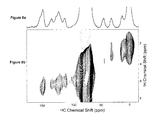
Figure 8a shows an 1H-13C CP MAS spectra of YDEAS with MW irradiation at 263 GHz to induce DNP; the sample was wetted with 10.2 mM bTbK solution in tetrachloroethane; -
Figure 8b shows a contour plot of a two-dimensional 1H-13C spectrum of YDEAS wetted with the same solution of bTbK recorded with DNP using MW irradiation at 263 GHz; a proton enhancement of 18 was obtained for this compound. - In the present document, the expression "solvent" is not limited to pure solvents consisting only of one substance but encompasses also mixtures of pure solvents.
- As mentioned before, the invention proposes to overcome the aforementioned difficulties to study materials by DNP NMR Spectroscopy. The invention is thus based on a method to determine the efficiency of a solvent to impregnate or dissolve a sample material for use in a dynamic nuclear polarization (DNP) nuclear magnetic resonance (NMR) experiment, characterized in that the method comprises:
- selecting a non-aqueous solvent,
- providing a polarizing agent that is soluble in the non-aqueous solvent
- dissolving the polarizing agent in the non-aqueous solvent,
- impregnating or dissolving the sample material with the non-aqueous solvent containing the polarizing agent,
- performing a DNP NMR experiment on the impregnated sample material,
- determining a DNP enhancement factor of the DNP NMR experiment.
- According to a non-limitative particularity of the method of the invention, the sample material is nanoporous and contains mesopores on a scale ranged between 0,5 nm and 25 nm, preferentially ranged between 0,7 nm and 20 nm, and ideally ranged between 1 nm and 10 nm.
- The determined mixture for the dissolution and/or the wetting of materials used for DNP NMR Spectroscopy has a vapor pressure low enough to allow the wetness impregnation of materials without drying out at room temperature. To this end, usually the boiling point of the determined solvent or mixture will be well above room temperature, e.g. above 310K or 320K. However, it is also possible to use solvents with a much lower boiling point down to e.g. 200K or 190K (for example Freon or Freon -like solvents) if special care is taken to prevent drying out of the impregnated sample material.
- The solvents employed in the mixture should be chemically compatible with the studied materials and the polarizing agents.
- Additionally, the solvent and/or the mixture is selected such that its freezing point is high enough to allow simultaneous freezing with the solid sample material in the same temperature range below room temperature, preferably with a freezing point higher than 150 K. Thus, the mixture should have a freezing point which is high enough to allow freezing below 150 K. When frozen, the 1H nuclei of the mixture should experience intermolecular nuclear dipolar couplings which enable polarization to be efficiently relayed through the sample.
- Moreover, the mixture of the invention is characterised in that it is non-aqueous and chemically compatible toward the studied materials. Such mixture provides several advantages for DNP NMR Spectroscopy. Indeed, the mixture of the invention does not degrade the studied materials. This chemical compatibility of the mixture components avoids erroneous results.
- Wetting or solubilisation of materials by the mixture implies that the mixtures are able to wet and impregnate the materials before the introduction of this sample into the spectroscopy device. This procedure is commonly performed at room temperature. To ease this step, it is better that the mixture exists as a liquid at room temperature. The wetting operation is thus performed in optimized conditions.
- Further, the mixture of the invention has the ability to improve or enhance the spectroscopy signal if when frozen, the 1H nuclei of the mixture experience inter-molecular nuclear dipolar couplings which enable polarization to be efficiently relayed through the sample. Such dipolar couplings facilitate a large enhancement of the measured spectroscopy signal. This dipolar coupling network may be enhanced because of non-aqueous solvent is selected such that it contains at least one halogen as part of its chemical structure. The presence of halogen in the chemical structure of the solvents has a favourable effect on the polarization transfer efficiency of the mixtures.
- According to a preferred, but non-limitative, feature of the invention, the at least one halogen part of the chemical structure of the non-aqueous solvent is a chlorine or bromine.
- According to a non-limitative particularity, the mixture of the invention has a freezing point high enough to be frozen at a similar range of temperature as when the DNP enhancements are performed. Such DNP enhancements are usually performed at temperature comprised in the range of 1mK to 250 K, and preferentially comprised in the range of 1 mK to 200 K. Thus, the mixture should have a freezing point which is high enough to allow freezing below these temperature levels. In such conditions, it is necessary that the materials studied be frozen with its wetting solvent, in order to perform measures in optimized conditions. When frozen, the 1H nuclei of the mixture should experience intermolecular nuclear dipolar couplings which enable polarization to be efficiently relayed through the sample.
- One purpose of the invention is to provide a mixture for the study of materials samples by Dynamic Nuclear Polarization (DNP) Nuclear Magnetic Resonance (NMR). Such mixtures are characterised in that the mixture comprises at least one polarization agent mixed with at least one non-aqueous solvent.
- According to a non-limitative particularity of the invention, the mixture is characterized in that the polarizing agent is formed by at least one biradical. As an example, such biradical could be bTbK or TOTAPOL. The mixture of solvent and polarizing agent is preferably carried out with a range of solution concentration between 0.1 mM and 100 mM, and preferably in the range from 5 to 20 mM.
- Further the invention concerns a method to perform solid state Dynamic Nuclear Polarization (DNP) Nuclear Magnetic Resonance (NMR) experiments on a sample material characterized in that the method uses a determined solvent and/or a mixture according to the invention.
- An example to carry out the method to determine the efficiency of a solvent and to obtain the results shown by
figures 3 and 4 is detailed as follow. - All the solvents were tested for DNP efficiency on a model hybrid mesoporous material containing surface phenolic groups, named compound I. The structure of the material is depicted in
Figure 1 . A total of 20 solvents are evaluated under DNP conditions using bTbK as a polarizing agent. This biradical is more soluble in organic solvents than TOTAPOL and has been reported to yield better enhancements in water than TOTAPOL at the same concentration. The structure of these two biradical molecules is respectively shown inFigures 2a and 2b . - The solvents used for this study are based according to the original combination of a number of criteria. First, they should be chemically inert at room temperature on a short time scale towards both the radical and the material (i.e. they should not damage the polarizing agent or the material). The vapor pressure of the solvent at room temperature should be relatively low, to be able to properly wet the sample. One requirement for the DNP NMR experiment is to freeze the solution containing the radical to form a rigid solid in order to allow efficient spin diffusion among solvent molecules. The experiments are conducted here at around 100 K. It is a well known that solvents confined in meso/micro-pores have depressed freezing points in comparison to bulk solvents. Therefore most of the solvents are chosen to have a relatively high freezing point (i.e. above 150 K).
-
Figure 5 displays the observed proton and silicon enhancements (ε) that can be obtained for 20 different solvents. Large discrepancies within this set of solvents can be observed. The solvents found using the criteria above display the best performances and are halogenated solvents, with proton and silicon enhancements ranging from respectively 11 to 22, and from 11 to 17. In addition, reasonable values of ε are obtained with para-xylene. The other solvents display poor or no enhancement under the experimental conditions used in this study. - It can be noted that the presence of the halogens will also reduce the proton density of the solvent, thus concentrating polarization onto a smaller proton spin bath, which could explain their high efficiency under DNP conditions.
- From this study, 1,1,2,2 tetrachloroethane in combination with bTbK appears to be one among others of the most promising non aqueous mixtures for DNP SENS. All the following experiments were done using this combination of solvent and radical.
-
Figure 6 presents the evolution of ε, Σ and ΣLT with the radical concentration for this mixture. As expected, ΣLT is always lower than ε. The optimal concentration is found to be 14.8mM for ε and 10.8 mM for Σ and ΣLT. Under these optimal conditions, an effective sensitivity enhancement ΣLT of 12 is observed, which translates into Σ = 36 when taking into account the Boltzmann factor. -
Figure 7 displays the evolution of ε and ΣLT with the deuteration level of the solvent. It is believed that deuteration of the solvent is necessary to reduce the proton spin bath and thus channel more efficiently the polarization to the protons that will contribute to CP. In the present case, it is found that ε peaks at around 30% deuteration for tetrachloroethane, which roughly corresponds to the proton to electron ratio of 90% deuterated water. - Finally
Figures 8a and 8b display a two-dimensional carbon-proton correlation spectrum recorded on a water-sensitive surface organometallic compound, YDEAS grafted on silica. This spectrum was acquired in 1,1,2,2 tetrachloroethane with 10.8 mM bTbK in 10.6 hours. In addition to the large solvent correlation peak, all the expected cross-peaks corresponding to the grafted species are observed in this 2D map. This is the first application of SENS by DNP to a water-sensitive material. - Consequently DNP experiments can be performed using non-aqueous solvents, easily determinable due to the method of the invention. It has been found that fully protonated solvents give the best effective sensitivity enhancements in our systems, and that the best non-aqueous solvents perform with efficiency similar to that of water. Furthermore, the application of these solvents to DNP is not limited to solid-state experiments. Dissolution DNP can benefit from the use of such solvents, as molecules that are not compatible with water can now be used.
- The introduction of these solvents for DNP opens the way to the use of new biradicals for DNP, as solubility in water is often the limiting factor for their application for DNP.
- The present invention is of course not limited to the preferred embodiments described and represented herein, changes can be made or equivalents used without departing from the scope of the invention.
Claims (15)
- A method to determine the efficiency of a solvent to impregnate or dissolve a sample material for use in a dynamic nuclear polarization (DNP) nuclear magnetic resonance (NMR) experiment, characterized in that the method comprises:- selecting a non-aqueous solvent,- providing a polarizing agent that is soluble in the non-aqueous solvent,- dissolving the polarizing agent in the non-aqueous solvent,- impregnating or dissolving the sample material with the non-aqueous solvent containing the polarizing agent,- performing a DNP NMR experiment on the impregnated sample material,- determining a DNP enhancement factor of the DNP NMR experiment.
- A method to obtain a DNP-enhanced NMR spectrum of a sample material, characterized in that the method comprises:- using a mixture of a solvent and a polarizing agent,- selecting a non-aqueous solvent,- providing a polarizing agent that is soluble in the non-aqueous solvent,- dissolving the polarizing agent in the non-aqueous solvent,- impregnating or dissolving the sample material with the non-aqueous solvent containing the polarizing agent,- performing a DNP NMR experiment on the impregnated sample material.
- A method according to claim 2, characterized in that the used mixture is selected according to claim 1.
- A method of use of a mixture of a non-aqueous solvent and a polarizing agent that is soluble in the non-aqueous solvent to impregnate or dissolve a sample material in order to perform a dynamic nuclear polarization (DNP) nuclear magnetic resonance (NMR) experiment characterized in that the DNP NMR is performed by a method according to claim 2 or claim 3 on said impregnated or dissolved sample.
- A method according to one of claims 1 to 4, characterized in that the sample material is solid at room temperature.
- A method according to claim 5, characterized in that the sample material is solid that contains mesopores on a scale between 0,5 nm and 25 nm.
- A method according to one of the previous claims, characterized in that the non-aqueous solvent is selected such that it contains at least one heteroatom, preferably a halogen, as part of its chemical structure.
- A method according to claim 7, characterized in that the non-aqueous solvent is selected such that it contains at least one chlorine atom or bromine atom as part of its chemical structure.
- A method according to one of the previous claims, characterized in that the non-aqueous solvent is selected such that its boiling point is high enough to prevent drying out of an impregnated sample material.
- A method according to one of the previous claims, characterized in that the non-aqueous solvent is selected such that its freezing point is high enough to allow simultaneous freezing with the solid sample material in the same temperature range below room temperature.
- A method according to one of the previous claims, characterized in that the non-aqueous solvent is selected such that it provides efficient spin diffusion.
- A method according to one of the previous claims, characterized in that the polarizing agent comprises biradicals.
- A method according to claim 12, characterized in that the polarizing agent is formed by bTbK and/or TOTAPOL.
- A method according to one of the previous claims, characterized in that the non-aqueous solvent comprises at least one of the element of the compounds list including: dichloromethane, chloroform, 1, 1, 2, 2 tetrachloroethane, 1, 1, 1 trichloroethane, trans-dichloroethane, 1, 2 dichlorobenzene, 1, 2 dichloroethane, 1, 2 dibromoethane, 1, 3 dibromobutane, 1, 1, 2, 2 tetrabromoethane, hexafluoro-2-propanol, 2, 2, 2 trifluoroethanol para-xylene, mesitylene, isopropanol, tetrahydrofuran, methy-ter-butylether, dimethylformamide, dimethylsulfoxide andacetonitrile.
- A method according to one of the previous claims, characterized in that the radical concentration of the polarizing agent in the non-aqueous solvent is in the range from 0.1 to 100 mM.
Priority Applications (4)
| Application Number | Priority Date | Filing Date | Title |
|---|---|---|---|
| EP11305736A EP2533034A1 (en) | 2011-06-10 | 2011-06-10 | DNP NMR spectroscopy with non-aqueous solvents |
| PCT/IB2012/001515 WO2012168797A1 (en) | 2011-06-10 | 2012-06-08 | Non aqueous solvents or mixtures for dnp nmr spectroscopy, method to prepare said solvents or mixtures and use of said solvents or mixtures |
| US14/125,104 US20160195480A1 (en) | 2011-06-10 | 2012-06-08 | Non aqueous solvents or mixtures for dnp nmr spectroscopy, method to prepare said solvents or mixtures and use of said solvents or mixtures |
| EP12758598.2A EP2718701A1 (en) | 2011-06-10 | 2012-06-08 | Non aqueous solvents or mixtures for dnp nmr spectroscopy, method to prepare said solvents or mixtures and use of said solvents or mixtures |
Applications Claiming Priority (1)
| Application Number | Priority Date | Filing Date | Title |
|---|---|---|---|
| EP11305736A EP2533034A1 (en) | 2011-06-10 | 2011-06-10 | DNP NMR spectroscopy with non-aqueous solvents |
Publications (1)
| Publication Number | Publication Date |
|---|---|
| EP2533034A1 true EP2533034A1 (en) | 2012-12-12 |
Family
ID=46832516
Family Applications (2)
| Application Number | Title | Priority Date | Filing Date |
|---|---|---|---|
| EP11305736A Withdrawn EP2533034A1 (en) | 2011-06-10 | 2011-06-10 | DNP NMR spectroscopy with non-aqueous solvents |
| EP12758598.2A Withdrawn EP2718701A1 (en) | 2011-06-10 | 2012-06-08 | Non aqueous solvents or mixtures for dnp nmr spectroscopy, method to prepare said solvents or mixtures and use of said solvents or mixtures |
Family Applications After (1)
| Application Number | Title | Priority Date | Filing Date |
|---|---|---|---|
| EP12758598.2A Withdrawn EP2718701A1 (en) | 2011-06-10 | 2012-06-08 | Non aqueous solvents or mixtures for dnp nmr spectroscopy, method to prepare said solvents or mixtures and use of said solvents or mixtures |
Country Status (3)
| Country | Link |
|---|---|
| US (1) | US20160195480A1 (en) |
| EP (2) | EP2533034A1 (en) |
| WO (1) | WO2012168797A1 (en) |
Families Citing this family (1)
| Publication number | Priority date | Publication date | Assignee | Title |
|---|---|---|---|---|
| CN110082382A (en) * | 2019-05-08 | 2019-08-02 | 中国科学院武汉物理与数学研究所 | A method of the separation of water-oil phase NMR signal is carried out using dynamical nuclear polarization |
-
2011
- 2011-06-10 EP EP11305736A patent/EP2533034A1/en not_active Withdrawn
-
2012
- 2012-06-08 EP EP12758598.2A patent/EP2718701A1/en not_active Withdrawn
- 2012-06-08 US US14/125,104 patent/US20160195480A1/en not_active Abandoned
- 2012-06-08 WO PCT/IB2012/001515 patent/WO2012168797A1/en not_active Ceased
Non-Patent Citations (5)
| Title |
|---|
| GAFUROV M ET AL: "EPR Characterization of a Rigid Bis-TEMPO-Bis-Ketal for Dynamic Nuclear Polarization", APPLIED MAGNETIC RESONANCE, vol. 37, no. 1-4, January 2010 (2010-01-01), SPRINGER-VERLAG AUSTRIA, pages 505 - 514, XP008121045, ISSN: 0937-9347 * |
| LELLI M ET AL: "Fast characterization of functionalized silica materials by silicon-29 surface-enhanced NMR spectroscopy using dynamic nuclear polarization", JOURNAL OF THE AMERICAN CHEMICAL SOCIETY, vol. 133, no. 7, 31 January 2011 (2011-01-31), USA, pages 2104 - 2107, XP002665059, DOI: 10.1021/JA110791D * |
| LESAGE ANNE ET AL: "Surface Enhanced NMR Spectroscopy by Dynamic Nuclear Polarization", JOURNAL OF THE AMERICAN CHEMICAL SOCIETY, vol. 132, no. 44, November 2010 (2010-11-01), pages 15459 - 15461, XP002665057, ISSN: 0002-7863 * |
| MATSUKI Y ET AL: "Dynamic nuclear polarization with a rigid biradical", ANGEWANDTE CHEMIE INTERNATIONAL EDITION, vol. 48, no. 27, 22 June 2009 (2009-06-22), WILEY-VCH VERLAG GMBH GERMANY, pages 4996 - 5000, XP002665058, ISSN: 1433-7851 * |
| ZAGDOUN A. ET AL.: "Non-aqueous solvents for DNP surface enhanced NMR spectroscopy", CHEMICAL COMMUNICATIONS, vol. 48, no. 5, 28 October 2011 (2011-10-28), XP002665060, DOI: 10.1039/C1CC15242D * |
Also Published As
| Publication number | Publication date |
|---|---|
| EP2718701A1 (en) | 2014-04-16 |
| WO2012168797A1 (en) | 2012-12-13 |
| US20160195480A1 (en) | 2016-07-07 |
Similar Documents
| Publication | Publication Date | Title |
|---|---|---|
| Wisser et al. | BDPA-nitroxide biradicals tailored for efficient dynamic nuclear polarization enhanced solid-state NMR at magnetic fields up to 21.1 T | |
| Lee et al. | Is solid-state NMR enhanced by dynamic nuclear polarization? | |
| Kubicki et al. | Amplifying dynamic nuclear polarization of frozen solutions by incorporating dielectric particles | |
| Denysenkov et al. | Liquid state DNP using a 260 GHz high power gyrotron | |
| Collette et al. | Hygrothermal aging of Nafion® | |
| Blanc et al. | Dynamic nuclear polarization NMR spectroscopy allows high-throughput characterization of microporous organic polymers | |
| Kobayashi et al. | Improved strategies for DNP-enhanced 2D 1H-X heteronuclear correlation spectroscopy of surfaces | |
| Le et al. | Optimizing sample preparation methods for dynamic nuclear polarization solid-state NMR of synthetic polymers | |
| Viger‐Gravel et al. | 19F magic angle spinning dynamic nuclear polarization enhanced NMR spectroscopy | |
| Lund et al. | Direct dynamic nuclear polarization targeting catalytically active 27 Al sites | |
| Matsuki et al. | Cryogenic signal amplification combined with helium-temperature MAS DNP toward ultimate NMR sensitivity at high field conditions | |
| Prandolini et al. | First DNP results from a liquid water-TEMPOL sample at 400 MHz and 260 GHz | |
| Reinhard et al. | Large 31 P-NMR enhancements in liquid state dynamic nuclear polarization through radical/target molecule non-covalent interaction | |
| Grage et al. | Structural Parameters from19F Homonuclear Dipolar Couplings, Obtained by Multipulse Solid-State NMR on Static and Oriented Systems | |
| Novotny et al. | Characterisation of black carbon-rich samples by 13C solid-state nuclear magnetic resonance | |
| Craig et al. | Nuclear magnetic resonance in lithium chloride solutions | |
| US20160195480A1 (en) | Non aqueous solvents or mixtures for dnp nmr spectroscopy, method to prepare said solvents or mixtures and use of said solvents or mixtures | |
| Moroz et al. | Endogenous metal-ion dynamic nuclear polarization for NMR signal enhancement in metal organic frameworks | |
| Soundararajan et al. | Proton-detected solution-state NMR at 14.1 T based on scalar-driven 13C Overhauser dynamic nuclear polarization | |
| Juramy et al. | Recent progress in nuclear magnetic resonance strategies for time-resolved atomic-level investigation of crystallization from solution | |
| Muñoz-Gómez et al. | A benzyl alcohol derivative of the BDPA radical for fast dissolution dynamic nuclear polarization NMR spectroscopy | |
| Villanueva-Garibay et al. | Pushing the limit of liquid-state dynamic nuclear polarization at high field | |
| Hamada et al. | Analysis of deuteron NMR spectrum in propanediol for polarization measurement | |
| Ferrer et al. | Polarization amplification in dynamic nuclear polarization magic-angle spinning solid-state nuclear magnetic resonance by solubilizing traditional ionic salts | |
| Höfer et al. | Studies of dynamic nuclear polarization with nitroxides in aqueous solution |
Legal Events
| Date | Code | Title | Description |
|---|---|---|---|
| PUAI | Public reference made under article 153(3) epc to a published international application that has entered the european phase |
Free format text: ORIGINAL CODE: 0009012 |
|
| AK | Designated contracting states |
Kind code of ref document: A1 Designated state(s): AL AT BE BG CH CY CZ DE DK EE ES FI FR GB GR HR HU IE IS IT LI LT LU LV MC MK MT NL NO PL PT RO RS SE SI SK SM TR |
|
| AX | Request for extension of the european patent |
Extension state: BA ME |
|
| RAP1 | Party data changed (applicant data changed or rights of an application transferred) |
Owner name: ECOLE NORMALE SUPERIEURE DE LYON Owner name: UNIVERSITE D'AIX-MARSEILLE Owner name: UNIVERSITE CLAUDE BERNARD LYON I Owner name: EIDGENOESSISCHE TECHNISCHE HOCHSCHULE ZUERICH Owner name: CENTRE NATIONAL DE LA RECHERCHE SCIENTIFIQUE (ETAB Owner name: BRUKER BIOSPIN (SAS) |
|
| RIN1 | Information on inventor provided before grant (corrected) |
Inventor name: OUARI, OLIVIER Inventor name: LESAGE, ANNE Inventor name: COPERET, CHRISTOPHE Inventor name: LELLI, MORENO Inventor name: GAJAN, DAVID Inventor name: ZAGDOUN, ALEXANDRE Inventor name: ROSSINI, AARON Inventor name: TORDO, PAUL Inventor name: ROSAY, MELANIE Inventor name: MAAS, WERNER Inventor name: EMSLEY, LYNDON |
|
| STAA | Information on the status of an ep patent application or granted ep patent |
Free format text: STATUS: THE APPLICATION IS DEEMED TO BE WITHDRAWN |
|
| 18D | Application deemed to be withdrawn |
Effective date: 20130613 |