EP2531956B1 - Image recognition system based on cascaded over-complete dictionaries - Google Patents
Image recognition system based on cascaded over-complete dictionaries Download PDFInfo
- Publication number
- EP2531956B1 EP2531956B1 EP11705734.9A EP11705734A EP2531956B1 EP 2531956 B1 EP2531956 B1 EP 2531956B1 EP 11705734 A EP11705734 A EP 11705734A EP 2531956 B1 EP2531956 B1 EP 2531956B1
- Authority
- EP
- European Patent Office
- Prior art keywords
- dictionary
- generic
- features
- discriminative
- image
- Prior art date
- Legal status (The legal status is an assumption and is not a legal conclusion. Google has not performed a legal analysis and makes no representation as to the accuracy of the status listed.)
- Not-in-force
Links
Images



Classifications
-
- G—PHYSICS
- G06—COMPUTING OR CALCULATING; COUNTING
- G06V—IMAGE OR VIDEO RECOGNITION OR UNDERSTANDING
- G06V10/00—Arrangements for image or video recognition or understanding
- G06V10/40—Extraction of image or video features
-
- G—PHYSICS
- G06—COMPUTING OR CALCULATING; COUNTING
- G06V—IMAGE OR VIDEO RECOGNITION OR UNDERSTANDING
- G06V10/00—Arrangements for image or video recognition or understanding
- G06V10/70—Arrangements for image or video recognition or understanding using pattern recognition or machine learning
- G06V10/77—Processing image or video features in feature spaces; using data integration or data reduction, e.g. principal component analysis [PCA] or independent component analysis [ICA] or self-organising maps [SOM]; Blind source separation
- G06V10/774—Generating sets of training patterns; Bootstrap methods, e.g. bagging or boosting
Definitions
- the present disclosure generally relates to signal processing and, more particularly, to a method for image recognition based on cascaded collections of basis for extracting features and building representations of images at different reconstruction levels.
- an over-complete dictionary as a collection of bases can be utilized to represent and reconstruct images.
- the dictionary can be optimized to include a large set of bases, but typically uses only a small group of bases to reconstruct a particular image. Therefore, the representation is generally sparse. To classify an image, it is desirable for the dictionary to contain discriminative features from different classes so that the sparse representation would indicate class labels.
- the image can typically comprise both generic features and class-specific features. Therefore, for an image recognition system that is based on a recognition by reconstruction scheme, it is desirable that the dictionary possesses not only discriminative power for classification purpose, but also reconstructive power for error tolerance.
- US 2009/0010500 A1 discloses a face recognition method that includes assigning a texton to each pixel of a filtered image to produce a texton map; determining an approximation error for each pixel of the texton map; segmenting the texton map into a plurality of sub-blocks, each sub-block associated with a plurality of pixels of the texton map; determining an average error for at least one sub-block based upon the approximation errors of the pixels associated with the at least one sub-block; determining a weight for the at least one sub-block based upon the average error; assigning the weight to the textons assigned to the pixels associated with the at least one sub-block; and producing an error encoded histogram based upon the textons and the assigned weights.
- the techniques described herein relate to signal processing, and, more particularly, to processing of a pattern which is related to a subject that needs to be recognized.
- FIG. 1 illustrates an example system 100 for pattern recognition in which embodiments of the present disclosure may be practiced.
- the pattern recognition system 100 may be used to recognize different patterns or signals, such as images for subject recognition or audio signals for voice recognition.
- the system 100 may be utilized in a wide range of applications, including security application (e.g., in airports and office buildings), and may be implemented on a wide range of different type platforms, such as a desktop, a laptop computer, or a handheld device (e.g., a mobile phone).
- security application e.g., in airports and office buildings
- a handheld device e.g., a mobile phone
- an input platform 120 may include a screening station 126, through which a camera 122 may provide signals corresponding to an image of a subject and/or a microphone 124 that may provide signals corresponding to a human's voice.
- the screening station 126 may be positioned at a security checkpoint, such as those found in airports or building entrances. While the platform 120 is shown with both the camera 122 and microphone 124, according to certain embodiments only one of such devices may be included. Further, additional or alternative devices may also be used, such as a fingerprint reader, iris reader, or the like. Whatever devices or combination of devices are used, the pattern recognition system 100 may be configured to identify a pattern based on the received signals.
- the pattern recognition system 100 may include an interface 104 to receive and process the input signals.
- the interface 104 may include any suitable circuitry, such as amplifiers, filters, analog-to-digital (A/D) converters and the like, to provide a suitable pattern signal for one or more processors 102.
- the processor(s) 102 may process the input pattern signal according to some recognition algorithm initiated for execution by a recognition engine 110 within the memory 108.
- the pattern recognition may be achieved, for example, by matching the input pattern signal (e.g., the image or voice) with available pattern bases 106 associated with a plurality of subjects.
- the recognition engine 110 may interface with the pattern bases 106.
- the recognition engine 110 may generate and update the pattern bases 106 during training operations.
- the pattern bases may be accessed to perform recognition operations.
- an input pattern e.g., the image or voice
- pattern bases related to the existing subjects may be periodically updated during the training process, and one or more pattern bases associated with one or more new subjects may be also added in the pool of pattern bases 106.
- An over-complete dictionary as a collection of pattern bases may be utilized in the pattern recognition system 100 in order to represent and reconstruct images.
- dictionaries may be applied on different levels of image reconstruction. Each dictionary on a particular level may be learned and optimized for the purpose of capturing either generic or discriminative features. By finding sparse representations through the cascaded dictionaries for different levels of reconstruction, the image may be reconstructed and recognized.
- dictionaries at lower levels of reconstruction may be employed to reconstruct more generic features, while higher level dictionaries may be dedicated to more discriminative features.
- the sparseness of representation using a discriminative dictionary on the top reconstruction level may be increased by adding one or more cascaded dictionaries at lower reconstruction levels in order to improve classification performance.
- reconstructing the generic (i.e., class-irrelevant) and discriminative (i.e., class-relevant) information may be separated.
- Each dictionary on a different level of reconstruction may be learned and optimized separately for the purpose of capturing either generic or discriminative features.
- the dictionary On the lowest level of reconstruction, the dictionary may capture statistics of images from all supported classes. The bases that may be developed through dictionary update may accordingly represent the common features across all the classes.
- Such dictionary with generic features at a particular lower reconstruction level may be able to reconstruct an image from any class up to the same degree.
- the remaining signal, as the input image subtracted by the reconstructed signal from this dictionary may remain to be reconstructed by dictionaries on later higher reconstruction stages.
- the dictionary on this level may comprise subspaces corresponding to different classes.
- a subspace may capture the statistics of images from one single class, and the bases in the subspace may represent the features that differentiate them from the rest of image classes. In this way, one subspace may be better than other subspaces when constructed images are from the class that the subspace represents. Therefore, the solution when using this dictionary may be sparse.
- Different reconstruction levels from different subspaces may indicate which class a particular image that is being reconstructed belongs to.
- one or more dictionaries may be added in middle levels of reconstruction where they may represent less generic but more discriminative features in order to increase sparseness of the representation on the top reconstruction level.
- FIG. 3 illustrates example operations 300 for training of cascaded dictionaries as collections of bases to be used for image reconstruction and subject recognition in accordance with certain embodiments of the present disclosure.
- N subjects may be provided for training of dictionaries, wherein each subject may comprise one or more training images.
- a dictionary may be trained using the training images from all N subjects.
- the trained dictionary may comprise a set of most generic features related to all the subjects, and it may be used as a generic dictionary associated with an initial level of image reconstruction.
- reconstructed images obtained using the set of generic features may be subtracted from all the input images to obtain updated training patterns without these generic features.
- the remaining images with generic features reconstructed and removed may be optionally used, at 308, to evaluate the quality of the generic reconstruction. If the quality is not satisfactory, then one or more cascaded generic dictionaries may be further constructed. Therefore, if the quality is not satisfactory, the operations 304-306 may be optionally repeated a plurality of times to obtain cascaded generic dictionaries, one generic dictionary for a different level of image reconstruction. Features that would be constructed at 304 based on the patterns without previously found generic features may be less generic for every next higher reconstruction level. Therefore, a corresponding trained dictionary may comprise less generic and more discriminative features for every next higher reconstruction level. After extracting at 306 all remaining generic features from the input images, training of one or more discriminative dictionaries related to discriminative features of the subjects may follow.
- input patterns for each subject may only comprise discriminative features of the corresponding original input images.
- a set of discriminative features may be obtained for each of the N subjects based on the input patterns without the generic features, which may result into a discriminative dictionary with N sub-dictionaries, each sub-dictionary may be associated with a different subject.
- an image may be firstly processed and reconstructed by the lower level of dictionaries.
- the remaining signal may be reconstructed by the top level discriminative and class-relevant dictionary.
- the subject may be recognized by finding which sub-dictionary is the best for reconstructing the input signal.
- This discriminative dictionary may correspond to the highest reconstruction level, and it may comprise the most discriminative features related to the N subjects. Depending on the complexity of images and difficulty of their classification, one or more dictionaries with less discriminative features may be trained and included in image reconstruction before applying the dictionary with the most discriminative features.
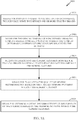
- FIG. 4 illustrates example operations 400 for reconstruction of an image related to a subject based on the previously trained cascaded dictionaries (i.e., collections of bases at different reconstruction levels) in accordance with certain embodiments of the present disclosure.
- reconstruction of a test image may be performed firstly using the previously extracted generic features in the generic dictionary.
- reconstruction of the image and recognition of the subject may be performed based on N previously trained discriminative sub-dictionaries (i.e., sets of discriminative features) applied on the image with the generic features removed, wherein each sub-dictionary may correspond to one possible subject to be recognized. All the sub-dictionaries may be part of the trained discriminative dictionary that may be associated with the highest level of image reconstruction. As mentioned above, depending on the complexity of image and difficulty of its classification, one or more dictionaries with less discriminative features may be employed before applying the dictionary with the most discriminative features in order to increase sparseness of the representation on the top reconstruction level.
- the proposed image classifier based on the reconstructive technique can be compared against the existing discriminant classifier from the art, when both techniques are applied for the same pattern recognition.
- the present learning theory supports the use of discriminant classifier, namely the large-margin classifiers such as Support Vector Machines (SVM).
- SVM Support Vector Machines
- there are certain advantages in using the proposed reconstructive models for pattern recognition such as scalability and error tolerance.
- the proposed technique may achieve favorable scalability in the number of classes and number of training samples per class.
- many errors observed in the pattern recognition can be modeled as additive errors. These errors may be readily removed or corrected in the proposed reconstructive model.
- blocks 302-310 illustrated in FIG. 3 correspond to means-plus-function blocks 302A-310A illustrated in FIG. 3A .
- blocks 402-404 illustrated in FIG. 4 correspond to means-plus-function blocks 402A-404A illustrated in FIG. 4A .
- the operation blocks correspond to means-plus-function blocks with similar numbering.
- determining encompasses a wide variety of actions. For example, “determining” may include calculating, computing, processing, deriving, investigating, looking up (e.g., looking up in a table, a database or another data structure), ascertaining and the like. Also, “determining” may include receiving (e.g., receiving information), accessing (e.g., accessing data in a memory) and the like. Also, “determining” may include resolving, selecting, choosing, establishing and the like.
- a phrase referring to "at least one of” a list of items refers to any combination of those items, including single members.
- “at least one of: a, b, or c” is intended to cover: a, b, c, a-b, a-c, b-c, and a-b-c.
- any suitable means capable of performing the operations such as various hardware and/or software component(s), circuits, and/or module(s).
- any operations illustrated in the Figures may be performed by corresponding functional means capable of performing the operations.
- DSP digital signal processor
- ASIC application specific integrated circuit
- FPGA field programmable gate array signal
- PLD programmable logic device
- a general purpose processor may be a microprocessor, but in the alternative, the processor may be any commercially available processor, controller, microcontroller or state machine.
- a processor may also be implemented as a combination of computing devices, e.g., a combination of a DSP and a microprocessor, a plurality of microprocessors, one or more microprocessors in conjunction with a DSP core, or any other such configuration.
- a software module may reside in any form of storage medium that is known in the art. Some examples of storage media that may be used include random access memory (RAM), read only memory (ROM), flash memory, EPROM memory, EEPROM memory, registers, a hard disk, a removable disk, a CD-ROM and so forth.
- RAM random access memory
- ROM read only memory
- flash memory EPROM memory
- EEPROM memory EEPROM memory
- registers a hard disk, a removable disk, a CD-ROM and so forth.
- a software module may comprise a single instruction, or many instructions, and may be distributed over several different code segments, among different programs, and across multiple storage media.
- a storage medium may be coupled to a processor such that the processor can read information from, and write information to, the storage medium. In the alternative, the storage medium may be integral to the processor.
- the methods disclosed herein comprise one or more steps or actions for achieving the described method.
- the method steps and/or actions may be interchanged with one another without departing from the scope of the claims.
- the order and/or use of specific steps and/or actions may be modified without departing from the scope of the claims.
- a storage media may be any available media that can be accessed by a computer.
- such computer-readable media can comprise RAM, ROM, EEPROM, CD-ROM or other optical disk storage, magnetic disk storage or other magnetic storage devices, or any other medium that can be used to carry or store desired program code in the form of instructions or data structures and that can be accessed by a computer.
- Disk and disc include compact disc (CD), laser disc, optical disc, digital versatile disc (DVD), floppy disk and Blu-ray® disc where disks usually reproduce data magnetically, while discs reproduce data optically with lasers.
- certain embodiments may comprise a computer program product for performing the operations presented herein.
- a computer program product may comprise a computer readable medium having instructions stored (and/or encoded) thereon, the instructions being executable by one or more processors to perform the operations described herein.
- the computer program product may include packaging material.
- Software or instructions may also be transmitted over a transmission medium.
- a transmission medium For example, if the software is transmitted from a website, server, or other remote source using a coaxial cable, fiber optic cable, twisted pair, digital subscriber line (DSL), or wireless technologies such as infrared, radio, and microwave, then the coaxial cable, fiber optic cable, twisted pair, DSL, or wireless technologies such as infrared, radio, and microwave are included in the definition of transmission medium.
- DSL digital subscriber line
- modules and/or other appropriate means for performing the methods and techniques described herein can be downloaded and/or otherwise obtained by a user terminal and/or base station as applicable.
- a user terminal and/or base station can be coupled to a server to facilitate the transfer of means for performing the methods described herein.
- various methods described herein can be provided via storage means (e.g., RAM, ROM, a physical storage medium such as a compact disc (CD) or floppy disk, etc.), such that a user terminal and/or base station can obtain the various methods upon coupling or providing the storage means to the device.
- storage means e.g., RAM, ROM, a physical storage medium such as a compact disc (CD) or floppy disk, etc.
- CD compact disc
- floppy disk etc.
- any other suitable technique for providing the methods and techniques described herein to a device can be utilized.
Landscapes
- Engineering & Computer Science (AREA)
- Theoretical Computer Science (AREA)
- Multimedia (AREA)
- General Physics & Mathematics (AREA)
- Physics & Mathematics (AREA)
- Evolutionary Computation (AREA)
- Health & Medical Sciences (AREA)
- General Health & Medical Sciences (AREA)
- Medical Informatics (AREA)
- Software Systems (AREA)
- Databases & Information Systems (AREA)
- Computing Systems (AREA)
- Computer Vision & Pattern Recognition (AREA)
- Artificial Intelligence (AREA)
- Image Analysis (AREA)
Description
- The present Application for Patent claims priority to
U. S. Provisional Application No. 61/300,408 - The present disclosure generally relates to signal processing and, more particularly, to a method for image recognition based on cascaded collections of basis for extracting features and building representations of images at different reconstruction levels.
- In image recognition, an over-complete dictionary as a collection of bases can be utilized to represent and reconstruct images. The dictionary can be optimized to include a large set of bases, but typically uses only a small group of bases to reconstruct a particular image. Therefore, the representation is generally sparse. To classify an image, it is desirable for the dictionary to contain discriminative features from different classes so that the sparse representation would indicate class labels.
- However, the image can typically comprise both generic features and class-specific features. Therefore, for an image recognition system that is based on a recognition by reconstruction scheme, it is desirable that the dictionary possesses not only discriminative power for classification purpose, but also reconstructive power for error tolerance.
-
US 2009/0010500 A1 discloses a face recognition method that includes assigning a texton to each pixel of a filtered image to produce a texton map; determining an approximation error for each pixel of the texton map; segmenting the texton map into a plurality of sub-blocks, each sub-block associated with a plurality of pixels of the texton map; determining an average error for at least one sub-block based upon the approximation errors of the pixels associated with the at least one sub-block; determining a weight for the at least one sub-block based upon the average error; assigning the weight to the textons assigned to the pixels associated with the at least one sub-block; and producing an error encoded histogram based upon the textons and the assigned weights. - Engan et al. "Frame texture classification method (FTCM) applied to mammograms for detection of abnormalities", WASET international Journal of signal processing, vol.4, no. 2, 2008, p. 122-132, ISSN: 1304-4478 proposes a frame texture classification method, in which every pixel of an image is classified as belonging to a certain texture/class from a predefined number of classes. The classification is based on a sparse approximation of a signal using a linear combination of the dictionary vectors, wherein the dictionary is an over-complete matrix.
- Meyer et al: "Chapter 10. Multi-layered image representation", In: "Wavelets in Signal and Image Analysis", 2001, Kluwer Academic Publishers, pages 281-303, describes a multi-layer image representation and image compression technique. An image is parsed into a superposition of coherent layers: smooth-regions layer, textures layer, etc. Each layer is encoded independently with a different transform, or basis, at a different bitrate. With each new basis, encoding and compensation for the artifacts created by the quantization of the coefficients of the previous bases is provided. The reconstructed quality is related to the number of layers, and the relative compression rate of each layer.
- The invention is defined by the independent claims.
- The invention is defined in the independent claims.
- So that the manner in which the above-recited features of the present disclosure can be understood in detail, a more particular description, briefly summarized above, may be had by reference to embodiments, some of which are illustrated in the appended drawings. It is to be noted, however, that the appended drawings illustrate only certain typical embodiments of this disclosure and are therefore not to be considered limiting of its scope, for the description may admit to other equally effective embodiments.
-
FIG. 1 illustrates a system for pattern recognition in which certain embodiments of the present disclosure may be practiced. -
FIG. 2 illustrates an example of a pattern recognition engine interfaced with pattern bases in accordance with certain embodiments of the present disclosure. -
FIG. 3 illustrates example operations for training of dictionaries as collections of bases to be utilized for image reconstruction in accordance with certain embodiments of the present disclosure. -
FIG. 3A illustrates example components capable of performing the operations shown inFIG. 3 . -
FIG. 4 illustrates example operations for image reconstruction and recognition based on the trained cascaded dictionaries in accordance with certain embodiments of the present disclosure. -
FIG. 4A illustrates example components capable of performing the operations shown inFIG. 4 . - Various embodiments of the disclosure are described below. It should be apparent that the teachings herein may be embodied in a wide variety of forms and that any specific structure, function, or both, being disclosed herein is merely representative. Based on the teachings herein, one skilled in the art should appreciate that an embodiment disclosed herein may be implemented independently of any other embodiments and that two or more of these embodiments may be combined in various ways. For example, an apparatus may be implemented or a method may be practiced using any number of the embodiments set forth herein. In addition, such an apparatus may be implemented or such a method may be practiced using other structure, functionality, or structure and functionality in addition to or other than one or more of the embodiments set forth herein. Furthermore, an embodiment may comprise at least one element of a claim.
- The word "exemplary" is used herein to mean "serving as an example, instance, or illustration." Any embodiment described herein as "exemplary" is not necessarily to be construed as preferred or advantageous over other embodiments.
- Although particular embodiments are described herein, many variations and permutations of these embodiments fall within the scope of the disclosure. Although some benefits and advantages of the preferred embodiments are mentioned, the scope of the disclosure is not intended to be limited to particular benefits, uses or objectives. Rather, embodiments of the disclosure are intended to be broadly applicable to different wireless technologies, system configurations, networks and transmission protocols, some of which are illustrated by way of example in the figures and in the following description of the preferred embodiments. The detailed description and drawings are merely illustrative of the disclosure rather than limiting, the scope of the disclosure being defined by the appended claims and equivalents thereof.
- The techniques described herein relate to signal processing, and, more particularly, to processing of a pattern which is related to a subject that needs to be recognized.
-
FIG. 1 illustrates anexample system 100 for pattern recognition in which embodiments of the present disclosure may be practiced. Thepattern recognition system 100 may be used to recognize different patterns or signals, such as images for subject recognition or audio signals for voice recognition. - The
system 100 may be utilized in a wide range of applications, including security application (e.g., in airports and office buildings), and may be implemented on a wide range of different type platforms, such as a desktop, a laptop computer, or a handheld device (e.g., a mobile phone). - According to certain embodiments of the present disclosure, an
input platform 120 may include ascreening station 126, through which acamera 122 may provide signals corresponding to an image of a subject and/or amicrophone 124 that may provide signals corresponding to a human's voice. Thescreening station 126, for example, may be positioned at a security checkpoint, such as those found in airports or building entrances. While theplatform 120 is shown with both thecamera 122 andmicrophone 124, according to certain embodiments only one of such devices may be included. Further, additional or alternative devices may also be used, such as a fingerprint reader, iris reader, or the like. Whatever devices or combination of devices are used, thepattern recognition system 100 may be configured to identify a pattern based on the received signals. - The
pattern recognition system 100 may include aninterface 104 to receive and process the input signals. Theinterface 104 may include any suitable circuitry, such as amplifiers, filters, analog-to-digital (A/D) converters and the like, to provide a suitable pattern signal for one ormore processors 102. The processor(s) 102 may process the input pattern signal according to some recognition algorithm initiated for execution by arecognition engine 110 within thememory 108. The pattern recognition may be achieved, for example, by matching the input pattern signal (e.g., the image or voice) withavailable pattern bases 106 associated with a plurality of subjects. - As illustrated in
FIG. 2 , therecognition engine 110 may interface with thepattern bases 106. For example, therecognition engine 110 may generate and update thepattern bases 106 during training operations. The pattern bases may be accessed to perform recognition operations. In other words, an input pattern (e.g., the image or voice) may be processed for subject recognition according to the recognition algorithm run by therecognition engine 110 by using one or more pattern bases retrieved from the pool of pattern bases 106. Furthermore, pattern bases related to the existing subjects may be periodically updated during the training process, and one or more pattern bases associated with one or more new subjects may be also added in the pool of pattern bases 106. - An over-complete dictionary as a collection of pattern bases may be utilized in the
pattern recognition system 100 in order to represent and reconstruct images. In certain embodiments of the present disclosure, dictionaries may be applied on different levels of image reconstruction. Each dictionary on a particular level may be learned and optimized for the purpose of capturing either generic or discriminative features. By finding sparse representations through the cascaded dictionaries for different levels of reconstruction, the image may be reconstructed and recognized. - It should be noted that dictionaries at lower levels of reconstruction may be employed to reconstruct more generic features, while higher level dictionaries may be dedicated to more discriminative features. Also, the sparseness of representation using a discriminative dictionary on the top reconstruction level may be increased by adding one or more cascaded dictionaries at lower reconstruction levels in order to improve classification performance.
- In the image recognition system with cascaded dictionaries, reconstructing the generic (i.e., class-irrelevant) and discriminative (i.e., class-relevant) information may be separated. Each dictionary on a different level of reconstruction may be learned and optimized separately for the purpose of capturing either generic or discriminative features. On the lowest level of reconstruction, the dictionary may capture statistics of images from all supported classes. The bases that may be developed through dictionary update may accordingly represent the common features across all the classes. Such dictionary with generic features at a particular lower reconstruction level may be able to reconstruct an image from any class up to the same degree. The remaining signal, as the input image subtracted by the reconstructed signal from this dictionary, may remain to be reconstructed by dictionaries on later higher reconstruction stages.
- On the highest level of image reconstruction, all generic features may be extracted and subtracted from the input image. The remaining signals may be used to construct a dictionary with class-specific discriminative features. The dictionary on this level may comprise subspaces corresponding to different classes. A subspace may capture the statistics of images from one single class, and the bases in the subspace may represent the features that differentiate them from the rest of image classes. In this way, one subspace may be better than other subspaces when constructed images are from the class that the subspace represents. Therefore, the solution when using this dictionary may be sparse.
- Different reconstruction levels from different subspaces may indicate which class a particular image that is being reconstructed belongs to. Depending on the complexity of images and difficulty of classification, one or more dictionaries may be added in middle levels of reconstruction where they may represent less generic but more discriminative features in order to increase sparseness of the representation on the top reconstruction level.
-
FIG. 3 illustratesexample operations 300 for training of cascaded dictionaries as collections of bases to be used for image reconstruction and subject recognition in accordance with certain embodiments of the present disclosure. At 302, N subjects may be provided for training of dictionaries, wherein each subject may comprise one or more training images. At 304, a dictionary may be trained using the training images from all N subjects. The trained dictionary may comprise a set of most generic features related to all the subjects, and it may be used as a generic dictionary associated with an initial level of image reconstruction. After that, at 306, reconstructed images obtained using the set of generic features may be subtracted from all the input images to obtain updated training patterns without these generic features. - The remaining images with generic features reconstructed and removed may be optionally used, at 308, to evaluate the quality of the generic reconstruction. If the quality is not satisfactory, then one or more cascaded generic dictionaries may be further constructed. Therefore, if the quality is not satisfactory, the operations 304-306 may be optionally repeated a plurality of times to obtain cascaded generic dictionaries, one generic dictionary for a different level of image reconstruction. Features that would be constructed at 304 based on the patterns without previously found generic features may be less generic for every next higher reconstruction level. Therefore, a corresponding trained dictionary may comprise less generic and more discriminative features for every next higher reconstruction level. After extracting at 306 all remaining generic features from the input images, training of one or more discriminative dictionaries related to discriminative features of the subjects may follow.
- At this point, input patterns for each subject may only comprise discriminative features of the corresponding original input images. At 310, a set of discriminative features may be obtained for each of the N subjects based on the input patterns without the generic features, which may result into a discriminative dictionary with N sub-dictionaries, each sub-dictionary may be associated with a different subject.
- In the testing stage, an image may be firstly processed and reconstructed by the lower level of dictionaries. The remaining signal may be reconstructed by the top level discriminative and class-relevant dictionary. The subject may be recognized by finding which sub-dictionary is the best for reconstructing the input signal.
- This discriminative dictionary may correspond to the highest reconstruction level, and it may comprise the most discriminative features related to the N subjects. Depending on the complexity of images and difficulty of their classification, one or more dictionaries with less discriminative features may be trained and included in image reconstruction before applying the dictionary with the most discriminative features.
-
FIG. 4 illustratesexample operations 400 for reconstruction of an image related to a subject based on the previously trained cascaded dictionaries (i.e., collections of bases at different reconstruction levels) in accordance with certain embodiments of the present disclosure. At 402, reconstruction of a test image may be performed firstly using the previously extracted generic features in the generic dictionary. - At 404, reconstruction of the image and recognition of the subject may be performed based on N previously trained discriminative sub-dictionaries (i.e., sets of discriminative features) applied on the image with the generic features removed, wherein each sub-dictionary may correspond to one possible subject to be recognized. All the sub-dictionaries may be part of the trained discriminative dictionary that may be associated with the highest level of image reconstruction. As mentioned above, depending on the complexity of image and difficulty of its classification, one or more dictionaries with less discriminative features may be employed before applying the dictionary with the most discriminative features in order to increase sparseness of the representation on the top reconstruction level.
- The proposed image classifier based on the reconstructive technique can be compared against the existing discriminant classifier from the art, when both techniques are applied for the same pattern recognition. On one hand, the present learning theory supports the use of discriminant classifier, namely the large-margin classifiers such as Support Vector Machines (SVM). Also, there exists more rigorous understanding of the generalization errors of these classifiers. On the other hand, there are certain advantages in using the proposed reconstructive models for pattern recognition, such as scalability and error tolerance. By using a small number of bases to represent a whole image, the proposed technique may achieve favorable scalability in the number of classes and number of training samples per class. Furthermore, many errors observed in the pattern recognition can be modeled as additive errors. These errors may be readily removed or corrected in the proposed reconstructive model.
- The various operations of methods described above may be performed by various hardware and/or software component(s) and/or module(s) corresponding to means-plus-function blocks illustrated in the Figures. For example, blocks 302-310 illustrated in
FIG. 3 correspond to means-plus-function blocks 302A-310A illustrated inFIG. 3A . Similarly, blocks 402-404 illustrated inFIG. 4 correspond to means-plus-function blocks 402A-404A illustrated inFIG. 4A . More generally, where there are methods illustrated in Figures having corresponding counterpart means-plus-function Figures, the operation blocks correspond to means-plus-function blocks with similar numbering. - As used herein, the term "determining" encompasses a wide variety of actions. For example, "determining" may include calculating, computing, processing, deriving, investigating, looking up (e.g., looking up in a table, a database or another data structure), ascertaining and the like. Also, "determining" may include receiving (e.g., receiving information), accessing (e.g., accessing data in a memory) and the like. Also, "determining" may include resolving, selecting, choosing, establishing and the like.
- As used herein, a phrase referring to "at least one of" a list of items refers to any combination of those items, including single members. As an example, "at least one of: a, b, or c" is intended to cover: a, b, c, a-b, a-c, b-c, and a-b-c.
- The various operations of methods described above may be performed by any suitable means capable of performing the operations, such as various hardware and/or software component(s), circuits, and/or module(s). Generally, any operations illustrated in the Figures may be performed by corresponding functional means capable of performing the operations.
- The various illustrative logical blocks, modules and circuits described in connection with the present disclosure may be implemented or performed with a general purpose processor, a digital signal processor (DSP), an application specific integrated circuit (ASIC), a field programmable gate array signal (FPGA) or other programmable logic device (PLD), discrete gate or transistor logic, discrete hardware components or any combination thereof designed to perform the functions described herein. A general purpose processor may be a microprocessor, but in the alternative, the processor may be any commercially available processor, controller, microcontroller or state machine. A processor may also be implemented as a combination of computing devices, e.g., a combination of a DSP and a microprocessor, a plurality of microprocessors, one or more microprocessors in conjunction with a DSP core, or any other such configuration.
- The steps of a method or algorithm described in connection with the present disclosure may be embodied directly in hardware, in a software module executed by a processor, or in a combination of the two. A software module may reside in any form of storage medium that is known in the art. Some examples of storage media that may be used include random access memory (RAM), read only memory (ROM), flash memory, EPROM memory, EEPROM memory, registers, a hard disk, a removable disk, a CD-ROM and so forth. A software module may comprise a single instruction, or many instructions, and may be distributed over several different code segments, among different programs, and across multiple storage media. A storage medium may be coupled to a processor such that the processor can read information from, and write information to, the storage medium. In the alternative, the storage medium may be integral to the processor.
- The methods disclosed herein comprise one or more steps or actions for achieving the described method. The method steps and/or actions may be interchanged with one another without departing from the scope of the claims. In other words, unless a specific order of steps or actions is specified, the order and/or use of specific steps and/or actions may be modified without departing from the scope of the claims.
- The functions described may be implemented in hardware, software, firmware or any combination thereof. If implemented in software, the functions may be stored as one or more instructions on a computer-readable medium. A storage media may be any available media that can be accessed by a computer. By way of example, and not limitation, such computer-readable media can comprise RAM, ROM, EEPROM, CD-ROM or other optical disk storage, magnetic disk storage or other magnetic storage devices, or any other medium that can be used to carry or store desired program code in the form of instructions or data structures and that can be accessed by a computer. Disk and disc, as used herein, include compact disc (CD), laser disc, optical disc, digital versatile disc (DVD), floppy disk and Blu-ray® disc where disks usually reproduce data magnetically, while discs reproduce data optically with lasers.
- Thus, certain embodiments may comprise a computer program product for performing the operations presented herein. For example, such a computer program product may comprise a computer readable medium having instructions stored (and/or encoded) thereon, the instructions being executable by one or more processors to perform the operations described herein. For certain embodiments, the computer program product may include packaging material.
- Software or instructions may also be transmitted over a transmission medium. For example, if the software is transmitted from a website, server, or other remote source using a coaxial cable, fiber optic cable, twisted pair, digital subscriber line (DSL), or wireless technologies such as infrared, radio, and microwave, then the coaxial cable, fiber optic cable, twisted pair, DSL, or wireless technologies such as infrared, radio, and microwave are included in the definition of transmission medium.
- Further, it should be appreciated that modules and/or other appropriate means for performing the methods and techniques described herein can be downloaded and/or otherwise obtained by a user terminal and/or base station as applicable. For example, such a device can be coupled to a server to facilitate the transfer of means for performing the methods described herein. Alternatively, various methods described herein can be provided via storage means (e.g., RAM, ROM, a physical storage medium such as a compact disc (CD) or floppy disk, etc.), such that a user terminal and/or base station can obtain the various methods upon coupling or providing the storage means to the device. Moreover, any other suitable technique for providing the methods and techniques described herein to a device can be utilized.
- It is to be understood that the claims are not limited to the precise configuration and components illustrated above. Various modifications, changes and variations may be made in the arrangement, operation and details of the methods and apparatus described above without departing from the scope of the claims.
- While the foregoing is directed to embodiments of the present disclosure, other and further embodiments of the disclosure may be devised without departing from the basic scope thereof, and the scope thereof is determined by the claims that follow.
Claims (15)
- A method (300) for image recognition, comprising:obtaining (302) one or more training images related to one or more subjects;training (304) of a generic dictionary using the training images, wherein the trained dictionary comprises a set of generic features related to the subjects;obtaining reconstructed images using the set of generic features;subtracting the reconstructed images from the training images to obtain (306) updated training patterns;obtaining (310) a set of discriminative features for each subject based on the updated patterns; andtraining, based on the sets of discriminative features, a discriminative dictionary comprising a plurality of sub-dictionaries, each sub-dictionary comprising one of the sets of discriminative features.
- The method (300) of claim 1, further comprising:recognizing a subject based on the sets of discriminative features for all the subjects.
- The method (300) of claim 1, further comprising:training, based on the generic features, a dictionary to be used for recognizing the subjects, wherein the dictionary is to be applied in an initial stage of the recognition.
- The method (300) of claim 1, further comprising:training, based on the generic features, a dictionary to be used for recognizing the subjects, wherein the dictionary is to be applied in a defined stage of a plurality of stages of the recognition.
- An apparatus (300A) for image recognition, comprising:means (302A) for obtaining one or more training images related to one or more subjects;means (304A) for training (304) of a generic dictionary using the training images, wherein the trained dictionary comprises a set of generic features related to the subjects;means (306A) for obtaining reconstructed images using the set of generic features;means for subtracting the reconstructed images from the training images to obtain (306) updated training patterns;means (310A) for obtaining a set of discriminative features for each subject based on the updated patterns; andmeans for training, based on the sets of discriminative features, a discriminative dictionary comprising a plurality of sub-dictionaries, each sub-dictionary comprising one of the sets of discriminative features.
- The apparatus (300A) of claim 5, further comprising:means for training, based on the generic features, a dictionary to be used for recognizing the subjects, wherein the dictionary is to be applied in a defined stage of a plurality of stages of the recognition.
- The apparatus of claim 5, wherein the means for obtaining one or more training images, the means for training of a generic dictionary, the means for obtaining reconstructed images, the means for subtracting the reconstructed images, the means for obtaining a set of discriminated features, and the means for training a discriminated dictionary comprise at least one processor and a memory coupled with the at least one processor.
- A method (400) for signal processing, comprising:obtaining an image related to a subject of a plurality of subjects;reconstructing one or more generic features of the image based on a generic dictionary, the generic dictionary comprising generic information of the plurality of subjects (402); andreconstructing the image to recognize the subject based on a discriminative dictionary using the reconstructed generic features, the discriminative dictionary comprising one or more sets of discriminative features, each set is associated with a different subject of the plurality of subjects (404);wherein the generic dictionary and the discriminative dictionary are trained using the apparatus of claim 5.
- The method (400) of claim 8, further comprising:reconstructing, based on another dictionary, one or more other features using the image with reconstructed generic features, the dictionary comprising more discriminative information than the generic dictionary and less discriminative information than the discriminative dictionary; andusing the reconstructed other features for reconstruction of the image based on the discriminative dictionary.
- The method (400) of claim 8, further comprising:extracting the reconstructed generic features from the image prior to applying the discriminative dictionary.
- The method (400) of claim 8, wherein the generic dictionary captures statistics of the image associated with the subjects.
- An apparatus (400A) for signal processing, comprising:means for obtaining an image related to a subject of a plurality of subjects;means (402A) for reconstructing one or more generic features of the image based on a generic dictionary, the generic dictionary comprising generic information of the plurality of subjects; andmeans (404A) for reconstructing the image to recognize the subject based on a discriminative dictionary using the reconstructed generic features, the discriminative dictionary comprising one or more sets of discriminative features, each set is associated with a different subject of the plurality of subjects;wherein the generic dictionary and the discriminative dictionary are trained using the apparatus of claim 5.
- The apparatus (400A) of claim 12, further comprising:means for reconstructing, based on another dictionary, one or more other features using the image with reconstructed generic features, the dictionary comprising more discriminative information than the generic dictionary and less discriminative information than the discriminative dictionary; andmeans for using the reconstructed other features for reconstruction of the image based on the discriminative dictionary.
- The apparatus of claim 12, wherein the means for obtaining an image, the means for reconstructing one or more generic features, and the means for reconstructing the image comprise at least one processor and a memory coupled with the at least one processor.
- A computer program comprising program instructions which are computer-executable to cause the apparatus of claim 5 to implement the method of one of claims 1 to 4, or to cause the apparatus of claim 12 to implement the method of one of claims 8 to 11.
Applications Claiming Priority (3)
| Application Number | Priority Date | Filing Date | Title |
|---|---|---|---|
| US30040810P | 2010-02-01 | 2010-02-01 | |
| US13/018,409 US9269024B2 (en) | 2010-02-01 | 2011-01-31 | Image recognition system based on cascaded over-complete dictionaries |
| PCT/US2011/023326 WO2011094737A1 (en) | 2010-02-01 | 2011-02-01 | Image recognition system based on cascaded over-complete dictionaries |
Publications (2)
| Publication Number | Publication Date |
|---|---|
| EP2531956A1 EP2531956A1 (en) | 2012-12-12 |
| EP2531956B1 true EP2531956B1 (en) | 2018-11-28 |
Family
ID=44341710
Family Applications (1)
| Application Number | Title | Priority Date | Filing Date |
|---|---|---|---|
| EP11705734.9A Not-in-force EP2531956B1 (en) | 2010-02-01 | 2011-02-01 | Image recognition system based on cascaded over-complete dictionaries |
Country Status (6)
| Country | Link |
|---|---|
| US (1) | US9269024B2 (en) |
| EP (1) | EP2531956B1 (en) |
| JP (3) | JP2013519163A (en) |
| KR (2) | KR101549798B1 (en) |
| CN (1) | CN102741861B (en) |
| WO (1) | WO2011094737A1 (en) |
Families Citing this family (7)
| Publication number | Priority date | Publication date | Assignee | Title |
|---|---|---|---|---|
| US9152888B2 (en) | 2012-09-13 | 2015-10-06 | Los Alamos National Security, Llc | System and method for automated object detection in an image |
| US9092692B2 (en) | 2012-09-13 | 2015-07-28 | Los Alamos National Security, Llc | Object detection approach using generative sparse, hierarchical networks with top-down and lateral connections for combining texture/color detection and shape/contour detection |
| US9152881B2 (en) * | 2012-09-13 | 2015-10-06 | Los Alamos National Security, Llc | Image fusion using sparse overcomplete feature dictionaries |
| US9098749B2 (en) * | 2013-03-14 | 2015-08-04 | Xerox Corporation | Dictionary design for computationally efficient video anomaly detection via sparse reconstruction techniques |
| CN105243401A (en) * | 2015-11-10 | 2016-01-13 | 中国矿业大学(北京) | Coal rock recognition method based on coal structure element study |
| CN105844635B (en) * | 2016-03-21 | 2018-10-12 | 北京工业大学 | A kind of rarefaction representation depth image method for reconstructing based on structure dictionary |
| TWI635752B (en) | 2017-08-31 | 2018-09-11 | Yuan Ze University | Method, and image processing device, and display system for power-constrained image enhancement |
Family Cites Families (9)
| Publication number | Priority date | Publication date | Assignee | Title |
|---|---|---|---|---|
| JPS58189700A (en) | 1982-04-28 | 1983-11-05 | 株式会社東芝 | Private collator |
| TW347503B (en) * | 1995-11-15 | 1998-12-11 | Hitachi Ltd | Character recognition translation system and voice recognition translation system |
| GB9802233D0 (en) | 1998-02-03 | 1998-04-01 | Nds Ltd | Digital signal processing |
| US6415256B1 (en) * | 1998-12-21 | 2002-07-02 | Richard Joseph Ditzik | Integrated handwriting and speed recognition systems |
| WO2004012388A1 (en) | 2002-07-29 | 2004-02-05 | C-Signature Ltd. | Method and apparatus for electro-biometric identiy recognition |
| US20050175235A1 (en) * | 2004-02-05 | 2005-08-11 | Trw Automotive U.S. Llc | Method and apparatus for selectively extracting training data for a pattern recognition classifier using grid generation |
| EP2054852B1 (en) * | 2006-08-21 | 2010-06-23 | STI Medical Systems, LLC | Computer aided analysis using video from endoscopes |
| US20090010500A1 (en) * | 2007-06-05 | 2009-01-08 | Umasankar Kandaswamy | Face Recognition Methods and Systems |
| CN102165454B (en) * | 2008-09-29 | 2015-08-05 | 皇家飞利浦电子股份有限公司 | For improving the method for computer-aided diagnosis to the probabilistic robustness of image procossing |
-
2011
- 2011-01-31 US US13/018,409 patent/US9269024B2/en not_active Expired - Fee Related
- 2011-02-01 EP EP11705734.9A patent/EP2531956B1/en not_active Not-in-force
- 2011-02-01 JP JP2012552030A patent/JP2013519163A/en not_active Withdrawn
- 2011-02-01 CN CN201180007840.5A patent/CN102741861B/en not_active Expired - Fee Related
- 2011-02-01 KR KR1020147001926A patent/KR101549798B1/en not_active Expired - Fee Related
- 2011-02-01 KR KR1020127022974A patent/KR101542294B1/en not_active Expired - Fee Related
- 2011-02-01 WO PCT/US2011/023326 patent/WO2011094737A1/en not_active Ceased
-
2014
- 2014-02-06 JP JP2014021510A patent/JP5859584B2/en not_active Expired - Fee Related
- 2014-11-17 JP JP2014233050A patent/JP5955925B2/en not_active Expired - Fee Related
Non-Patent Citations (1)
| Title |
|---|
| MONACI G ET AL: "Learning structured dictionaries for image representation", IMAGE PROCESSING, 2004. ICIP '04. 2004 INTERNATIONAL CONFERENCE ON SINGAPORE 24-27 OCT. 2004, PISCATAWAY, NJ, USA,IEEE, vol. 4, 24 October 2004 (2004-10-24), pages 2351 - 2354, XP010786258, ISBN: 978-0-7803-8554-2, DOI: 10.1109/ICIP.2004.1421572 * |
Also Published As
| Publication number | Publication date |
|---|---|
| WO2011094737A1 (en) | 2011-08-04 |
| CN102741861A (en) | 2012-10-17 |
| EP2531956A1 (en) | 2012-12-12 |
| JP2014123391A (en) | 2014-07-03 |
| US9269024B2 (en) | 2016-02-23 |
| JP2013519163A (en) | 2013-05-23 |
| KR101549798B1 (en) | 2015-09-02 |
| KR101542294B1 (en) | 2015-08-06 |
| CN102741861B (en) | 2016-06-15 |
| JP5955925B2 (en) | 2016-07-20 |
| KR20140017022A (en) | 2014-02-10 |
| US20110188757A1 (en) | 2011-08-04 |
| JP5859584B2 (en) | 2016-02-10 |
| KR20120123520A (en) | 2012-11-08 |
| JP2015111419A (en) | 2015-06-18 |
Similar Documents
| Publication | Publication Date | Title |
|---|---|---|
| CN108537271B (en) | Method for defending against sample attack based on convolution denoising self-encoder | |
| Ye et al. | No-reference image quality assessment using visual codebooks | |
| US9256668B2 (en) | System and method of detecting common patterns within unstructured data elements retrieved from big data sources | |
| US20190087726A1 (en) | Hypercomplex deep learning methods, architectures, and apparatus for multimodal small, medium, and large-scale data representation, analysis, and applications | |
| US8452107B2 (en) | Methods and systems for occlusion tolerant face recognition | |
| CN112419203B (en) | Diffusion weighted image compressed sensing recovery method and device based on countermeasure network | |
| US9269024B2 (en) | Image recognition system based on cascaded over-complete dictionaries | |
| Jin et al. | A dual descriptor combined with frequency domain reconstruction learning for face forgery detection in deepfake videos | |
| CN116977703A (en) | Anomaly detection methods, devices, equipment and storage media based on artificial intelligence | |
| CN118628403A (en) | Method, device and computer-readable storage medium for deblurring wooden board images | |
| Deshpande et al. | Neural network based block-level detection of same quality factor double JPEG compression | |
| CN117612266A (en) | Cross-resolution pedestrian re-identification method based on multi-scale image and feature layer alignment | |
| CN116758355A (en) | Image classification method and device, electronic equipment and storage medium | |
| Pandey et al. | A passive forensic method for video: Exposing dynamic object removal and frame duplication in the digital video using sensor noise features | |
| WO2025180648A1 (en) | A method for detection of anomalies in an image and anomaly detection system | |
| Niu et al. | TMFNet: Two-stream multi-channels fusion networks for color image operation chain detection | |
| Huang et al. | Anti-forensics for double JPEG compression based on generative adversarial network | |
| CN120259129B (en) | Transmission electron microscope image denoising method and device based on block feature alignment | |
| CN117611548B (en) | Image quality evaluation method and system based on distortion information | |
| Rahmati et al. | Adaptive content suppression based on shared‐hidden‐layer convolutional autoencoder for blind image forensics | |
| Al Akabi et al. | CLASSIFICATION OF FAULT SIGNALS BASED ON DCT AND DEEP LEARNING | |
| CN114255383B (en) | Image feature processing method, device, electronic device and storage medium | |
| Nikvand et al. | Perceptually Inspired Normalized Conditional Compression Distance | |
| Verde et al. | Phylogenetic analysis of multimedia codec software | |
| Sen et al. | Multi-Stream Fusion of Spatial, Frequency, and Attention Features for Robust Deepfake Detection in Low-Resolution Images |
Legal Events
| Date | Code | Title | Description |
|---|---|---|---|
| PUAI | Public reference made under article 153(3) epc to a published international application that has entered the european phase |
Free format text: ORIGINAL CODE: 0009012 |
|
| 17P | Request for examination filed |
Effective date: 20120821 |
|
| AK | Designated contracting states |
Kind code of ref document: A1 Designated state(s): AL AT BE BG CH CY CZ DE DK EE ES FI FR GB GR HR HU IE IS IT LI LT LU LV MC MK MT NL NO PL PT RO RS SE SI SK SM TR |
|
| DAX | Request for extension of the european patent (deleted) | ||
| 17Q | First examination report despatched |
Effective date: 20140617 |
|
| GRAP | Despatch of communication of intention to grant a patent |
Free format text: ORIGINAL CODE: EPIDOSNIGR1 |
|
| STAA | Information on the status of an ep patent application or granted ep patent |
Free format text: STATUS: GRANT OF PATENT IS INTENDED |
|
| INTG | Intention to grant announced |
Effective date: 20170607 |
|
| GRAJ | Information related to disapproval of communication of intention to grant by the applicant or resumption of examination proceedings by the epo deleted |
Free format text: ORIGINAL CODE: EPIDOSDIGR1 |
|
| STAA | Information on the status of an ep patent application or granted ep patent |
Free format text: STATUS: EXAMINATION IS IN PROGRESS |
|
| INTC | Intention to grant announced (deleted) | ||
| GRAP | Despatch of communication of intention to grant a patent |
Free format text: ORIGINAL CODE: EPIDOSNIGR1 |
|
| STAA | Information on the status of an ep patent application or granted ep patent |
Free format text: STATUS: GRANT OF PATENT IS INTENDED |
|
| INTG | Intention to grant announced |
Effective date: 20180607 |
|
| GRAS | Grant fee paid |
Free format text: ORIGINAL CODE: EPIDOSNIGR3 |
|
| GRAA | (expected) grant |
Free format text: ORIGINAL CODE: 0009210 |
|
| STAA | Information on the status of an ep patent application or granted ep patent |
Free format text: STATUS: THE PATENT HAS BEEN GRANTED |
|
| AK | Designated contracting states |
Kind code of ref document: B1 Designated state(s): AL AT BE BG CH CY CZ DE DK EE ES FI FR GB GR HR HU IE IS IT LI LT LU LV MC MK MT NL NO PL PT RO RS SE SI SK SM TR |
|
| REG | Reference to a national code |
Ref country code: GB Ref legal event code: FG4D |
|
| REG | Reference to a national code |
Ref country code: CH Ref legal event code: EP |
|
| REG | Reference to a national code |
Ref country code: DE Ref legal event code: R096 Ref document number: 602011054272 Country of ref document: DE |
|
| REG | Reference to a national code |
Ref country code: AT Ref legal event code: REF Ref document number: 1071089 Country of ref document: AT Kind code of ref document: T Effective date: 20181215 |
|
| REG | Reference to a national code |
Ref country code: IE Ref legal event code: FG4D |
|
| REG | Reference to a national code |
Ref country code: NL Ref legal event code: MP Effective date: 20181128 |
|
| REG | Reference to a national code |
Ref country code: LT Ref legal event code: MG4D |
|
| REG | Reference to a national code |
Ref country code: AT Ref legal event code: MK05 Ref document number: 1071089 Country of ref document: AT Kind code of ref document: T Effective date: 20181128 |
|
| PG25 | Lapsed in a contracting state [announced via postgrant information from national office to epo] |
Ref country code: NO Free format text: LAPSE BECAUSE OF FAILURE TO SUBMIT A TRANSLATION OF THE DESCRIPTION OR TO PAY THE FEE WITHIN THE PRESCRIBED TIME-LIMIT Effective date: 20190228 Ref country code: LT Free format text: LAPSE BECAUSE OF FAILURE TO SUBMIT A TRANSLATION OF THE DESCRIPTION OR TO PAY THE FEE WITHIN THE PRESCRIBED TIME-LIMIT Effective date: 20181128 Ref country code: BG Free format text: LAPSE BECAUSE OF FAILURE TO SUBMIT A TRANSLATION OF THE DESCRIPTION OR TO PAY THE FEE WITHIN THE PRESCRIBED TIME-LIMIT Effective date: 20190228 Ref country code: AT Free format text: LAPSE BECAUSE OF FAILURE TO SUBMIT A TRANSLATION OF THE DESCRIPTION OR TO PAY THE FEE WITHIN THE PRESCRIBED TIME-LIMIT Effective date: 20181128 Ref country code: HR Free format text: LAPSE BECAUSE OF FAILURE TO SUBMIT A TRANSLATION OF THE DESCRIPTION OR TO PAY THE FEE WITHIN THE PRESCRIBED TIME-LIMIT Effective date: 20181128 Ref country code: ES Free format text: LAPSE BECAUSE OF FAILURE TO SUBMIT A TRANSLATION OF THE DESCRIPTION OR TO PAY THE FEE WITHIN THE PRESCRIBED TIME-LIMIT Effective date: 20181128 Ref country code: IS Free format text: LAPSE BECAUSE OF FAILURE TO SUBMIT A TRANSLATION OF THE DESCRIPTION OR TO PAY THE FEE WITHIN THE PRESCRIBED TIME-LIMIT Effective date: 20190328 Ref country code: LV Free format text: LAPSE BECAUSE OF FAILURE TO SUBMIT A TRANSLATION OF THE DESCRIPTION OR TO PAY THE FEE WITHIN THE PRESCRIBED TIME-LIMIT Effective date: 20181128 Ref country code: FI Free format text: LAPSE BECAUSE OF FAILURE TO SUBMIT A TRANSLATION OF THE DESCRIPTION OR TO PAY THE FEE WITHIN THE PRESCRIBED TIME-LIMIT Effective date: 20181128 |
|
| PG25 | Lapsed in a contracting state [announced via postgrant information from national office to epo] |
Ref country code: GR Free format text: LAPSE BECAUSE OF FAILURE TO SUBMIT A TRANSLATION OF THE DESCRIPTION OR TO PAY THE FEE WITHIN THE PRESCRIBED TIME-LIMIT Effective date: 20190301 Ref country code: RS Free format text: LAPSE BECAUSE OF FAILURE TO SUBMIT A TRANSLATION OF THE DESCRIPTION OR TO PAY THE FEE WITHIN THE PRESCRIBED TIME-LIMIT Effective date: 20181128 Ref country code: SE Free format text: LAPSE BECAUSE OF FAILURE TO SUBMIT A TRANSLATION OF THE DESCRIPTION OR TO PAY THE FEE WITHIN THE PRESCRIBED TIME-LIMIT Effective date: 20181128 Ref country code: AL Free format text: LAPSE BECAUSE OF FAILURE TO SUBMIT A TRANSLATION OF THE DESCRIPTION OR TO PAY THE FEE WITHIN THE PRESCRIBED TIME-LIMIT Effective date: 20181128 Ref country code: PT Free format text: LAPSE BECAUSE OF FAILURE TO SUBMIT A TRANSLATION OF THE DESCRIPTION OR TO PAY THE FEE WITHIN THE PRESCRIBED TIME-LIMIT Effective date: 20190328 |
|
| PG25 | Lapsed in a contracting state [announced via postgrant information from national office to epo] |
Ref country code: NL Free format text: LAPSE BECAUSE OF FAILURE TO SUBMIT A TRANSLATION OF THE DESCRIPTION OR TO PAY THE FEE WITHIN THE PRESCRIBED TIME-LIMIT Effective date: 20181128 |
|
| PG25 | Lapsed in a contracting state [announced via postgrant information from national office to epo] |
Ref country code: PL Free format text: LAPSE BECAUSE OF FAILURE TO SUBMIT A TRANSLATION OF THE DESCRIPTION OR TO PAY THE FEE WITHIN THE PRESCRIBED TIME-LIMIT Effective date: 20181128 Ref country code: IT Free format text: LAPSE BECAUSE OF FAILURE TO SUBMIT A TRANSLATION OF THE DESCRIPTION OR TO PAY THE FEE WITHIN THE PRESCRIBED TIME-LIMIT Effective date: 20181128 Ref country code: DK Free format text: LAPSE BECAUSE OF FAILURE TO SUBMIT A TRANSLATION OF THE DESCRIPTION OR TO PAY THE FEE WITHIN THE PRESCRIBED TIME-LIMIT Effective date: 20181128 Ref country code: CZ Free format text: LAPSE BECAUSE OF FAILURE TO SUBMIT A TRANSLATION OF THE DESCRIPTION OR TO PAY THE FEE WITHIN THE PRESCRIBED TIME-LIMIT Effective date: 20181128 |
|
| REG | Reference to a national code |
Ref country code: DE Ref legal event code: R097 Ref document number: 602011054272 Country of ref document: DE |
|
| PG25 | Lapsed in a contracting state [announced via postgrant information from national office to epo] |
Ref country code: RO Free format text: LAPSE BECAUSE OF FAILURE TO SUBMIT A TRANSLATION OF THE DESCRIPTION OR TO PAY THE FEE WITHIN THE PRESCRIBED TIME-LIMIT Effective date: 20181128 Ref country code: SK Free format text: LAPSE BECAUSE OF FAILURE TO SUBMIT A TRANSLATION OF THE DESCRIPTION OR TO PAY THE FEE WITHIN THE PRESCRIBED TIME-LIMIT Effective date: 20181128 Ref country code: EE Free format text: LAPSE BECAUSE OF FAILURE TO SUBMIT A TRANSLATION OF THE DESCRIPTION OR TO PAY THE FEE WITHIN THE PRESCRIBED TIME-LIMIT Effective date: 20181128 Ref country code: SM Free format text: LAPSE BECAUSE OF FAILURE TO SUBMIT A TRANSLATION OF THE DESCRIPTION OR TO PAY THE FEE WITHIN THE PRESCRIBED TIME-LIMIT Effective date: 20181128 |
|
| REG | Reference to a national code |
Ref country code: CH Ref legal event code: PL |
|
| PLBE | No opposition filed within time limit |
Free format text: ORIGINAL CODE: 0009261 |
|
| STAA | Information on the status of an ep patent application or granted ep patent |
Free format text: STATUS: NO OPPOSITION FILED WITHIN TIME LIMIT |
|
| PG25 | Lapsed in a contracting state [announced via postgrant information from national office to epo] |
Ref country code: MC Free format text: LAPSE BECAUSE OF FAILURE TO SUBMIT A TRANSLATION OF THE DESCRIPTION OR TO PAY THE FEE WITHIN THE PRESCRIBED TIME-LIMIT Effective date: 20181128 Ref country code: SI Free format text: LAPSE BECAUSE OF FAILURE TO SUBMIT A TRANSLATION OF THE DESCRIPTION OR TO PAY THE FEE WITHIN THE PRESCRIBED TIME-LIMIT Effective date: 20181128 Ref country code: LU Free format text: LAPSE BECAUSE OF NON-PAYMENT OF DUE FEES Effective date: 20190201 |
|
| 26N | No opposition filed |
Effective date: 20190829 |
|
| REG | Reference to a national code |
Ref country code: BE Ref legal event code: MM Effective date: 20190228 |
|
| REG | Reference to a national code |
Ref country code: IE Ref legal event code: MM4A |
|
| PG25 | Lapsed in a contracting state [announced via postgrant information from national office to epo] |
Ref country code: CH Free format text: LAPSE BECAUSE OF NON-PAYMENT OF DUE FEES Effective date: 20190228 Ref country code: LI Free format text: LAPSE BECAUSE OF NON-PAYMENT OF DUE FEES Effective date: 20190228 |
|
| PG25 | Lapsed in a contracting state [announced via postgrant information from national office to epo] |
Ref country code: IE Free format text: LAPSE BECAUSE OF NON-PAYMENT OF DUE FEES Effective date: 20190201 |
|
| PG25 | Lapsed in a contracting state [announced via postgrant information from national office to epo] |
Ref country code: BE Free format text: LAPSE BECAUSE OF NON-PAYMENT OF DUE FEES Effective date: 20190228 |
|
| PG25 | Lapsed in a contracting state [announced via postgrant information from national office to epo] |
Ref country code: TR Free format text: LAPSE BECAUSE OF FAILURE TO SUBMIT A TRANSLATION OF THE DESCRIPTION OR TO PAY THE FEE WITHIN THE PRESCRIBED TIME-LIMIT Effective date: 20181128 |
|
| PG25 | Lapsed in a contracting state [announced via postgrant information from national office to epo] |
Ref country code: MT Free format text: LAPSE BECAUSE OF NON-PAYMENT OF DUE FEES Effective date: 20190201 |
|
| REG | Reference to a national code |
Ref country code: FR Ref legal event code: PLFP Year of fee payment: 11 |
|
| PGFP | Annual fee paid to national office [announced via postgrant information from national office to epo] |
Ref country code: FR Payment date: 20210120 Year of fee payment: 11 |
|
| PG25 | Lapsed in a contracting state [announced via postgrant information from national office to epo] |
Ref country code: CY Free format text: LAPSE BECAUSE OF FAILURE TO SUBMIT A TRANSLATION OF THE DESCRIPTION OR TO PAY THE FEE WITHIN THE PRESCRIBED TIME-LIMIT Effective date: 20181128 |
|
| PG25 | Lapsed in a contracting state [announced via postgrant information from national office to epo] |
Ref country code: HU Free format text: LAPSE BECAUSE OF FAILURE TO SUBMIT A TRANSLATION OF THE DESCRIPTION OR TO PAY THE FEE WITHIN THE PRESCRIBED TIME-LIMIT; INVALID AB INITIO Effective date: 20110201 |
|
| REG | Reference to a national code |
Ref country code: DE Ref legal event code: R079 Ref document number: 602011054272 Country of ref document: DE Free format text: PREVIOUS MAIN CLASS: G06K0009620000 Ipc: G06V0030190000 |
|
| PG25 | Lapsed in a contracting state [announced via postgrant information from national office to epo] |
Ref country code: MK Free format text: LAPSE BECAUSE OF FAILURE TO SUBMIT A TRANSLATION OF THE DESCRIPTION OR TO PAY THE FEE WITHIN THE PRESCRIBED TIME-LIMIT Effective date: 20181128 |
|
| PG25 | Lapsed in a contracting state [announced via postgrant information from national office to epo] |
Ref country code: FR Free format text: LAPSE BECAUSE OF NON-PAYMENT OF DUE FEES Effective date: 20220228 |
|
| PGFP | Annual fee paid to national office [announced via postgrant information from national office to epo] |
Ref country code: DE Payment date: 20230111 Year of fee payment: 13 |
|
| PGFP | Annual fee paid to national office [announced via postgrant information from national office to epo] |
Ref country code: GB Payment date: 20240111 Year of fee payment: 14 |
|
| REG | Reference to a national code |
Ref country code: DE Ref legal event code: R119 Ref document number: 602011054272 Country of ref document: DE |
|
| PG25 | Lapsed in a contracting state [announced via postgrant information from national office to epo] |
Ref country code: DE Free format text: LAPSE BECAUSE OF NON-PAYMENT OF DUE FEES Effective date: 20240903 |
|
| PG25 | Lapsed in a contracting state [announced via postgrant information from national office to epo] |
Ref country code: DE Free format text: LAPSE BECAUSE OF NON-PAYMENT OF DUE FEES Effective date: 20240903 |
|
| GBPC | Gb: european patent ceased through non-payment of renewal fee |
Effective date: 20250201 |
|
| PG25 | Lapsed in a contracting state [announced via postgrant information from national office to epo] |
Ref country code: GB Free format text: LAPSE BECAUSE OF NON-PAYMENT OF DUE FEES Effective date: 20250201 |