EP2531524B1 - Fusion proteins comprising antigenic apob-100 protein fragments and a protein carrier, related compositions, methods and systems for treatment and/or prevention of atherosclerosis - Google Patents
Fusion proteins comprising antigenic apob-100 protein fragments and a protein carrier, related compositions, methods and systems for treatment and/or prevention of atherosclerosis Download PDFInfo
- Publication number
- EP2531524B1 EP2531524B1 EP11702831.6A EP11702831A EP2531524B1 EP 2531524 B1 EP2531524 B1 EP 2531524B1 EP 11702831 A EP11702831 A EP 11702831A EP 2531524 B1 EP2531524 B1 EP 2531524B1
- Authority
- EP
- European Patent Office
- Prior art keywords
- prt
- artificial sequence
- synthetic peptide
- apob
- cells
- Prior art date
- Legal status (The legal status is an assumption and is not a legal conclusion. Google has not performed a legal analysis and makes no representation as to the accuracy of the status listed.)
- Not-in-force
Links
- 239000012634 fragment Substances 0.000 title claims description 77
- 230000000890 antigenic effect Effects 0.000 title claims description 64
- 108020001507 fusion proteins Proteins 0.000 title claims description 64
- 102000037865 fusion proteins Human genes 0.000 title claims description 64
- 238000000034 method Methods 0.000 title claims description 53
- 201000001320 Atherosclerosis Diseases 0.000 title claims description 44
- 108090000623 proteins and genes Proteins 0.000 title claims description 39
- 102000004169 proteins and genes Human genes 0.000 title claims description 36
- 239000000203 mixture Substances 0.000 title claims description 32
- 238000011282 treatment Methods 0.000 title description 14
- 230000002265 prevention Effects 0.000 title description 6
- 108090000765 processed proteins & peptides Proteins 0.000 claims description 383
- 239000000427 antigen Substances 0.000 claims description 67
- 108091007433 antigens Proteins 0.000 claims description 67
- 102000036639 antigens Human genes 0.000 claims description 67
- 102000004196 processed proteins & peptides Human genes 0.000 claims description 49
- 210000003289 regulatory T cell Anatomy 0.000 claims description 31
- 229920001184 polypeptide Polymers 0.000 claims description 27
- 230000006698 induction Effects 0.000 claims description 20
- 239000002671 adjuvant Substances 0.000 claims description 16
- 230000004044 response Effects 0.000 claims description 16
- 108010049048 Cholera Toxin Proteins 0.000 claims description 14
- 102000009016 Cholera Toxin Human genes 0.000 claims description 13
- 230000002519 immonomodulatory effect Effects 0.000 claims description 13
- 230000028993 immune response Effects 0.000 claims description 11
- 238000012986 modification Methods 0.000 claims description 10
- 230000004048 modification Effects 0.000 claims description 10
- 239000000546 pharmaceutical excipient Substances 0.000 claims description 10
- 230000002163 immunogen Effects 0.000 claims description 8
- 230000001939 inductive effect Effects 0.000 claims description 8
- 239000000126 substance Substances 0.000 claims description 8
- 238000000338 in vitro Methods 0.000 claims description 4
- 230000021615 conjugation Effects 0.000 claims description 3
- 238000010353 genetic engineering Methods 0.000 claims description 2
- 241000699670 Mus sp. Species 0.000 description 80
- 210000001744 T-lymphocyte Anatomy 0.000 description 55
- 210000004027 cell Anatomy 0.000 description 47
- 230000003053 immunization Effects 0.000 description 45
- 238000002649 immunization Methods 0.000 description 44
- 108010007622 LDL Lipoproteins Proteins 0.000 description 35
- 102000007330 LDL Lipoproteins Human genes 0.000 description 35
- 230000003902 lesion Effects 0.000 description 32
- 101150037123 APOE gene Proteins 0.000 description 28
- 101100216294 Danio rerio apoeb gene Proteins 0.000 description 28
- 230000000694 effects Effects 0.000 description 28
- 235000018102 proteins Nutrition 0.000 description 25
- 150000001413 amino acids Chemical class 0.000 description 22
- HVYWMOMLDIMFJA-DPAQBDIFSA-N cholesterol Chemical compound C1C=C2C[C@@H](O)CC[C@]2(C)[C@@H]2[C@@H]1[C@@H]1CC[C@H]([C@H](C)CCCC(C)C)[C@@]1(C)CC2 HVYWMOMLDIMFJA-DPAQBDIFSA-N 0.000 description 18
- 241000282414 Homo sapiens Species 0.000 description 17
- 102000003814 Interleukin-10 Human genes 0.000 description 17
- 108090000174 Interleukin-10 Proteins 0.000 description 17
- 241000699666 Mus <mouse, genus> Species 0.000 description 14
- 230000000778 atheroprotective effect Effects 0.000 description 14
- 238000002965 ELISA Methods 0.000 description 13
- 108010011042 Envoplakin Proteins 0.000 description 13
- 208000037265 diseases, disorders, signs and symptoms Diseases 0.000 description 13
- 229960005486 vaccine Drugs 0.000 description 13
- 241001465754 Metazoa Species 0.000 description 12
- 230000004927 fusion Effects 0.000 description 12
- 210000000952 spleen Anatomy 0.000 description 12
- 102000004887 Transforming Growth Factor beta Human genes 0.000 description 11
- 108090001012 Transforming Growth Factor beta Proteins 0.000 description 11
- 230000003143 atherosclerotic effect Effects 0.000 description 11
- 108020004999 messenger RNA Proteins 0.000 description 11
- 239000002245 particle Substances 0.000 description 11
- 102000004127 Cytokines Human genes 0.000 description 10
- 108090000695 Cytokines Proteins 0.000 description 10
- 102100027253 Envoplakin Human genes 0.000 description 10
- 201000010099 disease Diseases 0.000 description 10
- 210000003162 effector t lymphocyte Anatomy 0.000 description 10
- 108010058846 Ovalbumin Proteins 0.000 description 9
- 229940092253 ovalbumin Drugs 0.000 description 9
- 238000002255 vaccination Methods 0.000 description 9
- 108010008150 Apolipoprotein B-100 Proteins 0.000 description 8
- 102100040202 Apolipoprotein B-100 Human genes 0.000 description 8
- 108090000978 Interleukin-4 Proteins 0.000 description 8
- 235000012000 cholesterol Nutrition 0.000 description 8
- 239000012636 effector Substances 0.000 description 8
- 230000001965 increasing effect Effects 0.000 description 8
- 230000001681 protective effect Effects 0.000 description 8
- 210000002966 serum Anatomy 0.000 description 8
- ZRKFYGHZFMAOKI-QMGMOQQFSA-N tgfbeta Chemical compound C([C@H](NC(=O)[C@H](C(C)C)NC(=O)CNC(=O)[C@H](CCC(O)=O)NC(=O)[C@H](CCCNC(N)=N)NC(=O)[C@H](CC(N)=O)NC(=O)[C@H](CC(C)C)NC(=O)[C@H]([C@@H](C)O)NC(=O)[C@H](CCC(O)=O)NC(=O)[C@H]([C@@H](C)O)NC(=O)[C@H](CC(C)C)NC(=O)CNC(=O)[C@H](C)NC(=O)[C@H](CO)NC(=O)[C@H](CCC(N)=O)NC(=O)[C@@H](NC(=O)[C@H](C)NC(=O)[C@H](C)NC(=O)[C@@H](NC(=O)[C@H](CC(C)C)NC(=O)[C@@H](N)CCSC)C(C)C)[C@@H](C)CC)C(=O)N[C@@H]([C@@H](C)O)C(=O)N[C@@H](C(C)C)C(=O)N[C@@H](CC=1C=CC=CC=1)C(=O)N[C@@H](C)C(=O)N1[C@@H](CCC1)C(=O)N[C@@H]([C@@H](C)O)C(=O)N[C@@H](CC(N)=O)C(=O)N[C@@H](CCC(O)=O)C(=O)N[C@@H](C)C(=O)N[C@@H](CC=1C=CC=CC=1)C(=O)N[C@@H](CCCNC(N)=N)C(=O)N[C@@H](C)C(=O)N[C@@H](CC(C)C)C(=O)N1[C@@H](CCC1)C(=O)N1[C@@H](CCC1)C(=O)N[C@@H](CCCNC(N)=N)C(=O)N[C@@H](CCC(O)=O)C(=O)N[C@@H](CCCNC(N)=N)C(=O)N[C@@H](CO)C(=O)N[C@@H](CCCNC(N)=N)C(=O)N[C@@H](CC(C)C)C(=O)N[C@@H](CC(C)C)C(O)=O)C1=CC=C(O)C=C1 ZRKFYGHZFMAOKI-QMGMOQQFSA-N 0.000 description 8
- 108010074328 Interferon-gamma Proteins 0.000 description 7
- 238000004458 analytical method Methods 0.000 description 7
- 210000000709 aorta Anatomy 0.000 description 7
- 230000036039 immunity Effects 0.000 description 7
- 230000005764 inhibitory process Effects 0.000 description 7
- 239000000463 material Substances 0.000 description 7
- 239000000047 product Substances 0.000 description 7
- 101150102415 Apob gene Proteins 0.000 description 6
- 238000003556 assay Methods 0.000 description 6
- 230000036523 atherogenesis Effects 0.000 description 6
- 238000011161 development Methods 0.000 description 6
- 230000003834 intracellular effect Effects 0.000 description 6
- 230000002829 reductive effect Effects 0.000 description 6
- 230000011664 signaling Effects 0.000 description 6
- 102000008070 Interferon-gamma Human genes 0.000 description 5
- 108050003558 Interleukin-17 Proteins 0.000 description 5
- 102000004895 Lipoproteins Human genes 0.000 description 5
- 108090001030 Lipoproteins Proteins 0.000 description 5
- 102000016715 Transforming Growth Factor beta Receptors Human genes 0.000 description 5
- 210000002376 aorta thoracic Anatomy 0.000 description 5
- 230000000875 corresponding effect Effects 0.000 description 5
- 239000003814 drug Substances 0.000 description 5
- 238000002474 experimental method Methods 0.000 description 5
- 238000000684 flow cytometry Methods 0.000 description 5
- 230000006870 function Effects 0.000 description 5
- 229960003130 interferon gamma Drugs 0.000 description 5
- 210000004072 lung Anatomy 0.000 description 5
- 238000004519 manufacturing process Methods 0.000 description 5
- 239000000178 monomer Substances 0.000 description 5
- 230000009467 reduction Effects 0.000 description 5
- 230000001105 regulatory effect Effects 0.000 description 5
- 102000018616 Apolipoproteins B Human genes 0.000 description 4
- 108010027006 Apolipoproteins B Proteins 0.000 description 4
- 108020004414 DNA Proteins 0.000 description 4
- 108010010234 HDL Lipoproteins Proteins 0.000 description 4
- 102000015779 HDL Lipoproteins Human genes 0.000 description 4
- 230000024932 T cell mediated immunity Effects 0.000 description 4
- 108091005735 TGF-beta receptors Proteins 0.000 description 4
- 108010000134 Vascular Cell Adhesion Molecule-1 Proteins 0.000 description 4
- 102100023543 Vascular cell adhesion protein 1 Human genes 0.000 description 4
- 230000004913 activation Effects 0.000 description 4
- 238000013459 approach Methods 0.000 description 4
- 210000001367 artery Anatomy 0.000 description 4
- 238000010790 dilution Methods 0.000 description 4
- 239000012895 dilution Substances 0.000 description 4
- 210000003000 inclusion body Anatomy 0.000 description 4
- 210000002540 macrophage Anatomy 0.000 description 4
- 238000002360 preparation method Methods 0.000 description 4
- 230000000770 proinflammatory effect Effects 0.000 description 4
- 238000000926 separation method Methods 0.000 description 4
- 238000007920 subcutaneous administration Methods 0.000 description 4
- 230000009885 systemic effect Effects 0.000 description 4
- 150000003626 triacylglycerols Chemical class 0.000 description 4
- 102000002260 Alkaline Phosphatase Human genes 0.000 description 3
- 108020004774 Alkaline Phosphatase Proteins 0.000 description 3
- 108091003079 Bovine Serum Albumin Proteins 0.000 description 3
- 102000014914 Carrier Proteins Human genes 0.000 description 3
- 108010078791 Carrier Proteins Proteins 0.000 description 3
- WSMYVTOQOOLQHP-UHFFFAOYSA-N Malondialdehyde Chemical compound O=CCC=O WSMYVTOQOOLQHP-UHFFFAOYSA-N 0.000 description 3
- 241001529936 Murinae Species 0.000 description 3
- -1 Pam3Cys-Th Proteins 0.000 description 3
- 210000000662 T-lymphocyte subset Anatomy 0.000 description 3
- IQFYYKKMVGJFEH-XLPZGREQSA-N Thymidine Chemical compound O=C1NC(=O)C(C)=CN1[C@@H]1O[C@H](CO)[C@@H](O)C1 IQFYYKKMVGJFEH-XLPZGREQSA-N 0.000 description 3
- 230000005875 antibody response Effects 0.000 description 3
- 229940098773 bovine serum albumin Drugs 0.000 description 3
- 125000003178 carboxy group Chemical group [H]OC(*)=O 0.000 description 3
- 230000001413 cellular effect Effects 0.000 description 3
- 239000000470 constituent Substances 0.000 description 3
- 208000035475 disorder Diseases 0.000 description 3
- 229940079593 drug Drugs 0.000 description 3
- 238000005516 engineering process Methods 0.000 description 3
- 238000009472 formulation Methods 0.000 description 3
- 230000028996 humoral immune response Effects 0.000 description 3
- 230000001900 immune effect Effects 0.000 description 3
- 238000011534 incubation Methods 0.000 description 3
- 208000015181 infectious disease Diseases 0.000 description 3
- 238000010212 intracellular staining Methods 0.000 description 3
- 230000000670 limiting effect Effects 0.000 description 3
- 125000005647 linker group Chemical group 0.000 description 3
- 150000002632 lipids Chemical class 0.000 description 3
- 229940118019 malondialdehyde Drugs 0.000 description 3
- 230000001404 mediated effect Effects 0.000 description 3
- 239000008194 pharmaceutical composition Substances 0.000 description 3
- 230000003449 preventive effect Effects 0.000 description 3
- 239000000523 sample Substances 0.000 description 3
- 210000004989 spleen cell Anatomy 0.000 description 3
- 210000004988 splenocyte Anatomy 0.000 description 3
- 238000010186 staining Methods 0.000 description 3
- 230000000638 stimulation Effects 0.000 description 3
- 230000001629 suppression Effects 0.000 description 3
- 208000024891 symptom Diseases 0.000 description 3
- 230000008685 targeting Effects 0.000 description 3
- 238000012360 testing method Methods 0.000 description 3
- 230000001225 therapeutic effect Effects 0.000 description 3
- 239000013598 vector Substances 0.000 description 3
- 108091032973 (ribonucleotides)n+m Proteins 0.000 description 2
- 102000013918 Apolipoproteins E Human genes 0.000 description 2
- 108010025628 Apolipoproteins E Proteins 0.000 description 2
- 241000283690 Bos taurus Species 0.000 description 2
- PHEDXBVPIONUQT-UHFFFAOYSA-N Cocarcinogen A1 Natural products CCCCCCCCCCCCCC(=O)OC1C(C)C2(O)C3C=C(C)C(=O)C3(O)CC(CO)=CC2C2C1(OC(C)=O)C2(C)C PHEDXBVPIONUQT-UHFFFAOYSA-N 0.000 description 2
- 230000006820 DNA synthesis Effects 0.000 description 2
- 241000588724 Escherichia coli Species 0.000 description 2
- 108010044091 Globulins Proteins 0.000 description 2
- 102000006395 Globulins Human genes 0.000 description 2
- 241000282412 Homo Species 0.000 description 2
- 101001057504 Homo sapiens Interferon-stimulated gene 20 kDa protein Proteins 0.000 description 2
- 101001055144 Homo sapiens Interleukin-2 receptor subunit alpha Proteins 0.000 description 2
- 108091006905 Human Serum Albumin Proteins 0.000 description 2
- 102000008100 Human Serum Albumin Human genes 0.000 description 2
- 102100037850 Interferon gamma Human genes 0.000 description 2
- 102100026878 Interleukin-2 receptor subunit alpha Human genes 0.000 description 2
- 238000012313 Kruskal-Wallis test Methods 0.000 description 2
- NPGIHFRTRXVWOY-UHFFFAOYSA-N Oil red O Chemical compound Cc1ccc(C)c(c1)N=Nc1cc(C)c(cc1C)N=Nc1c(O)ccc2ccccc12 NPGIHFRTRXVWOY-UHFFFAOYSA-N 0.000 description 2
- 108091034117 Oligonucleotide Proteins 0.000 description 2
- 241000283973 Oryctolagus cuniculus Species 0.000 description 2
- 102000007079 Peptide Fragments Human genes 0.000 description 2
- 108010033276 Peptide Fragments Proteins 0.000 description 2
- 108010067902 Peptide Library Proteins 0.000 description 2
- 108020004511 Recombinant DNA Proteins 0.000 description 2
- 102000007056 Recombinant Fusion Proteins Human genes 0.000 description 2
- 108010008281 Recombinant Fusion Proteins Proteins 0.000 description 2
- CDBYLPFSWZWCQE-UHFFFAOYSA-L Sodium Carbonate Chemical compound [Na+].[Na+].[O-]C([O-])=O CDBYLPFSWZWCQE-UHFFFAOYSA-L 0.000 description 2
- 102100034922 T-cell surface glycoprotein CD8 alpha chain Human genes 0.000 description 2
- 101710162629 Trypsin inhibitor Proteins 0.000 description 2
- 229940122618 Trypsin inhibitor Drugs 0.000 description 2
- XSQUKJJJFZCRTK-UHFFFAOYSA-N Urea Chemical compound NC(N)=O XSQUKJJJFZCRTK-UHFFFAOYSA-N 0.000 description 2
- JLCPHMBAVCMARE-UHFFFAOYSA-N [3-[[3-[[3-[[3-[[3-[[3-[[3-[[3-[[3-[[3-[[3-[[5-(2-amino-6-oxo-1H-purin-9-yl)-3-[[3-[[3-[[3-[[3-[[3-[[5-(2-amino-6-oxo-1H-purin-9-yl)-3-[[5-(2-amino-6-oxo-1H-purin-9-yl)-3-hydroxyoxolan-2-yl]methoxy-hydroxyphosphoryl]oxyoxolan-2-yl]methoxy-hydroxyphosphoryl]oxy-5-(5-methyl-2,4-dioxopyrimidin-1-yl)oxolan-2-yl]methoxy-hydroxyphosphoryl]oxy-5-(6-aminopurin-9-yl)oxolan-2-yl]methoxy-hydroxyphosphoryl]oxy-5-(6-aminopurin-9-yl)oxolan-2-yl]methoxy-hydroxyphosphoryl]oxy-5-(6-aminopurin-9-yl)oxolan-2-yl]methoxy-hydroxyphosphoryl]oxy-5-(6-aminopurin-9-yl)oxolan-2-yl]methoxy-hydroxyphosphoryl]oxyoxolan-2-yl]methoxy-hydroxyphosphoryl]oxy-5-(5-methyl-2,4-dioxopyrimidin-1-yl)oxolan-2-yl]methoxy-hydroxyphosphoryl]oxy-5-(4-amino-2-oxopyrimidin-1-yl)oxolan-2-yl]methoxy-hydroxyphosphoryl]oxy-5-(5-methyl-2,4-dioxopyrimidin-1-yl)oxolan-2-yl]methoxy-hydroxyphosphoryl]oxy-5-(5-methyl-2,4-dioxopyrimidin-1-yl)oxolan-2-yl]methoxy-hydroxyphosphoryl]oxy-5-(6-aminopurin-9-yl)oxolan-2-yl]methoxy-hydroxyphosphoryl]oxy-5-(6-aminopurin-9-yl)oxolan-2-yl]methoxy-hydroxyphosphoryl]oxy-5-(4-amino-2-oxopyrimidin-1-yl)oxolan-2-yl]methoxy-hydroxyphosphoryl]oxy-5-(4-amino-2-oxopyrimidin-1-yl)oxolan-2-yl]methoxy-hydroxyphosphoryl]oxy-5-(4-amino-2-oxopyrimidin-1-yl)oxolan-2-yl]methoxy-hydroxyphosphoryl]oxy-5-(6-aminopurin-9-yl)oxolan-2-yl]methoxy-hydroxyphosphoryl]oxy-5-(4-amino-2-oxopyrimidin-1-yl)oxolan-2-yl]methyl [5-(6-aminopurin-9-yl)-2-(hydroxymethyl)oxolan-3-yl] hydrogen phosphate Polymers Cc1cn(C2CC(OP(O)(=O)OCC3OC(CC3OP(O)(=O)OCC3OC(CC3O)n3cnc4c3nc(N)[nH]c4=O)n3cnc4c3nc(N)[nH]c4=O)C(COP(O)(=O)OC3CC(OC3COP(O)(=O)OC3CC(OC3COP(O)(=O)OC3CC(OC3COP(O)(=O)OC3CC(OC3COP(O)(=O)OC3CC(OC3COP(O)(=O)OC3CC(OC3COP(O)(=O)OC3CC(OC3COP(O)(=O)OC3CC(OC3COP(O)(=O)OC3CC(OC3COP(O)(=O)OC3CC(OC3COP(O)(=O)OC3CC(OC3COP(O)(=O)OC3CC(OC3COP(O)(=O)OC3CC(OC3COP(O)(=O)OC3CC(OC3COP(O)(=O)OC3CC(OC3COP(O)(=O)OC3CC(OC3COP(O)(=O)OC3CC(OC3CO)n3cnc4c(N)ncnc34)n3ccc(N)nc3=O)n3cnc4c(N)ncnc34)n3ccc(N)nc3=O)n3ccc(N)nc3=O)n3ccc(N)nc3=O)n3cnc4c(N)ncnc34)n3cnc4c(N)ncnc34)n3cc(C)c(=O)[nH]c3=O)n3cc(C)c(=O)[nH]c3=O)n3ccc(N)nc3=O)n3cc(C)c(=O)[nH]c3=O)n3cnc4c3nc(N)[nH]c4=O)n3cnc4c(N)ncnc34)n3cnc4c(N)ncnc34)n3cnc4c(N)ncnc34)n3cnc4c(N)ncnc34)O2)c(=O)[nH]c1=O JLCPHMBAVCMARE-UHFFFAOYSA-N 0.000 description 2
- 230000002378 acidificating effect Effects 0.000 description 2
- 239000004480 active ingredient Substances 0.000 description 2
- 230000000240 adjuvant effect Effects 0.000 description 2
- 229940037003 alum Drugs 0.000 description 2
- 125000000539 amino acid group Chemical group 0.000 description 2
- 230000003110 anti-inflammatory effect Effects 0.000 description 2
- 230000030741 antigen processing and presentation Effects 0.000 description 2
- 210000000612 antigen-presenting cell Anatomy 0.000 description 2
- 230000006472 autoimmune response Effects 0.000 description 2
- 230000027455 binding Effects 0.000 description 2
- 230000015572 biosynthetic process Effects 0.000 description 2
- 210000004899 c-terminal region Anatomy 0.000 description 2
- 239000004202 carbamide Substances 0.000 description 2
- 230000008859 change Effects 0.000 description 2
- 239000003795 chemical substances by application Substances 0.000 description 2
- 150000001875 compounds Chemical class 0.000 description 2
- 210000002808 connective tissue Anatomy 0.000 description 2
- 230000030944 contact inhibition Effects 0.000 description 2
- 230000002596 correlated effect Effects 0.000 description 2
- 230000002950 deficient Effects 0.000 description 2
- 238000001514 detection method Methods 0.000 description 2
- 235000005911 diet Nutrition 0.000 description 2
- 230000037213 diet Effects 0.000 description 2
- 239000002158 endotoxin Substances 0.000 description 2
- 239000013604 expression vector Substances 0.000 description 2
- 210000003722 extracellular fluid Anatomy 0.000 description 2
- 150000002270 gangliosides Chemical class 0.000 description 2
- 238000002523 gelfiltration Methods 0.000 description 2
- 238000011194 good manufacturing practice Methods 0.000 description 2
- 208000019622 heart disease Diseases 0.000 description 2
- 230000000260 hypercholesteremic effect Effects 0.000 description 2
- 210000000987 immune system Anatomy 0.000 description 2
- 230000016784 immunoglobulin production Effects 0.000 description 2
- 238000003364 immunohistochemistry Methods 0.000 description 2
- 230000001506 immunosuppresive effect Effects 0.000 description 2
- 230000002757 inflammatory effect Effects 0.000 description 2
- 238000002347 injection Methods 0.000 description 2
- 239000007924 injection Substances 0.000 description 2
- 238000003780 insertion Methods 0.000 description 2
- 230000037431 insertion Effects 0.000 description 2
- 238000002826 magnetic-activated cell sorting Methods 0.000 description 2
- 230000007246 mechanism Effects 0.000 description 2
- 230000003340 mental effect Effects 0.000 description 2
- 108091005601 modified peptides Proteins 0.000 description 2
- 210000002850 nasal mucosa Anatomy 0.000 description 2
- 230000001717 pathogenic effect Effects 0.000 description 2
- PHEDXBVPIONUQT-RGYGYFBISA-N phorbol 13-acetate 12-myristate Chemical compound C([C@]1(O)C(=O)C(C)=C[C@H]1[C@@]1(O)[C@H](C)[C@H]2OC(=O)CCCCCCCCCCCCC)C(CO)=C[C@H]1[C@H]1[C@]2(OC(C)=O)C1(C)C PHEDXBVPIONUQT-RGYGYFBISA-N 0.000 description 2
- 108091033319 polynucleotide Proteins 0.000 description 2
- 102000040430 polynucleotide Human genes 0.000 description 2
- 239000002157 polynucleotide Substances 0.000 description 2
- 125000002924 primary amino group Chemical group [H]N([H])* 0.000 description 2
- 230000008569 process Effects 0.000 description 2
- 238000012545 processing Methods 0.000 description 2
- 230000035755 proliferation Effects 0.000 description 2
- 238000003753 real-time PCR Methods 0.000 description 2
- 102000005962 receptors Human genes 0.000 description 2
- 108020003175 receptors Proteins 0.000 description 2
- 210000001533 respiratory mucosa Anatomy 0.000 description 2
- 238000003757 reverse transcription PCR Methods 0.000 description 2
- 239000006228 supernatant Substances 0.000 description 2
- 208000011580 syndromic disease Diseases 0.000 description 2
- 238000002560 therapeutic procedure Methods 0.000 description 2
- 210000001519 tissue Anatomy 0.000 description 2
- 239000002753 trypsin inhibitor Substances 0.000 description 2
- 238000005406 washing Methods 0.000 description 2
- 230000003442 weekly effect Effects 0.000 description 2
- HUAPMMOFMFMIGU-UHFFFAOYSA-N 3,7-dihydropurin-6-one;guanidine Chemical compound NC(N)=N.O=C1N=CNC2=C1NC=N2 HUAPMMOFMFMIGU-UHFFFAOYSA-N 0.000 description 1
- UZOVYGYOLBIAJR-UHFFFAOYSA-N 4-isocyanato-4'-methyldiphenylmethane Chemical compound C1=CC(C)=CC=C1CC1=CC=C(N=C=O)C=C1 UZOVYGYOLBIAJR-UHFFFAOYSA-N 0.000 description 1
- 102100038222 60 kDa heat shock protein, mitochondrial Human genes 0.000 description 1
- 101710095342 Apolipoprotein B Proteins 0.000 description 1
- 102000006991 Apolipoprotein B-100 Human genes 0.000 description 1
- 206010003497 Asphyxia Diseases 0.000 description 1
- 108090001008 Avidin Proteins 0.000 description 1
- 230000003844 B-cell-activation Effects 0.000 description 1
- 208000009137 Behcet syndrome Diseases 0.000 description 1
- DWRXFEITVBNRMK-UHFFFAOYSA-N Beta-D-1-Arabinofuranosylthymine Natural products O=C1NC(=O)C(C)=CN1C1C(O)C(O)C(CO)O1 DWRXFEITVBNRMK-UHFFFAOYSA-N 0.000 description 1
- 108010017384 Blood Proteins Proteins 0.000 description 1
- 102000004506 Blood Proteins Human genes 0.000 description 1
- 101000800130 Bos taurus Thyroglobulin Proteins 0.000 description 1
- 238000011740 C57BL/6 mouse Methods 0.000 description 1
- 238000011746 C57BL/6J (JAX™ mouse strain) Methods 0.000 description 1
- 101150013553 CD40 gene Proteins 0.000 description 1
- 210000001266 CD8-positive T-lymphocyte Anatomy 0.000 description 1
- 108010058432 Chaperonin 60 Proteins 0.000 description 1
- 101710098119 Chaperonin GroEL 2 Proteins 0.000 description 1
- 108010004103 Chylomicrons Proteins 0.000 description 1
- 108091026890 Coding region Proteins 0.000 description 1
- 102000029816 Collagenase Human genes 0.000 description 1
- 108060005980 Collagenase Proteins 0.000 description 1
- 108010026206 Conalbumin Proteins 0.000 description 1
- RYGMFSIKBFXOCR-UHFFFAOYSA-N Copper Chemical compound [Cu] RYGMFSIKBFXOCR-UHFFFAOYSA-N 0.000 description 1
- 102000053602 DNA Human genes 0.000 description 1
- 238000001712 DNA sequencing Methods 0.000 description 1
- 206010011968 Decreased immune responsiveness Diseases 0.000 description 1
- 102000016911 Deoxyribonucleases Human genes 0.000 description 1
- 108010053770 Deoxyribonucleases Proteins 0.000 description 1
- 101100058679 Dictyostelium discoideum btg gene Proteins 0.000 description 1
- 101710146739 Enterotoxin Proteins 0.000 description 1
- 241001522878 Escherichia coli B Species 0.000 description 1
- 108700039887 Essential Genes Proteins 0.000 description 1
- 238000012413 Fluorescence activated cell sorting analysis Methods 0.000 description 1
- 244000068988 Glycine max Species 0.000 description 1
- 235000010469 Glycine max Nutrition 0.000 description 1
- 229940121710 HMGCoA reductase inhibitor Drugs 0.000 description 1
- 244000020551 Helianthus annuus Species 0.000 description 1
- 235000003222 Helianthus annuus Nutrition 0.000 description 1
- 101001057146 Homo sapiens Envoplakin Proteins 0.000 description 1
- 101500025354 Homo sapiens Insulin B chain Proteins 0.000 description 1
- 108010065805 Interleukin-12 Proteins 0.000 description 1
- 102000013462 Interleukin-12 Human genes 0.000 description 1
- 108010002350 Interleukin-2 Proteins 0.000 description 1
- 241000239220 Limulus polyphemus Species 0.000 description 1
- 102000043131 MHC class II family Human genes 0.000 description 1
- 108091054438 MHC class II family Proteins 0.000 description 1
- 241000124008 Mammalia Species 0.000 description 1
- 238000000585 Mann–Whitney U test Methods 0.000 description 1
- 102000018697 Membrane Proteins Human genes 0.000 description 1
- 108010052285 Membrane Proteins Proteins 0.000 description 1
- 102000016943 Muramidase Human genes 0.000 description 1
- 108010014251 Muramidase Proteins 0.000 description 1
- 101001043827 Mus musculus Interleukin-2 Proteins 0.000 description 1
- 101001092200 Mus musculus RNA binding protein fox-1 homolog 3 Proteins 0.000 description 1
- 108010062010 N-Acetylmuramoyl-L-alanine Amidase Proteins 0.000 description 1
- 206010028980 Neoplasm Diseases 0.000 description 1
- 108091028043 Nucleic acid sequence Proteins 0.000 description 1
- 102000015636 Oligopeptides Human genes 0.000 description 1
- 108010038807 Oligopeptides Proteins 0.000 description 1
- 241000238124 Paralithodes camtschaticus Species 0.000 description 1
- 241000237988 Patellidae Species 0.000 description 1
- 241000577979 Peromyscus spicilegus Species 0.000 description 1
- 108010039918 Polylysine Proteins 0.000 description 1
- 241000589517 Pseudomonas aeruginosa Species 0.000 description 1
- 238000002123 RNA extraction Methods 0.000 description 1
- 229920005654 Sephadex Polymers 0.000 description 1
- 239000012507 Sephadex™ Substances 0.000 description 1
- MTCFGRXMJLQNBG-UHFFFAOYSA-N Serine Natural products OCC(N)C(O)=O MTCFGRXMJLQNBG-UHFFFAOYSA-N 0.000 description 1
- 108010071390 Serum Albumin Proteins 0.000 description 1
- 102000007562 Serum Albumin Human genes 0.000 description 1
- 230000006052 T cell proliferation Effects 0.000 description 1
- 230000005867 T cell response Effects 0.000 description 1
- 108010055044 Tetanus Toxin Proteins 0.000 description 1
- 210000000447 Th1 cell Anatomy 0.000 description 1
- 210000000068 Th17 cell Anatomy 0.000 description 1
- 108010034949 Thyroglobulin Proteins 0.000 description 1
- 102000009843 Thyroglobulin Human genes 0.000 description 1
- 108010092867 Transforming Growth Factor beta Receptors Proteins 0.000 description 1
- 102000009618 Transforming Growth Factors Human genes 0.000 description 1
- 108010009583 Transforming Growth Factors Proteins 0.000 description 1
- 102100023935 Transmembrane glycoprotein NMB Human genes 0.000 description 1
- 229920004929 Triton X-114 Polymers 0.000 description 1
- 102000004142 Trypsin Human genes 0.000 description 1
- 108090000631 Trypsin Proteins 0.000 description 1
- 102100040245 Tumor necrosis factor receptor superfamily member 5 Human genes 0.000 description 1
- 206010046851 Uveitis Diseases 0.000 description 1
- 108010062497 VLDL Lipoproteins Proteins 0.000 description 1
- 241000251539 Vertebrata <Metazoa> Species 0.000 description 1
- 208000027418 Wounds and injury Diseases 0.000 description 1
- 230000005856 abnormality Effects 0.000 description 1
- 239000000370 acceptor Substances 0.000 description 1
- 238000009825 accumulation Methods 0.000 description 1
- 239000013543 active substance Substances 0.000 description 1
- 230000003044 adaptive effect Effects 0.000 description 1
- AVKUERGKIZMTKX-NJBDSQKTSA-N ampicillin Chemical compound C1([C@@H](N)C(=O)N[C@H]2[C@H]3SC([C@@H](N3C2=O)C(O)=O)(C)C)=CC=CC=C1 AVKUERGKIZMTKX-NJBDSQKTSA-N 0.000 description 1
- 229960000723 ampicillin Drugs 0.000 description 1
- 230000002238 attenuated effect Effects 0.000 description 1
- 230000005784 autoimmunity Effects 0.000 description 1
- 239000012752 auxiliary agent Substances 0.000 description 1
- 230000006399 behavior Effects 0.000 description 1
- 230000008901 benefit Effects 0.000 description 1
- IQFYYKKMVGJFEH-UHFFFAOYSA-N beta-L-thymidine Natural products O=C1NC(=O)C(C)=CN1C1OC(CO)C(O)C1 IQFYYKKMVGJFEH-UHFFFAOYSA-N 0.000 description 1
- 210000004369 blood Anatomy 0.000 description 1
- 239000008280 blood Substances 0.000 description 1
- 210000004204 blood vessel Anatomy 0.000 description 1
- 230000037396 body weight Effects 0.000 description 1
- 239000000872 buffer Substances 0.000 description 1
- 230000000981 bystander Effects 0.000 description 1
- 201000011510 cancer Diseases 0.000 description 1
- 239000000969 carrier Substances 0.000 description 1
- 239000006143 cell culture medium Substances 0.000 description 1
- 210000000170 cell membrane Anatomy 0.000 description 1
- 239000006285 cell suspension Substances 0.000 description 1
- 230000007969 cellular immunity Effects 0.000 description 1
- 230000036755 cellular response Effects 0.000 description 1
- 239000003153 chemical reaction reagent Substances 0.000 description 1
- 230000001684 chronic effect Effects 0.000 description 1
- 208000037976 chronic inflammation Diseases 0.000 description 1
- 230000006020 chronic inflammation Effects 0.000 description 1
- 208000037893 chronic inflammatory disorder Diseases 0.000 description 1
- 230000012085 chronic inflammatory response Effects 0.000 description 1
- 238000010367 cloning Methods 0.000 description 1
- 229960002424 collagenase Drugs 0.000 description 1
- 239000002299 complementary DNA Substances 0.000 description 1
- 230000001268 conjugating effect Effects 0.000 description 1
- 229910052802 copper Inorganic materials 0.000 description 1
- 239000010949 copper Substances 0.000 description 1
- 230000009260 cross reactivity Effects 0.000 description 1
- 239000012228 culture supernatant Substances 0.000 description 1
- 230000016396 cytokine production Effects 0.000 description 1
- 230000006378 damage Effects 0.000 description 1
- 101150047356 dec-1 gene Proteins 0.000 description 1
- 230000007423 decrease Effects 0.000 description 1
- 230000003247 decreasing effect Effects 0.000 description 1
- 230000007123 defense Effects 0.000 description 1
- 238000012217 deletion Methods 0.000 description 1
- 230000037430 deletion Effects 0.000 description 1
- 230000001419 dependent effect Effects 0.000 description 1
- 239000003599 detergent Substances 0.000 description 1
- 238000000502 dialysis Methods 0.000 description 1
- 230000029087 digestion Effects 0.000 description 1
- 229960003983 diphtheria toxoid Drugs 0.000 description 1
- 238000009826 distribution Methods 0.000 description 1
- 231100000673 dose–response relationship Toxicity 0.000 description 1
- 230000008030 elimination Effects 0.000 description 1
- 238000003379 elimination reaction Methods 0.000 description 1
- 239000012645 endogenous antigen Substances 0.000 description 1
- 210000002889 endothelial cell Anatomy 0.000 description 1
- 239000000147 enterotoxin Substances 0.000 description 1
- 231100000655 enterotoxin Toxicity 0.000 description 1
- 238000007824 enzymatic assay Methods 0.000 description 1
- 210000003743 erythrocyte Anatomy 0.000 description 1
- 239000003925 fat Substances 0.000 description 1
- 230000037406 food intake Effects 0.000 description 1
- 125000000524 functional group Chemical group 0.000 description 1
- 230000002068 genetic effect Effects 0.000 description 1
- 239000001963 growth medium Substances 0.000 description 1
- 210000002443 helper t lymphocyte Anatomy 0.000 description 1
- 108060003552 hemocyanin Proteins 0.000 description 1
- 230000008076 immune mechanism Effects 0.000 description 1
- 230000008105 immune reaction Effects 0.000 description 1
- 238000003018 immunoassay Methods 0.000 description 1
- 230000005847 immunogenicity Effects 0.000 description 1
- 229940027941 immunoglobulin g Drugs 0.000 description 1
- 238000002991 immunohistochemical analysis Methods 0.000 description 1
- 230000002055 immunohistochemical effect Effects 0.000 description 1
- 239000000677 immunologic agent Substances 0.000 description 1
- 239000000568 immunological adjuvant Substances 0.000 description 1
- 229940124541 immunological agent Drugs 0.000 description 1
- 239000003547 immunosorbent Substances 0.000 description 1
- 238000001727 in vivo Methods 0.000 description 1
- 230000002779 inactivation Effects 0.000 description 1
- 238000010348 incorporation Methods 0.000 description 1
- 210000002602 induced regulatory T cell Anatomy 0.000 description 1
- 230000002458 infectious effect Effects 0.000 description 1
- 230000004968 inflammatory condition Effects 0.000 description 1
- 208000027866 inflammatory disease Diseases 0.000 description 1
- 230000002401 inhibitory effect Effects 0.000 description 1
- 208000014674 injury Diseases 0.000 description 1
- 230000015788 innate immune response Effects 0.000 description 1
- 210000002490 intestinal epithelial cell Anatomy 0.000 description 1
- 210000004347 intestinal mucosa Anatomy 0.000 description 1
- 210000000936 intestine Anatomy 0.000 description 1
- 238000007918 intramuscular administration Methods 0.000 description 1
- 238000011835 investigation Methods 0.000 description 1
- PGHMRUGBZOYCAA-ADZNBVRBSA-N ionomycin Chemical compound O1[C@H](C[C@H](O)[C@H](C)[C@H](O)[C@H](C)/C=C/C[C@@H](C)C[C@@H](C)C(/O)=C/C(=O)[C@@H](C)C[C@@H](C)C[C@@H](CCC(O)=O)C)CC[C@@]1(C)[C@@H]1O[C@](C)([C@@H](C)O)CC1 PGHMRUGBZOYCAA-ADZNBVRBSA-N 0.000 description 1
- PGHMRUGBZOYCAA-UHFFFAOYSA-N ionomycin Natural products O1C(CC(O)C(C)C(O)C(C)C=CCC(C)CC(C)C(O)=CC(=O)C(C)CC(C)CC(CCC(O)=O)C)CCC1(C)C1OC(C)(C(C)O)CC1 PGHMRUGBZOYCAA-UHFFFAOYSA-N 0.000 description 1
- BPHPUYQFMNQIOC-NXRLNHOXSA-N isopropyl beta-D-thiogalactopyranoside Chemical compound CC(C)S[C@@H]1O[C@H](CO)[C@H](O)[C@H](O)[C@H]1O BPHPUYQFMNQIOC-NXRLNHOXSA-N 0.000 description 1
- 210000000265 leukocyte Anatomy 0.000 description 1
- 230000021633 leukocyte mediated immunity Effects 0.000 description 1
- 230000013190 lipid storage Effects 0.000 description 1
- 238000000464 low-speed centrifugation Methods 0.000 description 1
- 210000005265 lung cell Anatomy 0.000 description 1
- 210000003563 lymphoid tissue Anatomy 0.000 description 1
- 239000012139 lysis buffer Substances 0.000 description 1
- 229960000274 lysozyme Drugs 0.000 description 1
- 235000010335 lysozyme Nutrition 0.000 description 1
- 239000004325 lysozyme Substances 0.000 description 1
- 210000004379 membrane Anatomy 0.000 description 1
- 239000012528 membrane Substances 0.000 description 1
- 239000011325 microbead Substances 0.000 description 1
- 230000001483 mobilizing effect Effects 0.000 description 1
- 210000005087 mononuclear cell Anatomy 0.000 description 1
- 210000002200 mouth mucosa Anatomy 0.000 description 1
- 210000004877 mucosa Anatomy 0.000 description 1
- 230000016379 mucosal immune response Effects 0.000 description 1
- 239000007922 nasal spray Substances 0.000 description 1
- 229940097496 nasal spray Drugs 0.000 description 1
- 230000003287 optical effect Effects 0.000 description 1
- 210000000056 organ Anatomy 0.000 description 1
- 229920000620 organic polymer Polymers 0.000 description 1
- GSSMIHQEWAQUPM-AOLPDKKJSA-N ovalbumin peptide Chemical compound C([C@H](NC(=O)[C@H](C(C)C)NC(=O)[C@H](C)NC(=O)[C@H](CCC(N)=O)NC(=O)[C@H](CO)NC(=O)[C@@H](N)[C@@H](C)CC)C(=O)N[C@@H](C)C(=O)N[C@@H](C)C(=O)N[C@@H](CC=1NC=NC=1)C(=O)N[C@@H](C)C(=O)N[C@@H](CCC(O)=O)C(=O)N[C@@H]([C@@H](C)CC)C(=O)N[C@@H](CC(N)=O)C(=O)N[C@@H](CCC(O)=O)C(=O)N[C@@H](C)C(=O)NCC(=O)N[C@@H](CCCNC(N)=N)C(O)=O)C1=CN=CN1 GSSMIHQEWAQUPM-AOLPDKKJSA-N 0.000 description 1
- 230000003647 oxidation Effects 0.000 description 1
- 238000007254 oxidation reaction Methods 0.000 description 1
- 238000004806 packaging method and process Methods 0.000 description 1
- 102000007863 pattern recognition receptors Human genes 0.000 description 1
- 108010089193 pattern recognition receptors Proteins 0.000 description 1
- 229940023041 peptide vaccine Drugs 0.000 description 1
- 239000002831 pharmacologic agent Substances 0.000 description 1
- 230000000144 pharmacologic effect Effects 0.000 description 1
- 208000024335 physical disease Diseases 0.000 description 1
- 239000013612 plasmid Substances 0.000 description 1
- 229920000656 polylysine Polymers 0.000 description 1
- 229920000642 polymer Polymers 0.000 description 1
- 238000003752 polymerase chain reaction Methods 0.000 description 1
- 230000003389 potentiating effect Effects 0.000 description 1
- 230000009862 primary prevention Effects 0.000 description 1
- 230000000207 pro-atherogenic effect Effects 0.000 description 1
- 230000001737 promoting effect Effects 0.000 description 1
- 230000004224 protection Effects 0.000 description 1
- 235000004252 protein component Nutrition 0.000 description 1
- 238000001814 protein method Methods 0.000 description 1
- 208000020016 psychiatric disease Diseases 0.000 description 1
- 230000009257 reactivity Effects 0.000 description 1
- 238000011160 research Methods 0.000 description 1
- 230000000241 respiratory effect Effects 0.000 description 1
- 108091008146 restriction endonucleases Proteins 0.000 description 1
- 238000010839 reverse transcription Methods 0.000 description 1
- 230000009863 secondary prevention Effects 0.000 description 1
- 230000000405 serological effect Effects 0.000 description 1
- 229910000029 sodium carbonate Inorganic materials 0.000 description 1
- 238000002415 sodium dodecyl sulfate polyacrylamide gel electrophoresis Methods 0.000 description 1
- 238000000527 sonication Methods 0.000 description 1
- 230000003393 splenic effect Effects 0.000 description 1
- 238000007619 statistical method Methods 0.000 description 1
- 229940118376 tetanus toxin Drugs 0.000 description 1
- 210000000115 thoracic cavity Anatomy 0.000 description 1
- 229940104230 thymidine Drugs 0.000 description 1
- 229960002175 thyroglobulin Drugs 0.000 description 1
- 238000000954 titration curve Methods 0.000 description 1
- 231100000331 toxic Toxicity 0.000 description 1
- 230000002588 toxic effect Effects 0.000 description 1
- 239000003053 toxin Substances 0.000 description 1
- 231100000765 toxin Toxicity 0.000 description 1
- 108700012359 toxins Proteins 0.000 description 1
- 108091007466 transmembrane glycoproteins Proteins 0.000 description 1
- UFTFJSFQGQCHQW-UHFFFAOYSA-N triformin Chemical compound O=COCC(OC=O)COC=O UFTFJSFQGQCHQW-UHFFFAOYSA-N 0.000 description 1
- 230000001960 triggered effect Effects 0.000 description 1
- 239000012588 trypsin Substances 0.000 description 1
- 210000004026 tunica intima Anatomy 0.000 description 1
- 229940125575 vaccine candidate Drugs 0.000 description 1
- 230000036642 wellbeing Effects 0.000 description 1
Images




Classifications
-
- C—CHEMISTRY; METALLURGY
- C07—ORGANIC CHEMISTRY
- C07K—PEPTIDES
- C07K14/00—Peptides having more than 20 amino acids; Gastrins; Somatostatins; Melanotropins; Derivatives thereof
- C07K14/435—Peptides having more than 20 amino acids; Gastrins; Somatostatins; Melanotropins; Derivatives thereof from animals; from humans
- C07K14/775—Apolipopeptides
-
- A—HUMAN NECESSITIES
- A61—MEDICAL OR VETERINARY SCIENCE; HYGIENE
- A61P—SPECIFIC THERAPEUTIC ACTIVITY OF CHEMICAL COMPOUNDS OR MEDICINAL PREPARATIONS
- A61P37/00—Drugs for immunological or allergic disorders
- A61P37/02—Immunomodulators
- A61P37/04—Immunostimulants
-
- A—HUMAN NECESSITIES
- A61—MEDICAL OR VETERINARY SCIENCE; HYGIENE
- A61P—SPECIFIC THERAPEUTIC ACTIVITY OF CHEMICAL COMPOUNDS OR MEDICINAL PREPARATIONS
- A61P9/00—Drugs for disorders of the cardiovascular system
- A61P9/10—Drugs for disorders of the cardiovascular system for treating ischaemic or atherosclerotic diseases, e.g. antianginal drugs, coronary vasodilators, drugs for myocardial infarction, retinopathy, cerebrovascula insufficiency, renal arteriosclerosis
-
- C—CHEMISTRY; METALLURGY
- C07—ORGANIC CHEMISTRY
- C07K—PEPTIDES
- C07K14/00—Peptides having more than 20 amino acids; Gastrins; Somatostatins; Melanotropins; Derivatives thereof
- C07K14/195—Peptides having more than 20 amino acids; Gastrins; Somatostatins; Melanotropins; Derivatives thereof from bacteria
-
- C—CHEMISTRY; METALLURGY
- C07—ORGANIC CHEMISTRY
- C07K—PEPTIDES
- C07K2319/00—Fusion polypeptide
- C07K2319/31—Fusion polypeptide fusions, other than Fc, for prolonged plasma life, e.g. albumin
-
- C—CHEMISTRY; METALLURGY
- C07—ORGANIC CHEMISTRY
- C07K—PEPTIDES
- C07K2319/00—Fusion polypeptide
- C07K2319/55—Fusion polypeptide containing a fusion with a toxin, e.g. diphteria toxin
Definitions
- the present disclosure relates to fusion proteins and related compositions, methods and systems for treatment and/or prevention of atherosclerosis.
- Atherosclerosis is currently viewed as a chronic lipid-related and immune-mediated inflammatory disease of the arterial walls.
- Many immune components have been identified that participate in atherogenesis and pre-clinical studies have yielded promising results suggesting that immuno-modulatory therapies targeting these components can reduce atherosclerosis.
- the immunomodulatory responses induced by the methods and systems of the present disclosure are associated to a therapeutic or preventive effect related to atherosclerosis in the individual or a condition associated thereto.
- the invention provides a fusion protein comprising
- the antigenic fragment of apoB-100 may comprise one or more peptide selected from the group consisting of P2, P45, P102 and P210.
- the invention also provides an immunogenic composition comprising the fusion protein for use according to the invention together with an adjuvant and/or a pharmaceutically acceptable excipient.
- the invention also provides a method to produce a fusion protein, the method comprising
- the antigenic fragment of apoB-100 may comprise one or more of P2, P45, P102, and P210.
- the invention also provides an in vitro method to induce an antigen specific Treg cell, the method comprising
- the fusion protein comprises an antigenic fragment of apoB-100 protein or a derivative thereof and a protein carrier, the antigenic fragment and the carrier comprised in the fusion protein in a fragment:carrier 1:1 molar ratio the fusion protein capable of inducing antigen specific regulatory Tcells, the antigen specific regulatory T cells specific for the antigenic fragment of apoB-100.
- the method comprises administering to the individual an effective amount of a fusion protein herein described, the effective amount eliciting an antigen specific Treg immunomodulatory response in the individual, the antigen specific Treg immunomodulatory response specific for the antigenic fragments of apoB-100 or a derivative thereof.
- composition comprising a fusion protein herein described and an adjuvant and/or excipient.
- adjuvant and/or excipients are pharmaceutically acceptable and the composition is pharmaceutical composition
- the method comprises conjugating a fragment of apoB-100 or a derivative thereof with a suitable protein carrier to provide a fusion protein capable of inducing antigen specific regulatory T cells, the antigen specific regulatory T cells specific for the fragment of apoB-100 or the derivative thereof
- the method comprises contacting a Tregulatory cell with a fusion protein herein described for a time and under condition to allow induction of a Tregulatory response, wherein the contacting results in an antigen-specific induction of a Tregulatory cell that is specific for the fragment of apoB-100 or derivative thereof comprised in the fusion protein.
- the methods and systems herein described can be used in connection with applications wherein reduction of plaque, attenuation of plaque growth and/or a therapeutic or preventive effect for atherosclerosis in an individual is desired.
- fusion proteins, compositions methods and systems that in several instances are suitable to be used for immunoprotection against atherosclerosis.
- fusion protein indicates a protein created through the attaching of two or more polypeptides which originated from separate proteins.
- fusion proteins can be created by recombinant DNA technology and are typically used in biological research or therapeutics. Fusion proteins can also be created through chemical covalent conjugation with or without a linker between the polypeptides portion of the fusion proteins.
- attach refers to connecting or uniting by a bond, link, force or tie in order to keep two or more components together, which encompasses either direct or indirect attachment such that for example where a first polypeptide is directly bound to a second polypeptide or material, and the embodiments wherein one or more intermediate compounds, and in particular polypeptides, are disposed between the first polypeptide and the second polypeptide or material.
- protein or "polypeptide” as used herein indicates an organic polymer composed of two or more amino acid monomers and/or analogs thereof.
- polypeptide includes amino acid polymers of any length including full length proteins and peptides, as well as analogs and fragments thereof. A polypeptide of three or more amino acids is also called an oligopeptide.
- amino acid amino acidic monomer
- amino acid residue refers to any of the twenty naturally occurring amino acids including synthetic amino acids with unnatural side chains and including both D and L optical isomers.
- amino acid analog refers to an amino acid in which one or more individual atoms have been replaced, either with a different atom, isotope, or with a different functional group but is otherwise identical to its natural amino acid analog.
- fusion proteins, compositions methods and systems are described that in several embodiments are suitable for eliciting an antigen specific T regulatory cells response in an individual.
- antigen relates to any substance that, when introduced into the body can stimulate an immune response.
- Antigens comprise exogenous antigens (antigens that have entered the body from the outside, for example by inhalation, ingestion, or injection) and endogenous antigens or autoantigens (antigens that have been generated within the body).
- an "autoantigen” is an antigen that despite being a normal tissue constituent is the target of a humoral or cell-mediated immune response.
- Exemplary autoantigens comprise autoantigens associated to atherogenesis and/or atherosclerosis provided by low-density lipoprotein and its constituent protein, ApoB 100.
- regulatory T cell indicates a component of the immune system that suppress immune responses of other cells, and comprise T cells that express the CD8 transmembrane glycoprotein (CD8+ T cells); T cells that express CD4, CD25, and Foxp3 (CD4+CD25+ regulatory T cells); and other T cell types that have suppressive function identifiable by a skilled person.
- T reg comprise both naturally occurring T cells and T cells generated in vitro.
- antigen-specific indicates an immunitary response, and in particular, immunological tolerance, for a certain antigen which is characterized by a substantially less or no immune response (and in particular, immunological tolerance) for another antigen. Accordingly, an antigen specific regulatory T cell, specific for one or more autoantigens is able, under appropriate conditions to minimize to the specific immune response to the one or more autoantigens with substantially less or no minimizing effect on the immune response towards other antigens or autoantigens.
- Fusion proteins comprising autoantigen associated to atherogenesis and/or atherosclerosis and related methods and systems are herein described that are capable of eliciting an autoantigen specific Treg response and that in several instances can be used for treating and/or preventing atherosclerosis or a condition associated thereto in an individual.
- Atherosclerosis indicates an inflammatory condition, and in particular the condition in which an artery wall thickens as the result of a build-up of fatty materials such as cholesterol.
- atherosclerosis is treated with statin therapy (1).
- statin therapy (1).
- atherosclerosis is a syndrome affecting arterial blood vessels, a chronic inflammatory response in the walls of arteries, in large part due to the accumulation of macrophage white blood cells and promoted by Low-density lipoproteins (plasma proteins that carry cholesterol and triglycerides) without adequate removal of fats and cholesterol from the macrophages by functional high density lipoproteins (HDL), (see apoA-1 Milano).
- HDL functional high density lipoproteins
- LDL low density lipoprotein
- treating indicates any activity that is part of a medical care for, or that deals with, a condition medically or surgically.
- preventing or prevention indicates any activity, which reduces the burden of mortality or morbidity from a condition in an individual. This takes place at primary, secondary and tertiary prevention levels, wherein: a) primary prevention avoids the development of a disease; b) secondary prevention activities are aimed at early disease treatment, thereby increasing opportunities for interventions to prevent progression of the disease and emergence of symptoms; and c) tertiary prevention reduces the negative impact of an already established disease by restoring function and reducing disease-related complications.
- condition indicates as usually the physical status of the body of an individual (as a whole or of one or more of its parts) that does not conform to a physical status of the individual (as a whole or of one or more of its parts) that is associated with a state of complete physical, mental and possibly social well-being.
- Conditions herein described include but are not limited to disorders and diseases wherein the term “disorder” indicates a condition of the living individual that is associated to a functional abnormality of the body or of any of its parts, and the term “disease” indicates a condition of the living individual that impairs normal functioning of the body or of any of its parts and is typically manifested by distinguishing signs and symptoms.
- Exemplary conditions include but are not limited to injuries, disabilities, disorders (including mental and physical disorders), syndromes, infections, deviant behaviors of the individual and atypical variations of structure and functions of the body of an individual or parts thereof.
- the wording "associated to” as used herein with reference to two items indicates a relation between the two items such that the occurrence of a first item is accompanied by the occurrence of the second item, which includes but is not limited to a cause-effect relation and sign/symptoms-disease relation.
- mammals as used herein indicates a single biological organism such as higher animals and in particular vertebrates such as mammals and more particularly human beings.
- induction of an antigen specific Tregulatory cell response is provided by a fusion protein comprising an antigenic fragment of apoB-100 and a protein carrier attached directly or through a linker in an fragment:carrier 1:1 proportion.
- fragment indicates a portion of a polypeptide of any length. A skilled person will understand that the term encompasses peptides of any origin which have a sequence corresponding to the portion of the polypeptide at issue.
- An antigenic fragment of apoB 100 is accordingly a portion of apoB-100 that presents antigenic properties.
- Antigenic fragments of apoB-100 herein described also include possible derivatives thereof.
- a derivative polypeptide of an antigenic fragment of apoB-100 indicates a second polypeptide that is structurally related to the first polypeptide and is derivable from the first polypeptide by a modification that introduces a feature that is not present in the first polypeptide, while retaining functional properties of the first polypeptide. Accordingly, a derivative polypeptide of an antigenic fragment of apoB-100, usually differs from the original polypeptide or portion thereof by modification of the amino acidic sequence that might or might not be associated with an additional function not present in the original polypeptide or portion thereof.
- a derivative polypeptide of an antigenic fragment of apoB-100 retains however antigenic properties comparable to the ones described in connection with apoB-100 or the antigenic fragment thereof. Retaining of one or more antigenic properties can be verified with methods identifiable by a skilled person upon reading of the present disclosure, on the basis of the specific antigenic property of the fragment at issue. Exemplary methods comprise immunizing an animal (e.g. mouse) with a candidate derivative, determining production of antibody specific for the derivative in the animal (e.g. by ELISA such as immunometric ELISA) and comparing the determined antibody production for the candidate derivative with a corresponding antibody production of the fragment. Additional methods to determine further antigenic properties can be identified by a skilled person upon reading of the present disclosure.
- protein carrier indicates proteins that transport a specific substance or group of substances through intracellular compartments or in extracellular fluids (e.g. in the blood) or else across the cell membrane.
- exemplary carrier proteins comprise subunit B of cholera toxin, Avidin, BTG protein, Bovine G globulin, Bovine Immunoglobulin G, Bovine Thyroglobulin, Bovine Serum Albumin (BSA), Conalbumin, Edestein, Exoprotein A from Pseudomonas aeruginosa, HC (Hemocyanin from crab Paralithodes camtschatica), Helix Promatia Haemocyanin (HPH), Human Serum Albumin (HSA),KTI (Kunits trypsin inhibitor from soybeans), Keyhole Limpet Heamocyanin (KLH), LPH (Haemocyanin from Limulus polyphemus) Ovalbumin, Pam3Cys-Th, Polylysine, porcine Thyroglobulin (PT).
- attachment of the carrier is performed at the C-terminus or N-terminus of the fragment.
- the fusion protein can be provided as a single polypeptide through recombinant DNA technology and related processes, such as cloning, chimeric constructs, Polymerase Chain Reaction and additional procedures identifiable by a skilled person.
- attachment can be performed through chemical linkage of the fragment to the carrier using methods also identifiable by a skilled person.
- the antigenic fragment of apoB-100 comprises amino acids 3136-3155 of human apoB-100 (p210) and/or additional fragments selected from the peptides illustrated in the Examples section.
- the fragment portion of the fusion product can comprise one or more of peptides P2, P11, P25, P32, P45, P74, P102, P129, P143, P148, P154, P162, P210, P219, P240. More particularly, in some instances the fragment portion of the fusion products can comprise one or more of peptides P2, P45, P102 and P210.
- the fragment portion of the fusion protein comprise more than one peptide
- the fragment portion can comprise up to 10 peptides in a construct that, at least in some of those instances, is expected to have effects analogous to those of cancer or infectious vaccines, such as the ones described in (35).
- the carrier protein can comprise at least one monomers of the subunit B of cholera toxin which can be formed by a recombinant pentameric B oligomer that is capable of binding GM-1 receptors (e.g. on the surface of intestinal epithelial cells).
- the carrier protein can be formed by at least one of five identical monomers with a molecular weight of approximately 11.6 kDa recombinant pentameric B oligomer molecule.
- the monomers are tightly linked into a trypsin-resistant pentameric ring-like structure with a molecular weight of approximately 58 kDa.
- the antigenic fragments can be attached to the carrier molecule using biological genetic engineering to produce a fusion protein (with single or multiple copies of the immunogenic peptide) and procedures identifiable by a skilled person upon reading of the present disclosure.
- the antigenic fragments can be attached to the carrier molecule using chemical covalent conjugation (with or without a linker group) and procedures identifiable by a skilled person upon reading of the present disclosure.
- fusion products or antigenic fragments can be used in the treatment of atherosclerosis and or for induction of regulatory T-cells
- antigen-specific immunomodulation by vaccination is an approach used to prevent or treat chronic inflammatory diseases associated to atherogenesis.
- by mobilizing protective immune responses in an antigen-specific manner side effects due to hampered host defense against infections can be avoided.
- Exemplary protocols comprise protocols described to treat atherosclerosis in mice and rabbits immunized with LDL, beta2-glycoprotein-lb, or heat-shock protein 60/65, and parenteral (7-10) as well as oral (11-14) immunization reduced atherosclerotic disease in hyperlipidemic animals.
- antigen-specific immunoprotection can be achieved through several different mechanisms, such as production of protective antibodies, deletion or inactivation (anergy) of pathogenic T cell clones, or induction of suppressive cellular immunity mediated by the family of regulatory T cells (Treg) (15-16).
- immunization with immunodominant peptide sequences can be performed in several cases in alternative to immunization with LDL particles (17-18).
- an immunization protocol that facilitates selective targeting of antigen-specific regulatory T cells can be performed.
- the type of immune response triggered is largely determined by the route of immunization.
- fusion products or antigenic fragments herein described can be administered to an individual using various routes of administration including subcutaneous, intramuscular, parenteral, and systemic and mucosal administration such as oral and/or nasal.
- mucosal linings of airways and intestines contain lymphatic tissue that, when exposed to antigen, elicits anti-inflammatory, immunosuppressive responses (19).
- Distinct immunological features of the respiratory and intestinal mucosa lead to partly different types of protective immunity upon antigen exposure by the nasal or oral route (20).
- the B subunit of cholera toxin (CTB) promotes uptake of antigen via the nasal and oral mucosa and induction of protective immunity (21, 22).
- administration of carrier/adjuvant/peptide vaccines is performed for a time and under condition to activate regulatory T cells and down-regulate pathogenic autoimmunity against Apo B.
- administration of a fusion protein is performed by nasal administration of an apoB 100 peptide-CTB fusion protein (p210-CTB).
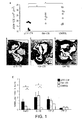
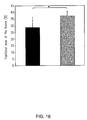
- treatment with p2 1 0-CTB significantly reduced atherosclerosis in apoe -/- mice and was associated with induction of antigen-specific Treg activity.
- intranasal immunization with an apoB-100 fusion protein induces antigen-specific regulatory T cells and reduces atherosclerosis.
- nasal administration of an apoB 100 peptide fused to CTB attenuates atherosclerosis and induces regulatory Tr1 cells that inhibit T effector responses to apolipoprotein B-100.
- compositions herein described can be used a novel strategy for induction of atheroprotective immunity involving antigen-specific regulatory T cells.
- a fusion protein between an immunodominant peptide of apoB-100 and immunomodulatory CTB we were able to induce an atheroprotective immune response to apoB-100 that involved expansion of antigen-specific regulatory CD4+ T cells and inhibition of aortic lesion development.
- induction of antigen-specific Treg with fusion protein methods and systems herein described provides atheroprotection using parenteral or oral routes for LDL immunization.
- results illustrated in the Examples section concerning induction of antigen-specific atheroprotective immunity mucosal immunization in apoe -l- mice, which spontaneously develop atherosclerosis and are therefore already sensitized to plaque antigens such as LDL particles at the time of vaccination supports the conclusion that a comparable approach in humans with pre-existing lesions is expected to provide immunization.
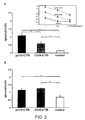
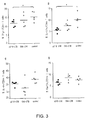
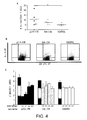
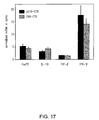
- fusion protein herein described fusion proteins triggers a mechanism of atheroprotection where the atheroprotective effect paralleled an induction ofTreg suppression of apoB-100-specific effector T cells and an increase in IL-10 + CD4 + T cells.
- nasal immunization with p210-CTB protects against atherosclerosis by induction of antigen-specific, IL-10 + regulatory Trl cells.
- fusion protein herein described provide an antigen-specific as well as antigen-independent effects similar to what reported in studies of Treg(25).
- Treg suppress conventional effector T cells with the same antigen specificity.
- Treg exert major effects on antigen-presenting cells in an antigen-independent manner.
- the antigen-specific atheroprotection is paralleled by inhibition of apoB 100-specific effector T cells by Treg specific for p210 but not OVA.
- Trl cells are FoxP3 negative, secrete IL- I 0, and are believed to play an important role when regulatory immunity is induced by nasal immunization (27), (28).
- atheroprotection is induced by nasal immunization and associated with suppressor T cell activity and IL-10 producing CD4+ T cells
- administration of fusion protein herein described is associated with Trl induction by p210-CTB.
- CD4+ T cells with antigen-specific suppressor activity were derived from spleen, a known reservoir of Tr1 cells(26).
- FoxP3 + Treg can contribute to atheroprotection in this model following administration of a fusion protein herein described as indicated by an increase of FoxP3 mRNA was increased in the aorta of nasally immunized mice.
- these cells can not only act directly to control proinflammatory effector T cells but also promote the activation of Trl cells (19). In some instances, wherein abrogation of TGF- ⁇ signaling is detected, Trl cells do not extinguish atheroprotection.
- Treg markers are elevated also in OVA-CTB immunized mice, antigenically nonspecific effects can synergize with antigen-specific ones to confer protection.
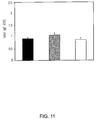
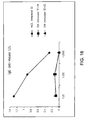
- antibodies to the apoB 100 peptide sequence are induced by nasal immunization, but do not crossreact with native mouse LDL particles. Furthermore, in some instances where particles antibody titers are not correlated with lesion size and no difference in lipoprotein profiles is detected between apoB-100-CTB immunized and OVA-CTB, immunized mice atheroprotection is associated to immunomodulation rather than antibody-dependent elimination of LDL.
- fusion proteins herein described are comprised in a composition together with suitable adjuvant and/or excipients.
- adjuvant indicates a pharmacological or immunological agent that modify the effect of other agents (e.g., drugs, vaccines) while having few if any direct effects when given by themselves. They are often included in vaccines to enhance the recipient's immune response to a supplied antigen while keeping the injected foreign material at a minimum.
- agents e.g., drugs, vaccines
- Types of adjuvants include: Immunologic adjuvant that stimulate the immune system and increase the response to a vaccine, without having any specific antigenic effect in itself.
- excipients as used herein indicates... an inactive substance used as a carrier for the active ingredients of a medication.
- exemplary excipients can also be used to bulk up formulations that contain very potent active ingredients, to allow for convenient and accurate dosage.
- excipients can be used in the manufacturing process to aid in the handling of the active substance concerned.
- different excipients may be used that are identifiable by a skilled person.
- compositions comprises Selected (immunogenic) peptide fragments of apoB-100 (single or multiple copies) fused with a carrier molecule and possibly toxins/toxoids: tetanus toxin, diphtheria toxoid, B subunit of cholera toxin, as well as BSA, HAS, rHSA, KLH, ovalbumin
- the adjuvants and excipients are pharmaceutically acceptable and the resulting composition is a pharmaceutical composition.
- the pharmaceutical composition is a vaccine.
- adjuvants are components of the vaccine formulation that enhance immunogenicity of the antigen, for instance by promoting their uptake by antigen• presenting cells (17, 29).
- two studies documented an atheroprotective effect of complete Freund's adjuvant in hypercholesterolemic ldlr -/- and apoe -/- mice (30-31).
- subcutaneous administration of alum adjuvant was shown to increase antigen uptake and activation of cellular immune responses in hypercholesterolemic mice (32).
- a specific antibody response against the apoB-100 peptide and an immunomodulatory cytokine profile in aortas of mice immunized with OVA-CTB described herein is in line with such an adjuvant effect. This further underlines the importance of using optimal immunomodulatory components in vaccine preparations.
- Atheroprotective vaccine is provided by targeting a peptide of the LDL protein constituent apolipoprotein B-100 to the nasal mucosa to induce a protective mucosal immune response.
- kits of parts can be in the form of kit of parts as well as related compositions including donors, acceptors, compounds and other reagents together with suitable carrier, agent or auxiliary agent of the compositions, and generally manufacturing and packaging of the kit, can be identified by the person skilled in the art upon reading of the present disclosure.
- fusion proteins and related compositions methods and systems herein described are further illustrated in the following examples, which are provided by way of illustration and are not intended to be limiting.
- fusion protein comprising amino acids 3136-3155 of human apoB-100 (p210) fused with CTB identified also as p210-CTB.
- CTB identified also as p210-CTB.
- P210-CTB additional fusion protein comprising another antigenic peptide of apoB-100 and a carrier molecule according to the present disclosure.
- the recombinant protein was made from amino acids 3136-3155 of human apoB-100 (p210) 15 fused with CTB.
- This sequence is identical to the corresponding murine sequence with the exception of a 2-residue insert at the C-terminal end in the mouse.
- amino acids 323-339 of ovalbumin were fused to CTB (OVA-CTB).
- 8-week-old female apoe -/- mice received a nasal spray with 15 ⁇ G (in 15 ⁇ L) p210-CTB or OVA-CTB twice weekly. Lesions and immune parameters were analyzed 12 weeks later.
- Antigen-specific Treg activity was analyzed in the following way: apoe - / - mice were immunized subcutaneously with apoB-100 to generate effector T cells. CD4 + T cells from these mice were exposed to antigen and activation recorded as DNA synthesis. CD4 + T cells from apoe -/- mice immunized intranasally with p210-CTB were added to effector T cell preparations and Treg activity was recorded as inhibition of DNA synthesis. Intracellular staining was performer on CD4 + T cells to characterize cytokine production and T cell subtype.
- apolipoprotein B-100 apolipoprotein B-100
- a peptide library comprised of 302 peptides, 20 amino acid residues in length, covering the complete 4563 amino acid sequence of human apo B was produced. The peptides were produced with a 5 amino acid overlap to cover all sequences at break points. Peptides were numbered 1-302 starting at the N-terminal of apo B as indicated in Table 1 below.
- Plasma samples were obtained from 10 patients with clinically evident atherosclerotic heart disease. In addition, 50 plasma samples were obtained from 25 men and 25 women with no evidence of atherosclerotic heart disease. Samples of the 20 amino acid long peptides were adsorbed to microtiter plates to perform enzyme-linked immunosorbent assay (ELISA) analyses of the plasma samples. Peptides were used in their native state or after oxidation by exposure to copper or after modification by malondialdehyde (MDA). Plasma samples from patients and normal subjects contained antibodies to a large number of different peptides. Antibodies against both native and modified peptides were identified. A total of 38 peptide sequences were identified as potential targets for immune reactions that may be of importance for the development of atherosclerosis.
- ELISA enzyme-linked immunosorbent assay
- the peptide sequences against which the highest antibody levels were detected could be divided in six groups with certain common characteristics as indicated in Table 2 below.
- apo E -/- mice received primary subcutaneous immunization at 6-7 weeks of age, followed by two boosters administered 3 and 5 weeks later.
- the mice were fed a high cholesterol diet from 1 week after the second injection (10 weeks of age) and continued until sacrifice at 25 weeks of age.
- the effect of immunization on atherosclerosis formation was assessed by measuring plaque size (percent area stained with Oil Red O) in an en face preparation of the aorta.
- the gene fusions used in the present disclosure were constructed using a CTB expression vector essentially as described previously ( Sadeghi H, Bregenholt S, Wegmann D, Petersen JS, Holmgren J, and Lebens M. Genetic fusion of human insulin B-chain to the B-subunit of cholera toxin enhances in vitro antigen presentation and induction of bystander suppression in vivo. Immunology. 2002; 106:237-245 ). Synthetic oligonucleotides from Innovagen (Lund, Sweden) were used to make double stranded DNA fragments encoding the peptide sequence of interest that could be inserted into the vector such that the added peptide formed a carboxyl extension of mature CTB.
- the unmodified peptide p210 corresponding to amino acids 3136-3155 of human apoB-100 was encoded by the DNA sequence: K T T K Q S F D L S V K A Q Y K K N K H *** (SEQ ID NO: 210)
- This sequence is 90.9% identical to amino acids 3157-3185 of the murine apoB100 sequence, the exception being the insertion of a Serine (S) and an Asp (D) residue between N and KH in the C-terminal portion of the peptide:
- Oligonucleotides were synthesized that encoded the p210 peptide corresponding to amino acids 3136-3155 of human apoB-100.
- the coding regions are flanked by sticky ends compatible with restriction enzymes KpnI and HindIII. Insertion into the expression vector leads to an in-frame extension to the carboxyl terminus of mature CTB.
- the synthetic sequence was optimized for expression in E. coli.
- the single strands were annealed and ligated into the pML-CTB vector digested with KpnI and HindIII. Ligated DNA was used to transform E. coli B strain BL21. Transformants were selected initially on the basis of ampicillin resistance and plasmids were then screened using restriction analysis. Finally the sequence of the insert in selected clones was confirmed by DNA sequencing. Protein expression was induced by addition of IPTG to the growth medium. This resulted in the production of insoluble inclusion bodies containing the recombinant protein. The cells were disrupted by sonication following treatment with lysozyme and DNase.
- the inclusion bodies could be separated from the soluble cell protein and other insoluble cell debris by low speed centrifugation. LPS was removed by washing the inclusion bodies in three times in 0.1% triton X114 in PBS at 4° C and subsequent extensive washing in PBS in order to remove the detergent.
- the inclusion bodies were dissolved in 6.5 M urea and reassembled into the biologically active pentameric form by removal of the urea by dialysis against 50 mM sodium carbonate buffer pH 9.0. The assembly and purity of the protein was assessed by SDS-PAGE. Receptor binding activity was confirmed by GM1 ELISA ( Svennerholm AM, Holmgren J.
- mice Female apoe -l- mice were obtained from Taconic Europe (Ry, Denmark) and Apoe - / - CD4dnTGFßRIItg mice were previously generated in our laboratory (ref. 19). Starting at 8 weeks of age, mice were immunized intranasally twice per week for 12 weeks with either p210-CTB or OVA-CTB, both at 15 ⁇ g/dose (15 ⁇ L volume), or left untreated (PBS). Mice were fed a normal laboratory diet and sacrificed by CO 2 asphyxiation. All experiments were approved by the regional board for animal ethics.
- Lesion area per cross-section and fractional area of the lesion in the aortic root were quantified and the results expressed as the mean of 5 sections per mouse (ref. 22).
- F% is averaged over all levels analyzed (200-600 ⁇ m 2 above aortic cusps) and the mean calculated for each treatment group. This method eliminates artifacts caused by oblique sections.
- lung mononuclear cells were isolated by collagenase Type I digestion (324U/ml; Sigma) for 1h on a shaker and splenocytes were prepared by mechanical disruption followed by incubation in erythrocyte lysis buffer (Qiagen, USA) and extensively washed.
- CD4 + T cells were purified using MACS magnetic cell separation as described above.
- 2 x 10 5 CD4 + T cells previously stimulated with plate bound anti-CD3 (5 ug/ml) and anti-CD28 (2 ug/ml) for 3 days in culture together with recombinant mouse IL-2 (10 ng/ml; Peprotech) and IL-4 (1 ng/ml; Peprotech) followed by a 3 day incubation with only IL-2 and IL-4, were restimulated with plate bound anti-CD3 (5 ug/ml) and anti-CD28 (2 ug/ml) for 5h in the presence of GolgiPlug.
- a first group of apoe -/- mice were immunized subcutaneously with HPLC-purified human apoB-100 in complete Freund's adjuvant (CFA) from Pierce (Rockford, IL, U.S.A.) and boosted 4 weeks later with apoB-100 in incomplete Freund's adjuvant (IFA) from Pierce to generate spleen T cells sensitized to human apoB-100, which were harvested one week later.
- CFA complete Freund's adjuvant
- IFA incomplete Freund's adjuvant
- Spleen CD4 + T cells (> 95% purity) were isolated by negative selection over a magnetic column using MACS microbeads (CD4+ negative selection kit, Miltenyi Biotec GmbH, Bergisch Gladbach, Germany) according to the manufacturer's protocol. Splenocytes from apoB100-vaccinated apoe -l- mice were cocultured at varying dilution ratios with purified CD4 + T cells from spleens of mice that had received nasal p210-CTB, OVA-CTB or PBS.
- FCS-free IMDM from Gibco (Invitrogen, Carlsbad, CA, U.S.A.) was supplemented with ITSTM from BD Biosciences. Cells were incubated for 72 hours in the absence or presence of purified human apoB-100 (20 ⁇ g/mL) with incorporation of 3 H-thymidine during the last 18 hours. Data are presented as stimulation index (ratio of apoB-100-challenged to unchallenged coculture assay).
- splenocytes and purified CD4 + T cells were separated in transwell plates from Corning (Corning, NY, U.S.A.) to analyze whether cell-cell contact inhibition abrogated the suppressive effect of tolerized CD4+ T cells.
- ELISA methods were used to quantitate serum Ig isotypes specific for the apoB-100 peptide as well as total IgG and IgM as previously described (ref. 19).
- Sera from immunized mice were tested for antibodies to mouse LDL by incubation (1/50, 1/150 and 1/450 dilutions) in plates coated with mouse LDL (10 ⁇ g/ml) and using alkaline phosphatase-conjugated anti-mouse-IgG as detector antibody.
- Sera from C57BL/6 mice immunized with OVA-CTB were assayed for reactivity to mouse or human LDL, or to apoB100, at dilutions of 1/25, 1/250 and 1/2500.
- Total serum triglycerides were determined with an enzymatic assay from Roche Diagnostics (Mannheim, Germany) using a TECAN InfiniTE M200 plate reader (TECAN Nordic, Täby Sweden).
- Total serum cholesterol and lipoprotein profiles were determined by FPLC separation of 2 ⁇ L serum of all individuals using a micro-FPLC column from GE Healthcare coupled to a system for online separation and subsequent detection of cholesterol as described, using human serum as reference ( Parini P et al., Lipoprotein profiles in plasma and interstitial fluid analyzed with an automated gel-filtration system. Eur J Clin Invest 2006;36:98-104 ).
- IL-10 ELISA from Mabtech (Nacka Strand, Sweden) and TGF-ß ELISA from R&D Systems (Minneapolis, MN, U.S.A.) was used to measure cytokine levels in supernatants.
- Example 13 Nasal administration of p210-CTB inhibits atherosclerosis
- Atherosclerosis was not attenuated by administration of OVA-CTB compared with untreated controls indicating an apoB-100 peptide-specific effect ( Figure 1 ).
- composition of the lesions was not significantly altered by p210-CTB immunization, as indicated by quantitative immunohistochemical analysis of markers for CD4 + T cells, macrophages (CD68), or the inducible surface proteins I-A b (major histocompatibility complex class II protein) and the vascular cell adhesion molecule-1 ( Table 4 ).
- Table 4 Weight, cholesterol and triglyceride levels in plasma group weight (g) cholesterol (mg/dL) triglycerides (mg/dL) apoe - / - p210-CTB 21 ⁇ 1.3 281 ⁇ 102 46 ⁇ 9.1 OVA-CTB 21.5 ⁇ 0.6 257 ⁇ 51 36 ⁇ 3.9 control 20.5 ⁇ 1.0 313 ⁇ 59 52 ⁇ 7.9 apoe - / - x CD4dn p210-CTB 19.1 ⁇ 2.9 254 ⁇ 84 40 ⁇ 8.3 TbRIItg OVA-CTB 20.8 ⁇ 1.2 250 ⁇ 94 40 ⁇ 6.2 p value n.s n.s. n.s.
- Example 14 Nasal administration of p210-CTB does not affect plasma lipids
- CD68 (%lesion) 15.9 ⁇ 3.6 22.6 ⁇ 7.4 12.6 ⁇ 2.3 n.s.
- VCAM-1 (%lesion) 12.7 ⁇ 4.6 22.3 ⁇ 11.3 10.9 ⁇ 1.0 n.s. FoxP3 (cells/mm 2 ) 4.1 ⁇ 0.8 4.2 ⁇ 1.0 6.5 ⁇ 2.6 n.s.
- Example 15 CTB fusion protein immunization increases aortic FoxP3 and IL-10 mRNA levels
- Example 16 Nasal vaccination induces mucosal and systemic humoral and cellular immune responses
- p210-specific IgM titers were significantly elevated both in p210-CTB and OVA-CTB treated groups; however, no difference was detected between p210-CTB and OVA-CTB treated animals ( Figure 2B ).
- Total IgM was not influenced by either treatment ( Figure 12 ).
- Sera of immunized mice were tested for antibodies to mouse LDL particles, however, ELISA did not show any such titers (data not shown). Therefore, antibodies induced to human p210 did not recognize intact, endogenous LDL particles in the immunized mice.
- Apoe - / - mice immunized with OVA-CTB showed modestly increased titers to p210 ( Figure 2 ).
- parenteral immunization with OVA did not lead to induction of significant IgG antibody responses to mouse LDL (data not shown), thus ruling out serological crossreactivity between OVA and LDL protein.
- Example 17 P210-CTB treatment induces ApoB100-specific Treg activity
- I-A b (cells/mm 2 ) 94 ⁇ 16 238 ⁇ 102 n.s. CD68 (%lesion) 9.9 ⁇ 2.8 14.5 ⁇ 2.6 n.s.
- VCAM-1 (%lesion) 7.6 ⁇ 2.6 19.3 ⁇ 2.2 n.s. FoxP3 (cells/mm 2 ) 19.7 ⁇ 5.2 25.6 ⁇ 3.4 n.s.
- a peptide comprising amino acids 3136-3155 of apolipoprotein B-100 was fused to the B subunit of cholera toxin (CTB), which binds to a ganglioside on mucosal epithelia.
- CTB cholera toxin
- the effect of nasal administration of the p210-CTB fusion protein on atherogenesis was compared with that of an ovalbumin peptide fused to CTB and with untreated controls.
- Immunization with p210-CTB for 12 weeks caused a 35% reduction in aortic lesion size of apoe - / - mice.
- peptide sequences with immunomodulatory components such as CTB is an attractive approach to selectively induce protective immunity while avoiding side effects caused by non-peptide components in LDL particles.
- immunomodulatory components such as CTB
- the vaccine formulation can be manufactured in a reproducible way and under Good Manufacturing Practice (GMP) conditions.
- GMP Good Manufacturing Practice
- the possibility to induce atheroprotective immunity by nasal administration of an LDL component is also attractive for clinical medicine.
- the present disclosure provides fusion products and related compositions methods and systems that in several embodiments allow performing a strategy for atheroprotective immunization.
- a peptide sequence from apolipoprotein B-100 of low-density lipoprotein fused with a carrier such as the B subunit of cholera toxin is described and used for immunization of mices and in particular for intranasal immunization of Ape -/- mice.
- Methods and systems herein described led to antigen-specific regulatory T cells and a 35% reduction of atherosclerosis.
Landscapes
- Health & Medical Sciences (AREA)
- Chemical & Material Sciences (AREA)
- Organic Chemistry (AREA)
- Life Sciences & Earth Sciences (AREA)
- General Health & Medical Sciences (AREA)
- Medicinal Chemistry (AREA)
- Molecular Biology (AREA)
- Proteomics, Peptides & Aminoacids (AREA)
- Genetics & Genomics (AREA)
- Biophysics (AREA)
- Biochemistry (AREA)
- Gastroenterology & Hepatology (AREA)
- Bioinformatics & Cheminformatics (AREA)
- Engineering & Computer Science (AREA)
- Immunology (AREA)
- Zoology (AREA)
- Toxicology (AREA)
- Nuclear Medicine, Radiotherapy & Molecular Imaging (AREA)
- Pharmacology & Pharmacy (AREA)
- Chemical Kinetics & Catalysis (AREA)
- General Chemical & Material Sciences (AREA)
- Veterinary Medicine (AREA)
- Public Health (AREA)
- Animal Behavior & Ethology (AREA)
- Cardiology (AREA)
- Urology & Nephrology (AREA)
- Vascular Medicine (AREA)
- Heart & Thoracic Surgery (AREA)
- Peptides Or Proteins (AREA)
- Medicines Containing Antibodies Or Antigens For Use As Internal Diagnostic Agents (AREA)
- Medicines That Contain Protein Lipid Enzymes And Other Medicines (AREA)
Description
- The present disclosure relates to fusion proteins and related compositions, methods and systems for treatment and/or prevention of atherosclerosis.
- Atherosclerosis is currently viewed as a chronic lipid-related and immune-mediated inflammatory disease of the arterial walls. Many immune components have been identified that participate in atherogenesis and pre-clinical studies have yielded promising results suggesting that immuno-modulatory therapies targeting these components can reduce atherosclerosis.
- Described herein, are methods and systems for inducing immunomodulatory responses in an individual. In several instances, the immunomodulatory responses induced by the methods and systems of the present disclosure are associated to a therapeutic or preventive effect related to atherosclerosis in the individual or a condition associated thereto.
- Accordingly, in one aspect, the invention provides a fusion protein comprising
- an antigenic fragment of apoB-100 protein, or a derivative thereof, and
- subunit B of cholera toxin as a protein carrier,
- In one aspect, the antigenic fragment of apoB-100 may comprise one or more peptide selected from the group consisting of P2, P45, P102 and P210.
- The invention also provides an immunogenic composition comprising the fusion protein for use according to the invention together with an adjuvant and/or a pharmaceutically acceptable excipient.
- The invention also provides a method to produce a fusion protein, the method comprising
- attaching an antigenic fragment of apoB-100, or a derivative thereof, to a protein carrier in a 1:1 fragment:carrier molar ratio to provide a fusion protein capable of inducing antigen specific regulatory T cells, wherein the protein carrier is subunit B of cholera toxin,
- the antigen specific regulatory T cells being specific for the fragment of apoB-100 or the derivative thereof,
- wherein a derivative of an antigenic fragment of apoB-100 protein indicates a polypeptide structurally related to the antigenic fragment of apoB-100 and derivable from the antigenic fragment of apoB-100 by a modification that introduces a feature that is not present in the antigenic fragment of apoB-100, while retaining one or more antigenic properties of apoB-100 or the antigenic fragment of apoB-100.
- In one aspect, the antigenic fragment of apoB-100 may comprise one or more of P2, P45, P102, and P210.
- The invention also provides an in vitro method to induce an antigen specific Treg cell, the method comprising
- contacting a Treg cell with the fusion protein for use according to the invention, the contacting performed for a time and under conditions to allow induction of a Treg response,
- wherein the contacting results in the induction of an antigen-specific immune response specific for the fragment of apoB-100, or derivative thereof, comprised in the fusion protein.
- Described herein is a fusion protein. The fusion protein comprises an antigenic fragment of apoB-100 protein or a derivative thereof and a protein carrier, the antigenic fragment and the carrier comprised in the fusion protein in a fragment:carrier 1:1 molar ratio the fusion protein capable of inducing antigen specific regulatory Tcells, the antigen specific regulatory T cells specific for the antigenic fragment of apoB-100.
- Also described is a method to treat and/or prevent atherosclerosis in an individual. The method comprises administering to the individual an effective amount of a fusion protein herein described, the effective amount eliciting an antigen specific Treg immunomodulatory response in the individual, the antigen specific Treg immunomodulatory response specific for the antigenic fragments of apoB-100 or a derivative thereof.
- Also described is a composition. The composition comprises a fusion protein herein described and an adjuvant and/or excipient. In several instances the adjuvant and/or excipients are pharmaceutically acceptable and the composition is pharmaceutical composition
- Also described is a method to produce a fusion protein. The method comprises conjugating a fragment of apoB-100 or a derivative thereof with a suitable protein carrier to provide a fusion protein capable of inducing antigen specific regulatory T cells, the antigen specific regulatory T cells specific for the fragment of apoB-100 or the derivative thereof
- Also described is a method to induce an antigen specific Tregulatory cell. The method comprises contacting a Tregulatory cell with a fusion protein herein described for a time and under condition to allow induction of a Tregulatory response, wherein the contacting results in an antigen-specific induction of a Tregulatory cell that is specific for the fragment of apoB-100 or derivative thereof comprised in the fusion protein.
- The methods and systems herein described can be used in connection with applications wherein reduction of plaque, attenuation of plaque growth and/or a therapeutic or preventive effect for atherosclerosis in an individual is desired.
- The details of one or more embodiments of the disclosure are set forth in the accompanying drawings and the description below. Other features, objects, and advantages will be apparent from the description and drawings, and from the claims.
- The accompanying drawings, which are incorporated into and constitute a part of this specification, illustrate one or more embodiments of the present disclosure and, together with the detailed description and examples sections, serve to explain the principles and implementations of the disclosure.
-
Figure 1 shows data concerning intranasal p210-CTB administered twice weekly for 12 weeks reduced atherosclerotic lesion size in the aortic root of female apoe -/- mice. (A) Data from the three groups are shown: black circles represent animals from the p210-CTB group, dotted circles animals from the OVA-CTB group and white circles animals from the control group, respectively. * indicates p<0.05. (B-D) Representative photomicrographs show oil red O stained aortic root sections from each group (50X magnification). (E) Nasal immunization with CTB fusion proteins increased FoxP3 and IL-10 mRNA levels in thoracic aorta from apoe-l- mice after 12 weeks of treatment. mRNA transcript ratios based on HPRT expression are shown for each gene of interest for all three groups. * indicates p<0.05 -
Figure 2 shows data nasal immunization induced a systemic humoral immune response in apoe -/- mice. (A) IgG-anti-p210 titers in mouse plasma; titration curves are shown in the inset. (B) p210-specific IgM titers in plasma from the same mice. * indicates p<0.05. -
Figure 3 shows data concerning nasal immunization altered T cell subset composition in lung mucosa. Flow cytometric analysis of intracellular subset markers, with cytokine-producing CD4+ T cells as percentage of total CD4+ T cells for each of the three groups. (A) Interferon-γ; (B) IL-17; (C) IL-4; (D) FoxP3. *) indicates p<0.05. -
Figure 4 shows data concerning nasal p210-CTB immunization induced IL-10-producing CD4+ T cells and apoB-100-specific Treg activity in spleen. A) Flow cytometric analysis of cultured spleen cells stained for intracellular IL-10. (B) Representative flow cytometric plots. (C) Splenic effector cells at 2.5 x 10⁵ cells/well were generated from apoe-l- mice that had been immunized withhuman apoB 100. The stimulation index represents the ratio of 3H thymidine uptake upon stimulation with human apo100 (20 µg/mL) relative to unstimulated cells. Proliferation of effector cells alone is indicated in the leftmost bar of each group. Addition of purified CD4+ T cells from nasally immunized animals is indicated at different ratios to effector cells. * p<0.05. -
Figure 5 shows data concerning a protective effect of nasal p210-CTB immunization on atherosclerotic lesion size does not depend on TGF-β signaling in T cells. A) Lesion size in the aortic root of apoe -/- x CD4dnTGFβRIItg mice immunized with p210-CTB (black dots) or OVA-CTB (grey dots). Effect of immunization on p210-specific antibody titers of IgG class (B) and IgM (C). * p<0.05. -
Figure 6 shows data concerning lesion size in immunized mice. Fractional area of lesions in aortic root of apoe -/- mice treated nasally with p210-CTB (black bar), OVA-CTB (dotted bar) and untreated controls (white bar). Mean ± SD values are shown. * indicates p<0.05. -
Figure 7 shows data concerning plasma lipoprotein profiles analyzed by FPLC. Thick lines represent immunized groups: black = p210-CTB, grey = OVA-CTB and white shows the control group. Thin lines represent SEM. CR/VLDL = chylomicrons/very low density lipoproteins; LDL = low density lipoproteins; HDL = high density lipoproteins. -
Figure 8 shows data concerning T cells in lesions in immunized mice, and in particular representative immunohistochemical stains of atherosclerotic lesion in the aortic root of apoe -/- mice. Arrows indicate FoxP3+ cells; they were CD4+ in directly adjacent sections. -
Figure 9 shows data concerning serum IgGl antibody titers to apoB-100 peptide. ELISA analysis of sera from apoe -/- mice treated with p210-CTB (black bar), OVA-CTB (dotted bar) or controls (white bar). * indicates p<0.05. -
Figure 10 shows data concerning serum IgG2a antibody titers to apoB-100 peptide. Apoe -/- mice treated with p210-CTB (black bar), OVA-CTB (dotted bar) or controls (white bar). * indicates p<0.05. -
Figure 11 shows data concerning total IgG in sera of immunized mice. Apoe -/- mice treated with p210-CTB (black bar), OVA-CTB (dotted bar) or controls (white bar). -
Figure 12 shows data concerning total IgM in sera of immunized mice. Apoe -/- mice treated with p210-CTB (black bar), OVA-CTB (dotted bar) or controls (white bar). -
Figure 13 shows data concerning T cell subsets in spleen after immunization. Flow cytometric analysis of intracellular cytokine expression is shown as percentage of cytokine-producing cells per CD4+ T cells for each of the three groups. (A) Interferon-γ; (B) IL-17; (C) IL-4; (D) FoxP3. -
Figure 14 shows data concerning abrogation of Treg suppressor effect upon separation of cells. Cocultures of effector cells and CD4+ T cells from nasally immunized mice are indicated by bars (generated from dark blotted = p210-CTB, light dotted = OVA-CTB and white = control group animals). Abrogated effect of CD4+ T cell-mediated inhibition of proliferation when effector cells and CD4+ T cells are cultured separate from each other in a transwell plate (contact inhibition assay). -
Figure 15 shows data concerning cytokine levels for TGF-β and IL-10 in the supernatants from the coculture assay. Striped bars represent effector cells alone. Cocultures of effector cells and CD4+ T cells from nasally immunized mice are indicated by plain bars (generated from dark dotted = p210-CTB, light dotted = OVA-CTB and white = control group animals). -
Figure 16 shows data concerning lesion size in immunized mice with defective TGFβ receptors on T cells. Fractional area of the lesion in the aortic root of apoe -/- x CD4dnTGFßRIItg mice treated nasally with p210-CTB (black bar) or OVA-CTB (dotted bar). Mean ± SD values are shown. * indicates p<0.05. -
Figure 17 shows data concerning mRNA levels in aorta of mice with defective TGFβ receptors on T cells. Real-time reverse-transcription PCR normalized to HPRT in thoracic aorta of apoe -/- x CD4dnTGFßRIItg mice. Of note, the development of functional Foxp3+ Treg cells depends on TGFβ. Therefore, detailed information concerning the relevance of FoxP3-expressing cells in apoe -/- x CD4dnTGFßRIItg mice require further investigation. -
Figure 18 shows data concerning IgG antibodies to mouse LDL in mice immunized with LDL or OVA. C57BL/6J mice were immunized with mouse LDL (mLDL) or ovalbumin (OVA). ELISA was performed with serum dilutions in wells coated with mouse LDL, followed by alkaline phosphatase-labeled anti-mouse-IgG. SC, subcutaneous administration, IN, intranasal administration. - Described herein are fusion proteins, compositions methods and systems that in several instances are suitable to be used for immunoprotection against atherosclerosis.
- The term "fusion protein" as used herein indicates a protein created through the attaching of two or more polypeptides which originated from separate proteins. In particular fusion proteins can be created by recombinant DNA technology and are typically used in biological research or therapeutics. Fusion proteins can also be created through chemical covalent conjugation with or without a linker between the polypeptides portion of the fusion proteins.
- The term "attach" or "attached" as used herein, refers to connecting or uniting by a bond, link, force or tie in order to keep two or more components together, which encompasses either direct or indirect attachment such that for example where a first polypeptide is directly bound to a second polypeptide or material, and the embodiments wherein one or more intermediate compounds, and in particular polypeptides, are disposed between the first polypeptide and the second polypeptide or material.
- The term "protein" or "polypeptide" as used herein indicates an organic polymer composed of two or more amino acid monomers and/or analogs thereof. The term "polypeptide" includes amino acid polymers of any length including full length proteins and peptides, as well as analogs and fragments thereof. A polypeptide of three or more amino acids is also called an oligopeptide. As used herein the term "amino acid", "amino acidic monomer", or "amino acid residue" refers to any of the twenty naturally occurring amino acids including synthetic amino acids with unnatural side chains and including both D and L optical isomers. The term "amino acid analog" refers to an amino acid in which one or more individual atoms have been replaced, either with a different atom, isotope, or with a different functional group but is otherwise identical to its natural amino acid analog.
- In the particular in several embodiments, fusion proteins, compositions methods and systems are described that in several embodiments are suitable for eliciting an antigen specific T regulatory cells response in an individual.
- The term "antigen", as it is used herein, relates to any substance that, when introduced into the body can stimulate an immune response. Antigens comprise exogenous antigens (antigens that have entered the body from the outside, for example by inhalation, ingestion, or injection) and endogenous antigens or autoantigens (antigens that have been generated within the body). In particular, an "autoantigen" is an antigen that despite being a normal tissue constituent is the target of a humoral or cell-mediated immune response. Exemplary autoantigens comprise autoantigens associated to atherogenesis and/or atherosclerosis provided by low-density lipoprotein and its constituent protein,
ApoB 100. - The term "regulatory T cell" or "T reg" as used herein indicates a component of the immune system that suppress immune responses of other cells, and comprise T cells that express the CD8 transmembrane glycoprotein (CD8+ T cells); T cells that express CD4, CD25, and Foxp3 (CD4+CD25+ regulatory T cells); and other T cell types that have suppressive function identifiable by a skilled person. T reg comprise both naturally occurring T cells and T cells generated in vitro.
- The term "antigen-specific" as used indicates an immunitary response, and in particular, immunological tolerance, for a certain antigen which is characterized by a substantially less or no immune response (and in particular, immunological tolerance) for another antigen. Accordingly, an antigen specific regulatory T cell, specific for one or more autoantigens is able, under appropriate conditions to minimize to the specific immune response to the one or more autoantigens with substantially less or no minimizing effect on the immune response towards other antigens or autoantigens.
- Fusion proteins comprising autoantigen associated to atherogenesis and/or atherosclerosis and related methods and systems are herein described that are capable of eliciting an autoantigen specific Treg response and that in several instances can be used for treating and/or preventing atherosclerosis or a condition associated thereto in an individual.
- The term "atherosclerosis" as used herein indicates an inflammatory condition, and in particular the condition in which an artery wall thickens as the result of a build-up of fatty materials such as cholesterol. In some cases, atherosclerosis is treated with statin therapy (1). In several cases, atherosclerosis is a syndrome affecting arterial blood vessels, a chronic inflammatory response in the walls of arteries, in large part due to the accumulation of macrophage white blood cells and promoted by Low-density lipoproteins (plasma proteins that carry cholesterol and triglycerides) without adequate removal of fats and cholesterol from the macrophages by functional high density lipoproteins (HDL), (see apoA-1 Milano). Lipid retention and modification in the arterial intima in some cases elicit a chronic inflammatory process with autoimmune responses and the development of atherosclerotic lesions (2). Both adaptive and innate immune mechanisms have been described as contributors to this process (3-6). While pattern recognition receptors of innate immunity are believed to account for cholesterol uptake and contribute to activation of macrophages and endothelial cells, antigen-specific T cells recognizing low density lipoprotein (LDL) particles in the intima provide strong proinflammatory stimuli that accelerate atherogenesis. Atherosclerosis is commonly referred to as a hardening or furring of the arteries. It is believed to be caused by the formation of multiple plaques within the arteries. Typically, autoimmune responses to low-density lipoproteins (LDL) contribute to its progression, while immunization with LDL may induce atheroprotective or proatherogenic responses.
- Zhao Xiaoning et al., 2009, Circulation, 120(18), Suppl. 2, S1018, 82nd Scientific Session of the American-Heart-Association; Orlando, FL, USA; November 14 -18, 2009, discloses the fusion of ApoB100 P210 antigenic peptide (conjugated) to cBSA. These molecules are used combined with alum as adjuvant in vaccination of mice and demonstrated to enhance CD8+ regulatory T-cell response.
- The term "treating" or "treatment" as used herein indicates any activity that is part of a medical care for, or that deals with, a condition medically or surgically. The term "preventing" or "prevention" as used herein indicates any activity, which reduces the burden of mortality or morbidity from a condition in an individual. This takes place at primary, secondary and tertiary prevention levels, wherein: a) primary prevention avoids the development of a disease; b) secondary prevention activities are aimed at early disease treatment, thereby increasing opportunities for interventions to prevent progression of the disease and emergence of symptoms; and c) tertiary prevention reduces the negative impact of an already established disease by restoring function and reducing disease-related complications.
- The term "condition" as used herein indicates as usually the physical status of the body of an individual (as a whole or of one or more of its parts) that does not conform to a physical status of the individual (as a whole or of one or more of its parts) that is associated with a state of complete physical, mental and possibly social well-being. Conditions herein described include but are not limited to disorders and diseases wherein the term "disorder" indicates a condition of the living individual that is associated to a functional abnormality of the body or of any of its parts, and the term "disease" indicates a condition of the living individual that impairs normal functioning of the body or of any of its parts and is typically manifested by distinguishing signs and symptoms. Exemplary conditions include but are not limited to injuries, disabilities, disorders (including mental and physical disorders), syndromes, infections, deviant behaviors of the individual and atypical variations of structure and functions of the body of an individual or parts thereof.
- The wording "associated to" as used herein with reference to two items indicates a relation between the two items such that the occurrence of a first item is accompanied by the occurrence of the second item, which includes but is not limited to a cause-effect relation and sign/symptoms-disease relation.
- The term "individuals" as used herein indicates a single biological organism such as higher animals and in particular vertebrates such as mammals and more particularly human beings.
- In several instances, induction of an antigen specific Tregulatory cell response is provided by a fusion protein comprising an antigenic fragment of apoB-100 and a protein carrier attached directly or through a linker in an fragment:carrier 1:1 proportion.
- The term "fragment" as used herein indicates a portion of a polypeptide of any length. A skilled person will understand that the term encompasses peptides of any origin which have a sequence corresponding to the portion of the polypeptide at issue. An antigenic fragment of
apoB 100 is accordingly a portion of apoB-100 that presents antigenic properties. Antigenic fragments of apoB-100 herein described also include possible derivatives thereof. - The term "derivative" as used herein with reference to a first polypeptide (e.g. apoB-100 antigenic fragment), indicates a second polypeptide that is structurally related to the first polypeptide and is derivable from the first polypeptide by a modification that introduces a feature that is not present in the first polypeptide, while retaining functional properties of the first polypeptide. Accordingly, a derivative polypeptide of an antigenic fragment of apoB-100, usually differs from the original polypeptide or portion thereof by modification of the amino acidic sequence that might or might not be associated with an additional function not present in the original polypeptide or portion thereof. A derivative polypeptide of an antigenic fragment of apoB-100 retains however antigenic properties comparable to the ones described in connection with apoB-100 or the antigenic fragment thereof. Retaining of one or more antigenic properties can be verified with methods identifiable by a skilled person upon reading of the present disclosure, on the basis of the specific antigenic property of the fragment at issue. Exemplary methods comprise immunizing an animal (e.g. mouse) with a candidate derivative, determining production of antibody specific for the derivative in the animal (e.g. by ELISA such as immunometric ELISA) and comparing the determined antibody production for the candidate derivative with a corresponding antibody production of the fragment. Additional methods to determine further antigenic properties can be identified by a skilled person upon reading of the present disclosure.
- The term "protein carrier" as used herein indicates proteins that transport a specific substance or group of substances through intracellular compartments or in extracellular fluids (e.g. in the blood) or else across the cell membrane. Exemplary carrier proteins comprise subunit B of cholera toxin, Avidin, BTG protein, Bovine G globulin, Bovine Immunoglobulin G, Bovine Thyroglobulin, Bovine Serum Albumin (BSA), Conalbumin, Edestein, Exoprotein A from Pseudomonas aeruginosa, HC (Hemocyanin from crab Paralithodes camtschatica), Helix Promatia Haemocyanin (HPH), Human Serum Albumin (HSA),KTI (Kunits trypsin inhibitor from soybeans), Keyhole Limpet Heamocyanin (KLH), LPH (Haemocyanin from Limulus polyphemus) Ovalbumin, Pam3Cys-Th, Polylysine, porcine Thyroglobulin (PTG), Purified Protein Derivative (PPD), Rabbit Serum Albumin (RSA), Soybeab Trypsin Inhibitor (STI) (Sunflower Globulin (SFG) and additional molecules identifiable by a skilled person. Additional carriers comprise molecule having immunogenic activities including cytokines such as IL-I0, IL12, IL-4 IL-16 and Transforming Growth Factor Beta (TGFp).
- In some instances, attachment of the carrier is performed at the C-terminus or N-terminus of the fragment. In an instance the fusion protein can be provided as a single polypeptide through recombinant DNA technology and related processes, such as cloning, chimeric constructs, Polymerase Chain Reaction and additional procedures identifiable by a skilled person. In some instances, attachment can be performed through chemical linkage of the fragment to the carrier using methods also identifiable by a skilled person.
- In some instances, the antigenic fragment of apoB-100 comprises amino acids 3136-3155 of human apoB-100 (p210) and/or additional fragments selected from the peptides illustrated in the Examples section.
- In particular in some instances the fragment portion of the fusion product can comprise one or more of peptides P2, P11, P25, P32, P45, P74, P102, P129, P143, P148, P154, P162, P210, P219, P240. More particularly, in some instances the fragment portion of the fusion products can comprise one or more of peptides P2, P45, P102 and P210.
- In an instance, wherein the fragment portion of the fusion protein comprise more than one peptide, the fragment portion can comprise up to 10 peptides in a construct that, at least in some of those instances, is expected to have effects analogous to those of cancer or infectious vaccines, such as the ones described in (35).
- As skilled person will be able to indentify suitable combination of peptides for a desired immunogenic, preventive and/or therapeutic effect upon reading of the present disclosure.
- In some instances, the carrier protein can comprise at least one monomers of the subunit B of cholera toxin which can be formed by a recombinant pentameric B oligomer that is capable of binding GM-1 receptors (e.g. on the surface of intestinal epithelial cells). In particular, in some instances, the carrier protein can be formed by at least one of five identical monomers with a molecular weight of approximately 11.6 kDa recombinant pentameric B oligomer molecule. In some of those instances, the monomers are tightly linked into a trypsin-resistant pentameric ring-like structure with a molecular weight of approximately 58 kDa.
- In some instances, the antigenic fragments can be attached to the carrier molecule using biological genetic engineering to produce a fusion protein (with single or multiple copies of the immunogenic peptide) and procedures identifiable by a skilled person upon reading of the present disclosure.
- In some instances, the antigenic fragments can be attached to the carrier molecule using chemical covalent conjugation (with or without a linker group) and procedures identifiable by a skilled person upon reading of the present disclosure.
- In some instances, fusion products or antigenic fragments can be used in the treatment of atherosclerosis and or for induction of regulatory T-cells
- In some instances, antigen-specific immunomodulation by vaccination is an approach used to prevent or treat chronic inflammatory diseases associated to atherogenesis. In some of those cases, by mobilizing protective immune responses in an antigen-specific manner, side effects due to hampered host defense against infections can be avoided. Exemplary protocols comprise protocols described to treat atherosclerosis in mice and rabbits immunized with LDL, beta2-glycoprotein-lb, or heat-
shock protein 60/65, and parenteral (7-10) as well as oral (11-14) immunization reduced atherosclerotic disease in hyperlipidemic animals. - In some instances, antigen-specific immunoprotection can be achieved through several different mechanisms, such as production of protective antibodies, deletion or inactivation (anergy) of pathogenic T cell clones, or induction of suppressive cellular immunity mediated by the family of regulatory T cells (Treg) (15-16). In some of those instances, immunization with immunodominant peptide sequences can be performed in several cases in alternative to immunization with LDL particles (17-18).
- In an instance, an immunization protocol that facilitates selective targeting of antigen-specific regulatory T cells can be performed. The type of immune response triggered is largely determined by the route of immunization.
- In several instances, fusion products or antigenic fragments herein described can be administered to an individual using various routes of administration including subcutaneous, intramuscular, parenteral, and systemic and mucosal administration such as oral and/or nasal. In particular, the mucosal linings of airways and intestines contain lymphatic tissue that, when exposed to antigen, elicits anti-inflammatory, immunosuppressive responses (19). Distinct immunological features of the respiratory and intestinal mucosa lead to partly different types of protective immunity upon antigen exposure by the nasal or oral route (20). In some instances, the B subunit of cholera toxin (CTB) promotes uptake of antigen via the nasal and oral mucosa and induction of protective immunity (21, 22).
- In some instances, administration of carrier/adjuvant/peptide vaccines is performed for a time and under condition to activate regulatory T cells and down-regulate pathogenic autoimmunity against Apo B.
- In particular, in some instances, administration of a fusion protein is performed by nasal administration of an
apoB 100 peptide-CTB fusion protein (p210-CTB). In some instances, treatment withp2 1 0-CTB significantly reduced atherosclerosis in apoe-/- mice and was associated with induction of antigen-specific Treg activity. - In some instances, intranasal immunization with an apoB-100 fusion protein induces antigen-specific regulatory T cells and reduces atherosclerosis.
- In several instances, nasal administration of an
apoB 100 peptide fused to CTB attenuates atherosclerosis and induces regulatory Tr1 cells that inhibit T effector responses to apolipoprotein B-100. - In some instances, fusion products, compositions and/or methods compositions herein described can be used a novel strategy for induction of atheroprotective immunity involving antigen-specific regulatory T cells. In particular, by nasal administration of a fusion protein between an immunodominant peptide of apoB-100 and immunomodulatory CTB, we were able to induce an atheroprotective immune response to apoB-100 that involved expansion of antigen-specific regulatory CD4+ T cells and inhibition of aortic lesion development.
- In several instances, induction of antigen-specific Treg with fusion protein methods and systems herein described provides atheroprotection using parenteral or oral routes for LDL immunization. Additionally, results illustrated in the Examples section concerning induction of antigen-specific atheroprotective immunity mucosal immunization in apoe-l- mice, which spontaneously develop atherosclerosis and are therefore already sensitized to plaque antigens such as LDL particles at the time of vaccination, supports the conclusion that a comparable approach in humans with pre-existing lesions is expected to provide immunization.
- In some instances, fusion protein herein described fusion proteins triggers a mechanism of atheroprotection where the atheroprotective effect paralleled an induction ofTreg suppression of apoB-100-specific effector T cells and an increase in IL-10+ CD4+ T cells. In particular, in some instances, nasal immunization with p210-CTB protects against atherosclerosis by induction of antigen-specific, IL-10+ regulatory Trl cells. A possible explanation that is provided herein for guidance purpose only and it is notintended to be limiting is that atheroprotection in several cases does not involve the immunosuppressive cytokine TGF-β since nasal immunization with p210-CTB reduced atherosclerosis also in mice lacking functional TGF-β receptors on T cells.
- In some instances, fusion protein herein described provide an antigen-specific as well as antigen-independent effects similar to what reported in studies of Treg(25). In particular, in some instances, Treg suppress conventional effector T cells with the same antigen specificity. In some instances, Treg exert major effects on antigen-presenting cells in an antigen-independent manner. In some instances, the antigen-specific atheroprotection is paralleled by inhibition of apoB 100-specific effector T cells by Treg specific for p210 but not OVA. These findings support a protective role for autoantigen- specific Treg in atherosclerosis.
- In some instances, two major types of Treg induced in the periphery by antigen exposure have been identified: FoxP3+ induced Treg (Th3) 14 and Trl cells (26). Trl cells are FoxP3 negative, secrete IL- I 0, and are believed to play an important role when regulatory immunity is induced by nasal immunization (27), (28). In some instances, where atheroprotection is induced by nasal immunization and associated with suppressor T cell activity and IL-10 producing CD4+ T cells, administration of fusion protein herein described is associated with Trl induction by p210-CTB. CD4+ T cells with antigen-specific suppressor activity were derived from spleen, a known reservoir of Tr1 cells(26).
- In some instances, FoxP3+ Treg can contribute to atheroprotection in this model following administration of a fusion protein herein described as indicated by an increase of FoxP3 mRNA was increased in the aorta of nasally immunized mice. In some instances, these cells can not only act directly to control proinflammatory effector T cells but also promote the activation of Trl cells (19). In some instances, wherein abrogation of TGF-β signaling is detected, Trl cells do not extinguish atheroprotection.
- In some instances, where Treg markers are elevated also in OVA-CTB immunized mice, antigenically nonspecific effects can synergize with antigen-specific ones to confer protection.
- In some instances, antibodies to the
apoB 100 peptide sequence are induced by nasal immunization, but do not crossreact with native mouse LDL particles. Furthermore, in some instances where particles antibody titers are not correlated with lesion size and no difference in lipoprotein profiles is detected between apoB-100-CTB immunized and OVA-CTB, immunized mice atheroprotection is associated to immunomodulation rather than antibody-dependent elimination of LDL. - In some instances, fusion proteins herein described are comprised in a composition together with suitable adjuvant and/or excipients.
- The term adjuvant as used herein indicates a pharmacological or immunological agent that modify the effect of other agents (e.g., drugs, vaccines) while having few if any direct effects when given by themselves. They are often included in vaccines to enhance the recipient's immune response to a supplied antigen while keeping the injected foreign material at a minimum. Types of adjuvants include: Immunologic adjuvant that stimulate the immune system and increase the response to a vaccine, without having any specific antigenic effect in itself.
- The term excipients as used herein indicates... an inactive substance used as a carrier for the active ingredients of a medication. Exemplary excipients can also be used to bulk up formulations that contain very potent active ingredients, to allow for convenient and accurate dosage. In addition to their use in the single-dosage quantity, excipients can be used in the manufacturing process to aid in the handling of the active substance concerned. Depending on the route of administration, and form of medication, different excipients may be used that are identifiable by a skilled person.
- In some instances, the compositions comprises Selected (immunogenic) peptide fragments of apoB-100 (single or multiple copies) fused with a carrier molecule and possibly toxins/toxoids: tetanus toxin, diphtheria toxoid, B subunit of cholera toxin, as well as BSA, HAS, rHSA, KLH, ovalbumin
- In some instances, the adjuvants and excipients are pharmaceutically acceptable and the resulting composition is a pharmaceutical composition. In some of those instances, the pharmaceutical composition is a vaccine.
- In some instances, adjuvants are components of the vaccine formulation that enhance immunogenicity of the antigen, for instance by promoting their uptake by antigen• presenting cells (17, 29). Interestingly, two studies documented an atheroprotective effect of complete Freund's adjuvant in hypercholesterolemic ldlr-/- and apoe-/- mice (30-31). In a recent study, subcutaneous administration of alum adjuvant was shown to increase antigen uptake and activation of cellular immune responses in hypercholesterolemic mice (32). In some instances, a specific antibody response against the apoB-100 peptide and an immunomodulatory cytokine profile in aortas of mice immunized with OVA-CTB described herein is in line with such an adjuvant effect. This further underlines the importance of using optimal immunomodulatory components in vaccine preparations.
- In several instances, atheroprotective vaccine is provided by targeting a peptide of the LDL protein constituent apolipoprotein B-100 to the nasal mucosa to induce a protective mucosal immune response.
- Further details concerning the implementation of the fusion products methods herein described including systems for performance of the methods which can be in the form of kit of parts as well as related compositions including donors, acceptors, compounds and other reagents together with suitable carrier, agent or auxiliary agent of the compositions, and generally manufacturing and packaging of the kit, can be identified by the person skilled in the art upon reading of the present disclosure.
- The fusion proteins and related compositions methods and systems herein described are further illustrated in the following examples, which are provided by way of illustration and are not intended to be limiting.
- In particular, the following examples illustrate an exemplary immunization performed with a fusion protein comprising amino acids 3136-3155 of human apoB-100 (p210) fused with CTB identified also as p210-CTB. A person skilled in the art will appreciate the applicability of the features described in detail for P210-CTB for additional fusion protein comprising another antigenic peptide of apoB-100 and a carrier molecule according to the present disclosure.
- More particular, in the following examples the recombinant protein, p210-CTB, was made from amino acids 3136-3155 of human apoB-100 (p210)15 fused with CTB. This sequence is identical to the corresponding murine sequence with the exception of a 2-residue insert at the C-terminal end in the mouse. As a control, amino acids 323-339 of ovalbumin were fused to CTB (OVA-CTB). 8-week-old female apoe -/- mice received a nasal spray with 15 µG (in 15 µL) p210-CTB or OVA-CTB twice weekly. Lesions and immune parameters were analyzed 12 weeks later. In another set of experiments, apoe -/- x CD4dnTGFbRII mice (23) were immunized using the same protocol. All experiments were approved by the Stockholm regional ethical board. Atherosclerotic lesions were analyzed in cryostat sections of the aortic root using a standardized protocol (24). Antibodies to p210 and to mouse LDL particles were analyzed by immunometric ELISA 15.
- Antigen-specific Treg activity was analyzed in the following way: apoe -/- mice were immunized subcutaneously with apoB-100 to generate effector T cells. CD4+ T cells from these mice were exposed to antigen and activation recorded as DNA synthesis. CD4+ T cells from apoe -/- mice immunized intranasally with p210-CTB were added to effector T cell preparations and Treg activity was recorded as inhibition of DNA synthesis. Intracellular staining was performer on CD4+ T cells to characterize cytokine production and T cell subtype.
- Additional details concerning procedures used and results obtained are reported below.
- Specific immunogenic epitopes by focusing on the single protein found in LDL, apolipoprotein B-100 (apo B) were characterized. A peptide library comprised of 302 peptides, 20 amino acid residues in length, covering the complete 4563 amino acid sequence of human apo B was produced. The peptides were produced with a 5 amino acid overlap to cover all sequences at break points. Peptides were numbered 1-302 starting at the N-terminal of apo B as indicated in Table 1 below.
Table 1 Peptide Sequence Apolipoprotein B aa SEQ ID NO P1: EEEML ENVSL VCPKD ATRFK aa 1-20 1 P2: ATRFK HLRKY TYNYE AESSS aa 16-35 2 P3: AESSS GVPGT ADSRS ATRIN aa 31-50 3 P4: ATRIN CKVEL EVPQL CSFIL aa 46-65 4 P5: CSFIL KTSQC TLKEV YGFNP aa 61-80 5 P6: YGFNP EGKAL LKKTK NSEEF aa 76-95 6 P7: NSEEF AAAMS RYELK LAIPE aa 91-110 7 P8: LAIPE GKQVF LYPEK DEPTY aa 106-125 8 P9: DEPTY ILNIK RGIIS ALLVP aa 121-140 9 P10: ALLVP PETEE AKQVL FLDTV aa 136-155 10 P11: FLDTV YGNCS THFTV KTRKG aa 151-170 11 P12: KTRKG NVATE ISTER DLGQC aa 166-185 12 P13: DLGQC DRFKP IRTGI SPLAL aa 181-200 13 P14: SPLAL IKGMT RPLST LISSS aa 196-215 14 P15: LISSS QSCQY TLDAK RKHVA aa 211-230 15 P16: RKHVA EAICK EQHLF LPFSY aa 226-245 16 P17: LPFSY NNKYG MVAQV TQTLK aa 241-260 17 P18: TQTLK LEDTP KINSR FFGEG aa 256-275 18 P19: FFGEG TKKMG LAFES TKSTS aa 271-290 19 P20: TKSTS PPKQA EAVLK TLQEL aa 286-305 20 P21: TLQEL KKLTI SEQNI QRANL aa 301-320 21 P22: QRANL FNKLV TELRG LSDEA aa 316-335 22 P23: LSDEA VTSLL PQLIE VSSPI aa 331-350 23 P24: VSSPI TLQAL VQCGQ PQCST aa 346-365 24 P25: PQCST HILQW LKRVH ANPLL aa 361-380 25 P26: ANPLL IDVVT YLVAL IPEPS aa 376-395 26 P27: IPEPS AQQLR EIFNM ARDQR aa 391-410 27 P28: ARDQR SRATL YALSH AVNNY aa 406-425 28 P29: AVNNY HKTNP TGTQE LLDIA aa 421-440 29 P30: LLDIA NYLME QIQDD CTGDE aa 436-455 30 P31: CTGDE DYTYL ILRVI GNMGQ aa 451-470 31 P32: GNMGQ TMEQL TPELK SSILK aa 466-485 32 P33: SSILK CVQST KPSLM IQKAA aa 481-500 33 P34: IQKAA IQALR KMEPK DKDQE aa 496-515 34 P35: DKDQE VLLQT FLDDA SPGDK aa 511-530 35 P36: SPGDK RLAAY LMLMR SPSQA aa 526-545 36 P37: SPSQA DINKI VQILP WEQNE aa 541-560 37 P38: WEQNE QVKNF VASHI ANILN aa 556-575 38 P39: ANILN SEELD IQDLK KLVKE aa 571-590 39 P40: KLVKE ALKES QLPTV MDFRK aa 586-605 40 P41: MDFRK FSRNY QLYKS VSLPS aa 601-620 41 P42: VSLPS LDPAS AKIEG NLIFD aa 616-635 42 P43: NLIFD PNNYL PKESM LKTTL aa 631-650 43 P44: LKTTL TAFGF ASADL IEIGL aa 646-665 44 P45: IEIGL EGKGF EPTLE ALFGK aa 661-680 45 P46: ALFGK QGFFP DSVNK ALYWV aa 676-695 46 P47: ALYWV NGQVP DGVSK VLVDH aa 691-710 47 P48: VLVDH FGYTK DDKHE QDMVN aa 706-725 48 P49: QDMVN GIMLS VEKLI KDLKS aa 721-740 49 P50: KDLKS KEVPE ARAYL RILGE aa 736-755 50 P51: RILGE ELGFA SLHDL QLLGK aa 751-770 51 P52: QLLGK LLLMG ARTLQ GIPQM aa 766-785 52 P53: GIPQM IGEVI RKGSK NDFFL aa 781-800 53 P54: NDFFL HYIFM ENAFE LPTGA aa 796-815 54 P55: LPTGA GLQLQ ISSSG VIAPG aa 811-830 55 P56: VIAPG AKAGV KLEVA NMQAE aa 826-845 56 P57: NMQAE LVAKP SVSVE FVTNM aa 841-860 57 P58: FVTNM GIIIP DFARS GVQMN aa 856-875 58 P59: GVQMN TNFFH ESGLE AHVAL aa 871-890 59 P60: AHVAL KAGKL KFIIP SPKRP aa 886-905 60 P61: SPKRP VKLLS GGNTL HLVST aa 901-920 61 P62: HLVST TKTEV IPPLI ENRQS aa 916-935 62 P63: ENRQS WSVCK QVFPG LNYCT aa 931-950 63 P64: LNYCT SGAYS NASST DSASY aa 946-965 64 P65: DSASY YPLTG DTRLE LELRP aa 961-980 65 P66: LELRP TGEIE QYSVS ATYEL aa 976-995 66 P67: ATYEL QREDR ALVDT LKFVT aa 991-1010 67 P68: LKFVT QAEGA KQTEA TMTFK aa 1006-1025 68 P69: TMTFK YNRQS MTLSS EVQIP aa 1021-1040 69 P70: EVQIP DFDVD LGTIL RVNDE aa 1036-1055 70 P71: RVNDE STEGK TSYRL TLDIQ aa 1051-1070 71 P72: TLDIQ NKKIT EVALM GHLSC aa 1066-1085 72 P73: GHLSC DTKEE RKIKG VISIP aa 1081-1100 73 P74: VISIP RLQAE ARSEI LAHWS aa 1096-1115 74 P75: LAHWS PAKLL LQMDS SATAY aa 1111-1130 75 P76: SATAY GSTVS KRVAW HYDEE aa 1126-1145 76 P77: HYDEE KIEFE WNTGT NVDTK aa 1141-1160 77 P78: NVDTK KMTSN FPVDL SDYPK aa 1156-1175 78 P79: SDYPK SLHMY ANRLL DHRVP aa 1171-1190 79 P80: DHRVP ETDMT FRHVG SKLIV aa 1186-1205 80 P81: SKLIV AMSSW LQKAS GSLPY aa 1201-1220 81 P82: GSLPY TQTLQ DHLNS LKEFN aa 1216-1235 82 P83: LKEFN LQNMG LPDFH IPENL aa 1231-1250 83 P84: IPENL FLKSD GRVKY TLNKN aa 1246-1260 84 P85: TLNKN SLKIE IPLPF GGKSS aa 1261-1280 85 P86: GGKSS RDLKM LETVR TPALH aa 1276-1295 86 P87: TPALH FKSVG FHLPS REFQV aa 1291-1310 87 P88: REFQV PTFTI PKLYQ LQVPL aa 1306-1325 88 P89: LQVPL LGVLD LSTNV YSNLY aa 1321-1340 89 P90: YSNLY NWSAS YSGGN TSTDH aa 1336-1355 90 P91: TSTDH FSLRA RYHMK ADSVV aa 1351-1370 91 P92: ADSVV DLLSY NVQGS GETTY aa 1366-1385 92 P93: GETTY DHKNT FTLSC DGSLR aa 1381-1400 93 P94: DGSLR HKFLD SNIKF SHVEK aa 1396-1415 94 P95: SHVEK LGNNP VSKGL LIFDA aa 1411-1430 95 P96: LIFDA SSSWG PQMSA SVHLD aa 1426-1445 96 P97: SVHLD SKKKQ HLFVK EVKID aa 1441-1460 97 P98: EVKID GQFRV SSFYA KGTYG aa 1456-1475 98 P99: KGTYG LSCQR DPNTG RLNGE aa 1471-1490 99 P100: RLNGE SNLRF NSSYL QGTNQ aa 1486-1505 100 P101: QGTNQ ITGRY EDGTL SLTST aa 1501-1520 101 P102: SLTST SDLQS GIIKN TASLK aa 1516-1535 102 P103: TASLK YENYE LTLKS DTNGK aa 1531-1550 103 P104: DTNGK YKNFA TSNKM DMTFS aa 1546-1565 104 P105: DMTFS KQNAL LRSEY QADYE aa 1561-1580 105 P106: QADYE SLRFF SLLSG SLNSH aa 1576-1595 106 P107: SLNSH GLELN ADILG TDKIN aa 1591-1610 107 P108: TDKIN SGAHK ATLRI GQDGI aa 1606-1625 108 P109: GQDGI STSAT TNLKC SLLVL aa 1621-1640 109 P110: SLLVL ENELN AELGL SGASM aa 1636-1655 110 P111: SGASM KLTTN GRFRE HNAKF aa 1651-1670 111 P112: HNAKF SLDGK AALTE LSLGS aa 1666-1685 112 P113: LSLGS AYQAM ILGVD SKNIF aa 1681-1700 113 P114: SKNIF NFKVS QEGLK LSNDM aa 1696-1715 114 P115: LSNDM MGSYA EMKFD HTNSL aa 1711-1730 115 P116: HTNSL NIAGL SLDFS SKLDN aa 1726-1745 116 P117: SKLDN IYSSD KFYKQ TVNLQ aa 1741-1760 117 P118: TVNLQ LQPYS LVTTL NSDLK aa 1756-1775 118 P119: NSDLK YNALD LTNNG KLRLE aa 1771-1790 119 P120: KLRLE PLKLH VAGNL KGAYQ aa 1786-1805 120 P121: KGAYQ NNEIK HIYAI SSAAL aa 1801-1820 121 P122: SSAAL SASYK ADTVA KVQGV aa 1816-1835 122 P123: KVQGV EFSHR LNTDI AGLAS aa 1831-1850 123 P124: AGLAS AIDMS TNYNS DSLHF aa 1846-1865 124 P125: DSLHF SNVFR SVMAP FTMTI aa 1861-1880 125 P126: FTMTI DAHTN GNGKL ALWGE aa 1876-1895 126 P127: ALWGE HTGQL YSKFL LKAEP aa 1891-1910 127 P128: LKAEP LAFTF SHDYK GSTSH aa 1906-1925 128 P129: GSTSH HLVSR KSISA ALEHK aa 1921-1940 129 P130: ALEHK VSALL TPAEQ TGTWK aa 1936-1955 130 P131: TGTWK LKTQF NNNEY SQDLD aa 1951-1970 131 P132: SQDLD AYNTK DKIGV ELTGR aa 1966-1985 132 P133: ELTGR TLADL TLLDS PIKVP aa 1981-2000 133 P134: PIKVP LLLSE PINII DALEM aa 1996-2015 134 P135: DALEM RDAVE KPQEF TIVAF aa 2011-2030 135 P136: TIVAF VKYDK NQDVH SINLP aa 2026-2045 136 P137: SINLP FFETL QEYFE RNRQT aa 2041-2060 137 P138: RNRQT IIVVV ENVQR NLKHI aa 2056-2075 138 P139: NLKHI NIDQF VRKYR AALGK aa 2071-2090 139 P140: AALGK LPQQA NDYLN SFNWE aa 2086-2105 140 P141: SFNWE RQVSH AKEKL TALTK aa 2101-2120 141 P142: TALTK KYRIT ENDIQ IALDD aa 2116-2135 142 P143: IALDD AKINF NEKLS QLQTY aa 2131-2150 143 P144: QLQTY MIQFD QYIKD SYDLH aa 2146-2165 144 P145: SYDLH DLKIA IANII DEIIE aa 2161-2180 145 P146: DEIIE KLKSL DEHYH IRVNL aa 2176-2195 146 P147: IRVNL VKTIH DLHLF IENID aa 2191-2210 147 P148: IENID FNKSG SSTAS WIQNV aa 2206-2225 148 P149: WIQNV DTKYQ IRIQI QEKLQ aa 2221-2240 149 P150: QEKLQ QLKRH IQNID IQHLA aa 2236-2255 150 P151: IQHLA GKLKQ HIEAI DVRVL aa 2251-2270 151 P152: DVRVL LDQLG TTISF ERIND aa 2266-2285 152 P153: ERIND VLEHV KHFVI NLIGD aa 2281-2300 153 P154: NLIGD FEVAE KINAF RAKVH aa 2296-2315 154 P155: RAKVH ELIER YEVDQ QIQVL aa 2311-2330 155 P156: QIQVL MDKLV ELTHQ YKLKE aa 2326-2345 156 P157: YKLKE TIQKL SNVLQ QVKIK aa 2341-2360 157 P158: QVKIK DYFEK LVGFI DDAVK aa 2356-2375 158 P159: DDAVK KLNEL SFKTF IEDVN aa 2371-2390 159 P160: IEDVN KFLDM LIKKL KSFDY aa 2386-2405 160 P161: KSFDY HQFVD ETNDK IREVT aa 2401-2420 161 P162: IREVT QRLNG EIQAL ELPQK aa 2416-2435 162 P163: ELPQK AEALK LFLEE TKATV aa 2431-2450 163 P164: TKATV AVYLE SLQDT KITLI aa 2446-2465 164 P165: KITLI INWLQ EALSS ASLAH aa 2461-2480 165 P166: ASLAH MKAKF RETLE DTRDR aa 2476-2495 166 P167: DTRDR MYQMD IQQEL QRYLS aa 2491-2510 167 P168: QRYLS LVGQV YSTLV TYISD aa 2506-2515 168 P169: TYISD WWTLA AKNLT DFAEQ aa 2521-2540 169 P170: DFAEQ YSIQD WAKRM KALVE aa 2536-2555 170 P171: KALVE QGFTV PEIKT ILGTM aa 2551-2570 171 P172: ILGTM PAFEV SLQAL QKATF aa 2566-2585 172 P173: QKATF QTPDF IVPLT DLRIP aa 2581-2600 173 P174: DLRIP SVQIN FKDLK NIKIP aa 2596-2615 174 P175: NIKIP SRFST PEFTI LNTFH aa 2611-2630 175 P176: LNTFH IPSFT IDFVE MKVKI aa 2626-2645 176 P177: MKVKI IRTID QMQNS ELQWP aa 2641-2660 177 P178: ELQWP VPDIY LRDLK VEDIP aa 2656-2675 178 P179: VEDIP LARIT LPDFR LPEIA aa 2671-2690 179 P180: LPEIA IPEFI IPTLN LNDFQ aa 2686-2705 180 P181: LNDFQ VPDLH IPEFQ LPHIS aa 2701-2720 181 P182: LPHIS HTIEV PTFGK LYSIL aa 2716-2735 182 P183: LYSIL KIQSP LFTLD ANADI aa 2731-2750 183 P184: ANADI GNGTT SANEA GIAAS aa 2746-2765 184 P185: GIAAS ITAKG ESKLE VLNFD aa 2761-2780 185 P186: VLNFD FQANA QLSNP KINPL aa 2776-2795 186 P187: KINPL ALKES VKFSS KYLRT aa 2791-2810 187 P188: KYLRT EHGSE MLFFG NAIEG aa 2806-2825 188 P189: NAIEG KSNTV ASLHT EKNTL aa 2821-2840 189 P190: EKNTL ELSNG VIVKI NNQLT aa 2836-2855 190 P191: NNQLT LDSNT KYFHK LNIPK aa 2851-2870 191 P192: LNIPK LDFSS QADLR NEIKT aa 2866-2885 192 P193: NEIKT LLKAG HIAWT SSGKG aa 2881-2900 193 P194: SSGKG SWKWA CPRFS DEGTH aa 2896-2915 194 P195: DEGTH ESQIS FTIEG PLTSF aa 2911-2930 195 P196: PLTSF GLSNK INSKH LRVNQ aa 2926-2945 196 P197: LRVNQ NLVYE SGSLN FSKLE aa 2941-2960 197 P198: FSKLE IQSQV DSQHV GHSVL aa 2956-2975 198 P199: GHSVL TAKGM ALFGE GKAEF aa 2971-2990 199 P200: GKAEF TGRHD AHLNG KVIGT aa 2986-3005 200 P201: KVIGT LKNSL FFSAQ PFEIT aa 3001-3020 201 P202: PFEIT ASTNN EGNLK VRFPL aa 3016-3035 202 P203: VRFPL RLTGK IDFLN NYALF aa 3031-3050 203 P204: NYALF LSPSA QQASW QVSAR aa 3046-3065 204 P205: QVSAR FNQYK YNQNF SAGNN aa 3061-3080 205 P206: SAGNN ENIME AHVGI NGEAN aa 3076-3095 206 P207: NGEAN LDFLN IPLTI PEMRL aa 3091-3110 207 P208: PEMRL PYTII TTPPL KDFSL aa 3106-3125 208 P209: KDFSL WEKTG LKEFL KTTKQ aa 3121-3140 209 P210: KTTKQ SFDLS VKAQY KKNKH aa 3136-3155 210 P211: KKNKH RHSIT NPLAV LCEFI aa 3151-3170 211 P212: LCEFI SQSIK SFDRH FEKNR aa 3166-3185 212 P213: FEKNR NNALD FVTKS YNETK aa 3181-3200 213 P214: YNETK IKFDK YKAEK SHDEL aa 3196-3215 214 P215: SHDEL PRTFQ IPGYT VPVVN aa 3211-3230 215 P216: VPVVN VEVSP FTIEM SAFGY aa 3226-3245 216 P217: SAFGY VFPKA VSMPS FSILG aa 3241-3260 217 P218: FSILG SDVRV PSYTL ILPSL aa 3256-3275 218 P219: ILPSL ELPVL HVPRN LKLSL aa 3271-3290 219 P220: LKLSL PHFKE LCTIS HIFIP aa 3286-3305 220 P221: HIFIP AMGNI TYDFS FKSSV aa 3301-3320 221 P222: FKSSV ITLNT NAELF NQSDI aa 3316-3335 222 P223: NQSDI VAHLL SSSSS VIDAL aa 3331-3350 223 P224: VIDAL QYKLE GTTRL TRKRG aa 3346-3365 224 P225: TRKRG LKLAT ALSLS NKFVE aa 3361-3380 225 P226: NKFVE GSHNS TVSLT TKNME aa 3376-3395 226 P227: TKNME VSVAK TTKAE IPILR aa 3391-3410 227 P228: IPILR MNFKQ ELNGN TKSKP aa 3406-3425 228 P229: TKSKP TVSSS MEFKY DFNSS aa 3421-3440 229 P230: DFNSS MLYST AKGAV DHKLS aa 3436-3455 230 P231: DHKLS LESLT SYFSI ESSTK aa 3451-3470 231 P232: ESSTK GDVKG SVLSR EYSGT aa 3466-3485 232 P233: EYSGT IASEA NTYLN SKSTR aa 3481-3500 233 P234: SKSTR SSVKL QGTSK IDDIW aa 3496-3515 234 P235: IDDIW NLEVK ENFAG EATLQ aa 3511-3530 235 P236: EATLQ RIYSL WEHST KNHLQ aa 3526-3545 236 P237: KNHLQ LEGLF FTNGE HTSKA aa 3541-3560 237 P238: HTSKA TLELS PWQMS ALVQV aa 3556-3575 238 P239: ALVQV HASQP SSFHD FPDLG aa 3571-3590 239 P240: FPDLG QEVAL NANTK NQKIR aa 3586-3605 240 P241: NQKIR WKNEV RIHSG SFQSQ aa 3601-3620 241 P242: SFQSQ VELSN DQEKA HLDIA aa 3616-3635 242 P243: HLDIA GSLEG HLRFL KNIIL aa 3631-3650 243 P244: KNIIL PVYDK SLWDF LKLDV aa 3646-3665 244 P245: LKLDV TTSIG RRQHL RVSTA aa 3661-3680 245 P246: RVSTA FVYTK NPNGY SFSIP aa 3676-3695 246 P247: SFSIP VKVLA DKFIT PGLKL aa 3691-3710 247 P248: PGLKL NDLNS VLVMP TFHVP aa 3706-3725 248 P249: TFHVP FTDLQ VPSCK LDFRE aa 3721-3740 249 P250: LDFRE IQIYK KLRTS SFALN aa 3736-3755 250 P251: SFALN LPTLP EVKFP EVDVL aa 3751-3770 251 P252: EVDVL TKYSQ PEDSL IPFFE aa 3766-3785 252 P253: IPFFE ITVPE SQLTV SQFTL aa 3781-3800 253 P254: SQFTL PKSVS DGIAA LDLNA aa 3796-3815 254 P255: LDLNA VANKI ADFEL PTIIV aa 3811-3830 255 P256: PTIIV PEQTI EIPSI KFSVP aa 3826-3845 256 P257: KFSVP AGIVI PSFQA LTARF aa 3841-3860 257 P258: LTARF EVDSP VYNAT WSASL aa 3856-3875 258 P259: WSASL KNKAD YVETV LDSTC aa 3871-3890 259 P260: LDSTC SSTVQ FLEYE LNVLG aa 3886-3905 260 P261: LNVLG THKIE DGTLA SKTKG aa 3901-3920 261 P262: SKTKG TLAHR DFSAE YEEDG aa 3916-3935 262 P263: YEEDG KFEGL QEWEG KAHLN aa 3931-3950 263 P264: KAHLN IKSPA FTDLH LRYQK aa 3946-3965 264 P265: LRYQK DKKGI STSAA SPAVG aa 3961-3980 265 P266: SPAVG TVGMD MDEDD DFSKW aa 3976-3995 266 P267: DFSKW NFYYS PQSSP DKKLT aa 3991-4010 267 P268: DKKLT IFKTE LRVRE SDEET aa 4006-4025 268 P269: SDEET QIKVN WEEEA ASGLL aa 4021-4040 269 P270: ASGLL TSLKD NVPKA TGVLY aa 4036-4055 270 P271: TGVLY DYVNK YHWEH TGLTL aa 4051-4070 271 P272: TGLTL REVSS KLRRN LQNNA aa 4066-4085 272 P273: LQNNA EWVYQ GAIRQ IDDID aa 4081-4100 273 P274: IDDID VRFQK AASGT TGTYQ aa 4096-4115 274 P275: TGTYQ EWKDK AQNLY QELLT aa 4111-4130 275 P276: QELLT QEGQA SFQGL KDNVF aa 4126-4145 276 P277: KDNVF DGLVR VTQKF HMKVK aa 4141-4160 277 P278: HMKVK HLIDS LIDFL NFPRF aa 4156-4175 278 P279: NFPRF QFPGK PGIYT REELC aa 4171-4190 279 P280: REELC TMFIR EVGTV LSQVY aa 4186-4205 280 P281: LSQVY SKVHN GSEIL FSYFQ aa 4201-4220 281 P282: FSYFQ DLVIT LPFEL RKHKL aa 4216-4235 282 P283: RKHKL IDVIS MYREL LKDLS aa 4231-4250 283 P284: LKDLS KEAQE VFKAI QSLKT aa 4246-4265 284 P285: QSLKT TEVLR NLQDL LQFIF aa 4261-4280 285 P286: LQFIF QLIED NIKQL KEMKF aa 4276-4295 286 P287: KEMKF TYLIN YIQDE INTIF aa 4291-4310 287 P288: INTIF NDYIP YVFKL LKENL aa 4306-4325 288 P289: LKENL CLNLH KFNEF IQNEL aa 4321-4340 289 P290: IQNEL QEASQ ELQQI HQYIM aa 4336-4355 290 P291: HQYIM ALREE YFDPS IVGWT aa 4351-4370 291 P292: IVGWT VKYYE LEEKI VSLIK aa 4366-4385 292 P293: VSLIK NLLVA LKDFH SEYIV aa 4381-4400 293 P294: SEYIV SASNF TSQLS SQVEQ aa 4396-4415 294 P295: SQVEQ FLHRN IQEYL SILTD aa 4411-4430 295 P296: SILTD PDGKG KEKIA ELSAT aa 4426-4445 296 P297: ELSAT AQEII KSQAI ATKKI aa 4441-4460 297 P298: TKKII SDYHQ QFRYK LQDFS aa 4457-4476 298 P299: LQDFS DQLSD YYEKF IAESK aa 4472-4491 299 P300: IAESK RLIDL SIQNY HTFLI aa 4487-4506 300 P301: HTFLI YITEL LKKLQ STTVM aa 4502-4521 301 P302: STTVM NPYMK LAPGE LTIIL aa 4517-4536 302 - Plasma samples were obtained from 10 patients with clinically evident atherosclerotic heart disease. In addition, 50 plasma samples were obtained from 25 men and 25 women with no evidence of atherosclerotic heart disease. Samples of the 20 amino acid long peptides were adsorbed to microtiter plates to perform enzyme-linked immunosorbent assay (ELISA) analyses of the plasma samples. Peptides were used in their native state or after oxidation by exposure to copper or after modification by malondialdehyde (MDA). Plasma samples from patients and normal subjects contained antibodies to a large number of different peptides. Antibodies against both native and modified peptides were identified. A total of 38 peptide sequences were identified as potential targets for immune reactions that may be of importance for the development of atherosclerosis.
- The peptide sequences against which the highest antibody levels were detected could be divided in six groups with certain common characteristics as indicated in Table 2 below.
Table 2 Peptide Sequence Apo B-100 Amino Acid SEQ ID NO A. High levels of IgG antibodies to MDA modified peptides (n=3) P11 FLDTV-YGNCS-THFTV-KTRKG 151-170 11 P25 PQCST-HILQW-LKRVH-ANPLL 361-380 25 P74 VISIP-RLQAE-ARSEI-LAHWS 1096-1115 74 B. High levels of IgM antibodies, no difference between native and MDA-modified peptides (n=9) P40 KLVKE-ALKES-QLPTV-MDFRK 586-605 40 P94 DGSLR-HKFLD-SNIKF-SHVEK 1396-1415 94 P99 KGTYG-LSCQR-DPNTG-RLNGE 1471-1490 99 P100 RLNGE-SNLRF-NSSYL-QGTNQ 1486-1505 100 P102 SLTST-SDLQS-GIIKN-TASLK 1516-1535 102 P103 TASLK-YENYE-LTLKS-DTNGK 1531-1550 103 P105 DMTFS-KQANL-LRSEY-QADYE 1561-1580 105 P177 MKVKI-IRTID-QMQNS-ELQWP 2641-2660 177 C. High levels of IgG antibodies, no difference between native and MDA-modified peptides (n=2) P143 IALDD-AKINF-NEKLS-QLQTY 2131-2150 143 P210 KTTKQ-SFDLS-VKAQY-KKNKH 3136-3155 210 D. High levels of IgG antibodies to MDA-modified peptides and at least twice as much antibodies in the plasma of normal subjects as compared to the plasma of individuals with atherosclerosis (n=5) P1 EEEML-ENVSL-VCPKD-ATRFK 1-20 1 P129 GSTSH-HLVSR-KSISA-ALEHK 1921-1940 129 P148 IENID-FNKSG-SSTAS-WIQNV 2206-2225 148 P162 IREVT-QRLNG-EIQAL-ELPQK 2416-2435 162 P252 EVDVL-TKYSQ-PEDSL-IPFFE 3766-3785 252 E. High levels of IgM antibodies to MDA-modified peptides and at least twice as much antibodies in the plasma of normal subjects as compared to the plasma of individuals with atherosclerosis (n =11) P30 LLDIA-NYLME-QIQDD-CTGDE 436-455 30 P31 CTGDE-DYTYK-IKRVI-GNMGQ 451-470 31 P32 GNMGQ-TMEQL-TPELK-SSILK 466-485 32 P33 SSILK-CVQST-KPSLM-IQKAA 481-500 33 P34 IQKAA-IQALR-KMEPK-DKDQE 496-515 34 P100 RLNGE-SNLRF-NSSYL-QGTNQ 1486-1505 100 P107 SLNSH-GLELN-ADILG-TDKIN 1591-1610 107 P149 WIQNV-DTKYQ-IRIQI-QEKLQ 2221-2240 149 P169 TYISD-WWTLA-AKNLT-DFAEQ 2521-2540 169 P236 EATLQ-RIYSL-WEHST-KNHLQ 3526-3545 236 P301 HTFLI-YITEL-LKKLQ-STTVM 4501-4520 301 F. High levels of IgG antibodies, but no difference between intact and MDA-modified peptides but at least twice as much antibodies in the plasma of individuals with atherosclerosis as compared to the plasma of normal subjects (n=7) P10 ALLVP-PETEE-AKQVL-FLDTV 131-150 10 P45 IEIGL-EGKGF-EPTLE-ALFGK 661-680 45 P111 SGASM-KLTTN-GRFRE-HNAKF 1651-1670 111 P154 NLIGD-FEVAE-KINAF-RAKVH 2296-2315 154 P199 GHSVL-TAKGM-ALFGE-GKAEF 2971-2990 199 P222 FKSSV-ITLNT-NAELF-NQSDI 3316-3335 222 P240 FPDLG-QEVAL-NANTK-NQKIR 3586-3605 240 G. No level of IgG or IgM antibodies (n=1) P2 ATRFK-HLRKY-TYNYE-AESSS 16-35 2 - Inhibition of atherosclerosis in apo E -/- mice by immunization with fifteen different test articles based on fifteen different peptide fragments of apo B was investigated.
Table 3A Peptide Sequence Apo B-100 Amino Acid SEQ ID NO P2 ATRFK-HLRKY-TYNYE-AESSS 16-35 2 P11 FLDTV-YGNCS-THFTV-KTRKG 151-170 11 P25 PQCST-HILQW-LKRVH-ANPLL 361-380 25 P32 GNMGQ-TMEQL-TPELK-SSILK 466-485 32 P45 IEIGL-EGKGF-EPTLE-ALFGK 661-680 45 P74 VISIP-RLQAE-ARSEI-LAHWS 1096-1115 74 P102 SLTST-SDLQS-GIIKN-TASLK 1516-1535 102 P129 GSTSH-HLVSR-KSISA-ALEHK 1921-1940 129 P143 IALDD-AKINF-NEKLS-QLQTY 2131-2150 143 P148 IENID-FNKSG-SSTAS-WIQNV 2206-2225 148 P154 NLIGD-FEVAE-KINAF-RAKVH 2296-2315 154 P162 IREVT-QRLNG-EIQAL-ELPQK 2416-2435 162 P210 KTTKQ-SFDLS-VKAQY-KKNKH 3136-3155 210 P219 ILPSL-ELPVL-HVPRN-LKLSL 3271-3290 219 P240 FPDLG-QEVAL-NANTK-NQKIR 3586-3605 240 - In these experiments, apo E -/- mice received primary subcutaneous immunization at 6-7 weeks of age, followed by two boosters administered 3 and 5 weeks later. The mice were fed a high cholesterol diet from 1 week after the second injection (10 weeks of age) and continued until sacrifice at 25 weeks of age. The effect of immunization on atherosclerosis formation was assessed by measuring plaque size (percent area stained with Oil Red O) in an en face preparation of the aorta.
- Based on the results from these and other experiments, four peptides were identified as particularly effective in reducing the progression of atherosclerosis.
Table 3B Peptide Reduction in atherosclerosis progression P2 (-42%, p<0.05) P45 (-53%, p<0.05) P102 (-52%, p<0.05) P210 (-49%, p=0.06) - The gene fusions used in the present disclosure were constructed using a CTB expression vector essentially as described previously (Sadeghi H, Bregenholt S, Wegmann D, Petersen JS, Holmgren J, and Lebens M. Genetic fusion of human insulin B-chain to the B-subunit of cholera toxin enhances in vitro antigen presentation and induction of bystander suppression in vivo. Immunology. 2002; 106:237-245). Synthetic oligonucleotides from Innovagen (Lund, Sweden) were used to make double stranded DNA fragments encoding the peptide sequence of interest that could be inserted into the vector such that the added peptide formed a carboxyl extension of mature CTB. The unmodified peptide p210 corresponding to amino acids 3136-3155 of human apoB-100 (KTTKQSFDLSVKAQYKKKNKH - SEQ ID NO:210) was encoded by the DNA sequence:
 K T T K Q S F D L S V K A Q Y K K N K H *** (SEQ ID NO: 210)

- This sequence is 90.9% identical to amino acids 3157-3185 of the murine apoB100 sequence, the exception being the insertion of a Serine (S) and an Asp (D) residue between N and KH in the C-terminal portion of the peptide:
- Human KTTKQSFDLSVKAQYKKN-KH (SEQ ID NO:210)
- Murine KTTKQSFDLSVKAQYKKNSDKH (SEQ ID NO:305)
- Oligonucleotides were synthesized that encoded the p210 peptide corresponding to amino acids 3136-3155 of human apoB-100. The coding regions are flanked by sticky ends compatible with restriction enzymes KpnI and HindIII. Insertion into the expression vector leads to an in-frame extension to the carboxyl terminus of mature CTB.
- The synthetic sequence was optimized for expression in E. coli. The single strands were annealed and ligated into the pML-CTB vector digested with KpnI and HindIII. Ligated DNA was used to transform E. coli B strain BL21. Transformants were selected initially on the basis of ampicillin resistance and plasmids were then screened using restriction analysis. Finally the sequence of the insert in selected clones was confirmed by DNA sequencing. Protein expression was induced by addition of IPTG to the growth medium. This resulted in the production of insoluble inclusion bodies containing the recombinant protein. The cells were disrupted by sonication following treatment with lysozyme and DNase. The inclusion bodies could be separated from the soluble cell protein and other insoluble cell debris by low speed centrifugation. LPS was removed by washing the inclusion bodies in three times in 0.1% triton X114 in PBS at 4° C and subsequent extensive washing in PBS in order to remove the detergent. The inclusion bodies were dissolved in 6.5 M urea and reassembled into the biologically active pentameric form by removal of the urea by dialysis against 50 mM sodium carbonate buffer pH 9.0. The assembly and purity of the protein was assessed by SDS-PAGE. Receptor binding activity was confirmed by GM1 ELISA (Svennerholm AM, Holmgren J. Identification of Escherichia coli heat-labile enterotoxin by means of a ganglioside immunosorbent assay (GM1-ELISA) procedure. Curr Microbiol. 1978; 1:19-23). The protein was further partially purified by FPLC gel filtration using a
sephadex 200 16/60 column. The OVA-CTB protein used as a control; also a fusion to the carboxyl terminus of mature CTB, was constructed and purified as previously described (George-Chandy A, Eriksson K, Lebens M, Nordström I, Schön E, Holmgren J. Cholera toxin B subunit as a carrier molecule promotes antigen presentation and increases CD40 and CD86 expression on antigen presenting cells. Infect Immun. 2001; 69:5716-5725). - Female apoe-l- mice were obtained from Taconic Europe (Ry, Denmark) and Apoe -/- CD4dnTGFßRIItg mice were previously generated in our laboratory (ref. 19). Starting at 8 weeks of age, mice were immunized intranasally twice per week for 12 weeks with either p210-CTB or OVA-CTB, both at 15µg/dose (15 µL volume), or left untreated (PBS). Mice were fed a normal laboratory diet and sacrificed by CO2 asphyxiation. All experiments were approved by the regional board for animal ethics.
- Lesion area per cross-section and fractional area of the lesion in the aortic root were quantified and the results expressed as the mean of 5 sections per mouse (ref. 22). In brief, fractional lesion area is calculated for each section as F% = (100 x L/A) where L is lesion area (µm2) and A is area inside external elastic lamina (µm2). F% is averaged over all levels analyzed (200-600 µm2 above aortic cusps) and the mean calculated for each treatment group. This method eliminates artifacts caused by oblique sections.
- Primary antibodies (CD4, CD68, VCAM-1, I-Ab; all rat anti-mouse from BD Biosciences (Franklin Lakes, NJ, U.S.A.) and FoxP3 by eBioscience (San Diego, CA, U.S.A.) titrated to optimum performance on spleen sections were applied to acetone-fixed cryosections from the aortic root, followed by detection with the ABC alkaline phosphatase kit from Vector Laboratories (Burlingame, CA, USA). A thresholding technique was implemented using computerized ImagePro analysis (Media Cybernetics, Bethesda, MD, U.S.A.) of immunostained sections. For RNA isolation the thoracic aortic arch distal of the aortic root was dissected and snap-frozen.
- Flow cytometry was performed on a CyAn™ (Dako, Glostrup, Denmark) after staining with the appropriate antibodies; data were analyzed using Summit v4.3 software (Dako). Primary labeled antibodies used were from BD Biosciences (anti-CD4) or from eBioscience (anti-FoxP3). To characterize the cytokine expression profiles of CD4+ T cells from lung and spleen of nasally vaccinated mice, cell suspensions were prepared as described before and evaluated by intracellular cytokine staining and FACS analysis. Briefly, lung mononuclear cells were isolated by collagenase Type I digestion (324U/ml; Sigma) for 1h on a shaker and splenocytes were prepared by mechanical disruption followed by incubation in erythrocyte lysis buffer (Qiagen, USA) and extensively washed. CD4+ T cells were purified using MACS magnetic cell separation as described above. 2 x 10⁵ spleen or lung cells previously stimulated with 10ug/ml of human apoB-100 for 24 hours, were restimulated for 4h at 37 °C in 7,5% CO2 with PMA (phorbol 12-myristate 13-acetate; 50 ng/ml), ionomycin (1 ug/ml; Sigma) and GolgiPlug (lul per 1 ml; BD Bioscience).
- Alternatively, 2 x 10⁵ CD4+ T cells previously stimulated with plate bound anti-CD3 (5 ug/ml) and anti-CD28 (2 ug/ml) for 3 days in culture together with recombinant mouse IL-2 (10 ng/ml; Peprotech) and IL-4 (1 ng/ml; Peprotech) followed by a 3 day incubation with only IL-2 and IL-4, were restimulated with plate bound anti-CD3 (5 ug/ml) and anti-CD28 (2 ug/ml) for 5h in the presence of GolgiPlug. All cells were incubated with FcγR block (BD Bioscience) followed by surface (anti-CD4) and intracellular staining of IFNγ, IL-4, IL-17 or IL-10 (BD Bioscience) and FoxP3 (eBioscience) according to the manufacturer's instructions. Cells were analyzed on a CyAn™ flow cytometer (Dako).
- A first group of apoe -/- mice were immunized subcutaneously with HPLC-purified human apoB-100 in complete Freund's adjuvant (CFA) from Pierce (Rockford, IL, U.S.A.) and boosted 4 weeks later with apoB-100 in incomplete Freund's adjuvant (IFA) from Pierce to generate spleen T cells sensitized to human apoB-100, which were harvested one week later. A second group of mice received the nasal vaccine over 2 weeks (4 doses total/mouse) and CD4+ T cells were harvested from the
spleen 3 days after the last nasal administration of the vaccine. Spleen CD4+ T cells (> 95% purity) were isolated by negative selection over a magnetic column using MACS microbeads (CD4+ negative selection kit, Miltenyi Biotec GmbH, Bergisch Gladbach, Germany) according to the manufacturer's protocol. Splenocytes from apoB100-vaccinated apoe-l- mice were cocultured at varying dilution ratios with purified CD4+ T cells from spleens of mice that had received nasal p210-CTB, OVA-CTB or PBS. To exclude contaminating apoB-100 in cell culture media, FCS-free IMDM from Gibco (Invitrogen, Carlsbad, CA, U.S.A.) was supplemented with ITS™ from BD Biosciences. Cells were incubated for 72 hours in the absence or presence of purified human apoB-100 (20µg/mL) with incorporation of 3H-thymidine during the last 18 hours. Data are presented as stimulation index (ratio of apoB-100-challenged to unchallenged coculture assay). In a second approach splenocytes and purified CD4+ T cells were separated in transwell plates from Corning (Corning, NY, U.S.A.) to analyze whether cell-cell contact inhibition abrogated the suppressive effect of tolerized CD4+ T cells. - ELISA methods were used to quantitate serum Ig isotypes specific for the apoB-100 peptide as well as total IgG and IgM as previously described (ref. 19). Sera from immunized mice were tested for antibodies to mouse LDL by incubation (1/50, 1/150 and 1/450 dilutions) in plates coated with mouse LDL (10 µg/ml) and using alkaline phosphatase-conjugated anti-mouse-IgG as detector antibody. Sera from C57BL/6 mice immunized with OVA-CTB were assayed for reactivity to mouse or human LDL, or to apoB100, at dilutions of 1/25, 1/250 and 1/2500.
- RNA was isolated from the aortic arch using the RNeasy kit from Qiagen (Hilden, Germany). Total RNA was analyzed by BioAnalyzer from Agilent Technologies (Waldbronn, Germany). Reverse transcription was performed with Superscript-II and random hexamers (both from Invitrogen) and cDNA amplified by real-time PCR using primers and probes for FoxP3, IL-10, TGF-ß, IFN-γ and hypoxanthine guanidine ribonucleosyltransferase (HPRT) in an ABI 7700 Sequence Detector from Applied Biosystems. All primers and probes were obtained as "assays on demand" from Applied Biosystems (Foster City, CA, U.S.A.) Data were analyzed on the basis of the relative expression method with the formula 2-ΔΔCT , where ΔΔCT = ΔCT (sample) - ΔCT (calibrator = average CT values of all samples within each group), and ΔCT is the CT of the housekeeping gene (HPRT) subtracted from the CT of the target gene.
- Total serum triglycerides were determined with an enzymatic assay from Roche Diagnostics (Mannheim, Germany) using a TECAN InfiniTE M200 plate reader (TECAN Nordic, Täby Sweden). Total serum cholesterol and lipoprotein profiles were determined by FPLC separation of 2 µL serum of all individuals using a micro-FPLC column from GE Healthcare coupled to a system for online separation and subsequent detection of cholesterol as described, using human serum as reference (Parini P et al., Lipoprotein profiles in plasma and interstitial fluid analyzed with an automated gel-filtration system. Eur J Clin Invest 2006;36:98-104). IL-10 ELISA from Mabtech (Nacka Strand, Sweden) and TGF-ß ELISA from R&D Systems (Minneapolis, MN, U.S.A.) was used to measure cytokine levels in supernatants.
- Values are expressed as mean ± standard error of the mean (SEM) unless otherwise indicated. Non-parametric Kruskal-Wallis test was used for multiple comparisons, Mann-Whitney U test was used for pairwise comparisons. A p-value of < 0.05 was considered significant.
- Nasal immunization with p210-CTB caused a significant 35% reduction in atherosclerotic lesion size (p = 0.015; p = 0.039) and fractional lesion area (p = 0.012; p = 0.007) in the aortic root as compared with OVA-CTB or untreated controls, respectively (
Figure 1A ,B andFigure 6 ). Atherosclerosis was not attenuated by administration of OVA-CTB compared with untreated controls indicating an apoB-100 peptide-specific effect (Figure 1 ). The composition of the lesions was not significantly altered by p210-CTB immunization, as indicated by quantitative immunohistochemical analysis of markers for CD4+ T cells, macrophages (CD68), or the inducible surface proteins I-Ab (major histocompatibility complex class II protein) and the vascular cell adhesion molecule-1 ( Table 4 ).Table 4: Weight, cholesterol and triglyceride levels in plasma group weight (g) cholesterol (mg/dL) triglycerides (mg/dL) apoe -/- p210-CTB 21 ± 1.3 281 ± 102 46 ± 9.1 OVA-CTB 21.5 ± 0.6 257 ± 51 36 ± 3.9 control 20.5 ± 1.0 313 ± 59 52 ± 7.9 apoe -/ -x CD4dn p210-CTB 19.1 ± 2.9 254 ± 84 40 ± 8.3 TbRIItg OVA-CTB 20.8 ± 1.2 250 ± 94 40 ± 6.2 p value n.s n.s. n.s. - Immunization did not significantly affect body weight, serum cholesterol or triglycerides ( Table 5 ). Plasma lipoprotein profiles were similar in mice immunized with p210-CTB or OVA-CTB, respectively (
Figure 7 ).Table 5:Cellular composition and inflammatory markers in aortas of 20 weeks old apoe -/- mice P210-CTB (A) OVA-CTB (B) control p value CD4 (cells/mm2) 176 ± 31 151 ± 35 124 ± 21 n.s. I-Ab (cells/mm2) 87 ± 25 62 ± 17 112 ± 34 n.s. CD68 (%lesion) 15.9 ± 3.6 22.6 ± 7.4 12.6 ± 2.3 n.s. VCAM-1 (%lesion) 12.7 ± 4.6 22.3 ± 11.3 10.9 ± 1.0 n.s. FoxP3 (cells/mm2) 4.1 ± 0.8 4.2 ± 1.0 6.5 ± 2.6 n.s. - Positive cells are calculated per mm2 lesion area except for Fox3 cells, which are presented as cells per total vessel surface area as they were also found in the adventitia. Statistics were performed using the non-parametric Kruskall Wallis test.
- Real-time reverse transcription-PCR analysis of the thoracic aorta of apoe -/- mice showed significant increases in FoxP3 and IL-10 mRNA levels in both CTB vaccine groups (p210-CTB and OVA-CTB) (
Figure 1C ). No statistically relevant differences in FoxP3 or IL-10 mRNA were detected when comparing mice that had received p210-CTB or OVA-CTB, respectively. Furthermore, FoxP3+ cell numbers did not differ between groups; a representative example of FoxP3+ cells in aortic lesions is shown inFigure 8 . IL-10 was elevated to the same extent in p210-CTB and OVA-CTB groups, pointing to a possible adjuvant effect of CTB. Trends towards increased TGF- β and decreased IFN-γ mRNA in vaccinated mice were not significant. - P210-CTB immunization induced significantly elevated titers of IgG antibodies to the p210 peptide ofapoB-100 (
Figure 2A ). Modestly increased IgG anti-p210 was observed in OVA-CTB immunized apoe -/- mice. The IgG1/IgG2a ratio of anti-p210 antibodies did not change, implying that there was no Th1/Th2 shift in T helper activity to B cell activation (Figure 9 andFigure 10 ). Total IgG levels were not influenced by either treatment (Figure 11 ). p210-specific IgM titers were significantly elevated both in p210-CTB and OVA-CTB treated groups; however, no difference was detected between p210-CTB and OVA-CTB treated animals (Figure 2B ). Total IgM was not influenced by either treatment (Figure 12 ). Sera of immunized mice were tested for antibodies to mouse LDL particles, however, ELISA did not show any such titers (data not shown). Therefore, antibodies induced to human p210 did not recognize intact, endogenous LDL particles in the immunized mice. Apoe -/- mice immunized with OVA-CTB showed modestly increased titers to p210 (Figure 2 ). However, parenteral immunization with OVA did not lead to induction of significant IgG antibody responses to mouse LDL (data not shown), thus ruling out serological crossreactivity between OVA and LDL protein. - Analysis of the cellular immune response in the lung, the major organ targeted after nasal vaccination, showed a significant decrease in CD4+ T cells expressing interferon-γ (characteristic of Th1 cells) and IL-17 (characteristic of Th17 cells), respectively, in mice treated with p210-CTB (
Figure 3 A,B ). In contrast, no such change was recorded for IL-4+ CD4+ T cells or for FoxP3+ CD4+ T cells (Figure 3 C,D ). This indicates a shift of the T helper cell balance in the respiratory mucosa, away from the proinflammatory Thl and Th17 subtypes after nasal immunization with p210-CTB. - Systemic cellular immune responses were monitored in spleen cell preparations. Nasal immunization with p210-CTB significantly increased the proportion of spleen CD4+ T cells expressing the anti-inflammatory cytokine IL-10 (
Figure 4 A and B ). Unlike the situation in the lung, no significant differences were detected in the distribution of the remaining CD4+ T cell subsets in the spleen, as characterized by intracellular staining for interferon-γ, IL-17, IL-4 and FoxP3 (Figure 13 ). - To assess whether functional Treg were induced by immunization, we exposed spleen CD4+ T cells from apoe -/- mice immunized subcutaneously with human apoB-100 (effector T cells), to CD4+ T cells from mice immunized nasally with either p210-CTB, OVA-CTB, or no antigen (
Figure 4C ). A marked dose-dependent inhibition of effector T cell proliferation was observed in the presence of CD4+ T cells from p210-CTB immunized mice. No such inhibition was observed when T cells from OVA-CTB or non-immunized mice were added. The inhibitory effect of T cells from p210-CTB immunized mice was abolished when these cells were separated from effector T cells by a membrane, indicating that suppression required cell-cell contact (Figure 14 ). Levels of IL-10 and TGF- β in culture supernatants did not differ between groups (Figure 15 ). - To determine whether the atheroprotective effect of nasal vaccination with p210-CTB depended on TGF- β signaling in T cells, we immunized apoe -/- mice lacking functional TGF- β receptors on T cells (CD4dnTGF β RII x apoe-/- mice). Nasal immunization with p210-CTB significantly reduced atherosclerotic lesion size by 30% in CD4dnTGF β RII x apoe-/- mice, as compared with littermates immunized with OVA-CTB (
Figure 5A andFigure 16 ). This indicates that TGF□R signaling in T cells is not required for the atheroprotective effect of nasal p210-CTB vaccination. It also argues against a decisive role for FoxP3+ Treg, as these cells are thought to require TGFβ for their function. IgG but not IgM antibodies directed against the apoB100-peptide were significantly elevated in all groups of mice immunized with p210-CTB, irrespective of whether signaling via TGF-β was blocked during immunization (Figure 5B ,C ). Analysis of mRNA expression in aortas showed no differences in mRNA for, IL-10, TGF- β or interferon-γ between p210-CTB- and OVA-CTB-vaccinated mice (Figure 17 ). Surprisingly, FoxP3 mRNA was not reduced in CD4dnTGF β RII x apoe-/- mice, possibly reflecting the presence of immature Treg (Figure 17 ). Furthermore, quantitative immunohistochemistry showed no differences in cellular composition of lesions between treatment groups ( Table 6 ).Table 6:Cellular composition and inflammatory markers in aortas of 20 weeks old apoe -/- CD4dnTGFßRIItg mice p210-CTB (C) OVA-CTB (D) p value CD4 (cells/mm2) 120 ± 43 173 ± 55 n.s. I-Ab (cells/mm2) 94 ± 16 238 ± 102 n.s. CD68 (%lesion) 9.9 ± 2.8 14.5 ± 2.6 n.s. VCAM-1 (%lesion) 7.6 ± 2.6 19.3 ± 2.2 n.s. FoxP3 (cells/mm2) 19.7 ± 5.2 25.6 ± 3.4 n.s. - Positive cells are calculated per mm2 lesion area except for FoxP3 cells, which are presented as cells per total vessel surface area as they were also found in the adventitia. Statistics were performed using the non-parametric Kruskall Wallis test.
- In the above exemplary procedures, a peptide comprising amino acids 3136-3155 of apolipoprotein B-100 (p210) was fused to the B subunit of cholera toxin (CTB), which binds to a ganglioside on mucosal epithelia. The effect of nasal administration of the p210-CTB fusion protein on atherogenesis was compared with that of an ovalbumin peptide fused to CTB and with untreated controls. Immunization with p210-CTB for 12 weeks caused a 35% reduction in aortic lesion size of apoe -/- mice. This effect was accompanied by induction regulatory T cells that markedly suppressed effector T cells rechallenged with apoB-100 and increased numbers of IL-I0+ CD4+ T cells. Furthermore, a peptide-specific antibody response was observed. Atheroprotection was also documented in apoe-/- mice lacking functional transforming growth factor-beta receptors on T cells.
- The above results confirm and extend previous reports on atheroprotective effects of immunization with LDL or its components 5-8, 12, 15, 16, The use of complete LDL particles as immunogens is not attractive for clinical vaccination strategies since these particles may contain multiple pro-inflammatory and even potentially toxic molecules such as modified lipids and endotoxins. Recent studies have identified a set of apoB-100-derived peptides with significant atheroprotective effects15, 16, enabling development of a structurally defined vaccine candidate. Among them, specific native peptides were immunogenic in humans and mice and correlated with the extent of atherosclerotic disease (33-34). By combining a limited number of peptides in the vaccine, overcoming MHC restriction is expected. Combining peptide sequences with immunomodulatory components (adjuvants) such as CTB is an attractive approach to selectively induce protective immunity while avoiding side effects caused by non-peptide components in LDL particles. Unlike LDL, the vaccine formulation can be manufactured in a reproducible way and under Good Manufacturing Practice (GMP) conditions. The possibility to induce atheroprotective immunity by nasal administration of an LDL component is also attractive for clinical medicine.
- In summary, the present disclosure provides fusion products and related compositions methods and systems that in several embodiments allow performing a strategy for atheroprotective immunization. A peptide sequence from apolipoprotein B-100 of low-density lipoprotein fused with a carrier such as the B subunit of cholera toxin is described and used for immunization of mices and in particular for intranasal immunization of Ape-/-mice. Methods and systems herein described led to antigen-specific regulatory T cells and a 35% reduction of atherosclerosis.
- The examples set forth above are provided to give those of ordinary skill in the art a complete disclosure and description of how to make and use the fusion proteins, compositions, systems and methods of the disclosure, and are not intended to limit the scope of what the inventors regard as their disclosure. Modifications of the above-described modes for carrying out the disclosure that are obvious to persons of skill in the art are intended to be within the scope of the following claims. All patents and publications mentioned in the specification are indicative of the levels of skill of those skilled in the art to which the disclosure pertains.
- It is to be understood that the disclosures are not limited to particular compositions or biological systems, which can, of course, vary. It is also to be understood that the terminology used herein is for the purpose of describing particular embodiments only, and is not intended to be limiting. As used in this specification and the appended claims, the singular forms "a," "an," and "the" include plural referents unless the content clearly dictates otherwise. The term "plurality" includes two or more referents unless the content clearly dictates otherwise. Unless defined otherwise, all technical and scientific terms used herein have the same meaning as commonly understood by one of ordinary skill in the art to which the disclosure pertains.
- When a Markush group or other grouping is used herein, all individual members of the group and all combinations and possible subcombinations of the group are intended to be individually included in the disclosure. Every combination of components or materials described or exemplified herein can be used to practice the disclosure, unless otherwise stated. One of ordinary skill in the art will appreciate that methods, device elements, and materials other than those specifically exemplified can be employed in the practice of the disclosure without resort to undue experimentation. All art-known functional equivalents, of any such methods, device elements, and materials are intended to be included in this disclosure. Whenever a range is given in the specification, for example, a temperature range, a frequency range, a time range, or a composition range, all intermediate ranges and all subranges, as well as, all individual values included in the ranges given are intended to be included in the disclosure. Any one or more individual members of a range or group disclosed herein can be excluded from a claim of this disclosure. The disclosure illustratively described herein suitably can be practiced in the absence of any element or elements, limitation or limitations which is not specifically disclosed herein.
- A number of embodiments of the disclosure have been described. The specific embodiments provided herein are examples of useful embodiments of the disclosure and it will be apparent to one skilled in the art that the disclosure can be carried out using a large number of variations of the fusion proteins, fusion protein components, compositions, methods steps, and systems set forth in the present description. As will be obvious to one of skill in the art, methods and devices useful for the present methods can include a large number of optional composition and processing elements and steps.
- In particular, it will be understood that various modifications may be made without departing from the scope of the present disclosure. Accordingly, other embodiments are within the scope of the following claims.
-
- 1. Baigent C, Keech A, Kearney PM, Blackwell L, Buck G, Pollicino C, et al. Efficacy and safety of cholesterol-lowering treatment: prospective meta-analysis of data from 90,056 participants in 14 randomised trials of statins. Lancet. 2005 .
- 2. Tabas I, Williams KJ, Boren J. Subendothelial lipoprotein retention as the initiating process in atherosclerosis: update and therapeutic implications. Circulation. 2007 Oct 16;116(16):1832-44.
- 3. Hansson GK. Inflammation, atherosclerosis, and coronary artery disease. N Engl J Med. 2005 Apr 21;352(16):1685-95.
- 4. Hansson GK, Libby P. The immune response in atherosclerosis: a double-edged sword. Nat Rev Immunol. 2006 Jul;6(7):508-19.
- 5. Buono C, Binder CJ, Stavrakis G, Witztum JL, Glimcher LH, Lichtman AH. T-bet deficiency reduces atherosclerosis and alters plaque antigen-specific immune responses. Proceedings of the National Academy of Sciences of the United States of America. 2005 Jan 21.
- 6. Gotsman I, Sharpe AH, Lichtman AH. T-cell costimulation and coinhibition in atherosclerosis. Circ Res. 2008 Nov 21;103(11):1220-31.
- 7. Palinski W, Miller E, Witztum JL. Immunization of low density lipoprotein (LDL) receptor-deficient rabbits with homologous malondialdehyde-modified LDL reduces atherogenesis. Proc Natl Acad Sci USA. 1995 Jan 31;92(3):821-5.
- 8. Ameli S, Hultgardh-Nilsson A, Regnstrom J, Calara F, Yano J, Cercek B, et al. Effect of immunization with homologous LDL and oxidized LDL on early atherosclerosis in hypercholesterolemic rabbits. Arterioscler Thromb Vase Biol. 1996 Aug;16(8):1074-9.
- 9. George J, Afek A, Gilburd B, Levkovitz H, Shaish A, Goldberg I, et al. Hyperimmunization of apo-E-deficient mice with homologous malondialdehyde low-density lipoprotein suppresses early atherogenesis. Atherosclerosis. 1998 May;138(1):147-52.
- 10. Zhou X, Caligiuri G, Hamsten A, Lefvert AK, Hansson GK. LDL immunization induces T-cell-dependent antibody formation and protection against atherosclerosis. Arterioscler Thromb Vase Biol. 2001 Jan;21(1):108-14.
- 11. George J, Yacov N, Breitbart E, Bangio L, Shaish A, Gilburd B, et al. Suppression of early atherosclerosis in LDL-receptor deficient mice by oral tolerance with beta 2-glycoprotein I. Cardiovasc Res. 2004 .
- 12. Maron R, Sukhova G, Faria AM, Hoffmann E, Mach F, Libby P, et al. Mucosal administration of heat shock protein-65 decreases atherosclerosis and inflammation in aortic arch of low-density lipoprotein receptor-deficient mice. Circulation. 2002 Sep 24;106(13):1708-15.
- 13. Harats D, Yacov N, Gilburd B, Shoenfeld Y, George J. Oral tolerance with heat shock protein 65 attenuates Mycobacterium tuberculosis-induced and high-fat-diet-driven atherosclerotic lesions. J Am Coll Cardiol. 2002 .
- 14. van Puijvelde GH, Hauer AD, de Vos P, van den Heuvel R, van Herwijnen MJ, van der Zee R, et al. Induction of oral tolerance to oxidized low-density lipoprotein ameliorates atherosclerosis. Circulation. 2006 Oct 31;114(18):1968-76.
- 15. Shevach EM. From vanilla to 28 flavors: multiple varieties of T regulatory cells. Immunity. 2006 Aug;25(2):195-201.
- 16. Sakaguchi S, Yamaguchi T, Nomura T, Ono M. Regulatory T cells and immune tolerance. Cell. 2008 May 30;133(5):775-87.
- 17. Fredrikson GN, Hedblad B, Berglund G, Alm R, Ares M, Cercek B, et al. Identification of immune responses against aldehyde-modified peptide sequences in apoB associated with cardiovascular disease. Arterioscler Thromb Vase Biol. 2003 May 1;23(5):872-8.
- 18. Fredrikson GN, Soderberg I, Lindholm M, Dimayuga P, Chyu KY, Shah PK, et al. Inhibition of atherosclerosis in apoE-null mice by immunization with apoB-100 peptide sequences. Arterioscler Thromb Vase Biol. 2003 May 1;23(5):879-84.
- 19. Holmgren J, Czerkinsky C. Mucosal immunity and vaccines. Nature medicine. 2005 Apr;11(4 Suppl):S45-53.
- 20. Kunisawa J, Nochi T, Kiyono H. Immunological commonalities and distinctions between airway and digestive immunity. Trends Immunol. 2008 Nov;29(11):505-13.
- 21. Sun JB, Raghavan S, Sjoling A, Lundin S, Holmgren J. Oral tolerance induction with antigen conjugated to cholera toxin B subunit generates both Foxp3+CD25+ and Foxp3-CD25- CD4+ regulatory T cells. J Immunol. 2006 .
- 22. Stanford M, Whittall T, Bergmeier LA, Lindblad M, Lundin S, Shinnick T, et al. Oral tolerization with peptide 336-351 linked to cholera toxin B subunit in preventing relapses of uveitis in Behcet's disease. Clin Exp Immunol. 2004 Jul;137(1):201-8.
- 23. Robertson AK, Rudling M, Zhou X, Gorelik L, Flavell RA, Hansson GK. Disruption of TGF-beta signaling in T cells accelerates atherosclerosis. J Clin Invest. 2003 Nov; 112(9):1342-50.
- 24. Nicoletti A, Kaveri S, Caligiuri G, Bariety J, Hansson GK. Immunoglobulin treatment reduces atherosclerosis in apo E knockout mice. J Clin Invest. 1998 .
- 25. Shevach EM. Mechanisms of foxp3+ T regulatory cell-mediated suppression. Immunity. 2009 May;30(5):636-45.
- 26. Roncarolo MG, Gregori S, Battaglia M, Bacchetta R, Fleischhauer K, Levings MK. Interleukin-10-secreting .
- 27. Weiner HL. The mucosal milieu creates tolerogenic dendritic cells and T(R)1 and T(H)3 regulatory cells. Nat Immunol. 2001 Aug;2(8):671-2.
- 28. Vieira PL, Christensen JR, Minaee S, O'Neill EJ, Barrat FJ, Boonstra A, et al. IL-10-secreting regulatory T cells do not express Foxp3 but have comparable regulatory function to naturally occurring CD4+CD25+ regulatory T cells. J Immunol. 2004 May 15;172(10):5986-93.
- 29. Pulendran B, Ahmed R. Translating innate immunity into immunological memory: implications for vaccine development. Cell. 2006 Feb 24;124(4):849-63.
- 30. Binder CJ, Horkko S, Dewan A, Chang MK, Kieu EP, Goodyear CS, et al. Pneumococcal vaccination decreases atherosclerotic lesion formation: molecular mimicry between Streptococcus pneumoniae and oxidized LDL. Nat Med. 2003 Jun;9(6):736-43.
- 31. Khallou-Laschet J, Tupin E, Caligiuri G, Poirier B, Thieblemont N, Gaston AT, et al. Atheroprotective effect of adjuvants in apolipoprotein E knockout mice. Atherosclerosis. 2006 Feb;184(2):330-41.
- 32. Wigren M, Bengtsson D, Duner P, Olofsson K, Bjorkbacka H, Bengtsson E, et al. Atheroprotective effects of Alum are associated with capture of oxidized LDL antigens and activation of regulatory T cells. Circ Res. 2009 Jun 19;104(12):e62-70.
- 33. Sjogren P, Fredrikson GN, Samnegard A, Ericsson CG, Ohrvik J, Fisher RM, et al. High plasma concentrations of autoantibodies against native peptide 210 of apoB-100 are related to less coronary atherosclerosis and lower risk of myocardial infarction. Eur Heart J. 2008 Sep;29(18):2218-26.
- 34. Fredrikson GN, Bjorkbacka H, Soderberg I, Ljungcrantz I, Nilsson J. Treatment with apo B peptide vaccines inhibits atherosclerosis in human apo B-100 transgenic mice without inducing an increase in peptide-specific antibodies. J Intern Med. 2008 Dec;264(6):563-70.
- 35. Hu Xiangbing, Zhang Yankai, Lin Ming, Lu Yong, Zhang Yu, Zhang Huiyong, Chen Yingying, Hou Jing, Xing Yun, Jin Liang, Cao Rongyue, Liu Jingjing The fusion protein of HSP65 with tandem repeats of β-hCG acting as a potent tumor vaccine in suppressing hepatocarcinoma in International Immunopharmacology 10 (2010) 230-238
-
- <110> Nilsson, Jan Hansson, Goran Holmgren, Jan
- <120> Fusion Proteins and Related Compositions, Methods and Systems For Treatment and/or Prevention of Atherosclerosis
- <130> P548-PCT
- <140>
<141> - <150>
61/302,051
<151> 2010-02-05 - <160> 305
- <170> PatentIn version 3.5
- <210> 1
<211> 20
<212> PRT
<213> Artificial Sequence - <220>
<223> Synthetic peptide - <400> 1

- <210> 2
<211> 20
<212> PRT
<213> Artificial Sequence - <220>
<223> Synthetic peptide - <400> 2

- <210> 3
<211> 20
<212> PRT
<213> Artificial Sequence - <220>
<223> Synthetic peptide - <400> 3

- <210> 4
<211> 20
<212> PRT
<213> Artificial Sequence - <220>
<223> Synthetic peptide - <400> 4

- <210> 5
<211> 20
<212> PRT
<213> Artificial Sequence - <220>
<223> Synthetic peptide - <400> 5

- <210> 6
<211> 20
<212> PRT
<213> Artificial Sequence - <220>
<223> Synthetic peptide - <400> 6

- <210> 7
<211> 20
<212> PRT
<213> Artificial Sequence - <220>
<223> Synthetic peptide - <400> 7

- <210> 8
<211> 20
<212> PRT
<213> Artificial Sequence - <220>
<223> Synthetic peptide - <400> 8

- <210> 9
<211> 20
<212> PRT
<213> Artificial Sequence - <220>
<223> Synthetic peptide - <400> 9

- <210> 10
<211> 20
<212> PRT
<213> Artificial Sequence - <220>
<223> Synthetic peptide - <400> 10


- <210> 11
<211> 20
<212> PRT
<213> Artificial Sequence - <220>
<223> Synthetic peptide - <400> 11

- <210> 12
<211> 20
<212> PRT
<213> Artificial Sequence - <220>
<223> Synthetic peptide - <400> 12

- <210> 13
<211> 20
<212> PRT
<213> Artificial Sequence - <220>
<223> Synthetic peptide - <400> 13

- <210> 14
<211> 20
<212> PRT
<213> Artificial Sequence - <220>
<223> Synthetic peptide - <400> 14

- <210> 15
<211> 20
<212> PRT
<213> Artificial Sequence - <220>
<223> Synthetic peptide - <400> 15

- <210> 16
<211> 20
<212> PRT
<213> Artificial Sequence - <220>
<223> Synthetic peptide - <400> 16

- <210> 17
<211> 20
<212> PRT
<213> Artificial Sequence - <220>
<223> Synthetic peptide - <400> 17

- <210> 18
<211> 20
<212> PRT
<213> Artificial Sequence - <220>
<223> Synthetic peptide - <400> 18

- <210> 19
<211> 20
<212> PRT
<213> Artificial Sequence - <220>
<223> Synthetic peptide - <400> 19

- <210> 20
<211> 20
<212> PRT
<213> Artificial Sequence - <220>
<223> Synthetic peptide - <400> 20

- <210> 21
<211> 20
<212> PRT
<213> Artificial Sequence - <220>
<223> Synthetic peptide - <400> 21

- <210> 22
<211> 20
<212> PRT
<213> Artificial Sequence - <220>
<223> Synthetic peptide - <400> 22

- <210> 23
<211> 20
<212> PRT
<213> Artificial Sequence - <220>
<223> Synthetic peptide - <400> 23

- <210> 24
<211> 20
<212> PRT
<213> Artificial Sequence - <220>
<223> Synthetic peptide - <400> 24

- <210> 25
<211> 20
<212> PRT
<213> Artificial Sequence - <220>
<223> Synthetic peptide - <400> 25

- <210> 26
<211> 20
<212> PRT
<213> Artificial Sequence - <220>
<223> Synthetic peptide - <400> 26

- <210> 27
<211> 20
<212> PRT
<213> Artificial Sequence - <220>
<223> Synthetic peptide - <400> 27

- <210> 28
<211> 20
<212> PRT
<213> Artificial Sequence - <220>
<223> Synthetic peptide - <400> 28


- <210> 29
<211> 20
<212> PRT
<213> Artificial Sequence - <220>
<223> Synthetic peptide - <400> 29

- <210> 30
<211> 20
<212> PRT
<213> Artificial Sequence - <220>
<223> Synthetic peptide - <400> 30

- <210> 31
<211> 20
<212> PRT
<213> Artificial Sequence - <220>
<223> Synthetic peptide - <400> 31

- <210> 32
<211> 20
<212> PRT
<213> Artificial Sequence - <220>
<223> Synthetic peptide - <400> 32

- <210> 33
<211> 20
<212> PRT
<213> Artificial Sequence - <220>
<223> Synthetic peptide - <400> 33

- <210> 34
<211> 20
<212> PRT
<213> Artificial Sequence - <220>
<223> Synthetic peptide - <400> 34

- <210> 35
<211> 20
<212> PRT
<213> Artificial Sequence - <220>
<223> Synthetic peptide - <400> 35

- <210> 36
<211> 20
<212> PRT
<213> Artificial Sequence - <220>
<223> Synthetic peptide - <400> 36

- <210> 37
<211> 20
<212> PRT
<213> Artificial Sequence - <220>
<223> Synthetic peptide - <400> 37

- <210> 38
<211> 20
<212> PRT
<213> Artificial Sequence - <220>
<223> Synthetic peptide - <400> 38

- <210> 39
<211> 20
<212> PRT
<213> Artificial Sequence - <220>
<223> Synthetic peptide - <400> 39

- <210> 40
<211> 20
<212> PRT
<213> Artificial Sequence - <220>
<223> Synthetic peptide - <400> 40

- <210> 41
<211> 20
<212> PRT
<213> Artificial Sequence - <220>
<223> Synthetic peptide - <400> 41

- <210> 42
<211> 20
<212> PRT
<213> Artificial Sequence - <220>
<223> Synthetic peptide - <400> 42

- <210> 43
<211> 20
<212> PRT
<213> Artificial Sequence - <220>
<223> Synthetic peptide - <400> 43

- <210> 44
<211> 20
<212> PRT
<213> Artificial Sequence - <220>
<223> Synthetic peptide - <400> 44

- <210> 45
<211> 20
<212> PRT
<213> Artificial Sequence - <220>
<223> Synthetic peptide - <400> 45

- <210> 46
<211> 20
<212> PRT
<213> Artificial Sequence - <220>
<223> Synthetic peptide - <400> 46


- <210> 47
<211> 20
<212> PRT
<213> Artificial Sequence - <220>
<223> Synthetic peptide - <400> 47

- <210> 48
<211> 20
<212> PRT
<213> Artificial Sequence - <220>
<223> Synthetic peptide - <400> 48

- <210> 49
<211> 20
<212> PRT
<213> Artificial Sequence - <220>
<223> Synthetic peptide - <400> 49

- <210> 50
<211> 20
<212> PRT
<213> Artificial Sequence - <220>
<223> Synthetic peptide - <400> 50

- <210> 51
<211> 20
<212> PRT
<213> Artificial Sequence - <220>
<223> Synthetic peptide - <400> 51

- <210> 52
<211> 20
<212> PRT
<213> Artificial Sequence - <220>
<223> Synthetic peptide - <400> 52

- <210> 53
<211> 20
<212> PRT
<213> Artificial Sequence - <220>
<223> Synthetic peptide - <400> 53

- <210> 54
<211> 20
<212> PRT
<213> Artificial Sequence - <220>
<223> Synthetic peptide - <400> 54

- <210> 55
<211> 20
<212> PRT
<213> Artificial Sequence - <220>
<223> Synthetic peptide - <400> 55

- <210> 56
<211> 20
<212> PRT
<213> Artificial Sequence - <220>
<223> Synthetic peptide - <400> 56

- <210> 57
<211> 20
<212> PRT
<213> Artificial Sequence - <220>
<223> Synthetic peptide - <400> 57


- <210> 58
<211> 20
<212> PRT
<213> Artificial Sequence - <220>
<223> Synthetic peptide - <400> 58

- <210> 59
<211> 20
<212> PRT
<213> Artificial Sequence - <220>
<223> Synthetic peptide - <400> 59

- <210> 60
<211> 20
<212> PRT
<213> Artificial Sequence - <220>
<223> Synthetic peptide - <400> 60

- <210> 61
<211> 20
<212> PRT
<213> Artificial Sequence - <220>
<223> Synthetic peptide - <400> 61

- <210> 62
<211> 20
<212> PRT
<213> Artificial Sequence - <220>
<223> Synthetic peptide - <400> 62

- <210> 63
<211> 20
<212> PRT
<213> Artificial Sequence - <220>
<223> Synthetic peptide - <400> 63

- <210> 64
<211> 20
<212> PRT
<213> Artificial Sequence - <220>
<223> Synthetic peptide - <400> 64


- <210> 65
<211> 20
<212> PRT
<213> Artificial Sequence - <220>
<223> Synthetic peptide - <400> 65

- <210> 66
<211> 20
<212> PRT
<213> Artificial Sequence - <220>
<223> Synthetic peptide - <400> 66

- <210> 67
<211> 20
<212> PRT
<213> Artificial Sequence - <220>
<223> Synthetic peptide - <400> 67

- <210> 68
<211> 20
<212> PRT
<213> Artificial Sequence - <220>
<223> Synthetic peptide - <400> 68

- <210> 69
<211> 20
<212> PRT
<213> Artificial Sequence - <220>
<223> Synthetic peptide - <400> 69

- <210> 70
<211> 20
<212> PRT
<213> Artificial Sequence - <220>
<223> Synthetic peptide - <400> 70

- <210> 71
<211> 20
<212> PRT
<213> Artificial Sequence - <220>
<223> Synthetic peptide - <400> 71

- <210> 72
<211> 20
<212> PRT
<213> Artificial Sequence - <220>
<223> Synthetic peptide - <400> 72

- <210> 73
<211> 20
<212> PRT
<213> Artificial Sequence - <220>
<223> Synthetic peptide - <400> 73

- <210> 74
<211> 20
<212> PRT
<213> Artificial Sequence - <220>
<223> Synthetic peptide - <400> 74

- <210> 75
<211> 20
<212> PRT
<213> Artificial Sequence - <220>
<223> Synthetic peptide - <400> 75


- <210> 76
<211> 20
<212> PRT
<213> Artificial Sequence - <220>
<223> Synthetic peptide - <400> 76

- <210> 77
<211> 20
<212> PRT
<213> Artificial Sequence - <220>
<223> Synthetic peptide - <400> 77

- <210> 78
<211> 20
<212> PRT
<213> Artificial Sequence - <220>
<223> Synthetic peptide - <400> 78

- <210> 79
<211> 20
<212> PRT
<213> Artificial Sequence - <220>
<223> Synthetic peptide - <400> 79

- <210> 80
<211> 20
<212> PRT
<213> Artificial Sequence - <220>
<223> Synthetic peptide - <400> 80

- <210> 81
<211> 20
<212> PRT
<213> Artificial Sequence - <220>
<223> Synthetic peptide - <400> 81

- <210> 82
<211> 20
<212> PRT
<213> Artificial Sequence - <220>
<223> Synthetic peptide - <400> 82

- <210> 83
<211> 20
<212> PRT
<213> Artificial Sequence - <220>
<223> Synthetic peptide - <400> 83

- <210> 84
<211> 20
<212> PRT
<213> Artificial Sequence - <220>
<223> Synthetic peptide - <400> 84

- <210> 85
<211> 20
<212> PRT
<213> Artificial Sequence - <220>
<223> Synthetic peptide - <400> 85

- <210> 86
<211> 20
<212> PRT
<213> Artificial Sequence - <220>
<223> Synthetic peptide - <400> 86

- <210> 87
<211> 20
<212> PRT
<213> Artificial Sequence - <220>
<223> Synthetic peptide - <400> 87

- <210> 88
<211> 20
<212> PRT
<213> Artificial Sequence - <220>
<223> Synthetic peptide - <400> 88

- <210> 89
<211> 20
<212> PRT
<213> Artificial Sequence - <220>
<223> Synthetic peptide - <400> 89

- <210> 90
<211> 20
<212> PRT
<213> Artificial Sequence - <220>
<223> Synthetic peptide - <400> 90

- <210> 91
<211> 20
<212> PRT
<213> Artificial Sequence - <220>
<223> Synthetic peptide - <400> 91

- <210> 92
<211> 20
<212> PRT
<213> Artificial Sequence - <220>
<223> Synthetic peptide - <400> 92

- <210> 93
<211> 20
<212> PRT
<213> Artificial Sequence - <220>
<223> Synthetic peptide - <400> 93


- <210> 94
<211> 20
<212> PRT
<213> Artificial Sequence - <220>
<223> Synthetic peptide - <400> 94

- <210> 95
<211> 20
<212> PRT
<213> Artificial Sequence - <220>
<223> Synthetic peptide - <400> 95

- <210> 96
<211> 20
<212> PRT
<213> Artificial Sequence - <220>
<223> Synthetic peptide - <400> 96

- <210> 97
<211> 20
<212> PRT
<213> Artificial Sequence - <220>
<223> Synthetic peptide - <400> 97

- <210> 98
<211> 20
<212> PRT
<213> Artificial Sequence - <220>
<223> Synthetic peptide - <400> 98

- <210> 99
<211> 20
<212> PRT
<213> Artificial Sequence - <220>
<223> Synthetic peptide - <400> 99

- <210> 100
<211> 20
<212> PRT
<213> Artificial Sequence - <220>
<223> Synthetic peptide - <400> 100

- <210> 101
<211> 20
<212> PRT
<213> Artificial Sequence - <220>
<223> Synthetic peptide - <400> 101

- <210> 102
<211> 20
<212> PRT
<213> Artificial Sequence - <220>
<223> Synthetic peptide - <400> 102

- <210> 103
<211> 20
<212> PRT
<213> Artificial Sequence - <220>
<223> Synthetic peptide - <400> 103

- <210> 104
<211> 20
<212> PRT
<213> Artificial Sequence - <220>
<223> Synthetic peptide - <400> 104

- <210> 105
<211> 20
<212> PRT
<213> Artificial Sequence - <220>
<223> Synthetic peptide - <400> 105

- <210> 106
<211> 20
<212> PRT
<213> Artificial Sequence - <220>
<223> Synthetic peptide - <400> 106

- <210> 107
<211> 20
<212> PRT
<213> Artificial Sequence - <220>
<223> Synthetic peptide - <400> 107

- <210> 108
<211> 20
<212> PRT
<213> Artificial Sequence - <220>
<223> Synthetic peptide - <400> 108

- <210> 109
<211> 20
<212> PRT
<213> Artificial Sequence - <220>
<223> Synthetic peptide - <400> 109

- <210> 110
<211> 20
<212> PRT
<213> Artificial Sequence - <220>
<223> Synthetic peptide - <400> 110

- <210> 111
<211> 20
<212> PRT
<213> Artificial Sequence - <220>
<223> Synthetic peptide - <400> 111


- <210> 112
<211> 20
<212> PRT
<213> Artificial Sequence - <220>
<223> Synthetic peptide - <400> 112

- <210> 113
<211> 20
<212> PRT
<213> Artificial Sequence - <220>
<223> Synthetic peptide - <400> 113

- <210> 114
<211> 20
<212> PRT
<213> Artificial Sequence - <220>
<223> Synthetic peptide - <400> 114

- <210> 115
<211> 20
<212> PRT
<213> Artificial Sequence - <220>
<223> Synthetic peptide - <400> 115

- <210> 116
<211> 20
<212> PRT
<213> Artificial Sequence - <220>
<223> Synthetic peptide - <400> 116

- <210> 117
<211> 20
<212> PRT
<213> Artificial Sequence - <220>
<223> Synthetic peptide - <400> 117

- <210> 118
<211> 20
<212> PRT
<213> Artificial Sequence - <220>
<223> Synthetic peptide - <400> 118

- <210> 119
<211> 20
<212> PRT
<213> Artificial Sequence - <220>
<223> Synthetic peptide - <400> 119

- <210> 120
<211> 20
<212> PRT
<213> Artificial Sequence - <220>
<223> Synthetic peptide - <400> 120

- <210> 121
<211> 20
<212> PRT
<213> Artificial Sequence - <220>
<223> Synthetic peptide - <400> 121

- <210> 122
<211> 20
<212> PRT
<213> Artificial Sequence - <220>
<223> Synthetic peptide - <400> 122


- <210> 123
<211> 20
<212> PRT
<213> Artificial Sequence - <220>
<223> Synthetic peptide - <400> 123

- <210> 124
<211> 20
<212> PRT
<213> Artificial Sequence - <220>
<223> Synthetic peptide - <400> 124

- <210> 125
<211> 20
<212> PRT
<213> Artificial Sequence - <220>
<223> Synthetic peptide - <400> 125

- <210> 126
<211> 20
<212> PRT
<213> Artificial Sequence - <220>
<223> Synthetic peptide - <400> 126

- <210> 127
<211> 20
<212> PRT
<213> Artificial Sequence - <220>
<223> Synthetic peptide - <400> 127

- <210> 128
<211> 20
<212> PRT
<213> Artificial Sequence - <220>
<223> Synthetic peptide - <400> 128

- <210> 129
<211> 20
<212> PRT
<213> Artificial Sequence - <220>
<223> Synthetic peptide - <400> 129


- <210> 130
<211> 20
<212> PRT
<213> Artificial Sequence - <220>
<223> Synthetic peptide - <400> 130

- <210> 131
<211> 20
<212> PRT
<213> Artificial Sequence - <220>
<223> Synthetic peptide - <400> 131

- <210> 132
<211> 20
<212> PRT
<213> Artificial Sequence - <220>
<223> Synthetic peptide - <400> 132

- <210> 133
<211> 20
<212> PRT
<213> Artificial Sequence - <220>
<223> Synthetic peptide - <400> 133

- <210> 134
<211> 20
<212> PRT
<213> Artificial Sequence - <220>
<223> Synthetic peptide - <400> 134

- <210> 135
<211> 20
<212> PRT
<213> Artificial Sequence - <220>
<223> Synthetic peptide - <400> 135

- <210> 136
<211> 20
<212> PRT
<213> Artificial Sequence - <220>
<223> Synthetic peptide - <400> 136

- <210> 137
<211> 20
<212> PRT
<213> Artificial Sequence - <220>
<223> Synthetic peptide - <400> 137

- <210> 138
<211> 20
<212> PRT
<213> Artificial Sequence - <220>
<223> Synthetic peptide - <400> 138

- <210> 139
<211> 20
<212> PRT
<213> Artificial Sequence - <220>
<223> Synthetic peptide - <400> 139

- <210> 140
<211> 20
<212> PRT
<213> Artificial Sequence - <220>
<223> Synthetic peptide - <400> 140


- <210> 141
<211> 20
<212> PRT
<213> Artificial Sequence - <220>
<223> Synthetic peptide - <400> 141

- <210> 142
<211> 20
<212> PRT
<213> Artificial Sequence - <220>
<223> Synthetic peptide - <400> 142

- <210> 143
<211> 20
<212> PRT
<213> Artificial Sequence - <220>
<223> Synthetic peptide - <400> 143

- <210> 144
<211> 20
<212> PRT
<213> Artificial Sequence - <220>
<223> Synthetic peptide - <400> 144

- <210> 145
<211> 20
<212> PRT
<213> Artificial Sequence - <220>
<223> Synthetic peptide - <400> 145

- <210> 146
<211> 20
<212> PRT
<213> Artificial Sequence - <220>
<223> Synthetic peptide - <400> 146

- <210> 147
<211> 20
<212> PRT
<213> Artificial Sequence - <220>
<223> Synthetic peptide - <400> 147

- <210> 148
<211> 20
<212> PRT
<213> Artificial Sequence - <220>
<223> Synthetic peptide - <400> 148

- <210> 149
<211> 20
<212> PRT
<213> Artificial Sequence - <220>
<223> Synthetic peptide - <400> 149

- <210> 150
<211> 20
<212> PRT
<213> Artificial Sequence - <220>
<223> Synthetic peptide - <400> 150

- <210> 151
<211> 20
<212> PRT
<213> Artificial Sequence - <220>
<223> Synthetic peptide - <400> 151

- <210> 152
<211> 20
<212> PRT
<213> Artificial Sequence - <220>
<223> Synthetic peptide - <400> 152

- <210> 153
<211> 20
<212> PRT
<213> Artificial Sequence - <220>
<223> Synthetic peptide - <400> 153

- <210> 154
<211> 20
<212> PRT
<213> Artificial Sequence - <220>
<223> Synthetic peptide - <400> 154

- <210> 155
<211> 20
<212> PRT
<213> Artificial Sequence - <220>
<223> Synthetic peptide - <400> 155

- <210> 156
<211> 20
<212> PRT
<213> Artificial Sequence - <220>
<223> Synthetic peptide - <400> 156

- <210> 157
<211> 20
<212> PRT
<213> Artificial Sequence - <220>
<223> Synthetic peptide - <400> 157

- <210> 158
<211> 20
<212> PRT
<213> Artificial Sequence - <220>
<223> Synthetic peptide - <400> 158


- <210> 159
<211> 20
<212> PRT
<213> Artificial Sequence - <220>
<223> Synthetic peptide - <400> 159

- <210> 160
<211> 20
<212> PRT
<213> Artificial Sequence - <220>
<223> Synthetic peptide - <400> 160

- <210> 161
<211> 20
<212> PRT
<213> Artificial Sequence - <220>
<223> Synthetic peptide - <400> 161

- <210> 162
<211> 20
<212> PRT
<213> Artificial Sequence - <220>
<223> Synthetic peptide - <400> 162

- <210> 163
<211> 20
<212> PRT
<213> Artificial Sequence - <220>
<223> Synthetic peptide - <400> 163

- <210> 164
<211> 20
<212> PRT
<213> Artificial Sequence - <220>
<223> Synthetic peptide - <400> 164

- <210> 165
<211> 20
<212> PRT
<213> Artificial Sequence - <220>
<223> Synthetic peptide - <400> 165

- <210> 166
<211> 20
<212> PRT
<213> Artificial Sequence - <220>
<223> Synthetic peptide - <400> 166

- <210> 167
<211> 20
<212> PRT
<213> Artificial Sequence - <220>
<223> Synthetic peptide - <400> 167

- <210> 168
<211> 20
<212> PRT
<213> Artificial Sequence - <220>
<223> Synthetic peptide - <400> 168

- <210> 169
<211> 20
<212> PRT
<213> Artificial Sequence - <220>
<223> Synthetic peptide - <400> 169

- <210> 170
<211> 20
<212> PRT
<213> Artificial Sequence - <220>
<223> Synthetic peptide - <400> 170

- <210> 171
<211> 20
<212> PRT
<213> Artificial Sequence - <220>
<223> Synthetic peptide - <400> 171

- <210> 172
<211> 20
<212> PRT
<213> Artificial Sequence - <220>
<223> Synthetic peptide - <400> 172

- <210> 173
<211> 20
<212> PRT
<213> Artificial Sequence - <220>
<223> Synthetic peptide - <400> 173

- <210> 174
<211> 20
<212> PRT
<213> Artificial Sequence - <220>
<223> Synthetic peptide - <400> 174

- <210> 175
<211> 20
<212> PRT
<213> Artificial Sequence - <220>
<223> Synthetic peptide - <400> 175

- <210> 176
<211> 20
<212> PRT
<213> Artificial Sequence - <220>
<223> Synthetic peptide - <400> 176


- <210> 177
<211> 20
<212> PRT
<213> Artificial Sequence - <220>
<223> Synthetic peptide - <400> 177

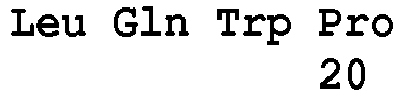
- <210> 178
<211> 20
<212> PRT
<213> Artificial Sequence - <220>
<223> Synthetic peptide - <400> 178

- <210> 179
<211> 20
<212> PRT
<213> Artificial Sequence - <220>
<223> Synthetic peptide - <400> 179

- <210> 180
<211> 20
<212> PRT
<213> Artificial Sequence - <220>
<223> Synthetic peptide - <400> 180

- <210> 181
<211> 20
<212> PRT
<213> Artificial Sequence - <220>
<223> Synthetic peptide - <400> 181

- <210> 182
<211> 20
<212> PRT
<213> Artificial Sequence - <220>
<223> Synthetic peptide - <400> 182

- <210> 183
<211> 20
<212> PRT
<213> Artificial Sequence - <220>
<223> Synthetic peptide - <400> 183

- <210> 184
<211> 20
<212> PRT
<213> Artificial Sequence - <220>
<223> Synthetic peptide - <400> 184

- <210> 185
<211> 20
<212> PRT
<213> Artificial Sequence - <220>
<223> Synthetic peptide - <400> 185

- <210> 186
<211> 20
<212> PRT
<213> Artificial Sequence - <220>
<223> Synthetic peptide - <400> 186

- <210> 187
<211> 20
<212> PRT
<213> Artificial Sequence - <220>
<223> Synthetic peptide - <400> 187


- <210> 188
<211> 20
<212> PRT
<213> Artificial Sequence - <220>
<223> Synthetic peptide - <400> 188

- <210> 189
<211> 20
<212> PRT
<213> Artificial Sequence - <220>
<223> Synthetic peptide - <400> 189

- <210> 190
<211> 20
<212> PRT
<213> Artificial Sequence - <220>
<223> Synthetic peptide - <400> 190

- <210> 191
<211> 20
<212> PRT
<213> Artificial Sequence - <220>
<223> Synthetic peptide - <400> 191

- <210> 192
<211> 20
<212> PRT
<213> Artificial Sequence - <220>
<223> Synthetic peptide - <400> 192

- <210> 193
<211> 20
<212> PRT
<213> Artificial Sequence - <220>
<223> Synthetic peptide - <400> 193

- <210> 194
<211> 20
<212> PRT
<213> Artificial Sequence - <220>
<223> Synthetic peptide - <400> 194


- <210> 195
<211> 20
<212> PRT
<213> Artificial Sequence - <220>
<223> Synthetic peptide - <400> 195

- <210> 196
<211> 20
<212> PRT
<213> Artificial Sequence - <220>
<223> Synthetic peptide - <400> 196

- <210> 197
<211> 20
<212> PRT
<213> Artificial Sequence - <220>
<223> Synthetic peptide - <400> 197

- <210> 198
<211> 20
<212> PRT
<213> Artificial Sequence - <220>
<223> Synthetic peptide - <400> 198

- <210> 199
<211> 20
<212> PRT
<213> Artificial Sequence - <220>
<223> Synthetic peptide - <400> 199

- <210> 200
<211> 20
<212> PRT
<213> Artificial Sequence - <220>
<223> Synthetic peptide - <400> 200

- <210> 201
<211> 20
<212> PRT
<213> Artificial Sequence - <220>
<223> Synthetic peptide - <400> 201

- <210> 202
<211> 20
<212> PRT
<213> Artificial Sequence - <220>
<223> Synthetic peptide - <400> 202

- <210> 203
<211> 20
<212> PRT
<213> Artificial Sequence - <220>
<223> Synthetic peptide - <400> 203

- <210> 204
<211> 20
<212> PRT
<213> Artificial Sequence - <220>
<223> Synthetic peptide - <400> 204

- <210> 205
<211> 20
<212> PRT
<213> Artificial Sequence - <220>
<223> Synthetic peptide - <400> 205


- <210> 206
<211> 20
<212> PRT
<213> Artificial Sequence - <220>
<223> Synthetic peptide - <400> 206

- <210> 207
<211> 20
<212> PRT
<213> Artificial Sequence - <220>
<223> Synthetic peptide - <400> 207

- <210> 208
<211> 20
<212> PRT
<213> Artificial Sequence - <220>
<223> Synthetic peptide - <400> 208

- <210> 209
<211> 20
<212> PRT
<213> Artificial Sequence - <220>
<223> Synthetic peptide - <400> 209

- <210> 210
<211> 20
<212> PRT
<213> Artificial Sequence - <220>
<223> Synthetic peptide - <400> 210

- <210> 211
<211> 20
<212> PRT
<213> Artificial Sequence - <220>
<223> Synthetic peptide - <400> 211

- <210> 212
<211> 20
<212> PRT
<213> Artificial Sequence - <220>
<223> Synthetic peptide - <400> 212

- <210> 213
<211> 20
<212> PRT
<213> Artificial Sequence - <220>
<223> Synthetic peptide - <400> 213

- <210> 214
<211> 20
<212> PRT
<213> Artificial Sequence - <220>
<223> Synthetic peptide - <400> 214

- <210> 215
<211> 20
<212> PRT
<213> Artificial Sequence - <220>
<223> Synthetic peptide - <400> 215

- <210> 216
<211> 20
<212> PRT
<213> Artificial Sequence - <220>
<223> Synthetic peptide - <400> 216

- <210> 217
<211> 20
<212> PRT
<213> Artificial Sequence - <220>
<223> Synthetic peptide - <400> 217

- <210> 218
<211> 20
<212> PRT
<213> Artificial Sequence - <220>
<223> Synthetic peptide - <400> 218

- <210> 219
<211> 20
<212> PRT
<213> Artificial Sequence - <220>
<223> Synthetic peptide - <400> 219

- <210> 220
<211> 20
<212> PRT
<213> Artificial Sequence - <220>
<223> Synthetic peptide - <400> 220

- <210> 221
<211> 20
<212> PRT
<213> Artificial Sequence - <220>
<223> Synthetic peptide - <400> 221

- <210> 222
<211> 20
<212> PRT
<213> Artificial Sequence - <220>
<223> Synthetic peptide - <400> 222

- <210> 223
<211> 20
<212> PRT
<213> Artificial Sequence - <220>
<223> Synthetic peptide - <400> 223


- <210> 224
<211> 20
<212> PRT
<213> Artificial Sequence - <220>
<223> Synthetic peptide - <400> 224

- <210> 225
<211> 20
<212> PRT
<213> Artificial Sequence - <220>
<223> Synthetic peptide - <400> 225

- <210> 226
<211> 20
<212> PRT
<213> Artificial Sequence - <220>
<223> Synthetic peptide - <400> 226

- <210> 227
<211> 20
<212> PRT
<213> Artificial Sequence - <220>
<223> Synthetic peptide - <400> 227

- <210> 228
<211> 20
<212> PRT
<213> Artificial Sequence - <220>
<223> Synthetic peptide - <400> 228

- <210> 229
<211> 20
<212> PRT
<213> Artificial Sequence - <220>
<223> Synthetic peptide - <400> 229

- <210> 230
<211> 20
<212> PRT
<213> Artificial Sequence - <220>
<223> Synthetic peptide - <400> 230

- <210> 231
<211> 20
<212> PRT
<213> Artificial Sequence - <220>
<223> Synthetic peptide - <400> 231

- <210> 232
<211> 20
<212> PRT
<213> Artificial Sequence - <220>
<223> Synthetic peptide - <400> 232

- <210> 233
<211> 20
<212> PRT
<213> Artificial Sequence - <220>
<223> Synthetic peptide - <400> 233

- <210> 234
<211> 20
<212> PRT
<213> Artificial Sequence - <220>
<223> Synthetic peptide - <400> 234

- <210> 235
<211> 20
<212> PRT
<213> Artificial Sequence - <220>
<223> Synthetic peptide - <400> 235

- <210> 236
<211> 20
<212> PRT
<213> Artificial Sequence - <220>
<223> Synthetic peptide - <400> 236

- <210> 237
<211> 20
<212> PRT
<213> Artificial Sequence - <220>
<223> Synthetic peptide - <400> 237

- <210> 238
<211> 20
<212> PRT
<213> Artificial Sequence - <220>
<223> Synthetic peptide - <400> 238

- <210> 239
<211> 20
<212> PRT
<213> Artificial Sequence - <220>
<223> Synthetic peptide - <400> 239

- <210> 240
<211> 20
<212> PRT
<213> Artificial Sequence - <220>
<223> Synthetic peptide - <400> 240

- <210> 241
<211> 20
<212> PRT
<213> Artificial Sequence - <220>
<223> Synthetic peptide - <400> 241


- <210> 242
<211> 20
<212> PRT
<213> Artificial Sequence - <220>
<223> Synthetic peptide - <400> 242

- <210> 243
<211> 20
<212> PRT
<213> Artificial Sequence - <220>
<223> Synthetic peptide - <400> 243

- <210> 244
<211> 20
<212> PRT
<213> Artificial Sequence - <220>
<223> Synthetic peptide - <400> 244

- <210> 245
<211> 20
<212> PRT
<213> Artificial Sequence - <220>
<223> Synthetic peptide - <400> 245

- <210> 246
<211> 20
<212> PRT
<213> Artificial Sequence - <220>
<223> Synthetic peptide - <400> 246

- <210> 247
<211> 20
<212> PRT
<213> Artificial Sequence - <220>
<223> Synthetic peptide - <400> 247

- <210> 248
<211> 20
<212> PRT
<213> Artificial Sequence - <220>
<223> Synthetic peptide - <400> 248

- <210> 249
<211> 20
<212> PRT
<213> Artificial Sequence - <220>
<223> Synthetic peptide - <400> 249

- <210> 250
<211> 20
<212> PRT
<213> Artificial Sequence - <220>
<223> Synthetic peptide - <400> 250

- <210> 251
<211> 20
<212> PRT
<213> Artificial Sequence - <220>
<223> Synthetic peptide - <400> 251

- <210> 252
<211> 20
<212> PRT
<213> Artificial Sequence - <220>
<223> Synthetic peptide - <400> 252


- <210> 253
<211> 20
<212> PRT
<213> Artificial Sequence - <220>
<223> Synthetic peptide - <400> 253

- <210> 254
<211> 20
<212> PRT
<213> Artificial Sequence - <220>
<223> Synthetic peptide - <400> 254

- <210> 255
<211> 20
<212> PRT
<213> Artificial Sequence - <220>
<223> Synthetic peptide - <400> 255

- <210> 256
<211> 20
<212> PRT
<213> Artificial Sequence - <220>
<223> Synthetic peptide - <400> 256

- <210> 257
<211> 20
<212> PRT
<213> Artificial Sequence - <220>
<223> Synthetic peptide - <400> 257

- <210> 258
<211> 20
<212> PRT
<213> Artificial Sequence - <220>
<223> Synthetic peptide - <400> 258

- <210> 259
<211> 20
<212> PRT
<213> Artificial Sequence - <220>
<223> Synthetic peptide - <400> 259


- <210> 260
<211> 20
<212> PRT
<213> Artificial Sequence - <220>
<223> Synthetic peptide - <400> 260

- <210> 261
<211> 20
<212> PRT
<213> Artificial Sequence - <220>
<223> Synthetic peptide - <400> 261

- <210> 262
<211> 20
<212> PRT
<213> Artificial Sequence - <220>
<223> Synthetic peptide - <400> 262

- <210> 263
<211> 20
<212> PRT
<213> Artificial Sequence - <220>
<223> Synthetic peptide - <400> 263

- <210> 264
<211> 20
<212> PRT
<213> Artificial Sequence - <220>
<223> Synthetic peptide - <400> 264

- <210> 265
<211> 20
<212> PRT
<213> Artificial Sequence - <220>
<223> Synthetic peptide - <400> 265

- <210> 266
<211> 20
<212> PRT
<213> Artificial Sequence - <220>
<223> Synthetic peptide - <400> 266

- <210> 267
<211> 20
<212> PRT
<213> Artificial Sequence - <220>
<223> Synthetic peptide - <400> 267

- <210> 268
<211> 20
<212> PRT
<213> Artificial Sequence - <220>
<223> Synthetic peptide - <400> 268

- <210> 269
<211> 20
<212> PRT
<213> Artificial Sequence - <220>
<223> Synthetic peptide - <400> 269

- <210> 270
<211> 20
<212> PRT
<213> Artificial Sequence - <220>
<223> Synthetic peptide - <400> 270


- <210> 271
<211> 20
<212> PRT
<213> Artificial Sequence - <220>
<223> Synthetic peptide - <400> 271

- <210> 272
<211> 20
<212> PRT
<213> Artificial Sequence - <220>
<223> Synthetic peptide - <400> 272

- <210> 273
<211> 20
<212> PRT
<213> Artificial Sequence - <220>
<223> Synthetic peptide - <400> 273

- <210> 274
<211> 20
<212> PRT
<213> Artificial Sequence - <220>
<223> Synthetic peptide - <400> 274

- <210> 275
<211> 20
<212> PRT
<213> Artificial Sequence - <220>
<223> Synthetic peptide - <400> 275

- <210> 276
<211> 20
<212> PRT
<213> Artificial Sequence - <220>
<223> Synthetic peptide - <400> 276

- <210> 277
<211> 20
<212> PRT
<213> Artificial Sequence - <220>
<223> Synthetic peptide - <400> 277

- <210> 278
<211> 20
<212> PRT
<213> Artificial Sequence - <220>
<223> Synthetic peptide - <400> 278

- <210> 279
<211> 20
<212> PRT
<213> Artificial Sequence - <220>
<223> Synthetic peptide - <400> 279

- <210> 280
<211> 20
<212> PRT
<213> Artificial Sequence - <220>
<223> Synthetic peptide - <400> 280

- <210> 281
<211> 20
<212> PRT
<213> Artificial Sequence - <220>
<223> Synthetic peptide - <400> 281

- <210> 282
<211> 20
<212> PRT
<213> Artificial Sequence - <220>
<223> Synthetic peptide - <400> 282

- <210> 283
<211> 20
<212> PRT
<213> Artificial Sequence - <220>
<223> Synthetic peptide - <400> 283

- <210> 284
<211> 20
<212> PRT
<213> Artificial Sequence - <220>
<223> Synthetic peptide - <400> 284

- <210> 285
<211> 20
<212> PRT
<213> Artificial Sequence - <220>
<223> Synthetic peptide - <400> 285

- <210> 286
<211> 20
<212> PRT
<213> Artificial Sequence - <220>
<223> Synthetic peptide - <400> 286

- <210> 287
<211> 20
<212> PRT
<213> Artificial Sequence - <220>
<223> Synthetic peptide - <400> 287

- <210> 288
<211> 20
<212> PRT
<213> Artificial Sequence - <220>
<223> Synthetic peptide - <400> 288


- <210> 289
<211> 20
<212> PRT
<213> Artificial Sequence - <220>
<223> Synthetic peptide - <400> 289

- <210> 290
<211> 20
<212> PRT
<213> Artificial Sequence - <220>
<223> Synthetic peptide - <400> 290

- <210> 291
<211> 20
<212> PRT
<213> Artificial Sequence - <220>
<223> Synthetic peptide - <400> 291

- <210> 292
<211> 20
<212> PRT
<213> Artificial Sequence - <220>
<223> Synthetic peptide - <400> 292

- <210> 293
<211> 20
<212> PRT
<213> Artificial Sequence - <220>
<223> Synthetic peptide - <400> 293

- <210> 294
<211> 20
<212> PRT
<213> Artificial Sequence - <220>
<223> Synthetic peptide - <400> 294

- <210> 295
<211> 20
<212> PRT
<213> Artificial Sequence - <220>
<223> Synthetic peptide - <400> 295

- <210> 296
<211> 20
<212> PRT
<213> Artificial Sequence - <220>
<223> Synthetic peptide - <400> 296

- <210> 297
<211> 20
<212> PRT
<213> Artificial Sequence - <220>
<223> Synthetic peptide - <400> 297

- <210> 298
<211> 20
<212> PRT
<213> Artificial Sequence - <220>
<223> Synthetic peptide - <400> 298

- <210> 299
<211> 20
<212> PRT
<213> Artificial Sequence - <220>
<223> Synthetic peptide - <400> 299

- <210> 300
<211> 20
<212> PRT
<213> Artificial Sequence - <220>
<223> Synthetic peptide - <400> 300

- <210> 301
<211> 20
<212> PRT
<213> Artificial Sequence - <220>
<223> Synthetic peptide - <400> 301

- <210> 302
<211> 20
<212> PRT
<213> Artificial Sequence - <220>
<223> Synthetic peptide - <400> 302

- <210> 303
<211> 63
<212> DNA
<213> Artificial Sequence - <220>
<223> Synthetic polynucleotide - <400> 303

- <210> 304
<211> 71
<212> DNA
<213> Artificial Sequence - <220>
<223> Synthetic polynucleotide - <400> 304

- <210> 305
<211> 22
<212> PRT
<213> Artificial Sequence - <220>
<223> Synthetic peptide - <400> 305

wherein the fusion protein is capable of inducing antigen specific regulatory T cells, the antigen specific regulatory T cells being specific for the antigenic fragment of apoB- 100 or derivative thereof,
for use to treat and/or prevent atherosclerosis in an individual,
wherein the fusion protein is for mucosal administration to the individual in an amount effective to elicit an antigen specific Treg immunomodulatory response specific for the antigenic fragment of apoB-100 protein, or derivative thereof, in the individual,
and wherein a derivative of an antigenic fragment of apoB-100 protein indicates a polypeptide structurally related to the antigenic fragment of apoB-100 and derivable from the antigenic fragment of apoB-100 by a modification that introduces a feature that is not present in the antigenic fragment of apoB-100, while retaining one or more antigenic properties of apoB-100 or the antigenic fragment of apoB-100.
Claims (8)
- A fusion protein comprising
an antigenic fragment of apoB-100 protein, or a derivative thereof, and
subunit B of cholera toxin as a protein carrier,
wherein the antigenic fragment of apoB-100 or derivative thereof and the protein carrier are linked in the fusion protein in a 1:1 fragment:carrier molar ratio; and
wherein the fusion protein is capable of inducing antigen specific regulatory T cells, the antigen specific regulatory T cells being specific for the antigenic fragment of apoB-100 or derivative thereof,
for use to treat and/or prevent atherosclerosis in an individual,
wherein the fusion protein is for mucosal administration to the individual in an amount effective to elicit an antigen specific Treg immunomodulatory response specific for the antigenic fragment of apoB-100 protein, or derivative thereof, in the individual,
and wherein a derivative of an antigenic fragment of apoB-100 protein indicates a polypeptide structurally related to the antigenic fragment of apoB-100 and derivable from the antigenic fragment of apoB-100 by a modification that introduces a feature that is not present in the antigenic fragment of apoB-100, while retaining one or more antigenic properties of apoB-100 or the antigenic fragment of apoB-100. - The fusion protein for use according to claim 1, wherein the antigenic fragment of apoB-100 comprises one or more peptide selected from the group consisting of P2, P45, P102 and P210 of table 1.
- The fusion protein for use according to claim 1, wherein the antigenic fragment of apoB-100 comprises P210 of table 1.
- An immunogenic composition comprising the fusion protein for use according to any one of claims 1 to 3 together with an adjuvant and/or a pharmaceutically acceptable excipient.
- A method to produce a fusion protein, the method comprising
attaching an antigenic fragment of apoB-100, or a derivative thereof, to a protein carrier in a 1:1 fragment:carrier molar ratio to provide a fusion protein capable of inducing antigen specific regulatory T cells, wherein the protein carrier is subunit B of cholera toxin,
the antigen specific regulatory T cells being specific for the fragment of apoB-100 or the derivative thereof,
wherein a derivative of an antigenic fragment of apoB-100 protein indicates a polypeptide structurally related to the antigenic fragment of apoB-100 and derivable from the antigenic fragment of apoB-100 by a modification that introduces a feature that is not present in the antigenic fragment of apoB-100, while retaining one or more antigenic properties of apoB-100 or the antigenic fragment of apoB-100. - The method of claim 5, wherein the antigenic fragment of apoB-100 comprises one or more of P2, P45, P102, and P210 of table 1.
- The method of any one of claims 5 or 6, wherein the attaching is performed by biological genetic engineering or by chemical covalent conjugation.
- An in vitro method to induce an antigen specific Treg cell, the method comprising
contacting a Treg cell with the fusion protein for use according to any one of claims 1 to 3, the contacting performed for a time and under conditions to allow induction of a Treg response,
wherein the contacting results in the induction of an antigen-specific immune response specific for the fragment of apoB-100, or derivative thereof, comprised in the fusion protein.
Priority Applications (1)
| Application Number | Priority Date | Filing Date | Title |
|---|---|---|---|
| EP16196241.0A EP3173423A1 (en) | 2010-02-05 | 2011-02-07 | Fusion proteins comprising antigenic apob-100 protein fragments and a protein carrier, related compositions, methods and systems for treatment and/or prevention of atherosclerosis |
Applications Claiming Priority (3)
| Application Number | Priority Date | Filing Date | Title |
|---|---|---|---|
| US30205110P | 2010-02-05 | 2010-02-05 | |
| US13/021,635 US8506964B2 (en) | 2010-02-05 | 2011-02-04 | Fusion proteins and related compositions, methods and systems for treatment and/or prevention of atherosclerosis |
| PCT/EP2011/051761 WO2011095628A1 (en) | 2010-02-05 | 2011-02-07 | Fusion proteins comprising antigenic apob-100 protein fragments and a protein carrier, related compositions, methods and systems for treatment and/or prevention of atherosclerosis |
Related Child Applications (1)
| Application Number | Title | Priority Date | Filing Date |
|---|---|---|---|
| EP16196241.0A Division EP3173423A1 (en) | 2010-02-05 | 2011-02-07 | Fusion proteins comprising antigenic apob-100 protein fragments and a protein carrier, related compositions, methods and systems for treatment and/or prevention of atherosclerosis |
Publications (2)
| Publication Number | Publication Date |
|---|---|
| EP2531524A1 EP2531524A1 (en) | 2012-12-12 |
| EP2531524B1 true EP2531524B1 (en) | 2016-11-02 |
Family
ID=43857671
Family Applications (2)
| Application Number | Title | Priority Date | Filing Date |
|---|---|---|---|
| EP11702831.6A Not-in-force EP2531524B1 (en) | 2010-02-05 | 2011-02-07 | Fusion proteins comprising antigenic apob-100 protein fragments and a protein carrier, related compositions, methods and systems for treatment and/or prevention of atherosclerosis |
| EP16196241.0A Withdrawn EP3173423A1 (en) | 2010-02-05 | 2011-02-07 | Fusion proteins comprising antigenic apob-100 protein fragments and a protein carrier, related compositions, methods and systems for treatment and/or prevention of atherosclerosis |
Family Applications After (1)
| Application Number | Title | Priority Date | Filing Date |
|---|---|---|---|
| EP16196241.0A Withdrawn EP3173423A1 (en) | 2010-02-05 | 2011-02-07 | Fusion proteins comprising antigenic apob-100 protein fragments and a protein carrier, related compositions, methods and systems for treatment and/or prevention of atherosclerosis |
Country Status (8)
| Country | Link |
|---|---|
| US (2) | US8506964B2 (en) |
| EP (2) | EP2531524B1 (en) |
| CN (1) | CN103221425A (en) |
| AU (1) | AU2011212433B2 (en) |
| BR (1) | BR112012019627A2 (en) |
| CA (1) | CA2789120A1 (en) |
| RU (1) | RU2012137789A (en) |
| WO (1) | WO2011095628A1 (en) |
Families Citing this family (13)
| Publication number | Priority date | Publication date | Assignee | Title |
|---|---|---|---|---|
| US20030105003A1 (en) | 2001-04-05 | 2003-06-05 | Jan Nilsson | Peptide-based immunization therapy for treatment of atherosclerosis and development of peptide-based assay for determination of immune responses against oxidized low density lipoprotein |
| AU2010319323B2 (en) | 2009-11-14 | 2015-01-15 | Cardiovax, Llc | Immunomodulatory methods and systems for treatment and/or prevention of atherosclerosis |
| US8506964B2 (en) | 2010-02-05 | 2013-08-13 | Cardiovax, Llc | Fusion proteins and related compositions, methods and systems for treatment and/or prevention of atherosclerosis |
| WO2012074725A2 (en) * | 2010-11-12 | 2012-06-07 | Cedars-Sinai Medical Center | Immunomodulatory methods and systems for treatment and/or prevention of hypertension |
| JP2013544243A (en) | 2010-11-12 | 2013-12-12 | シーダース シナイ メディカル センター | Immunomodulation method and system for treatment and / or prevention of aneurysm |
| AU2011325948A1 (en) * | 2010-11-12 | 2013-05-30 | Cedars-Sinai Medical Center | Immunomodulatory compositions, methods and systems comprising immunogenic fragments of Apob100 |
| GB201501017D0 (en) | 2014-12-23 | 2015-03-04 | Immatics Biotechnologies Gmbh | Novel peptides and combination of peptides for use in immunotherapy against hepatocellular carcinoma (HCC) and other cancers |
| MA50819A (en) | 2014-12-23 | 2021-04-07 | Immatics Biotechnologies Gmbh | NEW PEPTIDES AND COMBINATION OF PEPTIDES FOR USE IN IMMUNOTHERAPY FOR HEPATOCELLULAR CARCINOMA (HCC) AND OTHER CANCERS |
| EP3297652A4 (en) * | 2015-05-19 | 2019-06-05 | La Jolla Institute for Allergy and Immunology | HUMAN APOB100 EPITOPES, METHODS AND USES FOR MODULATING INFLAMMATORY RESPONSES AND TREATING ADVERSE CARDIOVASCULAR EVENTS, CARDIOVASCULAR DISEASE AND ATHEROSCLEROSIS |
| US10858422B2 (en) | 2016-05-31 | 2020-12-08 | Abcentra, Llc | Methods for treating systemic lupus erythematosus with an anti-apolipoprotein B antibody |
| WO2017210360A1 (en) * | 2016-05-31 | 2017-12-07 | Cardiovax, Llc | Methods for diagnosing and treating systemic lupus erythematosus |
| KR102276941B1 (en) * | 2018-07-03 | 2021-07-14 | 서울대학교산학협력단 | Peptides for treating rheumatoid arthritis and uses thereof |
| CN119876386B (en) * | 2025-03-27 | 2025-06-17 | 丽水市中心医院 | Application of PPP1R3B gene in preparation of atherosclerosis detection reagent or therapeutic drug |
Citations (1)
| Publication number | Priority date | Publication date | Assignee | Title |
|---|---|---|---|---|
| WO2002080954A1 (en) * | 2001-04-05 | 2002-10-17 | Forskarpatent I Syd | Peptide-based immunization therapy for treatment of atherosclerosis and development of peptide-based assay for determination of immune responses against oxidized low density lipoprotein |
Family Cites Families (17)
| Publication number | Priority date | Publication date | Assignee | Title |
|---|---|---|---|---|
| US2163511A (en) | 1939-06-20 | Bracket | ||
| US4970144A (en) | 1984-12-31 | 1990-11-13 | International Genetic Engineering | Peptide fragments of human apolipoprotein, type-specific antibodies and methods of use |
| US5972890A (en) | 1988-05-02 | 1999-10-26 | New England Deaconess Hospital Corporation | Synthetic peptides for arterial imaging |
| US5408038A (en) | 1991-10-09 | 1995-04-18 | The Scripps Research Institute | Nonnatural apolipoprotein B-100 peptides and apolipoprotein B-100-apolipoprotein A-I fusion peptides |
| FR2748404B1 (en) | 1996-05-09 | 1998-07-24 | Atochem Elf Sa | SUPER ABSORBENT POWDERS WITH HIGH ABSORPTION AND HIGH HAIR SUCION |
| GB9705831D0 (en) | 1997-03-20 | 1997-05-07 | Univ Leicester | Oxidised ldl |
| AU760794B2 (en) | 1998-03-10 | 2003-05-22 | Regents Of The University Of California, The | Methods and tools for identifying compounds which modulate atherosclerosis by impacting LDL-proteoglycan binding |
| ES2219517T3 (en) | 2000-03-03 | 2004-12-01 | Glaxosmithkline Biologicals S.A. | VACCINE FOR THE TREATMENT OF ATEROSCLEROSIS. |
| SE0000855D0 (en) | 2000-03-15 | 2000-03-15 | Karolinska Innovations Ab | Antigenic composition useful as a vaccine against atherosclerosis |
| US20030105003A1 (en) | 2001-04-05 | 2003-06-05 | Jan Nilsson | Peptide-based immunization therapy for treatment of atherosclerosis and development of peptide-based assay for determination of immune responses against oxidized low density lipoprotein |
| AU2002348241A1 (en) | 2001-11-24 | 2003-06-10 | Image Analysis, Inc. | Automatic detection and quantification of coronary and aortic calcium |
| FR2841249A1 (en) | 2002-06-19 | 2003-12-26 | Genfit S A | COMPOSITIONS AND METHODS FOR THE ASSAY OF APO B48 AND APO B100 |
| SE0302422D0 (en) | 2003-09-11 | 2003-09-11 | Forskarpatent I Syd Ab | Peptide-based immunization therapy for the treatment of atherosclerosis |
| EP1676602A1 (en) | 2005-01-04 | 2006-07-05 | Institut National De La Sante Et De La Recherche Medicale (Inserm) | Continuous administration of epitopes derived from protein present in atherosclerotic plaque for the treatment of atherosclerosis |
| US8506964B2 (en) | 2010-02-05 | 2013-08-13 | Cardiovax, Llc | Fusion proteins and related compositions, methods and systems for treatment and/or prevention of atherosclerosis |
| JP2013544243A (en) | 2010-11-12 | 2013-12-12 | シーダース シナイ メディカル センター | Immunomodulation method and system for treatment and / or prevention of aneurysm |
| AU2011325948A1 (en) | 2010-11-12 | 2013-05-30 | Cedars-Sinai Medical Center | Immunomodulatory compositions, methods and systems comprising immunogenic fragments of Apob100 |
-
2011
- 2011-02-04 US US13/021,635 patent/US8506964B2/en not_active Expired - Fee Related
- 2011-02-07 WO PCT/EP2011/051761 patent/WO2011095628A1/en not_active Ceased
- 2011-02-07 BR BR112012019627A patent/BR112012019627A2/en not_active IP Right Cessation
- 2011-02-07 EP EP11702831.6A patent/EP2531524B1/en not_active Not-in-force
- 2011-02-07 CN CN2011800180920A patent/CN103221425A/en active Pending
- 2011-02-07 EP EP16196241.0A patent/EP3173423A1/en not_active Withdrawn
- 2011-02-07 RU RU2012137789/10A patent/RU2012137789A/en not_active Application Discontinuation
- 2011-02-07 AU AU2011212433A patent/AU2011212433B2/en not_active Ceased
- 2011-02-07 CA CA2789120A patent/CA2789120A1/en active Pending
-
2013
- 2013-08-05 US US13/959,312 patent/US20140037672A1/en not_active Abandoned
Patent Citations (1)
| Publication number | Priority date | Publication date | Assignee | Title |
|---|---|---|---|---|
| WO2002080954A1 (en) * | 2001-04-05 | 2002-10-17 | Forskarpatent I Syd | Peptide-based immunization therapy for treatment of atherosclerosis and development of peptide-based assay for determination of immune responses against oxidized low density lipoprotein |
Non-Patent Citations (2)
| Title |
|---|
| C BERGQUIST ET AL: "Local and systemic antibody responses to dextran-cholera toxin B subunit conjugates", INFECTION AND IMMUNITY, 1 May 1995 (1995-05-01), UNITED STATES, pages 2021 - 2025, XP055173192, Retrieved from the Internet <URL:http://iai.asm.org/content/63/5/2021.abstract> * |
| NASHAR T O ET AL: "Current progress in the development of the B subunits of cholera toxin and Escherichia coli heat-labile enterotoxin as carriers for the oral delivery of heterologous antigens and epitopes", VACCINE, ELSEVIER LTD, GB, vol. 11, no. 2, 1 January 1993 (1993-01-01), pages 235 - 240, XP023710557, ISSN: 0264-410X, [retrieved on 19930101], DOI: 10.1016/0264-410X(93)90023-Q * |
Also Published As
| Publication number | Publication date |
|---|---|
| CA2789120A1 (en) | 2011-08-11 |
| WO2011095628A1 (en) | 2011-08-11 |
| US8506964B2 (en) | 2013-08-13 |
| BR112012019627A2 (en) | 2019-09-24 |
| EP2531524A1 (en) | 2012-12-12 |
| US20110300172A1 (en) | 2011-12-08 |
| EP3173423A1 (en) | 2017-05-31 |
| AU2011212433B2 (en) | 2015-03-12 |
| RU2012137789A (en) | 2014-03-10 |
| US20140037672A1 (en) | 2014-02-06 |
| AU2011212433A1 (en) | 2012-08-23 |
| CN103221425A (en) | 2013-07-24 |
Similar Documents
| Publication | Publication Date | Title |
|---|---|---|
| US8506964B2 (en) | Fusion proteins and related compositions, methods and systems for treatment and/or prevention of atherosclerosis | |
| Ernst et al. | How does Helicobacter pylori cause mucosal damage? The inflammatory response | |
| Lahoute et al. | Adaptive immunity in atherosclerosis: mechanisms and future therapeutic targets | |
| US9221876B2 (en) | Methods for treating kidney disease with fragments of ApoB-100 | |
| US9205139B2 (en) | Immunomodulatory methods and systems for treatment and/or prevention of aneurysms | |
| US20130302362A1 (en) | Immunomodulatory Compositions, Methods and Systems Comprising Immunogenic Fragments of ApoB-100 | |
| US9205141B2 (en) | Immunomodulatory methods and systems for treatment and/or prevention of hypertension | |
| US9125850B2 (en) | Immunomodulatory methods and systems for treatment and/or prevention of atherosclerosis | |
| US10858422B2 (en) | Methods for treating systemic lupus erythematosus with an anti-apolipoprotein B antibody | |
| US10434141B2 (en) | Methods for treating systemic lupus erythematosus with an anti-apolipoprotein B antibody | |
| JP2012523379A (en) | Immunogenic compositions and uses thereof | |
| EP3068869B1 (en) | Compositions for suppression of inhibitor formation against factor viii in hemophilia a patients | |
| WO2013129739A1 (en) | Pharmaceutical composition comprising bee venom-phospholipase a2 (bv-pla2) for treating or preventing diseases related to degradation of abnormal regulatory t cell activity | |
| WO2023075421A1 (en) | Novel peptide targeting dendritic cells, and composition for treating cancer comprising same | |
| JP5931113B2 (en) | Immunogenic compositions and uses thereof |
Legal Events
| Date | Code | Title | Description |
|---|---|---|---|
| PUAI | Public reference made under article 153(3) epc to a published international application that has entered the european phase |
Free format text: ORIGINAL CODE: 0009012 |
|
| 17P | Request for examination filed |
Effective date: 20120731 |
|
| AK | Designated contracting states |
Kind code of ref document: A1 Designated state(s): AL AT BE BG CH CY CZ DE DK EE ES FI FR GB GR HR HU IE IS IT LI LT LU LV MC MK MT NL NO PL PT RO RS SE SI SK SM TR |
|
| DAX | Request for extension of the european patent (deleted) | ||
| REG | Reference to a national code |
Ref country code: HK Ref legal event code: DE Ref document number: 1178543 Country of ref document: HK |
|
| 17Q | First examination report despatched |
Effective date: 20131108 |
|
| RAP1 | Party data changed (applicant data changed or rights of an application transferred) |
Owner name: CARDIOVAX, LLC |
|
| RIN1 | Information on inventor provided before grant (corrected) |
Inventor name: HOLMGREN, JAN Inventor name: NILSSON, JAN Inventor name: HANSSON, GOERAN K. |
|
| GRAP | Despatch of communication of intention to grant a patent |
Free format text: ORIGINAL CODE: EPIDOSNIGR1 |
|
| RIC1 | Information provided on ipc code assigned before grant |
Ipc: A61K 38/17 20060101ALI20160523BHEP Ipc: C07K 14/195 20060101ALI20160523BHEP Ipc: C07K 14/775 20060101AFI20160523BHEP Ipc: C07K 19/00 20060101ALI20160523BHEP |
|
| INTG | Intention to grant announced |
Effective date: 20160615 |
|
| RAP1 | Party data changed (applicant data changed or rights of an application transferred) |
Owner name: CARDIOVAX, LLC |
|
| GRAS | Grant fee paid |
Free format text: ORIGINAL CODE: EPIDOSNIGR3 |
|
| GRAA | (expected) grant |
Free format text: ORIGINAL CODE: 0009210 |
|
| AK | Designated contracting states |
Kind code of ref document: B1 Designated state(s): AL AT BE BG CH CY CZ DE DK EE ES FI FR GB GR HR HU IE IS IT LI LT LU LV MC MK MT NL NO PL PT RO RS SE SI SK SM TR |
|
| REG | Reference to a national code |
Ref country code: GB Ref legal event code: FG4D |
|
| REG | Reference to a national code |
Ref country code: AT Ref legal event code: REF Ref document number: 841776 Country of ref document: AT Kind code of ref document: T Effective date: 20161115 Ref country code: CH Ref legal event code: EP |
|
| REG | Reference to a national code |
Ref country code: IE Ref legal event code: FG4D |
|
| REG | Reference to a national code |
Ref country code: DE Ref legal event code: R096 Ref document number: 602011031861 Country of ref document: DE |
|
| REG | Reference to a national code |
Ref country code: FR Ref legal event code: PLFP Year of fee payment: 7 |
|
| PG25 | Lapsed in a contracting state [announced via postgrant information from national office to epo] |
Ref country code: LV Free format text: LAPSE BECAUSE OF FAILURE TO SUBMIT A TRANSLATION OF THE DESCRIPTION OR TO PAY THE FEE WITHIN THE PRESCRIBED TIME-LIMIT Effective date: 20161102 |
|
| REG | Reference to a national code |
Ref country code: NL Ref legal event code: MP Effective date: 20161102 |
|
| REG | Reference to a national code |
Ref country code: LT Ref legal event code: MG4D |
|
| REG | Reference to a national code |
Ref country code: AT Ref legal event code: MK05 Ref document number: 841776 Country of ref document: AT Kind code of ref document: T Effective date: 20161102 |
|
| PG25 | Lapsed in a contracting state [announced via postgrant information from national office to epo] |
Ref country code: NO Free format text: LAPSE BECAUSE OF FAILURE TO SUBMIT A TRANSLATION OF THE DESCRIPTION OR TO PAY THE FEE WITHIN THE PRESCRIBED TIME-LIMIT Effective date: 20170202 Ref country code: SE Free format text: LAPSE BECAUSE OF FAILURE TO SUBMIT A TRANSLATION OF THE DESCRIPTION OR TO PAY THE FEE WITHIN THE PRESCRIBED TIME-LIMIT Effective date: 20161102 Ref country code: NL Free format text: LAPSE BECAUSE OF FAILURE TO SUBMIT A TRANSLATION OF THE DESCRIPTION OR TO PAY THE FEE WITHIN THE PRESCRIBED TIME-LIMIT Effective date: 20161102 Ref country code: LT Free format text: LAPSE BECAUSE OF FAILURE TO SUBMIT A TRANSLATION OF THE DESCRIPTION OR TO PAY THE FEE WITHIN THE PRESCRIBED TIME-LIMIT Effective date: 20161102 Ref country code: GR Free format text: LAPSE BECAUSE OF FAILURE TO SUBMIT A TRANSLATION OF THE DESCRIPTION OR TO PAY THE FEE WITHIN THE PRESCRIBED TIME-LIMIT Effective date: 20170203 |
|
| PG25 | Lapsed in a contracting state [announced via postgrant information from national office to epo] |
Ref country code: AT Free format text: LAPSE BECAUSE OF FAILURE TO SUBMIT A TRANSLATION OF THE DESCRIPTION OR TO PAY THE FEE WITHIN THE PRESCRIBED TIME-LIMIT Effective date: 20161102 Ref country code: HR Free format text: LAPSE BECAUSE OF FAILURE TO SUBMIT A TRANSLATION OF THE DESCRIPTION OR TO PAY THE FEE WITHIN THE PRESCRIBED TIME-LIMIT Effective date: 20161102 Ref country code: FI Free format text: LAPSE BECAUSE OF FAILURE TO SUBMIT A TRANSLATION OF THE DESCRIPTION OR TO PAY THE FEE WITHIN THE PRESCRIBED TIME-LIMIT Effective date: 20161102 Ref country code: IS Free format text: LAPSE BECAUSE OF FAILURE TO SUBMIT A TRANSLATION OF THE DESCRIPTION OR TO PAY THE FEE WITHIN THE PRESCRIBED TIME-LIMIT Effective date: 20170302 Ref country code: PT Free format text: LAPSE BECAUSE OF FAILURE TO SUBMIT A TRANSLATION OF THE DESCRIPTION OR TO PAY THE FEE WITHIN THE PRESCRIBED TIME-LIMIT Effective date: 20170302 Ref country code: RS Free format text: LAPSE BECAUSE OF FAILURE TO SUBMIT A TRANSLATION OF THE DESCRIPTION OR TO PAY THE FEE WITHIN THE PRESCRIBED TIME-LIMIT Effective date: 20161102 Ref country code: PL Free format text: LAPSE BECAUSE OF FAILURE TO SUBMIT A TRANSLATION OF THE DESCRIPTION OR TO PAY THE FEE WITHIN THE PRESCRIBED TIME-LIMIT Effective date: 20161102 Ref country code: ES Free format text: LAPSE BECAUSE OF FAILURE TO SUBMIT A TRANSLATION OF THE DESCRIPTION OR TO PAY THE FEE WITHIN THE PRESCRIBED TIME-LIMIT Effective date: 20161102 Ref country code: BE Free format text: LAPSE BECAUSE OF NON-PAYMENT OF DUE FEES Effective date: 20170228 |
|
| PG25 | Lapsed in a contracting state [announced via postgrant information from national office to epo] |
Ref country code: DK Free format text: LAPSE BECAUSE OF FAILURE TO SUBMIT A TRANSLATION OF THE DESCRIPTION OR TO PAY THE FEE WITHIN THE PRESCRIBED TIME-LIMIT Effective date: 20161102 Ref country code: SK Free format text: LAPSE BECAUSE OF FAILURE TO SUBMIT A TRANSLATION OF THE DESCRIPTION OR TO PAY THE FEE WITHIN THE PRESCRIBED TIME-LIMIT Effective date: 20161102 Ref country code: RO Free format text: LAPSE BECAUSE OF FAILURE TO SUBMIT A TRANSLATION OF THE DESCRIPTION OR TO PAY THE FEE WITHIN THE PRESCRIBED TIME-LIMIT Effective date: 20161102 Ref country code: EE Free format text: LAPSE BECAUSE OF FAILURE TO SUBMIT A TRANSLATION OF THE DESCRIPTION OR TO PAY THE FEE WITHIN THE PRESCRIBED TIME-LIMIT Effective date: 20161102 Ref country code: CZ Free format text: LAPSE BECAUSE OF FAILURE TO SUBMIT A TRANSLATION OF THE DESCRIPTION OR TO PAY THE FEE WITHIN THE PRESCRIBED TIME-LIMIT Effective date: 20161102 |
|
| REG | Reference to a national code |
Ref country code: SE Ref legal event code: TRGR Ref country code: SE Ref legal event code: RINS Effective date: 20170712 |
|
| REG | Reference to a national code |
Ref country code: DE Ref legal event code: R097 Ref document number: 602011031861 Country of ref document: DE |
|
| PG25 | Lapsed in a contracting state [announced via postgrant information from national office to epo] |
Ref country code: BE Free format text: LAPSE BECAUSE OF FAILURE TO SUBMIT A TRANSLATION OF THE DESCRIPTION OR TO PAY THE FEE WITHIN THE PRESCRIBED TIME-LIMIT Effective date: 20161102 Ref country code: SM Free format text: LAPSE BECAUSE OF FAILURE TO SUBMIT A TRANSLATION OF THE DESCRIPTION OR TO PAY THE FEE WITHIN THE PRESCRIBED TIME-LIMIT Effective date: 20161102 Ref country code: BG Free format text: LAPSE BECAUSE OF FAILURE TO SUBMIT A TRANSLATION OF THE DESCRIPTION OR TO PAY THE FEE WITHIN THE PRESCRIBED TIME-LIMIT Effective date: 20170202 Ref country code: IT Free format text: LAPSE BECAUSE OF FAILURE TO SUBMIT A TRANSLATION OF THE DESCRIPTION OR TO PAY THE FEE WITHIN THE PRESCRIBED TIME-LIMIT Effective date: 20161102 |
|
| PLBE | No opposition filed within time limit |
Free format text: ORIGINAL CODE: 0009261 |
|
| STAA | Information on the status of an ep patent application or granted ep patent |
Free format text: STATUS: NO OPPOSITION FILED WITHIN TIME LIMIT |
|
| PG25 | Lapsed in a contracting state [announced via postgrant information from national office to epo] |
Ref country code: MC Free format text: LAPSE BECAUSE OF FAILURE TO SUBMIT A TRANSLATION OF THE DESCRIPTION OR TO PAY THE FEE WITHIN THE PRESCRIBED TIME-LIMIT Effective date: 20161102 |
|
| REG | Reference to a national code |
Ref country code: CH Ref legal event code: PL |
|
| REG | Reference to a national code |
Ref country code: SE Ref legal event code: EUG |
|
| 26N | No opposition filed |
Effective date: 20170803 |
|
| PG25 | Lapsed in a contracting state [announced via postgrant information from national office to epo] |
Ref country code: CH Free format text: LAPSE BECAUSE OF NON-PAYMENT OF DUE FEES Effective date: 20170228 Ref country code: LI Free format text: LAPSE BECAUSE OF NON-PAYMENT OF DUE FEES Effective date: 20170228 |
|
| REG | Reference to a national code |
Ref country code: IE Ref legal event code: MM4A |
|
| PG25 | Lapsed in a contracting state [announced via postgrant information from national office to epo] |
Ref country code: SI Free format text: LAPSE BECAUSE OF FAILURE TO SUBMIT A TRANSLATION OF THE DESCRIPTION OR TO PAY THE FEE WITHIN THE PRESCRIBED TIME-LIMIT Effective date: 20161102 Ref country code: SE Free format text: LAPSE BECAUSE OF FAILURE TO SUBMIT A TRANSLATION OF THE DESCRIPTION OR TO PAY THE FEE WITHIN THE PRESCRIBED TIME-LIMIT Effective date: 20170208 |
|
| PG25 | Lapsed in a contracting state [announced via postgrant information from national office to epo] |
Ref country code: LU Free format text: LAPSE BECAUSE OF NON-PAYMENT OF DUE FEES Effective date: 20170207 |
|
| REG | Reference to a national code |
Ref country code: FR Ref legal event code: PLFP Year of fee payment: 8 |
|
| PG25 | Lapsed in a contracting state [announced via postgrant information from national office to epo] |
Ref country code: IE Free format text: LAPSE BECAUSE OF NON-PAYMENT OF DUE FEES Effective date: 20170207 |
|
| PGFP | Annual fee paid to national office [announced via postgrant information from national office to epo] |
Ref country code: GB Payment date: 20180122 Year of fee payment: 8 Ref country code: DE Payment date: 20180122 Year of fee payment: 8 |
|
| PGFP | Annual fee paid to national office [announced via postgrant information from national office to epo] |
Ref country code: FR Payment date: 20180123 Year of fee payment: 8 |
|
| PG25 | Lapsed in a contracting state [announced via postgrant information from national office to epo] |
Ref country code: MT Free format text: LAPSE BECAUSE OF NON-PAYMENT OF DUE FEES Effective date: 20170207 |
|
| PG25 | Lapsed in a contracting state [announced via postgrant information from national office to epo] |
Ref country code: HU Free format text: LAPSE BECAUSE OF FAILURE TO SUBMIT A TRANSLATION OF THE DESCRIPTION OR TO PAY THE FEE WITHIN THE PRESCRIBED TIME-LIMIT; INVALID AB INITIO Effective date: 20110207 |
|
| REG | Reference to a national code |
Ref country code: DE Ref legal event code: R119 Ref document number: 602011031861 Country of ref document: DE |
|
| GBPC | Gb: european patent ceased through non-payment of renewal fee |
Effective date: 20190207 |
|
| PG25 | Lapsed in a contracting state [announced via postgrant information from national office to epo] |
Ref country code: CY Free format text: LAPSE BECAUSE OF NON-PAYMENT OF DUE FEES Effective date: 20161102 |
|
| PG25 | Lapsed in a contracting state [announced via postgrant information from national office to epo] |
Ref country code: MK Free format text: LAPSE BECAUSE OF FAILURE TO SUBMIT A TRANSLATION OF THE DESCRIPTION OR TO PAY THE FEE WITHIN THE PRESCRIBED TIME-LIMIT Effective date: 20161102 |
|
| PG25 | Lapsed in a contracting state [announced via postgrant information from national office to epo] |
Ref country code: GB Free format text: LAPSE BECAUSE OF NON-PAYMENT OF DUE FEES Effective date: 20190207 Ref country code: DE Free format text: LAPSE BECAUSE OF NON-PAYMENT OF DUE FEES Effective date: 20190903 |
|
| PG25 | Lapsed in a contracting state [announced via postgrant information from national office to epo] |
Ref country code: FR Free format text: LAPSE BECAUSE OF NON-PAYMENT OF DUE FEES Effective date: 20190228 |
|
| PG25 | Lapsed in a contracting state [announced via postgrant information from national office to epo] |
Ref country code: TR Free format text: LAPSE BECAUSE OF FAILURE TO SUBMIT A TRANSLATION OF THE DESCRIPTION OR TO PAY THE FEE WITHIN THE PRESCRIBED TIME-LIMIT Effective date: 20161102 |
|
| PG25 | Lapsed in a contracting state [announced via postgrant information from national office to epo] |
Ref country code: AL Free format text: LAPSE BECAUSE OF FAILURE TO SUBMIT A TRANSLATION OF THE DESCRIPTION OR TO PAY THE FEE WITHIN THE PRESCRIBED TIME-LIMIT Effective date: 20161102 |