EP2531488B1 - Indirubin-3'-oxime derivatives as potent cyclin dependent kinase inhibitors - Google Patents
Indirubin-3'-oxime derivatives as potent cyclin dependent kinase inhibitors Download PDFInfo
- Publication number
- EP2531488B1 EP2531488B1 EP11739972.5A EP11739972A EP2531488B1 EP 2531488 B1 EP2531488 B1 EP 2531488B1 EP 11739972 A EP11739972 A EP 11739972A EP 2531488 B1 EP2531488 B1 EP 2531488B1
- Authority
- EP
- European Patent Office
- Prior art keywords
- indirubin
- oxime
- cdk2
- human
- derivatives
- Prior art date
- Legal status (The legal status is an assumption and is not a legal conclusion. Google has not performed a legal analysis and makes no representation as to the accuracy of the status listed.)
- Active
Links
Images


Classifications
-
- A—HUMAN NECESSITIES
- A61—MEDICAL OR VETERINARY SCIENCE; HYGIENE
- A61K—PREPARATIONS FOR MEDICAL, DENTAL OR TOILETRY PURPOSES
- A61K31/00—Medicinal preparations containing organic active ingredients
- A61K31/33—Heterocyclic compounds
- A61K31/395—Heterocyclic compounds having nitrogen as a ring hetero atom, e.g. guanethidine or rifamycins
- A61K31/40—Heterocyclic compounds having nitrogen as a ring hetero atom, e.g. guanethidine or rifamycins having five-membered rings with one nitrogen as the only ring hetero atom, e.g. sulpiride, succinimide, tolmetin, buflomedil
- A61K31/403—Heterocyclic compounds having nitrogen as a ring hetero atom, e.g. guanethidine or rifamycins having five-membered rings with one nitrogen as the only ring hetero atom, e.g. sulpiride, succinimide, tolmetin, buflomedil condensed with carbocyclic rings, e.g. carbazole
- A61K31/404—Indoles, e.g. pindolol
-
- A—HUMAN NECESSITIES
- A63—SPORTS; GAMES; AMUSEMENTS
- A63B—APPARATUS FOR PHYSICAL TRAINING, GYMNASTICS, SWIMMING, CLIMBING, OR FENCING; BALL GAMES; TRAINING EQUIPMENT
- A63B5/00—Apparatus for jumping
- A63B5/02—High-jumping posts
- A63B5/04—Ropes or similar devices therefor
-
- A—HUMAN NECESSITIES
- A61—MEDICAL OR VETERINARY SCIENCE; HYGIENE
- A61P—SPECIFIC THERAPEUTIC ACTIVITY OF CHEMICAL COMPOUNDS OR MEDICINAL PREPARATIONS
- A61P35/00—Antineoplastic agents
-
- A—HUMAN NECESSITIES
- A61—MEDICAL OR VETERINARY SCIENCE; HYGIENE
- A61P—SPECIFIC THERAPEUTIC ACTIVITY OF CHEMICAL COMPOUNDS OR MEDICINAL PREPARATIONS
- A61P35/00—Antineoplastic agents
- A61P35/02—Antineoplastic agents specific for leukemia
-
- A—HUMAN NECESSITIES
- A61—MEDICAL OR VETERINARY SCIENCE; HYGIENE
- A61P—SPECIFIC THERAPEUTIC ACTIVITY OF CHEMICAL COMPOUNDS OR MEDICINAL PREPARATIONS
- A61P43/00—Drugs for specific purposes, not provided for in groups A61P1/00-A61P41/00
-
- C—CHEMISTRY; METALLURGY
- C07—ORGANIC CHEMISTRY
- C07D—HETEROCYCLIC COMPOUNDS
- C07D403/00—Heterocyclic compounds containing two or more hetero rings, having nitrogen atoms as the only ring hetero atoms, not provided for by group C07D401/00
- C07D403/02—Heterocyclic compounds containing two or more hetero rings, having nitrogen atoms as the only ring hetero atoms, not provided for by group C07D401/00 containing two hetero rings
- C07D403/04—Heterocyclic compounds containing two or more hetero rings, having nitrogen atoms as the only ring hetero atoms, not provided for by group C07D401/00 containing two hetero rings directly linked by a ring-member-to-ring-member bond
Definitions
- the present invention relates to an indirubin-3'-oxime derivative as potent cyclin dependent kinase inhibitor with anti-cancer activity. More particularly, this invention relates to an indirubin-3'-oxime derivative as potent cyclin dependent kinase inhibitor having anti-cancer activity against human lung cancer cell, human fibro sarcoma cell, human colon cancer cell, human leukemia cell, human stomach cancer cell, human nasopharyngeal cancer cell and/or human breast cancer cell.
- Cyclin-depedent kinases belong to a group of serine/threonine kinases involved in the regulation of cell cycle progression, neuronal function, differentiation and apoptosis. Their activity is tightly regulated by multiple mechanisms including binding to corresponding cyclins, of which level of expression oscillates throughout the different phases of the cell cycle. Different CDK/cyclin complexes are activated during each cell cycle step through G1, S, G2, M phases. Sequential phosphorylation of the retinoblastoma protein (pRb) by CDK4/cyclin D, CDK6/cyclin D in early G1 phase and CDK2/cyclin E in late G1 phase causes the release of the E2F, proteins of transcription factor.
- pRb retinoblastoma protein
- E2F proteins lead to transcriptional activation of a set of genes required for entry into S-phase of the cell cycle.
- CDK2 is subsequently activated by cyclin A during the late stages of DNA replication, S-phase, and promotes appropriately timed deactivation of E2F to prevent apoptosis triggered by persistent E2F activity.
- CDK1 in complex with cyclin A or B is thought to be have roles in regulating the G2/M checkpoint and driving cells through mitosis.
- CDK2/Cyclin E is important to the p53 mediated DNA damage response pathway and CDK7, 8 and 9 are involved in the regulation of transcription initiation and elongation through phosphorylation of RNA polymerase. Therefore, CDKs affect cell growth and survival through several different mechanisms and proper regulation of CDK activity is important to various cellular processes. It is now recognized that deregulation of CDKs by abnormal high expression of cyclin such as cyclin D and cyclin E or mutation occurs in many human tumors.
- CDK2/cyclin E complexes For example, the expression and catalytic activity of CDK2/cyclin E complexes is increased in colorectal, ovarian, breast, and prostate cancers and elevated expression of cyclin E in primary tumors has correlation with poor survival rates for breast cancer patients. Abnormal expression of CDKl/cyclin B complexes has been also observed in some cases, prostate adenocarcinoma and lung cancer.
- CDK2 may not be required for cell cycle pro-gression and proliferation
- melanocytes and hepatocytes may be dependent on CDK2 for proliferation and survival.
- an investigation of si-multaneous depletion of CDK1 and CDK2 was reported to provide increased efficacy in anti-proliferation of tumor cell lines, compared with targeting either CDK1 or CDK2 alone.
- emerging evidences indicate that certain tumor cells may require specific interphase CDKs for proliferation. Thus inhibition of CDKs may provide an effective strategy to control tumor growth as attractive targets for cancer therapy.
- CDK inhibitors are currently under clinical trials. These inhibitors are flat, small heterocycles which act by competition with ATP in the kinase ATP-binding site. Among them, flavopyridol, was the first CDK inhibitor to enter clinical evaluations.
- R-Roscovitine (trisubstituted purine analog) and BMS-387032 (aminothiazole) are selective for CDK2/cyclin E and PD-0332991 (pyridopyrimidine) is highly selective for CDK4/cyclin D and CDK6/cyclin D.
- Indirubin a bis-indole scaffold and its derivatives have been investigated with con-siderable interests as potent inhibitors targeting important protein kinases such as CDK, GSK-3B, and aurora kinases.
- indirubin derivatives having anticancer property against human cancer cell line' In this disclosure, indirubin derivative having anticancer property by inhibiting cell pro-liferation as to human cancer cell line has been disclosed.
- WO 99/62503 describes the use of indigoid bisindole derivatives for the manufacture of a medicament for inhibiting cyclin dependent kinases, particularly CDK 1, CDK 2, CDK 4 and CDK 5.
- the inventors of present application have found that the additional substitution at the 5' position is clearly favorable compared with 5-nitro-indirubin-3'-oxime analog. Therefore, the inventors of present application have completed the invention by design, synthesis and biological evaluation including CDK inhibitory activity, anti-proliferative activity and in-vivo anti-cancer activity of novel 5',5-substituted indirubin-3'-oxime analogs.
- the object of present invention is to provide an indirubin-3'-oxime derivative compound as cyclin dependent kinase inhibitor with anti-cancer activity represented by formula (I) wherein
- the present invention provide a compound wherein it comprises that R 1 is OH and R 2 is NO 2 ; a compound wherein it comprises that R 1 is F and R 2 is NO 2 .
- the present invention provide i) a compound wherein it comprises that R 1 is OH and R 2 is Cl, ii) a compound wherein it comprises that R 1 is OH and R 2 is F, iii) a compound wherein it comprises that R 1 is C1 and R 2 is NO 2 , and iv) a compound wherein it comprises that R 1 is CH 3 and R 2 is NO 2 .
- the present invention provide an indirubin-3'-oxime derivative compound represented by formula (I) having anti-cancer activity against human lung cancer cell line, human fibro sarcoma cell line, human colon cancer cell line, human leukemia cell line, human stomach cancer cell line, human nasopharyngeal cancer cell line and/or human breast cancer cell line.
- formula (I) having anti-cancer activity against human lung cancer cell line, human fibro sarcoma cell line, human colon cancer cell line, human leukemia cell line, human stomach cancer cell line, human nasopharyngeal cancer cell line and/or human breast cancer cell line.
- the further object of present invention is to provide an anti-cancer composition
- an anti-cancer composition comprising said indirubin-3'-oxime derivative compound and pharmaceutically acceptable carrier.
- a new series of indirubin-3'-oxime derivatives with combined substitutions at 5' and 5 positions was designed and synthesized to improve the inhibitory potencies against CDK2/cyclin E, a target of anti-cancer agents including indirubin derivatives.
- the binding mode of 5'-substituted analogs with OH or halogens were predicted with a molecular docking study in the ATP binding site of CDK2, showing the critical interactions that might explain the improved CDK2 inhibitory activity.
- the anti-cancer activity of 11b was further confirmed in-vivo xenograft animal model with i.v. administration of 5 mg/kg dose, showing 84% reduction of the tumor volume without loss of body weight compared with control animals.
- the mechanism of anti-tumor activity through the histological analysis was shown by the markers for apoptosis and proliferation, which were increased and decreased, respectively.
- FIG 2(a) shows that the nitrogen at position 1', the carbonyl oxygen at position 2, and the nitrogen at position 1 of compound 2 maintain three hydrogen bonding interactions with the hinge segments (Gln81, Leu83) of ATP binding site.
- 3'-hydroxyl group of oxime moiety forms a hydrogen bonding with backbone carbonyl of Gln131 and 5-nitro group contributes to a salt bridge with the side chains of Lys33, Asp145.
- Fig 2(b) depicts the binding surface with electrostatic potential within 4 ⁇ around the ligand, 2 and 5'-Br group might be projected toward the outer aqueous space of ATP binding pocket where a positively charged amino acid residue, Lys89 is located as a virtual binding partner. It could be hypothesized that an additional electrostatic interaction of the lone pair electrons of 5'-Br group with the positively charged Lys89 residue might provide higher binding affinity with CDK2 and consequently contribute to the more potent anti-proliferative activity of 2 , compared with a 5'-unsubstituted-indirubin-3'-oxime analog, 1.
- derivatization at 5'-position along with 5-substituents may be ideal for the strategy of modifications on the indirubin scaffold to optimize the binding affinity for CDK2.
- FIG 2(d) exhibited a binding surface with electrostatic potential within 4 ⁇ around 11b, indicating how the 5'-OH protrude into the outer aqueous surface, solvent accessible region.
- 5-substituted indoxyl N,O-diacetate 5a - d were prepared starting from corresponding 5-substituted anthranilic acids 3a-d (Scheme 1).
- 5'-Methoxy-5-substituted-3'-oxime compounds, 16a-c were synthesized from corresponding 5'-hydroxy-5-substituted indirubin derivatives, 15a-c by methylation of the phenolic hydroxyl groups and subsequent reaction with hydroxylamine (Scheme 3).
- 5',5-substituted-indirubin-3'-oxime derivatives were initially evaluated for their inhibitory activities against CDK1/cyclinB, CDK2/cyclinE in 1 ⁇ M ( FIG 3 ). 5-nitroindirubin-3'-oxime, 1 was tested together for the comparison of the effects of substitutions at the 5'-position. The inhibitory activity and selectivity of the compounds for CDK2 over CDK1 were turned out to be dependent on the 5'-substitutents at R1-position. In general, 5',5-substituted indirubin-3'-oxime derivatives presented potent inhibitory activities against CDK2 with more than 90% inhibitory potency in 1 ⁇ M, except for 12d , 16a-c.
- 5'-OH analogs, 11a-d showed the highest inhibitory potency against both of CDK1 and CDK2.
- the 5'-OH at R 1 position resulted in decreased CDK2 selectivity over CDK1, this result may be important in the view of the concept that simultaneous inhibitor against CDK1 and CDK2 may have additional benefits in terms of anticancer activity, according to group the literatures.
- substitution of 5'-hydroxyl group improved the water solubility, which has been a major drawback among the physicochemical properties of indirubin analogs.
- CDK2/cyclin E inhibitory activities of 5',5-substitutied indirubin-3'-oxime derivatives Compound R 1 R 2 IC 50 (nM) a 11a OH Cl 5.27 11b OH NO 2 1.91 b 11c OH F 2.25 11d OH OCF 3 8.32 12a Cl Cl 11.1 12b Cl NO 2 23.5 b 12c Cl F 10.1 12d Cl OCF 3 76.2 13a F Cl 8.01 13b F NO 2 1.71 13c F F 1.83 13d F OCF 3 60.3 14b CH 3 NO 2 8.68 16a OCH 3 NO 2 2,950 16b OCH 3 F 4,120 16c OCH 3 OCF 3 8,620 1 H NO 2 7.35
- IC 50 values were calculated from the dose response curves. IC 50 values of 11b and 12b in CDK1/cyline B kinase assay are 13 nM and 195 nM, respectively.
- An electron-donating group, 5'-OCH3 ?substituent ( 16a-c ) displayed dramatically reduced CDK2 inhibitory activity with IC 50 values of 2-8 ⁇ M, although another electron-donating group, 5'-CH 3 - substituted indirubin-3'-oxime, 14b showed 270 fold enhanced inhibitory effect compared with 16b .
- nitro and fluoro groups were generally more favorable for CDK2 inhibition rather than other 5-substituents, such as chloro or trifluoromethoxy groups.
- the representative potent and selective CDK2 inhibitors, 11b and 12b were further evaluated against more diverse panel of kinases comprising of receptor tyrosine kinases and serine/threonine kinases ( FIG 4 ).
- 11b showed weak inhibitory activity only against Aurora A, IKKß and TrkA among the tested kinases, and the IC 50 values were in the range of 1 ⁇ 10 ⁇ M.
- 12b displayed negligible inhibitory activities against all the tested kinase panel.
- the kinase selectivity profile among the serine/threonine kinases and receptor tyrosine kinases tested in this study could be significantly favorable for CDK1 and CDK2.
- 5'-hydroxy derivatives, 11a-d The anti-proliferative activities of 5'-hydroxy derivatives, 11a-d is well correlated with the potency of their inhibitory activities against CDK2 depending on the substituents at the 5 position with following order NO 2 > F > Cl, OCF 3 .
- 5'-hydroxy-5-nitro-indirubin-3'-oxime, 11b displayed similar or improved inhibitory activity depending on the cancer cells, compared with 2 , with IC 50 values of ⁇ 0.4 ⁇ M against HT1080 and HCT 116 cell line.
- 5-nitro analogs, 12b and 13b showed more effective than 5'-bromo-5-nitro-indirubin-3'-oxime compound 2 , especially, against the proliferation of human colon cancer cells, HCT116, which has deregulated cyclinDl, with IC 50 values of approximately 0.3 ⁇ M.
- Compound 13b has an exclusive anti-proliferative activity with a nanomolar IC50 value against human lung cancer cells, A549 in contrast to the weak activities of most of other derivatives.
- indirubin-3'-oxime derivatives substituted with electron donating groups such as 5'-CH 3 , 5'-OCH 3 , 14 and 16 were very weak inhibitors against majority of the cancer cells, except for 5'-methyl-5-nitro-3'-oxime, 14b , of which anti-proliferative activities were in the range of 0.8 ⁇ 1 ⁇ M of IC 50 values.
- 5-NO 2 group in combination with 5'-OH, Cl, F, CH 3 showed the most potent anti-proliferative effect among the series of 5',5-disubsituted derivatives.
- 5'-hydroxy-5-nitro-indirubin-3'-oxime ( 11b ) and 5'-fluoro-5-nitro-indirubin-3'-oxime ( 13b ) were potent CDK2 inhibitors with IC 50 values of 1.71 nM and 1.91 nM, respectively, as well as potent anti-proliferative agents for several human cancer cell lines with IC50 values in the range of 0.2 ⁇ 3.3 ⁇ M.
- Structure-activity relationship analysis showed that OH and halogen groups were preferred to the electron donating groups such as 5'-CH 3 , 5'-OCH 3 at 5' position.
- a representative analog, 5'-hydroxy-5-nitro-indirubin-3'-oxime ( 11b ) displayed more than 500-fold selectivity of the inhibitory activity against CDK over selected kinase panel and significant in-vivo anti-cancer activities as well.
- the information resulted from this study could be expected to contribute to the development of CDK inhibitor based drug design and clinical applications.
- Molecular docking was performed using CDocker, a CHARMm-based molecular dynamics docking algorithm on Discovery Studio 2.0 (Accelrys).
- the CDK2 structure co-crystallized with 5-bromo-indirubin was obtained from the PDB data bank (PDB code: 2BHE).A protein clean process and a CHARMm-force field were sequentially applied.
- the area around 5-bromo-indirubin was chosen as the active site, with the radius set as at 8A. After removing the ligandfrom the structure of the complex, a binding sphere in the three axis directions was constructed around the active site. All default parameters were used in the docking process.
- CHARMm-based molecular dynamics 1,000 steps were used to generate random ligand 11b conformations and the position of any ligand 11b was optimized in the binding site using rigid body rotation followed by simulated annealing at 700K. Final energy minimization was set as the full potential mode. The final binding conformation of 11 was determined on the basis of energy. Docking study of ligand 2 , 13b was carried out as described above.
- CDK1/cyclin B, CDK2/cyclin E were purchased from Milipore (Billerica, MA).
- the kinase activity was tested in buffer (8 mM MOPS pH 7.0, 0.2 mM EDTA, 10 mM MgAcetate), with 0.1 mg/mL histone H1, in the presence of 45 M [- 33 P] ATP (500 cpm/pmol) for CDK1 or 120 ⁇ M [ ⁇ - 33 P] ATP (500 cpm/pmol) for CDK2 in a final reaction volume of 25 ⁇ M.
- the reaction was initiated by the addition of the MgATP mix. After incubation for 40 min at 30°C, the reaction was stopped by the addition of 5 ⁇ L of 3% phosphoric acid solution.
- HTRF time-resolved fluorescence
- assays are based on the phosphorylation of peptide substrates in the presence of ATP. Resulting phosphorylated substrates are detected by TR-FRET (Time Resolved-Fluorescence Resonance Energy Transfer) signal.
- TR-FRET Time Resolved-Fluorescence Resonance Energy Transfer
- Optimal enzyme, ATP, and substrate concentrations were established for each enzyme using HTRF KinEASE kit (Cisbio) according to the manufacturer's instruction. Assays are consisted of enzymes mixed with serially diluted compounds and peptide substrates in kinase reaction buffer (250 mM HEPES (pH 7.0), 0.5 mM orthovanadate, 0.05% BSA, 0.1% NaN 3 ). Following the addition of reagents for detection, TR-FRET signal was measured using EnVision multi-label reader (Perkin Elmer, Waltham, MA).
- Cells (A549, HT1080, HCT116, K562, SNU638, KB, MCF-7) were counted, diluted to 5 x 10 4 cells/mL with fresh medium (MEME, DMEM or RPMI containing 10% FBS), and added 190 ⁇ L of cell suspension to 96-well plates containing various concentrations of test compounds (10 ⁇ L in 10% aqueous DMSO). Test plates were incubated for 3 days at 37°C in CO 2 incubator. For zero day controls, cells were incubated for 30 min at 37°C in CO 2 incubator. All treatments were performed in triplicate.
- fresh medium MEME, DMEM or RPMI containing 10% FBS
- the k-ras -transformed rat kidney epithelial cell line (RK3E-ras) were maintained in DMEM supplemented with 10% FCS, 100 units/mL penicillin, and 100 Ag/mL streptomycin.
- RK3E-ras cells were kindly provided by Dr. Eric Fearon (University of Michigan Medical School, Ann Arbor, MI) and have been described in the previous report.
- Male SD rats (6 weeks of age) were used to examine the inhibition of tumor growth in vivo .
- RK3E-ras-Luc cells (5 x 10 6 ) were implanted subcutaneously into the flank of the rats on Day 0, and rats were grouped randomly (5 mice/group) on Day 5 as previously described.
- a solution of 11b in a mixture of PEG400, EtOH and DW (30:33:37, 3 mg/mL, 5 mg/kg) were delivered intravenously in a non-anesthesia state every other day for a total of five times.
- the animals were sacrificed 48 hr after the final administration, and rat weights and tumor volumes were measured.
- the rats received an i.p. injection ofluciferin (Molecular Probes, Palo Alto, CA) with Rumpun/ketamine (1:1) anesthesia.
- the rats wereimaged using a LAS-1000 plus imaging System (Fuji film. Tokyo. Japan) to record the bioluminescent signal emitted from the tumor.
- the LAS-1000 system equipped with a CCD camera was used for acquisition of the emittedlight, and Living Image software (Multi Gauge v3.0) was usedfor data analysis.
- the excisedsolid tumors were fixed in 10% buffered formalin and embeddedin paraffin.
- 4- ⁇ m sectionedtissues were stained with H&E.Immunohistochemical staining was performed with the avidin-biotin complex method using anti-PCNA antibodies.
- the immune reactions werevisualized with 3,3'-diaminobenzidine and counterstained with Mayer's hematoxylin.
- a TUNEL assay was performed using an ApopTag PlusPeroxidase In Situ Apoptosis Detection kit (Intergen, Purchase,NY) according to the manufacturer's instructions. Briefly, the slides were deparaffinized and treated with 20 ⁇ g/mL proteinaseK at 37°C for 15 min to enhance staining.
- the slides were incubated with a reaction buffer containing terminal deoxynucleotidyl transferase at 37°C for 1 h.
- the slides werethen incubated with a peroxidase-conjugated anti-digoxigenin antibodyfor 30 min, and the reaction products were visualized with a 0.03 %3,3'-diaminobenzidine solution containing 2 mM hydrogenperoxide.
- the slides were counterstained with 0.5 % methyl green..
Landscapes
- Health & Medical Sciences (AREA)
- Chemical & Material Sciences (AREA)
- Organic Chemistry (AREA)
- General Health & Medical Sciences (AREA)
- Life Sciences & Earth Sciences (AREA)
- Veterinary Medicine (AREA)
- Public Health (AREA)
- Medicinal Chemistry (AREA)
- Animal Behavior & Ethology (AREA)
- Pharmacology & Pharmacy (AREA)
- General Chemical & Material Sciences (AREA)
- Nuclear Medicine, Radiotherapy & Molecular Imaging (AREA)
- Chemical Kinetics & Catalysis (AREA)
- Epidemiology (AREA)
- Physical Education & Sports Medicine (AREA)
- Engineering & Computer Science (AREA)
- Bioinformatics & Cheminformatics (AREA)
- Hematology (AREA)
- Oncology (AREA)
- Pharmaceuticals Containing Other Organic And Inorganic Compounds (AREA)
- Indole Compounds (AREA)
Description
- The present invention relates to an indirubin-3'-oxime derivative as potent cyclin dependent kinase inhibitor with anti-cancer activity. More particularly, this invention relates to an indirubin-3'-oxime derivative as potent cyclin dependent kinase inhibitor having anti-cancer activity against human lung cancer cell, human fibro sarcoma cell, human colon cancer cell, human leukemia cell, human stomach cancer cell, human nasopharyngeal cancer cell and/or human breast cancer cell.
- Cyclin-depedent kinases (CDKs), belong to a group of serine/threonine kinases involved in the regulation of cell cycle progression, neuronal function, differentiation and apoptosis. Their activity is tightly regulated by multiple mechanisms including binding to corresponding cyclins, of which level of expression oscillates throughout the different phases of the cell cycle. Different CDK/cyclin complexes are activated during each cell cycle step through G1, S, G2, M phases. Sequential phosphorylation of the retinoblastoma protein (pRb) by CDK4/cyclin D, CDK6/cyclin D in early G1 phase and CDK2/cyclin E in late G1 phase causes the release of the E2F, proteins of transcription factor. In turn, E2F proteins lead to transcriptional activation of a set of genes required for entry into S-phase of the cell cycle. CDK2 is subsequently activated by cyclin A during the late stages of DNA replication, S-phase, and promotes appropriately timed deactivation of E2F to prevent apoptosis triggered by persistent E2F activity. Finally, CDK1 in complex with cyclin A or B is thought to be have roles in regulating the G2/M checkpoint and driving cells through mitosis.
- In addition to the cell cycle control, other roles have been determined for CDK2, 7, 8 and 9. For example, CDK2/Cyclin E is important to the p53 mediated DNA damage response pathway and CDK7, 8 and 9 are involved in the regulation of transcription initiation and elongation through phosphorylation of RNA polymerase. Therefore, CDKs affect cell growth and survival through several different mechanisms and proper regulation of CDK activity is important to various cellular processes. It is now recognized that deregulation of CDKs by abnormal high expression of cyclin such as cyclin D and cyclin E or mutation occurs in many human tumors. For example, the expression and catalytic activity of CDK2/cyclin E complexes is increased in colorectal, ovarian, breast, and prostate cancers and elevated expression of cyclin E in primary tumors has correlation with poor survival rates for breast cancer patients. Abnormal expression of CDKl/cyclin B complexes has been also observed in some cases, prostate adenocarcinoma and lung cancer.
- Although a report have shown that CDK2 may not be required for cell cycle pro-gression and proliferation, recent reports suggested that melanocytes and hepatocytes may be dependent on CDK2 for proliferation and survival. Also, an investigation of si-multaneous depletion of CDK1 and CDK2 was reported to provide increased efficacy in anti-proliferation of tumor cell lines, compared with targeting either CDK1 or CDK2 alone. In addition, emerging evidences indicate that certain tumor cells may require specific interphase CDKs for proliferation. Thus inhibition of CDKs may provide an effective strategy to control tumor growth as attractive targets for cancer therapy.
- To date, a number of small-molecule CDK inhibitors are currently under clinical trials. These inhibitors are flat, small heterocycles which act by competition with ATP in the kinase ATP-binding site. Among them, flavopyridol, was the first CDK inhibitor to enter clinical evaluations. R-Roscovitine (trisubstituted purine analog) and BMS-387032 (aminothiazole) are selective for CDK2/cyclin E and PD-0332991 (pyridopyrimidine) is highly selective for CDK4/cyclin D and CDK6/cyclin D. Indirubin, a bis-indole scaffold and its derivatives have been investigated with con-siderable interests as potent inhibitors targeting important protein kinases such as CDK, GSK-3B, and aurora kinases.
- In
WO 2005/070416 A1 , the inventors of present application has disclosed 'indirubin derivatives having anticancer property against human cancer cell line'. In this disclosure, indirubin derivative having anticancer property by inhibiting cell pro-liferation as to human cancer cell line has been disclosed. Among disclosed indirubin derivatives, 5'-bromo-5-nitro-indirubin-3'-oxime showed the most potent anti-proliferative effects (IC50= 0.79~2.9 µM) against various cancer cell lines. However, the further substitution of radicals at the 5' position in indirubin skeleton has not been made as well as anti-cancer activity regarding these compounds has not been measured. Further, there has been no report regarding the synthesis and biological evaluations exploring the effect of various substitutions at the 5' position of indirubin skeleton. -
WO 99/62503 CDK 1,CDK 2,CDK 4 andCDK 5. - Beauchard et al. (Bioorganic & Medicinal Chemistry; 17; (2009); 6257-6263) describe the synthesis of new 5,7-disubstituted or 6-subsituted bisindole derivatives. It is reported that 6-Nitro-3'-N-oxime-inrbine and 5-amino-3'-N-oxime-indirubin derivatives exhibited inhibitory activity in a submicromolar range against CDK1/cyclin B, CK1 and GSK3.
- Beauchard et al. (Bioorganic & Medicinal Chemistry; 14; (2006); 6434-6443) describe the synthesis and evaluation of new 5-subsituted indirubins.
- Moon et al. (Bioorganic & Medicinal Chemistry; 14; (2006); 237-246) describe that a series of novel indirubin analogs were synthesised and evaluated for anti-proliferative and CDK2 inhibitory activities.
- On the other hand, the inventors of present application have found that the additional substitution at the 5' position is clearly favorable compared with 5-nitro-indirubin-3'-oxime analog. Therefore, the inventors of present application have completed the invention by design, synthesis and biological evaluation including CDK inhibitory activity, anti-proliferative activity and in-vivo anti-cancer activity of novel 5',5-substituted indirubin-3'-oxime analogs.
- The object of present invention is to provide an indirubin-3'-oxime derivative compound as cyclin dependent kinase inhibitor with anti-cancer activity represented by formula (I)

- R1 is selected from F, Cl, OH or CH3
- R2 is selected from F, Cl or NO2
- Further, the present invention provide a compound wherein it comprises that R1 is OH and R2 is NO2 ; a compound wherein it comprises that R1 is F and R2 is NO2.
- Further, the present invention provide i) a compound wherein it comprises that R1 is OH and R2 is Cl, ii) a compound wherein it comprises that R1 is OH and R2 is F, iii) a compound wherein it comprises that R1 is C1 and R2 is NO2, and iv) a compound wherein it comprises that R1 is CH3 and R2 is NO2.
- Further, the present invention provide an indirubin-3'-oxime derivative compound represented by formula (I) having anti-cancer activity against human lung cancer cell line, human fibro sarcoma cell line, human colon cancer cell line, human leukemia cell line, human stomach cancer cell line, human nasopharyngeal cancer cell line and/or human breast cancer cell line.
- The further object of present invention is to provide an anti-cancer composition comprising said indirubin-3'-oxime derivative compound and pharmaceutically acceptable carrier.
-
-
FIG 1 shows a structure of indirubin derivatives related to present invention. -
FIG 2 shows a binding mode of 2 and 11b to the ATP binding site of CDK2. -
FIG 2(a) shows a network of hydrogen bonds (green dashed lines) between 2 and the kinase backbone. Binding mode of 2 with CDK2 display three hydrogen bonds with the CDK2 hinge region, additional hydrogen bond between the oxime moiety and carbonyl oxygen of Gln131. And also, 5-nitro group forms salt bridge with the side chains of Lys33, Asp145.FIG 2(b) shows a van der Waals surface of CDK2 with 2 in CPK representation. 5'-Bromo group is projected toward the outer aqueous space of ATP binding pocket that present the positively charged amino acid residue, Lsy89.FIG 2(c) shows a network of hydrogen bonds (green dashed lines) between 11b and the kinase backbone. 11b forms an additional hydrogen bond between the 5'-hydroxy group and the carboxylic acid of Asp86. This may further improve CDK2 inhibitory activity.FIG 2(d) shows a molecular surface representation of CDK2 with 11b bound in the ATP binding site. Some important amino acids lying within binding surface are displayed. The 5'-hydroxy group is pointing out of the pocket toward solvent. -
FIG 3 shows a percentage of CDK1, CDK2 activity at 1 µM of 5',5-substitutied indirubin-3'-oxime derivatives. A series of indirubin derivatives are tested at 1 µM for their effects on CDK1/cyclin B, CDK2/cyclin E, as described in specification. Experiment has been also performed with 5-nitroindirubin-3'-oxime (1) for comparison. -
FIG 4 shows a kinase panel screening of 11b, 12b at 10 µM.Compounds µM 11b shows 9 % inhibitory activity against TrkA and IC50 values of 11b against two serine/threonine kinases, Aurora A (1 µM) and IKKß (10 µM), and a receptor tyrosine kinase, TrkA (4 µM) are calculated from the dose response curves. -
FIG 5 shows an inhibition of xenografted tumor growth by 11b. -
FIG 5(a) shows that the SD-Rats were injected with RK3E-ras-Luc cells (5 × 10⁶ / 100µℓ). When the tumor reached 5 mm in size, the rats were injected intravenously with 11b (5 mg/kg) in non-anesthesia states every other day for a total five times. The tumor size was measured by caliper as described in specification.FIG 5(b) shows a representative excised subcutaneous tumor from the control and 11b treated rats.FIG 5(c) shows an in vivo bioluminescence imaging assay from the control and 11b treated rats. -
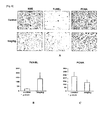
FIG 6 shows a histology and immunohistochemistry of tumor tissue. RK3E-ras-Luc cells were inoculated s.c. on the left flank of rats. 11b (5 mg/kg) was injected intravenously into the tumor bearing rats every other day beginning fromday 5. The rats were sacrificed on day 11.FIG 6(a) shows H&E staining of tumor sections (left), TUNEL assay on paraffin sections from solid tumor (middle), and immunohisto-chemical staining for PCNA (right),FIG 6(b) shows positive cells for TUNEL assay,FIG 6(c) shows positive cells for PCNA immunostaining. Cells were counted in triplicate. Columns, mean; bars, SD. - A new series of indirubin-3'-oxime derivatives with combined substitutions at 5' and 5 positions was designed and synthesized to improve the inhibitory potencies against CDK2/cyclin E, a target of anti-cancer agents including indirubin derivatives. The binding mode of 5'-substituted analogs with OH or halogens were predicted with a molecular docking study in the ATP binding site of CDK2, showing the critical interactions that might explain the improved CDK2 inhibitory activity.
- Structure-activity relationship analysis showed that OH and halogen groups were preferred to the electron donating groups such as CH3 and OCH3 at 5' position. Among the synthesized derivatives, 5'-hydroxy-5-nitro-indirubin-3'-oxime (11b) and 5'-fluoro-5-nitro -indirubin-3'-oxime (13b) displayed potent inhibitory activities against CDK2 with IC50 values of 1.9, 1.7 nM, respectively and anti-proliferative effects against several human cancer cell lines with IC50 values in the range of 0.2 ~ 3.3 µM. A study of kinase selectivity profile of 11b at 10 different receptor tyrosine kinase and serine/threonine kinase panel resulted in more than 500-fold selectivity for the inhibitory activity against CDK. The anti-cancer activity of 11b was further confirmed in-vivo xenograft animal model with i.v. administration of 5 mg/kg dose, showing 84% reduction of the tumor volume without loss of body weight compared with control animals. The mechanism of anti-tumor activity through the histological analysis was shown by the markers for apoptosis and proliferation, which were increased and decreased, respectively.
- Further, other analogs, such as, 5'-hydroxy-5-chloro-indirubin-3'-oxime (11a), 5'-hydroxy -5-fluoro-indirubin-3'-oxime (11c), 5'- chloro -5-nitro-indirubin-3'-oxime ( 12b) and 5'-methyl-5-nitro-indirubin-3'-oxime (14b) can be considered as effective anti-cancer agent.
- The present invention can be explained more concretely as follows.
- To address the enhanced anti-proliferative effect of
compound 2, a molecular docking study was carried out in the ATP binding site of CDK2 (FIG 2 ) using CDocker, a CHARMm-based molecular dynamics docking program (Discovery Studio 2.0).FIG 2(a) shows that the nitrogen at position 1', the carbonyl oxygen atposition 2, and the nitrogen atposition 1 ofcompound 2 maintain three hydrogen bonding interactions with the hinge segments (Gln81, Leu83) of ATP binding site. In addition, 3'-hydroxyl group of oxime moiety forms a hydrogen bonding with backbone carbonyl of Gln131 and 5-nitro group contributes to a salt bridge with the side chains of Lys33, Asp145.Fig 2(b) depicts the binding surface with electrostatic potential within 4Å around the ligand, 2 and 5'-Br group might be projected toward the outer aqueous space of ATP binding pocket where a positively charged amino acid residue, Lys89 is located as a virtual binding partner. It could be hypothesized that an additional electrostatic interaction of the lone pair electrons of 5'-Br group with the positively charged Lys89 residue might provide higher binding affinity with CDK2 and consequently contribute to the more potent anti-proliferative activity of 2, compared with a 5'-unsubstituted-indirubin-3'-oxime analog, 1. According to the data obtained by docking study, derivatization at 5'-position along with 5-substituents (Cl, NO2, F, and OCF3) may be ideal for the strategy of modifications on the indirubin scaffold to optimize the binding affinity for CDK2. - To investigate the structure-activity relationships at the 5' position of indirubin skeleton for CDK inhibitory and anti-proliferative activities, following groups were selected for the derivatizations 1) 5'-F, 5'-Cl, which can form similar electrostatic interaction with Lys89 as in the case of 5'-bromo anlalog, 2 2) 5'-OH to provide additional hydrogen bond with CDK2 and introduce hydrophilic character 3) 5'-OH3, 5'-CH3, expecting contrast effects compared with halogen substituted analogs.
- In fact, a docking model of a representative designed molecule, 5'-hydroxy-5-nitro-indirubin-3'-oxime derivative (11b) in the ATP binding site in CDK2 showed that new hydrogen bonding interaction might be formed between 5'-OH group of 11b and Asp86 in the solvent accessible region and the oxime moiety of 11b interacted with Ile10 instead of Gln131.
FIG 2(d) exhibited a binding surface with electrostatic potential within 4Å around 11b, indicating how the 5'-OH protrude into the outer aqueous surface, solvent accessible region. - For the synthesis of 5',5-substituted-3'-indirubin oxime derivatives, 5-substituted indoxyl N,O-diacetate 5a-d were prepared starting from corresponding 5-substituted anthranilic acids 3a-d (Scheme 1).

- Briefly, compounds 3a-d were subjected to the conditions of reductive alkylation with ethylglyoxalate, and subsequent hydrolysis to yield dicarboxylic acids 4a-d, which were finally cyclized in acetic anhydride to afford 5a-d. In the case of 5-hydroxy analog, the cyclized compound 5a was obtained as a tri-acetate form since the phenolic hydroxyl group was also acetylated under the condition of cyclization.
- In Moon, M. J. et al., Bioorg. Med. Chem. 2006, 14, 237-246, 5',5-substituted-3'-indirubin oxime derivatives, 11-14 were synthesized from the conjugate reaction of 5-substituted indoxyl N, O-diacetate 5a-d with various 5-substituted isatin analogs, 6a-d to yield 5',5-substituted indirubin derivatives, 7-10 under basic condition followed by the reaction of each indirubins 7-10 with hydroxylamine for the conversion of ketone into 3'-oxime groups (Scheme 2).

- 5'-Methoxy-5-substituted-3'-oxime compounds, 16a-c were synthesized from corresponding 5'-hydroxy-5-substituted indirubin derivatives, 15a-c by methylation of the phenolic hydroxyl groups and subsequent reaction with hydroxylamine (Scheme 3).

- 5',5-substituted-indirubin-3'-oxime derivatives were initially evaluated for their inhibitory activities against CDK1/cyclinB, CDK2/cyclinE in 1 µM (
FIG 3 ). 5-nitroindirubin-3'-oxime, 1 was tested together for the comparison of the effects of substitutions at the 5'-position. The inhibitory activity and selectivity of the compounds for CDK2 over CDK1 were turned out to be dependent on the 5'-substitutents at R1-position. In general, 5',5-substituted indirubin-3'-oxime derivatives presented potent inhibitory activities against CDK2 with more than 90% inhibitory potency in 1 µM, except for 12d, 16a-c. Especially, 5'-OH analogs, 11a-d showed the highest inhibitory potency against both of CDK1 and CDK2. Although the 5'-OH at R1 position resulted in decreased CDK2 selectivity over CDK1, this result may be important in the view of the concept that simultaneous inhibitor against CDK1 and CDK2 may have additional benefits in terms of anticancer activity, according to group the literatures. Moreover, substitution of 5'-hydroxyl group improved the water solubility, which has been a major drawback among the physicochemical properties of indirubin analogs. In contrast to 5'-OH-substituted indirubin-3'-oxime derivatives, 5'-chloro and 5'-fluoro substituted indirubin-3'-oxime derivatives, 12a-d and 13a-d, maintained potent CDK2 inhibitory activity with 6-10 fold selectivity over CDK1. For example, 5'-chloro-5-nitro-indirubin-3'-oxime, 12b was about 8 fold more potent against CDK2 than CDK1 (Table 1).Table 1. CDK2/cyclin E inhibitory activities of 5',5-substitutied indirubin-3'-oxime derivatives 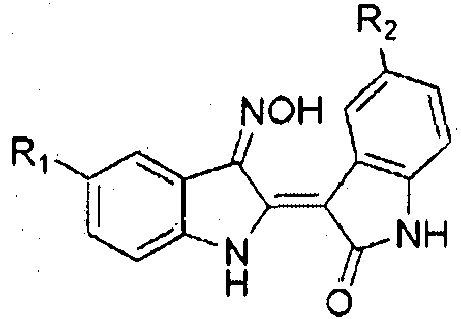
Compound R1 R2 IC50 (nM)a 11a OH Cl 5.27 11b OH NO2 1.91b 11c OH F 2.25 11d OH OCF3 8.32 12a Cl Cl 11.1 12b Cl NO2 23.5b 12c Cl F 10.1 12d Cl OCF3 76.2 13a F Cl 8.01 13b F NO2 1.71 13c F F 1.83 13d F OCF3 60.3 14b CH3 NO2 8.68 16a OCH3 NO2 2,950 16b OCH3 F 4,120 16c OCH3 OCF3 8,620 1 H NO2 7.35 - A series of indirubin derivatives were tested at ten concentrations in CDK2/cyclin E kinase assay, as described in the Experimental Section. IC50 values were calculated from the dose response curves. IC50 values of 11b and 12b in CDK1/cyline B kinase assay are 13 nM and 195 nM, respectively.
- The decreased potency of CDK1 inhibition by 5'-halogenations could be further supported by a report of 5'-bromo-5-nitro-indirubin-3'-oxime, 2, which showed decreased CDK1 inhibitory activity (IC50 = 190 nM) compared with 5-nitro-indirubin-3'-oxime, 1. Among the series of compounds with electron donating groups at 5' position, 14b with 5'-CH3 maintained potent CDK2 inhibitory activity with selectivity over CDK1 by 7-fold. However, 5'-OCH3 substituted derivatives (16a-c) displayed weak or no inhibitory activity against CDK1 and CDK2 in 1 µM.
- The structure-activity relationships of 5',5-indirubin-3'-oxime derivatives for their CDK2 inhibitory activities were analyzed with IC50 values. (Table 1) Most of the derivatives showed potent inhibitory activities with IC50 values of 1~70 nM, except for 5'-OCH3 derivatives, 16a-c. Regarding the effects of 5'-substituents at R1 position, the CDK2 inhibitory activities were increased by following order -OCH3 < -Cl < -H, -CH3 < -OH, -F. For example, 5'-chloro-substituted-indirubin-3'-
oxime compounds 12a-d showed 10-fold reduced CDK2 inhibitory activity (IC50 = 10~76 nM) than 5'-fluro-indirubin-3'-oxime derivatives, 13a-c (IC50 = 1~8 nM). An electron-donating group, 5'-OCH3 ?substituent (16a-c) displayed dramatically reduced CDK2 inhibitory activity with IC50 values of 2-8 µM, although another electron-donating group, 5'-CH3 - substituted indirubin-3'-oxime, 14b showed 270 fold enhanced inhibitory effect compared with 16b. Particularly, the mostpotent CDK2 inhibitors - The representative potent and selective CDK2 inhibitors, 11b and 12b were further evaluated against more diverse panel of kinases comprising of receptor tyrosine kinases and serine/threonine kinases (
FIG 4 ). 11b showed weak inhibitory activity only against Aurora A, IKKß and TrkA among the tested kinases, and the IC50 values were in the range of 1~10 µM. 12b displayed negligible inhibitory activities against all the tested kinase panel. Since the IC50 values of 11b and 12b against CDK1 and 2 are in the low nanomolar ranges, the kinase selectivity profile among the serine/threonine kinases and receptor tyrosine kinases tested in this study could be significantly favorable for CDK1 and CDK2. - The anti-proliferative activities of 5',5-substituted indirubin-3'-oxime derivatives against several cancer cell lines, A549, HT1080, HCT116, K562, SNU638, KB, MCF-7 were evaluated with an SRB assay and the IC50 values of cancer cell growth inhibition are summarized in Table 2. 5'-Bromo-5-nitro-indirubin-3'-oxime (2) and Roscovitin were tested together as a positive control in the assay.
Table 2. Anti-proliferative activities of 5',5-substitutied indirubin-3'-oxime derivatives on different human cancer cell lines 
Compound R1 R2 IC50 (µM) A549b HT1080c HCT116d K562e SNU638f KBg MCF-7h 11a OH Cl 16.4 2.92 3.5 12.2 5.14 10.2 10.7 11b OH NO2 3.33 0.45 0.44 0.91 1.03 1.3 1.2 11c OH F 4.09 0.68 1.66 1.4 2.11 4.6 2.6 11d OH OCF3 16.9 2.28 2.25 5.9 2.96 5.8 4.2 12a Cl Cl >20 12.2 1.86 17.2 2.57 11.9 6.1 12b Cl NO2 15.6 1.25 0.33 0.56 1.16 1.1 0.5 12c Cl F 18.9 3.62 1.7 14.7 2.28 3.6 3.5 12d Cl OCF3 >20 17.7 3.79 >20 2.71 2.8 4.2 13a F Cl >20 5.33 3.3 7.14 6.32 9.1 7 13b F NO2 0.57 0.64 0.28 0.46 0.94 0.9 0.9 13c F F 10.3 8.6 13.5 15.9 2.23 13.2 6.57 13d F OCF3 19.9 3.95 1.5 1.5 1.89 3.8 4.1 14a CH3 Cl >20 >20 18.8 >20 12.7 5.18 8.79 14b CH3 NO2 >20 3.92 1.41 0.8 1.06 2.1 1.06 14c CH3 F >20 >20 >20 >20 11.5 10.6 10.5 14d CH3 OCF3 >20 >20 >20 >20 >20 8.13 7.3 16a OCH3 NO2 >20 >20 >20 >20 >20 >20 >20 16b OCH3 F 6.71 4.84 3.59 5:29 13.6 >20 >20 16c OCH3 OCF3 >20 >20 >20 >20 >20 20 13 2i Br NO2 16.9 1.45 0.45 0.77 1.14 1.16 0.95 Roscovitini 14.7 16.8 17.8 >20 9.77 30.1 14.7 - a A series of indirubin derivatives were tested at five concentrations for their effects on various human cancer cell lines using SRB assay, as described in the Experimental Section. The IC50 (µM) values were calculated from dose response curves. b human lung cancer cell. c human fibro sarcoma cell. d human colon cancer cell. e human leukemia cell. f human stomach cancer cell. g human nasopharyngeal cancer cell. h human breast cancer cell. i Experiments was also performed with 2 and Roscovitin as positive control.
- The anti-proliferative activities of 5'-hydroxy derivatives, 11a-d is well correlated with the potency of their inhibitory activities against CDK2 depending on the substituents at the 5 position with following order NO2 > F > Cl, OCF3. Particularly, 5'-hydroxy-5-nitro-indirubin-3'-oxime, 11b displayed similar or improved inhibitory activity depending on the cancer cells, compared with 2, with IC50 values of ~0.4 µM against HT1080 and HCT 116 cell line. Among the compounds with replacement of 5'-bromo group of 2 by other halogen groups such as F and Cl, 5-nitro analogs, 12b and 13b showed more effective than 5'-bromo-5-nitro-indirubin-3'-
oxime compound 2, especially, against the proliferation of human colon cancer cells, HCT116, which has deregulated cyclinDl, with IC50 values of approximately 0.3 µM. - Particularly, 5'-fluoro-5-nitiro-indirubin-3'-oxime, 13b showed the most broad spectrum of inhibitory potency against all of the cancer cells (IC50 = 0.28 ~ 0.94 µM) with the correlation of its potent inhibitory activity of CDK2.
Compound 13b has an exclusive anti-proliferative activity with a nanomolar IC50 value against human lung cancer cells, A549 in contrast to the weak activities of most of other derivatives. However, indirubin-3'-oxime derivatives substituted with electron donating groups such as 5'-CH3, 5'-OCH3, 14 and 16 were very weak inhibitors against majority of the cancer cells, except for 5'-methyl-5-nitro-3'-oxime, 14b, of which anti-proliferative activities were in the range of 0.8 ~ 1 µM of IC50 values. Regarding the effect of substitutions at 5-position (R2), 5-NO2 group in combination with 5'-OH, Cl, F, CH3 showed the most potent anti-proliferative effect among the series of 5',5-disubsituted derivatives. This result is in good agreement with our previously published results23 and supported by the hypothesized binding mode of 2 and 11b, in which additional binding with a salt bridge might be formed between 5-nitro group and Asp145, Lys33 in the ATP binding site of CDK2. In the case of 5'-OCH3 derivatives, only 5-F substituted analog, 16b displayed moderate anti-proliferative activity, indicating different mechanism of action might be associated for this analog. The combined results in this study suggest an important insight that the 5'-hydroxyl or halogen groups could be favorable either to inhibit CDK and cancer cell growth possibly by forming additional hydrogen bonding interaction at the ATP binding site of CDK2. - To explore the effects of 5'-OH-5-nitro analog, 11b in vivo, a tumor xenograft animal model of Sprague Dawley (SD) rats, in which RK3E rat kidney cells harboring the k-ras and GFP/Luc gene were subcutaneously transplanted, was utilized as published by our group. Five days after the transplantation, 5 mg/kg of 11b was administered i.v. to the animal every other day for a total of five times with daily monitoring. The tumor volume was significantly decreased by about 84.3 % compared with control groups (
FIG 5(a) and FIG 5(b) ). There was no significant difference in body weight during the administration of 11b compared with control group (data not shown). Bioluminescence image obtained onday 10 after the treatment of 11b indicated that the luminescence intensity, an indicator of tumor growth, was significantly decreased (FIG 5(c) ). - Histological analysis showed that the untreated control solid tumor belonged to anaplastic undifferentiated carcinoma showing many mitotic figures, multifocal necrosis, and hemorrhage. However, 11b treated tumor led to extensive cell death (
FIG 6(a) , left). TUNEL-positive apoptotic cells were increased about 6.0 fold tissue from 11b treated animals compared with control tissue (FIG 6(a) middle, andFIG 6(b) ). On the other hand, the expression level of PCNA, a cell proliferation marker, was decreased in 11b treated animals as compared with control (FIG 6(a) right, andFIG 6(c) ). These results indicate that 11b suppresses tumor growth through inhibition of cell proliferation and activating apoptosis in vivo. - In summary, several novel 5',5-substituted-indirubin-3'-oxime compounds were developed as potent inhibitors against CDK1 and 2 with anti-proliferative activities in various cancer cell lines. The enhanced inhibitory activities of 5',5-substituted indirubin-3'-oxime derivatives, compared to 5'-unsubstituted indirubin-3'-oxime, 1 could be interpreted with a molecular docking study at the ATP binding site of CDK2 resulting in the determination of additional projection of the molecule toward solvent accessible region and interactions with presented amino acid residues of ATP binding pocket exemplified with 5'-hydroxy analog, 11b. Especially, 5'-hydroxy-5-nitro-indirubin-3'-oxime (11b) and 5'-fluoro-5-nitro-indirubin-3'-oxime ( 13b) were potent CDK2 inhibitors with IC50 values of 1.71 nM and 1.91 nM, respectively, as well as potent anti-proliferative agents for several human cancer cell lines with IC50 values in the range of 0.2 ~ 3.3 µM. Structure-activity relationship analysis showed that OH and halogen groups were preferred to the electron donating groups such as 5'-CH3, 5'-OCH3 at 5' position. A representative analog, 5'-hydroxy-5-nitro-indirubin-3'-oxime (11b) displayed more than 500-fold selectivity of the inhibitory activity against CDK over selected kinase panel and significant in-vivo anti-cancer activities as well. The information resulted from this study could be expected to contribute to the development of CDK inhibitor based drug design and clinical applications.
- Further, other analogs, such as, 5'-hydroxy-5-chloro-indirubin-3'-oxime (11a), 5'-hydroxy -5-fluoro-indirubin-3'-oxime (11c), 5'- chloro -5-nitro-indirubin-3'-oxime ( 12b) and 5'-methyl-5-nitro-indirubin-3'-oxime (14b) can be considered as effective anti-cancer agent.
- The present invention can be explained more concretely by following examples. However, the scope of present invention shall not be interpreted by limiting following examples.
- 1H NMR spectra were determined with a JEOL JNM-LA 300WB spectrometer at 300 MHz or JEOL JNM-ECX 400P spectrometer at 400MHz , and spectra were taken in CDCl3 or DMSO-d 6 or Acetone-d6 . Unless otherwise noted, chemical shifts are expressed as ppm downfield from internal tetramethylsilane, or relative ppm from DMSO (2.5 ppm), Acetone (2.04 ppm). Mass spectroscopy was carried out on electrospray and high-resolution mass spectra (m/z) were recorded on a FAB, EI [JEOL: mass range 2600amu, 10 kV acceleration)] and ESI. High-resolution mass analysis was performed at Korea Basic Science Institute (Daegu).
- The purity of all final products was determined by HPLC (at least 95% purity unless otherwise noted). The determination of purity was performed on a Shimadzu SCL-10A VP HPLC system using a Shimadzu Shim-pack C18 analytical column (250 mm 4.6 mm, 5 m, 100Å in linear gradient solvent systems. Solvent system was H2O: CH3CN = 65:35 to 5:95 over 30 min at a flow rate = 1 mL/min. Peaks were detected by UV absorption using a diode array detector.
- To a solution of 5-substituted anthranilic acid (1.0g, 6.45 mmol) in 50 ml of methanol was added 0.5 ml of acetic acid, followed by ethyl glyoxalate (1 ml, 9.7 mmol) and NaCNBH3 (609.5 mg, 9.7 mmol). The reaction mixture was stirred for 3h at room temperature. Then the methanol was removed by evaporation. The residue was taken up in solution of saturated NH4Cl in water and extracted with ethyl acetate. The combined extracts were dried over sodium sulfate, filtered and evaporated. The product was purified by silica gel column chromatography (CH3Cl: methanol = 30:1) and then these product (1.4 g, 5.8 mmol) was hydrolyzed in 25 ml of 1 N NaOH(aq) and 10 ml of methanol. The reaction mixture was stirred for 1 h at room temperature and the resulting solution was acidified by 1N HCl. The precipitate formed was collected by filtration and washed with water. Obtained di-acid compounds, 4a-d (1.2 g, 4.97 mmol) was added in acetic anhydride (15 ml) and Na2CO3 (1.3 g, 12.4 mmol). The reaction mixture was refluxed for 4h. The product was extracted with ethyl acetate and washed with water. The combined extracts were dried over sodium sulfate, filtered and evaporated. The product was purified by silica gel column chromatography (Hexane: Ethyl acetate = 2:1).
- 1H NMR (CDCl3, 300 MHz, ppm, J in Hz) 8.46 (1H, d, J = 9.3 Hz), 7.76 (1H, s), 7.30 (1H, d, J = 2.4 Hz), 7.11 (1H, dd, J = 9.3, 2.4 Hz), 2.67 (3H, s), 2.36 (3H, s), 2.31 (3H, s). ESI [M-H]- : 273.83.
- 1H NMR (CDCl3, 400 MHz, ppm, J in Hz) 8.40 (1H, d, J = 8.8 Hz), 7.75 (1H, s), 7.53 (1H, d, J = 2 Hz), 7.34 (1H, dd, J = 8.8, 2 Hz), 2.61 (3H, s), 2.39 (3H, s). ESI [M-H]-: 249.83.
- 1H NMR (CDCl3, 400 MHz, ppm, J in Hz) 8.42 (1H, m), 7.75 (1H, s), 7.19 (1H, dd, J = 8.2, 2.4 Hz), 7.10 (1H, td, J = 8.8, 2.4 Hz), 2.59 (3H, s), 2.37 (3H, s). ESI [M-H]-: 233.88.
- 1H NMR (CDCl3, 400 MHz, ppm, J in Hz) 8.31 (1H, d, J = 7.6 Hz), 7.65 (1H, s), 7.31 (1H, s), 7.19 (1H, d, J = 7.6 Hz), 2.57 (3H, s), 2.44 (3H, s), 2.36 (3H, s). ESI [M-H]- : 229.80.
- To a solution of isatin analogs (77 mg, 0.425 mmol) in methanol (5 ml) were added 5-substituted indoxy N, O diacetate (100 mg, 0.425 mmol) and the mixture was stirred for 5 min. Anhydrous Na2CO3 (112.5 mg, 1.06 mmol) was added, and the stirring was continued for 3h at room temperature. The dark precipitate was filtered and washed with cold water, and dried under reduced pressure to give derivatives of 5 ,5-substituted indirubin, 7-10. The appropriate indirubin derivative (10 mg, 0.032 mmol) was dissolved in pyridine (0.3 ml) and added hydroxylamine hydrochloride (6.6 mg, 0.095 mmol). The reaction mixture was heated under reflux at 120°C for 2h. After cooling, the product was acidified with 1N HCl. The precipitation was filtered and washed with water to afford quantitatively the corresponding 3'-oxime selectively in a (2'Z, 3'E) form. The product was purified by silica gel column chromatography (Chloroform: Methanol = 20:1).
- 1H NMR (DMSO, 400 MHz, ppm, J in Hz) 11.71 (1H, s, N-H), 10.78 (1H, s, N'-H), 9.27 (1H, s, O-H), 8.59 (1H, d, J = 2 Hz, H-4), 7.74 (1H, d, J = 2 Hz, H-4'), 7.24 (1H, d, J = 8.4 Hz, H-7), 7.11 (1H, dd, J = 8, 2 Hz, H-6'), 6.87 (1H, d, J = 8.4 Hz, H-6), 6.85 (1H, d, J = 8 Hz, H-7'). HRMS (EI) [M]+(C16H10ClN3O3): calcd 327.0411 found 327.0408. Purity 92%.
- 1H NMR (DMSO, 300 MHz, ppm, J in Hz) 13.87 (1H, s, NOH), 11.78 (1H, s, N-H), 11.35 (1H, s, N'-H), 9.41 (1H, d, J = 2.8 Hz, H-4), 9.32 (1H, s, O-H), 8.05 (1H, dd, J = 11.6, 2.8 Hz, H-6), 7.76 (1H, d, J = 3.2 Hz, H-4'), 7.29 (1H, d, J = 11.6 Hz, H-7), 7.04 (1H, d, J = 11.2 Hz, H-7'), 6.86 (1H, dd, J = 11.2, 3.2 Hz, H-6'). HRMS (EI) [M]+(C16 H10N4O5): calcd 338.0651 found 338.0648.
- 1H NMR (DMSO, 400 MHz, ppm, J in Hz) 11.69 (1H, s, N-H), 10.66 (1H, s, N'-H), 9.25 (1H, s, O-H), 8.42 (1H, dd, J = 11.4, 2.8 Hz, H-6), 7.73 (1H, d, J = 2.4 Hz, H-4'), 7.24 (1H, d, J = 8.4 Hz, H-6'), 6.81-6.99 (3H, m, H-7', H-4, H-7). HRMS (EI) [M]+(C 16H10FN3O3): calcd 311.0706 found 311.0707. Purity 93%.
- 1H NMR (DMSO, 400 MHz, ppm, J in Hz) 11.70 (1H, s, N-H), 10.78 (1H, s, N'-H), 9.22 (1H, s, O-H), 8.50 (1H, s, H-4), 7.70 (1H, d, J = 2 Hz, H-4'), 7.21 (1H, d, J = 8.8 Hz, H-7'), 7.03 (1H, d, J = 8.4 Hz, H-7), 6.88 (1H, d, J = 8.4 Hz, H-6), 6.80 (1H, dd, J = 8.8, 2.4 Hz, H-6'). HRMS (ESI) [M-H] - (C17H9F3N3O4): calcd 376.0545 found 376.0546.
- 1H NMR (acetone, 300 MHz, ppm, J in Hz) 13.05 (1H, s, NOH), 11.82 (1H, s, N-H), 9.81 (1H, s, N'-H), 8.67 (1H, s, H-4), 8.35 (1H, d, J = 1.8 Hz, H-4'), 7.45 (2H, m, H-6, H-7), 7.16 (1H, d, J = 8.4 Hz, H-6'), 6.97 (1H, d, J = 8.4 Hz, H-7'). HRMS (EI) [M]+(C 16H9Cl2N3O3): calcd 345.0072 found 345.0075.
- 1H NMR (DMSO, 400 MHz, ppm, J in Hz) 11.98 (1H, s, N-H), 11.39 (1H, s, N'-H), 9.45 (1H, s, H-4), 8.25 (1H, s, H-4'), 8.08 (1H, d, J = 7.6 Hz, H-6), 7.50 (2H, m, H-6', H-7), 7.05 (1H, d, J = 8.4 Hz, H-7'). HRMS (ESI) [M-H]- (C16H8ClN4O4): calcd 355.0234 found 355.0242.
- 1H NMR (acetone, 300 MHz, ppm, J in Hz) 12.96 (1H, s, NOH), 11.78 (1H, s, N-H), 9.71 (1H, s, N'-H), 8.41 (1H, d, J = 11.4 Hz, H-7), 8.32 (1H, s, H-4), 7.40-7.50 (2H, m, H-4', H-6'), 6.88-6.91 (2H, m, H-6, H-7'). HRMS (ESI) [M-H]- (C16H8ClFN3O2): calcd 328.0289 found 328.0291.
- 1H NMR (acetone, 300 MHz, ppm, J in Hz) 13.02 (1H, s, NOH), 11.82 (1H, s, N-H), 9.88 (1H, s, N'-H), 8.63 (1H, s, H-4), 8.34 (1H, d, J = 2.1 Hz, H-4'), 7.47 (2H, m, H-6, H-7), 7.11 (1H, d, J = 8.4 Hz, H-6'), 7.03 (1H, d, J = 8.4 Hz, H-7'). HRMS (ESI) [M-H] - (C17H8ClF3N3O3): calcd 394.0206 found 394.0215.
- 1H NMR (DMSO, 400 MHz, ppm, J in Hz) 11.81 (1H, s, N-H), 10.85 (1H, s, N'-H), 8.62 (1H, d, J = 2.4 Hz, H-4), 7.97 (1H, dd, J = 8.2, 2.4 Hz, H-6), 7.47 (1H, m, H-4'), 7.31 (1H, m, H-7), 7.15 (1H, dd, J = 8.4, 2 Hz, H-6'), 6.88 (1H, d, J = 8.4 Hz, H-7'). HRMS (ESI) [M-H]- (C16H8ClFN3O2): calcd 328.0289 found 328.0295.
- 1H NMR (DMSO, 400 MHz, ppm, J in Hz) 11.89 (1H, s, N-H), 11.40 (1H, s, N'-H), 9.43 (1H, d, J = 2 Hz, H-4), 8.08 (1H, dd, J = 8.6, 2 Hz, H-6), 8.00 (1H, dd, J = 8.6, 2 Hz, H-7), 7.51 (1H, m, H-4'), 7.33 (1H, td, J = 9, 2.8 Hz, H-6'), 7.06 (1H, d, J = 8.4 Hz, H-7'). HRMS (EI) [M]+ (C16H9FN4O4): calcd 340.0608 found 340.0610.
- 1H NMR (DMSO, 400 MHz, ppm, J in Hz) 11.76 (1H, s, N-H), 10.68 (1H, s, N'-H), 8.41 (1H, dd, J = 11.2, 2.4 Hz, H-4), 7.93 (1H, dd, J = 8.8, 2.4 Hz, H-4'), 7.39 (1H, m, H-7), 7.30 (1H, td, J = 8.8, 2 Hz, H-6), 6.93 (1H, td, J = 9, 2.4 Hz, H-6'), 6.84 (1H, m, H-7'). HRMS (EI) [M]+(C16H9F2N3O2): calcd 313.0663 found 313.0666. Purity 93%.
- 1H NMR (DMSO, 400 MHz, ppm, J in Hz) 12.02 (1H, s, N-H), 10.72 (1H, s, N'-H), 8.59 (1H, s, H-4), 8.02 (1H, dd, J = 8.8, 2.4 Hz, H-6), 7.41 (1H, m, H-4'), 7.18 (1H, td, J = 9.2, 2 Hz, H-6), 7.00 (1H, d, J = 8.4 Hz, H-7), 6.9 (1H, d, J = 8.4 Hz, H-7'). HRMS (FAB) (C17H9O3N3F4): calcd 379.0579 found 379.0580.
- 1H NMR (DMSO, 400 MHz, ppm, J in Hz) 11.85 (1H, s, N-H), 10.76 (1H, s, N'-H), 8.64 (1H, s, H-4), 8.10 (1H,s, H-4'), 7.29 (1H, d, J = 8.4 Hz, H-6), 7.20 (1H, d, J = 8.4 Hz, H-7), 7.10 (1H, d, J = 8.2 Hz, H-6'), 6.86 (1H, d, J = 8.4 Hz, H-7'), 2.31 (3H, s, CH 3). HRMS (EI) [M]+(C17H12ClN3O2): calcd 325.0618 found 325.0623.
- 1H NMR (DMSO, 400 MHz, ppm, J in Hz) 11.87 (1H, s, N-H), 11.38 (1H, s, N'-H), 9.46 (1H, d, J = 2.4 Hz, H-4), 8.11 (1H,s, H-4'), 8.07 (1H, dd, J = 8, 2.4 Hz, H-6), 7.37 (1H, d, J = 8 Hz, H-7), 7.26 (1H, d, J = 8.8 Hz, H-6'), 7.05 (1H, d, J = 8.8 Hz, H-7'), 2.32 (3H, s, CH3). HRMS (ESI) [M-H] - (C17H11N4O4): calcd 335.0780 found 335.0787. Purity 93%.
- 1H NMR (DMSO, 400 MHz, ppm, J in Hz) 11.78 (1H, s, N-H), 10.61 (1H, s, N'-H), 8.43 (1H, dd, J = 11.2, 2.4 Hz, H-4), 8.06 (1H,s, H-4'), 7.26 (1H, d, J = 8.4 Hz, H-7), 7.17 (1H, d, J = 8 Hz, H-7'), 6.86 (1H, td, J = 8.4, 2.4 Hz, H-6), 6.80 (1H, d, J = 8 Hz, H-6'), 2.28 (3H, s, CH3). HRMS (EI) [M]+(C17H12FN3O2): calcd 309.0914 found 309.0912.
- 1H NMR (DMSO, 400 MHz, ppm, J in Hz) 11.80 (1H, s, N-H), 10.87 (1H, s, N'-H), 8.59 (1H, d, J = 2 Hz, H-4), 8.09 (1H,s, H-4'), 7.34 (1H, d, J = 8.4 Hz, H-6), 7.25 (1H, d, J = 8 Hz, H-7), 7.10 (1H, d, J = 7.4 Hz, H-6'), 6.94 (1H, d, J = 8.4 Hz, H-7'), 2.33 (3H, s, CH3). HRMS (EI) [M]+ (C18H12F3N3O3): calcd 375.0831 found 375.0833.
- To a solution of 5'-hydroxy-indirubin analogs, 7d (10 mg, 0.028 mmol) in acetone (1 ml) were dropped methyl iodide (17 L, 0.276 mmol) and added K2CO3 (19 mg, 0.138 mmol) and the stirring was continued for 4h at room temperature. The dark precipitate was filtered and washed with cold water, and dried under reduced pressure to give derivatives of 5'-methoxy-5-substituted indirubin, 15c. The appropriate indirubin derivative (6 mg, 0.016 mmol) was dissolved in pyridine (0.3 ml) and added hydroxylamine hydrochloride (3.4 mg, 0.048 mmol). The reaction mixture was heated under reflux at 120°C for 1h. After cooling, the product was acidified with 1N HCl. The precipitation was filtered and washed with water to afford quantitatively the corresponding 3'-oxime selectively in a (2'Z, 3'E) form. The product was purified by silica gel column chromatography (Hexane: Ethyl acetate = 2:1).
- 1H NMR (DMSO, 400 MHz, ppm, J in Hz) 11.82(1H, s, N-H), 9.46 (1H, d, J = 2.4 Hz, H-4), 9.33 (1H, s, N'-H), 8.12 (1H, dd, J = 8.4, 2.4 Hz, H-6), 7.77 (1H, d, J = 2.4 Hz, H-4'), 7.30 (1H, d, J = 8.4 Hz, H-7), 7.24 (1H, d, J = 9.2 Hz, H-7'), 6.85 (1H, dd, J = 7.8, 2.4 Hz, H-6'), 3.39 (3H, s, OCH3). HRMS (ESI) [M-H]- (C17H11N4O5): calcd 351.0729 found 351.0724. Purity 94%.
- 1H NMR (DMSO, 400 MHz, ppm, J in Hz) 11.68 (1H, s, N-H), 9.22 (1H, s, N'-H), 8.44 (1H, m, H-4), 7.70 (1H, d, J = 2.4 Hz, H-4'), 7.21 (1H, d, J = 8.8 Hz, H-6), 6.96 (2H, m, H-7, H-7'), 6.79 (1H, dd, J = 8.6, 2.4 Hz, H-6'), 3.26 (3H, s, OCH3). HRMS (EI) [M]+ (C17H12FN3O3): calcd 325.0863 found 325.0859.
- 1H NMR (acetone, 400 MHz, ppm, J in Hz) 11.70 (1H, s, N-H), 8.62 (1H, s, H-4), 8.28 (1H, s, N'-H), 7.90 (1H, d, J = 2.4 Hz, H-4'), 7.24 (1H, d, J = 8.4 Hz, H-6), 7.12 (1H, m, H-7'), 7.04 (1H, d, J = 8.4 Hz, H-7), 6.99 (1H, dd, J = 8.4, 2.4 Hz, H-6'), 3.33 (3H, s, OCH3). HRMS (EI) [M]+ (C18H12F3N3O4): calcd 391.0780 found 391.0782.
- Molecular docking was performed using CDocker, a CHARMm-based molecular dynamics docking algorithm on Discovery Studio 2.0 (Accelrys). The CDK2 structure co-crystallized with 5-bromo-indirubin was obtained from the PDB data bank (PDB code: 2BHE).A protein clean process and a CHARMm-force field were sequentially applied. The area around 5-bromo-indirubin was chosen as the active site, with the radius set as at 8A. After removing the ligandfrom the structure of the complex, a binding sphere in the three axis directions was constructed around the active site. All default parameters were used in the docking process. CHARMm-based molecular dynamics (1,000 steps) were used to generate
random ligand 11b conformations and the position of anyligand 11b was optimized in the binding site using rigid body rotation followed by simulated annealing at 700K. Final energy minimization was set as the full potential mode. The final binding conformation of 11 was determined on the basis of energy. Docking study ofligand - CDK1/cyclin B, CDK2/cyclin E were purchased from Milipore (Billerica, MA). The kinase activity was tested in buffer (8 mM MOPS pH 7.0, 0.2 mM EDTA, 10 mM MgAcetate), with 0.1 mg/mL histone H1, in the presence of 45 M [-33P] ATP (500 cpm/pmol) for CDK1 or 120µM [γ-33P] ATP (500 cpm/pmol) for CDK2 in a final reaction volume of 25µM. The reaction was initiated by the addition of the MgATP mix. After incubation for 40 min at 30°C, the reaction was stopped by the addition of 5 µL of 3% phosphoric acid solution. 10 µL aliquots of supernatant were spotted onto 2.5 cm x 3 cm pieces of Whatman P30 phosphocellulose paper, and 20 s later, the filters were washed three times for 5 min in 75 mM phosphoric acid and once in methanol prior to drying. The wet filters were counted in the presence of 1 mL of ACS (Amersham) scintillation fluid. The activities are usually expressed as a percentage of the maximal activity, i.e., in the absence of inhibitors. Controls were applied with appropriate dilutions of DMSO.
- Inhibition of kinase activity against a variety of recombinant kinases (c-Met, Met M1250T, Ron, VEGF2, EGFR, TrkA, PI3Kγ, IKKβ Insulin receptor, Aurora A) was measured using homogeneous time-resolved fluorescence (HTRF) assays. Briefly, assays are based on the phosphorylation of peptide substrates in the presence of ATP. Resulting phosphorylated substrates are detected by TR-FRET (Time Resolved-Fluorescence Resonance Energy Transfer) signal. Recombinant proteins containing kinase domain were purchased from Millipore (Billerica, MA). Optimal enzyme, ATP, and substrate concentrations were established for each enzyme using HTRF KinEASE kit (Cisbio) according to the manufacturer's instruction. Assays are consisted of enzymes mixed with serially diluted compounds and peptide substrates in kinase reaction buffer (250 mM HEPES (pH 7.0), 0.5 mM orthovanadate, 0.05% BSA, 0.1% NaN3). Following the addition of reagents for detection, TR-FRET signal was measured using EnVision multi-label reader (Perkin Elmer, Waltham, MA).
- Cells (A549, HT1080, HCT116, K562, SNU638, KB, MCF-7) were counted, diluted to 5 x 10⁴ cells/mL with fresh medium (MEME, DMEM or RPMI containing 10% FBS), and added 190 µL of cell suspension to 96-well plates containing various concentrations of test compounds (10 µL in 10% aqueous DMSO). Test plates were incubated for 3 days at 37°C in CO2 incubator. For zero day controls, cells were incubated for 30 min at 37°C in CO2 incubator. All treatments were performed in triplicate. After the incubation periods, cells were fixed with 50 µL of cold 50% TCA at 4°C for 30 min, washed 5 times with tap water, and air-dried. The fixed cells were stained with 0.4% SRB solution in 1% aqueous acetic acid at room temperature for 1 h. Free SRB solution was then removed by rinsing 5 times with 1% acetic acid, and air-dried. The bound dye was dissolved with 200 L of 10 mM Tris-base (pH 10.0), and absorbance was determined at 515 nm using an ELISA microplate reader. Finally, the absorbance values obtained with each of the treatment procedures were averaged, and the average values obtained with the zero day control were subtracted. These results were expressed as a percentage, relative to solvent treated control incubations, and IC50 values were calculated using non-linear regression analysis (percent survival versus concentration).
- The k-ras -transformed rat kidney epithelial cell line (RK3E-ras) were maintained in DMEM supplemented with 10% FCS, 100 units/mL penicillin, and 100 Ag/mL streptomycin. RK3E-ras cells were kindly provided by Dr. Eric Fearon (University of Michigan Medical School, Ann Arbor, MI) and have been described in the previous report. Male SD rats (6 weeks of age) were used to examine the inhibition of tumor growth in vivo. RK3E-ras-Luc cells (5 x 10⁶) were implanted subcutaneously into the flank of the rats on
Day 0, and rats were grouped randomly (5 mice/group) onDay 5 as previously described. A solution of 11b in a mixture of PEG400, EtOH and DW (30:33:37, 3 mg/mL, 5 mg/kg) were delivered intravenously in a non-anesthesia state every other day for a total of five times. The animals were sacrificed 48 hr after the final administration, and rat weights and tumor volumes were measured. The tumor growth volumes were calculated as follows: V = (ab 2) / 2, where, a is the longest diameter and b is theshortest diameter of the tumor. All experiments were conducted under protocols approved by the Animal Care and Use Committee at Chosun University School of Dentistry (Gwangju, South Korea). - For bioluminescence imaging, the rats received an i.p. injection ofluciferin (Molecular Probes, Palo Alto, CA) with Rumpun/ketamine (1:1) anesthesia. The rats wereimaged using a LAS-1000 plus imaging System (Fuji film. Tokyo. Japan) to record the bioluminescent signal emitted from the tumor.The LAS-1000 system equipped with a CCD camera was used for acquisition of the emittedlight, and Living Image software (Multi Gauge v3.0) was usedfor data analysis.
- The excisedsolid tumors were fixed in 10% buffered formalin and embeddedin paraffin. For optical microscopic examinations, 4-µm sectionedtissues were stained with H&E.Immunohistochemical staining was performed with the avidin-biotin complex method using anti-PCNA antibodies. The immune reactions werevisualized with 3,3'-diaminobenzidine and counterstained withMayer's hematoxylin. A TUNEL assay was performed using an ApopTag PlusPeroxidase In Situ Apoptosis Detection kit (Intergen, Purchase,NY) according to the manufacturer's instructions. Briefly, the slides were deparaffinized and treated with 20µg/mL proteinaseK at 37°C for 15 min to enhance staining. After immersionin 3% hydrogen peroxide to block the endogenous peroxidase,the slides were incubated with a reaction buffer containing terminal deoxynucleotidyl transferase at 37°C for 1 h. The slides werethen incubated with a peroxidase-conjugated anti-digoxigenin antibodyfor 30 min, and the reaction products were visualized with a 0.03 %3,3'-diaminobenzidine solution containing 2 mM hydrogenperoxide. The slides were counterstained with 0.5 % methyl green..
Claims (6)
- An indirubin-3'-oxime derivative compound as cyclin dependent kinase inhibitor with anti-cancer activity represented by formula (I)
 R1 is selected from F, Cl, OH or CH3R2 is selected from F, Cl or NO2
 - The indirubin-3'-oxime derivative compound according to claim 1, wherein it comprises that R1 is OH and R2 is NO2 ;
- The indirubin-3'-oxime derivative compound according to claim 1, wherein it comprises that R1 is F and R2 is NO2.
- The indirubin-3'-oxime derivative compound according to claim 1,
wherein i) a compound comprises that R1 is OH and R2 is Cl, ii) a compound comprises that R1 is OH and R2 is F, iii) a compound comprises that R1 is Cl and R2 is NO2, and iv) a compound comprises that R1 is CH3 and R2 is NO2. - The indirubin-3'-oxime derivative compound according to claim 1, wherein said indirubin-3'-oxime derivative compound has an anti-cancer activity against human lung cancer cell line, human fibro sarcoma cell line, human colon cancer cell line, human leukemia cell line, human stomach cancer cell line, human nasopharyngeal cancer cell line and/or human breast cancer cell line.
- An anti-cancer composition comprising said indirubin-3'-oxime derivative compound and pharmaceutically acceptable carrier.
Applications Claiming Priority (2)
| Application Number | Priority Date | Filing Date | Title |
|---|---|---|---|
| KR1020100010715A KR101180030B1 (en) | 2010-02-05 | 2010-02-05 | Indirubin-3'-oxime derivatives as potent cyclin dependent kinase inhibitors with anti-cancer activity |
| PCT/KR2011/000611 WO2011096676A2 (en) | 2010-02-05 | 2011-01-28 | Indirubin-3'-oxime derivatives as potent cyclin dependent kinase inhibitors |
Publications (3)
| Publication Number | Publication Date |
|---|---|
| EP2531488A2 EP2531488A2 (en) | 2012-12-12 |
| EP2531488A4 EP2531488A4 (en) | 2013-07-24 |
| EP2531488B1 true EP2531488B1 (en) | 2015-12-09 |
Family
ID=44355925
Family Applications (1)
| Application Number | Title | Priority Date | Filing Date |
|---|---|---|---|
| EP11739972.5A Active EP2531488B1 (en) | 2010-02-05 | 2011-01-28 | Indirubin-3'-oxime derivatives as potent cyclin dependent kinase inhibitors |
Country Status (6)
| Country | Link |
|---|---|
| US (1) | US8859783B2 (en) |
| EP (1) | EP2531488B1 (en) |
| JP (1) | JP5795004B2 (en) |
| KR (1) | KR101180030B1 (en) |
| ES (1) | ES2562820T3 (en) |
| WO (1) | WO2011096676A2 (en) |
Families Citing this family (11)
| Publication number | Priority date | Publication date | Assignee | Title |
|---|---|---|---|---|
| AU2013234955A1 (en) | 2012-03-23 | 2014-11-13 | Dennis Brown | Compositions and methods to improve the therapeutic benefit of indirubin and analogs thereof, including meisoindigo |
| WO2014066840A1 (en) * | 2012-10-26 | 2014-05-01 | Regents Of The University Of Minnesota | Aurora kinase inhibitors |
| CN103333161B (en) * | 2013-05-28 | 2015-09-30 | 滁州市洛达生物科技有限公司 | The preparation of 1 '-oxo Indirubin and purposes |
| KR101493324B1 (en) * | 2013-07-11 | 2015-02-16 | 연세대학교 산학협력단 | Composition comprising an indirubin derivative for stimulating bone growth |
| KR101819544B1 (en) * | 2016-11-25 | 2018-01-17 | 애니젠 주식회사 | Breast cancer therapeutic agent containing 5'-hydroxy-5-nitro-indirubin-3'-oxime as active ingredient |
| KR101855423B1 (en) * | 2017-04-18 | 2018-05-09 | 주식회사 씨케이바이오텍 | A composition comprising 5,6-dichloroindirubin-3'-methoxime and 5-methoxylindirubin-3'-oxime |
| CN108721279B (en) * | 2017-04-19 | 2021-06-29 | 安尼根有限公司 | Breast cancer therapeutic agent comprising 5 '-hydroxy-5-nitro-indirubin-3' -oxime as active ingredient |
| US10487054B2 (en) | 2017-04-21 | 2019-11-26 | Regents Of The University Of Minnesota | Therapeutic compounds |
| JP7005779B2 (en) * | 2017-10-31 | 2022-02-10 | ペレメッド カンパニー リミテッド | Pharmaceutical composition for the prevention or treatment of acute myeloid leukemia or metastatic breast cancer |
| ES3004338T3 (en) | 2018-09-10 | 2025-03-12 | Mirati Therapeutics Inc | Combination therapies |
| CN110305056A (en) * | 2019-05-22 | 2019-10-08 | 西北大学 | New derivatives of indirubin and their medicinal uses |
Family Cites Families (3)
| Publication number | Priority date | Publication date | Assignee | Title |
|---|---|---|---|---|
| ES2194468T3 (en) | 1998-05-29 | 2003-11-16 | Centre Nat Rech Scient | USE OF INDIGOID BISINDOL DERIVATIVES FOR THE MANUFACTURE OF A MEDICINAL PRODUCT FOR INHIBITING CYCLINE DEPENDENT KINASES. |
| KR100588803B1 (en) | 2004-01-27 | 2006-06-12 | 학교법인조선대학교 | Indirubin derivatives with anticancer activity in cancer cell lines |
| EP2376626A4 (en) * | 2008-12-13 | 2012-10-17 | Dna Microarray | MICROENVIRONMENT NICHE ASSAY FOR CiPS SCREENING |
-
2010
- 2010-02-05 KR KR1020100010715A patent/KR101180030B1/en active Active
-
2011
- 2011-01-28 US US13/576,105 patent/US8859783B2/en active Active
- 2011-01-28 EP EP11739972.5A patent/EP2531488B1/en active Active
- 2011-01-28 WO PCT/KR2011/000611 patent/WO2011096676A2/en not_active Ceased
- 2011-01-28 ES ES11739972.5T patent/ES2562820T3/en active Active
- 2011-01-28 JP JP2012551909A patent/JP5795004B2/en not_active Expired - Fee Related
Also Published As
| Publication number | Publication date |
|---|---|
| JP5795004B2 (en) | 2015-10-14 |
| JP2013518874A (en) | 2013-05-23 |
| KR20110091074A (en) | 2011-08-11 |
| EP2531488A2 (en) | 2012-12-12 |
| US20120295948A1 (en) | 2012-11-22 |
| KR101180030B1 (en) | 2012-09-05 |
| US8859783B2 (en) | 2014-10-14 |
| WO2011096676A3 (en) | 2011-12-15 |
| EP2531488A4 (en) | 2013-07-24 |
| WO2011096676A2 (en) | 2011-08-11 |
| ES2562820T3 (en) | 2016-03-08 |
Similar Documents
| Publication | Publication Date | Title |
|---|---|---|
| US8859783B2 (en) | Indirubin-3′-oxime derivatives as potent cyclin dependent kinase inhibitors | |
| Choi et al. | 5, 5′-substituted indirubin-3′-oxime derivatives as potent cyclin-dependent kinase inhibitors with anticancer activity | |
| Hassan et al. | Design, synthesis, anticancer evaluation, enzymatic assays, and a molecular modeling study of novel pyrazole–indole hybrids | |
| Shi et al. | Quinoxalinone as a privileged platform in drug development | |
| Banerji et al. | Synthesis of triazole-substituted quinazoline hybrids for anticancer activity and a lead compound as the EGFR blocker and ROS inducer agent | |
| Tan et al. | Nuclear permeable ruthenium (II) β-carboline complexes induce autophagy to antagonize mitochondrial-mediated apoptosis | |
| Martins et al. | DNA and BSA binding and cytotoxic properties of copper (II) and iron (III) complexes with arylhydrazone of ethyl 2-cyanoacetate or formazan ligands | |
| CA3172987A1 (en) | Small molecule inhibitors of oncogenic chd1l with preclinical activity against colorectal cancer | |
| El-Kalyoubi et al. | Design and synthesis of new spirooxindole candidates and their selenium nanoparticles as potential dual Topo I/II inhibitors, DNA intercalators, and apoptotic inducers | |
| Abd El-Lateef et al. | Design and synthesis of 2-(4-bromophenyl) quinoline-4-carbohydrazide derivatives via molecular hybridization as novel microbial DNA-gyrase inhibitors | |
| Rohilla et al. | A review on indole-triazole molecular hybrids as a leading edge in drug discovery: current landscape and future perspectives | |
| Aziz et al. | Design, synthesis and mechanistic study of N-4-Piperazinyl Butyryl Thiazolidinedione derivatives of ciprofloxacin with Anticancer Activity via Topoisomerase I/II inhibition | |
| Lu et al. | Design, synthesis, anticancer activity and molecular docking of quinoline-based dihydrazone derivatives | |
| Soliman et al. | Novel Benzimidazole‐1, 2, 3‐Triazole Hybrids: Synthesis, Dual Antimicrobial, Anticancer Activity, Mechanistic Insights, and Computational Studies | |
| Bagul et al. | Benzimidazole-linked pyrazolo [1, 5-a] pyrimidine conjugates: Synthesis and detail evaluation as potential anticancer agents | |
| Telukuntla et al. | 1, 2, 3-Triazole–[1, 2, 4] triazolo [3, 4-b][1, 3, 4] thiadiazine hybrids: A switch for improvement of antibreast cancer activity targeting epidermal growth factor receptor | |
| Salem et al. | Novel 3‐Substituted‐2H‐Chromene Scaffold Based Fluorinated Hydrophobic Fragment as In‐Vitro Antiproliferative Agents and Apoptosis Inducers Targeting Both VEGFR‐2/BRAFV600E and h‐DHFR With Molecular Docking Simulation | |
| Allawi et al. | New Indole‐6‐Carboxylic Acid Derivatives as Multi‐Target Antiproliferative Agents: Synthesis, in Silico Studies, and Cytotoxicity Evaluation | |
| Braga et al. | Nitroaromatic-based triazene prodrugs to target the hypoxic microenvironment in glioblastoma | |
| Chandrakar et al. | Synthesis of Benzimidazole Based 1, 2, 4‐Triazole Derivatives as Potential Anticancer Agents: In Silico Techniques | |
| Kassab | Benzotriazole scaffold: an overview of antiproliferative potential, mechanisms of action, and structure–activity relationships | |
| Seliem | Design, eco-friendly synthesis, and molecular docking studies of isatin hybrids as promising therapeutic agents (anticancer, anticholinesterase inhibitor, α-glucosidase inhibitor, and anti-MRSA) | |
| Ali et al. | Exploring the antiproliferative and proapoptotic activities of new pyridopyrimidine derivatives and their analogs | |
| Khatir et al. | Pharmacologic Activities of 5, 6-Diaryl/heteroaryl-3-substituted-1, 2, 4-triazines as a Privileged Scaffold in Drug Development | |
| Huan et al. | New Acetohydrazides Incorporating 2‐Oxoindoline and 4‐Oxoquinazoline: Synthesis and Evaluation of Cytotoxicity and Caspase Activation Activity |
Legal Events
| Date | Code | Title | Description |
|---|---|---|---|
| PUAI | Public reference made under article 153(3) epc to a published international application that has entered the european phase |
Free format text: ORIGINAL CODE: 0009012 |
|
| 17P | Request for examination filed |
Effective date: 20120904 |
|
| AK | Designated contracting states |
Kind code of ref document: A2 Designated state(s): AL AT BE BG CH CY CZ DE DK EE ES FI FR GB GR HR HU IE IS IT LI LT LU LV MC MK MT NL NO PL PT RO RS SE SI SK SM TR |
|
| DAX | Request for extension of the european patent (deleted) | ||
| A4 | Supplementary search report drawn up and despatched |
Effective date: 20130621 |
|
| RIC1 | Information provided on ipc code assigned before grant |
Ipc: A61K 31/4155 20060101ALI20130617BHEP Ipc: A61P 35/00 20060101ALI20130617BHEP Ipc: C07D 209/38 20060101AFI20130617BHEP Ipc: C07D 403/04 20060101ALI20130617BHEP Ipc: A61K 31/404 20060101ALI20130617BHEP |
|
| 17Q | First examination report despatched |
Effective date: 20140319 |
|
| GRAP | Despatch of communication of intention to grant a patent |
Free format text: ORIGINAL CODE: EPIDOSNIGR1 |
|
| INTG | Intention to grant announced |
Effective date: 20150617 |
|
| GRAS | Grant fee paid |
Free format text: ORIGINAL CODE: EPIDOSNIGR3 |
|
| GRAA | (expected) grant |
Free format text: ORIGINAL CODE: 0009210 |
|
| AK | Designated contracting states |
Kind code of ref document: B1 Designated state(s): AL AT BE BG CH CY CZ DE DK EE ES FI FR GB GR HR HU IE IS IT LI LT LU LV MC MK MT NL NO PL PT RO RS SE SI SK SM TR |
|
| REG | Reference to a national code |
Ref country code: GB Ref legal event code: FG4D |
|
| REG | Reference to a national code |
Ref country code: AT Ref legal event code: REF Ref document number: 764512 Country of ref document: AT Kind code of ref document: T Effective date: 20151215 Ref country code: CH Ref legal event code: EP |
|
| REG | Reference to a national code |
Ref country code: IE Ref legal event code: FG4D |
|
| REG | Reference to a national code |
Ref country code: FR Ref legal event code: PLFP Year of fee payment: 6 |
|
| REG | Reference to a national code |
Ref country code: DE Ref legal event code: R096 Ref document number: 602011021841 Country of ref document: DE |
|
| REG | Reference to a national code |
Ref country code: ES Ref legal event code: FG2A Ref document number: 2562820 Country of ref document: ES Kind code of ref document: T3 Effective date: 20160308 |
|
| REG | Reference to a national code |
Ref country code: LT Ref legal event code: MG4D |
|
| REG | Reference to a national code |
Ref country code: NL Ref legal event code: MP Effective date: 20151209 |
|
| PG25 | Lapsed in a contracting state [announced via postgrant information from national office to epo] |
Ref country code: LT Free format text: LAPSE BECAUSE OF FAILURE TO SUBMIT A TRANSLATION OF THE DESCRIPTION OR TO PAY THE FEE WITHIN THE PRESCRIBED TIME-LIMIT Effective date: 20151209 Ref country code: NO Free format text: LAPSE BECAUSE OF FAILURE TO SUBMIT A TRANSLATION OF THE DESCRIPTION OR TO PAY THE FEE WITHIN THE PRESCRIBED TIME-LIMIT Effective date: 20160309 |
|
| REG | Reference to a national code |
Ref country code: AT Ref legal event code: MK05 Ref document number: 764512 Country of ref document: AT Kind code of ref document: T Effective date: 20151209 |
|
| PG25 | Lapsed in a contracting state [announced via postgrant information from national office to epo] |
Ref country code: RS Free format text: LAPSE BECAUSE OF FAILURE TO SUBMIT A TRANSLATION OF THE DESCRIPTION OR TO PAY THE FEE WITHIN THE PRESCRIBED TIME-LIMIT Effective date: 20151209 Ref country code: SE Free format text: LAPSE BECAUSE OF FAILURE TO SUBMIT A TRANSLATION OF THE DESCRIPTION OR TO PAY THE FEE WITHIN THE PRESCRIBED TIME-LIMIT Effective date: 20151209 Ref country code: NL Free format text: LAPSE BECAUSE OF FAILURE TO SUBMIT A TRANSLATION OF THE DESCRIPTION OR TO PAY THE FEE WITHIN THE PRESCRIBED TIME-LIMIT Effective date: 20151209 Ref country code: FI Free format text: LAPSE BECAUSE OF FAILURE TO SUBMIT A TRANSLATION OF THE DESCRIPTION OR TO PAY THE FEE WITHIN THE PRESCRIBED TIME-LIMIT Effective date: 20151209 Ref country code: LV Free format text: LAPSE BECAUSE OF FAILURE TO SUBMIT A TRANSLATION OF THE DESCRIPTION OR TO PAY THE FEE WITHIN THE PRESCRIBED TIME-LIMIT Effective date: 20151209 Ref country code: BE Free format text: LAPSE BECAUSE OF NON-PAYMENT OF DUE FEES Effective date: 20160131 Ref country code: GR Free format text: LAPSE BECAUSE OF FAILURE TO SUBMIT A TRANSLATION OF THE DESCRIPTION OR TO PAY THE FEE WITHIN THE PRESCRIBED TIME-LIMIT Effective date: 20160310 |
|
| PG25 | Lapsed in a contracting state [announced via postgrant information from national office to epo] |
Ref country code: IS Free format text: LAPSE BECAUSE OF FAILURE TO SUBMIT A TRANSLATION OF THE DESCRIPTION OR TO PAY THE FEE WITHIN THE PRESCRIBED TIME-LIMIT Effective date: 20151209 |
|
| PG25 | Lapsed in a contracting state [announced via postgrant information from national office to epo] |
Ref country code: CZ Free format text: LAPSE BECAUSE OF FAILURE TO SUBMIT A TRANSLATION OF THE DESCRIPTION OR TO PAY THE FEE WITHIN THE PRESCRIBED TIME-LIMIT Effective date: 20151209 |
|
| PG25 | Lapsed in a contracting state [announced via postgrant information from national office to epo] |
Ref country code: SM Free format text: LAPSE BECAUSE OF FAILURE TO SUBMIT A TRANSLATION OF THE DESCRIPTION OR TO PAY THE FEE WITHIN THE PRESCRIBED TIME-LIMIT Effective date: 20151209 Ref country code: IS Free format text: LAPSE BECAUSE OF FAILURE TO SUBMIT A TRANSLATION OF THE DESCRIPTION OR TO PAY THE FEE WITHIN THE PRESCRIBED TIME-LIMIT Effective date: 20160409 Ref country code: PT Free format text: LAPSE BECAUSE OF FAILURE TO SUBMIT A TRANSLATION OF THE DESCRIPTION OR TO PAY THE FEE WITHIN THE PRESCRIBED TIME-LIMIT Effective date: 20160411 Ref country code: AT Free format text: LAPSE BECAUSE OF FAILURE TO SUBMIT A TRANSLATION OF THE DESCRIPTION OR TO PAY THE FEE WITHIN THE PRESCRIBED TIME-LIMIT Effective date: 20151209 Ref country code: LU Free format text: LAPSE BECAUSE OF FAILURE TO SUBMIT A TRANSLATION OF THE DESCRIPTION OR TO PAY THE FEE WITHIN THE PRESCRIBED TIME-LIMIT Effective date: 20160128 Ref country code: EE Free format text: LAPSE BECAUSE OF FAILURE TO SUBMIT A TRANSLATION OF THE DESCRIPTION OR TO PAY THE FEE WITHIN THE PRESCRIBED TIME-LIMIT Effective date: 20151209 Ref country code: SK Free format text: LAPSE BECAUSE OF FAILURE TO SUBMIT A TRANSLATION OF THE DESCRIPTION OR TO PAY THE FEE WITHIN THE PRESCRIBED TIME-LIMIT Effective date: 20151209 Ref country code: RO Free format text: LAPSE BECAUSE OF FAILURE TO SUBMIT A TRANSLATION OF THE DESCRIPTION OR TO PAY THE FEE WITHIN THE PRESCRIBED TIME-LIMIT Effective date: 20151209 |
|
| REG | Reference to a national code |
Ref country code: CH Ref legal event code: PL |
|
| REG | Reference to a national code |
Ref country code: DE Ref legal event code: R097 Ref document number: 602011021841 Country of ref document: DE |
|
| PG25 | Lapsed in a contracting state [announced via postgrant information from national office to epo] |
Ref country code: MC Free format text: LAPSE BECAUSE OF FAILURE TO SUBMIT A TRANSLATION OF THE DESCRIPTION OR TO PAY THE FEE WITHIN THE PRESCRIBED TIME-LIMIT Effective date: 20151209 |
|
| PLBE | No opposition filed within time limit |
Free format text: ORIGINAL CODE: 0009261 |
|
| STAA | Information on the status of an ep patent application or granted ep patent |
Free format text: STATUS: NO OPPOSITION FILED WITHIN TIME LIMIT |
|
| PG25 | Lapsed in a contracting state [announced via postgrant information from national office to epo] |
Ref country code: PL Free format text: LAPSE BECAUSE OF FAILURE TO SUBMIT A TRANSLATION OF THE DESCRIPTION OR TO PAY THE FEE WITHIN THE PRESCRIBED TIME-LIMIT Effective date: 20151209 Ref country code: CH Free format text: LAPSE BECAUSE OF NON-PAYMENT OF DUE FEES Effective date: 20160131 Ref country code: LI Free format text: LAPSE BECAUSE OF NON-PAYMENT OF DUE FEES Effective date: 20160131 Ref country code: DK Free format text: LAPSE BECAUSE OF FAILURE TO SUBMIT A TRANSLATION OF THE DESCRIPTION OR TO PAY THE FEE WITHIN THE PRESCRIBED TIME-LIMIT Effective date: 20151209 |
|
| REG | Reference to a national code |
Ref country code: IE Ref legal event code: MM4A |
|
| 26N | No opposition filed |
Effective date: 20160912 |
|
| PG25 | Lapsed in a contracting state [announced via postgrant information from national office to epo] |
Ref country code: SI Free format text: LAPSE BECAUSE OF FAILURE TO SUBMIT A TRANSLATION OF THE DESCRIPTION OR TO PAY THE FEE WITHIN THE PRESCRIBED TIME-LIMIT Effective date: 20151209 |
|
| REG | Reference to a national code |
Ref country code: FR Ref legal event code: PLFP Year of fee payment: 7 |
|
| PG25 | Lapsed in a contracting state [announced via postgrant information from national office to epo] |
Ref country code: BE Free format text: LAPSE BECAUSE OF FAILURE TO SUBMIT A TRANSLATION OF THE DESCRIPTION OR TO PAY THE FEE WITHIN THE PRESCRIBED TIME-LIMIT Effective date: 20151209 |
|
| PG25 | Lapsed in a contracting state [announced via postgrant information from national office to epo] |
Ref country code: IE Free format text: LAPSE BECAUSE OF NON-PAYMENT OF DUE FEES Effective date: 20160128 |
|
| PG25 | Lapsed in a contracting state [announced via postgrant information from national office to epo] |
Ref country code: IT Free format text: LAPSE BECAUSE OF NON-PAYMENT OF DUE FEES Effective date: 20160128 |
|
| PG25 | Lapsed in a contracting state [announced via postgrant information from national office to epo] |
Ref country code: IT Free format text: LAPSE BECAUSE OF NON-PAYMENT OF DUE FEES Effective date: 20160128 Ref country code: MT Free format text: LAPSE BECAUSE OF FAILURE TO SUBMIT A TRANSLATION OF THE DESCRIPTION OR TO PAY THE FEE WITHIN THE PRESCRIBED TIME-LIMIT Effective date: 20151209 |
|
| PGRI | Patent reinstated in contracting state [announced from national office to epo] |
Ref country code: IT Effective date: 20170710 |
|
| REG | Reference to a national code |
Ref country code: FR Ref legal event code: PLFP Year of fee payment: 8 |
|
| PG25 | Lapsed in a contracting state [announced via postgrant information from national office to epo] |
Ref country code: CY Free format text: LAPSE BECAUSE OF FAILURE TO SUBMIT A TRANSLATION OF THE DESCRIPTION OR TO PAY THE FEE WITHIN THE PRESCRIBED TIME-LIMIT Effective date: 20151209 Ref country code: HU Free format text: LAPSE BECAUSE OF FAILURE TO SUBMIT A TRANSLATION OF THE DESCRIPTION OR TO PAY THE FEE WITHIN THE PRESCRIBED TIME-LIMIT; INVALID AB INITIO Effective date: 20110128 |
|
| PG25 | Lapsed in a contracting state [announced via postgrant information from national office to epo] |
Ref country code: HR Free format text: LAPSE BECAUSE OF FAILURE TO SUBMIT A TRANSLATION OF THE DESCRIPTION OR TO PAY THE FEE WITHIN THE PRESCRIBED TIME-LIMIT Effective date: 20151209 Ref country code: MT Free format text: LAPSE BECAUSE OF FAILURE TO SUBMIT A TRANSLATION OF THE DESCRIPTION OR TO PAY THE FEE WITHIN THE PRESCRIBED TIME-LIMIT Effective date: 20160131 Ref country code: MK Free format text: LAPSE BECAUSE OF FAILURE TO SUBMIT A TRANSLATION OF THE DESCRIPTION OR TO PAY THE FEE WITHIN THE PRESCRIBED TIME-LIMIT Effective date: 20151209 Ref country code: TR Free format text: LAPSE BECAUSE OF FAILURE TO SUBMIT A TRANSLATION OF THE DESCRIPTION OR TO PAY THE FEE WITHIN THE PRESCRIBED TIME-LIMIT Effective date: 20151209 |
|
| PG25 | Lapsed in a contracting state [announced via postgrant information from national office to epo] |
Ref country code: BG Free format text: LAPSE BECAUSE OF FAILURE TO SUBMIT A TRANSLATION OF THE DESCRIPTION OR TO PAY THE FEE WITHIN THE PRESCRIBED TIME-LIMIT Effective date: 20151209 |
|
| PG25 | Lapsed in a contracting state [announced via postgrant information from national office to epo] |
Ref country code: AL Free format text: LAPSE BECAUSE OF FAILURE TO SUBMIT A TRANSLATION OF THE DESCRIPTION OR TO PAY THE FEE WITHIN THE PRESCRIBED TIME-LIMIT Effective date: 20151209 |
|
| REG | Reference to a national code |
Ref country code: DE Ref legal event code: R082 Ref document number: 602011021841 Country of ref document: DE Representative=s name: D YOUNG & CO LLP, DE |
|
| PGFP | Annual fee paid to national office [announced via postgrant information from national office to epo] |
Ref country code: IT Payment date: 20210115 Year of fee payment: 11 |
|
| PGFP | Annual fee paid to national office [announced via postgrant information from national office to epo] |
Ref country code: ES Payment date: 20210212 Year of fee payment: 11 |
|
| REG | Reference to a national code |
Ref country code: ES Ref legal event code: FD2A Effective date: 20230331 |
|
| PG25 | Lapsed in a contracting state [announced via postgrant information from national office to epo] |
Ref country code: ES Free format text: LAPSE BECAUSE OF NON-PAYMENT OF DUE FEES Effective date: 20220129 |
|
| PGFP | Annual fee paid to national office [announced via postgrant information from national office to epo] |
Ref country code: DE Payment date: 20240123 Year of fee payment: 14 |
|
| PGFP | Annual fee paid to national office [announced via postgrant information from national office to epo] |
Ref country code: FR Payment date: 20250116 Year of fee payment: 15 |
|
| PGFP | Annual fee paid to national office [announced via postgrant information from national office to epo] |
Ref country code: GB Payment date: 20250115 Year of fee payment: 15 |
|
| REG | Reference to a national code |
Ref country code: DE Ref legal event code: R119 Ref document number: 602011021841 Country of ref document: DE |
|
| PG25 | Lapsed in a contracting state [announced via postgrant information from national office to epo] |
Ref country code: IT Free format text: LAPSE BECAUSE OF NON-PAYMENT OF DUE FEES Effective date: 20220128 |
|
| PG25 | Lapsed in a contracting state [announced via postgrant information from national office to epo] |
Ref country code: DE Free format text: LAPSE BECAUSE OF NON-PAYMENT OF DUE FEES Effective date: 20250801 |