EP2530934A2 - Image processing apparatus and interpolation frame generating method - Google Patents
Image processing apparatus and interpolation frame generating method Download PDFInfo
- Publication number
- EP2530934A2 EP2530934A2 EP12004153A EP12004153A EP2530934A2 EP 2530934 A2 EP2530934 A2 EP 2530934A2 EP 12004153 A EP12004153 A EP 12004153A EP 12004153 A EP12004153 A EP 12004153A EP 2530934 A2 EP2530934 A2 EP 2530934A2
- Authority
- EP
- European Patent Office
- Prior art keywords
- screen edge
- pixel
- input signal
- motion vector
- interpolation
- Prior art date
- Legal status (The legal status is an assumption and is not a legal conclusion. Google has not performed a legal analysis and makes no representation as to the accuracy of the status listed.)
- Granted
Links
Images



Classifications
-
- H—ELECTRICITY
- H04—ELECTRIC COMMUNICATION TECHNIQUE
- H04N—PICTORIAL COMMUNICATION, e.g. TELEVISION
- H04N7/00—Television systems
- H04N7/01—Conversion of standards, e.g. involving analogue television standards or digital television standards processed at pixel level
- H04N7/0135—Conversion of standards, e.g. involving analogue television standards or digital television standards processed at pixel level involving interpolation processes
- H04N7/014—Conversion of standards, e.g. involving analogue television standards or digital television standards processed at pixel level involving interpolation processes involving the use of motion vectors
Definitions
- the present invention relates to an image processing apparatus and an interpolation frame generating method that generate an interpolation frame between frames of an input image.
- the present invention has been made for solving the above problem. It is an object of the present invention to provide an image processing apparatus and an interpolation frame generating method capable of precisely carrying out the interpolation even at a screen edge.
- an image processing apparatus includes: an input unit that inputs an input signal; a frame memory that frame-delays the input signal input by the input unit and outputs the input signal as a delayed input signal; a motion vector detector that detects a motion vector between frames based on the input signal input by the input unit and the delayed input signal; a screen edge detector that detects a pixel corresponding to a screen edge in the input signal input by the input unit; and an interpolation frame generator that generates an interpolation frame from the input signal input by the input unit and the delayed input signal, based on the motion vector detected by the motion vector detector and the pixel corresponding to the screen edge detected by the screen edge detector, wherein when the motion vector points a pixel located outside with respect to the pixel corresponding to the screen edge, the interpolation frame generator generates the interpolation frame using the pixel corresponding to the screen edge or a pixel located inside with respect to the pixel corresponding to the screen edge.
- an interpolation frame generating method includes: inputting an input signal; generating a delayed input signal from the input signal; detecting a motion vector between frames based on the input signal and the delayed input signal; detecting a pixel corresponding to a screen edge in the input signal; and generating an interpolation frame from the input signal and the delayed input signal based on the motion vector detected by the motion vector detecting and the pixel corresponding to the screen edge detected by the screen edge detecting, wherein when the motion vector points a pixel located outside with respect to the pixel corresponding to the screen edge, the interpolation frame generating generates the interpolation frame using the pixel corresponding to the screen edge or a pixel located inside with respect to the pixel corresponding to the screen edge.
- the motion vector points the region outside the screen edge
- it is so controlled that the motion vector points the screen-edge thereby making it possible to provide an image processing apparatus and an interpolation frame generating method which are capable of precisely carrying out the interpolating at the screen edge also.
- Fig. 2 is a structural diagram of an image processing apparatus according to a first embodiment.
- This image processing apparatus is a television or the like that inserts an interpolation frame between frames of an input signal and outputs the signal.
- the image processing apparatus includes an input unit 101, a frame memory 102, a motion vector detector 103, a screen edge detector 104, an interpolation frame generator 106 and an output unit 107.
- the input unit 101 receives an input signal such as an image.
- the frame memory 102 delays the input signal input by the input unit 101, by one frame or a plurality of frames, and then outputs the input signal as a delayed input signal.
- the motion vector detector 103 detects a motion vector between frames based on the input signal input by the input unit 101 and the frame-delayed signal delayed by the frame memory 102.
- the screen edge detector 104 detects a screen edge of the input signal input by the input unit 101.
- the interpolation frame generator 106 generates an interpolation frame between frames based on the motion vector detected by the motion vector detector 103 and the screen edge detected by the screen edge detector 104, and properly inserts the generated interpolation frame between the frames of the input signal.
- the output unit 107 outputs output signals in which the interpolation frame generated by the interpolation frame generator 106 is properly inserted between the frames constituting the input signal.
- the screen edge detector 104 essentially detects, as pixels (or positions) that constitute a screen edge, upper-lower and right-left edges of an effective pixel region of the input signal.
- pixels or positions
- pixels shifted inward by an arbitrary number of pixels (within the effective pixel region) from the pixels at the upper-lower and right-left edges of the effective pixel region (the edges of the effective pixel region) may be detected as the screen edge.
- the "screen edge” is an edge portion of the screen, which more specifically denotes pixels at the upper-lower and right-left edges of the effective pixel region or pixels shifted inward by an arbitrary number of pixels from the upper-lower and right-left edges of the effective pixel region.
- a motion vector detected from the previous frame 0f and subsequent frame 1f is denoted by a broken line.
- a pixel I9 in the previous frame 0f has moved to a position of a pixel I9 in the subsequent frame 1f.
- An interpolation pixel I9' in the interpolation f is generated from the pixel I9 in the previous frame 0f and the pixel I9 in the subsequent frame 1f, and is positioned in the middle between the position of the pixel I9 in the previous frame 0f and the position of the pixel I9 in the subsequent frame 1f.
- Apixel I10 in the previous frame 0f has moved to a position of a pixel I10 in the subsequent frame 1f.
- the pixel I10 in the subsequent frame 1f is located outside the screen: In this case, when a pixel I10' in the interpolation f is generated, a problem occurs in which no usable original pixel is present since the pixel I10 in the subsequent frame 1f is an outside-screen pixel.
- a pixel used as an interpolation source of the interpolation pixels in the special processing region may be the screen-edge pixel (pixel at the outermost edge within the screen) or the pixel located inside with respect to the screen-edge pixel. Since the screen-edge pixel has the highest correlation to the outside-screen pixels among pixels within the screen, the screen-edge pixel is preferable as the pixel of the interpolation source.
- the screen-edge pixel or the pixel located inside with respect to the screen-edge pixel (pixel I9 in the first embodiment) is adopted as the interpolation sources.
- the screen-edge pixel I9 has the highest correlation with the pixels I10 to I13 located outside the screen among the pixels within the screen, and thus, adopting the screen-edge pixel I9 as the interpolation source can reduce the processing difference at the boundary between the ordinary processing region and the special processing region.
- the image processing apparatus it is so controlled that the screen-edge pixel or the pixel located inside with respect to the screen-edge pixel is used as the interpolation source when the motion vector points the region located outside the screen edge, thus making it possible to precisely carry out the interpolating at the screen edge also.
- Fig. 5 is a structural diagram of an image processing apparatus according to a second embodiment.
- This image processing apparatus is basically similar to the first embodiment except that a screen edge vector controller 105 is provided for controlling a motion vector detected by the motion vector detector 103.
- the screen edge vector controller 105 controls such that the motion vector points a screen-edge pixel or a pixel located inside with respect to the screen-edge pixel.
- an interpolation frame generator 106' generates an interpolation frame using the screen-edge pixel or the pixel located inside with respect to the screen-edge pixel.
- the screen edge vector controller 105 does not carry out the processing when a motion vector points a pixel within the screen.
- the motion vector points a region located outside the screen edge
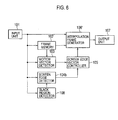
- Fig. 6 is a structural diagram of an image processing apparatus according to a third embodiment.
- This image processing apparatus is basically similar to the first embodiment except that a black region detector 108 is provided for detecting a black region (region occupied by black) within the effective pixel region of the input signal. Further, a screen edge detector 104b treats the black region detected by the black region detector 108 as a region located outside the screen, and detects a pixel located inside with respect to the black region as the screen-edge pixel.
- the black region detector 108 when the black region detector 108 detects the black region at the upper-lower and the right-left edges within the effective pixel region, it treats the black region as a region located outside the screen. For example, in images such as movie, there may be cases in which the upper and lower parts of the screen are cut. Further, when viewing an image generated at an aspect ratio of 4 : 3 in a display having an aspect ratio of 16 : 9, there may be cases in which right and left parts of the image are cut. In these cases, as shown in Fig. 7 , it is made such that a screen edge El can be set in accordance with the cut region.
- the image processing apparatus As described above, with the image processing apparatus according to the third embodiment, it is so made that a part located inside with respect to the black region within the effective pixel region of the input signal is detected as the screen edge, and thus, a pixel in this black region is not used for the interpolation. By this, the interpolation can be precisely carried out at the screen edge even when the black region is present within the effective pixel region.
- Fig. 8 is a structural diagram of the image processing apparatus according to a fourth embodiment.
- This image processing apparatus is basically similar to the first embodiment except that, as shown in Fig. 8 , an interpolation ratio controller 109 is provided for controlling an interpolation ratio based on a motion vector detected by the motion vector detector 103 and a screen edge detected by the screen edge detector 104b.
- the interpolation ratio is defined as a use ratio of two frames of the interpolation source. In other words, it is defined as a use ratio of two pixels in generating the interpolation pixel.
- the interpolation frame generator 106' generates the interpolation frame based on the interpolation ratio from the interpolation ratio controller 109.
- the interpolation frame generation processing according to the fourth embodiment will be described below in detail. Since reliability of the interpolation increases as the correlation becomes higher, the pixel having the high correlation is adopted for the interpolation at a ratio similar to that of the ordinary processing while the pixel having the low correlation is adopted for the interpolation at a lower ratio.
- FIG. 9 A specific example is shown in Fig. 9 .
- the outermost edge pixel I15 within the screen of the subsequent frame 1f and the four pixels I16 to I19 located outside the screen of the subsequent frame 1f have the correlations from being high to being low according to the mutual distances. That is, when a motion vector points the outside-screen pixel (for example, I16) which is close to the screen edge, the correlation between the outside-screen pixel I16 pointed by the motion vector and the screen-edge pixel I15 is high.
- the interpolation is carried out by using the previous frame 0f and subsequent frame 1f at a ratio close to that of the ordinary processing.
- the interpolation pixel of the ordinary processing is generated at a mixture ratio of 1 : between a pixel of the previous frame 0f becoming the interpolation source and a pixel of the subsequent frame 1f becoming the interpolation source.
- the motion vector points the outside-screen pixel (for example, I19) that is away from the screen edge
- the correlation between the outside-screen pixel I19 pointed by the motion vector and the screen-edge pixel I15 is low.
- the interpolation is carried out by lowering the ratio of the subsequent frame 1f where the motion vector points a region located outside the screen, than the ratio of the previous frame 0f.
- the correlation is lower as the distance between the outside-screen pixel originally pointed by the motion vector and the screen-edge pixel becomes greater. And it is made such that the use ratio of the frame regarded to have a low correlation is lowered relative to the interpolation ratio of the other frame.
- the interpolation ratio is controlled based on the motion vector and the screen edge. This increases the use ratio of the pixel having a high correlation and decreases the use ratio of the pixel having a low correlation, thereby making it possible to suppress the use of the pixel having low reliability and to make a gradual change of the correlation.
- the interpolation ratio is controlled based on the distance between the screen-edge pixel and the outside-screen pixel which is pointed by the motion vector.
- the interpolation ratio controller 109 may control the interpolation ratio based on the vector quantity of the motion vector. In this case, a similar effect can be achieved by considering that the correlation becomes lower as the vector quantity becomes larger. In another possibility, the interpolation ratio controller 109 may control the interpolation ratio based on a degree of accuracy or reliability in the detection of the motion vector. In this case, a similar effect can be achieved by considering that the correlation becomes lower as the accuracy or reliability becomes lower.
Landscapes
- Engineering & Computer Science (AREA)
- Multimedia (AREA)
- Signal Processing (AREA)
- Television Systems (AREA)
Abstract
Description
- The present invention relates to an image processing apparatus and an interpolation frame generating method that generate an interpolation frame between frames of an input image.
- Recently, in an image processing apparatus such as television, it is becoming common to insert an interpolation frame between frames of an input image and to output the image. In this way, the image is output at a frame rate higher than the input frame rate, which provides a moving image which is smooth and has a small blurring. It is common that the interpolation frame to be inserted is generated based on the previous and subsequent frames and a motion vector between the frames which is estimated from the difference between continuous frames of the input image (see Patent Literature 1 : Japanese Unexamined Patent Application Publication No.
2008-245135 2010-278760 - Incidentally, in a case of generating each pixel of an interpolation frame, it is assumed that a target pixel is present in a frame of interpolation source. Thus, when a target pixel is not present in a frame of interpolation source, precision of interpolation will be lowered. This generates a frame which provides a feeling of strangeness to a viewer of the image. Such feeling of strangeness remarkably occurs at the screen edge (edge portion of the screen).
- That is, when an object is moving at the screen edge, there may be a case where the original pixel is not present on the screen in one of the previous and subsequent frames, which are the interpolation source of the interpolation frame, by the object fading in or out of the screen and going outside of the screen. If the outside-screen pixel is used for the interpolation source as is, an interpolation error may occur since an ordinary image data is generally not present outside the screen.
- Thus, according to the Patent Literature 1, in order to avoid using the outside-screen pixels as the interpolation source, only one of the previous and subsequent frames is used as the interpolation source at the screen edge. That is, as shown in
Fig. 1 , a pixel of thesubsequent frame 1f where a motion vector denoted by a broken line points the outside-screen pixel is not used, and only a pixel of the previous frame 0f where a motion vector points the inside-screen pixel is used. In this method, when the detection precision of the motion vector is not high, a sharp change occurs at the boundary between the interpolation pixel generated by using two frames and the interpolation pixel generated by using only one frame, which enhances a risk of causing the feeling of strangeness felt by the viewer of the image. - The present invention has been made for solving the above problem. It is an object of the present invention to provide an image processing apparatus and an interpolation frame generating method capable of precisely carrying out the interpolation even at a screen edge.
- For solving the above problem, an image processing apparatus according to an embodiment of the present invention includes: an input unit that inputs an input signal; a frame memory that frame-delays the input signal input by the input unit and outputs the input signal as a delayed input signal; a motion vector detector that detects a motion vector between frames based on the input signal input by the input unit and the delayed input signal; a screen edge detector that detects a pixel corresponding to a screen edge in the input signal input by the input unit; and an interpolation frame generator that generates an interpolation frame from the input signal input by the input unit and the delayed input signal, based on the motion vector detected by the motion vector detector and the pixel corresponding to the screen edge detected by the screen edge detector, wherein when the motion vector points a pixel located outside with respect to the pixel corresponding to the screen edge, the interpolation frame generator generates the interpolation frame using the pixel corresponding to the screen edge or a pixel located inside with respect to the pixel corresponding to the screen edge.
- For solving the above problem, an interpolation frame generating method according to an embodiment of the present invention includes: inputting an input signal; generating a delayed input signal from the input signal; detecting a motion vector between frames based on the input signal and the delayed input signal; detecting a pixel corresponding to a screen edge in the input signal; and generating an interpolation frame from the input signal and the delayed input signal based on the motion vector detected by the motion vector detecting and the pixel corresponding to the screen edge detected by the screen edge detecting, wherein when the motion vector points a pixel located outside with respect to the pixel corresponding to the screen edge, the interpolation frame generating generates the interpolation frame using the pixel corresponding to the screen edge or a pixel located inside with respect to the pixel corresponding to the screen edge.
- According to the present invention, when the motion vector points the region outside the screen edge, it is so controlled that the motion vector points the screen-edge, thereby making it possible to provide an image processing apparatus and an interpolation frame generating method which are capable of precisely carrying out the interpolating at the screen edge also.
-
-
Fig. 1 is a drawing that illustrates an interpolation frame generation processing according to a conventional technology. -
Fig. 2 is a structural diagram of an image processing apparatus according to a first embodiment of the present invention. -
Fig. 3 is a drawing that illustrates an interpolation frame generation processing according to the first embodiment of the present invention. -
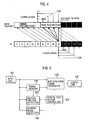
Fig. 4 is a drawing that illustrates a correlation between screen-edge pixels and outside-screen pixels according to the first embodiment of the present invention. -
Fig. 5 is a structural diagram of an image processing apparatus according to a second embodiment of the present invention. -
Fig. 6 is a structural diagram of an image processing apparatus according to a third embodiment of the present invention. -
Fig. 7 is a drawing that illustrates a black region according to the third embodiment of the present invention. -
Fig. 8 is a structural diagram of an image processing apparatus according to a fourth embodiment of the present invention. -
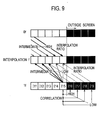
Fig. 9 is a drawing that illustrates an interpolation frame generation processing according to the fourth embodiment of the present invention. - Embodiments of the present invention will be described below in detail by referring to the drawings.
-
Fig. 2 is a structural diagram of an image processing apparatus according to a first embodiment. This image processing apparatus is a television or the like that inserts an interpolation frame between frames of an input signal and outputs the signal. As shown inFig. 2 , the image processing apparatus includes aninput unit 101, aframe memory 102, amotion vector detector 103, ascreen edge detector 104, aninterpolation frame generator 106 and anoutput unit 107. - The
input unit 101 receives an input signal such as an image. Theframe memory 102 delays the input signal input by theinput unit 101, by one frame or a plurality of frames, and then outputs the input signal as a delayed input signal. Themotion vector detector 103 detects a motion vector between frames based on the input signal input by theinput unit 101 and the frame-delayed signal delayed by theframe memory 102. Thescreen edge detector 104 detects a screen edge of the input signal input by theinput unit 101. Theinterpolation frame generator 106 generates an interpolation frame between frames based on the motion vector detected by themotion vector detector 103 and the screen edge detected by thescreen edge detector 104, and properly inserts the generated interpolation frame between the frames of the input signal. Theoutput unit 107 outputs output signals in which the interpolation frame generated by theinterpolation frame generator 106 is properly inserted between the frames constituting the input signal. - Here, the
screen edge detector 104 essentially detects, as pixels (or positions) that constitute a screen edge, upper-lower and right-left edges of an effective pixel region of the input signal. However, depending on an input signal, there may be several pixels on which a black is provided, at the screen edge even within the effective pixel region. In order to deal with such an input signal, pixels shifted inward by an arbitrary number of pixels (within the effective pixel region) from the pixels at the upper-lower and right-left edges of the effective pixel region (the edges of the effective pixel region), may be detected as the screen edge. That is, the "screen edge" is an edge portion of the screen, which more specifically denotes pixels at the upper-lower and right-left edges of the effective pixel region or pixels shifted inward by an arbitrary number of pixels from the upper-lower and right-left edges of the effective pixel region. - The interpolation frame generation processing of the
interpolation frame generator 106 according to the first embodiment will be described below in detail, with reference toFig.3 . InFig. 3 , a delayed input signal which is delayed at theframe memory 102 and input to theinterpolation frame generator 106 is defined as a previous frame 0f. Further, a present input signal which is directly input to theinterpolation frame generator 106 is defined as asubsequent frame 1f. Moreover, the interpolation frame generated by theinterpolation frame generator 106 from the previous frame 0f and thesubsequent frame 1f is defined as an interpolation f. Here, a case is assumed in which an object is moving at the screen edge, and the object fades out and goes out of the screen in thesubsequent frame 1f of the interpolation frame (interpolation f), which indicates that original pixels are not present on the screen. One rectangle corresponds to one pixel. - In
Fig. 3 , a motion vector detected from the previous frame 0f andsubsequent frame 1f is denoted by a broken line. A pixel I9 in the previous frame 0f has moved to a position of a pixel I9 in thesubsequent frame 1f. An interpolation pixel I9' in the interpolation f is generated from the pixel I9 in the previous frame 0f and the pixel I9 in thesubsequent frame 1f, and is positioned in the middle between the position of the pixel I9 in the previous frame 0f and the position of the pixel I9 in thesubsequent frame 1f. - Apixel I10 in the previous frame 0f has moved to a position of a pixel I10 in the
subsequent frame 1f. As shown inFig. 3 , the pixel I10 in thesubsequent frame 1f is located outside the screen: In this case, when a pixel I10' in the interpolation f is generated, a problem occurs in which no usable original pixel is present since the pixel I10 in thesubsequent frame 1f is an outside-screen pixel. -
Fig. 4 shows a correlation between the screen-edge pixels and the outside-screen pixels which are pointed by motion vectors, in thesubsequent frame 1f where the motion vectors point the outside-screen. That is, the correlation between the pixel I9 at the outermost edge in the screen of thesubsequent frame 1f and the four outside-screen pixels I10 to I13 changes from being high to being low according to the mutual distances. In the first embodiment, when motion vectors point the four outside-screen pixels I10 to I13, the pixel I9 at the outermost edge within the screen is used to replace all of the four outside-screen pixels I10 to I13 by the pixel I9. In this way, the region where the pixel I9 at the outermost edge in the screen was used to replace the outside-screen pixels by the pixel I9 is called a "special processing region". In contrast, the region where an ordinary processing is carried out without the replacement is called an "ordinary processing region". A pixel used as an interpolation source of the interpolation pixels in the special processing region may be the screen-edge pixel (pixel at the outermost edge within the screen) or the pixel located inside with respect to the screen-edge pixel. Since the screen-edge pixel has the highest correlation to the outside-screen pixels among pixels within the screen, the screen-edge pixel is preferable as the pixel of the interpolation source. - It is assumed that motion vectors in the zone of the screen edge are constant. As shown in
Fig.3 , in the previous frame 0f, since the motion vectors of the pixels I10 to I13 which will be used as the interpolation sources of the pixels I10' to I13' in the special processing region of the interpolation f point the region within the screen in the interpolation f, the pixels I10 to I13 based on the motion vectors are adopted as the interpolation sources by the same method as the ordinary processing. In contrast, in thesubsequent frame 1f, since the pixels I10 to I13 which will be used as the interpolation sources based on the motion vectors are present outside the screen, the screen-edge pixel or the pixel located inside with respect to the screen-edge pixel (pixel I9 in the first embodiment) is adopted as the interpolation sources. In general, the screen-edge pixel I9 has the highest correlation with the pixels I10 to I13 located outside the screen among the pixels within the screen, and thus, adopting the screen-edge pixel I9 as the interpolation source can reduce the processing difference at the boundary between the ordinary processing region and the special processing region. - As it approaches the pixel I13' at the screen edge of the interpolation f, the correlation becomes lower because the distance between the pixel where an original interpolation source of each pixel is present and the screen-edge pixel becomes gradually larger. However, since such change is gradual rather than sharp and interpolation pixels within the screen based on the original motion vectors are used in the previous frame 0f as the interpolation sources, it is unlikely that a sharp change is caused at the boundary between the ordinary processing region and the special processing region. This makes it possible to obtain an interpolation result which gives the viewer a small feeling of strangeness.
- As described above, with the image processing apparatus according to the first embodiment, it is so controlled that the screen-edge pixel or the pixel located inside with respect to the screen-edge pixel is used as the interpolation source when the motion vector points the region located outside the screen edge, thus making it possible to precisely carry out the interpolating at the screen edge also.
-
Fig. 5 is a structural diagram of an image processing apparatus according to a second embodiment. This image processing apparatus is basically similar to the first embodiment except that a screenedge vector controller 105 is provided for controlling a motion vector detected by themotion vector detector 103. - More specifically, when a motion vector detected by the
motion vector detector 103 points a pixel located outside a screen edge detected by thescreen edge detector 104, the screenedge vector controller 105 controls such that the motion vector points a screen-edge pixel or a pixel located inside with respect to the screen-edge pixel. By this, based on the motion vector controlled by the screenedge vector controller 105, an interpolation frame generator 106' generates an interpolation frame using the screen-edge pixel or the pixel located inside with respect to the screen-edge pixel. The screenedge vector controller 105 does not carry out the processing when a motion vector points a pixel within the screen. - As described above, with the image processing apparatus according to the second embodiment, when the motion vector points a region located outside the screen edge, it is so controlled that the motion vector points the screen-edge pixel or the pixel located inside with respect to the screen-edge pixel, thereby making it possible to precisely carry out the interpolating at the screen edge also.
-
Fig. 6 is a structural diagram of an image processing apparatus according to a third embodiment. This image processing apparatus is basically similar to the first embodiment except that ablack region detector 108 is provided for detecting a black region (region occupied by black) within the effective pixel region of the input signal. Further, ascreen edge detector 104b treats the black region detected by theblack region detector 108 as a region located outside the screen, and detects a pixel located inside with respect to the black region as the screen-edge pixel. - Specifically, as shown in
Fig. 7 , when theblack region detector 108 detects the black region at the upper-lower and the right-left edges within the effective pixel region, it treats the black region as a region located outside the screen. For example, in images such as movie, there may be cases in which the upper and lower parts of the screen are cut. Further, when viewing an image generated at an aspect ratio of 4 : 3 in a display having an aspect ratio of 16 : 9, there may be cases in which right and left parts of the image are cut. In these cases, as shown inFig. 7 , it is made such that a screen edge El can be set in accordance with the cut region. - As described above, with the image processing apparatus according to the third embodiment, it is so made that a part located inside with respect to the black region within the effective pixel region of the input signal is detected as the screen edge, and thus, a pixel in this black region is not used for the interpolation. By this, the interpolation can be precisely carried out at the screen edge even when the black region is present within the effective pixel region.
-
Fig. 8 is a structural diagram of the image processing apparatus according to a fourth embodiment. This image processing apparatus is basically similar to the first embodiment except that, as shown inFig. 8 , aninterpolation ratio controller 109 is provided for controlling an interpolation ratio based on a motion vector detected by themotion vector detector 103 and a screen edge detected by thescreen edge detector 104b. The interpolation ratio is defined as a use ratio of two frames of the interpolation source. In other words, it is defined as a use ratio of two pixels in generating the interpolation pixel. The interpolation frame generator 106' generates the interpolation frame based on the interpolation ratio from theinterpolation ratio controller 109. - The interpolation frame generation processing according to the fourth embodiment will be described below in detail. Since reliability of the interpolation increases as the correlation becomes higher, the pixel having the high correlation is adopted for the interpolation at a ratio similar to that of the ordinary processing while the pixel having the low correlation is adopted for the interpolation at a lower ratio.
- A specific example is shown in
Fig. 9 . Here, similarly toFig. 4 , the outermost edge pixel I15 within the screen of thesubsequent frame 1f and the four pixels I16 to I19 located outside the screen of thesubsequent frame 1f have the correlations from being high to being low according to the mutual distances. That is, when a motion vector points the outside-screen pixel (for example, I16) which is close to the screen edge, the correlation between the outside-screen pixel I16 pointed by the motion vector and the screen-edge pixel I15 is high. Thus, in this case, the interpolation is carried out by using the previous frame 0f andsubsequent frame 1f at a ratio close to that of the ordinary processing. According to the fourth embodiment, the interpolation pixel of the ordinary processing is generated at a mixture ratio of 1 : between a pixel of the previous frame 0f becoming the interpolation source and a pixel of thesubsequent frame 1f becoming the interpolation source. On the other hand, when the motion vector points the outside-screen pixel (for example, I19) that is away from the screen edge, the correlation between the outside-screen pixel I19 pointed by the motion vector and the screen-edge pixel I15 is low. Thus, in this case, the interpolation is carried out by lowering the ratio of thesubsequent frame 1f where the motion vector points a region located outside the screen, than the ratio of the previous frame 0f. - As such, it is regarded that the correlation is lower as the distance between the outside-screen pixel originally pointed by the motion vector and the screen-edge pixel becomes greater. And it is made such that the use ratio of the frame regarded to have a low correlation is lowered relative to the interpolation ratio of the other frame.
- As described above, with the image processing apparatus according to the fourth embodiment, it is so made that the interpolation ratio is controlled based on the motion vector and the screen edge. This increases the use ratio of the pixel having a high correlation and decreases the use ratio of the pixel having a low correlation, thereby making it possible to suppress the use of the pixel having low reliability and to make a gradual change of the correlation.
- Further, here the interpolation ratio is controlled based on the distance between the screen-edge pixel and the outside-screen pixel which is pointed by the motion vector. However, the method of controlling the interpolation ratio is not limited to this. The
interpolation ratio controller 109 may control the interpolation ratio based on the vector quantity of the motion vector. In this case, a similar effect can be achieved by considering that the correlation becomes lower as the vector quantity becomes larger. In another possibility, theinterpolation ratio controller 109 may control the interpolation ratio based on a degree of accuracy or reliability in the detection of the motion vector. In this case, a similar effect can be achieved by considering that the correlation becomes lower as the accuracy or reliability becomes lower.
Claims (9)
- An image processing apparatus comprising:an input unit that inputs an input signal;a frame memory that frame-delays the input signal input by the input unit and outputs the input signal as a delayed input signal;a motion vector detector that detects a motion vector between frames based on the input signal input by the input unit and the delayed input signal;a screen edge detector that detects a pixel corresponding to a screen edge in the input signal input by the input unit; andan interpolation frame generator that generates an interpolation frame from the input signal input by the input unit and the delayed input signal, based on the motion vector detected by the motion vector detector and the pixel corresponding to the screen edge detected by the screen edge detector,wherein when the motion vector points a pixel located outside with respect to the pixel corresponding to the screen edge, the interpolation frame generator generates the interpolation frame using the pixel corresponding to the screen edge or a pixel located inside with respect to the pixel corresponding to the screen edge.
- The image processing apparatus according to claim 1, further comprising:a screen edge vector controller that controls, when the motion vector detected by the motion vector detector points the pixel located outside with respect to the pixel corresponding to the screen edge detected by the screen edge detector, the motion vector such that the motion vector points the pixel corresponding to the screen edge or the pixel located inside with respect to the pixel corresponding to the screen edge,wherein based on the motion vector controlled by the screen edge vector controller, the interpolation frame generator generates the interpolation frame using the pixel corresponding to the screen edge or the pixel located inside with respect to the pixel corresponding to the screen edge.
- The image processing apparatus according to claim 1, wherein the screen edge detector detects, as the pixel corresponding to the screen edge, each of pixels corresponding to upper-lower and right-left edges of an effective pixel region in the input signal or each of pixels shifted inward by an arbitrary number of pixels from the pixels corresponding to the upper-lower and right-left edges of the effective pixel region in the input signal.
- The image processing apparatus according to claim 1, further comprising:a black region detector that detects a black region within an effective pixel region in the input signal,wherein the screen edge detector detects, as the pixel corresponding to the screen edge, a pixel located inside with respect to the black region detected by the black region detector.
- The image processing apparatus according to claim 1, further comprising:an interpolation ratio controller that controls an interpolation ratio as a use ratio of an interpolation source frame, based on the motion vector detected by the motion vector detector and the pixel corresponding to the screen edge detected by the screen edge detector.
- The image processing apparatus according to claim 5, wherein the interpolation ratio controller controls the interpolation ratio based on a distance between the pixel corresponding to the screen edge detected by the screen edge detector and the pixel located outside with respect to the pixel corresponding to the screen edge and pointed by the motion vector.
- The image processing apparatus according to claim 5, wherein the interpolation ratio controller controls the interpolation ratio based on a vector quantity of the motion vector.
- The image processing apparatus according to claim 5, wherein the interpolation ratio controller controls the interpolation ratio based on a degree of accuracy or reliability in the detection of the motion vector.
- An interpolation frame generating method comprising:inputting an input signal;generating a delayed input signal from the input signal;detecting a motion vector between frames based on the input signal and the delayed input signal;detecting a pixel corresponding to a screen edge in the input signal; andgenerating an interpolation frame from the input signal and the delayed input signal based on the motion vector detected by the motion vector detecting and the pixel corresponding to the screen edge detected by the screen edge detecting,wherein when the motion vector points a pixel located outside with respect to the pixel corresponding to the screen edge, the interpolation frame generating generates the interpolation frame using the pixel corresponding to the screen edge or a pixel located inside with respect to the pixel corresponding to the screen edge.
Applications Claiming Priority (1)
| Application Number | Priority Date | Filing Date | Title |
|---|---|---|---|
| JP2011119928A JP5682454B2 (en) | 2011-05-30 | 2011-05-30 | Video processing apparatus and interpolation frame generation method |
Publications (3)
| Publication Number | Publication Date |
|---|---|
| EP2530934A2 true EP2530934A2 (en) | 2012-12-05 |
| EP2530934A3 EP2530934A3 (en) | 2015-12-09 |
| EP2530934B1 EP2530934B1 (en) | 2020-02-05 |
Family
ID=46578789
Family Applications (1)
| Application Number | Title | Priority Date | Filing Date |
|---|---|---|---|
| EP12004153.8A Active EP2530934B1 (en) | 2011-05-30 | 2012-05-30 | Image processing apparatus and interpolation frame generating method |
Country Status (5)
| Country | Link |
|---|---|
| US (1) | US8929671B2 (en) |
| EP (1) | EP2530934B1 (en) |
| JP (1) | JP5682454B2 (en) |
| CN (1) | CN102811333B (en) |
| TW (1) | TWI530189B (en) |
Cited By (1)
| Publication number | Priority date | Publication date | Assignee | Title |
|---|---|---|---|---|
| CN112789848A (en) * | 2018-10-12 | 2021-05-11 | Jvc建伍株式会社 | Interpolation frame generation device and method |
Families Citing this family (3)
| Publication number | Priority date | Publication date | Assignee | Title |
|---|---|---|---|---|
| CN109584774B (en) * | 2018-12-29 | 2022-10-11 | 厦门天马微电子有限公司 | Edge processing method of display panel and display panel |
| CN110324664B (en) * | 2019-07-11 | 2021-06-04 | 南开大学 | A neural network-based video frame supplementation method and its model training method |
| WO2021215567A1 (en) * | 2020-04-24 | 2021-10-28 | 엘지전자 주식회사 | Pov display device and control method therefor |
Citations (2)
| Publication number | Priority date | Publication date | Assignee | Title |
|---|---|---|---|---|
| JP2008245135A (en) | 2007-03-28 | 2008-10-09 | Toshiba Corp | Interpolation frame creation method and interpolation frame creation apparatus |
| JP2010278760A (en) | 2009-05-28 | 2010-12-09 | Fujitsu Ltd | Frame interpolation apparatus, frame interpolation method, and frame interpolation program |
Family Cites Families (20)
| Publication number | Priority date | Publication date | Assignee | Title |
|---|---|---|---|---|
| GB2231750B (en) * | 1989-04-27 | 1993-09-29 | Sony Corp | Motion dependent video signal processing |
| JP2798035B2 (en) * | 1996-01-17 | 1998-09-17 | 日本電気株式会社 | Motion compensated inter-frame prediction method using adaptive motion vector interpolation |
| US6148115A (en) * | 1996-11-08 | 2000-11-14 | Sony Corporation | Image processing apparatus and image processing method |
| JP2005006275A (en) * | 2002-11-22 | 2005-01-06 | Matsushita Electric Ind Co Ltd | Interpolation frame creation device, interpolation frame creation method, and interpolation frame creation program |
| JP4222090B2 (en) * | 2003-04-15 | 2009-02-12 | 日本ビクター株式会社 | Moving picture time axis interpolation method and moving picture time axis interpolation apparatus |
| JP2005223631A (en) * | 2004-02-05 | 2005-08-18 | Sony Corp | Data processing apparatus and method, encoding apparatus, and decoding apparatus |
| DE602004006966T2 (en) * | 2004-04-30 | 2007-10-18 | Matsushita Electric Industrial Co., Ltd., Kadoma | Reversal film mode extrapolation |
| CN101005614A (en) * | 2006-01-17 | 2007-07-25 | 鲁海宁 | Coding and decoding method and device for dynamic image, and computer readable record medium |
| KR100842557B1 (en) * | 2006-10-20 | 2008-07-01 | 삼성전자주식회사 | How to access memory on video processing devices |
| JP4303745B2 (en) * | 2006-11-07 | 2009-07-29 | シャープ株式会社 | Image display apparatus and method, image processing apparatus and method |
| US8259226B2 (en) * | 2006-11-24 | 2012-09-04 | Sharp Kabushiki Kaisha | Image display device |
| KR101107256B1 (en) * | 2007-03-27 | 2012-01-19 | 삼성전자주식회사 | Adaptive frame rate conversion method and apparatus based on motion vector and display device having adaptive frame rate conversion function |
| JP4505000B2 (en) * | 2007-08-06 | 2010-07-14 | シャープ株式会社 | Image display apparatus and method, image processing apparatus and method |
| KR20090017296A (en) * | 2007-08-14 | 2009-02-18 | 삼성전자주식회사 | An image processing method for generating an image of an intermediate frame and an image processing apparatus using the same |
| US8345763B2 (en) * | 2007-11-27 | 2013-01-01 | Mediatek Inc. | Motion compensation method and integrated circuit utilizing the same |
| US20090153743A1 (en) * | 2007-12-18 | 2009-06-18 | Sony Corporation | Image processing device, image display system, image processing method and program therefor |
| US20090310679A1 (en) * | 2008-06-11 | 2009-12-17 | Mediatek Inc. | Video processing apparatus and methods |
| JP2011040836A (en) * | 2009-08-06 | 2011-02-24 | Toshiba Corp | Frame interpolation device and frame interpolation method |
| RU2012115477A (en) * | 2009-09-18 | 2013-10-27 | Шарп Кабусики Кайся | IMAGE DISPLAY DEVICE |
| JP5614098B2 (en) * | 2010-05-19 | 2014-10-29 | ソニー株式会社 | Video display device, frame rate conversion device, and display method |
-
2011
- 2011-05-30 JP JP2011119928A patent/JP5682454B2/en not_active Expired - Fee Related
-
2012
- 2012-05-29 TW TW101119119A patent/TWI530189B/en active
- 2012-05-30 CN CN201210175125.9A patent/CN102811333B/en active Active
- 2012-05-30 EP EP12004153.8A patent/EP2530934B1/en active Active
- 2012-05-30 US US13/483,588 patent/US8929671B2/en active Active
Patent Citations (2)
| Publication number | Priority date | Publication date | Assignee | Title |
|---|---|---|---|---|
| JP2008245135A (en) | 2007-03-28 | 2008-10-09 | Toshiba Corp | Interpolation frame creation method and interpolation frame creation apparatus |
| JP2010278760A (en) | 2009-05-28 | 2010-12-09 | Fujitsu Ltd | Frame interpolation apparatus, frame interpolation method, and frame interpolation program |
Cited By (3)
| Publication number | Priority date | Publication date | Assignee | Title |
|---|---|---|---|---|
| CN112789848A (en) * | 2018-10-12 | 2021-05-11 | Jvc建伍株式会社 | Interpolation frame generation device and method |
| EP3866460A4 (en) * | 2018-10-12 | 2021-12-01 | JVCKENWOOD Corporation | Interpolation frame generation device and method |
| CN112789848B (en) * | 2018-10-12 | 2023-09-08 | Jvc建伍株式会社 | Interpolation frame generation device and method |
Also Published As
| Publication number | Publication date |
|---|---|
| EP2530934A3 (en) | 2015-12-09 |
| CN102811333B (en) | 2016-03-02 |
| EP2530934B1 (en) | 2020-02-05 |
| US8929671B2 (en) | 2015-01-06 |
| US20120308083A1 (en) | 2012-12-06 |
| CN102811333A (en) | 2012-12-05 |
| TW201251461A (en) | 2012-12-16 |
| JP5682454B2 (en) | 2015-03-11 |
| TWI530189B (en) | 2016-04-11 |
| JP2012249123A (en) | 2012-12-13 |
Similar Documents
| Publication | Publication Date | Title |
|---|---|---|
| US8803947B2 (en) | Apparatus and method for generating extrapolated view | |
| US8208008B2 (en) | Apparatus, method, and program for displaying stereoscopic images | |
| US9325970B2 (en) | Imaging control device and imaging control method | |
| US20130089301A1 (en) | Method and apparatus for processing video frames image with image registration information involved therein | |
| KR20220065794A (en) | Multi-stream fovea display transmission | |
| US8837593B2 (en) | Image processing apparatus, image processing method, and program | |
| EP2161687B1 (en) | Video signal processing device, video signal processing method, and video signal processing program | |
| EP2530934B1 (en) | Image processing apparatus and interpolation frame generating method | |
| JP2011223493A (en) | Image processing apparatus and image processing method | |
| US20140147012A1 (en) | Method and apparatus for processing image data corresponding to temporally successive motions of object | |
| KR102780252B1 (en) | Information processing device, information processing method and program | |
| KR101769704B1 (en) | System and method for calibrating display contents on cylinder display device | |
| EP3998770B1 (en) | Image processing device and image processing method | |
| KR20180078431A (en) | Virtual reality device and driving method thereof | |
| JP5325341B2 (en) | 3D image processing apparatus and method, and 3D image display apparatus | |
| JP2012129710A (en) | Display controller, display control method, and program | |
| US10242491B2 (en) | Image processing apparatus for determining image clip position, method thereof, and storage medium | |
| JP5478728B2 (en) | 3D image processing apparatus and method, and 3D image display apparatus | |
| JP2017220810A (en) | Image processing device, method, and program | |
| JP2007282155A (en) | Image processing apparatus, image processing method, and program | |
| JPWO2012117464A1 (en) | 3D image processing apparatus and method, and 3D image display apparatus | |
| JP2012060246A (en) | Image processor and integrated circuit device | |
| US20120170851A1 (en) | Multimedia device and motion compensation method thereof | |
| KR20180031476A (en) | Image processing method and display device using the same | |
| JP5634245B2 (en) | Motion vector detection apparatus, control method therefor, and program |
Legal Events
| Date | Code | Title | Description |
|---|---|---|---|
| PUAI | Public reference made under article 153(3) epc to a published international application that has entered the european phase |
Free format text: ORIGINAL CODE: 0009012 |
|
| AK | Designated contracting states |
Kind code of ref document: A2 Designated state(s): AL AT BE BG CH CY CZ DE DK EE ES FI FR GB GR HR HU IE IS IT LI LT LU LV MC MK MT NL NO PL PT RO RS SE SI SK SM TR |
|
| AX | Request for extension of the european patent |
Extension state: BA ME |
|
| PUAL | Search report despatched |
Free format text: ORIGINAL CODE: 0009013 |
|
| AK | Designated contracting states |
Kind code of ref document: A3 Designated state(s): AL AT BE BG CH CY CZ DE DK EE ES FI FR GB GR HR HU IE IS IT LI LT LU LV MC MK MT NL NO PL PT RO RS SE SI SK SM TR |
|
| AX | Request for extension of the european patent |
Extension state: BA ME |
|
| RIC1 | Information provided on ipc code assigned before grant |
Ipc: H04N 7/01 20060101AFI20151104BHEP |
|
| 17P | Request for examination filed |
Effective date: 20160609 |
|
| RBV | Designated contracting states (corrected) |
Designated state(s): AL AT BE BG CH CY CZ DE DK EE ES FI FR GB GR HR HU IE IS IT LI LT LU LV MC MK MT NL NO PL PT RO RS SE SI SK SM TR |
|
| R17P | Request for examination filed (corrected) |
Effective date: 20160609 |
|
| STAA | Information on the status of an ep patent application or granted ep patent |
Free format text: STATUS: EXAMINATION IS IN PROGRESS |
|
| 17Q | First examination report despatched |
Effective date: 20190301 |
|
| GRAP | Despatch of communication of intention to grant a patent |
Free format text: ORIGINAL CODE: EPIDOSNIGR1 |
|
| STAA | Information on the status of an ep patent application or granted ep patent |
Free format text: STATUS: GRANT OF PATENT IS INTENDED |
|
| INTG | Intention to grant announced |
Effective date: 20190924 |
|
| GRAS | Grant fee paid |
Free format text: ORIGINAL CODE: EPIDOSNIGR3 |
|
| GRAA | (expected) grant |
Free format text: ORIGINAL CODE: 0009210 |
|
| STAA | Information on the status of an ep patent application or granted ep patent |
Free format text: STATUS: THE PATENT HAS BEEN GRANTED |
|
| AK | Designated contracting states |
Kind code of ref document: B1 Designated state(s): AL AT BE BG CH CY CZ DE DK EE ES FI FR GB GR HR HU IE IS IT LI LT LU LV MC MK MT NL NO PL PT RO RS SE SI SK SM TR |
|
| REG | Reference to a national code |
Ref country code: GB Ref legal event code: FG4D |
|
| REG | Reference to a national code |
Ref country code: AT Ref legal event code: REF Ref document number: 1230721 Country of ref document: AT Kind code of ref document: T Effective date: 20200215 |
|
| REG | Reference to a national code |
Ref country code: DE Ref legal event code: R096 Ref document number: 602012067524 Country of ref document: DE |
|
| REG | Reference to a national code |
Ref country code: IE Ref legal event code: FG4D |
|
| REG | Reference to a national code |
Ref country code: CH Ref legal event code: EP |
|
| REG | Reference to a national code |
Ref country code: NL Ref legal event code: MP Effective date: 20200205 |
|
| PG25 | Lapsed in a contracting state [announced via postgrant information from national office to epo] |
Ref country code: FI Free format text: LAPSE BECAUSE OF FAILURE TO SUBMIT A TRANSLATION OF THE DESCRIPTION OR TO PAY THE FEE WITHIN THE PRESCRIBED TIME-LIMIT Effective date: 20200205 Ref country code: PT Free format text: LAPSE BECAUSE OF FAILURE TO SUBMIT A TRANSLATION OF THE DESCRIPTION OR TO PAY THE FEE WITHIN THE PRESCRIBED TIME-LIMIT Effective date: 20200628 Ref country code: NO Free format text: LAPSE BECAUSE OF FAILURE TO SUBMIT A TRANSLATION OF THE DESCRIPTION OR TO PAY THE FEE WITHIN THE PRESCRIBED TIME-LIMIT Effective date: 20200505 Ref country code: RS Free format text: LAPSE BECAUSE OF FAILURE TO SUBMIT A TRANSLATION OF THE DESCRIPTION OR TO PAY THE FEE WITHIN THE PRESCRIBED TIME-LIMIT Effective date: 20200205 |
|
| REG | Reference to a national code |
Ref country code: LT Ref legal event code: MG4D |
|
| PG25 | Lapsed in a contracting state [announced via postgrant information from national office to epo] |
Ref country code: GR Free format text: LAPSE BECAUSE OF FAILURE TO SUBMIT A TRANSLATION OF THE DESCRIPTION OR TO PAY THE FEE WITHIN THE PRESCRIBED TIME-LIMIT Effective date: 20200506 Ref country code: SE Free format text: LAPSE BECAUSE OF FAILURE TO SUBMIT A TRANSLATION OF THE DESCRIPTION OR TO PAY THE FEE WITHIN THE PRESCRIBED TIME-LIMIT Effective date: 20200205 Ref country code: BG Free format text: LAPSE BECAUSE OF FAILURE TO SUBMIT A TRANSLATION OF THE DESCRIPTION OR TO PAY THE FEE WITHIN THE PRESCRIBED TIME-LIMIT Effective date: 20200505 Ref country code: LV Free format text: LAPSE BECAUSE OF FAILURE TO SUBMIT A TRANSLATION OF THE DESCRIPTION OR TO PAY THE FEE WITHIN THE PRESCRIBED TIME-LIMIT Effective date: 20200205 Ref country code: IS Free format text: LAPSE BECAUSE OF FAILURE TO SUBMIT A TRANSLATION OF THE DESCRIPTION OR TO PAY THE FEE WITHIN THE PRESCRIBED TIME-LIMIT Effective date: 20200605 Ref country code: HR Free format text: LAPSE BECAUSE OF FAILURE TO SUBMIT A TRANSLATION OF THE DESCRIPTION OR TO PAY THE FEE WITHIN THE PRESCRIBED TIME-LIMIT Effective date: 20200205 |
|
| PG25 | Lapsed in a contracting state [announced via postgrant information from national office to epo] |
Ref country code: NL Free format text: LAPSE BECAUSE OF FAILURE TO SUBMIT A TRANSLATION OF THE DESCRIPTION OR TO PAY THE FEE WITHIN THE PRESCRIBED TIME-LIMIT Effective date: 20200205 |
|
| PG25 | Lapsed in a contracting state [announced via postgrant information from national office to epo] |
Ref country code: SK Free format text: LAPSE BECAUSE OF FAILURE TO SUBMIT A TRANSLATION OF THE DESCRIPTION OR TO PAY THE FEE WITHIN THE PRESCRIBED TIME-LIMIT Effective date: 20200205 Ref country code: EE Free format text: LAPSE BECAUSE OF FAILURE TO SUBMIT A TRANSLATION OF THE DESCRIPTION OR TO PAY THE FEE WITHIN THE PRESCRIBED TIME-LIMIT Effective date: 20200205 Ref country code: SM Free format text: LAPSE BECAUSE OF FAILURE TO SUBMIT A TRANSLATION OF THE DESCRIPTION OR TO PAY THE FEE WITHIN THE PRESCRIBED TIME-LIMIT Effective date: 20200205 Ref country code: LT Free format text: LAPSE BECAUSE OF FAILURE TO SUBMIT A TRANSLATION OF THE DESCRIPTION OR TO PAY THE FEE WITHIN THE PRESCRIBED TIME-LIMIT Effective date: 20200205 Ref country code: DK Free format text: LAPSE BECAUSE OF FAILURE TO SUBMIT A TRANSLATION OF THE DESCRIPTION OR TO PAY THE FEE WITHIN THE PRESCRIBED TIME-LIMIT Effective date: 20200205 Ref country code: ES Free format text: LAPSE BECAUSE OF FAILURE TO SUBMIT A TRANSLATION OF THE DESCRIPTION OR TO PAY THE FEE WITHIN THE PRESCRIBED TIME-LIMIT Effective date: 20200205 Ref country code: CZ Free format text: LAPSE BECAUSE OF FAILURE TO SUBMIT A TRANSLATION OF THE DESCRIPTION OR TO PAY THE FEE WITHIN THE PRESCRIBED TIME-LIMIT Effective date: 20200205 Ref country code: RO Free format text: LAPSE BECAUSE OF FAILURE TO SUBMIT A TRANSLATION OF THE DESCRIPTION OR TO PAY THE FEE WITHIN THE PRESCRIBED TIME-LIMIT Effective date: 20200205 |
|
| REG | Reference to a national code |
Ref country code: DE Ref legal event code: R097 Ref document number: 602012067524 Country of ref document: DE |
|
| REG | Reference to a national code |
Ref country code: AT Ref legal event code: MK05 Ref document number: 1230721 Country of ref document: AT Kind code of ref document: T Effective date: 20200205 |
|
| PLBE | No opposition filed within time limit |
Free format text: ORIGINAL CODE: 0009261 |
|
| STAA | Information on the status of an ep patent application or granted ep patent |
Free format text: STATUS: NO OPPOSITION FILED WITHIN TIME LIMIT |
|
| 26N | No opposition filed |
Effective date: 20201106 |
|
| PG25 | Lapsed in a contracting state [announced via postgrant information from national office to epo] |
Ref country code: AT Free format text: LAPSE BECAUSE OF FAILURE TO SUBMIT A TRANSLATION OF THE DESCRIPTION OR TO PAY THE FEE WITHIN THE PRESCRIBED TIME-LIMIT Effective date: 20200205 Ref country code: MC Free format text: LAPSE BECAUSE OF FAILURE TO SUBMIT A TRANSLATION OF THE DESCRIPTION OR TO PAY THE FEE WITHIN THE PRESCRIBED TIME-LIMIT Effective date: 20200205 Ref country code: CH Free format text: LAPSE BECAUSE OF NON-PAYMENT OF DUE FEES Effective date: 20200531 Ref country code: IT Free format text: LAPSE BECAUSE OF FAILURE TO SUBMIT A TRANSLATION OF THE DESCRIPTION OR TO PAY THE FEE WITHIN THE PRESCRIBED TIME-LIMIT Effective date: 20200205 Ref country code: LI Free format text: LAPSE BECAUSE OF NON-PAYMENT OF DUE FEES Effective date: 20200531 |
|
| PG25 | Lapsed in a contracting state [announced via postgrant information from national office to epo] |
Ref country code: PL Free format text: LAPSE BECAUSE OF FAILURE TO SUBMIT A TRANSLATION OF THE DESCRIPTION OR TO PAY THE FEE WITHIN THE PRESCRIBED TIME-LIMIT Effective date: 20200205 Ref country code: SI Free format text: LAPSE BECAUSE OF FAILURE TO SUBMIT A TRANSLATION OF THE DESCRIPTION OR TO PAY THE FEE WITHIN THE PRESCRIBED TIME-LIMIT Effective date: 20200205 |
|
| REG | Reference to a national code |
Ref country code: BE Ref legal event code: MM Effective date: 20200531 |
|
| PG25 | Lapsed in a contracting state [announced via postgrant information from national office to epo] |
Ref country code: LU Free format text: LAPSE BECAUSE OF NON-PAYMENT OF DUE FEES Effective date: 20200530 |
|
| PG25 | Lapsed in a contracting state [announced via postgrant information from national office to epo] |
Ref country code: IE Free format text: LAPSE BECAUSE OF NON-PAYMENT OF DUE FEES Effective date: 20200530 |
|
| PG25 | Lapsed in a contracting state [announced via postgrant information from national office to epo] |
Ref country code: BE Free format text: LAPSE BECAUSE OF NON-PAYMENT OF DUE FEES Effective date: 20200531 |
|
| PG25 | Lapsed in a contracting state [announced via postgrant information from national office to epo] |
Ref country code: TR Free format text: LAPSE BECAUSE OF FAILURE TO SUBMIT A TRANSLATION OF THE DESCRIPTION OR TO PAY THE FEE WITHIN THE PRESCRIBED TIME-LIMIT Effective date: 20200205 Ref country code: MT Free format text: LAPSE BECAUSE OF FAILURE TO SUBMIT A TRANSLATION OF THE DESCRIPTION OR TO PAY THE FEE WITHIN THE PRESCRIBED TIME-LIMIT Effective date: 20200205 Ref country code: CY Free format text: LAPSE BECAUSE OF FAILURE TO SUBMIT A TRANSLATION OF THE DESCRIPTION OR TO PAY THE FEE WITHIN THE PRESCRIBED TIME-LIMIT Effective date: 20200205 |
|
| PG25 | Lapsed in a contracting state [announced via postgrant information from national office to epo] |
Ref country code: MK Free format text: LAPSE BECAUSE OF FAILURE TO SUBMIT A TRANSLATION OF THE DESCRIPTION OR TO PAY THE FEE WITHIN THE PRESCRIBED TIME-LIMIT Effective date: 20200205 Ref country code: AL Free format text: LAPSE BECAUSE OF FAILURE TO SUBMIT A TRANSLATION OF THE DESCRIPTION OR TO PAY THE FEE WITHIN THE PRESCRIBED TIME-LIMIT Effective date: 20200205 |
|
| REG | Reference to a national code |
Ref country code: FR Ref legal event code: PLFP Year of fee payment: 12 |
|
| PGFP | Annual fee paid to national office [announced via postgrant information from national office to epo] |
Ref country code: DE Payment date: 20250402 Year of fee payment: 14 |
|
| PGFP | Annual fee paid to national office [announced via postgrant information from national office to epo] |
Ref country code: FR Payment date: 20250401 Year of fee payment: 14 |
|
| PGFP | Annual fee paid to national office [announced via postgrant information from national office to epo] |
Ref country code: GB Payment date: 20260323 Year of fee payment: 15 |