EP2530874B1 - Method and apparatus for detecting network attacks using a flow based technique - Google Patents
Method and apparatus for detecting network attacks using a flow based technique Download PDFInfo
- Publication number
- EP2530874B1 EP2530874B1 EP11168731.5A EP11168731A EP2530874B1 EP 2530874 B1 EP2530874 B1 EP 2530874B1 EP 11168731 A EP11168731 A EP 11168731A EP 2530874 B1 EP2530874 B1 EP 2530874B1
- Authority
- EP
- European Patent Office
- Prior art keywords
- block
- data structure
- address
- individual elements
- tuple
- Prior art date
- Legal status (The legal status is an assumption and is not a legal conclusion. Google has not performed a legal analysis and makes no representation as to the accuracy of the status listed.)
- Active
Links
Images



Classifications
-
- H—ELECTRICITY
- H04—ELECTRIC COMMUNICATION TECHNIQUE
- H04L—TRANSMISSION OF DIGITAL INFORMATION, e.g. TELEGRAPHIC COMMUNICATION
- H04L43/00—Arrangements for monitoring or testing data switching networks
- H04L43/04—Processing captured monitoring data, e.g. for logfile generation
-
- G—PHYSICS
- G06—COMPUTING OR CALCULATING; COUNTING
- G06F—ELECTRIC DIGITAL DATA PROCESSING
- G06F16/00—Information retrieval; Database structures therefor; File system structures therefor
- G06F16/20—Information retrieval; Database structures therefor; File system structures therefor of structured data, e.g. relational data
- G06F16/22—Indexing; Data structures therefor; Storage structures
-
- H—ELECTRICITY
- H04—ELECTRIC COMMUNICATION TECHNIQUE
- H04L—TRANSMISSION OF DIGITAL INFORMATION, e.g. TELEGRAPHIC COMMUNICATION
- H04L43/00—Arrangements for monitoring or testing data switching networks
- H04L43/02—Capturing of monitoring data
- H04L43/026—Capturing of monitoring data using flow identification
-
- H—ELECTRICITY
- H04—ELECTRIC COMMUNICATION TECHNIQUE
- H04L—TRANSMISSION OF DIGITAL INFORMATION, e.g. TELEGRAPHIC COMMUNICATION
- H04L63/00—Network architectures or network communication protocols for network security
- H04L63/14—Network architectures or network communication protocols for network security for detecting or protecting against malicious traffic
- H04L63/1408—Network architectures or network communication protocols for network security for detecting or protecting against malicious traffic by monitoring network traffic
- H04L63/1416—Event detection, e.g. attack signature detection
Definitions
- This invention relates to network communications and usage analysis, and particularly to methods and apparatus for gathering and processing netflow data. More specifically, the exemplary embodiments of the present invention relate to identifying network attacks using flow records.
- Packetized data networks are in widespread use transporting data throughout the world. Packetized data networks typically format data into packets for transmission between one computer and another. These packets include headers containing information relating to packet data and routing. The data networks send these packets from the originating computer to the destination computers using routers which send the packet on to the destination computer using the routing information in the packet header.
- a flow of packets are a group of packets sent from a particular source network address and port to a destination network address and port. These particular destination source network addresses and ports may, for example, correspond to different computers. As these networks have expanded the benefits of using them has increased. However this has opened opportunities for attacks on businesses using the networks.
- attack is a distributed denial of service. This involves a large number of compromised computers attacking specific computers and overwhelming them by opening huge numbers of network connections.
- Another type of attack is a port scanning attack. This involves a rogue computer opening connections over a range of network addresses and probing them for weaknesses.
- Netflow is a known network protocol which may be used for collecting and monitoring IP traffic.
- Some netflow analyzing engines keep only the top number (normally up to 1000) of source, destination IP addresses based solely on the volume of data associated with the IP address.
- the disadvantage of filtering the information in this manner is that the actual flow information is lost, in particular the context of the resulting information e.g. the source and destination ports associated with the source and destination IP addresses. Hence, such engines are unable to identify attacks as all distribution information is lost.
- US2003/0018688A1 discloses a system that creates a hash index from a network management protocol tuple. This network management protocol tuple is then inserted into the network management protocol table. The system then saves a pointer to the row indexed by the hash index in a hash table and also forms a search index using data within the network management protocol tuple that identifies the data pointed to by the hash index in the hash table. This search index is inserted into a search tree so that the hash index provides insertion into the network management protocol table and the search index in the search table provides ordered retrieval from the network management protocol table.
- EP2086183A1 discloses sorting Flow Records based on size relation of data amounts included therein in order to detect traffic in which communication data amount has increased due to attacks of DoS. Prioritising and Weighting for the number of pieces of data for each item of a plurality of items included in Flow Records may be performed and statistical values applied in order to perform sorting.
- flow collection technology is used to obtain information on connections in a data network which can also be used to identify virus attacks within a realistic timescale. This enables an operator to be able to take targeted action against such attacks by, for example, reconfiguring firewall settings to deny particular transmissions from the relevant addresses identified as being involved with the attacks, and thereby ensuring that the network is running securely and with as much bandwidth as possible.
- the present invention extracts the relevant information from the flow records and analyzes it for repetitive associations between particular addresses and communication patterns that may indicate that a certain type of attack is being implemented. The invention then ranks the information based on the volume of these distinct associations and patterns, thereby providing the user with real-time indication of the likelihood of a particular attack taking place.
- a "tuple” This is an ordered set of values, each of which describes some aspect of the object. Tuples in turn are stored as an indexed block data structure, such as lines in spreadsheets or rows in database tables.
- the present invention stores the information specific to each flow record in a tuple comprising the relevant fields of the flow record. This is a convenient technique which enables facilitated sorting of large numbers of such information.
- the tuples are written into an integer array in a memory such as a Random Access Memory (RAM). By writing the tuple blocks to a memory in this fashion, this embodiment enables the tuple blocks to be merged and the sum of particular addresses and conversations to be determined in an easy fashion.
- RAM Random Access Memory
- Figure 1 shows a general block diagram of a network routing device 1 for processing received packets and collecting flow records from the network.
- a packet processing engine 12 of the routing device information on the received packet flows is stored in a flow cache 13.
- the flow cache 13 is flushed and the netflow information is exported by a netflow export protocol embodied as a Flow Exporter 14 and transmitted to a Flow Data Engine 15.
- Figure 2 shows an example of a port scanning attack from an attacker to multiple target hosts.
- An attacker computer typically opens large number of connections to a range of computers. These connections are reported by the routing device 1 to the netflow processing engine 3 using flow records.
- the flow information for this attack would generally have one source address and a large number of associated destination addresses and ports.
- the attack is launched from a rogue computer having a single source address which is targeting a plurality of other hosts which have many different destination addresses and ports, all associated with the single source address.
- Figure 3 shows an example of a denial of service attack which is launched from multiple computers to a single targeted host.
- a large number of computers typically open connections with a single computer. These connections are reported by the routing device 1 to the netflow processing engine 3 using flow records.
- the flow information for this attack would have one destination address corresponding to the targeted host and a large number of source addresses and ports corresponding to the multiple computers and associated with the single destination address.
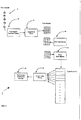
- FIG. 4 is a block flow diagram schematically illustrating the operation by the functional components and data structures of the flow record processing engine 3.
- the process starts with receiving a plurality of flow records 41 from the routing device 1 which are processed by a Flow Record Receiver Thread 42 of the netflow processing engine 3.
- the netflow processing engine 3 collects a plurality of flow records within a predefined time window, which could be any amount of time such as an hour or a few days.
- Figure 5 shows the contents of an exemplary flow record, containing relevant information about a flow. As shown in Figure 5 , the fields include:
- a flow record may be emitted at regular time intervals, for example each minute, by a router for each flow, so a single long lived flow would generate many flow records.
- a filter for a specific query may be applied to each flow. Examples of such a filter may be flows within a certain time range or flows that match particular interfaces etc.
- the filter may be composed of filter parameters for any combination of fields available in a flow record.
- the filter parameters may be defined by values or range of values for the associated field. For example, a range of IP address values may be defined for example as a net mask, and a port range may be defined from a start value to an end value.
- the netflow processing engine 3 is configured as mentioned above for detection of distributed denial of service and/or port scan network attacks, and therefore collects and analyses flow records within a predetermined time window in order to efficiently identify active netflows to a particular source or destination IP address.
- the netflow processing engine 3 in this embodiment is configured to extract five of the above fields from the flow record to analyze the netflows, namely the source address and port, the destination address and port, and the IP protocol. These five fields will be referred to collectively as the 5-tuple conversation data.
- any other combination of fields may be used to form an N-tuple having N fields, for example to analyse the flow records for a different task or query.
- the values from the respective fields of the 5-tuple conversation data are extracted from each received flow record by a Tuple Block Writer 43.
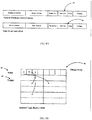
- the extracted values are first placed into a tuple data structure as shown in Figure 6A .
- the order of the fields within the tuple data structure depends on the configuration of the netflow processing engine 3. For example, for distributed denial of service detection where the netflow processing engine 3 is configured to identity active netflows to the same destination IP address, the values are written to a tuple data structure in the order 61 of: destination IP address first, then source IP address, followed by the source port, destination port and IP protocol.
- the values are written to a tuple data structure in the order 62 of: source IP address first, then destination IP address, followed by the source port, destination port and IP protocol.
- the 5-tuple data structure may be of a fixed size, for example consisting of four 32-bit integer elements for processing efficiency. As shown in Figure 6A , padding may be therefore be provided after the five fields if the associated values are less than the fixed length of the data structure.
- the netflow processing engine 3 is configured to extract, collect, process and output a sorted data stream of the 5-tuples from the predetermined time window. This sorted data stream is then passed to a subsequent analysis component for efficient processing.
- the sorting according to this embodiment is performed in two phases for both memory and processor efficiency.
- the Tuple block writer 43 outputs the generated 5-tuple data structure to an indexed tuple block data structure 63, having a predetermined size for storing a fixed number of 5-tuple data structures, until the block data structure is full.
- the indexed tuple block may be stored for example as an integer array in a RAM memory.
- the tuple block 63 also includes an index 64 of the relative location of each each individual tuple element 65 in the tuple block 63.
- the index 64 is an integer array storing an integer index for each tuple element 65 as an offset in the tuple block 63.
- the tuple block 63 is sent to a tuple block sorter 44.
- the tuple block sorter 44 sorts the individual tuple elements 65 in a predefined order so that the sorted data structure facilitates more efficient analysis to identify distinct associations between particular source and destination IP addresses and ports, along with the volume of transmissions between them (for example based on a number of octets in the flow and/or a number of packets in the flow, from values extracted from the associated flow record).
- the sort order may be defined based on the configuration of the netflow processing engine.
- the tuples are sorted based on the destination IP address, which is stored as the first element in the tuple data structure 61 and can therefore be efficiently extracted for processing by the tuple block sorter 44.
- the tuples are sorted based on the source IP address, which again is stored as the first element in the tuple data structure 62 according to this configuration.
- the tuple block sorter 44 can perform an efficient sort of the individual tuple elements 65 by re-ordering the individual indices of the index 64 instead of having to extract, re-order and rewrite the tuple data itself.
- the tuple elements 65 themselves are not moved within the tuple block 64 during the tuple block sort; only the index positions are moved.
- Any identified duplicate tuple (for example where the tuples have the same source and destination addresses, ports and protocol) may also be efficiently removed from the tuple block 63 by removing the individual index for one of the duplicated tuples from the index 64.
- the sorted tuple block is sent to a tuple block writer 45 which moves the sorted tuple block 44 to an output Tuple block file 66.
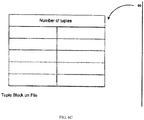
- the generated Tuple block file 66 may include the total number of sorted individual tuple elements as a header element.
- the tuple block is consequently empty and a first iteration of the first phase is completed for the predetermined time window.
- the tuple block writer 45 may perform additional processing to determine and prioritize the distinct source or destination addresses and conversations that are the most likely to indicate an attack.
- the Tuple block file 66 is ouput to a a merge sort component 46 which reads the tuple blocks from the tuple block file 66 and performs a merge sort of the sorted tuples.
- the merge component 46 may efficiently carry out the merge sort by keeping a pointer to each tuple block in the tuple block file, emiting the lowest tuple from the blocks and advancing that pointer.
- the overall merge sorted tuples are then output by the merge sort component 46 as a sorted data stream of all of the extracted tuples from the predetermined time window, and the data stream of stored tuples is passed to an Address and Conversation Counter 47 which processes the received data stream to calculate the number of distinct associated addressees and conversations for each unique source and destination IP address pair.
- the counter calculation can be efficiently performed on the received data stream of sorted tuples, for example using the following algorithm:
- the destination IP addresses that correspond to a distributed denial of service attack would be those with the highest counts of distinct associated addresses and conversations. Similarly, the source IP addresses with the highest counts would be indicative of port scan attacker IP addresses.
- the address and conversation counter 47 may also be configured to identify associations between network addresses and network ports, for example by ranking the calculated counts according to the highest number of destination addresses and ports being associated with a single source address and the highest number of source addresses being associated with a single destination address.
- the present invention offers a facilitated technique for processing a large amount of flow information, thereby enabling efficient and accurate identification of a type and source of a particular network service attack.
- This information may then be displayed to a user in a chart or graph format, and may indicate the results over a certain time period. Based on this information, the user or an automated system may take action to block the attack in progress. For example, firewall settings may be changed in order to block transmissions from the addresses which have been identified as being the source of the attack.
- the netflow processing engine 3 is arranged to store and execute software which controls the operation to perform the method described above.
- a computer program for configuring a programmable device to become operable to perform the above method may be stored on a carrier and loaded into memory, such as a flash memory of the system.
- the program may be downloaded as a signal and/or may be applied as a patch or update to software already resident on the system.
- the scope of the present invention includes the program, the carrier carrying the program and the broadcast signal.
- the Tuple block file output by the Tuple Block Writer is merged and sent to an Address and Conversation counter for processing to calculate the number of distinct associated addressees and conversations for each unique source and destination IP address pair, so as to efficiently identify a destination IP addresses that correspond to a distributed denial of service attack and/or a source IP addresses of a port scan attacker.
- the sorted tuple block data structure can be utilized by other forms of netflow data analysis components configured to receive a sorted stream for efficient processing.
- the sorted stream can be processed by a top N calculator as described in the Applicant's co-pending application entitled "Method and Apparatus for Streaming Netflow Data Analysis" in order to efficiently identify the top N number of netflows that meet a particular criteria because of the specific arrangement of the sorted data in the data stream.
- the netflow processing engine is configured to collect flow records within a predetermined time window.
- flow records may instead be collected according to the above described method until an output Tuple block file of a predefined fixed size is full.
- the network addresses are IP addresses.
- Those skilled in the art will appreciate that the embodiments of the present invention are applicable to any other forms of network addressing.
- Embodiments of the present invention may be implemented using hardware, software or a combination thereof and may be implemented in one or more computing systems or other processing systems.
Landscapes
- Engineering & Computer Science (AREA)
- Signal Processing (AREA)
- Computer Networks & Wireless Communication (AREA)
- Theoretical Computer Science (AREA)
- General Engineering & Computer Science (AREA)
- Data Mining & Analysis (AREA)
- Computer Security & Cryptography (AREA)
- Software Systems (AREA)
- Databases & Information Systems (AREA)
- Physics & Mathematics (AREA)
- General Physics & Mathematics (AREA)
- Computer Hardware Design (AREA)
- Computing Systems (AREA)
- Data Exchanges In Wide-Area Networks (AREA)
- Computer And Data Communications (AREA)
Description
- This invention relates to network communications and usage analysis, and particularly to methods and apparatus for gathering and processing netflow data. More specifically, the exemplary embodiments of the present invention relate to identifying network attacks using flow records.
- Packetized data networks are in widespread use transporting data throughout the world. Packetized data networks typically format data into packets for transmission between one computer and another. These packets include headers containing information relating to packet data and routing. The data networks send these packets from the originating computer to the destination computers using routers which send the packet on to the destination computer using the routing information in the packet header. A flow of packets are a group of packets sent from a particular source network address and port to a destination network address and port. These particular destination source network addresses and ports may, for example, correspond to different computers. As these networks have expanded the benefits of using them has increased. However this has opened opportunities for attacks on businesses using the networks.
- One type of attack is a distributed denial of service. This involves a large number of compromised computers attacking specific computers and overwhelming them by opening huge numbers of network connections. Another type of attack is a port scanning attack. This involves a rogue computer opening connections over a range of network addresses and probing them for weaknesses.
- Netflow is a known network protocol which may be used for collecting and monitoring IP traffic. Some netflow analyzing engines keep only the top number (normally up to 1000) of source, destination IP addresses based solely on the volume of data associated with the IP address. The disadvantage of filtering the information in this manner is that the actual flow information is lost, in particular the context of the resulting information e.g. the source and destination ports associated with the source and destination IP addresses. Hence, such engines are unable to identify attacks as all distribution information is lost.
- Other netflow analyzing engines retain only a subset of the flows (normally around 10,000 flows in a time period of one hour). The subset is normally based on the flow octet size. This technique reduces the storage required for flows whilst, in contrast to the technique outlined above, still retaining some distribution information. However, since the subset is normally based on flow octet size, in particular the highest values thereof and denial of service and port scanning attacks can contain small amounts of octets, flows associated with the attack do not appear in the subset and so the attack would again not be visible to the engine.
- In order to be able to identify the patterns of the attacks described here, it is necessary to analyze all the flows, especially flows with only a small amount of octets and packets. Such analysis is generally not undertaken due to the inefficiency thereof, i.e. it is deemed unfeasible to effectively analyze such a large volume of data as this would not only lead to issues regarding storage capacity, but also require unrealistic processing times in order to identify attacks.
- It is an object of the present invention to overcome these problems by providing a technique for efficient processing and analysis of netflow data and which enables, in particular, the identification of distributed denial of service attacks and port scanning attacks based on analysis of a full set of flow information.
-
US2003/0018688A1 discloses a system that creates a hash index from a network management protocol tuple. This network management protocol tuple is then inserted into the network management protocol table. The system then saves a pointer to the row indexed by the hash index in a hash table and also forms a search index using data within the network management protocol tuple that identifies the data pointed to by the hash index in the hash table. This search index is inserted into a search tree so that the hash index provides insertion into the network management protocol table and the search index in the search table provides ordered retrieval from the network management protocol table. -
EP2086183A1 discloses sorting Flow Records based on size relation of data amounts included therein in order to detect traffic in which communication data amount has increased due to attacks of DoS. Prioritising and Weighting for the number of pieces of data for each item of a plurality of items included in Flow Records may be performed and statistical values applied in order to perform sorting. - Deri et al. "Collection and Exploration of Large Data Monitoring Sets Using Bitmap Databases", 7 April 2010, Traffic Monitoring and Analysis, pages 73 - 86, discloses a bitmap database for collecting and exploring large data monitoring sets. In particular, the possibility of reordering data, column by column, in order to build bitmap indexes on such reordered data is disclosed.
- Aspects of the present invention are set out in the accompanying claims.
- According to one aspect of the present invention, flow collection technology is used to obtain information on connections in a data network which can also be used to identify virus attacks within a realistic timescale. This enables an operator to be able to take targeted action against such attacks by, for example, reconfiguring firewall settings to deny particular transmissions from the relevant addresses identified as being involved with the attacks, and thereby ensuring that the network is running securely and with as much bandwidth as possible.
- According to an embodiment, this is achieved by:
- storing information on the flows;
- sorting the information specific to each of the flows in order to identify associations between particular source and destination IP addresses and ports along with the volume of transmissions between them;
- then, based on the sorted information, counting these distinct source or destination addresses and conversations; and
- ordering the results by the top distinct address or conversation count.
- The so-called "conversations" are the transmissions between the particular source and destination IP addresses and ports which are stored and sorted by the present invention in order to establish the respective associations between them. If the conversation count is large, a high volume of traffic is demonstrated which could indicate a port scanning attack.
- In a preferred embodiment, the present invention extracts the relevant information from the flow records and analyzes it for repetitive associations between particular addresses and communication patterns that may indicate that a certain type of attack is being implemented. The invention then ranks the information based on the volume of these distinct associations and patterns, thereby providing the user with real-time indication of the likelihood of a particular attack taking place.
- One of the many ways that data about an object can be represented is as a "tuple". This is an ordered set of values, each of which describes some aspect of the object. Tuples in turn are stored as an indexed block data structure, such as lines in spreadsheets or rows in database tables. In one embodiment, the present invention stores the information specific to each flow record in a tuple comprising the relevant fields of the flow record. This is a convenient technique which enables facilitated sorting of large numbers of such information. In a further embodiment, the tuples are written into an integer array in a memory such as a Random Access Memory (RAM). By writing the tuple blocks to a memory in this fashion, this embodiment enables the tuple blocks to be merged and the sum of particular addresses and conversations to be determined in an easy fashion.
- Arrangements embodying the invention will now be described by way of example with reference to the accompanying drawings.
-
-
Figure 1 is a block diagram illustrating a network routing device for processing and providing flow information in a network. -
Figure 2 is a block diagram illustrating an example of a port scanning attack that is detected by a netflow processing engine in accordance with an embodiment of the present invention. -
Figure 3 is a block diagram illustrating an example of a distributed denial of service attack that is detected by a netflow processing engine in accordance with an embodiment of the present invention. -
Figure 4 is a diagram schematically illustrating functional components, data structures, and operations performed by the netflow processing engine to process a stream of network flow records in accordance with an exemplary embodiment of the present invention. -
Figure 5 is a block diagram illustrating the fields of each flow record in an exemplary embodiment of the present invention. -
Figure 6 , which comprisesFigures 6A to 6C , is a block diagram illustrating exemplary tuple and tuple block data structures in computer memory used to store information of a network connection in accordance with an embodiment of the present invention. -
Figure 1 shows a general block diagram of anetwork routing device 1 for processing received packets and collecting flow records from the network. Aspackets 11 are received and processed by apacket processing engine 12 of therouting device 1, information on the received packet flows is stored in aflow cache 13. At fixed time intervals, for example each minute, theflow cache 13 is flushed and the netflow information is exported by a netflow export protocol embodied as aFlow Exporter 14 and transmitted to aFlow Data Engine 15. -
Figure 2 shows an example of a port scanning attack from an attacker to multiple target hosts. An attacker computer typically opens large number of connections to a range of computers. These connections are reported by therouting device 1 to thenetflow processing engine 3 using flow records. The flow information for this attack would generally have one source address and a large number of associated destination addresses and ports. In other words, the attack is launched from a rogue computer having a single source address which is targeting a plurality of other hosts which have many different destination addresses and ports, all associated with the single source address. -
Figure 3 shows an example of a denial of service attack which is launched from multiple computers to a single targeted host. In this example, a large number of computers typically open connections with a single computer. These connections are reported by therouting device 1 to thenetflow processing engine 3 using flow records. The flow information for this attack would have one destination address corresponding to the targeted host and a large number of source addresses and ports corresponding to the multiple computers and associated with the single destination address. - The operation of processing and collecting a stream of flow records according to the present invention, to facilitate efficient subsequent analysis to identify the above forms of network attacks, will now be described with reference to
Figure 4. Figure 4 is a block flow diagram schematically illustrating the operation by the functional components and data structures of the flowrecord processing engine 3. The process starts with receiving a plurality offlow records 41 from therouting device 1 which are processed by a FlowRecord Receiver Thread 42 of thenetflow processing engine 3. In this embodiment, thenetflow processing engine 3 collects a plurality of flow records within a predefined time window, which could be any amount of time such as an hour or a few days. -
Figure 5 shows the contents of an exemplary flow record, containing relevant information about a flow. As shown inFigure 5 , the fields include: - Source IP address
- Destination IP address
- Source IP port
- Destination IP port
- IP protocol
- Number of octets in the flow
- Number of packets in the flow
- Type of service
- Other fields
- A flow record may be emitted at regular time intervals, for example each minute, by a router for each flow, so a single long lived flow would generate many flow records.
- A filter for a specific query may be applied to each flow. Examples of such a filter may be flows within a certain time range or flows that match particular interfaces etc. The filter may be composed of filter parameters for any combination of fields available in a flow record. The filter parameters may be defined by values or range of values for the associated field. For example, a range of IP address values may be defined for example as a net mask, and a port range may be defined from a start value to an end value.
- In this embodiment, the
netflow processing engine 3 is configured as mentioned above for detection of distributed denial of service and/or port scan network attacks, and therefore collects and analyses flow records within a predetermined time window in order to efficiently identify active netflows to a particular source or destination IP address. Thenetflow processing engine 3 in this embodiment is configured to extract five of the above fields from the flow record to analyze the netflows, namely the source address and port, the destination address and port, and the IP protocol. These five fields will be referred to collectively as the 5-tuple conversation data. Those skilled in the art will appreciate that any other combination of fields may be used to form an N-tuple having N fields, for example to analyse the flow records for a different task or query. - The values from the respective fields of the 5-tuple conversation data are extracted from each received flow record by a
Tuple Block Writer 43. In this exemplary embodiment, the extracted values are first placed into a tuple data structure as shown inFigure 6A . The order of the fields within the tuple data structure depends on the configuration of thenetflow processing engine 3. For example, for distributed denial of service detection where thenetflow processing engine 3 is configured to identity active netflows to the same destination IP address, the values are written to a tuple data structure in the order 61 of: destination IP address first, then source IP address, followed by the source port, destination port and IP protocol. On the other hand, for port scan detection where thenetflow processing engine 3 is configured to identity active netflows to the same source IP address, the values are written to a tuple data structure in theorder 62 of: source IP address first, then destination IP address, followed by the source port, destination port and IP protocol. - The 5-tuple data structure may be of a fixed size, for example consisting of four 32-bit integer elements for processing efficiency. As shown in
Figure 6A , padding may be therefore be provided after the five fields if the associated values are less than the fixed length of the data structure. - In this embodiment, the
netflow processing engine 3 is configured to extract, collect, process and output a sorted data stream of the 5-tuples from the predetermined time window. This sorted data stream is then passed to a subsequent analysis component for efficient processing. The sorting according to this embodiment is performed in two phases for both memory and processor efficiency. As the first phase, theTuple block writer 43 outputs the generated 5-tuple data structure to an indexed tupleblock data structure 63, having a predetermined size for storing a fixed number of 5-tuple data structures, until the block data structure is full. Those skilled in the art will appreciate that the indexed tuple block may be stored for example as an integer array in a RAM memory. Thetuple block 63 also includes anindex 64 of the relative location of each eachindividual tuple element 65 in thetuple block 63. In the example illustrated inFigure 6B , theindex 64 is an integer array storing an integer index for eachtuple element 65 as an offset in thetuple block 63. - Once the
netflow processing engine 3 determines that thetuple block 63 has been filled with the maximum number ofindividual tuple elements 65, thetuple block 63 is sent to atuple block sorter 44. Thetuple block sorter 44 sorts theindividual tuple elements 65 in a predefined order so that the sorted data structure facilitates more efficient analysis to identify distinct associations between particular source and destination IP addresses and ports, along with the volume of transmissions between them (for example based on a number of octets in the flow and/or a number of packets in the flow, from values extracted from the associated flow record). Those skilled in the art will appreciate that the sort order may be defined based on the configuration of the netflow processing engine. For example, for distributed denial of service detection where thenetflow processing engine 3 is configured to identity active netflows to the same destination IP address, the tuples are sorted based on the destination IP address, which is stored as the first element in the tuple data structure 61 and can therefore be efficiently extracted for processing by thetuple block sorter 44. On the other hand, for port scan detection where thenetflow processing engine 3 is configured to identity active netflows to the same source IP address, the tuples are sorted based on the source IP address, which again is stored as the first element in thetuple data structure 62 according to this configuration. - According to the present embodiment, the
tuple block sorter 44 can perform an efficient sort of theindividual tuple elements 65 by re-ordering the individual indices of theindex 64 instead of having to extract, re-order and rewrite the tuple data itself. In other words, thetuple elements 65 themselves are not moved within thetuple block 64 during the tuple block sort; only the index positions are moved. Any identified duplicate tuple (for example where the tuples have the same source and destination addresses, ports and protocol) may also be efficiently removed from thetuple block 63 by removing the individual index for one of the duplicated tuples from theindex 64. - When the
tuple block 63 has been sorted by thetuple block sorter 44, the sorted tuple block is sent to atuple block writer 45 which moves the sortedtuple block 44 to an outputTuple block file 66. As shown inFigure 6C , the generatedTuple block file 66 may include the total number of sorted individual tuple elements as a header element. The tuple block is consequently empty and a first iteration of the first phase is completed for the predetermined time window. Thetuple block writer 45 may perform additional processing to determine and prioritize the distinct source or destination addresses and conversations that are the most likely to indicate an attack. - The above described process of extracting 5-tuples, filling up the tuple block, sorting the filled tuple block and adding the sorted tuple block to the output Tuple block file is repeated for the duration of the predetermined time window.
- When the
netflow processing engine 3 determines that the predetermined time window has elapsed, theTuple block file 66 is ouput to a a mergesort component 46 which reads the tuple blocks from thetuple block file 66 and performs a merge sort of the sorted tuples. Those skilled in the art will appreciate that themerge component 46 may efficiently carry out the merge sort by keeping a pointer to each tuple block in the tuple block file, emiting the lowest tuple from the blocks and advancing that pointer. - The overall merge sorted tuples are then output by the
merge sort component 46 as a sorted data stream of all of the extracted tuples from the predetermined time window, and the data stream of stored tuples is passed to an Address and Conversation Counter 47 which processes the received data stream to calculate the number of distinct associated addressees and conversations for each unique source and destination IP address pair. In this embodiment, the counter calculation can be efficiently performed on the received data stream of sorted tuples, for example using the following algorithm:
       PerTuple:
              if tuple(0) != atuple(0):
                     emit(), incr addr_count, incr_conv_count
              Else if tuple (1) ! = atuple (1) :
                     incr_addr_count, incr_conv_count
              Else if tuple != atuple
                      incr_conv_count
              atuple = tuple
Claims (14)
- An apparatus for collecting netflow data comprising:means (42) for receiving a plurality of flow records from a network device, each flow record having at least a source IP address and a destination IP address;means (43) for extracting data from the received flow records into a block data structure, wherein the block data structure includes a plurality of individual elements each storing extracted data from a respective flow record, and an index of the plurality of individual elements; characterised bymeans (44) for sorting the individual elements in the block data structure by re-ordering the index of each of the plurality of individual elements; andmeans (46,47) for processing the sorted block data structure as a data stream according to the sorted individual elements to identify a pattern of network usage based on a number of flow records indicating at least a same source IP address or destination IP address.
- The apparatus of claim 1, wherein the block data structure has a fixed size and wherein the apparatus further comprises means for determining when the block data structure is full and passing the block data structure to the sorting means.
- The apparatus of claim 1 or 2, wherein the sorting means (44) is arranged to sort the individual elements based on bit patterns of the extracted data.
- The apparatus of any preceding claim, wherein the sorting means is arranged to add the sorted block data structure to an output block file.
- The apparatus of any preceding claim, wherein the receiving means (42) is arranged to receive a plurality of flow records within a predetermined time window
- The apparatus of claim 5, wherein the extracting means and sorting means are arranged to repeatedly perform the following steps for the plurality of flow records within the predetermined time window:extract data from the received flow records into the block data structure and sort the individual elements in the block structure to fill the block data structure;sort the filled block data structure and add the sorted block structure to the block file.
- The apparatus of claim 6, further comprising means for performing a merge sort of the plurality of elements in the block file and to output a data stream of the sorted elements.
- The apparatus of any preceding claim, wherein the individual elements are N-tuples, where N is a number of data entities extracted from a flow record, and wherein the block data structure is a tuple block.
- The apparatus of claim 8, wherein the index comprises an array of indices each identifying a location of a respective individual N-tuple in the tuple block.
- The apparatus of claim 9, wherein the processing means (46,47) is further arranged to identify an association between network addresses and network ports of the flow records and to identify one or more flow records that are indicative of a distributed denial of service and/or port scanning attacks based on the identified association.
- The apparatus of claim 10, wherein the processing means (46,47) is arranged to identify an association by ranking the determined results according to the highest number of destination network addresses and network ports being associated with a single source network address, and the highest number of source network addresses and network ports being associated with a single destination network address.
- The apparatus of claim 11, further comprising means for outputting the ranked information.
- A method of collecting netflow data comprising:receiving a plurality of flow records from a network device, each flow record having at least a source IP address and a destination IP address;extracting data from the received flow records into a block data structure, wherein the block data structure includes a plurality of individual elements each storing extracted data from a respective flow record, and an index of the plurality of individual elements; characterised bysorting the individual elements in the block data structure by re-ordering the index of each of the plurality of individual elements; andprocessing the sorted block data structure as a data stream according to the sorted individual elements to identify a pattern of network usage based on a number of flow records indicating at least a same source IP address or destination IP address.
- A computer readable medium comprising program code which, when run on a computer, is adapted to perform the method steps of claim 13.
Priority Applications (4)
| Application Number | Priority Date | Filing Date | Title |
|---|---|---|---|
| EP11168731.5A EP2530874B1 (en) | 2011-06-03 | 2011-06-03 | Method and apparatus for detecting network attacks using a flow based technique |
| JP2011186276A JP5961354B2 (en) | 2011-06-03 | 2011-08-29 | Method and apparatus for efficient netflow data analysis |
| US13/221,182 US8510830B2 (en) | 2011-06-03 | 2011-08-30 | Method and apparatus for efficient netflow data analysis |
| CN201110279449.2A CN102811162B (en) | 2011-06-03 | 2011-09-20 | Method and apparatus for detecting network attacks using a flow based technique |
Applications Claiming Priority (1)
| Application Number | Priority Date | Filing Date | Title |
|---|---|---|---|
| EP11168731.5A EP2530874B1 (en) | 2011-06-03 | 2011-06-03 | Method and apparatus for detecting network attacks using a flow based technique |
Publications (2)
| Publication Number | Publication Date |
|---|---|
| EP2530874A1 EP2530874A1 (en) | 2012-12-05 |
| EP2530874B1 true EP2530874B1 (en) | 2020-04-29 |
Family
ID=44720527
Family Applications (1)
| Application Number | Title | Priority Date | Filing Date |
|---|---|---|---|
| EP11168731.5A Active EP2530874B1 (en) | 2011-06-03 | 2011-06-03 | Method and apparatus for detecting network attacks using a flow based technique |
Country Status (4)
| Country | Link |
|---|---|
| US (1) | US8510830B2 (en) |
| EP (1) | EP2530874B1 (en) |
| JP (1) | JP5961354B2 (en) |
| CN (1) | CN102811162B (en) |
Families Citing this family (21)
| Publication number | Priority date | Publication date | Assignee | Title |
|---|---|---|---|---|
| US7930748B1 (en) * | 2005-12-29 | 2011-04-19 | At&T Intellectual Property Ii, L.P. | Method and apparatus for detecting scans in real-time |
| US9065767B2 (en) * | 2012-04-03 | 2015-06-23 | Cisco Technology, Inc. | System and method for reducing netflow traffic in a network environment |
| US9680916B2 (en) * | 2013-08-01 | 2017-06-13 | Flowtraq, Inc. | Methods and systems for distribution and retrieval of network traffic records |
| CN103532975B (en) * | 2013-10-28 | 2016-08-17 | 国家电网公司 | A kind of can dynamic smoothing extension data collecting system and method |
| US9191325B2 (en) | 2013-10-29 | 2015-11-17 | Solana Networks Inc. | Method and system for processing network traffic flow data |
| US9178824B2 (en) | 2013-10-29 | 2015-11-03 | Solana Networks Inc. | Method and system for monitoring and analysis of network traffic flows |
| CN106470118B (en) * | 2015-08-21 | 2019-11-08 | 睿石网云(北京)科技有限公司 | A kind of application system performance method for detecting abnormality and system |
| JP6906928B2 (en) * | 2015-11-09 | 2021-07-21 | 韓國電子通信研究院Electronics and Telecommunications Research Institute | NetFlow-based connection fingerprint generation and waypoint reverse tracking method |
| US10609053B2 (en) | 2015-11-24 | 2020-03-31 | Intel Corporation | Suspicious network traffic identification method and apparatus |
| CN106022129B (en) * | 2016-05-17 | 2019-02-15 | 北京江民新科技术有限公司 | Data characteristics extracting method, device and the virus characteristic detection system of file |
| US10148549B2 (en) | 2016-10-31 | 2018-12-04 | Servicenow, Inc. | System and method for identifying components of a computer network based on component connections |
| CA3046178C (en) * | 2016-12-30 | 2024-02-20 | Bitdefender Netherlands B.V. | System for preparing network traffic for fast analysis |
| US10516584B2 (en) | 2017-03-07 | 2019-12-24 | eSentire, Inc. | Systems and methods for efficient network conversation bandwidth statistics gathering |
| BR202017019310U2 (en) * | 2017-09-11 | 2019-03-26 | Zerum Research And Technology Do Brasil Ltda | IMPROVEMENT INTRODUCED IN SET OF APPLIANCES |
| CN109768949B (en) * | 2017-11-09 | 2021-09-03 | 阿里巴巴集团控股有限公司 | Port scanning processing system, method and related device |
| CN108418835A (en) * | 2018-04-08 | 2018-08-17 | 北京明朝万达科技股份有限公司 | A kind of Port Scan Attacks detection method and device based on Netflow daily record datas |
| US10999167B2 (en) * | 2018-04-13 | 2021-05-04 | At&T Intellectual Property I, L.P. | Varying data flow aggregation period relative to data value |
| US10757117B1 (en) * | 2019-05-03 | 2020-08-25 | Greynoise Intelligence Inc. | Contextual analyses of network traffic |
| CN110737731B (en) * | 2019-10-25 | 2023-12-29 | 徐州工程学院 | A system and method for detailed analysis of provident fund user data based on decision trees |
| JP7396454B2 (en) * | 2020-02-27 | 2023-12-12 | 日本電信電話株式会社 | Granting device, granting method, and granting program |
| US12388732B2 (en) | 2023-09-08 | 2025-08-12 | Ntt Security Holdings Corporation | Historic netflow analysis system and method |
Family Cites Families (14)
| Publication number | Priority date | Publication date | Assignee | Title |
|---|---|---|---|---|
| JPH0648498B2 (en) * | 1985-11-18 | 1994-06-22 | 株式会社島津製作所 | Data recording device |
| JP2002187317A (en) * | 2000-12-22 | 2002-07-02 | Canon Inc | Print job generation device, print data generation device, printing system, print job generation method, print data generation method, and storage medium |
| US7260849B1 (en) * | 2001-07-02 | 2007-08-21 | Ncr Corporation | Providing security in a database system |
| US6751627B2 (en) * | 2001-07-23 | 2004-06-15 | Networks Associates Technology, Inc. | Method and apparatus to facilitate accessing data in network management protocol tables |
| JP2007104472A (en) * | 2005-10-06 | 2007-04-19 | Mitsubishi Electric Corp | Statistical data acquisition apparatus and statistical data acquisition method |
| US8001601B2 (en) * | 2006-06-02 | 2011-08-16 | At&T Intellectual Property Ii, L.P. | Method and apparatus for large-scale automated distributed denial of service attack detection |
| JP4244355B2 (en) * | 2006-08-29 | 2009-03-25 | 日本電信電話株式会社 | Passed packet monitoring apparatus and method |
| JP2008099105A (en) * | 2006-10-13 | 2008-04-24 | Nippon Telegr & Teleph Corp <Ntt> | Traffic data relay system and traffic data distribution method |
| JP4658098B2 (en) * | 2006-11-21 | 2011-03-23 | 日本電信電話株式会社 | Flow information limiting apparatus and method |
| CN101202652B (en) * | 2006-12-15 | 2011-05-04 | 北京大学 | Device for classifying and recognizing network application flow quantity and method thereof |
| JP4791347B2 (en) * | 2006-12-29 | 2011-10-12 | 富士通株式会社 | Entry compression / decompression method and entry compression / decompression apparatus |
| JP2009077136A (en) * | 2007-09-20 | 2009-04-09 | Oki Electric Ind Co Ltd | Traffic information provider, traffic information obtainer, traffic information collecting system, traffic information providing program, traffic information obtaining program and traffic information collecting method |
| JP5135163B2 (en) * | 2008-10-22 | 2013-01-30 | Kddi株式会社 | Information processing apparatus and program |
| JP2011015253A (en) * | 2009-07-03 | 2011-01-20 | Nippon Telegr & Teleph Corp <Ntt> | Communication traffic classification method and apparatus, and program |
-
2011
- 2011-06-03 EP EP11168731.5A patent/EP2530874B1/en active Active
- 2011-08-29 JP JP2011186276A patent/JP5961354B2/en not_active Expired - Fee Related
- 2011-08-30 US US13/221,182 patent/US8510830B2/en active Active
- 2011-09-20 CN CN201110279449.2A patent/CN102811162B/en active Active
Non-Patent Citations (1)
| Title |
|---|
| None * |
Also Published As
| Publication number | Publication date |
|---|---|
| JP2012253735A (en) | 2012-12-20 |
| EP2530874A1 (en) | 2012-12-05 |
| CN102811162B (en) | 2017-05-03 |
| JP5961354B2 (en) | 2016-08-02 |
| US8510830B2 (en) | 2013-08-13 |
| US20120311704A1 (en) | 2012-12-06 |
| CN102811162A (en) | 2012-12-05 |
Similar Documents
| Publication | Publication Date | Title |
|---|---|---|
| US8510830B2 (en) | Method and apparatus for efficient netflow data analysis | |
| US9485155B2 (en) | Traffic analysis of data flows | |
| CN101729389B (en) | Flow control device and method based on flow prediction and credible network address learning | |
| KR100997182B1 (en) | Flow Information Limiter and Method | |
| EP2868045B1 (en) | A method of and network server for detecting data patterns in an input data stream | |
| CN101640594B (en) | Method and unit for extracting traffic attack message characteristics on network equipment | |
| US10873534B1 (en) | Data plane with flow learning circuit | |
| CN111835599B (en) | SketchLearn-based hybrid network measurement method, device and medium | |
| US8782092B2 (en) | Method and apparatus for streaming netflow data analysis | |
| CN105407096B (en) | Message data detection method based on flow management | |
| JP7069173B2 (en) | A system that prepares network traffic for fast analysis | |
| Zheng et al. | Rethinking fine-grained measurement from software-defined perspective: A survey | |
| JP7131705B2 (en) | Traffic monitoring device and traffic monitoring method | |
| CN116319057A (en) | A HTTP flow restoration method | |
| CN118764324B (en) | Capacity type DDoS attack dynamic defense system and method based on programmable switch | |
| Li et al. | Scalable packet classification using bit vector aggregating and folding | |
| KR20120085400A (en) | Packet Processing System and Method by Prarllel Computation Based on Hadoop | |
| CN105357177A (en) | Method for processing data packet filtering rule set and data packet matching method | |
| US20260081870A1 (en) | Identify hot path during runtime | |
| EP4712430A1 (en) | Identify hot path during runtime | |
| Adarsha et al. | Heavy hitter flow detection using p4-based programmable data plane switches | |
| Zhou et al. | P 2 S-Sketch: A Sketch Family for Priority-Aware Per-Flow Spread Measurement in Network Data Stream | |
| Huang et al. | Achieving Differentiated Flow Estimation With Priority-Adaptive Sketch | |
| CN116938511A (en) | Traffic processing method and device, equipment and storage medium | |
| CN121792139A (en) | Intrusion detection devices, methods, electronic devices and storage media |
Legal Events
| Date | Code | Title | Description |
|---|---|---|---|
| PUAI | Public reference made under article 153(3) epc to a published international application that has entered the european phase |
Free format text: ORIGINAL CODE: 0009012 |
|
| AK | Designated contracting states |
Kind code of ref document: A1 Designated state(s): AL AT BE BG CH CY CZ DE DK EE ES FI FR GB GR HR HU IE IS IT LI LT LU LV MC MK MT NL NO PL PT RO RS SE SI SK SM TR |
|
| AX | Request for extension of the european patent |
Extension state: BA ME |
|
| 17P | Request for examination filed |
Effective date: 20130517 |
|
| RAP1 | Party data changed (applicant data changed or rights of an application transferred) |
Owner name: AIRMAGNET, INC. |
|
| 17Q | First examination report despatched |
Effective date: 20160908 |
|
| STAA | Information on the status of an ep patent application or granted ep patent |
Free format text: STATUS: EXAMINATION IS IN PROGRESS |
|
| GRAP | Despatch of communication of intention to grant a patent |
Free format text: ORIGINAL CODE: EPIDOSNIGR1 |
|
| STAA | Information on the status of an ep patent application or granted ep patent |
Free format text: STATUS: GRANT OF PATENT IS INTENDED |
|
| RIC1 | Information provided on ipc code assigned before grant |
Ipc: H04L 12/26 20060101AFI20191107BHEP Ipc: G06F 16/22 20190101ALI20191107BHEP Ipc: H04L 29/06 20060101ALI20191107BHEP |
|
| INTG | Intention to grant announced |
Effective date: 20191127 |
|
| GRAJ | Information related to disapproval of communication of intention to grant by the applicant or resumption of examination proceedings by the epo deleted |
Free format text: ORIGINAL CODE: EPIDOSDIGR1 |
|
| STAA | Information on the status of an ep patent application or granted ep patent |
Free format text: STATUS: EXAMINATION IS IN PROGRESS |
|
| GRAR | Information related to intention to grant a patent recorded |
Free format text: ORIGINAL CODE: EPIDOSNIGR71 |
|
| GRAS | Grant fee paid |
Free format text: ORIGINAL CODE: EPIDOSNIGR3 |
|
| STAA | Information on the status of an ep patent application or granted ep patent |
Free format text: STATUS: GRANT OF PATENT IS INTENDED |
|
| GRAA | (expected) grant |
Free format text: ORIGINAL CODE: 0009210 |
|
| STAA | Information on the status of an ep patent application or granted ep patent |
Free format text: STATUS: THE PATENT HAS BEEN GRANTED |
|
| INTC | Intention to grant announced (deleted) | ||
| AK | Designated contracting states |
Kind code of ref document: B1 Designated state(s): AL AT BE BG CH CY CZ DE DK EE ES FI FR GB GR HR HU IE IS IT LI LT LU LV MC MK MT NL NO PL PT RO RS SE SI SK SM TR |
|
| INTG | Intention to grant announced |
Effective date: 20200320 |
|
| REG | Reference to a national code |
Ref country code: GB Ref legal event code: FG4D |
|
| REG | Reference to a national code |
Ref country code: CH Ref legal event code: EP |
|
| REG | Reference to a national code |
Ref country code: DE Ref legal event code: R096 Ref document number: 602011066488 Country of ref document: DE |
|
| REG | Reference to a national code |
Ref country code: AT Ref legal event code: REF Ref document number: 1264952 Country of ref document: AT Kind code of ref document: T Effective date: 20200515 |
|
| REG | Reference to a national code |
Ref country code: IE Ref legal event code: FG4D |
|
| REG | Reference to a national code |
Ref country code: NL Ref legal event code: MP Effective date: 20200429 |
|
| REG | Reference to a national code |
Ref country code: LT Ref legal event code: MG4D |
|
| PG25 | Lapsed in a contracting state [announced via postgrant information from national office to epo] |
Ref country code: GR Free format text: LAPSE BECAUSE OF FAILURE TO SUBMIT A TRANSLATION OF THE DESCRIPTION OR TO PAY THE FEE WITHIN THE PRESCRIBED TIME-LIMIT Effective date: 20200730 Ref country code: LT Free format text: LAPSE BECAUSE OF FAILURE TO SUBMIT A TRANSLATION OF THE DESCRIPTION OR TO PAY THE FEE WITHIN THE PRESCRIBED TIME-LIMIT Effective date: 20200429 Ref country code: SE Free format text: LAPSE BECAUSE OF FAILURE TO SUBMIT A TRANSLATION OF THE DESCRIPTION OR TO PAY THE FEE WITHIN THE PRESCRIBED TIME-LIMIT Effective date: 20200429 Ref country code: PT Free format text: LAPSE BECAUSE OF FAILURE TO SUBMIT A TRANSLATION OF THE DESCRIPTION OR TO PAY THE FEE WITHIN THE PRESCRIBED TIME-LIMIT Effective date: 20200831 Ref country code: FI Free format text: LAPSE BECAUSE OF FAILURE TO SUBMIT A TRANSLATION OF THE DESCRIPTION OR TO PAY THE FEE WITHIN THE PRESCRIBED TIME-LIMIT Effective date: 20200429 Ref country code: NO Free format text: LAPSE BECAUSE OF FAILURE TO SUBMIT A TRANSLATION OF THE DESCRIPTION OR TO PAY THE FEE WITHIN THE PRESCRIBED TIME-LIMIT Effective date: 20200729 Ref country code: IS Free format text: LAPSE BECAUSE OF FAILURE TO SUBMIT A TRANSLATION OF THE DESCRIPTION OR TO PAY THE FEE WITHIN THE PRESCRIBED TIME-LIMIT Effective date: 20200829 |
|
| REG | Reference to a national code |
Ref country code: AT Ref legal event code: MK05 Ref document number: 1264952 Country of ref document: AT Kind code of ref document: T Effective date: 20200429 |
|
| PG25 | Lapsed in a contracting state [announced via postgrant information from national office to epo] |
Ref country code: RS Free format text: LAPSE BECAUSE OF FAILURE TO SUBMIT A TRANSLATION OF THE DESCRIPTION OR TO PAY THE FEE WITHIN THE PRESCRIBED TIME-LIMIT Effective date: 20200429 Ref country code: LV Free format text: LAPSE BECAUSE OF FAILURE TO SUBMIT A TRANSLATION OF THE DESCRIPTION OR TO PAY THE FEE WITHIN THE PRESCRIBED TIME-LIMIT Effective date: 20200429 Ref country code: HR Free format text: LAPSE BECAUSE OF FAILURE TO SUBMIT A TRANSLATION OF THE DESCRIPTION OR TO PAY THE FEE WITHIN THE PRESCRIBED TIME-LIMIT Effective date: 20200429 Ref country code: BG Free format text: LAPSE BECAUSE OF FAILURE TO SUBMIT A TRANSLATION OF THE DESCRIPTION OR TO PAY THE FEE WITHIN THE PRESCRIBED TIME-LIMIT Effective date: 20200729 |
|
| PG25 | Lapsed in a contracting state [announced via postgrant information from national office to epo] |
Ref country code: NL Free format text: LAPSE BECAUSE OF FAILURE TO SUBMIT A TRANSLATION OF THE DESCRIPTION OR TO PAY THE FEE WITHIN THE PRESCRIBED TIME-LIMIT Effective date: 20200429 Ref country code: AL Free format text: LAPSE BECAUSE OF FAILURE TO SUBMIT A TRANSLATION OF THE DESCRIPTION OR TO PAY THE FEE WITHIN THE PRESCRIBED TIME-LIMIT Effective date: 20200429 |
|
| PG25 | Lapsed in a contracting state [announced via postgrant information from national office to epo] |
Ref country code: RO Free format text: LAPSE BECAUSE OF FAILURE TO SUBMIT A TRANSLATION OF THE DESCRIPTION OR TO PAY THE FEE WITHIN THE PRESCRIBED TIME-LIMIT Effective date: 20200429 Ref country code: ES Free format text: LAPSE BECAUSE OF FAILURE TO SUBMIT A TRANSLATION OF THE DESCRIPTION OR TO PAY THE FEE WITHIN THE PRESCRIBED TIME-LIMIT Effective date: 20200429 Ref country code: IT Free format text: LAPSE BECAUSE OF FAILURE TO SUBMIT A TRANSLATION OF THE DESCRIPTION OR TO PAY THE FEE WITHIN THE PRESCRIBED TIME-LIMIT Effective date: 20200429 Ref country code: CZ Free format text: LAPSE BECAUSE OF FAILURE TO SUBMIT A TRANSLATION OF THE DESCRIPTION OR TO PAY THE FEE WITHIN THE PRESCRIBED TIME-LIMIT Effective date: 20200429 Ref country code: MC Free format text: LAPSE BECAUSE OF FAILURE TO SUBMIT A TRANSLATION OF THE DESCRIPTION OR TO PAY THE FEE WITHIN THE PRESCRIBED TIME-LIMIT Effective date: 20200429 Ref country code: SM Free format text: LAPSE BECAUSE OF FAILURE TO SUBMIT A TRANSLATION OF THE DESCRIPTION OR TO PAY THE FEE WITHIN THE PRESCRIBED TIME-LIMIT Effective date: 20200429 Ref country code: EE Free format text: LAPSE BECAUSE OF FAILURE TO SUBMIT A TRANSLATION OF THE DESCRIPTION OR TO PAY THE FEE WITHIN THE PRESCRIBED TIME-LIMIT Effective date: 20200429 Ref country code: AT Free format text: LAPSE BECAUSE OF FAILURE TO SUBMIT A TRANSLATION OF THE DESCRIPTION OR TO PAY THE FEE WITHIN THE PRESCRIBED TIME-LIMIT Effective date: 20200429 Ref country code: DK Free format text: LAPSE BECAUSE OF FAILURE TO SUBMIT A TRANSLATION OF THE DESCRIPTION OR TO PAY THE FEE WITHIN THE PRESCRIBED TIME-LIMIT Effective date: 20200429 |
|
| REG | Reference to a national code |
Ref country code: CH Ref legal event code: PL |
|
| REG | Reference to a national code |
Ref country code: DE Ref legal event code: R097 Ref document number: 602011066488 Country of ref document: DE |
|
| PG25 | Lapsed in a contracting state [announced via postgrant information from national office to epo] |
Ref country code: SK Free format text: LAPSE BECAUSE OF FAILURE TO SUBMIT A TRANSLATION OF THE DESCRIPTION OR TO PAY THE FEE WITHIN THE PRESCRIBED TIME-LIMIT Effective date: 20200429 Ref country code: PL Free format text: LAPSE BECAUSE OF FAILURE TO SUBMIT A TRANSLATION OF THE DESCRIPTION OR TO PAY THE FEE WITHIN THE PRESCRIBED TIME-LIMIT Effective date: 20200429 |
|
| PLBE | No opposition filed within time limit |
Free format text: ORIGINAL CODE: 0009261 |
|
| STAA | Information on the status of an ep patent application or granted ep patent |
Free format text: STATUS: NO OPPOSITION FILED WITHIN TIME LIMIT |
|
| PG25 | Lapsed in a contracting state [announced via postgrant information from national office to epo] |
Ref country code: LU Free format text: LAPSE BECAUSE OF NON-PAYMENT OF DUE FEES Effective date: 20200603 |
|
| 26N | No opposition filed |
Effective date: 20210201 |
|
| REG | Reference to a national code |
Ref country code: BE Ref legal event code: MM Effective date: 20200630 |
|
| PG25 | Lapsed in a contracting state [announced via postgrant information from national office to epo] |
Ref country code: CH Free format text: LAPSE BECAUSE OF NON-PAYMENT OF DUE FEES Effective date: 20200630 Ref country code: IE Free format text: LAPSE BECAUSE OF NON-PAYMENT OF DUE FEES Effective date: 20200603 Ref country code: LI Free format text: LAPSE BECAUSE OF NON-PAYMENT OF DUE FEES Effective date: 20200630 Ref country code: FR Free format text: LAPSE BECAUSE OF NON-PAYMENT OF DUE FEES Effective date: 20200629 |
|
| PG25 | Lapsed in a contracting state [announced via postgrant information from national office to epo] |
Ref country code: SI Free format text: LAPSE BECAUSE OF FAILURE TO SUBMIT A TRANSLATION OF THE DESCRIPTION OR TO PAY THE FEE WITHIN THE PRESCRIBED TIME-LIMIT Effective date: 20200429 Ref country code: BE Free format text: LAPSE BECAUSE OF NON-PAYMENT OF DUE FEES Effective date: 20200630 |
|
| REG | Reference to a national code |
Ref country code: DE Ref legal event code: R079 Ref document number: 602011066488 Country of ref document: DE Free format text: PREVIOUS MAIN CLASS: H04L0012260000 Ipc: H04L0043000000 |
|
| PG25 | Lapsed in a contracting state [announced via postgrant information from national office to epo] |
Ref country code: TR Free format text: LAPSE BECAUSE OF FAILURE TO SUBMIT A TRANSLATION OF THE DESCRIPTION OR TO PAY THE FEE WITHIN THE PRESCRIBED TIME-LIMIT Effective date: 20200429 Ref country code: MT Free format text: LAPSE BECAUSE OF FAILURE TO SUBMIT A TRANSLATION OF THE DESCRIPTION OR TO PAY THE FEE WITHIN THE PRESCRIBED TIME-LIMIT Effective date: 20200429 Ref country code: CY Free format text: LAPSE BECAUSE OF FAILURE TO SUBMIT A TRANSLATION OF THE DESCRIPTION OR TO PAY THE FEE WITHIN THE PRESCRIBED TIME-LIMIT Effective date: 20200429 |
|
| PG25 | Lapsed in a contracting state [announced via postgrant information from national office to epo] |
Ref country code: MK Free format text: LAPSE BECAUSE OF FAILURE TO SUBMIT A TRANSLATION OF THE DESCRIPTION OR TO PAY THE FEE WITHIN THE PRESCRIBED TIME-LIMIT Effective date: 20200429 |
|
| P01 | Opt-out of the competence of the unified patent court (upc) registered |
Effective date: 20231213 |
|
| REG | Reference to a national code |
Ref country code: DE Ref legal event code: R081 Ref document number: 602011066488 Country of ref document: DE Owner name: NETSCOUT SYSTEMS, INC., WESTFORD, US Free format text: FORMER OWNER: AIRMAGNET, INC., WESTFORD, MASS., US |
|
| REG | Reference to a national code |
Ref country code: GB Ref legal event code: 732E Free format text: REGISTERED BETWEEN 20241003 AND 20241009 |
|
| PGFP | Annual fee paid to national office [announced via postgrant information from national office to epo] |
Ref country code: DE Payment date: 20250627 Year of fee payment: 15 |
|
| PGFP | Annual fee paid to national office [announced via postgrant information from national office to epo] |
Ref country code: GB Payment date: 20250627 Year of fee payment: 15 |