EP2529739A1 - Therapeutic or prophylactic agent for biliary diseases - Google Patents
Therapeutic or prophylactic agent for biliary diseases Download PDFInfo
- Publication number
- EP2529739A1 EP2529739A1 EP11737151A EP11737151A EP2529739A1 EP 2529739 A1 EP2529739 A1 EP 2529739A1 EP 11737151 A EP11737151 A EP 11737151A EP 11737151 A EP11737151 A EP 11737151A EP 2529739 A1 EP2529739 A1 EP 2529739A1
- Authority
- EP
- European Patent Office
- Prior art keywords
- biliary tract
- therapeutic
- tract disease
- biliary
- patent document
- Prior art date
- Legal status (The legal status is an assumption and is not a legal conclusion. Google has not performed a legal analysis and makes no representation as to the accuracy of the status listed.)
- Granted
Links
Images
Classifications
-
- A—HUMAN NECESSITIES
- A61—MEDICAL OR VETERINARY SCIENCE; HYGIENE
- A61K—PREPARATIONS FOR MEDICAL, DENTAL OR TOILETRY PURPOSES
- A61K31/00—Medicinal preparations containing organic active ingredients
- A61K31/33—Heterocyclic compounds
- A61K31/395—Heterocyclic compounds having nitrogen as a ring hetero atom, e.g. guanethidine or rifamycins
- A61K31/435—Heterocyclic compounds having nitrogen as a ring hetero atom, e.g. guanethidine or rifamycins having six-membered rings with one nitrogen as the only ring hetero atom
- A61K31/47—Quinolines; Isoquinolines
- A61K31/485—Morphinan derivatives, e.g. morphine, codeine
-
- A—HUMAN NECESSITIES
- A61—MEDICAL OR VETERINARY SCIENCE; HYGIENE
- A61P—SPECIFIC THERAPEUTIC ACTIVITY OF CHEMICAL COMPOUNDS OR MEDICINAL PREPARATIONS
- A61P1/00—Drugs for disorders of the alimentary tract or the digestive system
- A61P1/16—Drugs for disorders of the alimentary tract or the digestive system for liver or gallbladder disorders, e.g. hepatoprotective agents, cholagogues, litholytics
-
- A—HUMAN NECESSITIES
- A61—MEDICAL OR VETERINARY SCIENCE; HYGIENE
- A61P—SPECIFIC THERAPEUTIC ACTIVITY OF CHEMICAL COMPOUNDS OR MEDICINAL PREPARATIONS
- A61P1/00—Drugs for disorders of the alimentary tract or the digestive system
- A61P1/18—Drugs for disorders of the alimentary tract or the digestive system for pancreatic disorders, e.g. pancreatic enzymes
-
- C—CHEMISTRY; METALLURGY
- C07—ORGANIC CHEMISTRY
- C07D—HETEROCYCLIC COMPOUNDS
- C07D489/00—Heterocyclic compounds containing 4aH-8, 9 c- Iminoethano-phenanthro [4, 5-b, c, d] furan ring systems, e.g. derivatives of [4, 5-epoxy]-morphinan of the formula:
-
- C—CHEMISTRY; METALLURGY
- C07—ORGANIC CHEMISTRY
- C07D—HETEROCYCLIC COMPOUNDS
- C07D489/00—Heterocyclic compounds containing 4aH-8, 9 c- Iminoethano-phenanthro [4, 5-b, c, d] furan ring systems, e.g. derivatives of [4, 5-epoxy]-morphinan of the formula:
- C07D489/02—Heterocyclic compounds containing 4aH-8, 9 c- Iminoethano-phenanthro [4, 5-b, c, d] furan ring systems, e.g. derivatives of [4, 5-epoxy]-morphinan of the formula: with oxygen atoms attached in positions 3 and 6, e.g. morphine, morphinone
-
- C—CHEMISTRY; METALLURGY
- C07—ORGANIC CHEMISTRY
- C07D—HETEROCYCLIC COMPOUNDS
- C07D489/00—Heterocyclic compounds containing 4aH-8, 9 c- Iminoethano-phenanthro [4, 5-b, c, d] furan ring systems, e.g. derivatives of [4, 5-epoxy]-morphinan of the formula:
- C07D489/06—Heterocyclic compounds containing 4aH-8, 9 c- Iminoethano-phenanthro [4, 5-b, c, d] furan ring systems, e.g. derivatives of [4, 5-epoxy]-morphinan of the formula: with a hetero atom directly attached in position 14
- C07D489/08—Oxygen atom
Definitions
- the present invention relates to a therapeutic or prophylactic agent for a biliary tract disease(s) comprising as an effective component a morphinan derivative or a pharmaceutically acceptable acid addition salt thereof
- the biliary tract disease is a collective term for digestive diseases that occur in the gallbladder, bile duct, pancreas or pancreatic duct.
- a known example of the cause of occurrence of a biliary tract disease is increased biliary tract pressure due to contraction of sphincter of Oddi in the duodenal papilla, which is the furthest downstream of the biliary tract and corresponds to the distal part of the bile duct formed by confluence of the common bile duct and pancreatic duct.
- Known examples of the biliary tract disease caused by contraction of sphincter of Oddi include biliary obstruction, gallbladder disorder, cholelithiasis, pancreatitis, biliary dyskinesia, cholangitis and cholecystitis. Therefore, drugs that inhibit contraction of sphincter of Oddi are known to be useful as therapeutic agents for biliary tract diseases caused by contraction of sphincter of Oddi.
- PBC primary biliary cirrhosis
- PBC primary biliary cirrhosis
- PBC is a disease wherein interlobular bile ducts, which are bile ducts positioned upstream of the common bile duct and inside the liver, are destroyed and bile statis occurs. Obstruction of the common bile duct is known to cause exacerbation of PBC (Non-patent Document 1). Therefore, it is thought that drugs that inhibit contraction of sphincter of Oddi may ameliorate obstruction of the common bile duct and hence inhibit exacerbation of PBC.
- Morphinan derivatives and pharmaceutically acceptable acid addition salts thereof as effective components of the present invention (which may hereinafter be referred to as "compounds of the present invention"), with their ⁇ opioid receptor agonist activity, has been disclosed so far for uses as analgesics and diuretics (Patent Document 1).
- Patent Document 2 brain cell protecting agents
- Patent Document 3 brain cell protecting agents
- Patent Document 4 antipruritics
- Patent Document 5 therapeutic agents for hyponatremia
- Patent Document 5 therapeutic agents for hyponatremia
- Patent Document 5 therapeutic agents for hyponatremia
- Patent Document 6 therapeutic agents for neuropathic pain
- Patent Document 8 therapeutic agents for cornea and conjunctiva
- Patent Document 9 therapeutic agents for psychoneurotic disorders
- Patent Document 10 therapeutic agents for drug dependence
- Patent Document 11 therapeutic agents for sepsis
- Patent Document 12 therapeutic agents for itching due to multiple sclerosis
- Patent Document 12 therapeutic agents for schizophrenia
- Patent Document 14 therapeutic agents for dyskinesia
- no therapeutic or prophylactic effect on biliary tract diseases has been disclosed yet.
- Examples of drugs which have actions to inhibit contraction of sphincter of Oddi and are currently used as therapeutic agents for biliary tract diseases include those having actions to promote uptake of Ca 2+ into intracellular Ca-store sites, such as trepibutone; those having actions to inhibit binding of Ca 2+ in the extracellular fluid to contractile proteins, such as hymecromone; those having actions to inhibit catechol-O-methyltransferase (which may hereinafter be referred to as "COMT"), and antiserotonin actions, such as flopropione; those having antimuscarinic actions, such as tiquizium; those having atropine-like actions and papaverine-like actions, such as oxapium; those having trypsin- and kallikrein-inhibition actions although the action mechanism for inhibition of contraction of sphincter of Oddi is unknown, such as gabexate.
- opioids are known to cause the contractuion of the sphincter of Oddi and may therefore exacerbate biliary tract diseases, it is known that use of opioids for patients suffering from biliary tract diseases requires caution. Opioids have been reported as follows.
- Non-patent Document 2 since morphine, which has a morphinan skeleton similarly to the compounds of the present invention but is different from the compounds of the present invention in view of the fact that it is a ⁇ opioid receptor agonist, may cause biliary tract spasm in patients suffering from a gallbladder disorder or cholelithiasis, it needs to be carefully administered to these patients (Non-patent Document 2).
- Non-patent Document 3 since oxycodone, which is a ⁇ opioid receptor agonist having a morphinan skeleton, may cause contraction of sphincter of Oddi and therefore exacerbate symptoms in patients suffering from a gallbladder disorder, cholelithiasis or pancreatitis, it needs to be carefully administered to these patients.
- Non-patent Document 4 since buprenorphine, which is a ⁇ opioid receptor partial agonist having a morphinan skeleton, causes contraction of sphincter of Oddi in animal experiments (with dogs) at high doses (at not less than 0.1 mg/kg i.v.), it needs to be carefully administered to patients suffering from a biliary tract disease (Non-patent Document 4). Further, it is described that since tramadol, which is a ⁇ opioid receptor agonist having no morphinan skeleton, causes contraction of sphincter of Oddi in animal experiments at high doses, it needs to be carefully administered to patients suffering from a biliary tract disease (Non-patent Document 5).
- Non-patent Document 6 since pentazocine, which is a ⁇ opioid receptor partial agonist having no morphinan skeleton, may cause contraction of sphincter of Oddi at high doses, it needs to be carefully administered to patients suffering from a biliary tract disease.
- ⁇ opioid receptor agonists having no morphinan skeleton are useful as therapeutic agents for gastrointestinal dysfunction, and examples of the gastrointestinal dysfunction include contraction of sphincter of Oddi (Patent Documents 15 to 18). However, there is no description on inhibition of contraction of sphincter of Oddi.
- nalbuphine which is known to have a morphinan skeleton and to have a ⁇ opioid receptor agonist activity and a ⁇ opioid receptor partial agonist activity
- Non-patent Document 7 a report suggesting that it does not exert any action on contraction of sphincter of Oddi
- Non-patent Document 8 a report showing that it increases the inner pressure of biliary tract by 6% although the action is not statistically significant
- Non-patent Document 8 since butorphanol, which is classified into a ⁇ opioid receptor agonist, increased the inner pressure of biliary tract by 12% and this action was statistically significant (Non-patent Document 8), it has been shown to have contraction of sphincter of Oddi. Further, it is described that since eptazocine, which is known to have no morphinan skeleton but act as a ⁇ agonist on opioid receptors, shows an action to cause contraction of sphincter of Oddi at high doses in animal experiments, it needs to be carefully administered to patients suffering from a biliary tract disease (Non-patent Document 9).
- Leucine enkephalin and methionine enkephalin which are endogenous ⁇ opioid receptor agonist peptides, are reported to cause transient contraction of sphincter of Oddi, followed by showing a continuous contraction inhibition action (Non-patent Document 10). Further, naloxone, which is a ⁇ opioid receptor antagonist having a morphinan skeleton, is also known to have an action to inhibit contraction of sphincter of Oddi (Non-patent Document 11).
- ORL-1 receptor agonists are considered to inhibit contraction of sphincter of Oddi, but inhibition of contraction of sphincter of Oddi by an antagonistic action on the ORL-1 receptor has not been suggested.
- the present invention aims to provide a therapeutic or prophylactic agent for a biliary tract disease(s) having an excellent effect, which agent comprises as an effective component a specific compound having a morphinan skeleton or a pharmaceutically acceptable acid addition salt thereof.
- the present inventors intensively studied to solve the above problems and discovered that specific compounds having a morphinan skeleton and pharmaceutically acceptable acid addition salts thereof have excellent therapeutic effects on biliary tract diseases, thereby completing the present invention.
- R 1 represents C 4 -C 7 cycloalkylalkyl
- R 2 represents C 1 -C 5 linear or branched alkyl
- a pharmaceutically acceptable acid addition salt thereof to a patient who needs a therapeutic or prophylactic agent for a biliary tract disease(s).
- the present invention provides a remarkable therapeutic or prophylactic effect on biliary tract diseases.
- the therapeutic or prophylactic agent of the present invention for a biliary tract disease(s) comprises as an effective component a compound represented by General Formula (III) or a pharmaceutically acceptable acid addition salt thereof.
- R 1 represents C 1 -C 5 alkyl, C 4 -C 7 cycloalkylalkyl, C 5 -C 7 cycloalkenylalkyl, C 6 -C 12 aryl, C 7 -C 13 aralkyl, C 4 -C 7 alkenyl, allyl, furan-2-ylalkyl (the alkyl moiety has 1 to 5 carbon atom(s)), or thiophen-2-ylalkyl (the alkyl moiety has 1 to 5 carbon atom(s)).
- R 14 represents hydrogen, hydroxy, nitro, C 1 -C 5 alkanoyloxy, C 1 -C 5 alkoxy, C 1 -C 5 alkyl or NR 9 R 10 .
- R 9 represents hydrogen or C 1 -C 5 alkyl
- R 11 represents hydrogen, phenyl or C 1 -C 5 alkyl.
- R 3 represents hydrogen, hydroxy, C 1 -C 5 alkanoyloxy or C 1 -C 5 alkoxy.
- B represents a valence bond, C 1 -C 14 linear or branched alkylene (which may be substituted by at least one substituent selected from the group consisting of C 1 -C 5 alkoxy, C 1 -C 5 alkanoyloxy, hydroxy, fluorine, chloro, bromo, iodo, amino, nitro, cyano, trifluoromethyl and phenoxy, and 1 to 3 methylene group(s) may be substituted by carbonyl); C 2 -C 14 linear or branched acyclic unsaturated hydrocarbon comprising 1 to 3 double bond(s) and/or triple bond(s) (which may be substituted by at least one substituent selected from the group consisting of C 1 -C 5 alkoxy, C 1 -C 5 alkanoyloxy, hydroxy, fluorine, chloro, bromo, iodo, amino, nitro, cyano, trifluoromethyl and phenoxy, and 1 to 3 methylene group(s)
- R 5 represents hydrogen or an organic group having any of the following basic skeletons (wherein Q represents N, O or S; T represents CH 2 , NH, S or O; 1 represents an integer of 0 to 5; m and n each independently represent an integer of 0 to 5; the sum of m and n is not more than 5; and each organic group may be substituted by at least one substituent selected from the group consisting of C 1 -C 5 alkyl, C 1 -C 5 alkoxy, C 1 -C 5 alkanoyloxy, hydroxy, fluorine, chloro, bromo, iodo, amino, nitro, cyano, isothiocyanato, trifluoromethyl, trifluoromethoxy and methylenedioxy).
- R 6 represents hydrogen, and R 7 represents hydrogen, hydroxy, C 1 -C 5 alkoxy or C 1 -C 5 alkanoyloxy; or R 6 and R 7 together represent -O-, -CH 2 - or -S-.
- R 8 represents hydrogen, C 1 -C 5 alkyl or C 1 -C 5 alkanoyl.
- R 12 and R 13 together represent hydrogen; one of these represents hydrogen and the other represents hydroxy; or these together represent oxo.
- General Formula (III) includes (+), (-) and ( ⁇ ) isomers.]
- the double line constituted by a dotted line and a solid line in General Formula (III) represents a double bond or single bond, and the double line preferably represents a single bond.
- the therapeutic or prophylactic agent of the present invention for a biliary tract disease(s) preferably comprises, among the compounds represented by General Formula (III) and pharmaceutically acceptable acid addition salts thereof, a compound represented by the above-described General Formula (I) or a pharmaceutically acceptable acid addition salt thereof as an effective component.
- the double line constituted by a dotted line and a solid line in General Formula (I) represents a double bond or single bond, and the double line preferably represents a single bond.
- R 1 represents C 4 -C 7 cycloalkylalkyl.
- R 1 is preferably cyclopropylmethyl, cyclobutylmethyl, cyclopentylmethyl or cyclohexylmethyl, especially preferably cyclopropylmethyl.
- R 2 represents C 1 -C 5 linear or branched alkyl.
- R 2 is preferably methyl, ethyl or propyl. Among these, methyl is more preferred.
- the present invention is not restricted thereto.
- Examples of the pharmaceutically acceptable acid addition salt in the present invention include inorganic acid salts such as hydrochloric acid salt, sulfuric acid salt, nitric acid salt, hydrobromic acid salt, hydroiodic acid salt and phosphoric acid salt; organic carboxylic acid salts such as acetic acid salt, lactic acid salt, citric acid salt, oxalic acid salt, glutaric acid salt, malic acid salt, tartaric acid salt, fumaric acid salt, mandelic acid salt, maleic acid salt, benzoic acid salt and phthalic acid salt; and organic sulfonic acid salts such as methanesulfonic acid salt, ethanesulfonic acid salt, benzenesulfonic acid salt, p-toluenesulfonic acid salt and camphorsulfonic acid salt.
- inorganic acid salts such as hydrochloric acid salt, sulfuric acid salt, nitric acid salt, hydrobromic acid salt, hydroiodic acid salt and phosphoric acid salt
- hydrochloric acid salt hydrobromic acid salt, phosphoric acid salt, tartaric acid salt, methanesulfonic acid salt and the like are preferably used, but, needless to say, the pharmaceutically acceptable acid addition salt of the present invention is not restricted thereto.
- the "biliary tract disease” in the present invention includes digestive diseases that occur in the gallbladder, bile duct, pancreas or pancreatic duct.
- the therapeutic or prophylactic agent of the present invention for a biliary tract disease(s) is preferably applicable to a biliary tract disease(s) that occur(s) and/or exacerbate(s) due to contraction of sphincter of Oddi, especially preferably biliary obstruction, gallbladder disorder, cholelithiasis, pancreatitis, biliary dyskinesia, cholangitis, cholecystitis, primary biliary cirrhosis and/or the like.
- the compound represented by General Formula (I) or a pharmaceutically acceptable acid addition salt thereof is purified to a level suitable for medical use, and, after passing a necessary safety test, the compound or acid addition salt may be orally or parenterally administered as it is or as a pharmaceutical composition prepared as a mixture with a known pharmaceutically acceptable acid(s), carrier(s), vehicle(s) and/or the like.
- a pharmaceutical composition prepared as a mixture with a known pharmaceutically acceptable acid(s), carrier(s), vehicle(s) and/or the like.
- its formulation include tablets, capsules, orally disintegrating tablets, powders and granules in the case of oral administration; and formulations for intravenous rapid infusion, intravenous sustained infusion, intramuscular injection, subcutaneous injection or intradermal injection, and tapes and patches, in the case of parenteral administration.
- the formulation is of course not limited thereto.
- the content of the compound represented by General Formula (I) or a pharmaceutically acceptable acid addition salt thereof is not restricted, and the compound or acid addition salt may be usually prepared such that the dose per administration is 0.1 ⁇ g to 100 mg.
- the dose may be appropriately selected depending on the symptoms, age and body weight of the patient, administration method and/or the like, and the dose per adult per day is usually about 0.1 ⁇ g to 20 mg, preferably about 1 ⁇ g to 10 mg in terms of the amount of the compound represented by General Formula (I) or a pharmaceutically acceptable acid addition salt thereof, which may be administered at once or in several times.
- the compound represented by General Formula (I) or a pharmaceutically acceptable acid addition salt thereof may be administered either alone or in combination with one or more drugs which are used for therapy or prophylaxis of a disease(s), or for alleviation or inhibition of a symptom(s).
- drugs examples include cholagogues such as trepibutone (therapeutic agent for pancreatic/biliary tract diseases), hymecromone (therapeutic agent for biliary tract diseases), flopropione (pancreaticobiliar/urinary tract antispasmodic), tiquizium (antimuscarinic agent), oxapium (antispasmodic anticholinergic agent), gabexate (protease inhibitor), dehydrocholic acid, anetholtrithion, ursodeoxycholic acid and chenodeoxycholic acid.
- trepibutone therapeutic agent for pancreatic/biliary tract diseases
- hymecromone therapeutic agent for biliary tract diseases
- flopropione pancreaticobiliar/urinary tract antispasmodic
- tiquizium antimuscarinic agent
- oxapium antispasmodic anticholinergic agent
- gabexate protease inhibitor
- Examples of the drugs also include morphine, pentazocine, buprenorphine, oxycodone, fentanyl, remifentanil, tramadol, butorphanol and eptazocine, which are drugs to be administered for alleviation of pain due to biliary tract diseases and, at the same time, having side effects that promote contraction of sphincter of Oddi. It is also possible, by combining these drugs with the drug of the present invention, to suppress the side effects.
- the method for combining the drugs may be either combined use of the drugs or use of the drugs as a mixture.
- a compound represented by General Formula (I) or a pharmaceutically acceptable acid addition salt thereof as an effective component of the therapeutic or prophylactic agent of the present invention is effective for therapy and/or prophylaxis of a biliary tract disease(s) can be confirmed by the method described in Examples below.
- the rabbit model for contraction of sphincter of Oddi is commonly used in basic research on biliary tract diseases ( Wei JG et al., World J. Gastroenterol., 6, 102 (2000 )), and, in cases where the drug shows an action to inhibit contraction of sphincter of Oddi in this model, the drug can be said to have a therapeutic and/or prophylactic effect on biliary tract diseases.
- mice Male NZW rabbits (Japan SLC) which had body weights of 2.0 to 2.5 kg upon delivery were fasted from the evening of the day before the experiment. The experiment was carried out under anesthesia with pentobarbital, with artificial ventilation. Each rabbit was immobilized in the supine position and subjected to abdominal incision to expose the periduodenal area and the common bile duct. A small incision was made in the common bile duct, and a cannula was inserted into the common bile duct toward the duodenum side, followed by indwelling its tip in sphincter of Oddi (sphincter ampullae).
- 5% aqueous mannitol solution which is the vehicle for the Compound 1 solution
- Compound 1 was administered to the same individual at a dose of 0.2 ⁇ g/kg via the jugular vein.
- the administration volume of the vehicle and Compound 1 was 1 mL/kg, and the administration was carried out for 60 seconds.
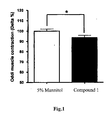
- the rate of change in the maximum perfusion pressure was 93.32% on average in the case of intravenous administration of 0.2 ⁇ g/kg Compound 1
- the rate of change in the maximum perfusion pressure was 99.81% on average in the case of administration of the vehicle.
- Oxapium iodide which has an action to inhibit contraction of shpinctr of Oddi and is currently clinically used as a therapeutic agent for biliary tract diseases, reduces the sphincter of Oddi perfusion pressure by about 10 mmH 2 O (corresponds to 0.74 mmHg) when it is intravenously administered to a dog at a dose of 0.3 mg/kg ( Tamasawa Y. et al., Kiso to Rinsho, 6, 128 (1972 )).
- gabexate mesilate reduces the sphincter of Oddi perfusion pressure by 6.9 mmH 2 O (corresponds to 0.51 mmHg) or 10.6 mmH 2 O (corresponds to 0.78 mmHg) when it is intravenously administered to a dog at a dose of 1 mg/kg or 3 mg/kg, respectively ( Yamasato T. et al., J Smooth Muscle Res., 27, 87 (1991 ).
- oxapium iodide is usually orally administered at a dose of 30 to 60 mg per adult per day dividedly in 3 times, and 100 mg of gabexate mesilate is usually dissolved in 500 mL of Ringer's solution and the resulting solution is administered by intravenous drip infusion at a rate of not more than 8 mL/minute, the above-described doses are considered to be equivalent to the clinical doses of those drugs.
- Compound 1 has a structure represented by Formula (II) below.
- the present invention provides an excellent therapeutic effect on biliary tract diseases and is useful for therapy and/or prophylaxis of biliary tract diseases.
Landscapes
- Chemical & Material Sciences (AREA)
- Organic Chemistry (AREA)
- Health & Medical Sciences (AREA)
- General Health & Medical Sciences (AREA)
- Public Health (AREA)
- Veterinary Medicine (AREA)
- Medicinal Chemistry (AREA)
- Animal Behavior & Ethology (AREA)
- Life Sciences & Earth Sciences (AREA)
- Pharmacology & Pharmacy (AREA)
- Emergency Medicine (AREA)
- Epidemiology (AREA)
- Bioinformatics & Cheminformatics (AREA)
- Nuclear Medicine, Radiotherapy & Molecular Imaging (AREA)
- Engineering & Computer Science (AREA)
- Chemical Kinetics & Catalysis (AREA)
- General Chemical & Material Sciences (AREA)
- Gastroenterology & Hepatology (AREA)
- Pharmaceuticals Containing Other Organic And Inorganic Compounds (AREA)
Abstract
Description
- The present invention relates to a therapeutic or prophylactic agent for a biliary tract disease(s) comprising as an effective component a morphinan derivative or a pharmaceutically acceptable acid addition salt thereof
- The biliary tract disease is a collective term for digestive diseases that occur in the gallbladder, bile duct, pancreas or pancreatic duct. A known example of the cause of occurrence of a biliary tract disease is increased biliary tract pressure due to contraction of sphincter of Oddi in the duodenal papilla, which is the furthest downstream of the biliary tract and corresponds to the distal part of the bile duct formed by confluence of the common bile duct and pancreatic duct. Known examples of the biliary tract disease caused by contraction of sphincter of Oddi include biliary obstruction, gallbladder disorder, cholelithiasis, pancreatitis, biliary dyskinesia, cholangitis and cholecystitis. Therefore, drugs that inhibit contraction of sphincter of Oddi are known to be useful as therapeutic agents for biliary tract diseases caused by contraction of sphincter of Oddi.
- Further, examples of biliary tract diseases which are not caused by contraction of sphincter of Oddi but may be exacerbated by contraction of sphincter of Oddi include primary biliary cirrhosis (which may hereinafter be referred to as PBC). PBC is a disease wherein interlobular bile ducts, which are bile ducts positioned upstream of the common bile duct and inside the liver, are destroyed and bile statis occurs. Obstruction of the common bile duct is known to cause exacerbation of PBC (Non-patent Document 1). Therefore, it is thought that drugs that inhibit contraction of sphincter of Oddi may ameliorate obstruction of the common bile duct and hence inhibit exacerbation of PBC.
- Morphinan derivatives and pharmaceutically acceptable acid addition salts thereof as effective components of the present invention (which may hereinafter be referred to as "compounds of the present invention"), with their κ opioid receptor agonist activity, has been disclosed so far for uses as analgesics and diuretics (Patent Document 1).
Further, they have already been disclosed also for uses in antitussives (Patent Document 2), brain cell protecting agents (Patent Document 3), antipruritics (Patent Document 4), therapeutic agents for hyponatremia (Patent Document 5), ORL-1 receptor antagonists (Patent Document 6), therapeutic agents for neuropathic pain (Patent Document 7), antipruritics for cornea and conjunctiva (Patent Document 8), therapeutic agents for psychoneurotic disorders (Patent Document 9), therapeutic agents for drug dependence (Patent Document 10), therapeutic agents for sepsis (Patent Document 11), therapeutic agents for itching due to multiple sclerosis (Patent Document 12), therapeutic agents for schizophrenia (Patent Document 13) and therapeutic agents for dyskinesia (Patent Document 14). However, no therapeutic or prophylactic effect on biliary tract diseases has been disclosed yet. - Examples of drugs which have actions to inhibit contraction of sphincter of Oddi and are currently used as therapeutic agents for biliary tract diseases include those having actions to promote uptake of Ca2+ into intracellular Ca-store sites, such as trepibutone; those having actions to inhibit binding of Ca2+ in the extracellular fluid to contractile proteins, such as hymecromone; those having actions to inhibit catechol-O-methyltransferase (which may hereinafter be referred to as "COMT"), and antiserotonin actions, such as flopropione; those having antimuscarinic actions, such as tiquizium; those having atropine-like actions and papaverine-like actions, such as oxapium; those having trypsin- and kallikrein-inhibition actions although the action mechanism for inhibition of contraction of sphincter of Oddi is unknown, such as gabexate. However, these are drugs having neither structural similarity to the compounds of the present invention nor the κ opioid receptor agonist activity.
- Further, since opioids are known to cause the contractuion of the sphincter of Oddi and may therefore exacerbate biliary tract diseases, it is known that use of opioids for patients suffering from biliary tract diseases requires caution. Opioids have been reported as follows.
- It is described that since morphine, which has a morphinan skeleton similarly to the compounds of the present invention but is different from the compounds of the present invention in view of the fact that it is a µ opioid receptor agonist, may cause biliary tract spasm in patients suffering from a gallbladder disorder or cholelithiasis, it needs to be carefully administered to these patients (Non-patent Document 2).
- Further, it is described that since oxycodone, which is a µ opioid receptor agonist having a morphinan skeleton, may cause contraction of sphincter of Oddi and therefore exacerbate symptoms in patients suffering from a gallbladder disorder, cholelithiasis or pancreatitis, it needs to be carefully administered to these patients (Non-patent Document 3). Similarly, it is described that since buprenorphine, which is a µ opioid receptor partial agonist having a morphinan skeleton, causes contraction of sphincter of Oddi in animal experiments (with dogs) at high doses (at not less than 0.1 mg/kg i.v.), it needs to be carefully administered to patients suffering from a biliary tract disease (Non-patent Document 4). Further, it is described that since tramadol, which is a µ opioid receptor agonist having no morphinan skeleton, causes contraction of sphincter of Oddi in animal experiments at high doses, it needs to be carefully administered to patients suffering from a biliary tract disease (Non-patent Document 5). Similarly, it is described that since pentazocine, which is a µ opioid receptor partial agonist having no morphinan skeleton, may cause contraction of sphincter of Oddi at high doses, it needs to be carefully administered to patients suffering from a biliary tract disease (Non-patent Document 6).
- It is described that κ opioid receptor agonists having no morphinan skeleton are useful as therapeutic agents for gastrointestinal dysfunction, and examples of the gastrointestinal dysfunction include contraction of sphincter of Oddi (Patent Documents 15 to 18). However, there is no description on inhibition of contraction of sphincter of Oddi.
- Further, in terms of nalbuphine, which is known to have a morphinan skeleton and to have a κ opioid receptor agonist activity and a µ opioid receptor partial agonist activity, there are a report suggesting that it does not exert any action on contraction of sphincter of Oddi (Non-patent Document 7) and a report showing that it increases the inner pressure of biliary tract by 6% although the action is not statistically significant (Non-patent Document 8). However, there is no report suggesting that nalbuphine inhibits contraction of sphincter of Oddi. Further, since butorphanol, which is classified into a κ opioid receptor agonist, increased the inner pressure of biliary tract by 12% and this action was statistically significant (Non-patent Document 8), it has been shown to have contraction of sphincter of Oddi. Further, it is described that since eptazocine, which is known to have no morphinan skeleton but act as a κ agonist on opioid receptors, shows an action to cause contraction of sphincter of Oddi at high doses in animal experiments, it needs to be carefully administered to patients suffering from a biliary tract disease (Non-patent Document 9).
- Leucine enkephalin and methionine enkephalin, which are endogenous δ opioid receptor agonist peptides, are reported to cause transient contraction of sphincter of Oddi, followed by showing a continuous contraction inhibition action (Non-patent Document 10). Further, naloxone, which is a µ opioid receptor antagonist having a morphinan skeleton, is also known to have an action to inhibit contraction of sphincter of Oddi (Non-patent Document 11).
- Thus, no suggestion has been made at all on inhibition of contraction of sphincter of Oddi by opioid κ receptor agonists having a morphinan skeleton similar to the compounds of the present invention.
- It has been disclosed that the compounds of the present invention show antagonistic actions on the ORL-1 receptor. Since nociceptin (which is sometimes referred to as orphanin FQ), which is an endogenous agonist peptide of this receptor, is expressed in the excitatory motor neurons in the myenteric plexus of sphincter of Oddi and inhibits cholinergic neurotransmission, it has been suggested that nociceptin may act on sphincter of Oddi via a feedback autoinhibitory mechanism (Non-patent Document 12).
- Thus, ORL-1 receptor agonists are considered to inhibit contraction of sphincter of Oddi, but inhibition of contraction of sphincter of Oddi by an antagonistic action on the ORL-1 receptor has not been suggested.
-
- [Patent Document 1]
WO 93/015081 - [Patent Document 2]
WO 95/001178 - [Patent Document 3]
WO 95/003307 - [Patent Document 4]
WO 98/023290 - [Patent Document 5]
WO 99/005146 - [Patent Document 6]
JP 2000-53572 A - [Patent Document 7]
WO 01/014383 - [Patent Document 8]
JP 2001-163784 A - [Patent Document 9]
WO 02/078744 - [Patent Document 10]
WO 99/011289 - [Patent Document 11]
WO 02/089845 - [Patent Document 12]
WO 06/095836 - [Patent Document 13]
WO 09/001764 - [Patent Document 14]
WO 08/133297 - [Patent Document 15]
WO 05/004796 - [Patent Document 16]
WO 05/049564 - [Patent Document 17]
WO 05/023799 - [Patent Document 18]
WO 04/093796 -
- [Non-patent Document 1] Hastier P et al., Dig Dis Sci., 43, 2426 (1998)
- [Non-patent Document 2] JAPIC ethical drugs in Japan 2010, edited and published by Japan Pharmaceutical Information Center, available from Maruzen Co., Ltd., p. 2705, Morphine hydrochloride hydrate.
- [Non-patent Document 3] JAPIC ethical drugs in Japan 2010, edited and published by Japan Pharmaceutical Information Center, available from Maruzen Co., Ltd., p. 618, Oxycodone hydrochloride hydrate.
- [Non-patent Document 4] JAPIC ethical drugs in Japan 2010, edited and published by Japan Pharmaceutical Information Center, available from Maruzen Co., Ltd., p. 2166, Buprenorphine hydrochloride.
- [Non-patent Document 5] JAPIC ethical drugs in Japan 2010, edited and published by Japan Pharmaceutical Information Center, available from Maruzen Co., Ltd., p. 1713, Tramadol hydrochloride.
- [Non-patent Document 6] JAPIC ethical drugs in Japan 2010, edited and published by Japan Pharmaceutical Information Center, available from Maruzen Co., Ltd., p. 2448, Pentazocine.
- [Non-patent Document 7] Isenhower HL et al., Am J Health-Syst Pharm., 55, 480 (1998)
- [Non-patent Document 8] Thompson DR., Am J Gastroenterol., 96, 1266 (2001)
- [Non-patent Document 9] JAPIC ethical drugs in Japan 2010, edited and published by Japan Pharmaceutical Information Center, available from Maruzen Co., Ltd., p. 549, Eptazocine hydrobromate.
- [Non-patent Document 10] Behar J et al., Gastroenterol., 86, 134 (1984)
- [Non-patent Document 11] Behar J et al., Motiltiy of the Digestive Tract., New York: Raven, (1982), p. 397
- [Non-patent Document 12] O'Donnell AM et al., J Comp Neurol., 29, 430 (2001)
- The present invention aims to provide a therapeutic or prophylactic agent for a biliary tract disease(s) having an excellent effect, which agent comprises as an effective component a specific compound having a morphinan skeleton or a pharmaceutically acceptable acid addition salt thereof.
- The present inventors intensively studied to solve the above problems and discovered that specific compounds having a morphinan skeleton and pharmaceutically acceptable acid addition salts thereof have excellent therapeutic effects on biliary tract diseases, thereby completing the present invention.
- That is, the present invention relates to [1] to [5] below.
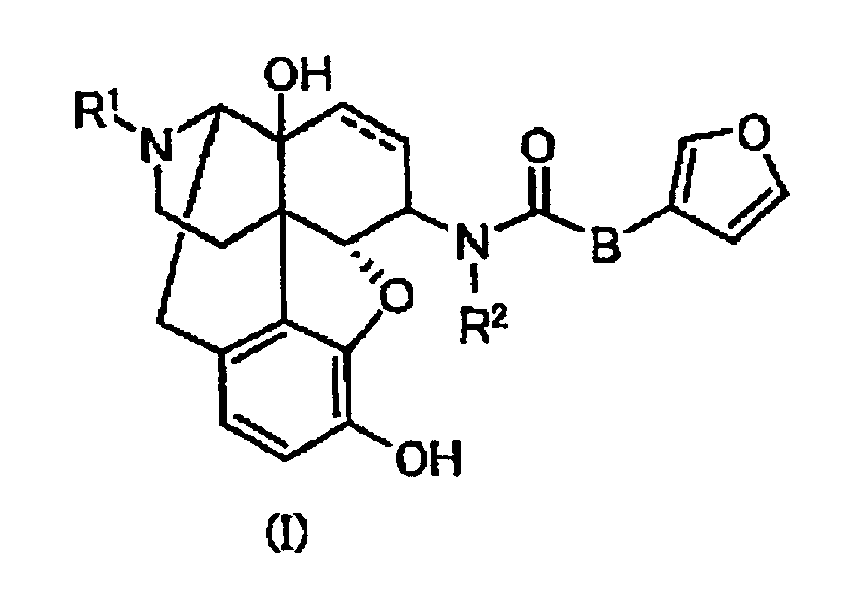
[1] A therapeutic or prophylactic agent for a biliary tract disease(s), the agent comprising as an effective component a compound represented by General Formula (I) below: -

- [wherein the double line constituted by a dotted line and a solid line represents a double bond or single bond, R1 represents C4-C7 cycloalkylalkyl, R2 represents C1-C5 linear or branched alkyl, and B represents -CH=CH-] or a pharmaceutically acceptable acid addition salt thereof.
[2] The therapeutic or prophylactic agent for a biliary tract disease(s) according to [1], wherein, in General Formula (I), R1 is cyclopropylmethyl, cyclobutylmethyl, cyclopentylmethyl or cyclohexylmethyl, and R2 is methyl, ethyl or propyl.
[3] The therapeutic or prophylactic agent for a biliary tract disease(s) according to [1], wherein the compound represented by General Formula (I) is (-)-17-(cyclopropylmethyl)-3,14β-dihydroxy-4,5a-epoxy-6β-[N-methyl-trans-3-(3-furyl)acrylamido]morphinan.
[4] The therapeutic or prophylactic agent for a biliary tract disease(s) according to any one of [1] to [3], wherein the biliary tract disease(s) is/are biliary obstruction, gallbladder disorder, cholelithiasis, pancreatitis, biliary dyskinesia, cholangitis, cholecystitis and/or primary biliary cirrhosis.
[5] The therapeutic or prophylactic agent for a biliary tract disease(s) according to any one of [1] to [3], which agent exerts a therapeutic or prophylactic action on the biliary tract disease(s) by inhibiting contraction of sphincter of Oddi.
[6] A compound represented by General Formula (I) below: -

- [wherein the double line constituted by a dotted line and a solid line represents a double bond or single bond, R1 represents C4-C7 cycloalkylalkyl, R2 represents C1-C5 linear or branched alkyl, and B represents -CH=CH-] or a pharmaceutically acceptable acid addition salt thereof, which compound or pharmaceutically acceptable acid addition salt is used for therapy or prophylaxis of a biliary tract disease(s).
[7] A method of therapy or prophylaxis of a biliary tract disease(s), the method comprising administering an effective amount of a compound represented by General Formula (I) below: -

- [wherein the double line constituted by a dotted line and a solid line represents a double bond or single bond, R1 represents C4-C7 cycloalkylalkyl, R2 represents C1-C5 linear or branched alkyl, and B represents -CH=CH-]
or a pharmaceutically acceptable acid addition salt thereof to a patient who needs a therapeutic or prophylactic agent for a biliary tract disease(s). - The present invention provides a remarkable therapeutic or prophylactic effect on biliary tract diseases.
-
-
Fig. 1 is a diagram showing the influence ofCompound 1 on contraction of sphincter of Oddi in rabbit in Example 1. The abscissa indicates a test substance, and the ordinate indicates the rate of change in the maximum perfusion pressure (Oddi muscle contraction (Delta%)) based on comparison between the value observed during the 3 minutes immediately before beginning of intravenous administration of the test substance and the value observed during the 3 minutes immediately after the beginning of administration (mean ± standard error; N=11 cases, *p<0.05, paired t-test). - The therapeutic or prophylactic agent of the present invention for a biliary tract disease(s) comprises as an effective component a compound represented by General Formula (III) or a pharmaceutically acceptable acid addition salt thereof.
-

- [wherein the double line constituted by a dotted line and a solid line represents a double bond or single bond.
R1 represents C1-C5 alkyl, C4-C7 cycloalkylalkyl, C5-C7 cycloalkenylalkyl, C6-C12 aryl, C7-C13 aralkyl, C4-C7 alkenyl, allyl, furan-2-ylalkyl (the alkyl moiety has 1 to 5 carbon atom(s)), or thiophen-2-ylalkyl (the alkyl moiety has 1 to 5 carbon atom(s)). - R14 represents hydrogen, hydroxy, nitro, C1-C5 alkanoyloxy, C1-C5 alkoxy, C1-C5 alkyl or NR9R10. Here, R9 represents hydrogen or C1-C5 alkyl, R10 represents hydrogen, C1-C5 alkyl or -(C=O)R11, R11 represents hydrogen, phenyl or C1-C5 alkyl.
- R3 represents hydrogen, hydroxy, C1-C5 alkanoyloxy or C1-C5 alkoxy.
- A represents -XC(=Y)-, -XC(=Y)Z-, -X- or -XSO2- (wherein X, Y and Z each independently represent NR4, S or O, wherein R4 represents hydrogen, C1-C5 linear or branched alkyl or C6-C12 aryl, and, in cases where two or more R4 exist in the formula, these may be the same or different).
- B represents a valence bond, C1-C14 linear or branched alkylene (which may be substituted by at least one substituent selected from the group consisting of C1-C5 alkoxy, C1-C5 alkanoyloxy, hydroxy, fluorine, chloro, bromo, iodo, amino, nitro, cyano, trifluoromethyl and phenoxy, and 1 to 3 methylene group(s) may be substituted by carbonyl); C2-C14 linear or branched acyclic unsaturated hydrocarbon comprising 1 to 3 double bond(s) and/or triple bond(s) (which may be substituted by at least one substituent selected from the group consisting of C1-C5 alkoxy, C1-C5 alkanoyloxy, hydroxy, fluorine, chloro, bromo, iodo, amino, nitro, cyano, trifluoromethyl and phenoxy, and 1 to 3 methylene group(s) may be substituted by carbonyl); or C1-C14 linear or branched, saturated or unsaturated hydrocarbon comprising 1 to 5 thioether bond(s), ether bond(s) and/or amino bond(s) (wherein no heteroatom is directly bound to A, and 1 to 3 methylene group(s) may be substituted by carbonyl).
- R5 represents hydrogen or an organic group having any of the following basic skeletons (wherein Q represents N, O or S; T represents CH2, NH, S or O; 1 represents an integer of 0 to 5; m and n each independently represent an integer of 0 to 5; the sum of m and n is not more than 5; and each organic group may be substituted by at least one substituent selected from the group consisting of C1-C5 alkyl, C1-C5 alkoxy, C1-C5 alkanoyloxy, hydroxy, fluorine, chloro, bromo, iodo, amino, nitro, cyano, isothiocyanato, trifluoromethyl, trifluoromethoxy and methylenedioxy).
-



- R6 represents hydrogen, and R7 represents hydrogen, hydroxy, C1-C5 alkoxy or C1-C5 alkanoyloxy; or R6 and R7 together represent -O-, -CH2- or -S-.
- R8 represents hydrogen, C1-C5 alkyl or C1-C5 alkanoyl.
- R12 and R13 together represent hydrogen; one of these represents hydrogen and the other represents hydroxy; or these together represent oxo.
- General Formula (III) includes (+), (-) and (±) isomers.]
The double line constituted by a dotted line and a solid line in General Formula (III) represents a double bond or single bond, and the double line preferably represents a single bond. - The therapeutic or prophylactic agent of the present invention for a biliary tract disease(s) preferably comprises, among the compounds represented by General Formula (III) and pharmaceutically acceptable acid addition salts thereof, a compound represented by the above-described General Formula (I) or a pharmaceutically acceptable acid addition salt thereof as an effective component.
- The double line constituted by a dotted line and a solid line in General Formula (I) represents a double bond or single bond, and the double line preferably represents a single bond.
- In General Formula (I), R1 represents C4-C7 cycloalkylalkyl. Among these, R1 is preferably cyclopropylmethyl, cyclobutylmethyl, cyclopentylmethyl or cyclohexylmethyl, especially preferably cyclopropylmethyl.
- R2 represents C1-C5 linear or branched alkyl. R2 is preferably methyl, ethyl or propyl. Among these, methyl is more preferred.
- B represents -CH=CH-. B is preferably trans -CH=CH-.
- The compound represented by General Formula (I) is especially preferably a (-)-compound wherein the double line constituted by a dotted line and a solid line represents a single bond; R1 represents cyclopropylmethyl; R2 represents methyl; and B represents trans -CH=CH-. That is, the compound represented by General Formula (I) is especially preferably (-)-17-(cyclopropylmethyl)-3,14β-dihydroxy-4,5α-epoxy-6β-[N-methyl-trans-3-(3-furyl)acrylamido]morphinan. However, the present invention is not restricted thereto.
- These compounds represented by General Formula (I) and pharmaceutically acceptable acid addition salts thereof can be produced according to the method described in
JP 2525552 B JP 2525552 B JP 2525552 B - Examples of the pharmaceutically acceptable acid addition salt in the present invention include inorganic acid salts such as hydrochloric acid salt, sulfuric acid salt, nitric acid salt, hydrobromic acid salt, hydroiodic acid salt and phosphoric acid salt; organic carboxylic acid salts such as acetic acid salt, lactic acid salt, citric acid salt, oxalic acid salt, glutaric acid salt, malic acid salt, tartaric acid salt, fumaric acid salt, mandelic acid salt, maleic acid salt, benzoic acid salt and phthalic acid salt; and organic sulfonic acid salts such as methanesulfonic acid salt, ethanesulfonic acid salt, benzenesulfonic acid salt, p-toluenesulfonic acid salt and camphorsulfonic acid salt. Among these, hydrochloric acid salt, hydrobromic acid salt, phosphoric acid salt, tartaric acid salt, methanesulfonic acid salt and the like are preferably used, but, needless to say, the pharmaceutically acceptable acid addition salt of the present invention is not restricted thereto.
- The "biliary tract disease" in the present invention includes digestive diseases that occur in the gallbladder, bile duct, pancreas or pancreatic duct. Among these, the therapeutic or prophylactic agent of the present invention for a biliary tract disease(s) is preferably applicable to a biliary tract disease(s) that occur(s) and/or exacerbate(s) due to contraction of sphincter of Oddi, especially preferably biliary obstruction, gallbladder disorder, cholelithiasis, pancreatitis, biliary dyskinesia, cholangitis, cholecystitis, primary biliary cirrhosis and/or the like.
- The compound represented by General Formula (I) or a pharmaceutically acceptable acid addition salt thereof is purified to a level suitable for medical use, and, after passing a necessary safety test, the compound or acid addition salt may be orally or parenterally administered as it is or as a pharmaceutical composition prepared as a mixture with a known pharmaceutically acceptable acid(s), carrier(s), vehicle(s) and/or the like. Examples of its formulation include tablets, capsules, orally disintegrating tablets, powders and granules in the case of oral administration; and formulations for intravenous rapid infusion, intravenous sustained infusion, intramuscular injection, subcutaneous injection or intradermal injection, and tapes and patches, in the case of parenteral administration. However, the formulation is of course not limited thereto.
- The content of the compound represented by General Formula (I) or a pharmaceutically acceptable acid addition salt thereof is not restricted, and the compound or acid addition salt may be usually prepared such that the dose per administration is 0.1 µg to 100 mg. The dose may be appropriately selected depending on the symptoms, age and body weight of the patient, administration method and/or the like, and the dose per adult per day is usually about 0.1 µg to 20 mg, preferably about 1 µg to 10 mg in terms of the amount of the compound represented by General Formula (I) or a pharmaceutically acceptable acid addition salt thereof, which may be administered at once or in several times.
- As the therapeutic or prophylactic agent of the present invention for a biliary tract disease(s), the compound represented by General Formula (I) or a pharmaceutically acceptable acid addition salt thereof may be administered either alone or in combination with one or more drugs which are used for therapy or prophylaxis of a disease(s), or for alleviation or inhibition of a symptom(s).
- Examples of the drugs include cholagogues such as trepibutone (therapeutic agent for pancreatic/biliary tract diseases), hymecromone (therapeutic agent for biliary tract diseases), flopropione (pancreaticobiliar/urinary tract antispasmodic), tiquizium (antimuscarinic agent), oxapium (antispasmodic anticholinergic agent), gabexate (protease inhibitor), dehydrocholic acid, anetholtrithion, ursodeoxycholic acid and chenodeoxycholic acid.
- Examples of the drugs also include morphine, pentazocine, buprenorphine, oxycodone, fentanyl, remifentanil, tramadol, butorphanol and eptazocine, which are drugs to be administered for alleviation of pain due to biliary tract diseases and, at the same time, having side effects that promote contraction of sphincter of Oddi. It is also possible, by combining these drugs with the drug of the present invention, to suppress the side effects.
- These are merely examples and should not be interpreted in any restrictive way. The method for combining the drugs may be either combined use of the drugs or use of the drugs as a mixture.
- The fact that a compound represented by General Formula (I) or a pharmaceutically acceptable acid addition salt thereof as an effective component of the therapeutic or prophylactic agent of the present invention is effective for therapy and/or prophylaxis of a biliary tract disease(s) can be confirmed by the method described in Examples below. The rabbit model for contraction of sphincter of Oddi is commonly used in basic research on biliary tract diseases (Wei JG et al., World J. Gastroenterol., 6, 102 (2000)), and, in cases where the drug shows an action to inhibit contraction of sphincter of Oddi in this model, the drug can be said to have a therapeutic and/or prophylactic effect on biliary tract diseases.
- The present invention will now be described concretely by way of an Example.
- The method described in Wei JG et al., World J. Gastroenterol., 6, 102 (2000) was partially modified and used for measurement of a change in the perfusion pressure in sphincter of Oddi. The change in the perfusion pressure reflects the motility of a contractive change of sphincter of Oddi.
- Male NZW rabbits (Japan SLC) which had body weights of 2.0 to 2.5 kg upon delivery were fasted from the evening of the day before the experiment. The experiment was carried out under anesthesia with pentobarbital, with artificial ventilation. Each rabbit was immobilized in the supine position and subjected to abdominal incision to expose the periduodenal area and the common bile duct. A small incision was made in the common bile duct, and a cannula was inserted into the common bile duct toward the duodenum side, followed by indwelling its tip in sphincter of Oddi (sphincter ampullae). For biliary excretion, another cannula was inserted into the bile duct toward the gallbladder side and immobilized. From the other end of the cannula whose tip was indwelled in the sphincter of Oddi, physiological saline was continuously injected at a flow rate of 6 mL/hour to allow perfusion in the sphincter of Oddi. By recording the perfusion pressure with a blood pressure monitoring transducer (DX-300, Nihon Kohden Corporation), the contraction reaction of sphincter of Oddi was measured.
- To the rabbit, 5% aqueous mannitol solution, which is the vehicle for the
Compound 1 solution, was administered via the jugular vein. Further, not less than 30 minutes after the administration of the vehicle,Compound 1 was administered to the same individual at a dose of 0.2 µg/kg via the jugular vein. The administration volume of the vehicle andCompound 1 was 1 mL/kg, and the administration was carried out for 60 seconds. -
Fig. 1 shows the result of calculation of the rate of change in the maximum perfusion pressure (Oddi muscle contraction (Delta%)) based on comparison between the value observed during the 3 minutes immediately before beginning of the administration and the value observed during the 3 minutes immediately after beginning of the administration (mean ± standard error; N=11 cases). In contrast to the fact that the rate of change in the maximum perfusion pressure was 93.32% on average in the case of intravenous administration of 0.2 µg/kg Compound 1, the rate of change in the maximum perfusion pressure was 99.81% on average in the case of administration of the vehicle. Thus, in the Compound 1-administered group, the rate of change in the maximum perfusion pressure was lower compared to the vehicle-administered group, and this difference was significant (*p<0.05, paired t-test). This indicates thatCompound 1 has an action to inhibit contraction of sphincter of Oddi. - Oxapium iodide, which has an action to inhibit contraction of shpinctr of Oddi and is currently clinically used as a therapeutic agent for biliary tract diseases, reduces the sphincter of Oddi perfusion pressure by about 10 mmH2O (corresponds to 0.74 mmHg) when it is intravenously administered to a dog at a dose of 0.3 mg/kg (Tamasawa Y. et al., Kiso to Rinsho, 6, 128 (1972)). Further, gabexate mesilate reduces the sphincter of Oddi perfusion pressure by 6.9 mmH2O (corresponds to 0.51 mmHg) or 10.6 mmH2O (corresponds to 0.78 mmHg) when it is intravenously administered to a dog at a dose of 1 mg/kg or 3 mg/kg, respectively (Yamasato T. et al., J Smooth Muscle Res., 27, 87 (1991). Since oxapium iodide is usually orally administered at a dose of 30 to 60 mg per adult per day dividedly in 3 times, and 100 mg of gabexate mesilate is usually dissolved in 500 mL of Ringer's solution and the resulting solution is administered by intravenous drip infusion at a rate of not more than 8 mL/minute, the above-described doses are considered to be equivalent to the clinical doses of those drugs.
- In the present Example, by intravenous administration of 0.2 µg/kg of
Compound 1 to rabbits, the actual value of the maximum perfusion pressure was reduced by 0.95 mmHg on average. This result therefore indicates that, by usingCompound 1, a therapeutic and prophylactic effect on biliary tract diseases can be clinically expected.
Compound 1 has a structure represented by Formula (II) below. -

- The present invention provides an excellent therapeutic effect on biliary tract diseases and is useful for therapy and/or prophylaxis of biliary tract diseases.
Claims (7)
- A therapeutic or prophylactic agent for a biliary tract disease(s), said agent comprising as an effective component a compound represented by General Formula (I) below:
or a pharmaceutically acceptable acid addition salt thereof. - The therapeutic or prophylactic agent for a biliary tract disease(s) according to claim 1, wherein, in General Formula (I), R1 is cyclopropylmethyl, cyclobutylmethyl, cyclopentylmethyl or cyclohexylmethyl, and R2 is methyl, ethyl or propyl.
- The therapeutic or prophylactic agent for a biliary tract disease(s) according to claim 1, wherein said compound represented by General Formula (I) is (-)-17-(cyclopropylmethyl)-3,14β-dihydroxy-4,5α-epoxy-6β-[N-methyl-trans-3-(3-furyl)acrylamido]morphinan.
- The therapeutic or prophylactic agent for a biliary tract disease(s) according to any one of claims 1 to 3, wherein said biliary tract disease(s) is/are biliary obstruction, gallbladder disorder, cholelithiasis, pancreatitis, biliary dyskinesia, cholangitis, cholecystitis and/or primary biliary cirrhosis
- The therapeutic or prophylactic agent for a biliary tract disease(s) according to any one of claims 1 to 3, which agent exerts a therapeutic or prophylactic action on the biliary tract disease(s) by inhibiting contraction of sphincter of Oddi.
- A compound represented by General Formula (I) below:

or a pharmaceutically acceptable acid addition salt thereof, which compound or pharmaceutically acceptable acid addition salt is used for therapy or prophylaxis of a biliary tract disease(s). - A method of therapy or prophylaxis of a biliary tract disease(s), said method comprising administering an effective amount of a compound represented by General Formula (I) below:

or a pharmaceutically acceptable acid addition salt thereof to a patient who needs a therapeutic or prophylactic agent for a biliary tract disease(s).
Applications Claiming Priority (2)
| Application Number | Priority Date | Filing Date | Title |
|---|---|---|---|
| JP2010018730 | 2010-01-29 | ||
| PCT/JP2011/051737 WO2011093441A1 (en) | 2010-01-29 | 2011-01-28 | Therapeutic or prophylactic agent for biliary diseases |
Publications (3)
| Publication Number | Publication Date |
|---|---|
| EP2529739A1 true EP2529739A1 (en) | 2012-12-05 |
| EP2529739A4 EP2529739A4 (en) | 2015-03-11 |
| EP2529739B1 EP2529739B1 (en) | 2016-07-13 |
Family
ID=44319422
Family Applications (1)
| Application Number | Title | Priority Date | Filing Date |
|---|---|---|---|
| EP11737151.8A Active EP2529739B1 (en) | 2010-01-29 | 2011-01-28 | Therapeutic or prophylactic agent for biliary diseases |
Country Status (16)
| Country | Link |
|---|---|
| US (1) | US10131672B2 (en) |
| EP (1) | EP2529739B1 (en) |
| JP (1) | JP5867081B2 (en) |
| KR (1) | KR101732042B1 (en) |
| CN (1) | CN102711759B (en) |
| AU (1) | AU2011211223B2 (en) |
| BR (1) | BR112012018765B1 (en) |
| CA (1) | CA2787323C (en) |
| ES (1) | ES2582628T3 (en) |
| MX (1) | MX362830B (en) |
| MY (1) | MY173491A (en) |
| PH (1) | PH12012501552A1 (en) |
| PL (1) | PL2529739T3 (en) |
| RU (1) | RU2554857C2 (en) |
| TW (1) | TWI477505B (en) |
| WO (1) | WO2011093441A1 (en) |
Families Citing this family (9)
| Publication number | Priority date | Publication date | Assignee | Title |
|---|---|---|---|---|
| WO2012054566A2 (en) * | 2010-10-19 | 2012-04-26 | Memorial Sloan-Kettering Cancer Center | 6-amido derivatives of 4,5a-epoxymorphinans for treatment of pain |
| CA2825165C (en) | 2011-01-31 | 2018-07-03 | Toray Industries, Inc. | Therapeutic or prophylactic agent for cachexia |
| EP4212532A3 (en) | 2015-04-30 | 2023-09-27 | Memorial Sloan Kettering Cancer Center | Mitragynine analogs and uses thereof |
| CN106110220B (en) * | 2016-08-22 | 2020-01-07 | 陕西盘龙药业集团股份有限公司 | Preparation process of Chinese patent medicine for treating biliary tract diseases |
| DK3761982T3 (en) | 2018-03-08 | 2025-01-02 | Victoria Link Ltd | USE OF NALFURAFINE IN THE TREATMENT OF DEMYELINATING DISEASES |
| IL318587A (en) | 2018-07-23 | 2025-03-01 | Trevi Therapeutics Inc | Treatment of chronic cough, breathlessness and dyspnea |
| WO2020205735A1 (en) * | 2019-03-29 | 2020-10-08 | Humanwell Pharmaceutical US | Novel morphinans useful for treating medical disorders |
| IL294601A (en) | 2020-01-10 | 2022-09-01 | Trevi Therapeutics Inc | Methods of administering nalbuphine |
| US20240300939A1 (en) | 2021-06-14 | 2024-09-12 | Scorpion Therapeutics, Inc. | Urea derivatives which can be used to treat cancer |
Family Cites Families (26)
| Publication number | Priority date | Publication date | Assignee | Title |
|---|---|---|---|---|
| US4946848A (en) * | 1985-10-29 | 1990-08-07 | Baker Cumins Dermatologicals, Inc. | Method of treating pruritus with nalmefene and clonidine |
| JP3130935B2 (en) * | 1991-06-24 | 2001-01-31 | ゼネカ リミテッド | Pharmaceutical composition |
| ES2121988T3 (en) | 1992-01-23 | 1998-12-16 | Toray Industries | DERIVATIVE OF MORFINANO AND MEDICINAL USE. |
| CN1111900A (en) | 1993-06-30 | 1995-11-15 | 东丽株式会社 | Antitussive |
| KR100341950B1 (en) | 1993-07-19 | 2002-11-29 | 도레이 가부시끼가이샤 | Brain cell protection agent |
| HU224914B1 (en) * | 1994-05-31 | 2006-04-28 | Mallinckrodt Chemical Inc | Process for the preparation of nalbuphine having not more then 1% levels of beta-epimer |
| DE69732868T2 (en) * | 1996-11-25 | 2006-04-13 | Toray Industries, Inc. | Remedy for itching |
| WO1999005146A1 (en) | 1997-07-25 | 1999-02-04 | Toray Industries, Inc. | Hyponatremia remedies |
| JP4359711B2 (en) | 1997-09-02 | 2009-11-04 | 東レ株式会社 | Drug addiction treatment |
| JP2000053572A (en) | 1998-08-11 | 2000-02-22 | Toray Ind Inc | ORL1 (opioid orphan) receptor antagonist |
| CN1204139C (en) | 1999-08-24 | 2005-06-01 | 东丽株式会社 | Remedies for neuropathic pain and model animals of neuropathic pain |
| JP2001163784A (en) | 1999-12-06 | 2001-06-19 | Toray Ind Inc | Antipruritic for cornea or conjunctiva |
| US8338442B2 (en) | 2001-03-30 | 2012-12-25 | Toray Industries, Inc. | Remedies for psychoneurosis |
| JP4239592B2 (en) | 2001-05-08 | 2009-03-18 | 東レ株式会社 | Sepsis treatment |
| US20030054030A1 (en) * | 2001-09-13 | 2003-03-20 | Gary Gordon | Method and compositions for the treatment of pruritus |
| DE10161963A1 (en) * | 2001-12-17 | 2003-07-03 | Johannes Schuetz | 6-aminomorphine derivatives, production process therefor and their use |
| US6852713B2 (en) | 2003-04-16 | 2005-02-08 | Adolor Corporation | Lactam derivatives and methods of their use |
| US6992193B2 (en) | 2003-06-10 | 2006-01-31 | Adolor Corporation | Sulfonylamino phenylacetamide derivatives and methods of their use |
| US7034051B2 (en) | 2003-08-28 | 2006-04-25 | Adolor Corporation | Fused bicyclic carboxamide derivatives and methods of their use |
| US7160902B2 (en) | 2003-11-14 | 2007-01-09 | Adolor Corporation | Amide derivatives and methods of their use |
| AU2006221314B2 (en) | 2005-03-10 | 2012-09-06 | Toray Industries, Inc. | Antipruritic agent for pruritus caused by multiple sclerosis |
| PL2151240T3 (en) * | 2007-04-24 | 2014-01-31 | Toray Industries | Therapeutic or prophylactic agent for dyskinesia |
| EP2168580B1 (en) | 2007-06-22 | 2015-12-02 | Toray Industries, Inc. | Remedy or preventive for schizophrenia |
| PL2196206T3 (en) * | 2007-10-05 | 2020-02-28 | Toray Industries, Inc. | Remedy for relieving skin troubles comprising morphinan derivative or pharmacologically acceptable acid addition salt thereof as the active ingredient |
| ES2671897T3 (en) * | 2008-02-14 | 2018-06-11 | Alkermes, Inc. | Selective opioid compounds |
| WO2009132313A2 (en) * | 2008-04-25 | 2009-10-29 | Progenics Pharmaceuticals, Inc. | Morphinan derivatives of organic and inorganic acids |
-
2011
- 2011-01-28 PH PH1/2012/501552A patent/PH12012501552A1/en unknown
- 2011-01-28 BR BR112012018765A patent/BR112012018765B1/en active IP Right Grant
- 2011-01-28 JP JP2011505302A patent/JP5867081B2/en active Active
- 2011-01-28 WO PCT/JP2011/051737 patent/WO2011093441A1/en not_active Ceased
- 2011-01-28 PL PL11737151.8T patent/PL2529739T3/en unknown
- 2011-01-28 CA CA2787323A patent/CA2787323C/en active Active
- 2011-01-28 MY MYPI2012700506A patent/MY173491A/en unknown
- 2011-01-28 KR KR1020127022530A patent/KR101732042B1/en active Active
- 2011-01-28 MX MX2012008509A patent/MX362830B/en active IP Right Grant
- 2011-01-28 EP EP11737151.8A patent/EP2529739B1/en active Active
- 2011-01-28 AU AU2011211223A patent/AU2011211223B2/en active Active
- 2011-01-28 ES ES11737151.8T patent/ES2582628T3/en active Active
- 2011-01-28 RU RU2012136826/04A patent/RU2554857C2/en active
- 2011-01-28 TW TW100103337A patent/TWI477505B/en active
- 2011-01-28 CN CN201180007520.XA patent/CN102711759B/en active Active
- 2011-01-28 US US13/522,784 patent/US10131672B2/en active Active
Also Published As
| Publication number | Publication date |
|---|---|
| EP2529739A4 (en) | 2015-03-11 |
| CN102711759A (en) | 2012-10-03 |
| WO2011093441A1 (en) | 2011-08-04 |
| TW201200521A (en) | 2012-01-01 |
| PL2529739T3 (en) | 2016-12-30 |
| US20130203797A1 (en) | 2013-08-08 |
| MX362830B (en) | 2019-02-14 |
| BR112012018765B1 (en) | 2019-09-03 |
| ES2582628T3 (en) | 2016-09-14 |
| CA2787323C (en) | 2017-08-29 |
| PH12012501552A1 (en) | 2017-04-26 |
| KR20120139713A (en) | 2012-12-27 |
| JPWO2011093441A1 (en) | 2013-06-06 |
| AU2011211223A1 (en) | 2012-09-20 |
| CA2787323A1 (en) | 2011-08-04 |
| EP2529739B1 (en) | 2016-07-13 |
| AU2011211223B2 (en) | 2014-10-23 |
| RU2554857C2 (en) | 2015-06-27 |
| KR101732042B1 (en) | 2017-05-02 |
| BR112012018765A2 (en) | 2016-05-03 |
| US10131672B2 (en) | 2018-11-20 |
| TWI477505B (en) | 2015-03-21 |
| RU2012136826A (en) | 2014-03-10 |
| MX2012008509A (en) | 2012-08-31 |
| MY173491A (en) | 2020-01-29 |
| CN102711759B (en) | 2015-05-13 |
| JP5867081B2 (en) | 2016-02-24 |
Similar Documents
| Publication | Publication Date | Title |
|---|---|---|
| US10131672B2 (en) | Therapeutic or prophylactic agent for biliary diseases | |
| AU784541B2 (en) | Novel methods and compositions involving opioids and antagonists thereof | |
| US8796301B2 (en) | Therapeutic or prophylactic agent for dyskinesia | |
| JP2006131545A (en) | Neuropathic pain treatment | |
| US8470845B2 (en) | Analgesic and methods of treating pain | |
| EP2168580B1 (en) | Remedy or preventive for schizophrenia | |
| ES2307025T3 (en) | COMBINATION OF OPIOIDES AND A DERIVATIVE OF PIPERAZINE FOR THE TREATMENT OF PAIN. | |
| WO2006095836A1 (en) | Antipruritic agent for pruritus caused by multiple sclerosis | |
| Hammond et al. | Opioid analgesics | |
| JP2015520145A (en) | Treatment of respiratory depression | |
| US20090292124A1 (en) | Therapeutic Agent for Nausea and/or Vomiting | |
| US20060025434A1 (en) | Therapeutic agents for drug/substance dependence | |
| EP1635833B1 (en) | Combination of opioids and a piperazine derivative for the treatment of pain | |
| WO2004078178A1 (en) | Buprenorphine compounds for treatment of alcohol dependence and excessive alcohol use |
Legal Events
| Date | Code | Title | Description |
|---|---|---|---|
| PUAI | Public reference made under article 153(3) epc to a published international application that has entered the european phase |
Free format text: ORIGINAL CODE: 0009012 |
|
| 17P | Request for examination filed |
Effective date: 20120803 |
|
| AK | Designated contracting states |
Kind code of ref document: A1 Designated state(s): AL AT BE BG CH CY CZ DE DK EE ES FI FR GB GR HR HU IE IS IT LI LT LU LV MC MK MT NL NO PL PT RO RS SE SI SK SM TR |
|
| DAX | Request for extension of the european patent (deleted) | ||
| A4 | Supplementary search report drawn up and despatched |
Effective date: 20150211 |
|
| RIC1 | Information provided on ipc code assigned before grant |
Ipc: A61K 31/485 20060101AFI20150205BHEP Ipc: A61P 1/16 20060101ALI20150205BHEP Ipc: C07D 489/02 20060101ALI20150205BHEP Ipc: A61P 1/18 20060101ALI20150205BHEP |
|
| REG | Reference to a national code |
Ref country code: DE Ref legal event code: R079 Ref document number: 602011028121 Country of ref document: DE Free format text: PREVIOUS MAIN CLASS: A61K0031485000 Ipc: C07D0489000000 |
|
| GRAP | Despatch of communication of intention to grant a patent |
Free format text: ORIGINAL CODE: EPIDOSNIGR1 |
|
| RIC1 | Information provided on ipc code assigned before grant |
Ipc: C07D 489/00 20060101AFI20160209BHEP Ipc: C07D 489/08 20060101ALI20160209BHEP |
|
| INTG | Intention to grant announced |
Effective date: 20160224 |
|
| GRAS | Grant fee paid |
Free format text: ORIGINAL CODE: EPIDOSNIGR3 |
|
| GRAA | (expected) grant |
Free format text: ORIGINAL CODE: 0009210 |
|
| AK | Designated contracting states |
Kind code of ref document: B1 Designated state(s): AL AT BE BG CH CY CZ DE DK EE ES FI FR GB GR HR HU IE IS IT LI LT LU LV MC MK MT NL NO PL PT RO RS SE SI SK SM TR |
|
| REG | Reference to a national code |
Ref country code: GB Ref legal event code: FG4D |
|
| REG | Reference to a national code |
Ref country code: AT Ref legal event code: REF Ref document number: 812215 Country of ref document: AT Kind code of ref document: T Effective date: 20160715 Ref country code: CH Ref legal event code: EP |
|
| REG | Reference to a national code |
Ref country code: IE Ref legal event code: FG4D |
|
| REG | Reference to a national code |
Ref country code: DE Ref legal event code: R096 Ref document number: 602011028121 Country of ref document: DE |
|
| REG | Reference to a national code |
Ref country code: ES Ref legal event code: FG2A Ref document number: 2582628 Country of ref document: ES Kind code of ref document: T3 Effective date: 20160914 |
|
| REG | Reference to a national code |
Ref country code: LT Ref legal event code: MG4D |
|
| REG | Reference to a national code |
Ref country code: NL Ref legal event code: MP Effective date: 20160713 |
|
| REG | Reference to a national code |
Ref country code: AT Ref legal event code: MK05 Ref document number: 812215 Country of ref document: AT Kind code of ref document: T Effective date: 20160713 |
|
| REG | Reference to a national code |
Ref country code: FR Ref legal event code: PLFP Year of fee payment: 7 |
|
| PG25 | Lapsed in a contracting state [announced via postgrant information from national office to epo] |
Ref country code: NO Free format text: LAPSE BECAUSE OF FAILURE TO SUBMIT A TRANSLATION OF THE DESCRIPTION OR TO PAY THE FEE WITHIN THE PRESCRIBED TIME-LIMIT Effective date: 20161013 Ref country code: NL Free format text: LAPSE BECAUSE OF FAILURE TO SUBMIT A TRANSLATION OF THE DESCRIPTION OR TO PAY THE FEE WITHIN THE PRESCRIBED TIME-LIMIT Effective date: 20160713 Ref country code: LT Free format text: LAPSE BECAUSE OF FAILURE TO SUBMIT A TRANSLATION OF THE DESCRIPTION OR TO PAY THE FEE WITHIN THE PRESCRIBED TIME-LIMIT Effective date: 20160713 Ref country code: IS Free format text: LAPSE BECAUSE OF FAILURE TO SUBMIT A TRANSLATION OF THE DESCRIPTION OR TO PAY THE FEE WITHIN THE PRESCRIBED TIME-LIMIT Effective date: 20161113 Ref country code: RS Free format text: LAPSE BECAUSE OF FAILURE TO SUBMIT A TRANSLATION OF THE DESCRIPTION OR TO PAY THE FEE WITHIN THE PRESCRIBED TIME-LIMIT Effective date: 20160713 Ref country code: HR Free format text: LAPSE BECAUSE OF FAILURE TO SUBMIT A TRANSLATION OF THE DESCRIPTION OR TO PAY THE FEE WITHIN THE PRESCRIBED TIME-LIMIT Effective date: 20160713 Ref country code: FI Free format text: LAPSE BECAUSE OF FAILURE TO SUBMIT A TRANSLATION OF THE DESCRIPTION OR TO PAY THE FEE WITHIN THE PRESCRIBED TIME-LIMIT Effective date: 20160713 |
|
| PG25 | Lapsed in a contracting state [announced via postgrant information from national office to epo] |
Ref country code: LV Free format text: LAPSE BECAUSE OF FAILURE TO SUBMIT A TRANSLATION OF THE DESCRIPTION OR TO PAY THE FEE WITHIN THE PRESCRIBED TIME-LIMIT Effective date: 20160713 Ref country code: SE Free format text: LAPSE BECAUSE OF FAILURE TO SUBMIT A TRANSLATION OF THE DESCRIPTION OR TO PAY THE FEE WITHIN THE PRESCRIBED TIME-LIMIT Effective date: 20160713 Ref country code: AT Free format text: LAPSE BECAUSE OF FAILURE TO SUBMIT A TRANSLATION OF THE DESCRIPTION OR TO PAY THE FEE WITHIN THE PRESCRIBED TIME-LIMIT Effective date: 20160713 Ref country code: PT Free format text: LAPSE BECAUSE OF FAILURE TO SUBMIT A TRANSLATION OF THE DESCRIPTION OR TO PAY THE FEE WITHIN THE PRESCRIBED TIME-LIMIT Effective date: 20161114 Ref country code: GR Free format text: LAPSE BECAUSE OF FAILURE TO SUBMIT A TRANSLATION OF THE DESCRIPTION OR TO PAY THE FEE WITHIN THE PRESCRIBED TIME-LIMIT Effective date: 20161014 |
|
| REG | Reference to a national code |
Ref country code: DE Ref legal event code: R097 Ref document number: 602011028121 Country of ref document: DE |
|
| PG25 | Lapsed in a contracting state [announced via postgrant information from national office to epo] |
Ref country code: EE Free format text: LAPSE BECAUSE OF FAILURE TO SUBMIT A TRANSLATION OF THE DESCRIPTION OR TO PAY THE FEE WITHIN THE PRESCRIBED TIME-LIMIT Effective date: 20160713 Ref country code: RO Free format text: LAPSE BECAUSE OF FAILURE TO SUBMIT A TRANSLATION OF THE DESCRIPTION OR TO PAY THE FEE WITHIN THE PRESCRIBED TIME-LIMIT Effective date: 20160713 |
|
| PLBE | No opposition filed within time limit |
Free format text: ORIGINAL CODE: 0009261 |
|
| STAA | Information on the status of an ep patent application or granted ep patent |
Free format text: STATUS: NO OPPOSITION FILED WITHIN TIME LIMIT |
|
| PG25 | Lapsed in a contracting state [announced via postgrant information from national office to epo] |
Ref country code: SM Free format text: LAPSE BECAUSE OF FAILURE TO SUBMIT A TRANSLATION OF THE DESCRIPTION OR TO PAY THE FEE WITHIN THE PRESCRIBED TIME-LIMIT Effective date: 20160713 Ref country code: BG Free format text: LAPSE BECAUSE OF FAILURE TO SUBMIT A TRANSLATION OF THE DESCRIPTION OR TO PAY THE FEE WITHIN THE PRESCRIBED TIME-LIMIT Effective date: 20161013 Ref country code: SK Free format text: LAPSE BECAUSE OF FAILURE TO SUBMIT A TRANSLATION OF THE DESCRIPTION OR TO PAY THE FEE WITHIN THE PRESCRIBED TIME-LIMIT Effective date: 20160713 Ref country code: DK Free format text: LAPSE BECAUSE OF FAILURE TO SUBMIT A TRANSLATION OF THE DESCRIPTION OR TO PAY THE FEE WITHIN THE PRESCRIBED TIME-LIMIT Effective date: 20160713 Ref country code: CZ Free format text: LAPSE BECAUSE OF FAILURE TO SUBMIT A TRANSLATION OF THE DESCRIPTION OR TO PAY THE FEE WITHIN THE PRESCRIBED TIME-LIMIT Effective date: 20160713 |
|
| 26N | No opposition filed |
Effective date: 20170418 |
|
| PG25 | Lapsed in a contracting state [announced via postgrant information from national office to epo] |
Ref country code: SI Free format text: LAPSE BECAUSE OF FAILURE TO SUBMIT A TRANSLATION OF THE DESCRIPTION OR TO PAY THE FEE WITHIN THE PRESCRIBED TIME-LIMIT Effective date: 20160713 |
|
| REG | Reference to a national code |
Ref country code: CH Ref legal event code: PL |
|
| PG25 | Lapsed in a contracting state [announced via postgrant information from national office to epo] |
Ref country code: MC Free format text: LAPSE BECAUSE OF FAILURE TO SUBMIT A TRANSLATION OF THE DESCRIPTION OR TO PAY THE FEE WITHIN THE PRESCRIBED TIME-LIMIT Effective date: 20160713 |
|
| PG25 | Lapsed in a contracting state [announced via postgrant information from national office to epo] |
Ref country code: LI Free format text: LAPSE BECAUSE OF NON-PAYMENT OF DUE FEES Effective date: 20170131 Ref country code: CH Free format text: LAPSE BECAUSE OF NON-PAYMENT OF DUE FEES Effective date: 20170131 |
|
| REG | Reference to a national code |
Ref country code: IE Ref legal event code: MM4A |
|
| PG25 | Lapsed in a contracting state [announced via postgrant information from national office to epo] |
Ref country code: LU Free format text: LAPSE BECAUSE OF NON-PAYMENT OF DUE FEES Effective date: 20170128 |
|
| REG | Reference to a national code |
Ref country code: FR Ref legal event code: PLFP Year of fee payment: 8 |
|
| PG25 | Lapsed in a contracting state [announced via postgrant information from national office to epo] |
Ref country code: IE Free format text: LAPSE BECAUSE OF NON-PAYMENT OF DUE FEES Effective date: 20170128 |
|
| PG25 | Lapsed in a contracting state [announced via postgrant information from national office to epo] |
Ref country code: MT Free format text: LAPSE BECAUSE OF NON-PAYMENT OF DUE FEES Effective date: 20170128 |
|
| PG25 | Lapsed in a contracting state [announced via postgrant information from national office to epo] |
Ref country code: AL Free format text: LAPSE BECAUSE OF FAILURE TO SUBMIT A TRANSLATION OF THE DESCRIPTION OR TO PAY THE FEE WITHIN THE PRESCRIBED TIME-LIMIT Effective date: 20160713 |
|
| PG25 | Lapsed in a contracting state [announced via postgrant information from national office to epo] |
Ref country code: HU Free format text: LAPSE BECAUSE OF FAILURE TO SUBMIT A TRANSLATION OF THE DESCRIPTION OR TO PAY THE FEE WITHIN THE PRESCRIBED TIME-LIMIT; INVALID AB INITIO Effective date: 20110128 |
|
| PG25 | Lapsed in a contracting state [announced via postgrant information from national office to epo] |
Ref country code: CY Free format text: LAPSE BECAUSE OF NON-PAYMENT OF DUE FEES Effective date: 20160713 |
|
| PG25 | Lapsed in a contracting state [announced via postgrant information from national office to epo] |
Ref country code: MK Free format text: LAPSE BECAUSE OF FAILURE TO SUBMIT A TRANSLATION OF THE DESCRIPTION OR TO PAY THE FEE WITHIN THE PRESCRIBED TIME-LIMIT Effective date: 20160713 |
|
| PG25 | Lapsed in a contracting state [announced via postgrant information from national office to epo] |
Ref country code: TR Free format text: LAPSE BECAUSE OF FAILURE TO SUBMIT A TRANSLATION OF THE DESCRIPTION OR TO PAY THE FEE WITHIN THE PRESCRIBED TIME-LIMIT Effective date: 20160713 |
|
| P01 | Opt-out of the competence of the unified patent court (upc) registered |
Effective date: 20230515 |
|
| PGFP | Annual fee paid to national office [announced via postgrant information from national office to epo] |
Ref country code: PL Payment date: 20241212 Year of fee payment: 15 Ref country code: BE Payment date: 20241220 Year of fee payment: 15 |
|
| PGFP | Annual fee paid to national office [announced via postgrant information from national office to epo] |
Ref country code: GB Payment date: 20241205 Year of fee payment: 15 |
|
| PGFP | Annual fee paid to national office [announced via postgrant information from national office to epo] |
Ref country code: FR Payment date: 20241209 Year of fee payment: 15 |
|
| PGFP | Annual fee paid to national office [announced via postgrant information from national office to epo] |
Ref country code: DE Payment date: 20241203 Year of fee payment: 15 |
|
| PGFP | Annual fee paid to national office [announced via postgrant information from national office to epo] |
Ref country code: ES Payment date: 20250204 Year of fee payment: 15 |
|
| PGFP | Annual fee paid to national office [announced via postgrant information from national office to epo] |
Ref country code: IT Payment date: 20241210 Year of fee payment: 15 |