EP2528918B1 - 6,7-dihydroimidazo[1,5-a]pyrazin-8(5h)-one derivatives as protein kinase modulators - Google Patents
6,7-dihydroimidazo[1,5-a]pyrazin-8(5h)-one derivatives as protein kinase modulators Download PDFInfo
- Publication number
- EP2528918B1 EP2528918B1 EP11700936.5A EP11700936A EP2528918B1 EP 2528918 B1 EP2528918 B1 EP 2528918B1 EP 11700936 A EP11700936 A EP 11700936A EP 2528918 B1 EP2528918 B1 EP 2528918B1
- Authority
- EP
- European Patent Office
- Prior art keywords
- formula
- compound
- alkyl
- group
- compounds
- Prior art date
- Legal status (The legal status is an assumption and is not a legal conclusion. Google has not performed a legal analysis and makes no representation as to the accuracy of the status listed.)
- Not-in-force
Links
- 0 *c1ncc(C(O)=O)[n]1 Chemical compound *c1ncc(C(O)=O)[n]1 0.000 description 4
- ZXBMIRYQUFQQNX-UHFFFAOYSA-N NNc(cc1)ccc1F Chemical compound NNc(cc1)ccc1F ZXBMIRYQUFQQNX-UHFFFAOYSA-N 0.000 description 2
- WOCYUPDGHPFFLE-UHFFFAOYSA-N CC(CC(C)C1)CN1N Chemical compound CC(CC(C)C1)CN1N WOCYUPDGHPFFLE-UHFFFAOYSA-N 0.000 description 1
- CKQVIJPMZIQDSK-UHFFFAOYSA-N CCc1cccc(CC)c1NN Chemical compound CCc1cccc(CC)c1NN CKQVIJPMZIQDSK-UHFFFAOYSA-N 0.000 description 1
- RJWLLQWLBMJCFD-UHFFFAOYSA-N CN(CC1)CCN1N Chemical compound CN(CC1)CCN1N RJWLLQWLBMJCFD-UHFFFAOYSA-N 0.000 description 1
- VMPITZXILSNTON-UHFFFAOYSA-N COc(cccc1)c1N Chemical compound COc(cccc1)c1N VMPITZXILSNTON-UHFFFAOYSA-N 0.000 description 1
- AQURFXLIZXOCLU-UHFFFAOYSA-N COc1ccc(CNN)cc1 Chemical compound COc1ccc(CNN)cc1 AQURFXLIZXOCLU-UHFFFAOYSA-N 0.000 description 1
- NCBZRJODKRCREW-UHFFFAOYSA-N COc1cccc(N)c1 Chemical compound COc1cccc(N)c1 NCBZRJODKRCREW-UHFFFAOYSA-N 0.000 description 1
- ACHREEHAAAECOR-UHFFFAOYSA-N Cc(c(C)c1)ccc1NN Chemical compound Cc(c(C)c1)ccc1NN ACHREEHAAAECOR-UHFFFAOYSA-N 0.000 description 1
- GPTOGZLZMLJZCV-UHFFFAOYSA-N Cc1cccc(NN)c1 Chemical compound Cc1cccc(NN)c1 GPTOGZLZMLJZCV-UHFFFAOYSA-N 0.000 description 1
- GFPJLZASIVURDY-UHFFFAOYSA-N NNc1cc(Cl)ccc1 Chemical compound NNc1cc(Cl)ccc1 GFPJLZASIVURDY-UHFFFAOYSA-N 0.000 description 1
- HLCPWBZNUKCSBN-UHFFFAOYSA-N Nc(cccc1)c1C#N Chemical compound Nc(cccc1)c1C#N HLCPWBZNUKCSBN-UHFFFAOYSA-N 0.000 description 1
- FTZQXOJYPFINKJ-UHFFFAOYSA-N Nc(cccc1)c1F Chemical compound Nc(cccc1)c1F FTZQXOJYPFINKJ-UHFFFAOYSA-N 0.000 description 1
- VIUDTWATMPPKEL-UHFFFAOYSA-N Nc1cc(C(F)(F)F)ccc1 Chemical compound Nc1cc(C(F)(F)F)ccc1 VIUDTWATMPPKEL-UHFFFAOYSA-N 0.000 description 1
- DPJCXCZTLWNFOH-UHFFFAOYSA-N Nc1ccccc1[N+]([O-])=O Chemical compound Nc1ccccc1[N+]([O-])=O DPJCXCZTLWNFOH-UHFFFAOYSA-N 0.000 description 1
- ICSNLGPSRYBMBD-UHFFFAOYSA-N Nc1ccccn1 Chemical compound Nc1ccccn1 ICSNLGPSRYBMBD-UHFFFAOYSA-N 0.000 description 1
- DBFIQEASGXVQBF-UHFFFAOYSA-N O=CCC(CNC1=O)C2C1=CCCC=C2 Chemical compound O=CCC(CNC1=O)C2C1=CCCC=C2 DBFIQEASGXVQBF-UHFFFAOYSA-N 0.000 description 1
Classifications
-
- C—CHEMISTRY; METALLURGY
- C07—ORGANIC CHEMISTRY
- C07D—HETEROCYCLIC COMPOUNDS
- C07D487/00—Heterocyclic compounds containing nitrogen atoms as the only ring hetero atoms in the condensed system, not provided for by groups C07D451/00 - C07D477/00
- C07D487/02—Heterocyclic compounds containing nitrogen atoms as the only ring hetero atoms in the condensed system, not provided for by groups C07D451/00 - C07D477/00 in which the condensed system contains two hetero rings
- C07D487/04—Ortho-condensed systems
-
- A—HUMAN NECESSITIES
- A61—MEDICAL OR VETERINARY SCIENCE; HYGIENE
- A61P—SPECIFIC THERAPEUTIC ACTIVITY OF CHEMICAL COMPOUNDS OR MEDICINAL PREPARATIONS
- A61P11/00—Drugs for disorders of the respiratory system
-
- A—HUMAN NECESSITIES
- A61—MEDICAL OR VETERINARY SCIENCE; HYGIENE
- A61P—SPECIFIC THERAPEUTIC ACTIVITY OF CHEMICAL COMPOUNDS OR MEDICINAL PREPARATIONS
- A61P13/00—Drugs for disorders of the urinary system
- A61P13/08—Drugs for disorders of the urinary system of the prostate
-
- A—HUMAN NECESSITIES
- A61—MEDICAL OR VETERINARY SCIENCE; HYGIENE
- A61P—SPECIFIC THERAPEUTIC ACTIVITY OF CHEMICAL COMPOUNDS OR MEDICINAL PREPARATIONS
- A61P17/00—Drugs for dermatological disorders
-
- A—HUMAN NECESSITIES
- A61—MEDICAL OR VETERINARY SCIENCE; HYGIENE
- A61P—SPECIFIC THERAPEUTIC ACTIVITY OF CHEMICAL COMPOUNDS OR MEDICINAL PREPARATIONS
- A61P17/00—Drugs for dermatological disorders
- A61P17/06—Antipsoriatics
-
- A—HUMAN NECESSITIES
- A61—MEDICAL OR VETERINARY SCIENCE; HYGIENE
- A61P—SPECIFIC THERAPEUTIC ACTIVITY OF CHEMICAL COMPOUNDS OR MEDICINAL PREPARATIONS
- A61P19/00—Drugs for skeletal disorders
- A61P19/02—Drugs for skeletal disorders for joint disorders, e.g. arthritis, arthrosis
-
- A—HUMAN NECESSITIES
- A61—MEDICAL OR VETERINARY SCIENCE; HYGIENE
- A61P—SPECIFIC THERAPEUTIC ACTIVITY OF CHEMICAL COMPOUNDS OR MEDICINAL PREPARATIONS
- A61P25/00—Drugs for disorders of the nervous system
-
- A—HUMAN NECESSITIES
- A61—MEDICAL OR VETERINARY SCIENCE; HYGIENE
- A61P—SPECIFIC THERAPEUTIC ACTIVITY OF CHEMICAL COMPOUNDS OR MEDICINAL PREPARATIONS
- A61P31/00—Antiinfectives, i.e. antibiotics, antiseptics, chemotherapeutics
-
- A—HUMAN NECESSITIES
- A61—MEDICAL OR VETERINARY SCIENCE; HYGIENE
- A61P—SPECIFIC THERAPEUTIC ACTIVITY OF CHEMICAL COMPOUNDS OR MEDICINAL PREPARATIONS
- A61P31/00—Antiinfectives, i.e. antibiotics, antiseptics, chemotherapeutics
- A61P31/12—Antivirals
-
- A—HUMAN NECESSITIES
- A61—MEDICAL OR VETERINARY SCIENCE; HYGIENE
- A61P—SPECIFIC THERAPEUTIC ACTIVITY OF CHEMICAL COMPOUNDS OR MEDICINAL PREPARATIONS
- A61P31/00—Antiinfectives, i.e. antibiotics, antiseptics, chemotherapeutics
- A61P31/12—Antivirals
- A61P31/14—Antivirals for RNA viruses
- A61P31/18—Antivirals for RNA viruses for HIV
-
- A—HUMAN NECESSITIES
- A61—MEDICAL OR VETERINARY SCIENCE; HYGIENE
- A61P—SPECIFIC THERAPEUTIC ACTIVITY OF CHEMICAL COMPOUNDS OR MEDICINAL PREPARATIONS
- A61P35/00—Antineoplastic agents
-
- A—HUMAN NECESSITIES
- A61—MEDICAL OR VETERINARY SCIENCE; HYGIENE
- A61P—SPECIFIC THERAPEUTIC ACTIVITY OF CHEMICAL COMPOUNDS OR MEDICINAL PREPARATIONS
- A61P35/00—Antineoplastic agents
- A61P35/02—Antineoplastic agents specific for leukemia
-
- A—HUMAN NECESSITIES
- A61—MEDICAL OR VETERINARY SCIENCE; HYGIENE
- A61P—SPECIFIC THERAPEUTIC ACTIVITY OF CHEMICAL COMPOUNDS OR MEDICINAL PREPARATIONS
- A61P35/00—Antineoplastic agents
- A61P35/04—Antineoplastic agents specific for metastasis
-
- A—HUMAN NECESSITIES
- A61—MEDICAL OR VETERINARY SCIENCE; HYGIENE
- A61P—SPECIFIC THERAPEUTIC ACTIVITY OF CHEMICAL COMPOUNDS OR MEDICINAL PREPARATIONS
- A61P37/00—Drugs for immunological or allergic disorders
- A61P37/02—Immunomodulators
- A61P37/06—Immunosuppressants, e.g. drugs for graft rejection
-
- A—HUMAN NECESSITIES
- A61—MEDICAL OR VETERINARY SCIENCE; HYGIENE
- A61P—SPECIFIC THERAPEUTIC ACTIVITY OF CHEMICAL COMPOUNDS OR MEDICINAL PREPARATIONS
- A61P43/00—Drugs for specific purposes, not provided for in groups A61P1/00-A61P41/00
-
- A—HUMAN NECESSITIES
- A61—MEDICAL OR VETERINARY SCIENCE; HYGIENE
- A61P—SPECIFIC THERAPEUTIC ACTIVITY OF CHEMICAL COMPOUNDS OR MEDICINAL PREPARATIONS
- A61P9/00—Drugs for disorders of the cardiovascular system
-
- A—HUMAN NECESSITIES
- A61—MEDICAL OR VETERINARY SCIENCE; HYGIENE
- A61P—SPECIFIC THERAPEUTIC ACTIVITY OF CHEMICAL COMPOUNDS OR MEDICINAL PREPARATIONS
- A61P9/00—Drugs for disorders of the cardiovascular system
- A61P9/10—Drugs for disorders of the cardiovascular system for treating ischaemic or atherosclerotic diseases, e.g. antianginal drugs, coronary vasodilators, drugs for myocardial infarction, retinopathy, cerebrovascula insufficiency, renal arteriosclerosis
Definitions
- the present invention relates to certain 3,5-disubstituted derivatives of 6,7-dihydroimidazo[1,5-a]pyrazin-8(5H)-one compounds, which modulate the activity of protein kinases.
- the compounds of this invention are therefore useful in treating diseases caused by dysregulated protein kinase activity.
- the present invention also relates to methods for preparing these compounds, combinatorial libraries thereof, pharmaceutical compositions comprising these compounds, and these compounds for use in methods of treating diseases.
- PKs protein kinases
- a large share of the oncogenes and proto-oncogenes involved in human cancers code for PKs.
- the enhanced activities of PKs are also implicated in many non-malignant diseases, such as benign prostate hyperplasia, familial adenomatosis, polyposis, neurofibromatosis, psoriasis, vascular smooth cell proliferation associated with atherosclerosis, pulmonary fibrosis, arthritis glomerulonephritis and post-surgical stenosis and restenosis.
- PKs are also implicated in inflammatory conditions and in the multiplication of viruses and parasites. PKs may also play a major role in the pathogenesis and development of neurodegenerative disorders.
- Fused imidazole derivatives as inhibitors of activated blood coagulation factor X and useful as anticoagulants are disclosed in the patent application WO2004048363 in the name of Takeda Chemical Industries , Ltd., Japan.
- 7,8-Dihydroimidazo[1,5-a]pyrazin-8-one derivatives having inotropic effect are disclosed in the patent application EP152077 in the name of USV Pharmaceutical Corp., USA.
- a first object of the present invention is to provide a 6,7-dihydroimidazo[1,5-a]pyrazin-8(5H)-one compound of the formula (I): wherein:
- the present invention also provides methods of synthesizing the 3,5-disubstituted-6,7-dihydroimidazo[1,5- a ]pyrazin-8(5H)-one compounds, represented by formula (I), prepared through a process consisting of standard synthetic transformations.
- the invention provides a compound of formula (I) or a pharmaceutically acceptable salt thereof, as defined above, for use as a medicament.
- the present invention provides a compound of formula (I) as above defined for treating diseases caused by and/or associated with disregulated protein kinase activity, particularly ABL, ACK1, AKT1, ALK, AUR1, AUR2, BRK, BUB1, CDC7/DBF4, CDK2/CYCA, CHK1, CK2, EEF2K, EGFR1, EphA2, EphB4, ERK2, FAK, FGFR1, FLT3, GSK3beta, Haspin, IGFR1, IKK2, IR, JAK1, JAK2, JAK3, KIT, LCK, LYN, MAPKAPK2, MELK, MET, MNK2, MPS1, MST4, NEK6, NIM1, P38alpha, PAK4, PDGFR, PDK1, PERK, PIM1, PIM2, PKAalpha, PKCbeta, PLK1, RET, RO
- a preferred pharmaceutical use of a compound of formula (I) of the present invention is for treating a disease caused by and/or associated with disregulated protein kinase activity selected from the group consisting of cancer, viral infection, prevention of AIDS development in HIV-infected individuals, cell proliferative disorders, autoimmune and neurodegenerative disorders.
- carcinoma such as bladder, breast, colon, kidney, liver, lung, including small cell lung cancer, esophagus, gall-bladder, ovary, pancreas, stomach, cervix, thyroid, prostate, and skin, including squamous cell carcinoma
- hematopoietic tumors of lymphoid lineage including leukaemia, acute lymphocytic leukaemia, acute lymphoblastic leukaemia, B-cell lymphoma, T-cell-lymphoma, Hodgkin's lymphoma, non-Hodgkin's lymphoma, hairy cell lymphoma and Burkitt's lymphoma
- hematopoietic tumors of myeloid lineage including acute and chronic myelogenous leukemias, myelodysplastic syndrome and promyelocytic leukaemia
- tumors of mesenchymal origin including fibros
- Another preferred pharmaceutical use of the compounds of the present invention is for treating specific cellular proliferation disorders such as, for example, benign prostate hyperplasia, familial adenomatosis polyposis, neurofibromatosis, psoriasis, vascular smooth cell proliferation associated with atherosclerosis, pulmonary fibrosis, arthritis, glomerulonephritis and post-surgical stenosis and restenosis.
- specific cellular proliferation disorders such as, for example, benign prostate hyperplasia, familial adenomatosis polyposis, neurofibromatosis, psoriasis, vascular smooth cell proliferation associated with atherosclerosis, pulmonary fibrosis, arthritis, glomerulonephritis and post-surgical stenosis and restenosis.
- the present invention also provides a method for treating any of the above noted diseases.
- the compounds of this invention may be useful in inhibiting tumour angiogenesis and metastasis, as well as in the treatment of organ transplant rejection and host versus graft disease.
- the present invention further provides a method of treatment comprising a compound of formula (I) in combination with radiation therapy or chemotherapy regimen for simultaneous, separate or sequential use in anticancer therapy.
- a method of treatment comprising a compound of formula (I) in combination with radiation therapy or chemotherapy regimen for simultaneous, separate or sequential use in anticancer therapy.
- an in vitro method for inhibiting protein kinase activity which comprises contacting the said protein kinase with an effective amount of a compound of formula (I).
- the present invention also provides a pharmaceutical composition
- a pharmaceutical composition comprising one or more compounds of formula (I) or a pharmaceutically acceptable salt thereof and a pharmaceutically acceptable excipient, carrier or diluent.
- the present invention also provides a pharmaceutical composition
- a pharmaceutical composition comprising a compound of formula (I) in combination with known cytostatic or cytotoxic agents, antibiotic-type agents, DNA damaging or intercalating agents, platin-based agents, alkylating agents, antimetabolite agents, hormonal agents, antihormonal agents such as antiestrogens, antiandrogens and aromatase inhibitors, immunological agents, interferon-type agents, cyclooxygenase inhibitors (e.g. COX-2 inhibitors), matrixmetalloprotease inhibitors, tyrosine kinase inhibitors, other kinase inhibitors, anti-growth factor receptor agents, anti-HER agents, anti-EGFR agents, anti-angiogenesis agents (e.g.
- angiogenesis inhibitors farnesyl transferase inhibitors, ras-raf signal transduction pathway inhibitors, cell cycle inhibitors, other cdks inhibitors, tubulin binding agents, topoisomerase I inhibitors, topoisomerase II inhibitors, inhibitors of kinesins, therapeutic monoclonal antibodies, inhibitors of mTOR, histone deacetylase inhibitors, inhibitors of hypoxic response and the like, for simultaneous, separate or sequential use in anticancer therapy.
- the invention provides a product or kit comprising a compound of formula (I) or a pharmaceutically acceptable salt thereof, as defined above, or pharmaceutical compositions thereof and one or more chemotherapeutic agents, as a combined preparation for simultaneous, separate or sequential use in anticancer therapy.
- the invention provides the use of a compound of formula (I) or a pharmaceutically acceptable salt thereof, as defined above, in the manufacture of a medicament with antitumor activity.
- the invention provides a compound of formula (I) or a pharmaceutically acceptable salt thereof, as defined above, for use in a method of treating cancer.
- the present invention includes all the hydrates, solvates, N-oxides and pharmaceutically acceptable salts of the compounds of this invention.
- N-oxides are compounds of formula (I) wherein nitrogen and oxigen are tethered through a dative bond.
- each tautomeric form is contemplated as being included within this invention whether existing in equilibrium or predominantly in one form.
- straight or branched C 1 -C 6 alkyl we intend any group such as, for instance, methyl, ethyl, n-propyl, isopropyl, n-butyl, isobutyl, sec-butyl, tert-butyl, n-pentyl, n-hexyl, and the like.
- straight or branched C 2 -C 6 alkenyl or "straight or branched C 2 -C 6 alkynyl” we intend any of the unsaturated alkenyl or alkynyl groups with from 2 to 6 carbon atoms for instance including vinyl, allyl, 1-propenyl, isopropenyl, 1-, 2- or 3-butenyl, pentenyl, hexenyl, ethynyl, 1- or 2-propynyl, butynyl, pentynyl, hexynyl, and the like.
- C 3 -C 6 cycloalkyl we intend, unless otherwise specified, 3- to 6-membered all-carbon monocyclic ring, which may contain one or more double bonds but does not have a completely conjugated ⁇ -electron system.
- cycloalkyl groups without limitation, are cyclopropane, cyclobutane, cyclopentane, cyclopentene, cyclohexane, cyclohexene and cyclohexadiene.
- heterocyclyl we intend a 3- to 7-membered, saturated or partially unsaturated carbocyclic ring where one or more carbon atoms are replaced by heteroatoms such as nitrogen, oxygen and sulfur.
- heterocyclyl groups are, for instance, pyrane, pyrrolidine, pyrroline, imidazoline, imidazolidine, pyrazolidine, pyrazoline, thiazoline, thiazolidine, dihydrofuran, tetrahydrofuran, 1,3-dioxolane, piperidine, piperazine, morpholine and the like.
- aryl we intend a mono-, bi- or poly-carbocyclic hydrocarbon with from 1 to 4 ring systems, optionally further fused or linked to each other by single bonds, wherein at least one of the carbocyclic rings is "aromatic", wherein the term “aromatic” refers to completely conjugated ⁇ -electron bond system.
- aryl groups are phenyl, ⁇ - or ⁇ -naphthyl or biphenyl groups.
- heteroaryl we intend aromatic heterocyclic rings, typically 5- to 7-membered heterocycles with from 1 to 3 heteroatoms selected among N, 0 or S; the heteroaryl ring can be optionally further fused or linked to aromatic and non-aromatic carbocyclic and heterocyclic rings.
- heteroaryl groups are, for instance, pyridyl, pyrazinyl, pyrimidinyl, pyridazinyl, indolyl, imidazolyl, thiazolyl, isothiazolyl, pyrrolyl, phenyl-pyrrolyl, furyl, phenyl-furyl, oxazolyl, isoxazolyl, pyrazolyl, thienyl, benzothienyl, isoindolinyl, benzoimidazolyl, quinolinyl, isoquinolinyl, 1,2,3-triazolyl, 1-phenyl-1,2,3-triazolyl, 2,3-dihydroindolyl, 2,3-dihydrobenzofuranyl, 2,3-dihydrobenzothiophenyl; benzopyranyl, 2,3-dihydrobenzoxazinyl, 2,3-dihydroquinox
- each of the above substituents may be further substituted by one or more of the aforementioned groups.
- halogen we intend a fluorine, chlorine, bromine or iodine atom.
- polyfluorinated alkyl or alkoxy we intend a straight or branched C 1 -C 6 alkyl or alkoxy group as above defined, wherein more than one hydrogen atom is replaced by fluorine atoms such as, for instance, trifluoromethyl, trifluoromethoxy, 2,2,2-trifluoroethyl, 2,2,2-trifluoroethoxy, 1,2-difluoroethyl, 1,1,1,3,3,3-hexafluoropropyl-2-yl, and the like.
- any group which name has been identified as a composite name such as, for instance, cycloalkylalkyl, arylalkyl, heterocyclylalkyl, alkoxy, alkylthio, aryloxy, arylalkyloxy, alkylcarbonyloxy and the like, has to be intended as conventionally construed from the parts to which it derives.
- heterocyclyl-alkyl and cycloalkyl-alkyl stand for a straight or branched alkyl group being further substituted by a heterocyclic or cycloalkyl group, respectively, as above defined.
- pharmaceutically acceptable salts embraces salts commonly used to form alkali metal salts and to form addition salts of free acids or free bases.
- the nature of the salt is not critical, provided that it is pharmaceutically acceptable.
- Suitable pharmaceutically acceptable acid addition salts of the compounds of the present invention may be prepared from an inorganic acid or from an organic acid. Examples of such inorganic acids are hydrochloric, hydrobromic, hydroiodic, nitric, carbonic, sulfuric, and phosphoric acid.
- organic acids may be selected from aliphatic, cycloaliphatic, aromatic, araliphatic, heterocyclic, carboxylic and sulfonic classes of organic acids, examples of which are formic, acetic, trifluoroacetic, propionic, succinic, glycolic, gluconic, lactic, malic, tartaric, citric, ascorbic, glucuronic, maleic, fumaric, pyruvic, aspartic, glutamic, benzoic, anthranilic, mesylic, salicylic, p-hydroxybenzoic, phenylacetic, mandelic, embonic (pamoic), methanesulfonic, ethanesulfonic, benzenesulfonic, pantothenic, toluenesulfonic, 2-hydroxyethanesulfonic, sulfanilic, stearic, cyclohexylaminosulfonic, algenic, hydroxybutyric, gal
- Suitable pharmaceutically acceptable base addition salts of the compounds of the present invention include metallic salts made from aluminum, calcium, lithium, magnesium, potassium, sodium and zinc or organic salts made from N,N'-dibenzylethylenediamine, chloroprocaine, choline, diethanolamine, ethylenediamine, meglumine (N-methyl-glucamine) and procaine. All of these salts maybe prepared by conventional means from the corresponding compounds of the present invention, for instance by reacting them with the appropriate acid or base.
- a preferred class of compounds of the present invention are those of formula (I) wherein R 1 is -NH 2 or NHR 3 and R 3 is a straight or branched C 1 -C 6 alkyl or C 2 -C 6 alkenyl group or it is an optionally substituted aryl or arylalkyl group. Also preferred are the compounds of formula (I) wherein R 2 is hydrogen or an optionally substituted aryl or heteroaryl group.
- the present invention also provides a process for the preparation of a compound of formula (I) as defined above, characterized in that the process comprises:
- the present invention also provides a process for the preparation of a compound of formula (III) as defined above, characterized in that the process comprises:
- the present invention further provides processes for the preparation of a compound of formula (I) as defined above, characterized in that the process comprises:
- the compounds of formula (IV) are prepared starting from the corresponding 4-bromocrotonates that in their turn are commercially available or can be prepared according to well-known methods.
- 4-amino ethylcrotonate can be prepared through the following steps:
- decarboxylation of the compound of formula (II) can be carried out in a variety of ways according to different methods.
- it is carried out in an appropriate solvent such as 1-methylpyrrolidin-2-one or dimethylacetamide (DMA), at a temperature between 100° and 170°C for a period from 4 to 48 h under conventional heating or microwaves irradiation.
- an appropriate solvent such as 1-methylpyrrolidin-2-one or dimethylacetamide (DMA)
- step (b) and (b') of the process the conversion of the compound of formula (III) or (III') into a compound of formula (I) as above defined can be carried out in a variety of ways according to different methods. Such methods are useful for obtaining amido derivatives from the corresponding carboxylic acid and for cyclising the resultant intermediate into the desired compound of formula (I) as defined above, for example in the presence of a base.
- the carboxylic acid of formula (III) or (III') is firstly activated to the acid chloride, by reaction with thionyl or oxalyl chloride, and then reacted with an ammonium salt of, preferably trifluoroacetate salt of a compound of formula (IV), and at the same time cyclised in presence of pyridine under reflux for a time ranging from 6 to 8 hours.
- conversion step (c) the preparation of a derivative of formula (I) wherein R 2 is as defined above but not hydrogen, starting from the compound of formula (I) where R 2 is hydrogen can be carried out in a variety of ways, according to conventional methods.
- step (c) is carried out through a C-H activation coupling between the compound of formula (V) as defined above with a compound of formula (I) where R 2 is H, so as to obtain a compound of formula (I) where R 2 is a group as defined above but not hydrogen atom, in the presence of a Pd-catalyst and an additive such as copper (I) iodide, using N,N-dimethylformamide or N,N-dimethylacetamide as solvent, at a temperature of from 120° to 165° C for a time between 3 and 5 hours if the reaction was performed under microwaves irradiation, or 18-36 hours under conventional heating.
- a Pd-catalyst and an additive such as copper (I) iodide, using N,N-dimethylformamide or N,N-dimethylacetamide as solvent, at a temperature of from 120° to 165° C for a time between 3 and 5 hours if the reaction was performed under microwaves i
- any one of steps (d.1-d.5) the conversion of a compound of formula (I) in another compound of formula (I), can be carried out in a variety of ways, according to different methods.
- step (d.1) of the process the hydrolysis of a compound of formula (I) wherein R 1 is-OCH 2 CH 3 , so as to obtain a compound of formula (I) wherein R 1 is -OH can be carried out under acidic or basic conditions.
- the reaction is carried out under basic conditions.
- the compound of formula (I) wherein R 1 is -OH can be obtained either in its acidic form or, alternatively, as a salt.
- step (d.2) of the process the transesterification of a compound of formula (I) wherein R 1 is -OCH 2 CH 3 , so as to obtain a compound of formula (I) wherein R 3 is an alkyl different from ethyl, can be carried out by reaction with a compound of formula (VII) as defined above in an appropriate solvent, such as the compound of formula (VII) as defined above itself or dioxane at the refluxing temperature, optionally in the presence of a suitable metal based catalysts, like dibutylin oxide or titanium alkoxides such as, for instance, titanium (IV) ethoxide, titanium (IV) isopropoxide and the like.
- an appropriate solvent such as the compound of formula (VII) as defined above itself or dioxane at the refluxing temperature
- a suitable metal based catalysts like dibutylin oxide or titanium alkoxides such as, for instance, titanium (IV) ethoxide, titanium (IV) isopropoxide and the
- step (d.3) of the process the aminolysis of a compound of formula (I) wherein R 1 is-OCH 2 CH 3 , so as to obtain a compound of formula (I) wherein R 1 is - NR 3 R 4 , can be carried out in an appropriate solvent such as dioxane or dichloromethane, optionally in the presence of a suitable metal based catalysts, like trimethyl aluminium or DABAL.
- an appropriate solvent such as dioxane or dichloromethane, optionally in the presence of a suitable metal based catalysts, like trimethyl aluminium or DABAL.
- step (d.4) of the process the esterification of a compound of formula (I) wherein R 1 is a group -OH so as to obtain a compound of formula (I) wherein R 1 is - OR 3 , can be carried out in the presence of a suitable condensing agent, for instance dicyclohexylcarbodiimide (DCC), 1-ethyl-3-(3'-dimethylaminopropyl)carbodiimide (EDC), 3,4-dihydro-3-hydroxy-4-oxo-1,2,3-benzotriazine (DHBTOH), O-benzotriazolyltetramethylisouronium tetrafluoroborate (TBTU), or benzotriazol-1-yloxytripyrrolidinophosphonium hexafluorophosphate (PyBOP), in an appropriate solvent such as dichloromethane, dimethylformamide.
- a suitable condensing agent for instance dicyclohexylcarbodiimi
- step (d.5) of the process the amidation of a compound of formula (I) wherein R 1 is -OH so as to obtain a compound of formula (I) wherein R 1 is -NR 3 R 4 can be carried out in a variety of ways, according to conventional methods for obtaining amido derivatives from the corresponding acids.
- the reaction is carried out by reaction with compound of formula (VII) as defined above after activation of the carboxylic function of the compound of formula (I) by reaction with thionyl or oxalyl chloride, TFFH or alternatively in the presence of a suitable condensing agent, for instance dicyclohexylcarbodiimide (DCC), 1-ethyl-3-(3'-dimethylaminopropyl)carbodiimide (EDC), 3,4-dihydro-3-hydroxy-4-oxo-1,2,3-benzotriazine (HBTOH), O-benzotriazolyltetramethylisouronium tetrafluoroborate (TBTU) or benzotriazol-1-yloxytripyrrolidinophosphonium hexafluorophosphate (PyBOP), in an appropriate solvent such as dichloromethane, and/or dimethylformamide.
- a suitable condensing agent for instance dicyclohexylcar
- the compounds of formula (I) may be advantageously prepared according to combinatorial chemistry techniques widely known in the art, by accomplishing the aforementioned reactions between the intermediates in a serial manner and by working under solid-phase-synthesis (SPS) conditions wherein the resin is a commercially available polystyrenic resin including, for instance, Wang resin, Trityl resin, Cl-trityl resin, Rink amide resin, Tentagel OH resin and derivatives thereof.
- SPS solid-phase-synthesis
- the aforementioned library comprises the compounds of formula (I) wherein R 1 is -NH 2 or NHR 3 , and R 3 is a straight or branched C 1 -C 6 alkyl or C 2 -C 6 alkenyl group or it is an optionally substituted aryl or arylalkyl group.
- R 2 is hydrogen or an optionally substituted aryl or heteroaryl group.
- the inhibiting activity of putative kinase inhibitors and the potency of selected compounds is determined through a method of assay based on the use of the Kinase-Glo® Luminescent Kinase Assay (commercially available from Promega corporation and described in Koresawa, M. and Okabe, T. (2004) High-throughput screening with quantitation of ATP consumption: A universal non-radioisotope, homogeneous assay for protein kinase. Assay Drug Dev. Technol. 2, 153-60 ).
- ATP depletion of ATP as a result of kinase activity
- Kinase-Glo ® or Kinase-Glo ® Plus Reagent which uses luciferin, oxygen and ATP as substrates in a reaction that produces oxyluciferin and light.
- Kinase reaction conditions are target (enzyme) dependent and thus undergo individual adaptations.
- the Kinase-Glo ® Luminescent Kinase Assay can be used with virtually any kinase and substrate combination.
- buffer conditions may vary depending on the kinase of interest (e.g for PKA a composition of 40 mM Tris pH 7.5, 20 mM MgCl 2 , 0.1 mg/ml BSA, in 50 ⁇ l final volume is used). Typically the range of ATP titration is 0.1 ⁇ M to 10 ⁇ M.
- the optimal kinase substrate results in the greatest change in luminescence when comparing kinase reaction wells with no kinase wells.
- the optimal amount of kinase is determined by making two fold serial dilutions across plates using the optimal amount of ATP and optimal kinase substrate.
- the optimal amount of kinase to use in subsequent compound screens and IC50 determinations is the amount required for luminescence to be within the linear range of the kinase titration curve (sigmoidal dose response).
- This assay was set up for the measurement of kinase activity and/or inhibition. It is homogeneous, suitable for all type of protein kinases, quick and radioactivity-free.
- test mix consisted of:
- Test compounds were received as a 1 mM solution in 100% DMSO into 96 well plates. The plates were diluted to 30 ⁇ M in D 2 O, 3% DMSO; 4 plates are reorganized in 384 well plate by dispensing 5 ⁇ l of each 96wp into the four quadrants of a 384wp. In well P23 and P24 the internal standard inhibitor staurosporine was added.
- Test plates were first added with 5 ⁇ l of the compound dilution (30 ⁇ M, corresponding to 3X dilution) and then loaded onto a robotized station together with one reservoir for the Enzyme mix (3X) and one for the ATP mix (3X), specific for each target under study.
- the robot Aspirated 5 ⁇ l of ATP/Substrate mix, made an air gap inside the tips (5 ⁇ l) and aspirated 5 ⁇ l of Enzyme mix.
- the subsequent dispensation into the test plates allowed the kinase reaction to start after 3 cycles of mixing, done by the robot itself by up and down pipetting. At this point, the correct concentration was restored for all reagents.
- the robot incubated the plates for 90 minutes at room temperature, and then stopped the reaction by pipetting 15 ⁇ l of Kinase-Glo® reagent into the reaction mix. Three cycles of mixing were done immediately after the addition of the reagent.
- the principle of the Kinase-Glo® technique is the presence in the reagent mixture of oxygen, luciferin and luciferase enzyme: in the presence of ATP, remaining from the kinase reaction, oxi-luciferin is produced with the emission of light, directly dependent on the amount of ATP.
- the kinase reaction should utilize at least 15-20 % of the available ATP.
- the inhibitory activity of putative kinase inhibitors and the potency of selected compounds were also determined using a trans-phosphorylation assay.
- Specific peptide or protein substrates are trans-phosphorylated by their specific ser-thr or tyr kinase in the presence of ATP traced with 33 P- ⁇ -ATP, and in the presence of their own optimal buffer and cofactors.
- ATP traced with 33 P- ⁇ -ATP and in the presence of their own optimal buffer and cofactors.
- the resin At the end of the phosphorylation reaction, more than 98% unlabeled ATP and radioactive ATP is captured by an excess of the ion exchange dowex resin; the resin then settles down to the bottom of the reaction plate by gravity. Supernatant is subsequently withdrawn and transferred into a counting plate, then evaluated by ⁇ -counting. Reaction conditions are target (enzyme) dependent and thus undergo individual adaptations. Also the buffer conditions may vary depending on the kinase of interest.
- the assay can be used with virtually any kinase and substrate combination and is suitable for all type of protein kinases, such as ABL, ACK1, AKT1, ALK, AUR1, AUR2, BRK, BUB1, CDC7/DBF4, CDK2/CYCA, CHK1, CK2, EEF2K, EGFR1, EphA2, EphB4, ERK2, FAK, FGFR1, FLT3, GSK3beta, Haspin, IGFR1, IKK2, IR, JAK1, JAK2, JAK3, KIT, LCK, LYN, MAPKAPK2, MELK, MET, MNK2, MPS1, MST4, NEK6, NIM1, P38alpha, PAK4, PDGFR, PDK1, PERK, PIM1, PIM2, PKAalpha, PKCbeta, PLK1, RET, ROS1, SULU1, Syk, TLK2, TRKA, TYK, VEGFR2, VEGFR3, ZAP70.
- ABL ACK
- the resin is allowed to settle down (some hours) and then the supernatant is discarded.
- the resin After three washes as above over a couple of days, the resin is allowed to settle and two volumes (wrt the resin volume) of 150 mM sodium formate buffer are added. The pH is then measured and should be around 3.00
- the washed resin is stable for more than one week; the stock resin is kept at 4° C before use.
- the buffer for MPS1 assay was composed of HEPES 50 mM, at pH 7.5, with 2.5 mM MgCl 2 , 1 mM MnCl 2 , 1 mM
- the assay was run with a final concentration MPS1 of 5 nM, in the presence of 15 microM ATP and 1.5 nM 33 P- ⁇ -ATP; the substrate was P38- ⁇ -tide, used at 200 microM.
- kinase reaction 1.5 ⁇ M histone H1 substrate, 25 ⁇ ATP (0.2 ⁇ Ci P33 ⁇ -ATP), 30 ng of baculovirus co-expressed Cdk2/Cyclin A, 10 ⁇ M inhibitor in a final volume of 100 ⁇ l buffer (TRIS HCl 10 mM pH 7.5, MgCl 2 10 mM, 7.5 mM DTT) were added to each well of a 96 U bottom well plate. After 10 min at 37 °C incubation, reaction was stopped by 20 l EDTA 120 mM.
- Detection filters were allowed to dry at 37°C, then 100 ⁇ l/well scintillant were added and 33P labeled histone H1 was detected by radioactivity counting in the Top-Count instrument.
- Results Data are analysed by an internally customized version of the SW package "Assay Explorer” that provides either % inhibition for primary assays or sigmoidal fittings of the ten-dilutions curves for IC 50 determination in the secondary assays/hit confirmation routines.
- Table A % inhibition data of some compounds of the present invention tested against different kinases.
- Table A % inhibition Entry Code % Inhibition (at 10 microM) Enzyme 6 A3-M-B2 80.1 TRKA 7 A4-M-B1 59.6 GSK3beta 10 A7-M-B1 66.9 MPS1 14 A9-M-B1 53.3 CDK2/CYCA 12 A10-M-B1 60.6 GSK3beta
- the compounds of the present invention can be administered either as single agents or, alternatively, in combination with known anticancer treatments such as radiation therapy or chemotherapy regimen in combination with cytostatic or cytotoxic agents, antibiotic-type agents, alkylating agents, antimetabolite agents, hormonal agents, immunological agents, interferon-type agents, cyclooxygenase inhibitors (e.g. COX-2 inhibitors), matrixmetalloprotease inhibitors, telomerase inhibitors, tyrosine kinase inhibitors, anti-growth factor receptor agents, anti-HER agents, anti-EGFR agents, anti-angiogenesis agents (e.g.
- cytostatic or cytotoxic agents antibiotic-type agents, alkylating agents, antimetabolite agents, hormonal agents, immunological agents, interferon-type agents, cyclooxygenase inhibitors (e.g. COX-2 inhibitors), matrixmetalloprotease inhibitors, telomerase inhibitors, tyrosine kinase inhibitors, anti-growth factor receptor agents, anti
- angiogenesis inhibitors farnesyl transferase inhibitors, ras-raf signal transduction pathway inhibitors, cell cycle inhibitors, other cdks inhibitors, tubulin binding agents, topoisomerase I inhibitors, topoisomerase II inhibitors, and the like.
- such combination products employ the compounds of this invention within the dosage range described below and the other pharmaceutically active agent within the approved dosage range.
- the compounds of formula (I) of the present invention suitable for administration to a mammal, e.g., to humans, can be administered by the usual routes and the dosage level depends upon the age, weight, conditions of the patient and administration route.
- a suitable dosage adopted for oral administration of a compound of formula (I) may range from about 10 to about 500 mg per dose, from 1 to 5 times daily.
- the compounds of the invention can be administered in a variety of dosage forms, e.g., orally, in the form tablets, capsules, sugar or film coated tablets, liquid solutions or suspensions; rectally in the form suppositories; parenterally, e.g., intramuscularly, or through intravenous and/or intrathecal and/or intraspinal injection or infusion.
- the present invention also includes pharmaceutical compositions comprising a compound of formula (I) or a pharmaceutically acceptable salt thereof in association with a pharmaceutically acceptable excipient, which may be a carrier or a diluent.
- a pharmaceutically acceptable excipient which may be a carrier or a diluent.
- compositions containing the compounds of the invention are usually prepared following conventional methods and are administered in a suitable pharmaceutical form.
- the solid oral forms may contain, together with the active compound, diluents, e.g., lactose, dextrose saccharose, sucrose, cellulose, corn starch or potato starch; lubricants, e.g., silica, talc, stearic acid, magnesium or calcium stearate, and/or polyethylene glycols; binding agents, e.g., starches, arabic gum, gelatine methylcellulose, carboxymethylcellulose or polyvinyl pyrrolidone; disintegrating agents, e.g., starch, alginic acid, alginates or sodium starch glycolate; effervescing mixtures; dyestuffs; sweeteners; wetting agents such as lecithin, polysorbates, laurylsulphates; and, in general, nontoxic and pharmacologically inactive substances used in pharmaceutical formulations.
- the liquid dispersions for oral administration may be, e.g., syrups, emulsions and suspensions.
- the syrups may contain, as carrier, saccharose or saccharose with glycerine and/or mannitol and sorbitol.
- the suspensions and the emulsions may contain, as examples of carriers, natural gum, agar, sodium alginate, pectin, methylcellulose, carboxymethylcellulose, or polyvinyl alcohol.
- the suspension or solutions for intramuscular injections may contain, together with the active compound, a pharmaceutically acceptable carrier, e.g., sterile water, olive oil, ethyl oleate, glycols, e.g., propylene glycol and, if desired, a suitable amount of lidocaine hydrochloride.
- the solutions for intravenous injections or infusions may contain, as a carrier, sterile water or preferably they may be in the form of sterile, aqueous, isotonic, saline solutions or they may contain propylene glycol as a carrier.
- the suppositories may contain, together with the active compound, a pharmaceutically acceptable carrier, e.g., cocoa butter, polyethylene glycol, a polyoxyethylene sorbitan fatty acid ester surfactant or lecithin.
- a pharmaceutically acceptable carrier e.g., cocoa butter, polyethylene glycol, a polyoxyethylene sorbitan fatty acid ester surfactant or lecithin.
- the liquid chromatograph was equipped with a 30 x 3.0 mm I.D. column (Waters xBridge C18, 3.5 um particles), thermostated at 50 °C.
- phase A was 0.05% w/v formic acid (1 mL/L of 50% formic acid Fluka 09676 in highly purified water) and phase B was 70/25/5 (v/v/v) MeOH/iPrOH/H2O containing 0.035% w/v of formic acid (700 uL/L of 50% formic acid Fluka 09676).
- the UV detector was operated at 220 nm, 5 Hz sampling rate.
- the MS device was operated at 3.2 kV capillary voltage, 30 V cone, 2 V extractor, 0.5 V RF lens, 400 Uhr desolvation flow, 100 L/hr cone flow, 100 °C source temperature, 150 °C desolvation temperature, ESI(+) full scan 120-1200 amu acquisition, at 1.7 Hz sampling rate.
- the CLND detector was operated at 1050 °C furnace temp, 280 mL/min inlet oxygen flow, 80 mL/min inlet argon, 25 mL/min make-up argon, 30 mL/min ozone, 28 torr vacuum, 750 V PMT voltage, PMT chamber at +10 °C, sensitivity high, select 5, 4 Hz sampling rate.
- HPLC-MS analyses were performed on a Finnigan MAT mod.
- LCQ ion trap mass spectrometer equipped with an ESI (Electrospray) ion source, the mass spectrometer is directly connected to a HPLC SSP4000 (Thermo Separation) equipped with an autosampler Lc Pal (CTC Analytics) and an UV6000LP PDA detector.
- the LCQ mass spectrometer operates with an electrospray ionization (ESI) interface in positive and negative ion mode following the operation parameters reported in table 1.
- MS/MS experiments are performed on the most intense ion of each scan automatically by Xcalibur software. A 45% collision energy was used for the fragmentation of the precursor ions. Table 1 .
- Mass Spectrometer Instrument parameters Parameter Value Capillary Temperature (°C) 255 Source Voltage (kV) 4.00 Capillary Voltage (V) 21.0 Tube Lens Offset (V) -5.0 Multipole RF Amplifier (Vp-p) 400.0 Multipole 1 Offset (V) -3.00 Multipole 2 Offset (V) -6.50 InterMultipole Lens Voltage (V) -16.00 Trap DC Offset Voltage (V) -10.00 Full Micro scans 3 Full AGC Target Ions 5x10 7 Full Max Ion Time (ms) 150 MSn Micro scans 3 MSn AGC Target Ions 2x10 7 MSn Max Ion Time (ms) 200 Electron Multiplier (V) -950.0
- HPLC-MS analyses were performed on a Finnigan MAT mod.
- LCQ ion trap mass spectrometer equipped with an ESI (Electrospray) ion source, the mass spectrometer is directly connected to a HPLC SSP4000 (Thermo Separation) equipped with an autosampler Lc Pal (CTC Analytics) and an UV6000LP PDA detector.
- the LCQ mass spectrometer operates with an electrospray ionization (ESI) interface in positive and negative ion mode following the operation parameters reported in table 1.
- MS/MS experiments are performed on the most intense ion of each scan automatically by Xcalibur software. A 45% collision energy was used for the fragmentation of the precursor ions.
- Retention times (HPLC r.t.) are given in minutes at 220 nm or at 254 nm. Mass is given as m/z ratio.
- HPLC-MS analyses were performed on Waters 2795 HPLC system equipped with a 996 Waters PDA detector and Micromass mod. ZQ single quadrupole mass spectrometer, equipped with an electrospray (ESI) ion source.
- ESI electrospray
- HPLC-MS analyses were performed on Waters Acquity UPLCTM System was equipped with a Waters Acquity UPLCTM 2996 PDA detector, Waters Acquity ELSDTM detector and Waters Acquity SQTM (single quadrupole) mass spectrometer, equipped with an electrospray (ESI) ion source.
- ESI electrospray
- the compounds were purified by preparative HPLC on a Waters X-Bridge Prep Shield RP18 (19 x 100 mm, 5 ⁇ m) column or a Phenomenex Gemini C18 (21.2 x 250 mm, 10 ⁇ m) column, using a Waters FractionLynx Autopurification System equipped with a 996 Waters PDA detector and a Micromass mod. ZQ, single quadrupole mass spectrometer, electron spray ionization, positive mode.
- Mobile phase A was water 0.05% NH3/acetonitrile 95:5, and Mobile phase B was acetonitrile. Gradient from 50 to 90% B in 8 min or 15 min. Flow rate 20 ml/min.
- 1 H-NMR spectrometry was performed on a Bruker AVANCE 400MHz single bay instrument with gradients. It is equipped with a QNP probe (interchangeable 4 nuclei probe - 1 H, 13C, 19F and 31P) (NMR method 1) or on a Mercury VX 400 operating at 400.45 MHz equipped with a 5 mm double resonance probe [1 H (1 5N-31 P) ID_PFG Varian] (NMR method 2).
- the compounds of formula (I), having an asymmetric carbon atom and obtained as racemic mixture, were resolved by HPLC separation on chiral columns.
- preparative columns CHIRALPACK ® AD, CHIRALPACK ® AS, CHIRALCELL ® OJ can be used.
- Each code which identifies a single specific compound of formula (I), consists of three units A-M-B.
- A represents any substituent R 2 - [see formula (I)] and is attached in position 3 of the 6,7-dihydroimidazo[1,5-a]pyrazin-8(5H)-one moiety; non-limiting examples of A groups are represented in the following table I.
- B represents any substituent R 1 - [see formula (I)] and is attached to the rest of the 6,7-dihydroimidazo[1,5-a]pyrazin-8(5H)-one moiety through the carbon atom of the carbonyl group so as to get 6,7-dihydroimidazo[1,5-a]pyrazin-8(5H)-one derivatives; non-limiting examples of B groups are represented in the following table II.
- M refers to the central core of the divalent 6,7-dihydroimidazo[1,5-a]pyrazin-8(5H)-one moiety being substituted in position 3 by groups A and at the carbonyl group by groups B, substantially as follows:
- the compound A3-M-B3 of table III represents an 6,7-dihydroimidazo[1,5-a]pyrazin-8(5H)-one M, being substituted at 3-position by the group A3 and by the group B3 through the carbonyl group, as follows: Table I - A groups Fragment CODE Fragment CODE A1 A9 A2 A10 A3 A11 A4 A12 A5 A13 A6 A14 A7 H-M A15 A8 A16 A17 A18 Table II - B groups Fragment CODE Fragment CODE B1 B8 B2 B9 B3 B10 B4 B11 B5 HO-M B12 B6 H 2 N-M B13 B7 B14 B15 B24 B16 B25 B17 B26 B18 B27 B19 B28 B20 B29 B21 B30 B22 B31 B23 B32
- reaction mixture was diluted with MeOH (1 mL), filtered through StratospheresTM SPE PL-thiol MP SPE tube (washed with MeOH) and the filtrate evaporated under vacuum. The residue was purified by flash chromatography (DCM/MeOH 9:1), to obtain the title compound A2-M-B1 (0.041 g, 80 % yield).
Landscapes
- Health & Medical Sciences (AREA)
- Organic Chemistry (AREA)
- Chemical & Material Sciences (AREA)
- Life Sciences & Earth Sciences (AREA)
- General Chemical & Material Sciences (AREA)
- Chemical Kinetics & Catalysis (AREA)
- Pharmacology & Pharmacy (AREA)
- Medicinal Chemistry (AREA)
- Nuclear Medicine, Radiotherapy & Molecular Imaging (AREA)
- Animal Behavior & Ethology (AREA)
- General Health & Medical Sciences (AREA)
- Public Health (AREA)
- Veterinary Medicine (AREA)
- Engineering & Computer Science (AREA)
- Bioinformatics & Cheminformatics (AREA)
- Oncology (AREA)
- Immunology (AREA)
- Virology (AREA)
- Communicable Diseases (AREA)
- Urology & Nephrology (AREA)
- Heart & Thoracic Surgery (AREA)
- Cardiology (AREA)
- Dermatology (AREA)
- Vascular Medicine (AREA)
- Molecular Biology (AREA)
- Tropical Medicine & Parasitology (AREA)
- AIDS & HIV (AREA)
- Hematology (AREA)
- Biomedical Technology (AREA)
- Neurology (AREA)
- Neurosurgery (AREA)
- Orthopedic Medicine & Surgery (AREA)
- Rheumatology (AREA)
- Physical Education & Sports Medicine (AREA)
- Transplantation (AREA)
- Pulmonology (AREA)
- Pharmaceuticals Containing Other Organic And Inorganic Compounds (AREA)
- Medicines That Contain Protein Lipid Enzymes And Other Medicines (AREA)
- Nitrogen Condensed Heterocyclic Rings (AREA)
Description
- The present invention relates to certain 3,5-disubstituted derivatives of 6,7-dihydroimidazo[1,5-a]pyrazin-8(5H)-one compounds, which modulate the activity of protein kinases. The compounds of this invention are therefore useful in treating diseases caused by dysregulated protein kinase activity. The present invention also relates to methods for preparing these compounds, combinatorial libraries thereof, pharmaceutical compositions comprising these compounds, and these compounds for use in methods of treating diseases.
- The malfunctioning of protein kinases (PKs) is the hallmark of numerous diseases. A large share of the oncogenes and proto-oncogenes involved in human cancers code for PKs. The enhanced activities of PKs are also implicated in many non-malignant diseases, such as benign prostate hyperplasia, familial adenomatosis, polyposis, neurofibromatosis, psoriasis, vascular smooth cell proliferation associated with atherosclerosis, pulmonary fibrosis, arthritis glomerulonephritis and post-surgical stenosis and restenosis.
- PKs are also implicated in inflammatory conditions and in the multiplication of viruses and parasites. PKs may also play a major role in the pathogenesis and development of neurodegenerative disorders.
- For general reference to PKs malfunctioning or disregulation see, for instance, Current Opinion in Chemical Biology 1999, 3, 459 - 465 and Carcinogenesis 2008, 29,1087-191.
- Fused imidazole derivatives as inhibitors of activated blood coagulation factor X and useful as anticoagulants are disclosed in the patent application
WO2004048363 in the name of Takeda Chemical Industries , Ltd., Japan. 7,8-Dihydroimidazo[1,5-a]pyrazin-8-one derivatives having inotropic effect are disclosed in the patent applicationEP152077 - The present inventors have now discovered that the new compounds of formula (I), described below, are kinase inhibitors and are thus useful in therapy as antitumor agents.
- Accordingly, a first object of the present invention is to provide a 6,7-dihydroimidazo[1,5-a]pyrazin-8(5H)-one compound of the formula (I):

- R1 is -NR3R4 or -OR3;
- R2 is a hydrogen atom or an optionally substituted group selected from straight or branched C1-C6 alkyl, aryl, heteroaryl, aryl C1-C6 alkyl and heteroaryl C1-C6 alkyl;
- R3 and R4, the same or different, are each independently hydrogen atom or an optionally substituted group selected from straight or branched C1-C6 alkyl, C2-C6 alkenyl, C2-C6 alkynyl, C3-C6 cycloalkyl, cycloalkyl C1-C6 alkyl, heterocyclyl, heterocyclyl C1-C6 alkyl, aryl, aryl C1-C6 alkyl, heteroaryl and heteroaryl C1-C6 alkyl, or R3 and R4, taken together with the nitrogen atom to which they are bonded, may form an optionally substituted 3 to 7 membered heterocyclyl or heteroaryl ring, optionally containing one additional heteroatom or heteroatomic group selected from S, O, N and NH; or a pharmaceutically acceptable salt thereof.
- The present invention also provides methods of synthesizing the 3,5-disubstituted-6,7-dihydroimidazo[1,5-a]pyrazin-8(5H)-one compounds, represented by formula (I), prepared through a process consisting of standard synthetic transformations.
- The invention provides a compound of formula (I) or a pharmaceutically acceptable salt thereof, as defined above, for use as a medicament. In particular, the present invention provides a compound of formula (I) as above defined for treating diseases caused by and/or associated with disregulated protein kinase activity, particularly ABL, ACK1, AKT1, ALK, AUR1, AUR2, BRK, BUB1, CDC7/DBF4, CDK2/CYCA, CHK1, CK2, EEF2K, EGFR1, EphA2, EphB4, ERK2, FAK, FGFR1, FLT3, GSK3beta, Haspin, IGFR1, IKK2, IR, JAK1, JAK2, JAK3, KIT, LCK, LYN, MAPKAPK2, MELK, MET, MNK2, MPS1, MST4, NEK6, NIM1, P38alpha, PAK4, PDGFR, PDK1, PERK, PIM1, PIM2, PKAalpha, PKCbeta, PLK1, RET, ROS1, SULU1, Syk, TLK2, TRKA, TYK, VEGFR2, VEGFR3, ZAP70.
- A preferred pharmaceutical use of a compound of formula (I) of the present invention is for treating a disease caused by and/or associated with disregulated protein kinase activity selected from the group consisting of cancer, viral infection, prevention of AIDS development in HIV-infected individuals, cell proliferative disorders, autoimmune and neurodegenerative disorders.
- Another preferred pharmaceutical use of the compounds of the present invention is for treating specific types of cancer including but not limited to: carcinoma such as bladder, breast, colon, kidney, liver, lung, including small cell lung cancer, esophagus, gall-bladder, ovary, pancreas, stomach, cervix, thyroid, prostate, and skin, including squamous cell carcinoma; hematopoietic tumors of lymphoid lineage including leukaemia, acute lymphocytic leukaemia, acute lymphoblastic leukaemia, B-cell lymphoma, T-cell-lymphoma, Hodgkin's lymphoma, non-Hodgkin's lymphoma, hairy cell lymphoma and Burkitt's lymphoma; hematopoietic tumors of myeloid lineage, including acute and chronic myelogenous leukemias, myelodysplastic syndrome and promyelocytic leukaemia; tumors of mesenchymal origin, including fibrosarcoma and rhabdomyosarcoma; tumors of the central and peripheral nervous system, including astrocytoma neuroblastoma, glioma and schwannomas; other tumors, including melanoma, seminoma, teratocarcinoma, osteosarcoma, xeroderma pigmentosum, keratoxanthoma, thyroid follicular cancer and Kaposi's sarcoma.
- Another preferred pharmaceutical use of the compounds of the present invention is for treating specific cellular proliferation disorders such as, for example, benign prostate hyperplasia, familial adenomatosis polyposis, neurofibromatosis, psoriasis, vascular smooth cell proliferation associated with atherosclerosis, pulmonary fibrosis, arthritis, glomerulonephritis and post-surgical stenosis and restenosis.
- In an analogous way, the present invention also provides a method for treating any of the above noted diseases. The compounds of this invention may be useful in inhibiting tumour angiogenesis and metastasis, as well as in the treatment of organ transplant rejection and host versus graft disease.
- The present invention further provides a method of treatment comprising a compound of formula (I) in combination with radiation therapy or chemotherapy regimen for simultaneous, separate or sequential use in anticancer therapy. Moreover the invention provides an in vitro method for inhibiting protein kinase activity which comprises contacting the said protein kinase with an effective amount of a compound of formula (I).
- The present invention also provides a pharmaceutical composition comprising one or more compounds of formula (I) or a pharmaceutically acceptable salt thereof and a pharmaceutically acceptable excipient, carrier or diluent.
- The present invention also provides a pharmaceutical composition comprising a compound of formula (I) in combination with known cytostatic or cytotoxic agents, antibiotic-type agents, DNA damaging or intercalating agents, platin-based agents, alkylating agents, antimetabolite agents, hormonal agents, antihormonal agents such as antiestrogens, antiandrogens and aromatase inhibitors, immunological agents, interferon-type agents, cyclooxygenase inhibitors (e.g. COX-2 inhibitors), matrixmetalloprotease inhibitors, tyrosine kinase inhibitors, other kinase inhibitors, anti-growth factor receptor agents, anti-HER agents, anti-EGFR agents, anti-angiogenesis agents (e.g. angiogenesis inhibitors), farnesyl transferase inhibitors, ras-raf signal transduction pathway inhibitors, cell cycle inhibitors, other cdks inhibitors, tubulin binding agents, topoisomerase I inhibitors, topoisomerase II inhibitors, inhibitors of kinesins, therapeutic monoclonal antibodies, inhibitors of mTOR, histone deacetylase inhibitors, inhibitors of hypoxic response and the like, for simultaneous, separate or sequential use in anticancer therapy. Additionally, the invention provides a product or kit comprising a compound of formula (I) or a pharmaceutically acceptable salt thereof, as defined above, or pharmaceutical compositions thereof and one or more chemotherapeutic agents, as a combined preparation for simultaneous, separate or sequential use in anticancer therapy.
- Moreover the invention provides the use of a compound of formula (I) or a pharmaceutically acceptable salt thereof, as defined above, in the manufacture of a medicament with antitumor activity.
- Finally, the invention provides a compound of formula (I) or a pharmaceutically acceptable salt thereof, as defined above, for use in a method of treating cancer.
- Unless otherwise specified, when referring to the compounds of formula (I) per se as well as to any pharmaceutical composition thereof or to any therapeutic method of treatment comprising them, the present invention includes all the hydrates, solvates, N-oxides and pharmaceutically acceptable salts of the compounds of this invention.
- N-oxides are compounds of formula (I) wherein nitrogen and oxigen are tethered through a dative bond.
- All forms of chiral isomers or other forms of isomers including enantiomers and diastereomers, are intended to be covered herein. Compounds containing a chiral center may be used as a racemic mixture or as an enantiomerically enriched mixture, or the racemic mixture may be separated using well-known techniques and an individual enantiomer may be used alone.
- In cases wherein compounds may exist in tautomeric forms, such as keto-enol tautomers, each tautomeric form is contemplated as being included within this invention whether existing in equilibrium or predominantly in one form.
- In the present description, unless otherwise indicated, with the term "straight or branched C1-C6 alkyl" we intend any group such as, for instance, methyl, ethyl, n-propyl, isopropyl, n-butyl, isobutyl, sec-butyl, tert-butyl, n-pentyl, n-hexyl, and the like.
- With the term "straight or branched C2-C6 alkenyl" or "straight or branched C2-C6 alkynyl" we intend any of the unsaturated alkenyl or alkynyl groups with from 2 to 6 carbon atoms for instance including vinyl, allyl, 1-propenyl, isopropenyl, 1-, 2- or 3-butenyl, pentenyl, hexenyl, ethynyl, 1- or 2-propynyl, butynyl, pentynyl, hexynyl, and the like.
- With the term "C3-C6 cycloalkyl" we intend, unless otherwise specified, 3- to 6-membered all-carbon monocyclic ring, which may contain one or more double bonds but does not have a completely conjugated π-electron system. Examples of cycloalkyl groups, without limitation, are cyclopropane, cyclobutane, cyclopentane, cyclopentene, cyclohexane, cyclohexene and cyclohexadiene.
- With the term "heterocyclyl" we intend a 3- to 7-membered, saturated or partially unsaturated carbocyclic ring where one or more carbon atoms are replaced by heteroatoms such as nitrogen, oxygen and sulfur. Non limiting examples of heterocyclyl groups are, for instance, pyrane, pyrrolidine, pyrroline, imidazoline, imidazolidine, pyrazolidine, pyrazoline, thiazoline, thiazolidine, dihydrofuran, tetrahydrofuran, 1,3-dioxolane, piperidine, piperazine, morpholine and the like.
- With the term "aryl" we intend a mono-, bi- or poly-carbocyclic hydrocarbon with from 1 to 4 ring systems, optionally further fused or linked to each other by single bonds, wherein at least one of the carbocyclic rings is "aromatic", wherein the term "aromatic" refers to completely conjugated π-electron bond system. Non-limiting examples of such aryl groups are phenyl, α- or β-naphthyl or biphenyl groups.
- With the term "heteroaryl" we intend aromatic heterocyclic rings, typically 5- to 7-membered heterocycles with from 1 to 3 heteroatoms selected among N, 0 or S; the heteroaryl ring can be optionally further fused or linked to aromatic and non-aromatic carbocyclic and heterocyclic rings. Not limiting examples of such heteroaryl groups are, for instance, pyridyl, pyrazinyl, pyrimidinyl, pyridazinyl, indolyl, imidazolyl, thiazolyl, isothiazolyl, pyrrolyl, phenyl-pyrrolyl, furyl, phenyl-furyl, oxazolyl, isoxazolyl, pyrazolyl, thienyl, benzothienyl, isoindolinyl, benzoimidazolyl, quinolinyl, isoquinolinyl, 1,2,3-triazolyl, 1-phenyl-1,2,3-triazolyl, 2,3-dihydroindolyl, 2,3-dihydrobenzofuranyl, 2,3-dihydrobenzothiophenyl; benzopyranyl, 2,3-dihydrobenzoxazinyl, 2,3-dihydroquinoxalinyl and the like.
- According to the meanings provided to R2, R3 and R4, any of the above groups may be further optionally substituted in any of their free positions by one or more groups, for instance 1 to 6 groups, selected from: halogen, nitro, oxo groups (=O), carboxy, cyano, C1-C6 alkyl, polyfluorinated alkyl, C2-C6 alkenyl, C2-C6 alkynyl, C3-C6 cycloalkyl, heterocyclyl, aryl, heteroaryl; amino groups and derivatives thereof such as, for instance, alkylamino, dialkylamino, arylamino, diarylamino, ureido, alkylureido or arylureido; carbonylamino groups and derivatives thereof such as, for instance, formylamino, alkylcarbonylamino, alkenylcarbonylamino, arylcarbonylamino, alkoxycarbonylamino; hydroxy groups and derivatives thereof such as, for instance, alkoxy, polyfluorinated alkoxy, aryloxy, alkylcarbonyloxy, arylcarbonyloxy, cycloalkenyloxy or alkylideneaminoxy; carbonyl groups and derivatives thereof such as, for instance, alkylcarbonyl, arylcarbonyl, alkoxycarbonyl, aryloxycarbonyl, cycloalkyloxycarbonyl, aminocarbonyl, alkylaminocarbonyl, dialkylaminocarbonyl; sulfurated derivatives such as, for instance, alkylthio, arylthio, alkylsulfonyl, arylsulfonyl, alkylsulfinyl, arylsulfinyl, arylsulfonyloxy, aminosulfonyl, alkylaminosulfonyl or dialkylaminosulfonyl.
- In their turn, whenever appropriate, each of the above substituents may be further substituted by one or more of the aforementioned groups.
- In the present description, unless otherwise specified, with the term "cyano" we intend a -CN residue.
- With the term "nitro" we intend a -NO2 group.
- With the term" halogen" we intend a fluorine, chlorine, bromine or iodine atom.
- With the term "polyfluorinated alkyl or alkoxy" we intend a straight or branched C1-C6 alkyl or alkoxy group as above defined, wherein more than one hydrogen atom is replaced by fluorine atoms such as, for instance, trifluoromethyl, trifluoromethoxy, 2,2,2-trifluoroethyl, 2,2,2-trifluoroethoxy, 1,2-difluoroethyl, 1,1,1,3,3,3-hexafluoropropyl-2-yl, and the like.
- From all of the above, it is clear to the skilled man that any group which name has been identified as a composite name such as, for instance, cycloalkylalkyl, arylalkyl, heterocyclylalkyl, alkoxy, alkylthio, aryloxy, arylalkyloxy, alkylcarbonyloxy and the like, has to be intended as conventionally construed from the parts to which it derives. So far, as an example, the terms heterocyclyl-alkyl and cycloalkyl-alkyl stand for a straight or branched alkyl group being further substituted by a heterocyclic or cycloalkyl group, respectively, as above defined.
- The term "pharmaceutically acceptable salts" embraces salts commonly used to form alkali metal salts and to form addition salts of free acids or free bases. The nature of the salt is not critical, provided that it is pharmaceutically acceptable. Suitable pharmaceutically acceptable acid addition salts of the compounds of the present invention may be prepared from an inorganic acid or from an organic acid. Examples of such inorganic acids are hydrochloric, hydrobromic, hydroiodic, nitric, carbonic, sulfuric, and phosphoric acid. Appropriate organic acids may be selected from aliphatic, cycloaliphatic, aromatic, araliphatic, heterocyclic, carboxylic and sulfonic classes of organic acids, examples of which are formic, acetic, trifluoroacetic, propionic, succinic, glycolic, gluconic, lactic, malic, tartaric, citric, ascorbic, glucuronic, maleic, fumaric, pyruvic, aspartic, glutamic, benzoic, anthranilic, mesylic, salicylic, p-hydroxybenzoic, phenylacetic, mandelic, embonic (pamoic), methanesulfonic, ethanesulfonic, benzenesulfonic, pantothenic, toluenesulfonic, 2-hydroxyethanesulfonic, sulfanilic, stearic, cyclohexylaminosulfonic, algenic, hydroxybutyric, galactaric and galacturonic acid. Suitable pharmaceutically acceptable base addition salts of the compounds of the present invention include metallic salts made from aluminum, calcium, lithium, magnesium, potassium, sodium and zinc or organic salts made from N,N'-dibenzylethylenediamine, chloroprocaine, choline, diethanolamine, ethylenediamine, meglumine (N-methyl-glucamine) and procaine. All of these salts maybe prepared by conventional means from the corresponding compounds of the present invention, for instance by reacting them with the appropriate acid or base.
- A preferred class of compounds of the present invention are those of formula (I) wherein R1 is -NH2 or NHR3 and R3 is a straight or branched C1-C6 alkyl or C2-C6 alkenyl group or it is an optionally substituted aryl or arylalkyl group. Also preferred are the compounds of formula (I) wherein R2 is hydrogen or an optionally substituted aryl or heteroaryl group.
- For a reference to any specific compound of formula (I) of the invention, optionally in the form of pharmaceutically acceptable salts, see the experimental section.
- The present invention also provides a process for the preparation of a compound of formula (I) as defined above, characterized in that the process comprises:
- a) decarboxylating a compound of formula (II):

- b) reacting the resultant compound of formula (III):

- separating the compound of formula (I) into the single isomers;
- converting a compound of formula (I) into a different compound of formula (I) by introduction on the imidazole moiety of a R2 group as defined above different from hydrogen;
- converting a compound of formula (I) into a different compound of formula (I) by replacing the group - OR3 with a different group R1 as defined above;
- converting a compound of formula (I) into a pharmaceutically acceptable salt or converting a salt into the free compound (I).
- The present invention also provides a process for the preparation of a compound of formula (III) as defined above, characterized in that the process comprises:
- a) decarboxylating a compound of formula (II) as defined above.
The present invention further provides a process for the preparation of a compound of formula (I) as defined above, characterized in that the process comprises: - b) reacting a compound of formula (III) as defined above with compound of formula (IV) or a salt thereof as defined above so as to obtain a compound of formula (I):

- separating the compound of formula (I) into the single isomers;
- converting a compound of formula (I) into a different compound of formula (I) by introduction on the imidazole moiety of a R2 group as defined above different from hydrogen;
- converting a compound of formula (I) into a different compound of formula (I) by replacing the group - OR3 with a different group R1 as defined above;
- converting a compound of formula (I) into a pharmaceutically acceptable salt or converting a salt into the free compound (I).
- c) reaction of a compound of formula (I) wherein R3 is C1-C6 alkyl, and R2 is hydrogen with a compound of formula R2-Z (V), wherein R2 is as above defined but not hydrogen and Z is a halogen, so as to obtain a compound of formula (I):

- d.1) acid or basic hydrolysis of a compound of formula (I) wherein R3 is C1-C6 alkyl so as to obtain a compound of formula (I) wherein R1 is - OH, or a salt thereof;
- d.2) transesterification of a compound of formula (I) wherein R3 is a C1-C6 alkyl, by reactions with a compound of formula R3-OH (VI) wherein R3 is a different C1-C6 alkyl so as to obtain a compound of formula (I) wherein R3 is a different C1-C6 alkyl;
- d.3) aminolysis of a compound of formula (I) wherein R3 is C1-C6 alkyl, by reaction with a compound of formula H - NR3R4 (VII) wherein R3 and R4 are as defined above so as to obtain a compound of formula (I) wherein R1 is-NR3R4 and R3 and R4 are as defined above;
- d.4) esterification of a compound of formula (I) wherein R1 is -OH or a salt thereof by reactions with a compound of formula (VI) as defined above, so as to obtain a compound of formula (I) wherein R1 is - OR3 and R3 is as defined above but not hydrogen;
- d.5) amidation of a compound of formula (I) wherein R1 is -OH or a salt thereof by reaction with a compound of formula (VII) as defined above so as to obtain a compound of formula (I) wherein R1 is - NR3R4 and R3 and R4 are as defined above.
- Likewise, the conversion of a compound of formula (I) into a pharmaceutically acceptable salt thereof or, alternatively, the conversion into the free compound (I) of a corresponding salt, according to procedures well-known in the art, is still within the scope of the invention.
- When preparing the compounds of formula (I) according to any variant of the process, which are all to be intended as within the scope of the invention, optional functional groups within the starting materials, the reagents or the intermediates thereof, and which could give rise to unwanted side reactions, need to be properly protected according to conventional techniques.
- The present invention further provides processes for the preparation of a compound of formula (I) as defined above, characterized in that the process comprises:
- b') reacting a compound of formula (III'):

- The starting materials of the process object of the present invention, comprehensive of any possible variant, as well as any reactant thereof, are known compounds and if not commercially available per se may be prepared according to well-known methods.
- For example, compounds of formula (II), (III) and (III') are commercially available or can be prepared according to known methods.
- The compounds of formula (IV) are prepared starting from the corresponding 4-bromocrotonates that in their turn are commercially available or can be prepared according to well-known methods.
- For example the 4-amino ethylcrotonate can be prepared through the following steps:
- e) reacting ethyl-4-bromo ethylcrotonate of formula (VIII):


- f) hydrolysing in acidic conditions the resultant compound of formula (X):

- The compounds of formula (V), (VI) and (VII) are known or easily obtained according to known methods, for a general reference see: Smith, Michael - March's Advanced Organic Chemistry: reactions mechanisms and structure - 5th Edition, Michael B. Smith and Jerry March, John Wiley & Sons Inc., New York (NY), 2001.
- According to step (a) of the process, decarboxylation of the compound of formula (II) can be carried out in a variety of ways according to different methods. Preferably, it is carried out in an appropriate solvent such as 1-methylpyrrolidin-2-one or dimethylacetamide (DMA), at a temperature between 100° and 170°C for a period from 4 to 48 h under conventional heating or microwaves irradiation.
- According to step (b) and (b') of the process, the conversion of the compound of formula (III) or (III') into a compound of formula (I) as above defined can be carried out in a variety of ways according to different methods. Such methods are useful for obtaining amido derivatives from the corresponding carboxylic acid and for cyclising the resultant intermediate into the desired compound of formula (I) as defined above, for example in the presence of a base. Preferably, the carboxylic acid of formula (III) or (III') is firstly activated to the acid chloride, by reaction with thionyl or oxalyl chloride, and then reacted with an ammonium salt of, preferably trifluoroacetate salt of a compound of formula (IV), and at the same time cyclised in presence of pyridine under reflux for a time ranging from 6 to 8 hours. According to conversion step (c), the preparation of a derivative of formula (I) wherein R2 is as defined above but not hydrogen, starting from the compound of formula (I) where R2 is hydrogen can be carried out in a variety of ways, according to conventional methods. Preferably the reaction of step (c) is carried out through a C-H activation coupling between the compound of formula (V) as defined above with a compound of formula (I) where R2 is H, so as to obtain a compound of formula (I) where R2 is a group as defined above but not hydrogen atom, in the presence of a Pd-catalyst and an additive such as copper (I) iodide, using N,N-dimethylformamide or N,N-dimethylacetamide as solvent, at a temperature of from 120° to 165° C for a time between 3 and 5 hours if the reaction was performed under microwaves irradiation, or 18-36 hours under conventional heating.
- According to any one of steps (d.1-d.5) the conversion of a compound of formula (I) in another compound of formula (I), can be carried out in a variety of ways, according to different methods.
- Preferably according to step (d.1) of the process, the hydrolysis of a compound of formula (I) wherein R1 is-OCH2CH3, so as to obtain a compound of formula (I) wherein R1 is -OH can be carried out under acidic or basic conditions. Preferably, the reaction is carried out under basic conditions. According to the operative conditions being employed, the compound of formula (I) wherein R1 is -OH can be obtained either in its acidic form or, alternatively, as a salt.
- Preferably according to step (d.2) of the process, the transesterification of a compound of formula (I) wherein R1 is -OCH2CH3, so as to obtain a compound of formula (I) wherein R3 is an alkyl different from ethyl, can be carried out by reaction with a compound of formula (VII) as defined above in an appropriate solvent, such as the compound of formula (VII) as defined above itself or dioxane at the refluxing temperature, optionally in the presence of a suitable metal based catalysts, like dibutylin oxide or titanium alkoxides such as, for instance, titanium (IV) ethoxide, titanium (IV) isopropoxide and the like.
- Preferably according to step (d.3) of the process, the aminolysis of a compound of formula (I) wherein R1 is-OCH2CH3, so as to obtain a compound of formula (I) wherein R1 is - NR3R4, can be carried out in an appropriate solvent such as dioxane or dichloromethane, optionally in the presence of a suitable metal based catalysts, like trimethyl aluminium or DABAL.
- Preferably according to step (d.4) of the process, the esterification of a compound of formula (I) wherein R1 is a group -OH so as to obtain a compound of formula (I) wherein R1 is - OR3, can be carried out in the presence of a suitable condensing agent, for instance dicyclohexylcarbodiimide (DCC), 1-ethyl-3-(3'-dimethylaminopropyl)carbodiimide (EDC), 3,4-dihydro-3-hydroxy-4-oxo-1,2,3-benzotriazine (DHBTOH), O-benzotriazolyltetramethylisouronium tetrafluoroborate (TBTU), or benzotriazol-1-yloxytripyrrolidinophosphonium hexafluorophosphate (PyBOP), in an appropriate solvent such as dichloromethane, dimethylformamide.
- Preferably according to step (d.5) of the process, the amidation of a compound of formula (I) wherein R1 is -OH so as to obtain a compound of formula (I) wherein R1 is -NR3R4 can be carried out in a variety of ways, according to conventional methods for obtaining amido derivatives from the corresponding acids. Preferably, the reaction is carried out by reaction with compound of formula (VII) as defined above after activation of the carboxylic function of the compound of formula (I) by reaction with thionyl or oxalyl chloride, TFFH or alternatively in the presence of a suitable condensing agent, for instance dicyclohexylcarbodiimide (DCC), 1-ethyl-3-(3'-dimethylaminopropyl)carbodiimide (EDC), 3,4-dihydro-3-hydroxy-4-oxo-1,2,3-benzotriazine (HBTOH), O-benzotriazolyltetramethylisouronium tetrafluoroborate (TBTU) or benzotriazol-1-yloxytripyrrolidinophosphonium hexafluorophosphate (PyBOP), in an appropriate solvent such as dichloromethane, and/or dimethylformamide.
- In addition to the above, the compounds of formula (I) may be advantageously prepared according to combinatorial chemistry techniques widely known in the art, by accomplishing the aforementioned reactions between the intermediates in a serial manner and by working under solid-phase-synthesis (SPS) conditions wherein the resin is a commercially available polystyrenic resin including, for instance, Wang resin, Trityl resin, Cl-trityl resin, Rink amide resin, Tentagel OH resin and derivatives thereof.
- Clearly, by working according to combinatorial chemistry techniques as formerly indicated, a plurality of compounds of formula (I) may be obtained.
- Hence, it is a further object of the present invention a library of two or more compounds of formula (I)

- According to a preferred embodiment of the invention, the aforementioned library comprises the compounds of formula (I) wherein R1 is -NH2 or NHR3, and R3 is a straight or branched C1-C6 alkyl or C2-C6 alkenyl group or it is an optionally substituted aryl or arylalkyl group.
- Also preferred is a library of compounds of formula (I) wherein R2 is hydrogen or an optionally substituted aryl or heteroaryl group.
- For a general reference to the above libraries of compounds of formula (I) see the experimental section.
- From all of the above, it is clear to the skilled person that once a library of 6,7-dihydroimidazo[1,5-a]pyrazin-8(5H)-one derivatives is thus prepared, for instance consisting of thirty eight compounds of formula (I), the said library can be very advantageously used for screening towards given kinases, as formerly reported.
- See, for a general reference to libraries of compounds and uses thereof as tools for screening biological activities, J. Med. Chem. 1999, 42, 2373-2382; and Bioorg. Med. Chem. Lett. 10 (2000), 223-226.
- The inhibiting activity of putative kinase inhibitors and the potency of selected compounds is determined through a method of assay based on the use of the Kinase-Glo® Luminescent Kinase Assay (commercially available from Promega corporation and described in Koresawa, M. and Okabe, T. (2004) High-throughput screening with quantitation of ATP consumption: A universal non-radioisotope, homogeneous assay for protein kinase. Assay Drug Dev. Technol. 2, 153-60).
- The depletion of ATP as a result of kinase activity can be monitored in a highly sensitive manner through the use of Kinase-Glo® or Kinase-Glo® Plus Reagent, which uses luciferin, oxygen and ATP as substrates in a reaction that produces oxyluciferin and light.
- The short forms and abbreviations used herein have the following meaning:
ATP Adenosine triphosphate BSA bovine serum albumine Tris 2-Amino-2-(hydroxymethyl)-1,3-propanediol Hepes N-(2-Hydroxyethyl)piperazine-N'-(2-ethanesulfonic acid) DTT threo-1,4-Dimercapto-2,3-butanediol TFFH tetramethylfluoroformamidinium hexafluorophosphate THF tetrahydrofuran MTBE methyl tertiary butyl ether DIPEA diisopropylethylamine PyBOP benzotriazol-1-yloxytris(pyrrolidino)phosphonium exafluorophosphate DABAL adduct of trimethylaluminum and 1,4-diazabicyclo[2.2.2]octane EDC 1-ethyl-3-(3'-dimethylaminopropyl)carbodiimide DHBTOH 3,4-dihydro-3-hydroxy-4-oxo-1,2,3-benzotriazine TFA trifluoroacetic acid TMOF trimethyl orto formate DCE dichloroethane DCM dichloromethane DMF dimethylformammide DMA dimethylacetamide DMSO dimethylsulfoxide KDa kiloDalton mg milligram µg microgram ng nanogram L liter mL milliliter µL microliter M molar mM millimolar µM micromolar nM nanomolar r.t. retention time - Kinase reaction conditions are target (enzyme) dependent and thus undergo individual adaptations. The Kinase-Glo® Luminescent Kinase Assay can be used with virtually any kinase and substrate combination.
- Also the buffer conditions may vary depending on the kinase of interest (e.g for PKA a composition of 40 mM Tris pH 7.5, 20 mM MgCl2, 0.1 mg/ml BSA, in 50µl final volume is used). Typically the range of ATP titration is 0.1µM to 10µM.
- The optimal kinase substrate results in the greatest change in luminescence when comparing kinase reaction wells with no kinase wells.
- The optimal amount of kinase is determined by making two fold serial dilutions across plates using the optimal amount of ATP and optimal kinase substrate. The optimal amount of kinase to use in subsequent compound screens and IC50 determinations is the amount required for luminescence to be within the linear range of the kinase titration curve (sigmoidal dose response).
- This assay was set up for the measurement of kinase activity and/or inhibition. It is homogeneous, suitable for all type of protein kinases, quick and radioactivity-free.
- We established the assay in 384 well-plates: the test mix consisted of:
- 1) 3x Enzyme mix (done in Kinase Buffer 3X), 5 µl/well
- 2) 3x substrate and ATP mix (done in D2O), 5 µl/well
- 3) 3x compound of formula (I) (diluted into D2O - 3% DMSO) - 5 µl/well)
- As an outcome, the percentage of inhibition at 10 µM was evaluated for each compound tested: see below for compound dilution and assay scheme. Each enzyme had its own buffer constitution, substrate type and concentration. Incubation time instead was 90 min for all targets.
- Test compounds were received as a 1 mM solution in 100% DMSO into 96 well plates. The plates were diluted to 30 µM in D2O, 3% DMSO; 4 plates are reorganized in 384 well plate by dispensing 5 µl of each 96wp into the four quadrants of a 384wp. In well P23 and P24 the internal standard inhibitor staurosporine was added.
- Test plates were first added with 5 µl of the compound dilution (30 µM, corresponding to 3X dilution) and then loaded onto a robotized station together with one reservoir for the Enzyme mix (3X) and one for the ATP mix (3X), specific for each target under study.
- To start the assay, the robot aspirated 5 µl of ATP/Substrate mix, made an air gap inside the tips (5 µl) and aspirated 5 µl of Enzyme mix. The subsequent dispensation into the test plates allowed the kinase reaction to start after 3 cycles of mixing, done by the robot itself by up and down pipetting. At this point, the correct concentration was restored for all reagents.
- The robot incubated the plates for 90 minutes at room temperature, and then stopped the reaction by pipetting 15 µl of Kinase-Glo® reagent into the reaction mix. Three cycles of mixing were done immediately after the addition of the reagent.
- The principle of the Kinase-Glo® technique is the presence in the reagent mixture of oxygen, luciferin and luciferase enzyme: in the presence of ATP, remaining from the kinase reaction, oxi-luciferin is produced with the emission of light, directly dependent on the amount of ATP. For optimal performances of this technique, the kinase reaction should utilize at least 15-20 % of the available ATP.
- After another 60 minutes of incubation to stabilize the luminescent signal, the plates were read on a ViewLux® instrument. Data were analyzed using the software package Assay Explorer® that provided percent inhibition data.
- As example herein are reported the assay conditions used for testing the compounds of formula (I) against ALKtide YFF APCo kinase;
ATP concentration: 1 µM
Enzyme concentration: 100 nM
Reaction buffer: Hepes 50 mM pH 7.5, MgCl2 5 mM, MnCl2 1 mM, DTT 1 mM, Na3VO4 uM, 0.2 mg/ml BSA
Assay procedure: add 5 ul compound of formula (I) (3x), add 5 µl ATP/S mix(3x) in buffer1x ; add 5 µl enzyme in buffer 2x+3X BSA; for the blank, add 5 µl buffer2x+3x BSA without enzyme. After 90 minutes of incubation, add 15 µl/well of Kinase-Glo reagent. After 60-90 minutes of incubation to stabilize the luminescent signal, the plates are read on a ViuwLux instrument. - The inhibitory activity of putative kinase inhibitors and the potency of selected compounds were also determined using a trans-phosphorylation assay.
- Specific peptide or protein substrates are trans-phosphorylated by their specific ser-thr or tyr kinase in the presence of ATP traced with 33P-γ-ATP, and in the presence of their own optimal buffer and cofactors. At the end of the phosphorylation reaction, more than 98% unlabeled ATP and radioactive ATP is captured by an excess of the ion exchange dowex resin; the resin then settles down to the bottom of the reaction plate by gravity. Supernatant is subsequently withdrawn and transferred into a counting plate, then evaluated by β-counting. Reaction conditions are target (enzyme) dependent and thus undergo individual adaptations. Also the buffer conditions may vary depending on the kinase of interest. The assay can be used with virtually any kinase and substrate combination and is suitable for all type of protein kinases, such as ABL, ACK1, AKT1, ALK, AUR1, AUR2, BRK, BUB1, CDC7/DBF4, CDK2/CYCA, CHK1, CK2, EEF2K, EGFR1, EphA2, EphB4, ERK2, FAK, FGFR1, FLT3, GSK3beta, Haspin, IGFR1, IKK2, IR, JAK1, JAK2, JAK3, KIT, LCK, LYN, MAPKAPK2, MELK, MET, MNK2, MPS1, MST4, NEK6, NIM1, P38alpha, PAK4, PDGFR, PDK1, PERK, PIM1, PIM2, PKAalpha, PKCbeta, PLK1, RET, ROS1, SULU1, Syk, TLK2, TRKA, TYK, VEGFR2, VEGFR3, ZAP70.
- As example herein are reported the assay conditions used for testing the compounds of formula (I) against MPS1 and CDK2/CYCA.
- 500 g of wet resin (SIGMA, custom prepared resin DOWEX 1x8 200-400 mesh, 2.5 Kg) are weighed out and diluted to 2 l in 150 mM sodium formate, pH 3.00.
- The resin is allowed to settle down (some hours) and then the supernatant is discarded.
- After three washes as above over a couple of days, the resin is allowed to settle and two volumes (wrt the resin volume) of 150 mM sodium formate buffer are added. The pH is then measured and should be around 3.00
- The washed resin is stable for more than one week; the stock resin is kept at 4° C before use.
- The buffer for MPS1 assay was composed of HEPES 50 mM, at pH 7.5, with 2.5 mM MgCl2, 1 mM MnCl2, 1 mM
- DTT, 3 microM Na3VO4, 2 mM β-glycerophosphate and 0.2 mg/mL BSA.
- The assay was run with a final concentration MPS1 of 5 nM, in the presence of 15 microM ATP and 1.5 nM 33P-γ-ATP; the substrate was P38-β-tide, used at 200 microM.
- Kinase reaction: 1.5 µM histone H1 substrate, 25 µATP (0.2 µCi P33γ-ATP), 30 ng of baculovirus co-expressed Cdk2/Cyclin A, 10 µM inhibitor in a final volume of 100 µl buffer (TRIS HCl 10 mM pH 7.5, MgCl2 10 mM, 7.5 mM DTT) were added to each well of a 96 U bottom well plate. After 10 min at 37 °C incubation, reaction was stopped by 20 l EDTA 120 mM.
- Capture: 100 µl were transferred from each well to MultiScreen plate, to allow substrate binding to phosphocellulose filter. Plates were then washed 3 times with 150 µl/well PBS Ca++/Mg++ free and filtered by MultiScreen filtration system.
- Detection: filters were allowed to dry at 37°C, then 100 µl/well scintillant were added and 33P labeled histone H1 was detected by radioactivity counting in the Top-Count instrument.
- Results: Data are analysed by an internally customized version of the SW package "Assay Explorer" that provides either % inhibition for primary assays or sigmoidal fittings of the ten-dilutions curves for IC50 determination in the secondary assays/hit confirmation routines.
- As an example, in Table A below are reported % inhibition data of some compounds of the present invention tested against different kinases.
Table A: % inhibition Entry Code % Inhibition (at 10 microM) Enzyme 6 A3-M-B2 80.1 TRKA 7 A4-M-B1 59.6 GSK3beta 10 A7-M-B1 66.9 MPS1 14 A9-M-B1 53.3 CDK2/CYCA 12 A10-M-B1 60.6 GSK3beta - The compounds of the present invention can be administered either as single agents or, alternatively, in combination with known anticancer treatments such as radiation therapy or chemotherapy regimen in combination with cytostatic or cytotoxic agents, antibiotic-type agents, alkylating agents, antimetabolite agents, hormonal agents, immunological agents, interferon-type agents, cyclooxygenase inhibitors (e.g. COX-2 inhibitors), matrixmetalloprotease inhibitors, telomerase inhibitors, tyrosine kinase inhibitors, anti-growth factor receptor agents, anti-HER agents, anti-EGFR agents, anti-angiogenesis agents (e.g. angiogenesis inhibitors), farnesyl transferase inhibitors, ras-raf signal transduction pathway inhibitors, cell cycle inhibitors, other cdks inhibitors, tubulin binding agents, topoisomerase I inhibitors, topoisomerase II inhibitors, and the like.
- If formulated as a fixed dose, such combination products employ the compounds of this invention within the dosage range described below and the other pharmaceutically active agent within the approved dosage range.
- Compounds of formula (I) may be used sequentially with known anticancer agents when a combination formulation is inappropriate.
- The compounds of formula (I) of the present invention, suitable for administration to a mammal, e.g., to humans, can be administered by the usual routes and the dosage level depends upon the age, weight, conditions of the patient and administration route.
- For example, a suitable dosage adopted for oral administration of a compound of formula (I) may range from about 10 to about 500 mg per dose, from 1 to 5 times daily. The compounds of the invention can be administered in a variety of dosage forms, e.g., orally, in the form tablets, capsules, sugar or film coated tablets, liquid solutions or suspensions; rectally in the form suppositories; parenterally, e.g., intramuscularly, or through intravenous and/or intrathecal and/or intraspinal injection or infusion.
- The present invention also includes pharmaceutical compositions comprising a compound of formula (I) or a pharmaceutically acceptable salt thereof in association with a pharmaceutically acceptable excipient, which may be a carrier or a diluent.
- The pharmaceutical compositions containing the compounds of the invention are usually prepared following conventional methods and are administered in a suitable pharmaceutical form. For example, the solid oral forms may contain, together with the active compound, diluents, e.g., lactose, dextrose saccharose, sucrose, cellulose, corn starch or potato starch; lubricants, e.g., silica, talc, stearic acid, magnesium or calcium stearate, and/or polyethylene glycols; binding agents, e.g., starches, arabic gum, gelatine methylcellulose, carboxymethylcellulose or polyvinyl pyrrolidone; disintegrating agents, e.g., starch, alginic acid, alginates or sodium starch glycolate; effervescing mixtures; dyestuffs; sweeteners; wetting agents such as lecithin, polysorbates, laurylsulphates; and, in general, nontoxic and pharmacologically inactive substances used in pharmaceutical formulations. These pharmaceutical preparations may be manufactured in known manner, for example, by means of mixing, granulating, tabletting, sugar-coating, or film-coating processes.
- The liquid dispersions for oral administration may be, e.g., syrups, emulsions and suspensions. As an example, the syrups may contain, as carrier, saccharose or saccharose with glycerine and/or mannitol and sorbitol.
- The suspensions and the emulsions may contain, as examples of carriers, natural gum, agar, sodium alginate, pectin, methylcellulose, carboxymethylcellulose, or polyvinyl alcohol. The suspension or solutions for intramuscular injections may contain, together with the active compound, a pharmaceutically acceptable carrier, e.g., sterile water, olive oil, ethyl oleate, glycols, e.g., propylene glycol and, if desired, a suitable amount of lidocaine hydrochloride. The solutions for intravenous injections or infusions may contain, as a carrier, sterile water or preferably they may be in the form of sterile, aqueous, isotonic, saline solutions or they may contain propylene glycol as a carrier.
- The suppositories may contain, together with the active compound, a pharmaceutically acceptable carrier, e.g., cocoa butter, polyethylene glycol, a polyoxyethylene sorbitan fatty acid ester surfactant or lecithin.
- With the aim of better illustrating the present invention, without posing any limitation to it, the following examples are now given.
- Flash Chromatography was performed on silica gel (Merck grade 9395, 60A). The high-pressure liquid chromatography retention times (HPLC: r.t. values) were determined by:
- A Waters Alliance LC mod. 2795 equipped with a variable UV detector mod 2487, a Chemiluminescence Nitrogen detector (CLND, Antek 8060) and a Waters ZQ2000 mass detector (ESI interface) was used in this application. The total flow was splitted and distributed to the three detectors at a fixed ratio (64:15:21 UV:MS:CLND). The liquid chromatograph was equipped with a 30 x 3.0 mm I.D. column (Waters xBridge C18, 3.5 um particles), thermostated at 50 °C. Two mobile phases were used: phase A was 0.05% w/v formic acid (1 mL/L of 50% formic acid Fluka 09676 in highly purified water) and phase B was 70/25/5 (v/v/v) MeOH/iPrOH/H2O containing 0.035% w/v of formic acid (700 uL/L of 50% formic acid Fluka 09676).
- A 5 uL volume of 1 mM nominal sample solution in DMSO was injected (sequential, partial loop mode with no air gaps) and a generic reversed phase gradient analysis (classified as method "#IN63SEQ79") was carried out at 0.8 mL/min from 0% to 100% of phase B (v/v) over 5 min, held 0.7 min at 100% B and steeply reverted to 0% B at 5.71 min, with the run stop time set at 6.3 min. The total analysis time ("between injections") was 7.9 min.
- The UV detector was operated at 220 nm, 5 Hz sampling rate. The MS device was operated at 3.2 kV capillary voltage, 30 V cone, 2 V extractor, 0.5 V RF lens, 400 Uhr desolvation flow, 100 L/hr cone flow, 100 °C source temperature, 150 °C desolvation temperature, ESI(+) full scan 120-1200 amu acquisition, at 1.7 Hz sampling rate. The CLND detector was operated at 1050 °C furnace temp, 280 mL/min inlet oxygen flow, 80 mL/min inlet argon, 25 mL/min make-up argon, 30 mL/min ozone, 28 torr vacuum, 750 V PMT voltage, PMT chamber at +10 °C, sensitivity high, select 5, 4 Hz sampling rate.
- HPLC-MS analyses were performed on a Finnigan MAT mod. LCQ ion trap mass spectrometer, equipped with an ESI (Electrospray) ion source, the mass spectrometer is directly connected to a HPLC SSP4000 (Thermo Separation) equipped with an autosampler Lc Pal (CTC Analytics) and an UV6000LP PDA detector.
-
Column: Phenomenex Gemini C18, 3 µm, 50 x 4.6 mm (default)
Temperature 40°C
Mobile phase A: Acetate Buffer 5 mM pH 4.5 : acetonitrile 95:5 (v:v)
Mobile phase B: Acetate Buffer 5 mM pH 4.5 : acetonitrile 5:95 (v:v)
Elution gradient:Time (min) % Mobile Phase A 0 100 7 0 9 0 11 100 13 100
Flow rate: 1 mL/min
Injection volume: 10 µL
Column temperature: 40°C - The LCQ mass spectrometer operates with an electrospray ionization (ESI) interface in positive and negative ion mode following the operation parameters reported in table 1. MS/MS experiments are performed on the most intense ion of each scan automatically by Xcalibur software. A 45% collision energy was used for the fragmentation of the precursor ions.
Table 1. Mass Spectrometer Instrument parameters Parameter Value Capillary Temperature (°C) 255 Source Voltage (kV) 4.00 Capillary Voltage (V) 21.0 Tube Lens Offset (V) -5.0 Multipole RF Amplifier (Vp-p) 400.0 Multipole 1 Offset (V) -3.00 Multipole 2 Offset (V) -6.50 InterMultipole Lens Voltage (V) -16.00 Trap DC Offset Voltage (V) -10.00 Full Micro scans 3 Full AGC Target Ions 5x10⁷ Full Max Ion Time (ms) 150 MSn Micro scans 3 MSn AGC Target Ions 2x10⁷ MSn Max Ion Time (ms) 200 Electron Multiplier (V) -950.0 - HPLC-MS analyses were performed on a Finnigan MAT mod. LCQ ion trap mass spectrometer, equipped with an ESI (Electrospray) ion source, the mass spectrometer is directly connected to a HPLC SSP4000 (Thermo Separation) equipped with an autosampler Lc Pal (CTC Analytics) and an UV6000LP PDA detector.
-
Column: Phenomenex Gemini C18, 3 µm, 50 x 4.6 mm (default)
Temperature 40°C
Mobile phase A: Acetate Buffer 5 mM pH 4.5 : acetonitrile 95:5 (v:v)
Mobile phase B: Acetate Buffer 5 mM pH 4.5 : acetonitrile 5:95 (v:v)
Elution gradient:Time (min) % Mobile Phase A 0 100 2 80 9 60 10 0 12 0 12.10 100
Flow rate: 1 mL/min
Injection volume: 10 µL
Column temperature: 40°C - The LCQ mass spectrometer operates with an electrospray ionization (ESI) interface in positive and negative ion mode following the operation parameters reported in table 1. MS/MS experiments are performed on the most intense ion of each scan automatically by Xcalibur software. A 45% collision energy was used for the fragmentation of the precursor ions.
- Retention times (HPLC r.t.) are given in minutes at 220 nm or at 254 nm. Mass is given as m/z ratio.
- HPLC-MS analyses were performed on Waters 2795 HPLC system equipped with a 996 Waters PDA detector and Micromass mod. ZQ single quadrupole mass spectrometer, equipped with an electrospray (ESI) ion source.
- Chromatographic condition: Waters Atlantis dC18, 3µm, 4.6x50mm column; mobile phase A was ammonium acetate 5 mM buffer (pH 5.2 with acetic acid) / acetonitrile (95:5), and Mobile phase B was H2O/acetonitrile (5:95). Gradient range from 50 to 90% B in 8 minutes. UV detection was performed at 220 nm and 254 nm, flow rate 1 ml/min and 20 µl of injection volume. Full scan, mass range from 100 to 800 amu. Capillary voltage was 3.59 KV; source temp. was 120°C; cone was 14 V. Retention times (HPLC r.t.) are recorded in minutes at 220 nm or at 254 nm. Mass are given as m/z ratio.
-
Column Waters Atlantis dC18, 3µm, 4.6x50mm Mobile Phase A Ammonium acetate 5mM pH 5.2/ Acenotrile 95/5 Mobile Phase B Acetonitrile/H2O 95/5 Flow Rate 1 mUmin Time (min) % Phase A % Phase B Gradient 0 50% 50% 8 0% 100% 10 0% 100% Injection Volume 10 µL Column Temperature 30°C PDA Channels 220 nm, 254 nm -
Ionization Mode ESI+ and ESI- Capillary Voltage 3.48 kV (ES+); 2.76 kV (ES-) Cone Voltage 15 V (ES+); 27 V (ES-) Extractor Voltage 1V RF Lens Voltage 0.1 V Source Temperature 120°C Desolvation Temperature 240°C Cone Gas Flow 100 L/Hr Desolvation Gas Flow 600 UHr LM Resolution 15 HM Resolution 15 Ion Energy 0.5 Multipler 600 Scan Mode Full Scan (Range = 100-800 m/z) ScanTime = 0.5 s Inter-Scan Delay = 0.3 s - HPLC-MS analyses were performed on Waters Acquity UPLC™ System was equipped with a Waters Acquity UPLCTM 2996 PDA detector, Waters Acquity ELSDTM detector and Waters Acquity SQ™ (single quadrupole) mass spectrometer, equipped with an electrospray (ESI) ion source.
- Chromatographic condition: Waters Acquity UPLC™ BEH C18, 1.7µm, 2.1x50 mm column; Mobile phase A was 0.05% NH4OH in H20 pH10/Acetonitrile 95/5 and Mobile phase B was H2O/acetonitrile (5:95). Gradient ranged from 50 to 100% B in 2 minutes. UV detected at 220 nm and 254 nm. Flow rate 1 ml/min. Injection volume 20 µl. Full scan, mass range from 100 to 800 amu. Capillary voltage was 3.59 KV; source temp. was 120°C; cone was 14 V. Retention times (HPLC r.t.) are recorded in minutes at 220 nm or at 254 nm. Mass are given as m/z ratio.
-
Column Waters Acquity UPLC™ BEH C18, 1.7µm, 2.1x50mm Mobile Phase A 0.05% NH4OH in H20 pH10/Acetonitrile 95/5 Mobile Phase B Acetonitrile/H2O 95/5 Flow Rate 0.7 mL/min Time (min) % Phase A % Phase B Gradient 0 50% 50% 2.1 0% 100% Injection Volume 1 µL Column Temperature 45°C PDA Channels 210-350nm Sampling Rate 10 Resolution 1.2 ELSD Drift Tube 45°C Nebuliz 12°C Gain 750 Gas 40psi -
Ionization Mode ESI+ and ESI- Capillary Voltage 3 kV (ES+); 3 kV (ES-) Cone Voltage 30 V (ES+); 30 V (ES-) Extractor Voltage 1 V RF Lens Voltage 0.1 V Source Temperature 120°C Desolvation Temperature 350°C Cone Gas Flow 100 L/Hr Desolvation Gas Flow 600 UHr LM Resolution 15 HM Resolution 15 Ion Energy 0.3 Gain 1 Scan Mode Full Scan (Range = 100-800 m/z) ScanTime = 0.1 s Inter-Scan Delay = 0.02 s - When necessary, the compounds were purified by preparative HPLC on a Waters X-Bridge Prep Shield RP18 (19 x 100 mm, 5µm) column or a Phenomenex Gemini C18 (21.2 x 250 mm, 10µm) column, using a Waters FractionLynx Autopurification System equipped with a 996 Waters PDA detector and a Micromass mod. ZQ, single quadrupole mass spectrometer, electron spray ionization, positive mode. Mobile phase A was water 0.05% NH3/acetonitrile 95:5, and Mobile phase B was acetonitrile. Gradient from 50 to 90% B in 8 min or 15 min. Flow rate 20 ml/min.
- 1H-NMR spectrometry was performed on a Bruker AVANCE 400MHz single bay instrument with gradients. It is equipped with a QNP probe (interchangeable 4 nuclei probe - 1H, 13C, 19F and 31P) (NMR method 1) or on a Mercury VX 400 operating at 400.45 MHz equipped with a 5 mm double resonance probe [1 H (1 5N-31 P) ID_PFG Varian] (NMR method 2).
- The compounds of formula (I), having an asymmetric carbon atom and obtained as racemic mixture, were resolved by HPLC separation on chiral columns. In particular, for example, preparative columns CHIRALPACK® AD, CHIRALPACK® AS, CHIRALCELL® OJ can be used.
- As formerly indicated, several compounds of formula (I) of the invention have been synthesized, according to solution chemistry techniques.
- In this respect, some compounds thus prepared have been conveniently and unambiguously identified, as per the coding system of tables III together with HPLC retention time (methods 1, 2 and 3) and mass.
- Each code, which identifies a single specific compound of formula (I), consists of three units A-M-B.
- A represents any substituent R2- [see formula (I)] and is attached in position 3 of the 6,7-dihydroimidazo[1,5-a]pyrazin-8(5H)-one moiety; non-limiting examples of A groups are represented in the following table I.
- B represents any substituent R1 - [see formula (I)] and is attached to the rest of the 6,7-dihydroimidazo[1,5-a]pyrazin-8(5H)-one moiety through the carbon atom of the carbonyl group so as to get 6,7-dihydroimidazo[1,5-a]pyrazin-8(5H)-one derivatives; non-limiting examples of B groups are represented in the following table II.
- M refers to the central core of the divalent 6,7-dihydroimidazo[1,5-a]pyrazin-8(5H)-one moiety being substituted in position 3 by groups A and at the carbonyl group by groups B, substantially as follows:

- For ease of reference, each A or B groups of tables I and II has been identified with the proper chemical formula also indicating the point of attachment with the rest of the molecule M.
- Just as an example, the compound A3-M-B3 of table III (entry 27) represents an 6,7-dihydroimidazo[1,5-a]pyrazin-8(5H)-one M, being substituted at 3-position by the group A3 and by the group B3 through the carbonyl group, as follows:

Table I - A groups Fragment CODE Fragment CODE 
A1 
A9 
A2 
A10 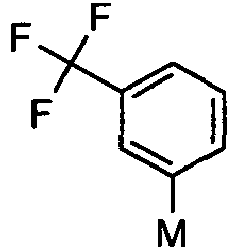
A3 
A11 
A4 
A12 
A5 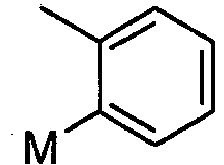
A13 
A6 
A14 
A7 H-M A15 
A8 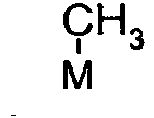
A16 
A17 
A18 Table II - B groups Fragment CODE Fragment CODE 
B1 
B8 
B2 
B9 
B3 
B10 
B4 
B11 
B5 HO-M B12 
B6 H2N-M B13 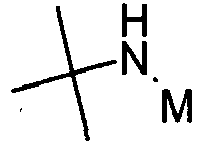
B7 
B14 
B15 
B24 
B16 
B25 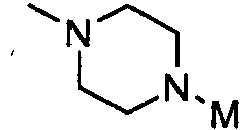
B17 
B26 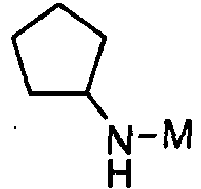
B18 
B27 
B19 
B28 
B20 
B29 
B21 
B30 
B22 
B31 
B23 
B32 - A mixture of 1H-Imidazole-4,5-dicarboxylic acid (II) (24.7 g, 158.23 mmol) in N-methylpyrrolidinone (198 mL) was heated at 160°C for 23 hours under nitrogen. Then, the reaction mass was cooled to +4°C and aged for 48 hours. The solids were collected by filtration, washed with N-methylpyrrolidinone (50 mL) and methyl tert-butyl ether (100 mL) and finally vacuum-dried at 50°C to afford the title product 3H-Imidazole-4-carboxylic acid (III) as an off-white solid (17.74 g, 75.6% yield) m.p. 288-290°C.
- LCMS (HPLC Method 4): m/z 113 [M+H]+ at r.t. 0.72 min .1H NMR (401 MHz, DMSO-d6 ) δ ppm: 7.68 (s, 1 H) 7.77 (s, 1 H).
- In a sealed vial a suspension of 1 H-imidazole-4,5-dicarboxylic acid II (1 g, 6.4 mmol) in dry DMA (10 ml) was heated under microwaves irradiation at 165°C for 1 hour. The procedure was repeated for 5 times to avoid product decomposition occurring with continuous heating. During each run the vial was opened to leak the CO2 produced by the reaction. The reaction mixture was then allowed to warm-up to room temperature and the precipitation of part of the desired product III was observed. The solvent was evaporated under reduced pressure and the crude solid was triturated with dry methyl t-butyl-ether obtaining 3H-Imidazole-4-carboxylic acid as an off-white solid in quantitative yield.
- LCMS (HPLC Method 4): m/z 113 [M+H]+ at r.t. 0.72 min. 1H NMR (401 MHz, DMSO-d6 ) δ ppm: 7.68 (s, 1 H) 7.77 (s, 1 H).
- (8-Oxo-5,6,7,8-tetrahydro-imidazo[1,5-a]pyrazin-5-yl)-acetic acid ethyl ester (I, A15-M-B1, R2= H, R1 = -OCH2CH3) 3H-Imidazole-4-carboxylic acid (0.50 g, 4.46 mmol) (III) was suspended in dry tetrahydrofuran (34 mL) and hydrogen chloride (2 N ether solution, 6 mL, 12 mmol) was added. The mixture was stirred for 1 h at room temperature. To the suspension were added dry DMF (0.52 mL, 6.70 mmol) and thionyl chloride (3.26 mL, 44.70 mmol) and the mixture stirred under reflux overnight and concentrated under reduced pressure. To the pale yellow residue were added pyridine (50 mL) and ethyl (2E)-4-aminobut-2-enoate trifluoroacetate (IV) (2.17 g, 8.92 mmol) and the reaction mixture stirred under reflux for 5 h. The solvents were evaporated under reduced pressure, obtaining an oil which was dissolved in a mixture of saturated aqueous hydrogencarbonate solution (15 mL) and tetrahydrofuran (10 mL) and stirred for 2 h at room temperature.
- The solvent was evaporated under vacuum and the residue was taken-up in dichloromethane, dried over anhydrous sodium sulfate and filtered. The filtrate was concentrated and the residue purified by silica gel flash chromatography (DCM/MeOH 9:1). The purification afforded a brown solid that was recrystallized in dichloromethane and anhydrous diethyl ether. The suspension obtained standing overnight was filtered obtaining the title compound as a white solid (0.56 g, 56% yield).
- LCMS (HPLC Method 2): m/z 224 [M+H]+ at r.t. 2.66 min.1H NMR (401 MHz, DMSO-d6 ) δ ppm: 1.18 (t, J=7.08 Hz, 2 H) 2.90 (d, J=6.84 Hz, 1 H) 3.34 - 3.40 (m, 1 H) 3.66 (ddd, J=13.24, 4.27, 2.01 Hz, 1 H) 4.10 (q, J=7.08 Hz, 1 H) 4.79 (tt, J=6.73, 4.50 Hz, 1 H) 7.45 (d, J=0.61 Hz, 1 H) 7.81 (s, 1 H) 7.85 (br. s., 1 H)
- In a microwave sealed tube filled with argon, a mixture of 8-oxo-5,6,7,8-tetrahydro-imidazo[1,5-a]pyrazin-5-yl)-acetic acid ethyl ester (I, R2= H, R1 = -OCH2CH3) (35 mg, 0.16 mmol), Pd(OAc)2 (5 mmol %), CuI (60 mg, 0.32 mmol) and an aryl halide wherein R2 corresponds to the fragment A2 of table I (0.48 mmol) in dry degassed DMF (0.7 mL, 0.23 M relative to I) was stirred at 160 °C for 3 h, under an argon atmosphere. After cooling to room temperature, the reaction mixture was diluted with MeOH (1 mL), filtered through Stratospheres™ SPE PL-thiol MP SPE tube (washed with MeOH) and the filtrate evaporated under vacuum. The residue was purified by flash chromatography (DCM/MeOH 9:1), to obtain the title compound A2-M-B1 (0.041 g, 80 % yield).
- LCMS (HPLC Method 2): m/z 300 [M+H]+ at r.t. 4.31 min.1H NMR (DMSO-d6) δ ppm: 7.93 (d, J = 4.6 Hz, 1H), 7.76 (dd, J = 7.6, 1.7 Hz, 2H), 7.62 (s, 1H), 7.44 - 7.57 (m, 3H), 5.02 - 5.18 (m, J = 4.2 Hz, 1H), 3.82 - 3.95 (m, 2H), 3.76 (dq, J = 10.8, 7.1 Hz, 1H), 2.80 (dd, J = 15.3, 8.3 Hz, 1H), 1.05 (t, J = 7.1 Hz, 3H)
- A solution of A2-M-B1 (0.032 g, 0.117 mmol) and lithium hydroxide monohydrate (0.005 g, 0.214 mmol) in a mixture of THF-H2O (1:1, 0.1 M relative to A2-M-B1) was stirred at room temperature for 30 minutes. The reaction mixture was acidified with HCl(conc) until pH<1 and concentrated under reduced pressure obtaining the title compound A2-M-B12 as a brown solid.
- To a suspension of derivative A2-M-B12 (0.104 mmol) in dry DCM (2.0 mL, 0.05 M), EDC (0.030 g, 0.156 mmol), DHBTOH (0.025 g, 0.156 mmol), pyridine (0.025 mL, 0.312 mmol) and 4-methoxybenzilamine (0.027 mL, 0.208 mmol) were added and the reaction mixture was stirred at room temperature for 36 h. The solvent was evaporated and the residue was taken-up with water and extracted with EtOAc (2 times). The combined organic layers were dried over Na2SO4, the solvent was evaporated under vacuum and the residue purified by RP-HPLC to obtain the title compound A2-M-B2 as solid (0.020 g, 50 % yield).
- LCMS (HPLC Method 2): m/z 391 [M+H]+ at r.t. 4.34 min .1H NMR (DMSO-d6) δ ppm: 8.42 (t, J = 5.7 Hz, 1H), 7.92 (d, J = 4.9 Hz, 1 H), 7.72 - 7.83 (m, 2H), 7.60 (s, 1H), 7.47 - 7.54 (m, 3H), 7.05 - 7.15 (m, 2H), 6.80 - 6.95 (m, 2H), 5.03 - 5.13 (m, 1H), 4.02 - 4.18 (m, 2H), 3.83 (dd, J = 13.4, 3.7 Hz, 1H), 3.71 - 3.74 (m, 3H), 2.78 (dd, J = 15.1, 10.0 Hz, 1H).
- To a suspension of derivative A3-M-B12 (0.117 mmol) in a mixture of dry dioxane-acetonitrile 1:1 (1.17 mL, 0.1 M), DIEA (0.060 mL, 3.50 mmol) and TFFH (0.040 g, 0.152 mmol) were added and the reaction mixture was vigorously stirred for 1 h at room temperature. The obtained suspension became yellow during the reaction. Propylamine (0.020 mL, 0.24 mmol) and lutidine (0.021 mL, 0.176 mmol) were added and the reaction mixture stirred at 60° C for 3 h. The solvent was evaporated and the residue was taken-up with water and extracted with DCM (1 mL, 2 times) using Alltech™ separator tubes. The combined organic layers were dried over Na2SO4, the solvent was concentrated under vacuum to half the volume and the precipitate isolated by filtration to obtain the title compound A3-M-B2 as a white solid (0.019 g, 52 % yield).
- LCMS (HPLC Method 2): m/z 459 [M+H]+ at r.t. 5.09 min .1H NMR (DMSO-d6) δ ppm: 8.09 (d, J = 7.8 Hz, 1H), 8.06 (s, 1H), 7.96 (d, J = 5.0 Hz, 1H), 7.89 (t, J = 4.3 Hz, 1H), 7.84 (d, J = 8.2 Hz, 1 H), 7.69 - 7.79 (m, 1 H), 7.64 (s, 1H), 5.12 (t, J = 8.4 Hz, 1 H), 3.81 - 3.93 (m, 1H), 3.34 (br. s., 1H), 2.77 - 2.85 (m, 2H), 2.62 - 2.69 (m, 1H), 2.36 (d, J = 14.9 Hz, 1 H), 1.23 - 1.34 (m, 1H), 0.77 (t, J = 7.4 Hz, 1 H).
- Lithium hydroxide monohydrate (0.055 g, 2.33 mmol) was added to a solution of (8-oxo-5,6,7,8-tetrahydro-imidazo[1,5-a]pyrazin-5-yl)-acetic acid ethyl ester (I, R1 = -OCH2CH3, R2= H) (0.260 g, 1.16 mmol) in a mixture of THF-H2O (1:1, 22 mL, 0.05 M relative to I) and the reaction mixture was stirred at room temperature for 30 min. The reaction mixture was acidified with HCl(conc) until pH<1 and it was concentrated under reduced pressure obtaining (8-oxo-5,6,7,8-tetrahydro-imidazo[1,5-a]pyrazin-5-yl)-acetic carboxylic acid hydrochloride salt (I, R1 = R2 = H) as a brown solid (0.268 g, 100% yield).
- LCMS (HPLC Method 4): m/z 196 [M+H]+ at r.t. 0.8 min .1H NMR (DMSO-d6) δ ppm: 12.73 (br. s., 1H), 8.69 (br. s., 1H), 8.28 (br. s., 1H), 7.97 (br. s., 1H), 4.88 (quin, J = 5.5 Hz, 1H), 3.73 (ddd, J = 13.3, 3.6, 2.4 Hz, 1H), 3.46 (dt, J = 13.3, 4.4 Hz, 1H), 2.94 - 3.02 (m, 1H), 2.85 - 2.93 (m, 1H).
- To a suspension of (8-oxo-5,6,7,8-tetrahydro-imidazo[1,5-a]pyrazin-5-yl)-acetic carboxylic acid hydrochloride I (0.030 g, 0.153 mmol) in a mixture of dry DCM-dry DMF (9:1; 0.05 M), EDC (0.044 g, 0.230 mmol), DHBTOH (0.037 g, 0.230 mmol), pyridine (0.037 mL, 0.459 mmol) and cyclohexylamine (0.035 mL, 0.306 mmol) were added and the reaction mixture was stirred at room temperature for 36 h. The solvent was evaporated and the residue taken-up with water and the excess of DHBTOH was filtered off. The aqueous layer was evaporated under vacuum and the residue purified by HPLC to obtain the title compound A15-M-B9 as white solid (0.020g, 48 % yield).
- LCMS (HPLC Method 2): m/z 277 [M+H]+ at r.t. 3.87 min .1H NMR (DMSO-d6) δ ppm: 7.83 (br. s., 2H), 7.66 (d, J = 0.6 Hz, 1H), 7.43 (d, J = 0.7 Hz, 1H), 4.69 - 4.83 (m, 1H), 3.59 - 3.69 (m, 1H), 3.51 (br. s., 1H), 3.27 - 3.37 (m, 1H), 2.63 - 2.72 (m, 1H), 2.50 - 2.61 (m, 1H), 1.46 - 1.75 (m, 4H), 1.01 - 1.32 (m, 6H).
- Operating as described in the previous Examples, the following compounds were prepared :


Claims (15)
- A compound of the formula (I):
 R1 is -NR3R4 or -OR3;R2 is a hydrogen atom or an optionally substituted group selected from straight or branched C1-C6 alkyl, aryl, heteroaryl, aryl C1-C6 alkyl and heteroaryl C1-C6 alkyl;R3 and R4, the same or different, are each independently hydrogen atom or an optionally substituted group selected from straight or branched C1-C6 alkyl, C2-C6 alkenyl, C2-C6 alkynyl, C3-C6 cycloalkyl, cycloalkyl C1-C6 alkyl, heterocyclyl, heterocyclyl C1-C6 alkyl, aryl, aryl C1-C6 alkyl, heteroaryl and heteroaryl C1-C6 alkyl, or R3 and R4, taken together with the nitrogen atom to which they are bonded, may form an optionally substituted 3 to 7 membered heterocyclyl or heteroaryl ring, optionally containing one additional heteroatom or heteroatomic group selected from S, O, N and NH; or a pharmaceutically acceptable salt thereof.
 - A compound of formula (I) according to claim 1 wherein R1 is -NH2 or NHR3 and R3 is a straight or branched C1-C6 alkyl or C2-C6alkenyl group or it is an optionally substituted aryl or arylalkyl group.
- A compound of formula (I) according to claims 1 or 2 wherein R2 is hydrogen or an optionally substituted aryl or heteroaryl group.
- A compound of formula (I) according to any one of claims 1 to 3 wherein
M refers to the central core of the divalent 6,7-dihydroimidazo[1,5-a]pyrazin-8(5H)-one moiety :
Fragment CODE Fragment CODE 
A1 
A9 
A2 
A10 
A3 
A11 
A4 
A12 
A5 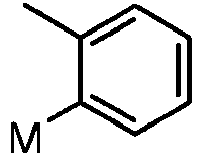
A13 
A6 
A14 
A7 H-M A15 
A8 
A16 
A17 
A18 
B1 
B8 
B2 
B9 
B3 
B10 
B4 
B11 
B5 HO-M B12 
B6 H2N-M B13 
B7 
B14 
B15 
B24 
B16 
B25 
B17 
B26 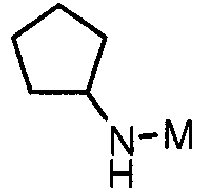
B18 
B27 
B19 
B28 
B20 
B29 
B21 
B30 
B22 
B31 
B23 
B32 - A process for preparing a compound of the formula (I) or the pharmaceutically acceptable salts thereof, as defined in claim 1, which process comprises:a) decarboxylating a compound of formula (II):
 b) reacting the resultant compound of formula (III):with a compound of formula (IV) or a salt thereof:

 - separating the compound of formula (I) into the single isomers;- converting a compound of formula (I) into a different compound of formula (I) by introduction on the imidazole moiety of a R2 group as defined in claim 1 but different from hydrogen;- converting a compound of formula (I) into a different compound of formula (I) by replacing the group -OR3 with a different group R1 as defined in claim 1;- converting a compound of formula (I) into a pharmaceutically acceptable salt or converting a salt into the free compound (I).
- A library of two or more compounds of formula (I):

- A library according to claim 6 wherein the compounds have the formula:
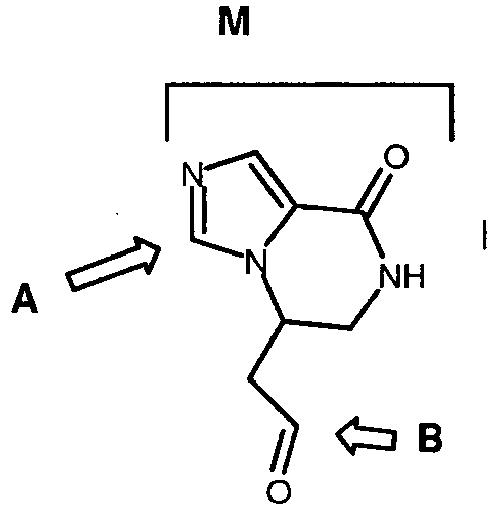


- A pharmaceutical composition comprising a therapeutically effective amount of a compound of formula (I), as defined in claim 1, and at least one pharmaceutically acceptable carrier and/or diluent.
- A product comprising a compound of formula (I) as defined in claim 1 or a pharmaceutical composition thereof as defined in claim 8, and one or more chemotherapeutic agents, as a combined preparation for simultaneous, separate or sequential use in anticancer therapy.
- A compound of formula (I), as defined in claim 1, for use as a medicament.
- A compound of formula (I), as defined in claim 1, for use in a method of treating diseases caused by and/or associated with an altered kinase activity.
- A compound of formula (I) according to claim 11, characterized in that the disease caused by and/or associated with an altered kinase activity is cancer.
- A compound of formula (I) according to claim 12, characterized in that the cancer is selected from carcinoma such as bladder, breast, colon, kidney, liver, lung, including small cell lung cancer, esophagus, gall-bladder, ovary, pancreas, stomach, cervix, thyroid, prostate, and skin, including squamous cell carcinoma; hematopoietic tumors of lymphoid lineage including leukaemia, acute lymphocytic leukaemia, acute lymphoblastic leukaemia, B-cell lymphoma, T-cell-lymphoma, Hodgkin's lymphoma, non-Hodgkin's lymphoma, hairy cell lymphoma and Burkitt's lymphoma; hematopoietic tumors of myeloid lineage, including acute and chronic myelogenous leukemias, myelodysplastic syndrome and promyelocytic leukaemia; tumors of mesenchymal origin, including fibrosarcoma and rhabdomyosarcoma; tumors of the central and peripheral nervous system, including astrocytoma neuroblastoma, glioma and schwannomas; other tumors, including melanoma, seminoma, teratocarcinoma, osteosarcoma, xeroderma pigmentosum, keratoxanthoma, thyroid follicular cancer and Kaposi's sarcoma.
- A compound of formula (I) according to claim 11, characterized in that it is used for treating diseases together with a radiation therapy or chemotherapy regimen in combination with at least one cytostatic or cytotoxic agent.
- An in vitro method for inhibiting kinase activity which comprises contacting the said enzyme with an effective amount of a compound of formula (I) as defined in claim 1.
Priority Applications (1)
| Application Number | Priority Date | Filing Date | Title |
|---|---|---|---|
| EP11700936.5A EP2528918B1 (en) | 2010-01-29 | 2011-01-21 | 6,7-dihydroimidazo[1,5-a]pyrazin-8(5h)-one derivatives as protein kinase modulators |
Applications Claiming Priority (3)
| Application Number | Priority Date | Filing Date | Title |
|---|---|---|---|
| EP10152132 | 2010-01-29 | ||
| EP11700936.5A EP2528918B1 (en) | 2010-01-29 | 2011-01-21 | 6,7-dihydroimidazo[1,5-a]pyrazin-8(5h)-one derivatives as protein kinase modulators |
| PCT/EP2011/050846 WO2011092120A1 (en) | 2010-01-29 | 2011-01-21 | 6,7- dihydroimidazo [1,5-a] pyrazin-8 (5h) - one derivatives as protein kinase modulators |
Publications (2)
| Publication Number | Publication Date |
|---|---|
| EP2528918A1 EP2528918A1 (en) | 2012-12-05 |
| EP2528918B1 true EP2528918B1 (en) | 2014-09-10 |
Family
ID=43569563
Family Applications (1)
| Application Number | Title | Priority Date | Filing Date |
|---|---|---|---|
| EP11700936.5A Not-in-force EP2528918B1 (en) | 2010-01-29 | 2011-01-21 | 6,7-dihydroimidazo[1,5-a]pyrazin-8(5h)-one derivatives as protein kinase modulators |
Country Status (5)
| Country | Link |
|---|---|
| US (1) | US8772279B2 (en) |
| EP (1) | EP2528918B1 (en) |
| JP (1) | JP5883395B2 (en) |
| ES (1) | ES2524576T3 (en) |
| WO (1) | WO2011092120A1 (en) |
Families Citing this family (38)
| Publication number | Priority date | Publication date | Assignee | Title |
|---|---|---|---|---|
| AR077468A1 (en) | 2009-07-09 | 2011-08-31 | Array Biopharma Inc | PIRAZOLO COMPOUNDS (1,5-A) PYRIMIDINE SUBSTITUTED AS TRK-QUINASA INHIBITORS |
| WO2013050446A1 (en) * | 2011-10-07 | 2013-04-11 | Nerviano Medical Sciences S.R.L. | SUBSTITUTED 3,4-DIHYDROPYRROLO[1,2-a]PYRAZIN-1(2H)-ONE DERIVATIVES AS KINASES INHIBITORS |
| HK1208528A1 (en) | 2012-02-27 | 2016-03-04 | 德马医药 | Improved analytical methods for analyzing and determining impurities in dianhydrogalactitol |
| EP3797798B1 (en) | 2013-03-14 | 2022-09-28 | Profusa, Inc. | Oxygen sensors |
| MX2016006457A (en) * | 2013-11-18 | 2017-01-06 | Del Mar Pharmaceuticals | Hplc analysis of impurities in dianhydrogalactitol. |
| CA2992586A1 (en) | 2015-07-16 | 2017-01-19 | Array Biopharma, Inc. | Substituted pyrazolo[1,5-a]pyridine compounds as ret kinase inhibitors |
| EP3368039A1 (en) | 2015-10-26 | 2018-09-05 | The Regents of The University of Colorado, A Body Corporate | Point mutations in trk inhibitor-resistant cancer and methods relating to the same |
| UA125026C2 (en) | 2016-04-04 | 2021-12-29 | Локсо Онколоджі, Інк. | Liquid formulations of (s)-n-(5-(r)-2-(2,5-difluorophenyl)-pyrrolidin-1-yl)-pyrazolo[1,5-a]pyrimidin-3-yl)-3-hydroxypyrrolidine-1-carboxamide |
| UA125025C2 (en) | 2016-04-04 | 2021-12-29 | Локсо Онколоджі, Інк. | Methods of treating pediatric cancers |
| MX392604B (en) | 2016-05-18 | 2025-03-24 | Array Biopharma Inc | Preparation of (s)-n-(5-((r)-2-(2,5-difluorophenyl)pyrrolidin-1-yl)pyrazolo[1,5-a]pyrimidin-3-y l)-3-hydroxypyrrolidine-1-carboxamide |
| TWI752098B (en) | 2016-10-10 | 2022-01-11 | 美商亞雷生物製藥股份有限公司 | Substituted pyrazolo[1,5-a]pyridine compounds as ret kinase inhibitors |
| TWI704148B (en) | 2016-10-10 | 2020-09-11 | 美商亞雷生物製藥股份有限公司 | Substituted pyrazolo[1,5-a]pyridine compounds as ret kinase inhibitors |
| JOP20190092A1 (en) | 2016-10-26 | 2019-04-25 | Array Biopharma Inc | PROCESS FOR THE PREPARATION OF PYRAZOLO[1,5-a]PYRIMIDINES AND SALTS THEREOF |
| CN115505280A (en) | 2016-12-21 | 2022-12-23 | 普罗菲尤萨股份有限公司 | polymerizable near-infrared dyes |
| JP6888101B2 (en) | 2017-01-18 | 2021-06-16 | アレイ バイオファーマ インコーポレイテッド | Substituted pyrazolo [1,5-a] pyrazine compounds as RET kinase inhibitors |
| WO2018136663A1 (en) | 2017-01-18 | 2018-07-26 | Array Biopharma, Inc. | Ret inhibitors |
| JOP20190213A1 (en) | 2017-03-16 | 2019-09-16 | Array Biopharma Inc | Macrocyclic compounds as ros1 kinase inhibitors |
| TWI791053B (en) | 2017-10-10 | 2023-02-01 | 美商亞雷生物製藥股份有限公司 | Crystalline forms of 6-(2-hydroxy-2-methylpropoxy)-4-(6-(6-((6-methoxypyridin-3-yl)methyl)-3,6-diazabicyclo[3.1.1]heptan-3-yl)pyridin-3-yl)pyrazolo[1,5-a]pyridine-3-carbonitrile and pharmaceutical composition thereof |
| TWI876442B (en) | 2017-10-10 | 2025-03-11 | 美商絡速藥業公司 | Formulations of 6-(2-hydroxy-2-methylpropoxy)-4-(6-(6-((6-methoxypyridin-3-yl)methyl)-3,6-diazabicyclo[3.1.1]heptan-3-yl)pyridin-3-yl)pyrazolo[1,5-a]pyridine-3-carbonitrile |
| EP3740486A1 (en) | 2018-01-18 | 2020-11-25 | Array Biopharma, Inc. | Substituted pyrazolyl[4,3-c]pyridinecompounds as ret kinase inhibitors |
| EP3740491A1 (en) | 2018-01-18 | 2020-11-25 | Array Biopharma, Inc. | Substituted pyrrolo[2,3-d]pyrimidines compounds as ret kinase inhibitors |
| CN111630054B (en) | 2018-01-18 | 2023-05-09 | 奥瑞生物药品公司 | Substituted pyrazolo [3,4-d ] pyrimidine compounds as RET kinase inhibitors |
| CA3095367A1 (en) | 2018-03-29 | 2019-10-03 | Board Of Regents, The University Of Texas System | Imidazopiperazine inhibitors of transcription activating proteins |
| WO2019195846A1 (en) * | 2018-04-06 | 2019-10-10 | Board Of Regents, The University Of Texas System | Imidazopiperazinone inhibitors of transcription activating proteins |
| JP7561037B2 (en) | 2018-06-27 | 2024-10-03 | プロフサ,インコーポレイテッド | Near-infrared glucose sensor |
| CA3108065C (en) | 2018-07-31 | 2025-10-07 | Loxo Oncology, Inc. | Spray-dried dispersions, formulations, and polymorphs of (s)-5-amino-3-(4-((5-fluoro-2-methoxybenzamido)methyl)phenyl)-1-(1,1,1-trifluoropropan-2-yl)-1h-pyrazole-4-carboxamide |
| ES2922314T3 (en) | 2018-09-10 | 2022-09-13 | Array Biopharma Inc | Fused Heterocyclic Compounds as RET Kinase Inhibitors |
| WO2020131627A1 (en) | 2018-12-19 | 2020-06-25 | Array Biopharma Inc. | Substituted pyrazolo[1,5-a]pyridine compounds as inhibitors of fgfr tyrosine kinases |
| US12351571B2 (en) | 2018-12-19 | 2025-07-08 | Array Biopharma Inc. | Substituted quinoxaline compounds as inhibitors of FGFR tyrosine kinases |
| US20230101747A1 (en) | 2019-12-06 | 2023-03-30 | Schrödinger, Inc. | Cyclic compounds and methods of using same |
| IL294214B2 (en) | 2019-12-27 | 2026-04-01 | Schrodinger Inc | Cyclic compounds and methods for using them |
| CN116490507A (en) | 2020-09-10 | 2023-07-25 | 薛定谔公司 | Heterocyclic inclusion condensed CDC7 kinase inhibitors for the treatment of cancer |
| JP7777131B2 (en) | 2020-10-02 | 2025-11-27 | ボード オブ レジェンツ,ザ ユニバーシティ オブ テキサス システム | Imidazopiperazine inhibitors of transcriptional activator proteins |
| KR20230080441A (en) | 2020-10-02 | 2023-06-07 | 더 보드 오브 리젠츠 오브 더 유니버시티 오브 텍사스 시스템 | Imidazopiperazine Inhibitor of Transcription Activation Protein |
| CN114644633B (en) * | 2020-12-18 | 2026-02-03 | 北京诺诚健华医药科技有限公司 | Heterocyclic JAK inhibitors |
| EP4284804A1 (en) | 2021-01-26 | 2023-12-06 | Schrödinger, Inc. | Tricyclic compounds useful in the treatment of cancer, autoimmune and inflammatory disorders |
| TW202300150A (en) | 2021-03-18 | 2023-01-01 | 美商薛定諤公司 | Cyclic compounds and methods of using same |
| CN122003418A (en) | 2023-09-11 | 2026-05-08 | 薛定谔公司 | Cyclopenta [ E ] pyrazolo [1,5-A ] pyrimidine derivatives as MALT1 inhibitors |
Family Cites Families (9)
| Publication number | Priority date | Publication date | Assignee | Title |
|---|---|---|---|---|
| US4578386A (en) | 1984-02-10 | 1986-03-25 | Usv Pharmaceutical Corp. | 7,8-Dihydroimidazo[1,5-a]pyrazin-8-ones |
| GB2381535A (en) * | 2001-10-30 | 2003-05-07 | Qinetiq Ltd | Device for forming a cellular network |
| JP4799864B2 (en) | 2002-09-23 | 2011-10-26 | シェーリング コーポレイション | Imidazopyrazine as a cyclin-dependent kinase inhibitor |
| US20070004736A1 (en) | 2002-11-22 | 2007-01-04 | Keiji Kubo | Imidazole derivative, process for producing the same, and use |
| RU2284947C1 (en) * | 2005-02-10 | 2006-10-10 | Евгений Анатольевич Логунов | Jet airship |
| RU2281947C1 (en) | 2005-07-05 | 2006-08-20 | Общество С Ограниченной Ответственностью "Исследовательский Институт Химического Разнообразия" | Anellated cabamoylazaheterocycles, focused library, pharmaceutical composition and method for its preparing |
| EP2254886B1 (en) * | 2008-03-28 | 2016-05-25 | Nerviano Medical Sciences S.r.l. | 3,4-dihydro-2h-pyrazino[1,2-a]indol-1-one derivatives active as kinase inhibitors, process for their preparation and pharmaceutical compositions comprising them |
| KR20110036069A (en) * | 2008-06-25 | 2011-04-06 | 액테리온 파마슈티칼 리미티드 | 5,6,7,8-tetrahydro-imidazo [1,5-A] pyrazine compounds |
| US8394802B2 (en) * | 2008-09-19 | 2013-03-12 | Nerviano Medical Sciences S.R.L. | 3,4-dihydro-2H-pyrrolo[1,2-a]pyrazin-1-one derivatives for the modulation of the activity of protein kinases |
-
2011
- 2011-01-21 WO PCT/EP2011/050846 patent/WO2011092120A1/en not_active Ceased
- 2011-01-21 US US13/575,181 patent/US8772279B2/en active Active
- 2011-01-21 JP JP2012550400A patent/JP5883395B2/en not_active Expired - Fee Related
- 2011-01-21 EP EP11700936.5A patent/EP2528918B1/en not_active Not-in-force
- 2011-01-21 ES ES11700936.5T patent/ES2524576T3/en active Active
Also Published As
| Publication number | Publication date |
|---|---|
| EP2528918A1 (en) | 2012-12-05 |
| US8772279B2 (en) | 2014-07-08 |
| JP5883395B2 (en) | 2016-03-15 |
| JP2013518072A (en) | 2013-05-20 |
| WO2011092120A1 (en) | 2011-08-04 |
| ES2524576T3 (en) | 2014-12-10 |
| US20130029974A1 (en) | 2013-01-31 |
Similar Documents
| Publication | Publication Date | Title |
|---|---|---|
| US8772279B2 (en) | 6,7-dihydroimidazo[1,5-a]pyrazin-8(5H)-one derivatives as protein kinase modulators | |
| EP2376492B1 (en) | 3,4 DIHYDRO-2H-PYRROLO[1,2-a]PYRAZIN-1-ONE DERIVATIVES | |
| US8513241B2 (en) | 3,4-dihydro-2H-pyrazino[1,2-A]indol-1-one derivatives active as kinase inhibitors, process for their preparation and pharmaceutical compositions comprising them | |
| EP2788351B1 (en) | SUBSTITUTED 3,4-DIHYDROPYRROLO[1,2-a]PYRAZIN-1(2H)-ONE DERIVATIVES AS KINASE INHIBITORS | |
| US9333205B2 (en) | Isoxazolo-quinazolines as modulators of protein kinase activity | |
| JP2012502951A5 (en) | ||
| EP1575954A2 (en) | Substituted pyrrolo-pyrazole derivatives as kinase inhibitors | |
| AU2017279878A1 (en) | N-(substituted-phenyl)-sulfonamide derivatives as kinase inhibitors | |
| EP2303891A1 (en) | Pyrazolo-quinazolines | |
| US9701686B2 (en) | Tricyclopyrazole derivatives | |
| CA2821777A1 (en) | Substituted pyrimido[1,2-b]indazoles and their use as modulators of the pi3k/akt pathway | |
| ES2546816T3 (en) | Active isoquinolinpyrrolopyridinones as kinase inhibitors | |
| HK1086256B (en) | Substituted pyrrolo-pyrazole derivatives as kinase inhibitors |
Legal Events
| Date | Code | Title | Description |
|---|---|---|---|
| PUAI | Public reference made under article 153(3) epc to a published international application that has entered the european phase |
Free format text: ORIGINAL CODE: 0009012 |
|
| 17P | Request for examination filed |
Effective date: 20120730 |
|
| AK | Designated contracting states |
Kind code of ref document: A1 Designated state(s): AL AT BE BG CH CY CZ DE DK EE ES FI FR GB GR HR HU IE IS IT LI LT LU LV MC MK MT NL NO PL PT RO RS SE SI SK SM TR |
|
| DAX | Request for extension of the european patent (deleted) | ||
| 17Q | First examination report despatched |
Effective date: 20130619 |
|
| GRAP | Despatch of communication of intention to grant a patent |
Free format text: ORIGINAL CODE: EPIDOSNIGR1 |
|
| INTG | Intention to grant announced |
Effective date: 20130918 |
|
| GRAS | Grant fee paid |
Free format text: ORIGINAL CODE: EPIDOSNIGR3 |
|
| GRAA | (expected) grant |
Free format text: ORIGINAL CODE: 0009210 |
|
| AK | Designated contracting states |
Kind code of ref document: B1 Designated state(s): AL AT BE BG CH CY CZ DE DK EE ES FI FR GB GR HR HU IE IS IT LI LT LU LV MC MK MT NL NO PL PT RO RS SE SI SK SM TR |
|
| REG | Reference to a national code |
Ref country code: GB Ref legal event code: FG4D |
|
| REG | Reference to a national code |
Ref country code: CH Ref legal event code: EP |
|
| REG | Reference to a national code |
Ref country code: IE Ref legal event code: FG4D |
|
| REG | Reference to a national code |
Ref country code: AT Ref legal event code: REF Ref document number: 686629 Country of ref document: AT Kind code of ref document: T Effective date: 20141015 |
|
| REG | Reference to a national code |
Ref country code: DE Ref legal event code: R096 Ref document number: 602011009779 Country of ref document: DE Effective date: 20141023 |
|
| REG | Reference to a national code |
Ref country code: ES Ref legal event code: FG2A Ref document number: 2524576 Country of ref document: ES Kind code of ref document: T3 Effective date: 20141210 |
|
| PG25 | Lapsed in a contracting state [announced via postgrant information from national office to epo] |
Ref country code: NO Free format text: LAPSE BECAUSE OF FAILURE TO SUBMIT A TRANSLATION OF THE DESCRIPTION OR TO PAY THE FEE WITHIN THE PRESCRIBED TIME-LIMIT Effective date: 20141210 Ref country code: GR Free format text: LAPSE BECAUSE OF FAILURE TO SUBMIT A TRANSLATION OF THE DESCRIPTION OR TO PAY THE FEE WITHIN THE PRESCRIBED TIME-LIMIT Effective date: 20141211 Ref country code: LT Free format text: LAPSE BECAUSE OF FAILURE TO SUBMIT A TRANSLATION OF THE DESCRIPTION OR TO PAY THE FEE WITHIN THE PRESCRIBED TIME-LIMIT Effective date: 20140910 Ref country code: FI Free format text: LAPSE BECAUSE OF FAILURE TO SUBMIT A TRANSLATION OF THE DESCRIPTION OR TO PAY THE FEE WITHIN THE PRESCRIBED TIME-LIMIT Effective date: 20140910 Ref country code: SE Free format text: LAPSE BECAUSE OF FAILURE TO SUBMIT A TRANSLATION OF THE DESCRIPTION OR TO PAY THE FEE WITHIN THE PRESCRIBED TIME-LIMIT Effective date: 20140910 |
|
| REG | Reference to a national code |
Ref country code: NL Ref legal event code: VDEP Effective date: 20140910 |
|
| REG | Reference to a national code |
Ref country code: LT Ref legal event code: MG4D |
|
| PG25 | Lapsed in a contracting state [announced via postgrant information from national office to epo] |
Ref country code: RS Free format text: LAPSE BECAUSE OF FAILURE TO SUBMIT A TRANSLATION OF THE DESCRIPTION OR TO PAY THE FEE WITHIN THE PRESCRIBED TIME-LIMIT Effective date: 20140910 Ref country code: CY Free format text: LAPSE BECAUSE OF FAILURE TO SUBMIT A TRANSLATION OF THE DESCRIPTION OR TO PAY THE FEE WITHIN THE PRESCRIBED TIME-LIMIT Effective date: 20140910 Ref country code: HR Free format text: LAPSE BECAUSE OF FAILURE TO SUBMIT A TRANSLATION OF THE DESCRIPTION OR TO PAY THE FEE WITHIN THE PRESCRIBED TIME-LIMIT Effective date: 20140910 Ref country code: LV Free format text: LAPSE BECAUSE OF FAILURE TO SUBMIT A TRANSLATION OF THE DESCRIPTION OR TO PAY THE FEE WITHIN THE PRESCRIBED TIME-LIMIT Effective date: 20140910 |
|
| REG | Reference to a national code |
Ref country code: AT Ref legal event code: MK05 Ref document number: 686629 Country of ref document: AT Kind code of ref document: T Effective date: 20140910 |
|
| PG25 | Lapsed in a contracting state [announced via postgrant information from national office to epo] |
Ref country code: NL Free format text: LAPSE BECAUSE OF FAILURE TO SUBMIT A TRANSLATION OF THE DESCRIPTION OR TO PAY THE FEE WITHIN THE PRESCRIBED TIME-LIMIT Effective date: 20140910 |
|
| PG25 | Lapsed in a contracting state [announced via postgrant information from national office to epo] |
Ref country code: SK Free format text: LAPSE BECAUSE OF FAILURE TO SUBMIT A TRANSLATION OF THE DESCRIPTION OR TO PAY THE FEE WITHIN THE PRESCRIBED TIME-LIMIT Effective date: 20140910 Ref country code: IS Free format text: LAPSE BECAUSE OF FAILURE TO SUBMIT A TRANSLATION OF THE DESCRIPTION OR TO PAY THE FEE WITHIN THE PRESCRIBED TIME-LIMIT Effective date: 20150110 Ref country code: PT Free format text: LAPSE BECAUSE OF FAILURE TO SUBMIT A TRANSLATION OF THE DESCRIPTION OR TO PAY THE FEE WITHIN THE PRESCRIBED TIME-LIMIT Effective date: 20150112 Ref country code: EE Free format text: LAPSE BECAUSE OF FAILURE TO SUBMIT A TRANSLATION OF THE DESCRIPTION OR TO PAY THE FEE WITHIN THE PRESCRIBED TIME-LIMIT Effective date: 20140910 Ref country code: RO Free format text: LAPSE BECAUSE OF FAILURE TO SUBMIT A TRANSLATION OF THE DESCRIPTION OR TO PAY THE FEE WITHIN THE PRESCRIBED TIME-LIMIT Effective date: 20140910 Ref country code: CZ Free format text: LAPSE BECAUSE OF FAILURE TO SUBMIT A TRANSLATION OF THE DESCRIPTION OR TO PAY THE FEE WITHIN THE PRESCRIBED TIME-LIMIT Effective date: 20140910 |
|
| PG25 | Lapsed in a contracting state [announced via postgrant information from national office to epo] |
Ref country code: PL Free format text: LAPSE BECAUSE OF FAILURE TO SUBMIT A TRANSLATION OF THE DESCRIPTION OR TO PAY THE FEE WITHIN THE PRESCRIBED TIME-LIMIT Effective date: 20140910 Ref country code: AT Free format text: LAPSE BECAUSE OF FAILURE TO SUBMIT A TRANSLATION OF THE DESCRIPTION OR TO PAY THE FEE WITHIN THE PRESCRIBED TIME-LIMIT Effective date: 20140910 |
|
| REG | Reference to a national code |
Ref country code: DE Ref legal event code: R097 Ref document number: 602011009779 Country of ref document: DE |
|
| PG25 | Lapsed in a contracting state [announced via postgrant information from national office to epo] |
Ref country code: BE Free format text: LAPSE BECAUSE OF NON-PAYMENT OF DUE FEES Effective date: 20150131 |
|
| PLBE | No opposition filed within time limit |
Free format text: ORIGINAL CODE: 0009261 |
|
| STAA | Information on the status of an ep patent application or granted ep patent |
Free format text: STATUS: NO OPPOSITION FILED WITHIN TIME LIMIT |
|
| PG25 | Lapsed in a contracting state [announced via postgrant information from national office to epo] |
Ref country code: DK Free format text: LAPSE BECAUSE OF FAILURE TO SUBMIT A TRANSLATION OF THE DESCRIPTION OR TO PAY THE FEE WITHIN THE PRESCRIBED TIME-LIMIT Effective date: 20140910 |
|
| 26N | No opposition filed |
Effective date: 20150611 |
|
| REG | Reference to a national code |
Ref country code: CH Ref legal event code: PL |
|
| PG25 | Lapsed in a contracting state [announced via postgrant information from national office to epo] |
Ref country code: LU Free format text: LAPSE BECAUSE OF FAILURE TO SUBMIT A TRANSLATION OF THE DESCRIPTION OR TO PAY THE FEE WITHIN THE PRESCRIBED TIME-LIMIT Effective date: 20150121 |
|
| GBPC | Gb: european patent ceased through non-payment of renewal fee |
Effective date: 20150121 |
|
| PG25 | Lapsed in a contracting state [announced via postgrant information from national office to epo] |
Ref country code: MC Free format text: LAPSE BECAUSE OF FAILURE TO SUBMIT A TRANSLATION OF THE DESCRIPTION OR TO PAY THE FEE WITHIN THE PRESCRIBED TIME-LIMIT Effective date: 20140910 |
|
| REG | Reference to a national code |
Ref country code: GB Ref legal event code: S28 Free format text: APPLICATION FILED |
|
| PG25 | Lapsed in a contracting state [announced via postgrant information from national office to epo] |
Ref country code: LI Free format text: LAPSE BECAUSE OF NON-PAYMENT OF DUE FEES Effective date: 20150131 Ref country code: GB Free format text: LAPSE BECAUSE OF NON-PAYMENT OF DUE FEES Effective date: 20150121 Ref country code: CH Free format text: LAPSE BECAUSE OF NON-PAYMENT OF DUE FEES Effective date: 20150131 |
|
| REG | Reference to a national code |
Ref country code: GB Ref legal event code: S28 Free format text: RESTORATION ALLOWED Effective date: 20151026 |
|
| PG25 | Lapsed in a contracting state [announced via postgrant information from national office to epo] |
Ref country code: SI Free format text: LAPSE BECAUSE OF FAILURE TO SUBMIT A TRANSLATION OF THE DESCRIPTION OR TO PAY THE FEE WITHIN THE PRESCRIBED TIME-LIMIT Effective date: 20140910 |
|
| REG | Reference to a national code |
Ref country code: FR Ref legal event code: PLFP Year of fee payment: 6 |
|
| PG25 | Lapsed in a contracting state [announced via postgrant information from national office to epo] |
Ref country code: IE Free format text: LAPSE BECAUSE OF NON-PAYMENT OF DUE FEES Effective date: 20150121 |
|
| PG25 | Lapsed in a contracting state [announced via postgrant information from national office to epo] |
Ref country code: BE Free format text: LAPSE BECAUSE OF FAILURE TO SUBMIT A TRANSLATION OF THE DESCRIPTION OR TO PAY THE FEE WITHIN THE PRESCRIBED TIME-LIMIT Effective date: 20140910 |
|
| PG25 | Lapsed in a contracting state [announced via postgrant information from national office to epo] |
Ref country code: MT Free format text: LAPSE BECAUSE OF FAILURE TO SUBMIT A TRANSLATION OF THE DESCRIPTION OR TO PAY THE FEE WITHIN THE PRESCRIBED TIME-LIMIT Effective date: 20140910 |
|
| REG | Reference to a national code |
Ref country code: FR Ref legal event code: PLFP Year of fee payment: 7 |
|
| PG25 | Lapsed in a contracting state [announced via postgrant information from national office to epo] |
Ref country code: HU Free format text: LAPSE BECAUSE OF FAILURE TO SUBMIT A TRANSLATION OF THE DESCRIPTION OR TO PAY THE FEE WITHIN THE PRESCRIBED TIME-LIMIT; INVALID AB INITIO Effective date: 20110121 Ref country code: SM Free format text: LAPSE BECAUSE OF FAILURE TO SUBMIT A TRANSLATION OF THE DESCRIPTION OR TO PAY THE FEE WITHIN THE PRESCRIBED TIME-LIMIT Effective date: 20140910 Ref country code: BG Free format text: LAPSE BECAUSE OF FAILURE TO SUBMIT A TRANSLATION OF THE DESCRIPTION OR TO PAY THE FEE WITHIN THE PRESCRIBED TIME-LIMIT Effective date: 20140910 |
|
| PG25 | Lapsed in a contracting state [announced via postgrant information from national office to epo] |
Ref country code: TR Free format text: LAPSE BECAUSE OF FAILURE TO SUBMIT A TRANSLATION OF THE DESCRIPTION OR TO PAY THE FEE WITHIN THE PRESCRIBED TIME-LIMIT Effective date: 20140910 |
|
| REG | Reference to a national code |
Ref country code: FR Ref legal event code: PLFP Year of fee payment: 8 |
|
| PG25 | Lapsed in a contracting state [announced via postgrant information from national office to epo] |
Ref country code: MK Free format text: LAPSE BECAUSE OF FAILURE TO SUBMIT A TRANSLATION OF THE DESCRIPTION OR TO PAY THE FEE WITHIN THE PRESCRIBED TIME-LIMIT Effective date: 20140910 |
|
| PG25 | Lapsed in a contracting state [announced via postgrant information from national office to epo] |
Ref country code: AL Free format text: LAPSE BECAUSE OF FAILURE TO SUBMIT A TRANSLATION OF THE DESCRIPTION OR TO PAY THE FEE WITHIN THE PRESCRIBED TIME-LIMIT Effective date: 20140910 |
|
| PGFP | Annual fee paid to national office [announced via postgrant information from national office to epo] |
Ref country code: FR Payment date: 20230125 Year of fee payment: 13 Ref country code: ES Payment date: 20230201 Year of fee payment: 13 |
|
| PGFP | Annual fee paid to national office [announced via postgrant information from national office to epo] |
Ref country code: IT Payment date: 20230120 Year of fee payment: 13 Ref country code: GB Payment date: 20230127 Year of fee payment: 13 Ref country code: DE Payment date: 20230127 Year of fee payment: 13 |
|
| REG | Reference to a national code |
Ref country code: DE Ref legal event code: R119 Ref document number: 602011009779 Country of ref document: DE |
|
| GBPC | Gb: european patent ceased through non-payment of renewal fee |
Effective date: 20240121 |
|
| PG25 | Lapsed in a contracting state [announced via postgrant information from national office to epo] |
Ref country code: DE Free format text: LAPSE BECAUSE OF NON-PAYMENT OF DUE FEES Effective date: 20240801 |
|
| PG25 | Lapsed in a contracting state [announced via postgrant information from national office to epo] |
Ref country code: GB Free format text: LAPSE BECAUSE OF NON-PAYMENT OF DUE FEES Effective date: 20240121 |
|
| PG25 | Lapsed in a contracting state [announced via postgrant information from national office to epo] |
Ref country code: FR Free format text: LAPSE BECAUSE OF NON-PAYMENT OF DUE FEES Effective date: 20240131 |
|
| PG25 | Lapsed in a contracting state [announced via postgrant information from national office to epo] |
Ref country code: GB Free format text: LAPSE BECAUSE OF NON-PAYMENT OF DUE FEES Effective date: 20240121 Ref country code: FR Free format text: LAPSE BECAUSE OF NON-PAYMENT OF DUE FEES Effective date: 20240131 Ref country code: DE Free format text: LAPSE BECAUSE OF NON-PAYMENT OF DUE FEES Effective date: 20240801 |
|
| PG25 | Lapsed in a contracting state [announced via postgrant information from national office to epo] |
Ref country code: IT Free format text: LAPSE BECAUSE OF NON-PAYMENT OF DUE FEES Effective date: 20240121 |
|
| REG | Reference to a national code |
Ref country code: ES Ref legal event code: FD2A Effective date: 20250228 |
|
| PG25 | Lapsed in a contracting state [announced via postgrant information from national office to epo] |
Ref country code: ES Free format text: LAPSE BECAUSE OF NON-PAYMENT OF DUE FEES Effective date: 20240122 |