EP2526067B1 - A process for the thermophilic aerobic treatment of concentrated organic waste water and the related plant - Google Patents
A process for the thermophilic aerobic treatment of concentrated organic waste water and the related plant Download PDFInfo
- Publication number
- EP2526067B1 EP2526067B1 EP11710260.8A EP11710260A EP2526067B1 EP 2526067 B1 EP2526067 B1 EP 2526067B1 EP 11710260 A EP11710260 A EP 11710260A EP 2526067 B1 EP2526067 B1 EP 2526067B1
- Authority
- EP
- European Patent Office
- Prior art keywords
- treatment
- reactor
- aerobic
- waste water
- thermophilic
- Prior art date
- Legal status (The legal status is an assumption and is not a legal conclusion. Google has not performed a legal analysis and makes no representation as to the accuracy of the status listed.)
- Active
Links
Images


Classifications
-
- C—CHEMISTRY; METALLURGY
- C02—TREATMENT OF WATER, WASTE WATER, SEWAGE, OR SLUDGE
- C02F—TREATMENT OF WATER, WASTE WATER, SEWAGE, OR SLUDGE
- C02F3/00—Biological treatment of water, waste water, or sewage
- C02F3/02—Aerobic processes
- C02F3/12—Activated sludge processes
- C02F3/1236—Particular type of activated sludge installations
- C02F3/1268—Membrane bioreactor systems
-
- C—CHEMISTRY; METALLURGY
- C02—TREATMENT OF WATER, WASTE WATER, SEWAGE, OR SLUDGE
- C02F—TREATMENT OF WATER, WASTE WATER, SEWAGE, OR SLUDGE
- C02F1/00—Treatment of water, waste water, or sewage
- C02F1/44—Treatment of water, waste water, or sewage by dialysis, osmosis or reverse osmosis
- C02F1/444—Treatment of water, waste water, or sewage by dialysis, osmosis or reverse osmosis by ultrafiltration or microfiltration
-
- C—CHEMISTRY; METALLURGY
- C02—TREATMENT OF WATER, WASTE WATER, SEWAGE, OR SLUDGE
- C02F—TREATMENT OF WATER, WASTE WATER, SEWAGE, OR SLUDGE
- C02F1/00—Treatment of water, waste water, or sewage
- C02F1/52—Treatment of water, waste water, or sewage by flocculation or precipitation of suspended impurities
- C02F1/529—Processes or devices for preparing lime water
-
- C—CHEMISTRY; METALLURGY
- C02—TREATMENT OF WATER, WASTE WATER, SEWAGE, OR SLUDGE
- C02F—TREATMENT OF WATER, WASTE WATER, SEWAGE, OR SLUDGE
- C02F3/00—Biological treatment of water, waste water, or sewage
- C02F3/02—Aerobic processes
- C02F3/10—Packings; Fillings; Grids
- C02F3/104—Granular carriers
-
- C—CHEMISTRY; METALLURGY
- C02—TREATMENT OF WATER, WASTE WATER, SEWAGE, OR SLUDGE
- C02F—TREATMENT OF WATER, WASTE WATER, SEWAGE, OR SLUDGE
- C02F3/00—Biological treatment of water, waste water, or sewage
- C02F3/02—Aerobic processes
- C02F3/12—Activated sludge processes
- C02F3/26—Activated sludge processes using pure oxygen or oxygen-rich gas
-
- C—CHEMISTRY; METALLURGY
- C02—TREATMENT OF WATER, WASTE WATER, SEWAGE, OR SLUDGE
- C02F—TREATMENT OF WATER, WASTE WATER, SEWAGE, OR SLUDGE
- C02F9/00—Multistage treatment of water, waste water or sewage
-
- C—CHEMISTRY; METALLURGY
- C02—TREATMENT OF WATER, WASTE WATER, SEWAGE, OR SLUDGE
- C02F—TREATMENT OF WATER, WASTE WATER, SEWAGE, OR SLUDGE
- C02F1/00—Treatment of water, waste water, or sewage
- C02F1/44—Treatment of water, waste water, or sewage by dialysis, osmosis or reverse osmosis
-
- C—CHEMISTRY; METALLURGY
- C02—TREATMENT OF WATER, WASTE WATER, SEWAGE, OR SLUDGE
- C02F—TREATMENT OF WATER, WASTE WATER, SEWAGE, OR SLUDGE
- C02F1/00—Treatment of water, waste water, or sewage
- C02F1/68—Treatment of water, waste water, or sewage by addition of specified substances, e.g. trace elements, for ameliorating potable water
-
- C—CHEMISTRY; METALLURGY
- C02—TREATMENT OF WATER, WASTE WATER, SEWAGE, OR SLUDGE
- C02F—TREATMENT OF WATER, WASTE WATER, SEWAGE, OR SLUDGE
- C02F1/00—Treatment of water, waste water, or sewage
- C02F1/72—Treatment of water, waste water, or sewage by oxidation
-
- C—CHEMISTRY; METALLURGY
- C02—TREATMENT OF WATER, WASTE WATER, SEWAGE, OR SLUDGE
- C02F—TREATMENT OF WATER, WASTE WATER, SEWAGE, OR SLUDGE
- C02F1/00—Treatment of water, waste water, or sewage
- C02F2001/007—Processes including a sedimentation step
-
- C—CHEMISTRY; METALLURGY
- C02—TREATMENT OF WATER, WASTE WATER, SEWAGE, OR SLUDGE
- C02F—TREATMENT OF WATER, WASTE WATER, SEWAGE, OR SLUDGE
- C02F2209/00—Controlling or monitoring parameters in water treatment
- C02F2209/02—Temperature
-
- C—CHEMISTRY; METALLURGY
- C02—TREATMENT OF WATER, WASTE WATER, SEWAGE, OR SLUDGE
- C02F—TREATMENT OF WATER, WASTE WATER, SEWAGE, OR SLUDGE
- C02F2301/00—General aspects of water treatment
- C02F2301/08—Multistage treatments, e.g. repetition of the same process step under different conditions
-
- C—CHEMISTRY; METALLURGY
- C02—TREATMENT OF WATER, WASTE WATER, SEWAGE, OR SLUDGE
- C02F—TREATMENT OF WATER, WASTE WATER, SEWAGE, OR SLUDGE
- C02F2301/00—General aspects of water treatment
- C02F2301/10—Temperature conditions for biological treatment
- C02F2301/106—Thermophilic treatment
-
- C—CHEMISTRY; METALLURGY
- C02—TREATMENT OF WATER, WASTE WATER, SEWAGE, OR SLUDGE
- C02F—TREATMENT OF WATER, WASTE WATER, SEWAGE, OR SLUDGE
- C02F3/00—Biological treatment of water, waste water, or sewage
- C02F3/02—Aerobic processes
-
- Y—GENERAL TAGGING OF NEW TECHNOLOGICAL DEVELOPMENTS; GENERAL TAGGING OF CROSS-SECTIONAL TECHNOLOGIES SPANNING OVER SEVERAL SECTIONS OF THE IPC; TECHNICAL SUBJECTS COVERED BY FORMER USPC CROSS-REFERENCE ART COLLECTIONS [XRACs] AND DIGESTS
- Y02—TECHNOLOGIES OR APPLICATIONS FOR MITIGATION OR ADAPTATION AGAINST CLIMATE CHANGE
- Y02W—CLIMATE CHANGE MITIGATION TECHNOLOGIES RELATED TO WASTEWATER TREATMENT OR WASTE MANAGEMENT
- Y02W10/00—Technologies for wastewater treatment
- Y02W10/10—Biological treatment of water, waste water, or sewage
Definitions
- This invention relates to the field of systems and plants for the waste water treatment.
- the invention concerns a process for the thermophilic aerobic treatment of concentrated organic waste water and a plant in which said process is implemented.
- Suitable processes include the following techniques in particular, which are classified as BAT:
- thermophilic aerobic biological plants are commonly used to treat sewage with a high organic matter content.
- Thermophilic aerobic biological systems for treating sewage with a high organic matter content
- processes at temperatures higher than 45°C To reach this temperature cost-effectively, it is generally possible to resort to one of two alternatives:
- fluidized-bed reactors can be used with an inert substance suitable to serve as a diffuse supporting medium for the adherent bacterial flora that develops during the biological process.
- thermophilic processes concerns the poor sedimentability characteristics of the sludge: this makes it difficult to clarify the effluent difficult and limits the efficiency of the treatment.
- the cause of the problem lies in the limited capacity of the biomass to form clumps, which in turn is due to a shortage of clump-forming bacteria, which find it difficult to develop in an environment that is not ideally suited to them, as in the case of biological reactors operating at high temperatures.
- MLR membrane biological reactor
- the problems deriving from the use of fluidised beds substantially relate to the need to artificially supply the inert substrate at the beginning of the process and also afterwards due to the entrainment of the material in the overflow of sludge passing through the outlet from the reactor.
- Document JPA08232595 discloses the use of Ca compounds added in a processing method of organic nature sewage by an upflow type anaerobic sludge floor method, that react with the carbon dioxide generated by methane fermentation within a reactor, producing CaCO 3 .
- Aim of the present invention is a process for the thermophilic aerobic treatment of concentrated organic waste water and a plant in which said process is implemented, that relies on techniques classifiable as BAT, and that overcomes the problems still characterizing said conventional techniques.
- aim of the invention is to offer a process based on a fluidised-bed reactor using a device of the MBR type that overcomes the problems of the sludge's sedimentability, wherein there is no more need to artificially supply the inert substance used as a diffuse supporting medium for the adherent bacterial flora that develops during the biological process.
- Further aims include: reducing the volumes and the spaces necessary to implement the treatment process; avoiding the emission of smelly gases from the plant; reducing the output of sludge from the plant; and enabling the cost-effective treatment of scarcely biodegradable synthesis organic matter.
- thermophilic aerobic treatment of concentrated organic waste water according to the independent claim 1. Further features of the process are contained in the dependent claims 2-5.
- the invention also concerns a plant for the thermophilic aerobic treatment of concentrated organic waste water as claimed in the independent claim 6. Further features of the plant are contained in the dependent claims 7-10.
- advantages of the procedure and of the plant according to the invention also include the following:
- the basic concentrated organic waste water treatment process comprises the following steps:
- the lime Ca(OH) 2 available in the reactor 1 is suitable for forming a natural inert supporting medium consisting of microparticles of calcium carbonate CaCO 3 by means of a process of carbonation with carbon dioxide CO 2 generated by the degradation of the organic substrate in the biological process. Said microparticles are suitable for providing a considerable surface area arranged for allowing development of an adherent aerobic bacterial flora.
- the ultrafiltration treatment 4 which is achieved with the membrane equipment of known type, enables the biomass to be kept inside the reactor 1 while the flow Q OUT of treated water is discharged.
- the lime Ca(OH) 2 is dosed either directly at the thermophilic biological treatment step, as shown in Figure 1 , or at a previous chemical-physical re-treatment step inside a mix contact reactor 5, as shown in Figure 2 .
- Figure 4 shows another variant of the process, wherein a mesophilic activated sludge treatment comprising a treatment step in a mesophilic reactor 7 and a sedimentation step in a sedimentation tank 8 is adopted as an alternative to the membrane type nanofiltration system 6 in series with the ultrafiltration treatment 4.
- thermophilic/mesophilic biological treatment enables a further reduction in COD and BOD 5 of approximately 40% and 80%, respectively.
- Figure 5 shows a variant, as a further example, wherein a chemical oxidation treatment OX 9 is inserted on the recirculation line carrying the concentrate coming from nanofiltration 6, the object of which is to increase the biodegradability of the sewage and consequently enable its recirculation in the biological reactor 1 rather than in the chemical-physical treatment compartment 5.
- the treatment 9 may be of known type, e.g. with the addition of nitrogen or with a process based on hydrogen peroxide and UV radiation.
- the chemical oxidation treatment could also be included in other points of the plant (in the basic configuration of Fig. 1 , or in one of the variants of Figs. 2-4 ), also for the purpose of protecting the second (mesophilic) biological treatment against any incoming toxic/inhibiting matter and/or to improve the efficiency of the removal of organic matter, and/or to increase the biodegradability of the sewage.
- thermophilic aerobic treatment of concentrated organic waste water a plant that implements the basic process for the thermophilic aerobic treatment of concentrated organic waste water, together with the corresponding alternative solutions and some data on the efficiency achieved.
- thermophilic biological reactor 1 has a surface area of 267 m 2 (21 m x 12.8 m) and it is 5.3 m high, 1.5 m of which are below ground, providing a total useful volume of approximately 1000 m 3 .
- the biological reactor 1 is fed with an incoming flow Q IN at a rate of 8.3 m 3 /h and has a recirculating flow Q MBR (at a rate) of 120 m 3 /h coming from the ultrafiltration treatment 4, thus constituting a MBR type treatment system.
- the biological oxidation system uses pure oxygen (added in the form of microbubbles using the known OXY-DEP system); this ensures an effective oxidation, reducing the stripping action of the smelly gases, and enabling peak oxygen demands due to overloading to be met.
- the pure oxygen is injected directly into static mixers 10 (Q O2 , 75 m 3 /h) so as to oversaturate the recirculating sewage inside them at a flow rate Q OX of 300 m 3 /h, both to guarantee the supply to the fluidized bed and to enable the delivery of oxygen to the reactor 1.
- the fluid thus contains microbubbles of oxygen finely dispersed within its mass in larger quantities than in conventional systems.
- the sewage thus enriched is then returned to the tank through the liquid-liquid ejectors 11, in sufficient quantity to bring the whole flow of fluid leaving the ejector up to the saturation values corresponding to the pressure of the hydrostatic head in the tank.
- thermophilic treatment is fed with a supply of waste water Q IN from industrial processes or the percolate from landfills at a neutral pH with a high content of organic matter, nitrogen and other liquid waste.
- the following table shows the minimum, maximum and mean levels of the main polluting parameters characteristic of the sewage delivered to the thermophilic biological compartment.
- Parameter Unit of measure Value mean min max Flow rate [m 3 /d] 249 150 516 COD [mg/l] 24,000 15,723 39,300 N-NH 4 + [mg/l] 250 126 450 N-NO x - [mg/l] 1,190 620 1,560 Cu [mg/l] 0.03 not recordable 0.18 Cr [mg/l] 0.007 not recordable 0.07 Ni [mg/l] 3.8 2 6.7 Zn [mg/l] 0.73 0.3 1.4
- Figure 7 shows the monthly efficiency in removing the COD and the mean values relating to two monitoring periods. These efficiencies were achieved using a plant of the MBR type, as shown in Figure 2 , and a plant of the type shown in Figure 3 . The efficiencies obtained were as follows:
- Figure 8 shows a comparison between the COD loads at the inlet and after abatement in the thermophilic reactor during the above-mentioned two monitoring periods. Clearly, despite the increment in the organic load at the inlet, the abated organic load remains nearly the same.
Landscapes
- Life Sciences & Earth Sciences (AREA)
- Water Supply & Treatment (AREA)
- Hydrology & Water Resources (AREA)
- Engineering & Computer Science (AREA)
- Environmental & Geological Engineering (AREA)
- Chemical & Material Sciences (AREA)
- Organic Chemistry (AREA)
- Microbiology (AREA)
- Biodiversity & Conservation Biology (AREA)
- Separation Using Semi-Permeable Membranes (AREA)
- Biological Treatment Of Waste Water (AREA)
- Processing Of Solid Wastes (AREA)
- Physical Water Treatments (AREA)
Description
- This invention relates to the field of systems and plants for the waste water treatment.
- More in detail, the invention concerns a process for the thermophilic aerobic treatment of concentrated organic waste water and a plant in which said process is implemented.
- The best available techniques (BAT) in use today, as identified by currently applicable standards for plants for the chemical-physical and biological treatment of fluid waste, indicate an ample choice of suitable processes and plants.
- Where possible, biological processes are generally preferred in the case of treating biodegradable organic sewage. A system with an aerobic process involving activated sludge is commonly used because it is the best known and considered reliable. Alternatives to the activated sludge process, such as systems using adherent biomass, cannot boast these characteristics.
- Suitable processes include the following techniques in particular, which are classified as BAT:
- sedimentation/flocculation;
- microfiltration and ultrafiltration;
- reverse osmosis and nanofiltration;
- precipitation;
- chemical oxidation;
- aerobic treatments.
- More in particular, thermophilic aerobic biological plants are commonly used to treat sewage with a high organic matter content.
- Thermophilic aerobic biological systems (for treating sewage with a high organic matter content) are based on processes at temperatures higher than 45°C. To reach this temperature cost-effectively, it is generally possible to resort to one of two alternatives:
- 1. the use of already heated water coming from particular production processes, such as papermaking industries;
- 2. the use of sewage with a high content of organic matter; organic matter degradation reactions are exothermal, so the temperature valves can be maintained without needing to provide a source of heat, simply by ensuring certain conditions, i.e.:
- a sufficient concentration of biodegradable organic matter;
- an adequate thermal insulation of the reactor.
- Finally, it is well known that fluidized-bed reactors can be used with an inert substance suitable to serve as a diffuse supporting medium for the adherent bacterial flora that develops during the biological process.
- A particular problem when using thermophilic processes concerns the poor sedimentability characteristics of the sludge: this makes it difficult to clarify the effluent difficult and limits the efficiency of the treatment. The cause of the problem lies in the limited capacity of the biomass to form clumps, which in turn is due to a shortage of clump-forming bacteria, which find it difficult to develop in an environment that is not ideally suited to them, as in the case of biological reactors operating at high temperatures.
- One known solution to overcome this problem is to adopt a filtering system (e.g. ultrafiltration) downstream from the fluidized-bed reactor in order to separate the biomass from the treated sewage. The resulting biological system, equipped with such a filtering unit, is called membrane biological reactor (MBR).
- On the other hand, the problems deriving from the use of fluidised beds substantially relate to the need to artificially supply the inert substrate at the beginning of the process and also afterwards due to the entrainment of the material in the overflow of sludge passing through the outlet from the reactor.
- The currently-used techniques and plants generally also have numerous other drawbacks, including:
- the need for large volumes and the occupation of large spaces;
- the potential to produce smelly gaseous emissions;
- a high sludge output;
- difficulties with treating scarcely biodegradable synthesis organic matter.
- Document
US 2004/159607 A1 discloses a process of aerobic treatment of sewage in mesophile conditions where granules of calcite are used as support for the aerobic micro-organisms. - Document
JPA08232595 - Aim of the present invention is a process for the thermophilic aerobic treatment of concentrated organic waste water and a plant in which said process is implemented, that relies on techniques classifiable as BAT, and that overcomes the problems still characterizing said conventional techniques.
- In particular, aim of the invention is to offer a process based on a fluidised-bed reactor using a device of the MBR type that overcomes the problems of the sludge's sedimentability, wherein there is no more need to artificially supply the inert substance used as a diffuse supporting medium for the adherent bacterial flora that develops during the biological process.
- Further aims include: reducing the volumes and the spaces necessary to implement the treatment process; avoiding the emission of smelly gases from the plant; reducing the output of sludge from the plant; and enabling the cost-effective treatment of scarcely biodegradable synthesis organic matter.
- These aims are achieved by the present invention by means of a process for the thermophilic aerobic treatment of concentrated organic waste water according to the
independent claim 1. Further features of the process are contained in the dependent claims 2-5. The invention also concerns a plant for the thermophilic aerobic treatment of concentrated organic waste water as claimed in theindependent claim 6. Further features of the plant are contained in the dependent claims 7-10. In addition to the known advantages of using a thermophilic aerobic process with an adherent biomass, i.e. high reaction rates, reduced reactor volumes, flexibility, overload resistance, process stability, reduced outputs of already well stabilised sludge, more straightforward equipment in the plant than in conventional sludge treatment lines, the advantages of the procedure and of the plant according to the invention also include the following: - the abatement of part of the carbon dioxide developed by the organic matter degradation process and its conversion into calcium carbonate due to its reaction with the lime added during the process; the degree to which the CO2 developed by the treatment process is abated can be controlled by adjusting the quantity of lime supplied to the thermophilic reactor and the equivalent removal of the calcium carbonate, so as to stabilize the preset operating value for the total solids in suspension in the fluidized bed;
- the formation of calcium carbonate that enables a natural inert supporting medium to be obtained cost effectively for the adherent biomass, which does not need topping up;
- the containment of gaseous smelly emissions and their easier extraction thanks to the more limited dimensions of the reactor;
- the reduction of the gas flow rates involved and consequently of the stripping phenomena thanks to the use of pure oxygen instead of air, which also enables the system to be operated with very high dissolved oxygen concentrations (4-8 mg/L); values that could also be obtained using air insufflation systems, but the operating costs would be prohibitive. This equates to the creation of high concentration gradients, which act as a "driving force" for the transfer of oxygen between the liquid environment and the innermost parts of the clumps of sludge, which are generally poor in oxygen. The oxygen can penetrate inside the mass of the clumps of sludge much more efficiently than in air-insufflated systems. The microorganisms are thus ideally supplied with oxygen, so they can achieve the degradation of the organic matter contained in the sewage to maximum effect;
- the problem of the limited sedimentability of the thermophilic sludge is overcome thanks to the membrane filtering system (ultrafiltration) located downstream from the "natural" fluidised-bed thermophilic biological system, which can also be followed by other treatments of known type;
- inhibition of the pathogens, an aspect that may be fundamental in the treatment of certain types of sewage, such as those deriving from animal husbandry activities;
- the opportunity to retrieve heat;
- the development of bacteria suitable for the treatment process irrespective of the morphology and clumping capacity of the sludge, which leads to more effective biodegradation levels;
- a high capacity for degradation even of synthesis molecules, which are not easily biodegradable in conventional biological plants;
- the effluent from the thermophilic reactor is suitable for subsequent mesophilic biological treatment;
- the sludge coming from the thermophilic reactor can be reused in farming applications because it consists mainly of calcium carbonate (which has a natural corrective and stabilising action on soil pH, even in areas with acid rains) and of stabilised organic matter containing no pathogens, accumulable bioresistant organic matter, and heavy metals.
- The advantages of the invention will become more evident from the description that follows, in which preferred embodiments are described as non-limiting examples with the aid of the figures, wherein:
-
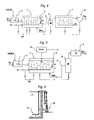
Fig. 1 schematically shows the basic concept behind the process and the plant according to the invention; -
Figs. 2, 3 ,4, 5 show examples of more complex variants of the process illustrated inFig. 1 ; -
Fig. 6 shows a detail of the plant for implementing the basic process according to the invention; -
Fig. 7 provides experimental data on the monthly efficiency in removing the COD, obtained using the processing options shown inFigs. 1-2 and 3 . -
Fig. 8 compares the experimental data for the COD loads in the water at the thermophilic reactor inlet and after its abatement in a reactor made according to the invention, pooled for two monitoring periods. - With reference to
Figure 1 , the basic concentrated organic waste water treatment process comprises the following steps: - said waste water QIN is fed for fluidized-bed thermophilic aerobic biological treatment inside a closed
reactor 1 with a system forthermostatic temperature control 2 based on an internal or external heat exchanger (using hot water, for instance), and ahydraulic recirculation system 3; - said water subsequently undergoes an
ultrafiltration treatment 4; - pure oxygen O2 is insufflated inside said
reactor 1; - lime Ca(OH)2 is provided for the fluidized-bed thermophilic aerobic biological treatment;
- said treated waste water QOUT is subsequently discharged.
- The lime Ca(OH)2 available in the
reactor 1 is suitable for forming a natural inert supporting medium consisting of microparticles of calcium carbonate CaCO3 by means of a process of carbonation with carbon dioxide CO2 generated by the degradation of the organic substrate in the biological process. Said microparticles are suitable for providing a considerable surface area arranged for allowing development of an adherent aerobic bacterial flora. - The
ultrafiltration treatment 4, which is achieved with the membrane equipment of known type, enables the biomass to be kept inside thereactor 1 while the flow QOUT of treated water is discharged. - The lime Ca(OH)2 is dosed either directly at the thermophilic biological treatment step, as shown in
Figure 1 , or at a previous chemical-physical re-treatment step inside amix contact reactor 5, as shown inFigure 2 . - In a further variant of the process shown in
Figure 3 , there is annanofiltration treatment 6 conducted according to a known technique downstream from theultrafiltration treatment 4. -
Figure 4 shows another variant of the process, wherein a mesophilic activated sludge treatment comprising a treatment step in amesophilic reactor 7 and a sedimentation step in asedimentation tank 8 is adopted as an alternative to the membranetype nanofiltration system 6 in series with theultrafiltration treatment 4. - The combined thermophilic/mesophilic biological treatment enables a further reduction in COD and BOD5 of approximately 40% and 80%, respectively.
-
Figure 5 shows a variant, as a further example, wherein a chemicaloxidation treatment OX 9 is inserted on the recirculation line carrying the concentrate coming fromnanofiltration 6, the object of which is to increase the biodegradability of the sewage and consequently enable its recirculation in thebiological reactor 1 rather than in the chemical-physical treatment compartment 5. Thetreatment 9 may be of known type, e.g. with the addition of nitrogen or with a process based on hydrogen peroxide and UV radiation. - The chemical oxidation treatment could also be included in other points of the plant (in the basic configuration of
Fig. 1 , or in one of the variants ofFigs. 2-4 ), also for the purpose of protecting the second (mesophilic) biological treatment against any incoming toxic/inhibiting matter and/or to improve the efficiency of the removal of organic matter, and/or to increase the biodegradability of the sewage. - With reference to the figures, a description is given below of a plant that implements the basic process for the thermophilic aerobic treatment of concentrated organic waste water, together with the corresponding alternative solutions and some data on the efficiency achieved.
- Remarkable results were obtained using a
biological tank 1 operating in thermophilic conditions (T > 45°C) maintained by means of aheat exchanger 2 and made of reinforced concrete withwalls 30 cm thick covered with prefabricated panels in order to contain the smells and maintain the temperature. - The thermophilic
biological reactor 1 has a surface area of 267 m2 (21 m x 12.8 m) and it is 5.3 m high, 1.5 m of which are below ground, providing a total useful volume of approximately 1000 m3. - The
biological reactor 1 is fed with an incoming flow QIN at a rate of 8.3 m3/h and has a recirculating flow QMBR (at a rate) of 120 m3/h coming from theultrafiltration treatment 4, thus constituting a MBR type treatment system. - The biological oxidation system uses pure oxygen (added in the form of microbubbles using the known OXY-DEP system); this ensures an effective oxidation, reducing the stripping action of the smelly gases, and enabling peak oxygen demands due to overloading to be met.
- With reference in particular to
Figure 6 , the pure oxygen is injected directly into static mixers 10 (QO2, 75 m3/h) so as to oversaturate the recirculating sewage inside them at a flow rate QOX of 300 m3/h, both to guarantee the supply to the fluidized bed and to enable the delivery of oxygen to thereactor 1. The fluid thus contains microbubbles of oxygen finely dispersed within its mass in larger quantities than in conventional systems. - The sewage thus enriched is then returned to the tank through the liquid-
liquid ejectors 11, in sufficient quantity to bring the whole flow of fluid leaving the ejector up to the saturation values corresponding to the pressure of the hydrostatic head in the tank. - This makes it possible to exploit said hydrostatic head to keep the oxygen in contact with the fluid for as long as possible, and also to ensure the adequate agitation of the sewage and of the fluidized bed with an even distribution of the dissolved gas.
- The thermophilic treatment is fed with a supply of waste water QIN from industrial processes or the percolate from landfills at a neutral pH with a high content of organic matter, nitrogen and other liquid waste.
- The following table shows the minimum, maximum and mean levels of the main polluting parameters characteristic of the sewage delivered to the thermophilic biological compartment.
Parameter Unit of measure Value mean min max Flow rate [m3/d] 249 150 516 COD [mg/l] 24,000 15,723 39,300 N-NH4 + [mg/l] 250 126 450 N-NOx - [mg/l] 1,190 620 1,560 Cu [mg/l] 0.03 not recordable 0.18 Cr [mg/l] 0.007 not recordable 0.07 Ni [mg/l] 3.8 2 6.7 Zn [mg/l] 0.73 0.3 1.4 -
Figure 7 shows the monthly efficiency in removing the COD and the mean values relating to two monitoring periods. These efficiencies were achieved using a plant of the MBR type, as shown inFigure 2 , and a plant of the type shown inFigure 3 . The efficiencies obtained were as follows: - in the former case (Ox + UF), the efficiency in removing the COD was 81% in the first period and 72% in the second;
- in the latter case (Ox + UF + NF), the efficiency in removing the COD was 89% in the second test period only.
-
Figure 8 shows a comparison between the COD loads at the inlet and after abatement in the thermophilic reactor during the above-mentioned two monitoring periods. Clearly, despite the increment in the organic load at the inlet, the abated organic load remains nearly the same.
Claims (10)
- A process for the thermophilic aerobic treatment of waste water comprising the following steps:- said waste water is fed for fluidized-bed thermophilic aerobic biological treatment, inside a closed reactor (1), provided with a thermostat control system (2) and with a hydraulic recirculation system (3);- said water is then submitted to an ultrafiltration treatment (4);- said treated waste water is subsequently discharged;- pure oxygen O2 is insufflated inside said reactor (1);
wherein said waste water is of the concentrated organic type and said process also comprises the following step:- lime Ca(OH)2 is provided for the fluidized-bed thermophilic aerobic biological treatment,
wherein said lime Ca(OH)2 is arranged for forming, by means of a process of carbonation with carbon dioxide CO2 generated by the degradation of the organic substrate in the biological aerobic process, a natural inert supporting medium consisting of microparticles of calcium carbonate CaCO3, wherein said microparticles are arranged for enabling the development thereon of an adherent aerobic bacterial flora, and said microparticles covered by said adherent aerobic bacterial flora, separated by means of said ultrafiltration treatment (4), are, at least partially, reintroduced into said reactor (1) by means of said hydraulic recirculation system (3). - A process according to claim 1, characterized in that the lime Ca(OH)2 is dosed directly at the thermophilic biological treatment step or at a previous chemical and physical pre-treatment step.
- A process according to claim 1, characterized in that there is a nanofiltration treatment (6) downstream from the ultrafiltration treatment (4).
- A process according to claim 1, characterized in that, after the ultrafiltration step (4), it comprises an aerobic treatment in mesophilic conditions (7) and a gravity sedimentation treatment (8).
- A process according to any of the previous claims, characterized in that it comprises a chemical oxidation process (9) taking effect on at least one hydraulic flow.
- A plant for the thermophilic aerobic treatment of waste water comprising:- a closed reactor (1) provided with an inlet and an outlet for said waste water, and with thermostat control means (2), and means (3) for inducing a recirculating flow arranged for fluidizing a granular material contained inside said reactor, wherein said granular material is arranged for serving as an inert supporting medium for an adherent bacterial flora that implements process of fluidized-bed thermophilic aerobic biological treatment;- an ultrafiltration device (4) connected to the outlet of said reactor;- means (10,11) for insufflating pure oxygen O2 inside said reactor, wherein said waste water is of the concentrated organic type and said system comprises:- means for supplying lime Ca(OH)2 to said reactor,
wherein said granular material comprises microparticles of calcium carbonate CaCO3, produced naturally by the carbonation of the lime Ca(OH)2 with the carbon dioxide CO2 generated by the degradation of the organic substrate in the biological aerobic process, and said means (3) are arranged for reintroducing, at least partially, said granular material, covered by said adherent bacterial flora, separated by means of said ultrafiltration device (4), into said reactor (1). - A plant according to claim 6, characterized in that it comprises a complete mix contact reactor (5) in which lime Ca(OH)2 is dosed.
- A plant according to claim 6, characterized in that a nanofiltration device (6) is connected downstream from the ultrafiltration device (4).
- A plant according to claim 6, characterized in that a device (7) for aerobic treatment in mesophilic conditions and a gravity sedimentation device (8) are connected downstream from the ultrafiltration device (4).
- A plant according to any of the previous claims from 6 to 9, characterized in that it comprises a chemical oxidation device (9) taking effect on at least one hydraulic flow.
Priority Applications (3)
| Application Number | Priority Date | Filing Date | Title |
|---|---|---|---|
| PL11710260T PL2526067T3 (en) | 2010-01-22 | 2011-01-14 | A process for the thermophilic aerobic treatment of concentrated organic waste water and the related plant |
| SI201130708T SI2526067T1 (en) | 2010-01-22 | 2011-01-14 | A process for the thermophilic aerobic treatment of concentrated organic waste water and the related plant |
| HRP20151412TT HRP20151412T1 (en) | 2010-01-22 | 2011-01-14 | THERMOPHILE AEROBIC TREATMENT PROCESSES CONCENTRATED ORGANIC WASTE WATER AND ASSOCIATED PLANT |
Applications Claiming Priority (2)
| Application Number | Priority Date | Filing Date | Title |
|---|---|---|---|
| ITCR2010A000001A IT1397708B1 (en) | 2010-01-22 | 2010-01-22 | PROCESS FOR AEROBIC THERMOFILAMENT TREATMENT OF CONCENTRATED ORGANIC DISCHARGE WATER AND ITS PLANT. |
| PCT/IB2011/000065 WO2011089501A1 (en) | 2010-01-22 | 2011-01-14 | A process for the thermophilic aerobic treatment of concentrated organic waste water and the related plant |
Publications (2)
| Publication Number | Publication Date |
|---|---|
| EP2526067A1 EP2526067A1 (en) | 2012-11-28 |
| EP2526067B1 true EP2526067B1 (en) | 2015-11-11 |
Family
ID=42562984
Family Applications (1)
| Application Number | Title | Priority Date | Filing Date |
|---|---|---|---|
| EP11710260.8A Active EP2526067B1 (en) | 2010-01-22 | 2011-01-14 | A process for the thermophilic aerobic treatment of concentrated organic waste water and the related plant |
Country Status (12)
| Country | Link |
|---|---|
| US (1) | US20120318735A1 (en) |
| EP (1) | EP2526067B1 (en) |
| BR (1) | BR112012018000A2 (en) |
| ES (1) | ES2558455T3 (en) |
| HR (1) | HRP20151412T1 (en) |
| HU (1) | HUE025875T2 (en) |
| IT (1) | IT1397708B1 (en) |
| PL (1) | PL2526067T3 (en) |
| PT (1) | PT2526067E (en) |
| RS (1) | RS54516B1 (en) |
| SI (1) | SI2526067T1 (en) |
| WO (1) | WO2011089501A1 (en) |
Families Citing this family (5)
| Publication number | Priority date | Publication date | Assignee | Title |
|---|---|---|---|---|
| WO2013021374A2 (en) | 2011-08-05 | 2013-02-14 | Mitraltech Ltd. | Techniques for percutaneous mitral valve replacement and sealing |
| CN105320163B (en) * | 2015-11-12 | 2018-02-23 | 浙江泰来环保科技有限公司 | The processing method of film filtration concentrated rear caused tail gas is handled using ozone |
| ES2926577B2 (en) * | 2021-04-19 | 2023-03-27 | Cercos Coullaut Valera Ramiro | SLURRY TREATMENT SYSTEM BY OXYGENATION AND BIO-CATALYZATION |
| KR102737643B1 (en) * | 2021-10-19 | 2024-12-04 | 씨제이제일제당 주식회사 | Method of treating high-concentration fermentation by-products generated in the amino acid fermentation process |
| IT202200001427A1 (en) * | 2022-01-28 | 2023-07-28 | D T A Srl | DOUBLE TREATMENT CHAMBER REACTOR |
Family Cites Families (9)
| Publication number | Priority date | Publication date | Assignee | Title |
|---|---|---|---|---|
| US3398088A (en) * | 1966-09-09 | 1968-08-20 | Dorr Oliver Inc | Phosphorous removal in membrane waste water treatment |
| US3462275A (en) * | 1968-01-31 | 1969-08-19 | Gen Electric | Waste conversion process and product |
| US3947350A (en) * | 1972-10-30 | 1976-03-30 | Envirotech Corporation | Process of preparing sewage sludge for dewatering |
| US3961078A (en) * | 1973-01-24 | 1976-06-01 | Stitt Paul A | Soluble waste conversion process and pasteurized proteinaceous products |
| JP2878640B2 (en) * | 1996-03-29 | 1999-04-05 | 株式会社荏原製作所 | Upflow anaerobic sludge bed method |
| US20040159607A1 (en) * | 2003-02-14 | 2004-08-19 | Kilian Rodolfo Ernesto | Ammonia nitrification over a carbonate alkalinity source |
| US6966983B1 (en) * | 2004-10-01 | 2005-11-22 | Mixing And Mass Transfer Technologies, Llc | Continuous multistage thermophilic aerobic sludge digestion system |
| WO2006116533A2 (en) * | 2005-04-27 | 2006-11-02 | Hw Process Technologies, Inc. | Treating produced waters |
| WO2011050045A1 (en) * | 2009-10-20 | 2011-04-28 | Soane Energy, Llc | Treatment of wastewater |
-
2010
- 2010-01-22 IT ITCR2010A000001A patent/IT1397708B1/en active
-
2011
- 2011-01-14 SI SI201130708T patent/SI2526067T1/en unknown
- 2011-01-14 PT PT117102608T patent/PT2526067E/en unknown
- 2011-01-14 WO PCT/IB2011/000065 patent/WO2011089501A1/en not_active Ceased
- 2011-01-14 HR HRP20151412TT patent/HRP20151412T1/en unknown
- 2011-01-14 US US13/521,093 patent/US20120318735A1/en not_active Abandoned
- 2011-01-14 EP EP11710260.8A patent/EP2526067B1/en active Active
- 2011-01-14 BR BR112012018000A patent/BR112012018000A2/en not_active Application Discontinuation
- 2011-01-14 RS RS20160012A patent/RS54516B1/en unknown
- 2011-01-14 PL PL11710260T patent/PL2526067T3/en unknown
- 2011-01-14 ES ES11710260.8T patent/ES2558455T3/en active Active
- 2011-01-14 HU HUE11710260A patent/HUE025875T2/en unknown
Also Published As
| Publication number | Publication date |
|---|---|
| HUE025875T2 (en) | 2016-05-30 |
| IT1397708B1 (en) | 2013-01-24 |
| WO2011089501A1 (en) | 2011-07-28 |
| EP2526067A1 (en) | 2012-11-28 |
| PL2526067T3 (en) | 2016-04-29 |
| HRP20151412T1 (en) | 2016-02-12 |
| ES2558455T3 (en) | 2016-02-04 |
| BR112012018000A2 (en) | 2016-05-03 |
| US20120318735A1 (en) | 2012-12-20 |
| PT2526067E (en) | 2016-02-11 |
| RS54516B1 (en) | 2016-06-30 |
| ITCR20100001A1 (en) | 2011-07-23 |
| SI2526067T1 (en) | 2016-02-29 |
Similar Documents
| Publication | Publication Date | Title |
|---|---|---|
| CA2703715C (en) | System and method for anaerobic digestion of biomasses | |
| CN103402926A (en) | Wastewater Treatment Systems and Methods | |
| US8221627B2 (en) | Nitrification and denitrification of digested biosolids | |
| CN106673192A (en) | Technology for removing total nitrogen in garbage leachate by anammox and special device thereof | |
| KR20130003522A (en) | Treatment system for waste water | |
| KR20170009155A (en) | Nitrogen removing system of side stream comprising high concentrated nitrogen | |
| US20120318735A1 (en) | Process for the thermophilic aerobic treatment of concentrated organic waste water and the related plant | |
| KR102095467B1 (en) | Water treatment system | |
| KR101442731B1 (en) | Anaerobic fermentation of the feature-specific customized liquid device manufactur and manufactur method | |
| US20070181493A1 (en) | Wastewater treatment with aerobic granules | |
| US20100200500A1 (en) | Bubble-Less Gas Delivery Into Liquid Systems | |
| JP5391011B2 (en) | Nitrogen-containing wastewater treatment method | |
| KR101002386B1 (en) | Anaerobic Digestion Method of Organic Wastes by Controlling Ammonium Nitrogen Concentration | |
| KR101250349B1 (en) | A method for the removal of aqueous nitrogen from the wastewater | |
| EP2279153B1 (en) | Method for treating and/or pretreating liquid manure or biogas plant reject for the elimination of harmful substances, particularly nitrogen, phosphorus, and odor molecules | |
| JP3477187B2 (en) | Method and apparatus for decolorizing wastewater | |
| JP4503418B2 (en) | Method and apparatus for treating organic wastewater containing salts | |
| KR100994193B1 (en) | An operation method for anaerobic digestion of organic waste by regulating of bicarbonate alkalinity | |
| CN205635243U (en) | Vitamin C waste water advanced treatment unit | |
| KR101269379B1 (en) | Treatment method for wastewater | |
| JP4596533B2 (en) | Wastewater treatment method | |
| Bungay | A technical review of the emerging technologies for treating dewatering liquors & process reject water | |
| JP5329499B2 (en) | Biological wastewater treatment equipment | |
| CN107055972A (en) | Multiple grain brewing wastewater enhanced nitrogen removal process | |
| Morhell et al. | Use of free nitrous acid from partial nitrification reactor for the sanitization of digester effluents and Class A biosolids production |
Legal Events
| Date | Code | Title | Description |
|---|---|---|---|
| PUAI | Public reference made under article 153(3) epc to a published international application that has entered the european phase |
Free format text: ORIGINAL CODE: 0009012 |
|
| 17P | Request for examination filed |
Effective date: 20120726 |
|
| AK | Designated contracting states |
Kind code of ref document: A1 Designated state(s): AL AT BE BG CH CY CZ DE DK EE ES FI FR GB GR HR HU IE IS IT LI LT LU LV MC MK MT NL NO PL PT RO RS SE SI SK SM TR |
|
| DAX | Request for extension of the european patent (deleted) | ||
| 17Q | First examination report despatched |
Effective date: 20141127 |
|
| GRAP | Despatch of communication of intention to grant a patent |
Free format text: ORIGINAL CODE: EPIDOSNIGR1 |
|
| RAP1 | Party data changed (applicant data changed or rights of an application transferred) |
Owner name: IDROCLEAN S.R.L. |
|
| INTG | Intention to grant announced |
Effective date: 20150703 |
|
| GRAS | Grant fee paid |
Free format text: ORIGINAL CODE: EPIDOSNIGR3 |
|
| GRAA | (expected) grant |
Free format text: ORIGINAL CODE: 0009210 |
|
| AK | Designated contracting states |
Kind code of ref document: B1 Designated state(s): AL AT BE BG CH CY CZ DE DK EE ES FI FR GB GR HR HU IE IS IT LI LT LU LV MC MK MT NL NO PL PT RO RS SE SI SK SM TR |
|
| REG | Reference to a national code |
Ref country code: GB Ref legal event code: FG4D |
|
| REG | Reference to a national code |
Ref country code: CH Ref legal event code: EP |
|
| REG | Reference to a national code |
Ref country code: IE Ref legal event code: FG4D |
|
| REG | Reference to a national code |
Ref country code: AT Ref legal event code: REF Ref document number: 760340 Country of ref document: AT Kind code of ref document: T Effective date: 20151215 |
|
| REG | Reference to a national code |
Ref country code: RO Ref legal event code: EPE |
|
| REG | Reference to a national code |
Ref country code: HR Ref legal event code: TUEP Ref document number: P20151412 Country of ref document: HR |
|
| REG | Reference to a national code |
Ref country code: DE Ref legal event code: R096 Ref document number: 602011021366 Country of ref document: DE |
|
| REG | Reference to a national code |
Ref country code: FR Ref legal event code: PLFP Year of fee payment: 6 |
|
| REG | Reference to a national code |
Ref country code: ES Ref legal event code: FG2A Ref document number: 2558455 Country of ref document: ES Kind code of ref document: T3 Effective date: 20160204 |
|
| REG | Reference to a national code |
Ref country code: PT Ref legal event code: SC4A Free format text: AVAILABILITY OF NATIONAL TRANSLATION Effective date: 20160108 |
|
| REG | Reference to a national code |
Ref country code: HR Ref legal event code: T1PR Ref document number: P20151412 Country of ref document: HR |
|
| REG | Reference to a national code |
Ref country code: NL Ref legal event code: FP |
|
| REG | Reference to a national code |
Ref country code: LT Ref legal event code: MG4D |
|
| PG25 | Lapsed in a contracting state [announced via postgrant information from national office to epo] |
Ref country code: LT Free format text: LAPSE BECAUSE OF FAILURE TO SUBMIT A TRANSLATION OF THE DESCRIPTION OR TO PAY THE FEE WITHIN THE PRESCRIBED TIME-LIMIT Effective date: 20151111 Ref country code: IS Free format text: LAPSE BECAUSE OF FAILURE TO SUBMIT A TRANSLATION OF THE DESCRIPTION OR TO PAY THE FEE WITHIN THE PRESCRIBED TIME-LIMIT Effective date: 20160311 Ref country code: NO Free format text: LAPSE BECAUSE OF FAILURE TO SUBMIT A TRANSLATION OF THE DESCRIPTION OR TO PAY THE FEE WITHIN THE PRESCRIBED TIME-LIMIT Effective date: 20160211 |
|
| REG | Reference to a national code |
Ref country code: HU Ref legal event code: AG4A Ref document number: E025875 Country of ref document: HU |
|
| PG25 | Lapsed in a contracting state [announced via postgrant information from national office to epo] |
Ref country code: FI Free format text: LAPSE BECAUSE OF FAILURE TO SUBMIT A TRANSLATION OF THE DESCRIPTION OR TO PAY THE FEE WITHIN THE PRESCRIBED TIME-LIMIT Effective date: 20151111 Ref country code: LV Free format text: LAPSE BECAUSE OF FAILURE TO SUBMIT A TRANSLATION OF THE DESCRIPTION OR TO PAY THE FEE WITHIN THE PRESCRIBED TIME-LIMIT Effective date: 20151111 Ref country code: GR Free format text: LAPSE BECAUSE OF FAILURE TO SUBMIT A TRANSLATION OF THE DESCRIPTION OR TO PAY THE FEE WITHIN THE PRESCRIBED TIME-LIMIT Effective date: 20160212 Ref country code: SE Free format text: LAPSE BECAUSE OF FAILURE TO SUBMIT A TRANSLATION OF THE DESCRIPTION OR TO PAY THE FEE WITHIN THE PRESCRIBED TIME-LIMIT Effective date: 20151111 |
|
| REG | Reference to a national code |
Ref country code: SK Ref legal event code: T3 Ref document number: E 20267 Country of ref document: SK |
|
| REG | Reference to a national code |
Ref country code: DE Ref legal event code: R097 Ref document number: 602011021366 Country of ref document: DE |
|
| PG25 | Lapsed in a contracting state [announced via postgrant information from national office to epo] |
Ref country code: EE Free format text: LAPSE BECAUSE OF FAILURE TO SUBMIT A TRANSLATION OF THE DESCRIPTION OR TO PAY THE FEE WITHIN THE PRESCRIBED TIME-LIMIT Effective date: 20151111 Ref country code: DK Free format text: LAPSE BECAUSE OF FAILURE TO SUBMIT A TRANSLATION OF THE DESCRIPTION OR TO PAY THE FEE WITHIN THE PRESCRIBED TIME-LIMIT Effective date: 20151111 Ref country code: SM Free format text: LAPSE BECAUSE OF FAILURE TO SUBMIT A TRANSLATION OF THE DESCRIPTION OR TO PAY THE FEE WITHIN THE PRESCRIBED TIME-LIMIT Effective date: 20151111 Ref country code: LU Free format text: LAPSE BECAUSE OF FAILURE TO SUBMIT A TRANSLATION OF THE DESCRIPTION OR TO PAY THE FEE WITHIN THE PRESCRIBED TIME-LIMIT Effective date: 20160114 |
|
| REG | Reference to a national code |
Ref country code: CH Ref legal event code: PL |
|
| PLBE | No opposition filed within time limit |
Free format text: ORIGINAL CODE: 0009261 |
|
| STAA | Information on the status of an ep patent application or granted ep patent |
Free format text: STATUS: NO OPPOSITION FILED WITHIN TIME LIMIT |
|
| PG25 | Lapsed in a contracting state [announced via postgrant information from national office to epo] |
Ref country code: MC Free format text: LAPSE BECAUSE OF FAILURE TO SUBMIT A TRANSLATION OF THE DESCRIPTION OR TO PAY THE FEE WITHIN THE PRESCRIBED TIME-LIMIT Effective date: 20151111 |
|
| 26N | No opposition filed |
Effective date: 20160812 |
|
| PG25 | Lapsed in a contracting state [announced via postgrant information from national office to epo] |
Ref country code: LI Free format text: LAPSE BECAUSE OF NON-PAYMENT OF DUE FEES Effective date: 20160131 Ref country code: CH Free format text: LAPSE BECAUSE OF NON-PAYMENT OF DUE FEES Effective date: 20160131 |
|
| REG | Reference to a national code |
Ref country code: FR Ref legal event code: PLFP Year of fee payment: 7 |
|
| PG25 | Lapsed in a contracting state [announced via postgrant information from national office to epo] |
Ref country code: MT Free format text: LAPSE BECAUSE OF FAILURE TO SUBMIT A TRANSLATION OF THE DESCRIPTION OR TO PAY THE FEE WITHIN THE PRESCRIBED TIME-LIMIT Effective date: 20151111 |
|
| REG | Reference to a national code |
Ref country code: AT Ref legal event code: UEP Ref document number: 760340 Country of ref document: AT Kind code of ref document: T Effective date: 20151111 |
|
| REG | Reference to a national code |
Ref country code: FR Ref legal event code: PLFP Year of fee payment: 8 |
|
| PG25 | Lapsed in a contracting state [announced via postgrant information from national office to epo] |
Ref country code: CY Free format text: LAPSE BECAUSE OF FAILURE TO SUBMIT A TRANSLATION OF THE DESCRIPTION OR TO PAY THE FEE WITHIN THE PRESCRIBED TIME-LIMIT Effective date: 20151111 |
|
| PG25 | Lapsed in a contracting state [announced via postgrant information from national office to epo] |
Ref country code: MT Free format text: LAPSE BECAUSE OF FAILURE TO SUBMIT A TRANSLATION OF THE DESCRIPTION OR TO PAY THE FEE WITHIN THE PRESCRIBED TIME-LIMIT Effective date: 20160131 Ref country code: TR Free format text: LAPSE BECAUSE OF FAILURE TO SUBMIT A TRANSLATION OF THE DESCRIPTION OR TO PAY THE FEE WITHIN THE PRESCRIBED TIME-LIMIT Effective date: 20151111 Ref country code: MK Free format text: LAPSE BECAUSE OF FAILURE TO SUBMIT A TRANSLATION OF THE DESCRIPTION OR TO PAY THE FEE WITHIN THE PRESCRIBED TIME-LIMIT Effective date: 20151111 |
|
| PG25 | Lapsed in a contracting state [announced via postgrant information from national office to epo] |
Ref country code: BG Free format text: LAPSE BECAUSE OF FAILURE TO SUBMIT A TRANSLATION OF THE DESCRIPTION OR TO PAY THE FEE WITHIN THE PRESCRIBED TIME-LIMIT Effective date: 20151111 |
|
| PG25 | Lapsed in a contracting state [announced via postgrant information from national office to epo] |
Ref country code: AL Free format text: LAPSE BECAUSE OF FAILURE TO SUBMIT A TRANSLATION OF THE DESCRIPTION OR TO PAY THE FEE WITHIN THE PRESCRIBED TIME-LIMIT Effective date: 20151111 |
|
| REG | Reference to a national code |
Ref country code: DE Ref legal event code: R081 Ref document number: 602011021366 Country of ref document: DE Owner name: D.T. A. S.R.L., IT Free format text: FORMER OWNER: IDROCLEAN S.R.L, CASIRATE D'ADDA (BG), IT Ref country code: DE Ref legal event code: R081 Ref document number: 602011021366 Country of ref document: DE Owner name: D.T.A. S.R.L., IT Free format text: FORMER OWNER: IDROCLEAN S.R.L, CASIRATE D'ADDA (BG), IT |
|
| REG | Reference to a national code |
Ref country code: HR Ref legal event code: ODRP Ref document number: P20151412 Country of ref document: HR Payment date: 20181219 Year of fee payment: 9 |
|
| REG | Reference to a national code |
Ref country code: GB Ref legal event code: 732E Free format text: REGISTERED BETWEEN 20190103 AND 20190109 |
|
| REG | Reference to a national code |
Ref country code: ES Ref legal event code: PC2A Owner name: D.T.A. SRL Effective date: 20190128 |
|
| REG | Reference to a national code |
Ref country code: BE Ref legal event code: FP Effective date: 20160107 Ref country code: BE Ref legal event code: PD Owner name: D.T.A. SRL; IT Free format text: DETAILS ASSIGNMENT: CHANGE OF OWNER(S), CESSION; FORMER OWNER NAME: IDROCLEAN S.R.L. Effective date: 20181226 Ref country code: BE Ref legal event code: PD Owner name: D.T.A. SRL; IT Free format text: DETAILS ASSIGNMENT: CHANGE OF OWNER(S), CESSION; FORMER OWNER NAME: D.T.A. SRL Effective date: 20181226 |
|
| REG | Reference to a national code |
Ref country code: HR Ref legal event code: PPPP Ref document number: P20151412 Country of ref document: HR Owner name: D.T.A. S.R.L., IT |
|
| REG | Reference to a national code |
Ref country code: SI Ref legal event code: SP73 Owner name: D.T.A. SRL; IT Effective date: 20190129 |
|
| REG | Reference to a national code |
Ref country code: NL Ref legal event code: PD Owner name: D.T.A. SRL; IT Free format text: DETAILS ASSIGNMENT: CHANGE OF OWNER(S), ASSIGNMENT; FORMER OWNER NAME: IDROCLEAN S.R.L. Effective date: 20190111 |
|
| REG | Reference to a national code |
Ref country code: HU Ref legal event code: GB9C Owner name: D.T.A. SRL, IT Free format text: FORMER OWNER(S): IDROCLEAN S.R.L., IT |
|
| REG | Reference to a national code |
Ref country code: SK Ref legal event code: PC4A Ref document number: E 20267 Country of ref document: SK Owner name: D.T.A. S.R.L., 24033 CALUSCO D'ADDA (BG) , IT Free format text: FORMER OWNER: IDROCLEAN S.R.L., CASIRATE D'ADDA (BG), IT Effective date: 20190322 |
|
| REG | Reference to a national code |
Ref country code: AT Ref legal event code: PC Ref document number: 760340 Country of ref document: AT Kind code of ref document: T Owner name: D.T.A. SRL, IT Effective date: 20190215 |
|
| REG | Reference to a national code |
Ref country code: HR Ref legal event code: ODRP Ref document number: P20151412 Country of ref document: HR Payment date: 20191219 Year of fee payment: 10 |
|
| REG | Reference to a national code |
Ref country code: DE Ref legal event code: R082 Ref document number: 602011021366 Country of ref document: DE Representative=s name: GUSTORF, GERHARD, DIPL.-ING., DE Ref country code: DE Ref legal event code: R081 Ref document number: 602011021366 Country of ref document: DE Owner name: D.T. A. S.R.L., IT Free format text: FORMER OWNER: D.T.A. S.R.L., CALUSCO D'ADDA, IT Ref country code: DE Ref legal event code: R082 Ref document number: 602011021366 Country of ref document: DE Representative=s name: KUHNEN & WACKER PATENT- UND RECHTSANWALTSBUERO, DE |
|
| REG | Reference to a national code |
Ref country code: HR Ref legal event code: PNAN Ref document number: P20151412 Country of ref document: HR Owner name: D.T.A. S.R.L., IT |
|
| REG | Reference to a national code |
Ref country code: HU Ref legal event code: HC9C Owner name: D.T.A. SRL, IT Free format text: FORMER OWNER(S): IDROCLEAN S.R.L., IT; D.T.A. SRL, IT Ref country code: SI Ref legal event code: SP73 Owner name: D.T.A. SRL; IT Effective date: 20201002 |
|
| REG | Reference to a national code |
Ref country code: SK Ref legal event code: TE4A Ref document number: E 20267 Country of ref document: SK Owner name: D.T.A. S.R.L., TREVIGLIO (BG), IT Effective date: 20201102 |
|
| REG | Reference to a national code |
Ref country code: HR Ref legal event code: ODRP Ref document number: P20151412 Country of ref document: HR Payment date: 20201218 Year of fee payment: 11 |
|
| REG | Reference to a national code |
Ref country code: DE Ref legal event code: R082 Ref document number: 602011021366 Country of ref document: DE Representative=s name: KUHNEN & WACKER PATENT- UND RECHTSANWALTSBUERO, DE |
|
| REG | Reference to a national code |
Ref country code: HR Ref legal event code: ODRP Ref document number: P20151412 Country of ref document: HR Payment date: 20211220 Year of fee payment: 12 |
|
| REG | Reference to a national code |
Ref country code: DE Ref legal event code: R079 Ref document number: 602011021366 Country of ref document: DE Free format text: PREVIOUS MAIN CLASS: C02F0009140000 Ipc: C02F0009000000 |
|
| REG | Reference to a national code |
Ref country code: HR Ref legal event code: ODRP Ref document number: P20151412 Country of ref document: HR Payment date: 20221221 Year of fee payment: 13 |
|
| P01 | Opt-out of the competence of the unified patent court (upc) registered |
Effective date: 20231204 |
|
| REG | Reference to a national code |
Ref country code: HR Ref legal event code: ODRP Ref document number: P20151412 Country of ref document: HR Payment date: 20231219 Year of fee payment: 14 |
|
| PGFP | Annual fee paid to national office [announced via postgrant information from national office to epo] |
Ref country code: PT Payment date: 20241218 Year of fee payment: 15 |
|
| REG | Reference to a national code |
Ref country code: HR Ref legal event code: ODRP Ref document number: P20151412 Country of ref document: HR Payment date: 20241218 Year of fee payment: 15 |
|
| PGFP | Annual fee paid to national office [announced via postgrant information from national office to epo] |
Ref country code: CZ Payment date: 20241223 Year of fee payment: 15 Ref country code: HR Payment date: 20241218 Year of fee payment: 15 |
|
| PGFP | Annual fee paid to national office [announced via postgrant information from national office to epo] |
Ref country code: RO Payment date: 20241220 Year of fee payment: 15 Ref country code: SK Payment date: 20241218 Year of fee payment: 15 |
|
| PGFP | Annual fee paid to national office [announced via postgrant information from national office to epo] |
Ref country code: RS Payment date: 20241219 Year of fee payment: 15 |
|
| PGFP | Annual fee paid to national office [announced via postgrant information from national office to epo] |
Ref country code: NL Payment date: 20250127 Year of fee payment: 15 |
|
| PGFP | Annual fee paid to national office [announced via postgrant information from national office to epo] |
Ref country code: SI Payment date: 20241217 Year of fee payment: 15 |
|
| PGFP | Annual fee paid to national office [announced via postgrant information from national office to epo] |
Ref country code: HU Payment date: 20241220 Year of fee payment: 15 |
|
| PGFP | Annual fee paid to national office [announced via postgrant information from national office to epo] |
Ref country code: DE Payment date: 20250129 Year of fee payment: 15 |
|
| PGFP | Annual fee paid to national office [announced via postgrant information from national office to epo] |
Ref country code: ES Payment date: 20250203 Year of fee payment: 15 |
|
| PGFP | Annual fee paid to national office [announced via postgrant information from national office to epo] |
Ref country code: IE Payment date: 20250128 Year of fee payment: 15 |
|
| PGFP | Annual fee paid to national office [announced via postgrant information from national office to epo] |
Ref country code: AT Payment date: 20241219 Year of fee payment: 15 Ref country code: BE Payment date: 20250127 Year of fee payment: 15 |
|
| PGFP | Annual fee paid to national office [announced via postgrant information from national office to epo] |
Ref country code: FR Payment date: 20250127 Year of fee payment: 15 Ref country code: PL Payment date: 20241231 Year of fee payment: 15 |
|
| PGFP | Annual fee paid to national office [announced via postgrant information from national office to epo] |
Ref country code: GB Payment date: 20250127 Year of fee payment: 15 |
|
| PGFP | Annual fee paid to national office [announced via postgrant information from national office to epo] |
Ref country code: IT Payment date: 20251211 Year of fee payment: 16 |